Engineering · Manufacturing · Project support
info@hnksglobal.comWhatsApp +86 18836207779 ↗

Blog

  • RTG Cranes for Container Yards: Working Lanes and Travel Requirements

    RTG Cranes for Container Yards: Working Lanes and Travel Requirements

    Selection guide

    RTG Cranes for Container Yards: Working Lanes and Travel Requirements

    The RTG must serve the stacking block while fitting the yard's vehicle movements. Define the container service, handling positions, relocation needs and support conditions before comparing proposed configurations.
    Henan Mine CraneSelection guide · Updated 2026Crane selection, project scope and operating requirements
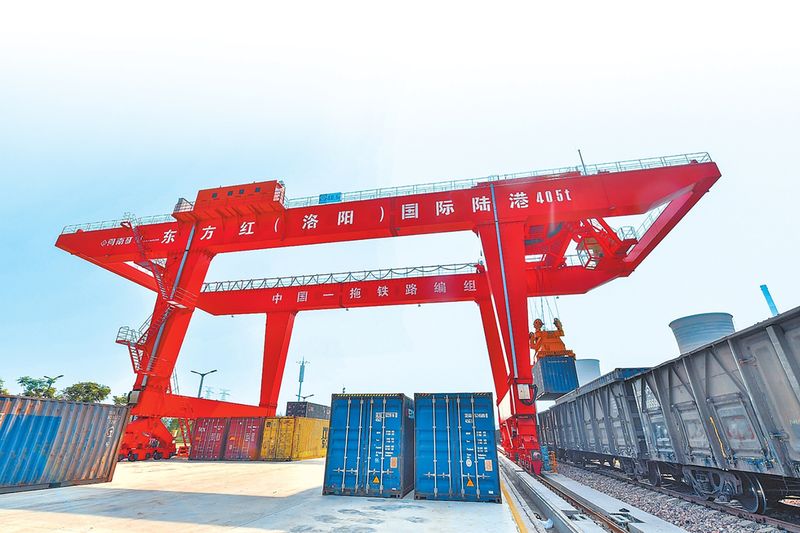
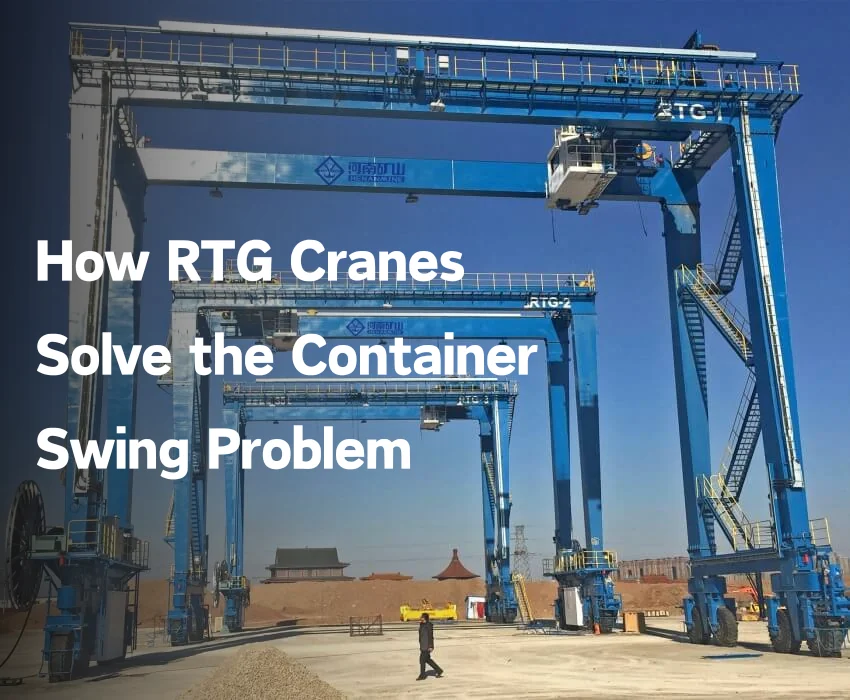
    RTG crane operating above container rows and a truck lane
    RTG crane operating above container rows and a truck lane
    Project planning notes

    Key points for this crane project.

    1. What Is an RTG Crane for a Container Yard?
    2. RTG Crane Selection Considerations
    3. RTG Crane Configurations Compared
    Read the technical guide

    What Is an RTG Crane for a Container Yard?

    An RTG crane, or rubber-tyred gantry crane, is a mobile container-stacking crane carried by multi-wheel rubber-tyred bogies. It straddles several container rows and a truck or terminal-tractor lane, lifts containers with a telescopic spreader and travels along the storage block without fixed runway rails.

    Final capacity, span, lift height, speed, power source and fleet quantity follow the approved yard plan and operating model.

    RTGs are used in marine terminals, inland container depots, rail-intermodal facilities and logistics hubs where storage density and block mobility are both required. The absence of travel rails supports phased expansion and equipment relocation between compatible blocks.

    RTG Crane Selection Considerations

    Container and Lift Profile

    ISO size mix, maximum gross mass, high-cube share, reefer volume, out-of-gauge handling and single- or twin-lift operation establish capacity and spreader scope.

    Yard Block Geometry

    Row count, truck lane, stack height, row pitch, block length, transfer positions and block-end turning area define the crane envelope.

    Throughput and Duty

    Annual TEU, peak moves, rehandle ratio, operating shifts, productive hours, transfer-vehicle demand and availability target control mechanism duty and fleet size.

    Power and Emissions

    Grid capacity, fuel and electricity costs, block-change frequency, cable routes, charging strategy and local emissions targets affect power architecture.

    Pavement and Environment

    Allowable wheel load, pavement settlement, gradient, drainage, wind, temperature, salt fog, rainfall, dust and seismic criteria require coordinated civil and crane design.

    Control and TOS Integration

    Cab, remote or automated operation; positioning; OCR; anti-sway; communications; diagnostics; TOS/ECS interfaces and recovery modes require defined ownership.

    RTG Crane Configurations Compared

    ConfigurationOperating StrengthProject CheckTypical Yard Pattern
    Diesel-Electric RTGIndependent power and frequent block changesFuel use, engine service, noise and local emissionsDeveloping yards or blocks without reliable grid access
    Hybrid RTGMobile operation with energy recovery and reduced engine loadingBattery lifecycle, thermal management and control complexityHigh-utilization blocks requiring mobility and fuel reduction
    Cable-Reel Electric RTGLow local emissions, low noise and reduced engine maintenanceSubstation, cable route, changeover and block-transfer methodStable long blocks with limited cross-block movement
    Busbar Electric RTGContinuous grid power along permanent blocksConductor infrastructure, transfer interface and isolation safetyPermanent high-throughput container blocks
    Battery-Electric or Automated RTGZero local tailpipe emissions and automation-ready controlCharging cycle, battery sizing, controlled traffic and system integrationElectrified terminals with mature TOS and safety zoning

    Compare diesel and electric RTG lifecycle factors →

    Published RTG Crane Specifications

    The following values are the published Henan Mine Crane RTG product-family range. Contract values remain drawing-specific because span, lift height, speed and power depend on the approved yard geometry and duty cycle.

    ParameterProject Definition
    Lifting CapacityState under-spreader or hook basis
    SpanRows, truck lane and clearances
    Lifting HeightStack height and service clearance
    Work ClassLoad spectrum, cycles and design life
    Published TemperatureSite extremes and component package

    Planning Speed Range

    Final values follow drive sizing, stability, anti-sway performance and terminal traffic analysis.

    View the Henan Mine Crane RTG product family →

    5+1, 6+1 and 7+1 RTG Yard Layouts

    RTG layout shorthand states the number of container rows plus the vehicle lane under the gantry. A 6+1 RTG spans six storage rows and one truck or terminal-tractor lane. Wider spans increase block coverage but also affect trolley travel, structural mass, wheel loads, drive power and wind response.

    LayoutYard EffectEngineering FocusTypical Application
    5 Rows + 1 LaneNarrower block and shorter trolley pathBrownfield geometry and moderate densityInland depot or constrained terminal
    6 Rows + 1 LaneBalanced density and truck interfaceCycle time, lane clearance and wheel loadGeneral marine or intermodal yard
    7 Rows + 1 LaneHigher storage density per blockLonger span, trolley travel and pavement demandHigh-volume terminal with planned blocks

    Stacking Height

    “One over five” means five stored containers with clearance to carry one container above the stack. High-cube containers, pavement tolerances, tyre deflection, spreader depth, twistlock engagement, structural deflection and operating clearance all enter the vertical envelope.

    One-over-four reduces structural height and wheel load. One-over-five commonly balances density and access. One-over-six increases storage density but also raises wind exposure, lift height and rehandle sensitivity.

    RTG, RMG and Straddle Carrier Compared

    SystemMobilityStorage ModelInfrastructure
    RTG CraneMoves between compatible blocksDense multi-row blocksWheel paths and optional electrical works
    RMG CraneFixed to a rail runwayWide, repeatable blocksRails, foundations and power distribution
    Straddle CarrierFree-routing carrierTransport and stacking by one machineTraffic lanes and maintenance facilities

    Compare RTG and straddle carrier operations → Compare RTG and RMG project cost →

    Spreader, Anti-Sway, Automation and Yard Infrastructure

    Container Interface

    A telescopic spreader normally covers 20 ft and 40 ft ISO containers; 45 ft handling, twin lift or special interfaces are specified separately. The rated-load definition must state whether capacity is measured below the spreader and whether spreader self-weight is excluded.

    Motion Control

    Rope geometry, drive control and active anti-sway reduce residual motion. The performance specification should define allowable sway, positioning tolerance, twistlock confirmation, landing logic and operating behavior under wind.

    Automation Scope

    Remote or automated RTG operation requires controlled traffic, reliable container identity, communications, safety zoning and exception handling. TOS job data, positioning, cameras, OCR, collision control, recovery modes and acceptance scenarios form one integrated scope.

    Pavement and Wheel Loads

    Maximum and minimum wheel loads, tyre pressure, dynamic factors, settlement limits, braking cases and storm parking loads are issued for civil coordination.

    Steering and Block Change

    Straight, cross, pivot or coordinated steering affects turning radius, block-end width, alignment control and the approved transfer route.

    Wind and Marine Protection

    Operating wind, out-of-service wind, storm travel, anchoring, coating system, enclosure protection and salt-fog exposure require site-specific definition.

    Published Project Scope

    The published operating geometry was six containers high and seven containers wide.

    This public industry reference is not presented as a Henan Mine Crane delivery. It shows how fleet procurement combines equipment, hybrid power, terminal requirements, delivery program and lifecycle emissions objectives.

    RTG Crane Price for Container Yard Projects

    Public listings support preliminary budgeting but do not represent a delivered Henan Mine Crane quotation. Capacity, span, stacking height, power system, automation, spreader scope, marine protection, destination, civil and electrical works, commissioning and acceptance testing change the final contract value.

    Public ReferenceBudget Meaning
    Manufacturer guide, June 2026Crane-level market guide
    Manufacturer guide, June 2026Site electrical works require separate scope
    Manufacturer guide, June 2026Crane-level market guide
    Manufacturer guide, June 2026Automation and interface boundary require confirmation
    Southeast Asia guide, 2025Regional guide across multiple configurations
    Georgia Ports Authority, 2022Fleet-order context, not a crane-only unit price
    Georgia Ports Authority, 2023Major fleet program, not a hardware-only unit price

    Public reference record: WEIHUA RTG Crane Price Guide, 2 June 2026; Dongqi Crane Southeast Asia RTG guide, 2025; Georgia Ports Authority announcements, 2022 and 2023. Calculated equivalents equal the announced project total divided by the announced crane count and do not establish a standalone equipment price.

    Engineering and Procurement Deliverables

    Design Package

    General arrangement, wheel loads, swept path, mechanism calculations, electrical single-line diagram, interface schedule and coating specification.

    Manufacturing Quality

    Inspection and test plan, material traceability, welding records, NDT reports, electrical checks and factory functional testing.

    Site Acceptance

    Erection supervision, no-load and rated-load tests, safety tests, interface trials, training, spare parts and handover records.

    RTG Crane RFQ Checklist

    The following information allows structure, mechanisms, power, fleet quantity and commercial scope to be priced on a consistent basis.

    1. Yard drawing with block length, rows, lane width and turning area
    2. Container sizes, maximum gross mass and high-cube percentage
    3. Required 5+1, 6+1, 7+1 or custom geometry
    4. Stacking height and clearance above the top tier
    1. Annual TEU, peak hourly moves and operating shifts
    2. Cab, remote or automated control and TOS interface
    3. Temperature, wind, corrosion, seismic and rainfall data

    Frequently Asked Questions

    What does a 6+1 RTG crane mean?

    It means the crane spans six container rows plus one truck or terminal-tractor lane. Clearances and row pitch establish the final span.

    How high can an RTG crane stack containers?

    RTGs are commonly configured from one-over-three to one-over-six.

    How much does an RTG crane cost?

    Delivered fleet programs can be substantially higher when infrastructure, integration and service are included.

    Can an RTG crane move between yard blocks?

    Rubber tyres and steering modes permit block changes when the route, turning area, pavement, clearances and power-disconnection method are designed for the movement.

    Can an RTG crane be automated?

    Assisted, remote and automated operation can be configured with positioning, anti-sway, cameras, safety zones, communications and TOS integration.

    Related Container Yard Crane Products

    Rubber-Tyred Gantry Crane

    Mobile multi-row container stacking with diesel, hybrid or electric power.

    Container Straddle Carrier

    Point-to-point container transport and stacking within one mobile machine.

    Container Overhead Crane

    Fixed indoor or covered-area container handling with runway support.

    Ship-to-Shore Crane

    Quayside vessel loading and unloading for marine container terminals.

    Portal Harbor Crane

    Flexible quay handling for containers, general cargo and bulk materials.

    Submit the yard plan, container mix, stacking height, throughput duty, power preference, control level and delivery destination for a project-specific RTG configuration and commercial scope.

    Discuss the crane arrangement for your project.

    The RTG must serve the stacking block while fitting the yard's vehicle movements. Define the container service, handling positions, relocation needs and support conditions before comparing proposed configurations. Share the load, available drawings, working cycle and site conditions with Henan Mine Crane so the required configuration and supply boundary can be discussed.

    Related crane configurations

    Rubber Tyred Gantry (RTG)

    View product parameters
    Lifting capacity: 20t – 100tSpan: 5m – 30mLifting height: 6m – 30m

    Use a rubber-tyred gantry for heavy handling where the operating layout requires a mobile tyre-supported arrangement. Define the load, steering modes, route and ground conditions for the project.

    Container Overhead Crane

    View product parameters
    Lifting capacity: 30-65 tSpan: 18-35 mLifting height: 8 – 20 m

    Transfer containers within a defined overhead runway area using a double-girder bridge and matched spreader. Container size, working clearance and the handling sequence determine the arrangement.

    Updated 2026 · Henan Mine Crane
  • RMG Cranes for Container Yards: Fixed-Runway Coverage and Interfaces

    RMG Cranes for Container Yards: Fixed-Runway Coverage and Interfaces

    Selection guide

    RMG Cranes for Container Yards: Fixed-Runway Coverage and Interfaces

    An RMG project needs the stacking area and rail layout coordinated from the start. Show transfer positions, container routes and civil interfaces so the proposed crane envelope and automation scope can be checked.

    Henan Mine CraneSelection guide · Updated 2026Crane selection, project scope and operating requirements
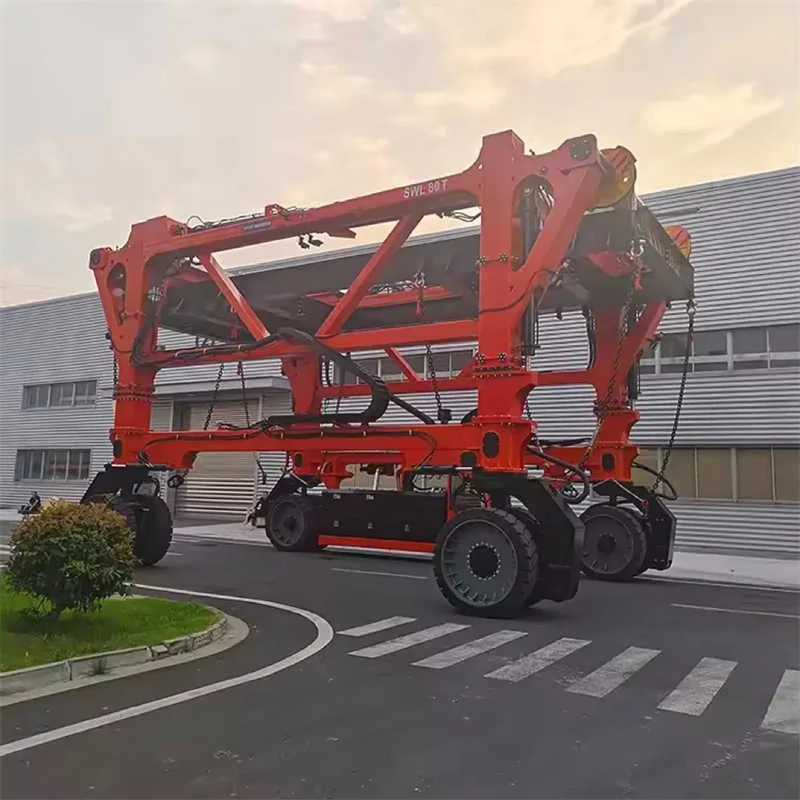
    container straddle carrier for transport and stacking
    container straddle carrier for transport and stacking
    Project planning notes

    Key points for this crane project.

    1. What Is an RMG Crane for a Container Yard?
    2. RMG Crane Selection Considerations
    3. RMG Crane Configurations Compared
    Read the technical guide

    What Is an RMG Crane for a Container Yard?

    An RMG crane, or rail-mounted gantry crane, travels on fixed runway rails and handles ISO containers with a telescopic spreader. The structure can span container rows, truck lanes, railway tracks or combinations of these operating zones.

    Fixed rails provide a repeatable travel path for precise positioning, grid-electric operation and progressive automation. RMG systems are therefore suited to permanent high-throughput blocks, intermodal rail terminals, inland container depots and marine-terminal transfer areas.

    The crane is only one part of the operating system. Rail alignment, foundations, power distribution, container transfer positions, safety zoning, terminal data and recovery procedures must be engineered as one coordinated project.

    RMG Crane Selection Considerations

    Container and Lift Profile

    Container sizes, maximum gross mass, high-cube share, reefer volume, out-of-gauge handling and single- or twin-lift duty establish rated load and spreader functions.

    Rail Gauge and Coverage

    Row pitch, rail tracks, truck lanes, service roads, safety clearances and cantilever transfer points define span, outreach and total crane width.

    Stacking and Throughput

    Stack tiers, clearance above the top container, annual TEU, peak moves, rehandle ratio, shifts and availability target control lift, speed and mechanism duty.

    Rails and Foundations

    Rail size, alignment tolerance, wheel loads, settlement limits, drainage, end stops and storm restraints require coordinated crane and civil calculations.

    Power and Environment

    Voltage, frequency, cable route, grid capacity, wind, temperature, salt fog, rainfall, dust and seismic inputs determine electrical and protective design.

    Control and Data Interfaces

    Cab, remote or automated operation; anti-sway; positioning; OCR; truck guidance; diagnostics; ECS and TOS interfaces need defined performance and ownership boundaries.

    RMG Crane Configurations Compared

    ConfigurationOperating StrengthPrimary Project CheckTypical Application
    Single-Cantilever RMGOne external transfer zone with a compact opposite sideTruck or rail interface position and maintenance accessSpace-limited depot or rail-transfer block
    Double-Cantilever RMGTransfer lanes or tracks on both sides of the rail gaugeOutreach, wheel loads, traffic separation and wind areaHigh-throughput container yard or intermodal terminal
    Cab or Remote-Control RMGDirect operator control with optional centralized workstationsVisibility, camera coverage, communications and recovery accessNew or upgraded yards with staged digitalization
    Automated RMGRepeatable unmanned cycles and coordinated block operationTOS/ECS integration, safety zoning, exception handling and data qualityPermanent high-density blocks with controlled traffic

    Published RMG Crane Specifications

    The following values are the published Henan Mine Crane RMG product-family range. Contract values remain project-specific and are confirmed in the approved technical specification and general arrangement drawing.

    ParameterRFQ Definition
    Lifting CapacityState load under spreader and any hook or special-lift duty
    SpanConfirm rail-center gauge, rows, tracks and clearances
    Lifting HeightConfirm stack tiers, high-cube containers and top clearance
    Work ClassSelect from load spectrum, cycles, shifts and design life
    Published TemperatureState project minimum, maximum, humidity and solar exposure
    Published Hoisting SpeedConfirm loaded and empty-spreader performance targets
    SpreaderDefine single, twin, reefer and out-of-gauge functions
    Power SupplyConfirm voltage, frequency, short-circuit level and cable route

    Final speeds require cycle analysis, structural checks and agreement on positioning accuracy.

    RMG Yard Layout and Stacking Geometry

    Rail gauge is measured between the crane rail centerlines, not by container-row count alone. The span must include row pitch, railway tracks or truck lanes inside the legs, clearance to fixed equipment and the permitted sway envelope.

    Cantilevers place transfer positions outside the runway. Outreach is set from the rail centerline to the spreader centerline at the exchange point, with structural clearance for trucks, wagons, terminal tractors and maintenance routes.

    Lifting height includes the highest planned container tier, the selected top clearance, spreader depth and operating tolerance. Block length, crane quantity and passing strategy must also be resolved before rail and power design is frozen.

    RMG vs. RTG for Container Yard Planning

    RMG and RTG cranes can handle the same ISO container flow, but they organize a terminal differently. The selection affects land use, civil works, power distribution, traffic control, fleet flexibility and the route to automation.

    Decision FactorRMG CraneRTG CranePlanning Effect
    Travel SystemFixed rails and repeatable runwayRubber tyres and block-change capabilityRMG favors permanent blocks; RTG favors operating flexibility
    Civil ScopeRails, beams or foundations, end stops and settlement controlHeavy-duty pavement, wheel paths and turning areasWhole-site civil cost must be compared, not crane price alone
    PowerNormally grid electric along a fixed blockDiesel-electric, hybrid, battery or grid-electricSubstation capacity and cable routing belong in the layout study
    AutomationFixed travel path supports repeatable positioningAutomation must also manage steering and block movementRMG is often selected for controlled automated blocks

    A lifecycle comparison should include equipment quantity, land capacity, rail or pavement works, energy, labor, maintenance, rehandles, expansion strategy and the financial effect of downtime.

    RMG Cycle Time, Fleet Size and Availability

    Rated speeds do not equal productive moves per hour. A realistic operating model separates mechanical motion from container identification, twistlock confirmation, final alignment, truck or wagon arrival, terminal-data handshakes and exception recovery.

    Demand Profile

    Annual TEU is converted into peak-hour lifts by import dwell, train windows, vessel exchange peaks, gate appointments and the share of loaded and empty containers.

    Cycle Components

    Hoist, trolley and gantry travel can overlap within safe limits. Spreader landing, twistlock checks, target confirmation and transfer-vehicle positioning remain separate cycle inputs.

    Operational Losses

    Rehandles, traffic conflicts, weather restrictions, shift changes, inspections, data exceptions and maintenance reduce net productive availability below theoretical output.

    Fleet Resilience

    Crane quantity must allow planned service, fault recovery and peak demand without isolating critical rail or truck exchange positions.

    A procurement specification should state the reference move, starting and ending coordinates, container mass, permissible simultaneous motions, transfer-vehicle assumptions and measured acceptance method. This turns a general moves-per-hour target into a testable performance requirement.

    Rails, Foundations and Power Infrastructure

    Rail and Alignment

    Rail section, fastening, gauge, straightness, level, joint detail and electrical grounding form part of the crane–civil interface schedule.

    Wheel Loads and Settlement

    Maximum, minimum, operating and storm wheel loads are issued for foundation design; differential settlement limits protect wheel sharing and skew control.

    End Stops and Storm Safety

    Buffers, end stops, rail clamps, storm pins or tie-downs are selected from travel speed, site wind and the terminal storm-securement plan.

    Electric Power

    Cable reel, cable trench, conductor system or project-specific supply is coordinated with substations, isolation, emergency power and maintenance access.

    Spreader, Anti-Sway and RMG Automation

    Container Interface

    A telescopic spreader handles 20 ft, 40 ft and 45 ft containers. Twistlock status, flipper control, skew correction, container detection and overload protection are specified around the container mix and operating method.

    Motion Control

    Variable-frequency drives, anti-sway, anti-skew, travel synchronization and target positioning shorten the final approach while protecting containers, trucks, wagons and adjacent stacks.

    Automation Scope

    Remote or automated RMG operation can combine cameras, laser or satellite positioning, OCR, truck guidance, safety scanners, equipment control and terminal operating system interfaces. Manual recovery and exception handling remain part of the acceptance plan.

    RMG Crane Price for Container Yard Projects

    Public online references reviewed in 2026 place rail-mounted container gantry cranes across a wide range because capacity, span, lift, cantilevers, duty, automation and delivery scope vary substantially.

    Public ReferenceComparison Note
    DGCRANE public configurationEquipment configuration reference; delivered scope requires confirmation
    DGCRANE public configurationIllustrates how drive scope changes the listed equipment value
    DGCRANE public configurationWider, taller and heavier-duty configuration
    2026 public market guideBroad equipment-market range rather than a project quotation

    These public figures are market references, not Henan Mine Crane quotations. A comparable commercial offer must state crane quantity, spreader, rails and electrification boundary, automation, civil interfaces, freight, erection, commissioning, testing, training, spare parts, taxes, Incoterm and warranty.

    RMG Maintenance, Spares and Lifecycle Cost

    Capital price is only one part of RMG ownership. Planned access, component standardization, diagnostic data, local service capability and critical-spares strategy affect availability throughout the crane’s working life.

    Maintenance Access

    Platforms, walkways, lighting, lifting points, trolley access, electrical-room clearance and safe isolation provisions should be reviewed on the general arrangement.

    Critical Spare Parts

    Commissioning spares, operating spares and long-lead strategic spares are separated by failure consequence, installed fleet size and local procurement time.

    Condition and Diagnostics

    Fault history, motor and drive status, brake monitoring, operating hours, overload records and alarm trends support planned intervention and faster recovery.

    Structural Protection

    Coating system, drainage, enclosure protection, corrosion allowance and inspection access are matched to marine salt, humidity, rainfall, dust and temperature exposure.

    A complete offer can schedule preventive-maintenance tasks, recommended tools, consumables, spare-parts quantities, training modules, warranty response and technical-document language. These items make competing quotations easier to evaluate on equivalent service scope.

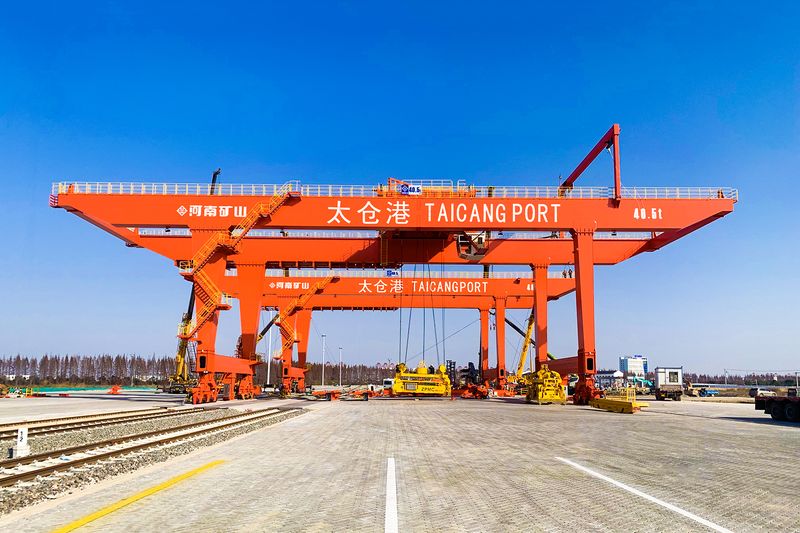
    5 t RMG Cranes for Taicang Port

    The project combined heavy container duty with remote operation and equipment-status visualization.

    The RMG system was integrated with the port’s intelligent logistics platform, allowing crane information to support coordinated yard operation. The case demonstrates the importance of defining both lifting equipment and digital interfaces in the project scope.

    Engineering and Procurement Deliverables

    Design Package

    General arrangement, design basis, wheel loads, rail reactions, power data, interface drawings, equipment list and control architecture.

    Manufacturing Quality

    Inspection and test plan, material traceability, welding records, NDT reports, electrical checks and factory functional testing.

    Site Acceptance

    Erection supervision, no-load and rated-load tests, safety checks, interface trials, performance testing, training, spares and handover records.

    RMG Crane RFQ Checklist

    The following project data allows structure, mechanisms, civil interfaces, controls and commercial scope to be priced on a consistent basis.

    1. Terminal type, location and applicable design standard
    2. Yard drawing with rail gauge, block length and transfer positions
    3. Container sizes, maximum gross mass and high-cube percentage
    4. Required stack tiers and clearance above the top container
    5. Cantilever reach on each side and obstacles below
    1. Annual TEU, peak hourly moves, operating shifts and design life
    2. Cab, remote or automated control and TOS/ECS interfaces
    3. Available voltage, frequency, grid capacity and cable route
    4. Rail data, foundation status and settlement criteria
    5. Temperature, wind, corrosion, seismic and rainfall data
    6. Destination, Incoterm, erection, testing and acceptance scope

    Frequently Asked Questions

    What is an RMG crane used for?

    An RMG crane stacks and transfers containers in fixed rail-mounted blocks at marine terminals, inland depots and intermodal rail facilities.

    How much does an RMG crane cost?

    Span, lift, cantilevers, work class, automation and delivered project scope determine the final quotation.

    What is the difference between an RMG and an RTG?

    An RMG travels on fixed rails and is suited to permanent, high-density, electric or automated blocks. An RTG travels on rubber tyres and offers greater flexibility between compatible yard blocks.

    Can an RMG serve railway wagons and truck lanes?

    Rail tracks, truck lanes or both can be arranged inside the span or below cantilevers when gauge, outreach, clearances and traffic controls are engineered accordingly.

    Can an RMG crane be fully automated?

    Automated RMG operation can include positioning, anti-sway, OCR, safety scanners, truck guidance, remote exception handling and TOS/ECS integration.

    What civil information is required before ordering an RMG?

    Required inputs include the runway plan, rail gauge, rail and fastening details, foundation capacity, settlement limits, drainage, end-stop arrangement and site survey data.

    How many RMG cranes are required for a container yard?

    Fleet quantity follows peak moves, productive cycle time, rehandles, block length, operating hours, planned maintenance and the required reserve margin.

    Related Container Yard Crane Products

    Rail-Mounted Gantry Crane

    Electric rail-guided handling for permanent high-density container blocks.

    Rubber-Tyred Gantry Crane

    Mobile multi-row stacking for flexible block allocation and phased growth.

    Container Straddle Carrier

    Point-to-point container transport and stacking within one mobile machine.

    Container Overhead Crane

    Fixed-area container handling for depots, logistics bays and covered facilities.

    Ship-to-Shore Crane

    Quayside vessel loading and unloading for marine container terminals.

    Portal Harbor Crane

    Flexible berth equipment for containers, general cargo and project cargo.

    Submit the yard plan, rail gauge, container mix, stacking height, cantilever reach, peak moves, power data, control level and destination for a project-specific RMG configuration and commercial scope.

    Discuss the crane arrangement for your project.

    An RMG project needs the stacking area and rail layout coordinated from the start. Show transfer positions, container routes and civil interfaces so the proposed crane envelope and automation scope can be checked. Share the load, available drawings, working cycle and site conditions with Henan Mine Crane so the required configuration and supply boundary can be discussed.

    Related crane configurations

    Rail-Mounted Gantry (RMG)

    View product parameters
    Lifting capacity: 35 t, 40.5 t, 50 tSpan: 18 – 35 mLifting height: 12.3 – 21 m

    Use an RMG for container transfer along a fixed rail layout. Select the lifting arrangement, yard coverage and positioning controls from the container flow and stacking requirements.

    Container Overhead Crane

    View product parameters
    Lifting capacity: 30-65 tSpan: 18-35 mLifting height: 8 – 20 m

    Transfer containers within a defined overhead runway area using a double-girder bridge and matched spreader. Container size, working clearance and the handling sequence determine the arrangement.

    Updated 2026 · Henan Mine Crane
  • Rebar Handling Cranes: Bundle Geometry and Transfer Planning

    Rebar Handling Cranes: Bundle Geometry and Transfer Planning

    Selection guide

    Rebar Handling Cranes: Bundle Geometry and Transfer Planning

    Rebar bundles need lifting points and handling routes suited to their length and condition. Describe the storage arrangement, attachment and working sequence so crane coverage and load control can be reviewed for the operation.

    Henan Mine CraneSelection guide · Updated 2026Crane selection, project scope and operating requirements
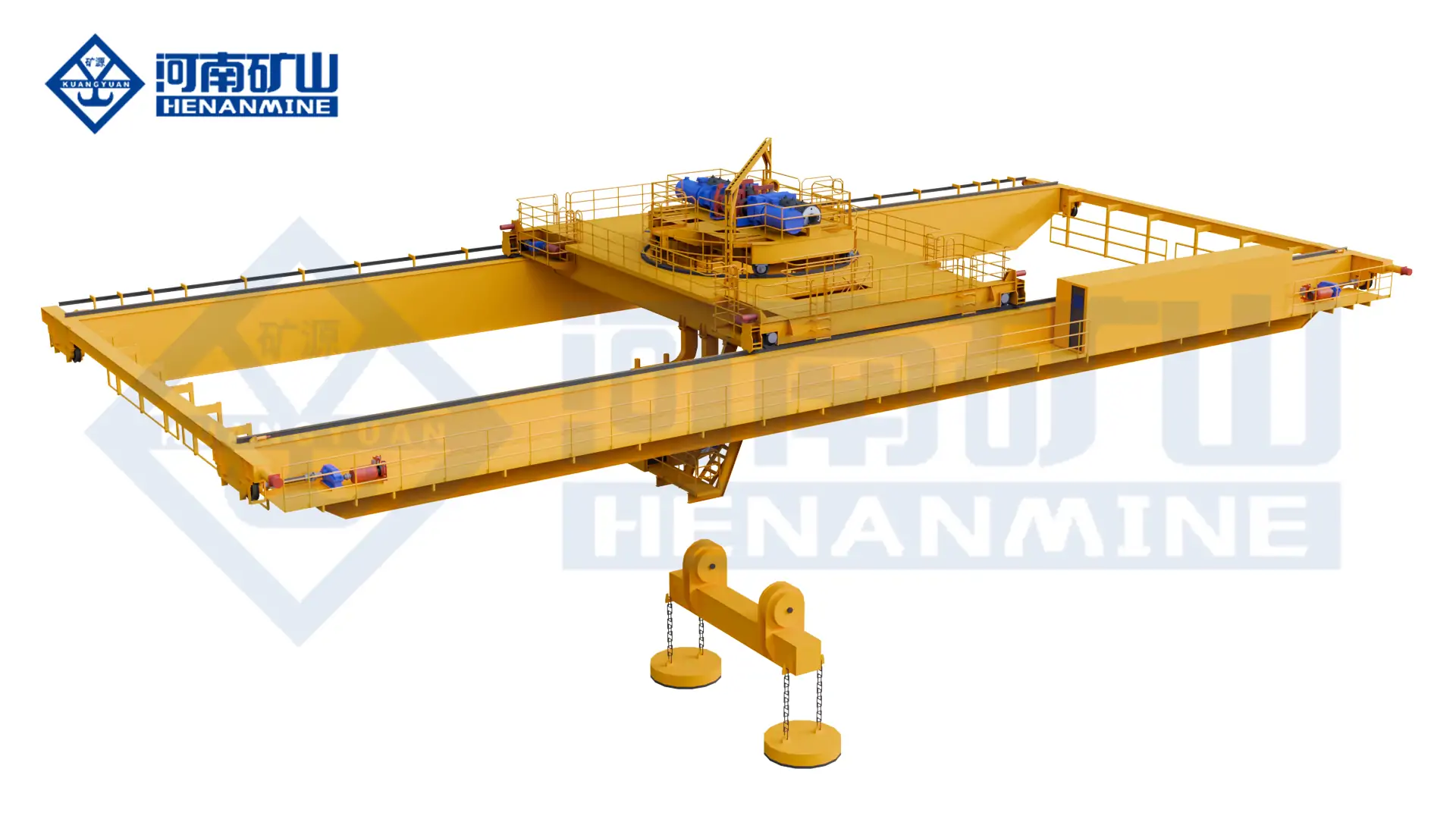
    Henan Mine Crane Upper Rotating Magnetic Overhead Crane
    Henan Mine Crane Upper Rotating Magnetic Overhead Crane
    Project planning notes

    Key points for this crane project.

    1. What Is a Rebar Handling Crane?
    2. Rebar Handling Crane Applications
    3. Components and Operating Principle
    Read the technical guide

    What Is a Rebar Handling Crane?

    A rebar handling crane is an overhead process crane equipped to lift and position straight reinforcing bars or bundled long steel. It supports rolling-mill finishing bays, rebar production lines, steel service centers, reinforcement fabrication plants, distribution warehouses, truck-loading areas and construction-material logistics facilities.

    Rebar creates a different lifting problem from compact unit loads. Its center of gravity can shift when bars are unequal, loose or partly withdrawn. The lifting system must distribute support along the bundle, maintain orientation, avoid excessive sag and place the material within the available rack, truck or processing-line clearance.

    Magnetic handling is efficient for validated ferromagnetic black rebar, but it is not automatically suitable for every reinforcing product. Steel grade, bar diameter, rib geometry, rust or scale, surface coating, temperature, air gaps, bundle shape and the number of bars retained by each magnet all affect the lifting result. Epoxy-coated, galvanized or stainless reinforcing bar may require a protected mechanical system instead.

    Henan Mine Crane combines the lifting attachment with an electromagnetic hanging crane, electromagnetic bridge crane, double-girder bridge crane or process-duty metallurgical platform according to the approved load and operating route.

    Rebar Handling Crane Applications

    Rolling-Mill Finishing Bay

    Transfer cut-to-length bars from collection beds to inspection, bundling, weighing, storage and dispatch positions.

    Finished-Rebar Warehouse

    Stack, retrieve and sequence bundles by heat, diameter, length, grade, customer order or vehicle-loading plan.

    Rebar Fabrication Plant

    Feed straight bars to cutting and bending equipment and move prepared reinforcement assemblies within defined handling zones.

    Steel Service Center

    Handle mixed long-steel inventories where rebar, round bar, sections and fabricated bundles require controlled segregation.

    Truck and Rail Loading

    Load or unload bundles while respecting vehicle geometry, exclusion zones, trailer support points and secured-load procedures.

    Outdoor Rebar Yard

    Serve covered or open storage with project-specific wind, rain, corrosion, temperature and electrification provisions.

    Components and Operating Principle

    1. Bridge and end carriages: carry the trolley and distribute vertical, longitudinal and transverse reactions to the runway.
    2. Hoisting and trolley mechanisms: provide main and creep speeds selected from cycle time, placement tolerance and load control.
    3. Lifting beam: establishes the pickup-point spacing needed to control long bundles and may be fixed, rotating or telescopic.
    4. Load-engagement system: uses purpose-selected magnets, sling points, protected hooks, clamps or a combination arrangement.
    5. Power and controls: coordinate crane motions, magnet circuits, attachment status, limits, alarms and optional WMS/MES communication.
    6. Safety and feedback: monitor overload, position, travel limits, skew or anti-collision functions, magnet state and permitted release conditions.

    Capacity basis: the crane is sized for the maximum gross suspended load, including rebar, lifting beam, magnets or clamps, hook block, cables and every other below-hook component. A bundle payload cannot be used as the crane rating without adding the attachment mass and design effects.

    Rebar Handling Crane Selection Considerations

    Selection begins with the complete rebar and route matrix rather than a nominal tonnage. The following inputs determine the crane, beam, pickup method and controls.

    Bundle Matrix

    Minimum and maximum mass, bar length and diameter, bundle diameter or width, bars per bundle, number of bundles per lift and center-of-gravity variation.

    Material and Surface

    Steel grade and magnetic response; black, galvanized, epoxy-coated or stainless surface; temperature, scale, oil, moisture and acceptable contact marks.

    Bundle Integrity

    Tie type, quantity and position; loose or nested bars; permitted sag; overhang; separation method; damaged-bundle and partial-bundle handling procedure.

    Duty and Throughput

    Lifts per hour, shifts, annual hours, load spectrum, travel distances, required cycle time, peak dispatch rate and production consequence of downtime.

    Storage and Vehicle Interface

    Rack or dunnage geometry, stack height, aisle width, truck or rail-car profile, pickup clearance, release height, exclusion zones and required rotation.

    Building and Integration

    Rail-center span, runway length and elevation, wheel-load limits, headroom, approaches, power supply, cabin visibility, positioning tolerance and WMS/MES protocol.

    Rebar Handling Crane Configurations Compared

    The lifting method is selected from the rebar grade, coating, bundle condition, throughput and layout. No single configuration is appropriate for every reinforcing-steel product.

    ConfigurationSuitable Handling PatternEngineering AdvantagesCritical Limitations and Controls
    Fixed Electromagnetic Beam CraneRepeated transfer of validated ferromagnetic black-rebar bundles in one principal orientationFast pickup and release without manual sling connection; multiple magnets distribute supportMagnetic test, bundle retention, air gaps, temperature, power-failure strategy and fixed orientation
    Rotating Electromagnetic Beam CraneWarehouses or loading bays requiring bundle alignment at different anglesCombines magnetic pickup with controlled horizontal orientation and compact stackingHigher headroom, rotation envelope, slewing lock, cable management, controls and maintenance scope
    Hook Crane with Spreader Beam and SlingsMixed grades, coated bars, low-to-medium cycles and nonmagnetic or uncertain materialsBroad material compatibility and visible mechanical support at defined pickup pointsManual rigging exposure, sling-angle effects, coating protection, tag-line rules and longer cycle time
    Mechanical Rebar Clamp or Tong CraneStandardized bundle sizes requiring powered engagement without magnetic pickupPositive mechanical engagement and possible automation for a controlled bundle envelopeContact pressure, bundle-size range, open/closed feedback, retention and protected contact faces
    Automatic Rebar Warehouse CraneHigh-volume storage with stable product data, fixed coordinates and controlled traffic zonesAutomated task execution, inventory traceability, sequencing and repeatable placementReliable identification, position feedback, zone control, WMS/MES interface and recovery logic

    A rotating magnetic beam can reduce manual intervention and improve storage density, but it adds slewing machinery, magnet circuits, sensors, emergency-power provisions and software. Lifecycle maintenance and production-critical spares should be evaluated together with the initial equipment price.

    Rebar Handling Crane Technical Specification Framework

    Final values are confirmed on the approved technical schedule. Published product-family positions support preliminary configuration but do not establish a guaranteed rebar-handling combination.

    Specification ItemRequired InputEngineering OutputContract Evidence
    Rated loadMaximum rebar plus complete beam, magnets, rigging and blockCrane rating and permitted attachment combinationsLoad schedule and nameplate basis
    Bundle envelopeLength, mass, diameter, bar count, grade, coating and bundles per liftApproved handling matrix and pickup-point arrangementAttachment data sheet and operating limits
    Span, lift and approachesRunway drawings, rail centers, elevations, rack and vehicle clearancesGeneral arrangement and complete load coverageApproved GA and clearance study
    Duty classificationLoad spectrum, lifts, starts, shifts, annual hours and process criticalityCrane and mechanism classifications under the chosen standardDuty calculation and design basis
    Motion performanceCycle target, travel distances, placement tolerance and permitted swayMain/creep speeds, acceleration, braking and anti-sway functionsDrive schedule and witnessed cycle test
    Runway reactionsBuilding capacity, rail, supports and permissible horizontal loadsMaximum/minimum wheel loads and longitudinal/transverse forcesReaction schedule for structural approval
    Controls and interfacesOperating modes, location accuracy, identification, zones and WMS/MES messagesControl narrative, I/O, protocols and fallback modeFunctional specification and acceptance test

    Published Henan Mine Crane Reference Platforms

    Product PlatformPossible Rebar RoleApplication Boundary
    Upper-Rotating Magnetic Overhead CraneLong bars requiring rotation, alignment and grouped magnetic pickupPublished notation must be reconciled with total payload, beam and magnet mass
    Electromagnetic Bridge CraneFerromagnetic steel transfer using a project-selected magnet systemBar geometry, bundle retention, duty and magnetic performance require validation
    Electromagnetic Hanging CraneFixed or rotating-beam long-steel handlingFinal magnet array, temperature range and retention strategy are process-defined
    Custom Spreader, Sling or Clamp CraneCoated, nonmagnetic, mixed or irregular reinforcing-steel productsFinal configuration follows representative-load trials and the approved handling matrix

    Published ranges describe product families. They are not a promise that every capacity, span, lift, duty and attachment can be combined in one crane.

    Rebar Bundle and Lifting-Attachment Engineering

    Long bundles need several support or pickup points. Magnet quantity and spacing, sling separation or clamp location are established from the maximum length, minimum bundle stiffness, permissible sag and center-of-gravity range. The outer pickup points must control end droop without overstressing individual bars or bundle ties.

    Representative-load trials are required when lifting performance depends on magnetic contact, friction, coating, bar nesting, tie condition or automated bundle recognition. A solid test weight does not reproduce the air gaps and bar-to-bar movement of a real rebar bundle.

    Magnet Array

    Magnet type, pole geometry, grouped excitation, current control and spacing follow bar diameter, bundle profile, air gaps, temperature and required pickup combinations.

    Spreader and Sling Geometry

    Beam length, sling angles, rated components, protective sleeves and pickup spacing prevent excessive bending and coating damage.

    Rotation and Telescoping

    Rotation is justified by the rack and vehicle approach; telescoping is justified by a wide length range. Both functions require mechanical limits, interlocks and maintenance access.

    Illustrative Long-Rebar Duty

    This example explains the sizing method and is not a standard rating or delivered-project claim.

    Handling Black, Galvanized, Epoxy-Coated and Stainless Rebar

    Rebar ConditionPrimary Handling ConcernTypical Engineering DirectionRequired Verification
    Black carbon-steel rebarIrregular rib contact, scale, rust, air gaps and bundle movementValidated magnetic beam or multi-point mechanical liftWorst-case representative bundle and secure retention of all bars
    Galvanized rebarZinc surface marking, abrasion and contaminationProtected slings or qualified contact system; magnet only after testing and surface approvalPermitted marks, contact material and customer coating requirements
    Epoxy-coated rebarChipping, scratching, local pressure and impact damagePadded spreader, synthetic slings or approved protected clamp; avoid unprotected chains and draggingApplicable coating specification, allowable damage and repair procedure
    Stainless or specialty rebarMagnetic response varies by alloy and processing condition; ferrous contamination may be prohibitedDedicated protected mechanical system unless magnetic suitability is formally provenAlloy, magnetic test, contamination controls and segregated rigging requirements

    Load Stability, Magnetic Safety and Release Control

    Magnet-Proven Load Envelope

    Every approved grade, diameter, bundle shape, temperature and pickup combination is documented.

    Power-Failure Retention

    Emergency supply or electro-permanent strategy, monitoring and safe-lowering time are defined by risk assessment.

    Release Interlock

    Demagnetization or clamp opening is permitted only inside the defined placement zone and release-height window.

    Traffic and Collision Control

    Crane separation, restricted zones, vehicle presence and end approaches are supervised by agreed devices and logic.

    Motion Control

    VFD acceleration, braking, creep speed and optional anti-sway reduce bundle movement near racks and vehicles.

    Inspection Access

    Walkways and service positions support inspection of ropes, brakes, beam structure, magnets, cables and attachment pins.

    Manual, Semi-Automatic and Automatic Rebar Handling

    Automation level follows product repeatability, inventory data quality, traffic risk, throughput and the facility’s ability to maintain sensors, networks and software.

    Control LevelTypical FunctionsAppropriate ConditionsRequired Definition
    Manual controlCabin or radio control, variable speeds, load display, cameras, magnet controls and interlocksMixed products, irregular bundles and experienced operator supervisionSightlines, operator location, communication, rigging access and exclusion zones
    Semi-automaticAutomatic travel or rotation to stored positions with operator-authorized pickup and releaseRepeated racks or loading stations with occasional exceptionsTarget coordinates, handover points, confirmation logic and exception recovery
    Fully automaticTask receipt, bundle identification, pickup, transport, stacking, retrieval and completion feedbackControlled warehouses with standardized bundles, stable data and segregated trafficWMS/MES interface, coordinate system, safe-state logic, cybersecurity and manual fallback

    Bundle Identification

    Barcode, RFID, production data or machine vision associates each bundle with heat, grade, diameter, length, mass, order and storage position.

    Positioning and Anti-Sway

    Absolute position feedback, rotation sensing and load-dependent motion control support repeatable pickup and placement.

    Inventory Integration

    The interface defines task ownership, material identity, source, destination, status, alarms, time synchronization and recovery after communication loss.

    Design Basis, Inspection and Acceptance

    The purchase specification identifies one coherent design route.

    Possible Design Routes

    A project may use ISO crane-classification principles with applicable crane and electrical standards; EN 13001 with EN 15011 and EN 13155 where applicable; or a North American route using CMAA specifications with applicable ASME B30.2, B30.20 and ASME BTH-1 requirements. A Chinese-standard route may reference the applicable bridge-crane and lifting-magnet standards. The contract states the selected basis.

    Engineering Deliverables

    General arrangement, wheel loads, duty calculation, rebar matrix, beam and attachment data, magnetic study where applicable, clearance study, electrical drawings, control narrative, interface list, inspection plan and maintenance-access arrangement.

    Manufacturing Inspection

    Material traceability, welding procedures and welder qualification, specified NDT, dimensional checks, machinery alignment, beam and attachment inspection, electrical-panel inspection, cable management, coating and documentation records.

    FAT and Site Acceptance

    Functional tests verify motions, brakes, limits, overload protection, rotation, attachment engagement, alarms and available automation. Site tests then cover runway, erection, load testing, representative rebar bundles, power-loss response, placement tolerance, interfaces, training and handover.

    Relevant Long-Steel and Steel-Mill Experience

    Project references are evaluated by process similarity. The following Henan Mine Crane references demonstrate rotating electromagnetic material handling and process-based crane-fleet planning. A new rebar crane still requires its own bundle matrix, lifting study and acceptance criteria.

    Overhead Rotating Electromagnetic Beam Crane

    The published platform combines a rotating trolley, electromagnetic beam, grouped magnetic control and variable-frequency motion for ferromagnetic steel-material transfer.

    These structural and control principles are relevant to straight-rebar warehouses, while the magnet geometry, bundle envelope and retention strategy remain rebar-specific.

    34 Cranes for a 4.5-Million-Tonne Plate Facility

    The reference demonstrates process-based fleet planning: rebar production, bundling, warehousing, dispatch and maintenance may require different capacities, speeds and attachments.

    Reference boundary: these projects demonstrate relevant crane engineering, magnetic-material handling and steel-mill integration capability; they do not establish the final rating, magnet array, cycle performance or price of a new rebar handling crane.

    Rebar Handling Crane Budget and Supply Scope

    A rebar-handling budget starts with the bundle matrix, maximum gross suspended load and handling sequence. Specify whether the proposal covers hook lifting, a magnetic beam or an automated storage operation.

    Budget packageScope to state in the enquiry
    Crane and lifting beamBundle lengths, weights, lifting points, beam mass, magnet arrangement and duty
    Positioning and identificationRequired placement tolerance, storage map, load identification and operating zones
    Automation interfacesPLC functions, warehouse data exchange, interlocks and recovery procedures
    Site and handoverRunways, power feed, installation, commissioning, testing, training and spares

    Ask Henan Mine Crane to separate mechanical equipment, controls, integration and site work in the quotation. A hook-crane equipment price cannot be treated as the installed price of an automated rebar warehouse.

    Rebar Handling Crane RFQ Information

    A complete enquiry allows the crane, beam, pickup method, runway reactions, controls and commercial scope to be priced on the same basis.

    Rebar and Bundle Data

    Grade and magnetic properties; black, galvanized, epoxy-coated or stainless condition; minimum/maximum bundle mass, length and diameter; bar diameter; bars and bundles per lift; tie details; temperature; drawings and photographs.

    Process and Throughput

    Pickup and placement stations; storage sequence; lifts per hour; shifts; annual hours; load spectrum; travel distances; target cycle time; peak vehicle loading; production consequence of an outage.

    Building and Storage Layout

    Span, runway length, rail section and elevation; required lift; approaches; headroom; rack, dunnage, truck and rail-car drawings; existing wheel-load limits; installation access and site survey.

    Controls and Commercial Scope

    Manual or automatic operation; rotation; positioning tolerance; identification and WMS/MES protocol; voltage and frequency; environment; destination; design standard; Incoterm; runway, electrification, installation, testing and documentation scope.

    Frequently Asked Questions

    How is rebar handling crane capacity calculated?

    Capacity begins with the maximum total rebar payload and adds the lifting beam, magnets or clamps, rigging, hook block and all other suspended equipment. Duty, unbalanced loading and dynamic effects are then applied under the selected design standard.

    Can magnets safely lift rebar bundles?

    Only after validating steel grade, bar diameter, rib profile, bundle shape, air gaps, surface condition, temperature and retention of every bar. Representative bundles must be tested across the approved operating envelope.

    Is a fixed or rotating beam more suitable?

    A fixed beam is simpler where pickup and placement share one orientation. Rotation is justified where racks, lines or vehicles require different angles, but it adds headroom, machinery, controls and inspection requirements.

    How should epoxy-coated rebar be handled?

    The lifting system should use protected contact faces, padded spreaders or suitable synthetic slings under the applicable coating specification. Unprotected chains, sharp edges, dragging and uncontrolled impact should be excluded.

    How much does a rebar handling crane cost?

    A final price requires a fully reconciled technical and commercial scope.

    Can an existing runway be reused?

    Only after rails, beams, brackets, columns, connections and foundations are checked for condition, alignment, fatigue and the new crane reactions. The magnetic beam and long-span load distribution can change wheel loads materially.

    Can the crane connect to WMS or MES?

    The interface specification defines tasks, bundle identity, coordinates, stock status, protocol, time synchronization, safety boundaries, manual override and recovery after a network interruption.

    What should be tested before handover?

    Testing covers crane motions, brakes, limits, overload protection, rotation, attachment engagement and release, representative bundles, emergency power response, placement tolerance, safety zones, interfaces and manual recovery under agreed criteria.

    Related Rebar and Long-Steel Handling Products

    Each platform addresses a different load, material condition, duty or automation requirement. Final selection follows the approved rebar and process data.

    Electromagnetic Hanging Crane

    Fixed or rotating magnetic-beam platform for approved ferromagnetic long-steel loads.

    Electromagnetic Bridge Crane

    Magnetic pickup platform for compatible steel materials with project-defined controls.

    Double-Girder Bridge Crane

    Configurable platform for protected spreaders, slings, clamps and other long-load attachments.

    Metallurgical Bridge Crane

    Process-duty bridge platform for specified steel-production and high-duty environments.

    Automatic Magnetic Handling Crane

    MES-connected material-transfer reference with unattended operation and traffic coordination.

    Steel Mill Crane Systems

    Plant-wide planning for production, long-steel storage, dispatch and maintenance duties.

    Submit the rebar grade and surface condition, minimum and maximum bundle mass and dimensions, bar diameter, bundles per lift, tie arrangement, handling route, cycle rate, storage and vehicle drawings, span, lift, runway data, control level, power supply, destination and supply boundary. Henan Mine Crane will prepare a configuration-based technical and commercial proposal.

    Discuss the crane arrangement for your project.

    Rebar bundles need lifting points and handling routes suited to their length and condition. Describe the storage arrangement, attachment and working sequence so crane coverage and load control can be reviewed for the operation. Share the load, available drawings, working cycle and site conditions with Henan Mine Crane so the required configuration and supply boundary can be discussed.

    Related crane configurations

    Upper Rotating Magnetic Overhead Crane

    View product parameters
    Lifting capacity: 5+5–25+25 tListed spans: 25–34 mLifting height: 10–16 m for the listed arrangements

    A rotating magnetic beam for positioning long steel products. Magnet arrangement, material temperature and power-loss protection require a matched specification.

    Electromagnetic Overhead Crane

    View product parameters
    Lifting capacity: 5 – 32 tSpan: 10.5 – 31.5 mLifting height: 6 – 30 m

    Lift ferromagnetic steel with a matched electromagnetic lifting arrangement. Product shape, contact area, temperature and handling frequency determine the magnet and crane configuration.

    Updated 2026 · Henan Mine Crane
  • Railway Maintenance Cranes: Workshop Tasks and Component Transfers

    Railway Maintenance Cranes: Workshop Tasks and Component Transfers

    Selection guide

    Railway Maintenance Cranes: Workshop Tasks and Component Transfers

    Railway maintenance includes lifts with different load geometry and required positions. Define the components, lifting points and transfer route so the crane arrangement can be matched to the actual service tasks.

    Henan Mine CraneSelection guide · Updated 2026Crane selection, project scope and operating requirements
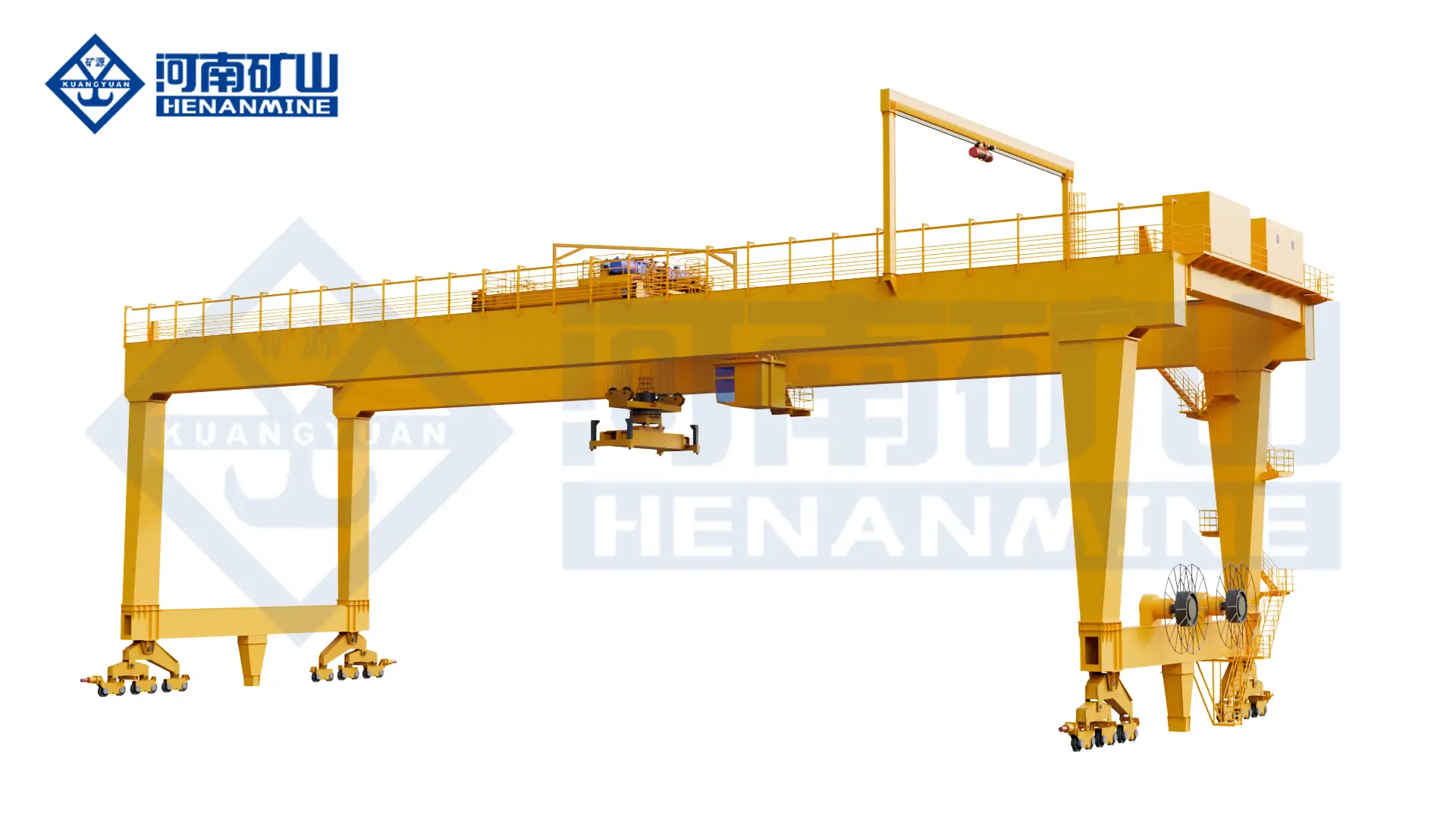
    Henan Mine Crane Rail-Mounted Container Gantry Crane
    Henan Mine Crane Rail-Mounted Container Gantry Crane
    Project planning notes

    Key points for this crane project.

    1. What Is a Railway Maintenance Crane?
    2. Plan the Lift from Vehicle to Workstation
    3. Railway Maintenance Crane Selection Considerations
    Read the technical guide

    What Is a Railway Maintenance Crane?

    A railway maintenance crane is lifting equipment selected for servicing, overhauling or assembling rail vehicles and railway assets. Inside a depot, a bridge crane moves components above a maintenance road. In an outdoor repair or storage yard, a gantry crane can serve a fixed travel corridor without relying on a roof-supported runway. A semi-gantry crane can connect a building-supported side to a ground-level rail where the layout permits.

    The term also appears in searches for self-propelled railborne cranes used for track work and accident recovery. Those machines require rail-vehicle approvals, route compatibility and on-track operating rules. The fixed overhead and gantry systems shown here are for depots and yards; they are not railborne breakdown cranes.

    Within one covered workshop, selection narrows to building runways, hook height and the component path. A depot-wide purchase also covers outdoor yards, civil works, simultaneous lifts and fleet availability.

    Plan the Lift from Vehicle to Workstation

    A crane schedule should follow each component through removal, transfer, repair and reinstallation. In a depot, a traction motor may move from a vehicle on a pit road to a service stand. A bogie may travel from a drop-table area to inspection, washing or overhaul positions. Outdoor storage or loading may need a separate gantry because the indoor bridge does not reach the yard.

    • Record vehicle type, maintenance task and approved pickup points.
    • Mark the load path across tracks, pits, doors, platforms and workstations.
    • Set the heaviest complete suspended mass, including beam and rigging.
    • Count ordinary lifts and exceptional heavy or multi-point lifts separately.

    A fleet plan can use one crane type for repetitive general work and a different engineered solution for occasional long or high-consequence lifts. Do not size every bay from a single headline vehicle weight.

    Railway Maintenance Crane Selection Considerations

    Location and coverage

    Choose by where the load must move: under a roof, along a fixed outdoor track or between a building wall and yard rail.

    Complete load and lift points

    Include the component, beams, slings and clamps; obtain vehicle-maker lifting instructions for bogies or bodies.

    Structure and civil works

    Check roof or runway capacity for bridge cranes and ground rails, drainage and foundations for gantries.

    Duty and availability

    Specify lifts per shift, load spectrum, operating hours, maintenance access and the consequence of a crane being out of service.

    The procurement comparison should keep crane equipment, civil works, electrical installation, commissioning and lifting attachments as separate priced lines.

    Crane Configurations by Maintenance Location

    Maintenance locationConfiguration to evaluateDeciding interface
    Indoor vehicle or component baySingle- or double-girder bridge crane.Runway rail centers, roof clearance, hook approach and structural wheel loads.
    Long assembly or two-point taskDouble-trolley bridge crane or a specifically engineered multi-point arrangement.Individual hook ratings, combined load, synchronization and lift plan.
    Open maintenance yardSingle- or double-girder gantry crane.Travel-rail route, foundations, vehicle clearances, power and wind conditions.
    Building-to-yard edgeSemi-gantry crane where one side has an adequate elevated support.Wall-side runway, ground rail alignment and differential settlement.
    Track renewal or derailment responseSpecialist railborne or road-rail crane.Rail vehicle approvals, route limits, outriggers and recovery plan.

    Select a fixed crane from the actual service envelope. A railborne crane is a different procurement category from a depot bridge or yard gantry.

    Technical Data That Determines the Crane

    InputSpecifyPurchase consequence
    CapacityMaximum complete suspended mass and load distribution at each hook.Sets hoist, bridge, brakes, wheels and support reactions.
    GeometryBridge span or gantry rail gauge, travel length, hook height and approach limits.Defines which tracks and workstations are truly served.
    Operating dutyLifts per hour, shifts, average and maximum load frequency.Changes machinery life, controls and service intervals.
    PrecisionPositioning requirements at pins, stands, drop pits and fixtures.May justify variable-speed motions and anti-sway controls.
    SiteElectrical supply, indoor/outdoor exposure, drainage and maintenance access.Determines protection, civil work and power distribution.

    For a retrofit, an approved general arrangement should follow an actual site survey. For a new depot, send maximum wheel loads and electrical demands to the civil and building designers before they freeze the structural scheme.

    One Crane or a Depot-Wide Fleet?

    A single bridge crane may cover several adjacent work positions only when its runway reaches them, the operating routes remain clear and simultaneous maintenance demand is low enough. Multiple cranes become relevant when separate bays work at the same time or when an indoor crane cannot reach an outdoor yard.

    Estimate peak overlapping lifts by task and bay, then check whether each crane can reach pickup and landing positions without crossing an occupied road. Separate routine handling from rare bogie, carbody or recovery lifts. Availability planning should also state whether maintenance can continue while one crane is isolated for service.

    For outdoor work, compare a shared gantry travel corridor with separate local cranes. Rail crossings, road vehicles, parked rolling stock, turnouts and pedestrian access can limit a theoretically large coverage area.

    Bridge Crane, Yard Gantry or Railborne Crane?

    Bridge crane

    Best evaluated where an engineered building runway exists and the lift stays within a workshop. Leaves the floor free but transfers reactions into the structure.

    Gantry crane

    Best evaluated for a fixed outdoor maintenance route or storage/transfer area. Requires travel rails or an engineered surface and a clear path for legs.

    Railborne crane

    Used for trackside installation, infrastructure work or recovery at changing locations. Must be selected as a rail vehicle with route and operational approvals.

    A container RMG is optimized for container handling at a freight terminal. It should not be specified for bogie or machinery maintenance merely because both gantries run on ground rails.

    Bogie, Wheelset and Long-Load Attachments

    Component-specific lifting gear

    Bogies, wheelsets, traction motors and gearboxes have different centers of gravity and pickup points. The attachment must match the component and the vehicle maker’s instructions. Include lifting beams, hooks, clamps and rigging in the rated load calculation and inspection plan.

    Two-point and multi-point lifting

    A long load may need two hooks on one crane, or another engineered arrangement. Specify the rating of each hoist, maximum combined load, hook spacing, load sharing, control mode, monitoring and response to a fault. A complete carbody lift needs a vehicle-specific design and approved procedure; a standard crane’s nameplate rating is not sufficient evidence.

    Movement quality

    Low-speed hoisting and travel, predictable braking and suitable operator sightlines matter during installation onto stands and fixtures. State the required handling task in the RFQ so the control scheme can be evaluated rather than assumed.

    Runways, Ground Rails and Power

    Bridge cranes need a verified runway span, rail elevation, beam condition and available headroom. Gantry cranes need the travel-rail geometry, ground bearing or foundation design, drainage and safe separation from vehicle and pedestrian routes. Both need a power route that avoids inspection pits, door movements and maintenance access.

    At electrified facilities, define the traction-power isolation boundary and which authority controls it. Crane insulation, if separately specified, does not substitute for isolation or site electrical safety rules. Include earthing, conductor position and emergency-stop zoning in the interface review.

    For a yard gantry, also establish the parked position, end stops, wind monitoring and storm-securing method appropriate to the site.

    Safe Operation and Acceptance

    The purchase specification should list overload protection, hoist and travel limits, emergency stop, buffers, alarms, braking and maintenance access. It should also state the local crane rules and railway operator procedures that apply at the destination. Load-test and acceptance arrangements must be agreed before delivery.

    Commissioning should prove travel clearances, electrical functions, braking, control modes and each special attachment. Multi-point lifts require a documented procedure, defined exclusion zone and a competent lifting team. Vehicle movement, pit access and adjacent track use must be controlled during the lift.

    Provide operators and maintainers with the approved drawings, manuals, inspection records, spare-parts list and a planned maintenance schedule for the installed system.

    Published Railway Maintenance Projects

    Lahore Orange Line depot, Pakistan

    Henan Mine Crane reports supplying 32 cranes of various types for the metro line’s operation and maintenance project. Its case states that equipment in the vehicle section and parking area supports vehicle maintenance and commissioning. The published case does not assign a capacity or crane type to each of the 32 units. View project record

    Xi’an locomotive maintenance, China

    Henan Mine Crane’s case identifies a KSQ new double-girder crane for Xi’an Railway Bureau’s high-power locomotive maintenance project, dated October 2024. The source describes the crane’s modular layout but does not publish its capacity or span. View project record

    These records establish railway-maintenance supply experience. The crane schedule for a new depot must still be built from its own vehicle fleet, lift paths and structural conditions.

    Railway Maintenance Crane Price and Project Budget

    Public 2026 supplier prices, checked on 28 September 2026, can frame an equipment budget. They describe standard industrial bridge and gantry cranes, not a completed railway maintenance facility.

    These are market references, not Henan Mine Crane project offers. Shipping, insurance, taxes, foundations, runway or yard rails, power distribution, installation, commissioning, load testing and vehicle-specific lifting fixtures are outside or not defined in these equipment ranges. Synchronized multi-hook systems and railborne recovery cranes need separate engineered quotations. Compare supplier bids only after the same exclusions and delivery terms are shown line by line.

    Lifecycle Planning for a Maintenance Depot

    A depot crane is part of the maintenance timetable. The technical offer should therefore state inspection points, access to brakes, drives and ropes, recommended spares, fault reporting and a method to isolate one crane without disabling unrelated bays. Outdoor gantries also need a site-specific corrosion and weather-protection plan.

    For a fleet of cranes, standardizing controls and critical spare parts where technically appropriate can simplify maintenance. Ask suppliers to identify which components are common across models and which are unique to a heavy or dual-trolley unit.

    Engineering and Procurement Deliverables

    • Crane schedule by bay and yard, with rated loads, spans or rail gauges, hook heights and duty.
    • General arrangements showing lift paths, obstacles, approaches and maintenance access.
    • Maximum wheel loads, foundation or runway reactions, motor power and conductor route.
    • Control narrative, safety-device list and drawings for each special lifting attachment.
    • Factory inspection, site-test plan, manuals, spares, training and service scope.

    The facility structural engineer and railway operator should review the relevant interface documents before fabrication and installation.

    Railway Maintenance Crane RFQ Checklist

    Information to sendRequired detail
    Maintenance dutyVehicle types, components, maximum complete load, lifting points and lift frequency.
    LocationWorkshop, covered edge, yard or on-track work; mark every pickup and landing point.
    GeometryRunway span or gantry gauge, travel length, hook height, pit and track levels, obstacles.
    Site servicesPower supply, structural drawings, ground conditions, weather exposure and local rules.
    Commercial scopeCrane only or installed package, destination, Incoterm, testing, training and spares.

    For a multi-point or whole-vehicle lift, send the vehicle manufacturer’s approved lifting information and request a separate engineered concept.

    Railway Maintenance Crane FAQ

    What crane is used for railway maintenance?

    Indoor rolling-stock maintenance commonly uses a bridge crane; a fixed outdoor service corridor may use a gantry or semi-gantry. Trackside construction and recovery use specialist railborne or road-rail equipment.

    How is a railway maintenance crane different from a rail workshop overhead crane?

    A rail workshop overhead crane is one indoor bridge-crane solution. Railway maintenance crane is a broader buying category covering depot bridges, outdoor gantries and the question of specialist on-track equipment.

    Can a gantry crane lift a railway carbody?

    Only when the vehicle lifting points, load sharing, gantry rating, attachments, ground rails and an approved lift procedure have been engineered together. A general-purpose gantry rating alone is insufficient.

    Is one crane enough for a depot?

    That depends on simultaneous lifts, runway coverage, heavy-lift frequency and whether maintenance can continue during crane service. Build a bay-by-bay task schedule before deciding fleet size.

    What should be included in a railway maintenance crane quote?

    Rated load, geometry, duty, control, attachments, wheel loads, site interfaces, testing, delivery term, exclusions and service documents should be stated explicitly.

    How much does a railway maintenance crane cost?

    Public 2026 industrial crane equipment ranges vary from thousands to tens of thousands of US dollars for common bridge and gantry configurations. A depot-ready system depends on civil works, electrical scope, lifting fixtures and installation; railborne recovery cranes are a separate quote category.

    Related Railway Maintenance Crane Products

    Compare the available product families by maintenance location and support structure. Final suitability follows the approved site and lift calculations.

    Double-Girder Bridge Crane

    Indoor heavy-component handling for locomotive and rolling-stock overhaul bays.

    Single-Girder Overhead Crane

    An indoor option for routine lighter component transfers.

    Double-Trolley Overhead Crane

    Two-hook platform for an engineered long-load or coordinated lift.

    Single-Girder Gantry Crane

    Fixed outdoor yard route for suitable lighter maintenance loads.

    Double-Girder Gantry Crane

    Outdoor heavy-component lifting where rail and foundation design allow.

    Semi-Gantry Crane

    A building-to-yard edge option with one elevated runway and one ground rail.

    Build the Crane Schedule Around the Maintenance Plan

    Send the bay and yard drawings, heaviest complete lifts, hook routes and operating cycle. Henan Mine Crane can prepare a site-specific equipment configuration and itemized commercial offer.

    Written by: Henan Mine Crane · Technical review: source-checked product and project records · Last reviewed: 2026

    Discuss the crane arrangement for your project.

    Railway maintenance includes lifts with different load geometry and required positions. Define the components, lifting points and transfer route so the crane arrangement can be matched to the actual service tasks. Share the load, available drawings, working cycle and site conditions with Henan Mine Crane so the required configuration and supply boundary can be discussed.

    Related crane configurations

    Rail-Mounted Container Gantry Crane

    View product parameters
    Lifting capacity: 35 t, 40.5 t, 50 tSpan: 18 – 35 mLifting height: 12.3 – 21 m

    Handle containers along a fixed yard runway with a rail-mounted container gantry crane. Coordinate the spreader, stacking geometry, rail layout and transfer positions around the terminal operation.

    Rail-Mounted Gantry (RMG)

    View product parameters
    Lifting capacity: 35 t, 40.5 t, 50 tSpan: 18 – 35 mLifting height: 12.3 – 21 m

    Use an RMG for container transfer along a fixed rail layout. Select the lifting arrangement, yard coverage and positioning controls from the container flow and stacking requirements.

    Updated 2026 · Henan Mine Crane
  • Rail Workshop Overhead Cranes: Bay Coverage and Equipment Interfaces

    Rail Workshop Overhead Cranes: Bay Coverage and Equipment Interfaces

    Selection guide

    Rail Workshop Overhead Cranes: Bay Coverage and Equipment Interfaces

    The workshop plan should show the maintenance stations and the loads moving between them. Coordinate required hook positions, support structures and other equipment before developing the overhead crane specification.

    Henan Mine CraneSelection guide · Updated 2026Crane selection, project scope and operating requirements
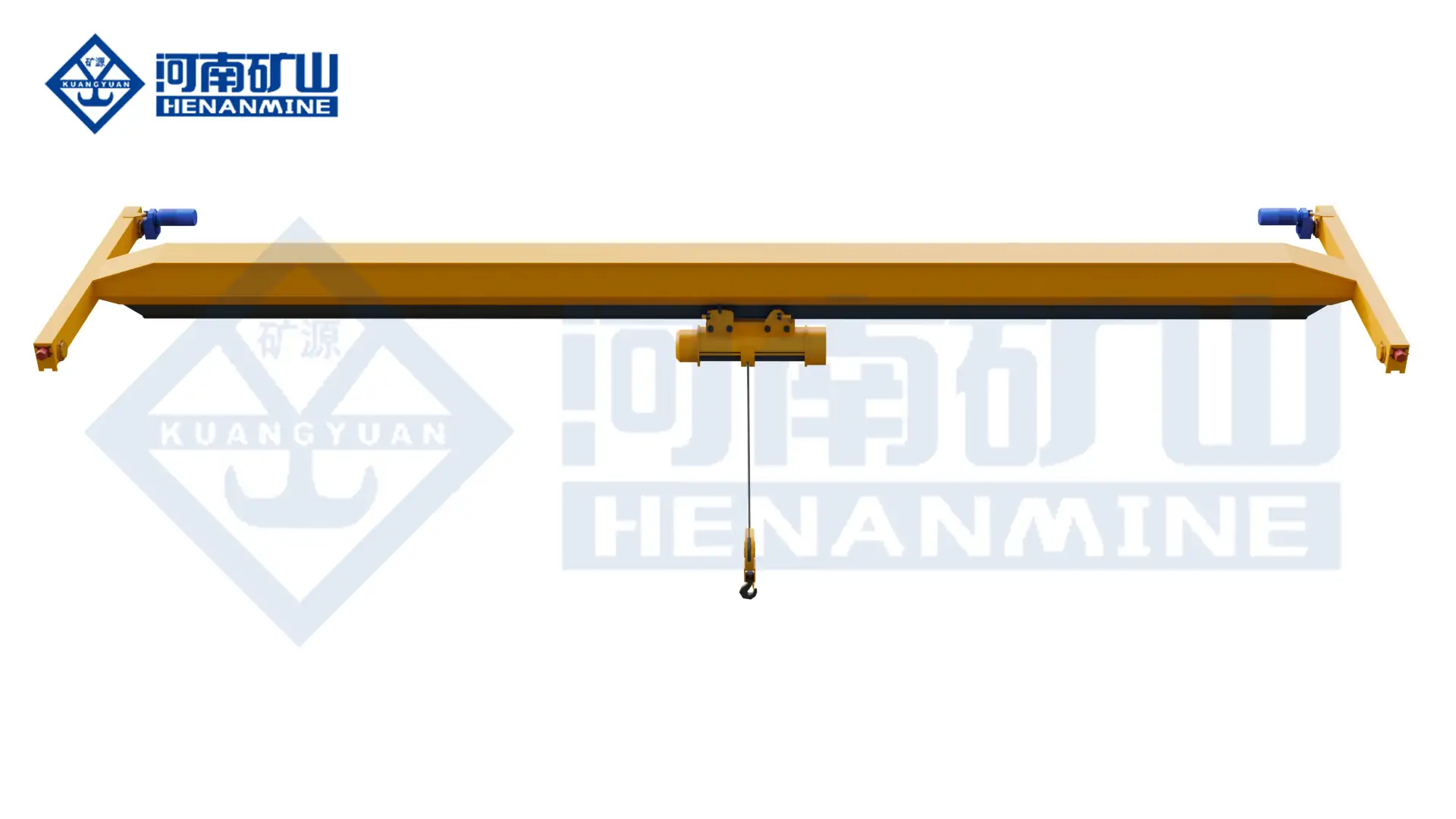
    Henan Mine Crane Single-Girder Bridge Crane
    Henan Mine Crane Single-Girder Bridge Crane
    Project planning notes

    Key points for this crane project.

    1. Application overview
    2. What Is a Rail Workshop Overhead Crane?
    3. Which Maintenance Tasks Must the Crane Cover?
    Read the technical guide

    Application overview

    Rated load + span + duty + scope

    What Is a Rail Workshop Overhead Crane?

    A rail workshop overhead crane is a bridge crane running on elevated building runways above a railway maintenance, assembly or overhaul bay. Its bridge travels along the workshop, while the hoist or trolley travels across it to move bogies, wheelsets, traction motors, gearboxes and other components between vehicles, pits and workstations.

    It is a building-mounted maintenance machine. A rail-mounted container gantry crane serves intermodal freight handling; a railway mobile crane travels to an outdoor recovery or track-work site. Neither is a direct substitute for a bridge crane inside a rolling-stock depot.

    The most suitable configuration depends on the heaviest complete lift and the handling path. A single-girder hoist can serve a light component bay; a double-girder crane is considered for heavier assemblies, higher duty or special lifting attachments. Whole-carbody lifts require a separately engineered lifting system and procedure, not an assumption based on crane capacity alone.

    Which Maintenance Tasks Must the Crane Cover?

    Map the lift from its pickup point to its landing point before setting crane travel length. In a locomotive or EMU workshop, the crane may remove a traction motor from the vehicle, carry it clear of the rail and pit, then lower it onto a maintenance stand. A bogie or wheelset route may cross several tracks and fixed service platforms.

    • Component removal and replacement above a vehicle or inspection pit.
    • Transfer from track position to bogie drop, wheelset, motor or overhaul bay.
    • Loading a service trolley or test stand without obstructing adjacent trains.
    • Occasional long or off-center loads requiring an approved lifting beam or two-point arrangement.

    Record each load’s weight, center of gravity, pickup height, travel route, landing clearance and expected daily lift count. These facts determine hook approach, speed, control position and safe exclusion zones.

    Rail Workshop Crane Selection Considerations

    Complete suspended load

    Use the heaviest part plus slings, lifting beam, clamps and other gear below the hook; confirm whether the rated load is needed at every pickup point.

    Track-to-hook geometry

    Measure runway rail centers, rail-top level, pit depth, minimum roof clearance, bridge end approach and usable hook travel.

    Workshop structure

    Have the building engineer check runway beams, columns, bracing and foundations against final crane wheel loads and horizontal forces.

    Duty and precision

    Specify lifts per hour, shifts, load spectrum and the low-speed control needed for mating pins, bogies and sensitive assemblies.

    For a retrofit, the usable hook height and existing runway capacity often decide the viable design before a nominal tonnage does. New facilities should coordinate crane reactions with the structural designer before the building steelwork is fixed.

    Which Overhead Crane Configuration Fits the Bay?

    ConfigurationAppropriate workshop taskWhat to verify before purchase
    Single-girder electric hoistParts, tools, small wheelsets and general maintenance loads within the selected rating.Hook height, span, hoist duty, rail support and the actual attachment weight.
    Double-girder bridge craneHeavier bogies, machinery and repeated overhaul handling where trolley or duty flexibility is needed.Bridge self-weight, wheel loads, access for maintenance and lift clearances.
    Double-trolley / two-hook craneLong assemblies needing two controlled lifting points on one bridge.Combined rating, individual hook ratings, spacing, load share, synchronization and lifting procedure.
    Suspended / underhung craneSelected light-duty side bays where floor-supported runways are impractical.Roof support capacity, suspension points and hook coverage.

    Henan Mine Crane lists double-girder bridge cranes and double-trolley overhead cranes. A two-hook design is specified from the actual lifting plan; it should not be treated as an automatic approval for lifting a complete carbody.

    Technical Data to Fix Before Manufacturing

    ParameterBuyer inputWhy it matters
    Rated capacityMaximum complete suspended mass at the hook(s).Selects hoist, bridge, brakes and runway reactions.
    Span and runway lengthRunway rail center distance and required long-travel coverage.Determines bridge geometry and which workstations are reached.
    Hook height and approachLowest pickup, highest lift, roof clear height, end and side approach.Prevents conflict with rolling stock, pits, roof and service platforms.
    Duty and motionsLifts per hour, shifts, load spectrum, hoist/cross/long travel speeds.Matches machinery and controls to real service.
    Site and electricalVoltage, frequency, indoor conditions, earthing and conductor route.Defines electrical equipment and interface to the facility.

    Catalogue capacities and spans describe available product families, not a universal railway-workshop specification. The approved general arrangement and crane-load schedule should be based on the specific bay.

    Bogie, Wheelset and Carbody Lifting

    Bogie and wheelset handling

    Select the hook and attachment around the lifting points prescribed for the actual bogie or wheelset. Check load stability, sling angles, floor stand geometry and whether the trolley can place the load clear of nearby vehicles. Controlled low-speed travel is useful when aligning a heavy assembly to pins, jigs or rail vehicles.

    Long components and two-point lifts

    A double-trolley bridge can provide two coordinated hook positions for long components. The design review must state each hoist’s rating, maximum combined load, load sharing, hook separation, controls, interlocks and response to uneven loading. If two independent cranes are proposed, the lift is a separate engineered operation with an approved plan and site controls.

    Whole carbody lifting

    Carbody lifting may require purpose-built lifting jacks, synchronized hoists or an engineered multi-point system matched to the vehicle manufacturer’s approved lift points. Crane capacity by itself does not establish that a vehicle can be lifted safely.

    Workshop Layout, Pits and Rail Interfaces

    A track-centred drawing should show rolling-stock envelope, inspection-pit edges, platforms, doors, HVAC, lighting, cable trays and any overhead electrical equipment. Confirm where personnel stand to operate the crane and whether adjacent roads remain in service during a lift.

    The crane’s span is the distance between runway-rail centers, not the overall building width. The usable hook area is smaller than the nominal bridge envelope because the trolley and end carriages have approach limits. For existing depots, survey the actual runway elevation, rail straightness and support condition rather than relying on architectural dimensions.

    Where overhead line equipment is present, the depot electrical authority must define isolation, earthing, access and clearance rules for the lifting zone. An insulated crane design, where specified, does not replace electrical isolation.

    Controls and Below-the-Hook Equipment

    Variable-speed motions

    Inverter-controlled hoist and travel can improve approach to mating surfaces and reduce abrupt movement of suspended assemblies.

    Operator visibility

    Choose pendant, radio remote or cab control according to line of sight, vehicle length, service pits and pedestrian routes.

    Lifting beams and fixtures

    A beam or dedicated fixture must match the rail component’s approved lifting points and be included in total suspended mass.

    Two-hook controls

    For multi-point lifts, define common control, independent control, load monitoring and the required response to loss of synchronization.

    Ask for a control narrative and lifting-attachment drawing with the quotation when precise installation or synchronized lifting is part of the work scope.

    Safety, Inspection and Acceptance

    The technical offer should identify the applicable crane design and local acceptance requirements for the destination. The final configuration must be assessed against the railway operator’s maintenance rules and the building’s structural design. Confirm overload protection, upper/lower limits, travel limits, emergency stop, buffers, alarms, brake behavior and safe maintenance access in the approved specification.

    During installation and commissioning, verify runway geometry, electrical supply, crane travel, hoist motions, braking, controls and each project-specific attachment. Agree on factory inspection, site testing, documentation and the locally required load-test procedure before purchase. Operators also need a documented lift plan for abnormal or multi-point lifts.

    No suspended load should pass over occupied workstations. Define exclusion zones around tracks and pits, lockout for maintenance, and a method to prevent unintended movement of vehicles during lifting.

    Railway Maintenance Project Experience

    Xi’an Railway Bureau locomotive maintenance project

    Henan Mine Crane’s project record identifies a KSQ new double-girder crane for a high-power locomotive maintenance facility in Xi’an, China (October 2024). The published record describes a compact modular design and positioning characteristics. It does not disclose the installed capacity or span. View project record

    Lahore Orange Line maintenance facilities

    Henan Mine Crane reports supplying 32 cranes of various types for the Lahore Orange Line metro operation and maintenance project in Pakistan. Its case record places crane products in the vehicle section and parking area for maintenance and commissioning. It does not state that all 32 were overhead cranes or publish individual crane ratings. View project record

    These cases show experience in railway maintenance settings. A new depot still requires its own load schedule, bay drawings and approved lifting method.

    Rail Workshop Overhead Crane Price and Budget

    Public 2026 prices, checked on 28 September 2026, are a starting budget for ordinary overhead-crane equipment. A rail workshop quotation must be built from the actual crane specification and separately priced site work.

    Public 2026 referencePublication and commercial scope

    These public ranges exclude or do not define freight, insurance, import duty, runway steel, building reinforcement, site electrification, installation, commissioning, local load testing and any bespoke lifting beam. Twin-trolley controls, synchronized lifting or a vehicle-specific fixture need a project quotation. For an installed depot budget, compare itemized crane equipment, structural works, electrical works and site services on the same scope.

    What a Technical Offer Should Include

    • General arrangement showing bridge, trolley, hook approach, clearances and runway rail centers.
    • Rated load, hoist arrangement, duty classification, speeds, motor power and maximum wheel loads.
    • Runway and power-supply interface requirements, including conductor position and electrical data.
    • Safety device list, control narrative and any two-point lifting or attachment drawings.
    • Inspection and test plan, operation and maintenance manuals, spare-parts list and site-service scope.

    For an existing building, the crane supplier’s wheel-load schedule should be reviewed by the facility structural engineer before purchase approval. For new works, exchange these interface documents before runway fabrication.

    Rail Workshop Crane RFQ Checklist

    A useful request for quotation includes a marked-up bay plan and the following inputs:

    Buyer informationDetail to send
    Loads and lift pointsHeaviest bogie, wheelset or machine; attachments; center of gravity; any long or multi-point load.
    Bay geometryRunway rail centers and length; floor, rail and pit elevations; roof clear height; obstacles.
    Operating cycleLifts per shift, shifts per day, load mix, desired speeds and positioning tolerance.
    Electrical and siteVoltage/frequency, power route, ambient conditions, existing runway drawings and destination.
    Commercial scopeCrane only or installed package; shipping term; installation, testing, training and spares.

    Where the load is a complete carbody or other special railway assembly, include the vehicle maker’s lifting instructions and ask for a specific lifting concept rather than a generic overhead-crane quote.

    Rail Workshop Overhead Crane FAQ

    What is the difference between a rail workshop overhead crane and an RMG?

    A rail workshop overhead crane runs on elevated building runways to lift rolling-stock components inside a depot. An RMG runs on ground rails across container tracks and truck lanes at a freight terminal.

    What capacity is needed for bogie maintenance?

    Capacity is set by the heaviest complete suspended bogie or component, including beams and rigging. There is no safe universal tonnage; vehicle data and the lifting method must be reviewed.

    Can one overhead crane lift a whole railway car?

    Only if a vehicle-specific, engineered lifting system and approved procedure establish the load, lifting points, synchronization, structure and controls. Rated crane capacity alone is insufficient.

    Is single or double girder better for a locomotive workshop?

    Single girder can suit lighter component handling. Double girder is considered for heavier loads, longer spans, higher duty, precise trolley requirements or multiple hooks. The building and lift geometry decide the final choice.

    How is overhead-crane span measured?

    Span is the center-to-center distance between the crane runway rails. Building width and rail-track gauge are different measurements.

    What makes a railway workshop crane quote more expensive?

    Capacity, span, duty, hook height, variable-speed control, twin trolleys, attachments, runway reinforcement, electrification and site services are major cost drivers.

    Related Products

    Compare the bridge type, trolley arrangement and building interface against the maintenance task. Electrical insulation is a project-specific feature and does not replace isolation of railway traction power.

    Double-Girder Bridge Crane

    A bridge-crane platform for heavier maintenance assemblies and engineered trolley options.

    Electric Single-Girder Overhead Crane

    A starting configuration for general component lifts in a suitable workshop bay.

    Double-Trolley Overhead Crane

    Two trolley positions for engineered long-load and coordinated lifting tasks.

    Suspended Overhead Crane

    An underhung option for a light-duty bay after roof and suspension checks.

    Insulated Bridge Crane

    A specialist option where an engineered electrical-insulation requirement applies.

    Specify a Crane Around the Maintenance Bay

    Send the workshop drawing, heaviest complete lift, required hook path and operating cycle. Henan Mine Crane can prepare a configuration and itemized quotation for the defined scope.

    Written by: Henan Mine Crane · Source review: linked product and project records · Last reviewed: 2026

    Discuss the crane arrangement for your project.

    The workshop plan should show the maintenance stations and the loads moving between them. Coordinate required hook positions, support structures and other equipment before developing the overhead crane specification. Share the load, available drawings, working cycle and site conditions with Henan Mine Crane so the required configuration and supply boundary can be discussed.

    Related crane configurations

    Single-Girder Bridge Crane

    View product parameters
    Lifting capacity: 1–20 tSpan: 7.5–31.5 mLifting height: 6, 9, 12, 18, 24 or 30 m; capacity-dependent

    Use an LDA single-girder bridge and electric hoist for general workshop material handling. Select the lifting capacity, runway geometry and hoist duty around the building and load.

    LH Electric Hoist Double Girder Crane

    View product parameters
    Lifting capacity: 3, 5, 10, 16, 20 tSpan: 10.5–31.5 mLifting height: 6, 9, 12 or 18 m

    Use an LH double-girder bridge with an electric-hoist trolley for workshop lifting, assembly and maintenance. Match the hoist arrangement to the suspended load, hook travel and available building space.

    Updated 2026 · Henan Mine Crane

  • Three Crane Applications Shown at the 2024 Heavy Machinery Exhibition

    Three Crane Applications Shown at the 2024 Heavy Machinery Exhibition

    Products & Technology

    Three Crane Applications Shown at the 2024 Heavy Machinery Exhibition

    Henan Mine Crane presented three specialised crane application concepts at the 2024 China International Heavy Machinery Equipment Exhibition in Shanghai.

    Yellow display model showing an electromagnetic lifting appliance
    Yellow display model showing an electromagnetic lifting appliance.

    Three handling applications on display

    The exhibition report names a graphite carbon-block stacking crane, a multifunctional suction crane and an automated electromagnetic crane for cast-steel pipes. Images show scaled display models and discussions at the stand; they should not be interpreted as photographs of completed installations.

    Specify the lifting appliance

    For carbon blocks or pipes, supply the material dimensions, unit and batch weight, pick-up orientation, stacking geometry and production cycle. The suction or magnetic appliance must be selected against the material properties and failure-response requirements of the specific process.

    Validate controls and handover

    Agree the proposed control mode, positioning requirements, interlocks, test pieces, acceptance method and maintenance access before ordering. Exhibition demonstrations are a starting point for engineering discussion, not a substitute for an approved equipment drawing or project test.

    Discuss your lifting requirement

    Send the material drawing, unit load, handling cycle and operating environment to review a suitable lifting appliance.

  • Container Gantry Crane Experience Presented at an Inland Port Forum

    Container Gantry Crane Experience Presented at an Inland Port Forum

    Project Deliveries

    Container Gantry Crane Experience Presented at an Inland Port Forum

    Henan Mine Crane discussed inland-port lifting and logistics equipment at the 11th China International Inland Port Development Forum in 2024.

    Red container gantry crane over a rail and container yard
    Red container gantry crane over a rail and container yard.

    Forum and port-operator exchange

    The source reports a company presentation, a cooperation recognition plaque and a meeting with Henan Transport Investment Port and Shipping. It describes past supply to several port and inland-port projects, without identifying specifications or acceptance stages for each one.

    Equipment shown in the report

    The photo set includes container-handling gantry cranes at several yards. These are project illustrations, not a single documented crane specification. For a new terminal, identify rail gauge, container size and load, stack height, rows covered, travel length and yard traffic before comparing configurations.

    Define automation and site interfaces

    Confirm spreader arrangement, power supply, wind operating limits, positioning needs, truck-lane access, civil works and integration with the terminal operating system. Ask for project-specific drawings and a defined inspection and commissioning plan.

    Discuss your lifting requirement

    Send the terminal layout, load, rail gauge, stacking plan and power arrangement to discuss an inland-port crane proposal.

  • Precast Concrete Cranes: Element Geometry and Factory Handling Routes

    Precast Concrete Cranes: Element Geometry and Factory Handling Routes

    Selection guide

    Precast Concrete Cranes: Element Geometry and Factory Handling Routes

    Precast lifting needs the product and its approved lifting points described clearly. Provide the casting, storage and dispatch sequence so crane coverage, attachments and operating duty can be assessed across the factory.

    Henan Mine CraneSelection guide · Updated 2026Crane selection, project scope and operating requirements
    Henan Mine Crane overhead crane inside a workshop bay
    Henan Mine Crane overhead crane inside a workshop bay
    Project planning notes

    Key points for this crane project.

    1. Application overview
    2. Precast Concrete Handling from Mold to Dispatch
    3. Precast Concrete Crane Configurations
    Read the technical guide

    Application overview

    Handled products Beams, slabs, panels, pipes and segments

    Critical inputs Total load, geometry, lift points and cycle rate

    Precast Concrete Handling from Mold to Dispatch

    A precast concrete crane supports a production and logistics sequence rather than a single lift. Typical duties include moving reinforcement cages and molds, releasing approved elements from casting beds, transferring components to finishing or curing areas, stacking finished products in the yard and loading delivery vehicles. One facility may require separate indoor and outdoor systems because the loads, travel routes and operating environments are different.

    Concrete components may be heavy, long, flexible or sensitive to edge damage. Improper sling angles, unverified lifting anchors, uncontrolled rotation or unequal loading can damage the product even when the crane remains below its rated capacity. The lifting method therefore defines the required hook arrangement, spreader beam, motion control and operator visibility.

    The element must be released for lifting under the precast producer’s approved quality procedure. Concrete strength at release, lifting-anchor capacity and permissible support locations are process and structural-engineering decisions; they are not replaced by selecting a larger crane.

    Precast Concrete Crane Configurations

    01 · Single-Girder Overhead Crane

    An economical indoor option for lighter precast elements, molds, reinforcement assemblies and general production handling where the capacity, span and duty remain within the selected hoist system.

    02 · Double-Girder Overhead Crane

    A production-bay solution for heavier elements, higher duty, greater hook height or project-defined dual-hook and double-trolley handling inside a precast factory.

    03 · Single-Girder Rail Gantry Crane

    A practical yard crane for smaller and medium precast products along defined storage or loading lanes, subject to wind, rail, wheel-load and duty verification.

    04 · Double-Girder Rail Gantry Crane

    The principal configuration for heavy beams, bridge girders, large wall panels and repeated outdoor loading where stability, span, hook coverage and long-load control are decisive.

    05 · Truss Gantry Crane

    A rail-mounted alternative for selected outdoor spans and transport constraints. Its open structure, connection details, corrosion protection and inspection access must suit the site environment.

    06 · Rubber-Tyred Gantry Crane

    A self-propelled solution for serving multiple production or storage lanes without fixed travel rails. Ground bearing, steering, braking, power source and traffic management become major design inputs.

    Compare Precast Plant and Yard Crane Options

    The correct system follows the production route, not only the maximum tonnage. Indoor overhead cranes, fixed-lane gantry cranes and mobile yard carriers solve different material-flow requirements.

    ConfigurationMatched dutyPrincipal advantageProcurement constraint
    Indoor overhead craneCasting bay, demoulding, finishing and production transferClear floor area and full bay coverageRequires a verified building runway and support reactions
    Single-girder rail gantryDefined yard lane with moderate load and dutyLower structural complexity for suitable applicationsCapacity, span, headroom and duty are more limited than heavy double-girder systems
    Double-girder rail gantryHeavy beams, panels, segments and truck loadingStrong load, span and multi-hook engineering flexibilityRails, foundations, storm restraints and yard alignment are part of the system
    Rubber-tyred gantryMultiple lanes, changing routes and flexible yard logisticsTrackless travel between work zonesHigher machine complexity; ground, steering and traffic interfaces must be controlled
    Launching gantryErection of bridge girders at the construction alignmentPurpose-designed placement at bridge spansNot a substitute for a factory production or storage-yard crane

    Select Capacity from the Complete Suspended Load

    Crane capacity must cover the governing precast element together with the lifting beam, hook block, slings, shackles, lifting clutches and other below-the-hook equipment included in the approved method. Element weight should come from controlled production data and include the agreed design tolerance.

    Long products require more than sufficient tonnage. The design must confirm centre of gravity, lifting-point spacing, permissible sling angle, allowable support conditions, deflection sensitivity and rotation control. A spreader beam may be required to keep loads at the lifting anchors within the approved directions and to prevent excessive lateral force on the concrete.

    When two hooks, two trolleys or two cranes share a load, allowable load distribution, synchronization, communication, stopping logic and the response to a drive or power fault must be engineered. Two crane nameplate capacities cannot simply be added to authorize a tandem lift.

    Match the Crane and Rigging to the Precast Product

    Precast productHandling prioritiesTypical crane-system considerations
    Bridge beams and girdersLong-load stability, multiple lift points and controlled alignmentDouble-girder gantry, engineered spreader, synchronized hooks or trolleys where specified
    Wall panels and façade elementsSurface protection, controlled rotation and vertical storage interfacesSmooth VFD motion, adequate hook approach, approved lifting frame and protected contact points
    Hollow-core and solid slabsEdge protection, product-specific pick points and stacking sequenceOverhead or gantry crane with approved clamps, beams or lifting inserts as defined by the producer
    Pipes, manholes and culvertsRoll prevention, balanced pickup and clearance through storage lanesPurpose-approved attachment, stable travel and defined set-down supports
    Tunnel segmentsRepetitive positioning, curved geometry and finish protectionRepeatable control, segment-compatible lifting frame and production-line integration
    Molds and reinforcement cagesFrequent production handling and changing load geometryAppropriate overhead crane, attachment changeover and duty based on actual cycles

    Technical Specification for a Precast Concrete Crane

    Final values are established from the element schedule, production layout, civil drawings, operating method and destination requirements. The following information forms the basis of a comparable technical proposal.

    Specification itemProject definition
    Rated capacityHeaviest complete suspended load, rigging included, for each hook or operating mode
    Crane type and structureSingle or double girder; overhead, rail gantry, truss gantry or rubber-tyred system
    Span and travel lengthRail gauge, building bay or yard lane width, runway length, cantilever coverage and end approaches
    Lifting heightLowest pickup, highest obstacle, stack height, vehicle loading height and required safety clearance
    Hoist and hook arrangementSingle hook, main and auxiliary hook, double trolley or synchronized lifting arrangement
    Duty and load spectrumLoads per hour, shifts, annual operating days, typical load distribution and expected service life
    Speeds and controlNormal and low speeds, acceleration, positioning requirement, control station and automation scope
    Below-the-hook equipmentSpreader beam, lifting frame, slings, clutches, approved clamps, storage stand and identification

    Control, Safety and Outdoor Protection

    Controlled Motion

    Variable-frequency drives, suitable low-speed operation and controlled acceleration reduce shock loading and help position fragile or long elements at molds, racks and vehicles.

    Load Protection

    Overload protection, upper and lower limits, travel limits, service brakes, emergency stop and hook safety devices are specified for the selected crane and local requirements.

    Long-Load Management

    Where required, synchronized controls, load feedback, skew monitoring, anti-sway functions and defined fault responses support the approved multiple-point lifting method.

    Wind and Parking

    Outdoor cranes may require wind indication, operating limits, rail clamps, storm anchors, parking procedures, weather protection, drainage and lightning measures based on site data.

    Operator Visibility

    Pendant, radio remote or cabin control is selected from the travel route and sightlines. Cameras, lighting, warning devices and communication systems can support restricted-visibility areas.

    Restricted Lift Zone

    Traffic separation, exclusion zones, defined signaling and an approved lift plan remain essential. Crane controls do not replace the site’s safe system of work.

    The final safety functions and performance levels are defined in the approved technical specification and risk assessment for the destination and operating method.

    75t, 72m Large-Span Bridge Gantry Crane

    Henan Mine Crane supplied a special gantry crane with a 75t rated capacity, 72m span and 23m lifting height for the Jianzhou Bridge project. The system was designed for outdoor lifting and positioning of large steel box-girder components across a wide construction area.

    This verified project handled steel bridge components rather than precast concrete. It is relevant to precast procurement because it demonstrates engineering experience with long loads, large spans, outdoor exposure, rail and civil interfaces, controlled positioning and project-specific structural design.

    A precast concrete crane is re-engineered around concrete-element geometry, approved lifting points, rigging loads, production frequency, stacking layout and surface-protection requirements; the project parameters are not transferred without calculation.

    Engineering Deliverables and Quality Records

    A procurement-ready proposal should define the crane and every interface that affects performance, cost or acceptance. Henan Mine Crane can align the documentation package with the agreed code, inspection plan and customer responsibilities.

    Design Definition

    General arrangement, hook coverage, wheel loads, clearances, power demand, control philosophy and below-the-hook interfaces.

    Manufacturing Control

    Material traceability, dimensional inspection, welding and non-destructive examination records can be defined where required by the contract.

    Testing and Handover

    Factory test records, electrical documentation, installation instructions, site-test procedures, manuals, spare-parts list and training scope.

    Henan Mine Crane publishes its production and testing capabilities. The project inspection and documentation matrix should still be agreed before manufacturing begins so that quotation and acceptance boundaries remain consistent.

    Installation, Commissioning and Maintenance Planning

    Civil Readiness

    Confirm runway alignment, rail level, foundations, wheel-load capacity, drainage, earthing, access and erection areas before crane delivery.

    Site Acceptance

    Define installation inspection, no-load and functional tests, proof-load arrangements, synchronized-mode checks and operator training in the contract.

    Lifecycle Availability

    Plan brake, rope, hook, wheel, rail, gearbox and electrical inspections around production shifts; establish critical spares before handover.

    For operating plants, installation must be coordinated with casting schedules, storage capacity and truck-dispatch requirements. For new facilities, crane wheel loads, clearances and power supply should be frozen before the building or yard civil design is finalized.

    Precast Concrete Crane Price and Supply Scope

    These figures are planning bands, not a Henan Mine Crane quotation. Heavy long-span cranes, double-trolley systems, high-duty process cranes and self-propelled rubber-tyred machines may exceed the ranges. A valid comparison requires every supplier to price the same performance and delivery boundary.

    Commercial packageItems to define before price comparison
    Crane equipmentStructure, trolley or hoist, hooks, drives, electrics, controls, access and safety devices
    Precast lifting equipmentSpreader beam, lifting frame, slings, clutches or approved clamps, stands and sensors
    Runway and civil interfaceRails, foundations, conductor system, embedded parts, storm anchors and structural checks
    Logistics and installationPacking, inland delivery, ocean freight, insurance, lifting equipment, erection and supervision
    Testing and supportCommissioning, test weights, third-party inspection, documentation, training, spares and warranty boundary

    Capacity, span, lifting height, duty, number of hooks, speed control, automation, outdoor protection, steel-market conditions, destination and Incoterm materially affect the final price. The quotation should state currency, validity, inclusions, exclusions and site responsibilities.

    Precast Concrete Crane RFQ Information

    Submit the element schedule and maximum complete suspended load; product dimensions and centres of gravity; approved lifting points; rigging concept; casting, curing, stacking and dispatch layout; required span, lift height and travel length; duty cycles; indoor or outdoor environment; runway or ground data; power supply; destination; applicable standard; project schedule; and required freight, installation, testing and training scope.

    Frequently Asked Questions

    What crane is used in a precast concrete plant?

    Indoor production commonly uses single- or double-girder overhead cranes. Outdoor storage and loading commonly use rail-mounted gantry cranes, while rubber-tyred cranes suit yards that require travel between multiple lanes.

    How is precast crane capacity selected?

    Capacity is based on the heaviest element plus the hook block, lifting beam, slings, shackles, lifting clutches and other suspended equipment. The approved lifting method and load distribution must also be verified.

    Is a double-girder crane necessary for concrete beams?

    It is often selected for heavy or long beams, greater spans, higher duty or multi-hook handling. A single-girder crane may remain suitable when the verified load, span, headroom and operating cycle are within its design envelope.

    Can one crane handle both production and outdoor storage?

    Only if the physical route and crane structure provide continuous coverage. Most facilities use separate indoor and yard cranes because buildings, weather exposure, travel paths and stacking duties differ.

    When is a rubber-tyred gantry crane suitable?

    It suits yards that need one machine to serve multiple lanes or changing routes without fixed rails. Ground bearing, grade, turning space, steering mode, braking and mixed-traffic controls must be assessed.

    Can two cranes lift one precast beam?

    A tandem lift is possible only under an engineered method that defines load sharing, crane capacities, controls, communication, travel, fault response and supervision. Independent cranes should not be paired by assumption.

    What lifting device is used for precast concrete?

    The device follows the product engineer’s approved lifting points and may include a spreader beam, lifting frame, slings, clutches or purpose-approved clamps. Sling angle and attachment loads require verification.

    What protection is required for an outdoor precast yard crane?

    The site specification may require suitable coatings, weather-protected electrics, drainage, wind monitoring, rail clamps, storm anchors, lightning protection and low-temperature measures.

    What information is needed for a fast quotation?

    Provide element weights and dimensions, lift points, rigging, site layout, span, height, travel length, cycle rate, environment, runway or ground details, voltage, destination, schedule and required supply boundary.

    Prepared by Henan Mine Crane Technical Sales · Technically reviewed by Crane Engineering · Last reviewed September 2026

    Related Precast Concrete Crane Products

    Double-Girder Gantry Crane

    Heavy rail-mounted configuration for beams, panels and repeated outdoor handling.

    Single-Girder Gantry Crane

    Cost-conscious yard option for suitable moderate loads, spans and operating cycles.

    Double-Girder Overhead Crane

    Indoor production crane for heavier components, frequent duty and engineered multi-hook lifts.

    Double-Girder Truss Gantry Crane

    Open-structure rail gantry option for selected outdoor spans and project logistics.

    Rubber-Tyred Gantry Crane

    Trackless mobile configuration for serving multiple yard lanes and work zones.

    Share the element schedule, complete suspended load, lifting points, factory or yard layout, required coverage, operating cycle, environment, destination and delivery scope. Henan Mine Crane will develop a defined crane configuration and commercial proposal for the precast operation.

    Discuss the crane arrangement for your project.

    Precast lifting needs the product and its approved lifting points described clearly. Provide the casting, storage and dispatch sequence so crane coverage, attachments and operating duty can be assessed across the factory. Share the load, available drawings, working cycle and site conditions with Henan Mine Crane so the required configuration and supply boundary can be discussed.

    Related crane configurations

    Explore crane product families and technical parameters ↗

    Updated 2026 · Henan Mine Crane
  • Power Plant Crane Selection: Outage Lifts and Component Removal Routes

    Power Plant Crane Selection: Outage Lifts and Component Removal Routes

    Selection guide

    Power Plant Crane Selection: Outage Lifts and Component Removal Routes

    A maintenance crane should serve the identified removal and replacement operations. Map the component geometry, hook positions and transfer route so equipment selection can be coordinated with the plant's access constraints.

    Henan Mine CraneSelection guide · Updated 2026Crane selection, project scope and operating requirements
    Henan Mine Crane power plant project lifting equipment at the Jimsar cogeneration facility
    Henan Mine Crane power plant project lifting equipment at the Jimsar cogeneration facility
    Project planning notes

    Key points for this crane project.

    1. Application overview
    2. A Power Plant Needs More Than One Lifting Specification
    3. Power Plant Crane Configurations
    Read the technical guide

    Application overview

    Main structure Project-rated overhead crane and runway interface

    Control selection Defined slow-speed handling, braking and positioning

    A Power Plant Needs More Than One Lifting Specification

    The main turbine hall must accommodate high-value generators, turbine components, casings and related equipment during initial erection and later overhauls. A power plant crane in this zone is normally a bridge crane selected from the approved lift study, with the required main-hook capacity, potential auxiliary hook, building coverage and controlled motion.

    Other plant zones have different duty. A coal or biomass handling area may need a grab rather than a hook. A mill maintenance bay may need cross-bay access or a compact hoist. A waste-to-energy bunker requires a dedicated high-cycle feed arrangement. Treating all these jobs as one model would produce an incomplete technical and commercial specification.

    Henan Mine Crane can configure separate lifting packages for the turbine hall, auxiliary maintenance areas and suitable bulk-material operations, with a defined interface to the power-station structure and installation schedule.

    Power Plant Crane Configurations

    01 · Turbine-Hall Bridge Crane

    A heavy-duty double-girder configuration for approved turbine-generator erection loads and major maintenance lifts.

    02 · Main and Auxiliary Hooks

    Two separately rated hook functions where the lift plan calls for high-capacity lifts and smaller service operations.

    03 · Auxiliary-Bay Crane

    An appropriately rated bridge crane or electric-hoist solution for workshop, pump, valve or other service-bay loads.

    04 · Track-Switching Access

    A project-specific cross-travel arrangement for designated maintenance routes between compatible track sections.

    05 · Coal or Biomass Grab

    A grab crane for approved loose fuel handling, sized for material properties and actual handling cycles.

    06 · Ash and Slag Handling

    A separate bulk-handling design for the temperature, dust, abrasiveness and operating frequency of the ash area.

    07 · Hydropower Powerhouse Crane

    A generating-unit lifting arrangement developed around turbine, generator and maintenance access in the powerhouse.

    08 · Retrofit or Upgrade

    A replacement study that checks existing runway reactions, hook reach, electrical supply and construction access.

    Power Plant Crane Compared with Other Lifting Configurations

    The equipment must fit its actual lifting duty. A compact electric-hoist bridge crane, for example, is not a direct substitute for a heavy turbine-hall erection crane.

    Crane arrangementTypical taskSelection basisMain limitation
    Heavy double-girder bridgeTurbine and generator erectionFull suspended load, reach and runway capacityGreater building and installation interface
    Electric-hoist bridgeAuxiliary maintenance and service baysLocal loads, frequency and headroomNot inherently suitable for major-unit erection
    Cross-travel bridgeSelected inter-bay maintenance routesTrack geometry and safe transfersRequires a designed track-switch interface
    Grab overhead craneFuel, ash or other loose materialsGrab payload, throughput and environmentNot a replacement for a hook-type turbine lift

    Engineer the Heaviest Lift and the Everyday Overhaul

    The main hook rating starts with the heaviest approved component, but the suspended weight also includes the lifting beam, slings, shackles and any other below-the-hook equipment.

    A second design check covers planned maintenance after commissioning: turbine-casing removal, rotor handling, generator work, pump replacement and laydown routes. Hook coverage at both ends of the hall can be as important as rated tonnage. The turbine supplier’s maintenance procedure should be reconciled with the crane’s hook approach and usable lifting height.

    If two cranes or two trolleys will handle one load, the lifting sequence, load sharing, controls and structural reactions require a separate engineered plan. Two nameplate capacities must never simply be added to define an allowable tandem lift.

    Technical Specification for a Power Plant Crane

    Every project value is established from turbine supplier drawings, the EPC lifting plan and the station’s maintenance strategy. Installed power-generation capacity, measured in MW, is not the crane’s lifting capacity, measured in tonnes.

    Project parameterInformation required to define the crane
    Main lifting capacityHeaviest component plus lifting beam, slings and accessories
    Auxiliary hookRequired secondary loads, service tasks and independent rating
    Span and runwayRail gauge, runway length, rail-top elevation and permitted wheel reactions
    Lifting heightHook and load path above equipment, foundations and obstacles
    Hook approachesCoverage at generator, turbine, service platforms and laydown zones
    Duty and speedsConstruction lifts, overhaul frequency, load spectrum and low-speed handling
    Controls and protectionOperator station, speed control, brakes, limits and emergency functions
    EnvironmentActual heat, dust, humidity, corrosion and electrical area classification

    Controlled Motion, Safety and Plant Conditions

    Low-Speed Positioning

    Hoist and travel drives can be specified for smooth acceleration and a defined slow-speed range as equipment approaches its final position. Acceptance criteria should state the required operating behavior rather than promising an unverified positioning tolerance.

    Protection and Interlocks

    Overload protection, upper and lower limits, end-of-travel controls, emergency stop, braking and safe operation near other cranes are reviewed against the actual crane design and applicable project requirements.

    Dust, Heat and Humidity

    Electrical enclosure protection, cable routing, paint system and service access are selected for measured conditions. Explosion-protected equipment is considered only where a documented hazardous-area classification requires it.

    For nuclear applications, safety classification and project-specific regulatory requirements must be established separately. A conventional thermal-power turbine-hall crane must not be presented as a nuclear-qualified lifting system.

    Generator Stator Lift at a 2 × 350 MW Cogeneration Project

    Henan Mine Crane supplied lifting equipment for a 2 × 350 MW cogeneration project in Jimsar, Xinjiang. During construction, the project crane supported the lift of the Unit 1 generator stator—a critical generating-unit installation task.

    The crane solution incorporates full variable-frequency speed control and PLC-based control for regulated motion, with equipment selected for the site’s heat and dust. The 2 × 350 MW designation describes the plant’s generating output, not the crane’s lifting rating; the latter is defined by the approved lift plan.

    This installation illustrates why the crane, rigging, generator delivery sequence and building clearances must be coordinated before the heavy lift. The project lift path and the station’s subsequent maintenance needs both belong in the original technical specification.

    Two 120 t Turbine-Hall Cranes for a Thermal Power Project

    At a thermal power project in Morowali, Central Sulawesi, Henan Mine Crane supplied two double-girder overhead cranes for the construction of three 380 MW generating units.

    The project demonstrates a defined main-and-auxiliary-hook arrangement for heavy erection and smaller support lifts.

    Installation, Acceptance and Long-Term Support

    Building Interface

    Check runway geometry, support reactions, end clearances, lifting access and the stage at which the crane can be assembled inside the turbine hall.

    Testing and Handover

    Agree on factory inspection, site commissioning, load tests, protection checks, manuals and operator instruction under the applicable project standard.

    Lifecycle Maintenance

    Specify inspectable brakes, ropes, wheels, electrics and service platforms; define spare parts and the maintenance plan before the first scheduled outage.

    The purchase schedule should identify when the crane is needed for generator-unit erection, not just when the entire facility is commissioned. Crane delivery, runway completion and load testing are therefore coordinated with the EPC construction milestones.

    Power Plant Crane Price and Supply Scope

    There is no dependable single list price for a power plant crane. Online figures for general workshop bridges, individual hoists or loosely specified high-capacity cranes do not establish the price of a turbine-hall system with approved rigging loads, auxiliary lifting, control requirements and site installation.

    Henan Mine Crane quotes against a defined technical scope. To compare offers on a like-for-like basis, the commercial schedule should identify the following separately:

    Crane and hoists Bridge, main and auxiliary hooks, drives, controls and designed duty.

    Civil interface Runway, power feed, support checks and any structural modification.

    Project execution Inspection, packing, shipping, erection, commissioning and load testing.

    After handover Documentation, operator training, warranty boundaries and initial spares.

    Price changes with the heaviest approved load, crane span, lift height, precision-control functions, environmental protection, location and delivery terms. Each quotation should state its currency, Incoterm, validity, exclusions and responsibilities for site work.

    Power Plant Crane RFQ Information

    Supply the turbine-hall and runway drawings, generating-unit component lift list, maximum load including rigging, hook approach targets, lift height, building clearance, erection sequence, expected maintenance lifts, site power, environmental conditions, destination and required acceptance standard. Include the turbine supplier’s lifting instructions where available.

    Frequently Asked Questions

    What crane is used in a turbine hall?

    A double-girder overhead crane is commonly specified for heavy turbine and generator erection and future overhaul work. Its final ratings, hook configuration and bridge geometry depend on the approved lift plan.

    How is power plant crane capacity selected?

    Assess the heaviest approved component plus lifting beam and rigging, then check its handling path and site requirements. A generating unit’s MW rating is not an overhead crane capacity.

    What is the auxiliary hook for?

    A separately rated auxiliary hook can handle smaller components, approved rigging operations and some maintenance lifts. Its use with the main hook must be governed by the crane design and lift plan.

    Can an electric-hoist bridge crane replace a turbine-hall crane?

    Not automatically. An electric-hoist bridge may suit a service bay or other defined loads, while main generating-unit erection may require a different lifting mechanism, capacity, hook approach and structural rating.

    Why are hook approach and lifting height important?

    A crane must reach the turbine, generator and service areas while lifting the rigged component clear of foundations, platforms and pipework. A correct tonnage without sufficient reach may still be unusable.

    Can two cranes lift one component together?

    Only under an engineered tandem-lift arrangement that defines load sharing, coordinated control, rigging and runway reactions. Adding the two rated capacities does not establish a permitted combined load.

    Is a grab crane appropriate for all power plant areas?

    Grabs are for suitable bulk fuel, ash or other loose materials. Turbine-generator equipment requires approved hooks and rigging; a waste-to-energy feed bunker requires its own application-specific grab system.

    Does every power plant crane need explosion protection?

    Electrical protection is selected according to a documented area classification and the applicable local requirements. Heat and dust alone do not justify assigning a universal explosion-proof rating.

    What determines the price of a turbine-hall crane?

    Hook ratings, span, lifting height, control requirements, duty, plant environment, runway interface, testing and delivery scope. A detailed technical offer is necessary for a meaningful price comparison.

    Can a crane be installed in an existing power station?

    A replacement or retrofit is possible subject to runway capacity, remaining hook travel, power supply, access openings and the construction window available without disrupting operations.

    Related Power Plant Crane Products

    Electric-Hoist Double-Girder Crane

    A separate option for appropriately rated power-station service bays.

    Single-Girder Service Crane

    Smaller maintenance loads where its rating and duty are suitable.

    Grab Double-Girder Overhead Crane

    Bulk fuel or approved loose-material applications, not turbine lifts.

    Share the power-station lift study, turbine-hall drawings, heaviest component and rigging weights, required hook coverage, environmental conditions and project destination. Henan Mine Crane will develop a defined crane configuration and commercial scope for the generating facility.

    Discuss the crane arrangement for your project.

    A maintenance crane should serve the identified removal and replacement operations. Map the component geometry, hook positions and transfer route so equipment selection can be coordinated with the plant's access constraints. Share the load, available drawings, working cycle and site conditions with Henan Mine Crane so the required configuration and supply boundary can be discussed.

    Related crane configurations

    Explore crane product families and technical parameters ↗

    Updated 2026 · Henan Mine Crane
  • Port Crane Manufacturer Comparison: Cargo Duties and Technical Evidence

    Port Crane Manufacturer Comparison: Cargo Duties and Technical Evidence

    Selection guide

    Port Crane Manufacturer Comparison: Cargo Duties and Technical Evidence

    A useful comparison starts with the terminal operation rather than a general supplier label. Define the cargo, working envelope and infrastructure interfaces, then assess the drawings, documentation and project scope in each proposal.

    Henan Mine CraneSelection guide · Updated 2026Crane selection, project scope and operating requirements
    Henan Mine Crane overhead crane inside a workshop bay

    Henan Mine Crane overhead crane inside a workshop bay

    Project planning notes

    Key points for this crane project.

    1. Port Crane Systems for Terminal Operations
    2. Selection Considerations
    3. Port Crane Types Compared
    Read the technical guide

    Port Crane Systems for Terminal Operations

    The term port crane manufacturer covers several different equipment families. An STS crane transfers containers between vessel and quay. A portal harbor crane handles bulk or general cargo across a working radius. RMG and RTG cranes stack containers in the yard; a straddle carrier transfers and stacks containers across terminal routes. These systems are complementary rather than interchangeable.

    The choice starts with cargo type, vessel and berth dimensions, annual throughput, peak-hour demand, yard stacking plan and intermodal connections. Selecting a crane from rated capacity alone can leave insufficient outreach, poor wheel-load compatibility or a mismatch between quay discharge and yard capacity.

    Selection Considerations

    Cargo and Handling Device

    Confirm container dimensions and maximum gross mass, or bulk density, grab payload, general-cargo dimensions and lifting points.

    Vessel and Berth

    Specify beam, container rows, deck and hatch elevations, tidal range, berth length and required front and back reach.

    Quay and Ground

    Confirm rail gauge, wheel-load limits, existing foundations, apron width, pavement bearing and drainage.

    Throughput and Duty

    Define annual and peak volumes, shifts, operating cycles, required availability and maintenance windows.

    Yard Configuration

    State rows, stacking height, truck lanes, turning areas, rail tracks and future block expansion.

    Wind and Marine Exposure

    Provide operating and storm wind criteria, salt exposure, ambient range and coating requirements.

    Power and Automation

    Identify utility supply, diesel or electric strategy, cable routing, TOS interfaces and control mode.

    Delivery Boundary

    Define crane, spreader or grab, freight, site assembly, commissioning, load testing, training and spares.

    Port Crane Types Compared

    The following equipment families serve different stages of the cargo route. Published ranges on individual product pages are preliminary and must be checked against the project specification.

    EquipmentOperating ZoneTypical CargoDecisive Interface
    Ship-to-Shore CraneQuaysideContainersVessel reach, quay reactions and spreader capacity
    Portal Harbor CraneQuay and multipurpose berthBulk, breakbulk and project cargoWorking radius, grab or hook and marine protection
    Rail-Mounted Gantry CraneFixed yard block or rail terminalContainersRails, foundations, span and stacking plan
    Rubber-Tyred Gantry CraneFlexible yard blocksContainersPavement, steering, power and block transfer
    Container Straddle CarrierYard transfer and stackingContainersTravel routes, turning, stacking and fleet planning

    Quayside Crane Engineering

    STS Container Handling

    Outreach is set by vessel beam and furthest container row; lift above and below rail follows vessel and tidal extremes. Capacity must identify whether it is under spreader or includes spreader mass. Wheel loads, rail gauge, backreach and boom parking position are checked against the quay.

    Portal Harbor Operations

    Portal cranes require lifting capacity across a specified radius chart, not a single headline capacity. Bulk grab cycles, hook loads and container attachments impose different duty and control requirements.

    Wind and Marine Conditions

    Operating and out-of-service wind criteria, storm anchoring, protective coatings, access routes and maintainable electrical enclosures are included in the technical agreement.

    Container Yard Crane Engineering

    RMG: Defined Rail Corridor

    A fixed rail corridor supports repeatable container handling in high-density blocks and intermodal yards. Rail alignment, wheel reactions, span, cantilevers and truck or rail interfaces must be coordinated before civil construction.

    RTG: Flexible Yard Blocks

    Tyred travel permits movement between yard blocks subject to route width and ground condition. Diesel, hybrid, battery and busbar-assisted configurations differ in infrastructure, operating cost and emissions.

    Shared Selection Basis

    State container rows, stacking height, truck lanes, spreader specification, hoisting and travel speeds, anti-sway requirement, terminal operating system interface and desired fleet availability.

    Manufacturer Evaluation and Technical Documentation

    Design Evidence

    General arrangement, load chart, wheel reactions, duty basis, structural calculations and wind criteria should match the tender.

    Manufacturing Controls

    Review the proposed inspection plan for steelwork, welding, drives, electrics, coating and factory functional tests.

    Acceptance Criteria

    FAT, site commissioning, load testing, spreader or grab tests and performance demonstrations need contractual pass criteria.

    Lifecycle Support

    Manuals, electrical drawings, parts lists, training, service access and spare-part lead times influence terminal uptime.

    Applicable structural, crane, electrical, maritime and local regulatory requirements are stated in the contract.

    5 Tonne RMG Application: Inland Port Handling

    The engineering configuration addresses container specification, handling route, rail geometry, electrical controls and spreader compatibility. Final duty, span, height, interfaces and acceptance criteria depend on terminal-specific data.

    For procurement, the defining interfaces are the rail corridor, container stack envelope and connections to truck and rail handling areas. These details should be reconciled with terminal drawings before freezing the crane general arrangement.

    Installation, Commissioning and Maintenance

    Site Readiness

    Verify quay or yard bearing capacity, rail survey, erection access, lifting plan, power interface and storm-protection foundations.

    Commissioning

    Electrical, brake, limit, interlock and wind-protection checks precede load testing, operating trials and operator training.

    Planned Maintenance

    Structural connections, ropes, brakes, wheels, tyres, spreaders, corrosion protection, cable systems and safety devices require duty-based inspection.

    Port Crane Price and Total Project Cost

    There is no defensible single price for a port crane. Larger, electrified or automated units may cost substantially more. These market indications are not Henan Mine Crane quotations and do not establish a comparable price for STS, portal harbor or RMG cranes.

    A commercial evaluation compares equivalent capacity, reach or span, duty, spreader or grab, drive and power technology, controls, wind and corrosion requirements, supply terms and acceptance criteria. STS and portal equipment require an engineered quotation after vessel and quay data are reviewed.

    Crane Equipment

    Structure, machinery, spreader or grab, electrical systems and controls.

    Terminal Infrastructure

    Rails, quay strengthening, pavement, power distribution and communications.

    Delivery and Service

    Freight, insurance, import costs, erection, testing, training and spares.

    Quotation Data

    Cargo type · maximum load under spreader or hook · vessel dimensions · required outreach and lift · quay and rail data · yard layout · annual and peak throughput · duty · wind and corrosion criteria · site power · control and TOS interface · destination port · delivery and site-work scope.

    Port Crane Procurement FAQ

    Which crane handles containers at the berth?

    A ship-to-shore crane is designed for vessel-to-quay container transfer; reach and lift follow vessel and water-level data.

    Which crane is suitable for bulk cargo?

    A grab-equipped portal harbor crane can serve berth handling where outreach, grab payload and tonnes-per-hour duty are established.

    What is the difference between RTG and RMG?

    RTG cranes travel on tyres and may move between blocks; RMG cranes travel on fixed rails within a defined handling corridor.

    How is STS outreach determined?

    The furthest container row, vessel beam, mooring offset and berth layout establish minimum working outreach.

    Does lifting capacity include the spreader?

    Capacity basis must state whether the rating is under spreader or includes spreader and attachment mass.

    Can port cranes connect to terminal software?

    Control interfaces can be specified for a terminal operating system when protocols, safety permissions and acceptance tests are defined.

    How is storm protection specified?

    Operating and parked wind cases govern brakes, clamps, anchors, tie-downs and terminal procedures.

    Does equipment price include installation?

    Not automatically. Freight, civil work, rails, erection, commissioning and testing must be explicitly included or excluded.

    What documents support supplier evaluation?

    General arrangement, load chart, wheel reactions, duty basis, inspection plan, electrical architecture, test plan and spare-parts schedule.

    What information is required for a port crane quote?

    Cargo, vessel profile, berth and yard plans, required output, operating duty, wind criteria, power, destination and supply scope.

    Related Port Crane Products

    Port Crane Product Range

    Compare the complete quay and yard equipment range.

    Submit cargo data, vessel profile, berth or yard drawings, required throughput, operating duty, power supply, wind criteria, installation location and project scope. Henan Mine Crane will prepare an equipment configuration and commercial proposal from the confirmed terminal requirements.

    Discuss the crane arrangement for your project.

    A useful comparison starts with the terminal operation rather than a general supplier label. Define the cargo, working envelope and infrastructure interfaces, then assess the drawings, documentation and project scope in each proposal. Share the load, available drawings, working cycle and site conditions with Henan Mine Crane so the required configuration and supply boundary can be discussed.
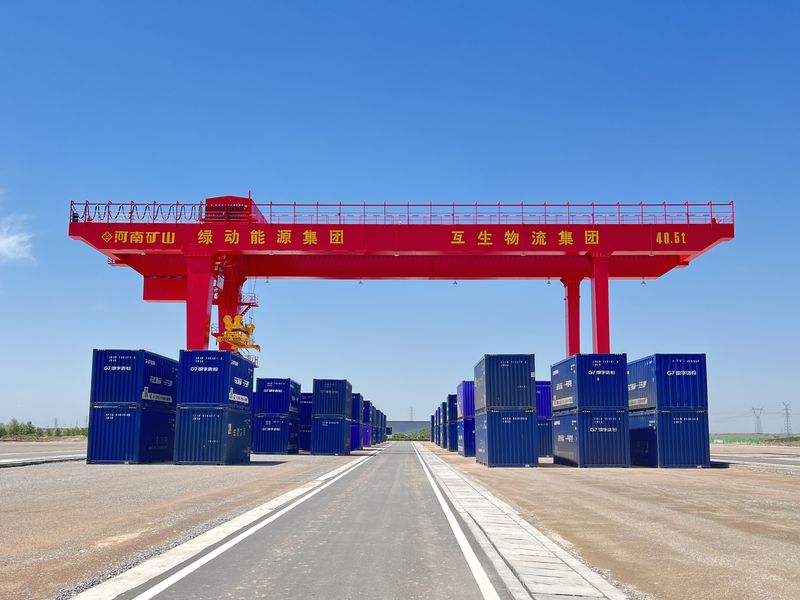
    Related crane configurations

    Explore crane product families and technical parameters ↗

    Updated 2026 · Henan Mine Crane