Overhead Crane RFQ Checklist: Load, Dimensions and Supply Scope
Prepare the load, workshop measurements and working cycle before comparing crane proposals. Use the checklist and brief builder to define the same scope for every supplier.
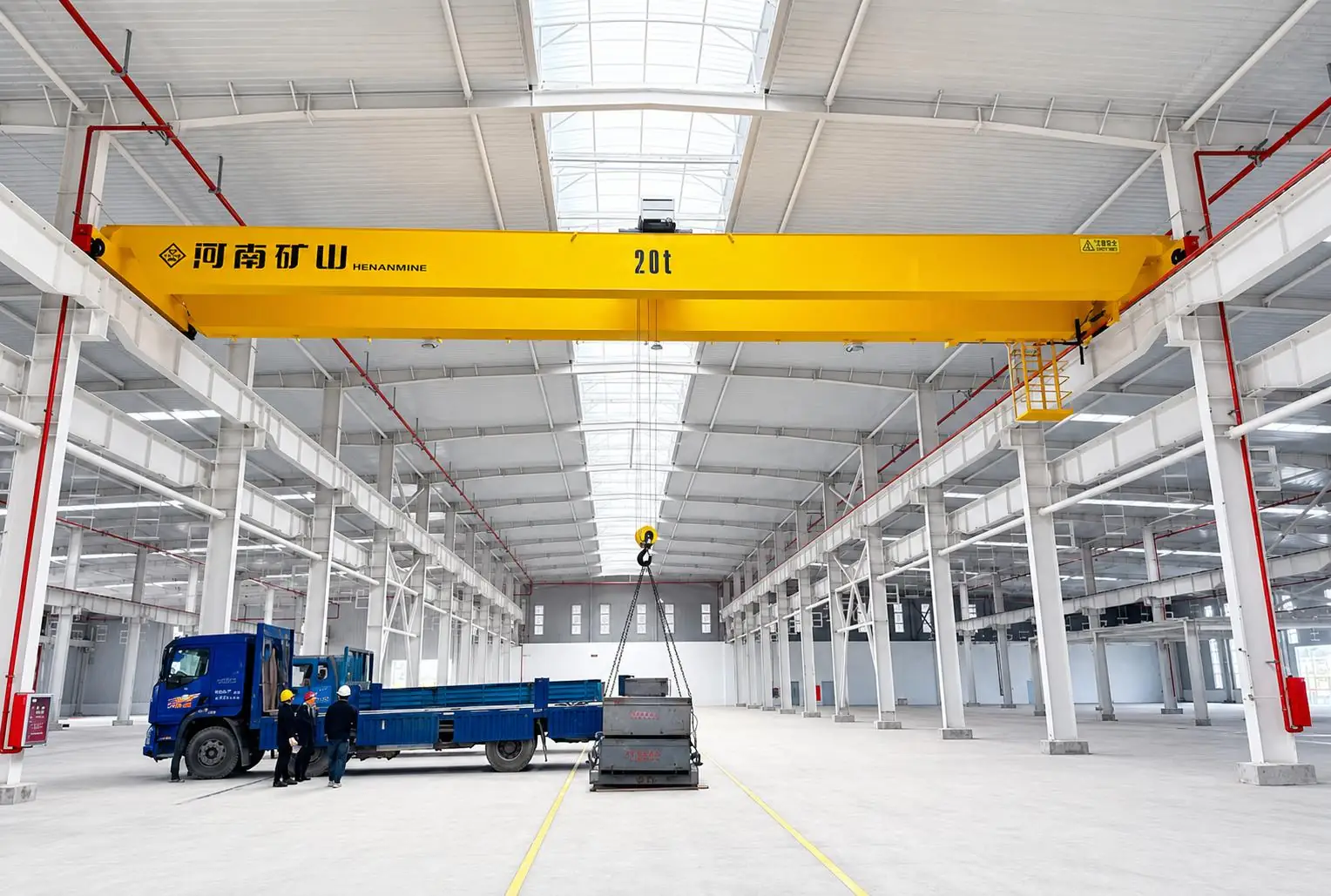
Give every supplier
a clear project brief.
- Give suppliers the same project inputs.
- Check the fit before comparing models.
- Separate equipment from site work.
Start with seven project inputs.
Start with the complete lifting task: the item, any attachment and the space the hook must reach. Use the seven inputs below to give suppliers a common basis for their technical proposal and quotation.
| Project input | What to provide | Why it matters |
|---|---|---|
| Load & attachment | Heaviest item, its dimensions and lifting points. List any sling, spreader, grab or magnet, including its weight. | The suspended load and attachment arrangement affect capacity selection and hook clearance. |
| Span & travel | Distance between runway rail centres and the required travel length. Include a bay drawing if available. | Building width alone does not identify the crane span or its coverage. |
| Hook position & lift | Lowest and highest required hook positions, roof clearance and the highest obstruction. | The crane must fit the building and reach the actual pick-up and set-down points. |
| Working cycle | Lifts per hour, hours per shift, number of shifts and the proportion of heavy loads. | Capacity alone does not describe how intensively the crane will work. |
| Site conditions | Indoor or outdoor use; heat, dust, moisture, corrosion or other process conditions. | The environment can change the required components and crane arrangement. |
| Power & operation | Site voltage, frequency and phase; pendant, radio or cabin control; any process interfaces. | Electrical and operating requirements need to match the site. |
| Delivery & site work | Project location, target timing and who provides the runway, installation and commissioning. | A useful quotation defines what is supplied and what must be arranged separately. |
Missing a number? Mark it “to be confirmed” and share the drawing or photo you do have. An explicit unknown is more useful than an assumed dimension.
Measure the crane’s working space.
Use three separate dimensions: span S, long travel L and required hook travel H. A marked-up workshop drawing helps everyone use the same reference points.
These sketches explain the measurement references; they are not installation drawings. For an existing building, also share runway details, column positions and any available structural drawings.
Compare the arrangement, not capacity alone.
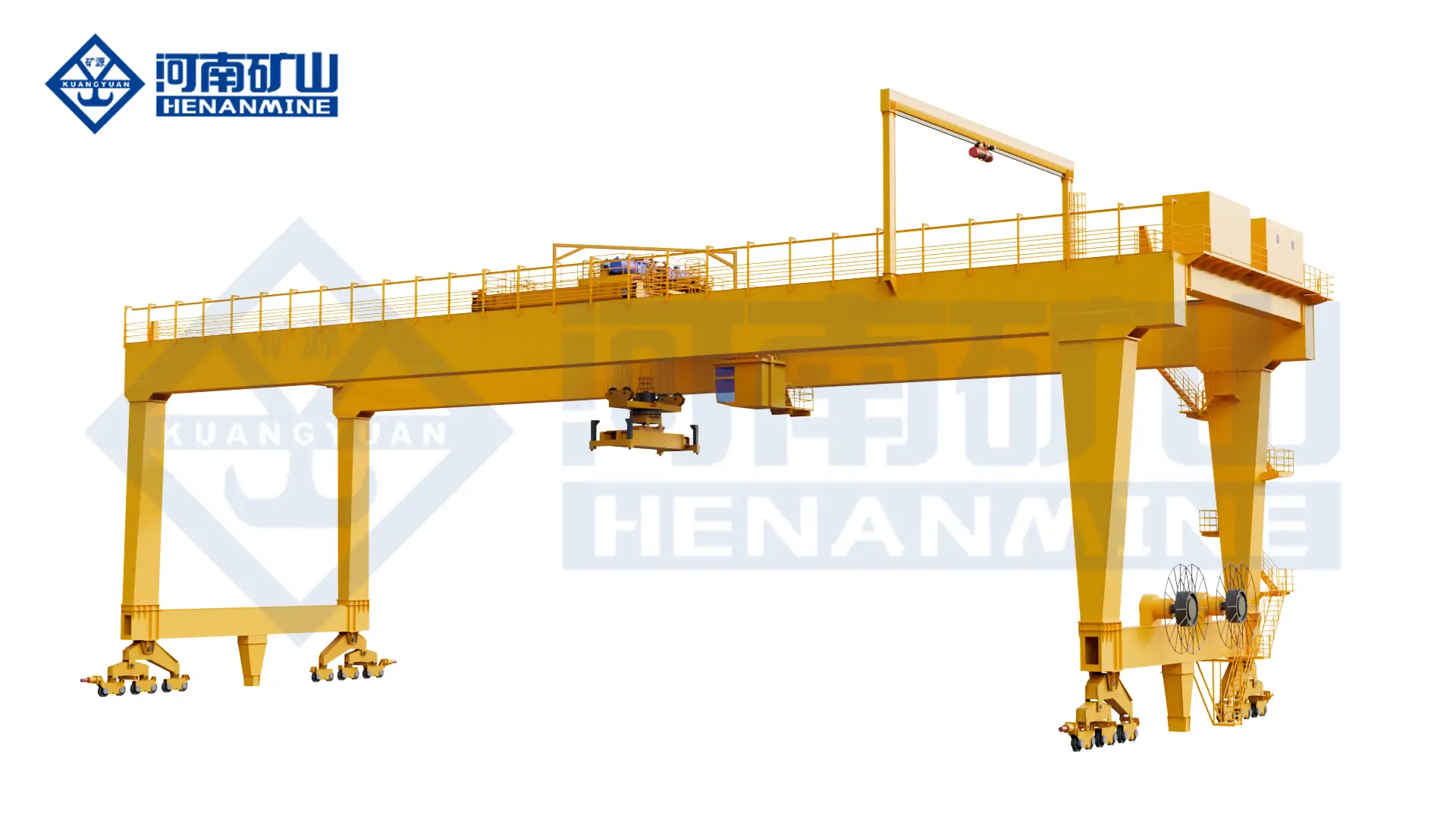
Start with the lifting task, building support and working cycle. These three catalogue families illustrate different arrangements to discuss; their ranges are not a selection decision by themselves.
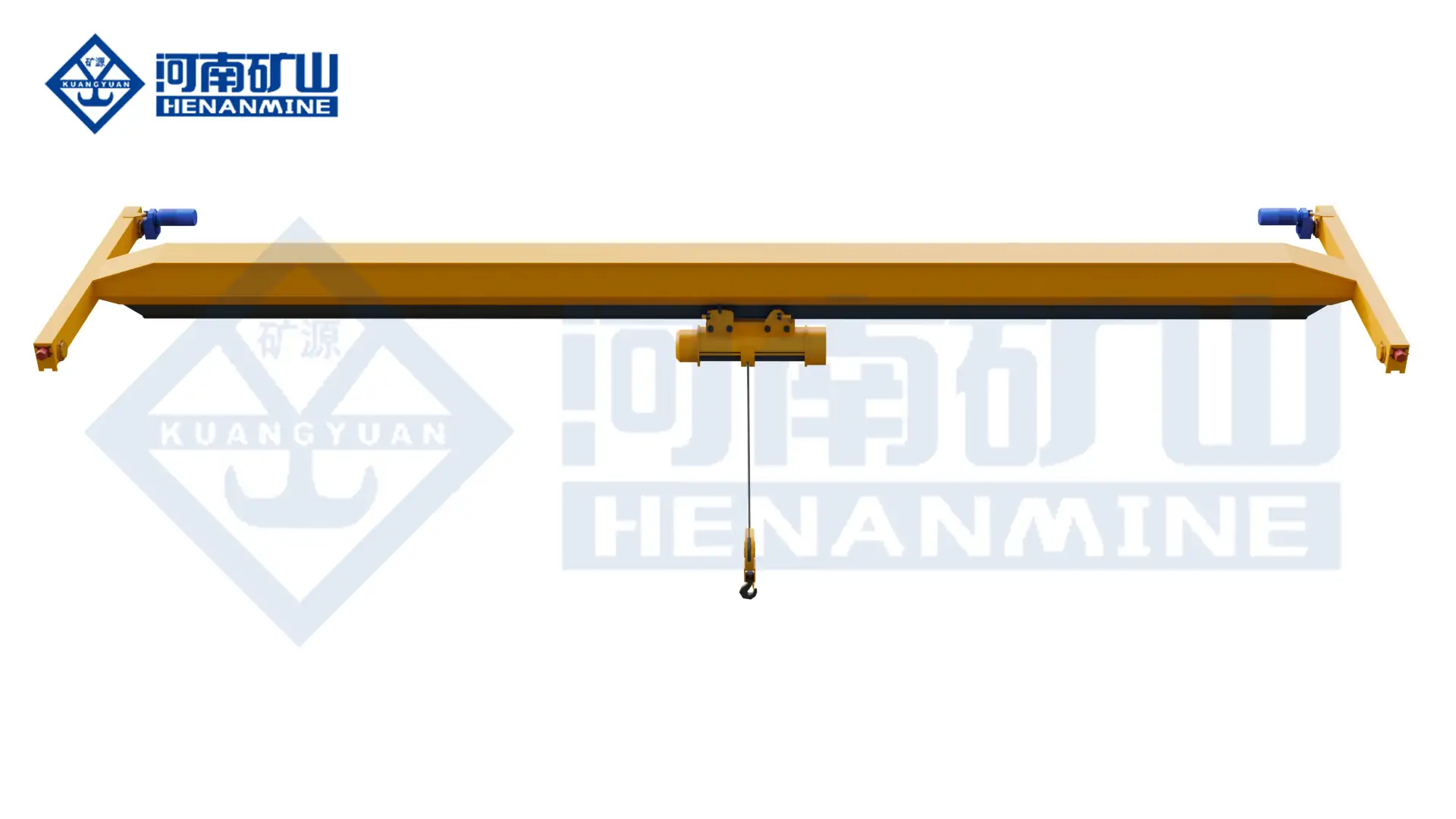
LDA single girder
View LDA specificationsA single-girder bridge arrangement. Compare the hoist headroom, hook approaches and runway loading with your bay drawing.
LH double girder
View LH specificationsA double-girder electric-hoist arrangement. Request the specific model’s dimensional drawing and wheel loads before checking fit.
LX suspension
View LX specificationsA suspended single-beam arrangement. Confirm the supporting structure, suspension points and required working coverage.
Catalogue reference: Henan Mine Crane Product Selection Guide, model families LDA, LH and LX. LH nominal capacities are 3, 5, 10, 16 and 20 t. Available combinations depend on the selected model.
Handling hot, magnetic or bulk material? Include the material and attachment details in your brief. A general hook-crane comparison will not capture every process requirement.
Make every quotation cover the same scope.
A lower total can mean a different boundary of supply. Ask suppliers to identify what is included, excluded or still provisional in each of the five areas below.
- Crane equipment
- Identify the bridge, hoist or trolley, drives, controls and lifting attachment. Ask for the model, working class, speeds and dimensional drawing.
- Runway & support
- Confirm responsibility for runway beams, rails, fixings and structural checks. Ask for the proposed crane’s wheel loads and rail requirements.
- Power supply
- Separate the crane’s electrical equipment from the building’s feed, isolator and long-travel conductor or cable system.
- Installation & handover
- Clarify supervision, site labour, access equipment, lifting equipment, testing, commissioning and operator handover.
- Delivery & support
- Agree the delivery point, packing, freight boundary, schedule, documentation, spare parts and warranty terms in the quotation.
Turn your notes into a quotation brief.
Enter what you know. Leave unknowns blank and the brief will mark them for confirmation. You can copy it for internal review or use it to start an enquiry with Henan Mine Crane.
This tool prepares text in your browser. It does not submit an enquiry. No contact details are needed to use it.
Review the brief before sending. Add workshop drawings and photos in your email app when you make the enquiry.
Before you send.
Four common questions when preparing an overhead crane enquiry.
Can I request a quotation without a finished drawing?
Yes. Start with the load, approximate bay dimensions, photos and lifting task. Mark unverified dimensions clearly. The crane arrangement and building fit still need to be checked before an order is defined.
Is the building’s inside width the crane span?
No. For a rail-running overhead crane, span refers to the distance between the runway rail centres. Send the building drawing and support details if the rail positions have not been set.
Does the same lifting capacity mean the same crane?
No. Working cycle, lifting height, span, speeds, controls, attachments and site conditions can differ. Compare the proposed specification and supply scope as well as the nominal capacity.
Which files help a supplier understand the project?
A workshop plan, an elevation showing roof and runway levels, load photos or drawings, and a short description of a normal lifting cycle are useful. State which dimensions are confirmed and which are estimates.
Explore the crane families.
Compare product parameters and arrangements, then bring your shortlist and workshop details into the discussion.