Henan Mine Crane · Port and Terminal Equipment
Port Crane Manufacturers
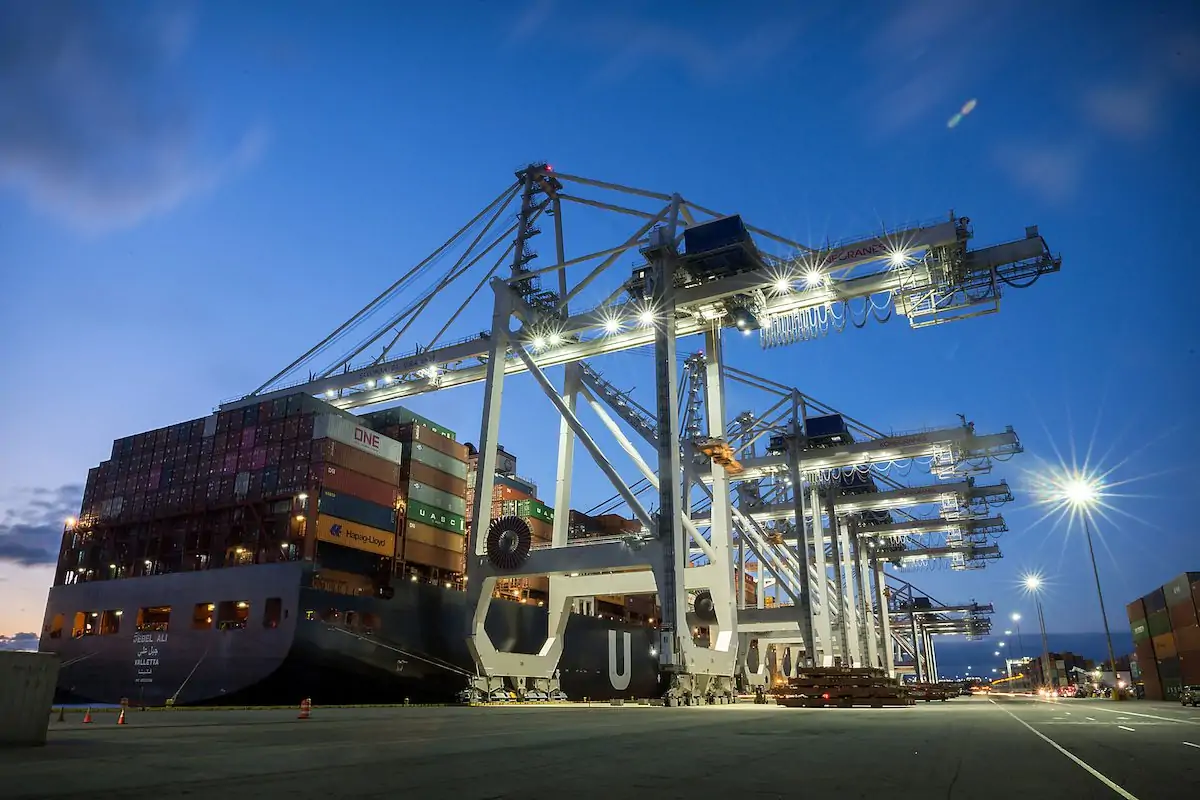
Port crane procurement requires a manufacturer capable of matching the equipment to vessel dimensions, cargo flow, quay strength, yard layout, operating duty and the terminal’s maintenance resources. Henan Mine Crane develops configurable ship-to-shore cranes, portal harbor cranes, rail-mounted gantry cranes, rubber-tyred gantry cranes and container straddle carriers for coastal and inland terminals.
Equipment selection is only one part of the contract. A complete proposal defines the lifting arrangement, power and control interfaces, wind and corrosion protection, testing, delivery, installation, training and spare-parts scope.
Port Crane Systems for Terminal Operations
The term port crane manufacturer covers several different equipment families. An STS crane transfers containers between vessel and quay. A portal harbor crane handles bulk or general cargo across a working radius. RMG and RTG cranes stack containers in the yard; a straddle carrier transfers and stacks containers across terminal routes. These systems are complementary rather than interchangeable.
The choice starts with cargo type, vessel and berth dimensions, annual throughput, peak-hour demand, yard stacking plan and intermodal connections. Selecting a crane from rated capacity alone can leave insufficient outreach, poor wheel-load compatibility or a mismatch between quay discharge and yard capacity.
Selection Considerations
Cargo and Handling Device
Confirm container dimensions and maximum gross mass, or bulk density, grab payload, general-cargo dimensions and lifting points.
Vessel and Berth
Specify beam, container rows, deck and hatch elevations, tidal range, berth length and required front and back reach.
Quay and Ground
Confirm rail gauge, wheel-load limits, existing foundations, apron width, pavement bearing and drainage.
Throughput and Duty
Define annual and peak volumes, shifts, operating cycles, required availability and maintenance windows.
Yard Configuration
State rows, stacking height, truck lanes, turning areas, rail tracks and future block expansion.
Wind and Marine Exposure
Provide operating and storm wind criteria, salt exposure, ambient range and coating requirements.
Power and Automation
Identify utility supply, diesel or electric strategy, cable routing, TOS interfaces and control mode.
Delivery Boundary
Define crane, spreader or grab, freight, site assembly, commissioning, load testing, training and spares.
Port Crane Types Compared
The following equipment families serve different stages of the cargo route. Published ranges on individual product pages are preliminary and must be checked against the project specification.
| Equipment | Operating Zone | Typical Cargo | Decisive Interface |
|---|---|---|---|
| Ship-to-Shore Crane | Quayside | Containers | Vessel reach, quay reactions and spreader capacity |
| Portal Harbor Crane | Quay and multipurpose berth | Bulk, breakbulk and project cargo | Working radius, grab or hook and marine protection |
| Rail-Mounted Gantry Crane | Fixed yard block or rail terminal | Containers | Rails, foundations, span and stacking plan |
| Rubber-Tyred Gantry Crane | Flexible yard blocks | Containers | Pavement, steering, power and block transfer |
| Container Straddle Carrier | Yard transfer and stacking | Containers | Travel routes, turning, stacking and fleet planning |
Quayside Crane Engineering
STS Container Handling
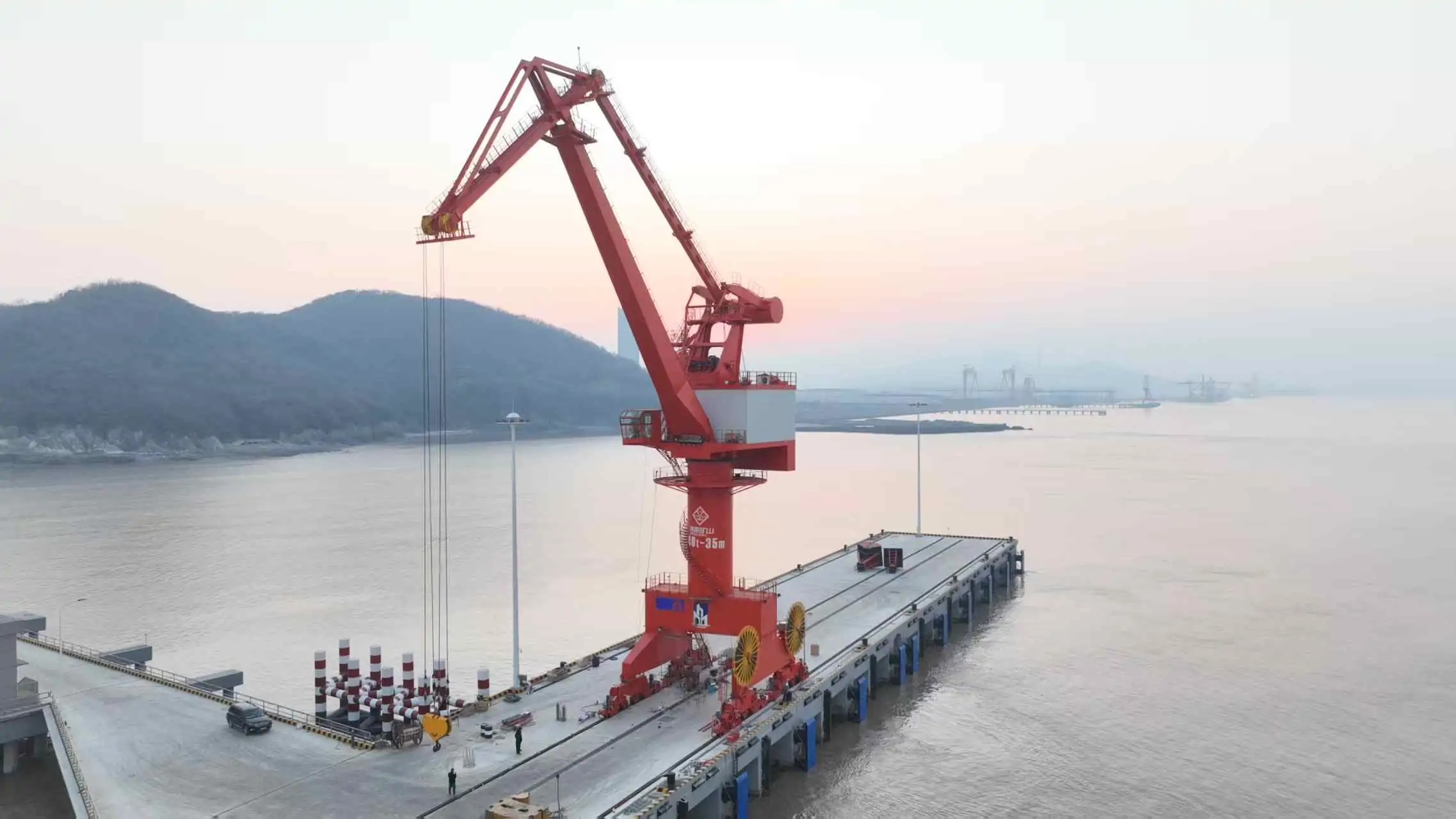
Outreach is set by vessel beam and furthest container row; lift above and below rail follows vessel and tidal extremes. Capacity must identify whether it is under spreader or includes spreader mass. Wheel loads, rail gauge, backreach and boom parking position are checked against the quay.
Portal Harbor Operations
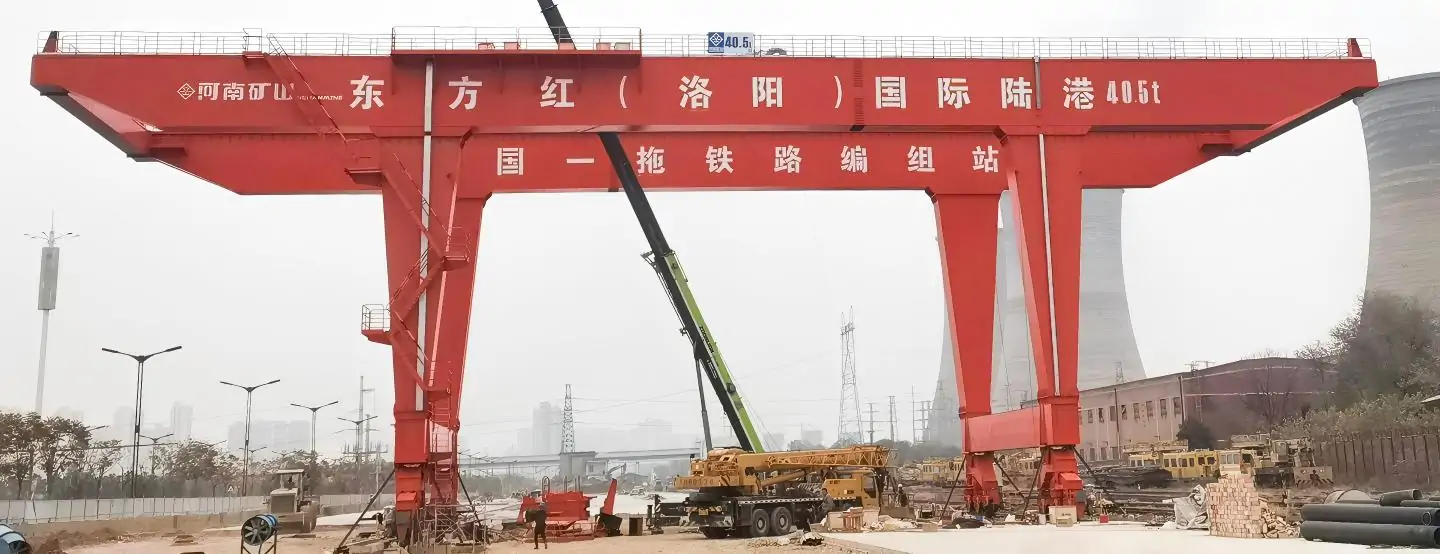
Portal cranes require lifting capacity across a specified radius chart, not a single headline capacity. Bulk grab cycles, hook loads and container attachments impose different duty and control requirements.
Wind and Marine Conditions
Operating and out-of-service wind criteria, storm anchoring, protective coatings, access routes and maintainable electrical enclosures are included in the technical agreement.
Container Yard Crane Engineering
RMG: Defined Rail Corridor
A fixed rail corridor supports repeatable container handling in high-density blocks and intermodal yards. Rail alignment, wheel reactions, span, cantilevers and truck or rail interfaces must be coordinated before civil construction.
RTG: Flexible Yard Blocks
Tyred travel permits movement between yard blocks subject to route width and ground condition. Diesel, hybrid, battery and busbar-assisted configurations differ in infrastructure, operating cost and emissions.
Shared Selection Basis
State container rows, stacking height, truck lanes, spreader specification, hoisting and travel speeds, anti-sway requirement, terminal operating system interface and desired fleet availability.
Manufacturer Evaluation and Technical Documentation
Design Evidence
General arrangement, load chart, wheel reactions, duty basis, structural calculations and wind criteria should match the tender.
Manufacturing Controls
Review the proposed inspection plan for steelwork, welding, drives, electrics, coating and factory functional tests.
Acceptance Criteria
FAT, site commissioning, load testing, spreader or grab tests and performance demonstrations need contractual pass criteria.
Lifecycle Support
Manuals, electrical drawings, parts lists, training, service access and spare-part lead times influence terminal uptime.
Applicable structural, crane, electrical, maritime and local regulatory requirements are stated in the contract. Certificates or compliance claims are assessed against the exact crane configuration and destination jurisdiction.
40.5 Tonne RMG Application: Inland Port Handling
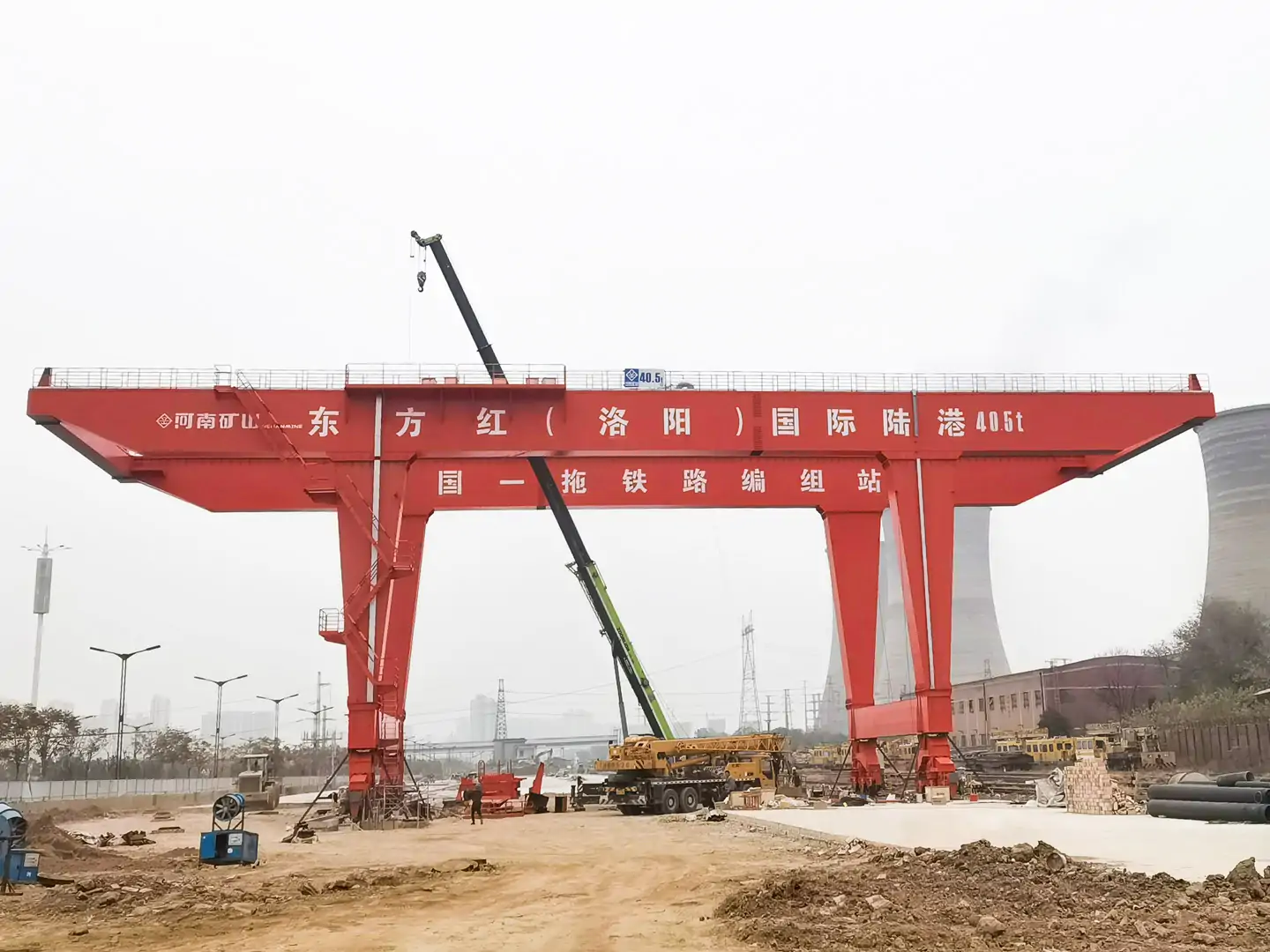
The 40.5 tonne inland-port RMG application sets out a rail-mounted container-handling configuration for dry ports, rail freight areas and intermodal logistics hubs.
The engineering configuration addresses container specification, handling route, rail geometry, electrical controls and spreader compatibility. Final duty, span, height, interfaces and acceptance criteria depend on terminal-specific data.
For procurement, the defining interfaces are the rail corridor, container stack envelope and connections to truck and rail handling areas. These details should be reconciled with terminal drawings before freezing the crane general arrangement.
Installation, Commissioning and Maintenance
Site Readiness
Verify quay or yard bearing capacity, rail survey, erection access, lifting plan, power interface and storm-protection foundations.
Commissioning
Electrical, brake, limit, interlock and wind-protection checks precede load testing, operating trials and operator training.
Planned Maintenance
Structural connections, ropes, brakes, wheels, tyres, spreaders, corrosion protection, cable systems and safety devices require duty-based inspection.
Port Crane Price and Total Project Cost
There is no defensible single price for a port crane. Public supplier indications for smaller or simpler container RTG equipment begin at approximately USD 700,000–1.2 million. Larger, electrified or automated units may cost substantially more. These market indications are not Henan Mine Crane quotations and do not establish a comparable price for STS, portal harbor or RMG cranes.
A commercial evaluation compares equivalent capacity, reach or span, duty, spreader or grab, drive and power technology, controls, wind and corrosion requirements, supply terms and acceptance criteria. STS and portal equipment require an engineered quotation after vessel and quay data are reviewed.
Crane Equipment
Structure, machinery, spreader or grab, electrical systems and controls.
Terminal Infrastructure
Rails, quay strengthening, pavement, power distribution and communications.
Delivery and Service
Freight, insurance, import costs, erection, testing, training and spares.
Quotation Data
Cargo type · maximum load under spreader or hook · vessel dimensions · required outreach and lift · quay and rail data · yard layout · annual and peak throughput · duty · wind and corrosion criteria · site power · control and TOS interface · destination port · delivery and site-work scope.
Port Crane Procurement FAQ
Which crane handles containers at the berth?
A ship-to-shore crane is designed for vessel-to-quay container transfer; reach and lift follow vessel and water-level data.
Which crane is suitable for bulk cargo?
A grab-equipped portal harbor crane can serve berth handling where outreach, grab payload and tonnes-per-hour duty are established.
What is the difference between RTG and RMG?
RTG cranes travel on tyres and may move between blocks; RMG cranes travel on fixed rails within a defined handling corridor.
How is STS outreach determined?
The furthest container row, vessel beam, mooring offset and berth layout establish minimum working outreach.
Does lifting capacity include the spreader?
Capacity basis must state whether the rating is under spreader or includes spreader and attachment mass.
Can port cranes connect to terminal software?
Control interfaces can be specified for a terminal operating system when protocols, safety permissions and acceptance tests are defined.
How is storm protection specified?
Operating and parked wind cases govern brakes, clamps, anchors, tie-downs and terminal procedures.
Does equipment price include installation?
Not automatically. Freight, civil work, rails, erection, commissioning and testing must be explicitly included or excluded.
What documents support supplier evaluation?
General arrangement, load chart, wheel reactions, duty basis, inspection plan, electrical architecture, test plan and spare-parts schedule.
What information is required for a port crane quote?
Cargo, vessel profile, berth and yard plans, required output, operating duty, wind criteria, power, destination and supply scope.
Related Port Crane Products
Ship-to-Shore Crane
Quayside handling for container vessels.
Portal Harbor Crane
Berth-side lifting for bulk and general cargo.
RMG Container Crane
Fixed-rail container yard and intermodal operations.
RTG Container Crane
Flexible tyre-mounted yard stacking.
Container Straddle Carrier
Terminal container transfer and stacking.
Port Crane Product Range
Compare the complete quay and yard equipment range.
Terminal Equipment Proposal
Request a Port Crane Quote
Submit cargo data, vessel profile, berth or yard drawings, required throughput, operating duty, power supply, wind criteria, installation location and project scope. Henan Mine Crane will prepare an equipment configuration and commercial proposal from the confirmed terminal requirements.