
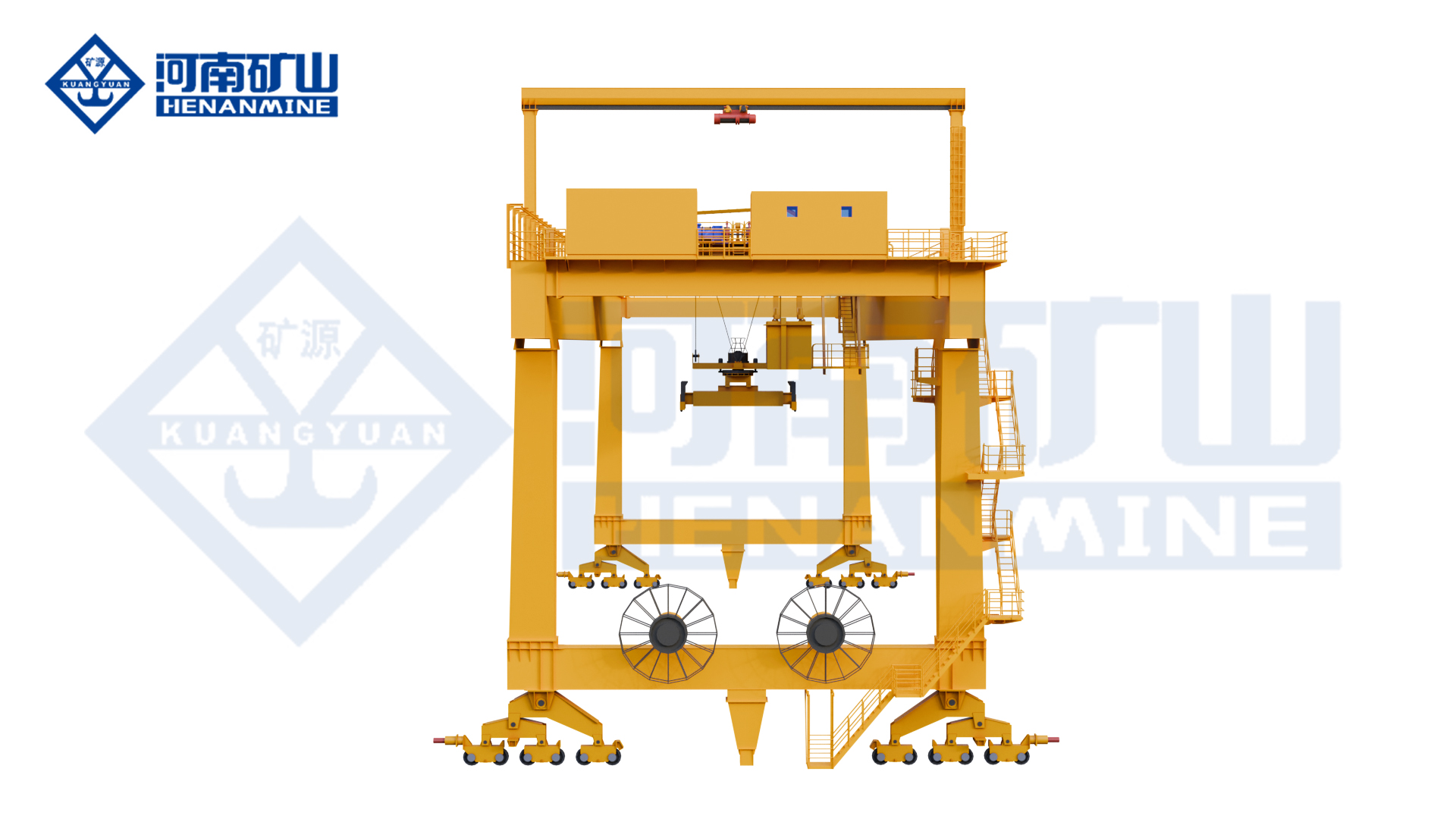
Henan Mine Crane · Rail-Mounted Container Handling
RMG Crane for Container Yard Operations
Rail-mounted gantry cranes for high-density container stacking, truck and rail exchange, repeatable travel paths and automation-ready terminal operation.
Henan Mine Crane configures each RMG around container mass, rail gauge, stacking envelope, cantilever reach, peak moves, wheel loads, wind exposure, power supply, control level and terminal-system interfaces.
PUBLISHED CAPACITY
35 t, 40.5 t, 50 t or Custom
PUBLISHED SPAN
18–35 m or Custom
PUBLISHED LIFT
12.3–21 m or Custom
WORK CLASS
A6–A8
What Is an RMG Crane for a Container Yard?
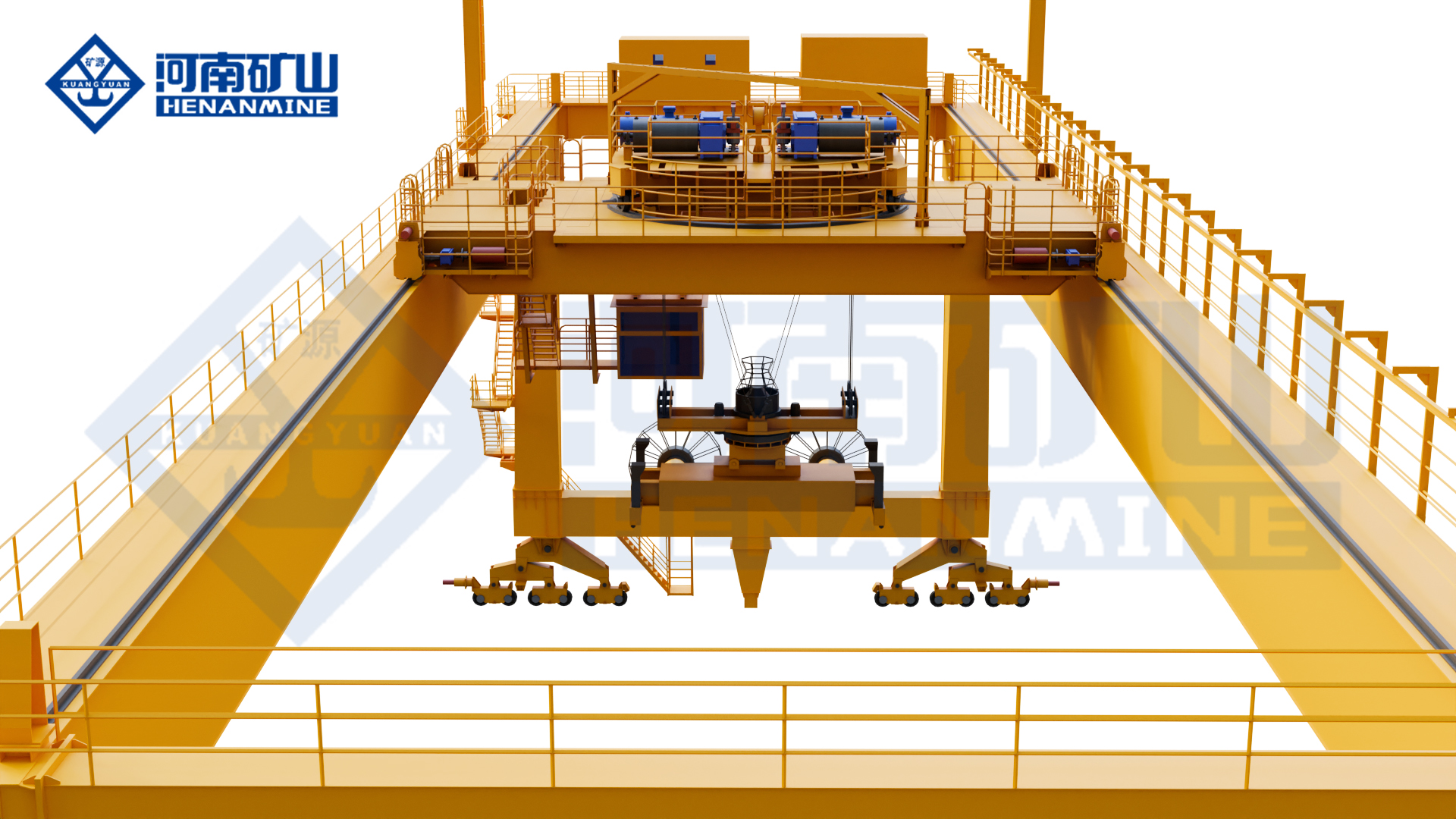
An RMG crane, or rail-mounted gantry crane, travels on fixed runway rails and handles ISO containers with a telescopic spreader. The structure can span container rows, truck lanes, railway tracks or combinations of these operating zones.
Fixed rails provide a repeatable travel path for precise positioning, grid-electric operation and progressive automation. RMG systems are therefore suited to permanent high-throughput blocks, intermodal rail terminals, inland container depots and marine-terminal transfer areas.
The crane is only one part of the operating system. Rail alignment, foundations, power distribution, container transfer positions, safety zoning, terminal data and recovery procedures must be engineered as one coordinated project.
RMG Crane Selection Considerations
Container and Lift Profile
Container sizes, maximum gross mass, high-cube share, reefer volume, out-of-gauge handling and single- or twin-lift duty establish rated load and spreader functions.
Rail Gauge and Coverage
Row pitch, rail tracks, truck lanes, service roads, safety clearances and cantilever transfer points define span, outreach and total crane width.
Stacking and Throughput
Stack tiers, clearance above the top container, annual TEU, peak moves, rehandle ratio, shifts and availability target control lift, speed and mechanism duty.
Rails and Foundations
Rail size, alignment tolerance, wheel loads, settlement limits, drainage, end stops and storm restraints require coordinated crane and civil calculations.
Power and Environment
Voltage, frequency, cable route, grid capacity, wind, temperature, salt fog, rainfall, dust and seismic inputs determine electrical and protective design.
Control and Data Interfaces
Cab, remote or automated operation; anti-sway; positioning; OCR; truck guidance; diagnostics; ECS and TOS interfaces need defined performance and ownership boundaries.
RMG Crane Configurations Compared
| Configuration | Operating Strength | Primary Project Check | Typical Application |
|---|---|---|---|
| Single-Cantilever RMG | One external transfer zone with a compact opposite side | Truck or rail interface position and maintenance access | Space-limited depot or rail-transfer block |
| Double-Cantilever RMG | Transfer lanes or tracks on both sides of the rail gauge | Outreach, wheel loads, traffic separation and wind area | High-throughput container yard or intermodal terminal |
| Cab or Remote-Control RMG | Direct operator control with optional centralized workstations | Visibility, camera coverage, communications and recovery access | New or upgraded yards with staged digitalization |
| Automated RMG | Repeatable unmanned cycles and coordinated block operation | TOS/ECS integration, safety zoning, exception handling and data quality | Permanent high-density blocks with controlled traffic |
Published RMG Crane Specifications
The following values are the published Henan Mine Crane RMG product-family range. Contract values remain project-specific and are confirmed in the approved technical specification and general arrangement drawing.
| Parameter | Published Value | RFQ Definition |
|---|---|---|
| Lifting Capacity | 35 t, 40.5 t, 50 t or customized | State load under spreader and any hook or special-lift duty |
| Span | 18–35 m or customized | Confirm rail-center gauge, rows, tracks and clearances |
| Lifting Height | 12.3–21 m or customized | Confirm stack tiers, high-cube containers and top clearance |
| Work Class | A6–A8 | Select from load spectrum, cycles, shifts and design life |
| Published Temperature | −25°C to +40°C | State project minimum, maximum, humidity and solar exposure |
| Published Hoisting Speed | 0–20 m/min | Confirm loaded and empty-spreader performance targets |
| Spreader | 20 ft / 40 ft / 45 ft telescopic | Define single, twin, reefer and out-of-gauge functions |
| Power Supply | AC 380 V, 50 Hz, three-phase or local standard | Confirm voltage, frequency, short-circuit level and cable route |
A published product example lists trolley travel up to 30 m/min and gantry travel up to 40 m/min. Final speeds require cycle analysis, structural checks and agreement on positioning accuracy.
RMG Yard Layout and Stacking Geometry
Rail gauge is measured between the crane rail centerlines, not by container-row count alone. The span must include row pitch, railway tracks or truck lanes inside the legs, clearance to fixed equipment and the permitted sway envelope.
Cantilevers place transfer positions outside the runway. Outreach is set from the rail centerline to the spreader centerline at the exchange point, with structural clearance for trucks, wagons, terminal tractors and maintenance routes.
Lifting height includes the highest planned container tier, the selected top clearance, spreader depth and operating tolerance. Block length, crane quantity and passing strategy must also be resolved before rail and power design is frozen.
RMG vs. RTG for Container Yard Planning
RMG and RTG cranes can handle the same ISO container flow, but they organize a terminal differently. The selection affects land use, civil works, power distribution, traffic control, fleet flexibility and the route to automation.
| Decision Factor | RMG Crane | RTG Crane | Planning Effect |
|---|---|---|---|
| Travel System | Fixed rails and repeatable runway | Rubber tyres and block-change capability | RMG favors permanent blocks; RTG favors operating flexibility |
| Civil Scope | Rails, beams or foundations, end stops and settlement control | Heavy-duty pavement, wheel paths and turning areas | Whole-site civil cost must be compared, not crane price alone |
| Power | Normally grid electric along a fixed block | Diesel-electric, hybrid, battery or grid-electric | Substation capacity and cable routing belong in the layout study |
| Automation | Fixed travel path supports repeatable positioning | Automation must also manage steering and block movement | RMG is often selected for controlled automated blocks |
A lifecycle comparison should include equipment quantity, land capacity, rail or pavement works, energy, labor, maintenance, rehandles, expansion strategy and the financial effect of downtime.
RMG Cycle Time, Fleet Size and Availability
Rated speeds do not equal productive moves per hour. A realistic operating model separates mechanical motion from container identification, twistlock confirmation, final alignment, truck or wagon arrival, terminal-data handshakes and exception recovery.
Demand Profile
Annual TEU is converted into peak-hour lifts by import dwell, train windows, vessel exchange peaks, gate appointments and the share of loaded and empty containers.
Cycle Components
Hoist, trolley and gantry travel can overlap within safe limits. Spreader landing, twistlock checks, target confirmation and transfer-vehicle positioning remain separate cycle inputs.
Operational Losses
Rehandles, traffic conflicts, weather restrictions, shift changes, inspections, data exceptions and maintenance reduce net productive availability below theoretical output.
Fleet Resilience
Crane quantity must allow planned service, fault recovery and peak demand without isolating critical rail or truck exchange positions.
A procurement specification should state the reference move, starting and ending coordinates, container mass, permissible simultaneous motions, transfer-vehicle assumptions and measured acceptance method. This turns a general moves-per-hour target into a testable performance requirement.
Rails, Foundations and Power Infrastructure
Rail and Alignment
Rail section, fastening, gauge, straightness, level, joint detail and electrical grounding form part of the crane–civil interface schedule.
Wheel Loads and Settlement
Maximum, minimum, operating and storm wheel loads are issued for foundation design; differential settlement limits protect wheel sharing and skew control.
End Stops and Storm Safety
Buffers, end stops, rail clamps, storm pins or tie-downs are selected from travel speed, site wind and the terminal storm-securement plan.
Electric Power
Cable reel, cable trench, conductor system or project-specific supply is coordinated with substations, isolation, emergency power and maintenance access.
Spreader, Anti-Sway and RMG Automation
Container Interface
A telescopic spreader handles 20 ft, 40 ft and 45 ft containers. Twistlock status, flipper control, skew correction, container detection and overload protection are specified around the container mix and operating method.
Motion Control
Variable-frequency drives, anti-sway, anti-skew, travel synchronization and target positioning shorten the final approach while protecting containers, trucks, wagons and adjacent stacks.
Automation Scope
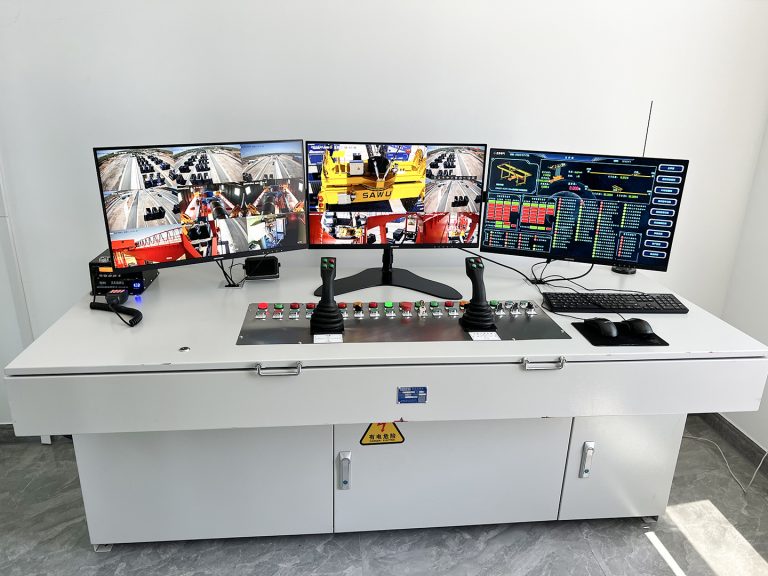
Remote or automated RMG operation can combine cameras, laser or satellite positioning, OCR, truck guidance, safety scanners, equipment control and terminal operating system interfaces. Manual recovery and exception handling remain part of the acceptance plan.
RMG Crane Price for Container Yard Projects
Public online references reviewed in 2026 place rail-mounted container gantry cranes across a wide range because capacity, span, lift, cantilevers, duty, automation and delivery scope vary substantially.
| Public Reference | Configuration | Published Price | Comparison Note |
|---|---|---|---|
| DGCRANE public configuration | 40.5 t, 32 m span, 12 m lift, A6, remote control, full VFD, 7.5 m effective cantilever each side | US$294,300 | Equipment configuration reference; delivered scope requires confirmation |
| DGCRANE public configuration | 40.5 t, 32 m span, 12 m lift, A6, remote control, non-VFD, 7.5 m effective cantilever each side | US$284,400 | Illustrates how drive scope changes the listed equipment value |
| DGCRANE public configuration | 40.5 t, 40 m span, 15.8 m lift, A7, remote control, 12.5 m effective cantilever each side | US$1,015,600 | Wider, taller and heavier-duty configuration |
| 2026 public market guide | RMG, 40–100 t capacity and 30–50 m span | US$200,000–2,000,000+ | Broad equipment-market range rather than a project quotation |
These public figures are market references, not Henan Mine Crane quotations. A comparable commercial offer must state crane quantity, spreader, rails and electrification boundary, automation, civil interfaces, freight, erection, commissioning, testing, training, spare parts, taxes, Incoterm and warranty.
RMG Maintenance, Spares and Lifecycle Cost
Capital price is only one part of RMG ownership. Planned access, component standardization, diagnostic data, local service capability and critical-spares strategy affect availability throughout the crane’s working life.
Maintenance Access
Platforms, walkways, lighting, lifting points, trolley access, electrical-room clearance and safe isolation provisions should be reviewed on the general arrangement.
Critical Spare Parts
Commissioning spares, operating spares and long-lead strategic spares are separated by failure consequence, installed fleet size and local procurement time.
Condition and Diagnostics
Fault history, motor and drive status, brake monitoring, operating hours, overload records and alarm trends support planned intervention and faster recovery.
Structural Protection
Coating system, drainage, enclosure protection, corrosion allowance and inspection access are matched to marine salt, humidity, rainfall, dust and temperature exposure.
A complete offer can schedule preventive-maintenance tasks, recommended tools, consumables, spare-parts quantities, training modules, warranty response and technical-document language. These items make competing quotations easier to evaluate on equivalent service scope.
Project Case
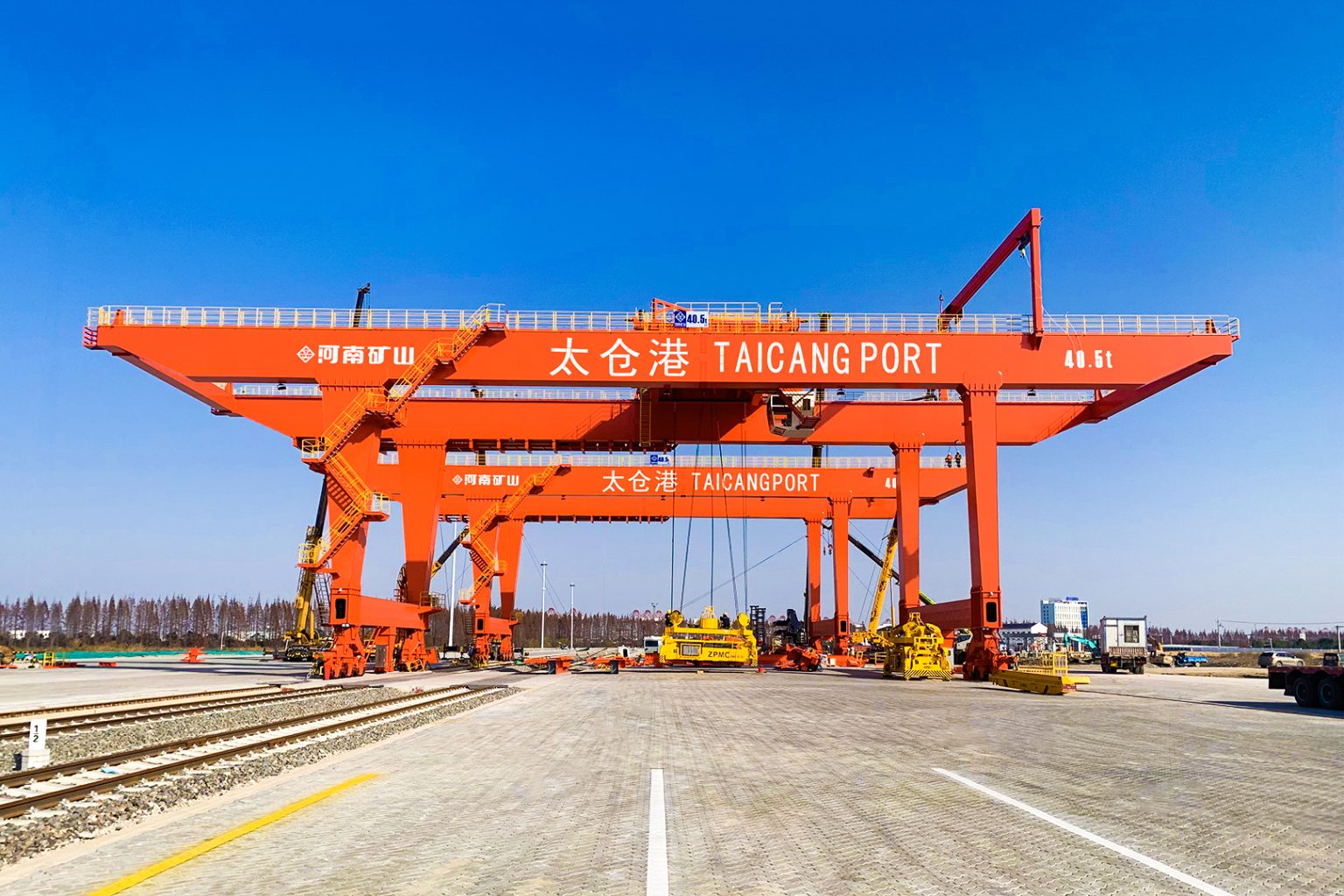
40.5 t RMG Cranes for Taicang Port
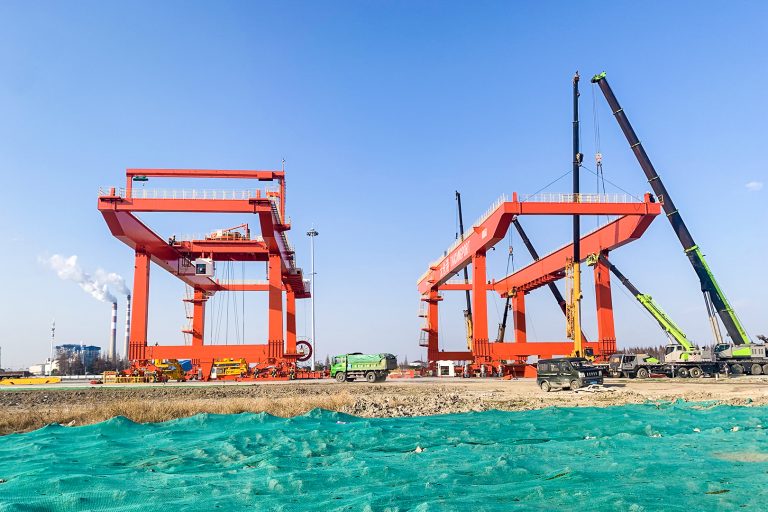
Henan Mine Crane supplied 40.5 t rail-mounted container gantry cranes for the Taicang Port International Hub upgrade. The project combined heavy container duty with remote operation and equipment-status visualization.
The RMG system was integrated with the port’s intelligent logistics platform, allowing crane information to support coordinated yard operation. The case demonstrates the importance of defining both lifting equipment and digital interfaces in the project scope.
Engineering and Procurement Deliverables
Design Package
General arrangement, design basis, wheel loads, rail reactions, power data, interface drawings, equipment list and control architecture.
Manufacturing Quality
Inspection and test plan, material traceability, welding records, NDT reports, electrical checks and factory functional testing.
Site Acceptance
Erection supervision, no-load and rated-load tests, safety checks, interface trials, performance testing, training, spares and handover records.
Technical Enquiry
RMG Crane RFQ Checklist
The following project data allows structure, mechanisms, civil interfaces, controls and commercial scope to be priced on a consistent basis.
- Terminal type, location and applicable design standard
- Yard drawing with rail gauge, block length and transfer positions
- Container sizes, maximum gross mass and high-cube percentage
- Required stack tiers and clearance above the top container
- Cantilever reach on each side and obstacles below
- Single-lift, twin-lift, reefer and out-of-gauge requirements
- Annual TEU, peak hourly moves, operating shifts and design life
- Cab, remote or automated control and TOS/ECS interfaces
- Available voltage, frequency, grid capacity and cable route
- Rail data, foundation status and settlement criteria
- Temperature, wind, corrosion, seismic and rainfall data
- Destination, Incoterm, erection, testing and acceptance scope
Frequently Asked Questions
What is an RMG crane used for?
An RMG crane stacks and transfers containers in fixed rail-mounted blocks at marine terminals, inland depots and intermodal rail facilities.
What capacity is common for a container-yard RMG?
40.5 t under spreader is a common project baseline. Henan Mine Crane publishes 35 t, 40.5 t and 50 t ratings, with customized capacity available.
How much does an RMG crane cost?
Public references reviewed in 2026 range from about US$200,000 to more than US$2,000,000. Span, lift, cantilevers, work class, automation and delivered project scope determine the final quotation.
What is the difference between an RMG and an RTG?
An RMG travels on fixed rails and is suited to permanent, high-density, electric or automated blocks. An RTG travels on rubber tyres and offers greater flexibility between compatible yard blocks.
Can an RMG serve railway wagons and truck lanes?
Yes. Rail tracks, truck lanes or both can be arranged inside the span or below cantilevers when gauge, outreach, clearances and traffic controls are engineered accordingly.
Can an RMG crane be fully automated?
Yes. Automated RMG operation can include positioning, anti-sway, OCR, safety scanners, truck guidance, remote exception handling and TOS/ECS integration.
What civil information is required before ordering an RMG?
Required inputs include the runway plan, rail gauge, rail and fastening details, foundation capacity, settlement limits, drainage, end-stop arrangement and site survey data.
How many RMG cranes are required for a container yard?
Fleet quantity follows peak moves, productive cycle time, rehandles, block length, operating hours, planned maintenance and the required reserve margin.
Related Container Yard Crane Products
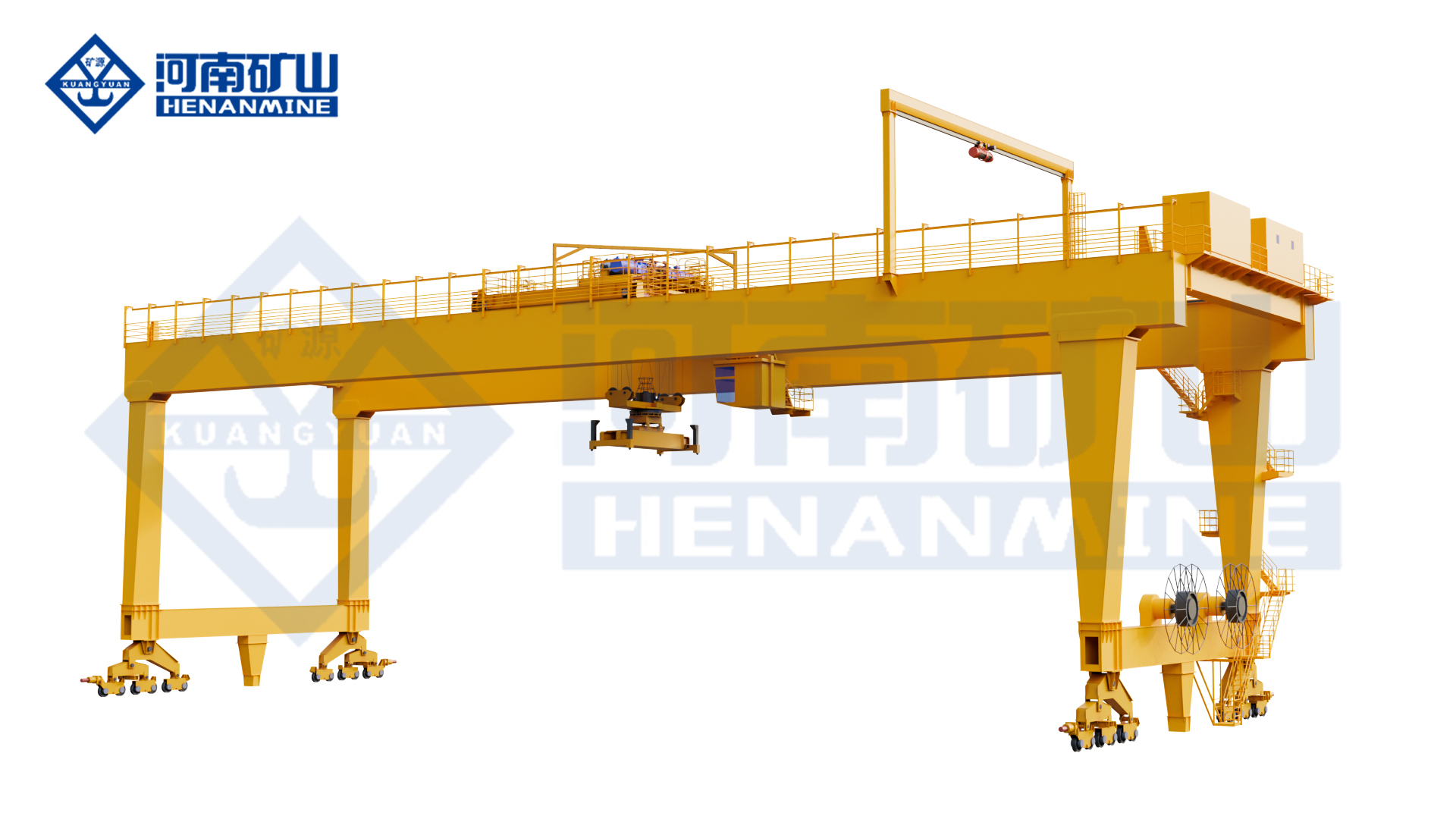
Rail-Mounted Gantry Crane
Electric rail-guided handling for permanent high-density container blocks.
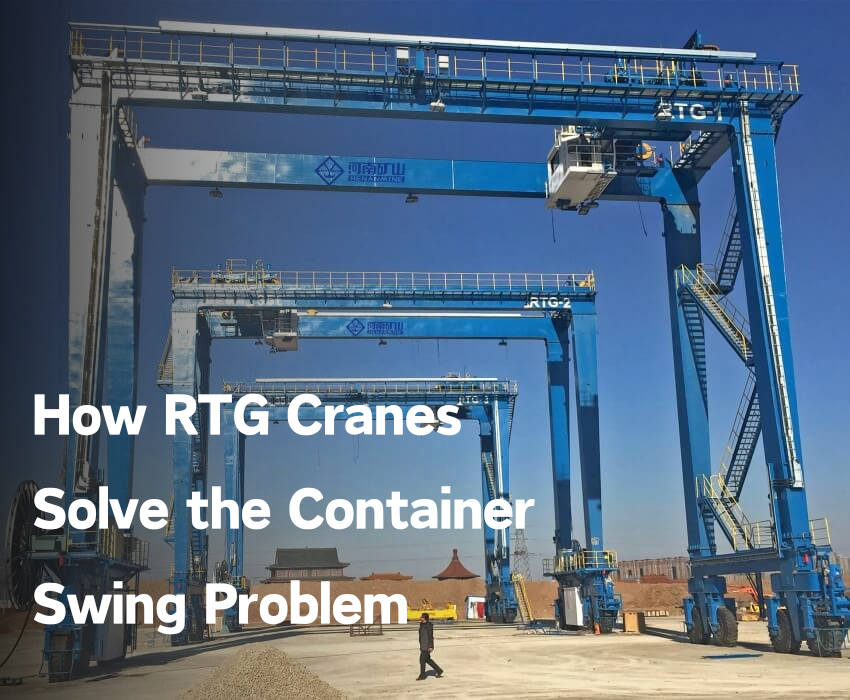
Rubber-Tyred Gantry Crane
Mobile multi-row stacking for flexible block allocation and phased growth.
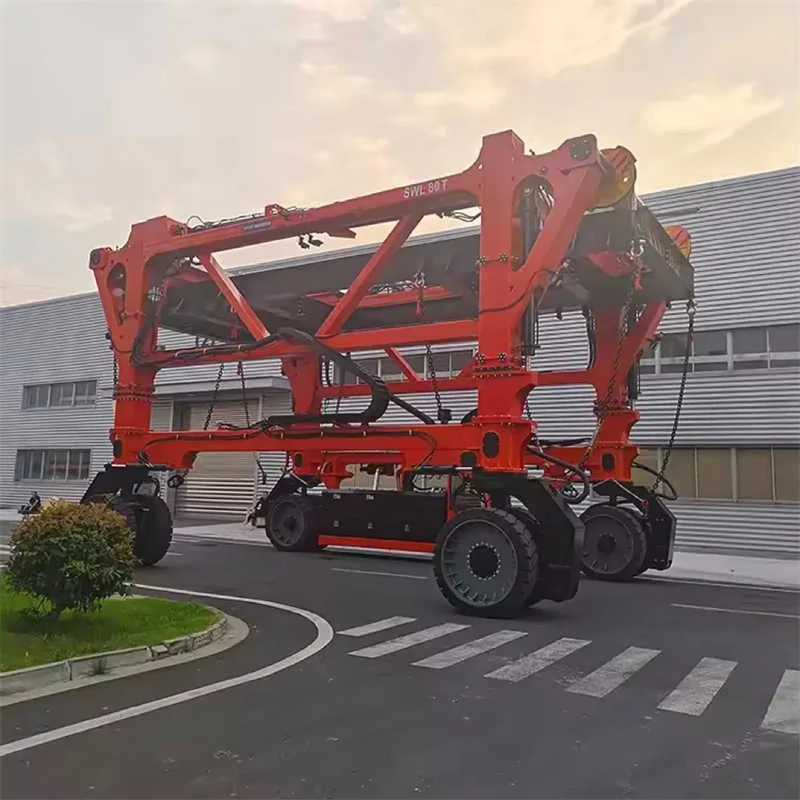
Container Straddle Carrier
Point-to-point container transport and stacking within one mobile machine.
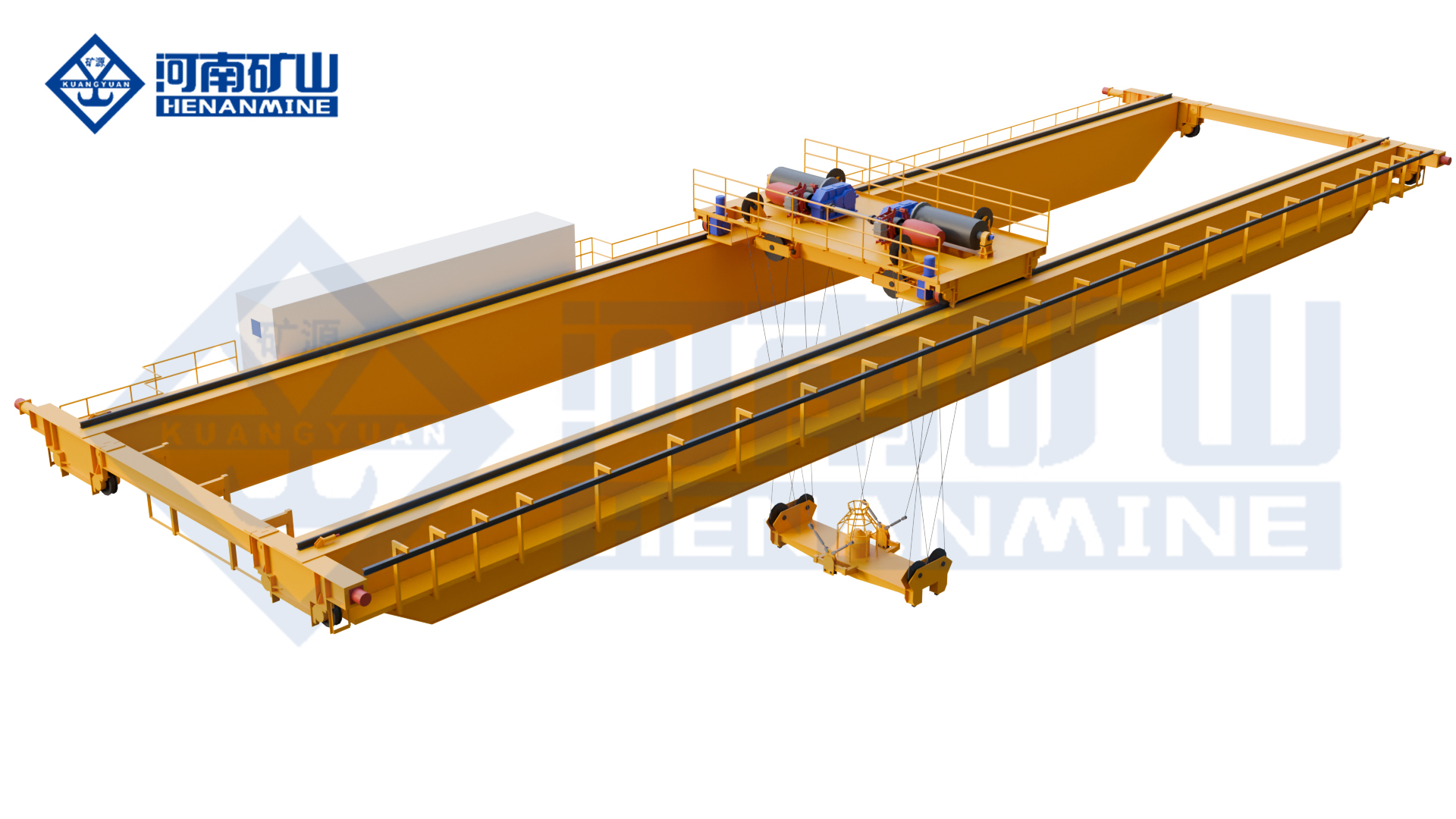
Container Overhead Crane
Fixed-area container handling for depots, logistics bays and covered facilities.
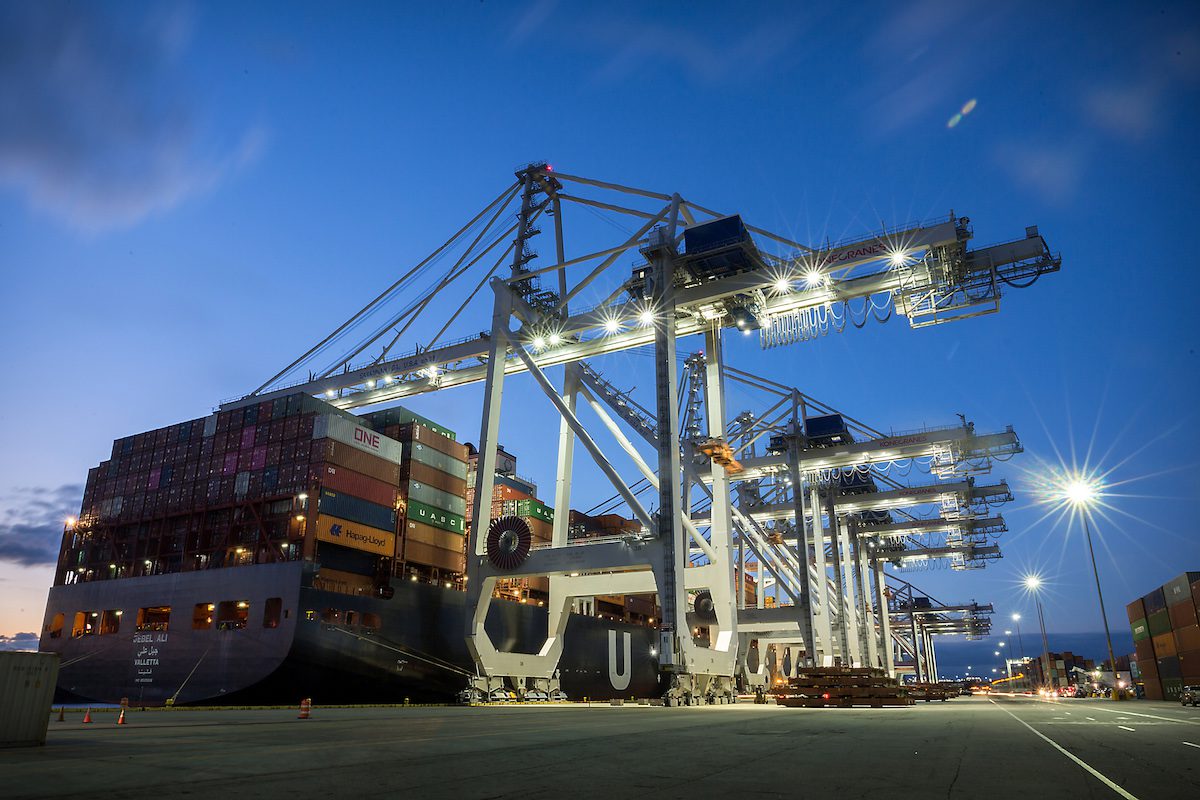
Ship-to-Shore Crane
Quayside vessel loading and unloading for marine container terminals.
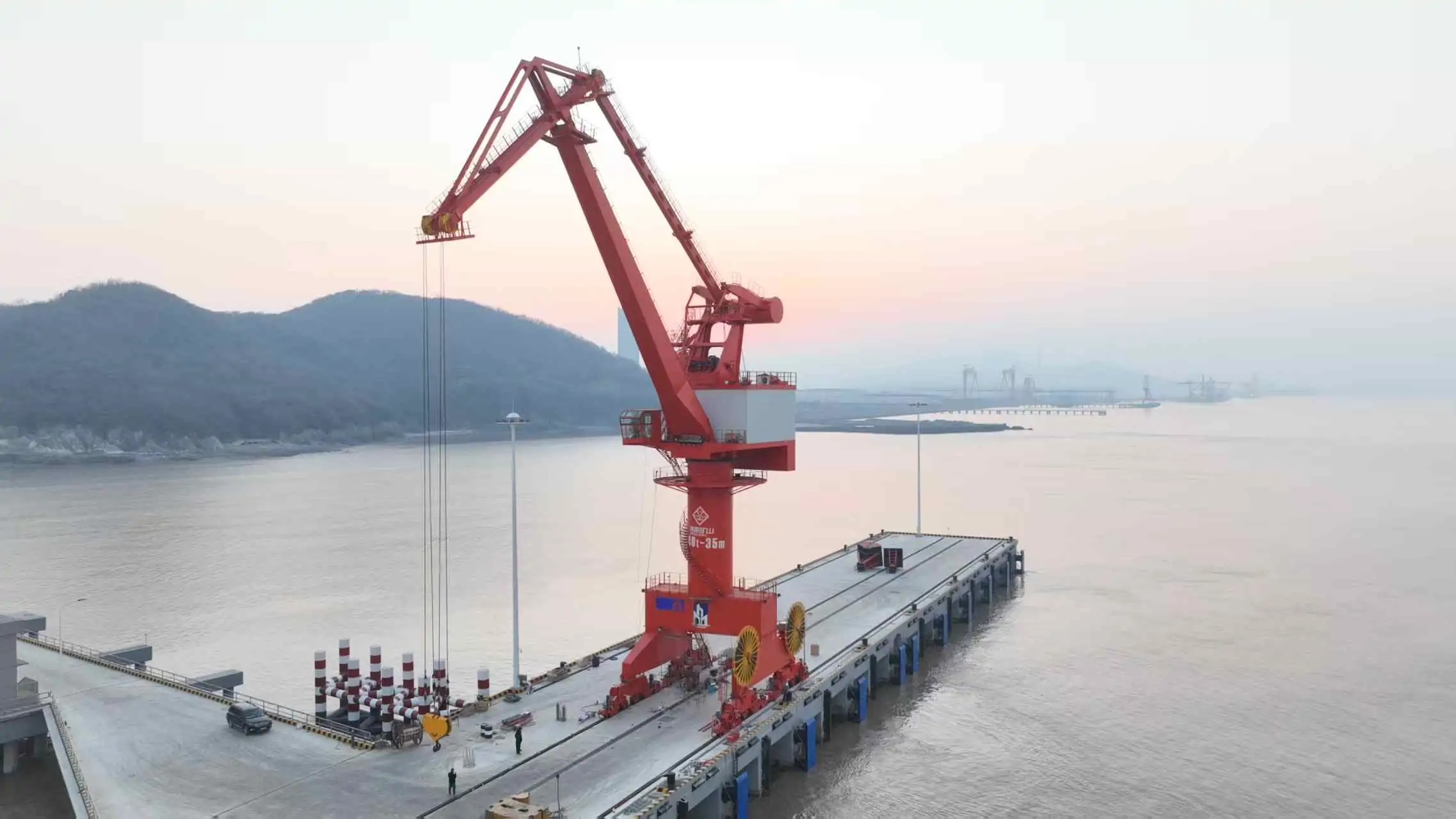
Portal Harbor Crane
Flexible berth equipment for containers, general cargo and project cargo.
Technical review: Henan Mine Crane Engineering
Last reviewed: 2026
Request an RMG Crane for Container Yard Quote
Submit the yard plan, rail gauge, container mix, stacking height, cantilever reach, peak moves, power data, control level and destination for a project-specific RMG configuration and commercial scope.