Henan Mine Crane · Rolling Stock Maintenance Lifting
Rail Workshop Overhead Crane
Bridge-crane systems for locomotive, metro and rolling-stock maintenance bays—selected around the actual part, lift path and workshop structure.
Specify the complete suspended load, rail-center span, hook height over track and inspection pit, runway reactions, lift frequency and any two-point lifting method before choosing a crane model.
WORKSHOP USE
Bogie, wheelset and component handling
CRANE OPTIONS
Single / double girder; twin trolley
KEY SITE CHECK
Track, pit, roof and runway clearances
QUOTE BASIS
Rated load + span + duty + scope
What Is a Rail Workshop Overhead Crane?
A rail workshop overhead crane is a bridge crane running on elevated building runways above a railway maintenance, assembly or overhaul bay. Its bridge travels along the workshop, while the hoist or trolley travels across it to move bogies, wheelsets, traction motors, gearboxes and other components between vehicles, pits and workstations.
It is a building-mounted maintenance machine. A rail-mounted container gantry crane serves intermodal freight handling; a railway mobile crane travels to an outdoor recovery or track-work site. Neither is a direct substitute for a bridge crane inside a rolling-stock depot.
The most suitable configuration depends on the heaviest complete lift and the handling path. A single-girder hoist can serve a light component bay; a double-girder crane is considered for heavier assemblies, higher duty or special lifting attachments. Whole-carbody lifts require a separately engineered lifting system and procedure, not an assumption based on crane capacity alone.
Which Maintenance Tasks Must the Crane Cover?
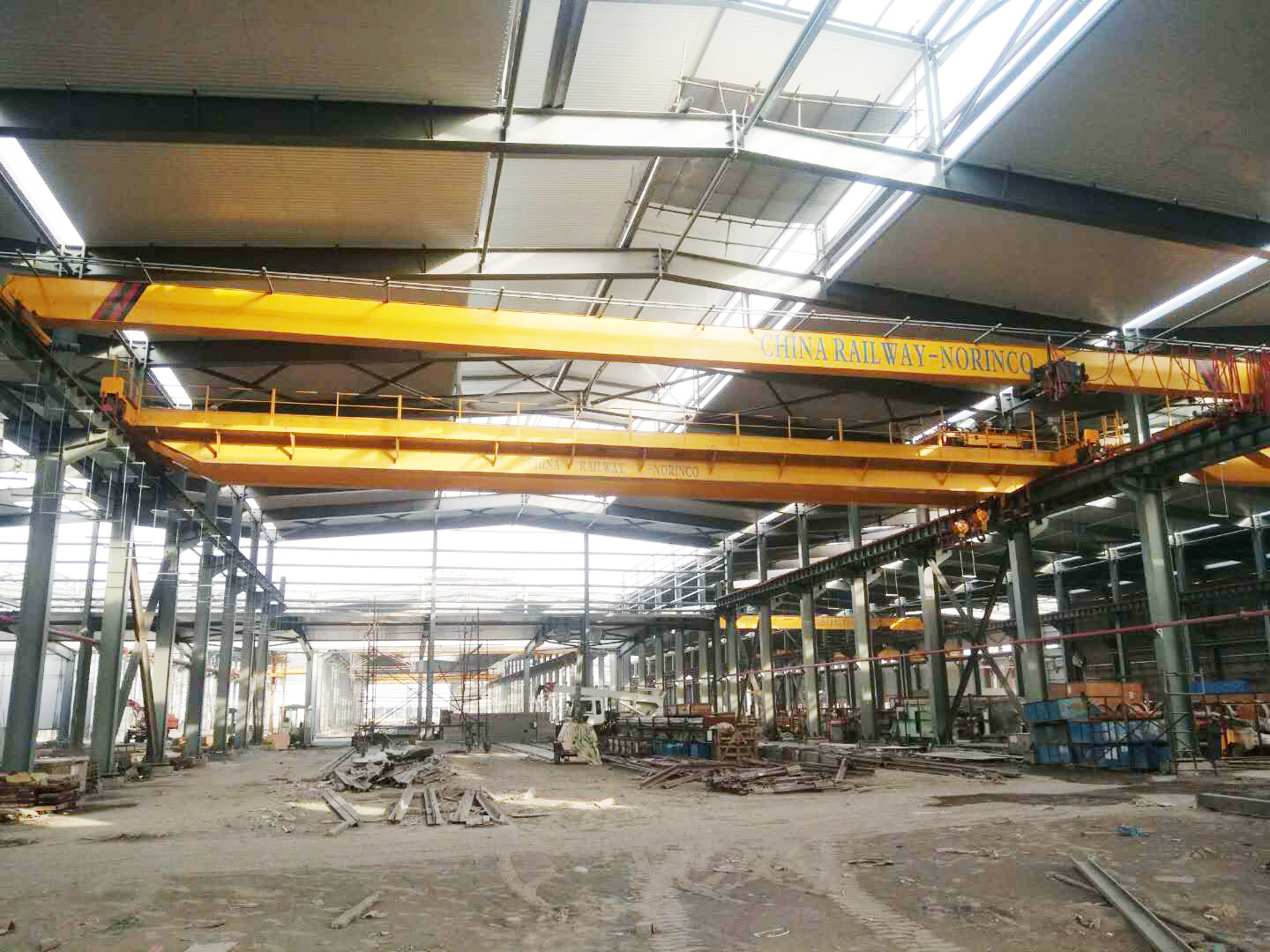
Map the lift from its pickup point to its landing point before setting crane travel length. In a locomotive or EMU workshop, the crane may remove a traction motor from the vehicle, carry it clear of the rail and pit, then lower it onto a maintenance stand. A bogie or wheelset route may cross several tracks and fixed service platforms.
- Component removal and replacement above a vehicle or inspection pit.
- Transfer from track position to bogie drop, wheelset, motor or overhaul bay.
- Loading a service trolley or test stand without obstructing adjacent trains.
- Occasional long or off-center loads requiring an approved lifting beam or two-point arrangement.
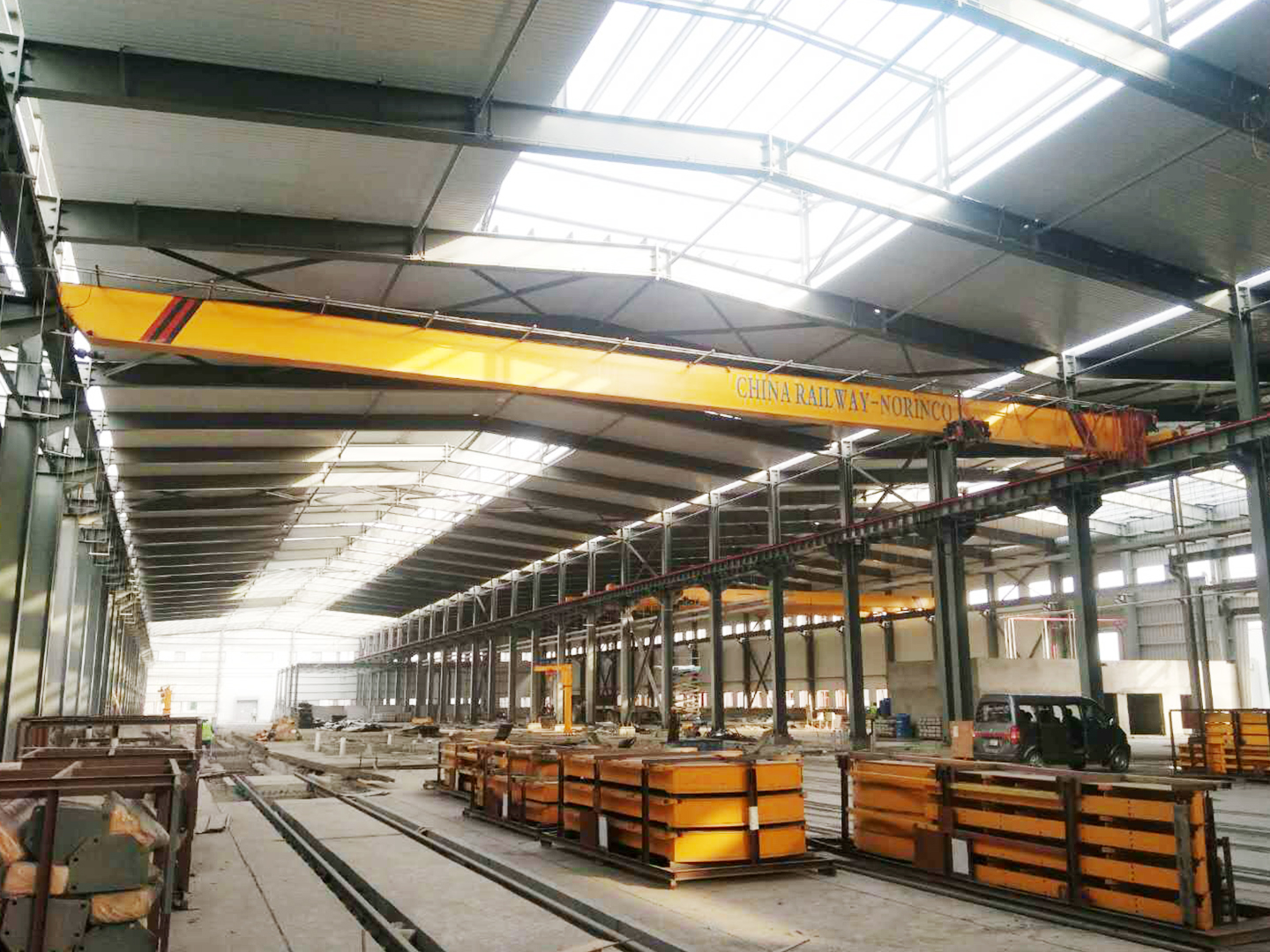
Record each load’s weight, center of gravity, pickup height, travel route, landing clearance and expected daily lift count. These facts determine hook approach, speed, control position and safe exclusion zones.
Rail Workshop Crane Selection Considerations
Complete suspended load
Use the heaviest part plus slings, lifting beam, clamps and other gear below the hook; confirm whether the rated load is needed at every pickup point.
Track-to-hook geometry
Measure runway rail centers, rail-top level, pit depth, minimum roof clearance, bridge end approach and usable hook travel.
Workshop structure
Have the building engineer check runway beams, columns, bracing and foundations against final crane wheel loads and horizontal forces.
Duty and precision
Specify lifts per hour, shifts, load spectrum and the low-speed control needed for mating pins, bogies and sensitive assemblies.
For a retrofit, the usable hook height and existing runway capacity often decide the viable design before a nominal tonnage does. New facilities should coordinate crane reactions with the structural designer before the building steelwork is fixed.
Which Overhead Crane Configuration Fits the Bay?
| Configuration | Appropriate workshop task | What to verify before purchase |
|---|---|---|
| Single-girder electric hoist | Parts, tools, small wheelsets and general maintenance loads within the selected rating. | Hook height, span, hoist duty, rail support and the actual attachment weight. |
| Double-girder bridge crane | Heavier bogies, machinery and repeated overhaul handling where trolley or duty flexibility is needed. | Bridge self-weight, wheel loads, access for maintenance and lift clearances. |
| Double-trolley / two-hook crane | Long assemblies needing two controlled lifting points on one bridge. | Combined rating, individual hook ratings, spacing, load share, synchronization and lifting procedure. |
| Suspended / underhung crane | Selected light-duty side bays where floor-supported runways are impractical. | Roof support capacity, suspension points and hook coverage. |
Henan Mine Crane lists double-girder bridge cranes and double-trolley overhead cranes. A two-hook design is specified from the actual lifting plan; it should not be treated as an automatic approval for lifting a complete carbody.
Technical Data to Fix Before Manufacturing
| Parameter | Buyer input | Why it matters |
|---|---|---|
| Rated capacity | Maximum complete suspended mass at the hook(s). | Selects hoist, bridge, brakes and runway reactions. |
| Span and runway length | Runway rail center distance and required long-travel coverage. | Determines bridge geometry and which workstations are reached. |
| Hook height and approach | Lowest pickup, highest lift, roof clear height, end and side approach. | Prevents conflict with rolling stock, pits, roof and service platforms. |
| Duty and motions | Lifts per hour, shifts, load spectrum, hoist/cross/long travel speeds. | Matches machinery and controls to real service. |
| Site and electrical | Voltage, frequency, indoor conditions, earthing and conductor route. | Defines electrical equipment and interface to the facility. |
Catalogue capacities and spans describe available product families, not a universal railway-workshop specification. The approved general arrangement and crane-load schedule should be based on the specific bay.
Bogie, Wheelset and Carbody Lifting
Bogie and wheelset handling
Select the hook and attachment around the lifting points prescribed for the actual bogie or wheelset. Check load stability, sling angles, floor stand geometry and whether the trolley can place the load clear of nearby vehicles. Controlled low-speed travel is useful when aligning a heavy assembly to pins, jigs or rail vehicles.
Long components and two-point lifts
A double-trolley bridge can provide two coordinated hook positions for long components. The design review must state each hoist’s rating, maximum combined load, load sharing, hook separation, controls, interlocks and response to uneven loading. If two independent cranes are proposed, the lift is a separate engineered operation with an approved plan and site controls.
Whole carbody lifting
Carbody lifting may require purpose-built lifting jacks, synchronized hoists or an engineered multi-point system matched to the vehicle manufacturer’s approved lift points. Crane capacity by itself does not establish that a vehicle can be lifted safely.
Workshop Layout, Pits and Rail Interfaces
A track-centred drawing should show rolling-stock envelope, inspection-pit edges, platforms, doors, HVAC, lighting, cable trays and any overhead electrical equipment. Confirm where personnel stand to operate the crane and whether adjacent roads remain in service during a lift.
The crane’s span is the distance between runway-rail centers, not the overall building width. The usable hook area is smaller than the nominal bridge envelope because the trolley and end carriages have approach limits. For existing depots, survey the actual runway elevation, rail straightness and support condition rather than relying on architectural dimensions.
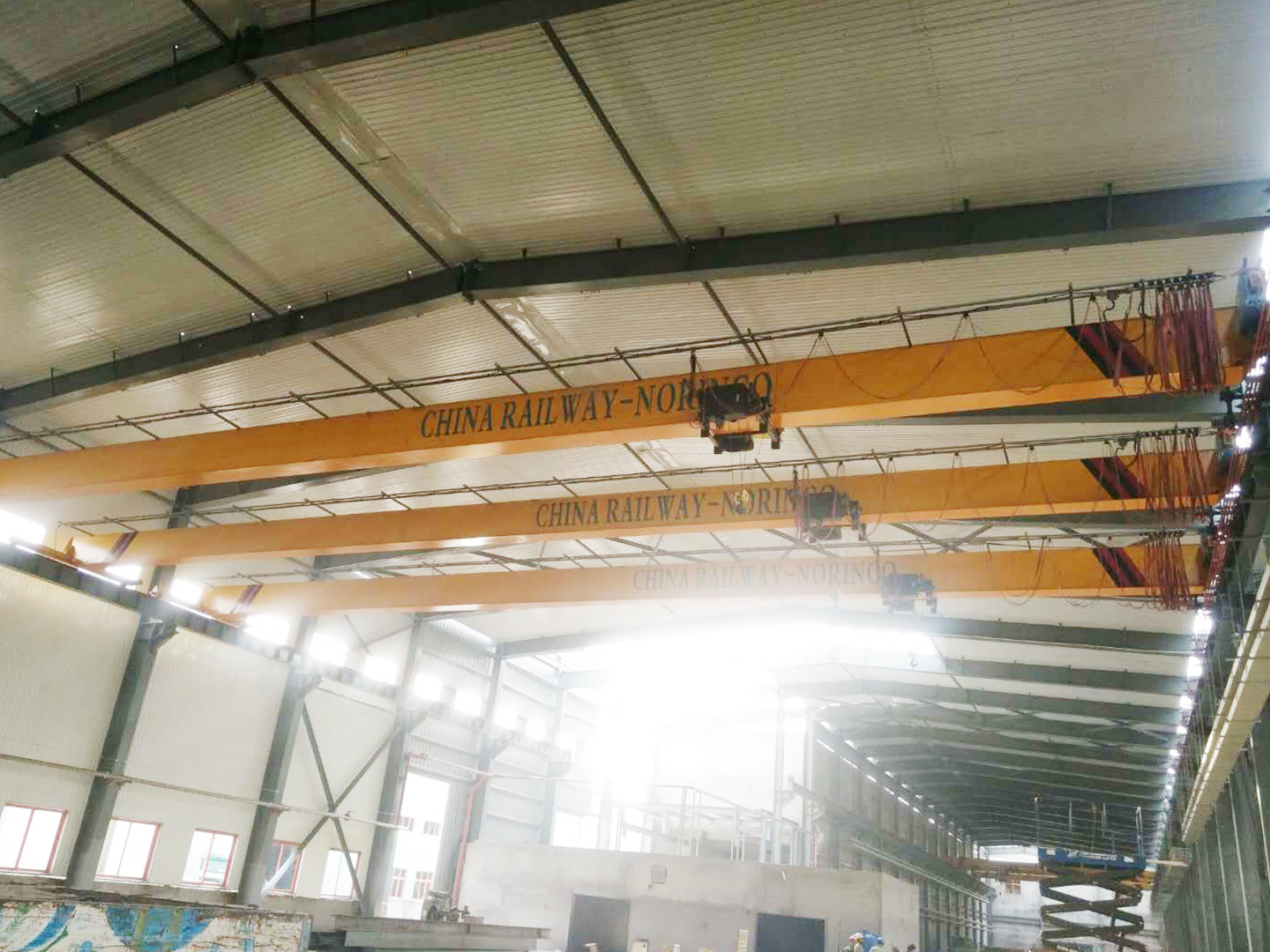
Where overhead line equipment is present, the depot electrical authority must define isolation, earthing, access and clearance rules for the lifting zone. An insulated crane design, where specified, does not replace electrical isolation.
Controls and Below-the-Hook Equipment
Variable-speed motions
Inverter-controlled hoist and travel can improve approach to mating surfaces and reduce abrupt movement of suspended assemblies.
Operator visibility
Choose pendant, radio remote or cab control according to line of sight, vehicle length, service pits and pedestrian routes.
Lifting beams and fixtures
A beam or dedicated fixture must match the rail component’s approved lifting points and be included in total suspended mass.
Two-hook controls
For multi-point lifts, define common control, independent control, load monitoring and the required response to loss of synchronization.
Ask for a control narrative and lifting-attachment drawing with the quotation when precise installation or synchronized lifting is part of the work scope.
Safety, Inspection and Acceptance
The technical offer should identify the applicable crane design and local acceptance requirements for the destination. The final configuration must be assessed against the railway operator’s maintenance rules and the building’s structural design. Confirm overload protection, upper/lower limits, travel limits, emergency stop, buffers, alarms, brake behavior and safe maintenance access in the approved specification.
During installation and commissioning, verify runway geometry, electrical supply, crane travel, hoist motions, braking, controls and each project-specific attachment. Agree on factory inspection, site testing, documentation and the locally required load-test procedure before purchase. Operators also need a documented lift plan for abnormal or multi-point lifts.
No suspended load should pass over occupied workstations. Define exclusion zones around tracks and pits, lockout for maintenance, and a method to prevent unintended movement of vehicles during lifting.
Railway Maintenance Project Experience
Xi’an Railway Bureau locomotive maintenance project
Henan Mine Crane’s project record identifies a KSQ new double-girder crane for a high-power locomotive maintenance facility in Xi’an, China (October 2024). The published record describes a compact modular design and positioning characteristics. It does not disclose the installed capacity or span. View project record
Lahore Orange Line maintenance facilities
Henan Mine Crane reports supplying 32 cranes of various types for the Lahore Orange Line metro operation and maintenance project in Pakistan. Its case record places crane products in the vehicle section and parking area for maintenance and commissioning. It does not state that all 32 were overhead cranes or publish individual crane ratings. View project record
These cases show experience in railway maintenance settings. A new depot still requires its own load schedule, bay drawings and approved lifting method.
Rail Workshop Overhead Crane Price and Budget
Public 2026 prices, checked on 28 September 2026, are a starting budget for ordinary overhead-crane equipment. A rail workshop quotation must be built from the actual crane specification and separately priced site work. The figures below are manufacturer-published market references in USD, not fixed offers for a railway maintenance installation.
| Public 2026 reference | Equipment-only range | Publication and commercial scope |
|---|---|---|
| 5 t single-girder overhead crane | US$4,000–14,000 | Henan Mine Crane market guide; equipment budget reference, delivery term not specified. |
| 10 t double-girder overhead crane | US$12,000–35,000 | Henan Mine Crane market guide; equipment budget reference, delivery term not specified. |
| 20 t double-girder overhead crane | US$22,000–60,000 | Henan Mine Crane market guide; equipment budget reference, delivery term not specified. |
| 10–20 t double-girder overhead crane | US$12,000–35,000 | Voitto Crane, 5 June 2026; China FOB factory guide, supplier-specific public range. |
These public ranges exclude or do not define freight, insurance, import duty, runway steel, building reinforcement, site electrification, installation, commissioning, local load testing and any bespoke lifting beam. Twin-trolley controls, synchronized lifting or a vehicle-specific fixture need a project quotation. For an installed depot budget, compare itemized crane equipment, structural works, electrical works and site services on the same scope.
What a Technical Offer Should Include
- General arrangement showing bridge, trolley, hook approach, clearances and runway rail centers.
- Rated load, hoist arrangement, duty classification, speeds, motor power and maximum wheel loads.
- Runway and power-supply interface requirements, including conductor position and electrical data.
- Safety device list, control narrative and any two-point lifting or attachment drawings.
- Inspection and test plan, operation and maintenance manuals, spare-parts list and site-service scope.
For an existing building, the crane supplier’s wheel-load schedule should be reviewed by the facility structural engineer before purchase approval. For new works, exchange these interface documents before runway fabrication.
Rail Workshop Crane RFQ Checklist
A useful request for quotation includes a marked-up bay plan and the following inputs:
| Buyer information | Detail to send |
|---|---|
| Loads and lift points | Heaviest bogie, wheelset or machine; attachments; center of gravity; any long or multi-point load. |
| Bay geometry | Runway rail centers and length; floor, rail and pit elevations; roof clear height; obstacles. |
| Operating cycle | Lifts per shift, shifts per day, load mix, desired speeds and positioning tolerance. |
| Electrical and site | Voltage/frequency, power route, ambient conditions, existing runway drawings and destination. |
| Commercial scope | Crane only or installed package; shipping term; installation, testing, training and spares. |
Where the load is a complete carbody or other special railway assembly, include the vehicle maker’s lifting instructions and ask for a specific lifting concept rather than a generic overhead-crane quote.
Rail Workshop Overhead Crane FAQ
What is the difference between a rail workshop overhead crane and an RMG?
A rail workshop overhead crane runs on elevated building runways to lift rolling-stock components inside a depot. An RMG runs on ground rails across container tracks and truck lanes at a freight terminal.
What capacity is needed for bogie maintenance?
Capacity is set by the heaviest complete suspended bogie or component, including beams and rigging. There is no safe universal tonnage; vehicle data and the lifting method must be reviewed.
Can one overhead crane lift a whole railway car?
Only if a vehicle-specific, engineered lifting system and approved procedure establish the load, lifting points, synchronization, structure and controls. Rated crane capacity alone is insufficient.
Is single or double girder better for a locomotive workshop?
Single girder can suit lighter component handling. Double girder is considered for heavier loads, longer spans, higher duty, precise trolley requirements or multiple hooks. The building and lift geometry decide the final choice.
How is overhead-crane span measured?
Span is the center-to-center distance between the crane runway rails. Building width and rail-track gauge are different measurements.
What makes a railway workshop crane quote more expensive?
Capacity, span, duty, hook height, variable-speed control, twin trolleys, attachments, runway reinforcement, electrification and site services are major cost drivers.
Related Products
Compare the bridge type, trolley arrangement and building interface against the maintenance task. Electrical insulation is a project-specific feature and does not replace isolation of railway traction power.
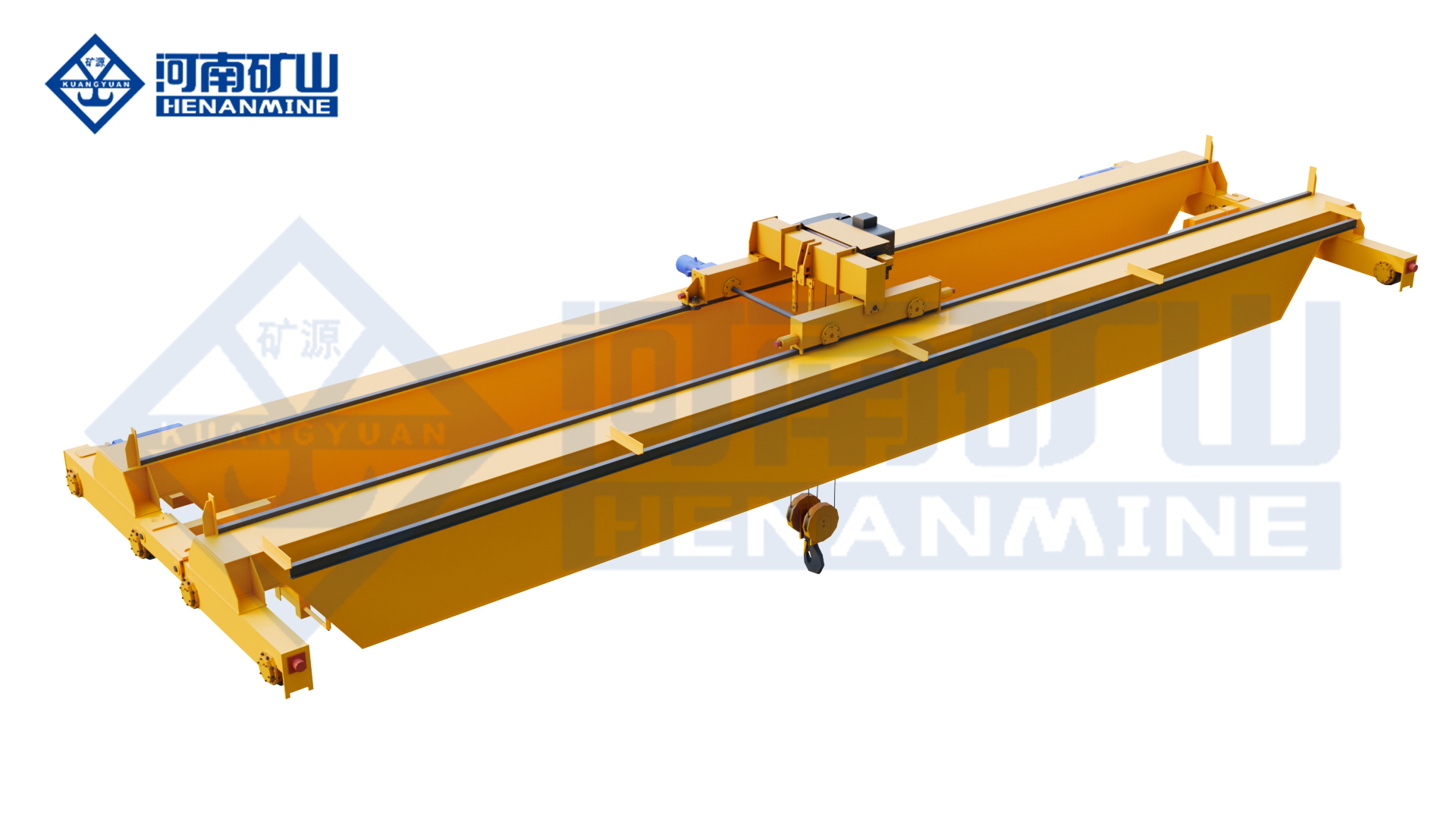
Double-Girder Bridge Crane
A bridge-crane platform for heavier maintenance assemblies and engineered trolley options.
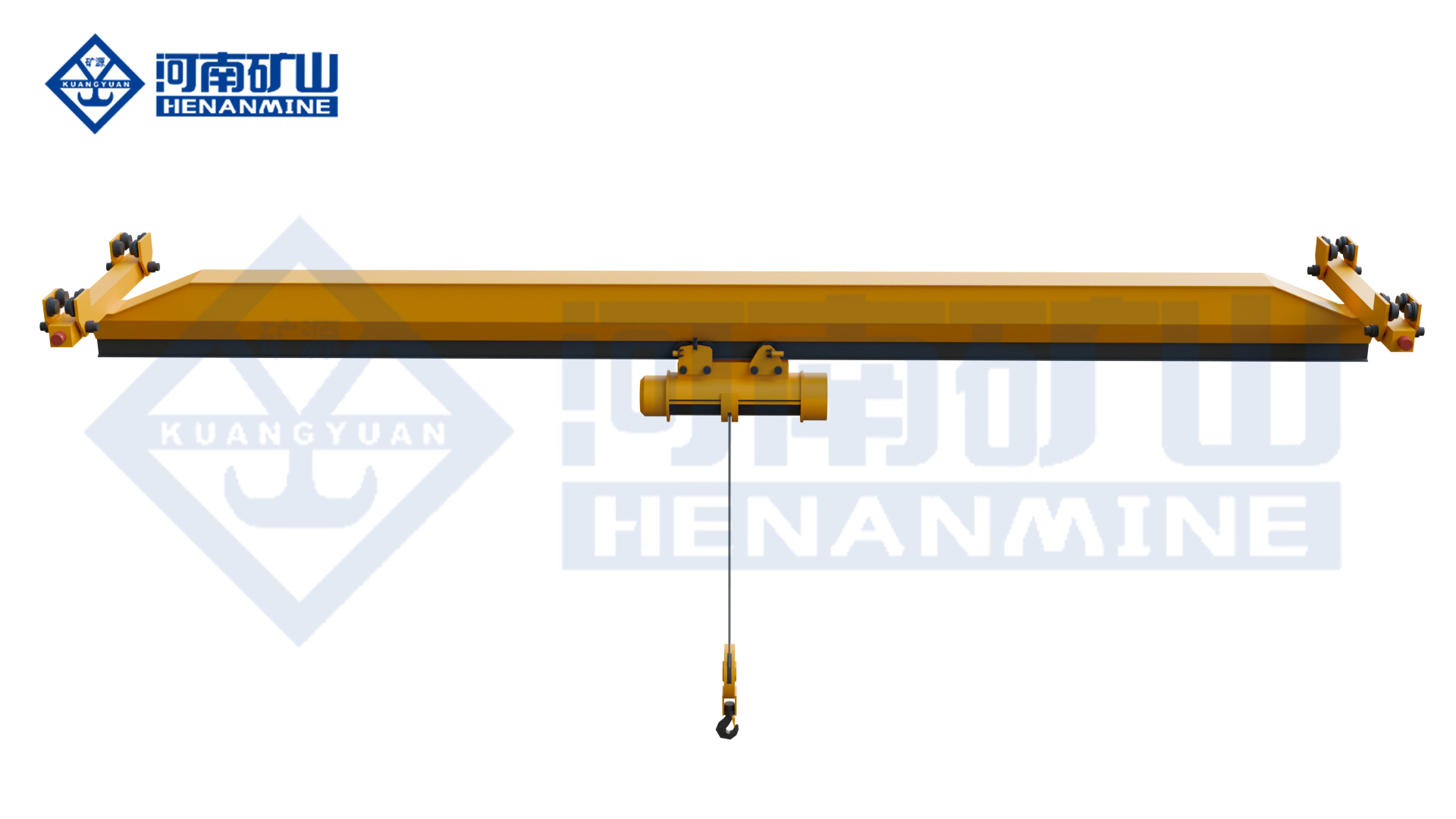
Electric Single-Girder Overhead Crane
A starting configuration for general component lifts in a suitable workshop bay.
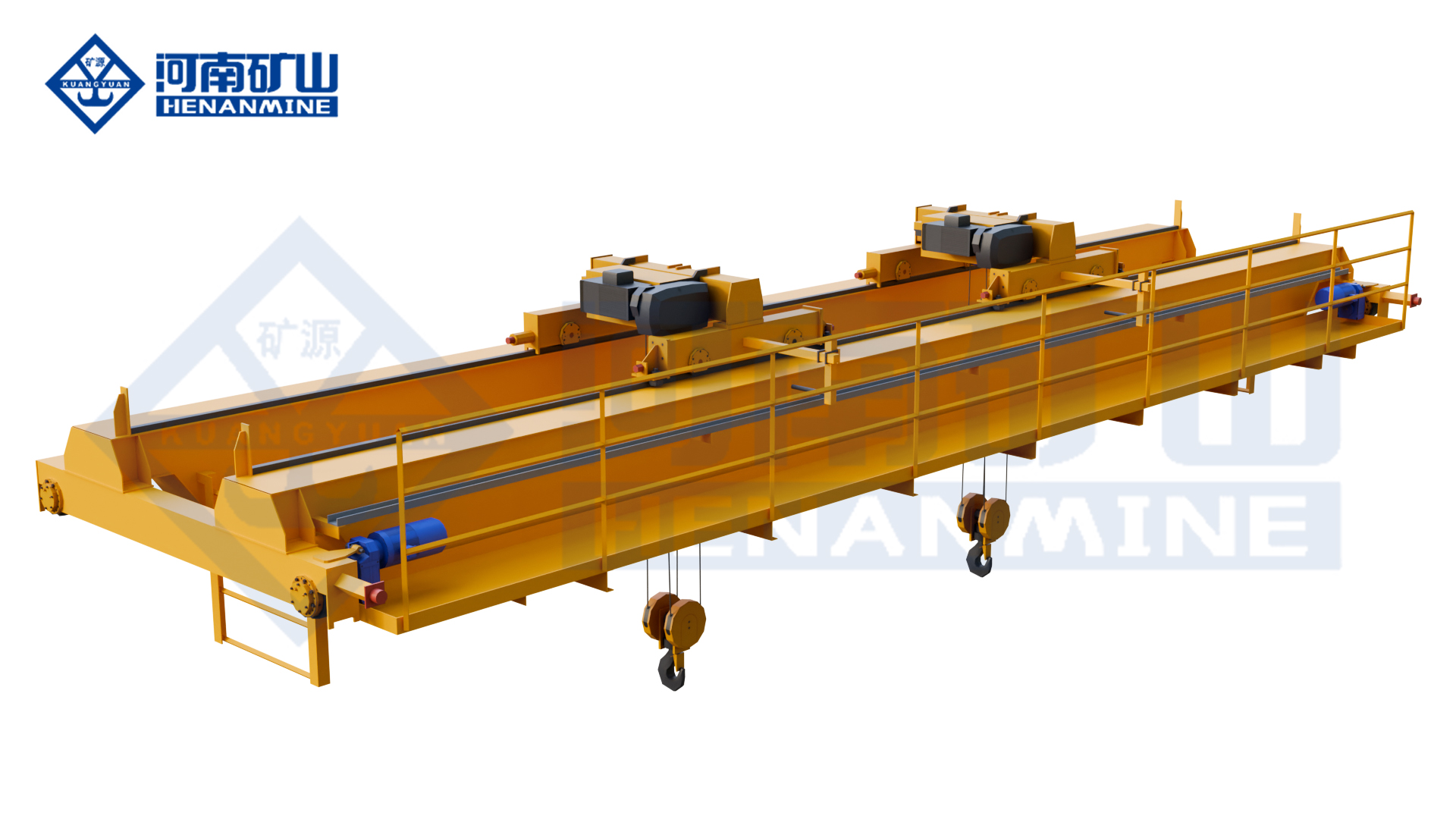
Double-Trolley Overhead Crane
Two trolley positions for engineered long-load and coordinated lifting tasks.
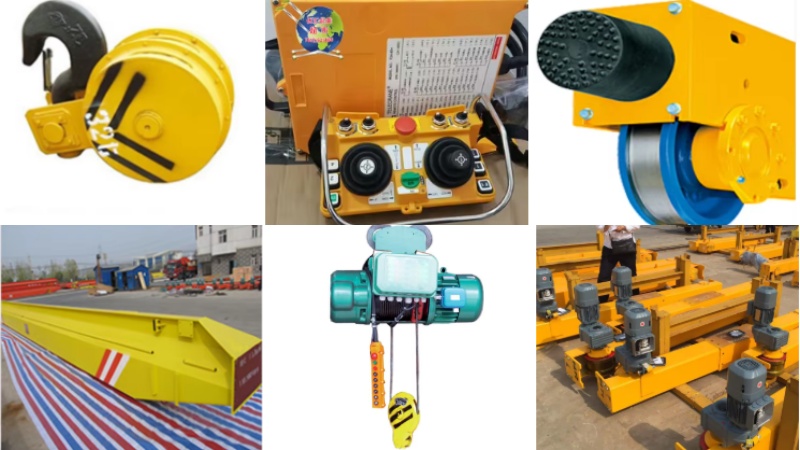
Suspended Overhead Crane
An underhung option for a light-duty bay after roof and suspension checks.
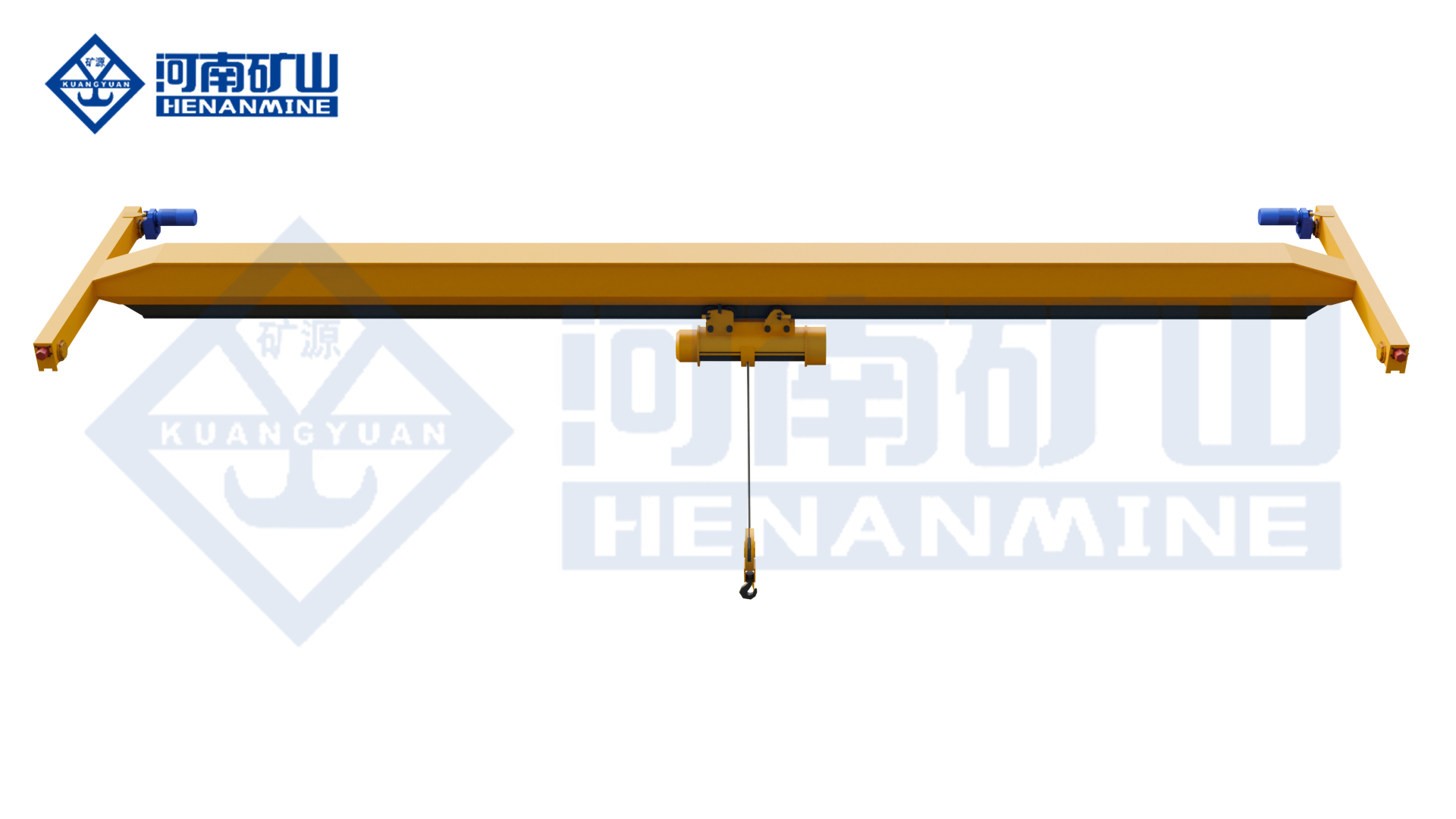
5 Ton Overhead Crane
Capacity-specific options for a component bay when the full suspended load fits 5 t.
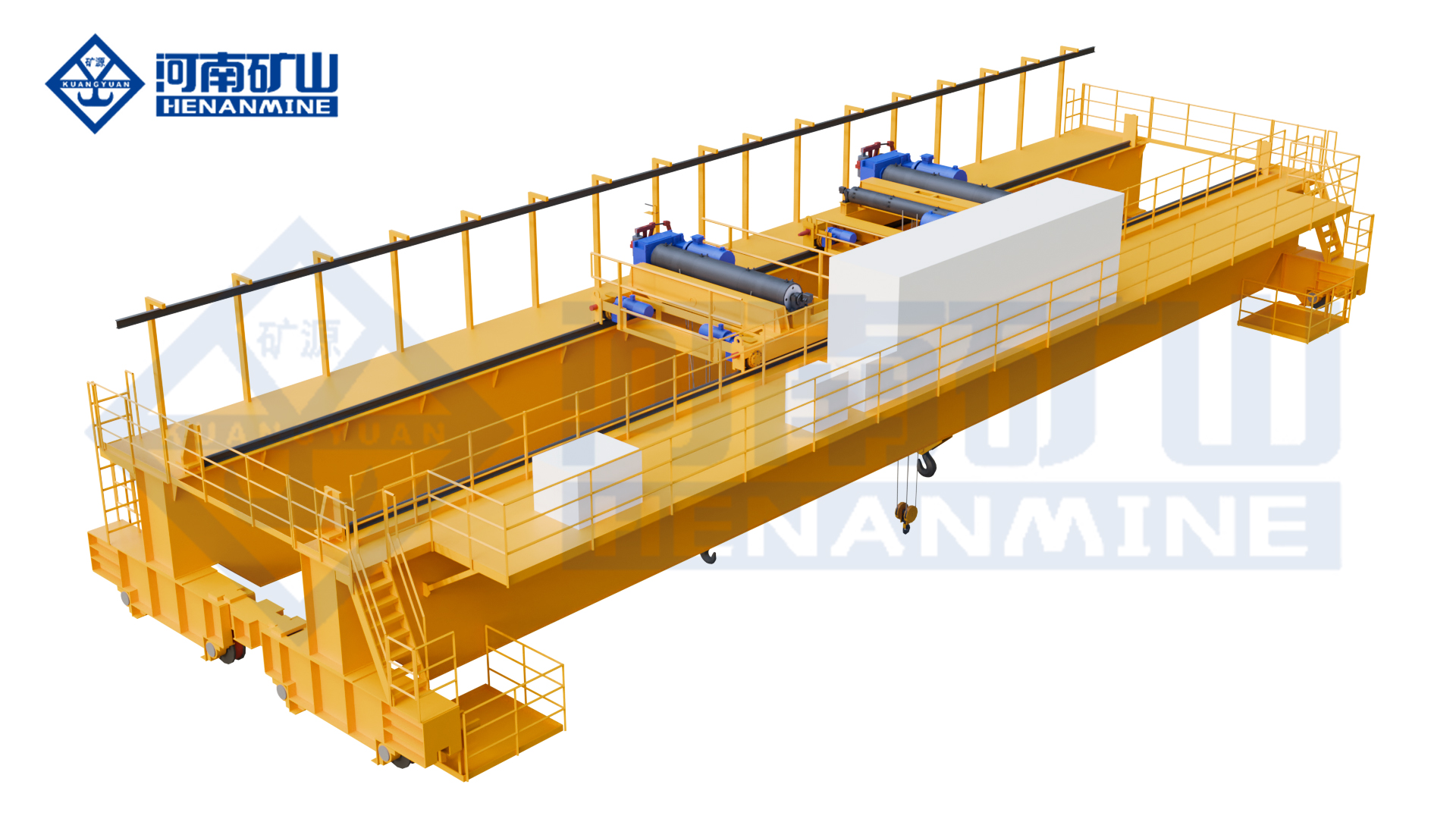
Insulated Bridge Crane
A specialist option where an engineered electrical-insulation requirement applies.
Specify a Crane Around the Maintenance Bay
Send the workshop drawing, heaviest complete lift, required hook path and operating cycle. Henan Mine Crane can prepare a configuration and itemized quotation for the defined scope.
Request a Rail Workshop Crane Quote
Written by: Henan Mine Crane · Source review: linked product and project records · Last reviewed: 2026