
Henan Mine Crane · Precast Plant and Yard Lifting Systems
Precast Concrete Crane
Engineered overhead and gantry crane systems for demoulding, transfer, curing-area handling, yard stacking and dispatch of precast beams, slabs, wall panels, pipes and tunnel segments.
Henan Mine Crane configures each precast concrete crane around the complete suspended load, element geometry, approved lifting points, production cycle, yard layout, operating environment and required supply boundary.
Handled products
Beams, slabs, panels, pipes and segments
Primary systems
Overhead, rail-mounted and rubber-tyred cranes
Critical inputs
Total load, geometry, lift points and cycle rate
Commercial basis
Project-specific technical and price proposal
Precast Concrete Handling from Mold to Dispatch
A precast concrete crane supports a production and logistics sequence rather than a single lift. Typical duties include moving reinforcement cages and molds, releasing approved elements from casting beds, transferring components to finishing or curing areas, stacking finished products in the yard and loading delivery vehicles. One facility may require separate indoor and outdoor systems because the loads, travel routes and operating environments are different.
Concrete components may be heavy, long, flexible or sensitive to edge damage. Improper sling angles, unverified lifting anchors, uncontrolled rotation or unequal loading can damage the product even when the crane remains below its rated capacity. The lifting method therefore defines the required hook arrangement, spreader beam, motion control and operator visibility.
The element must be released for lifting under the precast producer’s approved quality procedure. Concrete strength at release, lifting-anchor capacity and permissible support locations are process and structural-engineering decisions; they are not replaced by selecting a larger crane.
Precast Concrete Crane Configurations
01 · Single-Girder Overhead Crane
An economical indoor option for lighter precast elements, molds, reinforcement assemblies and general production handling where the capacity, span and duty remain within the selected hoist system.
02 · Double-Girder Overhead Crane
A production-bay solution for heavier elements, higher duty, greater hook height or project-defined dual-hook and double-trolley handling inside a precast factory.
03 · Single-Girder Rail Gantry Crane
A practical yard crane for smaller and medium precast products along defined storage or loading lanes, subject to wind, rail, wheel-load and duty verification.
04 · Double-Girder Rail Gantry Crane
The principal configuration for heavy beams, bridge girders, large wall panels and repeated outdoor loading where stability, span, hook coverage and long-load control are decisive.
05 · Truss Gantry Crane
A rail-mounted alternative for selected outdoor spans and transport constraints. Its open structure, connection details, corrosion protection and inspection access must suit the site environment.
06 · Rubber-Tyred Gantry Crane
A self-propelled solution for serving multiple production or storage lanes without fixed travel rails. Ground bearing, steering, braking, power source and traffic management become major design inputs.
Compare Precast Plant and Yard Crane Options
The correct system follows the production route, not only the maximum tonnage. Indoor overhead cranes, fixed-lane gantry cranes and mobile yard carriers solve different material-flow requirements.
| Configuration | Matched duty | Principal advantage | Procurement constraint |
|---|---|---|---|
| Indoor overhead crane | Casting bay, demoulding, finishing and production transfer | Clear floor area and full bay coverage | Requires a verified building runway and support reactions |
| Single-girder rail gantry | Defined yard lane with moderate load and duty | Lower structural complexity for suitable applications | Capacity, span, headroom and duty are more limited than heavy double-girder systems |
| Double-girder rail gantry | Heavy beams, panels, segments and truck loading | Strong load, span and multi-hook engineering flexibility | Rails, foundations, storm restraints and yard alignment are part of the system |
| Rubber-tyred gantry | Multiple lanes, changing routes and flexible yard logistics | Trackless travel between work zones | Higher machine complexity; ground, steering and traffic interfaces must be controlled |
| Launching gantry | Erection of bridge girders at the construction alignment | Purpose-designed placement at bridge spans | Not a substitute for a factory production or storage-yard crane |
Select Capacity from the Complete Suspended Load
Crane capacity must cover the governing precast element together with the lifting beam, hook block, slings, shackles, lifting clutches and other below-the-hook equipment included in the approved method. Element weight should come from controlled production data and include the agreed design tolerance.
Long products require more than sufficient tonnage. The design must confirm centre of gravity, lifting-point spacing, permissible sling angle, allowable support conditions, deflection sensitivity and rotation control. A spreader beam may be required to keep loads at the lifting anchors within the approved directions and to prevent excessive lateral force on the concrete.
When two hooks, two trolleys or two cranes share a load, allowable load distribution, synchronization, communication, stopping logic and the response to a drive or power fault must be engineered. Two crane nameplate capacities cannot simply be added to authorize a tandem lift.
Match the Crane and Rigging to the Precast Product
| Precast product | Handling priorities | Typical crane-system considerations |
|---|---|---|
| Bridge beams and girders | Long-load stability, multiple lift points and controlled alignment | Double-girder gantry, engineered spreader, synchronized hooks or trolleys where specified |
| Wall panels and façade elements | Surface protection, controlled rotation and vertical storage interfaces | Smooth VFD motion, adequate hook approach, approved lifting frame and protected contact points |
| Hollow-core and solid slabs | Edge protection, product-specific pick points and stacking sequence | Overhead or gantry crane with approved clamps, beams or lifting inserts as defined by the producer |
| Pipes, manholes and culverts | Roll prevention, balanced pickup and clearance through storage lanes | Purpose-approved attachment, stable travel and defined set-down supports |
| Tunnel segments | Repetitive positioning, curved geometry and finish protection | Repeatable control, segment-compatible lifting frame and production-line integration |
| Molds and reinforcement cages | Frequent production handling and changing load geometry | Appropriate overhead crane, attachment changeover and duty based on actual cycles |
Technical Specification for a Precast Concrete Crane
Final values are established from the element schedule, production layout, civil drawings, operating method and destination requirements. The following information forms the basis of a comparable technical proposal.
| Specification item | Project definition |
|---|---|
| Rated capacity | Heaviest complete suspended load, rigging included, for each hook or operating mode |
| Crane type and structure | Single or double girder; overhead, rail gantry, truss gantry or rubber-tyred system |
| Span and travel length | Rail gauge, building bay or yard lane width, runway length, cantilever coverage and end approaches |
| Lifting height | Lowest pickup, highest obstacle, stack height, vehicle loading height and required safety clearance |
| Hoist and hook arrangement | Single hook, main and auxiliary hook, double trolley or synchronized lifting arrangement |
| Duty and load spectrum | Loads per hour, shifts, annual operating days, typical load distribution and expected service life |
| Speeds and control | Normal and low speeds, acceleration, positioning requirement, control station and automation scope |
| Below-the-hook equipment | Spreader beam, lifting frame, slings, clutches, approved clamps, storage stand and identification |
| Runway or ground interface | Rail profile, support spacing, allowable wheel loads, foundation data, ground bearing and drainage |
| Environment | Indoor or outdoor location, temperature, wind, rain, dust, humidity, corrosivity and altitude |
| Electrical supply | Voltage, phase, frequency, power-feed method and permitted voltage variation |
| Codes and acceptance | Destination regulations, agreed design standard, inspection plan, testing and documentation language |
Control, Safety and Outdoor Protection
Controlled Motion
Variable-frequency drives, suitable low-speed operation and controlled acceleration reduce shock loading and help position fragile or long elements at molds, racks and vehicles.
Load Protection
Overload protection, upper and lower limits, travel limits, service brakes, emergency stop and hook safety devices are specified for the selected crane and local requirements.
Long-Load Management
Where required, synchronized controls, load feedback, skew monitoring, anti-sway functions and defined fault responses support the approved multiple-point lifting method.
Wind and Parking
Outdoor cranes may require wind indication, operating limits, rail clamps, storm anchors, parking procedures, weather protection, drainage and lightning measures based on site data.
Operator Visibility
Pendant, radio remote or cabin control is selected from the travel route and sightlines. Cameras, lighting, warning devices and communication systems can support restricted-visibility areas.
Restricted Lift Zone
Traffic separation, exclusion zones, defined signaling and an approved lift plan remain essential. Crane controls do not replace the site’s safe system of work.
The final safety functions and performance levels are defined in the approved technical specification and risk assessment for the destination and operating method.
Related Large-Component Handling Project
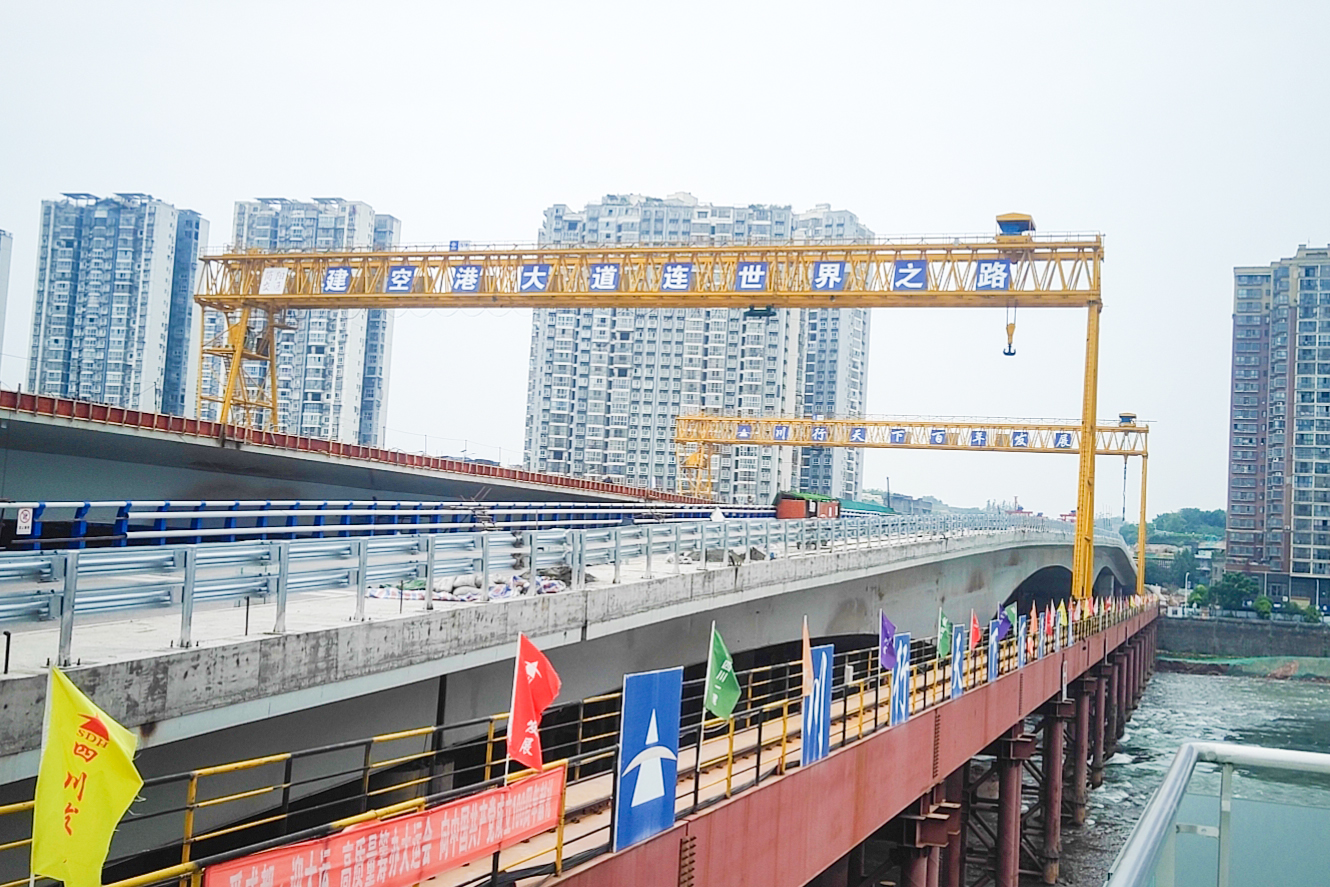
75t, 72m Large-Span Bridge Gantry Crane
Henan Mine Crane supplied a special gantry crane with a 75t rated capacity, 72m span and 23m lifting height for the Jianzhou Bridge project. The system was designed for outdoor lifting and positioning of large steel box-girder components across a wide construction area.
This verified project handled steel bridge components rather than precast concrete. It is relevant to precast procurement because it demonstrates engineering experience with long loads, large spans, outdoor exposure, rail and civil interfaces, controlled positioning and project-specific structural design.
A precast concrete crane is re-engineered around concrete-element geometry, approved lifting points, rigging loads, production frequency, stacking layout and surface-protection requirements; the project parameters are not transferred without calculation.
Engineering Deliverables and Quality Records
A procurement-ready proposal should define the crane and every interface that affects performance, cost or acceptance. Henan Mine Crane can align the documentation package with the agreed code, inspection plan and customer responsibilities.
Design Definition
General arrangement, hook coverage, wheel loads, clearances, power demand, control philosophy and below-the-hook interfaces.
Manufacturing Control
Material traceability, dimensional inspection, welding and non-destructive examination records can be defined where required by the contract.
Testing and Handover
Factory test records, electrical documentation, installation instructions, site-test procedures, manuals, spare-parts list and training scope.
Henan Mine Crane publishes its production and testing capabilities. The project inspection and documentation matrix should still be agreed before manufacturing begins so that quotation and acceptance boundaries remain consistent.
Installation, Commissioning and Maintenance Planning
Civil Readiness
Confirm runway alignment, rail level, foundations, wheel-load capacity, drainage, earthing, access and erection areas before crane delivery.
Site Acceptance
Define installation inspection, no-load and functional tests, proof-load arrangements, synchronized-mode checks and operator training in the contract.
Lifecycle Availability
Plan brake, rope, hook, wheel, rail, gearbox and electrical inspections around production shifts; establish critical spares before handover.
For operating plants, installation must be coordinated with casting schedules, storage capacity and truck-dispatch requirements. For new facilities, crane wheel loads, clearances and power supply should be frozen before the building or yard civil design is finalized.
Precast Concrete Crane Price and Supply Scope
Public-market figures reviewed in September 2026 indicate a wide equipment-only budget of approximately US$10,000 to US$280,000+ for conventional precast overhead and rail-mounted gantry systems. Within that broad market, standard double-girder indoor systems are commonly indicated around US$28,000–US$95,000, while conventional outdoor double-girder gantry equipment is often indicated around US$18,000–US$120,000. Basic listings may appear below these levels, but they frequently omit the runway, special lifting beam, freight, installation, testing or destination compliance.
These figures are planning bands, not a Henan Mine Crane quotation. Heavy long-span cranes, double-trolley systems, high-duty process cranes and self-propelled rubber-tyred machines may exceed the ranges. A valid comparison requires every supplier to price the same performance and delivery boundary.
| Commercial package | Items to define before price comparison |
|---|---|
| Crane equipment | Structure, trolley or hoist, hooks, drives, electrics, controls, access and safety devices |
| Precast lifting equipment | Spreader beam, lifting frame, slings, clutches or approved clamps, stands and sensors |
| Runway and civil interface | Rails, foundations, conductor system, embedded parts, storm anchors and structural checks |
| Logistics and installation | Packing, inland delivery, ocean freight, insurance, lifting equipment, erection and supervision |
| Testing and support | Commissioning, test weights, third-party inspection, documentation, training, spares and warranty boundary |
Capacity, span, lifting height, duty, number of hooks, speed control, automation, outdoor protection, steel-market conditions, destination and Incoterm materially affect the final price. The quotation should state currency, validity, inclusions, exclusions and site responsibilities.
Precast Concrete Crane RFQ Information
Submit the element schedule and maximum complete suspended load; product dimensions and centres of gravity; approved lifting points; rigging concept; casting, curing, stacking and dispatch layout; required span, lift height and travel length; duty cycles; indoor or outdoor environment; runway or ground data; power supply; destination; applicable standard; project schedule; and required freight, installation, testing and training scope.
A technical configuration and itemized commercial scope can then be prepared on a consistent design basis.
Frequently Asked Questions
What crane is used in a precast concrete plant?
Indoor production commonly uses single- or double-girder overhead cranes. Outdoor storage and loading commonly use rail-mounted gantry cranes, while rubber-tyred cranes suit yards that require travel between multiple lanes.
How is precast crane capacity selected?
Capacity is based on the heaviest element plus the hook block, lifting beam, slings, shackles, lifting clutches and other suspended equipment. The approved lifting method and load distribution must also be verified.
Is a double-girder crane necessary for concrete beams?
It is often selected for heavy or long beams, greater spans, higher duty or multi-hook handling. A single-girder crane may remain suitable when the verified load, span, headroom and operating cycle are within its design envelope.
Can one crane handle both production and outdoor storage?
Only if the physical route and crane structure provide continuous coverage. Most facilities use separate indoor and yard cranes because buildings, weather exposure, travel paths and stacking duties differ.
When is a rubber-tyred gantry crane suitable?
It suits yards that need one machine to serve multiple lanes or changing routes without fixed rails. Ground bearing, grade, turning space, steering mode, braking and mixed-traffic controls must be assessed.
Can two cranes lift one precast beam?
A tandem lift is possible only under an engineered method that defines load sharing, crane capacities, controls, communication, travel, fault response and supervision. Independent cranes should not be paired by assumption.
What lifting device is used for precast concrete?
The device follows the product engineer’s approved lifting points and may include a spreader beam, lifting frame, slings, clutches or purpose-approved clamps. Sling angle and attachment loads require verification.
What protection is required for an outdoor precast yard crane?
The site specification may require suitable coatings, weather-protected electrics, drainage, wind monitoring, rail clamps, storm anchors, lightning protection and low-temperature measures.
How much does a precast concrete crane cost?
Conventional equipment-only public budgets may range from about US$10,000 to US$280,000+, but a valid quote requires capacity, span, height, duty, hook arrangement, rigging, runway, controls, delivery and installation scope.
What information is needed for a fast quotation?
Provide element weights and dimensions, lift points, rigging, site layout, span, height, travel length, cycle rate, environment, runway or ground details, voltage, destination, schedule and required supply boundary.
Technical content record
Prepared by Henan Mine Crane Technical Sales · Technically reviewed by Crane Engineering · Last reviewed September 2026
Related Precast Concrete Crane Products
Double-Girder Gantry Crane
Heavy rail-mounted configuration for beams, panels and repeated outdoor handling.

Single-Girder Gantry Crane
Cost-conscious yard option for suitable moderate loads, spans and operating cycles.
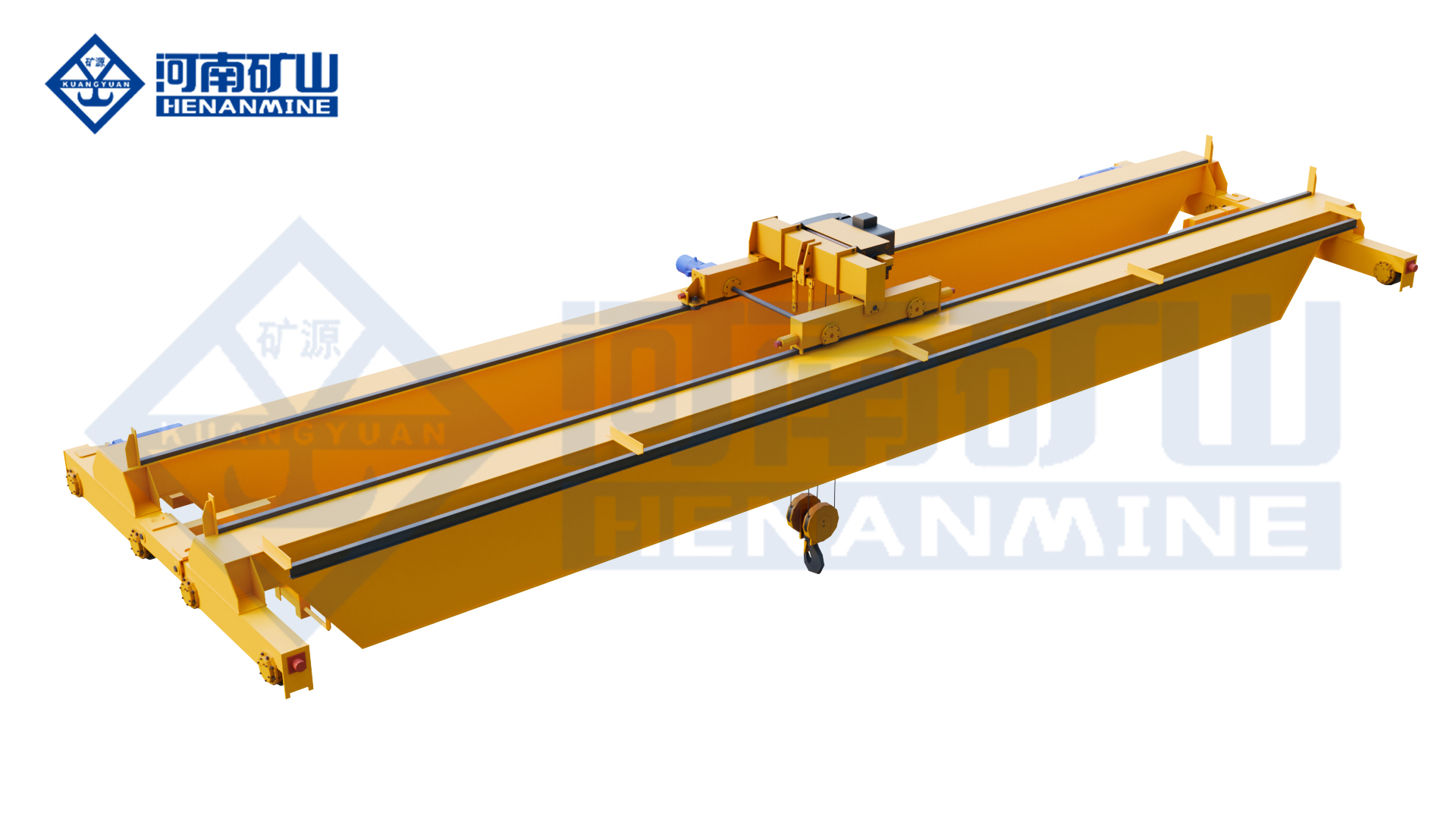
Double-Girder Overhead Crane
Indoor production crane for heavier components, frequent duty and engineered multi-hook lifts.
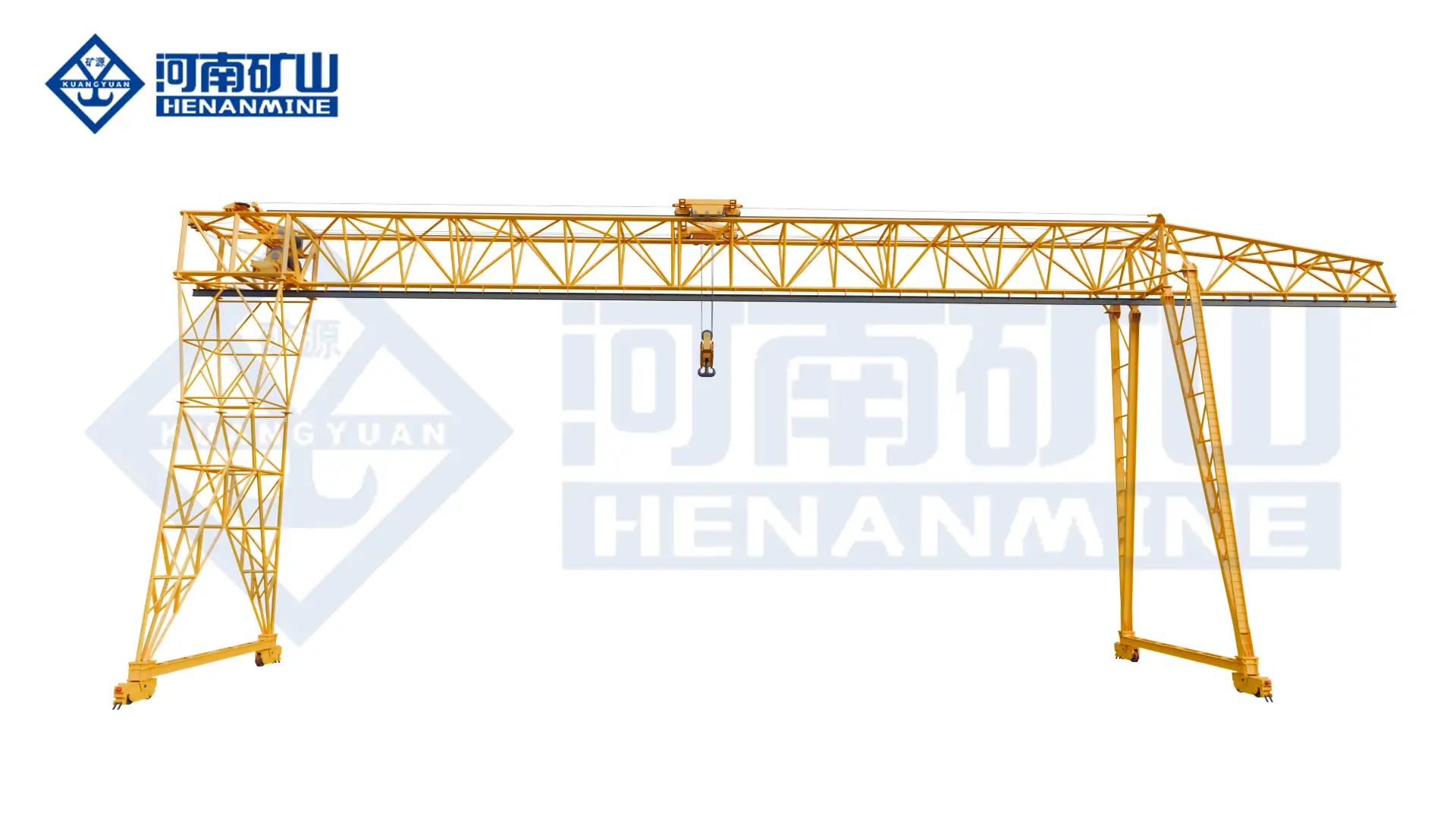
Double-Girder Truss Gantry Crane
Open-structure rail gantry option for selected outdoor spans and project logistics.

Rubber-Tyred Gantry Crane
Trackless mobile configuration for serving multiple yard lanes and work zones.
Precast Lifting Proposal
Request a Precast Concrete Crane Quote
Share the element schedule, complete suspended load, lifting points, factory or yard layout, required coverage, operating cycle, environment, destination and delivery scope. Henan Mine Crane will develop a defined crane configuration and commercial proposal for the precast operation.