Engineering · Manufacturing · Project support
info@hnksglobal.comWhatsApp +86 18836207779 ↗

Blog

  • Industrial Crane Ordering Checklist: Questions to Settle with the Supplier

    Industrial Crane Ordering Checklist: Questions to Settle with the Supplier

    Technical guide

    Industrial Crane Ordering Checklist: Questions to Settle with the Supplier

    Before ordering, connect the equipment specification with the work required at the destination. Confirm the load, geometry, operating duty, documents and responsibility boundaries so unresolved assumptions are visible in the proposal.
    Henan Mine CraneTechnical guide · Updated 2026Crane selection, project scope and operating requirements
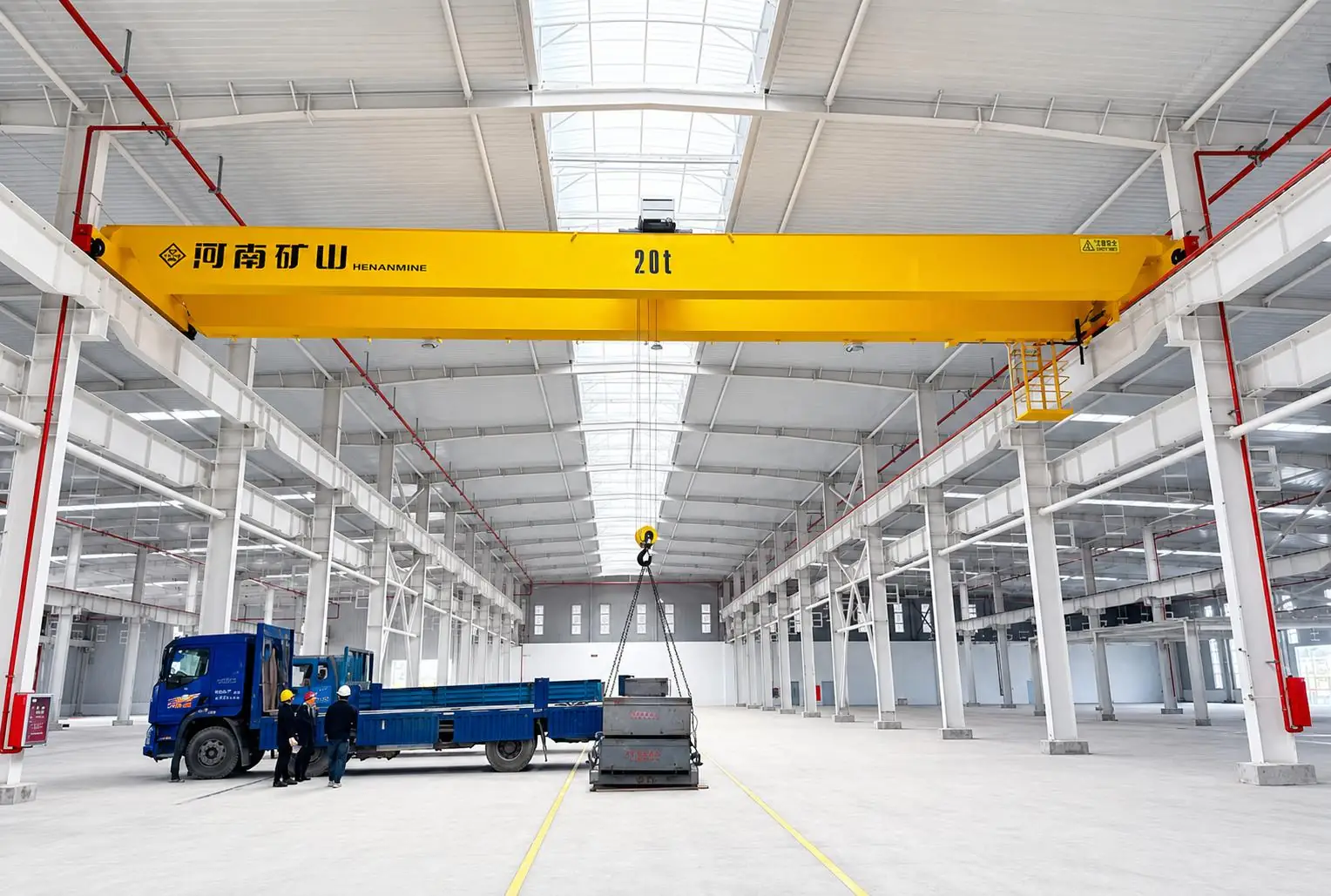
    Henan Mine Crane overhead crane inside a workshop bay
    Henan Mine Crane overhead crane inside a workshop bay
    Project planning notes

    Key points for this crane project.

    1. What Is The Required Lifting Capacity For Your
    2. Which Type Of Industrial Crane Is Your Facility?
    3. What Are The Required Span Length And Lifting
    Read the technical guide

    What Is The Required Lifting Capacity For Your Application?

    Lifting capacity is the core parameter of Henan Mine Crane manufactured industrial cranes and the primary basis for selection. Once the judgment is wrong, the light equipment cannot meet the operating requirements, and the heavy equipment will cause a safety accident. First of all, we must comprehensively evaluate the maximum load requirements in the actual working conditions. We must not only consider the weight of the materials for conventional hoisting, but also take into account the heavy-duty requirements under special working conditions to avoid equipment overload due to insufficient load estimation. When accurately calculating the load requirements, it is necessary to check the material specifications, weight and lifting frequency one by one in accordance with the actual operation scenarios on the site to ensure that the data is true and accurate, and provide reliable support for the selection.

    At the same time, attention must be paid to the setting of the safety factor. The safety factor of industrial cranes must meet industry standards, and a certain amount of redundancy is usually reserved to ensure the safety of operation under sudden working conditions. In addition, it is necessary to combine the future development plan of the enterprise to predict the capacity requirements that may be brought about by future production capacity increases and material weight gain, so as to avoid the replacement of equipment due to increased load in the short term, resulting in unnecessary waste of investment. Reasonable planning of lifting capacity cannot only eliminate the risk of overload, but also realize the efficient use of funds.

    Which Type Of Industrial Crane Is Your Facility?

    There are many types of industrial cranes. The common ones are bridge cranes, gantry cranes, special lifting systems, etc. The scenarios, spaces and operating requirements for different types of cranes are significantly different, and improper selection will directly affect the operating efficiency. Henan Mine Crane manufactured Bridge cranes are suitable for fixed-span scenarios such as indoor factories and warehouses, which can realize vertical and horizontal movement of materials, and have strong adaptability. Gantry cranes are more suitable for outdoor operations and large-span sites, such as ports, depots, construction sites, etc., and are more adaptable to ground conditions. Before selecting the type, it is necessary to conduct an on-site survey of the operating site, clarify the space constraints, environmental characteristics and operating procedures of the site, and combine the advantages of different types of cranes to filter out the types of equipment with the highest adaptability.

    There are three core factors that need to be considered in the selection of models. One is the working space, including the length, width and height of the site, and the distribution of obstacles. The second is the operating environment, such as indoor and outdoor temperature difference, humidity, dust, corrosive gases, etc., special models such as anti-corrosion and explosion-proof need to be selected for special environments. Third, the operation process, combined with the lifting frequency, moving range, and accuracy requirements of the material, selects the type of crane that best fits the workflow to ensure the seamless connection between the equipment and the production link. For special operating environments, customized adaptation plans need to be communicated with the manufacturer in advance to ensure that the equipment can still operate stably in complex environments and avoid environmental factors affecting the service life and operation safety of the equipment.

    What Are The Required Span Length And Lifting Height?

    The span and lifting height are the key parameters that determine the crane design plan. They are directly affected by the structure of the plant and the conditions of the work site. Parameter deviations will cause the equipment to fail to be installed or used normally. First of all, it is necessary to clarify the actual span of the plant, that is, the distance between the crane's operating tracks, and at the same time consider the installation accuracy and load-bearing capacity of the track to ensure the smooth operation of the Henan Mine Crane manufactured crane. When measuring the span and lifting height, professionals need to be invited to accurately survey the site, and at the same time combine the load-bearing limit of the plant structure to avoid hidden dangers in equipment installation due to unreasonable parameter design.

    The lifting height needs to be determined in combination with the stacking height of the material and the vertical movement range required by the operation. It is not only necessary to meet the height requirements of conventional lifting, but also to reserve a certain safety margin to avoid risks such as material collision and falling off. In addition, it is necessary to consider the operating range of the crane, including the moving distance of the cart and trolley, to ensure that the equipment can cover all operating points, avoid blind spots in the operation, and improve the overall operating efficiency. When reasonably planning the operating range, it is necessary to combine the distribution of operating points to optimize the movement path of equipment, reduce invalid running time, and further improve the overall efficiency of material lifting.

    What Is The Expected Working Duty Class?

    The working level is an important indicator to measure the intensity of crane operations, which is directly related to the service life, operating stability and operation and maintenance costs of the equipment. The selection must be determined in combination with the actual operating frequency and working conditions. Different work levels correspond to different job intensities. For example, the light-level work system is suitable for scenarios with occasional jobs and light loads, while the heavy-level work system is suitable for scenarios with continuous jobs and frequent heavy loads. When accurately evaluating the intensity of operations, it is necessary to count the length of daily operations, the frequency of loads, and the number of starts and brakes to avoid premature equipment wear or waste of resources due to improper selection of work levels.

    If the working level of the selected crane is lower than the actual demand, it will cause accelerated wear and tear of equipment components, frequent failures, and shorten the service life. Conversely, excessive selection of high-level equipment will increase procurement costs. Therefore, it is necessary to accurately evaluate the parameters such as operating frequency, load continuity rate, and number of starting and braking times, and select a matching working level to achieve a balance between equipment performance and investment costs. The selection of work level needs to take into account practicality and economy, and make reasonable choices based on the actual operating needs of the enterprise, which cannot only ensure the stable operation of the equipment, but also effectively control the procurement cost.

    What Features And Customizations Does The Crane Need?

    There are differences in the functional requirements of cranes in different industries and working conditions. Standardized equipment often cannot fully meet individual needs, so it is necessary to clarify the required functional configuration and customized solutions. The core functions include control system, automation options, safety devices and supporting accessories. Among them, the control system can be divided into manual control, remote control, intelligent control, etc., which can be selected according to the needs of operation accuracy. Automation options such as automatic positioning, intelligent lifting, remote monitoring, etc. can greatly improve operational efficiency and safety. The functional configuration needs to be reasonably selected in combination with the characteristics of the industry and the needs of the operation, so as to avoid the blind pursuit of high-end configuration leading to increased costs, while ensuring that the core functions are complete and meet the needs of daily operations.

    Safety devices are essential configurations, such as overload protection, limit protection, emergency braking, anti-collision devices, etc., which can effectively avoid safety risks. In addition, for the special needs of different industries, such as high-temperature resistant cranes in the metallurgical industry, explosion-proof cranes in the chemical industry, intelligent stacking cranes in the warehousing industry, etc., customized solutions need to be provided to ensure that the equipment is adapted to the characteristics of the industry and maximizes its effectiveness. Safety devices need to be inspected and maintained regularly to ensure that they are always in normal working condition.

    Does The Crane Manufacturer Have The Required Experience And Certifications?

    The quality and performance of the crane directly depend on the strength of the manufacturer. Choosing a professional and experienced manufacturer is the key to ensuring the reliable operation of the equipment. First of all, it is necessary to evaluate the comprehensive capabilities of the manufacturer, including the level of R&D and design, manufacturing technology, quality control system, etc., which can be understood by looking at corporate cases, customer evaluations, industry reputation, etc. When evaluating the strength of a manufacturer, it can visit its production base on the spot to check the production equipment, testing process and product quality to ensure that the manufacturer has a stable production capacity and a perfect quality control system.

    Secondly, it is necessary to verify the manufacturer's relevant qualification certifications, such as ISO quality management system certification, CE certification, special equipment production licenses, etc., to ensure that the equipment meets national and industry standards.

    What Is Included In The Total Crane Cost?

    The procurement cost of industrial cranes is not a single equipment price, but a comprehensive cost that includes equipment body, installation, transportation, operation and maintenance, etc. The cost composition is clear in the early stage, which can effectively avoid additional subsequent expenditures. Equipment price is the core part. It is necessary to clarify the corresponding price standards for equipment configuration, material, technology, etc. to avoid inflated prices due to vague configuration. Clarify the cost composition with the manufacturer in the early stage, sign a detailed price agreement, and write the details of each expense into the contract to avoid subsequent invisible expenditures and ensure the controllability of the procurement budget.

    In addition, installation costs must be considered, including track installation, equipment commissioning, personnel construction and other costs. Transportation costs need to be determined in combination with factors such as equipment size, weight, and transportation distance. Operation and maintenance expenses include long-term expenses such as daily maintenance, parts replacement, and overhaul services. At the same time, it is necessary to understand the core factors that affect the price of the crane, such as equipment specifications, functional configuration, degree of customization, material grade, etc., and plan the budget rationally to maximize the cost performance. When planning the budget rationally, it is necessary to take into account short-term procurement costs and long-term operation and maintenance costs, and give priority to equipment with high price ratio and low operation and maintenance costs to achieve efficient use of funds.

    How Long Is The Manufacturing And Delivery Lead Time?

    The production and delivery cycle directly affect the production planning arrangement of the enterprise, especially for projects with clear construction period requirements, it is essential to clarify the delivery time in advance. The production process of Henan Mine Crane manufactured cranes usually includes design, raw material procurement, parts processing, machine assembly, quality inspection and other links. The progress of each link will affect the final delivery time. Before signing the contract, it is necessary to clarify the time nodes of each link with the manufacturer, formulate a detailed production and delivery plan, and reserve a certain buffer time to deal with possible emergencies.

    The factors that affect the delivery cycle mainly include the degree of customization of equipment, the supply of raw materials, the manufacturer's production capacity, and the order volume. Therefore, before signing the contract, it is necessary to clarify the production cycle, delivery time, acceptance criteria, etc. with the manufacturer, and at the same time understand the factors that may lead to delivery delays and response plans to ensure that the equipment can be delivered on time without affecting the production progress of the enterprise. For equipment with a high degree of customization, it is necessary to communicate the production progress with the manufacturer in advance, follow up on the procurement of raw materials and production and processing in a timely manner, and ensure that the delivery cycle conforms to the enterprise's production plan.

    What Installation, Training, And After-Sales Support Are Provided?

    The installation quality of the crane, the professional level of the operators and the subsequent after-sales service are directly related to the operation safety and service life of the equipment, so it is necessary to clarify the relevant service content provided by the manufacturer. Professional installation guidance is the basis for the normal operation of the equipment. The manufacturer should provide a professional installation team or technical guidance to ensure that the installation of the equipment meets the standards and the commissioning is in place. After the commissioning of the equipment is completed, a trial operation test is required to confirm that the equipment is running normally before it is put into use.

    Operator training is also indispensable. It is necessary to ensure that operators master the operating specifications, safety precautions, and daily maintenance skills of the equipment to avoid failures or safety accidents caused by improper operation. In addition, the after-sales service system is essential, including parts supply, regular maintenance, fault repair, technical support, etc., perfect after-sales service can effectively reduce equipment downtime and ensure production continuity. Operators need to undergo professional training and pass the assessment before they can take the job. At the same time, a complete equipment operation and maintenance file is established, equipment maintenance is carried out regularly, and hidden faults are investigated in a timely manner to extend the service life of the equipment.

    How Can The Crane Improve Long-Term Operational Efficiency?

    The procurement of industrial cranes is not only to meet the current operational needs, but also to pay attention to its effect on the long-term operational efficiency of the enterprise. The core is to evaluate the return on investment (ROI) of the equipment. A high-quality industrial crane can create long-term value for enterprises by improving material lifting efficiency, reducing labor costs, and reducing downtime. When evaluating the return on investment, it is necessary to combine equipment procurement costs, operation and maintenance costs, operational efficiency improvement and labor cost savings to comprehensively calculate the long-term value of equipment to ensure the rationality of procurement decisions.

    At the same time, the energy-saving performance, durability and expandability of the equipment should be considered. Energy-saving equipment can reduce long-term operating costs, durable equipment can reduce the frequency of replacement, and the expandability can be adapted to the future production capacity upgrade needs of enterprises. Through reasonable selection and planning, cranes can be truly integrated into the production process of enterprises and become the core driving force for improving productivity and reducing operating costs. Priority is given to equipment with energy-saving, durable and scalable characteristics, which cannot only reduce long-term operating costs, but also adapt to the future development needs of enterprises, and realize the long-term maximization of equipment value.

    Henan Mine Crane

    Choosing the right industrial crane is a systematic work that requires comprehensive consideration of technology, cost, service, and long-term value. The above 10 key issues cover the whole process from demand assessment, selection planning, cost control to after-sales guarantee, which can help enterprises comprehensively sort out their procurement needs and avoid various risks. Choosing a manufacturer with professional strength and a perfect service system is the key to ensuring the stable operation of equipment and realizing long-term value, and can provide strong support for the production and operation of enterprises. Henan Mine Crane Factory has always taken customer needs as the core, providing customized lifting solutions to help enterprises improve operational efficiency and achieve sustainable development.

    Discuss the crane arrangement for your project.

    Before ordering, connect the equipment specification with the work required at the destination. Confirm the load, geometry, operating duty, documents and responsibility boundaries so unresolved assumptions are visible in the proposal. Share the load, available drawings, working cycle and site conditions with Henan Mine Crane so the required configuration and supply boundary can be discussed.

    Related crane configurations

    Explore crane product families and technical parameters ↗

    Updated 2026 · Henan Mine Crane
  • Industrial Gantry Crane Uses: Match the Configuration to the Work Area

    Industrial Gantry Crane Uses: Match the Configuration to the Work Area

    Technical guide

    Industrial Gantry Crane Uses: Match the Configuration to the Work Area

    Gantry cranes can serve different tasks across manufacturing, storage and project sites. Compare the required load path and coverage with the supporting surface and operating route before choosing an arrangement.

    Henan Mine CraneTechnical guide · Updated 2026Crane selection, project scope and operating requirements
    Henan Mine Crane overhead crane inside a workshop bay
    Henan Mine Crane overhead crane inside a workshop bay
    Project planning notes

    Key points for this crane project.

    1. Container Ports and Intermodal Terminals
    2. Shipbuilding and Marine Engineering
    3. Precast Concrete Production Yards
    Read the technical guide

    Container Ports and Intermodal Terminals

    Container Ports and Intermodal Terminals is the most core application scenario of gantry cranes, there is no one. Whether it is an ocean freighter unloading containers, or storage and transfer in the yard, are inseparable from its figure.

    The two most commonly used models here are rail-mounted gantry cranes (RMG) and tire-mounted gantry cranes (RTG), both of which have a clear division of labor to meet the needs of different yards. RMG operates along a fixed track, with high positioning accuracy, and is suitable for high-density stacking and storage operations at large container terminals, accurately stacking containers to a designated location, with very stable efficiency.

    RTG, on the other hand, is a tire-type design, does not need to lay a fixed track, can move freely in the yard, more flexible, suitable for small and medium-sized ports, temporary yards, or need to work across the box area of the scene.

    In addition to stockpiling, gantry cranes are also responsible for container loading and unloading operations, quickly transferring containers in the yard to freight trucks and trains, connecting ports and land transportation, and ensuring the smoothness of the entire logistics chain. For heavy duty scenarios, high-capacity double girder gantry cranes are also configured to cope with the handling of overweight containers.

    Henan Mine Crane manufactured rail-mounted container gantry crane

    Shipbuilding and Marine Engineering

    Shipbuilding industry operations, the gantry crane requirements are extremely high – not only to carry capacity, but also a large span and high precision, after all, the hull segments, large-scale module lifting, cannot tolerate the slightest deviation.

    The most common in shipyards is the giant gantry cranes (Goliath cranes), this heavy gantry crane span can reach dozens of meters, lifting capacity of up to several hundred tons, specially designed for lifting hull segments, deck modules and large equipment.

    In the ship assembly process, gantry cranes need to dozens of tons or even hundreds of tons of hull segments, accurately lifted to the ship platform, and other segments aligned, welded, which requires the crane’s positioning accuracy is sufficiently high, and the operation is smooth enough.

    In addition to hull assembly, offshore platform module lifting in the field of marine engineering, will also use heavy gantry cranes, in the open field of the seaside, it is not subject to the building restrictions, to complete the handling and installation of oversized, super-heavy modules.

    Precast Concrete Production Yards

    Precast concrete production yards, mostly open-air layout, no fixed plant structure, the advantages of gantry cranes are fully embodied here – no need to attach any building, as long as the site is leveled, it can be quickly deployed.

    The gantry cranes here are mainly responsible for handling prefabricated concrete components, such as bridge girders, prefabricated panels, prefabricated columns, etc. These components have high weight and long dimensions, and ordinary lifting equipment is simply incapable of handling them.

    Tire gantry crane is the first choice here, the flexible mobility can be adapted to the irregular layout of the yard, can be freely transferred between different production areas, the precast components from the production line lifted to the yard stockpile, or directly loaded onto trucks for transportation.

    Steel Fabrication and Structural Workshops

    In steel fabrication and structural workshops, gantry cranes are indispensable auxiliary equipments, which are indispensable in every aspect from raw material transportation to component assembly.

    Raw materials such as steel plates, profiles and tubes in the workshop are heavy and long, and need to be lifted by gantry cranes to the cutting and welding stations; completed steel structure components, such as plant frames and bridge components, also need to be lifted by cranes to the finished product yards or loaded onto trucks directly.

    Many workshops will be equipped with double hoist gantry cranes, this double winch configuration, suitable for handling long steel, can maintain the level of the components, to avoid tilting, collision during transportation, to protect the components from damage.

    Although there are overhead cranes in the workshop, the gantry cranes can be extended to the yard outside the workshop, connecting indoor and outdoor operations without additional lifting equipment, which is very practical.

    Construction and Infrastructure Projects

    Construction and infrastructure projects, such as bridge construction, highway and railroad projects, tunneling projects, gantry cranes can be seen everywhere, especially for large-scale outdoor operations, its flexibility and load-bearing capacity, more advantageous than other lifting equipment.

    Bridge construction, gantry cranes are responsible for lifting bridge girders, whether prefabricated girders or cast-in-place girders, can be accurately lifted to the abutment to complete the installation; highway and railroad projects, the handling of large-scale equipment, the transfer of roadbed materials, but also inseparable from the gantry cranes.

    Tunneling project, the handling of tunnel tubes is a big problem, gantry cranes can be in the open field at the tunnel entrance, lifting the tubes to the designated location in the tunnel, to adapt to the tunnel construction of special scenarios.

    Power Plants and Energy Sector

    Power Plants and Energy Sector, gantry cranes are mainly used for equipment installation and daily maintenance, whether it is thermal power generation, hydropower, or new energy projects, you can see its application.

    In thermal power plants, gantry cranes are responsible for handling turbines, generators, boilers and other large-scale equipment, which are heavy and highly accurate, and require cranes to lift smoothly to avoid damage to the equipment; during routine maintenance, cranes are also required to lift and unload equipment parts to facilitate overhaul.

    Coal yard material handling, will also use gantry cranes, with grab device, can quickly grab coal, transfer to the boiler feeder, to achieve continuous operation, to protect the efficiency of power generation.

    Mining and Bulk Material Handling

    In the field of mining and bulk material handling, gantry cranes are mainly responsible for loading, unloading and transferring bulk materials such as ore, coal, sand and gravel, etc. The operating environment here is harsh, with a lot of dust and load, which makes the durability of cranes very demanding.

    Grab gantry crane is the main model here, through the grab quickly grab bulk cargo, transfer to trucks, trains or silos, high operational efficiency, can adapt to the mine’s continuous operational needs.

    Most of the operating sites in mines are open air, there is no fixed building, the independent structure of the gantry crane is just right for this kind of scene, and the heavy-duty gantry crane has a strong load-bearing capacity, which can cope with the handling of high-capacity of bulk cargo and reduce the number of operations.

    Warehousing and Logistics Centers

    Large warehousing and logistics centers, especially outdoor yards, gantry cranes are the core equipment for outdoor material handling, mainly responsible for large equipment, oversized cargo handling and storage.

    Many logistics centers will store large machinery and equipment, heavy parts, these goods are heavy, large size, ordinary forklifts cannot be handled, can only rely on gantry cranes lifting, transfer.

    The span of the gantry crane can be flexibly customized to cover the entire outdoor yard, whether it is the centralized stacking of small goods, or the separate storage of oversized goods, can be adapted. Moreover, the tire gantry cranes are flexible and can move freely in the yard, adapting to the operational needs of different locations.

    Waste Treatment and Recycling Facilities

    Waste treatment and recycling facilities is also one of the important application scenarios for gantry cranes, where the operating environment is complex, requiring cranes to have corrosion resistance, dustproof and pollution prevention characteristics.

    In garbage treatment plants, gantry cranes are equipped with grapples, responsible for grabbing garbage and transferring it to the treatment facilities to realize the classification, crushing and treatment of garbage; in recycling yards, the handling of waste metals, waste plastics and other recycling materials is also inseparable from gantry cranes.

    For waste metal recycling, electromagnetic suction cup gantry cranes can also be configured to adsorb the waste metal through electromagnetic force for quick grabbing and transferring, which is more efficient and convenient than grabs.

    The operating intensity of this type of scene is not particularly high, but the protection requirements of the equipment is high, the structure of the gantry crane is simple, easy to maintain, can adapt to the harsh operating environment, reduce equipment failure.

    Aerospace and Heavy Equipment Manufacturing

    Aerospace and heavy equipment manufacturing industry, the most demanding requirements for gantry cranes – not only to carry capacity, but also have a very high positioning accuracy and synchronization, after all, the assembly of large parts, the difference is not.

    Aerospace field, gantry cranes are responsible for handling aircraft fuselage, wings, engines and other large components, in the assembly process, the need for multiple cranes synchronized operation, accurate positioning, to ensure that the interface between the components without error.

    Heavy equipment manufacturing, such as large machine tools, construction machinery, generator sets, the handling and assembly of large components, also need the cooperation of gantry cranes. Double main girder gantry cranes with strong stability and high positioning accuracy can meet the needs of such high-precision operations.

    Why Gantry Cranes Are Preferred in These Industries

    After talking about so many application scenarios, you should be able to see that the core of why gantry cranes are preferred in so many heavy industries is that it has several advantages that just fit the needs of these industries.

    The most crucial point is that it does not have to rely on permanent structures. Whether it is a port, construction site, mine, these scenes without plant, or there is a plant but need to be extended to the outdoor operation of the workshop, gantry cranes can be deployed independently, without the need to remodel the site, laying complex tracks, saving a lot of trouble.

    Secondly, it is suitable for outdoor environment. Most of the heavy industry operations are outdoors, wind and sun, dusty, gantry cranes are structurally designed to adapt to these harsh environments, with high levels of protection, durability and no need for frequent maintenance.

    Large span and high load capacity are also its core advantages. Many industries need to handle oversized and overweight goods, such as shipbuilding hull segments and bridge girders, and gantry cranes can be flexibly customized in terms of span and lifting capacity, which can easily cope with these needs.

    There are also flexible mobile options, rail type, tire type, portable, different ways of moving to adapt to different scenarios, rail type is suitable for stationary work, tire type is suitable for flexible movement, portable is suitable for temporary work, a variety of choices.

    Choosing the Right Gantry Crane for Your Industry

    The operational needs of different industries are not the same, choose the right gantry crane cannot be blind, must be combined with their own working conditions, or choose the right model, but also do not work well, but also a waste of costs.

    First of all, to clarify the carrying capacity requirements, you have to count the weight of the goods themselves, plus the weight of the spreader, such as grabs, electromagnetic suction cups, to avoid inadequate selection, resulting in failure to operate properly. For example, mining, shipbuilding these heavy scenes, we must choose heavy duty gantry crane, carrying capacity is strong enough.

    Span and lifting height is also very critical, the span to match the width of the operating site, to ensure that the entire operating area can be covered; lifting height to meet the demand for storage of goods, lifting, but also to leave a certain safety gap to avoid collision.

    Work level cannot be ignored, high operating frequency, long duration of the scene, such as ports, mines, to choose a high working level of cranes, to avoid premature wear and tear of the equipment, frequent failures; low frequency of the scene, such as small workshop maintenance, choose the ordinary work level is enough.

    Environmental conditions must also be considered, outdoor windy scenes, such as ports, to choose with windproof device; dusty, corrosive scenes, such as mines, waste treatment plants, to choose high protection level, corrosion-resistant equipment.

    Mobile demand is also important, fixed site operations choose rail-mounted gantry cranes (RMG), flexible mobile operations choose tire-mounted gantry cranes (RTG); temporary operations choose portable gantry cranes to save costs.

    Finally, we should also consider the budget and long-term ROI, not only the initial purchase price, but also maintenance costs, energy costs, downtime losses, such as electric gantry cranes, the initial investment is slightly higher, but long-term energy consumption is low, suitable for long-term stable operation.

    Discuss the crane arrangement for your project.

    Gantry cranes can serve different tasks across manufacturing, storage and project sites. Compare the required load path and coverage with the supporting surface and operating route before choosing an arrangement. Share the load, available drawings, working cycle and site conditions with Henan Mine Crane so the required configuration and supply boundary can be discussed.

    Related crane configurations

    Explore crane product families and technical parameters ↗

    Updated 2026 · Henan Mine Crane
  • Bridge Crane Problems: Record Symptoms and Plan a Technical Assessment

    Bridge Crane Problems: Record Symptoms and Plan a Technical Assessment

    Technical guide

    Bridge Crane Problems: Record Symptoms and Plan a Technical Assessment

    Repeated faults need evidence about when and where they occur. Organise the symptoms, operating conditions and inspection records so qualified service teams can assess the connected equipment instead of treating each symptom in isolation.

    Henan Mine CraneTechnical guide · Updated 2026Crane selection, project scope and operating requirements
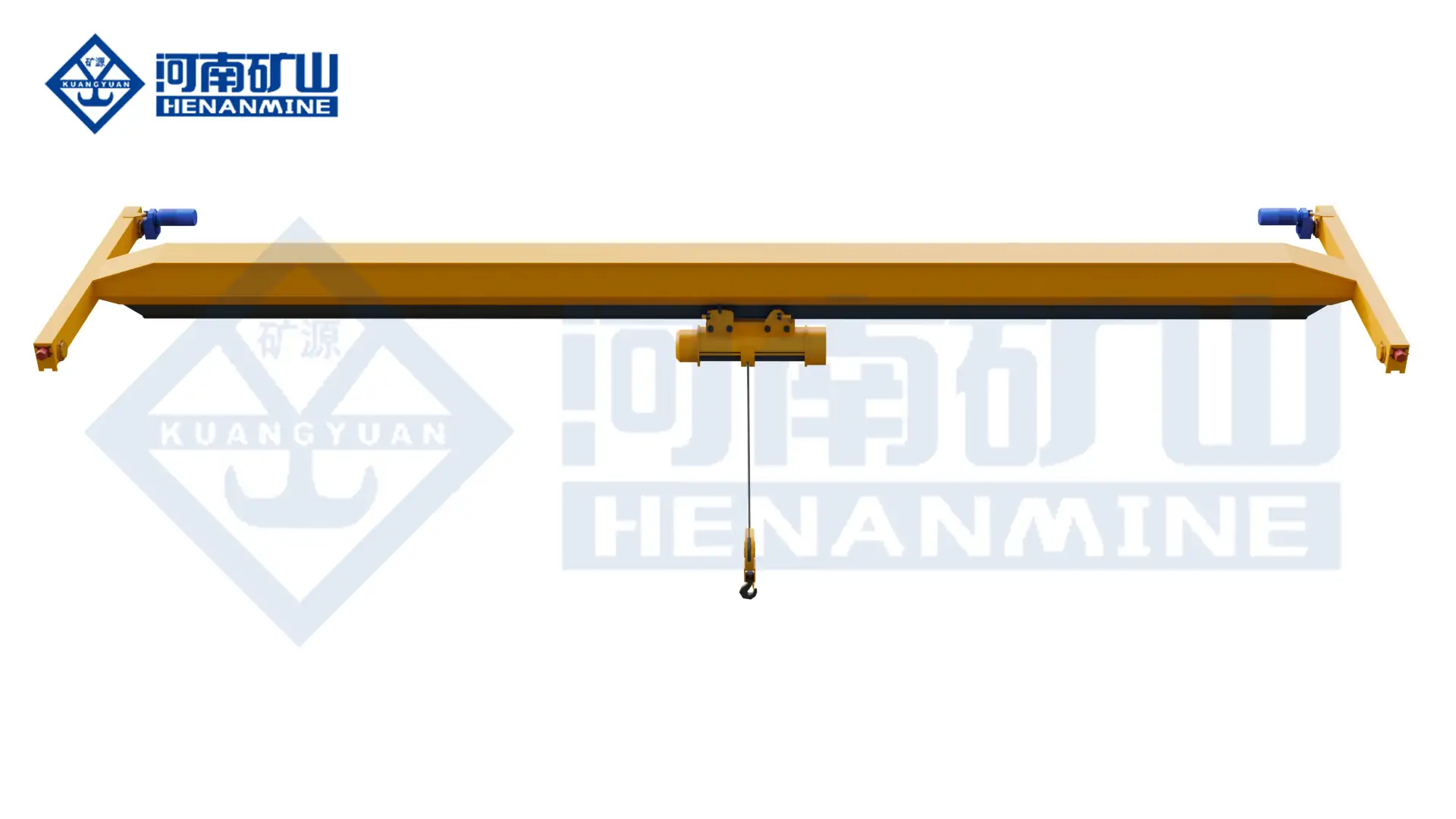
    Henan Mine Crane Single-Girder Bridge Crane
    Henan Mine Crane Single-Girder Bridge Crane
    Project planning notes

    Key points for this crane project.

    1. What Is a Bridge Crane?
    2. Why Bridge Crane Problems Matter for Safety and
    3. Wire Rope Damage and Wear
    Read the technical guide

    What Is a Bridge Crane?

    Henan Mine Crane bridge crane (also called an overhead crane) is a material handling machine that runs on elevated runway rails, lifting and moving loads along the length of a building using a bridge, trolley, and hoist. It works by combining a horizontal bridge girder that travels down the runway with a trolley that moves across the bridge, allowing the hoist to reach almost any point in the work envelope. It matters because it's often the single piece of equipment a facility depends on most to move heavy materials safely, efficiently, and repeatedly — which is exactly why unplanned downtime on a bridge crane is so costly.

    Bridge cranes are mechanically simple in concept but mechanically demanding in practice: every cycle puts stress on wire rope, brakes, wheels, and electrical contacts. Over thousands of cycles, that stress turns into the 10 problems below.

    Why Bridge Crane Problems Matter for Safety and Compliance

    Bridge crane failures aren't just a productivity issue — they're a regulatory and safety issue. OSHA 29 CFR 1910.179 requires documented daily, frequent (monthly), and periodic (annual) inspections of overhead and gantry cranes, and failure to maintain that documentation can result in fines on top of the cost of the breakdown itself.

    The financial case is just as direct. Industry data on crane maintenance practices shows that a systematic, root-cause approach to troubleshooting — rather than reactive, trial-and-error repairs — meaningfully reduces average repair time and gets equipment back into service faster. Combined with the fact that most of the 10 problems below give early warning signs (noise, vibration, scraping, blown fuses), the takeaway is simple: catching a symptom early is always cheaper than replacing the component it was warning you about.

    Wire Rope Damage and Wear

    Signs: Obvious kinks, fractured or unravelled outer strands, flattened areas, rust or pitting, “bird caging”–outer strands rupture and separate with outward bulges.

    Causes: Overloading, improper reeving, abraison against sheaves, corrosion due to moisture or chemicals or just plain fatigue from repeated lifting cycles.

    Fix: Cease operation of the wire rope as soon as deterioration is observed, this should not be a “monitor and continue” situation. Replace wire rope with an OEM replacement of same specifications as crane for load rating and reeving.

    Prevention: Daily examination of wire rope before each shift (use torch for inspection). Use lubrication guides from the importer. Never shock load the wire rope, or exceed the maximum crane capacity (damages four times faster than the duty cycle).

    Bent or Cracked Hooks

    Symptoms: Visible bending, throat opening wider than spec, cracks, or twisting of the hook body.

    Causes: Overloading is the leading cause — hooks are engineered for a specific load rating, and exceeding it even occasionally can deform the metal permanently. Side-loading (lifting at an angle instead of straight up) is a close second.

    Fix: A bent, cracked, or out-of-spec hook must be replaced, not reshaped or welded back into service. Hooks are a single point of failure for the entire load, so there's no safe field repair for structural deformation.

    Prevention: Inspect hooks and below-the-hook devices at the start of each shift. Use load charts and rated capacity indicators so operators never have to guess whether a lift is within limits.

    Brake Failure or Slippage

    Symptoms: The load swings or creeps after the operator has released the control, the crane doesn’t stop smoothly, or an abnormal noise or delay occurs when the brake is applied.

    Causes: Worn Brake Linings, Dirty or contaminated brake oil or grease, Incorrect brake torque or an electrical fault which prevents the brakes from applying or releasing.

    Fix: Change worn brake pad or lining, clean contaminated components,adjust brake torque to manufacturer‘s specification. If a brake does not grip and maintain a load suspended by the crane this is a stop-work problem – the crane must not be operated until it has been rectified.

    Prevention: Check brake response as part of the operational check at each shift change. Check annually for the kind of brake inspections that are part of the monthly preventive maintenance, since linings wear in a steady, predictable fashion.

    End Truck Wheel Wear and Misalignment

    Signs: Irregular wheel tread wear; a scraping or grinding noise when moving; a power shift crawler which needs more than usual effort to have it rolling.

    Causes: Continued wear from recurring years of travel, unequipped wheel hardness relative to rail hardness, or inherent skew/tracking issues leading to applying uneven stresses on the wheel.

    Wheel repair: Swap out worn wheels with OEM equivalent (should match existing wheel hardness for the rail material). If wheels are wearing irregularly side to side then explore tracking adjustment options for correction prior to replacing the wheels otherwise the new wheels are going to wear just as quickly.

    Prevention: Inspect wheel treads as part of your scheduled monthly maintenance. Maintain clean runway rails and gutters. Dirt and debris can accelerate wheel wear and hide early symptoms of misalignment.

    Crane Skewing and Runway Tracking Issues

    Signs: The crane “crabs” or angles slightly as it moves, makes a grinding/scraping noise at the end trucks when running or pushes harder against one rail than the other.

    Causes: Skewing occurs when traction variations between the left and right drive wheels results in a slight rotation of the bridge out of perfect right angle to the runway. This eventually deteriorates into a skew if present wheel/rail wear, misalignment of the runway rails, or uneven performance of drive motors side-to-side.

    Fix: An ongoing problem with the skew will need a Runway Alignment Inspection and will not simply need a wheel change. The root cause can be discovered with a trained crane technician measuring run way gauge, rail elevation and end truck alignment.

    Prevention: Do not fall into the trap of forcing squareness by “slamming” the crane against the end stops. This can be very harmful to the structure. Regular runway squareness testing should be done at regular intervals. This is especially critical on older or heavily traveled systems.

    Electrical Faults: Blown Fuses and Conductor Bar Problems

    Symptoms: Frequent blowing of fuses, intermittent power loss to crane, or poor control response.

    Causes: Blowing fuses too often is almost certainly a circuit fault rather than coincidence. Most cases are caused by oxidized or worn contactor components, poor connection between the conductor bar and collector, loose connections in power or junction boxes, or motor winding faults causing excessive current draw.

    Fix: Don’t simply replace the fuse and continue operating — this only addresses the symptom, not the root cause. Arrange for the electrical system to be tested and the fault identified. Conductor bar condition should be checked. Collector contact pressure should be inspected, and any corrosion or loose connections must be repaired.

    Prevention: Check conductor bars and collectors on a monthly basis. Ensure electrical boxes are properly sealed to prevent the ingress of dust or water, which are the main causes of oxidation and poor contact.

    Pendant or Radio Control Failures

    Symptoms: The crane is unresponsive to commands / has a delay of response / moves in a jerking motion instead of smooth control.

    Causes: For radio controls the favorite culprits are an empty/dead transmitter battery, loss of sight to the receiver, or interference from other equipment. For pendant controls it is usually an open or severed cable conductor.

    Fix: First try just the basics, change or charge the battery in the transmitter, make sure it has a clear line of sight to the receiver, and power-cycle (reboot) the transmitter. If it still isn’t working, the fault is most likely in the receiver inside the pendant wiring, and you need to call a technician.

    Prevention: Always repair a safety interlock or other control system that is not functioning do not just ignore a monitor and “keep working.” This is one of the leading causes of “minor” problems resulting in serious accidents. Make battery and cable checks part of the normal maintenance.

    Motor Overheating and Failure

    Symptoms: Excessively hot motor housing, decreased raising or traveling speed, abnormal noise or the motor repeatedly tripping out its overload.

    Causes: Excessive loading of crane. Running the crane over rated capacity. Operating the crane too rapidly, that is starting and stopping more frequently than allowed with insufficient time to cool, unbalanced three phase supply voltage, worn bearings and windings from age and service it has received.

    Solution: Be sure to let the motor cool down and check the load and duty cycle which was happening just before the motor overheated. If the motor overheats again with no obvious load problem then the motor’s windings and bearings should be tested and check the three phase voltages as imbalanced voltages is a very typical but often missed reason for the stress to the motor.

    Prevention: Use motor overheating protectors and takeover requirements into account, don’t operate the crane perpetually above its class rating. Clean motors and inspect them monthly.

    Gearbox, Coupling, and Abnormal Noise or Vibration

    Symptoms: Grinding, knocking or whining noise while running; shaking or vibration while traveling or lifting; or apparent oil leakage from gearbox seals.

    Causes: Worn gears from age and duty cycle, low or contaminated lubricant, misaligned couplings or loose mounting bolts, permitting parts to move under load.

    Fix: For oil leaks, replace worn seals and bolt up the housing firmly. If the gearbox is making a lot of noise or vibrating, check gear teeth and coupling alignment; while it may seem easier at the time to run the crane with gearbox damage, this will lead to an immediate, more costly breakdown.

    Prevention: Adhere to the manufacturer’s lubrication schedule carefully, as both lack of and excess of lubrication can speed up gear wear. Monitor any new or changing noise as a maintenance item rather than a reason to continue operating.

    Limit Switch Malfunctions and Hoist Over-Travel

    Symptoms: The hoist doesn’t stop at end of travel, the travel limits activate prematurely or irregularly, or the crane keeps moving after the operator releases the control close to a limit.

    Possible causes: A worn or defective limit switch, a switch blocked by debris, a wiring fault interrupting the switch signal to the control system.

    Fix: During regular inspection all limit switches should be tested and any that do not activate reliably should be reset or replaced. Over-travel is a major safety risk; malfunction of a limit switch on the upper travel end of a hoist could lead to equipment damage or to loads slipping.

    Prevention: Include limit switch testing in each pre-operational shift check, rather than periodic maintenance, since it is one of the few failure modes where the result (over-travel) can occur on the very next lift.

    Discuss the crane arrangement for your project.

    Repeated faults need evidence about when and where they occur. Organise the symptoms, operating conditions and inspection records so qualified service teams can assess the connected equipment instead of treating each symptom in isolation. Share the load, available drawings, working cycle and site conditions with Henan Mine Crane so the required configuration and supply boundary can be discussed.

    Related crane configurations

    Single-Girder Bridge Crane

    View product parameters
    Lifting capacity: 1–20 tSpan: 7.5–31.5 mLifting height: 6, 9, 12, 18, 24 or 30 m; capacity-dependent

    Use an LDA single-girder bridge and electric hoist for general workshop material handling. Select the lifting capacity, runway geometry and hoist duty around the building and load.

    LH Electric Hoist Double Girder Crane

    View product parameters
    Lifting capacity: 3, 5, 10, 16, 20 tSpan: 10.5–31.5 mLifting height: 6, 9, 12 or 18 m

    Use an LH double-girder bridge with an electric-hoist trolley for workshop lifting, assembly and maintenance. Match the hoist arrangement to the suspended load, hook travel and available building space.

    Updated 2026 · Henan Mine Crane
  • Rail-Mounted Container Gantry Crane at Wanli Land Port

    Rail-Mounted Container Gantry Crane at Wanli Land Port

    Project Deliveries

    Rail-Mounted Container Gantry Crane at Wanli Land Port

    Henan Mine Crane supplied a rail-mounted container gantry crane for the Wanli New Energy Smart Land Port project in Ordos. The original project report describes the unit as delivered and in use at the container yard, with remote operation and handling safeguards intended for daily container movements.

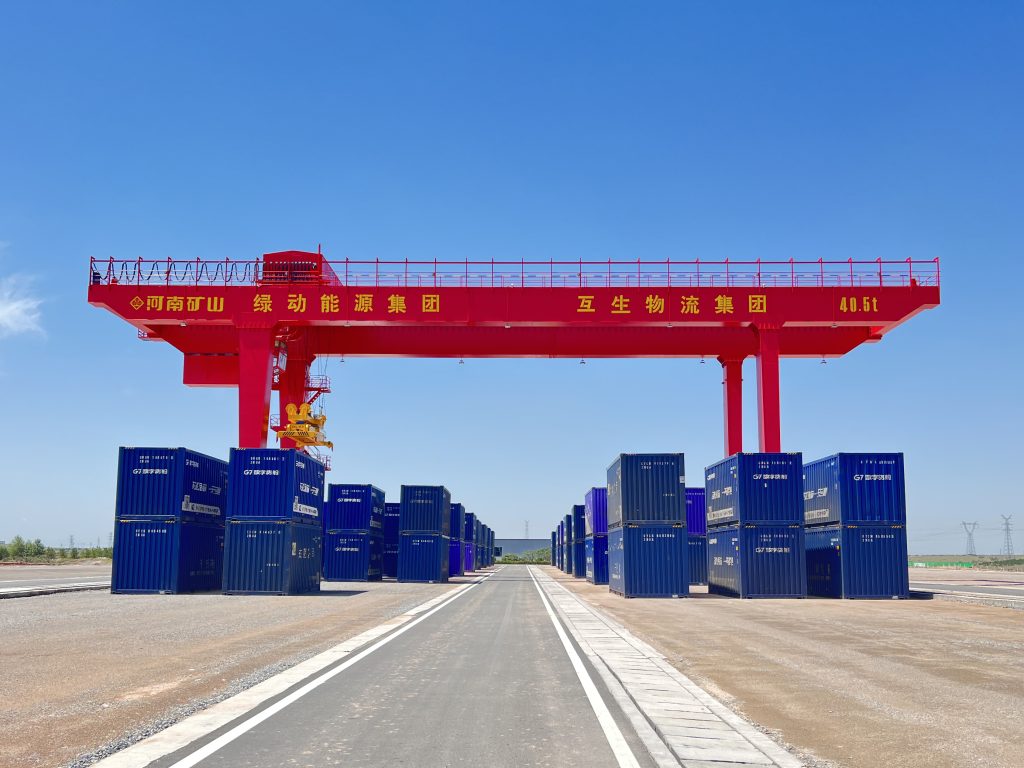
    Orange rail-mounted container gantry crane spanning container lanes at Wanli Land Port
    Rail-mounted container gantry crane in the Wanli Land Port container yard.

    A container-yard installation with a defined handling task

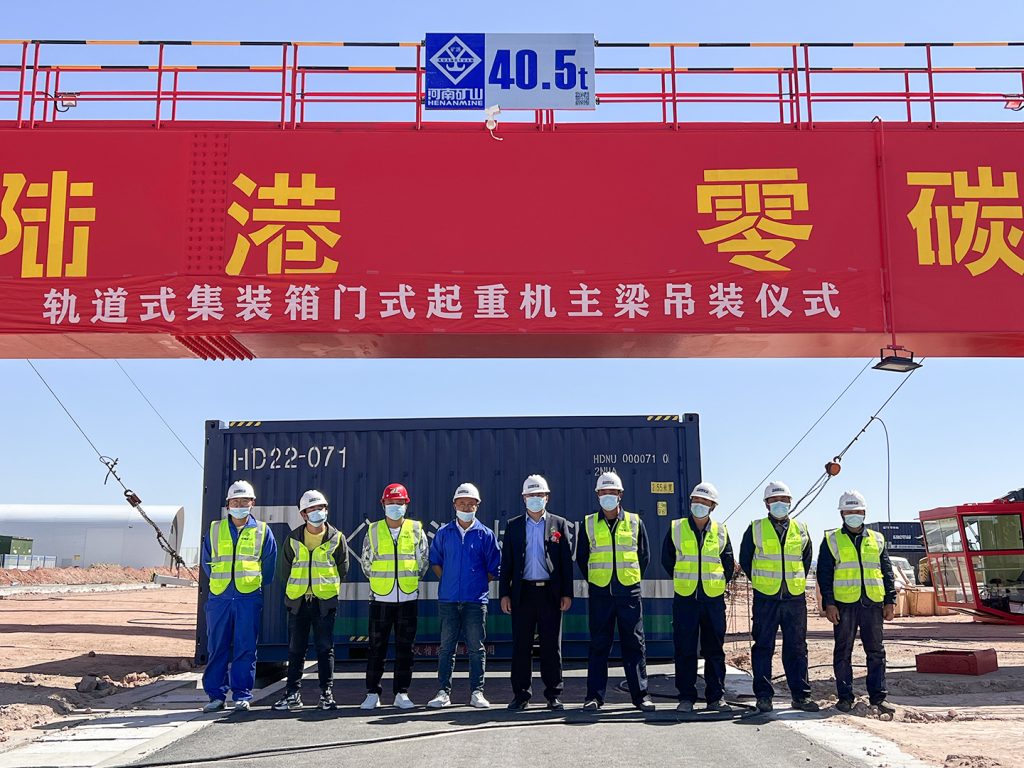
    The official project photo shows the crane spanning a container lane in the yard. A 40.5 t marking is visible on the bridge in the accompanying site photograph. Buyers should confirm the applicable rated load, spreader mass and permitted container weights in the project specification rather than treating a photo marking as a complete lifting schedule.

    The original report refers to a planned annual throughput of 5 million tonnes for the broader land-port project. That is a project-scale objective, not a measured productivity figure for this individual crane. To assess a comparable yard, provide the required moves per hour, container mix, stacking pattern, lane and truck interface, rail gauge, span, lift height and maximum travel distance.

    Remote operation and controls reported for this crane

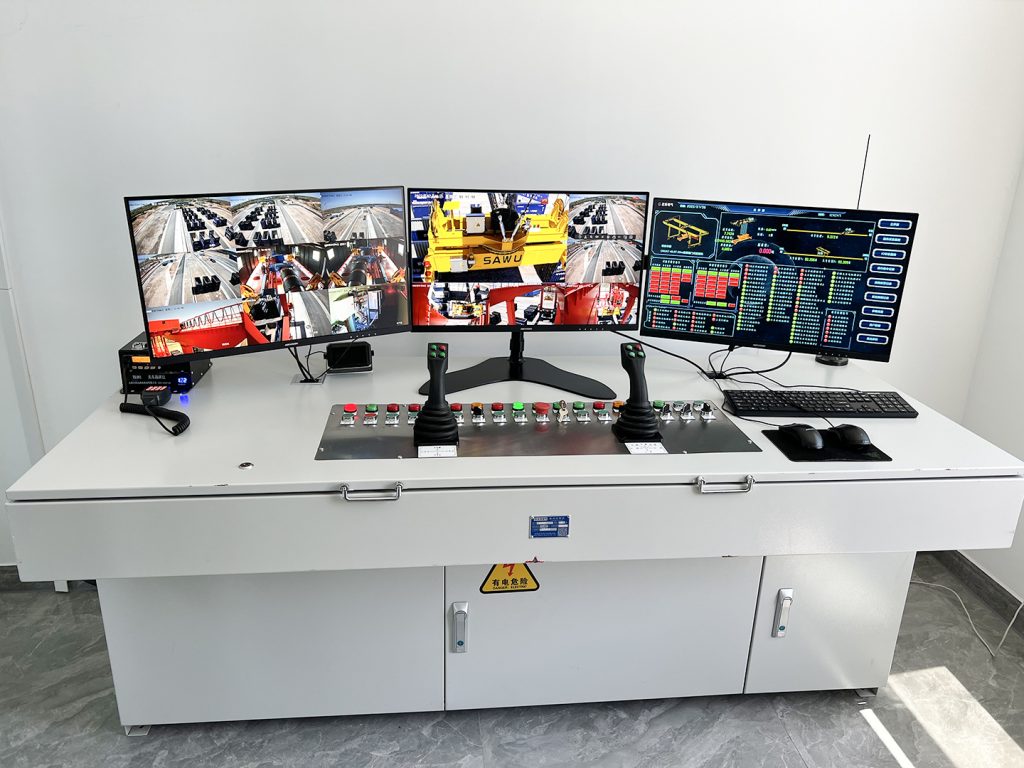
    The reported configuration includes Schneider variable-frequency drives, a Siemens PLC, remote monitoring and operation through RCMS, anti-sway control and a safeguard against lifting a truck with a container. Automatic container finding, spreader zero-position monitoring and guided spreader positioning are also listed in the original report. The accompanying control-console photo shows three monitoring displays and dual joysticks; it does not document a measured positioning tolerance.

    For procurement, request a control architecture, camera and communications coverage, alarm and interlock list, operating modes and a recovery procedure for loss of remote communications. Confirm the scope of RCMS integration with the terminal system, the fallback operator station and the responsibility for each interface.

    Compare proposals with site data and acceptance criteria

    Ask for the general arrangement, rail and foundation loads, travel clearances, lifting and travel duty, environmental limits including design wind, spreader compatibility, electrical supply, maintenance access and spare-parts plan. Specify how anti-sway, truck anti-lift, container recognition and spreader guidance will be demonstrated during factory and site acceptance.

    Agree delivery, installation, commissioning, training and after-sales boundaries in writing. The site photograph of a project team beneath the crane documents the reported project context; commissioning records and performance test data should be requested separately for any new purchase.

    Specify a Container-Yard Gantry Crane

    Share the container mix and weights, yard layout, rail span, stacking height, required moves, power supply and remote-control interface for a project-specific proposal.

  • Crane Batch Passes A-Stage Inspection for Lanzhou Baohang Anode Material Project

    Crane Batch Passes A-Stage Inspection for Lanzhou Baohang Anode Material Project

    Quality & Manufacturing

    Crane Batch Passes A-Stage Inspection for Lanzhou Baohang Anode Material Project

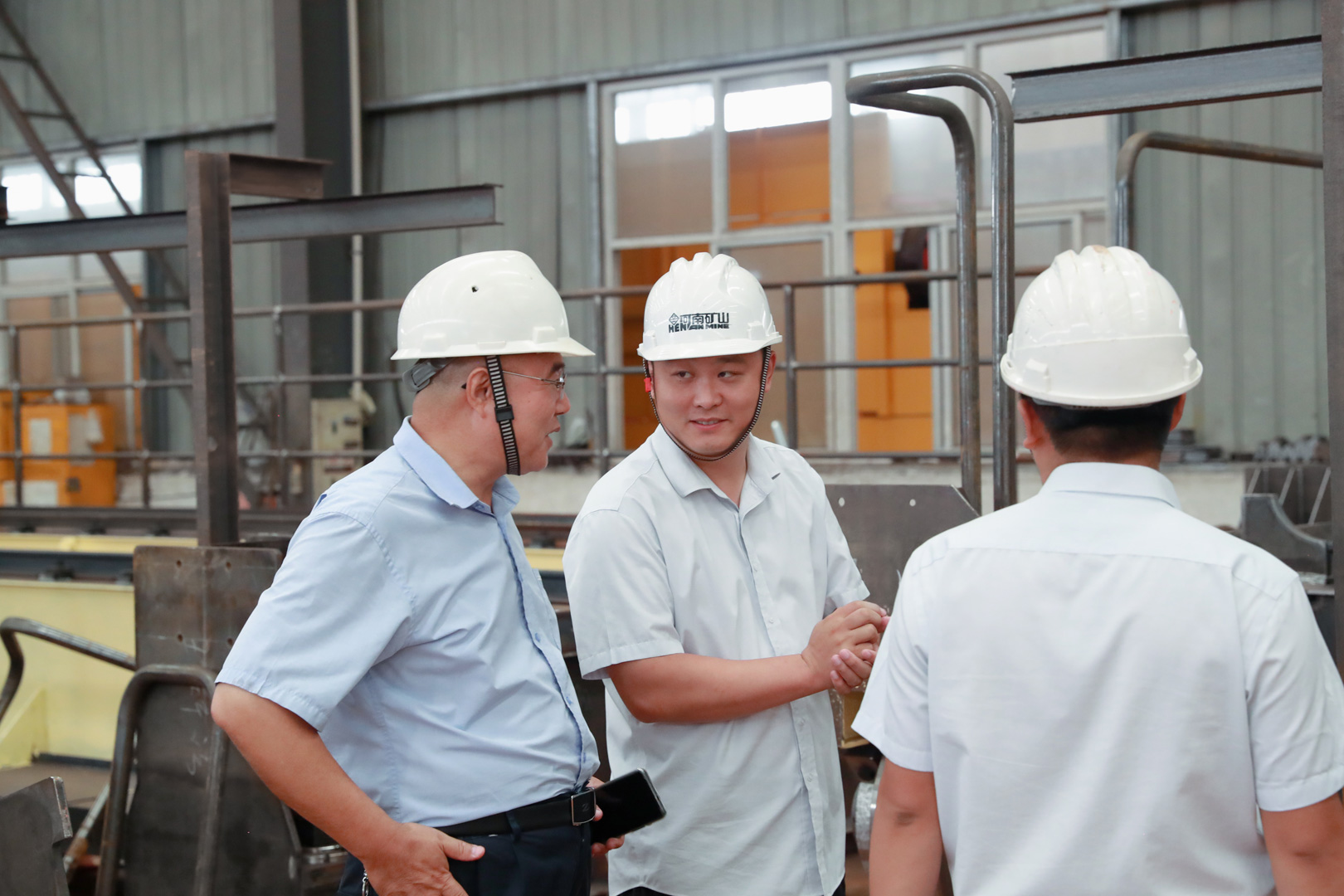
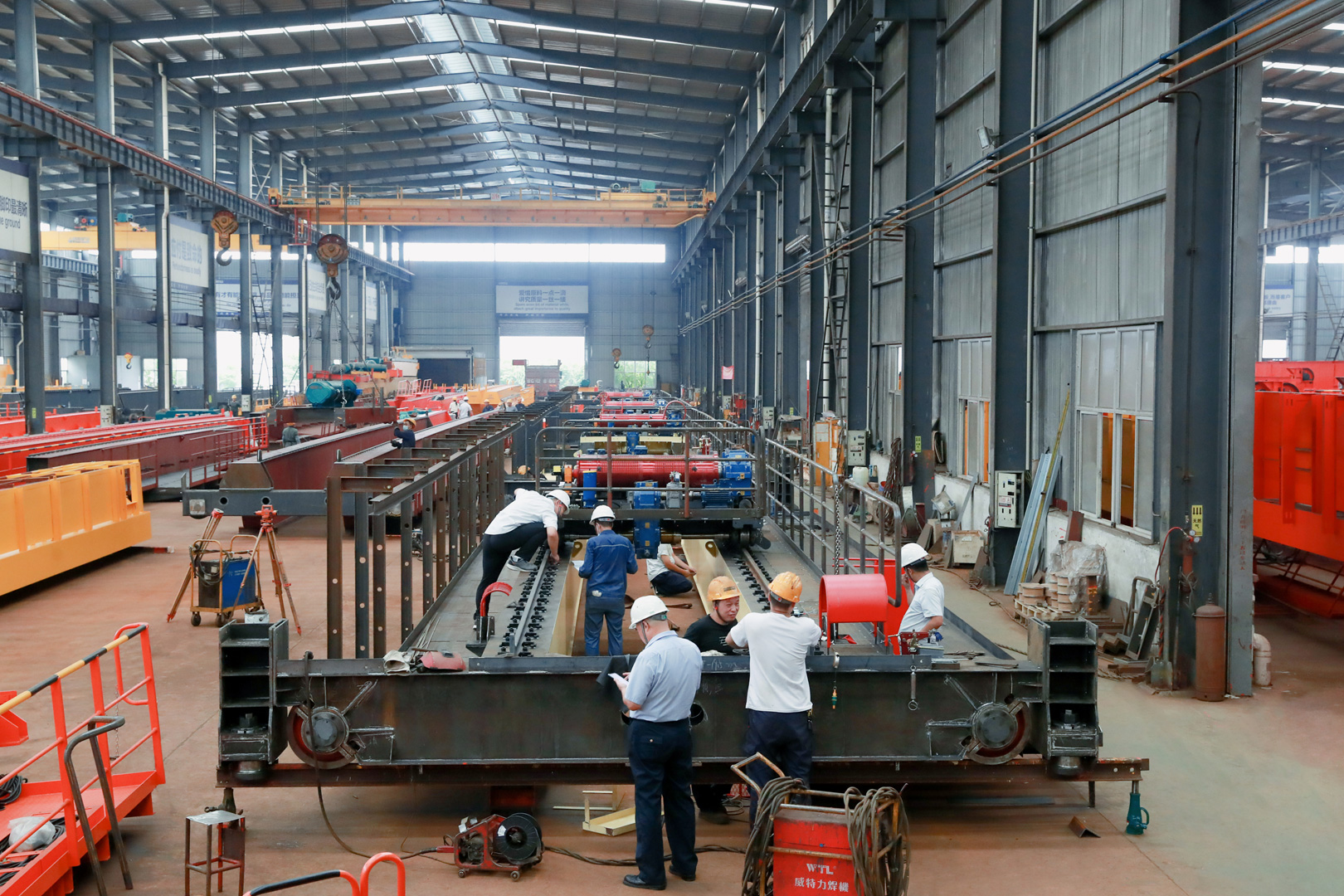
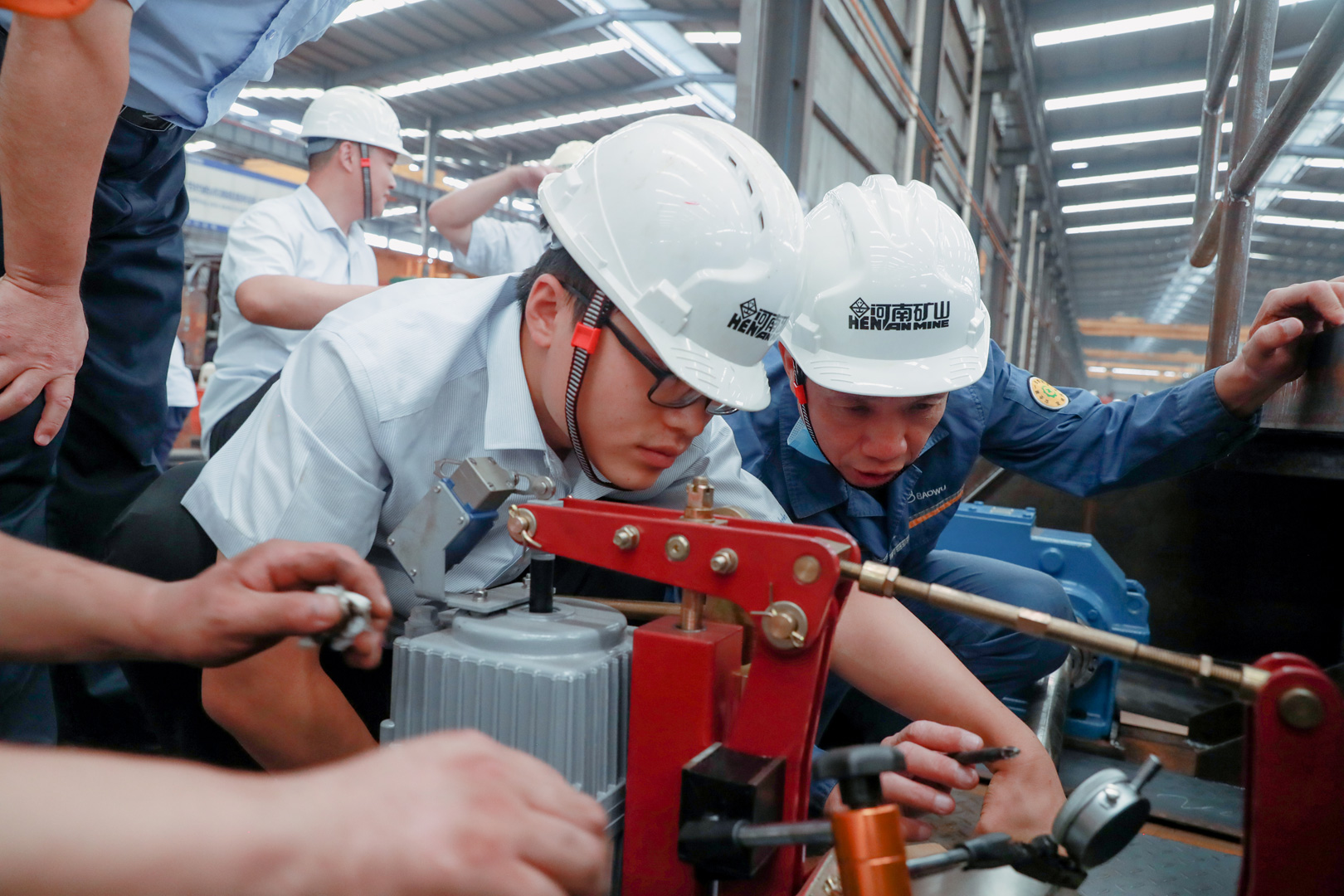
    A factory inspection of cranes for a negative-electrode material project reviewed traceability records and checked girder geometry, braking and wheel components, and the travelling mechanism. Here is what a procurement team should ask for before releasing a comparable crane batch.

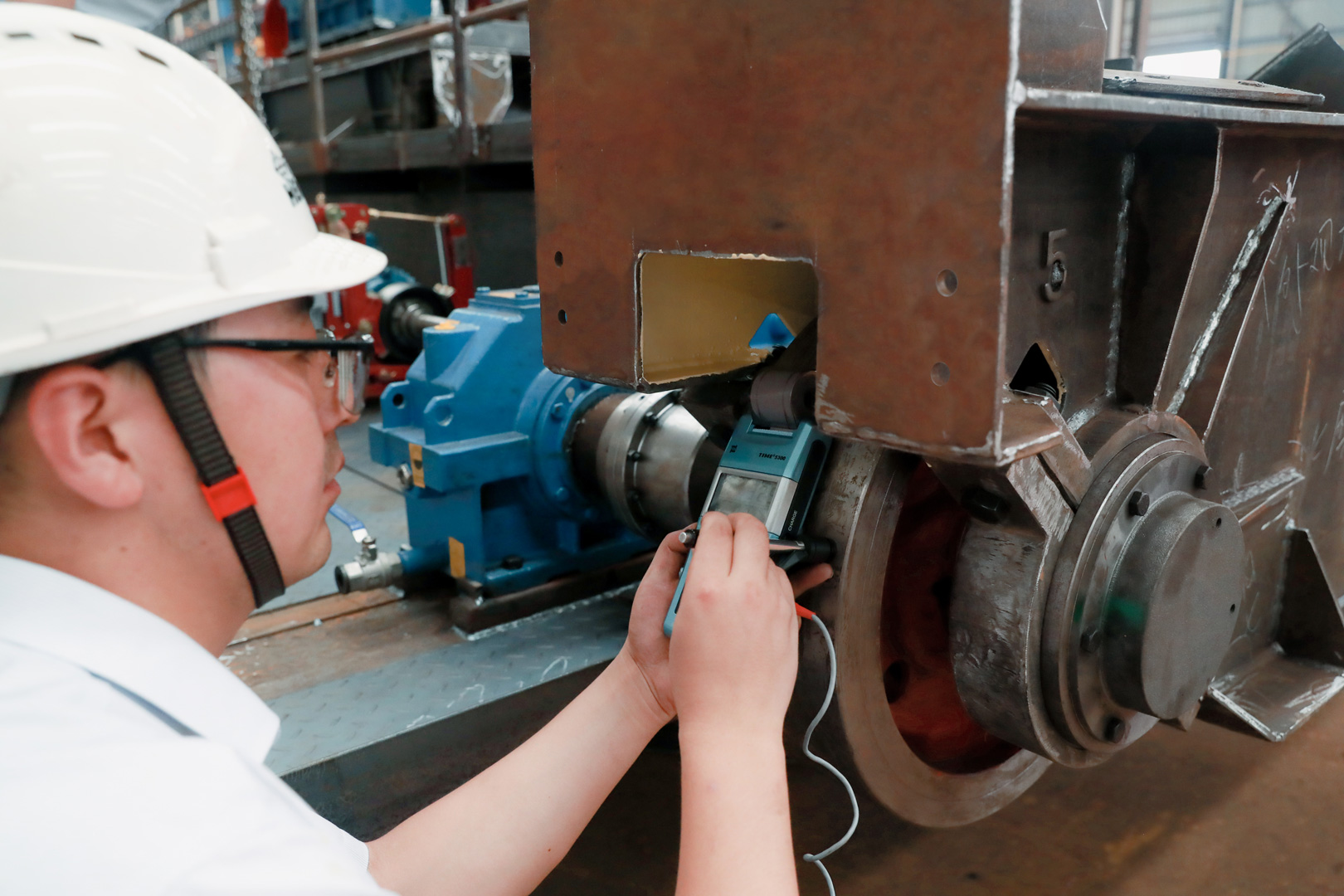
    Inspectors reviewing crane records and equipment at the Henan Mine Crane factory
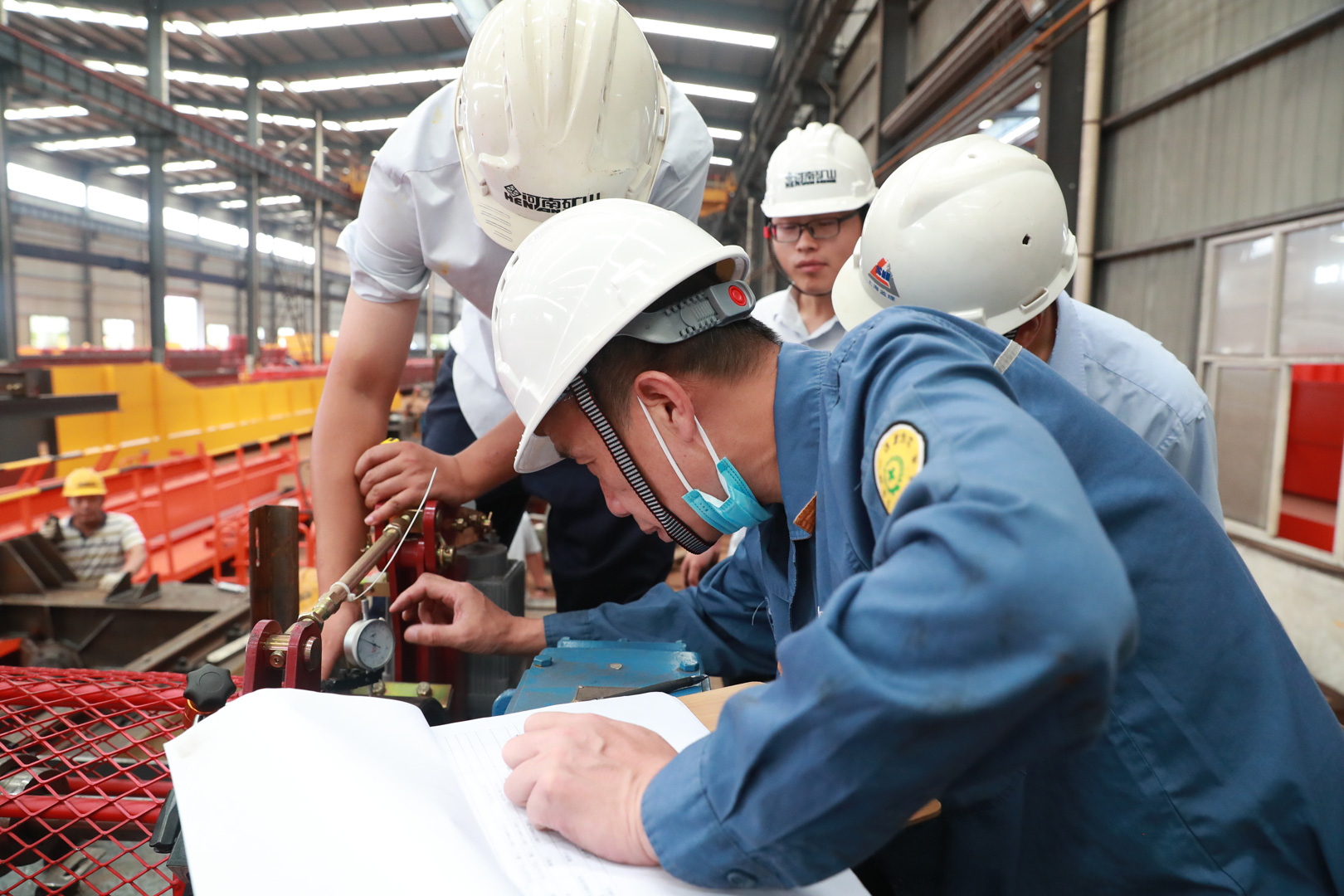
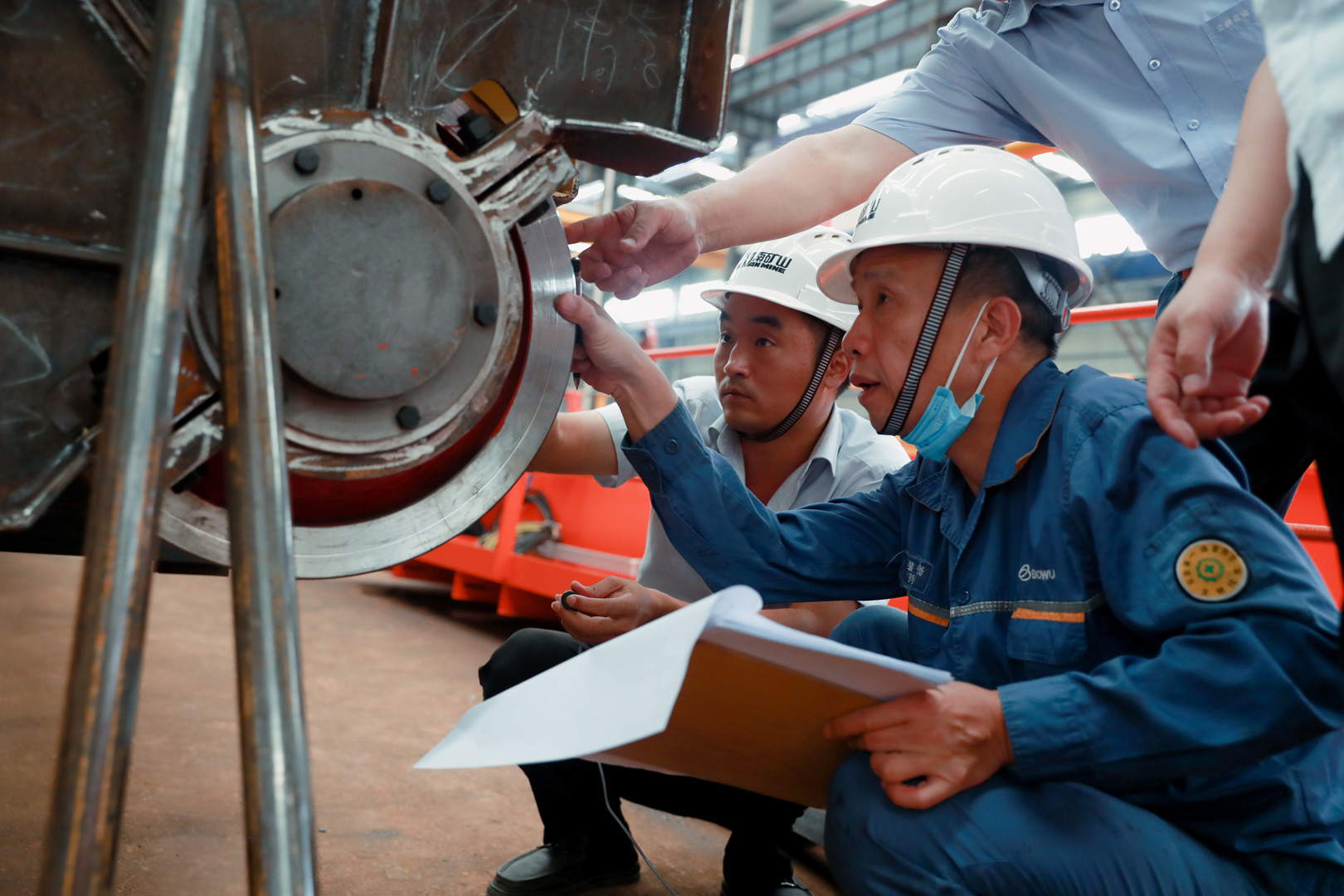
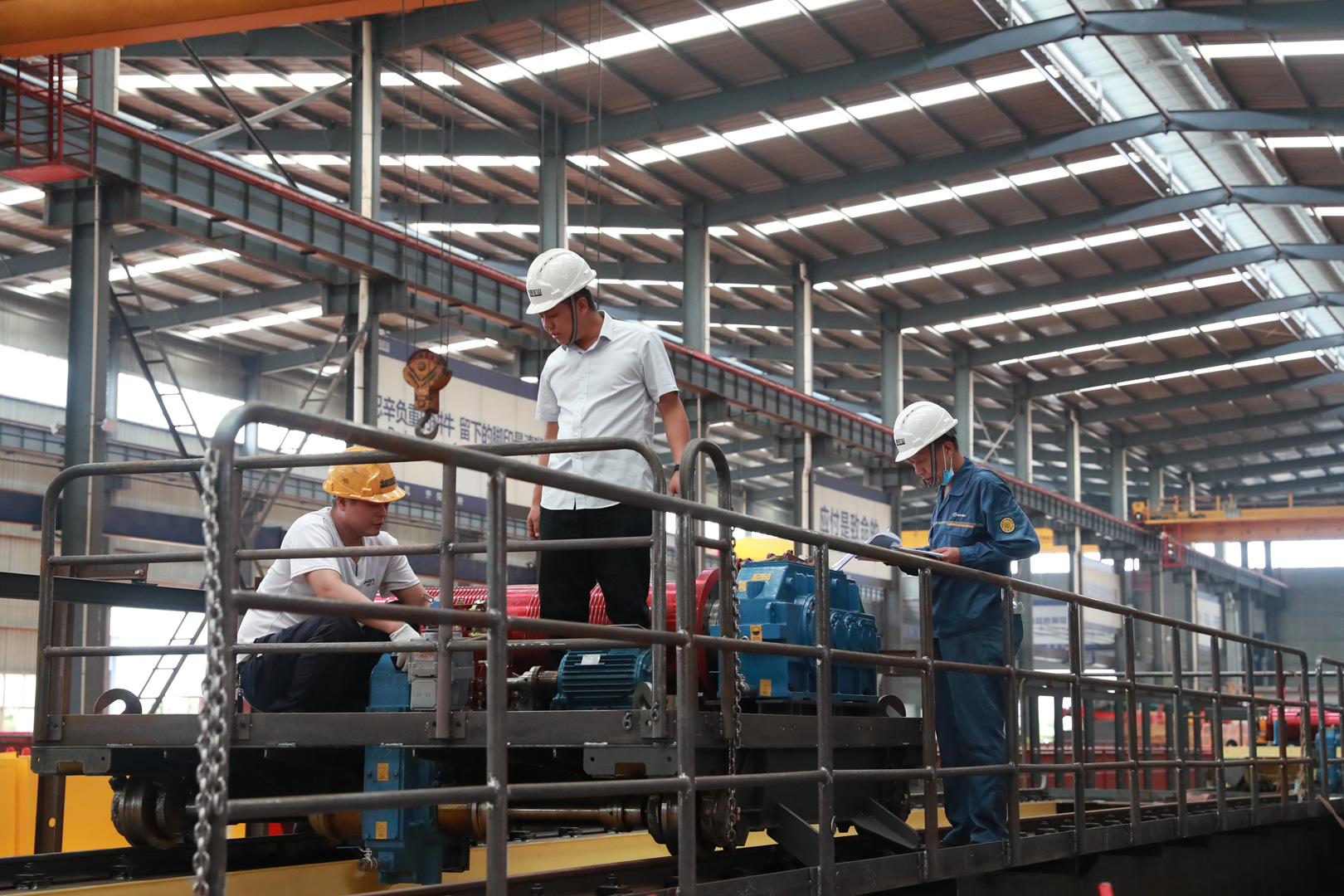
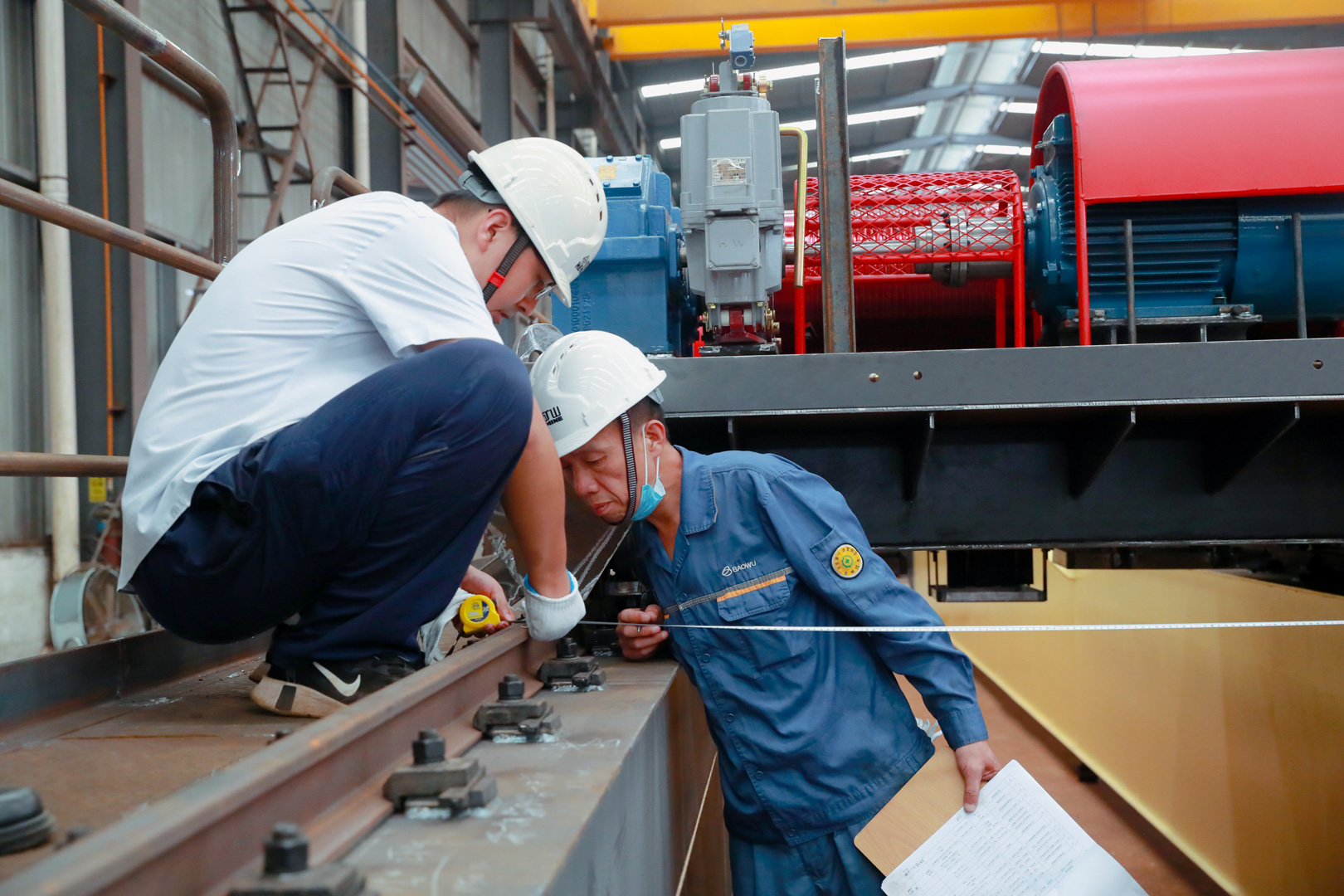
    Inspectors review records and equipment for the Lanzhou Baohang crane batch.

    What the A-stage inspection covered

    From 8 to 11 August 2022, a batch of cranes manufactured by Henan Mine Crane for the Lanzhou Baohang 100,000-ton negative-electrode material project underwent A-stage inspection. The original project report says Baosteel Consulting and Shanghai Jinyi Testing conducted the inspection and that the batch passed this stage. This is a factory inspection milestone for the crane batch. It should not be read as a statement that installation, site commissioning or the wider materials project had been completed.

    The inspection team reviewed the manufacturer’s self-inspection records, material reports and nondestructive testing reports. Physical checks named in the report include main-girder span, brake-wheel runout, wheel-tread hardness and the crane travelling mechanism. The report describes the checked results as meeting the applicable standards, but does not publish individual measured values or the full acceptance record.

    Why these checks matter to a buyer

    Span and travel geometry affect how a crane interfaces with its runway. Brake-wheel and wheel-tread checks relate to rotating and rolling components that must function reliably in service. Material and nondestructive testing reports help the buyer trace fabrication and examination of specified parts. These records have value only when they can be matched to the actual equipment, drawings, serial numbers and agreed inspection plan.

    For a new materials production facility, define the handling task before choosing the crane. State the heaviest load including lifting accessories, load shape, frequency of lifts, required hook approaches, clear height, runway length and the exact installation environment. Material transfer may also impose dust, temperature, cleaning or electrical requirements, but this project report does not identify such conditions for the inspected cranes. They must be established from the buyer’s site data rather than inferred from the project name.

    Set the factory hold points in the purchase order

    Ask the supplier to issue an inspection and test plan that names each witness point, the governing specification, the acceptance criteria and the records to be delivered. Identify who attends on behalf of the owner, consultant or third-party inspector; how any nonconformity is logged; who approves a corrective action; and what is required to release the batch for shipment. A statement that a check “passed” is useful, but a signed record with traceable values gives the procurement team a stronger basis for acceptance.

    For girder dimensions and travelling gear, request the drawing revision and measurement record that apply to the supplied unit. For material and nondestructive testing, request the scope, method, personnel qualification where specified, results and link to the component. For brake and wheel checks, agree whether the purchase specification requires measured runout, hardness and functional tests, and record the instrument and acceptance limits. The exact tests depend on the contract and applicable local requirements.

    Separate factory release from site acceptance

    Factory inspection is one stage in a wider delivery sequence. Before shipment, confirm packing, lifting points, transport dimensions, preserved components and the document package. At the site, the buyer and supplier should agree responsibility for runway condition, power supply, installation, commissioning, load testing, operator training and handover. A factory A-stage result does not replace any of those later checks.

    The available report does not state the crane type, lifting capacity, span, duty class, number of units, installation date or final operating performance. We therefore do not use it to promise a particular configuration for another plant. A proposal should be based on the buyer’s load list, facility drawings, process flow and applicable inspection rules.

    Plan Your Crane Inspection and RFQ

    Send your load list, plant layout, runway dimensions, operating duty and inspection requirements. Henan Mine Crane can discuss a suitable configuration and the factory and site acceptance records to specify.