Engineering · Manufacturing · Project support
info@hnksglobal.comWhatsApp +86 18836207779 ↗

Blog

  • Plate Mill Cranes: Product Handling, Attachments and Process Coverage

    Plate Mill Cranes: Product Handling, Attachments and Process Coverage

    Selection guide

    Plate Mill Cranes: Product Handling, Attachments and Process Coverage

    Plate mill lifting varies with the product condition and process stage. Define the plate geometry, lifting attachment and transfer sequence so the crane arrangement can be reviewed for the relevant production and storage areas.
    Henan Mine CraneSelection guide · Updated 2026Crane selection, project scope and operating requirements
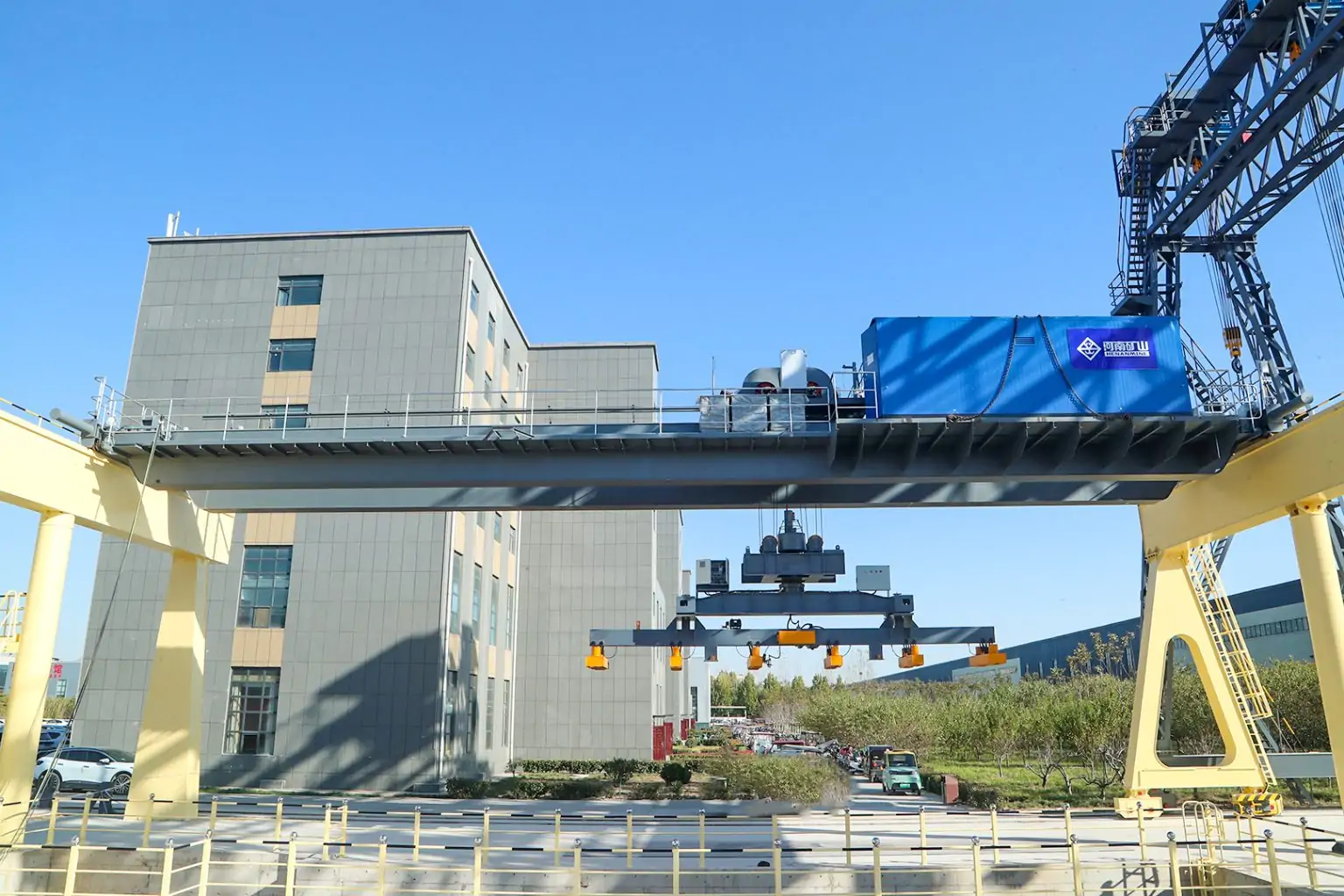
    automatic plate mill crane transferring steel plates
    automatic plate mill crane transferring steel plates
    Project planning notes

    Key points for this crane project.

    1. What Is a Plate Mill Crane?
    2. Where Cranes Work in a Plate Mill
    3. Components and Operating Principle
    Read the technical guide

    What Is a Plate Mill Crane?

    A plate mill crane is an overhead process crane configured for the production and internal logistics of steel plate. It may handle hot or cold slabs, work rolls, mill equipment, lifting beams, magnets, clamps, finished plates or plate packs. The term identifies the production environment; it does not describe one universal crane model.

    The correct crane depends on its process zone. A slab-yard crane must control long, heavy and sometimes hot feedstock. A mill-maintenance crane needs accurate low-speed positioning for roll and equipment changes. A finishing or warehouse crane must lift plates without uncontrolled bending, surface damage or accidental pickup of additional layers. One facility can therefore require several crane configurations with different capacities, duties, attachments and control philosophies.

    Plate mill cranes are different from ladle cranes. Ladle cranes are engineered for molten-metal handling and its specific redundancy and risk controls. They are also different from coil-handling cranes, which use C-hooks, coil grabs or other devices designed around a cylindrical load. A plate mill project should identify the material form and production step before the crane type is selected.

    Henan Mine Crane supplies hot-rolling mill bridge cranes, slab handling cranes, rotating electromagnetic beam cranes and automated plate-handling systems as separate engineered platforms.

    Where Cranes Work in a Plate Mill

    Crane scope should follow the plate flow from incoming slab to dispatch. Separating the work by process zone prevents a maintenance crane, production crane and warehouse crane from being specified as if they perform the same task.

    Slab Receiving and Buffer Storage

    Unload, identify, stack and retrieve slabs by grade, heat or rolling schedule. Clamp, magnet or lifting-beam selection depends on slab temperature, dimensions, surface scale, stack arrangement and traceability requirements.

    Furnace and Mill-Line Transfer

    Move feedstock or process components near reheating and rolling equipment. Radiant heat, scale, restricted access, collision zones and production interlocks become part of the crane design basis.

    Roll Change and Mill Maintenance

    Lift work rolls, backup rolls, chocks, drive components and maintenance tools. Low-speed control, hook approach, lift height, rigging clearance and reliable inching are often more important than high travel speed.

    Finishing and Inspection

    Transfer plates between cooling, leveling, cutting, inspection, marking and repair stations. The attachment must support the plate without excessive deflection, marking or unintended multi-sheet pickup.

    Finished-Plate Warehouse

    Stack and retrieve individual plates or packs by order, grade and size. Position feedback, inventory interfaces, stack-height control and automated scheduling can reduce search time and handling damage.

    Dispatch and Loading

    Load rail wagons, trucks or internal transfer vehicles. Side approach, outdoor exposure, vehicle-clearance zoning, communication with ground personnel and the required loading sequence govern the configuration.

    A process map should record every pickup point, placement point, load state, handling frequency, travel distance, traffic conflict and upstream or downstream interlock. This is the basis for deciding whether the mill needs one versatile crane, dedicated zone cranes or a coordinated fleet.

    For plant-wide planning, the steel mill crane system should separate molten-metal, slab, billet, plate, coil, scrap, roll-change and general-maintenance duties.

    Components and Operating Principle

    A plate mill crane normally uses a top-running bridge with an open-winch trolley or another process-duty lifting mechanism. The hoist raises the load and attachment, the trolley crosses the bay and the bridge travels along the runway. Drives, brakes and controls coordinate these motions so the load can be picked, transported and placed within the required tolerance.

    Bridge and End Carriages

    Box girders, diaphragms, end carriages, wheels and travel drives carry vertical, lateral, acceleration and skew forces. Span, duty, fatigue spectrum, wheel loads and runway stiffness govern the structure.

    Open-Winch Trolley

    Drum, wire rope, sheaves, reducer, motor, service brake and specified emergency or redundant braking form the lifting mechanism. The reeving and rope fleet angle are engineered for the attachment and lift path.

    Load Attachment

    Hooks, slab clamps, plate clamps, fixed or rotating magnet beams, vacuum lifters and mechanical beams address different materials. Attachment mass is included in the gross suspended load.

    Electrification and Protection

    Runway power, trolley festoon or energy chain, panels, VFDs, motors, encoders and cables are selected for temperature, scale, dust, vibration, maintenance access and the declared enclosure level.

    Control and Position Feedback

    Cabin, radio or PLC control can combine encoders, anti-sway, cameras, laser or barcode identification, load measurement, zoning and production-system interfaces.

    Runway Interface

    Rails, clips, runway beams, columns, brackets and foundations receive crane reactions. Maximum and minimum wheel loads, transverse forces and longitudinal forces are issued for structural coordination.

    Plate Mill Crane Selection Considerations

    Selection begins with the material and process consequence, not nominal capacity alone. The operating data below should be fixed before a technical quotation is compared.

    Include the heaviest slab, plate, roll or component plus clamp, magnet, beam, hook block, slings and every below-hook item. State normal and maximum load cases.

    Provide minimum and maximum length, width, thickness, mass, flatness, center of gravity, bundle form, support points, stack height and gaps between layers.

    Declare material temperature, radiant heat, scale, oil, water, paint, surface quality and permitted contact marks. These factors can change magnet, clamp and vacuum performance.

    Define lifts per hour, shifts, annual hours, load spectrum, travel distances, acceleration, waiting time and the production effect of a crane outage.

    State whether the crane lifts one plate, a plate pack, a slab, a roll or maintenance equipment. Define power-loss behavior, locking, pickup confirmation and load-release control.

    Confirm span, runway length, rail elevation, lift height, hook approaches, maintenance clearances, existing rail data, building reactions and installation access.

    Specify full and creep speeds, acceleration, positioning tolerance, anti-sway, synchronized motion, inventory tracking, MES/WMS interface and manual recovery mode.

    Define required redundancy, maintainability, critical spares, runway and electrification scope, freight, erection, testing, training, local inspection and performance acceptance.

    Plate Mill Crane Configurations Compared

    The handling device is part of the crane system. Its mass, load path, power supply, retention method, rotation and control logic must be included in the equipment specification.

    ConfigurationPrimary LoadOperating AdvantageCritical Selection Point
    Heavy-duty hook craneRolls, chocks, mill components, maintenance loads and rigged plate bundlesFlexible use with conventional lifting beams, slings and project-specific toolsRigging time, safe access and load control may limit high-cycle production handling
    Slab clamp craneHot or ambient slabs within an approved thickness and width rangePositive mechanical engagement and efficient slab-yard stackingClamp geometry, locking, contact pressure, slab temperature and pickup confirmation
    Fixed electromagnetic beam craneFerromagnetic plates, billets, profiles and selected plate packsFast pickup without manual slinging and distributed support along long materialSteel grade, temperature, thickness, air gaps, scale, stack count and power-loss retention
    Rotating electromagnetic beam craneLong plates and profiles that must change orientationAligns loads with stacks, vehicles or production lines without rotating the crane bridgeRotation envelope, anti-sway, cable routing, stops, load clearance and orientation feedback
    Vacuum plate lifter craneIndividual flat plates with compatible, sufficiently clean surfacesUseful where magnetic pickup is unsuitable or surface contact must be distributedSurface porosity, scale, oil, temperature, sealing, reserve vacuum and loss-of-power response
    Automated plate handling craneSlabs, plates or plate packs within a controlled product and storage envelopeRepeatable positioning, inventory tracking, task scheduling and reduced manual trafficData quality, obstacle detection, fail-safe logic, exception recovery and production interfaces

    A changeable attachment can increase flexibility, but changeover time, storage stands, connector design, control-mode selection and proof of correct engagement must be included. A single multi-purpose crane is not automatically more reliable or economical than dedicated process cranes.

    Plate Mill Crane Technical Specification Framework

    Henan Mine Crane maintains several steel-plate and slab-handling platforms. The published positions below support preliminary configuration; they are not guaranteed combinations. Final capacity, span, lift, working class, speeds, wheel loads, attachment and controls are confirmed on the approved technical schedule.

    Specification rule: attachment capacity, crane rated load, structural duty and mechanism duty are separate entries. A published maximum from one product family should not be combined with another product family’s maximum span, lift or speed unless the engineered offer confirms that combination.

    Plate, Slab and Roll Handling Attachments

    Attachment selection determines how force enters the load. Long plate can deflect, thin plate can peel from a magnetic stack, hot scale can create an air gap, and a clamp can damage edges or surfaces if its contact geometry is wrong. Testing must therefore use representative materials, temperatures and stack conditions rather than a nominal dead weight alone.

    The approved design records the full range of material properties and the unacceptable conditions. Operators and automation logic need a clear permissive for correct pickup, a defined response to incomplete engagement and a controlled release sequence.

    AttachmentData RequiredRetention and ConfirmationTypical Restriction
    ElectromagnetSteel grade, thickness, temperature, air gap, surface scale, plate count, magnet layout and center of gravityCurrent monitoring, pickup permissive, backup power or other approved retention strategy, audible/visual status and controlled releasePerformance changes with temperature, alloy, surface gaps and unintended multi-sheet attraction
    Mechanical slab or plate clampThickness and width range, edge condition, temperature, coefficient of friction, contact-pressure limit and permitted pickup facesPositive locking, open/closed indication, load confirmation and release prevention while suspendedContact damage, variable geometry and misaligned pickup must be evaluated
    Vacuum lifterSurface flatness, roughness, porosity, coating, contamination, temperature, pad arrangement and allowable deflectionIndependent circuits where required, reserve capacity, vacuum monitoring, low-vacuum alarm and release interlockHot, heavily scaled, warped or leaking surfaces can make vacuum unsuitable
    Hook, beam and sling systemLifting points, sling angle, beam self-weight, plate support spacing, center of gravity and rigging accessHook latch or approved connection, proof-tested beam, identified rigging and controlled lift planManual rigging time and personnel exposure may conflict with production-cycle targets

    Heat, Scale, Dust and Runway Conditions

    Plate mills combine thermal exposure, abrasive scale, vibration, frequent reversing and long runway travel. Environmental controls should be based on measured or specified conditions at the crane components, not furnace or material temperature alone.

    Thermal Survey

    Record ambient temperature, radiant-heat intensity, exposure duration, hot-material path and ventilation. Shields, component separation, insulation and cooling are then assigned where required.

    Scale and Dust Control

    Enclosures, seals, filtered ventilation and accessible cleaning points protect panels, brakes, motors, encoders and bearings. Accumulation zones should not obstruct cooling or inspection.

    Runway Geometry

    Rail gauge, elevation, straightness, joints, clips and support settlement affect skewing and wheel wear. Existing runways require survey and structural verification before crane manufacture.

    Wheel and Rail Interface

    Wheel diameter, flange geometry, hardness, rail section, bearing arrangement and drive balance are coordinated with duty, wheel loads and runway alignment.

    Cabin Environment

    Visibility, glazing protection, filtration, cooling or heating, seat ergonomics, access, escape route and camera coverage are defined for the operator’s actual exposure and sight lines.

    Outdoor and Coastal Areas

    Dispatch yards may require wind monitoring, storm parking, rain protection, corrosion category, drainage, lightning protection and weather-dependent operating limits.

    Controls, Safety Functions and Automation

    Safety functions are selected from the risk assessment, applicable code and process consequence. Automation can improve repeatability, but it also requires defined equipment states, protected operating zones, verified sensor coverage and a controlled recovery method.

    FunctionPurposeSpecification DetailAcceptance Evidence
    Variable-frequency motion controlSmooth acceleration, controlled stopping and creep positioningFull speed, minimum stable speed, ramp time, braking sequence and load-dependent settingsRecorded motion tests under defined load cases
    Overload, limits and brakingPrevent overload and motion beyond the approved envelopeRated load limiter, upper/lower limits, travel limits, overspeed protection and braking architectureSet-point records and functional test results
    Attachment permissiveConfirm correct magnet, clamp, vacuum or beam engagement before transportSensor voting, minimum retention state, alarm, inhibited motions and controlled release conditionsNormal and fault-condition test matrix
    Anti-collision and protected zonesSeparate cranes, structures, mill equipment, vehicles and restricted areasSlowdown and stop distances, sensor coverage, blind zones, bypass authority and reset logicZone map and witnessed approach tests
    Positioning and anti-swaySupport repeatable pickup, stacking and machine-interface movementsCoordinate system, target tolerance, load dependence, calibration and fallback modeRepeatability trials at representative stations
    MES/WMS and inventory interfaceExchange tasks, product identity, storage location and completion statusProtocol, data ownership, time synchronization, task arbitration, cybersecurity and offline recoveryInterface simulation and integrated production trial

    Design Basis, Inspection and Acceptance

    The contract should identify one coherent design and safety basis. Local statutory requirements remain applicable at the installation site.

    Possible International Design Basis

    A project may specify the ISO 4301 classification framework with relevant crane standards, the EN 13001 series with EN 15011 for bridge and gantry cranes, or a North American basis using CMAA specifications and applicable ASME B30 requirements. The purchase specification states the selected route.

    Engineering Deliverables

    General arrangement, wheel loads and reactions, design calculations where contracted, duty classification, mechanism data, attachment calculations, electrical drawings, control narrative, interface list and maintenance-access plan.

    Manufacturing Inspection

    Material identification, welding procedure and welder qualification, dimensional inspection, specified nondestructive examination, wheel and rail-interface checks, assembly verification, coating records and electrical-panel inspection.

    FAT and Site Acceptance

    Factory testing verifies accessible functions before shipment. Site acceptance then checks runway, erection, alignment, electrical protection, no-load operation, load testing, attachment behavior, interfaces, training and handover against agreed criteria.

    Plate Mill and Slab Handling Project Experience

    Relevant experience is evaluated by process similarity: material form, temperature, duty, attachment, automation, runway span and production consequence. Two Henan Mine Crane references illustrate the difference between a coordinated mill fleet and a dedicated slab-handling crane.

    34-Crane Fleet for Chongqing Panhua Plate

    The project demonstrates why a plate mill is normally planned as a crane fleet. Capacity and controls are assigned by station instead of forcing every duty into one oversized common model.

    50+50t Slab Clamp Crane for Shandong Iron & Steel

    The crane uses an electrically adjustable slab clamp with digital speed control, guidance, PLC monitoring, weighing, fault display and positioning functions for high-temperature steel-material handling.

    The reference is relevant where slab geometry, heat exposure, heavy duty and accurate placement require a dedicated clamp crane rather than a general hook bridge.

    Project verification: final crane selection still requires the new plant’s process data. A reference proves experience with comparable engineering problems; it does not make the reference crane an automatic fit for another runway, load spectrum or automation system.

    Engineering, Manufacturing, Installation and Handover

    A plate mill crane project moves through controlled design and acceptance stages. Process inputs are frozen before the bridge, trolley, attachment, runway reactions and interfaces are released for manufacture.

    StageMain ActivityApproval OutputProcurement Control
    1 · Process definitionConfirm material route, loads, temperatures, cycles, attachment and production interfacesDesign-basis and duty scheduleOpen assumptions and excluded operating cases listed
    2 · Interface engineeringCoordinate runway, clearances, wheel loads, power, controls, data and maintenance accessApproved general arrangement and interface listBuilding and civil responsibilities assigned
    3 · Detailed designFinalize structure, mechanisms, attachment, protection, controls and safety functionsApproved drawings, component schedule and control narrativeDeviation register closed before production release
    4 · Manufacture and inspectionFabricate, assemble and inspect to the agreed inspection and test planMaterial, weld, dimensional, coating and component recordsWitness and hold points identified in advance
    5 · FAT, packing and shipmentTest available functions, preserve equipment, identify shipping splits and pack for the agreed routeFAT record, packing list, marks and shipment releaseIncoterm, transport envelope and site unloading plan confirmed
    6 · Erection, SAT and trainingVerify runway, assemble, align, commission, load test, integrate and trainSite test report, settings, punch-list closure and handover packageTest weights, labor, permits and inspection authority assigned contractually

    Plate Mill Crane Price and Budget Scope

    A plate mill crane does not have a responsible fixed price without capacity, span, lift, duty, attachment, temperature, control level, runway scope and destination. Public listings can show the scale of variation, but they do not establish the installed cost of a process crane.

    Public Market Signal Checked in September 2026What It IndicatesWhy It Is Not a Plate Mill Project Price
    Made-in-China lower-rotating electromagnetic bridge crane listingA rotating magnet system can be priced far above a basic bridge craneCapacity, span, duty, magnet arrangement, controls and commercial boundary still require confirmation
    Engineered plate mill process cranePrice is built from an approved technical and supply scopeOnly the completed specification defines comparable value and contract risk

    The named public sources were checked in September 2026 for budget context. The published figures are market observations, not Henan Mine Crane offers or endorsements. Marketplace prices can be placeholders or equipment-only values and should not be used for contract comparison without a line-by-line scope reconciliation.

    Plate Mill Crane RFQ Information

    A complete enquiry allows capacity, duty, attachment, runway reactions, electrical load and commercial scope to be priced on the same basis. Drawings, plate schedules, process layouts and photographs can be submitted with the data below.

    Material and Attachment Data

    Material type and grade; individual or pack handling; minimum and maximum mass, length, width and thickness; temperature; surface condition; stack arrangement; center of gravity; attachment preference; permitted contact marks; lifting points.

    Process and Duty Data

    Pickup and placement stations; cycle sequence; lifts per hour; shifts; annual operating hours; load spectrum; travel distance; required speeds; creep speed; outage consequence; shared or dedicated crane; future production increase.

    Building and Runway Data

    Span between rail centers; runway length; rail section; rail elevation; required lift; end and side approaches; roof and machine clearances; existing wheel-load limits; runway drawings; alignment survey; erection and maintenance access.

    Controls, Site and Commercial Data

    Cabin, radio or automatic operation; positioning tolerance; MES/WMS protocol; anti-collision zones; voltage and frequency; ambient and radiant heat; dust; destination; design standard; Incoterm; installation scope; inspection authority; documentation language.

    Frequently Asked Questions

    How is plate mill crane capacity calculated?

    Capacity starts with the maximum gross suspended load: material plus magnet, clamp, vacuum lifter, lifting beam, hook block, slings and every other item below the hoist. Load distribution, dynamic effects, duty and the selected design standard are then applied.

    Is a magnet or clamp better for steel plate?

    Neither is universally better. Magnets offer rapid non-rigged pickup of compatible ferromagnetic material. Clamps provide mechanical engagement within an approved geometry. Steel grade, plate thickness, temperature, surface, stack count, damage limits and power-loss response determine the choice.

    Can a plate mill crane handle hot slabs or plates?

    Yes, when the maximum material temperature, radiant exposure and handling duration are declared. The attachment, wire ropes, cables, sensors, panels, motors, brakes, cabin and structural shielding are then selected or protected for the actual exposure.

    Can one crane handle slabs, plates, rolls and maintenance loads?

    A multi-purpose crane is possible when capacity, duty, attachment changeover, controls and clearance support every task. High-cycle production and precision maintenance often justify separate cranes because sharing can create scheduling conflict, unnecessary complexity and a larger outage consequence.

    How much does a plate mill crane cost?

    The price is project-specific. A contract price requires the complete process and supply scope.

    Can a new crane use the existing plate mill runway?

    Only after the rails, beams, columns, brackets, connections and foundations are checked for condition, alignment, fatigue and new crane reactions. The crane design must remain within verified structural limits or the runway must be strengthened.

    Can the crane connect to MES or warehouse software?

    The interface specification defines task messages, product identity, locations, status feedback, protocol, time synchronization, data ownership, safety boundaries, cybersecurity, manual override and recovery after a network or system interruption.

    What documents are needed for final handover?

    The agreed package can include approved drawings, wheel-load data, manuals, component schedules, electrical diagrams, software backups, settings, inspection and test records, certificates, spare-parts lists, training records and site load-test or commissioning reports.

    Related Plate Mill Crane Products and Solutions

    Each linked platform addresses a distinct load or process condition. Final selection follows the approved material, attachment, duty, span, environment and control requirement.

    Slab Handling Crane

    Clamp-based process crane for high-duty slab transfer, stacking and production logistics.

    Electromagnetic Hanging Crane

    Rotating beam configuration for long plate, profile, billet and compatible steel-product handling.

    Electromagnetic Bridge Crane

    Magnetic pickup system for compatible plate, billet, profile and ferrous-material transfer.

    Metallurgical Bridge Crane

    Process-duty bridge platform for specified high-temperature and steel-production environments.

    Double-Girder Bridge Crane

    Configurable two-girder platform for roll change, tooling, maintenance and general heavy lifting.

    Automatic Steel Plate Handling Crane

    Integrated crane, attachment, positioning and task-control solution for plate logistics.

    Submit the material schedule, maximum gross load, plate or slab temperature, attachment requirement, process cycle, span, lift, runway information, control level, power supply, destination and required supply boundary. Henan Mine Crane will prepare a configuration-based technical and commercial proposal.

    Discuss the crane arrangement for your project.

    Plate mill lifting varies with the product condition and process stage. Define the plate geometry, lifting attachment and transfer sequence so the crane arrangement can be reviewed for the relevant production and storage areas. Share the load, available drawings, working cycle and site conditions with Henan Mine Crane so the required configuration and supply boundary can be discussed.

    Related crane configurations

    Galvanizing Process Overhead Crane

    View product parameters
    Lifting capacity: 5 – 32 tSpan: 10.5 – 31.5 mLifting height: 6 – 24 m

    Transfer suspended workpieces through a galvanizing process with a crane matched to the line. Coordinate lifting points, corrosive exposure, tank geometry and the required handling sequence.

    Updated 2026 · Henan Mine Crane
  • Pickling Line Cranes: Process Atmosphere and Coil Transfer Requirements

    Pickling Line Cranes: Process Atmosphere and Coil Transfer Requirements

    Selection guide

    Pickling Line Cranes: Process Atmosphere and Coil Transfer Requirements

    Pickling operations need the handling task and process environment specified together. Describe the load presentation, transfer positions and local exposure so the crane, attachment and protection arrangement can be developed for the line.

    Henan Mine CraneSelection guide · Updated 2026Crane selection, project scope and operating requirements
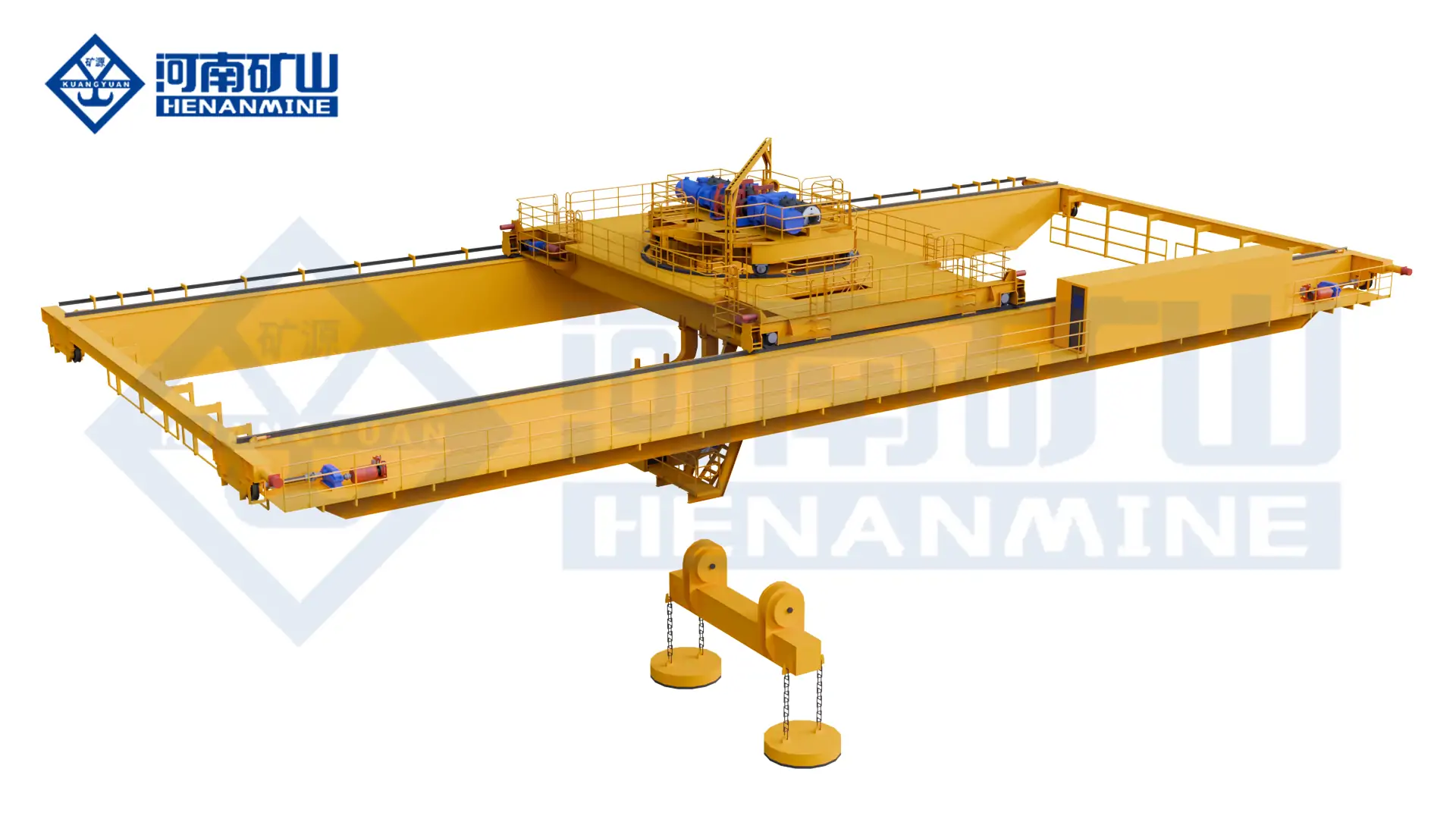
    Henan Mine Crane Upper Rotating Magnetic Overhead Crane
    Henan Mine Crane Upper Rotating Magnetic Overhead Crane
    Project planning notes

    Key points for this crane project.

    1. What Is a Pickling Line Crane?
    2. Pickling Line Coil-Handling Map
    3. Pickling Line Crane System Architecture
    Read the technical guide

    What Is a Pickling Line Crane?

    A pickling line crane is a coil-handling overhead crane serving the receiving, entry, exit and storage areas of a steel strip pickling line. It unloads incoming hot-rolled coils, feeds entry saddles or coil cars, removes pickled coils from the recoiling section, transfers coils through buffers and inspection stations, and loads finished material for the next process or dispatch.

    The term does not normally describe a crane carrying steel strip through the acid tanks. During production, strip is continuously transported by the line itself through scale breaking, pickling, rinsing and drying equipment. Crane duties are concentrated around coil logistics and planned maintenance, where controlled handling directly affects line availability and coil condition.

    Pickling areas combine high cycle demand with a potentially corrosive atmosphere. Acid chemistry, mist concentration, humidity, condensation, ventilation, washdown practices and distance from the process determine the required protection. A generic outdoor coating or a higher IP rating alone does not establish suitability for acid-mist service.

    Henan Mine Crane configures pickling-line systems from double-girder bridge crane and metallurgical bridge crane platforms, combined with a project-specific attachment, corrosion-control package, positioning system and line interface.

    Pickling Line Coil-Handling Map

    A practical crane specification starts with every pickup, travel and placement point. The following zones commonly require separate operating rules even when one crane spans several functions.

    Incoming Coil Receiving

    Unload hot-rolled coils from trucks, rail wagons or transfer cars and place them on identified saddles. Vehicle envelope, coil eye orientation, lashing removal, edge protection and pedestrian exclusion are included in the lift plan.

    Entry Section Feeding

    Select the scheduled coil and place it on the entry saddle, coil car or pay-off reel interface. Low-speed approach, confirmed centerline, uncoiler availability and attachment-release permissives protect both coil and line equipment.

    Process-Section Maintenance

    Support planned lifting of rolls, pumps, motors, covers and other maintainable assemblies. Maintenance loads, access openings and lifting points are documented separately from routine coil-handling duty.

    Exit Coil Removal

    Remove the completed pickled coil from the exit saddle, recoiler coil car or turnstile only after the line confirms a safe transfer state. Coil bands, tail condition and stable support are verified before travel begins.

    Buffer, Inspection and Rework

    Route coils by grade, order and process status. Storage coordinates, hold areas, inspection stands and rework queues require positive identification and controlled placement on approved supports.

    Downstream Transfer or Dispatch

    Feed a tandem mill, annealing line, coating line or slitter, or load coils into road and rail transport. Order verification and stable final placement close the material-tracking transaction.

    One Line Can Require More Than One Crane

    Entry and exit bays can have different coil conditions, cycle requirements and environmental exposure. Independent cranes can isolate production logistics, maintenance and dispatch traffic, while overlapping coverage or an emergency transfer plan can support availability.

    The handling study records crane-to-crane collision zones, shared runway sections, handover saddles, recovery positions and the production consequence of each single failure.

    Pickling Line Crane System Architecture

    Bridge and End Carriages

    Girders, wheels and travel drives are engineered from span, fatigue spectrum, wheel loads, lateral forces, runway stiffness and required approach. Walkways and service platforms support safe inspection.

    Process-Duty Hoist

    Drum, rope, sheaves, reducer, motor and brakes are sized for the gross suspended load, lift, speed, starts per hour, operating class and required redundancy or emergency lowering philosophy.

    Coil Attachment

    A C-hook, powered tong, inside-diameter lifter or approved magnet engages the defined coil range. Contact surfaces, engagement confirmation and attachment parking stands form part of the system.

    Motion and Positioning

    Variable-frequency drives provide controlled acceleration and creep speed. Encoders, laser positioning, anti-sway functions and load-height feedback support repeatable line and saddle approaches.

    Electrical and Control System

    Panels, PLC, drives, sensors, communications and operator stations are protected for the mapped environment. Diagnostics identify permissive status, faults, maintenance needs and task progress.

    Line and Inventory Interface

    Handshakes with the line PLC, coil cars, uncoiler, recoiler, turnstile, gates and storage management prevent conflicting movements and preserve coil identity.

    Pickling Line Crane Selection Considerations

    Nominal coil mass is only one selection input. The crane, attachment and controls are specified from the complete operating envelope and the consequences of delayed or failed transfer.

    Coil Envelope

    Minimum and maximum coil mass, outside diameter, inside diameter, face width, eye orientation, center-of-gravity range, winding tightness, banding, tail condition and permitted contact areas.

    Material Condition

    Steel grade, surface scale before pickling, oil or residual moisture after pickling, edge sensitivity, surface-marking limits, temperature and any restrictions on magnetic lifting.

    Throughput and Duty

    Coils per hour, lifts per shift, loaded travel distance, average and maximum load, production schedule, queuing allowance, annual hours, maintenance windows and outage consequence.

    Station Interfaces

    Saddle geometry, coil-car stroke, uncoiler and recoiler centerlines, turnstile positions, truck or rail clearances, obstacles, approach distances and attachment release conditions.

    Environment Map

    Acid chemistry and concentration, mist distribution, chloride or sulfate exposure, temperature, humidity, condensation, washdown, ventilation, dust and the location of cleaner service zones.

    Building and Utilities

    Span, lift, runway elevation, rail section, wheel-load limits, end approaches, headroom, power supply, cable route, maintenance access, erection opening and future line modifications.

    Pickling Line Crane Configurations Compared

    The appropriate arrangement follows the duty and process interface. No single configuration is optimal for every pickling line.

    ConfigurationTypical ServicePrincipal AdvantagesEngineering Checks
    Double-Girder Crane with C-HookReceiving, manual entry feeding, exit removal and buffer storageMechanically simple attachment, visible engagement and comparatively straightforward maintenanceAccessible coil bore, hook throat and counterweight clearance, lining, rotation, stable orientation and manual engagement time
    Double-Girder Crane with Powered Coil TongHigh-cycle line feeding, automatic buffers and mixed coil widthsPowered engagement, sensor feedback and stronger automation potentialJaw range, contact pressure, fail-safe retention, coil width tolerance, mechanism protection and recovery after loss of power
    Crane with Inside-Diameter LifterDefined coil bores and applications requiring limited outer-surface contactPositive internal engagement and compact outer profileBore strength, ID range, insertion depth, tail condition, expansion confirmation and release on a stable support
    Validated Electromagnetic CraneApproved ferromagnetic coils or other steel products under a verified lifting planNo mechanical insertion into the bore and potential remote engagementSteel grade, curvature, contact area, air gaps, scale or oil, temperature, banding, battery backup, retained-load strategy and proof testing
    Separate Maintenance Crane or HoistPumps, motors, rolls, covers and service lifts over the process sectionKeeps production coil crane duty separate and can target restricted maintenance areasActual component weights, certified lifting points, access, acid exposure and interference with line equipment

    Architecture Selection

    Top-running double-girder cranes are commonly selected when coil mass, attachment weight, span, duty or positioning equipment requires higher structural capacity and accessible machinery arrangements. Single-girder solutions can suit lighter auxiliary service where duty, headroom and maintenance needs support that choice.

    A rotating hook block or powered attachment rotation may be required when coil eye orientation changes between transport, storage and line stations. The rotating envelope is verified against saddles, guards, columns and adjacent crane structures.

    Capacity, Duty and Performance Definition

    Gross Suspended Load

    The load calculation includes maximum coil mass plus the complete attachment, hook block, rotation mechanism, cables and any permanent equipment below the hoist. Capacity margin is not a substitute for a defined coil range or controlled attachment geometry.

    Operating Class and Load Spectrum

    Crane classification is selected from total working cycles, distribution of light and heavy loads, motion running time, starts per hour and expected service life. A crane that feeds every production coil normally requires a different fatigue evaluation from an occasional maintenance crane of the same rated capacity.

    Speeds and Cycle Time

    Main speeds are balanced against travel distance, line takt time, suspended-load stability and available deceleration zones. High top speed does not guarantee a shorter safe cycle. Controlled acceleration, anti-sway and accurate final approach often produce more repeatable throughput.

    Performance Data for the Specification

    • Maximum gross suspended load and complete coil range
    • Required hook or attachment travel and end approaches
    • Hoist, trolley and bridge main and creep speeds
    • Coils per hour and defined reference handling cycle
    • Noise, power, braking and emergency operating criteria

    Coil Attachments for Pickling Lines

    The attachment controls engagement, load stability and coil contact. Its mass and center of gravity also affect crane capacity, headroom and wheel loads.

    C-Hook

    Suitable where the coil bore is accessible and the hook can enter without striking the saddle or line equipment. Throat depth, lower-arm section, counterweight, tip shape, lining and permissible coil range are engineered together.

    Powered Coil Tong

    Powered arms or jaws engage a defined coil range. Position feedback, load confirmation and fail-safe retention support assisted or automatic cycles, while moving parts require accessible inspection and corrosion protection.

    Inside-Diameter Lifter

    An expanding or positive-locking device engages the bore. ID tolerance, insertion depth, bore integrity, activation state and a mechanically secure lifting condition require verification for every coil family.

    Electromagnetic System

    Magnetic lifting is considered only after material, curvature, contact condition, air gap, surface oil or scale, temperature and retained-load behavior are validated. Ferromagnetic material alone does not establish a safe lifting capacity.

    Hook and Spreader Package

    A conventional hook, beam or maintenance attachment can support non-coil lifts. Changeover controls, dedicated stands, identification and proof-test records prevent an unapproved attachment from entering a production task.

    Surface Protection

    Replaceable pads, rounded contact edges and controlled contact pressure can reduce marking. Material compatibility, trapped contamination, inspection frequency and pad wear limits are specified.

    Acid-Mist and Corrosion-Control Design

    Corrosion protection is selected from the actual exposure map rather than a generic “acid-proof crane” label. Carbon-steel strip lines often use hydrochloric or sulfuric acid systems, while stainless and specialty lines can use different chemistries. Concentration, temperature and ventilation materially change the exposure.

    Design AreaRequired InputPossible Engineering Response
    Steel StructureCorrosivity, acid species, condensation, washdown and expected service lifePrepared substrate, compatible coating system, sealed details where appropriate, drainage and defined inspection or repair intervals
    Electrical EquipmentMist, humidity, temperature, conductive deposits and cooling demandSelected enclosure and sealing, protected cable entries, conditioned or pressurized cabinets where justified, anti-condensation heating and corrosion-resistant terminals
    Mechanical ComponentsDirect exposure, lubricant compatibility, service interval and cleaning methodProtected brakes and bearings, compatible seals and lubricants, guarded rope path, replaceable wear parts and remote lubrication points
    Fasteners and Small PartsGalvanic compatibility, crevice exposure and maintenance practiceCompatible materials and coatings, isolated dissimilar metals, accessible replacement and controlled tightening procedures
    Layout and VentilationMist plume, exhaust arrangement, prevailing air movement and cleaner zonesLocate panels and service points away from concentrated mist, avoid liquid traps and coordinate crane route with fume capture equipment

    Line Integration, Positioning and Automation

    Control scope can range from cabin or radio operation to assisted positioning and fully automatic coil transfer. Automation is defined by the process states, field interfaces and recovery strategy, not only by coordinate control.

    Station Handshakes

    The line PLC confirms station identity, coil availability, coil-car position, uncoiler or recoiler state, guards, gates and permission to enter. The crane returns approach, placement and task-complete states.

    Coil Identification

    Barcode, RFID, operator confirmation or production data links the physical coil with grade, order, dimensions, process status and destination. Exception rules prevent an unidentified coil from entering an automatic task.

    Position and Anti-Sway

    Absolute or referenced position data, controlled acceleration, sway reduction, load-height feedback and final approach logic support repeatable placement without using line equipment as a mechanical stop.

    Traffic and Protected Zones

    Crane-to-crane separation, vehicle lanes, restricted process areas, temporary maintenance zones and personnel access states are enforced through the agreed safety architecture.

    MES or WMS Interface

    Task messages define source, destination, coil identity and priority. Interface design also covers acknowledgements, duplicate commands, time synchronization, audit history, cybersecurity and network loss.

    Manual Recovery

    Every automatic sequence requires a controlled safe state and a documented recovery path for sensor failure, lost communications, incomplete engagement, blocked destination or interrupted power.

    Safety Functions and Operating Boundaries

    Overload and Motion Limits

    Rated-capacity protection, normal and final motion limits, brakes, buffers, travel warnings and monitored speed zones are selected under the governing code and risk assessment.

    Attachment Permissive

    Hoisting begins only after the approved engagement state is confirmed. Release is inhibited until the coil is supported, the destination is correct and the release sequence is authorized.

    Restricted-Area Control

    Barriers, gates, scanners, warning devices and administrative controls are coordinated around line entrances, vehicles, storage aisles and automatic crane operating zones.

    Collision Avoidance

    Adjacent cranes, building columns, line structures, high coils and temporary maintenance equipment are included in the collision model and stopping-distance calculation.

    Energy Isolation

    Lockout points, stored-energy release, access platforms and local isolation are coordinated for crane maintenance and work on interfacing line equipment.

    Abnormal Events

    The operating concept covers power loss, retained suspended load, failed attachment sensor, displaced coil, unavailable destination, fire alarm, ventilation loss and evacuation.

    Runway, Building and Maintainability Interfaces

    Existing Runway Verification

    Reuse requires verification of rail section and alignment, beams, brackets, columns, connections, foundations, fatigue history and measured condition. Maximum and minimum wheel reactions, lateral forces, buffer loads and electrification loads are issued for structural review.

    Clearance and Approach Study

    Hook approach, C-hook counterweight, tong arms, rotating envelope, cabin, walkways and festoon or conductor systems are checked in three dimensions against roof steel, ducts, exhaust equipment, lighting and the pickling line.

    Maintenance Access

    Inspection platforms, guarded access, safe parking position, component removal paths, lifting points, rope replacement space and isolation stations are defined before fabrication. Critical sensors and corrosion-prone parts remain visible and replaceable.

    Site Data Required

    • Building and runway drawings with verified dimensions
    • Rail elevation, span, length, end stops and expansion joints
    • Roof, duct, tank, line and vehicle clearances
    • Erection opening, laydown area and shutdown window

    Applicable Standards and Acceptance Testing

    The contract identifies the governing jurisdiction, crane design code, electrical standard and below-the-hook lifting-device rules. Common reference frameworks include ISO 4301, ISO 9927 and ISO 12480-1; EN 13001 and EN 15011; CMAA 70 and ASME B30.2; ASME BTH-1 and ASME B30.20 for applicable lifting devices; IEC 60204-32 for hoisting-machine electrical equipment; and ISO 13849-1 or IEC 62061 for safety-related control functions.

    ISO 12944 can inform protective-paint-system selection, while IEC 60529 addresses enclosure ingress ratings. IEC 60079, ATEX or IECEx requirements apply only where the project hazardous-area assessment establishes that scope. Local law and the approved contract remain controlling.

    Design Review

    Confirm load cases, classification, general arrangement, wheel loads, attachment envelope, corrosion schedule, electrical architecture, safety functions, interfaces and inspection access.

    Factory Acceptance Test

    Verify assemblies, controls, drives, braking, limits, sensors, attachment logic, alarms, interface simulation, documentation and agreed inspection records before shipment.

    Site Acceptance Test

    Test crane motions, load protection, representative coils, all transfer stations, placement tolerance, collision zones, line handshakes, abnormal states, manual recovery and operator procedures.

    Published Adjacent Steel Mill References

    Published references demonstrate relevant steel-production crane and automation capabilities. They do not replace a project-specific pickling-line design review.

    More Than 100 Lifting Units for a Southeast Asian Steel Mill

    Evidence boundary: the published reference demonstrates multi-crane steel-mill delivery capability; it does not identify the units as pickling line cranes.

    Automatic Electromagnetic Handling Platform

    Henan Mine Crane publishes an automatic electromagnetic hanging-girder solution with automatic operation, rigid-guide anti-sway, MES integration and multiple operating modes. These functions are relevant to automatic material-transfer architecture.

    Evidence boundary: the published solution is not presented as a pickling-line delivery, and magnetic suitability for a specific coil remains subject to load testing and risk assessment.

    Pickling Line Crane Price and Budget Scope

    A complete pickling line crane has no reliable catalog price because capacity, duty, attachment, corrosion protection, automation, runway interfaces and installation scope change the engineered package. Public prices reviewed on 21 September 2026 provide market context only and are not technically equivalent offers.

    Public Market ReferenceWhat the Figure RepresentsMajor Exclusions or Limits
    Complete Engineered Pickling Line Crane ProjectCrane, attachment, controls and contracted project servicesA valid total requires an approved technical specification, site data, commercial boundary and destination

    Primary Price Drivers

    Capacity and span; operating class and speeds; C-hook, tong, mandrel or magnet; rotation; corrosion-control system; cabin and HVAC; positioning and anti-sway; automatic controls; safety zoning; line PLC and MES/WMS interfaces; runway electrification; documentation and local certification.

    Commercial Scope to Reconcile

    Runway rails and beams; structural strengthening; freight and insurance; taxes and duties; site supervision; mechanical and electrical installation; lifting equipment for erection; commissioning; load-test weights; training; spares; warranty support and production acceptance testing.

    Engineering and Procurement Deliverables

    A procurement-ready proposal defines performance, interfaces, evidence and commercial boundaries in measurable terms.

    Technical Proposal

    Design basis, general arrangement, main mechanisms, duty classification, speeds, attachment concept, protection package, control level and stated deviations.

    Interface Schedule

    Runway reactions, power and communications, line I/O, station coordinates, civil boundaries, erection needs, environmental inputs and third-party responsibilities.

    Safety Documentation

    Risk-assessment inputs, safety-function list, restricted zones, attachment logic, isolation concept, emergency states and required local conformity documents.

    Quality Records

    Material and welding records as specified, inspection and test plans, coating records, component certificates, attachment proof testing and factory test reports.

    Operation and Maintenance

    Manuals, lubrication plan, corrosion inspection, adjustment limits, fault recovery, spare-parts list, training scope and recommended preventive-maintenance intervals.

    Commercial Schedule

    Price, Incoterm, delivery milestones, packing, installation boundary, commissioning, training, acceptance, warranty, exclusions, validity and optional services.

    Pickling Line Crane RFQ Information

    The following data allows the crane, attachment, environmental protection, interfaces and project scope to be priced on a consistent basis.

    Coil and Attachment Data

    Material and grade; minimum and maximum mass, OD, ID and width; eye orientation; temperature; surface and oil condition; banding; center of gravity; contact restrictions; proposed C-hook, tong, ID lifter or magnet.

    Process and Duty Data

    Entry, exit, storage and dispatch sequence; station coordinates; lifts per hour; shifts; annual hours; load spectrum; travel distances; target cycle; availability target and required contingency.

    Environment and Site Data

    Acid chemistry, concentration and temperature; mist or corrosivity survey; humidity, condensation and washdown; ventilation; span, runway and clearances; power supply; building drawings and destination.

    Controls and Commercial Data

    Manual, assisted or automatic operation; placement tolerance; line PLC and MES/WMS protocols; safety zones; required code; Incoterm; freight, installation, commissioning, test and documentation boundaries.

    Frequently Asked Questions

    Where does a pickling line crane operate?

    Its principal production duties are usually in the incoming-coil, line-entry, line-exit, buffer, inspection and dispatch zones. It may also support planned maintenance, but the steel strip travels through the pickling tanks on the line equipment.

    Does every pickling line crane need acid-resistant construction?

    Protection depends on measured or specified exposure. Acid chemistry, mist, ventilation, humidity, condensation and washdown are mapped by zone. Coatings, enclosures, seals, materials and maintenance intervals are then selected for each zone.

    Is a C-hook or powered coil tong more suitable?

    A C-hook offers mechanical simplicity where the bore is accessible. A powered tong offers automated engagement and feedback for high-cycle service but adds mechanisms and maintenance. Coil geometry, cycle rate, access and control level determine the choice.

    Can an electromagnetic crane handle pickled coils?

    Only after the material grade, curved contact, air gaps, oil or moisture, banding, temperature, required holding force and power-loss behavior are validated. A mechanical attachment may be preferable where magnetic performance is uncertain.

    How is rated capacity determined?

    The starting value is the maximum gross suspended load: coil plus attachment, hook block and all equipment carried below the hoist. Operating class, dynamic effects, load distribution and governing code are then applied.

    How much does a pickling line crane cost?

    Public figures range from low-cost attachment or generic crane listings to substantially broader engineered projects. A defensible price requires coil data, span, duty, attachment, corrosion protection, automation, runway scope, destination and installation boundary.

    Can the crane connect to the line PLC and MES?

    The interface specification defines station states, task messages, coil identity, coordinates, acknowledgements, safety ownership, network protocol, cybersecurity, diagnostics and recovery after interrupted communications.

    Can an existing runway be reused?

    Only after its geometry, condition, fatigue history, rail alignment, beams, columns, connections and foundations are verified against the proposed vertical, lateral, longitudinal and buffer reactions.

    Related Pickling Line Crane Products and Solutions

    Double-Girder Bridge Crane

    Configurable top-running platform for a C-hook, powered tong, mandrel or other project-specific attachment.

    Metallurgical Bridge Crane

    Process-duty crane category for specified steel-production loads, duties and operating environments.

    Steel Mill Crane Systems

    Plant-wide planning for raw material, process-line, warehouse, dispatch and maintenance handling.

    Submit the coil range, handling sequence, line throughput, attachment preference, acid chemistry and exposure data, span, lift, runway information, control level, line-interface requirements, power supply, project destination and supply boundary. Henan Mine Crane will prepare a configuration-based technical and commercial proposal.

    Discuss the crane arrangement for your project.

    Pickling operations need the handling task and process environment specified together. Describe the load presentation, transfer positions and local exposure so the crane, attachment and protection arrangement can be developed for the line. Share the load, available drawings, working cycle and site conditions with Henan Mine Crane so the required configuration and supply boundary can be discussed.

    Related crane configurations

    Upper Rotating Magnetic Overhead Crane

    View product parameters
    Lifting capacity: 5+5–25+25 tListed spans: 25–34 mLifting height: 10–16 m for the listed arrangements

    A rotating magnetic beam for positioning long steel products. Magnet arrangement, material temperature and power-loss protection require a matched specification.

    Electromagnetic Overhead Crane

    View product parameters
    Lifting capacity: 5 – 32 tSpan: 10.5 – 31.5 mLifting height: 6 – 30 m

    Lift ferromagnetic steel with a matched electromagnetic lifting arrangement. Product shape, contact area, temperature and handling frequency determine the magnet and crane configuration.

    Updated 2026 · Henan Mine Crane

  • Paper Mill Cranes: Roll Handling, Maintenance and Environmental Inputs

    Paper Mill Cranes: Roll Handling, Maintenance and Environmental Inputs

    Selection guide

    Paper Mill Cranes: Roll Handling, Maintenance and Environmental Inputs

    Paper mills combine production handling with equipment maintenance tasks. Provide roll or component geometry, working positions and local moisture conditions so the proposed crane can be assessed for the particular duty.

    Henan Mine CraneSelection guide · Updated 2026Crane selection, project scope and operating requirements
    Paper Mill Cranes
    Paper Mill Cranes
    Project planning notes

    Key points for this crane project.

    1. Crane Systems Across a Paper Mill
    2. Paper Mill Crane Selection Considerations
    3. Paper Mill Crane Configurations Compared
    Read the technical guide

    Crane Systems Across a Paper Mill

    A paper mill crane may support machine installation and roll replacement, lift process equipment for maintenance, move parent rolls to converting lines or handle finished rolls in storage. A general-purpose hook crane can suit maintenance tasks, while dedicated reel handling may require a purpose-designed attachment and a more tightly controlled movement profile. Pulp bales, waste paper and loose bulk materials require separate gripping or grab arrangements.

    The mill layout determines whether these duties can be combined safely on one crane or require separate equipment. Henan Mine Crane offers bridge crane configurations for the defined process zones, including a three-trolley electric-hoist bridge crane described for paper-industry component handling and maintenance.

    Paper Mill Crane Selection Considerations

    The lifting schedule and plant interfaces determine the appropriate crane arrangement.

    01 · Load Definition

    Record heaviest reel, roll or machine component; include lifting beam, clamps, slings and other below-hook equipment in the required capacity.

    02 · Handling Geometry

    Confirm roll diameter, length, orientation, pickup and landing clearances, machine openings and permitted rotation.

    03 · Building Envelope

    Establish runway length, span, hook approach, available headroom, lifting height and existing column or runway loads.

    04 · Duty Profile

    Define lifts per hour, operating shifts, load distribution, travel distances and the time allowed for maintenance shutdowns.

    05 · Mill Environment

    Identify humidity, washdown, fibres and dust, corrosive chemicals, local temperature and any classified hazardous area.

    06 · Load Attachment

    Specify hooks, lifting beams, roll clamps or other approved attachments and the protection needed to prevent product damage.

    07 · Control and Access

    Choose pendant, radio or cabin control as appropriate; map operator visibility, access platforms and maintenance routes.

    08 · Plant Integration

    Coordinate crane operation with conveyors, production machines, pedestrian routes, fire protection and site electrical supply.

    Paper Mill Crane Configurations Compared

    The selection depends on the heaviest lift, the number of lifting points and whether the crane is assigned to maintenance or repeated process handling.

    ConfigurationAppropriate dutyImportant limitation
    Single-girder overhead craneLighter maintenance and general material transferCheck hook height, span and actual duty before selection.
    Double-girder overhead craneHeavier machine components or demanding operating dutyConfirm runway loads and the full building interface.
    Three-trolley bridge craneSeparate lifting stations or engineered multi-point handlingCoordinated lifting requires a defined load-sharing and control strategy.
    Dedicated roll-handling systemFrequent parent-roll transfer and controlled placementAttachment compatibility and roll-damage prevention must be engineered separately.

    A three-trolley crane is not automatically a parent-roll handling system. Each lifting method and attachment must be qualified for its specified load and process.

    Technical Specification Schedule

    ItemBasis for paper mill procurement
    Rated capacityDetermine from the heaviest handling unit plus the lifting attachment; specify each trolley’s capacity separately where applicable.
    Span and liftBased on runway geometry, machine envelope, hook approach and clearances around rolls and equipment.
    Duty classDerived from actual load spectrum and cycles, not the paper-industry designation alone.
    Hoist and travelSpeed and positioning response matched to throughput, product protection and maintenance lifts.
    Electrical protectionEnclosure, cable routing and corrosion measures selected for measured humidity, dust and process exposure.
    Power and controlConfirm site voltage, frequency, electrification, operator interface and any production-line interlock.

    These figures describe that model’s published offering; they are not specifications for every paper mill crane or a commitment for a particular project.

    Handling Paper Rolls Without Compromising Product Quality

    A reel or parent roll is not a generic suspended load. The paper grade, roll diameter, core construction, wrap condition and acceptable contact pressure influence attachment selection. A hook crane can lift an approved beam or roll-handling device, but the attachment must be designed for the roll geometry and verified working load. Side clamps, core-engaging devices and vacuum systems have different operating envelopes and must not be treated as interchangeable.

    The operating procedure should define pickup orientation, load stability, allowable acceleration, transfer route and landing support. Drive settings and operator visibility should be reviewed alongside the lifting attachment to reduce swing and avoid contact with the paper machine, building or other stored rolls.

    Paper Mill Application Example: Three-Trolley Machine Maintenance

    Henan Mine Crane’s three-trolley electric-hoist bridge crane is presented for paper-industry component handling and equipment maintenance. Three independently positioned lifting stations can be specified where a machine component has multiple approved lifting points or where different workstations need access along one bridge.

    For a paper-machine maintenance lift, the engineering schedule identifies each component’s mass and centre of gravity, the lifting-point arrangement, trolley positions, combined bridge load, synchronized-motion requirement and path into the maintenance area. An approved lift plan and control philosophy govern any coordinated operation.

    Technical drawings, inspection records and applicable project references can be included in the vendor-qualification discussion.

    Inspection, Installation and Lifecycle Support

    The supply specification should identify the applicable design standards, structural calculations, principal components, coating system and electrical enclosure requirements. The inspection plan should establish material traceability and the agreed fabrication, assembly, functional and load-testing checkpoints.

    For an existing mill, runway suitability, column capacity, building access and shutdown windows must be assessed before production. Delivery planning should include erection space, rigging access, temporary power, isolation of nearby process equipment, testing and operator training.

    Maintenance planning covers hoists, brakes, wheels, travel drives, electrification and protective enclosures. Inspection frequency is determined by actual service, local regulations and the equipment manual. The spare-parts schedule should identify critical components against the mill’s acceptable downtime.

    Paper Mill Crane Price and Total Project Cost

    A paper mill crane price depends on capacity, span, duty, number of trolleys, lifting attachment, environmental protection, runway interface and the scope of site services. Public prices for general-purpose overhead cranes cannot be used as quotations for a three-trolley paper-machine crane or a dedicated roll-handling installation. The lifting attachment and mill integration may form a significant separate part of the investment.

    Crane Equipment

    Bridge, hoist or trolleys, drives, controls, electrification and specified protective equipment.

    Mill Interfaces

    Runway and building works, lifting attachment, production interlocks and equipment access changes.

    Delivery and Handover

    Packing, freight, installation, commissioning, inspections, training and initial spare parts.

    A comparable commercial offer identifies currency, Incoterm, technical inclusions, exclusions, commissioning responsibilities and warranty terms. Final price follows the confirmed mill layout and lifting schedule.

    Technical Information for Quotation

    Submit a mill layout and runway drawing; load list with dimensions, centres of gravity and approved lifting points; roll diameter, length, weight and handling orientation where applicable; travel and lift distances; operating cycles and shifts; humidity, dust and chemical exposure; electrical supply; required attachments; control and automation interfaces; destination; and the required delivery, installation and testing scope.

    Frequently Asked Questions

    What is a paper mill crane?

    An overhead lifting system configured for a specific pulp or paper production, maintenance or storage duty.

    Which crane handles paper-machine components?

    A properly rated hook crane or multi-trolley arrangement can be specified from the component mass, lifting points and maintenance route.

    Can the same crane handle parent rolls?

    Only with a qualified roll-handling attachment and a handling procedure matched to the roll and process.

    When is a three-trolley crane appropriate?

    Where multiple lifting stations or approved multi-point lifts justify separately controlled trolleys and engineered load sharing.

    Is an A5–A6 crane required in every paper mill?

    Working class follows actual operating cycles and load spectrum; A5–A6 describes the published three-trolley product range.

    How is rated capacity calculated?

    The heaviest permitted load includes the material and all below-hook lifting equipment, subject to the approved lift plan.

    What protection is needed for a humid mill?

    Electrical enclosure, cable and coating requirements are specified from actual moisture, washdown and chemical exposure.

    Can a crane be installed in an existing mill?

    Yes, subject to building and runway assessment, access for erection and a practical production shutdown plan.

    Is a roll-handling attachment included in the price?

    Only if included in the written equipment scope; roll clamps, beams or other devices should be itemized.

    What is needed for a firm quotation?

    Mill drawings, the load and lift schedule, environmental data, required attachments and the complete service scope.

    Related Overhead Crane Products

    Single-Girder Overhead Cranes

    General mill service and selected lighter maintenance lifts.

    Submit plant and runway drawings, the heaviest load and lift plan, roll specifications where relevant, operating cycles, environmental conditions, available power and project destination. Henan Mine Crane will prepare a defined equipment configuration and commercial scope.

    Discuss the crane arrangement for your project.

    Paper mills combine production handling with equipment maintenance tasks. Provide roll or component geometry, working positions and local moisture conditions so the proposed crane can be assessed for the particular duty. Share the load, available drawings, working cycle and site conditions with Henan Mine Crane so the required configuration and supply boundary can be discussed.

    Related crane configurations

    Explore crane product families and technical parameters ↗

    Updated 2026 · Henan Mine Crane

  • Overhead Travelling Cranes: Runway Coverage and Lifting Arrangements

    Overhead Travelling Cranes: Runway Coverage and Lifting Arrangements

    Selection guide

    Overhead Travelling Cranes: Runway Coverage and Lifting Arrangements

    An overhead travelling crane needs to connect the required hook area with the building support system. Define the lifting task, travel distance and operating cycle before comparing girder and hoist arrangements.

    Henan Mine CraneSelection guide · Updated 2026Crane selection, project scope and operating requirements
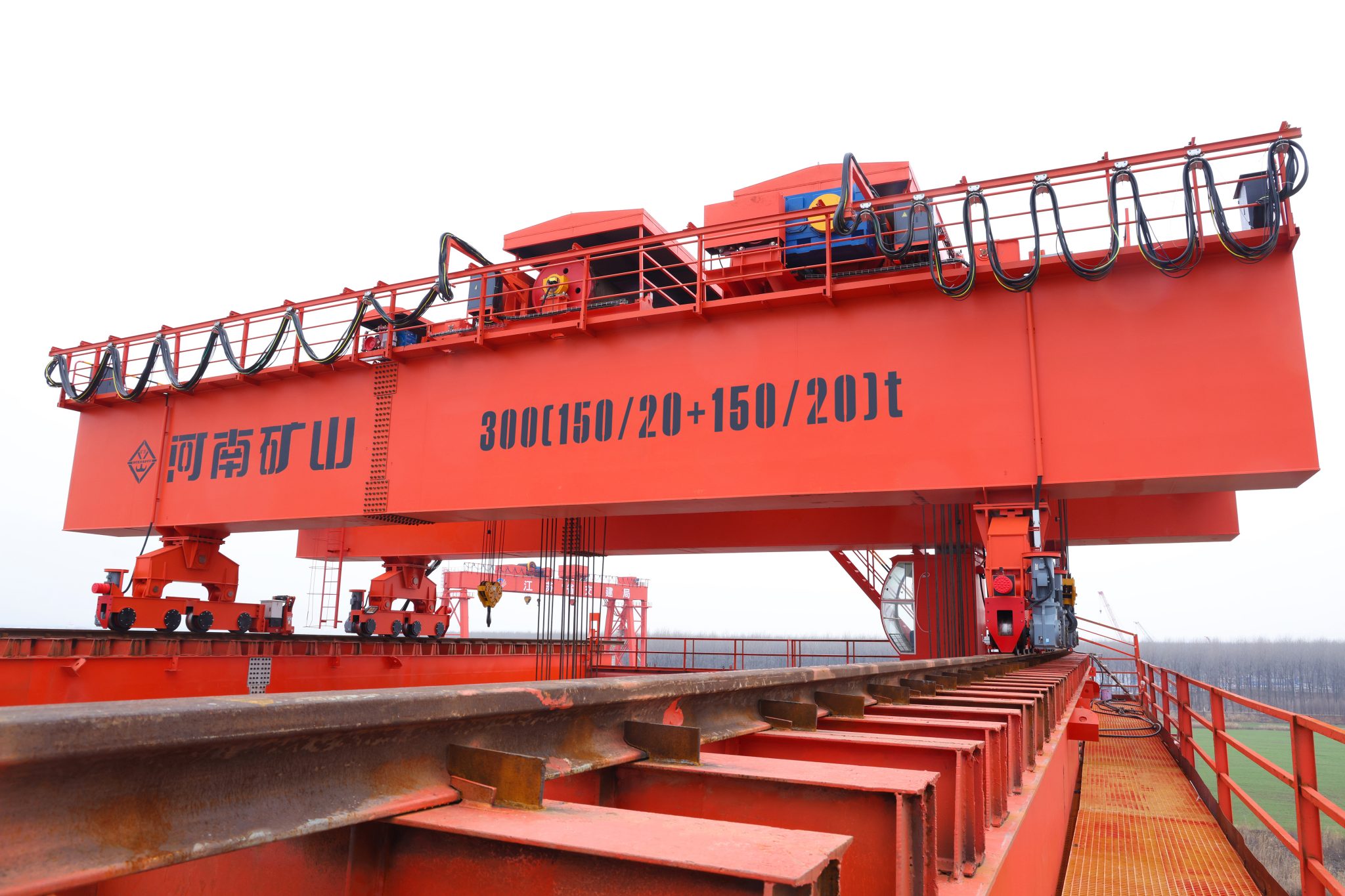
    300 ton double girder overhead travelling crane for bridge construction
    300 ton double girder overhead travelling crane for bridge construction
    Project planning notes

    Key points for this crane project.

    1. What Is an Overhead Travelling Crane?
    2. Selection Considerations
    3. Compare Overhead Travelling Crane Configurations
    Read the technical guide

    What Is an Overhead Travelling Crane?

    An overhead travelling crane is a rail-guided lifting system with a bridge spanning the working bay. End carriages carry the bridge along elevated runway rails, while a hoist or trolley moves across the bridge. The hook therefore reaches a rectangular working area without permanent equipment occupying the production floor.

    The terms overhead travelling crane and overhead traveling crane differ only by British and American spelling. EOT crane emphasizes electrically powered operation. Bridge crane describes the structural arrangement. In normal industrial procurement, all three terms frequently refer to the same crane family, although the selected girder, trolley, runway and duty configuration can differ substantially.

    Production Handling

    Move raw material, workpieces, molds, fixtures and assemblies between production stations with defined hook coverage.

    Warehouse Transfer

    Support inbound handling, storage, order preparation and loading where floor traffic must remain clear.

    Assembly and Positioning

    Lift machinery, fabricated structures and large components with controlled travel speeds and optional precision positioning.

    Maintenance Lifting

    Provide planned access for motors, presses, turbines, machine tools and production-line equipment during maintenance work.

    Selection Considerations

    Rated Load and Load Spectrum

    Define maximum and normal loads, attachment and rigging mass, load dimensions, centre of gravity and the percentage of lifts near rated capacity.

    Span, Lift and Approaches

    Establish runway gauge, required hook height, building clear height, end approach, side approach and obstructions above the operating area.

    Building and Rail Capacity

    Review columns, brackets, runway beams, rail section, support spacing, alignment tolerances and permissible vertical and horizontal reactions.

    Operating Cycle and Design Life

    State operating hours, starts and lifts per hour, travel distances, production criticality and expected service life under the selected classification system.

    Speeds and Positioning

    Set hoisting, trolley and bridge speeds from cycle-time and positioning requirements. Variable-frequency control supports smooth acceleration and deceleration.

    Temperature and Protection

    Identify indoor or outdoor service, dust, humidity, corrosion, radiant heat, hazardous media and cleanliness requirements before equipment selection.

    Operator and Process Interface

    Select pendant, radio remote, cabin or automatic operation and define anti-sway, positioning, interlocking and production-line communication needs.

    Standards and Supply Boundary

    Confirm destination regulations, governing design standard, power supply, inspection plan, documentation language, freight term and installation responsibilities.

    Rated capacity alone is insufficient for crane selection.

    Compare Overhead Travelling Crane Configurations

    The preferred configuration depends on the relationship between the load, bridge span, headroom, runway position, building reactions and operating intensity. The table establishes an initial engineering direction; final selection requires project data.

    ConfigurationPrincipal AdvantageTypical ApplicationCritical Design Input
    Single-Girder Top-RunningLower bridge mass and compact electric-hoist arrangementGeneral workshop, warehouse, assembly and maintenanceBuilding reactions, headroom, span and required duty
    Double-Girder Top-RunningGreater structural and trolley configuration flexibilityHeavier loads, wider spans and demanding production dutyLoad spectrum, wheel loads, trolley type and hook approach
    Underhung Travelling CraneSuspended runway preserves floor area and supports flexible layoutsSpace-restricted plants, hangars and selected large-span facilitiesRoof capacity, suspension points, runway geometry and clearances
    Freestanding Bridge SystemIndependent columns avoid relying on the existing building structureRetrofit projects or buildings without suitable crane runway supportsFoundation capacity, column locations and floor-level interfaces
    Gantry CraneLeg-supported bridge operates without elevated building runwaysOutdoor yards, construction, fabrication and temporary assembly areasGround rails, foundations, wind, legs and outdoor protection

    Hoisting, Cross Travel and Long Travel

    Vertical Hoisting Motion

    A wire-rope electric hoist, electric chain hoist or open-winch trolley raises and lowers the load. Capacity, lifting height, reeving, motor duty, brake arrangement and required creep speed determine the hoisting mechanism.

    Trolley Cross Travel

    The hoist or trolley moves across the bridge to position the hook across the bay. Side approach, trolley wheelbase, rail arrangement and service access affect usable coverage.

    Bridge Long Travel

    End carriages move the complete bridge along parallel runway rails. Wheel loads, drive coordination, rail alignment, skew behavior, buffers and end limits require review as one travel system.

    Smooth Motion and Positioning

    Single-speed operation can suit simple maintenance tasks. Dual-speed or variable-frequency control improves acceleration, deceleration and final positioning. Anti-sway and automatic positioning are available where production flow justifies the additional control scope.

    Overhead Travelling Crane Specifications

    Overhead travelling cranes are project-configured rather than selected from capacity alone. The following schedule identifies the principal parameters that must appear in a technical proposal and purchase specification.

    ParameterAvailable Engineering DirectionRequired Project Definition
    Rated capacityLight, medium, heavy and project-specific lifting capacitiesPayload, attachment mass, dynamic effects and required safety allowance
    Bridge structureSingle girder, double girder, top-running or underhungSpan, headroom, hook approaches, building loads and maintenance access
    Hoisting mechanismChain hoist, wire-rope hoist, open-winch trolley or special mechanismCapacity, lift, reeving, duty, speed, redundancy and load type
    Span and lifting heightCustom to runway gauge and operating envelopeMeasured building section, rail elevation, floor level and highest load position
    Working classSelected under the specified ISO, FEM, CMAA or local classification basisOperating time, starts, load spectrum, cycles and production criticality
    Motion speedsSingle speed, dual speed or variable-frequency controlRequired cycle time, load stability, approach speed and positioning tolerance
    Operator controlPendant, radio remote, cabin, remote station or automatic systemVisibility, travel distance, staffing, process interface and risk assessment
    Power supplyThree-phase supply and control voltage matched to the destination siteVoltage, frequency, earthing system, feeder position and available fault level

    These groups are procurement starting points rather than fixed model limits. Span, duty, building reactions and process risk can change the preferred crane structure within the same capacity.

    Building, Runway and Electrical Interfaces

    Runway Survey and Structural Review

    Existing runway beams and supporting structures require verified dimensions, rail condition, alignment, elevation, support spacing and allowable reactions. New buildings require early coordination of crane wheel loads and horizontal forces with the structural designer.

    Headroom and Hook Coverage

    Rail elevation, roof bracing, lights, ducts, sprinklers and adjacent equipment can restrict crane depth and hook travel. End and side approaches should be shown on the approved general arrangement rather than assumed from nominal span.

    Power Distribution

    The supply scope can include runway conductor bars or festoon systems, bridge cross-travel electrification, isolation, control transformer, protective devices and earthing. Interface positions and incoming cable responsibilities belong in the commercial schedule.

    Multiple-Crane Operation

    Shared runways may require anti-collision devices, working-zone limits and coordinated maintenance isolation. Tandem lifting requires a separately engineered control and load-sharing arrangement.

    Controls, Safety Functions and Load Handling

    Hoisting Protection

    Overload limitation, upper and lower limits, brakes, rope guidance, hook latches and project-specific overspeed or redundancy functions protect the lifting motion.

    Travel Protection

    Bridge and trolley travel can include end limits, buffers, emergency stops, motor protection, braking supervision and anti-collision devices for shared runways.

    Controlled Positioning

    Variable-frequency drives, low-speed approach, anti-sway, encoders and selected positioning functions support stable load movement and repeatable process handling.

    Special Attachments

    Lifting beams, magnets, grabs, clamps and purpose-built attachments require defined load cases, interlocks, power-loss response and inspection provisions.

    The final safety architecture follows the risk assessment, selected crane standard, destination regulations, working environment and handled material. Component names alone do not establish compliance; functions, setpoints, test methods and documentation must be defined in the technical agreement.

    Representative Overhead Travelling Crane Projects

    Project requirements range from one large-capacity crane for precision component installation to coordinated crane fleets serving several production lines. The following cases demonstrate both engineering conditions.

    300 t Double-Girder Overhead Travelling Crane

    Henan Mine Crane developed the crane as core lifting equipment for the Zhangjinggao Yangtze River Bridge project. The modular double-girder arrangement addresses large component handling, installation access and transport segmentation.

    The project configuration includes full variable-frequency motion control, hardened-gear drive components and integrated electrical design. This case demonstrates the engineering depth required when capacity, precision, long operating periods and project logistics must be resolved together.

    150-Crane Package for a 6-Million-Ton Industrial Plant

    This industrial project required a batch crane package across material handling, equipment assembly and production processes. Individual crane specifications were assigned to different workstations instead of applying one standard configuration throughout the plant.

    The case demonstrates multi-model engineering and coordinated delivery for a continuous-production facility.

    Comparable Project Scope

    A technically comparable crane case should identify capacity, span, lifting height, working class, load spectrum, mechanism arrangement, control philosophy, runway interface, environment and delivery boundary. Matching capacity without matching operating conditions does not establish an equivalent crane.

    Engineering, Manufacturing and Project Documentation

    A reliable purchase specification defines the design basis, manufacturing controls, inspection points and handover records before production begins. Henan Mine Crane can align the project document schedule with the destination requirements and agreed supply scope.

    Required standards, third-party inspection, witness points, certificate formats and document language should be listed in the inquiry.

    Delivery, Installation, Commissioning and Maintenance

    Shipment and Site Readiness

    Transport segmentation, packing, unloading access, erection equipment, runway completion, electrical supply and working permits should be confirmed before dispatch.

    Erection and Alignment

    Installation covers bridge assembly, end-carriage alignment, hoist or trolley installation, electrification, rail interface checks and verification of required clearances.

    Commissioning and Acceptance

    Commissioning verifies mechanisms, brakes, limits, controls, alarms, travel behavior and agreed load tests. Acceptance responsibilities follow the project contract and local regulations.

    Lifecycle Maintenance

    Routine inspection covers ropes or chains, hooks, brakes, wheels, rails, fasteners, lubrication, electrical devices and safety functions. Intervals follow duty, environment and applicable requirements.

    Overhead Travelling Crane Price and Cost Scope

    These figures are preliminary market-planning ranges, not fixed Henan Mine Crane selling prices. Heavy-duty, explosion-protected, metallurgical, automated or unusually wide-span cranes require an engineered quotation. A complete installed-system budget may be substantially higher when runway structures, building reinforcement, freight, erection, commissioning and local inspection are included.

    Cost PackageTypical InclusionsPrincipal Cost Drivers
    Crane EquipmentBridge, end carriages, hoist or trolley, controls and specified safety functionsCapacity, span, lift, duty, speeds, environment and attachment
    Runway and PowerRails, runway beams, columns, conductor system, isolators and incoming feeder interfacesRunway length, building capacity, foundation scope and local electrical design
    LogisticsPacking, inland transport, ocean freight, insurance and destination handling as agreedShipment dimensions, delivery term, destination and route restrictions
    Site ServicesSurvey, erection supervision, installation, commissioning, load test and trainingSite access, labor, erection equipment, test loads and regulatory inspection

    A valid price comparison uses the same capacity, span, lifting height, working class, speeds, protection, control scope, runway boundary, documentation, delivery term and site-service responsibilities. A crane equipment price cannot be compared directly with a complete installed-system price.

    Overhead Travelling Crane FAQ

    Is an overhead travelling crane the same as an EOT or bridge crane?

    The terms commonly describe the same crane family: a bridge travels along elevated runways and a hoist or trolley moves across the bridge. EOT emphasizes electric operation, while bridge crane emphasizes the supporting structure.

    What is the difference between travelling and traveling crane?

    Travelling is standard British spelling and traveling is standard American spelling. The equipment and operating principle are the same.

    Should a single-girder or double-girder crane be selected?

    Single-girder cranes suit many general industrial applications where lower bridge mass and compact electric-hoist construction satisfy the load and duty. Double-girder cranes provide additional rigidity and configuration space for heavier loads, wider spans, demanding duty or improved hook approaches.

    Can an overhead travelling crane be installed in an existing building?

    Installation may be possible after verifying runway beams, columns, brackets, roof clearances, rail alignment, electrical supply and erection access. A freestanding runway can be evaluated where the building cannot support crane reactions.

    How is the required duty class determined?

    Duty classification considers total operating time, starts per hour, load spectrum, travel distances, lifting cycles and production criticality under the specified standard. Rated capacity alone does not determine duty.

    Which control method is suitable?

    Pendant control supports local operation. Radio remote control provides flexible viewing positions. Cabin control suits long travel, intensive duty or visibility-critical work. Automatic control is evaluated for repetitive production and system integration.

    How much does an overhead travelling crane cost?

    Runways, freight, installation and local inspection can add substantial cost.

    Are runway beams and rails included in the crane quotation?

    Only when expressly included. The commercial schedule should identify crane equipment, rails, runway beams, columns, conductor system, building work, freight, installation, commissioning and testing as separate scope items.

    Can variable-frequency control and anti-sway be supplied?

    Variable-frequency control can be configured for hoisting, trolley and bridge travel. Anti-sway, positioning and process interlocks can be integrated where the handling cycle, load behavior and required accuracy justify the control functions.

    What information is required for a quotation?

    The RFQ should include rated and normal loads, span, lifting height, runway length, building section, operating cycles, required speeds, control method, environment, power supply, project country, applicable standards and delivery and installation scope.

    Related Overhead Crane Products

    Electric Single-Girder Overhead Crane

    Compact electric-hoist bridge crane for general workshop, warehouse and maintenance lifting.

    Double-Girder Bridge Crane

    Double-girder travelling system for heavier loads, wider spans and demanding duty.

    Multi-Support Underhung Crane

    Suspended multi-support configuration for long buildings and restricted floor layouts.

    Compact VFD EOT Crane

    Electric-hoist EOT crane with variable-frequency travel for controlled workshop handling.

    Explosion-Proof Overhead Crane

    Protected crane configuration for specified hazardous gas or combustible-dust environments.

    Metallurgical Bridge Crane

    High-duty bridge crane for hot-metal, foundry and steel-production handling.

    Henan Mine Crane prepares a project-specific configuration and commercial scope from the operating requirement and site data. The RFQ should include:

    • Maximum and normal loads, load dimensions, attachment and lifting method.
    • Runway span, lifting height, runway length, rail elevation and building section.
    • Operating hours, lifts per hour, load spectrum and required motion speeds.
    • Control method, positioning requirement and production-line interface.
    • Temperature, dust, corrosion, hazardous media and indoor or outdoor conditions.
    • Power supply, project country, required standards, inspection plan and installation boundary.

    Discuss the crane arrangement for your project.

    An overhead travelling crane needs to connect the required hook area with the building support system. Define the lifting task, travel distance and operating cycle before comparing girder and hoist arrangements. Share the load, available drawings, working cycle and site conditions with Henan Mine Crane so the required configuration and supply boundary can be discussed.

    Related crane configurations

    Insulated Double Girder Travelling Crane

    View product parameters
    Lifting capacity: 5t – 50t · two trolleysSpan: 7.5m – 31.5mLifting height: 6m – 20m

    Provide insulated double-girder lifting for a defined electrical process. The suspension arrangement, lifting appliance and isolation positions are selected from the load path and site conditions.

    Single-Girder Bridge Crane

    View product parameters
    Lifting capacity: 1–20 tSpan: 7.5–31.5 mLifting height: 6, 9, 12, 18, 24 or 30 m; capacity-dependent

    Use an LDA single-girder bridge and electric hoist for general workshop material handling. Select the lifting capacity, runway geometry and hoist duty around the building and load.

    Updated 2026 · Henan Mine Crane

  • Shop Overhead Cranes: Assembly Tasks, Reach and Headroom

    Shop Overhead Cranes: Assembly Tasks, Reach and Headroom

    Selection guide

    Shop Overhead Cranes: Assembly Tasks, Reach and Headroom

    A workshop crane should serve the machines and assembly positions that need lifting support. Mark the handling points, load dimensions and obstructions so useful hook coverage can be checked before equipment selection.

    Henan Mine CraneSelection guide · Updated 2026Crane selection, project scope and operating requirements
    Henan Mine Crane Single-Girder Bridge Crane
    Henan Mine Crane Single-Girder Bridge Crane
    Project planning notes

    Key points for this crane project.

    1. Overhead Lifting for Industrial Workshops
    2. Selection Considerations
    3. Overhead Shop Crane Compared with Other Workshop Lifting Configurations
    Read the technical guide

    Overhead Lifting for Industrial Workshops

    An overhead shop crane uses a travelling bridge on elevated runways to serve a workshop bay. The hoist raises the load, trolley travel moves it across the bay, and bridge travel carries it along the shop. Usable coverage depends on hook approaches and obstructions within that area.

    Machine Loading

    Position stock, fixtures and workpieces at machining stations. Check access through machine enclosures and the space needed above the lifted component.

    Fabrication and Assembly

    Move frames and assemblies between workstations. Record load dimensions, lifting points and orientation throughout the handling route.

    Equipment Repair

    Remove motors, gearboxes and machine components. Include the lifting gear and clearance needed to move the component onto a repair bench.

    Selection Considerations

    Load and Lifting Gear

    State the maximum and typical load, dimensions and centre of gravity. Include slings, spreaders or lifting beams when defining the required lifting capacity.

    Hook Coverage

    Mark every pickup and placement point on the floor plan. Check the full suspended-load route, including machine guards, racks and maintenance access.

    Building and Services

    Provide a cross-section showing roof members, doors, ducts, lights and other services. Identify possible runway supports and any proposed new columns.

    Work Cycle and Positioning

    Describe lifts per hour, shifts, travel distances and repeated positioning moves. This helps define crane duty, hoist duty and speed control.

    Single or double girder describes the bridge structure. Top running or underhung describes how the bridge travels on its runways. A hoist travelling below one girder does not automatically make the bridge an underhung crane.

    Overhead Shop Crane Compared with Other Workshop Lifting Configurations

    Start with the handling route and compare the complete installed arrangement. A lower crane equipment price can be offset by additional supporting steelwork, reduced hook coverage or more complex installation.

    ConfigurationArrangementWorkshop ApplicationWhat to Check
    Single-Girder Shop CraneOne bridge girder with a travelling electric hoist.General machine loading, assembly and maintenance.Check hook height, side approaches, operating duty and runway reactions.
    LX Single-Girder Suspension CraneBridge end carriages run on the lower flanges of suitable runway beams.Workshops where a suspended runway arrangement fits the available structure.Assess beam flanges, connections, support loads and the complete crane envelope.
    Double-Girder Shop CraneTwo bridge girders support the specified hoist or trolley arrangement.Tasks needing a different trolley layout, lifting envelope or equipment arrangement.Compare actual headroom and wheel loads; two girders alone do not establish duty.
    Crane on a Freestanding RunwayAn overhead bridge served by a fixed, separately engineered support structure.Buildings where existing steelwork cannot accept the proposed crane loads.Allow for columns, bracing and foundations. This is a support option, not a portable crane.
    Gantry Crane AlternativeThe bridge is carried by travelling legs.Areas where an elevated runway is unsuitable or a different travel arrangement is needed.Compare leg clearance, floor or ground loading and the specified travel path.

    Overhead Shop Crane Technical Specifications

    The following selected sizes use load, span and lifting-height entries from the linked Henan Mine Crane product tables. They provide catalogue references for an initial discussion; the final combination, duty and building interfaces require confirmation in the technical proposal.

    State the unit explicitly if your requirement uses US short tons. Listed lifting height does not establish the minimum building height or available hook height.

    Include the proposed span, highest and lowest hook positions, runway length, duty, power supply and workshop drawing with your enquiry. Other sizes can be discussed against the same information.

    Workshop Headroom, Runways and Hook Coverage

    Headroom and the Lifting Path

    Measure the highest required hook position with the load and lifting gear included. Show the machine or bench height, any required extraction distance, and obstructions above the route. Crane depth, hook-block dimensions and overhead clearances all affect the result.

    Check door panels and tracks in both open and closed positions, together with lights, ducts, sprinklers and other services. A low-headroom hoist and an underhung bridge are different design choices; compare the complete layout.

    Runways and Supporting Structure

    Crane span is measured between runway centrelines, while useful reach also depends on hook approaches. Existing building steelwork needs assessment against the proposed wheel loads, support reactions and operating forces.

    For a freestanding runway, check foundations, floor suitability, bracing and column positions. Keep machine service areas, walkways and vehicle routes accessible.

    Hoist, Travel Controls and Operating Duty

    Hoisting and Placement

    Specify lifting speed and any slow positioning requirement for machine loading. Frequent starts and short moves are part of the duty assessment, even when loads are relatively light.

    Trolley and Bridge Travel

    Match travel speeds to distances and the handling process. Define control behaviour for approaching workstations and stopping a suspended load.

    Pendant or Radio Control

    Choose controls around operator access, visibility and the travel route. Radio control provides operating flexibility; the operator still needs a suitable view of the load and travel path.

    Confirm voltage, frequency, phases and available power for the complete crane, plus the incoming connection and isolation arrangement. An existing workshop outlet does not establish compatibility. For variable-speed options, review the Frequency-Conversion Overhead Crane configuration and specify which motions require speed control.

    Safety and Workshop Environment

    The quotation should identify required safety functions, operating limits and the agreed verification scope for the selected crane. Capacity alone is not a complete safety specification.

    Load and Motion Protection

    Define overload protection, hoisting and travel limits, brakes, emergency stops and electrical protections. Agree how relevant functions are checked at acceptance.

    Workshop Access

    Plan safe inspection access and isolation for maintenance. Where cranes share a runway or operating area, assess separation and collision-prevention requirements.

    Special Environments

    Identify temperature, moisture, corrosion and any hazardous-area classification. Paint processes, combustible dust or hot-material handling may require dedicated equipment and a separate design review.

    For a classified hazardous area, review the Explosion-Proof Overhead Crane range and provide the site classification with the enquiry.

    Manufacturing and Project Documentation

    Henan Mine Crane publishes crane product information and manufacturing workshop photographs in its Factory Scene Display. For your order, agree the drawings and records that identify the supplied equipment and support technical review.

    • General arrangement drawing with hook approaches and crane envelope.
    • Runway interface data, wheel loads and support reactions.
    • Component schedule, electrical drawings and operating manuals.
    • Applicable inspection and test records, supplied against the agreed scope.

    State the project location and required standards or documentation at the quotation stage so their applicability and supply scope can be confirmed.

    Installation, Commissioning and Maintenance

    Plan the Installation Window

    Agree unloading access, assembly space and installation equipment. Identify machines or services affected by the work and coordinate the required workshop shutdown.

    Confirm the Site Interfaces

    Define responsibility for supports, foundations, runway beams, rails, power conductors and incoming electricity. Check the completed runway and electrical interfaces before commissioning.

    Prepare for Operation

    Agree the site inspection, testing, handover and operator familiarisation scope. Plan inspection intervals and replacement access using the supplied manuals and applicable requirements.

    When replacing an existing crane, provide a runway survey and the old crane details. Equal rated capacity does not guarantee compatible wheel loads, dimensions or electrical demand.

    What Determines Overhead Shop Crane Price?

    Overhead shop crane price depends on load capacity, span, lifting height, duty, hoist arrangement and controls. The building can also change the installed cost: a new freestanding runway has a different scope from a crane fitted to verified existing supports.

    When comparing overhead shop cranes for sale, request itemised quotations for the same lifting task and layout. Identify included items and site responsibilities in these three areas:

    Crane Equipment

    Bridge, end carriages, hoist, controls and specified protective functions.

    Runway and Site Work

    Supports, foundations, rails or beams, power supply and installation access.

    Delivery and Handover

    Packing, transport terms, installation, testing, documentation and commissioning.

    Overhead Shop Crane FAQ

    Can an overhead shop crane fit in a small workshop or garage?

    It depends on the load, available hook height, travel area and supporting structure. Provide a plan, cross-section and photographs. An ordinary garage roof or floor must not be assumed suitable. A local lifting task may also justify comparing a jib or gantry arrangement.

    What capacity should I choose for a shop bridge crane?

    Use the heaviest planned lift, including the applicable lifting attachments, together with typical loads and operating frequency.

    Does an underhung crane give the most lifting height?

    Not automatically. The runway beam, suspension connections, bridge and hoist all affect the highest hook position. Compare dimensioned proposals against the same building cross-section and required lift.

    Can the crane use a freestanding support system?

    A separately engineered runway can support an overhead bridge where suitable. The design must account for columns, bracing, foundations, operating forces and workshop access. Freestanding describes the support arrangement; it does not mean the system can be moved while loaded.

    Can an overhead shop crane run on my existing power supply?

    Provide the voltage, frequency, phases and available power, together with the intended connection location. Compatibility is checked for all crane motions and controls. Do not assume a small rated load means the complete crane can use a standard wall outlet.

    Can one crane serve several machines?

    Yes, where its usable hook coverage and lifting route reach the required stations. Confirm side and end approaches, machine enclosures, load dimensions and operating schedules. Simultaneous work at separate stations may require a different lifting arrangement.

    What should I send to obtain a quotation?

    Send the maximum and typical loads, lifting gear, floor plan, building cross-section, required hook levels, runway length, work cycle, electricity details and project location. Add photographs of doors, services and possible supports, and identify the installation scope you need.

    Related Crane Products

    Double-Trolley Overhead Crane

    Review a configuration for defined two-point lifting tasks.

    Send Henan Mine Crane your lifting task and workshop drawing to discuss a suitable overhead shop crane configuration.

    • Load, lifting gear and pickup and placement points.
    • Span, required hook levels, runway length and building cross-section.
    • Work cycle, environment, power supply and project location.
    • Required runway, installation, testing and delivery scope.

    Discuss the crane arrangement for your project.

    A workshop crane should serve the machines and assembly positions that need lifting support. Mark the handling points, load dimensions and obstructions so useful hook coverage can be checked before equipment selection. Share the load, available drawings, working cycle and site conditions with Henan Mine Crane so the required configuration and supply boundary can be discussed.

    Related crane configurations

    Single-Girder Bridge Crane

    View product parameters
    Lifting capacity: 1–20 tSpan: 7.5–31.5 mLifting height: 6, 9, 12, 18, 24 or 30 m; capacity-dependent

    Use an LDA single-girder bridge and electric hoist for general workshop material handling. Select the lifting capacity, runway geometry and hoist duty around the building and load.

    LH Electric Hoist Double Girder Crane

    View product parameters
    Lifting capacity: 3, 5, 10, 16, 20 tSpan: 10.5–31.5 mLifting height: 6, 9, 12 or 18 m

    Use an LH double-girder bridge with an electric-hoist trolley for workshop lifting, assembly and maintenance. Match the hoist arrangement to the suspended load, hook travel and available building space.

    Updated 2026 · Henan Mine Crane
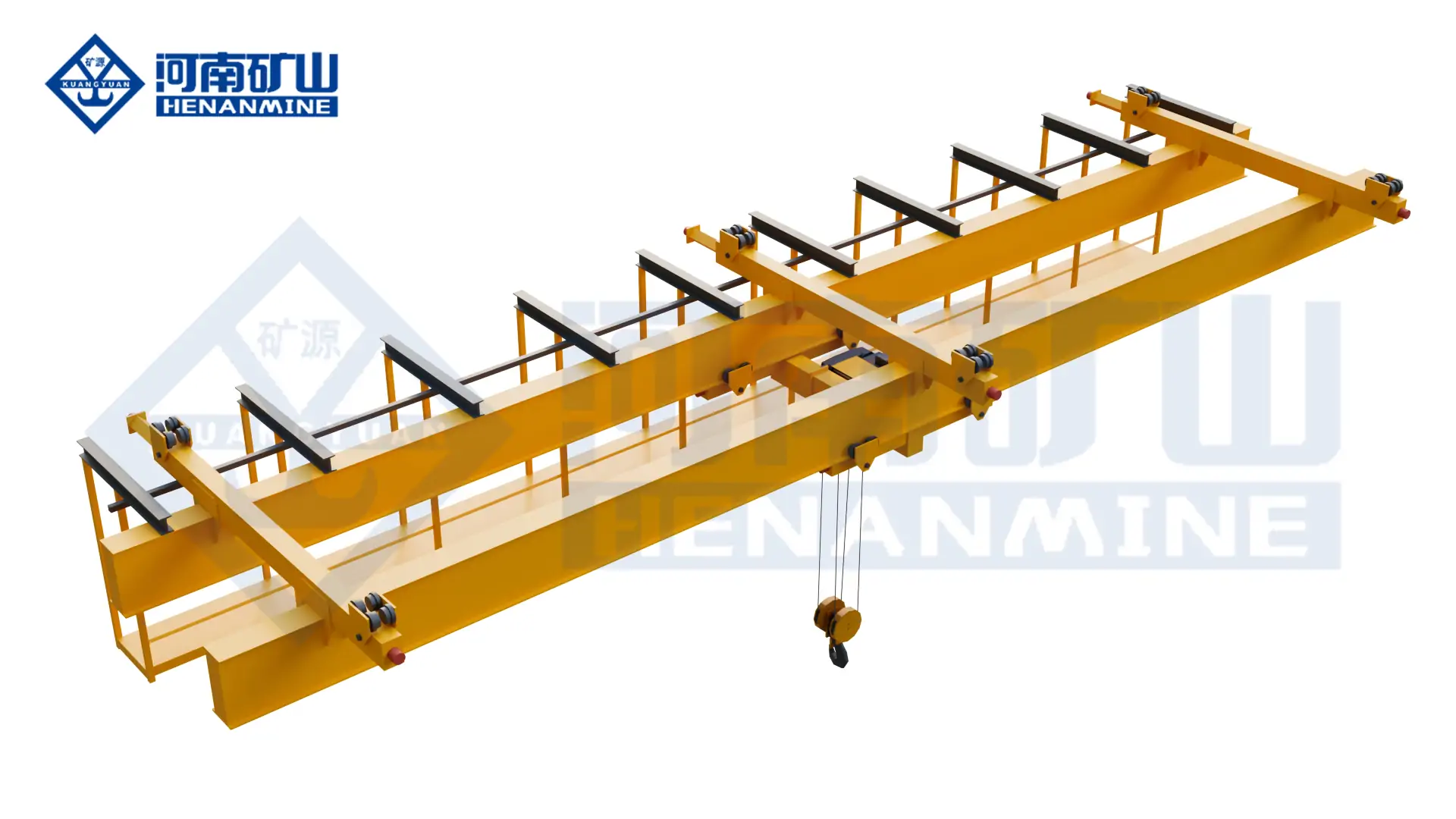
  • Overhead or Gantry Crane: Clarify the Support Arrangement Before Buying

    Overhead or Gantry Crane: Clarify the Support Arrangement Before Buying

    Selection guide

    Overhead or Gantry Crane: Clarify the Support Arrangement Before Buying

    The term overhead gantry can describe different support concepts in an enquiry. Show the intended building or ground interface and required working area so the supplier can identify the actual crane arrangement being requested.

    Henan Mine CraneSelection guide · Updated 2026Crane selection, project scope and operating requirements
    Henan Mine Crane Multi Support Double Girder Underhung Crane
    Henan Mine Crane Multi Support Double Girder Underhung Crane
    Project planning notes

    Key points for this crane project.

    1. Which Overhead Gantry Crane Arrangement Fits Your Site?
    2. Overhead Gantry Crane Technical Specifications
    3. Selection Considerations
    Read the technical guide

    Which Overhead Gantry Crane Arrangement Fits Your Site?

    The term overhead gantry crane is used for different lifting arrangements. The industrial models on this page are gantry cranes with an overhead lifting mechanism and rail travel. A full gantry has supporting legs on both sides; a semi-gantry has legs on one side and an elevated runway on the other.

    An overhead bridge crane travels on two elevated runways, which may be supported by the building or an independent engineered structure. A small portable gantry on castors is another arrangement, with different floor, movement and load requirements.

    Workshops without Elevated Runways

    A full gantry can serve a working bay without relying on the roof structure for crane support. Ground rails, foundations and the moving-leg envelope still require space and engineering review.

    Outdoor Storage and Fabrication

    Serve defined pickup, storage and loading positions along a rail route. Include drainage, vehicle crossings, weather exposure and parking arrangements in the layout.

    Long or Bulky Components

    Check the complete path of beams, machinery and fabricated assemblies. Load orientation, leg clearance and any cantilever reach affect whether the crane can serve each position.

    Overhead Gantry Crane Technical Specifications

    The following reference ranges correspond to the linked Henan Mine Crane configurations. They describe different product arrangements, rather than a single standard machine.

    These ranges do not establish every possible load, span and lifting-height combination. Confirm the selected combination, crane duty, mechanism duty, wheel loads and dimensions in the project proposal. The unit t denotes a metric tonne.

    Other Specifications to Define

    • Runway length, rail level, required hook approaches and any cantilever working area.
    • Hoisting and travel speeds, positioning needs, lifts per hour and operating shifts.
    • Site voltage, frequency, phases, incoming supply and crane power distribution.
    • Pendant, radio remote or cabin control, with any process functions identified separately.
    • Indoor or outdoor conditions, temperature, dust, corrosion and applicable design requirements.

    Selection Considerations

    Load and Attachment

    Use the maximum payload together with slings, lifting beams or other suspended devices to establish the required capacity. Describe the load shape and centre of gravity as well as its mass.

    Clearance and Coverage

    Mark pickup and placement points on a site plan. Check clear width between the legs, hook approaches, overhead obstructions and the swept path of long loads.

    Rails and Foundations

    Provide existing rail and foundation information where available. The proposed crane reactions and wheel arrangement are needed to assess support suitability and any required civil work.

    Duty and Environment

    Describe the handling cycle and exposure conditions. Hoist duty, travel duty, wind-related provisions and environmental protection must match the intended operation.

    Overhead Gantry Crane Compared with Other Crane Configurations

    Start with the support arrangement. A rail-mounted industrial gantry, a bridge crane and a portable workshop gantry place different demands on the site, even when the requested lifting capacity is the same.

    ConfigurationSupport ArrangementApplication FitMain Selection Check
    Single-Girder Full GantryOne bridge girder supported by legs on both sides.Workshop and yard handling where the selected hoist and structure meet the duty.Check leg clearance, hoist headroom and the complete ground-rail footprint.
    Double-Girder Full GantryTwo girders carrying the selected hoist trolley or lifting arrangement.Projects needing a different trolley layout, lifting envelope or structural arrangement.Compare wheel loads, hook height and mechanism duty; two girders alone do not define heavy-duty capability.
    Semi-Gantry CraneLegs and a ground runway on one side; an elevated runway on the other.A work area beside a suitable elevated runway or supporting structure.Both support systems require assessment, together with their alignment and the moving-leg route.
    Overhead Bridge CraneA travelling bridge on two elevated runways.A bay with suitable elevated supports and a need to keep travelling legs out of the floor area.Check runway support capacity, roof clearances and hook approaches.
    Portable Workshop GantryA separate gantry arrangement commonly supported on castors.Tasks where portability and local floor access are central requirements.Select for the specified floor and movement conditions; load-travel permission is model-specific.

    Leg Clearance, Lifting Height and Cantilever Reach

    The crane must reach the load and place it while keeping the load, hook block and lifting accessories clear of the structure. Check the working envelope on the general arrangement drawing, including the position of the moving legs.

    Layout ItemPractical Design Check
    Span and clear leg widthRunway centreline spacing does not equal the unobstructed width between the legs. Leg shape and bracing can reduce the passage available for a load or vehicle.
    Lifting height and riggingAllow for the load dimensions and lifting accessories above the placement surface or obstruction. Overall crane height is different from usable hook height.
    Cantilever and hook outreachA girder extension beyond the legs can serve an outside loading position. Trolley end limits reduce usable outreach, and the permitted load at that position must be specified.
    Runway length and end approachThe rail route must account for crane end limits, stops, parking space and the operating envelope. Full rail length is not the same as usable hook travel.

    For long material handling, an L-Type Offset Gantry Crane offers a different leg geometry to consider. A Truss Gantry Crane is another structural option; its joints, maintenance access and wind design still require evaluation.

    Hoist, Travel Drives and Operating Duty

    Hoisting and Cross Travel

    The hoist lifts the load, while the travelling hoist or trolley moves it across the girder. Rope travel, hook configuration, braking and speed control must suit both lifting and placement.

    Gantry Long Travel

    The legs and bridge travel together along the ground rails. Wheel geometry, drives, frame alignment and rail condition affect tracking; a large gantry may need additional measures to manage skewing.

    Controls and Attachments

    Choose pendant, radio remote or cabin control around visibility and access. For grab-and-hook handling, confirm attachment mass, material properties and the required operating cycle.

    A production crane used repeatedly near rated load needs a duty assessment based on load spectrum and operating cycles. Specify crane and mechanism classifications under the agreed standard; a capacity figure or a double-girder structure does not establish the required service duty.

    Rails, Foundations and Power Supply

    A ground-supported gantry still requires an engineered support system. Crane self-weight, lifted load, trolley position and operating conditions influence wheel loads and the reactions passed into the rails and foundations.

    • Foundation and rail interface: establish the governing wheel loads, wheel spacing, rail section and connection details. Assess the ground, supporting structure and settlement conditions for the installation.
    • Traffic and drainage: coordinate rails, cable routes, drains and vehicle crossings. Reserve clearance around moving legs and keep the agreed travel envelope available.
    • Power distribution: evaluate cable reel, festoon or conductor arrangements against travel length, obstructions, weather exposure and electrical demand. Define the incoming supply boundary.
    • Existing runways: check geometry, condition, level and support capacity against the proposed crane. Previous use by a crane of similar capacity does not establish compatibility.

    Outdoor Protection and Safety Configuration

    Outdoor use changes the design conditions. The crane specification must address the local environment and distinguish operating conditions from the parked, out-of-service condition.

    Wind and Parking Provisions

    Define the design wind conditions, operating limits, monitoring requirements and parking arrangements. Assess travel brakes, rail clamps and storm anchors as distinct functions with suitable load paths into the supporting structure.

    Load and Motion Protection

    Identify overload protection, hoisting and travel limits, emergency stops, braking and relevant electrical protections. Define control priority and the response to lost commands or interrupted power for the selected design.

    Environment and Access

    Specify rain, dust, temperature and corrosion exposure, including coastal conditions where relevant. Confirm enclosure protection, protective coating requirements and access for inspection and maintenance.

    Wind limits and securing arrangements are specific to the engineered crane and site. Operating and parking procedures must follow the supplied instructions. Any hazardous-area or hot-material duty requires a separate specification review.

    Manufacturing, Documentation and Acceptance

    Henan Mine Crane is the manufacturer of the configurations presented here. Review the manufacturing facilities alongside the selected product details, and agree the documentation and inspection plan for the actual order.

    • General arrangement showing span, hook coverage, clearances and crane dimensions.
    • Wheel loads and interface information for runway and foundation design.
    • Component specifications, electrical drawings and the agreed manufacturing inspection records.
    • Factory and site test scope, acceptance criteria, manuals and maintenance information.

    Identify the applicable standards and destination-specific documents in the contract. Required records should relate to the supplied configuration and the agreed scope.

    Installation and Maintenance

    Installation Planning

    Agree the assembly area, unloading access, temporary lifting equipment and responsibility for civil work. Establish readiness checks for rails, supports and the electrical supply before installation.

    Commissioning

    Confirm the agreed inspections, functional checks and load tests with qualified personnel. Site acceptance should include travel behaviour, specified safety functions and the completed installation interfaces.

    Maintenance and Service

    Provide access to hoists, trolley equipment, wheels, drives and power distribution. Define inspection schedules, spare parts, documentation language, warranty terms and service arrangements in the offer.

    Overhead Gantry Crane Price and Supply Scope

    Overhead gantry crane price depends on capacity, span, lifting height, duty, trolley arrangement, cantilever requirements and the operating environment. Runway construction, power distribution, transport and installation can also change the total project budget.

    When comparing overhead gantry cranes for sale, request quotations against the same drawing and duty. Have the supplier identify the crane equipment, rails, foundations, power supply, inspection, delivery and site work included in the offer.

    Equipment

    Bridge, legs, travel assemblies, lifting system, controls and specified protection.

    Site Interfaces

    Rails, connections, foundations, incoming power and installation responsibilities.

    Project Delivery

    Drawing approval, inspection, packing, shipment, commissioning and service terms.

    Overhead Gantry Crane FAQ

    Is an overhead gantry crane the same as a bridge crane?

    The terms are sometimes mixed in enquiries. A full gantry is supported by legs running at ground level, while a bridge crane runs on two elevated runways. Confirm the support arrangement on the layout drawing.

    Does a self-supporting gantry crane still need foundations?

    A full gantry carries its bridge through its own legs, but the resulting loads still pass into the rails and ground supports. Foundations or other suitable supporting structures must be assessed for the proposed crane.

    Can a 5 ton or 10 ton gantry crane use a single girder?

    These capacities fall within the reference range of the linked single-girder configuration. Suitability still depends on the selected span, lift, duty, hook coverage and site conditions; the exact combination requires confirmation.

    Can the same gantry crane operate indoors and outdoors?

    Only where its design covers the intended conditions. Outdoor use requires assessment of wind, weather exposure, corrosion, drainage and parking arrangements. Moving between indoor and outdoor areas also requires suitable clearances and travel infrastructure.

    Can the crane lift its rated load on the cantilever?

    The permitted load and working reach outside the legs must be stated for the selected design. Do not assume that every cantilever position has the same allowable load as the area within the span.

    Can a gantry crane travel with a suspended load?

    Powered rail-mounted gantries can be engineered for loaded travel within their specified operating limits. Permission and conditions for a portable gantry are model-specific. Follow the manufacturer’s instructions for the actual equipment and site.

    How much does an overhead gantry crane cost, and when can it be delivered?

    Request a quotation against the load, layout, duty and supply scope. Delivery should be confirmed against drawing approval, manufacture, inspection, transport and installation needs. A capacity-only enquiry cannot establish a reliable price or delivery date.

    Related Crane Products

    European Single-Girder Gantry Crane

    Electric-hoist configuration for a defined workshop or yard layout.

    Grab-and-Hook Gantry Crane

    Attachment configuration for specified bulk and unit-load tasks.

    Send Henan Mine Crane your load description and site drawing to discuss an industrial gantry crane configuration. Include the following details so the equipment and installation interfaces can be reviewed together:

    • Maximum payload, typical loads, dimensions and lifting attachments
    • Required span, lifting height, runway length and any cantilever working area
    • Ground and runway information, traffic routes and installation space
    • Operating cycles, site environment, power supply and preferred controls
    • Project country, applicable requirements, delivery needs and installation scope

    Discuss the crane arrangement for your project.

    The term overhead gantry can describe different support concepts in an enquiry. Show the intended building or ground interface and required working area so the supplier can identify the actual crane arrangement being requested. Share the load, available drawings, working cycle and site conditions with Henan Mine Crane so the required configuration and supply boundary can be discussed.

    Related crane configurations

    Multi Support Double Girder Underhung Crane

    View product parameters
    Lifting capacity: 3 – 40 tSpan: 10 – 80 mLifting height: 6 – 30 m

    Use a multi-support double-girder underhung arrangement for wide-span working areas and large components. The building supports, lifting coverage and load distribution are designed together.

    Single-Girder Bridge Crane

    View product parameters
    Lifting capacity: 1–20 tSpan: 7.5–31.5 mLifting height: 6, 9, 12, 18, 24 or 30 m; capacity-dependent

    Use an LDA single-girder bridge and electric hoist for general workshop material handling. Select the lifting capacity, runway geometry and hoist duty around the building and load.

    Updated 2026 · Henan Mine Crane
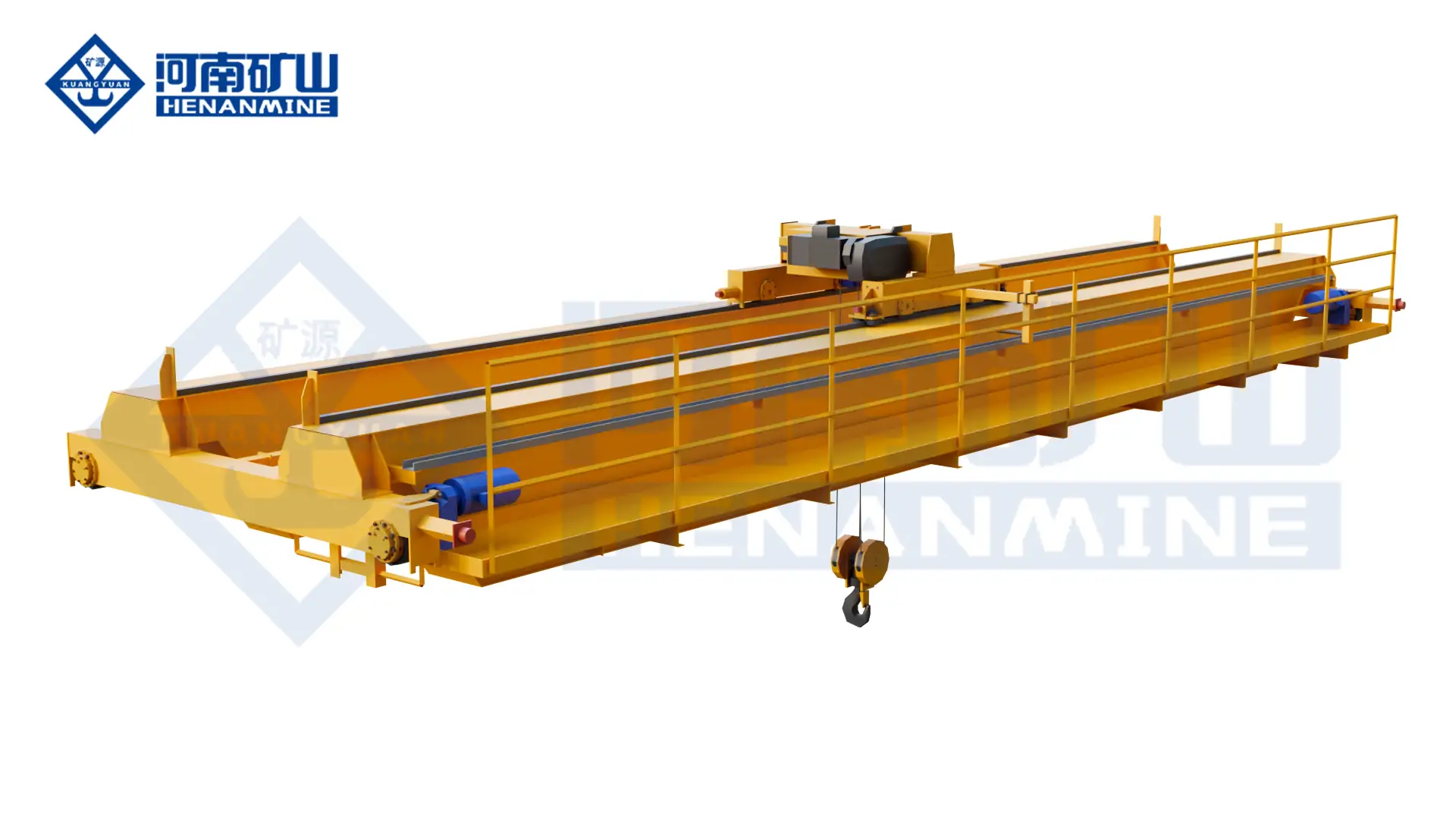
  • 400 t Gantry Crane Supplied for Chemical Equipment Manufacturing in Shandong

    400 t Gantry Crane Supplied for Chemical Equipment Manufacturing in Shandong

    Project Deliveries

    400 t Gantry Crane Supplied for Chemical Equipment Manufacturing in Shandong

    Henan Mine Crane reported supplying more than 30 cranes for a chemical-equipment manufacturer in Shandong, including a 400 t double-girder gantry crane.

    400 t double-girder gantry crane at a chemical equipment manufacturing project in Shandong
    Henan Mine Crane 400 t double-girder gantry crane at a chemical equipment manufacturing project.

    Project equipment and application

    The crane fleet supports manufacturing and handling of large chemical-equipment components. The 400 t double-girder gantry crane is the largest specified unit in the report. The customer name, span, lifting height, duty class and equipment handover records were not disclosed.

    Control functions described for the 400 t crane

    The report describes PLC communication with variable-frequency drives and digital filtering in the drive system. It also identifies brake logic, anti-sway control, light-load high-speed operation, a rotating integrated cab console, and safety and operating-data displays. These are project-described features; positioning tolerance, operating speeds and safety validation must be confirmed for a new order.

    Define a comparable crane for your plant

    Provide the heaviest component weight, lifting points, centre of gravity, dimensions and handling route. Include the yard layout, rail gauge and runway length, required hook height, production cycles, wind and corrosion exposure, power supply, local standards and site installation responsibilities. Request a project-specific general arrangement, control functional description, inspection plan and quotation supply boundary.

    Discuss a Heavy Gantry Crane Project

    Send the component load, yard dimensions and handling cycle for a crane configuration and defined supply scope.

  • Overhead Crane and Hoist Selection: Match the Lifting Mechanism to the Bay

    Overhead Crane and Hoist Selection: Match the Lifting Mechanism to the Bay

    Selection guide

    Overhead Crane and Hoist Selection: Match the Lifting Mechanism to the Bay

    The hoist and crane structure need to work together within the available building. Compare lifting duty, hook positions and travel requirements using configuration-specific drawings rather than selecting the two components independently.

    Henan Mine CraneSelection guide · Updated 2026Crane selection, project scope and operating requirements
    Overhead Cranes and Hoists
    Overhead Cranes and Hoists
    Project planning notes

    Key points for this crane project.

    1. Complete Overhead Crane and Hoist Systems
    2. Overhead Crane vs Hoist: Equipment Functions
    3. Overhead Crane and Hoist Specifications
    Read the technical guide

    Complete Overhead Crane and Hoist Systems

    An overhead crane provides horizontal coverage across and along a working bay. The hoist performs vertical lifting; the trolley or travelling hoist moves across the bridge; the bridge end carriages move the complete crane along parallel runways. Controls, power distribution, brakes and protective devices coordinate these motions.

    A hoist can operate independently on a fixed suspension point or monorail, but it becomes part of an overhead crane when installed on a travelling bridge system. Procurement specifications must therefore define both the lifting mechanism and the structure that carries it.

    Commercial scope: A complete system can cover bridge structure, hoist or trolley, end carriages, controls, electrification and project documentation. Runway steelwork, site power, freight and installation remain separate unless expressly included.

    Overhead Crane vs Hoist: Equipment Functions

    Overhead Crane

    The crane is the complete travelling structure that supports and positions the hoist. Its principal elements include the bridge girder, end carriages, wheels, bridge drives, trolley system, controls and runway interface.

    • Moves loads across the width and length of a bay
    • Transfers wheel loads into elevated or suspended runways
    • Defines span, approaches, coverage and building interfaces

    Hoist

    The hoist is the lifting mechanism. It raises and lowers the load through wire rope or load chain and can be hook-mounted, fixed, push-trolley, geared-trolley or motor-trolley operated.

    • Defines rated load, lifting height, speed and reeving
    • Includes motor, brake, transmission, rope or chain and hook
    • Can serve a crane, monorail or fixed lifting position

    Overhead Crane and Hoist Specifications

    Final ratings and dimensions are developed from the load, operating cycle, building and destination requirements. Approved values are recorded in the technical proposal and general arrangement.

    SpecificationEngineering DirectionRequired Project Definition
    Rated CapacitySelected for the crane, hoist and lifting attachmentMaximum payload, attachment weight, load spectrum and units
    Crane Span and TravelMatched to runway geometry and required coverageRunway gauge, bay length, support spacing and rail information
    Hoist Lift and HeadroomProject-defined hook travel and upper approachLowest pickup, highest placement, rigging depth and roof clearance
    Working ClassCrane and hoist mechanisms rated for the operating cycleLifts per hour, shifts, loaded cycles, travel and process criticality
    Motion and ControlSingle speed, dual speed or variable-frequency operationRequired speeds, positioning, acceleration and control station
    Electrical SupplyEquipment matched to the destination supplyVoltage, frequency, phases, earthing and distribution boundary
    EnvironmentGeneral, outdoor, dusty, corrosive, hot or hazardous configurationTemperature, humidity, contaminants, classification and protection

    Industrial Applications

    Manufacturing and Assembly

    Machinery parts, fixtures, dies and assemblies moving between workstations with controlled lifting and positioning.

    Warehousing and Logistics

    Unit loads, stored equipment, loading operations and material transfer above occupied floor routes.

    Maintenance Facilities

    Motors, pumps, machine components and plant equipment removed and positioned during scheduled maintenance.

    Steel Fabrication

    Plate, profiles, welded fabrications and production tooling handled across cutting, welding and assembly areas.

    Power and Process Plants

    Turbines, generators, valves and process equipment requiring planned lifting coverage and maintenance access.

    Special Environments

    Dusty, corrosive, hot, clean or classified areas requiring purpose-selected hoists, controls and protection.

    Selection Considerations

    Payload and Attachment

    Rated capacity includes the load and below-the-hook equipment. Shape, centre of gravity and lifting points affect the handling arrangement.

    Hook Envelope

    Span, bridge travel, trolley approaches, lift and obstructions establish usable coverage rather than nominal dimensions alone.

    Load Spectrum and Cycles

    Hoist and crane duty must match operating hours, starts, travel, shifts and the proportion of near-capacity lifts.

    Runway and Clearances

    Wheel loads, rail level, support spacing, roof height, services and maintenance access govern the physical arrangement.

    Speed and Positioning

    Hoisting speed, travel speed, acceleration, variable-frequency control and process positioning are selected together.

    Complete Supply Boundary

    Crane, hoist, runway, electrification, freight, installation, commissioning and documentation require allocated responsibility.

    Overhead Cranes and Hoists Compared with Other Lifting Configurations

    Equipment selection is based on required coverage, supporting structure, duty and load movement. A hoist capacity alone does not define the complete crane system.

    ConfigurationMovement and SupportApplication PositionCritical Selection Inputs
    Single-Girder Crane with HoistThree-axis movement on elevated top-running runwaysGeneral workshop, warehouse and maintenance handlingCapacity, span, headroom, duty, hook approaches and wheel loads
    Double-Girder Crane with Trolley HoistThree-axis movement with two-girder bridge and trolleyHigher loads, demanding duty or defined lifting envelopeTrolley arrangement, access, span, duty and runway reactions
    Underhung Crane with HoistBridge travels beneath suspended runway beamsFacilities with compatible roof or suspended support structureRunway flange, suspension points, support loads and clearances
    Monorail Electric HoistVertical lift with travel along one fixed beam or trackLinear production routes or local transfer between fixed pointsBeam flange, curve radius, switches, lift, duty and power feed
    Gantry Crane with Electric HoistLeg-supported bridge travelling at floor or ground levelYards or buildings without suitable elevated runway supportGround conditions, rails, foundations, wind and travel clearance

    Overhead Crane and Hoist Configurations

    Single-Girder Electric-Hoist Crane

    One bridge girder carries an under-running wire-rope electric hoist. This arrangement is widely applied to general production, warehousing, assembly and maintenance lifting.

    • Pendant or radio control with selected speed functions
    • Selection governed by span, headroom, duty and runway capacity

    Double-Girder Electric-Hoist Crane

    Two bridge girders support an electric-hoist trolley. The structure permits alternative hook approaches, platforms and component layouts for demanding operating requirements.

    • Service access and platforms available by specification
    • Applicable to higher load, span or duty requirements

    Wire Rope Hoist, Chain Hoist or Winch Trolley

    Hoist TypeOperating CharacteristicsTypical Application PositionSelection Inputs
    Electric Wire Rope HoistRope drum, reeving and powered trolley in a compact lifting unitGeneral single-girder and double-girder bridge cranesCapacity, lift, duty, rope falls, headroom, speed and trolley beam
    Electric Chain HoistLoad chain in a compact hook, fixed or trolley-mounted unitLocal lifting, monorails and compatible lighter-duty crane systemsCapacity, lift, chain container, duty, trolley and operating environment
    Open-Winch TrolleySeparately arranged drum, gearbox, motor, brakes and reevingHeavy-duty, process, high-lift or redundancy-led applicationsLoad spectrum, reeving, speeds, redundancy, access and process control

    Controls, Electrification and Safety Functions

    Control System

    Pendant, radio remote, cabin or automated control is selected for visibility, travel distance, production interfaces and operating responsibility.

    Power Distribution

    Conductor systems, festoon cables and control wiring are coordinated with crane travel, trolley movement and the site connection point.

    Load Protection

    Overload protection, hoisting limits, brakes and emergency stopping functions are specified for the lifting mechanism and application.

    Travel Protection

    Travel limits, end stops, buffers, warnings and anti-collision functions are applied for the runway and operating layout.

    Electrical Protection

    Isolation, short-circuit, phase and motor protection are coordinated with the equipment design and destination power supply.

    Industrial Applications

    Special Environments

    Hazard classification, temperature, dust, corrosion, humidity and outdoor exposure determine component protection and documentation.

    Overhead Crane and Hoist Prices

    Price depends on market, capacity, lift, duty, brand, component scope and sales channel. The following bands summarize current public offers checked on 8 September 2026. They support initial budgeting and do not constitute fixed Henan Mine Crane quotations.

    Equipment GroupScope Limitation
    OEM Electric Chain HoistCapacity, trolley, lift, duty, controls and freight vary
    OEM Electric Wire Rope HoistCapacity, lift, reeving, headroom, trolley and protection vary
    North American Branded Chain HoistTrolley, longer lift, special voltage and shipping may add cost
    North American Branded Wire Rope HoistLift, speed, trolley, controls, voltage and duty differ
    Factory-Supply Overhead CraneRunway, freight, import charges and site work commonly excluded

    Factory export offers and regional branded retail prices are not directly interchangeable. A valid comparison uses the same capacity, lift, duty, controls, component scope, delivery term and installation boundary.

    Supply Scope and Commercial Boundary

    Scope GroupTypical ContentCommercial Definition
    Crane and Hoist EquipmentBridge, end carriages, hoist or trolley, drives, brakes, controls and protective devicesIncluded equipment and technical limits stated in the proposal
    ElectrificationCrane conductor, festoon, isolator, panels, control wiring and interface cablingSupply termination points and site connections identified
    Runway and StructureRails, runway beams, columns, brackets, end stops and foundations when includedEquipment-only, runway-inclusive or interface-data-only basis stated
    Logistics and Site ServicesPacking, freight, unloading, erection, commissioning, testing and trainingDelivery terms, location and responsibility matrix agreed
    DocumentationDrawings, component schedules, electrical information, manuals and inspection recordsLanguage, format, approval stages and submission schedule stated

    Manufacturing, Inspection and Documentation

    Henan Mine Crane develops the manufacturing package from the approved technical agreement and general arrangement. Crane steelwork, hoisting equipment, travel mechanisms, electrical systems and controls are coordinated as one project configuration.

    • Approved crane envelope, hook approaches and building interfaces
    • Hoist, trolley, travel drive and electrical component schedule
    • Wheel loads, wheel spacing, rail data and supply connection points
    • Agreed inspection activities, functional checks and test records

    Manufacturing facilities and production scenes are presented in the Henan Mine Crane factory display.

    Installation, Commissioning and Maintenance

    Site Readiness

    Runway geometry, structural suitability, installation access, power supply and assembly space require confirmation before site work.

    Commissioning

    Electrical checks, functional tests, limit settings, motion verification and agreed acceptance activities support formal handover.

    Maintenance Planning

    Rope or chain, hooks, brakes, limits, wheels, drives and electrical equipment require accessible inspection and maintenance provisions.

    Maintenance intervals are established from the supplied manuals, operating duty, environment and applicable site requirements. Critical spares and component replacement clearances should form part of the project plan.

    Information Required for an Overhead Crane and Hoist Quotation

    A complete RFQ enables system selection, layout development and a defined commercial proposal.

    Overhead Cranes and Hoists FAQ

    What is the difference between an overhead crane and a hoist?

    The hoist raises and lowers the load. The overhead crane carries the hoist across a bridge and along runways to provide three-axis lifting coverage within a bay.

    Can an electric hoist operate without an overhead crane?

    An electric hoist can operate from an approved fixed suspension point or trolley on a monorail. The supporting beam, connection, trolley and power system must suit the hoist capacity and duty.

    Which hoist is suitable for an overhead crane?

    Wire-rope electric hoists serve many general bridge-crane applications. Electric chain hoists can suit compatible lighter-duty or local lifting systems, while open-winch trolleys support demanding process, high-lift or redundancy-led requirements.

    Does an overhead crane quotation include the hoist?

    A complete crane-equipment proposal normally identifies the hoist or trolley, but the commercial schedule must state the exact included mechanism. Crane-kit, bridge-only and runway-only offers have different boundaries.

    Can an existing hoist be installed on a new crane?

    Compatibility requires confirmation of hoist condition, capacity, duty, trolley gauge, beam flange, headroom, power supply, controls, wheel loads and applicable project requirements. Nameplate capacity alone is insufficient.

    Does the crane price include runway and installation?

    Runway beams, rails, columns, site wiring, freight, erection and commissioning are included only when stated in the commercial proposal. Each item requires an assigned supply and installation responsibility.

    What information is required for system selection?

    Rated load, attachment weight, span, lift, runway length, operating cycle, control method, power supply, environment, building data, project location and supply scope establish the configuration.

    Related Overhead Crane and Hoist Products

    Single-Girder Overhead Crane

    Electric-hoist bridge crane for general production, warehousing and maintenance service.

    Double-Girder Overhead Crane

    Two-girder structure for demanding duty, alternative trolley layouts and defined hook envelopes.

    Underhung Overhead Crane

    Suspended bridge arrangement for compatible runway and building structures.

    Electric Hoist Overhead Crane

    Compact wire-rope hoist crane with selected motion and control functions.

    Electric Wire Rope Hoist

    Project-configured lifting mechanism for cranes, monorails and fixed lifting positions.

    Explosion-Proof Overhead Crane

    Purpose-configured crane and hoist equipment for specified hazardous operating areas.

    Submit the required capacity, span, lifting height, operating cycle, building information, power supply, environment and project location. Henan Mine Crane will develop an overhead crane and hoist proposal with the applicable configuration, technical data and defined supply scope.

    Discuss the crane arrangement for your project.

    The hoist and crane structure need to work together within the available building. Compare lifting duty, hook positions and travel requirements using configuration-specific drawings rather than selecting the two components independently. Share the load, available drawings, working cycle and site conditions with Henan Mine Crane so the required configuration and supply boundary can be discussed.

    Related crane configurations

    LH Electric Hoist Double Girder Crane

    View product parameters
    Lifting capacity: 3, 5, 10, 16, 20 tSpan: 10.5–31.5 mLifting height: 6, 9, 12 or 18 m

    Use an LH double-girder bridge with an electric-hoist trolley for workshop lifting, assembly and maintenance. Match the hoist arrangement to the suspended load, hook travel and available building space.

    Double Trolley Electric Hoist Crane

    View product parameters
    Lifting capacity: 1+1 – 32+32 tSpan: 7.5 – 31.5 mLifting height: 6 – 30 m

    Lift long components or serve separate working positions with two electric-hoist trolleys on one bridge. Trolley spacing, load sharing and independent or coordinated operation are specified for the task.

    Updated 2026 · Henan Mine Crane
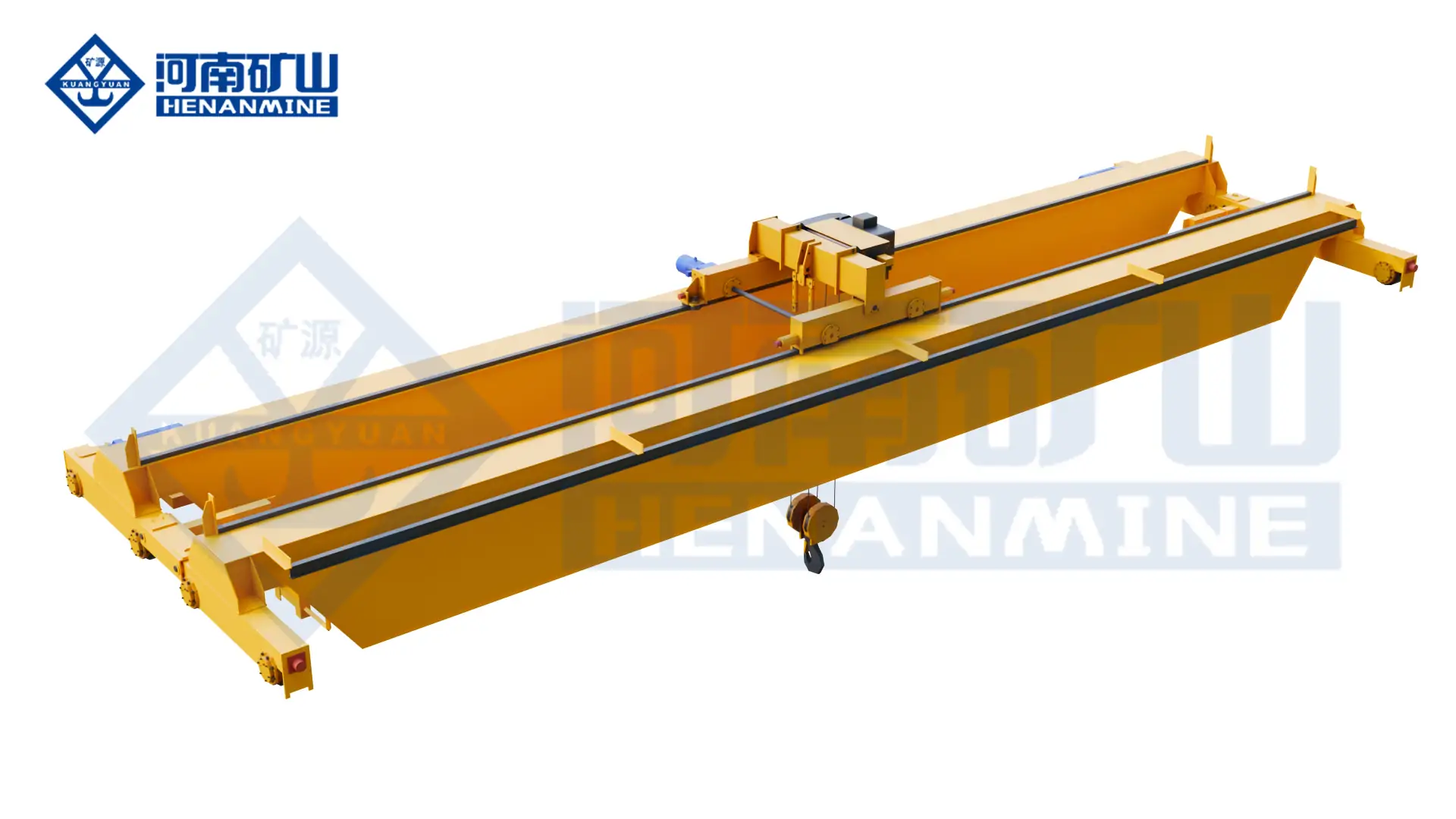
  • Overhead Crane Type Selection: Compare Structure, Hoist and Support

    Overhead Crane Type Selection: Compare Structure, Hoist and Support

    Selection guide

    Overhead Crane Type Selection: Compare Structure, Hoist and Support

    Crane types differ in more than their names or nominal capacities. Use the same load, bay and working cycle to compare structural arrangements, lifting mechanisms and runway interfaces.

    Henan Mine CraneSelection guide · Updated 2026Crane selection, project scope and operating requirements
    double-girder overhead crane by Henan Mine Crane
    double-girder overhead crane by Henan Mine Crane
    Project planning notes

    Key points for this crane project.

    1. How Overhead Crane Types Are Classified
    2. Core Overhead Crane Types
    3. Overhead Crane Types Compared
    Read the technical guide

    How Overhead Crane Types Are Classified

    An overhead crane is a travelling lifting system in which a bridge moves along two parallel runways and a hoist or trolley moves across the bridge. The terms bridge crane, EOT crane, overhead travelling crane and overhead bridge crane commonly identify the same equipment family. A complete type description requires more than one label.

    Single girder and double girder describe the bridge structure. Top running and underhung describe the connection between the bridge end carriages and runway. Electric chain hoist, wire-rope hoist and open-winch trolley describe the lifting mechanism. Hook, grab, magnet, lifting beam and ladle attachment describe the load-handling function. Working class, environment and automation level complete the equipment definition.

    One system can therefore be a top-running single-girder electric wire-rope-hoist crane, while another can be a top-running double-girder open-winch foundry crane. These descriptions are not competing names; each term defines a different engineering layer.

    Bridge Structure

    Single girder, double girder or a process-specific multi-girder structure defines the load-carrying bridge arrangement.

    Runway Interface

    Top-running or underhung end carriages define how bridge reactions enter the runway and supporting building.

    Lifting Mechanism

    Chain hoist, wire-rope hoist or open-winch trolley determines lifting range, duty, reeving and maintenance requirements.

    Process Function

    Hook, grab, magnet, rotating beam, clamp or ladle devices establish the actual material-handling task and control logic.

    Core Overhead Crane Types

    The following configurations form the primary commercial short list for most industrial projects. Capacity alone does not determine the type. Span, hook height, runway support, operating frequency, load behavior and required positioning accuracy can change the appropriate configuration at the same rated load.

    01 · Single-Girder Overhead Crane

    One bridge girder supports an electric hoist that normally travels on the lower flange or a dedicated track. The arrangement controls self-weight and equipment cost for general workshop, assembly, maintenance and warehouse handling.

    02 · Double-Girder Overhead Crane

    Two bridge girders support a trolley or hoist arrangement. The layout provides a broader structural platform for higher capacity, longer span, demanding duty, improved hook envelope or process equipment.

    03 · Top-Running Overhead Crane

    Bridge wheels travel on rails installed above the runway beams. The arrangement is common across light, medium and heavy industrial service and can use single- or double-girder bridges.

    04 · Underhung Overhead Crane

    Bridge end carriages travel on the lower flanges of suspended runway beams. The arrangement can extend hook coverage toward building sides and avoid runway rails above the support beams.

    05 · Workstation Bridge Crane

    A modular enclosed-track or light-rail bridge serves a defined production cell. Manual, electric or pneumatic motion can support repetitive ergonomic handling at lower capacities and shorter spans.

    06 · Freestanding Bridge Crane System

    Independent columns, runway beams and bracing carry crane loads when the building cannot support a crane or lease conditions restrict building attachment. Foundations and floor interfaces become part of the project.

    Overhead Crane Types Compared

    The comparison below separates structural configuration from runway arrangement and process function. Actual limits depend on the selected product family, span, duty and project standard; the approved technical proposal controls the final configuration.

    Crane TypeBridge / SupportLifting MechanismTypical Application
    Single GirderOne main bridge girderElectric chain or wire-rope hoistGeneral workshop, assembly, maintenance and warehousing
    Double GirderTwo main bridge girdersElectric hoist or open-winch trolleyHeavy loads, long spans, high duty and process handling
    UnderhungUsually single girder below runway beamsChain or wire-rope hoistCompatible buildings, lighter production and extended side approach
    Top RunningSingle or double girder above runway railsHoist or trolley selected by load and dutyLight through heavy industrial service
    WorkstationModular bridge on enclosed or light trackManual, electric or pneumatic hoistProduction cells and ergonomic repetitive handling
    FreestandingCrane plus independent columns and runwaySingle- or double-girder bridgeRetrofit facilities without suitable building support

    Match Crane Type to Application

    Application matching begins with load behavior and consequence of failure. The table presents common starting configurations, not automatic selections. Final architecture follows the project load case, building, duty and operating environment.

    ApplicationTypical LoadStarting ConfigurationCritical Data
    Machining and maintenanceTools, fixtures, machine parts and service componentsSingle-girder top-running or underhung craneGross load, hook approach, precise low speed and access above equipment
    Fabrication and assemblyFrames, weldments, beams and subassembliesSingle- or double-girder top-running craneLoad dimensions, turning space, lifting points and production cycle
    Warehouse and logisticsUnit loads, coils, plates or palletized productsHook, clamp, magnet or automated overhead craneStorage geometry, inventory logic, positioning and collision zones
    Steel mill and foundryLadles, billets, coils, plates and hot materialsHeavy-duty double-girder process craneThermal exposure, redundancy, duty, attachment and process safety
    Bulk material handlingOre, coal, slag, biomass, waste or aggregateDouble-girder grab craneBulk density, grab volume, fill factor, cycle time and hopper interface
    Hazardous productionLoads handled in classified gas or dust areasExplosion-proof crane matched to area classificationZone, gas or dust group, temperature class and permitted equipment
    Clean productionSensitive components or controlled-process loadsCleanroom or low-contamination overhead craneCleanliness target, materials, lubrication, particle control and access
    Automated processRepetitive loads within fixed routes and zonesAutomated overhead crane with position controlCycle logic, accuracy, sensors, interlocks, data interface and recovery mode

    Technical Specification Framework

    The specification should state measurable project data and identify items that remain subject to engineering review. Generic catalogue ranges do not replace an approved general arrangement, load calculation, mechanism data sheet and commercial responsibility matrix.

    Data GroupDefinitionInformation RequiredProcurement Control
    Rated capacityMaximum gross suspended load, including below-hook devicesPayload list, attachment weights, lifting points and center of gravityCapacity plate and quotation use one declared unit basis
    Span and runwayRunway rail center distance and total bridge travelSurveyed dimensions, rail or beam details, support spacing and alignment conditionNominal building width is not used as crane span
    Lifting heightVertical hook travel and required highest hook positionLowest pickup, highest placement, rigging depth and machinery extraction clearanceHeadroom is checked on the dimensioned general arrangement
    Working dutyCrane and mechanism classification based on useLoads, cycles per hour, travel distances, shifts and annual operating hoursMotor thermal rating, brakes, bearings and structures match the load spectrum
    Speeds and controlHoisting, trolley and bridge speeds plus acceleration controlPositioning tolerance, pendant, radio, cabin, VFD, anti-sway and automationOperating mode and fallback method are documented
    Power and environmentVoltage, phases, frequency, temperature and environmental exposureDust, humidity, corrosion, outdoor use, hazardous area and process heatEnclosures, materials and protections match the declared conditions
    Runway reactionsMaximum and minimum wheel loads, horizontal forces and buffersBuilding or freestanding support data and load combinationsStructural engineer receives approved reaction data before fabrication
    AcceptanceFactory checks, site tests and document handoverInspection authority, test loads, witness points, language and certification boundaryContract identifies evidence required for release and commissioning

    Safety, Controls and Environmental Requirements

    Overhead crane safety is defined by the complete application rather than one standard component list. The load, operating duty, control station, travel route, personnel interface, environment and consequence of failure establish the required protective architecture.

    Rated-Load Protection

    The rated capacity includes the payload and every below-hook component. An overload device, upper and lower travel limits, end stops and operating procedures must match the selected crane and destination requirements.

    Hoisting and Braking

    Hoist motors, brakes, rope or chain, drum, sheaves and hooks are selected from the load spectrum and duty. Process or high-consequence service may require additional braking, monitoring or redundancy.

    Bridge and Trolley Travel

    Buffers, travel limits, anti-collision functions, warning devices and controlled acceleration protect the crane route. Shared runways require a defined operating and separation strategy.

    Controls and Positioning

    Pendant, radio, cabin and automated controls are selected for visibility, travel distance and process risk. Variable-frequency drives support smooth acceleration, controlled low speed and repeatable positioning.

    Environmental Protection

    Temperature, dust, moisture, corrosion, washdown and outdoor exposure determine enclosures, materials, coatings, heaters, cooling and component protection. Hazardous areas require a formal classification basis.

    Load Attachment and Process Risk

    Hooks, grabs, magnets, clamps, beams and ladle devices introduce different load-retention and control requirements. Attachment deadweight, geometry, power supply and failure response form part of the crane specification.

    Bridge Structure, Headroom and Runway Compatibility

    A top-running bridge places the crane wheels on rails above the runway beams. The arrangement supports a wide range of capacities and duties, but requires adequate space above the rail and verified runway reactions. Single-girder and double-girder bridges can both be top running.

    An underhung bridge suspends the end carriages from the lower flanges of runway beams. It can improve side approach and avoid floor columns when the building is designed for the suspended loads. Runway flange geometry, lateral restraint, connection forces, roof loading and end clearance require engineering confirmation.

    Hoist position does not define runway type. A hoist commonly runs below the bridge girder on a top-running single-girder crane; the bridge itself remains top running because its wheels operate above the runway rails.

    Project Case: Multi-Type Crane Fleet for Special Steel Production

    A 3.2-million-ton premium special steel base required a coordinated fleet rather than one universal overhead crane type. Henan Mine Crane supplied more than 30 core equipment units covering steelmaking, refining, rolling and auxiliary production stages.

    Foundry cranes addressed molten-metal process loads, rotating electromagnetic beam cranes handled directional steel transfer, and smaller units supported auxiliary lifting.

    The project demonstrates a central selection principle: crane architecture follows the process stage, load attachment, duty and hazard. Common capacity terminology cannot replace a function-by-function handling study.

    Engineering Deliverables and Quality Records

    A commercially complete overhead crane package should identify the engineering evidence, manufacturing records and acceptance documents supplied with the equipment. Required deliverables should be agreed before order placement because inspection scope affects schedule, access and price.

    Design Package

    General arrangement, wheel loads, hook approaches, electrical load, component schedule and applicable design basis.

    Structural Evidence

    Material identification, calculation summary, welding procedures, welder qualifications, dimensional inspection and specified NDT.

    Mechanism Records

    Motor, gearbox, brake, drum, rope or chain, wheel, bearing, limit and protective-device data for the selected duty.

    Electrical Documents

    Single-line diagram, schematics, terminal information, I/O schedule, control narrative and configured drive parameters.

    Inspection and Testing

    Inspection plan, witness points, functional checks, brake and limit verification, overload-device setting and specified load tests.

    Handover Package

    Manuals, maintenance schedule, spare-parts list, certificates, commissioning record, training record and final approved drawings.

    Installation, Commissioning and Lifecycle Planning

    Runway and Site Readiness

    Survey rail span, elevation, alignment, end clearances and runway capacity. Confirm erection access, incoming power, conductor-system location, production shutdowns and available assembly space before shipment.

    Installation and Alignment

    Bridge sections, end carriages, hoist or trolley, conductor system and controls are installed under approved lifting, bolting, welding, torque, rail-alignment and electrical procedures.

    Commissioning and Acceptance

    Testing progresses from no-load functions and protective devices to brake verification, rated motions, applicable proof loading, control checks, site acceptance and operator-maintenance training.

    Inspection and Maintenance Strategy

    The maintenance plan covers ropes or chains, drums, sheaves, hooks, brakes, wheels, buffers, structures, drives, limits, electrical panels and load attachments. Intervals follow actual duty and environment.

    Overhead Crane Price by Type and Supply Scope

    Overhead crane prices vary widely because the same type name can describe a compact equipment package or a complete installed system. Capacity, span, lifting height, duty, component package, runway steel, electrification, automation, environment, freight and site work must be stated beside every price.

    The September 2026 bands below support preliminary equipment budgeting and are not fixed Henan Mine Crane quotations. Final pricing follows approved project data and a defined commercial boundary.

    Overhead Crane TypeCommercial BasisMain Price Drivers
    Single-girder overhead craneGeneral equipment-only market band across a broad capacity and span rangeHoist package, span, lift, duty, controls, documentation and exclusions
    Double-girder overhead craneGeneral or custom equipment package across light to heavy capacityTrolley type, capacity, span, duty, maintenance access and wheel loads
    Top-running overhead craneSingle- or double-girder equipment operating on runway railsBridge architecture, rails, runway scope, power feed and site interfaces
    Underhung overhead craneSuspended bridge equipment for compatible runway beamsBeam geometry, connections, capacity, span, duty and building verification
    Workstation bridge craneLocalized modular bridge system, normally at lower capacity and shorter spanTrack length, support structure, hoist, manual or powered motion and installation
    Explosion-proof overhead craneEquipment matched to a formally defined hazardous-area basisArea classification, protection concept, controls, certification and inspection scope
    Grab or magnetic process craneAttachment and control package selected for bulk material or steel handlingMaterial data, attachment, duty, automation, power continuity and process safety
    Foundry or automated process craneEngineered process package with application-specific structure, mechanisms and controlsHazard analysis, redundancy, duty, plant integration, testing and documentation

    Low advertised prices may describe a hoist, crane kit or restricted factory package rather than a complete operating system. A normalized comparison separates crane equipment, runway and supports, power supply, packing and freight, erection, commissioning, load testing and third-party inspection.

    Crane Equipment

    Bridge, end carriages, hoist or trolley, drives, controls and the specified crane-mounted protective package.

    Runway and Power

    Rails, beams, columns, bracing, foundations, conductor system and incoming electrical connection when expressly included.

    Delivery

    Export packing, shipment sections, freight, insurance, import handling, unloading and inland transport under the stated trade term.

    Site Completion

    Erection, alignment, electrical connection, commissioning, applicable load testing, inspection and training.

    Information Required for an Overhead Crane Quote

    A complete inquiry allows the crane type, lifting mechanism, runway interface and commercial scope to be evaluated against one operating basis. Preliminary drawings are suitable when assumptions are identified.

    Handled materials, pickup and placement points, required attachments, process sequence and any load turning, tilting, synchronized lifting or automated operation.

    Maximum and typical payloads plus hooks, beams, grabs, magnets, clamps, slings and every other suspended component for each permitted load case.

    Runway rail center distance, total runway length, required bridge travel, side approaches, end approaches and restricted zones along the handling route.

    Highest hook position, lowest pickup level, load and rigging depth, available roof clearance, runway elevation and required machinery-extraction distance.

    Loads per cycle, cycles per hour, shifts, annual operating hours, travel distances, proportion of near-capacity lifts and required availability.

    Facility plans and sections, rail or beam details, support spacing, allowable wheel loads, existing-crane data, foundations and erection access.

    Required hoisting, trolley and bridge speeds; pendant, radio or cabin operation; VFD control, positioning accuracy, anti-sway and process interlocks.

    Voltage, phases, frequency, ambient temperature, dust, humidity, corrosion, outdoor exposure, hazardous classification and special process conditions.

    Installation country, governing requirements, inspection authority, documentation language, factory witness points, site testing and certification boundary.

    Delivery address and trade term, packing, freight, runway and electrification boundary, erection, commissioning, local labor, training, spares and schedule.

    Overhead Crane Types FAQ

    What are the main types of overhead cranes?

    The primary structural types are single girder and double girder. Runway arrangements are top running or underhung. Workstation and freestanding systems address localized or independent support needs, while foundry, grab, magnetic, explosion-proof and automated cranes serve special processes.

    Is a bridge crane the same as an EOT crane?

    Bridge crane, overhead bridge crane, overhead travelling crane and EOT crane commonly identify the same travelling-bridge equipment family. A procurement specification should still state girder arrangement, runway type, hoist or trolley, capacity, span, lift and duty.

    What is the difference between single-girder and double-girder cranes?

    Single-girder cranes use one primary bridge girder and commonly support an electric hoist. Double-girder cranes use two primary girders and provide a broader platform for higher capacities, longer spans, demanding duty, process trolleys or improved equipment access.

    What is the difference between top-running and underhung cranes?

    A top-running bridge travels on rails above runway beams. An underhung bridge travels beneath suitable runway beams. The terms describe the bridge-to-runway interface, not the position of the hoist on the bridge girder.

    When is a freestanding bridge crane required?

    A freestanding system is considered when the existing building cannot carry crane loads, reliable structural data is unavailable, attachment is restricted or a separate production bay requires independent support. Columns, bracing and foundations become part of the project.

    Which overhead crane type suits heavy-duty production?

    A double-girder crane with a duty-matched trolley is a common starting point for heavy loads and intensive service. The final choice depends on load spectrum, cycles, span, lift, process hazard, redundancy and maintenance requirements.

    Is a monorail an overhead bridge crane?

    A monorail hoist travels along one fixed beam or track and does not have a moving bridge spanning two parallel runways. It is an overhead lifting system, but it is not a bridge crane in the conventional structural sense.

    Is a gantry crane an overhead crane type?

    A gantry crane uses legs that transfer bridge loads to ground rails, wheels or another ground-supported travel system. It performs similar lifting motions but differs from a building-supported overhead bridge crane.

    How much does an overhead crane cost?

    Complete installed projects can cost substantially more after runway steel, electrification, freight, erection, testing and special process requirements.

    What information is required for a quotation?

    A formal RFQ should include maximum and typical loads, attachments, span, runway length, lift, building section, operating duty, speeds, controls, power, environment, project location, applicable requirements, delivery address and installation and acceptance scope.

    Related Overhead Crane Products

    Product families should be compared at the same capacity, span, hook position, working duty, runway condition and commercial scope. Final parameters are confirmed through the approved project proposal.

    Single-Girder Overhead Crane

    Cost-controlled top-running bridge with an electric hoist for general industrial lifting.

    Double-Girder Overhead Crane

    Two-girder bridge platform for higher capacity, longer span, demanding duty or process equipment.

    Underhung Overhead Crane

    Suspended bridge arrangement for compatible runway beams and verified building support.

    Explosion-Proof Overhead Crane

    Dedicated lifting system for a formally defined hazardous gas or dust classification.

    Metallurgical Bridge Crane

    Heavy-duty process crane configured for hot-metal and severe metallurgical service.

    Intelligent Grab Overhead Crane

    Grab-bucket and intelligent-control configuration for bulk material handling cycles.

    Discuss the crane arrangement for your project.

    Henan Mine Crane prepares project-specific proposals from the maximum gross load, lifting attachments, span, runway length, hook positions, building cross-section, operating cycle, controls, power supply, environment, destination and required supply boundary.

    Related crane configurations

    LH Electric Hoist Double Girder Crane

    View product parameters
    Lifting capacity: 3, 5, 10, 16, 20 tSpan: 10.5–31.5 mLifting height: 6, 9, 12 or 18 m

    Use an LH double-girder bridge with an electric-hoist trolley for workshop lifting, assembly and maintenance. Match the hoist arrangement to the suspended load, hook travel and available building space.

    Double Trolley Electric Hoist Crane

    View product parameters
    Lifting capacity: 1+1 – 32+32 tSpan: 7.5 – 31.5 mLifting height: 6 – 30 m

    Lift long components or serve separate working positions with two electric-hoist trolleys on one bridge. Trolley spacing, load sharing and independent or coordinated operation are specified for the task.

    Updated 2026 · Henan Mine Crane

  • Overhead Crane Project Cost: Equipment, Runway and Installation Boundaries

    Overhead Crane Project Cost: Equipment, Runway and Installation Boundaries

    Selection guide

    Overhead Crane Project Cost: Equipment, Runway and Installation Boundaries

    A complete project budget needs the technical arrangement and site responsibilities defined together. Separate crane equipment, support works, electrical supply, installation and delivery before comparing quoted totals.

    Henan Mine CraneSelection guide · Updated 2026Crane selection, project scope and operating requirements
    Henan Mine Crane Single-Girder Bridge Crane
    Henan Mine Crane Single-Girder Bridge Crane
    Project planning notes

    Key points for this crane project.

    1. How Much Does an Overhead Crane Cost?
    2. Overhead Crane Price by Capacity and Configuration
    3. Selection Considerations
    Read the technical guide

    How Much Does an Overhead Crane Cost?

    These figures represent preliminary equipment budgets rather than installed project totals. Longer spans, greater lifting heights, demanding duty, higher travel speeds, low-headroom arrangements, specified component brands and special environments increase the commercial value.

    Commercial basis: Budget ranges support feasibility studies and initial capital allocation. Purchase approval and supplier comparison require a formal quotation stating the complete technical configuration, delivery term, inclusions, exclusions and validity period.

    Overhead Crane Price by Capacity and Configuration

    The following ranges provide an initial equipment budget for common factory-supply configurations. Final pricing is established from approved crane data and the specified commercial scope.

    Capacity and ConfigurationTypical Commercial BasisPrincipal Price Variables

    Budget ranges exclude runway structures, columns, foundations, international freight, import charges, unloading, erection, site wiring and third-party inspection unless expressly included in the commercial proposal.

    Selection Considerations

    Capacity and Load Characteristics

    Maximum load, normal load, attachment weight, dimensions, centre of gravity and lifting method establish the rated capacity and mechanism demand.

    Span, Lift and Headroom

    Runway gauge, required hook height, building clearances, hook approaches and obstruction zones determine crane dimensions and steel weight.

    Operating Cycle and Speeds

    Lifts per hour, operating hours, load spectrum, travel distance and production criticality determine the required duty and drive specification.

    Girder and Hoisting System

    Single girder, double girder, underhung, electric-hoist and open-winch arrangements have different structural, access and commercial implications.

    Building and Runway Conditions

    Existing supports, runway alignment, wheel-load capacity, power supply, erection access and shutdown limitations affect both equipment and site cost.

    Controls and Special Protection

    Radio control, cabin operation, automation, positioning, explosion protection, corrosion resistance and high-temperature design change the final configuration.

    Overhead Crane Price Compared Across Crane Configurations

    Configuration selection precedes commercial comparison. A lower equipment price does not provide value when the structure, hook coverage, duty or operating environment is unsuitable for the intended service.

    ConfigurationRelative Equipment CostCommercial ApplicationMain Cost Drivers
    Single-Girder Electric-Hoist CraneLower starting levelGeneral workshop, warehouse, assembly and maintenance liftingSpan, hoist type, headroom, duty and building loads
    Double-Girder Electric-Hoist CraneModerateGreater structural flexibility with a compact hoisting mechanismGirder weight, hoist arrangement, platforms and access
    Double-Girder Winch-Trolley CraneHigherHeavy loads, intensive duty, wider spans and process handlingMechanism duty, trolley design, access, redundancy and controls
    Underhung Overhead CraneProject-dependentSuspended runway layouts and facilities without conventional floor-supported columnsRoof capacity, support spacing, runway complexity and headroom
    Special-Purpose Overhead CraneEngineered quotationExplosion-proof, metallurgical, magnetic, grab, automated or process applicationsHazard class, temperature, attachment, automation and safety architecture

    What Is Included in the Total Overhead Crane Project Cost?

    The crane purchase price and the installed project cost are different commercial values. A complete budget separates every equipment, logistics and site-work package before supplier proposals are compared.

    Bridge and Hoisting System

    Main girder, end carriages, hoist or trolley, drives, brakes, control panel, operator controls and specified safety functions.

    Rails and Supporting Structure

    Crane rails, runway beams, columns or brackets, stops, buffers, connections, foundations and structural verification as applicable.

    Power and Site Connection

    Conductor system, festoon, isolator, feeder, grounding, site cabling, protection and connection to the facility electrical supply.

    Packing and Delivery

    Export packing, inland transport, port handling, ocean or land freight, insurance, import duties and delivery to the installation site.

    Erection and Commissioning

    Unloading, assembly, access equipment, alignment, electrical work, commissioning, load testing and acceptance support.

    Documentation and Support

    Drawings, manuals, certificates, training, recommended spare parts, warranty boundary and post-delivery technical support.

    Overhead Crane Price by Supply Scope

    Crane Equipment Only

    Suitable where the facility or local contractor controls runway, delivery, erection and electrical connection.

    Commercial requirement: Interface loads, installation instructions and excluded work must be clearly defined.

    Delivered Equipment Package

    Crane equipment plus agreed electrification, runway items, spare parts, export packing and delivery to the named commercial point.

    Commercial requirement: Incoterm, destination, insurance, customs and unloading responsibility must be stated.

    Installed Project Package

    An expanded scope covering defined site services, erection supervision or installation, commissioning, testing, training and handover.

    Commercial requirement: Local labour, travel, access equipment, permits and acceptance responsibilities must be allocated.

    Principal Factors Affecting Overhead Crane Price

    Price FactorCommercial EffectRequired Project Definition
    Rated CapacityChanges structural weight, hoisting mechanism, wheels, drives and runway reactionsMaximum load including lifting attachment and operating load spectrum
    Span and Lifting HeightAffects girder design, rope length, hook approach, transport dimensions and installation methodRunway gauge, hook travel, building height and obstruction drawing
    Duty and MotionHigher duty and speed require upgraded motors, brakes, gearboxes, controls and structural designStarts per hour, operating hours, loaded cycles, travel distance and required speeds
    Component SpecificationSpecified brands, protection levels, monitoring and redundancy change acquisition and replacement costApproved manufacturer list, electrical standard and maintenance strategy
    Controls and AutomationVariable-frequency drives, anti-sway, positioning, PLC integration and remote operation expand the control scopeControl stations, positioning tolerance, production interface and network requirements
    Special EnvironmentExplosion-proof, metallurgical, corrosive, dusty or outdoor service requires specialized protectionHazard classification, temperature, contaminants, weather and applicable requirements
    Delivery and Site ScopeFreight, runway work, local labour, access equipment, testing and travel can materially change total project costDestination, Incoterm, site readiness, installation boundary and acceptance plan

    How to Compare Overhead Crane Quotations

    Commercial evaluation is reliable only when each quotation is normalized to the same technical and supply boundary. The comparison schedule should identify every included item, optional item, exclusion and interface responsibility.

    Technical Equality

    Capacity, span, lift, duty, speeds, control, environment, component level and design requirements must match.

    Supply Equality

    Runway, electrification, packing, freight, installation, testing, documentation and spares must be itemized.

    Commercial Equality

    Currency, taxes, Incoterm, payment, delivery, validity, warranty and liquidated-damage conditions require alignment.

    Interface Equality

    Building loads, rail alignment, site power, unloading, erection access and acceptance responsibilities require named ownership.

    Document Equality

    Drawings, calculations, inspection records, manuals, certificates and document language must be defined.

    Lifecycle Equality

    Maintenance access, spare-parts availability, training and technical-support boundaries affect lifecycle value.

    Overhead Crane Budget Examples

    5 Ton Single-Girder Crane

    Low-headroom design, longer span, new runway, delivery and installation are additional project variables.

    10 Ton Overhead Crane

    Duty, hook coverage, building reactions and trolley arrangement determine the appropriate configuration.

    20–50 Ton Double-Girder Crane

    Process duty, lifting attachments, redundancy, access platforms and acceptance requirements can dominate total cost.

    Technical and Commercial Controls Before Purchase

    The purchase contract should connect the commercial value to an approved technical configuration. Henan Mine Crane can define the crane equipment and optional project scope through controlled drawings, schedules and inspection documents.

    • ✓Approved general arrangement and building-interface data before production
    • ✓Named component schedule and controlled substitution procedure
    • ✓Inspection and test plan with records and agreed witness points
    • ✓Packing, marking and transport plan matched to destination conditions
    • ✓Operating manuals, drawings, electrical diagrams and spare-parts schedule

    Production resources are presented on the Henan Mine Crane factory page.

    Information Required for an Overhead Crane Quotation

    A complete RFQ allows capacity, crane geometry, mechanism duty, site interfaces and commercial scope to be priced on the same basis.

    Load Information

    Maximum and normal load, dimensions, attachment, centre of gravity, handling method and synchronized-lifting requirement.

    Crane Geometry

    Capacity, span, lifting height, runway length, hook approaches, building clear height and obstruction drawing.

    Operating Duty

    Lifts per hour, hours per day, load spectrum, travel distance, required speeds and production availability.

    Site and Environment

    Installation country, indoor or outdoor service, temperature, dust, corrosion, hazardous media, power supply and existing runway data.

    Control Requirements

    Pendant, radio remote, cabin or automated operation; speed control, anti-sway, positioning and process interfaces.

    Commercial Scope

    Destination, Incoterm, runway, electrification, installation, commissioning, inspection, documentation, training and spare parts.

    Overhead Crane Price FAQ

    What is the price of a 5 ton overhead crane?

    Span, lift, duty, hoist specification, runway and delivery scope determine the formal price.

    Does the overhead crane price include the runway?

    Runway beams, rails, columns, brackets, stops and structural verification are separate unless expressly included. The commercial proposal should identify each runway component and the responsible party.

    Does the price include international freight and installation?

    International freight, import charges, unloading, erection, access equipment, site wiring and testing are included only when stated in the quotation. The named Incoterm and installation boundary control the commercial responsibility.

    Why can two cranes with the same capacity have different prices?

    Capacity is only one design input. Span, lifting height, working class, speeds, girder arrangement, hoisting mechanism, component brands, controls, environment and supply scope can differ substantially.

    Is a single-girder crane always less expensive?

    Single-girder equipment generally has a lower starting cost when both structures meet the technical requirement. Double-girder construction may be necessary for capacity, duty, span, hook coverage, trolley design or service access.

    How is an installed overhead crane budget developed?

    The installed budget combines crane equipment, runway and support work, electrification, logistics, unloading, erection, commissioning, load testing, documentation and local project requirements.

    Can an accurate quotation be prepared from a workshop drawing?

    A workshop plan and cross-section establish important geometry. Load data, operating cycle, site environment, power supply, control requirements, destination and supply boundary are also required for a complete proposal.

    How long is an overhead crane quotation valid?

    The validity period is stated in the formal quotation. Steel, components, exchange rates and freight conditions may change after the stated period.

    Related Crane Products

    Single-Girder Overhead Crane

    Electric-hoist configuration for general workshop, warehouse and production lifting.

    Double-Girder Overhead Crane

    Double-girder lifting configuration for heavier loads, wider spans and demanding duty.

    Multi-Support Underhung Crane

    Engineered suspended-runway arrangement for large or structurally restricted facilities.

    Double-Trolley Overhead Crane

    Two lifting mechanisms for defined independent, coordinated or two-point handling tasks.

    Explosion-Proof Overhead Crane

    Protected crane configuration selected for the specified hazardous-area classification.

    5 Ton Overhead Crane

    Commercial and technical configurations for a metric 5-ton lifting requirement.

    Request an Overhead Crane Price

    Henan Mine Crane prepares technical and commercial proposals from the required capacity, span, lifting height, duty, building conditions, controls, operating environment and delivery scope.

    Discuss the crane arrangement for your project.

    A complete project budget needs the technical arrangement and site responsibilities defined together. Separate crane equipment, support works, electrical supply, installation and delivery before comparing quoted totals. Share the load, available drawings, working cycle and site conditions with Henan Mine Crane so the required configuration and supply boundary can be discussed.

    Related crane configurations

    Single-Girder Bridge Crane

    View product parameters
    Lifting capacity: 1–20 tSpan: 7.5–31.5 mLifting height: 6, 9, 12, 18, 24 or 30 m; capacity-dependent

    Use an LDA single-girder bridge and electric hoist for general workshop material handling. Select the lifting capacity, runway geometry and hoist duty around the building and load.

    LH Electric Hoist Double Girder Crane

    View product parameters
    Lifting capacity: 3, 5, 10, 16, 20 tSpan: 10.5–31.5 mLifting height: 6, 9, 12 or 18 m

    Use an LH double-girder bridge with an electric-hoist trolley for workshop lifting, assembly and maintenance. Match the hoist arrangement to the suspended load, hook travel and available building space.

    Updated 2026 · Henan Mine Crane