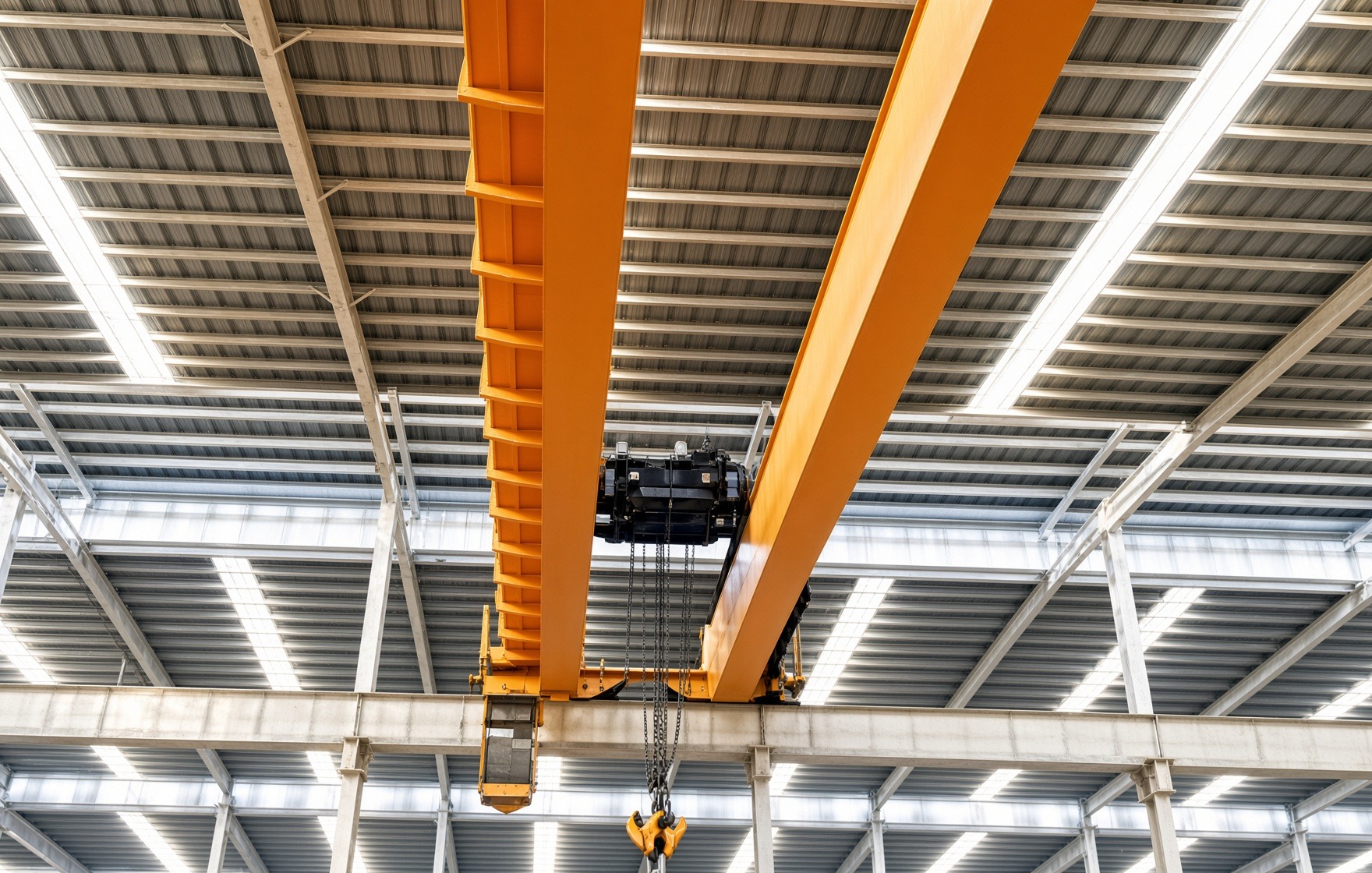
Henan Mine Crane · Industrial Overhead Lifting Systems
Overhead Crane Types and Selection Guide
Compare single-girder, double-girder, top-running, underhung and special-purpose overhead cranes by structure, runway, hoist, duty and application. The correct type is the configuration that fits the load path, building, operating cycle and project supply boundary.
Henan Mine Crane configures bridge cranes and EOT cranes for workshops, warehouses, steel plants, foundries, bulk handling and automated production. A project proposal defines rated capacity, span, lifting height, working class, speeds, controls, safety functions, documentation and site interfaces.
PRIMARY STRUCTURE
Single or Double Girder
RUNWAY ARRANGEMENT
Top Running or Underhung
LIFTING MECHANISM
Chain, Wire Rope or Winch
QUOTE BASIS
Load, Span, Lift, Duty & Scope
How Overhead Crane Types Are Classified
An overhead crane is a travelling lifting system in which a bridge moves along two parallel runways and a hoist or trolley moves across the bridge. The terms bridge crane, EOT crane, overhead travelling crane and overhead bridge crane commonly identify the same equipment family. A complete type description requires more than one label.
Single girder and double girder describe the bridge structure. Top running and underhung describe the connection between the bridge end carriages and runway. Electric chain hoist, wire-rope hoist and open-winch trolley describe the lifting mechanism. Hook, grab, magnet, lifting beam and ladle attachment describe the load-handling function. Working class, environment and automation level complete the equipment definition.
One system can therefore be a top-running single-girder electric wire-rope-hoist crane, while another can be a top-running double-girder open-winch foundry crane. These descriptions are not competing names; each term defines a different engineering layer.
Bridge Structure
Single girder, double girder or a process-specific multi-girder structure defines the load-carrying bridge arrangement.
Runway Interface
Top-running or underhung end carriages define how bridge reactions enter the runway and supporting building.
Lifting Mechanism
Chain hoist, wire-rope hoist or open-winch trolley determines lifting range, duty, reeving and maintenance requirements.
Process Function
Hook, grab, magnet, rotating beam, clamp or ladle devices establish the actual material-handling task and control logic.
Core Overhead Crane Types
The following configurations form the primary commercial short list for most industrial projects. Capacity alone does not determine the type. Span, hook height, runway support, operating frequency, load behavior and required positioning accuracy can change the appropriate configuration at the same rated load.
01 · Single-Girder Overhead Crane
One bridge girder supports an electric hoist that normally travels on the lower flange or a dedicated track. The arrangement controls self-weight and equipment cost for general workshop, assembly, maintenance and warehouse handling.
02 · Double-Girder Overhead Crane
Two bridge girders support a trolley or hoist arrangement. The layout provides a broader structural platform for higher capacity, longer span, demanding duty, improved hook envelope or process equipment.
03 · Top-Running Overhead Crane
Bridge wheels travel on rails installed above the runway beams. The arrangement is common across light, medium and heavy industrial service and can use single- or double-girder bridges.
04 · Underhung Overhead Crane
Bridge end carriages travel on the lower flanges of suspended runway beams. The arrangement can extend hook coverage toward building sides and avoid runway rails above the support beams.
05 · Workstation Bridge Crane
A modular enclosed-track or light-rail bridge serves a defined production cell. Manual, electric or pneumatic motion can support repetitive ergonomic handling at lower capacities and shorter spans.
06 · Freestanding Bridge Crane System
Independent columns, runway beams and bracing carry crane loads when the building cannot support a crane or lease conditions restrict building attachment. Foundations and floor interfaces become part of the project.
Overhead Crane Types Compared
The comparison below separates structural configuration from runway arrangement and process function. Actual limits depend on the selected product family, span, duty and project standard; the approved technical proposal controls the final configuration.
| Crane Type | Bridge / Support | Lifting Mechanism | Typical Application | Critical Procurement Point |
|---|---|---|---|---|
| Single Girder | One main bridge girder | Electric chain or wire-rope hoist | General workshop, assembly, maintenance and warehousing | Lowest self-weight among conventional powered bridge arrangements; headroom and duty still require confirmation |
| Double Girder | Two main bridge girders | Electric hoist or open-winch trolley | Heavy loads, long spans, high duty and process handling | Higher structural weight and wheel loads; stronger platform for demanding duty and equipment access |
| Underhung | Usually single girder below runway beams | Chain or wire-rope hoist | Compatible buildings, lighter production and extended side approach | Suspended beam capacity, connections and roof reactions govern feasibility |
| Top Running | Single or double girder above runway rails | Hoist or trolley selected by load and duty | Light through heavy industrial service | Runway elevation, rail geometry, wheel loads and maintenance clearance govern fit |
| Workstation | Modular bridge on enclosed or light track | Manual, electric or pneumatic hoist | Production cells and ergonomic repetitive handling | Shorter span and lower capacity than conventional plant-wide bridge systems |
| Freestanding | Crane plus independent columns and runway | Single- or double-girder bridge | Retrofit facilities without suitable building support | Foundation, floor, bracing, column spacing and erection access add project scope |
Match Crane Type to Application
Application matching begins with load behavior and consequence of failure. The table presents common starting configurations, not automatic selections. Final architecture follows the project load case, building, duty and operating environment.
| Application | Typical Load | Starting Configuration | Critical Data |
|---|---|---|---|
| Machining and maintenance | Tools, fixtures, machine parts and service components | Single-girder top-running or underhung crane | Gross load, hook approach, precise low speed and access above equipment |
| Fabrication and assembly | Frames, weldments, beams and subassemblies | Single- or double-girder top-running crane | Load dimensions, turning space, lifting points and production cycle |
| Warehouse and logistics | Unit loads, coils, plates or palletized products | Hook, clamp, magnet or automated overhead crane | Storage geometry, inventory logic, positioning and collision zones |
| Steel mill and foundry | Ladles, billets, coils, plates and hot materials | Heavy-duty double-girder process crane | Thermal exposure, redundancy, duty, attachment and process safety |
| Bulk material handling | Ore, coal, slag, biomass, waste or aggregate | Double-girder grab crane | Bulk density, grab volume, fill factor, cycle time and hopper interface |
| Hazardous production | Loads handled in classified gas or dust areas | Explosion-proof crane matched to area classification | Zone, gas or dust group, temperature class and permitted equipment |
| Clean production | Sensitive components or controlled-process loads | Cleanroom or low-contamination overhead crane | Cleanliness target, materials, lubrication, particle control and access |
| Automated process | Repetitive loads within fixed routes and zones | Automated overhead crane with position control | Cycle logic, accuracy, sensors, interlocks, data interface and recovery mode |
Technical Specification Framework
The specification should state measurable project data and identify items that remain subject to engineering review. Generic catalogue ranges do not replace an approved general arrangement, load calculation, mechanism data sheet and commercial responsibility matrix.
| Data Group | Definition | Information Required | Procurement Control |
|---|---|---|---|
| Rated capacity | Maximum gross suspended load, including below-hook devices | Payload list, attachment weights, lifting points and center of gravity | Capacity plate and quotation use one declared unit basis |
| Span and runway | Runway rail center distance and total bridge travel | Surveyed dimensions, rail or beam details, support spacing and alignment condition | Nominal building width is not used as crane span |
| Lifting height | Vertical hook travel and required highest hook position | Lowest pickup, highest placement, rigging depth and machinery extraction clearance | Headroom is checked on the dimensioned general arrangement |
| Working duty | Crane and mechanism classification based on use | Loads, cycles per hour, travel distances, shifts and annual operating hours | Motor thermal rating, brakes, bearings and structures match the load spectrum |
| Speeds and control | Hoisting, trolley and bridge speeds plus acceleration control | Positioning tolerance, pendant, radio, cabin, VFD, anti-sway and automation | Operating mode and fallback method are documented |
| Power and environment | Voltage, phases, frequency, temperature and environmental exposure | Dust, humidity, corrosion, outdoor use, hazardous area and process heat | Enclosures, materials and protections match the declared conditions |
| Runway reactions | Maximum and minimum wheel loads, horizontal forces and buffers | Building or freestanding support data and load combinations | Structural engineer receives approved reaction data before fabrication |
| Acceptance | Factory checks, site tests and document handover | Inspection authority, test loads, witness points, language and certification boundary | Contract identifies evidence required for release and commissioning |
Safety, Controls and Environmental Requirements
Overhead crane safety is defined by the complete application rather than one standard component list. The load, operating duty, control station, travel route, personnel interface, environment and consequence of failure establish the required protective architecture.
Rated-Load Protection
The rated capacity includes the payload and every below-hook component. An overload device, upper and lower travel limits, end stops and operating procedures must match the selected crane and destination requirements.
Hoisting and Braking
Hoist motors, brakes, rope or chain, drum, sheaves and hooks are selected from the load spectrum and duty. Process or high-consequence service may require additional braking, monitoring or redundancy.
Bridge and Trolley Travel
Buffers, travel limits, anti-collision functions, warning devices and controlled acceleration protect the crane route. Shared runways require a defined operating and separation strategy.
Controls and Positioning
Pendant, radio, cabin and automated controls are selected for visibility, travel distance and process risk. Variable-frequency drives support smooth acceleration, controlled low speed and repeatable positioning.
Environmental Protection
Temperature, dust, moisture, corrosion, washdown and outdoor exposure determine enclosures, materials, coatings, heaters, cooling and component protection. Hazardous areas require a formal classification basis.
Load Attachment and Process Risk
Hooks, grabs, magnets, clamps, beams and ladle devices introduce different load-retention and control requirements. Attachment deadweight, geometry, power supply and failure response form part of the crane specification.
Bridge Structure, Headroom and Runway Compatibility
A top-running bridge places the crane wheels on rails above the runway beams. The arrangement supports a wide range of capacities and duties, but requires adequate space above the rail and verified runway reactions. Single-girder and double-girder bridges can both be top running.
An underhung bridge suspends the end carriages from the lower flanges of runway beams. It can improve side approach and avoid floor columns when the building is designed for the suspended loads. Runway flange geometry, lateral restraint, connection forces, roof loading and end clearance require engineering confirmation.
Hoist position does not define runway type. A hoist commonly runs below the bridge girder on a top-running single-girder crane; the bridge itself remains top running because its wheels operate above the runway rails.
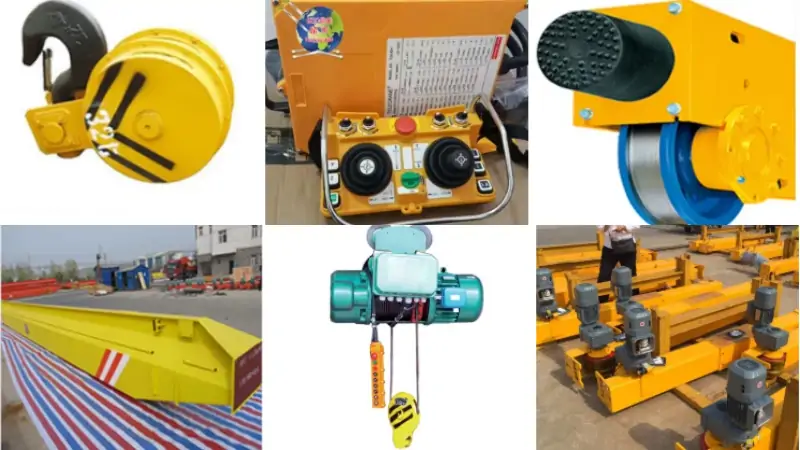
Project Case: Multi-Type Crane Fleet for Special Steel Production
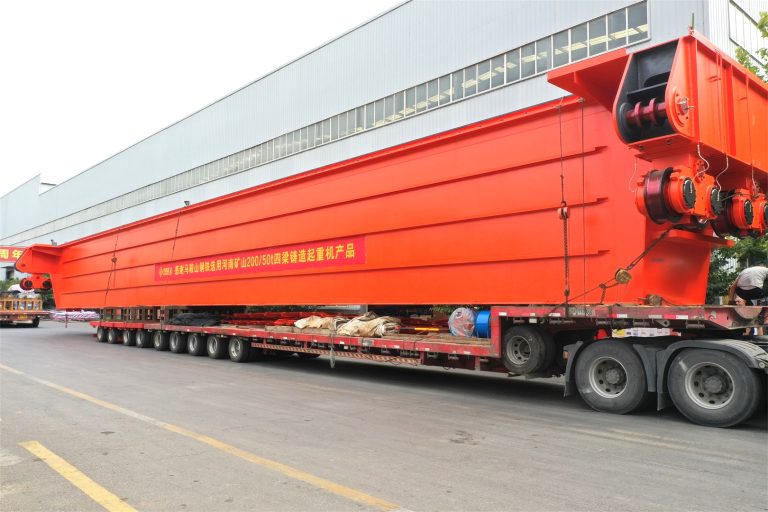
A 3.2-million-ton premium special steel base required a coordinated fleet rather than one universal overhead crane type. Henan Mine Crane supplied more than 30 core equipment units covering steelmaking, refining, rolling and auxiliary production stages.
The reported fleet included 200 t foundry cranes, 200/50 t four-girder foundry cranes, 160/63 t cranes, 40+40 t cranes and overhead rotating electromagnetic beam cranes. Foundry cranes addressed molten-metal process loads, rotating electromagnetic beam cranes handled directional steel transfer, and smaller units supported auxiliary lifting.
The project demonstrates a central selection principle: crane architecture follows the process stage, load attachment, duty and hazard. Common capacity terminology cannot replace a function-by-function handling study.
Engineering Deliverables and Quality Records
A commercially complete overhead crane package should identify the engineering evidence, manufacturing records and acceptance documents supplied with the equipment. Required deliverables should be agreed before order placement because inspection scope affects schedule, access and price.
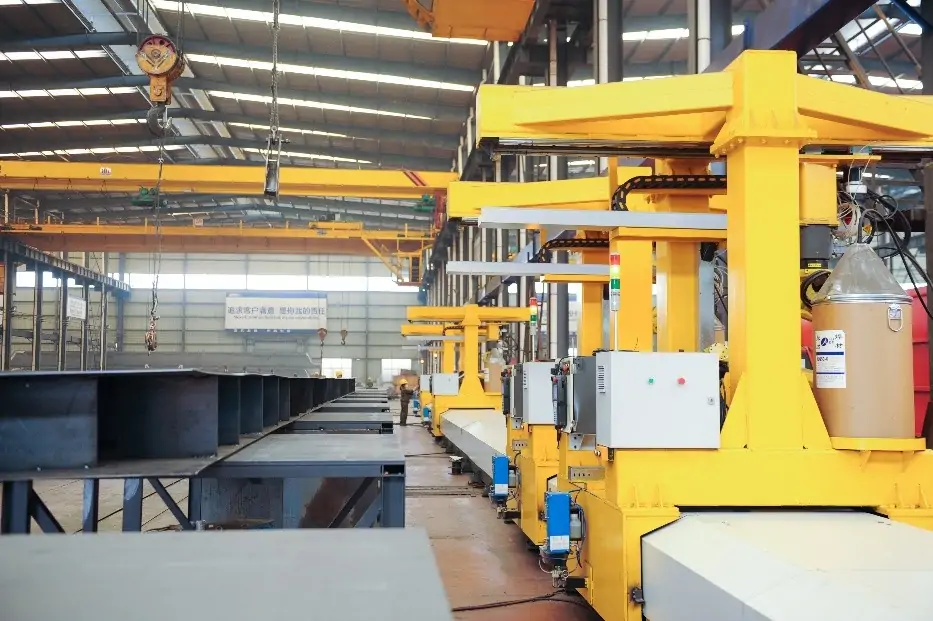
Design Package
General arrangement, wheel loads, hook approaches, electrical load, component schedule and applicable design basis.
Structural Evidence
Material identification, calculation summary, welding procedures, welder qualifications, dimensional inspection and specified NDT.
Mechanism Records
Motor, gearbox, brake, drum, rope or chain, wheel, bearing, limit and protective-device data for the selected duty.
Electrical Documents
Single-line diagram, schematics, terminal information, I/O schedule, control narrative and configured drive parameters.
Inspection and Testing
Inspection plan, witness points, functional checks, brake and limit verification, overload-device setting and specified load tests.
Handover Package
Manuals, maintenance schedule, spare-parts list, certificates, commissioning record, training record and final approved drawings.
Installation, Commissioning and Lifecycle Planning
Runway and Site Readiness
Survey rail span, elevation, alignment, end clearances and runway capacity. Confirm erection access, incoming power, conductor-system location, production shutdowns and available assembly space before shipment.
Installation and Alignment
Bridge sections, end carriages, hoist or trolley, conductor system and controls are installed under approved lifting, bolting, welding, torque, rail-alignment and electrical procedures.
Commissioning and Acceptance
Testing progresses from no-load functions and protective devices to brake verification, rated motions, applicable proof loading, control checks, site acceptance and operator-maintenance training.
Inspection and Maintenance Strategy
The maintenance plan covers ropes or chains, drums, sheaves, hooks, brakes, wheels, buffers, structures, drives, limits, electrical panels and load attachments. Intervals follow actual duty and environment.
Overhead Crane Price by Type and Supply Scope
Overhead crane prices vary widely because the same type name can describe a compact equipment package or a complete installed system. Capacity, span, lifting height, duty, component package, runway steel, electrification, automation, environment, freight and site work must be stated beside every price.
The September 2026 bands below support preliminary equipment budgeting and are not fixed Henan Mine Crane quotations. Final pricing follows approved project data and a defined commercial boundary.
| Overhead Crane Type | Indicative Equipment Band | Commercial Basis | Main Price Drivers |
|---|---|---|---|
| Single-girder overhead crane | US$3,000–50,000 | General equipment-only market band across a broad capacity and span range | Hoist package, span, lift, duty, controls, documentation and exclusions |
| Double-girder overhead crane | US$5,000–150,000 | General or custom equipment package across light to heavy capacity | Trolley type, capacity, span, duty, maintenance access and wheel loads |
| Top-running overhead crane | US$3,000–100,000 | Single- or double-girder equipment operating on runway rails | Bridge architecture, rails, runway scope, power feed and site interfaces |
| Underhung overhead crane | US$3,500–80,000 | Suspended bridge equipment for compatible runway beams | Beam geometry, connections, capacity, span, duty and building verification |
| Workstation bridge crane | US$3,000–45,000 | Localized modular bridge system, normally at lower capacity and shorter span | Track length, support structure, hoist, manual or powered motion and installation |
| Explosion-proof overhead crane | US$4,500–50,000+ | Equipment matched to a formally defined hazardous-area basis | Area classification, protection concept, controls, certification and inspection scope |
| Grab or magnetic process crane | US$3,000–100,000+ | Attachment and control package selected for bulk material or steel handling | Material data, attachment, duty, automation, power continuity and process safety |
| Foundry or automated process crane | Project quotation | Engineered process package with application-specific structure, mechanisms and controls | Hazard analysis, redundancy, duty, plant integration, testing and documentation |
Low advertised prices may describe a hoist, crane kit or restricted factory package rather than a complete operating system. A normalized comparison separates crane equipment, runway and supports, power supply, packing and freight, erection, commissioning, load testing and third-party inspection.
Crane Equipment
Bridge, end carriages, hoist or trolley, drives, controls and the specified crane-mounted protective package.
Runway and Power
Rails, beams, columns, bracing, foundations, conductor system and incoming electrical connection when expressly included.
Delivery
Export packing, shipment sections, freight, insurance, import handling, unloading and inland transport under the stated trade term.
Site Completion
Erection, alignment, electrical connection, commissioning, applicable load testing, inspection and training.
Information Required for an Overhead Crane Quote
A complete inquiry allows the crane type, lifting mechanism, runway interface and commercial scope to be evaluated against one operating basis. Preliminary drawings are suitable when assumptions are identified.
Handled materials, pickup and placement points, required attachments, process sequence and any load turning, tilting, synchronized lifting or automated operation.
Maximum and typical payloads plus hooks, beams, grabs, magnets, clamps, slings and every other suspended component for each permitted load case.
Runway rail center distance, total runway length, required bridge travel, side approaches, end approaches and restricted zones along the handling route.
Highest hook position, lowest pickup level, load and rigging depth, available roof clearance, runway elevation and required machinery-extraction distance.
Loads per cycle, cycles per hour, shifts, annual operating hours, travel distances, proportion of near-capacity lifts and required availability.
Facility plans and sections, rail or beam details, support spacing, allowable wheel loads, existing-crane data, foundations and erection access.
Required hoisting, trolley and bridge speeds; pendant, radio or cabin operation; VFD control, positioning accuracy, anti-sway and process interlocks.
Voltage, phases, frequency, ambient temperature, dust, humidity, corrosion, outdoor exposure, hazardous classification and special process conditions.
Installation country, governing requirements, inspection authority, documentation language, factory witness points, site testing and certification boundary.
Delivery address and trade term, packing, freight, runway and electrification boundary, erection, commissioning, local labor, training, spares and schedule.
Overhead Crane Types FAQ
What are the main types of overhead cranes?
The primary structural types are single girder and double girder. Runway arrangements are top running or underhung. Workstation and freestanding systems address localized or independent support needs, while foundry, grab, magnetic, explosion-proof and automated cranes serve special processes.
Is a bridge crane the same as an EOT crane?
Bridge crane, overhead bridge crane, overhead travelling crane and EOT crane commonly identify the same travelling-bridge equipment family. A procurement specification should still state girder arrangement, runway type, hoist or trolley, capacity, span, lift and duty.
What is the difference between single-girder and double-girder cranes?
Single-girder cranes use one primary bridge girder and commonly support an electric hoist. Double-girder cranes use two primary girders and provide a broader platform for higher capacities, longer spans, demanding duty, process trolleys or improved equipment access.
What is the difference between top-running and underhung cranes?
A top-running bridge travels on rails above runway beams. An underhung bridge travels beneath suitable runway beams. The terms describe the bridge-to-runway interface, not the position of the hoist on the bridge girder.
When is a freestanding bridge crane required?
A freestanding system is considered when the existing building cannot carry crane loads, reliable structural data is unavailable, attachment is restricted or a separate production bay requires independent support. Columns, bracing and foundations become part of the project.
Which overhead crane type suits heavy-duty production?
A double-girder crane with a duty-matched trolley is a common starting point for heavy loads and intensive service. The final choice depends on load spectrum, cycles, span, lift, process hazard, redundancy and maintenance requirements.
Is a monorail an overhead bridge crane?
A monorail hoist travels along one fixed beam or track and does not have a moving bridge spanning two parallel runways. It is an overhead lifting system, but it is not a bridge crane in the conventional structural sense.
Is a gantry crane an overhead crane type?
A gantry crane uses legs that transfer bridge loads to ground rails, wheels or another ground-supported travel system. It performs similar lifting motions but differs from a building-supported overhead bridge crane.
How much does an overhead crane cost?
Broad equipment-only bands begin near US$3,000 for limited light configurations and can exceed US$150,000 for large or complex equipment. Complete installed projects can cost substantially more after runway steel, electrification, freight, erection, testing and special process requirements.
What information is required for a quotation?
A formal RFQ should include maximum and typical loads, attachments, span, runway length, lift, building section, operating duty, speeds, controls, power, environment, project location, applicable requirements, delivery address and installation and acceptance scope.
Related Overhead Crane Products
Product families should be compared at the same capacity, span, hook position, working duty, runway condition and commercial scope. Final parameters are confirmed through the approved project proposal.
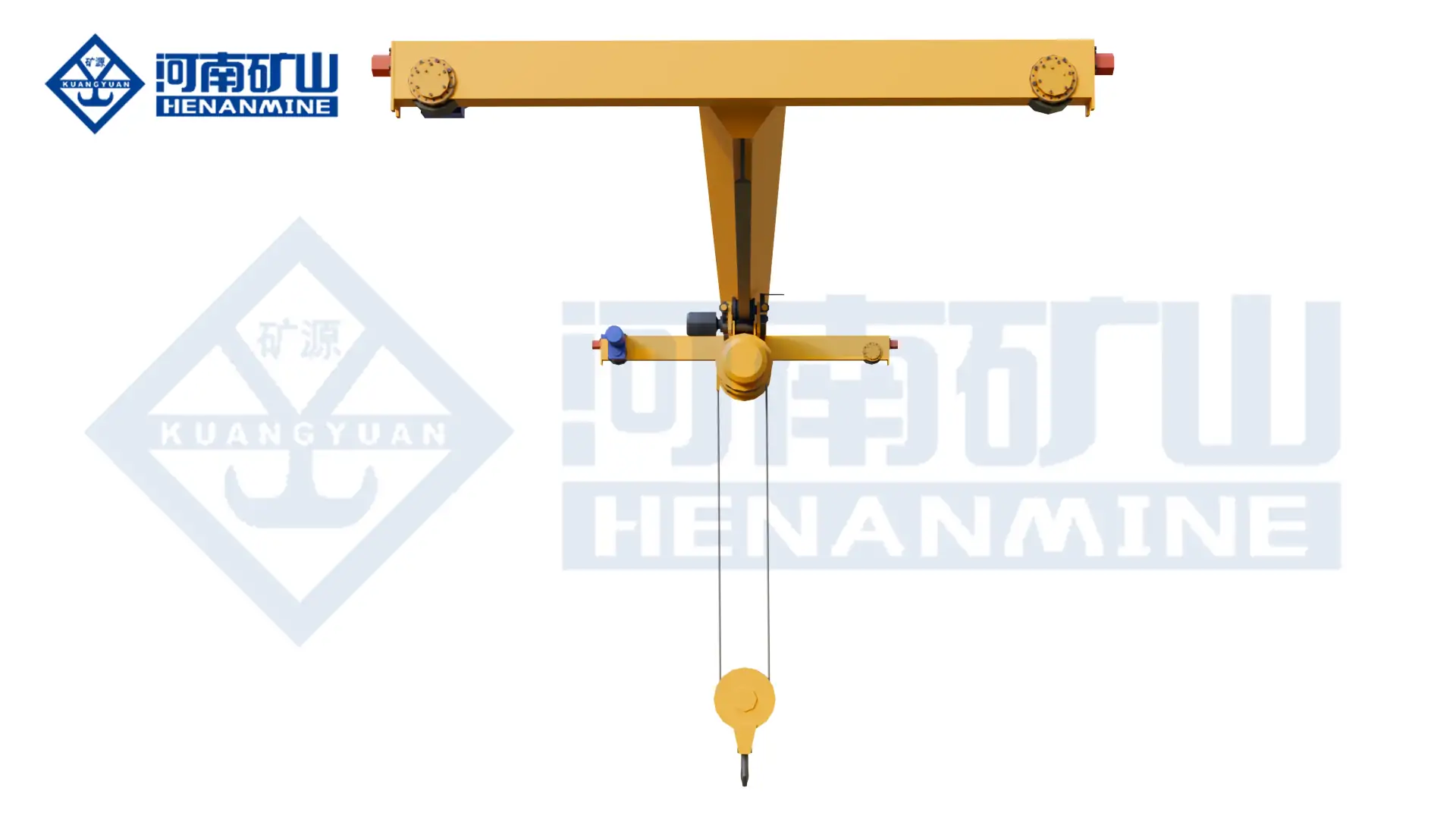
Single-Girder Overhead Crane
Cost-controlled top-running bridge with an electric hoist for general industrial lifting.
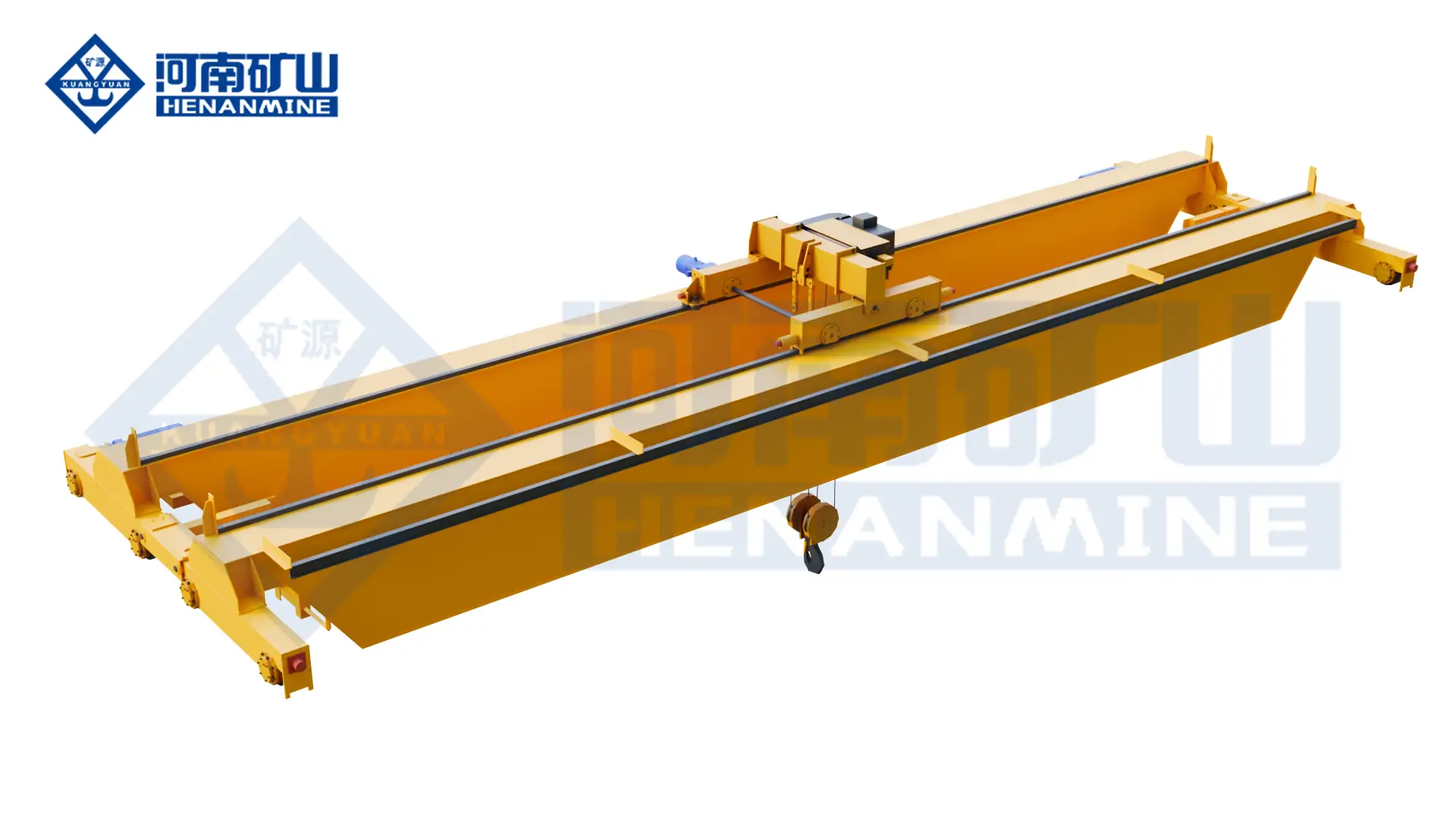
Double-Girder Overhead Crane
Two-girder bridge platform for higher capacity, longer span, demanding duty or process equipment.

Underhung Overhead Crane
Suspended bridge arrangement for compatible runway beams and verified building support.
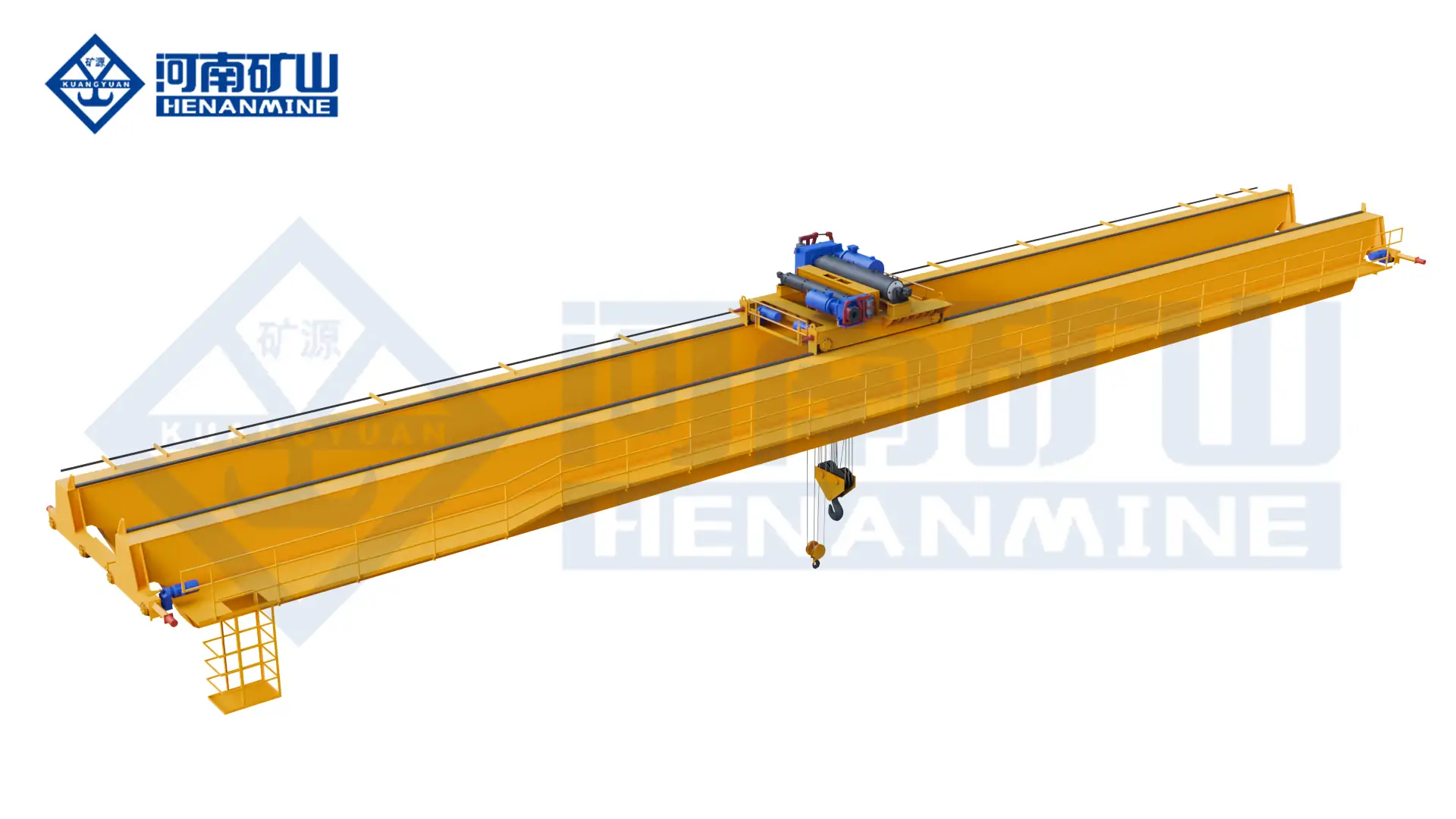
Explosion-Proof Overhead Crane
Dedicated lifting system for a formally defined hazardous gas or dust classification.

Metallurgical Bridge Crane
Heavy-duty process crane configured for hot-metal and severe metallurgical service.
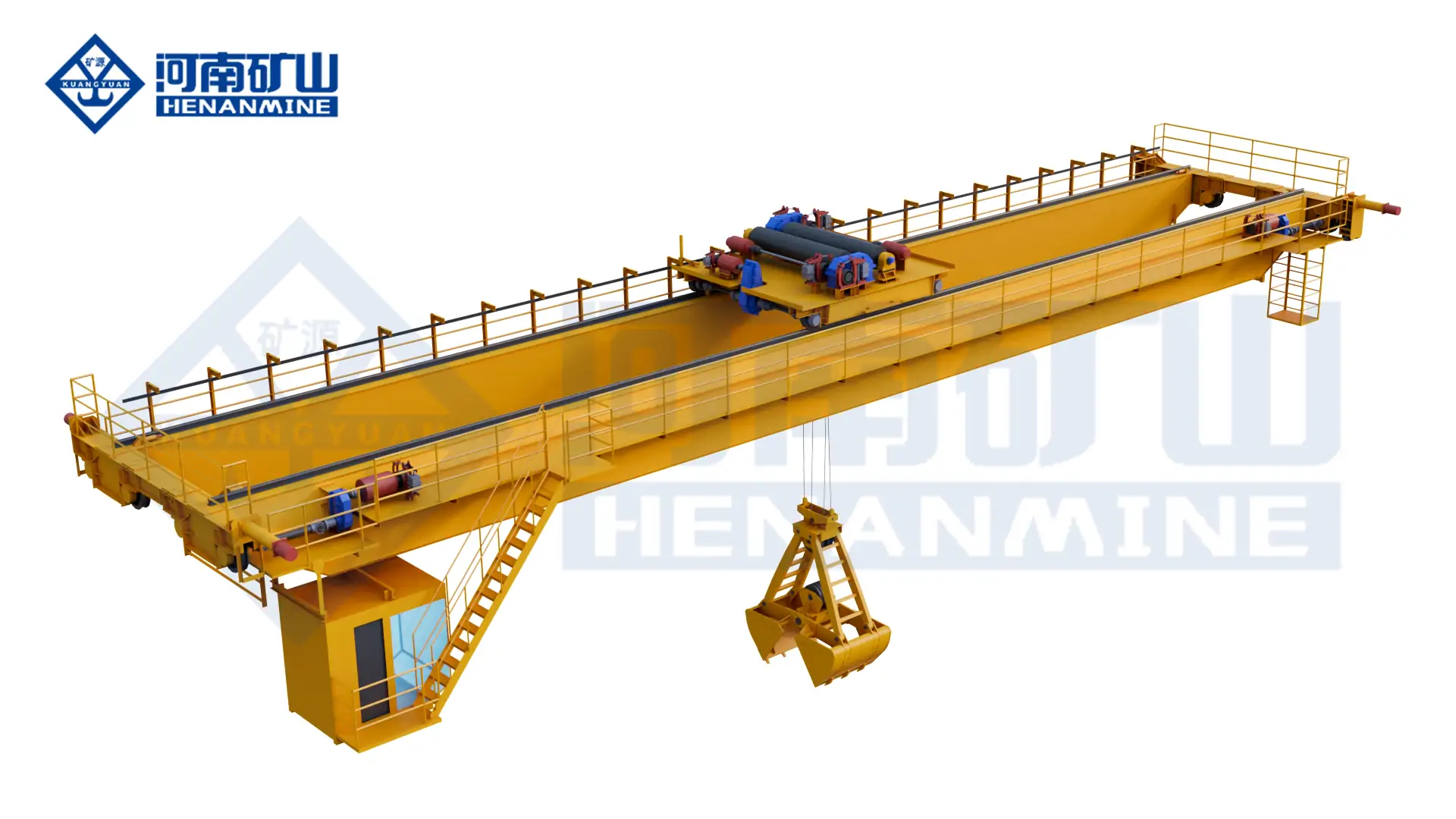
Intelligent Grab Overhead Crane
Grab-bucket and intelligent-control configuration for bulk material handling cycles.
Request an Overhead Crane Selection Proposal
Henan Mine Crane prepares project-specific proposals from the maximum gross load, lifting attachments, span, runway length, hook positions, building cross-section, operating cycle, controls, power supply, environment, destination and required supply boundary.