Engineering · Manufacturing · Project support
info@hnksglobal.comWhatsApp +86 18836207779 ↗

Blog

  • Generator Maintenance Cranes: Component Geometry and Removal Routes

    Generator Maintenance Cranes: Component Geometry and Removal Routes

    Selection guide

    Generator Maintenance Cranes: Component Geometry and Removal Routes

    Generator maintenance lifting requires the actual component and approved lifting method to be identified. Provide the load, lifting points and required transfer path so crane coverage and site access can be checked before an outage.
    Henan Mine CraneSelection guide · Updated 2026Crane selection, project scope and operating requirements
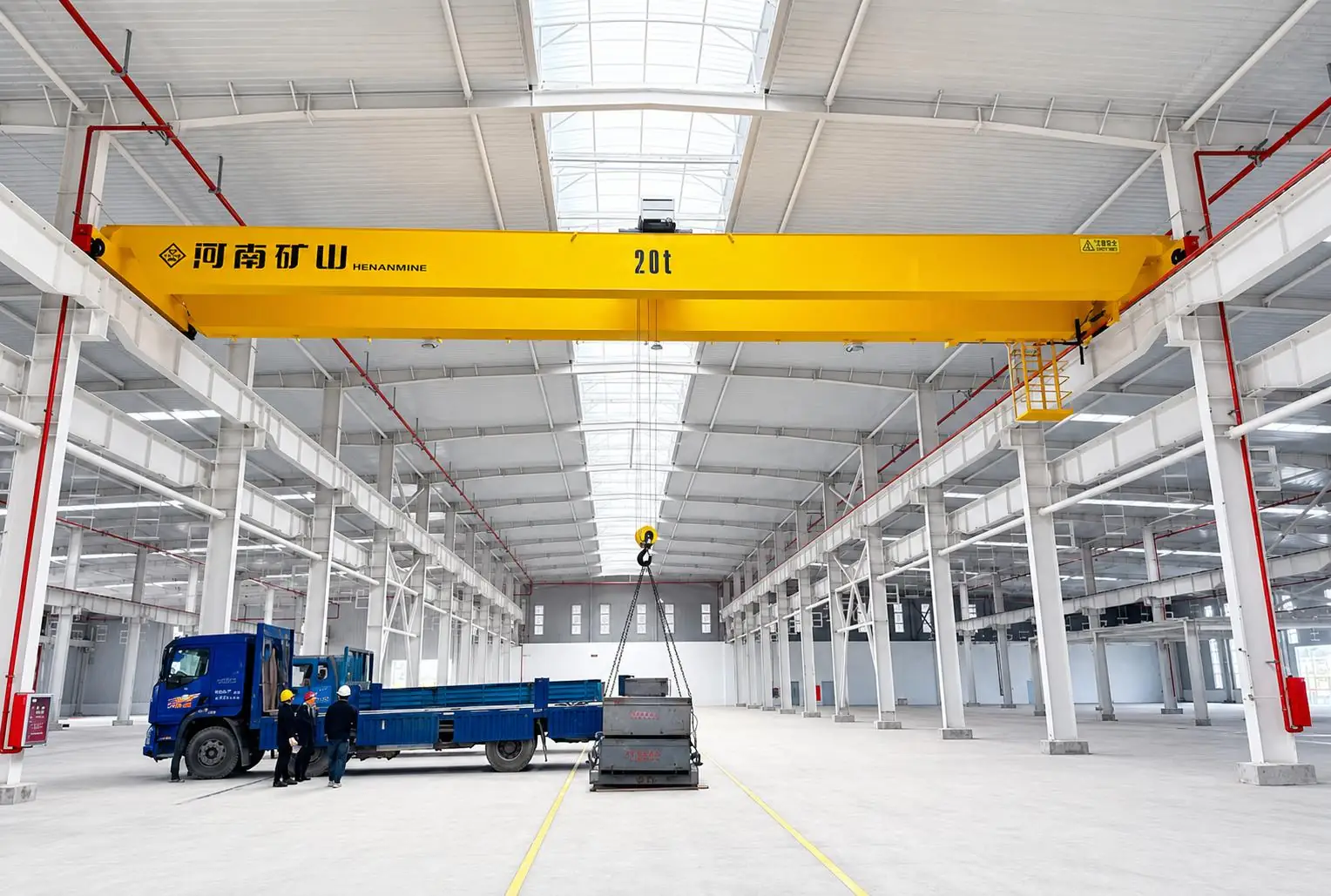
    Henan Mine Crane overhead crane inside a workshop bay
    Henan Mine Crane overhead crane inside a workshop bay
    Project planning notes

    Key points for this crane project.

    1. What Is a Generator Maintenance Crane?
    2. Generator Maintenance Applications
    3. Generator Maintenance Crane Selection Considerations
    Read the technical guide

    What Is a Generator Maintenance Crane?

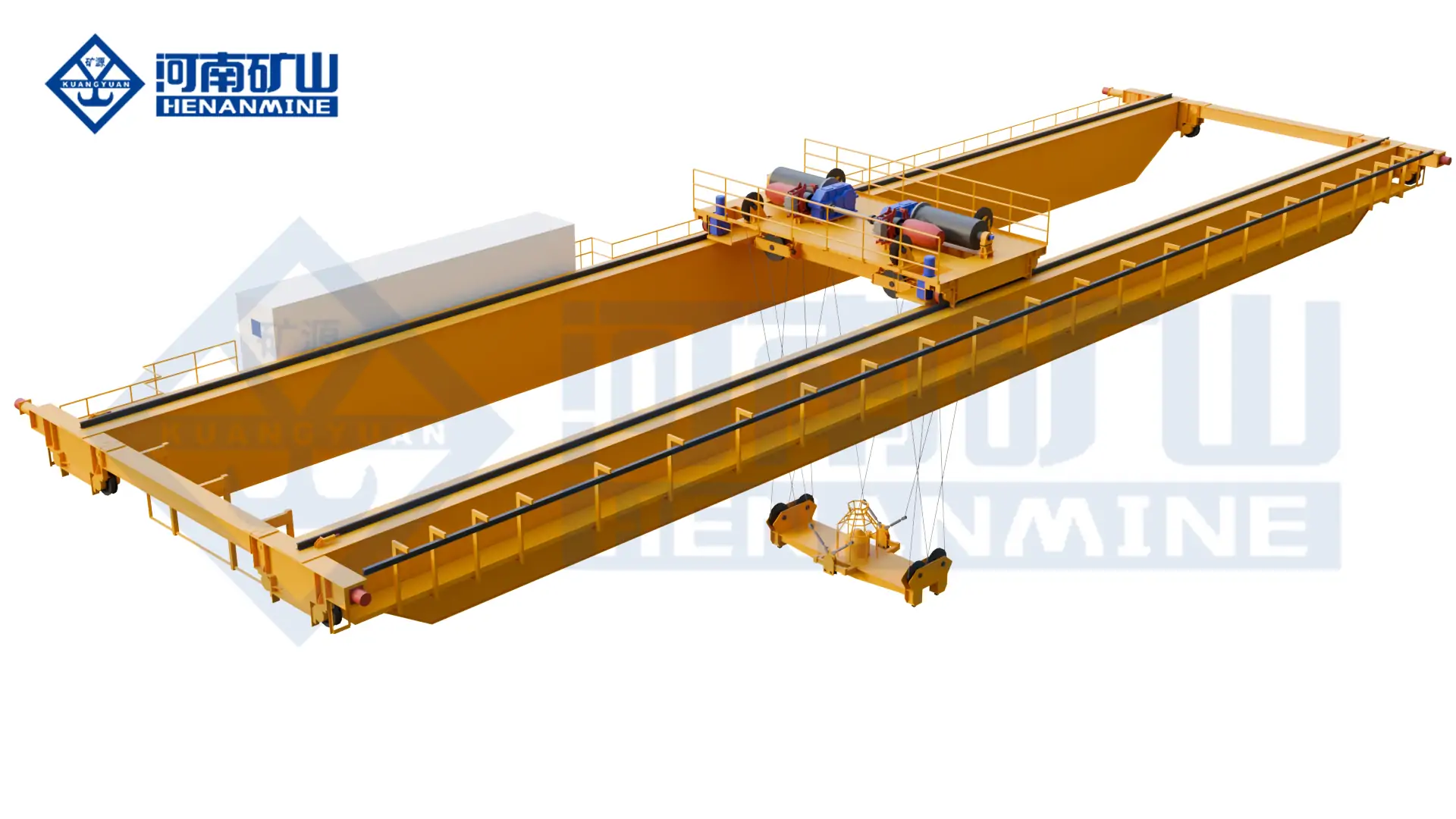
    A generator maintenance crane is the overhead lifting system used to remove and transfer heavy generator parts during a power-plant outage. It normally spans the turbine hall or hydropower machine hall and serves the unit and overhaul area. The governing load might be the complete rotor, a turbine component or, where replacement is planned, the stator. The overhaul strategy decides whether an exceptional stator lift belongs in the crane specification.

    Lifting beams, slings, shackles and other below-hook gear add weight and use headroom. Rotor withdrawal may also require a separate OEM-approved extraction frame or skid arrangement before the overhead hook can take the load. Put those steps on the drawing before ordering the crane.

    LiftInformation to obtainCrane implication
    Generator rotorAssembly mass, center of gravity, lifting points, extraction tooling and maintenance-stand location.Main-hook rating, vertical stroke, hook approach and clear travel path.
    Stator or generator-motor assemblyWhether removal is required, lifting-point reactions, spreader dimensions and allowable tilt.Potential high-capacity or synchronized lift; assess each hook and runway.
    Covers, bearings and auxiliariesIndividual masses, pickup locations and lifting frequency.An auxiliary hook or separate service hoist may suit routine jobs.

    Generator Maintenance Applications

    The crane should cover the actual dismantling, transfer and reassembly operations on the maintenance schedule. The rotor often needs a separate extraction tool before the bridge crane can lift it.

    OperationLifting route and equipmentCrane duty
    Rotor overhaulPick up the rotor from its approved tool or support, clear the unit, move to the service stand and return it.Verify hook access at both ends, rigging height, travel route and precise lowering.
    Stator or generator-motor replacementHandle the complete assembly only where the plant plan requires it and lifting points permit.Check total suspended mass, lift-point loads, hook spacing, runway and any synchronization.
    Bearings, covers and auxiliariesMove parts between the generator, laydown floor and service positions.Use an auxiliary hook or smaller service hoist where it offers better coverage.
    Future unit modernizationRemove replacement assemblies after surrounding pipes, platforms and cable routes are complete.Reserve hook approach and clearance for the fully built plant, not only the construction stage.

    Generator Maintenance Crane Selection Considerations

    A double-girder, top-running overhead crane is the usual starting point for a heavy generator lift. The number of hooks and their rated duties depend on how the actual component is supported.

    ArrangementSuitable liftCritical design check
    Main and auxiliary hooksHeavy rotor handling plus smaller covers, bearings and service components.State each hook’s rating and travel envelope separately. The auxiliary hook is not automatically a second lifting point for the main load.
    Two synchronized main hooksLarge assemblies with two engineered lifting points.Set hook-height difference, load-sharing, fault-response and test criteria.
    Two coordinated bridge cranesExceptional lifts supported by the runways and lift plan.Calculate each crane’s load throughout the motion; nameplate capacities cannot simply be added.
    Separate auxiliary crane or hoistRoutine work outside the heavy generator lift.Check its supports and coverage independently.

    The rated capacity and control scheme are established from approved component and rigging data.

    Generator Maintenance Crane Compared with Other Lifting Arrangements

    Compare the alternatives against the same rotor weight, lifting points, machine-hall drawing and laydown position.

    ArrangementCoverageWhen it fitsLimitation to check
    Main double-girder overhead craneFull turbine or machine-hall bayHeavy rotor and generating-unit liftsRunway strength, hook height and end approach
    Low-headroom heavy bridge craneFull bay in constrained underground hallLarge generator-motor assembly with restricted roof clearanceTrolley envelope and maintenance access
    Electric-hoist double-girder craneService or auxiliary baySmaller components within product ratingNot automatically suitable for primary rotor or stator lift
    Local electric hoistOne station or limited routeCovers, bearings, tools and small equipmentNo full-bay transfer capability

    Powerhouse Layout, Headroom and Existing Runway

    A crane can have enough rated capacity and still fail the lift. Check the rotor and lifting beam at the highest obstruction, hook position above the machine centerline, the route past platforms and pipework, and the floor area where the load will be set down.

    New powerhouse

    Freeze the crane envelope and wheel loads with the building design. Show rail elevation, hook approach, trolley height, walkway and equipment access on a coordinated general arrangement.

    Existing powerhouse

    Survey rails, runway beams and supports. The new bridge’s wheel loads, trolley positions and braking forces can differ from the old crane even at the same hook rating.

    Underground hydro hall

    Confirm the lift above the generator pit and roof-to-rail depth. A low-headroom arrangement can recover hook height, but it must still permit crane inspection and parts removal.

    Capacity and Technical Parameters

    Published Henan Mine Crane catalogue families include the QD hook bridge series below. These are model-family ratings, not preselected generator-maintenance packages. Span, lift, working class, speeds and wheel loads are confirmed against the particular powerhouse.

    QD hook bridge catalogue familySelection note
    QD 75/20–100/20Compare the heaviest suspended maintenance load and auxiliary work.
    QD 125/32–250/50Evaluate rotor or turbine assembly weight and the hall runway.
    QD 300/40–350/75Review major component lifting points, hook coverage and maintenance access.
    QD 400/80–450/80Confirm civil loads, erection access and acceptance scope.
    Project-specific high-capacity systemRequires a separate engineered configuration; not a catalogue QD rating.

    Power Station Project References

    Indonesia: two 120 t turbine-hall cranes

    The cranes handled generating equipment during construction. For future outages, the rotor weights and completed turbine-hall clearances determine the overhaul lifts each crane can perform.

    Pumped storage: 600 t low-headroom crane

    The low-headroom design addresses the confined powerhouse envelope. Its final maintenance duty is defined by the generator-motor lift schedule and powerhouse geometry.

    Hoisting, Control and Outage Reliability

    Low-speed handling

    State loaded hoisting and travel speeds for final approach, plus acceleration and stopping behavior. A VFD is a control choice; the acceptance requirement is stable movement with the specified load.

    Load protection

    Identify limits, overload protection, brakes and emergency stop in the technical schedule. Define how a suspended load is held and recovered after power loss.

    Two-point lifts

    Agree on maximum hook-height difference, load-share limits, alarms and loaded testing before manufacture.

    Outage readiness

    Provide access to brakes, ropes, drives, wheels and controls. Match critical spares and functional checks to the outage plan.

    Generator Maintenance Crane Price and Budget

    There is no reliable list price for a complete generator-maintenance installation. Public manufacturer tables can support an early equipment budget if their listed span and lift remain visible. These figures are independent manufacturers’ reference prices, not Henan Mine Crane quotations.

    Sources: DGCRANE, “Top Running Overhead Crane Price”; Kino Cranes, “Overhead Crane Price”. Public tables checked October 2026. These examples have different specifications and are not like-for-like bids.

    Scope, Inspection and Acceptance

    A useful quotation can be checked against the lift plan and building, not just a capacity label.

    • General arrangement with rail elevation, hook limits, trolley envelope, walkways and maintenance access.
    • Main and auxiliary ratings, load spectrum, duty basis, speeds, motors and brakes.
    • Maximum wheel loads and horizontal actions for the civil engineer.
    • Control description and measurable synchronization criteria, if applicable.
    • Inspection plan, factory witness points, commissioning method and acceptance records.
    • Scope exclusions, delivery term, installation responsibility, manuals, spares and warranty.

    Apply the standards and statutory inspection requirements of the installation country. Final load-test and acceptance values belong in the signed specification and approved procedure.

    Request a Generator Maintenance Crane Quotation

    Send the powerhouse plan and section with the maintenance lift schedule. For a replacement crane, include the existing crane and runway drawings and recent structural inspection records.

    Load and lift plan

    Component mass and dimensions; lifting gear; center of gravity; pickup points; extraction sequence; overhaul-floor route; one-hook or two-point handling.

    Building and project data

    Rail span and length; rail elevation; hook height; obstructions; runway capacity; power supply; destination country; delivery and outage dates.

    Send drawings for a quotation Contact Henan Mine Crane

    Generator Maintenance Crane FAQ

    How do I size the crane for a generator rotor?

    Use the maximum suspended weight under the agreed rating basis, including the rotor assembly and lifting gear. Confirm pickup geometry, vertical stroke and the route to the maintenance stand. MW output does not determine crane capacity.

    Is a 100 t main hook enough for a 100 t component?

    Not on component mass alone. The lifting beam and rigging add weight; the design rules and lift procedure establish the allowable load. Obtain the complete suspended-load schedule first.

    Can two cranes lift a generator stator together?

    Yes, when a qualified plan verifies the load on each crane and lifting point throughout the operation, plus uneven loading, differential motion, runway reactions, communication and a stop or fault response.

    Can the original runway be reused?

    Possibly, after structural and condition checks against the new crane’s wheel loads and horizontal forces. A different trolley layout can require strengthening even when the span is unchanged.

    What lead time should the project allow?

    Set separate dates for drawing approval, fabrication, factory inspection, dispatch, runway readiness, erection and commissioning. The schedule depends on the approved configuration and destination.

    Related Henan Mine Crane Products

    600 t Pumped-Storage Crane

    Low-headroom heavy lifting in a hydro machine hall.

    Dual-Trolley Overhead Crane

    Two trolley positions for an engineered lifting task.

    Discuss the crane arrangement for your project.

    Submit the component lift schedule, rigging masses and powerhouse drawings. Henan Mine Crane can develop the hook arrangement, runway interface, acceptance scope and itemized commercial proposal.

    Related crane configurations

    Explore crane product families and technical parameters ↗

    Updated 2026 · Henan Mine Crane
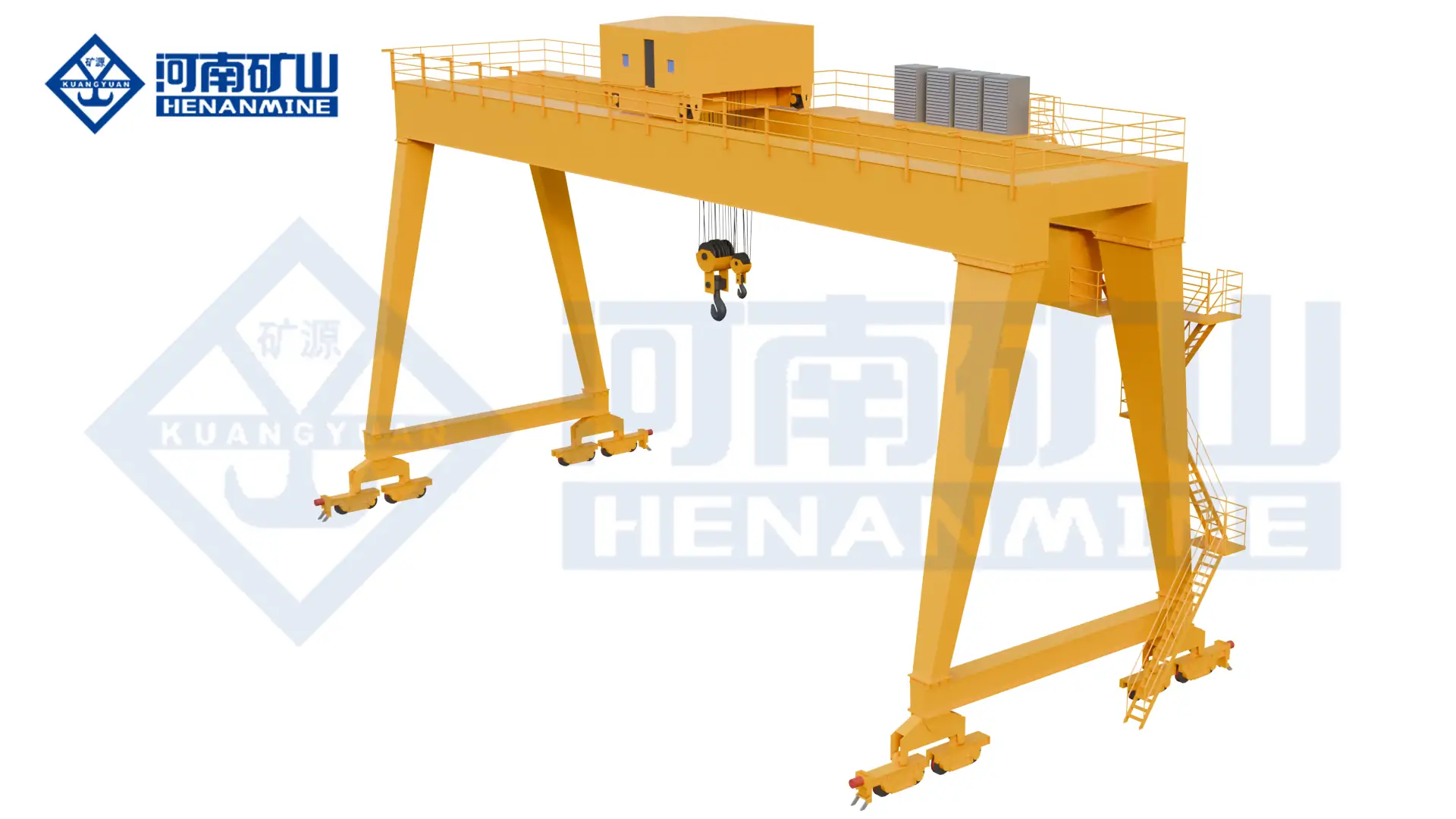
  • Shipbuilding Gantry Crane

    Shipbuilding Gantry Crane

    Gantry Cranes / Henan Mine Crane

    Shipbuilding Gantry Crane

    Lift ship blocks and large assemblies with a shipbuilding gantry configured for the dock and production layout. Define lifting points, trolley functions and any block-turning sequence before selection.

    Lifting capacity100 t, 200 t, 250 t, 450 t
    Span40 – 97 m
    Working classA7 – A8
    Technical specifications

    Define the total suspended load, duty and site conditions for your project.

    Technical specifications

    Check the load.
    Plan the configuration.

    Parameters and equipment options are matched to the application and confirmed in the technical proposal.

    Discuss your configuration
    Lifting Capacity100 t, 200 t, 250 t, 450 t
    Span40 – 97 m
    Max Lifting Height35 – 70 m
    Working ClassA7 – A8
    Working Temperature Range-20℃ ~ 40℃
    Lifting Speed0.5 – 10 m/min (Main Hoist); 1 – 20 m/min (Auxiliary Hoist)
    Traveling Speed5 – 30 m/min (Trolley Travel); 10 – 40 m/min (Long Travel)
    Power Source3-phase AC 380V 50Hz(400V/415V customizable)
    Control ModeCab control, remote operation, wireless remote control

    Final parameters, dimensions, wheel loads and supply scope follow the approved project specification.

    Application & operation

    Matched to the handling task.

    Ship block assembly

    Coordinate several lifting points around large fabricated sections.

    Dry-dock operations

    Match gantry coverage and lifting height to the dock and vessel assembly sequence.

    Selection considerations

    Start with your operating conditions.

    01

    Load & lifting arrangement

    Specify block gross weight, lifting points and centre of gravity. Include lifting-appliance weight and the required lifting positions.

    02

    Site & available space

    Provide dock span, lifting height, travel coverage and assembly access. Coordinate the installation interfaces with the available site drawings.

    03

    Duty & control sequence

    Define turning or coordinated lifting sequence, duty and coastal conditions. Identify the required movements and control interfaces in the enquiry.

    Configuration comparison

    Compare related lifting arrangements.

    Crane arrangementHandling configuration
    Shipbuilding Gantry CraneLift ship blocks and large assemblies with a shipbuilding gantry configured for the dock and production layout. Define lifting points, trolley functions and any block-turning sequence before selection.
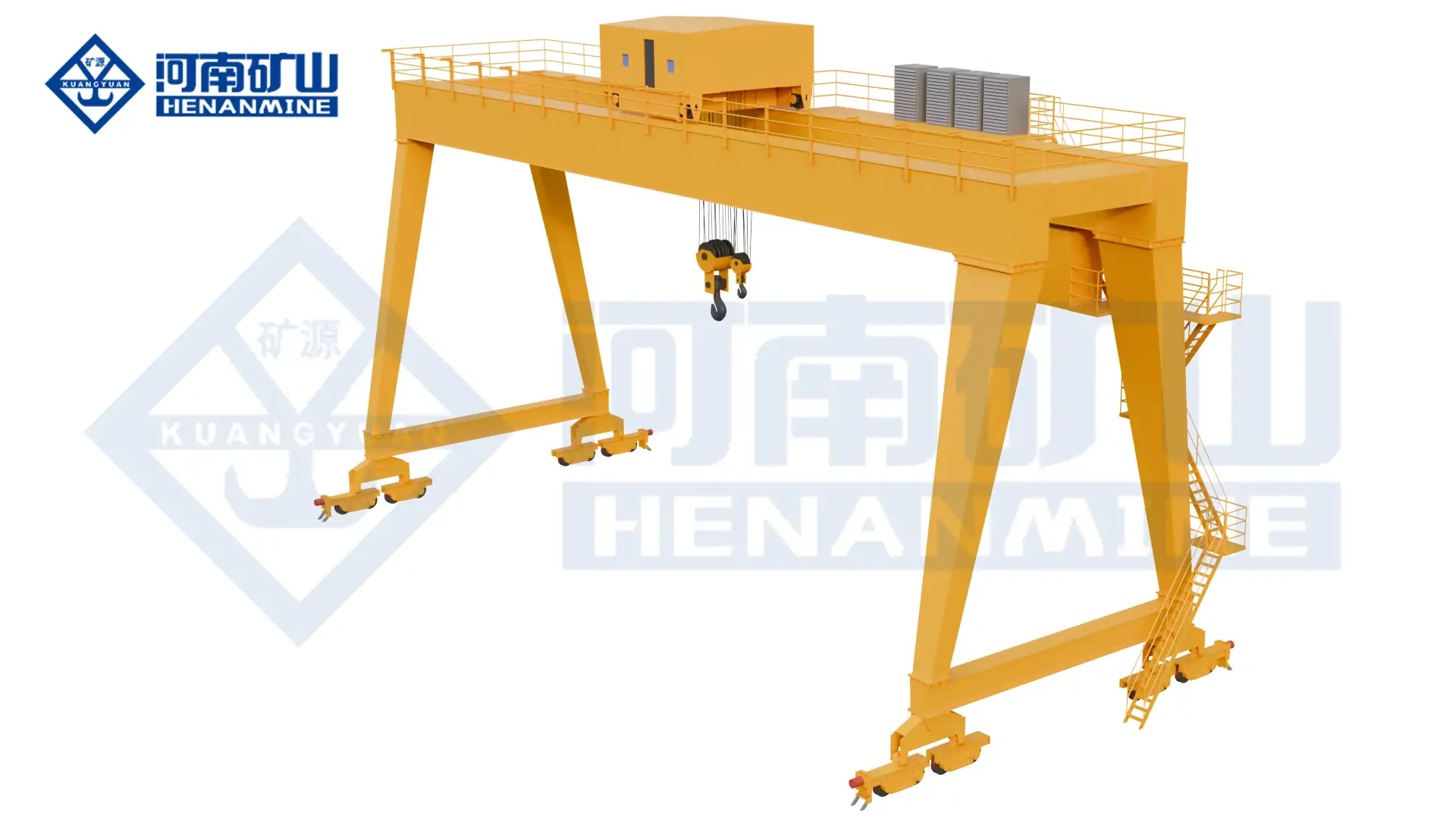
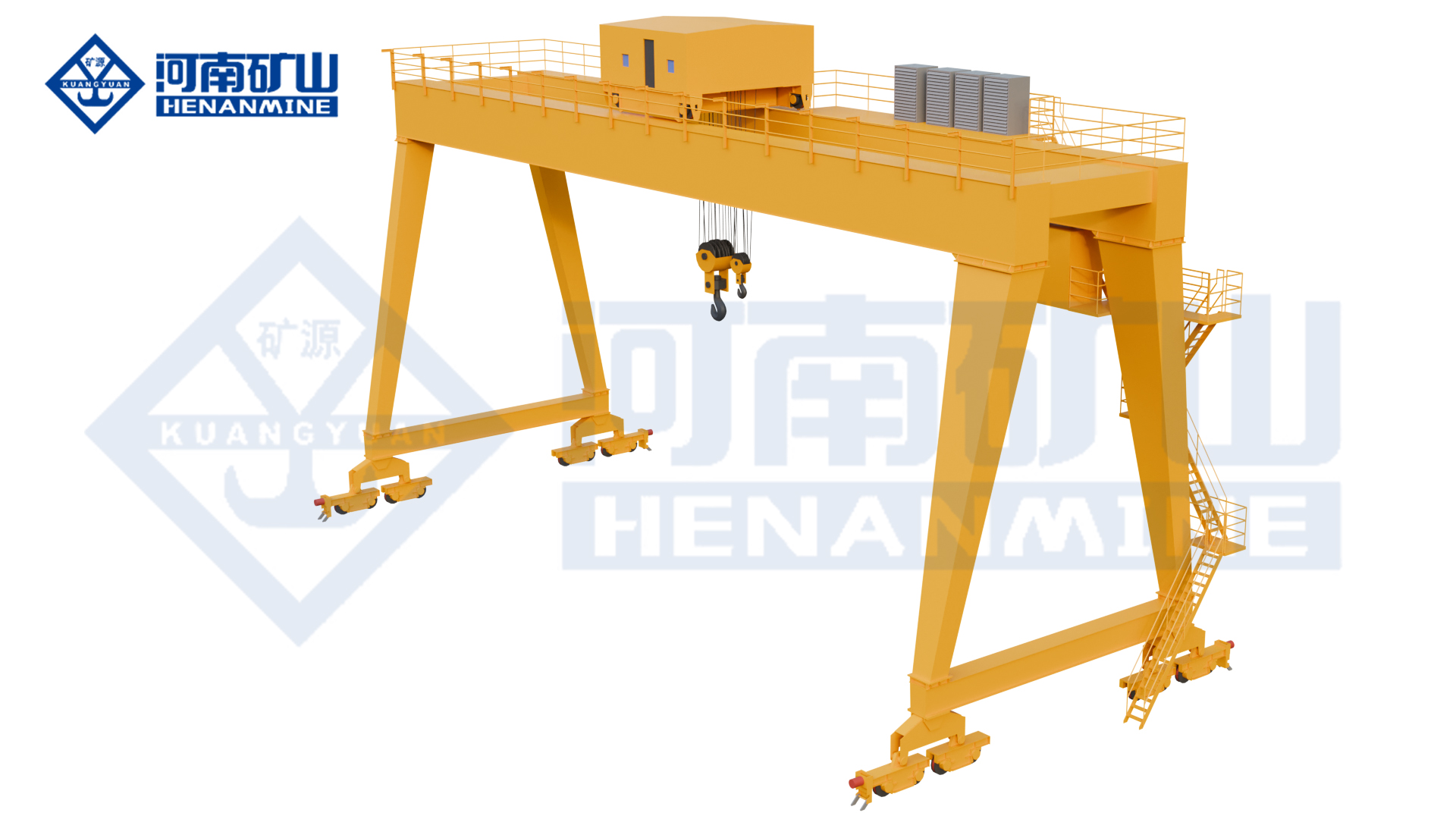
    Double Girder Gantry CraneHandle machinery, steelwork and other heavy loads with a double-girder gantry crane. The lifting mechanism, runway, legs and any cantilevers are selected for the complete yard operation.
    Double Girder Truss Gantry CraneUse a double-girder truss gantry for yard or construction handling with the lifting points specified for the load. Define trolley quantity, coordinated movements and the transport or assembly constraints.
    Double Girder Electric Hoist Gantry CraneCover an outdoor handling area with a double-girder gantry and electric-hoist trolley. Select the load rating, leg geometry, cantilever arrangement and travel coverage around the yard layout.

    Operating protection & lifecycle support

    Plan beyond the equipment.

    01

    Operating protection

    Define travel limits, overload protection, traffic clearances and the outdoor operating limits for the proposed arrangement.

    02

    Installation & commissioning

    Agree rail foundations, runway alignment, wheel-load interfaces, erection access, electrical connections and commissioning responsibilities.

    03

    Inspection & spares

    Plan inspection and maintenance of trolley mechanisms, coordinated-control systems and structural connections. Agree service access, documentation and the required spare-parts scope.

    Questions before the order

    Clarify the details
    that shape the crane.

    What information is needed for a shipbuilding gantry crane quotation?+

    Provide block gross weight, lifting points and centre of gravity; dock span, lifting height, travel coverage and assembly access; and turning or coordinated lifting sequence, duty and coastal conditions. Include drawings and the project destination when available.

    What is needed for a block-turning proposal?+

    Provide the block drawing, weight, lifting-point locations and the complete turning sequence. The proposal defines trolley functions, permitted load combinations and movement constraints.

    What installation and support scope should be agreed?+

    Agree rail foundations, runway alignment, wheel-load interfaces, erection access, electrical connections and commissioning responsibilities. Specify the documentation, training and spare-parts support needed for the project.

    Related equipment

    Explore the alternatives.

    Let’s discuss your project

    The right crane starts
    with your lifting task.

    Share block gross weight, lifting points and centre of gravity, together with your site layout and operating cycle.

    info@hnksglobal.com
  • Ship-To-Shore Crane (STS)

    Ship-To-Shore Crane (STS)

    Port Cranes / Henan Mine Crane

    Ship-To-Shore Crane (STS)

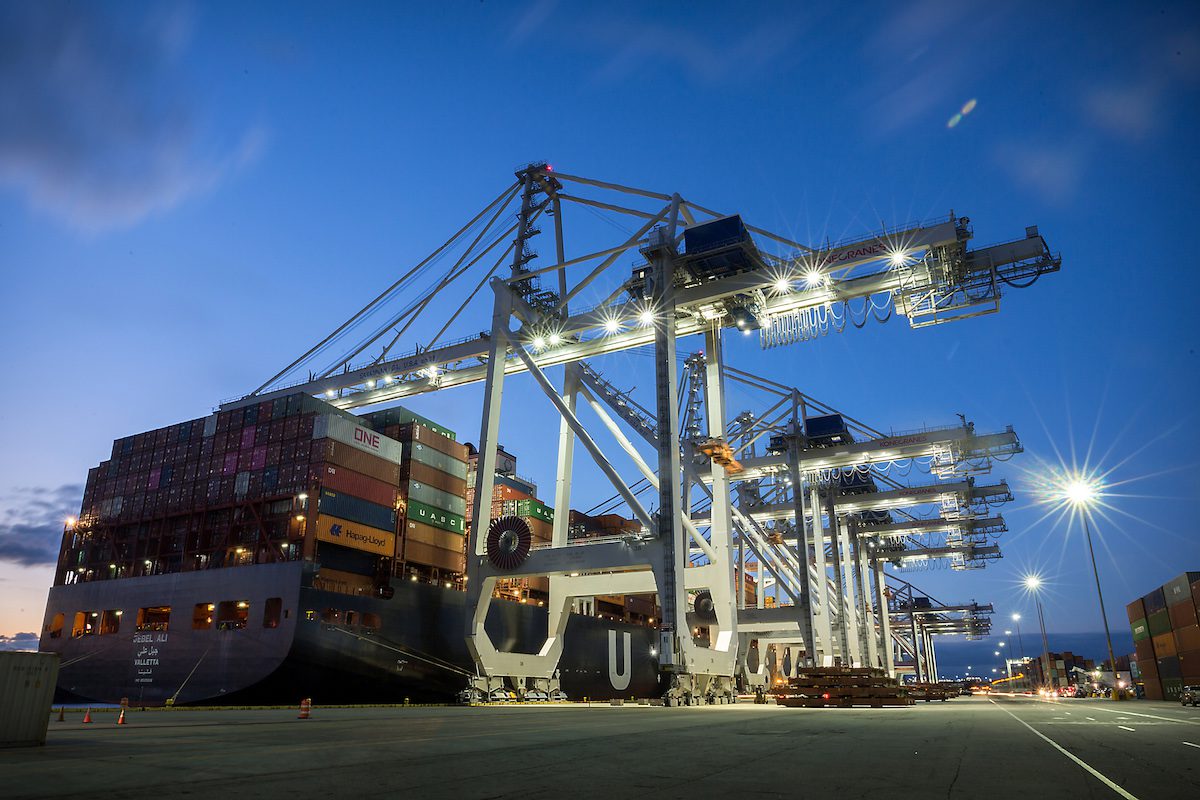
    Transfer containers between ship and quay with an STS crane selected for the berth and vessel envelope. Define the lifting-appliance arrangement, outreach, rail position and handling cycle.

    Lifting capacity40-65 80-120 t
    Boom outreach40-72 m
    Working classA8
    Technical specifications

    Define the total suspended load, duty and site conditions for your project.

    Technical specifications

    Check the load.
    Plan the configuration.

    Parameters and equipment options are matched to the application and confirmed in the technical proposal.

    Discuss your configuration
    Rated Lifting Capacity40-65 80-120 t
    Boom Outreach40-72 m
    Lifting Height (Above Rail)25-45 m
    Lifting Height (Below Rail)15-30 m
    Hoisting Speed60-150 m/min
    Trolley Speed120-240 m/min
    Gantry Travel Speed20-45 m/min
    Working ClassA8
    Working Temperature-20 ~ +50
    Protection ClassIP54/IP55
    Control SystemPLC + VFD
    Power Supply380-690V, 50/60Hz

    Final parameters, dimensions, wheel loads and supply scope follow the approved project specification.

    Application & operation

    Matched to the handling task.

    Container berths

    Coordinate the spreader and boom envelope with the declared vessel range.

    Quay transfer operations

    Match trolley coverage and clearances to waterside and landside handling positions.

    Selection considerations

    Start with your operating conditions.

    01

    Load & lifting arrangement

    Specify container sizes, spreader mode and gross suspended loads. Include lifting-appliance weight and the required lifting positions.

    02

    Site & available space

    Provide vessel envelope, boom outreach, quay rails and clearances. Coordinate the installation interfaces with the available site drawings.

    03

    Duty & control sequence

    Define handling cycle, operating winds and terminal control interfaces. Identify the required movements and control interfaces in the enquiry.

    Configuration comparison

    Compare related lifting arrangements.

    Crane arrangementHandling configuration
    Ship-To-Shore Crane (STS)Transfer containers between ship and quay with an STS crane selected for the berth and vessel envelope. Define the lifting-appliance arrangement, outreach, rail position and handling cycle.
    Rail-Mounted Container Gantry CraneHandle containers along a fixed yard runway with a rail-mounted container gantry crane. Coordinate the spreader, stacking geometry, rail layout and transfer positions around the terminal operation.
    Rubber Tyred Gantry (RTG)Use a rubber-tyred gantry for heavy handling where the operating layout requires a mobile tyre-supported arrangement. Define the load, steering modes, route and ground conditions for the project.
    Portal Harbor CraneHandle cargo with a portal harbor crane configured for the working radius and lifting appliance. Define hook or grab operation, quay interfaces, outreach and the operating cycle.

    Operating protection & lifecycle support

    Plan beyond the equipment.

    01

    Operating protection

    Define the permitted load cases, operating limits, travel protection and lifting-appliance interlocks for the declared cargo-handling modes.

    02

    Installation & commissioning

    Coordinate runway or pavement interfaces, operating clearances, power arrangements, assembly access and the terminal commissioning requirements.

    03

    Inspection & spares

    Plan inspection and maintenance of boom and trolley mechanisms, spreader interlocks and quay travel equipment. Agree service access, documentation and the required spare-parts scope.

    Questions before the order

    Clarify the details
    that shape the crane.

    What information is needed for a ship-to-shore crane (sts) quotation?+

    Provide container sizes, spreader mode and gross suspended loads; vessel envelope, boom outreach, quay rails and clearances; and handling cycle, operating winds and terminal control interfaces. Include drawings and the project destination when available.

    How should STS lifting capacity be stated?+

    Specify the container and spreader operating mode and whether the rating is stated under the spreader or includes the lifting appliance. Define any single, twin or other proposed handling modes separately.

    What installation and support scope should be agreed?+

    Coordinate runway or pavement interfaces, operating clearances, power arrangements, assembly access and the terminal commissioning requirements. Specify the documentation, training and spare-parts support needed for the project.

    Related equipment

    Explore the alternatives.

    Let’s discuss your project

    The right crane starts
    with your lifting task.

    Share container sizes, spreader mode and gross suspended loads, together with your site layout and operating cycle.

    info@hnksglobal.com
  • Gantry Crane Suppliers: Compare the Proposed Site Solution

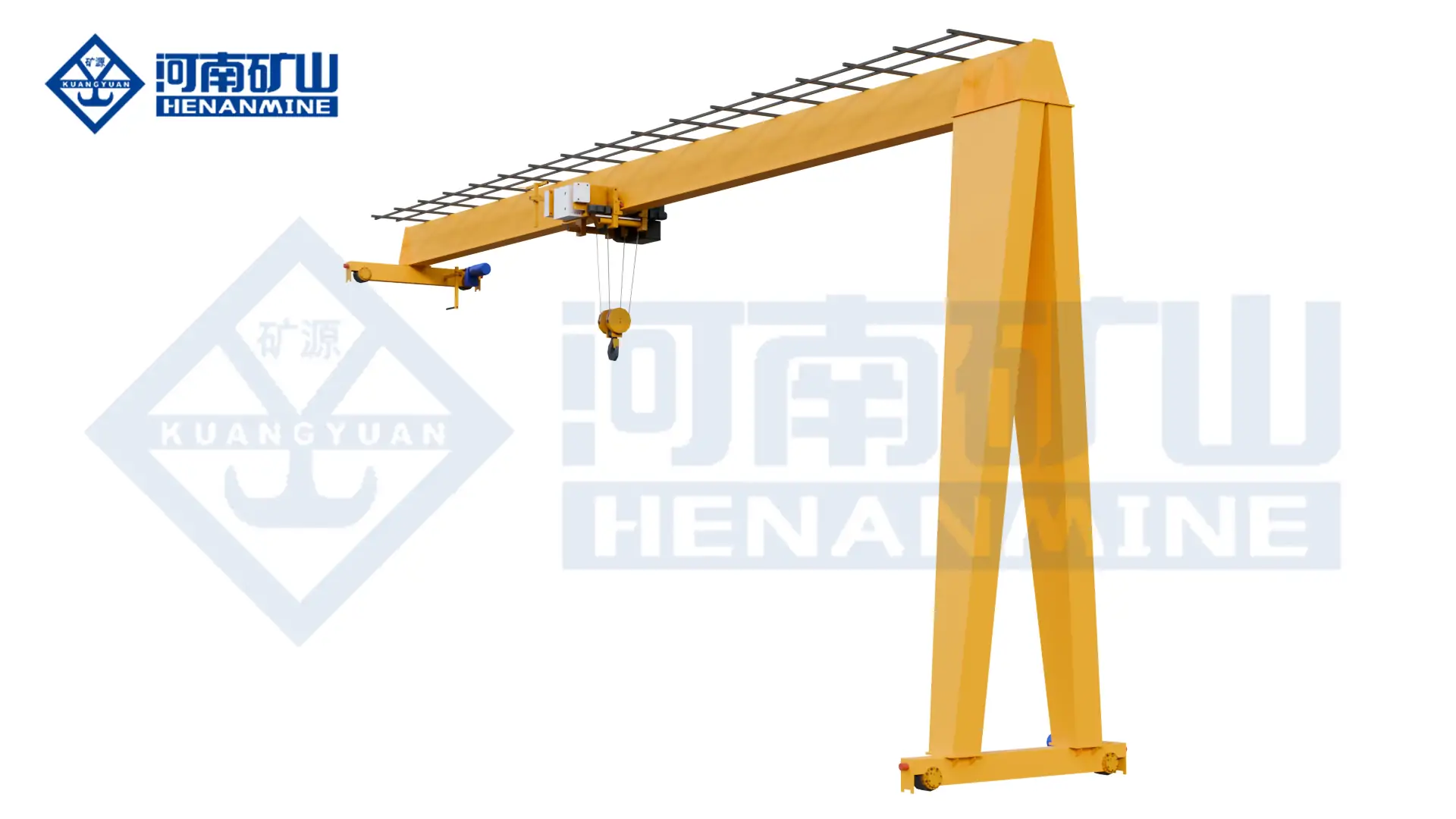
    Gantry Crane Suppliers: Compare the Proposed Site Solution

    Selection guide

    Gantry Crane Suppliers: Compare the Proposed Site Solution

    A supplier's offer should explain how the crane fits the handling task and supporting site. Review the load, travel arrangement, drawings and installation boundary before comparing price and delivery terms.

    Henan Mine CraneSelection guide · Updated 2026Crane selection, project scope and operating requirements
    Henan Mine Crane overhead crane inside a workshop bay
    Henan Mine Crane overhead crane inside a workshop bay
    Project planning notes

    Key points for this crane project.

    1. What an Engineered Gantry Crane Supplier Must Provide
    2. Gantry Crane Product Range
    3. Engineering and Manufacturing Scope
    Read the technical guide

    What an Engineered Gantry Crane Supplier Must Provide

    A gantry crane supplier must convert the handling requirement into a complete load path. The suspended load passes through the hook or attachment, hoist, trolley, bridge girders, legs, end carriages, wheels, rails and foundations or operating surface. Capacity is only one input; span, lifting height, duty, wind, travel length, skew control, ground conditions and site interfaces establish the actual system.

    A commercially complete proposal identifies the crane configuration, rated capacity, span, lift, speeds, working class, power supply, control method, environment, structural reactions, safety functions and governing acceptance basis. It also separates crane equipment from rails, foundations, runway power, freight, unloading, erection, commissioning, test weights and statutory inspection. This scope definition allows quotations from different gantry crane companies to be normalized.

    Manufacturing capability is evaluated through approved design inputs, material traceability, welding control, dimensional inspection, mechanism selection, electrical documentation, factory testing and packing plans. Project capability is demonstrated through completed installations with comparable capacity, span, duty or operating environment—not through a general product catalogue alone.

    Henan Mine Crane supplies standard industrial gantry platforms and project-specific heavy-lift systems. Published product-family ranges support preliminary selection, while the contract specification, approved general arrangement, calculation basis and signed scope schedule control the delivered crane.

    Gantry Crane Product Range

    Single-Girder Gantry Cranes

    Electric-hoist systems for general production, warehouses and yards.

    Double-Girder Gantry Cranes

    Hoist-trolley or process-trolley systems for higher capacity, longer span, demanding duty and improved hook height.

    Semi-Gantry Cranes

    One side travels on an elevated runway and the opposite side travels on a ground rail. The arrangement serves building edges or production areas requiring partial independent support.

    Truss Gantry Cranes

    Open-web bridge construction reduces wind area and can suit long outdoor spans, construction yards and precast operations.

    Rubber-Tired Gantry Cranes

    Mobile systems provide flexible yard travel without fixed longitudinal rails. Steering, pavement loading, power system, stability and operating route require project-specific coordination.

    Container and Heavy-Lift Gantry Cranes

    RMG, RTG, shipbuilding and custom heavy-lift systems combine process-specific spreaders or lifting beams, higher working duty, coordinated drives and advanced control functions.

    Published capacity and span ranges are not universal combinations. Long spans, high lifts, high wind exposure, severe duty and special attachments require structural and mechanism calculations before a model is confirmed.

    Engineering and Manufacturing Scope

    A gantry crane is engineered as a coordinated structure rather than assembled from isolated components. Bridge stiffness, leg geometry, wheel base, trolley position, wind load, braking forces and rail tolerances influence wheel reactions and travel behavior. The electrical and control design must match the selected mechanisms, duty cycle and operating environment.

    Manufacturing records can include material identification, welding procedures, welder qualifications, nondestructive examination where specified, bridge camber and span inspection, wheel-alignment records, gearbox and brake information, electrical diagrams, coating checks and factory functional tests. Required records and witness points are agreed before production.

    Structural Engineering

    Capacity, span, lift, duty, wind, trolley reactions, fatigue, deflection, transport splits and erection method define bridge, leg and end-carriage design.

    Mechanism Selection

    Hoist, trolley and gantry travel motors, brakes, gearboxes, wheels, drums, ropes and limits are selected for load spectrum, speed and operating hours.

    Electrical Integration

    Panels, VFDs, conductor or cable systems, pendant, radio, cabin or PLC controls are coordinated with voltage, enclosure, alarms and interlocks.

    Quality Planning

    Inspection stages, acceptance criteria, hold points, records and release documentation are linked to the contract specification and agreed standards.

    Transport Engineering

    Shipping dimensions, lifting points, packing protection, container or break-bulk strategy and assembly sequence are developed before dispatch.

    Site Interface

    Rail, foundation, pavement, power, access, erection equipment, test weights and local inspection responsibilities are defined in the scope schedule.

    How to Evaluate Gantry Crane Suppliers

    The lowest initial price can create additional cost when structural interfaces, freight, site services or acceptance documents are omitted.

    Confirm that the proposed configuration is a proven family for the required capacity, span, duty and environment. A portable gantry and a process gantry require different engineering capability.

    The quotation should state load, span, lift, working class, speeds, wind condition, power, attachment, control philosophy and structural assumptions.

    Request evidence for structural fabrication, welding, machining, assembly, electrical production, inspection and functional testing relevant to the proposed crane.

    Equipment, rails, foundations, electrification, freight, installation, commissioning, training and inspection must be listed as included, optional or excluded.

    General arrangement, wheel loads, electrical diagrams, manuals, certificates, inspection records, packing lists and acceptance results require defined submission stages.

    A useful completed project shares meaningful technical conditions such as heavy capacity, long span, outdoor exposure, process duty or advanced control.

    Erection sequence, lifting equipment, site access, rail survey, alignment, temporary works and test-load arrangements should be established before shipment.

    Commissioning response, remote support, recommended spares, wear components, troubleshooting information and maintenance training support long-term availability.

    Gantry Crane Configurations Compared

    Configuration is selected by load path, operating area and duty. The comparison below provides a commercial and technical starting point before project calculations are completed.

    ConfigurationTypical ApplicationPrincipal Advantage
    Single-girder rail-mountedWorkshops, yards, maintenance and general productionLower bridge mass and efficient electric-hoist package
    Double-girder rail-mountedHeavy fabrication, precast, steel and high-duty handlingHigher capacity, stiffness, hook height and trolley flexibility
    Semi-gantryBuilding edge, mixed indoor/outdoor or partial runway supportUses one elevated runway while preserving floor coverage
    Truss gantryOutdoor long-span yards, construction and precast workReduced wind area and efficient outdoor bridge form
    Rubber-tired gantryFlexible yards and container or precast movementTravel route flexibility without fixed longitudinal rails
    Rail-mounted container gantryContainer stacking and terminal operationsHigh stacking productivity and automated control potential
    Shipbuilding or heavy-lift gantryBlock assembly, bridge construction and large-module handlingSynchronized high-capacity handling over large working envelopes

    Published ranges describe product platforms and do not confirm every capacity-span-duty combination. The approved technical schedule and general arrangement determine the contracted configuration.

    Gantry Crane Supplier Qualification Checklist

    A pre-award review should convert broad claims into project deliverables. The following checklist supports technical clarification, commercial comparison and factory assessment.

    Review AreaEvidence to RequestAcceptance QuestionContract Deliverable
    Company and project capabilityRelevant product catalogue, organization, comparable installations and project teamHas the proposed team delivered a crane with comparable engineering demands?Named contacts, responsibility matrix and project schedule
    Design controlDesign-input sheet, preliminary layout, wheel loads and technical deviationsAre all stated assumptions compatible with the site and process?Approved technical specification and general arrangement
    Structural fabricationMaterial controls, welding procedures, welder records and inspection planAre critical welds, dimensions and tolerances controlled?Material and fabrication inspection records
    Mechanisms and electricalSelected makes, data sheets, duty ratings, circuit concept and protection listDo motors, brakes, gearboxes, ropes, controls and enclosures match the operating cycle?Component schedule and electrical drawings
    Factory acceptanceTest procedure, witness plan and calibrated inspection equipmentWhich functions and records are verified before release?Factory test and release package
    Packing and logisticsPacking method, shipping splits, lifting points and preservation planCan the equipment reach the site without damage or unplanned rework?Packing list, marks and handling instructions
    Site completionErection method, commissioning procedure, test-load plan and training contentAre labor, tools, access, power and test weights assigned?Site acceptance and handover records
    Lifecycle supportRecommended spares, maintenance schedule and response arrangementCan routine and critical components be identified and replaced efficiently?Manuals, spare-parts list and service contacts

    Technical Specification and Quotation Data

    An accurate gantry crane quotation requires measurable operating data. The gross suspended load includes the payload, lifting beam, spreader, grab, magnet, slings and every component below the hook or trolley. Future load growth and exceptional handling conditions should be declared during the design stage.

    Load and Attachment

    Maximum and normal load, dimensions, center of gravity, lifting points, attachment mass, load temperature and any rotating or guided handling requirement.

    Geometry and Coverage

    Span between rail centers, lifting height, rail length, cantilevers, hook approaches, rail elevation, ground clearance and obstructions.

    Operating Cycle

    Lifts per hour, load spectrum, travel distances, shifts, annual hours, production peaks and consequence of downtime.

    Motion Performance

    Main and micro speeds, acceleration, positioning tolerance, anti-sway, synchronized lifting, steering or skew-control requirements.

    Site Conditions

    Indoor or outdoor location, wind, temperature, humidity, dust, corrosion, seismic basis, altitude, hazardous classification and drainage.

    Power and Controls

    Voltage, frequency, phase, available supply, cable route, pendant, radio, cabin, PLC, network and remote diagnostic requirements.

    Civil and Rail Interface

    Rail section, foundation or pavement data, allowable reactions, tolerances, end stops, storm anchors and travel-lane restrictions.

    Delivery and Acceptance

    Destination, Incoterm, packing, unloading, installation, inspection authority, test weights, training and required documentation language.

    Manufacturing, Inspection and Quality Records

    Inspection requirements should be proportional to crane duty and project risk. A standard industrial unit and a heavy-lift process crane require different witness plans, but both need traceability from approved specification to completed equipment. Deviations and concessions should be closed before dispatch.

    The inspection and test plan identifies review, witness and hold points. Records are compiled into the final data book with approved drawings, component information, factory results, packing documentation and site acceptance records as contracted.

    Project StageTypical ControlTypical RecordRelease Basis
    Design approvalInput review, calculations, general arrangement, interfaces and technical deviationsApproved specification, drawing register and interface scheduleEngineering approval before fabrication release
    Material and weldingMaterial identification, procedures, qualifications, weld preparation and specified examinationMaterial records, weld logs and examination reportsInspection-plan acceptance
    Dimensional inspectionSpan, camber, diagonals, leg geometry, wheel alignment and connection fit-upDimensional report and assembly marksCompliance with approved tolerances
    Mechanism and electrical checksMotor, brake, gearbox, rope, limit, panel, wiring and protection verificationComponent data, settings and functional-test sheetsApproved component schedule and test procedure
    Factory acceptanceNo-load functions, controls, alarms, interlocks and document review within available setupFactory acceptance and punch-list closureRelease authorization
    Site acceptanceRail survey, assembly, alignment, insulation, limits, no-load and specified load testsCommissioning, load-test and handover reportsSigned site acceptance criteria

    Export Packing, Shipping and Logistics

    Export logistics should be engineered before fabrication is completed. Girder and leg shipping lengths, lifting points, container dimensions, port restrictions, inland route limits and site crane capacity influence structural splits and assembly joints. Protective packing must match open-deck, break-bulk, container or long-distance road transport exposure.

    Shipping Split Plan

    Bridge, legs, end carriages, platforms and rails are divided into transportable sections with identified mass, center of gravity and connection sequence.

    Export Protection

    Machined surfaces, electrical equipment, motors, ropes and loose components receive appropriate wrapping, sealing, bracing and corrosion protection.

    Marking and Inventory

    Package numbers, assembly marks, packing lists and photographs support customs clearance, unloading and controlled site inventory.

    Freight Basis

    Incoterm, departure point, destination, container or break-bulk basis, insurance and abnormal-load permits are stated in the commercial offer.

    Unloading Requirements

    Package weights, lift points, spreader needs, storage surface and weather protection are issued before arrival.

    Site Preservation

    Storage duration, periodic inspection, moisture control, coating repair and mechanism preservation are defined when erection is delayed.

    Installation, Commissioning and Lifecycle Support

    Site completion begins with rail or travel-path verification. Gauge, straightness, elevation, joint condition, end stops, foundation interfaces and electrical supply are checked before crane assembly. Erection proceeds under an approved method statement with appropriate lifting equipment, temporary stability and exclusion zones.

    Pre-Installation Review

    Confirm civil completion, rail survey, access, laydown area, lifting equipment, labor, power, permits and environmental conditions.

    Mechanical Erection

    Assemble bridge and legs, install wheel groups, platforms, hoist trolley, rails or cables, buffers, anchors and safety devices.

    Electrical Commissioning

    Verify supply, grounding, phase sequence, motor direction, brake settings, limits, overload protection, alarms and control logic.

    Functional and Load Testing

    Complete no-load checks, progressive functional tests and contract or statutory load testing with calibrated instruments and approved weights.

    Operator and Maintenance Training

    Cover controls, inspections, abnormal conditions, lockout, lubrication, brakes, ropes, wheels, rails and record keeping.

    Parts and Service Planning

    Define commissioning spares, operating spares, wear parts, critical components and the information required for accurate replacement.

    Project Case: 700 t Gantry Crane for a Yangtze River Bridge Project

    The project required a custom heavy-lift system rather than a standard catalogue configuration.

    The procurement significance extends beyond rated capacity. A project of this scale requires controlled structural design, transportable fabrication modules, coordinated lifting mechanisms, synchronized travel, defined wind limits, engineered foundations or rails, erection planning and a project-specific inspection and commissioning program.

    Comparable heavy-lift enquiries should include component mass and geometry, lifting points, center of gravity, required travel path, assembly sequence, wind conditions, allowable ground reactions, synchronization tolerance and acceptance authority. These inputs establish the safe operating envelope and contract scope.

    Gantry Crane Price and Commercial Scope

    Public market positions vary widely because portable gantries, equipment-only industrial cranes and installed systems represent different supply boundaries. The table supports preliminary budget classification; a binding price requires project dimensions, duty, destination and an agreed scope.

    Budget CategoryTypical BasisPrincipal Cost Variables
    Full engineered gantryTwo-leg structural system within the stated project basisCapacity, span, lift, runway, electrification, installation and testing
    Heavy-lift, process, container or automated gantryCustom engineered crane and project servicesStructure, mechanisms, automation, attachment, wind, logistics, erection and acceptance

    Quotation normalization: capacity, span, lift, duty, speeds, hoist or trolley, bridge and legs, rails, electrification, controls, documentation, freight, installation, testing and taxes should be compared line by line. Equipment price and total installed cost are not interchangeable.

    Indicative market positions were checked in September 2026 and are intended for preliminary capital planning. They are not fixed Henan Mine Crane quotations. Currency, steel cost, destination, specification and site conditions can change the final contract value.

    Request for Quotation and Frequently Asked Questions

    A complete enquiry should include gross suspended load, load dimensions, attachment, span, lift, travel length, cantilevers, working cycle, speeds, control method, indoor or outdoor environment, wind basis, rail or pavement information, power supply, destination, required Incoterm and site-service boundary.

    Technical Data

    Capacity, load spectrum, span, lift, duty, speeds, attachment, hook coverage, wind, temperature and required control functions.

    Engineering and Manufacturing Scope

    Site Interface

    Travel length, rails, foundations, pavement, power, obstructions, erection access, ground pressure and available site lifting equipment.

    Request for Quotation and Frequently Asked Questions

    Compliance and Documentation

    Destination requirements, inspection authority, document language, approval stages, witness points and acceptance testing.

    Commercial Boundary

    Freight term, unloading, installation, commissioning, training, test weights, local labor, taxes and requested spare parts.

    How should gantry crane suppliers be compared?

    Total installed scope provides a stronger comparison than headline price.

    Which gantry crane type is suitable for general industrial service?

    Single-girder rail-mounted cranes commonly suit moderate capacity and general duty. Double-girder systems support higher capacity, longer span, demanding duty, better hook height and specialized trolleys. Site and process data determine the final selection.

    What information is required for an accurate price?

    Rated and normal load, span, lift, travel length, duty, speeds, control, environment, rail or pavement data, power, destination and supply boundary establish the principal cost basis.

    Does a gantry crane quotation include rails and foundations?

    Rails, foundations, pavement work, electrical feed, freight, erection and test weights are included only when expressly listed. The offer should identify every included, optional and excluded item.

    Can a gantry crane operate outdoors?

    Outdoor cranes require declared operating and parked wind conditions, corrosion protection, drainage, environmental enclosures, storm anchors or rail clamps where applicable, and a safe operating procedure.

    What documents should be supplied with the crane?

    Typical documents include approved drawings, wheel loads, electrical diagrams, manuals, component schedules, inspection records, certificates, packing lists and factory or site acceptance results.

    How is installation responsibility divided?

    The contract assigns rail and civil readiness, unloading, erection equipment, labor, supervision, wiring, test weights, permits, statutory inspection and final handover. The installation method should be agreed before dispatch.

    How long does a custom gantry crane project take?

    Schedule depends on engineering approval, material procurement, capacity, span, control complexity, inspection points, shipping route and site readiness. A contract schedule should show drawing approval, manufacture, testing, dispatch and commissioning milestones.

    Related Gantry Crane Products

    Each product platform serves a distinct load, span, duty and travel arrangement. Final model selection follows the approved project specification.

    Single-Girder Gantry Crane

    Efficient electric-hoist gantry for workshops, material yards, maintenance and general production.

    Double-Girder Gantry Crane

    High-capacity two-girder platform for demanding duty, longer spans and specialized trolley arrangements.

    Double-Girder Electric-Hoist Gantry Crane

    Two-girder bridge combined with electric-hoist lifting for industrial handling and maintenance service.

    Semi-Gantry Crane

    Mixed elevated and ground-running support for building edges and partially covered production areas.

    Truss Gantry Crane

    Open-web structure for outdoor yards, construction work and long-span material handling.

    L-Type Offset Gantry Crane

    Offset-leg arrangement providing side approach and cantilever handling for long or bulky materials.

    Discuss the crane arrangement for your project.

    Submit the gross load, span, lifting height, travel length, duty, speed, attachment, operating environment, rail or pavement information, power supply, destination and required delivery boundary. Henan Mine Crane will prepare a configuration-based technical and commercial proposal.

    Related crane configurations

    Explore crane product families and technical parameters ↗

    Updated 2026 · Henan Mine Crane
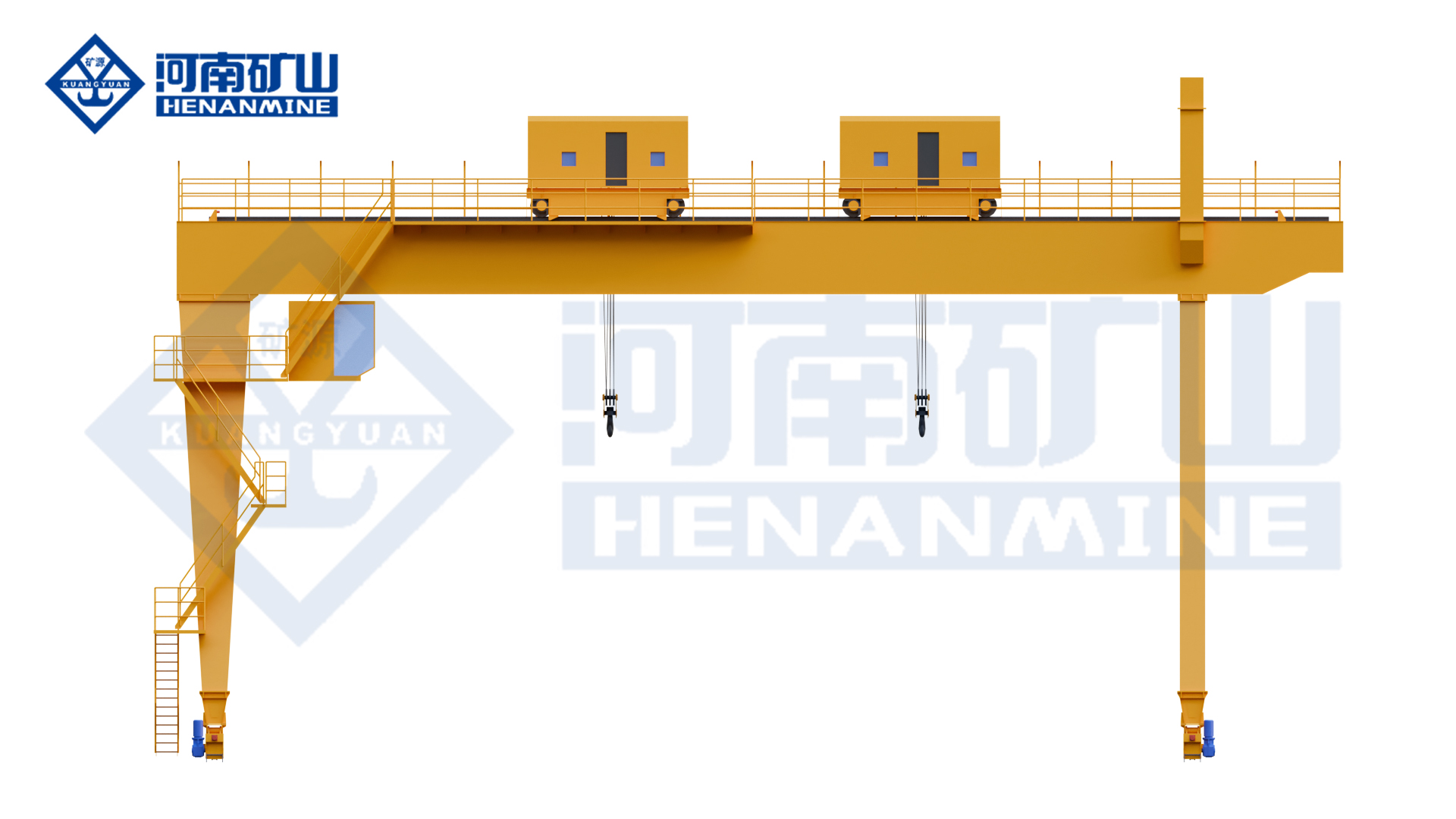
  • Double-Girder Semi-Gantry Crane

    Double-Girder Semi-Gantry Crane

    Gantry Cranes / Henan Mine Crane

    Double-Girder Semi-Gantry Crane

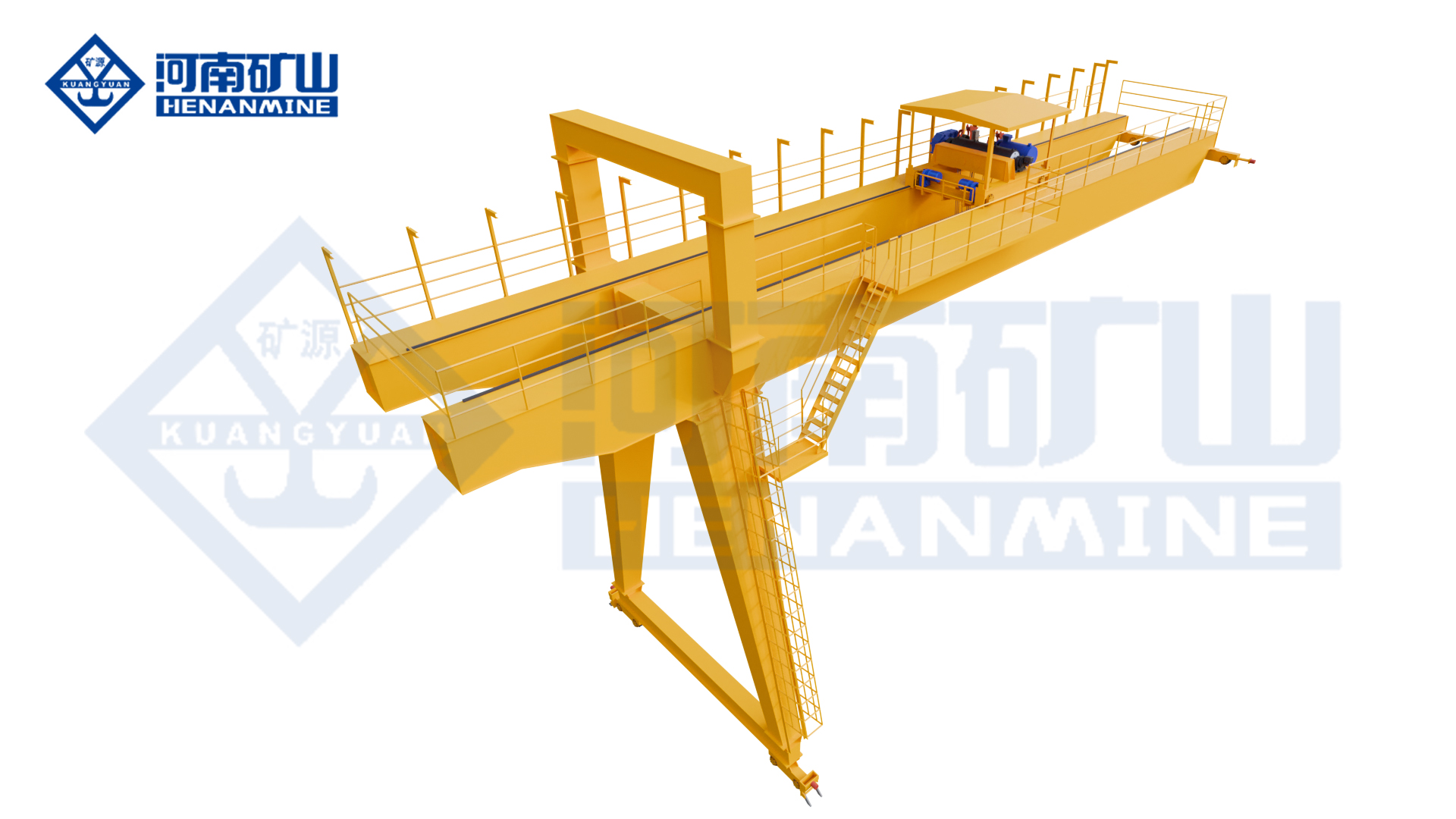
    Cover a workshop edge or yard with a double-girder semi-gantry arrangement. One side uses an elevated runway while the leg-supported side travels on a ground rail, coordinated with site access.

    Lifting capacity3 – 20 t
    Span5 – 30 m
    Working classA3 – A6
    Technical specifications

    Define the total suspended load, duty and site conditions for your project.

    Technical specifications

    Check the load.
    Plan the configuration.

    Parameters and equipment options are matched to the application and confirmed in the technical proposal.

    Discuss your configuration
    Lifting Capacity3 – 20 t
    Span5 – 30 m
    Lifting Height6 – 18 m
    Working ClassA3 – A6
    Working Temperature Range-20℃ ~ 40℃
    Lifting Speed0.33 – 8 m/min
    Traveling Speed5 – 30 m/min(Long Travel); 2 – 20 m/min(Trolley Travel)
    Control ModeGround pendant, cab control, wireless remote control
    Protection ClassIP54(Electrical Components)

    Final parameters, dimensions, wheel loads and supply scope follow the approved project specification.

    Application & operation

    Matched to the handling task.

    Workshop-side handling

    Extend lifting coverage along a building edge or adjacent working area.

    Local material transfer

    Coordinate the elevated and ground-level runways with loading positions and traffic.

    Selection considerations

    Start with your operating conditions.

    01

    Load & lifting arrangement

    Specify load, lifting appliance and required hook coverage. Include lifting-appliance weight and the required lifting positions.

    02

    Site & available space

    Provide elevated runway, ground rail, building reactions and leg clearance. Coordinate the installation interfaces with the available site drawings.

    03

    Duty & control sequence

    Define operating cycle, traffic separation and control requirements. Identify the required movements and control interfaces in the enquiry.

    Configuration comparison

    Compare related lifting arrangements.

    Crane arrangementHandling configuration
    Double-Girder Semi-Gantry CraneCover a workshop edge or yard with a double-girder semi-gantry arrangement. One side uses an elevated runway while the leg-supported side travels on a ground rail, coordinated with site access.
    Single Girder Semi-Gantry CraneExtend lifting coverage along a workshop or yard with a single-girder semi-gantry. Coordinate the elevated runway, ground-travelling leg and electric-hoist arrangement with the working area.
    Double Girder Electric Hoist Gantry CraneCover an outdoor handling area with a double-girder gantry and electric-hoist trolley. Select the load rating, leg geometry, cantilever arrangement and travel coverage around the yard layout.
    Double Girder Gantry CraneHandle machinery, steelwork and other heavy loads with a double-girder gantry crane. The lifting mechanism, runway, legs and any cantilevers are selected for the complete yard operation.

    Operating protection & lifecycle support

    Plan beyond the equipment.

    01

    Operating protection

    Define travel limits, overload protection, traffic clearances and the outdoor operating limits for the proposed arrangement.

    02

    Installation & commissioning

    Agree rail foundations, runway alignment, wheel-load interfaces, erection access, electrical connections and commissioning responsibilities.

    03

    Inspection & spares

    Plan inspection and maintenance of elevated runway interfaces, ground-level travel drives and trolley equipment. Agree service access, documentation and the required spare-parts scope.

    Questions before the order

    Clarify the details
    that shape the crane.

    What information is needed for a double-girder semi-gantry crane quotation?+

    Provide load, lifting appliance and required hook coverage; elevated runway, ground rail, building reactions and leg clearance; and operating cycle, traffic separation and control requirements. Include drawings and the project destination when available.

    Which runway interfaces must be checked?+

    Provide both runway elevations, rail sections, support details and the ground travel route. Crane reactions, alignment and leg clearance must be coordinated across the two sides.

    What installation and support scope should be agreed?+

    Agree rail foundations, runway alignment, wheel-load interfaces, erection access, electrical connections and commissioning responsibilities. Specify the documentation, training and spare-parts support needed for the project.

    Related equipment

    Explore the alternatives.

    Let’s discuss your project

    The right crane starts
    with your lifting task.

    Share load, lifting appliance and required hook coverage, together with your site layout and operating cycle.

    info@hnksglobal.com
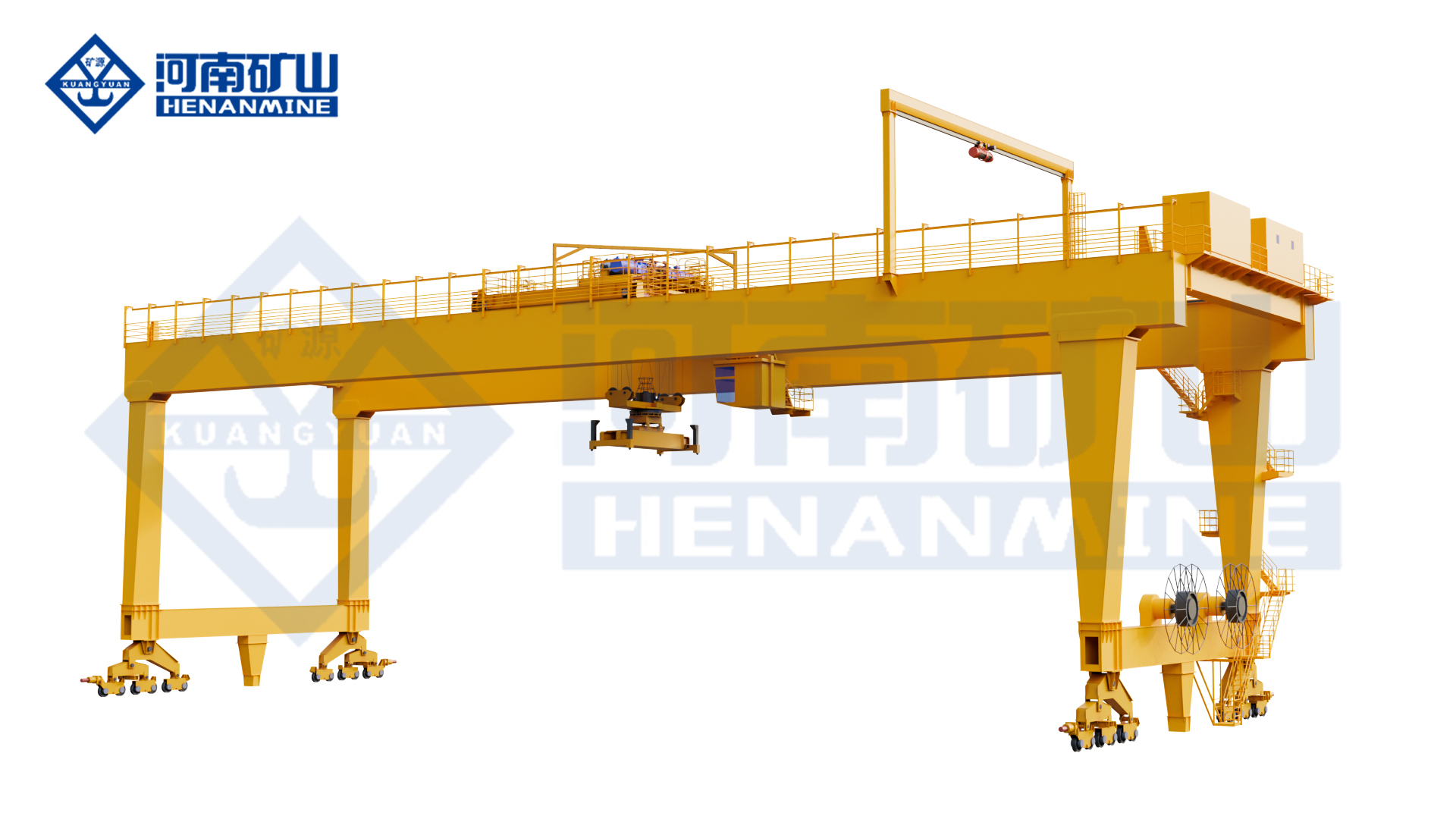
  • Rubber Tyred Gantry (RTG)

    Rubber Tyred Gantry (RTG)

    Port Cranes / Henan Mine Crane

    Rubber Tyred Gantry (RTG)

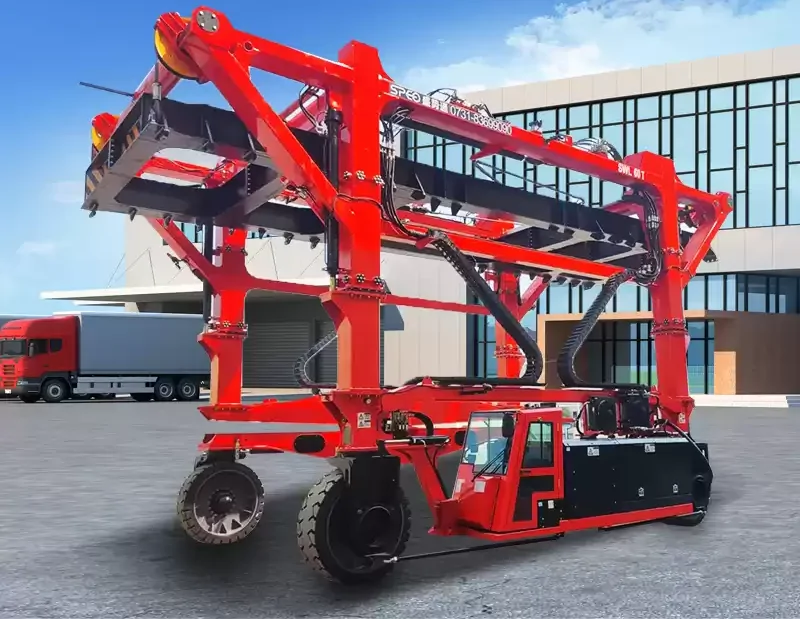
    Use a rubber-tyred gantry for heavy handling where the operating layout requires a mobile tyre-supported arrangement. Define the load, steering modes, route and ground conditions for the project.

    Lifting capacity20t – 100t
    Span5m – 30m
    Working classA6 – A8
    Technical specifications

    Define the total suspended load, duty and site conditions for your project.

    Technical specifications

    Check the load.
    Plan the configuration.

    Parameters and equipment options are matched to the application and confirmed in the technical proposal.

    Discuss your configuration
    Rated Lifting Capacity20t – 100t
    Span5m – 30m
    Lifting Height6m – 30m
    Lifting Speed0.5m/min – 6m/min
    Travel Speed5m/min – 25m/min
    Steering ModeStraight, lateral, diagonal, in-situ rotation
    Working ClassA6 – A8
    Protection LevelIP55 (IP65 optional)
    Site operating conditionsDeclare climate, wind exposure and permitted operating limits for the proposed configuration

    Final parameters, dimensions, wheel loads and supply scope follow the approved project specification.

    Application & operation

    Matched to the handling task.

    Flexible handling areas

    Coordinate travel and lifting positions within a defined operating area.

    Heavy-component transfer

    Match the gantry envelope, steering arrangement and lifting appliance to the cargo.

    Selection considerations

    Start with your operating conditions.

    01

    Load & lifting arrangement

    Specify cargo dimensions, complete suspended load and lifting appliance. Include lifting-appliance weight and the required lifting positions.

    02

    Site & available space

    Provide pavement capacity, route gradients, turning envelope and clearances. Coordinate the installation interfaces with the available site drawings.

    03

    Duty & control sequence

    Define travel and lifting cycles, steering requirements and power arrangement. Identify the required movements and control interfaces in the enquiry.

    Configuration comparison

    Compare related lifting arrangements.

    Crane arrangementHandling configuration
    Rubber Tyred Gantry (RTG)Use a rubber-tyred gantry for heavy handling where the operating layout requires a mobile tyre-supported arrangement. Define the load, steering modes, route and ground conditions for the project.
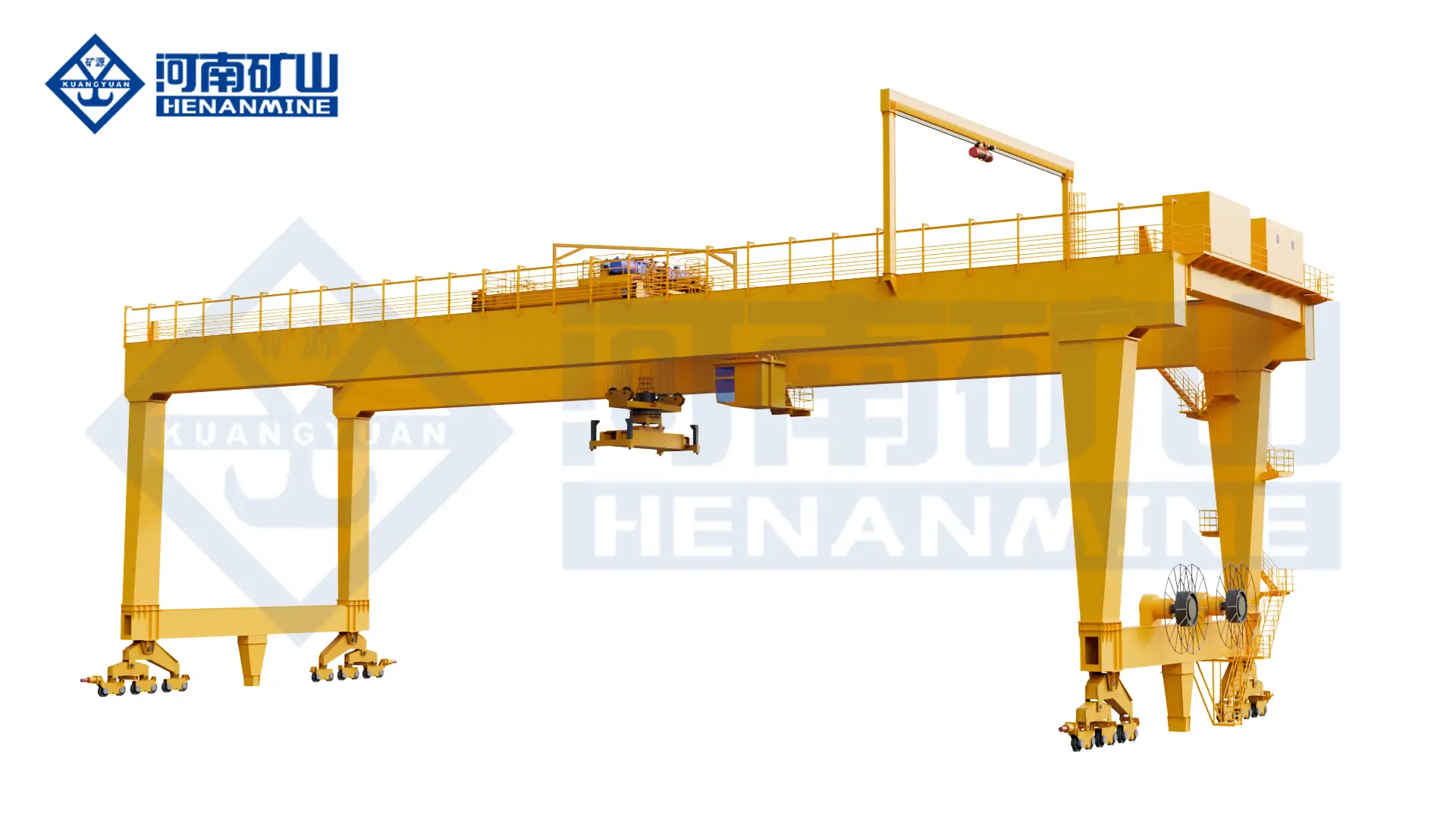
    Rail-Mounted Gantry (RMG)Use an RMG for container transfer along a fixed rail layout. Select the lifting arrangement, yard coverage and positioning controls from the container flow and stacking requirements.
    Container Straddle CarrierMove containers between handling positions with a straddle carrier matched to the travel route and stacking layout. Define container load, ground conditions, clearance and the preferred drive system.
    Double Girder Gantry CraneHandle machinery, steelwork and other heavy loads with a double-girder gantry crane. The lifting mechanism, runway, legs and any cantilevers are selected for the complete yard operation.

    Operating protection & lifecycle support

    Plan beyond the equipment.

    01

    Operating protection

    Define the permitted load cases, operating limits, travel protection and lifting-appliance interlocks for the declared cargo-handling modes.

    02

    Installation & commissioning

    Coordinate runway or pavement interfaces, operating clearances, power arrangements, assembly access and the terminal commissioning requirements.

    03

    Inspection & spares

    Plan inspection and maintenance of tyres, steering components and lifting mechanisms. Agree service access, documentation and the required spare-parts scope.

    Questions before the order

    Clarify the details
    that shape the crane.

    What information is needed for a rubber tyred gantry (rtg) quotation?+

    Provide cargo dimensions, complete suspended load and lifting appliance; pavement capacity, route gradients, turning envelope and clearances; and travel and lifting cycles, steering requirements and power arrangement. Include drawings and the project destination when available.

    Can the gantry travel anywhere on the site?+

    The operating route must be reviewed for pavement loading, gradients, clearances and turning space. Provide the intended lifting and travelling load cases for the proposed vehicle arrangement.

    What installation and support scope should be agreed?+

    Coordinate runway or pavement interfaces, operating clearances, power arrangements, assembly access and the terminal commissioning requirements. Specify the documentation, training and spare-parts support needed for the project.

    Related equipment

    Explore the alternatives.

    Let’s discuss your project

    The right crane starts
    with your lifting task.

    Share cargo dimensions, complete suspended load and lifting appliance, together with your site layout and operating cycle.

    info@hnksglobal.com
  • Gantry Crane Cost Planning: Equipment, Foundations and Installation

    Gantry Crane Cost Planning: Equipment, Foundations and Installation

    Selection guide

    Gantry Crane Cost Planning: Equipment, Foundations and Installation

    The gantry equipment is only one part of the project budget. Define the load and operating layout, then separate supporting works, electrical supply, installation and delivery responsibilities in the quotation.

    Henan Mine CraneSelection guide · Updated 2026Crane selection, project scope and operating requirements
    Henan Mine Crane overhead crane inside a workshop bay
    Henan Mine Crane overhead crane inside a workshop bay
    Project planning notes

    Key points for this crane project.

    1. What Determines a Gantry Crane Price?
    2. Gantry Crane Types and Their Price Position
    3. Gantry Crane Price Ranges by Type and Capacity
    Read the technical guide

    What Determines a Gantry Crane Price?

    A gantry crane price can range from a few thousand US dollars for a small manual portable frame to a project-engineered budget for a large rail-mounted industrial crane. Capacity is important, but it is only one cost variable.

    Published online prices usually describe portable steel or aluminum frames. The hoist, trolley, electrification, freight and installation may be excluded. Industrial single- and double-girder cranes normally include powered long travel, a hoist or winch trolley, electrical panels and safety devices, but rails, foundations, cable supply, erection and statutory inspection still depend on the contract.

    A reliable commercial comparison therefore begins with one technical data sheet and one responsibility matrix. Every bid should state equipment included, excluded site work, trade term, documentation, testing and commissioning. Henan Mine Crane prepares project pricing after confirming these boundaries rather than applying one price to every crane of the same tonnage.

    Gantry Crane Types and Their Price Position

    01 · Portable Gantry Crane

    A fixed- or adjustable-height frame on casters or wheels for maintenance and workshop lifting. It has the lowest structural cost, but published prices often exclude the hoist and trolley. Capacity, span, height, wheel type and motorization determine the final package.

    02 · Single-Girder Gantry Crane

    An electric hoist travels below one main girder supported by two legs. It is generally the most economical powered rail-mounted choice for light and medium industrial duty where capacity, span and operating frequency remain within the approved design range.

    03 · Double-Girder Gantry Crane

    Two box girders support a rail-mounted hoist or winch trolley. The configuration carries higher capacity and duty and provides greater lifting height or hook approach, but adds structural steel, trolley machinery, wheel loads, shipping volume and erection work.

    04 · Semi-Gantry Crane

    One side travels on an elevated runway and the other on a ground rail. It can reduce the number of supporting legs and use existing building structure, but the elevated runway, building reactions and ground-side foundation must be verified before comparing total cost.

    05 · Truss Gantry Crane

    A lattice or truss girder can reduce self-weight and wind area for long-span outdoor service. Fabrication complexity, corrosion protection, bolted shipping sections and site assembly influence whether it is more economical than a box-girder alternative.

    06 · Special and Heavy-Lift Gantry Crane

    Shipbuilding, bridge construction, hydropower, precast, container and rubber-tyred systems use project-specific structures, attachments, drives and controls. Their price is developed from engineering scope and site interfaces, not a standard tonnage table.

    Gantry Crane Price Ranges by Type and Capacity

    The following September 2026 market bands support preliminary budgeting across portable and rail-mounted configurations. They are indicative equipment ranges rather than a fixed Henan Mine Crane offer. Final pricing requires confirmation of capacity, span, lifting height, duty, operating environment, controls, destination and supply boundary.

    ConfigurationCommonly Included
    Portable steel or aluminum gantryFrame, uprights, beam and wheels in basic retail configurations
    Portable industrial gantryFixed or adjustable steel frame; configuration varies by span and height
    Portable industrial gantryHeavy steel frame and industrial wheel arrangement
    Single-girder rail-mounted gantryGirder, legs, end carriages, electric hoist, travel drives and basic controls
    Semi-gantry craneBridge, one ground leg, end carriages, hoist and crane controls
    Double-girder rail-mounted gantryDouble-girder structure, legs, trolley, travel drives and controls
    Double-girder rail-mounted gantryIndustrial crane equipment for the stated preliminary capacity range
    Heavy-lift or process gantryEngineered structure, lifting machinery, controls and contracted safety package

    Price comparison rule: compare equipment-only bids with equipment-only bids and installed bids with installed bids. A portable frame without a hoist cannot be compared directly with a powered rail-mounted crane.

    Match the Gantry Crane Budget to the Application

    The lowest-priced structure is not always the lowest-cost solution. A portable crane may suit occasional maintenance inside a workshop, while a powered rail-mounted crane is more appropriate for repetitive yard handling. A semi-gantry arrangement can save floor space, but only when the existing building can accept the elevated runway reactions.

    Outdoor operation adds wind, rain, temperature and corrosion requirements. Rail clamps, storm anchors, anemometers, weatherproof electrical equipment, protected motors and the specified coating system should be priced with the crane rather than added after manufacture. Coastal sites require a corrosion strategy based on the actual exposure.

    Process attachments also affect price. A hook crane, grab crane, magnetic crane, precast beam crane and container crane may share a rated capacity while using different trolleys, power supplies, control logic and duty classifications.

    ApplicationStarting ConfigurationPrincipal Cost DriversBudget Risk to Control
    Workshop maintenancePortable or compact single-girder gantryCapacity, adjustable height, casters, hoist, trolley and floor conditionAssuming the listed frame price includes lifting machinery
    General outdoor material yardRail-mounted single-girder gantrySpan, runway length, cantilever, hoist duty, outdoor controls and wind protectionOmitting rails, foundations and power distribution from the budget
    Heavy fabrication or steel yardDouble-girder gantry with hoist or winch trolleyLoad spectrum, span, lift, duty, attachments, cabin and wheel loadsSelecting by tonnage without checking fatigue duty and ground reactions
    Workshop edge or indoor-outdoor transferSemi-gantry craneExisting building runway, one ground rail, lateral space and transfer routeUsing existing structure without survey and reinforcement verification
    Precast or bridge construction yardTruss or double-girder engineering gantryPrecast member geometry, dual lifting points, span, wind, relocation and erection planExcluding lifting beams, foundations, dismantling or project moves
    Port or container yardRMG, RTG or application-specific container craneContainer pattern, stacking height, travel route, spreader, power and automationApplying general-purpose gantry prices to container handling equipment

    Technical Specification Required for an Accurate Price

    The quotation should be developed from a measurable operating basis. Missing dimensions or duty data force suppliers to make different assumptions, producing prices that appear comparable but describe different cranes.

    Specification ItemInformation to ProvideEngineering DecisionPrice Effect
    Maximum gross loadLoad plus beam, grab, magnet, spreader, hook and every suspended componentRated capacity, hoist, trolley, structure, wheels and brakesHigher gross load increases machinery and structural demand
    Span and cantileversDistance between rail centers and working area required beyond each legGirder form, section size, leg geometry and transport splitLonger span and cantilevers add steel, fabrication and erection work
    Lift and headroomRail level, lowest pickup, highest set-down and required clearanceHoist or winch layout, rope capacity and overall crane heightGreater lift changes drum, rope, frame and shipping requirements
    Runway length and travel routeRail length, end approaches, curves or crossings and operating surfaceTravel drive, cable supply, rail type, buffers and alignment toleranceLong runways increase rails, electrification, civil work and installation
    Duty and load spectrumLifts per hour, average load, full-load frequency, shifts and annual hoursWorking class, fatigue design, motors, brakes and component lifeHigh utilization can cost more than a larger occasional-use crane
    Hoisting mechanismRequired speed, positioning, main or auxiliary hooks and attachmentElectric hoist, sitting trolley, open winch or process mechanismTrolley architecture materially changes price and maintenance scope
    Controls and automationPendant, radio, cabin, VFD, PLC, anti-sway and plant interfacesElectrical architecture, sensors, communications and operator stationAutomation and precision require additional hardware and validation
    Outdoor environmentWind data, temperature, rain, dust, corrosion, altitude and coastal exposureAnchors, clamps, anemometer, enclosures, heating, cooling and coatingSite protection should be engineered into the original package

    Six Cost Drivers That Change the Crane Price

    Capacity and Duty Are Separate

    Rated load sizes the crane, while the load spectrum and operating frequency establish fatigue and thermal duty.

    Span Changes More Than Steel Weight

    Increasing span affects girder depth, stiffness, wheel loads, shipping sections, leg geometry and erection method. The working width and rail-center span should be defined separately.

    Hoist or Winch Trolley Selection

    Packaged electric hoists reduce initial cost for general duty. Open-winch trolleys support higher capacity, lift, duty, redundancy and process customization but require more engineering and maintenance access.

    Outdoor and Wind Protection

    Operational wind limits, storm anchoring, rail clamps, anemometers, weatherproof cabinets, heaters, cooling and coatings should match site conditions. These features affect both crane price and civil design.

    Power and Control Architecture

    Long-travel cable reels, conductor systems, festoons, diesel-electric or hybrid power, radio control, cabins, VFDs, PLCs and automation create different equipment and commissioning scopes.

    Shipping and Site Assembly

    Girder shipping splits, containerization, oversize transport, site cranes, welding, bolting, rail alignment and load-test weights influence the delivered and installed cost beyond factory equipment price.

    Equipment Price, Landed Cost and Installed Cost

    The equipment price covers only the items named in the supplier schedule. It may include the steel structure, hoist or trolley, travel mechanisms, electrical panels, pendant or radio control and crane-mounted electrification. It may exclude rails, foundations, power feed, attachment, packing, freight and site work.

    Landed cost adds export packing, inland transport, ocean or road freight, insurance, import handling, duties and taxes under the agreed trade term. Large gantry girders can require split construction, open-top containers, flat racks, breakbulk transport or project cargo planning. Shipping design should be agreed before fabrication.

    Installed cost adds civil works, rail installation, electrical supply, erection equipment, skilled labor, alignment, commissioning, load testing, statutory inspection and training. A complete budget should also identify spare parts, planned maintenance and future relocation or dismantling where applicable.

    700 t Gantry Crane for a Yangtze River Bridge Project

    This scale of crane cannot be budgeted from a standard price-per-ton formula. Component geometry, lifting sequence, span, lift, wind conditions, foundations, positioning requirements, transport sections, erection method and project schedule form one engineering basis.

    The project illustrates why heavy-lift pricing includes structural analysis, lifting machinery, controls, manufacturing verification, logistics planning, site assembly and acceptance. The same commercial principle applies at smaller capacities whenever the crane is integrated with civil works or a production process.

    Engineering Deliverables and Quality Records

    The proposal should identify the documents and verification records supplied with the crane. These deliverables make technical comparison possible and support site acceptance.

    Structural and Mechanism Documents

    Girder and leg arrangement, trolley or hoist data, reeving, drives, brakes, wheels, buffers, access provisions, electrical diagrams and control narrative.

    Manufacturing Quality Records

    Material traceability, welding procedures, welder qualifications, dimensional inspection, specified NDT, machining checks, assembly records and coating reports.

    Testing and Handover Records

    Factory functional tests, brake and limit checks, overload-device settings, site load-test plan, commissioning reports, manuals, spare-parts list and training documents.

    Review Henan Mine Crane manufacturing and quality capabilities →

    Shipping, Installation and Lifecycle Cost Planning

    Packing and International Transport

    Confirm girder shipping splits, container or breakbulk method, corrosion protection, lifting points, package list, inland route, port handling, insurance and destination unloading responsibilities.

    Rails, Foundations and Power

    Survey soil or slab capacity, establish rail tolerances and drainage, define grounding and power feed, and coordinate maximum wheel and horizontal reactions before civil construction.

    Erection and Commissioning

    Plan site cranes, assembly area, temporary supports, bolting or welding, rail alignment, electrical connection, no-load testing, rated-load testing, statutory inspection and operator training.

    Operating and Maintenance Cost

    Budget inspections, lubrication, ropes, brakes, wheels, electrical components, coatings, rail alignment and spare parts. Actual duty and outdoor exposure determine maintenance intervals.

    Gantry Crane Quotation Levels and Supply Scope

    A useful quotation states where supplier responsibility ends and buyer responsibility begins. The following levels should not be compared as if they describe the same purchase.

    Quotation LevelTypical Included ScopeItems Commonly Outside the PriceBest Use
    Portable frame onlyBeam, uprights, braces and caster or wheel assembliesHoist, trolley, electrification, powered travel, freight and assemblyInitial workshop equipment comparison
    Crane equipment packageStructure, legs, end carriages, hoist or trolley, drives, controls and crane-mounted electrificationRails, foundations, incoming power, freight, erection and site acceptanceFactory-equipment purchasing with local site contractors
    Delivered crane packageCrane equipment, contracted documentation, export packing and agreed freight scopeCustoms, taxes, destination unloading, civil works, erection and testing unless listedLanded-cost planning under a defined trade term
    Installed project packageCrane, defined rails and electrification, erection supervision or installation, commissioning and acceptance supportOnly items explicitly assigned to the buyer in the final responsibility matrixTotal-project comparison and management approval

    A technically lower price can produce a higher final project cost when rails, foundations, power distribution, freight or acceptance services are omitted. Commercial evaluation should normalize every bid to the same supply boundary.

    Crane Equipment

    Structure, hoist or trolley, drives, wheels, controls, crane wiring and safety devices.

    Site Infrastructure

    Foundations, rails, drainage, power feed, grounding, access and temporary erection works.

    Logistics

    Packing, shipping sections, inland transport, ocean freight, insurance and destination handling.

    Site Services

    Erection, alignment, electrical connection, commissioning, load testing, inspection and training.

    Information Required for a Gantry Crane Price Quote

    Complete inquiry data allows the crane and site interfaces to be priced on one basis. Preliminary layouts are suitable when assumptions and open items are identified.

    State portable, single girder, double girder, semi-gantry, truss, rubber-tyred or special-process requirement.

    Provide maximum gross load, typical load, attachment mass, dimensions, center of gravity and pickup points.

    Confirm rail-center span, required working width and cantilever length on each side.

    Provide rail level, lowest pickup, highest set-down, required lift and overhead restrictions.

    Provide travel length, rail details, ground or slab data, allowable reactions and drainage conditions.

    List lifts per hour, load spectrum, shifts, annual hours, speeds, positioning and availability target.

    Confirm voltage, frequency, cable supply, pendant, radio, cabin, VFD, PLC and automation needs.

    State wind data, temperature, rain, dust, humidity, corrosion, altitude and coastal exposure.

    Identify destination, governing standards, inspection body, FAT, load test and documentation requirements.

    Confirm delivery location, trade term, packing, freight, rails, civil work, erection, commissioning and spares.

    Gantry Crane Price FAQ

    Why do two gantry cranes with the same capacity have different prices?

    Span, lift, duty, hoist or trolley type, cantilevers, runway length, controls, wind design, corrosion protection, standards and included services can differ even when rated capacity is identical.

    Does a portable gantry crane price include the hoist?

    Often it does not. Many retail prices cover only the frame, beam, uprights and wheels. The product schedule should confirm the hoist, trolley, electrification, end stops, freight and assembly.

    Is a single-girder gantry crane always cheaper?

    It normally uses less structural steel and a simpler hoist arrangement, but suitability depends on capacity, span, lift and duty. A forced single-girder design can become inefficient when the application requires greater stiffness or hook height.

    Does the quoted crane price include foundations and rails?

    Only when explicitly listed. Foundation design, concrete, reinforcement, rail beams, rails, clips, grounding, drainage and alignment are frequently separate site scopes.

    How much does shipping add to gantry crane cost?

    Shipping depends on girder length, weight, containerization, port route, destination and trade term. Long or heavy sections may require flat-rack, open-top, breakbulk or project-cargo transport.

    Can an existing concrete slab support a portable gantry crane?

    The floor must be checked for wheel loads, slab capacity, flatness, joints and movement route. A portable crane does not automatically eliminate structural verification or operational restrictions.

    What is the fastest way to obtain an accurate price?

    Submit capacity, load details, span, lift, runway length, duty, power, controls, wind and environment data, site drawings, destination, standards and a clear supply-scope matrix.

    Related Gantry Crane Products

    Compare the structural form, lifting mechanism and site interface before selecting a product family. Every configuration is finalized from the approved project data.

    Single-Girder Gantry Crane

    Economical electric-hoist gantry crane for general workshop and outdoor material handling.

    Double-Girder Gantry Crane

    Heavy-duty box-girder crane for greater capacity, span, lift and operating duty.

    Double-Girder Electric Hoist Gantry Crane

    Double-girder stability with a cost-controlled electric-hoist lifting mechanism.

    Semi-Gantry Crane

    One elevated runway and one ground rail for workshop-edge or indoor-outdoor handling.

    Truss Gantry Crane

    Lightweight lattice construction for long-span outdoor and engineering applications.

    L-Type Offset Gantry Crane

    Offset-leg configuration supporting long materials and unobstructed side transfer.

    Discuss the crane arrangement for your project.

    Submit the crane type, maximum gross load, span, lift, runway length, duty cycle, speeds, controls, site layout, wind and environmental data, destination standards, delivery location and required installation scope. Henan Mine Crane will prepare a project-specific technical and commercial proposal.

    Related crane configurations

    Explore crane product families and technical parameters ↗

    Updated 2026 · Henan Mine Crane
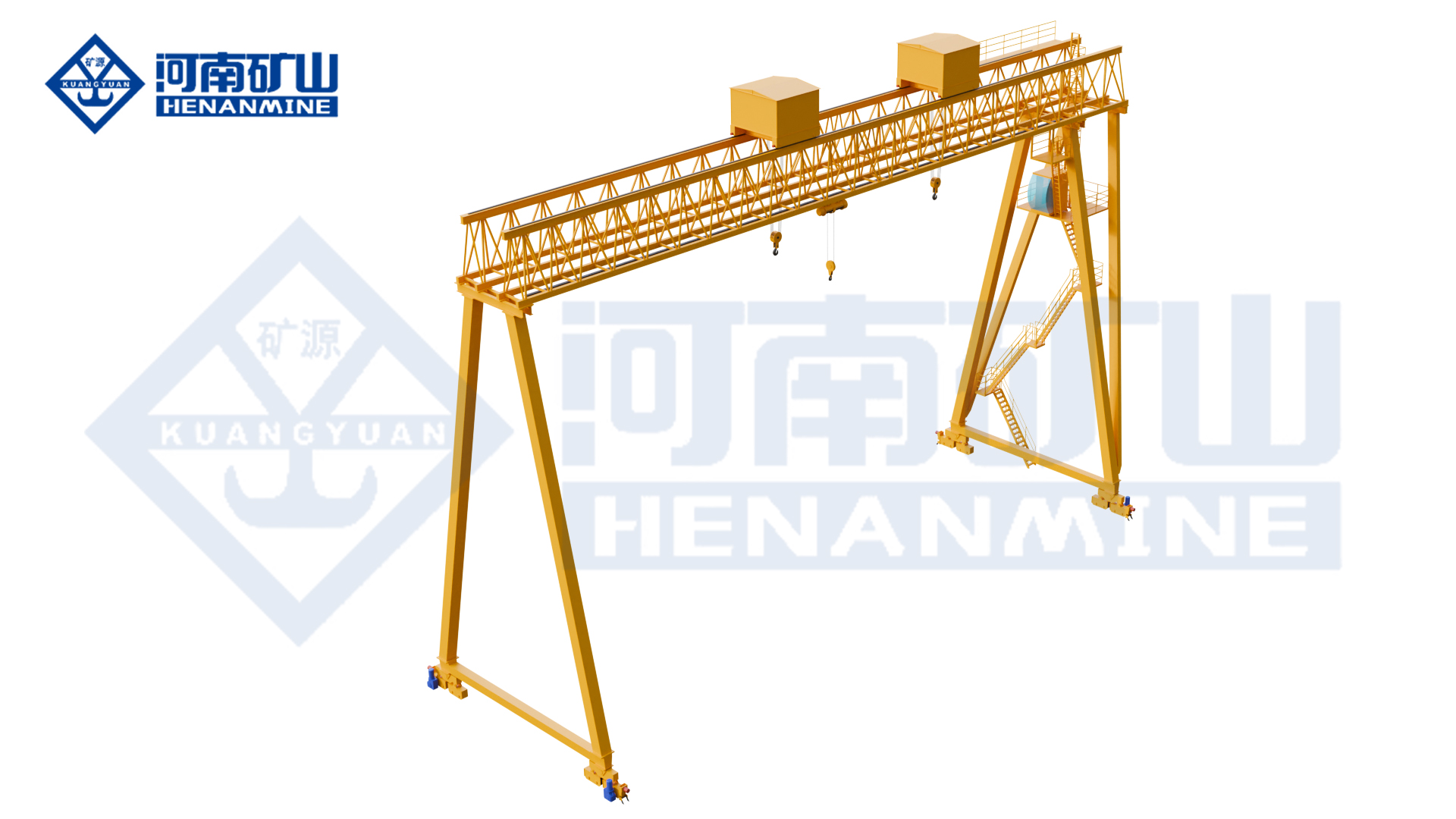
  • Rail-Mounted Gantry (RMG)

    Rail-Mounted Gantry (RMG)

    Port Cranes / Henan Mine Crane

    Rail-Mounted Gantry (RMG)

    Use an RMG for container transfer along a fixed rail layout. Select the lifting arrangement, yard coverage and positioning controls from the container flow and stacking requirements.

    Lifting capacity35 t, 40.5 t, 50 t
    Span18 – 35 m
    Working classA6 – A8
    Technical specifications

    Define the total suspended load, duty and site conditions for your project.

    Technical specifications

    Check the load.
    Plan the configuration.

    Parameters and equipment options are matched to the application and confirmed in the technical proposal.

    Discuss your configuration
    Lifting Capacity35 t, 40.5 t, 50 t
    Span18 – 35 m
    Max Lifting Height12.3 – 21 m
    Working ClassA6 – A8
    Working Temperature Range-20℃ ~ 40℃
    Lifting Speed0 – 20 m/min
    Traveling Speed0 – 30 m/min
    Spreader Type20’/40’/45′ Telescopic Spreader
    Power Source3-phase AC 380V 50Hz(400V/415V customizable)
    Control ModeCab control, remote operation, wireless remote control

    Final parameters, dimensions, wheel loads and supply scope follow the approved project specification.

    Application & operation

    Matched to the handling task.

    Terminal working blocks

    Coordinate container rows and transfer lanes within fixed runway coverage.

    Intermodal transfer

    Match the rail-mounted arrangement to road or rail handling interfaces.

    Selection considerations

    Start with your operating conditions.

    01

    Load & lifting arrangement

    Specify container sizes, gross weights and lifting-appliance requirements. Include lifting-appliance weight and the required lifting positions.

    02

    Site & available space

    Provide rail centres, stacking plan, transfer lanes and clearances. Coordinate the installation interfaces with the available site drawings.

    03

    Duty & control sequence

    Define handling cycle, positioning or automation interfaces and climate. Identify the required movements and control interfaces in the enquiry.

    Configuration comparison

    Compare related lifting arrangements.

    Crane arrangementHandling configuration
    Rail-Mounted Gantry (RMG)Use an RMG for container transfer along a fixed rail layout. Select the lifting arrangement, yard coverage and positioning controls from the container flow and stacking requirements.
    Rubber Tyred Gantry (RTG)Use a rubber-tyred gantry for heavy handling where the operating layout requires a mobile tyre-supported arrangement. Define the load, steering modes, route and ground conditions for the project.
    Container Straddle CarrierMove containers between handling positions with a straddle carrier matched to the travel route and stacking layout. Define container load, ground conditions, clearance and the preferred drive system.
    Container Overhead CraneTransfer containers within a defined overhead runway area using a double-girder bridge and matched spreader. Container size, working clearance and the handling sequence determine the arrangement.

    Operating protection & lifecycle support

    Plan beyond the equipment.

    01

    Operating protection

    Define the permitted load cases, operating limits, travel protection and lifting-appliance interlocks for the declared cargo-handling modes.

    02

    Installation & commissioning

    Coordinate runway or pavement interfaces, operating clearances, power arrangements, assembly access and the terminal commissioning requirements.

    03

    Inspection & spares

    Plan inspection and maintenance of rail travel equipment, spreader functions and positioning systems. Agree service access, documentation and the required spare-parts scope.

    Questions before the order

    Clarify the details
    that shape the crane.

    What information is needed for a rail-mounted gantry (rmg) quotation?+

    Provide container sizes, gross weights and lifting-appliance requirements; rail centres, stacking plan, transfer lanes and clearances; and handling cycle, positioning or automation interfaces and climate. Include drawings and the project destination when available.

    How is the required RMG geometry defined?+

    Provide the container-yard and transfer-lane layout, rail positions, stacking heights and vessel-independent operating area. The spreader travel, clearances and runway loads follow the proposed arrangement.

    What installation and support scope should be agreed?+

    Coordinate runway or pavement interfaces, operating clearances, power arrangements, assembly access and the terminal commissioning requirements. Specify the documentation, training and spare-parts support needed for the project.

    Related equipment

    Explore the alternatives.

    Let’s discuss your project

    The right crane starts
    with your lifting task.

    Share container sizes, gross weights and lifting-appliance requirements, together with your site layout and operating cycle.

    info@hnksglobal.com
  • Electric Gantry Cranes: Travel Drives and Material-Handling Coverage

    Electric Gantry Cranes: Travel Drives and Material-Handling Coverage

    Selection guide

    Electric Gantry Cranes: Travel Drives and Material-Handling Coverage

    An electric gantry arrangement needs its powered motions matched to the required cycle. Describe load transfer, travel distances and support conditions so the drive and control proposal can be reviewed for the site.

    Henan Mine CraneSelection guide · Updated 2026Crane selection, project scope and operating requirements
    Electric Gantry Crane for Industrial Material Handling
    Electric Gantry Crane for Industrial Material Handling
    Project planning notes

    Key points for this crane project.

    1. What Is an Electric Gantry Crane?
    2. Electric Gantry Crane Types
    3. Compare Electric Gantry Crane Configurations
    Read the technical guide

    What Is an Electric Gantry Crane?

    An electric gantry crane is a self-supporting or partly self-supporting lifting system in which the hoisting motion and one or more travel motions use electric drives. The bridge is carried by rigid or flexible legs instead of relying entirely on an overhead building runway. Full gantry cranes run on two ground rails; semi-gantry cranes use one ground rail and one elevated runway. Compact mobile units may travel on industrial wheels when the floor, route and operating restrictions permit.

    Three motions normally define the handling cycle: vertical hoisting, cross travel along the bridge and long travel along the runway or floor route. Electric motors, brakes, reducers, limit devices and controls coordinate these motions. Electric power improves repeatability and productivity compared with manually moved frames, but it also requires a defined electrification method, protective devices, earthing, cable management and commissioning plan.

    The term does not describe one standard crane. An electric hoist gantry crane supports economical general-duty handling, while an open-winch trolley serves higher capacity, longer lift, intensive duty or process requirements. Rail-mounted cranes provide controlled travel over a fixed route. Motorized mobile gantries serve shorter routes only after floor capacity, wheel loading, stability and movement controls have been verified. Selection begins with the load and work cycle rather than the motor rating alone.

    Electric Gantry Crane Types

    01 · Single-Girder Electric Hoist Gantry

    One main girder carries an underslung electric wire-rope or chain hoist. The arrangement controls deadweight and equipment cost for general manufacturing, warehousing, assembly and maintenance duties.

    02 · Double-Girder Electric Hoist Gantry

    Two girders provide greater structural stability, improved lifting-height utilization and broader capacity potential while retaining the service simplicity of a packaged electric hoist or sitting trolley.

    03 · Double-Girder Winch-Trolley Gantry

    A top-running open-winch trolley supports higher load, longer lift, faster speeds, heavier duty, auxiliary hooks and redundant machinery arrangements required by demanding industrial processes.

    04 · Electric Semi-Gantry Crane

    One end carriage travels on an elevated building runway and the opposite end travels on a ground rail. The layout serves workshop edges, production bays and indoor-to-outdoor transfer routes.

    05 · L-Type Electric Gantry Crane

    An offset L-shaped leg improves side clearance for long materials and permits cantilever handling. Hook, grab or magnetic attachments can be integrated for the approved operating duty.

    06 · Motorized Mobile Gantry Crane

    Powered wheels support controlled relocation in maintenance or assembly areas. Capacity, travel surface, gradients, wheel loads, wind exposure and safe movement procedures limit the permissible application.

    Compare Electric Gantry Crane Configurations

    ConfigurationTypical ApplicationDuty PositionPrincipal Advantage
    Single-girder electric hoistGeneral light- and medium-capacity handlingLow to moderateLower self-weight, compact mechanism and economical structure
    Double-girder electric hoistMedium-capacity production, yards and maintenanceModerateStable bridge, improved lift geometry and accessible trolley arrangement
    Double-girder winch trolleyHeavy, high-lift or intensive industrial serviceModerate to highCustom speeds, auxiliary hook, higher duty and machinery redundancy options
    Semi-gantryWorkshop edge and indoor-to-outdoor transferLow to highReduces one line of ground legs and preserves floor access
    L-type offset gantryLong products, loading lanes and side transferLow to moderateOpen leg geometry and practical cantilever coverage
    Motorized mobile gantryMaintenance cells and flexible short-route handlingIntermittent to moderateRelocatable coverage without a permanent runway

    Selection principle: packaged electric hoists control cost for general duty; open-winch trolleys support higher capacity, longer lift, intensive service, redundancy and process-specific control.

    Match the Electric Gantry Crane to the Application

    ApplicationStarting ConfigurationHandled MaterialCritical Selection Data
    Workshop fabricationSingle-girder electric hoist gantrySteel assemblies, machines and fixturesBay width, hook approach, floor route and production frequency
    Outdoor material yardRail-mounted single- or double-girder gantryPlate, sections, equipment and packaged materialsWind, drainage, rail alignment, corrosion protection and storm parking
    Precast concrete yardDouble-girder electric or winch-trolley gantryBeams, slabs, moulds and reinforcement cagesMember geometry, lifting beam, synchronized points, duty and yard coverage
    Warehouse or logistics areaCompact single-girder or semi-gantry cranePalletized equipment, dies and maintenance loadsAisle clearance, positioning, radio control and traffic separation
    Steel fabrication lineDouble-girder or L-type electric gantryLong sections, pipes, coils and fabricated modulesAttachment, cantilever reach, side clearance and load-control method
    Construction projectProject-specific electric gantry systemBridge sections, tunnel components and heavy modulesTemporary foundations, relocation, erection sequence and project schedule

    Application matching also defines the control philosophy. Occasional maintenance lifts may use pendant control, while production handling often benefits from radio control and variable-frequency drives. A cabin may be specified for long travel routes, process visibility or harsh environments. Automation, anti-sway, positioning and plant communication are developed only after the material flow and exclusion zones are documented.

    Technical Selection and Specification Framework

    A technically comparable quotation requires one operating basis for every supplier. Rated capacity must include the lifted item and all below-hook equipment. Span is measured between rail centers, while working width includes any required cantilever coverage. Lifting height must reflect the lowest pickup point, highest set-down point and available structural clearance.

    Specification ItemRequired Project DataResulting Engineering Decision
    Maximum gross suspended loadLoad, lifting beam, sling, grab, magnet, spreader and every suspended componentCapacity, hoist, trolley, girder, legs, wheels and brakes
    Span and cantileverRail-center span plus required outreach beyond each legGirder section, leg geometry, deflection and shipping split
    Lift and headroomRail level, lowest pickup, highest hook position and overhead clearanceHoist geometry, rope capacity, trolley form and total crane height
    Runway and travel routeRail length, end approaches, crossings, slope, floor condition and obstaclesLong-travel drives, rails, buffers, cable system and alignment tolerance
    Duty and load spectrumLifts per hour, average load, full-load frequency, shifts and annual operating hoursWorking class, fatigue basis, motor rating, brake duty and component life
    Speeds and positioningHoist, trolley and crane speeds plus required low-speed controlMotor power, VFD range, braking and positioning devices
    Electrical supplyVoltage, frequency, phases, available fault level and plant connection pointPanels, protection, transformers, cable sizing and electrification
    EnvironmentIndoor or outdoor, wind, temperature, rain, dust, humidity, altitude and corrosive exposureEnclosures, heaters, cooling, coatings, anchors and weather protection

    Double-Girder Electric-Hoist Product Family

    Final limits depend on the approved configuration and project standard.

    Single-Girder Semi-Gantry Product Family

    The elevated runway and ground rail form part of the interface review.

    Safety, Controls and Electrical Protection

    Safety functions are selected from the risk assessment, operating method, crane duty and governing rules. The final design should distinguish normal control, protective limiting, emergency stopping and storm security. A device list alone does not replace calculation, validation, commissioning or operator procedures.

    Load and Hoist Protection

    Overload limiting, upper and lower travel limits, brake monitoring where required, rope guidance, hook safety latch and controlled low-speed positioning protect the vertical lifting motion.

    Travel Protection

    End limits, buffers, audible and visual warnings, emergency stops, travel brakes and anti-collision functions are selected for route length, traffic and multiple-crane operation.

    Variable-Frequency Control

    VFD control provides progressive acceleration, reduced load swing, controlled approach and lower mechanical shock. Speed ranges are matched to motor cooling and process demand.

    Outdoor Wind Security

    Anemometers, operational wind limits, rail clamps, storm anchors, parking positions and site procedures control wind risk for rail-mounted outdoor cranes.

    Electrical Protection

    Isolation, short-circuit and overload protection, phase monitoring, earthing, enclosure selection and cable management are coordinated with the plant supply and environment.

    Skew and Position Control

    Long spans, high travel speeds or uneven wheel loading may require encoder feedback, independent-drive coordination, anti-skew logic or position supervision.

    Structure, Headroom and Electrification

    Box girders provide torsional stiffness and controlled deflection for industrial rail-mounted cranes. A single-girder bridge reduces self-weight and wheel reactions, while a double-girder bridge supports top-running trolley arrangements, improved hook height and heavier service. One leg may be rigid and the opposite leg flexible on longer spans to accommodate thermal movement and rail tolerances.

    Headroom is governed by the relationship between rail level, bridge depth, trolley or hoist position, hook approach and the highest required load position. Raising the overall frame is not always the most economical solution because leg height, wind moment, stability, shipping and erection requirements also increase. A section drawing should confirm vertical and side clearances before fabrication.

    Common electrical feeds include cable reels, festoon systems, conductor bars and project-specific trailing-cable arrangements. The selected method follows runway length, travel speed, outdoor exposure, maintenance access and plant connection point.

    Project Case: 700 t Gantry Crane for Bridge Construction

    The system handled large steel tower sections, placing the lifting operation far beyond the duty of a standard packaged electric-hoist gantry crane.

    The case demonstrates the engineering sequence required when load geometry, lifting points, construction stages and site boundaries control the crane concept. Structural arrangement, lifting machinery, electric drives, travel coordination, foundations, erection method and acceptance planning must be treated as one system. Rated tonnage alone cannot define a heavy-lift gantry.

    The same discipline applies at smaller capacities. A reliable electric gantry crane proposal should identify the suspended load, work cycle, coverage, duty, wind basis, rail interface, power feed, control method and testing boundary before price and delivery are fixed.

    Engineering Deliverables and Quality Records

    A commercial proposal should identify the design basis and the documents delivered with the equipment. Typical engineering outputs include the general arrangement, wheel loads, maximum rail reactions, foundation interface, power demand, motor list, single-line diagram, control description and shipping split. Final documentation follows the contract, destination rules and acceptance authority.

    Manufacturing control normally covers material identification, welding procedures, dimensional inspection, machining, assembly, coating preparation and electrical-panel verification. Non-destructive examination, third-party witness points and material certificates are included when specified in the inspection and test plan. Factory testing should record hoist, trolley and crane motions, limits, brakes, controls and protective functions available before shipment.

    Procurement review should confirm drawing approval stages, deviation handling, document language, spare-parts list, test records and release criteria. This evidence establishes traceability between the approved specification and the delivered crane and prevents essential documentation from becoming an undefined post-order item.

    Installation, Commissioning and Lifecycle Planning

    Site preparation begins before shipment. Ground rails require verified foundations, level and gauge tolerances, drainage, end stops and an agreed installation datum. Semi-gantry cranes also require confirmation of elevated-runway alignment and building reactions. Mobile cranes require a floor survey covering capacity, flatness, joints, gradients, obstructions and the complete travel route.

    Before Delivery

    Approve drawings, rail details, wheel loads, electrical connection, access route, lifting plan, temporary works and storage protection. Confirm whether girders arrive as complete units or shipping sections.

    Erection and Alignment

    Assemble the structure under an approved lifting method, align rails and end carriages, verify diagonal dimensions, set buffers and anchors, route cables and complete electrical termination.

    Commissioning and Acceptance

    Check insulation, earthing, phase sequence, limits, brakes, controls, warning devices and no-load motions before functional and load testing under the governing acceptance plan.

    Operating Handover

    Provide operating instructions, maintenance schedules, lubrication points, electrical drawings, parts information and training for operators and maintenance personnel.

    Planned Maintenance

    Inspect ropes or chains, hooks, brakes, wheels, rails, fasteners, structure, electrification and protective devices at intervals based on duty, environment and governing requirements.

    Lifecycle Provision

    Define critical spares, consumables, remote technical support, inspection access and future relocation requirements during procurement rather than after commissioning.

    Electric Gantry Crane Price and Supply Scope

    Electric gantry crane prices vary because the same keyword covers compact mobile frames, rail-mounted electric-hoist cranes and custom heavy-lift systems. The following September 2026 market bands support preliminary budgeting only. They are not fixed Henan Mine Crane offers. Currency, steel content, duty, destination, trade term and installation boundary can move a project outside these ranges.

    ConfigurationTypical Equipment Scope
    Compact mobile electric gantryFrame, electric hoist and basic trolley or powered movement as specified
    Single-girder rail-mounted electric hoist gantryGirder, legs, end carriages, electric hoist, drives and basic controls
    Double-girder electric hoist or semi-gantryEngineered structure, electric lifting machinery, travel drives and controls
    Installed engineered gantry benchmarkNorth American benchmark for semi- or full-gantry systems with substantial local project scope
    Heavy-duty, high-lift or process gantryEngineered machinery, controls and contracted safety package

    Commercial comparison rule: equipment-only, landed and installed prices are different values. Every quotation should identify the hoist, trolley, rails, electrification, packing, freight, civil work, erection, commissioning, load test and statutory acceptance boundary.

    Information Required for an Electric Gantry Crane Quote

    A complete request for quotation reduces technical assumptions and shortens commercial review. Drawings are particularly valuable when building columns, production equipment, traffic lanes, storage areas or outdoor obstacles constrain the crane envelope.

    Load and Handling Task

    Maximum gross suspended load, normal load, dimensions, center of gravity, lifting points, attachment, pick location, set-down location and required positioning accuracy.

    Crane Geometry

    Rail-center span, lifting height, rail elevation, runway length, cantilever reach, end approaches, headroom, side clearances and any future expansion.

    Operating Duty

    Lifts per hour, average load, full-load frequency, travel distance, shifts per day, annual hours, target speeds and expected service life.

    Site and Environment

    Indoor or outdoor location, temperature, wind, rain, humidity, dust, corrosive exposure, altitude, floor or soil data and available installation access.

    Electrical and Controls

    Voltage, frequency, phases, plant connection point, pendant, radio or cabin control, VFD requirements, plant interfaces and automation functions.

    Commercial Boundary

    Delivery destination, trade term, governing standard, drawing and test requirements, inspection authority, installation scope, load-test responsibility and required delivery date.

    Electric Gantry Crane FAQ

    What is the difference between an electric gantry crane and a motorized gantry crane?

    Electric gantry crane is the broader term and may describe powered hoisting, powered trolley travel and powered long travel. Motorized gantry crane usually emphasizes powered relocation or long travel, including mobile or rail-mounted arrangements.

    Is an electric gantry crane suitable for outdoor operation?

    Yes, when wind basis, storm parking, rail clamps or anchors, drainage, corrosion protection, enclosure ratings, cable system and temperature limits are engineered for the site. Standard indoor electrical equipment should not be assumed suitable outdoors.

    When is a double-girder configuration required?

    Double girders are considered when capacity, span, lifting height, hook approach, duty, trolley arrangement or attachment exceeds the practical range of a single-girder electric-hoist system. Final selection follows calculation and lifecycle requirements.

    Can an electric gantry crane operate without ground rails?

    A mobile unit can operate on suitable wheels over an approved surface, but capacity, floor loading, slope, traction, stability, travel speed and wind exposure impose limits. Industrial repetitive travel normally favors a properly aligned rail system.

    Which control method is available?

    Pendant, radio remote and operator cabin controls are available. Variable-frequency drives, PLC functions, anti-sway, anti-collision and position supervision can be added when the handling process and risk assessment require them.

    How is the required electrical power calculated?

    Power demand follows hoist, trolley and crane motor ratings, simultaneous-motion assumptions, duty, acceleration, auxiliary loads and starting method. The proposal should state connected load, supply data and the crane-to-plant connection boundary.

    What information has the greatest effect on price?

    Capacity, span, lift, duty, hoist or winch-trolley type, runway length, outdoor package, control complexity, rails, foundations, shipping dimensions and installation scope create the largest differences.

    How long does manufacture and commissioning take?

    Schedule depends on engineering complexity, drawing approval, material procurement, fabrication, inspection, shipping route, site readiness and acceptance requirements. A committed date should follow confirmation of the final technical and commercial scope.

    Related Electric Gantry Crane Products

    Compare the structural form, lifting mechanism and site interface before selecting a product family. Each configuration is finalized from approved project data.

    European Single-Girder Gantry Crane

    Low-headroom electric-hoist configuration for efficient general industrial handling.

    Double-Girder Electric Hoist Gantry Crane

    Double-girder stability with an electric-hoist lifting mechanism for medium-duty service.

    Single-Girder Semi-Gantry Crane

    One elevated runway and one ground rail for workshop-edge material transfer.

    L-Type Offset Gantry Crane

    Offset-leg design supporting long products, cantilever coverage and side loading.

    Double-Girder Gantry Crane

    Heavy-duty box-girder crane for greater capacity, span, lift and working class.

    Double-Girder Truss Gantry Crane

    Truss construction for long-span outdoor and project lifting applications.

    Discuss the crane arrangement for your project.

    Submit the maximum gross load, span, lifting height, runway length, duty cycle, operating environment, power supply, control method, site layout, destination and required supply boundary. Henan Mine Crane will prepare a project-specific technical and commercial proposal.

    Related crane configurations

    LH Electric Hoist Double Girder Crane

    View product parameters
    Lifting capacity: 3, 5, 10, 16, 20 tSpan: 10.5–31.5 mLifting height: 6, 9, 12 or 18 m

    Use an LH double-girder bridge with an electric-hoist trolley for workshop lifting, assembly and maintenance. Match the hoist arrangement to the suspended load, hook travel and available building space.

    Single-Beam Suspension Crane

    View product parameters
    Lifting capacity: 0.5–10 tSpan: 3–16 mLifting height: 6, 9, 12 or 18 m

    Suspend an LX single-girder crane from an approved overhead runway to cover workshop lifting positions. Building support, runway geometry and available hook height determine the installation.

    Updated 2026 · Henan Mine Crane
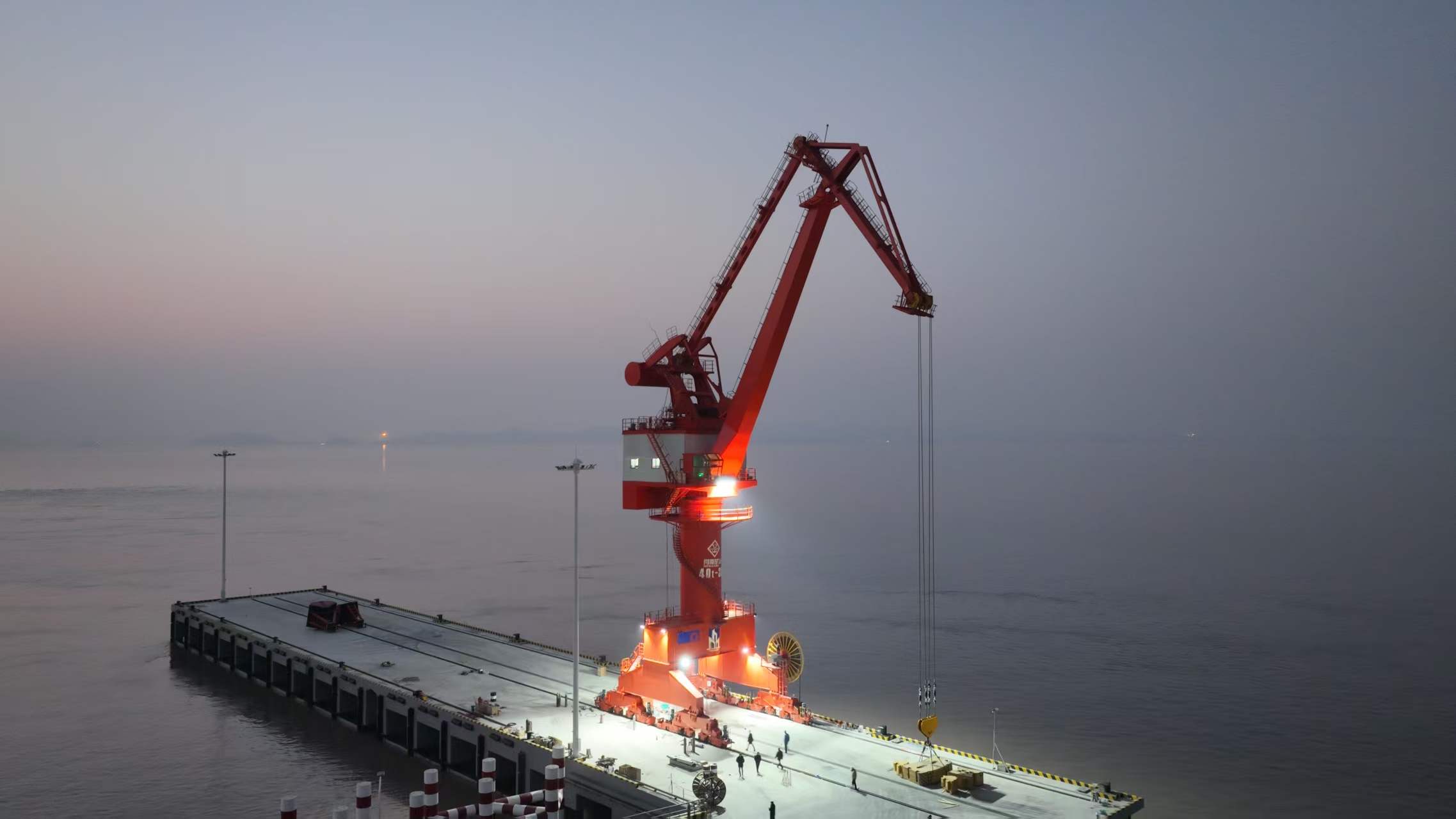
  • Rail-Mounted Container Gantry Crane

    Rail-Mounted Container Gantry Crane

    Port Cranes / Henan Mine Crane

    Rail-Mounted Container Gantry Crane

    Handle containers along a fixed yard runway with a rail-mounted container gantry crane. Coordinate the spreader, stacking geometry, rail layout and transfer positions around the terminal operation.

    Lifting capacity35 t, 40.5 t, 50 t
    Span18 – 35 m
    Working classA6 – A8
    Technical specifications

    Define the total suspended load, duty and site conditions for your project.

    Technical specifications

    Check the load.
    Plan the configuration.

    Parameters and equipment options are matched to the application and confirmed in the technical proposal.

    Discuss your configuration
    Lifting Capacity35 t, 40.5 t, 50 t
    Span18 – 35 m
    Max Lifting Height12.3 – 21 m
    Working ClassA6 – A8
    Working Temperature Range-20℃ ~ 40℃
    Lifting Speed0 – 20 m/min
    Traveling Speed0 – 30 m/min 0 – 40 m/min
    Spreader Type20’/40’/45′ Telescopic Spreader
    Power Source3-phase AC 380V 50Hz(400V/415V customizable)
    Control ModeCab control, remote operation, wireless remote control

    Final parameters, dimensions, wheel loads and supply scope follow the approved project specification.

    Application & operation

    Matched to the handling task.

    Container stacking yards

    Lift and position containers within the defined rail-mounted coverage.

    Inland and rail terminals

    Coordinate the crane envelope with vehicle lanes and rail-transfer positions.

    Selection considerations

    Start with your operating conditions.

    01

    Load & lifting arrangement

    Specify container sizes, gross load and spreader arrangement. Include lifting-appliance weight and the required lifting positions.

    02

    Site & available space

    Provide rail span, stacking heights, vehicle lanes and rail-transfer geometry. Coordinate the installation interfaces with the available site drawings.

    03

    Duty & control sequence

    Define moves per hour, positioning requirements and site wind conditions. Identify the required movements and control interfaces in the enquiry.

    Configuration comparison

    Compare related lifting arrangements.

    Crane arrangementHandling configuration
    Rail-Mounted Container Gantry CraneHandle containers along a fixed yard runway with a rail-mounted container gantry crane. Coordinate the spreader, stacking geometry, rail layout and transfer positions around the terminal operation.
    Rubber Tyred Gantry (RTG)Use a rubber-tyred gantry for heavy handling where the operating layout requires a mobile tyre-supported arrangement. Define the load, steering modes, route and ground conditions for the project.
    Container Straddle CarrierMove containers between handling positions with a straddle carrier matched to the travel route and stacking layout. Define container load, ground conditions, clearance and the preferred drive system.
    Container Overhead CraneTransfer containers within a defined overhead runway area using a double-girder bridge and matched spreader. Container size, working clearance and the handling sequence determine the arrangement.

    Operating protection & lifecycle support

    Plan beyond the equipment.

    01

    Operating protection

    Define the permitted load cases, operating limits, travel protection and lifting-appliance interlocks for the declared cargo-handling modes.

    02

    Installation & commissioning

    Coordinate runway or pavement interfaces, operating clearances, power arrangements, assembly access and the terminal commissioning requirements.

    03

    Inspection & spares

    Plan inspection and maintenance of spreader locks, trolley mechanisms and rail-mounted travel equipment. Agree service access, documentation and the required spare-parts scope.

    Questions before the order

    Clarify the details
    that shape the crane.

    What information is needed for a rail-mounted container gantry crane quotation?+

    Provide container sizes, gross load and spreader arrangement; rail span, stacking heights, vehicle lanes and rail-transfer geometry; and moves per hour, positioning requirements and site wind conditions. Include drawings and the project destination when available.

    What should the container-yard drawing show?+

    Show rails, container rows, required stacking heights, transfer lanes and obstructions. Specify container sizes and the capacity basis for the spreader and complete lifting system.

    What installation and support scope should be agreed?+

    Coordinate runway or pavement interfaces, operating clearances, power arrangements, assembly access and the terminal commissioning requirements. Specify the documentation, training and spare-parts support needed for the project.

    Related equipment

    Explore the alternatives.

    Let’s discuss your project

    The right crane starts
    with your lifting task.

    Share container sizes, gross load and spreader arrangement, together with your site layout and operating cycle.

    info@hnksglobal.com