
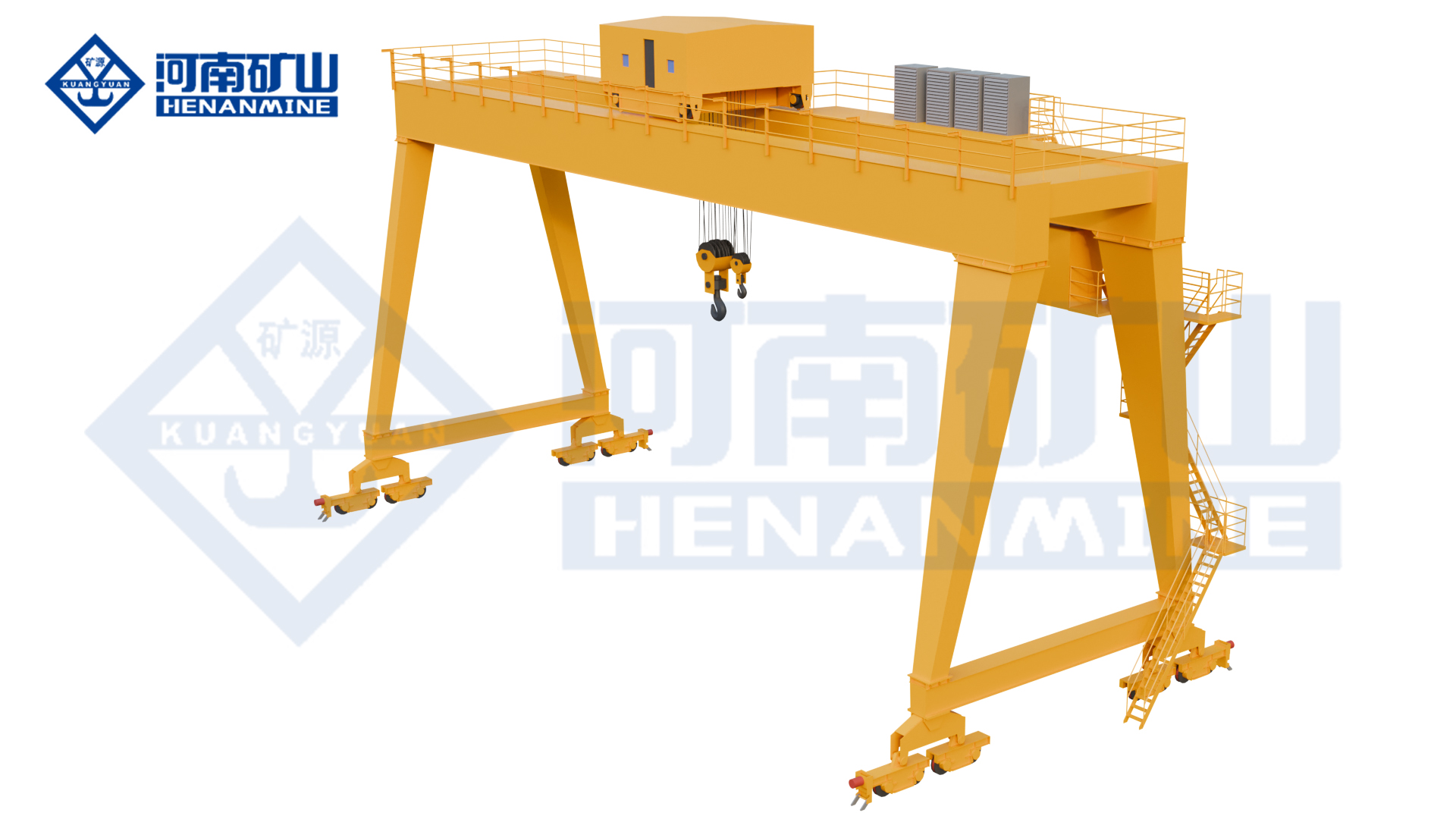
Henan Mine Crane · Electrified Gantry Lifting Systems
Electric Gantry Crane for Industrial Material Handling
Engineered electric gantry cranes combine powered hoisting, controlled load travel and a self-supporting gantry structure for workshops, fabrication yards, precast plants, warehouses and outdoor material-handling routes.
Single-girder, double-girder, semi-gantry and offset-leg configurations are developed around rated load, span, lifting height, runway length, operating duty, power supply, wind conditions and site interfaces. Each proposal defines the crane equipment, rail system, electrical boundary, documentation and commissioning scope.
What Is an Electric Gantry Crane?
An electric gantry crane is a self-supporting or partly self-supporting lifting system in which the hoisting motion and one or more travel motions use electric drives. The bridge is carried by rigid or flexible legs instead of relying entirely on an overhead building runway. Full gantry cranes run on two ground rails; semi-gantry cranes use one ground rail and one elevated runway. Compact mobile units may travel on industrial wheels when the floor, route and operating restrictions permit.
Three motions normally define the handling cycle: vertical hoisting, cross travel along the bridge and long travel along the runway or floor route. Electric motors, brakes, reducers, limit devices and controls coordinate these motions. Electric power improves repeatability and productivity compared with manually moved frames, but it also requires a defined electrification method, protective devices, earthing, cable management and commissioning plan.
The term does not describe one standard crane. An electric hoist gantry crane supports economical general-duty handling, while an open-winch trolley serves higher capacity, longer lift, intensive duty or process requirements. Rail-mounted cranes provide controlled travel over a fixed route. Motorized mobile gantries serve shorter routes only after floor capacity, wheel loading, stability and movement controls have been verified. Selection begins with the load and work cycle rather than the motor rating alone.
Electric Gantry Crane Types
01 · Single-Girder Electric Hoist Gantry
One main girder carries an underslung electric wire-rope or chain hoist. The arrangement controls deadweight and equipment cost for general manufacturing, warehousing, assembly and maintenance duties.
02 · Double-Girder Electric Hoist Gantry
Two girders provide greater structural stability, improved lifting-height utilization and broader capacity potential while retaining the service simplicity of a packaged electric hoist or sitting trolley.
03 · Double-Girder Winch-Trolley Gantry
A top-running open-winch trolley supports higher load, longer lift, faster speeds, heavier duty, auxiliary hooks and redundant machinery arrangements required by demanding industrial processes.
04 · Electric Semi-Gantry Crane
One end carriage travels on an elevated building runway and the opposite end travels on a ground rail. The layout serves workshop edges, production bays and indoor-to-outdoor transfer routes.
05 · L-Type Electric Gantry Crane
An offset L-shaped leg improves side clearance for long materials and permits cantilever handling. Hook, grab or magnetic attachments can be integrated for the approved operating duty.
06 · Motorized Mobile Gantry Crane
Powered wheels support controlled relocation in maintenance or assembly areas. Capacity, travel surface, gradients, wheel loads, wind exposure and safe movement procedures limit the permissible application.
Compare Electric Gantry Crane Configurations
| Configuration | Typical Application | Duty Position | Principal Advantage | Engineering Boundary |
|---|---|---|---|---|
| Single-girder electric hoist | General light- and medium-capacity handling | Low to moderate | Lower self-weight, compact mechanism and economical structure | Span, hook approach, headroom and duty must remain within the selected hoist system |
| Double-girder electric hoist | Medium-capacity production, yards and maintenance | Moderate | Stable bridge, improved lift geometry and accessible trolley arrangement | Hoist duty and wheel loads require confirmation at the operating cycle |
| Double-girder winch trolley | Heavy, high-lift or intensive industrial service | Moderate to high | Custom speeds, auxiliary hook, higher duty and machinery redundancy options | Higher engineering, structural, electrical and maintenance scope |
| Semi-gantry | Workshop edge and indoor-to-outdoor transfer | Low to high | Reduces one line of ground legs and preserves floor access | Building runway capacity, rail elevations and lateral forces require verification |
| L-type offset gantry | Long products, loading lanes and side transfer | Low to moderate | Open leg geometry and practical cantilever coverage | Offset reactions, load swing and transfer clearances affect structural design |
| Motorized mobile gantry | Maintenance cells and flexible short-route handling | Intermittent to moderate | Relocatable coverage without a permanent runway | Floor condition, slope, wheel traction, stability and outdoor wind restrict movement |
Selection principle: packaged electric hoists control cost for general duty; open-winch trolleys support higher capacity, longer lift, intensive service, redundancy and process-specific control.
Match the Electric Gantry Crane to the Application
| Application | Starting Configuration | Handled Material | Critical Selection Data |
|---|---|---|---|
| Workshop fabrication | Single-girder electric hoist gantry | Steel assemblies, machines and fixtures | Bay width, hook approach, floor route and production frequency |
| Outdoor material yard | Rail-mounted single- or double-girder gantry | Plate, sections, equipment and packaged materials | Wind, drainage, rail alignment, corrosion protection and storm parking |
| Precast concrete yard | Double-girder electric or winch-trolley gantry | Beams, slabs, moulds and reinforcement cages | Member geometry, lifting beam, synchronized points, duty and yard coverage |
| Warehouse or logistics area | Compact single-girder or semi-gantry crane | Palletized equipment, dies and maintenance loads | Aisle clearance, positioning, radio control and traffic separation |
| Steel fabrication line | Double-girder or L-type electric gantry | Long sections, pipes, coils and fabricated modules | Attachment, cantilever reach, side clearance and load-control method |
| Construction project | Project-specific electric gantry system | Bridge sections, tunnel components and heavy modules | Temporary foundations, relocation, erection sequence and project schedule |
Application matching also defines the control philosophy. Occasional maintenance lifts may use pendant control, while production handling often benefits from radio control and variable-frequency drives. A cabin may be specified for long travel routes, process visibility or harsh environments. Automation, anti-sway, positioning and plant communication are developed only after the material flow and exclusion zones are documented.
Technical Selection and Specification Framework
A technically comparable quotation requires one operating basis for every supplier. Rated capacity must include the lifted item and all below-hook equipment. Span is measured between rail centers, while working width includes any required cantilever coverage. Lifting height must reflect the lowest pickup point, highest set-down point and available structural clearance.
| Specification Item | Required Project Data | Resulting Engineering Decision |
|---|---|---|
| Maximum gross suspended load | Load, lifting beam, sling, grab, magnet, spreader and every suspended component | Capacity, hoist, trolley, girder, legs, wheels and brakes |
| Span and cantilever | Rail-center span plus required outreach beyond each leg | Girder section, leg geometry, deflection and shipping split |
| Lift and headroom | Rail level, lowest pickup, highest hook position and overhead clearance | Hoist geometry, rope capacity, trolley form and total crane height |
| Runway and travel route | Rail length, end approaches, crossings, slope, floor condition and obstacles | Long-travel drives, rails, buffers, cable system and alignment tolerance |
| Duty and load spectrum | Lifts per hour, average load, full-load frequency, shifts and annual operating hours | Working class, fatigue basis, motor rating, brake duty and component life |
| Speeds and positioning | Hoist, trolley and crane speeds plus required low-speed control | Motor power, VFD range, braking and positioning devices |
| Electrical supply | Voltage, frequency, phases, available fault level and plant connection point | Panels, protection, transformers, cable sizing and electrification |
| Environment | Indoor or outdoor, wind, temperature, rain, dust, humidity, altitude and corrosive exposure | Enclosures, heaters, cooling, coatings, anchors and weather protection |
| Codes and acceptance | Destination rules, governing crane standard and inspection authority | Design documents, compliance schedule, tests and certification boundary |
Double-Girder Electric-Hoist Product Family
Henan Mine Crane product data covers 3–50 t capacity, 7.5–35 m span, 4–30 m lifting height and A3–A5 working class. Final limits depend on the approved configuration and project standard.
Single-Girder Semi-Gantry Product Family
Product data covers 1–32 t capacity, 6–35 m span, 4–20 m lifting height and A3–A5 working class. The elevated runway and ground rail form part of the interface review.
L-Type Electric-Hoist Product Family
Product data covers 1–32 t capacity, 6–35 m span, 4–20 m lifting height and A3–A5 working class, with cantilever and attachment options evaluated for the operating case.
Safety, Controls and Electrical Protection
Safety functions are selected from the risk assessment, operating method, crane duty and governing rules. The final design should distinguish normal control, protective limiting, emergency stopping and storm security. A device list alone does not replace calculation, validation, commissioning or operator procedures.
Load and Hoist Protection
Overload limiting, upper and lower travel limits, brake monitoring where required, rope guidance, hook safety latch and controlled low-speed positioning protect the vertical lifting motion.
Travel Protection
End limits, buffers, audible and visual warnings, emergency stops, travel brakes and anti-collision functions are selected for route length, traffic and multiple-crane operation.
Variable-Frequency Control
VFD control provides progressive acceleration, reduced load swing, controlled approach and lower mechanical shock. Speed ranges are matched to motor cooling and process demand.
Outdoor Wind Security
Anemometers, operational wind limits, rail clamps, storm anchors, parking positions and site procedures control wind risk for rail-mounted outdoor cranes.
Electrical Protection
Isolation, short-circuit and overload protection, phase monitoring, earthing, enclosure selection and cable management are coordinated with the plant supply and environment.
Skew and Position Control
Long spans, high travel speeds or uneven wheel loading may require encoder feedback, independent-drive coordination, anti-skew logic or position supervision.
Structure, Headroom and Electrification
Box girders provide torsional stiffness and controlled deflection for industrial rail-mounted cranes. A single-girder bridge reduces self-weight and wheel reactions, while a double-girder bridge supports top-running trolley arrangements, improved hook height and heavier service. One leg may be rigid and the opposite leg flexible on longer spans to accommodate thermal movement and rail tolerances.
Headroom is governed by the relationship between rail level, bridge depth, trolley or hoist position, hook approach and the highest required load position. Raising the overall frame is not always the most economical solution because leg height, wind moment, stability, shipping and erection requirements also increase. A section drawing should confirm vertical and side clearances before fabrication.
Common electrical feeds include cable reels, festoon systems, conductor bars and project-specific trailing-cable arrangements. The selected method follows runway length, travel speed, outdoor exposure, maintenance access and plant connection point. Standard product families can be configured for 380 V, 50 Hz or project supplies within 220–660 V and 50/60 Hz, subject to electrical review.

Project Case: 700 t Gantry Crane for Bridge Construction
Documented Heavy-Lift Application
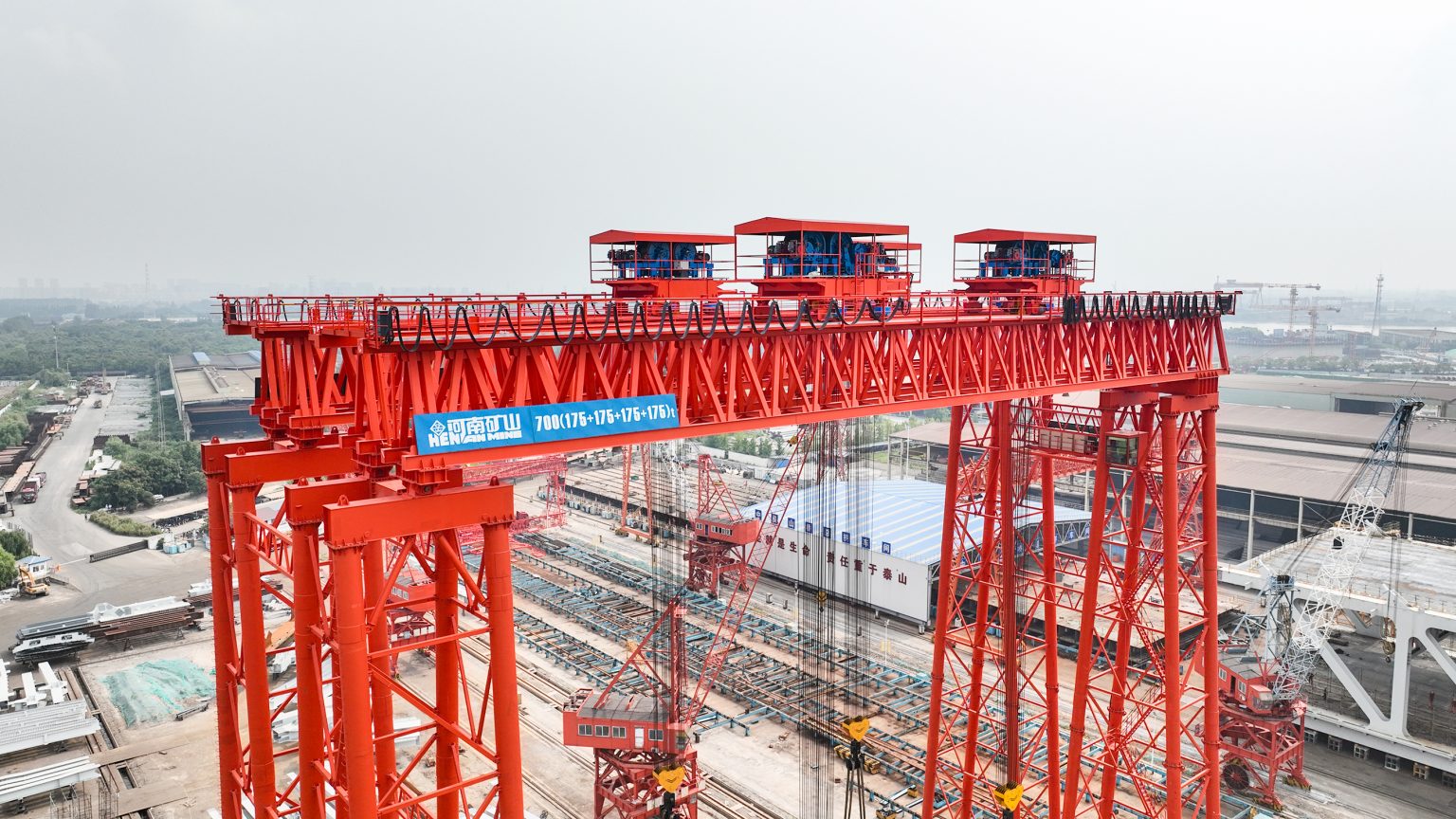
Henan Mine Crane supplied a 700 t project-specific gantry crane for construction work associated with the Zhangjiagang Yangtze River Bridge. The system handled large steel tower sections, placing the lifting operation far beyond the duty of a standard packaged electric-hoist gantry crane.
The case demonstrates the engineering sequence required when load geometry, lifting points, construction stages and site boundaries control the crane concept. Structural arrangement, lifting machinery, electric drives, travel coordination, foundations, erection method and acceptance planning must be treated as one system. Rated tonnage alone cannot define a heavy-lift gantry.
The same discipline applies at smaller capacities. A reliable electric gantry crane proposal should identify the suspended load, work cycle, coverage, duty, wind basis, rail interface, power feed, control method and testing boundary before price and delivery are fixed. The 700 t installation represents a specialized project application and is not a standard-range price example.
Engineering Deliverables and Quality Records
A commercial proposal should identify the design basis and the documents delivered with the equipment. Typical engineering outputs include the general arrangement, wheel loads, maximum rail reactions, foundation interface, power demand, motor list, single-line diagram, control description and shipping split. Final documentation follows the contract, destination rules and acceptance authority.
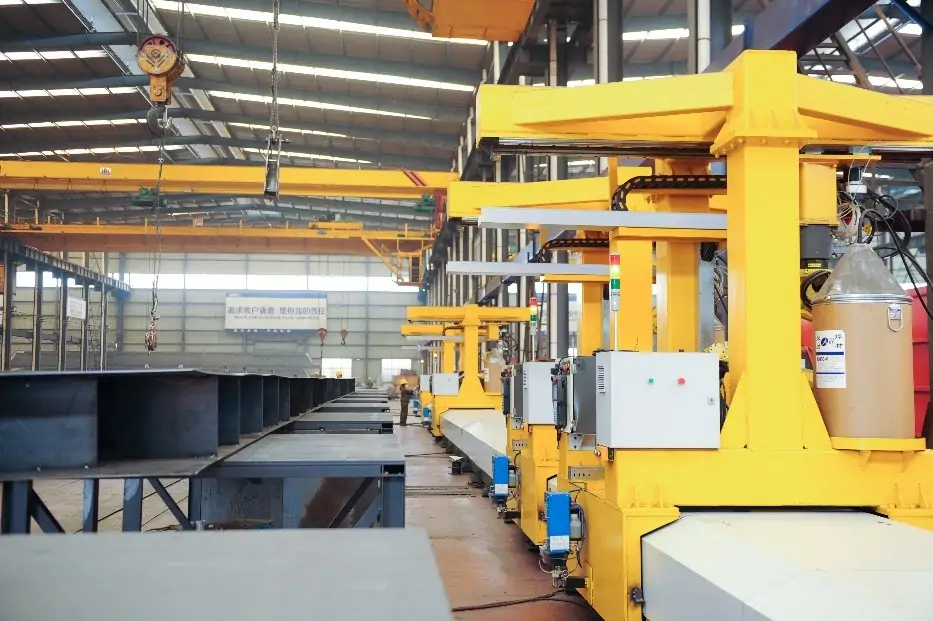
Manufacturing control normally covers material identification, welding procedures, dimensional inspection, machining, assembly, coating preparation and electrical-panel verification. Non-destructive examination, third-party witness points and material certificates are included when specified in the inspection and test plan. Factory testing should record hoist, trolley and crane motions, limits, brakes, controls and protective functions available before shipment.
Procurement review should confirm drawing approval stages, deviation handling, document language, spare-parts list, test records and release criteria. This evidence establishes traceability between the approved specification and the delivered crane and prevents essential documentation from becoming an undefined post-order item.
Installation, Commissioning and Lifecycle Planning
Site preparation begins before shipment. Ground rails require verified foundations, level and gauge tolerances, drainage, end stops and an agreed installation datum. Semi-gantry cranes also require confirmation of elevated-runway alignment and building reactions. Mobile cranes require a floor survey covering capacity, flatness, joints, gradients, obstructions and the complete travel route.
Before Delivery
Approve drawings, rail details, wheel loads, electrical connection, access route, lifting plan, temporary works and storage protection. Confirm whether girders arrive as complete units or shipping sections.
Erection and Alignment
Assemble the structure under an approved lifting method, align rails and end carriages, verify diagonal dimensions, set buffers and anchors, route cables and complete electrical termination.
Commissioning and Acceptance
Check insulation, earthing, phase sequence, limits, brakes, controls, warning devices and no-load motions before functional and load testing under the governing acceptance plan.
Operating Handover
Provide operating instructions, maintenance schedules, lubrication points, electrical drawings, parts information and training for operators and maintenance personnel.
Planned Maintenance
Inspect ropes or chains, hooks, brakes, wheels, rails, fasteners, structure, electrification and protective devices at intervals based on duty, environment and governing requirements.
Lifecycle Provision
Define critical spares, consumables, remote technical support, inspection access and future relocation requirements during procurement rather than after commissioning.
Electric Gantry Crane Price and Supply Scope
Electric gantry crane prices vary because the same keyword covers compact mobile frames, rail-mounted electric-hoist cranes and custom heavy-lift systems. The following September 2026 market bands support preliminary budgeting only. They are not fixed Henan Mine Crane offers. Currency, steel content, duty, destination, trade term and installation boundary can move a project outside these ranges.
| Configuration | Capacity Position | Indicative Budget | Typical Equipment Scope | Common Variables or Exclusions |
|---|---|---|---|---|
| Compact mobile electric gantry | 0.5–3 t | US$3,000–15,000 | Frame, electric hoist and basic trolley or powered movement as specified | Freight, site assembly, floor verification and acceptance testing may be separate |
| Single-girder rail-mounted electric hoist gantry | 3–10 t | US$15,000–40,000 | Girder, legs, end carriages, electric hoist, drives and basic controls | Rails, foundations, plant power, freight, erection and local inspection |
| Double-girder electric hoist or semi-gantry | 5–20 t | US$30,000–80,000 | Engineered structure, electric lifting machinery, travel drives and controls | Runway works, cantilevers, outdoor package, delivery and site services |
| Installed engineered gantry benchmark | 5 t class | US$130,000–170,000 | North American benchmark for semi- or full-gantry systems with substantial local project scope | Regional labor, civil work, access, taxes and acceptance terms vary by location |
| Heavy-duty, high-lift or process gantry | Above 20 t or intensive duty | Project quotation | Engineered machinery, controls and contracted safety package | Attachment, civil work, logistics, erection, load testing and automation depend on the project |
Commercial comparison rule: equipment-only, landed and installed prices are different values. Every quotation should identify the hoist, trolley, rails, electrification, packing, freight, civil work, erection, commissioning, load test and statutory acceptance boundary.
Information Required for an Electric Gantry Crane Quote
A complete request for quotation reduces technical assumptions and shortens commercial review. Drawings are particularly valuable when building columns, production equipment, traffic lanes, storage areas or outdoor obstacles constrain the crane envelope.
Load and Handling Task
Maximum gross suspended load, normal load, dimensions, center of gravity, lifting points, attachment, pick location, set-down location and required positioning accuracy.
Crane Geometry
Rail-center span, lifting height, rail elevation, runway length, cantilever reach, end approaches, headroom, side clearances and any future expansion.
Operating Duty
Lifts per hour, average load, full-load frequency, travel distance, shifts per day, annual hours, target speeds and expected service life.
Site and Environment
Indoor or outdoor location, temperature, wind, rain, humidity, dust, corrosive exposure, altitude, floor or soil data and available installation access.
Electrical and Controls
Voltage, frequency, phases, plant connection point, pendant, radio or cabin control, VFD requirements, plant interfaces and automation functions.
Commercial Boundary
Delivery destination, trade term, governing standard, drawing and test requirements, inspection authority, installation scope, load-test responsibility and required delivery date.
Electric Gantry Crane FAQ
What is the difference between an electric gantry crane and a motorized gantry crane?
Electric gantry crane is the broader term and may describe powered hoisting, powered trolley travel and powered long travel. Motorized gantry crane usually emphasizes powered relocation or long travel, including mobile or rail-mounted arrangements.
Is an electric gantry crane suitable for outdoor operation?
Yes, when wind basis, storm parking, rail clamps or anchors, drainage, corrosion protection, enclosure ratings, cable system and temperature limits are engineered for the site. Standard indoor electrical equipment should not be assumed suitable outdoors.
When is a double-girder configuration required?
Double girders are considered when capacity, span, lifting height, hook approach, duty, trolley arrangement or attachment exceeds the practical range of a single-girder electric-hoist system. Final selection follows calculation and lifecycle requirements.
Can an electric gantry crane operate without ground rails?
A mobile unit can operate on suitable wheels over an approved surface, but capacity, floor loading, slope, traction, stability, travel speed and wind exposure impose limits. Industrial repetitive travel normally favors a properly aligned rail system.
Which control method is available?
Pendant, radio remote and operator cabin controls are available. Variable-frequency drives, PLC functions, anti-sway, anti-collision and position supervision can be added when the handling process and risk assessment require them.
How is the required electrical power calculated?
Power demand follows hoist, trolley and crane motor ratings, simultaneous-motion assumptions, duty, acceleration, auxiliary loads and starting method. The proposal should state connected load, supply data and the crane-to-plant connection boundary.
What information has the greatest effect on price?
Capacity, span, lift, duty, hoist or winch-trolley type, runway length, outdoor package, control complexity, rails, foundations, shipping dimensions and installation scope create the largest differences.
How long does manufacture and commissioning take?
Schedule depends on engineering complexity, drawing approval, material procurement, fabrication, inspection, shipping route, site readiness and acceptance requirements. A committed date should follow confirmation of the final technical and commercial scope.
Related Electric Gantry Crane Products
Compare the structural form, lifting mechanism and site interface before selecting a product family. Each configuration is finalized from approved project data.
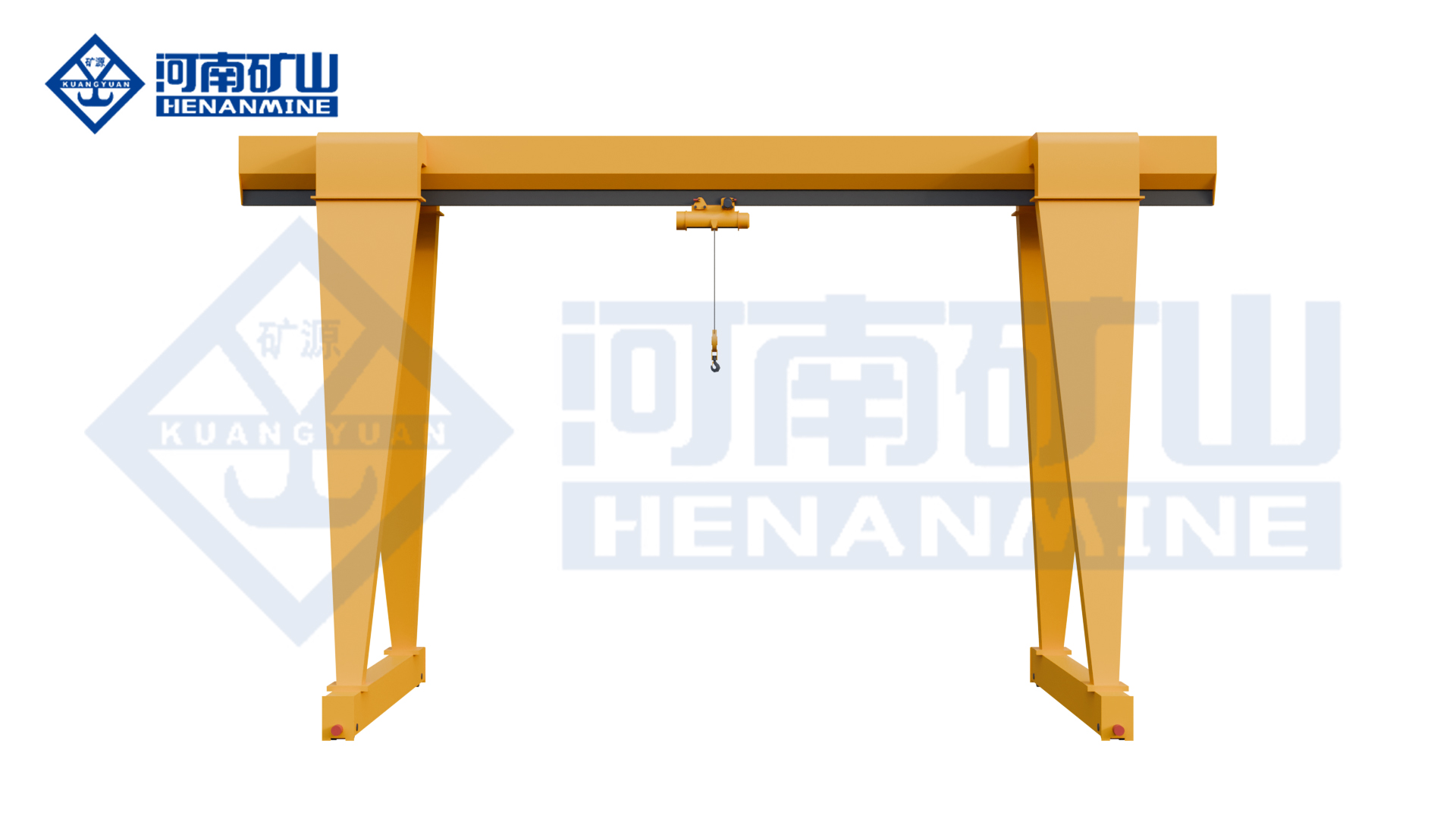
European Single-Girder Gantry Crane
Low-headroom electric-hoist configuration for efficient general industrial handling.
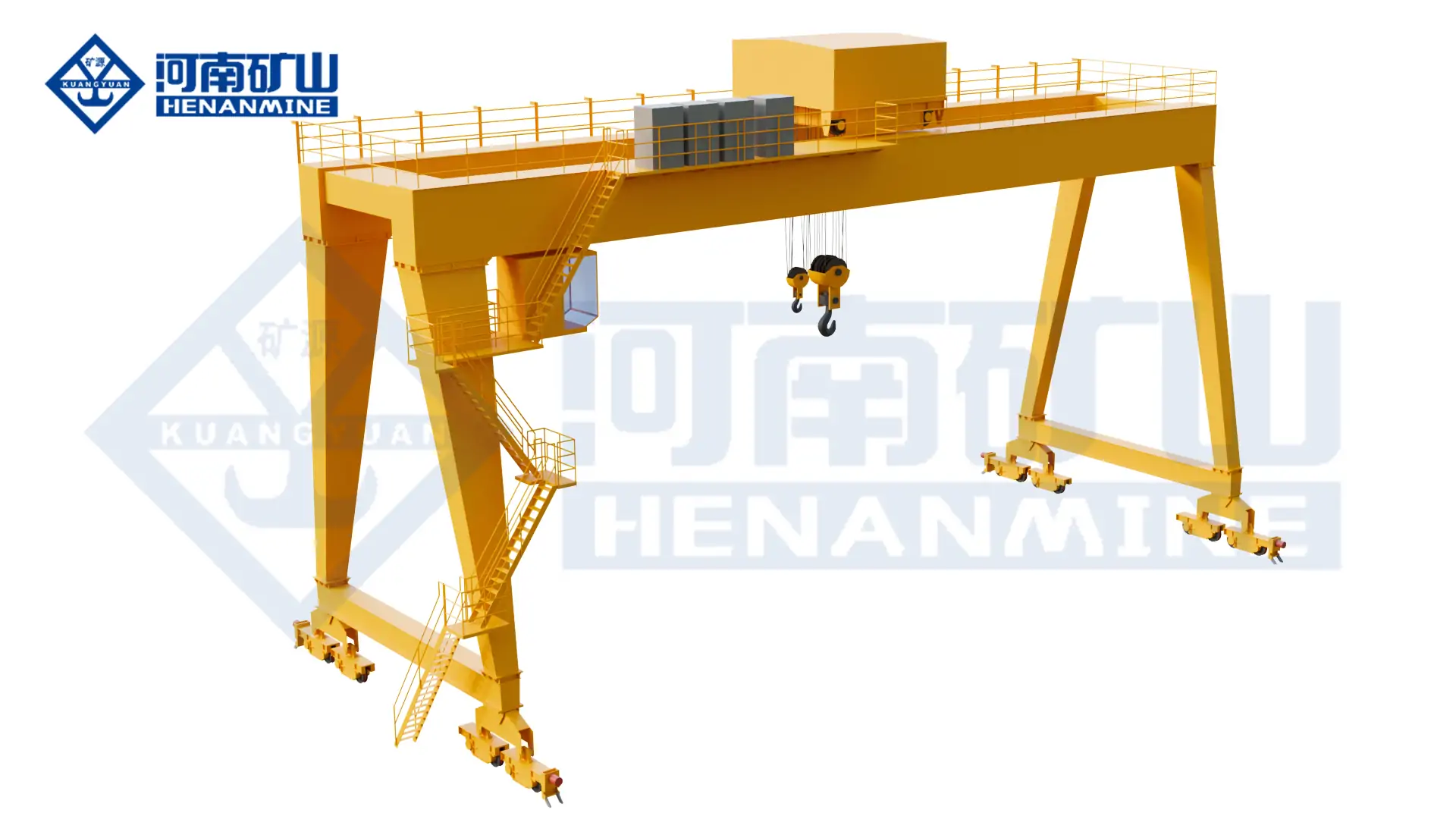
Double-Girder Electric Hoist Gantry Crane
Double-girder stability with an electric-hoist lifting mechanism for medium-duty service.
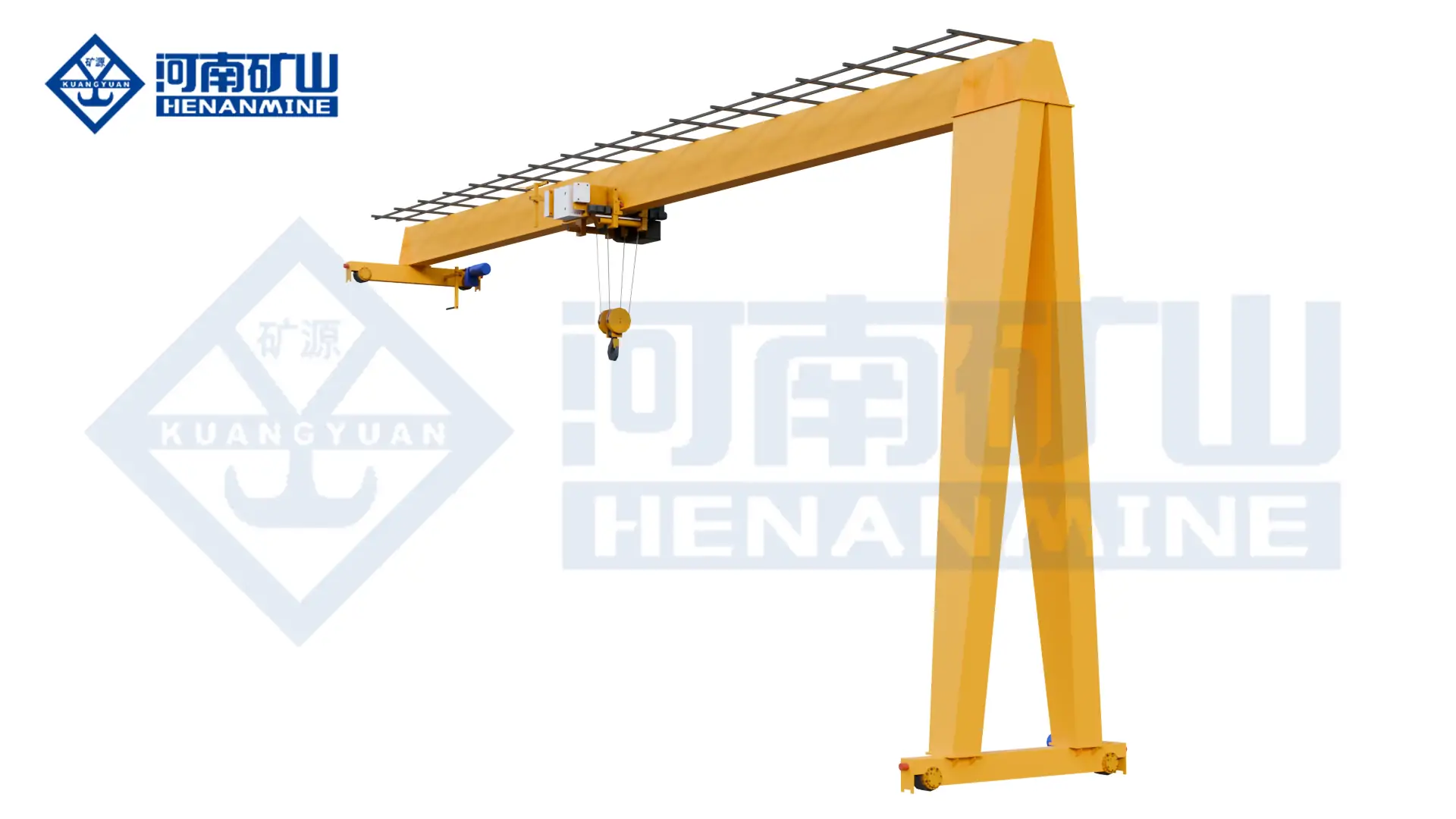
Single-Girder Semi-Gantry Crane
One elevated runway and one ground rail for workshop-edge material transfer.
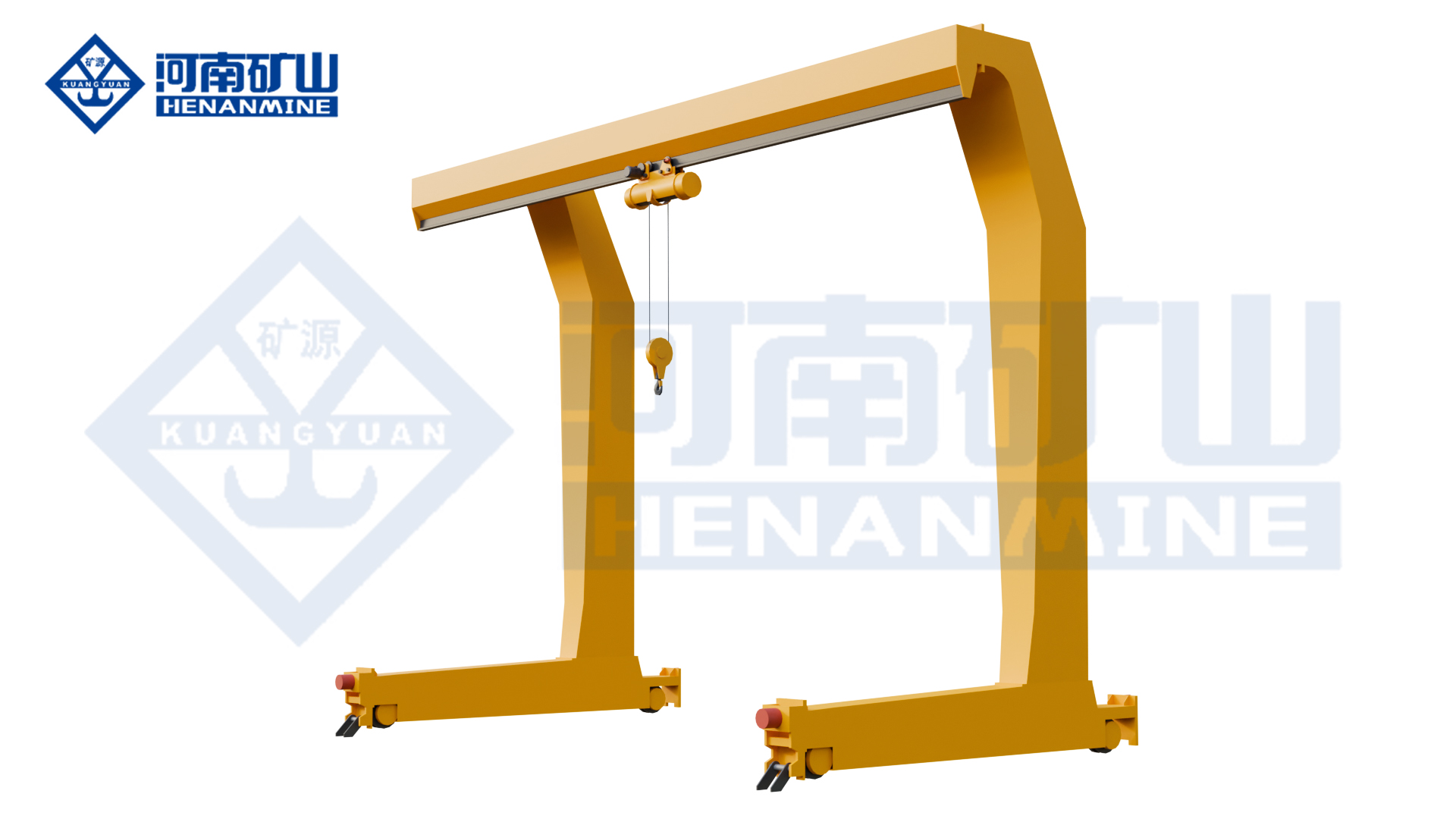
L-Type Offset Gantry Crane
Offset-leg design supporting long products, cantilever coverage and side loading.
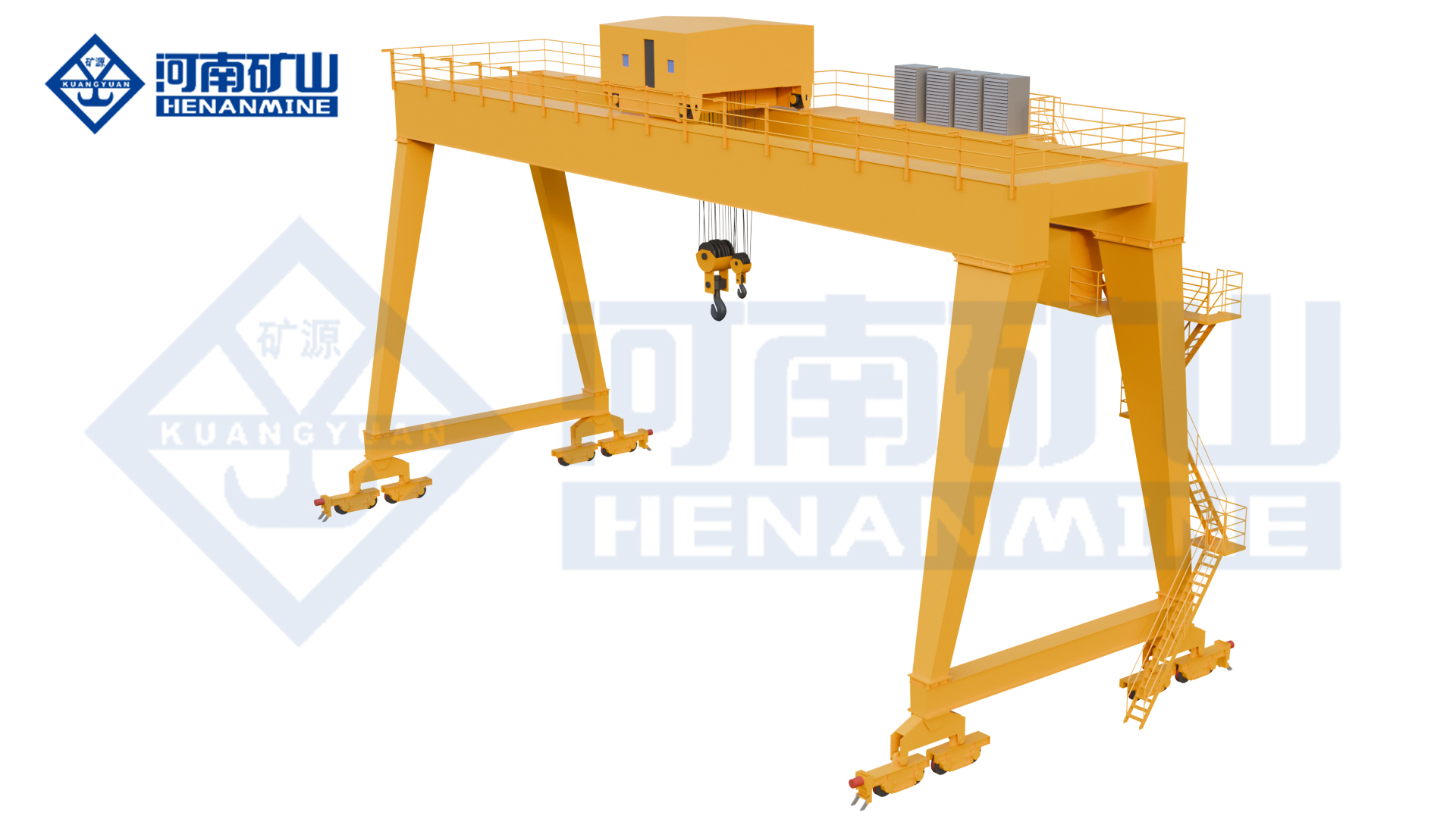
Double-Girder Gantry Crane
Heavy-duty box-girder crane for greater capacity, span, lift and working class.
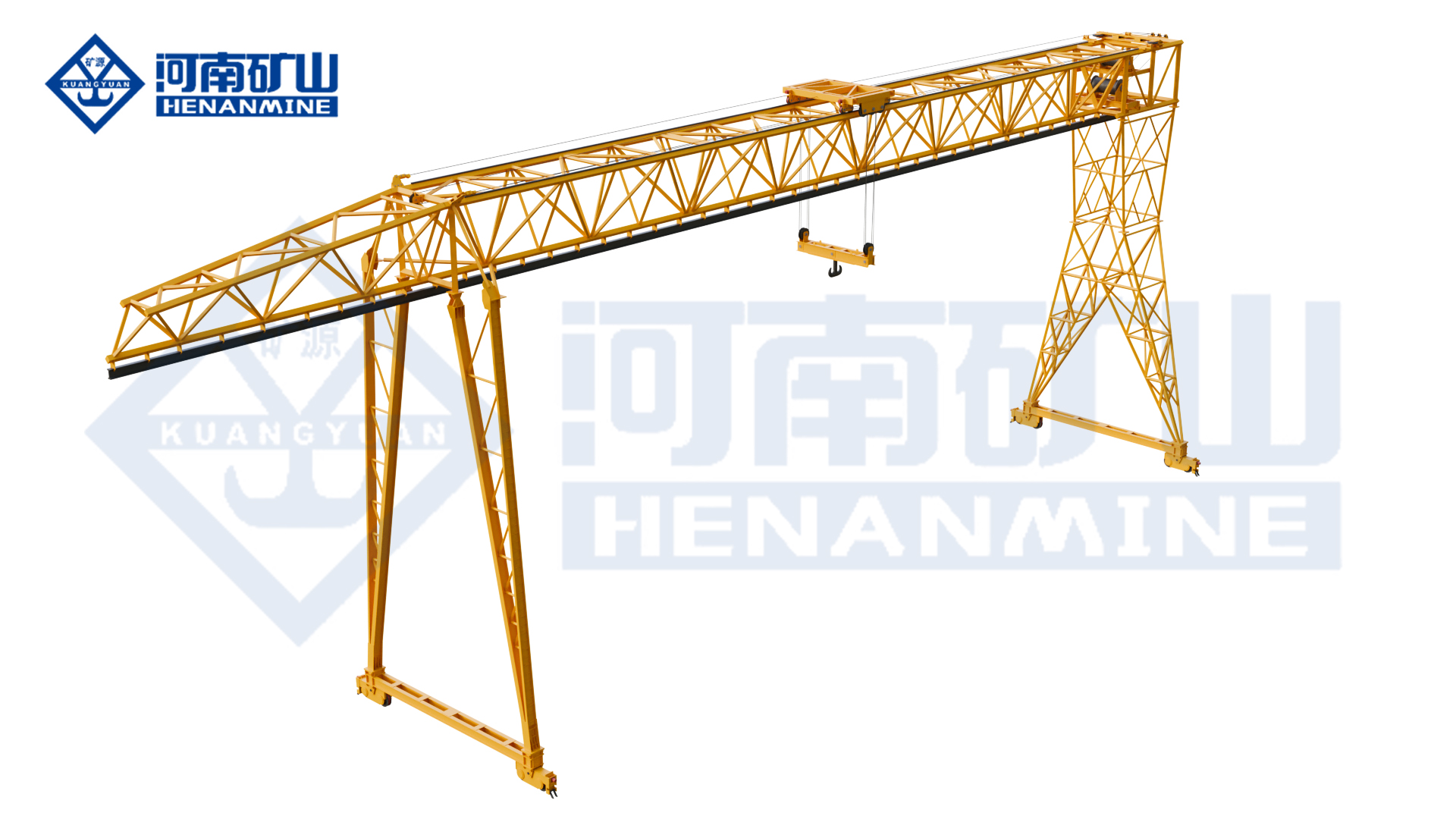
Double-Girder Truss Gantry Crane
Truss construction for long-span outdoor and project lifting applications.
Request an Electric Gantry Crane Proposal
Submit the maximum gross load, span, lifting height, runway length, duty cycle, operating environment, power supply, control method, site layout, destination and required supply boundary. Henan Mine Crane will prepare a project-specific technical and commercial proposal.