Engineering · Manufacturing · Project support
info@hnksglobal.comWhatsApp +86 18836207779 ↗

Blog

  • Check Manufacturer Identity and Product Documents When Buying a Crane

    Check Manufacturer Identity and Product Documents When Buying a Crane

    Quality & Manufacturing

    Check Manufacturer Identity and Product Documents When Buying a Crane

    Henan Mine Crane’s March 2026 brand-protection communication reminded customers to check product identity and manufacturer information when purchasing lifting equipment.

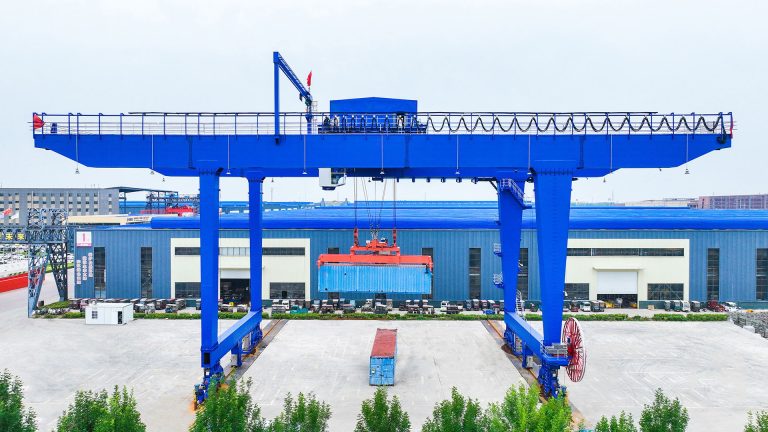
    Manufacturer website and company-document identification graphic
    Manufacturer website and company-document identification graphic.

    Match the supplier, equipment and order documents

    Buyers should compare the manufacturer identity shown on the equipment, the quotation and the supporting product documents. Any uncertainty should be clarified through the manufacturer’s published contact channels before the order is confirmed.

    Keep product identification with the project records

    For an enquiry about an existing crane, share the nameplate details and relevant order or equipment documentation with Henan Mine Crane. These records help the team identify the equipment being discussed.

    Contact Henan Mine Crane

    For product information, a manufacturing visit or a company enquiry, send the relevant details to our team.

  • Port Cranes for Saudi Arabia Projects: Cargo, Climate and Site Inputs

    Port Cranes for Saudi Arabia Projects: Cargo, Climate and Site Inputs

    Technical guide

    Port Cranes for Saudi Arabia Projects: Cargo, Climate and Site Inputs

    A project enquiry should describe the cargo service and conditions at the actual terminal. Include the quay or yard layout, environmental design inputs, power arrangements and installation scope when requesting proposals.

    Henan Mine CraneTechnical guide · Updated 2026Crane selection, project scope and operating requirements
    Saudi Arabia Port Crane Supplier
    Saudi Arabia Port Crane Supplier
    Project planning notes

    Key points for this crane project.

    1. Saudi Arabia Port Crane Core Application Scenarios
    2. Saudi Arabia’s core procurement requirements
    3. Mainstream Crane Models for Saudi Ports
    Read the technical guide

    Saudi Arabia Port Crane Core Application Scenarios

    Saudi Arabia's ports and logistics system scenarios are diverse, different business models suitable for Saudi Arabia's terminal crane models differ significantly. Container terminals focus on standardized container loading and unloading stacking, high frequency and continuity of operations, is the core application scenarios of STS, RTG, RMG cranes.

    Jubail, Yanbu and other industrial ports, focusing on petrochemicals, iron and steel, heavy equipment import and export, mostly heavy-duty non-standard cargo, requiring heavy-duty, highly adaptable port lifting equipment. General cargo terminals, bulk logistics hubs, inland dry port projects, focusing on equipment flexibility and dustproof durability, suitable for gantry cranes, conventional gantry Overhead Cranes. At the same time, a large number of old port renovation projects, but also a continuous need for customized lifting equipment suitable for upgrading.

    Saudi Arabia’s core procurement requirements

    Saudi Arabia's unique climate and operating environment have created procurement standards that are different from those of ordinary industrial scenarios. Coastal high salt fog environment requires equipment equipped with professional marine anticorrosion coating and sealing electrical protection, to avoid corrosion and aging of metal parts.

    High temperature in summer and dusty environment require equipment with high temperature resistance, sealed dustproof structure to ensure stable operation throughout the year. In addition, the smoothness of equipment operation, precise alignment capabilities, long-lasting spare parts supply, customized solutions for multiple categories of goods are the core indicators for local customers to select Saudi Arabia logistics Crane suppliers.

    Saudi Arabia Port Crane Supplier
    Saudi Arabia Port Crane Supplier

    Mainstream Crane Models for Saudi Ports

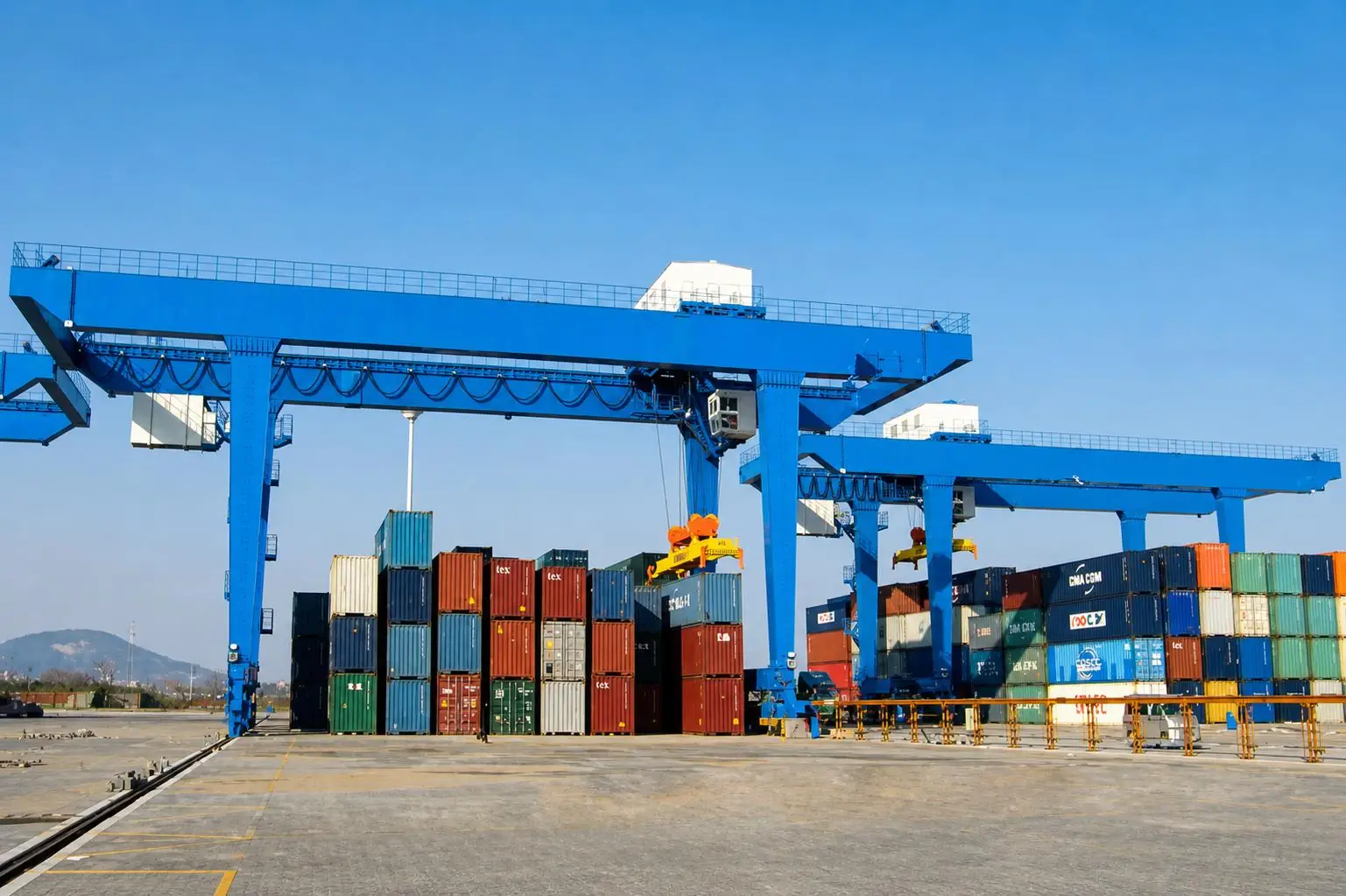
    For various types of Saudi port scenarios, a number of mature models can accurately match the needs. Shore-to-shore container cranes (STS) are suitable for loading and unloading large container ships on the shoreline, and are the standard equipment for core foreign trade ports. Saudi Arabia RTG Crane adopts tire traveling structure, which is flexible and suitable for small and medium-sized container yards and inland logistics parks.

    Saudi Arabia RMG Crane rail-type operation, precise alignment, suitable for large standardized container yard intensive operation. Port gantry cranes are highly versatile and perfectly suited for general cargo, industrial heavy cargo and bulk cargo handling. Mobile port cranes and special bridge gantry cranes for logistics hubs are suitable for temporary operation scenarios and inland normalized logistics lifting needs respectively.

    Core technical parameters and supplier selection criteria

    Saudi Arabia's port project acceptance is strict, procurement needs to accurately check the lifting capacity, span, lifting height, traveling range, heavy-duty work level, operating speed and other core parameters, while matching the local grid system, wind anti-corrosion, dust and high-temperature resistant environment configuration, complete with a full set of safety protection systems.

    Procurement needs to take into account the value of the whole life cycle of the equipment, to avoid the late failure loss caused by the low-priced reduced model.

    Saudi Arabia Port Crane Supplier
    Saudi Arabia Port Crane Supplier

    Henan Mine Crane’s local projects in Saudi Arabia

    Henan Mine Crane has been deeply cultivating the Middle East market for many years, and has continuously participated in Saudi Arabia's industrial, logistics and port supporting projects, and its products are suitable for Saudi Arabia's high-temperature, highly corrosive and dusty working conditions.

    At the same time, Henan Mine Crane has successfully applied a variety of anticorrosive upgraded portal cranes and gantry cranes in Saudi Arabia's inland logistics dry port and port supporting yard projects, optimized marine anticorrosive coating and high-temperature electrical protection, perfectly adapted to Saudi Arabia's coastal and inland harsh working conditions. The company has appeared in five major industry exhibitions in Riyadh, Saudi Arabia for many times, and is deeply committed to the local market, and can quickly respond to the needs of Saudi customers for program customization, equipment delivery and after-sales maintenance, and has the ability to execute mature projects in the Middle East.

    Common Procurement Myths and FAQ

    Common misconceptions in Saudi Arabia port procurement include simple price comparison, mismatch between models and goods, neglecting working condition protection, not checking local project cases, and ignoring after-sales spare parts service, which will easily lead to poor equipment suitability, frequent failures, and obstacles to acceptance.

    Adaptable models need to be accurately selected according to the scene, container terminals use STS, RTG, RMG, industrial general cargo ports use gantry cranes. Anti-corrosion configuration for coastal projects is a necessity, and it is the core guarantee for the long-term operation of the equipment. Formal source manufacturers can provide a full set of customs clearance and acceptance data, while one-stop coverage of ports and logistics hubs, a full set of lifting solutions, condition fit, technical services, spare parts supply is far more important than a single offer.

    Get your customized solution

    Saudi Arabia ports and logistics lifting project procurement, the core is to match the local special conditions of the customized solutions, rather than general low-cost equipment. Different ports and logistics scenarios have different models, parameter configurations and protection standards. As a reliable supplier of Saudi Arabia port cranes, Henan Mine Crane can provide highly adaptable and stable lifting solutions for all kinds of ports, terminals and logistics hub projects in Saudi Arabia, relying on mature local project cases, customized equipments adapted to the working conditions, and full-process landing services.

    If you need to adapt to the project's precise model selection and parameters of the program, you can provide equipment tonnage, span, operating environment and site drawings, we can issue an exclusive customized program.

    Discuss the crane arrangement for your project.

    A project enquiry should describe the cargo service and conditions at the actual terminal. Include the quay or yard layout, environmental design inputs, power arrangements and installation scope when requesting proposals. Share the load, available drawings, working cycle and site conditions with Henan Mine Crane so the required configuration and supply boundary can be discussed.

    Related crane configurations

    Explore crane product families and technical parameters ↗

    Updated 2026 · Henan Mine Crane

  • Saudi Arabia Port Crane Procurement: Compare Supplier Responsibilities

    Saudi Arabia Port Crane Procurement: Compare Supplier Responsibilities

    Technical guide

    Saudi Arabia Port Crane Procurement: Compare Supplier Responsibilities

    Supplier evaluation needs to cover engineering, delivery and the work at the destination site. Give each bidder the same operating brief and ask them to identify documentation, commissioning and support responsibilities explicitly.

    Henan Mine CraneTechnical guide · Updated 2026Crane selection, project scope and operating requirements
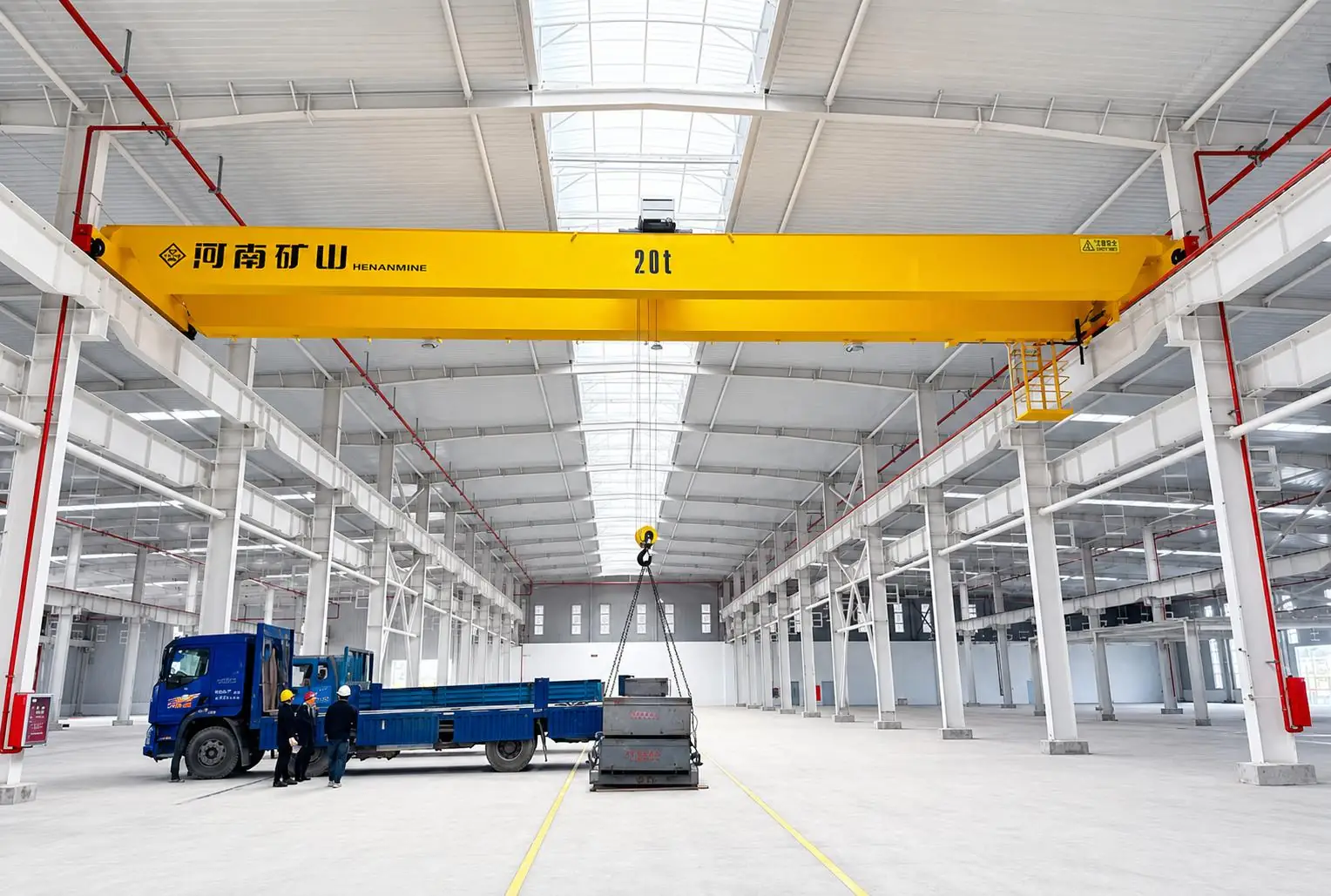
    Henan Mine Crane overhead crane inside a workshop bay
    Henan Mine Crane overhead crane inside a workshop bay
    Project planning notes

    Key points for this crane project.

    1. Why Saudi ports must choose a reliable port crane
    2. Mainstream Crane Types Commonly Used in Saudi Arabia
    3. The core application of cranes in Saudi Arabia’s
    Read the technical guide

    Why Saudi ports must choose a reliable port crane supplier

    Port lifting equipment determines the efficiency of cargo flow

    Saudi Arabia's major commercial ports, industrial terminals, container hubs, daily bear a large number of containers, industrial bulk cargo, engineering equipment, petrochemical materials loading and unloading and transit work. The whole set of port lifting equipment system is the basis for maintaining normal cargo throughput.

    Cranes suitable for working conditions in Saudi Arabia can smoothly connect the whole process of ship docking loading and unloading, yard stacking, inland transit, to ensure that the terminal's daily operations in an orderly manner, to avoid the accumulation of goods stranded in the harbor.

    Stability of equipment directly affects the operational efficiency of the terminal

    Port operation is a continuous assembly line operation, the ship docking time, cargo turnover cycle have strict planning. Once the core equipments, such as shore bridge and yard bridge, fail and shut down, it will directly lead to the problems of ship stranding, cargo accumulation and yard shutdown.

    For commercially operated Saudi terminals, the cost of demurrage, schedule loss and O&M expenses caused by sudden equipment failure is much higher than the purchase price of the equipment itself.

    Extremely harsh working conditions in Saudi coastal ports

    Coastal areas with high salt content in the air, salt spray attacks all year round, the steel structure corrosion is extremely strong.

    In addition, sand and dust weather is frequent in the inland port landfill, and the fine sand and dust can easily intrude into the running parts of the equipment and the electrical system, resulting in jamming, wear and tear, and circuit failure. The year-round non-stop high-frequency operation further increases the operating load of the equipment, which requires extremely high quality and design standards.

    Industry Procurement Focuses on Equipment Life Cycle Value

    In the early stage, many Saudi port projects used low-priced and low-equipped equipment, which can be put into use in the short term, but frequent failures, anti-corrosion peeling, parts supply, maintenance difficulties and other problems emerge one after another in the later stage, which continue to raise the operating costs.

    At this stage, Saudi Arabia's large port projects, foreign-funded port projects, in screening port crane supplier Saudi Arabia, will focus on considering the durability of the equipment, anticorrosion technology, work level, maintenance costs and long-term service capabilities, and prioritize the selection of heavy-duty professional equipment with stronger overall suitability.

    Mainstream Crane Types Commonly Used in Saudi Arabia Port Projects

    Ship-to-shore container cranes (Ship-to-shore crane)

    Ship-to-shore crane is the core main equipment of the container terminal, mainly installed in the terminal berth front, responsible for the loading and unloading operations of ocean-going container ships. The equipment has a large outreach distance, high lifting height and wide operational coverage, which can be adapted to the needs of large container ships docking operations.

    This kind of equipment needs to face the strong wind, salt spray and high temperature environment on the seashore all year round, and all the structure and electrical system have to do special marine anticorrosive and weather-resistant treatment, which is the standard equipment for large container terminals.

    Tire Gantry Crane (RTG)

    The core scenario served by Saudi Arabia's RTG crane suppliers is container yard operations. Tire yard bridge does not need to lay a fixed track, mobile and flexible, strong site adaptability, mainly used for container stacking, zoning transfer, yard regularization operations.

    It is suitable for the large-area yard operation mode of major container hub ports in Saudi Arabia, and the operation area can be freely adjusted according to the operation rhythm of the yard, which is suitable for the flexible scheduling of operation needs.

    Rail Mounted Gantry Crane (RMG)

    Saudi Arabia's RMG Crane supplier focuses on standardized and automated container yard scenarios. The rail yard bridge runs along a fixed track, with high positioning accuracy, good running stability and higher operating frequency, which is suitable for the high-density operation needs of large-scale and intelligent container terminals.

    This type of equipment is suitable for long-term fixed yard layout, suitable for Saudi Arabia's new smart ports, standardized container industrial park of the normal operation, can be docked semi-automated, fully automated terminal control system.

    Mobile Harbor Crane

    Mobile harbor cranes are extremely flexible, do not require a fixed installation foundation, and can quickly switch between operating berths and areas. Mostly used in multi-purpose general terminal, bulk cargo temporary loading and unloading, small ship operation, temporary transfer of engineering materials scene.

    Suitable for small and medium-sized industrial ports in Saudi Arabia, temporary project terminals, multi-purpose integrated port diversified operational needs, high versatility.

    Gantry Cranes and Jib Cranes

    Gantry cranes and small jib cranes are mainly used in general-purpose bulk cargo terminals, harbor shipyards, and industrial supporting terminals. They can undertake lifting operations for steel, engineering equipment, bulk cargo and ship maintenance materials.

    With solid structure and flexible operation, the equipment is suitable for supporting logistics lifting work of petrochemical, steel and energy projects in Saudi Arabia's port.

    The core application of cranes in Saudi Arabia’s ports and offshore projects

    Container specialized terminal

    Container terminal is the core scene of Saudi Arabia's maritime transportation, relying on the shore bridge equipment to complete ship loading and unloading, with RTG, RMG yard bridge to complete the yard stacking, inter-area transfer, container regularization operations. The whole set of equipment system supports the efficient throughput of large-volume containers at the terminal.

    The smoothness, alignment accuracy and continuous operation capability of the equipment directly determine the daily throughput of the container terminal.

    Bulk Industrial Terminal

    A large number of petrochemicals, iron and steel, building materials, mineral materials exported through the port in Saudi Arabia, the bulk terminal needs Crane to complete the heavy steel, complete sets of engineering equipment, bulk materials, large-scale tooling loading and unloading transshipment work.

    This type of scenario requires higher load capacity and structural stability of the equipment, and requires heavy-duty level of port-specific lifting equipment.

    Specialized port for port industry

    Around the Saudi Arabia 2030 industrial planning, a large number of petrochemical bases, energy industry parks, heavy industry bases supporting the exclusive industrial port. This type of terminal mainly serves the plant equipment into the field, raw materials unloading, finished product transportation, large-scale unit lifting operations.

    The operating conditions are inclined to heavy-duty, low-frequency lifting of large parts, and manufacturers need to customize the appropriate model according to the type of industrial materials.

    Inland logistics transshipment yard

    Port supporting inland yards, transit warehousing parks, undertake temporary storage of goods, secondary sorting, trans-regional transfer work. Yard and bridge equipment is mainly responsible for stacking goods in the yard, pallet transfer, material regularization, connecting the port and inland logistics link.

    Shipyard and Marine Supporting Operations

    Saudi Arabia's coastal shipyards, ship maintenance bases, the need for cranes to complete the hull components lifting, disassembling and assembling marine equipment, maintenance materials transfer work. The equipment needs to be adapted to the seaside high corrosion, strong winds, high humidity and complex offshore working conditions.

    The core technical parameters of Saudi Arabia’s port procurement focus on consideration

    Rated lifting capacity

    Tonnage selection needs to match the full load weight of the container, the maximum load of the bulk single piece, engineering equipment weight, while leaving enough safety margin. Port equipment is strictly prohibited from running for a long period of time with full load or overload, and sufficient load margin can effectively extend the service life of the equipment.

    Outreach and span

    The outreach of the quay bridge needs to match the width and draught depth of the docked ship, to ensure that it can cover the whole operating range of the ship. The span of the bridge should match the standard partition width of the yard, to avoid the blind area of operation, and to match the standardized layout of the terminal.

    Lifting height

    The lifting height should take into account the operating height of the ship's deck, the number of stacked layers of containers, and the safety headroom of cargo lifting. At the same time, it is suitable for Saudi Arabia's tidal range to ensure that loading and unloading operations can be carried out normally at both high and low tides.

    Running length

    The running length of the equipment determines the operation coverage of the berth and yard, which needs to be matched with the length of the berth and the overall layout of the yard to ensure that there is no dead angle operation in the whole area.

    Working level

    Most of Saudi ports are for 24 hours non-stop operation, and the average daily operation frequency is very high, so it is necessary to use high-level heavy-duty port-specific models. Ordinary industrial light-duty equipment is completely unable to adapt to the continuous cyclic operation conditions of the port.

    Operating speed parameters

    Lifting speed, trolley running speed, traveling speed of the trolley, directly affects the single day operation throughput of the terminal. Professional port equipment will match the reasonable speed parameters according to the terminal operation requirements, balancing the operation efficiency and smoothness of operation.

    Control and automation level

    Traditional small-scale wharf can choose manual control, wireless remote control mode. New standardized and intelligent ports are equipped with semi-automatic and fully-automatic control systems, with anti-shaking and precise positioning functions to meet the needs of unmanned yard operations.

    The exclusive design of Saudi Arabia’s port Crane just needs

    High-temperature resistant operation design

    Port-specific Cranes need to be equipped with high-temperature-resistant electrical components, heat dissipation optimization structure and sun protection design to ensure stable operation in high-temperature environments.

    Strong marine anti-corrosion treatment

    Coastal salt spray is the biggest source of wear and tear of port equipment, and ordinary spray painting process will cause skinning, rusting and peeling problems in a short period of time. Equipment suitable for Saudi Arabia's seaport conditions need to use multi-layer heavy-duty anti-corrosion coating system, with key components galvanized, passivation treatment to resist salt spray corrosion.

    High-quality Saudi Arabia seaport Crane suppliers will be based on the coastal corrosion level, customized anti-corrosion solutions, significantly extending the outdoor service life of the equipment.

    Sand and dust sealing protection

    Saudi Arabia's coastal and harbor areas are prone to sandy and dusty weather all year round, and fine sand and dust can easily invade precision parts such as motors, brakes, gearboxes, electrical switches, etc., resulting in wear and tear jams, circuit short circuits, and equipment failures.

    All precision parts and electrical systems of harbor Crane must be sealed and dustproof design, suitable for sand and dust-prone operating environment.

    Suitable for ultra-long continuous operation conditions

    Saudi Arabia's core ports are open all year round, and the equipment can run for more than 20 hours a day, with the core components working in a continuous high-frequency cycle. The equipment structure, transmission system and braking system all need to be designed according to the standard of heavy-duty continuous operation to reduce fatigue loss.

    Outdoor windproof safety design

    Saudi Arabia's coast has persistent sea winds all year round, and extreme weather gusts are strong. Harbor Cranes must be equipped with professional windproof anchoring devices, rail windproof rail clamps, emergency braking system, to avoid the risk of equipment skidding and shaking in windy weather, and to protect the safety of operations.

    Core competencies of quality Saudi Arabia harbor crane suppliers

    Independent scale production and manufacturing capacity

    Reliable Saudi Arabia port equipment supplier must have a complete port crane R & D, steel processing, machine assembly, anti-corrosion treatment, electrical commissioning of the whole process of production capacity, never a simple parts assembly traders.

    Independent production can strictly control the main girder welding accuracy, structural thickness, anti-corrosion technology, the quality of core components, from the source to ensure that the equipment is suitable for heavy-duty coastal conditions in Saudi Arabia. Henan Mine Crane Industrial has a large-scale port lifting equipment exclusive production line, complete export qualification, can be batch customized for all kinds of Saudi Arabia port special equipment.

    Mature port terminal project landing experience

    Ordinary industrial Crane manufacturers are only familiar with indoor mild working conditions, do not understand the complex environment of the port sea wind, high temperature, salt spray, sand and dust, and do not understand the logic of continuous operation of the terminal working conditions.

    Professional export manufacturers are deeply cultivated in the Middle East port market, familiar with the operation mode, acceptance standards, and climatic conditions of the major terminals in Saudi Arabia, and can optimize the equipment structure and protection configuration to avoid the problem of incompatibility.

    Professional engineering customization and program optimization ability

    Different Saudi terminals have different berth layouts, yard sizes, cargo types and automation needs, and standardized equipment cannot be fully adapted. High-quality manufacturers can optimize the equipment span, reach, protection configuration and control system one by one according to the terminal drawings, site conditions and operational requirements.

    Strict quality control system for the whole process

    Port equipment belongs to heavy-duty and high-risk industrial equipment, the factory quality inspection standards are much higher than ordinary lifting equipment. The production process needs to strictly complete the full set of procedures such as weld flaw detection, structural size calibration, electrical system testing, no-load test run, full load test, anti-corrosion coating testing.

    Every harbor crane exported to Saudi Arabia is equipped with complete quality inspection records to ensure that it can be put into continuous heavy-duty operation directly after landing.

    Perfect cross-border after-sales and spare parts protection

    Port downtime loss is extremely high, equipment failure is in urgent need of rapid technical docking and spare parts supply. High-quality suppliers can provide full English technical information, remote troubleshooting, cross-border installation guidance, operator training services, while reserving common wearing parts to shorten the maintenance cycle.

    Core Dimensions of Saudi Arabia Port Crane Supplier Evaluation

    Verification of similar overseas port project cases

    Prior to cooperation, we focus on verifying whether the manufacturer has real on-the-ground cases of Saudi Arabia and the Middle East ports, container terminals, port industrial yards, and offshore maintenance projects. Manufacturers with mature local project experience, program adaptability and equipment stability is more guaranteed.

    Verification of a full set of standardized English technical data

    Formal export manufacturers can provide a complete set of equipment assembly drawings, technical parameter manuals, electrical schematic diagrams, wheel pressure and rail pressure data, core component lists, factory quality inspection reports, operation and maintenance manuals, to meet the needs of customs clearance, acceptance, and archiving of Saudi Arabia port projects.

    Confirmation of core component brands and configuration standards

    Core components such as motor, reducer, brake, PLC control system, wire rope, wheels, bearings, container spreader, etc. directly determine the operational stability and service life of the equipment. When purchasing, it is necessary to clarify the brands, protection levels and specifications of the components to prevent under-provisioning and under-provisioning.

    Verify the factory testing and commissioning process

    Manufacturers are required to provide complete factory inspection records, including appearance quality inspection, structural calibration, no-load test, full-load test, overload test, electrical safety test, anticorrosion coating test and other full set of process information, to ensure that the equipment has no hidden quality problems.

    Clear delivery and installation of ancillary services

    Confirm the service scope in advance, and make clear whether it includes equipment delivery by sea, track supporting programs, on-site installation guidance, machine commissioning, start-up acceptance, personnel training and other services. Overseas port projects require high installation accuracy and professional technical guidance is essential.

    Common Core Concerns of Saudi Arabia Port Project Procurement

    Whether the equipment is suitable for heavy-duty continuous operation in the port

    Many low-priced equipments are only labeled with nominal tonnage, with low working level and insufficient spare capacity of core components, which are only suitable for intermittent light-duty operation. They cannot withstand 24-hour high-frequency heavy-duty cyclic operation in Saudi ports, and structural fatigue and component damage will occur in a short period of time.

    Can it withstand salt spray and high temperature corrosion at the seashore?

    Ordinary industrial equipment does not have marine exclusive anticorrosion design, in Saudi Arabia coastal salt spray, high temperature, high humidity environment, steel structure corrosion, electrical moisture aging speed is extremely fast, the late failure rate remains high. The purchaser is most concerned about the professionalism and durability of the anti-corrosion process of the equipment.

    Whether the control system is suitable for modernized terminal operation

    The new Saudi smart port and automated yard have high requirements for precise positioning of equipment, anti-shaking and anti-shaking, remote control and system docking capability. The old simple control system is not able to meet the operation and management requirements of modern terminals.

    Fast response of spare parts and technical support

    The local industrial parts supply chain in Saudi Arabia is not perfect, and the procurement cycle of spare parts for niche brands is long and technical docking is difficult. Once the equipment fails, it is very easy to cause long-term downtime of the terminal, which is one of the core concerns of port operators.

    Whether the offer includes a full set of supporting projects and services

    Some of the low-priced offers only include the host equipment, excluding spreaders, rails, power supply systems, anti-corrosion upgrades, installation and commissioning, spare parts and other ancillary content, which will result in a large number of invisible additions in the later stage of the landing and increase the overall cost.

    Whether it can be adapted to the personalized layout and cargo type of the terminal

    The cargo types, berth sizes, yard layouts and automation levels of different terminals vary greatly, and general equipment cannot be fully adapted. Purchasers need manufacturers to provide customized solutions to match the exclusive operating scenarios.

    How to horizontally compare the Saudi Arabia Port Crane offers

    Refuse to single price to determine the advantages and disadvantages of equipment

    Port lifting equipment belongs to heavy-duty industrial special equipment, price and quality, configuration, protection standards are highly bound. Most of the low-priced programs correspond to lightweight structure, low-end components, simplified anti-corrosion, low safety systems, long-term operational losses far exceed the purchase price difference.

    Verify the full set of technical configuration details line by line

    When comparing prices horizontally, it is necessary to unify and compare the details of steel structure material and thickness, lifting system, trolley traveling mechanism, container spreader specifications, electrical configuration, control system, anti-corrosion coating system, safety protection devices, spare parts, installation services and so on.

    Only the configuration dimensions are completely unified, in order to achieve a fair price comparison, to avoid being misled by the low allocation scheme.

    Focus on verifying the working level and design working condition of the equipment

    Mismatch of design standards is the core reason for frequent failures and shortened service life.

    Focus on warranty terms and long-term service system

    Warranty period, warranty coverage, cross-border after-sales response time, spare parts inventory replenishment ability, more valuable than the short-term price difference. A perfect service system can minimize the risk of port downtime and operation and maintenance costs.

    Information to be provided by docking manufacturers for Saudi Arabia port project

    Basic technical parameters

    Sort out in advance the rated lifting capacity, operating span or reach, effective lifting height, total running length of the truck, on-site power supply parameters, and preset working level of the equipment required to provide a basis for manufacturers to accurately select the model.

    Application details of working conditions

    Clearly define the type of operation, including container loading and unloading, bulk cargo transshipment, engineering equipment lifting, and industrial material maintenance. At the same time, the daily operation frequency, whether it is 24-hour continuous operation, and the type of spreader required are labeled.

    Site information

    Provide terminal berth drawings, overall layout of the yard, track foundation parameters, on-site pictures, sea environment description, so as to facilitate manufacturers to optimize the equipment windproof, anti-corrosion, adaptive installation solutions.

    Personalized customization requirements

    In advance, we will clarify whether we need wireless remote control, semi-automatic control, anti-shaking system, heavy-duty anti-corrosion upgrading, strong windproof device, exclusive lifting jig and other customized configurations, so that we can make the scheme and quotation in one step.

    Real-world case: how to choose the right Crane supplier for Saudi Arabia port project

    Dammam, Saudi Arabia, a supporting container yard, bear port container stacking, transshipment, cargo storage operations, the site is adjacent to the Persian Gulf, perennial salt spray corrosion, high temperature in the summer sand and dust weather is frequent, the need to purchase a number of RTG tire gantry cranes to adapt to the high-frequency continuous operation.

    A number of suppliers to participate in the bidding offer, one of the manufacturers offer the lowest price, but the program parameters are vague, not clear equipment work level, corrosion only ordinary industrial spray paint, no high temperature, dust, wind special design, cannot provide complete English technical data, after-sales only to provide basic warranty, no cross-border technical guidance.

    Henan Mine Crane provides a solution that is fully adapted to the working conditions of Saudi Arabia's coastal ports, choosing the heavy-duty working level of the ports, and adapting to 24-hour uninterrupted operation. The equipment adopts thickened wind-resistant steel structure, with multi-layer marine heavy anti-corrosion coating system, high temperature resistant and fully sealed dustproof protection for the electrical system, and equipped with professional windproof anchoring and anti-shaking system.

    At the same time, it is equipped with a full set of English drawings, quality inspection reports, operation and maintenance manuals, remote installation and commissioning, personnel training and long-term parts supply services, transparent program details, complete configuration, and perfect service.

    The yard finally gave up the low price and low allocation program and chose in-depth cooperation. After the equipment was put into use, it operated stably throughout the year, fearless of high temperature, salt fog, sand and dust erosion, with a very low failure rate, which significantly reduced operation and maintenance costs and downtime loss, and provided a strong guarantee for the efficient operation of the yard.

    Common Procurement Misconceptions of Saudi Purchasers

    The most common problem in Saudi Arabia's port projects is the pursuit of low price and neglecting the adaptability of the equipment to the working conditions. Low-quality industrial equipment cannot be adapted to the special working conditions of heavy load, corrosion and high temperature in the port, and the cost of operation and maintenance in the later stage remains high.

    Neglecting the coastal anti-corrosion needs, and choosing common industrial coating equipment, short-term steel structure corrosion, component aging and failure problems, significantly shortening the service life of the equipment.

    Do not verify the port project landing experience of manufacturers, choose to do only ordinary industrial equipment manufacturers, equipment design does not meet the logic of port operations, poor adaptability.

    Neglecting the working level and continuous operation cycle of the equipment, mistakenly replacing the port heavy-duty model with light-duty equipment, which poses safety risks in long-term operation.

    Failure to confirm the cross-border parts supply and after-sales system in advance, and inability to maintain the equipment in time after failure, resulting in long downtime of the terminal.

    Incomplete site data and working condition requirements provided at the quotation stage, resulting in the manufacturer's program design does not match the site, and later repeated rectification and misuse.

    Discuss the crane arrangement for your project.

    Supplier evaluation needs to cover engineering, delivery and the work at the destination site. Give each bidder the same operating brief and ask them to identify documentation, commissioning and support responsibilities explicitly. Share the load, available drawings, working cycle and site conditions with Henan Mine Crane so the required configuration and supply boundary can be discussed.

    Related crane configurations

    Explore crane product families and technical parameters ↗

    Updated 2026 · Henan Mine Crane

  • Rubber-Tyred Mobile Gantry Cranes: Route and Ground-Support Planning

    Rubber-Tyred Mobile Gantry Cranes: Route and Ground-Support Planning

    Technical guide

    Rubber-Tyred Mobile Gantry Cranes: Route and Ground-Support Planning

    A mobile gantry crane needs a usable transport route as well as lifting coverage. Review load geometry, ground support, turning space and access restrictions before comparing steering and handling arrangements.

    Henan Mine CraneTechnical guide · Updated 2026Crane selection, project scope and operating requirements
    Rubber-Tyred Mobile Gantry Cranes: Route and Ground-Support Planning
    Henan Mine Crane lifting equipment
    Project planning notes

    Key points for this crane project.

    1. What Is a Rubber-Tyred Mobile Gantry Crane?
    2. Key Advantages of Rubber-Tyred Mobile Gantry Cranes
    3. Indoor Applications of Rubber-Tyred Mobile Gantry
    Read the technical guide

    What Is a Rubber-Tyred Mobile Gantry Crane?

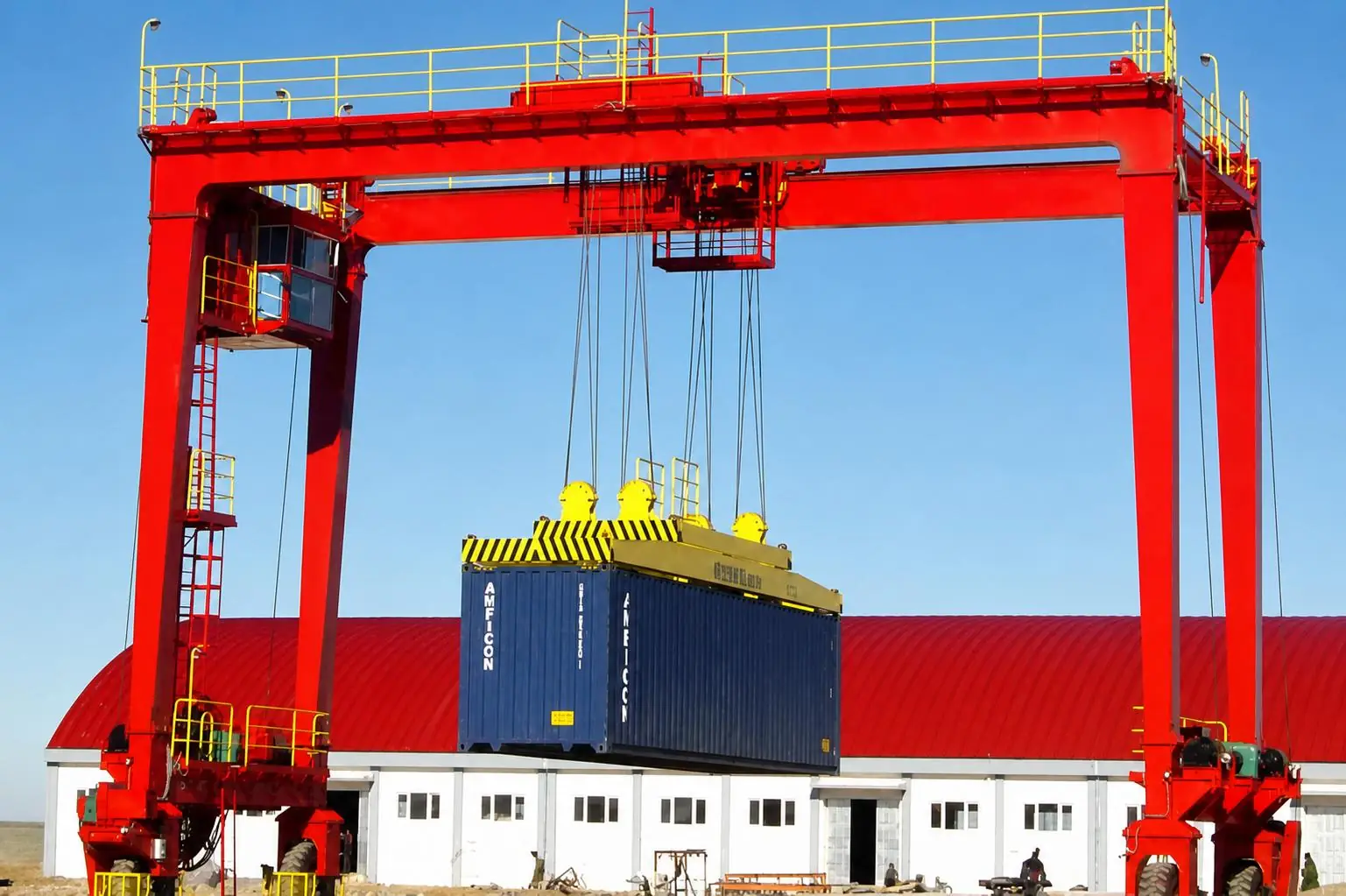
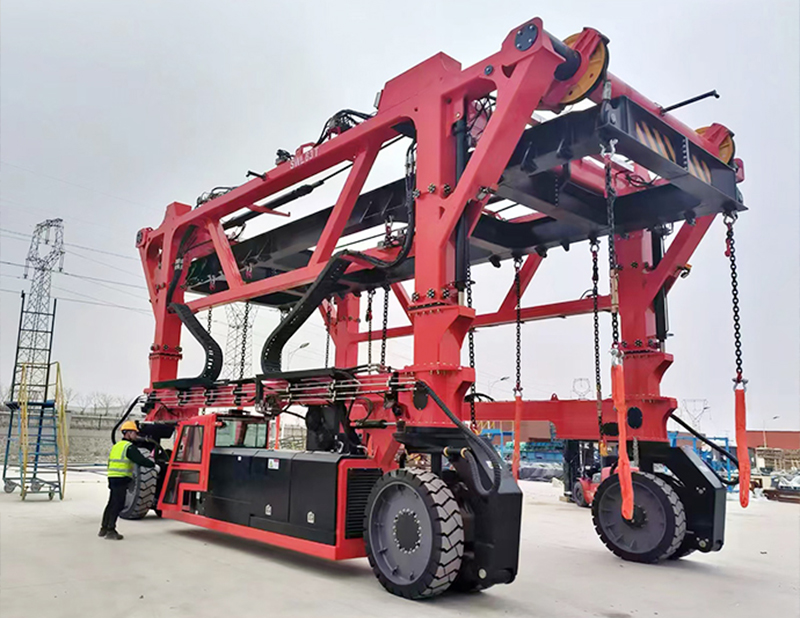
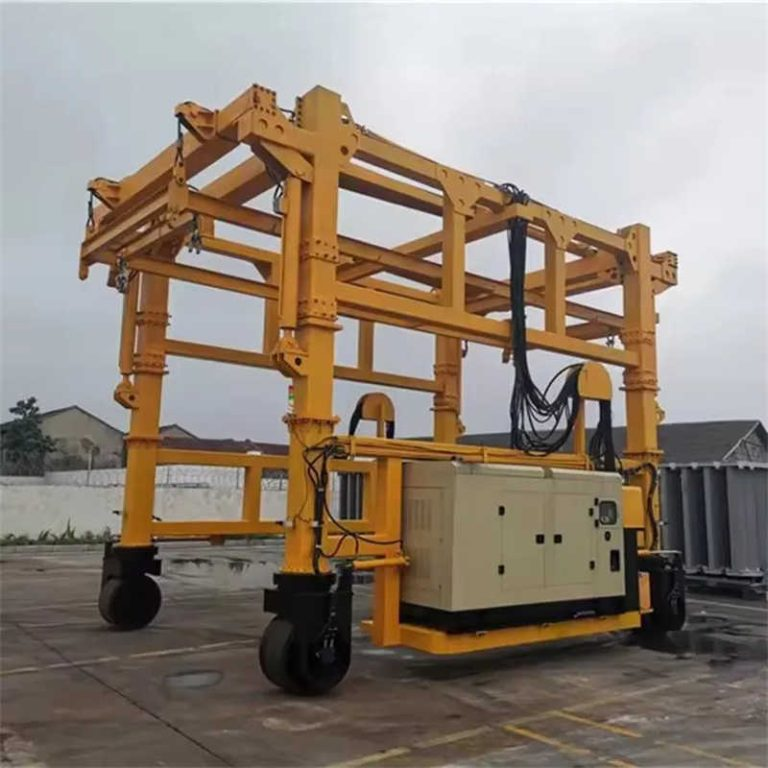
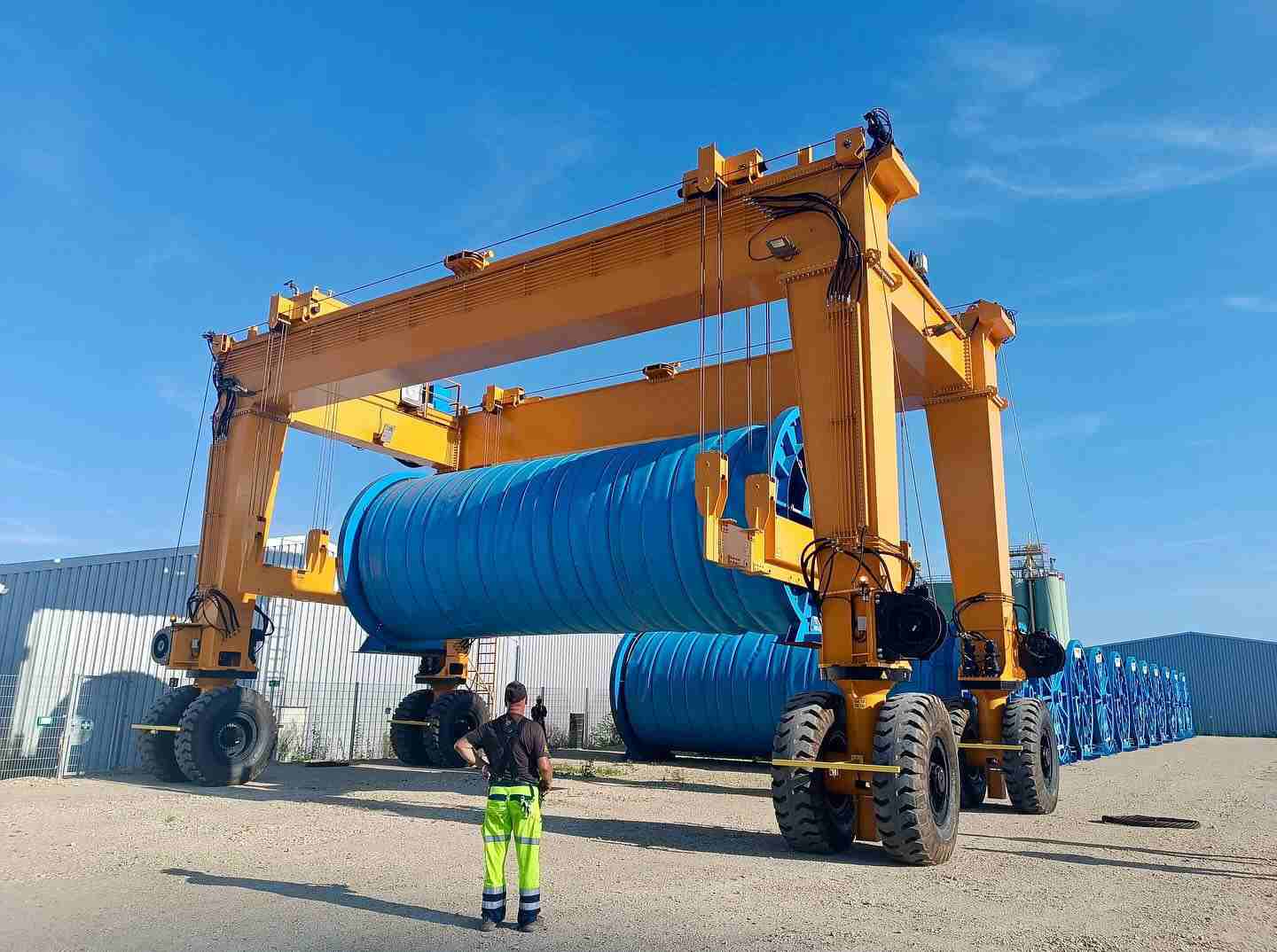
    Tire-type mobile gantry crane is a trackless gantry lifting equipment equipped with a rubber tire travel system. It integrates mechanical, hydraulic, electrical and safety protection systems, and can independently complete the whole process of positioning, lifting, translation, transshipment, and unloading of heavy objects. The core features are no need for track, global adaptation, flexible displacement, and free switching of indoor and outdoor working conditions.

    Tire Type RMG vs Rail Type Gantry Crane

    Orbital gantry cranes need to be laid with fixed steel rails and concrete foundations. They have high positioning accuracy and are suitable for fixed-point and high-frequency operations, but the infrastructure cost is high, they cannot be shifted, and the site adaptability is poor.

    Tire-type RMG relies on rubber tires to walk without a fixed track. It can turn at multiple angles and transition across regions. It has stronger mobility and versatility. It is more suitable for changeable working conditions, temporary construction, and dynamic production line scenarios. The ultimate positioning accuracy is slightly lower than that of track models.

    Principle of trackless autonomous walking

    RMG supports straight, diagonal, 90° steering, and in-situ fine-tuning through high-strength load-bearing tires, independent drive motors, and intelligent steering modules. As long as the ground meets the leveling and load-bearing standards, it can move freely in the whole area, completely solving the pain points of traditional gantry crane track constraints and inability to shift flexibly.

    Main Components

    The rmg gantry crane relies on the coordinated operation of multiple systems to achieve stable, safe and efficient heavy-duty operations. The major core components perform their respective functions and are accurately adapted to working conditions. The core structure functions are as follows:

    • Gantry frame: welded and formed with high-strength steel, the overall structure is stable, the deformation resistance is strong, and the weight and heavy-duty pressure of the whole machine can be stably carried. It is the core load-bearing body of the equipment operation.
    • Tire travel system: equipped with wear-resistant and explosion-proof industrial rubber tires and a dedicated drive mechanism, it has strong bearing capacity and stable travel. It can be adapted to a variety of flat ground to achieve flexible movement and free transition in the whole area.
    • Electric hoist/lifting trolley: it can slide horizontally accurately along the beam of the gantry, and it is equipped with professional spreaders to complete the vertical lifting and fine-tuning of heavy objects to ensure the accuracy of hoisting.
    • Lifting mechanism: it is composed of a hoist, a wire rope, and a dual brake assembly. The braking is sensitive and the lifting is stable, which effectively eliminates the risk of falling off the hoisting, and is suitable for all kinds of heavy-duty lifting operations.
    • Intelligent steering system: supports multi-mode steering adjustment, can be adapted to complex operating environments such as narrow spaces and irregular sites, and greatly improves the flexibility of equipment maneuvering.
    • Drive system: it is divided into two drive modes, electric and hydraulic. The electric model is silent and low-consumption, and is suitable for indoor normalization operations; the hydraulic model has plenty of power and strong bearing capacity, and is suitable for outdoor high-intensity and heavy-duty working conditions.
    • Electrical control cabinet: the intelligent control core of the equipment, through frequency conversion and speed regulation technology, the travel, lifting, and steering speed of the equipment are accurately regulated to ensure stable and controllable operation.
    • Wireless remote control system: equipped with a long-distance wireless control device, it is responsive and easy to operate, allowing operators to operate in a safe area, effectively avoiding the risk of close-range hoisting.
    • Safety protection system: integrates multiple safety devices such as overload protection, travel limit, intelligent anti-collision, emergency braking, sound and light alarm, and strengthens the safety line of defense for equipment and personnel operations in all directions.

    Key Advantages of Rubber-Tyred Mobile Gantry Cranes

    Indoor and outdoor dual-scene universal

    The equipment supports indoor and outdoor all-weather cross-border operations, which cannot only meet the needs of precision equipment hoisting and bulk material transfer in workshops and warehouses, but also adapt to complex outdoor working conditions such as construction sites, road and bridge infrastructure, port depots, and prefabricated component factories, and truly realize one-machine multi-scene reuse, with outstanding environmental adaptation capabilities.

    No rail infrastructure required

    The equipment does not need to lay steel rails and special civil foundations, and can be quickly put into use by relying only on flat ground with up-to-standard bearing capacity, eliminating the need for high supporting investments such as traditional track laying, transformation and expansion, and regular maintenance. The overall deployment is convenient, the production speed is fast, the initial infrastructure investment is greatly streamlined, and the project landing cost is effectively controlled.

    Strong heavy-duty capacity

    The whole machine has strong structural rigidity and uniform load distribution. Even if it is under heavy-duty conditions for a long time, it can maintain a stable operating state, with excellent bearing capacity and operating reliability.

    High site utilization rate

    The equipment can flexibly adjust the operation coverage according to the material stacking location and construction layout, eliminate the operation blind spots of fixed equipment, effectively reduce the redundant processes of secondary material handling and back-and-forth transportation, fully activate the available space of the plant and yard, and greatly improve the site utilization rate and overall operation flow efficiency.

    Adapt to dynamic working conditions

    The whole equipment does not need to be disassembled, and can be flexibly and quickly transitioned and shifted with the upgrading and iteration of the production line and the advancement of the construction process, and can be efficiently adapted to dynamic and changeable working conditions such as temporary engineering projects and phased construction. The equipment has wide versatility and high reuse rate, which can effectively reduce the idle loss of equipment and further improve the overall construction and production efficiency.

    Easy to deploy

    The equipment does not require supporting plant runways and permanent track infrastructure, and has strong compatibility with work sites, and can be directly adapted to conventional working conditions such as concrete, asphalt, and compacted hardened ground. With minimalist landing conditions, short equipment deployment cycle and low entry threshold, no large-scale civil construction investment is required, the overall investment is controllable, and the long-term economic benefits are outstanding.

    Indoor Applications of Rubber-Tyred Mobile Gantry Cranes

    RMG gantry cranes are suitable for various indoor industrial refinement and heavy-duty operation scenarios, and can be flexibly scheduled and used for different workshop working conditions. The core indoor applications are classified as follows:

    1. Intelligent manufacturing plant: mainly used for the displacement and disassembly of large-scale production molds, die-casting tooling, motors, transformers and complete sets of production equipment. It can follow the transformation of the production line and the flexible transition of process adjustment, without the need to fix the hoisting point, and adapt to the needs of flexible production.
    2. Mechanical assembly workshop: For the assembly process of large-scale heavy-duty equipment and machine modules, the alignment, lifting, and fine-tuning positioning of heavy-duty parts are accurately completed, so as to effectively improve the assembly accuracy and assembly efficiency, and avoid the problem of manual hoisting and alignment deviation.
    3. Warehousing and logistics center: It specializes in the stacking, loading, unloading, and transshipment of oversized equipment, heavy pallet goods, and industrial raw materials, to solve the pain points that ordinary forklifts cannot carry and the coverage of fixed cranes is limited, and to improve the efficiency of warehousing and circulation.
    4. Shipbuilding and heavy industry manufacturing workshop: suitable for cross-station transfer of large-scale welded components, hull accessories, and heavy steel structure modules, it can flexibly shuttle in the multi-process flow of the workshop to meet the needs of multi-station and multi-process continuous hoisting operations.
    5. Factory operation and maintenance scenarios: provide flexible heavy-duty hoisting support for the replacement, maintenance, and emergency repair of large-scale machinery and equipment, electrical mainframes, and supporting equipment in the workshop, and adapt to irregular and multi-point maintenance operations, greatly reducing the length of equipment downtime.

    Outdoor Applications of RMG Cranes

    RMG gantry crane is equipped with excellent outdoor environment adaptation capabilities, can adapt to open-air, multi-process, dynamic displacement construction scenarios, stable bearing capacity, flexible transition, is the core equipment for outdoor heavy-duty handling, the core outdoor applications are classified as follows:

    1. Construction site of construction projects: it is mainly used for the hoisting and placement of steel structure frames, precast concrete components, large-scale building materials and construction equipment. It can flexibly shift according to the advancement of construction buildings and work surfaces, adapt to the needs of multi-point and multi-regional rotation construction, and effectively improve the efficiency of on-site hoisting.
    2. Road, bridge and railway infrastructure engineering: focus on the lifting and shifting of bridge prefabricated beams, steel structure rods, railway subgrade modules, and large-scale engineering components. In view of the characteristics of the phased construction of road and bridge projects and the continuous advancement of the work area, the equipment can quickly transition to the new work surface and adapt to the dynamic construction rhythm.
    3. Ports and open-air depots: it is suitable for the loading and unloading, stacking and cross-regional transshipment of heavy cargo, bulk cargo, and container components in inland depots and small and medium-sized ports. The equipment has no track restrictions, and the operation movement line can be freely planned, greatly improving the space utilization rate of the yard and the efficiency of cargo turnover.
    4. Prefabricated component factory area: Responsible for the whole process of transportation of concrete prefabricated parts, building materials components, and assembled modules between the pouring area, maintenance area, stacking area, and loading area. It is suitable for high-frequency circulation operations in the factory area, and the handling path can be flexibly adjusted to ensure the continuous and efficient operation of the production line.
    5. Power and energy engineering projects: mainly undertake the hoisting, alignment and installation of heavy equipment such as transformers, generator sets, wind power equipment, and large industrial modules. The equipment has strong environmental adaptability, can operate stably in complex open-air working conditions, and meets the high-precision and high-safety construction requirements of energy engineering.

    How to Select the Right Rubber-Tyred Mobile Gantry Crane

    RMG gantry cranes are customized heavy-duty equipment, and the matching of parameters directly determines the operation safety and cost performance. The selection needs to be combined with the actual working conditions on the site to accurately match in all directions, so as to prevent insufficient parameters from affecting the operation, or excessive parameters from causing waste of resources. The seven core selection points are as follows:

    • Lifting load: accurately calculate the daily routine operating load and the maximum limit load, strictly reserve the safe load margin, while taking into account the load requirements of later production line upgrades and operating conditions expansion, and ensure the long-term adaptation of equipment.
    • Lifting height: Combined with the effective clearance height of the site, the dimensions of heavy-duty materials, and the distribution of obstacles on the site, the effective lifting height of the equipment is accurately determined to avoid problems such as lifting bumps and restricted lifting.
    • Span and operating range: According to the overall width of the on-site operating area and the material transfer radius, match the adapted equipment span to ensure the global coverage of hoisting operations, with no operating blind spots and no travel shortcomings.
    • Ground conditions: Check the flatness, hardening degree and carrying capacity of the operating ground in advance, and adapt the models to different sites such as concrete, asphalt, and compacted earthwork to eliminate safety hazards such as slippage, tilt, and settlement of equipment operations.
    • travel steering mode: Straight travel mode can be selected for regular and open work sites. According to the needs of narrow sites, irregular depots, and multi-directional transitions, priority is given to the multi-directional intelligent steering system to improve operation flexibility.
    • Power supply method: Cable power supply is preferred for indoor fixed and normalized operations, which is energy-saving and stable, and convenient operation and maintenance; for outdoor conditions where there is no fixed power grid and frequent transitions are required, lithium battery, diesel hybrid and other power supply solutions can be selected to adapt to non-grid operation scenarios.
    • Working condition level: Distinguish between the frequency of operations and the intensity of working conditions. Conventional models are used for intermittent and temporary heavy-duty operations. High-frequency, continuous, and high-intensity handling operations need to be equipped with heavy-duty and durable models to meet the needs of long-term stable operation.

    Important Safety Features for Mobile Gantry Cranes

    The RMG gantry crane has strong dynamic operation, flexible working conditions, and higher safety control requirements. The equipment relies on a full set of intelligent safety protection configuration and standardized operation system to ensure the safety of man-machine operations in two dimensions.

    Full set of core security configuration

    The equipment is equipped with multiple intelligent protection devices at the factory, and a full-dimensional passive protection system is built to avoid the hidden dangers of hoisting from the hardware level.:

    • Load protection device: equipped with overload protection and real-time load monitoring system, it can identify dangerous working conditions such as overload and partial load in real time, and automatically limit the lifting action to eliminate the risk of overload hoisting.
    • Travel limit device: integrated dual protection of lifting low limit and travel limit, accurately limit the operating boundary of the equipment, and effectively prevent equipment failures and safety accidents such as rushing to the top, offside, and collision.
    • Emergency braking device: equipped with an emergency stop switch and an emergency braking system of the whole machine, it can instantly cut off the power and lock the operation of the equipment when the working conditions are abnormal, and quickly stop loss and avoid danger.
    • Intelligent early warning and anti-collision device: equipped with intelligent anti-collision sensor module and sound and light alarm device, it can warn surrounding obstacles and personnel in real time throughout the operation, and remind the scene to avoid.
    • Control safety device: equipped with a remote control fault self-locking function, the equipment control system automatically locks and runs when it fails, eliminating safety issues such as misoperation and uncontrolled operation.

    Standardized operating specifications

    Perfect hardware protection needs to be matched with standardized operating procedures, and normalized and standardized operations are the core guarantee of safe operations.:

    • Pre-operation inspection: Before the equipment is turned on, it is necessary to complete all-round inspections of tire status, site flatness, braking system, limit device, control system, etc. to eliminate site hidden dangers and equipment failures.
    • Standardize hoisting operations: operate in strict accordance with the rated load, eliminate illegal operations such as overload, cable-stayed crooked hoisting, and extreme speed start and stop, and smoothly complete the whole process of hoisting, transshipment, and unloading.
    • Normalized safety inspection: monitor the operating status of the equipment in real time during the operation process, find abnormal noises, offsets, alarms and other abnormal conditions, immediately stop for investigation, and prohibit operations with faults.

    How Much Does a Rubber-Tyred Mobile Gantry Crane Cost?

    RMG gantry cranes are non-standard customized heavy-duty equipment. There is no unified fixed quotation, and the total price of the equipment fluctuates according to the customized needs of working conditions. In order to facilitate procurement, accurately control the budget and rationally select the type, the core cost composition factors and professional procurement recommendations are now classified and explained.:

    Core cost components

    The price of equipment is determined by multiple dimensions such as fuselage configuration, function customization, and landing services. The core influencing elements are as follows:

    • Basic parameter configuration: it includes three core parameters: rated lifting capacity, gantry span, and maximum lifting height. The larger the parameter specifications, the higher the material used in the fuselage and the structural process standards, and the basic cost will increase accordingly.
    • travel steering system: it covers multi-mode travel configurations such as industrial explosion-proof tire specifications, straight/diagonal/in-place steering, and intelligent steering modules adapted to complex sites will increase equipment configuration costs accordingly.
    • Power control system: it is divided into different power solutions such as cable power supply, lithium battery power supply, and hybrid power supply. It is equipped with frequency conversion speed control, intelligent control, and remote control systems. The configuration level directly affects the equipment pricing.
    • Safety protection configuration: basic protection, a full set of intelligent protection, explosion-proof and dust-proof customized protection and other different safety configuration packages, the higher the protection level, the higher the equipment safety redundancy and manufacturing cost.
    • Customization of special working conditions: exclusive customization for special operating environments such as high temperature, low temperature, dust, humidity, explosion-proof, etc., as well as personalized transformation of non-standard sizes and special loads, will produce a customized premium.
    • Landing and after-sales supporting: including one-stop services such as equipment transportation, on-site installation, commissioning training, quality assurance services, and spare parts supporting, it is an important part of the overall procurement cost.

    Chemical procurement advice

    Do not single-compare bare metal quotations for procurement and selection. It is necessary to consider the overall cost performance based on the use value of the equipment throughout the life cycle.:

    • Focus on the whole life cycle cost: abandon the misunderstanding of only looking at the initial purchase price, and focus on equipment energy consumption efficiency, failure rate, maintenance cost, parts versatility and service life of the whole machine to reduce long-term operating investment.
    • On-demand customization and rejection of redundancy: combined with the actual working conditions of the site to match the parameters and configuration, there is no need to overly pursue ultra-high-specification configuration, avoid cost waste caused by excess functions, and take into account practicality and economy.
    • Pay attention to after-sales supporting capabilities: give priority to manufacturers with perfect installation training, quality assurance and maintenance, and rapid spare parts supply system to reduce equipment downtime and ensure long-term stable operations.

    RMG Crane Maintenance Checklist

    Daily inspection

    Focusing on daily visual inspection and functional verification, it focuses on checking the tire wear status of the equipment, the sensitivity of the braking system, the integrity of the hook and wire rope, the effectiveness of the limit switch, and the response status of the control system. Comprehensively investigate the appearance of the equipment, damage, abnormal operation and other basic hidden dangers, to ensure the safe operation of the equipment on the same day.

    Regular maintenance

    Carry out periodic in-depth maintenance operations to clean, lubricate, fasten and debug core components such as gearboxes, drive motors, electrical circuits, fuselage welding welds, hydraulic systems, and transmission bearings, and simultaneously verify the operating performance of various safety protection devices to prevent failures caused by component aging and performance attenuation.

    Discuss the crane arrangement for your project.

    A mobile gantry crane needs a usable transport route as well as lifting coverage. Review load geometry, ground support, turning space and access restrictions before comparing steering and handling arrangements. Share the load, available drawings, working cycle and site conditions with Henan Mine Crane so the required configuration and supply boundary can be discussed.

    Related crane configurations

    Rail-Mounted Gantry (RMG)

    View product parameters
    Lifting capacity: 35 t, 40.5 t, 50 tSpan: 18 – 35 mLifting height: 12.3 – 21 m

    Use an RMG for container transfer along a fixed rail layout. Select the lifting arrangement, yard coverage and positioning controls from the container flow and stacking requirements.

    Multi Support Double Girder Underhung Crane

    View product parameters
    Lifting capacity: 3 – 40 tSpan: 10 – 80 mLifting height: 6 – 30 m

    Use a multi-support double-girder underhung arrangement for wide-span working areas and large components. The building supports, lifting coverage and load distribution are designed together.

    Updated 2026 · Henan Mine Crane

  • RTG Crane Purchase Cost: Yard Configuration, Power and Supply Boundaries

    RTG Crane Purchase Cost: Yard Configuration, Power and Supply Boundaries

    Technical guide

    RTG Crane Purchase Cost: Yard Configuration, Power and Supply Boundaries

    An RTG quotation depends on how the crane will operate within the yard. Define the stacking layout, steering requirements, power concept and infrastructure responsibilities so equipment and project costs can be compared consistently.

    Henan Mine CraneTechnical guide · Updated 2026Crane selection, project scope and operating requirements
    RTG Crane Purchase Cost: Yard Configuration, Power and Supply Boundaries
    Henan Mine Crane lifting equipment
    Project planning notes

    Key points for this crane project.

    1. What Is a Rubber Tyred Gantry (RTG) Crane?
    2. How Much Does an RTG Crane Cost?
    3. Key Factors Affecting Rubber Tyred Gantry Crane
    Read the technical guide

    What Is a Rubber Tyred Gantry (RTG) Crane?

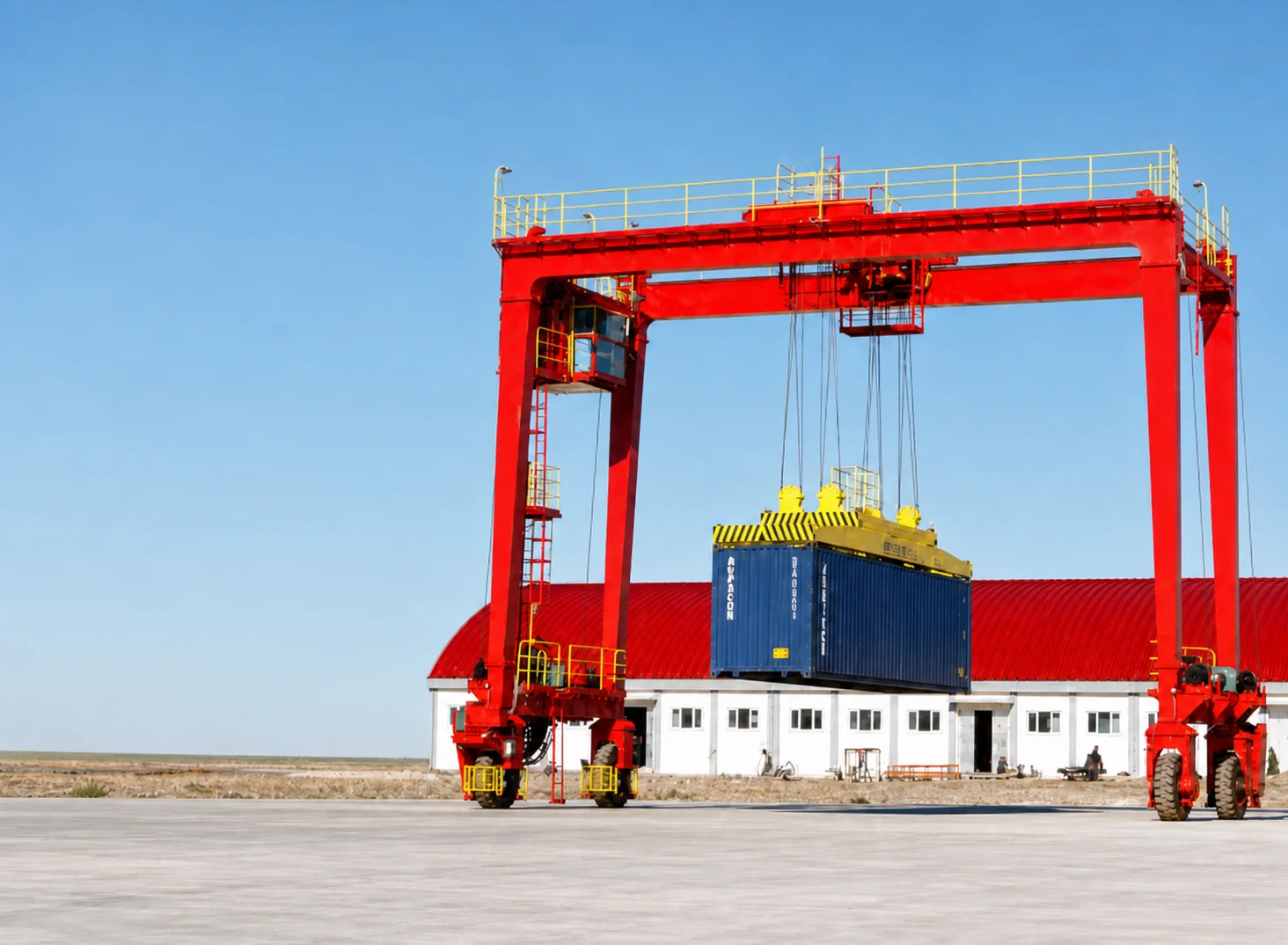
    RTG is a wheeled mobile container gantry crane, mainly engaged in 20/40–foot standard container loading, unloading, stacking and transshipment, relying on rubber tires to walk, can be freely shifted in the hardened yard, and can normally cover 5-8 rows of container + truck passages, suitable for flexible and dynamic logistics operation scenarios.

    Core parameters

    • The whole machine is equipped with 4-8 sets of special rubber tires and a professional steering system, which is stable in travel, flexible in handling, and extremely adaptable to the site.

    Core advantage

    • Low-cost site adaptation: there is no need to lay a fixed track, which greatly reduces the initial infrastructure investment, while supporting the flexible transformation, layout adjustment and phased expansion of the yard to adapt to the dynamic development needs of the logistics hub.
    • High site utilization efficiency: it supports high-rise container stacking operations and has a high stacking density, which can fully tap the potential of the vertical space of the yard and effectively increase the throughput per unit area of the yard.
    • Universal adaptation for multiple scenarios: it can be fully adapted to 20/40-foot standard container loading, unloading, stacking, and transshipment operations, supports customized exclusive accessories, and is compatible with all kinds of heavy-duty non-standard cargo operations, and has strong scene compatibility.
    • Flexible operation ability: relying on the tire-type mobile structure, the operating range is flexible and adjustable, and the operation can be freely shifted according to the distribution of cargo flow, which perfectly matches the diversified and flexible operation model of modern logistics hubs.

    How Much Does an RTG Crane Cost?

    RTG is a highly customized heavy-duty lifting equipment. The pricing of the whole machine is affected by multiple factors such as specifications, power type, automation configuration and brand quality, and the price range of the new machine has a great span. Although the procurement threshold for second-hand refurbished RTG equipment is lower, the failure rate and maintenance costs are higher in the later stage, and the overall cost performance is obviously short.

    • This model has a streamlined configuration and excellent cost performance. It focuses on lightweight container operations, and is perfectly adapted to the low-frequency and small-throughput operation scenarios of small inland logistics depots and small and medium-sized freight depots.
    • As a standard model for logistics hubs and medium-sized ports, the equipment has stable performance and complete functions, which can meet the needs of normalized, medium and high-intensity container turnover operations.
    • The equipment is equipped with a high-end intelligent control system and a heavy-duty configuration, which is suitable for large-scale deep-water terminals and high-throughput specialized logistics hubs, and can realize efficient, automated and high-density container stacking and transshipment operations.
    • Steel, supply chain and environmental protection policies will affect the final quotation in real time, and precise prices need to be customized for inquiry.

    Key Factors Affecting Rubber Tyred Gantry Crane Price

    RTG gantry cranes are customized special equipment, and the price has no fixed standard. They are affected by multiple core variables and the project is greatly differentiated. The following are the core pricing factors sorted from high to low by influence weight, and they are also the key basis for procurement inquiry and price comparison.:

    • Lifting specifications (core decisive factors): The rated lifting weight, operating span, and stacking height directly determine the material specifications of the steel structure of the whole machine, the strength design of the fuselage, and the grade of the core supporting components. It is the core benchmark for the basic cost of RTG. The larger the parameter, the higher the cost of the whole machine.
    • Power system solution: The cost of different power versions is inversely different from the operation and maintenance cost.
    • Intelligent and automated configuration: Basic manual models are the most cost-effective, with intelligent functions such as GPS automatic travel, intelligent sway control, remote control, automatic stacking, and intelligent anti-collision.
    • Personalized customization requirements: For customized retrofits such as coastal anticorrosion, extreme high and low temperature conditions, non–standard operating spans, exclusive operating accessories, and special safety standards, additional costs will be incurred.
    • Operating condition level: FEM A6–A8 high-working-level heavy-duty models suitable for 24-hour high-intensity operations are fully upgraded in terms of structural strength, component wear resistance, and overall machine stability, and the cost is significantly higher than that of conventional light-load operating models.
    • Core accessories and market conditions: the brand selection of core accessories such as engines, electronic control systems, hydraulic components, annual steel raw material price fluctuations, the global supply chain situation and industry environmental protection policies will indirectly affect the RTG terminal price.

    RTG Crane Operating Costs: Beyond the Purchase Price

    The service life of RTG is 15-20 years, and the long-term operating cost is generally higher than the purchase price of the equipment, which is the core consideration in the selection.

    Energy consumption cost

    Energy consumption is the largest variable cost of RTG operations, and the economics of different power models vary significantly.

    The energy-saving advantages of pure electric E-RTG are the most obvious. Electricity prices are stable and non-fluctuating, and they are more suitable for the long-term normalized operation of logistics hubs.

    Maintenance cost

    The power type is the core watershed of RTG maintenance costs. Diesel RTG has a complex structure and many wearing parts. The engine, fuel and hydraulic systems require frequent maintenance and repair, with a high failure rate and high long-term maintenance expenses.

    Fixed consumables and hidden operating costs

    Tire loss is the exclusive high-frequency rigidity cost of RTG.Affected by load, site friction and climate, the entire set of tires needs to be replaced every 2-3 years.

    Core conclusion: Hybrid and pure electric RTG procurement and infrastructure costs are higher, but energy consumption, maintenance, and consumables costs are lower. Under conventional operation scenarios, the equipment premium can be returned to the cost in 3-5 years, and the remaining service cycle can be sustainably reduced.

    How to Choose the Right RTG Crane for a Logistics Hub

    RTG selection needs to be based on the actual working conditions of the site, with the core principles of adapting to operating requirements, optimizing the full cycle cost, and reserving intelligent upgrade space, taking into account the current practicality and future expansion. The specific selection steps are as follows:

    1. Clarify operating conditions and production capacity requirements: combine the annual container throughput of the site, mainstream box specifications, rated stacking height and other core indicators, accurately match the basic lifting parameters of the equipment, and eliminate the problem of excess parameters or insufficient performance.
    2. Match the site environment and infrastructure conditions: according to the load-bearing standards of the site, regional climatic conditions, overall layout planning and long-term expansion requirements, determine the operating span of the equipment, anti-corrosion protection level, tire configuration and travel adaptation plan.
    3. Scientific selection of power system solutions: diesel power is preferred for stations with limited short-term budgets and low operating frequencies; the pursuit of a balance between cost and energy saving is adapted to hybrid models; long-term large-scale, high-frequency operation of logistics hubs, priority is given to the deployment of energy-saving and cost-reducing pure electric E-RTG equipment.
    4. Intelligent configuration is matched on demand: small and medium-sized conventional stations are adapted to semi-automatic control systems to meet the needs of basic operations; large-scale high-throughput hubs can be upgraded with fully automatic operations, remote operation and maintenance, and intelligent control systems to greatly improve operation efficiency and automation level.
    5. Comprehensive evaluation of after-sales system and full-cycle costs: procurement selection abandons simple low-cost thinking, and gives priority to high-quality manufacturers with perfect after-sales system, adequate supply of spare parts, and support for iterative equipment upgrades. Focus on the cost-effective performance of the whole life cycle of the equipment to maximize the return on investment.

    Questions to Ask Before Buying an RTG Crane

    RTG is a high-value customized equipment, and poor procurement information can easily lead to risks such as inconsistent configuration, invisible price increases, after-sales delays, and delivery delays. Before purchasing, it is necessary to verify the manufacturer's plan from the five core dimensions to avoid hidden procurement risks, ensure the cost performance and long-term stability of the equipment, and streamline the inquiry. The main points are as follows:

    1. Adaptation of working conditions and parameter customization: check whether the tonnage, span, stacking height, and working level of the equipment match the working conditions of the station; clarify the non-standard customization plan, construction period and cost, and eliminate inefficient and wasteful low-configuration parameters and high-configuration.
    2. Quotation details and full-cycle TCO: Request itemized landing quotations, clarify all costs such as bare metal, installation, and optional configuration, and eliminate invisible price increases; simultaneously verify long-term operation and maintenance costs such as energy consumption, maintenance, tire replacement, and spare parts, and take the whole life cycle cost as the core basis for procurement.
    3. Power plan and compliance: combine site power supply, operating intensity, and environmental protection policies to match the optimal power model; verify equipment energy consumption, emissions, and noise indicators to ensure full compliance with local compliance standards.
    4. Intelligent configuration and upgrade potential: distinguish between standard configuration of intelligent functions and optional charging standards; confirm the feasibility and cost of equipment automation iteration, TOS system docking, and functional upgrade to ensure the long-term availability of equipment.
    5. Manufacturer qualification and delivery after-sales: verify the manufacturer's similar project cases and industry qualifications; clarify the quality assurance policy, the timeliness of local after-sales response, training services, and spare parts cycle; lock in the production delivery cycle and extension guarantee terms to ensure the smooth commissioning of the project.

    Why Choose an Experienced RTG Crane Manufacturer?

    • Mature technology and working condition adaptation ability: Senior manufacturers have a large number of domestic and foreign project landing experience, and the technical system is mature. They can provide customized adaptation solutions for different site working conditions, climatic environment, and operating intensity, effectively avoiding non-standard site adaptation defects, and the equipment has stronger operating stability.
    • Improve after-sales and reduce downtime losses: it has a standardized and localized after-sales system, adequate spare parts inventory and rapid response service capabilities, and can deal with equipment failures and maintenance issues in a timely manner, minimize equipment downtime and missed work losses, and ensure continuous and efficient operation of the site.
    • Excellent equipment performance and durability: the whole machine has excellent technology, reliable quality of core accessories, better energy consumption control of the equipment, wear resistance and manufacturing resistance, longer service life, and can be adapted to long-term high-intensity normalization operations, greatly reducing iterative replacement costs.
    • Sustainable upgrading and expansion capabilities: the original equipment reserves intelligent and electrified upgrade interfaces, supports later automation transformation, iteration of electronic control systems, and docking of TOS systems, and can continuously optimize equipment performance and extend equipment life cycles following the development of logistics hubs.

    Discuss the crane arrangement for your project.

    An RTG quotation depends on how the crane will operate within the yard. Define the stacking layout, steering requirements, power concept and infrastructure responsibilities so equipment and project costs can be compared consistently. Share the load, available drawings, working cycle and site conditions with Henan Mine Crane so the required configuration and supply boundary can be discussed.

    Related crane configurations

    Rubber Tyred Gantry (RTG)

    View product parameters
    Lifting capacity: 20t – 100tSpan: 5m – 30mLifting height: 6m – 30m

    Use a rubber-tyred gantry for heavy handling where the operating layout requires a mobile tyre-supported arrangement. Define the load, steering modes, route and ground conditions for the project.

    Updated 2026 · Henan Mine Crane

  • RTG vs RMG for New Container Yards: Compare Layout Flexibility

    RTG vs RMG for New Container Yards: Compare Layout Flexibility

    Technical guide

    RTG vs RMG for New Container Yards: Compare Layout Flexibility

    Start with the yard's operating plan and future changes. Compare the implications of fixed rails and tyre-mounted travel for stacking blocks, circulation routes and infrastructure before selecting the handling concept.

    Henan Mine CraneTechnical guide · Updated 2026Crane selection, project scope and operating requirements
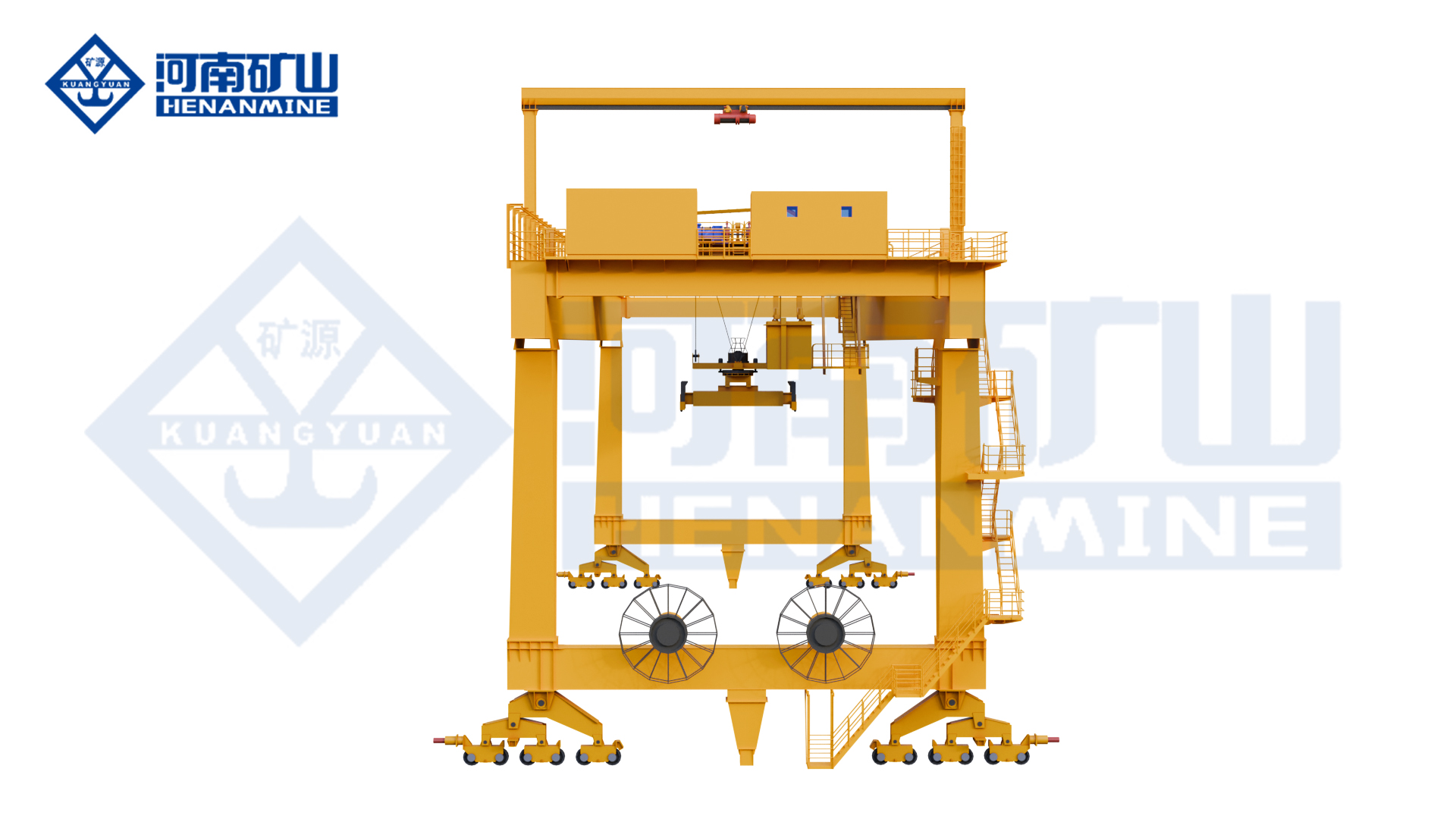
    Rail Mounted Container Gantry Cranes (RMG)
    Rail Mounted Container Gantry Cranes (RMG)
    Project planning notes

    Key points for this crane project.

    1. Core Application Scenarios for RTG and RMG
    2. Common Core Requirements for Container Yard Projects
    3. Detailed Comparison of RTG and RMG Models and Their
    Read the technical guide

    Core Application Scenarios for RTG and RMG

    Seaport Container Terminals

    Seaport container terminals, characterized by high operational frequency and orderly container stacking, represent the core application scenario for container yard crane comparison. Terminals require equipment to consistently and reliably perform container stacking, inter-block transfer, and block organization tasks, placing stringent demands on the equipment’s continuous operational capability.

    Large, standardized seaport terminals flexibly combine RTG and RMG equipment based on overall yard planning to meet high-density storage and high-frequency handling demands, ensuring stable terminal throughput.

    Inland Container Yards

    Inland container yards primarily handle container storage, loading/unloading, and inter-zone transfers. Site planning is flexible, without the strict standardized block restrictions found in seaports. In these scenarios, equipment mobility is prioritized, and fixed tracks are not required.

    RTG cranes for container yards, with their outstanding mobility, have become the mainstream choice for inland yards. They can adapt to dynamic adjustments in operational areas and accommodate diverse operational needs.

    Rail-Intermodal Logistics Terminals

    Container transfer operations at rail-intermodal logistics terminals feature fixed routes and well-organized work areas, placing higher demands on equipment stability and positioning accuracy. Equipment must precisely align with fixed loading and unloading points.

    The RMG crane for container terminal, which operates on fixed tracks, perfectly aligns with the standardized operational processes of rail-intermodal terminals, reliably handling container transfers between trains and yards, as well as between yards and trucks.

    Inland Dry Ports and Multimodal Hubs

    Inland dry ports and multimodal hubs feature stable cargo volumes and are typically organized into standardized, uniformly planned zones. They focus on large-scale warehousing and transshipment operations, placing high demands on site utilization and operational stability.

    Most newly constructed smart dry ports prioritize the use of RMG equipment to establish standardized, efficient container storage and transshipment systems based on standardized operating models.

    Large-Scale Industrial Logistics Yards

    Large logistics yards located near ports or industrial zones primarily handle the on-site handling and stacking of foreign trade container cargo. Their operational models are flexible, and site layouts are dynamically adjusted based on cargo volume.

    Such yards are generally reluctant to invest in high-cost fixed infrastructure. RTG equipment, which offers strong adaptability and low retrofitting difficulty, can effectively control costs associated with site modifications and equipment upgrades.

    Common Core Requirements for Container Yard Projects

    High Container Storage Utilization

    Yard land resources are limited. Whether for new projects or retrofitting existing yards, optimal equipment selection is essential to increase container stacking levels and block utilization. Equipment span and stacking height parameters directly determine the yard’s storage capacity and land utilization efficiency.

    Appropriate equipment configurations can maximize container storage capacity within limited space and streamline on-site cargo flow.

    Stable, Routine Operational Performance

    Container yards operate continuously around the clock, with extremely high frequencies of equipment start-up, transfer, and stacking. Equipment failures directly cause container backlogs and logistics bottlenecks, disrupting the overall operational rhythm.

    Purchasers generally prioritize structural durability and component reliability to ensure low-failure, continuous year-round operation at the yard.

    High Compatibility Between Equipment and Yard Layout

    The lane layout, spacing between container blocks, and rail connection points vary from yard to yard, making one-size-fits-all solutions impractical. The equipment’s operating range, span, and travel paths must align with the actual site layout.

    Mismatched parameters can lead to operational blind spots and traffic interference, significantly reducing the yard’s overall operational efficiency.

    Safe and Smooth Container Handling

    Containers are heavy, uniform cargo. Swaying or shifting during lifting can easily cause collisions or deformation, which not only affects positioning accuracy but also poses safety hazards.

    The equipment’s anti-sway capabilities, precise control, and operational cushioning performance are key to ensuring safety and stability throughout the entire process of container lifting, transfer, and stacking.

    Controllable Long-Term Operating Costs

    Most buyers focus solely on the initial purchase price of equipment, overlooking hidden costs such as long-term maintenance, energy consumption, spare part replacements, and infrastructure upkeep. Since yard cranes have a service life of over a decade, long-term operating expenses far exceed the one-time purchase cost.

    Details such as tire wear, track maintenance, and energy consumption differences directly drive the gap in full-cycle operating costs between RTG and RMG.

    Compatibility with Future Automation Upgrades

    Many traditional yards currently rely primarily on manual operation, but long-term plans call for a gradual transition to semi-automated and fully automated modes. When selecting equipment, it is essential to consider scalability to avoid premature obsolescence due to the inability to adapt to intelligent upgrades in the short term.

    Models designed for automation integration can be directly upgraded later, significantly reducing the cost of intelligent upgrades for the yard.

    Detailed Comparison of RTG and RMG Models and Their Suitable Applications

    What Is an RTG (Rubber-Tired Gantry Crane)?

    RTG (Rubber-Tired Gantry Cranes) rely on rubber tires for mobility and do not require fixed tracks, making them the model that stands out for flexibility in the rubber-tired gantry crane vs. rail-mounted gantry crane comparison. The equipment can freely turn and operate across zones on paved surfaces, unrestricted by fixed travel paths.

    RTG require no large-scale civil engineering work, making site modifications straightforward. Operational zones can be adjusted at any time to meet yard requirements, making them well-suited for dynamic operational models.

    What is an RMG (Rail-Mounted Gantry Crane)?

    RMG rail-mounted gantry cranes operate on pre-embedded ground tracks, offering fixed paths, precise positioning, and stable operation. As core equipment for standardized container yards, they feature uniform and consistent operational zones with virtually no tracking deviation issues.

    This equipment requires upfront infrastructure work such as track laying and foundation reinforcement, resulting in higher initial investment. However, it offers standardized and stable operation, making it suitable for large-scale, high-throughput fixed yard projects.

    Project Scenarios Where RTG Is the Preferred Choice

    Yards with undefined layouts or those requiring phased expansion are highly suited for RTG equipment. In later project phases, container zones can be flexibly adjusted and operational areas expanded, leveraging the RTG maneuverability to adapt to dynamic site modifications.

    For older yards or temporary operations where track construction is not feasible, selecting RTG eliminates high infrastructure costs and enables rapid deployment and production.

    Multi-purpose logistics yards with fluctuating operations and frequent adjustments to working areas also commonly choose RTG to ensure operational flexibility.

    Project Scenarios Where RMG Is the Preferred Choice

    For newly constructed, standardized container terminals with comprehensive planning and fixed layouts, RMG equipment is the preferred choice. The fixed rail operation mode eliminates positioning errors and is well-suited for high-density, high-frequency, large-scale stacking operations.

    Rail intermodal hubs and smart yards planned for intelligent upgrades are better suited for RMG models. With fixed equipment trajectories and stable data collection, they facilitate integration with automated control systems to achieve unmanned operation upgrades.

    For large port areas seeking long-term stable operations and low O&M variability, the stability and durability advantages of RMG will continue to stand out over the long term.

    Core Technical Parameters to Verify During Procurement

    Rated Lifting Capacity

    The equipment’s rated tonnage must match the maximum load of standard containers, loaded containers, and over-height containers, accounting for the lifting gear’s own weight and allowing for a sufficient safety margin. For yards with high volumes of loaded container throughput, load capacity standards should be appropriately increased to avoid long-term full-load operation of the equipment.

    Equipment Span

    The equipment span determines the number of container rows covered in a single pass and must align with the dimensions of the yard blocks and the layout of truck lanes. A reasonable span allows for the simultaneous coverage of multiple container rows and access lanes, reducing the number of round trips required.

    Stacking Height

    Stacking height directly affects yard storage density, and storage standards vary significantly across different terminals. The equipment’s lifting height must match the planned number of stacking levels to meet daily stacking and storage requirements.

    Cantilever Length

    Models equipped with a cantilever can cover side truck and rail loading/unloading areas, enabling the transfer of side-loaded containers without moving the main unit. The cantilever length must strictly match the lane width and the scope of transfer operations.

    Gantry Travel Length

    Gantry travel length determines the equipment’s operational coverage area. It must align with the total length of each individual operational zone within the yard to ensure no blind spots and achieve full-coverage stacking and transfer operations.

    Operational Speed

    Lifting, trolley, and gantry travel speeds collectively determine the duration of a single operational cycle. High-throughput terminals may opt for higher speeds, while standard logistics yards should select conventional speeds to balance equipment stability and operational efficiency.

    Power and Drive Systems

    RTG support various power supply modes, including diesel, electric, hybrid, and battery-powered, making them suitable for sites without fixed power sources. RMG typically use slip ring or busbar power supply, offering stable power and lower energy consumption, making them suitable for long-term continuous operation scenarios.

    Actual model selection should be flexibly matched based on site power supply conditions, average daily operating hours, and energy consumption budgets.

    Control and Automation Levels

    Manual, remote, or semi-automatic control modes can be selected based on the project’s current status. For projects with long-term automation plans, interfaces for fully automated systems can be pre-installed to reduce future retrofitting costs.

    Site Environment Adaptability

    Coastal terminals require equipment with protection against wind, salt fog, and dust, while inland yards prioritize high-temperature resistance and protection against sand and dust. The equipment’s environmental protection rating directly determines its long-term service life outdoors.

    Key Differences Between RTG and RMG (Key Considerations for Procurement)

    Yard Layout Flexibility

    RTG have no track restrictions and offer exceptional site flexibility, allowing for free adjustment of operational areas. They are suitable for various projects involving site modifications, block adjustments, and phased expansions.

    RMG have fixed operating paths and a regular layout, making it impossible to arbitrarily adjust operational blocks. They are better suited for standardized yards that are planned in one go and remain unchanged over the long term.

    Infrastructure Requirements

    RTG have minimal site requirements; they can begin operations with only a paved surface, eliminating the need for costly track construction. This results in lower upfront infrastructure investment and faster deployment.

    RMG require precise track laying, foundation reinforcement, and the installation of supporting power facilities. Consequently, upfront infrastructure costs are higher, and the construction cycle is relatively longer.

    Automation Compatibility

    RMG is the preferred model for automated yards. With fixed trajectories, precise positioning, and stable operational data, its control system is easy to integrate, making unmanned conversion less challenging and more likely to succeed.

    RTG automation conversion is more difficult. Because the equipment’s travel paths are not fixed, it requires complex positioning and navigation systems, resulting in higher conversion costs and technical barriers.

    Long-Term Operating Costs

    RTG have relatively high long-term maintenance costs, including ongoing tire wear, steering system maintenance expenses, and consistent energy consumption for diesel and hybrid models, along with numerous minor maintenance tasks.

    While RMG require higher initial infrastructure investment, they have no tire wear in the long term, low track maintenance frequency, and stable energy consumption, offering a cost advantage for large-scale, long-term operations.

    Site Utilization and Block Design

    RMG are suited for highly standardized block planning, enabling neat stacking with controllable spacing, high land utilization, and suitability for high-density container storage operations.

    RTG can adapt to irregular sites and allow for flexible arrangement of operational blocks, but their level of standardization is insufficient, resulting in slightly lower stacking uniformity for high-density storage compared to RMGs.

    Differences in Maintenance Focus

    RTG daily maintenance focuses on mobility-related components such as tires, steering mechanisms, travel drives, and hydraulic systems, involving numerous wear-and-tear parts and high maintenance frequency.

    RMG maintenance centers on track alignment, power supply systems, and fixed travel mechanisms, featuring simple procedures and low frequency, making long-term maintenance more hassle-free.

    Optimal Project Types

    RTG are suitable for flexible container yard projects involving phased development, limited space, temporary operations, and dynamic operational requirements.

    RMG are better suited for high-end container terminals with fixed layouts, high throughput, rail integration, large-scale operations, and a need for automation upgrades.

    How to Select a Reliable RTG/RMG Container Crane Supplier

    Verify Manufacturing Capabilities at the Source

    RTG and RMG are large-scale port machinery with manufacturing precision and safety standards far exceeding those of ordinary industrial cranes. Since distributors cannot guarantee equipment quality or customization, procurement should prioritize original manufacturers with in-house R&D, production, quality inspection, and export delivery capabilities.

    Original manufacturers can precisely tailor equipment to withstand heavy-load, outdoor port environments and harsh operating conditions, ensuring operational stability from the outset.

    Verify Implementation Experience with Similar Yard Projects

    High-quality suppliers must be familiar with the operational logic of seaports, inland ports, and intermodal yards, possess extensive experience with intermodal yard crane solutions, and understand specialized requirements such as port infrastructure, corrosion and wind resistance, and automation integration.

    Sufficient experience with similar projects allows for the early avoidance of common implementation issues such as site compatibility, operational interference, and parameter mismatches.

    Evaluate Professional Engineering Customization Capabilities

    A professional engineering team can accurately determine the appropriate crane model based on yard drawings, block layouts, throughput requirements, and automation plans, and optimize equipment parameters specifically for the application, rather than simply applying generic standard models.

    Verify Complete Set of Technical Documentation

    Reputable export manufacturers can provide a complete set of English technical documentation, including assembly drawings, wheel load data, electrical schematics, parts lists, and factory quality inspection reports, to meet the customs clearance, acceptance, and operation and maintenance registration requirements for overseas projects.

    Verify Core Component Brands and Specifications

    Core components such as motors, gearboxes, brakes, PLC control systems, and container spreaders directly determine equipment stability and service life. When purchasing, clearly specify component brands and protection standards to prevent substandard or downgraded configurations.

    Verify Factory Quality Inspection and Testing Procedures

    Prior to shipment, the equipment must undergo weld inspection, dimensional verification, no-load and full-load testing, and functional commissioning. Complete inspection records must be retained to ensure the equipment can be put into stable operation immediately upon arrival.

    Define the Scope of Installation and Commissioning Services

    The supply model must be confirmed in advance, distinguishing between options such as equipment-only supply, installation guidance, and turnkey commissioning. Port machinery requires high installation precision, and professional technical support can help prevent operational failures later on.

    Confirm Long-Term After-Sales Support and Spare Parts Availability

    Yard equipment operates continuously year-round, requiring manufacturers to provide long-term spare parts supply, software updates, fault diagnosis, and rapid after-sales response to minimize downtime losses at the yard.

    Common Procurement Pitfalls in Container Stacker Crane Selection

    Selecting equipment based solely on low price will significantly increase long-term operational and maintenance costs.

    Blindly following trends or ignoring yard traffic flow and block layout will result in poor equipment compatibility, creating operational blind spots and traffic interference issues, thereby reducing overall operational efficiency.

    Focusing only on current operational needs while ignoring long-term automation plans will render equipment incompatible with future smart upgrades, leading to additional costs for replacement.

    Focusing solely on the initial purchase price while ignoring long-term expenses such as energy consumption, spare parts replacement, and infrastructure maintenance will cause the project’s total lifecycle costs to far exceed the initial budget.

    Failing to verify site infrastructure, power supply, and ground load-bearing capacity in advance can result in equipment being unable to be installed and put into operation upon arrival, necessitating secondary site modifications.

    The incorrect practice of selecting equipment models before planning yard blocks will directly reduce site utilization and cause混乱 in on-site operational workflows.

    Selecting a manufacturer without experience in non-port yard projects may result in equipment that is ill-suited for port heavy-load and harsh outdoor conditions, compromising long-term operational stability.

    Incomplete site, operating condition, and throughput data provided during the quotation process can lead to customized solutions that do not match on-site realities, triggering repeated modifications and project delays.

    Frequently Asked Questions

    What is the core difference between RTG and RMG?

    The core differences lie in operating modes, infrastructure requirements, flexibility, and compatibility with automation. RTGs are tire-mounted, track-free, have lower infrastructure costs, and offer greater flexibility; RMGs are rail-mounted, follow fixed paths, provide precise positioning, and are better suited for automated operations, though they require higher upfront infrastructure investment.

    Which is better for container terminals: RTG or RMG?

    There is no absolute superiority; it depends entirely on project suitability. New, standardized, high-throughput large-scale terminals with automation plans should prioritize RMG; terminals built in phases, with flexible layouts, undergoing retrofits, or with infrastructure constraints are better suited for RTG.

    Does RTG offer greater site flexibility than RMG?

    RTG offers significantly greater flexibility than RMG. Unrestricted by fixed tracks, it allows for free adjustment of operational areas and adapts well to diverse scenarios such as site expansion, block adjustments, and temporary operations.

    Is RMG more suitable for automated yards?

    Yes, RMG is the preferred model for automated container yards. Its fixed travel paths and precise, stable operational data simplify integration with control systems, enabling seamless implementation of semi-automated, fully automated, and unmanned operations.

    Which model has lower long-term operating costs?

    For small-scale, short-term yard projects, RTG offers lower overall costs; for large-scale, long-term operations in standardized high-throughput yards, the RMG offers a more significant advantage in total lifecycle costs due to its low maintenance, low energy consumption, and high stability.

    Which model is suitable for rail-intermodal terminals?

    Rail-intermodal terminals have fixed operating points and orderly traffic flow, making the RMG rail-mounted gantry crane the preferred choice. It can precisely align with rail loading and unloading points, ensuring stable operation and standardized work procedures.

    Before requesting a quote, please prepare complete data including yard layout drawings, block dimensions, lane and rail locations, planned stacking heights, average daily throughput, power supply conditions, and long-term automation plans to ensure the solution is implemented accurately.

    Summary

    Which is better: RTG or RMG? There is no standard answer; both types of equipment have their own suitable scenarios. The core of selection does not lie in the superiority of the equipment, but in aligning with the project’s site conditions, operational model, throughput targets, and long-term plans.

    For yards with flexible payment terms, infrastructure constraints, and dynamic operational models, RTG offer better value for money; for high-end yards that are standardized, large-scale, and pursue automation upgrades and long-term stable operations, RMG provide greater value.

    Professional container terminal yard crane selection requires a comprehensive assessment that combines infrastructure conditions, operational frequency, maintenance budgets, and long-term planning. Relying on the manufacturer’s engineering experience helps avoid selection pitfalls and ensures the long-term stable operation of the equipment.

    Henan Mine Crane (Crane Industrial) has specialized in port yard crane equipment for many years, with extensive experience in implementing projects at domestic and international terminals, dry ports, and intermodal hubs. We can customize dedicated RTG and RMG solutions based on project conditions and provide a full set of English technical documentation along with cross-border after-sales support.

    Unsure whether an RTG or RMG is the right fit? Provide us with your yard drawings, block layout, stacking height requirements, throughput, and automation plans, and our engineering team will precisely match you with the optimal yard crane solution.

    Discuss the crane arrangement for your project.

    Start with the yard's operating plan and future changes. Compare the implications of fixed rails and tyre-mounted travel for stacking blocks, circulation routes and infrastructure before selecting the handling concept. Share the load, available drawings, working cycle and site conditions with Henan Mine Crane so the required configuration and supply boundary can be discussed.

    Related crane configurations

    Container Overhead Crane

    View product parameters
    Lifting capacity: 30-65 tSpan: 18-35 mLifting height: 8 – 20 m

    Transfer containers within a defined overhead runway area using a double-girder bridge and matched spreader. Container size, working clearance and the handling sequence determine the arrangement.

    Container Straddle Carrier

    View product parameters
    Lifting capacity: 30 – 50 tStacking arrangement: 1 over 3 – 1 over 6Working class: A7 – A8

    Move containers between handling positions with a straddle carrier matched to the travel route and stacking layout. Define container load, ground conditions, clearance and the preferred drive system.

    Updated 2026 · Henan Mine Crane

  • RTG Cranes vs Straddle Carriers: Short-Distance Container Transfer

    RTG Cranes vs Straddle Carriers: Short-Distance Container Transfer

    Technical guide

    RTG Cranes vs Straddle Carriers: Short-Distance Container Transfer

    The equipment choice changes how containers move between stacking and handover points. Compare the handling sequence, vehicle interaction and available circulation space for the actual transfer distances.

    Henan Mine CraneTechnical guide · Updated 2026Crane selection, project scope and operating requirements
    Container Straddle Carrier by Henan Mine Crane
    Container Straddle Carrier by Henan Mine Crane
    Project planning notes

    Key points for this crane project.

    1. Overview of Short-Distance Container Handling in
    2. What Is an RTG (Rubber Tyred Gantry) Crane?
    3. What Is a Straddle Carrier?
    Read the technical guide

    Overview of Short-Distance Container Handling in Ports

    Typical Workflow

    In the first step, STS crane unloads the container from the ship, which is the starting point of terminal operation and the key link between ocean transportation and land handling.

    In the second step, the unloaded containers need to be transferred to the designated yard block through short-haul handling equipment, this process is what we call short-haul handling, which is also the core operating scenario of RTG and transporter.

    In the third step, after the containers are transported to the yard, they need to be stacked or repositioned to ensure that the yard space is reasonably utilized, and at the same time to facilitate subsequent extraction.

    In the last step, the containers are picked up from the yard according to the demand and transferred out of the port by truck or railroad, completing the whole short-distance handling closed loop.

    Where RTG and Straddle Carriers Fit

    In the whole short-haul handling process, RTG and straddle carriers are positioned completely differently, and each assumes different core functions.

    The core positioning of RTG cranes is yard stacking equipment, which is mainly responsible for stacking and picking up containers after they are transported to the yard. It is more adept at efficiently completing the multi-layer stacking of containers in a fixed yard block to enhance yard utilization.

    Transporter is a kind of “two-in-one” equipment, both transportation and stacking functions, can independently complete the short-distance transfer, stacking and extraction of containers, without relying on other horizontal transportation equipment.

    Simply put, RTG focuses on “stacking” and transporter focuses on “transportation + stacking”, both of which have different operation logic and different terminal scenarios, which is also a key point to distinguish in container yard equipment selection. This is also a key point of distinction in container yard equipment selection.

    What Is an RTG (Rubber Tyred Gantry) Crane?

    Definition

    RTG crane, full name Rubber Tyred Gantry Crane (Rubber Tyred Gantry Crane), is a kind of gantry crane that relies on tires to support and move, and its core purpose is to stack containers in the yard block.

    Unlike rail-type gantry cranes, it does not have to rely on fixed rails, and can move flexibly within the designated yard area, but the range of movement is mainly limited to the inside of the yard block, and is not suitable for long-distance transshipment across the block.

    Henan Mine Crane's RTG cranes are suitable for different sizes of terminal yards around the world, no matter small and medium-sized inland ports or large coastal ports, they can be customized according to the actual needs of the stacking height and operating range.

    Key Characteristics

    RTG cranes are mainly powered by diesel-electric and hybrid models, and now more and more terminals tend to choose hybrid or pure electric models, which cannot only reduce energy consumption, but also meet the requirements of environmental protection.

    Its moving track is relatively fixed, mainly along the container rows, the operation range is concentrated in the fixed yard blocks, the turning radius is limited, not suitable for frequent adjustment of the operation area.

    Stacking ability is its core advantage, usually can achieve 1-over-5, 1-over-6 stacking height, some large RTG can even reach 1-over-7, can greatly enhance the utilization of yard space.

    Container Straddle Carrier by Henan Mine Crane
    Container Straddle Carrier by Henan Mine Crane

    What Is a Straddle Carrier?

    Definition

    Straddle Carrier is a self-propelled container handling equipment, which, unlike RTG, can independently complete the lifting, transportation and stacking of containers without relying on other auxiliary equipment.

    Its shape is similar to the “door” type, the container can be wrapped in its own frame, through the tires to achieve the full yard movement, not only from the STS crane under the box, but also directly to the designated location of the container stacking, to achieve the “one-stop” short-distance handling.

    Henan Mine Crane also has straddle carriers for global terminals, which can be customized in terms of load capacity and stacking height for different short-distance handling needs, and are suitable for the flexible operation of medium-sized terminals.

    Key Characteristics

    Self-propelled is its core feature. It does not need rails or other traction equipment, and can be moved in any area of the yard, which is extremely flexible and suitable for terminals that need to adjust the operation area frequently.

    Its container lifting method is completed within its own frame, and the lifting height is limited, usually can only realize 1-over-2 or 1-over-3 stacking height, which is far lower than RTG cranes.

    The biggest advantage is the integration of transportation and stacking functions, can be directly from the STS crane under the box, and then transferred to the yard stacking, eliminating the intermediate horizontal transportation links, simplifying the operating process.

    RTG vs Straddle Carrier – Technical Comparison

    Below is a detailed comparison of RTG and straddle carrier from 7 core technical dimensions, combined with the actual operating scenarios, to help you more intuitively determine which equipment is more suitable for your terminal, which is also the core content of RTG vs straddle carrier comparison.

    Mobility and Flexibility

    The difference in mobility and flexibility directly determines the layout of the yard they are suitable for, the specific comparison is as follows:

    FactorRTGStraddle Carrier
    MovementAlong yard rowsFull yard mobility
    Turning radiusLimitedHigh flexibility
    Block layout changesModerateHighly flexible

    The flexibility of straddle carrier is much higher than RTG, it can move freely in the whole yard, with small turning radius, and can even turn around flexibly in the narrow area, which is very suitable for terminals with frequent adjustment of yard layout.

    I have served a medium-sized terminal in Southeast Asia, whose yard needs to be adjusted at any time according to the arrival of ships, and finally chose the straddle carrier because of its high flexibility and its ability to quickly adapt to different operational needs.

    RTG's movement range is mainly limited to fixed yard rows, with a large turning radius, and it takes more time to adjust the operation block, which is more suitable for structured yards with fixed layout and standardized operation flow.

    Stacking Density

    Stacking density directly affects the space utilization rate of the yard, especially in terminals with tight land resources, which is particularly important, the specific comparison is as follows:

    FactorRTGStraddle Carrier
    Typical stacking height1-over-5 / 61-over-2 / 3
    Space utilizationHighModerate
    TEU per hectareHigherLower

    The stacking density of RTG is much higher than that of straddle carriers, which can usually stack 5-6 layers of containers, and some large RTGs can reach 7 layers, and each hectare of yard can accommodate more TEUs, and the land utilization rate is extremely high.

    Many small ports in Europe with tight land resources give priority to RTG cranes because it can maximize the yard capacity in a limited space, without additional land expansion, reducing land costs.

    The stacking height of straddle carriers is low, usually only 2-3 layers can be stacked, the space utilization rate is medium, and the number of TEUs per hectare of yard is much lower than that of RTG, which is more suitable for terminals that have sufficient land resources and do not have high requirements for stacking density.

    Infrastructure Requirements

    The two types of equipment have different infrastructure requirements, which is also a key consideration in terminal planning and directly affects the pre-construction costs.

    RTG cranes require heavy paved yard floor, especially the road surface in the operation area, which needs to be able to withstand the weight of RTG and the impact of the operation, and usually the road thickness needs to reach 15-20 cm.

    At the same time, it is necessary to design dedicated yard lanes to ensure that the RTG can move along fixed rows and avoid conflicts with other equipment. In addition, as RTGs require separate horizontal transportation equipment, they also need to plan reasonable transportation routes to ensure smooth container transfer.

    The infrastructure requirements of trans-loader are more complicated, it needs the whole yard floor to be reinforced and paved, and it cannot be limited to the operation area only, because it can move all over the yard, and any area may become the operation point.

    And it needs wider traffic lanes to avoid collision with other equipment during operation, but it does not need additional horizontal transportation equipment, which can reduce the cost of transportation route planning.

    Special attention needs to be paid to the issue of ground pressure, the ground pressure of the cross-traffic truck is large, if the road pavement is not in place, long-term operation will lead to ground subsidence, damage, and increase the cost of maintenance in the later stage, which is a point that many customers are prone to ignore. Henan Mine Crane will calculate the ground pressure in advance and give the reasonable pavement suggestion when doing the program for customers.

    Capital Expenditure (CAPEX)

    Many customers in the selection, only focus on the price of a single unit of equipment, ignoring the initial investment at the system level, which is a common misunderstanding. RTG and cross-traffic trucks need to be compared from the perspective of the entire system, not the price of a single unit of equipment.

    RTG Cranes vs Straddle Carriers: Short-Distance Container Transfer
    Crane arrangement for technical discussion

    Operational Workflow Comparison

    The operational workflow of the two types of equipment is very different, which directly affects the operation mode and efficiency of the terminal. Below are two types of equipment-based yard operational workflow, which will help you determine the suitability more intuitively.

    RTG-Based Yard Concept

    RTG as the core of the yard operation process, the need for multi-equipment synergy, the specific process is: STS crane unloading containers → terminal tractor will be transferred to the container RTG operation block → RTG will be stacked to the designated location.

    The advantages of this operation mode are obvious, the yard structure is clear, the stacking density is high, can maximize the use of yard space, suitable for high throughput, fixed layout of the terminal.

    Henan Mine Crane serves a large domestic port, which adopts this mode, 10 RTGs with 20 terminal tractors, to realize the efficient operation of the yard, each hectare of the yard can accommodate more TEUs, and the throughput is greatly increased.

    Straddle Carrier-Based Yard Concept

    Straddle Carrier-Based Yard Concept is a relatively simple yard operation process, which does not require the coordination of multiple equipment. The specific process is as follows: STS crane unloads the containers → Straddle Carrier-Based Yard Concept picks up the containers, transfers them to the designated location and completes the stacking.

    The advantages of this mode of operation are fewer operational steps, high flexibility, transporter can independently complete the pick-up, transfer, stacking, without relying on other equipment, which can reduce equipment coordination costs, and at the same time can constitute an effective buffer between the shorebridge and yard operations to enhance the efficiency of shorebridge operations.

    For example, for a medium-sized terminal, 3 sets of straddle carriers can be used to complete the operation with 1 set of shorebridge without additional tractor, which simplifies the operation process and reduces the management cost.

    The disadvantage is that the stacking density is low, the utilization rate of the yard space is not high, and the straddle car is moving all over the yard, which requires good traffic management to avoid collision between the equipment, especially during the peak operation period, which is prone to traffic congestion.

    Lifecycle Cost Analysis

    10-20 Year Cost Perspective

    Selection should not only look at the initial investment, but also pay attention to the full life cycle cost of 10-20 years, which is the key to determine the long-term return on investment. From the perspective of the whole life cycle, the cost differences between the two types of equipment are mainly reflected in the following aspects.

    In terms of initial investment, the RTG system requires the procurement of RTG cranes and horizontal transportation equipment, with a higher initial investment; the straddle carrier system does not require additional horizontal transportation equipment, with a relatively low initial investment, but the price of a single straddle carrier is higher.

    In terms of fuel/energy costs, RTG electrification has lower energy costs and can save a lot of money in long-term operation; cross-traffic trucks are mainly diesel-powered and have higher energy costs, especially in the case of rising fuel prices, the operating costs will increase significantly. Pure electric transporters have low energy costs but high initial investment, which is suitable for terminals with long-term planning.

    In terms of maintenance downtime, RTG's maintenance is relatively simple and the maintenance downtime is shorter, usually 10-15 days per year, while the maintenance complexity of straddle carriers is higher and the maintenance downtime is longer, about 15-20 days per year, which affects the terminal's operational efficiency.

    As for the trend of labor cost, as the labor cost rises year by year, the pressure of labor cost of RTG will be more and more big, while trans-carrier can reduce the number of labor, in the long run, the advantage of labor cost will be more and more obvious.

    Overall, in high density, high throughput terminals, RTGs have lower whole life cycle costs and can realize better long-term return on investment; in medium-sized, low density terminals, straddle carriers have more advantageous whole life cycle costs and can reduce operational complexity and costs.

    Standards and Compliance

    Especially for export projects, it is essential to meet international standards and local port specifications, otherwise acceptance will not be possible and project progress will be jeopardized, RTGs and straddle carriers need to comply with the following standards and requirements.

    Common International Standards

    ISO 4301 is the common international standard for crane classification, of which ISO 4301-5:2025 is specifically for bridge and gantry cranes. RTG cranes need to comply with this standard, which specifies the classification of the equipment, safety requirements and design specifications.

    FEM standard (European Material Handling Federation standard), mainly regulating the structure of cranes and working class classification, RTG and straddle carriers are usually working class A7-A8, this level of equipment, can withstand high-frequency, high-load continuous operation, in line with the terminal's high-intensity operational needs.

    In addition, straddle carriers need to comply with relevant vehicle safety standards to ensure the safety of personnel and equipment during operation.

    Port-Specific Requirements

    In addition to international standards, different ports also have their own specific requirements, mainly focusing on three aspects.

    Henan Mine Crane will optimize the design of the equipment according to the specific specifications of the ports to ensure that the equipment will not damage the road surface during operation and at the same time meet the road surface load-bearing requirements.

    Henan Mine Crane will optimize the design of the equipment according to the specific specifications of the port to ensure that the equipment will not damage the road surface during operation and at the same time meet the requirements of road surface bearing. Thirdly, the safety and protection requirements of the equipment, such as wind-resistant system, anti-collision system, etc., especially in coastal ports, which require the equipment to have a strong wind-resistant capability.

    When to Choose RTG for Short-Distance Handling

    Combined with the practical cases of terminals around the world, in the following cases, RTG cranes are preferred to achieve a higher return on investment and better suit the needs of the terminal.

    If your terminal has high container throughput and needs to handle a large number of containers every day, give priority to RTG, which has high stacking efficiency, can quickly complete the stacking and extraction of containers, together with the horizontal transportation equipment, can support the high throughput of operational needs.

    When land resources are tight and the density of the yard needs to be improved, RTG is preferred; its high stacking height can store more containers on the limited land and reduce the cost of land occupation, which is also the reason why terminals in Europe, Asia and other areas with tight land resources prefer RTG.

    Fixed yard layout with structured block design, RTG is preferred. it has a fixed operating range and can be better adapted to structured yards to improve operating efficiency and reduce equipment adjustment time.

    For terminals with an electrified or hybrid energy strategy, RTGs are preferred, as their proven electrification technology reduces energy costs and meets environmental requirements, making them suitable for terminals that emphasize green operations.

    When to Choose Straddle Carrier

    When to Choose Straddle Carrier is preferred for the following situations, it can simplify the operation process, reduce the management cost, and adapt to the flexible operation requirements of the terminal.

    For medium-sized terminals with medium throughput, straddle carriers are preferred. Its operation process is simple and does not require additional horizontal transportation equipment, which can reduce equipment purchase and management costs, and is suitable for the operation scale of medium-sized terminals.

    If the yard operation needs to be adjusted flexibly, such as changing the operation block frequently, the transporter is preferred. It is highly maneuverable and can move freely throughout the yard, quickly adapting to different operational needs without frequent adjustments to the equipment layout.

    If you do not require high stacking height and do not need to pursue high yard density, you should give priority to transporters. Although its stacking height is low, it can meet the storage needs of medium-sized terminals, and at the same time has higher operational flexibility.

    If you want to simplify the operation mode and reduce the cost of equipment coordination, give preference to straddle carriers. It can pick up, transfer, and stack containers independently without having to coordinate the operating rhythm of RTGs and tractor-trailers, which reduces the difficulty of operation management.

    Common Buyer Mistakes

    Combined with so many years of global terminal consulting experience, I summarize five of the most common mistakes customers make when selecting a model, many terminals have stepped into these pits, and I hope you can avoid them.

    Comparing only unit price instead of system cost

    This is the most common misunderstanding, many customers only look at the price of a single unit of equipment, think RTG single unit is cheap, then prioritize RTG, ignoring the initial investment in the system level.

    RTG needs to be equipped with additional horizontal transportation equipment, the investment of these equipment plus the purchase cost of RTG, the initial investment of the system may be higher than the cross-truck system. The correct approach is to compare the initial investment of the entire system, not the price of individual pieces of equipment.

    Ignoring pavement engineering impact

    Many customers only focus on the equipment itself, ignoring the requirements of the equipment on the yard pavement, resulting in damage to the pavement at a later stage, increasing maintenance costs.

    The ground pressure of cross-truck is large, and the whole yard needs to be reinforced and paved; although RTG only needs to be paved in the operation area, it also needs to reach a certain thickness and load-bearing capacity. Henan Mine Crane will calculate the ground pressure in advance and give reasonable pavement suggestions to avoid problems in the later stage.

    Underestimating tire lifecycle cost

    Tires are the wearing parts of two kinds of equipments, and many customers underestimate the replacement cost of tires, especially for straddle trucks, the tires wear out faster and are replaced more frequently.

    When selecting a model, you need to account for the frequency and cost of tire replacement and incorporate it into the whole life cycle cost analysis.

    Overlooking automation roadmap

    Many customers do not consider the automation upgrading plan of the terminal when selecting the model, and choose the equipment with poor automation adaptability, resulting in the later inability to integrate into the automation system, and need to invest in additional transformation costs.

    If your terminal has a long-term automation plan, give priority to RTG cranes, which have a higher degree of automation maturity, can be better integrated into the automated yard system, to avoid the trouble of later transformation.

    Not calculating land utilization value

    In terminals with tight land resources, many customers do not calculate land utilization value and choose straddle carriers with low stacking density, resulting in the need for additional land expansion and increased land costs.

    RTGs with high stacking density can store more containers on limited land and reduce land occupation costs. In the long run, the value of land utilization is much higher than the price difference of the equipment itself.

    Decision Checklist for Terminal Planners

    In order to facilitate terminal planners to quickly determine which equipment to prioritize, I have compiled a decision checklist, against the check, you can quickly make a choice to avoid selection errors.

    What is the annual TEU throughput target of the terminal? For high throughput, prioritize RTGs, and for medium throughput, consider straddle carriers.

    How many hectares of yard space are available? If land is tight and high density is pursued, RTG is preferred; if there is sufficient land, intermodal trucks can be considered.

    What is the design capacity of the yard surface? Can it meet the ground pressure requirement of trans-shipment vehicles? The road surface cannot be strengthened extensively, give priority to RTG.

    Does the terminal have a clear automation upgrade plan? If there is an automation plan, RTG is preferred; if there is no automation requirement, cross-docking trucks can be considered.

    What is the fuel/energy cost forecast for the next few years? High energy cost, prefer electrified RTG; low energy cost, consider trans-shipment truck.

    What is the labor cost structure of the terminal? For high labor cost, prefer cross-dockers; for low labor cost, consider RTGs.

    Frequently Asked Questions

    Q1: Which is faster for short-distance movement?

    The straddle carrier is faster for short-distance movement.

    However, if it is a high-density yard, the stacking efficiency of RTG is higher, and the overall operational throughput is more advantageous than that of straddle carriers.

    Q2: Which system offers higher stacking density?

    RTG system offers higher stacking density. 1-over-5 or 1-over-6 stacking heights can be achieved, and more TEUs per hectare can be accommodated in the yard, thus the land utilization rate is much higher than that of straddle carriers.

    The stacking height of straddle car is usually only 1-over-2 or 1-over-3, which has medium space utilization rate and is suitable for terminals that do not require high stacking density.

    Q3: Which has lower lifecycle cost?

    It depends on the size of the terminal and the stacking density. For high throughput, high density terminals, RTG has lower lifecycle cost because of its low energy cost and high stacking efficiency, which can dilute the initial investment and operation cost.

    For medium-sized, low-density terminals, the TLC of a straddle carrier is more advantageous because it reduces labor costs and equipment coordination costs, and simplifies operational processes.

    Q4: Can both be electrified?

    Yes, they can. The electrification of RTG cranes is now very mature, and many terminals have opted for pure electric or hybrid RTGs, which can significantly reduce energy costs and meet environmental requirements.

    There are also electric models of straddle carriers, but their popularity is not high at the moment, and they are mainly diesel-powered. The initial investment of electric transporters is higher, but the long-term energy cost is lower, which is suitable for terminals with long-term planning and focus on green operation.

    Q5: Which is better for automation?

    RTG cranes are better for automation. Its automation is more mature, remote operation, semi-automated operation has been very common, and it can be easily connected to the TOS system to realize the whole yard automation operation.

    The automation of straddle carriers is more difficult to realize, and at present it is more semi-automated operation. Full automation technology is still under gradual development, and it is suitable for terminals without clear automation planning.

    Discuss the crane arrangement for your project.

    The equipment choice changes how containers move between stacking and handover points. Compare the handling sequence, vehicle interaction and available circulation space for the actual transfer distances. Share the load, available drawings, working cycle and site conditions with Henan Mine Crane so the required configuration and supply boundary can be discussed.

    Related crane configurations

    Container Straddle Carrier

    View product parameters
    Lifting capacity: 30 – 50 tStacking arrangement: 1 over 3 – 1 over 6Working class: A7 – A8

    Move containers between handling positions with a straddle carrier matched to the travel route and stacking layout. Define container load, ground conditions, clearance and the preferred drive system.

    Rubber Tyred Gantry (RTG)

    View product parameters
    Lifting capacity: 20t – 100tSpan: 5m – 30mLifting height: 6m – 30m

    Use a rubber-tyred gantry for heavy handling where the operating layout requires a mobile tyre-supported arrangement. Define the load, steering modes, route and ground conditions for the project.

    Updated 2026 · Henan Mine Crane

  • RTG or RMG: Match the Crane to an Existing Yard

    RTG or RMG: Match the Crane to an Existing Yard

    Technical guide

    RTG or RMG: Match the Crane to an Existing Yard

    Existing terminals bring fixed lanes, utilities and operating restrictions. Check how each crane concept would fit the current site, including modification work and operational transitions, before comparing equipment specifications.

    Henan Mine CraneTechnical guide · Updated 2026Crane selection, project scope and operating requirements
    Henan Mine Crane overhead crane inside a workshop bay
    Henan Mine Crane overhead crane inside a workshop bay
    Project planning notes

    Key points for this crane project.

    1. What Are RTG and RMG Cranes?
    2. Why This Decision Carries 20-Year Consequences
    3. Structural and Mechanical Differences
    Read the technical guide

    What Are RTG and RMG Cranes?

    Before comparing them, it helps to define each one clearly, since the names get used loosely in procurement conversations.

    RTG Crane Definition

    Henan Mine Crane manufactured RTG crane (Rubber-Tyred Gantry crane) is a container yard crane that travels on rubber tires across a paved surface. It straddles a block of container rows, lifts with a spreader-equipped trolley, and can reposition between blocks without any fixed track. RTGs are typically diesel-electric or fully electric, and they remain the default choice for terminals that need to shift yard layout without major civil rework.

    RMG Crane Definition

    An RMG crane (Rail-Mounted Gantry crane) performs the same lifting and stacking function but runs on steel rails set into a concrete foundation. The fixed path gives it precise, repeatable positioning, which is why RMGs are the standard equipment for automated container yards, rail intermodal terminals, and high-density stacking operations.

    Why This Decision Carries 20-Year Consequences

    Yard cranes aren't a five-year purchase. Civil works, rail foundations, and even paved yard surfaces are built to last two decades or more, and retrofitting a yard from one crane type to the other mid-life is expensive and disruptive.

    That means the RTG vs RMG decision has to account for where the terminal will be in 10–15 years, not just its current throughput. A terminal that buys based purely on today's volume — and ignores its automation roadmap or growth trajectory — often ends up paying twice: once for the wrong equipment, and again for the correction.

    Structural and Mechanical Differences

    The core distinction between these two crane types comes down to one thing: how they travel.

    Travel Mechanism

    An RTG crane rides on multiple rubber tires (commonly 8 or 16, depending on configuration) across a flat, load-rated yard surface. This lets it reposition freely between container blocks with no track constraint. An RMG crane runs on precision steel rails anchored in a concrete subbase, which restricts it to a single lane but delivers a far more stable and repeatable travel path.

    Drive and Power Systems

    RTGs are commonly diesel-electric, though fully electric and hybrid models are increasingly common as terminals work to cut fuel costs and emissions. RMGs are almost always grid-connected, drawing power directly from the terminal's electrical infrastructure rather than an onboard engine.

    Both crane types share comparable lifting mechanisms: a trolley-mounted spreader, variable-frequency drives for smooth acceleration, and anti-sway control systems to reduce container swing during high cycles.

    Span and Stacking Configuration

    Span — the distance between the crane's legs — has to clear the full width of the container block plus the truck lane(s) running beneath it, with safety margin on both sides. Stacking configuration is usually described in industry shorthand like "1-over-5" or "1-over-6," meaning the spreader can pass over five or six tiers of stacked containers to reach the top box. Higher stacking density increases yard capacity per acre, but it also raises the bar for anti-sway performance and structural stability — a factor that affects both RTG and RMG specifications, though RMG's rail-guided stability generally tolerates higher stacks more easily.

    RTG vs RMG Crane: Full Comparison Table

    Decision FactorRTG CraneRMG Crane
    Travel surfaceRubber tires on paved yardSteel rails on concrete foundation
    Yard flexibilityHigh — relocate between blocksFixed — committed to its lane
    Civil infrastructure costLower — no rail foundation neededHigher — rail bed, drainage, subbase required
    Typical travel speedSlower (tire friction limited)Faster (steel-on-rail efficiency)
    Crane moves per hourRoughly 20–28 moves/hrRoughly 28–40+ moves/hr with automation
    Automation ceilingSemi-automated; full auto needs DGPS/laser positioningFull automation is standard and easier to integrate
    Power sourceDiesel-electric, hybrid, or electricGrid-connected electric

    These figures are industry-representative ranges. Actual performance depends on stack density, truck arrival rate, and terminal operating system (TOS) efficiency.

    Cost Comparison: Civil Infrastructure, Capex, and Lifecycle TCO

    Cost is where the RTG vs RMG comparison gets misleading if you only look at the purchase price.

    Upfront Capital Cost

    RMG installations require precision rail-bed construction, which raises both the civil engineering bill and the project timeline before the crane ever arrives on site.

    Operating Cost Over Time

    The picture flips once the cranes are running.

    Most lifecycle cost models show RMG reaching total cost parity with RTG somewhere around 5–6 years of continuous operation — after that point, RMG's lower running costs start outweighing its higher upfront investment. Terminals with throughput below roughly 400,000–500,000 TEU/year rarely reach that crossover fast enough to justify RMG; terminals above 700,000–1,000,000 TEU/year almost always do.

    Key takeaway: RTG wins on day-one capital efficiency. RMG wins on long-run cost per move. The right answer depends on how long the terminal expects to operate at scale.

    Throughput and Automation Capability

    Throughput capacity and automation readiness move together, because automation is what unlocks an RMG's full speed advantage.

    Moves Per Hour

    Henan Mine Crane RTGs typically handle 20–28 moves per hour in manual or semi-automated operation. RMGs, especially in automated configurations, can reach 28–40+ moves per hour, since rail-guided travel removes the positioning uncertainty that slows tire-based systems during high-stack cycles.

    Automation Readiness

    RMG cranes reach full automation more reliably because rail guidance provides absolute position accuracy without relying on GPS or laser-positioning workarounds. This is why virtually every fully automated container terminal in operation today uses RMG as its yard stacking equipment, integrated directly with the terminal operating system (TOS).

    RTG automation is achievable — DGPS and laser positioning systems can bring an RTG close to full automation — but it adds system complexity and cost that often erases the crane's natural cost advantage. For many mid-tier terminals, semi-automated RTG remains a mature, cost-effective middle ground rather than a stepping stone to full automation.

    Safety Systems Behind Automated Operation

    Whichever crane type a terminal automates, the safety layer looks similar: obstacle-detection radar to identify trucks and personnel under the gantry, gantry skew-correction systems that keep both sides of the structure synchronized to prevent rail or surface gouging, and spreader anti-sway control to keep containers steady during high-speed cycles. These systems matter more as automation level increases, since there's no operator in the cab to catch an edge case visually.

    Which Project Type Fits Each Crane?

    This is the question most comparison guides skip, and it's the one that actually determines the right purchase.

    Seaport Hub Terminals (500,000+ TEU/year)

    Large hub ports with high, stable volume and a fixed yard layout are the clearest case for RMG. The combination of high-density stacking, automation compatibility, and lower per-move energy cost compounds in RMG's favor at this scale.

    Mid-Size and Regional Ports

    Terminals in the 100,000–800,000 TEU/year range, particularly those whose yard layout might still change, generally fit RTG better. Lower civil cost and the ability to reposition blocks without rail rework matter more here than the throughput ceiling RMG offers.

    Inland Container Depots and Rail Intermodal Yards

    Inland depots with frequent layout adjustments — and facilities handling irregular volumes — favor RTG for its mobility and lower entry cost. Dedicated rail intermodal yards, on the other hand, often lean toward RMG, since they need to align directly with fixed rail tracks for train-to-truck transfers.

    Terminals Planning Phased Growth

    For terminals expecting to scale from regional to hub status over 5–10 years, the honest answer is often "start with RTG, design for RMG later." That phased approach is detailed in the next section.

    The RTG-to-RMG Conversion Path: A Hybrid Strategy

    One option most comparison articles leave out entirely: terminals don't have to pick one crane type permanently on day one.

    A growing number of mid-tier ports start with RTG cranes and convert specific lanes to RMG once throughput justifies the rail investment. This works when the original RTG lane spacing is specified with future RMG rail gauge in mind — concrete rail foundations can then be added later without relocating existing container blocks.

    1. Deploy at lower upfront cost while volume is still building.
    2. Avoid over-investing in automation infrastructure before it's needed.
    3. Convert individual lanes to RMG incrementally as specific blocks justify the throughput.
    4. Preserve capital for other terminal investments during the growth phase.

    If phased growth is part of the plan, it's worth raising RMG-conversion geometry with your crane supplier before specifying the first RTG units — retrofitting spacing after the fact is far more expensive than designing for it upfront.

    Common Procurement Mistakes to Avoid

    Terminals that get the Henan Mine Crane manufactured RTG vs RMG decision wrong usually make one of these five mistakes:

    1. Underestimating wheel pressure. Miscalculated wheel loads on RMG rail foundations can mean six- and seven-figure civil rework bills after installation.
    2. Skipping future expansion planning. Selecting capacity, stacking height, or duty class for today's volume only, with no margin for 3–5 years of growth.
    3. Underestimating wind load. Coastal terminals especially need storm anchoring, rail clamps, and wind-speed monitoring built into the spec, not added afterward.
    4. Choosing on price alone. Underspecified steel, electrical components, or duty class shows up as frequent breakdowns within 3–5 years — and the resulting downtime costs typically exceed the initial savings.

    Pre-RFQ Decision Checklist

    Before requesting quotes from crane suppliers, confirm you have answers to each of these:

    • Annual TEU throughput, including peak-season demand (not just the yearly average)
    • Yard block configuration: rows, columns, and truck lane width
    • Required stacking height and lifting capacity (including reefer and oversized containers)
    • Current and planned automation level (manual, semi-automated, fully automated)
    • Site soil conditions and civil engineering constraints
    • Required duty classification (ISO 4301 / FEM working level) for 24-hour operation
    • Growth horizon: expected throughput in 5 and 10 years
    • Required certifications: CE Declaration of Conformity, ISO 9001:2015, ISO 4301 duty class documentation, and factory load test certificates

    Bringing this checklist to your first supplier conversation usually shortens the proposal cycle significantly, since it removes the back-and-forth needed to pin down basic specs.

    Frequently Asked Questions

    What is the main difference between an RTG crane and an RMG crane?

    An RTG crane travels on rubber tires across a paved yard, giving it the flexibility to reposition between container blocks. An RMG crane runs on fixed steel rails, giving it higher positioning accuracy, faster cycle speed, and easier automation, at the cost of yard layout flexibility.

    Which is cheaper: RTG or RMG?

    Which one is "cheaper" overall depends on throughput and how long the terminal expects to run at scale.

    What throughput level justifies switching from RTG to RMG?

    Most terminal planners treat 500,000–700,000 TEU/year as the crossover range where RMG's automation and energy savings outweigh its higher civil investment. Below roughly 400,000 TEU/year, RTG flexibility usually delivers the better return.

    Can a terminal start with RTG and convert to RMG later?

    Yes, if planned in advance. When RTG lane spacing is specified to match a future RMG rail gauge, concrete rail foundations can be added later without relocating existing container blocks.

    Which crane type is better for automated container terminals?

    RMG is the standard choice for fully automated terminals because rail guidance delivers absolute position accuracy without relying on GPS or laser-positioning workarounds. RTG can reach high levels of automation too, but it requires additional positioning systems that add cost and complexity.

    How long do RTG and RMG cranes typically last?

    With standard duty-class specification and regular maintenance, both crane types are generally built for a 20–25 year service life. Actual lifespan depends heavily on steel structure design, duty classification, and how consistently preventive maintenance is followed.

    Henan Mine Crane

    There's no single winner in the RTG crane vs RMG crane debate. What you need depends on your throughput requirements, layout, automation plans and future investment strategies. Selecting the right crane for your operation today will can help you meet your performance metrics, lower lifetime costs and scale for future capacity without requiring a costly upgrade.

    Over 20 years in Crane manufacturing experience, Henan Mine Crane offers tailor-made RTG and RMG crane solutions worldwide for all types of ports, rail terminal and container yards. Our experienced engineering team guides you through the complete range of services from project planning, equipment design to manufacturing and technical support.

    Thinking of designing a new container yard or refurbishing your existing facilities? Get in touch with us today for professional advice and a tailored crane package to suit your project.

    Discuss the crane arrangement for your project.

    Existing terminals bring fixed lanes, utilities and operating restrictions. Check how each crane concept would fit the current site, including modification work and operational transitions, before comparing equipment specifications. Share the load, available drawings, working cycle and site conditions with Henan Mine Crane so the required configuration and supply boundary can be discussed.

    Related crane configurations

    Explore crane product families and technical parameters ↗

    Updated 2026 · Henan Mine Crane

  • RTG vs RMG Equipment Selection: Steering, Rails and Operating Duty

    RTG vs RMG Equipment Selection: Steering, Rails and Operating Duty

    Technical guide

    RTG vs RMG Equipment Selection: Steering, Rails and Operating Duty

    Compare the crane travel system and working cycle alongside stacking capacity. The same container volume can lead to different equipment and infrastructure requirements depending on the layout and operating method.

    Henan Mine CraneTechnical guide · Updated 2026Crane selection, project scope and operating requirements
    RTG Crane vs RMG Crane
    RTG Crane vs RMG Crane
    Project planning notes

    Key points for this crane project.

    1. What Is an RTG Crane?
    2. What Is an RMG Crane?
    3. RTG Crane vs RMG Crane: Key Differences Comparison
    Read the technical guide

    What Is an RTG Crane?

    RTG crane, namely rubber tire container gantry crane, is a special mobile lifting equipment suitable for flexible operation in container yard. It relies on rubber tires to realize free travel without tracks, without laying fixed rails, and has strong site adaptability. The equipment adopts stable double-beam portal structure, with diesel generator set as the main power supply mode. The high-end model can be compatible with mains power and lithium battery storage, and can flexibly adapt to various storage conditions with limited power supply conditions and unstable operation sites.

    RTG crane can complete standard container stacking, cross-regional transfer, vehicle loading and unloading and short-distance shifting operations, conventional models support 3 to 7 layers of stacking, suitable for full-specification standard containers. Its core advantages are flexibility, efficient transfer, low infrastructure cost and fast installation and production speed, adapting to scattered cargo flow, temporary storage yard and inland small and medium-sized logistics park. The new generation of intelligent models are equipped with semi-automatic control, remote monitoring and anti-collision systems, realizing the upgrading of basic intelligent operations.

    What Is an RMG Crane?

    RMG crane, namely rail-mounted container gantry crane, is the core heavy lifting equipment of large automatic port and high density storage yard. The equipment relies on special rails preset in the yard for fixed operation, accurate positioning and stable operation. It adopts high-strength rigid portal steel structure, and the overall load bearing and operation stability far exceed RTG models. The equipment is equipped with mains sliding contact line power supply, stable power, zero fuel pollution, in line with green port construction standards, can achieve high-precision alignment operations.

    RMG crane supports 6 – 9 layers of high-density container stacking, greatly improves the space utilization rate of the storage yard, is originally adapted to the fully automated operation system, can be connected with intelligent dispatching, unmanned card collection and other systems, and realizes unmanned stacking and transfer in the whole process. The equipment has stable throughput, low long-term operation and maintenance cost, but limited mobility, high investment in track infrastructure in the early stage and long installation cycle. It is mainly suitable for large-scale standardized, high-throughput and long-term fixed operation container hub yard.

    RTG Crane vs RMG Crane: Key Differences Comparison

    Mobility and operating flexibility

    Mobility and operational flexibility are the core differentiation features of RTG and RMG, which directly determine the scene adaptation ability of equipment. Henan Mine Crane manufactured RTG crane relies on rubber tires to travel, without fixed track constraints, can achieve 360° flexible steering, cross-area free transfer, can switch operation areas at any time according to the change of cargo flow in the yard, operation station adjustment, covering any operation point in the whole yard. Even if the yard layout is temporarily adjusted and the operation scope is expanded, RTG cranes can adapt quickly without modifying equipment, and the flexible operation ability is extremely strong, especially suitable for the yard where the cargo flow is scattered, the operation area is not fixed, and the operation point is temporarily increased or decreased.

    RMG crane adopts fixed track operation mode, the whole machine can only work back and forth along the preset rail straight line, the operation range is completely fixed, and it is impossible to transfer across tracks and regions, and the mobility is almost zero. If the work area needs to be adjusted, the track must be re-laid, the construction period can be several weeks, and the modification cost is extremely high. However, the operation mode of fixed track makes the operation path of RMG crane regular without deviation, suitable for standardized, flow-oriented and high-frequency sub-container operation in fixed area, eliminating invalid operation shift and more controllable operation order.

    Installation requirements and infrastructure cost

    In terms of installation conditions and infrastructure costs, the investment difference between the two types of equipment is significant, which directly affects the initial investment budget of the project. RTG crane has very low requirements on the site, only needs flat and hardened ground to complete installation and commissioning, no need to lay special rails, no need to modify the site foundation, and the supporting infrastructure works are extremely small. The equipment installation process is simple and the commissioning cycle is short. Generally, the whole machine can be put into production in 3-7 days, which greatly shortens the project landing cycle.

    RMG crane has strict requirements on infrastructure. In the early stage, a series of supporting projects such as site leveling, high-strength foundation pouring, special rail laying, power supply sliding contact line layout, track calibration, etc. need to be completed. The infrastructure engineering quantity is large, the construction period is long, and the overall infrastructure investment in the early stage is high. At the same time, the track needs regular calibration and maintenance to prevent the track deformation from affecting the operation accuracy of the equipment, and there are fixed expenses for long-term infrastructure maintenance. However, standardized track infrastructure can ensure long-term stable operation of equipment, greatly reduce the risk of equipment failure in the later stage, and is suitable for large-scale port projects with long-term planning, one-time investment and long-term benefits.

    Lifting capacity and stacking performance

    Lifting capacity and stacking performance determine the space utilization rate and heavy load operation capacity of the yard. Under the heavy load and super-high stacking scenario, the RTG crane's operation stability will decrease, and there are certain operation restrictions.

    At the same time, the precise positioning characteristics of fixed rails enable RMG cranes to achieve high-density container stacking of up to 9 floors, with smaller stacking spacing and more regular arrangement, greatly improving the vertical space utilization rate of the yard.

    Operation efficiency and throughput

    Operation efficiency and throughput are the core indicators to measure the operation capacity of the yard, and the efficiency advantages of the two equipment adapt to different operation scales. RTG crane has high flexibility, can quickly respond to scattered orders, temporary loading and unloading tasks, and is convenient for cross-regional scheduling. It is suitable for multi-batch, small-batch and scattered cargo flow operation mode, which can effectively avoid operation congestion and flexibly adapt to peak fluctuations of operation. However, due to the limitation of travel accuracy and running speed, its single operation cycle is longer, the stability of continuous high-frequency operation is general, and the upper limit of daily throughput is lower, which is suitable for normal operation of small and medium-sized yards.

    RTG vs RMG Crane: Which One Is Better for Different Applications?

    Choosing RTG crane when

    Combined with RTG crane's flexibility, low cost and easy deployment core advantages, RTG crane is preferred in the following scenarios to maximize cost performance.

    • Small and medium-sized container yard, inland logistics park, railway freight station. In this kind of scenario, the cargo flow is scattered, the operation area is not fixed, and there is no large-scale standardized operation demand. RTG's flexible transfer capability can perfectly adapt to scattered loading and unloading and cross-regional transfer operation without high infrastructure investment.
    • Temporary storage yard, short-term project operation scenario. For temporary operation scenarios such as temporary storage of projects, short-term freight transit, seasonal surge of cargo flow, etc., RTG has outstanding advantages of rapid installation, portability and reutilization, avoiding waste of resources caused by fixed infrastructure investment and greatly reducing the cost of temporary equipment of the project.
    • New yard with limited budget and fast commissioning. RTG has low investment in the early stage, short commissioning cycle, fast return speed, no complex supporting projects, and can quickly realize the operation of the yard. It is suitable for equipment selection of small and medium-sized logistics enterprises and start-up freight hubs.
    • Operation scenarios where site conditions are limited and fixed tracks cannot be laid. Some old storage yards, mountain logistics parks and temporary transit sites do not have track laying conditions. RTG trackless operation mode can perfectly adapt to the short board of the site to ensure the normal operation.

    Choosing RMG crane when

    Relying on the advantages of high precision, high productivity, high automation and low long-term operation and maintenance cost of Henan Mine Crane manufactured RMG crane, the following scenarios are the core adaptation scenarios of RMG crane.

    • Large-scale coastal ports, core container hub terminals. This kind of scenario has huge average daily throughput and intensive operation frequency, which requires extremely high stacking density, operation efficiency, and site utilization. RMG's high stacking layers and high operation efficiency can maximize the value of the site and ensure the stable operation of high-load operations..
    • Planning and construction of intelligent unmanned storage yard and automatic wharf projects. RMG is the standard core equipment of automatic storage yard, which can realize full-process unmanned operation, connect various intelligent management systems, greatly reduce manual intervention, improve intelligent and standardized operation level of storage yard, and adapt to long-term intelligent port construction planning.
    • Stockyards where land resources are tight and high-density storage is required. The scarcity of land resources in the core port area, RMG's ultra-high stacking capacity and compact arrangement mode can increase container storage capacity in limited sites, solve the pain point of insufficient site space, and improve site utilization rate and storage capacity.
    • Long-term stable operation, the pursuit of low long-term operation and maintenance costs of standardized yard. For large-scale storage yards with long-term fixed operation and no site transformation requirements, the advantages of RMG with low failure rate, low energy consumption and low long-term operation and maintenance cost can be fully highlighted, and the long-term return on investment far exceeds RTG cranes.

    Factors to Consider Before Purchasing RTG or RMG Crane

    Container yard size and layout

    Stockyard size and layout are the basic premise of equipment selection. RTG crane is preferred for small, irregular, multi-zone and scattered storage yard, and its flexible transfer ability can be used to adapt to complex site layout without modifying the site. Medium-sized standardized storage yard can be flexibly selected according to cargo flow mode, giving consideration to flexibility and efficiency. For large-scale standardized storage yard and standardized operation area of core port area, RMG crane shall be preferred to realize standardized, high-density and high-efficiency operation relying on fixed track, so as to maximize the value of site space. At the same time, it is necessary to combine the yard span, operation channel width and stacking area planning to match the equipment model corresponding to the span and height, so as to avoid space waste and insufficient equipment adaptation.

    Required handling capacity

    The average daily and annual container handling capacity directly determines the cost performance of equipment selection. If the daily throughput of the yard is lower than 500 TEUs, the RTG crane can fully meet the operation requirements, with less equipment overcapacity and lower input cost. If the daily throughput exceeds 1000 TEUs and the demand for high-frequency and continuous operations is prominent, the advantages of high efficiency and stability of RMG cranes will be fully reflected, which can avoid operation congestion and order backlog caused by insufficient equipment capacity.

    Automation development plan

    Long-term intelligent and automatic development planning of enterprises is the core consideration factor. If the yard only needs basic manual auxiliary operations, no automation upgrade requirements, short-term pursuit of low cost, high flexibility, Henan Mine Crane manufactured RTG crane is a cost-effective choice, can meet the basic operations without additional intelligent transformation investment. There is a natural bottleneck in the automation upgrade of RTG, which makes it impossible to realize the unmanned entire process. Later transformation is difficult and costly. However, RMG can seamlessly connect with various intelligent systems and support phased intelligent upgrades, which is in line with the intelligent development trend of the industry.

    Budget and total cost of ownership

    The selection cannot only look at the unit price of equipment purchase, but the total cost of the whole life cycle needs to be comprehensively calculated. From the short-term investment point of view, Henan Mine Crane manufactured RTG crane procurement cost is low, infrastructure investment is small, production is fast, suitable for short-term budget limited, rapid return of the project, the initial capital pressure is very small. From the perspective of long-term operation, although RMG crane has high initial procurement and infrastructure investment, it has lower energy consumption, low failure rate, low operation and maintenance cost and longer equipment service life. The total cost of 5-8 years life cycle is much lower than RTG.Enterprises need to combine their own investment cycle, short-term lease sites, temporary operations, rapid profit projects select RTG.RMG is selected for projects with long-term self-sustaining site, stable operation for more than ten years, and long-term low consumption and high efficiency.

    Local climate and working environment

    The climate and environmental conditions of the operation site directly affect the operation stability and service life of the equipment. Under rainy, snowy, windy and coastal high salt fog environment, RMG crane enclosed electrical system, rigid track structure has stronger anti-interference ability, is not easy to be affected by weather, can ensure all-weather stable operation, and equipment anti-corrosion performance is stronger, adapt to harsh coastal conditions. RTG crane rubber tires in rainy and snowy weather easy to slip, wear acceleration, sandstorm weather prone to dust into the hydraulic system, frequent equipment failures, high salt fog environment parts corrosion faster. Inland dry, mild climate, stable weather operating environment, RTG equipment loss is lower, can stably play the advantages of operation, adaptability is stronger.

    Henan Mine Crane

    RTG crane and RMG crane are the core operation equipment of container yard. There is no absolute advantage or disadvantage between them, only the adaptation scene is significantly different. RTG wins flexibility, low infrastructure cost, fast deployment speed, suitable for inland small and medium-sized storage yards, temporary operation sites and projects with limited budget and no automation requirements. RMG has the characteristics of high operation precision, large stacking density, stable throughput and high intelligence, and is more suitable for large-scale ports, standardized hubs and intelligent unmanned yards.

    Do not blindly purchase equipment if you want to accurately select types, reduce costs and increase efficiency and upgrade production capacity. Henan Mine Crane Factory has been developing and manufacturing deep-ploughing cranes for many years. It can customize RTG and RMG crane selection scheme one-to-one according to your yard size, operation throughput, budget and intelligent planning, taking into account short-term production costs and long-term operation and maintenance benefits, helping all kinds of logistics and port enterprises to build efficient, stable and high-return container operation system.

    Discuss the crane arrangement for your project.

    Compare the crane travel system and working cycle alongside stacking capacity. The same container volume can lead to different equipment and infrastructure requirements depending on the layout and operating method. Share the load, available drawings, working cycle and site conditions with Henan Mine Crane so the required configuration and supply boundary can be discussed.

    Related crane configurations

    Explore crane product families and technical parameters ↗

    Updated 2026 · Henan Mine Crane

  • RMG vs RTG Yard Coverage: Rail Positions, Lanes and Expansion

    RMG vs RTG Yard Coverage: Rail Positions, Lanes and Expansion

    Technical guide

    RMG vs RTG Yard Coverage: Rail Positions, Lanes and Expansion

    The handling envelope needs to work with the terminal's road and rail interfaces. Use a common yard plan to compare working coverage, transfer lanes and the effect of future block expansion.

    Henan Mine CraneTechnical guide · Updated 2026Crane selection, project scope and operating requirements
    Henan Mine Crane rail-mounted container gantry crane
    Henan Mine Crane rail-mounted container gantry crane
    Project planning notes

    Key points for this crane project.

    1. What Is an RMG Crane?
    2. What Is an RTG Crane?
    3. RMG vs RTG – Technical Comparison
    Read the technical guide

    What Is an RMG Crane?

    Definition

    RMG crane, full name Rail Mounted Gantry Crane (Rail Mounted Gantry Crane), is a kind of container stacking crane running on a fixed track. Its running track is determined by the rail and cannot be moved at will, but because of this fixity, it can realize higher precision stacking operation.

    Henan Mine Crane produces RMG cranes, all of which are designed with all-electric drive, adapting to different standard rail specifications around the world, whether it is large-scale automated terminals or rail intermodal terminals, all of which can be flexibly adapted. Its core advantages are high stability and high throughput, especially suitable for long-term fixed layout of large yards.

    Typical Applications

    The application of RMG cranes mainly focuses on large sites with high requirements for throughput and stacking density.

    Large container terminals are its main application scenarios, such as the world's major ports of the main yard, every day need to handle thousands or even tens of thousands of standard containers, RMG's high throughput and high stacking accuracy, can be perfectly adapted to the needs of this high-intensity operations.

    RMG cranes are also indispensable for automated stacking yards. Its fixed rail design makes it easier to dock with the automation control system to realize unmanned operation and reduce labor costs, which is also the mainstream direction of the current global smart port development.

    In addition, rail intermodal terminals (rail intermodal terminals) also often use RMG cranes, which can accurately docking rail containers for transshipment needs, to achieve the container “rail – yard” seamless connection, to enhance intermodal efficiency.

    Core Characteristics

    Fixed rail system is the core characteristic of RMG cranes. The track is usually laid on the yard floor, the crane runs horizontally along the track and moves longitudinally through the trolley, the running track is fixed, there will be no deviation, which is also the key to its high stacking accuracy.

    All-electric operation is another major feature, compared with RTG's diesel-electric drive, RMG's energy consumption is lower, no noise and no exhaust emission during operation, which is more in line with the development trend of global green port.

    Its stacking precision is extremely high, and it can realize multi-layer precise stacking of containers, maximizing the use of yard space. At the same time, RMG has strong automation compatibility and can be easily connected to the terminal operating system (TOS) to realize remote operation, unattended automation functions, etc., which is suitable for the upgrading of automated RMG system.

    What Is an RTG Crane?

    RTG Crane, known as Rubber Tyred Gantry Crane (RTG Crane), is a kind of container stacking crane that relies on tires to move. It does not have a fixed running track, and can move freely within the yard, with great flexibility.

    Henan Mine Crane's RTG cranes are mainly driven by diesel-electric or hybrid power, which can be adapted to different types of yard floors without complicated infrastructure modifications, and have short installation and commissioning cycles, which is very suitable for yards that need to be put into use quickly.

    Typical Applications

    The application of RTG cranes is more focused on flexibility and adaptability, especially for medium-sized or expansion stage of the yard.

    Medium-sized port yards are its main application scenarios, the throughput of such yards is moderate, do not need to RMG as high throughput, but the layout of the higher flexibility requirements, RTG can be freely adjusted to the operating area, adapted to different stacking needs.

    Expanding yards are also very suitable for the selection of RTG cranes. Many yards in the initial stage of development, limited funds, cannot invest a lot of costs to build track infrastructure, RTG does not need track, can be quickly put into use, and later with the expansion of the yard scale, but also the flexibility to adjust the operating range.

    For terminals without rail infrastructure, RTG is the first choice. It can work directly on the existing ground without complex civil engineering, which greatly reduces the initial investment cost of the project.

    Core Characteristics

    Tire mobility is the core feature of RTG cranes, it uses large engineering tires, can move freely on the yard floor, not restricted by the track, the operating range is flexible, according to the changes in the layout of the yard, can be adjusted at any time to the operating area.

    The power form is mainly diesel-electric or hybrid, diesel-electric drive can take into account the power and energy consumption, hybrid is more environmentally friendly, can reduce exhaust emissions, to adapt to the environmental requirements of some regions.

    Its biggest advantage is its adaptability to the layout of the yard, without the need for a fixed track, it can be quickly adapted to different yard planning, whether it is a temporary yard, or a long-term use of medium-sized yards, can be flexible to cope with.

    Henan Mine Crane rail-mounted container gantry crane
    Henan Mine Crane rail-mounted container gantry crane

    RMG vs RTG – Technical Comparison

    Just talking about the concept is not enough, I combine Henan Mine Crane's experience in serving global customers, from 7 core technical dimensions, to give you a detailed comparison, to help you more intuitively see the difference between the two, to facilitate the subsequent selection.

    Infrastructure Requirements

    Infrastructure requirements, is one of the most core differences between the two, but also directly affects the initial investment cost of the project. Specific comparison is as follows:

    FactorRMGRTG
    Rail foundationRequiredNot required
    Civil work costHigherLower
    Installation complexityHigherModerate

    RMG requires the laying of specialized tracks, and the laying of tracks requires professional civil engineering, including foundation treatment, track installation, fixing, etc., which is not only costly, but also has a long installation period and higher complexity.

    RTG, on the other hand, does not need tracks, as long as the yard floor is level and the load bearing is up to standard, it can be directly installed and used. The civil engineering is very simple, mainly consisting of ground compaction and leveling, which is of low cost, and the cycle of installation and commissioning is short, and it can be put into use in a few weeks usually.

    Many global customers give priority to RTG in the initial investment stage, just because it can save a lot of civil construction costs and quickly realize the production. However, in the case of a large yard with a long-term fixed layout, although the civil construction cost of RMG is high, the stability and efficiency of long-term operation can offset the initial investment.

    Mobility and Flexibility

    Mobility and flexibility, directly affecting the operating range of the crane and the adaptability of the layout of the yard, specific comparisons are as follows:

    FactorRMGRTG
    MovementFixed railFree movement
    Yard layout changeLimitedFlexible
    RepositioningDifficultEasy

    RMG's running track is fixed by the track, can only move horizontally along the track, longitudinal adjustment through the trolley, the operating range is fixed, cannot move at will. If the yard layout needs to be adjusted at a later stage, the track is difficult and costly to modify, and the flexibility is very limited.

    RTG relies on tires to move freely within the yard, whether transverse, longitudinal, or turning, U-turn, are very flexible. Even if the layout of the yard is adjusted at a later stage, RTG can quickly adapt and re-plan the operation area without any infrastructure modification.

    In short, if your yard layout is fixed and will not be changed for a long time, the fixed operation of RMG can ensure the accuracy of operation; if your yard is in the stage of expansion or the layout needs to be adjusted frequently, the flexibility of RTG will be more advantageous.

    Stacking Density and Space Utilization

    Stacking Density and Space Utilization directly determines the container storage capacity of the yard, especially for port yards with tight land resources, this is crucial.

    RMG can achieve higher stacking density because it is guided by a fixed track with very high running accuracy, and the containers can be accurately aligned without offset when stacked. Normally, RMG can stack 6-8 layers of containers, and some large RMG can even stack more than 10 layers.

    RTG, because it is moved by tires, will have slight shaking during operation, the stacking accuracy is not as good as RMG, and in order to ensure the safety of turning and moving, it is necessary to reserve a certain turning clearance, so the stacking density will be a little lower, and usually can stack 5-7 layers of containers.

    For large ports with expensive land resources, the space utilization advantage of RMG is very obvious, which can store more containers on limited land and increase the throughput of the yard.

    Automation Readiness

    With the development of global smart ports, automation has become the development trend of container yards, the two cranes' automation readiness varies greatly, the specific comparison is as follows:

    FactorRMGRTG
    Full automationHighly suitableLimited
    TOS integrationStrongModerate
    Remote operationCommonIncreasing

    The fixed rail design of RMG can accurately locate the running position of the crane, and it is easier to interface with the automation control system and terminal operating system (TOS) to realize fully automated operation. At present, most of the automated container terminals in the world choose RMG cranes, which can realize unattended and remote operation and significantly reduce labor costs.

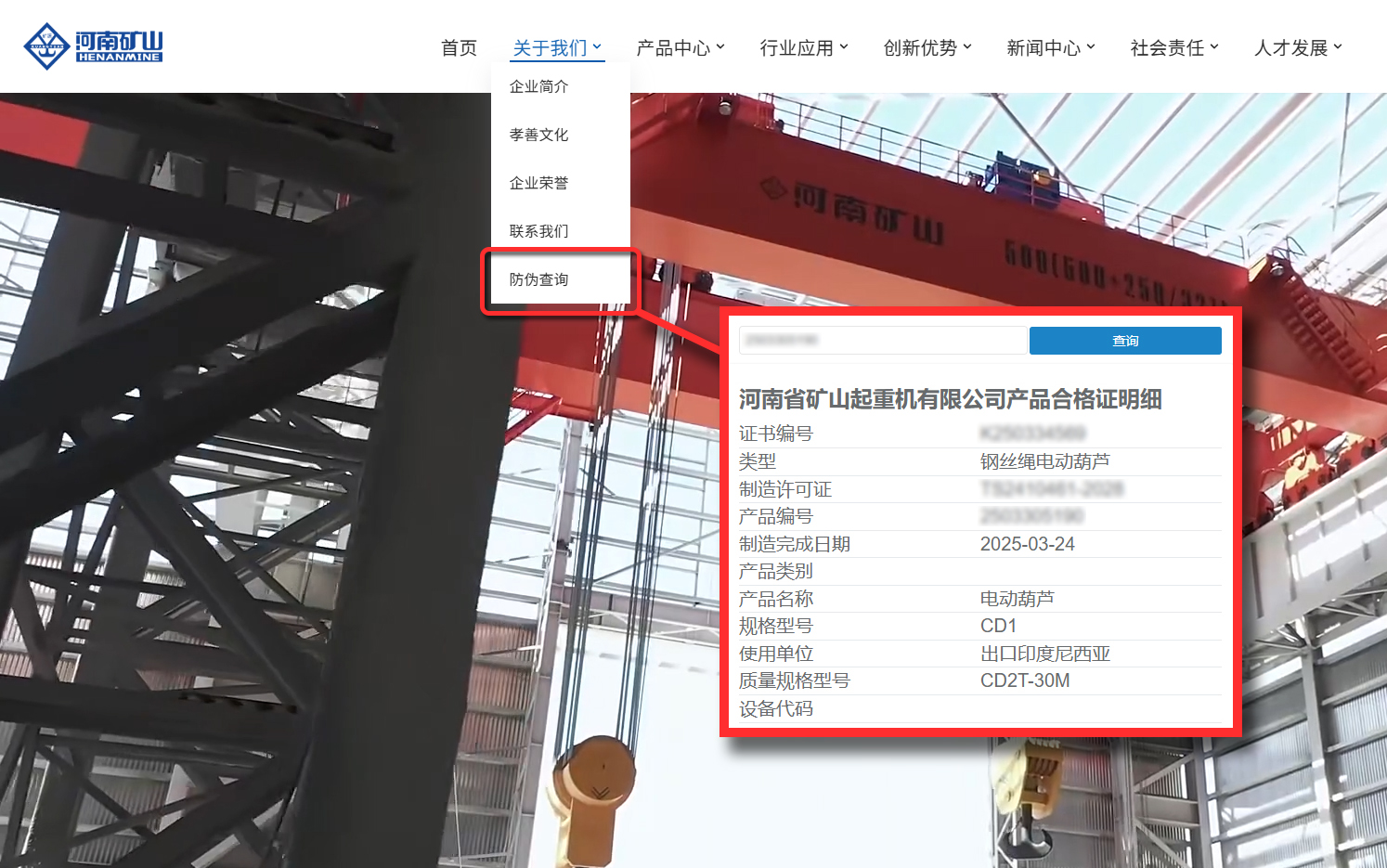
    Operational Workflow Comparison

    In addition to technical parameters, the two cranes' operational workflow differences will also affect the overall efficiency of the yard, combined with the actual operational scenarios, to give you a simple comparison.

    Vessel Discharge Phase

    In the vessel unloading phase, both cranes can work with shore side container cranes (STS) to complete the container transfer operation. Both RMG and RTG can quickly receive the containers unloaded by shore-side cranes and transfer them to the designated area in the yard without affecting the efficiency of ship unloading.

    The difference between the two is mainly reflected in the flexibility of transshipment, RTG can be more flexible to adjust the transshipment route, adapted to different ship unloading rhythm; RMG is more stable, higher transshipment accuracy, suitable for high-frequency, large-volume transshipment operations.

    Yard Stacking Phase

    Yard stacking phase is the most obvious difference between the two, RMG relies on fixed track operation, can realize precise stacking of containers, suitable for large-scale, high-density stacking operations, especially automated yard, can realize unmanned stacking, high efficiency.

    RTG, on the other hand, is more flexible and can adjust the stacking area according to the actual situation of the yard, which is suitable for the flexible operation of small and medium-sized yards, especially for the containers that need to be temporarily stacked and quickly turned over, the advantages of RTG are more obvious.

    Intermodal Integration

    In the intermodal transportation scenario, the advantages of RMG are more prominent. It can accurately match the transshipment needs of railroad containers and realize the seamless connection of container “railroad – yard”, especially in railroad intermodal terminals, RMG can greatly improve the intermodal efficiency and reduce the transshipment time of containers.

    Although RTG can also participate in intermodal transportation, but the flexibility is more than enough, the accuracy is not enough, when docking railroads, highways and other modes of transportation, the efficiency is not as good as RMG, more suitable for small and medium-sized intermodal yards.

    Standards and Classification

    FEM Classification (Often A7-A8)

    FEM (Federation of European Material Handling) standard, is the global container crane industry common standards, RMG and RTG cranes working level, usually in the FEM A7-A8 class. This level of cranes can withstand high-frequency, high-load continuous operation, in line with the high-intensity operational needs of container yards.

    Henan Mine Crane's RMG and RTG cranes are all designed and produced according to the FEM A7-A8 class standard, which ensures that the equipment can maintain stability in long-term high-frequency operations and reduce the incidence of failure.

    ISO 4301 Classification

    ISO 4301 standard mainly regulates the classification of cranes in terms of working level, and specifies the design requirements, safety requirements and inspection standards of equipment corresponding to different working levels. RMG and RTG cranes need to comply with the requirements of ISO 4301 standard to ensure the safety and reliability of the equipment.

    CMAA Duty Classes

    CMAA (Crane Manufacturers Association of America) standards, mainly applicable to crane projects in North America, RMG and RTG cranes work class, usually corresponds to the heavy duty class of CMAA, to meet the demand for high-intensity operations in container yards in North America.

    If the customer's project is exported to North America, the equipment needs to comply with the CMAA standard. Henan Mine Crane will optimize the design and production of the equipment according to the CMAA standard to ensure that the equipment can adapt to the regulatory requirements of the North American region.

    Port Authority Compliance Requirements

    For example, ports in the EU have higher environmental requirements for cranes, which need to meet the standards of exhaust emissions, noise control, etc. Ports in North America have higher safety redundancy requirements for equipment.

    When Should You Choose an RMG?

    Combined with Henan Mine Crane's global project experience, choosing an RMG crane can maximize long-term benefits as long as any of the following situations are met.

    If your yard is a large container terminal with high throughput, handling a large number of containers every day, with high requirements for operational efficiency and stacking density, RMG is the first choice. Its high throughput and high stacking accuracy can perfectly match the operational needs of large yards and improve the overall operational efficiency.

    If the layout of your yard is fixed for a long time without major adjustments, the fixed track design of RMG can ensure the stability and precision of the operation, while reducing the cost of later adjustments.

    If your company has a clear automation strategy and wants to build an automated and intelligent yard, RMG's strong automation adaptability can easily interface with the automation control system to realize unmanned operation, reduce labor costs, and adapt to the needs of smart port development.

    If your yard involves intermodal transportation by rail, and you need to realize seamless connection of container “railroad – yard”, RMG's accurate positioning ability can greatly improve intermodal transportation efficiency and reduce transit time.

    If your company pays more attention to long-term operation cost and is willing to invest higher initial cost, RMG's low energy consumption and low maintenance cost can save a lot of money in long-term operation and improve ROI.

    When Should You Choose an RTG?

    Not all yards are suitable for RMG, the following scenarios, choose RTG cranes, more cost-effective, more adaptable to the needs.

    If your yard is a medium-sized terminal with moderate throughput, does not need high throughput like RMG, and has limited capital to invest a lot of cost to build tracks and civil works, RTG is a better choice. It has low initial investment and can be put into use quickly to meet the operational needs of medium-sized yards.

    If your yard is in the expansion stage, the layout may be adjusted at any time. RTG is flexible and can quickly adapt to different yard layouts without any infrastructure modification, reducing the cost and trouble caused by expansion.

    If your yard does not have track infrastructure and there is no plan to build track in the short term, RTG does not require track and can operate directly on the existing ground, significantly reducing the initial investment cost of the project.

    Common Procurement Mistakes

    Combined with so many years of global procurement consulting experience, I summarized the most common 4 misunderstandings in the selection of customers, many customers have stepped on these pits, I hope you can avoid.

    The most common misunderstanding is to ignore the future automation plan. Many customers in the selection, only consider the current operational needs, did not consider the future automation upgrades, choose RTG, later want to realize automation, not only the technical difficulties, the cost is also very high, the loss is not worth it.

    Underestimating the ground cost of RTG is also a common problem for many customers. Some customers only see the low initial equipment cost of RTG, ignoring its requirements for the ground load-bearing, later need to invest a lot of money to remodel the ground, or even because the ground is not up to standard, resulting in the equipment cannot run normally.

    It is most undesirable to only look at the initial purchase price and ignore the life cycle cost. RTG's initial price is low, but the long-term operating cost and maintenance cost is high; RMG's initial price is high, but the long-term operating cost is low, which is more cost-effective in the long run. Many customers choose RTG because they are greedy for the initial cheapness, but later they spend more money instead.

    Not calculating the life cycle cost is also a common misconception. When selecting the equipment, you should not only look at the price of the equipment itself, but also calculate the cost of energy, maintenance costs, labor costs, construction costs, etc., and comprehensively calculate the life cycle cost, in order to select the most cost-effective equipment.

    RMG vs RTG Decision Checklist

    In order to facilitate your quick judgment, I have compiled a decision checklist, check against, you can quickly determine whether you need to choose RMG or RTG cranes, to avoid selection errors.

    What is the annual TEU throughput of your yard? High throughput (more than 1 million TEU) prioritize RMG, medium and low throughput (less than 1 million TEU) can consider RTG.

    Is your yard layout fixed? RMG is preferred for long-term fixed layout, and RTG is preferred for flexible adjustment. 3.

    How much available land area do you have? RMG is preferred if land resources are tight and high stacking density is pursued; RTG is preferred if land is sufficient and density is not required. 4.

    What is the energy cost in your area? With high energy cost, RMG with all-electric is preferred; with low energy cost, RTG can be considered.

    Do you have a clear roadmap for automation upgrade? If you have automation plan, prefer RMG; if there is no need for automation, you can consider RTG. 6.

    What is your capital budget? With limited short-term budget, RTG is preferred; focusing on long-term ROI and willing to invest initial cost, RMG is preferred.

    Frequently Asked Questions

    Q1: Which is cheaper: RMG or RTG?

    In terms of initial purchase price, RTG is cheaper because it does not require tracks and complex civil works, and the cost of the equipment itself is relatively low. However, in terms of life cycle cost, RMG is cheaper because of its low energy consumption, low maintenance cost and low labor cost, which can save a lot of money in the long run.

    Q2: Which is better for automated terminals?

    RMG is usually better for automated terminals, its fixed rail design, can be accurately positioned, easier to interface with the automation control system, terminal operating system, to achieve fully automated operations, at present most of the world's automated container terminals, the use of RMG cranes.

    Q3: Can RTG cranes be electrified?

    Yes, it can. At present, RTG cranes can be electrified by cable reel, slip wire or bus system, after the transformation of RTG, the energy consumption will be greatly reduced, environmental protection will be improved, to meet the environmental requirements of some regions. Henan Mine Crane can also provide customers with RTG electrification transformation services.

    Q4: Which crane provides higher stacking density?

    RMG provides higher stacking density. Because it is guided by a fixed track, it operates with high precision, the containers can be accurately aligned when stacked, and there is no need to reserve too much gap, usually 6-8 layers can be stacked, and some of the large RMGs can even be stacked more than 10 layers, which makes the space utilization rate higher.

    Q5: Which crane is easier to relocate?

    RTG is easier to relocate, it does not have fixed rails, it relies on tires to move, it can be directly transported to the new yard by trailer, the installation and debugging cycle is short, and it can be put into use quickly; whereas RMG needs to dismantle the rails and equipments, it is difficult to transport and install, and the cost of relocation is high and the cycle is long.

    Henan Mine Crane

    Whether you need highly automated RMG, or flexible and efficient RTG, we can customize the equipment to meet global standards according to your specific needs, from selection consulting, design and production, to installation and commissioning, after-sales maintenance, the whole process to provide professional support, to help you avoid selection errors and reduce operating costs.

    Choosing a suitable container crane is not only a purchase investment, but also an investment in the long-term development of the yard. Only by choosing the right equipment, can we make the yard operation smoother and more efficient, and take advantage of the competition in the global port.

    Discuss the crane arrangement for your project.

    The handling envelope needs to work with the terminal's road and rail interfaces. Use a common yard plan to compare working coverage, transfer lanes and the effect of future block expansion. Share the load, available drawings, working cycle and site conditions with Henan Mine Crane so the required configuration and supply boundary can be discussed.

    Related crane configurations

    Container Overhead Crane

    View product parameters
    Lifting capacity: 30-65 tSpan: 18-35 mLifting height: 8 – 20 m

    Transfer containers within a defined overhead runway area using a double-girder bridge and matched spreader. Container size, working clearance and the handling sequence determine the arrangement.

    Container Straddle Carrier

    View product parameters
    Lifting capacity: 30 – 50 tStacking arrangement: 1 over 3 – 1 over 6Working class: A7 – A8

    Move containers between handling positions with a straddle carrier matched to the travel route and stacking layout. Define container load, ground conditions, clearance and the preferred drive system.

    Updated 2026 · Henan Mine Crane