Engineering · Manufacturing · Project support
info@hnksglobal.comWhatsApp +86 18836207779 ↗

Blog

  • RMG vs RTG Project Cost: Civil Works, Energy and Maintenance

    RMG vs RTG Project Cost: Civil Works, Energy and Maintenance

    Technical guide

    RMG vs RTG Project Cost: Civil Works, Energy and Maintenance

    A cost comparison should include the infrastructure and operating boundary for each arrangement. Define the same container cycle, then separate crane supply, civil work, energy arrangements and maintenance assumptions.
    Henan Mine CraneTechnical guide · Updated 2026Crane selection, project scope and operating requirements
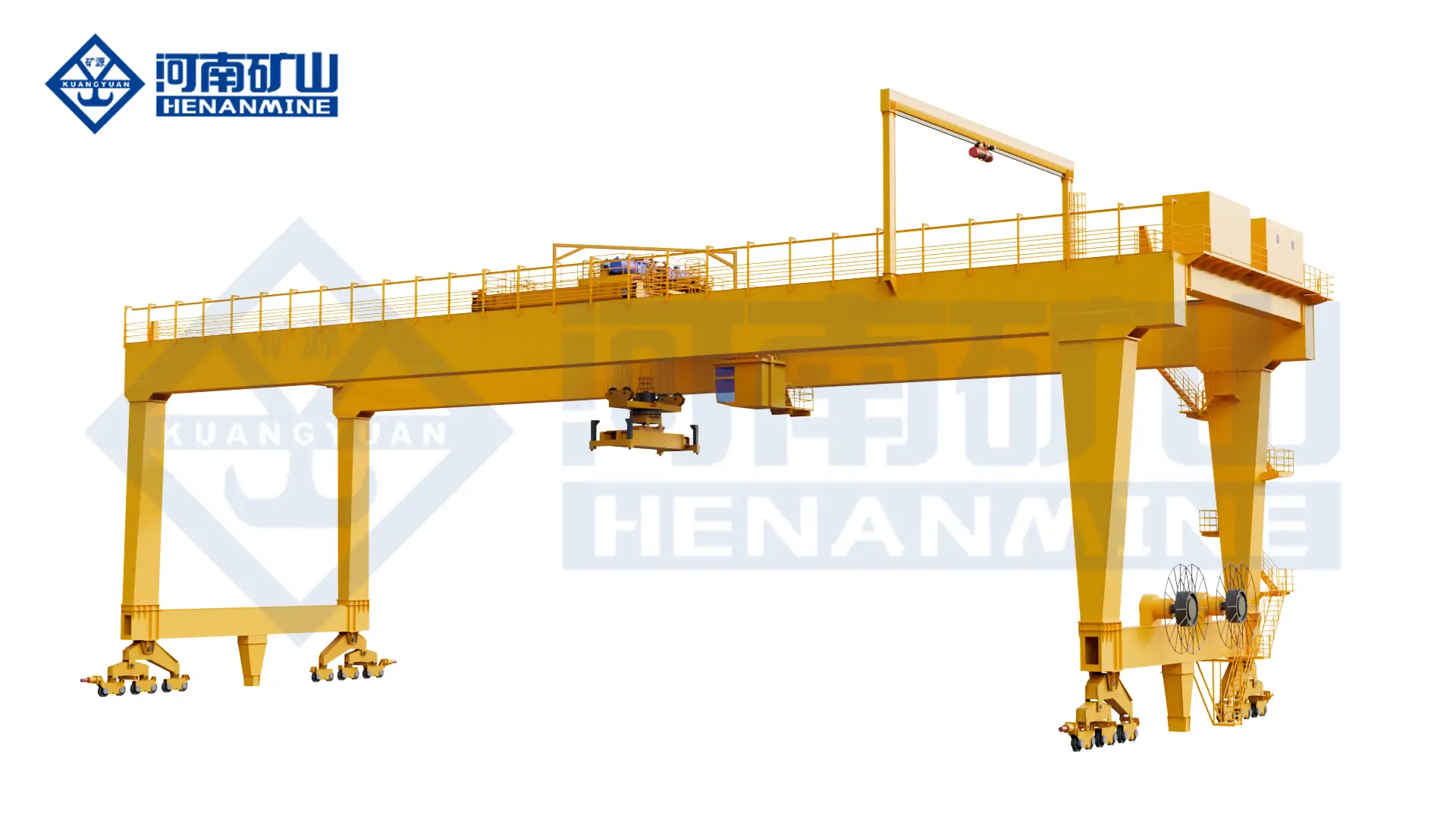
    Henan Mine Crane Container Overhead Crane
    Henan Mine Crane Container Overhead Crane
    Project planning notes

    Key points for this crane project.

    1. The core meaning of Crane TCO
    2. RMG and RTG Crane Basic Introduction
    3. Comparison of RMG and RTG Costs in All Dimensions
    Read the technical guide

    The core meaning of Crane TCO

    The full life cycle cost of ownership of equipment, covering all the expenses of Crane from procurement, installation, operation to end of life. Many overseas projects have late over-budget problems, most of which are only accounting for the price of equipment in the early stage, ignoring the hidden costs.

    The complete TCO includes equipment procurement costs, site infrastructure renovation costs, power supply supporting costs, energy expenditure, maintenance spare parts costs, labor operating costs, and equipment failure and downtime brought about by operational losses, as well as late automation upgrades, equipment refurbishment of the potential investment.

    Harbor and yard cranes are ultra-long-cycle fixed assets, service life is generally more than 20 years. Initially low-priced equipment, often because of high-frequency maintenance, high energy consumption, frequent failures, accumulating higher long-term costs.

    There is no absolutely cheaper equipment, only the cost solution that fits the project conditions, site planning and operation mode. Fixed high-frequency operation of the yard and flexible temporary yard, suitable for a completely different model.

    RMG and RTG Crane Basic Introduction

    RMG Rail Mounted Gantry Crane

    RMG full name Rail Mounted Gantry Crane, relying on the ground to travel on a fixed track, is a standardized container yard, rail freight station, inland waterless port of the main equipment. The equipment runs on a fixed track, with high alignment accuracy and good running stability.

    This kind of container RMG crane is suitable for high-frequency and high-density container stacking and transshipment operations, with strong electrification adaptability, and it is also the preferred model of the current automated smart terminal.

    Its shortcomings are also more obvious, the equipment relies on a fixed track infrastructure, the site layout, once finalized, it is difficult to arbitrarily adjust, the preliminary civil construction investment is relatively higher.

    RTG Tire Gantry Crane

    RTG is known as Rubber Tyred Gantry Crane, which uses rubber tires to walk without the constraints of a fixed track, and has great operational flexibility. Most of the small and medium-sized flexible yards, temporary storage areas will use this type of equipment.

    RTG Crane can be freely switched within the yard operating area, low threshold for site modification, fast deployment, suitable for the layout of frequent adjustments, the scope of operation is not fixed logistics projects.

    However, tire wear, steering system loss, fuel or hybrid system maintenance, will become a long-term operation of the fixed expenditure, but also many users are easy to ignore the hidden costs.

    Comparison of RMG and RTG Costs in All Dimensions

    Combined with the practical experience of various overseas yard projects, the core cost and performance differences between the two types of Cranes are compiled to visualize the TCO gap:

    Cost & Performance FactorRMG CraneRTG CraneLong-Term TCO Impact
    Initial Equipment CostMedium-HighMediumRTG has slight advantage in bare machine price
    Civil & Foundation CostHigh (rail & foundation required)Low (only yard pavement)RMG increases one-time infrastructure investment
    Annual Energy CostLow (pure electric, stable operation)High (diesel/hybrid power loss)RMG saves continuous energy expenditure
    Daily Maintenance CostLow (no tire replacement)High (tire & steering system upkeep)RTG produces recurring consumable cost
    Automation UpgradeLow cost, easy realizationHigh cost, complex navigation systemRMG is more suitable for future intelligent yards
    Operation FlexibilityFixed yard layout onlyFree movement & layout adjustmentRTG adapts to changeable yard demands
    Service Life25-35 years15-20 yearsRMG extends long-term replacement cycle

    In-depth analysis of core sub-costs

    Initial infrastructure and equipment investment

    The biggest threshold of RMG Crane is the civil construction support. In addition to the equipment itself, it is also necessary to lay tracks, fixed sleepers, pouring special foundations, with a synchro line or cable reel power supply system, the one-time infrastructure investment is higher.

    RTG does not need track construction, only need to harden the site to meet the standard, less investment in infrastructure in the early stage, the equipment into the field faster, suitable for short-term projects with limited budget and urgent production.

    Long-term energy cost

    Most of RMG crane for container yard adopts pure electric drive, stable power supply, low running loss and no fuel consumption. The annual energy savings for terminals with high-frequency year-round operation are very considerable.

    Diesel and hybrid RTGs have fuel loss and power conversion loss, and even if they are upgraded to pure electric version, they need to be equipped with charging facilities, so the overall energy cost is always higher than that of RMG equipment in the same working condition.

    Maintenance and Consumables Costs

    RMG relies on fixed track driving, stable traveling structure, almost no alignment deviation problems, the core maintenance focuses on the motor, electronic control and lifting mechanism, no high-frequency expenditures on consumables.

    The rubber tires of RTG are just consumables, and need to be replaced regularly because of the serious wear and tear of long term heavy driving and steering. At the same time, the steering system, hydraulic system, diesel unit maintenance frequency and cost, much higher than the RMG Crane.

    Automation upgrade and downtime costs

    Fixed rail makes the automation of RMG extremely difficult to transform, can be easily adapted to remote control, automatic stacking and dock system docking, to adapt to the future demand for intelligent yard upgrades.

    RTG automation requires the installation of complex navigation, collision avoidance and path planning systems, which is costly to retrofit. And tire failure, steering deviation easily lead to equipment downtime, indirectly generating yard operation delay costs.

    Model selection: when to choose RMG, when to choose RTG?

    For projects with fixed site layout, high container throughput and long-term stable operation, customized RMG crane is preferred, while railroad container yard, inland waterless port and large fixed storage yard are the core adaptive scenes of RMG.

    These projects have a long operation cycle, RMG lower energy consumption, less maintenance, longer service life, can quickly erase the difference in the price of the previous infrastructure, long-term TCO advantage is very obvious.

    Site planning has not been finalized, the need for frequent adjustment of the operating area, belonging to the temporary transitional yard project, more suitable for RTG Crane. Flexible mobility, can maximize the use of site resources, to avoid the waste of fixed infrastructure.

    The selection of price comparison of common misconceptions

    Part of the project only look at the current working conditions, ignoring the future demand for automation upgrades. When you want to transform the smart yard in the later stage, the transformation cost of RTG will be much higher than the investment of direct purchase of RMG in the early stage.

    At the same time, you can't just pursue low-cost infrastructure. High-frequency operational scenarios forced selection of RTG, will lead to accelerated wear and tear of equipment, failure and downtime increase, but affect the overall efficiency of the yard operation.

    Henan Mine Crane how to provide suitable cost optimization solutions

    As a professional RMG crane supplier China, Henan Mine Crane will not blindly recommend high-priced equipment, but will calculate TCO one by one and match the optimal model according to the customer's site layout, operation frequency, budget planning and long-term operation goals.

    For fixed high-frequency yards, we can provide non-standard customized RMG Cranes, optimize the self-weight of the steel structure, electrical configuration and power supply scheme, under the premise of ensuring the stability of the equipment, to control the overall investment.

    For flexible operation and short-term operation projects, we will also give the cost comparison program between RTG and RMG, so that customers can clearly see the gap between short-term investment and long-term benefits.

    At the same time, we can provide a full set of technical drawings, wheel pressure parameters, installation guidance and overseas after-sales support to reduce the hidden costs of equipment installation, operation and upgrading.

    FAQ

    Which one has lower overall cost, RMG or RTG?

    For long-term fixed high-frequency operation scenarios, RMG has a lower total life cycle cost. For temporary and flexible yard changes, RTG has less upfront investment and higher overall cost performance.

    Which Crane is more suitable for automated terminals?

    RMG Crane rail fixed, running track can be controlled, automation transformation is simple, strong stability, is the mainstream selection of automated container terminals.

    What is the biggest hidden cost of RTG?

    Mainly regular replacement of tires, steering system maintenance and long-term fuel energy consumption, the cumulative expenditure over the years is much higher than the difference in equipment prices.

    Discuss the crane arrangement for your project.

    A cost comparison should include the infrastructure and operating boundary for each arrangement. Define the same container cycle, then separate crane supply, civil work, energy arrangements and maintenance assumptions. Share the load, available drawings, working cycle and site conditions with Henan Mine Crane so the required configuration and supply boundary can be discussed.

    Related crane configurations

    Container Overhead Crane

    View product parameters
    Lifting capacity: 30-65 tSpan: 18-35 mLifting height: 8 – 20 m

    Transfer containers within a defined overhead runway area using a double-girder bridge and matched spreader. Container size, working clearance and the handling sequence determine the arrangement.

    Container Straddle Carrier

    View product parameters
    Lifting capacity: 30 – 50 tStacking arrangement: 1 over 3 – 1 over 6Working class: A7 – A8

    Move containers between handling positions with a straddle carrier matched to the travel route and stacking layout. Define container load, ground conditions, clearance and the preferred drive system.

    Updated 2026 · Henan Mine Crane
  • RMG vs STS Cranes: Yard Stacking and Waterside Handling Roles

    RMG vs STS Cranes: Yard Stacking and Waterside Handling Roles

    Technical guide

    RMG vs STS Cranes: Yard Stacking and Waterside Handling Roles

    Rail-mounted yard cranes and ship-to-shore cranes operate at different terminal interfaces. Identify the required cargo movement before comparing their spans, working envelopes and connections to the wider handling system.

    Henan Mine CraneTechnical guide · Updated 2026Crane selection, project scope and operating requirements
    RMG crane
    RMG crane
    Project planning notes

    Key points for this crane project.

    1. RMG Crane vs STS Crane: Which is Core for Port
    2. Overview of Port Crane Systems
    3. What Is an STS (Ship-to-Shore) Crane?
    Read the technical guide

    RMG Crane vs STS Crane: Which is Core for Port Handling?

    Henan Mine Crane has been engaged in port crane sales for more than ten years, I have received port planners and operational managers around the world, the most frequently asked question is: RMG and STS cranes, in the end, which is the core equipment for port operations?

    The efficiency of modern container ports depends on the synergistic operation of the crane system. Whether it is a large deep-water port, or a medium-sized river port, as long as it involves container loading and unloading transshipment, almost inseparable from these two types of equipment.

    Many customers will fall into a misunderstanding, think that the two can only choose a “core”, either favor STS, or focus on RMG. in fact, these two cranes do not have absolute primary and secondary, each bear different core functions, one cannot do without the other.

    Overview of Port Crane Systems

    The Container Handling Workflow

    In order to understand the core role of RMG and STS, first of all, we must understand the complete flow of container operation in the port, which is the basis for judging the importance of the two.

    The first step is Ship-to-shore transfer, that is, unloading containers from the ship to the port, or loading containers from the port to the ship, which is the first gate of port operation, and is the key to connecting ocean transportation and land transportation.

    The second step is horizontal transportation, through the truck, trailer or AGV automatic guided vehicle, the container from the shore to the yard, or from the yard to the shore, equivalent to the port operation of the “conveyor belt”, to ensure the smooth flow of containers.

    The third step is the yard stacking and retrieval (Yard stacking and retrieval), the transfer of containers stacked up in an orderly manner, saving space in the yard, and at the same time in the need to quickly extract, to avoid congestion in the yard.

    The final step is gate or rail dispatch, where containers are transported out of the port by trucks or transferred to inland areas by rail, completing the closed loop of port operations.

    Where STS and RMG Cranes Fit

    In the whole operation process, STS and RMG cranes play their respective roles, respectively occupy the two key links, one without the other.

    The core position of STS cranes is on the shore (Quayside), specializing in container loading and unloading between ship and shore. Whether it is a mega container ship, or small and medium-sized ships, need to rely on STS cranes to realize the rapid transfer of containers, it is the port connected to the sea “portal”.

    RMG cranes are mainly used in container yards and railroad yards, and their core task is to stack, extract and transfer containers within the yard. It can maximize the use of yard space, to ensure orderly storage of containers to avoid congestion, is the port land operation of the “core hub”.

    Simply put, STS tube “ship to shore”, RMG tube “shore to field”, the two synergistic cooperation, in order to make the whole port operation efficiently, which is also container terminal crane types in the most core of the two kinds of equipment. This is also the two core equipment in container terminal crane types.

    What Is an STS (Ship-to-Shore) Crane?

    Definition and Function

    STS crane, full name Ship-to-Shore Crane (Shore Container Crane), is a large crane installed on the shore of the port, the core function is only one: to realize the container loading and unloading transshipment between the ship and the port.

    It is like a “giant arm” of the port, one end of which reaches out to the sea and docks with the deck of the container ship, while the other end connects with the shore of the port to accurately unload the containers from the ship or load the containers from the port smoothly onto the ship.

    Henan Mine Crane produces STS cranes, adapted to different types of port shore layouts around the world, whether it is a deep-water berth or a shallow-water berth, can be adjusted according to the size of the ship and the operational needs of its own parameters, to ensure that the loading and unloading operations are smooth.

    Many people do not know that STS crane function in port is not only simple loading and unloading, but also directly determines the ship's stay in port, which in turn affects the port's throughput and competitiveness.

    Key Features

    Long outreach (outreach) is the core feature of STS crane, which is also the key to docking large ships. Now the world's mainstream Post-Panamax and Ultra Large Container Vessel (ULCV), the deck width is large, STS cranes need to have a long enough outreach to cover the entire deck.

    Port of Georgia, and meets the operational needs of the world's large ports.

    High lifting height and fast lifting speed are also its core advantages. The lifting height is high enough to lift containers from the bottom deck of a large ship to the shore; the fast lifting speed improves the loading and unloading efficiency and reduces the ship's waiting time.

    Like RMG, STS cranes also run along the track, but its track is laid on the shore and extends horizontally along the berth, which ensures that it can cover the whole berth of the ships during operation, and runs stably and accurately.

    Typical Applications

    The application of STS cranes is very concentrated, mainly all kinds of container ports and terminals, whether coastal deep-water ports, or river ports, as long as there is a container ship docking, it is indispensable.

    High throughput shore-side operations, is its core application scenarios. For example, the main berths of major mainstream ports around the world need to handle thousands of standard containers every day, and the efficient loading and unloading capacity of STS cranes can ensure rapid turnover of ships and improve the overall throughput of the port.

    Like the Port of Singapore in Southeast Asia, the Port of Rotterdam in Europe, as well as the domestic port of Shanghai, Shenzhen Port, have deployed a large number of STS cranes, including Henan Mine Crane's equipment, which operate continuously all year round, supporting the efficient operation of the port.

    What Is an RMG (Rail Mounted Gantry) Crane?

    Definition and Function

    RMG crane, full name Rail Mounted Gantry Crane (Rail Mounted Gantry Crane), is a gantry crane relying on the rail operation, the core function is in the container yard and the rail yard station, complete the stacking of containers, picking up and on-site transfer.

    The biggest difference between it and STS cranes is that the scope of operation is limited to land, not involving sea operations. If STS is the “gateway” of the port, then RMG is the “warehouseman” of the port, responsible for storing containers in an orderly manner, quick access.

    Henan Mine Crane's RMG cranes cannot only realize multi-layer stacking of containers, but also docking railroad transportation to realize seamless transfer of containers “yard – railroad”, which is also the core value of RMG crane for container yard.

    Key Features

    Rail-guided precision operation is the core feature of RMG crane. Its track is laid on the yard floor and extends vertically or horizontally along the yard, and the crane runs along the track without any deviation, which can realize precise stacking and extraction of containers.

    High stacking density is another major advantage. Because of the precise operation, the containers can be accurately aligned when stacking, without the need to reserve too much clearance, usually 6-8 layers of containers can be stacked, which significantly improves the utilization of yard space, which is also its core advantage over other yard cranes.

    Its automation compatibility is extremely strong, very suitable for automated yard (ASC/RMG systems). Henan Mine Crane's RMG cranes can easily interface with the terminal operating system (TOS) to realize remote operation and unattended operation, reducing labor costs, which is also the mainstream development direction of the current global smart port.

    In addition, RMG cranes have stable operation, low wear and tear, light maintenance burden, and lower long-term operating costs, which is an important reason for many ports to choose it as the core equipment of the yard.

    Typical Applications

    Container yard is the most important application scenario of RMG cranes, whether it is a dedicated yard in large ports, or a comprehensive yard in medium-sized ports, you can see its figure. Especially high throughput, long-term fixed layout of the yard, RMG advantages are more obvious.

    Automated stacking yards (ASC/RMG systems) are one of its core application scenarios. With the development of smart ports around the world, more and more ports have started to build automated yards, and RMG cranes have become the core equipment of automated yards due to their precise operation and strong automation compatibility.

    Railroad intermodal yard is also an important application scenario for RMG cranes. It can accurately docking railroad container loading and unloading needs, realize the container “yard – railroad” seamless transfer, the formation of a “non-landing” operation chain, to enhance the efficiency of intermodal transport.

    For example, the Port of Hamburg in Europe and Zhengzhou International Dry Port in China have deployed Henan Mine Crane's RMG cranes for intermodal railroad operations, which have significantly improved the efficiency of container transshipment.

    RMG Crane vs STS Crane – Core Functional Differences

    Many customers cannot distinguish the core differences between RMG and STS, in fact, as long as you grasp the “operational scenarios” and “core functionality”, you can quickly distinguish. I will use the table below to make a clear comparison, and then combined with the actual operation scenarios to explain in detail, to help you completely clarify the STS and RMG crane difference.

    AspectSTS CraneRMG Crane
    Primary RoleShip loading/unloadingYard stacking and transfer
    LocationQuaysideContainer yard or rail yard
    Core FunctionVessel interfaceYard efficiency and storage
    MobilityRail-mounted along quayRail-mounted within yard
    Automation LevelSemi to fully automatedHighly suitable for full automation

    From the table, we can clearly see that the core difference between the two lies in the operation scenario and function, the core of STS is “docking ship”, all the designs are centered on ship and shore loading and unloading; the core of RMG is “yard management”, all the designs are designed to enhance the efficiency of the yard and the space utilization. The core of RMG is “yard management”, and all designs are aimed at improving yard efficiency and space utilization.

    For example, the track of STS is laid along the shore, aiming at covering the whole berth and facilitating the docking of ships; the track of RMG is laid inside the yard, aiming at realizing the precise stacking of containers and in-field transfer. The two running tracks seem to be similar, but in fact they are suitable for different operational needs.

    In terms of automation level, RMG is more suitable for fully automated operation, because its operation scope is fixed, the process is standardized, and it is easy to interface with automated systems; STS is mostly semi-automated or fully automated, and requires certain manual intervention in combination with the docking position of the ship and the container placement.

    Technical Comparison: RMG vs STS Crane

    In addition to functional differences, there are also obvious differences between the two in terms of technical parameters, which directly determine their operational capabilities and adaptable scenarios. The following is a detailed comparison of the four core dimensions to help you accurately match your needs when selecting a model.

    Lifting Capacity and Reach

    Lifting capacity and reach is one of the core technical differences between the two, which directly determines their operating range and capacity.

    Although the lifting capacity is slightly lower than STS, it can fully meet the stacking and transshipment needs of container yards.

    Simply put, STS pursues “far enough” to dock with large ships, while RMG pursues “high enough and wide enough” to maximize the utilization of yard space.

    Structural Design

    The difference in structural design is to fit the respective operation scenarios, the specific comparison is as follows:

    FeatureSTS CraneRMG Crane
    StructureCantilever boom over waterGantry frame over yard blocks
    Key DimensionOutreach & lift heightSpan & stacking height

    STS crane adopts cantilever beam structure, one end of which extends to the sea, and the other end is fixed on the shore rail, this structure can maximize the extension of outreach, and at the same time ensure the stability of the equipment to cope with the wind loads on the sea. Henan Mine Crane STS cranes, cantilever beams manufactured with high-strength steel, can withstand strong winds, to ensure that the normal operation in bad weather.

    The RMG crane has a gantry structure that spans the entire yard block. This structure ensures the stability and precision of the equipment, while facilitating the stacking and extraction of containers. Its gantry height and span can be customized according to the actual dimensions of the yard, which is suitable for different sizes of yards.

    Operational Speed and Productivity

    The operational speed and productivity of both cranes are measured by different standards, and they are suitable for their respective operational needs.

    The operational speed of STS cranes is usually measured by the number of moves per hour (MPH), which is the key to determine the turnaround time of the vessel. Large STS cranes can complete 30-40 operations per hour. Efficient STS equipment can significantly shorten the vessel's stay in the port and increase the utilization rate of berths in the port.

    The operational focus of RMG cranes is not speed, but yard throughput, stacking efficiency and precision. Its operating speed is slightly lower than that of STS, but it can realize continuous operation, especially the automated RMG system, which can operate 24 hours a day to ensure the rapid flow of containers in the yard and avoid congestion.

    For example, a port with an annual throughput of 1 million TEU needs to be equipped with efficient STS cranes to shorten the turnaround time of ships, and at the same time, it needs a sufficient number of RMG cranes to ensure that containers can be received and released quickly at the yard, and both of them work together in order to realize the efficient operation of the port.

    Infrastructure Requirements

    The two infrastructure requirements differ greatly, which is also a key consideration in port planning and equipment selection.

    STS cranes require reinforced shore structures and specialized crane tracks. Because of its large size and lifting capacity, the load bearing capacity of the bank is extremely high, and the bank needs to be reinforced in advance, and the track needs to be laid in precise alignment to ensure stable operation of the equipment. The investment cost of this infrastructure is high and the cycle time is long.

    RMG cranes require yard track beams, precise track alignment and civil foundations. Its tracks are laid on the yard floor and do not need to reinforce the shore structure like STS, but it needs to ensure the precise alignment of the tracks to avoid affecting the operational accuracy of the equipment. Compared with STS, RMG has lower infrastructure investment cost and shorter cycle time.

    When Henan Mine Crane undertakes global port projects, it will customize RMG and STS cranes according to the existing infrastructure of the port, so as to minimize the cost of infrastructure renovation for customers.

    Which Is the “Core” Crane for Port Handling?

    Back to the most concerned question: RMG and STS, which is the core of port operation? The answer is very simple: both are the core, but they play different roles in different stages of operation.

    STS Crane – The Core of Vessel Operations

    STS Crane is the core of vessel operations, without it, container vessels cannot efficiently complete loading and unloading operations. It directly determines the vessel turnaround time, which is one of the core indicators of port competitiveness.

    For ports, the shorter the ship turnaround time is, the higher the berth utilization rate is, the more ships can be received, and the larger the port throughput is. Especially in the present time of fierce competition in global shipping, fast ship turnaround capacity enables the port to attract more shipping companies to cooperate.

    Without STS cranes, container ships can only stay at berth for a long time, unable to complete loading and unloading, which will not only affect the operational efficiency of the port, but also bring huge losses to shipping companies. From this point of view, STS cranes are the “lifeline” of ports connecting to the sea.

    RMG Crane – The Core of Yard Efficiency

    RMG crane is the core of yard efficiency, without it, the yard cannot realize the orderly stacking of containers and rapid extraction, which will eventually lead to yard congestion, and then drag down the efficiency of the entire port operations.

    It directly determines the capacity of the yard and the efficiency of container flow. High stacking density enables the port to store more containers on limited land, reducing land occupation costs; fast stacking and extraction capacity ensures the timely flow of containers and avoids the STS cranes on the shore not being able to unload containers properly due to yard congestion.

    Especially in automated ports, the role of RMG cranes is more prominent. It can realize unmanned operation, reduce labor costs, and at the same time improve operational accuracy and efficiency, is an indispensable core equipment for automated ports.

    The Real Answer: Both Are Core in Different Stages

    The Real Answer: Both Are Core in Different Stages Both are core equipments in different stages of operation, which can realize the efficient operation of the port only by cooperating with each other. The specific correspondence is as follows:

    Port FunctionCore Crane
    Ship operationsSTS Crane
    Yard operationsRMG Crane
    Overall terminal efficiencyIntegrated STS + RMG system

    For example, if a large container ship docks at the port, STS cranes are responsible for unloading the containers from the ship and transferring them to the yard through horizontal transportation equipment; RMG cranes are responsible for stacking these containers in an orderly manner, extracting them quickly when needed, and transferring them to the gates or railroads, completing the whole operation process.

    If there is only STS and no RMG, the unloaded containers will be piled up on the shore, resulting in STS not being able to continue unloading; if there is only RMG and no STS, the containers cannot be unloaded from the ship to the yard, and RMG cannot play a role. Both are indispensable and can only work together to realize the efficient operation of the port.

    Workflow Integration: How STS and RMG Work Together

    After understanding the core role of the two, let's talk in detail about how they work together to complete the entire port container workflow. Combined with Henan Mine Crane's practical experience in serving ports around the world, the whole process is divided into four steps, which are smoothly connected to ensure maximum efficiency.

    Step 1 – Ship Operations

    After the ship docks at the berth, STS cranes start the operation immediately, unloading the containers from the ship accurately and placing them on trucks, trailers or AGVs on the shore.

    During the process, STS crane will adjust the lifting speed and outreach according to the weight and size of the container to ensure the container is unloaded smoothly and avoid damage. At the same time, it will work with the horizontal transportation equipment to ensure that the unloaded containers can be quickly transferred without occupying space on the shore.

    Step 2 – Horizontal Transport

    Horizontal transportation equipment (trucks, trailers, AGVs) will unload the containers from the STS crane and transfer them to the designated yard blocks. This link is equivalent to a “conveyor belt”, connecting the shore and the yard to ensure the fast flow of containers.

    When Henan Mine Crane provides solutions for ports, it will optimize the horizontal transport routes to ensure that the transport equipment can quickly go back and forth between the shore and the yard, reducing the waiting time and improving the efficiency of the whole operation process. At the same time, equipment linkage is realized through the TOS system, allowing STS, horizontal transportation equipment and RMG to work together and realize automatic task allocation.

    Step 3 – Yard Operations

    After the containers are transferred to the yard, the RMG crane starts the operation immediately and stacks the containers accurately to the specified position. It will assign different stacking areas according to the types of containers (heavy containers, empty containers) and destinations to ensure that the containers are stored in an orderly manner for subsequent pickup.

    If the container needs to be extracted, the RMG crane will quickly find the target container according to the instruction from the TOS system, accurately extract it, place it on the horizontal transportation equipment, and transfer it to the shore or gate. In this process, the precise operation and high stacking density of RMG can significantly improve the efficiency of the yard and avoid congestion.

    Especially, the automated RMG system can realize the remote control mode of “1 control 3-5”, which can improve the throughput of the yard and the continuity of the night shift, and further optimize the operation efficiency.

    Step 4 – Gate and Rail Handling

    In the last step, RMG cranes work with gate and rail operations to transfer containers that need to be shipped out of the port to trucks or railroad cars to complete inland distribution.

    For rail intermodal transport, RMG cranes can accurately docking rail container handling needs, to achieve seamless container “yard – rail” transfer, reduce the container transfer time, improve intermodal transport efficiency. This is also one of the core advantages of Henan Mine Crane RMG cranes, which can be adapted to the needs of global intermodal transportation ports.

    Cost and Investment Comparison

    Port planning and equipment selection, the cost and return on investment is a key consideration, RMG and STS crane investment costs, operating costs vary greatly, the following three dimensions, to give you a detailed comparison, to help you clearly calculate the "input-output account.

    Capital Investment

    Initial investment, the difference between the two is very obvious, STS cranes have a very high unit cost, because of its large size, high technical difficulty, need to be equipped with a long cantilever, high lifting height and a strong lifting mechanism, the single unit investment is usually 3-5 times of RMG cranes.

    However, the demand for STS cranes is less, a port berth, usually only need to be equipped with 1-2 sets of STS cranes to meet operational needs. For example, the U.S. Port of Georgia for the Port of Savannah ordered 8 sets of STS cranes, which can support the operational needs of large ships.

    RMG cranes have a lower cost per unit, although the technical requirements are also very high, but the size and structure is relatively simple, the investment per unit is much lower than STS, but it is in greater demand, a large yard, usually need to be equipped with more than 10 RMG cranes, in order to cover the entire yard's operational needs, to ensure the efficiency of the yard.

    Operating Costs

    In terms of operating costs, both are powered by electricity, energy costs are relatively low, which is also a common advantage of port cranes. However, the operating costs of the two, there are some differences.

    RMG cranes have lower operating costs, especially the automated RMG system, which can achieve unmanned operation and significantly reduce labor costs.

    The operating cost of STS crane is relatively high, it needs to be equipped with professional operators, the labor cost is high; at the same time, its operating environment is complex, facing the strong winds of the sea, high humidity and other harsh environments, the wear and tear of the equipment and maintenance costs are also relatively high, and it needs to be regularly maintained on the cantilever, hoisting mechanism and other core components.

    ROI Perspective

    From the perspective of return on investment (ROI), the two have different influencing factors, cannot simply say which one is more cost-effective, the key to look at the core needs of the port.

    The return on investment of STS cranes is mainly reflected in the berth productivity and vessel turnaround time. An efficient STS crane can significantly shorten the turnaround time of the ship, enhance the utilization rate of the berth, so that the port can receive more ships, increase throughput, and then enhance the port's revenue. For large deepwater ports, the return on investment of STS cranes is very significant.

    The return on investment of RMG cranes is mainly reflected in the yard capacity, automation level and long-term scalability. It can improve the utilization of yard space and reduce land occupation costs; after automation, it can reduce labor costs and improve operational efficiency; at the same time, it is highly scalable and can flexibly increase the number of equipments according to the growth of port throughput, which is suitable for the long-term development of the port.

    Standards and Technical Compliance

    RMG and STS cranes are required to comply with the following international standards and port-specific requirements.

    Common International Standards

    ISO standard is a global crane standard, ISO 4301 mainly regulates the classification and safety requirements of cranes, and specifies the equipment design, manufacturing and inspection standards corresponding to different working levels, RMG and STS cranes need to comply with this standard.

    FEM standard (European Material Handling Federation standard), mainly regulating the structure of the crane and the classification of the working level, RMG and STS cranes working level is usually A7-A8, this level of cranes, can withstand high-frequency, high-load continuous operation, in line with the port's high-intensity operational needs.

    Henan Mine Crane's RMG and STS cranes can be customized according to the CMAA standard to meet the needs of ports in North America.

    Port-Specific Requirements

    In addition to international standards, different ports have their own specific requirements, mainly focusing on three aspects.

    The first is wind resistance and storm protection systems. Coastal ports face strong winds, storms and other inclement weather, RMG and STS cranes need to be equipped with a perfect wind resistance system and storm protection devices to ensure safe operation in bad weather to avoid equipment damage. Henan Mine Crane will customize the wind-resistant design according to the wind level of the port to adapt to the environmental needs of different ports.

    Second, seismic considerations. In earthquake-prone areas, cranes need to have a certain degree of seismic capacity, Henan Mine Crane will optimize the structural design of the equipment according to the local seismic level, to enhance the seismic performance of the equipment, to ensure that the equipment can remain stable in the event of an earthquake.

    Third, the integration with the terminal operating system (TOS). The efficient operation of modern ports cannot be separated from the scheduling of the TOS system, RMG and STS cranes need to be able to seamlessly integrate with the TOS system to achieve automatic task allocation, real-time feedback on the operating status, to enhance the operational efficiency of the entire port. Henan Mine Crane can easily interface with the world's mainstream TOS system to meet the port's automated scheduling needs.

    When to Prioritize STS Investment

    Although RMG and STS are both core equipment, when planning and upgrading equipment in ports, you need to prioritize investment in one of the equipment according to your own development needs. In the following cases, it is recommended to prioritize STS crane investment.

    If the port is expanding berth capacity, increasing deep-water berths and needing to dock more large ships, it needs to prioritize investment in STS cranes. Adequate STS equipment will ensure the efficient operation of the additional berths and enhance the port's ship reception capacity.

    If the port needs to deal with super Panamax, ULCV and other large ships, the outreach and lifting capacity of the existing STS cranes cannot meet the demand, it is necessary to prioritize investment in new STS cranes. For example, the U.S. port of Georgia in order to deal with large ships of more than 24,000 TEU, specifically ordered large STS cranes to enhance the port's ability to adapt to the ship.

    If the ship turnaround time is too long, which becomes a bottleneck for port development, it is also necessary to prioritize investment in STS cranes. Enhancing the operational efficiency of STS can shorten the ship turnaround time, improve the competitiveness of the port and attract more shipping companies to cooperate.

    In addition, if ports want to enhance their competitiveness in global shipping routes, they also need to prioritize the investment in STS cranes to build efficient shore-side operation systems, which will enhance the port's throughput and ship turnaround capacity.

    When to Prioritize RMG Investment

    In the following cases, it is recommended to prioritize the investment of RMG cranes, which can more quickly improve the operational efficiency of the port and achieve a higher return on investment.

    If the port's land resources are tight, want to increase the yard capacity, but cannot expand the land area, you need to prioritize the investment of RMG cranes, RMG's high stacking density, can be stored in the limited land more containers, significantly increase the yard capacity, without the need to occupy additional land.

    If the port is transforming into an automated and intelligent port, it is necessary to give priority to investing in RMG cranes. the RMG's strong automation compatibility can quickly realize unmanned operation, with the TOS system and AGV equipment, to create an automated yard, reduce labor costs, and improve operational efficiency.

    If the yard is heavily congested and becomes a bottleneck for port operations, affecting the efficiency of the entire port, you need to prioritize investment in RMG cranes. Increasing the number of RMG equipment improves the stacking and extraction efficiency of the yard, eases yard congestion, and ensures that STS cranes on the shore can operate normally.

    In addition, if the port is developing railroad intermodal transportation, the need to achieve seamless container “yard – rail” transfer, also need to give priority to invest in RMG cranes, which can accurately docking rail container handling needs, improve intermodal efficiency.

    Discuss the crane arrangement for your project.

    Rail-mounted yard cranes and ship-to-shore cranes operate at different terminal interfaces. Identify the required cargo movement before comparing their spans, working envelopes and connections to the wider handling system. Share the load, available drawings, working cycle and site conditions with Henan Mine Crane so the required configuration and supply boundary can be discussed.

    Related crane configurations

    Rail-Mounted Gantry (RMG)

    View product parameters
    Lifting capacity: 35 t, 40.5 t, 50 tSpan: 18 – 35 mLifting height: 12.3 – 21 m

    Use an RMG for container transfer along a fixed rail layout. Select the lifting arrangement, yard coverage and positioning controls from the container flow and stacking requirements.

    Ship-To-Shore Crane (STS)

    View product parameters
    Lifting capacity: 40-65 80-120 tBoom outreach: 40-72 mWorking class: A8

    Transfer containers between ship and quay with an STS crane selected for the berth and vessel envelope. Define the lifting-appliance arrangement, outreach, rail position and handling cycle.

    Updated 2026 · Henan Mine Crane
  • Custom RMG Cranes: Define the Yard and Automation Requirements

    Custom RMG Cranes: Define the Yard and Automation Requirements

    Technical guide

    Custom RMG Cranes: Define the Yard and Automation Requirements

    Customisation should resolve a particular yard or operating constraint. Provide rail positions, stacking coverage, transfer requirements and control interfaces so the supplier can distinguish necessary engineering changes from optional features.

    Henan Mine CraneTechnical guide · Updated 2026Crane selection, project scope and operating requirements
    Henan Mine Crane Rail-Mounted Gantry (RMG)
    Henan Mine Crane Rail-Mounted Gantry (RMG)
    Project planning notes

    Key points for this crane project.

    1. Main application scenarios of customized RMG Cranes
    2. RMG Crane Customization Core Parameter Comparison
    3. Exclusive customized design based on yard layout
    Read the technical guide

    Main application scenarios of customized RMG Cranes

    Customized RMG Cranes are designed with different structures and configurations according to actual project scenarios. The table below categorizes them by mainstream application areas, working conditions and targeted customization focus:

    Application ScenarioWorking Condition FeaturesCore Customization Focus
    Container YardDaily stacking and internal transfer of 20ft, 40ft and 45ft standard containers, focusing on yard space utilizationCustomize lifting height according to stacking layers to support high-layer container storage and maximize yard land utilization
    Railway TerminalHigh-frequency intermodal handling between trains, yards and trucks, requiring high positioning accuracyOptimize span and cantilever range to adapt to rail alignment, ensuring stable and accurate container loading and unloading
    Port & Intermodal Logistics HubLarge container throughput, long continuous operation time and uninterrupted logistics transferReinforce structural load-bearing capacity, improve continuous operation adaptability, and reserve terminal system interface
    Industrial YardHandling of non-container heavy materials such as steel coils, precast parts and large pipesMatch customized lifting tools including hooks, lifting beams and electromagnetic suckers to adapt to various heavy-duty working conditions

    RMG Crane Customization Core Parameter Comparison Table

    Parameter customization is the core of the whole set of RMG Crane customization program, which directly determines the adaptability and service life of the equipment. The following English comparison table summarizes all the customized parameters that must be verified in the procurement, the optional range and the key points of scenario adaptation, which is convenient for overseas customers to quickly select the model:

    Custom ParameterCustom Purpose & Application
    Lifting CapacityMatches standard container, heavy container and industrial heavy cargo handling demands
    SpanFits different container rows, truck lanes and yard overall width
    Lifting HeightImproves yard storage density, reserves future stacking upgrade space
    Cantilever LengthCovers side truck and rail loading areas, eliminates operation blind spots
    Traveling LengthDetermines full yard coverage and overall handling productivity
    Working DutyMatches daily operation frequency, adapts intermittent or 24h continuous work
    Power Supply ModeAdapts local voltage, frequency and site infrastructure conditions
    Control MethodMeets current operation needs and future intelligent upgrade plans

    Exclusive customized design based on yard layout

    Every yard layout is unique, which is the key reason why standardized equipment is not universal. Before we customize the design, we fully check the core layout data of the customer's site.

    We will count the number of rows of containers, the width of truck aisles, the location of railroad tracks and areas reserved for equipment maintenance, and strictly control all safety spacing. All parameters will be designed to fit the site layout, and there will be no mismatch between the equipment and the site.

    For old yards with existing track foundations, we will customize the matching wheel pressure parameters according to the existing track type, gauge and foundation bearing capacity, so as to avoid additional costs for foundation modification. For brand-new yards, we will reserve space for equipment upgrading and track extension in combination with the demand for capacity expansion at a later stage.

    At the same time, we will account for site obstacles, building spacing, and top clearance height, to ensure that the entire operation of the equipment is unobstructed, taking into account the safety of operation and the convenience of maintenance in the later stage.

    Customized Safety Protection System Configuration

    The safety configuration will be customized according to the operating scenarios and regional environments, eliminating the problem of insufficient protection or functional redundancy brought about by the unified standard configuration.

    All customized RMG Cranes are equipped with basic safety devices, including overload limiter, emergency stop device, upper and lower limit switches, traveling buffer device and fault alarm system, to ensure basic operational safety.

    For outdoor open-air operation scenarios, we will add wind speed alarms, rail clamps, lightning protection devices and rain covers for electrical components. We will upgrade the anti-corrosion coating system in the coastal salt spray area, and optimize the equipment protection process in the inland dusty and extremely warm area.

    Container operation exclusive sway control system, anti-collision device, laser positioning assistance system, can be selected according to customer needs, to further enhance the stability and accuracy of the operation.

    Customized Electrical and Automation Solutions

    The customization of the electrical system mainly focuses on the brand of accessories, control logic and automation level. Customers can specify the brands of core accessories such as motors, gearboxes, brakes, PLC control systems, etc., to meet the project acceptance standards.

    The whole machine is equipped with frequency conversion control system as standard, which can effectively reduce the loss of mechanical structure, improve the positioning accuracy of the equipment and extend the service life of the whole machine.

    The automation configuration supports gradient customization. The basic model meets the demand for manual control, the mid-range model is equipped with remote control function, and the high-end fully automated model can realize automatic container identification, precise alignment, unmanned stacking, and can also be docked to the intelligent management system of the yard, which is suitable for different budgets and upgrade planning.

    Customization of steel structure and environment

    The steel frame of RMG Crane is the core of load-bearing equipment. We optimize the structural strength of the main girder, outriggers and end girder according to the equipment span, lifting capacity and local wind parameters, and match them with exclusive access platforms and non-slip walkways.

    The coating and anti-corrosion process is completely customized. Ordinary inland industrial sites use conventional anti-corrosion spraying, humid and rainy areas with thicker protective coatings, and coastal port projects use heavy-duty anti-corrosion process to resist salt spray corrosion, suitable for long-term outdoor harsh working conditions.

    Customized RMG Crane complete landing process

    The whole set of customized service starts from the demand docking, one-on-one follow-up, to ensure that the program, production, delivery, landing the whole process to adapt to the project requirements.

    We first collect the customer's operational requirements, site drawings and power supply parameters, complete the program design with the layout of the yard, and issue detailed technical solutions, equipment drawings and wheel pressure data. After both parties confirm the parameters and configuration, we define the scope of supply, including the main engine, spreader, track accessories, electrical system, after-sales support services and other content.

    The production stage strictly follows the customized drawing processing, completes the whole process of quality inspection, such as welding, non-destructive testing, whole machine assembly, no-load load test, etc., and keeps complete inspection records. After the equipment leaves the factory, according to the size of the equipment to do section packing, suitable for ocean shipping transportation, to avoid transportation loss.

    Core information to be prepared by the customer before inquiry

    Precise customized solutions cannot be separated from complete project information. Customers prepare the relevant data in advance, can significantly shorten the program docking cycle.

    Basic equipment parameters include the required lifting capacity, span, lifting height, cantilever length, track travel distance and equipment operating level. At the same time, it is necessary to clarify the local voltage frequency, power supply mode and maneuvering requirements.

    Operational information includes container specifications, maximum cargo weight, number of stacking levels and operational scenarios. Site information includes yard layout, track type, foundation conditions, maximum local wind speed and temperature and humidity environment.

    Finally, the trade terms, delivery period, warranty requirements and required acceptance documents are clarified, and we can issue accurate customized solutions and detailed quotations.

    Common Purchasing Mistakes of Customized RMG Cranes

    Many customers only focus on the purchase price when purchasing, ignoring the integrity of the customized configuration. Low-priced solutions often reduce the steel structure materials, simplify the safety configuration, and choose common accessories, which will result in a higher long-term failure rate.

    Some buyers ignore the importance of wheel pressure parameters, without checking the foundation bearing capacity in advance, resulting in equipment installation cannot operate normally, the need to remodel the foundation for the second time, increasing additional costs.

    Other customers only meet the current operational needs, ignoring the later yard expansion and automation upgrades, the equipment cannot be adapted to the new needs after a few years of use, resulting in a waste of equipment. Clearly defining the scope of supply and reserving space for upgrading are the keys to customized procurement.

    Frequently Asked Questions

    Is it possible to customize the equipment to fit the customer's existing old rail system?

    Yes, we can. We will first check the existing rail type, gauge and foundation wheel pressure limitations, and adjust the equipment traveling structure and wheel pressure parameters to fit the original site facilities.

    Can the customized RMG Crane be used for both container and general cargo lifting?

    Yes, it can. It can be equipped with switchable spreader, which can be used for both container stacking and general heavy materials lifting, and is suitable for the needs of multi-functional yard operation.

    Does the customized model support later automation upgrade?

    We can reserve the intelligent control interface in advance, so that you can directly upgrade the remote control, automatic positioning and other functions later without replacing the whole machine.

    Summarize

    As a professional global manufacturer of custom RMG cranes, Henan Mine Crane has extensive experience in overseas container yards, railway terminals As a professional global manufacturer of custom RMG cranes, Henan Mine Crane has extensive experience in overseas container yards, railway terminals and logistics hub projects.

    If you have RMG crane customization and procurement needs, provide your specific parameters including lifting capacity, span, lifting height, cantilever length and yard conditions. If you have RMG crane customization and procurement needs, provide your specific parameters including lifting capacity, span, lifting height, cantilever length and yard conditions. Henan Mine Crane's professional engineering team will design exclusive custom rail mounted gantry crane solutions for your project.

    Discuss the crane arrangement for your project.

    Customisation should resolve a particular yard or operating constraint. Provide rail positions, stacking coverage, transfer requirements and control interfaces so the supplier can distinguish necessary engineering changes from optional features. Share the load, available drawings, working cycle and site conditions with Henan Mine Crane so the required configuration and supply boundary can be discussed.

    Related crane configurations

    Rail-Mounted Gantry (RMG)

    View product parameters
    Lifting capacity: 35 t, 40.5 t, 50 tSpan: 18 – 35 mLifting height: 12.3 – 21 m

    Use an RMG for container transfer along a fixed rail layout. Select the lifting arrangement, yard coverage and positioning controls from the container flow and stacking requirements.

    Modular Electric Hoist Overhead Crane

    View product parameters
    Lifting capacity: 1 – 32 tSpan: 7.5 – 31.5 mLifting height: 6–30 m

    Use a modular electric-hoist overhead crane for production, assembly and maintenance lifting. Select the hoist arrangement, hook coverage and movement control for the workshop and operating cycle.

    Updated 2026 · Henan Mine Crane
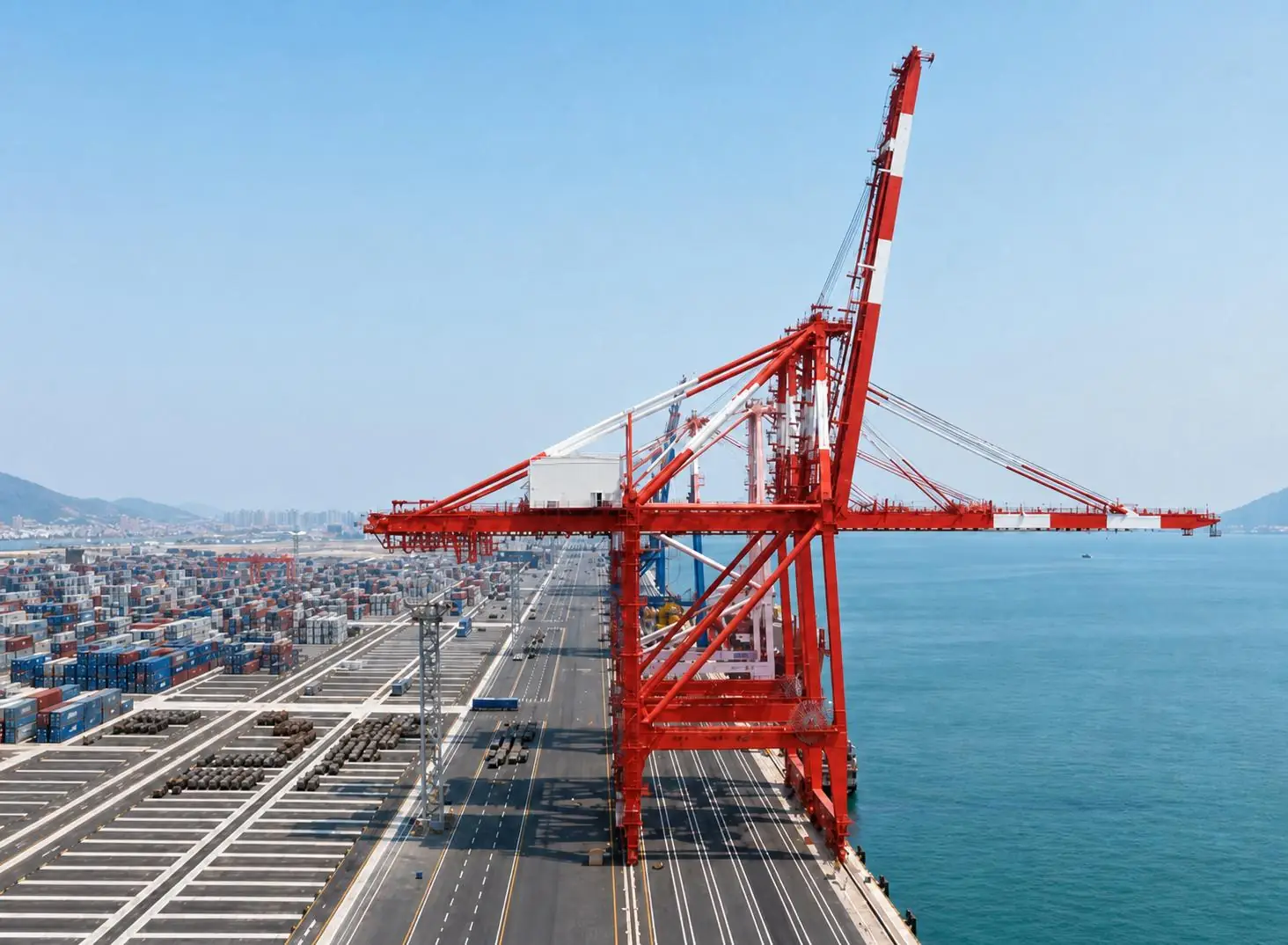
  • Buying an RMG Crane: From Yard Brief to Technical Proposal

    Buying an RMG Crane: From Yard Brief to Technical Proposal

    Technical guide

    Buying an RMG Crane: From Yard Brief to Technical Proposal

    A coordinated enquiry gives the crane supplier a stable basis for design. Set out the container service, runway geometry, operating cycle and supply boundary before comparing technical and commercial proposals.

    Henan Mine CraneTechnical guide · Updated 2026Crane selection, project scope and operating requirements
    Henan Mine Crane Rail-Mounted Gantry (RMG)
    Henan Mine Crane Rail-Mounted Gantry (RMG)
    Project planning notes

    Key points for this crane project.

    1. What is RMG Crane?
    2. The core procurement process and key points
    3. Why choose Henan Mine Crane?
    Read the technical guide

    What is RMG Crane?

    RMG Crane Basic Definition

    RMG is known as Rail Mounted Gantry Crane, which is also known as Rail Mounted Container Gantry Crane. The equipment relies on the ground to travel on a fixed track, fixed running track, strong operational stability, is the core lifting equipment for ports and logistics yards.

    Unlike conventional lifting equipment, RMG cranes focus on heavy-duty, high-frequency, fixed-area operations, specifically adapted to the container transfer and heavy industrial materials lifting scenarios, but also the mainstream selection of multimodal transportation hub equipment.

    Mainstream Application Scenarios

    This rail-mounted container gantry crane has a wide range of applications, covering most logistics and industrial projects at home and abroad. Common landing scenarios include container yards, railroad container yards, inland waterless ports and coastal port terminals.

    At the same time, it is also suitable for all kinds of intermodal hubs, steel yards, prefabricated component factories and large-scale industrial warehousing sites, which cannot only complete the standardized container stacking and transfer, but also meet the lifting needs of heavy bulk cargo and industrial bulky materials.

    RMG and RTG Crane Core Differences

    Many procurement customers easily confused RMG and RTG equipment, the two application scenarios and adaptable working conditions are obvious differences, directly affecting the selection and procurement decisions. The following is a clear comparison of the core differences:

    ItemRMG Crane (Rail Mounted Gantry Crane)RTG Crane (Rubber Tyred Gantry Crane)
    Running ModeTravels on fixed ground railsMoves on rubber tires without fixed track
    Operation FeaturesHigh stability, precise positioning, low failure rateFlexible movement, adjustable working area
    Applicable ScenariosFixed container yards, railway terminals, high-frequency operation sitesDynamic yard layout, temporary handling tasks
    Lifting & StackingSuitable for high-layer container stacking and heavy-load handlingMainly for medium and low-layer container transfer

    The core procurement process and key points

    Procurement of RMG Cranes should first clarify their own operating conditions, distinguish between containers, rail yards and industrial material lifting scenarios, in order to determine the appropriate equipment parameters and structural configuration.

    The core procurement parameters include lifting capacity, span, lifting height, cantilever size and working level, all of which need to be combined with the existing yard conditions and future expansion needs planning, and at the same time matching the site track, safety spacing and other basic environment.

    On this basis, the power supply mode, control mode and outdoor safety protection configuration are selected according to the need to ensure that the equipment is adapted to the site conditions and stable operation.

    Screening manufacturers need to focus on verification of engineering design, production quality inspection and overseas delivery service capabilities, comparison of quotations cannot only look at the unit price, you need to check the full set of equipment configuration, scope of supply and after-sales protection, while avoiding low price reduction, ignoring site parameters, not planning ahead of the installation and other common procurement problems.

    The premise of purchasing yard RMG Crane is to accurately define their operational needs, to avoid parameter redundancy or inadequate configuration. Different operational scenarios, equipment customization logic is completely different.

    Why choose Henan Mine Crane?

    Henan Mine Crane, as a professional supplier of customized RMG cranes, can be based on the site layout of different projects around the world, operating conditions, power supply standards, one-on-one to complete the non-standard customized design, suitable for all types of container yards and industrial yard projects.

    We can provide a full set of technical support, including technical solutions, equipment drawings, wheel pressure data, power supply program, factory quality inspection reports and export documents, the whole process of overseas project acceptance requirements.

    Relying on our mature export project experience, we can provide one-stop services such as sea freight docking, sectional packing, on-site installation guidance, equipment commissioning and personnel training, etc., which are suitable for overseas projects all over the world. Under the same configuration, our equipment is more cost-effective, balancing the needs of quality and budget.

    Frequently Asked Questions

    What information do I need to provide for purchasing RMG Cranes?

    You need to provide the tonnage, span, lifting height, cantilever length, traveling distance, working level, power supply parameters, control mode, site drawings and types of materials to be worked on.

    Yes, all of them do. All parameters, configurations, protection technology and automation level can be customized according to site conditions.

    What are the common trade terms for exporting RMG Cranes?

    Commonly used EXW, FOB, CIF, DAP, etc., which can be flexibly selected according to customers' customs clearance and logistics needs.

    Discuss the crane arrangement for your project.

    A coordinated enquiry gives the crane supplier a stable basis for design. Set out the container service, runway geometry, operating cycle and supply boundary before comparing technical and commercial proposals. Share the load, available drawings, working cycle and site conditions with Henan Mine Crane so the required configuration and supply boundary can be discussed.

    Related crane configurations

    Rail-Mounted Gantry (RMG)

    View product parameters
    Lifting capacity: 35 t, 40.5 t, 50 tSpan: 18 – 35 mLifting height: 12.3 – 21 m

    Use an RMG for container transfer along a fixed rail layout. Select the lifting arrangement, yard coverage and positioning controls from the container flow and stacking requirements.

    Rail-Mounted Container Gantry Crane

    View product parameters
    Lifting capacity: 35 t, 40.5 t, 50 tSpan: 18 – 35 mLifting height: 12.3 – 21 m

    Handle containers along a fixed yard runway with a rail-mounted container gantry crane. Coordinate the spreader, stacking geometry, rail layout and transfer positions around the terminal operation.

    Updated 2026 · Henan Mine Crane

  • STS Crane Supplier Evaluation: Vessel Fit and Project Delivery Scope

    STS Crane Supplier Evaluation: Vessel Fit and Project Delivery Scope

    Technical guide

    STS Crane Supplier Evaluation: Vessel Fit and Project Delivery Scope

    Supplier assessment should connect the proposed crane with the terminal's vessel service and site work. Request the design documents, interfaces and commissioning responsibilities needed to evaluate a complete STS offer.

    Henan Mine CraneTechnical guide · Updated 2026Crane selection, project scope and operating requirements
    ship to shore container crane manufacturer
    ship to shore container crane manufacturer
    Project planning notes

    Key points for this crane project.

    1. Mainstream application projects of shore-side
    2. Core Procurement Requirements for Port STS Crane
    3. Mainstream STS Crane Model Adaptation Programs
    Read the technical guide

    Mainstream application projects of shore-side container cranes (STS)

    STS shore bridge is designed for port terminal seaside operation of heavy-duty loading and unloading equipment, almost all the core projects related to containerized shipping, are inseparable from the support of this port ship-to-shore cranes, the equipment configuration standards for different projects are also different.

    Standardized container terminals

    Conventional integrated container terminals are the most important application scenarios for STS Cranes. The equipment is deployed in the front berth of the terminal, responsible for all types of container ships docking loading and unloading, container transfer operations.

    These terminals have high operating frequency and large turnover, and have strict requirements for continuous operation capability, loading and unloading stability and fault tolerance of the equipment, which is also the core service scenario of standardized container quay cranes.

    New port construction projects

    New port areas, new berths of the overall supporting projects, the need for a one-time allocation of the main loading and unloading equipment. This type of project requires a high level of overall engineering capability from the supplier.

    Suppliers need to combine the civil construction standards of the new port area, berth layout, power support, planning ship type, customized STS bridge equipment, matching the port's long-term operational planning.

    Terminal Expansion and Upgrade Project

    Many mature ports will carry out berth expansion and equipment upgrading according to the trend of cargo volume increase and popularization of large ships. The operating parameters, outreach distance and lifting height of the original old equipment are not compatible with the new type of large ships.

    The expansion project needs to add or replace the high-performance STS Crane to improve the overall throughput of the terminal and adapt to the docking operation of larger tonnage and wider ocean-going vessels.

    Replacement project of old shore bridge equipment

    Early put into use of the shoreline Crane, after years of high load operation, will appear parts aging, efficiency decline, frequent failures, anti-corrosion failure and other problems. The cost of continuous operation and maintenance far exceeds the cost of equipment renewal.

    Old equipment elimination and replacement is currently the mainstream demand for the transformation of the world's old ports, this type of project is more important to see the compatibility of re-equipment and the original terminal track, berth foundation, power supply system.

    Specialized Container and Intermodal Port Projects

    Some specialized ports, intermodal hubs, in addition to ordinary standard containers, but also need to take into account special boxes, large containers, cold chain container loading and unloading operations.

    Such scenarios require customized STS Cranes, which can be adapted to automated docking, intelligent yard linkage, and special lifting modes to meet diversified port operational needs.

    Core Procurement Requirements for Port STS Crane Projects

    Unlike ordinary industrial cranes, STS shore bridges for seaside operations have long been in the harsh working conditions of high load, high corrosion and high wind, and the procurement requirements are no longer limited to the basic lifting function, but are centered around the port operational efficiency, equipment life, and operational safety.

    Stable loading and unloading capacity

    Port ship docking time is limited, the ship turnover efficiency directly determines the terminal's operating income. STS Crane needs to maintain a stable cycle of operation rhythm, to reduce the start-stop jamming, operation interruption and other problems.

    The continuous operation stability of the equipment can effectively shorten the stay time of the ship in the harbor and improve the overall throughput efficiency of the terminal.

    Adaptability to all ship types

    Vessel width, number of compartments and container layout specifications of different routes are very different. The purchased equipment must match the width, number of container rows and draught depth of the target ship type.

    If the outreach distance and lifting height of the quay bridge are insufficient, there will be the problem of not being able to cover the containers on the outside of the ship, and the problem of not being able to lift the high level containers, which will directly limit the navigability of the terminal.

    Heavy load continuous operation performance

    Container terminals belong to 24-hour non-stop operation scenarios, STS cranes need long-term high-frequency cyclic operation, starting and stopping, traveling, lifting and lowering operations frequently.

    The structural strength of the equipment, the durability of the core components, the fatigue resistance of the whole machine, need to meet the heavy-duty continuous working conditions, to avoid equipment failure caused by high-frequency operation.

    High strength marine corrosion resistance

    Seaside air contains salt spray, high humidity, wind, ordinary industrial equipment is very prone to steel corrosion, parts oxidation, paint peeling and other problems.

    Professional port STS Crane will be equipped with a full set of marine grade anti-corrosion system, through special coating, sealing protection, material upgrading, to resist salt spray corrosion, extend the service life of the equipment seaside.

    Precise and Stable Maneuvering Performance

    Container lifting requires high alignment accuracy, equipment shaking, deflection, braking instability, easy to box collision, alignment deviation, resulting in cargo damage or operational safety hazards.

    Mature STS equipment will be equipped with anti-shaking system, precise braking system, and smooth handling program, which is suitable for high-density and high-precision container loading and unloading operations.

    Long-term spare parts and after-sales support

    An hour's downtime of port equipment can cause high operational losses. The core pain point of many overseas projects is the slow after-sales response from suppliers and the long supply cycle of spare parts.

    Reliable suppliers need to have global after-sales capabilities, standing spare parts inventory and fast on-site commissioning and maintenance services to ensure long-term stable operation of equipment.

    Reserve space for automation upgrade

    At present, ports around the world are upgrading in the direction of intelligence and unmanned operation. Many terminals do not need fully automated operation at present, but have transformation plans in the future.

    High-quality STS Cranes can be reserved for automation interfaces, remote control modules, intelligent linkage systems, without the need to replace the entire machine, you can complete the later intelligent upgrade.

    ship to shore container crane manufacturer
    ship to shore container crane manufacturer

    Mainstream STS Crane Model Adaptation Programs

    Different port berth conditions, scale of operation, planning and positioning of different, suitable for different models of shore-side Crane, according to the need to choose the type of balance between equipment investment and operational needs.

    Standard Shore-side Container Crane

    Adapted to conventional small and medium-sized container terminals, feeder ship operations, the parameters of the mainstream standard container handling needs. The equipment structure is mature, low failure rate, suitable for normalization and standardization of port operation process.

    Small and medium-sized ports, general cargo terminals, the first choice of ship-to-shore Crane models, cost-effective and practical.

    Large Ship Heavy Duty STS Crane

    Designed for ocean-going ultra-large container ships and high throughput hub ports, with increased outreach, lifting height and rated load.

    It can fully cover the multi-row container lifting needs of large ships, and is suitable for high-frequency, high-throughput hub port operations, effectively enhancing the terminal's navigability.

    Low-profile STS cranes for height-restricted sites

    Some ports are close to airports, urban areas or restricted construction areas with strict equipment height limitations, and conventional high type shore bridges cannot be installed on the ground.

    Low-profile STS cranes optimize the structural layout of the whole machine and reduce the total height of the equipment, which is suitable for all kinds of restricted port projects under the premise of meeting the lifting parameters.

    STS Cranes can be automated and upgraded.

    Specialized model for smart ports and unmanned terminals, with its own electronic control upgrade interface, intelligent sensing module and data acquisition system.

    It can realize remote control, semi-automatic operation and full automation docking at a later stage, which is suitable for the long-term intelligent upgrading of port development needs.

    Customized STS Crane

    For special berth layout, extreme wind conditions, non-standard power supply system, special container operation projects, to provide one-to-one non-standard customization.

    The supplier can optimize the equipment structure, parameters and configuration according to the actual port environment, operating logic, civil construction conditions, and completely fit the project's exclusive needs.

    STS Crane core technical parameters that must be verified by procurement

    STS quay bridge belongs to large-scale non-standard port equipment, the parameters directly determine whether the equipment is suitable for dock conditions, the procurement stage must be verified one by one to avoid parameter inconsistencies leading to equipment cannot be put into operation.

    Rated lifting load

    The rated lifting load is determined according to the mainstream container specifications of the terminal, the weight of the spreader, the need for double box lifting, and the demand for special box lifting. Adequate load capacity should be reserved to match all kinds of heavy-duty operation scenarios and eliminate the hidden danger of overload operation.

    Equipment Outreach

    This is the core parameter of the adaptable ship, which needs to completely cover the maximum number of container rows of the target ship. Insufficient outreach will result in the ship's outer containers not being able to be lifted, directly limiting the navigability of the terminal ship type.

    Equipment rear reach

    Rear reach determines the operating range of the land side of the quay bridge, which affects the arrangement of the quay truck channel, temporary stacking of containers, and the line of land-side transshipment. Reasonable rear reach design can make the shore operation flow smoother and avoid the conflict of moving line.

    Lifting height on rail

    It matches the height of fully loaded high level containers of the ship and the stacking height of the terminal to ensure that the high level containers can be lifted and transferred smoothly without the problem of height limitation.

    Under-rail lifting depth

    For the lifting operation of ship's internal cargo hold and low-level container, the sufficient under-rail depth can meet the demand of low-level lifting under different draught states of ship's empty load and full load.

    Track gauge

    It must strictly match the preset track spacing of the quay and the civil construction standard, the deviation of track gauge will lead to the inability of equipment installation, traveling jam, abnormal structural stress, which is the basic parameter of equipment landing.

    Running and lifting speed

    The speed of lifting, traveling of small car and traveling of big car directly determines the length of single operation cycle of container. The speed parameter needs to be matched with the throughput demand of the terminal to balance the operational efficiency and operational stability.

    Power supply system parameters

    Equipment voltage, frequency, power supply needs to be completely matched with the port's local power system, to avoid later circuit modification, equipment adaptation debugging additional costs.

    Wind resistance and environmental adaptation parameters

    Typhoons and gales are frequent in coastal ports, so the equipment needs to meet the local wind load design standards. At the same time, combined with the regional temperature and humidity, salt spray concentration, matching the corresponding anti-corrosion grade and environmental protection configuration.

    Control and automation level

    Select manual control, remote control or semi-automatic mode according to the operation requirements of the terminal, and at the same time confirm whether the equipment is reserved for automation upgrading interface to adapt to the future transformation of the smart port.

    Full set of safety protection system

    Must be equipped with anti-collision system, anti-shaking device, emergency braking, storm locking, machine anchoring device, real-time monitoring system, to ensure the safety of equipment and operation under high wind, high-frequency operation and unexpected working conditions.

    ship to shore container crane manufacturer
    ship to shore container crane manufacturer

    STS Crane Quality Supplier Selection Criteria

    There are a large number of suppliers of harbor cranes around the world, with a mixture of traders and physical manufacturers, and a huge gap in project experience and engineering capabilities. Screening reliable port Crane suppliers, you can start from these core dimensions.

    Verify the supplier’s physical manufacturing capacity

    Many docking port project companies are only trade intermediaries, no independent production, welding, assembly, commissioning capabilities, equipment quality and schedule cannot be controlled.

    Purchasers need to verify the production workshop, processing equipment, steel structure welding production line, the whole assembly site, to confirm that the manufacturer has the independent manufacturing capacity of large shore bridge.

    Verification of similar port landing project cases

    Large port equipment cannot rely on the parameters of the paper, real container terminal project is the best proof of the manufacturer's technical capabilities.

    Priority should be given to manufacturers with experience in domestic and international container terminals, large-scale port expansion and new port STS projects, and familiar with all kinds of sea conditions and terminal standards.

    Evaluate the ability of exclusive engineering customization service

    High-quality suppliers will not apply the common model template, but will study the terminal berth drawings, ship parameters, track standards and environmental conditions in advance.

    Optimize the equipment parameters, structural design and protection configurations with the actual situation of the project, and provide exclusive STS bridge solutions to meet the individual needs of the project.

    Verification of a full set of formal technical data

    Regular manufacturers can provide a full set of information such as equipment assembly drawings, load calculation data, electrical schematic diagrams, list of core accessories, design standards, performance test reports, etc., to meet the needs of port acceptance, filing, operation and maintenance.

    Confirmation of core parts brand and configuration

    STS Crane motors, reducers, brakes, PLC control systems, spreaders, cables, bearings, anti-sway systems and other core accessories, directly determine the service life and stability of the equipment.

    Procurement needs to be clear accessories brand, specifications, warranty standards, to eliminate low parts instead of high configuration, to protect the long-term operation of the equipment quality.

    Verification of factory quality inspection and testing system

    Before leaving the factory, the large shoreline bridge must complete a series of tests such as weld flaw detection, structural strength verification, no-load test run, full-load load test, full-function debugging and so on.

    Manufacturers are required to provide complete testing records and test reports to avoid structural and functional hazards from the source.

    Define the scope of delivery, installation and commissioning

    Confirm in advance the scope of delivery, on-site installation services, machine commissioning, personnel training, completion and acceptance of the service content, to avoid the later emergence of service boundary ambiguity, additional charges for additional items.

    Confirm the warranty and spare parts long-term support

    Clarify the warranty period, after-sales response time, overseas spare parts delivery cycle, and on-site maintenance service standards. The long-term after-sales service of port equipment affects the operation cost of the project much more than the initial quotation.

    Comprehensive assessment of the whole life cycle value

    Don't compare the initial offer alone. Low-priced solutions often have problems such as reduced configuration, insufficient anti-corrosion grade, miscellaneous parts, and lack of after-sales service.

    Combined with the quality of equipment, service life, operation and maintenance costs, after-sales protection comprehensive assessment, choose a more cost-effective solution.

    Procurement and selection of high-frequency misunderstanding

    STS shorebridge project investment is large, the cycle is long, any one of the selection errors, will bring long-term impact on port operations, these common problems need to be avoided in advance.

    The equipment outreach is small and cannot be adapted to large ships, which leads to the limited navigability of the terminal and the inability to undertake ocean shipping routes in the later stage.

    Neglecting the track gauge of the terminal, civil engineering foundation parameters, resulting in equipment and terminal infrastructure does not match, cannot be installed on the ground.

    Ignoring the problem of marine salt spray corrosion, choosing common industrial anti-corrosion standards, equipment short-term use of large areas of rust and aging.

    Do not verify the manufacturer's similar STS project cases, choose suppliers with no experience in port equipment, poor equipment suitability, frequent failures.

    The scope of supply is vaguely defined, and there is a lack of spare parts, commissioning services and technical information at a later stage, resulting in the equipment not being able to be properly accepted and put into operation.

    Failure to clarify the responsibility of commissioning, acceptance, and personnel training, the operation and maintenance team could not operate the equipment skillfully after the project landed.

    Neglecting long-term spare parts supply and overseas after-sales capability, the equipment could not be repaired in time after failure, resulting in long-term downtime of the terminal.

    Incomplete terminal drawings, ship parameters, and working condition data provided during the inquiry stage, resulting in manufacturer's program adaptation deviation.

    Frequently Asked Questions

    What are the core parameters for choosing STS Crane suppliers?

    The core is the overall adaptability of the equipment, of which the outer reach, gauge, marine corrosion protection grade, heavy duty continuous operation performance is the most important. At the same time, the supplier's port project experience and overseas after-sales capability are also irreplaceable core considerations.

    How to determine the STS Crane reach required by the terminal?

    According to the maximum width of the main navigable ships at the terminal, the maximum number of deck container rows, the draft depth of the ship, a reasonable margin is reserved to ensure the adaptability of large ships in the future.

    Is it necessary to choose the upgradable model if there is no automation demand for the time being?

    It is recommended to prioritize the choice of automation reserved models. The service life of port equipment can be up to several decades, and the reserved upgrade interface does not need to replace the whole machine at a later stage, so it can be adapted to the future trend of upgrading intelligent ports at a low cost.

    What technical information do I need to request from the manufacturer before signing the contract?

    Equipment assembly drawings, gauge adaptation parameters, load calculation report, electrical schematic diagrams, anti-corrosion process description, list of core parts, factory inspection reports, operation and maintenance manuals and other complete sets of information.

    How important is marine anti-corrosion for STS Crane?

    Seaside salt spray will continue to corrode the steel structure and electrical fittings, low standard anticorrosion equipment, 3-5 years will be aging failure, high standard marine anticorrosion can significantly extend the service life of the equipment, reduce operation and maintenance costs.

    In addition to price, procurement also need to focus on what to verify?

    Manufacturer's project experience, core parts configuration, anti-corrosion grade, factory testing standards, installation and commissioning services, overseas after-sales response speed, spare parts supply capacity, equipment upgrade space.

    Can the same supplier provide a full range of STS, RTG, RMG port equipment?

    Professional large-scale port equipment manufacturers can provide a full set of port lifting equipment solutions, one-stop supporting shore bridge, rail cranes, gantry cranes and other equipment, unified equipment standards and after-sales system to reduce overall project costs.

    Summarize

    Shore container cranes are the core assets of port terminals, the choice of supplier directly determines the quality of equipment operation, terminal operating efficiency and long-term operation and maintenance costs. Procurement selection is not a simple price comparison, but a systematic selection of comprehensive working conditions, technical strength, engineering landing, long-term service.

    Suitable ship type and berth parameters, solid marine anticorrosion design, stable heavy-duty operational performance, and perfect factory inspection system are the basis of high-quality STS equipment. The reliable supplier cannot only provide standardized and customized Crane equipment, but also provide technical guidance, on-ground commissioning, operation and maintenance training, and lifelong spare parts service.

    Henan Mine Crane manufactured for many years in the global port large-scale lifting equipment research and development, has a wealth of experience in landing STS shore side cranes, can be customized for different sea conditions, wharf specifications, the type of ship, the exclusive shore side container crane solutions, services for all types of new construction, expansion, renovation of port projects around the world.

    If you are not sure about the STS model and parameters of the project, you can provide berth drawings, ship parameters, operational requirements, our port engineering team will provide you with accurate selection and customization program.

    Discuss the crane arrangement for your project.

    Supplier assessment should connect the proposed crane with the terminal's vessel service and site work. Request the design documents, interfaces and commissioning responsibilities needed to evaluate a complete STS offer. Share the load, available drawings, working cycle and site conditions with Henan Mine Crane so the required configuration and supply boundary can be discussed.

    Related crane configurations

    Ship-To-Shore Crane (STS)

    View product parameters
    Lifting capacity: 40-65 80-120 tBoom outreach: 40-72 mWorking class: A8

    Transfer containers between ship and quay with an STS crane selected for the berth and vessel envelope. Define the lifting-appliance arrangement, outreach, rail position and handling cycle.

    Updated 2026 · Henan Mine Crane

  • RMG Crane Sourcing from China: Technical Evidence and Handover Scope

    RMG Crane Sourcing from China: Technical Evidence and Handover Scope

    Technical guide

    RMG Crane Sourcing from China: Technical Evidence and Handover Scope

    Export sourcing requires clear information about both the crane and the destination site. Compare configuration-specific drawings, quality documentation, installation support and spare-parts responsibilities before finalising the supply agreement.

    Henan Mine CraneTechnical guide · Updated 2026Crane selection, project scope and operating requirements
    Henan Mine Crane Rail-Mounted Gantry (RMG)
    Henan Mine Crane Rail-Mounted Gantry (RMG)
    Project planning notes

    Key points for this crane project.

    1. What Projects Use This Type of Crane?
    2. Common Requirements in RMG Crane Projects
    3. Recommended RMG Crane Type
    Read the technical guide

    What Projects Use This Type of Crane?

    RMG rail mounted gantry cranes rely on fixed rail operation, accurate positioning, stable operation, and are suitable for most standardized container operation scenarios. Different project conditions correspond to different needs, the following table clearly summarizes the mainstream application scenarios, core operational content and adaptability advantages:

    Application ScenarioCore OperationsKey Advantages
    Container TerminalsContainer stacking, yard transfer, standardized block handlingFixed rail operation ensures stable performance, matching large-scale and regular terminal container management
    Rail-linked Logistics TerminalsTrain loading & unloading, intermodal container transferHigh positioning accuracy fits rail-container docking, suitable for frequent intermodal handling tasks
    Inland Container DepotsCentralized container storage, daily yard inbound and outbound operationStandardizes yard layout, realizes orderly container storage and daily standardized operation
    Dry Ports & Logistics HubsLarge-volume container circulation, rail-connected yard operationStrong structural adaptability to support continuous high-frequency container flow in logistics hubs
    Automated & Semi-automated YardsRemote control handling, automatic container positioning and stackingGood automation compatibility, reserved upgrade space for future intelligent yard transformation

    Common Requirements in RMG Crane Projects

    Global yard projects for container yard crane requirements are highly uniform, the core around the site suitability, long-term operation and cost control, there is no complex redundancy requirements, are adapted to the actual operation of the immediate needs of the conditions.

    All yards want to enhance the density of container stacking in a limited space, so that the layout of the site is more organized, reducing the ineffective operation area. This is the core reason why RMG cranes are gradually replacing traditional mobile lifting equipment.

    RMG cranes belong to high-frequency cyclic operation equipment, starting and stopping, lifting and transferring many times a day. The operational stability of the equipment directly determines whether the yard can continue uninterrupted operation and reduce downtime losses.

    The equipment must be fully adapted to the site track layout, container spacing and truck access planning. Forced application of standard models will easily lead to blind spots, track mismatches and other problems, which will increase the cost of later modification. Most overseas projects also reserve space for automation upgrades to facilitate the later docking of remote control systems.

    In addition, customers are generally concerned about the energy consumption of the equipment, the universality of accessories and the speed of after-sales response. Stable parts supply and convenient operation and maintenance services can effectively control the operation cost of the whole life cycle of the equipment. The basic performance of the equipment, such as anti-sway and accurate positioning, is also the core condition to ensure the safety of operation.

    Recommended RMG Crane Type

    Crane TypeApplicable ProjectsCore Features
    Standard Container Yard RMG CraneRegular inland yards and small-medium container terminals with fixed operation pathsStandard configuration, stable performance and high cost performance for daily conventional handling work
    Rail Terminal RMG CraneRail intermodal yards focusing on train-container transferOptimized for rail docking with higher positioning accuracy to adapt to intermodal operation
    Automation-ready RMG CraneNew yards and renovated projects with future intelligent upgrade plansReserved intelligent interfaces, supporting remote control and subsequent automatic operation upgrade
    Heavy-duty RMG CraneLarge terminals and high-throughput logistics hubsReinforced structure and upgraded components to adapt to long-term heavy-load operation
    Customized RMG CraneProjects with non-standard yard layout and special operation demandsCustomizable span, cantilever, stacking height and control system for personalized site conditions

    Key Technical Parameters Buyers Should Confirm

    Parameter matching is the basis of stable operation of RMG cranes, all core parameters need to be customized with the site conditions, and cannot be directly applied to the general standard. The following table summarizes the key parameters that must be verified and the actual project impact:

    Key ParameterParameter DescriptionProject Impact
    Lifting CapacityRated load matching container weight and spreader self-weightGuarantees safe load operation and avoids performance waste
    SpanMain beam width matching container rows and truck lanesDetermines equipment coverage and eliminates operation blind zones
    Stacking HeightMax container stacking height complying with site safety standardsDirectly affects yard storage density and land utilization
    Cantilever LengthSide extension length for truck and rail auxiliary operationEnsures unobstructed side handling and complete operation coverage
    Travel Length & SpeedEffective rail coverage and matching hoist/trolley running speedAffects single-cycle operation efficiency and overall yard throughput
    Power Supply & Control ModeAdaptable local power standard, optional manual/remote/auto controlEnsures stable power operation and reserves long-term upgrade space
    Anti-sway & PositioningStandard anti-sway system and high-precision positioning functionReduces cargo collision risks and improves operation safety
    Environmental AdaptabilityWind resistance, corrosion resistance and dustproof designAdapts to outdoor harsh working conditions in different regions

    How to Choose the Right RMG Crane Supplier

    Screening China container terminal crane suppliers, the core is to distinguish between physical manufacturers and trade intermediaries, which is the premise of guaranteeing the quality of equipment and after-sales service. Genuine entity manufacturers have complete production workshop, processing equipment and machine assembly capacity, can independently control the production process and factory standards.

    Priority is given to the manufacturers' experience in similar overseas projects. Manufacturers that have landed cases in terminals, railroad yards and inland logistics ports know more about the differences in overseas working conditions and international acceptance standards. Henan Mine Crane has been deeply cultivating the overseas market for many years, and its equipment has been exported to hundreds of countries around the world, and it has landed many “Belt and Road” projects, which are suitable for all kinds of overseas complex working conditions.

    Professional engineering supporting capacity is essential. Reliable manufacturers will check the customer's yard drawings, track layout in advance, combined with the operational process to optimize the equipment program, rather than directly sell standard models. At the same time, manufacturers are required to provide a complete set of technical drawings, wheel pressure data, electrical schematics and other information to meet the acceptance requirements of overseas projects.

    Core parts brand, factory quality inspection process also need to focus on verification. The quality of core parts such as motor, reducer, PLC control system, spreader, etc. determines the service life of the equipment. Regular manufacturers will complete the weld test, no-load load test, the whole machine function debugging, and keep complete testing records.

    Before cooperation, it is necessary to clarify the scope of supply, installation guidance, commissioning training and other services, to confirm the supply of accessories and after-sales response mechanism. Finally, we should comprehensively evaluate the whole life cycle value of the equipment. The long-term operation and maintenance cost of the low-priced equipment is often much higher than the purchase price difference.

    Why Buyers Source RMG Cranes from China

    China has the most complete lifting equipment industry chain in the world, with a complete range of products, covering a full range of port yard lifting equipment needs, is the preferred region for global customers to purchase rail mounted gantry crane manufacturers.

    Relying on the advantages of large-scale production and complete supply chain, domestic RMG Cranes have excellent cost performance, with the same configuration and quality inspection standards, the price advantage is obvious. At the same time, domestic manufacturers have flexible customization capabilities, and can adjust the parameters of the equipment according to the project's non-standard requirements, to adapt to various types of special yard conditions.

    Head manufacturers have mature export experience, familiar with overseas packaging, shipping, customs declaration and other full set of processes, can avoid cross-border delivery risks. Most of the strong manufacturers can provide RMG, RTG, shore bridge and other categories of port equipment, support one-stop procurement, reduce the cost of multi-supplier docking.

    Common Mistakes Buyers Make

    Many overseas purchasing mistakes are caused by the lack of detail control. Simply selecting equipment at a low price is likely to encounter problems such as parts reduction, process simplification and lack of service. Blindly applying the standard model without matching the layout of the yard on site will result in the equipment not being able to be put into operation normally.

    Neglecting the demand for later automation upgrading and ignoring the track and civil foundation standards will cause the equipment to quickly lag behind the pace of industry upgrading and lay hidden safety risks. Failure to verify the manufacturer's overseas project cases before purchasing, and failure to clarify the contents included in the quotation are prone to generate a large number of hidden incremental costs.

    At the same time, unclear division of authority and responsibility for installation and commissioning, and incomplete site information provided at the time of quotation can lead to insufficient program suitability, project schedule delays, and affect the overall progress of yard operation.

    Frequently Asked Questions

    Chinese manufacturers have a combination of mature manufacturing process, flexible customization capabilities and cost-effective, and have a wealth of overseas project landing and export experience, can provide a full range of services from design, manufacturing to cross-border after-sales service.

    The core difference between RMG Crane and RTG Crane?

    RMG is a fixed rail operation, stronger stability and positioning accuracy, suitable for standardized, high-frequency long-term operation of the yard; RTG is a tire-type, more flexible, suitable for the need to frequently adjust the operating area of the scene.

    What project information do I need to prepare before requesting a quotation?

    Prepare yard layout drawings, track parameters, required span, stack height, cantilever length, local power supply standards and working conditions, which can help manufacturers to quickly issue accurate adaptation programs and quotations.

    We can verify the factory view, production qualification, complete machine test report and overseas export cases of complete machines, and the real manufacturers have independent production, assembly and testing capabilities, without middlemen.

    What technical documents should I ask for before signing the contract?

    You need to ask for equipment assembly drawings, wheel pressure data, electrical schematic diagrams, parts lists, factory inspection reports and warranty statements to ensure that the project acceptance and later operation and maintenance have a basis.

    Can the same manufacturer provide all kinds of harbor equipment?

    Regular head manufacturers can supply RMG, RTG, STS shore bridge and other port lifting equipment at the same time, realizing one-stop purchase, unified after-sales service, simplifying project operation and maintenance management.

    In addition to price, what are the key elements to be verified?

    We focus on checking the brand of core parts, factory quality inspection standards, overseas project experience, engineering adaptability, installation and commissioning services and long-term after-sales protection system.

    Discuss the crane arrangement for your project.

    Export sourcing requires clear information about both the crane and the destination site. Compare configuration-specific drawings, quality documentation, installation support and spare-parts responsibilities before finalising the supply agreement. Share the load, available drawings, working cycle and site conditions with Henan Mine Crane so the required configuration and supply boundary can be discussed.

    Related crane configurations

    Rail-Mounted Gantry (RMG)

    View product parameters
    Lifting capacity: 35 t, 40.5 t, 50 tSpan: 18 – 35 mLifting height: 12.3 – 21 m

    Use an RMG for container transfer along a fixed rail layout. Select the lifting arrangement, yard coverage and positioning controls from the container flow and stacking requirements.

    Rail-Mounted Container Gantry Crane

    View product parameters
    Lifting capacity: 35 t, 40.5 t, 50 tSpan: 18 – 35 mLifting height: 12.3 – 21 m

    Handle containers along a fixed yard runway with a rail-mounted container gantry crane. Coordinate the spreader, stacking geometry, rail layout and transfer positions around the terminal operation.

    Updated 2026 · Henan Mine Crane

  • Overhead Crane Skewing: Record the Symptoms Before Choosing a Remedy

    Overhead Crane Skewing: Record the Symptoms Before Choosing a Remedy

    Technical guide

    Overhead Crane Skewing: Record the Symptoms Before Choosing a Remedy

    Travel deviation can involve rails, wheels, drives and structural alignment. Record when and where the symptoms occur, then arrange an assessment of the connected system rather than selecting a remedy from the symptom alone.

    Henan Mine CraneTechnical guide · Updated 2026Crane selection, project scope and operating requirements
    overhead crane skewing
    overhead crane skewing
    Project planning notes

    Key points for this crane project.

    1. What Is Overhead Crane Skewing and Why Does It
    2. Common Signs of an Overhead Crane Skewing Problem
    3. What Causes Overhead Crane Skewing?
    Read the technical guide

    What Is Overhead Crane Skewing and Why Does It Matter?

    The deviation of the bridge crane is that when the equipment cart is running on the track, the bridge frame cannot maintain a standard straight line and runs in parallel, and there is an abnormal working condition of one-sided advance and overall oblique offset. Normally, the travel mechanisms on both sides of the equipment operate synchronously, and the wheels smoothly fit the track tread, but deviation will cause the bridge frame to produce lateral displacement, causing the wheel rims to continue to rub against the side of the track, which is the core cause of rail failure of lifting equipment. This problem is widespread in all kinds of single- and double-girder bridge cranes, and can occur in old and new equipment of different tonnages.

    Most companies ignore minor bridge crane deviation failures, as everyone knows that they will cause multiple irreversible equipment losses and production losses. Deviation will greatly increase the operating resistance of the equipment, causing continuous high-intensity friction and wear between the wheels and the track, and causing the risk of deformation, damage and even derailment of the components. At the same time, the load of the motors on both sides is unbalanced, frequent overload and tripping, and heat generation is damaged. Long-term deviation will also cause the main girder and end beam to bear twisting stress, causing structural deformation and cracking of welds, and sudden downtime caused by failures will directly disrupt the rhythm of production and increase the operation and maintenance of enterprises and production costs.

    Common Signs of an Overhead Crane Skewing Problem

    The deviation failure of the bridge crane is obviously gradual, and it will go through a complete process from slight offset to severe rail gnawing and structural damage. Mastering the typical signs of faults can achieve early detection and early correction, so as to avoid small faults from evolving into major hidden dangers. The following are the six core symptoms that are most easily identified on the scene.

    Abnormal noise during crane travel

    Henan Mine Crane manufactured bridge crane runs smoothly, evenly, and without noise. After the deviation problem occurs, the equipment will continue to emit harsh friction, scratching, and impact sounds when running back and forth, especially in the start-stop and uniform speed operation stages. This is a typical signal of forced friction and squeezing between the rim of the wheel and the side of the track. The louder the noise, the greater the deviation and the more serious the rail gnawing problem.

    Uneven wheel or rail wear

    Regular inspection of the wheels and tracks can intuitively determine the deviation failure. Under normal working conditions, the wheel tread and track contact surface wear evenly. Deviation equipment will have severe wear on the rim of one-sided wheels, partial wear on the tread, wear, depression, and blockage on one side of the track, and the degree of wear on both sides of the track is greatly different. If the wear of the wheels and tracks is found to be uneven, it can basically be determined that there is a deviation problem of the bridge crane.

    One side of the crane moving faster than the other

    This is the most intuitive running performance of deviation. The operator can clearly observe that the travel mechanisms on the left and right sides of the bridge crane are out of sync when it is running, and the travel speed on one side is fast and the other side lags behind, causing the bridge frame to gradually tilt and cannot travel in a straight line. This phenomenon is particularly prominent in the start-up and braking stages. Long-term operation will form a fixed offset trajectory, and the failure will continue to increase.

    Increased motor load or frequent overload trips

    The operating resistance caused by deviation will be directly converted into motor load, and the motor current will increase significantly when the equipment is running, and the heat generation of the fuselage will increase. The electronic control system will frequently trigger overload protection tripping, equipment start-stop failure, and midway shutdown. If the circuit and voltage faults are still tripped frequently after troubleshooting, the core cause is probably the load imbalance caused by the deviation of the bridge crane.

    Excessive wheel flange contact with the rail

    During normal operation, only the tread of the wheel is in contact with the track, and a standard gap is reserved between the rim and the side of the track. After the deviation failure occurs, the rim will continue to cling to the side of the track, with high-intensity contact and friction throughout the process, without normal clearance margin. Long-term operation will cause excessive wear and deformation of the rims, and even the rims will tighten the track, causing the equipment to fail to move normally.

    What Causes Overhead Crane Skewing?

    The deviation of the bridge crane is not caused by a single fault, but by the superposition of the four dimensions of track, wheel, drive system, and equipment structure. Precise positioning of the causes is the key to efficient troubleshooting.

    Runway rail misalignment

    Track installation deviation and late deformation are the primary external causes of bridge crane deviation, and they are also the most common source of failure on site. The settlement of the foundation of the plant, long-term equipment vibration, and irregular installation and construction will all lead to problems such as deviation of the track gauge, inconsistent elevation of the track on both sides, excessive parallelism of the track, misalignment of the track joints, and loosening and tilting of the pressure plate. When the track flatness, parallelism, and gauge do not meet industry standards, and the travel mechanism of the bridge crane cannot maintain synchronous linear operation, there will inevitably be offset deviation and rail gnawing problems, and the greater the track deviation, the more serious the deviation failure.

    Crane wheel wear or incorrect alignment

    The wheel is the core component of carrying and travel, and its state directly determines the operating accuracy. On the one hand, the long-term heavy-duty operation of the equipment will lead to uneven wear of the wheel tread, excessive deviation of the wheel diameter on both sides, and wear and deformation of the rim, resulting in inconsistent travel line speeds on both sides, causing deviation. On the other hand, if the equipment installation and maintenance are not in place, the wheels will be horizontally skewed, vertically skewed, the wheel span and diagonal size deviation, and the tapered wheel installation direction is wrong, which completely destroys the travel balance and induces continuous deviation failure.

    Drive system and motor synchronization issues

    The unsynchronization of the drive systems on both sides is the core cause of the electrical and mechanical transmission levels. After long-term operation, the parameters of the travel motors on both sides do not match, the frequency conversion control parameters are unbalanced, and the braking torque of the brakes is inconsistent, which will cause the motor's operating speed and power output to be out of sync. At the same time, transmission failures such as gear wear, uneven clearance, loose transmission chain, and offset coupling of the reducer will further amplify the difference in operating speed on both sides, and the deviation phenomenon of fast on one side and slow on the other will occur. The fault performance is most obvious in the start-stop phase.

    Structural deformation or uneven crane geometry

    The structural deformation of the main girder and end beam of the bridge crane is the core internal cause of stubborn deviation. Long-term equipment overload operations, frequent start-stop, hoisting shocks, and perennial stress accumulation will cause the main girder to bend and the end beam to be distorted, and the overall geometry of the equipment will be unbalanced and the diagonal deviation will exceed the standard. In addition, loose equipment flange bolts, cracking of welding parts, and uneven structural force will also cause the installation reference of the travel mechanism to be offset. Even if the wheels are replaced and the track is corrected, the deviation problem will still occur repeatedly.

    How to Diagnose and Correct Crane Skewing

    In view of the deviation failure of the bridge crane, it is necessary to follow the principles of first diagnosis, then correction, and precise implementation to prevent blind maintenance. Combined with the original technical standards, a set of full-process diagnosis and correction plans that can be landed have been compiled, which are suitable for the repair of deviation faults of various bridge cranes.

    Inspect wheel condition and alignment

    First, conduct a comprehensive inspection of the travel wheels, measure the diameter of the wheels on both sides, the degree of tread wear, and the thickness of the rim, and check whether the wheels have deformation, cracks, bearing damage and other problems. Focus on detecting the horizontal and vertical skew of the wheels, and check whether the wheel span and diagonal dimensions meet the factory standards. For wheels with excessive wear, excessive dimensional deviation, deformation and damage, they need to be replaced in pairs. In view of the wheel offset problem, the standard wheel alignment accuracy is restored by adjusting the bearing box gasket and correcting the installation position.

    Check runway rail alignment and gauge

    Use professional measuring tools to detect track gauge, parallelism, elevation difference, and joint flatness, and investigate problems such as loose track pressure plate, rail tilt, track deformation, and foundation settlement. Leveling and correcting tracks with elevation deviations and excessive parallelism, tightening loose track bolts and pressure plates, repairing misplaced and deformed track joints, polishing track wear and raised parts, ensuring that the track parameters on both sides are uniform, flat and parallel, and eliminating the deviation caused by track offset from the root cause.

    Test both sides of the crane travel system

    Under no-load and heavy-load conditions, the operating status of the travel system on both sides of the bridge crane was tested separately, and the operating speed, start-stop synchronization, and operating resistance difference between the two sides were recorded. For different types of deviation such as out-of-sync starting and braking, continuous offset throughout the process, and intermittent rail gnawing, the fault point is accurately determined. By debugging the frequency conversion control system and calibrating the operating parameters, balancing the travel speed on both sides, correcting the transmission error, and solving the problem of out-of-sync travel.

    Inspect motors, gearboxes, brakes, and drive controls

    Comprehensively disassemble and inspect the travel motors, reducers, brakes, and electronic control systems on both sides. Investigate motor aging, power imbalance, and coil heating faults, detect reducer gear wear, insufficient lubrication, and abnormal clearance, and calibrate the braking torque of the brakes on both sides to ensure that the brakes are synchronized and the tightness is consistent. At the same time, overhaul the control components such as frequency converters, contactors, and limit switches, update aging electrical components, unify the drive control parameters on both sides, and completely solve the problem of out-of-sync power and transmission.

    Correct structural or installation-related issues

    For equipment with side bending of the main girder, distortion of the end beam, structural deformation, and excessive diagonal deviation of the main girder, professional correction equipment is used for structural repair, the deformation parts of the main girder and the end beam are corrected, and the standard geometric dimensions of the equipment are restored. Fully tighten the connecting bolts of the whole machine, repair cracked welds, and repair the offset installation reference. For old equipment with serious deformation and structural fatigue, structural reinforcement, component replacement, and machine transformation solutions are provided to completely solve the stubborn structural deviation.

    How to Prevent Overhead Crane Skewing

    Bridge crane deviation failure can be prevented and controlled. Compared with the high maintenance costs after the failure, normalized preventive maintenance can greatly reduce the equipment failure rate, extend the service life of the equipment, and ensure the long-term stable operation of the equipment. Combined with the original maintenance experience, summarize the four core preventive measures.

    Perform regular wheel and rail inspections

    Establish a periodic inspection system, check the operating status of wheels and tracks every week, and carry out accurate inspections every month. Focus on checking wheel wear, offset, bearing damage, track flatness, firmness, and wear status, and promptly clean up track debris and polish raised wear parts. Regularly maintain the wheels and tracks, and find minor wear and offset problems and fine-tune them in time to avoid the accumulation of small deviations into serious deviation failures.

    Monitor drive system performance

    Pay close attention to equipment operating noise, motor temperature, start-stop status, and current load in daily operations, and regularly carry out comprehensive maintenance of motors, reducers, brakes, and electronic control systems. Replace aging lubricants and worn transmission components in time, calibrate braking parameters and electronic control system parameters, ensure that the power output and operating speed of the drive systems on both sides are completely synchronized, and eliminate hidden dangers of deviation from the transmission level.

    Maintain runway alignment

    Conduct a comprehensive accuracy inspection and calibration of the bridge crane track every quarter, focusing on monitoring the gauge, parallelism, and elevation difference, and promptly correct and repair, tighten and reinforce the track offset and loosening caused by the settlement of the plant foundation and the vibration of the equipment. Long-term maintenance of track installation accuracy in line with industry standards provides a basic guarantee for the linear and stable operation of Henan Mine Crane manufactured bridge cranes.

    Address abnormal wear before it develops into a major failure

    Adhere to the maintenance principle of early detection and early handling. Once problems such as abnormal noise, slight offset, local wear, and abnormal motor load are found in the operation of the equipment, they will be stopped immediately for investigation and precise repair of hidden dangers. Eliminate faulty operation and delay in maintenance, avoid minor wear and tear, small offsets and gradually evolve into major failures such as gnawing rails, structural deformation, and motor damage, and significantly reduce equipment operation and maintenance and downtime costs.

    Henan Mine Crane

    The vast majority of repeated bridge crane deviation failures are not caused by simple failure to debug, but by the attenuation of the accuracy of old equipment, the rough manufacturing process of the equipment, the non-standard structural parameters, and the poor adaptability of the drive system. Relying solely on maintenance and correction can only temporarily relieve symptoms, and cannot completely solve hidden dangers. Long-term sick operations will not only continue to increase equipment wear and tear, increase operation and maintenance costs, but also bring stable safety risks, affecting the normal and efficient production of the workshop.

    Henan Mine Crane Factory focuses on the research and development and manufacturing of high-quality brand-new bridge cranes, relying on precision production technology and mature working condition adaptation system, optimizing and upgrading from the core dimensions of equipment structure, travel accuracy, drive synchronization, etc., to eliminate common faults such as deviation, rail gnawing, and load imbalance from the source. We can customize and adapt brand-new lifting equipment according to the actual working conditions of the enterprise workshop site, load requirements, operating intensity, etc., and replace old and inefficient equipment with original standardized equipment to help enterprises completely get rid of the problem of deviation and achieve long-term safe, stable and efficient heavy-duty operations.

    Discuss the crane arrangement for your project.

    Travel deviation can involve rails, wheels, drives and structural alignment. Record when and where the symptoms occur, then arrange an assessment of the connected system rather than selecting a remedy from the symptom alone. Share the load, available drawings, working cycle and site conditions with Henan Mine Crane so the required configuration and supply boundary can be discussed.

    Related crane configurations

    Single-Girder Bridge Crane

    View product parameters
    Lifting capacity: 1–20 tSpan: 7.5–31.5 mLifting height: 6, 9, 12, 18, 24 or 30 m; capacity-dependent

    Use an LDA single-girder bridge and electric hoist for general workshop material handling. Select the lifting capacity, runway geometry and hoist duty around the building and load.

    LH Electric Hoist Double Girder Crane

    View product parameters
    Lifting capacity: 3, 5, 10, 16, 20 tSpan: 10.5–31.5 mLifting height: 6, 9, 12 or 18 m

    Use an LH double-girder bridge with an electric-hoist trolley for workshop lifting, assembly and maintenance. Match the hoist arrangement to the suspended load, hook travel and available building space.

    Updated 2026 · Henan Mine Crane

  • Port Crane Retrofit or Replacement: Condition, Compatibility and Downtime

    Port Crane Retrofit or Replacement: Condition, Compatibility and Downtime

    Technical guide

    Port Crane Retrofit or Replacement: Condition, Compatibility and Downtime

    A useful decision starts with the crane's condition and the required future service. Compare the scope of modifications, remaining constraints and operating interruption before judging retrofit and replacement options economically.

    Henan Mine CraneTechnical guide · Updated 2026Crane selection, project scope and operating requirements
    port crane replacement
    port crane replacement
    Project planning notes

    Key points for this crane project.

    1. Port Crane Retrofit vs. Replacement: Key Differences
    2. When Is Port Crane Retrofit a Better Option?
    3. When Should You Replace Your Port Crane?
    Read the technical guide

    Port Crane Retrofit vs. Replacement: Key Differences

    Port crane transformation and port crane replacement are two completely different equipment upgrade plans. The core differences are reflected in capital investment, equipment life, operating performance, downtime, late operation and maintenance and other key dimensions. It is not that the lower the cost, the more cost-effective, nor is it that the stronger the performance of the new machine, the more suitable it is. Only by combining the port operating conditions, the current situation of equipment, and the comprehensive judgment of the operating budget can the optimal solution be locked in.

    Retrofit and replacement costs

    Cost is the core consideration in the decision-making of port enterprises, and it is also the most intuitive difference between renovation and renewal. Judging from the subdivided models, the procurement cost of the new Panama–type shore bridge machine is as high as 10-18 million euros, while the cost of a full set of refined transformation is only 1.5–3.5 million euros. The cost of the new 80-120-ton port mobile crane is 3.5–8 million euros, and the renovation cost is only 60-1.5 million euros.

    On the other hand, the replacement of port cranes, in addition to the high equipment procurement costs, also includes the demolition of old machines, site cleaning, transportation of new machines, hoisting and installation, commissioning and acceptance, qualification reporting and other additional costs, the comprehensive invisible cost is extremely high. The crane transformation is only aimed at the precise upgrading of aging, backward, and substandard components, and the core foundations such as the main steel structure and the frame are preserved in good condition, greatly compressing invalid investment, and the short-term capital pressure is minimal.

    Equipment life and performance

    The remaining service life and operating performance of the equipment directly determine the long-term value of the plan. Henan Mine Crane manufactured brand new port cranes have a factory standard service life of 20-25 years. They are equipped with the latest intelligent control system, energy-saving power system and high-precision transmission structure. They are suitable for the current needs of large-scale ship loading and unloading, high-stacking, and high-load operations, and the upper performance limit is higher. However, the refined transformatioOOn of old cranes does not only solve surface problems. After the all–round upgrade of the electronic control system, hydraulic system, lifting mechanism, and safety protection device, the service life of the equipment can be effectively extended for 8-12 years, fully meeting the medium- and long-term operation needs of the port.

    Downtime and installation

    The port belongs to a continuous operation scenario, and the length of downtime is directly equivalent to economic losses, which is a core cost item that can easily be ignored. The downtime cycle of the two options is very different, which directly affects the short-term operating income. The transformation of port cranes adopts a modular and segmented construction mode, which can arrange peak construction according to port operations, and some transformation projects can realize semi-shutdown operations. The transformation period of conventional port cranes is only 1-3 months, and the upgrading period of small components and electronic control transformation can be compressed to within 1 month, which has minimal impact on port throughput operations. At the same time, the transformation does not require the demolition of the main equipment, and there is no need for large-scale site transformation.

    The downtime and loss of port crane replacement is great. The complete process includes the demolition of the old machine, site leveling, customized production of the new machine, transportation and hoisting, installation and commissioning, and acceptance and preparation. The complete cycle is as long as 6-12 months. For ports with stable daily throughput, long-term downtime will directly cause huge order losses and shrinking production capacity. The hidden economic losses far exceed the price difference of the equipment itself. This is also the core reason why many ports give priority to transformation.

    When Is Port Crane Retrofit a Better Option?

    The transformation of port cranes is not suitable for all old equipment, but in most conventional old equipment upgrade scenarios, it is the most cost-effective, lowest-risk, and fastest landing solution. When the main structure of the equipment is intact, only the supporting parts are aging, and the performance lags behind, the economic value of the transformation and upgrading far exceeds the replacement.

    Aging components

    For port cranes that have been in service for 8-15 years, the most common problem is not damage to the main structure, but the aging and failure of vulnerable components, electronic control systems, and hydraulic systems. The core load-bearing structure of the steel structure frame, main girder, outriggers, etc. of this kind of equipment is intact, and there are no structural problems such as deformation, cracks, and excessive corrosion. The basic value of the equipment still exists. If such equipment is directly replaced, it will cause a waste of high-quality main structure resources, and tens of millions of funds will be invested to replace only aging parts, which is extremely cost-effective. The targeted transformation can accurately replace aging motors, reducers, hydraulic valve sets, wire ropes, and limit protection devices, upgrade old electronic control procedures, and completely solve the problems of frequent equipment failures, start-stop caton, and unstable operation.

    Capacity and safety upgrades

    In recent years, port safety regulations and environmental protection standards have been continuously updated. For this kind of equipment, transformation and upgrading is the optimal solution. By installing a full set of intelligent safety monitoring systems, upgrading brake protection devices, and optimizing the load control system, the equipment can fully comply with the current maritime and port safety operation standards. At the same time, the operating parameters of the equipment can be slightly optimized according to the operation needs, and the adaptability of the equipment can be improved.

    Improved crane efficiency

    High energy consumption, low operating efficiency, and high labor costs are common pain points for old port cranes. Traditional cranes that have been in service for more than 10 years mostly use old power systems and manual control modes. They consume a lot of energy, have a slow pace of operation, have low per capita operating efficiency, and have high long-term operating energy consumption costs. Through energy-saving and intelligent transformation, all-round quality and efficiency improvement of equipment can be achieved.

    When Should You Replace Your Port Crane?

    Although crane retrofitting is more cost-effective, it is not a panacea. When the equipment has structural damage, the performance is completely lagging, and the operation and maintenance costs are seriously upside down, blind transformation will only invest invalid funds. At this time, the replacement of port cranes is a more economical choice.

    Insufficient capacity

    With the upgrading of the shipping industry, large container ships and super-heavy bulk carriers have gradually become popular, and port operating load standards, stacking heights, and operating radii have continued to increase. If the rated lifting weight, operating radius, and lifting height of the existing crane cannot be adapted to the existing and future operating needs, it is a fundamental lag in performance, and the transformation cannot solve the core problem. The upper load limit and operating radius of the crane are determined by the main steel structure and the design parameters of the port crane, and cannot be greatly improved through local transformation. If the parameter fine-tuning and upgrading are forcibly passed, the equipment will be overloaded, the stability will be insufficient, and there will be great safety risks.

    High operating costs

    Some old cranes that are out of service will have serious cost upside-down problems, and the operation and maintenance costs far exceed the output value of the equipment. Frequent maintenance not only consumes high funds, but also frequently interrupts port operations, resulting in loss of orders and reduced production capacity. On the other hand, the average annual operation and maintenance cost of the new intelligent crane is only 120,000–180,000 yuan, and the energy consumption is lower, there are few failures, and the operating efficiency is higher. When the operation and maintenance costs and downtime losses of old equipment have far exceeded the cost of transformation for three consecutive years, decisive replacement can quickly reverse the upside-down situation of costs and achieve long-term cost reduction and efficiency gains.

    How to Compare Retrofit and Replacement Costs

    To judge the economy of transformation and renewal, we cannot only look at short-term investment. We must rely on the whole life cycle cost (LCC) thinking and comprehensively calculate from the four dimensions of initial investment, long-term operation and maintenance, downtime loss, and return on investment in order to obtain accurate economic comparison results.

    Initial investment

    Initial investment is the most intuitive cost difference, and it is also a priority factor for small and medium-sized enterprises. The initial investment in the transformation of port cranes is extremely low. It is only for the upgrading of faulty, aging, and backward components. There is no excess loss. The capital return cycle is short, and there is no large capital pressure. The initial investment in the replacement of port cranes is extremely high, including a full set of costs such as equipment customization procurement, demolition of old machines, site renovation, transportation and installation, commissioning and acceptance, and qualification processing. The cost of a single large-scale shore bridge new machine can reach tens of millions or even hundreds of millions.

    Long-term maintenance

    Long-term operation and maintenance costs are the key to bridging the economic gap between the two. For old cranes that have not been retrofitted, the aging rate of spare parts has accelerated year by year. The procurement of non-standard spare parts is difficult and the price is high. There are many maintenance working hours and frequent downtime. Long-term operation and maintenance costs continue to rise, resulting in an undesirable cycle of increasing maintenance costs year by year and equipment failures becoming more frequent. After the standardization and transformation of the cranes, all of them have been replaced with universal and standard spare parts. After 5 years, it enters a stable operation and maintenance cycle. The operation and maintenance costs are stable and controllable, and the intelligent new crane comes with a fault early warning system, which can avoid major failures in advance and has stronger long-term stability, but the high investment in the early stage requires a longer period of amortization of costs.

    Downtime and ROI

    Downtime loss is the most easily overlooked hidden cost, and it is also the core factor affecting the return on investment (ROI).Crane transformation has a short downtime cycle and can be constructed at peak times, which has very little impact on port throughput, and basically does not produce large revenue losses. The investment return cycle is only 3-5 years, and profitability can be achieved in the short term. The downtime period for the replacement of port cranes is as long as half a year to one year. Long-term downtime has led to the contraction of port production capacity, the loss of customers, and the increase in performance costs. The amount of hidden losses is huge.

    How to Choose the Right Port Crane Solution

    There is no absolute standard answer to the choice of the upgrade plan of Henan Mine Crane manufactured port crane, only the optimal solution adapted to its own working conditions. Enterprises need to combine the current situation of equipment, operational requirements, budget planning, and long-term development strategies, step-by-step evaluation and precise decision-making, taking into account safety, economy and practicality.

    Assess crane condition

    The first step is to conduct a full range of professional testing and evaluation of existing cranes, focusing on verifying the core structure and operating status. Through professional equipment, the integrity of steel structures such as main beams, outriggers, welds, and bases is tested, and structural hidden dangers such as corrosion, deformation, and cracks are investigated. Test the operating stability of the electronic control, hydraulic, lifting, and braking systems. Statistics on equipment failure rate, operation and maintenance costs, downtime, and energy consumption data in the past three years. If the main structure of the equipment is intact, there is no structural damage, and only the supporting parts are aging, priority should be given to transformation and upgrading.

    Consider retrofit options

    After confirming the adaptation and transformation of the equipment, it is necessary to customize a refined and targeted transformation plan, refuse to blindly and comprehensively transform, and further control costs. According to the shortcomings of the equipment, modular solutions such as electronic control system upgrade, hydraulic system refurbishment, safety device installation, energy-saving transformation, and intelligent auxiliary system upgrade are selected as needed. Priority is given to the standardized transformation plan, which cannot only reduce the transformation cost and shorten the construction cycle, but also ensure the versatility of spare parts and the convenience of maintenance in the later stage.

    Evaluate new crane design

    If it is determined that the port crane needs to be replaced after the equipment is tested, the adapted new crane plan needs to be selected in accordance with the port development plan. According to the port's throughput upgrade plan for the next 3-10 years, ship adaptation standards, and automation transformation direction, determine the core parameters of the new machine tonnage, operating radius, intelligent configuration, and energy–saving system. Priority is given to the new crane with low energy consumption, easy operation and maintenance, and high degree of intelligence, taking into account the current operating needs and future upgrade space. At the same time, comprehensively evaluate the procurement cost, operation and maintenance cost, service life, and downtime of the new machine, do a good job of cost accounting for the whole life cycle, and choose the model with the best long-term price ratio to avoid lagging again after the short-term upgrade.

    Henan Mine Crane

    For equipment with structural damage and insufficient load, replacing a brand new intelligent crane is the long-term solution. As a professional port crane manufacturer, Henan Mine Crane Factory can provide customized transformation and new equipment selection services to meet the needs of various terminal operations and help ports reduce costs and increase efficiency, upgrade and improve quality.

    Discuss the crane arrangement for your project.

    A useful decision starts with the crane's condition and the required future service. Compare the scope of modifications, remaining constraints and operating interruption before judging retrofit and replacement options economically. Share the load, available drawings, working cycle and site conditions with Henan Mine Crane so the required configuration and supply boundary can be discussed.

    Related crane configurations

    Explore crane product families and technical parameters ↗

    Updated 2026 · Henan Mine Crane

  • Port Crane Maintenance Planning: Inspection Areas and Service Access

    Port Crane Maintenance Planning: Inspection Areas and Service Access

    Technical guide

    Port Crane Maintenance Planning: Inspection Areas and Service Access

    Maintenance planning should follow the crane configuration and cargo cycle. Identify the components, inspection access, records and work windows needed to organise service without assuming one procedure fits every terminal crane.

    Henan Mine CraneTechnical guide · Updated 2026Crane selection, project scope and operating requirements
    port crane maintenance
    port crane maintenance
    Project planning notes

    Key points for this crane project.

    1. Key Factors Affecting Port Crane Performance
    2. Step-by-Step Port Crane Maintenance Checklist
    3. Critical Components Requiring Special Attention
    Read the technical guide

    Key Factors Affecting Port Crane Performance

    The operation performance and service life of Henan Mine Crane manufactured port cranes are jointly affected by the three core factors of working conditions, environment and load, and are also the core basis for formulating differentiated maintenance schemes. Only by accurately controlling various influencing factors can the maintenance work be accurate and efficient and fit the actual working conditions.

    Heavy load cycles and continuous operating conditions are the core causes of equipment wear. Port container and bulk cargo lifting operation has the characteristics of high intensity, repeatability and uninterrupted. Crane lifting, luffing, slewing and traveling mechanism bear alternating load for a long time. The core components such as gears, bearings, wire ropes and brakes are in fatigue working state continuously. It is easy to cause wear aggravation, precision decline and performance attenuation. Long-term accumulation will cause mechanical failure and reduce equipment operation precision and bearing capacity.

    Seawater corrosion, high humidity and bad weather are the exclusive wear and tear factors of port equipment. Coastal port air is rich in salt, salt mist will be adsorbed on Henan Mine Crane manufactured crane steel structure surface, electrical interface, hydraulic pipe fittings and metal fasteners, causing electrochemical corrosion, resulting in paint peeling, steel structure corrosion, component stagnation, poor circuit contact. Long-term high humidity environment will accelerate the aging of electrical components, insulation performance decline. At the same time, extreme weather such as rainstorm, typhoon, high temperature exposure and low temperature condensation will further aggravate the aging of equipment and induce various faults.

    Load conditions and operating environment directly determine the operating status of equipment. The weight, type and flatness of cargo hoisted at different ports are quite different. Overweight operation, partial load hoisting and irregular load will greatly exceed the rated working condition of equipment, resulting in structural deformation and overload damage of components. Site problems such as terminal track wear, site debris accumulation, limited working space, etc. will also lead to crane operation jam, vibration aggravation, accelerated equipment loss, and affect the overall operation performance.

    Step-by-Step Port Crane Maintenance Checklist

    Standardized and flow-based graded maintenance list is the key to efficient operation and maintenance of landing port cranes. In combination with the frequency of equipment operation and the law of loss, we divide the maintenance work into three modules: daily inspection before shift, regular maintenance on a weekly basis and periodic maintenance of core components, forming a step-by-step maintenance system with full coverage, landing and traceability, and adapting to various port lifting equipment such as portal type, quay crane and yard crane.

    Daily inspection before operation

    Henan Mine Crane manufactured Port crane pre-shift inspection is the first line of defense for operation safety, which needs to be completed by the staff before taking up duty, so as to prevent equipment from working with faults. Before operation, check the steel structure and lifting core parts of the whole machine, check whether the main girder, boom and supporting leg have deformation, crack, paint peeling and other damages, carefully check the hook, anti-drop device, wire rope, drum and other key accessories, check the hidden dangers such as broken wire, rust and excessive wear, so as to ensure that the lifting foundation parts are in good condition and compliance.

    After the structural inspection is completed, it is necessary to focus on detecting the brake and safety protection system, check the brake pad, spring state and brake pad clearance, and ensure that the brake is sensitive without slipping and dragging problems. At the same time, limit switches, buffers and other safety devices shall be tested one by one to ensure accurate action and stable signal. Finally, check abnormal noise, vibration and other abnormalities through no-load operation, check whether the hydraulic lubrication pipeline leaks, clean up track sundries, and comprehensively eliminate hidden dangers of equipment operation.

    Weekly and monthly maintenance tasks

    Weekly and monthly maintenance is the key to fine maintenance of port cranes, mainly to make up for the omission of daily inspection, focusing on the hidden wear of equipment. The operation and maintenance personnel shall clean and lubricate the moving structure and transmission parts of the whole machine regularly, remove salt mist, dust and oil stain, add suitable lubricating grease, avoid dry wear aging of bearings, gears and rotating mechanisms, effectively reduce the vibration and noise of equipment operation, and maintain stable working conditions of mechanical transmission system.

    At the same time, it is necessary to systematically repair the electrical control system and equipment fasteners, clean the dust and salt accumulation of the electrical control cabinet and frequency converter, check the integrity of the lines, cables and sensors, and ensure the sensitivity of operation and control and the stability of signal transmission. Tighten bolts, pin shafts and other connecting parts of the whole machine one by one, check the wear conditions of wearing parts such as bushings, seals and brake gaskets, replace aging failure parts in advance, and eliminate equipment shutdown caused by minor faults from details.

    Periodic maintenance for major components

    Quarterly and annual periodic maintenance of cranes focuses on core large parts and complete machine in-depth maintenance, specifically to solve structural fatigue, salt fog corrosion and performance degradation problems caused by long-term operation. Maintenance focuses include flaw detection of the steel structure of the whole machine, inspection of fine cracks and deformation of the main girder, boom and weld, polishing and derusting of the corroded parts, repairing the damaged protective layer, and greatly improving the durability of the equipment in the marine high corrosion environment.

    In addition, it is necessary to maintain the lifting mechanism, travel system, hydraulic and electrical systems in depth. Regularly detect gearbox oil quality and timely change oil to adjust transmission clearance, check wheel and track conditions, and eliminate rail gnawing and deviation faults. At the same time, the hydraulic system pressure, sealing test, electrical system insulation and protection function verification, all-round guarantee crane core components stable, safe, long-term operation.

    Critical Components Requiring Special Attention

    The operation state of the core key components of the Henan Mine Crane manufactured port crane directly determines the safety and stability of the equipment, and it is also the part with high failure rate and fastest loss. Compared with ordinary parts, wire rope lifting system, electrical control system, brake safety system and anti-corrosion structure need targeted special maintenance, which is the most important part of port crane maintenance, and special maintenance standards must be strictly implemented.

    Wire rope and lifting system maintenance

    Steel wire rope is the core vulnerable part of port crane lifting operation, which directly determines the safety of lifting operation, so it is necessary to implement normal special inspection and maintenance. Daily inspection shall be conducted in combination with visual observation and instrument measurement, focusing on checking the arrangement state of steel wire rope, checking the problems such as distortion, knot and extrusion deformation, measuring the diameter of rope body, checking the fixing condition of end, counting the broken wire, wear and corrosion according to industry standards, and strictly prohibiting the equipment from being put into hoisting operation with defects.

    Operation and maintenance personnel shall clarify the replacement standard of steel wire rope and accurately determine the hidden danger of equipment loss. Once there are problems such as concentrated strand breakage, serious rust and peeling, excessive diameter wear, fatigue and collapse of rope body, etc., it is necessary to stop and replace immediately. To adapt to the special conditions of high salt fog in the port, it is necessary to shorten the detection and replacement cycle appropriately, regularly apply special anti-corrosion grease, reduce mechanical wear and isolate salt fog corrosion, and effectively avoid safety accidents caused by wire rope fracture.

    Electrical system maintenance

    Electrical system is the core control center of port crane, electrical fault concealment is strong, high emergency rate, is the main reason for equipment shutdown, must implement refined special maintenance. Daily maintenance of the control panel and frequency converter, timely clean up the equipment internal salt fog, dust accumulation, keep the internal dry and clean. At the same time, check the operation status of buttons, display screen and indicator lights, monitor the temperature and operation parameters of frequency converter, check the hidden dangers such as unstable speed regulation and overload error, calibrate parameters in time, repair faults, and ensure accurate and stable equipment operation.

    During operation and maintenance, cables, sensors and various electrical protection devices shall be thoroughly inspected. Regularly check the integrity of the outer skin of power cables and control cables, eliminate potential safety hazards such as damage, aging and immersion, and ensure that the wiring is regular. Check the sensitivity and data transmission accuracy of various sensing equipment one by one to ensure timely and accurate signal feedback of equipment. Normalized test of leakage, overload, emergency power failure and other protection functions to ensure rapid response in case of sudden failure, effectively avoid electrical safety accidents, and ensure stable operation of equipment.

    Brake and safety system maintenance

    Braking and safety system is the core safety barrier of Henan Mine Crane manufactured port crane, which can effectively prevent major safety accidents such as hook slip, car slip, overload capsizing, etc. Daily maintenance shall focus on verifying the overall performance of the brake, regularly checking the wear degree of brake pad, spring elasticity and hydraulic brake pressure, accurately adjusting the brake clearance, ensuring the sensitivity and stability of braking through no-load and full-load multi-condition test, and eliminating high-risk hidden dangers such as slipping and brake failure.

    In addition to braking performance testing, the staff should regularly verify the emergency protection and overload protection functions of the equipment. Regularly test the response speed of emergency stop buttons, power-off devices, and limit equipment to ensure rapid shutdown and power outage in case of sudden failures. At the same time, simulate overload, over-amplitude, partial load and other illegal working conditions, verify the triggering accuracy of torque limiter and overload protection device, ensure timely alarm and self-locking shutdown of equipment, and avoid safety accidents caused by illegal operation from the source.

    Advanced Port Crane Maintenance Strategies

    With the intelligent and automatic upgrading of ports, the traditional manual periodic maintenance mode has been unable to meet the high-frequency, efficient and high-precision equipment operation requirements. The introduction of intelligent maintenance technology and optimization of operation and maintenance management system is the core upgrading direction of modern port cranes to reduce cost and increase efficiency, avoid faults and prolong service life, and is also an essential scheme for standardized operation and maintenance of large ports.

    Predictive maintenance with smart monitoring technology

    Intelligent predictive maintenance relies on sensor monitoring and big data technology to change the traditional passive maintenance mode and build a 24-hour global operation monitoring system for port cranes. The core components of the equipment collect operating data in real time, and accurately predict component wear, aging and potential failures through cloud algorithms. Operation and maintenance personnel can complete maintenance and debugging in advance by using operation gaps, effectively avoid sudden failure shutdown, cargo detention and other problems, and greatly improve equipment operation and maintenance accuracy and port operation continuity.

    Maintenance management optimization

    Standardized operation and maintenance management is the key to the long-term and stable operation of port cranes. Enterprises should formulate graded and differentiated maintenance plans in combination with equipment age, operating load and port environment. At the same time, establish a complete operation and maintenance account, record the inspection, maintenance and replacement information in detail, summarize the equipment loss law through data, and optimize the maintenance scheme. With standardized spare parts inventory management, reserve original vulnerable parts, which can effectively improve maintenance efficiency, reduce downtime and reduce overall operation and maintenance costs.

    How to Develop an Effective Port Crane Maintenance Plan

    A set of maintenance scheme suitable for its own port working conditions and scientific landing is the core guarantee for long-term stable operation of equipment. Blind copy of general maintenance standards, easy to appear insufficient maintenance or excessive maintenance problems, combined with the actual situation of equipment customized exclusive maintenance plan, in order to achieve the optimal balance between safety and cost.

    Overall evaluation of actual operating conditions of equipment. Sort out the core data of each crane, such as production life, equipment model, daily operation time, average lifting load, maximum operation load, salt fog concentration in operation environment, site conditions, etc. Distinguish the loss difference between new equipment, old equipment, high-frequency operation equipment and standby equipment, accurately locate the high-frequency fault point and weak link of equipment, and provide data support for customized maintenance plan.

    Scientifically set the frequency of graded inspection and maintenance. Combined with the results of working condition evaluation, the maintenance cycle shall be formulated differently: high-frequency heavy load, old equipment, high salt fog port area, and the daily inspection, weekly monthly maintenance and annual inspection cycle shall be shortened. New equipment, low-frequency operation equipment can be appropriately optimized maintenance frequency. Clarify the maintenance list of daily inspection, weekly key points, monthly deep cultivation and annual full inspection, so as to achieve key maintenance of key parts and standardized maintenance of conventional parts.

    Combine preventive and predictive maintenance models. Abandon single manual maintenance mode, combine traditional regular preventive maintenance with intelligent predictive maintenance depth: based on daily regular maintenance, do a good job of routine maintenance and hidden danger investigation. With intelligent monitoring and prediction as the auxiliary, accurately locate hidden faults and performance degradation problems, form a dual maintenance system of active prevention and accurate prediction, give consideration to the comprehensiveness and accuracy of maintenance, and minimize the probability of failure.

    Henan Mine Crane

    As the core equipment of port logistics transportation, the safe, stable and efficient operation of port crane is the key to safe production, cost reduction and efficiency improvement and core competitiveness enhancement. Normalized, standardized and intelligent active maintenance work is by no means redundant operating costs, but a core investment to avoid safety accidents, reduce downtime losses, extend equipment life and improve equipment return.

    Under the special conditions of high corrosion and high load, the traditional passive repair mode cannot meet the needs of modern port operation. Only by combining preventive routine maintenance, predictive intelligent prediction and corrective rapid repair with scientific operation and maintenance management system, standardized equipment operation habits and professional technical service support can the equipment failure probability be reduced from the root cause and the operation and maintenance cost and downtime loss be reduced.

    In the long run, scientific and perfect port crane maintenance planning can continuously guarantee the optimal operation performance of equipment and greatly extend the service life of equipment. Henan Mine Crane Factory helps port enterprises achieve multiple goals of safe production, efficient operation, cost reduction and efficiency increase, and provides solid equipment guarantee for the stable development of port logistics industry.

    Discuss the crane arrangement for your project.

    Maintenance planning should follow the crane configuration and cargo cycle. Identify the components, inspection access, records and work windows needed to organise service without assuming one procedure fits every terminal crane. Share the load, available drawings, working cycle and site conditions with Henan Mine Crane so the required configuration and supply boundary can be discussed.

    Related crane configurations

    Explore crane product families and technical parameters ↗

    Updated 2026 · Henan Mine Crane

  • Annual Meeting and Crane Development Forum Announced for 13 February 2026

    Annual Meeting and Crane Development Forum Announced for 13 February 2026

    Company & People

    Annual Meeting and Crane Development Forum Announced for 13 February 2026

    Henan Mine Crane announced that its annual meeting for the 2025 business year would take place on 13 February 2026 at a manufacturing park in Changyuan.

    Dated annual-meeting announcement poster
    Dated annual-meeting announcement poster.

    A meeting and an industry forum

    The announcement also scheduled the sixth crane development forum for the same period. The forum was intended to bring industry participants together to discuss crane-sector development.

    A pre-event announcement

    Published on 12 February 2026, this notice records the planned event. It does not describe completed proceedings, signed orders or meeting outcomes.

    Contact Henan Mine Crane

    For product information, a manufacturing visit or a company enquiry, send the relevant details to our team.