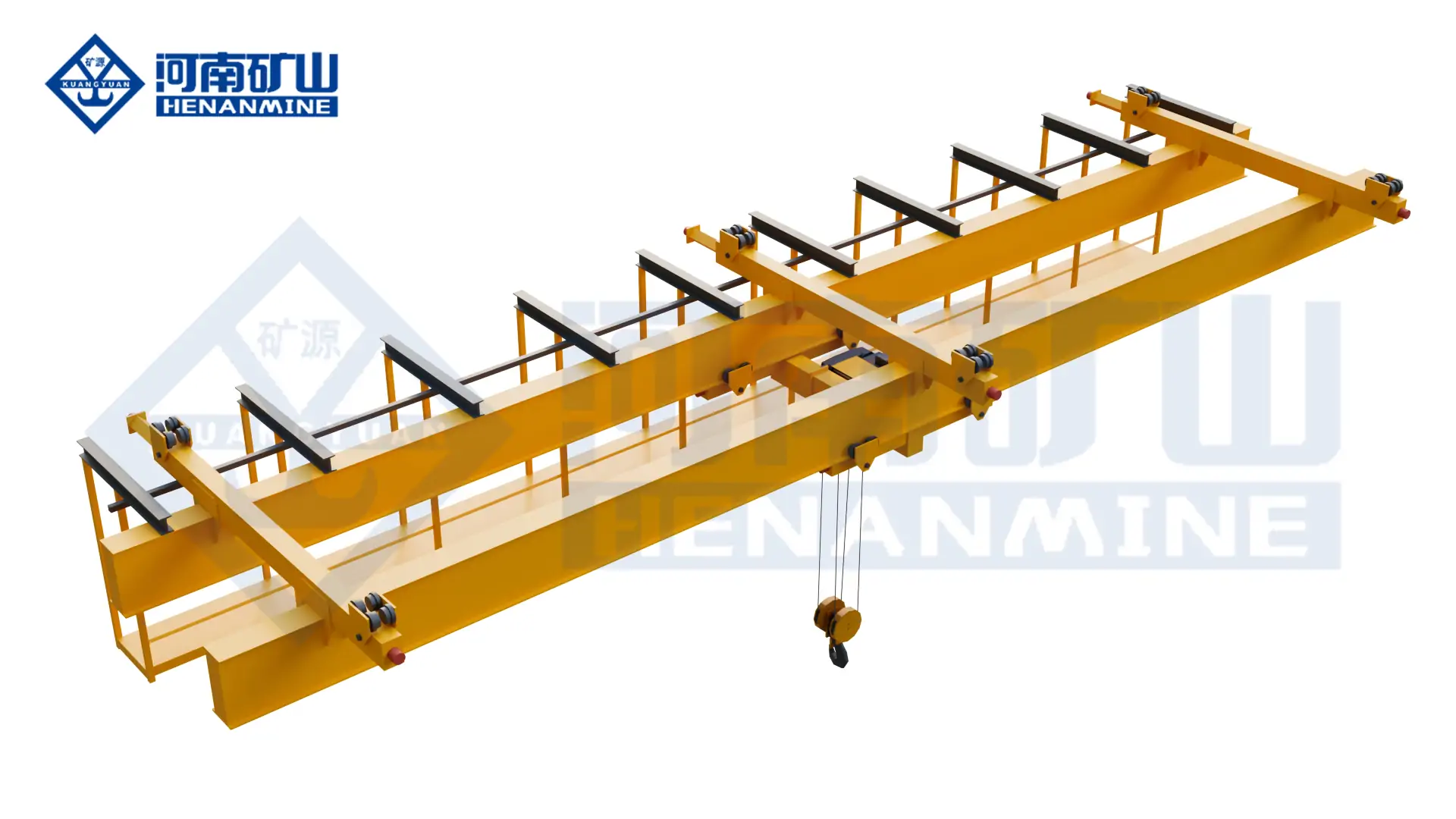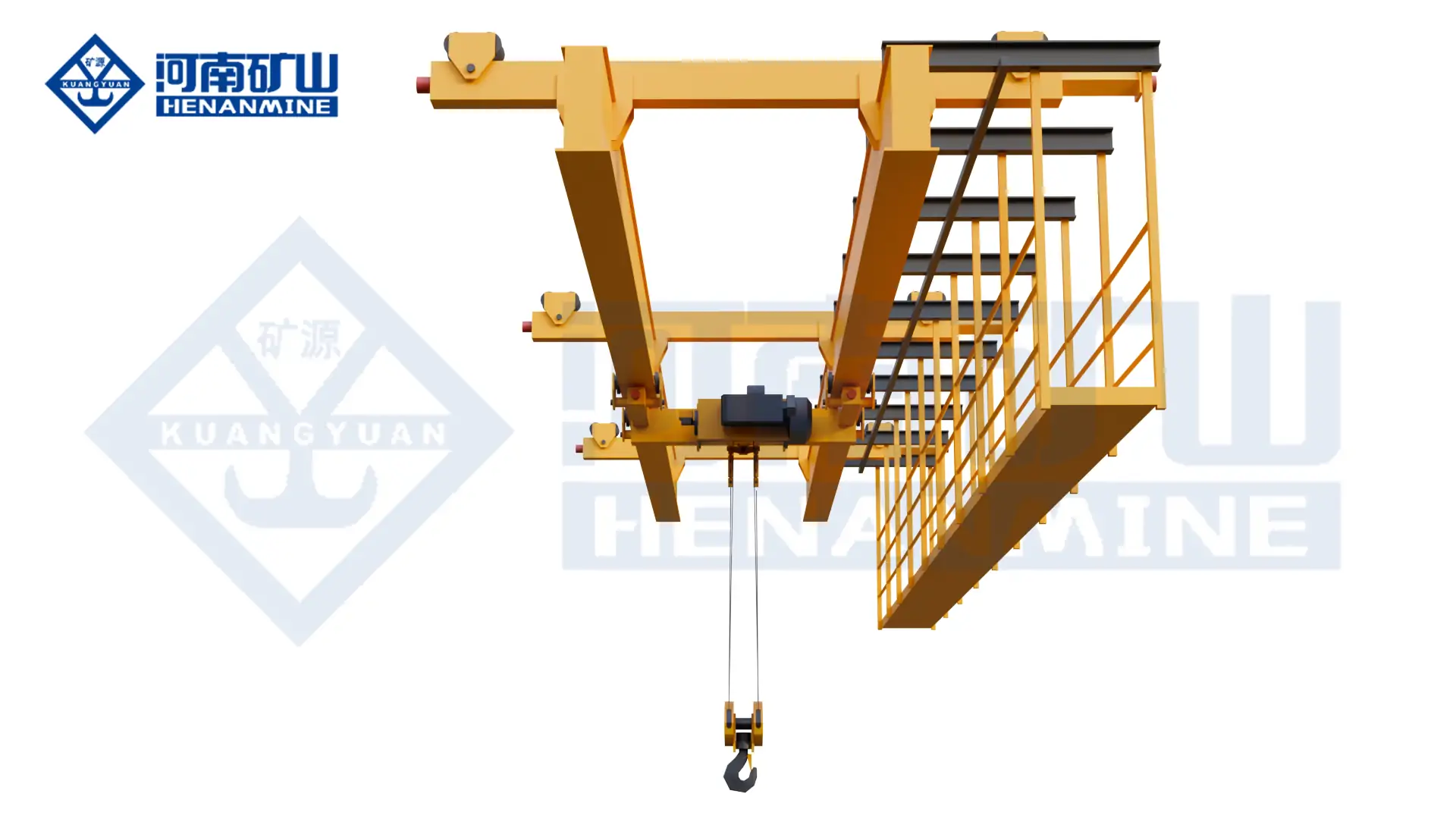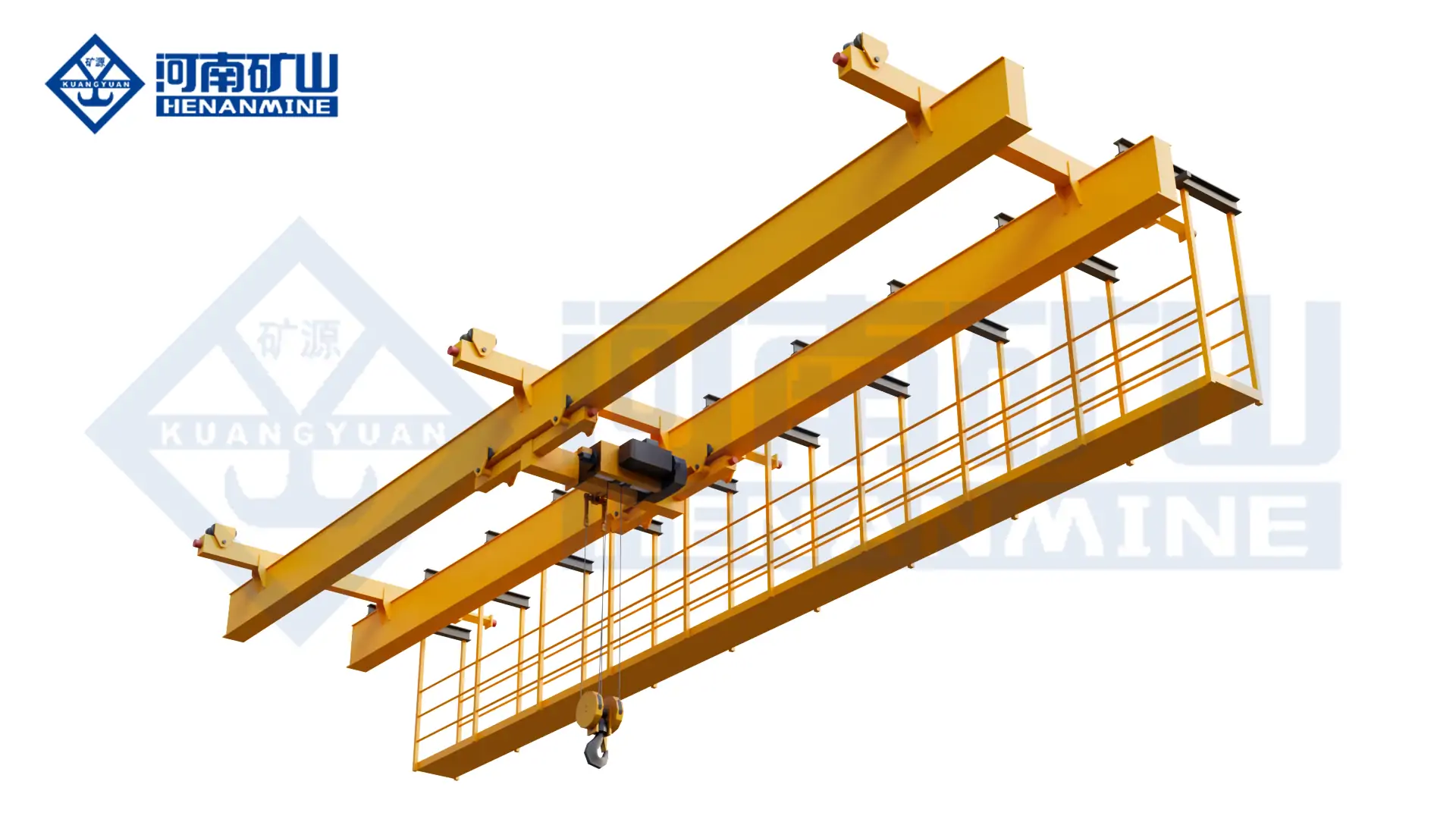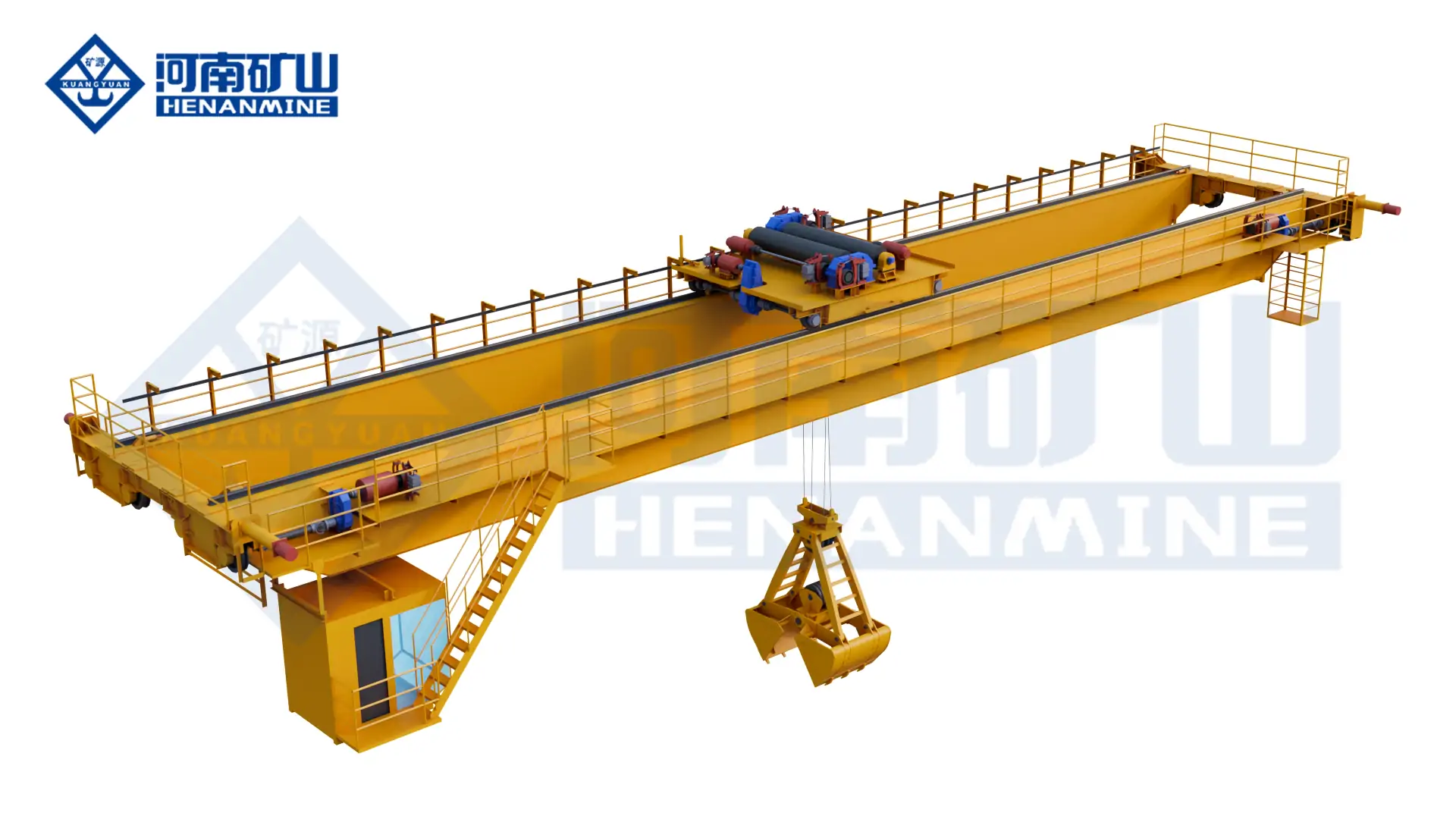
Henan Mine Crane · Cement Production Lifting Systems
Cement Plant Crane
Engineered overhead, grab and gantry crane systems for raw-material storage, fuel handling, kiln and mill maintenance, clinker and additive transfer, workshops and outdoor service areas.
Henan Mine Crane configures each cement plant crane around the handled material or maintenance load, process area, required throughput, crane duty, dust and temperature conditions, plant layout, automation level and contractual supply boundary.
Core duties
Bulk transfer and process-equipment maintenance
Primary systems
Grab, hook, dual-purpose and gantry cranes
Critical inputs
Material data, load, throughput, duty and environment
Commercial basis
Defined technical scope and project quotation
Crane Systems for Cement Production and Maintenance
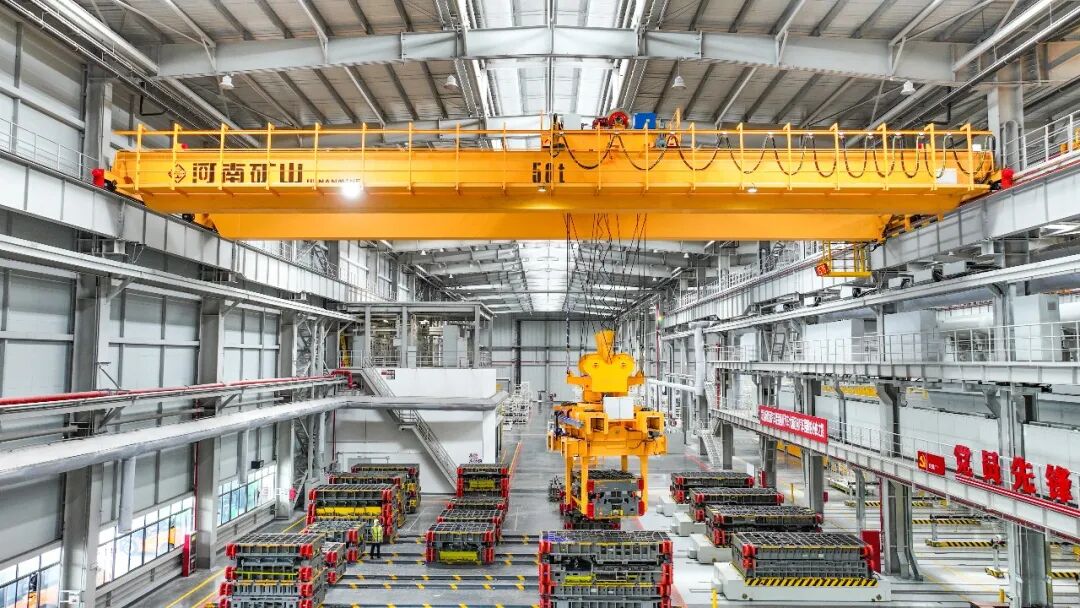
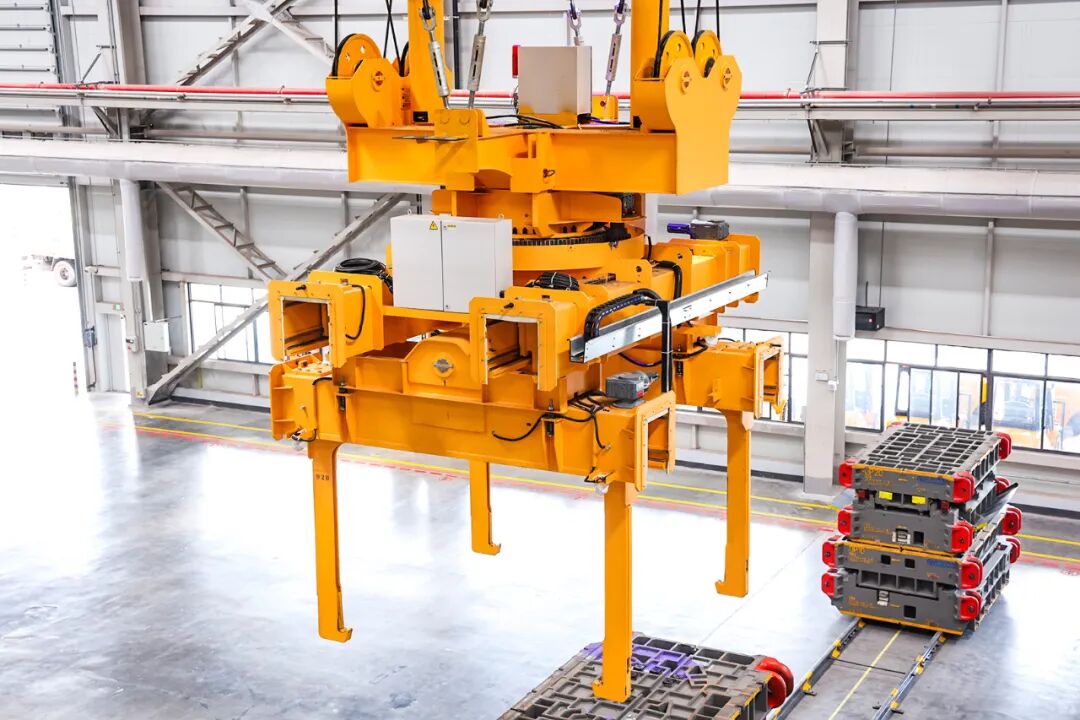
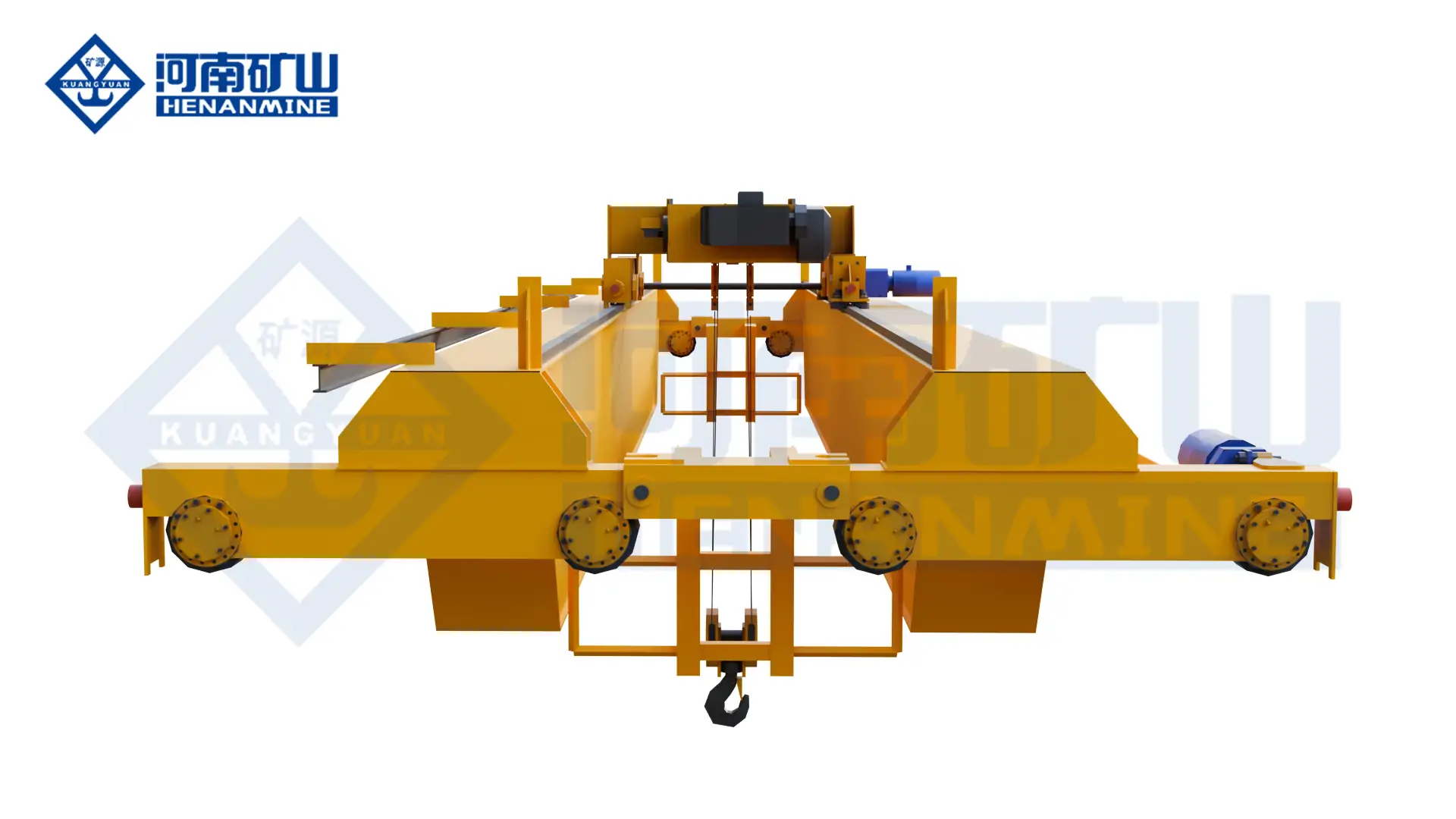
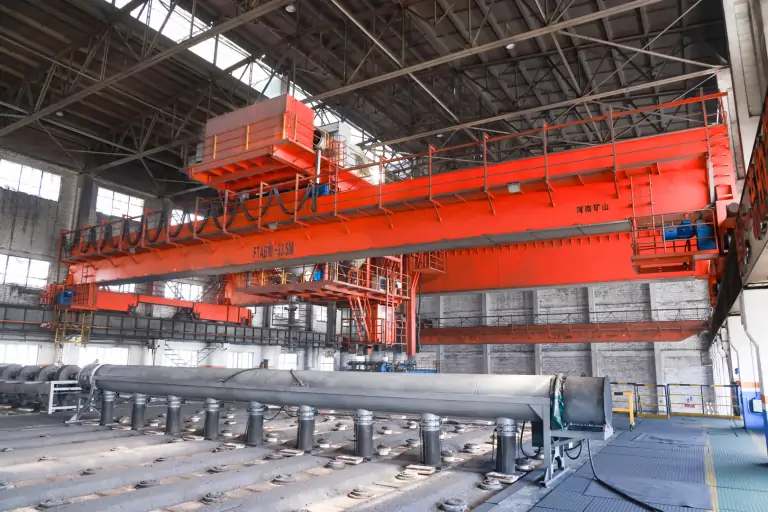
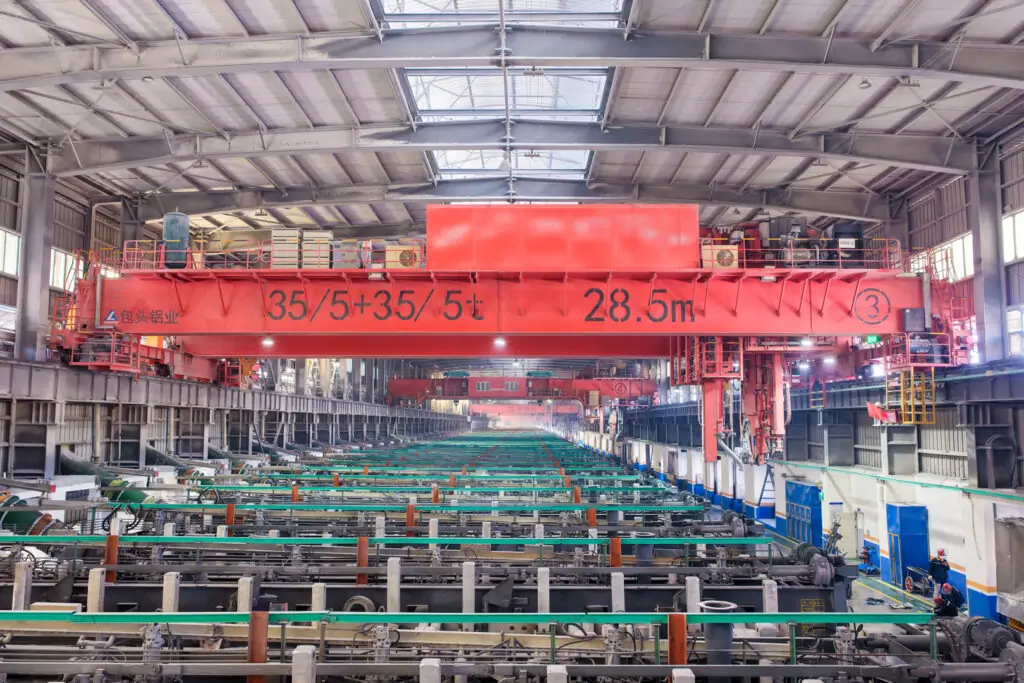
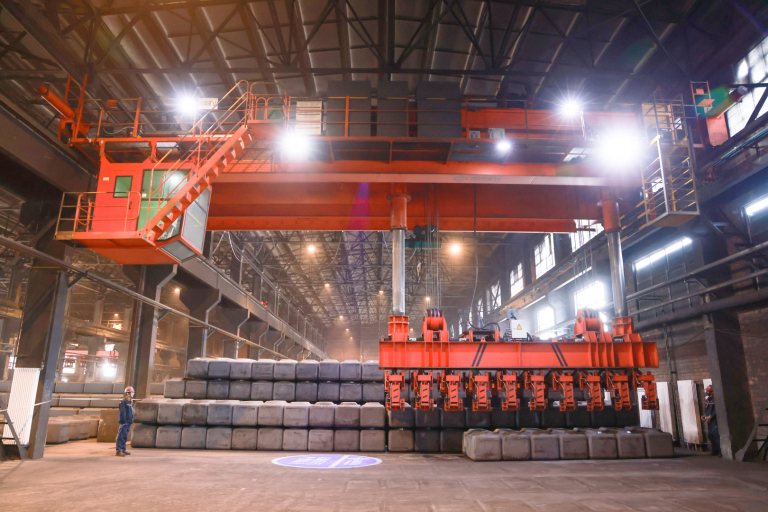
A cement plant crane is not one standardized machine. Raw-material and fuel stores may require a high-duty grab crane for stockpiling, blending, reclaiming or feeding a hopper. Kiln, crusher, cooler, raw-mill and cement-mill buildings require hook cranes or hoists for planned maintenance of motors, gearboxes, rollers, fans and other process components. Outdoor equipment yards may require a rail-mounted gantry crane.
Continuous production flow is normally served by conveyors, elevators and dedicated process equipment. A grab crane should therefore be specified only where the plant layout includes a storage bay, pit, bunker or transfer point that benefits from crane coverage. Its design must be based on material bulk density, particle size, moisture, abrasiveness, angle of repose, required tonnes per hour and receiving-hopper geometry.
Cement dust alone does not automatically make an area explosion hazardous. Coal, petroleum coke and some alternative-fuel areas may be classified for combustible dust, but the required equipment group, zone or division, temperature class and protection concept must come from the plant hazardous-area documentation. High-temperature protection is likewise applied from measured ambient and radiant-heat conditions, not from the industry name.
Cement Plant Crane Configurations
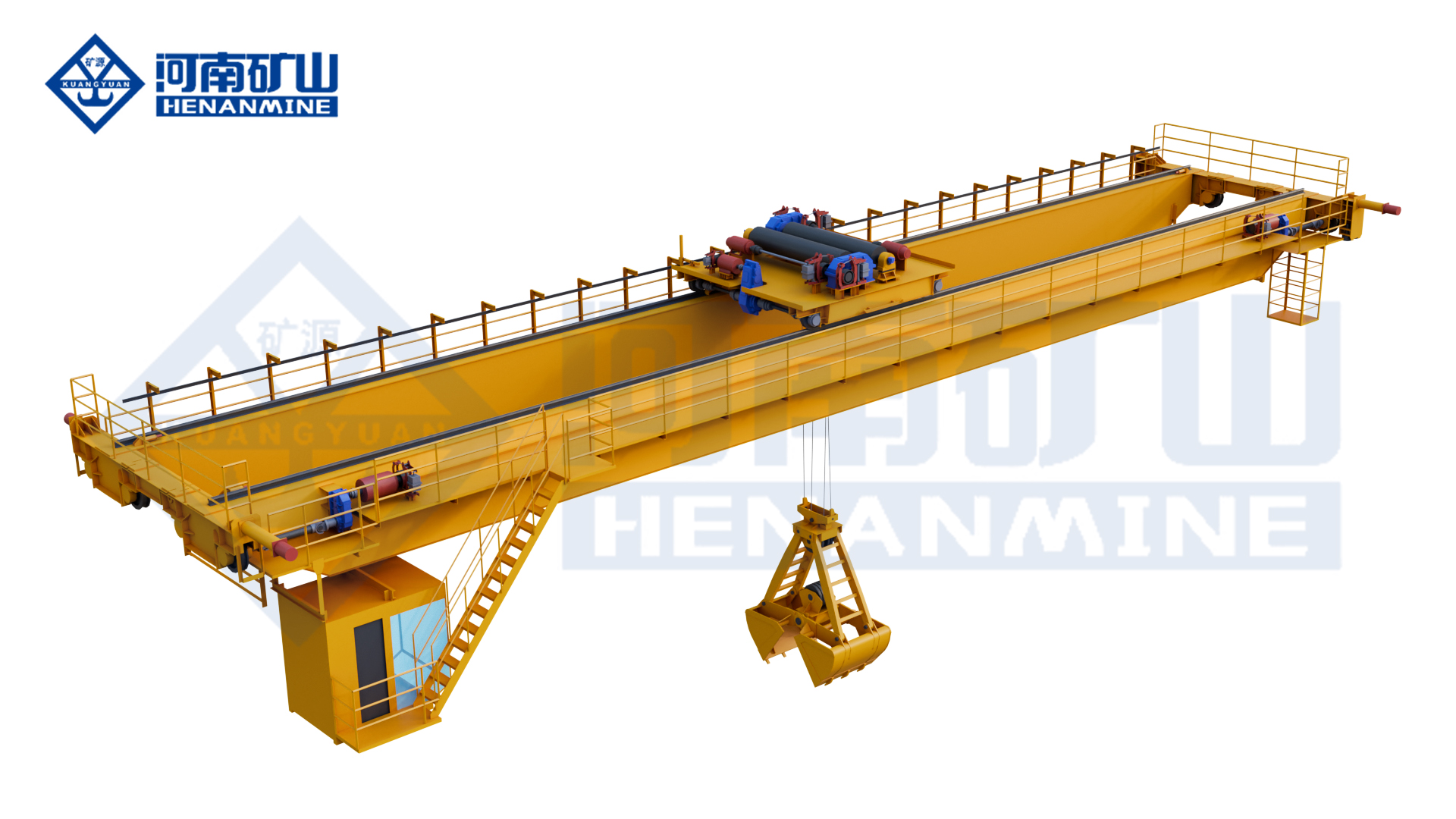
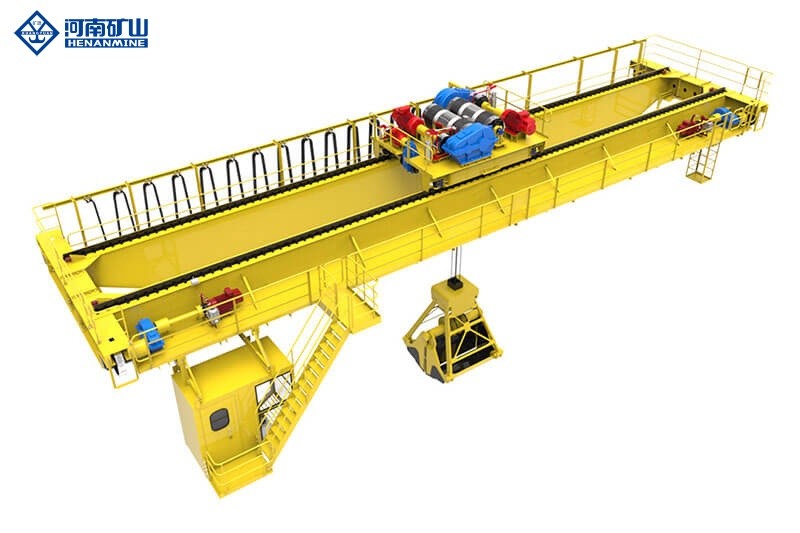
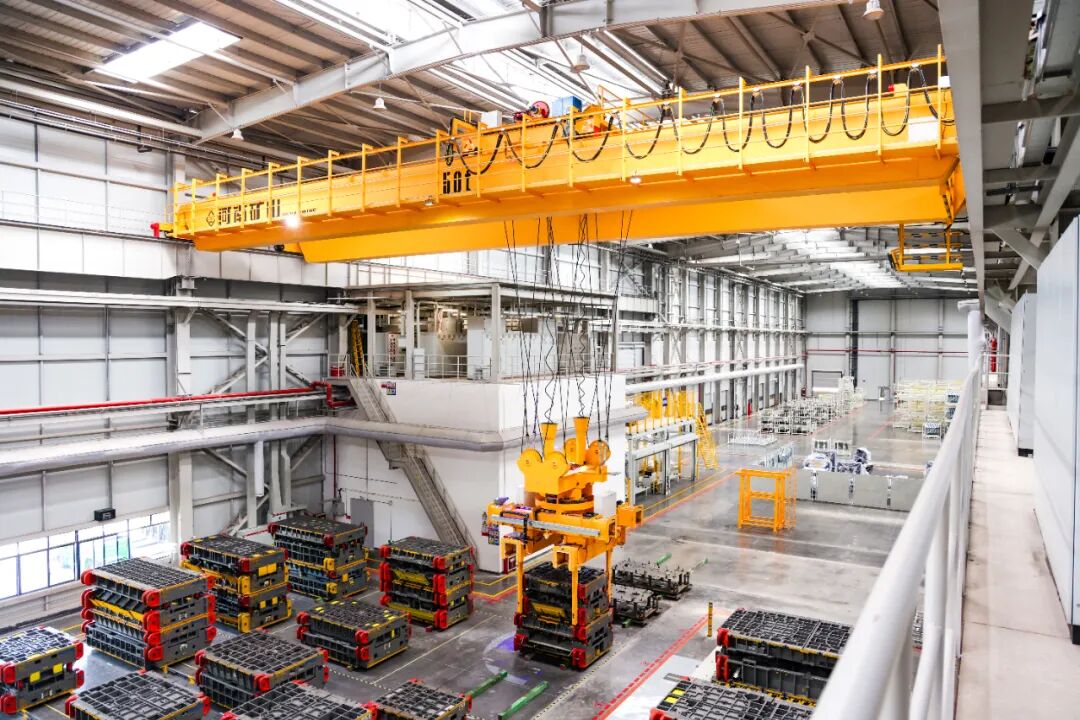
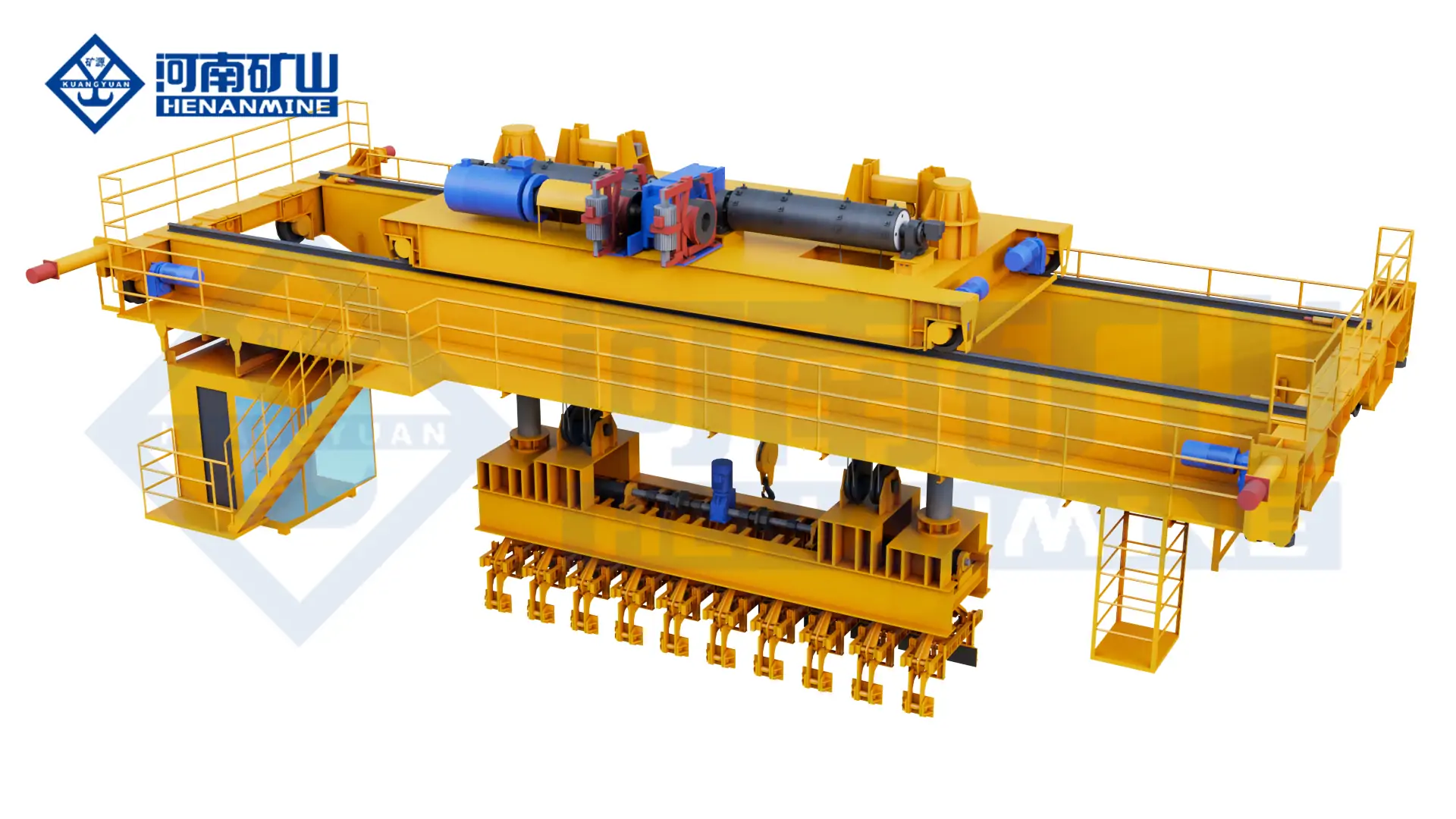
01 · Intelligent Grab Overhead Crane
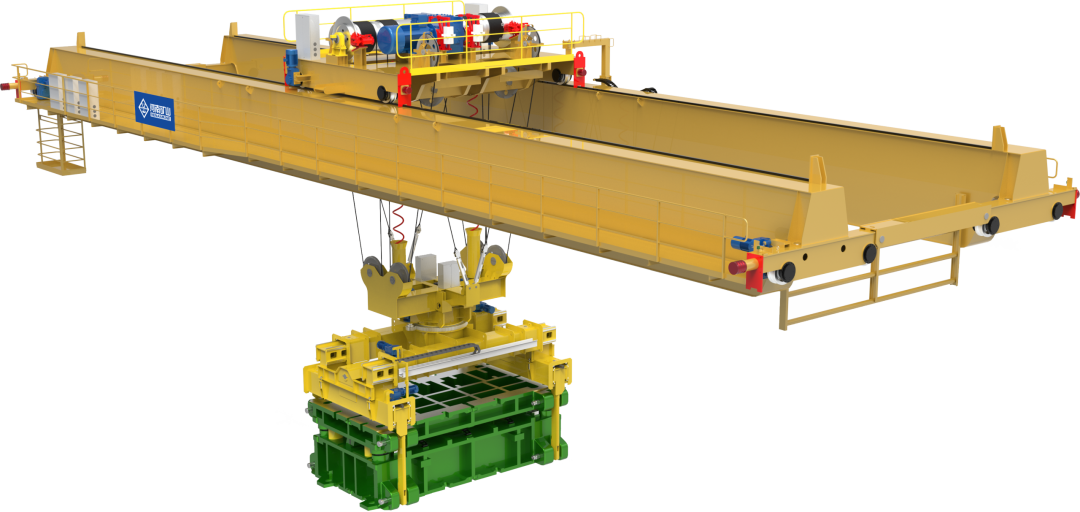
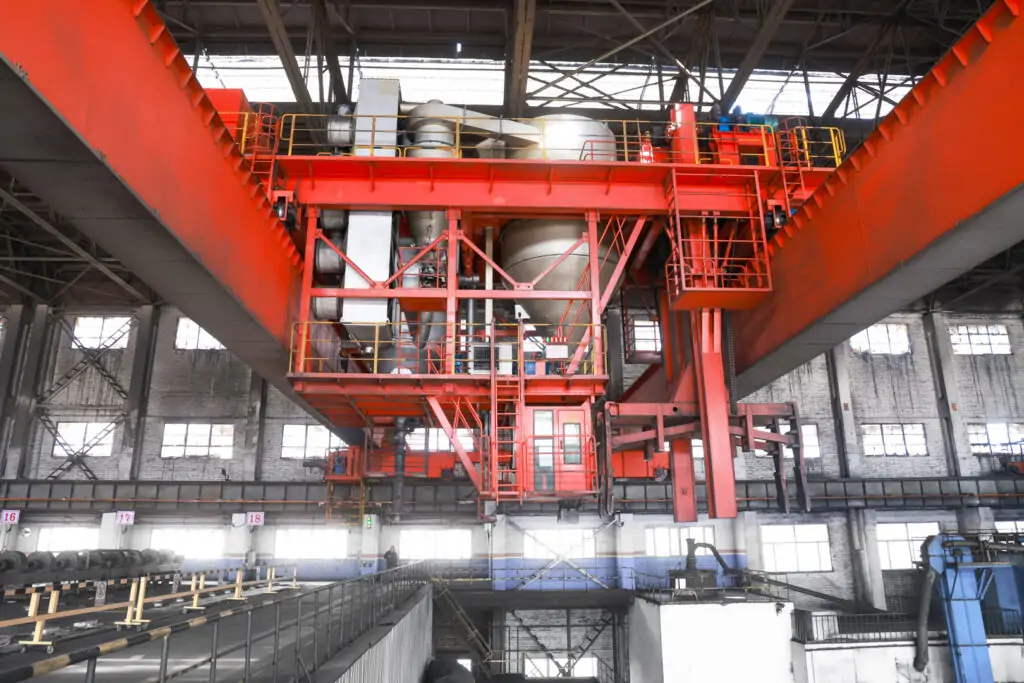
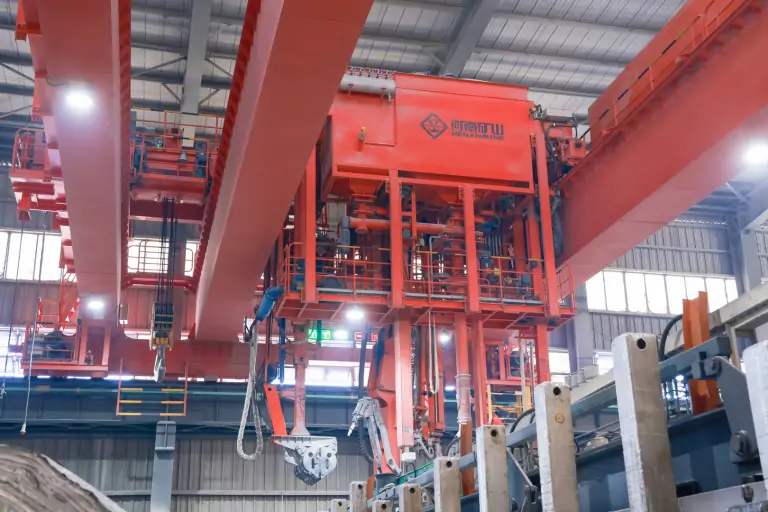
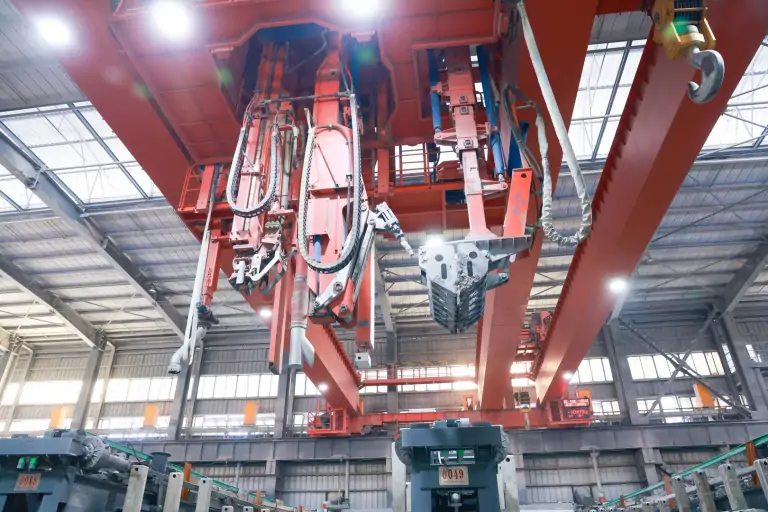
A double-girder, four-rope grab system for repeated handling of limestone, clay, gypsum, slag, clinker, coal or other approved bulk materials. PLC control, pile scanning, anti-sway, positioning and plant-system interfaces can support semi-automatic or unmanned operation.
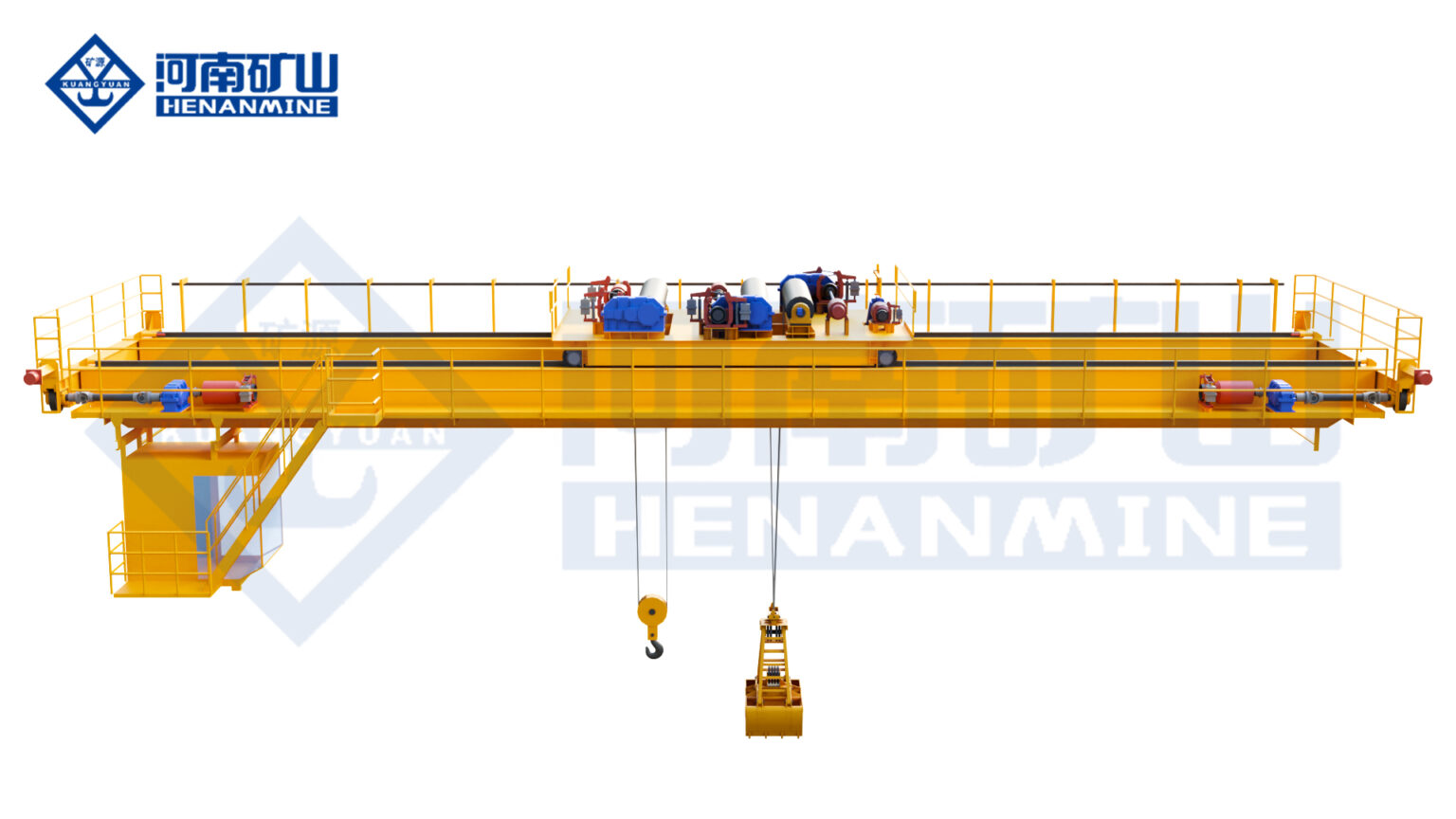
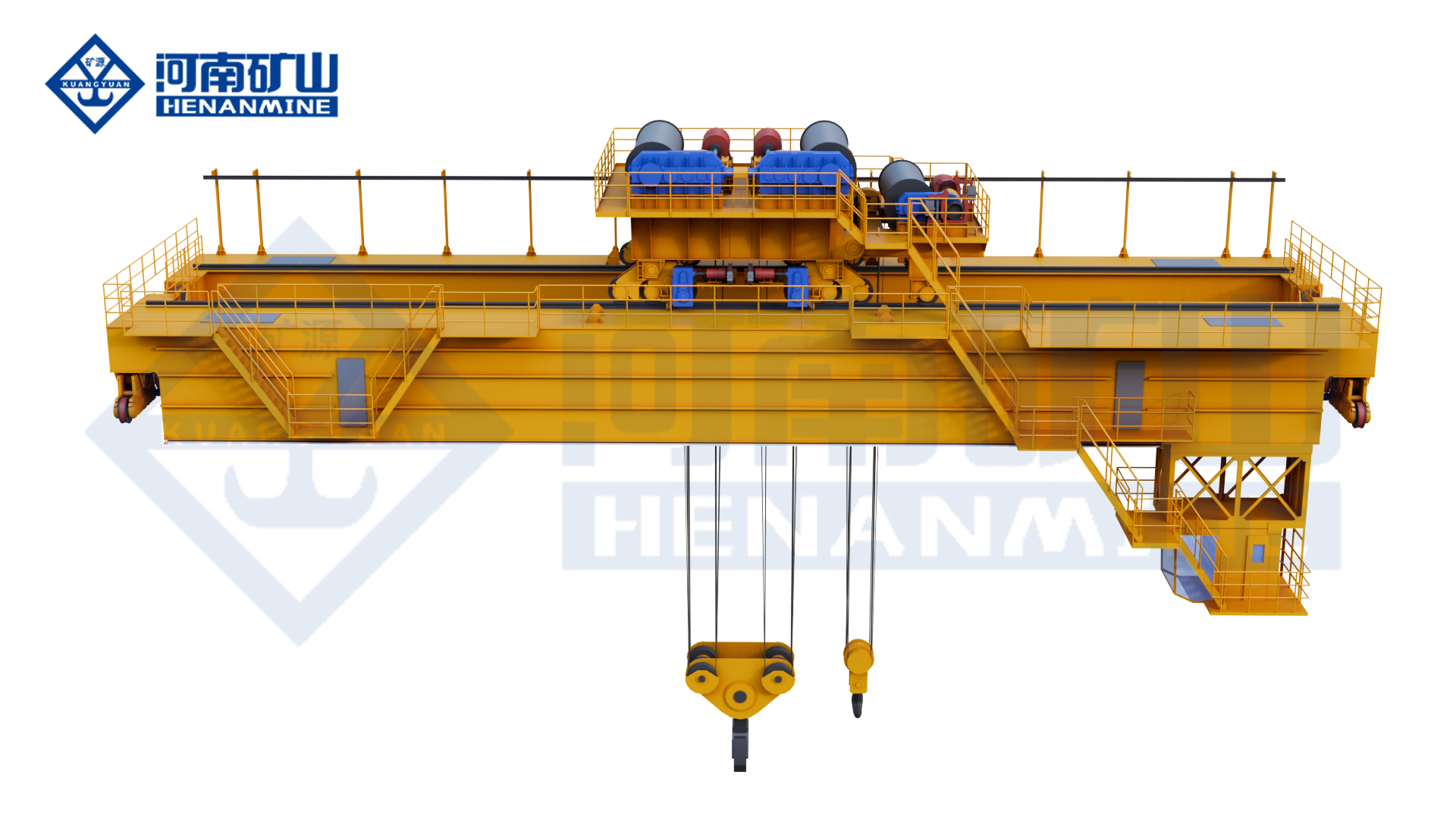
02 · Grab-and-Hook Dual-Purpose Crane
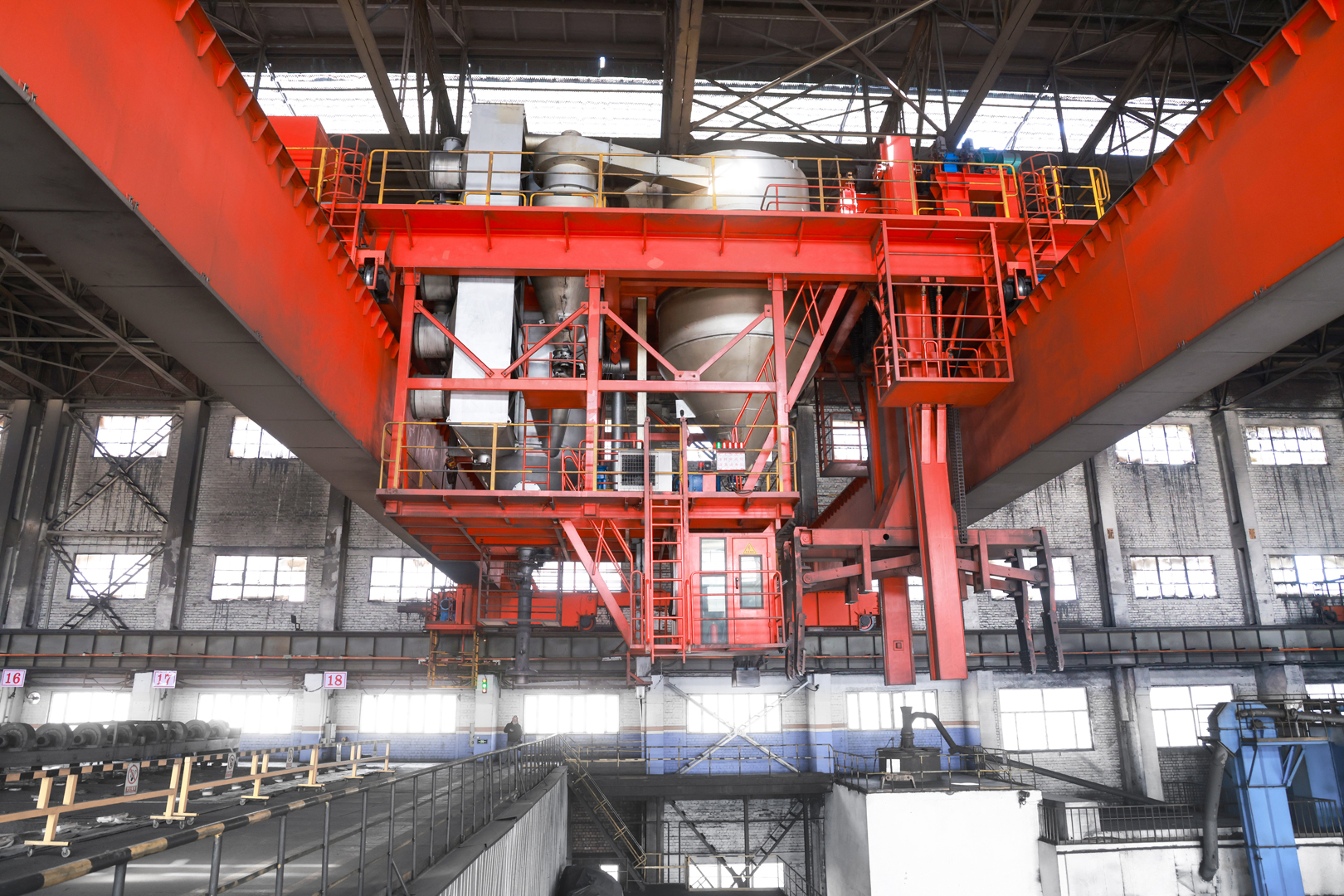
A practical mixed-duty solution where one bay handles both bulk material and unit loads. The design must define attachment changeover, rated load in each operating mode, storage position and controls that prevent an invalid configuration.
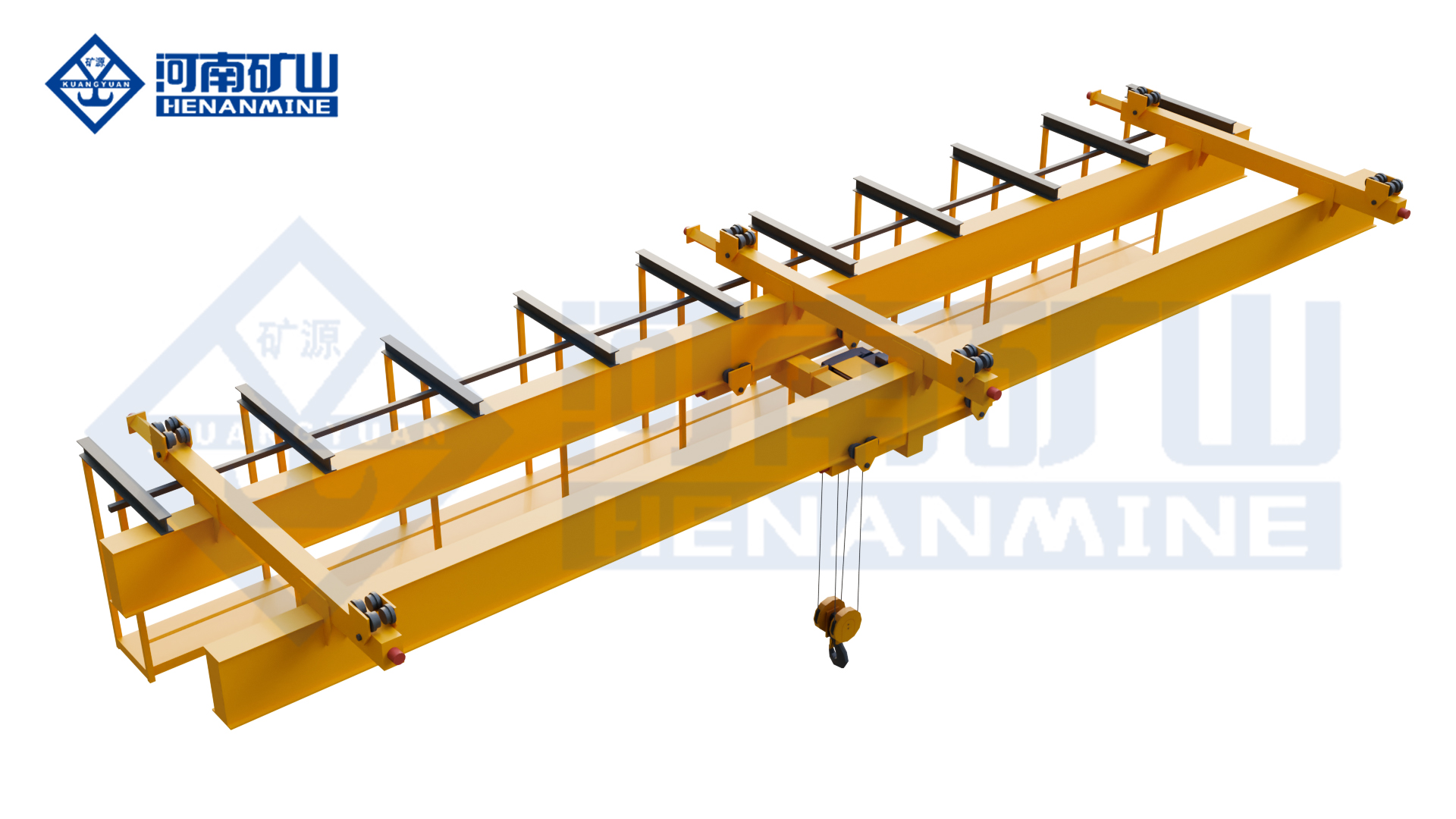
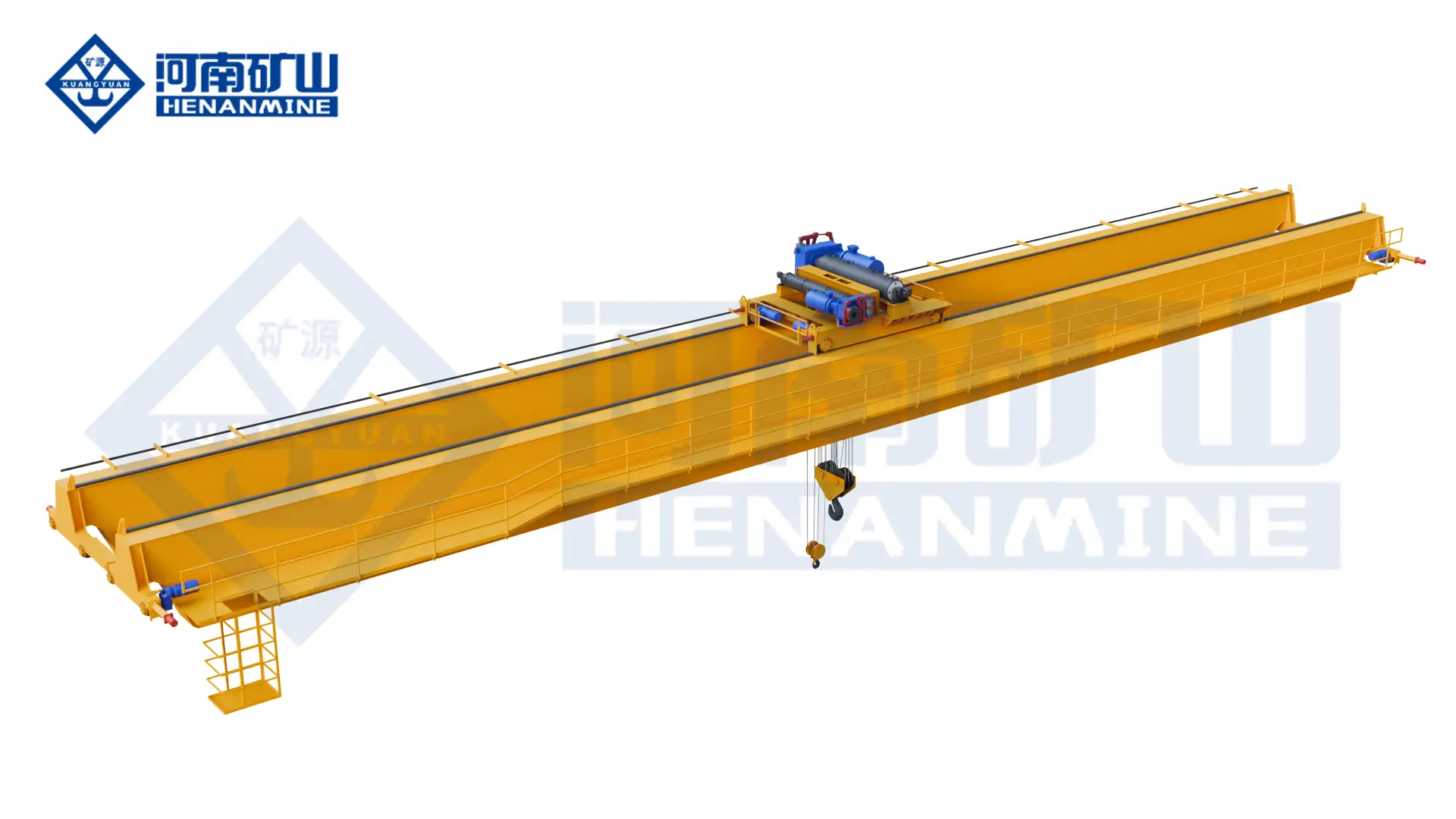
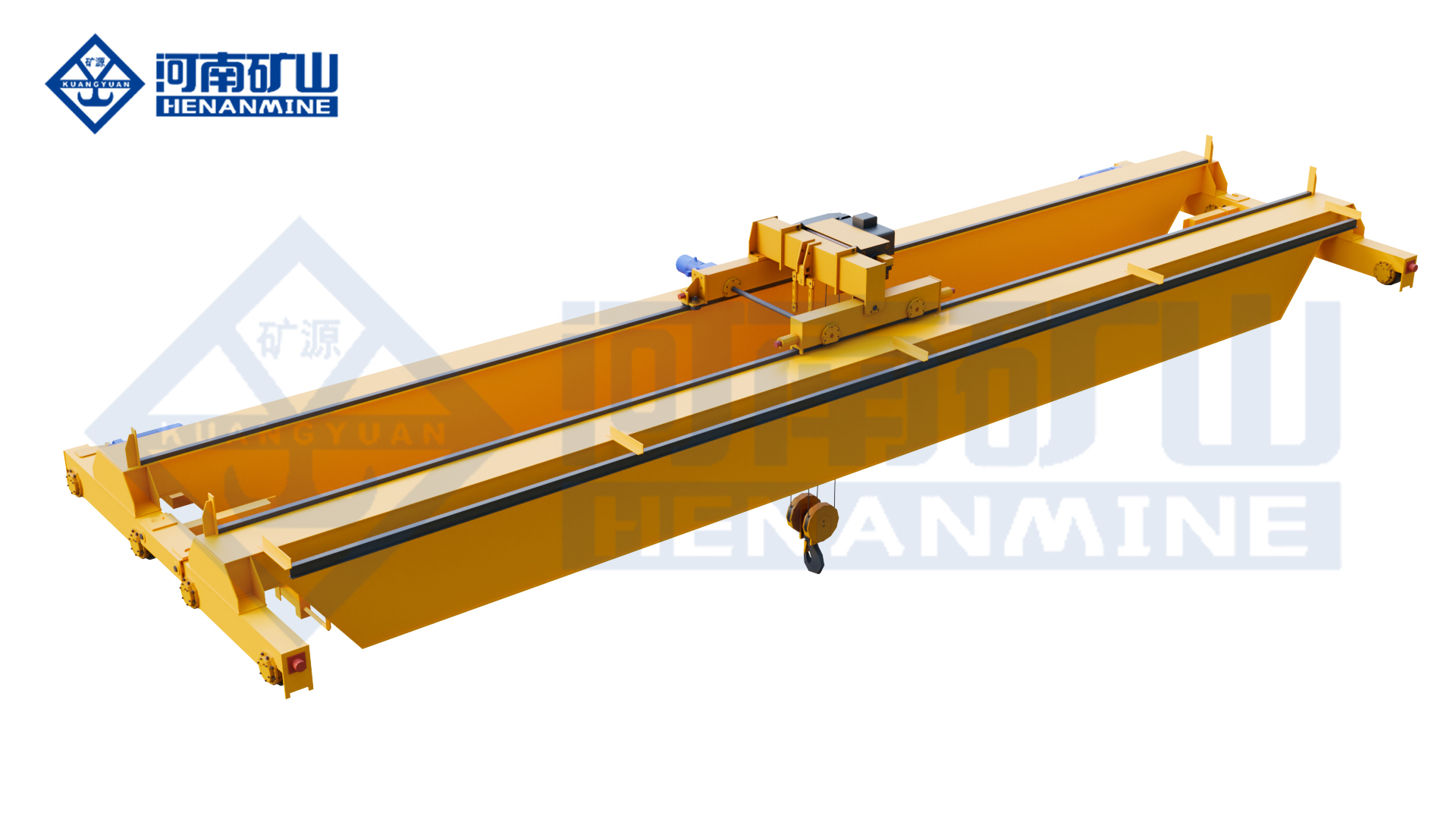
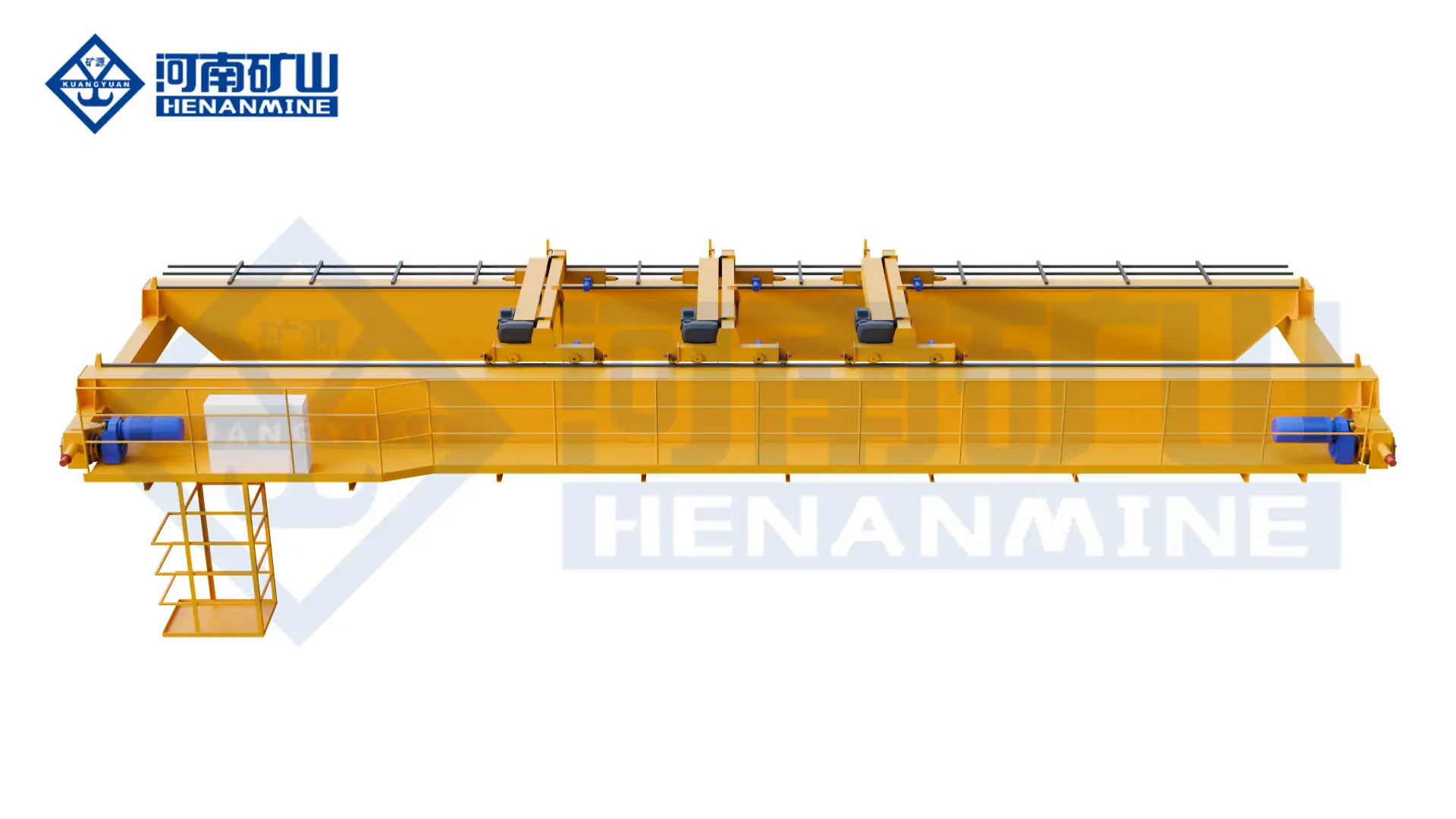
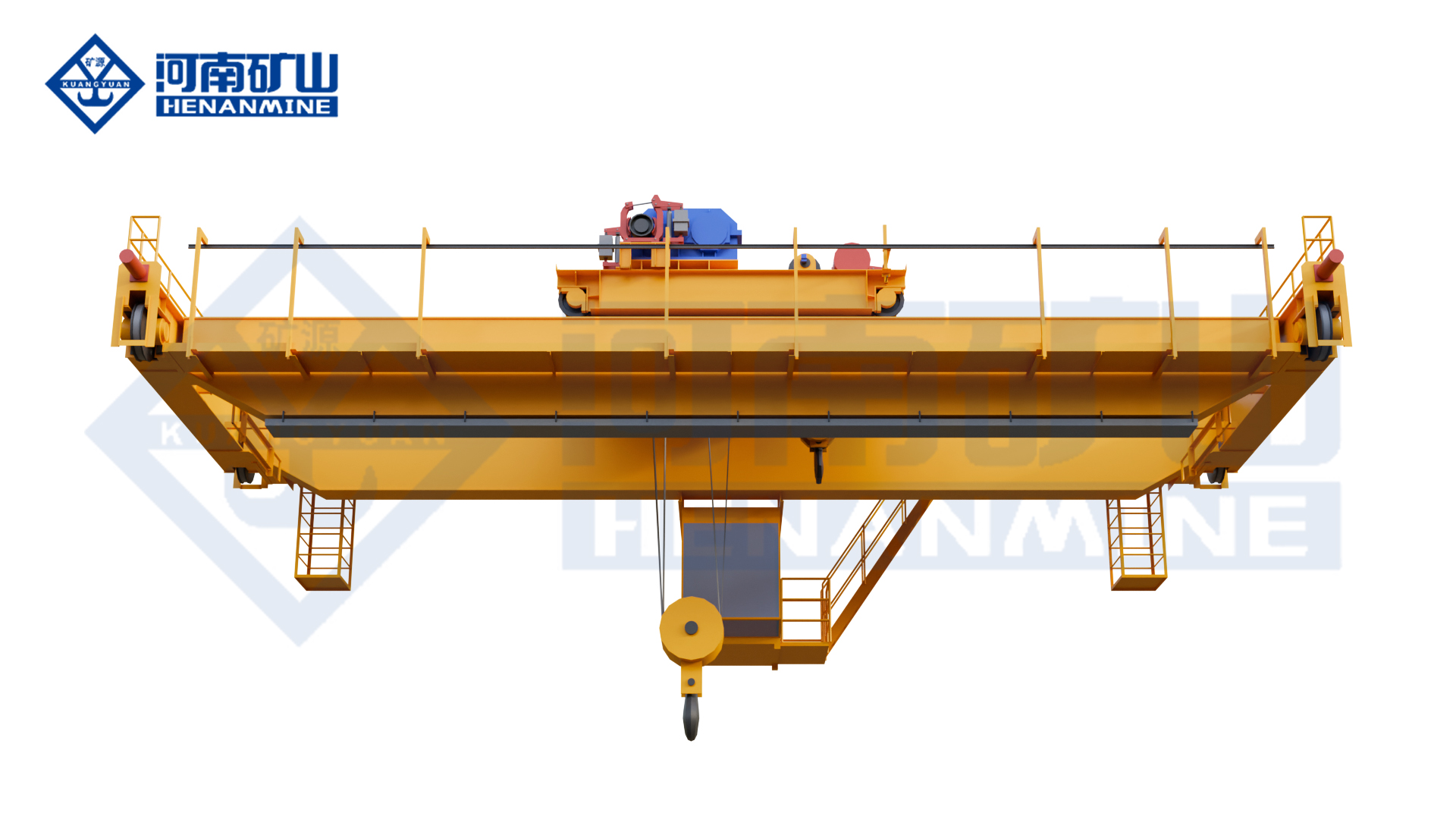
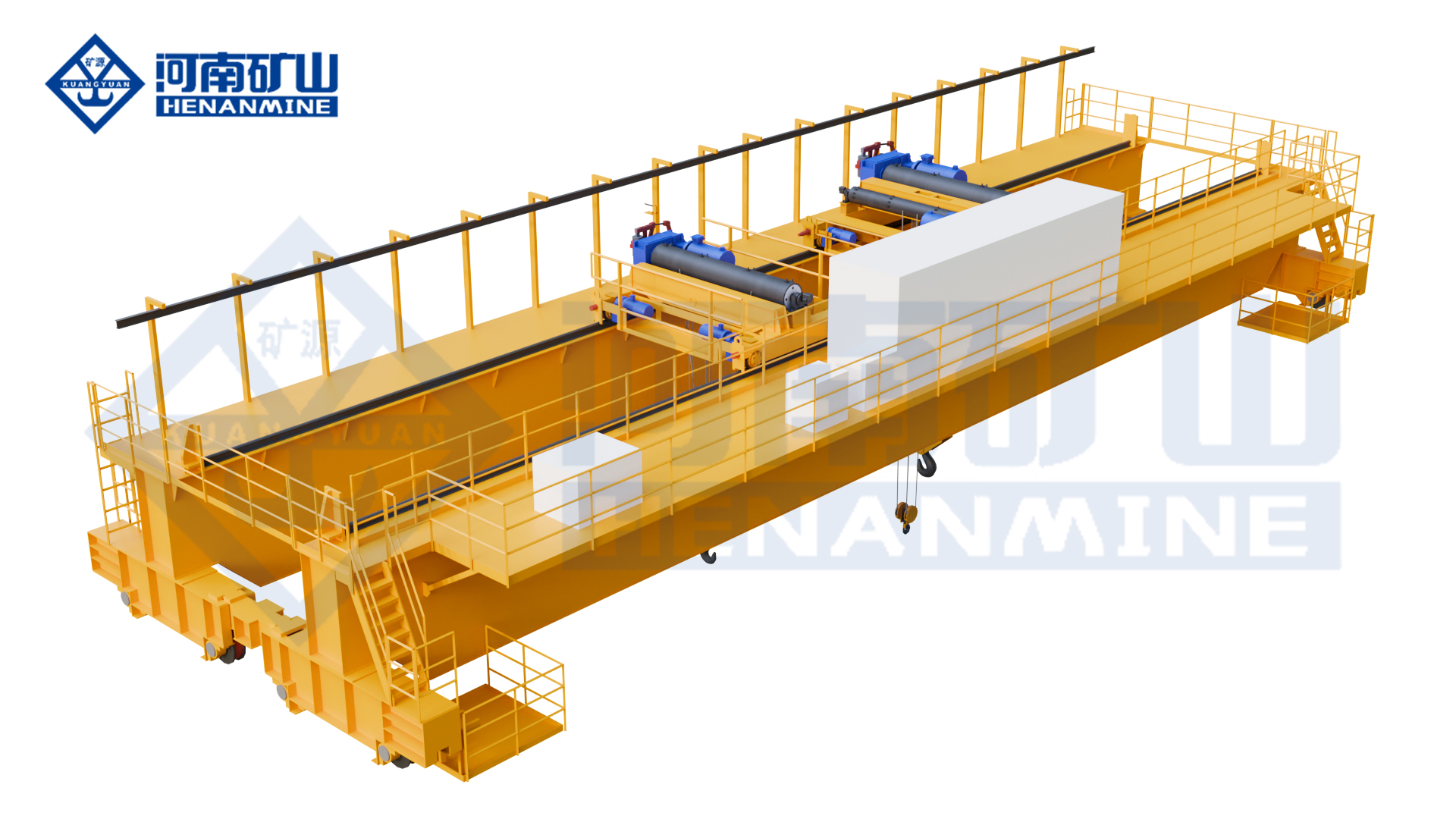
03 · Double-Girder Maintenance Crane
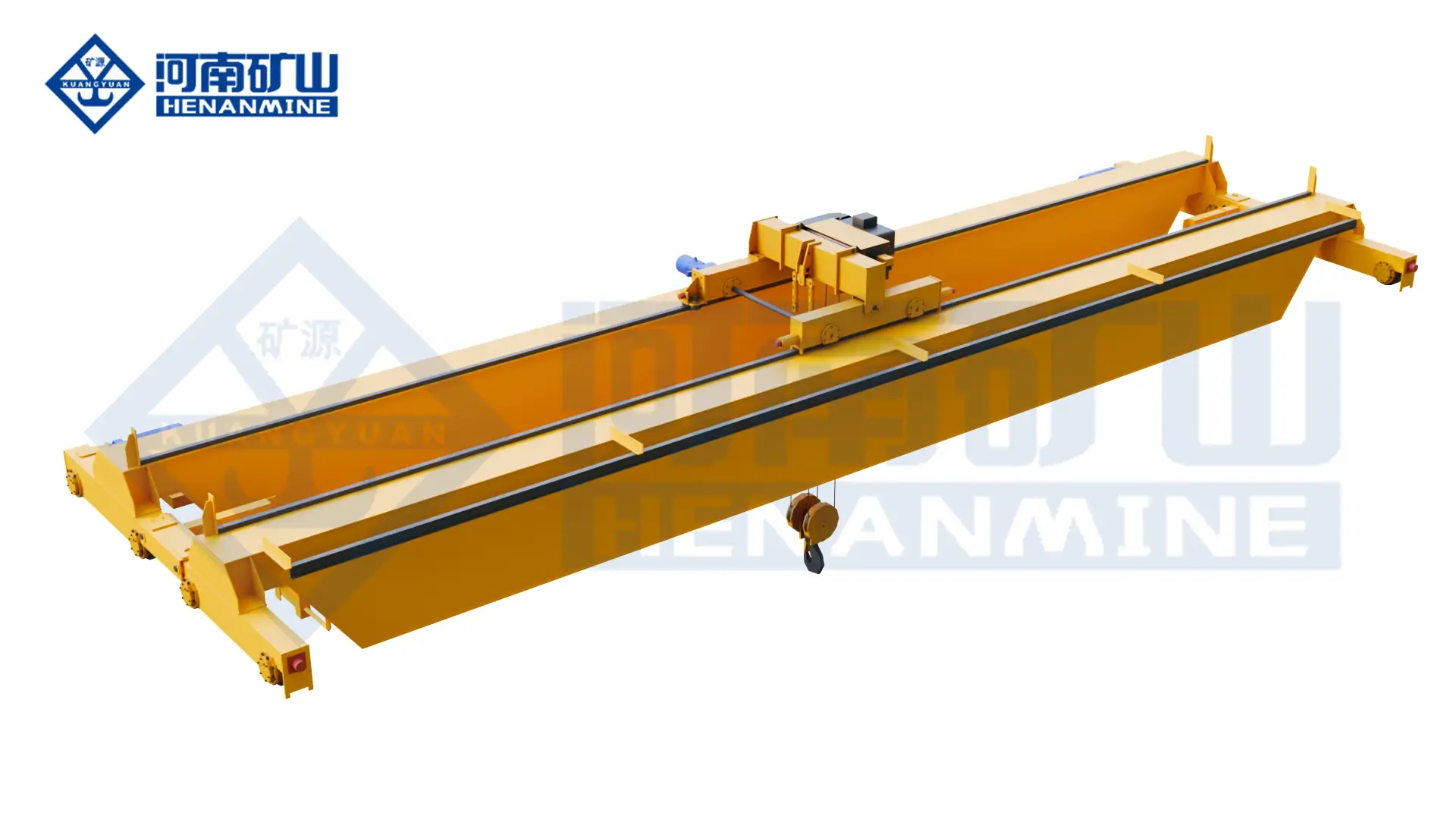
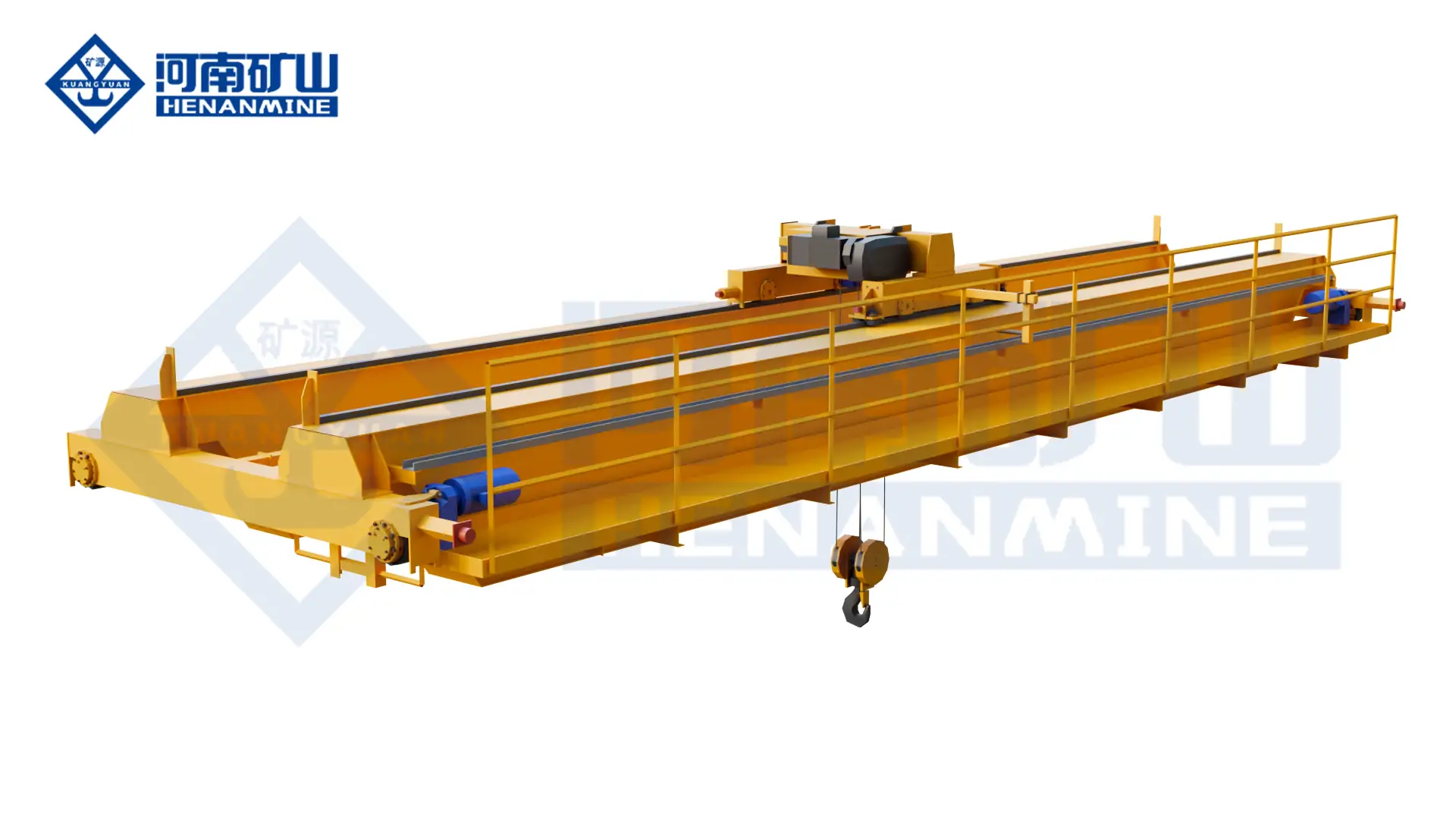
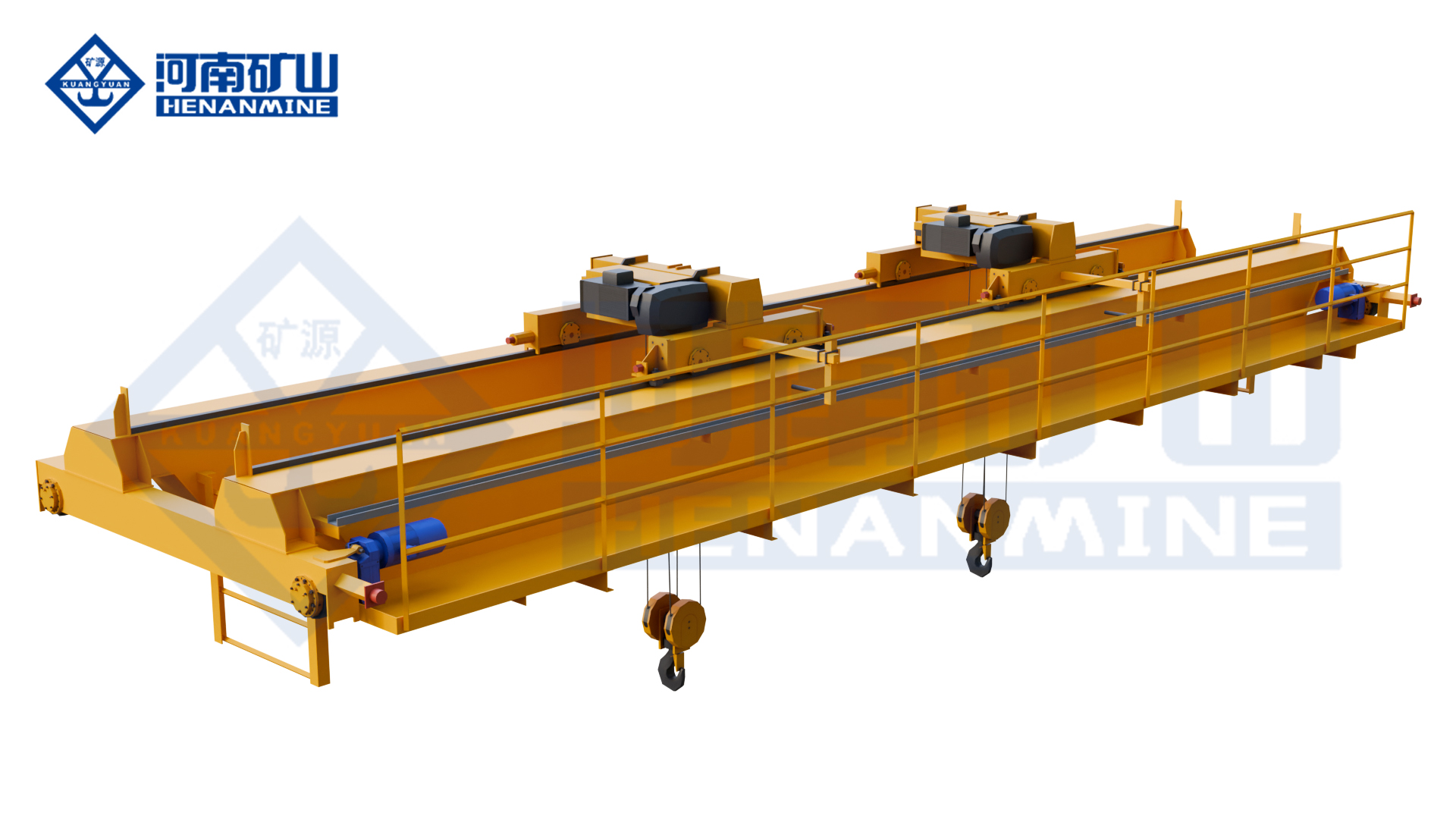
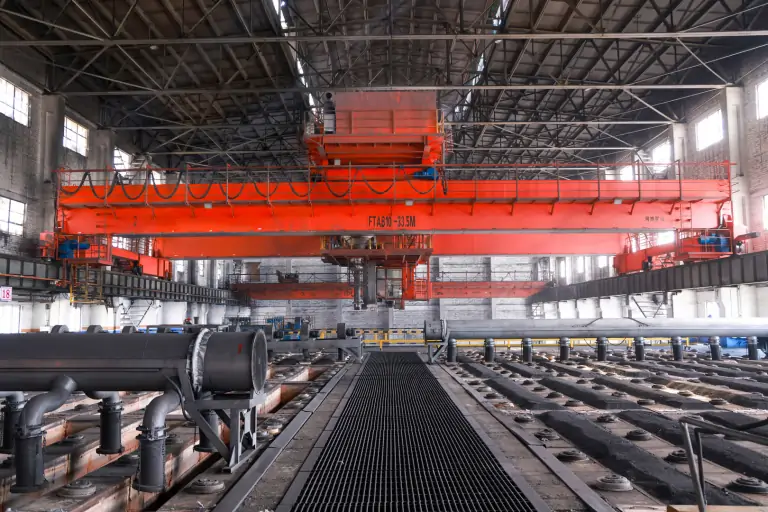
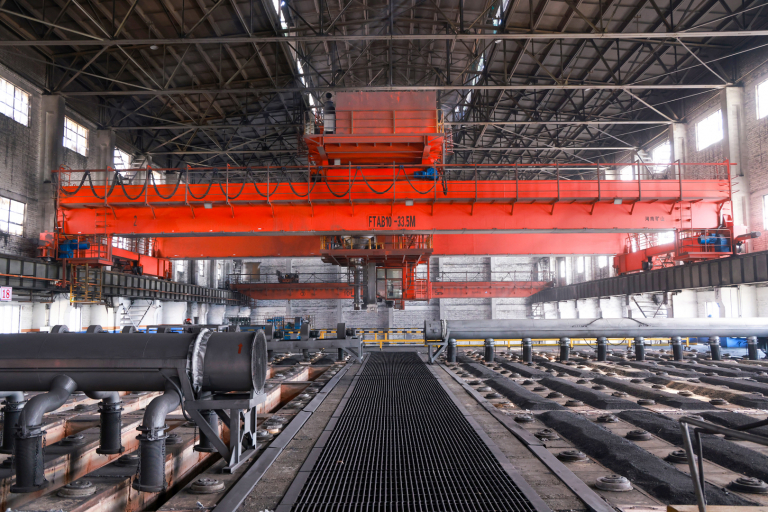
A hook crane for heavy process-equipment maintenance in kiln, cooler, crusher, fan, raw-mill and cement-mill buildings. Main and auxiliary hooks, low-speed positioning and maintenance access can be configured around the overhaul method.
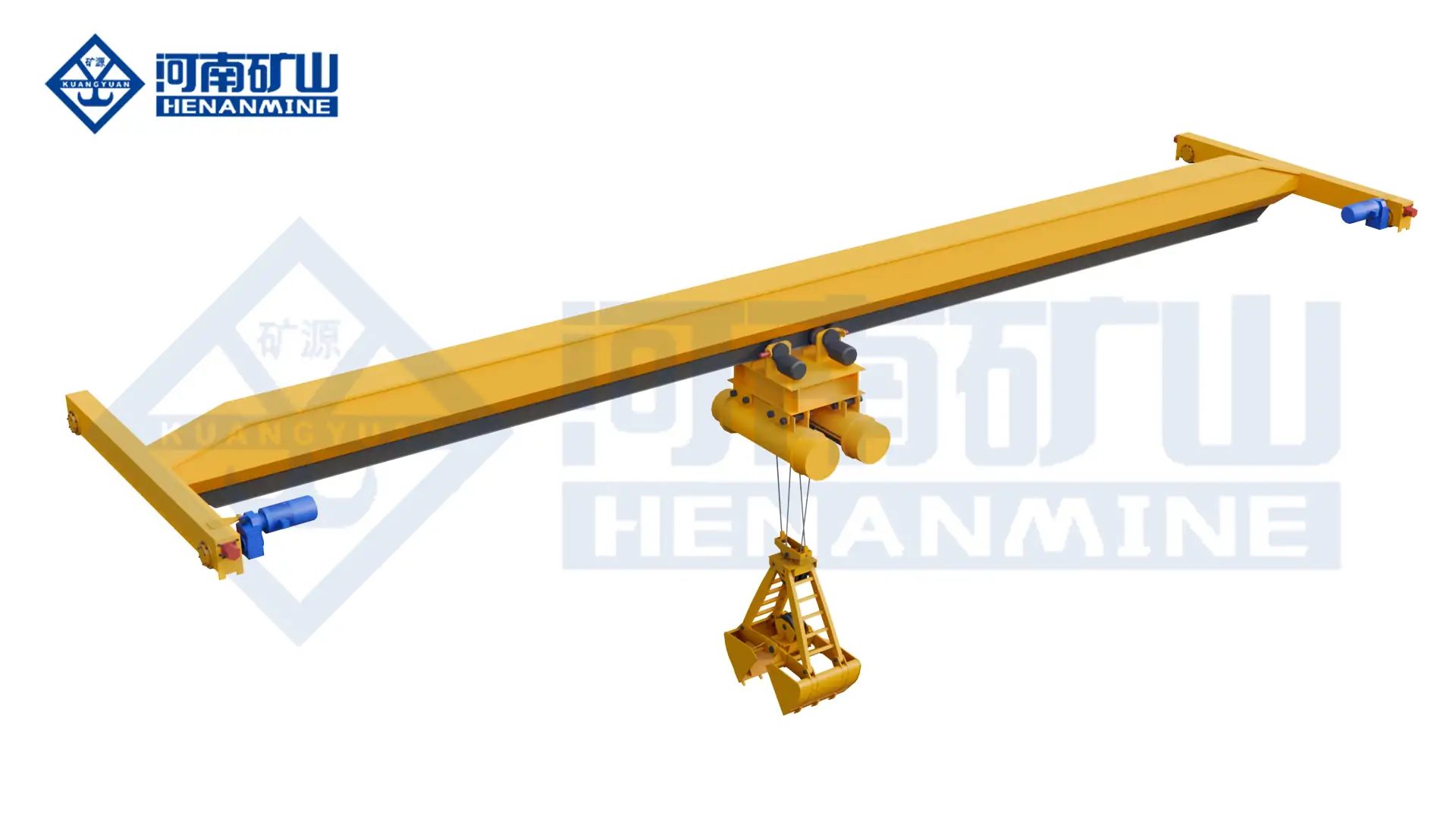
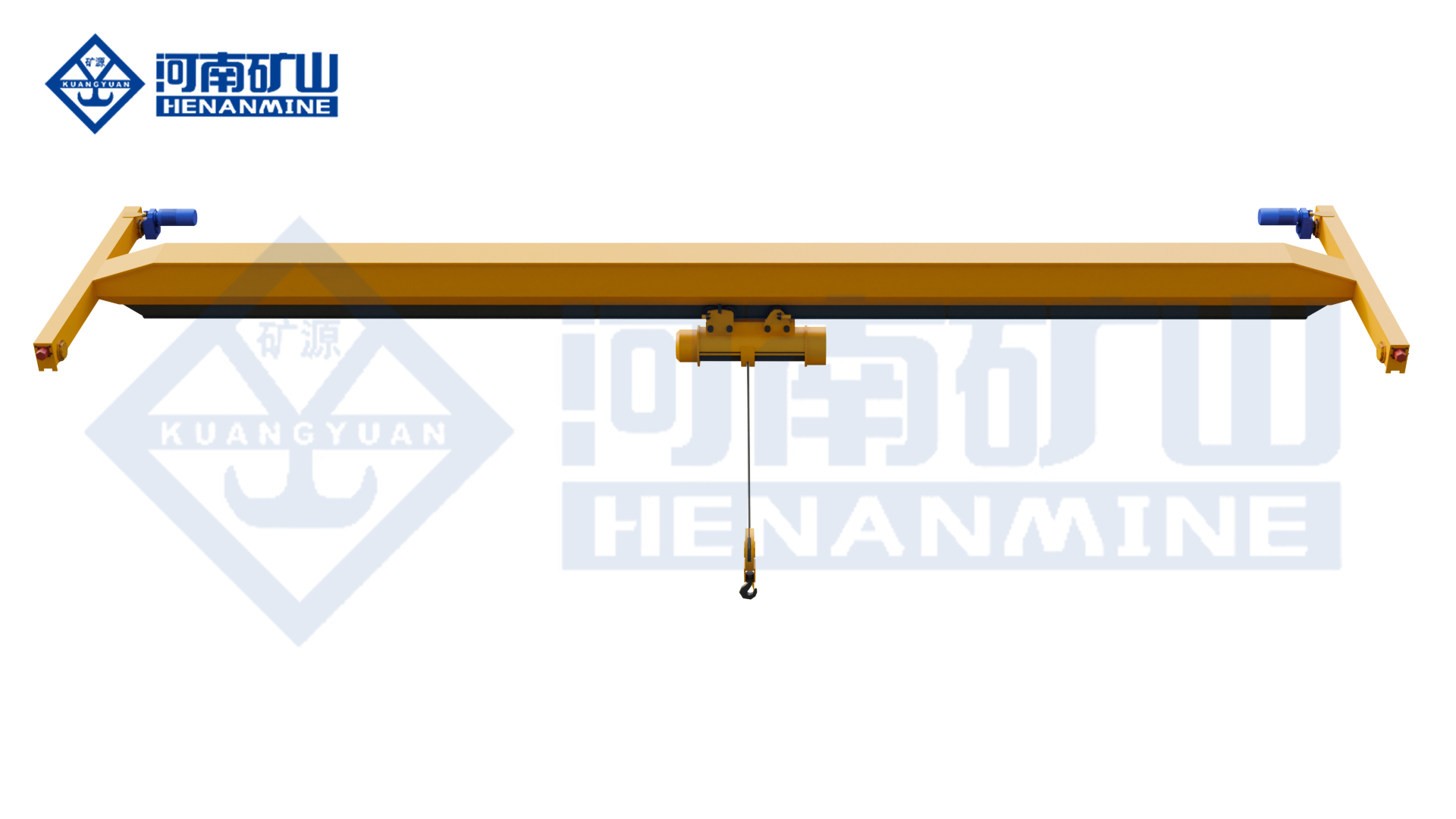
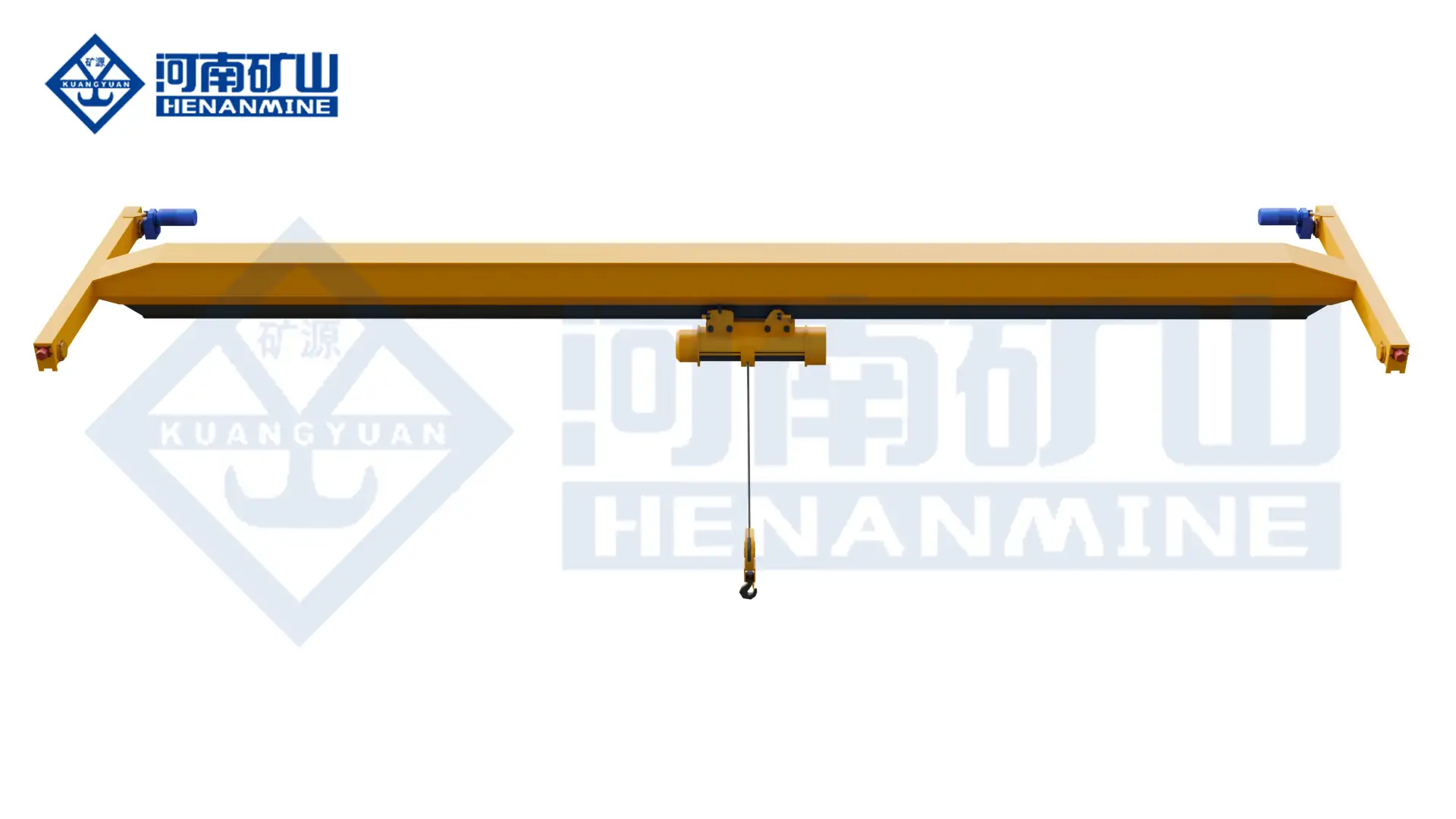
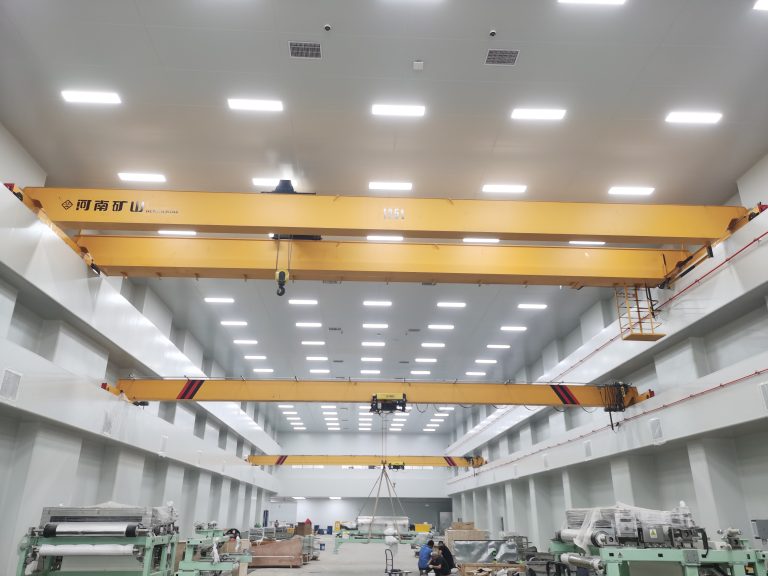
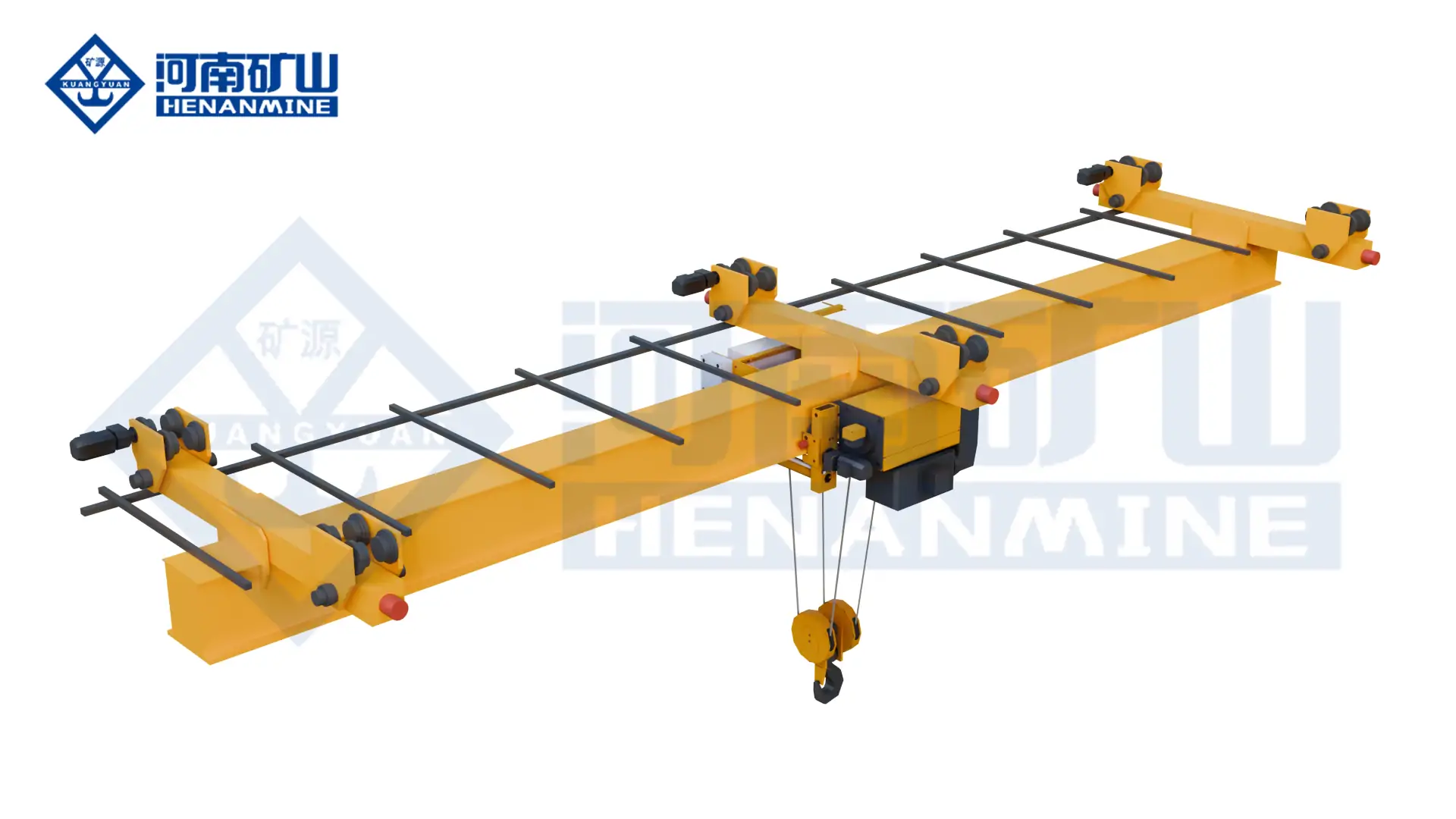
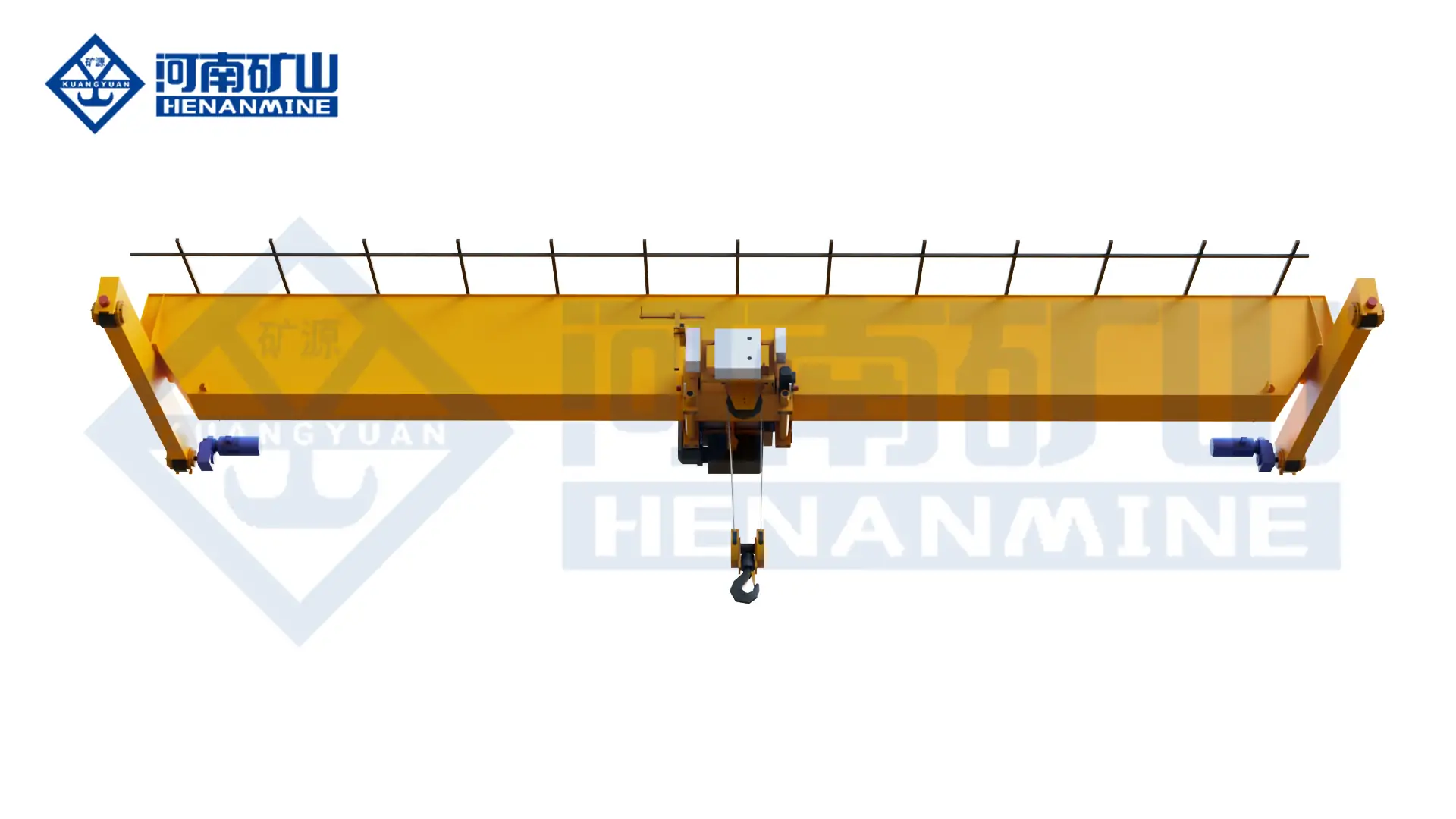
04 · Single-Girder Service Crane
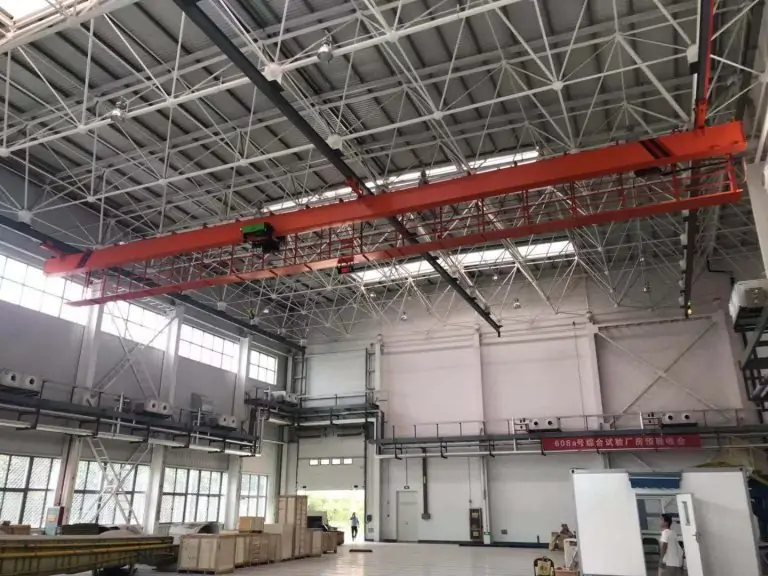
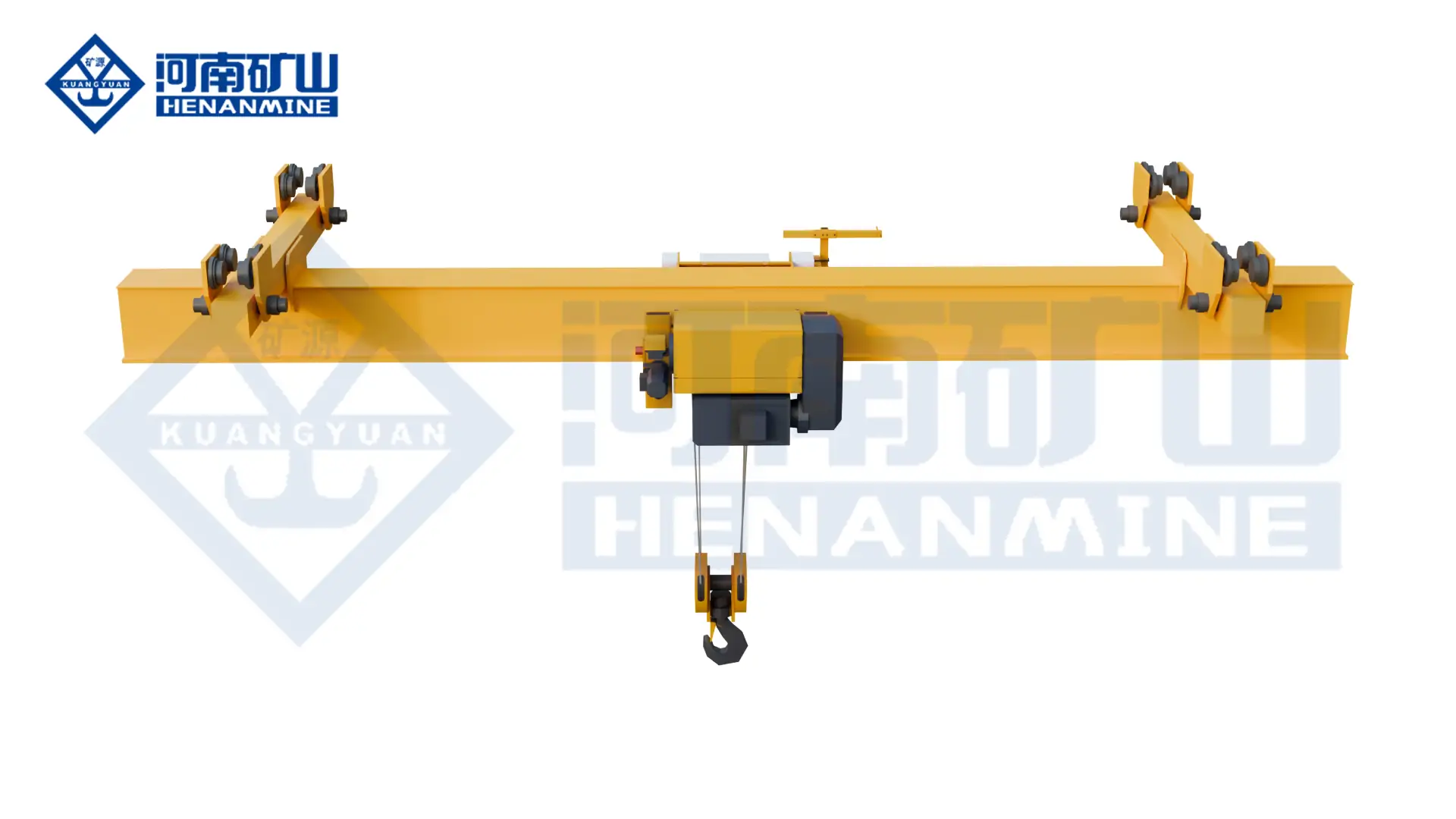
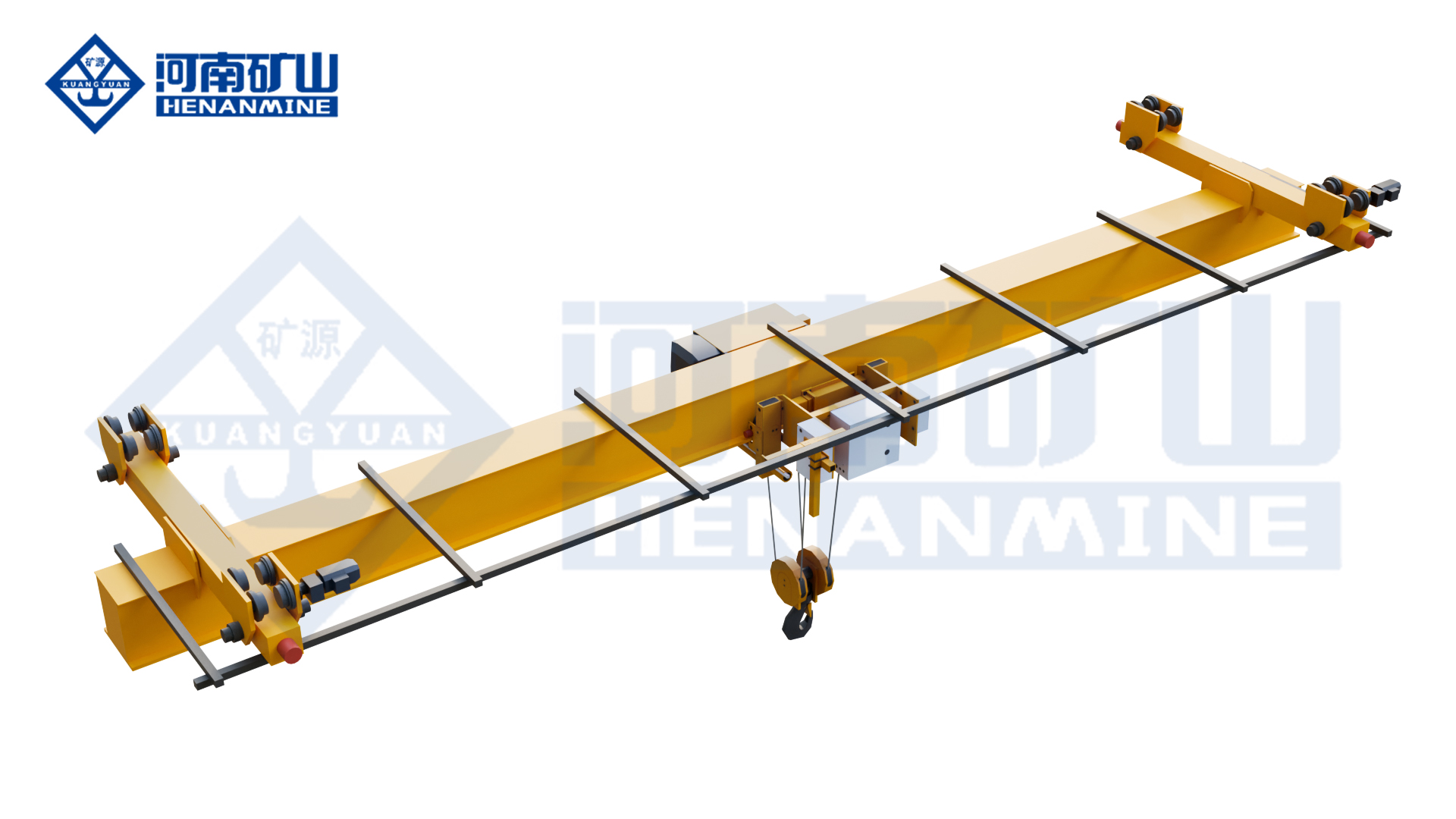
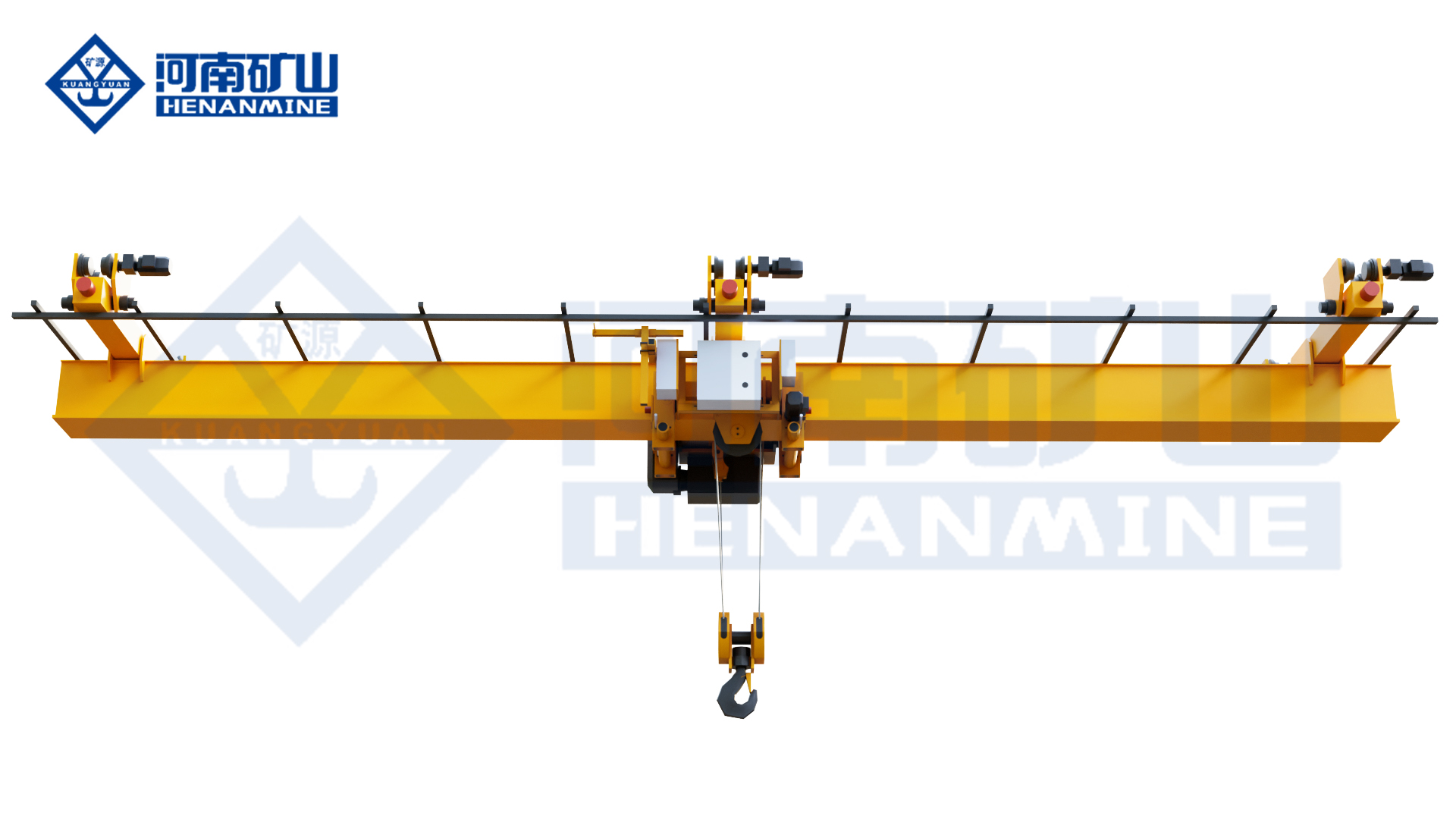
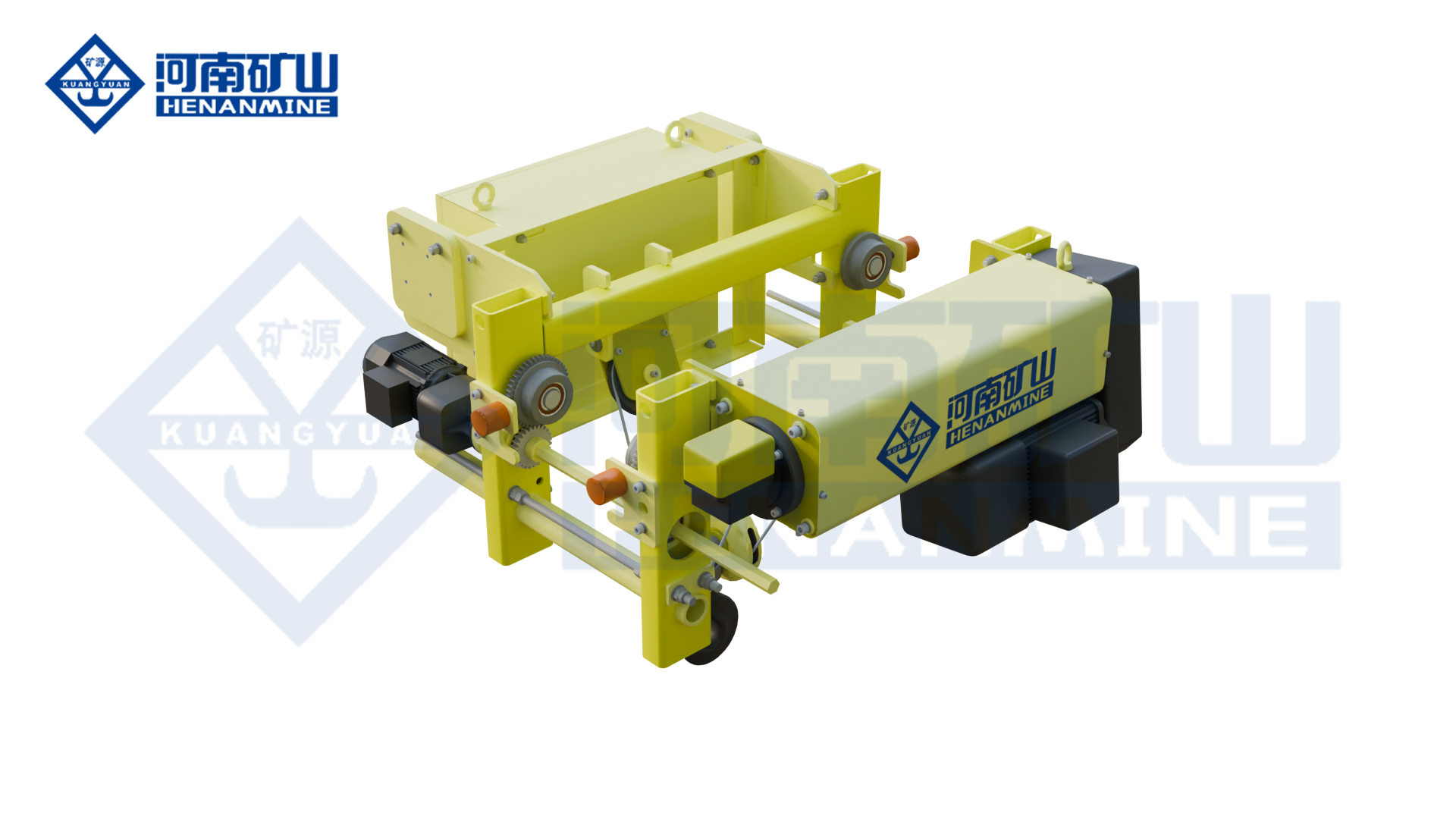
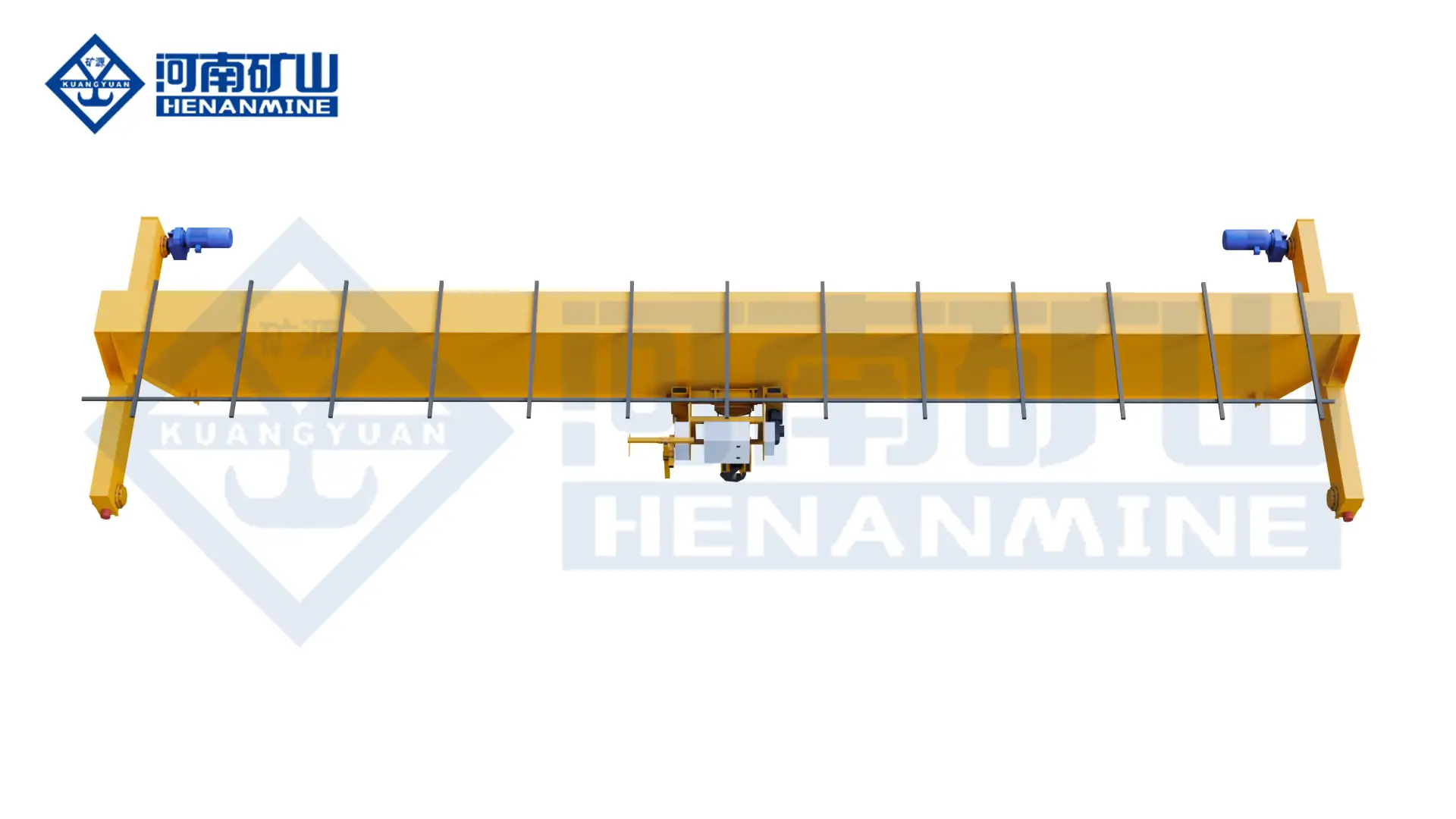
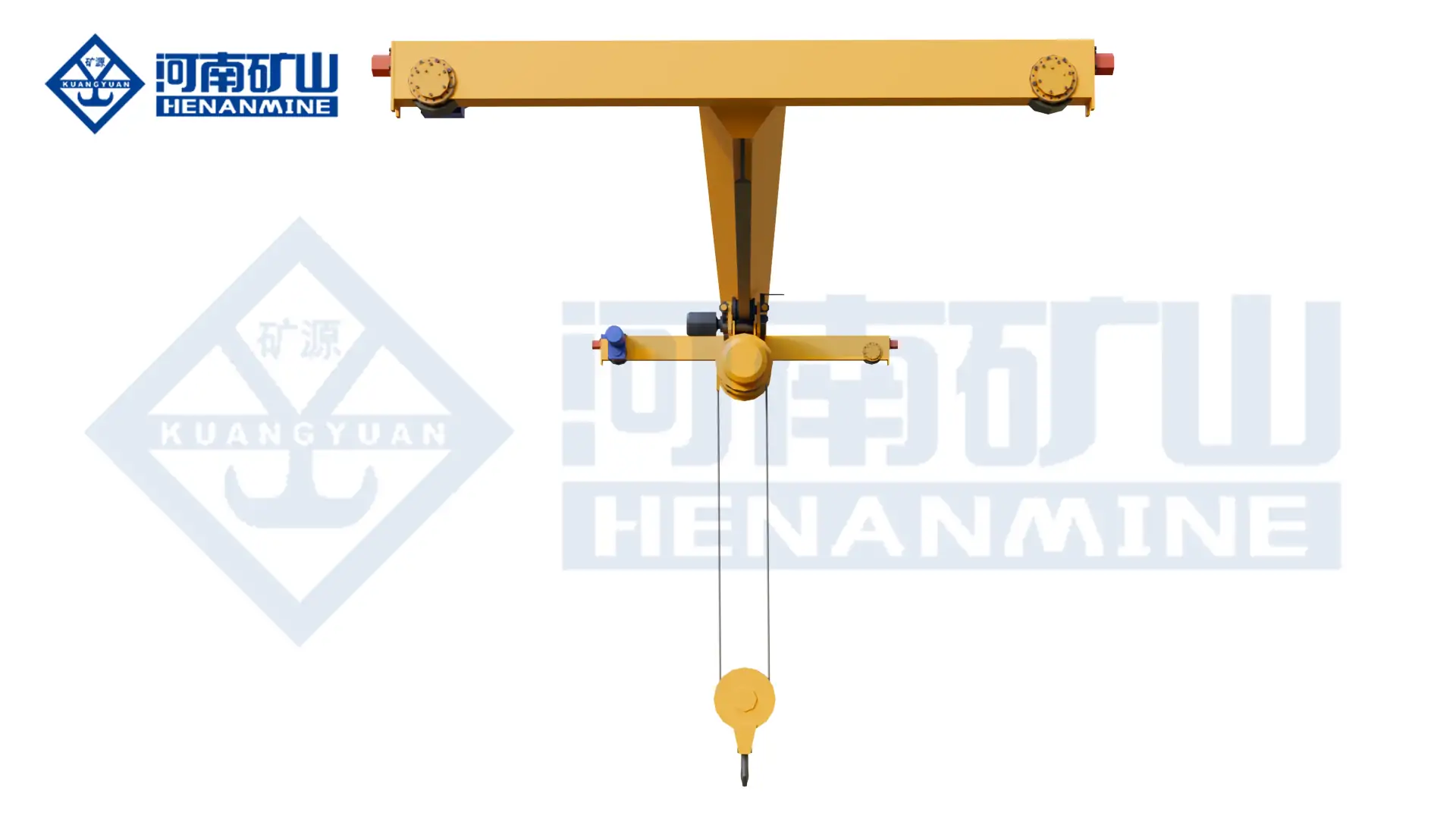
An economical option for lighter maintenance, workshop, packing-line and utility-building loads where the verified capacity, span, headroom and operating frequency remain within the selected hoist and runway design.
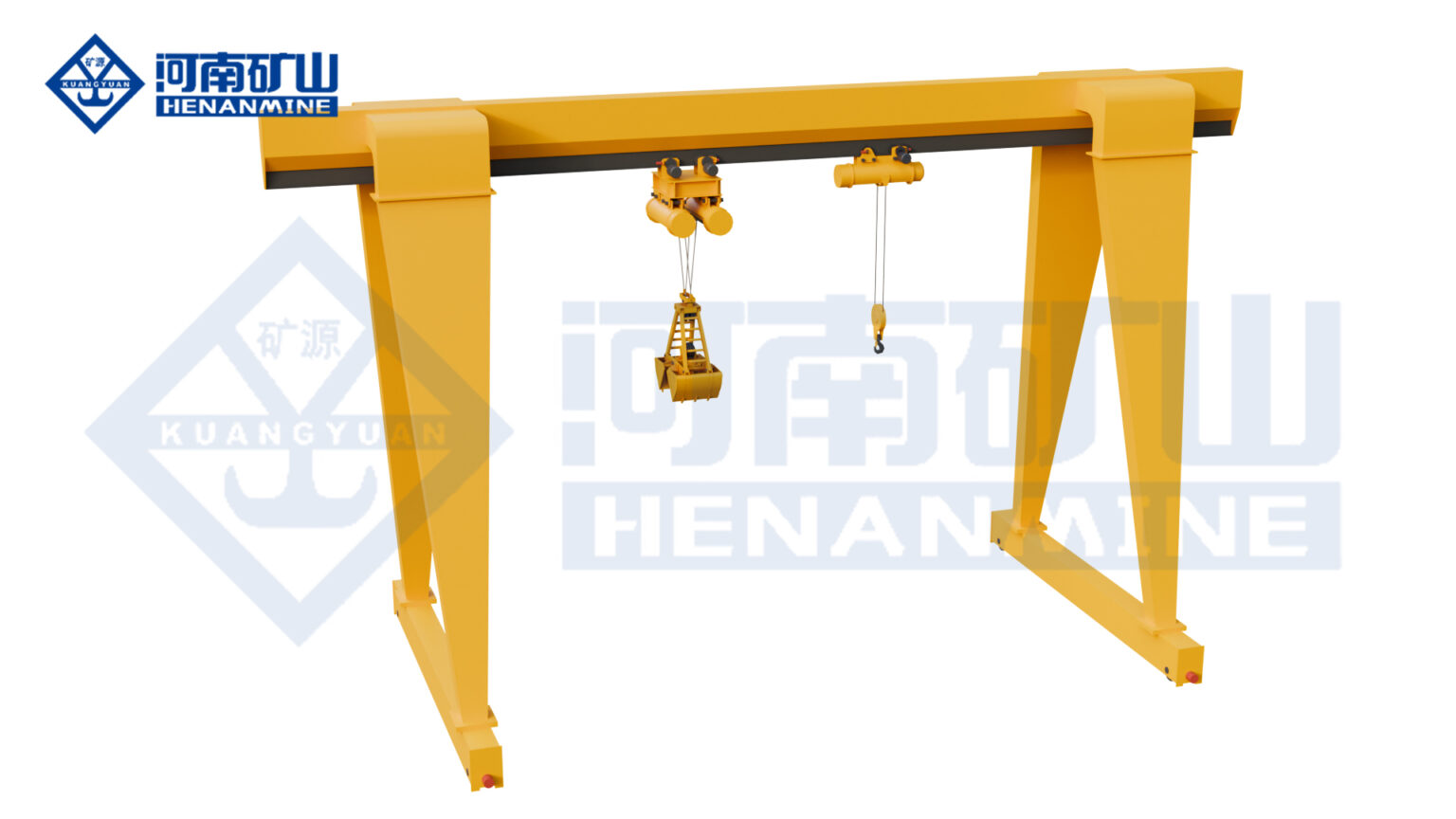
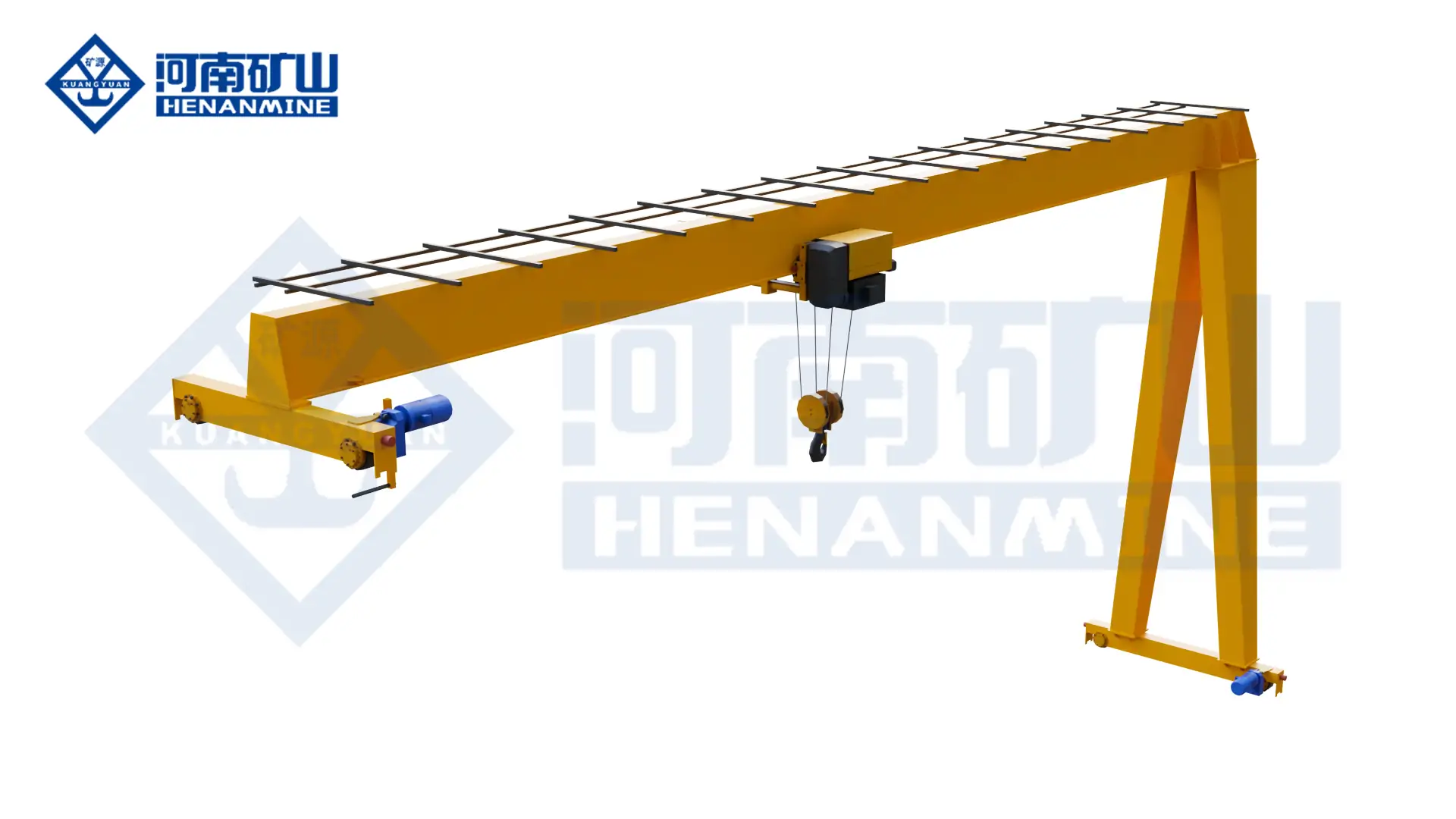
05 · Double-Girder Gantry Crane
A rail-mounted outdoor crane for equipment yards, maintenance laydown areas and construction or shutdown support where the building cannot provide an overhead-crane runway. Wind, rails, foundations and storm parking are integral design requirements.
06 · Hazardous-Area Crane or Hoist
A certified configuration for a documented combustible-dust or gas classification, such as a defined coal or alternative-fuel zone. Motors, brakes, electrics, controls, cable systems and mechanical interfaces must match the approved classification.
Compare Cement Plant Crane Options
The correct configuration follows the task, process zone and operating cycle. A high-speed grab crane selected for bulk throughput is not an economical substitute for an occasional maintenance crane, while a general-purpose hoist is not designed for continuous stockyard reclaiming.
| Configuration | Best-matched duty | Principal advantage | Procurement constraint |
|---|---|---|---|
| Intelligent grab crane | High-cycle bulk storage, blending and hopper feeding | Large bay coverage with automated material-flow options | Requires verified material data, throughput model, pile geometry and interface logic |
| Grab-and-hook crane | Mixed bulk and maintenance loads in one bay | Two handling modes from one runway system | Changeover time and lower specialization may not suit continuous bulk duty |
| Double-girder hook crane | Kiln, mill, crusher, cooler and fan maintenance | High load, hook-height and auxiliary-hook flexibility | Building runway, hook approaches and equipment-removal routes must be coordinated |
| Single-girder service crane | Light and medium intermittent maintenance | Lower equipment and building loads for suitable duties | Limited for heavier equipment, demanding duty or complex hook arrangements |
| Rail-mounted gantry crane | Outdoor equipment and shutdown laydown areas | Independent of the process-building roof structure | Foundations, rails, wind actions, parking and site traffic are part of the system |
Select Capacity, Grab Volume and Duty from Actual Work
For a hook crane, rated capacity must cover the heaviest maintainable component together with the hook block, lifting beam, slings, shackles and every item suspended below the hook. The removal path should confirm centre of gravity, lifting points, required headroom, hook approach and the load position that creates the governing wheel reactions.
For a grab crane, crane capacity includes the grab self-weight plus the material payload. Required grab volume follows the target payload, loose bulk density and realistic fill factor. Dense clinker, abrasive slag, fine powder and low-density alternative fuel can require different grab geometry even when the nominal volume is identical.
Working class is calculated from operating hours, starts per hour, load spectrum, travel distances and expected service life. Production tonnes per hour must be checked through a cycle model covering closing, hoisting, trolley travel, bridge travel, discharge, return travel and expected process delays.
Cement Process Area and Crane Selection Matrix
| Process area | Typical handling requirement | Crane-system priorities |
|---|---|---|
| Raw-material storage | Limestone, clay, corrective materials and additives in a defined bay or pit | Grab suitability, pile scanning, hopper interface, dust protection and throughput |
| Coal, petcoke or alternative fuel | Stockpiling, mixing, reclaiming or feeding where a crane-based process is selected | Hazardous-area classification, fire strategy, material variability and remote operation |
| Crusher and raw mill | Removal of motors, gearboxes, rollers, liners and drive components | Hook approaches, maintenance openings, low-speed control and equipment laydown |
| Kiln, preheater and cooler | Planned shutdown lifting of fans, drives, refractory-service equipment and assemblies | Measured heat exposure, lifting route, outage criticality and maintenance access |
| Clinker and additive storage | Approved bulk handling or reclaiming duty within storage structures | Temperature at pickup, abrasion, dust containment and receiving-point control |
| Cement grinding | Mill, separator, motor, gearbox and fan maintenance | Capacity from component schedule, accurate positioning and building clearance |
| Packing and dispatch | Maintenance of packers, palletizers, loaders and auxiliary machinery | Compact headroom, safe access and coordination with logistics traffic |
| Workshop and outdoor yard | Repair, assembly, spare-parts handling and shutdown staging | Overhead or gantry layout, weather protection, rails, foundations and traffic separation |
Technical Specification for a Cement Plant Crane
Final values are established from process data, maintenance schedules, plant and civil drawings, site conditions and destination requirements. The following information creates a comparable technical proposal.
| Specification item | Project definition |
|---|---|
| Crane duty | Bulk handling, maintenance, dual-purpose service, construction support or outdoor yard duty |
| Rated capacity | Grab plus payload for bulk duty; complete suspended maintenance load including rigging for hook duty |
| Material and attachment | Bulk density, size, moisture, abrasion and flow behavior; four-rope, hydraulic or sealed grab as applicable |
| Span and travel length | Building bay or rail gauge, runway length, end approaches, maintenance positions and pile coverage |
| Lifting height | Lowest pickup, top of pile, receiving hopper, highest obstruction and required maintenance clearance |
| Duty and throughput | Load spectrum, starts per hour, shifts, annual cycles, average and peak tonnes per hour |
| Speeds and positioning | Hoisting, trolley and bridge speeds; acceleration, creep speed, anti-sway and stopping accuracy |
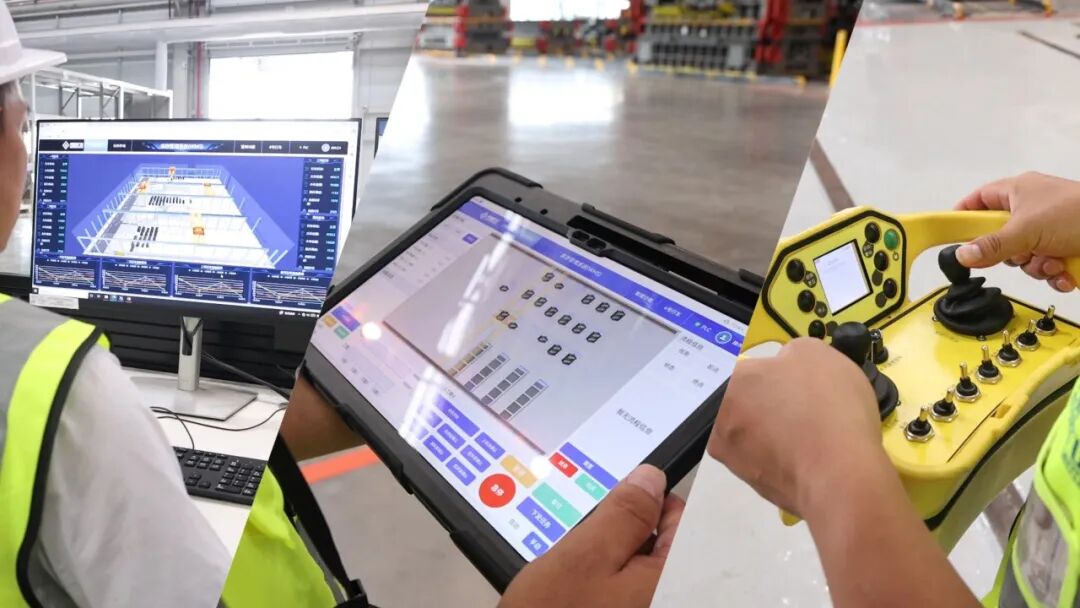
| Control and automation | Pendant, radio or cabin; PLC, pile scanning, positioning, collision avoidance and DCS/MES interface scope |
| Environment | Ambient and radiant temperature, dust loading, humidity, corrosivity, altitude, wind and indoor/outdoor exposure |
| Hazardous-area data | Area classification, material characteristics, equipment group/category, temperature class and certificate requirements |
| Runway and civil interface | Rail profile, support spacing, allowable wheel loads, foundation data, access, drainage and erection route |
| Electrical supply | Voltage, phase, frequency, power-feed method, earthing and permitted variation |
| Codes and acceptance | Destination regulations, agreed design standard, inspection plan, testing, documentation and functional acceptance criteria |
Controls, Safety and Cement-Plant Environment
Dust-Resistant Design
Protected electrical enclosures, sealed or guarded components, suitable bearings, cable systems and accessible cleaning points are selected from the actual dust exposure and maintenance regime.
Heat Assessment
Equipment near kiln or clinker areas may require thermal shielding, heat-resistant components, cooling or derating after ambient and radiant temperatures are established.
Hazardous-Area Compliance
Explosion-protected equipment is applied only to a documented classified zone. The complete crane, not merely the hoist motor, must match the agreed protection concept.
Intelligent Bulk Control
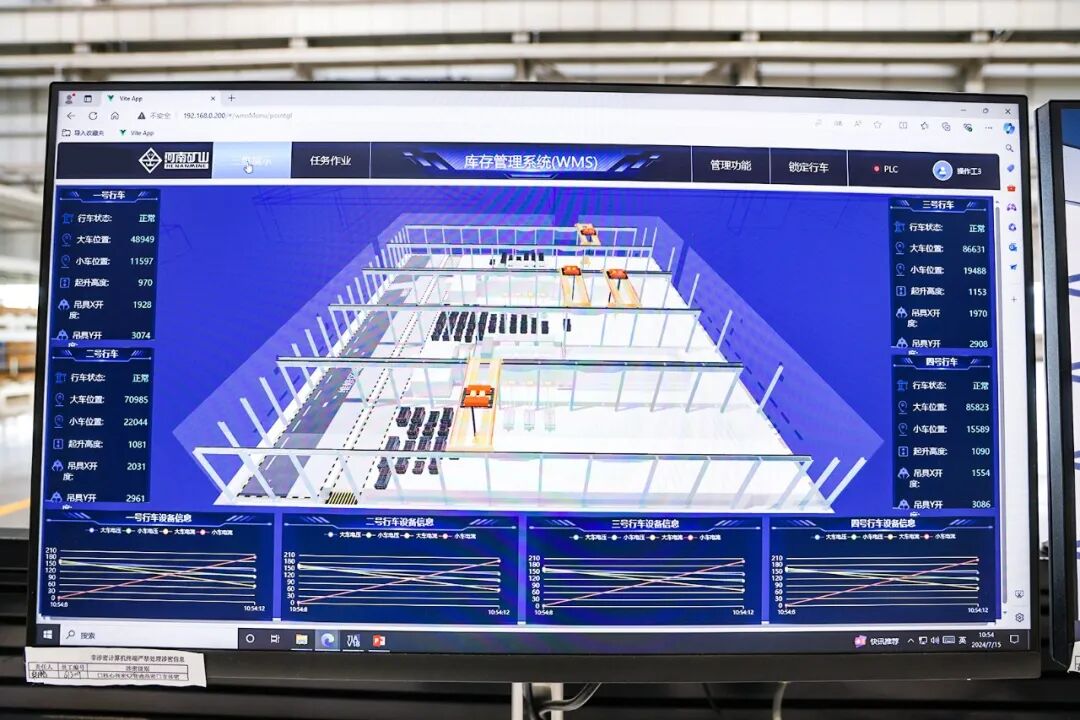
Pile scanning, automatic path planning, anti-sway, target-zone control, collision avoidance and hopper interlocks can reduce manual exposure and support repeatable material flow.
Mechanical Protection
Overload protection, motion limits, service and emergency braking, buffers, rail sweeps, anti-derailment measures and maintenance isolators are defined for the selected design.
Operator and Process Interface
Cabin, radio remote or control-room operation is selected from visibility and exposure. Warning systems, cameras, exclusion zones and process interlocks support the site’s operating method.
Final safety functions, performance levels and environmental protection are established through the approved risk assessment, site classification and destination requirements.
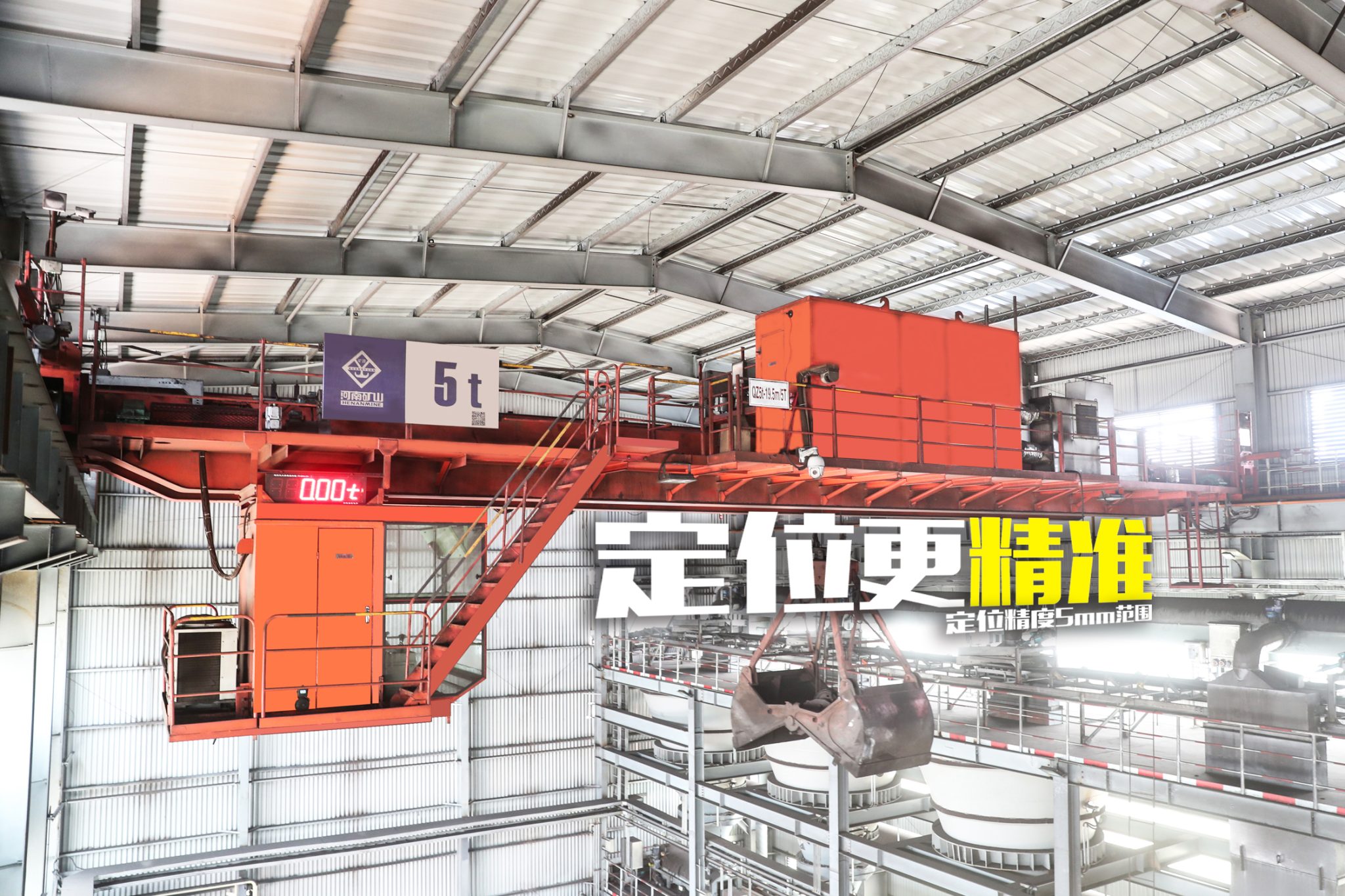
Verified Intelligent Bulk-Handling Reference
Unmanned Grab Crane for Rotary-Kiln and Furnace Projects
Henan Mine Crane records unmanned grab-crane deployment for Baowu Group’s Shaoguan Steel Plant 250,000-ton rotary-kiln project and Ningbo Steel’s No. 2 blast-furnace renovation, together with exports to Georgia and Vietnam. The system combines pile scanning, automatic positioning, obstacle detection, variable-frequency motion and plant-control interfaces for bulk-material work.
These verified references are from steel-industry bulk handling, not cement production. Their relevance to a cement plant is the proven automation architecture for dusty stockpiles, remote operation and repeatable feeding. Cement service requires a new design around the specified limestone, clinker, gypsum, slag, coal or alternative fuel, its hopper arrangement and the plant’s safety classification.
Project capacities, speeds and positioning criteria are therefore not transferred without a material study, cycle calculation and interface review.
Engineering Deliverables and Quality Records
A procurement-ready proposal should define the crane, process interfaces and every supply boundary that affects performance, cost or acceptance. Henan Mine Crane can align the document package with the agreed design code, inspection plan and customer responsibilities.
Design Definition
General arrangement, hook or grab coverage, wheel loads, clearances, cycle calculation, power demand, control philosophy and process interfaces.
Manufacturing Control
Material traceability, dimensional inspection, welding procedures and non-destructive examination records can be included as required by the contract.
Testing and Handover
Factory tests, control simulations, electrical records, installation instructions, site tests, manuals, training and critical-spares recommendations.
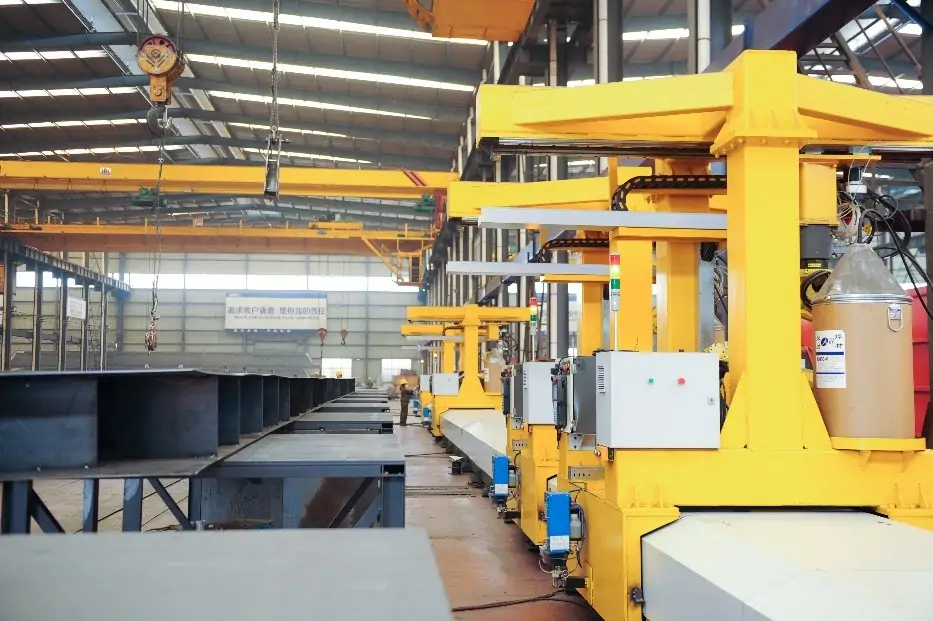
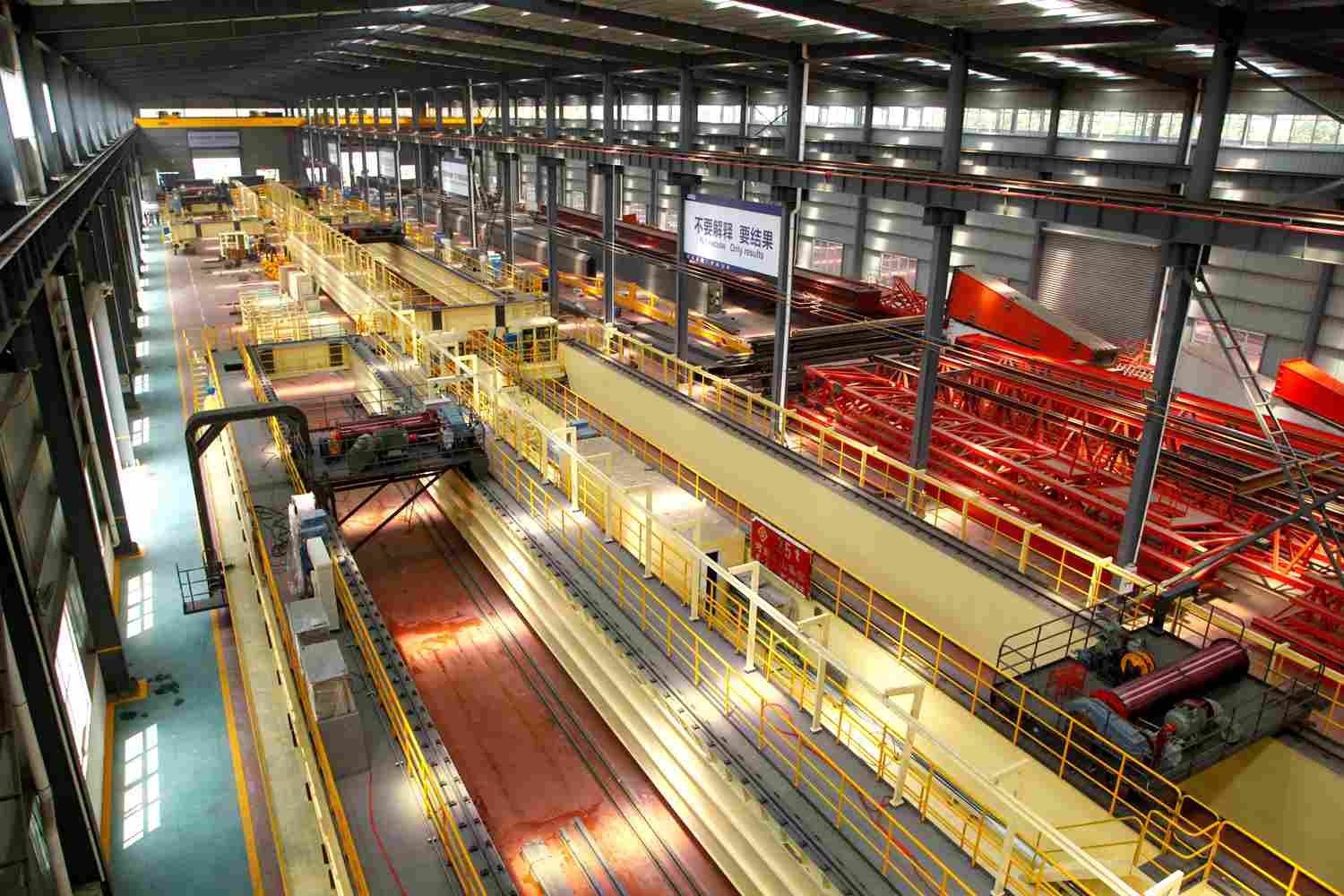
Henan Mine Crane publishes its production and testing capabilities. The inspection and documentation matrix should be agreed before manufacturing so technical and commercial acceptance remain aligned.
Installation, Commissioning and Maintenance Planning
Plant and Civil Readiness
Confirm runway alignment, rails, foundations, wheel-load capacity, building clearances, power, earthing, access, erection zone and shutdown interfaces before delivery.
Functional Acceptance
Define no-load and load tests, grab cycles, throughput demonstration, automation modes, interlocks, communication interfaces and operator training in the contract.
Lifecycle Availability
Plan inspection of ropes, grabs, sheaves, brakes, wheels, rails, gearboxes, motors and electrical systems around production and shutdown schedules; stock critical spares before handover.
For an operating cement plant, delivery and erection must be coordinated with process availability, dust-control systems and planned shutdown windows. For a new plant, crane wheel loads, clearances, maintenance openings, power demand and data interfaces should be frozen before structural design is completed.
Cement Plant Crane Price and Supply Scope
September 2026 public-market pricing supports preliminary equipment-only budgets of approximately US$5,000–US$60,000 for many light or medium maintenance cranes, US$15,000–US$120,000+ for conventional double-girder process and maintenance cranes, and US$10,000–US$95,000+ for conventional grab overhead cranes. These broad bands overlap because capacity alone does not define a crane.
Automated A6–A8 grab systems, large spans, high throughput, redundant controls, pile scanning, dust-classified equipment or multi-crane coordination can exceed the conventional bands and require an engineered quotation. The figures are market-planning values, not a Henan Mine Crane offer, and normally do not represent a complete installed cement-plant system.
| Commercial package | Items to define before price comparison |
|---|---|
| Crane equipment | Bridge or gantry structure, trolley or hoist, drives, electrics, controls, access and safety devices |
| Handling and automation package | Grab, hook block, lifting beam, scanning, anti-sway, positioning, cameras, communications and process interfaces |
| Runway and civil interface | Rails, supporting steel, foundations, conductor system, embedded parts, access platforms and structural checks |
| Environmental compliance | Dust protection, hazardous-area certification, thermal measures, coatings, ventilation and documentation |
| Logistics and installation | Packing, inland transport, ocean freight, insurance, unloading, erection, supervision and shutdown work |
| Testing and support | Test loads or material trials, third-party inspection, commissioning, training, spares and warranty boundary |
A valid supplier comparison requires the same capacity, span, lifting height, duty, material and grab data, control scope, environmental protection, design code, delivery term and site responsibilities. Currency, Incoterm, quotation validity, inclusions and exclusions should be stated explicitly.
Cement Plant Crane RFQ Information
Submit the process area and required task; handled material, loose bulk density, particle size, moisture and abrasion; required tonnes per hour; maximum maintenance load including rigging; bay, pile, bunker and hopper drawings; span, travel length and lifting height; operating cycles; temperature, dust and hazardous-area data; runway or foundation information; power supply; control and DCS/MES interfaces; destination and applicable code; project schedule; and required freight, installation, testing, training and spare-parts scope.
A defined crane configuration, interface schedule and itemized commercial scope can then be prepared.
Frequently Asked Questions
What type of crane is used in a cement plant?
Grab overhead cranes serve defined bulk-material stores and feed points. Single- or double-girder hook cranes serve kiln, crusher, mill, cooler, fan and workshop maintenance. Gantry cranes can cover outdoor equipment or laydown yards.
How is grab-crane capacity calculated?
Crane capacity must cover the grab self-weight plus the material payload. Payload and grab volume are checked from bulk density, fill factor, particle characteristics and the required operating cycle.
Can one crane handle limestone, clinker, gypsum and coal?
Only after each material is evaluated. Density, abrasion, moisture, particle size, flow behavior, contamination limits and hazardous-area classification may require different grabs, operating modes or separate equipment.
Does every cement plant crane need explosion protection?
No. Explosion protection is required only where the plant has defined a hazardous gas or combustible-dust area. Coal, petcoke or alternative-fuel zones must be checked against the site’s formal classification.
What crane duty class is suitable for cement service?
Duty follows actual cycles and load spectrum. Occasional maintenance may use a lighter class, while continuous grab handling generally requires a higher-duty design. The class must be calculated rather than selected from the industry name.
Can a cement grab crane operate automatically?
Yes. Options include pile scanning, automatic target selection, path planning, anti-sway, collision avoidance, hopper interlocks and DCS or MES communication. Functional boundaries and manual fallback modes must be defined.
What protection is required near a kiln or clinker cooler?
Protection depends on measured ambient and radiant heat. The design may require shielding, high-temperature components, ventilation, cooling, derating, protected cables and an inspection plan suited to thermal cycling.
Can an existing cement-plant runway be reused?
Reuse is possible only after the rails, beams, columns, connections, alignment and allowable reactions are verified for the new crane wheel loads, duty, braking forces and local requirements.
How much does a cement plant crane cost?
Preliminary equipment-only market bands extend from about US$5,000 for simple maintenance cranes to US$120,000+ for conventional larger systems. Automated grab, hazardous-area and plantwide packages require a project quotation.
What information is needed for a cement crane quotation?
Provide the task, material data, throughput, maintenance-load schedule, layout, span, height, travel length, cycles, environment, area classification, runway data, power, controls, destination, code and required supply scope.
Technical content record
Prepared by Henan Mine Crane Technical Sales · Technically reviewed by Crane Engineering · Last reviewed September 2026
Related Cement Plant Crane Products

Intelligent Grab Overhead Crane
High-duty four-rope grab system with optional automated bulk-material control.
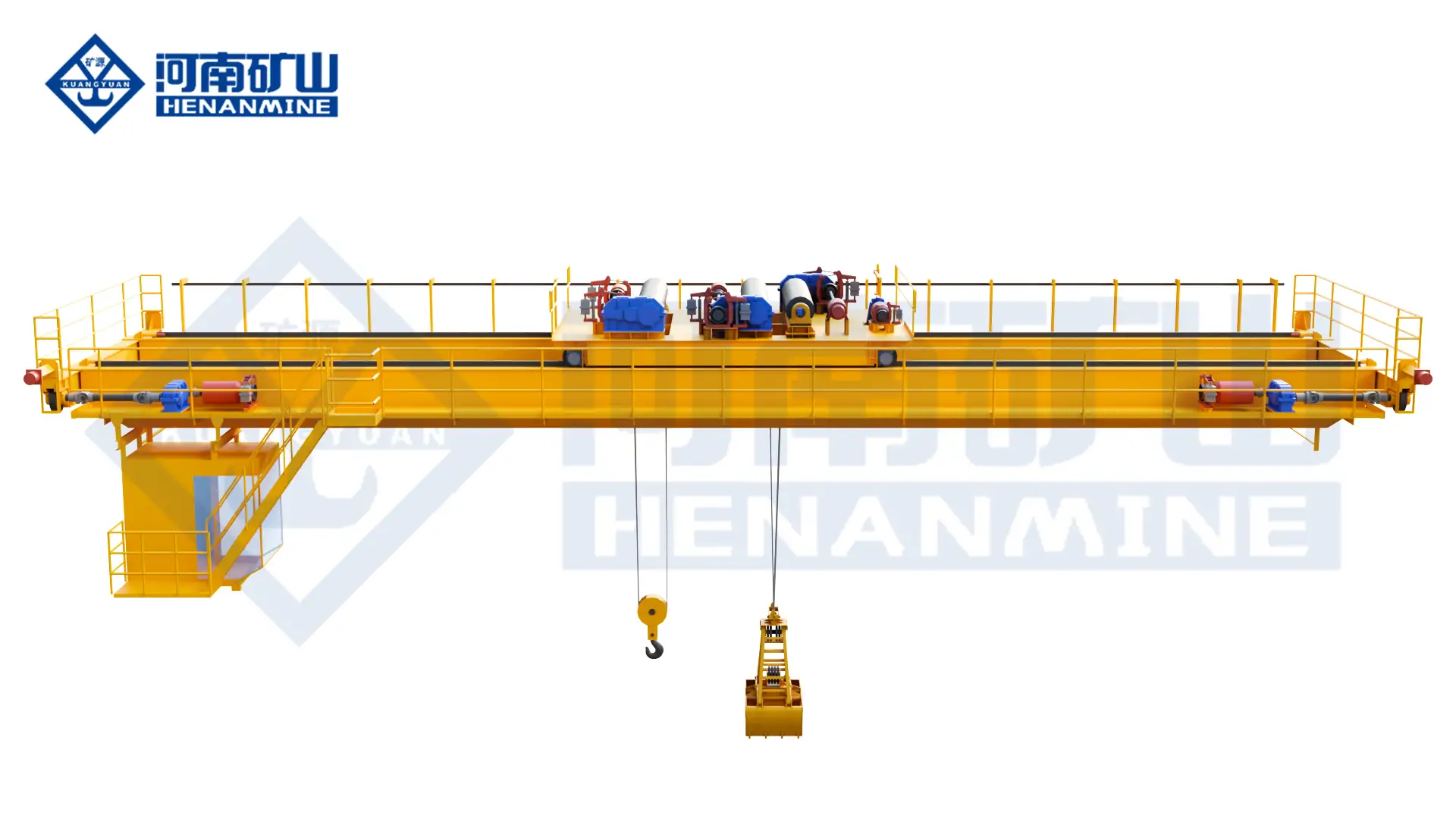
Grab-and-Hook Overhead Crane
Dual-purpose crane for defined bulk handling and conventional hook lifting.
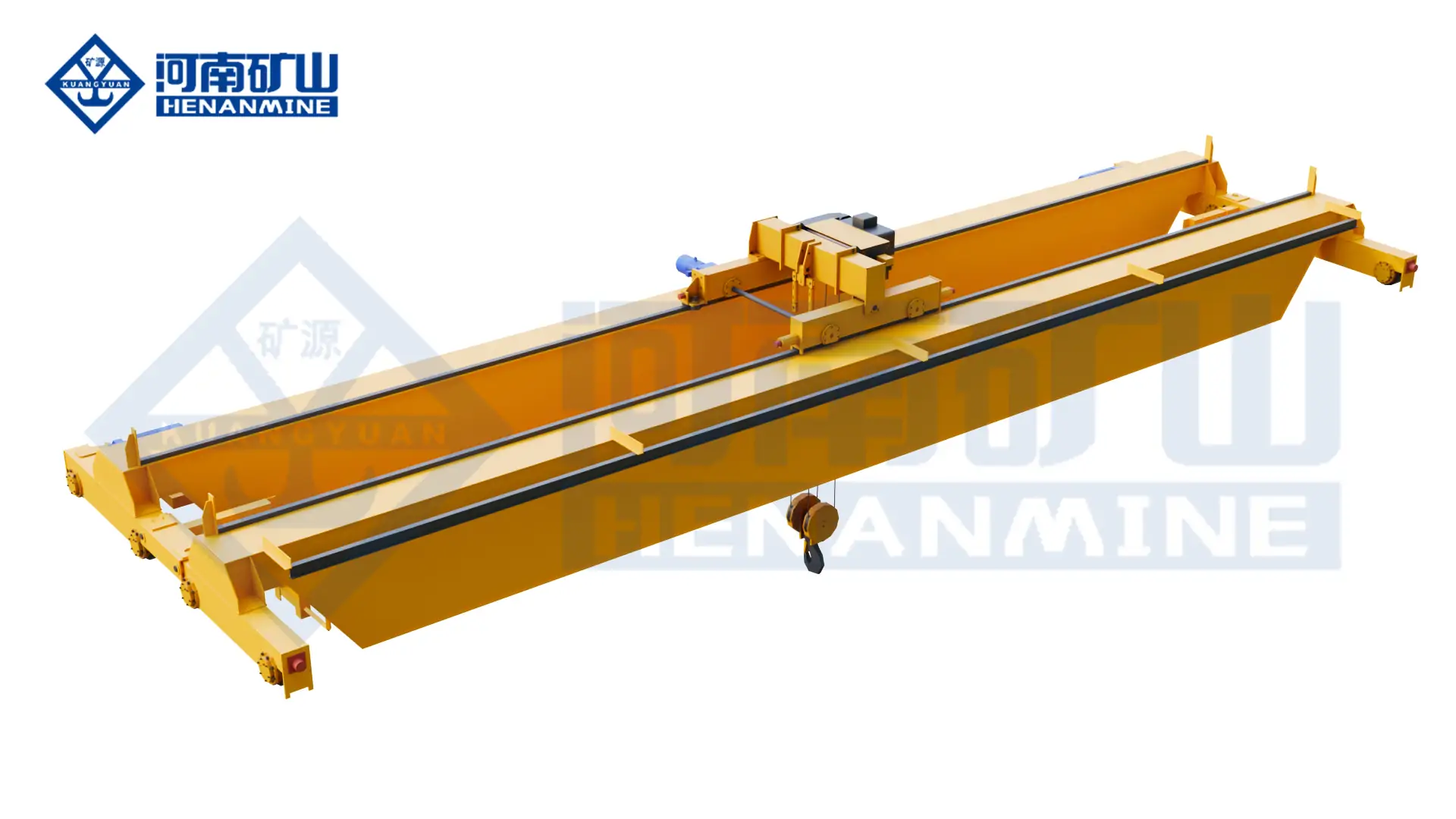
Double-Girder Overhead Crane
Hook crane for heavier process-equipment maintenance and controlled positioning.
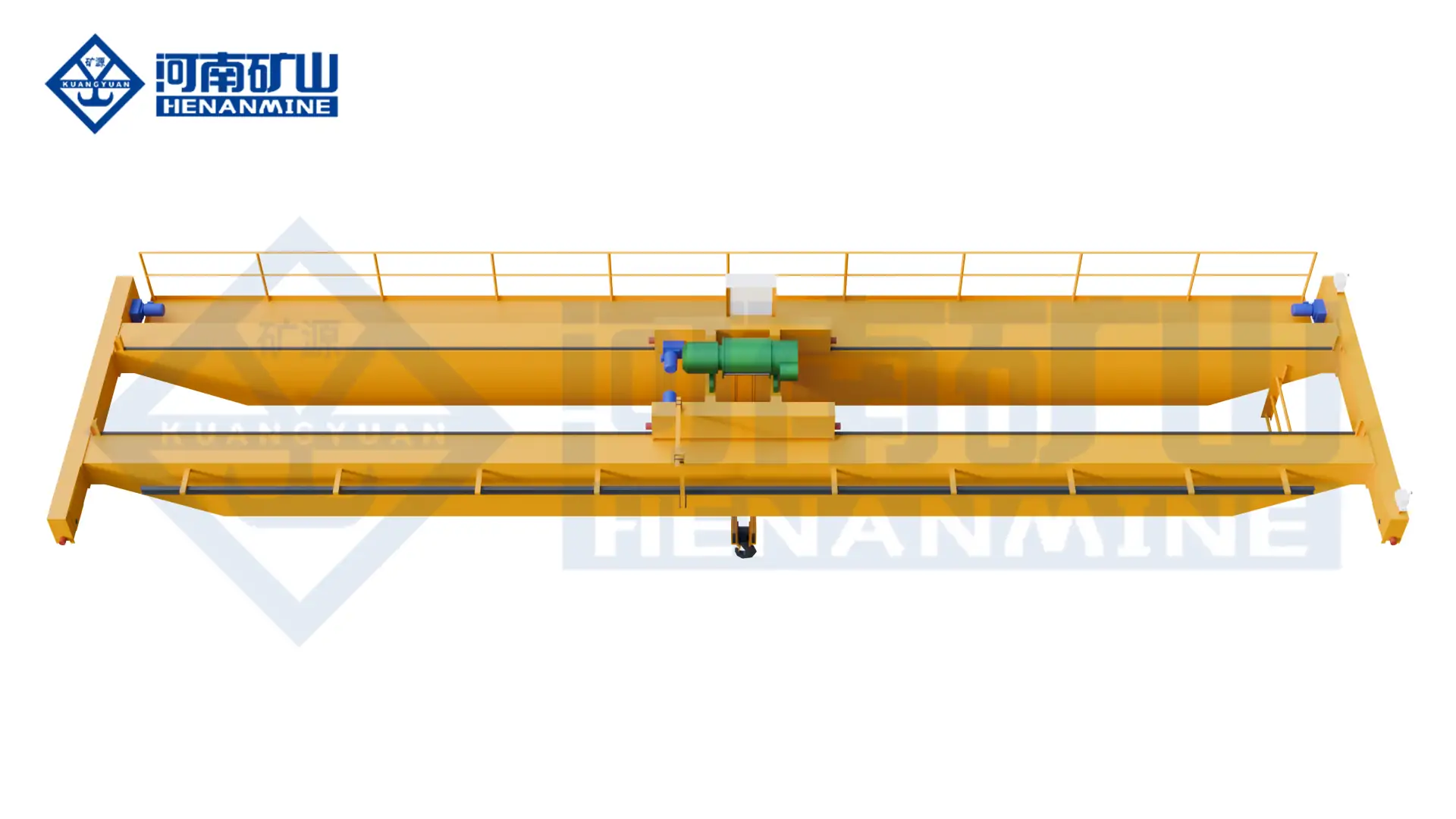
Explosion-Proof Bridge Crane
Project-matched lifting equipment for documented hazardous gas or dust zones.
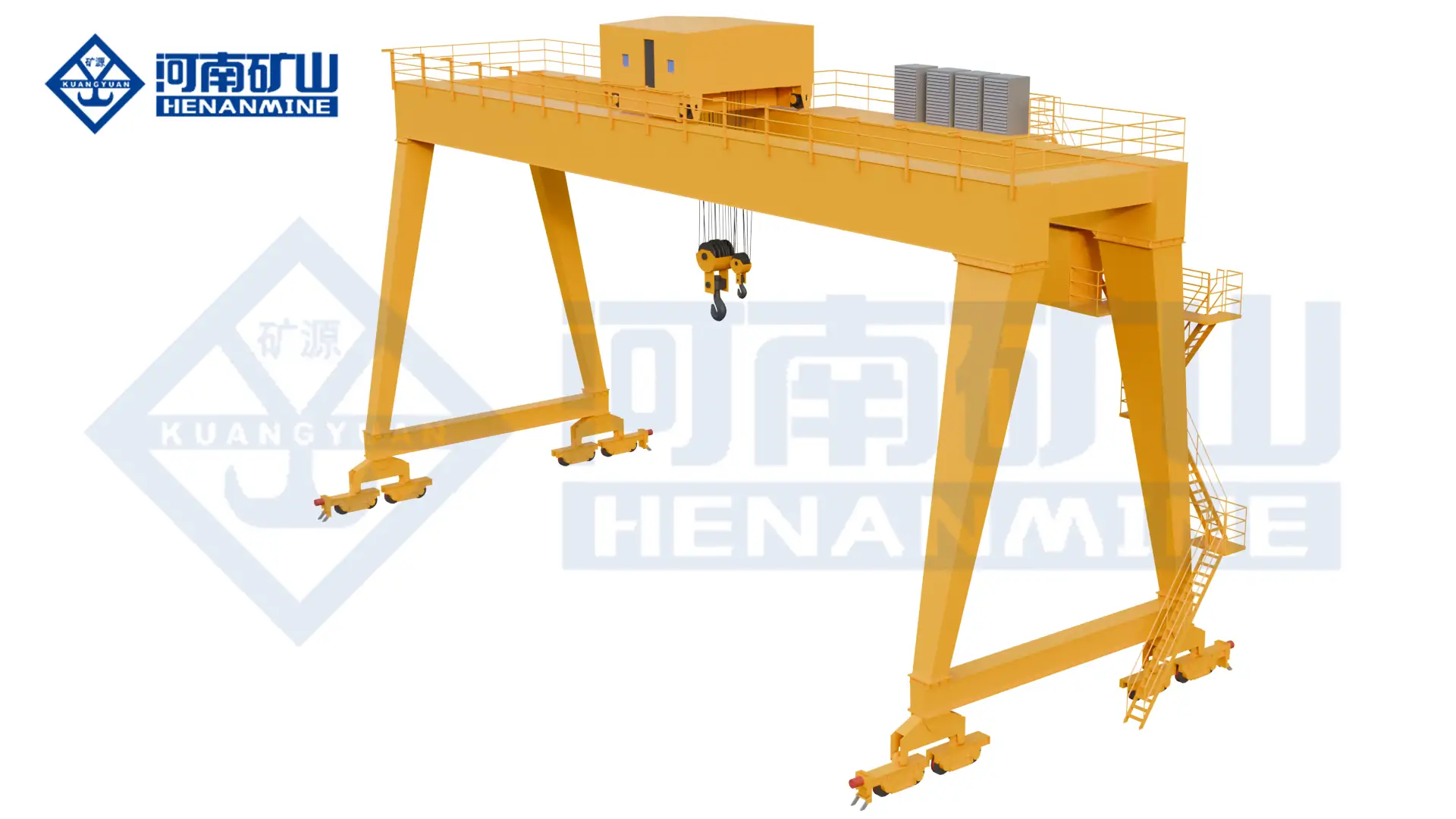
Double-Girder Gantry Crane
Rail-mounted outdoor crane for equipment yards and shutdown support areas.
Cement Plant Lifting Proposal
Request a Cement Plant Crane Quote
Share the process duty, material and throughput data, maintenance loads, plant layout, required coverage, operating cycle, environment, area classification, destination and delivery boundary. Henan Mine Crane will develop a defined crane configuration and commercial proposal for the cement operation.