
Henan Mine Crane · Potroom Process Equipment
Aluminum Smelter Multifunction Crane
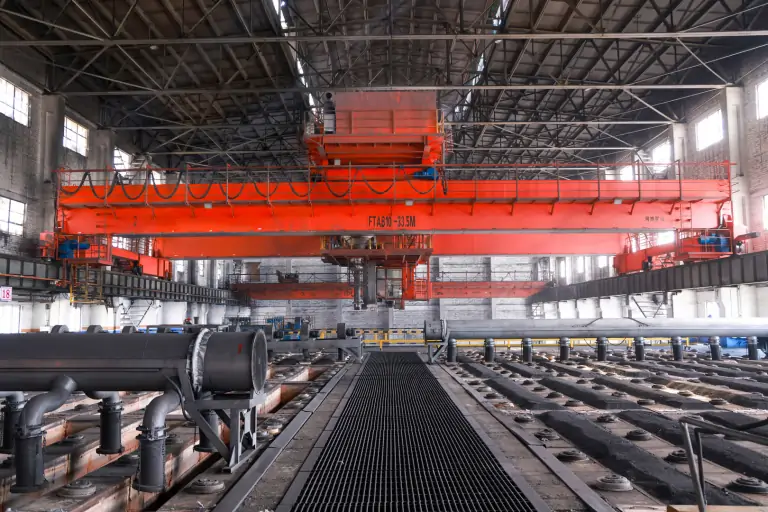
An aluminum smelter multifunction crane is an engineered pot tending machine for prebaked-anode reduction cells. The traveling bridge, tool trolley and dedicated process modules can be configured for crust breaking, anode changing, bath cleaning, alumina or cover-material feeding, aluminum tapping support, busbar-related lifting and pot maintenance.
Henan Mine Crane develops each PTM around the pot technology, anode geometry, cell pitch, potroom runway, required operations, production cycle and environmental conditions. Tool capacities and duty requirements are specified separately because a single crane tonnage does not define a multifunction potroom machine.
EQUIPMENT FAMILY
PTM / Pot Tending Crane
PRIMARY APPLICATION
Prebaked-Anode Potlines
FUNCTION PACKAGE
Selected by Pot Process
PRICE BASIS
Engineered Project Quote
What Is an Aluminum Smelter Multifunction Crane?
The terms aluminum smelter multifunction crane, pot tending machine, pot tending crane and PTM crane commonly describe a bridge-mounted process machine that services reduction cells in an aluminum potroom. Unlike a standard overhead crane, the PTM carries a coordinated set of tools and handling mechanisms matched to electrolysis operations.
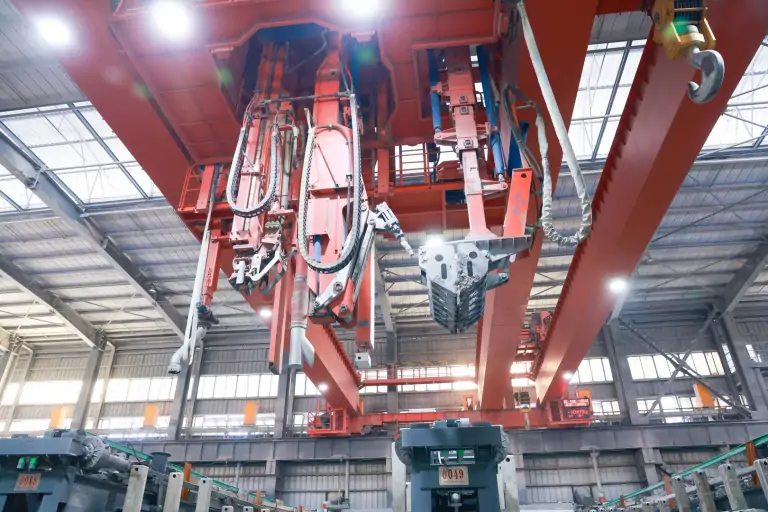
A complete machine may combine an anode handling unit, crust breaker, bath or residue removal tool, material feeding system, aluminum tapping trolley or tapping interface, auxiliary hoist, rotating tool carriage and operator cabin. The final arrangement depends on which operations are assigned to the PTM and which remain with separate plant equipment.
Process Machine
The PTM performs repeatable pot operations; it is not only a lifting bridge with a hook.
Multi-Tool Platform
Each mechanism has its own load, reach, motion, duty, accuracy and process interface.
Potline-Specific Design
Bridge geometry, tool envelope and control logic follow the actual cell technology and bay layout.
Harsh-Duty Protection
Electrical, thermal, dust, fume and magnetic-field conditions are part of the design basis.
Selection Considerations
01 / POT TECHNOLOGY
Cell Geometry and Pitch
Define cell type, centerline pitch, hood arrangement, anode layout, access side, working zones and no-go envelopes.
02 / ANODE SYSTEM
Anode and Clamp Data
Record new and spent anode mass, dimensions, stem arrangement, clamp interface, extraction stroke and placement tolerance.
03 / REQUIRED TOOLS
Process Function Schedule
List crust breaking, feeding, anode changing, bath cleaning, tapping, busbar work, cover handling and maintenance functions.
04 / PRODUCTION
Cycle and Availability
State pots served, shifts, planned tool cycles, peak demand, standby philosophy, recovery time and maintenance windows.
05 / POTROOM
Runway and Clearances
Verify rail span, elevation, approaches, wheel-load limits, longitudinal geometry, building deflection and erection route.
06 / ENVIRONMENT
Heat, Dust, Fumes and Field
Supply measured ambient and radiant heat, magnetic-field map, conductive dust, fluoride fume and ventilation conditions.
07 / CONTROL
Manual, Assisted or Automated
Define cabin, remote station, tool interlocks, pot identification, positioning, data exchange and automatic sequence boundaries.
08 / SUPPLY SCOPE
Interfaces and Acceptance
Fix the limits for runway, power, compressed air, fume extraction, installation, testing, training, spares and documentation.
A reliable quotation requires a tool-by-tool process specification. Bridge rated load alone cannot establish anode handling force, crust-breaker energy, feed volume, tapping arrangement, auxiliary-hoist duty or required production throughput.
Aluminum Smelter Multifunction Crane vs. Related Crane Types
Pot tending, anode logistics, energized-area maintenance and molten-aluminum transfer are separate duties. The following equipment families can operate within one smelter, but they are not interchangeable.
| Equipment | Primary Duty | Process Tools | Selection Boundary |
|---|---|---|---|
| Aluminum Smelter Multifunction Crane | Integrated tending of prebaked-anode reduction cells | Multiple dedicated tools selected for the pot process | Correct choice when repeated cell operations must be combined on one traveling platform |
| Anode Carbon Block Stacking Crane | Anode storage, stacking and warehouse transfer | Multi-block gripper or project-specific clamp | Supports carbon logistics but does not change anodes at an energized reduction cell |
| Insulated Overhead Crane | Maintenance or material lifting where electrical isolation is required | Hook or approved lifting attachment | Insulation alone does not provide PTM process tooling or pot-tending sequences |
| Double-Trolley Insulated Crane | Coordinated insulated lifting with two trolley mechanisms | Hooks or dedicated lifting beams | Suitable for selected handling duties, not a substitute for a rotating multi-tool trolley |
| Metallurgical Ladle Crane | Molten-metal ladle lifting and transfer | Ladle beam, plate hook or project attachment | Selected for hot-load transfer; it does not break crust, feed material or change anodes |
| General Double-Girder Bridge Crane | Plant maintenance and general material handling | Hook, beam or other conventional attachment | Requires substantial redesign before use near energized cells, fluoride fumes or PTM operations |
Pot Tending Functions and Tool Modules
The function package must reflect the established pot operating procedure. Not every PTM requires every module, and one tool can require different geometry for different reduction-cell technologies.
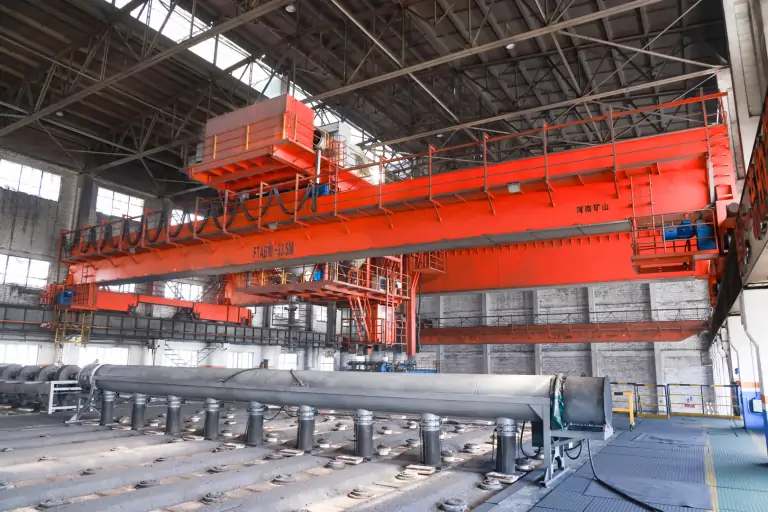
Crust Breaking and Working-Hole Opening
A guided breaker opens the electrolyte crust at defined positions. Tool reach, impact requirement, alignment and debris control follow crust condition and cell geometry.
Anode Changing
The anode mechanism releases the clamp interface, extracts the spent assembly, handles the replacement anode and positions it at the designated location. Mass, stem form, center of gravity and placement tolerance are essential inputs.
Bath and Residue Removal
A cleaning or grab tool can remove crust pieces, residual material and selected bath deposits from the working area before placement of the new anode.
Alumina and Cover-Material Feeding
A metered feeding arrangement distributes alumina, fluoride additions or cover material where specified. Storage volume, discharge rate, dust containment and refill interface form part of the procurement data.
Aluminum Tapping Support
The PTM can carry or position a tapping trolley, pipe or ladle interface. Vacuum generation, weighing and ladle transport boundaries must be clearly allocated between crane and plant systems.
Busbar and Pot Maintenance
An insulated auxiliary hoist or dedicated frame may support approved busbar-related work, hood handling, pot superstructure service and controlled maintenance lifts.
Auxiliary Handling
A general auxiliary hoist can handle approved tools, maintenance parts and consumables within the defined capacity, isolation and exclusion-zone rules.
Machine Architecture, Controls and Automation
Bridge and Traveling System
The bridge distributes tool and trolley loads to the potroom runway while providing the required approaches above the cell row. Wheel arrangement, drives, braking and structural stiffness follow the operating spectrum, rail geometry and positioning requirement.
Tool Trolley and Rotation
A traversing tool trolley positions the working mechanisms across the cell. A rotating carriage or turret can orient tools to the operating face. Interlocks prevent incompatible motions, tool collision and operation outside approved envelopes.
PLC, Drives and Positioning
Variable-frequency drives and PLC control can coordinate bridge, trolley, rotation and tool motions. Pot identification, travel-position feedback, tool-height measurement, load monitoring and sequence permissions can be integrated at the automation level specified for the project.
Operator Environment
The cabin location, visibility, filtration, cooling, heat shielding, fume protection and emergency egress are developed from the potroom hazard assessment. Remote or assisted operation can reduce routine exposure while retaining controlled recovery procedures.
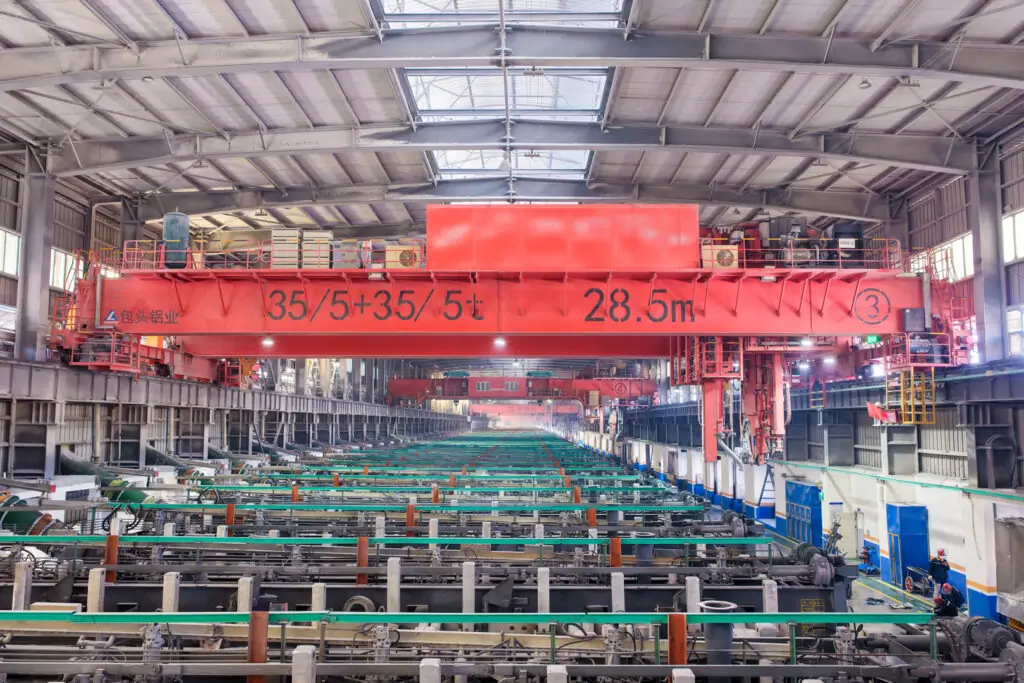
Protection for Aluminum Potroom Conditions
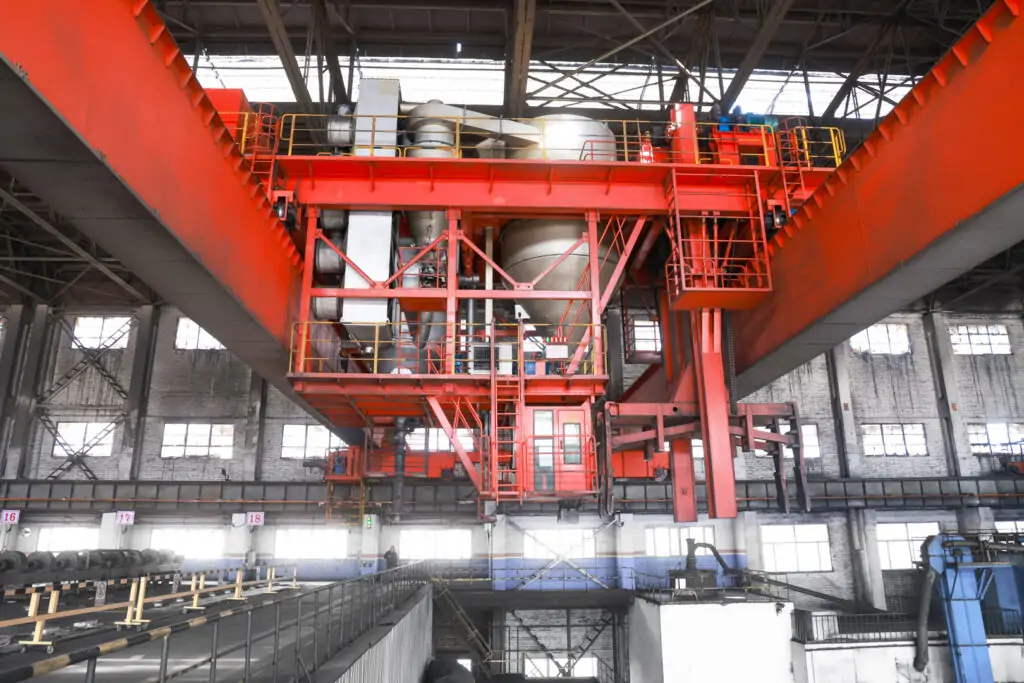
Electrical Isolation
Insulation points, creepage distances, monitoring and maintenance-access rules are selected from the plant electrical design and the maximum credible potential difference. Isolation must cover the complete current path, including tools, hoists, structures and service connections.
Heat and Fume Resistance
Heat shields, component location, cooling, material selection and cable protection reduce exposure to hot cell surfaces and radiant heat. Corrosion-resistant finishes, sealed enclosures and protected ventilation address fluoride-bearing fumes.
Dust and Magnetic-Field Compatibility
Alumina and carbon dust affect cooling, contacts, sensors and mechanical interfaces. Enclosure rating, filters and cleaning access follow the measured load. Electrical and control components are selected and positioned for the documented magnetic field.
Safe-Failure Response
Overload protection, limits, braking, anti-collision, motion interlocks, emergency stops and recovery modes are defined by the project risk assessment. Redundancy is applied where the consequence and governing design basis require it.
Configurable Technical Specification
A PTM technical schedule should identify every process mechanism separately. The following procurement fields establish an auditable basis for engineering and quotation.
| Specification Group | Required Project Data | Engineering Output |
|---|---|---|
| Bridge and Runway | Rail span, elevations, approaches, bay length, rail data and allowable reactions | General arrangement, wheel loads, clearances and structural design basis |
| Anode Tool | Anode mass, stem and clamp geometry, stroke, orientation and cycle | Rated load, grip interface, force or torque, speed and placement tolerance |
| Crust and Cleaning Tools | Crust condition, opening position, depth, residue form and cell access | Tool energy, reach, guidance, cleaning capacity and exclusion envelope |
| Feeding System | Material, bulk density, batch volume, discharge pattern and refill station | Hopper volume, dosing method, discharge rate and dust-control interface |
| Tapping and Auxiliary Hoist | Ladle, tapping pipe, vacuum, weighing, maintenance loads and lift paths | Interface allocation, hoist SWL, speeds, insulation and controls |
| Duty and Performance | Pot count, cycles, load spectrum, shifts, availability and standby plan | Mechanism classes, motor ratings, thermal checks and throughput model |
| Environment and Power | Temperature, magnetic field, dust, fumes, voltage, frequency and earthing plan | Protection levels, insulation scheme, cooling, materials and power interface |
| Controls and Compliance | Operating mode, plant communications, required codes and acceptance plan | Control architecture, interlock matrix, test procedure and document register |
Final capacities, speeds, classes, protection ratings and automation performance are confirmed after review of the approved operating philosophy, plant data and governing standard. Published values for another potline must not be copied into a new procurement specification without verification.
Aluminum Industry Project Experience
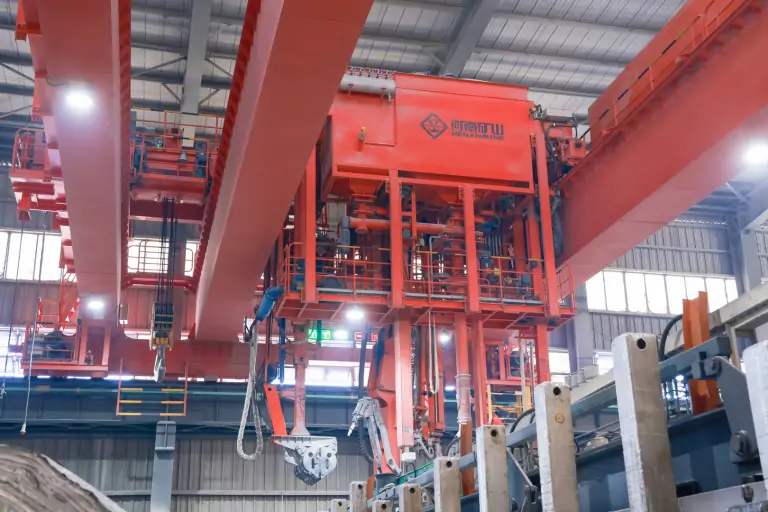
Integrated Aluminum Production Lifting Program
A published Henan Mine Crane aluminum-industry program combines three equipment groups: multifunction suction handling equipment, anode carbon block stacking cranes and multifunction aluminum electrolysis units. The program addresses raw-material movement, carbon-block storage and reduction-cell operations as separate but connected process zones.
The electrolysis unit integrates shell breaking, anode replacement, residue cleaning and cover-material loading. Sensor-based height measurement, tightening control and automatic operating functions can be applied according to the selected automation scope.
View Aluminum Industry Project
Electrolytic Aluminum Crane Configuration
Henan Mine Crane also publishes an electrolytic-aluminum equipment family for high-duty aluminum liquid transfer, anode handling, cell maintenance and plant material movement. The configuration demonstrates the need to match working class, protection, attachment and control method to the exact process rather than specifying a general metallurgical crane.
Engineering, Manufacturing and Quality Documentation
Design Basis
The contract design basis identifies the governing crane, machinery, electrical and structural requirements. Applicable codes may include EN, ISO, IEC, FEM, CMAA or project-specific national standards, but the agreed hierarchy and editions must be fixed before detailed design.
Engineering Review
Deliverables can include general arrangement drawings, wheel loads, structural calculations, mechanism selection, tool envelopes, electrical single-line diagrams, PLC architecture, cause-and-effect logic, interlock matrix and utility requirements.
Fabrication and Inspection
Material traceability, welding procedures, dimensional checks, nondestructive examination, machining records, assembly inspection, coating controls and purchased-component certificates can be included in the approved inspection and test plan.
Factory Acceptance
Factory testing verifies drive direction, brakes, limits, alarms, interlocks, control modes, tool motions and communications to the extent possible before shipment. Site process interfaces are completed during commissioning with approved simulation and live-operation procedures.
Recommended Document Register
Technical data sheet · approved general arrangement · interface schedule · wheel-load report · calculation summary · component list · electrical drawings · PLC and network architecture · interlock matrix · inspection and test plan · welding and NDT records · factory test report · installation manual · operation and maintenance manual · spare-parts list · training plan · as-built dossier.
Installation, Commissioning and Lifecycle Support
Site Readiness
Confirm runway survey, rail condition, erection access, lifting plan, utilities, laydown area, shutdown windows and potroom work permits before delivery.
Mechanical and Electrical Installation
Bridge assembly, rail alignment, festoon or conductor installation, tool commissioning and plant-network integration follow approved method statements.
Functional and Process Testing
Testing progresses from no-load motion and interlocks to proof testing, dry process simulation and controlled potline trials under the agreed acceptance plan.
Training and Handover
Operator, electrical, mechanical and automation training should cover normal operation, tool change, alarm response, isolation, recovery and preventive maintenance.
Maintenance Strategy
The maintenance plan should be organized by bridge, trolley, process tool, hydraulic or pneumatic system, electrical equipment, cabin services and safety functions. Dust loading, thermal cycling, insulation condition and fume exposure require inspection intervals based on measured service conditions rather than a generic workshop-crane schedule.
Recommended commissioning spares normally cover critical sensors, seals, filters, contactors, brake wear parts, tool consumables and selected drive or control components. The final list follows failure consequence, local inventory, lead time and the plant standby philosophy.
Aluminum Smelter Multifunction Crane Price
There is no dependable standard list price for a complete pot tending machine. Public online advertisements for equipment labeled as an electrolytic aluminum multifunction crane or PTM presently show approximately US$9,000–60,000 per set, while one broad advertisement begins at US$1,000. The range is too wide to represent comparable equipment and frequently lacks a defined tool package, duty, automation scope, runway interface, testing, freight and commissioning.
These public figures are indicative advertisements only. They are not a Henan Mine Crane selling price, a turnkey smelter budget or a landed installed cost. A technically valid quotation follows review of the potline data and an agreed supply boundary.
Machine and Tool Package
Bridge size, tool trolley, anode equipment, breaker, cleaner, feeder, tapping arrangement, hoists, hydraulics and pneumatics.
Controls and Protection
PLC, drives, positioning, plant communications, operator cabin, remote operation, insulation, cooling, enclosures and fume protection.
Project Delivery
Documentation, testing, packaging, ocean freight, insurance, runway or power scope, installation, commissioning, training and spares.
Data Required for a Budgetary Quote
Plant country and destination port · pot technology and layout drawing · runway span and bay length · pot count and production schedule · anode drawings and mass · required tool list · tapping and maintenance scope · environmental measurements · power supply · control and automation level · governing standard · installation responsibility · required delivery date.
Aluminum Smelter Multifunction Crane FAQ
Is a pot tending machine the same as an overhead crane?
It uses an overhead traveling bridge, but it is a process machine with dedicated tools, controls and protections. A conventional hook crane cannot perform the full pot-tending sequence without extensive purpose-specific engineering.
Which operations can be integrated?
Typical options include crust breaking, anode changing, residue removal, alumina or cover-material feeding, tapping support, busbar-related lifting and maintenance handling. The approved operating procedure determines the final combination.
What capacity should be specified?
Each mechanism requires a separate capacity or performance value. Anode-tool load, auxiliary-hoist SWL, tapping load, breaker energy and feed volume cannot be represented accurately by one headline tonnage.
Can the PTM be automated?
Manual, assisted and higher-automation configurations are possible. Automation can include pot identification, position control, height measurement, tool permissions, sequence control, production data exchange and fleet scheduling where the plant interfaces support them.
How is electrical safety addressed near energized cells?
The electrical study defines credible current paths and required insulation points. Tool interfaces, hoists, structural sections, service connections, earthing, monitoring and maintenance procedures are coordinated as one isolation system.
How are fluoride fumes and conductive dust managed?
Protection can include sealed electrical enclosures, selected materials and coatings, filtered ventilation, cooling, protected cables, serviceable dust barriers and interfaces to plant fume-extraction systems.
Can an existing potroom runway be retained?
Retention is possible only after verifying rail geometry, alignment, support condition, wheel-load capacity, longitudinal forces, clearances and erection access against the proposed machine.
What determines the number of PTMs required?
Pot count, travel distance, process cycles, peak workload, tool-change time, preventive maintenance, availability target and standby philosophy determine fleet size. A cycle and availability model should support the decision.
Why is a public online price not a reliable project budget?
Advertisements rarely define tool count, process performance, duty, automation, environmental protection, runway scope, testing, delivery or commissioning. Two listings with the same nominal tonnage can represent fundamentally different machines.
What should be included in the final acceptance plan?
The plan should cover documentation, dimensional inspection, material and welding records, no-load and load tests, limits, brakes, interlocks, tool simulations, communication tests, site process trials, training and handover criteria.
Request an Aluminum Smelter Multifunction Crane Quote
Submit the potline layout, anode data, required tool schedule, runway geometry, environmental measurements, control scope and delivery destination. Henan Mine Crane will prepare a configuration and quotation based on the defined process and project supply boundary.