Henan Mine Crane · Industrial Lifting Systems
Bridge Crane
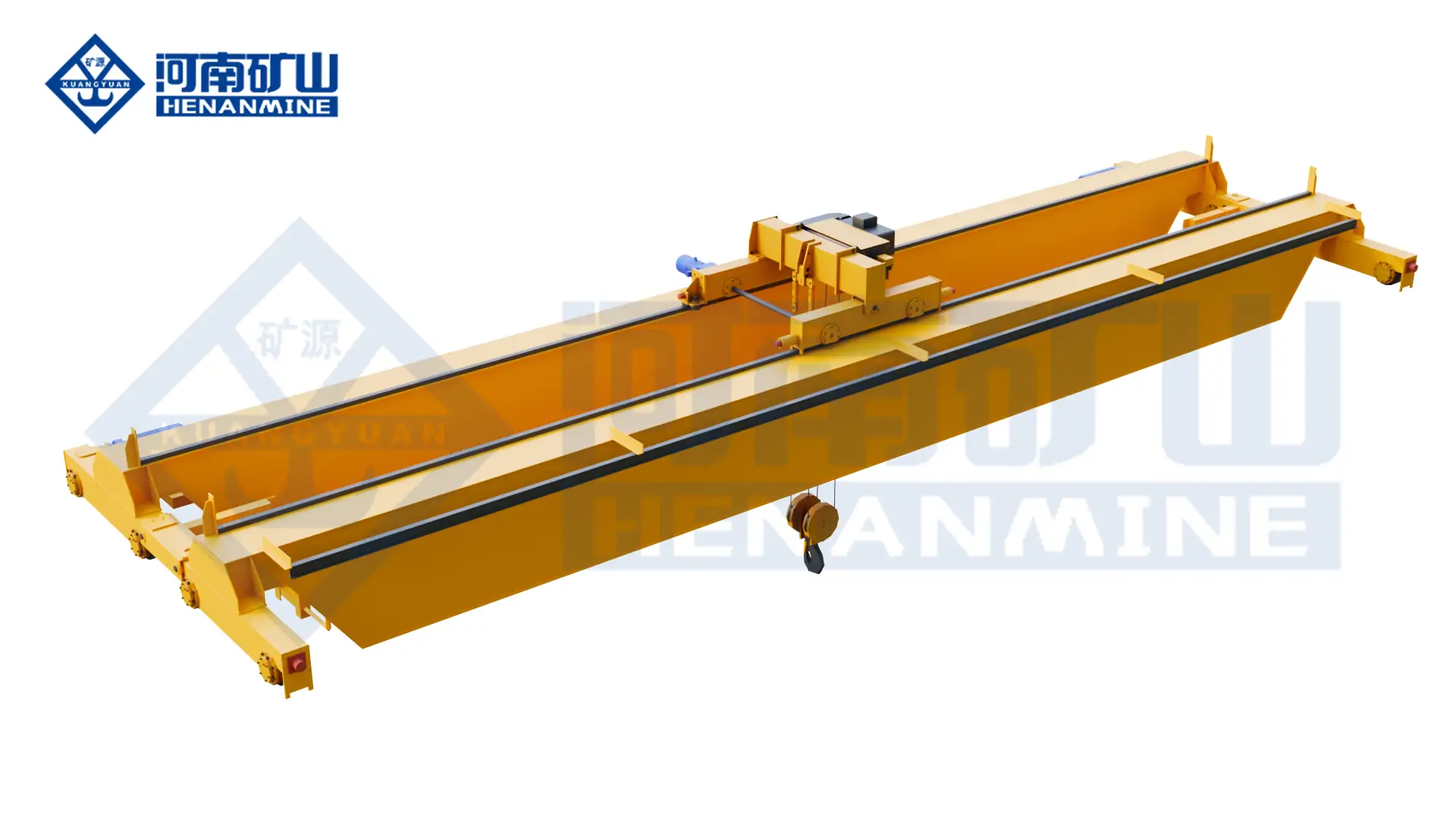
Move materials across your production bay with a bridge crane configured for the load, building and work cycle. Henan Mine Crane manufactures single-girder, double-girder and underhung bridge cranes for workshop production, warehouse handling, equipment assembly and maintenance.
From a compact electric-hoist arrangement to a dedicated process crane, the proposal brings together rated capacity, hook coverage, runway loads, lifting speeds and controls. Send your lifting requirement and building drawing to discuss a suitable configuration.
BRIDGE STRUCTURE
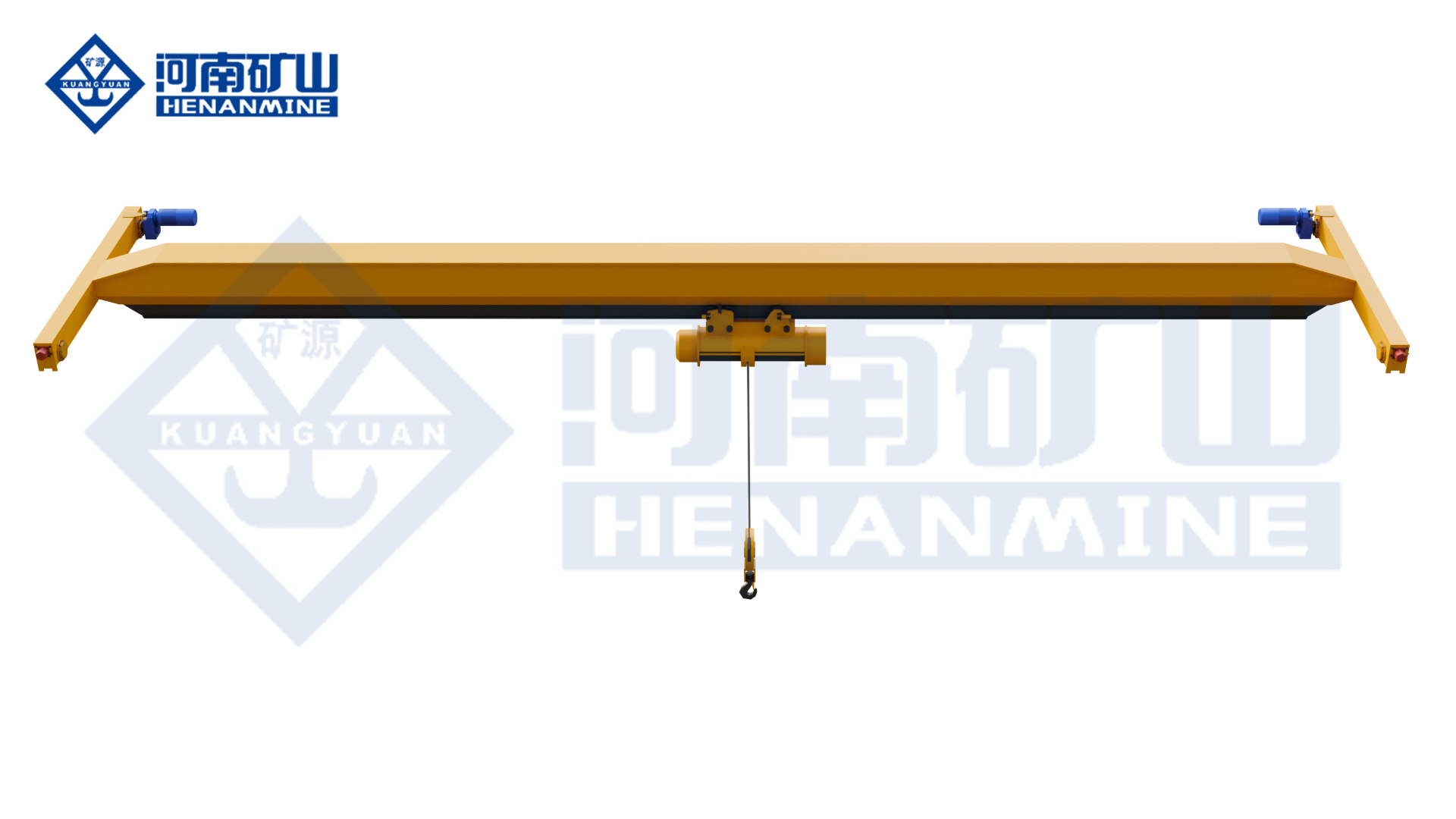
Single or Double Girder
RUNWAY ARRANGEMENT
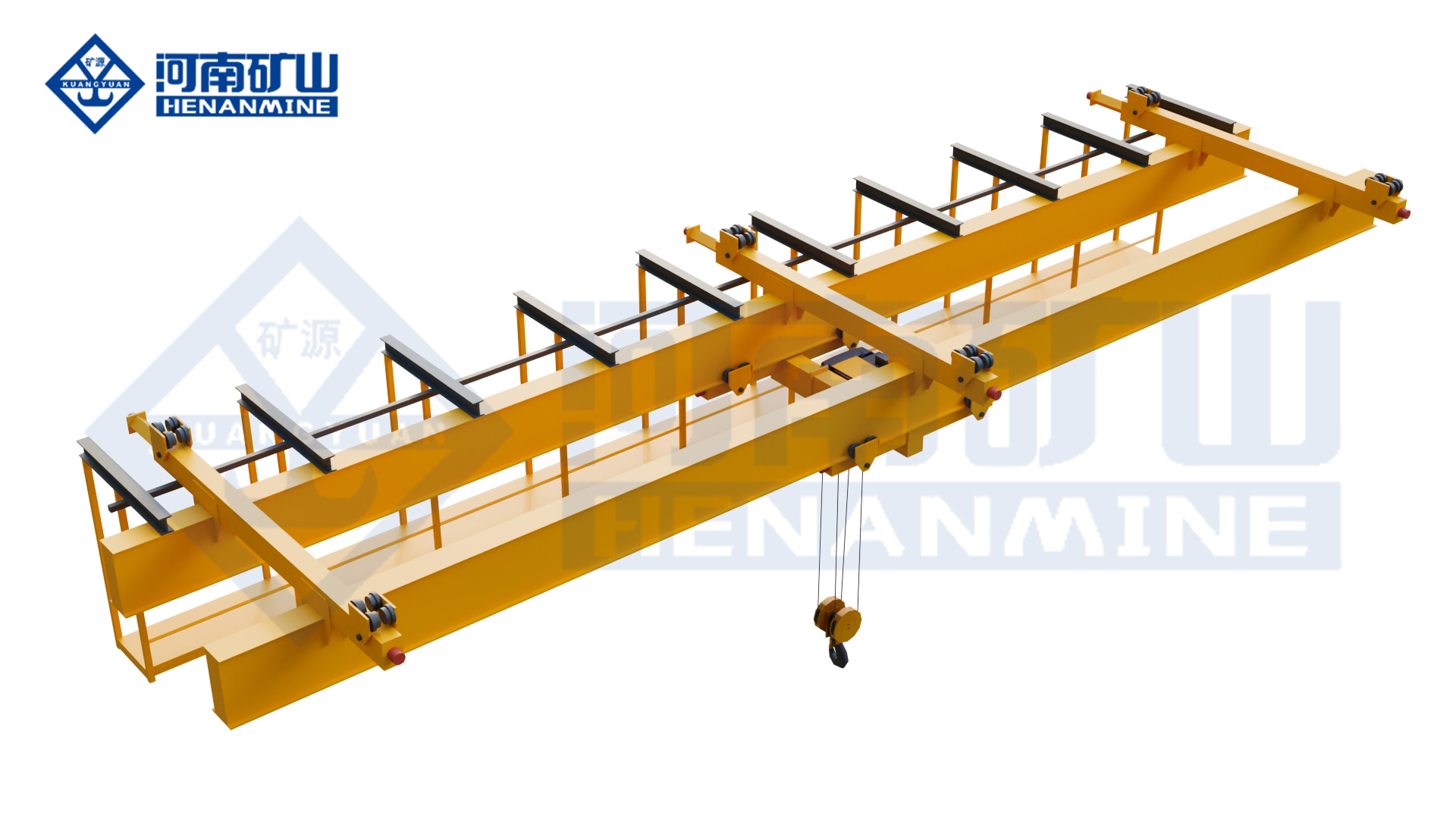
Top Running or Underhung
LIFTING SYSTEM
Hoist or Winch Trolley
PROJECT INPUTS
Load, Span, Lift and Duty
Bridge Crane Design and Applications
A bridge crane carries a hoist or trolley across a bridge spanning the working bay. The bridge travels along elevated runways, while the hoist raises and lowers the load. Together, these movements serve material pickup, transfer and placement points within the available hook coverage.
In industrial enquiries, bridge crane and overhead crane usually describe this same moving-bridge arrangement. An electrically powered travelling design is also called an EOT crane. Its suitability depends on the layout and handling task, rather than which name appears in the enquiry.
Workshop and Assembly
Transfer components between machining, fabrication and assembly stations. Define the load orientation and positioning needs at each station.
Warehouse and Maintenance
Serve storage lanes and equipment repair areas within the crane bay. Check hook access around racks, machines, doors and overhead services.
Process Material Handling
Match the lifting attachment and operating duty to bulk materials, steel products or specialised production tasks.
Bridge Crane Technical Specifications
A bridge crane is a configurable system. The technical proposal should identify the selected values and interfaces below; one general parameter range cannot describe every single-girder, underhung and process crane.
| Parameter | Project Specification |
|---|---|
| Rated lifting capacity | Specified for the maximum lifted load and the agreed treatment of slings, lifting beams, grabs or other attachments. |
| Crane span | Set from the runway centreline spacing. Provide support positions for an underhung or multi-support system. |
| Lifting height and hook levels | State the highest and lowest required hook positions, including any pit or below-floor lift. |
| Runway length and hook coverage | Define longitudinal travel and hook approaches at the sides and ends of the bay. |
| Bridge and hoist arrangement | Single or double girder; electric hoist or winch trolley; top-running or underhung bridge as applicable. |
| Crane and mechanism duty | Selected from load spectrum, operating cycles and service requirements under the agreed design standard. |
| Hoisting and travel speeds | Matched to handling time, load behaviour and placement accuracy. Speed control is specified for each motion. |
| Control method | Pendant, radio remote, cabin or project-specific automation, with a defined control priority. |
| Electrical supply | Confirm site voltage, frequency, phases, earthing system and the incoming power connection. |
| Environment and protection | Specify ambient conditions, outdoor exposure, dust, corrosion, heat and any hazardous-area classification. |
| Runway reactions and interfaces | Confirm crane weight, wheel loads, wheel spacing, rail or beam interface and support reactions in the technical proposal. |
For a metric 5-ton lifting requirement, explore the 5 Ton Overhead Crane page. A higher capacity or a different duty cycle should be assessed with the same building and load information.
Selection Considerations
01 / LOAD
Load and Handling Route
List the heaviest load, typical load, dimensions, centre of gravity and lifting attachment. Mark pickup and placement points so the hook can reach each position without obstruction.
02 / BUILDING
Building and Runway
Provide a plan and cross-section showing runway levels, roof steelwork, columns and services. Existing supports require a structural assessment using the proposed crane reactions.
03 / OPERATION
Production Cycle
Describe lifts per hour, travel distances, operating shifts and the proportion of lifts near rated load. These inputs affect mechanism selection and duty classification.
04 / SITE
Environment and Access
Identify heat, dust, moisture, corrosion or explosive atmospheres. Reserve access for inspection, lubrication and removal of components during maintenance.
Single-girder and double-girder describe the bridge beams. Top-running and underhung describe how the bridge travels on its runways. A hoist suspended below a single girder does not, by itself, make the whole crane an underhung crane.
Bridge Crane Compared with Other Industrial Crane Configurations
Compare the complete arrangement at the required load and hook position. Structural weight, available headroom and support costs depend on the proposed design; neither girder count nor rated capacity alone determines the lowest installed cost.
| Configuration | Structural Arrangement | Application Fit | Selection Trade-Off |
|---|---|---|---|
| Single-Girder Bridge Crane | One bridge girder, commonly with an electric hoist travelling below it. | General workshop, warehouse and maintenance handling. | Compare hook height, side approaches, hoist duty and runway loading for the actual layout. |
| Double-Girder Bridge Crane | Two bridge girders supporting the selected trolley and lifting mechanism. | Projects needing a different trolley layout, lifting envelope or equipment arrangement. | A double girder does not automatically mean heavy duty; confirm the rated duty and complete crane dimensions. |
| Underhung Bridge Crane | Bridge end carriages travel on the lower flanges of suitable runway beams. | Layouts where a suspended runway arrangement suits the building. | Assess runway beam flanges, connections, support capacity and clearance. Roof suitability is project-specific. |
| Multi-Support Underhung Crane | An underhung bridge arranged across multiple runway supports. | Large assembly areas and facilities with an engineered multi-rail layout. | Coordinate support spacing, alignment and load distribution across the supporting structure. |
| Gantry Crane | A bridge supported by travelling legs, with the runway typically at ground level. | Yards or buildings where an elevated runway is unsuitable. | Allow for legs, ground rails or travel lanes, foundations and operating clearances. |
Hoist, Trolley and Bridge Movement
Hoisting: Vertical Movement
The lifting mechanism raises and lowers the suspended load. Select rope travel, hook arrangement, braking and speed control around the lift and placement requirements.
Trolley Travel: Across the Bay
The trolley or travelling hoist moves along the bridge. Trolley dimensions and end clearances affect how closely the hook can approach either side.
Bridge Travel: Along the Bay
End carriages move the bridge along the runways. Wheel arrangement, drive selection and runway alignment must work together over the travel length.
For restricted headroom, compare the proposed highest hook level and crane envelope on the building cross-section. A low-headroom hoist or a different bridge arrangement may help, but the result must include roof clearance, services and maintenance access.
Load Handling and Special Environments
The lifting attachment and process can change the crane specification as much as the load capacity. Discuss these configurations when a general hook crane does not cover the work:
- Double-trolley handling: for long components or work requiring two lifting points. Define individual hoist ratings, shared-load limits, hook spacing and the intended coordinated movements.
- Grab bridge cranes: for bulk materials. Provide bulk density, material condition, discharge height and required throughput so grab capacity and duty can be evaluated together.
- Electromagnetic bridge cranes: for suitable steel products. Identify material shape, surface condition and temperature, and define the required response to a loss of lifting power.
- Metallurgical bridge cranes: for specified hot-material or production duties. Describe the process, radiant heat and consequences of interrupted lifting; molten-metal handling requires a dedicated design review.
- Explosion-proof bridge cranes: for a defined hazardous area. Supply the site classification and gas or dust information so equipment protection and required documentation can be assessed.
Safety, Controls and Redundancy
The safety and control schedule should be part of the quotation. Required protections and optional functions must be clearly identified for the chosen crane and site.
Load and Motion Protection
Specify overload protection, hoisting and travel limits, braking arrangements, emergency stops and relevant electrical protections. Confirm how each function will be demonstrated at acceptance.
Operator Control
Choose pendant, radio remote or cabin operation around visibility and operator access. For multiple control stations, define selection priority and the response to a lost command signal.
Shared Runways and Automation
Where cranes share a bay, assess collision prevention and operating separation. Anti-sway, positioning and process interfaces require a defined performance target and acceptance method.
Dual hoists, additional brakes, monitoring and standby functions are engineered for the intended duty. Their availability and scope should be confirmed in the technical proposal rather than assumed from the crane name.
Installation, Acceptance and Maintenance
Installation Interfaces
Agree who supplies the crane, runway beams, rails, conductors, supporting steelwork and foundations. Provide unloading access, assembly space and the planned installation window.
Acceptance and Documentation
Agree drawing approvals, inspection records, electrical diagrams, manuals and the factory and site test scope before ordering. Define the responsibilities for site commissioning and operator familiarisation.
Maintenance Access
Plan access to the hoist, trolley, wheels, drives and power supply. Identify replacement clearances and the spare parts needed for the operating schedule.
For a replacement bridge crane, survey the existing runway and electrical supply. The previous crane’s rated capacity alone does not establish compatibility: the new crane may have different wheel loads, wheel spacing, dimensions or power demand.
What Determines Bridge Crane Price?
Bridge crane price depends on rated capacity, span, lifting height, duty, hoist arrangement and operating environment. Runway equipment, installation work, controls, testing and delivery scope can also change the total project cost.
When comparing bridge cranes for sale, request quotations against the same specification. Ask each supplier to identify the crane supply, runway and power supply scope, selected components, drawings, inspections, delivery terms and installation responsibilities.
Equipment
Bridge, end carriages, hoist or trolley and controls.
Site Interfaces
Runway, electrical feed, supports and installation scope.
Project Delivery
Documentation, testing, packing, transport and commissioning.
Bridge Crane FAQ
Is a bridge crane the same as an overhead crane?
In normal industrial usage, the terms often refer to the same crane with a moving bridge on elevated runways. EOT describes an electrically powered overhead travelling crane. Confirm the structure and operating requirements in the specification.
Should I choose a single-girder or double-girder bridge crane?
Compare the proposed hook coverage, headroom, runway reactions, duty and total installed scope. Both arrangements can serve industrial handling, and the right choice depends on the specific layout and work cycle.
Does an underhung crane require a suitable roof structure?
An underhung crane requires suitable runway beams and supports, which may connect to a building structure or a separate engineered support system. The supporting structure and connections must be assessed for the crane loads.
Can a bridge crane be fitted to my existing runway?
Possibly. Provide the runway drawings and survey information, existing crane data, rail or beam details and power supply. Compatibility must be checked against the new crane’s dimensions, wheel arrangement and reactions.
Can two hoists lift one load together?
A coordinated lifting arrangement can be engineered for that duty. Individual hoist capacities do not by themselves establish the permissible combined load. Define load sharing, lifting points, motion control and fault response in the proposal.
Can the same bridge crane work outdoors or in a hazardous area?
These conditions need a suitable design. Outdoor projects require assessment of exposure and wind-related requirements; hazardous areas require equipment matched to the site classification. State the environment at the enquiry stage.
What information is needed for a bridge crane quotation?
Send the maximum and typical loads, attachment details, span, lifting height, runway length, building drawing, work cycle, power supply and project location. Include any inspection, documentation or installation requirements.
Request A Bridge Crane Quote
Send Henan Mine Crane your lifting requirement and building layout for a project-specific bridge crane proposal. Include the following details to help define the configuration and scope:
- Maximum load, typical load and lifting attachment
- Span, required hook levels and runway length
- Operating cycle, site environment and electrical supply
- Project country, drawings, delivery needs and installation scope