Henan Mine Crane · Engineered Bulk Material Handling Systems
Bulk Handling Cranes
Bulk handling cranes provide repeatable loading, transfer, stockpiling and discharge of coal, ore, coke, slag, sand, aggregates, biomass, waste and other loose materials. Henan Mine Crane configures grab overhead cranes, grab gantry cranes, automated grab systems and portal harbor cranes around material properties, required throughput, operating duty and site layout.
A dependable specification requires more than crane capacity and grab volume. Bulk density, particle size, moisture, flow characteristics, abrasion, pick-and-discharge geometry, cycle time, grab self-weight, environmental protection and project supply scope determine system performance and commercial cost.
SYSTEM FAMILY
Overhead, Gantry or Portal
PRIMARY ATTACHMENT
Mechanical or Powered Grab
OUTPUT BASIS
Net Payload and Actual Cycle
PRICE BASIS
Project-Specific Quotation
What Are Bulk Handling Cranes?
Bulk handling cranes are crane systems equipped with a grab bucket or another process attachment for repeated handling of unpackaged loose material. The search term describes an application family rather than one fixed crane model. The correct system may be an overhead crane above a bunker, a gantry crane over an open stockyard, an automated grab crane serving a production process or a portal crane transferring cargo between vessel and quay.
The crane, grab and supporting infrastructure operate as one material-handling system. A quotation based only on nominal tonnage can produce insufficient net payload, slow cycle performance, premature wear or an incomplete supply scope. Material, throughput, duty, geometry, control, environment and commercial boundaries must be defined together.
Production Feeding
Transfer from storage pits or stockpiles into hoppers, furnaces, crushers, mixers and process lines.
Stockyard Transfer
Loading, unloading, sorting and stockpile management across indoor or outdoor storage areas.
Waste and Recycling
High-cycle movement, blending and feeding of municipal, industrial or recyclable material.
Port Cargo Handling
Ship-to-shore or terminal transfer where outreach, luffing, slewing and grab duty are required.
Selection Considerations
01 / MATERIAL
Material Characteristics
Bulk density, particle range, moisture, flowability, compaction, abrasion, corrosion and temperature determine the grab.
02 / PAYLOAD
Capacity and Grab Weight
The specification must state whether capacity means total suspended mass or net material capacity below the grab.
03 / OUTPUT
Throughput and Cycle
Required tonnes per hour, pick and discharge points, travel distances and operating availability establish performance.
04 / GEOMETRY
Pickup and Discharge Layout
Stockpile, pit, bunker, vessel and hopper geometry determine span, lift, travel, outreach and clearance.
05 / CONFIGURATION
Overhead, Gantry or Portal
Coverage, supporting structure, outdoor exposure, floor traffic and vessel interface govern the system type.
06 / DUTY
Service and Reliability
Cycles per hour, operating hours, load spectrum, starts and production criticality establish the required duty.
07 / ENVIRONMENT
Dust, Corrosion and Hazard
Airborne dust, combustible material, corrosion, humidity, wind, rain and classified areas require formal review.
08 / SCOPE
Controls and Project Boundary
Cabin, radio or automation plus rails, power, civil work, freight, erection, testing and training must be defined.
A complete enquiry includes material data, required throughput, pickup-and-discharge arrangement, capacity basis, span, lifting height, travel length, operating duty, control method, power supply, environment, installation country and supply boundary.
Bulk Handling Crane System Comparison
The product ranges below support initial configuration screening. Final capacity, span, lifting height, duty, grab and standards remain project-specific.
| Crane System | Published Product Range | Suitable Application | Selection Boundary |
|---|---|---|---|
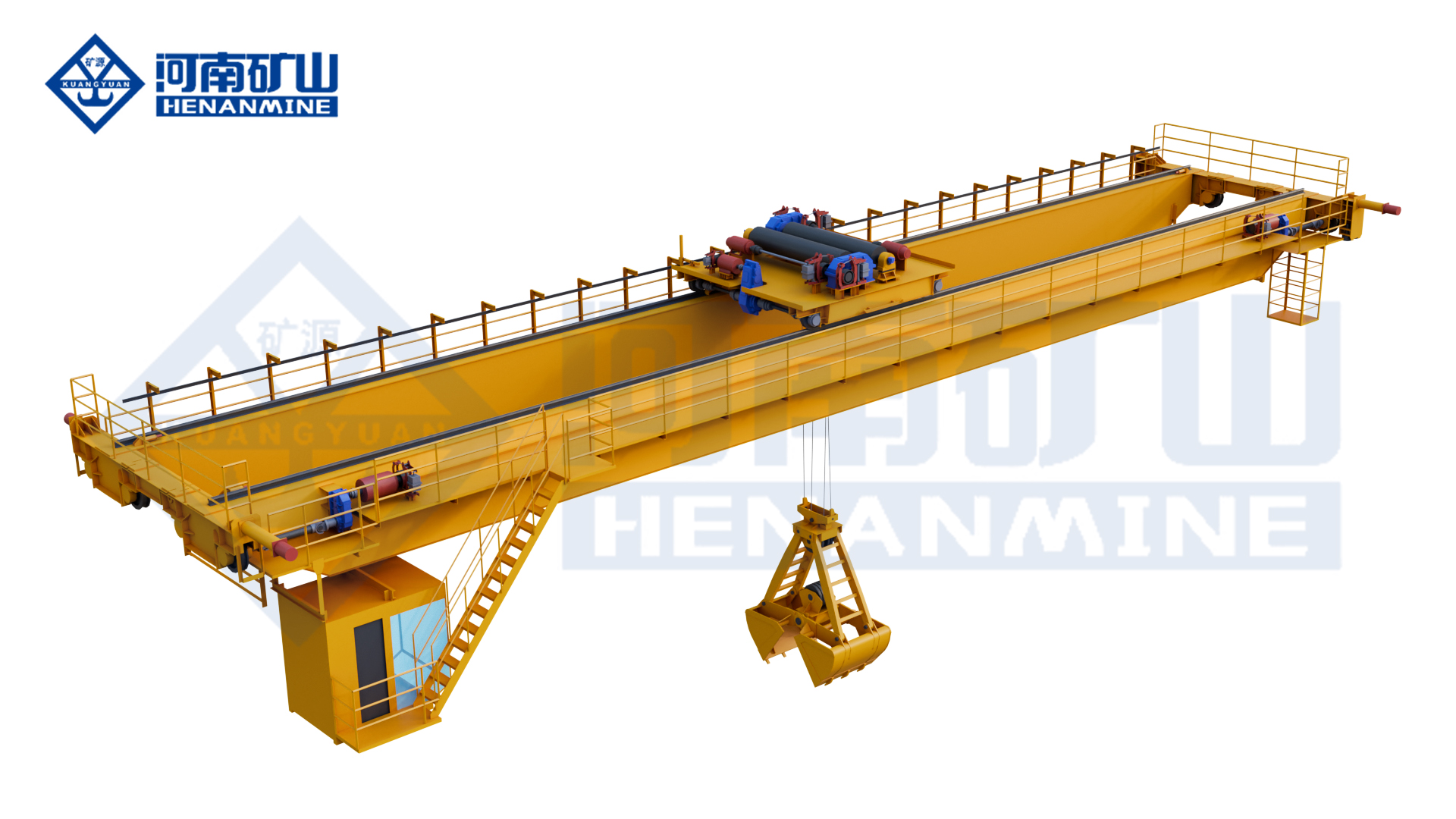
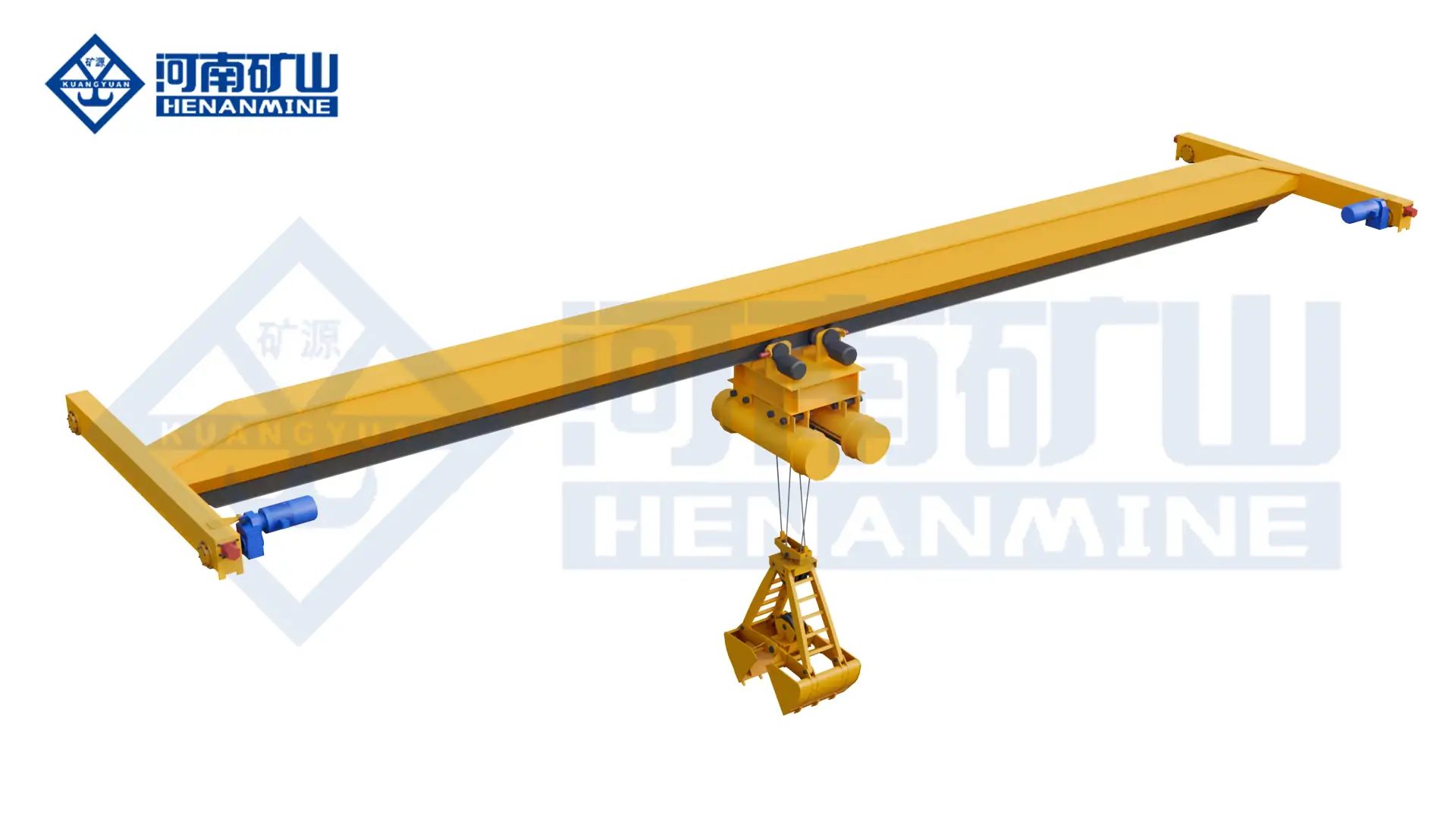
| Single-Girder Grab Overhead Crane | 1–10 t · 7.5–28.5 m span · 6–30 m lift · A3–A5 | Intermittent light- or medium-duty transfer in warehouses and process areas | Economical where throughput and net payload suit the single-girder design |
| Intelligent Double-Girder Grab Crane | 5–50 t · 10.5–31.5 m span · 6–30 m lift · A6–A8 | High-cycle coal, ore, coke, slag, lime, sand and aggregate handling | Demanding duty, high output, process integration or automated operation |
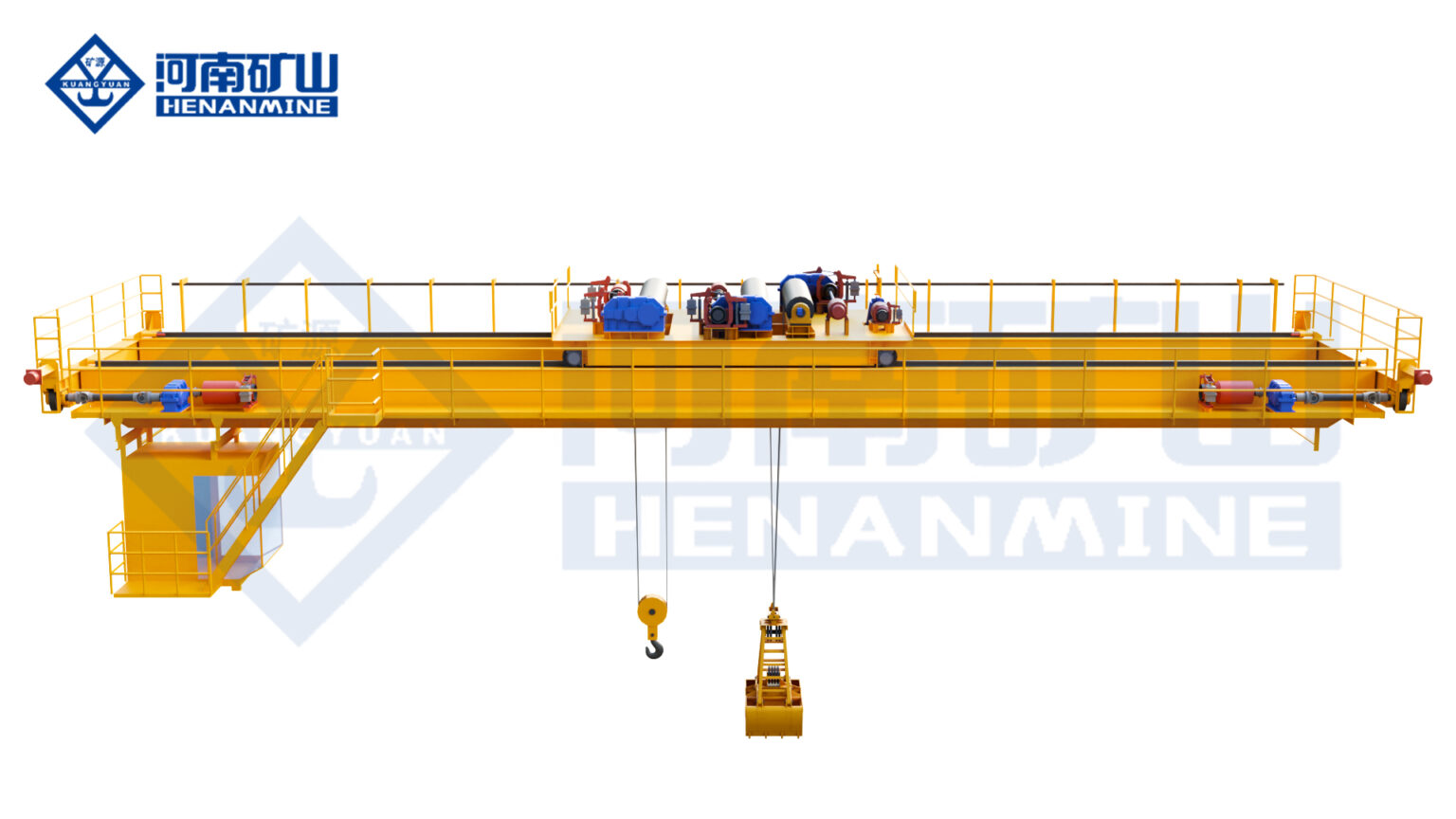
| Grab and Hook Overhead Crane | 5–16 t · 10.5–31.5 m span · 6–20 m lift · A5–A6 | Facilities handling loose material and conventional unit loads in one bay | Attachment conversion and capacity definition require coordination |
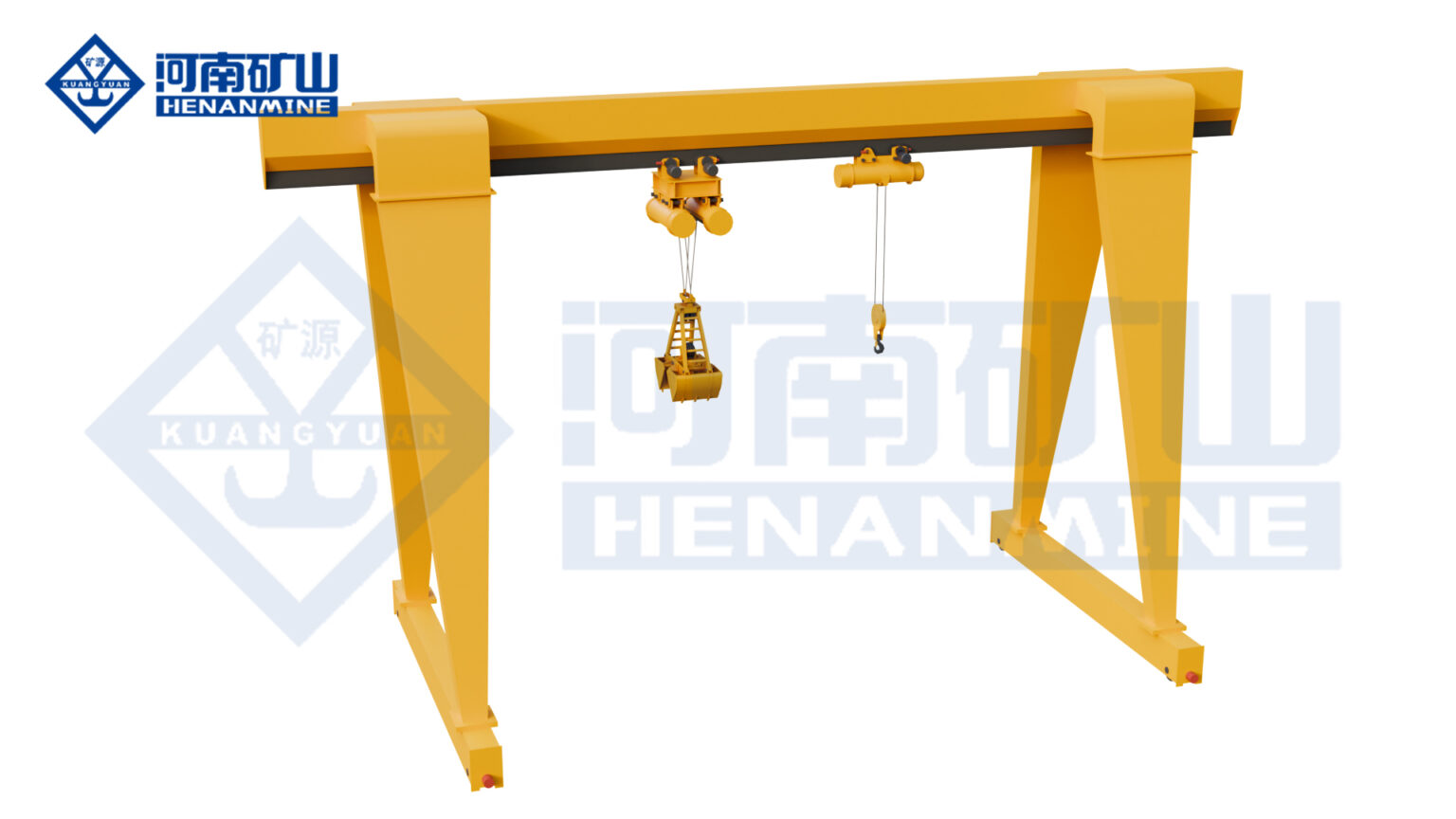
| Grab and Hook Gantry Crane | 1–20 t · 6–30 m span · 4–18 m lift · A5 | Outdoor yards or buildings without a suitable elevated runway | Rails, foundations, wind, power supply and traffic routes govern scope |
| Portal Harbor Crane | Project-specific capacity, radius and duty | Bulk cargo transfer between vessel, quay hopper, truck and terminal storage | Vessel, quay, outreach, grab duty, wind and marine protection are essential |
Material Data and Grab Bucket Selection
Four-Rope Mechanical Grab
A four-rope clamshell grab uses dedicated holding and closing ropes and is commonly selected for repeated high-cycle handling of free-flowing material. Winches, drums, ropes and grab are engineered together.
Electro-Hydraulic or Motor Grab
A powered grab supports detachable or mixed-use duties. Attachment power, cable management, maintenance access and achievable cycle performance require inclusion in the crane design.
Orange-Peel or Special Grab
Irregular scrap, rock and mixed waste may require an orange-peel or purpose-designed attachment. Tine shape, penetration, closing force and retention are matched to the feed.
Grab and Hook Combination
A detachable grab and hook configuration supports mixed bulk and unit-load work. Conversion frequency, connection method and attachment storage form part of the specification.
Net Material Payload
Material per cycle = effective grab volume × bulk density × practical fill factor.
Grab volume alone does not establish output. The loaded grab, ropes and rigging must remain within the stated capacity basis. Contract documents should explicitly distinguish total suspended mass from net material capacity below the grab.
| Material | Principal Conditions | Selection Priorities |
|---|---|---|
| Coal and biomass | Low or variable density; dust and combustible-material risks may apply | Bucket volume, dust control and ignition-hazard assessment |
| Ore, coke and slag | High density, abrasion, impact and possible elevated temperature | Grab strength, wear protection, mechanism duty and temperature suitability |
| Sand and aggregates | Flowable but abrasive; moisture changes filling and release | Shell closure, cutting edges, fill factor and hopper opening |
| Waste and recyclables | Irregular shapes, variable density, entanglement and uncertain composition | Attachment penetration, retention, fire monitoring and protected controls |
| Grain and feed | Dust, hygiene, contamination and moisture considerations | Tight-closing grab, cleanable surfaces and dust-hazard engineering |
| Cement and fine powder | High dust and leakage potential during closing, travel and discharge | Enclosed grab and extraction assessment; conveyor or pneumatic transfer may be preferable |
Throughput, Cycle Time and Duty
Bulk crane output depends on material retained in each grab cycle and the number of complete cycles achieved under operating conditions. Rated crane capacity is not equivalent to hourly throughput.
STEP 1
Material per Cycle
Effective grab volume, bulk density and realistic fill factor establish net material mass. Grab and rigging mass are checked against capacity.
STEP 2
Complete Cycle Time
Closing, hoisting, trolley and bridge travel, lowering, opening, return travel and positioning form the complete cycle.
STEP 3
Operating Availability
Pile shape, digging resistance, hopper waiting, spillage, control response, inspection and process delays reduce practical output.
Theoretical hourly throughput = net material per cycle × completed cycles per hour.
Guaranteed process output requires agreed material properties, operating route, availability assumptions and acceptance-test conditions. Duty classification is selected from load spectrum and cycle demand, not nominal capacity alone.
Overhead and Gantry Configurations
Grab Overhead Crane
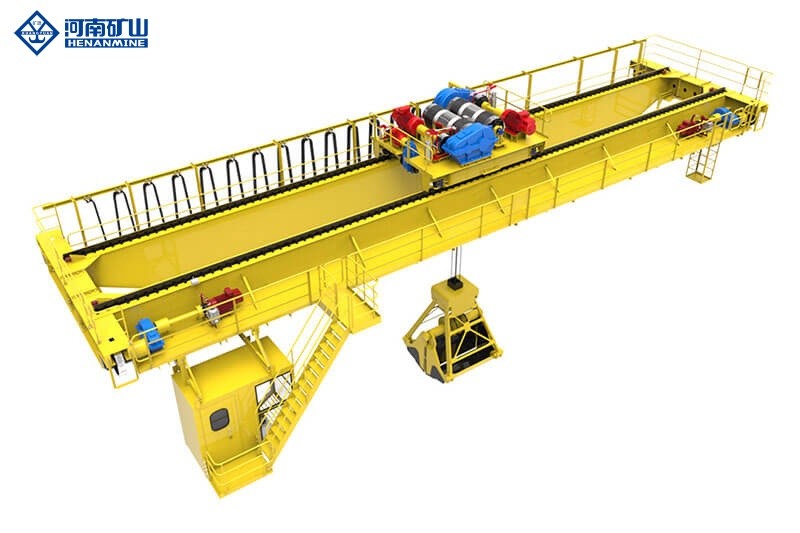
An overhead crane provides full-bay coverage without crane legs occupying the floor. It is suitable above storage pits, bunkers and process buildings with an adequate runway structure.
Single- or Double-Girder Design
Single-girder construction can suit moderate capacity and intermittent service. Double-girder construction is evaluated for higher duty, larger grabs, wider spans, open-winch machinery and maintenance access.
Dedicated or Dual-Purpose
A dedicated grab crane supports repeated process duty. A grab-and-hook crane covers more task types but requires defined conversion procedures and may not match a dedicated high-cycle system.
Control Method
Cabin operation supports process supervision; radio control supports selected manual duties; automated operation supports repeatable routes and plant integration.
Grab Gantry Crane
A gantry crane transfers reactions through crane legs to rails and foundations. It can cover outdoor stockpiles or buildings without an elevated overhead-crane runway.
Rails and Foundations
Wheel loads, rail alignment, foundation stiffness, drainage and settlement criteria affect reliable travel. Vehicle and pedestrian crossings require coordinated protection.
Outdoor Protection
Wind limits, storm anchoring, rail clamps, corrosion protection, rain covers, drainage and cable management form part of an outdoor design.
Portal Cranes for Bulk Cargo Terminals
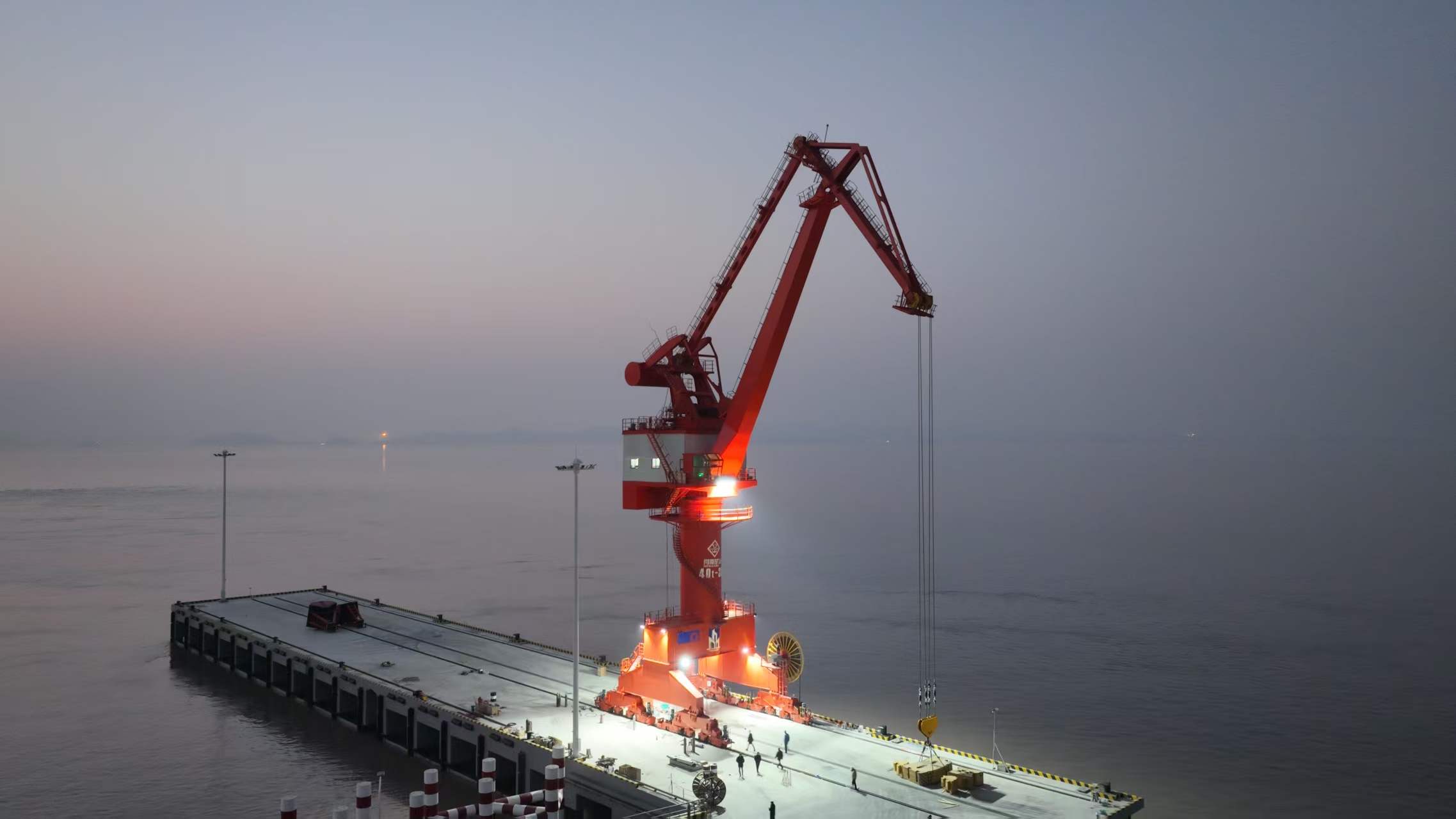
Vessel and Quay Interface
Working radius, vessel hatch position, water-level range, quay elevation and portal clearance establish the operating envelope.
Luffing, Slewing and Travel
Coordinated hoisting, luffing, slewing and portal travel determine cargo cycle time. Drives and controls reflect duty, wind and terminal procedures.
Quay Infrastructure
Rail gauge, wheel loads, power, storm anchoring, cable routes, access and maintenance zones must suit the quay structure.
Cargo Route
Grab discharge may feed a hopper, conveyor, truck or storage system. Dust containment, spillage control and traffic coordination affect the terminal solution.
Bulk Handling Crane Specification Schedule
| Item | Required Project Data | Engineering Significance |
|---|---|---|
| Material | Name, density, particle size, moisture, temperature, abrasion, corrosion and hazard data | Governs grab type, volume, materials, wear protection and environment package |
| Throughput | Required t/h, peak demand, operating hours, availability and acceptance basis | Establishes payload, speed, cycle model, crane quantity and duty |
| Capacity basis | Total suspended load or net capacity under grab; grab and rigging mass | Prevents ambiguity in usable material payload and structural load |
| Geometry | Span, lift, travel, outreach, pile, pit, bunker, vessel and hopper dimensions | Defines crane arrangement, grab path and cycle distance |
| Duty and speeds | Cycles, load spectrum, starts, hoisting, trolley and crane travel requirements | Aligns structures, motors, brakes and controls with service demand |
| Control | Cabin, radio, automation, position data, anti-sway and plant interfaces | Defines sensors, PLC architecture and operating functions |
| Power and environment | Voltage, frequency, temperature, dust, wind, rain, humidity and classified zones | Sets electrical design, enclosures, coating and special protection |
| Project boundary | Crane, grab, rails, runway, power, civil work, freight, erection, testing, training and spares | Enables technically and commercially comparable quotations |
Controls, Automation and Environmental Protection
Motion and Position
Variable-frequency drives, position feedback and anti-sway functions can support controlled cycles and accurate discharge.
Automatic Routes
Defined pick, transfer and discharge paths can include pile scanning, restricted zones and hopper selection.
Dust and Wear
Controlled discharge, protected enclosures, suitable coating and replaceable grab wear parts reflect the material and atmosphere.
Hazardous Areas
Zone classification, ignition data, equipment category, surface temperature, earthing and all ignition sources require formal review.
Automatic-cycle boundaries, sensor inputs, interlocks, recovery modes, manual override, data interfaces, output assumptions and site-acceptance conditions should be defined before contract award. A single protected component does not make the complete crane suitable for a hazardous area.
Bulk Handling Crane Project Case
STEEL INDUSTRY · AUTOMATED BULK TRANSFER
Unmanned Grab Bucket Overhead Crane for Baowu Group Shaoguan Steel Plant
The project serves a bulk-material process associated with rotary-hearth-furnace steelmaking. Crane configuration and automatic control were developed for repeated material pickup, transfer and discharge within the designated production area.
Process Requirement
Repeatable material movement, defined operating zones and coordinated discharge into the production process.
Engineering Focus
Grab logic, crane positioning, automatic routes, operational interlocks and plant-system coordination.
Procurement Relevance
The installation demonstrates why crane machinery, grab, automation and process interfaces must be treated as one system.
Engineering, Manufacturing and Documentation
ENGINEERING
Application Review
Material, output, cycle, capacity, geometry, duty, wheel loads, controls and site interfaces are reviewed before design.
MANUFACTURING
Controlled Production
Fabrication, machining, assembly, coating and component installation follow approved drawings and agreed processes.
VERIFICATION
Inspection and Testing
Dimensions, welds, mechanisms, electrics, protection devices and factory functions are checked under the contract plan.
DOCUMENTATION
Project Document Package
Approved drawings, data sheets, electrical diagrams, manuals, certificates, inspection records and test documents are supplied as specified.
Installation, Commissioning and Maintenance
Pre-Installation Verification
Runway or rail geometry, foundations, clearances, power, access, lifting plan, storage area and responsibilities are confirmed before erection.
Commissioning and Acceptance
Alignment, electrical checks, limits, brakes, protective functions, load tests, grab operation and process interfaces follow the agreed plan.
Duty-Based Maintenance
Ropes, drums, sheaves, brakes, wheels, rails, grab pins, bushes, shells, cutting edges, hydraulics and electrics require documented inspection.
Lifecycle Planning
Commissioning and operating spares should reflect crane criticality and local availability. Grab and rope-system wear parts deserve particular attention in abrasive or continuous-duty service.
Bulk Handling Crane Price
Bulk handling crane price varies substantially because capacity, grab system, duty, span, lift, cycle performance, automation and supply boundary differ between projects. Equipment-only figures cannot be compared directly with installed systems including runway or rails, power, civil work, freight, erection and commissioning.
Market budget indications place 10 ton grab overhead crane equipment across approximately USD 5,000–95,000. Detailed 10 ton double-girder grab crane examples appear around USD 27,000–59,000. General 16–20 ton gantry crane examples are approximately USD 25,000–80,000 before normalizing grab, duty, rail, foundation, electrical and site scope. Automated grab cranes and portal harbor cranes require engineered project quotations. These figures are not Henan Mine Crane quotations.
Crane Equipment
Structure, trolley, drives, ropes, drums, brakes, wheels, electrics, controls and safety functions.
Grab and Process
Grab type, volume, wear materials, attachment power, automation, sensors and process interfaces.
Infrastructure
Runways, columns, rails, foundations, power, cable routes, dust control and access platforms.
Delivery and Site Work
Packing, freight, import charges, erection, commissioning, tests, training and spares.
Information Required for an Accurate Price
Material and density · particle size and moisture · required t/h · pickup and discharge geometry · capacity basis · grab type · span and lift · travel or outreach · duty and cycles · control and automation · dust, corrosion and hazard conditions · power · rails and civil scope · installation country · delivery terms · erection, testing, training and documentation.
Bulk Handling Crane FAQ
What materials can a bulk handling crane move?
Typical applications include coal, ore, coke, slag, lime, sand, aggregates, biomass, waste and selected grain products. Material data determine suitability.
Which grab is suitable for bulk material?
Free-flowing material commonly uses a clamshell grab. Irregular scrap or waste may require an orange-peel or special-purpose grab. Geometry, force, wear and power arrangements are material-specific.
Does crane capacity include the grab?
Capacity terminology must be stated in the contract. It may describe total suspended mass including the grab or net material capacity below the grab.
How is throughput calculated?
Net material per cycle comes from effective grab volume, density and fill factor. Hourly output then depends on the complete operating cycle and availability.
When is a gantry crane preferable?
A gantry crane is commonly evaluated for outdoor yards or sites without an elevated runway. Coverage, foundations, traffic and environmental exposure govern the choice.
Can bulk handling cranes operate automatically?
Automation can include position feedback, pile scanning, anti-sway, defined routes, hopper selection, restricted zones and plant-control communication.
Can a grab crane handle combustible dust?
Suitability depends on formal hazard classification. The complete crane, grab, electrical system, mechanical ignition risks, earthing and dust controls must comply.
Is a grab crane suitable for fine powder?
An enclosed grab and extraction can be evaluated, but conveyor, screw or pneumatic transfer may be more suitable where containment and continuous flow govern.
How much does a bulk handling crane cost?
Price depends on capacity, grab, duty, output, span, automation, infrastructure, protection, freight and site services. Supply boundaries must be normalized before comparison.
What is required for a quotation?
Material, throughput, layout, capacity basis, span, lift, travel, duty, controls, environment, power, infrastructure, country and required project scope are required.
Application Engineering and Commercial Proposal
Request a Bulk Handling Crane Quote
Submit material properties, required throughput, pickup and discharge layout, capacity basis, span, lifting height, duty, controls, environment, power, installation location and project scope. Henan Mine Crane will prepare a crane configuration and commercial quotation from verified application data.