Engineering · Manufacturing · Project support
info@hnksglobal.comWhatsApp +86 18836207779 ↗

Blog

  • Container Yard Equipment Purchasing: Coordinate the Handling Interfaces

    Container Yard Equipment Purchasing: Coordinate the Handling Interfaces

    Technical guide

    Container Yard Equipment Purchasing: Coordinate the Handling Interfaces

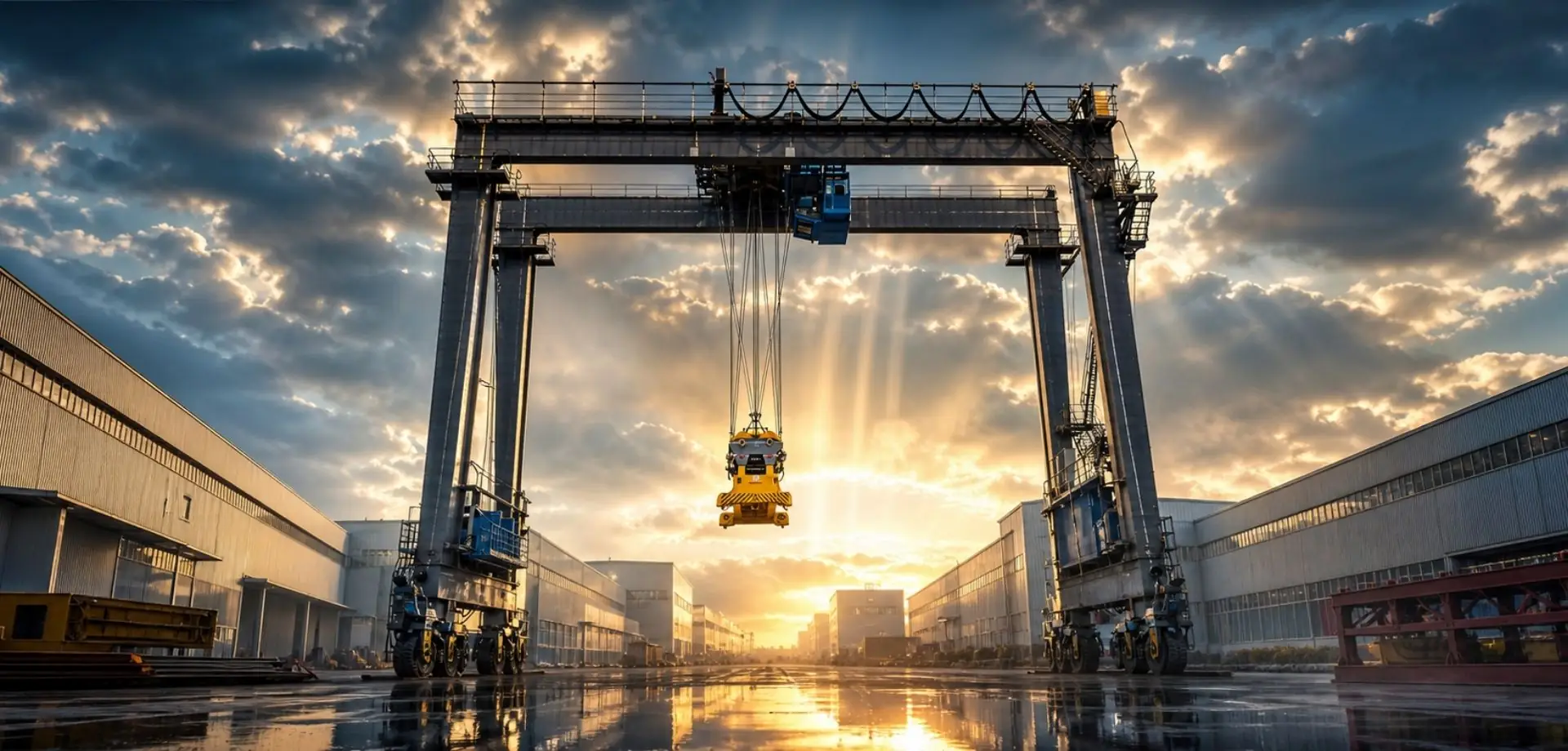
    A terminal equipment purchase affects more than an individual machine. Define stacking, transport and transfer requirements together so cranes and vehicles can be compared within a complete yard operating plan.
    Henan Mine CraneTechnical guide · Updated 2026Crane selection, project scope and operating requirements
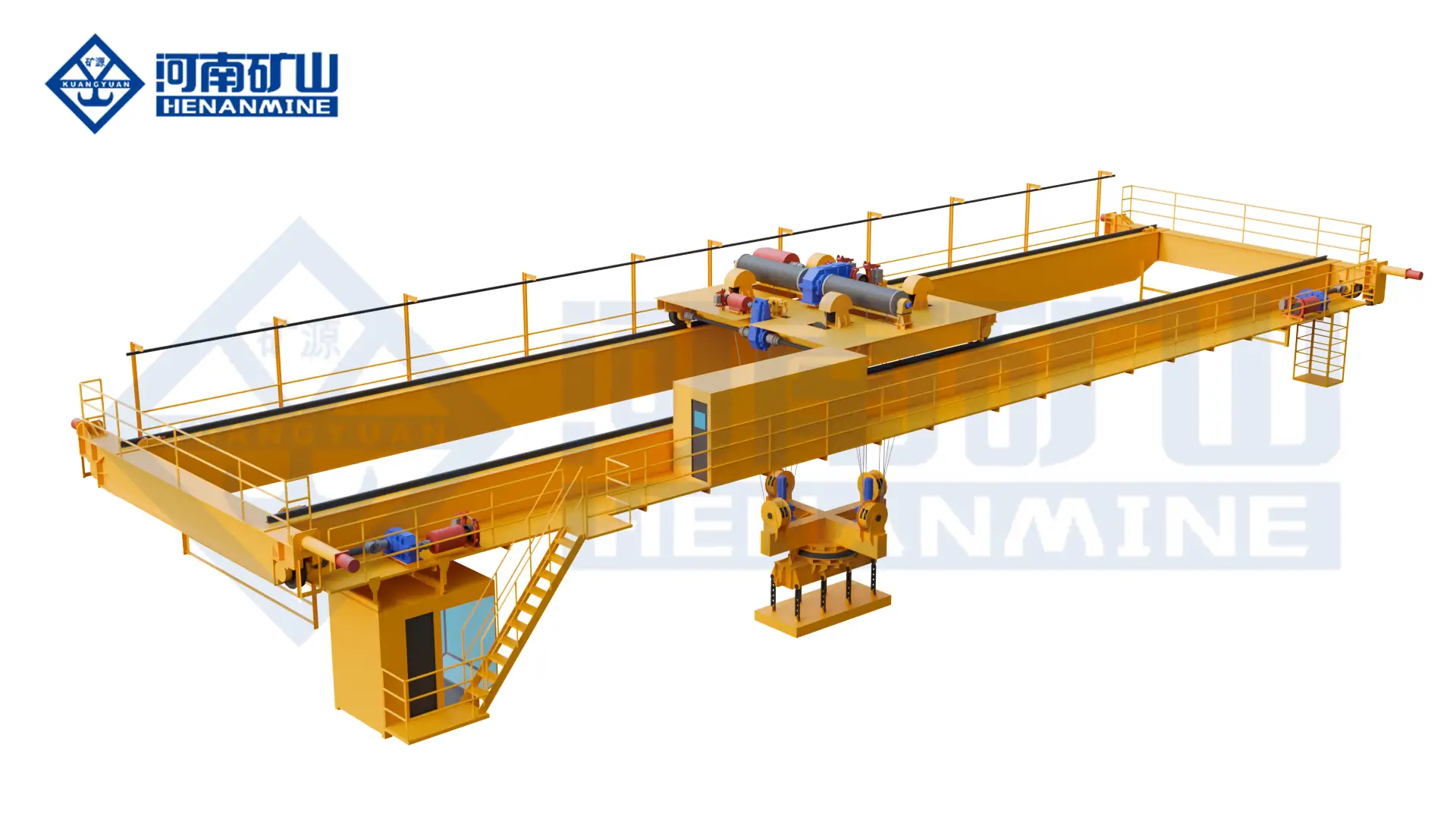
    Henan Mine Crane Container Overhead Crane
    Henan Mine Crane Container Overhead Crane
    Project planning notes

    Key points for this crane project.

    1. Quick Selection Reference
    2. RTG rubber-tyred gantry crane
    3. RMG rail-mounted gantry crane
    Read the technical guide

    Quick Selection Reference

    First, give a direct judgment conclusion to facilitate quick scene matching. Small inland storage yard and logistics park, container front crane plus dock tractor is a combination of high flexibility and low input threshold; high-density large container storage yard, RTG tire gantry crane or RMG rail gantry crane is preferred, stacking density and operation efficiency are more advantageous; the terminal that needs full-field flexible transfer and stacking, clearing quay crane waiting, container straddle carrier adaptability is stronger; The storage yard with high empty container ratio, equipped with special empty container stacker, is more cost-effective than heavy equipment to deal with empty containers.

    RTG rubber-tyred gantry crane

    RTG is a door-type lifting equipment that runs on rubber tires. It mainly focuses on container stacking operations in the FCL area. The conventional model span can cover 6 to 8 rows of containers plus a collection truck lane, and the stacking height varies from 1-over-3 to 1-over-6. It is the core equipment for improving the land utilization rate of medium and large storage yards. There are diesel, hybrid and pure electric power options. It is suitable for medium and large container yards, inland ports with expansion plans, and sites seeking high storage density. The advantages are high stacking density, regular box area, large automatic transformation space, and lower single box operation cost under large throughput scenario.

    RMG rail-mounted gantry crane

    RMG runs along fixed tracks and is mostly used for high-density stacking operations in ports, railway stations and automated storage yards. It can customize different spans and stacking heights according to needs. The electrified operation cost is low. It is the mainstream selection of automated storage yards. It is most suitable for railway container center station, multimodal transport yard, automatic container terminal and other fixed layout scenarios. The advantages are extremely high stacking density, high stability and accuracy of operation, and the greatest potential for automatic upgrading. The limitation is that there is no flexibility in track fixation, high requirements for infrastructure construction, higher planning and installation costs in the early stage, and almost no space for adjustment in the box area in the later stage.

    Container reach

    The advantage is that it is extremely flexible, almost no additional infrastructure is needed, it can be used on approach, the initial investment is low, the narrow space can also be operated, and loading and unloading and short-distance transshipment can be considered. The limitation is that the dumping rate is high in high density stacking, the operation efficiency is not as good as that of gantry crane in large throughput scenarios, and the tire loss and fuel cost ratio are not low. Purchase to check: heavy load/empty container operation positioning, rated lifting weight, stacking layers, operation depth, site load, adaptation box type, power type, equipment requirements.

    Straddle carriers

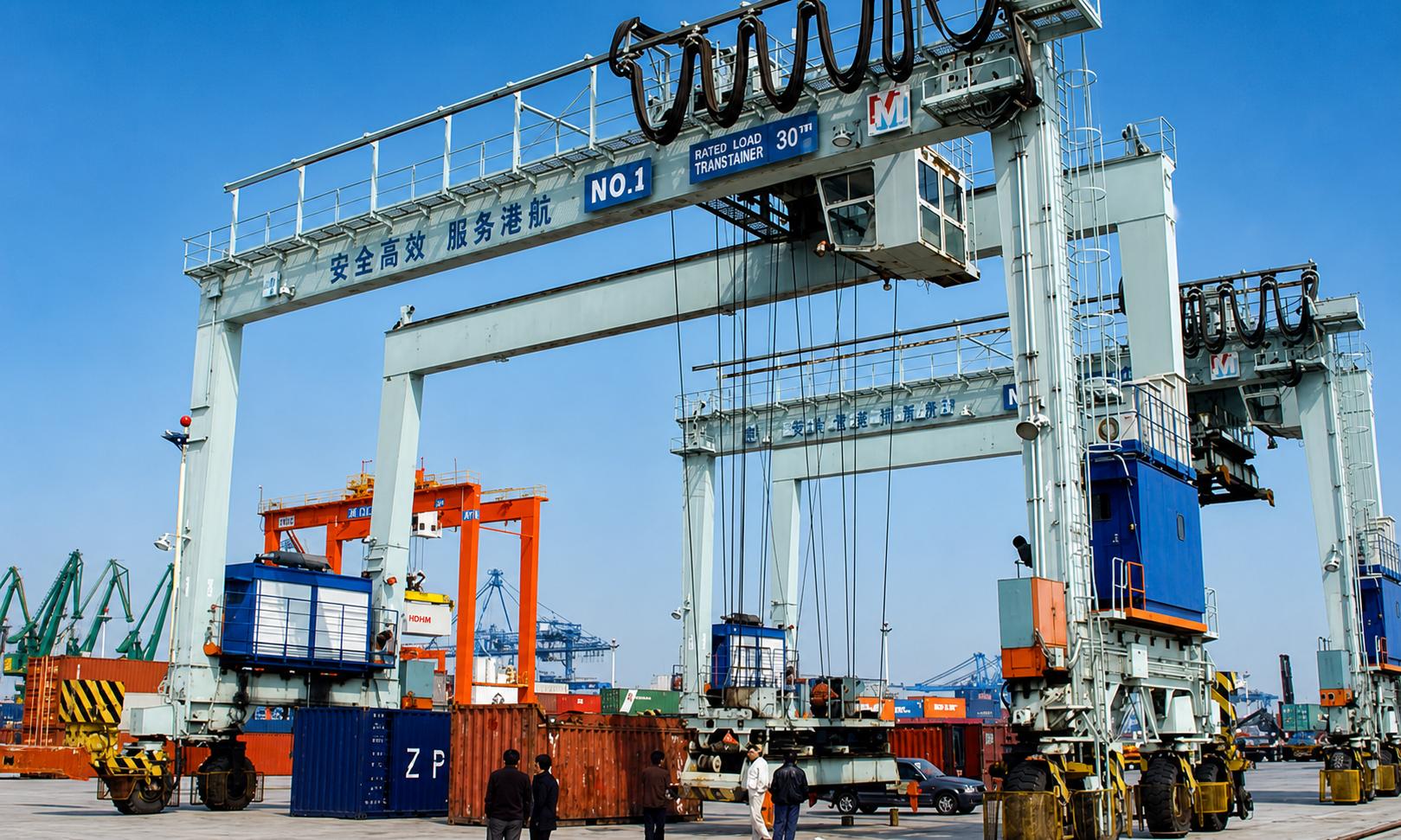
    Straddle carrier is a door-type self-propelled equipment, which can lift containers under the frame. Single equipment can independently complete the whole process of taking containers, transferring and stacking without additional lifting equipment. The stacking height is usually 1-over-2 to 1-over-3Konecranes. It is suitable for medium-sized terminals with complex moving lines and flexible transshipment throughout the site, as well as scenarios where you want to eliminate the waiting time for the connection between the shore crane and the yard. The advantage is that it integrates hoisting and horizontal transfer, flexible scheduling in the whole field, can reduce the waiting loss of different equipment connection, and can adapt to irregular sites. The limitation is that the whole team procurement investment is not low, the traffic management in the field is more complex, the storage density is not as good as the gantry crane system, and the requirements for operators are higher.

    Wharf tractor and empty container stacker

    Wharf tractor is mainly used for towing chassis within the yard for short distance, and it is necessary for most regular yards to complete horizontal transfer with gantry crane. It has low cost and flexible deployment. Empty container stacking machine is specially designed for empty container stacking, with strong stacking capacity, high operation efficiency, procurement and operation costs much lower than heavy load front crane, suitable for leasing stations and container repair areas with large empty containers.

    Container Yard Equipment Selection Matrix

    Buyer ScenarioRecommended Equipment
    New small inland container depotReach stacker + terminal tractor
    Large high-density container yardRTG crane
    Rail intermodal terminalRMG crane + reach stacker
    High empty container volumeEmpty container handler
    Flexible container transport across yardStraddle carrier
    Limited initial budgetReach stacker
    Limited land areaRTG or RMG crane
    Fast trailer shuntingTerminal tractor

    Core logic of selection

    The type and size of the storage yard shall be clarified first. The optimal equipment combination is completely different for different scales and attributes of storage yard. For small inland storage yard and dry port logistics park, the combination of front crane and tractor with high flexibility and low infrastructure requirements shall be preferred; medium storage yard can be upgraded to RTG according to the container volume; large hub port, railway central station, RMG or RTG plus tractor combination can exert scale effect. Calculate the true throughput requirements. Do not only look at the total annual container volume, but also dismantle the daily average volume, peak container volume, import and export ratio, average storage period, and the law of truck collection to port.

    Match the objective conditions of the site.

    For sites with tight land, RTG or RMG shall be given priority, and capacity shall be changed by high stacking; for sites with irregular shape and frequent adjustment of box area, flexible equipment such as front crane and straddle carrier shall be selected; for storage yards with railway access, RMG or front crane shall be given priority to meet railway loading and unloading requirements. Calculate the full cycle cost, not just the purchase price. Single unit purchase price from low to high is roughly: dock tractor, empty container stacker, front crane, straddle carrier, RTG, RMG and automation system. However, the capital construction cost and operation cost vary greatly. To analyze the total cost of ownership of storage yard equipment, the purchase, capital construction, energy consumption, maintenance, labor and shutdown losses should be included, and the real cost comparison can be obtained only if they are calculated according to the 10-year cycle.

    Common purchasing mistakes

    Staring only at the purchase price is the most common pit. Low-cost equipment often consumes high energy, has many failures, and has a slow supply of spare parts. The total expenditure is higher in the long run. It is also common to overlook site suitability. For example, no matter the size of the site, RTG is hard, and the box area planning is not open, and the equipment cannot be used; or the ground bearing is not considered, and the site settlement deformation is caused after heavy equipment is installed. There are also blind pursuit of high stacking, only to see the theoretical capacity, ignoring the higher the stack, the more the box, the actual efficiency of the operation will decline.

    FAQ

    What equipment is most suitable for small storage yard?

    Small inland storage yard or logistics park, front crane and dock tractor is the most practical combination, low investment, fast deployment, flexibility, can meet the needs of loading and unloading and short-distance transfer at the same time.

    What equipment should be selected for high density storage?

    RTG and RMG gantry cranes are more suitable for high density storage, regular container area, high land utilization, suitable for medium and large fixed storage.

    What is the difference between RTG and RMG?

    RTG runs on rubber tires and has a more flexible layout;RMG runs along fixed tracks with higher stacking density and more stable operation, suitable for fixed layout storage yards and railway stations.

    Epilogue

    In general, there is no absolute best equipment, only the combination that best suits its own scene. The model selection shall be based on the comprehensive judgment of yard scale, throughput demand, site conditions, budget planning and long-term development, and the account shall be calculated to the whole life cycle, instead of only focusing on the initial purchase price.

    Discuss the crane arrangement for your project.

    A terminal equipment purchase affects more than an individual machine. Define stacking, transport and transfer requirements together so cranes and vehicles can be compared within a complete yard operating plan. Share the load, available drawings, working cycle and site conditions with Henan Mine Crane so the required configuration and supply boundary can be discussed.

    Related crane configurations

    Container Overhead Crane

    View product parameters
    Lifting capacity: 30-65 tSpan: 18-35 mLifting height: 8 – 20 m

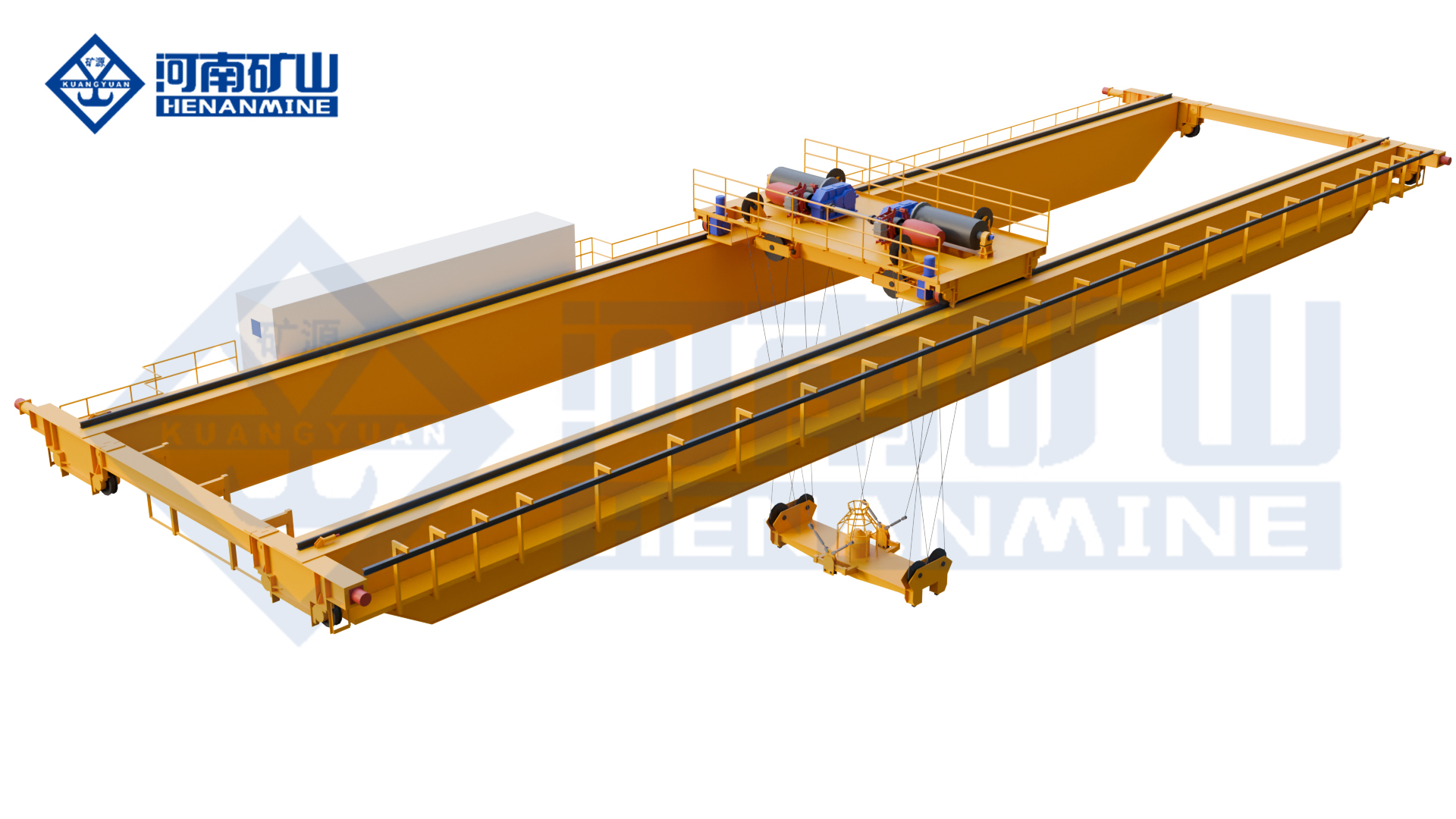
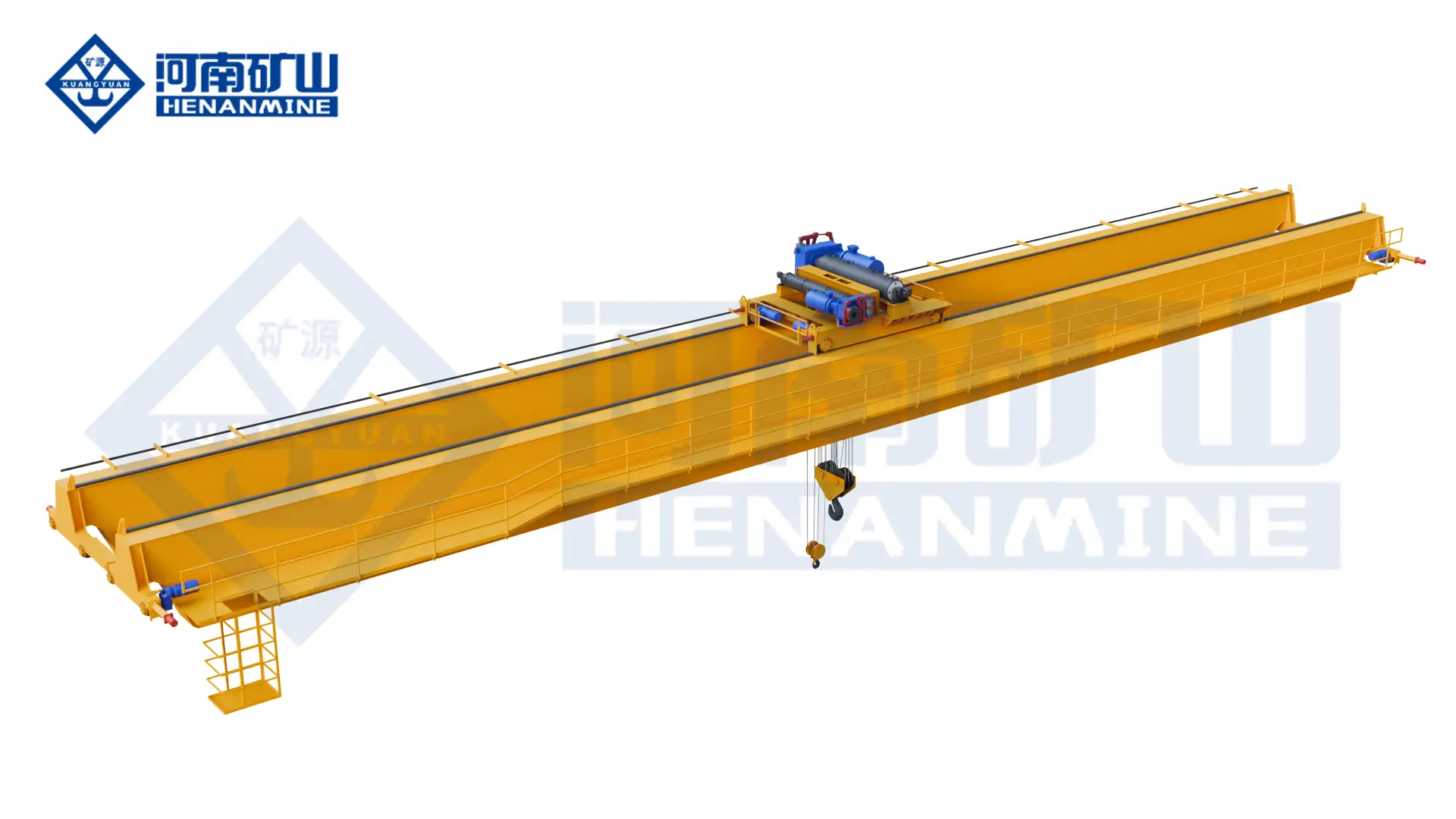
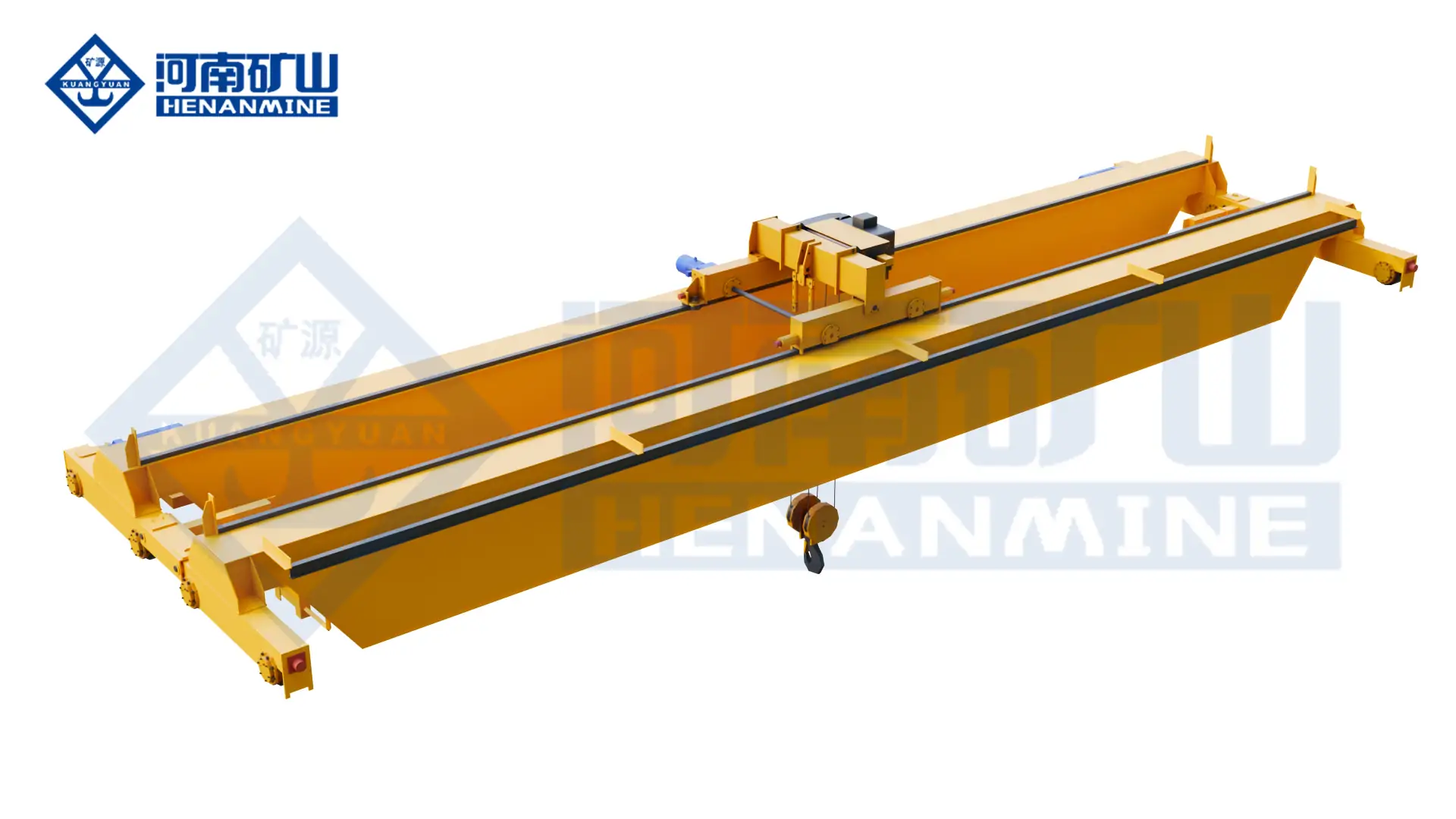
    Transfer containers within a defined overhead runway area using a double-girder bridge and matched spreader. Container size, working clearance and the handling sequence determine the arrangement.

    Container Straddle Carrier

    View product parameters
    Lifting capacity: 30 – 50 tStacking arrangement: 1 over 3 – 1 over 6Working class: A7 – A8

    Move containers between handling positions with a straddle carrier matched to the travel route and stacking layout. Define container load, ground conditions, clearance and the preferred drive system.

    Updated 2026 · Henan Mine Crane
  • Track Switching Overhead Crane

    Track Switching Overhead Crane

    Overhead Cranes / Henan Mine Crane

    Track Switching Overhead Crane

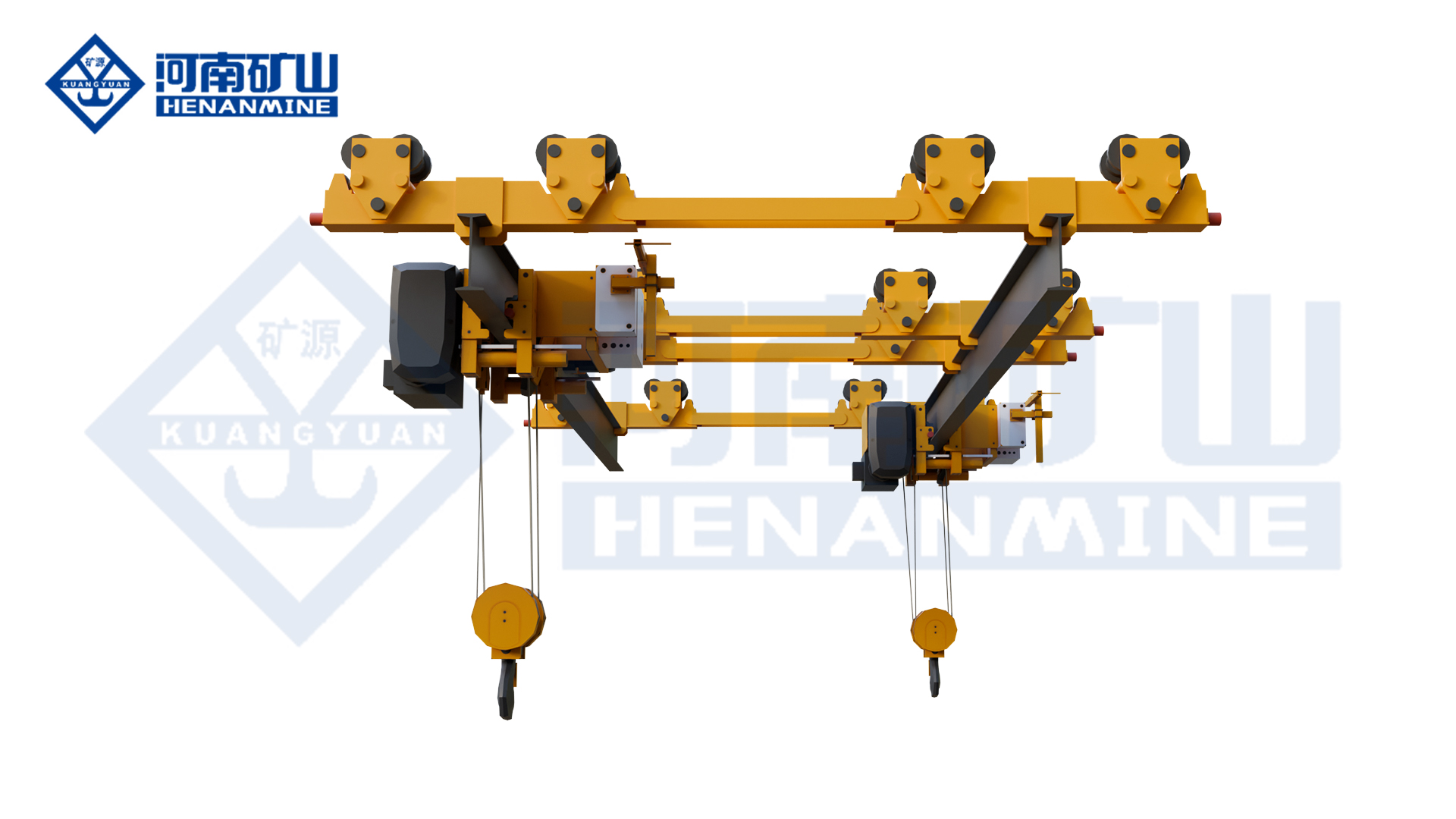
    Transfer an electric hoist between connected crane tracks with a track-switching arrangement. Rail alignment, transfer positions and interlocks are coordinated with the building and lifting sequence.

    Lifting capacity1 – 32 t
    Span3 – 30 m
    Working classA5 – A6
    Technical specifications

    Define the total suspended load, duty and site conditions for your project.

    Technical specifications

    Check the load.
    Plan the configuration.

    Parameters and equipment options are matched to the application and confirmed in the technical proposal.

    Discuss your configuration
    Capacity1 – 32 t
    Span3 – 30 m
    Lifting height4 – 20 m
    Working classA5 – A6
    Hoisting speed0.5 – 16 m/min
    Trolley travel2 – 20 m/min
    Crane travel5 – 30 m/min
    Power supply220-690V, 50/60Hz
    ControlsWireless Remote / Pendant Control

    Final parameters, dimensions, wheel loads and supply scope follow the approved project specification.

    Application & operation

    Matched to the handling task.

    Connected workstations

    Move a lifting unit between defined production or assembly zones.

    Shared lifting coverage

    Coordinate transfer positions where several runway or crane sections meet.

    Selection considerations

    Start with your operating conditions.

    01

    Load & lifting arrangement

    Specify load and hoist or trolley transfer requirements. Include lifting-appliance weight and the required lifting positions.

    02

    Site & available space

    Provide track junctions, support positions and alignment drawings. Coordinate the installation interfaces with the available site drawings.

    03

    Duty & control sequence

    Define transfer sequence, locking conditions and travel interlocks. Identify the required movements and control interfaces in the enquiry.

    Configuration comparison

    Compare related lifting arrangements.

    Crane arrangementHandling configuration
    Track Switching Overhead CraneTransfer an electric hoist between connected crane tracks with a track-switching arrangement. Rail alignment, transfer positions and interlocks are coordinated with the building and lifting sequence.
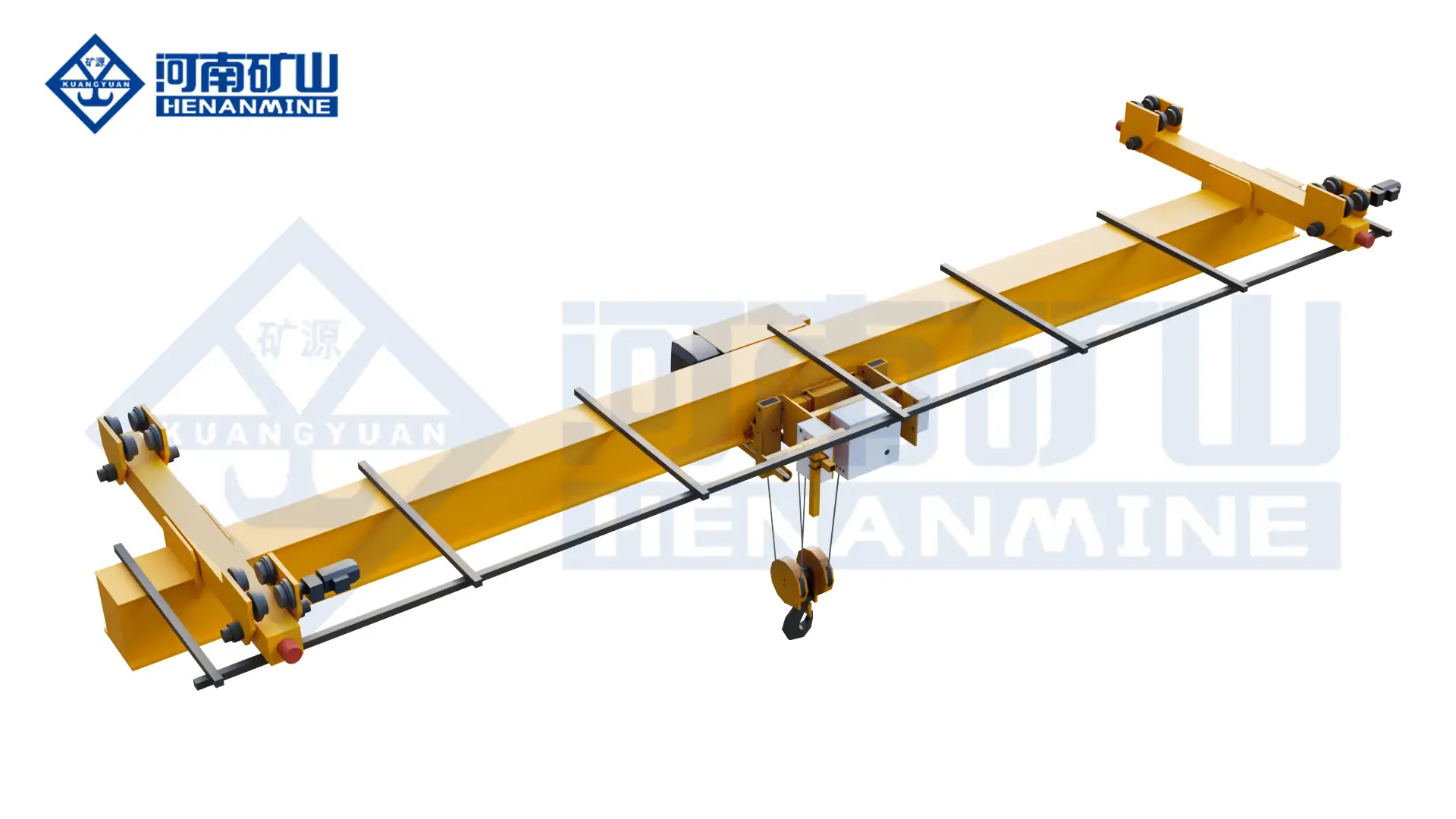
    Single-Beam Suspension CraneSuspend an LX single-girder crane from an approved overhead runway to cover workshop lifting positions. Building support, runway geometry and available hook height determine the installation.
    Multi-Point Suspension CraneCover a wide working area with a multi-point suspended crane arrangement. Coordinate runway support positions, load distribution and travel geometry with the building structure.
    Multi Support Double Girder Underhung CraneUse a multi-support double-girder underhung arrangement for wide-span working areas and large components. The building supports, lifting coverage and load distribution are designed together.

    Operating protection & lifecycle support

    Plan beyond the equipment.

    01

    Operating protection

    Confirm overload protection, travel limits, brakes, emergency controls and the required process interlocks for the declared lifting task.

    02

    Installation & commissioning

    Agree runway reactions, structural interfaces, electrical connections, assembly, inspection and commissioning responsibilities before delivery.

    03

    Inspection & spares

    Plan inspection and maintenance of track connections, locking devices and limit switches. Agree service access, documentation and the required spare-parts scope.

    Questions before the order

    Clarify the details
    that shape the crane.

    What information is needed for a track switching overhead crane quotation?+

    Provide load and hoist or trolley transfer requirements; track junctions, support positions and alignment drawings; and transfer sequence, locking conditions and travel interlocks. Include drawings and the project destination when available.

    How are the transfer tracks coordinated?+

    Provide drawings of each connecting track and the intended movement sequence. Rail alignment, locking, permissible loads and interlocks are defined for each transfer position.

    What installation and support scope should be agreed?+

    Agree runway reactions, structural interfaces, electrical connections, assembly, inspection and commissioning responsibilities before delivery. Specify the documentation, training and spare-parts support needed for the project.

    Related equipment

    Explore the alternatives.

    Let’s discuss your project

    The right crane starts
    with your lifting task.

    Share load and hoist or trolley transfer requirements, together with your site layout and operating cycle.

    info@hnksglobal.com
  • Container Straddle Carrier Specification: Compare Handling and Ownership Scope

    Container Straddle Carrier Specification: Compare Handling and Ownership Scope

    Technical guide

    Container Straddle Carrier Specification: Compare Handling and Ownership Scope

    A carrier proposal needs a clear container duty, route and support boundary. Review load geometry, stacking requirements and service arrangements before comparing equipment configurations and ownership-cost assumptions.

    Henan Mine CraneTechnical guide · Updated 2026Crane selection, project scope and operating requirements
    Henan Mine Crane Container Straddle Carrier
    Henan Mine Crane Container Straddle Carrier
    Project planning notes

    Key points for this crane project.

    1. What is a cross-traffic container truck
    2. Common Types of Container Trucks
    3. Core technical parameters of container straddle
    Read the technical guide

    What is a cross-traffic container truck

    Basic Definition

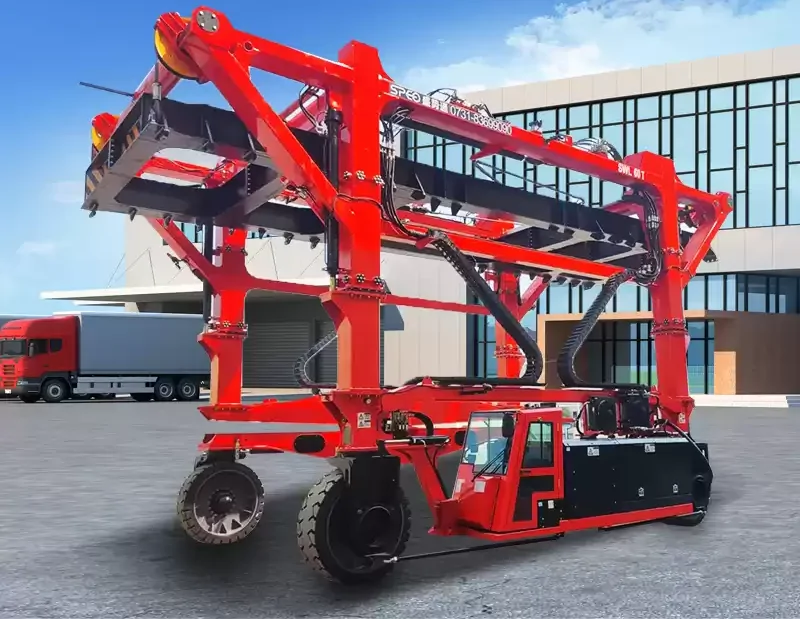
    Container transporter is a gantry structure of tire-type self-lifting equipment, the frame of the operation directly across the top of the container, through the spreader to complete the lifting and landing of the box, while relying on its own power to complete the horizontal transfer of the field. Unlike traditional gantry cranes, it does not require a fixed rail, set loading and unloading, handling functions in one, a single device can cover the whole process of the container from picking up the box to the drop.

    This type of equipment was first used in coastal ports in Europe and the United States, with the development of global multimodal transportation, gradually popularized to the railroad yard, inland yards, logistics parks, suitable for more and more rich working conditions and scenarios.

    Working Principle

    The lifting system mostly adopts hydraulic or electric drive, with special container telescopic spreader, which can be adapted to 20-foot, 40-foot, 45-foot standard ISO containers, and the lifting process is smooth and controllable.

    travel system relies on multiple sets of rubber tires driving, divided into two speeds of empty load and heavy load, taking into account the efficiency of transfer and operational safety.

    The steering system supports multi-mode steering, including normal front-wheel steering, all-wheel steering, tilting, in-situ steering, adapting to different widths of the yard aisle, and can work flexibly in narrow spaces.

    The complete operation process is usually as follows: the equipment travels to the top of the target container → spreader alignment and locking → lifting the box to a safe height → traveling to the target stacking position → precise alignment and dropping of the box → unlocking and driving away, and the whole process is completed by a single piece of equipment independently.

    Core components

    High-strength portal steel frame is the main load-bearing foundation of the equipment, taking into account the structural strength and self-weight control, suitable for heavy-duty long-term operation.

    Lifting system includes power unit, transmission mechanism, spreader connecting frame, which is the core module to determine the lifting performance.

    Specialized container telescopic spreader can be adapted to different specifications of the box, with a rotary locking mechanism to ensure the safety of the box lifting.

    The drive system includes power unit, transmission mechanism and axle, which determines the driving and steering performance of the equipment.

    Large-size heavy-duty rubber tires can carry the weight of the whole machine and cushion the bumps on the ground at the same time, which is suitable for different hardened sites.

    Closed cab provides operators with a good view and a well-protected working environment.

    Multi-level safety system, covering anti-collision, overload, limit, emergency braking in multiple dimensions, to ensure the safety of the whole operation.

    Common Types of Container Trucks

    Diesel-powered container trucks

    Diesel model is the industry's longest application of mature models, strong power output, to deal with heavy-duty, continuous operation of the stability of the extreme temperature, the adaptability of the bad site better.

    It is suitable for all-weather operation of large seaports and inland hubs with high throughput, and has a mature supporting maintenance system, which makes it convenient to purchase spare parts globally.

    Hybrid Container Trucks

    The hybrid model adds energy storage and recovery unit on the basis of diesel power, which recovers energy when the vehicle decelerates and the spreader is lowered, and then assists in the operation of the driving equipment, which can significantly reduce fuel consumption and exhaust emissions.

    It is suitable for medium-sized yards that want to control operational energy consumption and gradually transform to green logistics, and it can realize a certain degree of cost reduction and emission reduction without significant changes to the existing supporting facilities.

    Electric Container Truck

    The all-electric model is driven by lithium battery, with zero exhaust emission during operation, low noise, simpler power transmission structure, fewer wearing parts and lower long-term maintenance cost.

    With the tightening of carbon neutral policy in global ports, the procurement proportion of electric models is increasing year by year, which is especially suitable for logistics parks around the city and regional yards with strict environmental control.

    Automated Driverless Transporter

    The driverless model is equipped with GPS positioning, laser navigation, and cluster scheduling system, which can autonomously complete the path planning, box handling, and precise alignment without the need for operators to be on-site.

    Mainly used in automated intelligent port, large hub yard, can significantly reduce labor costs, improve the standardization of yard operations, is one of the core development direction of the future of intelligent logistics.

    Core technical parameters of container straddle carrier

    The matching degree of container straddle carrier specification directly determines the operational efficiency and service life of the equipment, and the selection should be checked item by item to meet the needs of the scene.

    Stacking capacity and lifting height

    Stacking capacity is usually labeled with “1-over-N”, 1-over-2 means that the equipment can be stacked across 1 layer, 2 layers, and so on, the mainstream configuration of 1-over-2, 1-over-3, 1-over-4 three kinds.

    The higher the number of stacking layers, the larger the storage capacity of the yard with the same floor space, and the higher the cost of land in the port area and the peripheral yard of the city, the more suitable to choose the high-level stacking model.

    When selecting the model, it is necessary to take into account the number of stacking layers, the height of the containers, the operational safety clearance, and to avoid obstacles such as lighting and pipelines above the site.

    Traveling and steering parameters

    Mainstream models of unladen traveling speed 25-30km / h, fully loaded traveling speed 20-25km / h, the faster the speed, the higher the efficiency of long-distance transit, but also to match the safety design of the yard access.

    Wheel configuration is common 4-wheel, 6-wheel, 8-wheel structure, the larger the load, the weaker the site bearing, the more the need for multi-wheel configuration to disperse the grounding ratio pressure.

    The richer the steering mode, the stronger the adaptability to the narrow yard, all-wheel steering, in-situ steering function, can greatly reduce the vehicle turnaround to occupy the channel space.

    Other core parameters

    The self-weight and external dimensions of the whole machine should be checked with the site bearing and channel width to avoid the over-width and over-weight can't enter the yard.

    Automation function can be optional on demand, the basic model is manual driving, can be added with remote monitoring, fault diagnosis; medium and high-end models can be equipped with semi-automatic auxiliary alignment, automatic collision avoidance; high-end models to support the full unmanned, fleet intelligent scheduling.

    Mainstream Application Scenarios of Container Transporter

    Container harbor terminal

    Coastal ports are the most core application scenarios for trans-shipment vehicles, which mainly undertake horizontal transfer of containers from shore to yard, internal stacking and finishing in the yard, and transferring of boxes before loading.

    Compared with the traditional mode of “bank bridge + container truck + yard bridge”, trans-carrier can reduce the intermediate transfer links, ease the traffic congestion inside the yard, and improve the flow speed of the whole operation chain.

    Intermodal Railway Yard

    Railroad container yards need to frequently transfer containers between railroad flatcars, yards and highway trucks. The flexible steering and moving ability of trans-carrier can quickly complete the changeover of different transportation carriers, shorten the train's stopping time at the station, and improve the turnover efficiency of railroad trains.

    Inland Container Depot (ICD)

    Most of the inland distribution yards do not have conditions for laying heavy-duty tracks, and the advantages of cross-traffic cars that do not require track infrastructure and can operate on conventional hardened ground are very prominent. Subsequent expansion of the yard, layout adjustment, the equipment can be directly adjusted to the scope of operation, without additional investment in civil transformation costs.

    Freight distribution centers and logistics parks

    Logistics distribution centers around the city have fast container flow and short stacking cycle, and the trans-loader can quickly complete the whole process of unloading, stacking and loading, which is suitable for the demand of multi-batch and scattered container distribution.

    Centralized Empty Container Yard

    The core demand of empty container yard is to improve the space utilization rate, and the high-level stacking capacity of trans-loader can greatly improve the storage capacity of empty containers per unit area, and at the same time, it can flexibly dispatch the empty containers to match the demand of different routes and different customers.

    Core Advantages of Container Transporter

    Strong operational flexibility

    Unlike rail lifting equipment, rubber tyred straddle carrier can move freely in the whole range of the yard, and the operation area is not restricted by the rail. When the layout of the yard is adjusted and the operation area is changed, there is no need to do any civil construction modification, and the equipment can directly switch the operation range, which is more capable of adapting to the business changes.

    Low preliminary infrastructure investment

    There is no need to pave the traveling track and pour the track foundation, and only need the yard floor to reach the conventional hardened bearing standard to be put into use. Small and medium-sized yards can significantly reduce the capital and time costs of the preliminary infrastructure, temporary transit yards such as short-term projects can also be quickly realized.

    Shorter Container Operation Process

    A single piece of equipment has both lifting and transferring functions, no need to repeatedly transfer containers between “yard bridge + truck”, reducing the waiting and alignment time of the intermediate links, and the cycle length of a single container's on-site operation is shorter, which makes it less likely to be congested in the yard during peak hours.

    Higher storage density in the yard

    Relying on multi-layer stacking capacity, the vertical space of the yard can be fully utilized, and the storage capacity can be increased without expanding the site horizontally. In coastal port areas and urban logistics zones where land prices are high, the cost of site rental can be effectively diluted.

    Fewer ancillary equipment

    The traditional mode requires the simultaneous configuration of multiple types of equipment such as axles, tractors, and forklifts, while the trans-loader can cover all the operational aspects of the yard, reducing the types and number of equipment, as well as the complexity of equipment management and staffing.

    Controllable long-term operating costs

    Mature models have a high degree of commonality of wearing parts and transparent maintenance costs. Electric and hybrid models can further reduce energy consumption expenses, and from the perspective of the whole life cycle, the operating cost is lower than the traditional program of multiple equipment combination.

    Safe Operation

    Hyundai transporters are equipped with multi-level safety protection as standard, ranging from mechanical limit to electronic collision avoidance, and from load monitoring to emergency braking, covering the risk points of the whole process of operation. The standardized operation actions can also reduce the equipment collision and cargo damage problems caused by manual operation errors.

    Good scalability for future expansion

    Yard business increment, you can directly increase the purchase of equipment, do not have to synchronize with the large-scale infrastructure renovation, expansion flexibility is high, suitable for business in the upturn of the growth of the station.

    Comparison with other container handling equipment

    Many customers will take the cross-traffic truck and RTG, RMG, frontal crane, set of trucks to do the comparison, in fact, all kinds of equipment adapted to the scene is very different, there is no absolute advantages and disadvantages, only adapted to or not.

    Transporter vs RTG tire-type gantry crane

    RTG is mainly used for stacking operation in the fixed box area, horizontal transfer requires the cooperation of trucks; straddle carrier can independently complete the transfer + stacking, more flexible; RTG has a higher number of stacking layers, suitable for fixed large-capacity yards; straddle carrier is more suitable for the need for frequent transfers, the flow of fast yards.

    Straddle Car vs RMG Rail Mounted Gantry Crane

    RMG relies on fixed rail operation, strong stability, good automation adaptability, but high infrastructure costs, the layout is completely fixed; transporter low infrastructure costs, flexibility, automation transformation costs are relatively higher.

    Transporter vs Positive Crane

    Frontal crane is flexible in transferring, but the number of stacking layers is low and the operation efficiency is limited, which is suitable for small and medium volume and low operation frequency yard; straddle carrier has stronger stacking capacity and operation efficiency, which is suitable for medium and large volume of normalized operation yard.

    Straddle carrier vs Tractor trailer

    Tractor trailer is only responsible for horizontal transportation, no lifting capacity, must be used with lifting equipment; transporter is lifting + transportation integration, a single device to cover the whole process.

    Comparison ItemContainer Straddle CarrierRTG CraneRMG Crane
    MobilityFull yard free movementFixed block travelFixed rail travel
    Core FunctionLifting + transport + stackingContainer stackingContainer stacking
    InfrastructureStandard hardened yardYard pavement + power supplyRail foundation + power
    Initial InvestmentMediumMedium-highHigh
    Maintenance DifficultyMediumMediumMedium-low
    Best ApplicationMedium-large flexible yardsFixed container blocksHigh-volume fixed yards

    How to choose the appropriate container transporter?

    First accounting yard container throughput

    First of all, the average daily container handling volume, peak hourly operating volume, and then set aside 3-5 years of business growth space. In the hub yard with large throughput, the model with fast traveling speed and automated dispatching is preferred; in the small yard with smooth throughput, the standard configuration model can meet the demand.

    Adaptation with yard layout

    Check the width of the yard channel, turning space, box layout, and calculate whether the minimum turning radius of the equipment is suitable. Narrow aisles, box area dense yard, give priority to the selection of models with all-wheel steering, in-situ steering, to avoid poor vehicle traffic to lower the overall efficiency.

    Determine the rated lifting capacity

    Selection of tonnage according to the yard's main container load, heavy boxes account for a high proportion of the selection of high-capacity, empty box-based selection of small tonnage. Do not blindly choose a high-capacity for the sake of “one-step”, and not to save money to choose the tonnage of the equipment is not enough, the risk of long-term overload operation is very high.

    Choose to match the power source

    The diesel model is suitable for all-weather, high-load operation, with low matching requirements; the hybrid model balances energy consumption and stability; the electric model is suitable for high environmental protection requirements, with charging support stations. It is necessary to combine the cost of local fuel and electricity, as well as the requirements of environmental protection policies to make a comprehensive judgment.

    Clear automation requirements

    If the yard has intelligent upgrading plan, you can choose the model with reserved automation interface, and then gradually upgrade the auxiliary alignment, remote control and unmanned function, without one-time full investment.

    Consider the site operating environment

    Coastal salt spray areas should choose marine grade anticorrosion coating, corrosion-resistant components; alpine areas should choose low-temperature start-up adapted power system; dusty areas should strengthen the sealing and dustproof design. Failure to adapt to the environment will significantly shorten the service life of the equipment.

    Confirmation of maintenance and spare parts supply

    Priority should be given to the models with strong commonality of parts and global spare parts supply from the manufacturers. Overseas projects, in particular, should confirm whether there is a local service network, can provide timely technical support, to avoid equipment failure after a long period of downtime waiting for spare parts.

    Calculate the total life cycle cost (TCO)

    Don't just look at the purchase price of the equipment, but include energy consumption, maintenance, spare parts, downtime losses, and residual value. Often times energy-efficient models with a slightly higher purchase price have a lower total cost of ownership in the long run.

    Focus on the safety configuration

    Collision Avoidance System

    Laser or radar collision avoidance system can detect people, equipment and obstacles around the equipment in real time, and trigger early warning and automatic deceleration when the distance is too close to avoid collision accidents. It can also realize the anti-collision linkage between vehicles when multiple vehicles are operating in the same yard.

    Load monitoring system

    Real-time monitoring of spreader load, automatic alarm and restriction of lifting action when overloaded, avoiding damage to equipment structure and lifting parts from overloading operation, and preventing the risk of overturning caused by overweight box.

    Panoramic camera system

    Multiple cameras cover the blind area around the equipment, and the driver's cab can view the spreader, tires, and box periphery in real time, eliminating the dead angle of the field of vision and improving the alignment accuracy and safety of the operation.

    Automatic braking system

    When encountering unexpected situations, releasing the operating pedal or power failure, the equipment can automatically trigger the brake to avoid skidding, falling loads and other dangers.

    Wind speed monitoring device

    Harbors and open yards are prone to windy weather. The wind speed monitoring system detects the ambient wind speed in real time and issues an early warning when it exceeds the safety threshold, reminding the operator to stop the operation or automatically locking the equipment to prevent rollover caused by high winds.

    Emergency Protection System

    Containing emergency power failure, emergency descent, emergency escape channel and other configurations, it can safely drop the load when encountering power failure or electrical failure, so as to protect the safety of operators and equipment.

    Equipment Maintenance Best Practices

    Daily spot check list

    Before every shift operation, we should do basic inspection, including tire air pressure, spreader locking pin, braking performance, hydraulic oil level, effectiveness of safety devices, to confirm that there is no abnormality before putting into operation, and eliminate minor faults before starting the machine.

    Preventive Maintenance Cycle

    According to the cycle of the equipment manual, change the oil, filter element, hydraulic fluid, wearable seals, tighten the structural bolts regularly, and do not wait for the parts to be completely damaged before repairing. The cost of preventive maintenance is much lower than emergency repairs, and can also reduce downtime losses.

    Hydraulic system maintenance

    Hydraulic transporter should focus on the hydraulic system, regularly check the oil cleanliness, pipeline sealing, timely replacement of filter elements and aging seals, to avoid hydraulic oil contamination caused by the valve group, cylinder damage.

    Regular inspection of tires

    Tires are the core bearing and travel parts, to regularly check the degree of wear and tear, air pressure, tread damage, abnormal wear and tear should be timely investigation of positioning, steering parameters. Yards with poor site conditions should appropriately increase the frequency of inspection.

    Electrical system maintenance

    Regularly clean up the electrical cabinet dust, check the tightness of the terminals, moisture and corrosion prevention. Electric models should focus on the maintenance of battery packs, charging and discharging according to specifications to extend battery life.

    IoT predictive maintenance

    Middle and high-end models can be equipped with IoT predictive maintenance system, real-time monitoring of motor, hydraulic, transmission components of the operating data, in advance of the risk of failure, and take the initiative to arrange maintenance, to minimize unplanned downtime.

    Industry Development Trends

    Electrification

    As the global green port policy continues to advance, the market share of electric container trucks is increasing year by year, and the battery technology is constantly being iterated, with range and fast-charging capability continuously enhanced, which will gradually become the mainstream model in the future.

    AI Fleet Management

    In a multi-vehicle cooperative operation yard, using AI algorithms to do fleet scheduling and path optimization can reduce idling, improve operational efficiency, and significantly improve the flow efficiency compared with manual scheduling.

    Remote Control

    Operators can remotely control multiple units in the center control room, eliminating the need to go to the driver's cab on site, which improves the working environment and reduces the cost of manpower allocation at the same time.

    Automatic Driving

    Fully driverless trans-shipment trucks have been applied in several automated ports, and will be gradually popularized to medium-sized yards with the maturity of navigation and scheduling technologies.

    Digital Twin

    Digital twin technology is used to build a virtual model of the yard and equipment, simulate the operation process, predict equipment failures, and realize digital management of yard operation and equipment maintenance.

    Green Port Support

    Under the goal of carbon neutrality in ports, the emission reduction and energy saving technologies of trans-shipment vehicles will continue to be upgraded, and various technology routes such as hybrid, electric, and hydrogen fuels will be implemented in parallel to meet the environmental protection requirements of different regions.

    Frequently Asked Questions

    What is the rated lifting capacity of a container truck?

    How many layers of containers can a straddle carrier stack?

    Conventional models can stack 2-4 layers, that is, 1-over-2 to 1-over-4 configurations, high-level stacking models can be up to 5 layers, the specific combination of lifting height and yard safety requirements to choose.

    It is mainly used in container ports, railroad intermodal terminals, inland container yards, logistics distribution parks, empty container distribution centers, and all the scenarios that require container stacking and transferring can be used.

    What is the core difference between straddle carrier and RTG crane?

    RTG is a tire-type gantry crane, mainly in the fixed box area to do stacking operations, horizontal transfer needs to be set with the truck; transporter is self-propelled equipment, lifting, transfer, stacking in one, more flexible, the operation covers a wider range.

    The price is greatly affected by the tonnage, configuration, power type, and automation degree, ranging from several hundred thousand to millions of dollars, depending on the parameter configuration, customization needs to account for the exact quote.

    How long is the service life of a transporter?

    Is it worth to invest in electric transporter?

    For the annual operating hours sufficient, high environmental requirements, electricity price has the advantage of the station, electric models of long-term energy consumption and maintenance costs are lower, the whole life cycle of the revenue is very substantial, is worth considering the direction of the selection.

    What kind of maintenance is required for transporters?

    It mainly includes daily inspection per shift, regular fluid and wear parts replacement, hydraulic system inspection, tire maintenance, dust removal and fastening of the electrical system, as well as regular structural inspection and calibration of safety devices.

    Discuss the crane arrangement for your project.

    A carrier proposal needs a clear container duty, route and support boundary. Review load geometry, stacking requirements and service arrangements before comparing equipment configurations and ownership-cost assumptions. Share the load, available drawings, working cycle and site conditions with Henan Mine Crane so the required configuration and supply boundary can be discussed.

    Related crane configurations

    Container Straddle Carrier

    View product parameters
    Lifting capacity: 30 – 50 tStacking arrangement: 1 over 3 – 1 over 6Working class: A7 – A8

    Move containers between handling positions with a straddle carrier matched to the travel route and stacking layout. Define container load, ground conditions, clearance and the preferred drive system.

    Container Overhead Crane

    View product parameters
    Lifting capacity: 30-65 tSpan: 18-35 mLifting height: 8 – 20 m

    Transfer containers within a defined overhead runway area using a double-girder bridge and matched spreader. Container size, working clearance and the handling sequence determine the arrangement.

    Updated 2026 · Henan Mine Crane

  • Container Straddle Carrier

    Container Straddle Carrier

    Port Cranes / Henan Mine Crane

    Container Straddle Carrier

    Move containers between handling positions with a straddle carrier matched to the travel route and stacking layout. Define container load, ground conditions, clearance and the preferred drive system.

    Lifting capacity30 – 50 t
    Stacking arrangement1 over 3 – 1 over 6
    Working classA7 – A8
    Technical specifications

    Define the total suspended load, duty and site conditions for your project.

    Technical specifications

    Check the load.
    Plan the configuration.

    Parameters and equipment options are matched to the application and confirmed in the technical proposal.

    Discuss your configuration
    Rated Lifting Capacity30 – 50 t
    Stacking Capacity1 over 3 – 1 over 6
    Unladen Travel SpeedDefined for the declared route, operating cycle and selected power system
    Laden Travel SpeedDefined for the declared route, operating cycle and selected power system
    Hoisting Speed0 – 20 m/min
    Steering Mode2-wheel / 4-wheel / 8-wheel all-mode steering
    Power TypeLithium battery electric / diesel / hybrid
    Working ClassA7 – A8
    Site operating conditionsDeclare climate, wind exposure and permitted operating limits for the proposed configuration
    Protection ClassIP54 / IP55
    Control SystemPLC + HMI touch screen
    Tire SpecificationHeavy-duty industrial solid tire
    Power SupplyDefined for the declared route, operating cycle and selected power system

    Final parameters, dimensions, wheel loads and supply scope follow the approved project specification.

    Application & operation

    Matched to the handling task.

    Container transfer

    Move containers between storage rows and loading or receiving positions.

    Intermodal yards

    Coordinate travel lanes, turning space and interfaces with road or rail operations.

    Selection considerations

    Start with your operating conditions.

    01

    Load & lifting arrangement

    Specify container gross weight, size and spreader interface. Include lifting-appliance weight and the required lifting positions.

    02

    Site & available space

    Provide route gradients, pavement capacity, turning space and clearances. Coordinate the installation interfaces with the available site drawings.

    03

    Duty & control sequence

    Define travel cycles, stacking height and drive or charging arrangement. Identify the required movements and control interfaces in the enquiry.

    Configuration comparison

    Compare related lifting arrangements.

    Crane arrangementHandling configuration
    Container Straddle CarrierMove containers between handling positions with a straddle carrier matched to the travel route and stacking layout. Define container load, ground conditions, clearance and the preferred drive system.
    Rubber Tyred Gantry (RTG)Use a rubber-tyred gantry for heavy handling where the operating layout requires a mobile tyre-supported arrangement. Define the load, steering modes, route and ground conditions for the project.
    Rail-Mounted Gantry (RMG)Use an RMG for container transfer along a fixed rail layout. Select the lifting arrangement, yard coverage and positioning controls from the container flow and stacking requirements.
    Container Overhead CraneTransfer containers within a defined overhead runway area using a double-girder bridge and matched spreader. Container size, working clearance and the handling sequence determine the arrangement.

    Operating protection & lifecycle support

    Plan beyond the equipment.

    01

    Operating protection

    Define the permitted load cases, operating limits, travel protection and lifting-appliance interlocks for the declared cargo-handling modes.

    02

    Installation & commissioning

    Coordinate runway or pavement interfaces, operating clearances, power arrangements, assembly access and the terminal commissioning requirements.

    03

    Inspection & spares

    Plan inspection and maintenance of tyres, steering components and spreader connections. Agree service access, documentation and the required spare-parts scope.

    Questions before the order

    Clarify the details
    that shape the crane.

    What information is needed for a container straddle carrier quotation?+

    Provide container gross weight, size and spreader interface; route gradients, pavement capacity, turning space and clearances; and travel cycles, stacking height and drive or charging arrangement. Include drawings and the project destination when available.

    Which site details affect a straddle carrier proposal?+

    Supply the route layout, gradients, pavement information, container stacking arrangement and operating cycle. These inputs determine the vehicle geometry, wheel loads and drive configuration.

    What installation and support scope should be agreed?+

    Coordinate runway or pavement interfaces, operating clearances, power arrangements, assembly access and the terminal commissioning requirements. Specify the documentation, training and spare-parts support needed for the project.

    Related equipment

    Explore the alternatives.

    Let’s discuss your project

    The right crane starts
    with your lifting task.

    Share container gross weight, size and spreader interface, together with your site layout and operating cycle.

    info@hnksglobal.com
  • Container Overhead Crane

    Container Overhead Crane

    Overhead Cranes / Henan Mine Crane

    Container Overhead Crane

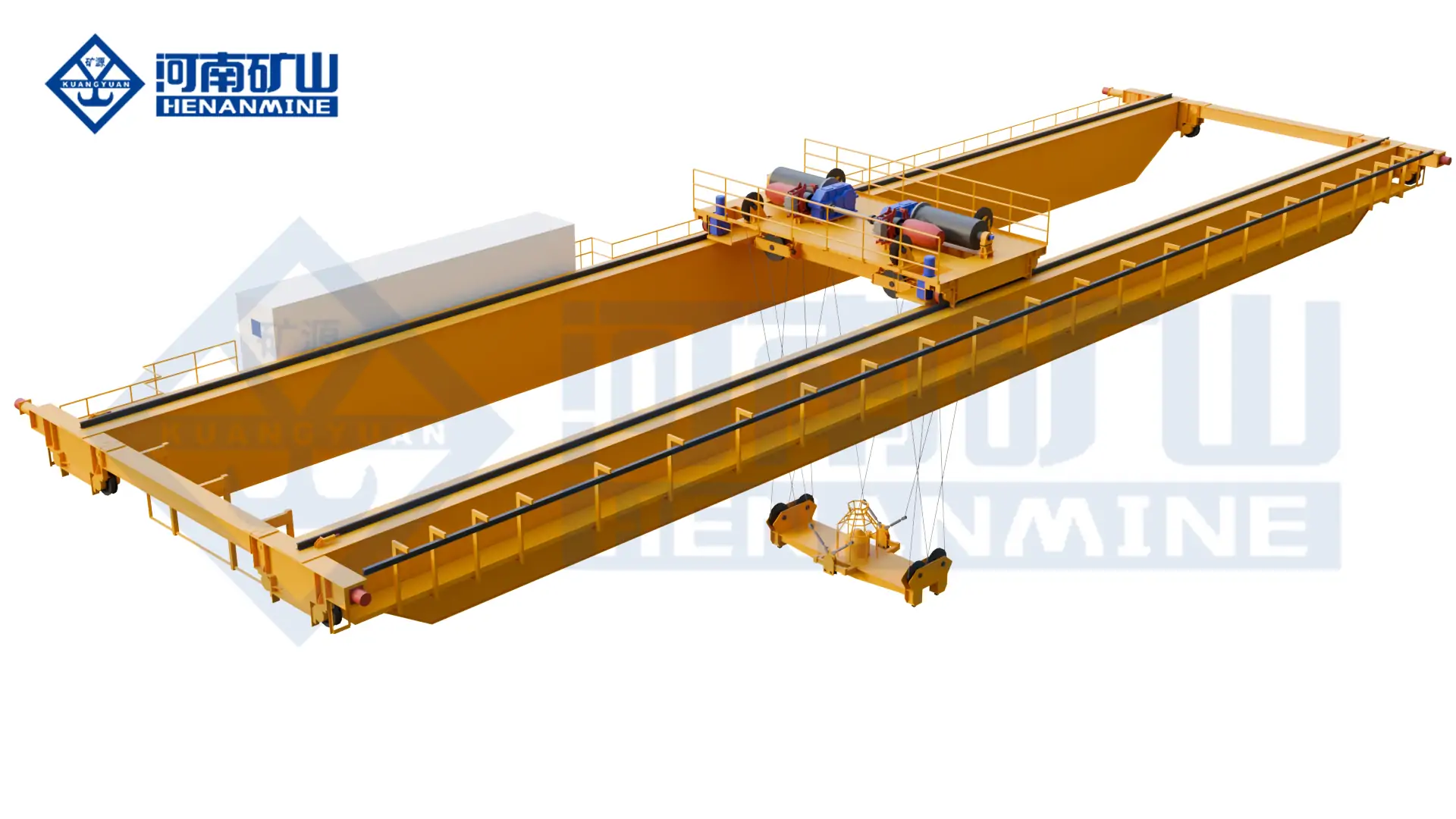
    Transfer containers within a defined overhead runway area using a double-girder bridge and matched spreader. Container size, working clearance and the handling sequence determine the arrangement.

    Lifting capacity30-65 t
    Span18-35 m
    Working classA6–A7
    Technical specifications

    Define the total suspended load, duty and site conditions for your project.

    Technical specifications

    Check the load.
    Plan the configuration.

    Parameters and equipment options are matched to the application and confirmed in the technical proposal.

    Discuss your configuration
    Capacity30-65 t
    Span18-35 m
    Lifting height8 – 20 m
    Working classA6–A7
    Hoisting speed5 – 20 m/min
    Crane travel15-45 m/min
    Power supply220-690V, 50/60Hz

    Final parameters, dimensions, wheel loads and supply scope follow the approved project specification.

    Application & operation

    Matched to the handling task.

    Fixed handling bays

    Lift containers between designated positions within the runway coverage.

    Intermodal facilities

    Coordinate the spreader, transport interfaces and required hook or spreader height.

    Selection considerations

    Start with your operating conditions.

    01

    Load & lifting arrangement

    Specify container sizes, gross weights and spreader requirements. Include lifting-appliance weight and the required lifting positions.

    02

    Site & available space

    Provide runway span, stacking height and vehicle clearances. Coordinate the installation interfaces with the available site drawings.

    03

    Duty & control sequence

    Define container moves per hour, positioning and interlock requirements. Identify the required movements and control interfaces in the enquiry.

    Configuration comparison

    Compare related lifting arrangements.

    Crane arrangementHandling configuration
    Container Overhead CraneTransfer containers within a defined overhead runway area using a double-girder bridge and matched spreader. Container size, working clearance and the handling sequence determine the arrangement.
    Rail-Mounted Container Gantry CraneHandle containers along a fixed yard runway with a rail-mounted container gantry crane. Coordinate the spreader, stacking geometry, rail layout and transfer positions around the terminal operation.
    Rubber Tyred Gantry (RTG)Use a rubber-tyred gantry for heavy handling where the operating layout requires a mobile tyre-supported arrangement. Define the load, steering modes, route and ground conditions for the project.
    Container Straddle CarrierMove containers between handling positions with a straddle carrier matched to the travel route and stacking layout. Define container load, ground conditions, clearance and the preferred drive system.

    Operating protection & lifecycle support

    Plan beyond the equipment.

    01

    Operating protection

    Confirm overload protection, travel limits, brakes, emergency controls and the required process interlocks for the declared lifting task.

    02

    Installation & commissioning

    Agree runway reactions, structural interfaces, electrical connections, assembly, inspection and commissioning responsibilities before delivery.

    03

    Inspection & spares

    Plan inspection and maintenance of spreader connections, locking feedback and trolley travel equipment. Agree service access, documentation and the required spare-parts scope.

    Questions before the order

    Clarify the details
    that shape the crane.

    What information is needed for a container overhead crane quotation?+

    Provide container sizes, gross weights and spreader requirements; runway span, stacking height and vehicle clearances; and container moves per hour, positioning and interlock requirements. Include drawings and the project destination when available.

    What container information is needed?+

    Provide the container sizes, maximum gross weight, spreader type, stacking layout and transport interfaces. The proposal must define whether capacity is stated at the spreader or includes the lifting appliance.

    What installation and support scope should be agreed?+

    Agree runway reactions, structural interfaces, electrical connections, assembly, inspection and commissioning responsibilities before delivery. Specify the documentation, training and spare-parts support needed for the project.

    Related equipment

    Explore the alternatives.

    Let’s discuss your project

    The right crane starts
    with your lifting task.

    Share container sizes, gross weights and spreader requirements, together with your site layout and operating cycle.

    info@hnksglobal.com
  • Container Gantry Spreader Selection: Load Basis and Positioning Interfaces

    Container Gantry Spreader Selection: Load Basis and Positioning Interfaces

    Technical guide

    Container Gantry Spreader Selection: Load Basis and Positioning Interfaces

    Container handling requires the spreader and crane controls to work as one system. Define container modes, load basis and placement requirements so attachment compatibility and control responsibilities can be assessed together.

    Henan Mine CraneTechnical guide · Updated 2026Crane selection, project scope and operating requirements
    Container Gantry Spreader Selection: Load Basis and Positioning Interfaces
    Henan Mine Crane lifting equipment
    Project planning notes

    Key points for this crane project.

    1. What Is a Container Handling Gantry Crane?
    2. Container Spreader Bar Selection: What Should You
    3. How PLC Alignment Control Improves Container
    Read the technical guide

    What Is a Container Handling Gantry Crane?

    Container gantry cranes are large-scale industrial lifting equipment designed for container loading, unloading, transshipment, and stacking operations. They are the core infrastructure for modern operations in ports, logistics hubs, and inland depots, and support the circulation and transportation of millions of standard containers (TEU) around the world every year.

    For container operation scenarios, the operating efficiency, safety and stability of gantry cranes depend entirely on the configuration of the equipment structure, the adaptability of the spreader and the coordinated matching of the control system. In-depth understanding of its structural principles, equipment differences and control logic is the core prerequisite for enterprise selection, equipment transformation, and site efficiency improvement.

    Core structure

    Container gantry crane is a complete set of equipment with highly integrated mechanical structure and electrical control system. The major subsystems work together to achieve safe, efficient and stable container operations. The core components are as follows:

    • Gantry structure: As the core load-bearing steel structure of the equipment, it is formed by splicing the outriggers on both sides with the main girder on the top, carrying all the loads of all crane mechanisms, spreaders and containers, and transmitting the force to the travel foundation. The span, lifting height, and cantilever length of the gantry are all customized according to the site layout, container stacking height, and operating range, which are the basis for the stable operation of the equipment.
    • Lifting mechanism: responsible for the lifting of spreaders and containers, the core includes lifting motors, reels, wire ropes, pulley blocks and other components. The lifting speed, working level, and wire rope configuration need to match the rated load of the equipment and the number of operating cycles per hour, which directly determines the operating efficiency of the site.
    • Trolley operating mechanism: equipped with a lifting mechanism and a spreader, it walks laterally along the main girder to achieve precise horizontal alignment of containers within the span of the crane. It is the key mechanical structure for precise stacking and alignment.
    • Cart operating mechanism: drive the entire crane to walk along the yard track or on the ground to realize the displacement of equipment across container columns and work areas, greatly expand the coverage of equipment operations, and adapt to the needs of large-area yard operations.
    • Container spreader: The core operating accessories that are directly docked with the container, and the corners of the container are bitten by the rotary locking mechanism to complete the container grabbing and release. The type, parameters, and functional configuration of the spreader directly determine the container specifications and operating modes to which the equipment is adapted, which is the core focus of the selection.
    • Electrical control system: it covers the power supply system, frequency conversion drive system, and PLC core control system, which is the “brain” of the entire equipment. Modern container gantry cranes rely on PLC to realize collaborative control of all actions, and can realize full-level automation operations from manual operation, semi-automatic circulation to fully automatic precise alignment.

    Container gantry crane application scenarios

    With the advantages of strong adaptability, large load and high degree of automation, container gantry cranes are widely used in all scenarios of multimodal transport. The core deployment areas include:

    • Container terminal: As the core operating hub of the seaport, it mainly undertakes the loading, unloading, storage and transit of containers between ships, depots, warehouses, and railways. It is the core node of the flow of foreign trade shipping containers.
    • Multimodal transport yard: it connects the core transit stations of the three major transportation systems of sea, railway and highway, and opens up the barriers to the connection of different modes of transportation to achieve efficient container turnover, rapid distribution and seamless circulation.
    • Port and logistics center: A comprehensive logistics distribution hub, which can be adapted to the warehousing, turnover, sorting, and stacking operations of ordinary bulk cargo and standard containers at the same time, and can be adapted to diversified logistics and freight scenarios.
    • Railway freight yard station: It focuses on the automated loading, unloading, storage and on-site reverse transportation of railway containers. It is the core supporting equipment scene for railway container trunk transportation and public railway intermodal transportation.
    • Shipyard: It is mainly used for precise hoisting, shifting and transshipment of ship modular container components, marine supporting equipment and materials, and is suitable for the construction needs of heavy materials in shipbuilding projects.
    • Industrial manufacturing and warehousing base: adapt to the needs of industrial-scale freight, and be responsible for the reception, transshipment and storage of containerized raw materials, semi-finished products, and finished products to ensure the efficient operation of the industrial supply chain.

    It is worth noting that the operating environment (indoor/outdoor, open-air/closed site, wind conditions, stacking height) will directly determine the selection of spreaders and the configuration of the control system, which is the core basis for equipment customization.

    Container Spreader Bar Selection: What Should You Consider?

    The spreader is the only docking carrier between the crane and the container. Whether the selection is reasonable directly determines the safety of the operation, the efficiency of the operation and the service life of the equipment. Mismatched spreaders can lead to problems such as alignment deviation, locking failure, and excessive load, causing safety hazards and loss of production capacity.

    Adapt to container specifications

    The mainstream specifications of international standard containers are divided into 20 feet, 40 feet, and 45 feet. The spreader needs to be accurately adapted to the position of the corner parts of the container in order to achieve stable locking and hoisting. It is also the core selection basis for 20-foot container spreaders and 40-foot container spreaders.

    • 20-foot container spreader: it is divided into two types: fixed and telescopic. It is specially designed for 20-foot standard containers. It is suitable for special depots that only operate small boxes. It can also be used with a double crane mode to increase the amount of work. The structure is light, the response is fast, and the maintenance is simple.
    • 45-foot container spreader: customized for high-box and wide-body 45-foot containers, it is mostly used in European foreign trade logistics and special container transit stations, and is a special accessory for scene-oriented.
    • -elescopic spreader: the length of the frame can be adjusted independently, compatible with 20/40/45-foot multi-specification containers, suitable for mixed-loading operation depots, flexible and full, and is the first choice for comprehensive logistics hubs.
    • Fixed spreader: it is only suitable for single-specification containers. It has a simple structure, light weight, low failure rate and lower cost. It is suitable for special stations with fixed working conditions and single-box operations. The disadvantage is that it has no versatility and cannot be adapted to multi-specification container mixed operations.

    Single crane vs double crane spreader

    Single box spreader: The industry's general standard configuration, only 1 container can be hoisted at a time, suitable for most conventional operating scenarios, the equipment load pressure is low, the operation is stable, and the operating threshold is low.

    Double-box spreader: dedicated and efficient configuration, which can lift two 20-foot standard containers at the same time. The core advantage is to greatly increase the throughput of operations. In ports and transit stations dominated by 20-foot small containers, the operating efficiency can be almost doubled and the number of crane operation cycles can be reduced.

    However, the mechanical structure of the double crane system is more complex, and the load, structural strength, and control synchronization of the crane are more demanding. For 40/45-foot large box-based, low-throughput industrial depots, the operation and maintenance costs and equipment losses of the dual-crane configuration will be greater than the efficiency gains, and there is no need to choose blindly.

    Load rating and safety design

    The selection of the rated load of the spreader and crane cannot only refer to the nominal size of the container. The comprehensive total weight needs to be calculated, including the weight of the container, the weight of the cargo in the box, the weight of the spreader and the weight of all hoisting accessories.

    After superimposing the weight of the spreader, accessories and the eccentric load of the cargo, the actual operating load is much higher than the nominal value.

    If the load selection is too small, it will cause major safety accidents such as equipment deformation, hoisting failure, and falling boxes; if the load selection is too large, it will cause a waste of equipment resources and reduce the efficiency of the operation cycle. It is necessary to accurately match the selection of working conditions.

    Rotary lock structure and control logic

    The rotary lock is the core connecting component of the spreader and the container, and its locking feedback and control interlocking are the core guarantee of hoisting safety.

    Fully automatic rotary lock: driven by hydraulic pressure or motor, the lock and unlock are uniformly controlled by PLC without manual intervention. It is a standard configuration of modern automated cranes with efficient operation and low error rate.

    Manual rotary lock: relying on manual on-site manual completion of locking and unlocking operations, the process is cumbersome, the operating efficiency is low, and it is easily affected by human operating factors, and there are operating deviations and safety risks. It is only suitable for lightweight job scenarios with low job frequency, simple working conditions, and low automation requirements.

    How PLC Alignment Control Improves Container Positioning

    Gantry crane PLC control system and container alignment system are the core of modern crane automation operations. All actions are coordinated through programmable logic controllers to solve industry pain points such as container alignment deviation, shaking, and inaccurate positioning.

    What is PLC alignment control

    PLC (Programmable logic controller) is an industrial-specific core control unit that can collect sensor signals in real time, execute preset control logic, output precise action instructions, and coordinate the whole process of crane operations. In the container gantry crane, the PLC core coordinates and controls the following modules:

    • Lifting system: it can carry out precise and closed-loop global control of lifting height, operating speed, acceleration and deceleration curves, dynamically optimize the operating attitude of load lifting, completely avoid lifting jitter, speed mutation and other problems, and ensure stable, accurate and controllable lifting operations throughout the process.
    • Trolley travel: equipped with a high-precision horizontal alignment control system, with a flexible start-stop intelligent strategy, it effectively eliminates the start-stop impact and alignment deviation, greatly improves the horizontal alignment accuracy, guarantees the alignment fit of the box, and stably adapts to refined stacking operations.
    • Cart travel: it has the ability of long-distance travel and dynamic positioning and calibration of the yard, which can effectively offset the cumulative positioning errors caused by long-distance operation, and ensure that the positioning accuracy of the equipment is consistent within the global operating range, the travel operation is stable, and it is suitable for large-area yard operation scenarios.
    • Spreader adjustment: accurately control the telescopic stroke and alignment error of the telescopic spreader, and can be adaptively adapted to multi-specification container loading and unloading operations, with high adjustment accuracy and strong adaptability to meet the needs of diverse yard operations.
    • Rotary lock mechanism: it can accurately output standardized locking and unlocking control instructions, and simultaneously collect data on the operating conditions and operating status of the mechanism in real time to realize the status monitoring and feedback of the whole process to ensure accurate response, safety and reliability of the rotary lock action.
    • Safety interlocking: all-weather global monitoring of equipment operating parameters and operating conditions, relying on a mature intelligent logic interlocking protection mechanism, actively intercept illegal operations, avoid operational risks, and build a strong safety line of defense for container hoisting operations from the equipment control level.

    Through millisecond-level data operation and command output, the PLC cooperates with the frequency conversion drive system to realize the smooth operation, precise alignment, sway control and shock absorption of the crane, and completely solves the accuracy shortcoming of manual operation.

    The difficulty of precise alignment

    Container automated stacking and alignment operation scenarios are complex, there are many external interference factors, and the equipment control accuracy and operating stability requirements are extremely high. It is the core difficulty of the automation control of the whole machine. The main operational interference factors on the site are as follows:

    • Outdoor environmental interference: The equipment is operated in an open open-air yard without a closed protective structure. Natural wind and gusts of wind can easily disturb the floating containers, causing the box to shake and shift its position, which directly reduces the alignment accuracy and affects the stacking quality.
    • Load shaking interference: During the start-stop and variable-speed travel of the equipment, the wire rope is prone to pendulum swing, which drives the hoisting container to continue to shake and shift, and cannot quickly complete the precise alignment and stable drop-off, which seriously affects the operating efficiency and stacking accuracy.
    • Limitations of artificial field of vision: In long-distance, high-level stacking operation scenarios, the field of vision of manual operation is limited, the alignment accuracy is insufficient, the operating efficiency is low, and the fault tolerance rate is low.
    • Long-distance positioning error: The yard operation has a large span and a long travel distance, and the operation of the equipment is prone to cumulative errors, which eventually leads to the offset of the container alignment.
    • High-precision stacking requirements: Multi-layer container stacking operations have strict accuracy requirements, and they need to meet the millimeter-level standard. Small alignment deviations can cause safety hazards such as offset of the whole stack and collision of the box.
    • Container placement deviation: The placement of containers at the bottom of the yard is prone to irregularities and misalignment, which puts forward extremely high requirements for real-time adaptive calibration and accurate alignment of equipment.

    Core sensor configuration

    The whole machine relies on a PLC closed-loop intelligent control system and is equipped with a full set of high-precision sensing equipment to collect core operating condition data such as equipment displacement, speed, attitude, and status in real time, and provide real-time feedback and dynamic correction of operating parameters to provide core data support for automated and accurate operations. The sensor configuration and core functions are as follows:

    PLC Alignment Control Workflow: From Detection to Placement

    Relying on standardized PLC closed-loop control logic, the system runs through the entire operation link of container grabbing, transshipment, alignment, and drop-off to achieve automation, high-precision, and high-safety control of the whole process. The entire operation process is divided into six closed-loop controllable steps.:

    Step 1: target position detection

    PLC integrates encoder position data, laser ranging sensor signals and yard management system coordinate information to accurately calibrate the container capture point and the target drop-off point to build an accurate and reliable operation coordinate reference to provide data support for subsequent automated operations.

    Step 2: the crane moves in concert

    The system adopts a multi-axis collaborative linkage control strategy, and the PLC synchronously dispatches the long-distance travel of the trolley yard, the precise horizontal alignment of the trolley, and the height adjustment of the lifting mechanism. The multi-mechanism synchronously cooperates and cooperates accurately to quickly complete the equipment in place, effectively shortening the operating cycle and improving the overall operating efficiency.

    Step 3: Load ablation calibration

    When the equipment approaches the target position of the operation, the PLC automatically activates the intelligent sway control algorithm, dynamically optimizes the acceleration and deceleration operation curve of the equipment, and actively suppresses the swing, offset and jitter of the container during the hoisting process, so as to achieve stable and controllable load attitude, and lay a solid foundation for high-precision alignment and smooth box drop.

    Step 5: Rotary lock lock confirmation

    After the spreader is accurately positioned to fit the container, the PLC outputs a precise locking control command, which drives the rotary locking mechanism to complete the reliable bite locking. After the system receives all the feedback signals that the rotary locks are in place and locked, the lifting operation authority can be unlocked, and major safety hazards such as virtual locks and missed locks can be eliminated from the control level.

    Step 6: Unlock the safe drop box

    Throughout the drop-off operation, the load cell dynamically collects load data in real time and determines the force state. Only after confirming that the container is fully landed and the load is completely detached from the spreader load, the system will perform the unlocking action, effectively avoiding the risks of violations such as unlocking the hanging box and unlocking the load, and ensuring the safety and standardization of the entire operation.

    Spreader and PLC Integration: Why the Two Systems Must Be Designed Together

    The spreader is not a simple mechanical accessory, but the core terminal execution unit of the PLC control system. The deep integration, data exchange, and logical linkage of the two are the core of the safe, efficient, and stable operation of the crane, as well as the top priority of equipment design and transformation.

    Data communication mechanism between spreader and PLC

    During the whole operation, the spreader and the PLC system maintain high-speed two-way data exchange, synchronize the operating status of the equipment and operating conditions in real time, and build a closed-loop linkage control system. The core interaction content is as follows:

    • Rotary lock status feedback: real-time collection and upload of rotary lock locking, unlocking and abnormal fault status signals, to provide the core data basis for the safety interlocking logic control of the whole machine and the operation safety determination, to ensure that the locking action can be monitored and traceable throughout the process.
    • Telescopic feedback of the spreader: dynamically and synchronously feedback the actual stroke and in-place status of the telescopic spreader, accurately match the operating requirements of containers of different sizes, and realize rapid switching and precise adaptation of multi-specification boxes.
    • Issuance of control instructions: relying on the PLC core control system, it accurately outputs various action instructions such as rotary lock locking, unlocking, and spreader expansion and adjustment. The instructions respond quickly and are executed accurately, and the whole process of equipment automation is stably realized.
    • Fault early warning reporting: monitor the operating status of core components such as sensors and actuators around the clock, capture abnormal working conditions in real time, and trigger alarms and safety protection mechanisms in time to avoid equipment failures and hidden dangers in operations in advance, and ensure the stable operation of the equipment.
    • Global sensor data synchronization: high-speed synchronous transmission of multi-dimensional sensor data such as position, load, and laser ranging, providing real-time and reliable data support for core operating functions such as precise alignment of equipment, stable load control, and flexible start and stop.

    PLC input and output (I/O) core control logic

    This container crane is equipped with a mature PLC intelligent control system and a standardized I/O signal configuration, which can realize the full-link closed-loop precise control of equipment operations and ensure the stable, safe and efficient operation of automated operations.

    Input signal (acquisition feedback): real-time collection of container in-place status, rotary lock locking/unlocking working conditions, spreader telescopic position, spreader fault alarm, real-time load value, equipment alignment deviation and other core signals, capture equipment operating conditions in all directions, and provide accurate data support for intelligent system control.

    Output signal (execution command): accurately output control instructions such as rotary lock lock/unlock control, equipment sound and light early warning, stepless speed regulation of cart/trolley/lifting mechanism, lock/release of lifting authority, etc., to achieve accurate response and coordinated linkage of the actions of each mechanism.

    All operating data, status signals and fault information of the system can be visualized in real time through the HMI man-machine interface, which is convenient for operators to intuitively grasp the operating conditions of the whole machine, realize the seamless switching between fully automatic operations and manual intervention, and improve the flexibility and controllability of operations.

    Core security interlocking logic

    The PLC system has built-in multiple closed-loop safety interlock protection logic, which builds a safety protection barrier from the bottom of the program to avoid the risk of illegal operation and misoperation in all directions. The core interlock protection mechanism is as follows:

    • Locking safety interlock: Before the rotary lock completes the full stroke and is locked in place, the system forcibly locks the lifting action authority, prohibits the execution of hoisting and transshipment operations, and eliminates the safety hazards of unpacking and dropping the box caused by the failure of the lock to bite from the root cause.
    • Floating protection interlock: When the container is detected to be in a state of floating force, the system blocks all unlocking instructions, prohibits the rotary lock from performing unlocking actions, and completely avoids high-risk risks such as high-altitude falling of the box and heavy-duty decoupling of equipment.
    • Precise alignment and speed limit interlocking: When the equipment enters the close-range precise alignment condition, it automatically switches to the low-speed stable control operation mode, which restricts the high-speed operation of the mechanism, effectively suppresses load shaking and position offset, and guarantees the accuracy of container stacking alignment and operation stability.
    • Abnormal fault interlocking: When the core sensor data is abnormal, the signal deviation exceeds the limit, or the equipment working conditions are abnormal, the system immediately triggers emergency shutdown protection, locks all mechanism actions, and aborts the operation process to ensure the safety of equipment, goods and on-site operations in all directions.

    HMI human-computer interaction and operation feedback

    The HMI human-computer interface is the core of the interaction between the operator and the equipment. It displays core data such as the telescopic status of the spreader, the alignment of the container, the working status of the rotary lock, the travel position of the crane, fault alarm information, and emergency stop status in real time. The interface is simple and intuitive, and it is suitable for high-load and high-intensity operation scenarios in the port, greatly reducing the difficulty of operation and the cost of troubleshooting.

    Anti-Sway and PLC Alignment: The Key to More Precise Container Handling

    Alignment control and sway control control cannot be operated independently. They must be deeply coordinated through the PLC system in order to achieve high-speed, accurate and stable stacking operations. A separate alignment control cannot solve the problem of load shaking, and a separate sway control function cannot guarantee the positioning accuracy.

    Through a unified algorithm, the PLC system cooperatively adjusts the lifting speed, trolley travel speed, trolley travel speed, and equipment acceleration and deceleration curve to suppress the container swing amplitude from the source: by predicting the load shaking law, the equipment action is corrected in advance to offset the offset caused by wind and start-stop inertia.

    At present, mainstream equipment adopts a hybrid scheme of ”mechanical shock absorption + electronic sway control", the mechanical structure provides basic stability, and the PLC intelligent algorithm realizes precise fine-tuning, which is perfectly adapted to the complex port scenarios of open-air high winds and high-frequency operations.

    How to Select the Right Spreader and PLC Configuration

    Working condition evaluation parameters

    Before selecting the type, it is necessary to comprehensively sort out the operating parameters of the site and accurately match the configuration of the spreader and the control system: container specifications, maximum rated load, required lifting speed, hourly operating cycle volume, indoor/outdoor operations, site wind level, stacking height, positioning accuracy requirements, existing equipment control system architecture, automation level requirements.

    Scenario configuration reference scheme

    • Dedicated 40-foot container yard: suitable for single box type, stable working conditions, equipped with fixed 40-foot spreader, with basic PLC encoder alignment system and standard rotary lock safety interlock logic. The overall structure is simple and reliable, the operation and maintenance cost is low, and the stability is strong, taking into account the practicality of the operation and the cost performance of the project.
    • 20/40-foot mixed operation logistics yard station: adapted to the needs of alternating operations of multi-specification containers, telescopic adaptive spreaders are selected, and PLC control systems with real-time feedback of spreader length and high-precision laser alignment sensors can be used to quickly switch operating modes and adapt to diversified and flexible operating scenarios in the yard.
    • High-throughput port terminal: For high-frequency and high-throughput port operating conditions, it is equipped with dual-crane high-efficiency spreaders, with a high-end PLC integrated sway control control system, a multi-axis linkage precision positioning module and an HMI real-time working condition monitoring terminal, which greatly compresses the length of the operation cycle and improves the throughput capacity and operation stability of the yard in all directions.
    • Fully automatic unmanned yard: adapted to intelligent unmanned operation scenarios, equipped with electric telescopic high-precision spreaders, integrated multi-sensor fusion positioning system, remote monitoring PLC control system, can be seamlessly connected to the intelligent management system of the yard station, to achieve unmanned, automated and accurate operation of the whole process of container grabbing, alignment, and stacking.

    Common Problems When Spreader and PLC Systems Are Poorly Matched

    The mismatch between the spreader and the control system is the core cause of equipment failure, low efficiency, and frequent safety hazards in the station. The five common problems need to be avoided.:

    • Abnormal synchronization of the rotary lock signal: The electrical signal of the spreader does not match the parameters of the PLC module, and problems such as false locking and signal delay will occur. The system misjudges the hoisting state, resulting in dangerous lifting, which can easily cause safety accidents in falling boxes.
    • Insufficient positioning feedback accuracy: the sensor configuration is insufficient and the accuracy is not enough. The PLC cannot accurately judge the position of the spreader and the container. There are frequent alignment deviations and misalignment of the drop box, which require repeated manual correction, greatly reducing operating efficiency, and wearing out the container corners and equipment structure at the same time.
    • The control logic does not match the structure of the spreader: The fixed spreader is matched with the control logic of the telescopic spreader, or the telescopic spreader is adapted to a simple control program, which will cause chaotic instructions, frequent alarms, and equipment sudden stops, which will seriously affect the continuity of operations and increase the probability of equipment failure.
    • No sway control collaborative control: the PLC system, which only has the basic alignment function and does not integrate sway control logic, cannot suppress the shaking of the container, the operation waiting time is long, the alignment efficiency is low, and the risk of collision during high-speed operation is extremely high.
    • Excessive automation redundancy: blindly configuring a high-end fully automatic control system under simple and fixed working conditions will lead to complex equipment structure, increased failure points, significant increase in operation and maintenance difficulty and cost, and the problem of “excessive automation and extremely low cost performance”.
    • Core summary: The higher the automation configuration, the better. The spreader and PLC system must fit the actual operating conditions, site conditions and operation and maintenance capabilities, and adaptability takes priority over the level of intelligence.

    Safety and Reliability Considerations

    The PLC control system is only responsible for the optimization of the operation process and the coordination of actions. The core safety protection must rely on independent hardware loops to ensure the safety of equipment operation. The core safety configuration includes:

    • Overload protection: It is equipped with an independent weighing sensor overload circuit to monitor the load status in real time. Once the overload is detected, power failure and shutdown will be triggered immediately, and safety risks such as structural deformation and falling boxes caused by overload operations will be eliminated from the hardware level.
    • Emergency stop system: equipped with an independent hardware safety circuit, it is not disturbed by the operating state of the PLC program. In case of emergency, the power can be cut off with one key and the emergency shutdown can be stopped to ensure the safety of personnel and equipment.
    • Rotary lock hardware interlocking: Adopts a hardware-level locking protection mechanism, does not rely on software logic, and effectively avoids dangerous working conditions such as mislocking and false lifting caused by abnormal PLC programs and signal confusion.
    • Stroke limit protection: Multiple limit protections are set up within the full travel stroke of lifting, carts, and trolleys to prevent over-range operation, structural collisions, and mechanical damage, and to ensure the safety of equipment operation boundaries.
    • Anti-collision system: relying on high-precision ranging sensing to achieve regional protection, real-time monitoring of equipment spacing and surrounding environment, effectively avoid machine-to-machine, machine-to-yard structure collision accidents.
    • Wind monitoring system: The open-air model is equipped with a standard wind speed monitor, which collects on-site wind data in real time, and automatically restricts high-speed operation or shutdown under windy conditions to avoid the risk of load offset and equipment instability caused by strong winds.
    • Redundant safety feedback: For key safety parameters such as rotary lock status and overload signal, a dual-sensor redundant acquisition design is adopted to eliminate single-point failure blind spots and improve system operation reliability.
    • Electrical protection: Integrate a full set of electrical protection functions such as short circuit, overload, leakage, and insulation monitoring to stabilize electrical operating conditions and avoid downtime and safety accidents caused by electrical failures.
    • Preventive maintenance mechanism: through regular sensor calibration, control algorithm iteration, mechanical structure flaw detection and maintenance, the accuracy, stability and service life of the equipment are continuously guaranteed, and the probability of sudden failure is reduced.

    Discuss the crane arrangement for your project.

    Container handling requires the spreader and crane controls to work as one system. Define container modes, load basis and placement requirements so attachment compatibility and control responsibilities can be assessed together. Share the load, available drawings, working cycle and site conditions with Henan Mine Crane so the required configuration and supply boundary can be discussed.

    Related crane configurations

    Container Overhead Crane

    View product parameters
    Lifting capacity: 30-65 tSpan: 18-35 mLifting height: 8 – 20 m

    Transfer containers within a defined overhead runway area using a double-girder bridge and matched spreader. Container size, working clearance and the handling sequence determine the arrangement.

    Container Straddle Carrier

    View product parameters
    Lifting capacity: 30 – 50 tStacking arrangement: 1 over 3 – 1 over 6Working class: A7 – A8

    Move containers between handling positions with a straddle carrier matched to the travel route and stacking layout. Define container load, ground conditions, clearance and the preferred drive system.

    Updated 2026 · Henan Mine Crane
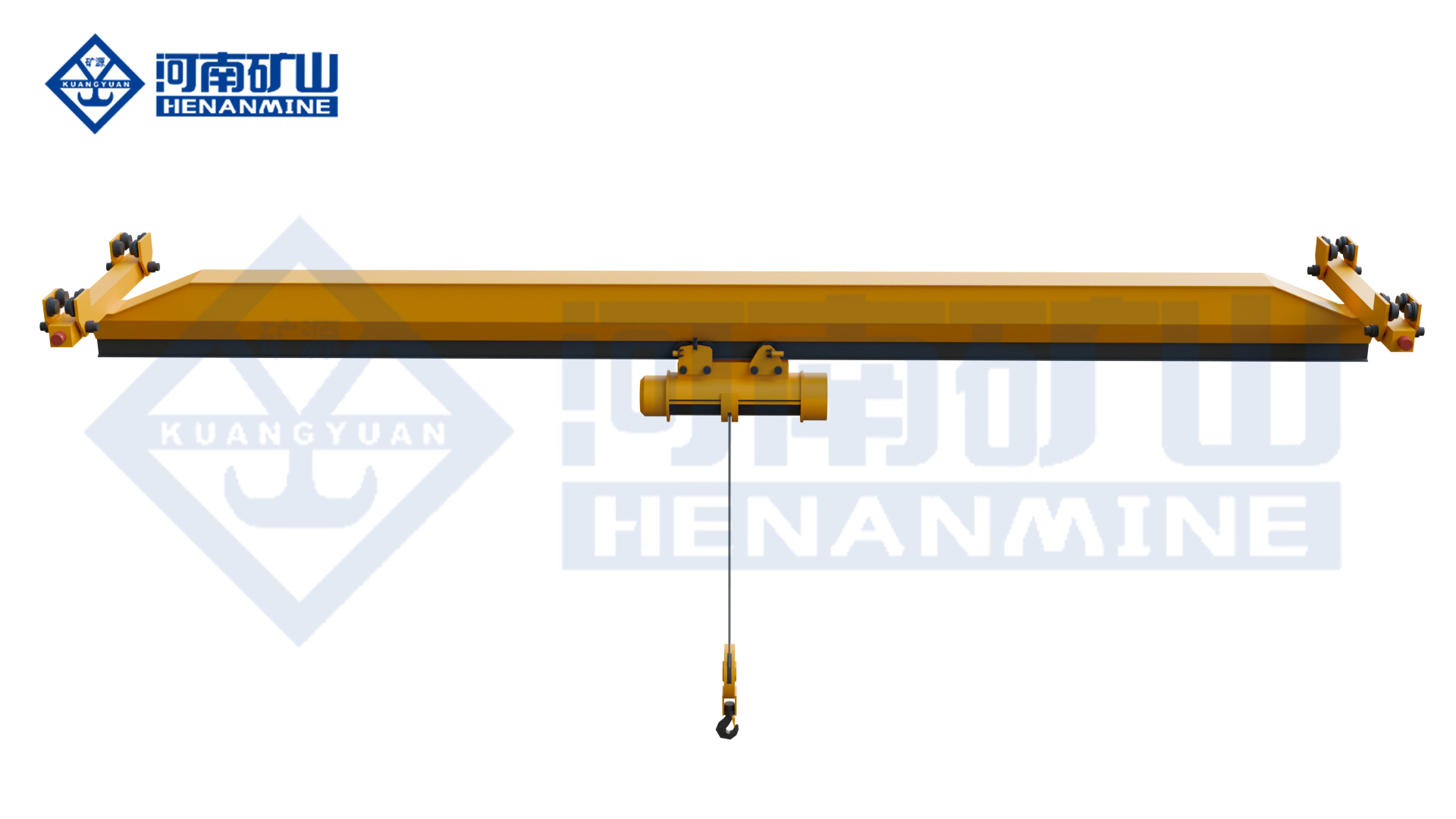
  • Clean Explosion Proof Bridge Crane

    Clean Explosion Proof Bridge Crane

    Overhead Cranes / Henan Mine Crane

    Clean Explosion Proof Bridge Crane

    Combine overhead lifting with the declared cleanliness and hazardous-area requirements. Specify particle-control expectations, process exposure and area classification for the complete lifting system.

    Lifting capacity1t – 32t
    Span7.5m – 28.5m
    Working classA3 – A5
    Technical specifications

    Define the total suspended load, duty and site conditions for your project.

    Technical specifications

    Check the load.
    Plan the configuration.

    Parameters and equipment options are matched to the application and confirmed in the technical proposal.

    Discuss your configuration
    Capacity1t – 32t
    Span7.5m – 28.5m
    Lifting height6m – 20m
    Working classA3 – A5
    Hoisting speed0.5m/min – 10m/min
    Crane travel5m/min – 30m/min
    Power supply380V/50Hz; 220V-660V/60Hz
    ControlsExplosion-proof wireless remote / cabin control

    Final parameters, dimensions, wheel loads and supply scope follow the approved project specification.

    Application & operation

    Matched to the handling task.

    Controlled production areas

    Coordinate lifting equipment with the process cleanliness specification.

    Hazardous process handling

    Match electrical equipment, control devices and installation details to the declared area.

    Selection considerations

    Start with your operating conditions.

    01

    Load & lifting arrangement

    Specify load and the cleanliness or particle-release specification. Include lifting-appliance weight and the required lifting positions.

    02

    Site & available space

    Provide building clearances, service access and cleanroom interfaces. Coordinate the installation interfaces with the available site drawings.

    03

    Duty & control sequence

    Define area classification, gas or dust data and process temperature. Identify the required movements and control interfaces in the enquiry.

    Configuration comparison

    Compare related lifting arrangements.

    Crane arrangementHandling configuration
    Clean Explosion Proof Bridge CraneCombine overhead lifting with the declared cleanliness and hazardous-area requirements. Specify particle-control expectations, process exposure and area classification for the complete lifting system.
    Explosion-Proof Bridge CraneUse a QB bridge crane for lifting in a declared explosive-gas environment. Select the load rating, main and auxiliary arrangement, electrical protection and control mode for the project.
    Explosion Proof Electric Hoist Bridge CraneUse an electric-hoist bridge arrangement for a declared hazardous area. The hoist, drives, controls and electrical installation are specified for the area classification and lifting duty.
    Explosion-Proof Suspended Overhead CraneProvide suspended electric-hoist lifting within a declared hazardous area. Review the overhead support, lifting duty and protection of the hoist, travel drives and controls as one system.

    Operating protection & lifecycle support

    Plan beyond the equipment.

    01

    Operating protection

    Confirm overload protection, travel limits, brakes, emergency controls and the required process interlocks for the declared lifting task.

    02

    Installation & commissioning

    Agree runway reactions, structural interfaces, electrical connections, assembly, inspection and commissioning responsibilities before delivery.

    03

    Inspection & spares

    Plan inspection and maintenance of enclosures, sealing surfaces and accessible service points. Agree service access, documentation and the required spare-parts scope.

    Questions before the order

    Clarify the details
    that shape the crane.

    What information is needed for a clean explosion proof bridge crane quotation?+

    Provide load and the cleanliness or particle-release specification; building clearances, service access and cleanroom interfaces; and area classification, gas or dust data and process temperature. Include drawings and the project destination when available.

    Does a cleanroom requirement define the explosion-protection specification?+

    Cleanliness and hazardous-area classification are separate inputs. Provide both so the equipment, materials and electrical configuration can be reviewed together.

    What installation and support scope should be agreed?+

    Agree runway reactions, structural interfaces, electrical connections, assembly, inspection and commissioning responsibilities before delivery. Specify the documentation, training and spare-parts support needed for the project.

    Related equipment

    Explore the alternatives.

    Let’s discuss your project

    The right crane starts
    with your lifting task.

    Share load and the cleanliness or particle-release specification, together with your site layout and operating cycle.

    info@hnksglobal.com
  • Anode Carbon Block Stacking Crane

    Anode Carbon Block Stacking Crane

    Overhead Cranes / Henan Mine Crane

    Anode Carbon Block Stacking Crane

    Handle and stack anode carbon blocks with a crane configured around block geometry, gripping method and storage layout. Define the transfer sequence and automation interfaces before selection.

    Lifting capacity10 – 30 t
    Span13.5-40 m
    Working classA6–A8
    Technical specifications

    Define the total suspended load, duty and site conditions for your project.

    Technical specifications

    Check the load.
    Plan the configuration.

    Parameters and equipment options are matched to the application and confirmed in the technical proposal.

    Discuss your configuration
    Capacity10 – 30 t
    Span13.5-40 m
    Lifting height6 – 20 m
    Working classA6–A8
    Hoisting speed2.5-6 m/min
    Crane travel6-60 m/min
    Power supply220-690V, 50/60Hz
    ControlsPLC + Laser Positioning + RFID + HMI

    Final parameters, dimensions, wheel loads and supply scope follow the approved project specification.

    Application & operation

    Matched to the handling task.

    Carbon block storage

    Transfer blocks between receiving positions, storage stacks and dispatch stations.

    Anode production

    Match the gripper and movement sequence to the block condition and line interfaces.

    Selection considerations

    Start with your operating conditions.

    01

    Load & lifting arrangement

    Specify block dimensions, condition and number of blocks per lift. Include lifting-appliance weight and the required lifting positions.

    02

    Site & available space

    Provide storage positions, stack heights and transfer stations. Coordinate the installation interfaces with the available site drawings.

    03

    Duty & control sequence

    Define gripping sequence, dust exposure and automation signals. Identify the required movements and control interfaces in the enquiry.

    Configuration comparison

    Compare related lifting arrangements.

    Crane arrangementHandling configuration
    Anode Carbon Block Stacking CraneHandle and stack anode carbon blocks with a crane configured around block geometry, gripping method and storage layout. Define the transfer sequence and automation interfaces before selection.
    Electromagnetic Hanging Beam CraneSupport long steel products with an electromagnetic hanging beam. Beam length, magnet spacing and lifting points are configured around product geometry, orientation and stacking requirements.
    Modular Electric Hoist Overhead CraneUse a modular electric-hoist overhead crane for production, assembly and maintenance lifting. Select the hoist arrangement, hook coverage and movement control for the workshop and operating cycle.
    Multi Support Double Girder Underhung CraneUse a multi-support double-girder underhung arrangement for wide-span working areas and large components. The building supports, lifting coverage and load distribution are designed together.

    Operating protection & lifecycle support

    Plan beyond the equipment.

    01

    Operating protection

    Confirm overload protection, travel limits, brakes, emergency controls and the required process interlocks for the declared lifting task.

    02

    Installation & commissioning

    Agree runway reactions, structural interfaces, electrical connections, assembly, inspection and commissioning responsibilities before delivery.

    03

    Inspection & spares

    Plan inspection and maintenance of gripping surfaces, positioning sensors and cable systems. Agree service access, documentation and the required spare-parts scope.

    Questions before the order

    Clarify the details
    that shape the crane.

    What information is needed for a anode carbon block stacking crane quotation?+

    Provide block dimensions, condition and number of blocks per lift; storage positions, stack heights and transfer stations; and gripping sequence, dust exposure and automation signals. Include drawings and the project destination when available.

    What determines the block gripping arrangement?+

    Provide block drawings, weight, surface condition and the number handled together. Gripper geometry and holding method are matched to those details and the stacking sequence.

    What installation and support scope should be agreed?+

    Agree runway reactions, structural interfaces, electrical connections, assembly, inspection and commissioning responsibilities before delivery. Specify the documentation, training and spare-parts support needed for the project.

    Related equipment

    Explore the alternatives.

    Let’s discuss your project

    The right crane starts
    with your lifting task.

    Share block dimensions, condition and number of blocks per lift, together with your site layout and operating cycle.

    info@hnksglobal.com
  • 50-Ton Gantry Crane Buying: Load Envelope and Infrastructure Checks

    50-Ton Gantry Crane Buying: Load Envelope and Infrastructure Checks

    Technical guide

    50-Ton Gantry Crane Buying: Load Envelope and Infrastructure Checks

    A fifty-ton project needs verified load geometry and a clear supporting arrangement. Define the attachments, working area and operating cycle so the crane proposal and required infrastructure can be reviewed on the same basis.

    Henan Mine CraneTechnical guide · Updated 2026Crane selection, project scope and operating requirements
    50-Ton Gantry Crane Buying: Load Envelope and Infrastructure Checks
    Henan Mine Crane lifting equipment
    Project planning notes

    Key points for this crane project.

    1. What Is a 50-Ton Gantry Crane?
    2. Main Types of 50-Ton Gantry Cranes
    3. Key Specifications to Consider When Buying a 50-Ton
    Read the technical guide

    What Is a 50-Ton Gantry Crane?

    The 50-ton gantry crane is a high-strength and high-stability industrial heavy-duty lifting equipment, which belongs to the derivative category of bridge cranes. The equipment as a whole has a gated structure. The main girder spans the working area and is supported by floor-to-ceiling outriggers. There is no need to rely on the factory building. It can run independently on the ground track or tires.

    The complete set of equipment relies on the coordinated operation of the five core systems to achieve accurate and stable lifting operations:

    • Bridge structure: The core load-bearing body is divided into two mainstream structures, box-shaped and truss, including the main girder and the end beam. It mainly carries the full weight of the lifting trolley, the hoist mechanism and the cargo. It is the key to ensure the carrying capacity and structural stability of the equipment.
    • Support outriggers: Common A-shaped and box-shaped outriggers connect the bridge frame and the travel mechanism to evenly transmit the weight of the equipment and the weight of the load to the ground, resist shaking and external shocks during operation, and ensure the stability of the whole machine.
    • Lifting mechanism: it consists of a wire rope electric hoist, a lifting trolley, a motor, a reducer, a reel, a hook, and a braking system. It is responsible for the vertical lifting of goods and is the core execution unit to realize the lifting function.
    • travel mechanism: it is divided into two types: orbital type and tire type. It consists of a travel wheel set, a drive motor, and a frequency conversion control system. It can realize the longitudinal movement of the whole machine along the working area and cover a wide range of working space.
    • Electrical control system: With PLC programmable controller as the core, it integrates the operation terminal, safety interlock, monitoring and early warning system, and co-ordinates the control of all actions such as lifting, travel, and trolley translation of the equipment to ensure accurate operation and safe operation.

    Main Types of 50-Ton Gantry Cranes

    According to the different structural forms, support methods, and travel configurations, 50-ton gantry cranes can be divided into four mainstream models, which are adapted to different sites, working conditions, and operating needs.:

    Full gantry crane

    Both sides are equipped with floor-to-ceiling outriggers, which run along the ground track throughout the process, and the whole machine is independently supported without relying on any building structure. It has a stable structure, strong carrying capacity and large operating range. It is suitable for outdoor large-scale heavy-duty hoisting scenarios and is widely used in shipyards, large steel depots, outdoor construction sites, and large storage bases.

    Semi-gantry crane

    The asymmetric structure of “single-sided outrigger landing + single-sided plant track beam support” is adopted, cleverly using the existing plant building, without the need to lay the track on the whole site, greatly saving installation space and infrastructure costs. It is suitable for indoor and outdoor connection operations in existing factories and workshops. It is the preferred model for the transformation of old factories and heavy-duty operations in limited space.

    Tire gantry crane (RTG

    Abandoning the traditional track structure, high-strength rubber tires are used as travel parts. There is no need to lay a fixed track, and they can be freely turned and flexibly shifted without being restricted by the track of the site. It is extremely mobile and suitable for scenarios such as container depots, logistics parks, temporary construction sites, etc. that require frequent switching of operating areas. The only shortcoming is that the equipment manufacturing cost is relatively higher.

    Double girder gantry crane

    It is the recommended standard model for 50-ton heavy-duty conditions. Compared with single-beam models, the double-beam structure has more uniform force and stronger structural rigidity. It has higher operating stability, greater lifting height and stronger load dispersion capacity.

    Key Specifications to Consider When Buying a 50-Ton Gantry Crane

    Rated lifting weight

    At the same time, it is strictly prohibited to select critical load equipment. If the equipment runs at full load and ultra-close to the rated load for a long time, it will accelerate the wear and tear of steel structures, braking systems, and motors, greatly shorten the service life of the equipment, reduce safety redundancy, and bury safety hazards such as equipment deformation and brake failure.

    Span

    Span refers to the distance between the centers of the travel tracks on both sides of the equipment, which directly determines the operating coverage, structural design standards and procurement costs of the equipment, and is the key spatial parameter for selection.

    The selection of span needs to be strictly combined with the layout of the factory area, the size of the work site, the material handling route, and the planning of equipment placement. Under the premise of meeting the full coverage of the operation, the cost waste caused by excessive selection should be avoided.

    Lifting height

    The lifting height determines the maximum vertical height that the cargo can be lifted. The selection needs to integrate four scenario factors: the dimensions of the cargo itself, the height of the material stacking, the height of the production line equipment, and the clearance requirements of ground vehicles and equipment.

    Work level

    The working level represents the crane's operating frequency, load cycle strength and durability level. It directly matches the strength of the working conditions and is divided into four levels: light, medium, heavy and overweight. It is the core parameter to avoid premature equipment aging and frequent failures.

    1. Light grade (A1-A3): low frequency of operations, length of daily work hours, intermittent operations, only suitable for equipment maintenance and sporadic hoisting scenarios.
    2. Intermediate (A4-A5): medium operating frequency, stable load, suitable for ordinary manufacturing workshops, conventional warehousing and transshipment operations.
    3. Heavy grade (A6-A7): high-frequency operations, frequent proximity to rated loads, suitable for high-intensity working conditions such as steel mills, shipyards, and prefabricated component factories.
    4. Super-heavy (A8): 24-hour continuous operation, full load cycle, suitable for large-scale assembly lines, port heavy-duty continuous operation scenarios.

    When purchasing, the work level needs to be accurately matched according to the daily operating time, the number of hoisting per hour, and the annual operating load. Low-level equipment used in high-intensity working conditions will be quickly damaged, and high-level equipment used in light-load working conditions will cause cost waste.

    Important Components of a Heavy-Duty 50-Ton Gantry Crane

    • The main body of the steel structure: As the core skeleton of the whole machine, it consists of the main girder, outriggers, and end beams, which directly determine the safety, service life, and operation and maintenance costs of the equipment. The high-quality models are made of high-strength steel, with standard welding technology, anti-fatigue structure and multi-layer anti-corrosion treatment. The key welds are tested by non-destructive flaw detection, which can effectively prevent rust, deformation and cracking, and greatly reduce the cost of late maintenance.
    • Lifting mechanism: The core operating unit consists of an electric hoist, a lifting trolley, a motor, a reducer, and a braking system, which are related to lifting efficiency and safety. The procurement focuses on matching the lifting speed required for working conditions, optimizing the brand's core accessories, and confirming that the equipment is equipped with overload protection and dual braking system as standard, which can effectively avoid safety risks such as overload, slip hooks, and cargo falling.
    • travel mechanism: it consists of travel track, wheel set, drive motor and VFD frequency conversion system, which is responsible for the longitudinal movement of the whole machine. Compared with traditional fixed-speed systems, VFD frequency conversion control can achieve smooth start-stop and stepless speed regulation, reduce mechanical impact and wear of accessories, improve cargo positioning accuracy, and adapt to high-precision, high-frequency and heavy-duty operations.
    • Electrical control system: with PLC controller as the core, it supports two operating modes: cab and wireless remote control. Integrated intelligent functions such as load monitoring, sway control, and remote fault diagnosis can avoid hoisting shaking, quickly investigate faults, and reduce downtime losses. Electrical accessories are waterproof, dustproof and anti-interference, and are suitable for all kinds of complex indoor and outdoor working conditions.

    How Much Does a 50-Ton Gantry Crane Cost?

    Overall price range

    The 50-ton gantry crane is a non-standard customized heavy-duty equipment. There is no fixed unified selling price. The market price span is very large. The core depends on the equipment configuration, working condition adaptation plan, and customization requirements.

    The price of rail-type 50-ton gantry cranes with standard conventional configuration is relatively affordable, while the price of large-span, high-lifting height, outdoor explosion-proof, intelligent automation, and tire-type models will be greatly increased. The cost of special RTG tire-type models for ports is much higher than that of ordinary industrial models. Therefore, quotations without complete parameters and working condition requirements do not have reference value.

    Core price influencing factors

    • Equipment design plan: double-beam models have stronger bearing capacity and higher configuration, and the price is higher than that of single-beam models; non-standard customized span, lifting height, cantilever structure, and special shape design will increase structural research and development and manufacturing costs, and increase equipment prices.
    • Material and manufacturing process: equipment using Q345B high-strength steel, high-standard non-destructive flaw detection welding, and thickened anticorrosive coating, the cost is much higher than that of ordinary steel and low-end equipment with simple welding technology; imported, first-line brand motors, brakes, and electrical accessories, the price is better than that of ordinary accessories, and the overall cost of equipment has increased synchronously.
    • Optional intelligent and safety functions: wireless remote control, intelligent anti-collision, outdoor wind and lightning protection, intelligent monitoring, explosion-proof system, remote diagnosis and other value-added configurations will increase equipment procurement costs, but can greatly improve the level of operation safety and automation.
    • Installation and transportation services: site foundation construction, track laying, transportation of the whole machine, on-site installation and commissioning, acceptance reporting, and localized after-sales supporting services for large-scale equipment will all be included in the overall procurement cost, and the service cost of off-site construction and complex site installation is higher.

    How to Select the Right 50-Ton Gantry Crane Manufacturer?

    Manufacturing experience

    Priority is given to manufacturers who have been deeply engaged in the lifting equipment industry for many years and have mature heavy crane production experience.

    Mature manufacturers have perfect production processes and quality control systems, which can accurately match the needs of various complex working conditions, and avoid the problems of immature technology, rough workmanship, and unsecured after-sales service in small factories.

    Evaluate customization capabilities

    The demand for 50-ton gantry cranes in different industries, sites, and working conditions varies greatly. High-quality manufacturers have perfect customized service capabilities.

    They can customize the span and lifting height according to the size of the customer's site, and provide exclusive anti-corrosion, explosion-proof, and windproof protection solutions for special working conditions such as outdoor wind and rain, seaside salt spray, flammable and explosive, low temperature and high temperature. At the same time, it supports OEM customized services and adapts to various personalized procurement needs.

    After-sales service system

    Heavy-duty cranes are long-term industrial equipment, and perfect after-sales service is the key to ensuring the stable operation of the equipment. Before purchasing, it is necessary to confirm that the manufacturer can provide: full installation technical guidance, commissioning and acceptance of the whole machine, normalized maintenance services, rapid supply of original parts, 24-hour technical support and troubleshooting. Localized after-sales teams can significantly shorten the response time to failures, reduce equipment downtime losses, and extend equipment service life.

    Indoor vs Outdoor 50-Ton Gantry Crane Selection

    Core advantage

    • Low corrosion and high stability: suitable for indoor closed operation scenarios, it can avoid external erosion such as wind, rain, ultraviolet rays, and sand, greatly reduce the loss of fuselage structure and electrical components, effectively reduce the probability of equipment failure, and ensure long-term stable operation.
    • Simple operation and maintenance, cost reduction and efficiency enhancement: the operating environment is clean and stable, and the daily maintenance and cleaning and maintenance process of equipment is simple, which greatly reduces manual operation and maintenance investment and effectively compresses later operation and maintenance costs.
    • Delay aging and extend life: Stable working conditions can reduce external interference, slow down the aging and loss of equipment components, significantly extend the service life of the whole machine, and improve the cost performance of the equipment.

    Suitable for industries: machinery manufacturing workshops, equipment assembly plants, hardware processing plant areas, indoor storage centers and other indoor heavy-duty operation scenarios.

    Outdoor application scenarios

    The outdoor open-air operating environment is complex and requires higher equipment protection performance. Special upgrades are required on the basis of standard models: the whole machine is thickened with anticorrosive coating, waterproof and dustproof electrical components, intelligent windproof braking system, lightning and rain protection devices, and some seaside and chemical scenes also need to be specially treated for salt spray and corrosion prevention.

    Suitable for industries: shipbuilding, steel yards, outdoor construction sites, port logistics, wind power engineering, large-scale prefabricated component factories and other outdoor operation scenarios.

    Maintenance Tips to Extend Gantry Crane Service Life

    Scientific daily inspection and regular maintenance can greatly extend the service life of the crane, reduce the probability of failure, and ensure operation safety. It is the core means to reduce the cost of the whole cycle of equipment.

    Daily pre-shift inspection

    Operators must complete a comprehensive basic inspection before daily operations. It is strictly prohibited for equipment to operate with diseases. The core inspection items are as follows:

    1. Wire rope: Regularly check the status of the wire rope, focusing on investigating defects such as broken wire, distortion, severe wear, etc., to ensure that the rope body is intact and the force is normal.
    2. Electrical and safety devices: Thoroughly inspect the electrical components such as operation buttons, indicator lights, sound and light alarms to ensure that the functions are intact and the operation is normal, and to ensure that the equipment safety interlock mechanism is effective.
    3. Hook assembly: Check the hook body for no cracking, deformation and other damage, confirm that the safety lock is sensitive to opening and closing, and the locking is reliable, and verify that the braking system has strong braking and no slippage failure problems.

    Regular special maintenance

    According to the frequency of equipment operation and the level of working conditions, hierarchical and regular maintenance work is carried out weekly, monthly, and quarterly. The specific contents are as follows:

    1. Regularly fill various moving parts such as wire ropes, bearings, gears, and travel wheels with lubricating grease to reduce component wear and ensure the smooth operation of the equipment.
    2. Check and tighten the structural bolts and track fixing bolts of the whole machine one by one to prevent safety hazards such as abnormal noise and offset caused by loose bolts.
    3. Normalize the oil level and oil status of the lubricating oil of the reducer, replenish the oil volume in time, replace the deteriorated oil stains, and ensure the stable operation of the transmission system.
    4. Comprehensively investigate the welds and paint surface conditions of the steel structure of the equipment, repair the rusted, cracked, and painted parts in a timely manner, and protect the structural integrity of the equipment.

    Professional annual inspection

    Every year, third-party professional institutions are invited to carry out safety testing and load testing to verify the rated load performance of the equipment, the sensitivity of the safety device, and the structural stability; establish a replacement ledger for wearing parts, and plan the replacement in advance according to the service life of the parts to avoid sudden failures caused by the aging of the parts. When the equipment is idle, it is necessary to lock the windproof device, cut off the power supply, and protect the whole machine.

    50-Ton Gantry Crane vs Other Heavy Lifting Equipment

    50-Ton Gantry Crane vs Mobile Crane

    • Cost of use: gantry cranes are put into operation at one time and reused for a long time, and the cost of a single crane for repeated operations on a fixed site is extremely low; car cranes need to continue to pay for fuel, leasing, and labor costs, and the cost of long-term high-frequency operations is higher.
    • Operating stability: The gantry crane has a fixed rigid track, stable structure, low shaking, and high safety; the car crane relies on outrigger support, which is greatly affected by the ground terrain, and the stability of heavy-duty operations is weak.
    • Long-term production capacity: Gantry cranes are designed for high-frequency cyclic operations on fixed sites, which can operate continuously all year round and have stable production capacity; automobile cranes are suitable for temporary, short-distance, and multi-site scattered hoisting, and the efficiency of long-term fixed operations is much lower than that of gantry cranes.

    Discuss the crane arrangement for your project.

    A fifty-ton project needs verified load geometry and a clear supporting arrangement. Define the attachments, working area and operating cycle so the crane proposal and required infrastructure can be reviewed on the same basis. Share the load, available drawings, working cycle and site conditions with Henan Mine Crane so the required configuration and supply boundary can be discussed.

    Related crane configurations

    Explore crane product families and technical parameters ↗

    Updated 2026 · Henan Mine Crane
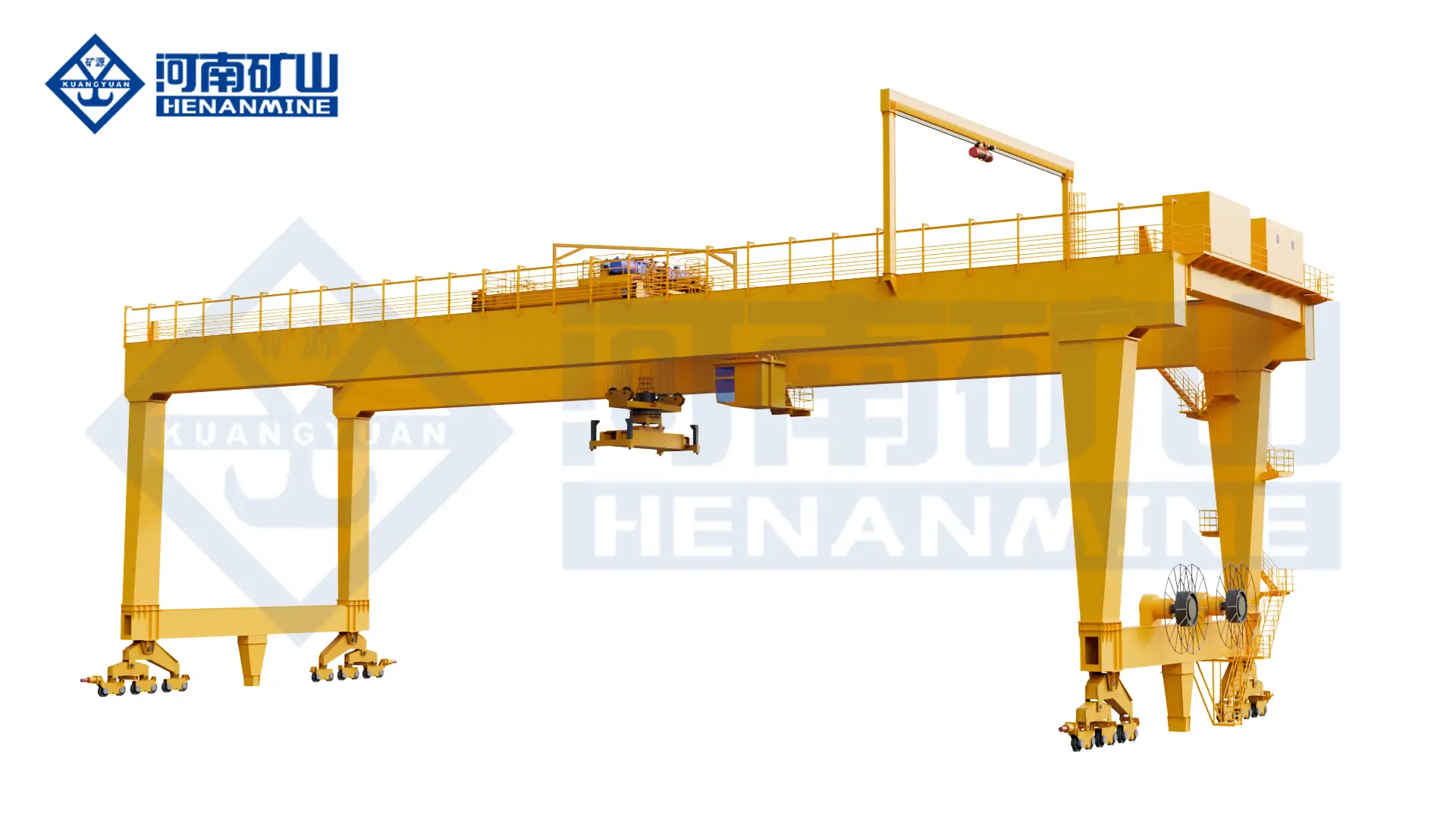
  • 5 Ton Overhead Crane

    5 Ton Overhead Crane

    Overhead Cranes / Henan Mine Crane

    5 Ton Overhead Crane

    Specify a 5 t overhead crane around the load, building and operating cycle. Compare single-girder, double-girder and underhung arrangements for your workshop.

    Lifting capacity5 t
    SpanProject-specific
    Working dutySelected for the cycle
    Technical specifications

    Define the total suspended load, duty and site conditions for your project.

    Technical specifications

    Check the load.
    Plan the configuration.

    Parameters and equipment options are matched to the application and confirmed in the technical proposal.

    Discuss your configuration
    Rated lifting capacity5 t / 5,000 kg
    Crane structureSingle girder, double girder, underhung or special-purpose configuration
    Hoisting arrangementElectric wire-rope hoist or project-specific trolley/mechanism
    SpanProject-specific; confirm the distance between runway rail centerlines
    Lifting heightProject-specific; confirm the required vertical hook travel and available headroom
    Working dutySelected from load spectrum, starts per hour, travel frequency and operating shifts
    Hoisting and travel speedsSingle speed, dual speed or variable-frequency control according to process needs
    Control methodPendant, radio remote, operator cabin or automated control as applicable
    Power supplyMatched to the destination country and facility power system
    Operating environmentStandard indoor, outdoor or specially engineered for the declared conditions

    Final parameters, dimensions, wheel loads and supply scope follow the approved project specification.

    Application & operation

    Matched to the handling task.

    Workshop handling

    Move components between production, storage and maintenance positions.

    Equipment assembly

    Select the hook coverage and positioning control around the assembly task.

    Selection considerations

    Start with your operating conditions.

    01

    Load & lifting arrangement

    Specify 5 t workpiece requirement, lifting accessories and load geometry. Include lifting-appliance weight and the required lifting positions.

    02

    Site & available space

    Provide runway centres, hook height and available headroom. Coordinate the installation interfaces with the available site drawings.

    03

    Duty & control sequence

    Define lifts per hour, placement accuracy and operating shifts. Identify the required movements and control interfaces in the enquiry.

    Configuration comparison

    Compare related lifting arrangements.

    Crane arrangementHandling configuration
    5 Ton Overhead CraneSpecify a 5 t overhead crane around the load, building and operating cycle. Compare single-girder, double-girder and underhung arrangements for your workshop.
    Single-Girder Bridge CraneUse an LDA single-girder bridge and electric hoist for general workshop material handling. Select the lifting capacity, runway geometry and hoist duty around the building and load.
    LH Electric Hoist Double Girder CraneUse an LH double-girder bridge with an electric-hoist trolley for workshop lifting, assembly and maintenance. Match the hoist arrangement to the suspended load, hook travel and available building space.
    Single-Beam Suspension CraneSuspend an LX single-girder crane from an approved overhead runway to cover workshop lifting positions. Building support, runway geometry and available hook height determine the installation.

    Operating protection & lifecycle support

    Plan beyond the equipment.

    01

    Operating protection

    Confirm overload protection, travel limits, brakes, emergency controls and the required process interlocks for the declared lifting task.

    02

    Installation & commissioning

    Agree runway reactions, structural interfaces, electrical connections, assembly, inspection and commissioning responsibilities before delivery.

    03

    Inspection & spares

    Plan inspection and maintenance of hoist rope, hook assembly and end-carriage drives. Agree service access, documentation and the required spare-parts scope.

    Questions before the order

    Clarify the details
    that shape the crane.

    What information is needed for a 5 ton overhead crane quotation?+

    Provide 5 t workpiece requirement, lifting accessories and load geometry; runway centres, hook height and available headroom; and lifts per hour, placement accuracy and operating shifts. Include drawings and the project destination when available.

    Which structure should I choose for a 5 t crane?+

    Compare the complete suspended load, available hook height, required coverage and operating duty. A 5 t capacity alone does not define the bridge or hoist arrangement.

    What installation and support scope should be agreed?+

    Agree runway reactions, structural interfaces, electrical connections, assembly, inspection and commissioning responsibilities before delivery. Specify the documentation, training and spare-parts support needed for the project.

    Related equipment

    Explore the alternatives.

    Let’s discuss your project

    The right crane starts
    with your lifting task.

    Share 5 t workpiece requirement, lifting accessories and load geometry, together with your site layout and operating cycle.

    info@hnksglobal.com