Engineering · Manufacturing · Project support
info@hnksglobal.comWhatsApp +86 18836207779 ↗

Blog

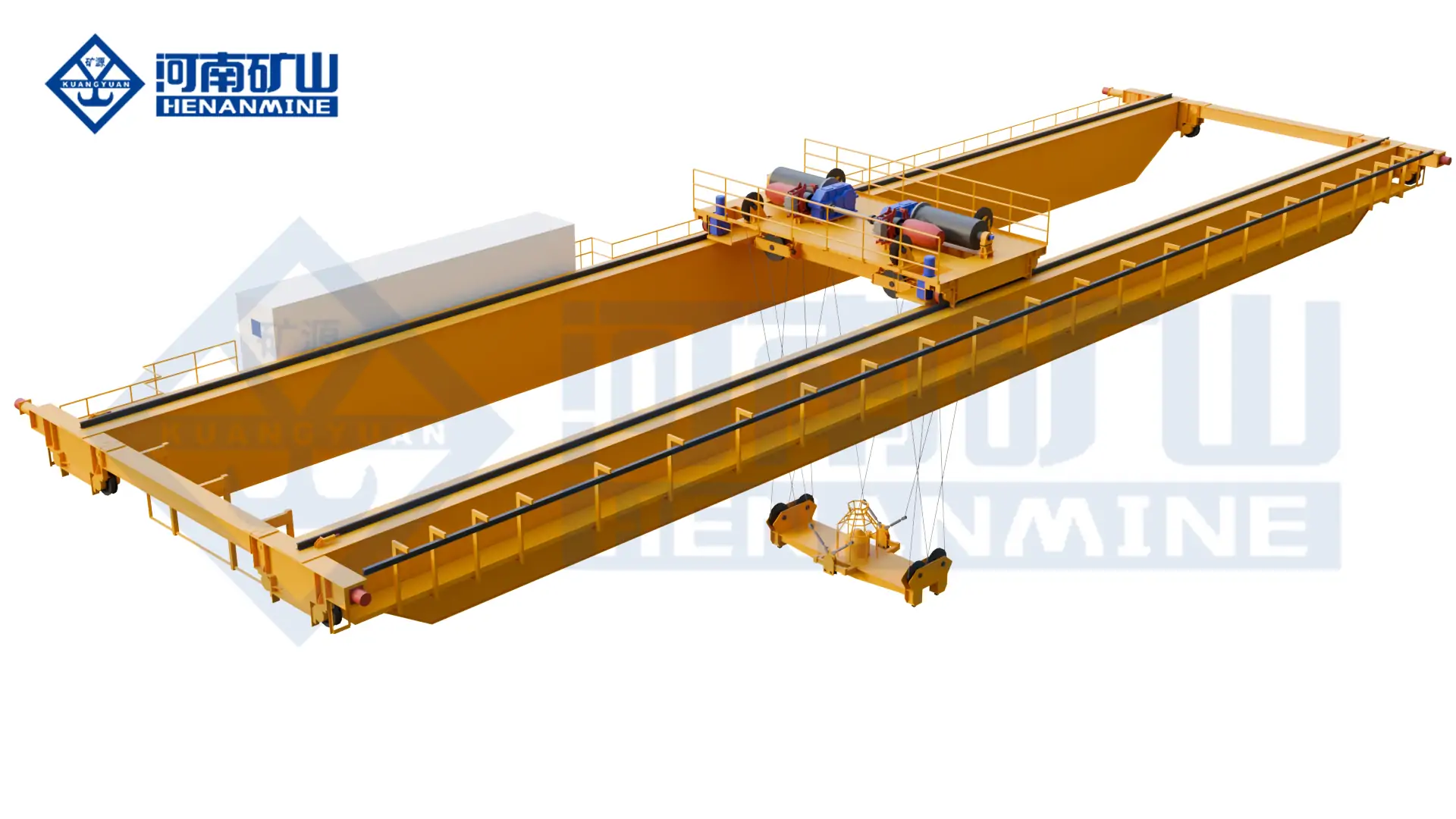
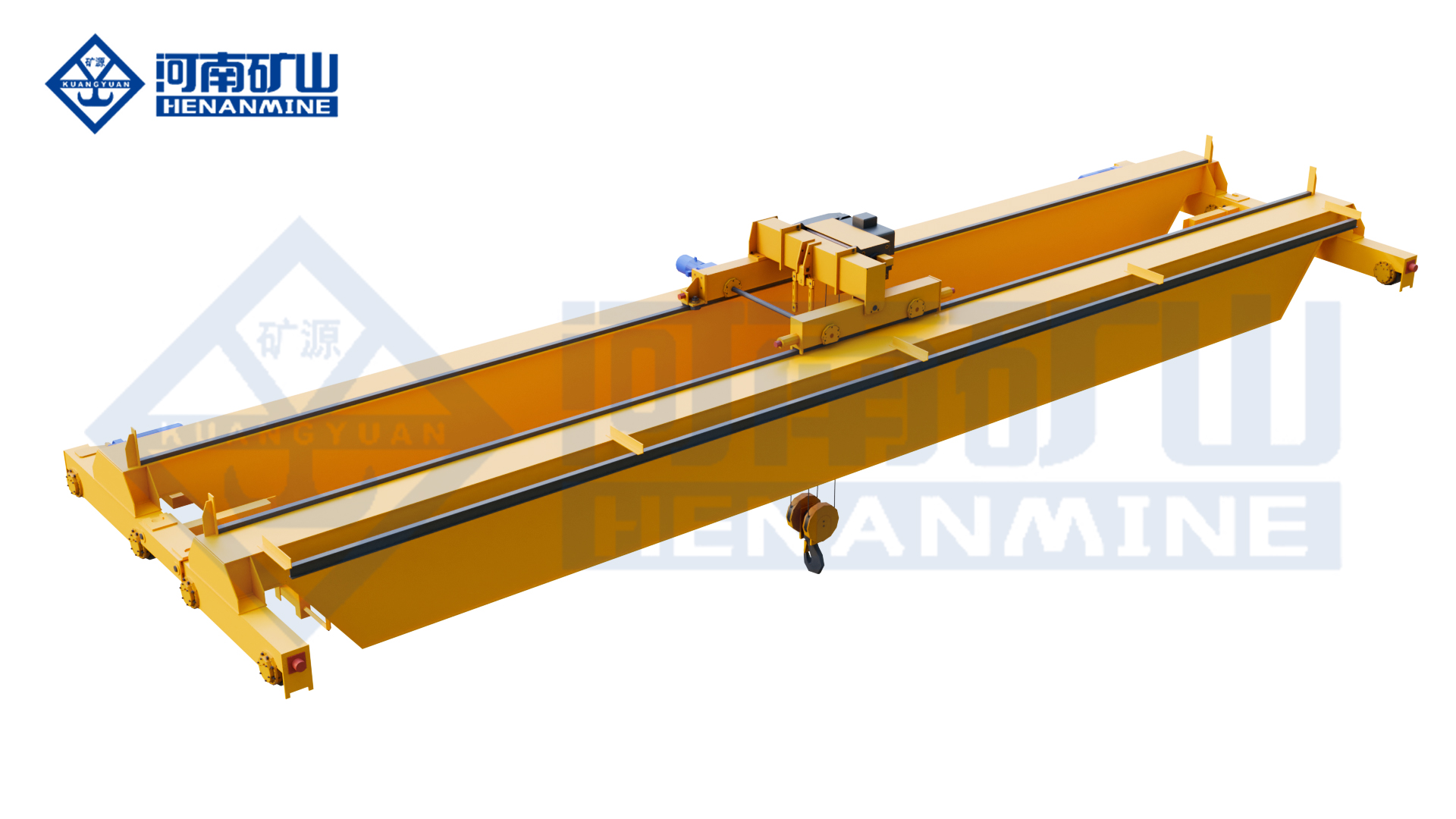
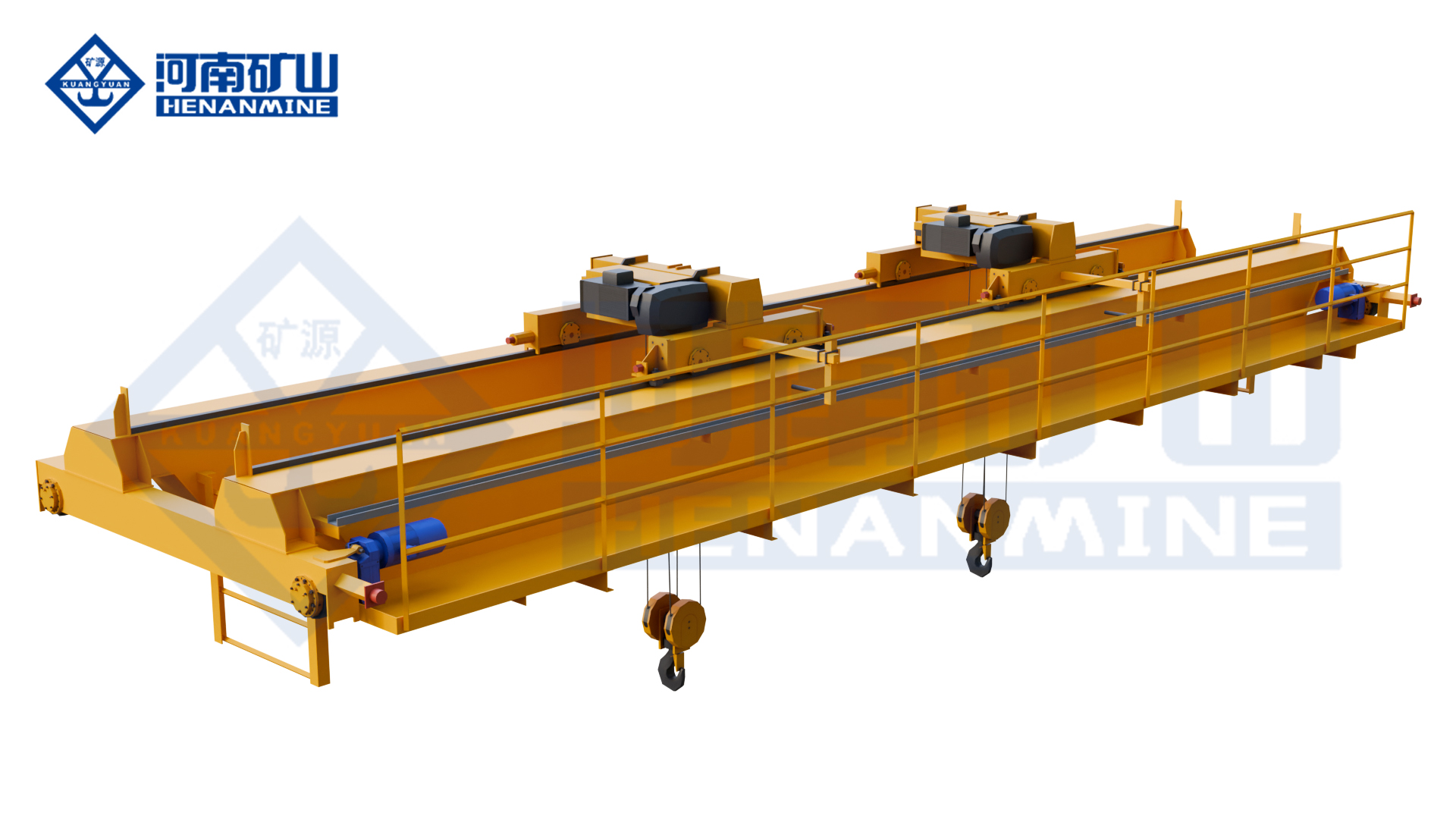
  • Double Trolley Electric Hoist Crane

    Double Trolley Electric Hoist Crane

    Overhead Cranes / Henan Mine Crane

    Double Trolley Electric Hoist Crane

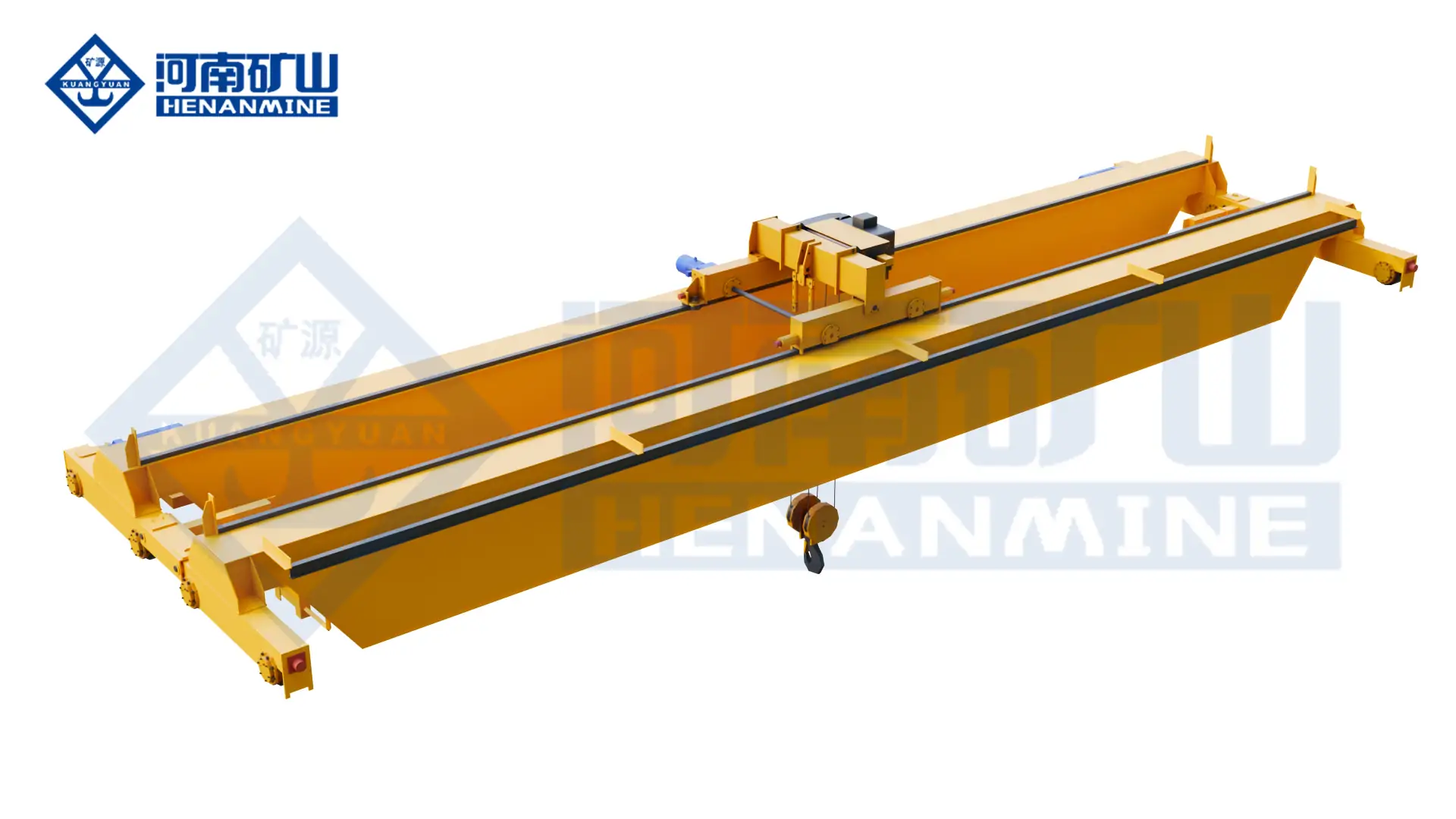
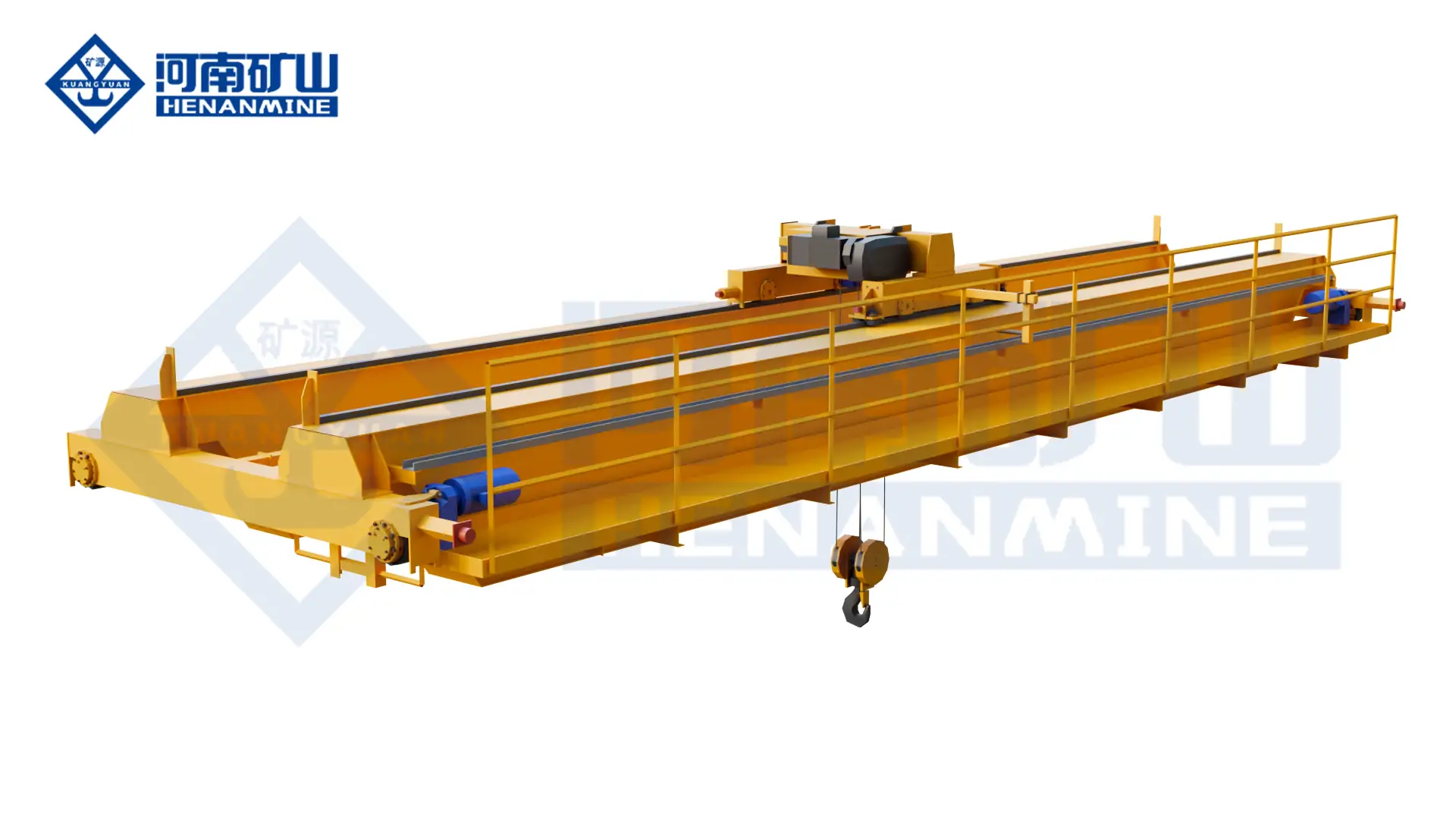
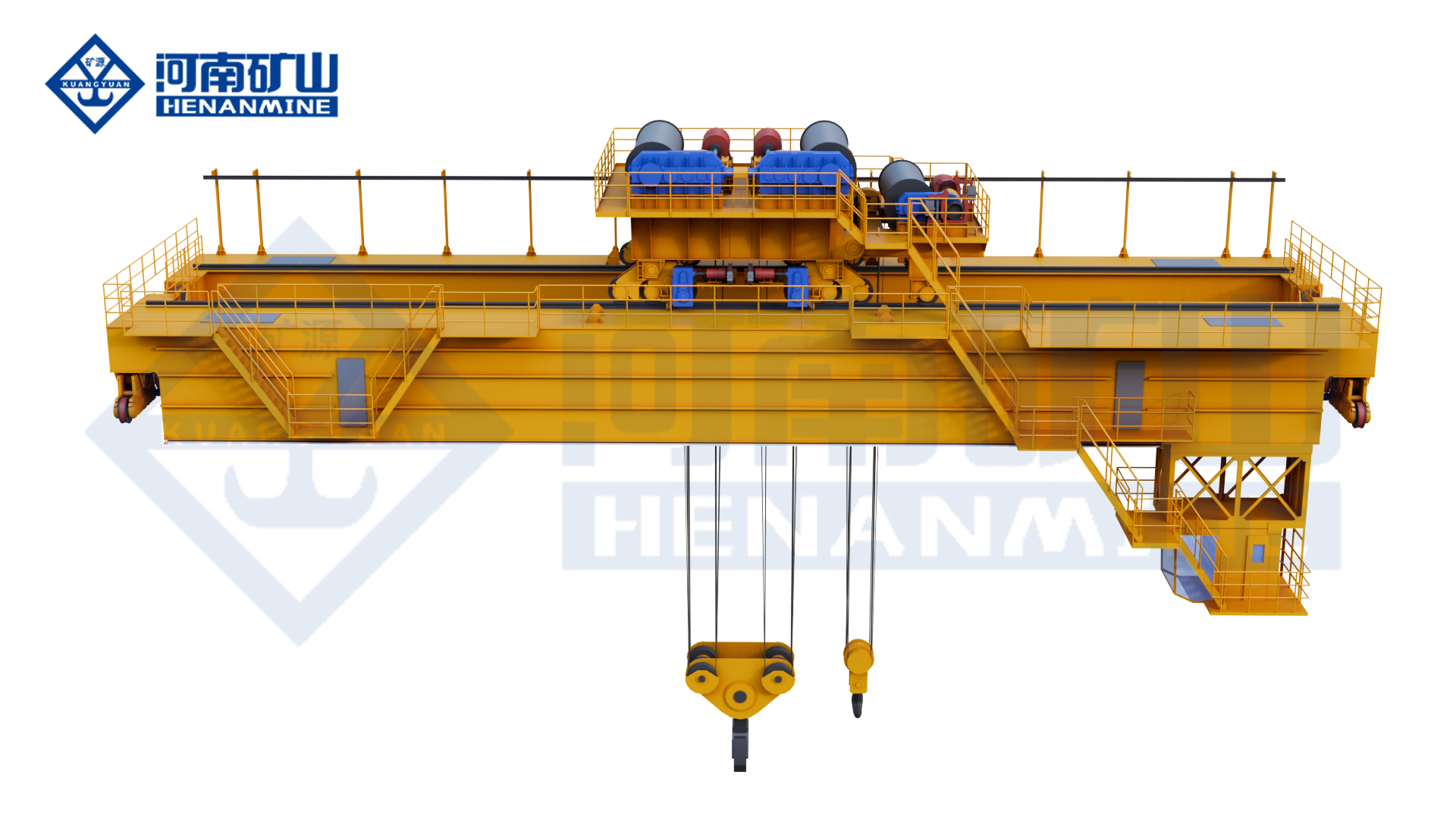
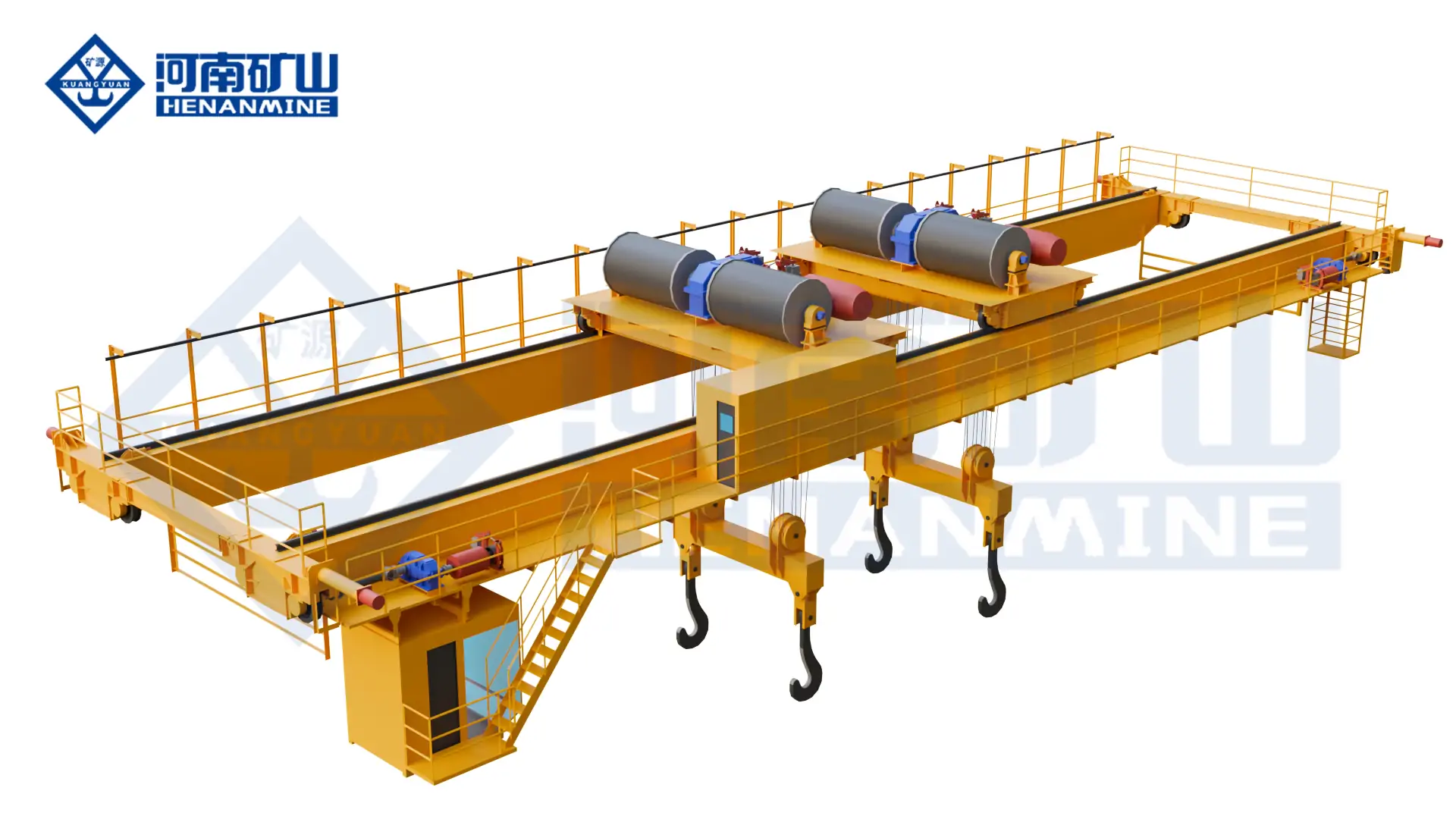
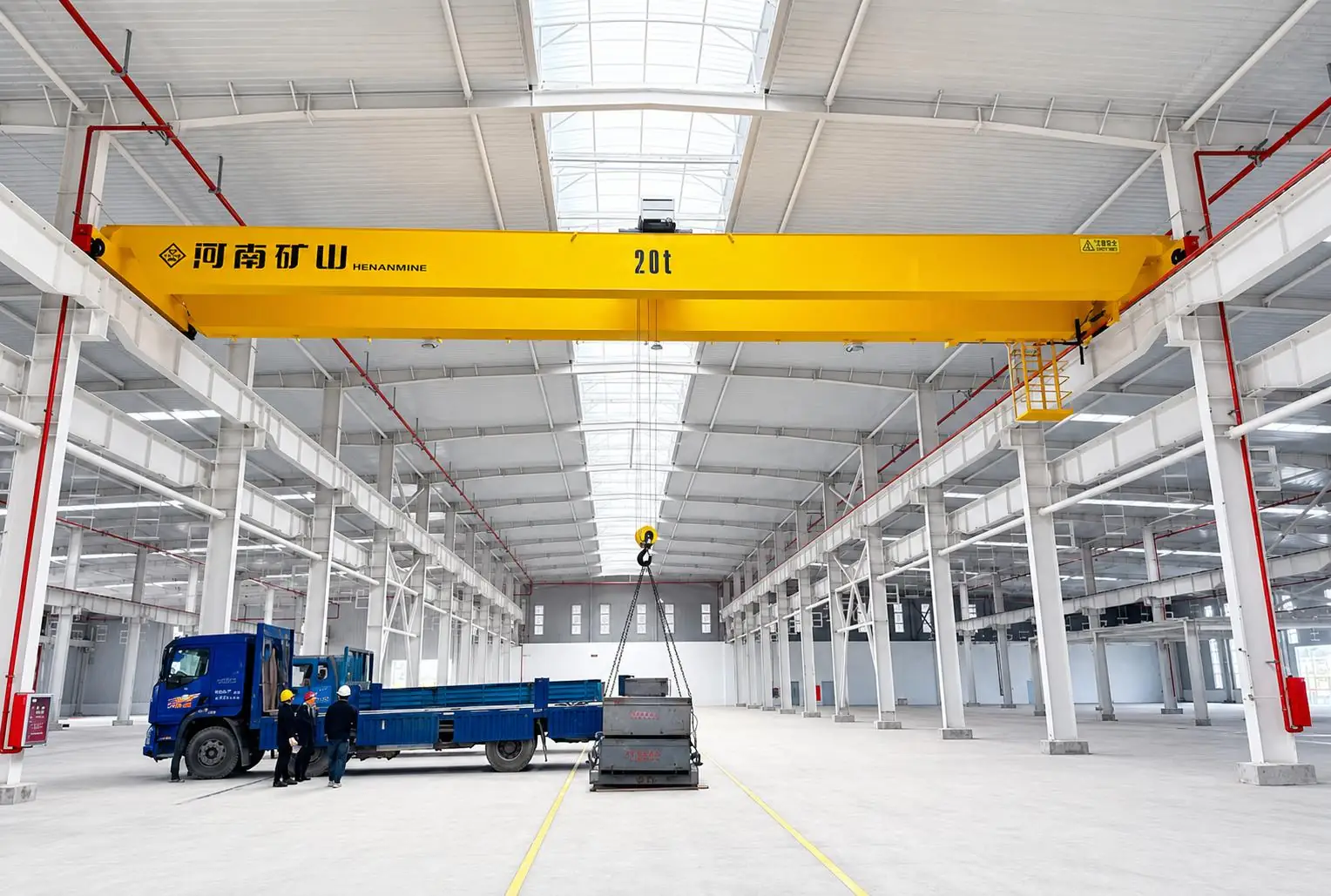
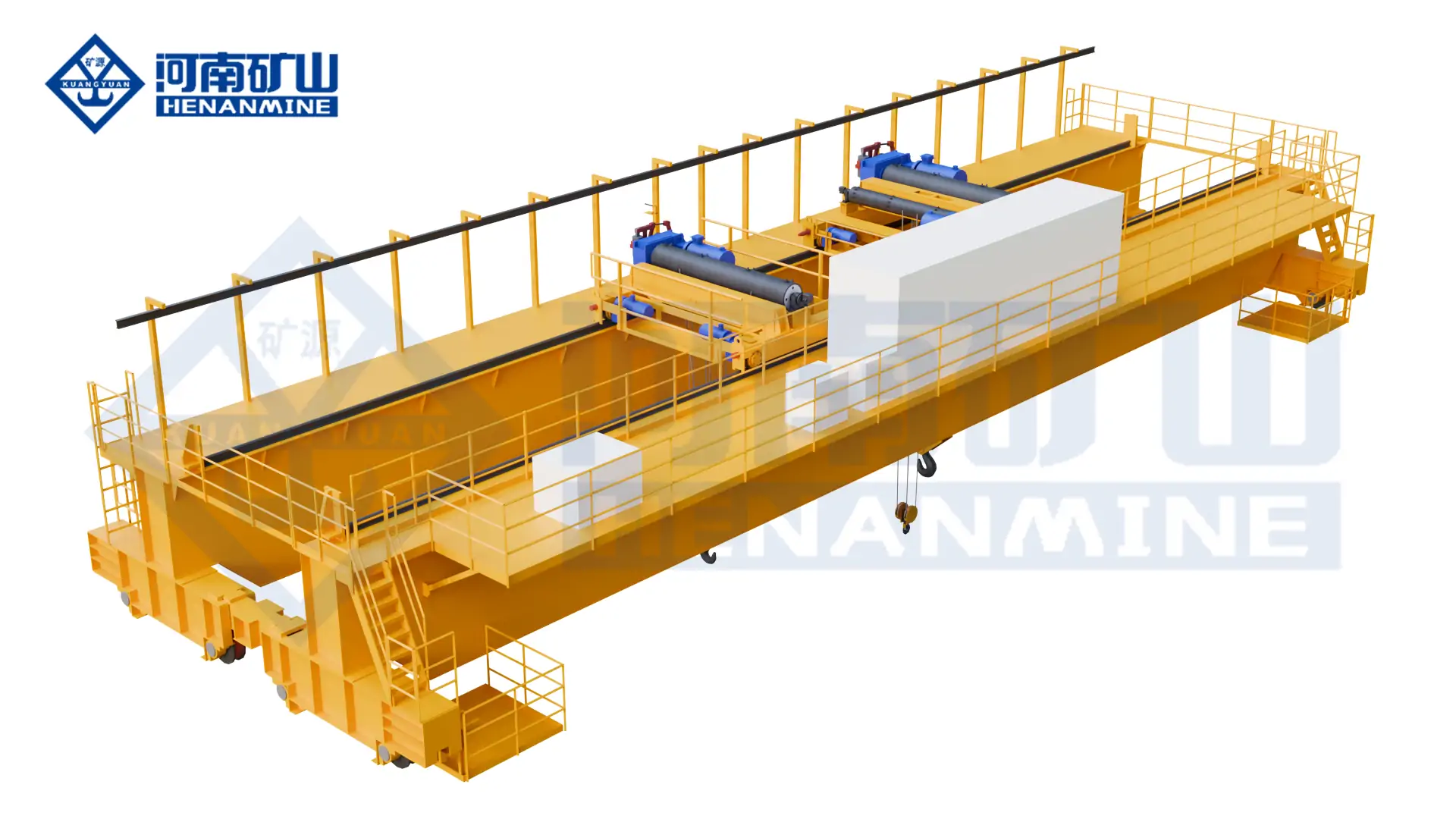
    Lift long components or serve separate working positions with two electric-hoist trolleys on one bridge. Trolley spacing, load sharing and independent or coordinated operation are specified for the task.

    Lifting capacity1+1 – 32+32 t
    Span7.5 – 31.5 m
    Working classA5 – A6
    Technical specifications

    Define the total suspended load, duty and site conditions for your project.

    Technical specifications

    Check the load.
    Plan the configuration.

    Parameters and equipment options are matched to the application and confirmed in the technical proposal.

    Discuss your configuration
    Capacity1+1 – 32+32 t
    Span7.5 – 31.5 m
    Lifting height6 – 30 m
    Working classA5 – A6
    Hoisting speed0.8/5 – 8/16 m/min
    Trolley travel5 – 25 m/min
    Crane travel10 – 30 m/min
    Power supply220-690V, 50/60Hz
    ControlsWireless Remote / Pendant Control
    Lifting arrangementDual Trolley (Independent/Synchronous)

    Final parameters, dimensions, wheel loads and supply scope follow the approved project specification.

    Application & operation

    Matched to the handling task.

    Long assemblies

    Support defined lifting points on long fabricated components.

    Shared workshop lifting

    Serve separate workstations within the available bridge coverage.

    Selection considerations

    Start with your operating conditions.

    01

    Load & lifting arrangement

    Specify individual hook loads, lifting points and workpiece centre of gravity. Include lifting-appliance weight and the required lifting positions.

    02

    Site & available space

    Provide trolley separation, hook coverage and runway geometry. Coordinate the installation interfaces with the available site drawings.

    03

    Duty & control sequence

    Define independent or coordinated operation, speeds and lifting cycle. Identify the required movements and control interfaces in the enquiry.

    Configuration comparison

    Compare related lifting arrangements.

    Crane arrangementHandling configuration
    Double Trolley Electric Hoist CraneLift long components or serve separate working positions with two electric-hoist trolleys on one bridge. Trolley spacing, load sharing and independent or coordinated operation are specified for the task.
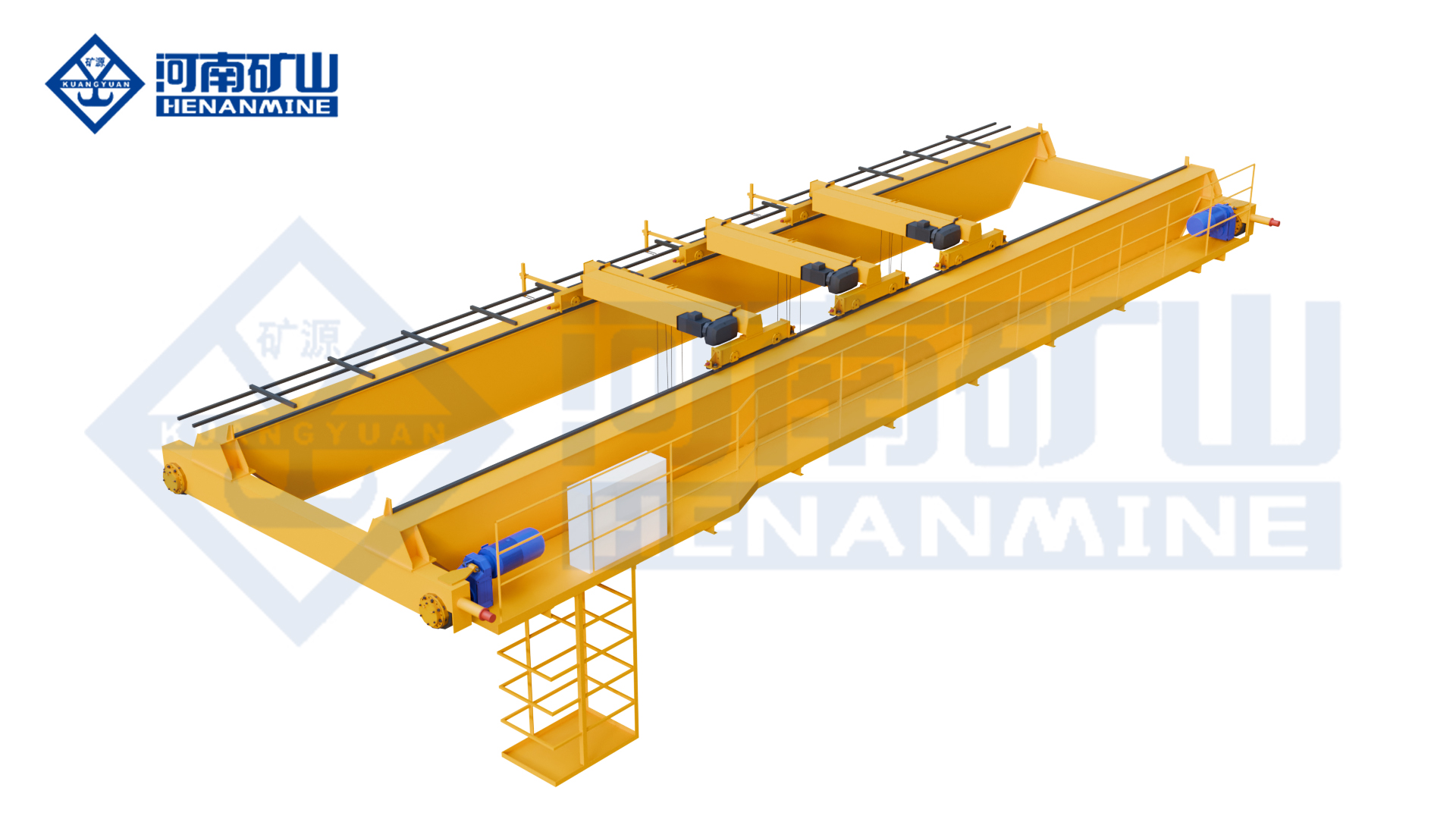
    Three Trolley Electric Hoist CraneCoordinate three electric-hoist trolleys for long components or several workshop lifting positions. Define hook loads, trolley spacing and permitted individual or combined movements.
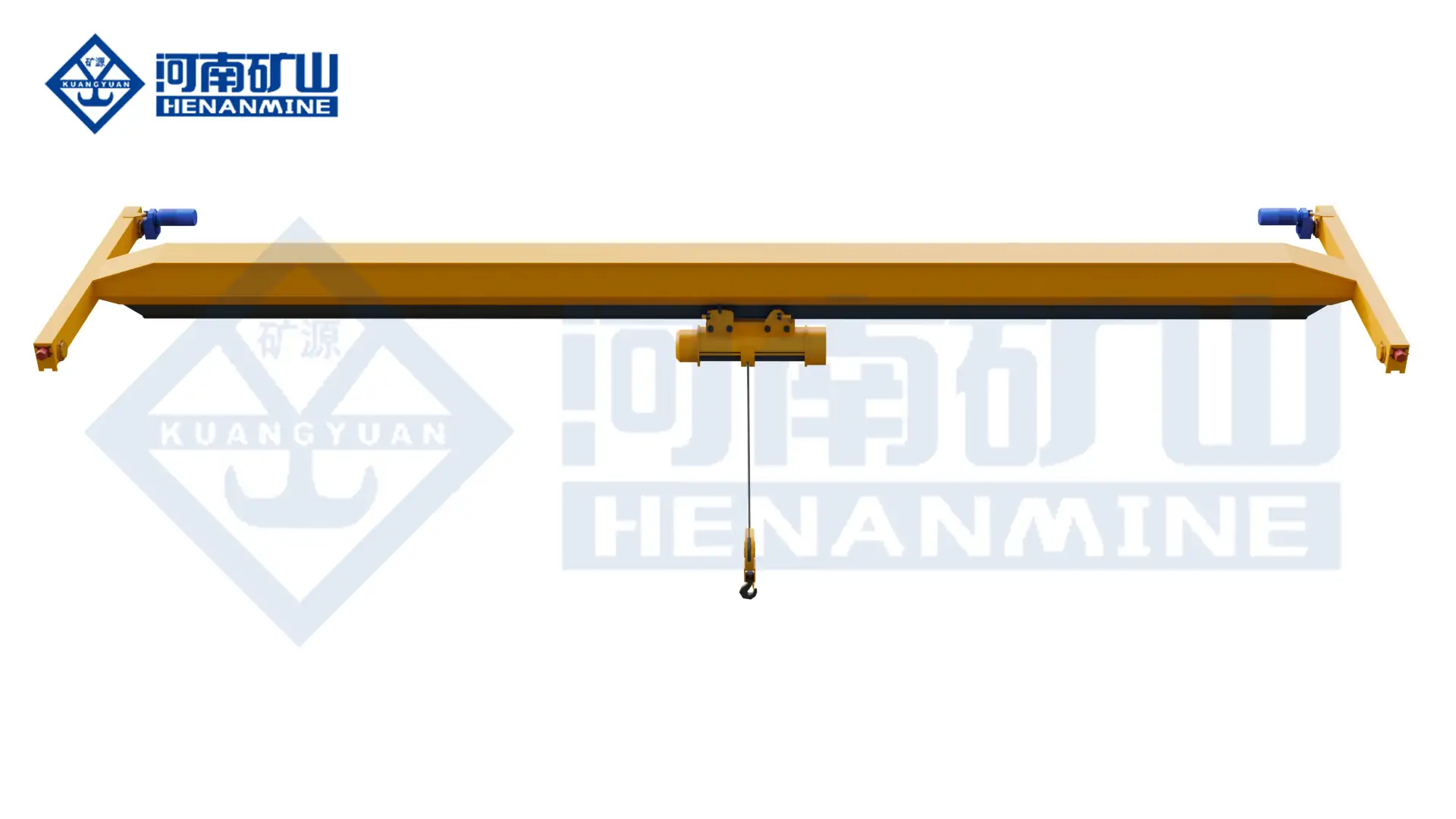
    LH Electric Hoist Double Girder CraneUse an LH double-girder bridge with an electric-hoist trolley for workshop lifting, assembly and maintenance. Match the hoist arrangement to the suspended load, hook travel and available building space.
    Modular Electric Hoist Overhead CraneUse a modular electric-hoist overhead crane for production, assembly and maintenance lifting. Select the hoist arrangement, hook coverage and movement control for the workshop and operating cycle.

    Operating protection & lifecycle support

    Plan beyond the equipment.

    01

    Operating protection

    Confirm overload protection, travel limits, brakes, emergency controls and the required process interlocks for the declared lifting task.

    02

    Installation & commissioning

    Agree runway reactions, structural interfaces, electrical connections, assembly, inspection and commissioning responsibilities before delivery.

    03

    Inspection & spares

    Plan inspection and maintenance of hoist ropes, trolley separation devices and control interlocks. Agree service access, documentation and the required spare-parts scope.

    Questions before the order

    Clarify the details
    that shape the crane.

    What information is needed for a double trolley electric hoist crane quotation?+

    Provide individual hook loads, lifting points and workpiece centre of gravity; trolley separation, hook coverage and runway geometry; and independent or coordinated operation, speeds and lifting cycle. Include drawings and the project destination when available.

    Does adding the two hoist ratings define the permitted load?+

    Permitted individual and combined loads depend on the approved crane arrangement and lifting plan. State the load at each hook and the intended coordinated movements.

    What installation and support scope should be agreed?+

    Agree runway reactions, structural interfaces, electrical connections, assembly, inspection and commissioning responsibilities before delivery. Specify the documentation, training and spare-parts support needed for the project.

    Related equipment

    Explore the alternatives.
    Let’s discuss your project

    The right crane starts
    with your lifting task.

    Share individual hook loads, lifting points and workpiece centre of gravity, together with your site layout and operating cycle.
    info@hnksglobal.com
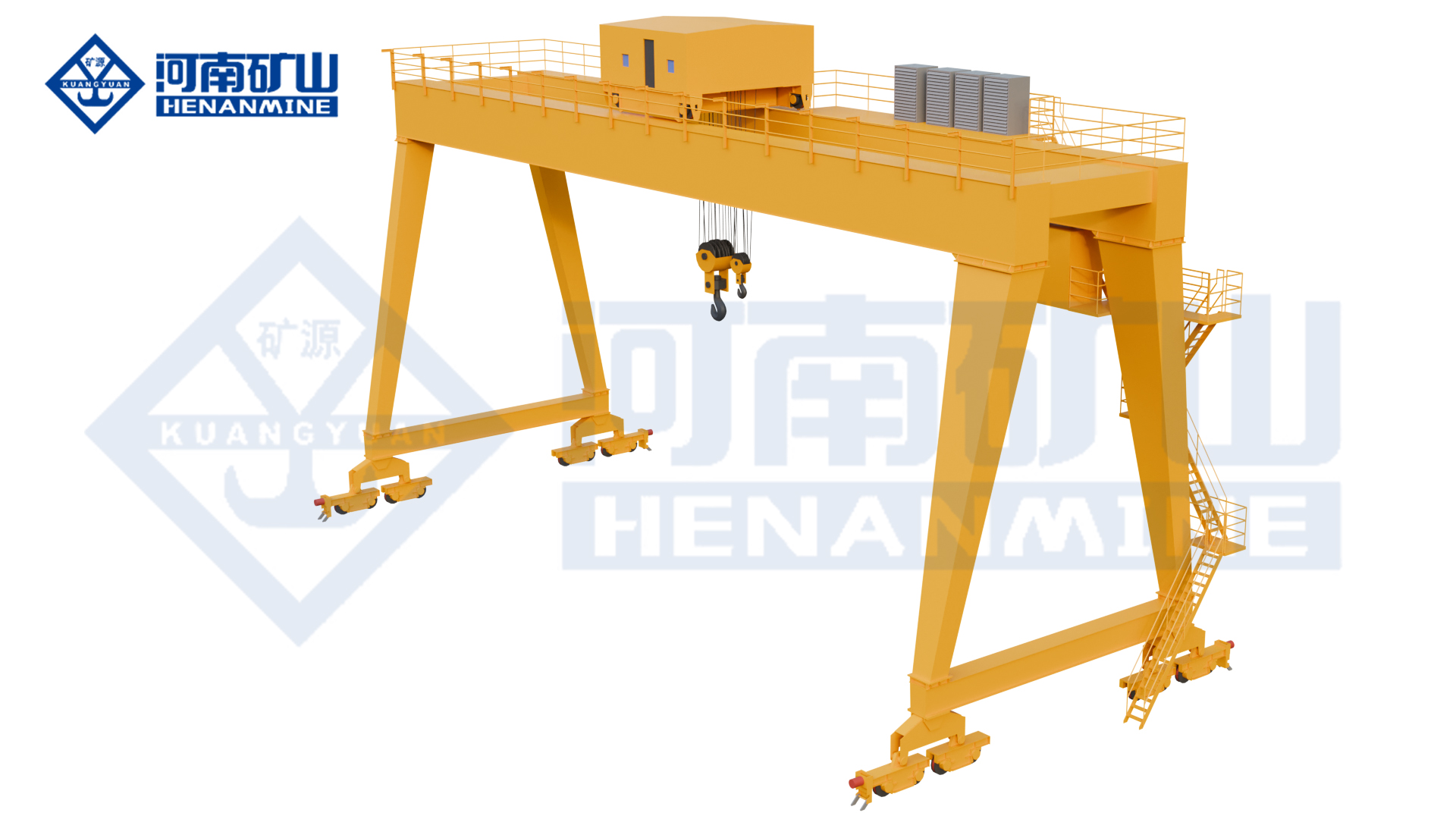
  • Double Girder Truss Gantry Crane

    Double Girder Truss Gantry Crane

    Gantry Cranes / Henan Mine Crane

    Double Girder Truss Gantry Crane

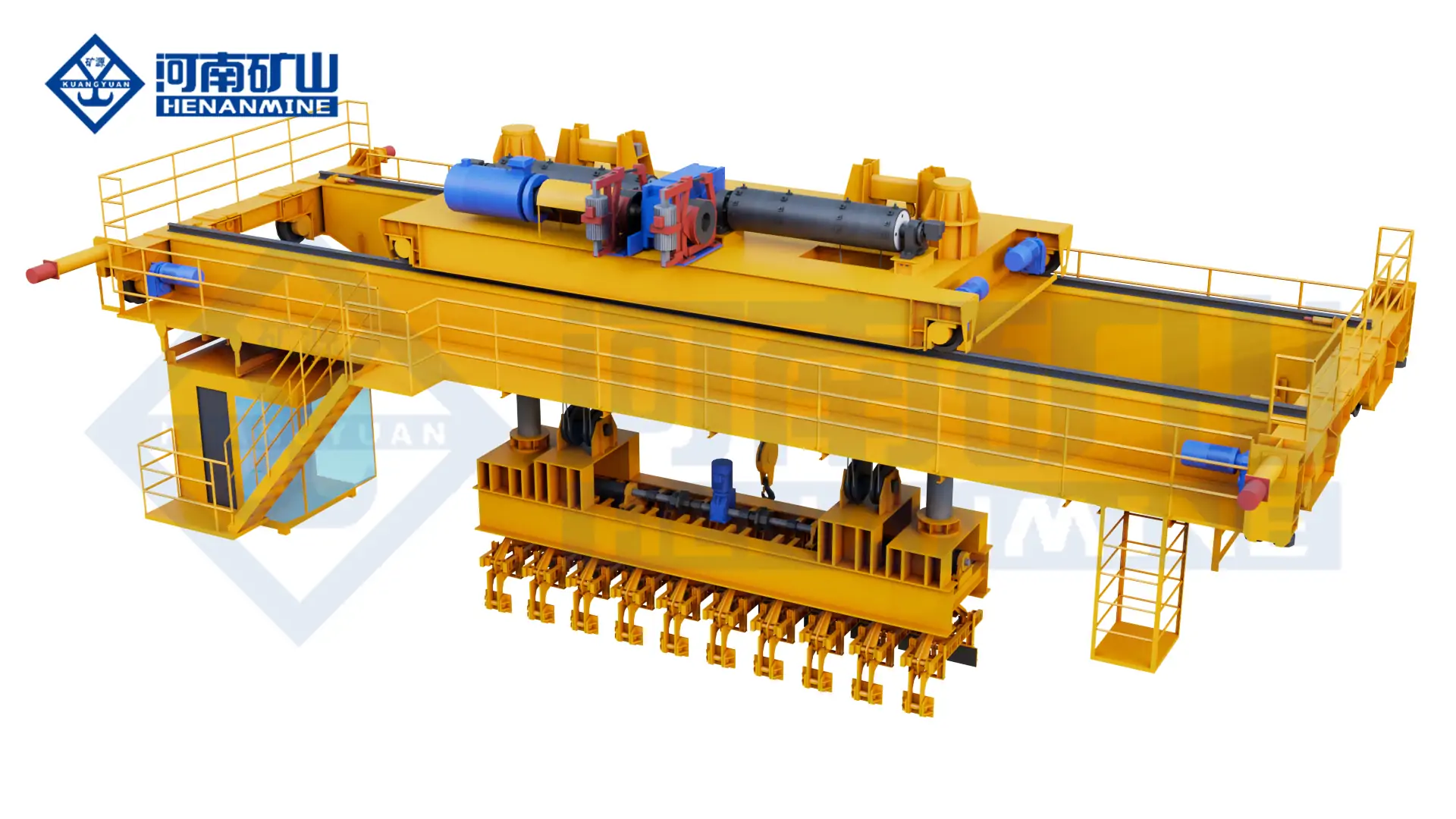
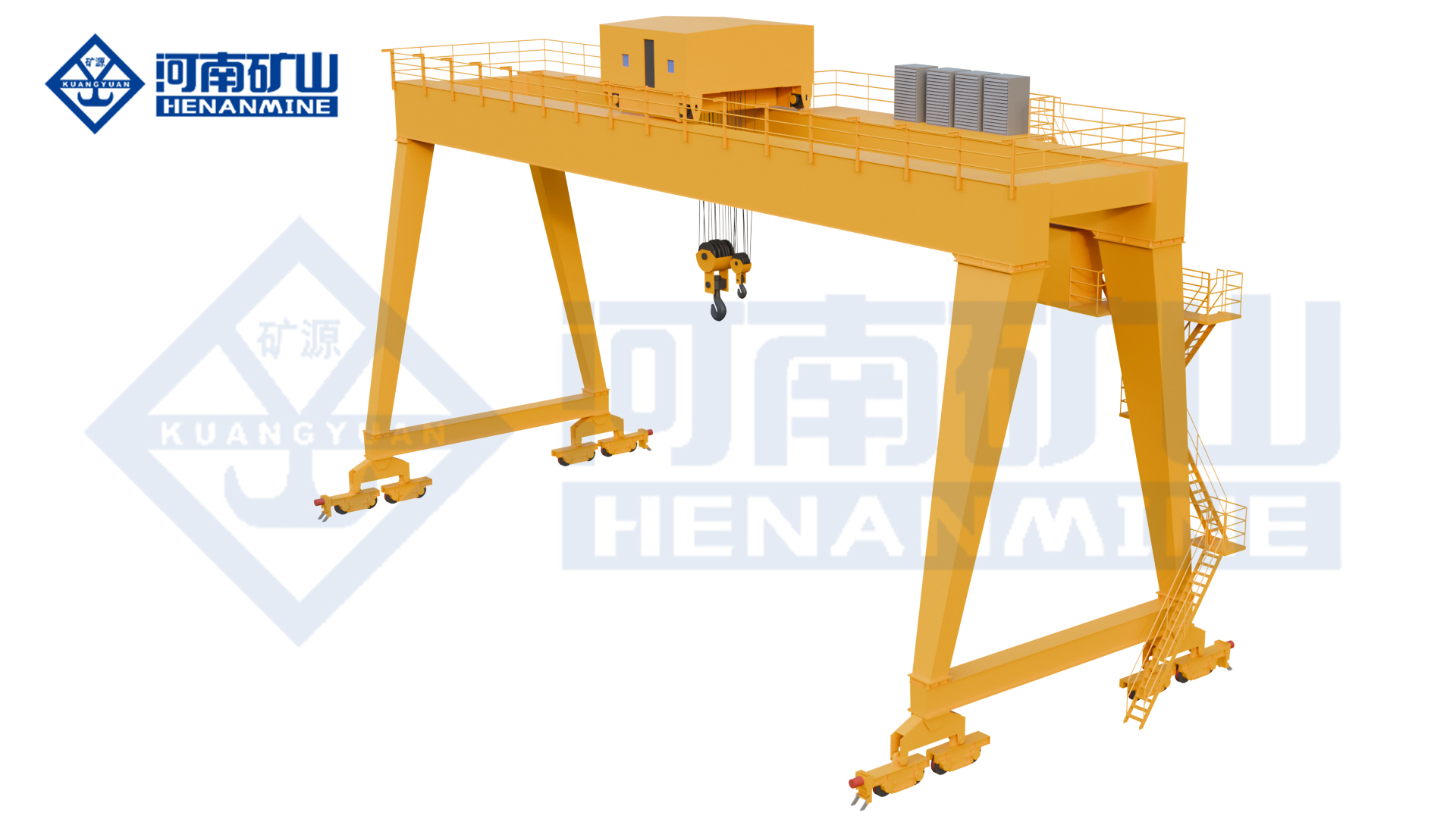
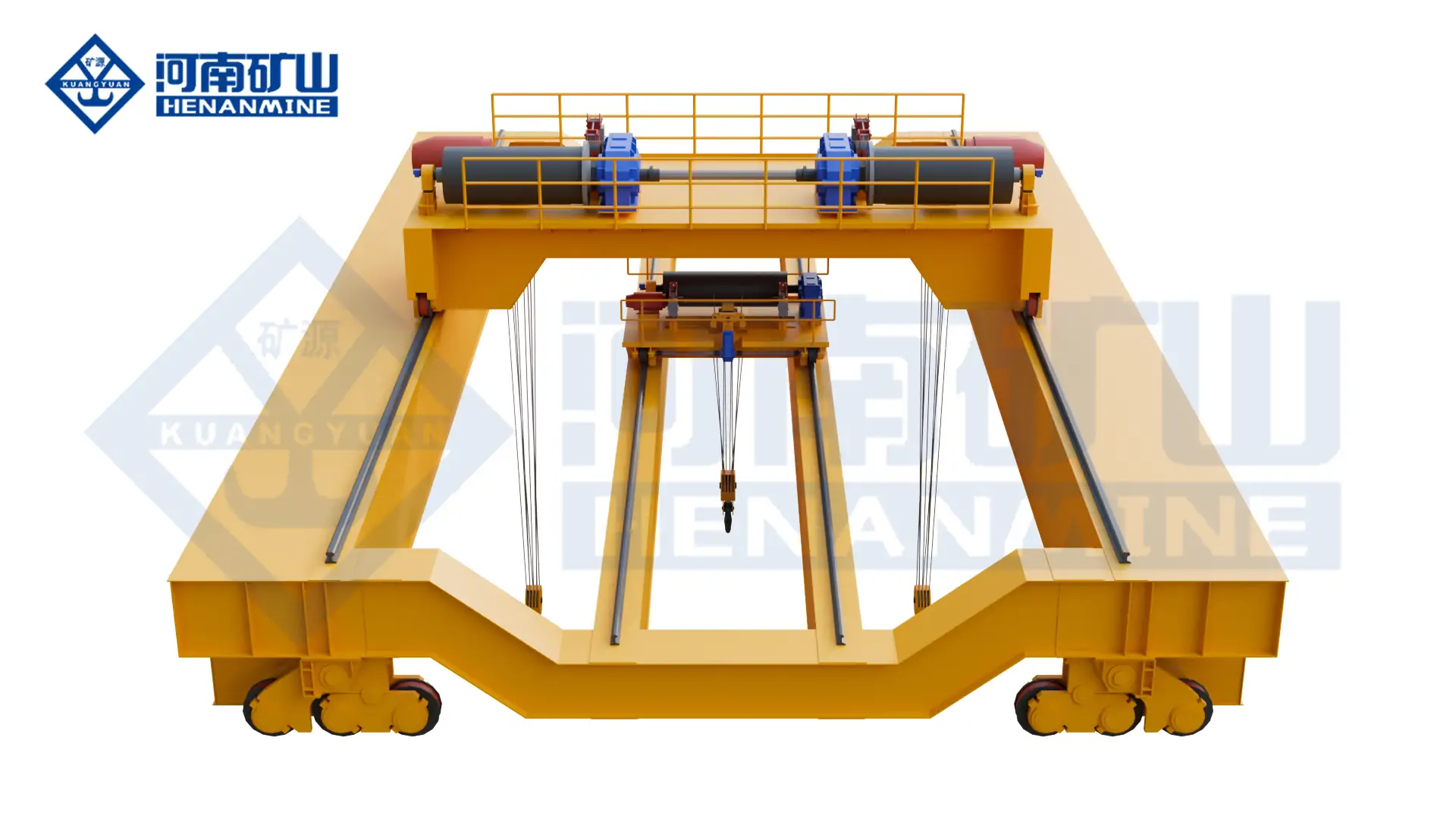
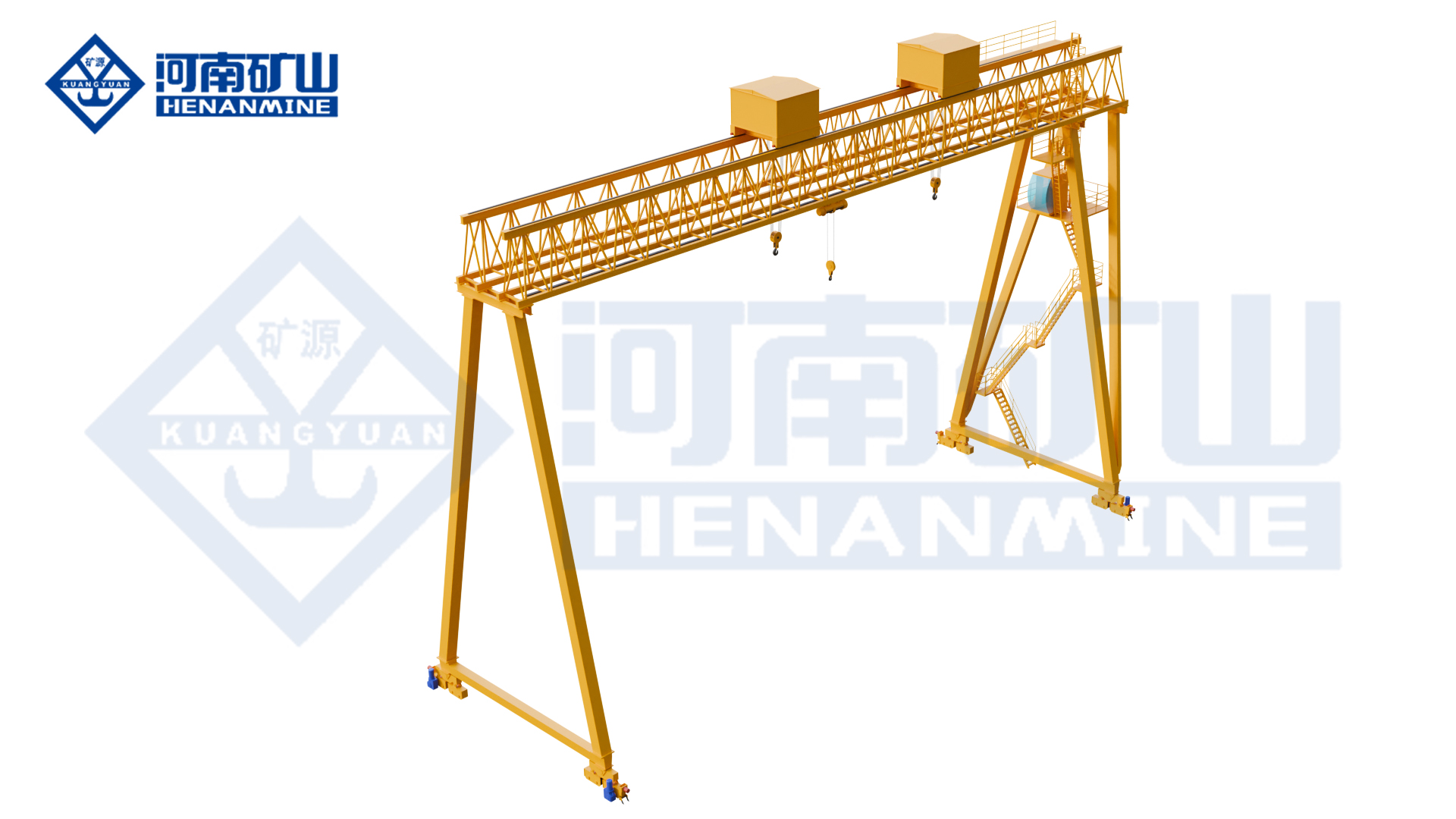
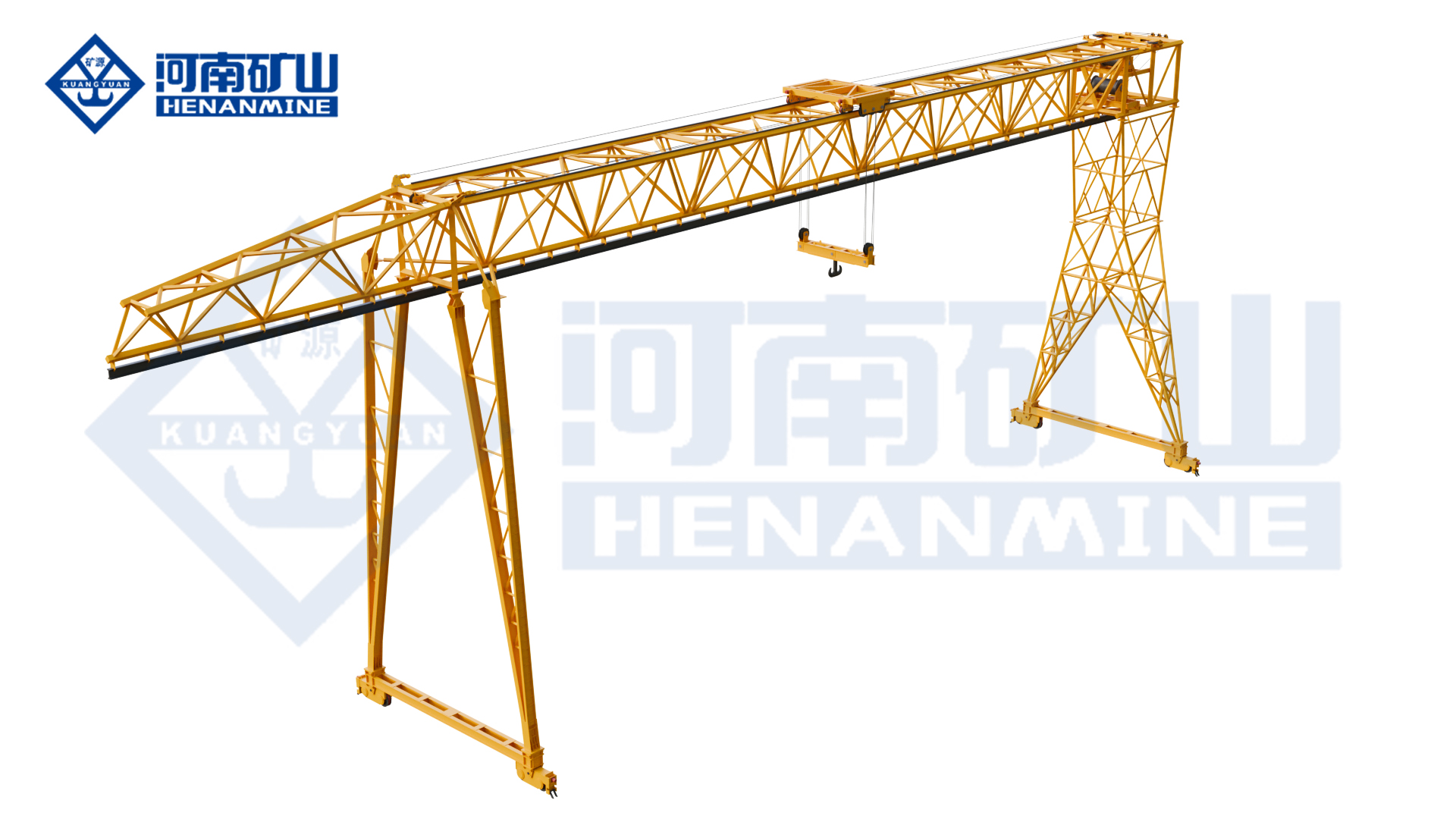
    Use a double-girder truss gantry for yard or construction handling with the lifting points specified for the load. Define trolley quantity, coordinated movements and the transport or assembly constraints.

    Lifting capacity5-50 t
    Span12 – 30 m
    Working classA3-A5
    Technical specifications

    Define the total suspended load, duty and site conditions for your project.

    Technical specifications

    Check the load.
    Plan the configuration.

    Parameters and equipment options are matched to the application and confirmed in the technical proposal.

    Discuss your configuration
    ModelMEH
    Crane TypeTruss Double Girder Gantry Crane
    Rated Lifting Capacity5-50 t
    Span12 – 30 m
    Lifting Height6 – 18 m
    Working DutyA3-A5
    Trolley Quantity2
    Drive SystemVFD Frequency Conversion
    Assembly TypeSectional Bolted Assembly
    Hoisting Speed3 – 10 m/min
    Travel Speed15-40 m/min
    Protection LevelIP54
    Power Supply220-690V, 50/60Hz
    MaterialHigh-Strength Q355B Steel
    ApplicationConstruction Site, Precast Yard, Cargo Yard, Logistics Park

    Final parameters, dimensions, wheel loads and supply scope follow the approved project specification.

    Application & operation

    Matched to the handling task.

    Precast and construction yards

    Handle long components between casting, storage and loading positions.

    Large workpieces

    Coordinate trolley spacing and suspended-load distribution for the handling task.

    Selection considerations

    Start with your operating conditions.

    01

    Load & lifting arrangement

    Specify workpiece length, lifting points and load distribution. Include lifting-appliance weight and the required lifting positions.

    02

    Site & available space

    Provide span, trolley spacing, rail layout and assembly access. Coordinate the installation interfaces with the available site drawings.

    03

    Duty & control sequence

    Define individual or coordinated lifting and outdoor site conditions. Identify the required movements and control interfaces in the enquiry.

    Configuration comparison

    Compare related lifting arrangements.

    Crane arrangementHandling configuration
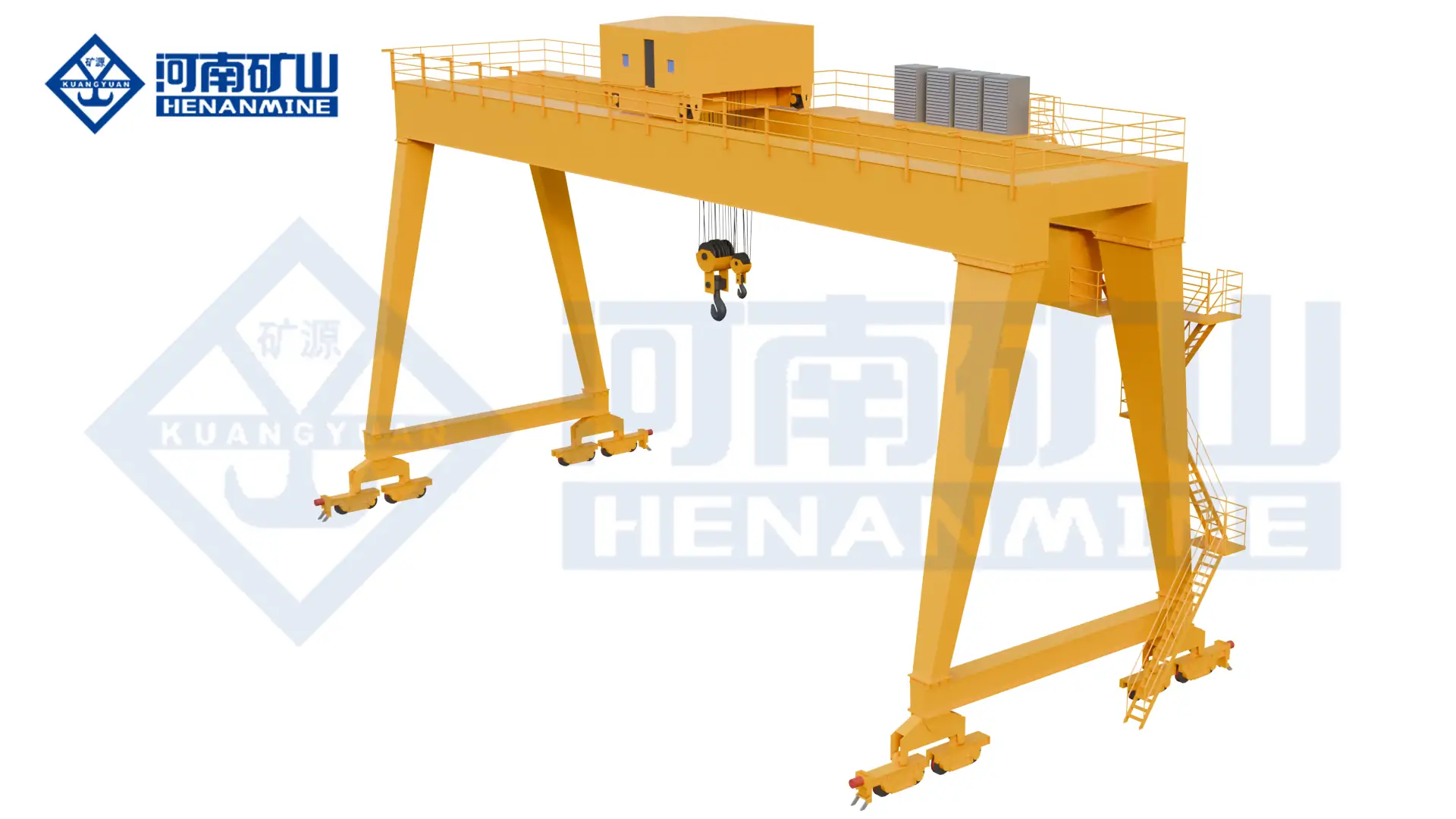
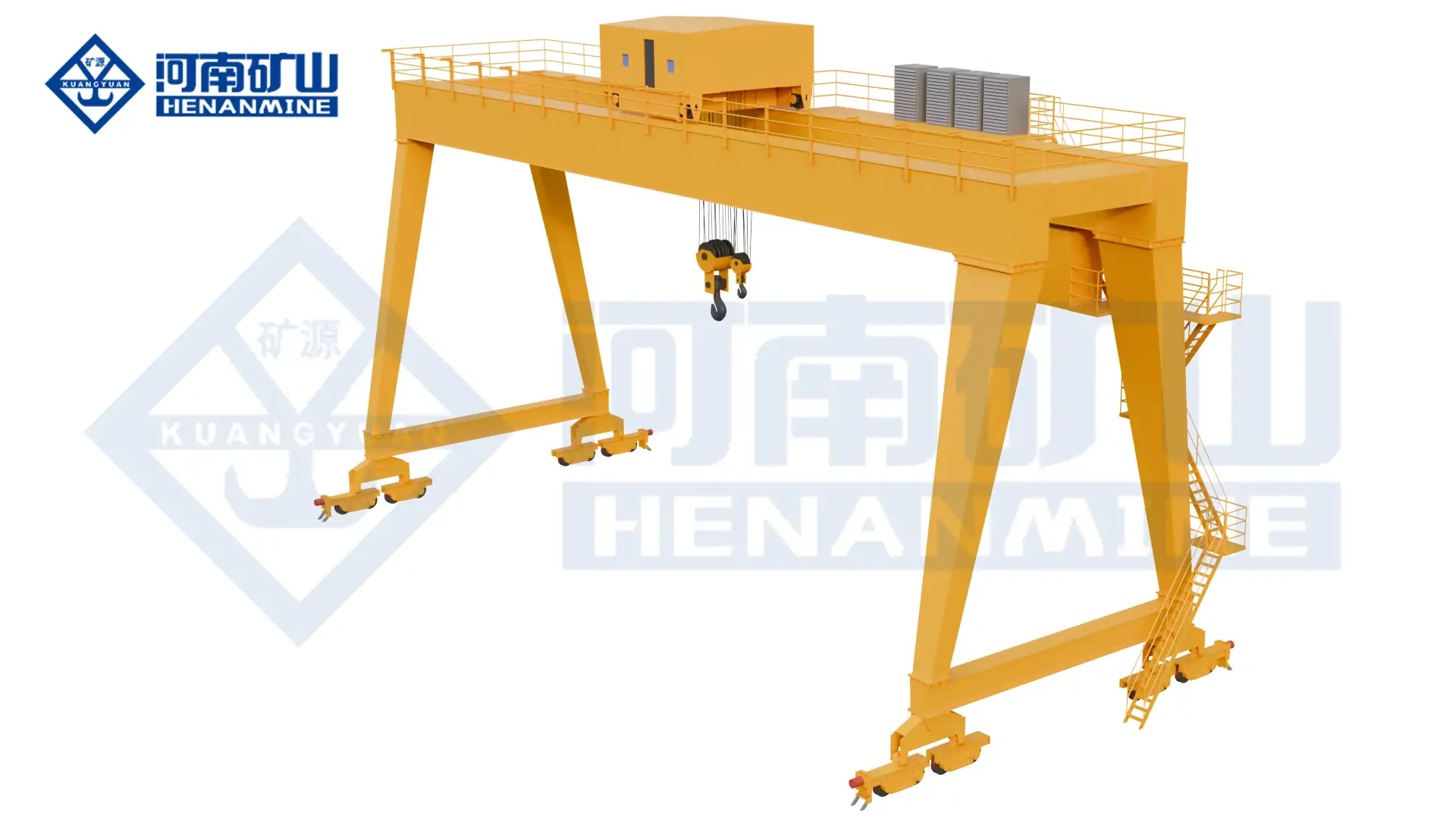
    Double Girder Truss Gantry CraneUse a double-girder truss gantry for yard or construction handling with the lifting points specified for the load. Define trolley quantity, coordinated movements and the transport or assembly constraints.
    Truss Gantry CraneHandle yard materials with a truss-structure gantry crane matched to the load and working area. Define lifting coverage, leg geometry and the transport or assembly arrangement for the site.
    Double Girder Gantry CraneHandle machinery, steelwork and other heavy loads with a double-girder gantry crane. The lifting mechanism, runway, legs and any cantilevers are selected for the complete yard operation.
    Double Girder Electric Hoist Gantry CraneCover an outdoor handling area with a double-girder gantry and electric-hoist trolley. Select the load rating, leg geometry, cantilever arrangement and travel coverage around the yard layout.

    Operating protection & lifecycle support

    Plan beyond the equipment.

    01

    Operating protection

    Define travel limits, overload protection, traffic clearances and the outdoor operating limits for the proposed arrangement.

    02

    Installation & commissioning

    Agree rail foundations, runway alignment, wheel-load interfaces, erection access, electrical connections and commissioning responsibilities.

    03

    Inspection & spares

    Plan inspection and maintenance of truss joints, trolley mechanisms and coordinated-control devices. Agree service access, documentation and the required spare-parts scope.

    Questions before the order

    Clarify the details
    that shape the crane.

    What information is needed for a double girder truss gantry crane quotation?+

    Provide workpiece length, lifting points and load distribution; span, trolley spacing, rail layout and assembly access; and individual or coordinated lifting and outdoor site conditions. Include drawings and the project destination when available.

    Can two trolleys lift one component?+

    Provide the lifting-point geometry, centre of gravity and intended movement sequence. Load sharing, permitted operating combinations and coordinated controls must be defined for the proposed arrangement.

    What installation and support scope should be agreed?+

    Agree rail foundations, runway alignment, wheel-load interfaces, erection access, electrical connections and commissioning responsibilities. Specify the documentation, training and spare-parts support needed for the project.

    Related equipment

    Explore the alternatives.

    Let’s discuss your project

    The right crane starts
    with your lifting task.

    Share workpiece length, lifting points and load distribution, together with your site layout and operating cycle.
    info@hnksglobal.com
  • Crane Factory or Distributor: Compare the Responsibility Boundaries

    Crane Factory or Distributor: Compare the Responsibility Boundaries

    Technical guide

    Crane Factory or Distributor: Compare the Responsibility Boundaries

    The sourcing route changes who coordinates engineering, delivery and site services. Compare the documented equipment and support scope before deciding which commercial arrangement fits the project's resources and requirements.

    Henan Mine CraneTechnical guide · Updated 2026Crane selection, project scope and operating requirements
    Henan Mine Crane overhead crane inside a workshop bay
    Henan Mine Crane overhead crane inside a workshop bay
    Project planning notes

    Key points for this crane project.

    1. Quick Answer: Factory Direct vs. Distributor at a
    2. What Factory Direct Actually Means in the Crane
    3. What a Crane Distributor Does and Doesn’t Do
    Read the technical guide

    Quick Answer: Factory Direct vs. Distributor at a Glance

    FactorFactory DirectDistributor
    Upfront costGenerally lower (no middleman markup)Higher (includes distributor margin)
    Lead timeLonger (built to order)Often shorter (stocked or regional inventory)
    CustomizationHigh direct engineering inputLimited to what the OEM allows the dealer to configure
    Brand/model choiceLocked to one manufacturer's lineOften multi-brand
    Local service & partsDepends on manufacturer's own networkUsually stronger, especially for established dealers
    CommunicationDirect with engineers, but can be slower across time zonesFaster local point of contact
    Best forLarge, complex, or specialized ordersSmaller, faster, or first-time purchases

    If you need a highly customized, high-volume, or specialized crane and have flexibility on timeline, factory direct usually wins on cost and control. If you need something installed soon, want a single point of local contact, or aren't sure exactly which brand fits your application, a distributor is usually the safer path.

    What Factory Direct Actually Means in the Crane Industry

    Factory-direct purchasing means buying straight from the company that designs, engineers, and manufactures the crane with no dealer, trading company, or sales intermediary in between. You're working directly with the OEM's sales engineers from quote to delivery.

    This model is most common with manufacturers who are vertically integrated, meaning they control most of the production chain steel fabrication, electrical systems, hoists, and final assembly in-house rather than buying in finished subassemblies from third parties. Vertical integration matters because it gives the manufacturer (and indirectly the buyer) more control over the supply chain that would otherwise be diluted at each outside vendor stage.

    Factory-direct doesn't automatically mean "small operation" or "no support." Many large OEMs run factory-direct sales teams precisely because they want to control specification accuracy, pricing, and the engineering relationship with the end user particularly on custom or heavy-duty cranes where a generic dealer questionnaire isn't enough to capture the application's real requirements.

    What it does mean is that you are the manufacturer's only point of contact. There's no dealer absorbing communication gaps, smoothing over scheduling conflicts, or stepping in if the OEM is slow to respond.

    Whether you're comparing factory-direct suppliers or local distributors, selecting the right partner is just as important as selecting the right crane.

    Henan Mine Crane offers customized crane solutions, engineering consultation, factory inspections, international shipping support, and technical assistance for customers worldwide. Contact our team to discuss your lifting requirements and receive a tailored solution with competitive pricing and reliable long-term support.

    What a Crane Distributor Does and Doesn’t Do

    Crane dealer is an intermediate service provider connecting equipment manufacturers and end-users, responsible for purchasing and reselling complete cranes and accessories, relying on regional inventory, local sales and after-sales team to provide customers with one-stop services such as installation, maintenance and so on.

    Dealers can provide customers with three core service advantages:

    Multi-brand Product Selection Channels

    Customers can rely on a single dealer docking multi-brand crane product line, without having to dock one by one to the original equipment manufacturers. Can be completed within a unified docking channel of different brands of equipment, technical parameters, configuration and price comparison, effectively simplify the pre-selection process, reduce communication costs, significantly improve the efficiency of procurement selection.

    Localized Service Capability

    Dealers in the industry generally adopt a grid-based regional layout, equipped with licensed, systematic training of technicians around the manufacturer to ensure that customers can quickly arrive at the scene around the plant.

    Relying on the advantages of nearby service, we can efficiently complete the equipment site survey, supervision of the installation process, acceptance and commissioning and emergency repair of unexpected failures and other on-site work, so as to achieve a rapid response to the needs of closed-loop problem solving and minimize the loss of equipment downtime.

    Integrated Package Service Program

    Dealers can provide customers with integrated packaged services, packages covering the whole chain of services such as equipment installation, commissioning, operator skills training, long-term maintenance contracts.

    All services are delivered in a unified and integrated manner, one-stop landing, without the need for customers to docking, separate negotiations, greatly simplifying the procurement and operation and maintenance of the cooperation process, so that the full cycle of the use of equipment to ensure a more complete and efficient.

    Dealers do not have the original R & D authority, cannot independently complete the non-standard customization, need to be forwarded to the original factory to deal with, more communication links, customization cycle is longer. Most of the crane manufacturers to the distribution model instead of the terminal direct sales, with the dealer's localization advantages, to provide customers with pre-sales assessment, after-sales operation and maintenance and parts protection services.

    Some mainstream crane manufacturers rely entirely on dealer sales, not directly facing the end customer, in order to protect the dealer's service and parts revenue, solid local customer relations, to maintain the service quality of the entire distribution system and operational stability.

    Cost Comparison: Where the Price Difference Really Comes From

    The headline difference buyers care about most is price and on paper, factory direct is almost always cheaper. Direct manufacturer purchases tend to offer lower costs and direct communication with engineers, while dealer purchases typically carry higher prices due to the added markup of the middleman.

    • Local inventory carrying costswarehousing, regional staff, and showroom or yard overhead
    • Pre-sale technical consultationtime spent by sales engineers helping you spec the right machine
    • Post-sale service infrastructuretechnicians, service trucks, and parts stock held closer to your facility

    For commoditized, standard-spec equipment, that markup can feel like pure overhead. For complex or first-time purchases, it's effectively prepaid consulting and risk insurance.

    There's a parallel pattern in other industrial sourcing categories that maps almost exactly onto cranes: buyers closer to the source of production get more control over specification, pricing, and packaging decisions, while distributor buyers are paying for the convenience of inventory that's already landed, already cleared, and ready to ship.

    Factory-direct sourcing puts the buyer closer to raw material selection, production scheduling, and packaging decisions, while a distributor buys inventory from factories and resells it from local or regional stock a difference that changes the entire purchasing process. Neither model is universally cheaper;

    it depends on order complexity and volume. Factory-direct purchasing tends to become more attractive as order complexity and volume increase, while distributors remain the more practical choice for buyers who need a small quantity immediately or don't want to manage production coordination themselves.

    Lead Times and Customization: Direct’s Biggest Advantage

    If your facility has an unusual bay width, a non-standard hook path, or specific duty-class requirements, factory direct gives you a real advantage: you're talking to the people who will actually engineer the machine, not a sales rep relaying your requirements secondhand.

    That said, direct orders typically take longer to reach delivery. Direct manufacturer purchases come with the tradeoff of potentially longer lead times and communication barriers, compared to the faster access and broader guidance a dealer can offer. Custom-engineered cranes require structural calculations, sometimes coordination with your existing building records, and a full design review before fabrication even starts.

    A genuinely capable manufacturer direct or through a distributor should walk through a structured technical process before finalizing your spec, not just take a paint-color and hook-height order. Look for a partner who confirms span, lifting height, travel speed, hook path, and control interface against your actual facility data, and who can coordinate structural integration if you have an existing runway system already in place.

    If your facility already has crane infrastructure and you're not changing duty class or capacity significantly, a distributor's stocked or semi-stocked inventory may get you running again faster which matters enormously if you're replacing a failed crane mid-production rather than planning a new installation.

    Service, Parts, and Warranty Support: Distributor’s Strongest Case

    This is where the distributor model earns its markup back. Dealer purchases typically come bundled with expertise, guidance through the buying process, and structured after-sales support. The core advantage of dealer purchases is access to a range of brands and models, hands-on expertise and guidance, and after-sales support while direct purchases can come with limited brand options and potential communication barriers down the line.

    Warranty servicing is a particularly underrated factor. If something goes wrong post-installation, you want a clear, fast escalation path. Buying through an established local dealer generally means a technician is a phone call away, while factory-direct warranty claims may have to route through a national or even international support desk, depending on where the manufacturer is based.

    There's a real difference, too, between buying from a manufacturer or dealer versus a third-party trading company. Going through a trading company can introduce extra friction specifically around warranty coordination, since claims may need to route through the trading company rather than straight to the manufacturer. Warranty claims and servicing arranged through a trading company can become more complex, since they have to be coordinated through that company rather than handled directly with the manufacturer.

    This is also where the proprietary parts issue becomes relevant, regardless of which sourcing path you choose. Many cranes are built with OEM-exclusive components that can only be sourced through that manufacturer or an authorized distributor. Proprietary parts are components designed and manufactured by the original equipment manufacturer and exclusive to that brand, meaning they're typically unavailable through third-party distributors and must be purchased directly from the OEM or an OEM-authorized distributor.

    If you go factory direct on a brand with heavy proprietary parts reliance, you may find yourself permanently dependent on that single relationship for every future repair.

    Hidden Risks Each Model Carries

    • Single-brand lock-in. You only see one manufacturer's product line, so there's no built-in comparison shopping unless you run a separate RFQ process yourself.
    • Proprietary parts dependency. As noted above, OEM-exclusive components can leave you tied to one supplier for the life of the equipment.
    • Geographic service gaps. If the OEM's own service footprint is thin in your region, a warranty claim or emergency repair may take longer than a local dealer relationship would.
    • Markup stacking. On large or repeat orders, dealer margin adds up fast this is where the cost gap with factory direct becomes most noticeable.
    • Limited customization authority. Dealers can typically only configure what the OEM allows in their dealer agreement; truly custom engineering requests still have to go back to the factory.
    • Variable quality of the dealer itself. Not every distributor offers the same level of technical competence vetting the dealer matters as much as vetting the manufacturer.

    A useful gut check either way: ask who is actually designing and manufacturing the core components structural steelwork, electrical panels, hoists, gearboxes versus assembling bought-in parts under a single nameplate. That answer affects both pricing leverage and long-term parts availability, no matter which sourcing channel you use.

    A Practical Decision Framework: 5 Questions to Ask Before You Buy

    • How standard is my spec? If you need a catalog-spec crane at a common capacity and span, the customization advantage of factory direct mostly disappears go with whichever option gets you better service and faster delivery.
    • How fast do I need it installed? If a crane failure has stopped production, distributor inventory and quicker installation crews usually beat the lead time of a built-to-order direct purchase.
    • What's my parts and service runway look like? Confirm in writing what proprietary components exist, who stocks the replacement parts, and how far the nearest qualified technician is from your facility.
    • What's the real order volume? Single-unit buyers often do better working with a distributor's expertise; buyers with recurring, multi-unit, or fleet-level orders typically get enough cost benefit from factory direct to justify the longer relationship management.
    • Can I verify the manufacturer's actual capabilities? Ask for current certifications ISO 9001 and CE marking are the common baseline internationally and ask which core components are made in-house versus sourced from third parties. A manufacturer who cannot produce current certification documentation on request is one whose quality claims can't be trusted, and asking which core components structural steelwork, electrical panels, hoists, gearboxes are designed and built on-site is a direct way to verify real manufacturing capability.

    Total Cost of Ownership

    Sticker price comparisons miss the cost that matters most over a crane's working life: downtime. Production losses from an idle crane compound fast, and the financial stakes vary sharply by industry.

    That number should reshape how you weigh the factory-direct-vs-distributor decision. A slightly cheaper direct purchase that takes longer to repair after a failure because parts have to ship internationally, or because the nearest qualified technician is hours away can erase its upfront savings in a single extended outage.

    This is also where commercially available components matter. Crane systems built primarily around commercial, off-the-shelf parts motors, gearboxes, VFDs, standard control stations give you more flexibility to use independent service providers and shop around for pricing, rather than waiting on a single OEM channel. The tradeoff between proprietary and commercial components affects total cost of ownership directly, regardless of whether you bought direct or through a dealer, because it determines how quickly and cheaply you can get the crane running again after a failure.

    When comparing quotes, ask both factory-direct and distributor candidates to break out:

    • Expected lead time to delivery and installation
    • Standard warranty length and what voids it
    • Parts availability and typical replacement lead time for wear components
    • Whether routine maintenance can be performed by your in-house team or requires the OEM/dealer

    A true cost comparison includes all four, not just the invoice total.

    Discuss the crane arrangement for your project.

    The sourcing route changes who coordinates engineering, delivery and site services. Compare the documented equipment and support scope before deciding which commercial arrangement fits the project's resources and requirements. Share the load, available drawings, working cycle and site conditions with Henan Mine Crane so the required configuration and supply boundary can be discussed.

    Related crane configurations

    Explore crane product families and technical parameters ↗

    Updated 2026 · Henan Mine Crane

  • Insulated Double Girder Travelling Crane

    Insulated Double Girder Travelling Crane

    Overhead Cranes / Henan Mine Crane

    Insulated Double Girder Travelling Crane

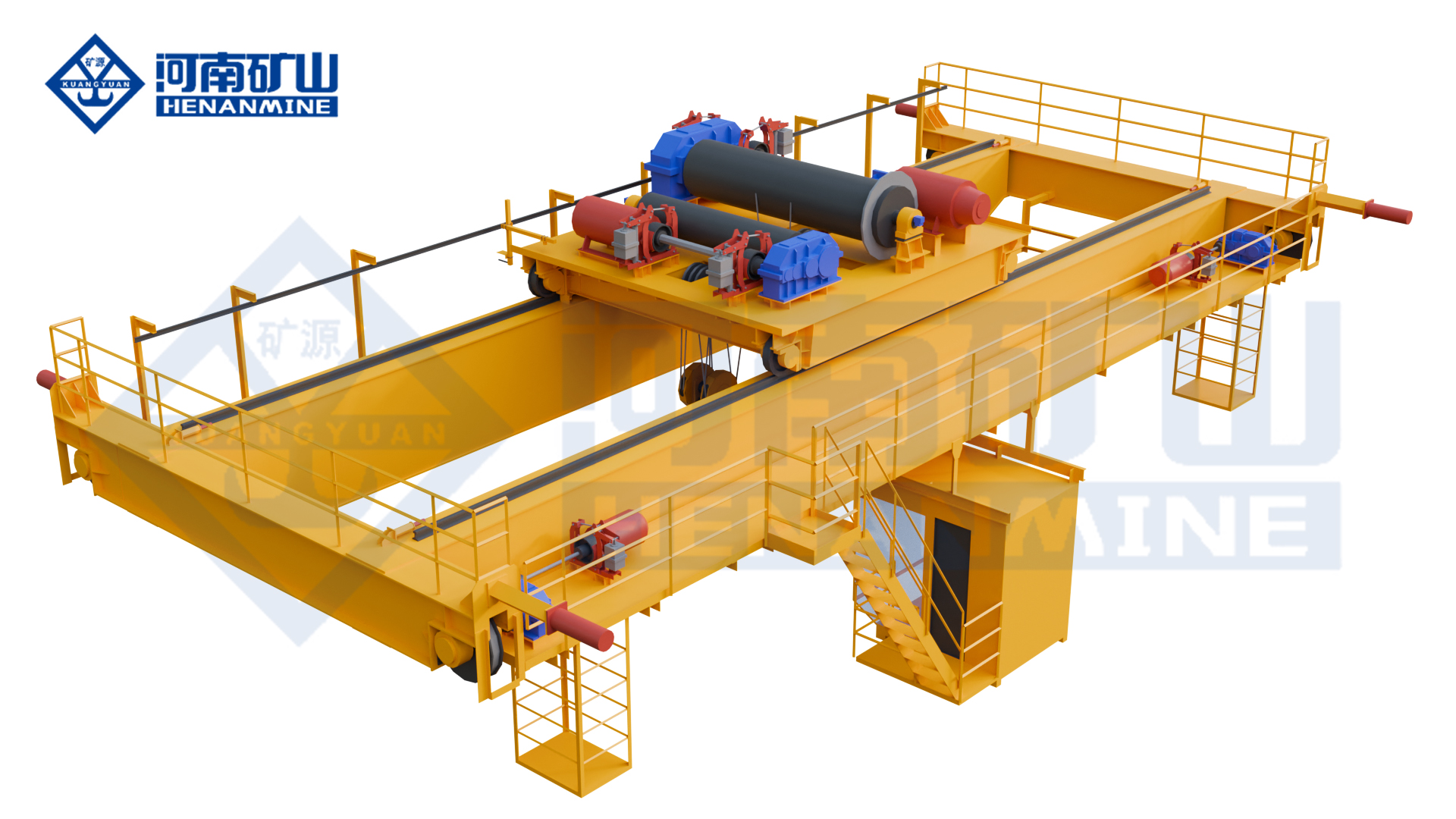
    Provide insulated double-girder lifting for a defined electrical process. The suspension arrangement, lifting appliance and isolation positions are selected from the load path and site conditions.

    Lifting capacity5t – 50t · two trolleys
    Span7.5m – 31.5m
    Working classA5 – A6
    Technical specifications

    Define the total suspended load, duty and site conditions for your project.

    Technical specifications

    Check the load.
    Plan the configuration.

    Parameters and equipment options are matched to the application and confirmed in the technical proposal.

    Discuss your configuration
    Capacity5t – 50t · two trolleys
    Span7.5m – 31.5m
    Lifting height6m – 20m
    Working classA5 – A6
    Power supply380V/50Hz; 220-660V/50-60Hz

    Final parameters, dimensions, wheel loads and supply scope follow the approved project specification.

    Application & operation

    Matched to the handling task.

    Electrical process areas

    Coordinate lifting with the declared electrical isolation requirements.

    Industrial material transfer

    Match the lifting points and travel coverage to the production layout.

    Selection considerations

    Start with your operating conditions.

    01

    Load & lifting arrangement

    Specify workpiece, suspended accessories and required lifting points. Include lifting-appliance weight and the required lifting positions.

    02

    Site & available space

    Provide runway layout, electrical process positions and service access. Coordinate the installation interfaces with the available site drawings.

    03

    Duty & control sequence

    Define isolation requirements, heat, dust and operating cycle. Identify the required movements and control interfaces in the enquiry.

    Configuration comparison

    Compare related lifting arrangements.

    Crane arrangementHandling configuration
    Insulated Double Girder Travelling CraneProvide insulated double-girder lifting for a defined electrical process. The suspension arrangement, lifting appliance and isolation positions are selected from the load path and site conditions.
    Insulated Bridge CraneUse a QY insulated bridge arrangement for lifting in an electrically demanding industrial process. Coordinate the lifting load, isolation positions and inspection requirements with the site.
    Dual Trolley Insulated Overhead CraneCoordinate two lifting trolleys within an insulated overhead crane arrangement. Define the load at each hook, electrical isolation requirements and permitted individual or combined movements.
    LH Electric Hoist Double Girder CraneUse an LH double-girder bridge with an electric-hoist trolley for workshop lifting, assembly and maintenance. Match the hoist arrangement to the suspended load, hook travel and available building space.

    Operating protection & lifecycle support

    Plan beyond the equipment.

    01

    Operating protection

    Confirm overload protection, travel limits, brakes, emergency controls and the required process interlocks for the declared lifting task.

    02

    Installation & commissioning

    Agree runway reactions, structural interfaces, electrical connections, assembly, inspection and commissioning responsibilities before delivery.

    03

    Inspection & spares

    Plan inspection and maintenance of insulating components, lifting connections and inspection access. Agree service access, documentation and the required spare-parts scope.

    Questions before the order

    Clarify the details
    that shape the crane.

    What information is needed for a insulated double girder travelling crane quotation?+

    Provide workpiece, suspended accessories and required lifting points; runway layout, electrical process positions and service access; and isolation requirements, heat, dust and operating cycle. Include drawings and the project destination when available.

    How is the insulation arrangement defined?+

    Describe the process electrical conditions and the lifting connection to the workpiece. Isolation positions and verification requirements are agreed for the complete crane and attachment.

    What installation and support scope should be agreed?+

    Agree runway reactions, structural interfaces, electrical connections, assembly, inspection and commissioning responsibilities before delivery. Specify the documentation, training and spare-parts support needed for the project.

    Related equipment

    Explore the alternatives.

    Let’s discuss your project

    The right crane starts
    with your lifting task.

    Share workpiece, suspended accessories and required lifting points, together with your site layout and operating cycle.
    info@hnksglobal.com
  • Shipyard Final Assembly Cranes: Working Height and Block Coordination

    Shipyard Final Assembly Cranes: Working Height and Block Coordination

    Technical guide

    Shipyard Final Assembly Cranes: Working Height and Block Coordination

    Final assembly needs lifting coverage matched to vessel blocks and construction positions. Show the lifting points, hook envelope and handling sequence so the proposed crane arrangement can be reviewed within the workshop or yard.

    Henan Mine CraneTechnical guide · Updated 2026Crane selection, project scope and operating requirements
    Henan Mine Crane Anode Carbon Block Stacking Crane
    Henan Mine Crane Anode Carbon Block Stacking Crane
    Project planning notes

    Key points for this crane project.

    1. What Is Crane Configuration in Shipyard Final
    2. Why Final-Assembly Workshops Have Unique Crane
    3. Core Crane Types for Final Assembly
    Read the technical guide

    What Is Crane Configuration in Shipyard Final Assembly?

    Crane specification involves selecting a crane‘s structural design, lifting gear and control system to suit the particular requirements of a workshop‘s lifting applications. On a shipyard, it involves selecting and specifying a crane‘s capacity, span, lifting height, trolley arrangement, duty class and safety arrangements, in order that the machine can safely and reliably lift and mate hull sections, lift and place large equipment and do the necessary final pre-launch tasks.

    Final assembly set-up is not particular to crane selection. The load is not like a standard component symmetrical and balanced. Hull blocks are irregular in shape, extremely heavy and very sensitive to the introduction of eccentric forces during lifting. This requires a crane that offers both the highest capacity and the highest level of precision in positioning, a combination unusual in the world of industrial lifting.

    Why Final-Assembly Workshops Have Unique Crane Requirements

    The hull section building workshop will complete the processing of deck, bulkhead, side and other independent hull sections one by one. There is an essential difference in the mode of operation of the hull assembly workshop: the workshop transfers all completed hull sections and assembles them into complete and coherent hulls, most of which are carried out in dry docks or berths.

    The difference in operation mode makes three key changes in crane operation requirements:

    1. Synchronous lifting of multiple large components. Bow section, stern section and engine room module often need to be hoisted in sequence or in parallel, which requires multiple cranes to work together without interference.
    2. Assembly tolerance standards have been significantly tightened. With this high precision, the two sections of the hull can be welded accurately without rework.
    3. The workshop undertakes the single heaviest lifting task in the whole shipbuilding process. After the main structure of the hull is closed, the crane shall hoist the heavy marine equipment such as main engine, generator set and boiler to their original positions, and hoist and lay the superstructure modules onto the deck at the same time.

    Based on the above characteristics, shipyards generally allocate cranes with the largest tonnage and the highest degree of automation to the final assembly process, while light lifting equipment is reserved for the section production and outfitting processes.

    Core Crane Types for Final Assembly

    The vast majority of shipyards use gantry cranes (also often called giant gantry cranes) to carry out hull assembly operations. The specific equipment configuration will be flexibly adjusted according to the size of the shipyard and site layout.

    • Rail gantry crane (RMG) and tire gantry crane (RTG): Among them, rail gantry crane is the standard equipment of fixed dry dock assembly station; tire gantry crane is suitable for shipyards that need to adjust the lifting path according to different projects.
    • Single beam gantry crane and double beam gantry crane: light operation in assembly workshop, including lifting of small components, tooling equipment and small modular prefabricated parts. Single beam gantry crane with smaller load specification can be selected; double beam gantry crane has stronger structural bearing capacity, which can meet the super-tonnage lifting requirements of heavy hull sections and adapt to high-intensity assembly operations.
    • Top-mounted gantry crane and down-mounted gantry crane: the lifting trolley of the top-mounted gantry crane is mounted on the top rail of the main girder, with larger bearing tonnage and wider operation span, which is the mainstream model of hull assembly operation; the down-mounted gantry crane has limited bearing capacity and is more suitable for workshop light lifting operations, rarely used for large hull assembly process.
    Configuration FactorTypical Final Assembly ChoiceWhy
    Crane typeDouble-girder gantry (Goliath)Handles hundred-ton+ hull sections
    Rail systemRail-mounted (RMG)Fixed dry-dock/slipway geometry
    Trolley arrangementDual upper/lower trolleys or multi-hookEnables synchronized, balanced lifts
    Capacity range100–600+ tons (up to 2,000t for mega-yards)Matches block and equipment weight
    Control systemPLC + VFD synchronized controlMillimeter-level alignment accuracy

    Key Configuration Parameters to Specify

    Before purchasing inquiry crane equipment, the assembly workshop needs to clarify the five core selection parameters. The specific requirements are as follows:

    1. Safe Working Load (SWL): It shall be determined according to the maximum single-stage lifting weight or multi-lifting point combination lifting weight in the shipyard planning operation, and shall not only be based on the average load of current routine operation.
    2. Operation span: crane track center spacing shall completely cover the full width range of dry dock or berth, and be compatible with the temporary stacking and operation staging areas on both sides of the hull to ensure that there is no space for lifting operations.
    3. Lifting height: The effective lifting height shall be higher than the total height of the highest superstructure module and sling, and safety margin shall be reserved at the same time to meet the operation requirements of sling displacement and accessory disassembly during hull section turnover and attitude adjustment.
    4. Work level: assembly cranes need to work continuously in multiple shifts and carry large loads for a long time. Therefore, heavy operation conditions are generally adopted. The common industry standard is A7-A8, which can adapt to high-frequency and heavy-duty assembly lifting work.
    5. Trolley and lifting point configuration: single lifting point configuration is suitable for the routine operation scenario of small and medium-sized shipyards; for large special-shaped hull sections, due to the need for multi-point decentralized lifting, double trolley or multi-lifting point collaborative lifting system is the industry standard configuration, which can effectively distribute the load and ensure stable lifting and uniform force of components.

    The selection of these five core parameters is very important, among which the safe working load and working span are the most critical. If the parameter selection is wrong, it will either result in insufficient crane load and span to undertake future large-scale ship construction projects; or it will result in excessive redundancy of equipment parameters and greatly increase unnecessary costs for equipment procurement, operation and maintenance.

    Multi-Hook & Multi-Trolley Synchronization

    Among all the parameters, lifting point and trolley configuration are the most easy to appear inadequate specification selection, and they are also the core parameters that directly affect the hull assembly quality.

    This is also the core reason why high-quality shipbuilding gantry cranes must be equipped with synchronous control systems, which can achieve stable and accurate coordinated operation of multiple lifting points, effectively ensuring the structural integrity and construction assembly accuracy of hull components.

    In actual equipment selection, the following configuration requirements shall be specified:

    • Equipped with PLC global synchronous control system, it can realize coordinated control of all trolleys and all lifting points, get rid of the limitation of traditional two-point pairing, fully adapt to the complex working conditions of multi-point synchronous lifting of large hull sections, and ensure the consistent height of each lifting point;
    • The lifting and traveling mechanism is fully equipped with variable frequency drive system (VFD), which can realize stepless speed regulation and accurate speed matching under the condition of load dynamic fluctuation, effectively avoid the running speed deviation of different mechanisms, and continuously guarantee the stability and synchronization accuracy of the lifting process;
    • Set exclusive micro-speed alignment function, which can realize centimeter-level low-speed accurate alignment fine adjustment before hull section welding, eliminate docking deviation, and greatly improve assembly accuracy and assembly quality of hull assembly;
    • Integrated anti-sway and deflection automatic correction system, can effectively inhibit the lifting load swing and component deviation during long-span travel, offset the adverse effects caused by outdoor wind disturbance, and significantly improve the safety and stability of large lifting operations.

    For shipyards adopting double-crane technology, synchronous control requirements are no longer limited to the control system of single equipment, but also need to realize cross-crane communication linkage between two cranes. This function shall be confirmed with the supplier in advance at the equipment configuration stage, and it is strictly prohibited to reserve it for later supplement and transformation at the field commissioning stage.

    Structural & Site Considerations

    Crane configuration doesn't happen in isolation from the workshop itself. Three site factors shape what's structurally possible:

    Wheel loads and runway design

    A larger model crane gives a proportionately larger point load into the rail runway. The workshop foundations and rail structure should be designed or checked to resist the addition of the maximum wheel loads (under full load) of the intended crane, and not just the weight of the crane itself.

    Workshop layout and clearance

    Span and height to under hook should encompass the entire footprint of block staging, not merely its ultimate assembly zone. Dry-dock cranes that design to span too little often lack the capacity to stage the next project‘s largest blocks as the current build progresses.

    Future capacity headroom

    Since the beneficial working life of the shipyard gantry cranes is measured in decades to the end of their service life, a typical and very expensive error would be to define a configuration precisely suited to the largest project in the present day with no allowance for growth.

    Environmental & Safety Protection

    Most shipyards are built adjacent to sea areas, and lifting equipment is always in severe marine conditions of strong wind, rainfall, high humidity and high salt fog. The gantry crane for hull assembly has large span, open-air operation and exposed structure, so it must be equipped with protective facilities suitable for marine environment. The specific requirements are as follows:

    • Marine grade anticorrosive material and special anticorrosive coating are adopted, matched with sealed electrical cabinet and stainless steel fasteners, which can resist long-term salt spray corrosion and ensure long-term stable service of equipment for decades;
    • Equipped with a complete wind protection system, including rail clamp, storm brake and wind speed linkage alarm device. Long-span gantry crane is affected by wind load significantly, and the system can effectively avoid potential safety hazards caused by strong wind weather.
    • Equipped with parking and fastening device of the whole machine, the crane can be firmly locked and fixed when the equipment is idle and encountered strong convective gale weather, so as to prevent the risk of equipment displacement and overturning;
    • Match the operating temperature range for extreme climates. For shipyards with large temperature difference between cold and summer, cranes should meet the stable operation requirements of temperature fluctuation in all seasons, and should not only adapt to the normal moderate temperature range.

    Omitting environmental protection configuration in order to reduce initial purchase cost is the most common hidden loss mistake in shipyard crane purchase. Under coastal conditions, equipment with imperfect protection configuration is easy to corrode and age, and the subsequent high maintenance cost and shutdown delay loss will far exceed the purchase cost saved in the early stage in just a few years.

    Automation & Control Systems

    In addition to the core synchronous control performance, modern hull assembly cranes are increasingly focused on optimizing operational efficiency and safety control capabilities, with a number of intelligent and safe configurations as standard, as follows:

    • Equipped with cab operation console or remote control terminal and equipped with HD camera monitoring system, it can eliminate visual blind area in large-scale sectional hoisting process, enable operators to master the working conditions of hoisting operation area in real time and all-round way, and ensure that there is no dead angle in hoisting vision.
    • Equipped with load monitoring and overload protection system, it can identify abnormal lifting conditions in real time, warn unsafe operation conditions in advance, and avoid safety accidents such as equipment structure damage and component falling caused by excessive load from the source.
    • Integrated fault diagnosis and equipment status monitoring function, for multi-shift, heavy-duty continuous operation of crane equipment, can monitor the loss and operation status of each component in real time, provide accurate data support for maintenance team, realize preventive maintenance, and prolong the service life of equipment.
    • Push key operation data such as wind speed and load status to operators in real time, and set up direct communication channel with hull assembly construction personnel below, so as to realize up and down linkage and information exchange and avoid cooperative operation risks.

    For shipyards with multiple assembly stations, the operating data of all cranes can be consolidated into a central monitoring system. The system can display the on-duty status, operation status and maintenance status of each equipment in real time, which is convenient for management personnel to reasonably coordinate scheduling, optimize construction scheduling, and greatly improve the overall construction operation efficiency.

    How to Configure a Crane for Your Workshop: A Step-by-Step Framework

    When the shipyard customizes and purchases the final assembly crane, it is necessary to confirm the parameters and working conditions item by item according to the standardized process to ensure that the equipment fully meets the construction requirements. The specific implementation points are as follows:

    1. Check existing and future maximum lifting loads: calculate the weight of maximum hull sections, main equipment and superstructure modules, and include the weight of lifting tools and rigging to verify the required safe working load (SWL) of equipment.
    2. Geometric size of survey workshop site: actual measurement of effective width of dry dock and berth, determination of required operation span of crane; measurement of stacking height of highest component on site, verification of effective lifting height of hook in combination with assembly requirements.
    3. Clarify the working condition grade of equipment: count the lifting frequency of single shift, the average proportion of conventional operation load to rated load, and accurately determine the required working grade of crane according to the actual operation intensity.
    4. Determine the configuration scheme of trolley and lifting point: match the configuration of single lifting point, double trolley or multiple lifting points according to the shape size and structural weight of conventional hull sections of shipyard; at the same time, complete the selection by adopting double-crane combined lifting technology according to whether it is normalized.
    5. Clarify the synchronization control accuracy index: set the alignment accuracy standard required for hull section closure (the mainstream standard for ship assembly is millimeter accuracy), verify that the crane control system can stably meet the standard and meet the requirements of high-precision assembly.
    6. Matching marine environmental protection parameters: according to the coastal salt fog, strong wind, temperature and humidity and other climatic conditions of the plant, the anti-corrosion coating grade, windproof configuration and equipment temperature resistance interval are determined according to the plant, and the severe sea conditions are adapted.
    7. Verification of site structure bearing conditions: confirm the bearing capacity of crane track beam and civil foundation, which can fully match the wheel pressure load under full load state to ensure the safe operation of equipment.
    8. Submit to the manufacturer for professional verification: before the quotation is finalized, qualified equipment manufacturers are required to conduct special verification and confirmation on wheel pressure parameters, drive configuration and main structure strength in combination with berth layout and local wind zone grade.

    Choosing a Supplier or Partner

    Not all crane manufacturers have the R & D and manufacturing capabilities of large-scale synchronous lifting equipment in shipyards. Compared with ordinary industrial cranes, such equipment is more professional and has higher technical threshold. When shipyards select cooperative suppliers, they shall focus on verifying the following core conditions:

    • Practical operation experience of the same tonnage project: the supplier is required to provide the past landing cases with the same tonnage or higher than the demand of the factory, and the manufacturers with large-span and heavy-duty shipbuilding crane manufacturing experience are preferred.
    • Autonomous core synchronous control technology: PLC frequency conversion synchronous control system is the core key of hull assembly crane, not a universal add-on accessory, requiring manufacturers to have independent R & D, debugging and optimization of the core technical capabilities.
    • Complete machine pre-installation and factory test capability: regular manufacturers will complete machine pre-installation, component debugging and performance testing before the equipment leaves the factory, which can greatly reduce the failure risk and construction period pressure of on-site installation and debugging.
    • Customized site engineering supporting services: wheel pressure, drive system and main structure parameters can be customized according to the actual working conditions of dry dock and berth of shipyard, instead of applying general standard specifications.
    • Perfect after-sales and spare parts guarantee: shipbuilding gantry crane design service cycle for decades, suppliers need to have long-term stable after-sales operation and maintenance, spare parts supply and equipment upgrade service capabilities.

    Discuss the crane arrangement for your project.

    Final assembly needs lifting coverage matched to vessel blocks and construction positions. Show the lifting points, hook envelope and handling sequence so the proposed crane arrangement can be reviewed within the workshop or yard. Share the load, available drawings, working cycle and site conditions with Henan Mine Crane so the required configuration and supply boundary can be discussed.

    Related crane configurations

    Anode Carbon Block Stacking Crane

    View product parameters
    Lifting capacity: 10 – 30 tSpan: 13.5-40 mLifting height: 6 – 20 m

    Handle and stack anode carbon blocks with a crane configured around block geometry, gripping method and storage layout. Define the transfer sequence and automation interfaces before selection.

    Shipbuilding Gantry Crane

    View product parameters
    Lifting capacity: 100 t, 200 t, 250 t, 450 tSpan: 40 – 97 mLifting height: 35 – 70 m

    Lift ship blocks and large assemblies with a shipbuilding gantry configured for the dock and production layout. Define lifting points, trolley functions and any block-turning sequence before selection.

    Updated 2026 · Henan Mine Crane

  • Double Girder Gantry Crane

    Double Girder Gantry Crane

    Gantry Cranes / Henan Mine Crane

    Double Girder Gantry Crane

    Handle machinery, steelwork and other heavy loads with a double-girder gantry crane. The lifting mechanism, runway, legs and any cantilevers are selected for the complete yard operation.

    Lifting capacity5 – 500 t
    Span8 – 40 m
    Working classSpecified for the project
    Technical specifications

    Define the total suspended load, duty and site conditions for your project.

    Technical specifications

    Check the load.
    Plan the configuration.

    Parameters and equipment options are matched to the application and confirmed in the technical proposal.

    Discuss your configuration
    Lifting Capacity5 – 500 t
    Span8 – 40 m
    Lifting Height6 – 30 m
    Working Temperature Range-20℃ ~ 40℃
    Lifting Speed0.1 – 10 m/min
    Traveling Speed5 – 40 m/min(Long Travel); 3 – 20 m/min(Trolley Travel)
    Control ModeCab control, wireless remote control, or both
    Protection ClassIP55(Electrical Components)
    Motor TypeYE4 ultra-high efficiency energy-saving motor

    Final parameters, dimensions, wheel loads and supply scope follow the approved project specification.

    Application & operation

    Matched to the handling task.

    Heavy fabrication

    Transfer large assemblies between production and storage positions.

    Loading yards

    Coordinate vehicle access, hook coverage and ground-level travel routes.

    Selection considerations

    Start with your operating conditions.

    01

    Load & lifting arrangement

    Specify maximum suspended load, dimensions and lifting points. Include lifting-appliance weight and the required lifting positions.

    02

    Site & available space

    Provide span, rail foundations, cantilever reach and site access. Coordinate the installation interfaces with the available site drawings.

    03

    Duty & control sequence

    Define load cycles, required speeds and outdoor operating conditions. Identify the required movements and control interfaces in the enquiry.

    Configuration comparison

    Compare related lifting arrangements.

    Crane arrangementHandling configuration
    Double Girder Gantry CraneHandle machinery, steelwork and other heavy loads with a double-girder gantry crane. The lifting mechanism, runway, legs and any cantilevers are selected for the complete yard operation.
    Double Girder Electric Hoist Gantry CraneCover an outdoor handling area with a double-girder gantry and electric-hoist trolley. Select the load rating, leg geometry, cantilever arrangement and travel coverage around the yard layout.
    Truss Gantry CraneHandle yard materials with a truss-structure gantry crane matched to the load and working area. Define lifting coverage, leg geometry and the transport or assembly arrangement for the site.
    Double Girder Truss Gantry CraneUse a double-girder truss gantry for yard or construction handling with the lifting points specified for the load. Define trolley quantity, coordinated movements and the transport or assembly constraints.

    Operating protection & lifecycle support

    Plan beyond the equipment.

    01

    Operating protection

    Define travel limits, overload protection, traffic clearances and the outdoor operating limits for the proposed arrangement.

    02

    Installation & commissioning

    Agree rail foundations, runway alignment, wheel-load interfaces, erection access, electrical connections and commissioning responsibilities.

    03

    Inspection & spares

    Plan inspection and maintenance of trolley mechanisms, rail travel assemblies and structural connections. Agree service access, documentation and the required spare-parts scope.

    Questions before the order

    Clarify the details
    that shape the crane.

    What information is needed for a double girder gantry crane quotation?+

    Provide maximum suspended load, dimensions and lifting points; span, rail foundations, cantilever reach and site access; and load cycles, required speeds and outdoor operating conditions. Include drawings and the project destination when available.

    Which ground information is needed?+

    Provide rail layout and foundation information, ground levels, drainage and adjacent traffic routes. Wheel loads and runway interfaces are confirmed for the proposed configuration.

    What installation and support scope should be agreed?+

    Agree rail foundations, runway alignment, wheel-load interfaces, erection access, electrical connections and commissioning responsibilities. Specify the documentation, training and spare-parts support needed for the project.

    Related equipment

    Explore the alternatives.

    Let’s discuss your project

    The right crane starts
    with your lifting task.

    Share maximum suspended load, dimensions and lifting points, together with your site layout and operating cycle.
    info@hnksglobal.com
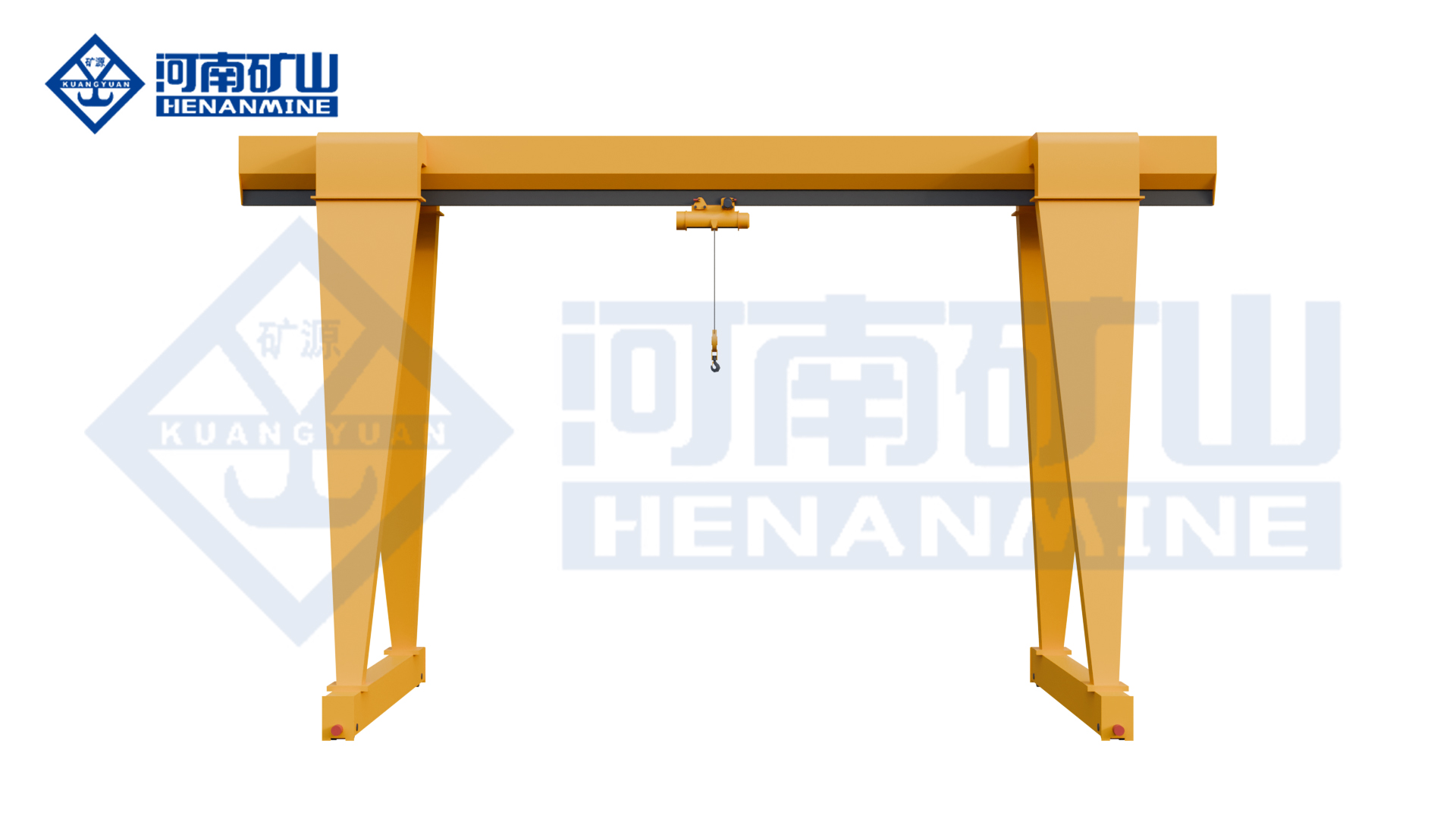
  • Double Girder Electric Hoist Gantry Crane

    Double Girder Electric Hoist Gantry Crane

    Gantry Cranes / Henan Mine Crane

    Double Girder Electric Hoist Gantry Crane

    Cover an outdoor handling area with a double-girder gantry and electric-hoist trolley. Select the load rating, leg geometry, cantilever arrangement and travel coverage around the yard layout.

    Lifting capacity3t – 50t
    Span7.5m – 35m
    Working classA3 – A4
    Technical specifications

    Define the total suspended load, duty and site conditions for your project.

    Technical specifications

    Check the load.
    Plan the configuration.

    Parameters and equipment options are matched to the application and confirmed in the technical proposal.

    Discuss your configuration
    TypeMHS
    Product NameElectric Hoist Gantry Crane
    Rated Lifting Capacity3t – 50t
    Span7.5m – 35m
    Lifting Height4m – 30m
    Working ClassA3 – A4
    Structural FormDouble girder, outriggers with/without cantilever
    Lifting MechanismSpecial electric hoist (sitting type trolley)
    Operation ModePendant control / remote control / cabin control
    Power Supply380V/50Hz; 220-660V/50-60Hz
    Protection LevelIP54
    ApplicationHeavy load & large span material handling

    Final parameters, dimensions, wheel loads and supply scope follow the approved project specification.

    Application & operation

    Matched to the handling task.

    Fabrication yards

    Move steelwork and equipment between fabrication and loading positions.

    Outdoor maintenance

    Provide lifting coverage where an overhead building runway is unavailable.

    Selection considerations

    Start with your operating conditions.

    01

    Load & lifting arrangement

    Specify workpiece dimensions, suspended load and lifting accessories. Include lifting-appliance weight and the required lifting positions.

    02

    Site & available space

    Provide ground rails, span, cantilever reach and loading clearances. Coordinate the installation interfaces with the available site drawings.

    03

    Duty & control sequence

    Define lifting cycle, site power, wind conditions and control requirements. Identify the required movements and control interfaces in the enquiry.

    Configuration comparison

    Compare related lifting arrangements.

    Crane arrangementHandling configuration
    Double Girder Electric Hoist Gantry CraneCover an outdoor handling area with a double-girder gantry and electric-hoist trolley. Select the load rating, leg geometry, cantilever arrangement and travel coverage around the yard layout.
    Double Girder Gantry CraneHandle machinery, steelwork and other heavy loads with a double-girder gantry crane. The lifting mechanism, runway, legs and any cantilevers are selected for the complete yard operation.
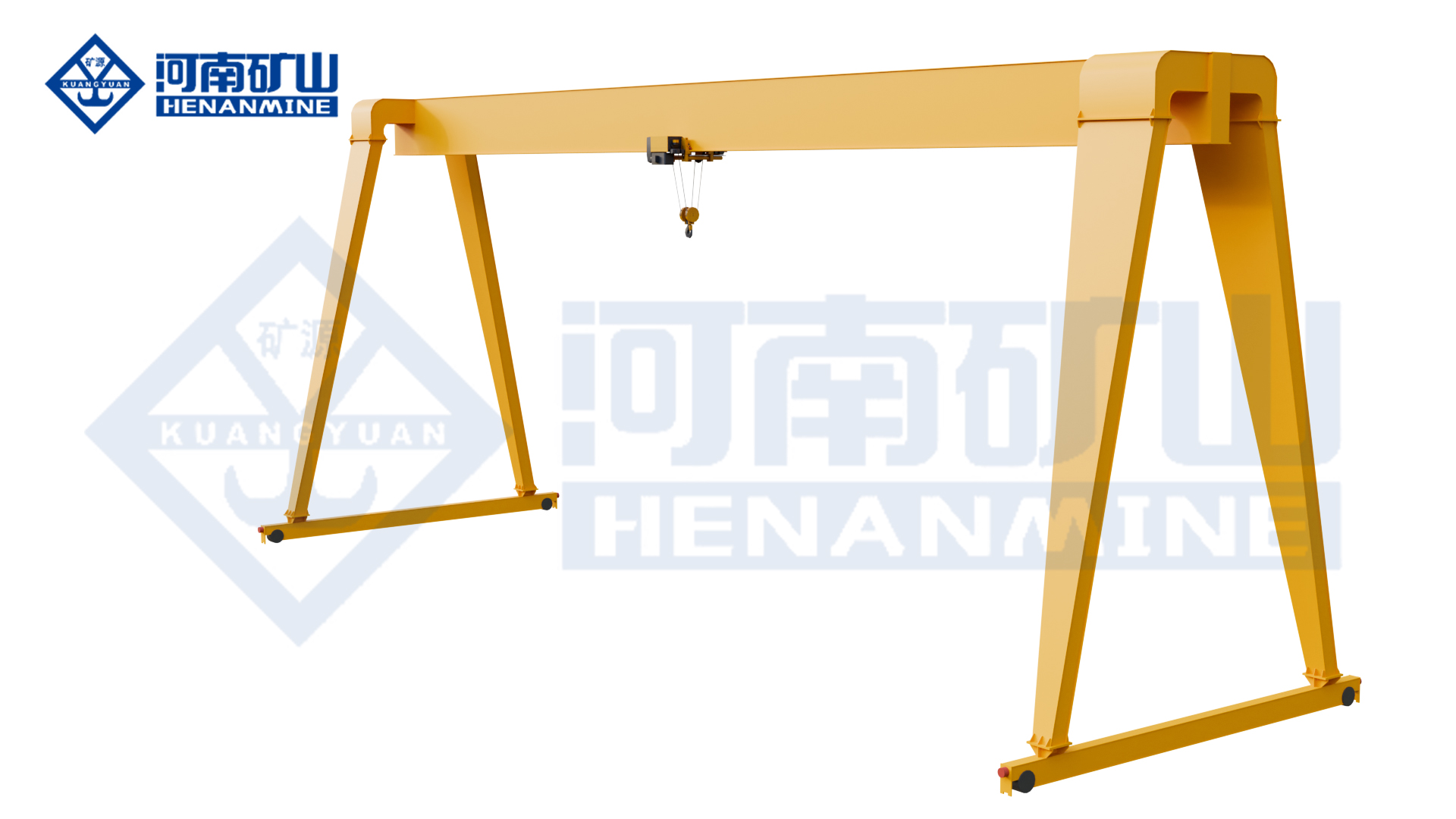
    Single-Girder Gantry CraneCover an outdoor working area with a single-girder electric-hoist gantry crane. Coordinate span, lifting height, leg geometry and any cantilever coverage with the yard and loading route.
    European Single Girder Gantry CraneCombine a single-girder gantry with a European-style electric hoist for yard handling. Specify the hook coverage, leg arrangement, travel layout and control requirements for the project.

    Operating protection & lifecycle support

    Plan beyond the equipment.

    01

    Operating protection

    Define travel limits, overload protection, traffic clearances and the outdoor operating limits for the proposed arrangement.

    02

    Installation & commissioning

    Agree rail foundations, runway alignment, wheel-load interfaces, erection access, electrical connections and commissioning responsibilities.

    03

    Inspection & spares

    Plan inspection and maintenance of electric-hoist assemblies, trolley rails and leg travel drives. Agree service access, documentation and the required spare-parts scope.

    Questions before the order

    Clarify the details
    that shape the crane.

    What information is needed for a double girder electric hoist gantry crane quotation?+

    Provide workpiece dimensions, suspended load and lifting accessories; ground rails, span, cantilever reach and loading clearances; and lifting cycle, site power, wind conditions and control requirements. Include drawings and the project destination when available.

    What defines the electric-hoist gantry layout?+

    The hoist trolley, bridge, legs and runway must be coordinated with the required lifting coverage. Provide the yard plan and the hook positions needed on and beyond the main span.

    What installation and support scope should be agreed?+

    Agree rail foundations, runway alignment, wheel-load interfaces, erection access, electrical connections and commissioning responsibilities. Specify the documentation, training and spare-parts support needed for the project.

    Related equipment

    Explore the alternatives.

    Let’s discuss your project

    The right crane starts
    with your lifting task.

    Share workpiece dimensions, suspended load and lifting accessories, together with your site layout and operating cycle.
    info@hnksglobal.com
  • Container Yard Capacity Planning: Separate Storage from Handling Performance

    Container Yard Capacity Planning: Separate Storage from Handling Performance

    Technical guide

    Container Yard Capacity Planning: Separate Storage from Handling Performance

    Storage positions and achievable operating flow are different planning measures. Map the yard layout, access lanes and transfer process so crane selection can be coordinated with the actual capacity requirement.

    Henan Mine CraneTechnical guide · Updated 2026Crane selection, project scope and operating requirements
    Henan Mine Crane Container Overhead Crane
    Henan Mine Crane Container Overhead Crane
    Project planning notes

    Key points for this crane project.

    1. What is the container yard capacity
    2. Why is capacity planning important
    3. Capacity Characteristics of Stockyard Corresponding
    Read the technical guide

    What is the container yard capacity

    In short, container yard capacity refers to the number of containers or total TEU that can be stored at the same time in a site under the premise of safe and smooth operation, as well as the corresponding annual throughput capacity that can be carried. The static capacity depends on the simultaneous storage capacity, and the dynamic annual throughput capacity shall be calculated in combination with the average storage period of containers. The basic algorithm commonly used in the industry is to multiply the number of ground container spaces by the average stacking height, and then multiply by the TEU conversion factor and the actual utilization rate to obtain the static container storage capacity; and then combine with the average stacking days to convert the annual processing capacity.

    Why is capacity planning important

    The capacity of the storage yard directly determines the upper limit of the overall throughput of the wharf. If the configuration of quay crane, gate and truck is sufficient, the yard cannot be connected or rotated, and the whole link will be blocked in the middle. A complete container terminal capacity is the result of the matching of berth, yard and gate. It is useless to look at one item alone. Capacity planning also directly determines equipment selection. Different handling equipment corresponds to a completely different stacking density, with RTG rubber-tyred gantry cranes having the highest stacking density, front cranes requiring more turning and working space, and straddle carriers lying in between. If the equipment is not selected correctly, either the land is wasted seriously, or the operation efficiency is not improved.

    Capacity Characteristics of Stockyard Corresponding to Different Equipments

    Equipment TypeStacking DensitySpace RequirementBest Application Scenario
    RTG CraneHighMedium (planned blocks)Large high-density container yards
    RMG CraneVery highLow (fixed rail layout)Rail terminals & automated yards
    Reach StackerMedium-highHigh (turning radius needed)Small & medium yards, ICDs
    Straddle CarrierMediumMedium (traffic lanes)Flexible terminal-wide operations
    Empty Container HandlerVery highMediumEmpty container storage yards

    Clear up a few core concepts before calculating

    Before calculating the capacity, align a few basic concepts so that the result will not deviate too much. TEU is also the standard container unit, 20 feet container is 1 TEU, 40 feet is 2 TEU, 45 feet is usually 2 TEU for planning conversion. The total TEU capacity of a storage yard varies significantly with the proportion of container types. Ground slot refers to the position on the ground where a standard container can be placed. Stacking height is how many layers can be stacked in the vertical direction. In the industry, 1-over-2 means stacking 3 layers high, and 1-over-4 means stacking 5 layers high. The higher the pile, the greater the capacity per unit area, but the probability of falling boxes will also increase accordingly.

    Calculation formula of basic capacity

    Among these parameters, stacking height and utilization rate are the most likely to be overestimated. The stacking height shall match the equipment capacity, and the utilization rate shall be determined in combination with the functional partition of the storage yard. The more complex the function of the storage yard, the lower the actual utilization rate.

    The conversion of annual throughput capacity also has the corresponding formula:

    In the yard throughput capacity = static capacity x 365 present the average storage period Again, if the average storage period is 6 days, the throughput is 4800 x 365/6 = 292000 TEU/year. This also shows that shortening the storage period of containers is an effective way to improve the throughput capacity without expanding the land. The reverse can also be extrapolated: given the annual throughput target, calculate how many ground slots are needed.

    Core Factors Affecting Yard Capacity

    Calculate the theoretical value, but also combined with the actual situation to do correction, there are several factors that have the greatest influence. The first is the total area and layout of the yard. In the total available land, the box area only accounts for a part, and the area of truck collection road, equipment travel area, fire escape, maintenance site, gate entrance and exit, and railway connection area shall be deducted. The land utilization rate varies greatly with the arrangement of the box area. The second is the box structure. The proportion of 20 feet, 40 feet, empty containers, refrigerated containers, dangerous goods containers, transit containers, will change the actual capacity. The refrigerator shall be connected with electricity, maintenance passage shall be reserved, and the dangerous goods box shall be kept with safe spacing, which occupy more space than the ordinary dry box.

    Common Calculation Mistakes

    Planning stage is the most easy to step on a few pit, a lot of yard are met. It's really full, vehicles can't get in, equipment can't turn on, normal operation can't be carried out at all, which is equivalent to man-made congestion. Only static storage capacity is calculated, and the impact of storage period on throughput is not considered. Two static capacity of the same yard, storage period is different, the annual processing capacity. Ignore equipment turning radius and working space. Especially for the storage yard with front crane, there is not enough turning depth and operation depth left, the equipment cannot be used, and the actual available container spaces are much less than planned.

    How to change that capacity of storage yard by equipment selection

    Different loading and unloading equipment, the capacity of the yard to shape the logic is completely different. The front crane is suitable for small and medium-sized storage yards, inland storage yards and railway stations, with strong flexibility and low investment, but it needs more space for driving and turning, and the storage density is not as good as that of the gantry crane system. RTG rubber-tyred gantry crane is suitable for high-density container area operation of medium and large storage yards, with neat stacking and high density, which is the mainstream choice of large terminals, but it needs regular container area layout and higher initial investment. RMG rail-mounted gantry crane has higher density and low electrification operation cost, which is suitable for railway station and automatic storage yard.

    Method for increasing capacity without expanding land

    Land tight yard, don't rush to expansion, several directions can tap the potential. The most effective way is to shorten the stacking period. By means of booking containers, quick customs clearance, optimizing truck scheduling and electronic container placement, the containers can be transferred faster, and more containers can be handled in the same site. Optimize the layout of the yard, adjust the arrangement of container areas, lane direction and position of special container areas, reduce cross moving lines and invalid space, and squeeze out a lot of available capacity. Replace higher density work equipment, such as upgrading from a front hoist to an RTG, increasing stacking height and box area density, and increasing storage capacity on existing sites.

    Common problem

    What is the formula for calculating the capacity of the container yard?

    Static capacity = number of containers on the ground × average stacking height × TEU conversion factor × yard utilization rate; annual throughput capacity = static capacity × 365 ÷ average stacking period.

    What is the difference between static capacity and throughput?

    Static capacity is how many containers can be stored at the same time, and throughput capacity is how many containers can be handled in a year, and the latter is directly related to container residence time.

    What equipment can lead to higher yard capacity?

    RTG and RMG gantry cranes have a higher stacking density; front cranes are more flexible but require more working space.

    How to improve the throughput capacity of the storage yard without expansion?

    Shortening the stacking period, optimizing the layout, improving the stacking density, upgrading the equipment and optimizing the management of the box area can improve the throughput capacity on the existing land.

    Epilogue

    It is not as simple as setting a formula to calculate the capacity of container yard clearly, but comprehensively judge in combination with many factors such as container type, equipment, stacking period, peak value, moving line, etc. Reasonable planning cannot only improve the land utilization rate, but also reduce the dumping and congestion, so that the equipment and site can play their due value.

    Discuss the crane arrangement for your project.

    Storage positions and achievable operating flow are different planning measures. Map the yard layout, access lanes and transfer process so crane selection can be coordinated with the actual capacity requirement. Share the load, available drawings, working cycle and site conditions with Henan Mine Crane so the required configuration and supply boundary can be discussed.

    Related crane configurations

    Container Overhead Crane

    View product parameters
    Lifting capacity: 30-65 tSpan: 18-35 mLifting height: 8 – 20 m

    Transfer containers within a defined overhead runway area using a double-girder bridge and matched spreader. Container size, working clearance and the handling sequence determine the arrangement.

    Container Straddle Carrier

    View product parameters
    Lifting capacity: 30 – 50 tStacking arrangement: 1 over 3 – 1 over 6Working class: A7 – A8

    Move containers between handling positions with a straddle carrier matched to the travel route and stacking layout. Define container load, ground conditions, clearance and the preferred drive system.

    Updated 2026 · Henan Mine Crane

  • Double Girder Casting Crane

    Double Girder Casting Crane

    Overhead Cranes / Henan Mine Crane

    Double Girder Casting Crane

    Lift and transfer molten-metal ladles with a YZ casting crane configured for the full suspended load and casting process. Review ladle interfaces, thermal exposure and the operating sequence together.

    Lifting capacity75/20–200/50 t
    Span10m – 35m
    Working classA7
    Technical specifications

    Define the total suspended load, duty and site conditions for your project.

    Technical specifications

    Check the load.
    Plan the configuration.

    Parameters and equipment options are matched to the application and confirmed in the technical proposal.

    Discuss your configuration
    ModelYZ
    Capacity75/20–200/50 t
    Span10m – 35m
    Lifting height6m – 25m
    Working classA7
    Power supply380V/50Hz; 220-660V/50-60Hz
    ControlsPLC + HMI touch screen + WLK controller
    Lifting arrangementDouble girder, single trolley

    Final parameters, dimensions, wheel loads and supply scope follow the approved project specification.

    Application & operation

    Matched to the handling task.

    Steelmaking transfer

    Move ladles between defined receiving, furnace and casting positions.

    Foundry operations

    Match main and auxiliary lifting functions to the ladle and process layout.

    Selection considerations

    Start with your operating conditions.

    01

    Load & lifting arrangement

    Specify ladle gross weight, lifting trunnions and auxiliary lifting task. Include lifting-appliance weight and the required lifting positions.

    02

    Site & available space

    Provide furnace and casting positions, clearances and crane runway. Coordinate the installation interfaces with the available site drawings.

    03

    Duty & control sequence

    Define thermal exposure, operating duty and metallurgical protection requirements. Identify the required movements and control interfaces in the enquiry.

    Configuration comparison

    Compare related lifting arrangements.

    Crane arrangementHandling configuration
    Double Girder Casting CraneLift and transfer molten-metal ladles with a YZ casting crane configured for the full suspended load and casting process. Review ladle interfaces, thermal exposure and the operating sequence together.
    Four Beam Casting CraneHandle molten-metal ladles with a YZS four-beam casting crane. Main and auxiliary trolley functions, thermal exposure and the lifting sequence are selected for the casting process.
    Metallurgical Bridge CraneLift hot process loads with a YZD metallurgical bridge arrangement selected for the complete load and thermal conditions. Specify the lifting appliance, duty cycle and operating-protection requirements.
    YX Metallurgical Bridge CraneLift and turn material boxes with a YX metallurgical crane arrangement. The box interface, centre of gravity, turnover sequence and thermal conditions determine the lifting system.

    Operating protection & lifecycle support

    Plan beyond the equipment.

    01

    Operating protection

    Confirm overload protection, travel limits, brakes, emergency controls and the required process interlocks for the declared lifting task.

    02

    Installation & commissioning

    Agree runway reactions, structural interfaces, electrical connections, assembly, inspection and commissioning responsibilities before delivery.

    03

    Inspection & spares

    Plan inspection and maintenance of ladle lifting connections, brakes and heat-protection components. Agree service access, documentation and the required spare-parts scope.

    Questions before the order

    Clarify the details
    that shape the crane.

    What information is needed for a double girder casting crane quotation?+

    Provide ladle gross weight, lifting trunnions and auxiliary lifting task; furnace and casting positions, clearances and crane runway; and thermal exposure, operating duty and metallurgical protection requirements. Include drawings and the project destination when available.

    How are the main and auxiliary capacities specified?+

    State the complete ladle load and the separate auxiliary task. Main and auxiliary ratings, permitted combinations and operating procedures must be defined in the technical proposal.

    What installation and support scope should be agreed?+

    Agree runway reactions, structural interfaces, electrical connections, assembly, inspection and commissioning responsibilities before delivery. Specify the documentation, training and spare-parts support needed for the project.

    Related equipment

    Explore the alternatives.

    Let’s discuss your project

    The right crane starts
    with your lifting task.

    Share ladle gross weight, lifting trunnions and auxiliary lifting task, together with your site layout and operating cycle.
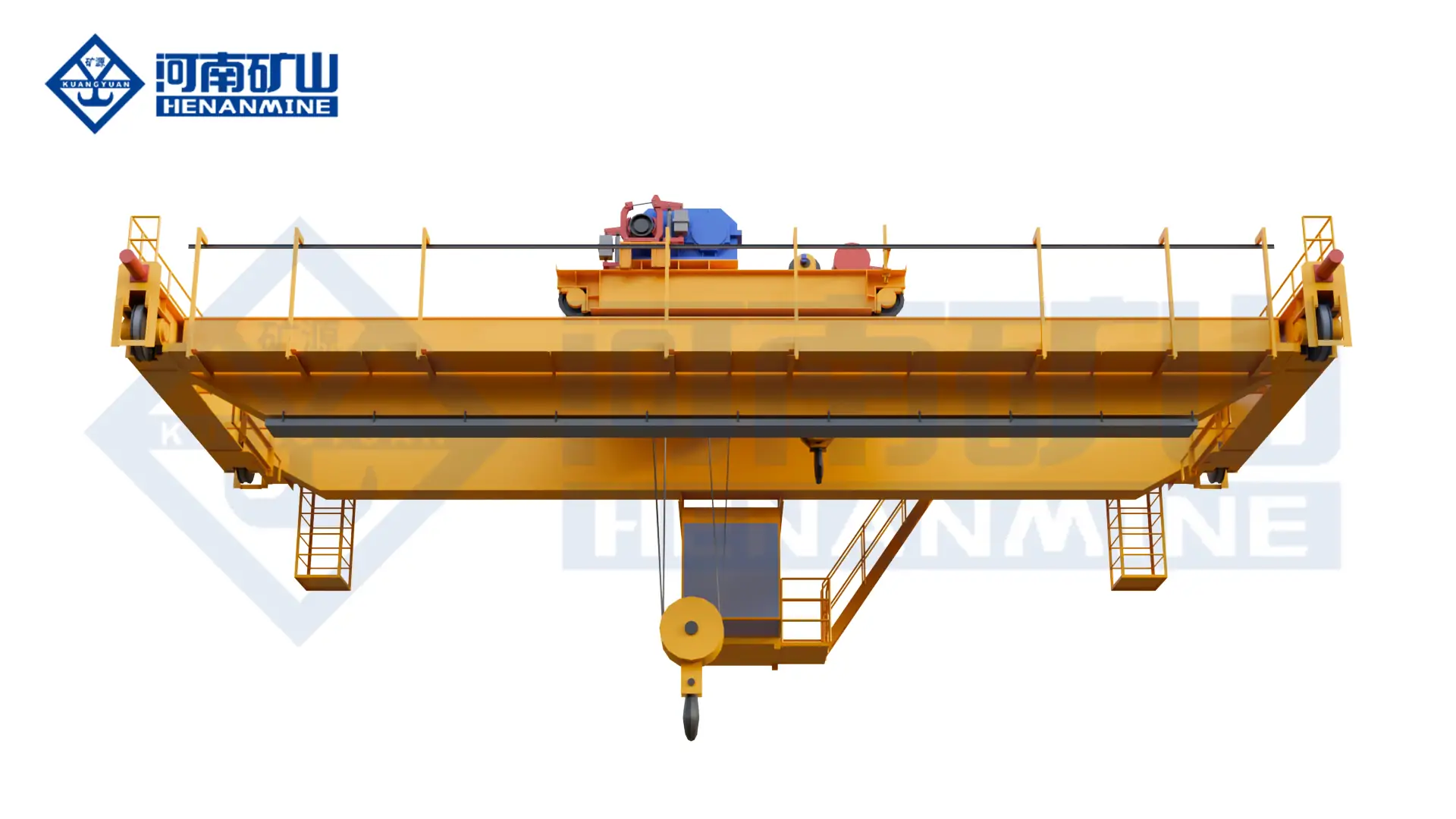
    info@hnksglobal.com
  • LH Electric Hoist Double Girder Crane

    LH Electric Hoist Double Girder Crane

    Overhead Cranes / Henan Mine Crane

    LH Electric Hoist Double Girder Crane

    Use an LH double-girder bridge with an electric-hoist trolley for workshop lifting, assembly and maintenance. Match the hoist arrangement to the suspended load, hook travel and available building space.

    Lifting capacity3, 5, 10, 16, 20 t
    Span10.5–31.5 m
    Working classA3–A4
    Technical specifications

    Define the total suspended load, duty and site conditions for your project.

    Technical specifications

    Check the load.
    Plan the configuration.

    Parameters and equipment options are matched to the application and confirmed in the technical proposal.

    Discuss your configuration
    Capacity3, 5, 10, 16, 20 t
    Span10.5–31.5 m
    Lifting height6, 9, 12 or 18 m
    Working classA3–A4
    Hoisting speed3.5–8 m/min; dual speed available
    Trolley travel20 m/min
    Crane travel20 m/min; 30 m/min on listed variants
    Power supply380 V · 50 Hz · 3 phase
    ControlsGround control
    Lifting arrangementCD₁ / MD₁ / HC / HM electric hoist

    Final parameters, dimensions, wheel loads and supply scope follow the approved project specification.

    Application & operation

    Matched to the handling task.

    Machinery workshops

    Lift and position components within a fixed overhead runway bay.

    Maintenance and assembly

    Coordinate hook coverage, hoist duty and access around the equipment being serviced.

    Selection considerations

    Start with your operating conditions.

    01

    Load & lifting arrangement

    Specify workpiece weight, rigging and required hook positions. Include lifting-appliance weight and the required lifting positions.

    02

    Site & available space

    Provide runway centres, rail elevation and roof clearance. Coordinate the installation interfaces with the available site drawings.

    03

    Duty & control sequence

    Define daily lifts, load spectrum and hoisting speed requirements. Identify the required movements and control interfaces in the enquiry.

    Configuration comparison

    Compare related lifting arrangements.

    Crane arrangementHandling configuration
    LH Electric Hoist Double Girder CraneUse an LH double-girder bridge with an electric-hoist trolley for workshop lifting, assembly and maintenance. Match the hoist arrangement to the suspended load, hook travel and available building space.
    Single-Girder Bridge CraneUse an LDA single-girder bridge and electric hoist for general workshop material handling. Select the lifting capacity, runway geometry and hoist duty around the building and load.
    Modular Electric Hoist Overhead CraneUse a modular electric-hoist overhead crane for production, assembly and maintenance lifting. Select the hoist arrangement, hook coverage and movement control for the workshop and operating cycle.
    Double Trolley Electric Hoist CraneLift long components or serve separate working positions with two electric-hoist trolleys on one bridge. Trolley spacing, load sharing and independent or coordinated operation are specified for the task.

    Operating protection & lifecycle support

    Plan beyond the equipment.

    01

    Operating protection

    Confirm overload protection, travel limits, brakes, emergency controls and the required process interlocks for the declared lifting task.

    02

    Installation & commissioning

    Agree runway reactions, structural interfaces, electrical connections, assembly, inspection and commissioning responsibilities before delivery.

    03

    Inspection & spares

    Plan inspection and maintenance of electric-hoist rope, trolley wheels and travel drives. Agree service access, documentation and the required spare-parts scope.

    Questions before the order

    Clarify the details
    that shape the crane.

    What information is needed for a lh electric hoist double girder crane quotation?+

    Provide workpiece weight, rigging and required hook positions; runway centres, rail elevation and roof clearance; and daily lifts, load spectrum and hoisting speed requirements. Include drawings and the project destination when available.

    What distinguishes an LH lifting arrangement?+

    The lifting mechanism uses an electric hoist mounted with the double-girder trolley arrangement. Selection should confirm hoist duty, hook approach, building clearances and maintenance access.

    What installation and support scope should be agreed?+

    Agree runway reactions, structural interfaces, electrical connections, assembly, inspection and commissioning responsibilities before delivery. Specify the documentation, training and spare-parts support needed for the project.

    Related equipment

    Explore the alternatives.

    Let’s discuss your project

    The right crane starts
    with your lifting task.

    Share workpiece weight, rigging and required hook positions, together with your site layout and operating cycle.
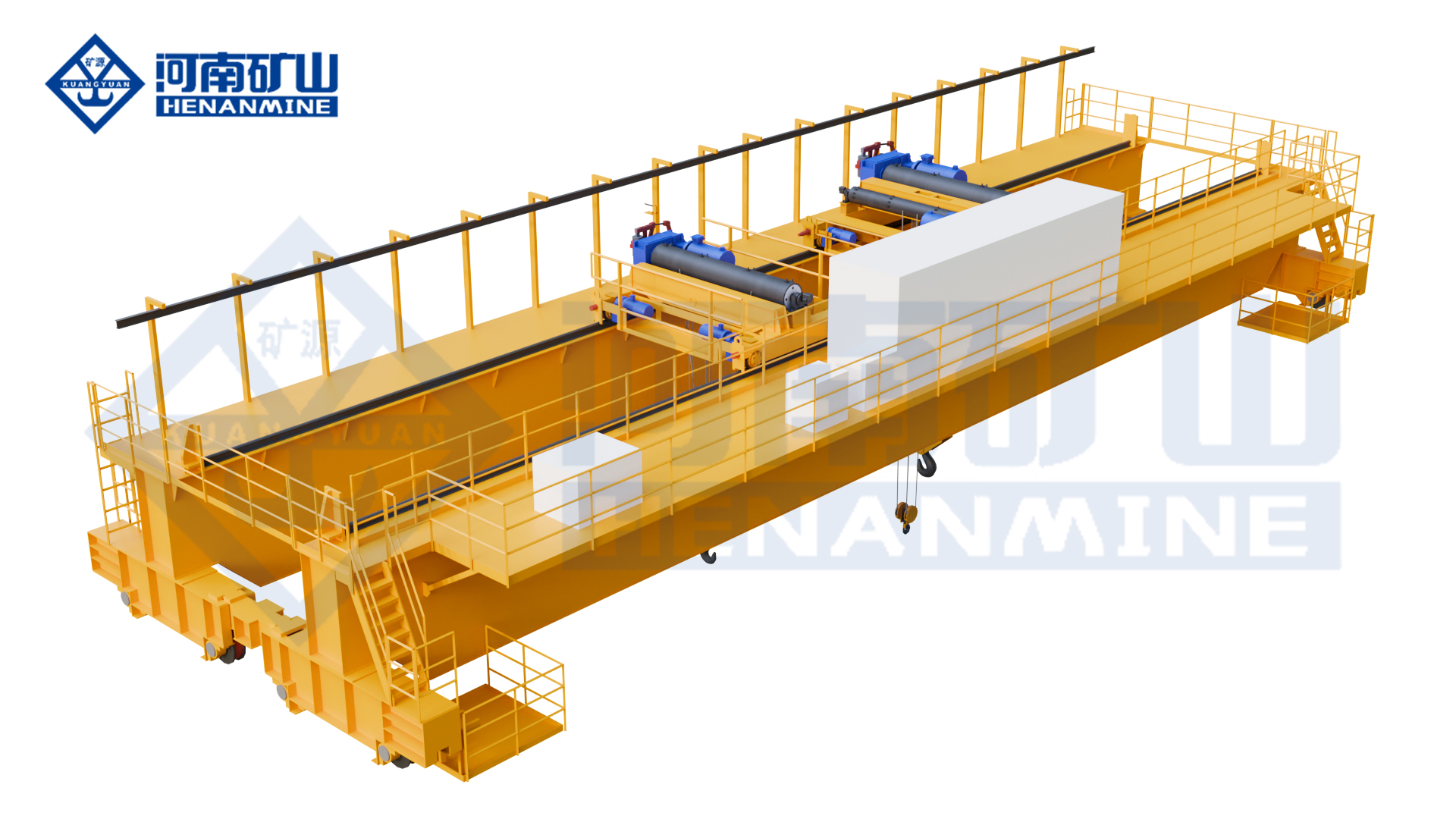
    info@hnksglobal.com