
Engineering · Manufacturing · Project support
info@hnksglobal.comWhatsApp +86 18836207779 ↗

Blog

  • Overhead Crane Project Planning: Coordinate Design, Installation and Handover

    Overhead Crane Project Planning: Coordinate Design, Installation and Handover

    Technical guide

    Overhead Crane Project Planning: Coordinate Design, Installation and Handover

    Crane projects depend on information passing correctly between design and site teams. Follow the load and building requirements through layout approval, installation preparation and acceptance so responsibilities remain clear at each stage.
    Henan Mine CraneTechnical guide · Updated 2026Crane selection, project scope and operating requirements
    Overhead Crane Project Case Study From Design To Installation
    Overhead Crane Project Case Study From Design To Installation
    Project planning notes

    Key points for this crane project.

    1. Project Background: Understanding Customer
    2. Engineering Design: Developing the Right Crane
    3. Manufacturing Process: Turning Design Into Reality
    Read the technical guide

    Project Background: Understanding Customer Requirements

    Customer industry

    The customers of this project are heavy-duty machinery manufacturing enterprises. The core business covers the processing, assembly and transportation of large-scale parts and components. There are obvious material handling pain points in the production workshop. The average daily operation frequency is more than 50 times, and the internal space of the workshop is limited. The existing production line has a compact layout, and traditional cranes cannot be adapted to on-site working conditions. In addition, there is a small amount of dust in the workshop environment, which puts forward higher requirements for the sealing and durability of the equipment. It is difficult for conventional standardized cranes to meet their personalized production needs, and a set of customized material handling solutions is urgently needed.

    Crane requirements

    The core parameters are as follows. The work level is A6, which is suitable for high-frequency and high-intensity work scenarios. At the same time, customers require the equipment to integrate a safety protection system, have overload protection, limit alarm and other functions, and support semi-automatic operation to reduce the difficulty of manual operation and improve operational safety.

    Engineering Design: Developing the Right Crane Solution

    Design planning

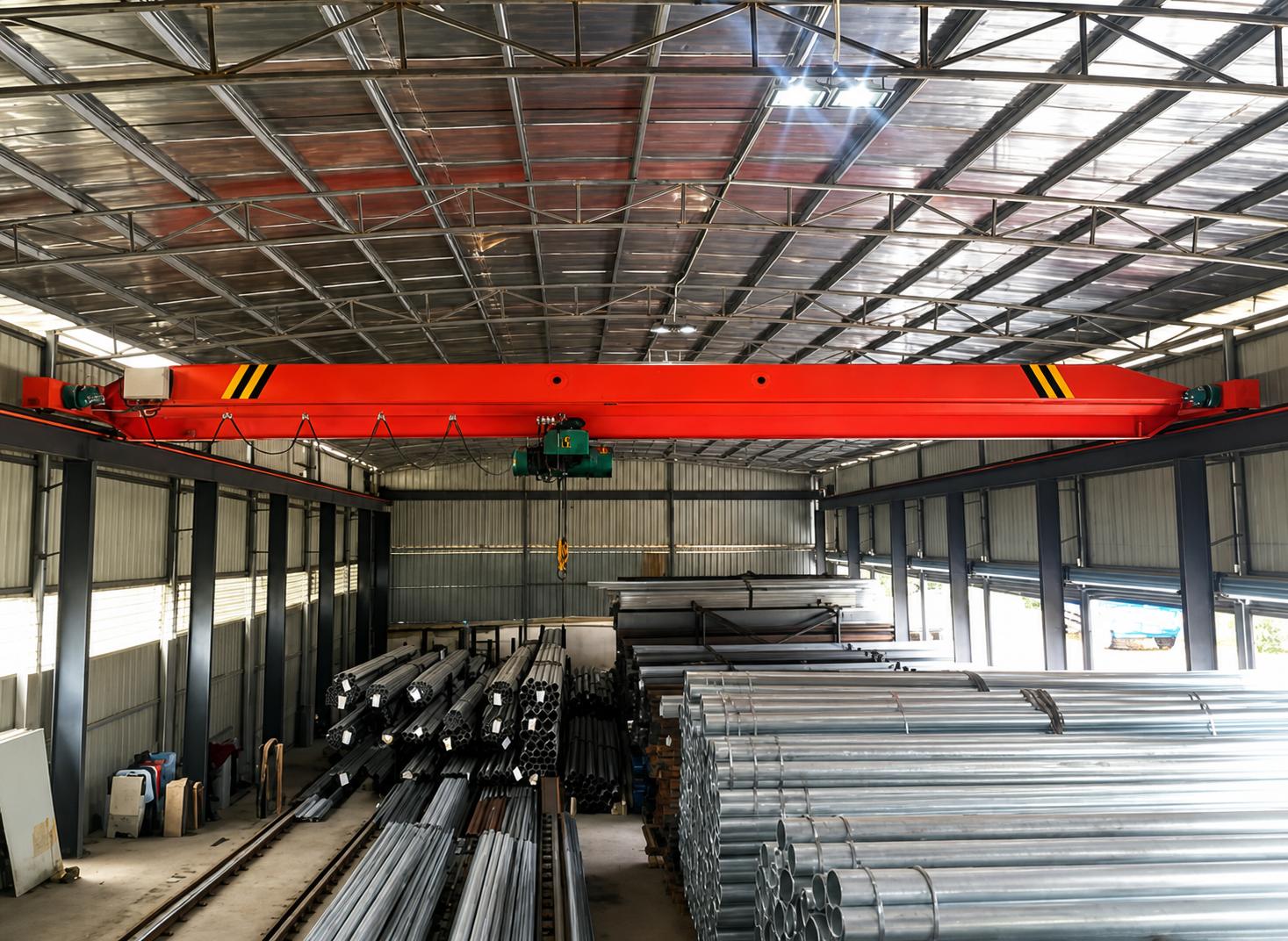
    As a professional customized overhead crane manufacturer, Henan Mine Crane Factory engineering team first conducts a comprehensive analysis of the customer's workshop working conditions, load conditions, and operating frequency, and develops an exclusive design plan based on customer needs. Taking into account the limited workshop space and the characteristics of high-frequency operations, it is determined to adopt a Henan Mine Crane double-girder bridge crane structure, which has the advantages of strong carrying capacity, stable operation and high space utilization, and can be perfectly adapted to customer production scenarios. At the same time, combined with the characteristics of the dust environment, the sealing performance of the equipment is specially designed to ensure the long-term stable operation of the equipment.

    Component selection

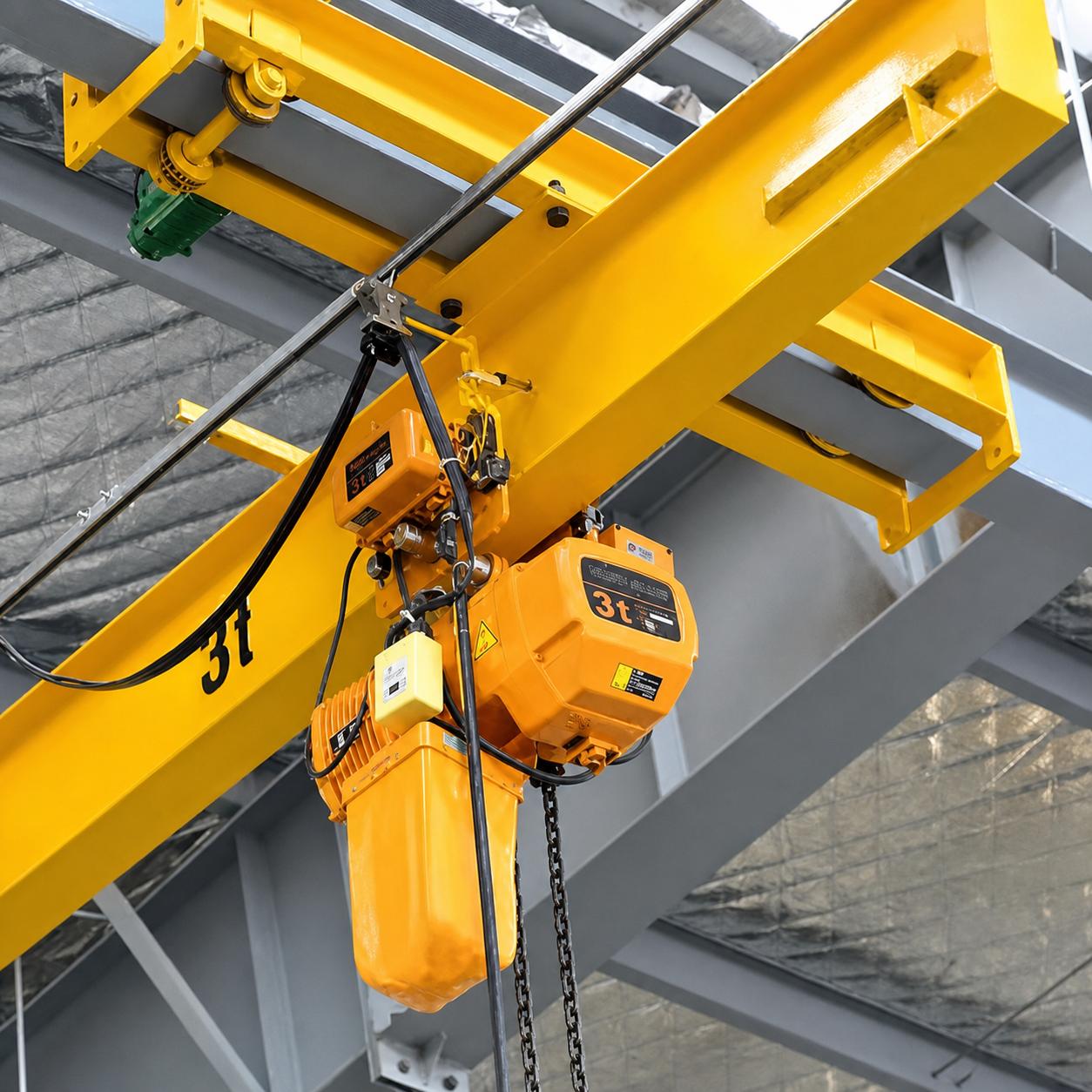
    In the selection of core components, we strictly follow the core principles of durability, safety and high efficiency to ensure that the performance of the equipment is up to standard. The main girder is welded with high-strength I-beam and steel plate to optimize the structural design, taking into account the carrying capacity and light weight. The end beam adopts a modular design, which is easy to install and maintain, and is suitable for the installation accuracy requirements of the runway. The lifting system adopts well-known brand electric hoists, which have functions such as overload protection and voltage loss protection to ensure the safety of lifting operations. The motor and reducer choose high-efficiency and energy-saving models to reduce energy consumption while improving the service life of the equipment.

    Design optimization

    Under the premise of ensuring the strength and safety of the equipment, the main girder structure is optimized to reduce unnecessary weight and reduce the pressure of the equipment's own weight on the runway. Optimize the parameters of the electrical control system, improve the operating efficiency of the equipment, and reduce energy consumption. Choose more durable parts to reduce the frequency and cost of late maintenance, ensure long-term stable operation of the equipment, and adapt to the high-intensity operation needs of customers.

    Manufacturing Process: Turning Design Into Reality

    Component fabrication

    After the design plan is confirmed, we start the standardized Henan Mine Crane overhead crane manufacturing process to transform the design drawings into actual equipment. First, steel material selection is carried out, and high-strength steel that meets national standards is selected to ensure the quality of raw materials. Subsequently, the welding and machining processes were carried out, and automated welding equipment was used to ensure the welding quality and accuracy. The dimensional errors were strictly controlled in the machining link to ensure the adaptability of each component. Finally, the surface treatment is carried out, through rust removal, painting and other processes, to improve the anti-corrosion performance of the equipment, adapt to the dust environment of the workshop, and extend the service life of the equipment.

    Quality inspection

    Quality is the core competitiveness of cranes. First, perform dimensional inspection to ensure that the dimensions of each component meet the design requirements. Then the load test was carried out, and the rated load and 1.25 times overload tests were carried out to verify the carrying capacity and safety of the equipment. Conduct a comprehensive inspection of the electrical system to ensure that the circuit connection is standardized and the safety protection device is sensitive and reliable. Finally, the factory acceptance test is carried out, the actual operation scenario is simulated, and the overall operating performance of the equipment is inspected to ensure that the equipment fully meets customer needs and industry standards before leaving the factory.

    Packing & shipping

    In order to ensure that the equipment is not damaged during transportation, we use professional protective packaging methods to treat the core components with moisture-proof and shock-proof treatment. For export projects, packaging and preparation are carried out in strict accordance with international transportation standards, and relevant export procedures are handled. At the same time, formulate a perfect transportation management plan, track the transportation progress throughout the process, ensure that the equipment can be delivered to the customer's site safely and on time, and lay the foundation for subsequent installation work.

    Installation Process: From Delivery to Operation

    Site preparation

    After the equipment is delivered to the site, our installation team will first carry out on-site preparation work, conduct a comprehensive inspection of the workshop, and confirm that the installation accuracy and carrying capacity of the runway meet the requirements. Clean up on-site obstacles, plan the installation area, and ensure the smooth progress of the installation operation. At the same time, do a good job of safety preparations, set up safety warning signs, equip safety protective equipment, and conduct safety training for on-site operators to eliminate safety hazards.

    Crane installation

    Following the standardized overhead crane installation procedure, we carry out the installation work in stages, first install the runway system, adjust the level and spacing of the runway, and ensure that the installation standards are met. Then the bridge structure is assembled, and the main girder, end beam and other components are assembled and formed to ensure a firm connection. Then install the lifting system and electrical equipment, standardize the wiring, and ensure that the electrical connections are safe and reliable. Finally, the system is connected and debugged to ensure that the components operate in concert and the overall performance of the equipment is up to standard.

    Testing & commissioning

    After the installation is completed, we carry out a comprehensive industrial crane commissioning work, and first conduct a no-load test to verify the smooth operation of the equipment and the flexibility of each component. Then the load test is carried out, the load is gradually increased, and the carrying capacity of the equipment and the effectiveness of the safety protection device are verified. Conduct a comprehensive inspection of all safety devices to ensure that they are sensitive and reliable. At the same time, professional training is conducted for customer operators to explain equipment operation specifications, safety precautions and daily maintenance methods. Finally, the final acceptance is carried out to confirm that the equipment fully meets customer needs and industry standards, and it is officially delivered to the customer for use.

    Project Challenges and Solutions

    Design challenges

    The design phase of this project faces two core challenges. One is that the installation space in the workshop is limited. It is necessary not only to ensure the carrying capacity of the equipment, but also to control the overall size of the equipment to avoid interference with the existing production line. The second is that customers have special lifting needs, which need to be adapted to the handling of workpieces of different specifications, and require high operating accuracy. In response to these challenges, our engineering team has optimized the structural design and adopted a compact layout to reduce the size of the equipment while ensuring the carrying capacity. At the same time, the lifting system is customized and equipped with adjustable spreaders to meet the handling needs of different workpieces and solve the design problems.

    Installation challenges

    The main challenges in the installation phase include complex on-site working conditions, more existing equipment in the workshop, and limited installation space. The project construction period is tight, and the customer requires the equipment to be put into operation within the specified time, and the installation task is heavy. Arrange a professional installation team to work on site and control the installation progress and quality throughout the process. At the same time, strengthen communication and coordination with customers, solve on-site problems in a timely manner, and ensure that the installation work is completed on time.

    Solution approach

    In view of the challenges of the whole process of the project, Henan Mine Crane Factory has established a perfect solution system, provided professional engineering and technical support, participated in all aspects of design, manufacturing, and installation throughout the process, and solved technical problems in a timely manner. Arrange on-site guidance by technical personnel to ensure that the installation operations are standardized and efficient. Provide rapid response services, establish a dedicated service team, respond to customer needs 24 hours a day, deal with problems that arise during the operation of the equipment in a timely manner, and ensure the smooth progress of the project.

    Project Results: Improving Efficiency and Safety

    Operation results

    The workpiece handling work that originally required multiple people to collaborate can now be completed by only 1-2 operators, greatly reducing the amount of manual operation. The equipment runs smoothly and the load swing is small, which effectively reduces the risk of damage to the workpiece. The production workflow has been optimized, the seamless connection between material handling and the production process has been realized, and the overall production efficiency has been improved.

    Long-term benefits

    The equipment has high reliability, can operate stably for a long time, and guarantees production continuity. The comprehensive safety protection system effectively reduces the hidden dangers of operation, improves the overall safety level of the workshop, and provides a strong guarantee for the safe production of enterprises.

    Customer feedback

    The customer gave a high evaluation of this project and expressed satisfaction with the performance, installation quality and service level of the equipment. Customer feedback, customized crane solutions are perfectly adapted to their production needs, effectively solving the pain points of material handling in the past, and improving production efficiency and safety. At the same time, the customer expressed his willingness to cooperate in the future and plans to continue to choose our turnkey crane solution in subsequent workshop expansion projects.

    Why Choose a Professional Overhead Crane Manufacturer?

    Complete project support

    The core advantage of choosing a professional overhead crane manufacturer is that it can obtain full-process project support. From the early engineering consultation, help customers sort out their needs and formulate reasonable solutions. To customized manufacturing, strictly control product quality. Then to the installation guidance, to ensure that the equipment is installed in a standardized manner and put into operation smoothly. Finally, provide long-term technical support and after-sales service to solve customers' worries. The full-process support system can ensure the smooth landing of the project and achieve the customer's expected goals.

    Supplier advantages

    A strict quality control system has been established, from the procurement of raw materials to the delivery of equipment, the quality is controlled throughout the process to ensure that the products meet industry standards and customer needs. Has a wealth of global project experience, and can cope with the project needs of different working conditions and different scenarios. Provide reliable after-sales service, establish a rapid response mechanism, solve customer problems in a timely manner, and ensure the long-term stable operation of the equipment.

    Henan Mine Crane

    This overhead crane project case study fully proves that a successful bridge crane equipment is inseparable from professional project management and quality control of the whole process. From precise demand analysis, scientific engineering design, to precise manufacturing technology, standardized installation and commissioning, every link directly affects the performance and use effect of the equipment. Choosing the experienced Henan Mine Crane Factory overhead crane supplier cannot only obtain customized solutions, but also enjoy the professional support of the whole process to ensure the efficient, safe and stable operation of the equipment, and provide a strong guarantee for the production and development of the enterprise.

    Discuss the crane arrangement for your project.

    Crane projects depend on information passing correctly between design and site teams. Follow the load and building requirements through layout approval, installation preparation and acceptance so responsibilities remain clear at each stage. Share the load, available drawings, working cycle and site conditions with Henan Mine Crane so the required configuration and supply boundary can be discussed.

    Related crane configurations

    Single-Girder Bridge Crane

    View product parameters
    Lifting capacity: 1–20 tSpan: 7.5–31.5 mLifting height: 6, 9, 12, 18, 24 or 30 m; capacity-dependent

    Use an LDA single-girder bridge and electric hoist for general workshop material handling. Select the lifting capacity, runway geometry and hoist duty around the building and load.

    LH Electric Hoist Double Girder Crane

    View product parameters
    Lifting capacity: 3, 5, 10, 16, 20 tSpan: 10.5–31.5 mLifting height: 6, 9, 12 or 18 m

    Use an LH double-girder bridge with an electric-hoist trolley for workshop lifting, assembly and maintenance. Match the hoist arrangement to the suspended load, hook travel and available building space.

    Updated 2026 · Henan Mine Crane
  • Single- vs Double-Girder Crane Cost: Compare Like-for-Like Scope

    Single- vs Double-Girder Crane Cost: Compare Like-for-Like Scope

    Technical guide

    Single- vs Double-Girder Crane Cost: Compare Like-for-Like Scope

    The economic comparison needs a common load, span, height and operating cycle. Check the proposed hoist arrangement and building interface before comparing crane equipment, runway work and installation costs.

    Henan Mine CraneTechnical guide · Updated 2026Crane selection, project scope and operating requirements
    Henan Mine Crane Single-Girder Bridge Crane
    Henan Mine Crane Single-Girder Bridge Crane
    Project planning notes

    Key points for this crane project.

    1. Single Girder vs. Double Girder Overhead Crane: Key
    2. Single Girder vs. Double Girder Crane Price
    3. Factors That Influence Overhead Crane Prices
    Read the technical guide

    Single Girder vs. Double Girder Overhead Crane: Key Differences

    Single girder overhead crane overview

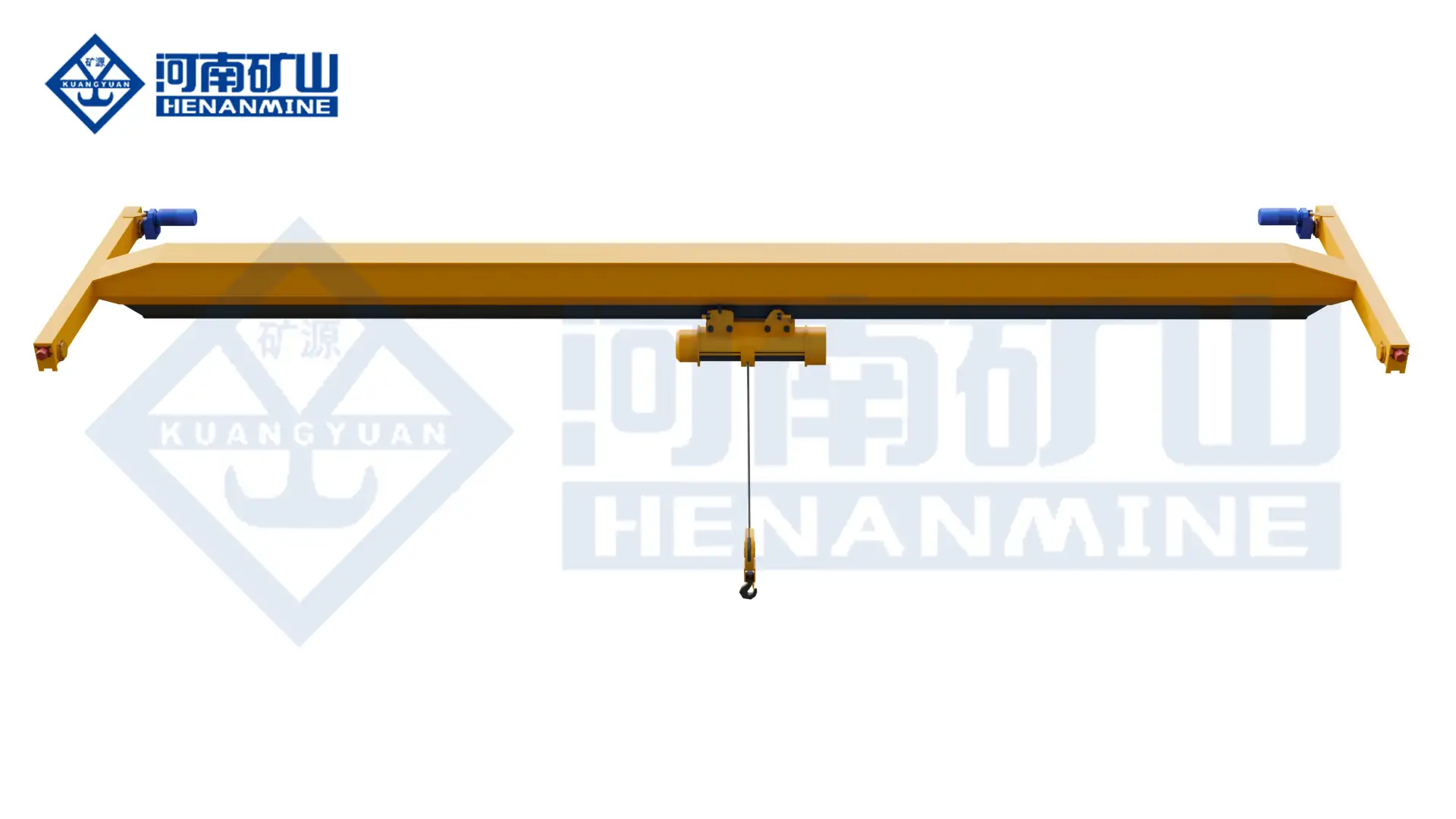
    Henan Mine Crane single girder overhead crane is a lifting equipment with a relatively simple structure. The core structure consists of a main girder, an end beam, an electric hoist and an operating track system. The electric hoist moves along the main girder to achieve vertical lifting and horizontal handling of heavy objects. The overall design is lightweight and the layout is compact. Its main components have a clear division of labor, a single main girder bears the main force, the end beam is connected to the main girder and drives the equipment to run along the track, the electric hoist is the core lifting component, and the operating track provides a stable operating path for the equipment.

    The application scenarios of this type of crane are very wide. It is mainly suitable for small workshops, warehouses, maintenance workshops and light manufacturing environments. It is suitable for light-load and low-frequency material handling operations, such as hoisting small parts in the workshop and regular handling of warehouse goods. The core advantages of single girder overhead crane are very prominent. Not only is the initial investment cost low and the cost performance is extremely high, but the structure is lightweight. The bearing capacity of the supporting steel structure of the plant is low, and there is no need to strengthen the plant. At the same time, the installation process is simple, the construction cycle is short, and it can be put into use quickly.

    Double girder overhead crane overview

    Double girder overhead crane adopts two parallel main girder structures. Compared with the single beam design, the force is more uniform and the carrying capacity is stronger. It can effectively improve the stability and service life of the equipment and adapt to more demanding operating scenarios. Its typical components include double main beams, trolley hoist system, heavy-duty end beams and advanced control systems. The double main beams work together to carry heavier objects. The heavy-duty end beams ensure the stability of equipment operation, and the advanced control system improves operating accuracy and safety.

    Henan Mine Crane double girder overhead crane is mainly used in heavy industrial scenarios such as steel mills, foundries, power stations, and heavy machinery manufacturing. It undertakes core tasks such as heavy equipment installation, large-scale material handling, and high-frequency heavy-duty operations. It is the core support equipment for heavy industrial production. The advantages of double girder overhead crane are very outstanding. It not only has a large lifting weight, which can meet the needs of medium and heavy-duty and even super-heavy lifting, but also adapts to long-span scenarios, which can cover the operating range of large factories. At the same time, the lifting height is higher, which can be adapted to the needs of high-altitude heavy object handling, excellent stability under heavy loads, low shaking during operation, high safety, and long service life.

    Single Girder vs. Double Girder Crane Price Comparison

    Average price range comparison

    It should be noted that the actual price will fluctuate according to specific technical parameters, customized needs and market conditions. The following is the reference range under conventional working conditions:

    ItemSingle Girder Overhead CraneDouble Girder Overhead Crane
    Initial CostLowerHigher
    StructureSingle main beamDouble main beams
    Installation CostLowerHigher
    Maintenance CostLowerModerate
    Working EnvironmentGeneral industrial, light-duty & low-frequency operationsHeavy-duty, high-frequency & high-intensity operations

    Why single girder cranes cost less

    The initial cost of single girder overhead crane is lower. The core stems from the multiple cost savings in the structure and manufacturing links. The design of a single main girder significantly reduces the amount of steel used and effectively reduces the cost of raw materials. At the same time, the end beam and other components are smaller in size, simpler in structure, and less difficult to process, which reduces manufacturing costs. The hoist system is also more concise, eliminating the need for complex transmission and control components, further reducing component procurement costs, coupled with simple manufacturing processes, short production cycles, and less labor and equipment investment, and the lightweight structure is easy to transport, the installation process is simple, and there is no need for large hoisting equipment and complex construction teams.

    Why double girder cranes have higher prices

    The price of double girder overhead crane is higher, mainly because it invests more in the structure, components and manufacturing links. The design of double girder requires more steel to ensure the carrying capacity, which makes the cost of raw materials significantly higher. At the same time, the structural components are larger in size and higher in strength. The processing difficulty and raw material cost of heavy-duty end beams, thickened main beams and other components are higher than that of single girder overhead crane, coupled with the larger capacity of the lifting mechanism, the procurement cost of hoist systems, motors and other components adapted to heavy-duty requirements is higher, and the manufacturing process is more complex, requiring higher machining accuracy and welding technology, labor More investment in equipment, in addition to higher engineering design requirements, special force analysis and structural optimization need to be carried out for heavy-duty and long-span scenarios, which further increases the design cost, and multiple factors together push up the overall quotation of Double girder overhead crane.

    Factors That Influence Overhead Crane Prices

    Lifting capacity and load requirements

    Lifting weight is the core factor affecting the price of cranes. The larger the load, the higher the requirements for the structural strength of the equipment, motor power, and component bearing capacity, and the price will naturally rise. In heavy-duty lifting scenarios, equipment requires stronger main beams, higher-power motors, and more durable transmission components, which will directly drive up equipment costs. Enterprises need to accurately calculate the actual load requirements when selecting models to avoid unnecessary cost waste caused by excessive pursuit of large lifting weights.

    Span length and runway design

    Span refers to the center distance of the crane's operating track. The longer the span, the higher the strength and stiffness requirements of the main girder. It is necessary to increase the size of the main girder and increase the amount of steel. At the same time, the design and construction costs of the track system will also rise. In addition, the layout of the plant will also affect the track design. If the plant structure is special, customized track transformation is required to further increase the overall cost. When purchasing, enterprises need to choose the appropriate Henan Mine Crane crane based on the actual span of the plant to avoid additional cost investment due to mismatched spans.

    Lifting height and hoisting speed

    The higher the lifting height, the higher the requirements for the length of the wire rope, the size of the reel, and the power of the lifting mechanism. Longer wire ropes, larger reels, and more powerful lifting systems will increase equipment costs. At the same time, the demand for lifting speed will also affect the selection of motors. If you need to lift quickly and locate accurately, you need to choose a higher-performance motor and transmission system to further improve the equipment quotation. Enterprises need to rationally choose the lifting height and speed according to the actual operating needs to avoid cost waste caused by over-allocation. Reasonable planning of lifting height and speed parameters cannot only meet the needs of the operation, but also maximize the control of equipment procurement costs.

    Duty class and working frequency

    The working level of the crane (such as FEM rating and CMAA classification) directly reflects its working frequency and carrying strength. High-frequency and high-intensity operating scenarios require equipment to have more durable components and more stable performance to reduce wear and failure probability. For example, in the heavy industry scenario of continuous production, high-level cranes need to be selected. The material and processing technology of their components are better than ordinary-level equipment, and the price will be increased accordingly. For light-duty scenarios with low-frequency operations, the use of ordinary work-level single girder overhead crane can meet the needs and the cost is lower. Matching cranes of the corresponding working level according to the operating frequency is the key to balancing cost and equipment service life.

    Crane components and customization options

    Component selection and customization requirements are important variables that affect prices. The prices of components of different brands and properties vary significantly. For example, well-known brands of gourds, motors, and VFDs have higher prices than ordinary parts, but their performance is more stable and their service life is longer. Customized configurations such as remote control systems and safety protection devices, such as overload protection, limit protection, explosion-proof design, and outdoor protection systems, will also increase equipment costs. Enterprises need to combine the operating environment and safety needs, reasonably choose customized configurations, and balance cost and performance. Priority is given to the selection of core components with a high price ratio, and customized configurations are matched as needed, which can effectively control the overall quotation of the equipment.

    How to Choose Between Single Girder And Double Girder Overhead Cranes

    Choose a single girder crane when

    • The carrying capacity of single girder overhead crane is fully adapted to the needs of such light loads, which cannot only meet the basic operations such as daily material handling and light equipment loading, but also will not cause waste of costs due to over-configuration, and has a significant cost-effective advantage.
    • The working time is short, which is a low-frequency and intermittent operation. In such scenarios, the performance of Henan Mine Crane single girder overhead crane is sufficient to meet the needs of operations without the need for high-frequency and high-intensity operation. Its lightweight structure and simple design can also reduce maintenance costs during inactivity and adapt to the rhythm of intermittent operations.
    • The installation space is limited, and the lightweight structure is more suitable for small factories. The overall structure of Single girder overhead crane is compact and takes up little space. There is no need for additional reinforcement and transformation of the plant. The installation process is simple, and it can quickly adapt to the operating needs of small spaces without affecting the layout of other equipment in the plant.
    • The project is cost-sensitive and pursues low initial investment. The initial procurement cost of single girder overhead crane is low, and the transportation and installation costs are relatively low, which can effectively control the early investment of the project, while the subsequent operation and maintenance costs are also at a low level, which is in line with the budget planning of cost-sensitive projects.
    • In general material handling scenarios, there are no special accuracy and stability requirements. In the conventional material handling of ordinary workshops and warehouses, the ease of operation and basic performance of single girder overhead crane are sufficient to meet the needs, without additional investment in high-precision configuration, and can take into account practicality and cost control.

    Choose a double girder crane when

    • It is suitable for heavy-duty scenarios such as heavy equipment installation and large-scale material handling to avoid equipment failure due to insufficient load and ensure operation safety.
    • The scene of a large-scale factory building has a large span and high lifting height requirements. Double girder overhead crane can be adapted to long-span track design, and can meet the needs of high-altitude heavy object handling, without additional modification of the plant structure, it cannot only cover the operating range of large-scale plants, but also improve the stability and safety of high-altitude operations.
    • Continuous production environment, high-frequency and high-intensity operations. Double girder overhead crane has a strong structure and durable components, which can adapt to long-term continuous operation, reduce the probability of component wear and failure under high-frequency operations, ensure uninterrupted production processes, and improve overall production efficiency.
    • The stability and safety requirements of the equipment are high, and heavy objects need to be accurately positioned. The double girder overhead crane has uniform force and stable operation. With an advanced control system, it can achieve precise positioning of heavy objects, reduce shaking and offset during operation, reduce safety risks, and adapt to the needs of high-precision operations.
    • Heavy industry scenarios, such as steel mills, power stations, heavy machinery manufacturing, etc. The operating environment of such scenarios is harsh, the load is large, and the frequency is high. The high performance and high reliability of Double girder overhead crane can be effectively adapted to harsh working conditions and cost-effective for long-term use. It is the core support equipment for heavy industrial production.

    Henan Mine Crane

    Single girder and Double girder overhead crane have their own adaptation scenarios, the core difference lies in the carrying capacity and working condition adaptability. Single girder overhead crane focuses on light-load and low-frequency scenarios, and has become the preferred choice for small and medium-sized enterprises with the advantages of low cost and easy installation. Double girder overhead crane focuses on heavy-duty and high-frequency needs to support heavy industrial production with high stability and durability. Enterprises need to choose reasonably based on their own operating needs.

    Don't just look at the initial price when purchasing a crane, the whole life cycle cost is the key. As a professional crane manufacturer, Henan Mine Crane Factory can provide customized services, professional engineering support and perfect after-sales service to accurately match your working conditions, and follow up the whole process from selection to installation and maintenance to help you control costs, improve the use value of equipment, and help enterprises produce efficiently.

    Discuss the crane arrangement for your project.

    The economic comparison needs a common load, span, height and operating cycle. Check the proposed hoist arrangement and building interface before comparing crane equipment, runway work and installation costs. Share the load, available drawings, working cycle and site conditions with Henan Mine Crane so the required configuration and supply boundary can be discussed.

    Related crane configurations

    Single-Girder Bridge Crane

    View product parameters
    Lifting capacity: 1–20 tSpan: 7.5–31.5 mLifting height: 6, 9, 12, 18, 24 or 30 m; capacity-dependent

    Use an LDA single-girder bridge and electric hoist for general workshop material handling. Select the lifting capacity, runway geometry and hoist duty around the building and load.

    LH Electric Hoist Double Girder Crane

    View product parameters
    Lifting capacity: 3, 5, 10, 16, 20 tSpan: 10.5–31.5 mLifting height: 6, 9, 12 or 18 m

    Use an LH double-girder bridge with an electric-hoist trolley for workshop lifting, assembly and maintenance. Match the hoist arrangement to the suspended load, hook travel and available building space.

    Updated 2026 · Henan Mine Crane
  • Overhead Crane Motors: Slip-Ring and Inverter-Controlled Arrangements

    Overhead Crane Motors: Slip-Ring and Inverter-Controlled Arrangements

    Technical guide

    Overhead Crane Motors: Slip-Ring and Inverter-Controlled Arrangements

    Motor selection needs to suit the motion, starting pattern and control concept. Compare the required duty and operating environment alongside maintenance access and compatibility with the proposed crane drive system.

    Henan Mine CraneTechnical guide · Updated 2026Crane selection, project scope and operating requirements
    Overhead Crane Motors: Slip-Ring and Inverter-Controlled Arrangements
    Henan Mine Crane lifting equipment
    Project planning notes

    Key points for this crane project.

    1. What Makes an Overhead Crane Motor Different From a
    2. Slip Ring Motor for Overhead Cranes
    3. Squirrel Cage Inverter Motor for Overhead Cranes
    Read the technical guide

    What Makes an Overhead Crane Motor Different From a Standard Industrial Motor

    The standard industrial motor is designed according to the S1 continuous working system, which is suitable for constant load and long-term stable operation; while the lifting motor is developed for S3/S4/S5 intermittent alternating working conditions, and has exclusive advantages in the four dimensions of start-stop tolerance, heavy-duty torque, heat capacity, and brake control.

    Resistant to thermal and mechanical shocks

    Lifting equipment can start and stop, reverse direction and brake dozens of times per hour. Each action will produce inrush current and mechanical load, causing the motor to heat up repeatedly and the transmission structure to continue to be loaded. Standard motors cannot withstand this kind of cyclic fatigue, and long-term use will cause early failure problems such as insulation aging, bearing damage, and rotor failure.

    High starting torque

    Lifting operations need to overcome static loads, friction and mechanical resistance, and must output high torque in a stationary state to avoid the hook and the load shaking. The selection of models needs to clarify three types of key torques: rated torque (uniform speed operation), starting torque (static lifting), and crash torque (overload protection).The winding motor relies on the rotor resistance to achieve low current and high torque start-up, while the squirrel cage motor uses a frequency converter to accurately control the torsion.

    Intermittent working system and heat-resistant bearing capacity

    It is strictly forbidden to match the power only according to the lifting weight. Under high-frequency conditions, the heat loss of the same power motor is greater, and the single power selection can easily cause the motor to overheat and burn down.

    Coordination of speed regulation and braking

    Ordinary motors are mostly running at constant speed, without fine control. The lifting motor needs to cooperate with the drive and braking system to achieve slow start and slow stop, precise speed regulation, and timing linkage. The torque is built before the brake is loosened when starting, and the speed is stabilized before the brake is locked when stopping, effectively suppressing load swing and drift, and ensuring lifting safety and positioning accuracy.

    Slip Ring Motor for Overhead Cranes

    The winding rotor slip ring motor is the standard configuration of traditional heavy-duty cranes. With its stable heavy-duty start-up performance, it is widely used in harsh working conditions such as steel mills, foundries, shipyards, and ports, especially suitable for old equipment transformation scenarios.

    Working principle

    The rotor adopts a three-phase winding structure, and an external variable resistor is connected through a slip ring and a carbon brush. Large resistors are connected in series at start-up to reduce the start-up current and increase the start-up torque; the resistors are removed step by step with the increase of the speed to achieve stepped smooth acceleration and adapt to the needs of heavy-duty start-up.

    Core advantage

    • Super heavy-duty start-up performance: The RUNSE winding rotor lifting motor can output peak torque in a stationary state, the start-up current is low, there is no sudden heat loss, and the overload margin is sufficient. It is perfectly adapted to the crane's heavy-duty static start-up conditions, and the start-up is stable without stall.
    • Flexible heavy-duty operation experience: relying on graded resistance speed regulation technology to achieve progressive flexible acceleration, it effectively cushions mechanical shocks, weakens transmission wear, and greatly extends the service life of the reducer, wheels, main beams and other machine structures.
    • High stability and reliability in harsh working conditions: it is natively adapted to the special heavy-duty working system for S4 and S5 lifting, which has the characteristics of high temperature resistance, dust resistance, and load fluctuation resistance. It has long been adapted to harsh industrial scenarios such as steel mills, foundries, and ports. The adaptability of working conditions has been verified by the market for a long time.
    • Low-cost adaptation of old equipment: it is perfectly compatible with traditional contactor + resistive electronic control system. There is no need to replace the circuit and electronic control cabinet as a whole for the transformation of old cranes, which greatly reduces the cost of transformation and shortens the construction period, and the cost-effective landing is extremely high.

    Main short board

    • Large labor costs: carbon brushes and slip rings are conventional vulnerable parts, and they are prone to wear, carbon deposits, and ignition problems in long-term operation. They need to be cleaned, repaired, and replaced regularly, continuously increasing the daily operation and maintenance workload and labor costs.
    • High operating energy consumption: relying on resistance voltage divider speed regulation, excess electrical energy is efficiently dissipated in the form of heat energy, and there is no energy-saving control logic. Under long-term high-frequency operation conditions, the overall energy consumption is significantly higher than that of the frequency conversion control system.
    • Limited speed regulation accuracy: only stepped gear speed regulation is supported, stepless fine-tuning cannot be achieved, the accuracy of low-speed alignment is insufficient, and the load start-stop shaking suppression effect is limited, making it difficult to adapt to high-precision hoisting operations.
    • Higher risk of downtime: the entire electronic control system has a wide range of accessories, complex circuits, many vulnerable parts, concentrated equipment failure points, and wear and tear of accessories can easily cause equipment failure and shutdown, affecting production continuity.

    Squirrel Cage Inverter Motor for Overhead Cranes

    The RUNSE squirrel cage inverter motor is composed of a high-strength squirrel cage body + a dedicated lifting VFD inverter. With its minimalist and sturdy mechanical structure, extremely low operation and maintenance load and high-precision stepless speed regulation characteristics, it has become the mainstream preferred power solution for modern new bridge cranes and automated intelligent lifting equipment.

    Working principle

    The squirrel cage motor rotor has no winding, no slip ring, no carbon brush, and has a strong and durable structure. Relying on the VFD inverter to adjust the frequency and voltage, stepless speed regulation, flexible acceleration and deceleration, and closed-loop torque control are realized, which replaces the traditional resistance speed regulation logic and is suitable for high-precision and stable lifting operations.

    Core advantage

    • Stepless precision speed regulation: relying on special lifting VFD frequency conversion technology to achieve stepless flexible speed regulation throughout the process, it supports low-speed micron-level fine-tuning, which can effectively suppress the swing of heavy lifting loads, eliminate offset drift, and greatly improve the accuracy of hoisting alignment and operation stability.
    • High efficiency, energy saving and consumption reduction: abandon the traditional resistance heating and energy consumption mode, the motor power is accurately output on demand, and there is no invalid heat loss; the high-end configuration can be matched with the regenerative braking system, which recycles heavy-duty descent and braking potential energy, and long-term high-frequency operation can significantly reduce the power consumption of the factory.
    • All-round intelligent adaptation: it can be seamlessly connected to PLC control system, encoder closed-loop feedback, intelligent sway control, remote monitoring and fully automatic hoisting system, and can be adapted to new industrial scenarios such as smart factories, unmanned lifting, and automated assembly lines. There is plenty of room for iterative equipment upgrades.

    Main short board

    • High threshold for system matching: the selection and parameter setting of frequency converters are strictly required. Ordinary general-purpose frequency converters cannot be adapted to special working conditions such as heavy loads, instantaneous shocks, and closed-loop torsion control, and are prone to overload, instability, and error reporting.
    • Strict electrical protection requirements: the frequency conversion PWM output is prone to harmonics and voltage spikes, and long-term operation will affect the motor insulation and bearings. Special insulation for lifting, bearing protection devices and filter components must be matched to avoid electrical aging damage.
    • There are shortcomings in low-speed heat dissipation: conventional self-fan-cooled motors have insufficient heat dissipation air volume under low-frequency and low-speed precise alignment conditions, which can easily cause heat accumulation in the windings. For long-term low-speed operations, an independent forced air-cooled structure must be selected to avoid heat accumulation and burning.
    • Weak fault responsiveness: the system debugging is extremely professional and relies on accurate parameter matching; if there is no emergency bypass redundancy design, the inverter failure will directly lead to equipment downtime and affect production continuity.

    Slip Ring Motor vs. Squirrel Cage Inverter Motor: Key Differences

    The two types of motors for Bridge Crane have their own advantages and disadvantages, and there is no absolute advantage and complete substitution relationship. It is necessary to select the type in combination with the working conditions of the entire electromechanical system.

    Comparison of structural characteristics

    RUNSE winding rotor motor: The rotor is equipped with independent winding, slip ring and carbon brush structure, and relies on external resistors to adjust torque and speed. It belongs to a combined mechanical and electrical speed regulation structure, and there are sliding vulnerable parts.

    RUNSE squirrel cage inverter motor: it adopts a closed cast aluminum/cast copper integrated rotor, no slip ring, carbon brush and other wear accessories, and has a minimalist and sturdy structure. It relies on A VFD inverter to regulate frequency, voltage and torque throughout the process, and it is strictly controlled by pure electricity.

    Comparison of working conditions

    Advantage scenarios of winding rotor motors: mainly focus on strong heavy-duty start-up, tolerance to harsh environments, compatible with old electronic control, relying on stepped resistance to speed regulation and stable output power, suitable for high-impact, high-load traditional heavy-duty working conditions, outstanding resistance to load fluctuations.

    Advantage scenarios of squirrel cage inverter motors: the main focus is stepless precision speed regulation, low operation and maintenance losses, energy saving and consumption reduction, intelligent system linkage, relying on flexible electrical control to achieve smooth operation, suitable for high-precision, automated and intelligent new lifting operation scenarios.

    Cost and stability comparison

    Winding rotor motor: the initial procurement and transformation cost of equipment is lower, the heavy-duty torque reserve is sufficient, and the operating stability is strong. However, in the late stage, the maintenance frequency of carbon brushes and slip rings is high, the energy consumption is large, and the long-term operation and maintenance costs are high.

    In summary, there are no absolute advantages and disadvantages of the two types of motors. Enterprises need to combine on-site working conditions, old and new equipment, automation upgrade needs and long-term operation and maintenance planning to select and adapt to specific types.

    How to Select Between Slip Ring and Squirrel Cage Inverter Motors

    Crane motor selection should not have a single reference to power parameters, but should be combined with working conditions, torque, electronic control, braking and on-site environment to match comprehensively. Relying on RUNSE's many years of experience in the research and development and landing of lifting motors, A standardized seven-step selection method has been summarized, which can avoid equipment failures and safety hazards from the source and adapt to various lifting operation scenarios.

    1. Approved professional work system level: according to the equipment start-stop frequency, load fluctuation ratio, and continuous running time, the special work system for S3/S4/S5 lifting is accurately determined, and the corresponding CDF cyclic load continuity rate is matched to ensure that the motor is adapted to intermittent and alternating lifting conditions, and long-term fatigue operation is eliminated.
    2. Scientific accounting of the rated power of the motor: abandon the misunderstanding of selecting the type based solely on the lifting weight, and combine the rated load of the equipment, its own weight, lifting operating speed, mechanical transmission loss and working condition redundancy coefficient for comprehensive accounting to ensure that the motor power reserve is sufficient and adapted to the operating needs of all working conditions.
    3. Strictly check the limit peak torque: fully cover the extreme operating conditions such as heavy-duty lifting, load drop, high-speed acceleration, and frequent reversing, and accurately check the peak torque of the motor; the complete frequency conversion system needs to be combined with the overall torque curve of the motor and the inverter to check to eliminate overload, stall, and insufficient torque.
    4. Precise matching complete control system: the winding rotor motor is adapted to the traditional electronic control system of graded resistors and contactors; the squirrel cage inverter motor needs to match the special inverter for lifting according to the peak torque of the equipment, and it is equipped with vector speed regulation, closed-loop control and braking unit to ensure the stability and accuracy of system control.
    5. Adapt to complex on-site working conditions and environments: for special industrial scenarios such as high temperature, high dust, humidity and rain, plateau low pressure, explosion-proof and anti-corrosion, targeted matching of motor insulation level, shell protection level and exclusive heat dissipation structure to ensure long-term and stable operation of equipment in harsh environments.
    6. Overall accounting of the whole life cycle costs: the selection is not limited to the unit price of equipment purchase, and comprehensively considers the long-term costs of equipment energy consumption, daily maintenance, parts replacement, failure and shutdown losses, and optimizes the cost-effective and stable solutions to achieve cost reduction and efficiency.

    When Should You Choose a Slip Ring Motor

    • Extreme heavy-duty and harsh working conditions: suitable for harsh operating environments with high temperature, high load and high impact such as steel mills, foundries, ladles, shipyards, ports, etc., The motor has sufficient torque reserves and strong resistance to load fluctuations, which can stably cope with high-frequency heavy-duty start and stop conditions for a long time.
    • Old equipment renovation project: perfectly compatible with traditional resistance and contactor-type old electronic control systems, no need to replace equipment lines and cabinets on a large scale, low renovation cost, short construction cycle, and suitable for the upgrading and replacement of old-fashioned cranes.
    • Scenarios without a professional frequency conversion operation and maintenance team: the control logic is simple, the operation and maintenance threshold is low, and there is no need for professionals to debug the frequency conversion parameters. It can operate stably by relying on conventional maintenance, and it is suitable for small and medium-sized factories, traditional heavy industry workshops and other scenarios.
    • Supplementary note: With the iteration of frequency conversion technology, high-end heavy-duty frequency conversion systems can equivalent replace the performance of winding motors. Therefore, this selection is only for scenario optimization and is not the only adaptation solution.

    When Should You Choose a Squirrel Cage Inverter Motor

    • General light lifting conditions: suitable for small and medium-sized bridge cranes and conventional storage lifting equipment in workshops, with durable structure, simple operation and maintenance, and high cost performance to meet the needs of daily lightweight lifting operations.
    • New intelligent equipment project: adapt to the intelligent lifting equipment and automated assembly line lifting unit of the new plant, which can be seamlessly connected to the PLC intelligent system, and adapt to the factory automation and intelligent upgrade planning.
    • High-precision and stable operation scenarios: relying on the advantages of stepless frequency conversion and speed regulation, it accurately realizes low-speed fine-tuning, sway control, and fixed-point alignment, and is suitable for scenarios with high operating accuracy requirements such as precision workpiece hoisting, warehousing, and precise palletizing.
    • High-frequency energy-saving operation and maintenance scenarios: suitable for high-frequency start-stop and long-term operation of lifting conditions, the energy-saving effect is significant, and there are no vulnerable sliding parts, the operation and maintenance cost is extremely low, and it supports remote monitoring and intelligent control of equipment.

    Common Mistakes in Overhead Crane Motor Selection

    • One-sided selection, power-only theory: simply match the motor power based on the rated lifting weight of the crane, ignoring the special working system for lifting, peak torque reserve and circulating heat loss. Under high-frequency alternating working conditions, the motor is prone to overheating, insufficient power, frequent failures and other problems.
    • Misuse of general-purpose inverter matching: equipped with ordinary general-purpose inverter, there is no special vector torsion control, overload protection and brake co-program for lifting, and it cannot be adapted to heavy-duty start-up and instantaneous impact conditions, and it is prone to unstable start and stop, overload error reporting, hoisting out of control and other hidden dangers.
    • Ignoring the shortcoming of low-speed heat dissipation: Ignoring the characteristics of insufficient heat dissipation in low-speed operation of variable-frequency motors, and not configuring a forced air-cooled structure, long-term low-speed alignment and fine-tuning operations will cause heat accumulation in the windings, causing the motor to overheat, insulation breakdown, winding burning and other failures.
    • Brake timing matching imbalance: The motor output torque does not match the mechanical brake timing logic, and there are problems such as first loosening the brake, then building the torque, or stopping and locking hysteresis, which can easily cause load drift, slip hooks, and instantaneous overload, laying major safety risks.
    • One-sided pursuit of low-cost procurement: the selection only focuses on the initial procurement cost of equipment, ignoring long-term operating energy consumption, daily maintenance, parts replacement and shutdown losses caused by downtime, and the overall life cycle cost is higher.

    Discuss the crane arrangement for your project.

    Motor selection needs to suit the motion, starting pattern and control concept. Compare the required duty and operating environment alongside maintenance access and compatibility with the proposed crane drive system. Share the load, available drawings, working cycle and site conditions with Henan Mine Crane so the required configuration and supply boundary can be discussed.

    Related crane configurations

    Single-Girder Bridge Crane

    View product parameters
    Lifting capacity: 1–20 tSpan: 7.5–31.5 mLifting height: 6, 9, 12, 18, 24 or 30 m; capacity-dependent

    Use an LDA single-girder bridge and electric hoist for general workshop material handling. Select the lifting capacity, runway geometry and hoist duty around the building and load.

    LH Electric Hoist Double Girder Crane

    View product parameters
    Lifting capacity: 3, 5, 10, 16, 20 tSpan: 10.5–31.5 mLifting height: 6, 9, 12 or 18 m

    Use an LH double-girder bridge with an electric-hoist trolley for workshop lifting, assembly and maintenance. Match the hoist arrangement to the suspended load, hook travel and available building space.

    Updated 2026 · Henan Mine Crane
  • Overhead Crane Installation Scope: Site Resources, Sequence and Cost Items

    Overhead Crane Installation Scope: Site Resources, Sequence and Cost Items

    Technical guide

    Overhead Crane Installation Scope: Site Resources, Sequence and Cost Items

    An installation quotation needs explicit boundaries between supplier and site teams. Clarify assembly work, access, lifting resources, electrical connections, testing and handover before comparing service costs or schedules.

    Henan Mine CraneTechnical guide · Updated 2026Crane selection, project scope and operating requirements
    Overhead Crane Installation Services Complete Guide
    Overhead Crane Installation Services Complete Guide
    Project planning notes

    Key points for this crane project.

    1. What Is Included in Overhead Crane Installation
    2. What Should Be Prepared Before Overhead Crane
    3. How Is an Overhead Crane Installed?
    Read the technical guide

    What Is Included in Overhead Crane Installation Services?

    The formal and complete Henan Mine Crane manufactured bridge crane installation service is by no means a simple equipment assembly, but a set of integrated special equipment engineering services including pre-survey, structural installation, track construction, electrical wiring, commissioning and acceptance.

    Site survey

    Site survey is the basis of all installation work, and it is also a key pre-step to avoid late installation deviations, structural conflicts, and safety hazards. The professional survey team will on-site verify the overall structure of the plant, the strength of the load-bearing beams and columns, the clearance height of the workshop, the reference position of the track installation, the ground construction space and other core parameters, and at the same time combine the production layout of the enterprise, the material lifting trajectory, and the frequency of operations to customize the appropriate installation plan.

    Crane assembly

    The main body assembly of bridge cranes is the core link of equipment forming. It strictly follows the equipment assembly drawings and industry special equipment specifications, covering the precise assembly of all core components such as the main girder, end beam, operating trolley, lifting hoist, travel mechanism, protective device, etc. of single-beam and double-beam bridge cranes. The construction personnel will strictly control the docking accuracy of the parts, the bolt fastening torque, the parallelism and level of the structure, so as to eliminate the problems of misalignment, loosening, and excessive clearance of the parts. At the same time, the anti-corrosion coating of the equipment and the fitting and debugging of the accessories are completed to ensure that the main structure of the bridge crane is stable and the mechanical transmission is smooth, and the long-term stable operation of the equipment is guaranteed from the hardware level.

    Runway and electrical installation

    The track and electrical system are the two core supports for the safe operation of bridge cranes, and they are also the key verification links for the high incidence of installation accidents and acceptance. Track installation includes the installation of supporting facilities such as driving track leveling, fixing, docking calibration, buffer devices, track stone sweepers, limit stops, etc., strictly control the deviation of track spacing, level, and straightness, and avoid equipment operation caton, gnawing rails, deviation, structural wear and other failures. The installation of the electrical system covers a full set of configurations such as cable wiring, control cabinets, operating handles, emergency stop devices, limit switches, overload protection, alarm devices, and grounding systems. The wiring is standardized throughout the process, insulation protection is done, and safety hazards such as leakage, short circuit, and signal failure are eliminated to ensure that the electronic control system of the equipment is sensitive and reliable.

    Testing and commissioning

    Testing and commissioning is the final link to verify the quality of installation and ensure that the equipment is put into production in compliance, and it is also an essential process for the acceptance of special equipment. The complete commissioning includes four modules: no-load trial operation, static load test, dynamic load test, and safety device verification. The full-stroke operation status of the equipment travel, lifting, and lifting is tested during the whole process of no-load.1.25 times the rated load static load hover test to verify the residual deformation of the main girder.1.1 times the rated load dynamic load cycle test to verify the braking, transmission, and stability performance. At the same time, check the sensitivity of safety devices such as limit protection, overload limit, emergency stop, sound and light alarm one by one.

    What Should Be Prepared Before Overhead Crane Installation?

    The completeness of the preliminary preparations for the installation of bridge cranes directly affects the installation period, construction quality, acceptance rate and project cost. Most companies have problems such as delayed installation, failure to pass acceptance, and additional additional costs, which are all due to insufficient preparation in the early stage. Combined with the industry's landing experience, it is necessary to focus on three major dimensions of preparatory work before installation.

    Building and runway requirements

    The plant structure and track foundation are the hard basic conditions for the installation of bridge cranes. First of all, it is necessary to confirm the bearing capacity of the load-bearing beams, columns and roof support structures of the plant. It must match the rated load and operating impact of the bridge crane. The old plant needs to be tested and reinforced in advance to avoid safety accidents caused by insufficient load-bearing. Secondly, clean up obstacles in the track installation area in advance, ensure that the track laying datum is flat and solid, and reserve standard track installation space and safe spacing. At the same time, plan the safety area of equipment operation, divide the construction isolation area, avoid conflicts between the installation process and the existing production equipment and materials in the workshop, and ensure construction safety and installation accuracy.

    Crane specifications and site dimensions

    Before installation, the matching between the equipment parameters and the on-site dimensions must be accurately checked to eliminate rework problems caused by inconsistent parameters and dimensional deviations. It is necessary to confirm the core specifications of the bridge crane such as tonnage, span, lifting height, operating speed, working level, and control method in advance, and at the same time accurately measure the site dimensions such as the headroom height of the plant, the track span, the effective working length, the safe buffer distance at both ends, and the operating limit range of the trolley. Compare equipment drawings and on-site measured data one by one, and customize the adaptation installation plan in advance for non-standard factories and special-shaped workshops to avoid problems such as equipment cannot be installed, operation is limited, and space interference.

    Power supply and installation access

    A stable power supply system and smooth construction channels are the key to ensuring the smooth progress of installation. In terms of power supply, it is necessary to confirm the industrial power voltage, load power, and power supply stability of the workshop in advance, reserve a dedicated power supply point, and equip it with suitable leakage protection and grounding protection devices to meet the power requirements of equipment installation and commissioning and later long-term operation, and prevent commissioning failures and equipment failures caused by unstable voltage and insufficient power. In terms of construction channels, clean up the entrances and exits of the workshop, equipment transfer channels, and high-altitude construction areas in advance to ensure the smooth entry of large components such as the main girder, end beam, and hoist of the bridge crane, and build a safe construction platform to meet the site requirements of high-altitude assembly and hoisting operations.

    How Is an Overhead Crane Installed?

    Henan Mine Crane manufactured bridge crane installation is a set of standardized and process-based special equipment projects, each step has strict process standards and accuracy requirements. Regular manufacturers strictly follow the industry-standardized construction process, and the overall construction process is mainly divided into three core stages.

    Site preparation and runway installation

    The first stage is site rectification and track construction, which is the basis for ensuring the smooth operation of the equipment. First, comprehensively clean up debris and obstacles on the installation site, level the construction site, and do a good job of construction safety barriers, warning signs and high-altitude safety protection measures. Then, according to the survey reference line, accurately locate the installation position of the track, carry out track lay-off, leveling, and fixed construction, and strictly control the level, straightness, and spacing errors of the track to ensure that the two-track parallel is unbiased. After the track installation is completed, install supporting accessories such as buffers, track pressure plates, and limit stops, and polish and level the track joints to avoid equipment running stuck and gnawing on the track.

    Bridge, hoist, and electrical installation

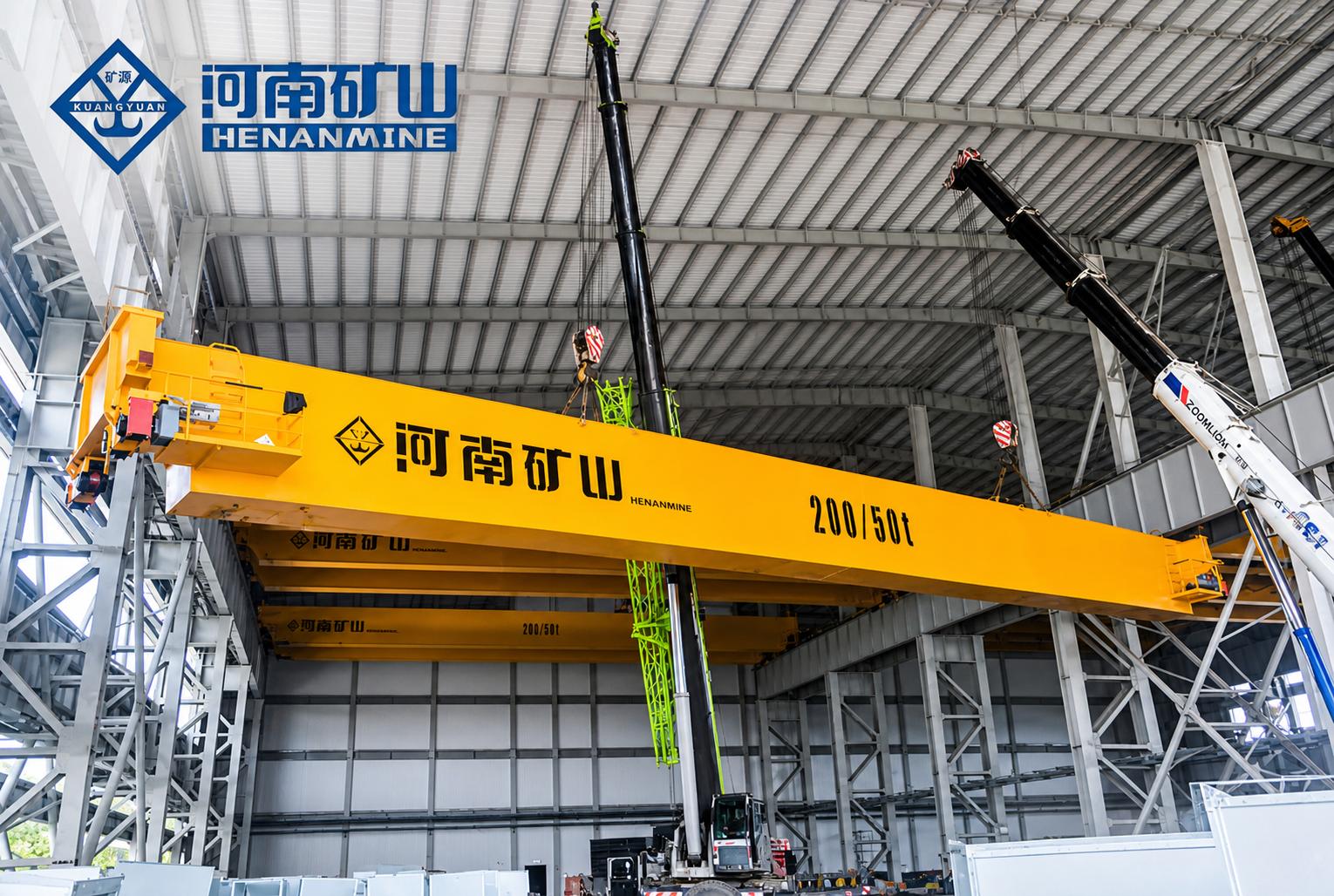
    After the site and track have passed the acceptance, the assembly and construction of core equipment will be carried out. First, the main girder and end beam are accurately hoisted to the designated position of the track through large-scale hoisting equipment, butt fixing, bolt locking, and structural calibration are completed, and the main body of the complete bridge crane bridge frame is built, and the level and stability of the bridge frame are strictly verified. Then complete the assembly and commissioning of moving parts such as the operating trolley, lifting hoist, transmission mechanism, and travel wheel to ensure flexible mechanical transmission and uniform clearance.

    Alignment, testing, and commissioning

    After all the equipment assembly is completed, it enters the stage of precise calibration and commissioning acceptance. First, perform a full range of mechanical calibration of the whole machine, adjust the coaxiality of the wheels, the level of the bridge, and the operating gap of the hoist, correct the installation deviation, and ensure that the operation of the equipment is free of deviation, no caton, and no abnormal noise. Subsequently, hierarchical testing work was carried out, from no-load test operation, rated load test to overload safety test, one by one to verify the operating performance, braking performance, and lifting stability of the equipment. At the same time, the sensitivity and reliability of safety devices such as limit, emergency stop, overload alarm, etc. are fully verified.

    How Long Does Overhead Crane Installation Take?

    There is no fixed standard for the installation period of bridge cranes, which is affected by multiple factors such as equipment specifications, on-site conditions, construction difficulty, and project matching. Small conventional equipment can be completed quickly, and the construction period of large-scale non-standard equipment and old factory renovation projects will be greatly extended. Accurate estimation of the construction period can help enterprises reasonably plan the production line and production plan to avoid delays in the construction period affecting production.

    Key factors affecting installation time

    The core factors that affect the installation period of bridge cranes mainly include five categories, and they are also the main reasons for fluctuations in the construction period of the industry. The first is the equipment parameters. The larger the tonnage, the wider the span, the higher the working level, and the double-beam non-standard structure of the bridge crane, the more complicated the assembly and commissioning process and the longer the construction period. The second is the on-site construction conditions. In scenarios where the headroom of the plant is insufficient, the construction space is small, the access is limited, and high-altitude auxiliary operations are required, the construction efficiency will be greatly reduced. The third is the basic supporting situation.

    New construction vs. existing factory

    There is a significant gap between the installation period of bridge cranes in the new plant and the old plant. The basic equipment of the new plant is complete, the construction conditions are standard, no additional rectification is required, and the construction period is controllable. It takes 3-5 working days to install a 5-20-ton single-beam bridge crane, 5-8 working days for 20-50-ton double-beam equipment, and about 8-15 working days for 100-ton large-scale equipment. However, there are widespread structural, orbital, circuit aging and space constraints in old factories, which need to be rectified and reinforced in advance, and the construction period is basically doubled. It takes 7-15 working days for small and medium-sized equipment, and 20-30 working days for complex and large-scale non-standard projects.

    How Much Does Overhead Crane Installation Cost?

    The installation cost of bridge cranes is the core concern of enterprise procurement and landing. There is no unified fixed quotation in the industry. The cost is affected by multiple factors such as equipment specifications, construction difficulty, on-site conditions, and service standards. Many low-cost packages only include basic assembly, and there are frequent additional charges in the later stages, which has caused the overall cost to soar. A clear understanding of the cost composition can effectively avoid quotation traps and accurately control the project budget.

    Main cost factors

    The first is the equipment specifications and structural complexity. The larger the tonnage, the longer the span, the higher the lifting height, the double-beam non-standard, frequency-conversion intelligent bridge crane, the more complex the installation process, the longer the construction time, the higher the commissioning standards, and the higher the labor and technical costs. The second is the on-site construction conditions. The renovation of old factories, high-altitude restricted construction, the need for structural reinforcement, and the construction of remote construction sites in different places will generate additional rectification fees, high-altitude work fees, and travel expenses. The cost is slightly higher. Finally, the service standard includes one-stop services for after-sales quality assurance, regular inspections, and operator training.

    Installation, electrical work, testing, and additional equipment

    The complete installation cost is composed of four core sectors, with no invisible additions. The first is the main installation and construction costs, including site survey, equipment assembly, track laying, structural calibration, and labor and equipment costs for the assembly of the whole machine. The second is the electrical construction fee, which covers the cost of cable procurement and laying, electronic control system installation, circuit debugging, grounding protection, and safety electrical accessories. The third is the testing and commissioning fee, which includes special expenses for graded load testing, safety device verification, machine commissioning, data collation, and acceptance cooperation. The fourth is the additional supporting costs, including construction safety protection equipment, large-scale hoisting auxiliary equipment, plant foundation rectification, adaptation of non-standard accessories, transportation and hoisting and other additional just-needed costs.

    How to Get an Overhead Crane Installation Quote?

    If you want to obtain accurate, no invisible additions, and fit the actual Henan Mine Crane manufactured bridge crane installation quotation of the project, there is no need to repeatedly communicate and compare prices. You only need to provide core project information, and the manufacturer can quickly issue detailed and accurate quotations. Accurate quotation can effectively avoid budget deviations, late additions, and ensure the smooth landing of projects. The core required information is divided into three categories.

    Crane specifications

    Providing accurate equipment specifications and parameters is the basis for quotation. It is necessary to clarify the core parameters of the bridge crane type, rated lifting capacity, span, lifting height, working level, operating mode, control mode, whether it is a frequency conversion smart device, non-standard customization requirements, etc. If there are equipment procurement contracts and equipment drawings, they can be provided directly. Manufacturers can accurately calculate the construction difficulty, working hours, and accessories costs based on the parameters to eliminate quotation deviations caused by inconsistent parameters.

    Factory drawings and site conditions

    On-site working conditions directly determine the construction cost and construction period. It is necessary to provide the building drawings of the plant, the layout drawings of the workshop, and the drawings of the load-bearing structure. At the same time, explain the type of plant (new construction plant/old renovation plant), the clearance height of the workshop, the status quo of the track foundation, the size of the construction space, the channel conditions, whether structural reinforcement is required, circuit transformation and other on-site conditions. If you need an accurate quotation, you can cooperate with the manufacturer to complete the on-site survey and verify the working conditions on-site to ensure that the quotation fully meets the needs of on-site construction, with no missing items and no invisible charges.

    Installation requirements and project schedule

    Clarify the individual needs of the enterprise and the construction schedule plan, so that the quotation can be more in line with the project expectations. It is necessary to explain the project construction period requirements, whether urgent construction is required, whether it needs to be accepted by the agency throughout the process, whether it needs supporting operator training, quality assurance service upgrade requirements, etc. The manufacturer will customize the exclusive installation plan and detailed quotation according to the urgency of the construction period, service standards, and construction difficulty, and specify the construction content, construction period, cost details, warranty scope, and acceptance service content, so that the company can clearly know the purpose of each expense and cooperate with confidence.

    Henan Mine Crane

    From pre-survey preparation, standardized construction, commissioning and acceptance to post-sales maintenance, every link is essential. If you need a dedicated installation plan, accurate quotation, and estimated construction period, you can contact Henan Mine Crane Factory at any time. The source manufacturer provides one-stop bridge crane installation customization services.

    Discuss the crane arrangement for your project.

    An installation quotation needs explicit boundaries between supplier and site teams. Clarify assembly work, access, lifting resources, electrical connections, testing and handover before comparing service costs or schedules. Share the load, available drawings, working cycle and site conditions with Henan Mine Crane so the required configuration and supply boundary can be discussed.

    Related crane configurations

    Ship-To-Shore Crane (STS)

    View product parameters
    Lifting capacity: 40-65 80-120 tBoom outreach: 40-72 mWorking class: A8

    Transfer containers between ship and quay with an STS crane selected for the berth and vessel envelope. Define the lifting-appliance arrangement, outreach, rail position and handling cycle.

    Galvanizing Process Overhead Crane

    View product parameters
    Lifting capacity: 5 – 32 tSpan: 10.5 – 31.5 mLifting height: 6 – 24 m

    Transfer suspended workpieces through a galvanizing process with a crane matched to the line. Coordinate lifting points, corrosive exposure, tank geometry and the required handling sequence.

    Updated 2026 · Henan Mine Crane

  • High-Temperature Overhead Crane Projects: Exposure and Component Requirements

    High-Temperature Overhead Crane Projects: Exposure and Component Requirements

    Technical guide

    High-Temperature Overhead Crane Projects: Exposure and Component Requirements

    The temperature near the crane and the heat radiated by the load are different design inputs. Describe their location, duration and operating cycle so the proposed structure, components and protection can be reviewed together.

    Henan Mine CraneTechnical guide · Updated 2026Crane selection, project scope and operating requirements
    high temperature overhead crane
    high temperature overhead crane
    Project planning notes

    Key points for this crane project.

    1. Why High-Temperature Environments Require
    2. Key Challenges in High-Temperature Overhead Crane
    3. Essential Design Features for Heat-Resistant
    Read the technical guide

    Why High-Temperature Environments Require Specialized Crane Design

    Conventional bridge cranes are designed for hoisting workshops and general materials at room temperature. This is also the core reason why special cranes must be used in high-temperature working conditions.

    First of all, the high temperature environment will continue to erode the core components of the crane. Ordinary steel, insulation materials, and lubricating greases will age and fail rapidly at high temperatures, resulting in a precipitous decline in the service life of the equipment. Under high temperature conditions, the service life of conventional cranes is only 1/3 or even shorter than that of special equipment. Secondly, structural deformation, electrical failure, and mechanical stagnation caused by high temperature are sudden hidden dangers that cannot be avoided through conventional operation and maintenance, and can easily cause safety production accidents. Finally, the high-temperature scenarios of heavy industry are mostly continuous assembly line operations, and the equipment downtime loss is great.

    Key Challenges in High-Temperature Overhead Crane Operation

    Thermal stress and structural deformation

    Under high temperature conditions, the main steel structure of the crane, such as the main girder, end beam, and trolley frame, will produce thermal expansion and contraction effects, and continuous thermal stress will break the structural force balance. General-purpose cranes do not reserve thermal expansion margin, and problems such as attenuation of the upper arch of the main girder, side bending deformation, track stagnation, and wheel gnawing will occur after long-term high-temperature operation. At the same time, local high-temperature radiation can cause uneven heating of steel structures, produce residual thermal stress, and cause hidden dangers such as weld cracking, sheet deformation, and structural fatigue damage. After long-term operation, the accuracy of the equipment decreases significantly, and the carrying capacity gradually attenuates.

    Mechanical and electrical overheating

    The mechanical transmission system and electrical control system are the core modules of the crane that are most susceptible to high temperature damage. At the electrical level, precision accessories such as motors, frequency converters, contactors, cables, and sensors have limited high temperature resistance. High temperature will accelerate the aging and carbonization of the circuit insulation layer, causing leakage, short circuit, tripping and other failures.

    Radiant heat and hot loads

    The core hazard of high-temperature industrial scenarios is not only environmental temperature, but the direct impact of high-intensity thermal radiation and high-temperature loads. Molten metal, high-temperature steel billets, and hot-rolled workpieces in steelmaking and foundry workshops will release high-intensity infrared thermal radiation.

    Essential Design Features for Heat-Resistant Overhead Cranes

    Reinforced crane structures

    The structural strengthening design of high-temperature resistant cranes is the basis for resisting thermal stress and deformation. The main body of the equipment abandons ordinary carbon steel materials and adopts Q345B and Q355D low-alloy high-strength and high-temperature resistant steels. Environment. The structural form gives priority to the use of double-beam box-type rigid structure to improve the overall stiffness and bearing stability, and suppress high temperature deformation.

    At the same time, special optimization is made for the thermal expansion and contraction characteristics, special thermal expansion gaps are reserved for track installation and end beam connection positions, and elastic support structures are configured to allow the steel structure to freely expand and shrink, completely solving the problems of stagnation and deformation caused by thermal stress. The key welds adopt a multi-layer continuous welding process and do non-destructive flaw detection to improve the fatigue resistance of the structure under high temperature conditions and avoid cracking of the welds. The overall structure has been optimized by mechanical simulation, which can evenly disperse the thermal stress and lifting load to ensure the structural stability of long-term high-temperature operations.

    Protected hoisting systems

    The lifting system is the core protection unit of the high-temperature crane, which provides comprehensive protection against the risks of high-temperature wear, thermal radiation burning, and slag sputtering. The steel wire rope adopts special high-temperature-resistant galvanized steel wire rope, which is equipped with a high-temperature-resistant and wear-resistant sheath to eliminate the problem of high-temperature oxidation and broken wire by thermal radiation. The hook assembly is made of integral forged high-temperature-resistant alloy steel, which is annealed to avoid toughness loss and brittleness fracture at high temperatures, and is equipped with a fully enclosed protective cover to block slag sputtering damage.

    The lifting motor adopts a special high-temperature-resistant motor for metallurgy, with built-in high-temperature-resistant insulated windings, which are suitable for continuous high-temperature operation to prevent the motor from overheating and burning down. The complete lifting system adopts a closed protective structure, which can effectively isolate the erosion of high-temperature dust, hot air, and molten waste residue, and greatly improve the service life of the core components.

    Thermal shielding and insulation

    Thermal insulation shielding and thermal insulation design are the key means to block high temperature conduction and protect the core components of equipment. The bottom of the main girder of the Henan Mine Crane manufactured crane and the bottom of the trolley frame are fully covered with a high-temperature thermal insulation layer. The double-layer structure of rock wool thermal insulation substrate and high-temperature protective steel plate can effectively block the thermal radiation conduction of the high-temperature materials below, and avoid the continuous heat accumulation and heating of the main girder structure.

    Electrical units such as electrical control cabinets, frequency converters, junction boxes, etc. are individually equipped with independent thermal insulation boxes. Thermal insulation cotton is installed inside the box, and the outside is equipped with high temperature protection to isolate environmental thermal radiation and hot air impact. The operator's cab adopts a double-layer heat insulation and sealing structure to isolate the external high temperature, and is equipped with ventilation and cooling equipment to ensure a comfortable operating environment for the operator. At the same time, all exposed lines and joints are wrapped in high-temperature-resistant insulating sleeves to block high-temperature erosion in all directions and protect the stable operation of the electrical system.

    Cooling solutions

    In view of the problem of heat accumulation in high-temperature working conditions, the high-temperature crane is equipped with a hierarchical forced cooling scheme, which matches different cooling modes according to the harshness of the working conditions. Conventional high-temperature workshops adopt a forced air-cooling system, and install axial fans and cooling ducts in the core parts of the heating such as motors, reducers, and electrical control cabinets to actively accelerate air circulation and quickly take away the heat from the operation of the equipment to avoid excessive heat accumulation of components. Temperature.

    Circulating water cooling systems are used in extreme high temperature scenarios such as steelmaking and casting. The core electrical and transmission components are equipped with closed water-cooled circulating pipelines, and the circulating cooling water continues to cool down, which can stabilize the temperature of the core components in a safe range. At the same time, the cab and electrical room are equipped with industrial air conditioning and fresh air systems, which cannot only cool down the equipment, but also improve the working environment of the personnel. All cooling systems are equipped with independent protective structures, which are high temperature resistant, dust-proof, and anti-clogging. They are adapted to the harsh working conditions of heavy industry to ensure the continuous and stable operation of the cooling system for 24 hours.

    Designing Cranes for Steel Mills, Foundries, and Molten Metal Handling

    Ladle and casting cranes

    Ladle and casting cranes are special high-temperature equipment for the core of steel mills and foundries. They are mainly responsible for the transportation and pouring of molten molten steel and molten iron. The working conditions are extremely high and the safety level is demanding. This type of crane adopts a double-beam or four-beam structure with super-stiffness, with strong overall carrying capacity and high stability, and a working level of up to A7-A8, which is suitable for 24-hour continuous heavy-duty operations. The thermal protection design of the equipment is strengthened in all directions, the main girder and the trolley frame are fully covered with a thickened thermal insulation layer, and the lifting system adopts a redundant design of dual independent braking, double reel and double wire rope to prevent the failure of a single component from causing the ladle to fall.

    Charging and furnace cranes

    Feeding and furnace cranes mainly serve the material supply, furnace physical examination and repair, and slag cleaning operations of blast furnaces and smelting furnaces. They face high temperature heat waves, open flame radiation and dust erosion at the furnace mouth for a long time. The equipment adopts high-temperature and high-strength steel structure, focusing on strengthening the side thermal protection of the furnace mouth, and installing a detachable high-strength thermal insulation protective plate, which can resist the instantaneous ultra-high temperature impact of the furnace mouth. The lifting and operating mechanism adopts impact-resistant and high-temperature-resistant customized accessories, which are adapted to the operating mode of frequent start-stop and heavy-duty impact. The lubrication system adopts long-lasting high-temperature-resistant grease to reduce the frequency of high-frequency operation and maintenance.

    Billet, slab, and hot material cranes

    The equipment structure is both lightweight and rigid, and adopts an optimized box-type main girder structure, which has excellent thermal deformation and fatigue resistance, and is not easy to deform and deviate during long-term operation. In view of the hoisting characteristics of high-temperature materials, the equipment is equipped with special high-temperature-resistant spreaders and heat insulation fixtures to prevent the annealing failure of components caused by direct contact with the spreader of high-temperature materials. The bottom of the fuselage is fully covered with a thermal insulation shielding layer to isolate the heat accumulated by the thermal radiation of the material, and the transmission and electrical systems are equipped with a forced air cooling system to quickly dissipate the heat of the operation.

    How to Select and Customize a High-Temperature Overhead Crane

    Assess the working environment

    For the selection and customization of high-temperature bridge cranes, the first step is to comprehensively survey and evaluate the operating conditions. It is necessary to accurately collect the core parameters of the normal temperature, extreme high temperature, thermal radiation distance, and operating time of the workshop, and distinguish between the three types of working conditions: air high temperature, radiation high temperature, and material contact high temperature. At the same time, investigate additional risks such as slag sputtering, high temperature dust, and corrosive gases, and verify spatial parameters such as plant span and lifting height. Scientific environmental assessment can accurately match equipment protection and design levels, avoid insufficient protection or excessive redundancy, and balance equipment practicality and procurement cost performance.

    Define crane requirements

    Relying on the measured working condition parameters, the core customization requirements of high-temperature cranes can be accurately clarified. Basic parameters such as rated lifting weight, operating span, and lifting height need to be determined first. For high-temperature and heavy-duty scenarios, the special working level for A5-A8 metallurgy is preferred. Then according to the intermittent, 24-hour continuous, high-frequency start-stop and other operating modes, match the adapted motor, transmission and cooling system. At the same time, safety functions such as dual braking, precise speed regulation, remote control, and fault early warning are configured on demand, and the intelligent configuration of the equipment is determined based on the operation and maintenance requirements, so that the equipment can be fully adapted to the production line operating standards.

    Build a complete protection strategy

    For high-temperature working conditions, a layered integrated protection system needs to be built to ensure the stable operation of the crane in all directions. At the basic level, thermal deformation and fatigue damage of the structure are avoided through high-temperature-resistant materials, structural optimization, and reserved thermal expansion margin. The middle layer relies on thermal insulation and shielding, and closed accessories to protect it from high temperature erosion and physical damage. The core scene matches the air-cooled and water-cooled cooling system as needed to maintain the constant temperature of the core components. It is equipped with a global temperature monitoring and intelligent early warning protection system to achieve preventive protection, and a dedicated maintenance plan to effectively extend the service life of the equipment and ensure safe production under high temperature conditions.

    Henan Mine Crane

    The core of the design and selection of bridge cranes in high-temperature industrial environments is to revolve around the three core points of high-temperature deformation resistance of the structure, high-temperature failure resistance of the components, and global safety protection, and to make customized optimizations for different subdivided high-temperature working conditions. Unlike general-purpose cranes, every structure, protection, cooling, and intelligent design of Henan Mine Crane Factory cranes is designed to solve various operating pain points under extreme working conditions. In the process of equipment procurement and transformation, enterprises should not apply general equipment standards. They need to customize the exclusive crane plan of Henan Mine Crane Factory in accordance with their own workshop conditions and operating requirements to avoid high-temperature failures and safety risks from the source, reduce long-term operation and maintenance costs, and maximize the production value of high-temperature lifting equipment.

    Discuss the crane arrangement for your project.

    The temperature near the crane and the heat radiated by the load are different design inputs. Describe their location, duration and operating cycle so the proposed structure, components and protection can be reviewed together. Share the load, available drawings, working cycle and site conditions with Henan Mine Crane so the required configuration and supply boundary can be discussed.

    Related crane configurations

    Single-Girder Bridge Crane

    View product parameters
    Lifting capacity: 1–20 tSpan: 7.5–31.5 mLifting height: 6, 9, 12, 18, 24 or 30 m; capacity-dependent

    Use an LDA single-girder bridge and electric hoist for general workshop material handling. Select the lifting capacity, runway geometry and hoist duty around the building and load.

    LH Electric Hoist Double Girder Crane

    View product parameters
    Lifting capacity: 3, 5, 10, 16, 20 tSpan: 10.5–31.5 mLifting height: 6, 9, 12 or 18 m

    Use an LH double-girder bridge with an electric-hoist trolley for workshop lifting, assembly and maintenance. Match the hoist arrangement to the suspended load, hook travel and available building space.

    Updated 2026 · Henan Mine Crane
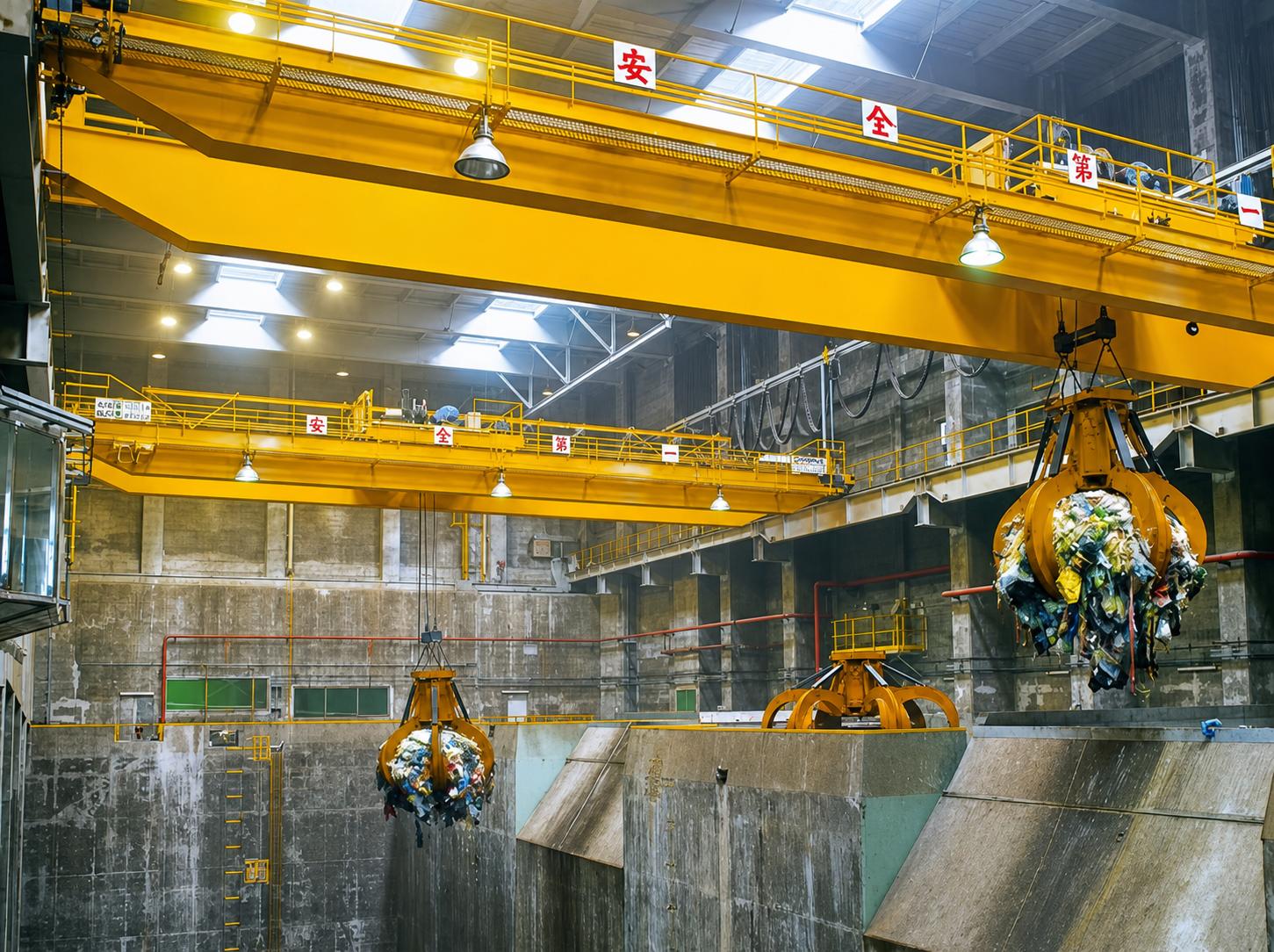
  • Overhead Crane Parts: Understand the Lifting and Travel Systems

    Overhead Crane Parts: Understand the Lifting and Travel Systems

    Technical guide

    Overhead Crane Parts: Understand the Lifting and Travel Systems

    A crane proposal becomes easier to assess when each component is related to its task. Review the structural members, hoist, travel mechanisms and controls as parts of a complete load-handling arrangement.

    Henan Mine CraneTechnical guide · Updated 2026Crane selection, project scope and operating requirements
    Henan Mine Crane Track Switching Overhead Crane
    Henan Mine Crane Track Switching Overhead Crane
    Project planning notes

    Key points for this crane project.

    1. Types of Overhead Cranes and Their Key Features
    2. Overhead Crane Frame
    3. Overhead Crane Traveling Mechanism
    Read the technical guide

    Types of Overhead Cranes and Their Key Features

    Different models of overhead travelling cranes have obvious differences in core component configuration and structural design. Understanding the characteristics of the models in advance will enable you to better understand the subsequent detailed explanation of the components.

    Single Girder Overhead Crane

    Mainly light and medium load lifting operations, widely used in machining workshop, warehousing and logistics warehouse, light industrial production line and other conventional sites, the overall single girder integrated structural design, light weight, compact and simple structure, short installation and commissioning cycle, low difficulty in the later operation and maintenance, the standard single girder with a steel wire rope/chain hoist, flexible and non-redundant operation, both high security and cost-effective, is the first choice for small and medium tonnage, It is the preferred model for small and medium tonnage, short span lifting scenarios.

    Double Girder Overhead Crane

    Specially designed for heavy-duty, large-span and high-intensity operations, it adopts double main girder parallel structure, and the main girder is mostly made of box-type or truss-type high-strength steel, with sufficient overall rigidity and excellent load-bearing performance, which can easily meet the needs of high-capacity lifting of heavy loads。

    And it is suitable for the harsh working conditions and high-load operating environments such as metallurgy and smelting, heavy manufacturing, and port loading and unloading, and it is capable of coping with the continuous heavy-duty lifting task for a long period of time with strong operating smoothness and long service life.

    Electric Overhead Traveling Crane (EOT)

    Fully electrically driven standardized lifting equipment, relying on electric motors to provide power throughout the entire process, supporting the cab centralized control, wireless remote control of the two mainstream modes of operation, can quickly and accurately complete the lifting and panning of heavy loads, the operational efficiency far exceeds that of the manual model, while having a large span, strong load-bearing capacity, easy to operate, low cost of operation and maintenance, is the mainstream standard model for all types of manufacturing factories, industrial workshops, material handling.

    Grab Bridge Crane

    Designed for bulk material handling, the whole machine consists of bridge, trolley, grapple mechanism, electrical system and cab, relying on the trolley, trolley linkage shift, with the grapple to complete the whole process of grabbing, transferring and unloading of bulk materials, high operating efficiency, practicality, good operational stability, safety coefficient of full, can be efficiently loading and unloading of various types of bulk materials, such as coal, grain, industrial waste, ore, etc., and is widely used in ports, terminals, thermal power stations, bulk material handling plants and industrial workshops.

    Overhead Crane Frame

    Structural components are the “skeleton” of the bridge crane, bearing the weight of the whole machine and lifting load, determining the stability of the equipment and the upper limit of load-bearing, mainly including the main girder, end girder, the operating room of the three core parts.

    Main Girder

    Main girder is the core load-bearing component of the bridge crane, usually made of high-strength rolled steel, the mainstream structure is divided into two categories of box structure and truss structure.

    Its core role is to carry the lifting trolley and hoisting mechanism, to provide a smooth track for the lateral operation of the trolley, and at the same time to resist the bending and torsion stresses in the lifting operation, to ensure the stability of the structure under heavy-duty working conditions.

    Single girder cranes are equipped with only a single main girder, while double girder cranes are designed with two main girders in parallel, which realizes a qualitative improvement in the overall load-bearing performance.

    End Girder

    The end girder is connected to both ends of the main girder and spliced with the main girder to form a complete bridge, with running wheels assembled at the bottom, which is not only the load-bearing support of the bridge, but also the core carrier of the whole machine movement.

    The end girder not only has to connect the main girder, carry the machine’s self-weight and lifting load, but also has to drive the bridge to move along the track smoothly and horizontally, so the design emphasizes both structural strength and durability to ensure that the machine’s attitude is stable and free of deflection when moving under heavy loads.

    Operation Room

    The operation room is the exclusive control space for crane operators, which is mostly hung under the main girder or in the position with the best view of the operation, and is equipped with a control desk and cam controller, which can accurately realize a full set of actions such as lifting and panning.

    In order to take into account the operator’s comfort and operational safety, the operating room is equipped with open view, ventilation and air conditioning system, with ergonomic seats and rationalized layout, which can effectively alleviate the fatigue of prolonged operation; operators can enter and exit the operating room through vertical or inclined ladders, which can take into account the convenience of access and safety of working at height.

    Overhead Crane Traveling Mechanism

    The truck running mechanism mainly drives the whole machine bridge to walk horizontally along the track, which is operated by transmission, braking and other components to ensure the smooth movement and accurate positioning of the whole machine, and the core components are explained as follows.

    Wheel

    Crane wheels are assembled at the bottom of the end beams, divided into two categories of active wheels (driving wheels) and driven wheels, all of which are forged from high-strength alloy steel, with excellent wear-resistant, impact-resistant properties.

    The active wheel provides traction to drive the whole machine along the track; the driven wheel assists in smooth traveling and reduces the wear and tear of the track, and after precision processing and debugging, it has low noise and long service life, and bears the whole weight of the whole machine and the load at the same time.

    Running Motor

    The running motor is the core power source for the horizontal movement of the trolley, which can efficiently convert electric energy into mechanical energy and provide abundant power for the movement of the bridge and trolley; with the speed reducer precisely regulating the rotational speed, it ensures the smooth running of the whole machine and strong traction force.

    Reducer (Gearbox)

    As the core transmission hub between the motor and the wheel, the gearbox can convert the high-speed rotation of the motor into low-speed, high-torque power output, and accurately adapt to the crane’s smooth start-stop, stable operation requirements.

    Brake

    Brake is a key safety component of the crane, mostly installed at the end of the motor output shaft, divided into two forms of mechanical brake and electromagnetic brake.

    The brake can quickly hold the brake when stopping, overcome the inertia to realize precise parking, and eliminate the risk of equipment skidding and loss of control; the main body is made of wear-resistant material, equipped with overheating protection and automatic adjustment, which can be adapted to the heavy-duty operation scenarios of frequent starting and stopping.

    Coupling

    The coupling is mainly used to connect the motor and reducer, reducer and wheels, which can efficiently transmit torque and compensate for the small coaxial deviation between the shafts, buffer buffer buffer buffer buffer buffer vibration and impact during operation, protect the transmission parts, and ensure the smooth transmission of power without any loss. Loss-free, no loss, no loss, no loss.

    Hoisting Mechanism

    Hoisting mechanism is the core working part of overhead crane, specializing in vertical lifting and lowering of heavy loads, single girder cranes are equipped with electric hoists, double girder cranes can choose electric hoists or winch trolleys, and the whole set of mechanism contains several subdivided parts.

    Detailed Diagram of MH Single-Girder Gantry Crane Manufactured by Henan Mine CraneHoist and Trolley

    Lifting trolley carrying hoist mounted on the main girder, can drive the hoist horizontal movement, with the realization of the space transfer of heavy loads; common types of hoists, including wire rope electric hoist, electric chain hoist, high-capacity double girder cranes are equipped with winch trolley.

    Pulley Block

    Pulley set is divided into fixed pulley and movable pulley, with grooves on the edge, which is used to guide the direction of the wire rope, change the direction of force, and at the same time, disperse the lifting load and enhance the lifting capacity of the equipment.

    The fixed pulley is fixed and only changes the direction of the wire rope; the dynamic pulley lifts and lowers with the load, which reduces the pulling force required for lifting, and the combination of multiple sets of pulleys can greatly increase the upper limit of the load capacity.

    Hook

    As the core load bearing component for direct loading of heavy loads, the hook is made of high strength alloy steel and forged as a whole, equipped with anti-dislodgement safety tongue as standard, which can effectively eliminate the risk of heavy loads slipping off during the lifting process.

    The single hook is suitable for light and medium load lifting, while the double hook can evenly share the pressure of heavy loads and provide better operational stability; the hook supports 360° rotation, which facilitates loading and unloading of heavy loads at multiple angles and greatly enhances operational flexibility.

    In addition to the standard hooks, it can also be equipped with grapples, electromagnetic suction cups and other special lifting tools according to the working conditions. The single hook is suitable for light and medium load lifting, while the double hook can evenly share the pressure of heavy loads for better operational stability;

    Lifting Motor

    Lifting motor provides the core power for vertical lifting and lowering, focusing on high torque and low rotational speed, with large starting torque, which can be started smoothly with load, and with frequency conversion system to realize accurate speed regulation; reducer converts high speed of the motor into high torque output, which ensures smooth lifting; brake is responsible for locking the load, preventing the heavy load from falling down from the height, and locking it immediately after the shutdown, which ensures the safety of lifting.

    Wire Ropes

    Reel is a part of winding wire rope, the surface with regular grooves, to prevent wire rope slippage, overlap, and extend the service life of the wire rope; wire rope connects the hook, pulley set and reel, through the reel to realize the heavy lifting and lowering, the use of different diameters, tensile strength of the wire rope, which can be adapted to the indoor and outdoor, anticorrosive, and other different scenarios.

    Specialized Spreader

    Specialized spreaders can be adapted for special materials: grab overhead cranes are equipped with grabs to efficiently complete bulk material loading and unloading operations; electromagnetic suction cups are specially used for steel, iron and other magnetic materials handling, to meet the needs of diversified lifting scenarios in an all-round way.

    Electrical and Control Systems

    The electrical and control system provides power for the crane, realizes the transmission of operation instructions, and is the “nerve” and “brain” of the equipment, which is divided into two major parts: the power supply components and the control system.

    Power Supply Components

    Mainly includes sliding contact line and power supply cable: sliding contact line is installed on one side of the track, consisting of copper/aluminum conductive rail, collector and insulated bracket, providing continuous power supply for the moving crane; power supply cable is arranged with cable trolley and drag chain, which is moved along with the bridge and trolley to avoid tugging and damaging, and provides stable power transmission for the hoisting and operating mechanism.

    Detailed Diagram of MH Single-Girder Gantry Crane Manufactured by Henan Mine CraneThis crane meets the core lifting equipment needs of small and medium-sized factories, logistics parks, construction sites, and similar scenarios. It offers cost-effectiveness, user-friendly operation, strong adaptability, and low maintenance costs.

    Control

    • Driver’s cab control: the operator completes all the actions through the console in the operation room, with a wide field of vision and precise control, suitable for heavy loads and complex lifting scenarios.
    • Remote control: with wireless signal transmission, the operator can control from the ground, high flexibility and strong safety, suitable for poor vision and risky operating environment.
    • Hand control: Wired hand-held control box, button operation is simple and convenient, suitable for short distance, simple lifting tasks, the operator can observe the load in close proximity to realize precise fine-tuning.

    Rail System

    Rail and running beam is the “travel roadbed” of the crane, providing support and guidance for the movement of the whole machine, which directly affects the stability of operation.

    Rails

    The rail is fixedly installed on top of the load bearing beam of the building, and is made of high-strength steel with excellent wear and impact resistance, and the commonly used types include profiled steel rails and I-beam rails. Installation stage needs to strictly control the level and parallelism, to avoid the crane running off, shaking; daily need to regularly check the wear and tear, firmware loosening, lubrication and maintenance, so as to extend the service life of the track.

    Running Beam

    Running beam is the core foundation component to support the track, mostly installed in the building column or independent bracket, need to have sufficient structural strength and rigidity, can smoothly withstand the crane’s dead weight, lifting loads and running impact.

    The material is mostly high-strength steel or concrete, the installation must ensure that the level of straight, to prevent foundation settlement, beam bending triggered by operational failures.

    Safety Protection Devices

    Safety protection device is the key configuration to prevent accidents and guarantee the safety of man and machine, which is a standard component of overhead travelling crane and is indispensable.

    • Limiter: divided into rising limit and travel limit, it can prevent the hook from overtopping and the bridge/trolley from over-traveling to avoid the risk of collision.
    • Emergency power-off switch: set up in the power distribution cabinet, it can quickly cut off the total power supply under sudden working condition and stop the whole machine action immediately.
    • Buffer: installed at the end of the bridge, effectively absorbing the impact of the collision, reducing the degree of damage to the equipment and building structure.
    • Warning device and lighting: the warning bell reminds the site personnel to avoid in real time, and the working lighting ensures the working vision and operation safety under the dim working condition.

    How to Select the Right Overhead Crane System for Your Business?

    The core of selecting a bridge crane is to match the component configuration with the operational requirements, focusing on the following points:

    Assess Your Business Needs

    First of all, accurately calculate the maximum load weight of daily lifting, light and medium-sized, small tonnage load priority selection of single girder cranes with electric hoists, low cost of the whole machine, small footprint, easy operation and maintenance; high-capacity, large span operation scenarios, need to choose double girder cranes, with winch trolley to enhance the load-bearing and stability to eliminate overloading operation risks, and to protect the safety of heavy-duty operations.

    Evaluate Working Conditions

    Indoor conventional dust-free, no special risk of the workshop warehouse, the choice of standard bridge cranes can meet the needs; outdoor open air, wet corrosion, flammable and explosive, dust-free clean and other special scenes, you must choose the corresponding protection level of the special models, such as explosion-proof, anti-corrosion, clean crane, to adapt to the harsh working conditions, to extend the service life of the equipment.

    Safety and Compliance

    Three shifts, continuous operation of high-frequency use of the scene, you need to use high-strength wear-resistant, anti-fatigue core components, the machine with solid materials, harsh technology, to protect the long-term stable operation of high-load; occasional lifting, low-frequency operation of the scene, you can prioritize the cost-effective, choose the basic model to meet the needs of the use of the same time to control the cost of procurement.

    Convenience of Maintenance

    Focus on the selection of component versatility, prioritize the use of adequate spare parts on the market, replacement of simple models, to avoid niche non-standard parts lead to maintenance difficulties, high costs; at the same time, choose the maintenance process is simple, fast after-sales response brand, reduce equipment downtime, reduce long-term operating costs.

    Discuss the crane arrangement for your project.

    A crane proposal becomes easier to assess when each component is related to its task. Review the structural members, hoist, travel mechanisms and controls as parts of a complete load-handling arrangement. Share the load, available drawings, working cycle and site conditions with Henan Mine Crane so the required configuration and supply boundary can be discussed.

    Related crane configurations

    Track Switching Overhead Crane

    View product parameters
    Lifting capacity: 1 – 32 tSpan: 3 – 30 mLifting height: 4 – 20 m

    Transfer an electric hoist between connected crane tracks with a track-switching arrangement. Rail alignment, transfer positions and interlocks are coordinated with the building and lifting sequence.

    Single-Girder Bridge Crane

    View product parameters
    Lifting capacity: 1–20 tSpan: 7.5–31.5 mLifting height: 6, 9, 12, 18, 24 or 30 m; capacity-dependent

    Use an LDA single-girder bridge and electric hoist for general workshop material handling. Select the lifting capacity, runway geometry and hoist duty around the building and load.

    Updated 2026 · Henan Mine Crane

  • Overhead Crane Buying: Turn the Workshop Task into a Specification

    Overhead Crane Buying: Turn the Workshop Task into a Specification

    Technical guide

    Overhead Crane Buying: Turn the Workshop Task into a Specification

    Start with the normal lifting cycle, load geometry and required working area. Connect these requirements to the building and supplier scope before narrowing the crane type and equipment configuration.

    Henan Mine CraneTechnical guide · Updated 2026Crane selection, project scope and operating requirements
    Henan Mine Crane Single-Girder Bridge Crane
    Henan Mine Crane Single-Girder Bridge Crane
    Project planning notes

    Key points for this crane project.

    1. Step 1 – Identify Your Lifting Requirements
    2. Step 2 – Choose the Right Overhead Crane Type
    3. Step 3 – Consider Your Industry Application
    Read the technical guide

    Step 1 – Identify Your Lifting Requirements

    The first step in choosing a crane is not to look at the model and compare the price, but to find out your lifting requirements first. Requirements are not determined, and then how to choose is a waste of effort.

    This is like building a house first foundation, foundation is stable, the subsequent selection will be accurate, to avoid rework later, the trouble of replacing equipment.

    Load Capacity

    There is only one core question: what is the maximum load you need to lift? This directly determines the tonnage of the crane selection, but also the most cannot be wrong.

    Load demand varies greatly from industry to industry, I combined years of experience, organized the most common load range of global customers, for your reference.

    Here is a key reminder: be sure to reserve a safety margin.

    Span Length

    Span is the distance between the two ends of the crane rail, that is, the distance between the two runway rails in the plant, this parameter should be combined with the actual width of the plant to determine.

    Many customers tend to ignore the importance of the span, either choose a big waste, or choose a small cannot cover the entire operating area, affecting productivity.

    First of all, the actual width of the plant should be measured to ensure that the span of the crane can completely cover the operating range, to avoid the blind spot of lifting.

    Also consider the structural support of the plant, the installation of the track needs to correspond to the load-bearing structure, the selection should be communicated with the plant designer to ensure that the track is stable and safe after installation.

    In addition, if you have future plans for plant expansion, it is recommended to reserve a certain span margin in the selection, to avoid later expansion, the crane cannot be adapted to the new operating range.

    Lifting Height

    The choice of lifting height depends on two aspects: the maximum height you need the hook to lift, and the space limitations of the plant.

    First determine the maximum hook height, that is, the distance from the ground to the highest position of the hook, to ensure that it can meet the needs of material lifting, equipment installation, such as tall equipment in the workshop, you need a higher lifting height.

    Also consider the headroom height of the plant, that is, the distance from the roof to the ground, to avoid the crane to touch the roof when lifting, resulting in equipment damage or safety hazards.

    Some of the old plant headroom height is limited, cannot be installed conventional lifting height of the crane, then you need to customize, such as shortening the height of the crane itself, adapted to the space of the plant, which is also one of our Henan Mine Crane often do customized services.

    Working Duty Classification

    Working Duty Classification, simply put, is the crane's “work intensity”, which is based on the frequency of lifting, load ratio, the number of hours of annual operation to classify, which directly determines the service life and reliability of the crane.

    There are three global standards: ISO 4301, FEM classification and CMAA A-F class, the logic of different standards is slightly different, but the core is to match the intensity of work.

    For example, ISO 4301 and FEM standards, according to the time utilization rate and load spectrum coefficient, the crane will be divided into 1M-8M a total of 8 levels, of which 6M-8M belongs to the heavy continuous operation level, suitable for steel mills, ports, and other high-frequency, heavy-duty scenarios; 1M-3M belongs to the lightweight level, suitable for construction sites, such as auxiliary lifting and other low use rate scenarios.

    CMAA standard is divided into A to F class, A class is light load intermittent operation, F class is continuous heavy duty operation, such as heavy industrial workshop, most of the need for E class or F class cranes.

    Crane duty classification is a point that many customers tend to ignore, many people think that as long as the tonnage is enough, the result is to choose a low working level crane, in high frequency, heavy duty operation scenarios, less than a year on the main girder fatigue, wear and tear of the components of the serious problems, but the loss is not worth the gain.

    Step 2 – Choose the Right Overhead Crane Type

    After defining their own needs, the next step is to choose the right type of crane. The most common on the market is single girder, double girder, as well as the top row, bottom row of these four, they have their own adaptable scene, there is no absolute good or bad, only whether it is suitable.

    Many customers will be entangled single girder vs double girder crane, top running vs under running crane, in fact, as long as the combination of their own load, span and plant conditions, you can quickly make a choice.

    Single Girder Overhead Crane

    The Single Girder Overhead Crane, the most economical and practical type, is suitable for light to medium load scenarios and is the preferred choice for many small and medium sized businesses.

    Its advantages are obvious: low cost, much cheaper than the same tonnage double girder crane, can effectively control the initial investment; lightweight structure, light weight itself, the load-bearing requirements of the plant is not high; simple installation, short construction period, can be quickly put into use.

    Double Girder Overhead Crane

    Double Girder Overhead Crane, mainly used in heavy duty operation scenarios, is also the core lifting equipment of large industrial enterprises.

    Although its initial purchase cost is higher than single beam, but the service life is longer, it can reach more than 20 years, which is more cost-effective in the long run.

    Top Running Crane

    Top Running Crane, that is, the rail is installed on the top of the runway beam, is the most common type in industrial plants, and is suitable for almost all heavy-duty operation scenarios.

    Its advantages are strong load capacity, adaptable to high-capacity cranes, large operating space, higher lifting height, and not subject to excessive restrictions on plant headroom.

    Whether it is heavy manufacturing, steel mills, or large warehouses, top row cranes are the first choice and can meet the lifting needs of most industrial scenarios.

    Under Running (Underslung) Crane

    Under Running (Underslung) Crane, the track is installed under the runway beam, mainly suitable for the scene of limited space, but also a lot of small plant choice.

    Its advantages are space-saving, low height, suitable for the old plant with limited headroom height, will not take up too much space in the plant; flexible installation, and lower load-bearing requirements for the plant.

    Step 3 – Consider Your Industry Application

    The operating conditions of different industries vary greatly, and the selection of cranes must also be adapted to the needs of the industry, not a generalization.

    The same 10-ton crane, used in electronics factories and steel mills, the requirements are completely different – electronics factories need precise positioning, steel mills need to be resistant to high temperatures, dust, which is one of the core points of selection.

    Manufacturing Plants

    Ordinary manufacturing plants, such as machining plants, automotive parts factories, the operating conditions are relatively mild, belonging to the medium work cycle, mainly used for workpiece assembly, transportation.

    This type of scene on the requirements of the crane, focusing on accurate positioning, such as assembly line parts transfer, the crane needs to run smoothly, accurate positioning, to avoid collision damage to parts.

    Warehouses & Logistics

    Warehouses and logistics centers lifting operations, the most important feature is the high frequency of lifting, mainly used for palletized goods, the transfer of packaging boxes, there are certain requirements for speed.

    Many logistics customers will require cranes with fast running function to reduce the material transfer time and improve the turnover efficiency of the warehouse, which is also the place we will focus on optimizing in the customization.

    Steel & Heavy Industry

    Steel mills and heavy manufacturing plants are the most demanding operating environments, with high temperatures, dust, heavy loads, and continuous operation, making cranes extremely demanding.

    Operation will face high temperature radiation, molten metal splash, and a lot of dust, iron oxide, which requires cranes with high temperature, dust, impact resistance.

    Cranes for this type of scenario cannot be cost-saving and must be specialized metallurgical cranes, otherwise frequent failures will seriously affect production and even lead to safety accidents.

    Steel Mill Casting Specialized Crane Manufactured by Henan Mine Crane

    Step 4 – Evaluate Safety Features

    The safety of lifting operations always comes first. Regardless of the industry, the safety configuration of the crane cannot be compromised, even if it costs a little bit more, but also to avoid late safety hazards and accident losses.

    Many customers in order to save costs, omit some safety configurations, the result of overloading, collision, brake failure and other problems, not only damage to the equipment, but also may cause injuries and deaths, the loss is not worth it.

    The following safety components are essential for all cranes:

    Overload protection device, which can monitor the load weight in real time, and once it exceeds the rated load, it will automatically stop running to avoid equipment overload damage;

    Emergency stop system, regardless of the operator on-site operation, or remote control, can quickly trigger an emergency stop to deal with unexpected situations;

    Anti-collision system, when multiple cranes are working together, it can avoid collision between the equipment, and at the same time prevent the crane from hitting the structure of the plant;

    Limit switch, which can limit the lifting height and operating range of the crane to avoid over-range operation and damage to the equipment;

    Brake redundancy system, also known as dual brake design, when a single component fails, the backup brake can take over in time to avoid the load falling, which is especially important in heavy load and high risk scenarios.

    At the same time, cranes must also comply with international safety standards, such as ISO, FEM, CMAA, as well as local safety regulations, otherwise they cannot pass the safety inspection and acceptance, and cannot be put into use.

    All cranes from Henan Mine Crane will undergo strict safety testing before leaving the factory to ensure that each safety configuration meets the standards and is suitable for different regions of the world.

    Step 5 – Analyze Lifecycle Cost

    This is the most easily overlooked point by customers: many people only look at the initial purchase price when purchasing, thinking that cheap is a good deal, but ignored the long-term operating costs, and in the end, but spent more money.

    Crane life cycle is generally 15-20 years, the selection of the “long-term account”, a comprehensive assessment of the full life cycle cost (TCO), rather than just look at the immediate purchase price.

    CAPEX

    Initial investment (CAPEX) mainly includes four parts: the crane's main girder structure, hoisting winch system, electrical control system, and on-site installation and commissioning costs.

    The initial input varies greatly for different configurations of cranes, such as double girder cranes are more expensive than single girders, high-capacity is more expensive than small tonnage, and customized configurations are more expensive than standard configurations.

    But here is a reminder: do not choose inferior components or simplify the configuration in order to save the initial investment, such as replacing special motors with ordinary motors, and replacing double-layer wire ropes with single-layer wire ropes, which will cause frequent failures in the later stage and increase the maintenance cost.

    OPEX

    Maintenance and spare parts costs, mainly depends on the quality and durability of the equipment, high-quality cranes have a low frequency of replacement of wearing parts, maintenance costs are also low; while poor-quality cranes, not only the frequent replacement of wearing parts, but also may be a major failure, maintenance costs are very high.

    Loss of downtime is the most invisible cost, especially in continuous production factories, crane failure downtime of one hour, may cause hundreds of thousands or even millions of capacity loss, which is also an important part of industrial bridge crane cost.

    Total Cost of Ownership (TCO)

    Low-priced cranes have a low initial investment, but the later maintenance costs, downtime losses will be very high, and short service life, may need to be replaced in 5-10 years;

    While high-quality cranes, although the initial investment is slightly higher, but low maintenance costs, less downtime, long service life, 15-20 years do not need to be replaced, more cost-effective in the long term.

    Henan Mine Crane customers, many of them are the second purchase, they feedback, the first time to buy a low-priced crane, the later trouble, the second time to choose our equipment, although a little more expensive, but in the long run, but saved a lot of cost.

    Step 6 – Consider Automation & Smart Upgrades

    With the development of industry 4.0, more and more factories began to promote automation transformation, crane automation upgrades have also become a trend, especially high-frequency, high-risk operation scenarios, automation upgrades can bring a lot of convenience.

    But here to explain: automation upgrade is not a “gimmick”, but to combine their own needs, do not need to blindly pursue high-end configuration, suitable for their own is the best.

    At present, the common automation upgrade configuration are these:

    Remote control operation, the operator can be away from the operating area of the control room, complete all the operations of the crane, suitable for high temperature, high-risk scenarios, reduce personnel safety risks;

    Anti-swaying technology, retrofitted with electronic anti-swaying system or mechanical anti-swaying device to reduce hook sway, shorten the alignment time, improve operational efficiency, traditional crane alignment takes 1-2 minutes, with anti-swaying system can be shortened to 30-40 seconds;

    Intelligent positioning, through the laser or encoder positioning, to achieve accurate lifting of materials, to avoid collision, suitable for scenes requiring high positioning accuracy, such as electronic factories, precision manufacturing plants;

    MES system integration, to realize the automatic issuance and scheduling of crane operation tasks, integrated into the factory's intelligent production system, to improve the overall production efficiency;

    Predictive maintenance monitoring, real-time collection of equipment operation data through sensors, advance prediction of component loss, the development of planned maintenance, to avoid sudden failure downtime.

    If your factory is promoting automation transformation, or operating scenes of high frequency, high risk, these upgrades are worth considering; if it is just a simple material transfer, the basic configuration is sufficient, without additional costs.

    Common Mistakes When Buying an Overhead Crane

    Combined with these years of project experience, I have summarized the 5 selection mistakes most often stepped on by customers around the world, and many customers have spent a lot of money because of these mistakes, which also affect the production.

    Neglect the working level, with low-level equipment instead of high-level. For example, in high-frequency, heavy-duty scenarios, using ISO 4M level cranes instead of 6M level, the equipment is overloaded for a long time, and component damage will soon occur.

    Underestimation of future expansion needs, selection without reserve margin. For example, if the plant is to be expanded in the later stage, the span and load of the crane are not enough to adapt to the new operational requirements, and the crane can only be re-procured, resulting in waste.

    Ignore the plant structure load-bearing capacity. Some customers are only concerned about the parameters of the crane, without considering the load-bearing capacity of the plant, after the crane is installed, the plant structure cannot withstand, can only be rectified, delaying production.

    Do not verify the experience of the supplier. Some suppliers do not have project experience in the relevant industry, cannot provide a suitable program, equipment installed after the emergence of various problems, the later after-sales service cannot be guaranteed.

    Questions to Ask Your Crane Supplier

    When purchasing, be sure to ask the supplier a few key questions to avoid stepping on the pit, to ensure that you buy the right equipment for you, and at the same time to protect the later after-sales service and maintenance.

    The first question: according to my working conditions, what working level of crane do you recommend? This will show whether the supplier is professional and understands your needs.

    The second question: can this crane be upgraded later? For example, if you want to increase the automation configuration or expand the load or span in the later stage, can it be realized through transformation to avoid re-procurement in the later stage.

    The third question: what safety redundancy configurations are included in the equipment? Especially for heavy loads and high-risk scenarios, it is important to confirm that the configurations such as double braking and overload protection are complete.

    Fourth question: What is the expected service life of the equipment? How many years can it be used under normal maintenance, and what is the warranty period of the core components.

    The fifth question: Is there a comprehensive maintenance program? What do I need to pay attention to in the later maintenance, and can the supplier provide on-site maintenance service.

    Sixth question: Is it easy to get spare parts? Especially for export customers, make sure the supplier has a local spare parts warehouse, or can quickly send spare parts to avoid failure and cannot be repaired in time.

    Overhead Crane Buying Checklist

    In order to facilitate your quick check, I have compiled a purchasing checklist, check against the selection, you can avoid most of the pits, to ensure that the selection is accurate.

    Define the rated load you need, and reserve a reasonable safety margin. 2;

    Measure the width of the plant, determine the appropriate span, and consider the need for future expansion;

    3. determine the lifting height of the crane by combining with the headroom height of the factory building;

    Determine the appropriate working level according to the operating frequency and load ratio;

    Combine with the industry conditions, select the appropriate type of crane (single girder/double girder, top row/bottom row);

    Confirm that the safety configuration is complete, in line with ISO, FEM, CMAA and other international standards;

    Evaluate their own automation needs to determine whether they need to upgrade the relevant configuration;

    Account for the whole life cycle cost, not just the initial purchase price.

    Frequently Asked Questions

    What is the difference between single and double girder cranes?

    The core difference is in load capacity, span and stability. Single girder cranes are suitable for light and medium loads, small spans, low cost, simple installation, but limited loads and spans;

    Double girder cranes are suitable for heavy loads, large spans, good stability, long service life, can be adapted to high-frequency continuous operation, but the initial cost is higher, which is the core difference between single girder vs double girder crane.

    How long does an overhead crane last?

    Under normal maintenance, the service life of a quality crane is usually 15-25 years. The exact lifespan depends on the level of work, frequency of operation and maintenance.

    For example, light duty operation, maintenance in place, the service life can reach more than 25 years; heavy duty continuous operation, the life of the general 15-20 years, many of our Henan Mine Crane's old customers, the equipment has been used for 20 years, is still running normally.

    Is duty classification important?

    Very important, it directly determines the service life and reliability of the crane. Work level mismatch, will lead to long-term overloaded equipment, frequent failure, and even shorten the service life.

    For example, high-frequency, heavy-duty operations, with a low level of cranes, may need to be replaced in 5 years, while the corresponding level of cranes, can be used for more than 15 years, which is the core meaning of the crane duty classification.

    Can overhead cranes be customized?

    Yes, it is possible. Crane load, span, lifting height, safety configuration, automation upgrades, can be customized according to your actual needs.

    Henan Mine Crane has done a lot of customized projects, such as low headroom cranes for old plants and high temperature cranes for steel mills, all of which can be customized according to the conditions of the customer's plant and operational needs.

    How much does an overhead crane cost?

    There is no fixed price, it mainly depends on the load, span, configuration and automation level, which is also the core influence factor of industrial bridge crane cost.

    For light single girder crane, the price is relatively low; for heavy double girder crane, especially with automation configuration, the price will be higher. The specific price needs to be combined with your needs, do a detailed program accounting.

    Henan Mine Crane

    The core of overhead crane buying guide is “fit” – fit to your load, fit to your plant, fit to your industry, fit to your long-term planning.

    Henan Mine Crane manufactured more than 20 years, familiar with the working conditions and safety standards of different industries around the world, can provide customized crane solutions for customers around the world, from the preliminary demand survey, parameter customization, to on-site installation and commissioning, maintenance and upgrading, to provide full-process technical support.

    Whether you are a small manufacturing plant, a large heavy industrial enterprise, or a logistics warehouse, no matter which region of the world you are in, we can help you choose the right crane according to your needs, less detours, and realize long-term stable production operations.

    Discuss the crane arrangement for your project.

    Start with the normal lifting cycle, load geometry and required working area. Connect these requirements to the building and supplier scope before narrowing the crane type and equipment configuration. Share the load, available drawings, working cycle and site conditions with Henan Mine Crane so the required configuration and supply boundary can be discussed.

    Related crane configurations

    Single-Girder Bridge Crane

    View product parameters
    Lifting capacity: 1–20 tSpan: 7.5–31.5 mLifting height: 6, 9, 12, 18, 24 or 30 m; capacity-dependent

    Use an LDA single-girder bridge and electric hoist for general workshop material handling. Select the lifting capacity, runway geometry and hoist duty around the building and load.

    LH Electric Hoist Double Girder Crane

    View product parameters
    Lifting capacity: 3, 5, 10, 16, 20 tSpan: 10.5–31.5 mLifting height: 6, 9, 12 or 18 m

    Use an LH double-girder bridge with an electric-hoist trolley for workshop lifting, assembly and maintenance. Match the hoist arrangement to the suspended load, hook travel and available building space.

    Updated 2026 · Henan Mine Crane
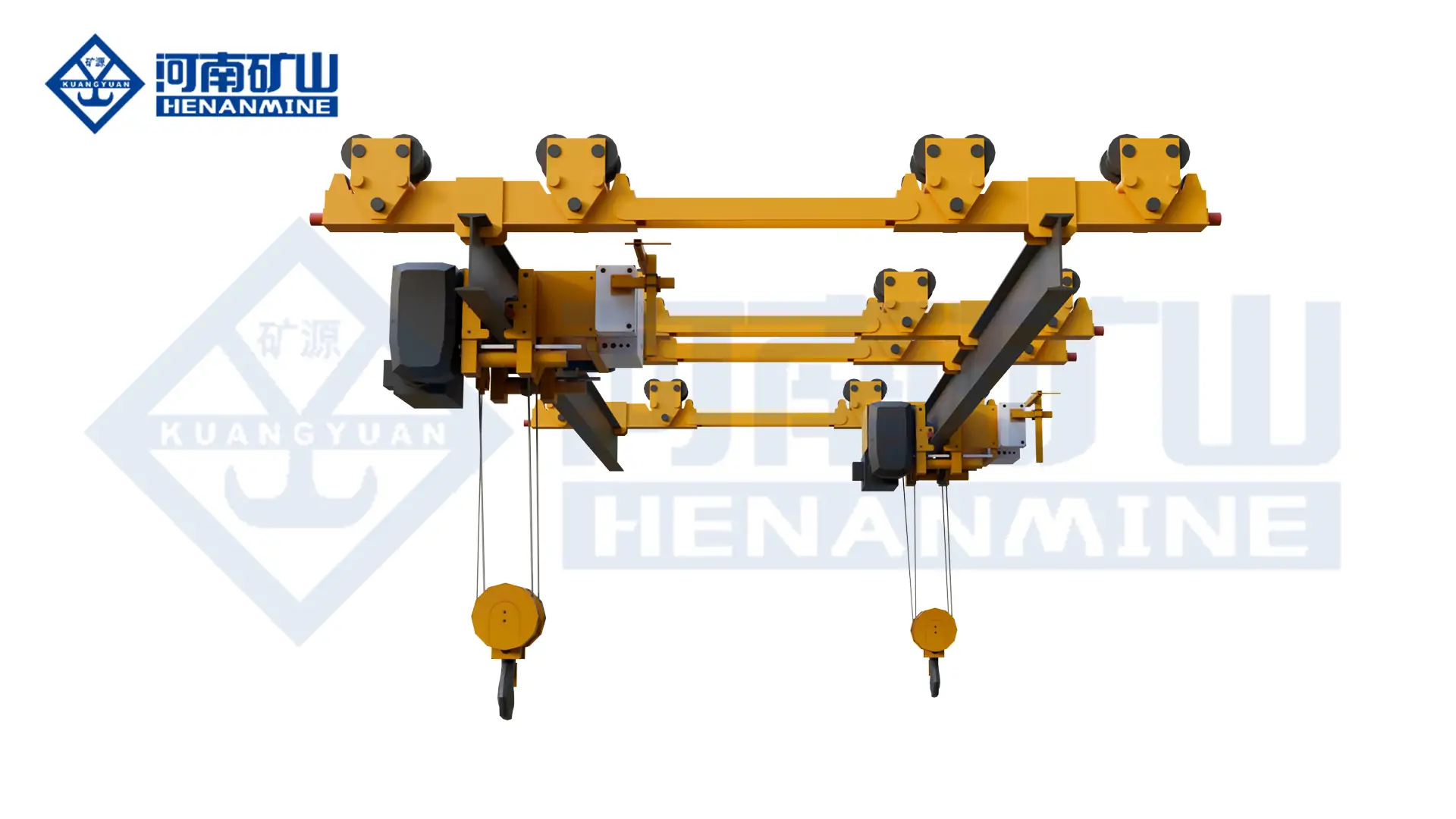
  • Overhead Crane Model Selection: Compare Arrangements and Applications

    Overhead Crane Model Selection: Compare Arrangements and Applications

    Technical guide

    Overhead Crane Model Selection: Compare Arrangements and Applications

    Model selection needs to be supported by the lifting task and configuration-specific data. Compare the structural and hoist arrangements alongside workshop geometry, working duty and process requirements.

    Henan Mine CraneTechnical guide · Updated 2026Crane selection, project scope and operating requirements
    Henan Mine Crane Single-Girder Bridge Crane
    Henan Mine Crane Single-Girder Bridge Crane
    Project planning notes

    Key points for this crane project.

    1. Select the structural arrangement before a model
    2. Compare single-girder and double-girder layouts
    3. Separate top-running and underhung questions
    Read the technical guide

    Select the structural arrangement before a model designation

    A model label is a useful reference only after the crane arrangement is understood. Start with where the bridge runs, where the lifting mechanism travels and how the load reaches its pickup and placement points. Those relationships explain more about suitability than an isolated designation.

    Place the handling route on a building plan. Mark the load orientation at each station and the space occupied by racks, production equipment and services. Use that plan to compare practical hook coverage across the candidate arrangements.

    Compare single-girder and double-girder layouts

    A single-girder bridge uses one main girder; a double-girder bridge uses two. The proposed hoist or trolley position affects the crane envelope, upper hook position and side approaches. Compare these dimensions on configuration drawings at the same lifting requirement.

    Girder count alone does not establish mechanism duty, positioning performance or installed cost. Ask for the selected hoist arrangement, duty basis and support reactions for each alternative rather than treating one bridge form as universally preferable.

    Separate top-running and underhung questions

    Top-running and underhung describe the bridge-to-runway interface. A hoist suspended below a girder does not by itself make the complete bridge crane underhung. Show the proposed runway beam or rail interface clearly in the comparison.

    For an existing building, obtain a structural assessment using the actual proposed reactions and connection arrangement. For a new building, coordinate the crane envelope and runway support requirements before roof services and maintenance access become fixed.

    Match the lifting arrangement to the load

    A general hook, lifting beam, magnet or grab creates different attachment and control questions. A long component may need a dedicated lifting arrangement; a bulk-material process needs information about material condition and transfer sequence. State the application before selecting equipment options.

    Compare the necessary operating functions as part of the arrangement. Define where the operator stands, what must remain visible and whether the crane interacts with machines or another lifting device. Identify special coordination requirements for engineering review.

    Request a model-specific selection response

    The supplier response should identify the proposed model or configuration and the dimensions, duties and interfaces that support its selection. Ask which parameters are confirmed and which depend on site measurements or final attachment selection.

    Send Henan Mine Crane a layout and operating description to discuss the appropriate configuration. The resulting drawing and equipment schedule provide a stronger selection basis than a generic list of crane model names.

    Discuss the crane arrangement for your project.

    Model selection needs to be supported by the lifting task and configuration-specific data. Compare the structural and hoist arrangements alongside workshop geometry, working duty and process requirements. Share the load, available drawings, working cycle and site conditions with Henan Mine Crane so the required configuration and supply boundary can be discussed.

    Related crane configurations

    Single-Girder Bridge Crane

    View product parameters
    Lifting capacity: 1–20 tSpan: 7.5–31.5 mLifting height: 6, 9, 12, 18, 24 or 30 m; capacity-dependent

    Use an LDA single-girder bridge and electric hoist for general workshop material handling. Select the lifting capacity, runway geometry and hoist duty around the building and load.

    LH Electric Hoist Double Girder Crane

    View product parameters
    Lifting capacity: 3, 5, 10, 16, 20 tSpan: 10.5–31.5 mLifting height: 6, 9, 12 or 18 m

    Use an LH double-girder bridge with an electric-hoist trolley for workshop lifting, assembly and maintenance. Match the hoist arrangement to the suspended load, hook travel and available building space.

    Updated 2026 · Henan Mine Crane
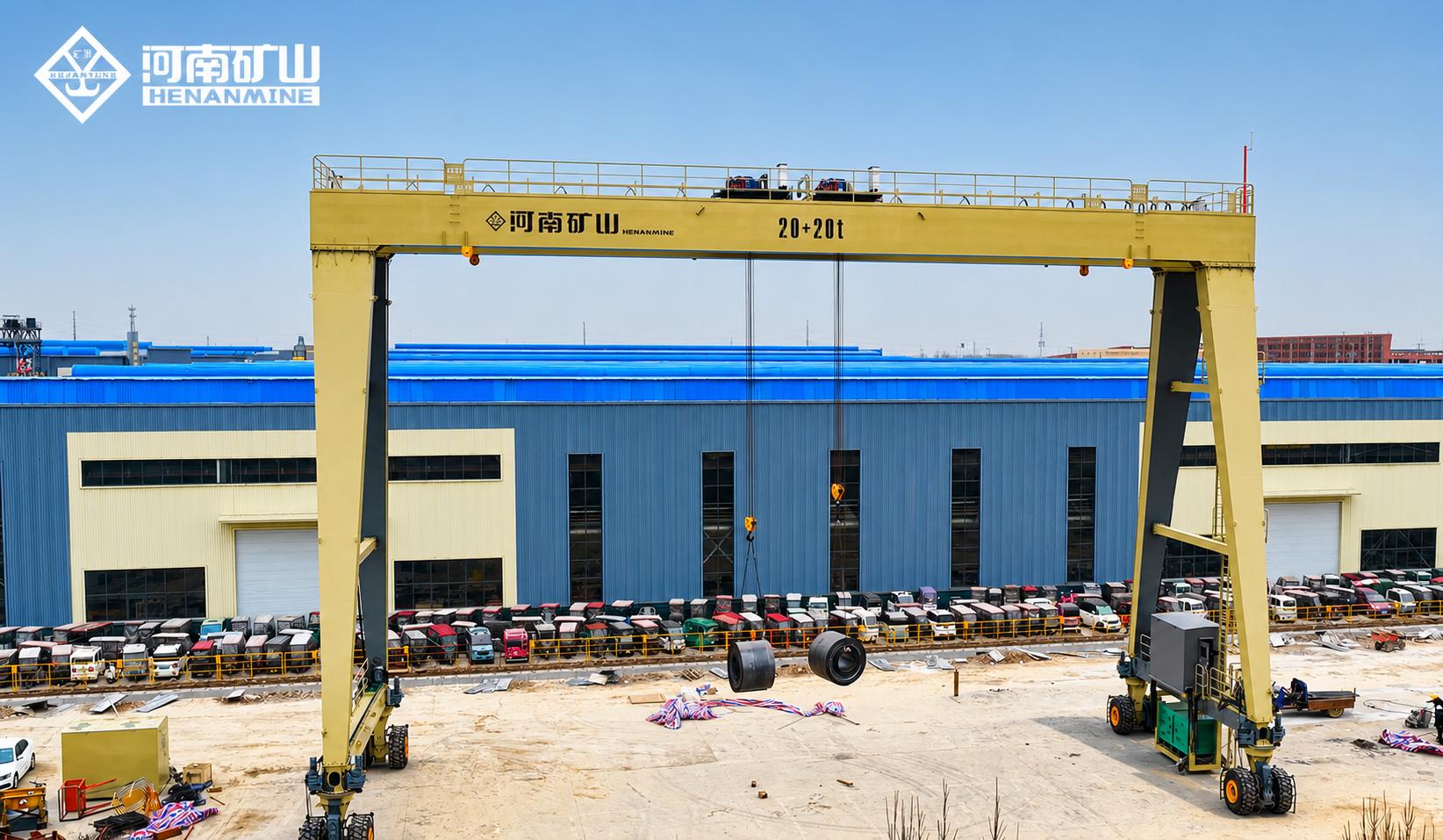
  • Gantry Cranes for Railway and Bridge Beams: Loads, Routes and Support

    Gantry Cranes for Railway and Bridge Beams: Loads, Routes and Support

    Technical guide

    Gantry Cranes for Railway and Bridge Beams: Loads, Routes and Support

    Long precast elements require coordinated lifting points and site movements. Provide beam geometry, lifting-tool details and the transfer sequence so the gantry and supporting site can be reviewed as one handling arrangement.

    Henan Mine CraneTechnical guide · Updated 2026Crane selection, project scope and operating requirements
    Gantry Cranes for Railway and Bridge Beams: Loads, Routes and Support
    Henan Mine Crane lifting equipment
    Project planning notes

    Key points for this crane project.

    1. What Is an Outdoor Heavy Gantry Crane?
    2. Applications in High-Speed Railway & Bridge Beam
    3. Key Specifications for Heavy Railway Beam Gantry
    Read the technical guide

    What Is an Outdoor Heavy Gantry Crane?

    Outdoor heavy-duty gantry crane is a rail-type lifting equipment specially designed for open-air heavy-duty construction scenes. The core structure is a double-leg floor-standing gantry frame. The whole machine walks vertically along the ground track and is equipped with a lifting trolley that can be moved laterally. , Relying on the lifting mechanism to complete the vertical lifting of heavy objects.

    Different from indoor lifting equipment, this equipment does not need to rely on the support of the plant building structure, and is completely independent of load-bearing. It has the characteristics of high site utilization, wide operating range, strong environmental adaptability and strong versatility. It is the core model of special gantry cranes for precast concrete box girders.

    The equipment adopts the principle of three-axis linkage operation: the lifting mechanism is responsible for vertical hoisting, the lifting trolley completes the horizontal alignment, and the whole machine walks vertically along the track. Through three-dimensional collaborative action, the box girder is safely transported and accurately placed from prefabricated and stacked to the erection station.

    Core components

    The heavy-duty gantry crane adapted to the construction of high-speed rail bridges is a heavy-duty customized equipment, and the various components work together to ensure the stable operation under heavy-duty, high-frequency, and outdoor complex working conditions. The core components are as follows:

    • Gantry outriggers and support structure: The layout of one rigid and one soft double outriggers can effectively offset the thermal expansion and contraction deformation of the main girder, adapt to the slight settlement of the ground, and continuously maintain the horizontal stability of the main girder, carrying hundreds of tons of box girder load, which is the core structure of the load-bearing of the whole machine.
    • Main steel beam: Heavy-duty models mostly use box-shaped main girder structure, and some large-span equipment adopts assembled truss beams, which have extremely high structural stiffness and deformation resistance, so as to prevent the main girder from bending and shaking during heavy-duty hoisting, and meet the requirements of high-speed rail box girder millimeter-level erection accuracy.
    • Lifting mechanism: equipped with an electric wire rope hoist lifting system, it supports simultaneous lifting of double lifting points, and can be configured according to the weight of the box girder.
    • Trolley and travel mechanism: equipped with a frequency conversion deceleration drive travel system, it can realize the smooth start and stop of the trolley travel horizontally and the whole machine travel vertically. Short-distance operation can be used with the positioning of the anchoring traction device, effectively reducing the load shaking caused by long-distance travel.
    • Electrical control system: adopts PLC programmable control system + frequency conversion speed regulation (VFD) technology to achieve stepless speed regulation of lifting, travel, and alignment, runs smoothly and without impact, supports real-time working condition monitoring and fault early warning, and is the core control system for precise construction.
    • Safety limit protection device: A full set of safety devices such as overload limiter, stroke limit switch, anti-collision device, wind speed monitor, emergency braking system, etc. are standard to avoid the safety risks of outdoor heavy-duty hoisting in all directions.

    Heavy gantry crane vs ordinary bridge crane

    It is easy for many construction parties to confuse gantry cranes with bridge cranes. The core difference between the two lies in the support structure and applicable scenarios, which is also the key reason why gantry cranes are preferred for bridge infrastructure.:

    The bridge crane relies on the installation of load-bearing rails on the roof and wall of the plant. It is an indoor fixed equipment and is only suitable for enclosed space operations such as workshops and factories. The installation requires the transformation of the building structure, which has a higher overall cost and strong scene limitations.

    The outdoor gantry crane relies on its own outriggers to carry load on the ground, without relying on any building structure, the track is directly laid on the ground, and can be flexibly adapted to open-air beam yards and field construction sections. It is easy to install and disassemble, can be used repeatedly, and temporary infrastructure projects are more cost-effective.

    Applications in High-Speed Railway & Bridge Beam Construction

    Hoisting and transshipment of concrete box girders

    Prefabricated box girders are the core components of high-speed rail and viaduct girders. The load, stability and synchronization requirements of hoisting equipment are extremely high.

    The special bridge construction gantry crane can work together with a single and double lifting point or two machines to smoothly lift the prefabricated box girder from the pouring platform and transfer it to the beam yard storage area for stacking and maintenance.

    The equipment supports large-span coverage of the entire prefabricated beam field, and the synchronous lifting system can always maintain the level of the box girder, prevent tilting and cracking, and fully meet the high-standard hoisting requirements of high-speed rail prefabricated components.

    Precise erection of bridge box girders

    Box girder erection is a key high-precision process in bridge construction, and heavy box girders need to be accurately placed on the pier support. The outdoor heavy-duty gantry crane is equipped with a synchronous lifting control system and frequency conversion sway control technology, which can coordinate the multi-dimensional actions of lifting, traversing, longitudinal, and falling beams to achieve millimeter-level alignment accuracy.

    Compared with automobile cranes, gantry cranes do not need to repeatedly adjust their outriggers, and can continuously complete the erection of multi-span box girders, greatly shortening the construction cycle, while avoiding the occupation and destruction of on-site construction roads, and adapting to intensive bridge piers, elevated road and bridge construction scenarios.

    Material handling on construction site

    In addition to the core box girder hoisting, gantry cranes run through the entire road and bridge construction cycle, undertaking all kinds of heavy building materials handling work. In the prefabricated beam yard, the hoisting and transportation of auxiliary materials such as steel cages, templates, support pads, steel components, etc. can be completed;

    In the main line of construction, the efficient circulation of box girders in the storage area, transportation area, and erection area can be realized, and the material scheduling of the construction site can be coordinated to greatly improve the overall construction efficiency. It is the core supporting equipment for the standardized operation of the beam yard.

    Special application of large-scale railway infrastructure projects

    In large-scale infrastructure projects such as viaducts, elevated railways, and long-distance high-speed rail corridors, outdoor heavy-duty gantry cranes are the core main equipment. There is no ground work space for the construction of elevated roads and bridges, and it relies on the high-altitude cross-domain work capacity of gantry cranes to complete the laying of box girders.;

    For hundreds of kilometers of long-term high-speed rail projects, multiple gantry cranes can be deployed to operate simultaneously, and the prefabrication and on-site erection processes of beam yards can be promoted in sub-regions to ensure the construction progress and operation standardization of large-scale infrastructure projects.

    Key Specifications for Heavy Railway Beam Gantry Cranes

    The core parameters of the equipment directly determine the construction adaptability and operation safety, which are the core basis for the selection of gantry cranes, and need to be accurately matched in combination with the working conditions of the high-speed rail bridge construction site. The selection criteria and applicable requirements for each key parameter are as follows:

    • lifting capacity: The equipment load covers heavy–duty conditions of 100t-1000t and above.
    • Operating span: customized according to the track layout of the beam yard, the width of the box girder stacking and the size of the construction channel.
    • Lifting height: Combined with the height of the pier, the elevation of the deck and the vertical clearance design of the box girder, it fully meets the vertical travel requirements of the high-level erection of the box girder, transshipment across obstacles and other working conditions.
    • travel speed: The design of adjustable speed and speed is adopted to improve the efficiency of material transfer by travel quickly, and the low-speed mode ensures the precise alignment of the box girder erection, taking into account the construction capacity and installation accuracy.
    • Lifting speed: Heavy-duty operations adopt low-speed and stable lifting and beam-dropping modes to avoid box girder shaking and structural cracking caused by high-speed start and stop, and ensure the safety and stability of the whole process of heavy-duty hoisting.
    • Work level: According to the average daily hoisting frequency and the overall construction cycle selection, high–frequency continuous construction scenarios of roads and bridges, priority is given to A6-A8 high-work level equipment, which can be adapted to the needs of tens of thousands of cycles and has stronger durability.
    • Power supply method: standard configuration of cable reel power supply, for remote non-grid construction sites, it can be adapted to power supply schemes such as generator sets and busbars, and adapted to complex power supply conditions in the wild.
    • Adaptation to the operating environment: The whole machine adopts an integrated protection design of windproof, waterproof, dustproof and anticorrosive, which can adapt to harsh outdoor working conditions such as high and low temperature, high winds, rain and snow, and dust, and meet the requirements of continuous open-air construction throughout the year.

    How to Select the Right Gantry Crane for Bridge Beam Lifting

    Operating load accounting

    Load accounting is the basis for selection, and it is strictly prohibited to select the type only according to the weight of the box girder. The total load must include the weight of auxiliary equipment such as box girder, spreader, distribution beam, etc.

    At the same time, fully consider the dynamic inertial load during the start and stop of the equipment and the travel process, and reserve the safety load margin in strict accordance with industry standards to eliminate the safety risks of overload from the root cause.

    Determination of span and scope of operation

    Combine the track gauge of the beam yard, the stacking area of the box girder, and the layout of the transportation channel to determine the span of the crane to ensure that the equipment can fully cover the entire area of prefabrication, storage, and transportation. At the same time, calculate the headroom size of the operation, avoid obstacles such as on-site templates, brackets, and building structures, and ensure that the whole machine walks and the trolley moves without interference.

    Lifting height matching design

    Combining the height of the pier, the elevation of the support and the gap between the erection of the box girder, the minimum lifting height is accurately calculated, and sufficient vertical safety clearance is reserved to avoid the risk of interference in the process of travel and falling the box girder, and to ensure that the hook stroke fully covers all construction conditions such as high-level erection and low-level stacking.

    Speed and accuracy matching

    The equipment needs to match reasonable lifting, traverse, and longitudinal operating speeds. Batch box girder transfer operations can increase construction production capacity through reasonable acceleration; the precise beam falling link of the box girder relies on the low-speed fine-tuning function to achieve millimeter-level precision alignment. Equipped with a frequency conversion speed control system, it can efficiently balance operating efficiency and installation accuracy, and flexibly adapt to different construction processes such as transportation and erection.

    Adaptation to construction conditions

    Outdoor construction needs to give priority to verifying the bearing capacity of the site foundation to ensure that the track foundation can withstand the maximum load of the whole machine and heavy loads; at the same time, comprehensively evaluate the on-site wind speed, rainfall, temperature difference, dust and other outdoor working conditions, and choose windproof reinforcement, anti-corrosion and waterproof protection configurations as needed, so that the equipment can be fully adapted to the complex operating environment of the site.

    Safety Requirements for Outdoor Heavy Gantry Crane Operations

    Heavy-duty box girder hoisting is a high-risk construction process. Standardized safety configuration and standardized operating procedures are the core guarantees of the construction site. The core safety configuration and operating requirements of the equipment are as follows:

    • Overload protection system: the load of hoisting operations can be monitored in real time around the clock. Once the overload situation occurs, the equipment will automatically trigger an early warning and lock the operation, so as to eliminate illegal overload construction from the root cause and avoid the risk of heavy-duty collapse.
    • Emergency stop system: The whole equipment is equipped with multiple emergency stop control buttons. When the operation encounters a sudden failure or sudden danger, all power sources can be cut off instantly, all operating actions can be terminated, and safety risks can be quickly controlled.
    • Stroke limit device: Set exclusive limit switches for all operating mechanisms such as hook lifting, trolley movement, and whole machine travel to effectively prevent equipment over-stroke operations and prevent safety accidents such as collisions, falling objects, and derailments.
    • Anti-collision protection device: suitable for multi-machine synchronous operation beam field scenarios, equipped with infrared intelligent anti-collision system, accurately identify the spacing of adjacent lifting equipment, avoid equipment interference and collision with each other, and ensure the safety of cluster operations.
    • Wind speed monitoring system: real-time collection of wind speed data in the outdoor construction environment, when the wind speed exceeds the operating specification standard, sound and light warning will be automatically issued and the operating authority will be locked. Illegal hoisting in windy weather is strictly prohibited.
    • Full load monitoring: the actual load data of the hook is displayed in real time throughout the operation, which is convenient for operators to intuitively grasp the operating conditions, identify abnormal loads in time, and avoid hidden dangers of overload operations.
    • Daily inspection and maintenance: strictly implement the comprehensive inspection system of the whole machine before the shift, normalize the special maintenance and overhaul of equipment, eliminate equipment failures and hidden dangers, and ensure the stability of equipment working conditions.

    Special Challenges of Lifting High-Speed Railway Bridge Beams

    Load control is difficult

    It is a large-size flexible component with weak overall stiffness. During the hoisting process, it is easy to produce structural defects such as distortion and cracking due to uneven force.

    In view of this working condition, the dual-lifting point synchronous lifting and multi-point balanced force process are adopted, which can evenly distribute the overall lifting load, ensure uniform and stable force on the box girder throughout the process, effectively eliminate deformation, cracking and other problems, and ensure the safety of the hoisting structure.

    Strict construction accuracy

    The high-speed rail bridge construction has extremely high standards for the alignment and placement accuracy of box girders, and the overall error needs to be strictly controlled at the millimeter level. Once the load is shaken or shifted during the hoisting process, it will directly affect the docking accuracy of the beam body and bury hidden dangers in the quality of the project.

    Outdoor wind disturbance has a large impact

    The box girder has a flat body shape and a large wind-affected area. When operating in the open air, even the breeze can easily cause the beam body to shake and shift. Under high wind conditions, it can easily cause the risk of instability, and there are extremely high safety risks for hoisting.

    The equipment is equipped with professional wind speed monitoring devices and windproof anchoring structures, and strictly implements the specifications for wind shutdown. At the same time, the wind resistance of the whole machine is enhanced through structural reinforcement to adapt to the open-air operating environment.

    High loss for high frequency operation

    The frequency of beam field hoisting operations is high and the cycle continuity is strong. The average number of hoisting times can reach dozens of times per day. Long-term high-frequency reciprocating operations will continue to consume the mechanical structure and electrical system of the equipment, which can easily exacerbate the aging of components and induce equipment failure.

    It is necessary to match the corresponding work-level equipment according to the frequency of operation, choose high-quality core accessories, and match regular preventive maintenance to reduce the equipment failure rate and reduce the loss of project downtime.

    Installation, Commissioning & Site Deployment

    Standardized installation and commissioning are the core prerequisites for ensuring the long-term stable, safe and high-precision operation of gantry cranes. On-site deployment strictly follows the construction principle of "first foundation, then structure, first no-load, then heavy load”, and the overall process is standardized and orderly, which can be divided into three stages.:

    • Preliminary foundation construction: compaction and leveling of the foundation of the construction site to ensure that the bearing capacity of the foundation is up to standard; accurate completion of track laying and calibration work to provide a solid foundation for the travel operation of the whole machine.
    • Main equipment installation: complete the assembly of the main steel structure such as the gantry legs and main beams in turn, and then carry out the electrical system wiring, equipment wiring and control system installation to ensure the complete supporting of the mechanical and electrical systems.
    • System commissioning and acceptance: no-load trial operation, heavy-duty load testing and full-dimensional commissioning of the safety system are successively carried out to verify the operating accuracy, braking performance, limit and protection functions of the equipment; special pre-job training for operators is completed simultaneously, and the overall completion and acceptance are finally passed, and the equipment can be put into formal construction operations after meeting the standards.

    The whole process strictly implements industry specifications to ensure the installation accuracy, operating stability and construction safety of equipment in all directions.

    Maintenance Guide for Outdoor Heavy Gantry Cranes

    Outdoor heavy-duty gantry cranes are exposed to wind, rain, dust, and temperature differences in complex field environments for a long time, and are prone to problems such as component wear, structural corrosion, and circuit aging. The establishment of a systematic and normalized maintenance system can effectively reduce the probability of equipment failure, extend the service life of equipment, and ensure the continuity of construction. The core maintenance work is divided into four major sectors:

    • Daily start-up inspection: Thoroughly check the working conditions of core components such as wire ropes, hooks, brake mechanisms, limit switches, and travel wheels before daily operations, and promptly investigate safety hazards such as loosening, wear, and stagnation, so as to prevent equipment from operating with diseases.
    • Regular maintenance of mechanical parts: regularly check the wear status of the wire rope and the degree of deformation of the hook, and replace the lost parts in time; fill the transmission parts such as gearboxes, bearings, and travel wheels with lubricating grease according to the cycle to ensure the smooth operation of the equipment and reduce mechanical losses.
    • Special maintenance of electrical systems: regularly clean up dust and debris inside the electric control cabinet, check the integrity of the circuit insulation layer, and investigate the operation faults of the frequency conversion control system and the intelligent monitoring system to ensure the stable, sensitive and safe operation of the electrical system.
    • Anticorrosive maintenance of the main structure: Normalize the position of the main girder, outriggers and welds, focus on investigating structural deformation, corrosion, cracking and other defects, and do a good job of rust removal, anticorrosion, reinforcement and repair in a timely manner to ensure the structural strength and stability of the whole machine.

    Procurement Checklist: What to Ask a Gantry Crane Manufacturer

    Special gantry cranes for railway bridges are heavy-duty special construction equipment. The procurement and selection cannot be purely price-oriented. They need to be checked in all directions in combination with project construction conditions, safety standards and long-term use requirements. The following are the main points of standardized procurement verification to ensure that the equipment is accurately adapted to the needs of the project:

    • Adaptability of rated load: Verify the rated lifting weight of the equipment to ensure that it can cover the weight of the box girder, the total load of the spreader and auxiliary aids, and reserve standard safety redundancy to eliminate the risk of overload operations.
    • Matching of working condition parameters: Confirm that the span and effective lifting height of the equipment can be adapted to the layout of the beam field, the height of the pier and the construction clearance requirements.
    • Work level adaptation to working conditions: according to the average daily hoisting frequency and construction cycle of the project, verify the work level of the equipment to meet the needs of high-frequency cyclic heavy-duty operations.
    • Safety configuration compliance: Check that a full set of safety systems such as overload protection, limit braking, wind speed monitoring, and anti-collision devices are fully configured and comply with industry construction safety specifications.
    • Customized transformation capabilities: Confirm that manufacturers can provide exclusive customized transformation services for site conditions, box girder parameters, and construction processes.
    • Qualification certification standards: Verify that the equipment has authoritative qualification certifications such as national standards and European standards, and strictly complies with the manufacturing quality standards of heavy-duty lifting equipment.
    • On-site supporting services: Confirm that the manufacturer can provide integrated landing services such as on-site installation, commissioning of the whole machine, and pre-job training of operators.
    • After-sales guarantee system: verify the manufacturer's spare parts supply capacity, timeliness of maintenance response and long-term maintenance services to ensure the continuous and stable construction of the project.

    Discuss the crane arrangement for your project.

    Long precast elements require coordinated lifting points and site movements. Provide beam geometry, lifting-tool details and the transfer sequence so the gantry and supporting site can be reviewed as one handling arrangement. Share the load, available drawings, working cycle and site conditions with Henan Mine Crane so the required configuration and supply boundary can be discussed.

    Related crane configurations

    Single-Beam Suspension Crane

    View product parameters
    Lifting capacity: 0.5–10 tSpan: 3–16 mLifting height: 6, 9, 12 or 18 m

    Suspend an LX single-girder crane from an approved overhead runway to cover workshop lifting positions. Building support, runway geometry and available hook height determine the installation.

    Electric Single Beam Crane For Low Clearance

    View product parameters
    Lifting capacity: 1t – 10tSpan: 7.5m – 28.5mLifting height: 3m – 18m

    Increase usable hook height in a restricted workshop envelope with a low-clearance single-girder arrangement. Match the hoist position, hook approach and structural clearances to the building.

    Updated 2026 · Henan Mine Crane
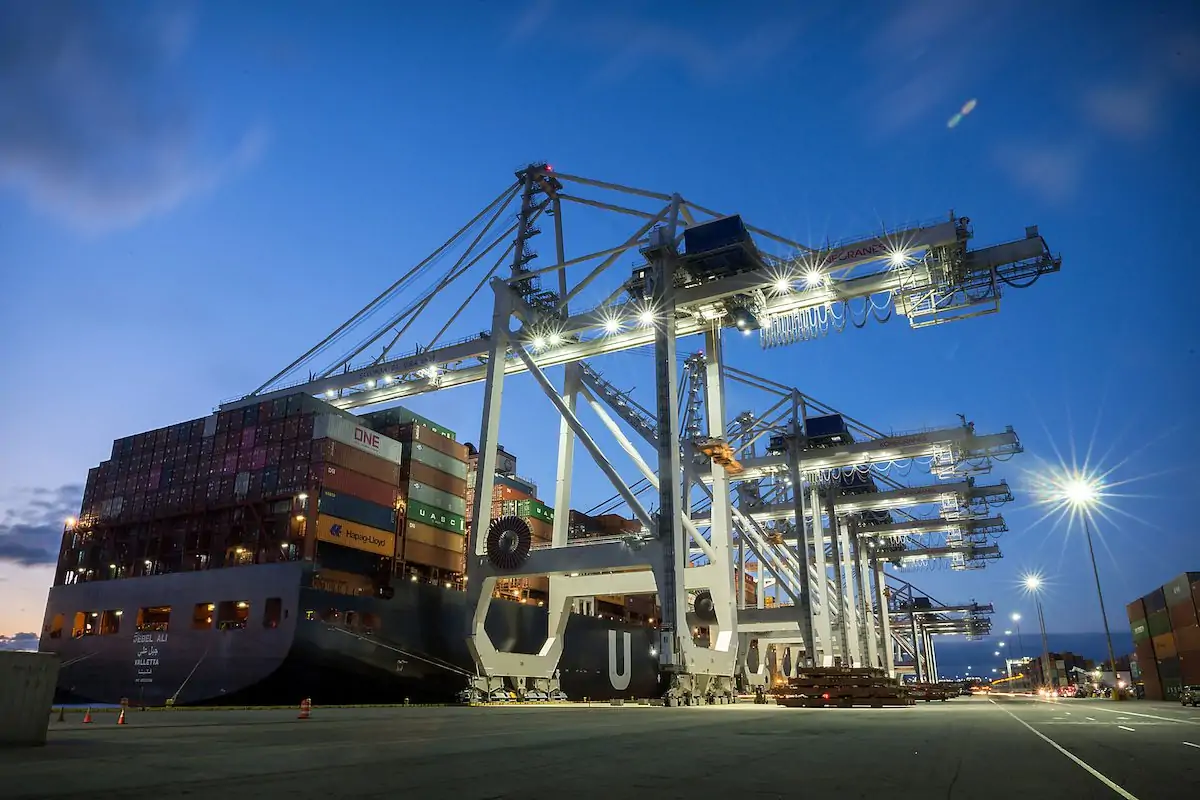
  • New vs Refurbished Cranes: Condition Evidence and Ownership Costs

    New vs Refurbished Cranes: Condition Evidence and Ownership Costs

    Technical guide

    New vs Refurbished Cranes: Condition Evidence and Ownership Costs

    A refurbished crane needs an assessment of its documented condition and suitability for the new duty. Compare modification scope, installation work, maintenance and support assumptions with a new equipment proposal on the same basis.

    Henan Mine CraneTechnical guide · Updated 2026Crane selection, project scope and operating requirements
    Henan Mine Crane Ship-To-Shore Crane (STS)
    Henan Mine Crane Ship-To-Shore Crane (STS)
    Project planning notes

    Key points for this crane project.

    1. What Total Cost of Ownership Means for Industrial
    2. New Crane Costs: Purchase Price, Engineering, and
    3. Refurbished Crane Costs: Purchase Price, Inspection,
    Read the technical guide

    What Total Cost of Ownership Means for Industrial Cranes

    Total cost of ownership (TCO) for an industrial crane is the sum of every cost incurred from acquisition through disposal not just the purchase price.

    1. Acquisition cost: covers all the expenditures in the equipment acquisition stage, such as the purchase price of equipment, financing and leasing costs, and related taxes.
    2. Installation and commissioning costs: including engineering layout, equipment lifting, load testing, site remodeling, equipment commissioning and other preliminary ancillary costs.
    3. Operating costs: covering the daily operating expenses such as energy consumption of equipment operation, salary of post operators, replacement of production consumables, etc.
    4. Maintenance and spare parts costs: including routine maintenance and repair of equipment, replacement of perishable parts, emergency repair and other types of maintenance and repair costs.
    5. Downtime Loss Costs: Capacity loss and indirect loss costs due to production downtime during equipment fault disposal, maintenance and repair, and qualification re-inspection.
    6. Residual value at endof life: the proceeds from second-hand sales and trade-ins at the end of the equipment life cycle, as well as the costs associated with equipment scrapping and disposal.

    Buyers who only compare the first line item purchase price are comparing the smallest and least informative part of the equation.

    New Crane Costs: Purchase Price, Engineering, and Lead Time

    • Rated load and span: the larger the rated lifting capacity of the crane and the longer the span of the bridge, the material specifications required and the corresponding increase in construction difficulty, which will directly push up the cost of equipment materials and engineering landing costs.
    • Working class: industrial heavy cranes designed for continuous operation and heavy load high frequency working conditions, the overall configuration and process standards are higher, the procurement cost is significantly higher than the light, intermittent operation of the ordinary working conditions models.
    • Control and automation configuration: equipment equipped with frequency drive, wireless remote control, intelligent anti-sway and other automation systems, the initial investment costs are higher, but can effectively improve operational stability, reduce long-term operation and maintenance and safety risks.
    • Delivery cycle: The delivery cycle of a new bridge crane system covers the whole process from design, production to installation and acceptance, with a regular cycle of 90 days to more than 12 months, depending on the complexity of equipment customization and the manufacturer's current order capacity load.

    The upfront cost is higher, but buyers get a known structural history, a manufacturer warranty (commonly 5-10 years on major components), and direct access to engineering support if something goes wrong during commissioning.

    Refurbished Crane Costs: Purchase Price, Inspection, and Recertification

    But that price reflects the equipment only. Almost everything else is the buyer's responsibility.

    Costs that often get missed on refurbished purchases:

    • Third-party inspection:a structural survey and engineering assessment of the crane (and your building, if it'll integrate with an existing runway) before you can trust the equipment's condition
    • Documentation gaps:sellers often can't provide full maintenance history or original certification, and the new owner is still legally responsible for proving compliance
    • Limited or no warranty:used equipment commonly ships with a 30-day warranty or none at all, versus 5-10 years on new systems
    • Service life uncertainty:it is genuinely difficult to determine the remaining service life of used lifting equipment, which makes long-horizon TCO modeling inherently less precise than for new cranes

    None of this means refurbished is a bad option it means the all-in cost requires real diligence, not just a quote comparison.

    Installation and Commissioning: Hidden Cost Differences

    Installation cost differs meaningfully between new and refurbished purchases, and it's one of the most commonly underestimated line items in either direction.

    New crane installation is usually bundled into the manufacturer's turnkey scope engineering, rigging, electrical tie-in, and load testing are coordinated and quoted together, which reduces surprises but adds cost.

    Refurbished crane installation puts more of the coordination burden on the buyer:

    1. Engineering review of the existing runway/structure to confirm it can support the used crane's specifications
    2. Independent rigging and transport (sellers rarely include delivery and setup)
    3. Electrical and controls integration, which can require retrofitting if the crane uses outdated control technology

    Buyers frequently budget for the crane itself but not for the structural survey, transport, or recommissioning labor costs that can add tens of thousands of dollars before the crane lifts its first load.

    Maintenance, Spare Parts, and Warranty Coverage Over Time

    Ongoing maintenance cost is where the new-vs-refurbished gap either closes or widens, depending on how the equipment was maintained before you bought it.

    • Original spare parts supply: Directly connecting to the original genuine spare parts channel, stable supply cycle, delivery time can be accurately predicted, completely avoiding non-standard spare parts adaptive failure, supply delays triggered by the operation and maintenance of additional expenditure and equipment downtime losses.
    • New maintenance benchmark cycle: new equipment can be built from scratch standardized, standardized maintenance interval system, operation and maintenance benchmarks are clear and uniform, which facilitates enterprises to land a systematic maintenance program to achieve the whole life cycle of the equipment operation and maintenance costs of fine management and control
    • Wear items (wire rope, brake assemblies, hoist components) may already be partway through their service life with no documented history
    • Parts sourcing can be harder if the crane is an older or discontinued model
    • No manufacturer support means troubleshooting falls to in-house staff or third-party crane service providers

    Downtime Risk

    This is the category that breaks most informal cost comparisons.

    Downtime risk differs between new and refurbished cranes in three ways:

    1. Failure frequency:older components, even refurbished ones, statistically fail more often than new components under the same duty cycle
    2. Repair speed:OEM parts and documented service history (more common with new cranes) shorten repair time; undocumented used equipment often means diagnostic delays
    3. Recertificationdowntime: refurbished cranes installed without full compliance documentation may face additional inspection holds before returning to service

    The framework to apply: multiply your facility's per-hour downtime cost by the expected annual hours of crane unavailability for each option. Even a small difference in expected downtime say, 10 extra hours per year can erase the entire purchase-price discount of a refurbished crane within the first year.

    Depreciation, Service Life, and Resale Value

    A new overhead crane has a typical service life of 15-20 years with proper maintenance, and depreciates predictably over that period useful for both budgeting and resale planning. A refurbished crane's remaining service life is inherently harder to pin down, since usage history is often incomplete.

    • New cranes hold more predictable resale value because buyers can verify age, maintenance records, and remaining warranty
    • Refurbished cranes typically have little to no resale value left, since the next buyer faces the same documentation uncertainty you did

    As a professional crane manufacturer, Henan Mine Crane provides customized overhead cranes, gantry cranes, port cranes, and other heavy-duty lifting solutions for demanding outdoor applications.

    Our engineering team works closely with customers to evaluate project requirements, optimize crane configurations, and deliver reliable solutions designed for harsh environments, high-duty operations, and long-term performance. From technical consultation and engineering design to manufacturing, installation guidance, and after-sales support, we help customers build safer, more efficient, and more dependable material handling systems.

    A Simple TCO Framework You Can Run in 30 Minutes

    You don't need a consultant to get a directionally accurate TCO comparison. Use this framework with rough estimates from your own facility and supplier quotes.

    Cost CategoryNew CraneRefurbished Crane
    Purchase priceFull quoteQuote + inspection fee
    Installation/commissioningIncluded in turnkey quoteAdd rigging, transport, load test
    Recertification/complianceIncludedAdd engineering survey + documentation cost
    Annual maintenance (est.)Lower (new components)Higher (unknown wear state)
    Remaining service life (years)15-20Variable get an engineering estimate
    Estimated resale value at year 10ModerateNear zero

    How to use it: Fill in real numbers from your quotes and your facility's documented downtime cost per hour. Divide each total by the estimated remaining service life to get an annualized TCO. The option with the lower annualized number not the lower purchase price is your better buy.

    When New Wins, When Refurbished Wins

    The right choice depends heavily on duty cycle and how the crane fits into your production flow.

    • New maintenance benchmark cycle: The new equipment can build a standardized maintenance interval system from scratch, with clear and standardized operation and maintenance benchmarks, which facilitates the landing of systematic maintenance programs and realizes the fine control of operation and maintenance costs over the whole life cycle of the equipment.
    • Adaptation of severe operating conditions: the equipment can be adapted to high-frequency continuous operation, heavy-duty severe operating scenarios, to meet the long-term stable operation of high-intensity industrial production needs, and adapt to the complex working conditions of production requirements.
    • Low fault-tolerant production attributes: the lifting equipment for the core of the production line key equipment, belonging to the core unit of single-point operation, once the shutdown will directly cause high production losses, equipment stability requirements are extremely high.
    • Exclusive Customized Configuration: The special load ratings, large span specifications and customized automation functions required by the project cannot be found in the used equipment market, and can only be realized through the customization of the new equipment.
    • Long-term planning suitability: brand-new equipment has a stable and predictable original warranty system, which can match the enterprise's long-term equipment operation planning for 15-20 years, and guarantee the stability of the whole life cycle of production and operation.
    • Project schedule adaptability: the customized delivery cycle of the new equipment is more than 90 days, which can perfectly match the overall construction progress of the project, without schedule conflicts, and adapt to the overall project landing rhythm.
    • Light intermittent working conditions: the equipment only undertakes low-frequency, intermittent lifting tasks, and does not belong to the core production process, so the overall operating load is low and the working conditions are relaxed.
    • Budget Priority Constraints: The project is strictly limited by the fixed asset budget, and the lifting equipment does not belong to the core equipment of the production line, so the priority is relatively low.
    • Emergency equipment delivery needs: the project urgently needs equipment to be quickly put into use, the long delivery cycle of new equipment cannot match the existing project progress, there is a schedule mismatch.

    The overall condition of the existing crane bridge, traveling track and other main bearing structures in the plant is good, and the tested structural strength, stiffness and mechanical load bearing performance are in line with the current industry norms and safety standards, without deformation, corrosion, fatigue damage and other structural hazards.

    The original infrastructure has long-term safe service conditions, without the need to dismantle, rebuild or replace the whole, which can maximize the retention of the existing asset value, and significantly save the overall reconstruction construction costs and construction period.

    The aging problem of the equipment is mainly reflected in the outdated control system, wear and tear of the winch mechanism, insufficient rated load and other functional components, while the main load-bearing structure is still intact and usable. Instead of replacing the whole machine, it is possible to make up for the shortcomings in equipment performance by updating the control system, replacing the winch mechanism, upgrading the core components and other local modifications.

    This method cannot only guarantee the precision and safety standard of the equipment operation, but also save the upgrade cost, shorten the transformation period, and realize the efficient cost reduction and upgrading.

    Frequently Asked Questions

    Q: Is a refurbished crane cheaper than a new crane in total cost of ownership?

    Q: How long does a refurbished overhead crane typically last?

    Remaining service life on a refurbished crane is difficult to determine precisely because full maintenance history is often unavailable. A qualified inspection and engineering assessment is the only reliable way to estimate it before purchase.

    Q: What's the biggest hidden cost in buying a used industrial crane?

    Recertification and compliance documentation. Bringing a used crane up to current ASME or OSHA standards including potential load testing and component replacement is frequently underestimated or left out of initial budget comparisons entirely.

    Q: How much does crane downtime actually cost a factory?

    Q: Should I repair my existing crane or replace it?

    Q: Does crane modernization count as "new" or "refurbished" for TCO purposes?

    Discuss the crane arrangement for your project.

    A refurbished crane needs an assessment of its documented condition and suitability for the new duty. Compare modification scope, installation work, maintenance and support assumptions with a new equipment proposal on the same basis. Share the load, available drawings, working cycle and site conditions with Henan Mine Crane so the required configuration and supply boundary can be discussed.

    Related crane configurations

    Ship-To-Shore Crane (STS)

    View product parameters
    Lifting capacity: 40-65 80-120 tBoom outreach: 40-72 mWorking class: A8

    Transfer containers between ship and quay with an STS crane selected for the berth and vessel envelope. Define the lifting-appliance arrangement, outreach, rail position and handling cycle.

    Updated 2026 · Henan Mine Crane