Engineering · Manufacturing · Project support
info@hnksglobal.comWhatsApp +86 18836207779 ↗

Blog

  • STS vs RTG Cranes: Separate the Ship and Yard Handling Tasks

    STS vs RTG Cranes: Separate the Ship and Yard Handling Tasks

    Technical guide

    STS vs RTG Cranes: Separate the Ship and Yard Handling Tasks

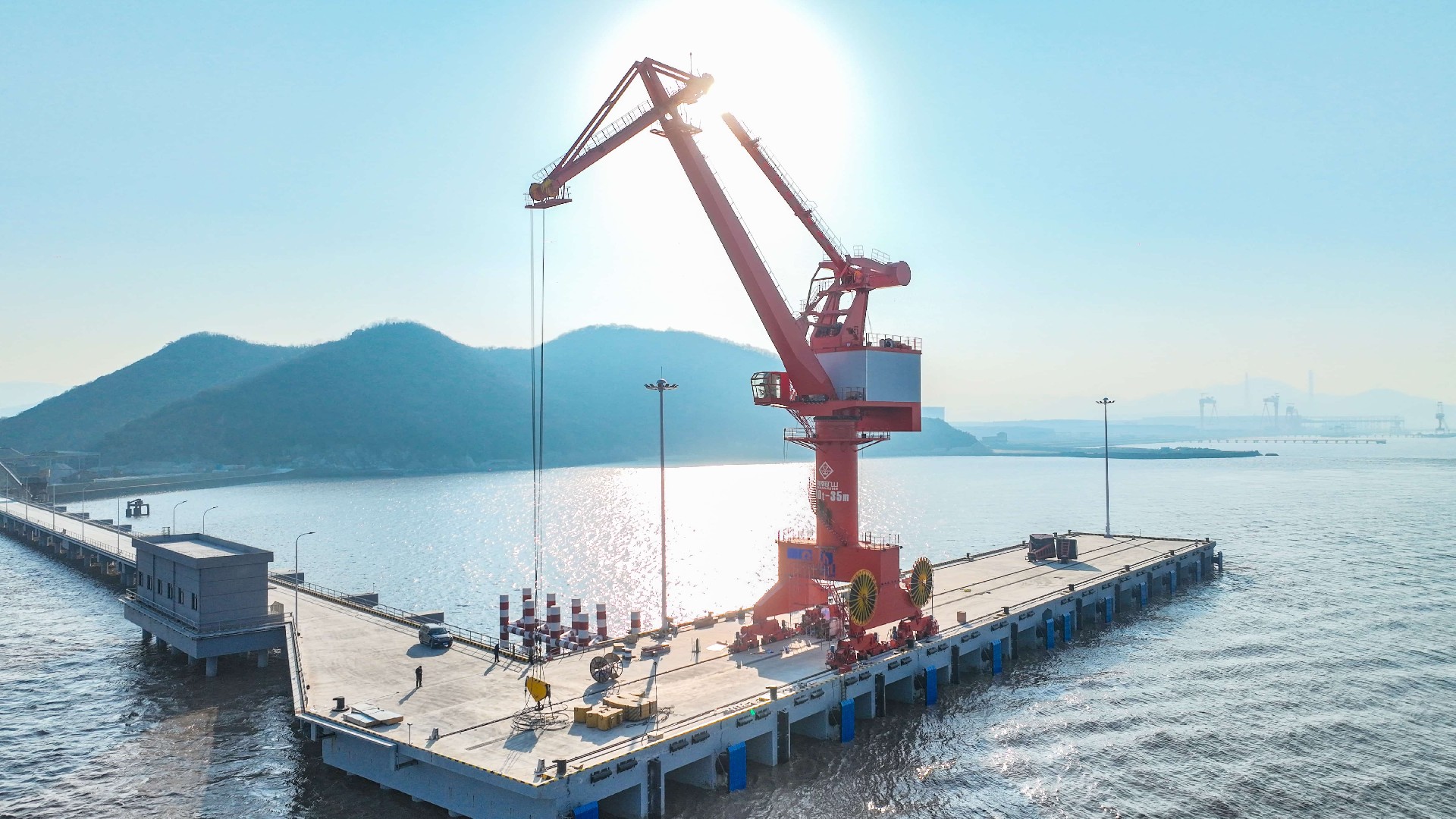
    STS and RTG cranes serve different positions in a terminal's cargo flow. Define the waterfront operation and yard-stacking requirement separately so the comparison reflects their complementary roles.
    Henan Mine CraneTechnical guide · Updated 2026Crane selection, project scope and operating requirements
    STS Crane
    STS Crane
    Project planning notes

    Key points for this crane project.

    1. Overview of Container Handling Systems in Modern
    2. What Is a Ship-to-Shore (STS) Crane?
    3. What Is a Rubber-Tired Gantry Crane (RTG)? Full
    Read the technical guide

    Overview of Container Handling Systems in Modern Ports

    The Full Container Flow, Step by Step

    A container's journey through a terminal follows a consistent sequence: ship → STS crane → yard transfer → RTG crane → truck or rail. Each handoff point is a potential bottleneck, which is why equipment selection at every stage matters as much as the individual machine's specifications.

    Key Equipment Categories

    • Yard cranes (RTG, RMG):container stacking and storage

    Why STS and RTG Dominate Global Ports

    STS and RTG cranes remain the default combination at container terminals worldwide because they deliver the highest efficiency for the lowest operational complexity, scale cleanly from mid-size to mega terminals, and integrate readily with modern automation and terminal operating systems (TOS).

    What Is a Ship-to-Shore (STS) Crane?

    Definition and Role

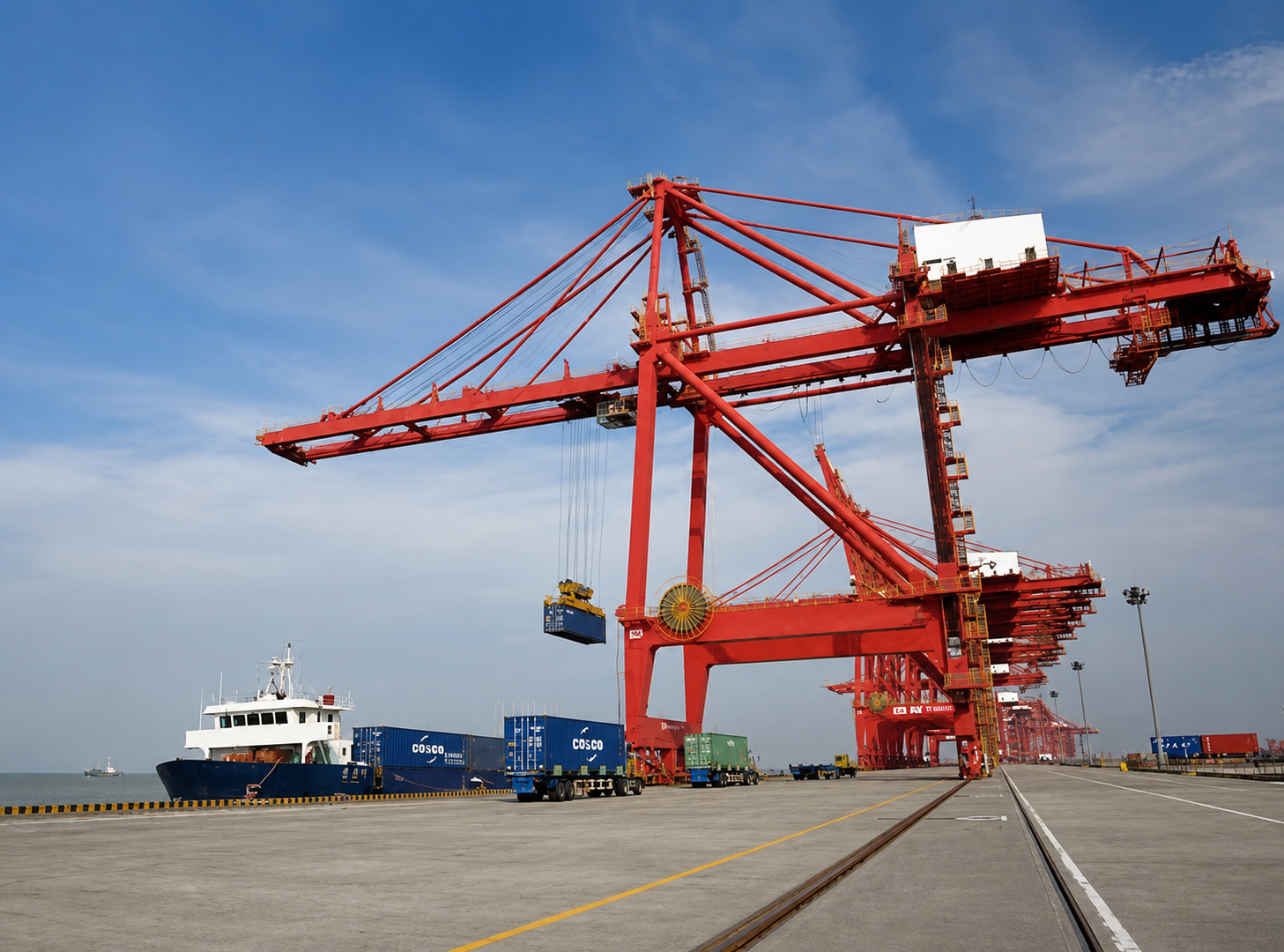
    Henan Mine Crane manufactured STS crane is a large, quay-mounted gantry crane purpose-built to transfer containers between a vessel and the terminal. It is the single piece of equipment that determines how fast a ship can be turned around — and therefore how much revenue a berth can generate per day.

    Structural System

    • A steel portal frameanchored to the quay
    • A long outreach boom, extending up to 70+ meters over the vessel
    • A trolley systemthat travels horizontally along the boom
    • A hoist systemthat raises and lowers the spreader
    • A spreader with automatic twist-lock mechanismthat grips the container's corner castings

    Types of STS Cranes

    STS cranes are classified by the vessel size they're built to service:

    • Super Post-Panamax:built for ultra-large container ships (ULCS)
    • Megamax:the largest class, servicing 24,000+ TEU vessels

    The STS Automation Trend

    Modern STS cranes increasingly rely on semi-automated operation, remote-control cabins located away from the crane itself, and AI-assisted vessel loading optimization that sequences lifts to minimize cycle time and avoid stack collisions.

    Twin-Lift and Tandem-Lift Spreaders

    One of the most significant productivity upgrades in recent STS crane generations is the shift toward twin-lift and tandem-lift spreaders, which can grip and move two 20-foot containers simultaneously instead of one at a time. On paper, this doubles theoretical lift capacity per cycle, though realized gains depend heavily on vessel bay layout, container mix, and how well the yard-side equipment can keep pace with the faster unloading rate. This is a recurring theme in crane selection: a faster STS crane only improves overall terminal performance if the rest of the chain, especially the RTG fleet, can absorb the extra volume.

    What Is a Rubber-Tired Gantry Crane (RTG)? Full System Analysis

    Definition and Working Principle

    Henan Mine Crane manufactured RTG crane is a mobile gantry crane mounted on rubber tires, purpose-built for stacking and retrieving containers inside the storage yard. Unlike the STS crane, it never touches the vessel, its entire job happens on land, between the yard block and the trucks or rail cars that move containers in and out of the terminal.

    Core Components

    • Gantry framespanning the width of a yard block
    • Rubber tire travel systemfor omnidirectional movement between blocks
    • Power system— diesel, hybrid, or fully electric
    • Spreader system, typically adjustable between 20-foot and 40-foot containers

    RTG Power Systems Evolution

    RTG power sources have shifted significantly over the past decade:

    1. Diesel RTG:the traditional standard, now being phased out at many ports
    2. Electric cable-powered RTG:connected to a fixed power grid, zero local emissions
    3. Hybrid RTG:currently the most widely deployed configuration, balancing flexibility and efficiency
    4. Fully electric RTG (e-RTG):the leading edge of the green port trend, cutting fuel costs sharply and eliminating exhaust emissions entirely

    Why Fleet Size Matters More Than Individual Crane Specs

    Because a single RTG only manages one yard block at a time, terminal yard capacity is really a function of fleet size and block layout, not any one crane's specifications. This is a key operational difference from STS cranes, where a small number of very large machines carry the entire vessel-side workload. Planners sizing an RTG fleet need to think in terms of blocks-per-hour throughput and tractor-trailer turnaround time, not just individual crane lift capacity.

    STS Crane vs RTG Crane — Functional Role Difference in Container Flow

    STS Crane Role

    Henan Mine Crane manufactured STS crane handles vessel loading and unloading, operating as the direct interface between ship and shore. Because vessel time at berth is the terminal's most expensive resource, the STS crane runs under constant pressure to hit high-speed cycle targets.

    RTG Crane Role

    Henan Mine Crane manufactured RTG crane handles yard stacking, storage optimization, and container sorting and retrieval. It functions as the buffer between the fast-paced vessel operation and the comparatively slower, more variable landside logistics of trucks and rail.

    Key Insight

    STS and RTG cranes aren't competing solutions, they're sequential links in the same chain:

    Asking "which is better" is really asking two different questions about two different jobs. A terminal doesn't choose one over the other; it decides how much capacity to deploy in each role.

    Engineering and Structural Differences

    Foundation and Installation

    The STS crane requires a fixed rail system on a deep quay foundation engineered to handle enormous static and dynamic loads at the waterside edge. The RTG crane, by contrast, operates on a ground-based, flexible yard surface with no comparable foundation demands, which makes it far cheaper and faster to deploy or relocate.

    Mobility System

    Henan Mine Crane STS cranes move in a single dimension, linear rail-mounted travel along the quay. RTG cranes move in multiple dimensions, offering rubber-tire omnidirectional mobility across yard blocks, which is what makes them adaptable to changing yard layouts.

    Structural Load Characteristics

    STS cranes are engineered around extreme wind-load resistance, since their tall, exposed boom structure is highly vulnerable to storm conditions at the waterfront. RTG cranes are engineered around dynamic load balancing, since they're constantly in motion across uneven yard surfaces while carrying heavy loads.

    Durability Requirements

    STS cranes require marine corrosion protection for steel components exposed to salt air. RTG cranes require tire and chassis fatigue resistance, since tires and axles absorb continuous mechanical stress from yard travel.

    Operational Efficiency Comparison

    Cycle Time Performance

    Advanced STS cranes typically achieve 25–40 gross moves per hour (GMPH), with the most modern tandem-lift systems pushing beyond that range. RTG cranes don't have a directly comparable metric, their contribution is measured as support cycle efficiency, since their throughput depends on how quickly trucks and rail assets can move containers in and out of the yard.

    Container Throughput Capacity

    • STS crane performance determines berth productivity:the primary metric port authorities use to price and prioritize vessel calls.
    • RTG crane performance determines yard bottleneck elimination:how quickly the yard can absorb inbound containers and release outbound ones without stalling.

    Port Congestion Impact

    The two machines fail differently, and the consequences aren't symmetrical:

    • An STS bottleneck causes vessel delay, which is immediately visible and costly,ships pay demurrage, and shipping lines reroute future calls.
    • An RTG bottleneck causes yard congestion, which is often less visible in the short term but compounds into gate delays and truck queuing over time.

    Coordination Efficiency

    A high-performing STS crane that regularly waits on yard transport vehicles is effectively operating at the yard's speed, not its own rated capacity. Closing that gap is usually a scheduling and equipment-allocation problem rather than a hardware problem, which is one reason TOS investment often delivers faster returns than incremental crane purchases.

    Cost Comparison — CAPEX vs OPEX Breakdown

    Initial Investment

    Henan Mine Crane STS cranes represent an extremely high capital investment, combining the crane's own cost with the quay infrastructure, rail systems, and deep foundation work required to support it. RTG cranes require moderate, scalable investment, terminals can add units incrementally as yard volume grows, without major civil works.

    Operating Cost

    • RTG operating costis driven primarily by fuel or electricity consumption, which varies significantly depending on whether the fleet is diesel, hybrid, or fully electric.
    • STS operating costcombines maintenance, skilled labor, and peak-demand energy consumption tied to lifting cycles.

    Maintenance Cost Structure

    STS maintenance centers on heavy structural systems, cable management, and trolley mechanisms, repairs that often require specialized contractors and extended downtime. RTG maintenance is dominated by tire wear, engine service, and hydraulic system upkeep, which is generally less specialized but more frequent.

    Long-Term ROI

    STS cranes deliver high ROI at mega ports, where vessel call volume and berth productivity justify the capital outlay. RTG cranes deliver flexible ROI for scalable terminals, where the ability to add capacity incrementally matters more than maximizing any single unit's output.

    Total Cost of Ownership Beyond the Purchase Price

    Procurement teams often anchor on purchase price alone, but total cost of ownership (TCO) tells a more complete story. An STS crane's lifespan typically spans several decades, which means financing structure, spare-parts availability, and manufacturer support agreements matter as much as the sticker price. For RTG fleets, TCO is more sensitive to power source: a diesel fleet carries ongoing fuel-price exposure that an electrified fleet largely avoids, even though the electrified units usually cost more upfront. Terminals evaluating STS crane vs RTG crane investment should model TCO over a 15–20 year horizon rather than comparing capex figures in isolation.

    Productivity Impact on Container Terminal Design

    High-Volume Mega Ports

    At mega ports, an STS crane fleet becomes mandatory infrastructure, without sufficient quay cranes, berth productivity collapses regardless of yard efficiency. RTG fleets support this by enabling high-density stacking, maximizing storage capacity within a constrained yard footprint.

    Medium Ports

    Mid-size terminals generally need a balanced STS and RTG system design, sized proportionally to expected vessel calls and cargo dwell time rather than maximized for peak throughput.

    Inland Terminals

    Inland container depots and dry ports have no vessel interface at all, so RTG cranes dominate, their mobility and lower infrastructure requirements make them the practical default for pure yard and rail operations.

    Automation and Smart Port Integration

    STS Automation Systems

    Automated STS operations now commonly include remote-control operation from centralized control rooms, AI-driven vessel stowage planning, and digital twin quay simulation used to test loading sequences before they run on the real crane.

    RTG Automation Evolution

    RTG automation has progressed toward automatic stacking (ARTG), GPS-based yard navigation, and increasingly, fully driverless yard operations at leading automated terminals.

    Integrated Terminal Systems

    None of this automation works in isolation. It depends on:

    • TOS (Terminal Operating System)coordinating every equipment movement in real time
    • IoT-based crane coordinationsynchronizing STS and RTG schedules
    • Real-time container trackingfeeding data back into planning and exception handling

    Energy Efficiency and Green Port Development

    STS Energy Consumption Profile

    STS cranes draw high peak electrical loads during lifting cycles, but many modern units offset this with regenerative braking systems that recover energy during lowering and deceleration.

    RTG Green Transformation

    Henan Mine Crane RTG fleet is where the biggest sustainability shift is happening. Hybrid RTG adoption has become the mainstream transition step, while fully electric RTG systems represent the endpoint most green-port strategies are targeting.

    Carbon Reduction Strategies

    Terminals pursuing decarbonization typically combine shore power integration for docked vessels, fully electrified yard equipment, and smart energy scheduling that shifts crane power draw to off-peak periods.

    Safety Systems Comparison

    STS Crane Safety Systems

    • Anti-sway controlto stabilize suspended loads during high-speed trolley movement
    • Wind-load protection systemsthat limit or halt operations above safe wind thresholds
    • Collision avoidance systemspreventing contact with vessel structures or adjacent cranes

    RTG Crane Safety Systems

    • Anti-collision sensorsbetween RTG units operating in the same yard block
    • Tire pressure monitoringto catch mechanical failures before they cause instability
    • Automatic braking systemsfor safe stops during yard travel

    Advantages and Disadvantages Summary

    STS Crane Strengths

    STS cranes deliver maximum vessel throughput, are essential for deep-sea port compatibility with the largest container ships, and offer high automation potential as terminals modernize.

    STS Crane Limitations

    Their core weaknesses are high infrastructure dependency, a fixed rail and quay foundation that can't easily be relocated, and low mobility flexibility once installed.

    RTG Crane Strengths

    Henan Mine Crane RTG cranes offer flexible yard operations, a lower investment barrier than rail-mounted alternatives, and the ability to scale easily as terminal volume grows.

    RTG Crane Limitations

    Their main constraints are limited lifting height compared to STS cranes and, in non-electrified fleets, ongoing energy dependence on diesel supply and pricing.

    Discuss the crane arrangement for your project.

    STS and RTG cranes serve different positions in a terminal's cargo flow. Define the waterfront operation and yard-stacking requirement separately so the comparison reflects their complementary roles. Share the load, available drawings, working cycle and site conditions with Henan Mine Crane so the required configuration and supply boundary can be discussed.

    Related crane configurations

    Ship-To-Shore Crane (STS)

    View product parameters
    Lifting capacity: 40-65 80-120 tBoom outreach: 40-72 mWorking class: A8

    Transfer containers between ship and quay with an STS crane selected for the berth and vessel envelope. Define the lifting-appliance arrangement, outreach, rail position and handling cycle.

    Rubber Tyred Gantry (RTG)

    View product parameters
    Lifting capacity: 20t – 100tSpan: 5m – 30mLifting height: 6m – 30m

    Use a rubber-tyred gantry for heavy handling where the operating layout requires a mobile tyre-supported arrangement. Define the load, steering modes, route and ground conditions for the project.

    Updated 2026 · Henan Mine Crane
  • Crane Project for Maanshan Special Steel Base

    Crane Project for Maanshan Special Steel Base

    Project review

    Crane Project for Maanshan Special Steel Base

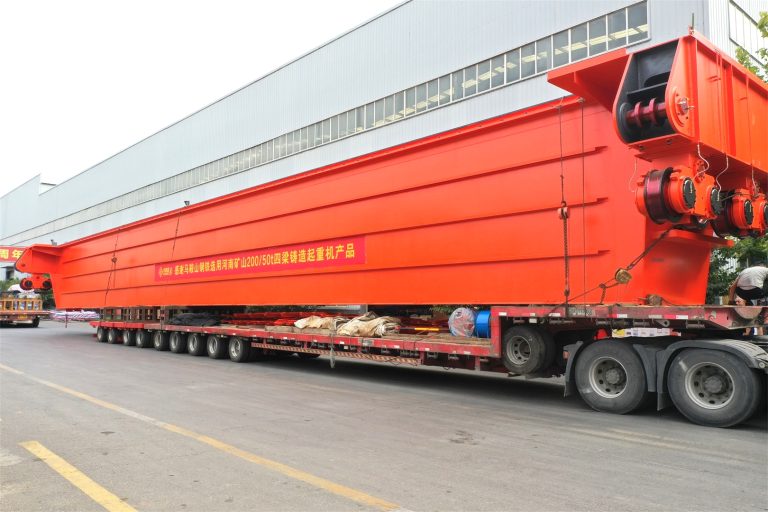
    Explore the crane supply for Maanshan’s special steel base, including 200 t casting and rotating magnetic cranes. Discuss your steel-handling project.

    Crane Project for Maanshan Special Steel Base — Henan Mine Crane crane application photograph
    Crane Project for Maanshan Special Steel Base — crane application overview.

    Project evidence

    • More than 30 crane units were delivered for the Maanshan 3.2-million-ton special steel base.
    • The account names 200 t casting cranes and rotating electromagnetic carrier-beam cranes.

    Steelmaking and metal handling

    Define the complete suspended load, ladle or steel-product geometry, process temperature, crane duty and safe travel path. For molten-metal work, include auxiliary lifting, heat shielding, redundant protections and inspection access in the specification.

    Crane configuration and interfaces

    Ask for the crane arrangement, hook and lifting appliance interfaces, runway loads, control and monitoring functions, inspection access and a test plan matched to the plant process.

    Review the Metallurgical overhead cranes and Steel & metallurgy cranes before defining the project-specific arrangement.

    Design the lifting process

    Use the project context above as a starting point. The following checks turn a crane application into a technical scope that suppliers can price and demonstrate for your site.

    Molten-metal lifting sequence

    Describe where a ladle is picked up, where it travels, how it is poured and how it is returned. Provide the mass of the ladle, lining, molten metal, lifting beam and rigging as separate inputs. The main-hook capacity alone does not define the crane: auxiliary-hook duty, hook spacing, approach, travel speed, plant clearances and the number of lifts per shift matter. If the process includes charging, tundish transfer or maintenance lifts, separate those cycles rather than assuming one arrangement can serve them all.

    Protection and maintainability

    For a hot shop, specify ambient and radiant temperatures at the bridge, trolley, electrical cabinets and operator position. Discuss heat shielding, cable routing, braking and overspeed protection, redundant functions where applicable, access for inspection and a safe maintenance position. These features need a project-specific risk assessment and applicable design standard; a catalogue label such as “metallurgical” does not establish suitability for molten-metal duty. Provide runway condition and building clearances so that protective equipment can be installed and serviced.

    What to compare at technical review

    Request general arrangement drawings, the mass calculation for the suspended load, main and auxiliary hook duties, duty classification, wheel loads, electrical interfaces and a list of protective functions. Compare each offer against the same process sequence and site drawings. Define factory and site acceptance tests for rated load, interlocks, brakes, limit switches and operational travel. Agree how production will be isolated during installation and how spare components will be supported. Published case tonnages describe those installations only; a new crane must be sized to its own process.

    Compare the proposed crane scope

    DecisionInformation to request
    Crane and lifting attachmentRated loads, load cases, hook coverage and the complete suspended-load calculation.
    Site interfacesRunway loads, rail or building drawings, electrical supply and installation responsibilities.
    Controls and protectionOperating sequence, required safety functions and a method for testing each function.
    Commercial scopeEquipment, transport, installation, commissioning, documentation, training and spare parts as separate line items.

    From technical offer to site acceptance

    Technical submittals

    A usable bid should show a general arrangement and a clear list of assumptions, not just a model name and capacity. Request the load schedule used in design, lifting-attachment drawings where applicable, span and hook-approach dimensions, wheel loads, electrical supply, control narrative and maintenance access. Check every drawing against the actual building or yard layout. Identify the standards and local approval requirements for the destination market in the enquiry, then confirm the bidder’s proposed design and documentation scope in writing.

    Installation and tests

    Agree when the runway or civil works will be ready, how crane components can reach the installation position and who provides lifting equipment for erection. Define the factory test, on-site installation inspection and site acceptance as separate milestones. The acceptance procedure should list representative loads, the travel route, protection devices, emergency stop and any automation or attachment functions included in the order. Record who supplies test weights, operators, power and access equipment; otherwise a nominal commissioning price may omit essential site work.

    Commercial comparison

    Ask for the same delivery basis and currency across proposals. Separate the crane, special lifting appliances, rails or conductors, transport, installation support, commissioning, training and initial spare parts. Lead time should identify the starting event, such as approved drawings or an effective contract, and any dependency on site readiness. Compare warranty scope and service response by the written contract terms. If a key input is still unknown, request a priced option or a stated assumption instead of allowing different bidders to silently use different specifications. Keep a written exception register so the engineering team can resolve open dimensions, process interfaces and responsibility boundaries before issuing the purchase order.

    Information to include in the enquiry

    • Load weights, dimensions, centre of gravity and lifting attachments.
    • Span, lifting height, runway or yard drawings, travel coverage and clearances.
    • Operating cycle, working environment, electrical supply and control requirements.
    • Supply boundaries, inspection documents, installation support and acceptance criteria.

    Discuss a comparable lifting task

    Send the handling task and available site drawings. Henan Mine Crane can define a proposed crane arrangement and identify the remaining information needed for a technical and commercial review.

  • STS or Portal Harbor Crane: Match the Equipment to the Cargo Mix

    STS or Portal Harbor Crane: Match the Equipment to the Cargo Mix

    Technical guide

    STS or Portal Harbor Crane: Match the Equipment to the Cargo Mix

    The vessel interface and cargo mix determine which crane arrangement deserves evaluation. Compare container handling, general cargo and transfer requirements with the available quay space and operating envelope.

    Henan Mine CraneTechnical guide · Updated 2026Crane selection, project scope and operating requirements
    portal harbor crane manufacturers
    portal harbor crane manufacturers
    Project planning notes

    Key points for this crane project.

    1. What is the STS ship-to-shore crane?
    2. What is a Portal Crane?
    3. The core difference: container specialization VS
    Read the technical guide

    What is the STS ship-to-shore crane?

    STS cranes, known as Ship-to-Shore Crane, also often called shore container cranes, is the core standard equipment for specialized deep water container terminals. As the exclusive quay crane for container terminal, it adopts the shore rail fixed installation, specializing in the service of container ships and terminal shoreline between the loading and unloading transfer operations.

    The core design logic of this kind of container terminal crane is container operation specialization. Equipped with special container telescopic spreader, the equipment has extra-long reach and large lifting height, which can cover the whole deck of ultra-large container ships and is suitable for the smooth loading and unloading of high-level stacked containers.

    In actual port operation, STS shorebridge can perfectly match the operation mode of double and multiple containers, and can be linked and adapted with RMG, RTG, AGV and other equipments in the yard, which is suitable for the operation system of automated and semi-automated intelligent terminals. Almost all of the world's large container deep-water hub ports and ocean-going terminals use STS cranes as the core operating equipment.

    Its limitation is also very clear, the equipment function is highly specialized, only suitable for standard container operation, not compatible with bulk cargo, steel, engineering large parts and other diversified types of cargo, operational flexibility is relatively limited.

    What is a Portal Crane?

    Portal Harbor Crane (Portal Harbor Crane) is a multifunctional terminal general-purpose shore bridge equipment, also using the dock rail installation mode, relying on the portal frame structure design, the lower side of the passage of container trucks, railroad wagons and conveyor equipment, does not take up the effective operating space of the terminal.

    Different from the specialization of STS, the biggest advantage of portal harbor crane for deepwater port is its strong compatibility. According to the type of cargo, the crane can be quickly changed with hooks, grabs, electromagnetic suction cups, special beams and other accessories to meet the needs of a variety of cargo loading and unloading.

    This kind of bulk cargo portal crane is widely used in bulk cargo deep-water ports, general cargo terminals and multi-functional comprehensive terminals, and can stably load and unload various non-containerized cargoes such as coal, ore, grain, fertilizer, steel, large equipment, etc. It is a highly adaptable equipment for the operation of multiple types of cargoes.

    For small and medium-sized deep-water ports with irregular cargo types, both bulk cargo and a small number of container operations, the adaptability and cost-effective advantage of gantry port cranes is very prominent, and can effectively reduce the cost of terminal equipment configuration.

    The core difference: container specialization VS multi-cargo flexibility

    The core value of the STS quay bridge is the ultimate container operation capacity. As a specialized equipment for container terminal, the whole machine structure, lifting system, trolley operation system and spreader system are all designed around container high-frequency cycle operation.

    The specialized structural configuration allows STS cranes to have a higher hourly operating capacity, which can significantly shorten the berthing time of large container ships. At the same time, it can be seamlessly connected to the terminal TOS system, adapted to remote control, automatic alignment, anti-sway control and other functions, which is the most necessary equipment for high throughput container deepwater ports.

    The core advantage of gantry port cranes is the flexibility of operation without limitation of cargo types. It does not have a fixed mode of operation constraints, can be flexible to switch between various types of attachments, suitable for continuous loading and unloading of bulk cargo, large equipment lifting, steel bundled goods transfer and other working conditions.

    In multi-functional deep-water port, the cargo turnover is random and strong, the gantry crane can flexibly adapt to different ship types and cargo specifications, avoiding the operational shortcomings brought about by the limitation of single equipment function, and greatly improving the utilization rate of the quay berth.

    STS cranes and gantry cranes core parameters of the English comparison table

    Combined with the global deepwater port project operation experience, we organize the core performance of the two types of shore bridge equipment and adaptive differences, which visually supports the selection decision:

    Comparison FactorSTS CranePortal Harbor Crane
    Best Applicable CargoStandard full containersBulk cargo, general cargo, steel, project cargo
    Main Working ToolsSpecial container spreaderHook, grab, magnetic chuck, lifting beam
    Suitable Terminal TypeDedicated container deepwater terminalMulti-purpose & bulk deepwater terminal
    Handling ProductivityHigh for container handlingStable for bulk/general cargo, low for containers
    Vessel MatchingUltra-large container ships, ULCVBulk carriers, general cargo vessels
    Operational FlexibilityLow, single cargo scenarioHigh, adaptable to multiple scenarios
    Total Initial CAPEX (Crane + Civil Works)HighMedium and controllable
    Automation PotentialHigh, fully intelligent compatibleMedium, limited by diverse cargo

    Combined with the practical experience of the project, 3 basic criteria can be used to quickly lock the direction of adaptation:

    • Bulk / general cargo is mainly, the cargo type fluctuates greatly, there is no stable container schedule → Priority allocation of gantry port crane
    • Two types of cargo have stable business volume, berths can be zoned planning → use zoning mix and match program

    Deep-water container terminals: prioritize the use of STS quay bridge

    Focusing on deep-water container seagoing business, STS cranes are irreplaceable core equipment. Ultra-large container ships have many deck positions and high number of stacking layers, so only ship-to-shore gantry crane for deep water container terminal can cover the complete operation range of the ship with its extra-long forward reach and ultra-high lifting height.

    Usually, deep water container berths with an annual throughput of more than 300,000 TEU will be equipped with 65-ton double-box STS gantry crane as the main operating equipment, which is suitable for the regular port call operation of super-Panamax vessels. High frequency, standardized container loading and unloading operations require equipment with stable cyclic operation capability, and the double-tank operation configuration of STS bridge can continuously improve the operation efficiency of the berth and reduce the waiting time for large ships to call at port, which is suitable for the operation needs of mainline container terminals.

    From the long-term development point of view, modern container deep-water ports are generally upgraded in the direction of automation and intelligence, STS quay bridge can be perfectly connected to the terminal automation system, and yard equipment, transportation equipment to form a linkage operation system, which is suitable for the port's long-term expansion and intelligent upgrading plan.

    Although gantry port cranes can be installed with container spreaders for temporary loading and unloading of containers, the operation cycle rhythm, alignment accuracy and capacity, completely unable to meet the regular operational needs of high throughput container terminals, is not suitable for use as the main equipment.

    Deep-water bulk and general cargo terminals: give priority to gantry port cranes

    Coal, ore, grain, fertilizer and other bulk cargo-based deepwater berths, bulk cargo portal harbor crane for deepwater berth adaptability is much higher than the STS shore bridge. This kind of cargo needs grab, hopper, conveyor system supporting operation, which is the core application scenario of portal crane.

    For a bulk cargo deepwater berth with an annual throughput of 3 million tons, a 40-ton gantry crane with a corresponding volume of grab can cover the loading and unloading needs of conventional bulk cargo. For irregular bulk cargoes such as steel, large equipment, engineering parts, etc., the gantry crane can complete the lifting operation by replacing the hooks and special lifting beams, which can be adapted to non-standard cargoes with different sizes and weights, thus providing a wider range of operational adaptability.

    The special container spreader of STS quay bridge cannot be adapted to bulk cargo loading and unloading conditions, and the forced modification of attachments not only has extremely low operating efficiency, but also increases the loss of equipment and safety hazards, which is not suitable for the normalized operation of bulk cargo terminals at all.

    Multi-functional deep-water port: the optimal solution for mix and match placement

    Many small and medium-sized deepwater ports belong to multi-functional integrated terminal, while undertaking container, bulk, general cargo and other businesses, a single device cannot meet all operational needs. This type of port does not need to choose one or the other, using a mix and match placement is the most suitable for the operation of the program.

    Dedicated container berths can be divided, the configuration of STS quay crane to protect the capacity of container trunk operations; bulk and general cargo berths configured with gantry port cranes, taking into account the flexibility of multiple types of cargo operations.

    This zoning configuration model cannot only protect the operational efficiency of the core cargo types, but also cover the operational needs of scattered cargo types, balancing the equipment investment and terminal capacity, suitable for the long-term operation of multi-functional deep-water port planning.

    Difference between infrastructure investment and full-cycle cost

    STS quay bridge has bigger weight and more complicated structure, which requires higher requirements on quay civil foundation, track bearing and high-voltage power supply system, and higher investment in infrastructure and equipment procurement in the early stage. However, under high-frequency container operation scenarios, the equipment failure rate is low, the operational loss is small, and the long-term operation and maintenance costs are controllable.

    Gantry port cranes have lower initial procurement and infrastructure costs, simple equipment structure, short installation and commissioning cycle. However, the frequent replacement of attachments, slewing mechanism wear and tear, long-term maintenance frequency will be slightly higher than the STS shore bridge under multiple working conditions.

    From the STS vs portal crane total cost of ownership point of view, high throughput container terminal, STS shorebridge capacity advantage can wipe out the high price difference; multi-species low-frequency terminals, the low cost of portal crane, high flexibility and more cost-effective.

    Automation and intelligent port adaptability

    With high degree of standardization of operation process, fixed operation track and unified operation parameters, STS quay bridge is the core automation equipment of smart container terminal. It can easily realize automatic alignment, automatic loading and unloading, unattended operation, and is suitable for intelligent upgrading of large hub ports.

    Gantry port cranes are more difficult to automate due to the variable cargo types and irregular operation modes. Only the basic remote control, safety monitoring functions, it is difficult to complete the whole process of unmanned operation, more suitable for traditional multi-functional terminal operation mode.

    Port selection of common misconceptions

    Many project selection, purely based on equipment procurement price as the basis for decision-making, ignoring the suitability of goods, resulting in insufficient capacity after the commissioning of the equipment, functional idleness. Container terminals use gantry cranes, there will be low operating efficiency, slow turnover of ships.

    Blindly selecting STS quay bridge for bulk cargo terminal will result in waste of equipment function, and it can't be adapted to the working condition of bulk cargo, and extra investment is needed to modify the equipment in the later stage, which will increase the unnecessary cost. At the same time, many purchasers ignore the quay pressure and infrastructure carrying capacity, resulting in the equipment not being able to operate at full capacity after installation.

    Some overseas procurement projects did not confirm the CE, FEM and other international certification requirements in advance, resulting in equipment arrival in Hong Kong, customs clearance is blocked, the local acceptance does not pass; there are also projects to ignore the environmental standards of the country where the terminal is located, the choice of fuel-driven gantry cranes cannot meet the requirements of the local environmental impact assessment, the latter part of the transformation of the investment is huge.

    FAQ Frequently Asked Questions

    Is it necessary to use STS bridge for deep water harbor?

    STS is only suitable for container deepwater ports, bulk cargo, multi-functional deepwater ports are more appropriate to use gantry port cranes, the core of the equipment selection depends on the terminal's main types of cargo.

    Can gantry cranes replace STS quay bridges for container operation?

    Can be temporarily adapted to the low volume of container operations, but cannot meet the high-frequency, high-efficiency container turnover needs of large terminals, is not suitable as the main container equipment.

    Which equipment is more suitable for long-term port expansion?

    For specialized container ports, there is more room for capacity expansion and automation upgrade of STS; for multifunctional ports, the flexibility of gantry cranes can be adapted to the future adjustment of cargo types, which is more adaptable.

    Specifically for individual deepwater port projects, the final selection needs to be combined with the berth depth, infrastructure capacity, annual throughput and long-term planning to do accurate accounting, there is no uniform solution that can be applied to all.

    Henan Mine Crane

    Selecting quay cranes for deep water ports is never simply comparing equipment prices or basic parameters. The core lies in matching crane types with The core lies in matching crane types with terminal positioning, main cargo types, vessel scale and long-term operational goals. Professional specialization and practical applicability are far more important than low initial purchase cost.

    Henan Mine Crane, as a professional port crane manufacturer supplying global deep water terminals, has rich experience in STS crane and portal harbor crane design, manufacturing and overseas project delivery. crane design, manufacturing and overseas project delivery. We can provide targeted equipment selection, parameter customization, anti-corrosion We can provide targeted equipment selection, parameter customization, anti-corrosion upgrade, technical docking, on-site installation guidance and full after-sales service for container terminals, bulk terminals and multi-purpose harbor projects.

    If you have port crane procurement and selection demands, you can provide your terminal cargo type, vessel condition, berth parameters and throughput targets. Our professional engineer team will customize exclusive and cost-effective quay crane solutions for your deep water port project.

    Discuss the crane arrangement for your project.

    The vessel interface and cargo mix determine which crane arrangement deserves evaluation. Compare container handling, general cargo and transfer requirements with the available quay space and operating envelope. Share the load, available drawings, working cycle and site conditions with Henan Mine Crane so the required configuration and supply boundary can be discussed.

    Related crane configurations

    Ship-To-Shore Crane (STS)

    View product parameters
    Lifting capacity: 40-65 80-120 tBoom outreach: 40-72 mWorking class: A8

    Transfer containers between ship and quay with an STS crane selected for the berth and vessel envelope. Define the lifting-appliance arrangement, outreach, rail position and handling cycle.

    Portal Harbor Crane

    View product parameters
    Lifting capacity: 5t – 400tWorking range: 10m – 50mLifting height: 8m – 40m

    Handle cargo with a portal harbor crane configured for the working radius and lifting appliance. Define hook or grab operation, quay interfaces, outreach and the operating cycle.

    Updated 2026 · Henan Mine Crane

  • Henan Mine Crane Receives Credit-Practice Video Recognition

    Henan Mine Crane Receives Credit-Practice Video Recognition

    Company & People

    Henan Mine Crane Receives Credit-Practice Video Recognition

    A short film submitted by Henan Mine Crane received recognition in a credit-practice video programme announced at a December 2025 forum.

    Framed recognition certificate for a credit-practice short film
    Framed recognition certificate for a credit-practice short film.

    A film about quality and business conduct

    The recognised video presented the company’s approach to product quality and business integrity. The film received recognition in the credit-practice communication category.

    Evaluate an order using project evidence

    For a purchase decision, confirm the actual manufacturer, agreed technical specification, inspection plan, contract scope and after-sales responsibilities for the equipment offered.

    Contact Henan Mine Crane

    For product information, a manufacturing visit or a company enquiry, send the relevant details to our team.

  • Automatic Grab Crane Begins Work at a Waste-to-Energy Plant

    Automatic Grab Crane Begins Work at a Waste-to-Energy Plant

    Products & Technology

    Automatic Grab Crane Begins Work at a Waste-to-Energy Plant

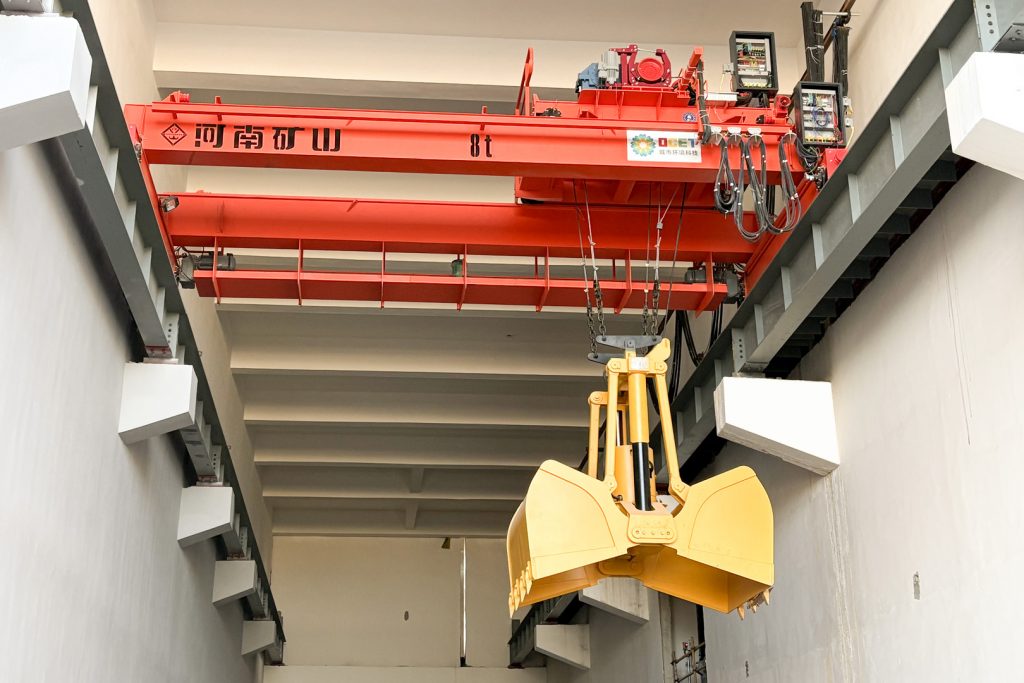
    An automatic grab crane developed by Henan Mine Crane entered operation at a waste-incineration power project in December 2025.

    Red automatic grab crane above a waste storage bunker
    Red automatic grab crane above a waste storage bunker.

    Programmed grab and discharge operations

    The reported arrangement combines variable-frequency drives, position feedback, sway control, fixed-point grabbing and repeated weight-based cycles. It offers manual, radio-control and fixed discharge modes, with an interface reserved for future automation.

    Specify the waste-handling duty

    Crane selection should cover the storage-bunker dimensions, waste density and variability, grab volume, lifting duty, operating hours, operator visibility and plant control interface. Protective functions and acceptance criteria should be agreed for the installation.

    Discuss your lifting requirement

    Send the bunker drawing, material characteristics, daily throughput and operating schedule for a grab-crane configuration review.

  • STS Crane Terminal Planning: Vessel Envelope and Transfer Interfaces

    STS Crane Terminal Planning: Vessel Envelope and Transfer Interfaces

    Technical guide

    STS Crane Terminal Planning: Vessel Envelope and Transfer Interfaces

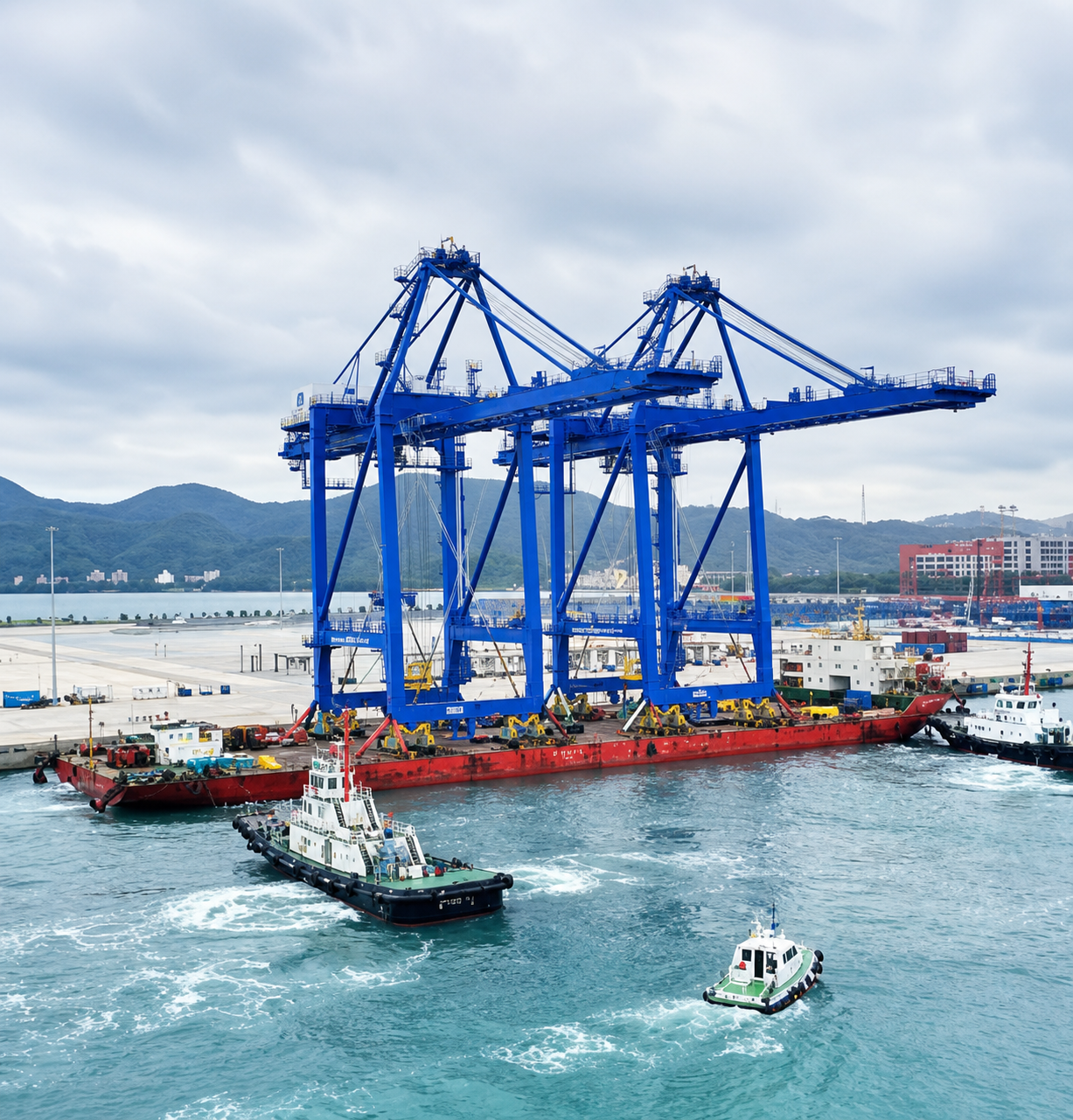
    A ship-to-shore project starts with the vessels and the terminal system around them. Describe the container service, working envelope and landside handover so equipment and infrastructure can be coordinated.

    Henan Mine CraneTechnical guide · Updated 2026Crane selection, project scope and operating requirements
    STS Crane Terminal Planning: Vessel Envelope and Transfer Interfaces
    Henan Mine Crane lifting equipment
    Project planning notes

    Key points for this crane project.

    1. What Is an STS Crane?
    2. How STS Cranes Work: The Lift Cycle
    3. Key Technical Specifications
    Read the technical guide

    What Is an STS Crane?

    An STS (ship-to-shore) crane, also known as a quay crane or container crane, is a ship-to-shore rail-mounted gantry crane positioned on the quay of a container terminal. It loads and unloads containers directly to and from a vessel‘s cargo hold or decks, by means of a spreader that latches onto the ISO standard container corner castings.

    STS cranes are the key pieces of equipment that will determine port productivity. Being at the front end of the ship/shore interface their quayside speed directly influences vessel turnaround time the key factor that the shipping lines and port authorities focus on when selecting a terminal to win a call.

    All STS crane is controlled by the landside handling systems, i.e. RTG and RMG cranes in storage yard, and AGV and terminal trucks that carry the containers between the crane and storage yard.

    How STS Cranes Work: The Lift Cycle

    The quayside container crane is equipped with three sets of motion mechanisms that can work together. The whole set of equipment relies on programmable logic controller (PLC) or frequency conversion control system to realize accurate synchronous operation of the three.

    1. Cart travel: the whole crane moves along the dock track, adjusts the position, and aligns with the berth of the ship.
    2. Trolley travel: the crane trolley moves back and forth along the cantilever and the girder, and accurately stops the spreader right above the target container slot.
    3. Lifting mechanism: with the help of wire rope and drum to drive the spreader and container vertical lifting action.

    Conventional container lifting operations have a standardized cycle:

    1. Crane alignment berthing vessel, operator or automated system check container number;
    2. The lifting appliance is lowered, and the container is clamped and fixed through the rotary lock structure;
    3. The lifting mechanism lifts the container off the deck of the ship;
    4. The trolley carries the cargo across the bridge and eventually lands the container on a pallet truck, AGV or yard stack.

    This process is repeated throughout the ship's loading and unloading operations. Small losses occur in any link in a single operation, and after hundreds of cycles of operation, the overall efficiency loss will continue to stack.

    Anti-sway control is an indispensable component of modern cranes. This function can actively suppress the shaking of goods during the process of lifting and trolley high-speed operation, which cannot only reduce the time of single lifting, but also greatly reduce the workload of manual correction of deviation by operators.

    Key Technical Specifications

    The technical specifications determined by the terminal at the equipment procurement stage directly lock in the upper limit of its operational efficiency for decades to come. Crane selection should focus on evaluating the following core parameters:

    • Outward reach: horizontal working coverage distance of crane dock track outward.
    • Lifting rated load: Conventional spreaders have a rated lifting capacity of 40 to 65 metric tons and are suitable for lifting all standard fully loaded International Organization for Standardization (ISO) containers, including heavy 45-foot containers.
    • Lifting and trolley running speed: lifting speed of lifting mechanism and trolley travel speed are core dynamic performance indexes, which directly determine the cycle period of single box operation, directly affect the crane's hourly operation volume and the overall loading and unloading operation efficiency of the terminal, and are key parameters to ensure the high throughput capacity of the terminal.
    • Gauge and structural load: crane gauge and structural load bearing parameters must be accurately matched with the civil design standards of the wharf. Since retrofitting after completion is extremely costly and infeasible, relevant parameters must be identified at the procurement stage in one go.

    Types of STS Cranes

    Quayside container cranes (STS) are generally classified according to the tonnage and ship type specifications of the ship to be adapted to the loading and unloading needs of different routes and ship types, and the mainstream models are divided as follows:

    1. Panama/ultra-Panama type: the operation extension is small, suitable for small and medium-sized feeder ships, old container ships, mostly used for regional short-distance route terminal operations.
    2. Super Panamax: Optimize and upgrade the extension distance and lifting height, adapt to large ocean-going container ships, and can meet the loading and unloading requirements of mainstream ocean-going trunk ships.

    Each level of model can be matched with different spreader operation scheme, adapt to the needs of differentiated loading and unloading efficiency, the industry mainstream configuration is divided into three types:

    1. Single-box operation mode: only one 20-foot or 40-foot standard container is hoisted in a single operation cycle, with high operation stability and wide adaptation scenarios, which is the basic general operation mode.
    2. Dual -666.66cm synchronous operation mode (double lifting): It supports lifting two 20-foot containers at the same time, which can effectively improve the single-cycle operation volume, and is the general mainstream configuration for improving the throughput efficiency of the terminal at this stage.

    STS Crane Productivity: Benchmarks and KPIs

    Operation efficiency is the core assessment index of terminal operators, and the relevant data should be based on the measured value, not the publicity data.

    Total Operation Box Per Hour (GMPH) is a standard assessment indicator for a single STS quay, covering all delays throughout the operation. The efficiency of conventional quay bridge is 25-40 boxes/hour, and the performance of high-performance and double spreader equipment is better. After more than 20 shore bridges of a large wharf in Asia have been remotely controlled and modified, the average efficiency of waiting delays including collecting cards is 29 boxes/hour, with a peak value of 44 boxes/hour.

    The comprehensive efficiency of berths is the overall index for the operation of multiple shore bridges on the same ship. The industry standard is 100-150 boxes/hour, and the automatic wharf is also applicable. When the working condition is good, the efficiency of a single shore bridge is about 35 boxes/hour.

    In addition to GMPH, the terminal core monitoring three auxiliary key indicators:

    1. Operation cycle: the whole cycle of single-box operation is time-consuming, covering the lifting mechanism action, equipment operation and the whole process waiting time-consuming.
    2. Quay bridge standby time: invalid standby time of equipment due to factors such as not in place of collection card, occupation of storage yard box, lag of binding operation, team handover, etc.

    The bottleneck of terminal operation is not equipment hardware problems, but various standby delays. Even if the equipment is in good condition, it will be limited due to supporting process problems. Only increasing the operating speed of the equipment cannot solve the process card point.

    Automation and Electrification Trends in 2026

    Two forces are reshaping STS crane procurement decisions this year: automation and electrification.

    Remote and semi-automated operation is now standard

    Full automation is few and far between. Instead, the majority of so-called “automated” ports employ semi-automated or remote-controlled straddle carriers, because human oversight still needs to be a regulatory and safety requirement at just about every large terminal in the world.

    What this means for procurement

    Define electric drive as early as possible. The incremental cost over diesel can usually be repaid through fuel/maintenance savings within 4 6 years (per most operating models) and automation ready electrical & control architecture avoids pricey retrofit down the road.

    Safety and Compliance Standards

    The design and operation of the Quayside Container Crane (STS) shall follow the exclusive specification system, and the procurement and operation team shall incorporate the relevant standards into the technical specifications of the equipment at the beginning of the project:

    • ISO 8686: General criteria for specifying crane design loads, providing a core basis for the design of equipment load-bearing structures
    • FEM 1.001: Industry-wide standard, widely adopted by major equipment manufacturers for equipment grading and full-cycle maintenance management.

    Modern quay bridges come standard with a full set of safety protection systems.

    The above configurations and certifications are mandatory requirements.

    Maintenance and Total Cost of Ownership

    The purchase price of the equipment is only the initial input cost, and the true full life cycle cost (TCO) of the equipment requires a comprehensive accounting of a number of expenses, including the following dimensions:

    • Capital expenditure (CAPEX): covers the cost of purchasing, site installation and commissioning of shore bridge equipment.
    • Operational expenditure (OPEX): includes equipment energy consumption, labor operation and maintenance, daily maintenance and other expenses.
    • The payback period is generally 5 to 8 years, with significant economic benefits.
    • Equipment renovation cost: A major overhaul and renovation is required for 15 to 20 years of service of the quay bridge. The cost of a single renovation is about 2 million to 5 million US dollars, which can extend the overall service life of the equipment to 25 to 30 years and above.

    In the whole life cycle cost planning, the quality of the shore bridge track is easily ignored, but it has a great impact on the operational efficiency. Poor track condition will force the trolley to slow down and cause equipment shutdown failure.

    How to Select an STS Crane Supplier

    For this large-scale procurement project, the structured evaluation framework can effectively reduce procurement risks. The specific evaluation criteria are as follows:

    • Adapt to long-term ship operating conditions: Equipment parameters should match the ship type and operation demand expected to dock in the next 10 – 15 years, and work coverage and carrying capacity standards should be formulated based on long-term ship configuration to avoid only adapting to current operating conditions, and eliminate the high cost and practical operation problems of equipment transformation and expansion in the later stage.
    • Calculation of full life cycle cost: procurement evaluation is not limited to equipment unit price, but needs to calculate the full life cycle cost as a whole, horizontally compare the input cost, operation energy consumption, maintenance expenditure, renovation cycle and other core indicators of each supplier's equipment, and comprehensively evaluate the long-term cost performance of equipment.
    • Verification of compliance qualification certification: check the full set of compliance qualifications of equipment in advance to ensure that the equipment meets ISO 8686, EN 13001, EN 13135 and other international standards, and at the same time have compliance documents from local port authorities to avoid compliance risks from the source.
    • Assessment of automation upgrade potential: there is no need to pursue full automatic configuration at this stage, but it is necessary to check the upgradability of equipment electrical and control systems, reserve space for iterative transformation of automation, and avoid the problems of incompatibility and high transformation cost of subsequent system architecture.
    • Compared with the surface purchase price:the perfect warranty service of core components for 1 to 2 years or more and the operation and maintenance performance of the whole life cycle of equipment possessed by suppliers for 25 to 30 years are more critical evaluation indicators, which can effectively guarantee the long-term stable operation of equipment.
    • Evaluate MOQ and delivery flexibility:For single-berth expansion scenarios, prioritize suppliers that support MOQ per unit. This mode can avoid excessive investment of funds at one time, effectively reduce the risk of capital occupation, and enhance the flexibility of procurement funds.
    • Consider supply chain security and system risk control capability: strictly control equipment supply chain and control system security, focus on verifying supplier firmware transparency, vulnerability repair and patch management capabilities, avoid remote access and firmware traceability risks, and adapt to high security control port requirements.

    Discuss the crane arrangement for your project.

    A ship-to-shore project starts with the vessels and the terminal system around them. Describe the container service, working envelope and landside handover so equipment and infrastructure can be coordinated. Share the load, available drawings, working cycle and site conditions with Henan Mine Crane so the required configuration and supply boundary can be discussed.

    Related crane configurations

    Ship-To-Shore Crane (STS)

    View product parameters
    Lifting capacity: 40-65 80-120 tBoom outreach: 40-72 mWorking class: A8

    Transfer containers between ship and quay with an STS crane selected for the berth and vessel envelope. Define the lifting-appliance arrangement, outreach, rail position and handling cycle.

    Container Overhead Crane

    View product parameters
    Lifting capacity: 30-65 tSpan: 18-35 mLifting height: 8 – 20 m

    Transfer containers within a defined overhead runway area using a double-girder bridge and matched spreader. Container size, working clearance and the handling sequence determine the arrangement.

    Updated 2026 · Henan Mine Crane
  • Automated Steel-Plate Splitting and Handling System for Rizhao

    Automated Steel-Plate Splitting and Handling System for Rizhao

    Products & Technology

    Automated Steel-Plate Splitting and Handling System for Rizhao

    Henan Mine Crane provided a steel-plate splitting and handling system for Shandong Iron and Steel Group’s Rizhao operations in November 2025.

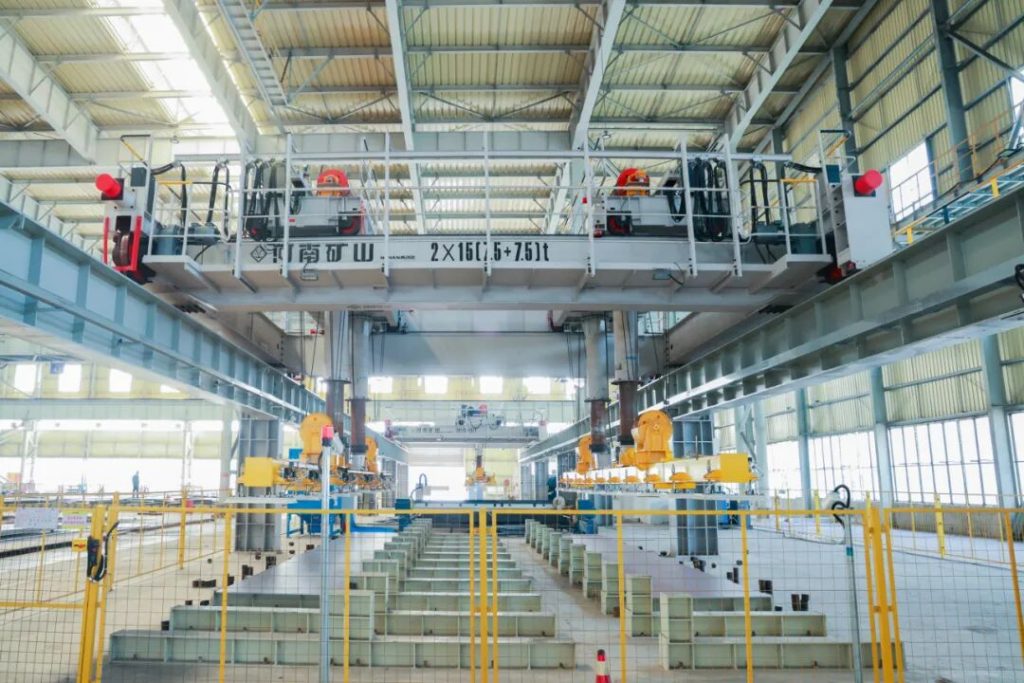
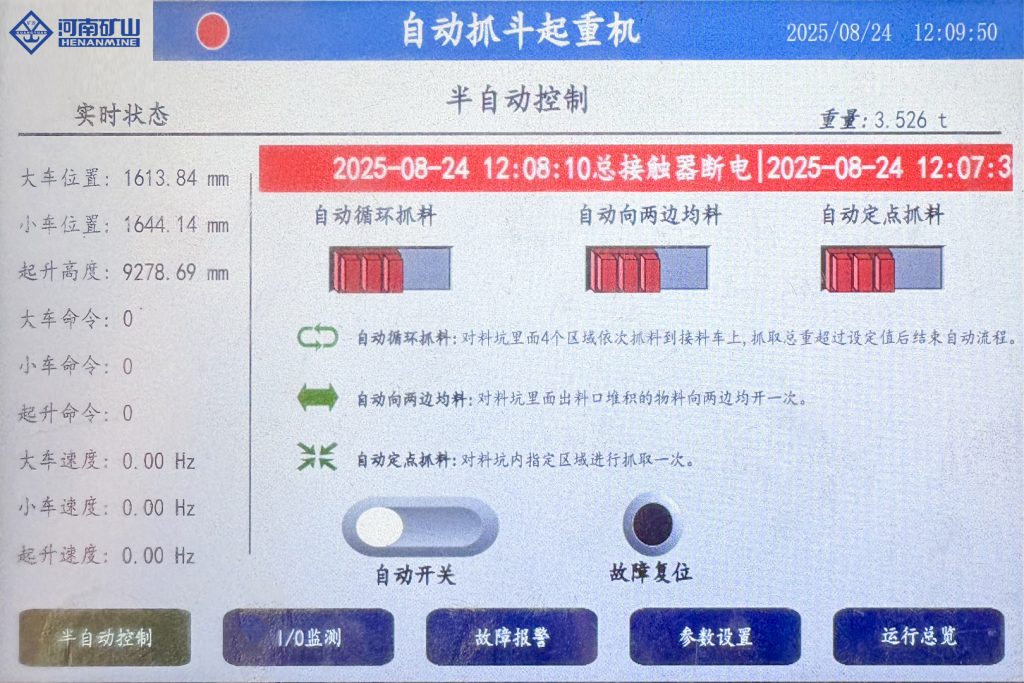
    Guarded automated steel-plate handling line inside the workshop
    Guarded automated steel-plate handling line inside the workshop.

    Handling linked with processing

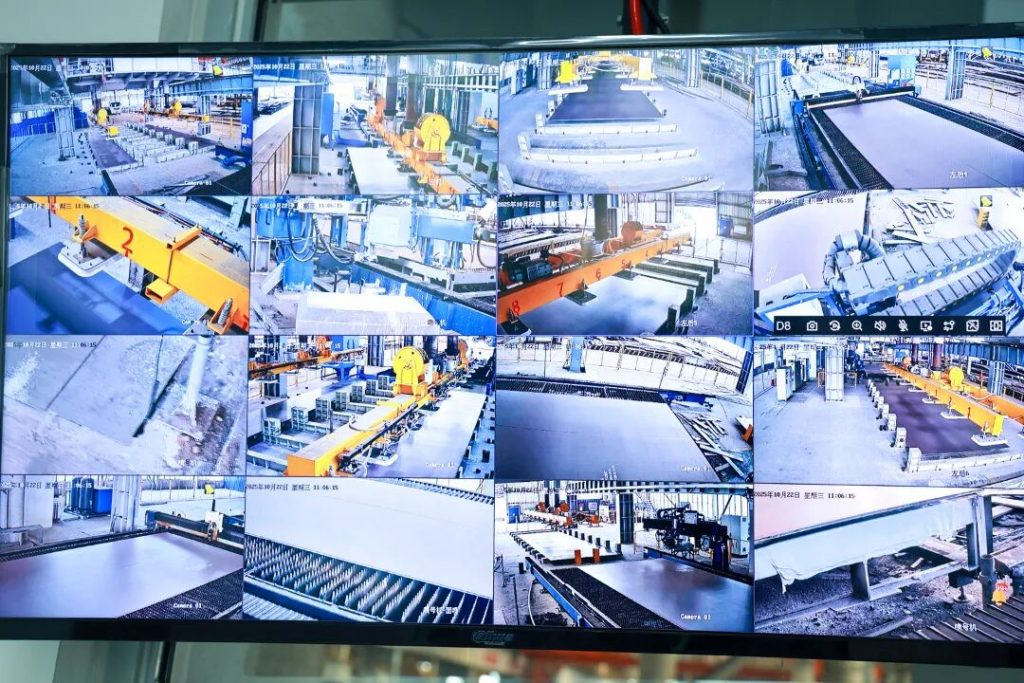
    The described line connects plate lifting and transfer with laser cutting, surface marking, edge stamping and transfer into finished-product storage. Automatic scheduling and positioning coordinate the movements.

    Control modes and line interfaces

    The system uses PLC and variable-frequency control, anti-sway measures, interlocks, monitoring and laser anti-collision functions, with radio control retained as an option. A new project should define plate dimensions, throughput, cut sequence, marking requirements and integration boundaries before quotation.

    Discuss your lifting requirement

    Send plate sizes and weights, line layout, throughput target and required process interfaces for an automation discussion.

  • Henan Mine Crane | Global Industrial Lifting Solutions Provider

    Henan Mine Crane | Global Industrial Lifting Solutions Provider

    Henan Mine Crane | Global Industrial Lifting Solutions Provider

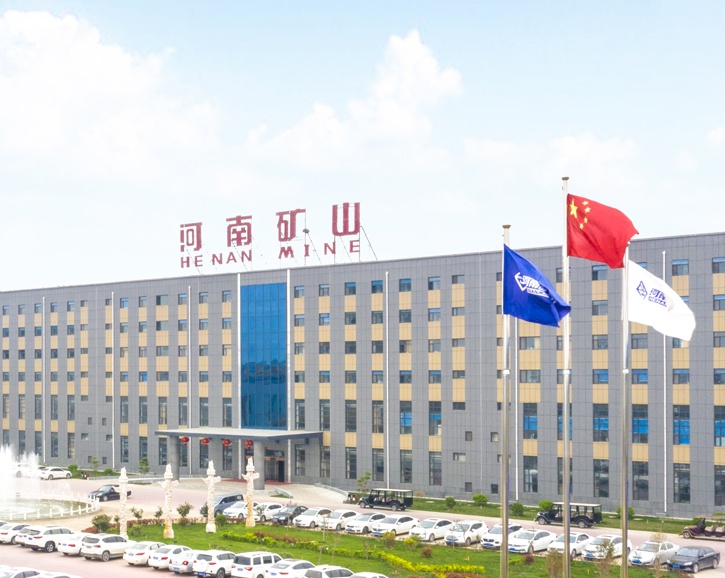
    Henan Mine Crane Co., Ltd. is a professional manufacturer and service provider of cranes and material handling products, integrating research and development, design, manufacturing, sales and service to provide customers with total solutions and full life cycle services. The company has been committed to the intelligent, green and high-quality development of the Crane industry, and has obtained more than 700 national patents and provincial scientific and technological achievements.

    Leading or participating in the formulation and revision of more than 100 international, national, industry, local and group standards, providing the most cost-effective products and services for tens of thousands of customers in more than 130 countries around the world. In the realization of the scale of annual output value of more than 10 billion, no loans, no financing, no delinquency.
    At present, the company has achieved remarkable results in more than 50 professional fields such as aerospace, automobile and shipbuilding, petrochemical, railroad and port, iron and steel smelting, machinery manufacturing and waste incineration, etc. In 2025, the company will realize the annual production and sales of all kinds of lifting equipment of more than 143,000 units (sets).

    Won the “China Industry Award Nominee”, “National Quality Benchmark”, “National Green Factory”, “National Excellence Level Intelligent Factory National Quality Benchmark“, ”National Green Factory“, ”National Excellent Intelligent Factory“, ”National Enterprise of Abiding by Contracts and Keeping Credit“, ”National Manufacturing Individual Champion Enterprise“, ”National Civilized Unit” and more than 500 other awards and honors. Civilized Unit” and more than 500 awards. The output and sales volume of products, market share, and level of automation and intelligent equipment have ranked the forefront of the same industry in China for many years.

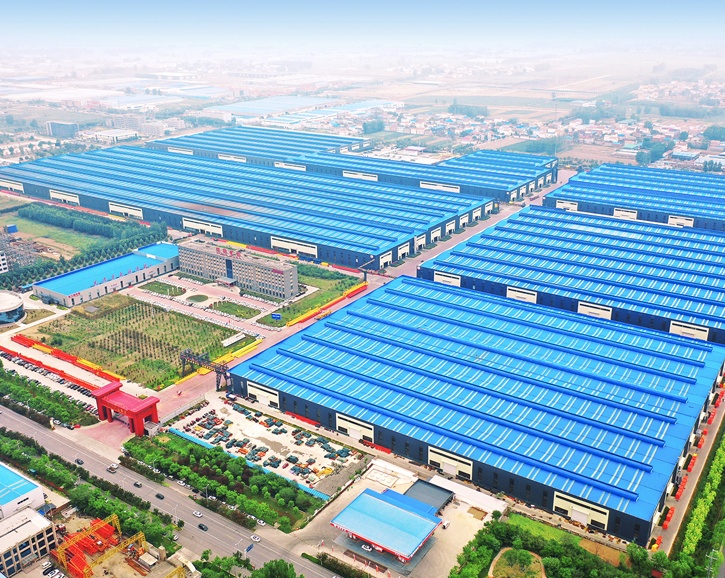
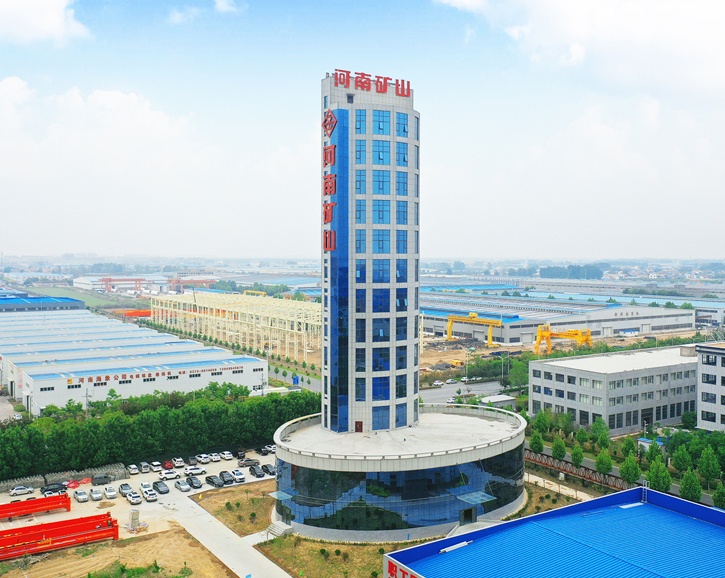
    Aerial view of Intelligent Industrial Park

    Henan Mine Crane is a high-tech enterprise, which has gathered more than 10 famous experts and 200 middle and senior engineers to form a strong technical team, focusing on the innovative design and research and development of products. In order to continue to promote technological innovation, Henan Mine Crane has established a number of high-level R & D platforms, including the national enterprise technology center, provincial industrial design center, energy-saving crane engineering technology research center in Henan Province, as well as the crane key technology cooperation laboratory and the Central Plains Scholars Workstation, these platforms for the enterprise’s technological breakthroughs provide a solid support.
    In addition, Henan Mine Crane and a number of well-known universities and research institutions to establish a long-term cooperative relationship, including Beijing Lifting and Transportation Machinery Design and Research Institute Co., Ltd,

    Pursuit of Excellence

    Henan Provincial Institute of Special Equipment Inspection Technology, Harbin Institute of Technology, Xi’an University of Architecture and Technology, North China University of Water Conservancy and Hydroelectric Power and Taiyuan University of Science and Technology.

    China Crane Museum

    Through the deep integration of industry, academia and research, Henan Mine Crane continues to promote the innovation and development of crane technology, providing strong support for the progress of the industry.
    “Tree hundred years of mining source, create first-class enterprise” is the company’s long-cherished wish. The company’s “filial piety culture” as the core values of corporate culture, “three hearts and six most” as the development goal, to win the world in good faith, and friends from all walks of life to cooperate and co-prosperity, and is committed to leading the high-quality development of the Crane industry.

    Henan Mine CraneDiscuss your requirements ↗
  • Straddle Carrier vs Reach Stacker: Routes, Stacking and Transfer Needs

    Straddle Carrier vs Reach Stacker: Routes, Stacking and Transfer Needs

    Technical guide

    Straddle Carrier vs Reach Stacker: Routes, Stacking and Transfer Needs

    The two handling arrangements place different demands on yard circulation and container access. Compare the travel routes, stacking pattern and transfer operation using the terminal's actual handling cycle.

    Henan Mine CraneTechnical guide · Updated 2026Crane selection, project scope and operating requirements
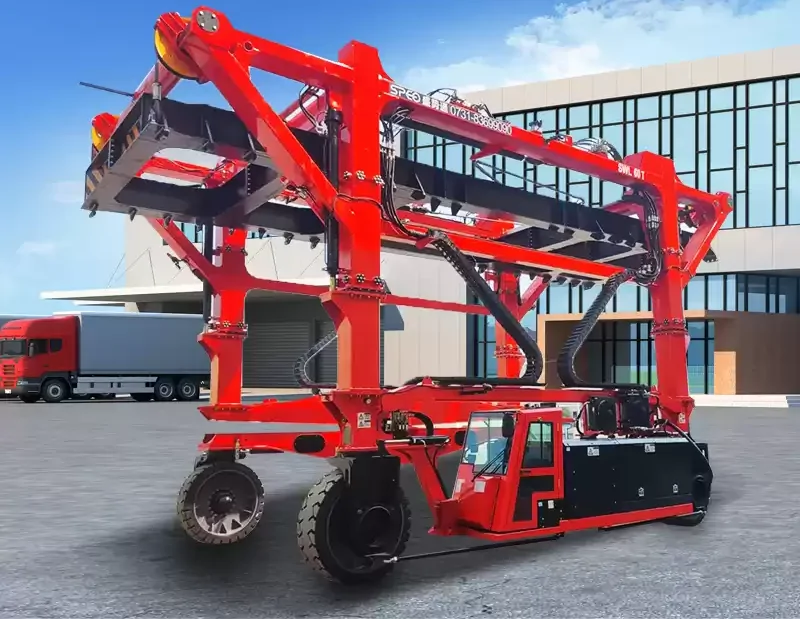
    Henan Mine Crane Container Straddle Carrier
    Henan Mine Crane Container Straddle Carrier
    Project planning notes

    Key points for this crane project.

    1. What Is a Straddle Carrier vs. a Reach Stacker?
    2. How Each Machine Works: Core Design and Mechanics
    3. Straddle Carrier vs. Reach Stacker: Head-to-Head
    Read the technical guide

    What Is a Straddle Carrier vs. a Reach Stacker?

    Henan Mine Crane straddle carrier is a freight-handling vehicle that lifts and carries its load underneath its own frame, rather than on top of it like a conventional truck. It drives directly over a container, lowers a hoist mechanism, lifts the box off the ground, and drives away , no crane or forklift required. Straddle carriers have been a standard at container terminals since the 1970s and remain one of the only machines that can handle every horizontal container movement in a terminal, from quay to stack to truck, with a single equipment type.

    A reach stacker is a rubber-tired container handler built around a front-mounted telescopic boom and spreader. Instead of straddling the box, it rolls up alongside a stack, extends the boom forward and up, and lifts the container from above using a spreader that locks onto the corner castings. The boom can extend far enough to reach over one or two rows of containers to access boxes stored behind them.

    The core distinction: straddle carriers move under and around a container, reach stackers move up and out to reach one. That single mechanical difference drives nearly every operational tradeoff that follows.

    How Each Machine Works: Core Design and Mechanics

    Henan Mine Crane manufactured straddle carriers run on a four-column gantry frame with wheels at each corner, giving the machine a wide, stable stance. A hydraulic lifting mechanism — typically wire-rope-and-cylinder assemblies — raises and lowers the spreader inside the frame. Most modern units offer four-wheel steering, letting the carrier turn in place or "crab" sideways for fine positioning in tight lanes. Power comes from diesel, diesel-electric, hybrid, or increasingly lithium-ion battery drivetrains.

    Reach stackers are built on a counterweighted chassis, similar in concept to a heavy forklift but engineered around a telescoping boom rather than a vertical mast. The boom pivots and extends hydraulically, and the spreader at its end can often telescope independently to fit 20-, 40-, or 45-foot containers. Because the load is carried out in front of the machine rather than underneath it, the chassis needs significant counterweight to stay balanced — which is part of why reach stackers run heavier per wheel than straddle carriers of similar lifting capacity.

    Straddle Carrier vs. Reach Stacker: Head-to-Head Spec Comparison

    The capacity and speed numbers look close on paper. The two rows that actually decide most equipment purchases are footprint and automation maturity — and neither gets the attention it deserves in most comparisons.

    Throughput and Yard Density: Which Moves More Containers

    A reach stacker, which approaches and lifts from the side, typically needs a wider access road to maneuver into position.

    That difference compounds at scale. A terminal that switches from reach stackers to Henan Mine Crane manufactured straddle carriers without changing its physical footprint can fit more stacking lanes into the same yard area, which directly increases container moves per day — terminal operators report throughput gains in this range when making the switch without expanding the yard.

    Reach stackers, however, win on flexibility within a single move. Their boom lets one machine service multiple rows from a single position, which is valuable in smaller yards where laying out dedicated straddle lanes isn't practical. For a terminal moving fewer than a few hundred containers a day, the speed and reach of a single reach stacker often outweighs the lane-density advantage a straddle carrier would offer.

    Ground Conditions and Pavement Impact

    This is the factor that gets the least attention and causes the most expensive surprises after purchase.

    That gap has real construction consequences. Pavement engineered for high point-loads and tire scuffing, the kind reach stackers and forklifts produce when turning under load — needs to be built to a heavier-duty, more expensive specification. Terminals that install straddle carrier infrastructure on existing or lower-spec pavement have, in some cases, avoided six-figure ground-reinforcement costs that a reach stacker fleet would have required on the same surface.

    If you're evaluating equipment for a yard with older pavement, soft subgrade, or a tight capital budget for groundworks, run the wheel-loading numbers before you run the throughput numbers. The equipment savings from a reach stacker can be erased entirely by a pavement reinforcement bill.

    Total Cost of Ownership: Price, Maintenance, and Payback

    On sticker price alone, reach stackers win the entry-level comparison: a standard unit can be acquired for a fraction of a straddle carrier's footprint-equivalent capacity, with no yard redesign or specialized operator training required.

    But total cost of ownership tells a different story over a 10–15 year equipment life:

    • Maintenance intensity:A reach stacker's telescopic boom, hydraulic extension system, and drivetrain see continuous wear under high-intensity cycling, and components requiring specialized service add up over time. Straddle carriers have fewer moving load-bearing assemblies relative to their lifting capacity, which tends to translate into lower per-unit maintenance costs over the equipment's life.
    • Tire life:Straddle carriers use true rolling steering geometry that largely eliminates the tire scuffing problem inherent to reach stackers and forklifts turning under load — extending tire life by a meaningful multiple and cutting a recurring operating cost most TCO models underweight.
    • Labor and training:Reach stackers require less specialized operator training to get started, which lowers onboarding cost — a real advantage for smaller or seasonal operations.
    • Depreciation:Henan Mine Crane manufactured straddle carriers, particularly automation-ready models, tend to hold value and operational relevance longer because they can be upgraded into automated fleets rather than replaced outright.

    Bottom line on cost: if your time horizon is under five years or your volume is moderate, a reach stacker's lower upfront cost usually wins. If you're planning a 10+ year terminal investment at meaningful volume, the straddle carrier's lower per-move operating cost tends to overtake the price gap well before the equipment is fully depreciated.

    Automation Readiness: AutoStrad, AGVs, and What’s Coming

    This is where the gap between the two machines is widening fastest. Automated straddle carrier programs aren't experimental, fully automated straddle carrier terminals have been in continuous commercial operation since 2006, and the technology has matured through nearly two decades of real-world data.

    The economics are now well documented. For a mid-size terminal handling 200,000–500,000 TEU annually in a high-wage labor market, a realistic full payback period on combined equipment and infrastructure investment runs 7 to 12 years.

    Major terminal operators are already committing at fleet scale — DP World's London terminal runs a fleet of dozens of Kalmar straddle carriers feeding nearly 80 automated stacking cranes, and multiple European and Mediterranean transshipment hubs have placed orders for 10–20 unit automated or hybrid straddle carrier fleets in the past two years.

    Reach stackers, by comparison, remain largely operator-dependent. The boom-and-spreader operation requires continuous human judgment for positioning, extension, and load placement in ways that haven't been automated at commercial scale. That's not a flaw, reach stackers were never designed for unmanned operation the way straddle carriers, with their simpler over-the-top lift path, were. But it does mean that any terminal planning a multi-decade automation roadmap is, in practice, planning around straddle carriers, not reach stackers.

    When a Straddle Carrier Is the Right Call

    Reach for a straddle carrier when your yard matches most of the following:

    • You're moving high daily container volume and need to maximize moves per square meter of yard
    • Your terminal layout has narrow lanes or limited expansion room
    • Your existing pavement is older, lower-spec, or expensive to reinforce
    • You're planning automation within the next decade
    • You need one machine type to handle quay, stack, and truck-loading operations without switching equipment

    When a Reach Stacker Is the Right Call

    Reach for a reach stacker when your operation matches most of the following:

    • Your volume is moderate,a regional depot, inland terminal, or backup yard rather than a high-throughput gateway port
    • You handle mixed cargo: coils, flat racks, general freight, or non-standard loads alongside containers
    • Capital budget is tight, or you need equipment in operation quickly without yard redesign
    • Your yard has open space and doesn't depend on narrow-lane stacking density
    • You don't have the volume to justify automation investment in the foreseeable future

    Can You Run Both? The Hybrid Fleet Approach

    Most large terminals don't actually choose one machine exclusively, they zone their equipment. Straddle carriers handle the high-density quay-to-stack and stack-to-stack movements where lane width and automation matter most. Reach stackers get deployed in landside zones, empty-container yards, rail interchange areas, or anywhere mixed cargo and flexible single-machine reach matter more than raw throughput density.

    This hybrid model is common at major intermodal hubs precisely because it matches each machine to the task it's mechanically built for, rather than forcing one machine type to cover every job in the terminal. If your yard has genuinely different zones with different demands, a high-volume quay apron and a lower-volume inland rail interchange, for example, a mixed fleet is often more cost-effective than standardizing on either machine alone.

    Frequently Asked Questions

    Q: What is the main difference between a straddle carrier and a reach stacker?

    A straddle carrier lifts a container from directly above by driving over and straddling it, carrying the load underneath its frame. A reach stacker stays beside the stack and uses a telescopic boom to reach in, lift, and place containers from the front. The straddle carrier's design favors high-density yards and narrow lanes; the reach stacker's boom favors flexibility and reach into multiple rows from one position.

    Q: Can a reach stacker replace a straddle carrier in a busy port terminal?

    In low-to-moderate volume yards, yes. In high-throughput container terminals, reach stackers generally can't match the lane density and continuous-cycle throughput of a straddle carrier fleet, and most busy port terminals use straddle carriers as their primary horizontal-handling equipment for that reason.

    Q: Do straddle carriers cause less pavement damage than reach stackers?

    Lower wheel loading and reduced tire scuffing mean straddle carriers can operate on lighter-duty pavement, which can lower construction costs by tens of dollars per square meter across a yard.

    Q: Can a port yard use both straddle carriers and reach stackers?

    Yes, and many large terminals do. A common hybrid approach uses straddle carriers for high-density quay-to-stack movements and reach stackers for landside, rail interchange, or mixed-cargo zones where flexibility matters more than continuous throughput.

    Henan Mine Crane

    The decision to go with a straddle carrier or a reach stacker depends on your terminal priorities, space, throughput and future expansion plans. The straddle carrier excels in dense container handling, pavement loading and automation, whereas a reach stacker is more flexible, quicker to start up and has a lower cost for smaller or mixed cargo ports.

    Nowadays, with container terminal becoming more and more efficient and intelligent yard, choosing the right equipment with a combination of short time needs and long term development plan is more and more significant for the terminal. Effectiveness of equipment plan can benefit throughput, lower cost of operation as well as better long term development.

    Drawing on years of experience with container handling equipment and custom material handling systems Henan Mine Crane crane Factory offers proven straddle carrier products for ports, intermodal yards, logistics centers and industry yards around the world. Whether you are starting a new terminal or expanding an old one, our engineers can work with you to assess your yard conditions, major flow volumes and operational needs to propose the ideal solution.

    Discuss the crane arrangement for your project.

    The two handling arrangements place different demands on yard circulation and container access. Compare the travel routes, stacking pattern and transfer operation using the terminal's actual handling cycle. Share the load, available drawings, working cycle and site conditions with Henan Mine Crane so the required configuration and supply boundary can be discussed.

    Related crane configurations

    Container Straddle Carrier

    View product parameters
    Lifting capacity: 30 – 50 tStacking arrangement: 1 over 3 – 1 over 6Working class: A7 – A8

    Move containers between handling positions with a straddle carrier matched to the travel route and stacking layout. Define container load, ground conditions, clearance and the preferred drive system.

    Anode Carbon Block Stacking Crane

    View product parameters
    Lifting capacity: 10 – 30 tSpan: 13.5-40 mLifting height: 6 – 20 m

    Handle and stack anode carbon blocks with a crane configured around block geometry, gripping method and storage layout. Define the transfer sequence and automation interfaces before selection.

    Updated 2026 · Henan Mine Crane
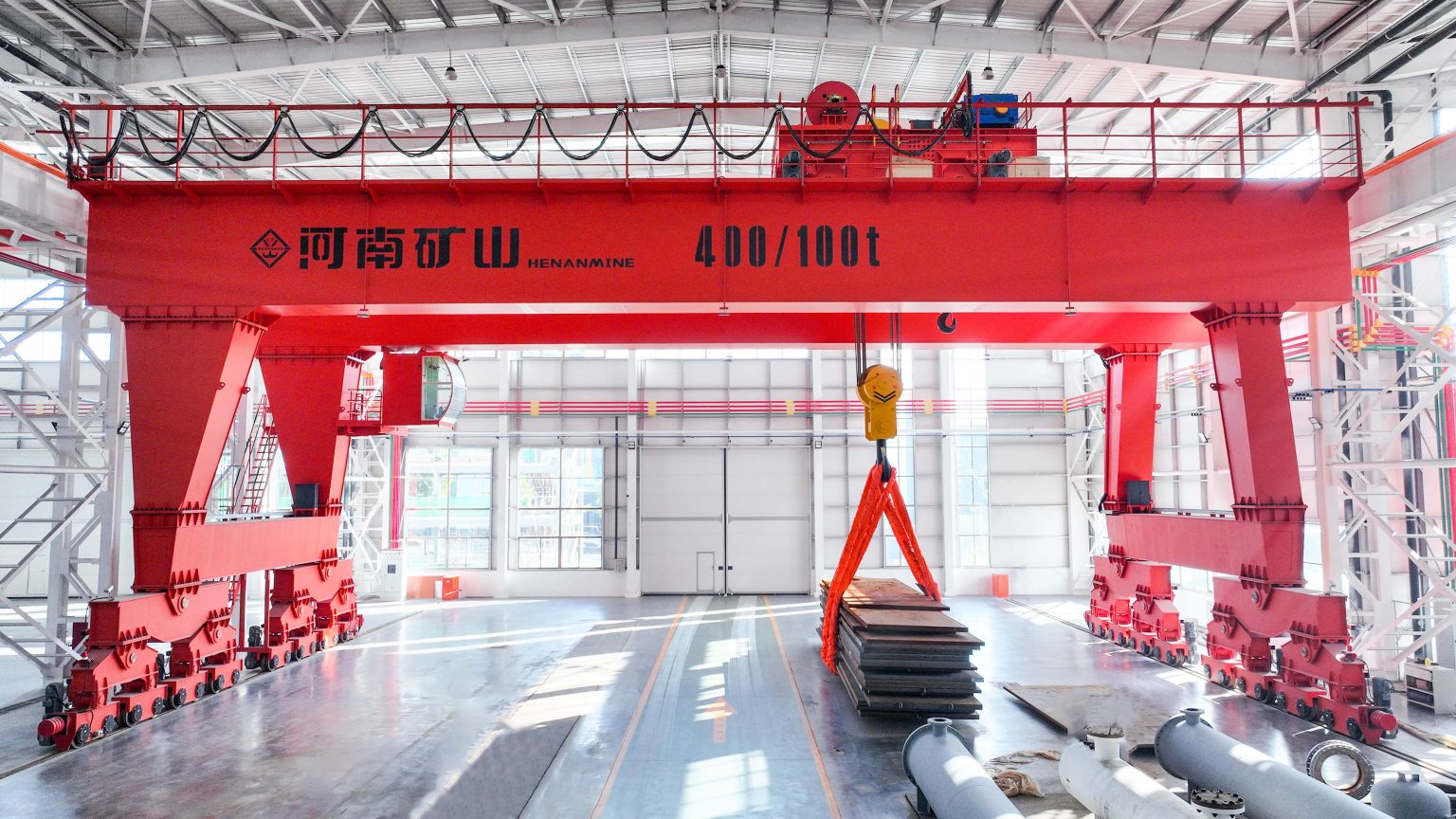
  • Henan Mine Crane 400t gantry crane landing

    Henan Mine Crane 400t gantry crane landing

    Henan Mine Crane 400t gantry crane landing

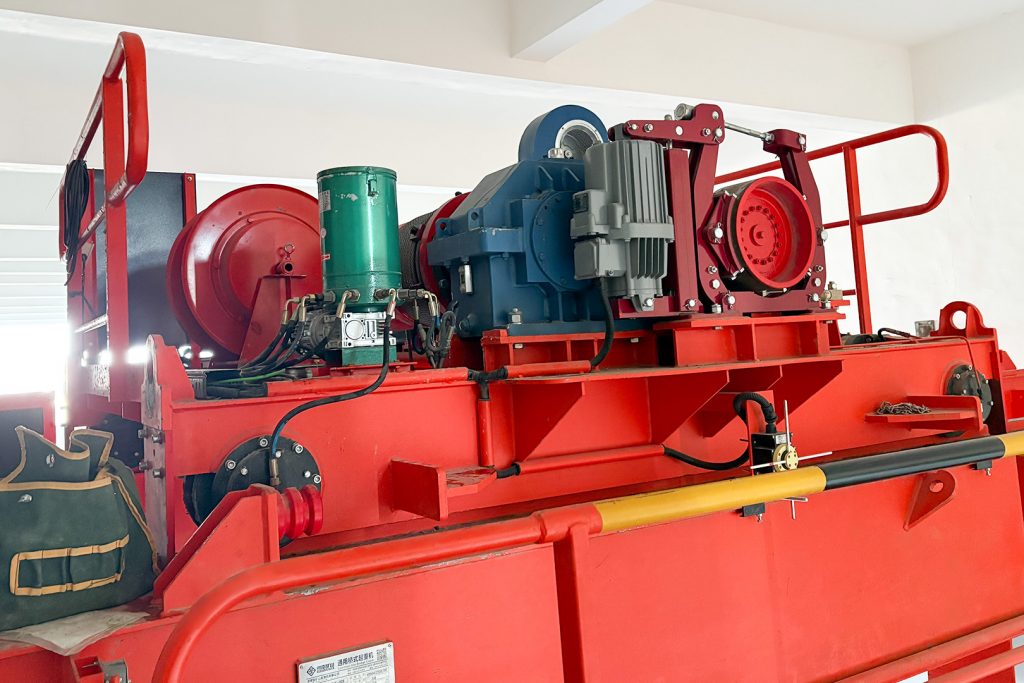
    In October 2024, Henan Mine Crane welcomed another technological breakthrough, more than 30 sets of various types of cranes manufactured for an enterprise in Shandong were successfully delivered.

    The equipment is specifically applied to high-end chemical equipment manufacturing, of which 400 tons of double girder gantry cranes for the current chemical equipment manufacturing field put into use in the oversized tonnage cranes, highlighting the hard core strength of the mine source of intellectual manufacturing.
    Henan Mine Crane 400 tons gantry crane landing

    The lifting equipment delivered this time relies on innovative smart technology to realize precise operation.

    The equipment adopts PLC + frequency converter communication control program, with the help of frequency converter digital filtering technology, greatly improving the operating accuracy of the crane, perfectly adapted to the needs of high-end chemical equipment manufacturing high-precision operations.The equipment incorporates intelligent monitoring design, which makes the operation more convenient. The driver’s room is equipped with a rotating integrated operation linkage table, with safety monitoring system, data monitoring system, the operator can clearly grasp the real-time working condition of the crane through the display screen, realizing the visualization and control of equipment operation.

    Henan Mine Crane has always adhered to the development concept of “intelligent and intelligent manufacturing, customer first”, and continues to plow into the field of chemical equipment manufacturing. For the global chemical industry customers to provide professional lifting equipment solutions.

    Henan Mine CraneDiscuss your requirements ↗