Engineering · Manufacturing · Project support
info@hnksglobal.comWhatsApp +86 18836207779 ↗

Blog

  • RTG Crane Specification: Stacking Layout, Steering and Power Supply

    RTG Crane Specification: Stacking Layout, Steering and Power Supply

    Technical guide

    RTG Crane Specification: Stacking Layout, Steering and Power Supply

    An RTG specification should connect container stacking with the movement of the crane itself. Define the yard block, transfer lanes, steering needs and energy arrangement before comparing configuration-specific parameters.

    Henan Mine CraneTechnical guide · Updated 2026Crane selection, project scope and operating requirements
    Henan Mine Crane Rubber Tyred Gantry (RTG)
    Henan Mine Crane Rubber Tyred Gantry (RTG)
    Project planning notes

    Key points for this crane project.

    1. What is RTG tire gantry crane?
    2. RTG crane mainstream application scenarios
    3. RTG Crane Core Selection Parameters (Essential for
    Read the technical guide

    What is RTG tire gantry crane?

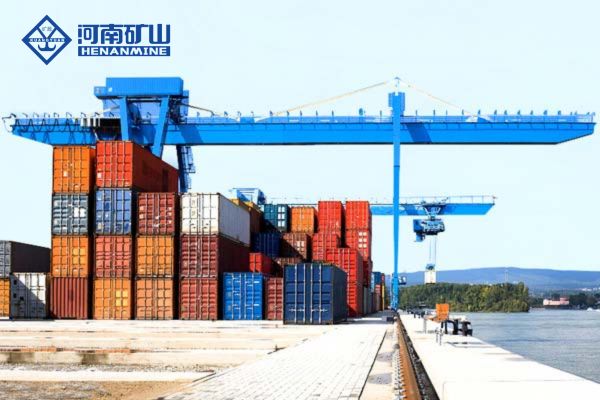
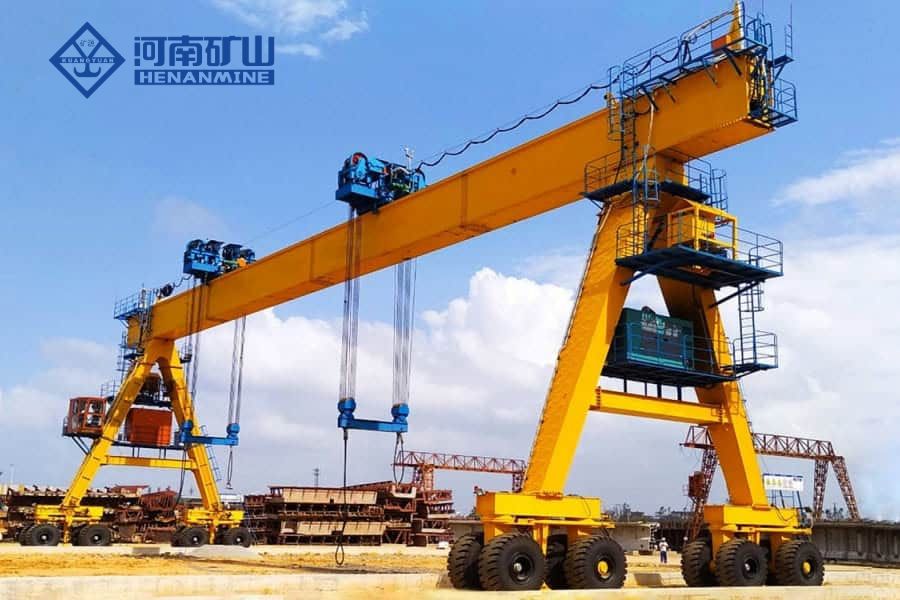
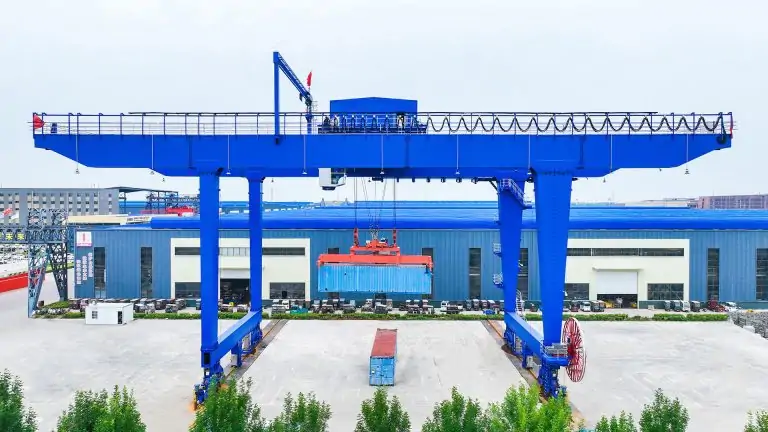
    RTG Crane, known as Rubber Tire Gantry Crane, is a special yard equipment designed for container storage, transshipment, and container truck loading and unloading. Different from rail type gantry crane, rubber tyred gantry crane relies on rubber tires to travel, without the need of pre-buried fixed track foundation.

    This structural feature makes RTG crane for container terminal has strong site flexibility, can be free across the area to change the block operation, suitable for yard layout adjustment and later expansion and transformation, is a small and medium-sized terminals and inland yards of the preferred equipment.

    The core operating scenario of RTG Crane covers the whole process of container operation, and it can undertake the import and export containers transferred from the shore bridge, complete the work of stacking, sorting, and truck loading, etc. It perfectly connects with the STS shore bridge operation process, and improves the utilization rate of the whole terminal's yard.

    Compared with fixed rail equipment, RTG equipment has lower infrastructure investment and faster deployment speed, which can be adapted to the stage of construction of the port project, and flexibly adapted to the needs of container turnover of different scales.

    RTG crane mainstream application scenarios

    Seaport container terminals are the most core application scenarios of RTG crane. In the specialized container port, RTG mainly with the STS shore bridge to complete the yard supporting operations, responsible for container reception, layered storage, box area sorting and container truck evacuation work.

    Inland container yards, waterless ports and bonded logistics parks are also high-frequency use scenarios for RTG equipment. These sites have flexible layout and large fluctuation in throughput, and the trackless design of container yard crane can effectively enhance the storage density of the site and alleviate vehicle congestion.

    Railroad intermodal transportation terminal is highly adaptable to RTG equipment. The equipment can complete the two-way transfer of containers between train cars, collector trucks and storage areas, meeting the flexible operational needs in intermodal transportation scenarios.

    The customized RTG cranes can also be used in industrial bulky yards to lift heavy cargoes such as steel structures, wind power components, prefabricated beams, etc., breaking through the limitations of traditional container-specific equipment.

    RTG Crane Core Selection Parameters (Essential for Overseas Procurement)

    Terminal planning and equipment procurement, all RTG crane specification needs to be customized with the site conditions, the following are the most critical seven core parameters for overseas projects, which directly determines the equipment suitability and long-term operating results.

    Rated lifting load

    The rated load of RTG is not simply matched with the weight of the container, but also needs to be combined with the type of spreader, the need for double-box operation and the safety margin for a comprehensive calculation.

    Equipment span

    RTG crane span determines the range of box area covered by the equipment in a single operation. The mainstream layout of the industry includes three specifications: 5 rows of containers + 1 lane, 6 rows of containers + 1 lane and 7 rows of containers + 1 lane, which can be customized according to the width of the yard.

    Larger span can enhance the coverage area of the yard, but it will increase the self-weight of the equipment, tire load and turning space requirements, the site is narrow and small yards, blindly selecting a large span equipment will result in limited operations.

    Lifting height and stacking layers

    Lifting height directly determines the number of container stacking layers, common configuration for 1 stack 3, 1 stack 4, 1 stack 5, 1 stack 6. the higher the number of stacked layers, the higher the density of storage yard, the higher the land utilization rate.

    Box adapted specifications

    Standardized RTG spreader can be compatible with 20ft, 40ft, 45ft standard containers, and at the same time, it is suitable for the regular operation of reefer containers and general ISO containers. For terminals with special container operation requirements, special spreaders can be customized to suit non-standard working conditions.

    Power supply mode

    At present, the mainstream is divided into diesel RTG crane diesel type, hybrid RTG and electric RTG crane motor type (cable reel/slip line). Different power supply modes directly affect the preliminary infrastructure, later energy consumption and operation and maintenance costs.

    Operation speed parameters

    Including large traveling speed, small traveling speed, full load lifting speed, no load lifting speed. The speed parameter does not need to blindly pursue a high level, but needs to match the rhythm of the yard traffic, to avoid the safety hazards and equipment loss caused by too fast speed.

    Tires and steering system

    Tire specifications, steering mode determines the ability of equipment block change and site adaptability. Mainstream support straight, 90 ° steering, inclined mode, to adapt to different yard block changing operation needs, reduce tire wear and road pressure.

    Advantages and disadvantages of different power supply types of RTG Cranes

    diesel RTG cranes do not require supporting grid infrastructure, relying on vehicle-mounted generator sets for power supply, flexible deployment, not subject to site power conditions. It is suitable for new temporary terminals, overseas ports with imperfect power facilities and phased operation projects.

    The shortcomings of diesel RTG are high energy cost, high operating noise and high exhaust gas emission, and the overall operation and maintenance cost of large terminals with long-term high-frequency operation will continue to increase.

    The electric RTG crane relies on external power to run, with lower energy cost, less noise and no exhaust emission, which is in line with the green port construction standard and suitable for large-scale specialized container terminals with long-term stable operation.

    The electric RTG crane needs to lay power supply infrastructure in the early stage, the initial investment is higher, and the flexibility of the site is slightly lower than the diesel model, which is not suitable for frequent adjustment of the layout of the temporary yard.

    Hybrid RTG is a compromise solution, combining the advantages of diesel and electric equipment, can effectively reduce fuel consumption, suitable for renovation and upgrading projects and working conditions fluctuations in the terminal, is a cost-effective choice for the upgrade of old yards.

    RTG models according to automation level

    Manual RTGs are operated manually by the driver's cab, with simple structure and convenient maintenance. They are suitable for small and medium-sized terminals, yards with moderate throughput and flexible operation modes, and are also the mainstream choice for overseas developing ports.

    Semi-automatic RTG is equipped with anti-sway system, automatic alignment, stack area scanning and remote monitoring functions, which can reduce the error of manual operation and stabilize the operation rhythm, and is suitable for the capacity upgrading and transformation of medium and large-sized terminals.

    Fully-automatic RTG can be docked with terminal TOS system to realize automatic stacking, OCR box recognition, anti-collision warning and remote unattended operation, which is suitable for smart ports with high throughput and overseas ports with high labor cost.

    RTG crane vs RMG crane Selection Comparison

    Many purchasers will confuse RTG vs RMG crane two types of yard equipment. RTG tire type design, no rail foundation, can be free to change the block, flexible adjustment of the layout of the yard, suitable for medium throughput, the need for continuous expansion of the terminal.

    RMG rail type gantry crane fixed in the track path operation, alignment accuracy is higher, more suitable for full automation, suitable for the layout of fixed, ultra-high throughput of large standardized yard, but the site transformation flexibility is extremely poor.

    RTG is preferred for projects that prioritize site flexibility, have limited budgets, and have undefined yard plans. hub terminals with fixed layouts, long-term automation upgrades, and ultra-high throughputs are more suitable for RMG equipment.

    RTG configuration program for different types of terminals

    Small container terminals are suitable for diesel or hybrid manual RTGs, which adopt conventional stacking height, low equipment investment, simple operation and maintenance, and are fully suitable for the daily operation requirements of small and medium throughput.

    Medium-sized terminals can choose electric hybrid RTG, with anti-sway system and remote monitoring function, balancing the energy cost and operational stability, suitable for the steady expansion of the port development rhythm.

    Large deep-water container terminals give priority to electric automated RTGs, docking TOS system to realize intelligent operation, reducing long-term energy consumption and labor costs, which is in line with the development trend of intelligent green ports.

    Inland container yards focus on equipment flexibility and low infrastructure investment, and standard manual RTGs can be used, with emphasis on strengthening the tire system and anti-corrosion design to adapt to the changing working conditions inland.

    Common Misconceptions in RTG Purchasing

    Many purchasers only compare the lifting load and unit price of the equipment, ignoring the core parameters such as yard span, number of stacked layers, power supply adaptability, etc., which results in the equipment not being able to match the layout of the site after entering the yard, and the production capacity cannot reach the expectation.

    Neglecting coastal corrosion, high temperature, sand, strong wind and other working conditions, and failing to make targeted protection design, will significantly shorten the service life of the equipment and increase the probability of failure and downtime.

    FAQ

    What is the standard rated load of RTG Crane?

    How to choose between electric RTG and diesel RTG?

    What is the core difference between RTG and RMG?

    RTG is tire-type, flexible and movable, low infrastructure; RMG is rail-type, high precision, suitable for automation, fixed layout, and the difference in suitable scenes is significant.

    Discuss the crane arrangement for your project.

    An RTG specification should connect container stacking with the movement of the crane itself. Define the yard block, transfer lanes, steering needs and energy arrangement before comparing configuration-specific parameters. Share the load, available drawings, working cycle and site conditions with Henan Mine Crane so the required configuration and supply boundary can be discussed.

    Related crane configurations

    Rubber Tyred Gantry (RTG)

    View product parameters
    Lifting capacity: 20t – 100tSpan: 5m – 30mLifting height: 6m – 30m

    Use a rubber-tyred gantry for heavy handling where the operating layout requires a mobile tyre-supported arrangement. Define the load, steering modes, route and ground conditions for the project.

    Anode Carbon Block Stacking Crane

    View product parameters
    Lifting capacity: 10 – 30 tSpan: 13.5-40 mLifting height: 6 – 20 m

    Handle and stack anode carbon blocks with a crane configured around block geometry, gripping method and storage layout. Define the transfer sequence and automation interfaces before selection.

    Updated 2026 · Henan Mine Crane
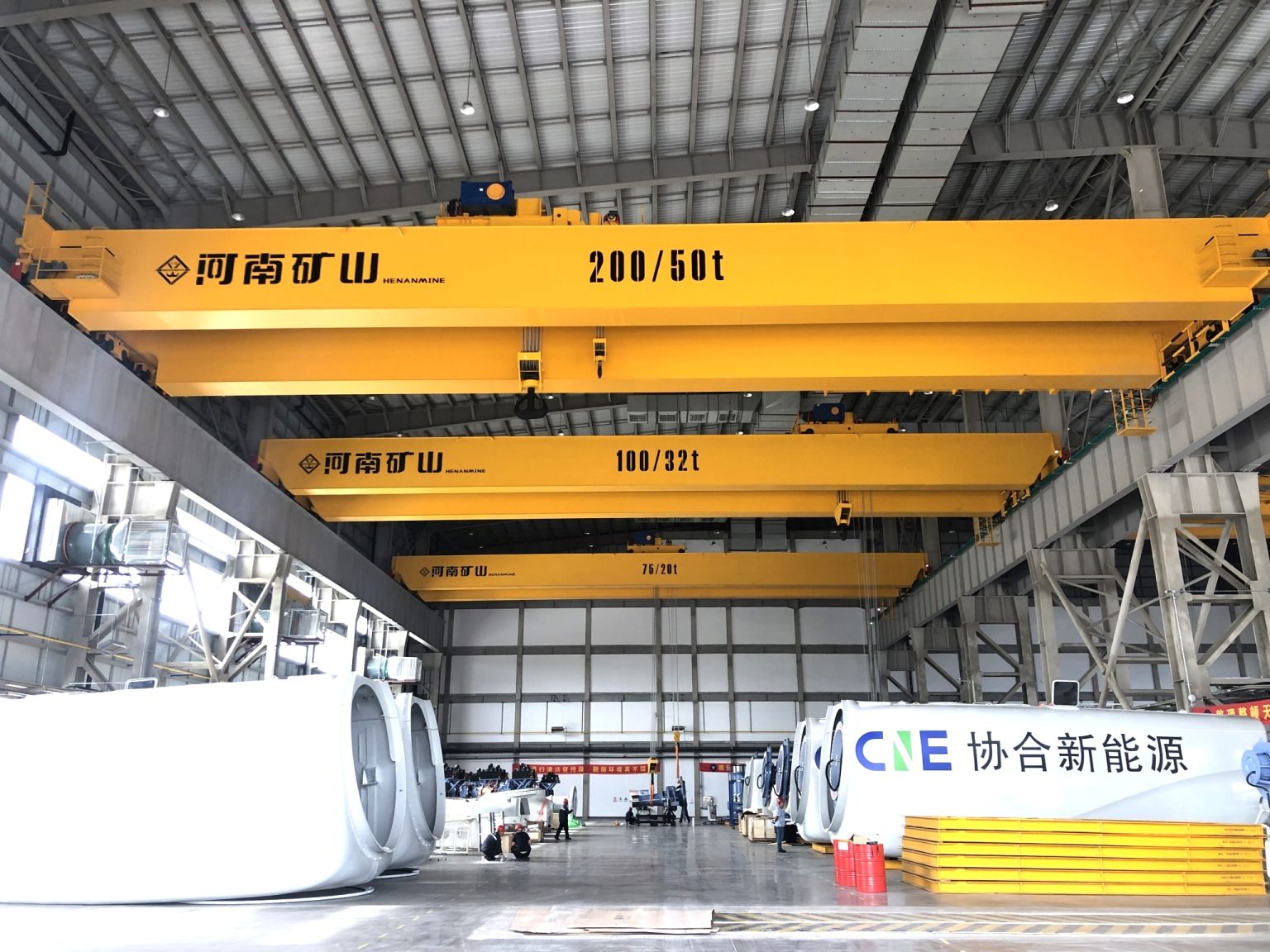
  • Wind Power Cranes

    Wind Power Cranes

    Crane application

    Wind Power Cranes

    Review the crane applications for wind power. Review the handling task, load geometry, working duty and equipment interfaces for your application.No matching projects or applications. Try a broader search.Let’s discuss your projectShare your load, span, lifting height and operating conditions.

    Wind Power Cranes — Henan Mine Crane crane application photograph
    Wind Power Cranes — crane application overview.

    Energy and materials production

    Specify the product or component geometry, process exposure, lifting attachment, handling frequency, working environment and any clean, corrosive or classified-area requirements.

    Crane configuration and interfaces

    Ask for the applicable equipment configuration, area classification where relevant, mechanical and electrical interfaces, inspection access and a site-specific test plan.

    Review the Overhead crane range and Energy & new materials cranes before defining the project-specific arrangement.

    Design the lifting process

    Use the project context above as a starting point. The following checks turn a crane application into a technical scope that suppliers can price and demonstrate for your site.

    Separate assembly and maintenance lifts

    List the generator, rotor, transformer or other components by mass, geometry and lifting points. A crane serving initial construction may have a very different duty cycle from one retained for long-term maintenance. Confirm the highest lift, hook approach, overlap with plant equipment and the space needed to turn or set down a component. For paired hooks or tandem lifts, provide the load-sharing and control requirements as part of the lifting study.

    Power and building interfaces

    Show the power hall, workshop or outdoor layout and the proposed crane runway. Building reactions, access platforms, installation openings and the temporary route for shipping crane components should be coordinated early. Outdoor applications require site-specific wind, temperature and corrosion inputs. If the plant has safety-classified equipment or restricted access, state the applicable procurement and documentation requirements rather than assuming a conventional industrial package is acceptable.

    Test scope and lifecycle support

    Compare general arrangement, hook duties, wheel loads, duty assumptions, electrical supply, control mode and inspection access across offers. Define a site acceptance sequence using the major maintenance components and agreed lifting fixtures. Check emergency stops, limits, brakes and the available safe-set-down position. Identify the supply boundary for rails, conductors, civil work, commissioning, training and spare parts, so an apparently low equipment price is not compared with a complete installed scope.

    Compare the proposed crane scope

    DecisionInformation to request
    Crane and lifting attachmentRated loads, load cases, hook coverage and the complete suspended-load calculation.
    Site interfacesRunway loads, rail or building drawings, electrical supply and installation responsibilities.
    Controls and protectionOperating sequence, required safety functions and a method for testing each function.
    Commercial scopeEquipment, transport, installation, commissioning, documentation, training and spare parts as separate line items.

    From technical offer to site acceptance

    Technical submittals

    A usable bid should show a general arrangement and a clear list of assumptions, not just a model name and capacity. Request the load schedule used in design, lifting-attachment drawings where applicable, span and hook-approach dimensions, wheel loads, electrical supply, control narrative and maintenance access. Check every drawing against the actual building or yard layout. Identify the standards and local approval requirements for the destination market in the enquiry, then confirm the bidder’s proposed design and documentation scope in writing.

    Installation and tests

    Agree when the runway or civil works will be ready, how crane components can reach the installation position and who provides lifting equipment for erection. Define the factory test, on-site installation inspection and site acceptance as separate milestones. The acceptance procedure should list representative loads, the travel route, protection devices, emergency stop and any automation or attachment functions included in the order. Record who supplies test weights, operators, power and access equipment; otherwise a nominal commissioning price may omit essential site work.

    Commercial comparison

    Ask for the same delivery basis and currency across proposals. Separate the crane, special lifting appliances, rails or conductors, transport, installation support, commissioning, training and initial spare parts. Lead time should identify the starting event, such as approved drawings or an effective contract, and any dependency on site readiness. Compare warranty scope and service response by the written contract terms. If a key input is still unknown, request a priced option or a stated assumption instead of allowing different bidders to silently use different specifications. Keep a written exception register so the engineering team can resolve open dimensions, process interfaces and responsibility boundaries before issuing the purchase order.

    Information to include in the enquiry

    • Load weights, dimensions, centre of gravity and lifting attachments.
    • Span, lifting height, runway or yard drawings, travel coverage and clearances.
    • Operating cycle, working environment, electrical supply and control requirements.
    • Supply boundaries, inspection documents, installation support and acceptance criteria.

    Discuss a comparable lifting task

    Send the handling task and available site drawings. Henan Mine Crane can define a proposed crane arrangement and identify the remaining information needed for a technical and commercial review.

  • Bridge Crane for Thermal Power Industry

    Bridge Crane for Thermal Power Industry

    Crane application

    Bridge Crane for Thermal Power Industry

    Review the thermal power plant overhead crane project. Review the handling task, load geometry, working duty and equipment interfaces for your application.

    Bridge Crane for Thermal Power Industry — Henan Mine Crane crane application photograph
    Bridge Crane for Thermal Power Industry — crane application overview.

    Power plant and hydropower lifting

    Provide generator, turbine or other component loads, lifting points, service clearances, hall or outdoor geometry and the construction and long-term maintenance sequences.

    Crane configuration and interfaces

    Ask for a general arrangement, main and auxiliary hook duties, support loads, operating controls, inspection access and commissioning tests.

    Review the Overhead crane range and Power & hydropower cranes before defining the project-specific arrangement.

    Design the lifting process

    Use the project context above as a starting point. The following checks turn a crane application into a technical scope that suppliers can price and demonstrate for your site.

    Separate assembly and maintenance lifts

    List the generator, rotor, transformer or other components by mass, geometry and lifting points. A crane serving initial construction may have a very different duty cycle from one retained for long-term maintenance. Confirm the highest lift, hook approach, overlap with plant equipment and the space needed to turn or set down a component. For paired hooks or tandem lifts, provide the load-sharing and control requirements as part of the lifting study.

    Power and building interfaces

    Show the power hall, workshop or outdoor layout and the proposed crane runway. Building reactions, access platforms, installation openings and the temporary route for shipping crane components should be coordinated early. Outdoor applications require site-specific wind, temperature and corrosion inputs. If the plant has safety-classified equipment or restricted access, state the applicable procurement and documentation requirements rather than assuming a conventional industrial package is acceptable.

    Test scope and lifecycle support

    Compare general arrangement, hook duties, wheel loads, duty assumptions, electrical supply, control mode and inspection access across offers. Define a site acceptance sequence using the major maintenance components and agreed lifting fixtures. Check emergency stops, limits, brakes and the available safe-set-down position. Identify the supply boundary for rails, conductors, civil work, commissioning, training and spare parts, so an apparently low equipment price is not compared with a complete installed scope.

    Compare the proposed crane scope

    DecisionInformation to request
    Crane and lifting attachmentRated loads, load cases, hook coverage and the complete suspended-load calculation.
    Site interfacesRunway loads, rail or building drawings, electrical supply and installation responsibilities.
    Controls and protectionOperating sequence, required safety functions and a method for testing each function.
    Commercial scopeEquipment, transport, installation, commissioning, documentation, training and spare parts as separate line items.

    From technical offer to site acceptance

    Technical submittals

    A usable bid should show a general arrangement and a clear list of assumptions, not just a model name and capacity. Request the load schedule used in design, lifting-attachment drawings where applicable, span and hook-approach dimensions, wheel loads, electrical supply, control narrative and maintenance access. Check every drawing against the actual building or yard layout. Identify the standards and local approval requirements for the destination market in the enquiry, then confirm the bidder’s proposed design and documentation scope in writing.

    Installation and tests

    Agree when the runway or civil works will be ready, how crane components can reach the installation position and who provides lifting equipment for erection. Define the factory test, on-site installation inspection and site acceptance as separate milestones. The acceptance procedure should list representative loads, the travel route, protection devices, emergency stop and any automation or attachment functions included in the order. Record who supplies test weights, operators, power and access equipment; otherwise a nominal commissioning price may omit essential site work.

    Commercial comparison

    Ask for the same delivery basis and currency across proposals. Separate the crane, special lifting appliances, rails or conductors, transport, installation support, commissioning, training and initial spare parts. Lead time should identify the starting event, such as approved drawings or an effective contract, and any dependency on site readiness. Compare warranty scope and service response by the written contract terms. If a key input is still unknown, request a priced option or a stated assumption instead of allowing different bidders to silently use different specifications. Keep a written exception register so the engineering team can resolve open dimensions, process interfaces and responsibility boundaries before issuing the purchase order.

    Information to include in the enquiry

    • Load weights, dimensions, centre of gravity and lifting attachments.
    • Span, lifting height, runway or yard drawings, travel coverage and clearances.
    • Operating cycle, working environment, electrical supply and control requirements.
    • Supply boundaries, inspection documents, installation support and acceptance criteria.

    Discuss a comparable lifting task

    Send the handling task and available site drawings. Henan Mine Crane can define a proposed crane arrangement and identify the remaining information needed for a technical and commercial review.

  • RMG Crane Specification: Span, Runway and Automation Interfaces

    RMG Crane Specification: Span, Runway and Automation Interfaces

    Technical guide

    RMG Crane Specification: Span, Runway and Automation Interfaces

    An RMG enquiry needs a coordinated yard and civil layout. Provide the required stacking coverage, rail positions, transfer interfaces and operating cycle so each proposal can be checked against the same terminal arrangement.

    Henan Mine CraneTechnical guide · Updated 2026Crane selection, project scope and operating requirements
    RMG Crane Specification: Span, Runway and Automation Interfaces
    Henan Mine Crane lifting equipment
    Project planning notes

    Key points for this crane project.

    1. What is RMG crane?
    2. Core Differences between RMG and RTG Cranes and
    3. Key Specifications of RMG Cranes
    Read the technical guide

    What is RMG crane?

    Rail Mounted Gantry Crane (RMG) is a bridge mounted gantry crane running along the track, mainly used for heavy cargo handling, stacking and loading and unloading operations, the core feature is to support the main girder through the two sides of the outriggers, longitudinal movement along the preset track, with the trolley (trolley) transverse movement and hoist (hoist) lifting and lowering action, to complete the all-round handling of goods.

    The core functions of RMG cranes include: multi-layer stacking of containers, loading and unloading of ships and vehicles, transshipment of cargoes in intermodal transportation, and handling of heavy industrial materials (such as steel and precast concrete components).

    Its core components are mainly composed of five major parts:

    • Gantry: as the main structure of the crane, it mainly carries the main girder and outriggers, providing stable support for the whole machine operation;
    • Trolley: it can drive the hoisting mechanism to move laterally along the main girder, and precisely realize the horizontal transfer of goods;
    • Hoisting mechanism: the core power component, undertaking the lifting and lowering operation of the goods, which is the key to realize the vertical movement of the goods;
    • Rail system: guides the crane to run longitudinally along the preset trajectory, which directly determines the operational coverage of the crane;
    • Control system: responsible for manipulating the crane's actions, divided into manual, semi-automatic and fully automatic three modes, adapted to different operational requirements.

    All components work together to ensure accurate and efficient operation.

    The basic working principle of RMG crane is:

    Through the rail system to limit the longitudinal running track of the crane, the trolley moves laterally along the main girder, the hoisting mechanism drives the goods up and down through the wire rope or chain, and the three work together to realize the accurate handling of the goods in three-dimensional space, which is suitable for large-scale, high-frequency, high-precision handling scenarios.

    Core Differences between RMG and RTG Cranes and Application Scenarios

    In the field of container handling, RMG cranes and tire gantry cranes (RTG, Rubber Tyred Gantry Crane) are the two most commonly used equipment, the core difference between the two is the way to move, which affects its application scenarios and performance.

    RMG crane adopts rail type movement, relying on the pre-set rail operation, its advantage lies in the strong stability, high carrying capacity, high operational accuracy, and lower energy consumption, maintenance costs are more controllable; limitations lie in the fixed range of movement, poor flexibility, the need to lay the track in advance, the initial infrastructure investment is high.

    RTG cranes use rubber tires to move, without the need to pre-set tracks, can flexibly adjust the operating range, to adapt to temporary or variable operating scenarios; but by the limitations of the tire carrying capacity, its stability, carrying capacity is not as good as RMG, and tire wear and tear, high energy consumption, long-term operating costs are high.

    From the point of view of application scenarios, RMG cranes are more suitable for high throughput, high stacking density of the fixed operating scenarios, such as large container terminals, special rail yards, large industrial warehousing centers, especially suitable for the need to automate and upgrade the intelligent operating scenarios;

    RTG cranes are more suitable for small and medium-sized terminals, temporary cargo yards, scenes with variable operating range, or temporary handling needs that require flexible adjustment of the operating area.

    RMG Crane Specification: Span, Runway and Automation Interfaces
    Lifting equipment and application context

    Key Specifications of RMG Cranes

    Lifting Capacity

    Lifting capacity is the core specification parameter of RMG cranes, which refers to the maximum weight of goods that can be lifted safely, and directly determines the applicable goods and scenes.

    Span and Gauge

    Span refers to the horizontal distance between the outriggers on both sides of the RMG crane, which directly determines the operational coverage of the crane and is a key parameter for the layout of the yard. Gauge refers to the distance between the two running rails, which matches the width of the crane's outriggers and affects the stability and operational flexibility of the crane.

    The choice of span is mainly determined by the layout of the yard:

    The choice of gauge should be combined with the existing infrastructure, giving priority to the use of standard gauge, if the yard space is special, can be customized non-standard gauge, but need to invest in additional track laying costs.

    Common span configurations include narrow span (suitable for small yards, single stacking area), standard span (suitable for medium-sized terminals, multi-row stacking), and wide span (suitable for large-scale intelligent terminals, high-density stacking scenarios).

    When selecting the model, it should be combined with the actual width of the yard and the stacking plan, so as to avoid the increase of equipment cost due to too large a span or the impact of too small a span on the operational coverage.

    Lifting Height

    Lifting height refers to the maximum vertical distance that the crane lifting mechanism can lift the goods, which directly affects the number of stacked layers of containers and determines the space utilization of the yard, and it is one of the core parameters for the selection of high-density yard.

    For container handling scenarios, the lifting height is usually expressed in terms of “layers”, and common configurations include 1-over-3 (stackable 4 layers, i.e., 3 layers can be stacked under the main crane beam, and 1 layer can be stacked under the trolley), 1-over-5 (stackable 6 layers), 1-over-6 (stackable 7 layers), etc.

    The lifting height is the maximum vertical distance that the crane hoisting mechanism can lift the goods, which directly affects the number of stacked layers of containers, and thus determines the space utilization of the yard, and is one of the core parameters of high-density yard selection. When selecting the lifting height, you need to focus on the following.

    When selecting the lifting height, three major factors should be considered: the space constraints of the yard (e.g., the headroom of the yard), the stacking target (e.g., the number of layers to be stacked, which has a direct impact on the throughput of the yard), and the demand for future expansion (if the future plan is to increase the density of the stacking, a certain degree of redundancy in the height of the lifting height needs to be set aside).

    For example, large container terminals usually choose a 1-over-5 or 1-over-6 lift height configuration to improve space utilization, while smaller yards or temporary operation areas may choose a 1-over-3 base configuration to reduce equipment costs.

    Operating Speeds

    The running speed of RMG cranes is categorized into three types, each affecting the operational efficiency of different segments:

    • Gantry running speed (the speed at which the crane moves longitudinally along the track),
    • Trolley running speed (the speed at which the trolley moves laterally along the main girder),
    • Lifting speed (the speed of the hoisting mechanism to lift the goods).

    The speed match of the three, directly determines the overall operation of the crane throughput (throughput).

    High throughput terminals can choose high-speed configuration to improve efficiency, heavy load, high-precision scenarios need to slow down to ensure safety and accuracy, selection needs to balance the speed and accuracy, combined with the rhythm of operation and the type of goods to choose reasonably.

    Power Supply Mode

    There are two main power supply methods for RMG cranes, namely, cable reel power supply and slip line power supply, both have their own advantages and disadvantages, and are suitable for different operational scenarios.

    Types of RMG Cranes: Choose a Design that Suits Your Needs

    Single girder and double girder RMG cranes

    The core difference between single girder and double girder RMG cranes lies in the structural design of the main girder, which in turn affects its load carrying capacity, cost and applicable scenarios, and is an important consideration when selecting the type.

    Double Main Girder RMG Cranes

    Selection needs to be combined with their own cargo weight, lifting height, span requirements and budget: light and medium-sized operations, limited budget, preferred single girder; heavy-duty, high-demand operations, preferred double girder, while taking into account the installation space and infrastructure conditions of the yard.

    Automated RMG Crane (ARMG)

    Automated RMG crane (ARMG) is the core equipment for the development of smart ports and smart logistics in recent years, and its core advantage lies in the realization of automation and unmanned operation, which significantly improves the operational efficiency and safety, and reduces labor costs.

    ARMG plays a key role in smart ports and multimodal terminals.

    The core advantages of ARMG are to improve efficiency, reduce labor costs, reduce errors, enhance safety, and support 24-hour operation; the implementation of infrastructure upgrades, personnel training and high initial investment need to be considered, large-scale, high-throughput terminals to adopt its long-term revenue can cover the investment, is the future development trend.

    Cantilever and Non-cantilever RMG Design

    The core difference between cantilever and non-cantilever RMG cranes is whether the main girder extends out of the outrigger (i.e., cantilever structure), and the two designs are adapted to different yard layouts and operational requirements.

    Cantilever RMG Cranes

    Both ends of the main girder extend out of the outrigger to form a cantilever structure, the advantage is that the operation covers a wider range of cargo handling outside the outrigger (e.g., container loading and unloading on the quay shore, cargo transfer next to the railroad track), and it is suitable for the scenario that there are railroads, highways, or ships docking at the edge of the yard. Support capacity, higher maintenance costs.

    Non-cantilever RMG Cranes

    The main girder is only between the outriggers, no extension structure, the advantages of simple structure, strong stability, low manufacturing costs, easy maintenance, suitable for compact yards, high-density stacking scenarios (such as the internal stacking of large container yards), no need to work on the outside of the outriggers; limitations are the limited coverage of the operation, cannot be realized outside the outriggers of the loading and unloading of goods, less flexible.

    Selection should be combined with the layout of the yard: if there is a railroad, highway or ship docking at the edge of the yard, it is necessary to carry out loading and unloading operations on the outside of the outriggers, and priority is given to the cantilever type; if the yard is compact, and only needs to carry out internal stacking and transshipment, it is preferred to choose the non-cantilever type, which reduces the cost and difficulty of maintenance.

    Application Scenarios of RMG Cranes: Core Areas with Outstanding Advantages

    Container Terminal

    Container terminals are the most important application scenarios for RMG cranes. Whether it is a large coastal port or an inland intermodal yard, RMG cranes undertake the core tasks of container stacking, loading and unloading, and transshipment, and they are the key equipment to increase the throughput of the terminals.

    Port operations, RMG cranes with the shore bridge to complete the container shore loading and unloading, yard stacking and vehicle loading and unloading, by virtue of high stability, high precision, high throughput to match the fast-paced needs of large terminals, coastal deep-water ports can be stacked 4-6 layers of containers, with the ARMG can be operated 24 hours a day to enhance the handling capacity of the terminal.

    In the intermodal freight yard, RMG cranes are responsible for container transshipment in multiple ways, and the rail-type design ensures accurate transshipment, reduces cargo damage, and is suitable for high-density stacking. At present, RMG is widely used in mainstream terminals around the world, such as Shanghai Port and Singapore Port, of which ARMG is the core configuration of the intelligent terminal.

    Railroad Yard

    Railroad yard is one of the important application scenarios of RMG cranes, mainly used for intermodal container transfer, loading and unloading of railroad vehicles, as well as the handling of heavy railroad materials, and its core advantage is that it can be accurately docked with the railroad track to achieve efficient transfer of containers.

    In the railroad yard, RMG cranes run along the track, can accurately docking railroad wagons, fast loading and unloading of containers and stacked 4-6 layers, to improve space utilization; its stability is better than traditional cranes, can reduce cargo damage, adapt to high-frequency transit, shorten the operating time.

    Its application can realize seamless rail-public transportation, improve efficiency, reduce costs, adapt to inland and cross-border railroad hub yards, and help scale up the efficient development of railroad logistics.

    Industrial Warehousing and Heavy Industry

    In addition to logistics, RMG cranes are also widely used in industrial warehousing and heavy industry scenarios, mainly used for heavy material handling, storage, suitable for steel, precast concrete components, heavy machinery, large industrial components and other cargo needs.

    For the specificity of industrial scenarios, RMG cranes can be customized, such as adding special spreaders, improving corrosion resistance, adapting to high-temperature or dusty environments, etc., to meet the personalized needs of different industrial fields, and to become the core equipment for heavy industrial production and warehousing.

    Advantages of RMG Cranes

    Compared with other types of cranes (e.g. RTG, overhead cranes), RMG cranes have obvious advantages in many fields due to their unique structure and performance, becoming one of the preferred equipment in modern logistics and heavy industry.

    Lower Operating Costs

    Compared with RTG cranes, RMG cranes are powered by electricity, which consumes less energy, and do not require frequent replacement of tires, so maintenance costs are significantly reduced; at the same time, automation upgrades can reduce the need for manpower, further reducing labor costs, and long-term operational benefits are significant.

    Suitable for Automation and Intelligent Logistics

    The structural design of RMG cranes facilitates automation upgrading, and it can easily integrate TOS system, IoT equipment, sensors, etc. to realize unmanned operation, remote scheduling, data monitoring and control, which is suitable for the development needs of smart ports and smart logistics, and improves operational efficiency and management level.

    High Throughput

    RMG cranes can flexibly match the operating speed, stacking height and operating accuracy to match high-frequency and large-scale operation scenarios, such as large container terminals, which can realize the handling of dozens of containers per hour and significantly increase the operational throughput to meet the production capacity needs of enterprises.

    Challenges and limitations of RMG cranes

    Although RMG cranes have many advantages, but in the actual application, there are still some challenges and limitations, which need to be considered by enterprises in the selection and application process to avoid affecting operational efficiency and cost control.

    • Initial infrastructure investment is high: RMG cranes need to be pre-set track system, power supply system, foundation support structure, track laying, foundation construction costs are high, especially wide-span, long-distance operating scenarios, the infrastructure investment is more significant, the initial capital pressure on the enterprise is greater.
    • Limited flexibility: RMG cranes run along the track, the operating range is fixed, cannot flexibly adjust the operating area like RTG cranes, if the layout of the yard changes, the track system is difficult to transform, high cost, poor adaptability.
    • Higher maintenance requirements: RMG cranes have many components and long-term high-load operation, requiring regular maintenance and repair, track, cable and other wear parts need to be handled by specialized personnel and equipment, maintenance costs and difficulties are higher than simple cranes.
    • Strict space requirements: the gantry structure of RMG cranes requires a certain footprint, and has strict requirements on the headroom height of the yard and ground bearing capacity, small yards or scenes with poor ground conditions may not be able to install and use RMG cranes.

    Key Considerations for Selecting RMG Cranes

    When choosing RMG cranes, you need to combine your operational needs, yard conditions, budget, and consider the following five factors to ensure that the selection is scientific and reasonable, and to achieve a balance between efficiency and cost.

    Yard Layout and Space Constraints

    Yard layout and space is the basis for selection, need to focus on the assessment: the actual width, length and headroom height of the yard, determining the span and lifting height of the crane; the existing infrastructure (such as rail, power supply system), to determine the need for additional investment in the transformation;

    Future expansion plans, if the future scale of the yard to expand, you need to choose the crane can be adapted to the expansion needs (such as wide span, high lifting height), to avoid repeated investment. At the same time, the ground bearing capacity of the yard needs to be considered to ensure the safe operation of cranes.

    Throughput Demand

    Throughput demand directly determines the specifications and types of cranes, need to be combined with their average daily and weekly cargo handling volume, calculate the required operating efficiency, and then select the appropriate lifting capacity, operating speed and control mode.

    For example, high throughput scenarios (such as large container terminals), you need to choose a high lifting capacity, high speed double girder RMG or ARMG; medium throughput scenarios (such as medium-sized rail yards), you can choose a single girder or semiautomatic RMG; low throughput scenarios (such as small-scale industrial warehousing), you can choose a manually-controlled basic type of RMG, to reduce costs.

    Budget and Return on Investment (ROI)

    Budget is an important constraint for selection, and it is necessary to consider the initial investment (equipment procurement, infrastructure construction) and long-term operating costs (maintenance, energy consumption, labor) to calculate the ROI. For example, ARMG has a high initial investment but low long-term operating costs and high efficiency, which is suitable for high throughput and long-term operation scenarios;

    Manually controlled RMG has low initial investment, but high long-term labor and maintenance costs, suitable for scenarios with limited budget and low throughput. At the same time, it is necessary to choose cost-effective equipment, prioritize well-known brands and mature technologies, to avoid increased maintenance costs due to equipment quality issues in the later stages.

    Automation Requirement Level

    Automation needs to be combined with their own scale of operation, labor costs and management level, choose the right control mode: small yards, complex working conditions, give priority to manual control, flexible to adapt to various types of operational needs;

    For medium-sized yards, semi-automatic control can be chosen to balance efficiency and cost; for large-scale intelligent terminals and high throughput scenarios, fully automatic control (ARMG) is preferred to realize unmanned operation and improve efficiency and safety. At the same time, it is necessary to consider its own technical strength to ensure that it can support the deployment and maintenance of the automation system.

    Environmental and Energy Considerations

    With the increasingly stringent environmental policies, the choice of RMG cranes need to focus on environmental and energy considerations: give priority to electric-powered cranes to reduce fuel consumption and emissions; combined with the local energy policy, choose the equipment suitable for green energy (such as solar energy, wind energy);

    Pay attention to the energy efficiency of the equipment, choose models with low energy consumption and good energy-saving effect to reduce long-term energy costs. At the same time, it is necessary to comply with local environmental regulations, so as to avoid affecting the operation due to environmental issues.

    RMG Crane Design Standards and Safety Requirements

    International Standards

    The design, manufacture and use of RMG cranes need to follow international standards to ensure the quality, safety and interoperability of the equipment, the world's mainstream standards include: ISO (International Organization for Standardization) standards, mainly provides for the design of cranes, manufacturing, safety requirements and testing methods, is the basic standard for global use;

    FEM (European Material Handling Federation) standards for the European market, the performance of cranes, safety, reliability have more stringent requirements; CMAA (Crane Manufacturers Association of America) standards for the North American market, focusing on regulating the design of cranes and safe operation.

    Safety Features (essential for operation)

    The operating environment of RMG cranes is complex (heavy load, high altitude, high frequency), and safety functions are the core and indispensable to ensure the safety of personnel and equipment, mainly including the following four categories:

    • Anti-collision system: through sensors, cameras and other equipment, real-time monitoring of the distance between the crane and other equipment, cargo, personnel, to avoid collision accidents, especially suitable for automated operating scenarios, can prevent collision between cranes, between cranes and containers.
    • Windproof and Storm Lock: RMG cranes are large in size and susceptible to wind, the windproof system can lock the crane in windy weather to prevent the crane from shifting; the storm lock is used in extreme weather (e.g., rainstorms, typhoons) to fix the crane on the track to avoid equipment damage.
    • Emergency control: including emergency stop button, load holding device, standby power supply, etc. When equipment failure or emergency, it can quickly stop the operation, keep the load stable, avoid the expansion of the accident, and protect the safety of personnel and goods.
    • Operator safety functions: such as ergonomic (ergonomic) console, safety cage, monitoring system, etc., to reduce the labor intensity of the operator, to avoid the operator contact with the danger zone, to enhance the safety of the operation.

    Maintenance and Life Cycle Management

    The service life of RMG cranes is usually 15-20 years. Scientific maintenance and life cycle management can extend the service life of the equipment, reduce maintenance costs, ensure stable operation of the equipment, and improve the return on investment.

    Preventive Maintenance Best Practices

    Preventive maintenance is the core of RMG crane maintenance, the core principle is to “prevent in advance, timely investigation”, to avoid equipment failure caused by downtime, mainly including the following:

    Formulate a regular inspection plan, which is divided into daily inspection (operators check before daily operation, such as cables, spreaders, emergency buttons), weekly inspection (maintenance personnel check the operating status of the rail, trolley, hoisting mechanism), monthly inspection (comprehensive inspection of the electrical system and mechanical components of the equipment), and annual inspection (comprehensive testing and calibration by a professional organization to ensure that the equipment meets the standards).

    Key maintenance tasks include: cleaning and lubrication of the rail to avoid wear and tear of the rail; lubrication and debugging of the lifting mechanism to ensure smooth lifting and lowering; checking and replacement of cables to avoid aging and breakage of the cables; calibration and upgrading of the control system to ensure precise control; and testing and maintenance of the safety devices to ensure normal safety functions.

    The core advantages of preventive maintenance are: to reduce equipment downtime and improve operational efficiency; to reduce maintenance costs and avoid high maintenance costs due to major failures; to extend the service life of equipment and maximize the value of investment.

    Common Wearing Parts

    RMG crane wearing parts are mostly moving components, which need to be checked and replaced regularly. Commonly, there are rails, wheels, hoisting cables/chains, bearings and control panels, which are prone to wear and tear and failure due to long-term use.

    Replacement of wearing parts requires the use of matching original parts, standardized operation, good replacement records and the establishment of maintenance files, combined with the pattern of wear and tear to formulate a replacement plan to avoid equipment downtime.

    Life Cycle Cost Optimization

    The life cycle cost of RMG cranes includes initial investment (procurement, infrastructure), operating costs (energy, labor, maintenance), replacement costs (wearing parts, equipment renewal), the core of life cycle cost optimization is to "reduce long-term operating costs and extend equipment life.

    Specific strategies: choose reliable quality, low energy consumption equipment; establish preventive maintenance system; strengthen personnel training, standardized operation; regular assessment of the state of the equipment, reasonable control of the timing of maintenance and replacement; the use of digital technology to monitor the equipment, predict failures, reduce maintenance costs.

    Future Trends of RMG Crane Technology

    With the development of smart logistics, green ports, and Industry 4.0, RMG crane technology is developing in the direction of automation, intelligence, and greening, and will show the following five trends in the future to further improve operational efficiency, reduce costs, and enhance safety.

    • Integration of advanced automation and AI: ARMG will be deeply combined with AI technology to achieve intelligent scheduling, path optimization, fault prediction, and multiple ARMGs can work together to improve overall efficiency.
    • Remote operation and unmanned operation: Remote operation technology will be more mature, operators can control remotely to ensure safety; unmanned operation will become mainstream, combining multiple technologies to realize autonomous operation and 24-hour operation.
    • Remote operation and unmanned: Remote operation technology will be more mature, and can be controlled remotely to ensure safety; unmanned operation will become mainstream, combining multiple technologies to realize autonomous operation and 24-hour operation.
    • Electrification and green development: RMG will be fully electrified, eliminating hybrids, adapting green energy such as solar energy to achieve carbon-neutral operation, optimizing energy-saving technologies to reduce energy consumption, and contributing to the development of green ports and industries.

    Deep integration with IoT and intelligent logistics system: RMG cranes will be integrated into the intelligent logistics system, linked with TOS, WMS and IoT equipment to achieve full tracking of goods, automatic scheduling and data sharing, build an integrated intelligent process, improve efficiency, reduce costs, and help the development of intelligent logistics on a large scale.

    Discuss the crane arrangement for your project.

    An RMG enquiry needs a coordinated yard and civil layout. Provide the required stacking coverage, rail positions, transfer interfaces and operating cycle so each proposal can be checked against the same terminal arrangement. Share the load, available drawings, working cycle and site conditions with Henan Mine Crane so the required configuration and supply boundary can be discussed.

    Related crane configurations

    Rail-Mounted Gantry (RMG)

    View product parameters
    Lifting capacity: 35 t, 40.5 t, 50 tSpan: 18 – 35 mLifting height: 12.3 – 21 m

    Use an RMG for container transfer along a fixed rail layout. Select the lifting arrangement, yard coverage and positioning controls from the container flow and stacking requirements.

    Modular Electric Hoist Overhead Crane

    View product parameters
    Lifting capacity: 1 – 32 tSpan: 7.5 – 31.5 mLifting height: 6–30 m

    Use a modular electric-hoist overhead crane for production, assembly and maintenance lifting. Select the hoist arrangement, hook coverage and movement control for the workshop and operating cycle.

    Updated 2026 · Henan Mine Crane
  • Automatic Stacking Crane for Cold Chain Logistics Warehouse

    Automatic Stacking Crane for Cold Chain Logistics Warehouse

    Crane application

    Automatic Stacking Crane for Cold Chain Logistics Warehouse

    Review the automatic stacking cranes for cold storage. Review storage geometry, material flow, lifting loads and required automation interfaces.

    Automatic Stacking Crane for Cold Chain Logistics Warehouse — Henan Mine Crane crane application photograph
    Automatic Stacking Crane for Cold Chain Logistics Warehouse — crane application overview.

    Container and warehouse handling

    Map the load units, storage or yard lanes, stacking height, travel route, handling cycle, building or rail clearances and vehicle interfaces. Specify the operating wind, power and communication conditions where applicable.

    Crane configuration and interfaces

    Ask for a general arrangement, wheel loads, spreader or lifting attachment scope, travel and positioning controls, protection functions and commissioning tests for the declared handling sequence.

    Review the Overhead crane range and Warehousing & logistics cranes before defining the project-specific arrangement.

    Design the lifting process

    Use the project context above as a starting point. The following checks turn a crane application into a technical scope that suppliers can price and demonstrate for your site.

    Production route and coverage

    Mark the incoming material point, production stations, storage positions and dispatch area on one layout. Record the heaviest regular load, unusual maintenance load, dimensions, lifting points and frequency of each move. A crane sized only for the maximum load can still obstruct the production route if hook approach, building height or column spacing is overlooked. For high-bay storage, identify the rack envelope and the clearance required while a load is suspended.

    Automation and environmental interface

    Define whether positioning is manual, assisted or automatic, and list the signals exchanged with warehouse or production software. Specify what happens when a location is occupied or a load cannot be identified. A cold store adds condensation, temperature transition and access constraints; a clean production area may add particle and material requirements. Describe these conditions explicitly so the electrical package, lubrication, protection and inspection method can be designed for them.

    Offer comparison and handover

    Ask for a general arrangement, hook coverage diagram, runway and wheel-load data, duty selection, control narrative and maintenance access plan. State whether rails, conductors, building reinforcement, controls integration and operator training are included. Site acceptance should repeat representative moves between real stations, check limit protection and demonstrate recovery from an interrupted automated cycle. This is more useful than comparing only rated capacity, span and a headline price.

    Compare the proposed crane scope

    DecisionInformation to request
    Crane and lifting attachmentRated loads, load cases, hook coverage and the complete suspended-load calculation.
    Site interfacesRunway loads, rail or building drawings, electrical supply and installation responsibilities.
    Controls and protectionOperating sequence, required safety functions and a method for testing each function.
    Commercial scopeEquipment, transport, installation, commissioning, documentation, training and spare parts as separate line items.

    From technical offer to site acceptance

    Technical submittals

    A usable bid should show a general arrangement and a clear list of assumptions, not just a model name and capacity. Request the load schedule used in design, lifting-attachment drawings where applicable, span and hook-approach dimensions, wheel loads, electrical supply, control narrative and maintenance access. Check every drawing against the actual building or yard layout. Identify the standards and local approval requirements for the destination market in the enquiry, then confirm the bidder’s proposed design and documentation scope in writing.

    Installation and tests

    Agree when the runway or civil works will be ready, how crane components can reach the installation position and who provides lifting equipment for erection. Define the factory test, on-site installation inspection and site acceptance as separate milestones. The acceptance procedure should list representative loads, the travel route, protection devices, emergency stop and any automation or attachment functions included in the order. Record who supplies test weights, operators, power and access equipment; otherwise a nominal commissioning price may omit essential site work.

    Commercial comparison

    Ask for the same delivery basis and currency across proposals. Separate the crane, special lifting appliances, rails or conductors, transport, installation support, commissioning, training and initial spare parts. Lead time should identify the starting event, such as approved drawings or an effective contract, and any dependency on site readiness. Compare warranty scope and service response by the written contract terms. If a key input is still unknown, request a priced option or a stated assumption instead of allowing different bidders to silently use different specifications. Keep a written exception register so the engineering team can resolve open dimensions, process interfaces and responsibility boundaries before issuing the purchase order.

    Information to include in the enquiry

    • Load weights, dimensions, centre of gravity and lifting attachments.
    • Span, lifting height, runway or yard drawings, travel coverage and clearances.
    • Operating cycle, working environment, electrical supply and control requirements.
    • Supply boundaries, inspection documents, installation support and acceptance criteria.

    Discuss a comparable lifting task

    Send the handling task and available site drawings. Henan Mine Crane can define a proposed crane arrangement and identify the remaining information needed for a technical and commercial review.

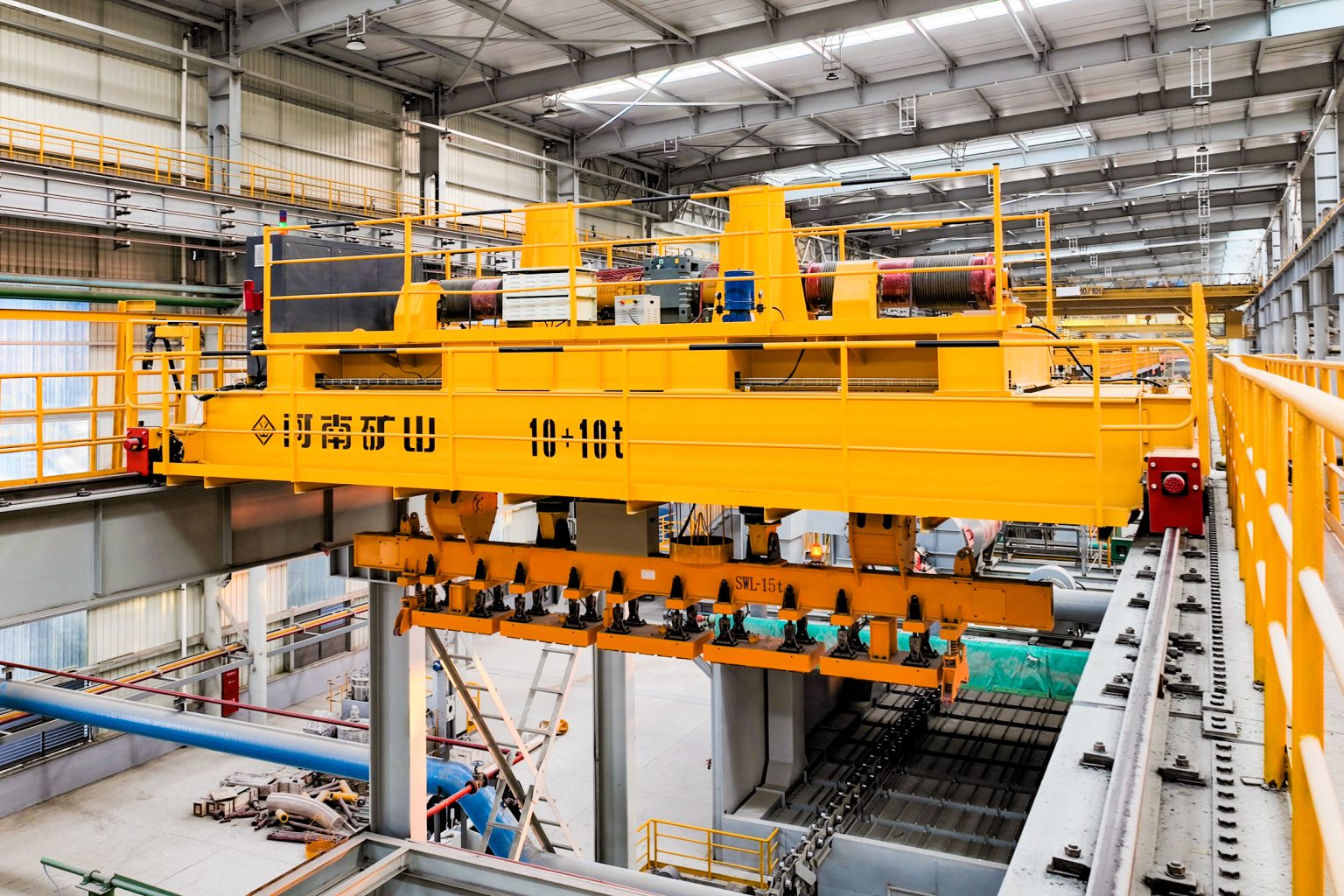
  • Automatic Electromagnetic Hanging Girder Crane

    Automatic Electromagnetic Hanging Girder Crane

    Crane application

    Automatic Electromagnetic Hanging Girder Crane

    Review the automatic magnetic carrier-beam cranes. Review the handling task, load geometry, working duty and equipment interfaces for your application.

    Automatic Electromagnetic Hanging Girder Crane — Henan Mine Crane crane application photograph
    Automatic Electromagnetic Hanging Girder Crane — crane application overview.

    Steelmaking and metal handling

    Define the complete suspended load, ladle or steel-product geometry, process temperature, crane duty and safe travel path. For molten-metal work, include auxiliary lifting, heat shielding, redundant protections and inspection access in the specification.

    Crane configuration and interfaces

    Ask for the crane arrangement, hook and lifting appliance interfaces, runway loads, control and monitoring functions, inspection access and a test plan matched to the plant process.

    Review the Overhead crane range and Steel & metallurgy cranes before defining the project-specific arrangement.

    Design the lifting process

    Use the project context above as a starting point. The following checks turn a crane application into a technical scope that suppliers can price and demonstrate for your site.

    Load shape and lifting attachment

    A handling line must be sized for the material as well as its nominal weight. Record the longest and shortest piece, thickness, stack condition, temperature, centre of gravity and whether several pieces are lifted at once. For magnet beams, provide the number and spacing of magnets, expected residual magnetism and the power-loss response. For clamps, provide gripping faces, allowable pressure and the secure-release sequence. The attachment and the load both count towards the suspended mass.

    Motion and stacking accuracy

    Show the pickup and deposit points, permitted rotation, vertical clearance, storage rack geometry and the tolerance at which a load may be released. Synchronised lifting, anti-sway and automatic stacking are different control scopes; define which movements actually require them. Ask how the operator confirms a safe grip and how the crane responds to a partial pickup, misalignment or obstruction. Interface signals with a production line or warehouse system should be listed before control architecture is chosen.

    Demonstrating the arrangement

    A technical proposal should include the lifting attachment drawing, crane layout, power backup or retention concept where relevant, exclusion zones, maintenance access and the load cases used for design. Witness a handling trial with representative material, including the heaviest and most awkward pieces and an agreed simulated fault condition. Clarify who supplies the magnet, clamp, control interface, spare attachment parts and operator training. A rated crane capacity does not by itself verify a safe plate, slab or block handling process.

    Compare the proposed crane scope

    DecisionInformation to request
    Crane and lifting attachmentRated loads, load cases, hook coverage and the complete suspended-load calculation.
    Site interfacesRunway loads, rail or building drawings, electrical supply and installation responsibilities.
    Controls and protectionOperating sequence, required safety functions and a method for testing each function.
    Commercial scopeEquipment, transport, installation, commissioning, documentation, training and spare parts as separate line items.

    From technical offer to site acceptance

    Technical submittals

    A usable bid should show a general arrangement and a clear list of assumptions, not just a model name and capacity. Request the load schedule used in design, lifting-attachment drawings where applicable, span and hook-approach dimensions, wheel loads, electrical supply, control narrative and maintenance access. Check every drawing against the actual building or yard layout. Identify the standards and local approval requirements for the destination market in the enquiry, then confirm the bidder’s proposed design and documentation scope in writing.

    Installation and tests

    Agree when the runway or civil works will be ready, how crane components can reach the installation position and who provides lifting equipment for erection. Define the factory test, on-site installation inspection and site acceptance as separate milestones. The acceptance procedure should list representative loads, the travel route, protection devices, emergency stop and any automation or attachment functions included in the order. Record who supplies test weights, operators, power and access equipment; otherwise a nominal commissioning price may omit essential site work.

    Commercial comparison

    Ask for the same delivery basis and currency across proposals. Separate the crane, special lifting appliances, rails or conductors, transport, installation support, commissioning, training and initial spare parts. Lead time should identify the starting event, such as approved drawings or an effective contract, and any dependency on site readiness. Compare warranty scope and service response by the written contract terms. If a key input is still unknown, request a priced option or a stated assumption instead of allowing different bidders to silently use different specifications. Keep a written exception register so the engineering team can resolve open dimensions, process interfaces and responsibility boundaries before issuing the purchase order.

    Information to include in the enquiry

    • Load weights, dimensions, centre of gravity and lifting attachments.
    • Span, lifting height, runway or yard drawings, travel coverage and clearances.
    • Operating cycle, working environment, electrical supply and control requirements.
    • Supply boundaries, inspection documents, installation support and acceptance criteria.

    Discuss a comparable lifting task

    Send the handling task and available site drawings. Henan Mine Crane can define a proposed crane arrangement and identify the remaining information needed for a technical and commercial review.

  • Compact Automated Storage Cranes: Storage Density and Service Access

    Compact Automated Storage Cranes: Storage Density and Service Access

    Technical guide

    Compact Automated Storage Cranes: Storage Density and Service Access

    Compact equipment still needs room for loads, transfers and maintenance work. Compare the storage envelope, positioning requirements and recovery access rather than using equipment dimensions alone as a measure of warehouse fit.

    Henan Mine CraneTechnical guide · Updated 2026Crane selection, project scope and operating requirements
    Henan Mine Crane Modular Electric Hoist Overhead Crane
    Henan Mine Crane Modular Electric Hoist Overhead Crane
    Project planning notes

    Key points for this crane project.

    1. What Is an Intelligent Storage Crane?
    2. Why Compact Design Is Reshaping Modern Warehousing
    3. Core Engineering Principles Behind Compact Crane
    Read the technical guide

    What Is an Intelligent Storage Crane?

    Henan Mine Crane manufactured intelligent storage crane, also known as a stacker crane, is an automated machine that stores and retrieves goods within a racking system, moving along three axes: longitudinal (down the aisle), vertical (up the mast), and transverse (into the rack depth). It's the core mechanical component of an automated storage and retrieval system (AS/RS).

    What makes it "intelligent" isn't just automation, it's the layer of control technology on top of the mechanics. Modern cranes are directed by a warehouse control system (WCS) that receives instructions from a warehouse management system (WMS), using real-time encoder feedback, load sensors, and safety interlocks to execute precise storage and retrieval cycles without human intervention.

    Compact design refers to the engineering discipline of minimizing the crane's physical footprint, aisle width, mast cross-section, and structural bulk, while preserving load capacity, speed, and safety.

    Why Compact Design Is Reshaping Modern Warehousing

    Warehouse real estate costs have climbed sharply in most major logistics markets, and floor space is now one of the most expensive line items in a distribution network's operating budget. That single pressure, do more with less square footage, is what has pushed compact crane design from a nice-to-have to a competitive requirement.

    Three forces are driving demand for Henan Mine Crane manufactured compact intelligent cranes:

    • Increasing land and construction costs:Saving a meter of aisle width means there is a meter more racking bays, giving more storage locations per square foot of building footprint.
    • E-commerce SKU proliferation:Retailers and 3PLs are stocking more and more thousands of smaller, faster-moving SKUs, giving rise to a preference for narrow-aisle mini-load equipment rather than bulkier pallet-handling.
    • Labor economics: Less equipment and less floor space for picking and storage (using mini-load systems) lead to compounding savings.

    Core Engineering Principles Behind Compact Crane Design

    Compact crane design isn't a single feature , it's the outcome of several coordinated engineering decisions working together.

    Minimizing Structural Mass Without Sacrificing Rigidity

    A high-strength steel and an optimized mast geometry is used to ensure that the crane remains stiff in a loaded position without adding excessive bulk to the structure. The idea is to minimize the forces transferred back to the rack frame so that both the rack frame and the crane are not subject to long term fatigue.

    Reducing Operating Tolerances Through Precision Guidance

    Conventional material handling equipment requires a substantial amount of free space since even human operators cannot accurately estimate a distance when moving quickly. With rail-guided cranes, however, the path is constrained in space by lower guide rail for travel and an upper guide base for lift giving designers the ability to minimize the operational envelope only to the extent necessary.

    Optimizing the Load-Handling Device

    The extraction system (telescopic forks, satellite shuttles, or on-board conveyors) is engineered to reach precisely into rack depth without needing extra swing or maneuvering room. Telescopic forks that extend and retract in a straight line, for instance, eliminate the turning radius that a forklift would require.

    Distributing Loads Intelligently

    Compact cranes often use cantilevered carriage designs with back-to-back guide wheel sets that support the load against the mast rather than requiring a wide independent base , a design choice that directly narrows the aisle footprint.

    Key Mechanical Components Enabling a Smaller Footprint

    Every Henan Mine Crane manufactured compact intelligent storage crane is built from a common set of components, each engineered for space efficiency:

    • Mast(s):The main structural axis, made from high-strength steel. Single-mast designs are lighter and better suited to compact, lower-throughput applications; twin-mast designs add capacity for double-deep racking.
    • Lifting cradle (carriage):Moves vertically along the mast and houses the extraction system. Guided by sets of back-to-back wheels that keep the load stable without a wide footprint.
    • Hoisting mechanism:An AC motor with variable frequency drive (VFD) controlling vertical movement with precision, avoiding the overshoot that would otherwise require extra clearance.
    • Lower and upper guide bases:The lower base is responsible for longitduinal travel. The upper base holds the mast and has damping function which is most important to maintain thinness of structure without loss of stability.
    • Energy chain and electrical cabinet:Power the moving carriage continuously (rather than dragging behind) by mounting close to the mast.
    • Encoders and PLC control panel:Provide the real-time position feedback that allows the system to operate at tight tolerances safely.

    Reducing the size of any one of these components in isolation would compromise safety. Compact design works because all of them are engineered together as a system.

    How Intelligent Control Systems Shrink the Physical Design

    This is the piece most manufacturers gloss over: the "intelligent" part of an intelligent storage crane is what actually makes the compact part possible.

    A crane with no automated positioning feedback needs mechanical margin , extra clearance, slower speeds, wider aisles , to compensate for uncertainty. Strip that uncertainty out with better control systems, and you can safely shrink the physical envelope. Specifically:

    • Real-time encoder feedbacklets the crane know its exact position within millimeters, removing the need for the generous stopping distances a less-precise system would require.
    • Load sensors and photocellsverify load dimensions and rack-position accuracy automatically, allowing tighter rack tolerances than a human operator could safely judge.
    • VFD-controlled motorsenable smooth acceleration and deceleration curves, reducing the mechanical shock , and therefore the structural bulk , needed to absorb sudden starts and stops.
    • WMS/WCS integrationenables combined storage-and-retrieval cycles in a single pass, meaning the crane's automated intelligence increases throughput without needing a larger or faster physical machine.
    • Self-learning and diagnostic systemscontinuously calibrate the crane's understanding of rack geometry, catching and correcting drift before it requires physical overcorrection.

    In short: intelligence is what lets engineers trust a smaller machine to perform reliably. This is the central insight that separates a genuinely compact intelligent crane from a simply undersized conventional one.

    Materials and Manufacturing Techniques Behind Compact Structures

    Compact crane design lives or dies on material choices long before any control software gets involved. Engineers rely on a handful of manufacturing techniques to shave weight and volume off the structure without weakening it.

    High-strength low-alloy (HSLA) steel is the typical material used when making a mast. The tensioned BS3004 standard structural steel is replaced with an HSLA grade that has a higher strength-to-weight ratio, allowing a thinner mast cross-section to be used to carry the same load and fatigue requirements. This saves weight and volume of the mast, and consequently the volume and weight of load that needs to be moved (axially at peak acceleration), which enables a smaller, more efficient motor to be used.

    Laser and plasma cutting have largely replaced older fabrication methods for mast panels and cradle brackets. These techniques produce tighter tolerances than traditional cutting, which matters because compact designs depend on components fitting together with minimal slack.

    Finite element analysis (FEA) modeling lets engineers simulate stress distribution across a mast or cradle design before it's ever built. Instead of over-engineering a structure with generous safety margins "just in case," FEA allows manufacturers to place material only where simulated stress concentrations actually require it. This is one of the quieter reasons modern compact cranes can be lighter than equivalent designs from a decade ago , the safety margin is now data-driven rather than assumed.

    Modular, bolted sub-assemblies are also increasingly common in place of fully welded structures. Modular masts and cradles are easier to manufacture to tight tolerances in a factory setting, easier to transport without deformation, and easier to service , a cracked or worn sub-assembly can be swapped rather than requiring the whole mast to be reworked on site. This modularity also lets manufacturers offer a single compact platform in several height and capacity variants without redesigning the core structure each time.

    Finally, surface treatment and coating technology plays a supporting role. Anti-corrosion coatings and specialized paint systems allow thinner base metal to be used safely in humid, cold-storage, or chemically aggressive environments, since the coating , not extra material thickness , provides the corrosion margin. This matters particularly for Henan Mine Crane manufactured compact cranes deployed in cold stores, where every added millimeter of structural bulk also adds refrigeration load.

    Taken together, these manufacturing choices explain why two cranes with identical stated load capacities can have meaningfully different footprints: the difference often comes down to how precisely the manufacturer modeled and fabricated the structure, not just how the control software manages the machine in operation.

    Cost and ROI Considerations for Compact Crane Investments

    Compact intelligent storage cranes typically carry a higher upfront cost than conventional racking with forklifts, and buyers should evaluate that investment with a full lifecycle view rather than a simple purchase-price comparison.

    Capital costs: for a compact AS/RS installation include the crane itself, the racking structure engineered to the crane's tolerances, aisle equipment (guide rails, safety fencing, electrical infrastructure), and the WMS/WCS software layer. Because racking and crane must be designed together, buyers should request a single integrated quote rather than pricing racking and automation separately , mismatched tolerances between the two are a common source of costly change orders during installation.

    In markets where industrial real estate commands a premium, this alone can materially shorten the payback period, since the land, construction, and utility costs tied to a smaller building footprint are recurring savings rather than one-time gains.

    Labor cost reduction: is the second major factor. Continuous 24/7 automated operation removes the need for multiple shifts of forklift operators in high-turnover facilities, and it also reduces the incidence-related costs (insurance, downtime, training) associated with manual material handling in narrow, high-traffic aisles.

    Energy efficiency: further improves the ROI picture. Many compact cranes use regenerative braking, converting the energy generated during descent and deceleration back into usable electricity for other AS/RS components. Over years of continuous operation, this measurably reduces the facility's net power draw compared to conventional handling equipment running on diesel or standard electric forklifts.

    Maintenance and lifecycle costs: deserve equal weight in the calculation. Because Henan Mine Crane manufactured compact cranes operate at tighter tolerances, component wear (guide wheels, hoisting cables, drive motors) should be monitored more proactively than with conventional equipment. Buyers should factor in the vendor's spare parts availability, average response time for technical support, and whether predictive maintenance diagnostics are included , a compact system with poor lifecycle support can erode the space and labor savings through unplanned downtime.

    A practical way to frame the ROI conversation: is to compare total cost per stored pallet or tote position over a 10-year horizon, including building footprint, energy, labor, and maintenance , rather than comparing crane sticker price against a forklift-and-racking baseline. In most high-density, high-turnover applications, that longer view is what makes the case for compact intelligent automation clear.

    Compact vs. Traditional Crane Design: Side-by-Side Comparison

    FactorTraditional Crane / Forklift-Operated Racking
    Positioning methodManual operator judgment
    Storage density gainBaseline
    Operating hoursLimited by labor shifts
    Safety margin requiredWide (human variability)
    Combined storage/retrieval cyclesNot typically possible

    Single-Mast vs. Twin-Mast vs. Mini-Load: Choosing a Compact Configuration

    Not every compact crane is built the same way, and the right configuration depends on what you're storing:

    Their reduced structural mass makes them a natural fit for compact-footprint projects with moderate throughput needs.

    Twin-mast stacker cranes add load capacity , useful for double-deep racking or dual-cradle configurations , at the cost of a slightly larger structural footprint. Choose this when throughput and capacity outweigh the need for the absolute narrowest aisle.

    Mini-load (box/tray) cranes are purpose-built for compactness. These are the go-to choice for e-commerce, pharmaceuticals, and electronics operations handling high SKU counts of small items.

    Benefits for High-Density and Narrow-Aisle Warehouses

    Compact intelligent storage cranes deliver a cluster of benefits that compound as facility density increases:

    • Maximum space utilization:Operating in narrow aisles at extreme heights turns previously unusable vertical airspace into productive storage.
    • Higher throughput per square foot:Combined storage-and-retrieval cycles mean more transactions without more floor space.
    • Reduced handling equipment traffic:Fewer forklifts moving through aisles means fewer safety incidents and less congestion.
    • Lower long-term operating costs:Through contribution of a lower daily energy consumption from a constant, 24/7 operation and the incorporation of energy regenerative braking (The ability to convert energy present during downhill motion back into energy available for use).
    • Scalability:Modular design of the rack and crane provides the system to expand storage without modifying the general site layout.

    Industry Applications and Real-World Use Cases

    Compact intelligent storage cranes have proven effective across a wide range of sectors:

    • E-commerce and retail fulfillment: Mini-load systems for high SKUs of totes and cartons, with very fast pick-to-pack cycles.
    • Pharmaceuticals: Close positioning and total traceability enable meeting the stringent inventory accuracy required.
    • Cold and F& B: Compact cranes are capable of operating reliably in temperatures down to -30 degreesC where having a minimal aisle width also reduces the volume to be refrigerated.
    • Automotive and manufacturing: Just-in time production feeding. High density pallet storage.
    • Air cargo and logistics terminals: Compact cranes that move own pallets are optimized for tight terminal floor space.

    How to Evaluate and Choose the Right Compact Storage Crane

    Selecting a compact intelligent storage crane involves balancing several interdependent factors:

    1. Define your load profile. Pallet weight and dimensions, or tote/carton size for mini-load, will determine mast and cradle sizing.
    2. Set your throughput target. Cycles per hour requirements dictate whether a single-mast, twin-mast, or shuttle-assisted system is appropriate.
    3. Measure your available height and aisle width. Building constraints often determine the ceiling on how compact a design can realistically go.
    4. Confirm racking compatibility. Single-deep, double-deep, and pallet-flow racking each require different extraction systems.
    5. Evaluate the control software stack. Ask vendors specifically how their WMS/WCS integration reduces operating tolerances , this is where genuine compact-design advantage lives.
    6. Plan for future expansion. Aisle-changing systems (transfer bridges or curved tracks) let a single crane serve multiple aisles, which can be more cost-effective than one crane per aisle in lower-turnover operations.

    Discuss the crane arrangement for your project.

    Compact equipment still needs room for loads, transfers and maintenance work. Compare the storage envelope, positioning requirements and recovery access rather than using equipment dimensions alone as a measure of warehouse fit. Share the load, available drawings, working cycle and site conditions with Henan Mine Crane so the required configuration and supply boundary can be discussed.

    Related crane configurations

    Modular Electric Hoist Overhead Crane

    View product parameters
    Lifting capacity: 1 – 32 tSpan: 7.5 – 31.5 mLifting height: 6–30 m

    Use a modular electric-hoist overhead crane for production, assembly and maintenance lifting. Select the hoist arrangement, hook coverage and movement control for the workshop and operating cycle.

    Intelligent Grab Overhead Crane

    View product parameters
    Lifting capacity: 5 – 50 tSpan: 10.5 – 31.5 mLifting height: 6 – 30 m

    Handle bulk materials with a grab overhead crane configured for the material and working cycle. Select the grab volume, lifting arrangement and operating sequence from pickup and discharge conditions.

    Updated 2026 · Henan Mine Crane
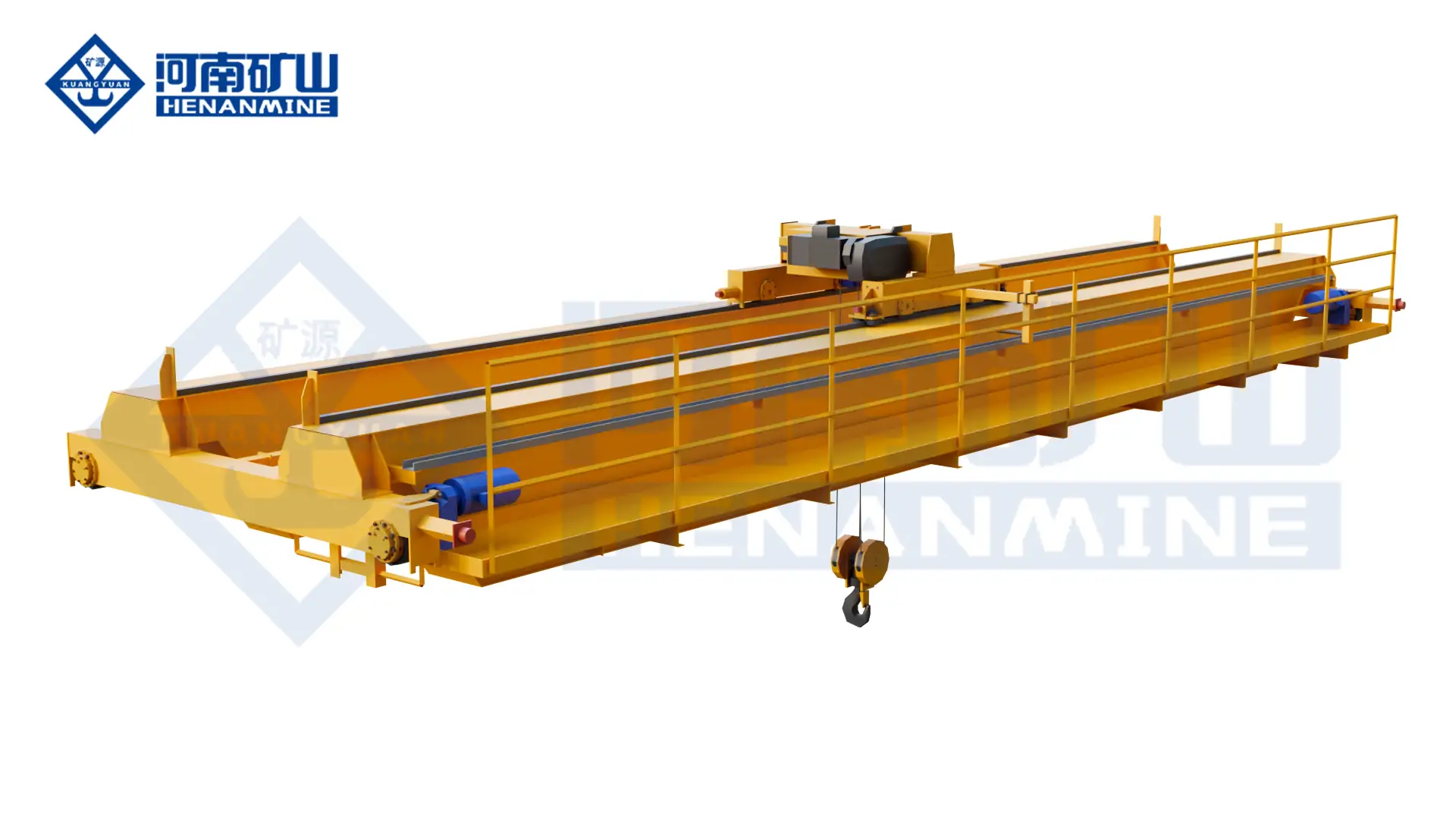
  • Automated Container Gantry Crane

    Automated Container Gantry Crane

    Crane application

    Automated Container Gantry Crane

    Review the automated container gantry crane applications. Review container loads, rail or yard layout, spreader functions and terminal operating interfaces.

    Automated Container Gantry Crane — Henan Mine Crane crane application photograph
    Automated Container Gantry Crane — crane application overview.

    Container and warehouse handling

    Map the load units, storage or yard lanes, stacking height, travel route, handling cycle, building or rail clearances and vehicle interfaces. Specify the operating wind, power and communication conditions where applicable.

    Crane configuration and interfaces

    Ask for a general arrangement, wheel loads, spreader or lifting attachment scope, travel and positioning controls, protection functions and commissioning tests for the declared handling sequence.

    Review the Rail-mounted container gantry cranes and Warehousing & logistics cranes before defining the project-specific arrangement.

    Design the lifting process

    Use the project context above as a starting point. The following checks turn a crane application into a technical scope that suppliers can price and demonstrate for your site.

    Yard operation and handling cycle

    Start with the container mix: 20-foot, 40-foot, high-cube and any non-standard units. State the maximum gross mass of a container and whether the quoted capacity includes the spreader. Map train, truck and storage lanes separately. A rail-mounted gantry crane that serves a railway track and a storage block may need different outreach, travel length and positioning logic from a crane serving only trucks. The target moves per hour should be stated with the stacking pattern and average travel distance, not as an isolated throughput number.

    Layout and control decisions

    Share a scaled yard plan showing rail gauge, clear span, cantilever outreach, stacking height, truck lanes, rail sidings and the end positions. Specify how operators will work: on board, from a remote console or through an automated terminal system. Anti-sway, container finding and collision protection need an agreed operating scenario and acceptance method. Clarify the spreader type, power supply, cable management, wind conditions, storm anchoring and the required interface to the terminal-management system before prices are compared.

    Acceptance and supply boundary

    Ask each bidder to state rated load at the spreader, duty assumptions, wheel loads, rail tolerances and the civil works excluded from crane supply. Review the scope for rails, power distribution, communications, commissioning, operator training and spare parts. Factory tests can check major drives and controls; site tests must demonstrate the actual lifting sequence, emergency stops, limit devices, travel protection and agreed positioning functions with the yard interfaces available. A planned terminal capacity is not the tested hourly performance of one crane.

    Compare the proposed crane scope

    DecisionInformation to request
    Crane and lifting attachmentRated loads, load cases, hook coverage and the complete suspended-load calculation.
    Site interfacesRunway loads, rail or building drawings, electrical supply and installation responsibilities.
    Controls and protectionOperating sequence, required safety functions and a method for testing each function.
    Commercial scopeEquipment, transport, installation, commissioning, documentation, training and spare parts as separate line items.

    From technical offer to site acceptance

    Technical submittals

    A usable bid should show a general arrangement and a clear list of assumptions, not just a model name and capacity. Request the load schedule used in design, lifting-attachment drawings where applicable, span and hook-approach dimensions, wheel loads, electrical supply, control narrative and maintenance access. Check every drawing against the actual building or yard layout. Identify the standards and local approval requirements for the destination market in the enquiry, then confirm the bidder’s proposed design and documentation scope in writing.

    Installation and tests

    Agree when the runway or civil works will be ready, how crane components can reach the installation position and who provides lifting equipment for erection. Define the factory test, on-site installation inspection and site acceptance as separate milestones. The acceptance procedure should list representative loads, the travel route, protection devices, emergency stop and any automation or attachment functions included in the order. Record who supplies test weights, operators, power and access equipment; otherwise a nominal commissioning price may omit essential site work.

    Commercial comparison

    Ask for the same delivery basis and currency across proposals. Separate the crane, special lifting appliances, rails or conductors, transport, installation support, commissioning, training and initial spare parts. Lead time should identify the starting event, such as approved drawings or an effective contract, and any dependency on site readiness. Compare warranty scope and service response by the written contract terms. If a key input is still unknown, request a priced option or a stated assumption instead of allowing different bidders to silently use different specifications. Keep a written exception register so the engineering team can resolve open dimensions, process interfaces and responsibility boundaries before issuing the purchase order.

    Information to include in the enquiry

    • Load weights, dimensions, centre of gravity and lifting attachments.
    • Span, lifting height, runway or yard drawings, travel coverage and clearances.
    • Operating cycle, working environment, electrical supply and control requirements.
    • Supply boundaries, inspection documents, installation support and acceptance criteria.

    Discuss a comparable lifting task

    Send the handling task and available site drawings. Henan Mine Crane can define a proposed crane arrangement and identify the remaining information needed for a technical and commercial review.

  • Gantry Crane Structural Stability: Site and Load Information to Provide

    Gantry Crane Structural Stability: Site and Load Information to Provide

    Technical guide

    Gantry Crane Structural Stability: Site and Load Information to Provide

    Stability depends on the complete crane arrangement and the conditions acting on it. Give the supplier the load envelope, operating surfaces, travel route and environmental design inputs needed for a project-specific review.

    Henan Mine CraneTechnical guide · Updated 2026Crane selection, project scope and operating requirements
    Henan Mine Crane overhead crane inside a workshop bay
    Henan Mine Crane overhead crane inside a workshop bay
    Project planning notes

    Key points for this crane project.

    1. What Is Gantry Crane Structural Stability?
    2. Core Structural Components That Determine Stability
    3. The Rigid Leg vs. Flexible Leg Mechanism
    Read the technical guide

    What Is Gantry Crane Structural Stability?

    Henan Mine Crane manufactured Gantry crane structural stability is the capacity of a crane’s structure, to resist overturning, slipping or bending under its rated load, self weight, and local weather conditions. It achieves this by transferring vertical and horizontal loads through a stiff or semi-stiff structure to the ground or runway rails in a way that the center of gravity and reaction force remains within limits. It is important since a failure in stability doesn’t cause a component to bend, but causes the whole machine to fall, endangering all personnel, cargo and supporting structures nearby.

    Stability is distinct from load capacity. A crane can be well within its rated tonnage and still become unstable if wind, skew, or an uneven foundation shifts the force path beyond what the frame was designed to handle.

    Core Structural Components That Determine Stability

    Every gantry crane's stability depends on how four structural elements work together.

    Main girder: The horizontal beam spanning the top of the frame carries the hoist, trolley, and lifted load. Single girder configurations are typically used for lighter loads, while double girder designs handle heavier capacities and longer spans. Cantilever extensions beyond the legs are generally limited to about one-third of the span length to control bending stress. Girders are built as either box sections or open truss structures, and this choice directly affects wind resistance, as later sections explain.

    Gantry legs: The legs are vertical structures that support the bridge and connect it to the ground or to rails, and they are crucial for maintaining the stability and balance of the equipment. Leg configuration is one of the most consequential,and least understood,design decisions in gantry crane engineering.

    End carriages and connections: The end beam is typically a box-shaped structure rigidly connected to the main girder, with high-strength bolts used to join the main girder and end beam for ease of transport and reassembly. This rigid connection is what allows the entire load path,from hoist to girder to leg to foundation,to behave as a single structural system rather than a chain of independent parts.

    Foundation and runway: The frame is only as stable as what it stands on. Runway beams and foundations must be engineered to carry the crane's full dead weight plus rated load plus dynamic and wind forces, not just the static tonnage figure on the nameplate.

    The Rigid Leg vs. Flexible Leg Mechanism

    One of the most important,and most overlooked,stability concepts in gantry crane design is the asymmetric leg system used on many large gantry cranes: one rigid leg and one hinged (flexible) leg.

    The rigid leg anchors the crane and carries both vertical and horizontal loads, acting as the backbone of the structure, while the flexible leg handles vertical load only, absorbing alignment errors and thermal expansion. When a horizontal force,a wind gust or a skew event from the crane running slightly off track,hits the top of the frame, the two legs respond differently. The rigid leg behaves like a vertical cantilever fixed at its base, converting every horizontal push at the top into a bending moment at the bottom, while the hinged leg carries no bending moment at all and instead takes only axial tension or compression.

    Both legs working together create a self-balanced frame one legs pushes and the other pulls so that, as the flexible leg sags a couple of degrees, the frame remains stable. This setup isn’t a compromise; it is a carefully thought out structure that allows the frame to accommodate dimension change (rail misalignment, thermal growth) without creating unexpected stress, while still providing a predictable overturning resistance to the flexible end.

    Forces Acting on a Gantry Crane: Load, Wind, and Dynamic Effects

    1. Rated load and dead weight the vertical force of the object being lifted and the dead weight of the crane itself.
    2. Wind load gantry cranes used outside such as in ports, ship yards or construction sites are subject to wind load which can substantially impact on their stability and structural stress.
    3. Dynamic and cycling loads Structural elements, including the girders, legs and end carriages are required to sustain repeated cycles of the specified duty class.
    4. Skew and misalignment forces The horizontal forces developed by the crane as the two rail mounted legs travel at slightly different speeds and cause the frame to skew.

    Wind is the force most often underestimated. Unlike a static building, a Henan Mine Crane manufactured gantry crane is a tall, relatively light, mobile structure with a large exposed girder surface,making it uniquely vulnerable to sudden gusts and downdrafts.

    Safety Factors and Stability Calculations Explained

    Safety factor is the margin built into a crane's design between its rated capacity and the load at which failure would actually occur.

    Rigging components carry an even wider margin: slings and similar rigging hardware are typically rated to a 5:1 safety factor under ASME B30.9. These numbers aren't arbitrary,they account for dynamic shock loading, material fatigue, wind, and imprecise field conditions that a static calculation can't fully capture.

    Beyond hoisting safety factors, structural stability calculations specifically evaluate:

    • Overturning moment vs. resisting momentat each leg, factoring in wind and skew forces
    • Leg reaction forces, used as the primary indicator of slip or overturning risk, as demonstrated in wind-collapse investigations
    • Deflection limitson the main girder under rated load, per CMAA 74's 2025 stress and deflection guidance
    • Foundation bearing capacity, since runway beams must be verified as strong enough to support the crane and its maximum load, with undersized or weak beams risking structural damage or accidents

    Before commissioning, international standards require load testing to confirm the crane can safely handle its designed capacity.

    Inspection and Maintenance Practices That Prevent Failure

    Structural stability degrades gradually,corrosion, weld fatigue, foundation settlement, and loosened connections all accumulate silently until a load event or wind gust exposes the weakness. Systematic inspection is the only defense.

    Portable vs. fixed cranes: Portable gantry cranes require the same inspection protocols as fixed installations under OSHA 1910.179, and because they experience frequent assembly and disassembly cycles, they often need additional verification of connections, leg stability, and structural integrity every time they're relocated.

    Documentation: Employers must document proof of inspection, maintenance, and completed repairs, both to satisfy OSHA requirements and to build a maintenance history that reveals developing structural trends before they become critical.

    • Weld integrity at girder-to-leg and leg-to-baseplate connections
    • Foundation and runway beam condition, including settlement or cracking
    • Leg alignment and verticality (particularly on rigid-leg designs)
    • Corrosion on outdoor, port, and shipyard cranes exposed to salt air
    • Bolted connections at end carriages, checked for loosening under cyclic load

    Warning Signs of Structural Degradation

    Certain visible and operational signs indicate that a gantry crane's stability may be compromised before a formal inspection catches it:

    • Visible girder deflectionbeyond the manufacturer's specified limit, especially under no-load conditions
    • Uneven wheel or leg wear, suggesting the frame is carrying an unbalanced load distribution
    • New or widening cracksat welded joints, particularly at girder-to-leg transitions
    • Foundation cracking or visible settlementbeneath one or more legs
    • Unusual vibration or swayduring travel, which can indicate loosened bolted connections or leg misalignment
    • Corrosion at structural joints, especially in outdoor, coastal, or shipyard environments

    Any of these should trigger an immediate structural assessment rather than waiting for the next scheduled inspection.

    Retrofitting and Reinforcement: When and How

    Not every stability issue requires crane replacement. Common reinforcement strategies include:

    • Girder reinforcement:adding stiffening plates or converting an open truss girder to a box section in high-wind environments
    • Leg bracing upgrades:adding cross-bracing or converting a two-rigid-leg design to a rigid/flexible configuration to better absorb misalignment
    • Counterweighting:using counterweights and structural reinforcements is a common method to enhance stability, particularly on cranes with cantilevered girder sections
    • Foundation underpinning:addressing settlement issues identified during inspection before they propagate into leg misalignment
    • Wind restraint systems:adding rail clamps or tie-downs for outdoor cranes in storm-prone regions, directly addressing the sliding and overturning failure mode documented in wind-collapse case studies

    A retrofit decision should always be based on documented inspection findings and, for significant modifications, a re-verification of the crane's stability calculations against the applicable standard (ASME B30.17, CMAA 70/74, or equivalent).

    Frequently Asked Questions

    What is the difference between load capacity and structural stability in a gantry crane?

    Load capacity is the maximum weight a crane can lift; structural stability is whether the frame remains upright and undeformed while lifting that weight. A crane operating within its rated capacity can still become unstable due to wind, skew, or foundation issues unrelated to the load itself.

    Why do rigid-leg and flexible-leg gantry cranes remain stable under wind load?

    The rigid leg absorbs horizontal wind forces as bending moment while the flexible leg carries only axial forces, allowing the two legs to form a self-balanced frame that maintains equilibrium even under uneven loading.

    How often should a gantry crane's structure be inspected?

    Can a gantry crane's stability be improved without full replacement?

    Girder reinforcement, leg bracing upgrades, counterweighting, foundation underpinning, and wind restraint systems can all improve structural stability, provided any modification is re-verified against applicable stability calculations and standards.

    Henan Mine Crane

    A gantry crane is only as reliable as the engineering behind it. Choosing an experienced manufacturer means more than selecting the right lifting capacity,it means working with a team that understands structural analysis, load distribution, wind resistance, and international design standards. From custom spans and lifting capacities to application-specific configurations, every detail should be engineered to deliver long-term stability, safety, and dependable performance in demanding industrial environments.

    Henan Mine Crane Factory specializes in custom gantry crane solutions tailored to the requirements of ports, shipyards, manufacturing plants, warehouses, and construction sites. Whether you need a standard model or a fully customized solution, our engineering team is ready to help you select the right gantry crane for your project and provide reliable technical support from design through installation.

    Discuss the crane arrangement for your project.

    Stability depends on the complete crane arrangement and the conditions acting on it. Give the supplier the load envelope, operating surfaces, travel route and environmental design inputs needed for a project-specific review. Share the load, available drawings, working cycle and site conditions with Henan Mine Crane so the required configuration and supply boundary can be discussed.

    Related crane configurations

    Explore crane product families and technical parameters ↗

    Updated 2026 · Henan Mine Crane
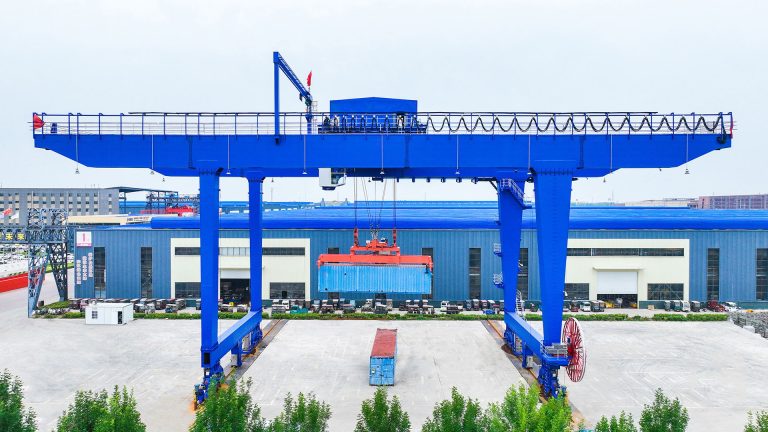
  • Aerospace-Specific Downward-Rotating Crane

    Aerospace-Specific Downward-Rotating Crane

    Crane application

    Aerospace-Specific Downward-Rotating Crane

    Review the downward-rotating crane for aerospace. Review lifting points, coordination, positioning requirements and workshop clearances for your application.

    Aerospace-Specific Downward-Rotating Crane — Henan Mine Crane crane application photograph
    Aerospace-Specific Downward-Rotating Crane — crane application overview.

    Precision assembly lifting

    Document component weight, lifting points, clearance envelope, permissible motion, alignment requirements and interaction with adjacent tools or assembly positions.

    Crane configuration and interfaces

    Ask for coordinated control functions, positioning criteria, interlocks, runway reactions, inspection access and acceptance demonstrations under the agreed load cases.

    Review the Overhead crane range and Aerospace cranes before defining the project-specific arrangement.

    Design the lifting process

    Use the project context above as a starting point. The following checks turn a crane application into a technical scope that suppliers can price and demonstrate for your site.

    Component protection and route

    Provide the largest component envelope, its mass and centre of gravity, certified lifting points and the permitted acceleration or rotation. Trace the travel route from pickup to assembly position, including clearances above tools, fixtures and finished surfaces. A wide component may drive the hook approach and synchronized movement requirements more than its weight. Define any prohibition on uncontrolled sway or contact as a measurable handling requirement.

    Positioning and coordination

    State the required positioning tolerance at the load, the operator sight line and the interaction with adjacent cranes or work platforms. If two hoists carry one assembly, describe how load sharing is measured and what happens if one motion is interrupted. A design may use low-speed drives, cameras, remote control or special lifting beams, but each should be specified against the actual assembly sequence. Document clean or corrosion-control requirements if they apply to the workplace.

    Verification before operation

    Ask for lifting appliance interfaces, general arrangement, structural reactions, control narrative, inspection access and the acceptance plan. Site demonstrations should include the real route and representative component geometry where practical, not only a static rated-load test. Clarify the responsibilities for special spreaders, runway installation, safety zones, commissioning and operator training. Any claimed positioning accuracy needs an agreed test condition and measurement method.

    Compare the proposed crane scope

    DecisionInformation to request
    Crane and lifting attachmentRated loads, load cases, hook coverage and the complete suspended-load calculation.
    Site interfacesRunway loads, rail or building drawings, electrical supply and installation responsibilities.
    Controls and protectionOperating sequence, required safety functions and a method for testing each function.
    Commercial scopeEquipment, transport, installation, commissioning, documentation, training and spare parts as separate line items.

    From technical offer to site acceptance

    Technical submittals

    A usable bid should show a general arrangement and a clear list of assumptions, not just a model name and capacity. Request the load schedule used in design, lifting-attachment drawings where applicable, span and hook-approach dimensions, wheel loads, electrical supply, control narrative and maintenance access. Check every drawing against the actual building or yard layout. Identify the standards and local approval requirements for the destination market in the enquiry, then confirm the bidder’s proposed design and documentation scope in writing.

    Installation and tests

    Agree when the runway or civil works will be ready, how crane components can reach the installation position and who provides lifting equipment for erection. Define the factory test, on-site installation inspection and site acceptance as separate milestones. The acceptance procedure should list representative loads, the travel route, protection devices, emergency stop and any automation or attachment functions included in the order. Record who supplies test weights, operators, power and access equipment; otherwise a nominal commissioning price may omit essential site work.

    Commercial comparison

    Ask for the same delivery basis and currency across proposals. Separate the crane, special lifting appliances, rails or conductors, transport, installation support, commissioning, training and initial spare parts. Lead time should identify the starting event, such as approved drawings or an effective contract, and any dependency on site readiness. Compare warranty scope and service response by the written contract terms. If a key input is still unknown, request a priced option or a stated assumption instead of allowing different bidders to silently use different specifications. Keep a written exception register so the engineering team can resolve open dimensions, process interfaces and responsibility boundaries before issuing the purchase order.

    Information to include in the enquiry

    • Load weights, dimensions, centre of gravity and lifting attachments.
    • Span, lifting height, runway or yard drawings, travel coverage and clearances.
    • Operating cycle, working environment, electrical supply and control requirements.
    • Supply boundaries, inspection documents, installation support and acceptance criteria.

    Discuss a comparable lifting task

    Send the handling task and available site drawings. Henan Mine Crane can define a proposed crane arrangement and identify the remaining information needed for a technical and commercial review.