Engineering · Manufacturing · Project support
info@hnksglobal.comWhatsApp +86 18836207779 ↗

Blog

  • Tyre-Mounted Gantry Cranes: Steering, Ground Support and Site Access

    Tyre-Mounted Gantry Cranes: Steering, Ground Support and Site Access

    Technical guide

    Tyre-Mounted Gantry Cranes: Steering, Ground Support and Site Access

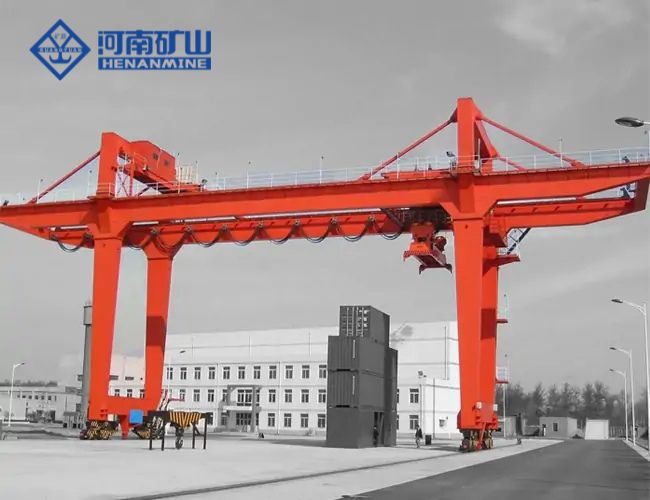
    A mobile gantry arrangement transfers loads through its tyres and follows the available route. Review ground conditions, turning space and load geometry together before comparing steering modes and transport coverage.
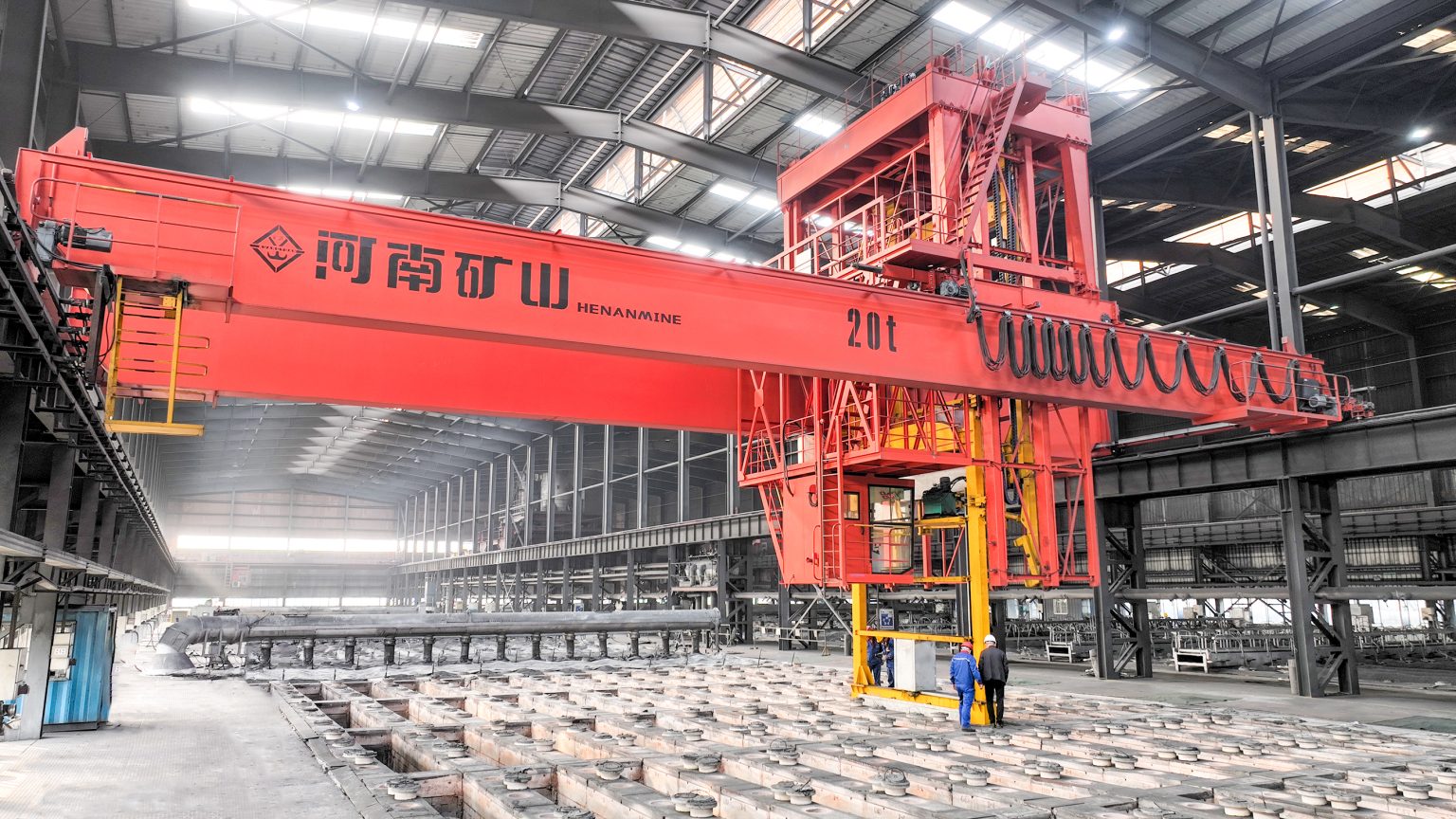
    Henan Mine CraneTechnical guide · Updated 2026Crane selection, project scope and operating requirements
    Tyre-Mounted Gantry Cranes: Steering, Ground Support and Site Access
    Henan Mine Crane lifting equipment
    Project planning notes

    Key points for this crane project.

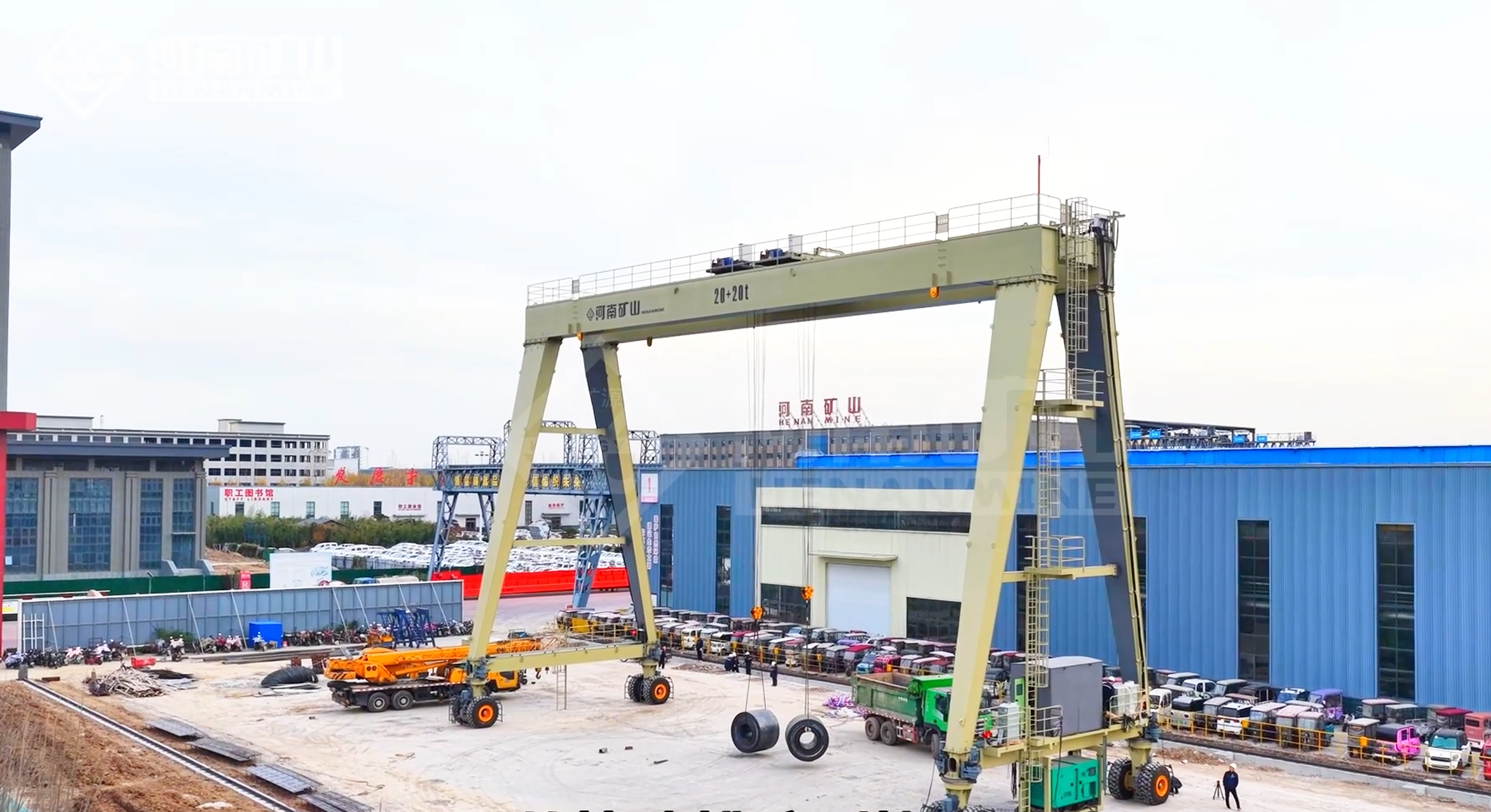
    1. What is a 20t+20t rubber-tired gantry crane?
    2. Core Technical Parameters
    3. Structural Design and Engineering Features
    Read the technical guide

    What is a 20t+20t rubber-tired gantry crane?

    Detailed explanation of the dual-hoist configuration

    The core of the so-called 20t+20t configuration lies in its two independent 20-ton hoisting mechanisms—the dual-hoist design. These hoists do not share a single power system but operate independently. They can function separately or synchronously, offering high flexibility.

    This allows a single unit to handle two light-load tasks simultaneously, eliminating the need for additional small cranes and reducing equipment investment.

    This configuration is ideal for lifting long materials, with each hoist applying force at opposite ends to ensure stability and prevent tilting or deformation during transport.

    Advantages of the Tire-Mounted (Rubber Wheel) Design

    The tire-mounted design is the core distinguishing feature of this crane compared to rail-mounted models, and the primary reason for its popularity in outdoor operations. Equipped with heavy-duty rubber tires at its base, it requires no fixed tracks. As long as the ground is level and capable of bearing the equipment’s weight, it can move freely.

    For precast yards and construction sites where work zones frequently shift and materials need transfer between stations, the tire design offers flexible adaptation. Unlike rail-mounted cranes requiring track reinstallation, this saves significant time and costs.

    Core Technical Parameters

    Understanding a crane’s core specifications is essential to determine if it meets your operational needs. Henan Mining’s 20t+20t tire-mounted gantry crane features parameters optimized for real-world applications, ensuring high practicality.

    Below is a table of core technical parameters for easy reference:
    Tyre-Mounted Gantry Cranes: Steering, Ground Support and Site Access
    Lifting equipment and application context

    Structural Design and Engineering Features

    Main Beam Structure

    This Henan Mining model features a box-type main girder design. This structure offers excellent rigidity and deformation resistance, effectively controlling deflection during heavy lifting operations to prevent beam bending.

    During the design process, engineers employ finite element analysis to simulate stress conditions under various loads, optimizing the structural design. This ensures the main girder can sustain 20t+20t heavy loads long-term without fatigue failure.

    The main girder is constructed from high-strength steel through precision welding. Weld quality undergoes rigorous inspection to eliminate defects like porosity or cracks, fundamentally guaranteeing structural integrity. This is one of the core reasons for the exceptional durability of Henan Mining’s gantry cranes.

    Travel Mechanism

    The travel mechanism is the heart of a tire-mounted crane, directly impacting the equipment’s mobility and stability. This model employs a multi-wheel drive system with ample power, enabling smooth operation even on uneven outdoor terrain without power shortages or slippage.

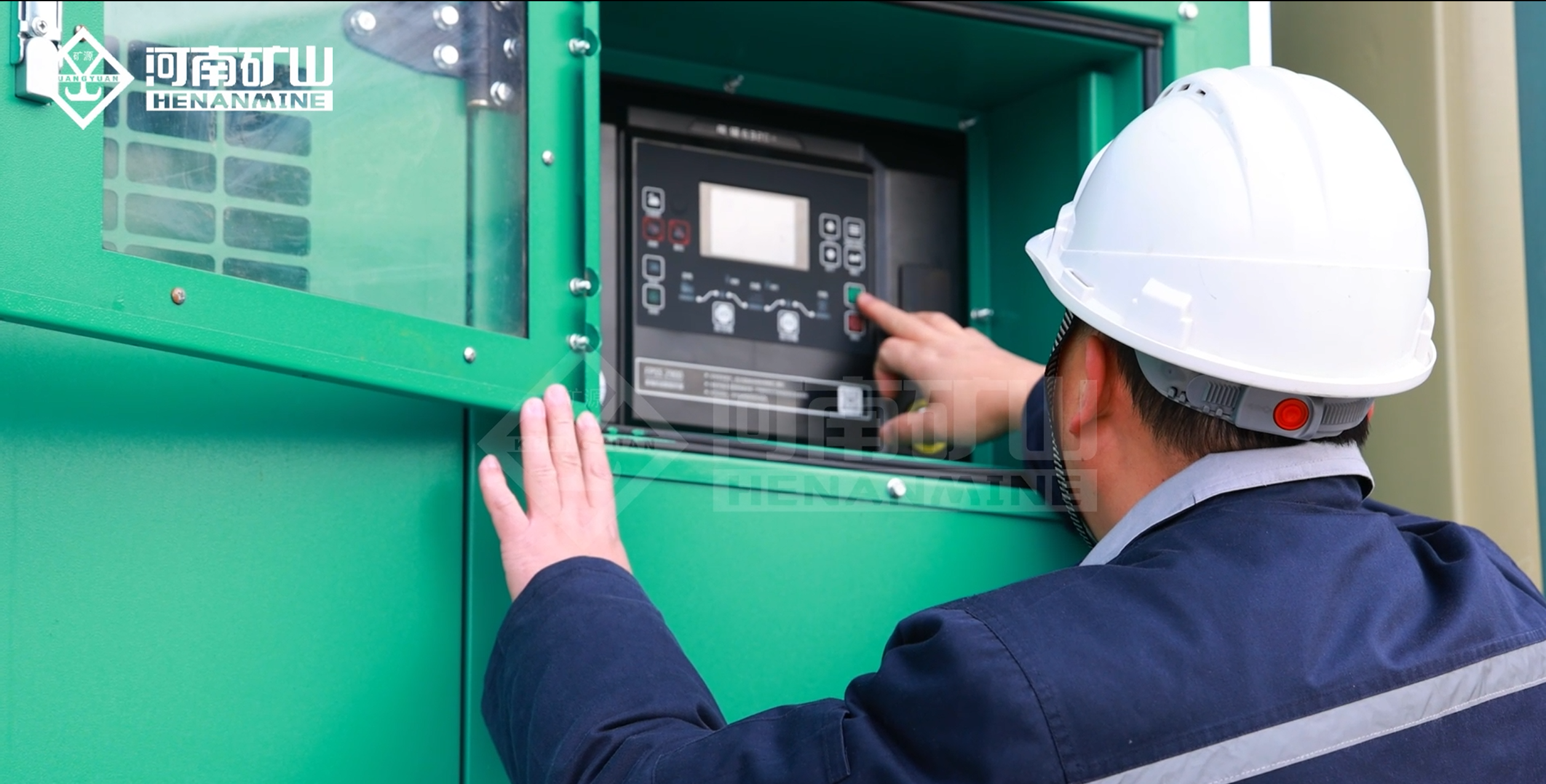
    The hydraulic steering system offers effortless operation with a compact turning radius, allowing easy maneuvering and reversing in confined precast yards without compromising efficiency. Its stability remains consistent during prolonged use, preventing stuttering or failure.

    The tires are heavy-duty rubber tires, offering high wear resistance and pressure tolerance. They adapt well to complex outdoor conditions like gravel or concrete surfaces. With strong load-bearing capacity, they support both the equipment’s weight and lifted materials, reducing the frequency of tire replacements.

    Hoisting Mechanism

    The hoisting mechanism is the crane’s “core power source,” and Henan Mining has put considerable thought into its design. Both the motor and reducer undergo rigorous selection, choosing models with high durability and ample power. They can withstand heavy-duty operations over extended periods with minimal risk of failure.

    The ropes feature effective lubrication to reduce wear, extend service life, and lower long-term maintenance costs.

    Control options include dual-speed and variable frequency drive (VFD) configurations. Dual-speed operation accommodates diverse work scenarios: low speed ensures stability when handling heavy loads, while high speed boosts efficiency for lighter materials. VFD control delivers smoother operation, minimizes load sway, and enhances lifting precision.

    Advantages of the 20t+20t Rubber-Tired Gantry Crane

    It serves as the ideal RTG crane for precast yards. Precast yards handle diverse materials—light or heavy, long or short—and the dual-hoist configuration adapts flexibly. Single hoist handles light loads, while dual hoists synchronize for heavy loads, eliminating the need for additional equipment and reducing costs.

    For temporary projects, it offers exceptional value. With short project timelines making track installation impractical, this crane can be relocated at any time. After project completion, it can be transferred to other sites for continued use, ensuring high utilization and avoiding wasted equipment investment.

    The dual-hoist design is specifically engineered for handling long materials like bridge girders and extended steel components. By applying force at both ends of the material, it ensures stability during lifting, preventing tilting or deformation and minimizing the risk of damage.

    Typical Application Scenarios

    Precast Concrete Beam Yard

    Precast concrete beam yards represent one of the primary application scenarios for this model. These yards require lifting bridge girders, precast panels, and other materials that are either extremely heavy or exceptionally long—challenges conventional cranes struggle to handle.

    Steel Structure Manufacturing Plants

    Steel fabrication plants also benefit greatly from this model, primarily for moving steel components and performing modular assembly. Steel parts vary widely in weight, from lightweight to heavy. The dual-hoist configuration offers flexible adaptation, eliminating frequent equipment changes.

    During modular assembly, multiple steel components must be precisely positioned at designated locations. This model’s high positioning accuracy ensures assembly precision. Its agile mobility allows seamless movement both indoors and outdoors, adapting to various assembly stations.

    Infrastructure Project Sites

    This model is frequently deployed at infrastructure project sites for bridges, roads, railways, and more. At bridge construction sites, it handles lifting bridge girders and precast pier components. For road and railway projects, it transports large equipment and building materials, flexibly adapting to outdoor work environments.

    Why choose Henan Mine Cranes’ tire-mounted gantry cranes?

    In terms of manufacturing capability, Henan Mine Cranes operates a 1.62 million square meter production base equipped with advanced machinery, enabling mass production of heavy-duty mobile gantry cranes. The standardized production process ensures strict quality control at every stage—from raw material procurement to manufacturing—guaranteeing consistent product reliability.

    Engineering Support: Henan Mining’s professional technical team provides comprehensive support throughout the entire process—from equipment selection and customized design to on-site installation and commissioning—with engineers closely following up to resolve practical issues. The company also collaborates with multiple universities and research institutions to continuously optimize product design and enhance performance.

    Our network of 428 sales and service centers nationwide ensures timely after-sales support, even for exported equipment.

    Safety and Control Features

    Overload protection is standard. When lifted loads exceed rated capacity, the equipment automatically shuts down, preventing structural damage, material drops, and safeguarding personnel and equipment.

    Limit switches are critical, restricting lifting height and travel distance to prevent operation beyond safe parameters.

    Emergency braking systems enable rapid shutdown during unexpected situations.

    Anti-sway technology minimizes material oscillation during lifting, particularly when handling long loads. It effectively controls sway amplitude to prevent collisions and material drops while enhancing positioning accuracy, ensuring precise delivery to designated locations.

    Two control methods are available: cab control and remote operation. The cab offers unobstructed visibility, enabling operators to clearly observe the work area and precisely control equipment movements.

    Customization Options

    Different clients have unique operational scenarios and requirements. Standardized equipment often fails to fully meet these needs. Henan Mining provides comprehensive customization services, adjusting equipment parameters and configurations based on your actual demands.

    Power options include electric and diesel. Customers without stable outdoor power sources can choose the diesel model, which features self-contained power. For those with stable power access, the electric model offers greater energy efficiency, environmental friendliness, and lower long-term operating costs.

    Control methods are also selectable. Cab control suits long-term fixed-position operations, while remote control is ideal for flexible outdoor tasks. Choose the control method best suited to your specific work environment.

    Additionally, weather protection features—such as rain and wind shields—can be added based on outdoor environmental conditions. These prevent adverse weather from affecting equipment operation and extend its service life.

    Installation and Maintenance Considerations

    Foundation requirements are minimal; no complex base is needed. A level, solid ground capable of supporting the equipment’s weight and lifted materials is sufficient. Before installation, verify ground flatness to prevent equipment swaying or tilting during operation.

    20t+20t vs Single 40t Gantry Crane: Which to Choose?

    Many customers struggle with this decision: for lifting 40-ton loads, should they opt for a 20t+20t dual-hoist model or a single 40t unit? The key lies in your operational requirements—there’s no absolute superior choice, only the better fit.

    In terms of flexibility, the 20t+20t model clearly wins. Its dual hoists operate independently, enabling both light and heavy-load handling to suit diverse scenarios. When handling lighter loads, it becomes inefficient and lacks flexibility.

    Regarding structural load distribution, the 20t+20t model is more rational. When both hoists operate simultaneously, the load is evenly distributed across both ends of the main girder, reducing stress concentration and extending equipment lifespan. In contrast, the single 40t model concentrates the load on a single hoist position, causing localized stress on the main girder that can lead to fatigue damage over time.

    Cost-wise, both configurations offer distinct advantages. For operations primarily handling heavy loads with occasional light loads, the single 40-ton model presents lower upfront costs. However, for complex work environments involving both light and heavy loads, the 20-ton + 20-ton model eliminates the need for additional equipment, proving more economical over the long term.

    Application differences: The 20t+20t model is better suited for precast plants, infrastructure sites, and other scenarios requiring handling of long materials or diverse loads. The single 40t model is more appropriate for dedicated heavy-load lifting tasks, such as large equipment relocation, where the operational environment is relatively fixed.

    Frequently Asked Questions (FAQ)

    Customers frequently ask specific questions about this model. I’ve compiled the most common ones for unified answers to help you quickly understand.

    A: Standard spans range from 10.5m to 31.5m. Custom spans exceeding 31.5m are available. The achievable span depends on your site dimensions and operational requirements. Our engineers will design the optimal span based on your needs.

    This model features a tire-mounted design with rubber tires. It can move freely on level, solid ground without fixed tracks, saving time and costs.

    Summary and Call to Action

    In summary, the Henan Mining 20t+20t tire-mounted gantry crane is a highly adaptable, durable, and flexible heavy-duty mobile gantry crane. It serves as an ideal solution for double hoist rubber-tyred gantry cranes and RTG cranes for precast yards.

    For detailed information—including customized solutions, technical specifications, and pricing—contact us today. Submit your site layout, and our engineers will provide a comprehensive technical proposal. We’ll also deliver precise quotations tailored to your requirements, helping your project advance efficiently.

    Discuss the crane arrangement for your project.

    A mobile gantry arrangement transfers loads through its tyres and follows the available route. Review ground conditions, turning space and load geometry together before comparing steering modes and transport coverage. Share the load, available drawings, working cycle and site conditions with Henan Mine Crane so the required configuration and supply boundary can be discussed.

    Related crane configurations

    Multi Support Double Girder Underhung Crane

    View product parameters
    Lifting capacity: 3 – 40 tSpan: 10 – 80 mLifting height: 6 – 30 m

    Use a multi-support double-girder underhung arrangement for wide-span working areas and large components. The building supports, lifting coverage and load distribution are designed together.

    Rail-Mounted Container Gantry Crane

    View product parameters
    Lifting capacity: 35 t, 40.5 t, 50 tSpan: 18 – 35 mLifting height: 12.3 – 21 m

    Handle containers along a fixed yard runway with a rail-mounted container gantry crane. Coordinate the spreader, stacking geometry, rail layout and transfer positions around the terminal operation.

    Updated 2026 · Henan Mine Crane
  • 72 meters large span bridge special gantry crane Cross-river steel bridge lifting solutions

    72 meters large span bridge special gantry crane Cross-river steel bridge lifting solutions

    Crane application

    72 meters large span bridge special gantry crane Cross-river steel bridge lifting solutions

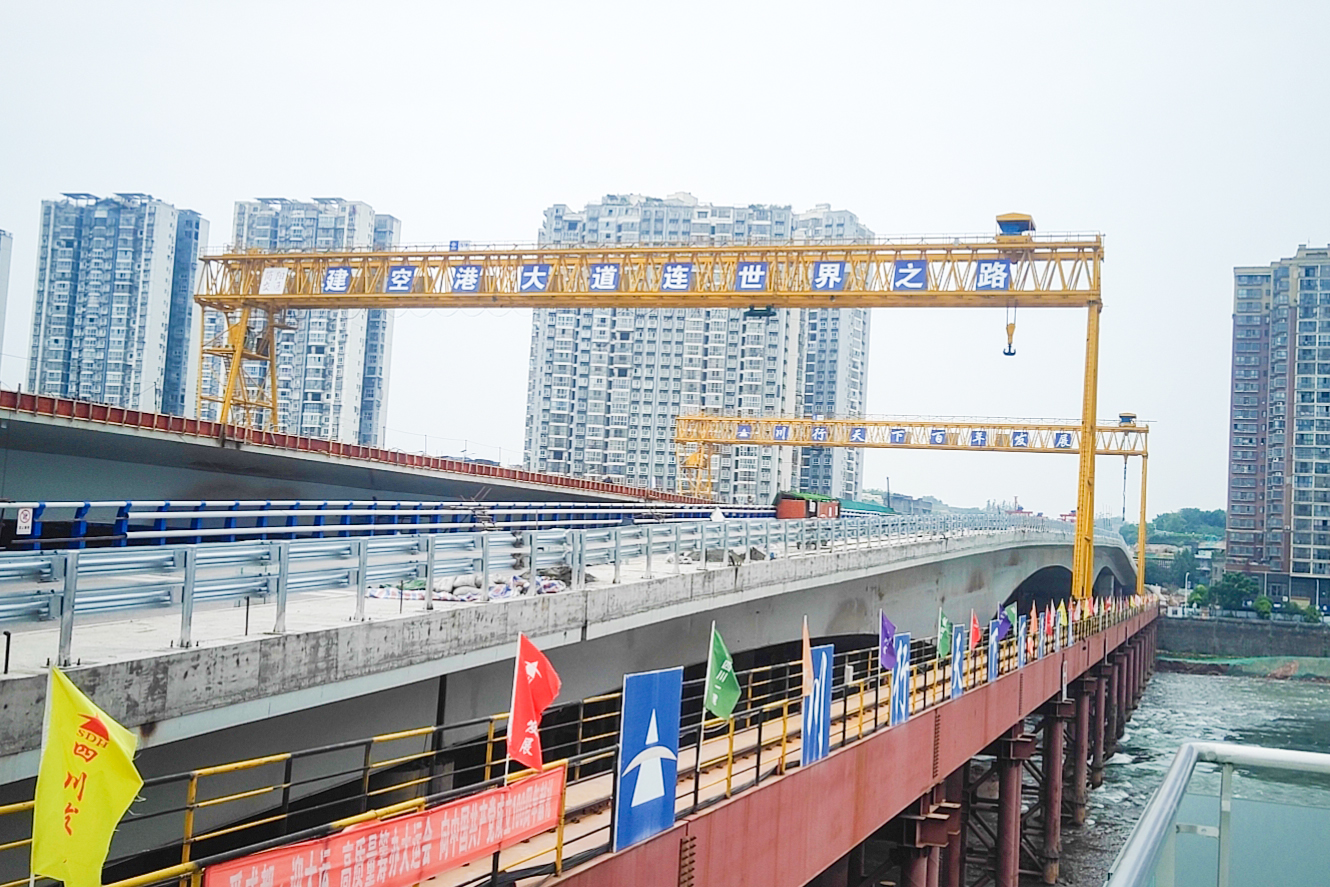
    Review the 72 m span crane application at Jianzhou Bridge. Review large-component handling, site interfaces and requirements for a similar construction task.

    72 meters large span bridge special gantry crane Cross-river steel bridge lifting solutions — Henan Mine Crane crane application photograph
    72 meters large span bridge special gantry crane Cross-river steel bridge lifting solutions — crane application overview.

    Project evidence

    • The Jianzhou Bridge account describes a 72 m span crane.

    Heavy construction lifting

    Confirm the full component weight including rigging, centre of gravity, lifting points, assembly sequence, ground conditions and required travel envelope. Coordinate the crane with the temporary works and construction schedule.

    Crane configuration and interfaces

    Ask for lifting and travel arrangements, support reactions, wind limits, erection and dismantling method, site interfaces and acceptance tests for the proposed construction duty.

    Review the Double-girder gantry cranes and Engineering & construction cranes before defining the project-specific arrangement.

    Design the lifting process

    Use the project context above as a starting point. The following checks turn a crane application into a technical scope that suppliers can price and demonstrate for your site.

    Lifting plan before equipment size

    Provide the heaviest assembly including rigging, the centre of gravity, lifting points and the sequence of picks. Identify each temporary support and the permitted wind and ground conditions during the lift. Large structures may need paired hoists, synchronous travel or staged positioning, but these functions should follow the engineered lifting method. A headline capacity cannot establish whether the crane can pass columns, clear temporary works or place a segment in its final orientation.

    Site geometry and movement

    Share the worksite plan, longitudinal travel length, span, outreach, erection area and transport constraints. Show where the crane can be assembled, how components reach the site and how the machine will be dismantled. For rail or metro work, define the construction possessions and neighbouring operational systems. For bridge and caisson work, include foundation reactions, rail levels and the interface with launching, welding or alignment operations.

    Technical and commercial deliverables

    Request general arrangement and wheel-load drawings, lifting and travel procedures, wind operating limits, installation method, inspection points and acceptance test plan. Separate the supply of foundations, tracks, power, lifting beams and temporary works. Require a method for verifying synchronized motions and emergency stops under the agreed load cases. Delivery schedules should be reviewed against site readiness and the construction programme rather than copied from an unrelated project case.

    Compare the proposed crane scope

    DecisionInformation to request
    Crane and lifting attachmentRated loads, load cases, hook coverage and the complete suspended-load calculation.
    Site interfacesRunway loads, rail or building drawings, electrical supply and installation responsibilities.
    Controls and protectionOperating sequence, required safety functions and a method for testing each function.
    Commercial scopeEquipment, transport, installation, commissioning, documentation, training and spare parts as separate line items.

    From technical offer to site acceptance

    Technical submittals

    A usable bid should show a general arrangement and a clear list of assumptions, not just a model name and capacity. Request the load schedule used in design, lifting-attachment drawings where applicable, span and hook-approach dimensions, wheel loads, electrical supply, control narrative and maintenance access. Check every drawing against the actual building or yard layout. Identify the standards and local approval requirements for the destination market in the enquiry, then confirm the bidder’s proposed design and documentation scope in writing.

    Installation and tests

    Agree when the runway or civil works will be ready, how crane components can reach the installation position and who provides lifting equipment for erection. Define the factory test, on-site installation inspection and site acceptance as separate milestones. The acceptance procedure should list representative loads, the travel route, protection devices, emergency stop and any automation or attachment functions included in the order. Record who supplies test weights, operators, power and access equipment; otherwise a nominal commissioning price may omit essential site work.

    Commercial comparison

    Ask for the same delivery basis and currency across proposals. Separate the crane, special lifting appliances, rails or conductors, transport, installation support, commissioning, training and initial spare parts. Lead time should identify the starting event, such as approved drawings or an effective contract, and any dependency on site readiness. Compare warranty scope and service response by the written contract terms. If a key input is still unknown, request a priced option or a stated assumption instead of allowing different bidders to silently use different specifications. Keep a written exception register so the engineering team can resolve open dimensions, process interfaces and responsibility boundaries before issuing the purchase order.

    Information to include in the enquiry

    • Load weights, dimensions, centre of gravity and lifting attachments.
    • Span, lifting height, runway or yard drawings, travel coverage and clearances.
    • Operating cycle, working environment, electrical supply and control requirements.
    • Supply boundaries, inspection documents, installation support and acceptance criteria.

    Discuss a comparable lifting task

    Send the handling task and available site drawings. Henan Mine Crane can define a proposed crane arrangement and identify the remaining information needed for a technical and commercial review.

  • Gantry Cranes Inside Port Warehouses: Aisles, Clearance and Cargo Flow

    Gantry Cranes Inside Port Warehouses: Aisles, Clearance and Cargo Flow

    Technical guide

    Gantry Cranes Inside Port Warehouses: Aisles, Clearance and Cargo Flow

    Indoor port storage requires the crane to work around doors, stacking areas and vehicle movements. Show the cargo route and building constraints so the proposed gantry arrangement can be reviewed within the complete warehouse layout.

    Henan Mine CraneTechnical guide · Updated 2026Crane selection, project scope and operating requirements
    Henan Mine Crane Electric Single Beam Crane For Low Clearance
    Henan Mine Crane Electric Single Beam Crane For Low Clearance
    Project planning notes

    Key points for this crane project.

    1. Understanding the Core Role of Gantry Cranes in
    2. Accurate Assessment of Load Capacity Requirements
    3. Comprehensive Assessment of Indoor Space and
    Read the technical guide

    Understanding the Core Role of Gantry Cranes in Harbour Indoor Storage

    Gantry crane is a kind of bridge crane deformation equipment, through the gantry frame support lifting device, can run along the ground track, widely used in various types of cargo handling scenarios. Gantry cranes commonly used in indoor warehousing in harbours mainly include the following four types:

    • Full gantry cranes: complete gantry frame support, with outriggers on both sides, strong operational stability, suitable for open indoor storage space.
    • Semi-gantry cranes: single-side outriggers, the other side of the port warehouse wall or column installation track, higher space utilisation, suitable for long and narrow storage areas.
    • Portable gantry crane: modular design, flexible disassembly and movement, suitable for temporary storage needs or multi-area rotating operation scenarios.
    • Adjustable Height Gantry Crane: The lifting height can be adjusted according to the demand of goods storage, suitable for multi-category and multi-height mixed storage scenarios.

    Difference between Indoor Storage and Outdoor Yard Environment

    There is a significant difference between indoor storage environment and outdoor/open-yard yard in harbours, which directly affects the selection and use of gantry cranes:

    • Stricter space constraints: Warehouse height and span are fixed constraints, cranes need to be adapted to the building structure to avoid conflict with the roof, columns, fire systems and other facilities.
    • Operation environment is more controllable: indoor no wind and rain, direct sunlight and other natural factors, but need to deal with limited ventilation, crowded, dense stacking of goods, etc., the crane's precise control and safety protection requirements are higher.
    • Cargo type is more concentrated: indoor warehousing to containers, general cargo, heavy equipment, etc., the cargo category is relatively fixed, cranes need to match the loading and unloading characteristics of specific goods.

    Unique Operational Requirements of Indoor Warehousing in Ports

    The core operational requirements of indoor port warehousing revolve around high efficiency, safety and flexibility:

    • Rapid response to the port container turnover, general cargo storage, equipment loading and unloading tasks, to ensure that the goods in and out of the port time.
    • Adapt to the continuous operation of multiple shifts and high frequency to meet the year-round operation characteristics of the port.
    • Taking into account the protection of goods, avoiding damage to goods during loading and unloading, and reducing the impact of equipment operation on the warehouse structure.

    Accurate Assessment of Load Capacity Requirements

    Define the Maximum Safe Workload (SWL)

    Safe Working Load (SWL) is the core parameter of gantry cranes, which refers to the maximum weight that can be stably lifted by the crane within the safety range. Before selecting the model, it is necessary to clarify the maximum weight of a single ticket of cargo through the port cargo inventory and storage planning, including the weight of the container, the weight of the cargo itself and the sum of the weight of the lifting aids.

    If heavy equipment is to be lifted at the same time, the weight of the equipment needs to be superimposed to calculate the SWL.

    Refinement of Load Matching by Cargo Type

    The physical characteristics and loading/unloading methods of different cargoes differ significantly, so it is necessary to match the crane's load capacity accordingly:

    • Container cargo: need to adapt to the standardised lifting requirements of containers, SWL needs to cover the container rated load and deadweight sum, preferred rated load to match the container specifications of the crane.
    • Bulk cargo: such as coal, ore, etc., need to consider the weight of bulk loading tools (such as grabs), SWL needs to be reserved for tool load margin.
    • Piece of general cargo / heavy equipment: such as industrial machinery, steel, etc., need to calculate the load according to the maximum weight of a single piece of equipment and lifting method (single point / multi-point lifting), to avoid the load deviation caused by single point lifting.

    Common Load Selection Misconceptions

    • Insufficient selection: Crane SWL is lower than the actual demand, long-term overload operation will lead to structural deformation, motor burnout, and even cause safety accidents, while shortening the service life of the equipment.
    • Excessive selection: crane load capacity far exceeds the actual demand, which will lead to a substantial increase in equipment procurement costs, operating energy consumption, and low equipment utilisation, resulting in a waste of resources.

    Comprehensive Assessment of Indoor Space and Structural Constraints

    Accurate Measurement of Available Lift Height Clearance

    Lifting height clearance refers to the safe distance between the crane hook and the warehouse roof, beams and other building structures when the crane is lifted to the highest position, which directly determines the maximum lifting height of the crane. It is important to pay attention to it when selecting the model:

    • If there are obstacles such as beams and pipes in the warehouse, the effective lifting height below the obstacles should be calculated additionally to ensure that the goods can be lifted to the target position smoothly.

    Matching Span width and Warehouse Layout

    The span of the gantry crane needs to match the width of the aisle and the layout of the storage bay in the harbour warehouse, with the core principle being to cover the entire storage area:

    • Measure the maximum span between the tracks on both sides of the warehouse to ensure that the crane can cover all cargo storage areas and loading/unloading ports.
    • Combined with the density of goods stacking and loading and unloading frequency, reasonable planning of the crane running path, to avoid too large a span of equipment to reduce operating efficiency, or insufficient span cannot cover the core operating areas.

    Accounting for Ground Bearing and Foundation Requirements

    The bearing capacity of the ground of the port warehouse is the basis for stable operation of the gantry crane, two core calculations need to be completed in advance:

    • Measure the rated load-bearing capacityof the warehouse floor to ensure that the sum of the crane's dead weight, running load and cargo load does not exceed the upper limit of the floor load.
    • If the crane is rail-type, it is necessary to calculate the load-bearing and stability of the rail foundation to avoid ground settlement leading to rail deformation and crane operation offset. For heavy gantry cranes, it is recommended to use independent foundations made of poured concrete and carry out load bearing tests.

    Avoid Indoor Structural Obstacles

    Obstacles such as columns, fire sprinkler systems, ventilation pipes, lighting equipment and other obstacles commonly found in port warehouses will limit the crane's operating range and lifting action. Selection needs:

    • Draw a detailed layout of the warehouse, mark the location, size and height of all obstacles to ensure that the crane running track and lifting action can avoid obstacles.
    • If the obstacles cannot be avoided, you need to choose the type of crane that can be flexibly adjusted to the running track and lifting angle, or negotiate with the supplier for customised modifications, such as shortening the length of the outriggers and adjusting the hook rotation range.

    Match the Scene to Choose the Right Type of Gantry Crane

    Full Gantry Cranes

    Full gantry cranes have complete outriggers on both sides and rely on the ground for double track operation, which has the advantages of strong operational stability, high load capacity and wide operating range, and is most suitable for the following scenarios:

    • Port warehouses are open layout, no wall/column support track needs, and large span of cargo storage area.
    • Containers and heavy equipment are the core cargoes, requiring long-term stable and large-load lifting operations.
    • Port indoor warehousing for a single type of cargo centralised storage, high frequency of operation, continuous operation for a long time.

    Semi-portal Crane

    Semi-gantry cranes are suitable for single-side outriggers, and the other side relies on warehouse walls or columns to install tracks, with high space utilisation and lower construction costs:

    • Port warehouses are long and narrow layout, one side of the wall is complete, you can rely on the wall to install the track.
    • The cargo storage area is distributed along the wall, and the operation aisle is narrow, which cannot be adapted to the large span demand of the full gantry crane.
    • Port warehousing business is dominated by general cargo, small and medium-sized equipment, the load demand is relatively moderate, and the need to flexibly adjust the operating range.

    Adjustable Height Gantry Cranes

    Adjustable-height gantry cranes, whose lifting height can be adjusted hydraulically/mechanically, are suitable for mixed warehousing of multiple categories and heights, and their core advantage is that they are flexible and suitable:

    • Port indoor warehousing at the same time to store containers, bulk cargo, small and medium-sized equipment and other types of goods, and the storage height of each category of goods varies greatly.
    • Flexible switching of storage functions, such as short-term storage of containers, long-term storage of heavy equipment, can be adjusted to meet the needs of different scenarios by adjusting the height.
    • Temporary storage needs, such as the port season temporary increase in the amount of goods stored, need to quickly adjust the crane operating height to match the new goods.

    Priority Matching Work Cycle and Frequency of Operation

    Understand the Crane Working Cycle Level (CMAA A-F class)

    The Material Handling Manufacturers Association of America (CMAA) divides crane working cycles into six classes A-F. The higher the class, the greater the frequency and load fluctuations the crane can withstand, and the more demanding the port scenario is:

    • CMAA Class A (light load cycle): very low frequency of operation, the number of operations per month <100 times, suitable for harbour standby lifting, temporary small load operation.
    • CMAA Class B (Medium Load Cycle): 100-500 operations per month, suitable for off-season warehousing in ports, loading and unloading of scattered goods.
    • CMAA Class C (medium-heavy duty cycle): 500-1500 operations per month, suitable for indoor warehousing in regular harbours, daily container turnover.
    • CMAA Class D (Heavy Load Cycle): 1500-3000 times per month, suitable for high season, high frequency container and general cargo handling in port.
    • CMAA Class E (Extra Heavy Duty Cycle): 3,000-5,000 times per month, suitable for large port core warehousing area, 24-hour continuous operation.
    • CMAA Class F (Extreme Heavy Duty Cycle): >5,000 operations per month, only suitable for mega ports, global logistics hub level continuous operation.

    Matching Port Throughput and Duty Cycle Class

    The duty cycle level of indoor port warehousing should be accurately matched with the port throughput and operation frequency to avoid equipment failure caused by mismatch of duty cycle levels:

    Risks of Low Cycle Class Cranes

    If the port is a high-frequency operation scenario, but choose a low-cycle class crane, it will lead to:

    • Long-term overloading of core components such as motors, gearboxes, lifting ropes, etc., leading to early wear and tear, breakage and increased maintenance costs and downtime.
    • Crane structural components (such as outriggers, bridge) fatigue deformation, affecting the stability of operation, and even cause safety accidents.

    Influence of Working Cycle on Core Components

    Cranes with different cycle levels have significant differences in the selection criteria for core components:

    • Motor: high-cycle grade cranes need to choose a high level of protection, high thermal efficiency of the motor, suitable for continuous operation; low-cycle grade motor can reduce the thermal requirements.
    • Hoist/winches: high-cycle cranes need to be equipped with heavy-duty hoists with overload protection and quick braking systems; low-cycle cranes can choose conventional models.
    • Structural components: the outriggers and bridges of high-cycle rated cranes need to be made of high-strength steel and reinforced to improve structural fatigue strength; low-cycle rated cranes can be made of conventional steel.

    Consider the Compatibility of the Track and Runway System

    Selection of Track System Type for Indoor Environment

    The track system for indoor storage in harbours needs to be adapted to space constraints and load-bearing requirements, and is mainly divided into two categories:

    • Fixed track system: the track is fixed on the warehouse floor through the pre-buried parts, with fixed running track and strong stability, suitable for long-term fixed operation of port warehousing scenarios.
    • Independent track system: the track is installed by independent bracket, not directly connected with the warehouse floor, suitable for the scene of insufficient load-bearing on the warehouse floor, and the position of the track can be adjusted flexibly.

    Accurate Selection of Track Gauge

    The rail gauge needs to be matched with the span and outrigger spacing of the gantry crane, and the core principle is to ensure the smooth running of the crane and even load transfer:

    • The track gauge of full portal crane needs to be equal to the distance between crane outriggers to avoid the risk of lateral tilt during operation.
    • Semi-portal cranes need to be combined with the distance between the wall track and the ground outriggers to ensure that both sides of the track are aligned, running without offset.
    • The gauge error needs to be controlled within ±5mm, otherwise it will lead to increased wear and tear of the crane wheels, running jams, and even derailment.

    Anchoring of Tracks on Different Floor Types

    The ground of the port warehouse is divided into concrete ground and steel deck ground, the rail anchoring method needs to be differentiated design:

    • Concrete floor: Expansion bolts or chemical anchor bolts are used to fix the track, and the anchoring depth needs to be ≥150mm to ensure the load bearing and stability of the track; for heavy cranes, reinforced concrete bedding needs to be poured underneath the track.
    • Steel deck floor: priority to use welding to fix the track, welding points need to be evenly distributed, no less than 3 welding points per metre of track, to avoid deformation of the steel deck; welding needs to be anticorrosion treatment, to extend the service life of the track.

    Long-term Maintenance of the Track System

    Long-term maintenance of the track system directly affects the operating life and safety of the crane, the selection should be taken into account:

    • Choose easy maintenance track structure, such as removable track connectors, to facilitate daily wear detection and replacement.
    • Give priority to wear-resistant rail steel (e.g. U71Mn rail) to reduce the frequency of rail wear and prolong the maintenance cycle.
    • Agree with suppliers on track maintenance services, including regular track calibration, wear and tear testing, fault repair, etc., to ensure long-term stable operation of the track system.

    Incorporate Safety Guarding and Compliance Standards

    Configuration of Core Safety Guards

    Port indoor warehousing is densely populated and space is limited, gantry cranes must be equipped with the following safety protection devices to reduce operational risks:

    • End limiting device: install limiters at both ends of the crane running track to prevent the crane from running over the track, and at the same time, it is equipped with buffers to absorb the running impact.
    • Anti-collision system: Laser/radar sensors are installed on the crane to automatically slow down or stop the crane when obstacles or other equipment are detected in front of the crane, which is suitable for indoor multi-equipment simultaneous operation scenarios.
    • Emergency stop device: Emergency stop buttons are installed on the crane operating handle, remote control and key positions in the warehouse to quickly cut off the power supply of the equipment in case of emergency.

    International Compliance Standards that must be Adhered to

    • OSHA 1910.176: the US Occupational Safety and Health Administration standard, which stipulates the operating specifications, safety and protection requirements, and personnel training standards for harbour cranes.
    • ASME B30.2: American Society of Mechanical Engineers standard, specifying the design, manufacture, installation and maintenance specifications for gantry cranes, covering structural strength, load testing and other core requirements.

    Exclusive Safety Risk Prevention and Control for Indoor Storage

    Indoor warehousing in harbours is characterised by exclusive risks such as limited ventilation, high occupancy and confined spaces, which require the development of targeted safety measures:

    • Installation of ventilation and smoke monitoring systems to avoid the accumulation of dust and exhaust fumes from crane operation and to counter the risk of fire.
    • Divide the crane operation area and personnel access area, set up obvious warning signs to prohibit personnel from entering the operation radius.
    • For the indoor low-light environment, cranes are equipped with high-brightness lighting devices to ensure that operators have a clear vision.

    Operator Safety Certification and Training Requirements

    • Regularly organise safety training for operators, including equipment operation standards, emergency handling procedures, and daily inspection points, at least 1 time per quarter.
    • Establish an assessment mechanism for operators, and prohibit those who fail to pass the assessment from taking up the job, and record the results of training and assessment, and keep them for record.

    Evaluation of Automation and Control System Solutions

    Comparison of Three Mainstream Control Methods

    Port indoor storage of operational efficiency and ease of operation, and crane control systems are directly related to the mainstream control methods include:

    • Manual handle control: operating the crane through a wired handle, high operational accuracy, low cost, suitable for small and medium-sized harbours, low-frequency operation scenarios. However, the wired restrictions on the scope of operation, and long-term use is prone to line failure.
    • Wireless remote control: the operator can be operated remotely from a safe distance, suitable for crowded indoor warehousing scenarios, to enhance operational flexibility and safety. It needs to be equipped with a signal anti-interference device to avoid signal loss, resulting in loss of control of the equipment.
    • Semi-automatic control: Combining preset procedures and manual operation, it can achieve basic actions such as automatic positioning, automatic lifting/lowering, and only requires manual intervention for complex loading and unloading actions, suitable for medium-sized ports and high-frequency standardised operations.

    Integration of Port Warehouse Management System (WMS)

    Automated gantry cranes need to be seamlessly integrated with the port WMS system to achieve data interoperability and operational synergy, the core values include:

    • WMS system can send cargo loading and unloading instructions to the crane, the crane automatically receives and executes, reducing manual operation errors and improving operational efficiency.
    • Crane real-time feedback operation status (such as load weight, operation progress, equipment operation parameters) to the WMS system, so that managers can monitor the whole process of warehousing operations in real time, and adjust the operation plan in time.
    • Cargo information and crane operation data linkage, WMS system can be based on the cargo storage location, priority, automatic planning crane optimal operation path, shorten the cargo loading and unloading cycle.

    Application Value of Variable Frequency Drive (VFD)

    In indoor storage scenarios in ports, variable frequency drive (VFD) technology can significantly improve the operational accuracy and energy efficiency of gantry cranes, which is an important consideration when selecting a model:

    • Precise control of load lifting and running speed, avoiding load impact when starting and stopping, reducing cargo damage and equipment wear, especially suitable for fragile, high-precision cargo loading and unloading.
    • Optimise the stability of motor operation, reduce the current impact when starting the motor, prolong the service life of the motor and reduce maintenance costs.

    Future Suitability for Automation Upgrade

    • Select crane models that support the later addition of automation modules, such as automatic positioning, path planning, remote monitoring and other functions, to avoid the later overall replacement of equipment.
    • Priority is given to the selection of control systems that are compatible with the smart port system, which facilitates future integration with the port's Internet of Things (IoT) and big data analysis systems, and realises the intelligentisation of the whole process of warehousing operations.

    Planning Maintenance, Service and Total Life Cycle Costs

    The core consideration of Total Life Cycle Cost (TCO)

    When selecting gantry cranes for harbours, it is important not to focus only on the upfront purchase price, but also to comprehensively account for the total life cycle costs (TCO), including procurement costs, operational energy consumption, maintenance costs, spare parts replacement costs, downtime losses, etc:

    • High-quality cranes have a higher purchase price, but the durability of core components, low maintenance frequency, long-term TCO is more advantageous; low-quality equipment, although the initial cost is low, but prone to failure, downtime losses and maintenance costs will increase significantly.
    • Combined with the port operation shifts and energy consumption standards, the choice of energy-saving cranes (such as equipped with VFD technology, high-efficiency motors), can reduce long-term energy costs.

    Convenience of Maintenance and Service

    The ease of maintenance of gantry cranes has a direct impact on downtime and maintenance costs, and needs to be focused on when selecting the model:

    • Choose cranes with reasonable structural design and easy disassembly of core components to facilitate daily inspection and component replacement and reduce maintenance time.
    • Confirm that the supplier can provide timely local service support and spare parts supply to avoid long-term downtime due to shortage of spare parts, especially for high-frequency operation scenarios in harbours.
    • Agree with the supplier on regular maintenance services, including core component inspection, lubrication, calibration, etc., to avoid the risk of failure in advance and extend the service life of the equipment.

    Service Life Benchmarks for Harbour Gantry Cranes

    Under the premise of normal maintenance and matching operation scenarios, there are clear benchmarks for the service life of harbour gantry cranes, which can be used as a reference for selection:

    • Routine operating scenarios (CMAA Class C-D): service life of up to 15-20 years, the core components (motor, hoist) can be replaced to extend the overall life of the equipment.
    • Light load, low-frequency scenarios (CMAA Class A-B): service life can be extended to more than 20 years, maintenance costs are relatively low.

    Selecting Reliable Crane Suppliers and Service Providers

    Core Criteria for Supplier Selection

    The quality, customisation capability and after-sales service of port gantry cranes have a direct impact on the long-term stable operation of the equipment, and the screening of suppliers should focus on the following three points:

    • Customisation ability: according to the port warehouse layout, cargo type, operational needs, to provide customised design solutions, rather than a single standardised product, to ensure that the equipment is precisely adapted to the scene.

    Risk Avoidance of Supplier Co-operation

    During the selection process, we need to be alert to all kinds of supplier risk, to avoid improper selection leading to the operation of the late hidden danger:

    • Avoid blindly pursuing low-priced equipment, which often uses inferior materials and core components, is prone to failures, and has no after-sales guarantee, resulting in higher long-term operating costs.
    • Priority should be given to suppliers that can provide on-site survey services to ensure that the design scheme is accurately matched with the actual port scenario and to avoid adaptation problems after installation.

    Core Value of One-stop Service

    When selecting a port, give priority to suppliers that provide one-stop service of ‘survey-design-customisation-installation-commissioning-maintenance’, the core value of which lies in:

    • Reducing communication costs, avoiding information bias caused by multi-link docking, and ensuring the smooth flow of equipment from design to maintenance.
    • More professional installation and commissioning, to avoid equipment failure caused by improper installation, to ensure that the equipment is quickly put into use.
    • More timely response to maintenance, suppliers know more about the design and installation details of the equipment, can quickly locate and solve the problem, shorten the downtime.

    Balancing Long-term Scalability and uture Expansion

    The Importance of Modular Expansion Design

    Port throughput and warehousing demand will continue to grow with the development of the business, the modularity of the equipment needs to be taken into account in the selection of the ability to expand, to avoid duplication of investment in the later stages:

    • By choosing modular gantry cranes, the load capacity and operational efficiency can be improved by upgrading the hoisting mechanism, expanding the span and adding lifting hoists, without the need to replace the equipment as a whole.
    • The track system reserves space for expansion, so that in the future, according to the demand for expansion of the storage area, the length of the track can be extended to expand the operating range of the crane.

    Equipment Upgrade and Function Expansion

    Combined with the development trend of the intelligent port, the selection of equipment upgrade interface needs to be reserved for future expansion of functions:

    • The control system is reserved for automation upgrading interface, which can be equipped with wireless remote control, automatic positioning, intelligent monitoring and other functions in the future to meet the demand for intelligent port upgrading.
    • Core components (motor, hoist) can be compatible with later upgrades, such as replacing conventional motors with energy-efficient motors, upgrading manual hoists to electric hoists, and improving equipment performance.

    Long-term Consideration of Return on Investment (ROI)

    The selection of port gantry cranes should be combined with 5-10 years of development planning to assess the long-term return on investment:

    • High-quality, expandable cranes, although the initial investment is higher, but can improve operational efficiency, reduce maintenance costs, reduce the loss of safety accidents, long-term ROI is better.
    • Avoid the short-term cost considerations to choose the lack of adaptability of the equipment, or later need to frequently replace or upgrade equipment, but increased investment costs, affecting the efficiency of port operations.

    Discuss the crane arrangement for your project.

    Indoor port storage requires the crane to work around doors, stacking areas and vehicle movements. Show the cargo route and building constraints so the proposed gantry arrangement can be reviewed within the complete warehouse layout. Share the load, available drawings, working cycle and site conditions with Henan Mine Crane so the required configuration and supply boundary can be discussed.

    Related crane configurations

    Electric Single Beam Crane For Low Clearance

    View product parameters
    Lifting capacity: 1t – 10tSpan: 7.5m – 28.5mLifting height: 3m – 18m

    Increase usable hook height in a restricted workshop envelope with a low-clearance single-girder arrangement. Match the hoist position, hook approach and structural clearances to the building.

    Updated 2026 · Henan Mine Crane
  • Custom Heavy Duty Gantry Crane for Global Chemical Projects

    Custom Heavy Duty Gantry Crane for Global Chemical Projects

    Crane application

    Custom Heavy Duty Gantry Crane for Global Chemical Projects

    Review the heavy gantry cranes for chemical projects. Review component loads, lifting points, rail geometry and construction-site requirements.

    Custom Heavy Duty Gantry Crane for Global Chemical Projects — Henan Mine Crane crane application photograph
    Custom Heavy Duty Gantry Crane for Global Chemical Projects — crane application overview.

    Process plant lifting

    Confirm equipment weights, lifting route, operating frequency, ambient conditions, corrosive exposure and any hazardous-area classification before specifying drives or electrical protection.

    Crane configuration and interfaces

    Ask for the crane and hoist arrangement, applicable area classification, documentation scope, maintenance access and project-specific acceptance tests.

    Review the Double-girder gantry cranes and Petrochemical industry cranes before defining the project-specific arrangement.

    Design the lifting process

    Use the project context above as a starting point. The following checks turn a crane application into a technical scope that suppliers can price and demonstrate for your site.

    Classify the actual operating area

    State whether the crane is in a hazardous area, a controlled cleanroom, both, or neither. Provide the area classification, gas or dust group, temperature class, ambient range and cleaning regime from the plant design. A marketing term such as “explosion-proof” is insufficient to select motors, controls, cable entries and protective devices. In clean production, also define allowable materials, lubricants, particle control, equipment cleaning and maintenance access.

    Match protection to every component

    Review the hoist, trolley, bridge drives, brakes, limit switches, control station and power supply against the documented environment. List which parts enter the classified zone and how inspection and repair will be carried out. For remote operation, define interlocks with plant ventilation or process equipment only where the plant design calls for them. Ask the supplier to identify the standards, certification scope and any excluded third-party components in its offer.

    Evidence at handover

    Request component schedules, applicable certificates, installation drawings, inspection records, operating manuals and spare-part identification. Factory acceptance can verify electrical logic and mechanical operation; site acceptance must check the actual installation, earthing, labels, protection devices and the process interface. A cleanroom handling trial should also use the approved cleaning and contamination-control procedure. Confirm the project requirements before treating any advertised configuration as suitable for a specific classified area.

    Compare the proposed crane scope

    DecisionInformation to request
    Crane and lifting attachmentRated loads, load cases, hook coverage and the complete suspended-load calculation.
    Site interfacesRunway loads, rail or building drawings, electrical supply and installation responsibilities.
    Controls and protectionOperating sequence, required safety functions and a method for testing each function.
    Commercial scopeEquipment, transport, installation, commissioning, documentation, training and spare parts as separate line items.

    From technical offer to site acceptance

    Technical submittals

    A usable bid should show a general arrangement and a clear list of assumptions, not just a model name and capacity. Request the load schedule used in design, lifting-attachment drawings where applicable, span and hook-approach dimensions, wheel loads, electrical supply, control narrative and maintenance access. Check every drawing against the actual building or yard layout. Identify the standards and local approval requirements for the destination market in the enquiry, then confirm the bidder’s proposed design and documentation scope in writing.

    Installation and tests

    Agree when the runway or civil works will be ready, how crane components can reach the installation position and who provides lifting equipment for erection. Define the factory test, on-site installation inspection and site acceptance as separate milestones. The acceptance procedure should list representative loads, the travel route, protection devices, emergency stop and any automation or attachment functions included in the order. Record who supplies test weights, operators, power and access equipment; otherwise a nominal commissioning price may omit essential site work.

    Commercial comparison

    Ask for the same delivery basis and currency across proposals. Separate the crane, special lifting appliances, rails or conductors, transport, installation support, commissioning, training and initial spare parts. Lead time should identify the starting event, such as approved drawings or an effective contract, and any dependency on site readiness. Compare warranty scope and service response by the written contract terms. If a key input is still unknown, request a priced option or a stated assumption instead of allowing different bidders to silently use different specifications. Keep a written exception register so the engineering team can resolve open dimensions, process interfaces and responsibility boundaries before issuing the purchase order.

    Information to include in the enquiry

    • Load weights, dimensions, centre of gravity and lifting attachments.
    • Span, lifting height, runway or yard drawings, travel coverage and clearances.
    • Operating cycle, working environment, electrical supply and control requirements.
    • Supply boundaries, inspection documents, installation support and acceptance criteria.

    Discuss a comparable lifting task

    Send the handling task and available site drawings. Henan Mine Crane can define a proposed crane arrangement and identify the remaining information needed for a technical and commercial review.

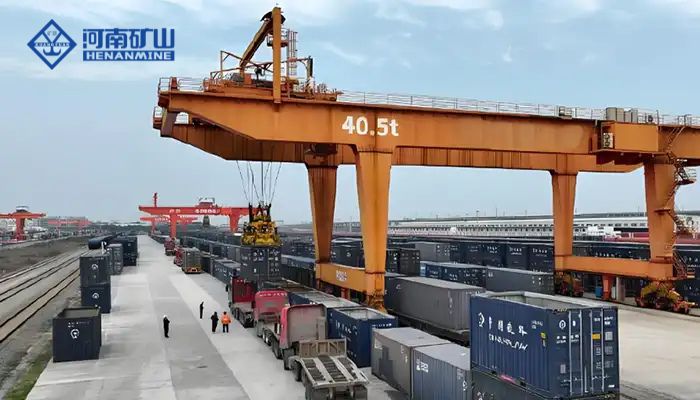
  • Custom Container Gantry Crane | Intelligent RMG Crane for Global Logistics Hubs

    Custom Container Gantry Crane | Intelligent RMG Crane for Global Logistics Hubs

    Crane application

    Custom Container Gantry Crane | Intelligent RMG Crane for Global Logistics Hubs

    Review the RMG crane applications for logistics hubs. Review container loads, rail or yard layout, spreader functions and terminal operating interfaces.

    Custom Container Gantry Crane | Intelligent RMG Crane for Global Logistics Hubs — Henan Mine Crane crane application photograph
    Custom Container Gantry Crane | Intelligent RMG Crane for Global Logistics Hubs — crane application overview.

    Container and warehouse handling

    Map the load units, storage or yard lanes, stacking height, travel route, handling cycle, building or rail clearances and vehicle interfaces. Specify the operating wind, power and communication conditions where applicable.

    Crane configuration and interfaces

    Ask for a general arrangement, wheel loads, spreader or lifting attachment scope, travel and positioning controls, protection functions and commissioning tests for the declared handling sequence.

    Review the Rail-mounted container gantry cranes and Warehousing & logistics cranes before defining the project-specific arrangement.

    Design the lifting process

    Use the project context above as a starting point. The following checks turn a crane application into a technical scope that suppliers can price and demonstrate for your site.

    Yard operation and handling cycle

    Start with the container mix: 20-foot, 40-foot, high-cube and any non-standard units. State the maximum gross mass of a container and whether the quoted capacity includes the spreader. Map train, truck and storage lanes separately. A rail-mounted gantry crane that serves a railway track and a storage block may need different outreach, travel length and positioning logic from a crane serving only trucks. The target moves per hour should be stated with the stacking pattern and average travel distance, not as an isolated throughput number.

    Layout and control decisions

    Share a scaled yard plan showing rail gauge, clear span, cantilever outreach, stacking height, truck lanes, rail sidings and the end positions. Specify how operators will work: on board, from a remote console or through an automated terminal system. Anti-sway, container finding and collision protection need an agreed operating scenario and acceptance method. Clarify the spreader type, power supply, cable management, wind conditions, storm anchoring and the required interface to the terminal-management system before prices are compared.

    Acceptance and supply boundary

    Ask each bidder to state rated load at the spreader, duty assumptions, wheel loads, rail tolerances and the civil works excluded from crane supply. Review the scope for rails, power distribution, communications, commissioning, operator training and spare parts. Factory tests can check major drives and controls; site tests must demonstrate the actual lifting sequence, emergency stops, limit devices, travel protection and agreed positioning functions with the yard interfaces available. A planned terminal capacity is not the tested hourly performance of one crane.

    Compare the proposed crane scope

    DecisionInformation to request
    Crane and lifting attachmentRated loads, load cases, hook coverage and the complete suspended-load calculation.
    Site interfacesRunway loads, rail or building drawings, electrical supply and installation responsibilities.
    Controls and protectionOperating sequence, required safety functions and a method for testing each function.
    Commercial scopeEquipment, transport, installation, commissioning, documentation, training and spare parts as separate line items.

    From technical offer to site acceptance

    Technical submittals

    A usable bid should show a general arrangement and a clear list of assumptions, not just a model name and capacity. Request the load schedule used in design, lifting-attachment drawings where applicable, span and hook-approach dimensions, wheel loads, electrical supply, control narrative and maintenance access. Check every drawing against the actual building or yard layout. Identify the standards and local approval requirements for the destination market in the enquiry, then confirm the bidder’s proposed design and documentation scope in writing.

    Installation and tests

    Agree when the runway or civil works will be ready, how crane components can reach the installation position and who provides lifting equipment for erection. Define the factory test, on-site installation inspection and site acceptance as separate milestones. The acceptance procedure should list representative loads, the travel route, protection devices, emergency stop and any automation or attachment functions included in the order. Record who supplies test weights, operators, power and access equipment; otherwise a nominal commissioning price may omit essential site work.

    Commercial comparison

    Ask for the same delivery basis and currency across proposals. Separate the crane, special lifting appliances, rails or conductors, transport, installation support, commissioning, training and initial spare parts. Lead time should identify the starting event, such as approved drawings or an effective contract, and any dependency on site readiness. Compare warranty scope and service response by the written contract terms. If a key input is still unknown, request a priced option or a stated assumption instead of allowing different bidders to silently use different specifications. Keep a written exception register so the engineering team can resolve open dimensions, process interfaces and responsibility boundaries before issuing the purchase order.

    Information to include in the enquiry

    • Load weights, dimensions, centre of gravity and lifting attachments.
    • Span, lifting height, runway or yard drawings, travel coverage and clearances.
    • Operating cycle, working environment, electrical supply and control requirements.
    • Supply boundaries, inspection documents, installation support and acceptance criteria.

    Discuss a comparable lifting task

    Send the handling task and available site drawings. Henan Mine Crane can define a proposed crane arrangement and identify the remaining information needed for a technical and commercial review.

  • RMG Crane Energy Use: Measure the Cycle Before Selecting Features

    RMG Crane Energy Use: Measure the Cycle Before Selecting Features

    Technical guide

    RMG Crane Energy Use: Measure the Cycle Before Selecting Features

    Energy assessment should use the actual lifting and travel cycle. Record load patterns, movement distances and idle periods, then compare the proposed drives and control functions against a common operating basis.

    Henan Mine CraneTechnical guide · Updated 2026Crane selection, project scope and operating requirements
    RMG Crane Energy Use: Measure the Cycle Before Selecting Features
    Henan Mine Crane lifting equipment
    Project planning notes

    Key points for this crane project.

    1. What is RMG Crane?
    2. Core Advantages of Energy-efficient RMG Cranes
    3. Practical Strategies to Improve Energy Efficiency of
    Read the technical guide

    What is RMG Crane?

    Rail-mounted gantry cranes (RMG cranes) are a kind of large-scale lifting equipment running on rails, adopting steel wheel-supported structure, realizing precise movement through fixed rails, with modular design features, and positioning accuracy of up to ±10mm.

    Its core application scenarios include port container yards, intermodal railroad yards, large logistics hubs, etc. It is mainly used for high-density container stacking (up to 6-8 layers of containers can be stacked), container railroads and highway transshipment and other operations, which can effectively improve the efficiency of container handling and space utilization.

    Energy Consumption Pattern of RMG Cranes

    The energy consumption of RMG cranes is mainly concentrated in the three core actions: lifting, running and luffing, while lighting, control systems and other auxiliary systems will also generate a certain amount of energy consumption.

    From the energy consumption benchmark, the average energy cost of electric RMG cranes per standard container (TEU) handled is about 0.15 U.S. dollars, the specific level of energy consumption is affected by the load capacity, frequency of operation, environmental conditions (such as wind) and other factors.

    The larger the load and the more frequent the operation, the higher the energy consumption; in a strong wind environment, the equipment needs to consume additional energy to maintain stable operation, which further increases the burden of energy consumption.

    Challenges of High energy Consumption

    • Operational inefficiency: High energy consumption is often accompanied by increased wear and tear of equipment components, which can easily lead to unplanned downtime, thus reducing operational efficiency and affecting the overall throughput of the port.

    Core Advantages of Energy-efficient RMG Cranes

    Cost Savings

    Energy-efficient RMG cranes can directly reduce electricity and fuel consumption (hybrid model), a single unit can save up to 21,000 U.S. dollars in energy costs per year. In terms of long-term return on investment, the payback period for energy-saving retrofits is only 1-3 years, and it also reduces equipment maintenance costs and extends the service life of the equipment – .

    Operational Performance Enhancement

    Energy-saving systems (e.g. predictive maintenance, intelligent monitoring) can minimize unplanned downtime, improve equipment operation continuity and overall productivity; in addition, reasonable energy consumption control can reduce the mechanical stress of motors, hydraulic systems, drag chains and other components, reduce component wear and tear, improve equipment operation reliability, and prolong the service life of the equipment.

    RMG Crane Energy Use: Measure the Cycle Before Selecting Features
    Lifting equipment and application context

    Practical Strategies to Improve Energy Efficiency of RMG Cranes

    Regular Maintenance and Predictive Monitoring

    Proactive maintenance is the core foundation for avoiding energy waste. Keeping cranes in optimal operating condition effectively reduces the additional energy loss caused by wear and tear of components (e.g. inefficient motors, damaged drag chains).

    Key maintenance areas include hydraulic systems, motors, electrical systems and drag chains. i.sense ec.p, i.sense cf.p and other condition monitoring systems can be integrated to realize real-time detection of drag chain tension, thrust and breakage.

    Predictive maintenance with the help of AI-driven early warning mechanism can detect potential equipment failures in advance, reducing unplanned downtime and energy waste. The intelligent monitoring solution equipped by Henan Mine Crane for RMG cranes can realize real-time monitoring of equipment status and early warning of failures, which helps enterprises realize refined maintenance and further reduce energy consumption.

    Optimized Load Management

    Reasonable load handling is the key to reducing energy consumption, avoiding overload or underload operation can reduce unnecessary energy consumption; at the same time, real-time overload protection is realized through dynamic load scanning, preventing energy consumption from soaring due to abnormal load.

    In addition, with the AI-driven path optimization technology, balancing the load capacity and crane performance can minimize the energy consumption during lifting and operation, and improve the energy efficiency of the operation.

    Adoption of Variable Frequency Drive (VFD)

    The device is highly compatible and can be seamlessly integrated with the existing RMG crane system, which not only reduces energy consumption, but also extends the service life of the motor, while working in tandem with the intelligent control system to further improve energy efficiency.

    Henan Mining's RMG cranes are all equipped with high-quality variable frequency drives to help customers realize precise control of energy consumption.

    Intelligent Control System and Automation

    The advanced intelligent control system can optimize crane operation movements, for example, through the anti-sway technology and precise positioning function, reduce unnecessary movement amplitude and lower energy consumption;

    semi-automatic/full-automatic operation modes, remote monitoring and AI-driven trajectory control technology can achieve collision-free and high-efficiency operation, further enhancing operational efficiency and energy efficiency.

    Renewable Energy System

    The system can effectively reduce the dependence on external power supply, reduce energy costs and improve the sustainability of the equipment. The practice of Shenzhen Port has proved that the application of renewable energy system can significantly improve the energy saving effect of RMG cranes in the port.

    Energy-saving Power and Auxiliary System

    in addition, the use of “peak shaving and valley filling” energy storage mode, combined with the battery storage system, solar power supply can further reduce energy consumption, some scenes can be used in the full battery power supply mode In addition, the use of “peak shaving and valley filling” energy storage mode, combined with battery energy storage system, solar energy auxiliary power supply, can further reduce energy consumption, some scenes can be used in full battery power mode, to achieve zero-emission operation.

    RMG Crane Energy Efficiency Improvement of Advanced Technology

    AI and IoT Real-time Monitoring Technology

    Internet of Things (IoT) devices through the sensor real-time collection of crane energy consumption, equipment health status, operating cycle and other data (such as temperature, load, drag chain status), to achieve real-time tracking of energy consumption;

    Hybrid and Electric RMG Crane Technology

    Electric RMG cranes have the advantages of zero emissions and low energy costs, and are suitable for port scenarios with perfect grid coverage; hybrid models are both flexible and adaptable to off-grid operation requirements, and are suitable for remote or unstable power grid yards.

    As an industry leader, Henan Mine Crane electric/hybrid RMG cranes comply with international and domestic standards such as FEM, DIN, IEC, GB, etc., and integrate a variety of energy-saving technologies to suit the individual needs of different ports.

    Future Trend of Energy-saving Crane Design

    In the future, energy-saving innovations for RMG cranes will focus on digital twin integration, lightweight and environmentally friendly material applications, regenerative system upgrades and fully automated operation to further improve energy efficiency;

    At the same time, “zero-carbon factory” will become the mainstream trend of crane manufacturing, Henan Mine Crane, as a national “zero-carbon factory”, is through the green manufacturing technology, to promote the development of RMG cranes in the direction of more energy-efficient, more environmentally friendly, more efficient, to help the industry green! Transformation.

    RMG Crane Energy Use: Measure the Cycle Before Selecting Features
    Crane arrangement for technical discussion

    Key Indicators (KPIs) for Measuring Energy Efficiency

    Energy Consumption Per Standard Container (kWh/TEU)

    This is the core indicator for measuring the energy efficiency of RMG cranes, calculated by dividing the total energy consumption of the crane by the number of standard containers (TEU) handled, with corrective factors such as load and environment taken into account in the calculation process.

    Enterprises can refer to the GB/T36410.2-2018 standard for standardized assessment, and by tracking this indicator and comparing industry benchmarks, they can clarify the space for energy efficiency improvement.

    Operational Downtime and Performance Indicators

    at the same time, pay attention to productivity indicators such as the number of TEUs handled per hour and energy efficiency per operating cycle, and analyze the correlation between the energy efficiency improvement and the operational efficiency, so as to realize the double improvement of energy efficiency and production capacity.

    Energy Consumption Savings vs. Operating Costs

    Enterprises can calculate the return on investment (ROI) of energy-saving renovation through the formula, and take into account the cost of energy consumption, maintenance cost savings and equipment service life extension, to clarify the economic value of energy-saving renovation;

    at the same time, it is necessary to pay attention to the long-term cost of ownership (TCO), and to reduce the overall operating costs of RMG cranes for 5-10 years through energy efficiency improvement.

    Energy Saving Primer for Ports and Logistics Enterprises

    Evaluate Existing Equipment

    First, conduct an energy audit to comprehensively assess the energy consumption level of existing RMG cranes, identify inefficient links (e.g., old motors, lack of variable frequency drives, etc.), and prioritize retrofit priorities;

    At the same time, check the compatibility of existing equipment with energy-saving technologies and determine which technologies can be retrofit applied and which need to be replaced with new equipment to achieve a balance between cost and effectiveness.

    Operator and Employee Training

    Enhance operator training and popularize energy-saving operating practices (e.g., reasonable load handling, optimal speed control) to reduce wasted energy consumption due to improper operation; train the maintenance team to master the use of predictive monitoring tools and be able to carry out regular energy-saving maintenance to ensure that the equipment is always in the optimal energy-saving operating condition.

    Choose Reliable Suppliers and Solution Providers

    It is crucial to choose a supplier that has expertise in energy-saving RMG cranes, meets international standards, and can provide customized solutions.

    Henan Mine Crane

    In terms of energy-saving advantages, Henan Mine Crane customized RMG cranes integrate variable frequency drives, renewable energy systems, Internet of Things monitoring and automation technology, which strictly comply with international and domestic standards such as FEM, DIN, IEC, GB, etc.,

    Choose Henan Mine Crane, is to choose efficient, energy-saving, reliable RMG crane solutions, hand in hand to achieve a win-win situation of green development and economic benefits.

    Discuss the crane arrangement for your project.

    Energy assessment should use the actual lifting and travel cycle. Record load patterns, movement distances and idle periods, then compare the proposed drives and control functions against a common operating basis. Share the load, available drawings, working cycle and site conditions with Henan Mine Crane so the required configuration and supply boundary can be discussed.

    Related crane configurations

    Rail-Mounted Gantry (RMG)

    View product parameters
    Lifting capacity: 35 t, 40.5 t, 50 tSpan: 18 – 35 mLifting height: 12.3 – 21 m

    Use an RMG for container transfer along a fixed rail layout. Select the lifting arrangement, yard coverage and positioning controls from the container flow and stacking requirements.

    Updated 2026 · Henan Mine Crane
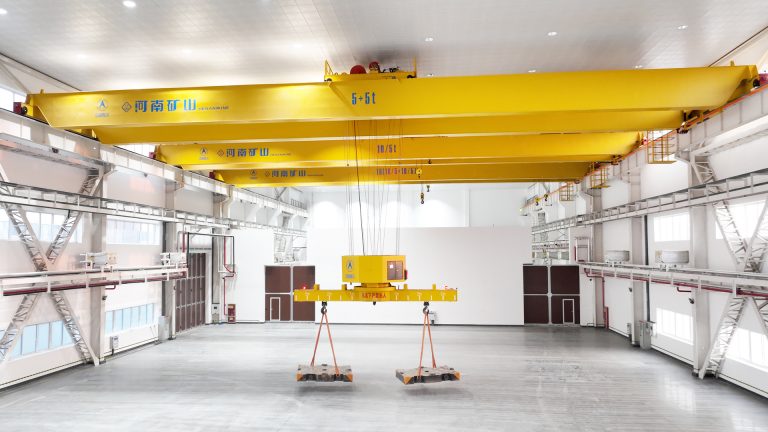
  • Cranes for the Aerospace Industry

    Cranes for the Aerospace Industry

    Crane application

    Cranes for the Aerospace Industry

    Review the aerospace crane handling applications. Review lifting points, coordination, positioning requirements and workshop clearances for your application.

    Cranes for the Aerospace Industry — Henan Mine Crane crane application photograph
    Cranes for the Aerospace Industry — crane application overview.

    Precision assembly lifting

    Document component weight, lifting points, clearance envelope, permissible motion, alignment requirements and interaction with adjacent tools or assembly positions.

    Crane configuration and interfaces

    Ask for coordinated control functions, positioning criteria, interlocks, runway reactions, inspection access and acceptance demonstrations under the agreed load cases.

    Review the Overhead crane range and Aerospace cranes before defining the project-specific arrangement.

    Design the lifting process

    Use the project context above as a starting point. The following checks turn a crane application into a technical scope that suppliers can price and demonstrate for your site.

    Component protection and route

    Provide the largest component envelope, its mass and centre of gravity, certified lifting points and the permitted acceleration or rotation. Trace the travel route from pickup to assembly position, including clearances above tools, fixtures and finished surfaces. A wide component may drive the hook approach and synchronized movement requirements more than its weight. Define any prohibition on uncontrolled sway or contact as a measurable handling requirement.

    Positioning and coordination

    State the required positioning tolerance at the load, the operator sight line and the interaction with adjacent cranes or work platforms. If two hoists carry one assembly, describe how load sharing is measured and what happens if one motion is interrupted. A design may use low-speed drives, cameras, remote control or special lifting beams, but each should be specified against the actual assembly sequence. Document clean or corrosion-control requirements if they apply to the workplace.

    Verification before operation

    Ask for lifting appliance interfaces, general arrangement, structural reactions, control narrative, inspection access and the acceptance plan. Site demonstrations should include the real route and representative component geometry where practical, not only a static rated-load test. Clarify the responsibilities for special spreaders, runway installation, safety zones, commissioning and operator training. Any claimed positioning accuracy needs an agreed test condition and measurement method.

    Compare the proposed crane scope

    DecisionInformation to request
    Crane and lifting attachmentRated loads, load cases, hook coverage and the complete suspended-load calculation.
    Site interfacesRunway loads, rail or building drawings, electrical supply and installation responsibilities.
    Controls and protectionOperating sequence, required safety functions and a method for testing each function.
    Commercial scopeEquipment, transport, installation, commissioning, documentation, training and spare parts as separate line items.

    From technical offer to site acceptance

    Technical submittals

    A usable bid should show a general arrangement and a clear list of assumptions, not just a model name and capacity. Request the load schedule used in design, lifting-attachment drawings where applicable, span and hook-approach dimensions, wheel loads, electrical supply, control narrative and maintenance access. Check every drawing against the actual building or yard layout. Identify the standards and local approval requirements for the destination market in the enquiry, then confirm the bidder’s proposed design and documentation scope in writing.

    Installation and tests

    Agree when the runway or civil works will be ready, how crane components can reach the installation position and who provides lifting equipment for erection. Define the factory test, on-site installation inspection and site acceptance as separate milestones. The acceptance procedure should list representative loads, the travel route, protection devices, emergency stop and any automation or attachment functions included in the order. Record who supplies test weights, operators, power and access equipment; otherwise a nominal commissioning price may omit essential site work.

    Commercial comparison

    Ask for the same delivery basis and currency across proposals. Separate the crane, special lifting appliances, rails or conductors, transport, installation support, commissioning, training and initial spare parts. Lead time should identify the starting event, such as approved drawings or an effective contract, and any dependency on site readiness. Compare warranty scope and service response by the written contract terms. If a key input is still unknown, request a priced option or a stated assumption instead of allowing different bidders to silently use different specifications. Keep a written exception register so the engineering team can resolve open dimensions, process interfaces and responsibility boundaries before issuing the purchase order.

    Information to include in the enquiry

    • Load weights, dimensions, centre of gravity and lifting attachments.
    • Span, lifting height, runway or yard drawings, travel coverage and clearances.
    • Operating cycle, working environment, electrical supply and control requirements.
    • Supply boundaries, inspection documents, installation support and acceptance criteria.

    Discuss a comparable lifting task

    Send the handling task and available site drawings. Henan Mine Crane can define a proposed crane arrangement and identify the remaining information needed for a technical and commercial review.

  • Clean Explosion-Proof Crane for Photovoltaic Polysilicon Project

    Clean Explosion-Proof Crane for Photovoltaic Polysilicon Project

    Crane application

    Clean Explosion-Proof Crane for Photovoltaic Polysilicon Project

    Review the clean explosion-proof cranes for polysilicon. Review load, process exposure, area classification and project-specific documentation requirements.

    Clean Explosion-Proof Crane for Photovoltaic Polysilicon Project — Henan Mine Crane crane application photograph
    Clean Explosion-Proof Crane for Photovoltaic Polysilicon Project — crane application overview.

    Energy and materials production

    Specify the product or component geometry, process exposure, lifting attachment, handling frequency, working environment and any clean, corrosive or classified-area requirements.

    Crane configuration and interfaces

    Ask for the applicable equipment configuration, area classification where relevant, mechanical and electrical interfaces, inspection access and a site-specific test plan.

    Review the Explosion-proof overhead cranes and Energy & new materials cranes before defining the project-specific arrangement.

    Design the lifting process

    Use the project context above as a starting point. The following checks turn a crane application into a technical scope that suppliers can price and demonstrate for your site.

    Classify the actual operating area

    State whether the crane is in a hazardous area, a controlled cleanroom, both, or neither. Provide the area classification, gas or dust group, temperature class, ambient range and cleaning regime from the plant design. A marketing term such as “explosion-proof” is insufficient to select motors, controls, cable entries and protective devices. In clean production, also define allowable materials, lubricants, particle control, equipment cleaning and maintenance access.

    Match protection to every component

    Review the hoist, trolley, bridge drives, brakes, limit switches, control station and power supply against the documented environment. List which parts enter the classified zone and how inspection and repair will be carried out. For remote operation, define interlocks with plant ventilation or process equipment only where the plant design calls for them. Ask the supplier to identify the standards, certification scope and any excluded third-party components in its offer.

    Evidence at handover

    Request component schedules, applicable certificates, installation drawings, inspection records, operating manuals and spare-part identification. Factory acceptance can verify electrical logic and mechanical operation; site acceptance must check the actual installation, earthing, labels, protection devices and the process interface. A cleanroom handling trial should also use the approved cleaning and contamination-control procedure. Confirm the project requirements before treating any advertised configuration as suitable for a specific classified area.

    Compare the proposed crane scope

    DecisionInformation to request
    Crane and lifting attachmentRated loads, load cases, hook coverage and the complete suspended-load calculation.
    Site interfacesRunway loads, rail or building drawings, electrical supply and installation responsibilities.
    Controls and protectionOperating sequence, required safety functions and a method for testing each function.
    Commercial scopeEquipment, transport, installation, commissioning, documentation, training and spare parts as separate line items.

    From technical offer to site acceptance

    Technical submittals

    A usable bid should show a general arrangement and a clear list of assumptions, not just a model name and capacity. Request the load schedule used in design, lifting-attachment drawings where applicable, span and hook-approach dimensions, wheel loads, electrical supply, control narrative and maintenance access. Check every drawing against the actual building or yard layout. Identify the standards and local approval requirements for the destination market in the enquiry, then confirm the bidder’s proposed design and documentation scope in writing.

    Installation and tests

    Agree when the runway or civil works will be ready, how crane components can reach the installation position and who provides lifting equipment for erection. Define the factory test, on-site installation inspection and site acceptance as separate milestones. The acceptance procedure should list representative loads, the travel route, protection devices, emergency stop and any automation or attachment functions included in the order. Record who supplies test weights, operators, power and access equipment; otherwise a nominal commissioning price may omit essential site work.

    Commercial comparison

    Ask for the same delivery basis and currency across proposals. Separate the crane, special lifting appliances, rails or conductors, transport, installation support, commissioning, training and initial spare parts. Lead time should identify the starting event, such as approved drawings or an effective contract, and any dependency on site readiness. Compare warranty scope and service response by the written contract terms. If a key input is still unknown, request a priced option or a stated assumption instead of allowing different bidders to silently use different specifications. Keep a written exception register so the engineering team can resolve open dimensions, process interfaces and responsibility boundaries before issuing the purchase order.

    Information to include in the enquiry

    • Load weights, dimensions, centre of gravity and lifting attachments.
    • Span, lifting height, runway or yard drawings, travel coverage and clearances.
    • Operating cycle, working environment, electrical supply and control requirements.
    • Supply boundaries, inspection documents, installation support and acceptance criteria.

    Discuss a comparable lifting task

    Send the handling task and available site drawings. Henan Mine Crane can define a proposed crane arrangement and identify the remaining information needed for a technical and commercial review.

  • Port Crane Roles: Connect Vessel Handling with Terminal Cargo Flow

    Port Crane Roles: Connect Vessel Handling with Terminal Cargo Flow

    Technical guide

    Port Crane Roles: Connect Vessel Handling with Terminal Cargo Flow

    Port cranes perform different functions across the waterfront and storage areas. Identify the cargo, transfer points and operational constraints before deciding which crane role the project needs to strengthen.

    Henan Mine CraneTechnical guide · Updated 2026Crane selection, project scope and operating requirements
    Port Crane Roles: Connect Vessel Handling with Terminal Cargo Flow
    Henan Mine Crane lifting equipment
    Project planning notes

    Key points for this crane project.

    1. What Are Port Cranes?
    2. Types of Port Cranes
    3. The Core Purpose of Port Cranes
    Read the technical guide

    What Are Port Cranes?

    Port cranes refer to the collective term for heavy-duty lifting equipment specifically designed for port environments to perform cargo loading, unloading, handling, stacking, and related auxiliary operations.

    Their design and performance are tailored to port operational requirements, such as cargo types, vessel sizes, and yard layouts. Precisely adapted to these needs and encompassing a wide variety of types, they constitute the core infrastructure for port operations, sea-land cargo transshipment, and global trade flows.

    Types of Port Cranes

    Port cranes come in a wide variety of types. Different types are designed for specific operational scenarios, each playing a unique role, and together they form an operational system that ensures the efficient functioning of the port. The specific classifications and core functions are as follows:

    Ship-to-Shore Container Cranes (STS Crane)

    As the absolute core equipment of modern container terminals, gantry cranes are arranged along the quay line. Their span can cover the entire ship’s deck, and they are primarily used for container loading and unloading operations between ships and the terminal.

    When integrated with automated systems, they enable seamless transfer between containers and the terminal yard, achieving operational efficiencies of over 40 moves per hour, making them the key equipment determining a container terminal’s throughput.

    Rubber Tyred Gantry Crane (RTG Crane)

    Primarily used for cargo stacking operations in container yards, its most distinctive feature is the use of rubber tires as the travel mechanism. This eliminates the need for ground-level tracks, allowing for flexible movement within the yard to adapt to operational requirements in different storage areas.

    Rail Mounted Gantry Crane (RMG Crane)

    Operating on ground-level rails, these cranes are primarily used for container stacking operations at port terminals, railway freight yards, and inland container yards. Their main girder gantry structure spans the entire container yard, offering strong operational stability, high positioning accuracy, and a high degree of automation. They enable efficient container stacking and transshipment, making them particularly suitable for large-scale operations in extensive yards.

    Containder Straddle Carrier

    A mobile lifting device that straddles containers from above during operation and lifts them using overhead lifting gear. It can rapidly perform container handling, stacking, and transshipment operations within terminals and yards. With high flexibility, it effectively links cargo flow between the terminal front and the yard.

    Mobile Harbor Crane (MHC Crane)

    Provides flexible cargo handling solutions for multi-purpose terminals. Featuring wheeled or rail-mounted designs, it can move along the terminal shoreline and dock at the most suitable operational position to perform vessel operations.

    They are particularly well-suited for handling containers, bulk cargo, and heavy cargo at busy port terminals.

    Dock Portal Slewing Crane and Floating Crane

    Quay-mounted slewing cranes maintain a constant hook height during boom movement, making them ideal for bulk cargo handling. Based on boom structure, they are classified as single-boom or four-link types; their 360° rotating platform and tiltable boom system provide a wide operational range;

    Floating cranes, mounted on barge platforms, are primarily used for heavy-lift operations such as port construction and marine salvage.

    Port Crane Roles: Connect Vessel Handling with Terminal Cargo Flow
    Lifting equipment and application context

    The Core Purpose of Port Cranes

    Port cranes exist fundamentally to address the challenge of “heavy cargo handling” in port operations. Their core functions span the entire port operation process and can be specifically categorized into the following five aspects:

    Enabling Seamless Cargo Loading and Unloading

    As the interface between maritime and land transportation, ports require the transfer of cargo between ships and land-based transport vehicles (trucks, trains). Such cargo is often bulky and heavy, making manual handling impractical.

    Through precise lifting operations, port cranes enable seamless transfers of cargo between different modes of transport. Whether handling bulk container loading and unloading or the individual transfer of bulk cargo and heavy equipment, they perform efficiently, serving as the “bridge” for port cargo flow.

    Optimizing Port Operational Efficiency

    At busy port terminals, processes such as vessel berthing, cargo handling, and yard transshipment are interlinked; inefficiency in any single step can lead to port congestion and vessel delays.

    Port cranes, with their high operational efficiency, reduce cargo handling time and improve yard turnover efficiency. This lowers the risk of port congestion, accelerates vessel turnaround, maximizes port throughput, and enhances port operational efficiency.

    Ensuring Operational Safety

    As heavy-duty equipment, the operational safety of port cranes directly impacts the safety of personnel, cargo, and equipment. To prevent equipment failures and safety incidents, all port cranes have clear load limits to prevent accidents such as structural damage or cargo falls caused by overloading;

    Modern port cranes are also equipped with safety features such as collision warning systems and remote monitoring, which reduce human operational errors, lower operational risks, and ensure safe and orderly port operations.

    Supporting Multifunctional Port Operations

    Port cranes are not only used for cargo loading and unloading but also support the port’s multifunctional operations. For example, during ship maintenance and repairs, cranes can lift vessels out of the water, allowing personnel to inspect and repair components such as propellers and rudders.

    At the same time, they can adapt to the handling requirements of various cargo types, including containers, bulk cargo, and heavy equipment, helping ports achieve multifunctional and diversified operations.

    Ensuring the Continuity of the Global Supply Chain

    In the context of globalization, the smooth operation of the global supply chain relies on the efficient flow of goods. As a core node in the supply chain, a port’s operational efficiency directly impacts the stability of the supply chain.

    By efficiently handling cargo, port cranes ensure that ships depart on schedule and goods are delivered on time, bridging the gap between maritime and land transportation to prevent supply chain disruptions and safeguard the smooth conduct of global trade.

    The Significance of Port Cranes in the Global Shipping Industry

    Port cranes are not only the foundational equipment for port operations but also a vital pillar supporting the development of the global shipping industry. Their significance extends across multiple dimensions, including global supply chains, national economies, port competitiveness, and the sustainable development of the industry:

    Backbone of Global Supply Chains

    The core of global trade lies in the cross-regional flow of goods, and ports, as hubs connecting sea and land transport, serve as critical nodes in the global supply chain. Through efficient loading, unloading, and transshipment of goods, port cranes bridge the gap between maritime and land transportation, supporting the smooth operation of international trade. They serve as the “core pillar” of global supply chain stability; without their efficient operations, the flow of goods would slow down and supply chains would grind to a halt.

    The operational capacity of port cranes directly determines port cargo handling efficiency, which in turn affects the responsiveness of global supply chains. During the pandemic, their efficient operations quickly cleared backlogged cargo, alleviated supply chain congestion, and ensured the timely transport of various emergency supplies, highlighting their critical role.

    Economic Impact on Ports and Nations

    The level of development of port cranes affects port operational efficiency and the national economy. Efficient operations can increase port throughput and competitiveness, attract vessel calls, drive the development of related industries such as logistics and warehousing, and create a large number of jobs.

    At the national level, ports serve as vital gateways for foreign trade, and their efficiency directly impacts a country’s trade competitiveness. The efficient operation of port cranes reduces transportation costs, shortens trade cycles, enhances export competitiveness, and drives GDP growth. Moreover, their technology and operational capabilities serve as key indicators of a coastal nation’s shipping strength and economic potential.

    Technological Advancements Shaping the Significance of Port Cranes

    With the continuous advancement of technology, the technical capabilities of port cranes are constantly improving, with automation, intelligence, and sustainability becoming the mainstream trends. These technological advancements not only enhance the operational efficiency and safety of port cranes but also further reinforce their critical role in the shipping industry, primarily manifested in three aspects:

    Automated and Intelligent Cranes

    With the development of automation technology, remote operation and autonomous operation have become key directions for port cranes. By installing sensors, control systems, and artificial intelligence algorithms, port cranes can achieve functions such as unmanned operation, autonomous lifting, and automatic obstacle avoidance. This not only reduces human operational errors and improves operational efficiency but also lowers the risks associated with manual operations.

    IoT and Data Integration

    The application of IoT technology enables port cranes to monitor equipment status in real time and share data. By installing IoT terminals on cranes, operational data and fault information can be collected in real time, facilitating predictive maintenance.

    Early detection of potential equipment failures allows for timely repairs, reducing downtime and ensuring operational continuity. Additionally, through data integration, crane operational data can be linked with port scheduling and warehousing systems, enabling intelligent scheduling and optimization of port operations to enhance overall operational efficiency.

    Electrification and Green Technologies

    In response to the global call for green development, the electrification and green technologies of port cranes are continuously being upgraded. In addition to replacing diesel-powered systems with electric drives, green technologies such as regenerative braking and solar power are gradually being applied to port cranes;

    simultaneously, equipment design places greater emphasis on energy conservation. By optimizing structures and adopting high-efficiency motors, energy consumption is reduced, carbon emissions are lowered, and ports are supported in achieving their “carbon neutrality” goals, thereby driving the green transformation of the shipping industry.

    Port Crane Roles: Connect Vessel Handling with Terminal Cargo Flow
    Crane arrangement for technical discussion

    Challenges in Port Crane Operations

    Although port cranes play a vital role in the shipping industry, they still face numerous challenges during actual operations. These challenges not only affect the operational efficiency of port cranes but may also undermine their significance in the shipping industry. Specifically, they primarily include the following four aspects:

    • High costs: The acquisition, routine maintenance, and replacement of parts for port cranes are expensive. Small and medium-sized ports may be unable to afford advanced equipment due to financial constraints, which affects operational efficiency and competitiveness.
    • High skill requirements for operators: Intelligent and automated cranes require operators to possess specialized knowledge and emergency response capabilities. Training costs are high and the process is time-consuming; a shortage of operators can impact operational efficiency and safety.
    • Constraints from weather and the environment: Outdoor operations are prone to shutdowns due to adverse weather conditions, while environmental factors such as corrosion and dust in port areas can shorten equipment lifespan and increase maintenance costs.
    • Incompatibility with outdated port infrastructure: Advanced cranes cannot fully utilize their capabilities, and poor integration with port scheduling and warehousing systems affects overall operational efficiency.

    Future Trends in Port Crane Development

    In response to industry challenges and development needs, future port cranes will evolve toward automation, intelligence, sustainability, and larger scales, continuously improving their performance and operational efficiency to further strengthen their significance in the shipping industry. Specific future trends are as follows:

    • Fully automated terminals will gradually become widespread. Port cranes will utilize artificial intelligence (AI) and Internet of Things (IoT) technologies to achieve fully autonomous operation without human intervention, comprehensively improving operational efficiency, reducing labor costs, and minimizing safety risks.
    • AI will be deeply integrated into crane operations. Through big data analysis and predictive algorithms, it will enable operational scheduling, predictive maintenance, and load optimization, thereby reducing equipment downtime.
    • The development of green ports is driving the transition of cranes toward greener operations. There will be increased adoption of clean energy sources such as solar and wind power, along with optimized energy-saving technologies to reduce carbon emissions and noise pollution, thereby contributing to the goal of “green ports.”
    • To accommodate the growth of ultra-large container ships, port cranes will undergo upgrades toward larger sizes, increasing lifting capacity, operational radius, and lifting height to ensure efficient loading and unloading of large vessels and maintain port competitiveness.

    How to Select the Right Port Crane

    Selecting the right port crane not only improves port operational efficiency but also reduces operating costs and maximizes the value of the equipment. Therefore, when selecting a crane, ports must comprehensively consider the following five key factors:

    Lifting Capacity and Lifting Height

    These are the core factors in crane selection and must be determined based on the port’s primary cargo types and vessel sizes. For example, ports primarily handling ultra-large container ships should select gantry cranes with high lifting capacity, high lifting height, and a wide operating radius; ports primarily handling bulk cargo can opt for mobile harbor cranes or portal cranes with moderate lifting capacity and flexible operation.

    Operating Speed and Efficiency

    Operating speed directly determines port throughput and vessel turnaround efficiency. Therefore, when selecting equipment, priority should be given to cranes with superior hoisting speeds and trolley travel speeds. At the same time, the level of automation must be a key consideration; a higher degree of automation not only significantly improves operational efficiency but also effectively reduces human operational errors, further enhancing operational safety.

    Durability and Maintenance Requirements

    Port cranes have a long service life; therefore, when selecting models, priority should be given to equipment with robust structures, high-quality materials, and strong durability. At the same time, maintenance convenience must be taken into account, with preference given to models that have low maintenance costs, readily available spare parts, and minimal maintenance complexity. This approach reduces equipment downtime and effectively lowers overall operating costs.

    Environmental Impact

    Against the backdrop of a global commitment to green development, ports must prioritize environmental and energy-saving features when selecting cranes. This approach not only effectively reduces energy consumption and operational costs but also provides strong support for the port’s sustainable development.

    Costs and Financing Methods

    Given the high initial investment required for port cranes, selection must comprehensively consider the full lifecycle costs—including equipment procurement, operation, and maintenance—to balance initial investment with long-term returns. At the same time, ports should flexibly explore diverse financing models, such as leasing and installment payments, to effectively alleviate financial pressure and ensure the smooth acquisition and stable operation of equipment.

    Discuss the crane arrangement for your project.

    Port cranes perform different functions across the waterfront and storage areas. Identify the cargo, transfer points and operational constraints before deciding which crane role the project needs to strengthen. Share the load, available drawings, working cycle and site conditions with Henan Mine Crane so the required configuration and supply boundary can be discussed.

    Related crane configurations

    Grab And Hook Dual Purpose Crane

    View product parameters
    Lifting capacity: 5 – 16 tSpan: 10.5 – 31.5 mLifting height: 6 – 20 m

    Switch between bulk-material pickup and hook lifting with a grab-and-hook overhead arrangement. Define each load case, the grab type and the changeover procedure for the working area.

    Updated 2026 · Henan Mine Crane
  • Carbon Block Stacking Crane

    Carbon Block Stacking Crane

    Crane application

    Carbon Block Stacking Crane

    Review the carbon block stacking crane applications. Review storage geometry, material flow, lifting loads and required automation interfaces.

    Carbon Block Stacking Crane — Henan Mine Crane crane application photograph
    Carbon Block Stacking Crane — crane application overview.

    Energy and materials production

    Specify the product or component geometry, process exposure, lifting attachment, handling frequency, working environment and any clean, corrosive or classified-area requirements.

    Crane configuration and interfaces

    Ask for the applicable equipment configuration, area classification where relevant, mechanical and electrical interfaces, inspection access and a site-specific test plan.

    Review the Metallurgical overhead cranes and Energy & new materials cranes before defining the project-specific arrangement.

    Design the lifting process

    Use the project context above as a starting point. The following checks turn a crane application into a technical scope that suppliers can price and demonstrate for your site.

    Load shape and lifting attachment

    A handling line must be sized for the material as well as its nominal weight. Record the longest and shortest piece, thickness, stack condition, temperature, centre of gravity and whether several pieces are lifted at once. For magnet beams, provide the number and spacing of magnets, expected residual magnetism and the power-loss response. For clamps, provide gripping faces, allowable pressure and the secure-release sequence. The attachment and the load both count towards the suspended mass.

    Motion and stacking accuracy

    Show the pickup and deposit points, permitted rotation, vertical clearance, storage rack geometry and the tolerance at which a load may be released. Synchronised lifting, anti-sway and automatic stacking are different control scopes; define which movements actually require them. Ask how the operator confirms a safe grip and how the crane responds to a partial pickup, misalignment or obstruction. Interface signals with a production line or warehouse system should be listed before control architecture is chosen.

    Demonstrating the arrangement

    A technical proposal should include the lifting attachment drawing, crane layout, power backup or retention concept where relevant, exclusion zones, maintenance access and the load cases used for design. Witness a handling trial with representative material, including the heaviest and most awkward pieces and an agreed simulated fault condition. Clarify who supplies the magnet, clamp, control interface, spare attachment parts and operator training. A rated crane capacity does not by itself verify a safe plate, slab or block handling process.

    Compare the proposed crane scope

    DecisionInformation to request
    Crane and lifting attachmentRated loads, load cases, hook coverage and the complete suspended-load calculation.
    Site interfacesRunway loads, rail or building drawings, electrical supply and installation responsibilities.
    Controls and protectionOperating sequence, required safety functions and a method for testing each function.
    Commercial scopeEquipment, transport, installation, commissioning, documentation, training and spare parts as separate line items.

    From technical offer to site acceptance

    Technical submittals

    A usable bid should show a general arrangement and a clear list of assumptions, not just a model name and capacity. Request the load schedule used in design, lifting-attachment drawings where applicable, span and hook-approach dimensions, wheel loads, electrical supply, control narrative and maintenance access. Check every drawing against the actual building or yard layout. Identify the standards and local approval requirements for the destination market in the enquiry, then confirm the bidder’s proposed design and documentation scope in writing.

    Installation and tests

    Agree when the runway or civil works will be ready, how crane components can reach the installation position and who provides lifting equipment for erection. Define the factory test, on-site installation inspection and site acceptance as separate milestones. The acceptance procedure should list representative loads, the travel route, protection devices, emergency stop and any automation or attachment functions included in the order. Record who supplies test weights, operators, power and access equipment; otherwise a nominal commissioning price may omit essential site work.

    Commercial comparison

    Ask for the same delivery basis and currency across proposals. Separate the crane, special lifting appliances, rails or conductors, transport, installation support, commissioning, training and initial spare parts. Lead time should identify the starting event, such as approved drawings or an effective contract, and any dependency on site readiness. Compare warranty scope and service response by the written contract terms. If a key input is still unknown, request a priced option or a stated assumption instead of allowing different bidders to silently use different specifications. Keep a written exception register so the engineering team can resolve open dimensions, process interfaces and responsibility boundaries before issuing the purchase order.

    Information to include in the enquiry

    • Load weights, dimensions, centre of gravity and lifting attachments.
    • Span, lifting height, runway or yard drawings, travel coverage and clearances.
    • Operating cycle, working environment, electrical supply and control requirements.
    • Supply boundaries, inspection documents, installation support and acceptance criteria.

    Discuss a comparable lifting task

    Send the handling task and available site drawings. Henan Mine Crane can define a proposed crane arrangement and identify the remaining information needed for a technical and commercial review.