There are many ways to categorize gantry cranes, the most commonly used is according to the main girder design, movement mode and structural form, different types are suitable for different working conditions and loads.
Single Girder Gantry Cranes
Its trolley mostly adopts the under-hanging design, hanging directly below the main girder track operation.
Its advantages are simple structure, low cost, easy maintenance; disadvantages are limited carrying capacity, overall stability is not as good as double main girder, easy to shake in heavy load or large span operation, not suitable for long-term high-intensity heavy operations.
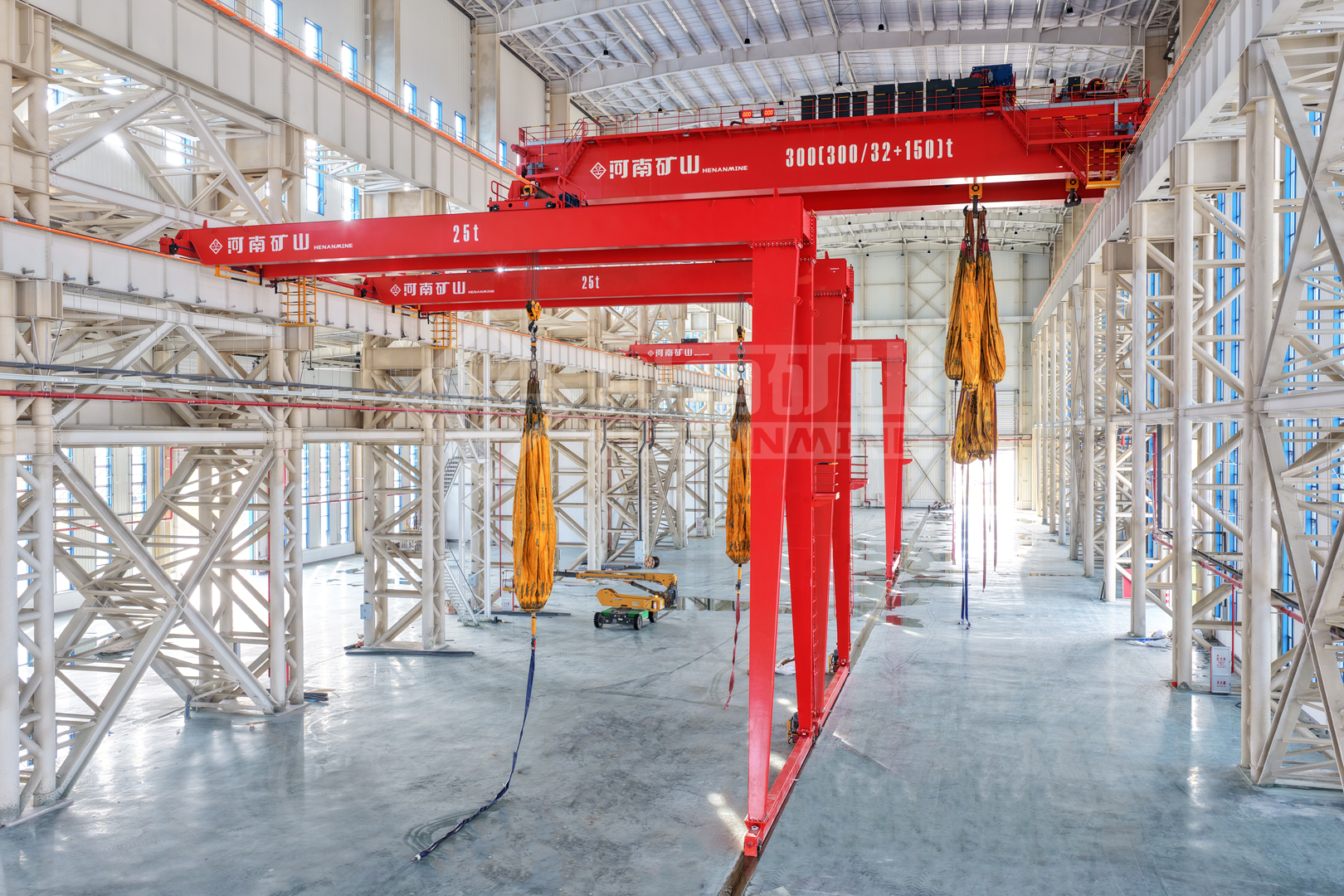
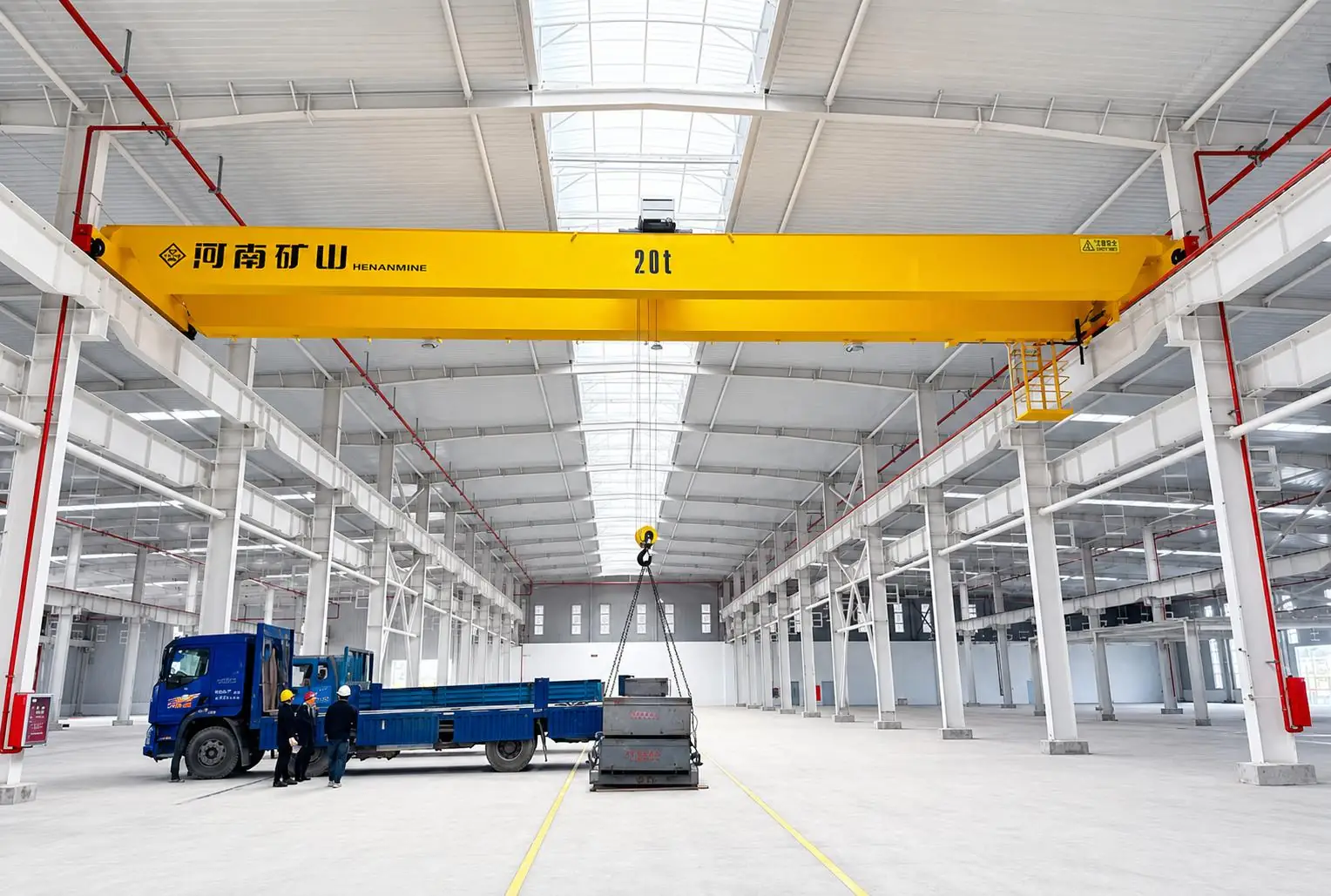
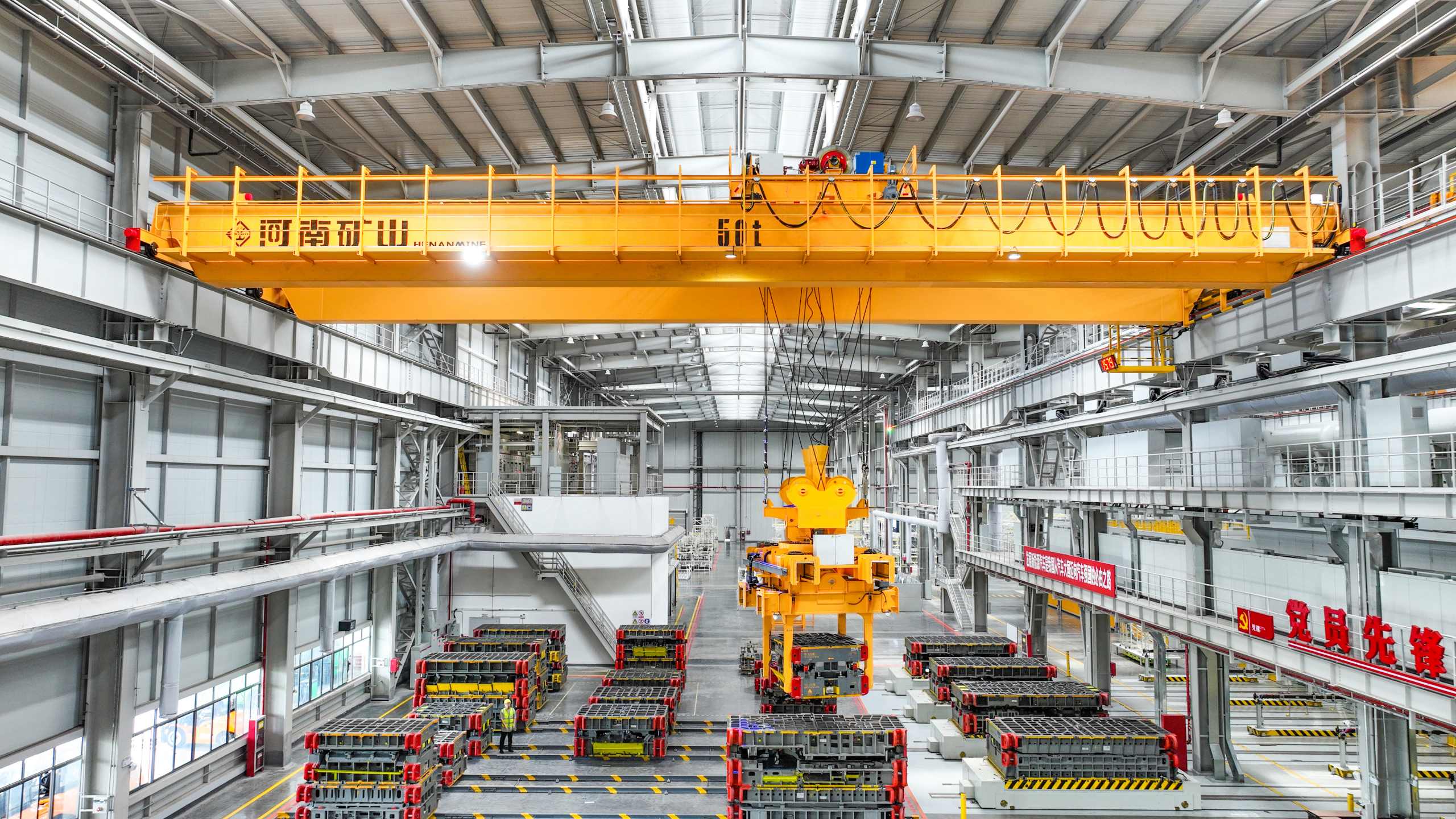
Single-girder gantry crane manufactured by Henan Mine Crane
Double Main Girder Gantry Crane
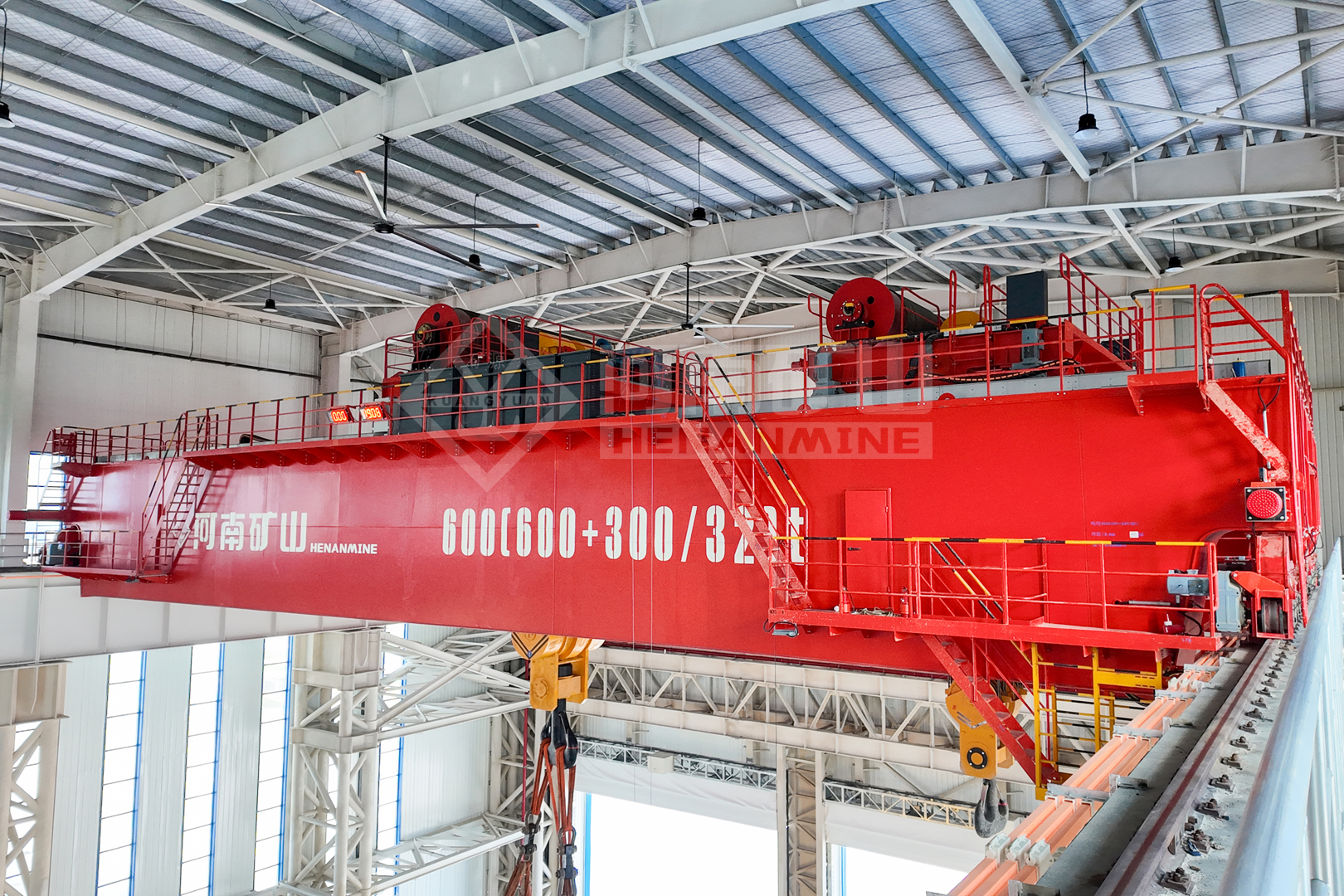
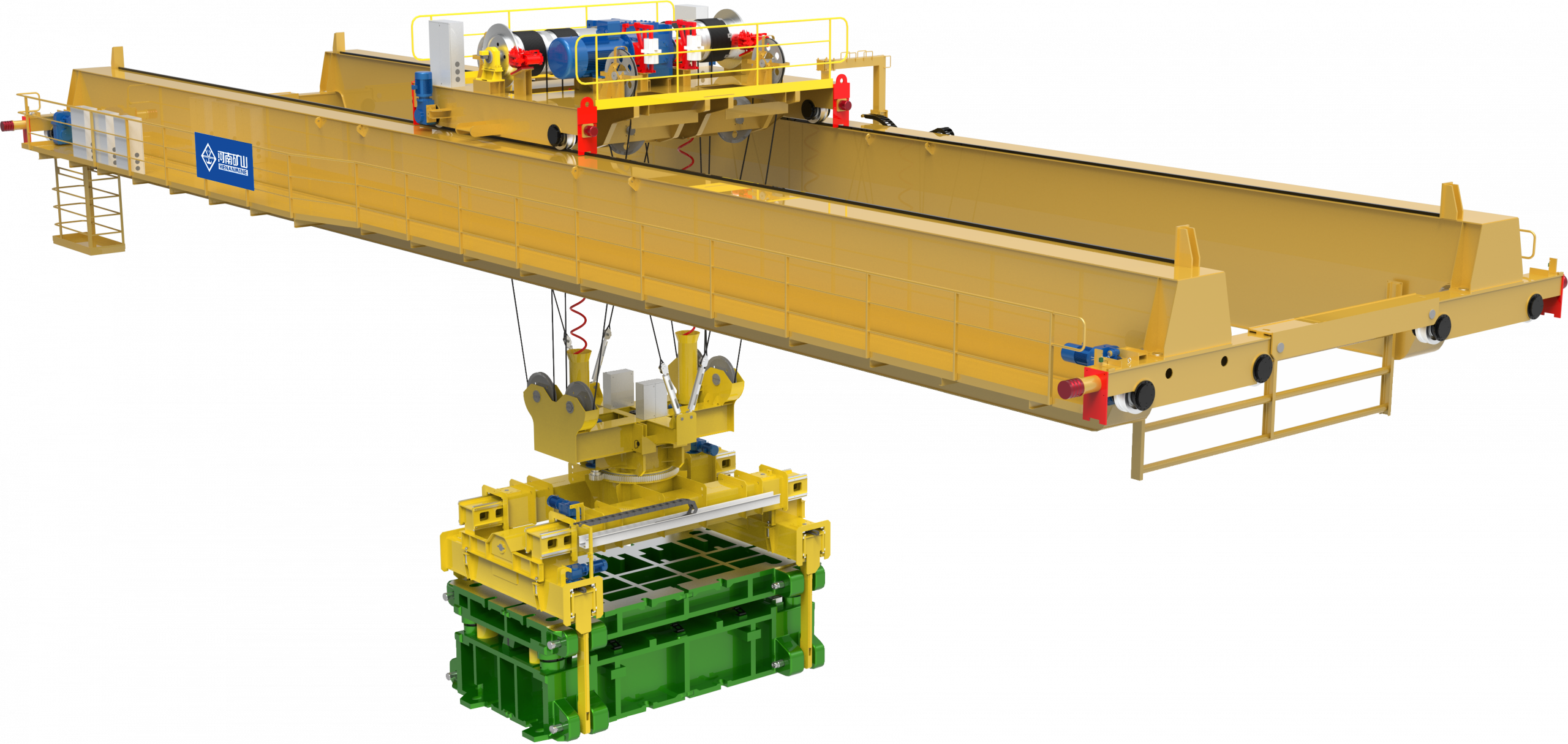
Double main girder gantry crane consists of two parallel main girders, mostly using box beam or truss structure, box beam has the characteristics of large stiffness and good stability, suitable for high-capacity operations. Its supporting legs and main girder are more firmly connected, and the overall structure is more stable.
Its disadvantages are self-importance, higher cost than single main girder, slightly longer installation and commissioning cycle, and slightly higher energy consumption. However, in long-term high-intensity, high-load operations, the stability and safety of the double main girder is more secure, and it is the first choice for heavy-duty working conditions.
Henan Mine Crane’s MG double girder gantry crane
Rail Mounted Gantry Cranes (RMG)
Rail Mounted Gantry Crane (RMG) is a gantry crane that runs on a fixed rail. Its outriggers are equipped with steel wheels at the bottom, which travel on the pre-buried track, and the running path is completely limited by the track, so it can only move in a straight line along the track.
The core advantage of RMG is its high positioning accuracy, up to centimeter level, which is suitable for high-density stockpiling operations, such as container yards in ports and raw material yards in large factories, and can realize accurate stacking and fast access of containers. It has strong carrying capacity, can be designed with larger span and cantilever, suitable for single cantilever, double cantilever and other configurations, with low difficulty of automation transformation, suitable for intelligent yard deployment.
Its disadvantages are poor mobility and flexibility, unable to trans-regional transfer, once the track laying is completed, the operating range is fixed, the site is difficult to transform, the initial infrastructure costs are high, the need to lay special tracks and power supply systems.
Tire Gantry Crane (RTG)
Tire Gantry Crane, called Rubber Tyred Gantry Crane in English, or RTG for short, relies on rubber tires to achieve mobility, there is no fixed track limitations, and it can be moved freely on a level site, and it is very flexible for cross-box and cross-area operations.
The advantage of RTG is that it has excellent site adaptability, does not need to lay tracks, and can be quickly deployed in old yards and temporary yards, with low site modification costs. It can also be driven by diesel, electric or hybrid power, and is suitable for scenarios where the site is irregular and the operation area is frequently adjusted, such as port bulk yards and prefabricated parts processing plants.
Portable/Mobile Gantry Cranes
Portable gantry crane, also called mobile gantry crane, is a small gantry crane with flexible height and span adjustment, mostly with detachable design for easy transportation and installation.
With simple structure and light weight, these cranes can be moved to any working position by forklift or trailer, and no professional tools are needed for installation and easy operation, making them ideal for small-scale operation scenarios.
Full Gantry Cranes
Full Gantry Crane is the most common type of gantry crane. It has two supporting legs, and the two ends of the main girder are connected to the supporting legs to form a complete gantry frame, and the whole machine is completely independent of the site, not attached to any building structure.
Its operating range covers the whole area under the main girder, suitable for open open yard, harbor, construction site and other scenes, can realize all-round material handling, wide range of carrying capacity and span, from light to heavy duty operations can be adapted.
Semi-portal Crane
Semi-gantry cranes, also called half-gantry cranes, have only one supporting leg, while the other outrigger is attached to the column or ground track of the plant, and one end of the main girder is supported by the outrigger, while the other end is hung on the track of the plant.