Engineering · Manufacturing · Project support
info@hnksglobal.comWhatsApp +86 18836207779 ↗

Blog

  • Joint Crane Manufacturing Laboratory Agreement Signed with Northwestern Polytechnical University

    Joint Crane Manufacturing Laboratory Agreement Signed with Northwestern Polytechnical University

    Industry & Partnerships

    Joint Crane Manufacturing Laboratory Agreement Signed with Northwestern Polytechnical University

    Henan Mine Crane signed an agreement for a crane intelligent-manufacturing and application-technology joint laboratory with Northwestern Polytechnical University at a November 2025 technology exhibition.

    Representatives at the technology exhibition joint-signing ceremony
    Representatives at the technology exhibition joint-signing ceremony.

    Research and manufacturing cooperation

    The agreement concerns manufacturing technology, process optimisation and talent development. The exhibition also displayed examples of specialised lifting equipment for zinc processing and brewing.

    From research to an equipment specification

    The joint laboratory is intended to connect research with crane manufacturing and application needs. For a proposed application, define the load, process interfaces, operating environment and evidence required before selecting equipment.

    Contact Henan Mine Crane

    For product information, a manufacturing visit or a company enquiry, send the relevant details to our team.

  • Gantry Crane Components: What the Structure and Travel Systems Do

    Gantry Crane Components: What the Structure and Travel Systems Do

    Technical guide

    Gantry Crane Components: What the Structure and Travel Systems Do

    Understanding the main components makes technical proposals easier to compare. Review the bridge, legs, lifting mechanism and travel equipment as a connected system, with particular attention to the load path and site interfaces.

    Henan Mine CraneTechnical guide · Updated 2026Crane selection, project scope and operating requirements
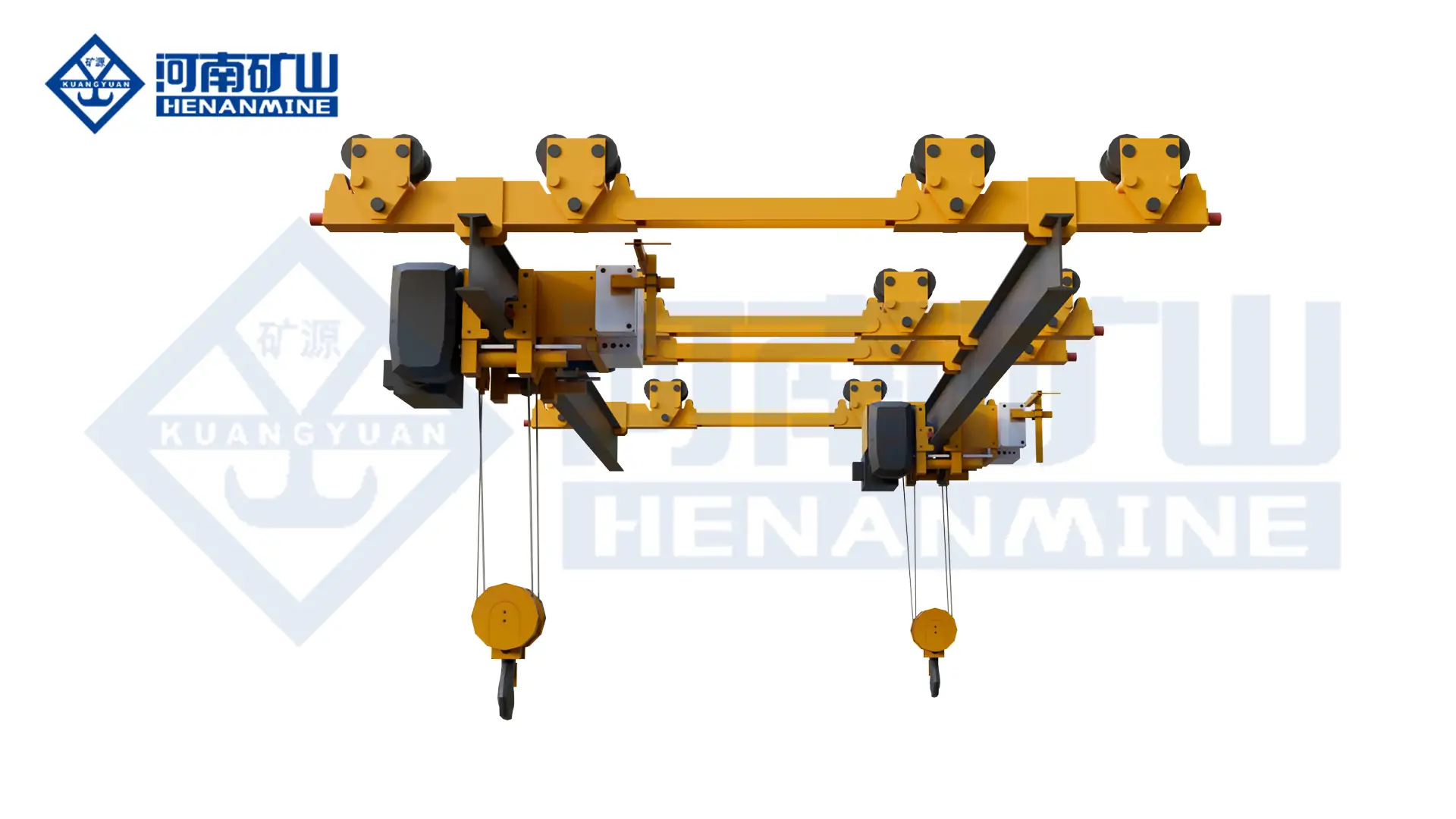
    Henan Mine Crane Track Switching Overhead Crane
    Henan Mine Crane Track Switching Overhead Crane
    Project planning notes

    Key points for this crane project.

    1. Basic Definition
    2. Key Characteristics
    3. Main Structure of a Gantry Crane
    Read the technical guide

    Basic Definition

    The core structure of a gantry crane is a horizontal main girder, supported by two or more vertical outriggers at both ends or in the middle, and equipped with a travel device at the bottom of the outriggers – either steel wheels that fit on the track or rubber tires that can be moved freely.

    This structure allows it to accomplish both vertical lifting and lowering of heavy loads, as well as moving horizontally with heavy loads. Unlike ordinary lifting equipment, it forms a complete lifting system on its own, without the use of any external structures, which is the most essential difference between it and a bridge crane.

    Key Characteristics

    The first core characteristic of gantry crane is independent support structure. Its outriggers directly transfer the weight of the whole machine and lifting load to the ground, without having to rely on the columns or roof of the plant as in the case of bridge cranes, which is also the basis for its ability to work in the open field.

    Its operation scenes are not limited to outdoor, indoor large-scale workshop can also be adapted. For example, in a large steel processing plant, when the workshop space is sufficiently open, the gantry crane can connect indoor processing and outdoor yard material transfer, which is very practical.

    Large span and high load capacity is another major feature.

    Compared with bridge cranes, it is also more flexible in terms of installation. Track-type gantry cranes only need to lay a simple ground track, and tire-type cranes do not even need a track, and can be put into use by leveling the site without large-scale reconstruction of the existing site.

    Main Structure of a Gantry Crane

    Many customers will ask “how to judge the quality of a gantry crane” when inspecting the equipment. In fact, the answer is very simple, look at its six core structural components, you can have a basic judgment on the performance and durability of the equipment. These components work in conjunction with each other, and if one of them is missing, the whole machine will not be able to complete the lifting operation properly.

    Main Girder

    The main girder is the core component of the gantry crane that carries the trolley and the hoisting mechanism, and all the lifting loads will eventually be transferred to the main girder. Its design directly determines the maximum lifting capacity and span of the crane.

    The main girder is mainly divided into two forms: single main girder and double main girder. Single main girder mostly adopts I-beam or combined cross-section, which has lighter deadweight and lower processing and manufacturing cost; double main girder is mainly box beam or truss structure, which has greater cross-section stiffness and can withstand larger load and span, and is the first choice for heavy-duty operation.

    In actual selection, single main girder is preferred for light and medium load scenarios, while double main girder is a safer choice for heavy-duty working conditions such as shipbuilding and harbor.

    Support Legs

    Support legs are the “leg bones” connecting the main girder and the ground, and their core role is to evenly distribute the load transmitted by the main girder to the travel mechanism or track on the ground. Its structural strength and stability are directly related to the safety of the whole machine.

    The shape of the outrigger will be designed according to the operational requirements, and the common ones are L-type and C-type. L-type outrigger has a simple structure and is suitable for regular working conditions; C-type outrigger will be bent or inclined to leave a larger lateral space, so that the extra wide cargo can pass under the outrigger without any problem.

    For semi-portal cranes, one side of the outrigger is on the ground, and the other side is attached to the wall or column of the plant, which can further save space and equipment costs.

    Hoisting Mechanism

    Hoisting mechanism is the “power core” of gantry crane, responsible for completing the vertical lifting and lowering of heavy loads, and it is also the most critical execution part. Its main form is electric hoist or winch system, the specific selection depends on the lifting capacity.

    No matter which form, the hoisting mechanism is composed of motor, reel, wire rope (or chain), hook set and other components. The material of the wire rope and the design of the drum will directly affect the smoothness of the lift and the service life of the equipment.

    Trolley System

    The trolley system is equivalent to the “arm” of the gantry crane, which is erected on the track of the main girder, and can move horizontally along the main girder with the hoisting mechanism, and its core role is to adjust the position of the load in the direction of the span to realize accurate positioning.

    The trolley system mainly consists of frame, traveling wheels, driving device and guiding device. The trolley of double main girder gantry crane usually runs between two main girders for better stability; while the trolley of single main girder adopts under-hanging design, which is directly suspended on the rail below the main girder.

    In the handling of long materials, double trolley configuration is also used. The synchronized action of two trolleys ensures that the materials are always kept horizontal, avoiding tilting during the handling process.

    Traveling Mechanism

    The traveling mechanism is the “mobile foot” of the gantry crane, which is installed at the bottom of the outrigger and is responsible for driving the whole machine to move in the specified direction, thus expanding the operation coverage. Its form corresponds directly to the way the crane moves.

    The running mechanism of rail-type gantry cranes is a steel wheel set, which runs with the pre-embedded steel rails on the ground, with a fixed trajectory and high positioning accuracy; tire-type gantry cranes are equipped with rubber tires and a hydraulic drive system, which can move freely on a flat surface, and are extremely flexible.

    The braking system and buffer device in the operating mechanism are the key safety components, the braking system can make the whole machine stop smoothly, and the buffer device can avoid hard collision between the crane and the end of the rail or other equipment.

    Electrical Control System

    The electrical control system is the “brain” of the gantry crane, from which all the commands are issued and all the safety protection functions are integrated. At present, the mainstream equipment adopts PLC control system, which can realize the precise coordination of movements.

    There are two main operation modes: cab operation and wireless remote control operation. The cab is generally set on the side of the main girder or above the trolley, which is suitable for long time and high frequency operation; the wireless remote control is more flexible, the operator can observe the lifting situation at any position on the site, which is suitable for complex working conditions.

    Overload protection, limit protection, emergency braking and other safety functions are also realized through the electrical system. When the equipment is overloaded, over travel and other abnormal conditions, the system will automatically cut off the power to avoid safety accidents.

    How Does a Gantry Crane Work?

    The working process of a gantry crane is essentially a three-directional movement to transport heavy loads from one position to another. These three movements seem to be simple, but only with the cooperation, can complete efficient and safe lifting operations.

    Vertical Lifting Movement

    Vertical lifting is the most basic movement of the gantry crane, which is completed independently by the hoisting mechanism. When the operator sends out the lifting command, the motor of the lifting mechanism starts and drives the drum to rotate.

    When the drum rotates, the wire rope will be reeled or released, and the hook set will rise or fall accordingly. When rising, the wire rope bears the tension of the weight and lifts the weight from the ground; when descending, the reel slowly releases the wire rope and puts the weight into the specified position smoothly.

    During this process, the inverter drive system of the hoisting mechanism will play a role in making the lifting and lowering action smoother and avoiding the impact on the heavy load or equipment due to excessive speed.

    Horizontal Trolley Movement

    When a heavy load is lifted, it needs to be repositioned within the span of the main girder, which requires the horizontal movement of the trolley system. The operator controls the trolley drive to move the trolley from side to side along the track of the main girder.

    For example, in a steel processing plant, lifting a steel plate from the raw material area to the cutting station requires lifting the plate and then moving the trolley to accurately deliver the plate to the top of the cutting equipment. The movement accuracy of the trolley directly affects the operational efficiency of the subsequent processes.

    For large-span cranes, the traveling speed of the trolley will be divided into two gears, high speed for empty load and low speed for heavy load, taking into account the efficiency and safety.

    Longitudinal Crane Travel

    The movement of the trolley can only cover the span of the main girder, while the longitudinal operation of the whole machine allows the crane to extend its working range to the whole site. When heavy loads need to be transported from point A to point B in the working area, the running mechanism will drive the whole machine to move along the rail or the ground.

    For example, in a container yard, a rail-mounted gantry crane can cover the entire stockpile area along the rail, transport containers from one end of the yard to the other, and move with the trolley to complete the stacking operation at different locations.

    When the whole machine is running, it will be protected by a travel limit device. When approaching the end of the track, the system will automatically slow down and stop to prevent derailment.

    Three-Dimensional Material Handling

    Combining the three actions of vertical lifting, lateral movement of the trolley and longitudinal running of the whole machine, the gantry crane realizes three-dimensional material handling in X, Y and Z directions. This is the core reason why it can be adapted to all kinds of complex lifting scenarios.

    To give a practical example, in the port container loading and unloading operations: first of all, through the lifting mechanism, the container in the truck is lifted vertically; then the trolley moves horizontally to move the container to the designated columns in the yard; and finally the whole machine operates vertically to move the container to the designated rows, and then vertically descends to the stockpile position. The whole process is the perfect cooperation of the three movements.

    Different Types of Gantry Cranes

    There is no “all-purpose model” for gantry cranes, and different operational scenarios and load requirements correspond to different types. Just like the tools should be selected according to the needs, choose the right model, in order to ensure that the operational needs at the same time, control the procurement and operating costs.

    Single Girder Gantry Crane

    Single Girder Gantry Crane is the representative of lightweight design, the overall weight is light, and the processing and installation costs are much lower than double girder models.

    For example, it can be used for precast panel handling in small precast concrete yards, equipment maintenance in machine shops, and heavy load transfer in small warehouses. It is also easy to maintain, with fewer wearing parts and low operating costs.

    Single-girder gantry crane manufactured by Henan Mine Crane

    Double Girder Gantry Crane

    Hull segment lifting in the shipbuilding industry, heavy container handling in ports, and steel ladle transfer in steel mills are all its core application scenarios. Although the initial purchase cost is higher, its stability and durability are more guaranteed in long-term high-intensity operations.

    Rail Mounted Gantry Crane (RMG)

    The core feature of the Rail Mounted Gantry Crane (RMG) is that it runs along a fixed track, and the moving trajectory cannot be changed. Its positioning accuracy can reach centimeter level, which is suitable for operation scenarios requiring high-density stockpiling.

    Rubber Tyred Gantry Crane (RTG)

    Rubber Tyred Gantry Crane (RTG) is free from the limitation of tracks, relying on rubber tires to move freely on the level ground, with great flexibility. It does not need to lay special tracks, has low site modification costs, and can be quickly deployed to temporary operating sites.

    RTGs are commonly used in small and medium-sized ports, temporary container yards, and prefabricated parts processing plants, where they can be moved across container zones and operating areas to accommodate flexible adjustments to the site layout, although the positioning accuracy and stockpiling density are slightly lower than those of RMGs.

    Portable Gantry Crane

    It has a simple structure, light weight, and can be disassembled and transported by forklift or trailer.

    Equipment maintenance in factory workshops, temporary small parts lifting in construction sites, heavy equipment handling in laboratories are all its application scenarios. No specialized tools are needed for its installation, and operators can get started after simple training, making it an ideal choice for temporary lifting operations.

    Discuss the crane arrangement for your project.

    Understanding the main components makes technical proposals easier to compare. Review the bridge, legs, lifting mechanism and travel equipment as a connected system, with particular attention to the load path and site interfaces. Share the load, available drawings, working cycle and site conditions with Henan Mine Crane so the required configuration and supply boundary can be discussed.

    Related crane configurations

    Track Switching Overhead Crane

    View product parameters
    Lifting capacity: 1 – 32 tSpan: 3 – 30 mLifting height: 4 – 20 m

    Transfer an electric hoist between connected crane tracks with a track-switching arrangement. Rail alignment, transfer positions and interlocks are coordinated with the building and lifting sequence.

    Updated 2026 · Henan Mine Crane

  • 600 t Low-Headroom Overhead Crane Supports a Pumped Storage Project

    600 t Low-Headroom Overhead Crane Supports a Pumped Storage Project

    Project Deliveries

    600 t Low-Headroom Overhead Crane Supports a Pumped Storage Project

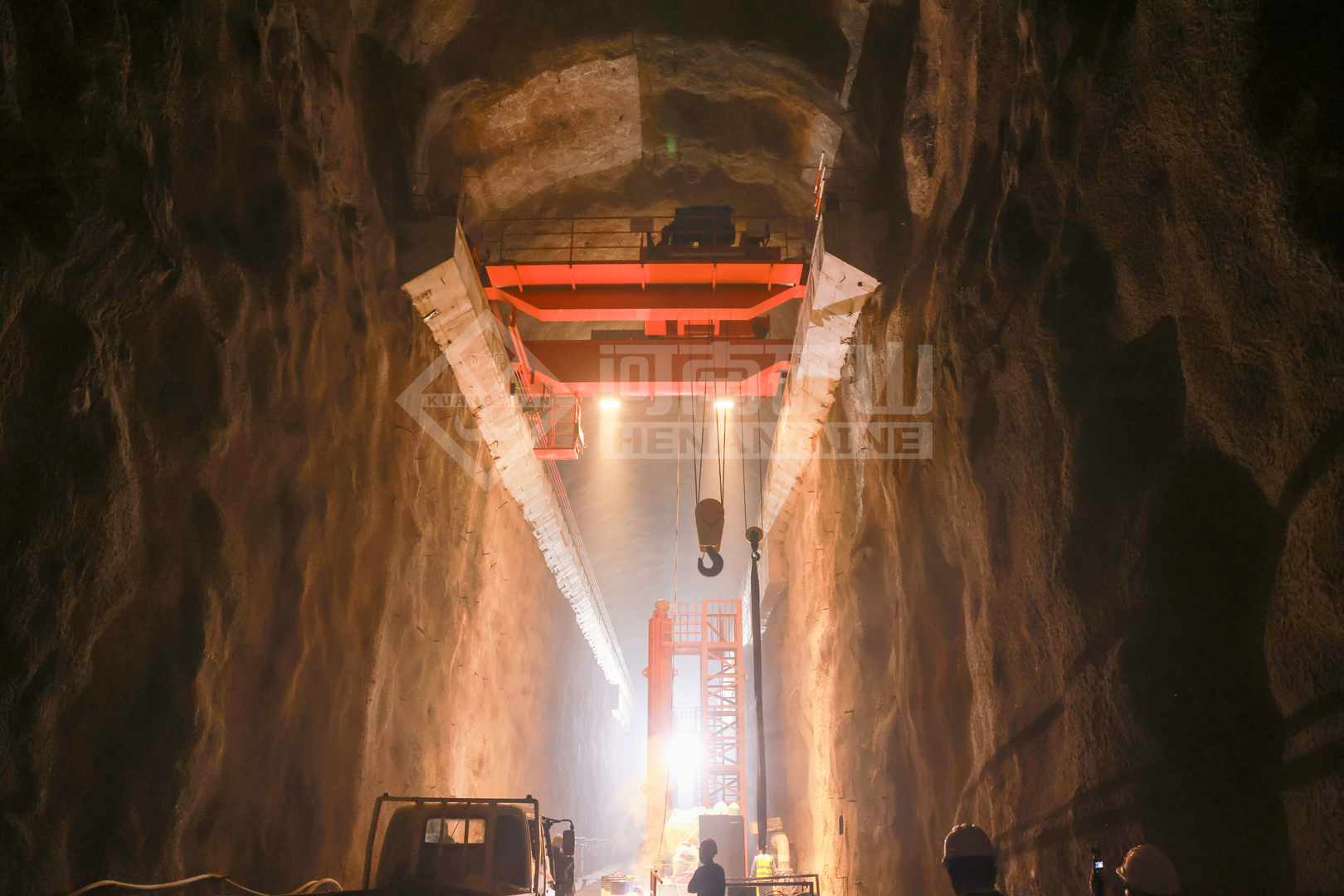
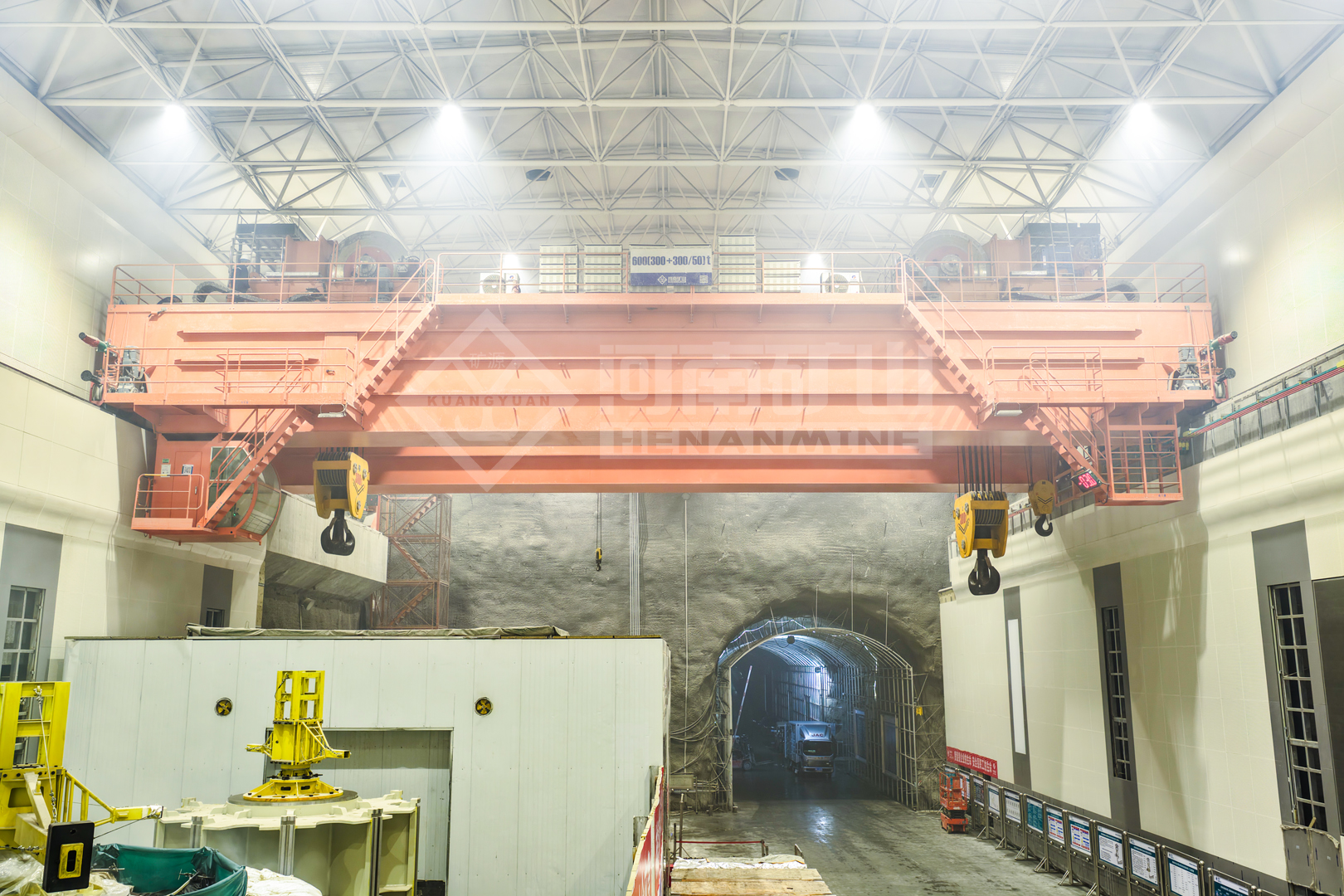
    Henan Mine Crane supplied several crane types for a pumped storage power station project, including a 600 t overhead crane with a low-headroom structural arrangement.

    Heavy-duty overhead crane inside a power station hall
    Heavy-duty overhead crane inside a power station hall.

    Heavy lifting within a restricted envelope

    The 600 t crane uses variable-frequency control, coordinated double-hook lifting, sway control and digital monitoring. The low-headroom arrangement addresses the space available around the lifting equipment.

    Agree equipment interfaces and acceptance checks

    For a power station crane, specify the component weights, lifting points, hook spacing, required lift path and available clearances. Factory assembly checks, site testing and the handover documents should be agreed within the project scope.

    Review a power station lifting requirement

    Share the maximum load, equipment dimensions, installation sequence and powerhouse drawing for a technical review.

  • More Than 100 Cranes Serve a Southeast Asian Steel Plant

    More Than 100 Cranes Serve a Southeast Asian Steel Plant

    Project Deliveries

    More Than 100 Cranes Serve a Southeast Asian Steel Plant

    More than 100 Henan Mine Crane units have been applied at a large steel plant in Southeast Asia, covering production, material transfer and scrap handling.

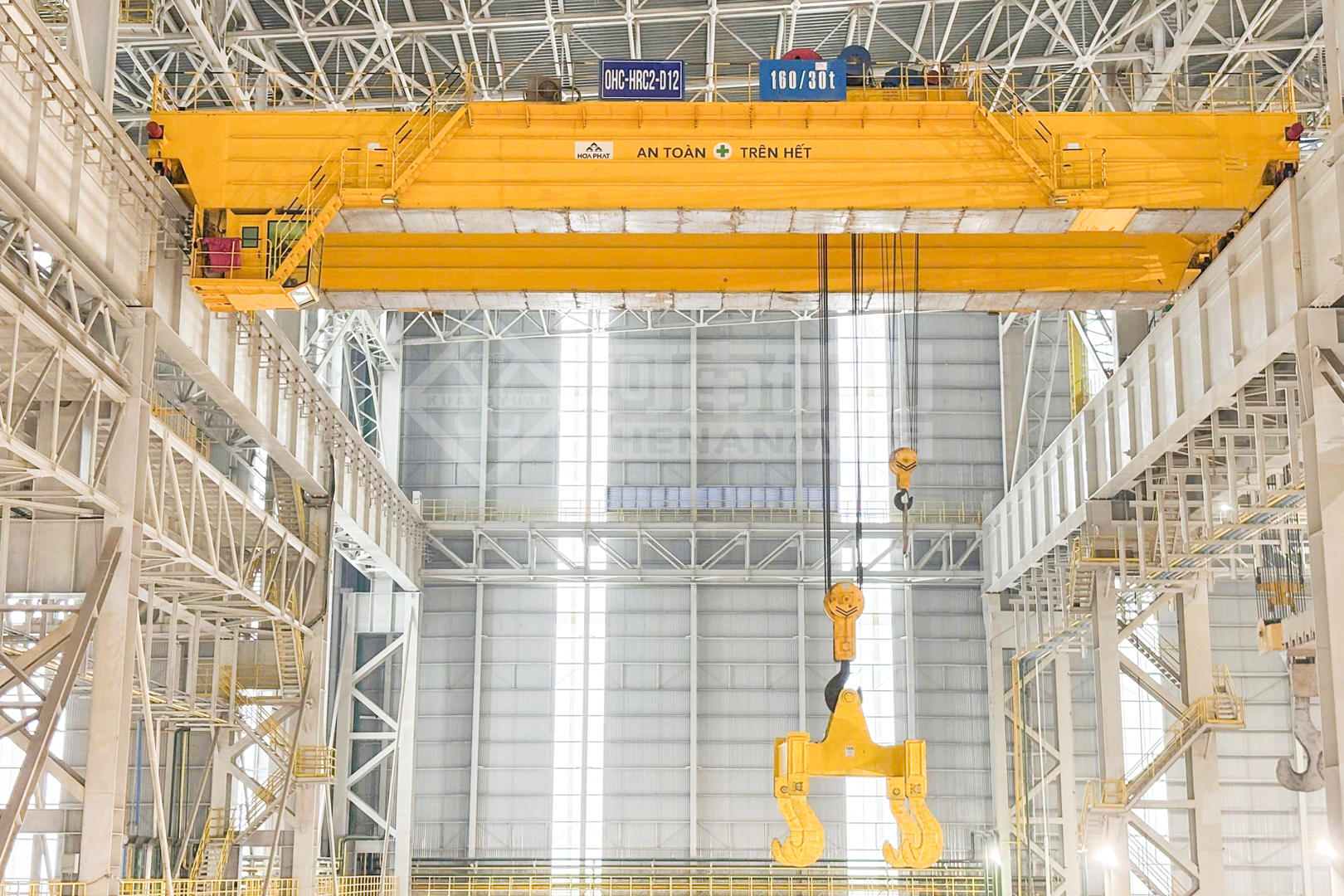
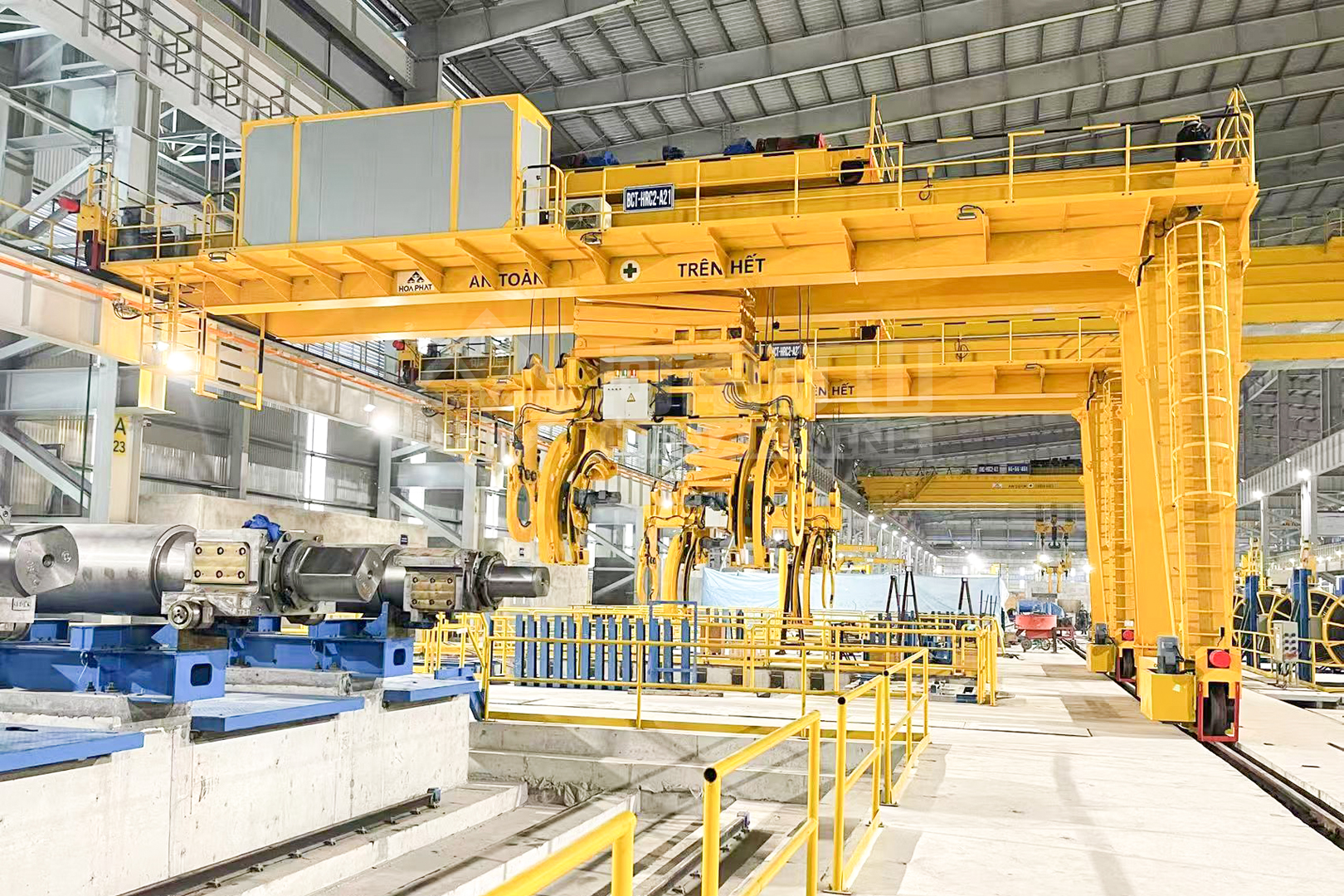
    Overhead crane and slab lifting attachment in a steel plant building
    Overhead crane and slab lifting attachment in a steel plant building.

    Different cranes for different steel plant duties

    The supply includes 160 t double-girder overhead cranes, slab-tong cranes and lower-rotating electromagnetic beam cranes. Double-girder, double-trolley gantry cranes serve the project’s port scrap yard.

    Build a crane schedule around the process

    The equipment count is distinct from each crane’s rated capacity. For a comparable steel plant, list the load and lifting attachment required in each process area, the expected working cycle, environmental conditions and interfaces with production and yard operations.

    Prepare your steel plant crane schedule

    Send the workshop and yard layouts, material types, load schedule and operating cycles so the equipment configuration can be reviewed.

  • Gantry Crane Ownership: Inspection, Access and Maintenance Planning

    Gantry Crane Ownership: Inspection, Access and Maintenance Planning

    Technical guide

    Gantry Crane Ownership: Inspection, Access and Maintenance Planning

    A purchase specification should allow the crane to be inspected and maintained throughout its service. Review the documentation, access provisions, component condition checks and responsibilities required for the proposed operating environment.

    Henan Mine CraneTechnical guide · Updated 2026Crane selection, project scope and operating requirements
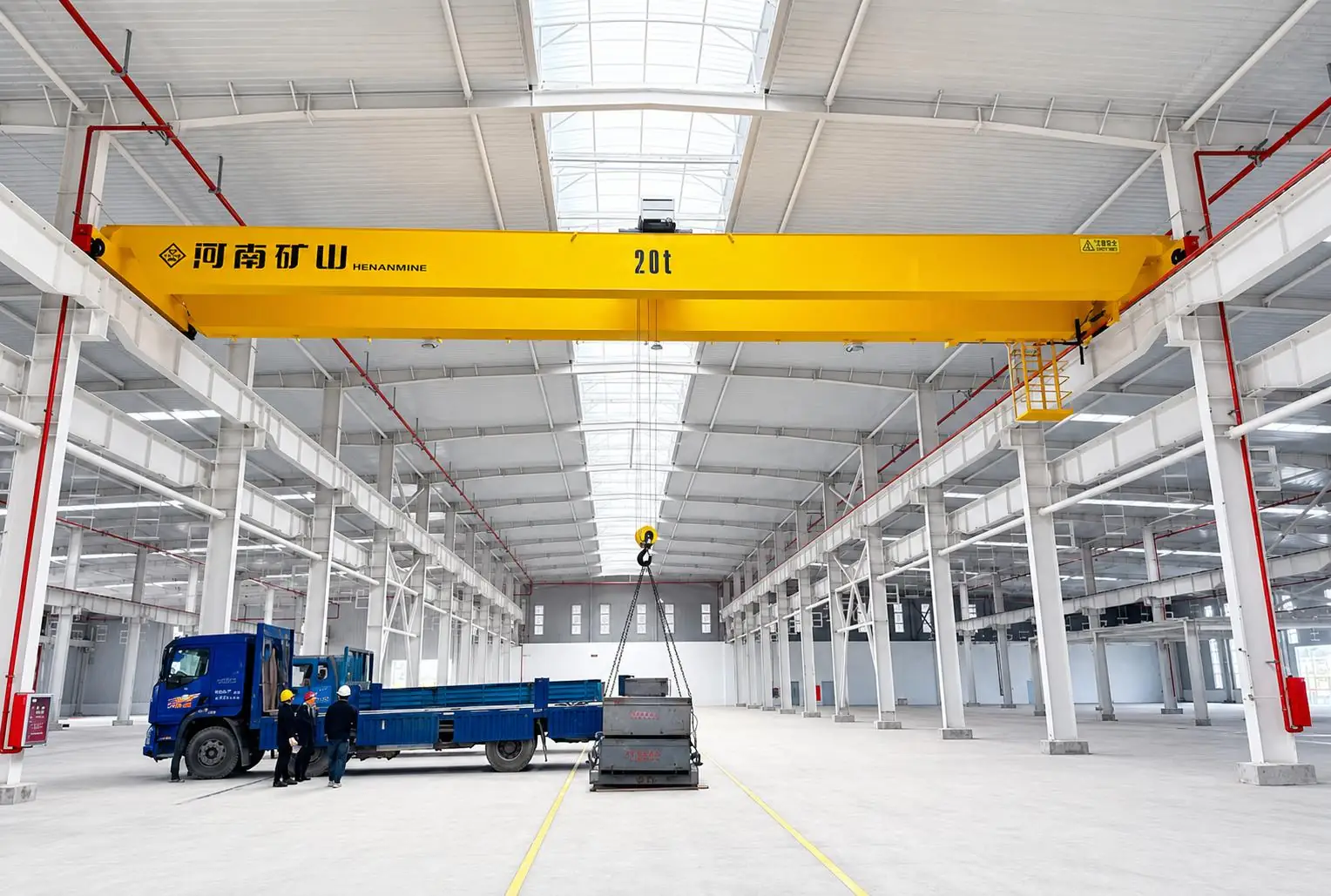
    Henan Mine Crane overhead crane inside a workshop bay
    Henan Mine Crane overhead crane inside a workshop bay
    Project planning notes

    Key points for this crane project.

    1. What Is A Gantry Crane?
    2. Common Types Of Gantry Cranes
    3. Where Are Gantry Cranes Used?
    Read the technical guide

    What Is A Gantry Crane?

    Definition and basic concept

    Henan Mine Crane Gantry crane is a kind of large crane equipment with supporting legs and independent landing operation, which belongs to the core category of bridge crane. The main structure consists of bridge girder, supporting legs on both sides, travel mechanism, lifting mechanism and electric control system. The whole structure is a door-shaped frame structure. It can directly complete heavy lifting, material translation and span operation under the support of ground track or rubber tire without relying on building carriers such as factory roof and wall.

    Compared with traditional lifting equipment, gantry crane is extremely adaptable and compatible with various complex working conditions such as indoor workshops, open storage yards, port terminals, steel plant areas, etc. It is the core equipment for industrial heavy load handling, heavy lifting and batch material transfer. It is widely used in heavy industry production and infrastructure scenarios.

    How gantry cranes work

    The core work logic of gantry crane is three-dimensional cooperative operation, which completes the complete lifting process through multi-mechanism linkage. Firstly, the vertical lifting of heavy objects is completed by the wire rope and hook assembly of the lifting mechanism, and the lifting height and landing speed are accurately controlled. Then the trolley operating mechanism drives the lifting device to move horizontally along the main girder to realize left and right alignment of materials. Finally, the travel mechanism of the whole machine drives the portal frame to move longitudinally along the ground track or tire track for a long distance to complete the large-scale material transfer.

    The whole set of operation process is uniformly regulated by the electrical control system, which can realize manual control, remote control and automatic program control modes. Each mechanism is stable and accurate in coordination, which can effectively avoid the problems of material deviation and hoisting deviation, ensure the continuity and stability of heavy load operation, and meet the requirements of high-frequency and high-intensity industrial operation.

    Common Types Of Gantry Cranes

    Single girder gantry crane

    Single-beam gantry crane is the mainstream crane type with lightweight and high cost performance in industrial field. It adopts simple structure of single main girder with bilateral support legs, and its overall weight is light, installation and debugging are convenient, and the overall cost is economical. It is the preferred equipment for lightweight lifting operations in small and medium-sized enterprises.

    Semi gantry crane

    Semi-gantry crane adopts unique semi-dependent and semi-autonomous hybrid structure, one side of the landing leg walks independently along the ground track, and the other side relies on the fixed support of the workshop column or wall track, which combines the dual advantages of space-saving gantry crane and independent operation of gantry crane. The equipment occupies a very small area, the space utilization rate is extremely high, the installation and commissioning are simple and flexible, and it is specially adapted to the working conditions with limited space. It is mainly used in semi-open areas such as the edge of the plant and the entrance of the workshop, and efficiently solves the problem of small and medium-sized material transfer at the indoor and outdoor connection positions.

    Rubber tyred gantry crane (RTG)

    Tire gantry crane (RTG) abandons the traditional fixed track design, adopts wear-resistant solid rubber tires as the core component of the traveling mechanism, does not need complicated track laying and infrastructure transformation, can freely turn, flexible transition, site adaptability is very strong. It can stably operate on hardened pavement, open storage yard, flat open space and other sites, perfectly adapt to temporary construction and multi-site rotation operation scenarios, widely used in site lifting, bulk cargo transfer, municipal engineering and small port cargo stacking, and is the preferred model for industrial mobile lifting operations.

    Rail mounted gantry crane (RMG)

    Rail-mounted gantry crane (RMG) belongs to fixed heavy industrial lifting equipment, relying on special heavy rail track standard operation, with stable operation, accurate positioning, high load limit, strong structural stability and many other advantages, can support all-weather long-term, high-frequency, standardized continuous heavy load operations. The equipment has low operation noise, small mechanical wear, low failure rate, convenient operation and maintenance, and is highly suitable for large-scale industrial production scenarios. It is widely used in large-scale port container stacking, steel mill raw material transfer, large-scale logistics park and standardized heavy industrial plant area. It is the core equipment for large-scale heavy-duty large-scale operation.

    Where Are Gantry Cranes Used?

    Manufacturing plants and workshops

    In all kinds of industrial manufacturing plants and production workshops, gantry cranes are the core heavy-duty equipment for material flow, equipment assembly and finished product transfer of production lines, adapting to all kinds of industrial processing scenarios. Light single-beam and semi-portal models are suitable for small and medium-sized machining, hardware manufacturing and equipment assembly workshops to efficiently complete the lifting and transfer of raw materials and finished products; heavy double-beam models are specially designed for heavy equipment and steel structure manufacturing enterprises to accurately lift large components and heavy equipment, effectively improving the automation degree of workshop production and overall operation efficiency.

    Warehouses and logistics centers

    Large storage bases and logistics transfer centers have dense cargo, high circulation frequency and large operation load. Gantry cranes are key equipment to improve storage operation efficiency, which can quickly complete the loading and unloading, stacking and cross-regional transfer of containers, heavy pallet goods and bulk materials. Among them, RTG and RMG special models are adapted to standardized logistics storage yards, which can scientifically utilize storage space, organize cargo stacking, completely replace inefficient manual handling mode, significantly improve logistics turnover speed, and effectively reduce enterprise storage manpower and time operation costs.

    Shipyards and ports

    Port and shipbuilding plant is the core application scenario of heavy gantry crane, which has been exposed to sea wind erosion and humid outdoor conditions for a long time. Large double-beam gantry crane and RMG rail gantry crane have the characteristics of super heavy load, corrosion resistance, wind resistance and wear resistance, and can operate continuously and stably 24 hours a day. They mainly undertake heavy load tasks such as ship segment component lifting, hull assembly, port container loading and unloading, bulk cargo transfer, etc. They are the core infrastructure supporting the operation of port shipping and shipbuilding industry.

    Steel plants and heavy industries

    Steel works, metallurgy and various heavy industry production scenarios have harsh working conditions and large loads, which have extremely high standards for the stability, safety and durability of lifting equipment. Gantry crane with high temperature resistance, dust resistance, heavy load impact resistance, wear resistance excellent performance, can stably complete the lifting, transfer and stacking of steel coils, profiles, heavy castings, metallurgical equipment, can adapt to high temperature, high dust harsh plant environment, continue to ensure continuous uninterrupted stable operation of heavy production line, reduce equipment failure shutdown probability.

    Gantry Crane Safety Guide

    Henan Mine Crane Gantry crane overseas operation strictly follows the global mainstream lifting equipment safety standard system, covering the United States OSHA, EU EN and international ISO and other authoritative specifications, comprehensively avoid all kinds of overseas lifting operation safety risks, effectively meet the equipment access conditions in Europe and the United States, and adapt to the normalization and standardization of overseas engineering projects.

    Common safety risks during crane operation

    Gantry crane operation conditions are complex, outdoor, heavy load, high frequency operation scenarios are prone to various safety hazards, the core risks are concentrated in four categories:

    1. Overload operation risk: The actual lifting weight exceeds the rated load of the equipment, which will lead to deformation of the main girder, breakage of the wire rope, deformation of the supporting leg, and serious accidents such as equipment collapse and heavy falling. It is the most common and dangerous illegal operation.
    2. Risk of load swing: too fast start and stop of equipment, uneven movement speed, deviation of lifting center of gravity and excessive outdoor wind force will cause heavy objects to shake greatly, which is easy to cause material collision, personnel injury and lifting deviation, resulting in damage to equipment and site.
    3. Mechanical failure risk: wire rope wear and fracture, brake failure, gear box jam, wheel failure, line aging and other equipment problems, will lead to takeoff and landing out of control, travel failure, brake failure, resulting in sudden safety accidents.
    4. Risk of improper operation of personnel: operators take up posts without certificates, operate illegally, lack of operation proficiency, lack of concentration of operation attention, and fail to investigate hidden dangers on site in a standardized manner, which are the core causes of man-made safety accidents.

    Essential gantry crane safety devices

    1. Overload protection system: strictly comply with OSHA and ISO lifting safety standards, can accurately monitor the lifting load data of gantry crane in real time 24 hours. Once it is detected that the weight of heavy objects exceeds the rated load of equipment, the system will immediately trigger acousto-optic alarm, synchronously cut off the lifting power supply, lock the lifting action, completely prohibit overload operation, and eliminate major safety risks such as structural deformation, wire rope fracture and equipment overturning caused by overload from the source.
    2. The equipment body and operation terminal are equipped with one-button emergency stop button. In case of sudden hidden dangers such as mechanical failure, personnel intrusion, heavy object shaking out of control, etc. during operation, all power supplies can be cut off instantly, so that the equipment can be shut down immediately and locked, and dangerous working conditions can be quickly blocked, so as to effectively avoid accident expansion and ensure the safety of equipment and on-site personnel.
    3. Limit switches: international general safety configuration, including lifting height limit, operating stroke limit, operating range limit three core devices. It can accurately limit the maximum operating range of gantry cranes, monitor the running stroke of equipment in real time, and automatically shut down once it is close to the limit position, so as to eliminate problems such as over-travel operation, component collision, structural pulling deformation, etc., and comprehensively protect the structural safety of equipment.
    4. Anti-collision devices: equipped with high-precision infrared and radar dual sensing system, suitable for various indoor and outdoor operation scenarios. It can intelligently identify obstacles, operators and peripheral equipment within the operation range all day long. When collision risk is detected, the system will automatically slow down and warn, and force shutdown in case of emergency, effectively avoiding safety accidents such as mechanical collision, equipment damage and personnel injury.
    5. The whole system includes wind speed detector, rail clamp and windproof anchoring device, which can monitor the environmental wind speed in real time, automatically send out early warning and lock the travel mechanism in windy weather, fix the position of the whole machine, effectively prevent the equipment from being blown by strong wind, sliding and overturning, and adapt to complex outdoor weather conditions.

    Gantry Crane Inspection Checklist

    The graded daily, monthly and annual inspection system can accurately identify potential faults, improve equipment operation reliability and avoid sudden downtime and safety accidents.

    Daily inspection before operation

    Basic inspection must be done before starting up every day, all-round investigation of hidden dangers in real-time operation, core inspection items:

    • Hook and wire rope condition: Carefully check the overall state of the hook every day to ensure that there are no defects such as deformation, cracks, severe wear, etc., and the hook anti-drop spring and buckle device are complete and effective. At the same time, check that the wire rope is free from broken wire, broken strand, corrosion and extrusion deformation, keep the rope body lubricated sufficiently and arranged orderly, prevent rope clamping damage, and avoid potential lifting and falling hazards from the source.
    • Brake and limit switch testing: During the no-load test run of equipment, it is necessary to comprehensively detect the working state of the brake to ensure that the brake response is sensitive, the engagement is stable, and there is no slip, jamming or abnormal noise. At the same time, check the high and low limit switches and travel limit switches one by one to ensure accurate triggering, timely shutdown due to power failure, no failure delay, and eliminate the risk of over-travel operation.
    • Electrical system inspection: daily comprehensive inspection of the appearance of the electric control cabinet, operating handle, external cable, to eliminate cable damage, aging, leakage and other safety hazards. Confirm that the indicator lamp, display screen and various sensing elements of the equipment operate normally, and all wiring terminals are firmly connected without looseness, so as to ensure the stable and safe operation of the electrical system.
    • Structural component checks: check the core structures such as main girder, supporting leg and key weld through visual inspection to ensure no damage such as cracking, deformation, unwelding and corrosion. Carefully check the fastening state of all kinds of fixing bolts and connecting parts, and ensure that there is no loosening and falling off, so as to ensure that the whole machine structure is stable, and there is no abnormal shaking and deviation during operation.

    Monthly inspection items

    Carry out in-depth special inspection every month to investigate hidden faults and ensure long-term stable operation of equipment:

    • Wheels and travel mechanism: monthly inspection shall carefully check the wear state of travel wheels to ensure uniform wear without partial wear, crack, jamming and other damage problems. Comprehensively detect the operating conditions of the traveling transmission mechanism to ensure that the whole machine runs smoothly without abnormal noise and jitter, the wheels and rails fit closely and smoothly, and the traveling system operates stably for a long time.
    • Motors and gearboxes: Regularly detect the operating conditions of the motor, check whether the operating temperature and working noise of the equipment are within the standard range, and eliminate abnormal heating, abnormal noise and other hidden dangers. At the same time, check that the lubricating oil level of the gearbox is sufficient, the oil quality is clean, and there is no leakage, dryness and blocking problem, so as to ensure the efficient operation of the transmission system.
    • Control systems: monthly comprehensive commissioning of the whole machine electronic control system, check the control gear accuracy, sensitive response, no operation delay, failure, jamming and other problems. Simultaneously check the status of equipment operating procedures to ensure that automated control and manual control functions are stable and normal, and ensure the safe and compliant operation of the equipment control system.
    • Safety devices: Check the complete set of safety devices of gantry crane item by item, including overload protection, emergency stop, limit switch, collision prevention and wind protection equipment. Comprehensively check the sensitivity and operation status of the device, repair hidden dangers in time, ensure that all safety components function in good condition, trigger accurately, and meet overseas safety operation standards.

    Annual inspection and load testing

    • Structural integrity assessment: annual inspection needs to comprehensively check the structural strength of gantry crane girder, outrigger and overall frame, focusing on metal fatigue, structural deformation and hidden damage caused by long-term heavy load operation. Evaluate the structural stability and load-bearing performance of the whole machine through professional testing means, investigate structural hidden dangers in advance, and avoid major safety problems such as equipment deformation and collapse caused by long-term strain.
    • Welding and connection inspection: All key welds, bolts, pin shafts and various connection accessories of the equipment shall be inspected comprehensively every year, and hidden dangers such as weld cracking, desoldering, metal corrosion, bolt loosening and accessory wear shall be carefully investigated.
    • Load performance testing: carry out rated load and overload simulation test in strict accordance with OSHA and ISO industry standards, and comprehensively inspect the core performance of equipment such as vertical takeoff and landing, lateral travel, brake locking, etc. Accurately verify the rated load of the equipment, the operation positioning accuracy and the operation status of the complete set of safety protection devices to ensure that the load performance of the whole machine meets the standard and can be put into operation safely and in compliance.

    Inspection record documentation: annual inspection shall record all inspection data, load test results and hidden danger rectification details, and establish standardized equipment electronic and paper inspection files.

    Gantry Crane Maintenance Guide

    Scientific full-cycle maintenance system can greatly reduce equipment failure rate, prolong equipment service life, reduce enterprise equipment replacement and maintenance costs, and ensure long-term efficient, safe and stable operation of equipment.

    Preventive maintenance practices

    Preventive maintenance is the core of equipment operation and maintenance, with the core principles of early protection, early investigation and early replacement to avoid failures. Regularly maintain the moving parts, transmission parts and electrical parts of the equipment, fill lubricating grease on time, replace worn parts and monitor operating parameters. Regularly monitor equipment operation noise, temperature, energy consumption, operation status, timely discover abnormal hidden dangers, achieve early detection and early treatment of faults, and prevent small faults from evolving into major equipment problems.

    Mechanical maintenance

    Mechanical maintenance is mainly aimed at the normal maintenance of high-loss core parts of portal cranes. It is necessary to regularly clean wire rope dirt, add special lubricating grease, check wire breakage and corrosion hazards, and simultaneously detect the wear deformation of hooks and the effectiveness of anti-drop devices. At the same time, timely clean up wheel and bearing sundries, regularly supplement grease maintenance and correct wheel alignment accuracy, check gear box oil level and oil quality, change oil on time, adjust brake clearance and brake pad state, and comprehensively ensure stable operation of mechanical structure and sensitive braking.

    Electrical maintenance

    Gantry crane electrical system maintenance focus on accurate control, power safety and stable operation, daily cleaning of motor dust, detection of insulation performance and operating temperature, fastening terminals to avoid motor failure. At the same time, comprehensively check the cable circuit and electric control cabinet, clean up the dust accumulation, check the aging damage and poor contact hidden danger of the circuit, eliminate the leakage short circuit problem, calibrate the sensor and various safety devices regularly, and ensure the sensitive and stable operation of the electrical and safety system.

    Henan Mine Crane

    As the core equipment of industrial heavy load operation, gantry crane's selection adaptability, equipment quality, safety performance and maintenance system directly determine the production efficiency, operation safety and long-term operation cost of enterprises. Different working conditions, load requirements, site conditions, corresponding to different types of gantry cranes, only matching the exclusive design scheme, can maximize the performance of the equipment, avoid equipment idle, overload loss, safety hazards and other problems.

    Henan Mine Crane Factory professional crane manufacturers cannot only provide standardized high-quality gantry crane equipment, but also rely on rich industry experience to provide personalized customization, working condition adaptation, safety optimization, full-cycle maintenance one-stop solutions for enterprises. From equipment structure design, parameter customization, intelligent upgrading, installation and debugging, operation training, regular inspection and fault repair, all-round guarantee of equipment safety, stability and efficient operation, and adaptation to manufacturing, port, construction, logistics, heavy industry and other industrial scenarios.

    Discuss the crane arrangement for your project.

    A purchase specification should allow the crane to be inspected and maintained throughout its service. Review the documentation, access provisions, component condition checks and responsibilities required for the proposed operating environment. Share the load, available drawings, working cycle and site conditions with Henan Mine Crane so the required configuration and supply boundary can be discussed.

    Related crane configurations

    Explore crane product families and technical parameters ↗

    Updated 2026 · Henan Mine Crane

  • Modular Frequency Conversion Wind Crane | High Precision Lifting Solution for Wind Industry

    Modular Frequency Conversion Wind Crane | High Precision Lifting Solution for Wind Industry

    Project review

    Modular Frequency Conversion Wind Crane | High Precision Lifting Solution for Wind Industry

    Explore the wind industry variable-frequency cranes. Review the handling task, load geometry, working duty and equipment interfaces for your application.

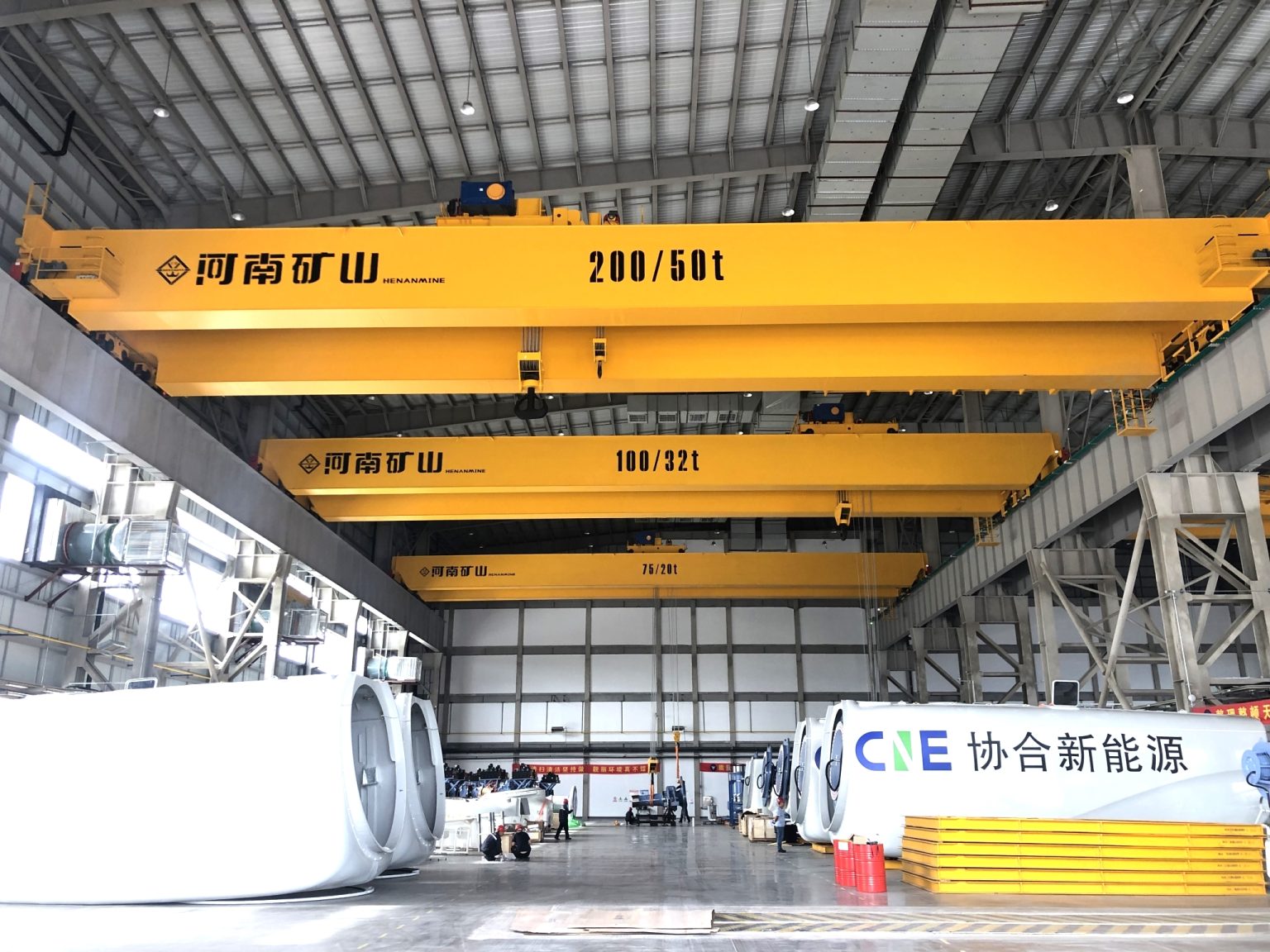
    Modular Frequency Conversion Wind Crane | High Precision Lifting Solution for Wind Industry — Henan Mine Crane crane application photograph
    Modular Frequency Conversion Wind Crane | High Precision Lifting Solution for Wind Industry — crane application overview.

    Energy and materials production

    Specify the product or component geometry, process exposure, lifting attachment, handling frequency, working environment and any clean, corrosive or classified-area requirements.

    Crane configuration and interfaces

    Ask for the applicable equipment configuration, area classification where relevant, mechanical and electrical interfaces, inspection access and a site-specific test plan.

    Review the Overhead crane range and Energy & new materials cranes before defining the project-specific arrangement.

    Design the lifting process

    Use the project context above as a starting point. The following checks turn a crane application into a technical scope that suppliers can price and demonstrate for your site.

    Separate assembly and maintenance lifts

    List the generator, rotor, transformer or other components by mass, geometry and lifting points. A crane serving initial construction may have a very different duty cycle from one retained for long-term maintenance. Confirm the highest lift, hook approach, overlap with plant equipment and the space needed to turn or set down a component. For paired hooks or tandem lifts, provide the load-sharing and control requirements as part of the lifting study.

    Power and building interfaces

    Show the power hall, workshop or outdoor layout and the proposed crane runway. Building reactions, access platforms, installation openings and the temporary route for shipping crane components should be coordinated early. Outdoor applications require site-specific wind, temperature and corrosion inputs. If the plant has safety-classified equipment or restricted access, state the applicable procurement and documentation requirements rather than assuming a conventional industrial package is acceptable.

    Test scope and lifecycle support

    Compare general arrangement, hook duties, wheel loads, duty assumptions, electrical supply, control mode and inspection access across offers. Define a site acceptance sequence using the major maintenance components and agreed lifting fixtures. Check emergency stops, limits, brakes and the available safe-set-down position. Identify the supply boundary for rails, conductors, civil work, commissioning, training and spare parts, so an apparently low equipment price is not compared with a complete installed scope.

    Compare the proposed crane scope

    DecisionInformation to request
    Crane and lifting attachmentRated loads, load cases, hook coverage and the complete suspended-load calculation.
    Site interfacesRunway loads, rail or building drawings, electrical supply and installation responsibilities.
    Controls and protectionOperating sequence, required safety functions and a method for testing each function.
    Commercial scopeEquipment, transport, installation, commissioning, documentation, training and spare parts as separate line items.

    From technical offer to site acceptance

    Technical submittals

    A usable bid should show a general arrangement and a clear list of assumptions, not just a model name and capacity. Request the load schedule used in design, lifting-attachment drawings where applicable, span and hook-approach dimensions, wheel loads, electrical supply, control narrative and maintenance access. Check every drawing against the actual building or yard layout. Identify the standards and local approval requirements for the destination market in the enquiry, then confirm the bidder’s proposed design and documentation scope in writing.

    Installation and tests

    Agree when the runway or civil works will be ready, how crane components can reach the installation position and who provides lifting equipment for erection. Define the factory test, on-site installation inspection and site acceptance as separate milestones. The acceptance procedure should list representative loads, the travel route, protection devices, emergency stop and any automation or attachment functions included in the order. Record who supplies test weights, operators, power and access equipment; otherwise a nominal commissioning price may omit essential site work.

    Commercial comparison

    Ask for the same delivery basis and currency across proposals. Separate the crane, special lifting appliances, rails or conductors, transport, installation support, commissioning, training and initial spare parts. Lead time should identify the starting event, such as approved drawings or an effective contract, and any dependency on site readiness. Compare warranty scope and service response by the written contract terms. If a key input is still unknown, request a priced option or a stated assumption instead of allowing different bidders to silently use different specifications. Keep a written exception register so the engineering team can resolve open dimensions, process interfaces and responsibility boundaries before issuing the purchase order.

    Information to include in the enquiry

    • Load weights, dimensions, centre of gravity and lifting attachments.
    • Span, lifting height, runway or yard drawings, travel coverage and clearances.
    • Operating cycle, working environment, electrical supply and control requirements.
    • Supply boundaries, inspection documents, installation support and acceptance criteria.

    Discuss a comparable lifting task

    Send the handling task and available site drawings. Henan Mine Crane can define a proposed crane arrangement and identify the remaining information needed for a technical and commercial review.

  • Overhead Crane Quotation Inputs: Drawings, Duty and Unresolved Details

    Overhead Crane Quotation Inputs: Drawings, Duty and Unresolved Details

    Technical guide

    Overhead Crane Quotation Inputs: Drawings, Duty and Unresolved Details

    A drawing-led enquiry helps suppliers identify the same operating constraints. Separate confirmed dimensions from estimates and list the decisions still open, so the quotation can state its assumptions clearly.

    Henan Mine CraneTechnical guide · Updated 2026Crane selection, project scope and operating requirements
    overhead crane quote
    overhead crane quote
    Project planning notes

    Key points for this crane project.

    1. What Basic Information Is Required for an Overhead
    2. What Workshop Dimensions Should You Provide?
    3. How Do Operating Conditions Affect Overhead Crane
    Read the technical guide

    What Basic Information Is Required for an Overhead Crane Quote?

    The basic project information is the first-hand information of the manufacturer's preliminary judgment of the crane plan. If any item is missing, the quotation will have a large deviation.

    Lifting capacity

    The rated lifting weight is the primary parameter for the selection of Henan Mine Crane manufactured bridge cranes. It is necessary to clarify the maximum carrying weight of the equipment and strictly distinguish between the rated load and the weight of the workpiece being hoisted daily in the workshop. Be sure to confirm the weight of the conventional workpiece and indicate whether there is a need for intermittent heavy-duty lifting. You also need to confirm in advance whether you need a double-hanging point structure of the main and auxiliary hooks. In high-capacity operation scenarios, the combination of the main and auxiliary hooks will directly change the structure design and production cost of the whole machine.

    Crane type

    Bridge cranes are divided into different categories such as single-girder bridge cranes, double-girder bridge cranes, European-style bridge cranes, and explosion-proof bridge cranes. There are obvious gaps between different models in terms of structural weight, carrying capacity, top space occupation, and cost. You need to clarify the direction of project selection, whether it is a general single-beam crane for workshops or a double-beam bridge crane for heavy-duty operations. Whether you need a low-headroom hoist, or special models such as metallurgical and explosion-proof. Once the crane type selection judgment is wrong, the subsequent complete design plan and supporting parts selection will fail, resulting in the quotation completely losing its reference significance, and the project communication cycle will be prolonged.

    Project location

    The location of the project will directly determine the transportation plan, on-site installation conditions, and local special equipment acceptance specifications. Overseas projects also need to confirm the location of the destination port and inland road transportation conditions, so as to facilitate manufacturers to calculate freight and export packaging plans, and simultaneously match local voltage levels and safety regulations to prevent equipment from being unable to meet local market access requirements after production is completed. Providing the project location in advance can also evaluate the feasibility and related costs of after-sales on-site service.

    Installation or replacement

    At the inquiry stage, it is necessary to distinguish whether the project is the installation of brand new equipment or the demolition and replacement of the old crane. For new plant projects, the plant structure and track foundation can be planned and designed simultaneously with the crane, making the construction process smoother. For the replacement project of old equipment, it is necessary to fully consider the original cow legs, track load-bearing and on-site space constraints, and evaluate whether the old main girder and old electromechanical components need to be removed. The demolition of old equipment will generate additional labor and safety protection costs. The quotation range corresponding to the two project scenarios is very different, and the unclear information can easily cause the quotation to be missed.

    What Workshop Dimensions Should You Provide?

    The size parameters of the plant directly determine the overall design of the crane. It is the most likely information to be missed in the inquiry. It is recommended to give priority to the provision of plant drawings. When there are no drawings, the following data will be accurately measured.

    Building span and runway length

    The span of the plant refers to the distance between the centerline of the support of the legs on both sides, which is the effective span of the Henan Mine Crane manufactured bridge crane. The total length of the track represents the laying length of the running track of the cart, which determines the maximum travel distance of the cart. The larger the span of the main girder, the more steel plate materials are required, and the cost of the equipment body will increase. The total length of the track directly affects the purchase and consumption of track steel, sliding contact wires, and power supply cables. These two geometric parameters are the core basis for quotation accounting.

    Lifting height

    The lifting height is defined as the vertical distance from the lowest lifting position of the hook to the highest lifting position. Many customers are accustomed to directly using the total height of the plant to estimate, and often ignore the vertical space occupied by the gourd body itself. The higher the lifting height, the larger the dimensions of the wire rope reel and hoist mechanism, and the height of the whole machine will increase synchronously, and the production cost will also rise. If the estimation of this parameter is not accurate, after the delivery of the equipment is completed, there will be a problem that the hook cannot reach the lifting height required for production, and it needs to be reworked and retrofitted.

    Headroom and installation space

    The headroom height and installation space represent the remaining vertical space at the top of the plant that can be used to arrange the crane. For low-rise factory scenes, low-clearance gourds are preferred to minimize the top occupation of the equipment. If the top pipes, ventilation pipes, and bridges of the plant are dense, it is necessary to reserve space for equipment installation and later maintenance operations in advance. Once the on-site space is estimated to be insufficient, there will be situations where the selected model cannot be installed in the field, and high plant renovation costs will be required in the later stage. Providing on-site photos to match the measured dimensions can help engineers quickly judge the adaptability of the model.

    Runway and support structure

    Track and support structure information, including track model, track pressure plate, embedded parts, and plant leg load-bearing capacity. For the new plant project, the manufacturer can simultaneously complete the design of the rail steel structure. For the renovation project of the old factory building, the bearing capacity of the original concrete bull legs or steel structure columns must be verified to determine whether structural reinforcement treatment is required. When the carrying capacity of the leg of cattle is insufficient, even if all the indicators of the crane body meet the standards, the project cannot pass the acceptance of special equipment. Provide the original steel structure inspection report when inquiring, which allows the quotation to include the reinforcement project in the evaluation scope, avoiding hidden additions.

    How Do Operating Conditions Affect Overhead Crane Pricing?

    The working conditions are a key variable that cannot be ignored when inquiring.

    Duty class and frequency

    The working level and frequency of use of bridge cranes are divided into A1-A8 levels according to ISO standards, corresponding to different daily operating hours and the number of lifting cycles. A3 belongs to the light-load level, which is mostly used for equipment maintenance, and the number of daily hoisting is small. A5 is the most commonly used level in general workshops. A6 and A7 are high-frequency heavy-duty, suitable for continuous operation scenarios in prefabricated parts factories and steel workshops. The higher the level of work, the stronger the thickness of the main girder steel plate, the configuration standards of the reducer, motor, and brake system, and the higher the procurement cost. If the actual working level is underestimated, the equipment is prone to frequent failures after it is put into use, which greatly shortens the service life of the whole machine and brings higher long-term maintenance costs.

    Load type

    The types of lifting materials need to be distinguished from ordinary steel, molds, castings, or high-temperature metallurgical workpieces, flammable and explosive materials, and powdery corrosive materials. Ordinary workpieces only need to be equipped with standard hooks. High-temperature workpieces should be equipped with heat insulation protection and metallurgical special gourds. In the case of dangerous goods hoisting, the explosion-proof configuration of the whole machine is required. Different load types, raw material selection and safety protection schemes are completely different, which will directly affect the quotation of the whole machine. When inquiring, describe the shape, temperature, and chemical properties of the suspended object in detail so that manufacturers can choose matching parts to avoid budget waste caused by insufficient safety redundancy or excessive configuration.

    Operating environment

    The operating environment includes indoor and outdoor scenes, and at the same time confirm whether there are special conditions such as dust, moisture, corrosive gases, and high and low temperatures on the site. The dust workshop needs to improve the dust protection level of the motor. In the chemical corrosion environment, the whole machine should be anticorrosive sprayed, and stainless steel accessories should be selected. Cold-resistant lubricants and low-temperature-resistant electrical components must be replaced in low-temperature areas. Henan Mine Crane manufactured outdoor bridge cranes also need to be equipped with rainproof, sunscreen, and windproof anchoring devices. Such special environmental requirements will bring additional customization costs. If the inquiry stage is not stated, the later equipment transformation will generate a lot of additional expenses.

    Lifting and travel speeds

    The lifting and operating speed are divided into two schemes: fixed speed and frequency conversion speed regulation. Ordinary material handling workshops choose a fixed-speed plan, and the procurement cost is lower. In precision assembly and mold hoisting scenarios, frequency conversion and speed regulation are required to achieve smooth start and stop and reduce the impact of workpiece shaking. The frequency conversion system will increase the cost of the electronic control part, but it can reduce the impact and wear of the structure and extend the life of the equipment. When inquiring, it is necessary to clarify the lifting speed of the hook, the horizontal running speed of the trolley, and the vertical travel speed of the trolley.

    What Technical Specifications Should Be Confirmed Before Quotation?

    After the basic dimensions and working conditions are determined, it is necessary to confirm the core technical configuration of the crane. Different configurations have significant differences in equipment quality, quotation, and service life.

    Girder configuration

    The structure configuration of the main girder is divided into two types: single main girder and double main girder. The single beam has light weight and high cost performance, which is suitable for conventional lifting of small and medium tonnage. The double-beam structure has stronger rigidity and is suitable for working conditions with high-capacity, high working level and high lifting height. At the same time, it is necessary to confirm the main girder steel grade, welding process standards, surface rust removal and painting requirements, and export projects have higher standards for paint film thickness and anticorrosive grade. The main girder is the core load-bearing component of the bridge crane. The material and process standards are different, and the cost gap is obvious.

    Hoist and trolley

    The hoist and trolley mechanism are the core operating components of the bridge crane, which are divided into two categories: wire rope electric hoist and chain hoist. European-style gourds and domestic standard gourds differ in operating noise, maintenance cycle, and purchase price. The lifting trolley is divided into manual trolley and electric trolley. It is necessary to confirm the driving form of the trolley and whether the core components are original brand parts or domestic accessories. The brand of the core parts directly affects the quotation of the whole machine and the later maintenance cost. Determining the configuration of the hoist and trolley during the inquiry can effectively avoid the inconsistent grade of the parts in the quotation, resulting in price comparison distortion.

    Power supply and controls

    The power supply method and the control system need to confirm the on-site power supply voltage and frequency, and the power supply form is selected from the sliding contact line power supply or the cable reel power supply. The operation mode can be selected from the handle, wireless remote control, and cab operation. Some automated production lines also require PLC linkage and remote operation monitoring functions. The selection of components and on-site wiring schemes corresponding to different electronic control schemes are different. Overseas projects must confirm the local voltage standard in advance to prevent the electronic control system of the equipment from being unable to adapt to the site. The cost changes caused by differences in electronic control schemes can easily be ignored by purchasing personnel when comparing quotations.

    Safety features

    The safety device is a necessary configuration for the Henan Mine Crane manufactured crane, and there are a number of optional upgrade configurations at the same time. The standard configuration generally includes an overload limiter, an upper and lower limit switch, a buffer, and a stroke limit. The upgraded configuration includes laser anti-collision, wire rope condition monitoring, brake protection, real-time load monitoring, and emergency shutdown system. The safety configuration list is different, and the final quotation will be significantly different. When purchasing personnel compare multiple quotations, they must check whether all the safety accessories are included one by one. Low-cost plans often delete safety accessories, and install them separately in the later stage, but the overall cost is higher, and there are still safety risks.

    What Additional Costs Should Be Included in an Overhead Crane Quote?

    Many customers compare prices only to compare the price of the crane host, ignoring the cost of supporting projects, and only when the project landed did they find that the budget was seriously overspent. A complete quotation should clearly state all supporting items.

    Runway and steelwork

    Track and steel structure engineering, including crane track, track pressure plate, embedded parts, beef leg reinforced steel structure and other supporting components. The basic quotation of many manufacturers only includes the crane body, and the track and supporting steel structure need to be accounted for separately. For new-build plant projects, the amount of steel structure engineering is large, which accounts for a relatively high part of the total project budget. When inquiring, it is necessary to confirm whether the quotation includes a full set of track materials, steel structure processing and reinforcement plans, and include this part of the cost in the budget evaluation to prevent the steel structure project from generating large additional expenditures after the host is determined.

    Installation and commissioning

    Installation and commissioning services cover on-site hoisting, equipment assembly, electrical wiring, no-load and load testing, and commissioning of the whole machine. Overseas projects can choose factory technicians to go to the site to guide the installation, or provide complete installation drawings for the local construction team to complete the operation. At the same time, confirm whether the quotation includes special equipment inspection materials and on-site acceptance services to avoid additional commissioning and inspection costs in the later stages of the project. The workload of installation and commissioning is greatly affected by on-site conditions. The scope of service can be clarified in advance so that the quotation can fully cover all the labor costs in the implementation phase of the project.

    Transportation and packaging

    Transportation and packaging costs, domestic projects are mainly road transportation. Export projects require fumigation, wooden box packaging, container loading, and short-distance port transshipment. The heavy-duty main girder is an ultra-long and over-limit cargo, which will result in additional over-limit transportation costs. The quotation of foreign trade orders needs to distinguish between FOB, CIF and other trade terms, clarify the packaging standards of equipment, and use moisture-proof fumigated wooden boxes for export equipment to prevent corrosion and damage during shipping. The corresponding costs vary greatly from different transportation distances, cargo sizes, and packaging grades. The delivery boundaries are locked at the inquiry stage to avoid transportation-related budget gaps.

    Warranty and after-sales support

    For warranty and after-sales support, it is necessary to confirm the warranty period of the bridge crane, the warranty scope of wearing parts, whether to provide remote technical support, and the supply cycle of spare parts. Strong manufacturers will provide long-term spare parts supply and remote fault diagnosis services. The warranty policies of different manufacturers are obviously different. The warranty period of some low-cost plans is short, and the price of spare parts for later maintenance is high. When calculating the full-cycle cost of the project, after-sales related costs must be taken into account. When inquiring, write the warranty period, after-sales response timeliness, and spare parts supply terms into the requirements to facilitate horizontal comparison of the comprehensive service value of different suppliers.

    What Mistakes Can Lead to an Inaccurate Overhead Crane Quote?

    Many procurement inquiries step on the pit. The root cause is not that the manufacturer's quotation is not accurate, but that there are omissions in the preliminary preparations. The following four types of high-frequency errors are recommended to avoid before the inquiry.

    Providing incomplete specifications

    The parameters are incomplete, only the tonnage is simply given, and key information such as span, lifting height, and working level is missing. Manufacturers can only estimate according to conventional standard models, and the reference value of the quotation obtained is very low. In the subsequent deepening of the design stage, once the parameters are changed, the price will be significantly increased, delaying the overall procurement cycle. It is recommended to organize a complete list of parameters, and attach factory drawings and on-site photos simultaneously to facilitate engineers to quickly evaluate working conditions and output accurate plans at once. Complete parameter information is the most basic prerequisite for obtaining a reliable quotation.

    Overlooking building conditions

    Ignore the original conditions of the plant, and only pay attention to the crane equipment itself when inquiring, and do not check the layout of the plant's legs, column load-bearing, and top pipeline. When the equipment production was completed and the entry was completed, it was discovered that the structure of the plant could not carry the crane load, and it needed to be reinforced and transformed, and the construction period and budget were both out of control. For the renovation project of the old factory building, the inspection of the building support structure must be completed in advance to obtain load-bearing data. Many project delays and budget overruns are due to ignoring the evaluation of the physical conditions of the plant in the early stage, and waiting until the equipment is manufactured to find that the structure does not meet the requirements for use.

    Comparing different supply scopes

    When comparing quotations from different manufacturers, the boundaries of the scope of supply were not carefully checked. A The manufacturer's quotation includes host + track + installation. B The manufacturer only reports the crane body, not the track, electronic control accessories and other accessories. If you directly compare the total price, it is easy to make a wrong judgment, choose a low-cost plan by mistake, and continue to add items in the future. The core of the price comparison work is to unify the supply boundaries and check the equipment, auxiliary materials, and service items in the list item by item. Only under the premise that the scope of supply is exactly the same, the price comparison is meaningful, so as to avoid falling into the trap of low-priced quotation.

    Ignoring additional costs

    Ignore all kinds of additional costs, only calculate the payment for crane equipment, and omit transportation, packaging, installation and commissioning, inspection, steel structure transformation and other costs. There was a budget gap in the mid-term of the project, and the safety configuration was forced to be reduced to reduce costs. After getting the quotation, it is recommended to split the mainframe, auxiliary materials, engineering, and service items one by one to see all hidden costs clearly. Many purchases only look at the unit price of the host, underestimating the expenditure on supporting projects, and only when the project is implemented do they find that the total budget is insufficient, and they are forced to adjust the plan, which affects the progress of project delivery.

    Henan Mine Crane

    Henan Mine Crane Factory can provide customized bridge crane solutions according to the hoisting needs of different industrial scenarios, covering single-beam, double-beam, European-style and explosion-proof types. Combining the lifting weight, span, lifting height, plant layout and actual operating conditions, the equipment configuration is reasonably determined.

    If you are planning to support the lifting equipment of the new plant, or preparing to replace or upgrade the existing bridge crane, you can provide specific lifting requirements, plant drawings and on-site photos to facilitate the engineering team to evaluate the actual working conditions, formulate a suitable equipment plan and provide a detailed quotation. Complete project information helps to clarify the technical configuration, compare the costs of different solutions, and reduce subsequent adjustments. Contact Henan Mine Crane Factory for customized bridge crane solutions and quotations that suit your project needs.

    Discuss the crane arrangement for your project.

    A drawing-led enquiry helps suppliers identify the same operating constraints. Separate confirmed dimensions from estimates and list the decisions still open, so the quotation can state its assumptions clearly. Share the load, available drawings, working cycle and site conditions with Henan Mine Crane so the required configuration and supply boundary can be discussed.

    Related crane configurations

    Single-Girder Bridge Crane

    View product parameters
    Lifting capacity: 1–20 tSpan: 7.5–31.5 mLifting height: 6, 9, 12, 18, 24 or 30 m; capacity-dependent

    Use an LDA single-girder bridge and electric hoist for general workshop material handling. Select the lifting capacity, runway geometry and hoist duty around the building and load.

    LH Electric Hoist Double Girder Crane

    View product parameters
    Lifting capacity: 3, 5, 10, 16, 20 tSpan: 10.5–31.5 mLifting height: 6, 9, 12 or 18 m

    Use an LH double-girder bridge with an electric-hoist trolley for workshop lifting, assembly and maintenance. Match the hoist arrangement to the suspended load, hook travel and available building space.

    Updated 2026 · Henan Mine Crane

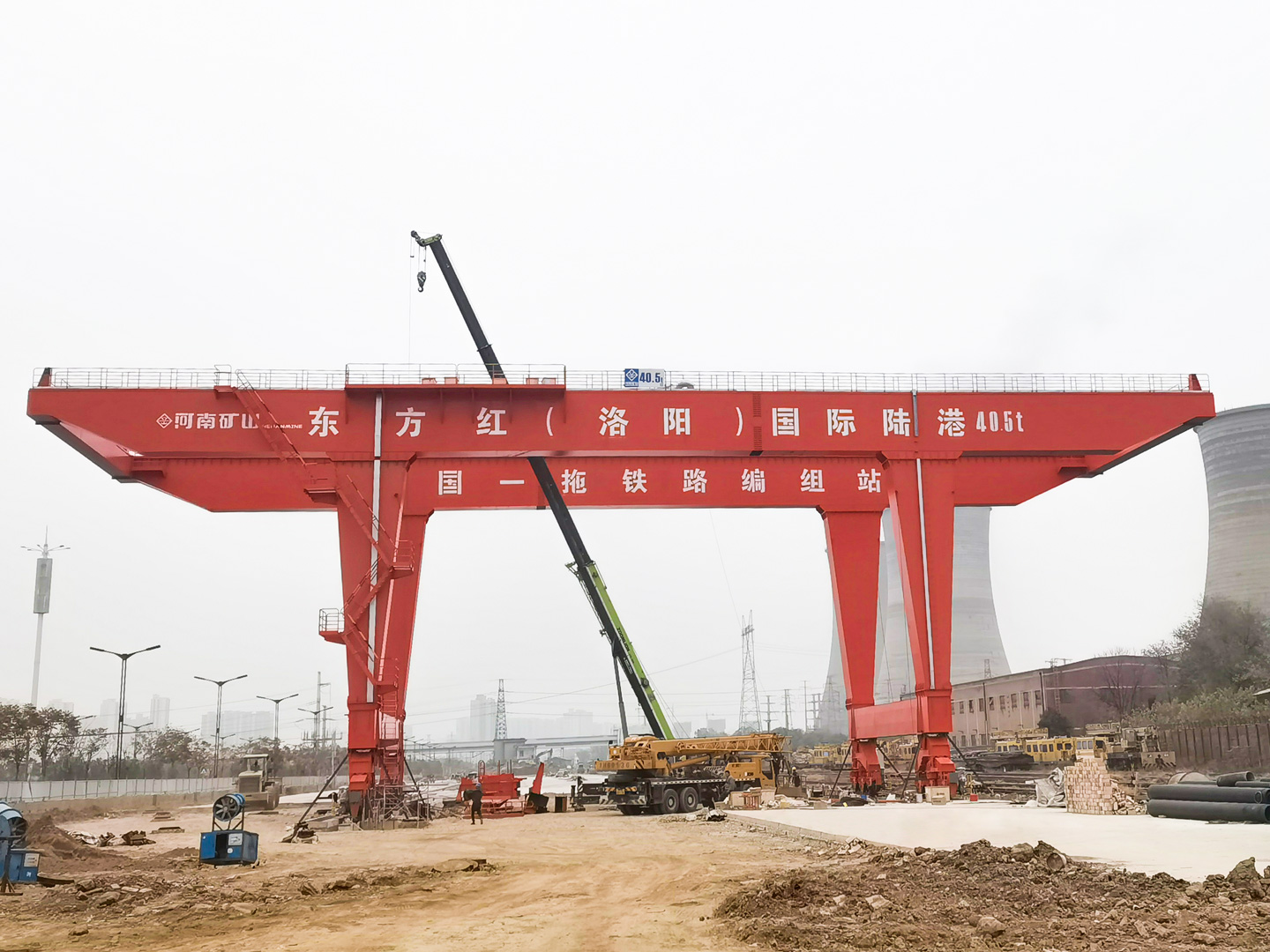
  • 40.5t Rail-mounted Container Gantry Crane|Helping YITO International Dry Port

    40.5t Rail-mounted Container Gantry Crane|Helping YITO International Dry Port

    Project review

    40.5t Rail-mounted Container Gantry Crane|Helping YITO International Dry Port

    Explore container gantry crane handling at Dongfanghong International Inland Port. Discuss container loads, rail geometry, spreader functions and working duty.

    40.5t Rail-mounted Container Gantry Crane|Helping YITO International Dry Port — Henan Mine Crane crane application photograph
    40.5t Rail-mounted Container Gantry Crane|Helping YITO International Dry Port — crane application overview.

    Project evidence

    • The Dongfanghong (Luoyang) International Inland Port account confirms a rail-mounted container gantry with variable-frequency control, PLC and anti-sway.

    Container and warehouse handling

    Map the load units, storage or yard lanes, stacking height, travel route, handling cycle, building or rail clearances and vehicle interfaces. Specify the operating wind, power and communication conditions where applicable.

    Crane configuration and interfaces

    Ask for a general arrangement, wheel loads, spreader or lifting attachment scope, travel and positioning controls, protection functions and commissioning tests for the declared handling sequence.

    Review the Rail-mounted container gantry cranes and Warehousing & logistics cranes before defining the project-specific arrangement.

    Design the lifting process

    Use the project context above as a starting point. The following checks turn a crane application into a technical scope that suppliers can price and demonstrate for your site.

    Yard operation and handling cycle

    Start with the container mix: 20-foot, 40-foot, high-cube and any non-standard units. State the maximum gross mass of a container and whether the quoted capacity includes the spreader. Map train, truck and storage lanes separately. A rail-mounted gantry crane that serves a railway track and a storage block may need different outreach, travel length and positioning logic from a crane serving only trucks. The target moves per hour should be stated with the stacking pattern and average travel distance, not as an isolated throughput number.

    Layout and control decisions

    Share a scaled yard plan showing rail gauge, clear span, cantilever outreach, stacking height, truck lanes, rail sidings and the end positions. Specify how operators will work: on board, from a remote console or through an automated terminal system. Anti-sway, container finding and collision protection need an agreed operating scenario and acceptance method. Clarify the spreader type, power supply, cable management, wind conditions, storm anchoring and the required interface to the terminal-management system before prices are compared.

    Acceptance and supply boundary

    Ask each bidder to state rated load at the spreader, duty assumptions, wheel loads, rail tolerances and the civil works excluded from crane supply. Review the scope for rails, power distribution, communications, commissioning, operator training and spare parts. Factory tests can check major drives and controls; site tests must demonstrate the actual lifting sequence, emergency stops, limit devices, travel protection and agreed positioning functions with the yard interfaces available. A planned terminal capacity is not the tested hourly performance of one crane.

    Compare the proposed crane scope

    DecisionInformation to request
    Crane and lifting attachmentRated loads, load cases, hook coverage and the complete suspended-load calculation.
    Site interfacesRunway loads, rail or building drawings, electrical supply and installation responsibilities.
    Controls and protectionOperating sequence, required safety functions and a method for testing each function.
    Commercial scopeEquipment, transport, installation, commissioning, documentation, training and spare parts as separate line items.

    From technical offer to site acceptance

    Technical submittals

    A usable bid should show a general arrangement and a clear list of assumptions, not just a model name and capacity. Request the load schedule used in design, lifting-attachment drawings where applicable, span and hook-approach dimensions, wheel loads, electrical supply, control narrative and maintenance access. Check every drawing against the actual building or yard layout. Identify the standards and local approval requirements for the destination market in the enquiry, then confirm the bidder’s proposed design and documentation scope in writing.

    Installation and tests

    Agree when the runway or civil works will be ready, how crane components can reach the installation position and who provides lifting equipment for erection. Define the factory test, on-site installation inspection and site acceptance as separate milestones. The acceptance procedure should list representative loads, the travel route, protection devices, emergency stop and any automation or attachment functions included in the order. Record who supplies test weights, operators, power and access equipment; otherwise a nominal commissioning price may omit essential site work.

    Commercial comparison

    Ask for the same delivery basis and currency across proposals. Separate the crane, special lifting appliances, rails or conductors, transport, installation support, commissioning, training and initial spare parts. Lead time should identify the starting event, such as approved drawings or an effective contract, and any dependency on site readiness. Compare warranty scope and service response by the written contract terms. If a key input is still unknown, request a priced option or a stated assumption instead of allowing different bidders to silently use different specifications. Keep a written exception register so the engineering team can resolve open dimensions, process interfaces and responsibility boundaries before issuing the purchase order.

    Information to include in the enquiry

    • Load weights, dimensions, centre of gravity and lifting attachments.
    • Span, lifting height, runway or yard drawings, travel coverage and clearances.
    • Operating cycle, working environment, electrical supply and control requirements.
    • Supply boundaries, inspection documents, installation support and acceptance criteria.

    Discuss a comparable lifting task

    Send the handling task and available site drawings. Henan Mine Crane can define a proposed crane arrangement and identify the remaining information needed for a technical and commercial review.

  • Explosion-Proof Crane Costs for Chemical Plants: Scope and Specification

    Explosion-Proof Crane Costs for Chemical Plants: Scope and Specification

    Technical guide

    Explosion-Proof Crane Costs for Chemical Plants: Scope and Specification

    The protection requirements, lifting arrangement and installation conditions all influence the quotation. Define the hazardous-area information and required documentation before comparing equipment, site work and support costs.

    Henan Mine CraneTechnical guide · Updated 2026Crane selection, project scope and operating requirements
    Henan Mine Crane Clean Explosion Proof Bridge Crane
    Henan Mine Crane Clean Explosion Proof Bridge Crane
    Project planning notes

    Key points for this crane project.

    1. Explosion-Proof Crane Cost Breakdown
    2. How Chemical Plant Requirements Affect Crane Price
    3. Manufacturing Quality and Certification Costs
    Read the technical guide

    Explosion-Proof Crane Cost Breakdown

    Explosion-proof grade

    Explosion-proof grade is the core factor that determines the price of explosion-proof cranes. Different grades correspond to different protection standards and manufacturing costs. At present, the internationally common explosion-proof standards mainly include ATEX and IECEx. These standards divide hazardous areas into different levels (such as Zone 1, Zone 2 gas hazardous areas, Zone 21, Zone 22 dust hazardous areas), and the explosion-proof performance requirements of equipment in different areas vary significantly. For example, for explosion-proof cranes suitable for Zone 1, the explosion-proof design needs to be more stringent, while the equipment requirements in Zone 2 are relatively low, and the price is also reduced.

    The higher the level of explosion-proof protection, the higher the manufacturing cost of the equipment, and the price will rise accordingly. In addition, composite explosion-proof (such as equipment with gas explosion-proof and dust explosion-proof at the same time), due to the need to take into account multiple protection requirements, the cost will further increase, which is also one of the core reasons why the price of explosion-proof cranes is much higher than that of ordinary cranes. .

    Lifting capacity and working conditions

    The lifting parameters directly determine the specifications and manufacturing costs of the equipment, which are the basic factors affecting the price. Among them, the larger the load capacity, the larger the specifications of core components such as steel, motors, and wire ropes required for the equipment, and the higher the manufacturing cost. The larger the span and lifting height, the corresponding increase in the length of the main girder of the equipment and the stroke of the lifting mechanism will not only increase the material cost, but also put forward higher requirements for the structural stability of the equipment, thereby increasing the design and manufacturing costs.

    The duty class and operating frequency directly affect the durability and manufacturing cost of the equipment. Some positions in chemical plants require 24-hour continuous operation, and the corresponding crane work level is higher (such as A6 and A7 levels). This kind of equipment needs to use more wear-resistant components, a more stable transmission system, and a higher safety margin needs to be reserved. The manufacturing cost is significantly higher than that of low-level equipment (such as A3 and A4 levels).The higher the operating frequency, the faster the wear rate of the equipment, the higher the performance requirements of the core components, and the corresponding increase in prices.

    Crane configuration and components

    Explosion-proof motors and electrical systems are the core components of Henan Mine Crane explosion-proof cranes, and they are also one of the parts with the highest cost ratio. Unlike ordinary motors, explosion-proof motors need to adopt special designs such as explosion-proof housings, sealed windings, and explosion-proof junction boxes, and need to pass strict explosion-proof tests. The procurement cost is 2-3 times that of ordinary motors. In addition, the explosion-proof electrical system also includes explosion-proof control boxes, explosion-proof cables, explosion-proof switches and other components. These components must meet the corresponding explosion-proof standards. Differences between brands and specifications will directly affect the overall price.

    The configuration of hoists, control systems and safety devices will also have a significant impact on the price of equipment. As the core lifting component of the explosion-proof hoist, its explosion-proof level, lifting speed, lifting height and other parameters directly determine the cost. At the same time, in order to meet the safety requirements of chemical plants, explosion-proof cranes need to be equipped with multiple safety devices, such as overload protection, limit protection, explosion-proof alarm devices, emergency braking devices, etc. The more complete the configuration of the safety devices, the higher the equipment price, but it can effectively reduce safety risks and reduce later losses.

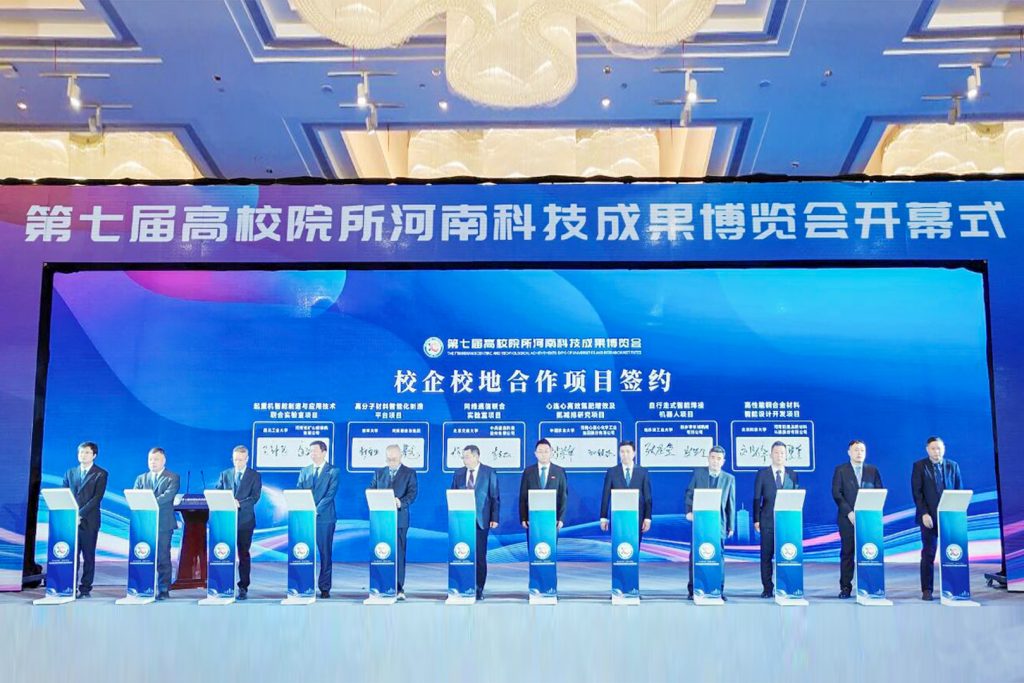
    How Chemical Plant Requirements Affect Crane Price

    Hazardous environment factors

    The operating environment of chemical plants is complex and diverse, and different hazardous media will put forward different requirements for the design and manufacture of Henan Mine Crane cranes, which in turn affects prices. If there are flammable and explosive gases (such as hydrogen, methane, ethylene, etc.) in the operating environment, the corresponding explosion-proof level must be selected according to the explosion limit of the gas, the ignition temperature and other parameters. If there is combustible dust (such as pulverized coal, dust, etc.), it is necessary to adopt a dust explosion-proof design and increase sealing, dust-proof and other processes. If there are corrosive media (such as acids, alkalis, salts, etc.), the steel structure and electrical components of the equipment need to be treated with anticorrosive treatment (such as anticorrosive coatings, stainless steel parts, etc.).

    There are high temperature, low temperature or strong corrosive environments in some areas of chemical plants, which require higher adaptability of cranes. For example, explosion-proof cranes operating in high-temperature environments need to use high-temperature-resistant motors and heat-insulating components to avoid equipment performance degradation or explosion-proof failure due to high temperature. In a low-temperature environment, low-temperature-resistant steel is required to prevent the steel from cracking. In a highly corrosive environment, anticorrosive coating, stainless steel structure or galvanized treatment are required.

    Custom design requirements

    There are differences in the operating scenarios of different chemical plants, and some scenarios require customized explosion-proof cranes, which will directly affect the price of equipment. For example, for special material hoisting needs, special spreaders and structural forms need to be used. In view of the space constraints of the plant, the structure of the main girder and end beam of the crane needs to be optimized. For highly corrosive environments, special anticorrosive materials (such as Q345E low temperature resistant steel, stainless steel parts, etc.) need to be used.

    In order to improve operational efficiency and safety, some chemical plants will require customized control and monitoring systems, which is also an important factor affecting prices. For example, functions such as remote control, intelligent monitoring, data acquisition and transmission can realize remote operation of the crane, real-time condition monitoring and fault early warning, but these functions need to be equipped with corresponding sensors, controllers, communication modules and other components, and software development and debugging are required, which will significantly increase equipment costs. In addition, the customized control system also needs to be docked with the existing production system of the chemical plant, further increasing the design and integration costs.

    Manufacturing Quality and Certification Costs

    Safety standards

    Explosion-proof cranes are special equipment and must strictly comply with domestic and foreign safety standards.

    Component selection

    The brand choice of core components directly affects the price and performance of the equipment. The core components of Chinese brands are more cost-effective and can meet the operating needs of most chemical plants. Buyers need to choose component brands rationally according to their own budget and operational needs, so as to avoid blindly pursuing high-end brands that lead to excessive costs, or coveting low-cost selection of inferior parts that cause safety risks.

    The quality and brand of the core components not only affect the price of the equipment, but also directly determine the reliability and service life of the equipment. High-quality explosion-proof components can effectively reduce the incidence of equipment failures, reduce late maintenance costs, and extend the service life of equipment. Although the early procurement cost of inferior parts is low, they are prone to failure, which will not only affect the production schedule, but may also cause safety accidents and increase the later operation and maintenance costs and losses. Therefore, when choosing an explosion-proof crane, it is not only necessary to pay attention to the initial purchase price, but also to consider the impact of component quality on the long-term cost of equipment.

    Installation and Maintenance Costs

    Installation requirements

    The installation and commissioning cost of Henan Mine Crane explosion-proof cranes is also an important part of the overall investment, and is significantly affected by on-site conditions. The operating environment of chemical plants is complex, and some sites have problems such as narrow space, uneven ground, and dense pipelines, which will increase the difficulty of installation. Professional installation teams and special installation equipment are required, and installation costs will increase accordingly. In addition, the commissioning of explosion-proof cranes must be carried out by qualified professionals, including explosion-proof performance commissioning, electrical system commissioning, safety device commissioning, etc. The commissioning process must be carried out in strict accordance with standards to ensure that the equipment meets safety requirements.

    Due to the particularity of the operating environment of the chemical plant, after the installation of the explosion-proof crane is completed, additional safety inspections and acceptance are required, including explosion-proof performance testing, load testing, safety device verification, etc. These inspections need to be carried out by a third-party professional organization, which will generate additional costs. At the same time, some chemical plants will require regular safety inspections to ensure the long-term stable operation of the equipment. This part of the long-term inspection costs also need to be included in the overall investment accounting.

    Long-term operating costs

    The long-term operation and maintenance cost of explosion-proof cranes is a key factor affecting the overall cost of ownership. The maintenance frequency of equipment with different configurations and different qualities varies significantly. Equipment with high-quality components and high-end configuration has a low maintenance frequency, usually 1-2 times a year. However, poor-quality equipment or low-configuration equipment is prone to failure, and the maintenance frequency may increase to 3-4 times a year, which not only increases maintenance costs, but also affects production progress. In addition, the corrosive environment of chemical plants will accelerate the wear and tear of equipment components, and the maintenance frequency needs to be appropriately increased to further increase operation and maintenance costs.

    The supply of spare parts and after-sales service support will also affect the long-term cost of equipment. A high-quality explosion-proof crane manufacturer can provide sufficient supply of spare parts and rapid after-sales service response to reduce the loss of production due to equipment failure. However, some small suppliers may have problems such as shortage of spare parts and untimely after-sales service, which will increase the later operation and maintenance costs and production losses. In addition, the price of spare parts for imported brand equipment is usually higher, and the procurement cycle is longer, and spare parts need to be stocked in advance, further increasing long-term operating costs.

    Factory Direct vs. Local Supplier Pricing

    Factory direct advantages

    Purchasing directly from explosion-proof crane manufacturers, the biggest advantage is that it can reduce intermediate links and reduce procurement costs. At the same time, manufacturers can directly provide one-stop services such as equipment design, manufacturing, installation, and commissioning to avoid problems caused by poor communication in intermediate links and improve procurement efficiency.

    Manufacturers have professional design and research and development capabilities, and can provide customized explosion-proof crane solutions according to the actual needs of chemical plants. Whether it is a special operating environment, customized lifting parameters, or personalized control and monitoring systems, manufacturers can design and manufacture in a targeted manner to ensure that the equipment is adapted to the needs of the site. However, local suppliers usually mainly sell standard equipment, and their customization capabilities are weak, making it difficult to meet the needs of special scenarios.

    Local supplier advantages

    The core advantage of local suppliers is the fast response speed of after-sales service. Due to the close distance, when the equipment fails, the local supplier can quickly arrange for technicians to repair it on-site to reduce the loss of production. The response time of after-sales service of foreign manufacturers may be long, especially in remote areas, and the maintenance cycle may be as long as several days, which seriously affects the production schedule. For chemical plants that need to respond quickly, this advantage of local suppliers is particularly important.

    Local suppliers are more familiar with local on-site conditions and installation requirements, and can provide more convenient installation support. During the installation process, the technical personnel of the local supplier can go to the site in time to guide, solve the problems that arise during the installation process, and ensure the quality of the installation. At the same time, local suppliers can also assist in the relevant installation and acceptance procedures to reduce the workload of the purchaser. In addition, local suppliers have more adequate spare parts reserves, which can quickly provide the required spare parts and shorten equipment maintenance time.

    How to Choose a Cost-Effective Explosion-Proof Crane

    Evaluate total ownership cost

    For explosion-proof cranes with a high price-to-price ratio, we should not only focus on the initial purchase price, but should comprehensively evaluate the total cost of ownership, including procurement costs, installation and commissioning costs, operation and maintenance costs, spare parts costs, and shutdown losses. The early purchase price of some equipment is lower, but the later operation and maintenance costs are high and failures are frequent, and the total cost of ownership is higher. The pre-purchase price of high-quality equipment is higher, but the operation and maintenance cost is low, the service life is long, and it is more cost-effective in the long run. The purchaser needs to comprehensively calculate the total cost of ownership based on its own production needs and budget, and choose the most suitable equipment.

    Select the right configuration

    Reasonable selection of equipment configuration is the key to balancing safety and cost. First of all, it is necessary to choose the appropriate explosion-proof level according to the hazardous area level and operating environment of the chemical plant, so as to avoid excessive pursuit of high explosion-proof level leading to waste of costs, and it is not possible to choose a low explosion-proof level in order to reduce costs, causing safety risks. Secondly, according to the actual lifting requirements, determine the reasonable lifting weight, span, lifting height and working level to avoid parameter redundancy and increase costs. Finally, according to the operation requirements, select the appropriate core component brand and safety device configuration, and control the procurement cost under the premise of ensuring the performance and safety of the equipment.

    Henan Mine Crane

    When selecting models, buyers need to fully consider the total cost of ownership, taking into account the safety and economy of the equipment, in order to select high-quality equipment that meets their own needs.

    As a professional large-scale crane manufacturer, Henan Mine Crane Factory has been deeply engaged in the field of explosion-proof cranes for many years. It has a mature design and development system, rigorous manufacturing technology and a perfect after-sales service network. It can tailor explosion-proof crane solutions that combine high safety and high cost performance for the complex and dangerous operating environment of chemical plants. Whether it is the adaptation of special working conditions, customized configuration requirements, or late installation and commissioning, operation and maintenance guarantees, we can follow up the whole process to help chemical plants build a strong line of defense for safe production, while effectively controlling the cost of the whole life cycle of equipment, and realizing the dual improvement of safety and efficiency.

    Discuss the crane arrangement for your project.

    The protection requirements, lifting arrangement and installation conditions all influence the quotation. Define the hazardous-area information and required documentation before comparing equipment, site work and support costs. Share the load, available drawings, working cycle and site conditions with Henan Mine Crane so the required configuration and supply boundary can be discussed.

    Related crane configurations

    Clean Explosion Proof Bridge Crane

    View product parameters
    Lifting capacity: 1t – 32tSpan: 7.5m – 28.5mLifting height: 6m – 20m

    Combine overhead lifting with the declared cleanliness and hazardous-area requirements. Specify particle-control expectations, process exposure and area classification for the complete lifting system.

    Dual Trolley Explosion Proof Bridge Crane

    View product parameters
    Lifting capacity: 20+20tSpan: 10m – 35mLifting height: 6m – 30m

    Combine two-trolley handling with the declared hazardous-area specification. Coordinate hook loads, lifting sequence, electrical protection and operator controls for the complete installation.

    Updated 2026 · Henan Mine Crane

  • 200 T four-girder cast bridge crane powers successful enterprise upgrade

    200 T four-girder cast bridge crane powers successful enterprise upgrade

    Project review

    200 T four-girder cast bridge crane powers successful enterprise upgrade

    Explore Jinhui’s casting-crane application, where two 200 t cranes supported hot commissioning within an eight-crane supply. Discuss your ladle-handling duty.

    200 T four-girder cast bridge crane powers successful enterprise upgrade — Henan Mine Crane crane application photograph
    200 T four-girder cast bridge crane powers successful enterprise upgrade — crane application overview.

    Project evidence

    • The Jinhui project used eight large four-girder casting cranes.
    • Two 200 t cranes supported the hot commissioning.

    Steelmaking and metal handling

    Define the complete suspended load, ladle or steel-product geometry, process temperature, crane duty and safe travel path. For molten-metal work, include auxiliary lifting, heat shielding, redundant protections and inspection access in the specification.

    Crane configuration and interfaces

    Ask for the crane arrangement, hook and lifting appliance interfaces, runway loads, control and monitoring functions, inspection access and a test plan matched to the plant process.

    Review the Metallurgical overhead cranes and Steel & metallurgy cranes before defining the project-specific arrangement.

    Design the lifting process

    Use the project context above as a starting point. The following checks turn a crane application into a technical scope that suppliers can price and demonstrate for your site.

    Define the lifting task

    Record each load by weight, dimensions, centre of gravity and lifting point, then trace its route through the plant. Distinguish the highest occasional lift from routine handling cycles. Give the span, lift height, hook approach, duty pattern and working environment. These inputs establish what crane arrangement fits the building and process; a headline rated capacity does not show whether the load can be picked up or placed safely.

    Choose interfaces and controls

    Ask for a general arrangement, runway and wheel loads, power supply, control mode, required travel speeds and any lifting attachment. Define what is supplied with the crane and what is supplied by the building or process contractor. If positioning, monitoring or remote operation matters, state the intended sequence and how performance will be measured. Include access for periodic inspection and a safe location for maintenance.

    Compare proposals on the same basis

    Send all bidders the same load schedule and site drawing. Review the structural arrangement, drive and protection functions, installation scope, factory tests, site acceptance, training and spare parts. Confirm the required documents and the boundaries of civil, electrical and commissioning work. This makes a technical comparison meaningful and prevents a low equipment-only price from being mistaken for a complete installed solution.

    Compare the proposed crane scope

    DecisionInformation to request
    Crane and lifting attachmentRated loads, load cases, hook coverage and the complete suspended-load calculation.
    Site interfacesRunway loads, rail or building drawings, electrical supply and installation responsibilities.
    Controls and protectionOperating sequence, required safety functions and a method for testing each function.
    Commercial scopeEquipment, transport, installation, commissioning, documentation, training and spare parts as separate line items.

    From technical offer to site acceptance

    Technical submittals

    A usable bid should show a general arrangement and a clear list of assumptions, not just a model name and capacity. Request the load schedule used in design, lifting-attachment drawings where applicable, span and hook-approach dimensions, wheel loads, electrical supply, control narrative and maintenance access. Check every drawing against the actual building or yard layout. Identify the standards and local approval requirements for the destination market in the enquiry, then confirm the bidder’s proposed design and documentation scope in writing.

    Installation and tests

    Agree when the runway or civil works will be ready, how crane components can reach the installation position and who provides lifting equipment for erection. Define the factory test, on-site installation inspection and site acceptance as separate milestones. The acceptance procedure should list representative loads, the travel route, protection devices, emergency stop and any automation or attachment functions included in the order. Record who supplies test weights, operators, power and access equipment; otherwise a nominal commissioning price may omit essential site work.

    Commercial comparison

    Ask for the same delivery basis and currency across proposals. Separate the crane, special lifting appliances, rails or conductors, transport, installation support, commissioning, training and initial spare parts. Lead time should identify the starting event, such as approved drawings or an effective contract, and any dependency on site readiness. Compare warranty scope and service response by the written contract terms. If a key input is still unknown, request a priced option or a stated assumption instead of allowing different bidders to silently use different specifications. Keep a written exception register so the engineering team can resolve open dimensions, process interfaces and responsibility boundaries before issuing the purchase order.

    Information to include in the enquiry

    • Load weights, dimensions, centre of gravity and lifting attachments.
    • Span, lifting height, runway or yard drawings, travel coverage and clearances.
    • Operating cycle, working environment, electrical supply and control requirements.
    • Supply boundaries, inspection documents, installation support and acceptance criteria.

    Discuss a comparable lifting task

    Send the handling task and available site drawings. Henan Mine Crane can define a proposed crane arrangement and identify the remaining information needed for a technical and commercial review.