Engineering · Manufacturing · Project support
info@hnksglobal.comWhatsApp +86 18836207779 ↗

Blog

  • Long-Travel Overhead Cranes: Runway, Power and Motion Planning

    Long-Travel Overhead Cranes: Runway, Power and Motion Planning

    Technical guide

    Long-Travel Overhead Cranes: Runway, Power and Motion Planning

    A long runway changes more than the travel distance. Review rail alignment, electrical supply, drive coordination and access along the bay, with the handling cycle showing how far and how often the bridge must move.
    Henan Mine CraneTechnical guide · Updated 2026Crane selection, project scope and operating requirements
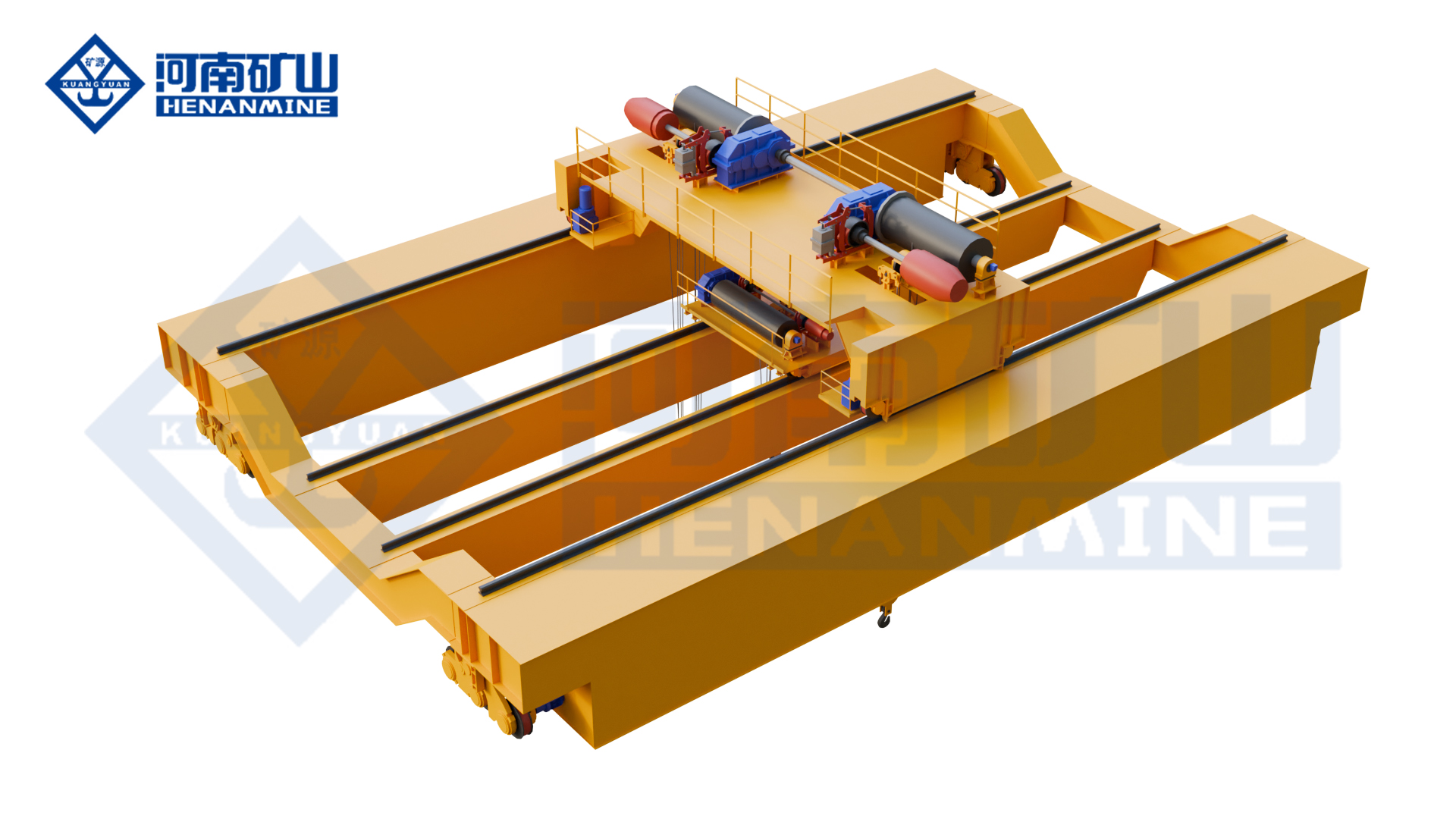
    long-travel overhead crane
    long-travel overhead crane
    Project planning notes

    Key points for this crane project.

    1. What Makes Long Travel Distance Challenging for
    2. Which Overhead Crane Design Is Long Travel
    3. Key Design Features for Long Travel Cranes
    Read the technical guide

    What Makes Long Travel Distance Challenging for Overhead Cranes

    Travel distance

    The long operating path will directly amplify the mechanical loss and operating deviation of the equipment, which is the core source of all working conditions problems. First of all, the main girder, end beam, and travel mechanism of the crane need to be continuously operated for a long time, and the fatigue and wear rate of the metal structure will be greatly accelerated. Compared with short-stroke equipment, the probability of deflection deformation of the main girder and loosening of components is significantly increased. Secondly, long-distance operation will accumulate positioning errors, and the small travel deviations that can be ignored in the short stroke will be continuously magnified in the 100-meter stroke, which will eventually lead to inaccurate alignment of the hook and reduced operating accuracy, which cannot meet the needs of precision hoisting.

    Runway alignment

    The crane operating track is the basis for the equipment to walk, and the installation accuracy, flatness, and straightness of the track directly determine the stability of long-stroke operations. Under short-stroke conditions, the slight high-low deviation, left-right offset, and gap error of the track will not have a significant impact on the operation of the equipment, but in the long-distance track system, small deviations will form a cumulative effect. Local unevenness of the track will cause bumps and catons when the crane is travel, and long-term operation will wear out the wheels, reducers, and travel motors. The deviation of the left and right alignment of the track exceeds the standard, which will cause the crane to gnaw the rail.

    Load stability

    Heavy object shaking and load offset are common problems in long-travel overhead crane operations. During the long-distance travel of the crane, the inertial force will continue to act on the lifting of heavy objects during the whole process of starting, running at uniform speed, decelerating and stopping. Short-stroke operations start and stop frequently but the stroke is short, and the shaking amplitude is controllable. During the long-stroke uniform speed operation phase, the inertia generated by the continuous movement of the equipment will cause the heavy objects to swing continuously. Once the track bumps, wind speed interference, and motor speed fluctuations are encountered, the load shaking will intensify sharply. Unstable loads will not only reduce the accuracy of hoisting, which is likely to cause material collisions and workpiece damage, but also increase the force load on the equipment, resulting in uneven force on the core components such as the main girder, wire rope, hook, etc., accelerate the aging of the components, and even cause safety accidents caused by heavy objects falling, which greatly limits the safety and stability of long-travel overhead crane operations.

    Travel frequency

    Most of the production scenarios adapted to long-stroke working conditions are continuous and large-volume operations. The daily operating frequency and continuous operation time of the crane are higher than that of ordinary equipment. High-frequency and long-distance reciprocating operation will keep the travel mechanism, transmission system, and electrical control system in a high-load working state for a long time. The transmission components such as motors, frequency converters, and reducers continue to heat up, which is prone to overheating protection and performance attenuation. The high-frequency friction of mechanical components such as wheels, bearings, and brakes doubles the wear speed, and it is extremely prone to problems such as brake failure and travel caton. At the same time, the continuous vibration caused by high-frequency operation will lead to loose equipment bolts, aging lines, and poor contact with electrical components, which will greatly shorten the service life of the equipment, increase the probability of downtime and maintenance, and affect the continuous production of enterprises.

    Which Overhead Crane Design Is Long Travel Distances?

    Single-girder cranes

    Henan Mine Crane single-beam bridge crane is widely used in light and medium-sized long-stroke operation scenarios with the advantages of light structure, low cost and easy installation. In long-stroke and low-load working conditions such as light-duty factories, small storage workshops, and assembly line auxiliary hoisting, the cost-effective advantages of single-girder cranes are extremely prominent. However, it is limited by the rigidity and bearing capacity of the single-beam structure, the span and deformation resistance of the main girder are limited, and the main girder is prone to deflection and equipment shaking during long-distance heavy-duty operation. Therefore, it is only suitable for light-load, low-frequency, medium- and small-span long-stroke conditions, and cannot meet the needs of heavy-duty industrial operations.

    Double-girder cranes

    Double-girder bridge crane is the optimal core model for long-stroke, medium- and heavy-duty working conditions. The equipment adopts a symmetrical structure of double main beams, with strong overall rigidity, good load-bearing performance and excellent deformation resistance, which perfectly solves the pain points of long-distance heavy-duty single-girder cranes that are easy to deform and have poor stability. The double-beam structure can evenly disperse the vibration, inertial force and load pressure generated during long-stroke operation. The deflection deformation of the main girder is very small, and the whole process runs smoothly, greatly reducing the probability of heavy objects shaking and equipment deviation. In long-stroke heavy-duty scenarios such as heavy industrial plants, large-scale processing workshops, and heavy equipment transshipment, the stability, durability, and operating efficiency of double-girder cranes far exceed that of single-girder models.

    Top-running cranes

    Henan Mine Crane upper rail crane is a classic rail design model adapted to long-stroke operation. Its travel wheels are directly laid on the top of the crane beam track, and the track has strong load-bearing capacity, uniform force, and low operating resistance. Compared with side-mounted and bottom-mounted cranes, the overall stability of the upper rail structure is higher, and it is not easy to offset and caton during travel, and the probability of gnawing the rail is extremely low. The core advantage of this design is that it has excellent smoothness and high fault tolerance for long-distance operation, can adapt to small deformation of long-distance tracks, and continuously maintains stable travel. At the same time, the drive system of the upper rail crane is reasonably arranged, the transmission efficiency is high, it supports long-distance high-speed and smooth operation, and the equipment maintenance is convenient, which is suitable for long-term high-frequency and long-stroke operations.

    Long-span applications

    Long-travel working conditions are often accompanied by the needs of long-span operations. The long-span long-travel overhead crane is specially designed for the operation scenarios of wide factories and long passages. This type of model is based on the double-beam upper rail structure. By optimizing the cross-section of the main girder, strengthening the end beam structure, and upgrading the travel balance system, it solves the problems of equipment shaking, deformation, and deviation under long-span and long-distance dual working conditions. At the same time, it is equipped with an enhanced travel drive and stabilization system, which can maintain accurate, stable and efficient hoisting operations in a wide range of working areas. It is widely used in large steel structure factories, power equipment workshops, large-scale warehousing in ports and other large-space industrial scenes.

    Key Design Features for Long Travel Cranes

    Travel drive system

    The travel drive system is the core power core of long-travel overhead crane, which directly determines the smooth operation and battery life of the equipment. Long-travel overhead crane must adopt a two-sided synchronous drive system to replace the traditional one-sided drive structure to ensure that the power output of the travel mechanism at both ends of the crane is balanced, and the problems of deviation and rail gnawing caused by power deviations are effectively avoided. The drive system needs to be equipped with a hard tooth surface reducer with a reasonable reduction ratio, which has high transmission efficiency, wear resistance and wear resistance, and can be adapted to high-frequency and long-distance continuous operation to reduce transmission loss and the probability of failure.

    Wheel configuration

    Reasonable wheel configuration is the key to solving the serious problems of long-stroke deviation and wear. Conventional short-stroke cranes use a four-wheel basic configuration, while long-travel overhead cranes need to optimize the wheel structure according to the stroke length, equipment weight, and load capacity, and adopt a balanced multi-wheel configuration. By increasing the auxiliary travel wheels, the contact pressure between the equipment and the track is dispersed, and the problems of excessive wear and track pressure loss caused by excessive pressure on a single wheel are avoided. At the same time, it is equipped with accurate wheel positioning technology to ensure that the parallelism and verticality of the wheels are up to standard, and the phenomenon of rail gnawing and deviation is eliminated structurally.

    Motor and VFD control

    Long-travel overhead crane must not use ordinary fixed-speed motors, it must be equipped with a dedicated frequency conversion motor + VFD frequency conversion control system. The frequency conversion control system can realize stepless speed regulation, accurately control the whole process of starting, acceleration, uniform speed, deceleration, and parking of the crane, and completely solve the problem of large start-stop impact and unstable speed of the fixed-speed motor. Speed up slowly at the beginning to avoid the sharp shaking of heavy objects caused by the sudden increase in inertia. Keep the speed constant during operation to ensure smooth long-distance travel. When parking, it descends at a uniform speed, with precise alignment and no offset. At the same time, the VFD system has overload protection, overheating protection, and fault self-test functions, which can effectively avoid motor overload and electrical failure caused by high-frequency and long-distance operation, improve equipment operation safety and stability, and reduce energy consumption and operation and maintenance costs.

    Anti-sway system

    The sway control system is the core configuration of long-travel overhead crane to improve the accuracy and safety of operations. Inertial shaking and orbital bumps caused by long-distance travel are the main problems that affect the operation effect. The intelligent sway control system can collect equipment operating speed, displacement, and load swing data in real time, accurately correct the start-stop rhythm and operating speed through algorithms, actively offset the inertia of heavy objects, and control the swing amplitude of hoisted heavy objects to a very small range. Even in the working conditions of ultra-long stroke, high-speed operation, and frequent start and stop, the load stability can be guaranteed, and the problems of material collision and workpiece damage can be eliminated.

    Runway design

    The track design adapted to long-stroke working conditions is the basis for the long-term stable operation of the equipment. The long-travel overhead crane track needs to use high-strength special steel rails, which have strong load-bearing capacity, wear-resistant and deformation-resistant, and can withstand the weight and heavy-duty pressure of the equipment for a long time. Track installation needs to strictly control the straightness, level, and parallelism, and accurately calibrate the whole process to eliminate local height differences and left-right offsets. At the same time, the temperature expansion joints need to be reserved to adapt to the thermal expansion and contraction of the track caused by seasonal temperature differences, so as to avoid deformation and extrusion of the track.

    How to Improve Crane Performance Over Long Runways

    Travel speed

    The speed setting of Henan Mine Crane Long-runway overhead crane needs to take into account efficiency and stability, and must not blindly pursue high speed. According to different job scenarios, the hierarchical speed mode needs to be optimized. The no-load return journey can appropriately increase the operating speed, shorten the no-load time, and improve work efficiency. Heavy-duty travel needs to reduce the uniform speed, reduce inertial shaking, and ensure stable load. The low-speed fine-tuning mode is used in the close-range alignment stage to improve accuracy. Through the frequency conversion system, exclusive speed parameters are customized to realize the differentiated operating mode of “high-speed rush, low-speed alignment, and stable heavy-duty travel”, and the efficiency of long-stroke operations is maximized under the premise of ensuring equipment safety and stable load.

    Positioning accuracy

    The accumulation of positioning errors in long-track operation is the main problem in precision operations, and the positioning accuracy can be improved through multiple technical optimizations. First of all, it is equipped with an intelligent positioning sensor system to accurately collect crane travel displacement data in real time and automatically correct the position deviation caused by long-distance operation. Secondly, optimize the logic of frequency conversion and speed regulation, and automatically slow down and buffer at the end of the parking stage to eliminate the alignment deviation caused by inertial sliding. Finally, with the dual protection of mechanical limit + electronic limit, the operating point is accurately locked.

    Smooth acceleration

    Sudden acceleration and rapid deceleration are the core causes of heavy objects shaking and equipment loss. Long-runway overhead crane needs to optimize the acceleration curve and set a flexible start-stop program through the VFD frequency conversion system to achieve gradual acceleration and buffered deceleration. Abandon the instantaneous start-stop mode of traditional equipment, let the speed transition smoothly, no impact, no setbacks, and greatly reduce the impact of inertial forces on the load, equipment structure, and transmission components. Stable acceleration and deceleration control cannot only completely improve the problem of heavy object swing and improve operation safety, but also reduce the fatigue and wear of mechanical components, reduce the probability of equipment failure, and extend the service life of the crane.

    Rail alignment

    Orbital deviation is the main source of long-travel overhead crane failure, and regular orbital calibration is the key to maintaining the high-performance operation of the equipment. Enterprises need to establish a normalized orbit detection and calibration mechanism, regularly use professional instruments to detect the straightness, level, and spacing deviations of long-distance orbits, and correct orbital deformation, offset, and height inequality in a timely manner. Strengthen, repair, and replace the parts of the track that are loose, have too large gaps, and are severely worn in time to prevent small deviations from accumulating into large-scale failures. At the same time, in view of the problems of foundation settlement and temperature deformation of the plant, the overall track leveling and calibration are regularly carried out to ensure the precise alignment of the long-distance track throughout the process, and to solve the problems of rail gnawing, deviation, and caton from the root cause.

    Maintenance planning

    Long-runway overhead crane operates at high frequencies and long distances for a long time, and the loss of components is faster. Scientific operation and maintenance planning is the core of ensuring the continuous high performance of the equipment. It is necessary to formulate a maintenance plan for exclusive long-stroke equipment, and check the operating status of the travel motor, reducer, wheel, and brake system daily. Weekly detection of track flatness, drive synchronization, and sway control system sensitivity. Lubricate the transmission components, tighten the wiring, and calibrate the positioning system every month. Do quarterly structural flaw detection of the whole machine, comprehensive track calibration, and in-depth inspection of the electrical system. Investigate potential faults in advance, replace worn parts in time, avoid small problems accumulating into downtime failures, reduce operation and maintenance costs, and ensure long-term stable and efficient operation of equipment.

    How to Select a Long-Travel Overhead Crane

    Load capacity

    Load is the core and primary basis for selection, and it needs to be accurately selected in combination with the actual maximum lifting weight and the long-term average operating load.

    Span and lift height

    The span of the plant and the lifting height of the material directly determine the structural design and configuration level of the Henan Mine Crane crane. When large-span factories are equipped with long-stroke working conditions, high-rigidity double-beam structures need to be preferred to strengthen the main girder and end beam to avoid structural deformation and equipment shaking caused by long-span and long-distance operation. At the same time, the hoist lifting system is matched according to the maximum lifting height to ensure stable lifting operation and accurate positioning, taking into account the dual stability of horizontal long-distance travel and vertical lifting, and adapting to the needs of complex space operations.

    Duty class

    The working level represents the working load and durability level of the crane. It is strictly forbidden to use low-level equipment under long-stroke working conditions. Low-frequency, intermittent long-distance operation, you can choose A3-A4 working level. The structural strength, motor power, wear-resistant components, and electrical systems of high-level equipment have been strengthened and designed to be adapted to long-term, long-distance and high-load operations, with lower failure rates and longer service lives.

    Operating environment

    Different operating environments need to match the long-travel overhead crane with exclusive protection design. For ordinary indoor drying plants, you can choose the standard configuration model. Workshops with high temperature, dust, humidity, and corrosive gases need to be equipped with dust-proof, moisture-proof, and anticorrosive protection systems, motors and electrical components should be sealed, and metal structures should be anticorrosive sprayed. In outdoor and high-altitude windy scenes, sway control and wind-proof braking configurations need to be strengthened to improve the wind-resistant stability of the equipment. Targeted environmental adaptation design can avoid environmental factors exacerbating equipment loss and ensure the stable operation of long-travel overhead crane in various scenarios.

    Henan Mine Crane

    The core of the selection of long-stroke bridge cranes lies in relying on a mature double-beam upper rail structure, with frequency conversion control, intelligent sway control and optimized travel system, while doing a good job in track construction and normalized operation and maintenance, so as to resolve common problems such as track deviation, load shaking, and rapid loss of components in long-distance operations. There is no need to blindly pile up the configuration, nor can you blindly compress the budget. Customization that fits the on-site working conditions is the best idea. Henan Mine Crane Factory is deeply engaged in the manufacture of lifting equipment, relying on rich project experience to create long-stroke lifting solutions on demand, taking into account stable operation, operating efficiency and equipment life, to help the factory reduce costs and increase efficiency in the long term.

    Discuss the crane arrangement for your project.

    A long runway changes more than the travel distance. Review rail alignment, electrical supply, drive coordination and access along the bay, with the handling cycle showing how far and how often the bridge must move. Share the load, available drawings, working cycle and site conditions with Henan Mine Crane so the required configuration and supply boundary can be discussed.

    Related crane configurations

    Track Switching Overhead Crane

    View product parameters
    Lifting capacity: 1 – 32 tSpan: 3 – 30 mLifting height: 4 – 20 m

    Transfer an electric hoist between connected crane tracks with a track-switching arrangement. Rail alignment, transfer positions and interlocks are coordinated with the building and lifting sequence.

    Single-Girder Bridge Crane

    View product parameters
    Lifting capacity: 1–20 tSpan: 7.5–31.5 mLifting height: 6, 9, 12, 18, 24 or 30 m; capacity-dependent

    Use an LDA single-girder bridge and electric hoist for general workshop material handling. Select the lifting capacity, runway geometry and hoist duty around the building and load.

    Updated 2026 · Henan Mine Crane
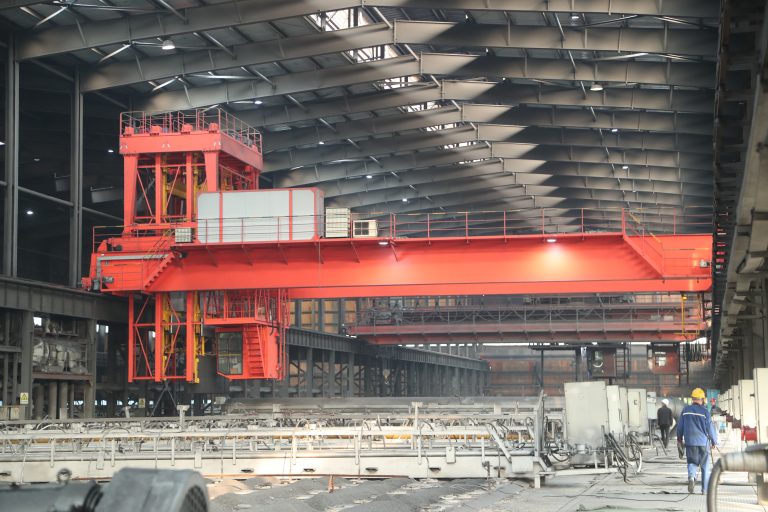
  • Steel Mill Casting Specialized Crane Manufactured by Henan Mine Crane

    Steel Mill Casting Specialized Crane Manufactured by Henan Mine Crane

    Crane application

    Steel Mill Casting Specialized Crane Manufactured by Henan Mine Crane

    Review the steel mill casting crane applications. Review load definitions, process exposure, lifting arrangements and working duty for your project.

    Steel Mill Casting Specialized Crane Manufactured by Henan Mine Crane — Henan Mine Crane crane application photograph
    Steel Mill Casting Specialized Crane Manufactured by Henan Mine Crane — crane application overview.

    Steelmaking and metal handling

    Define the complete suspended load, ladle or steel-product geometry, process temperature, crane duty and safe travel path. For molten-metal work, include auxiliary lifting, heat shielding, redundant protections and inspection access in the specification.

    Crane configuration and interfaces

    Ask for the crane arrangement, hook and lifting appliance interfaces, runway loads, control and monitoring functions, inspection access and a test plan matched to the plant process.

    Review the Metallurgical overhead cranes and Steel & metallurgy cranes before defining the project-specific arrangement.

    Design the lifting process

    Use the project context above as a starting point. The following checks turn a crane application into a technical scope that suppliers can price and demonstrate for your site.

    Molten-metal lifting sequence

    Describe where a ladle is picked up, where it travels, how it is poured and how it is returned. Provide the mass of the ladle, lining, molten metal, lifting beam and rigging as separate inputs. The main-hook capacity alone does not define the crane: auxiliary-hook duty, hook spacing, approach, travel speed, plant clearances and the number of lifts per shift matter. If the process includes charging, tundish transfer or maintenance lifts, separate those cycles rather than assuming one arrangement can serve them all.

    Protection and maintainability

    For a hot shop, specify ambient and radiant temperatures at the bridge, trolley, electrical cabinets and operator position. Discuss heat shielding, cable routing, braking and overspeed protection, redundant functions where applicable, access for inspection and a safe maintenance position. These features need a project-specific risk assessment and applicable design standard; a catalogue label such as “metallurgical” does not establish suitability for molten-metal duty. Provide runway condition and building clearances so that protective equipment can be installed and serviced.

    What to compare at technical review

    Request general arrangement drawings, the mass calculation for the suspended load, main and auxiliary hook duties, duty classification, wheel loads, electrical interfaces and a list of protective functions. Compare each offer against the same process sequence and site drawings. Define factory and site acceptance tests for rated load, interlocks, brakes, limit switches and operational travel. Agree how production will be isolated during installation and how spare components will be supported. Published case tonnages describe those installations only; a new crane must be sized to its own process.

    Compare the proposed crane scope

    DecisionInformation to request
    Crane and lifting attachmentRated loads, load cases, hook coverage and the complete suspended-load calculation.
    Site interfacesRunway loads, rail or building drawings, electrical supply and installation responsibilities.
    Controls and protectionOperating sequence, required safety functions and a method for testing each function.
    Commercial scopeEquipment, transport, installation, commissioning, documentation, training and spare parts as separate line items.

    From technical offer to site acceptance

    Technical submittals

    A usable bid should show a general arrangement and a clear list of assumptions, not just a model name and capacity. Request the load schedule used in design, lifting-attachment drawings where applicable, span and hook-approach dimensions, wheel loads, electrical supply, control narrative and maintenance access. Check every drawing against the actual building or yard layout. Identify the standards and local approval requirements for the destination market in the enquiry, then confirm the bidder’s proposed design and documentation scope in writing.

    Installation and tests

    Agree when the runway or civil works will be ready, how crane components can reach the installation position and who provides lifting equipment for erection. Define the factory test, on-site installation inspection and site acceptance as separate milestones. The acceptance procedure should list representative loads, the travel route, protection devices, emergency stop and any automation or attachment functions included in the order. Record who supplies test weights, operators, power and access equipment; otherwise a nominal commissioning price may omit essential site work.

    Commercial comparison

    Ask for the same delivery basis and currency across proposals. Separate the crane, special lifting appliances, rails or conductors, transport, installation support, commissioning, training and initial spare parts. Lead time should identify the starting event, such as approved drawings or an effective contract, and any dependency on site readiness. Compare warranty scope and service response by the written contract terms. If a key input is still unknown, request a priced option or a stated assumption instead of allowing different bidders to silently use different specifications. Keep a written exception register so the engineering team can resolve open dimensions, process interfaces and responsibility boundaries before issuing the purchase order.

    Information to include in the enquiry

    • Load weights, dimensions, centre of gravity and lifting attachments.
    • Span, lifting height, runway or yard drawings, travel coverage and clearances.
    • Operating cycle, working environment, electrical supply and control requirements.
    • Supply boundaries, inspection documents, installation support and acceptance criteria.

    Discuss a comparable lifting task

    Send the handling task and available site drawings. Henan Mine Crane can define a proposed crane arrangement and identify the remaining information needed for a technical and commercial review.

  • Foundry Crane Enquiries: Load, Heat and Working-Cycle Information

    Foundry Crane Enquiries: Load, Heat and Working-Cycle Information

    Technical guide

    Foundry Crane Enquiries: Load, Heat and Working-Cycle Information

    Foundry selection begins with the material and process rather than capacity alone. Provide the load arrangement, temperature exposure, pick-up positions and operating sequence so the proposed crane can be matched to the application.

    Henan Mine CraneTechnical guide · Updated 2026Crane selection, project scope and operating requirements
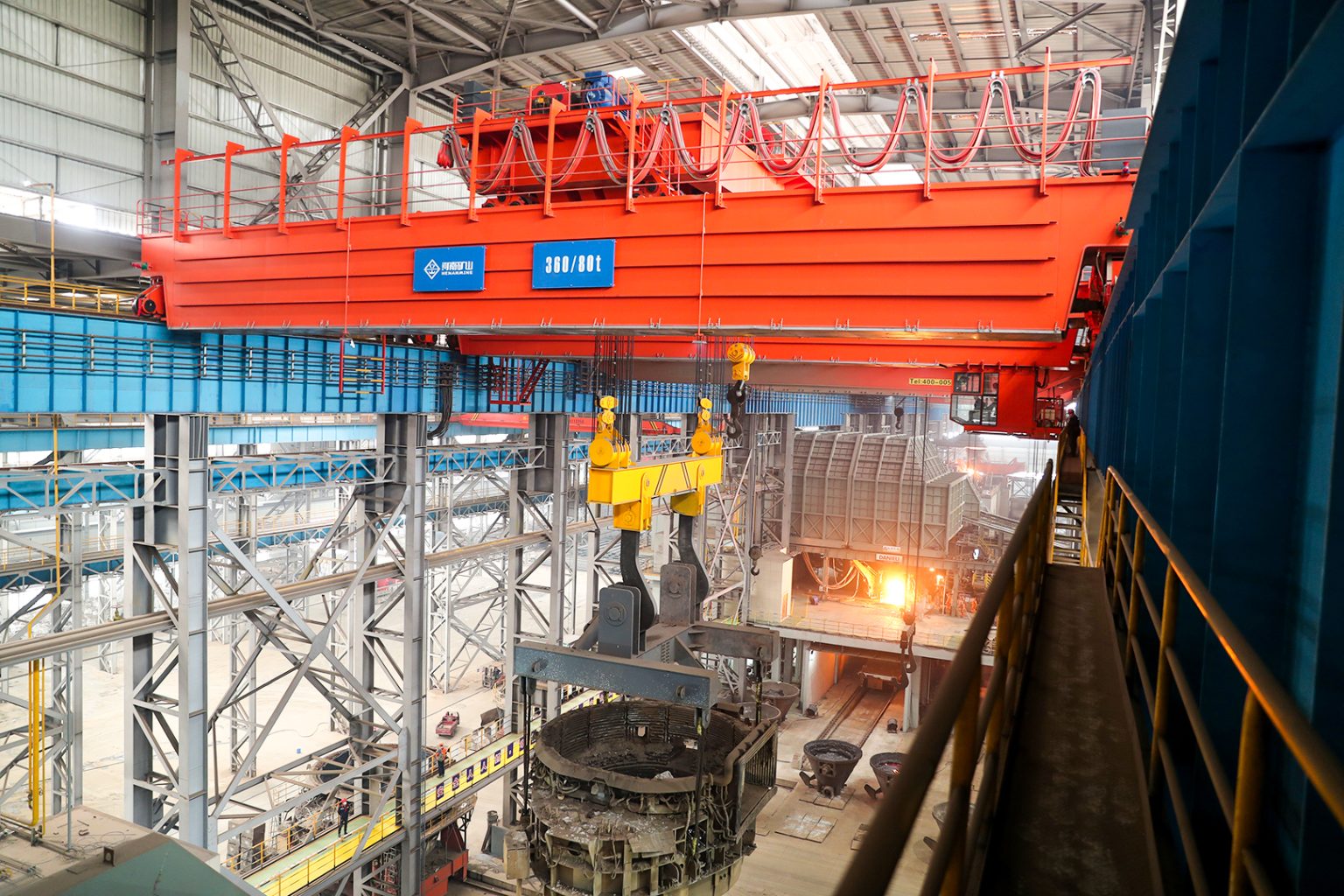
    Henan Mine Crane four-girder casting crane for intensive molten-metal handling
    Henan Mine Crane four-girder casting crane for intensive molten-metal handling
    Project planning notes

    Key points for this crane project.

    1. Application overview
    2. The 12 Data Groups Required for Foundry Crane Selection
    3. Define the Process Duty and Every Permitted Load Case
    Read the technical guide

    Application overview

    Foundry workshops contain several distinct lifting duties. A production crane may transfer a filled ladle from a furnace to a pouring station; another crane may charge a furnace, turn a ladle, move moulds or support maintenance. These tasks can share a bay while imposing different loads, attachments, operating frequencies, heat zones and failure consequences.

    The equipment name alone does not establish suitability. A foundry crane, ladle handling crane, charging crane and maintenance crane can require different load paths and safety functions. Direct molten-metal service must be stated explicitly; it cannot be inferred from the phrases “metallurgical crane” or “high-temperature crane.”

    Complete operating data allow crane suppliers to calculate capacity, classification, motion speeds, heat protection, wheel loads and control functions on the same basis. They also make commercial quotations comparable by defining whether the scope includes the lifting attachment, runway, electrification, installation, testing, training and statutory documentation.

    The 12 Data Groups Required for Foundry Crane Selection

    The following information should be issued for each crane position. Where one crane has several duties, every approved operating mode and load combination should appear in the same schedule.

    Data GroupInformation to ProvideWhy It Changes the Crane
    1. Process dutyLadle transfer, furnace charging, pouring, slag handling, mould handling, ladle maintenance or equipment maintenanceDefines the crane family, lifting attachment, trolley arrangement and risk category
    2. Load scheduleMaximum and minimum mass of metal, ladle, lining, residual slag, attachment, tooling and every permitted combined loadEstablishes the rated-load basis, structural reactions and hoisting mechanism
    3. Ladle and attachmentLadle GA drawing, diameter, height, trunnion geometry, centre of gravity, pickup clearances, beam or plate-hook drawing and tilt pointDetermines engagement, hook approach, reeving, stability, headroom and pouring arrangement
    4. Movement routePickup, transfer, pouring and set-down coordinates; travel distances; elevations; obstacles; restricted areas and emergency set-down positionsControls lift, approach, clearance, visibility, travel zoning and recovery planning
    5. Cycle and load spectrumLifts per hour, shifts per day, days per year, operating life, load-band percentages and movement distancesProvides the basis for crane and mechanism classification, motor thermal duty, brakes and fatigue life
    6. Availability targetProduction consequence of crane outage, allowable recovery time, maintenance window, standby philosophy and emergency placement requirementsInfluences redundancy, access, condition monitoring, spares and whether separate production and maintenance cranes are needed
    7. Thermal conditionsAmbient temperature at crane level, ladle/metal temperature, radiant-heat map, distance from heat sources, exposure duration and splash zonesSets heat shielding, component location, insulation, cooling, cable type and operator protection
    8. Workshop atmosphereDust type and concentration, conductive dust, fumes, humidity, corrosive agents, indoor/outdoor exposure and documented hazardous-area classification if applicableDetermines enclosure, ventilation, sealing, coating and any certified hazardous-area equipment

    Define the Process Duty and Every Permitted Load Case

    The first line of a foundry crane specification should state exactly what the crane lifts and what it does with the load. “Foundry service” is too broad. Direct ladle transfer, crane-assisted pouring, furnace charging, slag-pot handling, mould movement and maintenance are different duties and may require separate cranes.

    Ladle transfer

    Identify the furnace, treatment, holding, pouring and set-down stations. State whether the crane only transports the ladle or also supports deslagging, alloying, treatment or other process operations.

    Controlled pouring

    Provide the pouring method, designated tilt point, permitted angle, pour rate, mould position and communication sequence. Main and auxiliary capacities and coordinated motion depend on this operation.

    Charging and maintenance

    List charging boxes, furnace covers, moulds, ladle covers, refractory tools and maintenance components separately. A crane approved for these duties is not automatically approved for a filled ladle.

    Define the complete suspended system

    The load schedule should separately state the maximum liquid-metal mass, empty ladle shell, refractory lining, expected residual metal or slag, ladle beam or gantry hook, plate hooks, process tooling and every approved combined load. The applicable standard and technical agreement should then identify which items form the rated load and which are treated as crane dead load.

    Nominal furnace or ladle capacity is not sufficient. The heaviest physical condition may occur with a full lining, skull buildup, residual material or a special treatment attachment. Minimum loads also matter because drive control, brake response, load detection and automatic sequences must operate across the full range.

    Provide ladle outside diameter, total height, trunnion diameter and centre distance, trunnion elevation, centre of gravity, lifting-beam envelope, plate-hook throat and seating geometry, pickup clearances, allowed rotation, tilt point and wear limits. Drawings are more reliable than a text description for attachment engineering.

    Provide the Operating Cycle, Load Spectrum and Availability Target

    Foundry crane classification should be calculated from service conditions, not selected from a familiar class name. ISO 4301-1 uses working cycles, load spectrum and average movements as classification inputs. Other systems use different terminology, so a tender should identify the governing standard and provide the operating data behind the requested class.

    Cycle histogram

    Record lifts per heat, heats per shift, shifts per day, operating days per year and intended service life. Separate production, standby, maintenance and exceptional operations.

    Load histogram

    Estimate the percentage of cycles in defined load bands, including full ladles, partially filled ladles, empty ladles, attachments and auxiliary loads. Avoid describing every cycle as either empty or full when production records show a broader spectrum.

    Movement profile

    State typical and maximum hoist, trolley and bridge travel per cycle, waiting time over heat, number of starts, target transfer time and precision required at pickup, pouring and placement stations.

    Production criticality changes the design

    If one crane failure stops a furnace, holds a filled ladle or interrupts an entire pouring line, the project should state the allowable safe-recovery time. This requirement influences redundant functions, emergency lowering or set-down philosophy, maintenance access, condition monitoring, standby equipment and the recommended spare-parts package.

    A high availability target is not achieved by assigning a higher structural class alone. Mechanism architecture, electrical segregation, component access, inspection intervals, trained response, critical spares and safe recovery procedures must be considered together.

    Replace “High Temperature” with Measured Heat Data

    A workshop air temperature does not fully describe thermal exposure. Radiant heat from furnaces, molten metal and hot ladle surfaces can create much higher local temperatures at the trolley, underside of the bridge, cabin, cables and electrical enclosures. The heat condition should therefore be mapped by location, duration and operating state.

    ConditionRequired Site DataDesign Areas Affected
    Ambient temperatureMinimum, normal and maximum air temperature at bridge, trolley, cabin and electrical-panel elevationsMotor and brake ratings, cabinets, ventilation, lubricants, cabin and component derating
    Radiant heatSource locations, surface or process temperature, crane distance, exposure time and shielding already provided by the buildingHeat shields, trolley layout, cable routing, protected walkways, cooling and sensor locations
    Splash and flamePotential splash direction, pouring zone, furnace opening, flame path, incident history and exclusion boundaryGuards, protected access, cabin glazing, cable protection and emergency route
    Dust and fumesComposition, conductivity, concentration, deposition, extraction arrangement, humidity and corrosive contentEnclosure rating, cooling method, filters, seals, coatings and maintenance frequency

    The protection package should be selected from this measured profile. The separate guide to casting crane high-temperature protection explains how heat shields, protected cables, component locations, ventilation and monitoring respond to different exposure conditions.

    Define the Runway, Motion, Control and Safety Boundaries

    A foundry crane is part of the building and the production process. Accurate crane selection therefore depends on interfaces that are often missing from short RFQs.

    Runway and building

    Issue the span, runway elevation and length, rail section, surveyed alignment, column spacing, allowable vertical and horizontal reactions, building clearances, platforms and access openings. Existing runways require condition and capacity verification.

    Motion performance

    Set the target cycle first, then determine hoist, trolley and bridge speeds. State creep-speed needs, positioning tolerance, acceptable sway, acceleration limits, approach distances and the sequence near furnace, ladle car or mould.

    Control positions

    Define cab, radio remote, remote control room and automatic modes separately. Include sightlines, cameras, operator communication, changeover permissions, restricted areas and the safe response to communication loss.

    Process integration

    List interlocks and handshakes with furnaces, ladle cars, treatment stations, pouring equipment, doors, other cranes and plant PLC/MES systems. Define signal ownership, network protocol and manual fallback.

    Safety functions

    Specify the required brake functions, upper limits, overload limiting, overspeed response, travel limits, anti-collision, load engagement confirmation, emergency stops and loss-of-power behavior by function and test method.

    Recovery and maintenance

    Identify safe set-down locations, emergency operating boundaries, rescue access, isolation points, inspection platforms, component-removal routes and the maximum repair window available during production.

    The destination country, owner specification, crane design standard and statutory inspection process should appear in the RFQ. Terms such as CE, ISO, FEM and local occupational-safety rules do not represent one interchangeable approval. For example, U.S. hot-metal crane requirements include specific holding-brake provisions under 29 CFR 1910.179; other destinations use their own mandatory framework.

    How Operating Conditions Change the Foundry Crane Configuration

    The following configurations are not capacity-only alternatives. The correct choice follows the load path, production criticality, auxiliary functions, runway limitations and safety assessment.

    ConfigurationConsider WhenCritical DataImportant Limitation
    Double-Girder Casting CraneDefined ladle-transfer and pouring duty can be served by a double-girder metallurgical arrangement within verified structural and runway limitsGross load, ladle beam, cycles, pouring method, span, lift, heat zones and runway reactionsNot automatically suitable for ultra-heavy, multi-function or exceptional-availability duties
    Four-Girder Casting CraneUltra-heavy ladles, separate main and auxiliary trolleys, intensive operation or demanding stiffness and fault-tolerance requirements justify evaluationMain/auxiliary loads, permitted combinations, trolley rail arrangement, off-centre cases, wheel loads and maintenance accessGreater self-weight, wheel reactions, building demand and project scope require early structural coordination
    Metallurgical Bridge CraneHot components, furnace-area materials or a defined metallurgical duty require enhanced environmental protectionExact load, attachment, temperature, duty, control and applicable molten-metal requirementsThe product name alone does not confirm suitability for a filled ladle
    Separate Auxiliary CraneMoulds, furnace components, ladle covers and maintenance loads would otherwise interrupt the production ladle crane or require a conflicting attachmentMaintenance load matrix, shutdown plan, access, shared runway zones and inter-crane collision controlMust not lift molten metal unless specifically engineered and accepted for that duty

    Why the operating data mattered

    Henan Mine Crane’s documented 360-ton foundry-crane project for Jinsheng’an Group was configured for a heavy casting workshop. The disclosed structure comprises four girders, four rails and dual trolleys, supporting high-capacity molten-metal and foundry production duties.

    • The main and auxiliary load cases required separate definition.
    • Thermal exposure affected structural, mechanical and electrical protection.
    • The crane and workshop runway had to be coordinated around a multi-rail load path.
    • Production duties, mould handling and maintenance loads required an approved operating envelope.

    This project demonstrates the relationship between operating conditions and configuration; it is not a standard specification for another plant.

    Foundry Crane RFQ Checklist

    The following package provides a practical basis for a preliminary technical proposal. Final design should follow approved drawings, site verification, risk assessment and the applicable standard.

    Process Documents

    Foundry flow diagram; crane task list; furnace, treatment and pouring stations; ladle route; normal and emergency set-down points; operating procedure and personnel exclusion zones.

    Load and Ladle Documents

    Load schedule; liquid-metal and complete ladle masses; attachment mass; ladle and trunnion GA; lifting beam/plate-hook drawing; centre of gravity; tilt point and permitted combinations.

    Production and Environment

    Cycle and load histograms; shifts and annual hours; availability target; ambient/radiant heat map; load temperature; dust and fume data; corrosion and hazardous-area classification where applicable.

    Building and Runway

    Building and runway drawings; span, rail elevation and section; clearances; allowable reactions; electrification; maintenance platforms; installation openings; erection route and shutdown window.

    Controls and Safety

    Operating modes; speed and positioning targets; process I/O; communication protocol; safety-function specification; alarm and interlock matrix; power-loss response and recovery philosophy.

    Commercial and Acceptance Scope

    Destination and standards; power supply; Incoterm; runway/conductor boundary; installation; commissioning; load-test responsibility; FAT/SAT; training; spare parts; manuals and document language.

    Frequently Asked Questions

    What is the minimum information needed for a preliminary foundry crane selection?

    At minimum: process duty, maximum complete suspended load, ladle and trunnion drawing, span, lift, movement route, cycles per hour, load spectrum, thermal conditions, runway data, control mode, power supply, destination and governing standard.

    Is molten-metal weight enough to determine crane capacity?

    The load schedule must include the ladle shell and lining, residual material, lifting beam or gantry hook, plate hooks, tooling and every permitted combined load. The rated-load definition must be stated in the technical agreement.

    Does every foundry crane require A7 or A8 working class?

    No universal class should be assigned from the industry name alone. Classification follows the governing standard, cycle count, load spectrum, movement and design life. Crane and individual mechanisms may also require different classifications.

    How should foundry heat conditions be described?

    Provide minimum and maximum ambient temperatures at crane level, the temperature and location of furnaces and ladles, distance from the crane, duration of exposure, radiant-heat measurements or heat map, and splash or flame zones.

    Can a general metallurgical crane lift a filled ladle?

    Only when the exact molten-metal load case, attachment, braking architecture, thermal protection, controls, inspection provisions and destination requirements have been engineered, verified and accepted. The product name is not evidence of suitability.

    When should a separate maintenance crane be specified?

    A separate crane should be evaluated when moulds, furnace components, ladle covers or repair work would interrupt production, require a conflicting attachment, enter a different heat zone or reduce the availability of the primary ladle crane.

    Classification principles were cross-checked against ISO 4301-1, and the inspection context against ISO 9927-1 and ISO 9927-5.

    Discuss the crane arrangement for your project.

    Submit the process duty, complete load schedule, ladle and trunnion drawings, movement route, cycle and load histograms, heat conditions, span and lift, runway drawings, control requirements, power supply, destination standards and project boundary. Henan Mine Crane will prepare a condition-based crane configuration and commercial scope.

    Related crane configurations

    Double Girder Casting Crane

    View product parameters
    Lifting capacity: 75/20–200/50 tSpan: 10m – 35mLifting height: 6m – 25m

    Lift and transfer molten-metal ladles with a YZ casting crane configured for the full suspended load and casting process. Review ladle interfaces, thermal exposure and the operating sequence together.

    Four Beam Casting Crane

    View product parameters
    Lifting capacity: 125/32–320/80 tSpan: 10m~40mLifting height: 6m~30m

    Handle molten-metal ladles with a YZS four-beam casting crane. Main and auxiliary trolley functions, thermal exposure and the lifting sequence are selected for the casting process.

    Updated 2026 · Henan Mine Crane
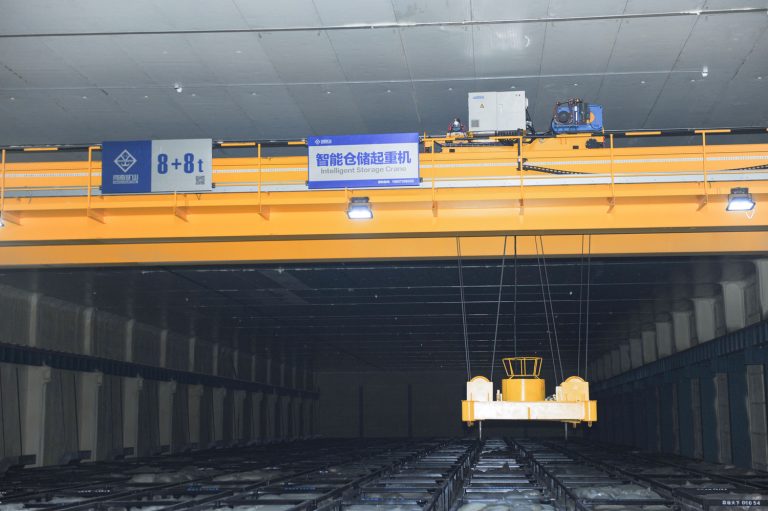
  • Smart Warehouse Crane Manufactured by Henan Mine Crane

    Smart Warehouse Crane Manufactured by Henan Mine Crane

    Crane application

    Smart Warehouse Crane Manufactured by Henan Mine Crane

    Review the smart warehouse crane applications. Review storage geometry, material flow, lifting loads and required automation interfaces.

    Smart Warehouse Crane Manufactured by Henan Mine Crane — Henan Mine Crane crane application photograph
    Smart Warehouse Crane Manufactured by Henan Mine Crane — crane application overview.

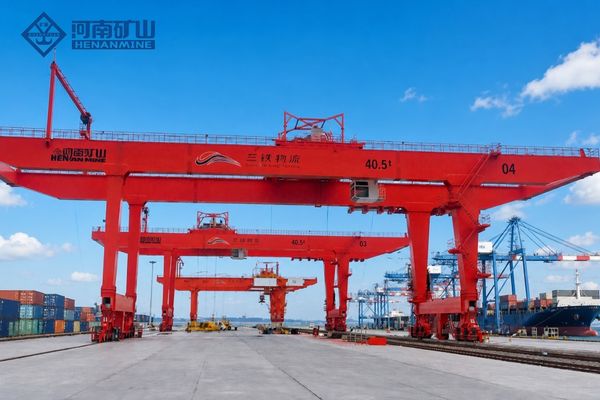
    Container and warehouse handling

    Map the load units, storage or yard lanes, stacking height, travel route, handling cycle, building or rail clearances and vehicle interfaces. Specify the operating wind, power and communication conditions where applicable.

    Crane configuration and interfaces

    Ask for a general arrangement, wheel loads, spreader or lifting attachment scope, travel and positioning controls, protection functions and commissioning tests for the declared handling sequence.

    Review the Overhead crane range and Warehousing & logistics cranes before defining the project-specific arrangement.

    Design the lifting process

    Use the project context above as a starting point. The following checks turn a crane application into a technical scope that suppliers can price and demonstrate for your site.

    Production route and coverage

    Mark the incoming material point, production stations, storage positions and dispatch area on one layout. Record the heaviest regular load, unusual maintenance load, dimensions, lifting points and frequency of each move. A crane sized only for the maximum load can still obstruct the production route if hook approach, building height or column spacing is overlooked. For high-bay storage, identify the rack envelope and the clearance required while a load is suspended.

    Automation and environmental interface

    Define whether positioning is manual, assisted or automatic, and list the signals exchanged with warehouse or production software. Specify what happens when a location is occupied or a load cannot be identified. A cold store adds condensation, temperature transition and access constraints; a clean production area may add particle and material requirements. Describe these conditions explicitly so the electrical package, lubrication, protection and inspection method can be designed for them.

    Offer comparison and handover

    Ask for a general arrangement, hook coverage diagram, runway and wheel-load data, duty selection, control narrative and maintenance access plan. State whether rails, conductors, building reinforcement, controls integration and operator training are included. Site acceptance should repeat representative moves between real stations, check limit protection and demonstrate recovery from an interrupted automated cycle. This is more useful than comparing only rated capacity, span and a headline price.

    Compare the proposed crane scope

    DecisionInformation to request
    Crane and lifting attachmentRated loads, load cases, hook coverage and the complete suspended-load calculation.
    Site interfacesRunway loads, rail or building drawings, electrical supply and installation responsibilities.
    Controls and protectionOperating sequence, required safety functions and a method for testing each function.
    Commercial scopeEquipment, transport, installation, commissioning, documentation, training and spare parts as separate line items.

    From technical offer to site acceptance

    Technical submittals

    A usable bid should show a general arrangement and a clear list of assumptions, not just a model name and capacity. Request the load schedule used in design, lifting-attachment drawings where applicable, span and hook-approach dimensions, wheel loads, electrical supply, control narrative and maintenance access. Check every drawing against the actual building or yard layout. Identify the standards and local approval requirements for the destination market in the enquiry, then confirm the bidder’s proposed design and documentation scope in writing.

    Installation and tests

    Agree when the runway or civil works will be ready, how crane components can reach the installation position and who provides lifting equipment for erection. Define the factory test, on-site installation inspection and site acceptance as separate milestones. The acceptance procedure should list representative loads, the travel route, protection devices, emergency stop and any automation or attachment functions included in the order. Record who supplies test weights, operators, power and access equipment; otherwise a nominal commissioning price may omit essential site work.

    Commercial comparison

    Ask for the same delivery basis and currency across proposals. Separate the crane, special lifting appliances, rails or conductors, transport, installation support, commissioning, training and initial spare parts. Lead time should identify the starting event, such as approved drawings or an effective contract, and any dependency on site readiness. Compare warranty scope and service response by the written contract terms. If a key input is still unknown, request a priced option or a stated assumption instead of allowing different bidders to silently use different specifications. Keep a written exception register so the engineering team can resolve open dimensions, process interfaces and responsibility boundaries before issuing the purchase order.

    Information to include in the enquiry

    • Load weights, dimensions, centre of gravity and lifting attachments.
    • Span, lifting height, runway or yard drawings, travel coverage and clearances.
    • Operating cycle, working environment, electrical supply and control requirements.
    • Supply boundaries, inspection documents, installation support and acceptance criteria.

    Discuss a comparable lifting task

    Send the handling task and available site drawings. Henan Mine Crane can define a proposed crane arrangement and identify the remaining information needed for a technical and commercial review.

  • Yacht Handling Crane Capacity: Vessel Weight and Sling Arrangement

    Yacht Handling Crane Capacity: Vessel Weight and Sling Arrangement

    Technical guide

    Yacht Handling Crane Capacity: Vessel Weight and Sling Arrangement

    A marina lifting brief needs the vessel's verified lifting weight and approved support arrangement. Show hull dimensions, sling positions, lifting points and the transfer route before discussing a suitable crane capacity.

    Henan Mine CraneTechnical guide · Updated 2026Crane selection, project scope and operating requirements
    Yacht Handling Crane Capacity: Vessel Weight and Sling Arrangement
    Henan Mine Crane lifting equipment
    Project planning notes

    Key points for this crane project.

    1. What Load Capacity Actually Means for a Marina Crane
    2. Crane Types Used in Marinas and Their Typical
    3. Matching Capacity to Your Marina’s Vessel Mix
    Read the technical guide

    What Load Capacity Actually Means for a Marina Crane

    Every marina crane or travel lift is rated by its lifting capacity, expressed as a Safe Working Load (SWL) in metric or short tons. This figure already builds in a structural safety factor it is not the absolute point of mechanical failure but the maximum load the manufacturer certifies as safe under normal operating conditions.

    It's worth distinguishing gross capacity from net capacity. For heavier lifts, the difference matters: rigging gear alone can consume several tons of a crane's rated capacity, so the true available load for the vessel itself is always somewhat below the number printed on the spec sheet.

    For travel lifts specifically, capacity also interacts with the sling arrangement.

    Crane Types Used in Marinas and Their Typical Capacity Ranges

    Marinas typically rely on a mix of equipment rather than one universal crane. Matching the type to the task avoids paying for capacity you don't need on routine jobs.

    Crane TypeBest For
    Davit craneTenders, jet skis, dinghies; space-constrained docks
    Jib craneEngine/gearbox removal, mast stepping, quayside component handling
    Marine gantry craneFixed-rail installations spanning a work area
    Mobile boat hoist / travel liftFull vessel haul-out, launching, and yard transport
    Shipboard/knuckle-boom craneCargo handling and onboard equipment transfer

    Davit cranes are the most space-efficient option and are common on yachts themselves for launching tenders, but their lifting capacity is limited and they require secure anchoring against lateral forces. Jib cranes are the workhorse of daily marina tasks a single vertical column anchor-bolted to a concrete pad, with a horizontal boom that rotates to cover a working radius, ideal for jobs like engine servicing rather than full vessel extraction.

    Mobile boat hoists (also called travel lifts) are a different category altogether. They straddle the vessel in a haul-out slip on a wheeled, self-propelled frame, pass slings under the hull, and lift the boat completely clear of the water. This is the equipment class that actually determines a marina's maximum vessel size, since jib and gantry cranes handle components, not whole boats.

    Matching Capacity to Your Marina’s Vessel Mix

    The right tonnage class depends heavily on the type of facility you're running:

    Rather than sizing to your "typical" boat, size to the heaviest vessel you currently service or plan to service a single oversized haul-out request that you can't fulfill costs you both the job and the client relationship.

    Our engineering team supports customers from project consultation and equipment selection to manufacturing, installation guidance, and long-term after-sales service.

    Vessel-Specific Factors That Affect Sizing

    Tonnage isn't the only variable. Several vessel characteristics change what a crane needs to handle physically, independent of raw weight:

    • Draft depth:deep-draft sailing yachts with fin keels require slings to be positioned and managed at significant depth from the dock surface, which affects lift frame height and haul-out slip design, not just capacity.
    • Beam width:modern yachts and catamarans are trending wider, which affects pier spacing and the inside clear width a travel lift needs to straddle the vessel.
    • Hull shape and mass distribution:catamarans, trimarans, and vessels with uneven contents may require dual-point lifting or custom sling positions, placing asymmetrical loads on the crane structure that a simple tonnage rating doesn't capture.
    • Tidal range:variation in water level at the haul-out slip needs to be factored into sling positioning and access planning.

    A crane sized correctly on tonnage alone can still be the wrong choice if it can't physically accommodate these hull-specific factors.

    Infrastructure Requirements at Different Capacity Levels

    Capacity decisions and civil infrastructure decisions can't be separated. A heavy-duty hoist concentrates enormous point loads onto a small number of tire contact patches, rather than distributing weight the way a standard vehicle does. That has direct construction implications:

    • Runway thickness:typically scales from standard slabs up to 10–18 inches of high-PSI reinforced concrete for heavier hoist classes, with dense rebar grids required to prevent cracking under repeated loading.
    • Geotechnical review:becomes necessary at higher capacities, since waterfront soil is often soft silt, clay, or reclaimed land that may need soil borings and, in some cases, deep pile foundations to prevent uneven settlement.
    • Haul-out ramp specification:a reinforced ramp with a defined slope, typically in the 1:10 to 1:15 gradient range, along with load-rated hardstanding for vessel storage, is required for travel lift installations.
    • Pier and slip clearance:must accommodate the widest vessels the facility intends to serve, factoring in the trend toward wider modern hulls.

    Before committing to a capacity class, it's worth budgeting the infrastructure cost alongside the equipment cost the crane purchase price is often the smaller of the two line items at higher tonnage levels.

    Planning for Growth: Why Undersizing Costs More Long-Term

    Vessel sizes across both recreational and commercial marine markets have trended consistently larger over recent decades, and a marina correctly specified for today's fleet often finds itself needing higher capacity within the operational life of the equipment. A correctly specified boat hoist represents a 25-to-30-year capital investment, and the incremental cost of stepping up one capacity tier at initial purchase is consistently lower than retrofitting or supplementing undersized equipment later.

    Practically, this means: if your analysis puts you between two standard capacity tiers, the growth-oriented choice is almost always to round up rather than down.

    Environmental and Duty-Cycle Considerations

    How often and how intensively a crane operates changes what capacity and build quality you actually need, beyond the raw tonnage figure. Light-duty, seasonal marinas can typically use smaller-capacity equipment with lower duty ratings, while commercial shipyards or high-throughput operations need continuous-duty systems built with stronger components and higher-powered drive systems to handle sustained daily cycling.

    Marine environments also degrade equipment faster than land-based use. Saltwater exposure calls for corrosion-resistant construction and protective coatings, and in regions with high wind exposure, load charts and permitted lifting conditions may need to account for reduced safe capacity in gusty conditions.

    Common Sizing Mistakes and How to Avoid Them

    1. Sizing to the average boat instead of the heaviest one. A crane rated for your typical vessel will fail you the first time an outlier arrives.
    2. Ignoring rigging weight. Slings, spreader bars, and hooks eat into net capacity verify the crane's net rating, not just the gross figure.
    3. Overlooking hull geometry. A tonnage-appropriate crane can still be wrong for a wide catamaran or deep-draft sailboat if frame height and slip width weren't checked.
    4. Underbuilding the infrastructure. A correctly rated crane on an undersized concrete runway is still a safety failure waiting to happen.
    5. Skipping the growth calculation. Buying exactly to today's fleet, with no margin, guarantees a costly upgrade cycle sooner than expected.

    Discuss the crane arrangement for your project.

    A marina lifting brief needs the vessel's verified lifting weight and approved support arrangement. Show hull dimensions, sling positions, lifting points and the transfer route before discussing a suitable crane capacity. Share the load, available drawings, working cycle and site conditions with Henan Mine Crane so the required configuration and supply boundary can be discussed.

    Related crane configurations

    Explore crane product families and technical parameters ↗

    Updated 2026 · Henan Mine Crane
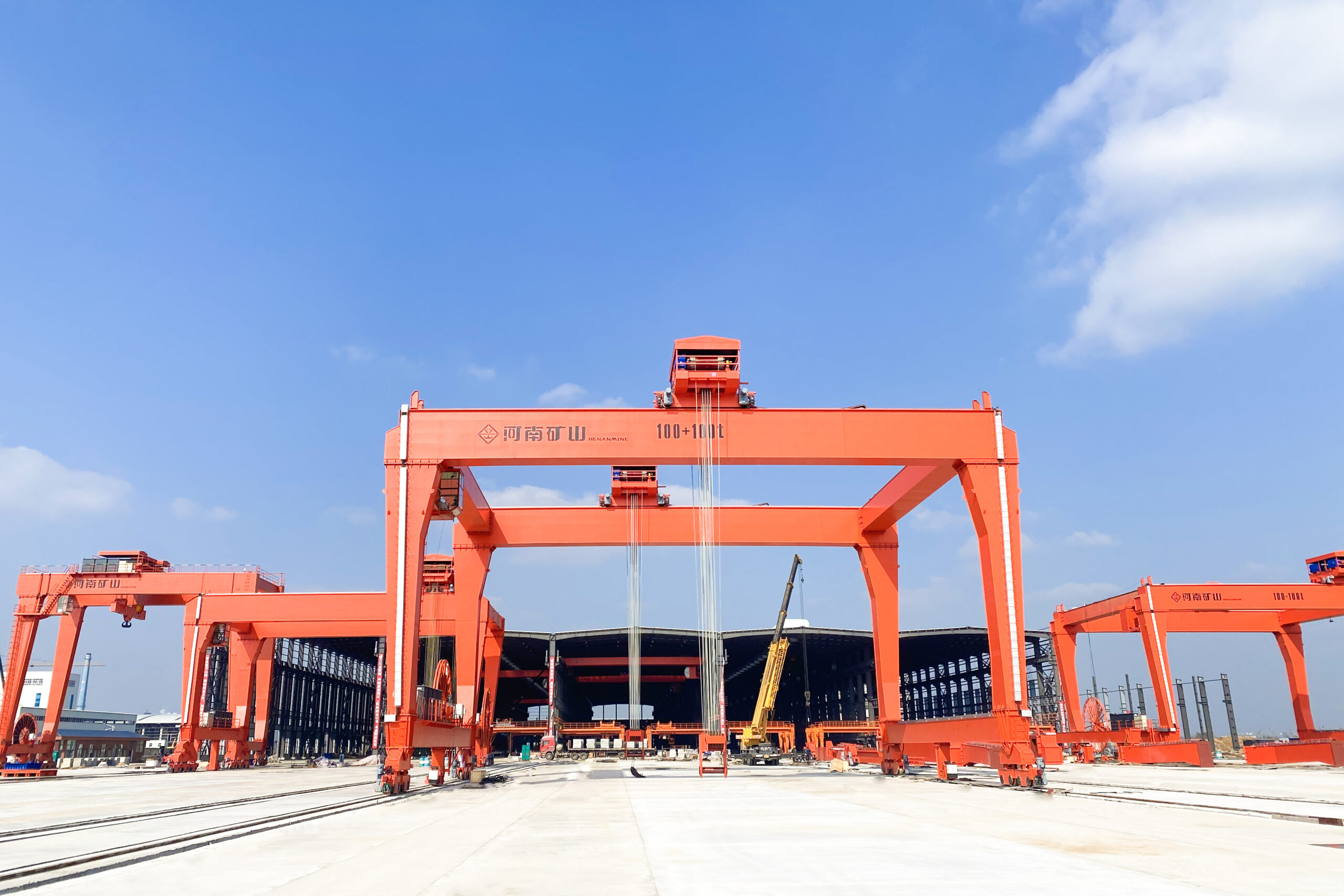
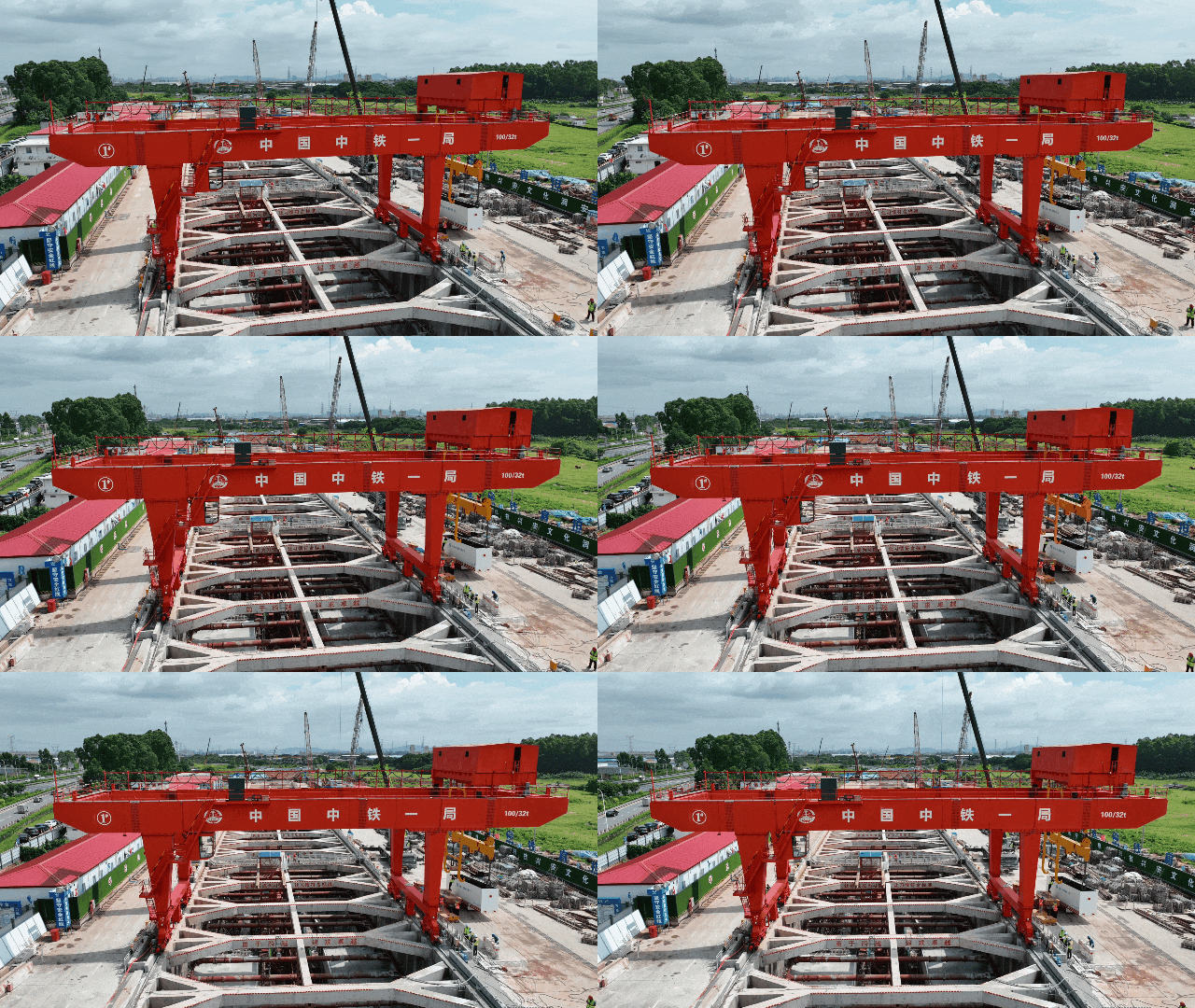
  • Henan Mine Crane manufactures specialized cranes for subway construction

    Henan Mine Crane manufactures specialized cranes for subway construction

    Crane application

    Henan Mine Crane manufactures specialized cranes for subway construction

    Review the metro construction crane applications. Review component loads, lifting points, rail geometry and construction-site requirements.

    Henan Mine Crane manufactures specialized cranes for subway construction — Henan Mine Crane crane application photograph
    Henan Mine Crane manufactures specialized cranes for subway construction — crane application overview.

    Heavy construction lifting

    Confirm the full component weight including rigging, centre of gravity, lifting points, assembly sequence, ground conditions and required travel envelope. Coordinate the crane with the temporary works and construction schedule.

    Crane configuration and interfaces

    Ask for lifting and travel arrangements, support reactions, wind limits, erection and dismantling method, site interfaces and acceptance tests for the proposed construction duty.

    Review the Double-girder gantry cranes and Engineering & construction cranes before defining the project-specific arrangement.

    Design the lifting process

    Use the project context above as a starting point. The following checks turn a crane application into a technical scope that suppliers can price and demonstrate for your site.

    Lifting plan before equipment size

    Provide the heaviest assembly including rigging, the centre of gravity, lifting points and the sequence of picks. Identify each temporary support and the permitted wind and ground conditions during the lift. Large structures may need paired hoists, synchronous travel or staged positioning, but these functions should follow the engineered lifting method. A headline capacity cannot establish whether the crane can pass columns, clear temporary works or place a segment in its final orientation.

    Site geometry and movement

    Share the worksite plan, longitudinal travel length, span, outreach, erection area and transport constraints. Show where the crane can be assembled, how components reach the site and how the machine will be dismantled. For rail or metro work, define the construction possessions and neighbouring operational systems. For bridge and caisson work, include foundation reactions, rail levels and the interface with launching, welding or alignment operations.

    Technical and commercial deliverables

    Request general arrangement and wheel-load drawings, lifting and travel procedures, wind operating limits, installation method, inspection points and acceptance test plan. Separate the supply of foundations, tracks, power, lifting beams and temporary works. Require a method for verifying synchronized motions and emergency stops under the agreed load cases. Delivery schedules should be reviewed against site readiness and the construction programme rather than copied from an unrelated project case.

    Compare the proposed crane scope

    DecisionInformation to request
    Crane and lifting attachmentRated loads, load cases, hook coverage and the complete suspended-load calculation.
    Site interfacesRunway loads, rail or building drawings, electrical supply and installation responsibilities.
    Controls and protectionOperating sequence, required safety functions and a method for testing each function.
    Commercial scopeEquipment, transport, installation, commissioning, documentation, training and spare parts as separate line items.

    From technical offer to site acceptance

    Technical submittals

    A usable bid should show a general arrangement and a clear list of assumptions, not just a model name and capacity. Request the load schedule used in design, lifting-attachment drawings where applicable, span and hook-approach dimensions, wheel loads, electrical supply, control narrative and maintenance access. Check every drawing against the actual building or yard layout. Identify the standards and local approval requirements for the destination market in the enquiry, then confirm the bidder’s proposed design and documentation scope in writing.

    Installation and tests

    Agree when the runway or civil works will be ready, how crane components can reach the installation position and who provides lifting equipment for erection. Define the factory test, on-site installation inspection and site acceptance as separate milestones. The acceptance procedure should list representative loads, the travel route, protection devices, emergency stop and any automation or attachment functions included in the order. Record who supplies test weights, operators, power and access equipment; otherwise a nominal commissioning price may omit essential site work.

    Commercial comparison

    Ask for the same delivery basis and currency across proposals. Separate the crane, special lifting appliances, rails or conductors, transport, installation support, commissioning, training and initial spare parts. Lead time should identify the starting event, such as approved drawings or an effective contract, and any dependency on site readiness. Compare warranty scope and service response by the written contract terms. If a key input is still unknown, request a priced option or a stated assumption instead of allowing different bidders to silently use different specifications. Keep a written exception register so the engineering team can resolve open dimensions, process interfaces and responsibility boundaries before issuing the purchase order.

    Information to include in the enquiry

    • Load weights, dimensions, centre of gravity and lifting attachments.
    • Span, lifting height, runway or yard drawings, travel coverage and clearances.
    • Operating cycle, working environment, electrical supply and control requirements.
    • Supply boundaries, inspection documents, installation support and acceptance criteria.

    Discuss a comparable lifting task

    Send the handling task and available site drawings. Henan Mine Crane can define a proposed crane arrangement and identify the remaining information needed for a technical and commercial review.

  • Henan Mine Crane-Manufactured Crane for Electrolytic Aluminum Production

    Henan Mine Crane-Manufactured Crane for Electrolytic Aluminum Production

    Crane application

    Henan Mine Crane-Manufactured Crane for Electrolytic Aluminum Production

    Review the electrolytic aluminum crane applications. Review the handling task, load geometry, working duty and equipment interfaces for your application.

    Henan Mine Crane-Manufactured Crane for Electrolytic Aluminum Production — Henan Mine Crane crane application photograph
    Henan Mine Crane-Manufactured Crane for Electrolytic Aluminum Production — crane application overview.

    Energy and materials production

    Specify the product or component geometry, process exposure, lifting attachment, handling frequency, working environment and any clean, corrosive or classified-area requirements.

    Crane configuration and interfaces

    Ask for the applicable equipment configuration, area classification where relevant, mechanical and electrical interfaces, inspection access and a site-specific test plan.

    Review the Metallurgical overhead cranes and Energy & new materials cranes before defining the project-specific arrangement.

    Design the lifting process

    Use the project context above as a starting point. The following checks turn a crane application into a technical scope that suppliers can price and demonstrate for your site.

    Process-specific load definition

    Describe whether the crane handles anodes, carbon blocks, bath materials, finished coils or maintenance components. Give the unit size, mass, stacking geometry, handling frequency and lifting attachment. Electrolytic operations may expose equipment to heat, dust and a corrosive atmosphere; these values should come from the plant design. A lifting solution for blocks or containers cannot be selected solely from the main-hook capacity.

    Attachment and control scope

    Specify how each load is gripped or supported and how a safe release is confirmed. Automated stacking requires identified storage positions, obstruction handling, sensor inputs and a recovery method after interruption. Request the approach and clearance drawing, control narrative and electrical interface before accepting a quoted level of automation. Include inspection access and the replacement plan for wear components in the handling attachment.

    Acceptance with representative materials

    Compare offers using the same load cases, cycle distances, duty, building geometry and operating environment. The supplier should identify crane, attachment and plant-interface supply boundaries. A site trial should handle representative units and verify grip confirmation, placement, limits, emergency stop and controlled restart. Ask for documentation of applicable environmental protections and maintenance procedures rather than relying on a general statement about a “special crane”.

    Compare the proposed crane scope

    DecisionInformation to request
    Crane and lifting attachmentRated loads, load cases, hook coverage and the complete suspended-load calculation.
    Site interfacesRunway loads, rail or building drawings, electrical supply and installation responsibilities.
    Controls and protectionOperating sequence, required safety functions and a method for testing each function.
    Commercial scopeEquipment, transport, installation, commissioning, documentation, training and spare parts as separate line items.

    From technical offer to site acceptance

    Technical submittals

    A usable bid should show a general arrangement and a clear list of assumptions, not just a model name and capacity. Request the load schedule used in design, lifting-attachment drawings where applicable, span and hook-approach dimensions, wheel loads, electrical supply, control narrative and maintenance access. Check every drawing against the actual building or yard layout. Identify the standards and local approval requirements for the destination market in the enquiry, then confirm the bidder’s proposed design and documentation scope in writing.

    Installation and tests

    Agree when the runway or civil works will be ready, how crane components can reach the installation position and who provides lifting equipment for erection. Define the factory test, on-site installation inspection and site acceptance as separate milestones. The acceptance procedure should list representative loads, the travel route, protection devices, emergency stop and any automation or attachment functions included in the order. Record who supplies test weights, operators, power and access equipment; otherwise a nominal commissioning price may omit essential site work.

    Commercial comparison

    Ask for the same delivery basis and currency across proposals. Separate the crane, special lifting appliances, rails or conductors, transport, installation support, commissioning, training and initial spare parts. Lead time should identify the starting event, such as approved drawings or an effective contract, and any dependency on site readiness. Compare warranty scope and service response by the written contract terms. If a key input is still unknown, request a priced option or a stated assumption instead of allowing different bidders to silently use different specifications. Keep a written exception register so the engineering team can resolve open dimensions, process interfaces and responsibility boundaries before issuing the purchase order.

    Information to include in the enquiry

    • Load weights, dimensions, centre of gravity and lifting attachments.
    • Span, lifting height, runway or yard drawings, travel coverage and clearances.
    • Operating cycle, working environment, electrical supply and control requirements.
    • Supply boundaries, inspection documents, installation support and acceptance criteria.

    Discuss a comparable lifting task

    Send the handling task and available site drawings. Henan Mine Crane can define a proposed crane arrangement and identify the remaining information needed for a technical and commercial review.

  • QB Explosion-Proof Crane Capacity for Chemical and Oil-Gas Sites

    QB Explosion-Proof Crane Capacity for Chemical and Oil-Gas Sites

    Technical guide

    QB Explosion-Proof Crane Capacity for Chemical and Oil-Gas Sites

    Capacity selection must sit alongside the site's hazardous-area requirements. Provide the complete suspended load, handling dimensions and area classification so the proposed QB arrangement addresses both the lifting task and installation conditions.

    Henan Mine CraneTechnical guide · Updated 2026Crane selection, project scope and operating requirements
    Henan Mine Crane Clean Explosion Proof Bridge Crane
    Henan Mine Crane Clean Explosion Proof Bridge Crane
    Project planning notes

    Key points for this crane project.

    1. What Is a QB Crane?
    2. How Duty Class (A3–A5) Affects Which Capacity You
    3. Matching Load Capacity to Oil & Gas / Chemical Plant
    Read the technical guide

    What Is a QB Crane?

    A QB crane is a double-girder, top-running overhead crane built with explosion-proof electrical components throughout motor, hoist, control panel, pendant, limit switches, and cable routing. The "QB" designation is standard across most Chinese and Asian crane manufacturers and denotes a flameproof (Ex d) double-girder bridge crane rated for use in classified hazardous areas.

    The gas group IIB or IIC determines which specific gases the crane is rated to operate safely around, a distinction covered in more detail below.

    Unlike a standard industrial overhead crane, every spark-capable component on a QB unit is either eliminated or enclosed to contain any internal ignition, preventing it from reaching the surrounding atmosphere. This is why QB cranes carry a meaningful cost premium over a standard double-girder crane of equivalent capacity and why getting the capacity specification right the first time matters so much.

    How Duty Class (A3–A5) Affects Which Capacity You Actually Need

    Tonnage alone doesn't tell you whether a QB crane is correctly specified. Duty class governed by ISO 4301 / FEM 1.001 determines how many lift cycles and what load spectrum the crane's structure and drivetrain are engineered to handle over their service life. For QB cranes, duty class typically runs from A3 to A5, with A5 as the practical ceiling for this series.

    This matters because two plants needing the same 20-ton lift can require very different cranes:

    • A3–A4 (light duty):Batch-process operations with real rest time between lifts maintenance turnarounds, occasional drum handling, infrequent equipment swaps. Roughly 10–30 cycles per shift is typical.
    • A5 (the QB maximum):Regular, near-daily lifting without the extended idle periods of A3–A4, but still short of continuous production-line cycling.

    If your actual usage pattern is closer to continuous multi-shift lifting for example, a reactor feed operation running 40+ cycles an hour across three shifts that workload exceeds what any QB-class crane is designed for. Running that duty cycle on an A5-rated crane pushes the gearbox, hoist motor, and structural welds beyond their fatigue design life, leading to premature failure and unplanned maintenance inside a Zone 1 classified area which is a safety event, not just a maintenance headache.

    1. Average load as a percentage of maximum rated capacity

    Your crane supplier should calculate duty class from this data rather than defaulting to a conservative guess both under- and over-specifying carry real cost consequences.

    Matching Load Capacity to Oil & Gas / Chemical Plant Tasks

    Different areas of an oil and gas or chemical facility generate very different lift profiles. Mapping your task type to a realistic capacity band avoids both under-spec risk and unnecessary overspend:

    Petrochemical reactor and pressure-vessel installation during turnarounds is consistently the heaviest recurring lift category, which is why plants with active turnaround programs often specify the upper end of the QB range even if day-to-day lifting rarely approaches that tonnage. It's common and reasonable for a single facility to run more than one QB crane at different capacities across different bays rather than oversizing one unit for the whole plant.

    Step-by-Step: How to Calculate the Load Capacity You Need

    Sizing a crane by "the heaviest thing we lift" alone is a common and costly shortcut. Use this sequence instead:

    • Determine the maximum actual net weight of equipment/component itself: the data specified in the technical specification of equipment and freight list shall prevail. It is forbidden to adopt estimated value and calculate the heaviest single weight actually required to be hoisted on site.
    • Weight of all lifting tools and accessories included: lifting rigging, balance lifting beam, shackle, lifting beam and crane hook group, etc., all supporting lifting equipment weight shall be included in the total load to be carried by the crane.
    • Considering dynamic load additional coefficient: during hoisting process, component deviation, swing and start-stop impact will produce additional load exceeding static dead weight, especially when reactor special-shaped components and suspended pipelines are hoisted in sections, so dynamic load allowance must be reserved.
    • The two calculation methods are essentially equivalent and are used to reserve safety buffer intervals.
    • In addition to tonnage, synchronous check crane working level: even if the rated lifting capacity of the crane meets the load requirements, if the working cycle frequency does not match the field operation conditions, it is still a selection error.

    QB vs. LB (Single Girder): When 75 Tons Isn’t the Right Question

    Before finalizing the purchase order for QB crane, verify whether the double girder crane is actually required for the working condition.

    QB double-beam crane shall be selected to meet any of the following working conditions:

    • The field conditions require higher lifting height
    • This advantage is especially critical when lifting operations are carried out in narrow areas such as close to plant walls and reactor nozzles.

    Under this tonnage, the type selection cannot be based on the lifting weight alone, but needs to be comprehensively judged in combination with the operation span, lifting height and working level to select the model with better cost performance and adaptability.

    Gas Group & Zone Classification's Effect on Capacity Selection

    Load capacity and hazardous-area rating are specified independently, but both must be confirmed together before ordering. QB cranes are most commonly rated:

    • ExdIIBT4:the standard default configuration, covering the majority of industrial hazardous atmospheres including hydrogen sulfide, ethylene, propylene, and most petroleum and solvent vapors. This is correct for the large majority of petrochemical transfer, refinery, and fuel storage applications.
    • ExdIICT4:required only where hydrogen or acetylene are present, the two most ignition-sensitive gases found in chemical synthesis and some specialty processes.

    Your facility's hazardous area classification document not a general assumption about "the oil and gas industry" should specify which gas group and zone (Zone 1, Zone 2, Zone 21/22 for dust) applies to the specific bay where the crane will operate.

    Common Overspec/Underspec Mistakes in Oil & Gas Procurement

    Three patterns show up repeatedly in QB crane procurement, and both directions of error are expensive:

    • Sizing to the nameplate weight only. Teams frequently specify capacity from an equipment datasheet weight alone, without adding rigging, lifting devices, or a safety margin leaving no buffer for the real-world lift.
    • Ignoring duty class in favor of tonnage. A crane rated for the correct maximum weight but installed in a higher-cycle-frequency application than its duty class supports will fail structurally years ahead of its design life inside a classified hazardous area, where unplanned maintenance carries outsized risk.
    • Defaulting to IIC "to be safe."Specifying the higher gas group as a blanket precaution, rather than confirming actual area classification, adds unnecessary cost without a corresponding safety benefit if the facility's actual atmosphere only requires IIB.

    The fix in all three cases is the same: pull actual cycle, shift, and area-classification data before the RFQ stage rather than after installation reveals the mismatch.

    Cost Implications of Capacity & Duty Class

    Capacity and duty class are the two largest cost drivers on a QB crane order, and they interact rather than stacking independently:

    Specifying accurately upfront correct tonnage, correct duty class, correct gas group is consistently cheaper over the crane's service life than either an oversized "just in case" order or an undersized unit that fails early.

    Frequently Asked Questions

    What is the maximum load capacity of a QB explosion-proof crane?

    Heavy-duty custom configurations for reactor and pressure-vessel installation can extend well beyond that on a project-engineered basis.

    What duty class should a QB crane in an oil and gas plant use?

    QB cranes are typically rated A3 to A5, with A5 as the practical maximum for this series. The correct class depends on your daily lift-cycle count and shift pattern, not on tonnage alone.

    Is gas group IIB or IIC required for a QB crane?

    Gas group IIB covers most petroleum and chemical vapors, including hydrogen sulfide and ethylene, and is the default rating for QB cranes. IIC is required only where hydrogen or acetylene are present in the classified area.

    How much safety margin should I add when specifying crane capacity?

    Should I choose a QB double-girder or LB single-girder crane?

    Discuss the crane arrangement for your project.

    Capacity selection must sit alongside the site's hazardous-area requirements. Provide the complete suspended load, handling dimensions and area classification so the proposed QB arrangement addresses both the lifting task and installation conditions. Share the load, available drawings, working cycle and site conditions with Henan Mine Crane so the required configuration and supply boundary can be discussed.

    Related crane configurations

    Clean Explosion Proof Bridge Crane

    View product parameters
    Lifting capacity: 1t – 32tSpan: 7.5m – 28.5mLifting height: 6m – 20m

    Combine overhead lifting with the declared cleanliness and hazardous-area requirements. Specify particle-control expectations, process exposure and area classification for the complete lifting system.

    Dual Trolley Explosion Proof Bridge Crane

    View product parameters
    Lifting capacity: 20+20tSpan: 10m – 35mLifting height: 6m – 30m

    Combine two-trolley handling with the declared hazardous-area specification. Coordinate hook loads, lifting sequence, electrical protection and operator controls for the complete installation.

    Updated 2026 · Henan Mine Crane
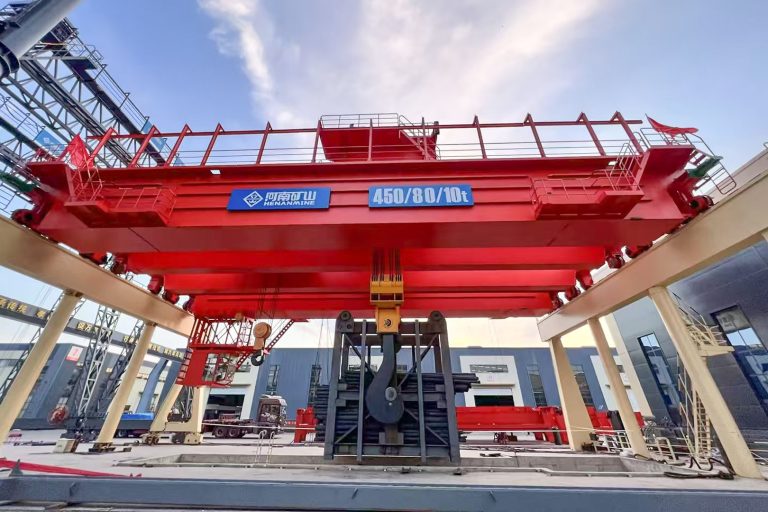
  • Henan Mine Crane-Manufactured Bridge Construction Specialized Crane

    Henan Mine Crane-Manufactured Bridge Construction Specialized Crane

    Crane application

    Henan Mine Crane-Manufactured Bridge Construction Specialized Crane

    Review the bridge construction crane applications. Review component loads, lifting points, rail geometry and construction-site requirements.

    Henan Mine Crane-Manufactured Bridge Construction Specialized Crane — Henan Mine Crane crane application photograph
    Henan Mine Crane-Manufactured Bridge Construction Specialized Crane — crane application overview.

    Heavy construction lifting

    Confirm the full component weight including rigging, centre of gravity, lifting points, assembly sequence, ground conditions and required travel envelope. Coordinate the crane with the temporary works and construction schedule.

    Crane configuration and interfaces

    Ask for lifting and travel arrangements, support reactions, wind limits, erection and dismantling method, site interfaces and acceptance tests for the proposed construction duty.

    Review the Double-girder gantry cranes and Engineering & construction cranes before defining the project-specific arrangement.

    Design the lifting process

    Use the project context above as a starting point. The following checks turn a crane application into a technical scope that suppliers can price and demonstrate for your site.

    Lifting plan before equipment size

    Provide the heaviest assembly including rigging, the centre of gravity, lifting points and the sequence of picks. Identify each temporary support and the permitted wind and ground conditions during the lift. Large structures may need paired hoists, synchronous travel or staged positioning, but these functions should follow the engineered lifting method. A headline capacity cannot establish whether the crane can pass columns, clear temporary works or place a segment in its final orientation.

    Site geometry and movement

    Share the worksite plan, longitudinal travel length, span, outreach, erection area and transport constraints. Show where the crane can be assembled, how components reach the site and how the machine will be dismantled. For rail or metro work, define the construction possessions and neighbouring operational systems. For bridge and caisson work, include foundation reactions, rail levels and the interface with launching, welding or alignment operations.

    Technical and commercial deliverables

    Request general arrangement and wheel-load drawings, lifting and travel procedures, wind operating limits, installation method, inspection points and acceptance test plan. Separate the supply of foundations, tracks, power, lifting beams and temporary works. Require a method for verifying synchronized motions and emergency stops under the agreed load cases. Delivery schedules should be reviewed against site readiness and the construction programme rather than copied from an unrelated project case.

    Compare the proposed crane scope

    DecisionInformation to request
    Crane and lifting attachmentRated loads, load cases, hook coverage and the complete suspended-load calculation.
    Site interfacesRunway loads, rail or building drawings, electrical supply and installation responsibilities.
    Controls and protectionOperating sequence, required safety functions and a method for testing each function.
    Commercial scopeEquipment, transport, installation, commissioning, documentation, training and spare parts as separate line items.

    From technical offer to site acceptance

    Technical submittals

    A usable bid should show a general arrangement and a clear list of assumptions, not just a model name and capacity. Request the load schedule used in design, lifting-attachment drawings where applicable, span and hook-approach dimensions, wheel loads, electrical supply, control narrative and maintenance access. Check every drawing against the actual building or yard layout. Identify the standards and local approval requirements for the destination market in the enquiry, then confirm the bidder’s proposed design and documentation scope in writing.

    Installation and tests

    Agree when the runway or civil works will be ready, how crane components can reach the installation position and who provides lifting equipment for erection. Define the factory test, on-site installation inspection and site acceptance as separate milestones. The acceptance procedure should list representative loads, the travel route, protection devices, emergency stop and any automation or attachment functions included in the order. Record who supplies test weights, operators, power and access equipment; otherwise a nominal commissioning price may omit essential site work.

    Commercial comparison

    Ask for the same delivery basis and currency across proposals. Separate the crane, special lifting appliances, rails or conductors, transport, installation support, commissioning, training and initial spare parts. Lead time should identify the starting event, such as approved drawings or an effective contract, and any dependency on site readiness. Compare warranty scope and service response by the written contract terms. If a key input is still unknown, request a priced option or a stated assumption instead of allowing different bidders to silently use different specifications. Keep a written exception register so the engineering team can resolve open dimensions, process interfaces and responsibility boundaries before issuing the purchase order.

    Information to include in the enquiry

    • Load weights, dimensions, centre of gravity and lifting attachments.
    • Span, lifting height, runway or yard drawings, travel coverage and clearances.
    • Operating cycle, working environment, electrical supply and control requirements.
    • Supply boundaries, inspection documents, installation support and acceptance criteria.

    Discuss a comparable lifting task

    Send the handling task and available site drawings. Henan Mine Crane can define a proposed crane arrangement and identify the remaining information needed for a technical and commercial review.

  • Four-Girder Casting Crane for Steel Mills Manufactured by Henan Mine Crane

    Four-Girder Casting Crane for Steel Mills Manufactured by Henan Mine Crane

    Crane application

    Four-Girder Casting Crane for Steel Mills Manufactured by Henan Mine Crane

    Review the four-girder casting crane applications. Review load definitions, process exposure, lifting arrangements and working duty for your project.

    Four-Girder Casting Crane for Steel Mills Manufactured by Henan Mine Crane — Henan Mine Crane crane application photograph
    Four-Girder Casting Crane for Steel Mills Manufactured by Henan Mine Crane — crane application overview.

    Steelmaking and metal handling

    Define the complete suspended load, ladle or steel-product geometry, process temperature, crane duty and safe travel path. For molten-metal work, include auxiliary lifting, heat shielding, redundant protections and inspection access in the specification.

    Crane configuration and interfaces

    Ask for the crane arrangement, hook and lifting appliance interfaces, runway loads, control and monitoring functions, inspection access and a test plan matched to the plant process.

    Review the Metallurgical overhead cranes and Steel & metallurgy cranes before defining the project-specific arrangement.

    Design the lifting process

    Use the project context above as a starting point. The following checks turn a crane application into a technical scope that suppliers can price and demonstrate for your site.

    Molten-metal lifting sequence

    Describe where a ladle is picked up, where it travels, how it is poured and how it is returned. Provide the mass of the ladle, lining, molten metal, lifting beam and rigging as separate inputs. The main-hook capacity alone does not define the crane: auxiliary-hook duty, hook spacing, approach, travel speed, plant clearances and the number of lifts per shift matter. If the process includes charging, tundish transfer or maintenance lifts, separate those cycles rather than assuming one arrangement can serve them all.

    Protection and maintainability

    For a hot shop, specify ambient and radiant temperatures at the bridge, trolley, electrical cabinets and operator position. Discuss heat shielding, cable routing, braking and overspeed protection, redundant functions where applicable, access for inspection and a safe maintenance position. These features need a project-specific risk assessment and applicable design standard; a catalogue label such as “metallurgical” does not establish suitability for molten-metal duty. Provide runway condition and building clearances so that protective equipment can be installed and serviced.

    What to compare at technical review

    Request general arrangement drawings, the mass calculation for the suspended load, main and auxiliary hook duties, duty classification, wheel loads, electrical interfaces and a list of protective functions. Compare each offer against the same process sequence and site drawings. Define factory and site acceptance tests for rated load, interlocks, brakes, limit switches and operational travel. Agree how production will be isolated during installation and how spare components will be supported. Published case tonnages describe those installations only; a new crane must be sized to its own process.

    Compare the proposed crane scope

    DecisionInformation to request
    Crane and lifting attachmentRated loads, load cases, hook coverage and the complete suspended-load calculation.
    Site interfacesRunway loads, rail or building drawings, electrical supply and installation responsibilities.
    Controls and protectionOperating sequence, required safety functions and a method for testing each function.
    Commercial scopeEquipment, transport, installation, commissioning, documentation, training and spare parts as separate line items.

    From technical offer to site acceptance

    Technical submittals

    A usable bid should show a general arrangement and a clear list of assumptions, not just a model name and capacity. Request the load schedule used in design, lifting-attachment drawings where applicable, span and hook-approach dimensions, wheel loads, electrical supply, control narrative and maintenance access. Check every drawing against the actual building or yard layout. Identify the standards and local approval requirements for the destination market in the enquiry, then confirm the bidder’s proposed design and documentation scope in writing.

    Installation and tests

    Agree when the runway or civil works will be ready, how crane components can reach the installation position and who provides lifting equipment for erection. Define the factory test, on-site installation inspection and site acceptance as separate milestones. The acceptance procedure should list representative loads, the travel route, protection devices, emergency stop and any automation or attachment functions included in the order. Record who supplies test weights, operators, power and access equipment; otherwise a nominal commissioning price may omit essential site work.

    Commercial comparison

    Ask for the same delivery basis and currency across proposals. Separate the crane, special lifting appliances, rails or conductors, transport, installation support, commissioning, training and initial spare parts. Lead time should identify the starting event, such as approved drawings or an effective contract, and any dependency on site readiness. Compare warranty scope and service response by the written contract terms. If a key input is still unknown, request a priced option or a stated assumption instead of allowing different bidders to silently use different specifications. Keep a written exception register so the engineering team can resolve open dimensions, process interfaces and responsibility boundaries before issuing the purchase order.

    Information to include in the enquiry

    • Load weights, dimensions, centre of gravity and lifting attachments.
    • Span, lifting height, runway or yard drawings, travel coverage and clearances.
    • Operating cycle, working environment, electrical supply and control requirements.
    • Supply boundaries, inspection documents, installation support and acceptance criteria.

    Discuss a comparable lifting task

    Send the handling task and available site drawings. Henan Mine Crane can define a proposed crane arrangement and identify the remaining information needed for a technical and commercial review.