Engineering · Manufacturing · Project support
info@hnksglobal.comWhatsApp +86 18836207779 ↗

Blog

  • STS Crane Capacity: Under-Spreader Load and Vessel Requirements

    STS Crane Capacity: Under-Spreader Load and Vessel Requirements

    Technical guide

    STS Crane Capacity: Under-Spreader Load and Vessel Requirements

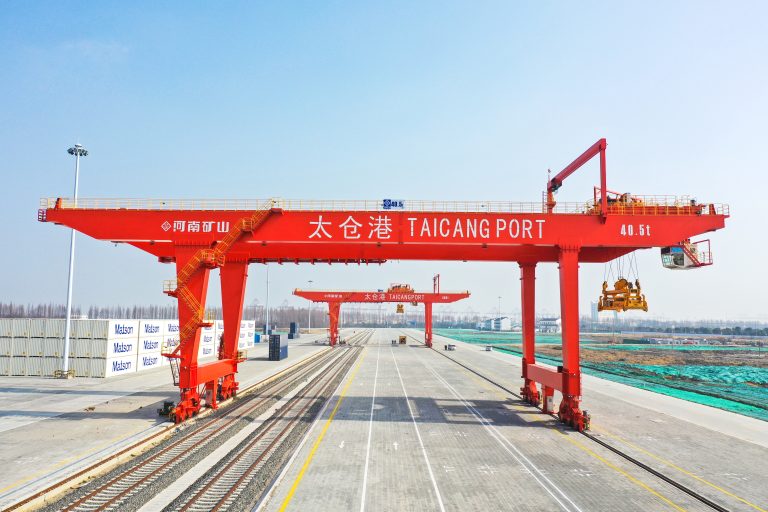
    Container handling capacity must be considered with the spreader arrangement and intended vessel service. State the required load basis, container modes and ship geometry so the supplier can define the complete ship-to-shore configuration.
    Henan Mine CraneTechnical guide · Updated 2026Crane selection, project scope and operating requirements
    ship to shore container crane manufacturer
    ship to shore container crane manufacturer
    Project planning notes

    Key points for this crane project.

    1. The core definition of STS Crane lifting capacity
    2. According to the docking ship type to determine the
    3. The container mode of operation on the lifting
    Read the technical guide

    The core definition of STS Crane lifting capacity

    The ship-to-shore crane capacity labeled by the port industry is mainly divided into two standards: the rated load under spreader and the rated load under hook, which have completely different purposes and are the most confusing key points for model selection.

    The rated load under spreader is the core parameter of container operation, including container weight, special telescopic spreader weight, and at the same time, it is suitable for different operation modes, such as single container, double container and multi-consolidated container, etc. This is the daily container loading and unloading operation in the terminal. It is the core reference index for daily container loading and unloading operation in terminals, and also the core parameter of bidding documents and equipment contracts.

    The rated load under the hook belongs to the auxiliary operation parameters and is not used for routine container lifting. It is mainly adapted to the sporadic operation of terminals, such as hatch cover dismantling, engineering large lifting, equipment maintenance and counterweighting, and other special working conditions, and most of the conventional terminals will not be used at high frequency.

    Many project acceptance and later operation and maintenance disputes arise from confusing the two sets of parameters. At the stage of procurement and selection, it is necessary to clearly distinguish between container-specific loads and maintenance auxiliary loads, so as to avoid parameter mismatches that may cause the equipment to be unable to go into normal operation.

    According to the docking ship type to determine the basic lifting parameters

    Different container ship deck box layout, stacking height, hull width varies greatly, corresponding to the appropriate STS crane for container terminal lifting capacity is also completely different, which is the primary basis for selection.

    Feeder vessels are the mainstream docking vessels in small and medium-sized ports, with small hull width, fewer rows of deck containers and lower number of stacking layers. This type of ship type operation pressure is small, the standard lifting capacity of conventional single-box operation can meet the demand, without the need for high allocation of large load equipment.

    Panama-type, super Panama-type ships, the hull size is larger, the deck box space is dense, the average daily throughput of the terminal is higher. In order to enhance the speed of berth turnover, this type of ship is generally adapted to double-box operation mode, which requires equipment with higher rated load under the spreader to ensure the stable operation of high-frequency loading and unloading operations.

    Ultra-large super-Panamax vessel (ULCV) is the main ship type of ocean-going trunk line, with wide hull, many stacking layers and large single-carrying capacity, which requires high requirements for equipment operation efficiency and structural stability. These terminals usually use double or even multiple container operation configuration of the quay bridge, with a stronger structural load and stability control system.
    ship to shore container crane manufacturer
    ship to shore container crane manufacturer

    The container mode of operation on the lifting tonnage impact

    The mode of operation directly determines the STS crane rated load under spreader selection criteria, but also to distinguish between the terminal operation level, the upper limit of production capacity of the key factors, the load configuration of different modes of the difference is very obvious.

    Single container operation is the basic operation mode, the equipment only lifts one 20-foot, 40-foot or 45-foot standard container at a time. This mode is suitable for small and medium-sized feeder ports and regional terminals with low throughput, with lower equipment procurement cost, simple operation logic and less pressure on operation and maintenance in the later stage. The corresponding lifting capacity does not need to be too high to meet the standard full container lifting.

    The double container operation relies on the special double container spreader, which can lift two 20-foot standard containers at the same time, and is the standard mode for medium and large mainstream terminals. This mode can greatly improve the work capacity of single equipment, shorten the port call time of ships, and meet the high-frequency operation demand of mainline routes. However, it has higher requirements on equipment load rating, steel structure strength and electrical control system.

    Multi-tandem operation belongs to the high-end terminal configuration, which can lift two 40-foot or four 20-foot containers at the same time, and is only applicable to large-scale deep-water hub ports and transshipment home ports. This type of mode of operation on the lifting capacity requirements are extremely high, the cost of equipment, terminal infrastructure bearing standards will also be synchronized to enhance only high throughput terminals are suitable for this configuration.

    The mainstream STS Crane lifting tonnage range reference

    Combined with the various types of global dock conditions, sorted out different scenarios under the quay crane specification standard tonnage range, to facilitate pre-project parameter benchmarking and quotation reference:

    Terminal & Vessel TypeOperation ModeCore Application Scenario
    Small Feeder PortSingle-liftRegional small terminals, low daily throughput
    Medium Container TerminalSingle / Twin-liftMainline ports, standard Panamax vessel service
    Large Deepwater TerminalTwin-liftSuper Post-Panamax & large vessel operation
    Transshipment HubTandem / Multi-liftHigh-volume automated container terminals

    Accurately calculate the required lifting capacity of STS Crane

    lifting capacity selection cannot only refer to the theoretical weight of the container, must be superimposed on the multiple working conditions coefficients, in order to meet the needs of long-term stable operation. All calculations need to reserve a reasonable margin to avoid the risk of dynamic operation.

    The core calculation logic of single container operation is the maximum full container weight, superimposed with spreader weight, lifting dynamic inertia coefficient and safety margin. Offshore operation wind and waves, equipment start and stop shaking will produce additional loads, purely theoretical tonnage will lead to long-term overloaded equipment operation.

    Double box operation needs to account for the total weight of two fully loaded 20-foot containers, with double box special spreader weight, and at the same time, consider the container offload, alignment deviation brought about by the eccentric load. This is also the core reason why the tonnage of equipment for double box operation is generally higher than that of single box equipment.

    The calculation logic of multi-container operation is even more complex, requiring statistics of the total deadweight of all synchronized lifted containers, superimposed on the weight of large tandem spreaders, while adapting to the load fluctuations under high-frequency start-stop and windy conditions, with a higher standard of safety and redundancy.

    In addition, we should also take into account the fatigue life of the equipment, the future container heavy-duty upgrading, terminal extreme weather operations and other hidden factors, to avoid short-term parameters to meet the standard, long-term working conditions do not match the problem.

    Lifting tonnage and terminal capacity, infrastructure and adaptive logic

    Larger lifting capacity, not directly equivalent to higher operating efficiency, the need for equipment and lifting speed, trolley operating speed, terminal collection and transportation system to match each other. Blindly high matching tonnage will only increase the cost of equipment and infrastructure.

    Small and medium-sized low throughput terminals, high with high-capacity double box bridge cannot play the capacity advantage, but will increase the equipment weight, wheel pressure and energy consumption, raise the later operation and maintenance costs. Large trunk terminals, transit hubs, a reasonable high allocation of tonnage and double box configuration, can effectively shorten the ship docking time, enhance the berth utilization rate.

    lifting capacity will also directly affect the terminal infrastructure standards. high-capacity STS Cranes have greater deadweight, higher wheel pressure, higher requirements for the track foundation, quay surface, load-bearing structure, the preliminary civil investment will increase simultaneously. Selection needs to balance the equipment parameters and infrastructure budget.

    At the same time, the equipment outreach, lifting height must be matched with the tonnage. Large ocean-going vessels are not only large container capacity, hull width and deck height is also higher, only to enhance the tonnage, do not match the outreach and lifting height, still cannot meet the operational requirements.

    Spreader configuration and safety standards on the constraints of tonnage selection

    Spreader is the core component that directly carries the container, different spreader types correspond to the fixed tonnage fitness standard, which is a link that cannot be ignored in the selection.

    Safety system configuration also affects the actual use of tonnage. Qualified twin lift STS crane must be equipped with overload protection, anti-sway, off-load control, wind warning and other systems, through multiple safety protection to offset the risk of dynamic load, to ensure the stable output of rated tonnage.

    The design of all the equipment follows the international common port equipment standards such as FEM, ISO, EN, etc. The strict safety margin design can effectively reduce the fatigue loss of the equipment and minimize the failure and downtime, and it is suitable for the acceptance specifications of the ports in different regions of the world.

    The impact of tonnage selection on the whole life cycle cost of equipment

    From the perspective of TCO of the whole life cycle, tonnage selection directly determines the terminal pre-investment and later operating costs, excessive low allocation and high allocation have disadvantages.

    Higher tonnage equipment, preliminary procurement costs, steel structure materials, electrical configuration, infrastructure support costs are higher, daily energy consumption and spare parts maintenance costs will also rise slightly. However, the equipment is more adaptable to cope with the future upgrading of large-scale ships, to avoid short-term equipment elimination and transformation.

    Low tonnage will significantly reduce the upfront cost, but cannot be adapted to heavy-duty containers and double-box operation, terminal capacity constraints, ship turnover efficiency is low. In the long run, it will generate more berth vacancy cost and capacity loss, and the comprehensive cost performance is lower.

    The optimal selection logic is to match the current situation of the terminal and the 3-5 years development plan, match the docking ship type, throughput and infrastructure conditions, and find a balance between the procurement cost and long-term operating income.

    The industry’s common selection misunderstandings

    Many purchasers only according to the maximum weight of a single container selection, ignoring the spreader weight, dynamic load and the impact of off-load, resulting in frequent triggering of overload protection in the actual operation of the equipment.

    Some small and medium-sized terminals only focus on low price, choose low tonnage equipment, later cannot be adapted to double box operation and large ships docking, limiting the terminal expansion and upgrading. There are also some projects that blindly allocate heavy-duty equipment, resulting in a waste of infrastructure and equipment resources.

    Neglecting the wharf wheel pressure and infrastructure carrying capacity, simply raise the lifting capacity, will lead to the wharf surface, track foundation cannot carry the weight of the equipment, the need for secondary transformation, increase additional investment.

    Frequently Asked Questions

    What is the standard lifting capacity of conventional STS Cranes?

    It is only suitable for single container operation in small feeder terminals, can't support double container lifting and heavy-duty container operation, and is not suitable for future upgrading of large-scale ships.

    Why are 65-ton STS cranes commonly used in mainstream terminals?

    The 65-ton tonnage can be perfectly adapted to double 20-foot fully loaded container lifting, leaving enough safety margin, taking into account the capacity and cost, and adapting to the operation of most of the super-Panamax vessels, with the most versatility.

    Henan Mine Crane

    Selecting the correct lifting capacity for STS cranes is not based on simple container weight data, but on comprehensive factors including vessel type, container handling mode, terminal throughput, quay infrastructure and long-term development plans.

    A matched crane specification can balance initial investment and long-term operational efficiency, avoiding insufficient capacity or resource waste.

    As a professional port crane manufacturer, Henan Mine Crane provides customized STS crane specification design for global container terminals. We can recommend the most suitable container ship crane capacity and complete technical solutions according to your berth conditions, vessel types and productivity goals.

    Discuss the crane arrangement for your project.

    Container handling capacity must be considered with the spreader arrangement and intended vessel service. State the required load basis, container modes and ship geometry so the supplier can define the complete ship-to-shore configuration. Share the load, available drawings, working cycle and site conditions with Henan Mine Crane so the required configuration and supply boundary can be discussed.

    Related crane configurations

    Ship-To-Shore Crane (STS)

    View product parameters
    Lifting capacity: 40-65 80-120 tBoom outreach: 40-72 mWorking class: A8

    Transfer containers between ship and quay with an STS crane selected for the berth and vessel envelope. Define the lifting-appliance arrangement, outreach, rail position and handling cycle.

    Container Overhead Crane

    View product parameters
    Lifting capacity: 30-65 tSpan: 18-35 mLifting height: 8 – 20 m

    Transfer containers within a defined overhead runway area using a double-girder bridge and matched spreader. Container size, working clearance and the handling sequence determine the arrangement.

    Updated 2026 · Henan Mine Crane
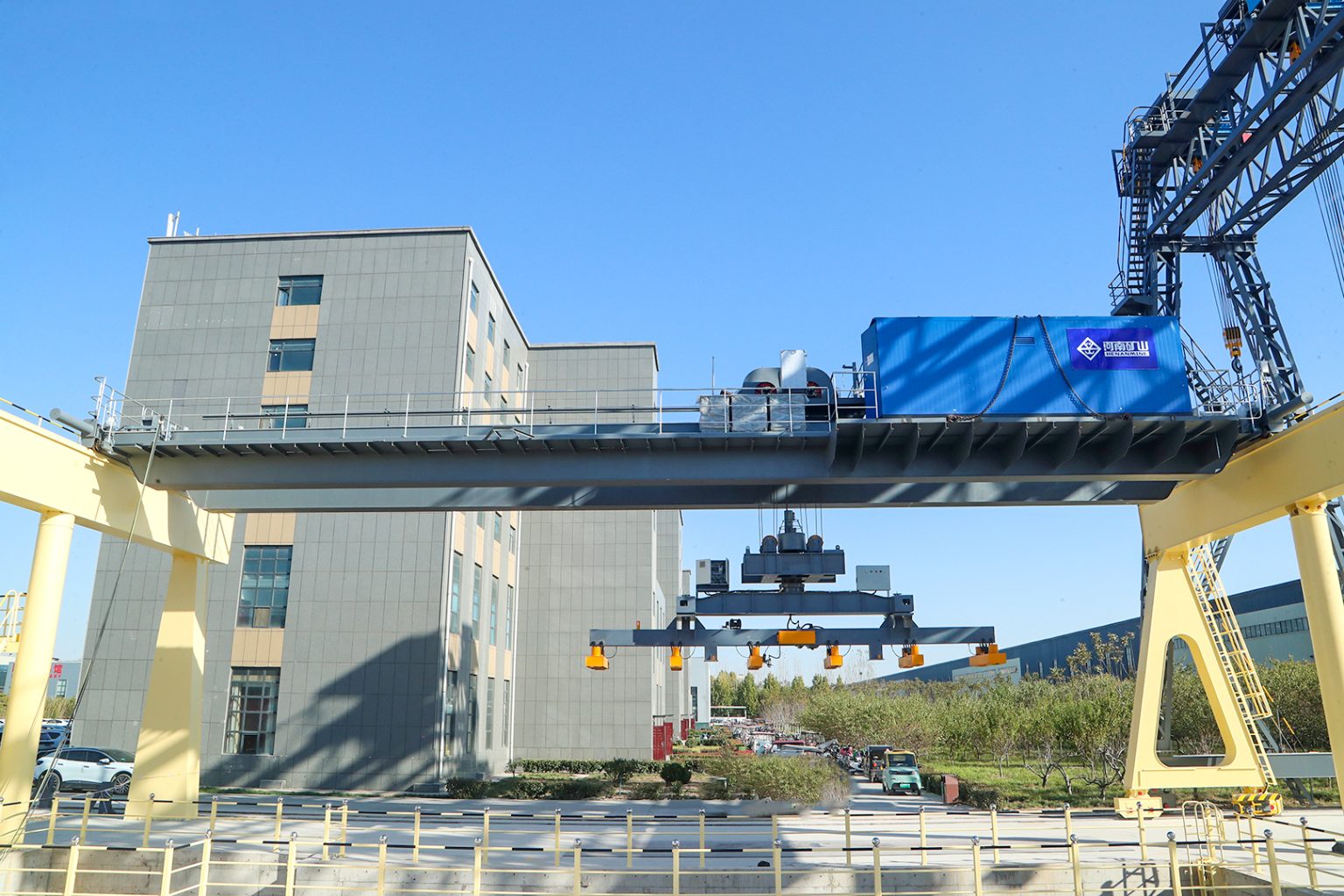
  • Automatic Steel Plate Handling Crane Manufactured by Henan Mine Crane

    Automatic Steel Plate Handling Crane Manufactured by Henan Mine Crane

    Crane application

    Automatic Steel Plate Handling Crane Manufactured by Henan Mine Crane

    Review the automatic steel plate handling cranes. Review the handling task, load geometry, working duty and equipment interfaces for your application.

    Automatic Steel Plate Handling Crane Manufactured by Henan Mine Crane — Henan Mine Crane crane application photograph
    Automatic Steel Plate Handling Crane Manufactured by Henan Mine Crane — crane application overview.

    Steelmaking and metal handling

    Define the complete suspended load, ladle or steel-product geometry, process temperature, crane duty and safe travel path. For molten-metal work, include auxiliary lifting, heat shielding, redundant protections and inspection access in the specification.

    Crane configuration and interfaces

    Ask for the crane arrangement, hook and lifting appliance interfaces, runway loads, control and monitoring functions, inspection access and a test plan matched to the plant process.

    Review the Overhead crane range and Steel & metallurgy cranes before defining the project-specific arrangement.

    Design the lifting process

    Use the project context above as a starting point. The following checks turn a crane application into a technical scope that suppliers can price and demonstrate for your site.

    Load shape and lifting attachment

    A handling line must be sized for the material as well as its nominal weight. Record the longest and shortest piece, thickness, stack condition, temperature, centre of gravity and whether several pieces are lifted at once. For magnet beams, provide the number and spacing of magnets, expected residual magnetism and the power-loss response. For clamps, provide gripping faces, allowable pressure and the secure-release sequence. The attachment and the load both count towards the suspended mass.

    Motion and stacking accuracy

    Show the pickup and deposit points, permitted rotation, vertical clearance, storage rack geometry and the tolerance at which a load may be released. Synchronised lifting, anti-sway and automatic stacking are different control scopes; define which movements actually require them. Ask how the operator confirms a safe grip and how the crane responds to a partial pickup, misalignment or obstruction. Interface signals with a production line or warehouse system should be listed before control architecture is chosen.

    Demonstrating the arrangement

    A technical proposal should include the lifting attachment drawing, crane layout, power backup or retention concept where relevant, exclusion zones, maintenance access and the load cases used for design. Witness a handling trial with representative material, including the heaviest and most awkward pieces and an agreed simulated fault condition. Clarify who supplies the magnet, clamp, control interface, spare attachment parts and operator training. A rated crane capacity does not by itself verify a safe plate, slab or block handling process.

    Compare the proposed crane scope

    DecisionInformation to request
    Crane and lifting attachmentRated loads, load cases, hook coverage and the complete suspended-load calculation.
    Site interfacesRunway loads, rail or building drawings, electrical supply and installation responsibilities.
    Controls and protectionOperating sequence, required safety functions and a method for testing each function.
    Commercial scopeEquipment, transport, installation, commissioning, documentation, training and spare parts as separate line items.

    From technical offer to site acceptance

    Technical submittals

    A usable bid should show a general arrangement and a clear list of assumptions, not just a model name and capacity. Request the load schedule used in design, lifting-attachment drawings where applicable, span and hook-approach dimensions, wheel loads, electrical supply, control narrative and maintenance access. Check every drawing against the actual building or yard layout. Identify the standards and local approval requirements for the destination market in the enquiry, then confirm the bidder’s proposed design and documentation scope in writing.

    Installation and tests

    Agree when the runway or civil works will be ready, how crane components can reach the installation position and who provides lifting equipment for erection. Define the factory test, on-site installation inspection and site acceptance as separate milestones. The acceptance procedure should list representative loads, the travel route, protection devices, emergency stop and any automation or attachment functions included in the order. Record who supplies test weights, operators, power and access equipment; otherwise a nominal commissioning price may omit essential site work.

    Commercial comparison

    Ask for the same delivery basis and currency across proposals. Separate the crane, special lifting appliances, rails or conductors, transport, installation support, commissioning, training and initial spare parts. Lead time should identify the starting event, such as approved drawings or an effective contract, and any dependency on site readiness. Compare warranty scope and service response by the written contract terms. If a key input is still unknown, request a priced option or a stated assumption instead of allowing different bidders to silently use different specifications. Keep a written exception register so the engineering team can resolve open dimensions, process interfaces and responsibility boundaries before issuing the purchase order.

    Information to include in the enquiry

    • Load weights, dimensions, centre of gravity and lifting attachments.
    • Span, lifting height, runway or yard drawings, travel coverage and clearances.
    • Operating cycle, working environment, electrical supply and control requirements.
    • Supply boundaries, inspection documents, installation support and acceptance criteria.

    Discuss a comparable lifting task

    Send the handling task and available site drawings. Henan Mine Crane can define a proposed crane arrangement and identify the remaining information needed for a technical and commercial review.

  • Electric Winch or Electric Hoist: Compare the Intended Lifting Duty

    Electric Winch or Electric Hoist: Compare the Intended Lifting Duty

    Technical guide

    Electric Winch or Electric Hoist: Compare the Intended Lifting Duty

    Winches and hoists should be selected for their approved application and configuration. Compare the direction of movement, suspended-load requirements, mounting arrangement and controls before treating similar motor power or rope capacity as equivalence.

    Henan Mine CraneTechnical guide · Updated 2026Crane selection, project scope and operating requirements
    Electric Winch or Electric Hoist: Compare the Intended Lifting Duty
    Henan Mine Crane lifting equipment
    Project planning notes

    Key points for this crane project.

    1. Overview of Electric Winches
    2. Overview of Electric Hoists
    3. Key Differences Between Electric Winches and
    Read the technical guide

    Overview of Electric Winches

    Electric winches are driven by electric motors, the core structure of the drum or reel winding wire rope, mainly used for heavy load lifting and traction, designed to focus on torque generation, can output a strong traction, is the power and distance have high requirements for the operation of the necessary equipment.

    It is compact, lightweight, easy to install and move, suitable for a variety of complex environments, widely used in construction, shipbuilding, manufacturing, off-road and logistics and other fields, especially good at horizontal traction, such as dragging and pulling heavy building materials, towing broken down vehicles.

    Overview of Electric Hoists

    Electric hoist also uses electric motor as the power source, but different from electric winch, it is specially designed for vertical lifting and lowering operations of special equipment, the core advantage lies in the high precision of the operation, strong maneuverability, able to accurately achieve the lifting and lowering of heavy loads, a complete alternative to manual handling, to avoid the inefficiency and safety risks brought about by manual operation.

    In the design, the electric hoist integrated perfect braking system and all kinds of safety protection devices, the overall volume is relatively larger, heavier weight, in order to adapt to the heavy vertical lifting operation needs.

    Its application scenarios are mainly concentrated in warehouses, factory workshops, garages and assembly lines, etc., the core for vertical load handling, such as warehouse goods on and off the shelves, production line parts lifting, truck loading and unloading.

    Electric Winch or Electric Hoist: Compare the Intended Lifting Duty
    Lifting equipment and application context

    Key Differences Between Electric Winches and Electric Hoists

    Core Functions and Mechanisms

    The core function of electric winches is horizontal traction, which is more suitable for long-distance traction operations, not designed for vertical lifting, and its advantage lies in its ability to output strong traction force, easily dragging and pulling heavy objects to move in the plane or adjusting their position in a narrow space, for example, hauling steel beams into position in construction sites and dragging and pulling goods onto the trucks in logistics scenarios.

    Mechanical Design and Safety Devices

    The mechanical design of electric hoist is centered on the safety of vertical lifting and lowering, equipped with perfect safety protection devices, including anti-fall braking system, limit switches, overload protection devices, etc. The core purpose is to prevent the load from falling during lifting and lowering, to safeguard the safety of the operators and the equipment, and to ensure the stability of the vertical load retention.

    The mechanical design of electric winches focuses on traction lifting, equipped with sealed gearboxes to protect against external impurities and adapt to harsh environments, as well as a built-in braking system to keep the wire ropes taut, and some models are also equipped with safety devices such as load limiters and emergency stop buttons to safeguard operational safety.

    Load Handling Capacity

    Electric hoist mainly focuses on high vertical load capacity, can be customized explosion-proof, frequency conversion and other functions, can accurately control the load in complex working conditions, suitable for production line batch lifting, daily handling of warehouses and other repetitive vertical lifting and lowering operations, stable and efficient operation within the rated load.

    Electric winch has irreplaceable horizontal traction, suitable for indoor and outdoor many kinds of operating environment, can be customized dustproof, rainproof and other protective functions, can be in the long distance, complex terrain, stable traction heavy loads, but does not have the vertical load capacity, cannot be used for vertical lifting and lowering operations, otherwise it will lead to serious safety accidents.

    Explanation of load limitation: the vertical load capacity of electric hoist is strictly limited, and it needs to operate within the rated range; the core advantage of electric winch is traction force, not vertical load capacity, and the load design logic of the two is completely different.

    Equipment Size and Installation Requirements

    Electric winches are compact in size and light in weight, with low installation difficulty, easy to install and move in narrow spaces, common installation methods include vehicle mounting (e.g., off-road vehicles, trailers), small bracket mounting, etc., without complex support structures, suitable for small industrial scenarios and mobile operation requirements.

    Electric hoist is bigger and heavier, usually used in fixed installation, such as installed in the factory overhead beams, gantry cranes, need to build a strong support structure, the installation process needs to consider the load-bearing capacity and installation accuracy, more suitable for fixed operation scenarios, is not suitable for frequent movement.

    Operation Efficiency and Maintenance

    Electric hoist operation noise is low, very suitable for indoor operation scenes; plug and play design, easy to understand the operation, without the need for complex debugging process, low daily maintenance needs, only need to regularly check the braking system, wire rope and safety devices, do a good job of basic maintenance to ensure long-term stable operation.

    Electric winch operating efficiency, traction speed faster than the traditional manual or hydraulic winch, can effectively reduce the operation downtime; its internal operating components are less, less prone to leakage, pollution and other issues, low maintenance costs, daily only need to check the gear box, wire rope and braking system, the difficulty of maintenance is much lower than hydraulic or pneumatic equipment.

    Applications in Industrial Settings

    Electric hoist is the core equipment in factories, warehouses and other industrial scenarios, which can realize the rapid transfer of goods and is widely used in truck loading and unloading, stacking of high-level shelves and docking of assembly line parts and other operations. The equipment is divided into wire rope type and chain type, which can be flexibly selected according to different industrial operation requirements.

    Electric winches are mostly used for horizontal material handling in construction sites, which can complete the operations of steel beams traction in place in construction, heavy machinery moving in complex terrain, etc.; they are also widely used in the logistics sector to realize the loading of trailers and fixing of goods in the process of transportation.

    Key Benefits Of Electric Hoists

    • High safety: Controllable and predictable traction action during operation can effectively reduce the physical exertion of the operator and the risk of injury, with emergency stop, alarm and other safety devices to further enhance operational safety. Outstanding efficiency: Compared with manual or hydraulic winches, electric winches are more efficient.
    • Outstanding efficiency: Compared with manual or hydraulic winches, the traction speed of electric winches is faster, which can effectively reduce the operation downtime, lower labor costs and improve the overall operational efficiency.
    • Convenient maintenance: fewer internal operating parts, less prone to leakage, pollution and other faults, small daily maintenance workload, low maintenance costs, can save maintenance expenses for the enterprise.
    • Strong versatility: adapt to a variety of harsh indoor and outdoor operating environments, can be customized according to the needs of the protection function, can be installed on the wall, ceiling, floor and other locations, can be used for traction, but also to assist in completing part of the lifting operation (non-vertical lifting), to meet the needs of construction, manufacturing, logistics and other industries.
    • Cost-effective: equipment procurement costs lower than hydraulic, pneumatic equipment, combined with its low maintenance costs and high efficiency, long-term use can save a lot of operating costs for the enterprise, is a very cost-effective industrial traction equipment.
    Electric Winch or Electric Hoist: Compare the Intended Lifting Duty
    Crane arrangement for technical discussion

    Core Advantages of Electric Winch

    • High safety: controllable and predictable traction action during operation can effectively reduce the physical exertion of the operator and the risk of injury, with emergency stop, alarm and other safety devices to further enhance operational safety. Outstanding efficiency: compared with manual or hydraulic winches, electric winches have a higher traction speed, which can effectively reduce operational downtime and labor costs.
    • Outstanding efficiency: Compared with manual or hydraulic winches, the traction speed of electric winches is faster, which can effectively reduce the operation downtime, lower labor costs and improve the overall operational efficiency.
    • Convenient maintenance: fewer internal operating parts, less prone to leakage, pollution and other faults, small daily maintenance workload, low maintenance costs, can save maintenance expenses for the enterprise.
    • Strong versatility: adapt to a variety of harsh indoor and outdoor operating environments, can be customized according to the needs of the protection function, can be installed on the wall, ceiling, floor and other locations, can be used for traction, but also to assist in completing part of the lifting operation (non-vertical lifting), to meet the needs of construction, manufacturing, logistics and other industries.
    • Cost-effective: equipment procurement costs are lower than hydraulic and pneumatic equipment, combined with its low maintenance costs and high efficiency, long-term use can save a lot of operating costs for the enterprise, is a very high cost-effective industrial traction equipment.

    How to Choose between Electric Winch and Electric Hoist

    The core of choosing two kinds of equipment is to match their own operational needs, the following five key factors can help you accurately select the type, to avoid the risk of choosing the wrong equipment and losses:

    Operation Use

    Operational use is the first core factor in the selection, if the core operational needs for vertical lifting (such as warehouse goods on and off the shelves, production line parts lifting, etc.), give priority to the use of electric hoist;

    If the core demand for horizontal traction (such as construction sites to haul building materials, logistics scenarios towing goods, etc.), you must use electric winches, electric hoist is strictly prohibited as a substitute for horizontal traction operations, to avoid triggering safety accidents.

    Load Capacity

    Before selection, the maximum load should be accurately calculated to ensure that the rated load of the equipment completely covers the actual demand, and overloading is strictly prohibited.

    Among them, the electric hoist focuses on vertical load capacity, the conventional model load range of 250kg-5000kg, overweight scenarios need to be customized special models; electric winch focuses on horizontal traction capacity, does not have the qualification of vertical load, and is strictly prohibited to be used for vertical lifting and lowering operations.

    Lifting Height

    Lifting height is the exclusive selection consideration for electric hoist, when selecting the model, you need to specify the lifting height required for the actual operation, and reserve a safety margin of 50-100cm; if there are special working conditions in the operation scene (such as high and low drop, obstacles, etc.), you need to calculate in advance the actual height of lifting, and prioritize the choice of adjustable-speed, equipped with limit switches, to further enhance the safety of the operation.

    Environmental Conditions

    Operating environmental conditions directly determine the adaptability of the equipment, if the operating scene for the outdoor, dusty, humid and other harsh environments, give priority to electric winches (its sealing and protection performance is excellent, can be adapted to the complex working conditions);

    If for the warehouse, workshop and other indoor controlled environments, the electric hoist is more advantageous, its running noise is low, without the need for complex outdoor protection, can be better adapted to the indoor operational needs.

    Safety Requirements

    Electric hoists need to focus on whether they are equipped with fall arrest brakes, overload protection, limit switches and other safety devices; electric winches need to focus on the verification of sealing protection, emergency stops, load limiters and other configurations, and at the same time need to be regularly calibrated for various types of safety devices, to ensure the safety of the whole operation.

    Common Misconceptions

    • Myth 1: electric winches can be used for vertical lifting – Correction: the core of the design of electric winches is horizontal traction, does not have the ability to carry vertical, used for vertical lifting will lead to load falling, equipment damage, there are serious safety hazards, absolutely prohibited for vertical lifting operations.
    • Myth 2: electric hoist is suitable for all heavy load operations – Correction: electric hoist is only good at vertical lifting operations, in the horizontal traction scenarios of low efficiency, poor safety; and electric winches in the horizontal traction scenarios have obvious advantages, the two have their respective roles, irreplaceable.
    • Myth 3: the larger the size of the equipment, the stronger the load capacity – Correction: electric winches are small in size, but strong traction capacity; electric hoist volume, focusing on the vertical load capacity, equipment size and load capacity is not directly related to the core of the equipment to see the rated design parameters.

    Discuss the crane arrangement for your project.

    Winches and hoists should be selected for their approved application and configuration. Compare the direction of movement, suspended-load requirements, mounting arrangement and controls before treating similar motor power or rope capacity as equivalence. Share the load, available drawings, working cycle and site conditions with Henan Mine Crane so the required configuration and supply boundary can be discussed.

    Related crane configurations

    LH Electric Hoist Double Girder Crane

    View product parameters
    Lifting capacity: 3, 5, 10, 16, 20 tSpan: 10.5–31.5 mLifting height: 6, 9, 12 or 18 m

    Use an LH double-girder bridge with an electric-hoist trolley for workshop lifting, assembly and maintenance. Match the hoist arrangement to the suspended load, hook travel and available building space.

    Double Girder Electric Hoist Gantry Crane

    View product parameters
    Lifting capacity: 3t – 50tSpan: 7.5m – 35mLifting height: 4m – 30m

    Cover an outdoor handling area with a double-girder gantry and electric-hoist trolley. Select the load rating, leg geometry, cantilever arrangement and travel coverage around the yard layout.

    Updated 2026 · Henan Mine Crane
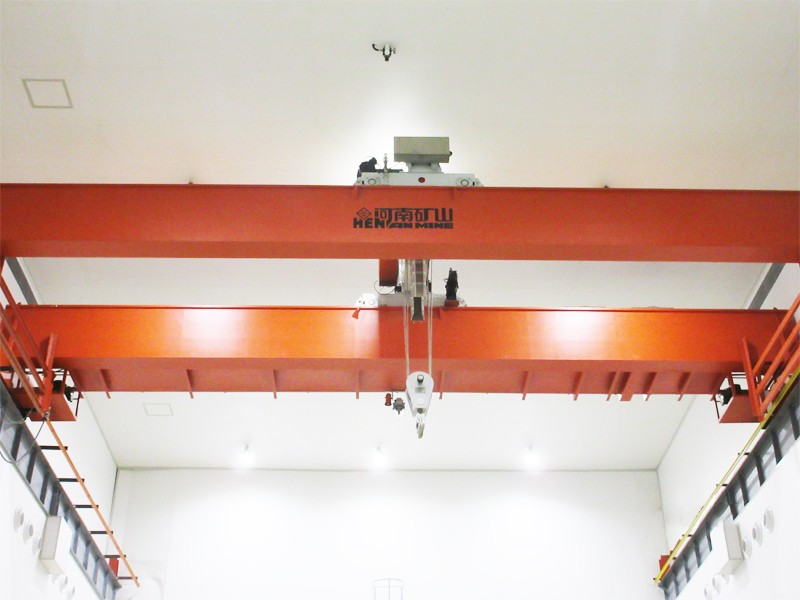
  • Henan Mine Crane Manufacturing ZJJB Cleanroom Explosion-Proof Crane

    Henan Mine Crane Manufacturing ZJJB Cleanroom Explosion-Proof Crane

    Crane application

    Henan Mine Crane Manufacturing ZJJB Cleanroom Explosion-Proof Crane

    Review the ZJJB cleanroom explosion-proof cranes. Review load, process exposure, area classification and project-specific documentation requirements.

    Henan Mine Crane Manufacturing ZJJB Cleanroom Explosion-Proof Crane — Henan Mine Crane crane application photograph
    Henan Mine Crane Manufacturing ZJJB Cleanroom Explosion-Proof Crane — crane application overview.

    Workshop and manufacturing lifting

    Define the largest and most frequent loads, lifting points, hook coverage, building clearances, operating shifts and concurrent work zones. Include maintenance and production flow in the layout.

    Crane configuration and interfaces

    Ask for a general arrangement, duty selection, runway and power interfaces, control mode, maintenance access and agreed factory and site acceptance scope.

    Review the Explosion-proof overhead cranes and Industrial manufacturing cranes before defining the project-specific arrangement.

    Design the lifting process

    Use the project context above as a starting point. The following checks turn a crane application into a technical scope that suppliers can price and demonstrate for your site.

    Classify the actual operating area

    State whether the crane is in a hazardous area, a controlled cleanroom, both, or neither. Provide the area classification, gas or dust group, temperature class, ambient range and cleaning regime from the plant design. A marketing term such as “explosion-proof” is insufficient to select motors, controls, cable entries and protective devices. In clean production, also define allowable materials, lubricants, particle control, equipment cleaning and maintenance access.

    Match protection to every component

    Review the hoist, trolley, bridge drives, brakes, limit switches, control station and power supply against the documented environment. List which parts enter the classified zone and how inspection and repair will be carried out. For remote operation, define interlocks with plant ventilation or process equipment only where the plant design calls for them. Ask the supplier to identify the standards, certification scope and any excluded third-party components in its offer.

    Evidence at handover

    Request component schedules, applicable certificates, installation drawings, inspection records, operating manuals and spare-part identification. Factory acceptance can verify electrical logic and mechanical operation; site acceptance must check the actual installation, earthing, labels, protection devices and the process interface. A cleanroom handling trial should also use the approved cleaning and contamination-control procedure. Confirm the project requirements before treating any advertised configuration as suitable for a specific classified area.

    Compare the proposed crane scope

    DecisionInformation to request
    Crane and lifting attachmentRated loads, load cases, hook coverage and the complete suspended-load calculation.
    Site interfacesRunway loads, rail or building drawings, electrical supply and installation responsibilities.
    Controls and protectionOperating sequence, required safety functions and a method for testing each function.
    Commercial scopeEquipment, transport, installation, commissioning, documentation, training and spare parts as separate line items.

    From technical offer to site acceptance

    Technical submittals

    A usable bid should show a general arrangement and a clear list of assumptions, not just a model name and capacity. Request the load schedule used in design, lifting-attachment drawings where applicable, span and hook-approach dimensions, wheel loads, electrical supply, control narrative and maintenance access. Check every drawing against the actual building or yard layout. Identify the standards and local approval requirements for the destination market in the enquiry, then confirm the bidder’s proposed design and documentation scope in writing.

    Installation and tests

    Agree when the runway or civil works will be ready, how crane components can reach the installation position and who provides lifting equipment for erection. Define the factory test, on-site installation inspection and site acceptance as separate milestones. The acceptance procedure should list representative loads, the travel route, protection devices, emergency stop and any automation or attachment functions included in the order. Record who supplies test weights, operators, power and access equipment; otherwise a nominal commissioning price may omit essential site work.

    Commercial comparison

    Ask for the same delivery basis and currency across proposals. Separate the crane, special lifting appliances, rails or conductors, transport, installation support, commissioning, training and initial spare parts. Lead time should identify the starting event, such as approved drawings or an effective contract, and any dependency on site readiness. Compare warranty scope and service response by the written contract terms. If a key input is still unknown, request a priced option or a stated assumption instead of allowing different bidders to silently use different specifications. Keep a written exception register so the engineering team can resolve open dimensions, process interfaces and responsibility boundaries before issuing the purchase order.

    Information to include in the enquiry

    • Load weights, dimensions, centre of gravity and lifting attachments.
    • Span, lifting height, runway or yard drawings, travel coverage and clearances.
    • Operating cycle, working environment, electrical supply and control requirements.
    • Supply boundaries, inspection documents, installation support and acceptance criteria.

    Discuss a comparable lifting task

    Send the handling task and available site drawings. Henan Mine Crane can define a proposed crane arrangement and identify the remaining information needed for a technical and commercial review.

  • Henan Mine Crane’s 2026 Student Support Ceremony Assists 380 Students

    Henan Mine Crane’s 2026 Student Support Ceremony Assists 380 Students

    Company & People

    Henan Mine Crane’s 2026 Student Support Ceremony Assists 380 Students

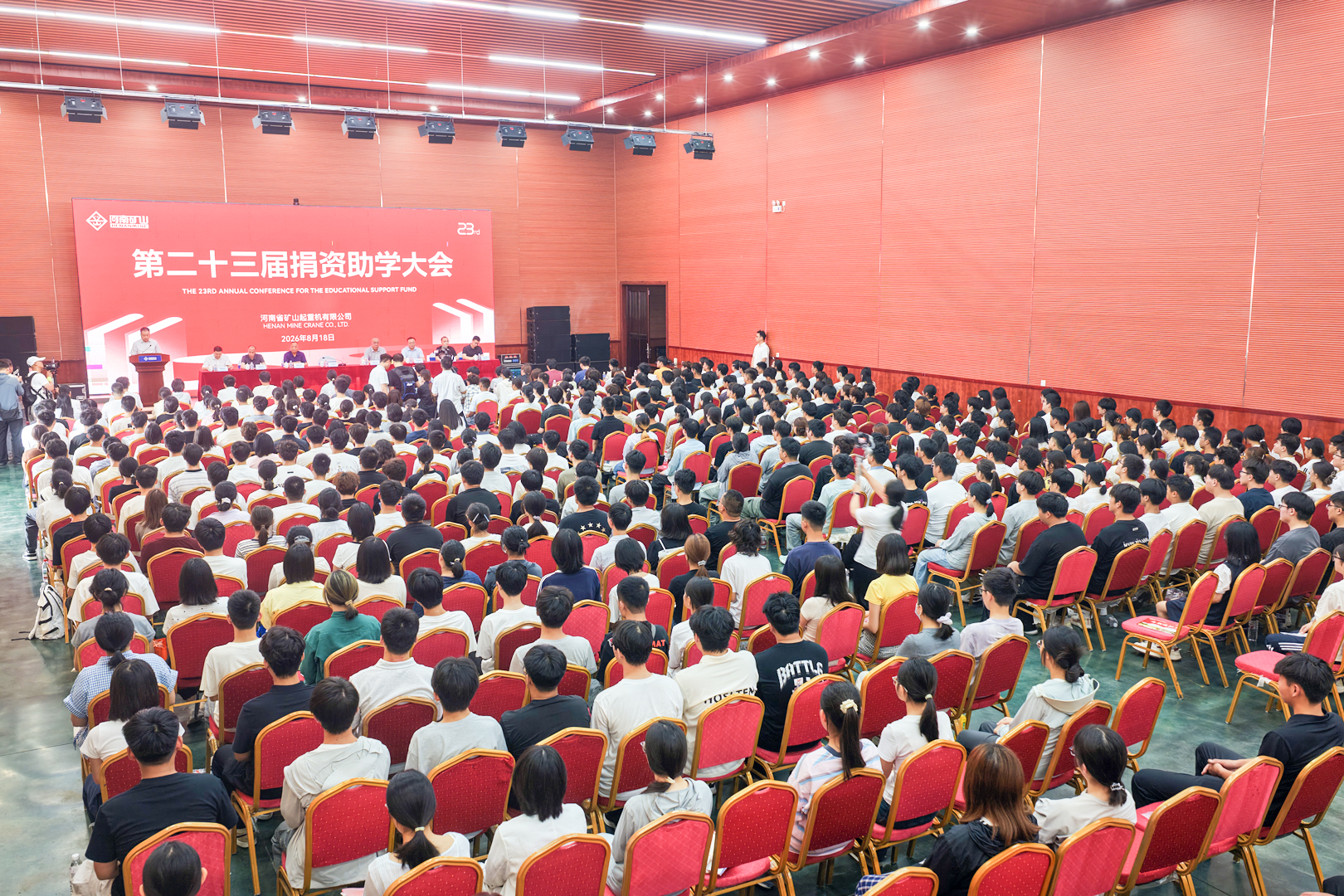
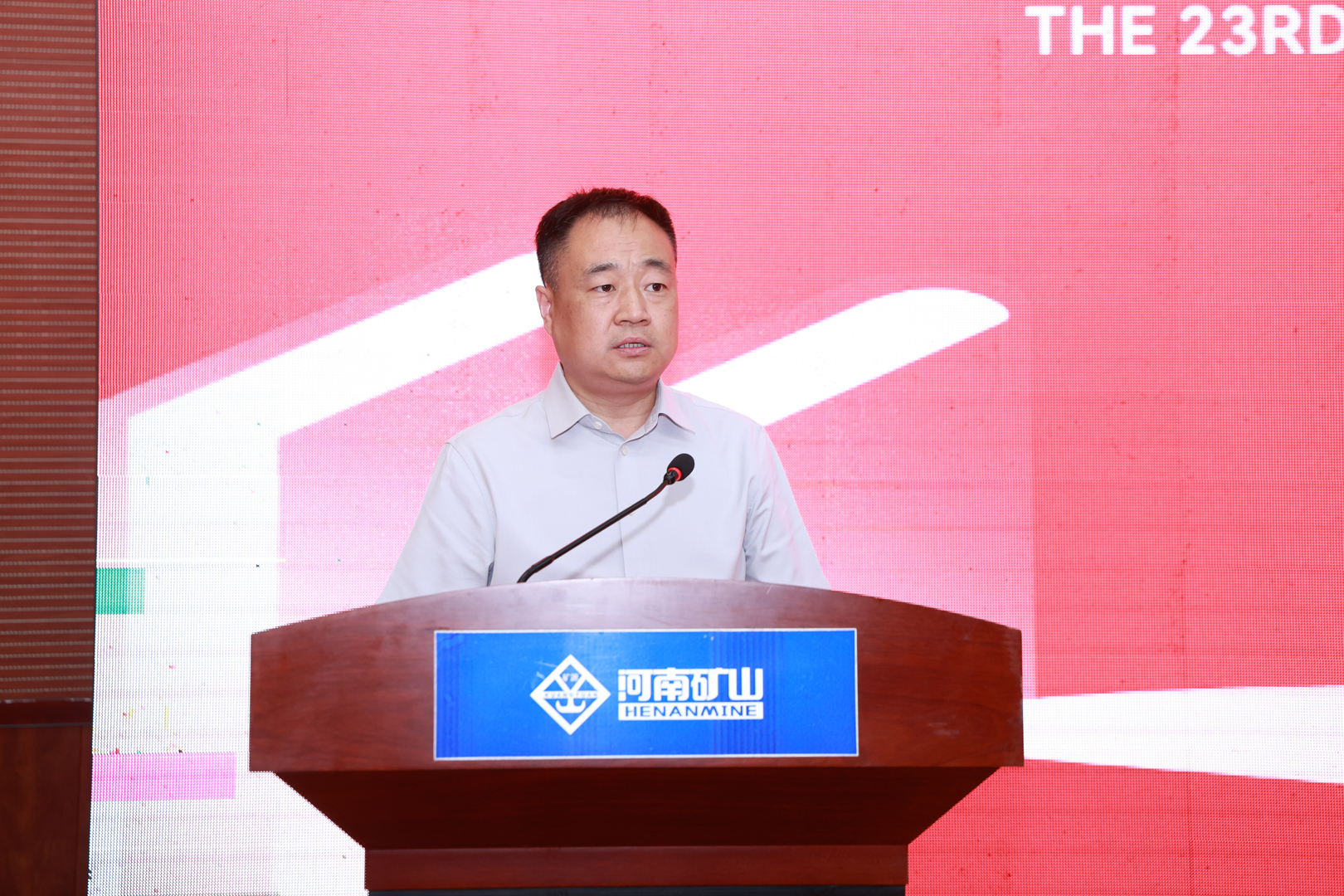
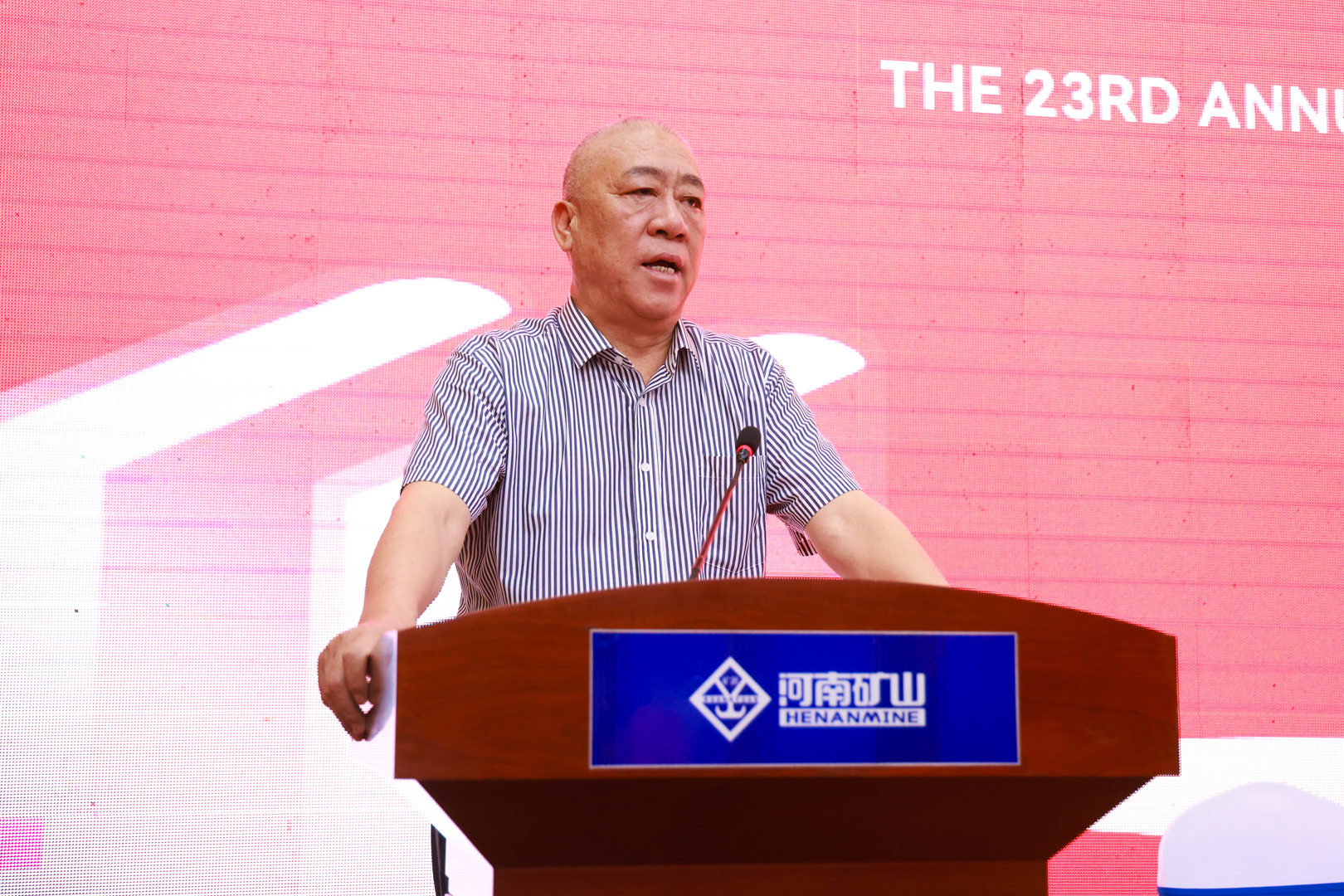
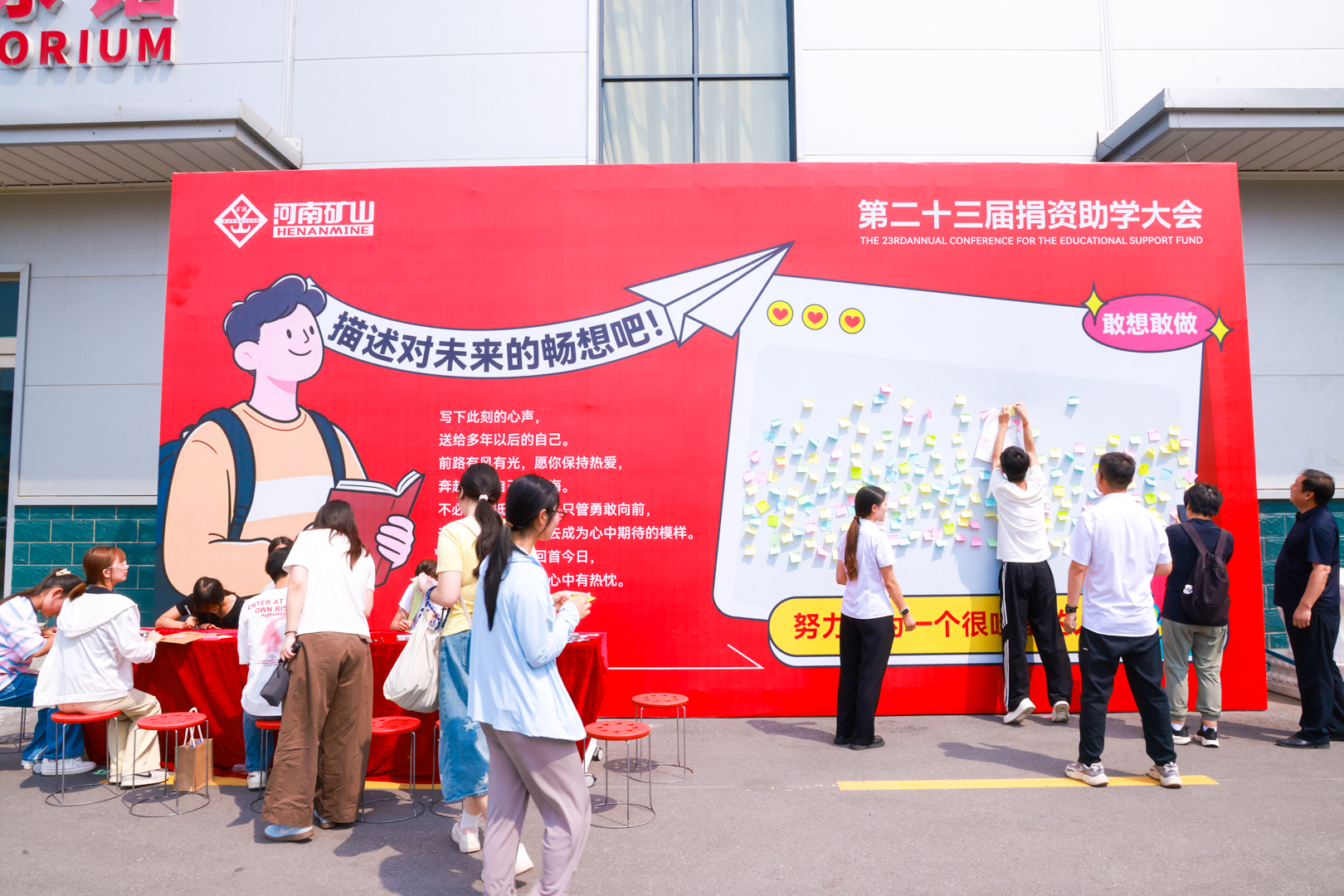
    Henan Mine Crane held its twenty-third student support ceremony at the intelligent industrial park on 18 August 2026. The event provided financial assistance to 380 students.

    Students and families attending the 2026 support ceremony
    Students and families attending the 2026 support ceremony.

    Student grants and teacher support

    The year’s education funding totalled CNY 1.5 million. Of this, CNY 1.18 million was distributed to 380 university students at the event; the remaining allocation supported recognition of outstanding primary and secondary school teachers.

    A continuing community programme

    The student assistance foundation began in 2004. Company representatives, local officials, students and parents attended the 2026 ceremony, continuing the education programme alongside the company’s manufacturing activities.

    View photographs from the student support ceremony

    Explore Henan Mine Crane

    Find crane types in the product catalogue or send an equipment enquiry to the sales team.

  • Henan Mine Crane Discusses Automated Overhead Handling with a Research Institute

    Henan Mine Crane Discusses Automated Overhead Handling with a Research Institute

    Industry & Partnerships

    Henan Mine Crane Discusses Automated Overhead Handling with a Research Institute

    A delegation from Beijing Materials Handling Research Institute visited Henan Mine Crane on 17 August 2026 to discuss automated overhead material handling.

    Delegation walking through the crane manufacturing workshop
    Delegation walking through the crane manufacturing workshop.

    Research and manufacturing exchange

    The visitors and company representatives discussed the development of overhead material-handling robots and further collaboration between research and manufacturing teams. The meeting focused on future equipment development.

    Define the automation boundary

    An automated handling enquiry should set out the material, pickup and delivery positions, identification method, production interfaces and required operating modes. These project details help establish what the crane, lifting attachment and supervisory systems must each do.

    Discuss an automated handling task

    Share your material flow, load data, storage arrangement and control-system interfaces so the technical team can review the application.

  • New Year Gift Deliveries Begin for 2,384 Sales Employees’ Families

    New Year Gift Deliveries Begin for 2,384 Sales Employees’ Families

    Company & People

    New Year Gift Deliveries Begin for 2,384 Sales Employees’ Families

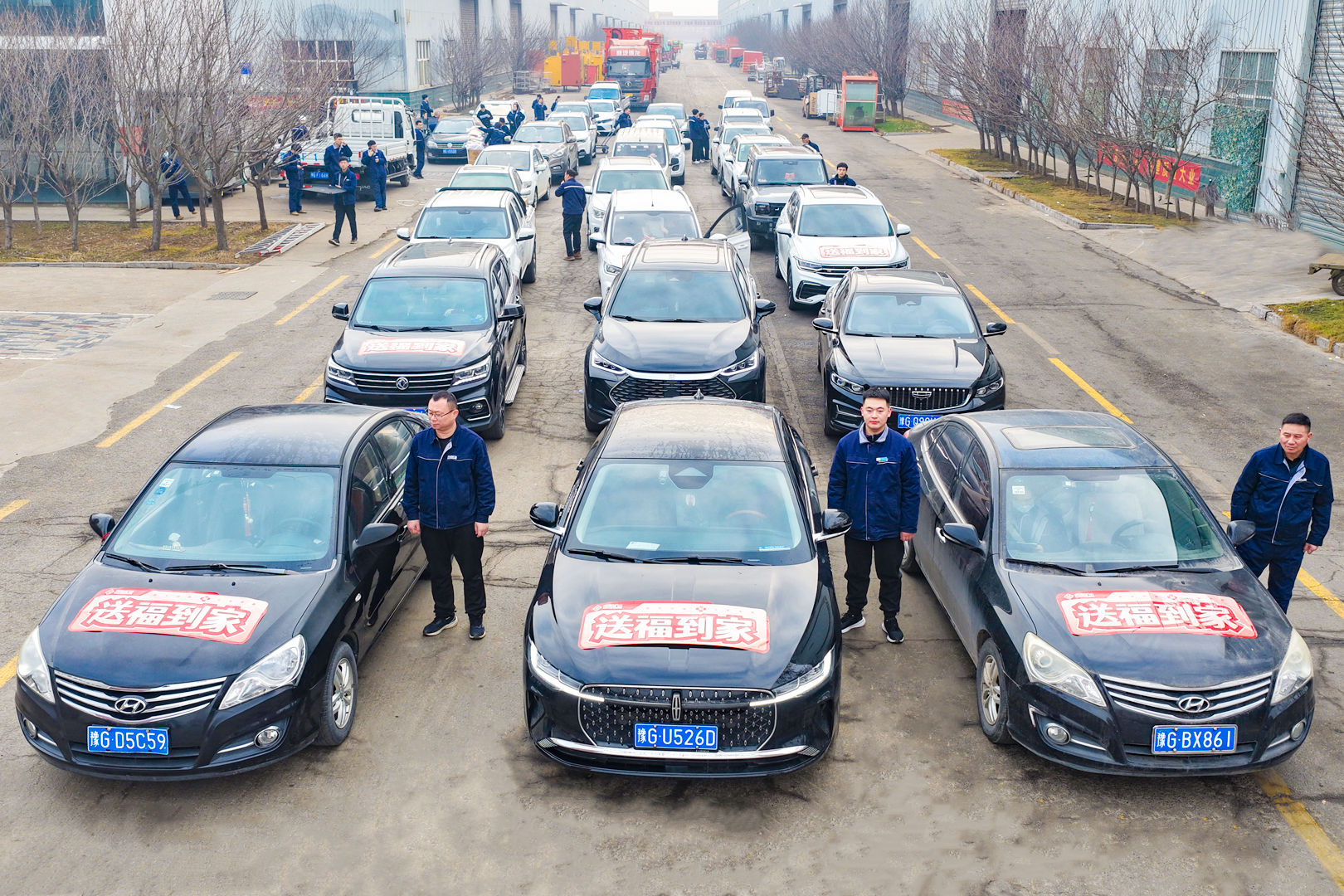
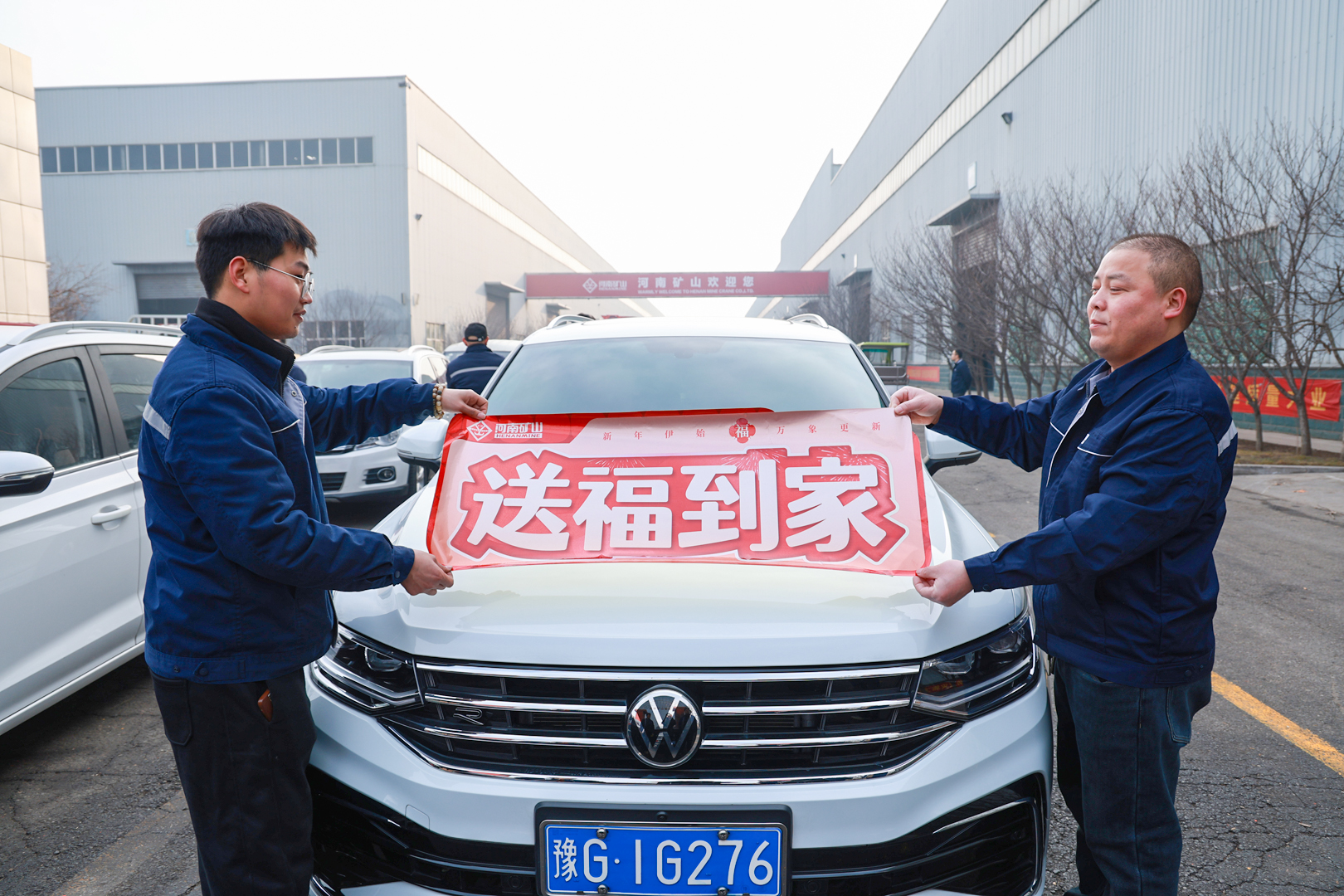
    Henan Mine Crane launched a New Year benefit delivery programme on 5 February 2026 for the families of 2,384 sales employees working away from the headquarters.

    New Year gift-delivery vehicles lined up outside the factory
    New Year gift-delivery vehicles lined up outside the factory.

    Five-day delivery plan across the sales network

    Twelve delivery teams and 37 vehicles were arranged to bring benefit packages to families in stages over five days. The announcement thanked sales employees and their households for their support.

    Part of a wider employee-support programme

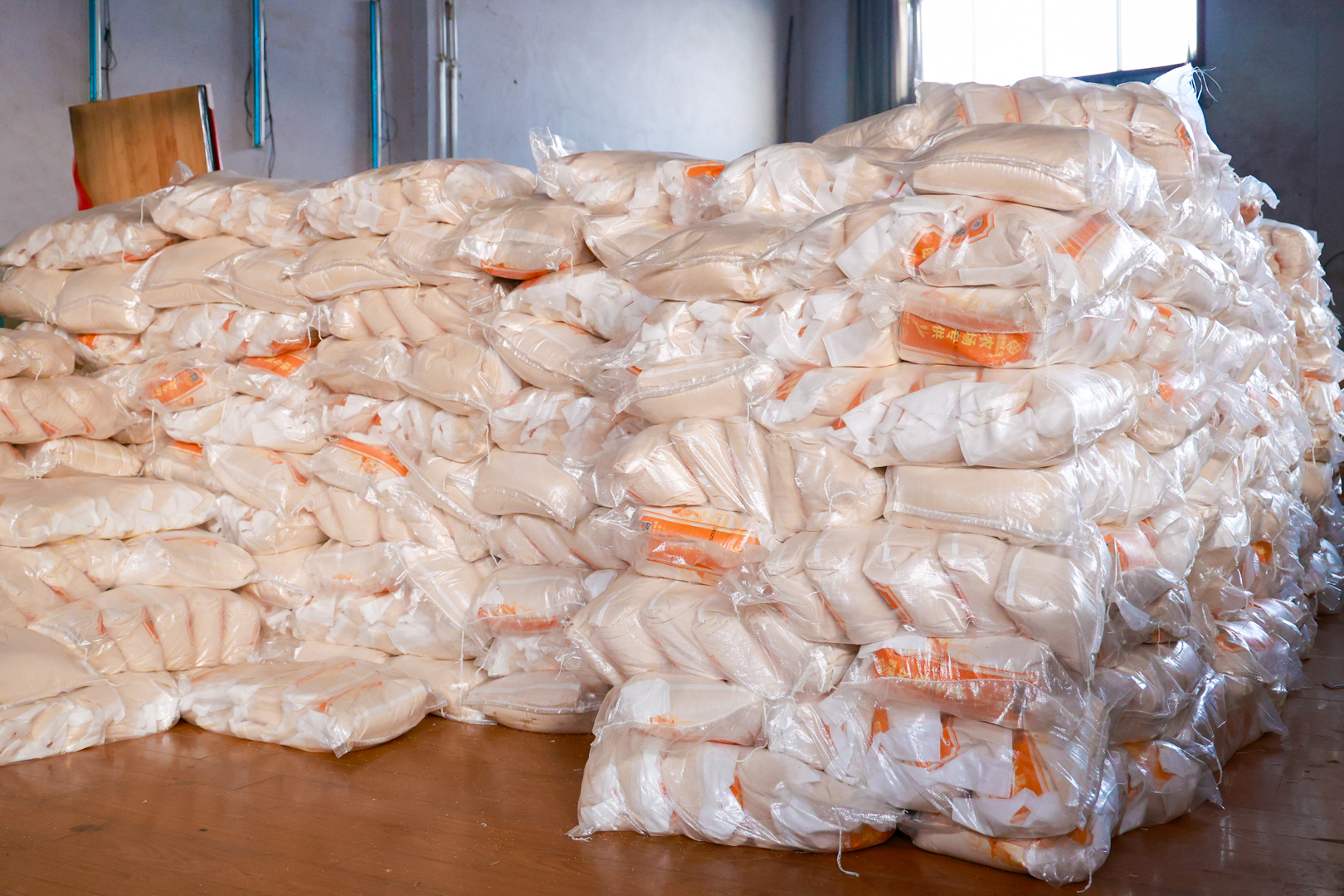
    Home deliveries formed one part of the company’s pre-holiday arrangements, alongside factory benefit distribution and community visits.

    View the event photo gallery

    Contact Henan Mine Crane

    For product information, a manufacturing visit or a company enquiry, send the relevant details to our team.

  • Overhead Crane Bridge Speed: Balance Travel Time and Load Control

    Overhead Crane Bridge Speed: Balance Travel Time and Load Control

    Technical guide

    Overhead Crane Bridge Speed: Balance Travel Time and Load Control

    Bridge speed affects travel time, but acceleration, stopping and positioning also shape the lifting cycle. Describe the travel distance, load behaviour and production sequence before choosing the long-travel motion specification.

    Henan Mine CraneTechnical guide · Updated 2026Crane selection, project scope and operating requirements
    Overhead Crane Bridge Speed: Balance Travel Time and Load Control
    Henan Mine Crane lifting equipment
    Project planning notes

    Key points for this crane project.

    1. What Is Bridge Speed on an Overhead Crane?
    2. Why Bridge Speed Matters in Crane Design
    3. How Bridge Speed Impacts Safety and Reliability
    Read the technical guide

    What Is Bridge Speed on an Overhead Crane?

    The bridge speed is the speed (unit: ft/min fpm) at which the bridge of an overhead crane travels along the plant track, which is the core indicator of its horizontal transfer capability and directly determines the efficiency of load movement, e.g., steel mills require fast transfer and precision laboratories require low-speed operation.

    Need to make clear the big car speed and lifting speed, bridge speed difference: lifting speed control load vertical lifting, bridge speed control load along the bridge transverse movement, the big car speed drives the bridge and load along the track longitudinal movement, the three synergistic composition of the complete material handling process.

    The uniqueness of the bridge speed is to determine the crane “operational coverage efficiency”, unlike the hoisting, bridge speed only affects the local range, it directly determines the load in the entire operating area of the transit speed, especially in the large-span, long-distance operation, the overall efficiency of the impact is more prominent.

    Why Bridge Speed Matters in Crane Design

    Efficiency and Productivity

    Reasonably matched truck speed can effectively optimize the bridge crane operation process, shorten the load transfer cycle, reduce equipment idle loss, and then significantly improve the overall productivity of the enterprise.

    In mainstream application scenarios such as automobile manufacturing, building construction, logistics and warehousing, the speed of the bridge crane that matches the operational requirements can respectively ensure the continuous and stable operation of the production line, accelerate the progress of engineering construction, and enhance the efficiency of the warehouse goods throughput, providing strong support for the high-efficiency production of various industries.

    Safety Consideration

    Reasonable control of truck speed is the key to ensure the safety of bridge crane operation, too fast speed is easy to cause load shaking, equipment wear and tear, and even personnel safety accidents, too slow speed will cause waste of resources and slow down the overall operational efficiency.

    From the physical principle level analysis, unreasonable acceleration and deceleration operation will produce large inertia force, which will lay a hidden safety hazard, the relevant details will be carried out in the following chapters to explain in detail.

    Load Handling and Precision Control

    There is a negative correlation between the speed of the truck and the accuracy of load handling, the faster the speed, the more difficult the accuracy control. When handling heavy, precise or high-value loads (e.g., aerospace components, turbine parts), it is necessary to reasonably reduce the speed of the bridge to ensure accurate positioning of the loads and to effectively avoid damage to the loads and installation deviations.

    Energy Efficiency and Cost Savings

    The speed of the large vehicle should be strictly controlled in a reasonable range, too fast or too slow will cause unnecessary energy loss. Scientific optimization of bridge speed setting cannot only effectively reduce the cost of electricity, but also reduce the wear and tear of equipment, extend the service life of the bridge crane, and realize the reasonable control of long-term operating costs, which is in line with the core demand of sustainable development of enterprises.

    Overhead Crane Bridge Speed: Balance Travel Time and Load Control
    Lifting equipment and application context

    How Bridge Speed Impacts Safety and Reliability

    The safety of crane operation is the most important, and the speed of the big vehicle is the key link to control the safety risk. From the physical principles and practical operational experience, the influence of large vehicle speed on safety and equipment reliability is mainly reflected in the following four aspects:

    Load Sway and Pendulum Effect

    Large car acceleration or deceleration is too fast, will make the suspended load due to inertia shaking (pendulum effect), not only affects the positioning accuracy, extends the operating time, jeopardize the safety of personnel and equipment,but also exacerbate the wear and tear of the crane structure and ropes; and the operator needs to decelerate or stop the machine in order to control the shaking, but to reduce the actual operating efficiency.

    Increased Difficulty in Accurate Positioning

    The higher the speed of the truck, the longer the braking distance, the operator wants to achieve millimeter precision positioning, it requires longer deceleration time and higher operating skills.

    For example, for a crane running at 300 ft/min, to accurately place the load in the specified position, the operator needs to carry out a long and smooth deceleration in advance, which not only increases the cognitive burden on the operator, but is also prone to positioning deviation (i.e., “drop point error”), resulting in collision and damage to the load.

    Structural Fatigue and Dynamic Loading

    Crane bridge and rail design have specific load bearing capacity, and high-speed braking, imposed on the rail block and plant structure is not only the static load of the crane and the load, but also multiplied by the dynamic impact coefficient of the dynamic load.

    Long-term high-speed operation, frequent emergency stops of the crane, its driving wheels, rims, rails and even plant support columns of the wear and tear will be significantly accelerated, leading to early failure of the equipment, reducing the reliability and service life of the crane.

    Ergonomics and Operating Errors

    Controlling cranes with high inertia to run at high speeds is a huge test of the operator’s physical and mental strength. High concentration of attention for a long time and frequent adjustment of speed and braking can easily lead to operator fatigue, which in turn leads to problems such as reduced concentration and operational errors, increasing the risk of safety accidents.

    What Factors Determine the Right Bridge Speed?

    There is no uniform standard for the speed of the bridge crane, the ideal speed should be based on the design of the crane, operating scenarios and the actual needs of a comprehensive judgment, the core influencing factors mainly include the following six points:

    • Rated lifting capacity of the crane: the larger the lifting capacity, the larger the inertia of the load, in order to ensure safety and precise control, the bridgespeed needs to be reduced accordingly; on the contrary, cranes with smaller lifting capacity can appropriately increase the bridge speed to enhance efficiency.
    • Bridge span and crane weight: the longer the bridge span, the greater the weight of the crane itself, the more difficult to control the stability of the operation, so you need to reduce the speed of the bridgein order to reduce the shaking and structural stress; smaller span, lighter weight cranes, the speed can be appropriately increased.
    • Track length and operating distance: the longer the track, the farther the operating distance, the appropriate increase in bridgespeed can reduce the load transfer time, improve efficiency; if the operating distance is shorter, frequent starting and stopping, too high a speed will increase the number of braking times, reduce efficiency and accelerate the wear and tear of equipment.
    • Work level and frequency of use: high work level, high frequency of use of cranes (such as continuous production line cranes), the need to balance the speed and durability of the equipment, to avoid excessive wear and tear due to high-speed operation; work level is low, low-frequency cranes (such as maintenance cranes), according to the needs of the appropriate increase in speed.
    • Type of operation: production-type operation (such as assembly line material transfer) has higher speed requirements and needs to take into account the efficiency and safety; maintenance-type operation (such as equipment overhaul) has higher precision requirements and the speed needs to be appropriately reduced.
    • Operation and control mode: Push-button operated cranes (pendant-operated) are usually designed for travel speeds to facilitate the operator to follow the control; radio-controlled, cab-operated and automated cranes can be designed for higher operating speeds within the safety range because the operator does not need to follow.
    Overhead Crane Bridge Speed: Balance Travel Time and Load Control
    Crane arrangement for technical discussion

    Typical Bridge Speed Ranges by Application

    Combined with the operational needs of different industries, there are clear typical ranges of bridge speeds, which need to be strictly matched to the application scenarios to ensure a balance between efficiency and safety:

    1. Ultra-high precision environments (labs, cleanrooms, optical assembly): 10-40 ft/min. In this type of scenario, speed is not the primary consideration. The core requirements are smooth operation, minimal vibration, and sub-millimeter positioning accuracy, so a variable frequency drive (VFD) must be equipped to achieve precise speed regulation.
    2. General industry and warehousing (machine shops, maintenance shops): 40-125 ft/min. This is the most commonly used speed range, taking into account a reasonable transit time and good controllability, able to adapt to a variety of loads and tasks, is the industrial field of the “workhorse speed.
    3. High-intensity manufacturing and processing (automotive plants, stamping plants): 125-250 ft/min. These scenarios are dominated by repetitive, long-distance standardized load transfers, requiring cranes with rugged construction and excellent control performance to meet the demands of high-paced production.
    4. Bulk material handling (steel mills, foundries, lumber mills): 150-350+ ft/min. These cranes are required to transfer large, rough loads and operate over long distances, so the design focuses on durability and productivity with high-power drive systems and specialized brakes.
    5. Specialized high-speed cranes (automated three-dimensional warehouse AS/RS, container handling): 400-600+ ft/min. These cranes are designed for specific scenarios, mostly with automated controls, and the entire system (structure, drive, control, load fixing) is designed around high-speed operation, with the core objective of increasing throughput.

    The Role of Variable Frequency Drives in Bridge Speed Control

    With the technological upgrading of the crane industry, the role of variable frequency drive (VFD) in the speed control of the big car is becoming more and more prominent, and it has become one of the core configurations of modern overhead cranes.

    It realizes precise control of the speed of the bridge by adjusting the power supply frequency and voltage of the motor, which brings various advantages for material handling operations, as follows:

    • Improved safety: The VFD comes with a load sway control function that automatically counteracts the pendulum effect of the load, so that the operator does not have to focus on controlling the sway and can concentrate on hooking up and placing the load, significantly reducing the risk of safety accidents.
    • Improve energy efficiency: The VFD can dynamically adjust the power output of the motor according to the running status of the bridge, avoiding the motor running at full power during no load or low load, thus significantly reducing energy consumption.
    • Extend the service life of the equipment: VFD can smoothly control the start and stop of the motor, reduce the current impact and mechanical impact, reduce the wear and tear of the crane drive system, braking system and other components, and extend the overall service life of the equipment. In addition, some VFDs also have anti-shock function to stabilize the load operation by reducing the rapid increase of torque.
    • Enhance control precision: VFDs can realize stepless speed regulation of the speed of the big crane, precisely controlling the speed and torque, which is especially suitable for scenarios requiring fine operation (such as precision parts handling). Meanwhile, some of the drives are equipped with high-resolution keyboards, making it easy for operators to make parameter adjustments and troubleshooting, and simplifying the operation process.
    • Increased productivity: By optimizing the speed of large vehicles, VFDs are able to reduce equipment start/stop time and load positioning time, increasing the efficiency of the work cycle and reducing downtime. For example, some VFDs are equipped with an over-lift function that monitors motor torque in real time and adjusts motor speeds for optimal operation, further increasing job throughput.
    • Enhanced connectivity and diagnostics: Modern VFDs are equipped with advanced networking capabilities that can be interfaced with the plant’s monitoring system to realize real-time monitoring of equipment status and preventive maintenance reminders.
    • Cost Savings: In the long run, VFDs can bring significant cost savings by reducing energy consumption, minimizing equipment maintenance costs, and shortening downtime. In addition, some VFDs are equipped with weight measurement functions, which can replace expensive load cells and further reduce equipment investment costs.

    Does Higher Bridge Speed Increase Crane Cost?

    The answer is yes: the higher the bridge speed, the overall cost of the crane will increase significantly, and this cost increase is reflected in a number of aspects, through the design, manufacture and installation of the crane throughout the process:

    Drive Systems

    Higher speeds require more powerful (and costly) motors, larger capacity transmissions (with matching ratios), and more durable wheel assemblies to transmit more torque and ensure smooth, fast operation.

    Electrical System

    Higher-capacity motor starters, wires and protection devices are required to accommodate the operation of high-power motors; if VFDs (the recommended configuration for high-speed cranes) are used, higher-specification, more expensive drive models need to be selected.

    Structural Reinforcement

    The bridge and end girders need to be redesigned to increase the amount of steel and enhance the structural strength to withstand the huge dynamic forces and inertia generated during high-speed acceleration and braking, and to avoid structural deformation or damage.

    Braking System

    Larger and superior braking devices (e.g. disc brake, electromagnetic brake or regenerative brake) are required to ensure that cranes operating at high speeds can be braked quickly and safely to avoid safety accidents caused by insufficient braking.

    Rail Requirements

    Cranes running at high speeds require higher rigidity and installation accuracy of the rail, which needs to be reinforced and accurately calibrated, which will increase the cost of rail installation and plant structure.

    Therefore, the choice of higher wagon speeds must be subjected to a rigorous return on investment (ROI) analysis.

    High-speed operation is only worth considering if it can significantly reduce operating cycles, increase throughput, and bring benefits that exceed the increased costs.

    Can You Adjust Bridge Speed After Installation?

    This is a common question asked by many companies, the answer is: can be adjusted, but the adjustment process is complex and there are obvious limitations, specifically divided into two cases:

    • Small adjustment: If the crane is equipped with a VFD, then you can adjust the maximum speed parameter of the VFD within the power and torque of the existing motor to achieve a small speed adjustment. However, it should be noted that this does not mean that the speed can be doubled – the limitations of the design limits of the motor, braking system and other components, small adjustments are feasible, a significant increase will be beyond the equipment to withstand.
    • Large increases: If you want to significantly increase the speed of a large truck, you will need to completely rebuild the crane, including replacing the motor, gearbox, wheel assembly, braking system, and even upgrading the electrical wiring. The cost and downtime of this kind of remodeling is often close to or more than a new, well-designed crane, with a very low cost performance ratio.
    • Professional advice: in the crane design and selection stage, clear operational requirements, determine a reasonable speed of the big car, to ensure that the equipment performance and current and future operational requirements to match, to avoid the need for costly transformation later due to improper selection in the early stage, to protect the enterprise’s investment.

    Common Misunderstandings About Bridge Speed

    In practice, many practitioners have misconceptions about the speed of the big truck, these misconceptions may lead to improper selection of cranes, operational errors, which in turn affects operational efficiency and safety, as follows:

    • Misunderstanding 1: that the highest speed of the product manual is the actual average operating speed. In reality, the manual maximum speed for the ideal limit value, the actual due to acceleration, deceleration, positioning, the average effective speed is lower, the quality of the control system will affect this efficiency gap.
    • Misconception 2: Thinking you can run at low speed for a long time when you don’t need high speed. In fact, companies have paid extra costs for high-speed components, and high-speed systems run at low speeds for long periods of time, which may reduce energy efficiency and increase wear and tear on the equipment.
    • Misconception 3: Thinking that bridgespeed is the main factor affecting productivity. In fact, the speed of the bridge is only one of the factors, the total operating cycle should be combined with the lifting, bridge movement and load hanging and removal time, synergistic optimization of the three in order to enhance productivity.
    • Misconception 4: that the same speed crane performance is the same. The actual crane performance also depends on the control system acceleration and deceleration curves and structural rigidity, control of good low-speed crane may be better than poor control of high-speed crane.

    Discuss the crane arrangement for your project.

    Bridge speed affects travel time, but acceleration, stopping and positioning also shape the lifting cycle. Describe the travel distance, load behaviour and production sequence before choosing the long-travel motion specification. Share the load, available drawings, working cycle and site conditions with Henan Mine Crane so the required configuration and supply boundary can be discussed.

    Related crane configurations

    Track Switching Overhead Crane

    View product parameters
    Lifting capacity: 1 – 32 tSpan: 3 – 30 mLifting height: 4 – 20 m

    Transfer an electric hoist between connected crane tracks with a track-switching arrangement. Rail alignment, transfer positions and interlocks are coordinated with the building and lifting sequence.

    Single-Girder Bridge Crane

    View product parameters
    Lifting capacity: 1–20 tSpan: 7.5–31.5 mLifting height: 6, 9, 12, 18, 24 or 30 m; capacity-dependent

    Use an LDA single-girder bridge and electric hoist for general workshop material handling. Select the lifting capacity, runway geometry and hoist duty around the building and load.

    Updated 2026 · Henan Mine Crane
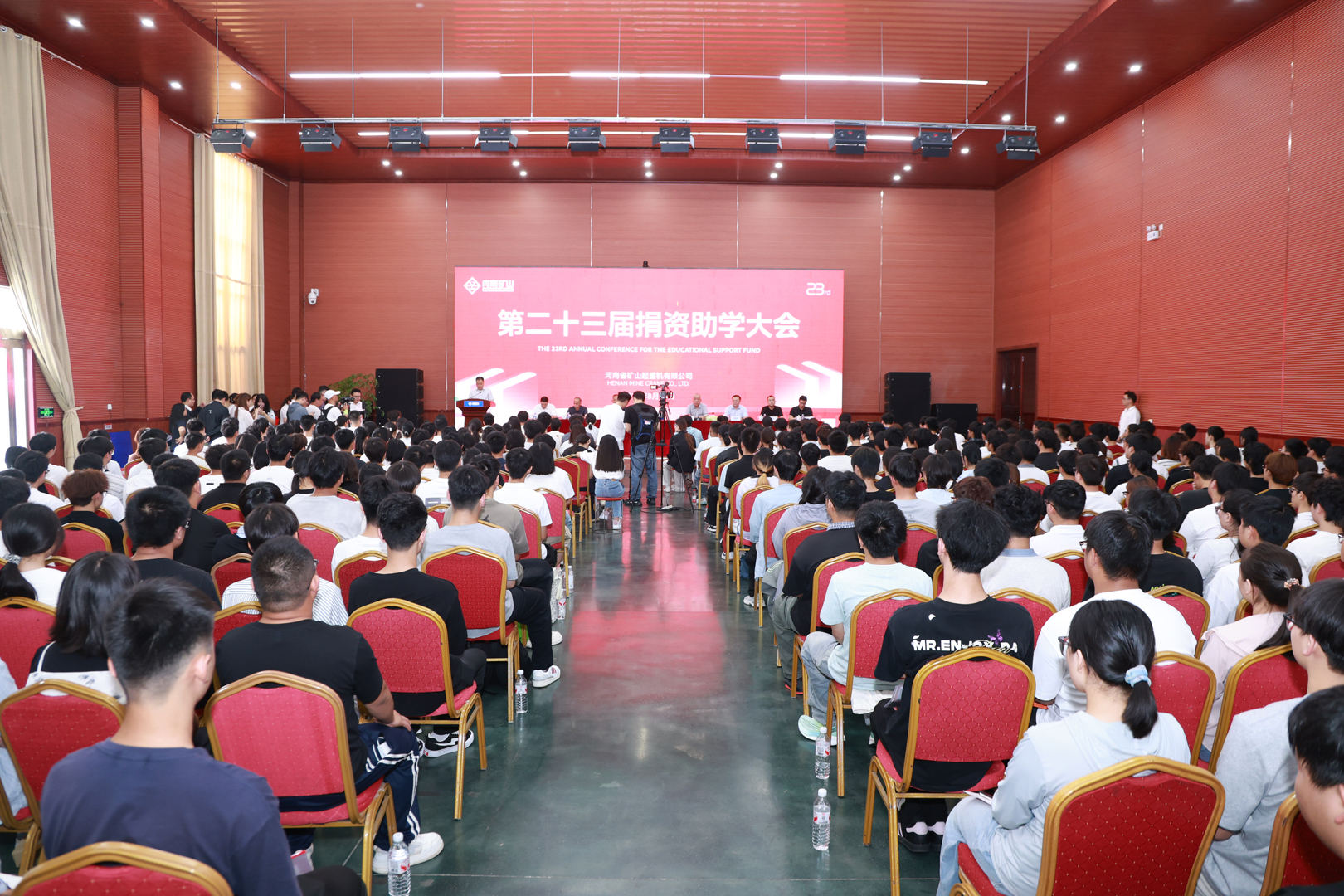
  • Revision of Crane Design Code was successfully held in Henan Mine Crane

    Revision of Crane Design Code was successfully held in Henan Mine Crane

    Revision of Crane Design Code was successfully held in Henan Mine Crane

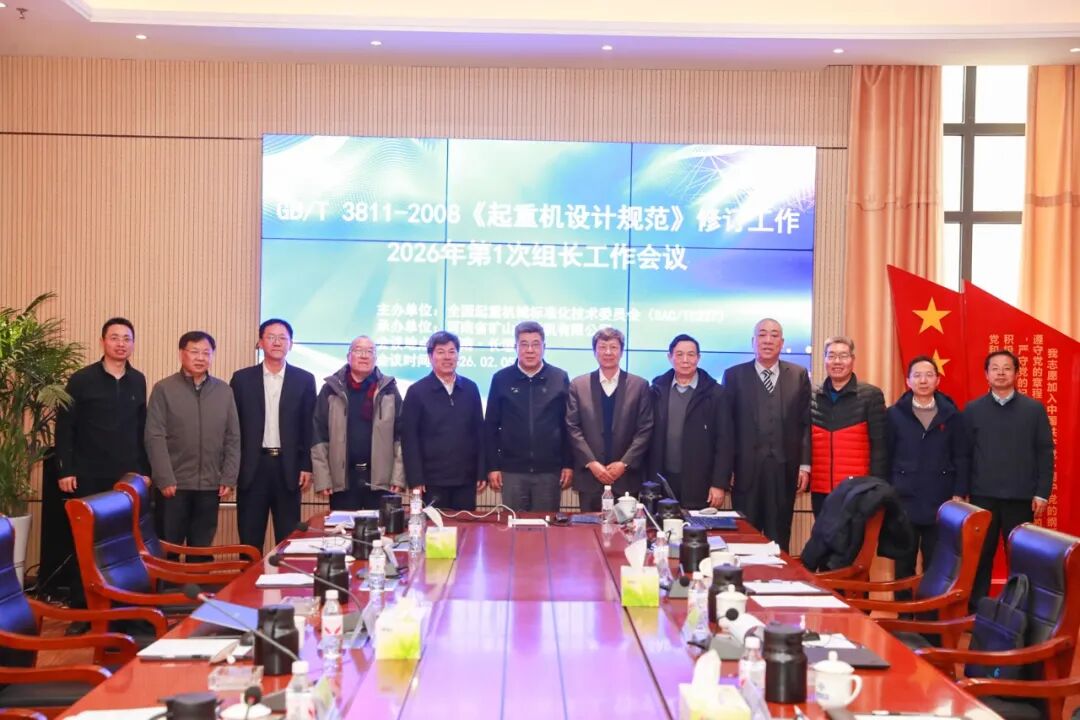
    Recently, the National Technical Committee for the Standardization of Hoisting Machinery organised and held the first team leader’s working meeting in 2026 for the revision of GB/T3811-2008 ‘Crane Design Specification’ in Henan Mine Crane

    The revised data of the specification will be used as a reference for the comprehensive performance (life) laboratory data of cranes in Henan Mine Crane to revise the relevant norms and standards.
    Henan Mine Crane

    The revision of the national standard is not only the implementation of the ‘National Standardisation Development Programme’ specific initiatives, but also to promote the lifting machinery industry, intelligent, green, high-end ‘three’ transformation of the key practice, will build a solid foundation for the quality and upgrading of industry standards.

    Henan Mine Crane
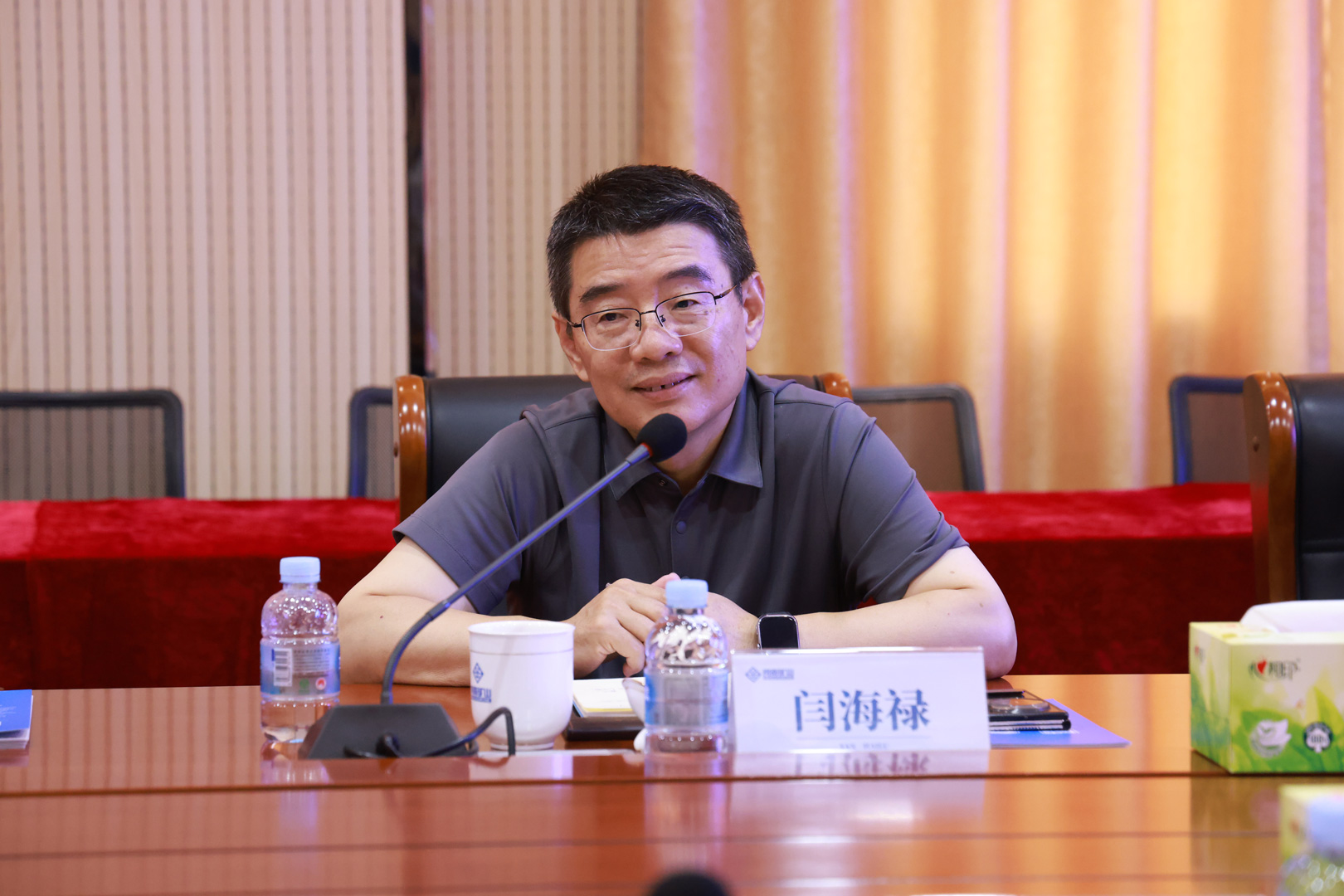
    The State Administration of Market Supervision and Administration of Special Equipment Safety Supervision Bureau of the former secondary inspector Shang Hong.
    Tang Chao, Chairman of the National Lifting Machinery Standardisation Technical Committee.
    Huang Yuefeng, General Manager of Beijing Lifting and Transportation Machinery Design and Research Institute Co.
    Wang Shunting, Secretary General of the National Standard Committee for Hoisting Machinery.
    Lu Jianhu, Secretary General of Bridge and Gantry Crane Branch of National Lifting Machinery Standard Committee.
    Tao Tianhua, professor-level senior engineer of the National Quality Inspection and Testing Centre for Lifting and Transportation Machinery.

    Henan Mine Crane
    ISO/TC96 Chairman, Beijing Lifting and Transportation Machinery Design and Research Institute Co.
    Xu Geling, former Vice President and Professor of Taiyuan University of Science and Technology.
    Lu Nianli, Professor of Harbin Institute of Technology and Henan Mie Technology Expert.
    Professor and Director of Mechanical Engineering Research Institute of Southwest Jiaotong University,
    Cheng Wenming, senior consultant of Henan Mine Crane and other authoritative experts and business representatives gathered to discuss the revision of standards.
    Cui Peijun, Secretary of Party Committee of Henan Mine Crane, attended the meeting and made a speech.

    Henan Mine Crane

    Cui Peijun said, GB/T3811 as a basic, programmatic national standards in the field of crane design, and its revision is directly related to crane product quality enhancement, user safety and security, but also related to the standardisation of the entire lifting machinery industry, sustainable development. He suggested that industry experts more in-depth technical guidance and standards training for the high-quality development of China’s crane industry to pass on the experience, empowerment and assistance.

    Henan Mine Crane
    During the meeting, the participating experts around the standard revision framework, the core technical indicators to upgrade, optimise the adaptation of safety specifications, international standards, such as convergence and other key issues to carry out in-depth discussions, and clearly defined the key optimisation direction of the standard revision and the stage of work progress, consideration and unanimous adoption of the meeting minutes. The success of this meeting, cohesion of the industry’s wisdom, to open up the industry, academia, research and use of synergistic barriers, and further consolidate the foundation of the revision of the ‘Crane Design Specification’.

    Henan Mine Crane
    Henan Mine Crane will continue to plough technological innovation and standard construction, give full play to the leading enterprises to drive the role of deepening the integration of industry, academia and research development, help to enhance the core competitiveness of China’s lifting machinery industry and international discourse.
    Henan Mine Crane

    Henan Mine CraneDiscuss your requirements ↗
  • How to choose the right gantry crane

    How to choose the right gantry crane

    How to choose the right gantry crane

    How to choose the right gantry crane: a complete guide for industrial buyers

    Gantry cranes are the core material handling equipment in factories, ports and other scenarios, and they are relied upon for the transfer of heavy parts, container stacking and other operations. The right equipment for the right conditions can ensure smooth operations and avoid material backlogs and schedule delays.

    This guide is not an obscure technical manual, but a practical reference that combines years of industry experience. The purpose is to help buyers clarify the selection of ideas, avoid common misconceptions, according to their actual needs to make informed decisions, selected to meet the current operational needs, but also adapt to the future development of the gantry crane.

     clear your application needs

     Indoor use vs outdoor use

    The use of the scene is the basis for selection, indoor and outdoor work on the gantry crane requirements are significantly different. Outdoor need to face the wind, rain, extreme temperature and humidity and other natural environmental tests.

    Open area (such as ports, yards) wind load will affect the stability of the equipment, need to strengthen the wind design to prevent swaying and tipping; rain, snow, ultraviolet rays are easy to corrode the structure and electrical components, outdoor equipment protection level needs to be higher.

    Indoor environmental stability, combined with plant height, column spacing and other space constraints to determine the span and lifting height. Electrical protection, indoor can be adjusted according to the standard of dust, humidity, outdoor need to use waterproof, dustproof, low temperature resistant electrical components, to protect the normal operation of bad weather.

    Load characteristics

    Load is the core basis for selection of gantry cranes, and its type, weight and size directly determine the core parameters of the equipment. Conventional handling load weight needs to be based on the actual maximum load, not empirical estimation, which is the key to determine the rated lifting capacity.

    Load size is also critical, such as handling large plates, long steel components, need to match the spreader adaptability and operating radius, to avoid exceeding the effective operating range of the equipment.

    Long, irregular or eccentric loads are prone to center of gravity shift, affecting the stability and force balance of the equipment. If such loads are handled frequently, additional stabilizers and adapted spreaders are required to ensure operational safety.

    Working frequency and working cycle

    The working frequency of the gantry crane directly affects the loss and life of the equipment. Light load conditions, short operating time, low load frequency, the structural strength of the equipment and components of low wear resistance requirements.

    Heavy-duty working conditions, the need for long continuous operation, frequent start and stop, equipment component wear and tear intensity. If you choose light load level equipment, it is prone to premature failure of components and frequent failures.

    Work frequency is also associated with maintenance costs, heavy-duty equipment requires more frequent maintenance, replacement of wear parts. Procurement selection needs to plan ahead for this part of the long-term investment, to avoid only focusing on the initial procurement costs and ignore the subsequent maintenance pressure.

    Henan Mine Crane rail-mounted container gantry crane

    choose the right type of gantry crane

    Single girder gantry crane vs double girder gantry crane

    The core difference between single girder and double girder gantry cranes is in the structural design, which directly determines its load capacity and applicable scenarios. Single girder main girder is a single steel girder, simple structure, light weight, low cost, suitable for small and medium-sized lifting capacity, low operating frequency scenes, such as small and medium-sized factories, material handling, warehouse loading and unloading.

    The double girder main beam consists of two steel beams, which has a more stable structure and stronger carrying capacity, and is suitable for large lifting capacity and high working level operation, such as harbor and heavy machinery factory heavy load handling. However, it weighs more, occupies more space, and costs more for procurement and subsequent installation and maintenance.

    In terms of maintenance, single girder structure is simple, troubleshooting and parts replacement are convenient, and maintenance cost is low; double girder structure is complex, with many parts, and maintenance of lifting and traveling mechanism requires professional technology, which takes longer time and costs more. Purchasers need to combine their own load demand and budget to weigh the choice.

     Full Gantry Crane vs Semi-Gantry Crane

    Full gantry cranes are equipped with outriggers on both sides, relying on the ground track support, the operating range is not limited by the space on both sides, suitable for open yards, large workshops and other open spaces, the advantage of strong stability, a large operating radius, and all-round handling of materials.

    Semi-portal cranes are equipped with outriggers on one side only, and the other side runs on the track relying on the columns or walls of the plant, which is suitable for the space-restricted scenarios such as obstacles on one side of the workshop and insufficient width of the site, and it can fully utilize the existing site without large-scale reconstruction.

    Selection needs to be combined with the site layout and the scope of operation: the site is open without obvious obstacles, the need for a wide range of operations, choose the full gantry; site restrictions, choose the semi-gantry is more suitable, but also saves site costs.

    MGB semi-gantry crane for sale

    The MGB semi-gantry crane manufactured by Henan Mine Crane

    Rail-mounted gantry crane (RMG) vs. tire-mounted gantry crane (RTG)

    The core difference between rail-mounted (RMG) and tire-mounted (RTG) gantry cranes is in the way they travel, which directly determines operational flexibility. The rail type runs along a fixed track with a fixed route, which is suitable for scenes where the operation site is stable and does not require frequent position adjustments, such as fixed yard areas in harbors, and special corridors for production lines in factories.

    Rail type has stable operation, strong load bearing, high precision, controllable energy consumption and maintenance cost, but lack of flexibility, difficult to adjust the operation range after the track is laid, and high cost of subsequent site modification.

    Tire type does not need a fixed track, can be moved freely, high flexibility, suitable for multi-area handling, temporary work site and other scenes. However, its carrying capacity is slightly lower, the stability of operation is greatly affected by the level of the ground, tire wear and tear, maintenance costs are relatively high.

    Mg Double Girder Gantry Crane with 50/10 Ton

    Henan Mine Crane’s  double girder gantry crane

    Define the key technical parameters

     Lifting capacity

    Lifting capacity is the core technical parameters of the gantry crane, selection needs to be clear about the relationship between the rated lifting capacity and the actual workload, the actual operation can not be long-term full-load operation, need to reserve a safety margin.

    For example, if you often move 8 tons of load, it is recommended that you choose 10 tons and above to reduce loss and improve safety. At the same time, we need to consider the future expansion of production capacity, reserve load capacity in advance to avoid short-term repeated purchases.

    Do not blindly pursue high rated lifting capacity, otherwise it will increase the procurement cost, improve the site infrastructure requirements, resulting in waste of resources. Need to combine the current load and future planning, reasonable determination of lifting capacity parameters.

     Span and lifting height

    The span and lifting height should be determined in conjunction with the site layout and operational requirements. Span is the distance between the legs at both ends of the main beam, which should be adapted to the width of the site, the width of the material stacking and the operating radius.

    Lifting height is the limit distance between the top and bottom of the hook, which needs to consider the height of material stacking, working platform and the structure of the equipment itself.

    Selection requires on-site measurement of the site dimensions, combined with the operational scenarios to accurately determine the parameters. Too big or too small parameters will affect the efficiency.

    Working level (A5-A8)

    Gantry crane working level (A5-A8) is divided according to the working frequency and load duration rate, which directly reflects the operational strength and durability. The higher the level, the stronger the structural strength, wear resistance, etc., suitable for long-time high-intensity operation.

    Grade A5 is suitable for intermittent light to medium operations in small factories; Grade A6-A7 is suitable for continuous operations of medium to high intensity such as harbor loading and unloading and production lines in machinery factories; Grade A8 is suitable for frequent operations of high intensity such as steel ladle transfer in steel mills.

     Hoisting, trolley and large vehicle running speeds

    Lifting, trolley and large vehicle running speed are directly related to operational efficiency and safety.

    Selection should be combined with the load characteristics and operational requirements, balancing speed and safety.

    MN Multi-Function Gantry Crane custom

    The MN Multi-Function Gantry Crane manufactured by Henan Mine Crane

    Environment and special working conditions

    Environmental factors have a great impact on the life of the gantry crane and operational safety, and different working conditions need to match the corresponding protective capacity in order to ensure the stable operation of the equipment.

    Outdoor operations need to focus on the wind load, open, high-altitude scenes need to strengthen the wind-resistant design and equipped with windproof devices; extreme temperature environments, the need to use electrical components and oils suitable for high and low temperatures, to prevent component failure.

    Seaside, chemical plants and other corrosive scenes, need to use stainless steel, weathering steel and other corrosion-resistant materials, and anti-corrosion coating on the surface of the equipment to slow down the corrosion of components.

    High dust, high humidity environment need to strengthen the equipment sealing protection, selection of high protection level components and increase the frequency of cleaning and maintenance; flammable and explosive environments need to use explosion-proof equipment, explosion-proof standards to prevent safety accidents.

     standards, certification and compliance

    Production and use of gantry cranes need to comply with international and industry standards, with certification qualifications, which is a prerequisite for quality and safety, buyers must pay attention to.

    Common international standards such as CE, ISO, FEM, etc., the domestic follow the GB standard, are on the structure of the equipment, load, safety and other key aspects of the clear requirements, to meet the standards in order to ensure quality and safety.

    Export equipment needs to be adapted to the target market access requirements, such as exports to Russia and the CIS need EAC certification, exports to North America need to comply with ANSI standards, buyers need to confirm in advance to avoid delivery risks.

    Design drawings, inspection reports, certificates of compliance, operation and maintenance manuals and other complete technical documents, is the key basis for acceptance and subsequent maintenance and repair, the buyer needs to require the manufacturer to provide complete.

    MC Electromagnetic Gantry Crane for sale

    MC Electromagnetic Gantry Crane

    Evaluation of gantry crane manufacturers

    Manufacturing capacity

    Manufacturer’s manufacturing capacity directly determines the quality of equipment and delivery cycle, buyers need to focus on assessing its factory size, production capacity and production equipment.

    Factory size and production capacity directly reflects the supply capacity, large customized cranes need to have sufficient space and capacity to ensure that the manufacturer on time delivery.

    At the same time need to pay attention to the manufacturer’s quality control system, such as whether the ISO9001 certification, whether the production process of raw materials, semi-finished products, finished products, such as the whole process of inspection, perfect quality control system is the equipment to meet the standards and design requirements of the guarantee.

     Engineering design and customization ability

    Most industrial scenarios have special needs, and standard models are difficult to fully adapt, which requires manufacturers to provide personalized solutions in combination with project requirements.

    To assess the customization ability, the core of the engineering team strength.

    At the same time, we need to refer to the manufacturer’s past customization cases, focusing on whether there are successful projects in similar industries and working conditions.

     Industry and project experience

    The manufacturer’s industry experience and project cases directly reflect its technical strength and service level. Purchasers should give priority to manufacturers with extensive experience in their own industry, such as port operations to choose manufacturers with experience in port cranes

    When evaluating project experience, in addition to the type of customer, project size, but also need to pay attention to the geographical coverage, especially to confirm the manufacturer in high temperature, high corrosion and other special scenarios of successful cases.

     installation, logistics and after-sales service support

    Gantry crane procurement is not only the choice of equipment, but also need to take into account the subsequent logistics, installation and commissioning and long-term after-sales service.

    Logistics, crane beams, outriggers, etc. are oversized pieces of transportation, requiring professional vehicles and programs.

    Installation and commissioning is the key to the normal operation of the equipment, the need for professional teams, specialized equipment and meet safety standards.

    After-sales service is related to the long-term stable operation of the equipment, buyers need to understand the manufacturer’s service system, including local service outlets, spare parts warehouse, 24-hour emergency repair and spare parts supply cycle.

    MG double girder gantry crane supply

    Henan Mine Crane’s MG double girder gantry crane

     cost considerations and full life cycle value

    Procurement of gantry cranes, cost is an important consideration, but also need to comprehensively assess the full life cycle value, taking into account the initial investment, operation and maintenance costs and equipment life.

    Initial investment includes procurement, transportation, installation and commissioning costs, which is the most concerned part of the purchaser.

    Long-term operating costs including energy consumption, labor, etc., different types of cranes vary greatly. Such as rail gantry cranes with low energy consumption, tire gantry cranes with high tire wear costs; high working level equipment, although the purchase price is high, but the operational efficiency is high!

    Selection needs to be integrated into the initial investment and long-term costs, not blindly chasing low prices, and prioritize the selection of cost-effective, high life-cycle value of the equipment.

    gantry crane selection of common misunderstandings and avoidance methods

    Purchasers who do not know enough about the technical parameters of the gantry crane and the demand for working conditions are prone to fall into the selection of misunderstandings, resulting in poor equipment suitability and even lead to safety risks.

    Common misconceptions are excessive lifting capacity or insufficient designation, to avoid the need to accurately account for the actual load, combined with the future planning of a reasonable set of parameters, reserved safety margins do not blindly chasing high loads.

    Neglect of environmental conditions is also a common problem, buyers only focus on the load and efficiency, easy due to lack of adaptability of the equipment, resulting in rapid aging and frequent failures.

    Underestimation of after-sales support needs can easily lead to equipment delivery, installation and commissioning lag, fault maintenance is not timely, affecting production. Avoid the need to pay attention to the manufacturer’s after-sales capabilities in the selection, to confirm that it can provide perfect installation, commissioning, maintenance and spare parts supply services.

    MG double girder gantry crane solution

    Henan Mine Crane’s MG double girder gantry crane

    Conclusion: Selection of gantry cranes to support long-term development

    Gantry crane selection is a systematic project, need to take into account the application requirements, equipment types, technical parameters and other aspects, not a single decision.

    Selection needs to avoid common misconceptions, do not blindly chase the low price, do not ignore the environment and service needs, combined with the actual assessment of the value of the full life cycle of the equipment, and it is crucial to establish long-term cooperation with reliable suppliers.

    Professional suppliers can provide high-quality equipment, customized solutions and perfect after-sales, to help avoid procurement risks.

    Henan Mine Crane Factory supply is a professional manufacturer and service provider of cranes and material handling products, integrating research and development, design, manufacturing, sales and service, providing customers with total solutions and full life cycle services. If you need to contact us at any time

    Email: info@hnksglobal.com

    WhatsApp: 8618836207779

    Henan Mine CraneDiscuss your requirements ↗