Engineering · Manufacturing · Project support
info@hnksglobal.comWhatsApp +86 18836207779 ↗

Blog

  • Steel Mill Overhead Crane Protection: Match Features to the Process

    Steel Mill Overhead Crane Protection: Match Features to the Process

    Technical guide

    Steel Mill Overhead Crane Protection: Match Features to the Process

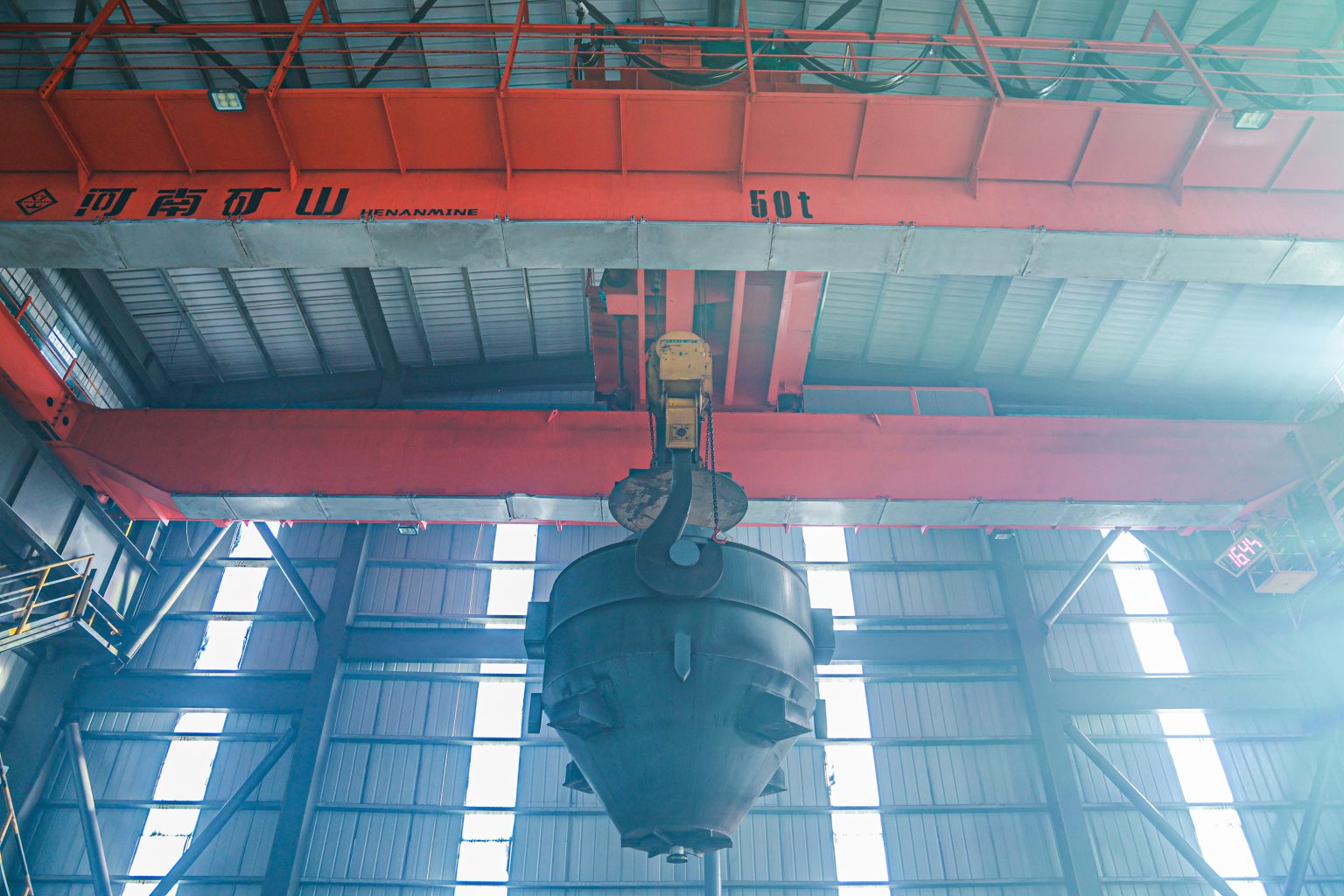
    A steel mill includes different heat sources, loads and handling cycles. Define the process stage and lifting attachment before deciding which protection, control and monitoring features belong in the crane specification.
    Henan Mine CraneTechnical guide · Updated 2026Crane selection, project scope and operating requirements
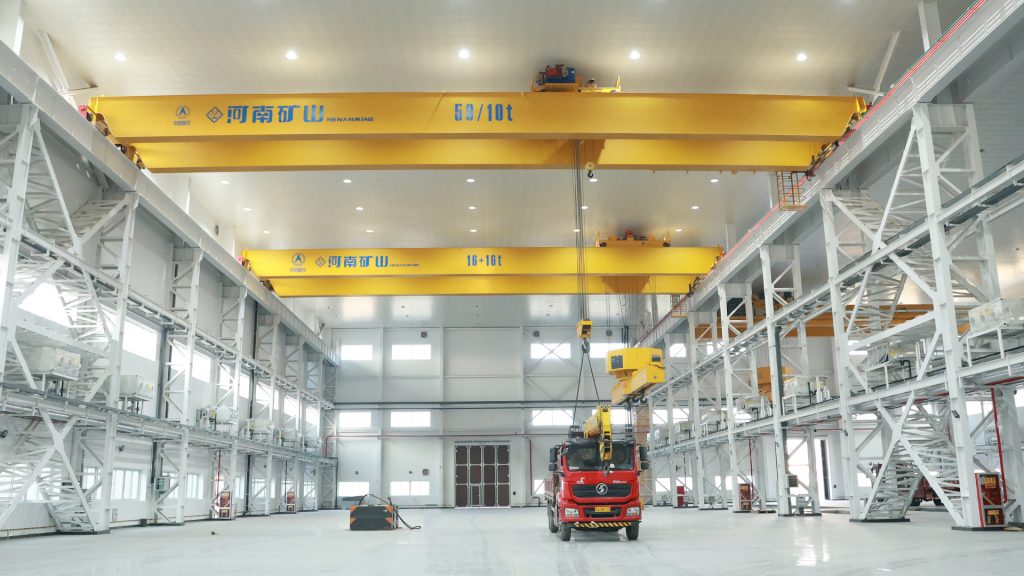
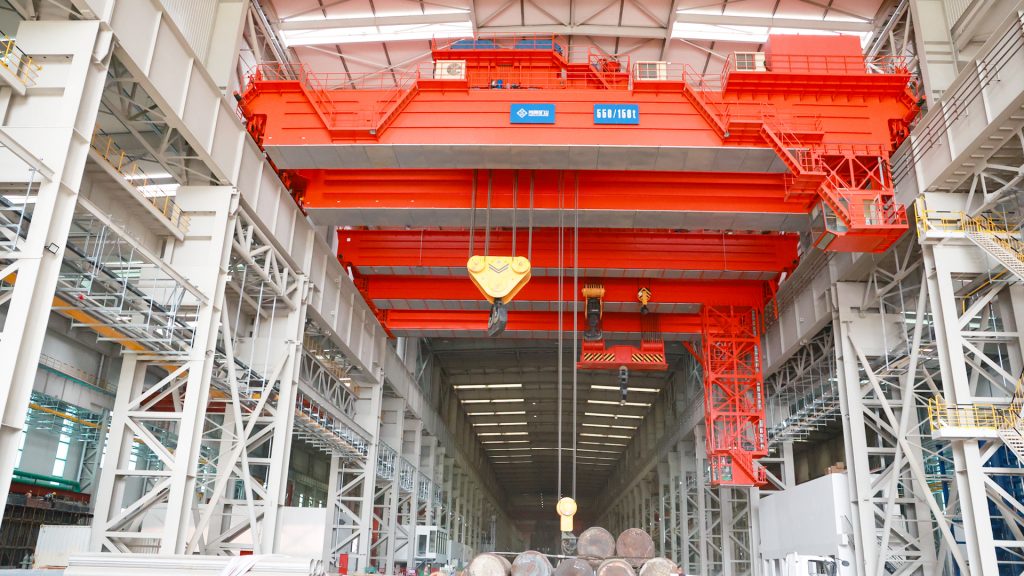
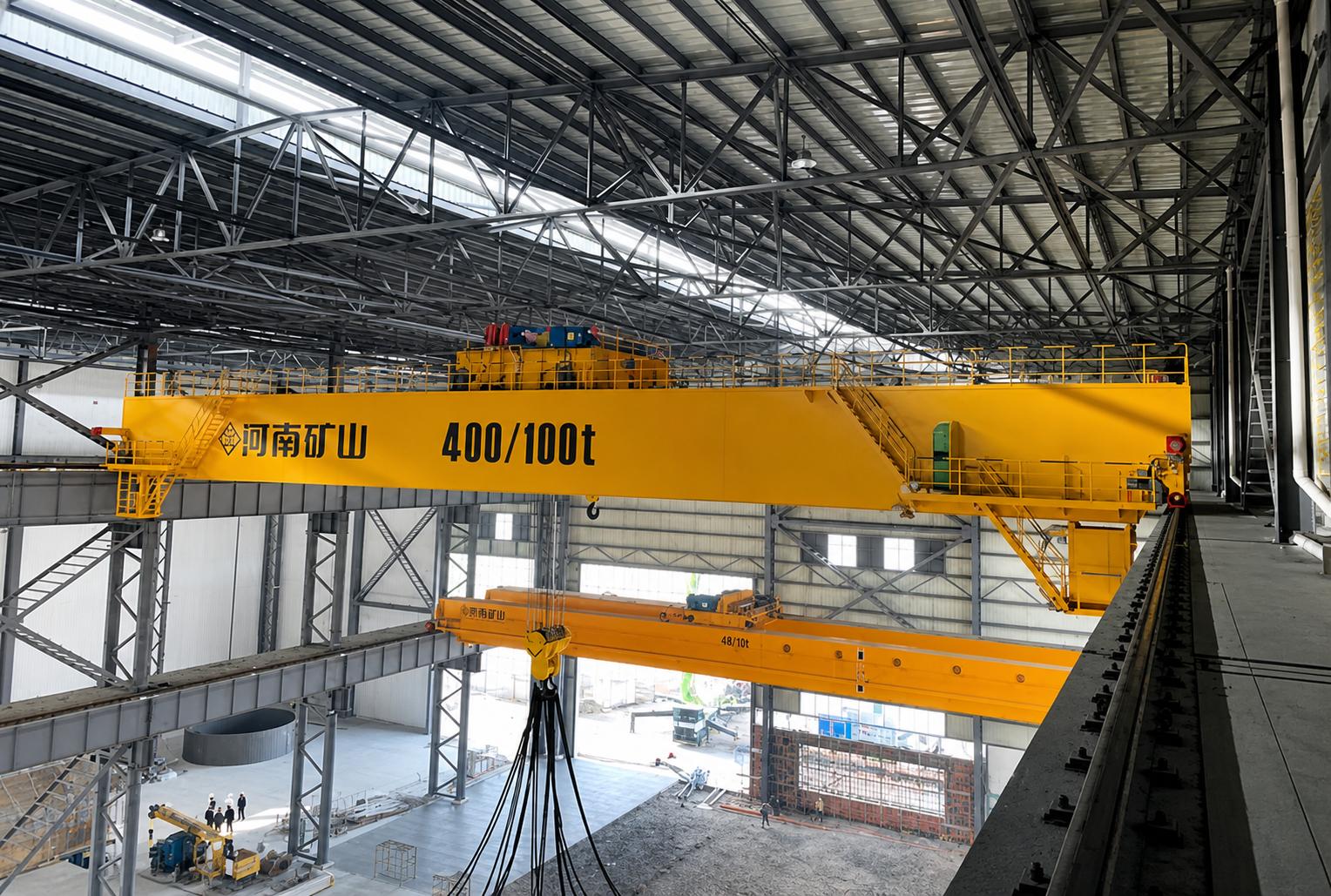
    Overhead double girder cranes for steel mills
    Overhead double girder cranes for steel mills
    Project planning notes

    Key points for this crane project.

    1. Why Safety Is Critical in Steel Mill Overhead Cranes
    2. Core Safety Design Principles
    3. Essential Safety Features to Look For
    Read the technical guide

    Why Safety Is Critical in Steel Mill Overhead Cranes

    High-Risk Lifting Scenarios

    Each type of lifting operation in a steel mill harbors a high risk, especially these three scenarios, where the safety requirements for cranes are at their peak.

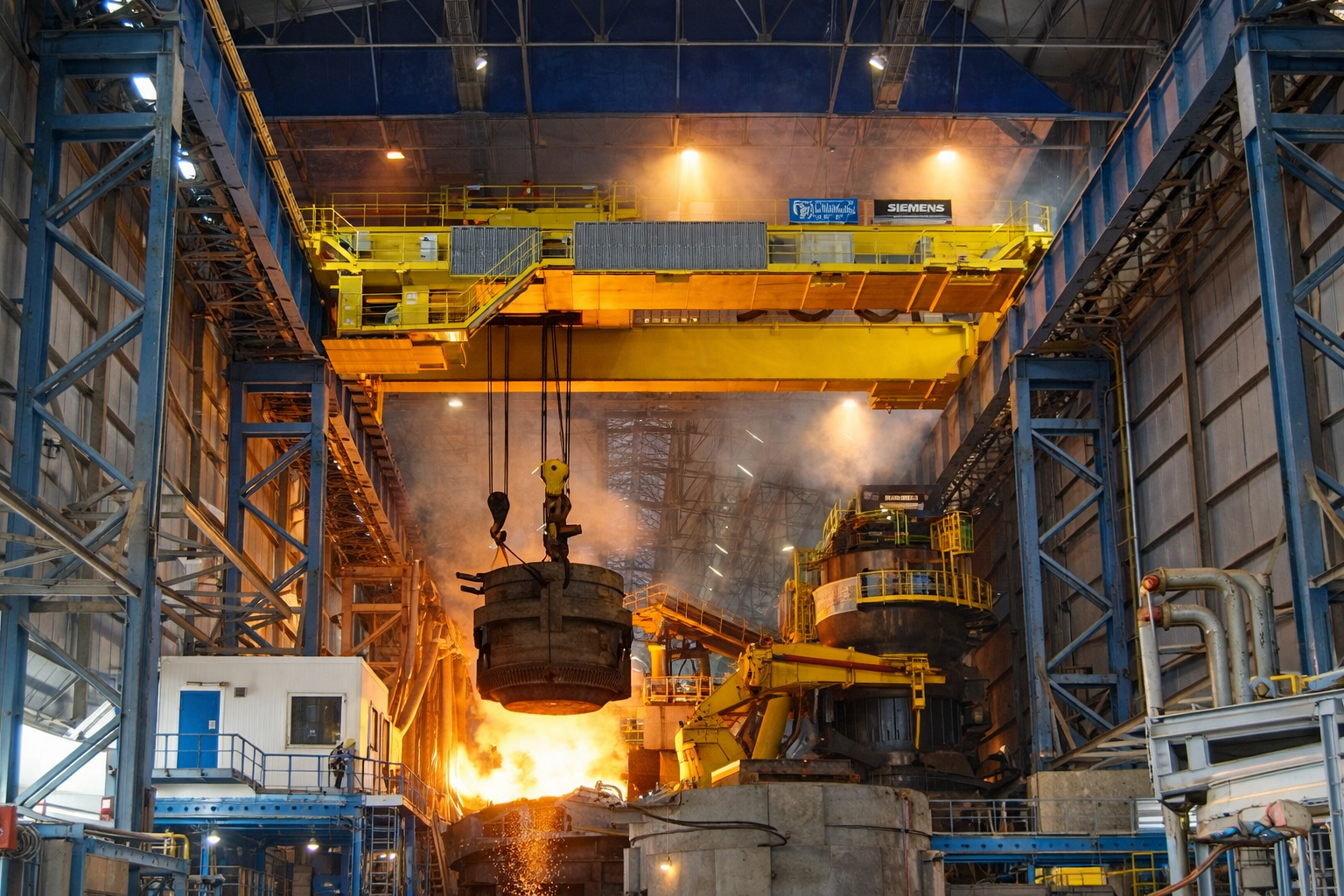
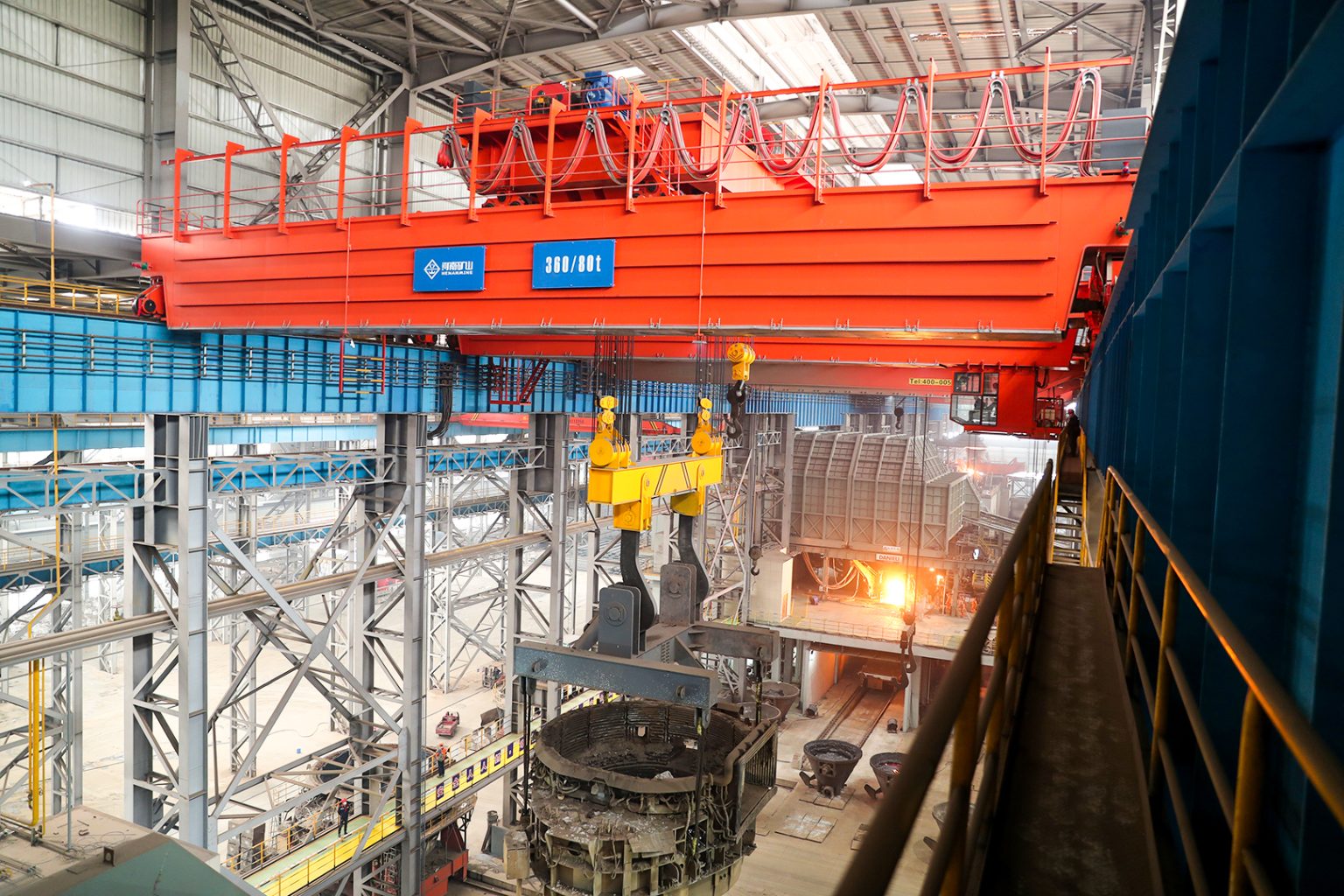
    The most dangerous is the ladle crane (ladle crane) operation.

    Heavy billets, ingots transfer is not easy, these loads are often dozens of hundreds of tons, irregular shape, lifting once shaken, tilted, it is easy to collide with the workshop equipment, and even smashed production line, resulting in production stoppages.

    There are also multiple cranes working together in the scene, such as a large steel plant steelmaking workshop, there are usually more than one crane running at the same time, track crossing, overlapping the scope of work, the risk of collision is extremely high, a little improper operation may lead to equipment damage.

    Consequences of Failure

    Any failure of steel mill crane is not a “small problem”, the consequences are often chained.

    The most serious is the risk of personnel safety, high temperature, heavy load environment, once the load falls, steel leakage, the operator is difficult to evacuate in a timely manner, very easy to cause casualties.

    Secondly, equipment damage, the crane itself is expensive, plus collision to the steelmaking furnace, continuous casting machine and other core production equipment, repair costs can easily be hundreds of thousands or even millions of dollars, and a long maintenance cycle, will seriously affect production.

    The most headache is the loss of downtime, steel mills belong to the continuous production industry, a production line downtime for an hour, the loss may be tens of thousands of dollars, the loss of a day's downtime is incalculable, this cost, no one enterprise can easily afford.

    Therefore, the safety of steel mill cranes is never “icing on the cake”, but “life preserver”, even if it costs a little more, we must put the safety configuration in place.

    Core Safety Design Principles

    Redundancy

    Redundancy design, to put it bluntly, is “double insurance”, which is the core principle of steel mill crane safety design, but also to avoid catastrophic failures.

    Simply put, it means that key components should be equipped with backup systems, even if one of them fails, the other one can be activated immediately to ensure the normal operation of the crane and avoid serious accidents such as falling loads.

    For example, brake, hoisting mechanism, control system, these components directly related to safety, should be redundant design – like our Henan Mine Crane metallurgical cranes, equipped with dual drive, dual electronic control, dual brake, once the first set of failure, the second set of redundant institutions can independently take on the work, to protect the safety bottom line.

    Many customers feel that redundant design is a “waste”, but in steel mills, one more set of backups is one more safety, and can avoid a possible catastrophic accident, which is actually very cost-effective.

    Reliability Under Extreme Conditions

    Therefore, the safety of steel mill cranes, first of all, to ensure the reliability of such extreme environments, the core is three points: high temperature resistance, dust and iron filings, continuous operation.

    High temperature resistance, motor, cable, control box should be designed to withstand high temperatures, such as motor with H-class insulation, cable with metallurgical special high-temperature resistant rubber cable, control box to do thermal sealing treatment to avoid high temperature damage to components.

    Dust and iron filings is also very critical, crane bearings, gearboxes, electrical components, should be used to seal the structure, the sensor should also do the three anti-coating treatment, to ensure stable operation in a high dust environment, will not cause wear and tear of components due to dust into the short circuit.

    Compliance with Standards

    There are three core international standards: ISO 4301, which is the global crane safety standard, stipulates the basic safety requirements and classification standards of cranes; FEM A7-A8, mainly for the European market, the safety factor of metallurgical cranes, redundancy design has more stringent requirements; CMAA Class E/F, is the U.S. standard for heavy-duty, continuously operating cranes. CMAA Class E/F, is the American standard for heavy-duty, continuously operating cranes, emphasizing the reliability and safety performance of the equipment.
    Overhead double girder cranes for steel mills
    Overhead double girder cranes for steel mills

    Essential Safety Features to Look For

    Dual Braking System

    Dual braking system is the most core and non-negotiable safety feature of steel mill cranes, especially ladle crane, which is mandatory and non-negotiable.

    It consists of two independent braking systems: the main brake is responsible for braking in daily operations, such as lifting, deceleration and stopping during operation; the safety brake is the “backup insurance”, once the main brake fails, the safety brake will immediately start to hold the drum to prevent the load from falling.

    Our Henan Mine Crane's double brake system adopts the normally closed design, which can avoid the expansion of the accident to the greatest extent by braking at power failure and the reaction time is no more than 0.2 seconds.

    Don't choose the single brake system to save money, in the steel mill, a brake failure may cause irreparable losses, how to calculate this account is not cost-effective.

    Redundant Hoisting Mechanism

    Redundant Hoisting Mechanism is the core of redundant design, which is mainly used in heavy lifting scenarios, such as steel ladle and large billet lifting, and can further enhance the reliability of the equipment.

    There are two common designs: dual motor drive or dual gearbox system, through the load distribution design, so that two motors or two gearboxes work together to share the load.

    In this way, even if one of the motors or one of the gearboxes fails, the other one can temporarily carry the load and land it safely on the ground without the load suddenly falling. Henan Mine Crane's heavy-duty metallurgical cranes are equipped with redundant hoisting mechanisms, and dual encoders are also installed at the reel end to realize the double checking of speed and displacement, which further enhances safety.

    Overload Protection System

    Overload is one of the most common safety hazards of cranes, especially in steel mills, workers may be in order to catch up with the schedule, illegal overweight lifting, long-term overload will lead to deformation of the crane structure, accelerated wear and tear of the wire rope, and even lead to breakage, load fall.

    The role of the overload protection system is to monitor the lifting load in real time, once the rated load is exceeded, it will automatically cut off the power of the hoisting motor, and at the same time, sound and light alarms will be issued to remind the operator to stop the operation to prevent structural damage to the equipment and safety accidents.

    Limit Switch System

    Limit switch system, is to control the crane operating range of the “safety boundary”, to prevent the crane beyond the prescribed range, collision to the equipment, building or personnel, steel mill cranes must be equipped with a complete limit switch, you cannot do without.

    Our Henan Mine Crane limit switches adopt redundant design, each limit has two independent switches, even if one fails, the other can work normally, and also according to the high temperature and dusty environment of the steel mill, the limit switches will be equipped with a protective cover to extend the service life.

    Anti-Collision System

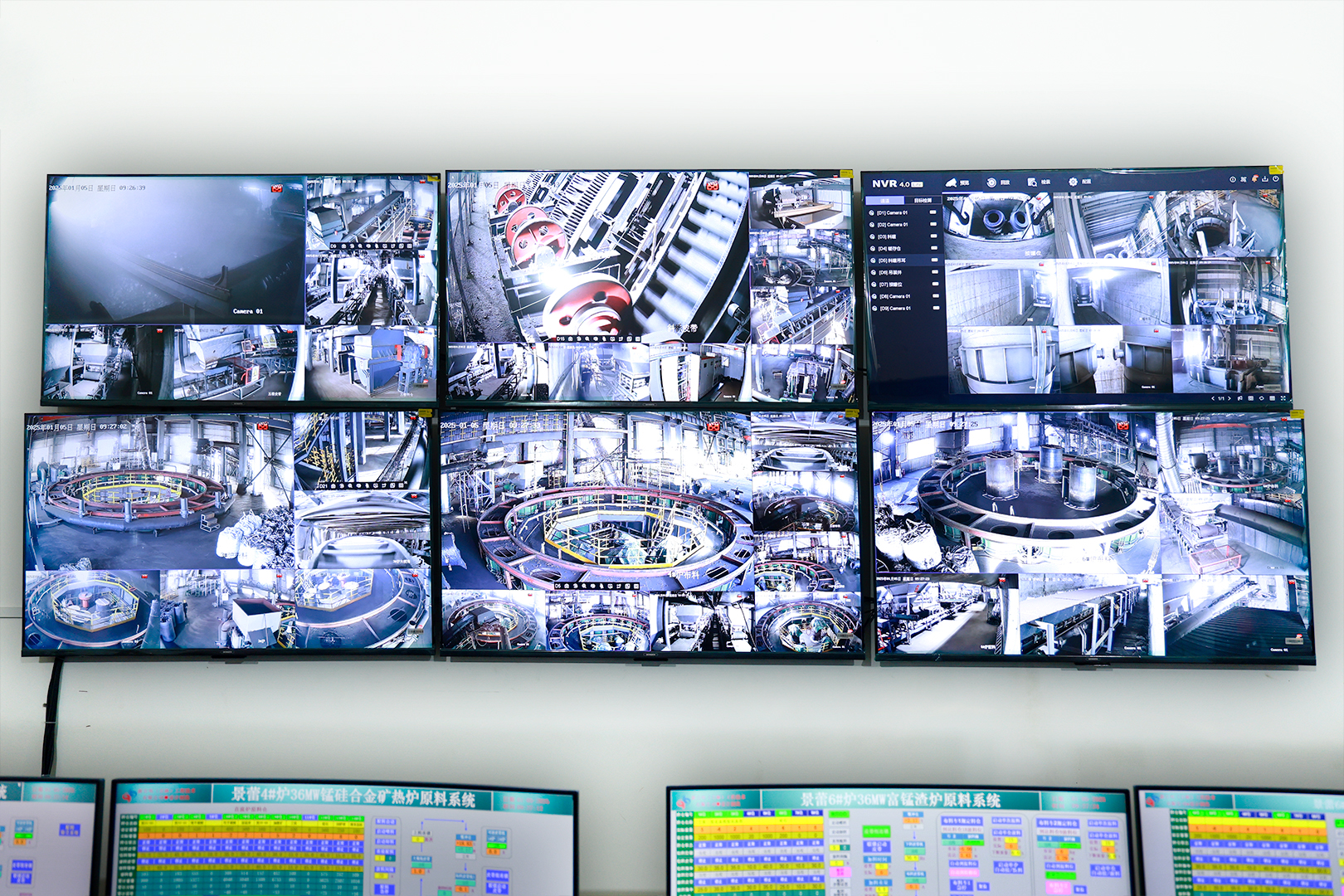
    For the steel mill workshop with multiple cranes running at the same time, the Anti-Collision System is an indispensable safety configuration, which can effectively avoid the collision between cranes and between cranes and workshop equipment.

    This system through ultrasonic or laser sensors, real-time monitoring of the distance between neighboring cranes, as well as the distance between the crane and the workshop columns, equipment, when the distance is less than the safety value, it will automatically issue an early warning, followed by deceleration, and if it continues to be close to, it will be directly stopped to ensure safety.

    Our Henan Mine Crane anti-collision system, strong anti-interference ability, can adapt to the steel mill dust, electromagnetic interference environment, but also according to the layout of the workshop, the flexibility to adjust the safety distance, suitable for multiple cranes working together scene, to avoid damage to equipment and shutdown caused by collision.

    Emergency Stop System

    Emergency stop system is the “last line of defense” to deal with emergencies, the core requirement is to “stop at any time, everywhere can stop”, to ensure that the operator finds danger in any position, can immediately cut off the power of the equipment.

    Advanced Safety Features for Modern Steel Mills

    Intelligent Monitoring Systems

    With the enhancement of the level of intelligence in steel mills, intelligent monitoring systems (intelligent monitoring systems) has become an important safety feature for modern steel mills cranes, which can realize the transformation from “passive defense” to “active warning”. The system can realize the transformation from “passive defense” to “active warning”.

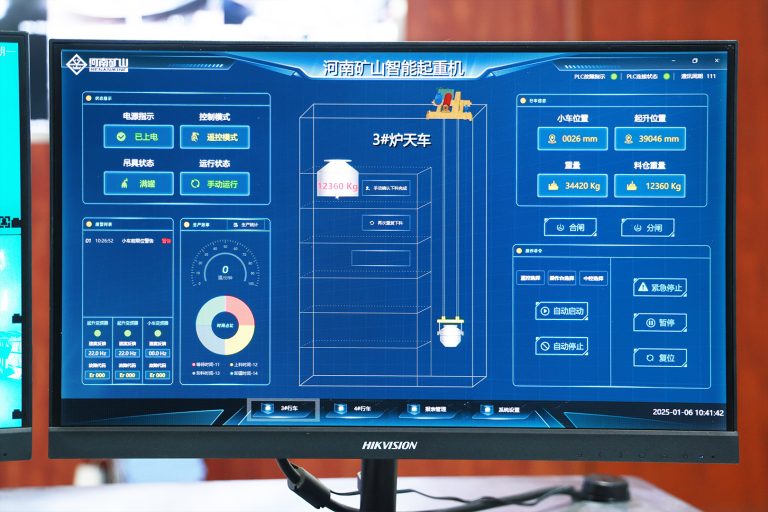
    This system through the high-precision sensor array, real-time monitoring of the crane's 12 types of core parameters, including lifting height, operating speed, load weight, motor temperature, wire rope wear and tear, etc., once abnormal, it will immediately issue an early warning, and at the same time upload the data to the cloud platform.

    Managers can use mobile APP or PC to remotely view the crane's operating status, fault information, and can also play back key parameter changes before the accident, providing data support for accident analysis, discovering potential faults in advance and avoiding accidents.

    Our Henan Mine Crane's intelligent monitoring system also supports cluster management of multiple cranes, allowing managers to monitor the operating status of multiple devices at the same time, significantly improving management efficiency.

    Predictive Maintenance

    Predictive maintenance, the core is “find problems in advance, solve problems in advance”, to avoid sudden failure of cranes, reduce downtime, which is particularly important for continuous production of steel mills.

    It analyzes the wear and tear of key components, such as wire rope, brake pads, gear box loss, through the equipment operation data collected by the intelligent monitoring system, and judges the remaining life of the components in advance, reminding the management to replace them in time, so as not to wait for the failure of the components to be repaired.

    Henan Mine Crane will also equip every piece of equipment with predictive maintenance to help customers reduce maintenance costs and improve equipment reliability.

    Remote Operation Systems

    The smelting area of a steel mill is characterized by high temperature, high radiation, high dust, and high safety risks for operators working on site, and remote operation systems (ROS) can be a good solution to this problem.

    Operators can be away from the dangerous area of the control room, through the remote console or remote control, control the crane to operate, do not have to be close to the high temperature, high radiation area, can protect the safety of the operator, but also does not affect the accuracy of the operation.
    Overhead double girder cranes for steel mills
    Overhead double girder cranes for steel mills

    Safety Requirements by Application Type

    Ladle Crane

    Ladle crane (ladle crane) is the crane with the highest safety requirements in steel mills, and there is no one of them, because it directly transports molten metal, and any hidden safety problems may cause catastrophic accidents.

    Our Henan Mine Cranes are also equipped with anti-splash devices to further enhance operational safety.

    Charging Crane

    Charging crane (charging crane), mainly used to add raw materials to the steelmaking furnace, the operating environment is also harsh, high temperature, dusty, and charging will be material impact, the crane's safety requirements are also very high.

    Its core safety requirements are anti-impact and overload protection: anti-impact design, can withstand the impact of the material when adding material to avoid deformation of the crane structure; overload protection system, can prevent overload caused by adding too much material to avoid equipment damage.

    Slab/Billet Handling Crane

    Slab/Billet Handling Crane is mainly responsible for the transfer and stacking of billets and ingots, which are heavy and irregular in shape, and easy to sway when lifting, so the requirements for safety mainly focus on anti-sway and durability.

    Anti-sway control is a necessary configuration, can effectively reduce the billet, ingot swaying amplitude, to avoid collision equipment; at the same time, the structure of the crane should be durable to adapt to the long-term heavy load, frequent operations, wire rope, hooks and other components should be made of high-strength materials, to extend the service life.

    Safety Standards & Compliance

    International Standards

    The three core international standards have already been mentioned, and here we will talk about them in detail: ISO 4301, the global crane safety standard, provides for the classification of cranes, safety requirements and test methods, applicable to all types of cranes; FEM, the European Crane Manufacturers' Association standard, of which FEM A7-A8 is mainly for metallurgical FEM, is the European Crane Manufacturers Association standard, of which FEM A7-A8 is mainly for metallurgical cranes, with more stringent requirements for safety factor, redundant design, and high temperature resistance; CMAA, is the standard of the Crane Manufacturers Association of the U.S.A. CMAA Class E/F is for heavy-duty, continuously operating cranes, emphasizing the reliability of the equipment and safety performance.

    Special Metallurgical Requirements

    Steel mill cranes, compared with ordinary industrial cranes, have some special metallurgical requirements, which are the key to ensure the safety of steel mill operations and cannot be ignored.

    The first is a higher safety factor, ordinary cranes usually have a safety factor of 3-4 times, while metallurgical cranes, especially cranes lifting molten metal, have a safety factor of more than 5 times, to ensure that they can withstand extreme loads and emergencies.

    Next is the mandatory requirement of redundant systems, for cranes lifting molten metal, double braking, redundant hoisting mechanism is a mandatory configuration, do not allow any omission, which is the key to avoid catastrophic accidents.

    In addition, targeted environmental protection measures, such as high temperature protection, dust protection, radiation protection, to ensure that the crane can operate stably in the extreme environment of the steel plant, will not be due to environmental factors lead to the failure of the safety devices.

    Common Safety Mistakes to Avoid

    Combined with these years of front-line experience, I summarized a few customers are most likely to step on the safety mistakes, we must avoid when selecting the type, you can avoid a lot of detours, but also to avoid a lot of potential safety hazards.

    The most common misconception is to use ordinary cranes instead of metallurgical crane (metallurgical crane). Many customers figure cheap, think ordinary cranes can be used in steel mills with a little transformation, the results cannot be used for a long time, because of high temperatures, heavy loads lead to equipment failure, and even cause safety accidents – ordinary cranes, safety configuration, materials, cannot adapt to the extreme environment of the steel mills, seems to save money, but buried a big hidden danger.

    There is also underestimation of the impact of high temperature, think ordinary insulation measures are enough, the result is that the electrical components are baked by the high temperature, control system failure, resulting in crane failure; lack of collision avoidance system, multiple cranes running at the same time, it is easy to collide; there is no perfect maintenance program, the equipment is not maintained for a long time, the gradual failure of the safety devices, and ultimately lead to accidents.

    Safety Inspection & Maintenance Checklist

    Daily Inspection

    Daily inspection of steel mill cranes, although simple, but can find potential hidden dangers in time, to avoid the expansion of the fault, every day before the start, the operator must do these three checks.

    First check the brake, check the brake pads are not worn, whether the brake gap is appropriate, manually test the braking effect, to ensure that the brake can work properly; second check the load limiter and load monitoring system, start the equipment, test the system whether the load can be displayed normally, issued by the early warning; and finally check the emergency stop system, press the position of the emergency stop button, to confirm that it can immediately cut off the power of the equipment, the acoustic and visual alarms can work properly. normal work.

    These inspections may seem simple, but they can effectively avoid many safety accidents caused by aging and malfunctioning equipment, so be sure to develop the habit of daily inspection.

    Periodic Inspection

    In addition to daily inspection, periodic inspection is also very important, usually every six months or once a year, focusing on checking the core components of the equipment, to ensure that the equipment long-term stable operation.

    Firstly, check the structural integrity, check the main girder, trolley frame has no deformation, weld has no cracks, wire rope has no wear and tear, broken wire, hook has no deformation, cracks; Secondly, check the electrical system, check the cable has no aging, breakage, electrical components have no loosening, overheating, control system has no faults; Lastly, check the mechanical components, check the lubrication of the gear box, the motor's operating status, limit switches, anti-collision system sensitivity. switch, the sensitivity of the anti-collision system.

    After regular inspection, we should make records, replace worn and aging parts in time, do maintenance to prolong the service life of the equipment, and ensure that the safety devices are always in good condition.

    Lifecycle Cost vs Safety Investment

    Higher Safety = Lower Risk

    Many customers when purchasing, will be entangled in the initial cost, think the safety configuration of the crane is too expensive, always want to save a little cost. But in steel mills, safety investment and risk are inversely proportional – the more investment, the higher the safety factor, the lower the risk.

    Safety configuration of good cranes, the initial cost will indeed be a little higher, but can effectively avoid safety accidents and downtime losses. For example, cranes equipped with double braking, redundant lifting, intelligent monitoring system, although the initial period of more money, but can reduce the probability of failure, to avoid accidents resulting in casualties, equipment damage and downtime losses, in the long run, on the contrary, more cost-effective.

    Although the initial investment of our Henan Mine Crane is a little higher than that of small manufacturers, we use high-quality components, complete safety configuration, low maintenance frequency, less replacement of spare parts, which can help customers to reduce long-term operating costs, and this is why many global customers choose us.

    Downtime Cost

    As mentioned earlier, the downtime cost of steel mills is extremely high, a production line downtime of one hour, the loss may be tens of thousands of dollars, the loss of one day of downtime is even more incalculable, and may even affect the orders and reputation of the enterprise.

    The safety failure of the crane is one of the main reasons for steel mill downtime. A safety configuration is not in place of the crane, it is easy to fail, resulting in the entire production line shutdown, bringing huge economic losses.

    Therefore, in the selection of steel mill cranes, “safety investment” is not a waste, but the most cost-effective investment – a little more cost, improve the safety configuration, you can avoid huge losses due to downtime, to protect the continuity of production.

    Selection Checklist

    ✔ Equipped with dual braking system (a must for steel ladle cranes)

    ✔ With redundant hoisting mechanism (essential for heavy-duty, molten metal lifting)

    ✔ Adequate high temperature protection (suitable for high temperature environments in steel mills)

    ✔ Equipped with anti-collision system (necessary for multiple cranes working at the same time)

    ✔ Installation of load monitoring system (real-time monitoring of load status)

    ✔ Equipped with standby power supply (to cope with sudden power failure)

    ✔ With anti-sway control function (necessary for billet and ladle lifting)

    FAQ

    What is the most important safety feature?

    → Dual Braking System. Dual Braking System is mandatory for ladle cranes, especially for lifting molten metal, to ensure that the load will not fall if one set of braking system fails, which is the bottom line for the safety of steel plant operations.

    Are standard cranes safe for steel mills?

    → Not safe, must use metallurgical crane (metallurgical special cranes). The safety configuration, material and protection measures of ordinary cranes cannot adapt to the high temperature, heavy load and high dust environment of steel mills, and they are prone to failures and safety accidents.

    Why is redundancy important?

    → Redundant design prevents catastrophic failures. The key components of steel mill cranes (such as brakes and hoisting mechanisms) are equipped with backup systems, so that even if one of them fails, the other can be activated immediately to avoid serious accidents such as falling loads and damage to the equipment, and to protect the safety bottom line.

    Henan Mine Crane

    With the extreme conditions in steel mills, every lifting operation is a matter of personnel safety, equipment safety and production continuity, and there is no room for error. steel mill overhead crane safety features are never “the more the merrier,” but rather “Configure according to the needs of the indispensable” – double braking, redundant lifting, collision avoidance, high temperature resistance, these core safety features, less one may be buried safety risks.

    Henan Mine Crane has been plowing into the field of metallurgical cranes for decades, focusing on the research and development, production and sales of steel mill overhead cranes. They are equipped with a full set of core safety features, which can be adapted to the requirements of different steel mills around the world.

    Discuss the crane arrangement for your project.

    A steel mill includes different heat sources, loads and handling cycles. Define the process stage and lifting attachment before deciding which protection, control and monitoring features belong in the crane specification. Share the load, available drawings, working cycle and site conditions with Henan Mine Crane so the required configuration and supply boundary can be discussed.

    Related crane configurations

    Galvanizing Process Overhead Crane

    View product parameters
    Lifting capacity: 5 – 32 tSpan: 10.5 – 31.5 mLifting height: 6 – 24 m

    Transfer suspended workpieces through a galvanizing process with a crane matched to the line. Coordinate lifting points, corrosive exposure, tank geometry and the required handling sequence.

    Single-Girder Bridge Crane

    View product parameters
    Lifting capacity: 1–20 tSpan: 7.5–31.5 mLifting height: 6, 9, 12, 18, 24 or 30 m; capacity-dependent

    Use an LDA single-girder bridge and electric hoist for general workshop material handling. Select the lifting capacity, runway geometry and hoist duty around the building and load.

    Updated 2026 · Henan Mine Crane
  • Avenue peer common wealth |Henan Mine Crane Factory 2025 annual meeting

    Avenue peer common wealth |Henan Mine Crane Factory 2025 annual meeting

    Avenue peer common wealth |Henan Mine Crane Factory 2025 annual meeting

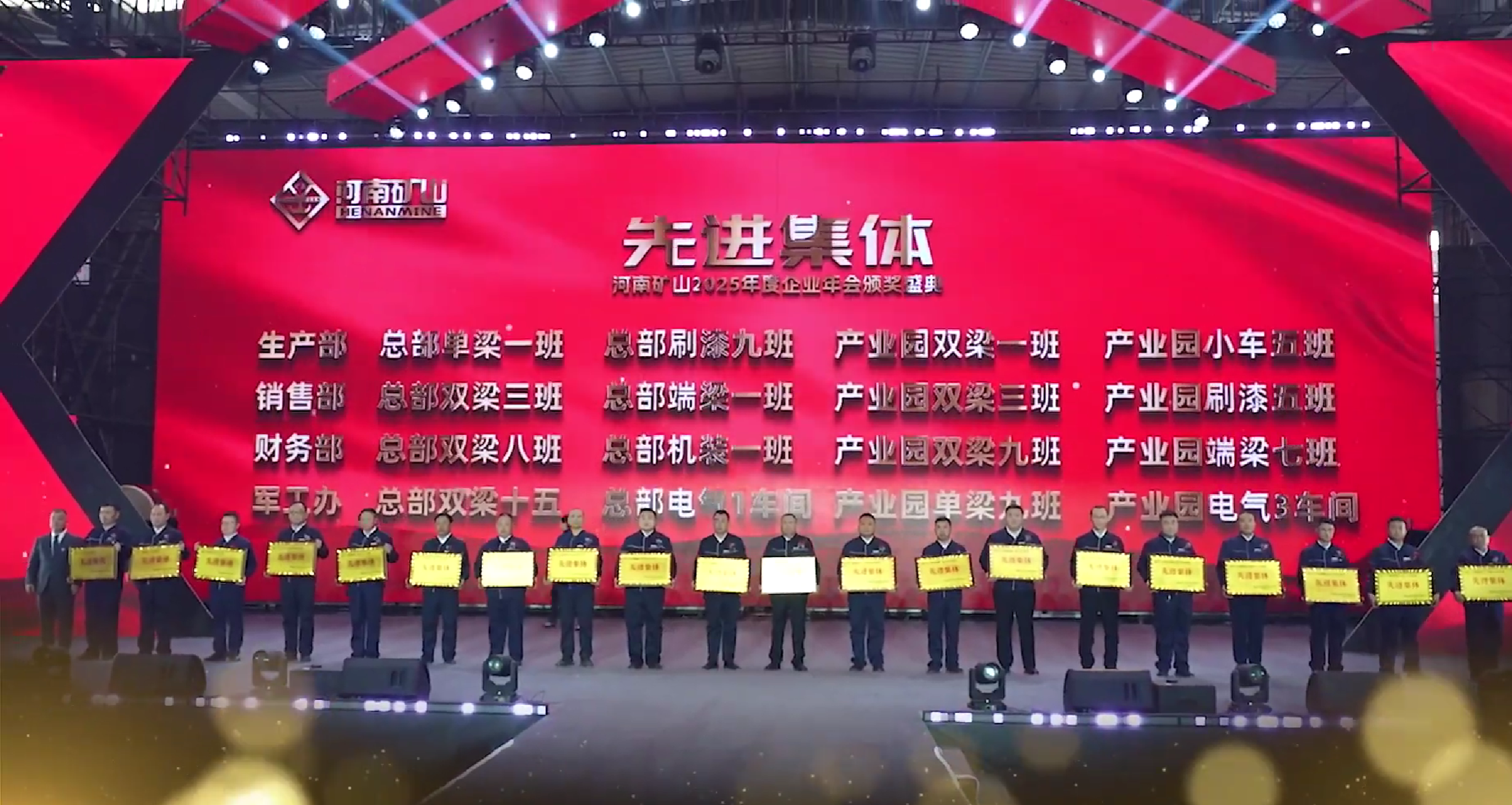
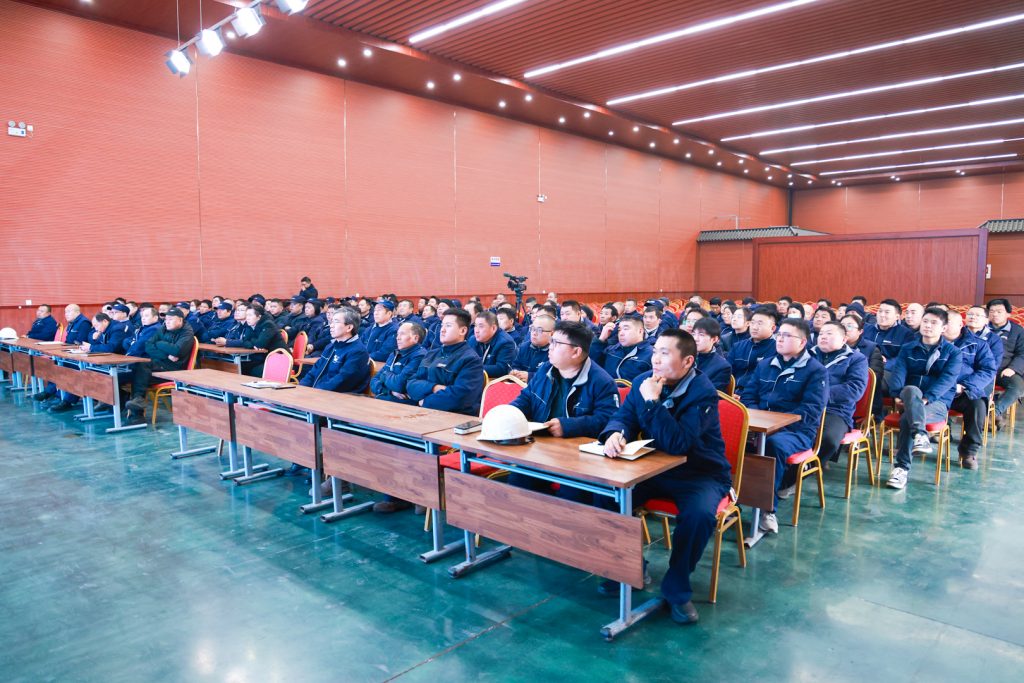
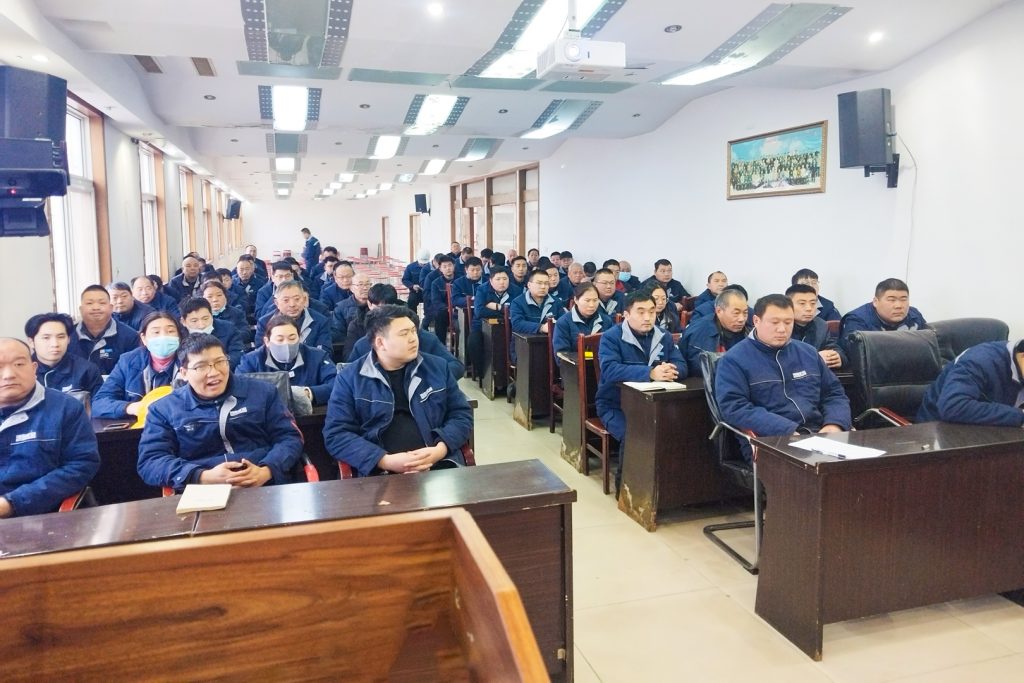
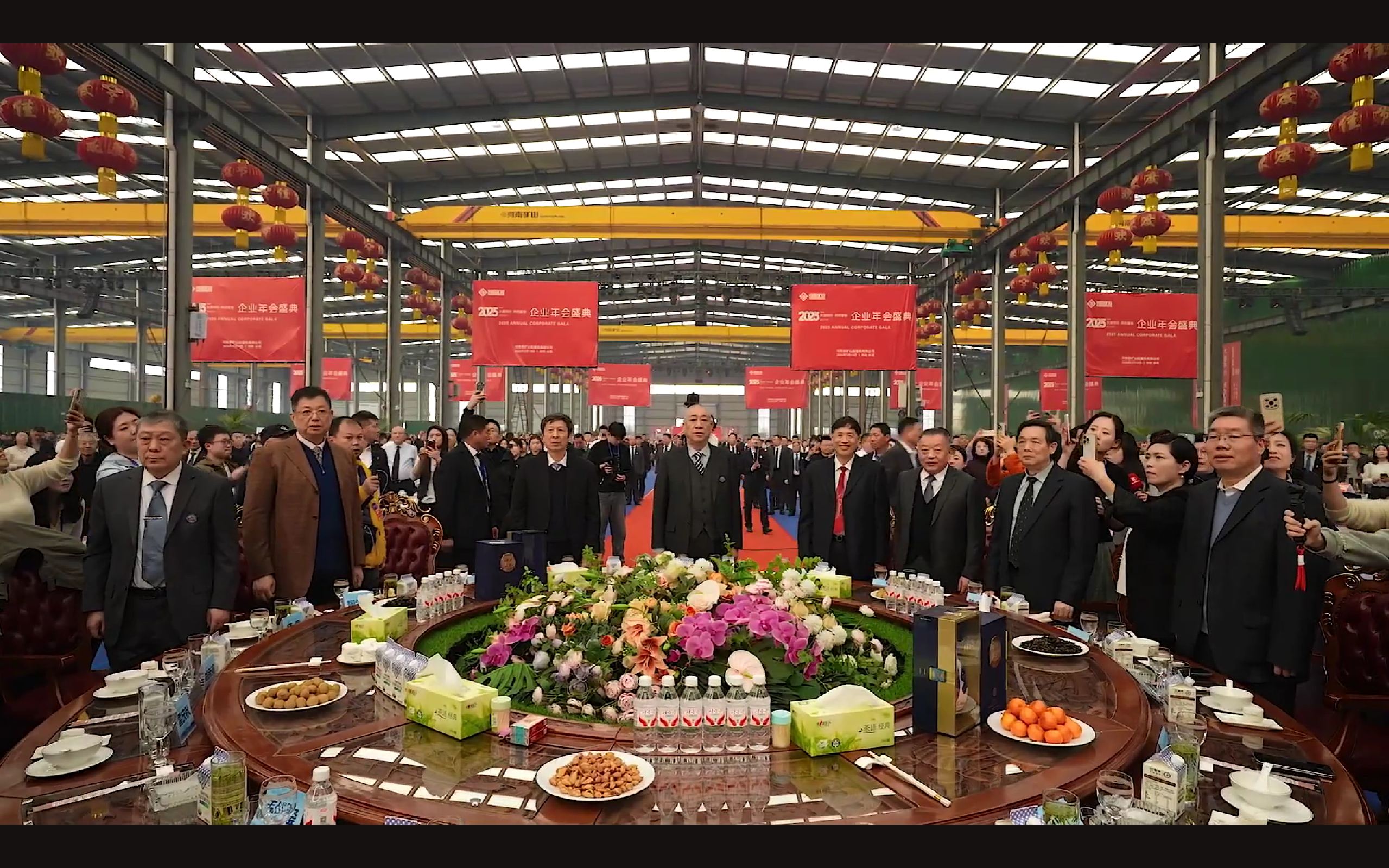
    age of the new chapter, to the glory.2026 February 13, to the Avenue peer, common wealth as the theme of Henan Mine Crane Company Limited 2025 annual meeting of the company in Changyuan, Henan Province, a grand opening and a successful conclusion!
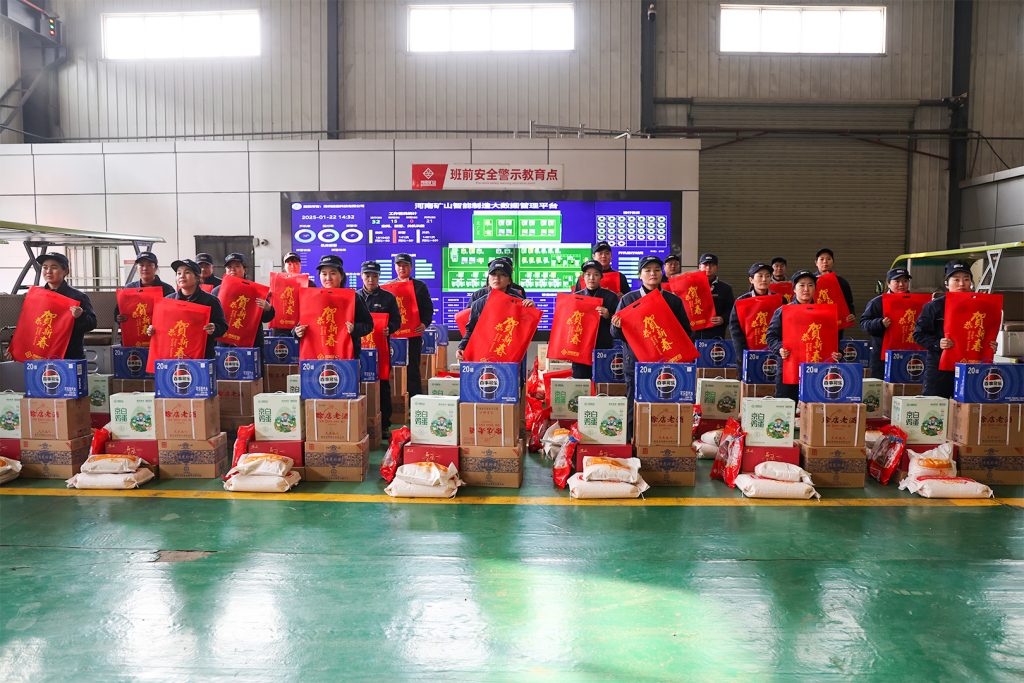
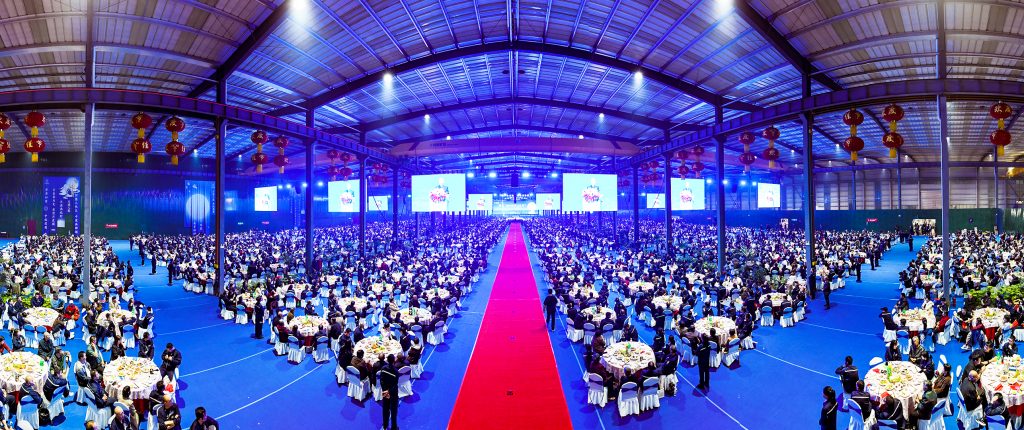
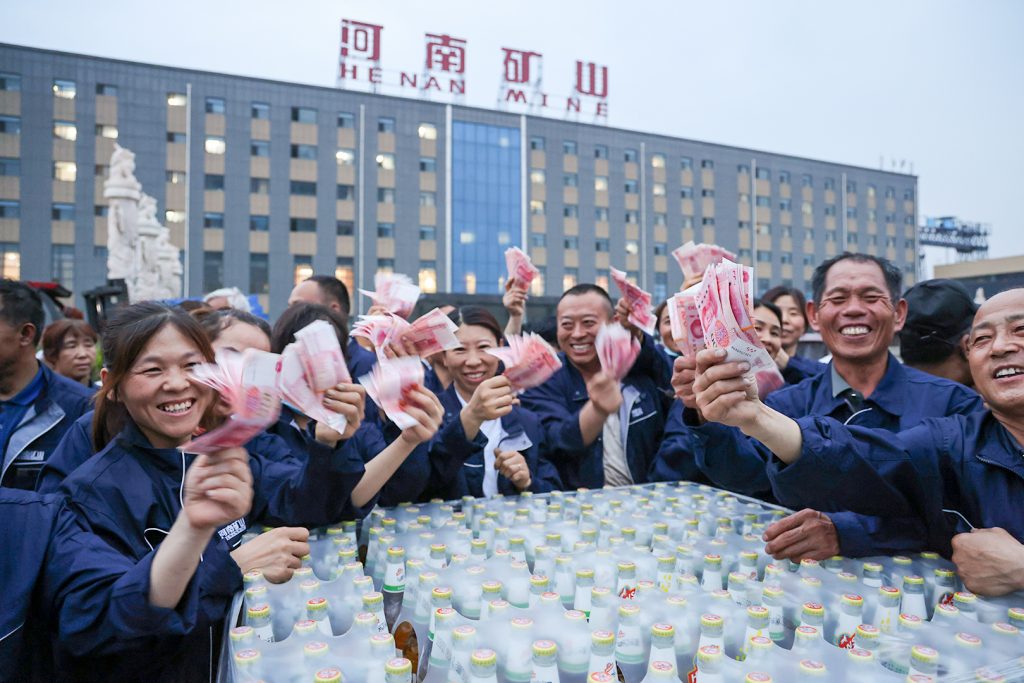
    More than 7,000 employees and their families gathered together, nearly 800 tables of reunion banquet was held, applause, songs and cheers intertwined, in this ceremony full of temperature and sincerity, all the mining people look back on the 2025 journey, witness the glory of the struggle, and share the fruitful results of enterprise development!

    Henan Mine Crane Company Annual Meeting

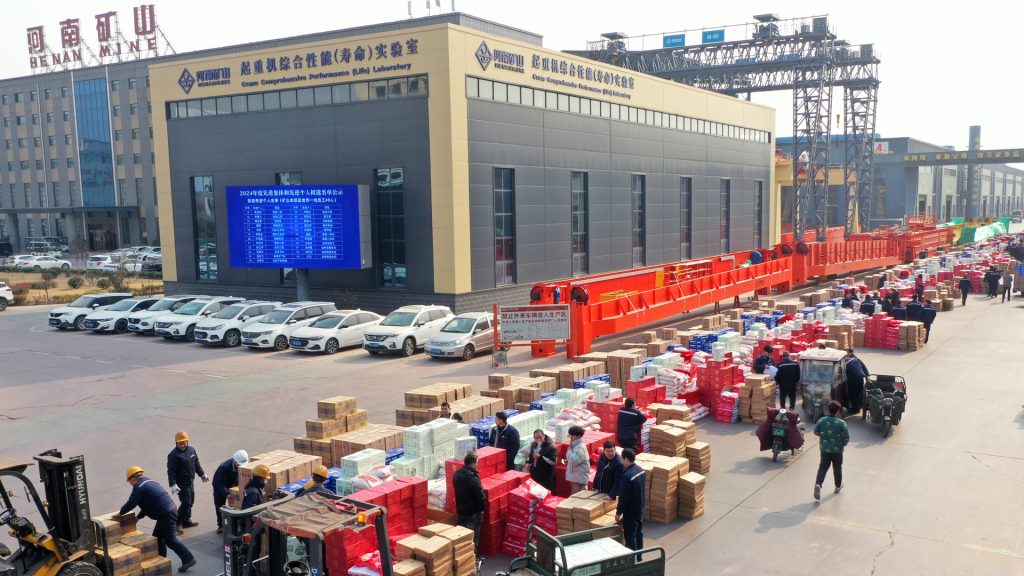
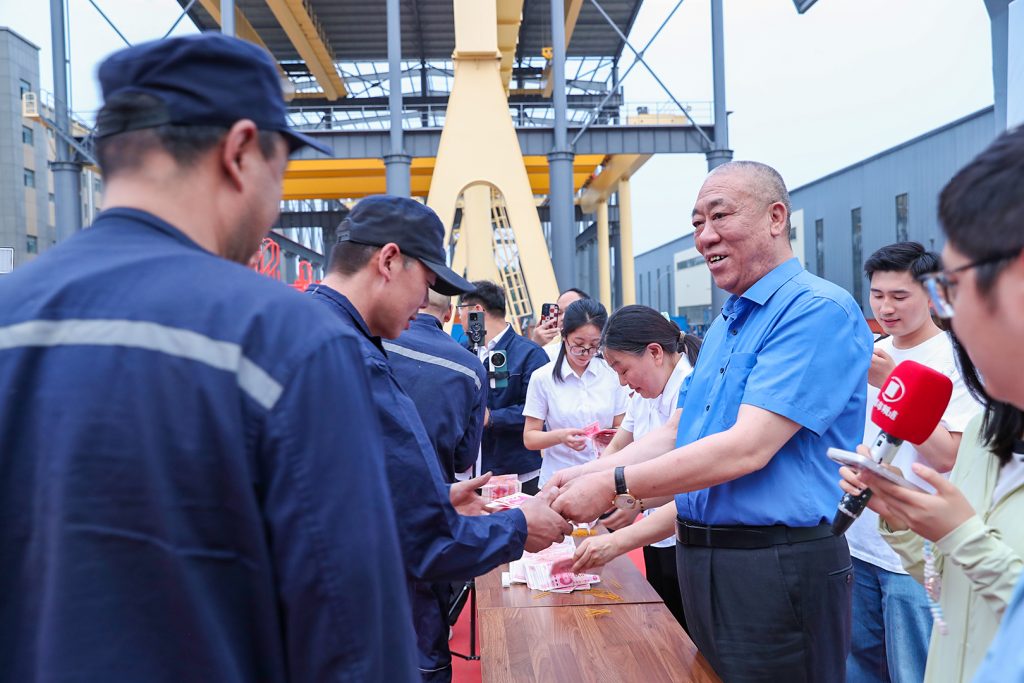
    This annual meeting can be called a ‘striver’s feast’, the most combustible scene than the 70-metre long table covered with 60 million cash on-site distribution link, a pile of cash code into a ‘mountain of money’, the visual impact of pull full. The company took out 2025 270 million yuan profit of 180 million yuan for employee benefits and incentives (accounting for more than 66%), of which 60 million cash issued on-site, the remaining 120 million yuan online directly to the staff account, the highest single bonus exceeded 5 million yuan, the real dividends of corporate development will be shared with each and every one of the strugglers.
    http://www.youtube.com/embed/RU05CxapRQg?si=b3ZLvkNISA_8eYsy”

    The annual meeting on-site money counting contest ignited the enthusiasm of the whole field, employees participate in the 15-minute time limit according to the shift, count how much can take away how much, someone counted nearly 100,000 in 15 minutes, counting to the finger cramps are still smiling.
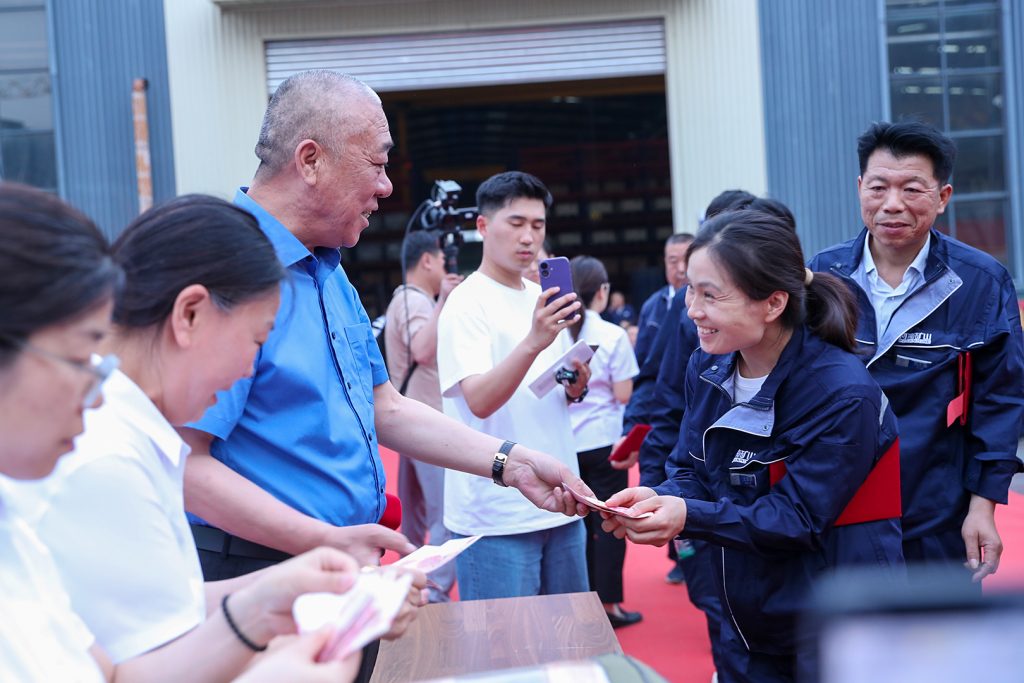
    Chairman Cui Peijun is a number of times warmly shouted financial ‘money is not enough to add,’ ‘and then lift a box over’. A box over‘, see the counting of money in the wrong team directly reissued 500,000, a total of additional 3 million universal rewards, to 24 ’filial piety star award” staff welfare from the washing machine to an additional 20,000 cash, every move shows the sincerity and preference for employees.
    There are more warm-hearted details: grass-roots employees have priority in counting money, management delayed, employees with their families to participate in the meeting can enjoy double red packets, the family members present at the meeting, everyone has 600 yuan red packets, so that the welfare not only benefits the employees, but also warm every family.

    This heroic and warm-hearted annual meeting, behind the Henan Mine Crane 2025 eye-catching development report card: annual crane production and sales of 143,000 units (sets), to achieve an output value of 11.2 billion yuan, paid taxes of 303 million yuan, in the adjustment period of the construction machinery industry to achieve steady progress, quality and quantity rise. Enterprises have always adhered to the ‘no loans, no financing, no delinquency’ principle of operation, 90 million yuan of profits set aside for the development of the reserve, in the steady development at the same time, adhere to the ‘profit employees take the lion’s share of the’ distribution concept, this original intention has been adhered to for more than 20 years.

    Henan Mine Crane Company Annual Meeting

    This annual meeting not only has real money benefits, but also full of ceremony: CCTV host Zhang Hongmin was invited to preside over the Tu Honggang, Rising Sun and other artists on stage to sing, advanced individuals, sales elites, filial piety star awards and other commendations in turn, the winners of the chest wearing a safflower, holding certificates and prizes, to reap the glory belonging to the strugglers.
    The smooth landing of the ceremony, but also can not be separated from the behind-the-scenes financial team’s hard-core protection: half a month in advance to prepare for the large amount of cash, check the reward details of 7,000 employees, 40 synchronous operation of the money counting machine, every temporary increase in the issue of accurate cash, so that ‘the boss’s sincerity’ firmly into the hands of the employees.

    Henan Mine Crane Company Annual Meeting

    From deep ploughing lifting intelligence to achieve 10 billion output value, to share more than 60% of the profits to the staff, Henan Mine Crane with an annual meeting, a vivid interpretation of the profound connotation of the ‘road with the same, common prosperity’, but also become a warm sample of China’s private enterprises will be the development of the dividends of the workers to feed the warm sample. Extravaganza ended, the new journey has begun, 2026, Henan Mine Crane will continue to work with all the staff, partners, hand in hand, with intellectual empowerment lifting industry high-quality development, with the heart of the mission of common wealth, in the way forward to write a new glory!

    Henan Mine CraneDiscuss your requirements ↗
  • Henan Mine Crane Visits 270 Older Residents Before the Lunar New Year

    Henan Mine Crane Visits 270 Older Residents Before the Lunar New Year

    Company & People

    Henan Mine Crane Visits 270 Older Residents Before the Lunar New Year

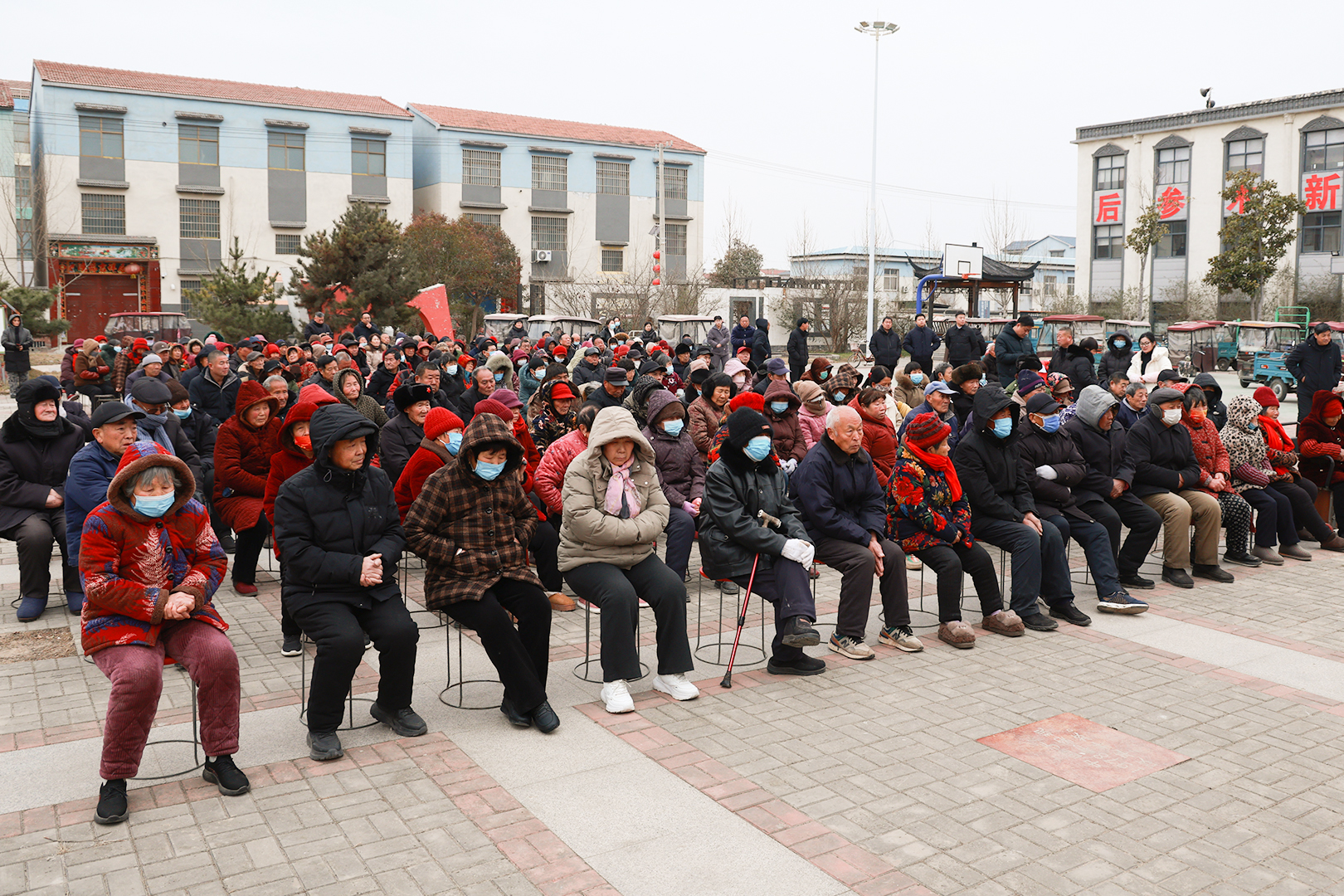
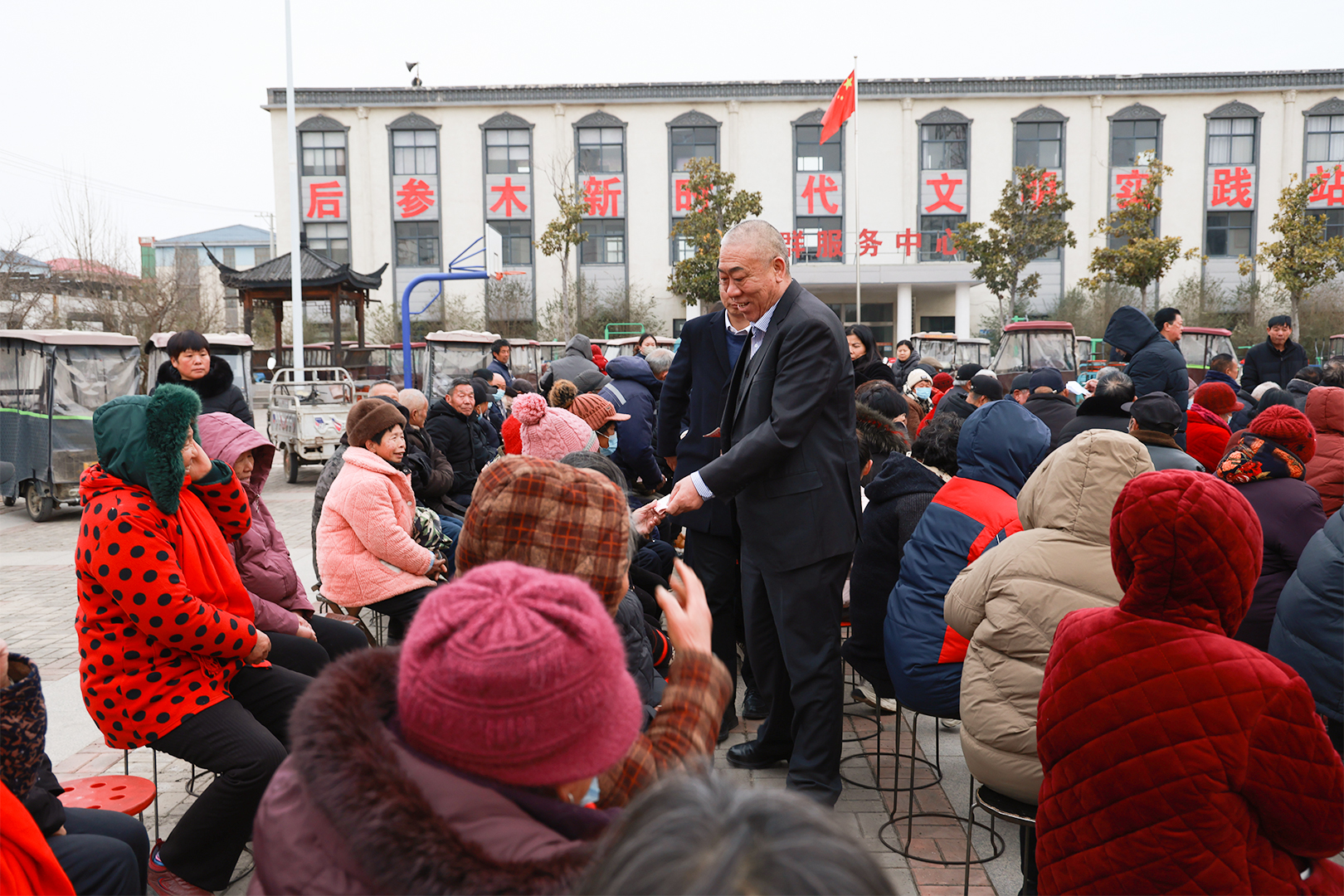
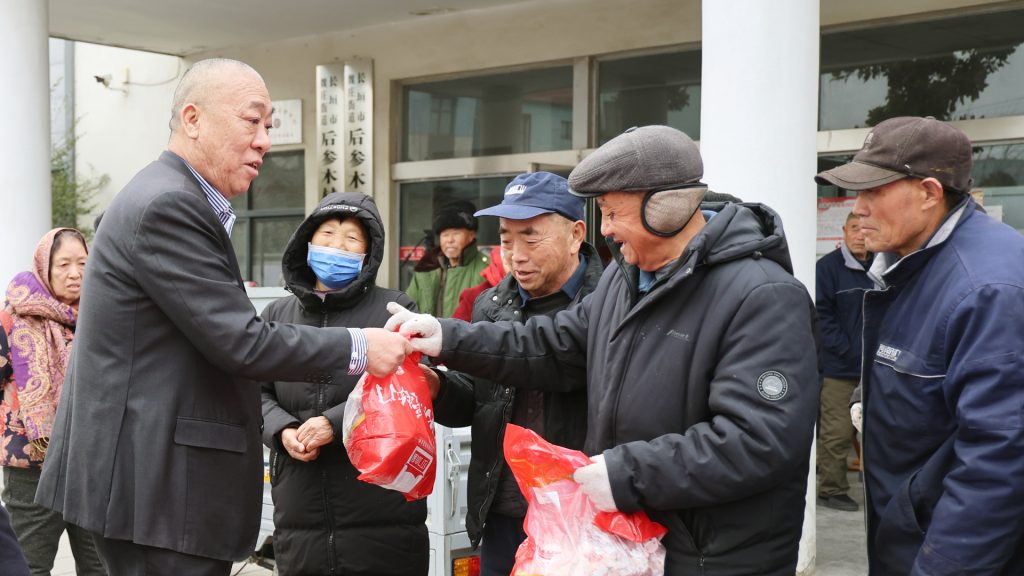
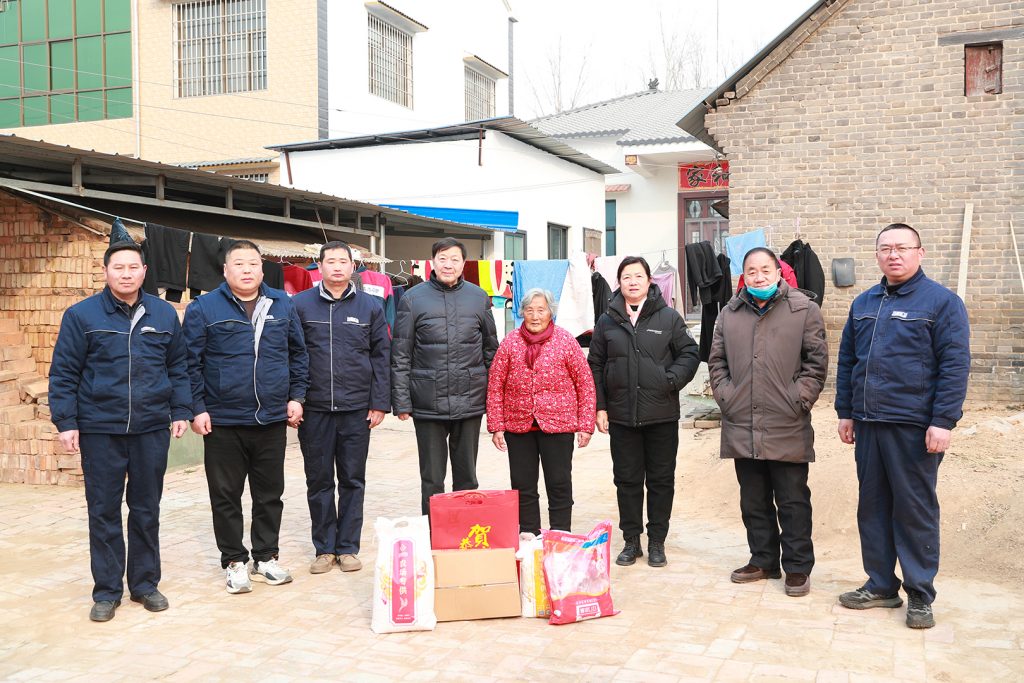
    Henan Mine Crane visited 270 residents aged over 65 in nearby villages on 6 February 2026 as part of its pre-holiday community programme.

    Company representative presenting a seasonal gift to an older resident
    Company representative presenting a seasonal gift to an older resident.

    Gifts and visits in neighbouring villages

    Founder Cui Peijun and the visiting team distributed a CNY 500 seasonal gift and food supplies to each resident. The supplies included pork, millet and flour.

    An ongoing relationship with the local community

    Company representatives met residents and thanked the surrounding communities for their longstanding support. The visit was separate from the household outreach and employee benefit programmes also held before the holiday.

    View the event photo gallery

    Contact Henan Mine Crane

    For product information, a manufacturing visit or a company enquiry, send the relevant details to our team.

  • QDY Casting Crane Protection: Questions for a Molten-Metal Project

    QDY Casting Crane Protection: Questions for a Molten-Metal Project

    Technical guide

    QDY Casting Crane Protection: Questions for a Molten-Metal Project

    Molten-metal handling requires the lifting system and operating procedure to be considered together. Describe the ladle, working path, heat exposure and cycle, then review the proposed QDY configuration and its documented protection functions.

    Henan Mine CraneTechnical guide · Updated 2026Crane selection, project scope and operating requirements
    QDY
    QDY
    Project planning notes

    Key points for this crane project.

    1. What Is a QDY Crane?
    2. Why Is Molten Steel Lifting So Dangerous?
    3. Core Safety Features of a QDY Crane
    Read the technical guide

    What Is a QDY Crane?

    Henan Mine Crane manufactured QDY crane is a double-girder overhead crane engineered specifically for lifting and transporting molten metal — most commonly molten steel and molten iron, inside steelmaking and foundry workshops. The "QDY" designation in Chinese crane manufacturing standards distinguishes this crane type from the general-purpose QD double-girder bridge crane by adding a defined set of safety upgrades for high-temperature, high-risk lifting.

    In a typical steel mill, a QDY crane moves ladles of liquid steel between the electric arc furnace (EAF) or basic oxygen furnace (BOF), the refining station, and the continuous casting machine. In foundries, the same crane design handles molten iron or molten metal ladles between melting furnaces and casting stations. Because the cargo is liquid metal rather than a fixed, rigid load, the crane has to manage risks that a standard industrial crane was never designed for.

    The key difference between a QDY crane and a standard overhead crane comes down to redundancy and thermal protection. A standard crane has a single hoisting brake, standard-grade wire rope, and no special heat shielding, adequate for general material handling, but not for a load that radiates extreme heat and that absolutely cannot be dropped. A QDY crane is built around the assumption that any single point of failure in the lifting path could be catastrophic, so nearly every critical mechanical and electrical component has a backup.

    Why Is Molten Steel Lifting So Dangerous?

    Before looking at specific safety features, it helps to understand exactly what risks they're designed to address.

    Components positioned near the ladle, wire rope, the hook, the lower trolley structure, and nearby cabling, are exposed to continuous radiant heat that can degrade ordinary steel, insulation, and lubricants over time.

    Risk of molten metal splashes: The potential also exists for a splash or spill of metal if there is a mechanical failure during pouring or transfer. This could damage plant, ignite other parts of the process and endanger operators and the floor staff.

    There is no means of sharing out or passing the load mid-lift in case of a problem.

    Prolonged operation production: Another characteristic of steel mill operation is 24-hour, 7-day-a-week operation. Cranes in such an environment are run under nearly continuous duty cycles instead of random lifts. This increased usage over time causes fatigue of brake, ropes and bearings, and safety factors must consider thousands of cycles of operation, not simply maximum load capacity.

    Human safety and equipment protection requirements: Operators, ladle handlers, and floor crew all work in proximity to the lift path. Any safety system on the crane has to protect both the people nearby and the surrounding furnace, casting, and refining equipment, which represents a major capital investment in its own right.

    Because every one of these risk factors can compound, a hot, heavy, continuously-cycled load with no fallback if a single component fails, QDY crane design treats redundancy as a baseline requirement, not an optional upgrade.

    Core Safety Features of a QDY Crane

    Dual Brake System

    QDY cranes use two independent braking systems on the hoisting mechanism rather than one. If the primary brake fails or doesn't fully engage, the secondary brake holds the load. This single design choice is widely treated as the defining safety feature of a ladle crane, because it directly addresses the worst-case failure scenario: an uncontrolled load drop. The two brakes act independently, meaning a failure in one electrical or mechanical circuit doesn't disable both at once. In an emergency stop, both brakes also provide a faster, more reliable stopping response than a single-brake system could.

    Double Hoisting Limit Protection

    A QDY crane is fitted with both a primary and a backup (secondary) upper limit switch on the hoisting mechanism. The primary switch cuts power to the hoist motor when the hook reaches its upper travel limit during normal operation. The secondary limit switch exists purely as a backup, if the first switch fails to trigger for any reason, the second one cuts power before the hook block can be driven into the trolley structure. For cranes with significant hoisting height, a rotary or heavy-hammer limiting device is added as a further layer of protection. This double-limit design prevents over-hoisting accidents, which can otherwise damage the rope, the hook, and the trolley frame, or in a worst case, drop the load.

    Heavy-Duty Heat-Resistant Hoisting Mechanism

    Everything in direct proximity to the ladle is upgraded to handle sustained radiant heat. This includes high-temperature-rated steel wire rope (rather than standard-grade rope, which loses strength faster under heat exposure), heat-resistant hooks, and thermal protection sleeves or shielding on nearby mechanical components.

    Dual Motor or Redundant Drive Design

    On larger or higher-risk configurations, the hoisting mechanism uses a redundant drive arrangement rather than a single motor and gearbox path. If one drive component underperforms or fails, the backup transmission path can maintain control of the load or bring it to a safe stop, rather than leaving the crane with no power transmission at all. This redundancy also reduces unplanned production downtime, since a single motor or drive-train fault doesn't necessarily take the whole crane out of service.

    Anti-Overload Protection

    Such an overload limiter constantly compares the real load on the hook to the rated capacity of the crane. If the load is too high, it will halt hoisting and set off an alarm, rather than allowing the load to continue to lift into an overload state. Thus the wire rope, hook, the hoisting gear and the steel work of the crane are not subjected to loads they were not designed to take, and there is no human factor of misjudging the load, important when the pounds of load plus contents in the ladle is variable from lift to lift.

    Variable Frequency Drive (VFD) Control

    VFD control allows the hoisting and trolley motors to start, accelerate, and decelerate smoothly rather than in abrupt steps. For molten steel lifting, this matters in two ways: it minimizes load swing during transport (a swinging ladle near furnace or casting equipment is a serious hazard), and it gives the operator precise, fine-grained control when positioning a ladle directly over a casting mold or tundish — a step where a few centimeters of error can mean a spill.

    Emergency Stop System

    A dedicated emergency stop function allows the operator, or in some configurations a remote safety system, to immediately cut power to all crane motions the moment an abnormal condition is detected. This is typically integrated with the plant's broader safety system, so an emergency stop on the crane can be triggered from multiple points, not just the operator's cab. Combined with the dual brake system, the emergency stop function ensures the crane can reach a controlled, held stop rather than coasting or free-falling.

    Electrical Safety Protection

    Henan Mine Crane manufactured crane's electrical system uses insulated components rated for the ambient heat near a molten metal operation, along with heat-resistant cabling that won't degrade or short under continuous thermal exposure. Built-in short-circuit and overload protection on the electrical side prevents fires and equipment damage that could otherwise result from a fault in a high-temperature environment where standard cable insulation would be at risk.

    Structural Safety Features Designed for Molten Metal Service

    Reinforced Box Girder Structure

    Henan Mine Crane manufactured QDY cranes are typically built with a reinforced box-girder main structure rather than a lighter I-beam or truss design. The box girder offers higher structural rigidity under heavy, repeated loading, reduces deformation over the crane's service life, and provides better long-term fatigue resistance — an important factor given that these cranes often run continuous 24/7 duty cycles for years at a time.

    Heat Shield Protection

    Heat shielding is added at points where the structure or electrical components sit closest to the ladle, most importantly along the underside of the main girders, where radiant heat from the load below would otherwise have a direct line to the steel structure. Motors and electrical cabinets located near the hoisting path are similarly shielded. This protection extends component lifespan significantly compared to an unshielded design operating in the same environment.

    High Safety Factor Design

    Structural calculations for QDY cranes use conservative safety margins well beyond what a standard-duty crane would require, specifically to account for the heavy, continuous-cycle, high-temperature conditions of molten metal handling. This higher safety factor is one of the main reasons QDY cranes are rated for the heaviest standard duty classifications, and it's a key point to verify when comparing manufacturer specifications.

    Reliable Ladle Hook Design

    The hook itself is not a modification of a more general purpose hook to serve the purpose of handling a ladle. It is specifically made to engage safe and firmly a ladle‘s lifting trunnions or ears so that it does not unhook itself midway through the transfer unlike general industrial hooks it is not specifically designed to prevent this.

    Intelligent Safety Technologies Available on Modern QDY Cranes

    PLC Intelligent Control

    The crane incorporates a programmable logic controller that integrates all of the safety systems, allowing information about the status of the load, brake, motor and limit switches to be continuously fed back to the control system. When loaded conditions are outside acceptable limits, the job can be highlighted automatically by the PLC to the operator, and in certain cases stored for subsequent analysis by maintenance staff that allows individual mechanical safeties to function as part of a integrated monitored system.

    Remote Monitoring System

    Remote monitoring extends that same visibility beyond the cab, allowing maintenance and safety teams to track equipment status, receive maintenance alerts, and collect operating data for predictive maintenance. Catching early signs of brake wear or motor strain before they become failures is one of the most effective ways to keep a crane's built-in safety systems performing as designed over years of service.

    Anti-Collision System

    In workshops where multiple cranes share the same runway, an anti-collision system uses sensors to detect when two cranes are approaching each other and automatically slows or stops their movement before contact occurs. This is essential for multi-crane bays around continuous casting lines, where collision risk would otherwise limit how closely cranes can safely operate, and avoiding that risk directly improves workshop throughput.

    Load Display and Monitoring

    A real-time load display gives the operator continuous visibility into exactly how much weight is on the hook, rather than relying on estimation. This supports safer lifting decisions on every cycle and adds a layer of operational transparency that overload protection alone doesn't provide, since the operator can see the load approaching capacity before any automatic safeguard intervenes.

    Safety Standards and Testing for QDY Cranes

    Henan Mine Crane QDY crane isn't safe simply because it has the right list of features on paper, it has to be manufactured, tested, and certified to confirm those features actually perform as designed. Reputable manufacturers put each crane through a defined testing process before it ships, including factory load testing at and above rated capacity, mechanical performance testing of the hoisting and travel mechanisms, electrical safety inspection of all wiring and control systems, non-destructive weld inspection on structural joints, and fatigue and reliability verification appropriate to the crane's duty classification.

    Industry duty-class systems, including China's GB/T 3811 standard and Europe's FEM classification — categorize cranes from light duty (A1–A4) through heavy and extra-heavy duty (A7–A8). Ladle and foundry cranes handling molten metal are almost always rated A7 or A8, reflecting both their heavy, concentrated loads and their near-continuous operating cycles in steel mill environments. When evaluating a QDY crane, confirming its duty classification against your facility's actual production tempo, and confirming the manufacturer can show compliance documentation, not just a stated rating, is one of the most reliable ways to verify that the safety margins described above are real and not just marketing language.

    Best Practices for Safe Molten Steel Lifting

    Even the best-engineered crane depends on consistent operating and maintenance discipline to stay safe over its service life. Plants running QDY cranes should build their safety program around a few core practices:

    • Daily pre-operation inspectionsof brakes, hooks, limit switches, and visible wire rope condition before the first lift of each shift.
    • Regular brake maintenance, since the dual brake system's redundancy only protects the load if both brakes are independently maintained and tested,not just the primary one.
    • Wire rope and hook inspectionson a defined schedule, watching specifically for heat-related wear that wouldn't appear on a rope rated for standard ambient conditions.
    • Documented safe lifting proceduresfor each load type and lift path, particularly around furnace bays and casting stations where clearance is tight.
    • Operator trainingfocused specifically on molten metal handling, not generic overhead crane operation, given how different the failure consequences and warning signs are in this environment.
    • Scheduled preventive maintenanceon the drive systems, PLC controls, and electrical components, rather than a purely reactive maintenance approach.
    • Emergency response planningthat covers crane-specific failure scenarios — a stuck brake, a load swing near a casting station, or a power interruption mid-lift — so floor staff know exactly what to do in the moments that matter most.

    How to Choose a Safe QDY Crane for Your Steel Plant

    Verify Working Duty Classification

    Confirm the crane's rated duty class (A7, A8, or equivalent under your governing standard) actually matches your production tempo, lift frequency, average load, and hours of continuous operation, rather than accepting a generic "heavy duty" label without supporting documentation.

    Evaluate Redundant Safety Systems

    Ask suppliers to specify, in writing, exactly how braking, hoisting limits, and electrical protection are made redundant on the specific model you're quoting. Dual brake system and overload protection should be backed by component-level detail, not just listed as bullet points in a spec sheet.

    Consider Environmental Conditions

    Span, lifting height, ambient temperature at hook level, dust levels, and workshop layout all influence which safety and thermal-protection configuration is appropriate. A crane spec that works for one bay's furnace-to-caster distance and heat profile may be undersized or over-specified for another.

    Work with an Experienced Manufacturer

    Engineering customization, responsive technical support, documented quality control during manufacturing, and reliable after-sales service all affect whether a crane's safety features keep performing as designed years into operation — not just on delivery day. A manufacturer with direct steel-mill and foundry crane experience is far more likely to flag application-specific risks that a generalist crane supplier would miss.

    Frequently Asked Questions

    Can a standard overhead crane lift molten steel?

    Standard overhead cranes lack the dual braking, heat-resistant components, and overload protection that molten steel lifting requires. Using a general-purpose crane for this application creates serious safety risks and typically falls outside what the crane was designed and rated for.

    Why do QDY cranes use dual braking systems?

    Because a dropped ladle of molten steel is one of the most severe failure outcomes possible in a steel mill. A second, independent brake ensures the load can still be held safely even if the primary brake fails or doesn't fully engage.

    At minimum, a visual pre-operation check should happen before each shift, with more detailed brake, rope, and limit-switch inspections on a defined weekly or monthly schedule depending on duty cycle. Continuous, high-duty operations generally warrant more frequent checks than occasional-use applications.

    What is the typical lifting capacity of a QDY crane?

    Capacities vary widely by application, from a few tons for smaller foundry ladles up to several hundred tons for large steel mill ladle handling. The right capacity depends on ladle size, production volume, and the specific bay it will operate in.

    Are QDY cranes suitable for continuous steel production?

    Yes, they're specifically designed for the high-frequency, continuous-cycle conditions typical of steelmaking and continuous casting operations, which is why they're commonly rated for the heaviest duty classifications.

    Can QDY cranes be customized for different ladle sizes?

    Henan Mine Crane manufacturers customize span, lifting height, hook design, and capacity to match specific ladle dimensions, weights, and workshop layouts, rather than offering a single fixed configuration.

    Henan Mine Crane

    Henan Mine Crane manufactured QDY crane delivers safe molten steel handling by combining redundant braking, heat-resistant components, overload protection, reinforced structural design, and intelligent control systems. Together, these features reduce operational risks, improve lifting precision, and support reliable performance in demanding steel mills and foundries where continuous production leaves no room for equipment failure.

    Every steel plant has unique lifting requirements, from ladle capacity and span to workshop layout and operating conditions. Henan Mine Crane Factory can customize a QDY crane to match your application, helping you achieve higher safety standards, greater operating efficiency, and long-term reliability. Whether you're building a new facility or upgrading existing equipment, a properly engineered molten metal crane solution can provide dependable performance throughout its entire service life.

    Discuss the crane arrangement for your project.

    Molten-metal handling requires the lifting system and operating procedure to be considered together. Describe the ladle, working path, heat exposure and cycle, then review the proposed QDY configuration and its documented protection functions. Share the load, available drawings, working cycle and site conditions with Henan Mine Crane so the required configuration and supply boundary can be discussed.

    Related crane configurations

    Double Girder Casting Crane

    View product parameters
    Lifting capacity: 75/20–200/50 tSpan: 10m – 35mLifting height: 6m – 25m

    Lift and transfer molten-metal ladles with a YZ casting crane configured for the full suspended load and casting process. Review ladle interfaces, thermal exposure and the operating sequence together.

    Four Beam Casting Crane

    View product parameters
    Lifting capacity: 125/32–320/80 tSpan: 10m~40mLifting height: 6m~30m

    Handle molten-metal ladles with a YZS four-beam casting crane. Main and auxiliary trolley functions, thermal exposure and the lifting sequence are selected for the casting process.

    Updated 2026 · Henan Mine Crane

  • 2025 Review Highlights Crane Projects, Manufacturing and Partnerships

    2025 Review Highlights Crane Projects, Manufacturing and Partnerships

    Company & People

    2025 Review Highlights Crane Projects, Manufacturing and Partnerships

    Henan Mine Crane published the first instalment of its 2025 annual review on 4 January 2026, bringing together selected projects, manufacturing developments and partnerships.

    Yellow overhead cranes inside a large manufacturing hall
    Yellow overhead cranes inside a large manufacturing hall.

    Equipment and project milestones

    The review mentions a batch of lifting equipment for aerospace manufacturing, alongside large lifting equipment and factory testing developments. Customers can review comparable applications and agree the design, inspection and delivery documents needed for their order.

    Research, cooperation and community work

    The annual feature also records exchanges with industrial partners, manufacturing upgrades and company community programmes. For a relevant crane application, the project team can identify comparable work and the documents available for review.

    View the annual review photo gallery

    Contact Henan Mine Crane

    For product information, a manufacturing visit or a company enquiry, send the relevant details to our team.

  • Coastal Port Cranes: Wind Exposure and Out-of-Service Arrangements

    Coastal Port Cranes: Wind Exposure and Out-of-Service Arrangements

    Technical guide

    Coastal Port Cranes: Wind Exposure and Out-of-Service Arrangements

    Coastal conditions affect both operating movements and the parked crane. Provide the site wind basis, cargo exposure and securing arrangements so the supplier can define project-specific operating and out-of-service requirements.

    Henan Mine CraneTechnical guide · Updated 2026Crane selection, project scope and operating requirements
    high-wind port cranes
    high-wind port cranes
    Project planning notes

    Key points for this crane project.

    1. How High Winds Affect Port Crane Design and
    2. Which Port Crane Designs Perform Best in High-Wind
    3. What Features Make a Port Crane More Wind-Resistant?
    Read the technical guide

    How High Winds Affect Port Crane Design and Operation

    The coastal high-wind marine environment is not simply windy weather, but a composite load condition that includes continuous monsoons, sudden gusts of wind, typhoon-level strong winds, and wind vibration shocks. It will comprehensively affect the design standards of cranes in coastal ports and the daily operation mode of terminals from the three dimensions of structural force, overall machine stability, and operating specifications. The general design scheme of ordinary port cranes is completely unable to adapt to the special marine environment of high wind pressure, high wind vibration, and strong turbulence along the coast. This is also the core reason for the frequent failures and insufficient stability of port machinery and equipment in high-wind coastal areas.

    Wind loads

    The wind load of coastal ports is the core control index of the design of wind-resistant port cranes. Compared with ordinary inland working conditions, the coastal wind pressure is higher and the wind fluctuation is stronger. Continuous wind will produce thrust and pull torque on the main beams, door frames and other structures of the port machinery, causing fatigue deformation. Sudden gusts of wind can easily cause structural resonance and component damage. The corrosion effect of coastal salt spray will continue to weaken the wind-resistant bearing capacity of port lifting equipment and accelerate the aging and damage of large port machinery equipment.

    Crane stability

    The high-wind coastal environment will completely break the force balance of port crane operations, seriously damage the static and dynamic stability of port machinery and equipment, and greatly increase the risk of capsizing of coastal port machinery. During hoisting operations, the center of gravity offset caused by floating hoisting is superimposed on the lateral wind, which will continue to increase the overturning torque of the crane in the coastal port. The orbital port crane is susceptible to horizontal wind and will slip, derail and deform the track, while the mobile port crane will experience uneven force on the outriggers, tilt of the fuselage, and loss of control of the hoisting. Long-term wind vibration will also loosen the anchor bolts and anchoring structure, completely damaging the stable foundation of the special port machinery for high winds.

    Operational limits

    High coastal wind and weather will strictly limit the operating conditions and operating time of port cranes, which directly restricts the overall operating efficiency of coastal ports. During the high incidence of monsoons and typhoons, coastal ports need to be frequently closed and shut down, and the effective operation time is greatly reduced, and high winds will cause the hoisting swing to get out of control and the accuracy of hoisting alignment to decrease, making it impossible to complete standardized port loading and unloading operations. Frequent downtime inspections and maintenance of port machinery and equipment have further increased terminal operating costs and reduced port throughput efficiency.

    Which Port Crane Designs Perform Best in High-Wind Areas?

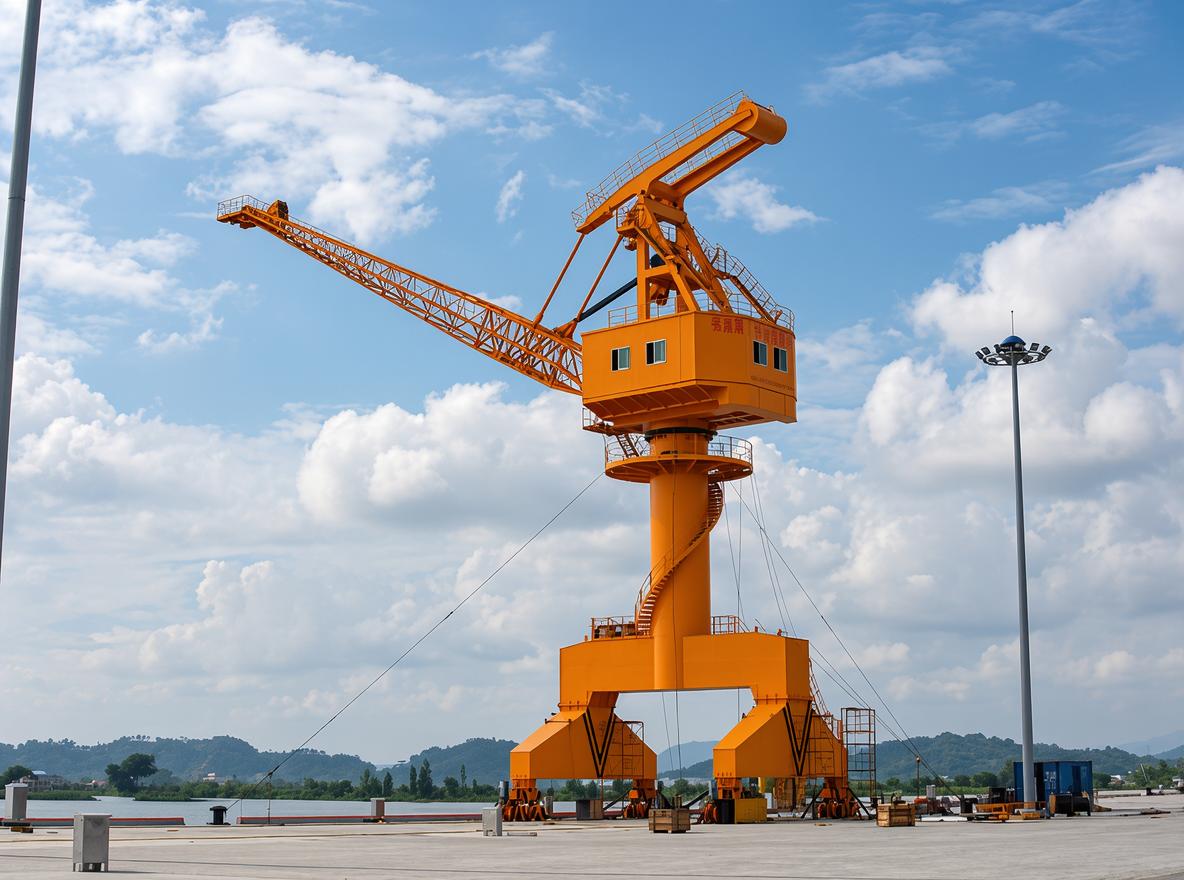
    The wind resistance coefficient, structural stability, and wind resistance carrying capacity of Henan Mine Crane port cranes of different structural types vary greatly, and the adapted high-wind coastal working conditions are also different. Combined with many years of experience in the landing of coastal port projects, wind-resistant gantry cranes, mobile port cranes, and ship-ship-to-shore cranes have become the mainstream and preferred port machinery models in high-wind coastal areas due to their differentiated structural advantages, which are suitable for different coastal terminal sizes and port loading and unloading operations.

    Gantry crane design

    Wind-resistant gantry port crane is the preferred wind-resistant equipment for small and medium-sized coastal terminals and bulk cargo depots. The integrated frame structure has uniform and symmetrical force, low center of gravity, small wind resistance, and excellent anti-overturning performance. It can effectively disperse coastal wind loads and wind vibration shocks.

    Mobile harbor cranes

    Henan Mine Crane wind-resistant mobile port crane is suitable for coastal temporary docks and multi-berth rotating operation scenarios. The chassis counterweight sinking structure has excellent anti-overturning ability, without the need for fixed tracks and civil foundations. Gaofeng customized mobile port aircraft optimized the boom structure, shortened the length of the windward cantilever, and equipped with an adaptive outrigger balance system, which can adjust the support force in real time and keep the fuselage stable. In the non-operating state, the boom can be quickly retracted and the travel mechanism can be locked. It is equipped with a simple port aircraft anchoring device, which can effectively resist medium-intensity typhoons, taking into account the flexibility of port operations and the adaptability of the high-wind marine environment.

    Ship-to-shore cranes

    The ship-ship-to-shore crane is the core loading and unloading equipment of large-scale deep-water container coastal ports. The original large-span and high-fuselage design has excessive wind resistance, but after special port machinery wind resistance optimization, it can be adapted to high-typhoon coastal working conditions. The equipment adopts high-strength box-shaped main girder and reinforced door frame to strengthen the overall structural stiffness and resist wind vibration and resonance. The boom can be completely retracted in non-operating conditions to minimize the windward load.

    What Features Make a Port Crane More Wind-Resistant?

    The wind resistance of port cranes does not rely on a single structural optimization, but on a comprehensive combination of structural design + windproof system + locking device. Ordinary inland port aircraft can only meet conventional breeze conditions, while port aircraft adapted to coastal high-wind environments must be equipped with exclusive wind-resistant configurations, from the three dimensions of active windproof, passive protection, and emergency locking, to build a full-scene wind-resistant protection system.

    Anti-wind systems

    The port smart windproof system is the core configuration of the active windproof of port cranes. It relies on high-precision wind speed sensors, intelligent control and sound and light early warning equipment to realize 24-hour real-time coastal wind monitoring, data collection and working condition identification. The system can accurately capture gusts of wind, sustained high winds and the precursor of typhoons. The high-end wind-resistant port aircraft model is equipped with a wind vibration damping system, which can offset the structural resonance and effectively adapt to the coastal high-frequency wind power industry environment.

    Strong structural design

    The high-strength structural design is the core foundation of coastal port cranes to withstand strong coastal winds. The special wind-resistant type adopts national standard high-strength alloy steel, which has deformation and bending resistance far beyond ordinary steel, and can withstand the impact of high coastal wind pressure. The high-wind special port machine adopts a streamlined hollow layout to reduce windward resistance as a whole, the main girder, outriggers and other core force parts are thickened and reinforced, and the key welds are tested by non-destructive flaw detection to eliminate structural defects. At the same time, it is equipped with hot-dip galvanized and multi-layer anticorrosive coating to resist coastal salt spray corrosion. After wind load simulation and verification, it can be stably adapted to extreme coastal working conditions of typhoons.

    Rail clamps

    The port machinery rail clamp is an essential windproof and non-slip core component of rail-type port cranes. It is mainly used to lock the travel track and prevent slippage, derailment and collision accidents of coastal port machinery and equipment caused by strong winds.

    Anchoring systems

    The port machinery anchoring system is the ultimate protective device for port cranes to deal with extreme typhoon weather. It consists of embedded anchors, high-strength anchors and locking mechanisms, which can rigidly connect coastal port machinery equipment with the concrete foundation of the terminal. When a typhoon comes or the equipment is down for a long time, the anchoring system can effectively offset the horizontal thrust and pull-up force generated by strong winds, and eliminate the hidden dangers of slippage and overturning of port machinery and equipment from the root cause. It is the core windproof configuration of coastal port cranes.

    How to Choose a Port Crane for Coastal Wind Conditions

    The selection of cranes in high-wind coastal ports cannot blindly pursue high-capacity and high configuration. They must be combined with local wind conditions, port operation requirements, terminal site conditions, and industry safety standards to accurately match and adapt to port aircraft models and professional wind-resistant configurations, taking into account equipment safety, practicality and project cost performance. The following four core selection dimensions cover the port aircraft selection requirements of all high-wind coastal port projects.

    Wind speed

    The wind speed parameters of the port location are the core basis for the selection of coastal port aircraft. It is necessary to delineate equipment configuration standards based on the perennial monsoon wind speed, extreme gusts and typhoon extreme wind speed. Standard wind-resistant lifting equipment can be used in breeze coastal areas. In areas with high monsoon wind speeds, the reinforced structure of the port machine and the automatic rail clamping device need to be upgraded. In areas with frequent typhoons, the high wind speed area needs to be equipped with the whole machine reinforced structure, intelligent windproof system and multiple anchoring devices. Strictly distinguish between operating and non-operating wind speed standards, which can accurately match the working conditions of Henan Mine Crane port cranes to avoid safety risks and cost waste.

    Crane capacity

    The lifting capacity and operating span of the port crane directly determine the wind area and wind resistance stability of the port crane, which are the key parameters for the selection of high-wind port cranes. Small tonnage, small-span lifting equipment with low center of gravity and low wind resistance, suitable for bulk cargo and small-piece hoisting operations at small and medium-sized terminals, and stable wind resistance. high-capacity, long-span shore bridges and gantry port machinery have a large wind-affected area, longer cantilevers, and stronger wind-loaded shocks. They must be equipped to strengthen the main structure and upgrade the clamping rail and anchoring device. The selection of models must follow the principles of tonnage and span adaptation, taking into account the needs of port operations and the safety of high wind conditions.

    Site conditions

    The foundation of the terminal site and the operating environment directly constrain the selection of coastal port machinery and windproof design. The orbital deep-water terminal is suitable for wind-resistant gantry and shore bridge port cranes, relying on fixed tracks and embedded anchoring foundations to ensure high wind stability. The trackless temporary terminal is more suitable for mobile wind-resistant port machinery, relying on the optimization of counterweight and outriggers to achieve stable operation. The wind at the open and unobstructed terminal is stronger, and a full set of windproof configurations of port aircraft need to be upgraded. The configuration of sheltered berths can be moderately streamlined. At the same time, the anti-corrosion design of coastal high-salt spray sites must be strengthened to avoid structural corrosion and weaken the wind resistance of port cranes.

    Local standards

    The selection and design of coastal port machinery must strictly follow the relevant specifications of international lifting machinery design and port machinery wind and anti-skid resistance, and at the same time adapt to the special management standards for wind and platform protection in local ports. Key typhoon prevention and control areas will further increase the wind resistance design threshold and protection configuration requirements of port cranes.

    How to Improve Port Crane Safety During Severe Weather

    Even if the highly adaptable Henan Mine Crane high wind-resistant port crane is selected, if there is a lack of scientific extreme weather operation and maintenance plan, equipment safety risks may still arise. Severe weather such as coastal typhoons, strong monsoons, and sudden gusts of wind need to pass standardized preliminary preparations, standardized shutdowns, and emergency protection systems to improve the safety level of coastal port machinery operations in all directions and prevent port safety accidents.

    Storm preparation

    Systematic preparation before the storm is the key to avoiding wind damage to coastal port machinery. It is necessary to rely on the normalized meteorological early warning mechanism to start the wind protection work of port cranes 24 hours in advance. Fully detect the wind speed sensor, rail clamp, anchoring device and braking system to ensure that all windproof components of the port aircraft are sensitive and reliable. Clean up loose debris at the pier in a timely manner, gather the spreaders and cantilevers to reduce the windward area, do a good job of windproof and waterproof protection of electrical equipment, arrange special personnel to monitor wind changes in real time, implement emergency protection plans in advance, and build a strong safety line of defense for port equipment in extreme weather.

    Safe parking

    After the warning of extreme high winds and typhoons is issued, all cranes in coastal ports need to stop operating immediately and transfer to an exclusive safe parking area to avoid wind-concentrated areas such as the tuyere and edge of the terminal. The orbital port machine accurately aligns the anchor point, synchronously locks the rail clamp and the anchoring device to achieve dual protection; the mobile port machine completely retracts the boom, flattens the spreader, expands all the legs to consolidate the support, locks the travel mechanism, and minimizes the center of gravity of the lifting equipment. After the parking is completed, review all port aircraft locking structures to eliminate safety hazards caused by loosening and offset.

    Emergency systems

    A perfect emergency protection system is the key to reducing the loss of port crane equipment and avoiding safety accidents under extreme wind conditions. The standard windproof interlock and emergency braking device of coastal high-wind port machinery can quickly stop and lock the operating structure when the wind speed exceeds the standard to prevent the risk of crane loss of control. The port is equipped with an exclusive emergency operation and maintenance mechanism, equipped with a professional emergency repair team and reinforcement equipment. After the typhoon, the structure, track, windproof device and electrical system of the port machinery are comprehensively tested, and hidden dangers such as deformation and damage are investigated. After confirming safety, port operations can be resumed, and the windproof operation and maintenance system of the port machinery can be continuously optimized.

    Why Custom Port Crane Design Matters in Coastal Projects

    Standardized general-purpose port cranes are only suitable for conventional inland working conditions, and cannot be accurately adapted to the complex high-wind, high-corrosion, and high-load composite working conditions along the coast. The working conditions of coastal port projects are extremely differentiated, with different wind levels, typhoon frequencies, terminal foundations, and operating requirements in different regions. Customized wind-resistant port machinery design has become the core guarantee for the safe landing and long-term operation of high-wind coastal port projects.

    Project-specific design

    The working conditions of coastal ports are extremely unique, and it is difficult for general port machinery to adapt to differentiated high wind conditions, terminal sites and port operation needs. The customized project design of port machinery can combine exclusive parameters such as site limit wind speed, salt spray level, terminal foundation, operating tonnage and span to optimize the structure and wind protection configuration of port crane equipment in a targeted manner. Redundant configurations can be increased or decreased according to the strength of regional wind conditions, equipment safety and project costs can be balanced, and the berth operation mode can be accurately matched to achieve a high degree of compatibility between the performance of wind-resistant port machinery and the working conditions of coastal projects.

    Wind-resistant solutions

    Customized wind-resistant solutions for port machinery can accurately solve the pain points of various high-wind working conditions in coastal ports, which are different from the standardized configuration of general equipment, and can be flexibly matched with intelligent wind speed linkage, multiple anti-skid locking, enhanced anchoring and streamlined drag reduction structure according to site working conditions. Strengthen the wind vibration suppression structure in areas with frequent wind gusts, thicken the main girder of port cranes in areas with high typhoon incidence, upgrade the anchor position, and optimize the counterweight layout of equipment in the open air outlet area to solve the problems of port machinery slippage, overturning, structural deformation, etc. in an all-round way, and adapt to all kinds of extreme high-wind coastal working conditions.

    Long-term reliability

    Customized wind-resistant port cranes can significantly improve the long-term operating reliability of coastal equipment and reduce the operation and maintenance costs of the whole life cycle of port machinery. The service cycle of port lifting equipment can reach 15 to 20 years. General-purpose equipment is in high-wind and high-corrosion coastal conditions for a long time, and it is prone to structural aging, windproof device failure, frequent failures and shutdowns, etc., and the cost of later transformation is high. Customized equipment is adapted to coastal working conditions in all dimensions from material selection, structure to protection, and the failure rate is greatly reduced, which can ensure the continuous and stable operation of the port, reduce downtime losses, and make long-term economic benefits more prominent.

    Henan Mine Crane

    The stability and safety of port cranes in high-wind coastal ports directly determine the efficiency of terminal operations and the operating life of equipment. The customized wind-resistant port crane design adapted to working conditions is far more suitable for complex coastal wind conditions than general-purpose equipment. Deeply cultivating the field of port lifting equipment, it can tailor high wind resistance and high stability port cranes for different coastal wind speeds, terminal sites and operating needs, with a full set of professional windproof protection configurations and safe operation and maintenance solutions to avoid the root causes of port machinery equipment failures and safety hazards caused by high winds, and help coastal ports achieve long-term stable and low-cost normalized operations.

    Discuss the crane arrangement for your project.

    Coastal conditions affect both operating movements and the parked crane. Provide the site wind basis, cargo exposure and securing arrangements so the supplier can define project-specific operating and out-of-service requirements. Share the load, available drawings, working cycle and site conditions with Henan Mine Crane so the required configuration and supply boundary can be discussed.

    Related crane configurations

    Explore crane product families and technical parameters ↗

    Updated 2026 · Henan Mine Crane

  • 127 Crane Units Begin Batch Dispatch for an Egyptian Steel Plant

    127 Crane Units Begin Batch Dispatch for an Egyptian Steel Plant

    Project Deliveries

    127 Crane Units Begin Batch Dispatch for an Egyptian Steel Plant

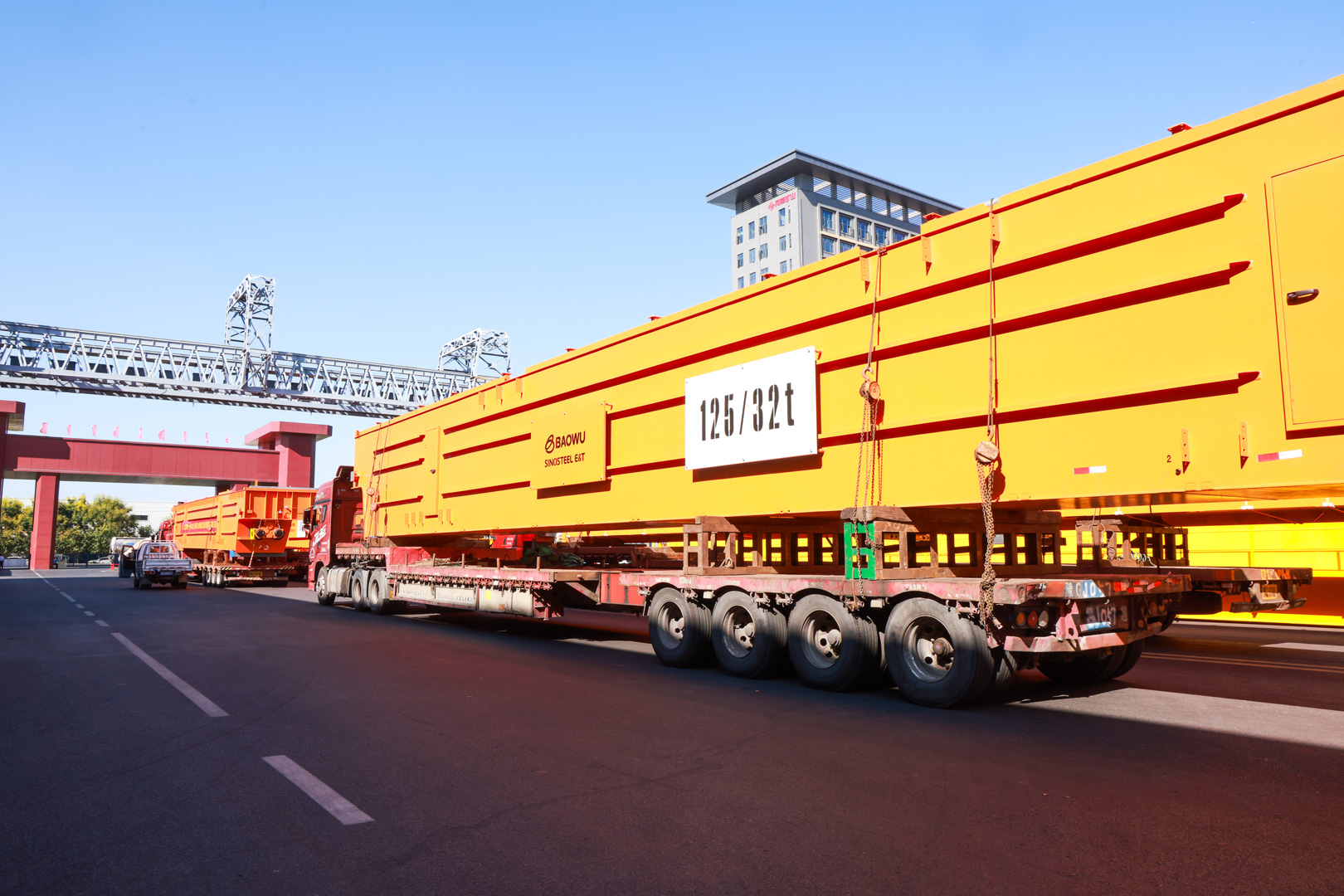
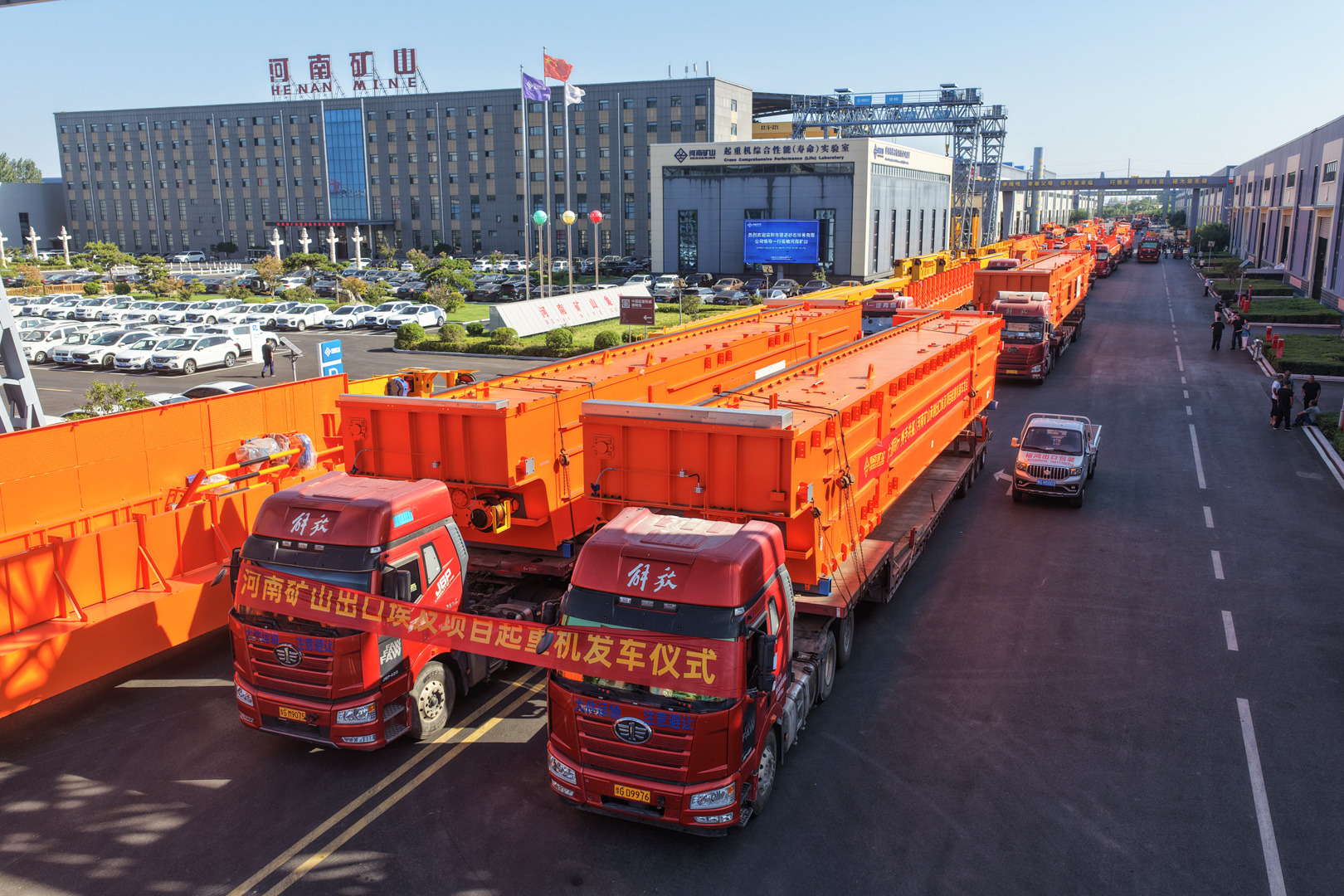
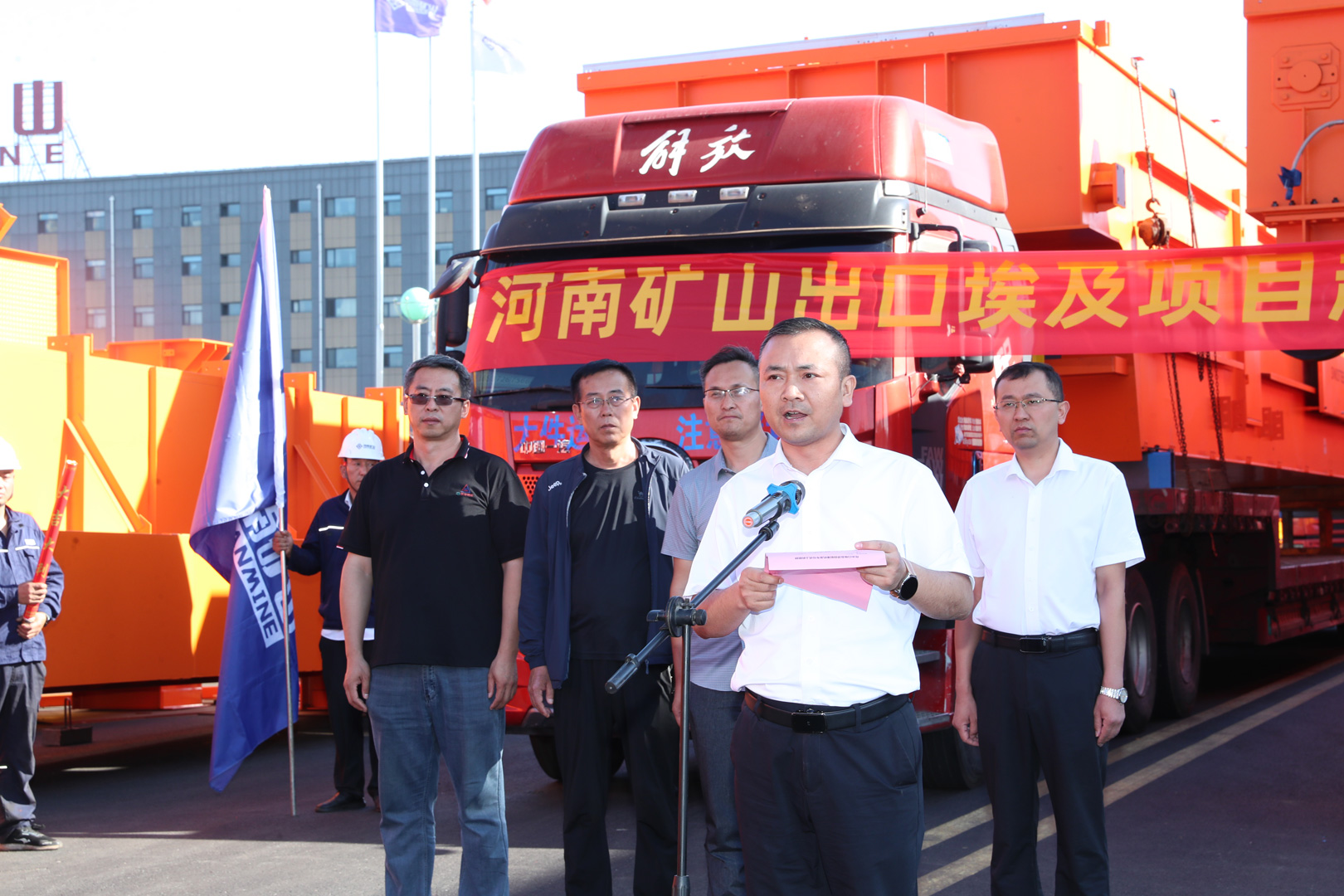
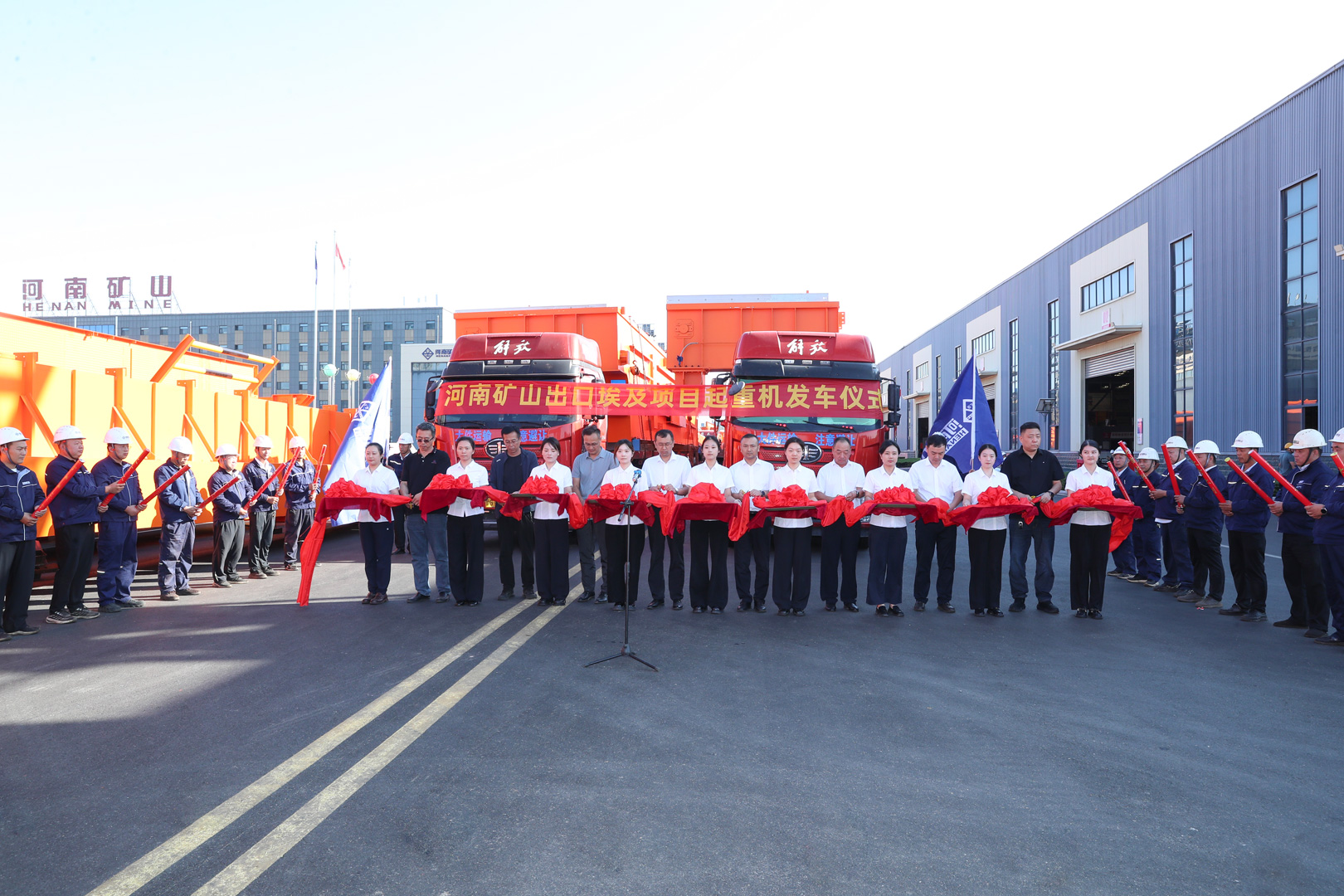
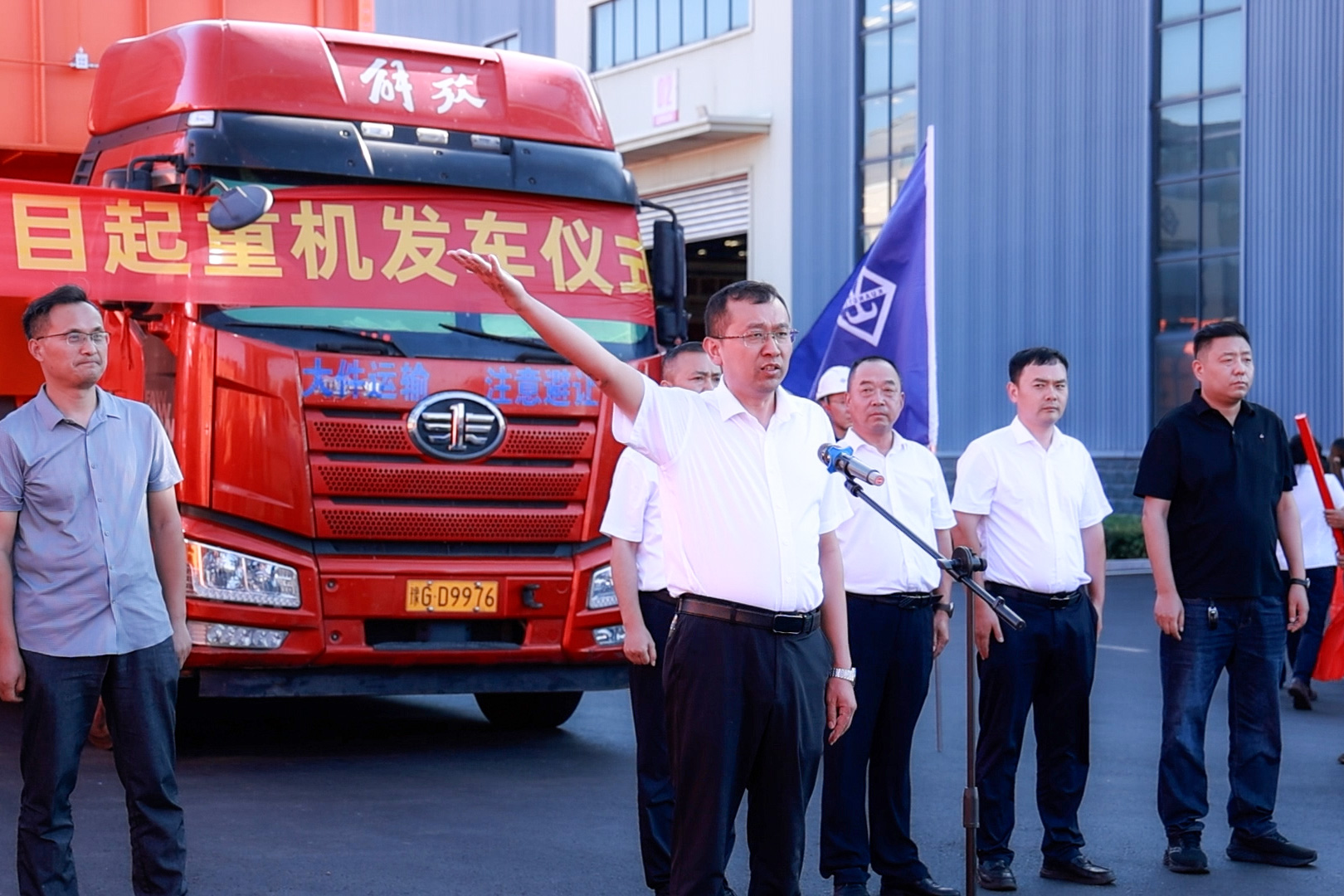
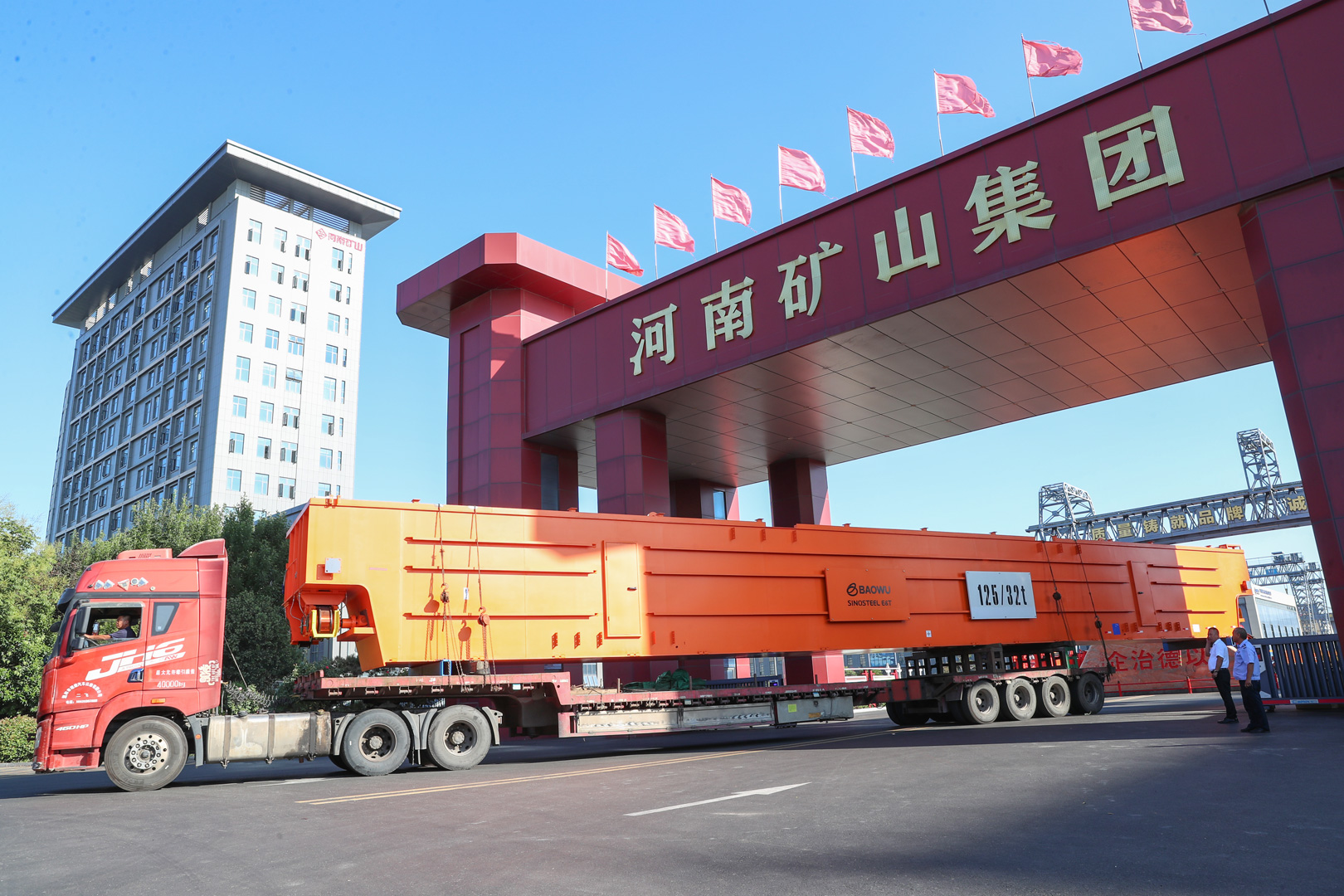
    A dispatch ceremony on 3 September 2026 marked the start of batch shipments for 127 crane units supplied by Henan Mine Crane to a Sinosteel steel plant project in Egypt.

    Yellow crane girders secured to a transport trailer
    Yellow crane girders secured to a transport trailer.

    A multi-unit export shipment

    The equipment was arranged for dispatch in batches. The figure 127 refers to the number of crane units in the project, not to the lifting capacity of an individual crane.

    Coordinate equipment with the installation sequence

    For a steel plant buying several crane types, procurement planning should identify each lifting duty, installation area, interface and required delivery sequence. Crane capacities, component scope, site installation and commissioning responsibilities need to be agreed for the specific order.

    Prepare a steel plant crane enquiry

    Send your crane schedule, load requirements, workshop layout and planned installation phases. We can discuss equipment configurations and the supply scope.

  • New Year Safety Training Covers Lifting Gear and Forklift Work

    New Year Safety Training Covers Lifting Gear and Forklift Work

    Quality & Manufacturing

    New Year Safety Training Covers Lifting Gear and Forklift Work

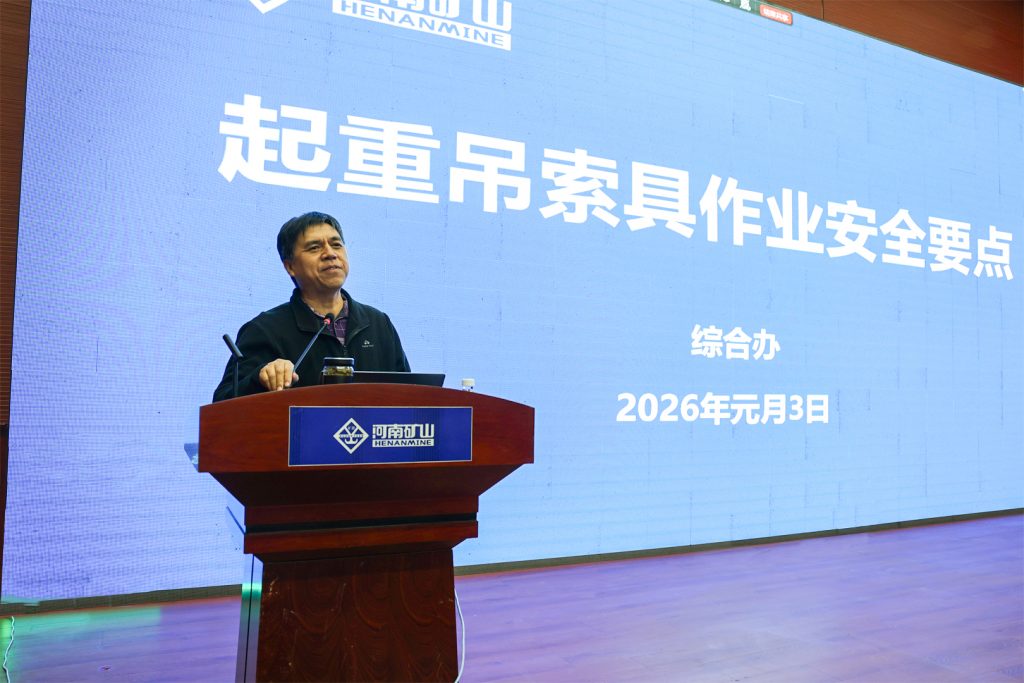
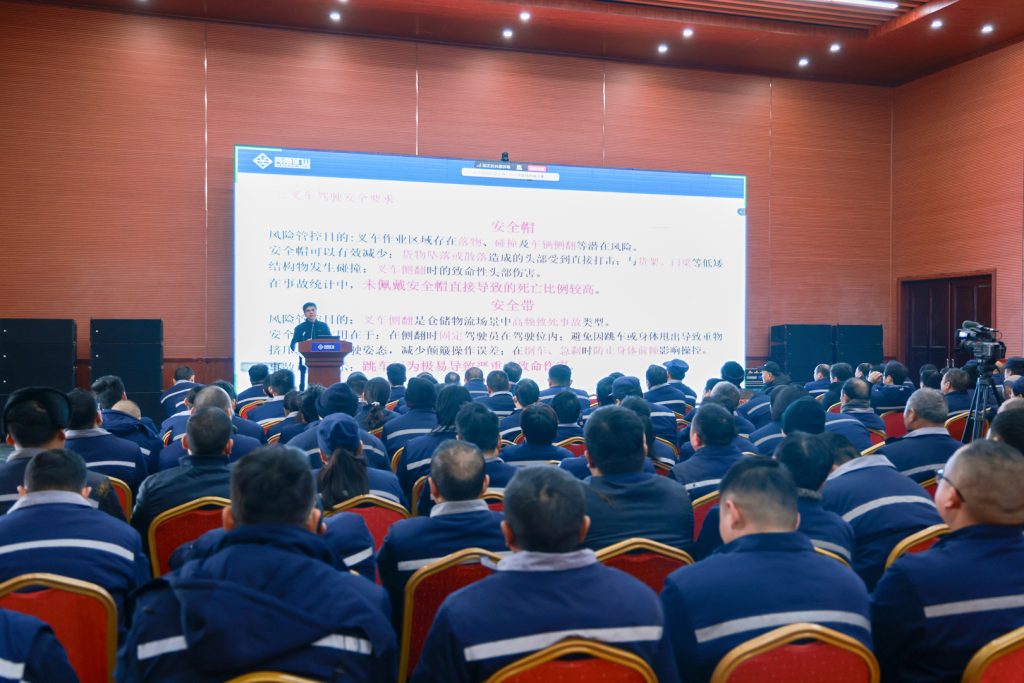
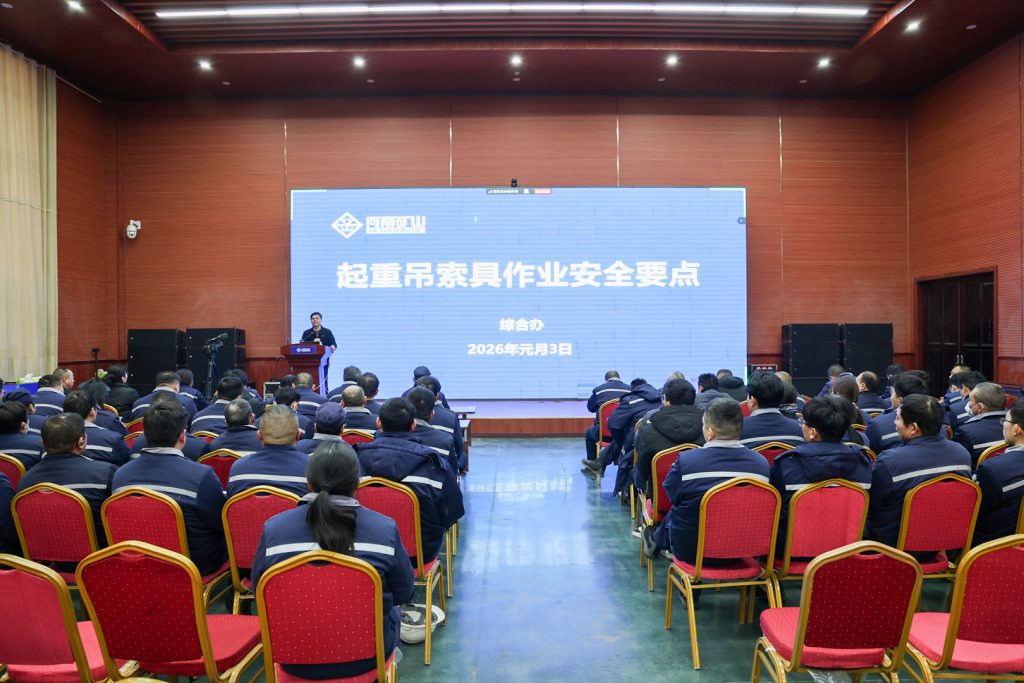
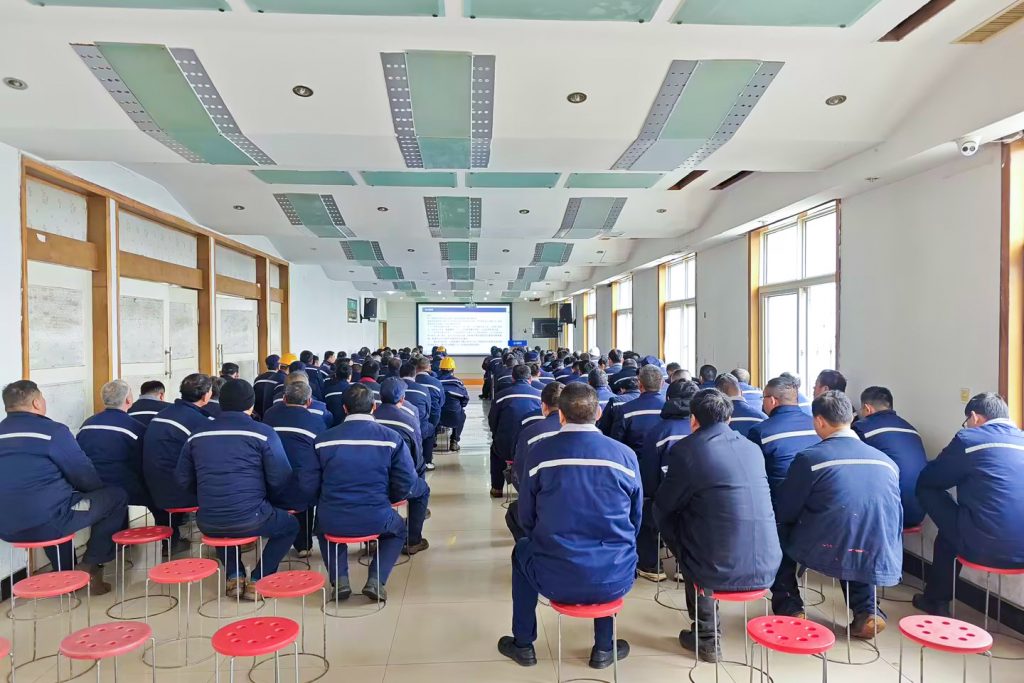
    Henan Mine Crane held its first 2026 safety training sessions on 3–4 January, focusing on lifting gear and forklift operations.

    Specialist presenting lifting-accessory safety points
    Specialist presenting lifting-accessory safety points.

    Practical topics for production teams

    An experienced lifting-equipment specialist covered sling use, forklift safety and emergency responses. Workshop managers, safety staff and colleagues in production and quality functions attended the sessions.

    Safe handling as part of manufacturing practice

    The reported programme recorded more than 530 attendances across the sessions. Equipment buyers can specify the handling, packing, site-lifting and installation responsibilities that apply to their own order.

    Contact Henan Mine Crane

    For product information, a manufacturing visit or a company enquiry, send the relevant details to our team.

  • Long-Travel Overhead Cranes: Runway, Power and Motion Planning

    Long-Travel Overhead Cranes: Runway, Power and Motion Planning

    Technical guide

    Long-Travel Overhead Cranes: Runway, Power and Motion Planning

    A long runway changes more than the travel distance. Review rail alignment, electrical supply, drive coordination and access along the bay, with the handling cycle showing how far and how often the bridge must move.

    Henan Mine CraneTechnical guide · Updated 2026Crane selection, project scope and operating requirements
    long-travel overhead crane
    long-travel overhead crane
    Project planning notes

    Key points for this crane project.

    1. What Makes Long Travel Distance Challenging for
    2. Which Overhead Crane Design Is Long Travel
    3. Key Design Features for Long Travel Cranes
    Read the technical guide

    What Makes Long Travel Distance Challenging for Overhead Cranes

    Travel distance

    The long operating path will directly amplify the mechanical loss and operating deviation of the equipment, which is the core source of all working conditions problems. First of all, the main girder, end beam, and travel mechanism of the crane need to be continuously operated for a long time, and the fatigue and wear rate of the metal structure will be greatly accelerated. Compared with short-stroke equipment, the probability of deflection deformation of the main girder and loosening of components is significantly increased. Secondly, long-distance operation will accumulate positioning errors, and the small travel deviations that can be ignored in the short stroke will be continuously magnified in the 100-meter stroke, which will eventually lead to inaccurate alignment of the hook and reduced operating accuracy, which cannot meet the needs of precision hoisting.

    Runway alignment

    The crane operating track is the basis for the equipment to walk, and the installation accuracy, flatness, and straightness of the track directly determine the stability of long-stroke operations. Under short-stroke conditions, the slight high-low deviation, left-right offset, and gap error of the track will not have a significant impact on the operation of the equipment, but in the long-distance track system, small deviations will form a cumulative effect. Local unevenness of the track will cause bumps and catons when the crane is travel, and long-term operation will wear out the wheels, reducers, and travel motors. The deviation of the left and right alignment of the track exceeds the standard, which will cause the crane to gnaw the rail.

    Load stability

    Heavy object shaking and load offset are common problems in long-travel overhead crane operations. During the long-distance travel of the crane, the inertial force will continue to act on the lifting of heavy objects during the whole process of starting, running at uniform speed, decelerating and stopping. Short-stroke operations start and stop frequently but the stroke is short, and the shaking amplitude is controllable. During the long-stroke uniform speed operation phase, the inertia generated by the continuous movement of the equipment will cause the heavy objects to swing continuously. Once the track bumps, wind speed interference, and motor speed fluctuations are encountered, the load shaking will intensify sharply. Unstable loads will not only reduce the accuracy of hoisting, which is likely to cause material collisions and workpiece damage, but also increase the force load on the equipment, resulting in uneven force on the core components such as the main girder, wire rope, hook, etc., accelerate the aging of the components, and even cause safety accidents caused by heavy objects falling, which greatly limits the safety and stability of long-travel overhead crane operations.

    Travel frequency

    Most of the production scenarios adapted to long-stroke working conditions are continuous and large-volume operations. The daily operating frequency and continuous operation time of the crane are higher than that of ordinary equipment. High-frequency and long-distance reciprocating operation will keep the travel mechanism, transmission system, and electrical control system in a high-load working state for a long time. The transmission components such as motors, frequency converters, and reducers continue to heat up, which is prone to overheating protection and performance attenuation. The high-frequency friction of mechanical components such as wheels, bearings, and brakes doubles the wear speed, and it is extremely prone to problems such as brake failure and travel caton. At the same time, the continuous vibration caused by high-frequency operation will lead to loose equipment bolts, aging lines, and poor contact with electrical components, which will greatly shorten the service life of the equipment, increase the probability of downtime and maintenance, and affect the continuous production of enterprises.

    Which Overhead Crane Design Is Long Travel Distances?

    Single-girder cranes

    Henan Mine Crane single-beam bridge crane is widely used in light and medium-sized long-stroke operation scenarios with the advantages of light structure, low cost and easy installation. In long-stroke and low-load working conditions such as light-duty factories, small storage workshops, and assembly line auxiliary hoisting, the cost-effective advantages of single-girder cranes are extremely prominent. However, it is limited by the rigidity and bearing capacity of the single-beam structure, the span and deformation resistance of the main girder are limited, and the main girder is prone to deflection and equipment shaking during long-distance heavy-duty operation. Therefore, it is only suitable for light-load, low-frequency, medium- and small-span long-stroke conditions, and cannot meet the needs of heavy-duty industrial operations.

    Double-girder cranes

    Double-girder bridge crane is the optimal core model for long-stroke, medium- and heavy-duty working conditions. The equipment adopts a symmetrical structure of double main beams, with strong overall rigidity, good load-bearing performance and excellent deformation resistance, which perfectly solves the pain points of long-distance heavy-duty single-girder cranes that are easy to deform and have poor stability. The double-beam structure can evenly disperse the vibration, inertial force and load pressure generated during long-stroke operation. The deflection deformation of the main girder is very small, and the whole process runs smoothly, greatly reducing the probability of heavy objects shaking and equipment deviation. In long-stroke heavy-duty scenarios such as heavy industrial plants, large-scale processing workshops, and heavy equipment transshipment, the stability, durability, and operating efficiency of double-girder cranes far exceed that of single-girder models.

    Top-running cranes

    Henan Mine Crane upper rail crane is a classic rail design model adapted to long-stroke operation. Its travel wheels are directly laid on the top of the crane beam track, and the track has strong load-bearing capacity, uniform force, and low operating resistance. Compared with side-mounted and bottom-mounted cranes, the overall stability of the upper rail structure is higher, and it is not easy to offset and caton during travel, and the probability of gnawing the rail is extremely low. The core advantage of this design is that it has excellent smoothness and high fault tolerance for long-distance operation, can adapt to small deformation of long-distance tracks, and continuously maintains stable travel. At the same time, the drive system of the upper rail crane is reasonably arranged, the transmission efficiency is high, it supports long-distance high-speed and smooth operation, and the equipment maintenance is convenient, which is suitable for long-term high-frequency and long-stroke operations.

    Long-span applications

    Long-travel working conditions are often accompanied by the needs of long-span operations. The long-span long-travel overhead crane is specially designed for the operation scenarios of wide factories and long passages. This type of model is based on the double-beam upper rail structure. By optimizing the cross-section of the main girder, strengthening the end beam structure, and upgrading the travel balance system, it solves the problems of equipment shaking, deformation, and deviation under long-span and long-distance dual working conditions. At the same time, it is equipped with an enhanced travel drive and stabilization system, which can maintain accurate, stable and efficient hoisting operations in a wide range of working areas. It is widely used in large steel structure factories, power equipment workshops, large-scale warehousing in ports and other large-space industrial scenes.

    Key Design Features for Long Travel Cranes

    Travel drive system

    The travel drive system is the core power core of long-travel overhead crane, which directly determines the smooth operation and battery life of the equipment. Long-travel overhead crane must adopt a two-sided synchronous drive system to replace the traditional one-sided drive structure to ensure that the power output of the travel mechanism at both ends of the crane is balanced, and the problems of deviation and rail gnawing caused by power deviations are effectively avoided. The drive system needs to be equipped with a hard tooth surface reducer with a reasonable reduction ratio, which has high transmission efficiency, wear resistance and wear resistance, and can be adapted to high-frequency and long-distance continuous operation to reduce transmission loss and the probability of failure.

    Wheel configuration

    Reasonable wheel configuration is the key to solving the serious problems of long-stroke deviation and wear. Conventional short-stroke cranes use a four-wheel basic configuration, while long-travel overhead cranes need to optimize the wheel structure according to the stroke length, equipment weight, and load capacity, and adopt a balanced multi-wheel configuration. By increasing the auxiliary travel wheels, the contact pressure between the equipment and the track is dispersed, and the problems of excessive wear and track pressure loss caused by excessive pressure on a single wheel are avoided. At the same time, it is equipped with accurate wheel positioning technology to ensure that the parallelism and verticality of the wheels are up to standard, and the phenomenon of rail gnawing and deviation is eliminated structurally.

    Motor and VFD control

    Long-travel overhead crane must not use ordinary fixed-speed motors, it must be equipped with a dedicated frequency conversion motor + VFD frequency conversion control system. The frequency conversion control system can realize stepless speed regulation, accurately control the whole process of starting, acceleration, uniform speed, deceleration, and parking of the crane, and completely solve the problem of large start-stop impact and unstable speed of the fixed-speed motor. Speed up slowly at the beginning to avoid the sharp shaking of heavy objects caused by the sudden increase in inertia. Keep the speed constant during operation to ensure smooth long-distance travel. When parking, it descends at a uniform speed, with precise alignment and no offset. At the same time, the VFD system has overload protection, overheating protection, and fault self-test functions, which can effectively avoid motor overload and electrical failure caused by high-frequency and long-distance operation, improve equipment operation safety and stability, and reduce energy consumption and operation and maintenance costs.

    Anti-sway system

    The sway control system is the core configuration of long-travel overhead crane to improve the accuracy and safety of operations. Inertial shaking and orbital bumps caused by long-distance travel are the main problems that affect the operation effect. The intelligent sway control system can collect equipment operating speed, displacement, and load swing data in real time, accurately correct the start-stop rhythm and operating speed through algorithms, actively offset the inertia of heavy objects, and control the swing amplitude of hoisted heavy objects to a very small range. Even in the working conditions of ultra-long stroke, high-speed operation, and frequent start and stop, the load stability can be guaranteed, and the problems of material collision and workpiece damage can be eliminated.

    Runway design

    The track design adapted to long-stroke working conditions is the basis for the long-term stable operation of the equipment. The long-travel overhead crane track needs to use high-strength special steel rails, which have strong load-bearing capacity, wear-resistant and deformation-resistant, and can withstand the weight and heavy-duty pressure of the equipment for a long time. Track installation needs to strictly control the straightness, level, and parallelism, and accurately calibrate the whole process to eliminate local height differences and left-right offsets. At the same time, the temperature expansion joints need to be reserved to adapt to the thermal expansion and contraction of the track caused by seasonal temperature differences, so as to avoid deformation and extrusion of the track.

    How to Improve Crane Performance Over Long Runways

    Travel speed

    The speed setting of Henan Mine Crane Long-runway overhead crane needs to take into account efficiency and stability, and must not blindly pursue high speed. According to different job scenarios, the hierarchical speed mode needs to be optimized. The no-load return journey can appropriately increase the operating speed, shorten the no-load time, and improve work efficiency. Heavy-duty travel needs to reduce the uniform speed, reduce inertial shaking, and ensure stable load. The low-speed fine-tuning mode is used in the close-range alignment stage to improve accuracy. Through the frequency conversion system, exclusive speed parameters are customized to realize the differentiated operating mode of “high-speed rush, low-speed alignment, and stable heavy-duty travel”, and the efficiency of long-stroke operations is maximized under the premise of ensuring equipment safety and stable load.

    Positioning accuracy

    The accumulation of positioning errors in long-track operation is the main problem in precision operations, and the positioning accuracy can be improved through multiple technical optimizations. First of all, it is equipped with an intelligent positioning sensor system to accurately collect crane travel displacement data in real time and automatically correct the position deviation caused by long-distance operation. Secondly, optimize the logic of frequency conversion and speed regulation, and automatically slow down and buffer at the end of the parking stage to eliminate the alignment deviation caused by inertial sliding. Finally, with the dual protection of mechanical limit + electronic limit, the operating point is accurately locked.

    Smooth acceleration

    Sudden acceleration and rapid deceleration are the core causes of heavy objects shaking and equipment loss. Long-runway overhead crane needs to optimize the acceleration curve and set a flexible start-stop program through the VFD frequency conversion system to achieve gradual acceleration and buffered deceleration. Abandon the instantaneous start-stop mode of traditional equipment, let the speed transition smoothly, no impact, no setbacks, and greatly reduce the impact of inertial forces on the load, equipment structure, and transmission components. Stable acceleration and deceleration control cannot only completely improve the problem of heavy object swing and improve operation safety, but also reduce the fatigue and wear of mechanical components, reduce the probability of equipment failure, and extend the service life of the crane.

    Rail alignment

    Orbital deviation is the main source of long-travel overhead crane failure, and regular orbital calibration is the key to maintaining the high-performance operation of the equipment. Enterprises need to establish a normalized orbit detection and calibration mechanism, regularly use professional instruments to detect the straightness, level, and spacing deviations of long-distance orbits, and correct orbital deformation, offset, and height inequality in a timely manner. Strengthen, repair, and replace the parts of the track that are loose, have too large gaps, and are severely worn in time to prevent small deviations from accumulating into large-scale failures. At the same time, in view of the problems of foundation settlement and temperature deformation of the plant, the overall track leveling and calibration are regularly carried out to ensure the precise alignment of the long-distance track throughout the process, and to solve the problems of rail gnawing, deviation, and caton from the root cause.

    Maintenance planning

    Long-runway overhead crane operates at high frequencies and long distances for a long time, and the loss of components is faster. Scientific operation and maintenance planning is the core of ensuring the continuous high performance of the equipment. It is necessary to formulate a maintenance plan for exclusive long-stroke equipment, and check the operating status of the travel motor, reducer, wheel, and brake system daily. Weekly detection of track flatness, drive synchronization, and sway control system sensitivity. Lubricate the transmission components, tighten the wiring, and calibrate the positioning system every month. Do quarterly structural flaw detection of the whole machine, comprehensive track calibration, and in-depth inspection of the electrical system. Investigate potential faults in advance, replace worn parts in time, avoid small problems accumulating into downtime failures, reduce operation and maintenance costs, and ensure long-term stable and efficient operation of equipment.

    How to Select a Long-Travel Overhead Crane

    Load capacity

    Load is the core and primary basis for selection, and it needs to be accurately selected in combination with the actual maximum lifting weight and the long-term average operating load.

    Span and lift height

    The span of the plant and the lifting height of the material directly determine the structural design and configuration level of the Henan Mine Crane crane. When large-span factories are equipped with long-stroke working conditions, high-rigidity double-beam structures need to be preferred to strengthen the main girder and end beam to avoid structural deformation and equipment shaking caused by long-span and long-distance operation. At the same time, the hoist lifting system is matched according to the maximum lifting height to ensure stable lifting operation and accurate positioning, taking into account the dual stability of horizontal long-distance travel and vertical lifting, and adapting to the needs of complex space operations.

    Duty class

    The working level represents the working load and durability level of the crane. It is strictly forbidden to use low-level equipment under long-stroke working conditions. Low-frequency, intermittent long-distance operation, you can choose A3-A4 working level. The structural strength, motor power, wear-resistant components, and electrical systems of high-level equipment have been strengthened and designed to be adapted to long-term, long-distance and high-load operations, with lower failure rates and longer service lives.

    Operating environment

    Different operating environments need to match the long-travel overhead crane with exclusive protection design. For ordinary indoor drying plants, you can choose the standard configuration model. Workshops with high temperature, dust, humidity, and corrosive gases need to be equipped with dust-proof, moisture-proof, and anticorrosive protection systems, motors and electrical components should be sealed, and metal structures should be anticorrosive sprayed. In outdoor and high-altitude windy scenes, sway control and wind-proof braking configurations need to be strengthened to improve the wind-resistant stability of the equipment. Targeted environmental adaptation design can avoid environmental factors exacerbating equipment loss and ensure the stable operation of long-travel overhead crane in various scenarios.

    Henan Mine Crane

    The core of the selection of long-stroke bridge cranes lies in relying on a mature double-beam upper rail structure, with frequency conversion control, intelligent sway control and optimized travel system, while doing a good job in track construction and normalized operation and maintenance, so as to resolve common problems such as track deviation, load shaking, and rapid loss of components in long-distance operations. There is no need to blindly pile up the configuration, nor can you blindly compress the budget. Customization that fits the on-site working conditions is the best idea. Henan Mine Crane Factory is deeply engaged in the manufacture of lifting equipment, relying on rich project experience to create long-stroke lifting solutions on demand, taking into account stable operation, operating efficiency and equipment life, to help the factory reduce costs and increase efficiency in the long term.

    Discuss the crane arrangement for your project.

    A long runway changes more than the travel distance. Review rail alignment, electrical supply, drive coordination and access along the bay, with the handling cycle showing how far and how often the bridge must move. Share the load, available drawings, working cycle and site conditions with Henan Mine Crane so the required configuration and supply boundary can be discussed.

    Related crane configurations

    Track Switching Overhead Crane

    View product parameters
    Lifting capacity: 1 – 32 tSpan: 3 – 30 mLifting height: 4 – 20 m

    Transfer an electric hoist between connected crane tracks with a track-switching arrangement. Rail alignment, transfer positions and interlocks are coordinated with the building and lifting sequence.

    Single-Girder Bridge Crane

    View product parameters
    Lifting capacity: 1–20 tSpan: 7.5–31.5 mLifting height: 6, 9, 12, 18, 24 or 30 m; capacity-dependent

    Use an LDA single-girder bridge and electric hoist for general workshop material handling. Select the lifting capacity, runway geometry and hoist duty around the building and load.

    Updated 2026 · Henan Mine Crane
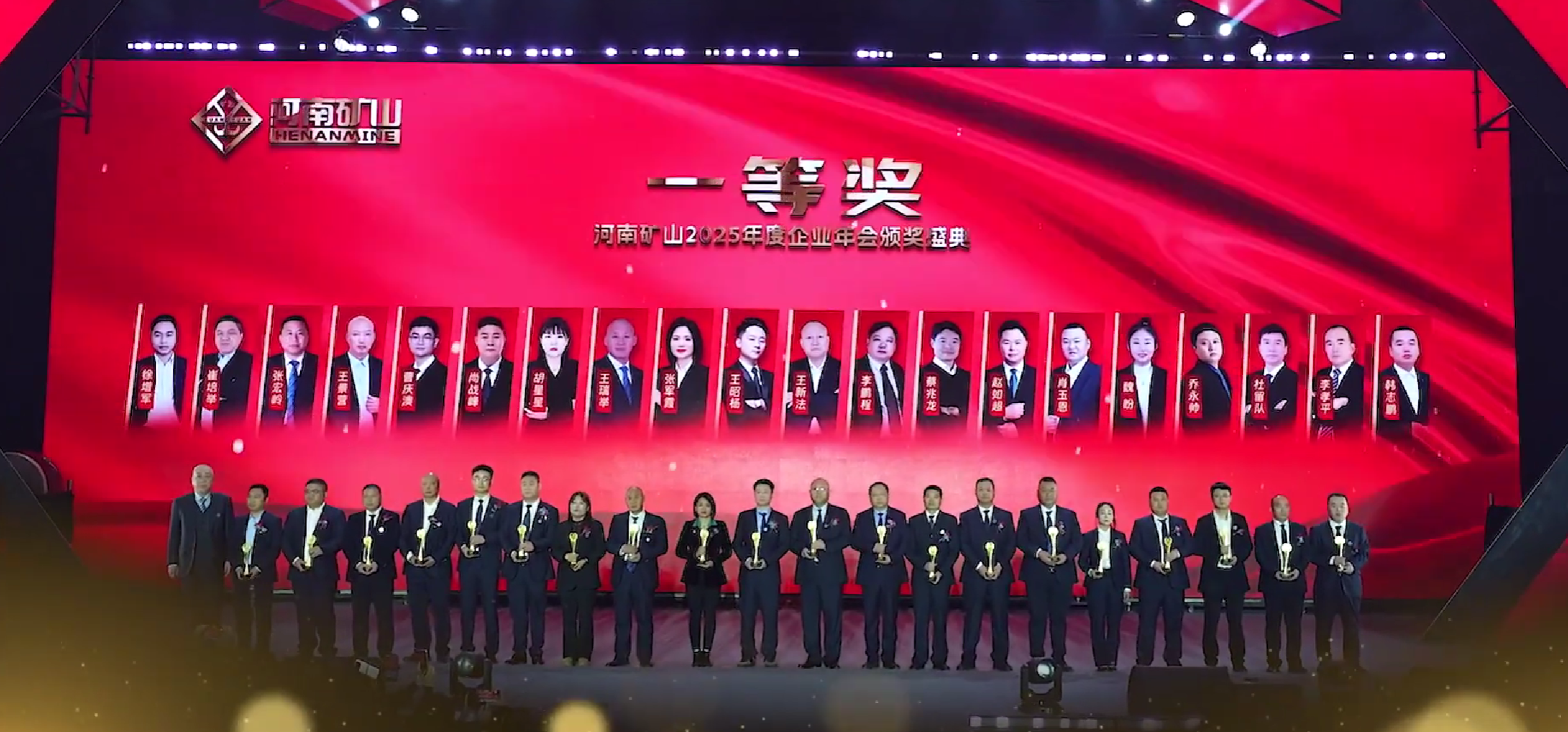
  • Steel Mill Casting Specialized Crane Manufactured by Henan Mine Crane
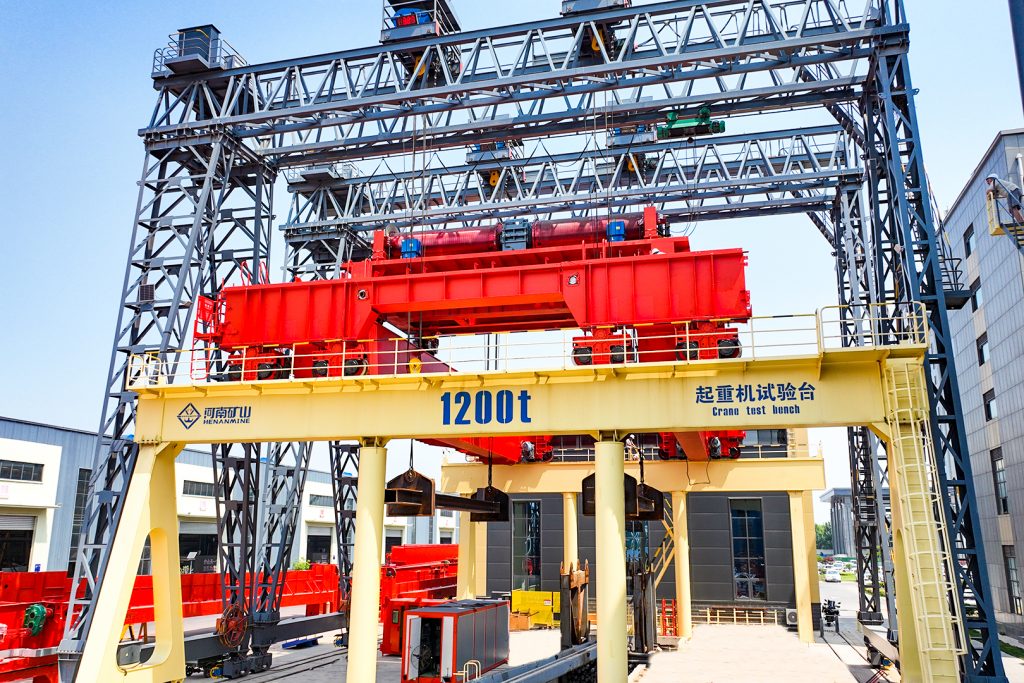
    Steel Mill Casting Specialized Crane Manufactured by Henan Mine Crane

    Crane application

    Steel Mill Casting Specialized Crane Manufactured by Henan Mine Crane
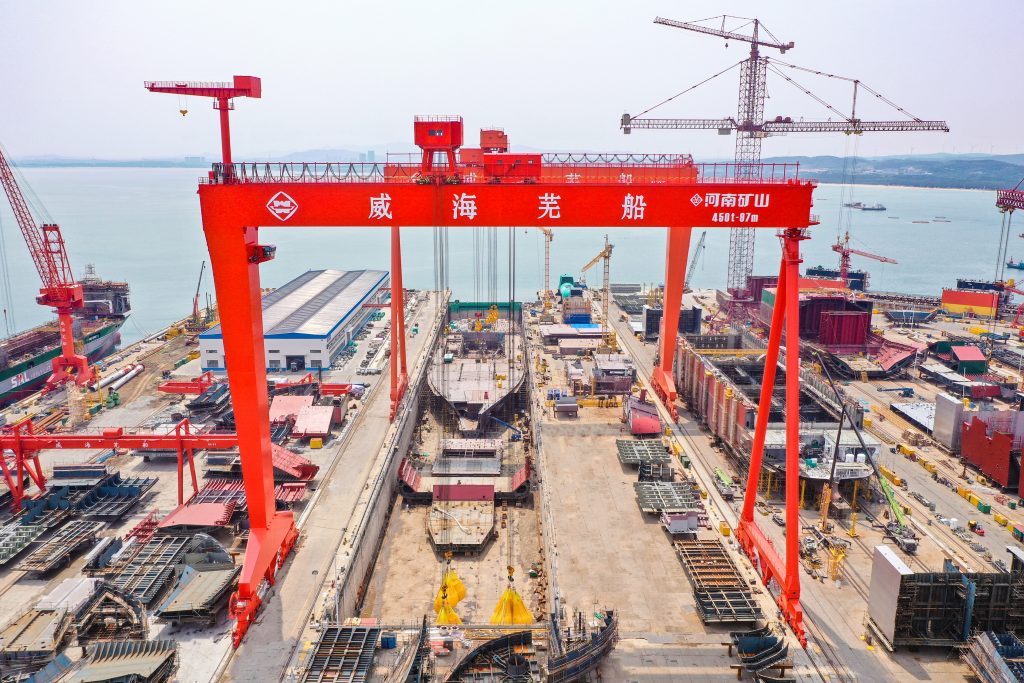
    Review the steel mill casting crane applications. Review load definitions, process exposure, lifting arrangements and working duty for your project.

    Steel Mill Casting Specialized Crane Manufactured by Henan Mine Crane — Henan Mine Crane crane application photograph
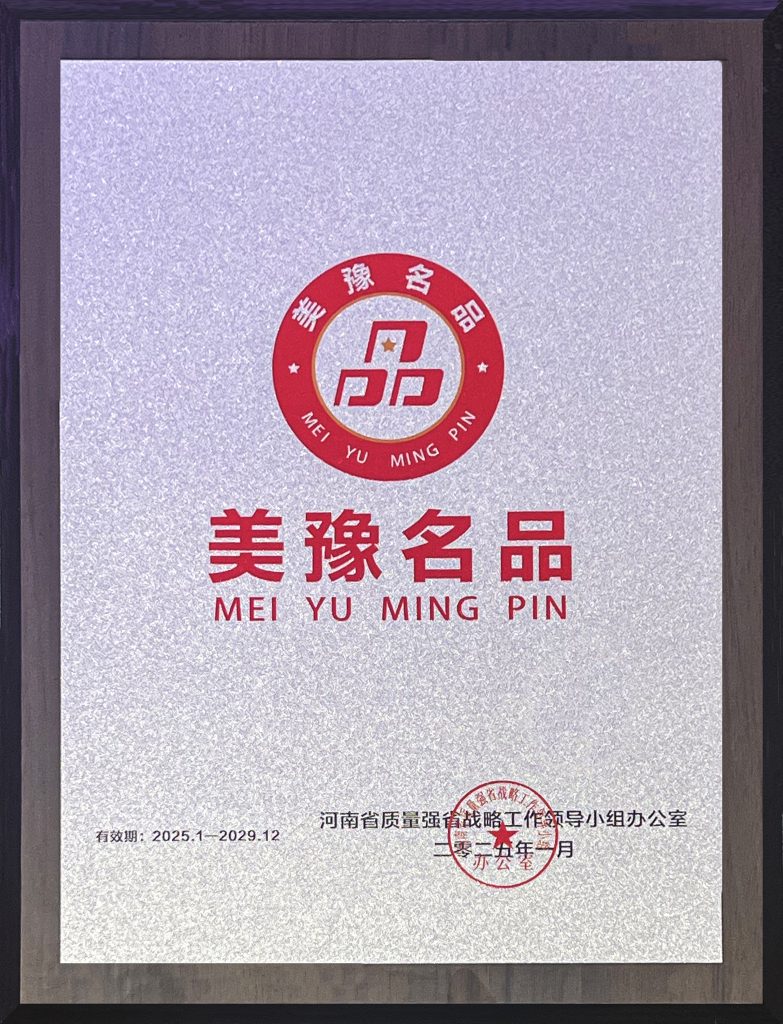
    Steel Mill Casting Specialized Crane Manufactured by Henan Mine Crane — crane application overview.
    Steelmaking and metal handling

    Define the complete suspended load, ladle or steel-product geometry, process temperature, crane duty and safe travel path. For molten-metal work, include auxiliary lifting, heat shielding, redundant protections and inspection access in the specification.

    Crane configuration and interfaces

    Ask for the crane arrangement, hook and lifting appliance interfaces, runway loads, control and monitoring functions, inspection access and a test plan matched to the plant process.

    Review the Metallurgical overhead cranes and Steel & metallurgy cranes before defining the project-specific arrangement.

    Design the lifting process

    Use the project context above as a starting point. The following checks turn a crane application into a technical scope that suppliers can price and demonstrate for your site.

    Molten-metal lifting sequence

    Describe where a ladle is picked up, where it travels, how it is poured and how it is returned. Provide the mass of the ladle, lining, molten metal, lifting beam and rigging as separate inputs. The main-hook capacity alone does not define the crane: auxiliary-hook duty, hook spacing, approach, travel speed, plant clearances and the number of lifts per shift matter. If the process includes charging, tundish transfer or maintenance lifts, separate those cycles rather than assuming one arrangement can serve them all.

    Protection and maintainability

    For a hot shop, specify ambient and radiant temperatures at the bridge, trolley, electrical cabinets and operator position. Discuss heat shielding, cable routing, braking and overspeed protection, redundant functions where applicable, access for inspection and a safe maintenance position. These features need a project-specific risk assessment and applicable design standard; a catalogue label such as “metallurgical” does not establish suitability for molten-metal duty. Provide runway condition and building clearances so that protective equipment can be installed and serviced.

    What to compare at technical review

    Request general arrangement drawings, the mass calculation for the suspended load, main and auxiliary hook duties, duty classification, wheel loads, electrical interfaces and a list of protective functions. Compare each offer against the same process sequence and site drawings. Define factory and site acceptance tests for rated load, interlocks, brakes, limit switches and operational travel. Agree how production will be isolated during installation and how spare components will be supported. Published case tonnages describe those installations only; a new crane must be sized to its own process.

    Compare the proposed crane scope

    DecisionInformation to request
    Crane and lifting attachmentRated loads, load cases, hook coverage and the complete suspended-load calculation.
    Site interfacesRunway loads, rail or building drawings, electrical supply and installation responsibilities.
    Controls and protectionOperating sequence, required safety functions and a method for testing each function.
    Commercial scopeEquipment, transport, installation, commissioning, documentation, training and spare parts as separate line items.

    From technical offer to site acceptance

    Technical submittals

    A usable bid should show a general arrangement and a clear list of assumptions, not just a model name and capacity. Request the load schedule used in design, lifting-attachment drawings where applicable, span and hook-approach dimensions, wheel loads, electrical supply, control narrative and maintenance access. Check every drawing against the actual building or yard layout. Identify the standards and local approval requirements for the destination market in the enquiry, then confirm the bidder’s proposed design and documentation scope in writing.

    Installation and tests

    Agree when the runway or civil works will be ready, how crane components can reach the installation position and who provides lifting equipment for erection. Define the factory test, on-site installation inspection and site acceptance as separate milestones. The acceptance procedure should list representative loads, the travel route, protection devices, emergency stop and any automation or attachment functions included in the order. Record who supplies test weights, operators, power and access equipment; otherwise a nominal commissioning price may omit essential site work.

    Commercial comparison

    Ask for the same delivery basis and currency across proposals. Separate the crane, special lifting appliances, rails or conductors, transport, installation support, commissioning, training and initial spare parts. Lead time should identify the starting event, such as approved drawings or an effective contract, and any dependency on site readiness. Compare warranty scope and service response by the written contract terms. If a key input is still unknown, request a priced option or a stated assumption instead of allowing different bidders to silently use different specifications. Keep a written exception register so the engineering team can resolve open dimensions, process interfaces and responsibility boundaries before issuing the purchase order.

    Information to include in the enquiry

    • Load weights, dimensions, centre of gravity and lifting attachments.
    • Span, lifting height, runway or yard drawings, travel coverage and clearances.
    • Operating cycle, working environment, electrical supply and control requirements.
    • Supply boundaries, inspection documents, installation support and acceptance criteria.

    Discuss a comparable lifting task

    Send the handling task and available site drawings. Henan Mine Crane can define a proposed crane arrangement and identify the remaining information needed for a technical and commercial review.