Engineering · Manufacturing · Project support
info@hnksglobal.comWhatsApp +86 18836207779 ↗

Blog

  • Henan Mine Crane Listed in Henan’s 2025 Zero-Carbon Factory Programme

    Henan Mine Crane Listed in Henan’s 2025 Zero-Carbon Factory Programme

    Quality & Manufacturing

    Henan Mine Crane Listed in Henan’s 2025 Zero-Carbon Factory Programme

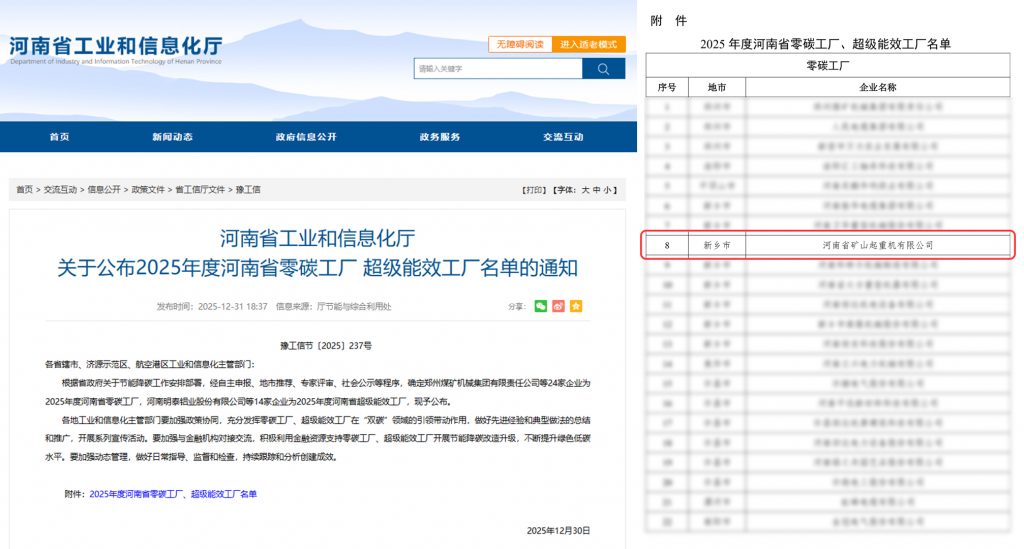
    Henan Mine Crane was named in a 2025 provincial zero-carbon factory listing published by Henan’s industry and information technology authority.

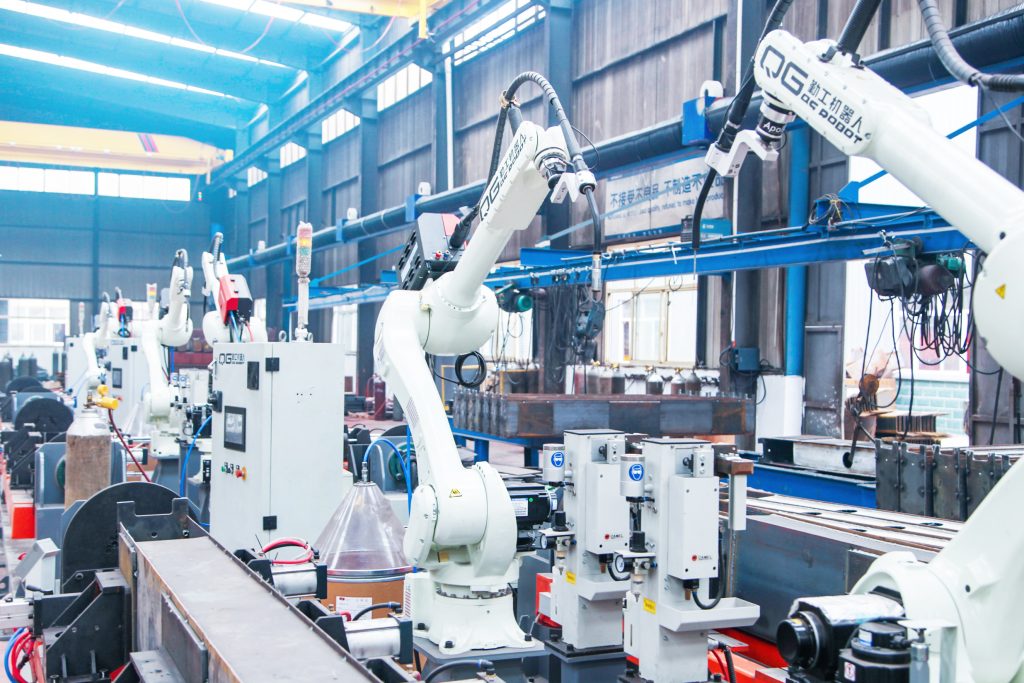
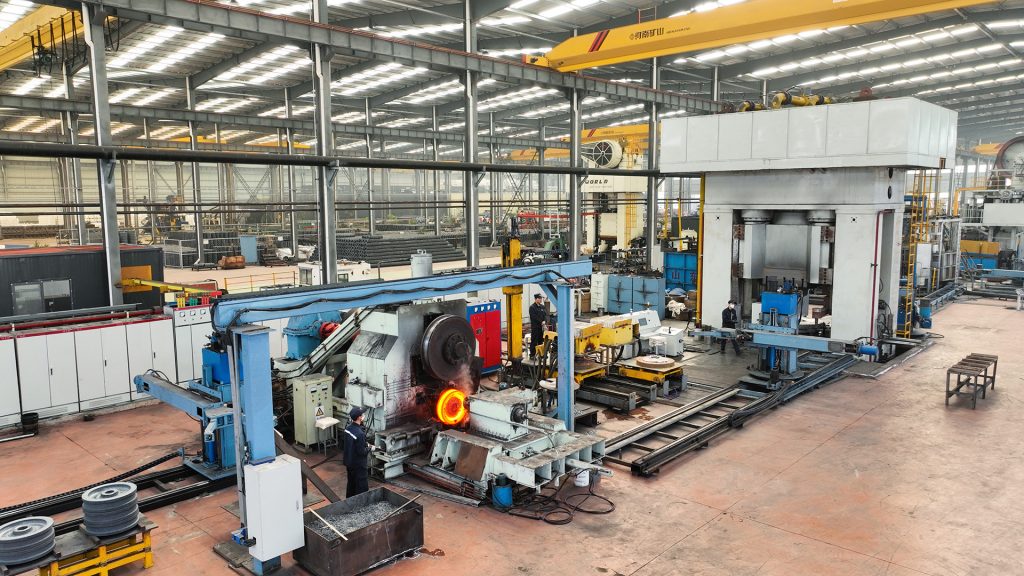
    Robotic welding stations operating along a production line
    Robotic welding stations operating along a production line.

    Manufacturing and energy-management measures

    The manufacturing programme combines green-power supply, process-efficiency work, recycling and digital energy management, alongside workshop equipment and environmental-control upgrades.

    What the listing means for a crane purchase

    For an individual crane project, request equipment-specific drive, duty-cycle and power-consumption information and agree how performance will be checked.

    View the manufacturing and equipment gallery

    Discuss your lifting requirement

    Send the duty cycle, operating hours, electrical supply and site layout to review energy-related equipment options.

  • Container Yard Cost Review: Rehandling, Waiting and Equipment Coordination

    Container Yard Cost Review: Rehandling, Waiting and Equipment Coordination

    Technical guide

    Container Yard Cost Review: Rehandling, Waiting and Equipment Coordination

    A yard-level cost review should distinguish stacking work from transport and handover delays. Use the actual container routes and operating records to compare changes in layout, equipment coordination and work allocation.

    Henan Mine CraneTechnical guide · Updated 2026Crane selection, project scope and operating requirements
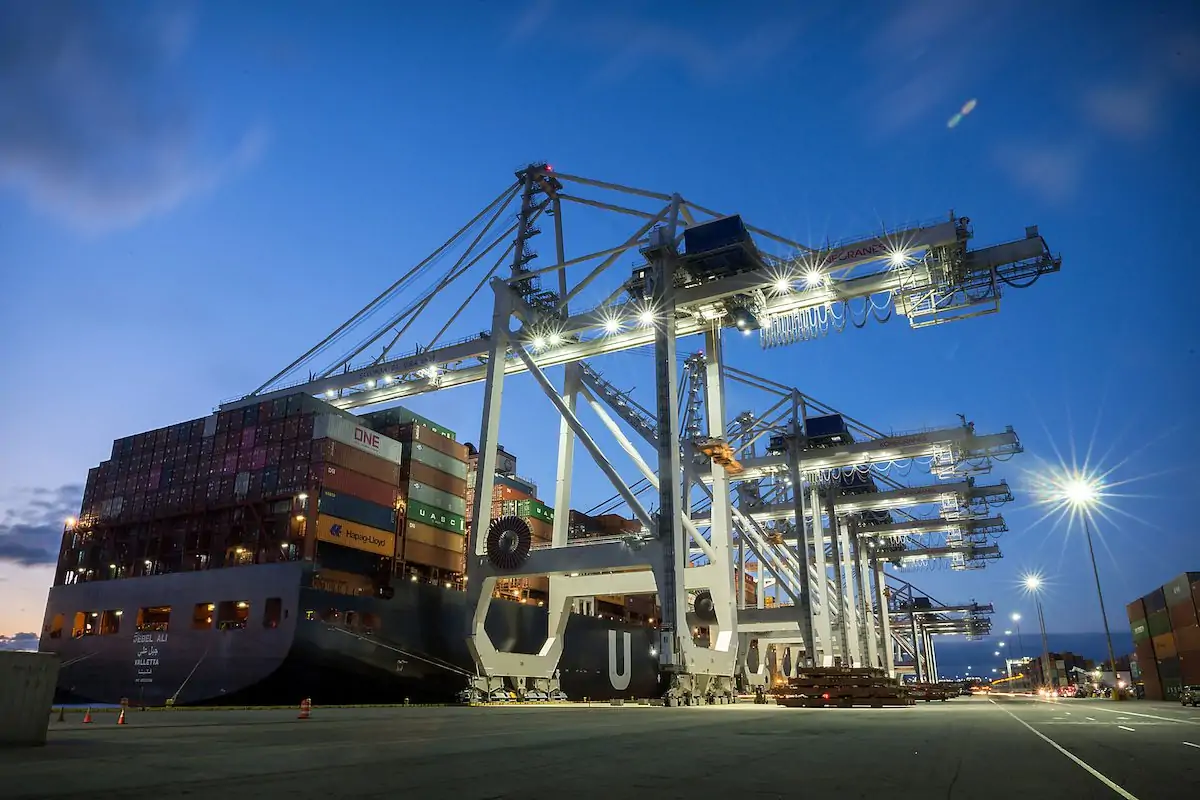
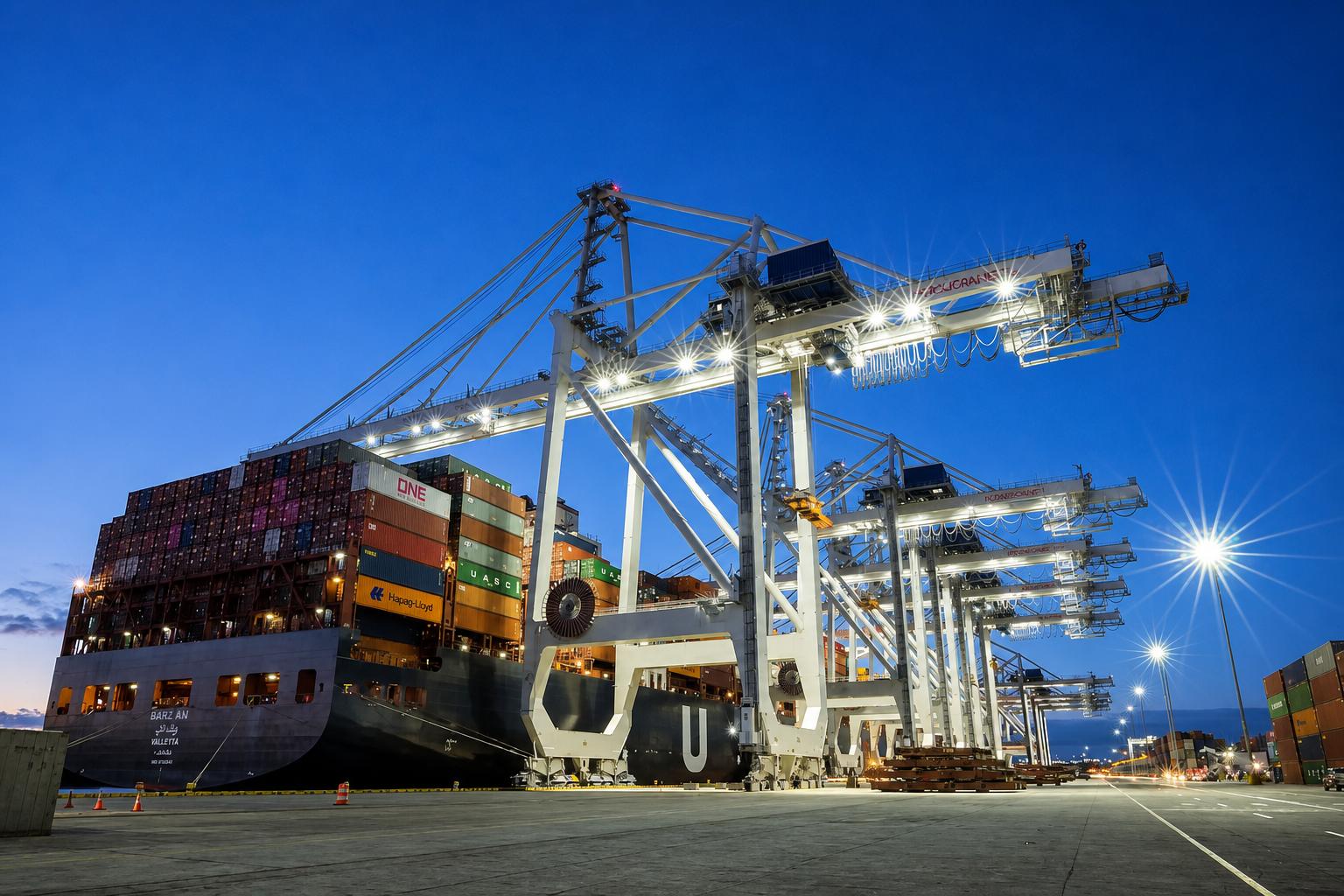
    Henan Mine Crane Ship-To-Shore Crane (STS)
    Henan Mine Crane Ship-To-Shore Crane (STS)
    Project planning notes

    Key points for this crane project.

    1. What can modern ports do to cut costs on container
    2. So, when it comes to working out how much it costs
    3. If you make the most of the yard layout, you can cut
    Read the technical guide

    What can modern ports do to cut costs on container handling?

    In recent years, global container terminals have been under more and more pressure. Rising labour costs, fuel prices that keep going up and down, record-high container volumes, plus stricter environmental rules and shorter times for vessels to get ready to use again—all these things mean that cutting container handling costs will have a direct effect on how competitive a terminal is in the market and how much profit it makes. When it comes to saving money and getting more out of their kit, most terminals think the best thing to do is to bring down the price of equipment. But when you look at the long-term costs, the price difference for one piece of kit is nothing compared to the long-term costs of choosing the wrong equipment, poor scheduling, using too much energy, and times when the equipment is not working.

    So, when it comes to working out how much it costs to handle containers, here’s the lowdown.

    The first category is capital expenditure (CAPEX), which includes ship-to-shore gantry cranes (STS), rubber-tired gantry cranes (RTG), rail-mounted gantry cranes (RMG), container stackers, and terminal tractors, as well as any related infrastructure investments. The second category is operating costs (OPEX). The biggest chunk of this is energy costs, like diesel, electricity, and charging fees. Then there's labour costs, like wages for drivers and maintenance staff. And then there's the day-to-day stuff like maintenance, spare parts and tyre wear costs. When it comes to wheeled equipment like RTGs and container handlers, tyre wear is a big fixed cost that can't be ignored. The third category is all about hidden costs that people often don't think about, like demurrage fees for waiting container trucks, penalties for vessel delays, efficiency losses due to equipment idling or yard congestion, and downtime losses caused by unexpected breakdowns.

    If you make the most of the yard layout, you can cut down on waste right at the source.

    If the yard's not planned properly, you'll have to travel further with the equipment, use more fuel and do more container transfers, which all adds to the workload. When you're planning container zones, it's a good idea to divide the area based on how the containers are moving around. Import and export containers should be stored separately; we should have dedicated areas for refrigerated and hazardous materials containers; and empty containers should be consolidated to minimise long-distance transfers between zones. It'd be great if cold-chain container terminals and dangerous goods container yards could clearly mark out their operational areas. This would mean less extra travel distance for cross-zone transfer operations. The most important thing is to minimise container repositioning.

    Selecting the Right Equipment for the Yard

    Different handling equipment is suited for different scenarios. If you pick the wrong model, you'll end up paying more in the long run. Picking the right kit for a container terminal is key to saving money. Rubber-Tired Gantry (RTG) Cranes are the main equipment in many yards and offer the best potential for cost reduction. You can retrofit existing diesel-powered equipment to electric RTGs or buy electric RTGs straight up. When you add hybrid systems, remote control, and automatic positioning, they can both cut energy consumption and improve how things are done. Rail-mounted gantry cranes (RMGs) are perfect for large, fixed yards. They offer higher stacking density, lower labour requirements, lower electrification operating costs, and significant potential for automation upgrades.

    Here’s a quick rundown of some of the most common container handling equipment.

    Equipment TypeInitial InvestmentEnergy CostLabor Demand
    Diesel RTGMediumHighMedium
    Electric RTGMedium-highLowMedium
    RMG CraneHighVery lowLow
    Straddle CarrierMediumMediumLow

    Switching to electric to deal with fuel price ups and downs

    Diesel prices keep going up, and carbon emissions regulations are getting stricter in lots of regions. This means the cost of operating diesel-powered equipment is going up, and there's a risk of not meeting emissions standards. Electrification is the best way to cut terminal energy costs. The best solution is to retrofit diesel-powered rubber-tired gantry cranes (RTGs) to electric models. After retrofitting, energy costs per container drop significantly, and equipment maintenance requirements are reduced accordingly. If you're in a place without a fixed power supply, hybrid port equipment can be a great temporary solution to gradually reduce fuel consumption. Lithium-ion battery-powered container stackers and terminal tractors are already pretty common and are great for short-distance, high-speed transport.

    Here’s a simple way to spread out fixed costs and make the most of your equipment:

    When equipment is sitting idle, you're still paying depreciation and fixed costs, which obviously increases the handling cost per container. If you can make full use of port equipment, you can handle more operations without having to buy new kit. If you integrate a container equipment fleet management system for real-time scheduling and dispatch, you can reduce empty runs and waiting times. If you can, try using it with an AI-based yard scheduling system to balance the workload and avoid overloading or underutilisation. Keep an eye on the main performance indicators every day, like hourly throughput per piece of equipment, how much equipment is available, the empty run rate, energy consumption per container, and downtime.

    Automation and Smart Maintenance: Cutting the costs of labour and downtime

    Automated container terminal solutions require a big initial investment, but they can significantly improve operational efficiency in the long run. They cut down on labour needs and reduce damage to equipment and cargo caused by human error, all while making business operations more smooth. You don't have to implement everything at once. First, upgrade to remote port control and automated stacking, then gradually expand to save money through port automation. When it comes to maintenance, we need to move away from the traditional "repair after failure" model and adopt predictive maintenance for port equipment. Using sensors to keep an eye on things like motor temperature, vibration, brake status, and hydraulic pressure helps spot early signs of failure, so you can plan maintenance when you need to.

    Here are some of the mistakes we often make when trying to cut costs.

    A lot of terminals don't really get how to cut costs effectively. The most common mistake is thinking that lowering equipment prices is the main goal. The truth is, cheap equipment usually uses more energy, breaks down more often, and has a shorter lifespan, which ends up costing more in the long run. Some terminals also automatically implement automation without first optimising operational workflows, so if there are underlying process issues, automation won't deliver the expected results. A lot of projects don't think about long-term electrification plans, so they end up buying diesel-powered equipment. But a few years later, because of emissions regulations, they have to spend even more on retrofitting. Doing a total cost of ownership (TCO) analysis for port equipment—which includes all spending over about 10 to 15 years—is the only way to really know if something offers good value for money.

    Frequently Asked Questions

    What’s the best way for ports to cut costs when it comes to handling containers?

    To do this, we can take these steps. First, we need to tweak the yard layout. Next, we need to get the equipment wired up. Then, we need to upgrade the automation systems and introduce predictive maintenance. And finally, we need to optimise the scheduling arrangements. You can't rely on just one measure to get the job done. You need to make systematic adjustments based on the specific operational conditions of the terminal.

    Do automated terminals have lower operating costs?

    Sure, it might cost a bit more up front, but you'll get your money back tenfold in the long run. How long it takes to get your money back depends on how much the terminal can handle and how much it costs to run it.

    I’d like to know if electric RTGs are more cost-effective than diesel RTGs?

    Sure, it might cost a bit more at first, but you'll end up saving on energy and maintenance costs in the long run. If the terminal can handle the extra work, the extra costs can usually be made back within a few years, making them better value in the long run.

    So, to sum up

    when you're trying to cut costs on container handling, just buying the cheapest equipment isn't the answer. The key is to transform every aspect of the process, from planning the yard and selecting the equipment, all the way to daily operations and maintenance. Future container terminals are going to be smarter and more energy-efficient, and they'll need less manual intervention. If a terminal wants to stay ahead of the game in the long run, it needs to take the lead and invest in the right gear and systems.

    Make your solution work for you and boost your terminal’s operational efficiency.

    Henan Mine Crane is a professional supplier of port crane equipment. We can help improve the cost-effectiveness of your container terminal by providing assessment services. Just give us your annual throughput, existing equipment, yard layout, energy consumption data, and automation goals, and our engineering team will come up with an improvement plan—including RTG/RMG upgrades, straddle carrier selection, electrification route planning, and smart port solutions. You can also download our free "Self-Assessment Checklist for Cost Reduction in Modern Port Container Operations" to quickly spot areas for improvement in your current operations.

    Discuss the crane arrangement for your project.

    A yard-level cost review should distinguish stacking work from transport and handover delays. Use the actual container routes and operating records to compare changes in layout, equipment coordination and work allocation. Share the load, available drawings, working cycle and site conditions with Henan Mine Crane so the required configuration and supply boundary can be discussed.

    Related crane configurations

    Ship-To-Shore Crane (STS)

    View product parameters
    Lifting capacity: 40-65 80-120 tBoom outreach: 40-72 mWorking class: A8

    Transfer containers between ship and quay with an STS crane selected for the berth and vessel envelope. Define the lifting-appliance arrangement, outreach, rail position and handling cycle.

    Container Overhead Crane

    View product parameters
    Lifting capacity: 30-65 tSpan: 18-35 mLifting height: 8 – 20 m

    Transfer containers within a defined overhead runway area using a double-girder bridge and matched spreader. Container size, working clearance and the handling sequence determine the arrangement.

    Updated 2026 · Henan Mine Crane

  • Henan Mine Crane Cui Peijun 2019 New Year Message

    Henan Mine Crane Cui Peijun 2019 New Year Message

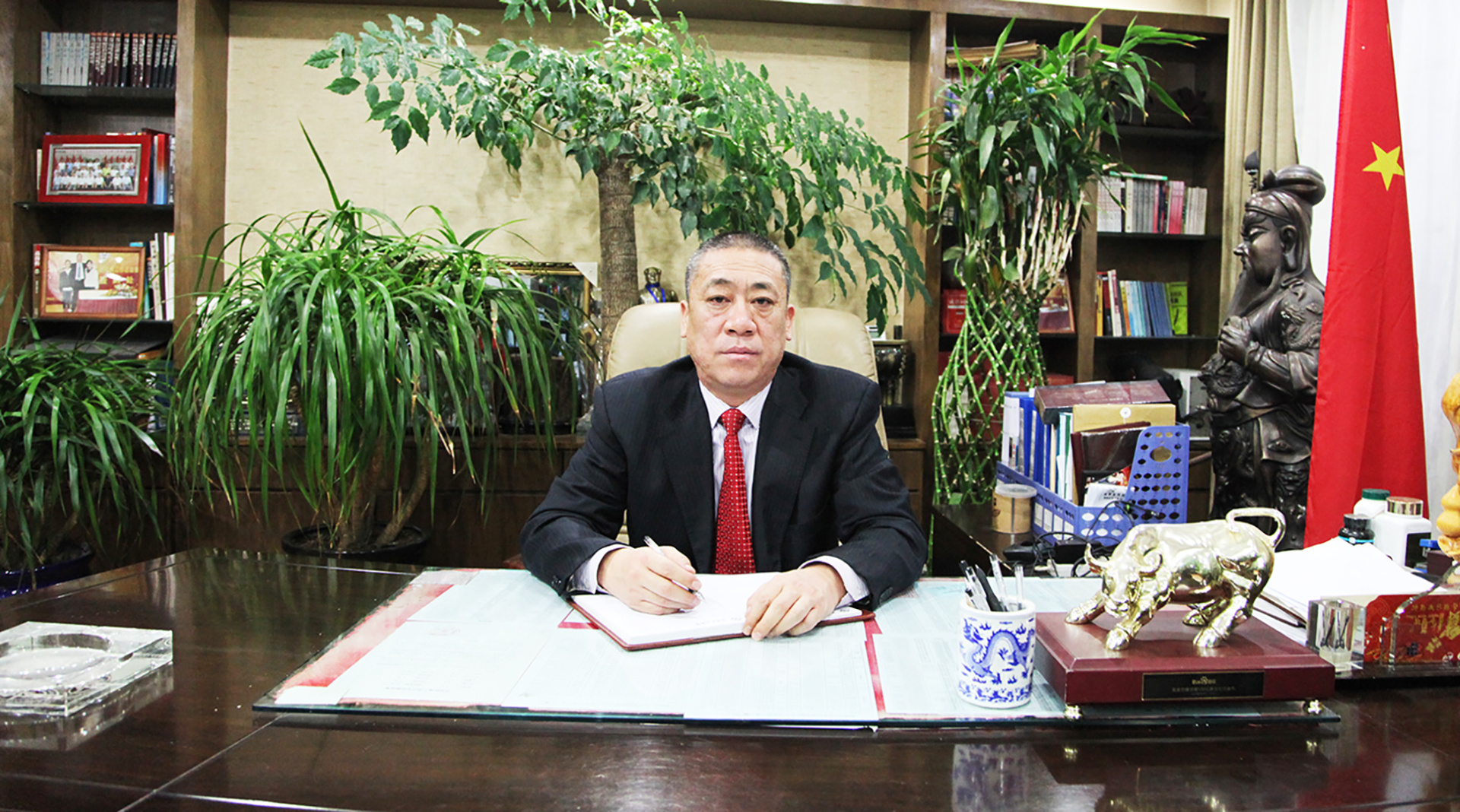
    Henan Mine Crane Cui Peijun 2019 New Year Message

    On January 1, 2019, Cui Peijun, founder and secretary of the Party Committee of Henan Mining Crane Co. Greetings to all employees, global partners and friends from all walks of life, send New Year’s greetings and best wishes.
    In 2018, Henan Mine Crane continued to increase its efforts in the field of intelligent manufacturing. The enterprise invested more than 300 million yuan throughout the year for the introduction of high-end production equipment and automated production lines. Nearly 100 welding and manufacturing intelligent robots were deployed, helping the enterprise realize quality and efficiency.
    Henan Mine Crane Cui Peijun 2019 New Year Message
    Through equipment and technology upgrading, Henan Mine Crane has steadily pushed forward the transformation of green manufacturing and intelligent manufacturing. The company has achieved stage-by-stage breakthroughs in product research and development, technological innovation, and quality control.
    On December 24, 2018, Henan Mine Crane Intelligent Manufacturing Industrial Park completed the foundation stone laying and groundbreaking. The industrial park will focus on the research and development and production of intelligent cranes, and promote the high-quality development of high-end lifting equipment. The landing of this project marks a brand new stage in the development of the enterprise.
    Cui Peijun in the congratulatory message to thank all parties for their support and all employees. In the future, Henan Mine Crane will continue to plow through the field of lifting equipment manufacturing. With technological innovation and intelligent manufacturing as the core, continue to serve global customers and expand the international market.

    Henan Mine CraneDiscuss your requirements ↗
  • Chemical Plant Overhead Crane Procurement: Process and Area Requirements

    Chemical Plant Overhead Crane Procurement: Process and Area Requirements

    Technical guide

    Chemical Plant Overhead Crane Procurement: Process and Area Requirements

    A chemical plant enquiry needs the lifting task, local environment and site classification described together. Confirm the applicable process and installation conditions before narrowing the crane configuration and supply scope.

    Henan Mine CraneTechnical guide · Updated 2026Crane selection, project scope and operating requirements
    Henan Mine Crane Galvanizing Process Overhead Crane
    Henan Mine Crane Galvanizing Process Overhead Crane
    Project planning notes

    Key points for this crane project.

    1. Why do chemical workshops need special Overhead
    2. Determine the hazardous area classification
    3. Choose the right type of Overhead Crane
    Read the technical guide

    Why do chemical workshops need special Overhead Cranes?

    The special characteristics of hazardous environment

    In chemical workshops, many processes produce flammable gases, vapors, mists or dusts, such as gasoline vapors in petrochemical workshops, solvent mists in paint workshops, and dusts in fertilizer plants. These substances can easily form an explosive environment under certain conditions.

    When the electrical parts and machinery of an ordinary Overhead Crane are running, sparks are likely to be generated, and once they come into contact with these flammable and explosive substances, safety accidents will be triggered. This is why the chemical workshop cannot use ordinary cranes, you must choose a special explosion-proof Overhead Crane

    There are two key international standards to note, ATEX standards for explosive environment equipment and protection systems, IECEx is a global framework for the certification of hazardous area equipment, procurement must confirm that the equipment meets the corresponding level of these two standards.

    Corrosive working environment

    The problem of corrosion in chemical plants is more serious than many people think. Acid vapors, alkali vapors, various types of solvents, as well as high humidity environments, and even outdoor chemical storage areas, can cause serious corrosion of Crane's steel structure and electrical components.

    Ordinary Crane paint coating, metal parts, in this environment will not take long to rust, aging, electrical cabinets into the water short-circuit, steel cracking is very common. Therefore, chemical workshop cranes must have a targeted anti-corrosion design, which is often referred to as anti-corrosion Overhead Crane (anti-corrosion overhead crane).

    Extremely high safety and compliance pressure

    Safety accidents in the chemical industry often have unimaginable consequences. A substandard Crane cannot only threaten the lives of operators, but can also lead to the shutdown of an entire plant, resulting in huge economic losses.

    At the same time, chemical companies have to face the pressure of insurance audits and local regulatory audits.

    Determine the hazardous area classification

    Confirm whether the operation area is a hazardous area

    Before purchasing a Crane, the first thing to clarify a core issue: the operating area of the crane, whether it is an ordinary industrial area, or a classified hazardous area. This directly determines the direction of crane selection.

    As long as the operating area there are flammable gases, vapors, dust, and may form an explosive environment, it is a hazardous area, you must use explosion-proof Crane!

    Define the type of risk: gas, vapor, mist or dust

    Hazardous areas of different types of risk, the explosion-proof requirements for Cranes are not the same. Chemical workshop common risks are mainly three types: gas environment, dust environment), steam or solvent environment.

    For example, cranes in dust environments need to prevent dust from entering electrical components to avoid dust buildup triggering sparks; while cranes in gas environments need to seal all electrical interfaces to prevent flammable gases from entering the interior of the equipment. Only when the type of risk is clear, can the corresponding explosion-proof class and design program be selected.

    Determine the required explosion protection level

    The explosion-proof level is not the higher the better, but to match the level of risk at the site. the IEC 60079 series of the IECEx standard specifies in detail the classification of explosive gases and dust environments, as well as the requirements for installation, inspection and maintenance of electrical equipment.

    Choose the right type of Overhead Crane

    Double Girder Overhead Cranes

    The double girder Overhead Crane is the preferred choice for the core area of a chemical workshop, especially for heavy equipment lifting scenarios, such as reactors, pressure tanks, large pumps in process workshops, and heavy equipment maintenance areas.

    Explosion-Proof Overhead Crane

    Explosion-proof Overhead Crane (explosion-proof overhead crane) is a specialized equipment for hazardous areas, suitable for petrochemical workshops, solvent workshops, paint production workshops, chemical storage areas and other areas where flammable and explosive substances exist.

    Its core design point is to eliminate all the hidden dangers that may produce sparks.

    Anti-corrosion Overhead Cranes

    Anti-Corrosion Overhead Crane (anti-corrosion overhead crane) is suitable for acid and alkali workshops, chemical fertilizer plants, coastal chemical facilities, sewage treatment chemical zones and other areas with strong corrosive environments.

    Its key feature is the all-round anti-corrosion protection. The steel structure adopts heavy anti-corrosion coating, such as C4, C5 level anti-corrosion paint, which can effectively resist the corrosion of acids, alkalis and solvents; the electrical cabinet adopts sealed design and is equipped with anti-condensation heater to prevent the entry of moisture and corrosive gases and to protect the electrical parts; bolts, fasteners and other small parts are made of stainless steel to avoid rusting and aging.

    Define the core technical parameters

    Lifting capacity

    The common lifting objects in chemical workshop include reactor, mixing tank, pump body, heat exchanger, pressure vessels, chemical vessel, etc. The weight of these equipments varies greatly, from several tons to tens of tons.

    Be sure to calculate the maximum lifting load in advance, to avoid the situation of insufficient bearing capacity of the Crane, otherwise it will not only damage the equipment, but also cause safety accidents.

    Span

    The span of the chemical workshop is mainly determined by the width of the workshop.

    If it is an existing workshop, measure the actual span of the track to ensure that the span of the Crane matches the track.

    Lifting height

    The lifting height of a chemical workshop is more demanding than that of an ordinary workshop. Because the workshop is usually full of pipelines, platforms, tanks and other equipment, the Crane needs to have enough hook height to avoid these obstacles and safely lift materials and equipment, as well as to facilitate the maintenance and overhaul of the equipment.

    Working level

    The working level of Crane in chemical workshop is generally not lower than A5. If it is the core production area, high-frequency lifting of heavy equipment every day, you need to choose A6-A8 class of high working level Crane, to ensure that the equipment can be long-term stable operation, reduce the frequency of failure.

    Carefully select explosion-proof components

    Explosion-proof limit switch

    Limit switches are safety protection components for Cranes, including hoist limit switches, running limit switches, and emergency stop buttons, all of which must be explosion-proof.

    OSHA also clearly requires that electric running Cranes must have over-travel limit switches in the direction of lift, and emergency stop switches must be able to cut off the power supply independently of conventional controls.

    Spark-proof mechanical design

    In addition to electrical components, the mechanical components of the Crane should also be designed with anti-sparks to avoid sparks during operation or collision.

    Consider anti-corrosion protection measures

    Paint system

    Paint is the first line of defense for the anti-corrosion of the steel structure of the crane, the crane in the chemical workshop, you cannot use ordinary industrial paint, you need to use heavy duty anti-corrosion coating.

    Henan Mine Crane anticorrosive crane, will use “sandblasting rust + primer + paint + top coat” multi-layer coating process, rust removal level to Sa2.5 level, to ensure that the paint can be firmly attached to the surface of the steel structure, anticorrosive effect is more durable.

    Electrical Protection

    The anti-corrosion of electrical components mainly relies on the sealing design and protection level. The electrical cabinet should adopt sealed design with protection level not less than IP65 to prevent dust, water vapor and corrosive gases from entering; at the same time, it is equipped with anti-condensation heater to avoid condensation inside the cabinet, which may damage the electrical components.

    Structural protection

    The steel structure of the Crane, in addition to paint coating, but also good detail protection. For example, the main girder, end beams of the weld, easy to accumulate corrosive substances, the need for special coating treatment

    Define the safety features that must be in place

    Overload protection

    Overloading is a major safety hazard in crane operation, especially in chemical workshops, where most of the equipment lifted is of high value, and once overloaded, it may lead to crane breakage, equipment fall and cause serious accidents.

    Upper and lower limit switches

    Limit switches should be inspected and debugged regularly to ensure normal function and avoid safety accidents due to limit switch failure.

    Emergency stop system

    The driver's room, remote control and on-site operation station of the Crane should be equipped with emergency stop buttons, which should be eye-catching and easy to operate, so that in case of an emergency, the operator can quickly press the button to cut off the power supply and stop the Crane from running.

    Holding device

    Cranes in chemical workshops, the holding brake device should be regularly inspected and maintained to ensure that the holding brake is reliable, to avoid the failure of the holding brake, resulting in the fall of the load.

    Anti-collision system

    If the chemical workshop of the same work area, there are more than one Crane operation, must be equipped with anti-collision system.

    Load Monitoring System

    Load monitoring system can monitor the weight of the lifted load in real time and show it on the display screen, which is convenient for the operator to check. Load monitoring systems are especially useful for lifting high-value, high-precision reactors and pressure vessels in chemical plants.

    Evaluate control options

    Pendant control

    Pendant control is suitable for simple, low-risk lifting areas, such as general maintenance workshops, where the loads are small, the frequency of lifting is low, and the operator can work in close proximity.

    Radio remote control

    Radio remote control is the most recommended control method for chemical plants, especially in hazardous areas. The operator can hold the remote control, in a safe distance, control the operation of the Crane, to avoid entering the flammable, explosive, corrosive hazardous areas, to protect the safety of personnel.

    Cabin control

    Cabin control is suitable for large span and heavy cranes, such as double girder cranes of tens of tons or hundreds of tons, the operator can observe the lifting situation more clearly in the cab and control the crane operation precisely.

    PLC + VFD control

    PLC + VFD control, is currently a more widely used control method in chemical cranes, we Henan Mine Crane many chemical cranes, are using this control method.

    Check the workshop and track structure

    Existing workshop or new plant

    If it is an existing workshop to purchase cranes, first of all, we should check the condition of the track beams and columns of the workshop to confirm the carrying capacity of the track beams, whether they can withstand the wheel pressure of the crane, whether the installation accuracy of the track meets the requirements, and whether there is any deformation, wear and tear and other problems.

    Wheel pressure and track beams

    The equipment in chemical workshop is usually heavy and the workshop space is limited, the wheel pressure of Crane directly affects the safety of track beam and plant structure. Therefore, Crane suppliers must provide detailed wheel pressure data for structural accounting by the purchaser.

    Clearance around pipes and platforms

    In the chemical workshop, there are more facilities such as pipelines, ventilation ducts, lighting systems, maintenance platforms, fire fighting systems, etc. The running route of Crane must maintain sufficient clearance with these facilities to avoid collision during operation.

    When purchasing, provide a detailed layout plan of the workshop, mark the location and height of the pipelines and platforms, and let the supplier design the running route and lifting height of the Crane according to the layout plan to ensure sufficient clearance.

    Clarify the documents to be provided by the supplier

    Technical program

    The technical program is the core document provided by the supplier, which must contain all the key parameters and design details of the Crane, such as lifting capacity, span, lifting height, working level, power supply mode, working environment, control mode, safety devices, etc.

    Drawings

    Drawings include general arrangement diagram, wheel pressure diagram, rail interface diagram, electrical schematic diagram and so on. The general arrangement diagram can clearly show the overall structure and installation position of the Crane; wheel pressure diagram is used for plant structure accounting; rail interface diagram is used for rail installation; electrical schematic diagram is used for electrical installation and maintenance.

    Compliance documents

    ATEX or IECEx related certificates (for hazardous areas), ISO/FEM/CMAA design standard references, factory test reports, material certificates, operation manuals, maintenance manuals and so on.

    Chemical Project Experience

    When purchasing chemical plant cranes, the supplier's chemical project experience is critical. Be sure to ask if the supplier has supplied chemical scenarios such as petrochemical plants, fertilizer plants, pharmaceutical plants, paint plants, hazardous storage areas, and so on.

    Engineering capability

    The engineering capability of the supplier directly determines the design and manufacturing quality of the Crane. The supplier needs to have the ability of explosion-proof design and anti-corrosion program design, and can recommend the appropriate working level, explosion-proof level and anti-corrosion measures according to the actual needs of the customer, as well as provide services such as wheel pressure calculation and installation support.

    After-sales support

    Cranes in chemical workshops, once failure occurs, may lead to workshop shutdown and huge loss. Therefore, the supplier's ability to provide after-sales support is also an important consideration when purchasing.

    When purchasing, it is necessary to clarify the supplier's after-sales response time to ensure that when the equipment fails, the supplier can send people to deal with it in time.

    Common Misconceptions of Overhead Crane Procurement in Chemical Workshop

    Many customers procurement, because of the lack of understanding of the special characteristics of chemical cranes, easy to fall into some misunderstandings, not only increase the cost, but also may leave hidden safety hazards.

    In addition, some customers only look at the price and choose the supplier with the lowest offer, ignoring the engineering capabilities and after-sales support of the supplier, as a result, the quality of the equipment is not up to standard, and the failure cannot be repaired in a timely manner, which affects production.

    Crane selection recommendations for different areas of the chemical workshop

    Plant AreaRecommended Crane TypeKey Requirement
    General Maintenance WorkshopSingle or Double Girder Overhead CraneStable lifting, easy maintenance, suitable for light to medium load lifting
    Hazardous Production AreaExplosion-Proof Overhead CraneEquipped with ATEX/IECEx certification, complete explosion-proof components, spark-proof design
    Acid/Alkali WorkshopAnti-Corrosion Overhead CraneHeavy-duty anti-corrosion coating, sealed electrical cabinet, stainless steel fasteners
    Heavy Equipment Maintenance BayDouble Girder Overhead CraneHigh load capacity, large lifting height, stable operation
    Outdoor Chemical Storage AreaAnti-Corrosion Overhead CraneWindproof, UV-resistant, strong anti-corrosion capability

    This selection recommendation, combined with our many years of experience in chemical projects summarized, the specific needs of different workshops are different, the procurement can be combined with their own situation, and suppliers to communicate adjustments.

    Discuss the crane arrangement for your project.

    A chemical plant enquiry needs the lifting task, local environment and site classification described together. Confirm the applicable process and installation conditions before narrowing the crane configuration and supply scope. Share the load, available drawings, working cycle and site conditions with Henan Mine Crane so the required configuration and supply boundary can be discussed.

    Related crane configurations

    Galvanizing Process Overhead Crane

    View product parameters
    Lifting capacity: 5 – 32 tSpan: 10.5 – 31.5 mLifting height: 6 – 24 m

    Transfer suspended workpieces through a galvanizing process with a crane matched to the line. Coordinate lifting points, corrosive exposure, tank geometry and the required handling sequence.

    Single-Girder Bridge Crane

    View product parameters
    Lifting capacity: 1–20 tSpan: 7.5–31.5 mLifting height: 6, 9, 12, 18, 24 or 30 m; capacity-dependent

    Use an LDA single-girder bridge and electric hoist for general workshop material handling. Select the lifting capacity, runway geometry and hoist duty around the building and load.

    Updated 2026 · Henan Mine Crane

  • Electrolytic Aluminium Loading Cranes: Define the Process Interfaces

    Electrolytic Aluminium Loading Cranes: Define the Process Interfaces

    Technical guide

    Electrolytic Aluminium Loading Cranes: Define the Process Interfaces

    A multifunctional process crane must match the tasks performed at the production line. Describe the materials, tools, movements and operating sequence so the proposed functions and interfaces can be reviewed in the project context.

    Henan Mine CraneTechnical guide · Updated 2026Crane selection, project scope and operating requirements
    Anode Charcoal Block Stacking Crane for Aluminum Electrolysis
    Anode Charcoal Block Stacking Crane for Aluminum Electrolysis
    Project planning notes

    Key points for this crane project.

    1. What is a multi-function crane for electrolytic
    2. The first step: check the electrolysis production
    3. The second step: the definition of the core
    Read the technical guide

    What is a multi-function crane for electrolytic aluminum plants

    Basic definition

    Electrolytic aluminum multifunctional crane is specially designed for large pre-baked anode electrolytic aluminum production line customized special overhead cranes, but also aluminum electrolysis workshop exclusive aluminum smelter Crane, which is different from the general lifting equipment, the core positioning of the process equipment, not just for handling materials, but the depth of participation in the whole process of electrolytic production.

    Many professional names in the industry refer to the same kind of equipment, including Pot Tending Machine (PTM), Multi-Purpose Pot Crane (MPPC), Tank Work Unit, Pole Changing Unit, which are used interchangeably in the drawings and bidding documents of different oversea projects, but the core functions of the equipment are identical with the adapted scenarios.

    Core Process Functions

    A qualified electrolytic aluminum multifunctional crane can complete most of the core processes in the electrolysis plant without the need for multiple auxiliary equipment. This is the core reason why modern large-scale aluminum electrolytic workshop is generally equipped with integrated multifunctional Crane as standard.

    The regular integrated functions of the equipment include electrolysis tank crust crushing, alumina and fluorine salt dosing, old anode dismantling, new anode accurate replacement, tank slag cleaning, aluminum water package lifting and running, and anode busbar lifting and debugging. At the same time, it can cover the daily maintenance of electrolyzer, track cleaning, workshop auxiliary lifting and other supporting work.

    All operational aspects of the high concentration of carbon powder, alumina dust, asphalt fumes, hydrofluoric acid corrosive gases, high temperature molten salts and ultra-strong magnetic field under the composite environment to complete, which is the core reason why ordinary Cranes cannot replace it.

    The first step: check the electrolysis production process fit requirements

    Confirmation of pre-baked anode electrolyzer parameters

    Each aluminum plant electrolysis production line parameters are not uniform, directly determines the overall design of multi-functional cranes. Pre-procurement must accurately sort out the basic data of the production line to avoid mismatch of the process and failure to put into operation after the equipment is on site.

    The basic information that needs to be focused on checking contains the capacity of a single electrolytic tank, the layout of the entire inter-tank column, the anode size and weight of a single piece, the center spacing of the tank, the width of the workshop operating channel, and the form of busbar structure. These data are the core basis for subsequent equipment spans, lifting heights, and tooling configurations.

    Defining the required integrated processes

    Different production capacity, different process positioning of the aluminum electrolysis workshop, the functional requirements of the Crane varies greatly. Some small and medium-sized aluminum plants only need basic pole changing and maintenance functions, while large intelligent aluminum plants need to integrate a full set of automated work processes.

    Before purchasing, you need to confirm one by one whether the equipment needs to be integrated with the functions of crust crushing, automatic charging, slag cleaning, aluminum water discharge, busbar lifting, and full tank overhaul. The more integrated functions, the higher the requirements for the structure of the workpiece trolley, control logic, precision and stability of the hydraulic system, but also to reserve sufficient space for later maintenance.

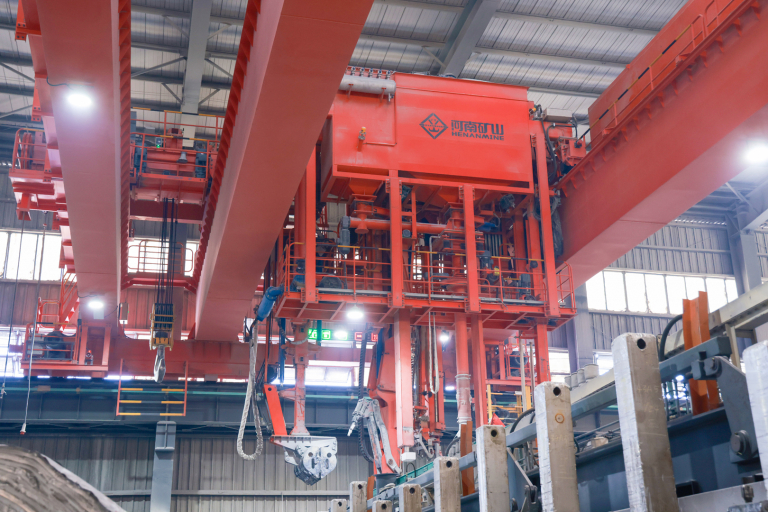
    Multifunctional Unit for Aluminum Electrolysis
    Multifunctional Unit for Aluminum Electrolysis

    The second step: the definition of the core technical parameters

    Rated lifting capacity

    Calculation of the lifting capacity of the multifunctional crane for aluminum electrolysis cannot only refer to a single load weight, but also need to integrate a number of weight parameters accounting, while leaving a safety margin, suitable for long-term high-frequency operating conditions.

    The scope of calculation includes the self-weight of anode assembly parts, the full load weight of aluminum water package, the self-weight of assembly trolley and the weight of all kinds of auxiliary lifting equipment. The mainstream configurations in the industry range from 10t+10t to 40t+40t, and Henan Mine Crane can provide fully customized tonnage configurations according to the specifications of the tanks and operational requirements of overseas projects.

    Equipment Span

    The span is determined by the overall layout of the electrolysis workshop, and the core reference is the width of the workshop building, the center distance of the track, the way of arranging the tanks and the width of the maintenance access. At the same time, it is necessary to match the maximum operating range of the tooling trolley to ensure that the equipment can cover all the electrolyzer operating points.

    For large-scale new aluminum plants and expansion projects overseas, larger spans can be customized to fit the site layout without changing the plant structure.

    Lifting height

    The core of the design of lifting height is to avoid obstacles in the workshop and ensure safe operation under all working conditions. It is necessary to reserve sufficient clearance for anode lifting and lowering, aluminum water package lifting height, busbar operation height, and maintenance operation space above the electrolytic tank.

    At the same time, it is necessary to accurately calculate the limit approach distance of the hook, so as to avoid collision with the tank, pipeline and workshop structure when lifting anode and aluminum water package, and to eliminate the risk of equipment interference.

    Working level

    Different from ordinary auxiliary cranes, aluminum electrolysis crane belongs to continuous operation process equipment, the working level must match the intensity of production line operation, and cannot be applied to general equipment standards.

    When selecting a crane, it is necessary to make a comprehensive judgment based on the daily operating hours of the tank column, the number of electrolysis cells to be served, the frequency of single-process operation, the cycle of production and the maintenance load. For large-scale mass production aluminum electrolysis workshop, it is necessary to choose high working level configuration, which is suitable for uninterrupted high-frequency operation throughout the year and reduces the probability of failure and downtime.

    Selection of core functional modules

    Tooling trolley

    Tooling trolley is the core operating unit of the electrolytic aluminum multifunctional Crane, which directly determines the equipment's ability to work on the process, and is also the core component that distinguishes it from ordinary cranes.

    The complete tooling system can integrate the crust crushing mechanism, automatic pole changing mechanism, slag cleaning mechanism, material dosing and feeding mechanism, 360-degree rotating mechanism and cab rotating mechanism. The whole set of structure and hydraulic system work together to complete all electrolysis process operations.

    Aluminum Lifting Trolley

    The trolley module is specially used for the transfer of aluminum water ladle and aluminum discharge operation, which is the necessary configuration for mass production aluminum plants. The selection focuses on the rated lifting capacity, weighing accuracy, suitability for vacuum aluminum discharge, and the design of an exclusive safe transport path.

    Meanwhile, the structure of the trolley should be equipped with a heat-insulating protection design to resist the high-temperature radiation of aluminum water, avoid the aging and deformation of components caused by long-term high-temperature operation, and ensure the stable operation of the aluminum discharge process.

    Material Charging System

    The dosing system is mainly responsible for the accurate supply of electrolysis raw materials such as alumina and fluorine salt. When purchasing, it is necessary to confirm the dosing method, material particle size suitability, dust control program and automatic/manual switching mode.

    High quality dosing system can realize quantitative and uniform feeding, reduce the waste of raw materials, and at the same time, it is equipped with sealing and dust-proof structure to reduce the concentration of dust in the workshop, which is suitable for the harsh production environment.

    Automatic pole changing system

    Pole changing is the most frequent core process in the electrolysis workshop, and the automatic pole changing system can greatly reduce manual intervention and improve operational precision. The equipment should be equipped with the functions of automatic loosening and tightening of clamps, smooth lifting of old anodes, precise installation of new anodes, and auxiliary functions of cleaning residual electrodes.

    Stable pole changing system can effectively reduce the error of manual operation, avoid the deviation of anode installation affecting the production condition of electrolyzer, and ensure the smooth operation of the production line.

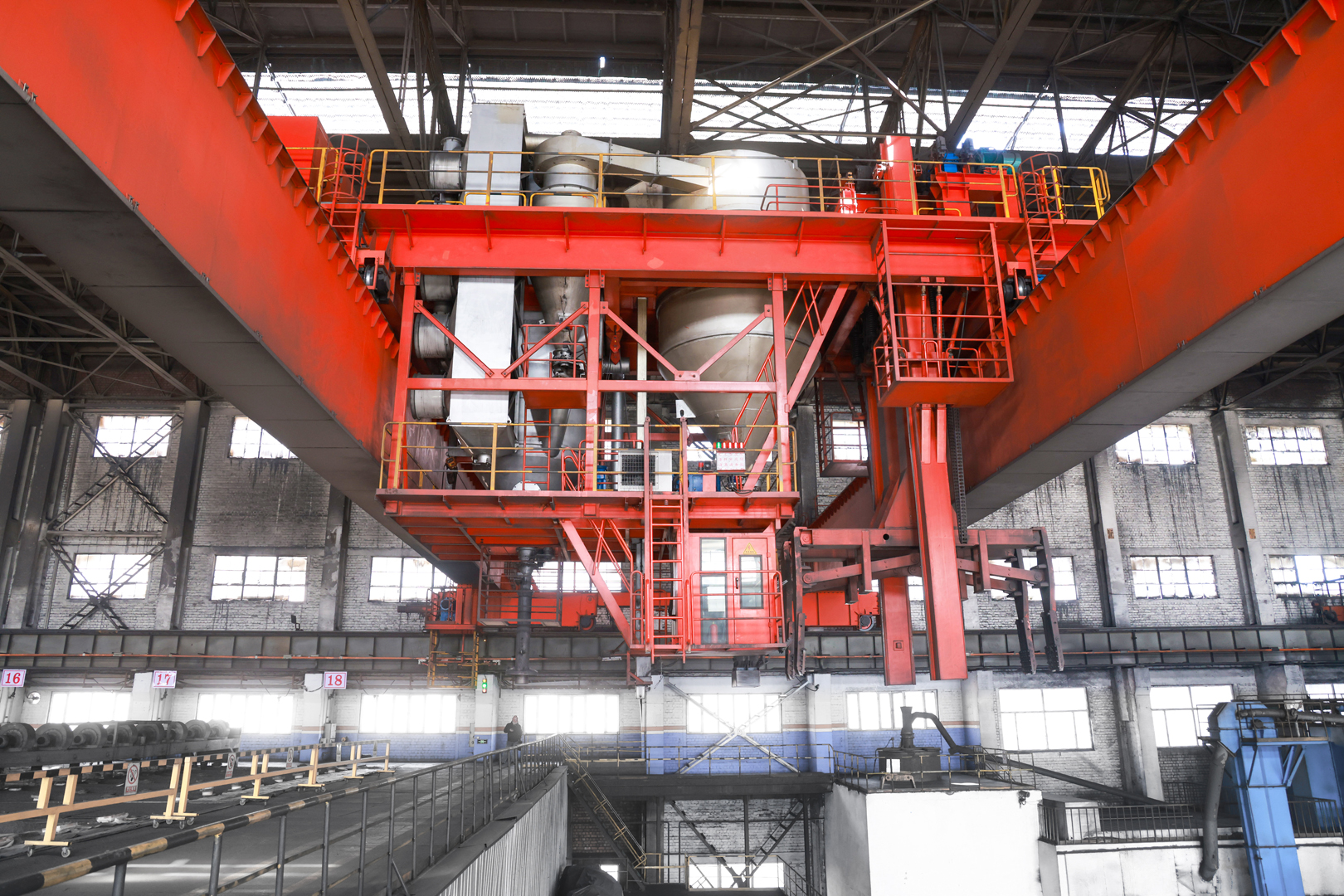
    Multifunctional Suction Crane for Aluminum Electrolysis
    Multifunctional Suction Crane for Aluminum Electrolysis

    Adaptation to the design of protection against harsh working conditions in aluminum plant

    Adaptation to high-temperature environment

    The operation area of the electrolyzer is in high temperature for a long time, and the ambient temperature around the tank is much higher than that of a common industrial workshop, and there is also high temperature heat radiation from molten salt. Ordinary lifting equipment cables, hydraulic piping, electrical components, will be quickly aging and failure.

    Specialized crane for aluminum smelting plant will use high-temperature resistant cables, insulated electrical cabinets, protective hydraulic piping layout, all components near the high-temperature area are heat-insulated and flame retardant treatment, suitable for long-term high-temperature operating scenarios.

    Strong magnetic field anti-interference design

    Aluminum electrolysis production relies on high-current DC operation, the workshop will form a strong and stable magnetic field, which will seriously interfere with sensors, weighing systems, PLC control modules and precision electrical components, resulting in positioning deviations and data distortion.

    Professional aluminum multifunctional cranes will do a full set of anti-magnetic design, electrical cabinets, control systems, testing components to do shielding protection, from the root to avoid magnetic interference, to protect the positioning accuracy and stability of equipment operation.

    HF corrosion and dust protection

    Hydrofluoric acid corrosive gas, fluorine salt particles, alumina dust, carbon powder and asphalt fumes are the main causes of aging and failure of aluminum workshop equipment. Dust buildup can clog drive structures, and corrosive gases can eat away at steel structures and electrical connections.

    Standard protective configurations include fully sealed electrical cabinets, specialized heavy-duty anticorrosive coatings, dust-proof enclosed drive components and anticorrosive cable systems to provide all-round protection against corrosion and dust, and extend the service life of the equipment.

    The fifth step: confirm the automation and control system configuration

    PLC integrated control system

    The whole set of multifunctional Crane bridge operation, trolley travel, workpiece operation, charging, pole changing, aluminum output and all other processes, need to rely on PLC control system collaborative linkage.

    Integrated PLC control can realize the synchronous and coordinated operation of each mechanism, avoid action conflicts caused by individual operation, and guarantee the orderly landing of complex processes, which is the standard for multifunctional cranes in modern aluminum factories.

    Variable frequency speed control (VFD)

    VFD frequency conversion control can realize smooth starting and stopping of equipment, and alleviate load shaking and mechanical impact during operation. In high-precision operation scenarios such as pole changing, aluminum output and busbar lifting, it can accurately control the operation speed and enhance the stability of operation.

    This configuration can effectively reduce the mechanical wear and tear of the equipment, lower the cost of operation and maintenance in the later stage, and is suitable for high-frequency and continuous production operations.

    Matching of control modes

    The mainstream control mode suitable for aluminum plant working conditions is the rotating cab + wireless remote control dual mode. The cab can meet the normalization and refinement of the operation, and the remote control can keep the operator away from the high temperature, corrosion, strong magnetic high-risk work area, to enhance the safety of the operation.

    The equipment is also equipped with emergency manual operation mode, which can be used manually when the automatic control system fails to avoid the whole production line shutdown.

    Data recording and weighing function

    High-end configuration includes weighing of aluminum water package, weighing of single batch materials, cumulative data statistics, data export and production data linkage functions. These data can be connected to the factory production management system to facilitate production capacity statistics, material accounting and production traceability, which is suitable for the management needs of modern intelligent aluminum factories.

    Step six: verify the exclusive safety configuration

    Aluminum electrolysis Crane belongs to high-risk process equipment, the safety configuration cannot follow the standard of ordinary vehicles, must be adapted to the special working conditions of the aluminum plant, all-round avoidance of operational risks.

    Overload protection device

    When changing poles, lifting aluminum water packages, tank maintenance and other heavy-duty operations, the overload protection device can monitor the load in real time, and automatically lock the lifting action when it exceeds the rated tonnage, so as to eliminate the risk of damage to the equipment and fall of materials caused by overloaded lifting.

    Multiple Limit Protection

    The equipment is equipped with upper and lower lifting limits, trolley traveling limits, trolley running limits, and slewing mechanism limits, which all-roundly restrict the equipment running boundaries, avoiding over-traveling and collision with workshop frames, troughs and pipelines.

    Anti-collision system

    Large electrolysis workshop will be arranged within the same span of more than one lifting equipment, anti-collision system can be real-time monitoring of equipment spacing, automatic warning, deceleration, shutdown, to avoid collision accidents occurring in the cross operation of multiple equipment.

    Emergency stop system

    Emergency stop button covers the driver's cab, remote control terminal, electrical cabinet, maintenance platform at multiple points, when a sudden failure can be cut off at any time, anywhere, the power supply of the equipment, rapid shutdown to avoid danger.

    Fire insulation and hydraulic protection

    The high temperature area adopts flame retardant cables, heat insulated cabinet and fireproof piping layout. The hydraulic system is equipped with pressure protection, anti-leakage structure, and emergency reset function, while reserving sufficient space for maintenance to avoid safety hazards caused by hydraulic leakage.

    Verification of structural design and track adaptation

    Main bridge structure

    Aluminum electrolysis multifunctional Crane adopts box-type double or triple girder reinforced structure, with reinforced rail and high-strength steel, adapted to heavy-duty, high-frequency, bumpy operating conditions. The overall structure is more rigid, not easy to deform, and can withstand the wear and tear of harsh environments for a long time.

    Wheel Pressure and Track Adaptation

    Suppliers are required to provide accurate maximum wheel pressure parameters, suitable track model, track foundation interface data and end beam layout program. Wheel pressure data is the core basis for structural checking of the plant. Many overseas projects fail to check the wheel pressure in the early stage, resulting in the plant not being able to carry the equipment, and the cost of reworking and rectification is extremely high.

    Design of maintenance access

    Considering the harsh environment of high corrosion and dust in the aluminum plant, the equipment must be reserved for standardized maintenance platforms, safety ladders, access ports for tooling trolleys, electrical cabinets, and hydraulic system operation space, which is convenient for daily inspection, maintenance, and replacement of spare parts, and reduces the difficulty of operation and maintenance in the later stage.

    Step eight: supplier strength assessment checklist

    Aluminum electrolysis multifunctional crane belongs to the customized high-end process equipment, equipment quality, adaptability, after-sales protection is completely dependent on the supplier's industry accumulation, ordinary general-purpose crane manufacturers cannot meet the demand.

    Aluminum plant project hands-on experience

    Priority is given to suppliers with experience in pre-baked anode aluminum plants, PTM units in electrolysis shops, and automated pole-changing Crane projects.

    Professional engineering capability

    Reliable suppliers can provide complete process adaptation solutions, tooling structure diagrams, workshop layout matching diagrams, wheel pressure calculations, electrical control logic and hydraulic system design instructions, and can optimize customized solutions according to on-site working conditions instead of applying standard models.

    Production and Testing Capability

    We need to have the ability of large-scale steel finishing, complete machine assembly, PLC and hydraulic system integration and debugging, and complete a full set of load test, electrical test and hydraulic pressure test before leaving the factory, so as to ensure that the equipment meets the standard and reduce the on-site debugging failures.

    Full process after-sales support

    Overseas projects focus on spare parts supply, remote troubleshooting, on-site commissioning guidance, operator training and regular maintenance guidance. One day of equipment downtime in aluminum plant will cause huge capacity loss, and a perfect after-sales system is the guarantee for long-term stable production.

    The ninth step: procurement of essential documents verification

    Overseas project acceptance, customs clearance, production verification, all need a complete set of documents, procurement must clearly require suppliers to provide all.

    Technical documents

    Containing equipment assembly diagrams, workshop layout matching diagrams, tooling structure diagrams, wheel press drawings, electrical schematic diagrams, hydraulic schematic diagrams, PLC control instructions, safety configuration lists and complete technical parameter tables.

    Business documents

    Contain quotation details, delivery period, installation and commissioning scope, spare parts list, warranty terms, training content and payment method description.

    Acceptance documents

    Contain factory test report, load test record, electrical test report, hydraulic system test report, weld flaw detection report, anti-corrosion coating test report, equipment operation and maintenance manual, spare parts catalog.

    Full Life Cycle Costing

    Front-end input (CAPEX)

    In addition to the main structure of the equipment, it also contains a full set of pre-inputs, such as tooling trolley, aluminum system, charging equipment, hydraulic unit, automatic control system, on-site installation and debugging, etc. When purchasing, it is necessary to account for the overall cost of the complete set, not a single equipment offer.

    Post-operation and maintenance costs (OPEX)

    Long-term operation and maintenance includes the replacement of hydraulic parts, replacement of electrical wear parts, wheel track maintenance, replacement of wear parts of work equipment, spare parts inventory reserves and other costs. High-quality equipment has a high investment in the early stage, but the failure rate in the later stage is low, and the operation and maintenance cost is more controllable.

    Downtime risk cost

    Crane is the core equipment of the production line, once the failure of the production line stops, it will directly lead to the stagnation of the pole changing, charging, and aluminum process, and the whole production line will be reduced or even shut down. Selection of priority consideration of equipment reliability and maintainability, far more important than the low price.

    Aluminum plant multifunctional crane procurement common misunderstandings

    A lot of procurement mistakes, are derived from the cognitive bias of the equipment attributes and working conditions. The most common mistake is to equate the process-type multifunctional Crane with ordinary Overhead Crane, according to the general equipment standard selection and procurement, and ultimately the equipment cannot be adapted to the production conditions.

    Neglect of HF corrosion, strong magnetic interference, high temperature protection and other special design requirements, is a high frequency of overseas projects to step on the pit. Lack of anti-magnetic, anti-corrosion, high-temperature resistant configuration of the equipment, put into operation within a short period of time will be electrical failures, structural corrosion, positioning inaccuracy and other problems.

    In addition, screening suppliers only by price, not specifying the functional list of tooling, not checking the wheel pressure data, ignoring the convenience of hydraulic system maintenance, and not planning the spare parts reserve in advance will lead to project delays and soaring operation and maintenance costs.

    Discuss the crane arrangement for your project.

    A multifunctional process crane must match the tasks performed at the production line. Describe the materials, tools, movements and operating sequence so the proposed functions and interfaces can be reviewed in the project context. Share the load, available drawings, working cycle and site conditions with Henan Mine Crane so the required configuration and supply boundary can be discussed.

    Related crane configurations

    Galvanizing Process Overhead Crane

    View product parameters
    Lifting capacity: 5 – 32 tSpan: 10.5 – 31.5 mLifting height: 6 – 24 m

    Transfer suspended workpieces through a galvanizing process with a crane matched to the line. Coordinate lifting points, corrosive exposure, tank geometry and the required handling sequence.

    Updated 2026 · Henan Mine Crane

  • Port Crane Corrosion Protection: Exposure, Details and Maintenance Access

    Port Crane Corrosion Protection: Exposure, Details and Maintenance Access

    Technical guide

    Port Crane Corrosion Protection: Exposure, Details and Maintenance Access

    A corrosion plan should reflect where moisture and salt reach the equipment. Review the exposed structure, components, drainage and service access together when specifying protection and maintenance responsibilities.

    Henan Mine CraneTechnical guide · Updated 2026Crane selection, project scope and operating requirements
    port crane corrosion protection
    port crane corrosion protection
    Project planning notes

    Key points for this crane project.

    1. Which Port Crane Components Are Most Vulnerable to
    2. Corrosion Protection Design for Port Cranes
    3. Choosing the Right Anti-Corrosion Coating System
    Read the technical guide

    Which Port Crane Components Are Most Vulnerable to Corrosion

    Not all components of port cranes have the same corrosion risk. The degree to which components of different structures, materials, and operating modes are eroded by seawater salt spray varies greatly. Accurate identification of highly corrosive and fragile parts is a prerequisite for targeted anti-corrosion protection and elimination of invalid operation and maintenance. The following six core components are areas with high incidence of seawater corrosion, and they are also the key objects of anti-corrosion control of port cranes.

    Steel structures

    The steel structure is the main load-bearing frame of the Henan Mine Crane manufactured port crane, including the main girder, end beam, gantry, tower body, travel bracket, etc., and it is also the core component with the largest exposure to salt spray and the most serious corrosion impact. In the marine environment, steel structures made of ordinary carbon steel can easily absorb salt-containing moisture on the surface, forming an electrochemical corrosion circuit. Especially in welds, edges and corners, and stress-concentrated areas, the coating can easily crack and peel. Chloride ions will continue to penetrate into the interior of the substrate, causing dot-like corrosion and layered peeling. Long-term corrosion will lead to thinning of the wall thickness of the steel structure and a decrease in carrying capacity, which directly threatens the structural safety of the crane.

    Mechanical parts

    Mechanical moving parts are the core execution unit of crane operations, including reels, pulleys, gears, bearings, brake components, travel wheels, etc. Such parts are in dynamic friction and vibration conditions for a long time, and corrosion hazards are extremely hidden and destructive. Salt spray is attached to the mechanical fit gap, which will destroy the surface smoothness of the parts, cause slight corrosion and increased wear, and cause equipment operation to stall, abnormal noise, and brake failure. Once bearings, gears and other precision transmission components are corroded, the gap will become larger and the accuracy will be offset, which not only reduces the operating stability, but also causes overload failure and component stagnation, greatly increasing the probability of downtime and maintenance.

    Electrical systems

    The electrical system is the core control unit of Henan Mine Crane manufactured port crane, covering precision components such as control cabinets, cables, terminal blocks, sensors, limit switches, and motors, which are extremely sensitive to seawater salt spray corrosion. The high humidity and salt-containing air in the port will invade the interior of electrical equipment and form a salt film on the surface of circuit boards and wiring contacts, causing problems such as aging of the insulating layer, leakage, short circuit, and poor contact. Minor corrosion can cause abnormal signal transmission and equipment start-stop failure. In severe cases, it will cause motor burning, electrical fire, power failure and shutdown of the whole machine, causing port operations to be interrupted.

    Hydraulic components

    The hydraulic system is responsible for the core actions of crane lifting, luffing, expansion and contraction, including hydraulic cylinders, oil pumps, oil pipes, hydraulic valves, seals and other components, which are prone to corrosion and failure when exposed to salt spray for a long time. The piston rod of the hydraulic cylinder is a high-precision polished metal surface. Salt spray erosion will cause surface rust and pitting, which directly destroys the sealing of the seal, causing hydraulic oil leakage, insufficient pressure, weak lifting and other failures. At the same time, the metal corrosion of the hydraulic valve body and pipeline joints will produce rust impurities, which will be mixed into the hydraulic oil, causing blockage of the oil circuit and wear of components, accelerating the aging of the entire hydraulic system, greatly shortening the service life of hydraulic equipment, and frequently causing lifting operation failures.

    Corrosion Protection Design for Port Cranes

    Source design is the core key of seawater anticorrosion of port cranes. High-quality anticorrosive structure design can fundamentally reduce the cause of corrosion and reduce the pressure of late operation and maintenance. Unlike ordinary industrial cranes, port cranes need to make special anti-corrosion designs from the dimensions of material, structure, sealing, and drainage for high-corrosion marine conditions, so as to avoid core problems such as salt spray, stagnant water, and crevice corrosion in advance, and realize the upgrade from passive anti-corrosion to active anti-corrosion.

    Material selection

    The corrosion resistance of materials is the basis of anticorrosion. The choice of materials adapted to marine working conditions can reduce the probability of corrosion from the root cause and greatly improve the long-term protection ability of equipment. In view of the differences in working conditions of different components in the port, precise material selection is required. Marine weather-resistant steel and low-alloy anticorrosive steel are preferred for the main steel structure. The substrate has the ability to resist chloride ion erosion and is suitable for long-term salt spray exposure. Environment. Precision mechanical parts, fasteners, and pins are made of ordinary carbon steel, and stainless steel and alloy anticorrosive materials are used to improve the dual properties of wear resistance and corrosion resistance.

    Sealed components

    Sealing design is the core means to block salt spray and seawater from invading the interior of the equipment, focusing on the electrical system, hydraulic system, and precision moving parts to do full sealing protection. All electrical control cabinets, junction boxes, and motor end caps are made of waterproof and dustproof sealing tape, with a closed structure design to prevent salt spray and moisture from invading the interior. The hydraulic cylinder and hydraulic valve body adopt a combined sealing structure, and a dust-proof protective sleeve is added to the outside to isolate the attachment of seawater splashing and salt spray. Precision transmission components such as bearings and gears are designed with a closed box, filled with long-lasting anticorrosive grease, and the corrosive medium is blocked from contacting the metal substrate.

    Drainage design

    Stagnant water and salt accumulation are the core inducement to accelerate the corrosion of port equipment. Static saline stagnant water will continue to cause electrochemical corrosion of metals, so scientific drainage structure design is essential. Henan Mine Crane manufactured crane steel structure box, main girder, end beam, base and other closed cavities, standardized drainage holes and ventilation holes need to be reserved to prevent the accumulation of rainwater, seawater, and condensate. The equipment platform, travel bracket, and flange contact surface are designed with an inclined diversion structure to ensure that the stagnant water is quickly discharged from the flow and there is no residual dead angle. A diversion channel is added to the water-prone area at the bottom to avoid long-term attachment of salt spray condensate.

    Crevice reduction

    Crevice corrosion is the most common type of concealed corrosion in port cranes. Component splicing gaps, welding gaps, and connection gaps can easily accumulate salt dust and water, forming a local highly corrosive environment, and the internal ventilation of the gaps is poor, difficult to clean, and the corrosion rate is much higher than that of the exposed surface. In the equipment design stage, it is necessary to minimize structural gaps. The full welding process is used for steel structure splicing to replace spot welding and lap welding, and the welds are polished and smoothed to eliminate welding gaps. The connection of the components adopts an integral structure to reduce the splicing points. After the bolts and pins are installed, they are blocked and wrapped to eliminate the connection gap.

    Choosing the Right Anti-Corrosion Coating System

    Anticorrosive coating is the core and most commonly used external protective barrier for port cranes. The high-quality multi-layer coating system can form a dense protective film on the surface of the metal substrate to isolate the erosion of chloride ions, moisture, and oxygen. Under the high corrosion conditions of port C5-M, ordinary single-layer coatings cannot meet the long-term protection needs at all. A multi-layer professional anticorrosive coating system of surface pretreatment, primer, middle paint, and top paint must be used for layer-by-layer construction, with standardized construction and testing technology to achieve long-term anticorrosive effects.

    Surface preparation

    The surface treatment of the substrate is the basis for the protective effect of the coating. Before the coating construction of Henan Mine Crane manufactured port crane, the substrate must be pretreated to a high standard. First, the rust, oxide skin, old coating, oil, salt and dust impurities on the surface of the steel must be completely removed by sandblasting and shot blasting. For key areas such as welds, dead corners, edges and corners, manual polishing and refinement are used to eliminate residual impurities. The treated substrate needs to be primed and coated within 4 hours to avoid secondary oxidation and salt accumulation, ensure that the coating is closely integrated with the substrate, and eliminate the problem of stratification and shedding.

    Zinc-rich primer

    Epoxy zinc-rich primer is the core underlying protection of the port's anticorrosive coating system. It mainly has the function of cathodic protection and is the first line of defense for anticorrosive steel structures. The primer contains a high content of zinc powder, the zinc metal activity is higher than that of steel, and the oxidation reaction can occur first, sacrificing itself to protect the steel substrate from corrosion, while forming a dense protective layer to block the penetration of corrosive media. Under high corrosion conditions in ports, special marine epoxy zinc-rich primers need to be selected. The dry film thickness is controlled at 70-100µm, which is suitable for the long-term erosion environment of salt spray and seawater.

    Epoxy coating

    The epoxy middle layer paint is the barrier core of the coating system, which undertakes the primer and topcoat, and plays a key role in thickening protection, blocking chloride ions, and improving the strength of the coating. The middle layer of epoxy cloud iron paint is commonly used, which contains mica iron oxide particles inside, which can form a multi-layer dense shielding structure, which effectively prevents salt spray, moisture, and chloride ions from penetrating the coating to reach the substrate, greatly improving the overall anticorrosive performance. At the same time, the middle layer of paint can fill the fine pores and construction defects of the primer coating, smooth the surface of the substrate, and improve the adhesion and flatness of the topcoat.

    Marine topcoat

    Marine special topcoat is the outer protection of the coating system, facing outdoor salt spray, ultraviolet light, and wind and rain erosion, which determines the appearance durability and long-term anticorrosive stability of the equipment. Aliphatic polyurethane topcoat or fluorocarbon topcoat are preferred for port cranes. They have super UV aging resistance, salt spray resistance, scouring resistance, and self-cleaning properties. They can resist extreme marine environmental erosion for a long time and are not easy to change color, pulverize, and crack. The thickness of the dry film of the topcoat is controlled at 60-100µm, and the surface is smooth and dense after molding, which can effectively block the intrusion of external corrosive media. At the same time, it has dust-proof and salt-proof effects, greatly reducing the difficulty of late cleaning and maintenance, and ensuring the long-term stable operation of the coating system.

    Coating inspection

    Standardized coating inspection is a key link to ensure the quality of anticorrosive construction and avoid late anticorrosive failure, which runs through the whole process of coating construction. During the construction process, the dry film thickness of the primer, middle paint, and top paint needs to be tested one by one to ensure that the thickness is up to standard, the coating is uniform, and there are no leakage, thin coating, and accumulation problems. After the coating is cured, an electric spark detector is used to detect the integrity of the coating and investigate hidden defects such as pinholes, bubbles, and cracks. The adhesion tester is used to detect the binding strength of the coating to eliminate the hidden dangers of coating shedding.

    Maintenance Strategies for Saltwater-Exposed Cranes

    High-quality design and coating are the foundation, and normalized and standardized operation and maintenance are the key to prolong the anti-corrosion life of the crane and eliminate the hidden dangers of corrosion. Port equipment has been in a dynamic corrosion environment for a long time, and coating aging, salt accumulation, and component wear cannot be completely avoided. Only by establishing a normalized maintenance mechanism, removing corrosion triggers in a timely manner, and repairing minor damage can small corrosion be prevented from turning into major failures, and the long-term stable operation of the equipment can be guaranteed.

    Salt removal

    Salt accumulation is the core source of continuous corrosion. Salt accumulation on the surface, crevices, and inside the equipment of port cranes will continue to precipitate chloride ions, accelerating metal corrosion and coating aging. Therefore, regular desalination is the basic work of daily operation and maintenance. After the daily operation is over, high-pressure water is used to rinse the exposed surfaces of the equipment, steel structure gaps, and mechanical parts gaps to remove surface salt dust and sea water residues. Every week, the dead corners of electrical equipment, hydraulic components, and fasteners are finely wiped and desalinated to avoid salt accumulation. After the rainy season, typhoons, and high tides of seawater, all-round desalination and cleaning should be carried out immediately to eliminate the residues of saline stagnant water and cut off the causes of corrosion from the source.

    Coating inspection

    The coating is the protective coat of the equipment. The normal inspection can detect the hidden dangers of aging and damage of the coating in time, and repair it in advance to avoid corrosion of the substrate. Formulate a hierarchical inspection system, visually inspect the exposed coating of the equipment daily, and investigate the problems of peeling, cracking, shedding, chalking, and discoloration. Focus on inspecting the coating of high-incidence areas such as welds, corners, bases, and the periphery of moving parts every month. Professional instruments are used every quarter to test the thickness, integrity and adhesion of the coating. For minor scratches and paint spots, do local patching and repair in time. For large-area aging and failed coatings, timely polishing and re-coating are used to prevent the expansion of the damaged area of the coating and protect the substrate from erosion.

    Component lubrication

    Precise lubrication is the core means of anticorrosion and wear reduction of moving parts. Grease can form a protective oil film on the moving surface of the metal to isolate salt spray and moisture erosion, while reducing friction and wear of parts. For bearings, gears, pins, pulleys, guide rails and other moving parts, special marine anticorrosive greases are selected, which have the characteristics of salt spray resistance, water erosion resistance, and long-term stability. Formulate a standardized lubrication cycle, add grease to high-frequency operating parts every month, and fully change oil to low-frequency parts every quarter. Before lubrication, the surface area of the parts must be thoroughly cleaned of salt, rust, and impurities to avoid impurities from mixing into the lubricating layer and causing wear and corrosion, so as to ensure that the oil film completely covers the metal surface, and realizes the dual effects of anti-corrosion and wear reduction.

    Damage repair

    Timely repair of corrosion damage is the key to curbing the spread of diseases. If minor corrosion is left alone, it will quickly spread into structural corrosion failures. Enterprises should establish an equipment operation and maintenance mechanism for timely maintenance, complete rust removal and desalination operations in time for dot-like rust and surface oxidation problems on the surface of the equipment, and install matching anticorrosive coatings. In view of problems such as component wear and abnormal mating gaps, timely equipment maintenance and parts replacement will be carried out. In view of hydraulic leakage, oxidation of electrical contacts and other faults, clean and repair equipment in time, replace aging accessories and sealing structures. For steel structure wall thickness loss, weld corrosion and other issues, through structural reinforcement, welding and re-anticorrosive treatment, the development of corrosion diseases is controlled, and the overall structure of the equipment is guaranteed to be complete and the operation is stable.

    How to Build a Long-Term Corrosion Protection Strategy

    The seawater anticorrosion of port cranes is not a one-time construction or short-term maintenance work, but a system engineering that runs through the whole life cycle of the equipment. Short-term anticorrosion can only solve surface problems. Only by building a long-term anticorrosion strategic system that adapts to the working conditions of the port and meets the needs of the equipment can long-term equipment protection, the lowest life cycle cost, and the highest operating safety factor be achieved, and the stable production of the port can be escorted.

    Site assessment

    Site working condition assessment is the basis of a long-term anticorrosive strategy. The salt spray concentration, humidity, seawater tides, and wind working conditions of different ports vary greatly, and the corrosion risk level is completely different. It is necessary to carry out a comprehensive normalization assessment of the equipment operation site, detect the concentration of salt spray chloride ions, air humidity, and seawater corrosion levels in the area, and divide the C5-M high corrosion core area and the ordinary coastal area. Count the frequency of extreme working conditions such as seasonal climate change, typhoons, heavy rains, and high tides at the site. Investigate additional corrosion causes such as site dust, sewage, industrial impurities, etc. Based on the measured data of the site, accurately match the anticorrosive design, coating system, and operation and maintenance frequency to eliminate insufficient protection or waste of resources caused by the unified protection plan.

    Protection levels

    Combined with the evaluation results of on-site working conditions, port cranes need to adopt a differentiated and hierarchical anti-corrosion control model to avoid waste of resources or insufficient protection caused by unified protection. For the core load-bearing and operating components such as steel structures and main control electrical systems, high-standard anti-corrosion configuration and high-frequency inspection and monitoring are implemented. For key components such as hydraulics, transmissions, and key fasteners, special anticorrosive structures and regular special maintenance are used. The auxiliary structure of the equipment implements conventional anti-corrosion standards. This hierarchical protection method can rationally allocate operation and maintenance resources, while stabilizing the anticorrosive effect, it can effectively improve the overall economy of equipment operation and maintenance.

    Integrated protection

    Integrated and comprehensive protection is the core logic of long-term anticorrosion. It breaks the limitations of single coating and single maintenance, and builds an all-round integrated anticorrosion system covering structural design, material selection, coating protection, daily operation and maintenance, and intelligent monitoring. Complete the optimization of the anticorrosive structure in the equipment research and development stage to avoid the hidden dangers of corrosion from the source. Through anticorrosive materials and multi-layer protective coatings, a stable static protective barrier is formed, and dynamic operation and maintenance protection is realized by combining normalized cleaning, lubrication, and repair. With the help of intelligent monitoring system, real-time risk early warning is realized. Multi-dimensional protection cooperates with each other, complements each other and enhances efficiency, completely solves the limitations of a single protection method, and realizes a long-term anticorrosive effect with all-round and no dead ends.

    Crane customization

    Customized anti-corrosion solutions are adapted to different types and working conditions of port cranes to improve the accuracy and adaptability of protection. Different models of port gantry cranes, gantry cranes, shore bridges, tire cranes, etc. have large differences in structural layout, operating scenarios, and exposure levels, and different areas with high corrosion incidence. Special anti-corrosion customization is made for different models, and the design of salt spray protection and stagnant water drainage is strengthened for offshore operating models. The operating models in the tidal zone are thickened for underwater and tidal zone coating protection. High-frequency operating models strengthen the wear-resistant and anticorrosive design of moving parts. At the same time, according to the customer's operation intensity and service life requirements, customized differentiated anti-corrosion configurations can be maximized to adapt to actual operation scenarios.

    Lifecycle cost

    The whole life cycle cost control is the core goal of the long-term anticorrosive strategy. The core value of anticorrosive protection is not simply to reduce the initial investment, but to significantly reduce the loss of late maintenance, replacement, and downtime. Through the whole life cycle cost accounting, balance the early anti-corrosion investment and the later operation and maintenance costs to maximize the economic and safety benefits of the equipment.

    Henan Mine Crane

    Seawater salt spray corrosion is the main cause of aging of port crane equipment, frequent failures, and rising operation and maintenance costs. Equipment anticorrosion cannot rely on a single touch-up paint or post-mortem maintenance. It needs to combine the characteristics of easily corroded components, equipment anticorrosive structure design, multi-layer protective coating technology, normalized maintenance and maintenance, and full-cycle protection strategies to form a complete anticorrosive system. Multi-dimensional collaborative control can effectively resist corrosion and damage in marine working conditions and stabilize the operating state of the equipment.

    Henan Mine Crane Factory is a professional port crane manufacturer. From the selection of raw materials, the optimization of structural anticorrosion, to the construction of professional marine coatings, and the guidance of late operation and maintenance, the whole process is tailored to the port operating environment to create high-corrosion-resistant equipment. Help users significantly reduce equipment failure rates and maintenance costs, extend equipment service life, and ensure long-term stable and efficient operation of terminal lifting operations.

    Discuss the crane arrangement for your project.

    A corrosion plan should reflect where moisture and salt reach the equipment. Review the exposed structure, components, drainage and service access together when specifying protection and maintenance responsibilities. Share the load, available drawings, working cycle and site conditions with Henan Mine Crane so the required configuration and supply boundary can be discussed.

    Related crane configurations

    Explore crane product families and technical parameters ↗

    Updated 2026 · Henan Mine Crane

  • Warehouse Overhead Crane Layout: Connect Storage and Handling Routes

    Warehouse Overhead Crane Layout: Connect Storage and Handling Routes

    Technical guide

    Warehouse Overhead Crane Layout: Connect Storage and Handling Routes

    A warehouse layout needs to preserve the required lifting coverage and vehicle access. Plot storage areas, transfer points and obstructions so the crane arrangement can be checked against the actual flow of materials.

    Henan Mine CraneTechnical guide · Updated 2026Crane selection, project scope and operating requirements
    Warehouse Overhead Crane Layout: Connect Storage and Handling Routes
    Henan Mine Crane lifting equipment
    Project planning notes

    Key points for this crane project.

    1. Understanding the Basics of Overhead Cranes
    2. Components of Overhead Cranes
    3. How Overhead Cranes Improve Warehouse Efficiency
    Read the technical guide

    Understanding the Basics of Overhead Cranes

    Simply put, bridge crane is a kind of equipment that moves loads horizontally along the ceiling of the plant, different from the handling tools that move along the corridor or the ground, and its core advantage is to get rid of the restriction of the ground space.

    It has a powerful material handling capability and is mainly used for multi-directional movement of materials in industrial warehousing scenarios, loading and unloading operations in plant buildings, freight yards, train stations or ports. Operators can operate the crane by manual control, wired suspension button station, etc. Some advanced models also support wireless remote control, which is extremely flexible.

    Compared with forklifts, conveyors and other ground equipment, overhead cranes have a wider operating range and do not take up space on the ground, which is the core premise of their ability to optimize the warehouse layout.

    Components of Overhead Cranes

    In order to realize the precise matching between overhead travelling crane and warehouse layout, first of all, we need to clarify the function and role of its core components – each of them has a direct impact on the rationality, safety and efficiency of the layout.

    • Winch: as the “heart” of the crane, it is responsible for material lifting and lowering operations, and its loading capacity must be fully matched with the load demand of daily and peak operations in the warehouse, otherwise it will affect the operational efficiency, and even lead to potential safety hazards.
    • Bridge: i.e. horizontal beam, is the core component to support the winch, its span directly determines the coverage width of the crane, which in turn affects the efficiency of the utilization of the warehouse lateral space and layout planning.
    • Rail: crane bridge running track, usually installed in the plant wall or structural columns, its length determines the longitudinal running distance of the crane, directly shaping the operation process path of the warehouse, a reasonable layout of the track can reduce the redundancy of material handling.
    • Trolley: the part that drives the winch to move horizontally along the bridge, which can realize the lateral fine-tuning of the load and increase the flexibility of material placement, especially suitable for multi-position, high-density storage warehouse layout.
    • Safety components: including overload protection devices, limit switches, emergency stop buttons, etc., is the bottom line of the warehouse safety operations, but also the layout planning cannot be ignored in the link, the need for these safety devices to set aside enough space to ensure that their normal operation.
    Warehouse Overhead Crane Layout: Connect Storage and Handling Routes
    Lifting equipment and application context

    How Overhead Cranes Improve Warehouse Efficiency

    Maximize Space Utilization

    Most warehouses have the pain point of crowded ground and wasted vertical space, one of the core values of overhead cranes is to shift the center of gravity of operation to the air and tap the potential of vertical space. By lifting vertically and moving materials horizontally, it frees up more space for storage and turnover without occupying floor aisles.

    With its lifting capacity, warehouses can build higher shelves to achieve high-level stacking, without expanding the footprint while increasing storage capacity; in small warehouses, it can also be used to reduce the width of the racking aisle, eliminating the dead zone on the ground, and realizing the efficient use of space.

    Optimization of Operation Flow

    The core operation process of the warehouse covers the four major aspects of receiving, storing, picking and shipping. By scientifically planning the layout of the bridge crane, it can realize the seamless connection of the various aspects, quickly complete the material transfer, and effectively avoid ground congestion and ineffective movement problems;

    At the same time, the planning of special operation paths can further reduce the interference of equipment and personnel, crack the operational bottleneck, and significantly improve the operational efficiency of the warehouse and the speed of supply chain turnover.

    Cost Reduction

    Although the initial investment in overhead cranes is relatively high, the cost savings are significant from a long-term operational perspective. It can effectively replace the manual labor required for heavy material handling, optimizing the allocation of human resources and devoting employees to higher-value operations;

    At the same time, by virtue of accurate and stable operational performance, it significantly reduces material damage and loss, reduces safety accidents and additional costs brought about by equipment failure and downtime, and helps enterprises realize long-term stable profitability.

    Improve Safety

    Bridge cranes can effectively reduce the frequency of ground operation equipment and manual handling, significantly reducing the risk of workplace accidents and equipment collision; it is equipped with overload protection, collision warning and other professional safety devices to ensure that the work process is in line with the industry safety standards, for hazardous materials operation scenarios, but also through the remote control mode, to further build a strong line of defense for the safety of personnel and property.

    Best Practices for Integrating an Overhead Crane Spatial Planning and Strategic Layout of Cranes

    Space planning is the core of overhead travelling crane layout, which should be centered on “no dead-angle coverage, no interference operation”: combining the warehouse size, material distribution and operation frequency to determine the installation location, eliminating the handling dead zone;

    reasonably planning the location of the track and other equipment, reserving a safe distance to avoid collision; accurately matching the track layout with the warehouse size to shorten the handling distance and reduce the redundant links. Shorten the handling distance and reduce redundant links.

    Optimize the Operation [rocess

    Crane design needs to be bound with the depth of the warehouse operation process, around the receipt, storage, picking, delivery planning operation path, to avoid cross operation and ineffective movement; can be designed as a straight line path through the core operation area, reducing secondary handling. At the same time, according to the type of material to choose the appropriate accessories, and planning for special operating areas, to ensure smooth processes, improve operational accuracy and safety.

    Safety and Maintenance Considerations

    Safety and maintenance is the key to the long-term stable operation of cranes, the layout needs to reserve sufficient operating and emergency channels for operators; planning convenient maintenance and repair channels, to facilitate the daily maintenance of core components, reduce maintenance costs and downtime;

    at the same time, set up a safety warning zone in the operating area, clear boundaries, prohibit unrelated personnel from entering, and strengthen the safety of operations.

    Technology Integration

    Combining advanced technology can further optimize the warehouse layout and enhance operational efficiency: adopting wireless remote control, touch screen and other advanced control systems to enhance operational flexibility;

    docking the crane with the warehouse management system (WMS) to achieve operation and inventory management linkage and reduce manual intervention; introducing automation technology for repetitive operations to achieve automatic positioning and handling, releasing manpower and enhancing optimization results.

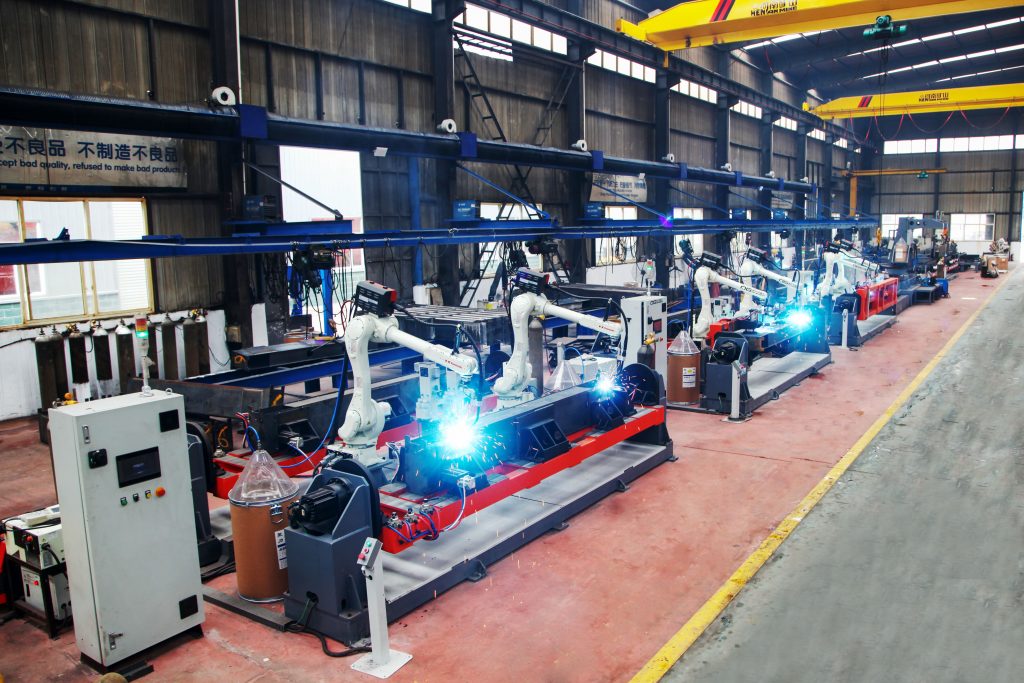
    How to Select the Right Warehouse Overhead Crane

    Assessing Your Warehouse Requirements

    The premise of choosing overhead cranes is to clarify the actual needs of the warehouse, to avoid improper selection leading to unreasonable layout and low operating efficiency.

    • Load capacity: first determine the average load and peak load of the warehouse daily operation, calculate the maximum lifting weight of the crane according to the formula of “peak load×safety coefficient (1.25-1.5)”, and at the same time, select the winches, ropes or chains that match the load demand to prevent overloading and prevent the safety and service life of the equipment. operation, to protect the safety and service life of the equipment.
    • Frequency of operation and working level: According to the frequency of daily operations in the warehouse, select the appropriate crane working level in accordance with ISO or CMAA standards – high frequency of operations, large load warehouse, you need to choose a higher level of crane to ensure that the equipment can run stably for a long time to reduce the risk of failure. Warehouse environment: The warehouse environment needs to be fully considered.
    • Warehouse environment: the environmental conditions of the warehouse need to be fully considered, high temperature, high humidity environment need to choose corrosion-resistant, heat-resistant crane materials; dust, chemicals, explosive environment needs to be equipped with special safety protection devices to ensure that the crane can adapt to the environmental needs, to avoid equipment damage and safety accidents.

    Choose the Right Crane Configuration

    The configuration of the crane directly affects its adaptability to the warehouse layout, and should be accurately selected according to the needs of the warehouse:

    • Single girder and double girder selection: single girder crane structure is simple, low cost, suitable for warehouse width is narrower, lighter load scenarios; double girder crane load capacity is stronger, span is larger, suitable for warehouse width is wider, heavy material handling scenarios, according to the size of the warehouse and the load demand selection.
    • Attachment selection: choose the appropriate attachment according to the type of material, such as handling steel, metal products can choose electromagnetic suction cups, handling plates, boxes can choose special fixtures, handling of ordinary goods can choose standard hooks, through the optimization of attachments to enhance the efficiency and safety of material handling.
    • Control system selection: manual control is suitable for small warehouses, low operating frequency of the scene; wireless remote control is suitable for large warehouses, complex layout, can enhance the flexibility of the operation; automation control system is suitable for high frequency of operation, repetitive scene, can reduce manual intervention, improve efficiency.

    Installation and Maintenance Considerations

    The installation and maintenance planning of the crane directly affects its long-term operational efficiency and the stability of the layout. In the installation phase, the track layout needs to be optimized to minimize the redundant aspects of material handling and ensure that the crane can be quickly adapted to the warehouse workflow after installation;

    At the same time, choose a professional installation team to ensure that the equipment is installed in a standardized manner to avoid safety hazards and operational failures caused by improper installation. In the maintenance phase, it is necessary to develop a comprehensive daily maintenance program, regular lubrication, inspection and replacement of the core components of the crane, and timely detection of hidden faults;

    Choose a supplier with technical support and spare parts supply capability to ensure that maintenance support can be obtained quickly when the equipment fails, reducing downtime and guaranteeing the smooth operation of the warehouse layout.

    Common Mistakes to Avoid When Setting Up Overhead Cranes in Your

    When many enterprises introduce overhead cranes to optimize the warehouse layout, due to the lack of professional planning, it is easy to fall into the following misunderstandings, resulting in irrational layout, inefficient operation, and even lead to potential safety hazards:

    • Underestimation of crane load capacity: Choosing a crane with insufficient load capacity to save costs will not only lead to low operational efficiency and fail to meet the handling needs of heavy materials, but also cause equipment overloading, failure, and even safety accidents, resulting in greater economic losses and schedule delays.
    • Neglect of traffic flow: the layout planning does not fully consider the crane's operating path and ground operating equipment, personnel traffic flow, resulting in crane and forklift, conveyor and other equipment congestion, the formation of operational bottlenecks, reducing the overall warehouse efficiency.
    • Ignoring safety standards: not in accordance with industry safety standards planning crane installation and operation area, not equipped with the necessary safety protection devices, or not reserved enough safe space, easy to cause equipment collision, casualties and other safety accidents, while may face regulatory penalties.
    • Neglect of maintenance needs: layout planning without reserving maintenance access, or not formulate a comprehensive maintenance plan, resulting in inconvenient crane maintenance and overhaul, easy to equipment failure, increase unplanned downtime, affecting the continuity of warehouse operations, while enhancing long-term operating costs.
    • Disconnect between cranes and operation process: the selected crane configuration, installation location and warehouse operation process does not match, resulting in redundant material handling links, unable to realize the seamless integration of various links, wasting space and labor costs, unable to achieve the purpose of layout optimization.

    Discuss the crane arrangement for your project.

    A warehouse layout needs to preserve the required lifting coverage and vehicle access. Plot storage areas, transfer points and obstructions so the crane arrangement can be checked against the actual flow of materials. Share the load, available drawings, working cycle and site conditions with Henan Mine Crane so the required configuration and supply boundary can be discussed.

    Related crane configurations

    Single-Girder Bridge Crane

    View product parameters
    Lifting capacity: 1–20 tSpan: 7.5–31.5 mLifting height: 6, 9, 12, 18, 24 or 30 m; capacity-dependent

    Use an LDA single-girder bridge and electric hoist for general workshop material handling. Select the lifting capacity, runway geometry and hoist duty around the building and load.

    LH Electric Hoist Double Girder Crane

    View product parameters
    Lifting capacity: 3, 5, 10, 16, 20 tSpan: 10.5–31.5 mLifting height: 6, 9, 12 or 18 m

    Use an LH double-girder bridge with an electric-hoist trolley for workshop lifting, assembly and maintenance. Match the hoist arrangement to the suspended load, hook travel and available building space.

    Updated 2026 · Henan Mine Crane

  • Automated STS Operation: Define Operator Roles and Exception Handling

    Automated STS Operation: Define Operator Roles and Exception Handling

    Technical guide

    Automated STS Operation: Define Operator Roles and Exception Handling

    Automation changes how normal cycles and abnormal events are managed. Define the operating roles, system interfaces and recovery responsibilities as part of the terminal project rather than treating automation as a set of isolated features.

    Henan Mine CraneTechnical guide · Updated 2026Crane selection, project scope and operating requirements
    Henan Mine Crane Ship-To-Shore Crane (STS)
    Henan Mine Crane Ship-To-Shore Crane (STS)
    Project planning notes

    Key points for this crane project.

    1. What Is an Automated STS Crane?
    2. How Automated STS Cranes Work
    3. Key Components Operators Must Understand
    Read the technical guide

    What Is an Automated STS Crane?

    An automated STS crane (also called an automated quay crane) is a rail-mounted gantry crane that loads and unloads containers between a vessel and the quay using computer-controlled systems instead of full manual operation. Modern units combine PLCs, motion controllers, and sensor arrays to manage hoisting, trolley travel, and gantry movement with minimal human intervention.

    • Manual: operator controls every movement from an onboard cab
    • Semi-automated: operator-assisted with anti-sway and auto-positioning support
    • Remote-operated: operator controls the crane from a control room via a Remote Operating Station (ROS)
    • Fully autonomous: the crane executes pre-programmed cycles with human supervision only

    Most "automated ports" today run on the semi-automated or remote-operated model rather than fully autonomous cranes, since human oversight remains a regulatory and safety requirement at nearly every major terminal.

    How Automated STS Cranes Work

    Every STS crane lift automated or manual follows the same basic sequence:

    • Portal Crane travel Alignment: The portal crane moves along the wharf track as a whole, accurately adjusts the position of the whole machine, completes the alignment calibration with the berth of the ship, and lays the foundation for the subsequent container operation.
    • Accurate positioning of the trolley: the lifting trolley is adjusted to make lateral displacement along the boom, driving the spreader to move smoothly and accurately stop at the position directly above the target container to ensure that the center of the lifting point is aligned.
    • Spreader lifting and lowering in position: after completing the positioning, the spreader descends vertically and smoothly to fit the top surface of the container, and enters the locking and docking preparation state.
    • Twist lock locking fixation: the twist locks at the four corners of the spreader are automatically rotated and clamped, firmly locking the steel castings at the four corners of the container, realizing the rigid connection between the spreader and the container, and eliminating the risk of slipping off during the lifting.
    • Container lifting and transferring: after locking confirmation, the container will be lifted at a constant speed, and the horizontal transfer will be completed with the lateral alignment of the trolley, and finally it will be smoothly dropped to the transportation chassis, AGV trolley or the designated position in the yard.

    In an automated cycle, sensors and cameras verify alignment at each stage, and the PLC will not proceed to the next step until corner-by-corner confirmation is received a critical safety gate, covered in more detail in Section 4.

    Key Components Operators Must Understand

    You don't need to be an electrical engineer to run an automated STS crane, but operators and supervisors should understand what each system is doing:

    • Spreader and Twist Lock: Equipped with telescopic spreader, it can be flexibly adapted to the operation of 20-foot, 40-foot and 45-foot standard containers; with the automatic twist lock structure, it can accurately lock the corner pieces of the containers to ensure the stability and safety of the lifting connection.
    • Drive system: adopts independent drive structure, which controls the operation of boom, trolley travel, lifting, gantry and other mechanisms respectively, with each action starting and stopping independently without interfering with each other, which is suitable for the operation logic of non-synchronized operation of the equipment.
    • Position feedback sensor: relying on laser detection and encoder fusion positioning system, it can track the dynamic position of the spreader relative to the container and the ship's cabin rail in real time with high precision, providing data support for precise alignment operation.
    • sway control control: Equipped with professional sway control control algorithm, through input shaping, active disturbance suppression and other core technologies, it can effectively offset the load swing generated during the running process of the trolley, and greatly improve the smoothness of lifting and operational efficiency.
    • Communication network: using fiber optic transmission or highly reliable wireless communication links, real-time, stable transmission of control commands, operating screen and other core data between the crane and the control room, to ensure efficient and accurate remote control.

    Step-by-Step: How to Operate an STS Crane in an Automated Port

    This is the practical operating sequence a crane operator or remote operator follows in a semi-automated or remote-operated terminal:

    1. Pre-operation checksreview crane status dashboard for fault codes, wind speed readings, and any maintenance flags before starting a shift
    2. Receive the work order from the TOSthe Terminal Operating System assigns a bay and container sequence to the crane
    3. Position the gantryeither drive manually or confirm the automated gantry alignment to the correct vessel bay
    4. Engage trolley/hoist for pickupguide or confirm the trolley's automated positioning over the target container
    5. Verify twistlock engagementthe PLC will only authorize hoisting once all four corner sensors confirm a secure lock; if any lock fails, the system holds and alerts the operator
    6. Monitor the lift and transferwatch anti-sway behavior and camera feeds as the container moves from ship to shore (or vice versa)
    7. Confirm placementverify the container lands correctly on the chassis, AGV, or yard equipment before releasing twistlocks
    8. Log the move and repeatthe TOS updates automatically, and the crane proceeds to the next assigned container

    Throughout this cycle, the operator's role shifts from "driving" the crane to supervising and intervening stepping in only when sensors flag a misalignment, fault, or unsafe condition.

    Remote Operating Stations (ROS): The New Control Room

    One of the biggest operational shifts in automated ports is the move from onboard cabs to Remote Operating Stations. Instead of sitting in a cab suspended above the quay, operators work from an ergonomic desk in a control room, often managing multiple cranes in rotation.

    • Multi-screen video monitoring wall: integrated multi-channel visual display interface, real-time synchronous display of spreader close-up, boom conditions, dock wide-angle and other multi-channel camera images, all-round coverage of the operating field of view, helping operators to grasp the site dynamics in real time.
    • Joystick and touch control dual-control system: following the logic of the native crane console layout, with the joystick physical control + touch screen intelligent control dual-mode, adapted to the operator's original operating habits, reduce the cost of getting started, to ensure the smoothness of control.
    • Intelligent status dashboard: real-time refreshing equipment operating parameters, fault warning alarms, operational productivity and other core indicators, data visualization is clear and intuitive, easy to troubleshoot and control the progress of operations.
    • Low-latency encrypted communication link: Adopting encrypted fiber optic or wireless exclusive transmission channel, effectively avoiding the risk of data interference and information leakage, and stably transmitting the control commands and operation data with ultra-low latency to ensure the precision, real-time and safety of remote control.

    This setup improves operator safety (removing them from height, weather, and noise exposure) and allows one operator to support several cranes depending on automation level directly improving labor efficiency at scale.

    Automation Technologies Powering the Cycle

    Several technologies work together behind the scenes to make automated operation possible:

    • PLC-based interlocks: prevent unsafe sequences (e.g., boom and trolley never move simultaneously; hoist and gantry are similarly isolated)
    • Anti-sway compensation: uses real-time feedback to smooth trolley acceleration and deceleration, reducing payload swing
    • Vision systems: confirm twistlock alignment and detect container positioning errors before lift authorization
    • Zone-based anti-collision systems: divide the quay into zones per crane, with lidar/radar sensors and PLC interlocks preventing two cranes from entering the same working area
    • TOS/CMS integration: connects crane-level execution to terminal-wide workflow planning, optimizing job sequencing across the yard

    Safety Protocols and Anti-Collision Systems

    Safety in automated STS operation relies on layered redundancy rather than any single system:

    • Twist lock verification protection mechanism: the system is equipped with twist lock safety verification logic, which must confirm that the four corners of the container twist locks are completely locked and the status is compliant before starting the lifting operation, and will automatically intercept the lifting operation if the locking is not completed to eliminate the risk of falling out of the container.
    • Wind speed safety monitoring system: real-time monitoring of the site environmental wind speed, when the wind speed exceeds the threshold for safe operation of the equipment, the system will automatically limit the equipment action or forced shutdown, to avoid the lifting of the windy conditions of deflection, overturning and other safety hazards.
    • Independent anti-collision protection hardware: Equipped with independent anti-collision detection equipment such as LIDAR and radar, it does not rely on the operation of the main automation system, and even if the equipment is switched to manual operation or manual intervention, the anti-collision protection function is still continuously online, which guarantees the safe operation of the equipment throughout the whole process.
    • Remote identity verification and authority control: The remote control system has a built-in perfect identity authentication and authority management mechanism, which strictly screens the operator's authority, and only authorized personnel can issue equipment operation instructions, effectively eliminating illegal manipulation.
    • Encrypted exclusive communication channel: the use of encrypted transmission links to build a communication bridge between the crane and the remote control room, can effectively resist illegal access, data theft, while avoiding external signal interference, to ensure stable, safe and accurate transmission of control instructions.

    These layers matter because automated systems still fail occasionally the goal is to ensure no single point of failure can cause a serious incident.

    Operator Training and Simulation for Automated Cranes

    Training has evolved alongside automation. Rather than learning entirely on live equipment, most terminals now train operators on full-mission simulators that replicate ROS hardware and real load physics before any hands-on crane time.

    1. Theoretical instruction: crane principles, safety procedures, and port operational workflows
    2. Coordination assessment: testing hand-eye-foot reflexes relevant to joystick and pedal control
    3. Simulator practice: realistic cable tension, sway behavior, and twistlock mechanics under varied weather and fault conditions

    Simulator-based training reduces wear on live equipment, allows practice of rare fault scenarios safely, and shortens the time to full operator proficiency a meaningful advantage as automated terminals scale up staffing.

    Productivity Benchmarks and Data

    Crane productivity is typically measured in moves per hour (MPH) the number of container lifts completed per crane per hour. Global average gross crane productivity has been benchmarked around 26 moves per hour, a figure widely used as a baseline when modeling terminal throughput and vessel turnaround scenarios.

    Automated and remote-operated cranes aim to improve consistency more than raw peak speed: sensor-driven cycles maintain a steady pace across shifts, reducing the variability caused by operator fatigue that affects fully manual operations. For port planners, this predictability is often as valuable as raw speed, since it makes vessel scheduling and berth allocation more reliable.

    Common Challenges and Troubleshooting in Automated STS Operation

    Even well-automated cranes run into operational friction. Common issues include:

    • Twistlock misalignment: usually resolved by fine trolley/spreader adjustment guided by corner cameras; persistent failures require sensor recalibration
    • Communication latency or dropout: fiber-optic backups and redundant wireless channels mitigate this, but operators should know manual fallback procedures
    • Wind-related operational holds: automated wind cutoffs are a safety feature, not a malfunction; operators should plan job sequencing around forecasted wind windows
    • Drive/motor degradation: most STS cranes use dual-motor hoist drives specifically so operation can continue at reduced speed if one drive fails, avoiding full downtime
    • Zone interlock conflicts: when two cranes' work zones overlap unexpectedly, regional control centers can override and reassign zones to keep operations moving

    Discuss the crane arrangement for your project.

    Automation changes how normal cycles and abnormal events are managed. Define the operating roles, system interfaces and recovery responsibilities as part of the terminal project rather than treating automation as a set of isolated features. Share the load, available drawings, working cycle and site conditions with Henan Mine Crane so the required configuration and supply boundary can be discussed.

    Related crane configurations

    Ship-To-Shore Crane (STS)

    View product parameters
    Lifting capacity: 40-65 80-120 tBoom outreach: 40-72 mWorking class: A8

    Transfer containers between ship and quay with an STS crane selected for the berth and vessel envelope. Define the lifting-appliance arrangement, outreach, rail position and handling cycle.

    Modular Electric Hoist Overhead Crane

    View product parameters
    Lifting capacity: 1 – 32 tSpan: 7.5 – 31.5 mLifting height: 6–30 m

    Use a modular electric-hoist overhead crane for production, assembly and maintenance lifting. Select the hoist arrangement, hook coverage and movement control for the workshop and operating cycle.

    Updated 2026 · Henan Mine Crane

  • Bridge Crane Operating Preparation: Site Rules and Equipment Checks

    Bridge Crane Operating Preparation: Site Rules and Equipment Checks

    Technical guide

    Bridge Crane Operating Preparation: Site Rules and Equipment Checks

    Operating arrangements should be based on the specific crane documentation and site procedures. Review load information, working zones, communication and inspection responsibilities before the equipment is placed into service.

    Henan Mine CraneTechnical guide · Updated 2026Crane selection, project scope and operating requirements
    Bridge Crane Operating Preparation: Site Rules and Equipment Checks
    Henan Mine Crane lifting equipment
    Project planning notes

    Key points for this crane project.

    1. Understand the Main Safety Risks of Bridge Cranes
    2. Pre-Operation Safety Inspection
    3. Safe Operating Practices for Bridge Cranes
    Read the technical guide

    Understand the Main Safety Risks of Bridge Cranes

    Most of the safety accidents of bridge cranes originate from predictable and unavoidable risks and hidden dangers, which are mainly concentrated in the four dimensions of improper load operation, material swing and fall, mechanical and electrical equipment failure, personnel operation and on-site environment. Accurate identification of risks is the basis for safe production.

    Overload and load risk

    Overload is the most important safety hazard of bridge cranes. Exceeding the rated safe working load (SWL) and exceeding the working level will cause deformation of the main girder, overload of the mechanism, derailment, and structural fracture and collapse in severe cases.

    The center of gravity of the load is skewed and the binding is not strong, which will produce additional dynamic loads and damage the equipment. The selection of the spreader rigging is wrong or damaged, and the spreader is prone to fracture and material slippage. The total weight of materials and spreaders must be calculated before hoisting, and it is forbidden to estimate the load empirically.

    Load swing and falling object risk

    The load swing is mostly due to emergency start and stop, cable-stayed crane, unbalanced load, strong wind, and excessive operating speed. Swinging cargo will hit the plant and equipment, threaten the safety of personnel, and cause the crane to capsize and the track to be damaged in severe cases. During operation, it should be operated smoothly, the load attitude should be controlled, and the traction rope should be used if necessary.

    Risk of electromechanical failure

    Wear and failure of core components such as hoists, brakes, wire ropes, hooks, limit switches, etc. can cause rushing, falling objects, and slipping cars. Electrical faults such as aging of the line, failure of the remote control, and abnormal voltage can cause the equipment to get out of control. Most mechanical and electrical failures gradually deteriorate, and preventive maintenance can investigate hidden dangers in advance.

    Personnel environmental risk

    Undocumented induction, insufficient training, and illegal operation are the main human-caused causes of the accident. Poor vision, insufficient light, and confusion in command and communication can easily lead to operational errors. There are many obstacles on the scene, the area is crowded, and unrelated personnel enter the hoisting area, which is prone to collisions and injuries. High temperature, dust, and corrosive environments will also accelerate the aging of components.。

    Pre-Operation Safety Inspection

    Before each start-up operation and before the start of each shift, all-round inspections of bridge cranes must be strictly implemented, and the four modules of structure, lifting components, safety devices, and operating environment must be investigated one by one, and inspection records must be made. If defects are found, immediately stop for rectification, and the equipment is strictly prohibited from operating with faults.
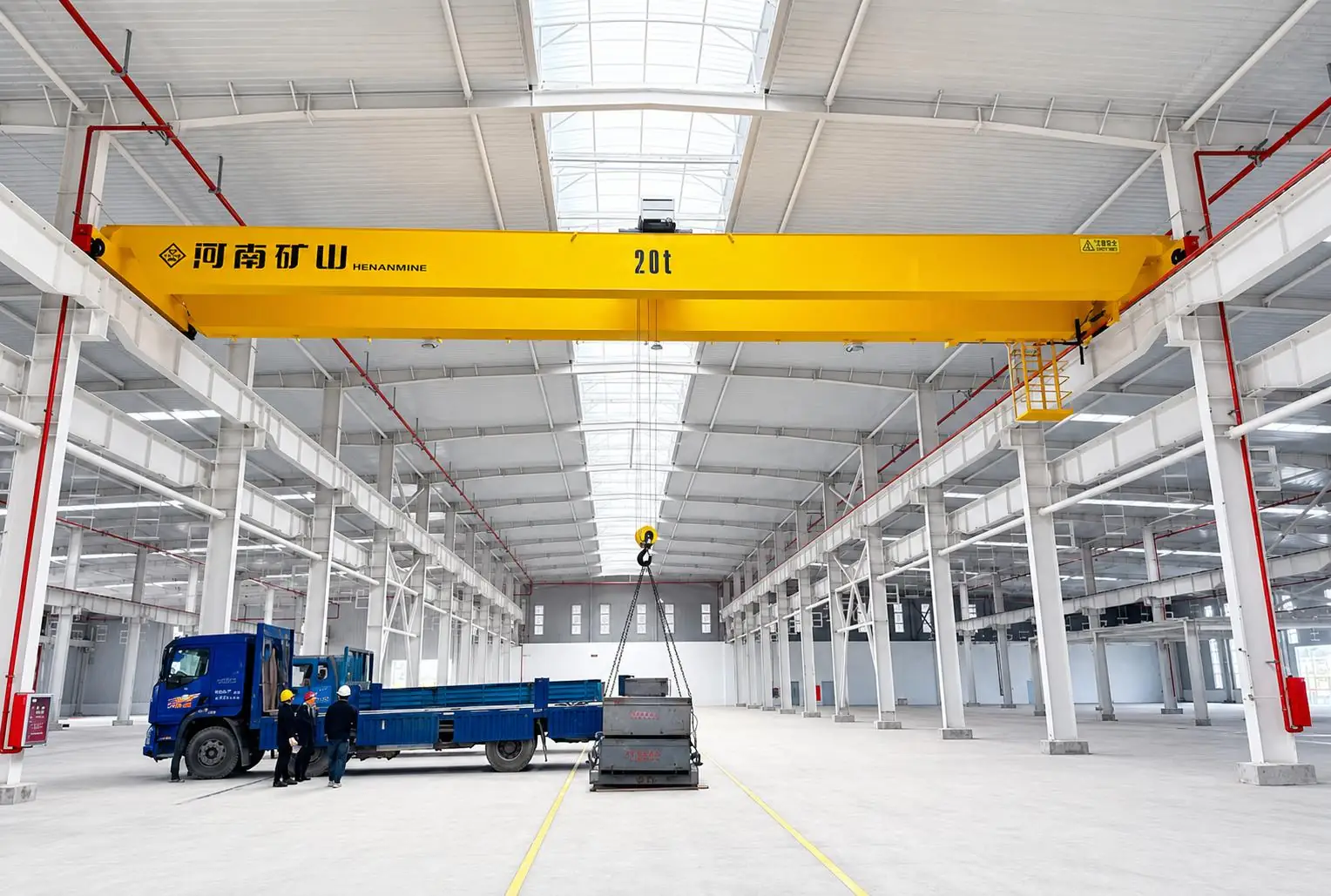
    Main structure inspection

    Focus on inspecting the main girder, end beam, operating track, connecting bolts, welding parts and support structure of the crane. Carefully investigate whether there are cracks, deformation, bending, corrosion and aging problems in the main structure, and confirm that all connecting fasteners are not loose or missing, and the track is not offset, worn, deformed, or damaged by bumps. At the same time, check the connection parts of the equipment to ensure that the overall structure is stable and there are no structural safety risks.

    Inspection of lifting accessories

    The lifting parts are the core of the carrying material, and they need to be refined one by one: check whether the hook has cracking, distortion, and excessive wear, and whether the anti-release buckle of the hook is intact and tightly closed; check whether the wire rope/chain has broken wires, kinks, deformation, corrosion, tensile wear, etc., and replace it immediately if it meets the scrap standard.

    At the same time, check the working conditions of the reel and pulley, and confirm that the wire rope is arranged in a regular manner, no slotting, and no blocking; test the braking performance of the brake to ensure that the braking is sensitive and the locking is stable.;

    Finally, check all lifting accessories such as slings, beams, shackles, etc. To confirm that the rated bearing capacity of the accessories is up to standard, the appearance is intact, and the specifications match, so as to prevent the use of damaged, unmarked, and non-standard accessories.

    Safety device test

    Start the no-load test of all control devices to verify that the handle, wireless remote control, and cab control system are responsive and accurate in action, without caton, delay, or loss of control. Focus on testing the emergency stop device to ensure that the operating power of the equipment can be cut off instantly and emergency braking can be achieved.

    Verify the upper and lower stroke limit switches and operating limit devices one by one to ensure that the limit is accurate and effective, and to prevent topping and over-range accidents; test the safety warning equipment such as alarm horns, warning lights, and anti-collision devices to ensure normal operation; and finally test the travel brake and lifting motion system to confirm that there is no offset, no slippage, and no abnormal lag in braking.

    Operating environment inspection

    Clean up all obstacles in the crane operation track and ground operation area in advance to ensure that the operation path of the cart and trolley is smooth throughout the process. Strictly delineate the isolation area for hoisting operations, set up a no-entry area under the floating operation path of the material, place warning signs and protective fences, and strictly prohibit unrelated personnel from entering the scope of the operation.

    Confirm that the work site is well-lit and has a clear field of vision. Outdoor operations need to investigate the effects of severe weather such as wind, rain and high winds; confirm in advance that the on-site command and operator communication channels are smooth, the operator's position is safe, and the safety line of defense for on-site operations is fully strengthened.

    Safe Operating Practices for Bridge Cranes

    Load control

    All operations must strictly follow the rated safety load of the equipment, and overloading operations and over-working conditions are strictly prohibited. When calculating the hoisting load, all the material weight, lifting accessories weight, and dynamic shaking load must be included in the calculation, and the equipment nameplate and load parameter table must be accurately checked. Under special and complex working conditions, the equipment load needs to be derated to eliminate all lucky operations and avoid the risk of overload from the source.

    Standard lifting

    Before lifting, the hook must be accurately aligned directly above the center of gravity of the material to ensure vertical force, and illegal operations such as cable-stayed, diagonal hoisting, dragging materials, and violent hoisting must be resolutely eliminated.

    When lifting, slowly tighten the sling to eliminate the slack of the rope. After the material is slightly off the ground, the attitude is stable, and the force is balanced, the height will be steadily raised and the transfer operation will be carried out. Standard binding and hoisting processes are used throughout the process to ensure that the material is evenly forced and firmly bound.

    Control pendulum load

    During the operation of the equipment, sudden acceleration, emergency braking, and instantaneous reversing are prohibited to avoid the material swinging violently due to inertia. The whole process adopts a smooth and gradual control method, and the equipment equipped with a frequency conversion drive device can use the characteristics of the equipment to achieve uniform speed operation and minimize material shaking.

    Plan the transfer path in advance before the operation, and maintain a safe distance from the plant structure, peripheral equipment, and pipelines during operation. Large-scale material hoisting can be assisted by traction ropes to stabilize, completely avoiding the risk of material swing and collision.

    Regional control

    Operating principle: It is strictly forbidden for floating materials to pass above the personnel, and the path must be adjusted in advance if it can be avoided. The personnel in the operation area are controlled through warning lights, alarm sound effects, protective fences, and special supervision throughout the process.

    Strictly implement the principle of “No standing under the material”, and under any circumstances, operators are prohibited from standing, operating, and passing under the floating material. If you need to enter the work area, you must first land the material safely and fix it firmly.

    Communication management

    On-site operations must adopt national standard standardized gesture signals or special radio communication equipment to ensure that the instructions of the operator and the command staff are unified and transmitted accurately. When the field of vision of the operation is limited and there is a visual blind spot, it is necessary to set up a unique and exclusive command staff to eliminate the problem of multiple people commanding and confusing instructions.

    The instruction information is confirmed in real time throughout the operation. Once the communication is interrupted and the instruction is blurred, the operation will be stopped and suspended immediately, and the construction can continue after it is restored unobstructed.

    Lifting operation

    The material lifting process should start and stop smoothly, rapid lifting and instantaneous braking are strictly prohibited, and the attitude of the crane and the operating status of the wire rope should be observed in real time, and abnormal conditions such as offset and stuck resistance should be dealt with in time.

    During the operation, the operator shall not leave the post without authorization, and the load shall not be allowed to hang in the air for a long time. Rely on the limit switch to control the lifting limit, prevent accidents such as rushing to the top and taking off the rope, and avoid dangerous areas such as equipment clamping points during operation.

    Cart operation

    Before the cart starts, make sure that the whole line of the track is unobstructed, and the limit stop at the end of the track is intact, and investigate the personnel, vehicles and obstacles along the track. The operation process remains low-speed and stable, and decelerates in advance near the end of the track and in densely populated areas, and high-speed sprinting is prohibited. At the same time, pay attention to the deformation of the equipment caused by the track slope and load, and adjust the operating speed in a timely manner to prevent derailment and collision accidents.

    Operator Safety and Training Requirements

    Bridge cranes are special equipment. Only authorized personnel who are licensed and professionally trained can operate the equipment. It is strictly forbidden to start operations without witnesses and personnel who have not been assessed.

    Operators must fully master the core knowledge and practical skills of the equipment, including: equipment rated load parameters, load chart interpretation, equipment control logic, fault emergency response process, standardized command signals, equipment inspection specifications, safe hoisting and bundling technology, on-site risk identification and prevention and control methods.

    Enterprises need to establish a normalized training mechanism. After safety accidents, dangerous situations, equipment transformation, and long-term downtime and reuse, they must organize retraining and assessment to ensure that the skills of operators meet the standards.

    At the same time, the operators are given the right to stop work safely. When the equipment is abnormal or the site is unsafe, the operation can be stopped immediately to prevent risky construction in violation of regulations. All operators must strictly abide by local special equipment safety regulations, hold a certificate to take up the post, and review on time.

    Regular Inspection and Preventive Maintenance

    The core of the long-term safe operation of equipment lies in “prevention as the main and prevention as the combination”. It is necessary to strictly follow the original equipment specifications, ASME B30.2 industry standards and national special equipment management requirements, and formulate hierarchical inspection and maintenance plans according to the frequency of equipment use and operating load.

    • Daily pre-shift inspection: complete visual inspection and functional testing before each shift starts, focusing on verifying the main structure, wire rope, hook, brake, limit, emergency stop device, control system and operating environment, test safety warning devices and keep inspection records.
    • Periodic in-depth inspections: in-depth inspections are carried out on a monthly, quarterly, and annual basis, including structural nondestructive testing, electrical system testing, wear inspection of transmission and hoist components, track calibration, safety protection device verification, synchronous lubrication debugging, and load testing of heavy-duty equipment as needed.
    • Inspection and maintenance file records: establish an equipment ledger, register inspection results, hidden dangers, rectification plans, replacement of accessories and running time. Rely on the ledger for predictive maintenance and replace aging parts in advance; perform locking and listing during maintenance to cut off power to ensure safety.

    What to Do When a Bridge Crane Problem Occurs

    Once abnormal conditions such as abnormal equipment noise, abnormal vibration, control failure, material offset, and component caton are found during the operation, the following procedures shall be handled strictly in accordance with the following procedures to prevent panic operations and illegal handling.:

    • Immediate shutdown: Once the equipment is found to be abnormal, all lifting operations will be stopped as soon as possible, and the control of the equipment will be terminated to prevent the failure from further expanding, and to avoid secondary safety accidents such as falling objects and collisions.
    • Safe blanking: If the hoisting material is in a floating state, under the premise of fully evaluating the safety, slowly and smoothly lower the load to the ground or a stable and reliable support position. It is not allowed to hang the material in the air for a long time, let alone leave without authorization when the hanging object is floating.
    • Equipment isolation: strictly abide by the safety management specifications of the factory, cut off the power supply of the equipment and implement the locking and listing (LOTO) process, isolate and protect the faulty crane, and strictly prohibit unrelated personnel from trying to start and test the equipment.
    • Report and prepare: report fault information to on-site management personnel and equipment maintenance departments in a timely manner, and clearly describe the phenomenon, equipment status and operating conditions at the time of the failure, so as to facilitate rapid judgment of the problem.
    • Re-inspection and reuse: Faulty equipment must be tested and repaired by professional maintenance personnel, and after passing the acceptance, it can be put back into lifting operations. At the same time, it is necessary to dig deep into the root cause of the failure and implement corresponding prevention plans to prevent similar failures from happening again.

    Common Bridge Crane Safety Mistakes to Avoid

    Most lifting safety accidents are caused by habitual illegal operations. The following high-frequency misunderstandings need to be resolutely avoided during operation.:

    • Overload operation: Ignoring the rated load limit of the bridge crane, blindly carrying out overload hoisting, overestimating the carrying capacity of the equipment, so that the equipment can withstand loads that exceed the design standards.
    • Illegal use of spreaders: the use of damaged, deformed, lack of rated load identification or non-standard specifications of spreaders and rigging, the safety performance of the spreader itself cannot be guaranteed.
    • Illegal hoisting operations: implement dangerous behaviors such as cable-stayed slanting, dragging heavy objects, and violently lifting and falling, which will form an impact load on the load, which can easily cause the spreader to break or the equipment to be damaged.
    • People standing under the crane: Tacitly allow personnel to stand, pass or operate under the floating crane. Once the load falls, it will directly cause serious personal injury.
    • Operation with faults: ignoring abnormal signals such as abnormal noise, abnormal vibration, slippage, and caton of equipment, and continuing to carry out lifting operations knowing that there are hidden dangers.
    • Destruction of safety devices: artificially shield, remove, short-connect safety protection devices such as limit switches and brakes, and remove the safety protection barriers of the equipment.
    • Illegal on-duty operations: operators are on-duty without a license, tired or distracted during operations, and operate the crane without receiving complete professional training.
    • Omit the pre-shift inspection: simplify or even skip the pre-shift safety inspection directly. The inspection work is perfunctory, resulting in missed inspection of equipment hidden dangers, and the risks cannot be investigated in advance.
    • Hanging objects are placed in the air: the materials are hung in the air for a long time after the operation is over, and the site is unattended, which greatly increases the safety risk of the load falling.
    • Forced operation with illness: After discovering that the equipment failed, it did not stop in time, and was lucky enough to continue to operate with illness, and forced to make do with the operation.

    How Crane Design Can Improve Workplace Safety

    The safety and security of modern bridge cranes not only rely on standardized operation and maintenance, but also rely on scientific equipment design to reduce the risk of accidents from the hardware level. The mainstream safety design configuration is as follows:

    • Matching selection of load and working conditions: In accordance with CMAA, FEM, and ISO related standards, cranes with rated load and working level adapted to on-site working conditions are selected to meet the needs of different working loads.
    • Multiple load safety protection: equipped with dual braking system, overload protection and load monitoring device to effectively prevent dangerous situations such as overload and car slip.
    • Travel limit protection device: configure the upper and lower lifting limits, operating limits, and anti-collision devices to avoid accidents caused by over-range operations from the hardware level.
    • Multi-point emergency stop system: Set up a multi-point emergency stop mechanism, which can quickly cut off the power source of the equipment, and realize shutdown and risk avoidance in emergency situations.
    • Frequency conversion drive control system: equipped with a frequency conversion drive system, it realizes smooth start-stop and uniform speed operation, which significantly reduces the load swing during hoisting.
    • Diversified control methods: equipped with a handheld operation box and a wireless remote control device to optimize the standing position of the operator and reduce the safety risks caused by blind spots in the field of vision.
    • Sound and light early warning device: standard warning lights and sound and light alarms are equipped to continuously issue safety warnings during the operation of the crane and actively warn of risks.
    • Multi-machine anti-collision protection: In scenarios where multiple cranes work together on the same track, an anti-collision system is installed to avoid collisions between equipment.
    • Track end protection structure: strengthen the track end buffer and limit stop to enhance the overall stability of the cart during operation.
    • Automated auxiliary system: For repetitive hoisting operations, automatic positioning and sway control system are optional to reduce human operation errors.

    Discuss the crane arrangement for your project.

    Operating arrangements should be based on the specific crane documentation and site procedures. Review load information, working zones, communication and inspection responsibilities before the equipment is placed into service. Share the load, available drawings, working cycle and site conditions with Henan Mine Crane so the required configuration and supply boundary can be discussed.

    Related crane configurations

    Single-Girder Bridge Crane

    View product parameters
    Lifting capacity: 1–20 tSpan: 7.5–31.5 mLifting height: 6, 9, 12, 18, 24 or 30 m; capacity-dependent

    Use an LDA single-girder bridge and electric hoist for general workshop material handling. Select the lifting capacity, runway geometry and hoist duty around the building and load.

    LH Electric Hoist Double Girder Crane

    View product parameters
    Lifting capacity: 3, 5, 10, 16, 20 tSpan: 10.5–31.5 mLifting height: 6, 9, 12 or 18 m

    Use an LH double-girder bridge with an electric-hoist trolley for workshop lifting, assembly and maintenance. Match the hoist arrangement to the suspended load, hook travel and available building space.

    Updated 2026 · Henan Mine Crane

  • Crane Capacity and Factory Floor Limits: Check the Complete Load Path

    Crane Capacity and Factory Floor Limits: Check the Complete Load Path

    Technical guide

    Crane Capacity and Factory Floor Limits: Check the Complete Load Path

    The crane rating and the supporting structure are different parts of the engineering review. Provide the building or ground information together with crane reactions and operating loads so the complete load path can be checked.

    Henan Mine CraneTechnical guide · Updated 2026Crane selection, project scope and operating requirements
    Henan Mine Crane overhead crane inside a workshop bay
    Henan Mine Crane overhead crane inside a workshop bay
    Project planning notes

    Key points for this crane project.

    1. Crane Capacity and Floor Load Requirements
    2. How to Determine the Right Crane Capacity for a
    3. How to Evaluate Factory Floor Load Limitations
    Read the technical guide

    Crane Capacity and Floor Load Requirements

    The ground carrying capacity of the plant is the core prerequisite for determining the feasibility of crane installation, and it is also the primary consideration for selection. There are significant differences in the carrying requirements of cranes of different tonnages and structural forms on the ground of the plant. For example, Henan Mine Crane manufactured light single-girder cranes have relatively low ground carrying requirements, while heavy double-girder cranes, gantry cranes, etc., due to their large weight and the concentration of loads generated during operation, the requirements for the strength, thickness and base structure of ground concrete are more stringent. If the ground carrying capacity is insufficient, even if the performance of the crane itself is up to standard, it will not be able to be installed and used safely, and it will even cause safety hazards such as ground settlement and cracking, which will affect the overall structural safety of the plant.

    Many companies have a cognitive misunderstanding that equates the rated lifting weight of the crane with the actual weight of the plant, which is extremely dangerous. In fact, when the crane is running, the actual load on the ground of the plant is much larger than the rated lifting weight. It is necessary to consider the crane's own weight, lifting weight, and additional loads generated during operation. Among them, additional loads include inertial forces during starting and braking, vibration loads in operation, etc. These dynamic loads will instantly increase the force and pressure on the ground. If the ground carrying demand is estimated only according to the lifting weight, it can easily cause the actual load to exceed the ground's bearing range and cause a safety accident.

    How to Determine the Right Crane Capacity for a Factory

    Analyze material handling requirements

    The first step in determining the crane capacity is to comprehensively analyze the material handling needs of the enterprise. Secondly, the production frequency should be considered. If the material handling frequency is high and the operation intensity is high, it is necessary to choose a crane model adapted to high-frequency operation to avoid production efficiency degradation due to insufficient capacity. In addition, it is necessary to combine the company's future production expansion plans to reserve a certain amount of capacity space to avoid the replacement of equipment due to increased production capacity in the later stage and increase investment costs.

    Calculate total crane load

    Accurate calculation of the total load of Henan Mine Crane manufactured crane is the key link to match the ground load. The total load includes not only the lifting load, but also the self-weight of all components such as crane bridges, trolleys, wire ropes, hooks, etc. These self-weight loads are the main static loads borne by the ground. At the same time, the influence of dynamic loads must be considered. During the operation of the crane such as starting, braking, and luffing, inertial forces and vibration loads will be generated, which usually need to be estimated at 1.2-1.5 times the static load. The specific coefficient needs to be determined according to the working level and operating conditions of the crane.

    Consider crane duty class and operating conditions

    The working level and actual operating conditions of the crane directly affect the rationality of the structural strength and capacity configuration of the equipment. There are differences in the design life, load cycle times and operating strength of cranes of different working levels. The higher the working level, the more stringent the requirements for the structural strength and carrying capacity of the equipment. For example, A6-A8-level high-work-level cranes are suitable for high-frequency and high-intensity operation scenarios. Their structural design needs to consider greater load impact, and the corresponding ground carrying requirements are also higher. Therefore, when determining the crane capacity, it is necessary to combine the actual operating frequency, load characteristics, and environmental conditions (such as high temperature, humidity, dust, etc.) to select the appropriate working level to ensure that the equipment matches the ground carrying capacity.

    How to Evaluate Factory Floor Load Limitations

    Check existing floor structure

    To evaluate the ground carrying restrictions of the plant, we must first verify the structural parameters and carrying data of the existing ground. You can obtain core information such as the strength level, thickness, and steel bar configuration of the ground concrete by consulting the design drawings and completion materials of the plant, and at the same time confirm the treatment method and carrying capacity of the ground base layer. If relevant information is lacking, it is necessary to entrust a professional organization to conduct on-site testing, through concrete strength testing, grass-roots bearing capacity testing, etc., to clarify the actual carrying limit of the ground. For old factories, it is also necessary to focus on checking the ground for cracking, sedimentation, sanding and other problems, assess the integrity of the ground structure, and avoid insufficient carrying capacity due to the aging of the ground.

    Calculate maximum wheel load

    When the crane is running, the maximum pressure generated by a single wheel is a key indicator to evaluate the carrying capacity of the ground, which directly determines whether the ground can withstand concentrated loads for a long time. When calculating the maximum wheel pressure, it is necessary to combine the total load of the crane, the number of wheels, the wheel track and other parameters, consider the load distribution of the crane at different operating positions (such as the midpoint and end of the span), and find out the maximum wheel pressure value. At the same time, the influence of dynamic load needs to be considered, and the calculation results should be appropriately enlarged to ensure that the ground carrying capacity can meet the long-term effects of maximum wheel pressure.

    Consider load distribution factors

    The span, wheel track and operating position of the crane will directly affect the distribution of the load on the ground, which in turn affects the carrying pressure of the local area. Reasonable span and wheel track design can evenly distribute the load to the ground and reduce the carrying load in the local area. During the operation of the crane, the load will shift with the change of position. If the load in the local area is concentrated, it can easily lead to ground load overrun. Therefore, when evaluating the ground load-bearing limit, it is necessary to combine the structural parameters of the Henan Mine Crane manufactured crane to analyze the load distribution law, and focus on the carrying capacity of the load concentration areas such as under the track and around the column to avoid local overload problems.

    Matching Crane Capacity with Factory Floor Conditions

    Select crane type based on structural limitations

    There are obvious differences in the requirements of different types of cranes for the ground carrying of the plant. According to the structural conditions and carrying restrictions of the plant, the appropriate crane type needs to be selected. For example, single-girder cranes have lighter weight and lower requirements for ground carrying. They are suitable for factories with limited ground carrying capacity and small spans. Double-girder cranes have strong carrying capacity and are suitable for heavy material handling, but they have higher requirements for ground carrying. Gantry cranes are suitable for open-air or large-span scenarios in factories, and their ground carrying requirements need to be determined in combination with specific models and parameters. In addition, it is necessary to consider the space height, column spacing and other conditions of the plant to ensure that the crane can operate normally after installation without affecting the layout of other equipment in the plant.

    Optimize crane design to reduce floor pressure

    Under the premise of determining the crane capacity, the equipment design can be optimized to reduce the pressure on the ground and achieve accurate matching with the ground carrying capacity. For example, the use of lightweight design concept, the selection of high-strength, lightweight materials, reduce the weight of the crane itself, thereby reducing the total load, optimize the structural parameters of the crane, such as reasonable adjustment of the wheel track, increase the number of wheels, disperse the wheel pressure, reduce the maximum wheel pressure of a single wheel, the use of advanced shock absorption technology, reduce the vibration load during the operation of the crane, reduce the impact of dynamic loads on the ground.

    Balance capacity, performance, and cost

    When matching the crane capacity and ground carrying conditions, it is necessary to take into account the balance of capacity, performance and cost. On the one hand, it is necessary to avoid insufficient capacity leading to low production efficiency and inability to meet material handling needs. On the other hand, it is necessary to avoid blindly pursuing high capacity, which will lead to increased equipment investment and increase the burden on the ground. , And even need to invest in additional ground reinforcement costs. The crane plan with the highest price ratio should be selected based on the actual production needs of the enterprise and the ground carrying capacity. Under the premise of ensuring the safe and efficient operation of the equipment, the investment cost should be controlled and the economic benefits should be maximized.

    Common Mistakes When Matching Crane Capacity with Floor Load Limits

    Ignoring total crane weight

    This is the most common misunderstanding in the selection of cranes by enterprises, that is, they only pay attention to the lifting weight and ignore the impact of the crane's own weight on the ground load. Many companies believe that as long as the ground can withstand the lifting load, they can install a crane corresponding to the lifting weight, but they don't know that the crane's own weight often accounts for a large proportion of the total load. Coupled with the dynamic load, the actual ground force far exceeds expectations. This kind of incorrect estimation method can easily lead to ground load-bearing overruns, causing safety hazards such as ground cracking and equipment tilting, and the cost of late rectification is extremely high.

    Installing high-capacity cranes in weak structures

    In order to reserve future production needs, some enterprises blindly choose high-capacity cranes, but did not conduct a comprehensive assessment of the ground carrying capacity of the plant, and installed high-capacity cranes on the ground with weak carrying capacity. This approach will not only cause the equipment to fail to operate normally, but also cause irreversible damage to the plant structure and even cause safety accidents. If the problem of insufficient carrying capacity is to be solved in the later stage, large-scale reinforcement of the ground is required, which will not only affect the production schedule, but also increase additional investment costs, and the gains will not outweigh the losses.

    Best Practices for Crane Capacity Selection

    Conduct professional load assessment

    Before installing the Henan Mine Crane manufactured crane, it is necessary to carry out professional load assessment work, combined with the production needs of the enterprise and the ground conditions of the plant, to conduct a comprehensive and accurate analysis. You can entrust a professional crane manufacturer or a third-party testing agency to conduct on-site testing of the ground carrying capacity, calculate the total crane load, maximum wheel pressure and other key parameters, and evaluate the matching between the ground and the crane. Through professional evaluation, potential problems can be identified in advance, reasonable selection plans and ground reinforcement measures can be formulated to ensure the safe and stable operation of the crane after installation.

    Choose a customized crane solution

    There are differences in the production needs and plant conditions of different enterprises, and it is often difficult for standardized crane products to fully match the actual needs. Therefore, it is recommended to choose a customized crane solution, and the professional manufacturer will tailor the capacity, structure and configuration of the crane according to the company's material handling needs, ground carrying restrictions, plant space and other parameters. The customized solution can accurately match the ground carrying conditions, avoid waste of resources and safety hazards, and ensure that the performance of the crane can meet production needs and achieve efficient and safe material handling operations.

    Henan Mine Crane

    Accurately matching the crane capacity and the ground carrying limit of the plant is the core link of crane selection, which is directly related to production safety, efficiency and cost. In the selection process, enterprises need to abandon cognitive misunderstandings, comprehensively analyze the ground carrying conditions and production requirements, and select the most suitable crane solution through the professional evaluation and customized design of Henan Mine Crane Factory to achieve the perfect adaptation of equipment and plant, and escort the efficient production of enterprises.

    Discuss the crane arrangement for your project.

    The crane rating and the supporting structure are different parts of the engineering review. Provide the building or ground information together with crane reactions and operating loads so the complete load path can be checked. Share the load, available drawings, working cycle and site conditions with Henan Mine Crane so the required configuration and supply boundary can be discussed.

    Related crane configurations

    Explore crane product families and technical parameters ↗

    Updated 2026 · Henan Mine Crane