Insulated Overhead Crane Maintenance: Preserve the Intended Isolation
Maintenance needs to protect the crane's designed insulation arrangement and operating condition. Use the equipment documentation to define inspection areas, cleaning, replacement requirements and responsibility for verifying the system before return to service.
Key points for this crane project.
- What Is an Insulated Overhead Crane?
- Why Hazardous Areas Demand Specialized Insulated
- Hazardous Area Classifications and What They Mean
What Is an Insulated Overhead Crane?
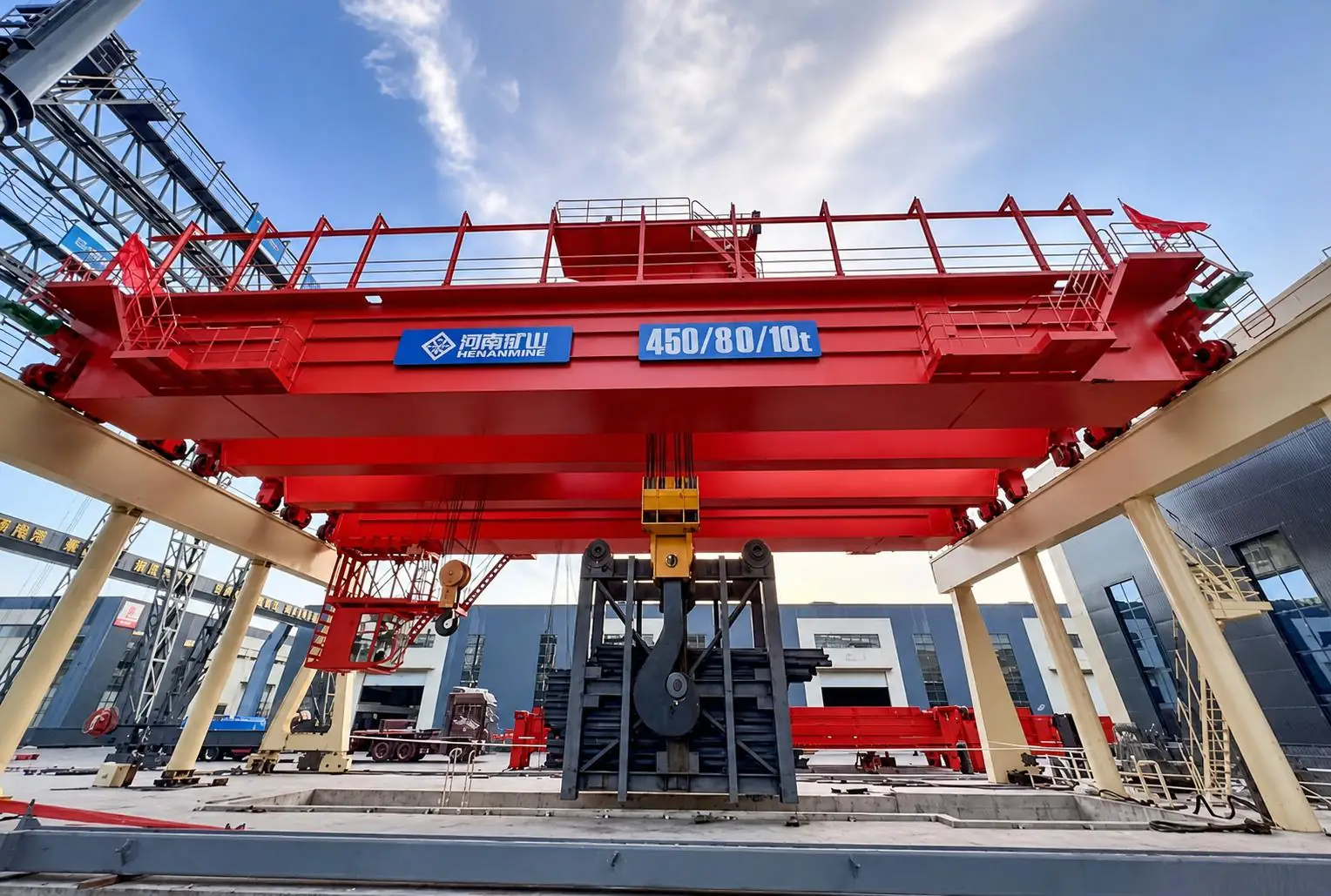
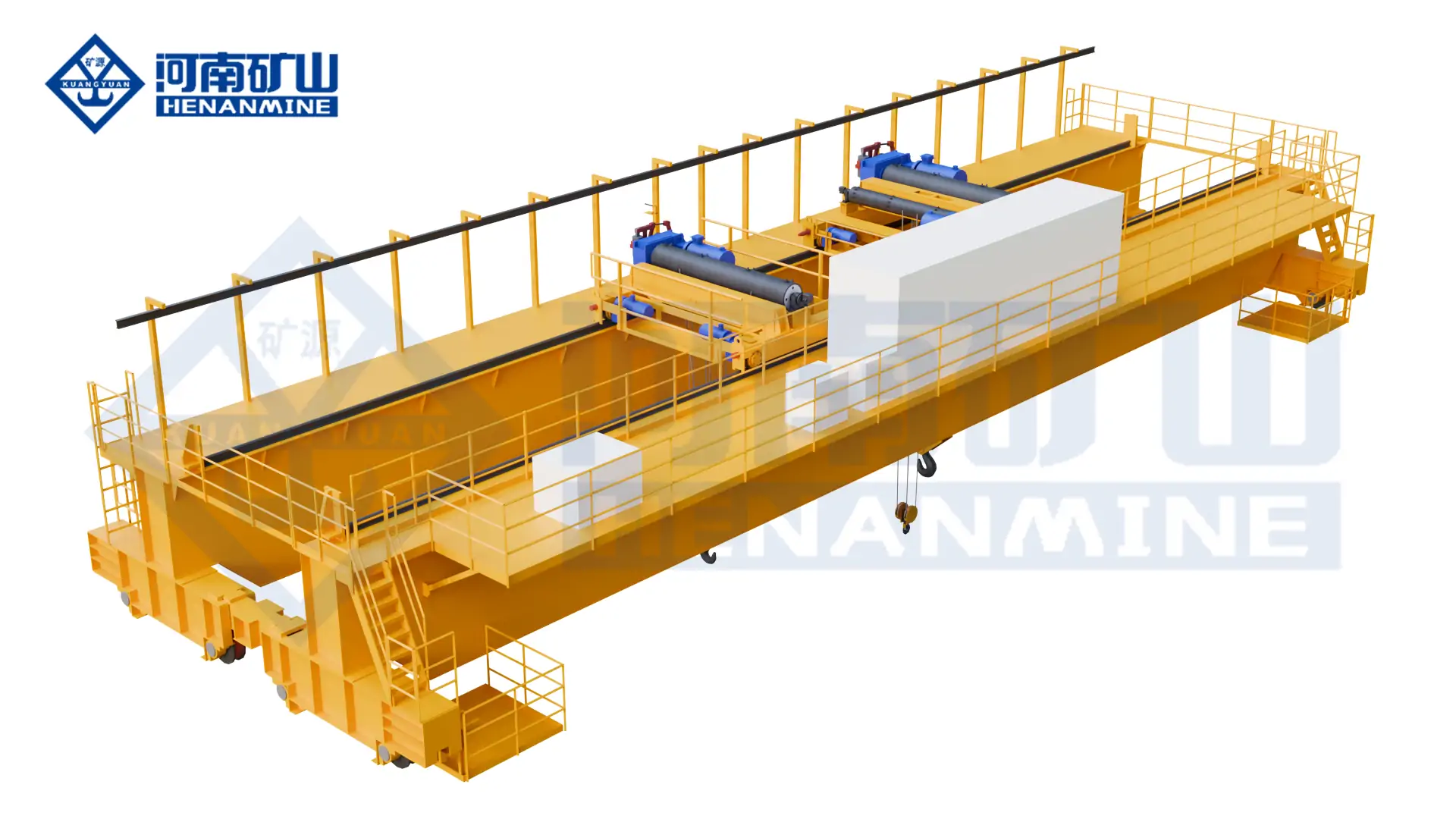
Henan Mine Crane insulated overhead crane is a bridge crane built with dedicated insulation devices that block electrical current from traveling from a live load, through the hook and hoisting mechanism, into the crane structure and operator's cabin. It is not the same thing as an explosion-proof crane, even though the two terms are routinely confused in industry content.
Insulated cranes are purpose-built for environments where the load itself can carry current, non-ferrous metal smelting (electrolytic aluminum, zinc, lead, magnesium, copper), substations, power plants, and electrified railway maintenance. Insulation is typically layered at three critical points:
- Between the hook and the movable pulley block
- Between the hoisting mechanism and the trolley frame
- Between the wheel sets/bearings and the rail or end carriage
Explosion-proof (ATEX/IECEx) cranes solve a different problem: preventing sparks or surface heat from igniting flammable gas, vapor, or combustible dust in the surrounding atmosphere.
Why Hazardous Areas Demand Specialized Insulated Crane Maintenance
Standard crane maintenance schedules are written for clean, climate-controlled facilities. Hazardous areas break that assumption in three ways that directly attack insulation integrity:
- Conductive dust, carbon, graphite, or metal particulatecan bridge insulation gaps that were never designed to handle a contaminated, conductive coating.
The stakes of getting this wrong are well documented. Maintenance isn't a cost center here, It's the control that keeps a known hazard from becoming an incident.
Hazardous Area Classifications and What They Mean for Maintenance
Before building a maintenance plan, you need to know which zone the crane operates in, because the classification dictates inspection rigor, intervals, and who is authorized to do the work.
- Zone 0/20— explosive atmosphere present continuously or for long periods
- Zone 1/21— likely to occur occasionally during normal operation
- Zone 2/22— occurs rarely, only for short periods
- The "G" suffix denotes gas/vapor atmospheres; "D" denotes combustible dust
These zones are governed under ATEX (EU), IECEx (international), or GB standards (China), with electrical components rated accordingly. For example, an Ex de IIB/IIC T4 motor enclosure. For Henan Mine Crane insulated cranes specifically, the relevant insulation design standard is typically referenced alongside the general crane standard (in China, GB/T 14405 alongside JB/T 10219 for explosion-proof/insulation requirements). The zone classification determines testing frequency: equipment in Zone 1 or in continuously humid/dusty conditions needs insulation checks every 3–6 months rather than the annual cycle acceptable for benign environments.
Pre-Maintenance Safety Protocol: Lockout, Isolation, and Area Clearance
Before any tool touches the crane, the area and the power supply both need to be secured. OSHA's crane maintenance procedure (29 CFR 1910.179) lays out the baseline sequence, and it applies directly to insulated and hazardous-area cranes:
- Move the crane to a position that minimizes interference with other cranes and operations.
- Place all controllers in the off position.
- Open and lock the main or emergency power switch. This is the lockout/tagout (LOTO) step.
- Post warning or "out of order" signs on the crane, and visibly on the floor or hook below.
- If other cranes share the runway, install rail stops or equivalent barriers to prevent interference with the idled unit.
- Do not return the crane to service until all guards are reinstalled, safety devices are reactivated, and maintenance equipment is cleared.
In a hazardous area, add a gas/dust atmosphere check and confirm hot work or spark-producing tools are permitted under the site's permit system before proceeding.
Insulation Resistance Testing: The Core Maintenance Task
This is the test that's unique to Henan Mine Crane manufactured insulated crane maintenance, and it's the one most generic crane maintenance checklists omit entirely.
Insulation resistance testing (often called a "megger test") applies a DC test voltage across an insulating device and measures the leakage current that escapes, converting it to a resistance value in megohms via Ohm's Law. Lower resistance means a more degraded insulation barrier.
- Test voltage: 500V or 1,000V DC is standard for routine maintenance testing; higher voltages (2,500V–5,000V) are reserved for stress-testing healthy insulation, not routine field checks.
- Minimum acceptable resistance: insulated crane devices (hook-to-pulley, hoist-to-trolley, wheel-to-rail insulation) are commonly specified to exceed 0.5 megohm total under crane-specific design standards. Motors and cables follow the broader industry guideline of roughly 1 megohm per kV of operating voltage as a baseline, compared against manufacturer specs and prior readings, not treated as an absolute pass/fail line.
- Spot reading method: apply the test voltage and take the resistance reading after one minute to let capacitive charging current stabilize.
- Polarization index: for motors and larger insulation systems, compare the 1-minute and 10-minute readings; a ratio below 1.0 signals contaminated or deteriorating insulation.
- Frequency: annually for equipment in benign conditions; every 3–6 months for equipment exposed to heat, humidity, dust, or chemical contamination, which describes most hazardous-area smelting and processing environments.
- VFD caution: always disconnect motors from variable frequency drives before testing; the test voltage can damage drive electronics.
Record every reading against the equipment's history. A sudden drop between tests is a more urgent signal than any single absolute number.
Inspecting Electrical Components, Wiring, and Conductor Rails
Having finished the insulation testing, go to a comprehensive visual and functional inspection of the electrical system, that is:
- Motors and terminals: look out for corrosion, cracked enclosures or any wear on insulation that might allow dangerous gas or dust to enter internal compartments.
- Conductor rails, cable trolleys:check for mechanical damage, heat damage, chemical attack on insulated sections of conductor rails and cable insulation.
- Control cabinets: ensure the intactness of the insulating isolation devices situated between the control circuits and the containing cabinet, also equipped watertight/dust-tight seals on enclosures adopted IP55 or higher.
- Grounding continuity: The crane bridge frame must be continuous and grounded all the way from the path to the operator‘s cabin, the cabin must be bonded to the bridge so the condition for the operator‘s station is maintained.
- Explosion-proof enclosures (if dual-rated):make sure flameproof joint surfaces are free of cracks, corrosion or gaps, which could jeopardize the Ex rating.
Photograph each of your findings and document torque and/or resistance readings where appropriate.
Mechanical and Structural Checks
Insulation depends on mechanical integrity as much as electrical integrity, since a damaged insulating pad or bearing housing is a direct path to current leakage:
- Insulated wheel sets and bearings: inspect for cracking, glazing, or compression of the insulating material itself, not just normal mechanical wear.
- Hoist ropes and load chains: check for heat damage, corrosion, and wire breaks, especially where ropes pass near high-temperature processes.
- Brakes: confirm fail-safe disc brakes apply instantly on power loss; in high-heat environments, verify linings haven't degraded from thermal exposure.
- Gearboxes: check oil bath seals; in dusty environments, contamination of gear oil is an early warning sign of seal failure.
- Structural steel and insulating coatings: inspect welds (per applicable grade standards) and confirm the insulating coating layer over the steel hasn't been abraded down to bare metal at contact points.
Lubrication Practices for Hazardous, High-Heat Environments
Standard grease schedules don't transfer directly to hazardous areas:
- In combustible-dust or cleanroom-adjacent environments, use non-volatile, low-residue lubricants, and consider oil-free, dry-lubrication guide rails where contamination from leaking grease is itself a hazard.
- Adjust viscosity seasonally if the facility experiences large ambient temperature swings.
- Never use a lubricant that hasn't been checked for compatibility with the insulating materials it will contact, some greases are mildly conductive and can compromise an otherwise intact insulation barrier.
Building a Preventive Maintenance Schedule
A written, zone-aware schedule is what turns these checks into a repeatable program rather than a reactive one.
| Interval | Tasks |
|---|---|
| Daily/Pre-shift | Visual check of warning systems, hook/load chain condition, brake function, signage |
| Monthly | Corrosion check on load-bearing joints and insulating coatings; lubrication top-off; conductor rail visual inspection |
| Quarterly (harsh zones) | Insulation resistance spot test on all insulation devices; control cabinet seal check |
| Annually | Full insulation resistance test with polarization index; explosion-proof enclosure certification check; structural inspection per OSHA 1910.179; gearbox oil analysis |
| Per regulatory cycle | ATEX/IECEx/GB certification renewal and documentation audit |
Common Failure Points and How to Prevent Them
A handful of failure modes account for most insulated-crane maintenance incidents:
- Conductive dust bridging an insulation gap: prevent with sealed motor/gearbox housings rated IP65 or higher and more frequent cleaning cycles.
- Insulation degradation from sustained heat exposure: prevent with scheduled resistance testing rather than relying on visual inspection alone, since heat damage is often invisible until failure.
- Grounding discontinuity between cabin and bridge: prevent with a dedicated bonding check at every annual inspection, not just at commissioning.
- Lubricant contamination acting as a conductive or fuel path: prevent with lubricant compatibility checks and IP-rated seals.
- Mixing insulated-crane assumptions with explosion-proof requirements: prevent by maintaining separate checklists for each protection system, since a crane can pass an insulation test while having a degraded Ex enclosure, or vice versa.
Compliance, Documentation, and Certification Renewal
- Maintain detailed electrical documentation covering grounding, wiring, and cable routing against the applicable standard (ATEX, IECEx, or GB).
- Keep insulation resistance test logs with dates, readings, and the instrument usedauditors and insurers will ask for trend data, not just a single pass/fail result.
- Train and document qualification of every technician who performs insulation testing or works on explosion-proof components. This is typically a named requirement under both OSHA and ATEX/IECEx frameworks.
Regulators in the EU and elsewhere have issued multi-million-euro penalties following hazardous-area equipment failures tied to certification gaps, underscoring that documentation is not a paperwork formality. It's the audit trail that protects both workers and the business.
Frequently Asked Questions
Q: What's the difference between an insulated overhead crane and an explosion-proof crane?
An insulated overhead crane blocks electrical current from a live load reaching the operator and structure, using insulation at the hook, hoist, and wheel assemblies. An explosion-proof crane prevents sparks or excess heat from igniting flammable gas, vapor, or dust in the surrounding atmosphere.
Q: How often should insulation resistance be tested on a hazardous-area crane? Frequency should always be tightened, not relaxed, if a previous reading showed a meaningful drop from baseline.
Q: What is the minimum acceptable insulation resistance for an overhead crane? Crane-specific insulation devices are commonly held to a minimum of 0.5 megohm under dedicated crane insulation standards, while motors and cables are typically benchmarked against roughly 1 megohm per kV of operating voltage. The more important signal is a sudden drop from the equipment's own historical readings rather than any single absolute threshold.
Q: Can an insulated crane also be explosion-proof?
Environments like electrolytic aluminum smelting combine high current, heat, humidity, and combustible carbon dust, so the crane needs insulation devices and explosion-proof electrical components rated for the applicable gas/dust zone simultaneously. These are maintained as two separate checklists run on the same machine.
Q: What lubricants are safe to use on cranes in combustible dust environments? Use high-temperature, low-residue lubricants rated for the facility's actual temperature range, and avoid any grease that hasn't been checked for electrical conductivity if it will contact insulated components. In contamination-sensitive zones, oil-free or dry-lubrication guide rail systems reduce the risk of leaked grease creating either a fire-fuel source or a conductive bridge.
Q: Who is qualified to perform insulated crane maintenance in a hazardous area? Maintenance and insulation resistance testing should only be performed by personnel trained and documented as qualified under the site's electrical safety program, with specific competency in hazardous-area work (ATEX/IECEx-recognized training where applicable). This qualification requirement is typically enforced under both general crane safety regulations and hazardous-area equipment directives.
Discuss the crane arrangement for your project.
Maintenance needs to protect the crane's designed insulation arrangement and operating condition. Use the equipment documentation to define inspection areas, cleaning, replacement requirements and responsibility for verifying the system before return to service. Share the load, available drawings, working cycle and site conditions with Henan Mine Crane so the required configuration and supply boundary can be discussed.
Related crane configurations
Insulated Double Girder Travelling Crane
View product parametersProvide insulated double-girder lifting for a defined electrical process. The suspension arrangement, lifting appliance and isolation positions are selected from the load path and site conditions.
Insulated Bridge Crane
View product parametersUse a QY insulated bridge arrangement for lifting in an electrically demanding industrial process. Coordinate the lifting load, isolation positions and inspection requirements with the site.
Updated 2026 · Henan Mine Crane