Engineering · Manufacturing · Project support
info@hnksglobal.comWhatsApp +86 18836207779 ↗

Blog

  • Semi-Gantry vs Full Gantry Cost: Compare the Structural and Site Scope

    Semi-Gantry vs Full Gantry Cost: Compare the Structural and Site Scope

    Technical guide

    Semi-Gantry vs Full Gantry Cost: Compare the Structural and Site Scope

    A semi-gantry can change the required support and runway arrangement, but savings depend on the site. Compare building work, floor interfaces, power supply and installation as well as the crane equipment.
    Henan Mine CraneTechnical guide · Updated 2026Crane selection, project scope and operating requirements
    Semi-Gantry vs Full Gantry Cost: Compare the Structural and Site Scope
    Henan Mine Crane lifting equipment
    Project planning notes

    Key points for this crane project.

    1. Check the elevated support and ground runways
    2. Compare prices against span and duty
    3. Include building work and site installation
    Read the technical guide

    Compare the support arrangements first

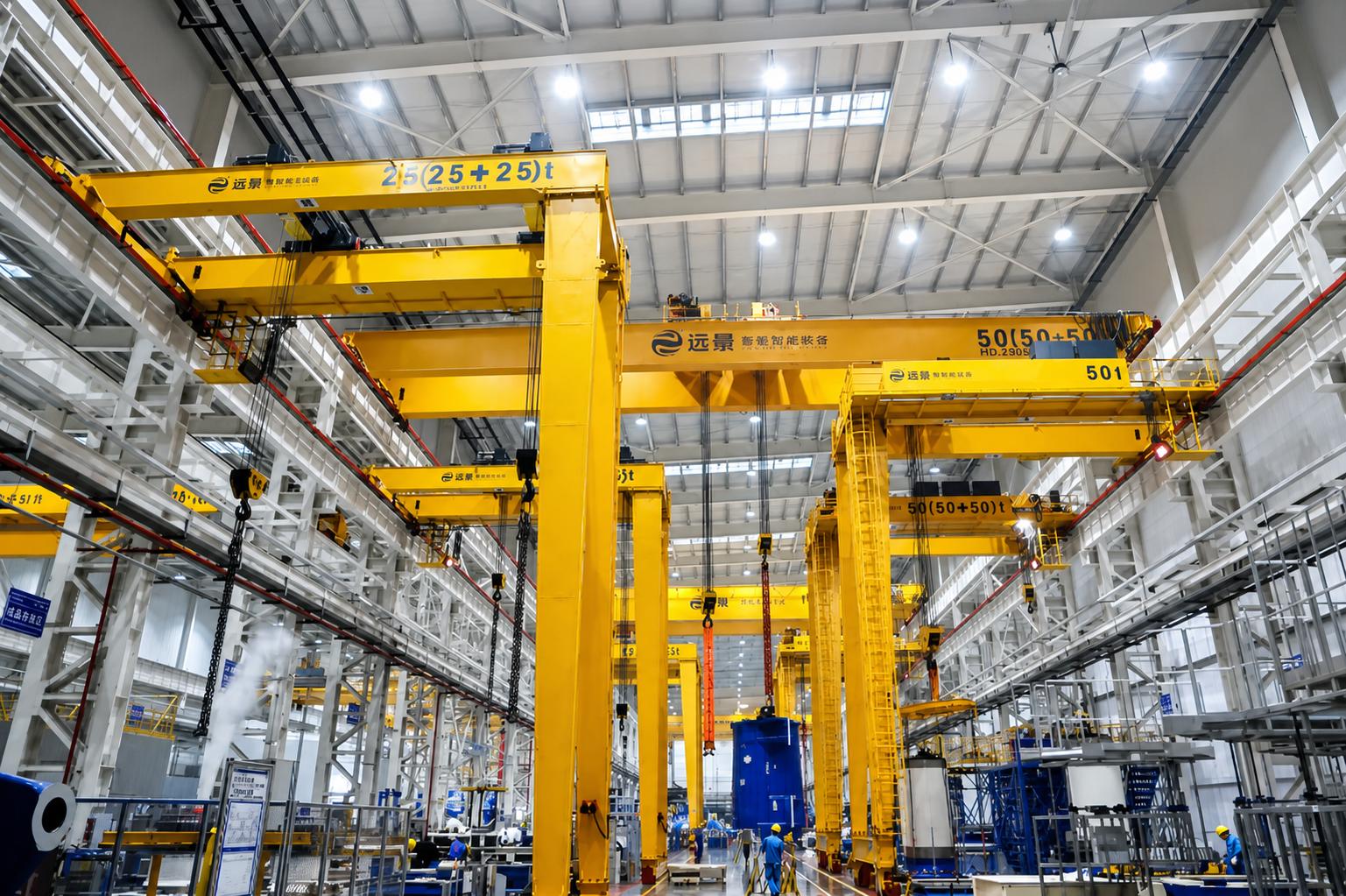
    A semi-gantry crane has a ground-running leg on one side and an elevated runway supported by an engineered structure on the other. A full gantry supports both sides through legs that travel along ground-level runways.

    That difference changes the building interface, foundations, floor coverage and installation work. An existing elevated runway can be useful only after its geometry, reactions and structural capacity have been checked for the proposed crane.

    When can a semi-gantry cost less?

    A semi-gantry may reduce the amount of leg structure and ground-level runway needed for a particular layout. It does not have a universal saving percentage: elevated runway steel, building reinforcement, alignment and access can offset the equipment difference.

    Ask for two proposals against the same capacity, span, lifting height, duty, travel distance and control requirements. Compare the installed scope and the working coverage, then decide whether either option meets the operation.

    Published equipment budget references

    Published equipment budget references, checked in October 2026. These are manufacturer list ranges, not a Henan Mine Crane project quotation. Freight, import charges, runway and civil works, site installation and commissioning must be priced separately.

    Semi-gantry referenceSpan / dutyEquipment budget (USD)
    3 t MHB9 m / A36,400–10,000
    5 t MHB12 m / A38,570–14,280
    10 t MHB15 m / A417,140–25,700
    16 t MHB18 m / A425,700–36,000
    20 t MHB20 m / A536,000–50,000
    Full-gantry referenceSpan / dutyEquipment budget (USD)
    5 t MH single girder18 m / A311,500–17,000
    10 t MH single girder22 m / A317,000–26,000
    20 t MG double girder22 m / A540,000–57,000

    These rows have different spans and, in some cases, different duties and structures. They are starting points for budgeting and cannot be used to calculate an automatic semi-gantry saving.

    Reference: KSCRANE, “Gantry Crane for Sale,” published 9 October 2025. The listed capacity, span and duty class form part of each price reference; changing them changes the comparison.

    When a semi-gantry suits the layout

    Consider a semi-gantry where an engineered elevated support is available or planned along one edge of the handling area. Check whether the ground leg and rail leave the required vehicle and pedestrian routes clear.

    Provide the building drawings, runway elevations and the required hook envelope. Review wheel loads, clearances, power supply, maintenance access and interaction with other cranes before selecting the arrangement. See the single-girder semi-gantry product for the published configuration range.

    When a full gantry suits the layout

    A full gantry can serve a defined yard or bay without relying on an elevated building runway. Its ground runways and foundations still need to be designed for the crane reactions and the actual site conditions.

    Compare leg clearance, cantilever coverage, outdoor exposure, traffic crossings and the installation route. Larger or higher-duty applications may need a different trolley and girder arrangement; review the double-girder gantry product against the load and operating cycle.

    Compare the complete supply and site scope

    Budget itemQuestion for both proposals
    Crane and lifting equipmentAre the same rating, duty, height, speeds, controls and attachments included?
    Runways and structuresWho supplies rails, elevated beams, supports, foundations and any reinforcement?
    Electrical supplyAre the full travel length, power feed, earthing and site connections included?
    Transport and erectionWhat packing, freight, import charges, lifting plant and access are required?
    Handover and supportWhat commissioning, testing, training, documents, warranty and spare parts are included?

    Mark each line as included, excluded or provisional. Compare taxes, currency, delivery terms and quotation validity on the same commercial basis.

    Prepare a quotation that can be compared

    Send Henan Mine Crane the gross suspended load, span, lifting height, travel length, duty cycle, load dimensions and project location. Include the site plan and any existing elevated runway or building drawings.

    Ask for a layout, support reactions, equipment specification and itemised supply boundary for each workable option. Standardise the requirements first; remove options only after checking their effect on coverage, duty and operation. Use the project enquiry to discuss the layout and budget.

    Discuss the crane arrangement for your project.

    A semi-gantry can change the required support and runway arrangement, but savings depend on the site. Compare building work, floor interfaces, power supply and installation as well as the crane equipment. Share the load, available drawings, working cycle and site conditions with Henan Mine Crane so the required configuration and supply boundary can be discussed.

    Related crane configurations

    Double-Girder Semi-Gantry Crane

    View product parameters
    Lifting capacity: 3 – 20 tSpan: 5 – 30 mLifting height: 6 – 18 m

    Cover a workshop edge or yard with a double-girder semi-gantry arrangement. One side uses an elevated runway while the leg-supported side travels on a ground rail, coordinated with site access.

    Single Girder Semi-Gantry Crane

    View product parameters
    Lifting capacity: 1t – 32tSpan: 6m – 35mLifting height: 4m – 20m

    Extend lifting coverage along a workshop or yard with a single-girder semi-gantry. Coordinate the elevated runway, ground-travelling leg and electric-hoist arrangement with the working area.

    Updated 2026 · Henan Mine Crane
  • Cranes for Modular Steel Assembly: Reach, Orientation and Lift Coordination

    Cranes for Modular Steel Assembly: Reach, Orientation and Lift Coordination

    Technical guide

    Cranes for Modular Steel Assembly: Reach, Orientation and Lift Coordination

    Prefabricated modules bring long loads and changing assembly positions. Define lifting points, orientation requirements and the assembly sequence so crane coverage and load control can be reviewed before installation.

    Henan Mine CraneTechnical guide · Updated 2026Crane selection, project scope and operating requirements
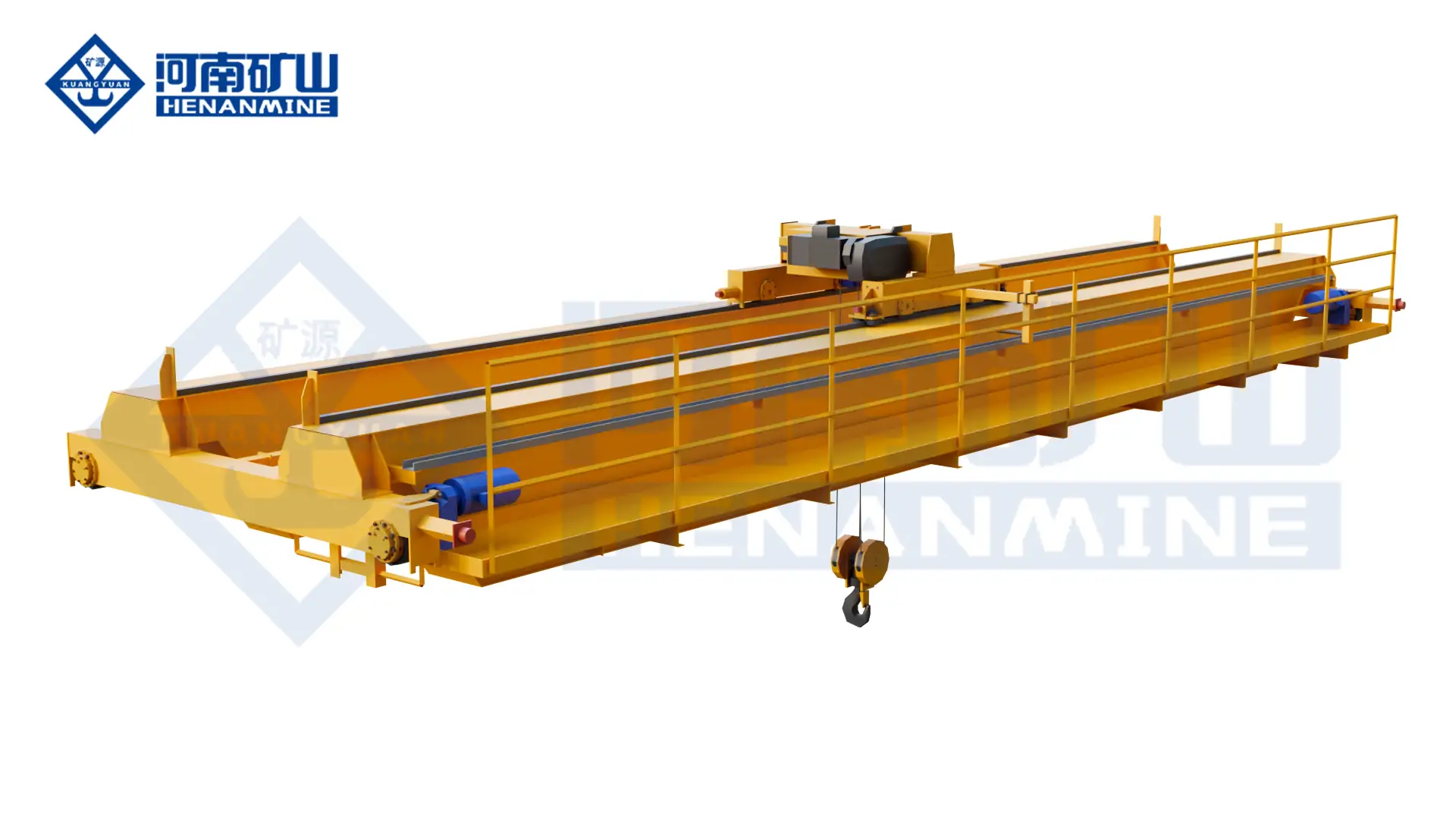
    Henan Mine Crane Modular Electric Hoist Overhead Crane
    Henan Mine Crane Modular Electric Hoist Overhead Crane
    Project planning notes

    Key points for this crane project.

    1. Why Crane Selection Matters in Modular Steel
    2. Main Crane Types for Modular Steel Construction
    3. Key Factors When Selecting a Crane
    Read the technical guide

    Why Crane Selection Matters in Modular Steel Construction

    Steel module hoisting has the characteristics of large size, eccentric load, high frequency hoisting, and high precision installation, which is far stricter than traditional civil hoisting. Improper selection can easily cause misalignment of modules, damage to components, delays in construction, safety accidents and rising operation and maintenance costs. Accurately adapted lifting equipment is the key to the efficient landing of the project.

    Special hoisting requirements for prefabricated steel modules

    • Large size and concentrated load: The overall size of the steel module is huge, and the load is concentrated at a small number of hoisting points, which is not evenly subjected to force, which puts forward higher standards for the rated load, structural stability and overall carrying capacity of the crane. Requirements.
    • Risk of center of gravity offset: The module has built-in pipelines, decorations, and supporting components, which are prone to uneven weight distribution and center of gravity offset. The lifting process is prone to tilt and shaking. It needs to be equipped with special spreaders and lifting equipment adapted to eccentric loads.
    • High-frequency cycle operation: modular prefabricated production and on-site assembly are continuous assembly operations, with high hoisting frequency and strong repeatability, which requires the crane to have excellent fatigue resistance and high-frequency working conditions adaptability.
    • Ultra-high installation accuracy: The splicing tolerance standards of steel structure modules are strict, and the alignment accuracy is extremely high. The crane is required to achieve smooth start and stop and stepless fine-tuning to ensure that the modules are accurately in place and avoid splicing deviations.

    Difficulties in core operations on the construction site

    • Site space is limited: urban renewal and dense plot projects generally have narrow operating surfaces and limited lifting and maneuvering space, which require strict requirements for crane mobility and small-scale operating capacity.
    • Dynamic changes in construction working conditions: With the stacking and splicing of modules, the on-site assembly layout is continuously updated, and the lifting height and operating point are constantly changing, which requires the crane to have good adaptability to working conditions.
    • Multi-process cross-interference: Multiple types of simultaneous cross-operation on the construction site. If the crane responds slowly and shifts cumbersome, it can easily cause the process to stall and form an overall construction bottleneck.
    • High pressure on construction period control: The overall construction period of modular construction is compact, the processes are closely connected, and the operating efficiency of lifting equipment is insufficient or sudden failure and shutdown will directly disrupt the rhythm of material distribution and assembly, causing delays in the construction period.

    Precise selection of project gain

    • Improve hoisting efficiency and compress construction period: Equipment adapted to working conditions can maximize the effective hoisting cycle, reduce idle and adjustment time, significantly improve the construction cycle, and effectively compress the total construction period of the project.
    • Ensure the accuracy of placement and reduce rework: equipped with frequency conversion speed regulation and intelligent sway control system, it can achieve smooth and fretting alignment, effectively control the offset error of the module, and greatly reduce the probability of assembly rework and component damage.
    • Stabilize the pace of construction and reduce downtime: match the cranes corresponding to the working condition level according to the frequency of operation, and the equipment has stronger fatigue resistance, which can significantly reduce the probability of failure and shutdown, and ensure the continuity of assembly line construction.
    • Strengthen safety protection and avoid risks: standard and perfect overload, partial load, limit and anti-collision protection mechanisms are equipped to avoid hoisting safety hazards from the source and comprehensively improve the safety level of on-site operations.
    • Optimize the whole cycle cost and extend the life of the equipment: more adaptable lifting equipment has lower energy consumption and longer maintenance cycles, which can effectively reduce the whole life cycle operation and maintenance costs, and improve the overall service life of the equipment and the return on investment.

    Main Crane Types for Modular Steel Construction

    Modular construction is divided into two scenarios: indoor factory prefabrication and outdoor on-site installation, and the models need to be matched as needed.

    Bridge crane

    The bridge crane is the core main equipment of the steel structure prefabricated workshop. It has stable operation and high positioning accuracy, and can be perfectly adapted to the high-frequency circulating hoisting conditions of the assembly line. Among them, the single-beam bridge crane is cost-effective and lightweight, which is suitable for the transportation and assembly of small and medium-sized steel components.;

    The double-girder bridge crane has stronger structural rigidity, greater rated load, and better operating stability. It can meet the high-precision hoisting needs of heavy-duty and oversized steel modules, but its operating range is fixed and it is only suitable for indoor fixed prefabricated working conditions.

    Gantry crane

    The gantry crane adopts a self-supporting gantry structure, which does not need to rely on the beams and columns of the plant to bear the load, and can be flexibly adapted to outdoor steel yards, open-air prefabricated processing and other work scenarios without building support. Among them, the full-gantry crane has a large span, strong carrying capacity, and wide operating coverage. It is suitable for open-air assembly, welding and centralized storage of large steel modules;

    Combined with the one-sided support of the building structure, the semi-gantry crane occupies a smaller area and has stronger adaptability. It is suitable for outdoor prefabricated conditions where the site is limited and one side is adjacent to the wall of the plant. It is the core hoisting equipment for outdoor modular construction.

    Jib crane

    Jib crane is a lightweight auxiliary hoisting equipment, which has the advantages of sensitive control, fixed-point operation, and fast response. It mainly serves the refined operation of workshop stations and is suitable for short-distance transportation and assembly of small steel components, connecting accessories and sub-components. Limited by the rated load and operating radius, the equipment cannot undertake the large-scale lifting task of the overall steel module, and is only used as auxiliary lifting equipment for the production line.

    Mobile and crawler cranes

    Mobile cranes and crawler cranes are the core main equipment for the final installation of modules on the construction site, and they have the outstanding advantages of strong mobility, convenient deployment, and wide adaptability. Among them, the car crane transition speed is fast, and it is more suitable for conventional construction scenarios where the site is flat and the ground is hardened;

    Crawler cranes have a large grounding area and low grounding pressure, which can adapt to the complex construction site environment of soft and uneven, and can flexibly adapt to the dynamically changing hoisting points and operating conditions of the construction site.

    Intelligent automated lifting system

    The intelligent automated lifting system is specially designed for high-volume, standardized module prefabricated processes, and integrates automatic and precise positioning, intelligent sway control, remote real-time monitoring and operation data acquisition functions. The equipment can be deeply linked with the factory's intelligent manufacturing system, effectively avoiding manual operation deviations, continuously optimizing the stability of hoisting, and comprehensively improving the operation accuracy and production efficiency of modular assembly.

    Key Factors When Selecting a Crane

    • Approval of hoisting load: The total hoisting load must cover the weight of the steel module and the weight of a full set of spreaders, hoisting beams, rigging and other ancillary equipment. It is strictly forbidden to operate at full load during construction.
    • Effective lifting height: The selection of lifting height needs to cover the full stroke height from the lowest reclaiming base surface to the highest stacking installation position, and reserve a safe operating gap. At the same time, the special working conditions of indoor floor height restrictions, top pipeline arrangement and multi-layer module stacking construction are comprehensively considered to eliminate the problem of insufficient height.
    • Operation level and hoisting frequency: Modular prefabricated production is a typical medium and high frequency cycle operation condition, and must match the lifting equipment of medium and heavy-duty work standards. If light-grade equipment is misused, it will exacerbate structural and mechanical fatigue, cause premature aging and frequent failures of the equipment, and significantly shorten the service life of the equipment.
    • Hoisting operation speed: Hoisting operations follow the principle of ”stability first, efficiency first".Equipped with a frequency conversion speed control system, it can realize flexible start-stop, high-speed transfer, and low-speed fretting alignment, effectively balancing construction efficiency and positioning accuracy, and suppressing problems such as swing and positioning offset of hanging objects from the root cause.

    Crane Requirements for Prefabricated Steel Assembly

    • High-precision positioning ability: The equipment supports three-axis independent fine-tuning control, and is equipped with intelligent sway control technology, which can greatly suppress the shaking and offset of the hanging object, effectively meet the strict tolerance requirements of millimeter-level precision splicing of steel structure modules, and ensure that the components are accurately in place.
    • High-strength structural rigidity and stability: the main girder and end beam need to have excellent structural stiffness, and the deflection deformation under heavy load is strictly controlled. Among them, the double-beam box-shaped structure has outstanding deformation resistance and lateral impact resistance, and can be fully adapted to the heavy-duty hoisting conditions of heavy-duty steel modules.
    • High-reliability lifting system: equipped with durable transmission hoist and high-strength steel wire rope, it adopts a redundant safety design with dual brakes, and has the dual protection functions of power-off self-locking and emergency braking. It can completely avoid major safety risks such as slip hooks and falling objects, and ensure the safety and stability of heavy-duty hoisting.
    • Professional adaptation of hoisting aids: supporting customized hoisting beams, special fixtures and high-strength slings, which can effectively disperse single-point concentrated loads, accurately adapt to the eccentric center of gravity of steel modules and special-shaped structural characteristics, and prevent component deformation, hoisting tilt and other problems from the source.

    Safety Considerations for Modular Steel Lifting

    Strictly control overload and partial load

    Before construction, it is necessary to accurately verify the actual weight of the module, accurately calculate the position of the center of gravity of the components, and scientifically optimize the arrangement of spreaders and rigging. At the same time, fully consider the dynamic load increment caused by the impact of equipment start and stop, on-site wind load and other factors, eliminate overload and partial load operations, and avoid safety hazards such as lifting capsizing and component offset from the source.

    Braking and emergency protection

    The equipment comes standard with a failure protection brake system, which supports automatic brake locking after power failure, effectively eliminating the risk of the spreader slipping out of control. The whole machine is equipped with an emergency stop device at multiple points, which can stop and brake instantly under sudden abnormal working conditions, quickly block safety risks, and provide a full range of passive safety protection for hoisting operations.

    Limit and anti-collision protection

    The equipment comes standard with multiple protection switches such as the upper and lower limits of the hook and the operating limits of the whole machine, which effectively eliminates the risk of over-range operation. Under multi-machine collaborative working conditions, an intelligent anti-collision system can be installed, which can monitor the spacing of equipment in real time, automatically slow down and stop urgently when the hazard threshold is triggered, effectively avoid equipment scratches and collision accidents, and ensure the safety of multi-equipment parallel operations.

    Optimize the control field of view

    During the operation process, priority is given to the use of wireless remote control with the hook visual monitoring system to effectively eliminate blind spots in the hoisting field of vision; for high-risk scenarios such as high-altitude and intensive operations, remote control mode can be used to achieve man-machine safety isolation and ensure the personal safety of on-site operators in all directions.

    How Automation Improves Modular Steel Assembly

    • Automated and precise positioning function: The intelligent lifting system abandons the traditional manual control alignment mode and relies on intelligent sensing and positioning technology to realize automatic correction and precise placement of steel modules throughout the hoisting process, effectively avoiding the alignment deviation caused by manual operation, meeting the high-precision assembly requirements of steel structures, and greatly improving the pass rate of component splicing.
    • Intelligent sway control stability control: The system is equipped with an intelligent sway control algorithm, which can dynamically monitor and suppress the shaking of the hoisting object in real time, effectively offset the swing offset caused by the start and stop of the equipment and the wind load, and ensure the stability of the hoisting operation throughout the process, and adapt to high-precision and high-stability modular assembly conditions.
    • Real-time load monitoring and early warning: The equipment has a 24/7 real-time load monitoring function, and can dynamically collect hoisting load data. Once abnormal conditions such as overload and partial load occur, early warning and automatic protection mechanisms are triggered immediately to avoid hoisting safety accidents from the source and ensure the safety of equipment and construction.
    • Full-process data linkage empowerment: The system can be deeply connected to the factory's intelligent manufacturing management system, and collect core information such as equipment operation data, hoisting frequency, and operation duration in real time, so as to realize the data exchange and linkage of the whole process of prefabrication, transportation, and hoisting, helping to standardize and control the construction process, and comprehensively improve the efficiency and intelligence level of modular construction.

    Common Crane Selection Mistakes to Avoid

    • Heavy-duty and light-duty operating condition levels: The selection only focuses on the rated load, ignoring the working level and fatigue resistance of the equipment, and cannot be adapted to modular high-frequency cyclic operations, which can easily cause premature aging of the equipment structure and frequent failures, greatly shortening the service life.
    • Ignoring the eccentric load characteristics of the module: the size and eccentric center of gravity of the steel module are not accurately calculated, and the layout of the spreader is unreasonable, which can easily cause the lifting tilt and shaking offset, resulting in component alignment deviation and assembly accuracy is not up to standard.
    • Underestimation of operating space parameters: insufficient estimation of on-site lifting height, operating span and radius of gyration, blind areas for hoisting appear in the late stage of construction, which cannot cover the full operating conditions and restrict the development of construction.
    • One-sided pursuit of operating speed: blindly choose high-speed configuration, ignore the stability requirements of hoisting, insufficient start-stop buffer, large swing of the hoisting object, sacrifice the core installation accuracy, and increase the probability of rework.
    • No reserved margin for expansion: it only matches the current construction needs, and the equipment performance and operating capacity are not reserved for redundancy. It cannot be adapted to the upgrading of working conditions and large-scale construction needs in the later stages of the project, and the equipment reuse is poor.
    • Ignoring the attributes of late maintenance: the selection only looks at the cost of equipment, ignoring the structural design, the versatility of accessories and the convenience of maintenance, resulting in the difficulty of late maintenance and the high cost of operation and maintenance.
    • Weaken the safety protection configuration: treat safety configurations such as limit, anti-collision, and overload warning as optional accessories, reduce the investment in safety configuration, and leave behind major safety hazards such as overturning, collision, and falling objects.

    Crane Selection Checklist for Modular Steel Projects

    1. Verification of load and working condition parameters: verify the total lifting weight of the steel module and the spreader, and reserve a reasonable load safety margin; match the lifting frequency of the project, confirm the working condition level of the crane, and ensure that the equipment is adapted to high-frequency cyclic operations to avoid premature equipment fatigue.
    2. Verification of spatial operating parameters: accurately check the effective lifting height, operating span and radius of gyration of the equipment, and investigate the blind spots of hoisting based on the distribution of obstacles on the site to ensure that the operating range of the equipment can fully cover the full working conditions of prefabrication and installation.
    3. Equipment performance accuracy verification: check the speed regulation system, micro-motion alignment and sway control performance of the equipment, and confirm that the equipment can meet the requirements of millimeter-level precision assembly of steel structure modules to ensure the accuracy and construction stability of hoisting in place.
    4. Verification of on-site construction conditions: combined with the indoor and outdoor operating environment of the project, verify the basic bearing capacity, operating space, ground flatness and other conditions of the site, match the adapted models, and avoid the construction problems caused by site constraints.
    5. Safety protection configuration verification: Check the core safety configurations such as overload early warning, limit protection, anti-collision, emergency braking, power failure and self-locking one by one to ensure that the protection system is complete and meets the safety specifications of modular hoisting.
    6. Intelligent functional requirements verification: According to the project's prefabricated production capacity and construction standards, confirm whether it is necessary to configure intelligent systems such as automatic positioning, intelligent monitoring, and data linkage to adapt to standardized and intelligent construction requirements.
    7. Late-stage operation and maintenance expansion verification: verify the versatility of equipment accessories, maintenance convenience and manufacturers' after-sales guarantee capabilities, reserve equipment performance and capacity expansion space, and adapt to the needs of late-stage project upgrades and reuse.
    8. Full cycle cost verification: comprehensively account for the whole life cycle costs of equipment procurement, leasing, operation and maintenance, energy consumption, etc., abandon the thinking of single low-cost selection, and balance equipment performance and economic benefits.

    Discuss the crane arrangement for your project.

    Prefabricated modules bring long loads and changing assembly positions. Define lifting points, orientation requirements and the assembly sequence so crane coverage and load control can be reviewed before installation. Share the load, available drawings, working cycle and site conditions with Henan Mine Crane so the required configuration and supply boundary can be discussed.

    Related crane configurations

    Modular Electric Hoist Overhead Crane

    View product parameters
    Lifting capacity: 1 – 32 tSpan: 7.5 – 31.5 mLifting height: 6–30 m

    Use a modular electric-hoist overhead crane for production, assembly and maintenance lifting. Select the hoist arrangement, hook coverage and movement control for the workshop and operating cycle.

    Updated 2026 · Henan Mine Crane
  • Check Manufacturer Identity and Product Documents When Buying a Crane

    Check Manufacturer Identity and Product Documents When Buying a Crane

    Quality & Manufacturing

    Check Manufacturer Identity and Product Documents When Buying a Crane

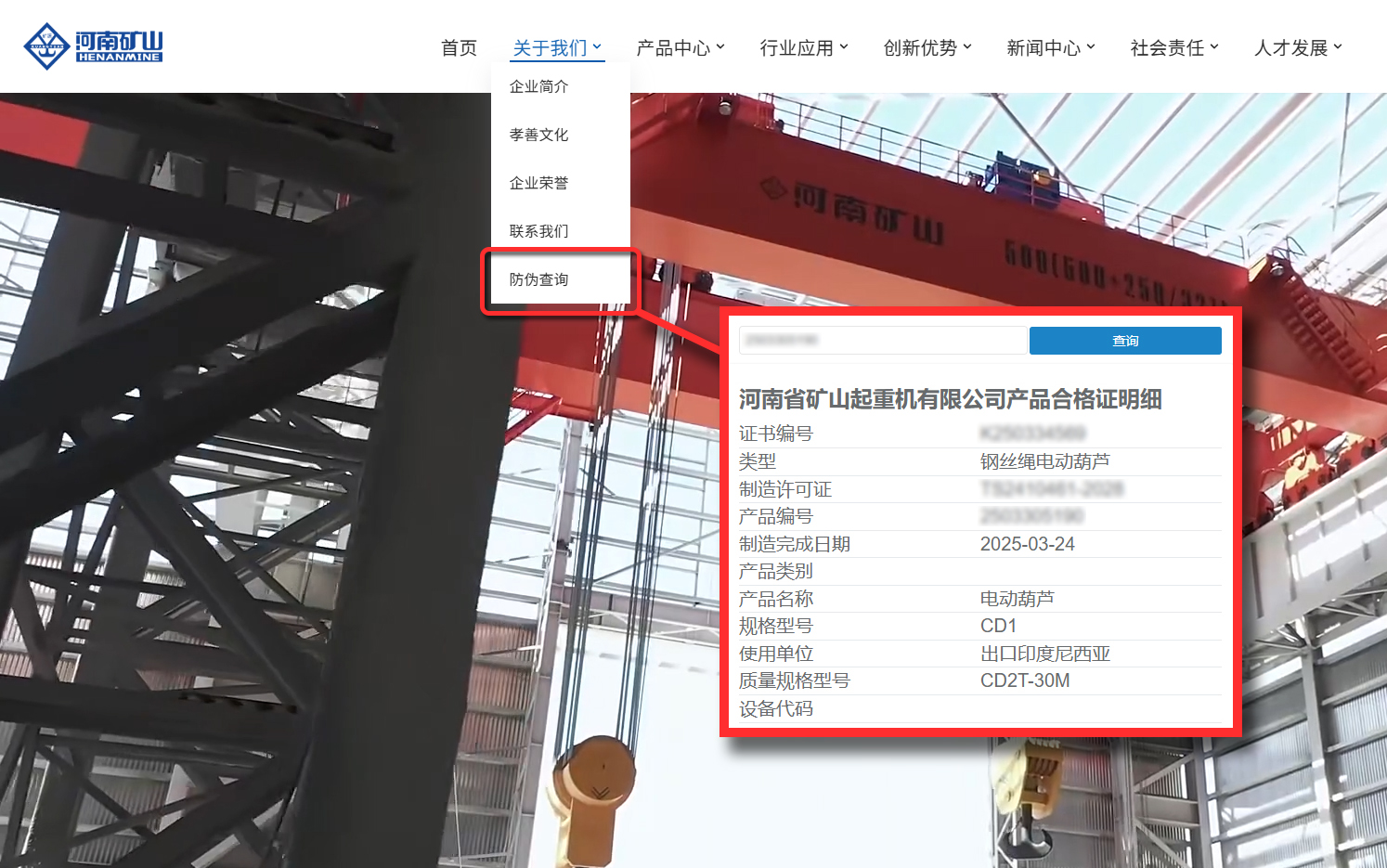
    Henan Mine Crane’s March 2026 brand-protection communication reminded customers to check product identity and manufacturer information when purchasing lifting equipment.

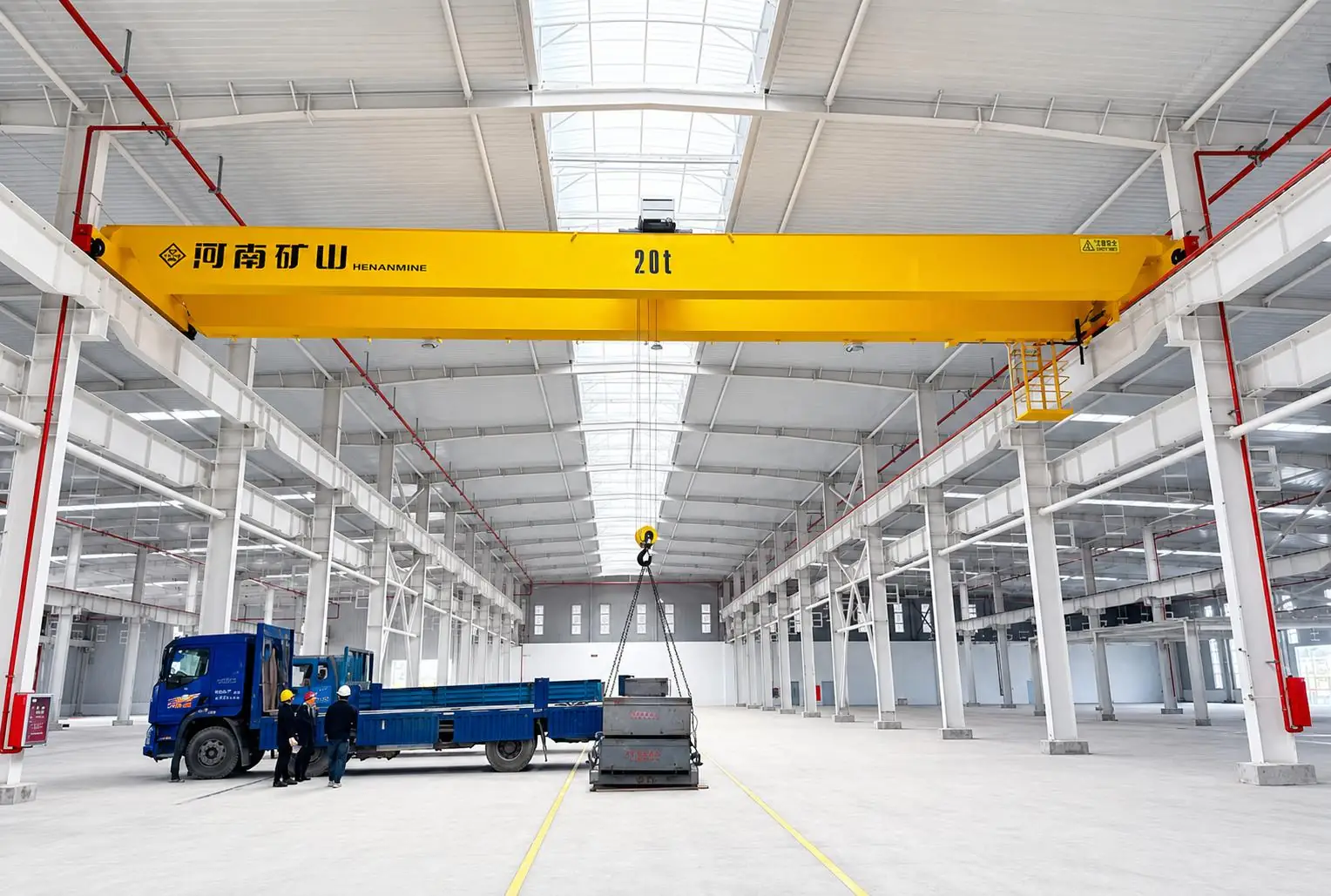
    Manufacturer website and company-document identification graphic
    Manufacturer website and company-document identification graphic.

    Match the supplier, equipment and order documents

    Buyers should compare the manufacturer identity shown on the equipment, the quotation and the supporting product documents. Any uncertainty should be clarified through the manufacturer’s published contact channels before the order is confirmed.

    Keep product identification with the project records

    For an enquiry about an existing crane, share the nameplate details and relevant order or equipment documentation with Henan Mine Crane. These records help the team identify the equipment being discussed.

    Contact Henan Mine Crane

    For product information, a manufacturing visit or a company enquiry, send the relevant details to our team.

  • Port Cranes for Saudi Arabia Projects: Cargo, Climate and Site Inputs

    Port Cranes for Saudi Arabia Projects: Cargo, Climate and Site Inputs

    Technical guide

    Port Cranes for Saudi Arabia Projects: Cargo, Climate and Site Inputs

    A project enquiry should describe the cargo service and conditions at the actual terminal. Include the quay or yard layout, environmental design inputs, power arrangements and installation scope when requesting proposals.

    Henan Mine CraneTechnical guide · Updated 2026Crane selection, project scope and operating requirements
    Saudi Arabia Port Crane Supplier
    Saudi Arabia Port Crane Supplier
    Project planning notes

    Key points for this crane project.

    1. Saudi Arabia Port Crane Core Application Scenarios
    2. Saudi Arabia’s core procurement requirements
    3. Mainstream Crane Models for Saudi Ports
    Read the technical guide

    Saudi Arabia Port Crane Core Application Scenarios

    Saudi Arabia's ports and logistics system scenarios are diverse, different business models suitable for Saudi Arabia's terminal crane models differ significantly. Container terminals focus on standardized container loading and unloading stacking, high frequency and continuity of operations, is the core application scenarios of STS, RTG, RMG cranes.

    Jubail, Yanbu and other industrial ports, focusing on petrochemicals, iron and steel, heavy equipment import and export, mostly heavy-duty non-standard cargo, requiring heavy-duty, highly adaptable port lifting equipment. General cargo terminals, bulk logistics hubs, inland dry port projects, focusing on equipment flexibility and dustproof durability, suitable for gantry cranes, conventional gantry Overhead Cranes. At the same time, a large number of old port renovation projects, but also a continuous need for customized lifting equipment suitable for upgrading.

    Saudi Arabia’s core procurement requirements

    Saudi Arabia's unique climate and operating environment have created procurement standards that are different from those of ordinary industrial scenarios. Coastal high salt fog environment requires equipment equipped with professional marine anticorrosion coating and sealing electrical protection, to avoid corrosion and aging of metal parts.

    High temperature in summer and dusty environment require equipment with high temperature resistance, sealed dustproof structure to ensure stable operation throughout the year. In addition, the smoothness of equipment operation, precise alignment capabilities, long-lasting spare parts supply, customized solutions for multiple categories of goods are the core indicators for local customers to select Saudi Arabia logistics Crane suppliers.

    Saudi Arabia Port Crane Supplier
    Saudi Arabia Port Crane Supplier

    Mainstream Crane Models for Saudi Ports

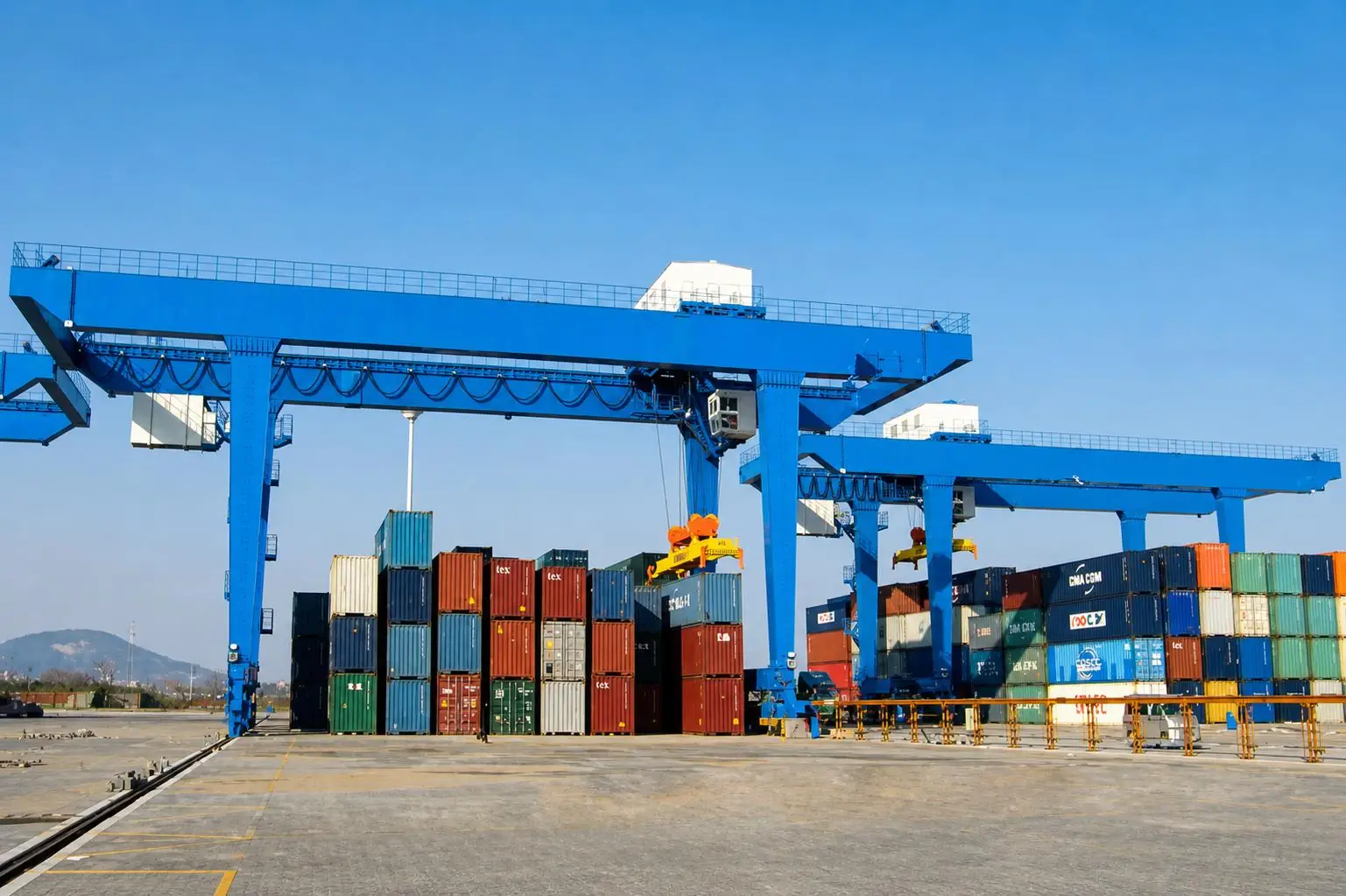
    For various types of Saudi port scenarios, a number of mature models can accurately match the needs. Shore-to-shore container cranes (STS) are suitable for loading and unloading large container ships on the shoreline, and are the standard equipment for core foreign trade ports. Saudi Arabia RTG Crane adopts tire traveling structure, which is flexible and suitable for small and medium-sized container yards and inland logistics parks.

    Saudi Arabia RMG Crane rail-type operation, precise alignment, suitable for large standardized container yard intensive operation. Port gantry cranes are highly versatile and perfectly suited for general cargo, industrial heavy cargo and bulk cargo handling. Mobile port cranes and special bridge gantry cranes for logistics hubs are suitable for temporary operation scenarios and inland normalized logistics lifting needs respectively.

    Core technical parameters and supplier selection criteria

    Saudi Arabia's port project acceptance is strict, procurement needs to accurately check the lifting capacity, span, lifting height, traveling range, heavy-duty work level, operating speed and other core parameters, while matching the local grid system, wind anti-corrosion, dust and high-temperature resistant environment configuration, complete with a full set of safety protection systems.

    Procurement needs to take into account the value of the whole life cycle of the equipment, to avoid the late failure loss caused by the low-priced reduced model.

    Saudi Arabia Port Crane Supplier
    Saudi Arabia Port Crane Supplier

    Henan Mine Crane’s local projects in Saudi Arabia

    Henan Mine Crane has been deeply cultivating the Middle East market for many years, and has continuously participated in Saudi Arabia's industrial, logistics and port supporting projects, and its products are suitable for Saudi Arabia's high-temperature, highly corrosive and dusty working conditions.

    At the same time, Henan Mine Crane has successfully applied a variety of anticorrosive upgraded portal cranes and gantry cranes in Saudi Arabia's inland logistics dry port and port supporting yard projects, optimized marine anticorrosive coating and high-temperature electrical protection, perfectly adapted to Saudi Arabia's coastal and inland harsh working conditions. The company has appeared in five major industry exhibitions in Riyadh, Saudi Arabia for many times, and is deeply committed to the local market, and can quickly respond to the needs of Saudi customers for program customization, equipment delivery and after-sales maintenance, and has the ability to execute mature projects in the Middle East.

    Common Procurement Myths and FAQ

    Common misconceptions in Saudi Arabia port procurement include simple price comparison, mismatch between models and goods, neglecting working condition protection, not checking local project cases, and ignoring after-sales spare parts service, which will easily lead to poor equipment suitability, frequent failures, and obstacles to acceptance.

    Adaptable models need to be accurately selected according to the scene, container terminals use STS, RTG, RMG, industrial general cargo ports use gantry cranes. Anti-corrosion configuration for coastal projects is a necessity, and it is the core guarantee for the long-term operation of the equipment. Formal source manufacturers can provide a full set of customs clearance and acceptance data, while one-stop coverage of ports and logistics hubs, a full set of lifting solutions, condition fit, technical services, spare parts supply is far more important than a single offer.

    Get your customized solution

    Saudi Arabia ports and logistics lifting project procurement, the core is to match the local special conditions of the customized solutions, rather than general low-cost equipment. Different ports and logistics scenarios have different models, parameter configurations and protection standards. As a reliable supplier of Saudi Arabia port cranes, Henan Mine Crane can provide highly adaptable and stable lifting solutions for all kinds of ports, terminals and logistics hub projects in Saudi Arabia, relying on mature local project cases, customized equipments adapted to the working conditions, and full-process landing services.

    If you need to adapt to the project's precise model selection and parameters of the program, you can provide equipment tonnage, span, operating environment and site drawings, we can issue an exclusive customized program.

    Discuss the crane arrangement for your project.

    A project enquiry should describe the cargo service and conditions at the actual terminal. Include the quay or yard layout, environmental design inputs, power arrangements and installation scope when requesting proposals. Share the load, available drawings, working cycle and site conditions with Henan Mine Crane so the required configuration and supply boundary can be discussed.

    Related crane configurations

    Explore crane product families and technical parameters ↗

    Updated 2026 · Henan Mine Crane
  • Saudi Arabia Port Crane Procurement: Compare Supplier Responsibilities

    Saudi Arabia Port Crane Procurement: Compare Supplier Responsibilities

    Technical guide

    Saudi Arabia Port Crane Procurement: Compare Supplier Responsibilities

    Supplier evaluation needs to cover engineering, delivery and the work at the destination site. Give each bidder the same operating brief and ask them to identify documentation, commissioning and support responsibilities explicitly.

    Henan Mine CraneTechnical guide · Updated 2026Crane selection, project scope and operating requirements
    Henan Mine Crane overhead crane inside a workshop bay
    Henan Mine Crane overhead crane inside a workshop bay
    Project planning notes

    Key points for this crane project.

    1. Why Saudi ports must choose a reliable port crane
    2. Mainstream Crane Types Commonly Used in Saudi Arabia
    3. The core application of cranes in Saudi Arabia’s
    Read the technical guide

    Why Saudi ports must choose a reliable port crane supplier

    Port lifting equipment determines the efficiency of cargo flow

    Saudi Arabia's major commercial ports, industrial terminals, container hubs, daily bear a large number of containers, industrial bulk cargo, engineering equipment, petrochemical materials loading and unloading and transit work. The whole set of port lifting equipment system is the basis for maintaining normal cargo throughput.

    Cranes suitable for working conditions in Saudi Arabia can smoothly connect the whole process of ship docking loading and unloading, yard stacking, inland transit, to ensure that the terminal's daily operations in an orderly manner, to avoid the accumulation of goods stranded in the harbor.

    Stability of equipment directly affects the operational efficiency of the terminal

    Port operation is a continuous assembly line operation, the ship docking time, cargo turnover cycle have strict planning. Once the core equipments, such as shore bridge and yard bridge, fail and shut down, it will directly lead to the problems of ship stranding, cargo accumulation and yard shutdown.

    For commercially operated Saudi terminals, the cost of demurrage, schedule loss and O&M expenses caused by sudden equipment failure is much higher than the purchase price of the equipment itself.

    Extremely harsh working conditions in Saudi coastal ports

    Coastal areas with high salt content in the air, salt spray attacks all year round, the steel structure corrosion is extremely strong.

    In addition, sand and dust weather is frequent in the inland port landfill, and the fine sand and dust can easily intrude into the running parts of the equipment and the electrical system, resulting in jamming, wear and tear, and circuit failure. The year-round non-stop high-frequency operation further increases the operating load of the equipment, which requires extremely high quality and design standards.

    Industry Procurement Focuses on Equipment Life Cycle Value

    In the early stage, many Saudi port projects used low-priced and low-equipped equipment, which can be put into use in the short term, but frequent failures, anti-corrosion peeling, parts supply, maintenance difficulties and other problems emerge one after another in the later stage, which continue to raise the operating costs.

    At this stage, Saudi Arabia's large port projects, foreign-funded port projects, in screening port crane supplier Saudi Arabia, will focus on considering the durability of the equipment, anticorrosion technology, work level, maintenance costs and long-term service capabilities, and prioritize the selection of heavy-duty professional equipment with stronger overall suitability.

    Mainstream Crane Types Commonly Used in Saudi Arabia Port Projects

    Ship-to-shore container cranes (Ship-to-shore crane)

    Ship-to-shore crane is the core main equipment of the container terminal, mainly installed in the terminal berth front, responsible for the loading and unloading operations of ocean-going container ships. The equipment has a large outreach distance, high lifting height and wide operational coverage, which can be adapted to the needs of large container ships docking operations.

    This kind of equipment needs to face the strong wind, salt spray and high temperature environment on the seashore all year round, and all the structure and electrical system have to do special marine anticorrosive and weather-resistant treatment, which is the standard equipment for large container terminals.

    Tire Gantry Crane (RTG)

    The core scenario served by Saudi Arabia's RTG crane suppliers is container yard operations. Tire yard bridge does not need to lay a fixed track, mobile and flexible, strong site adaptability, mainly used for container stacking, zoning transfer, yard regularization operations.

    It is suitable for the large-area yard operation mode of major container hub ports in Saudi Arabia, and the operation area can be freely adjusted according to the operation rhythm of the yard, which is suitable for the flexible scheduling of operation needs.

    Rail Mounted Gantry Crane (RMG)

    Saudi Arabia's RMG Crane supplier focuses on standardized and automated container yard scenarios. The rail yard bridge runs along a fixed track, with high positioning accuracy, good running stability and higher operating frequency, which is suitable for the high-density operation needs of large-scale and intelligent container terminals.

    This type of equipment is suitable for long-term fixed yard layout, suitable for Saudi Arabia's new smart ports, standardized container industrial park of the normal operation, can be docked semi-automated, fully automated terminal control system.

    Mobile Harbor Crane

    Mobile harbor cranes are extremely flexible, do not require a fixed installation foundation, and can quickly switch between operating berths and areas. Mostly used in multi-purpose general terminal, bulk cargo temporary loading and unloading, small ship operation, temporary transfer of engineering materials scene.

    Suitable for small and medium-sized industrial ports in Saudi Arabia, temporary project terminals, multi-purpose integrated port diversified operational needs, high versatility.

    Gantry Cranes and Jib Cranes

    Gantry cranes and small jib cranes are mainly used in general-purpose bulk cargo terminals, harbor shipyards, and industrial supporting terminals. They can undertake lifting operations for steel, engineering equipment, bulk cargo and ship maintenance materials.

    With solid structure and flexible operation, the equipment is suitable for supporting logistics lifting work of petrochemical, steel and energy projects in Saudi Arabia's port.

    The core application of cranes in Saudi Arabia’s ports and offshore projects

    Container specialized terminal

    Container terminal is the core scene of Saudi Arabia's maritime transportation, relying on the shore bridge equipment to complete ship loading and unloading, with RTG, RMG yard bridge to complete the yard stacking, inter-area transfer, container regularization operations. The whole set of equipment system supports the efficient throughput of large-volume containers at the terminal.

    The smoothness, alignment accuracy and continuous operation capability of the equipment directly determine the daily throughput of the container terminal.

    Bulk Industrial Terminal

    A large number of petrochemicals, iron and steel, building materials, mineral materials exported through the port in Saudi Arabia, the bulk terminal needs Crane to complete the heavy steel, complete sets of engineering equipment, bulk materials, large-scale tooling loading and unloading transshipment work.

    This type of scenario requires higher load capacity and structural stability of the equipment, and requires heavy-duty level of port-specific lifting equipment.

    Specialized port for port industry

    Around the Saudi Arabia 2030 industrial planning, a large number of petrochemical bases, energy industry parks, heavy industry bases supporting the exclusive industrial port. This type of terminal mainly serves the plant equipment into the field, raw materials unloading, finished product transportation, large-scale unit lifting operations.

    The operating conditions are inclined to heavy-duty, low-frequency lifting of large parts, and manufacturers need to customize the appropriate model according to the type of industrial materials.

    Inland logistics transshipment yard

    Port supporting inland yards, transit warehousing parks, undertake temporary storage of goods, secondary sorting, trans-regional transfer work. Yard and bridge equipment is mainly responsible for stacking goods in the yard, pallet transfer, material regularization, connecting the port and inland logistics link.

    Shipyard and Marine Supporting Operations

    Saudi Arabia's coastal shipyards, ship maintenance bases, the need for cranes to complete the hull components lifting, disassembling and assembling marine equipment, maintenance materials transfer work. The equipment needs to be adapted to the seaside high corrosion, strong winds, high humidity and complex offshore working conditions.

    The core technical parameters of Saudi Arabia’s port procurement focus on consideration

    Rated lifting capacity

    Tonnage selection needs to match the full load weight of the container, the maximum load of the bulk single piece, engineering equipment weight, while leaving enough safety margin. Port equipment is strictly prohibited from running for a long period of time with full load or overload, and sufficient load margin can effectively extend the service life of the equipment.

    Outreach and span

    The outreach of the quay bridge needs to match the width and draught depth of the docked ship, to ensure that it can cover the whole operating range of the ship. The span of the bridge should match the standard partition width of the yard, to avoid the blind area of operation, and to match the standardized layout of the terminal.

    Lifting height

    The lifting height should take into account the operating height of the ship's deck, the number of stacked layers of containers, and the safety headroom of cargo lifting. At the same time, it is suitable for Saudi Arabia's tidal range to ensure that loading and unloading operations can be carried out normally at both high and low tides.

    Running length

    The running length of the equipment determines the operation coverage of the berth and yard, which needs to be matched with the length of the berth and the overall layout of the yard to ensure that there is no dead angle operation in the whole area.

    Working level

    Most of Saudi ports are for 24 hours non-stop operation, and the average daily operation frequency is very high, so it is necessary to use high-level heavy-duty port-specific models. Ordinary industrial light-duty equipment is completely unable to adapt to the continuous cyclic operation conditions of the port.

    Operating speed parameters

    Lifting speed, trolley running speed, traveling speed of the trolley, directly affects the single day operation throughput of the terminal. Professional port equipment will match the reasonable speed parameters according to the terminal operation requirements, balancing the operation efficiency and smoothness of operation.

    Control and automation level

    Traditional small-scale wharf can choose manual control, wireless remote control mode. New standardized and intelligent ports are equipped with semi-automatic and fully-automatic control systems, with anti-shaking and precise positioning functions to meet the needs of unmanned yard operations.

    The exclusive design of Saudi Arabia’s port Crane just needs

    High-temperature resistant operation design

    Port-specific Cranes need to be equipped with high-temperature-resistant electrical components, heat dissipation optimization structure and sun protection design to ensure stable operation in high-temperature environments.

    Strong marine anti-corrosion treatment

    Coastal salt spray is the biggest source of wear and tear of port equipment, and ordinary spray painting process will cause skinning, rusting and peeling problems in a short period of time. Equipment suitable for Saudi Arabia's seaport conditions need to use multi-layer heavy-duty anti-corrosion coating system, with key components galvanized, passivation treatment to resist salt spray corrosion.

    High-quality Saudi Arabia seaport Crane suppliers will be based on the coastal corrosion level, customized anti-corrosion solutions, significantly extending the outdoor service life of the equipment.

    Sand and dust sealing protection

    Saudi Arabia's coastal and harbor areas are prone to sandy and dusty weather all year round, and fine sand and dust can easily invade precision parts such as motors, brakes, gearboxes, electrical switches, etc., resulting in wear and tear jams, circuit short circuits, and equipment failures.

    All precision parts and electrical systems of harbor Crane must be sealed and dustproof design, suitable for sand and dust-prone operating environment.

    Suitable for ultra-long continuous operation conditions

    Saudi Arabia's core ports are open all year round, and the equipment can run for more than 20 hours a day, with the core components working in a continuous high-frequency cycle. The equipment structure, transmission system and braking system all need to be designed according to the standard of heavy-duty continuous operation to reduce fatigue loss.

    Outdoor windproof safety design

    Saudi Arabia's coast has persistent sea winds all year round, and extreme weather gusts are strong. Harbor Cranes must be equipped with professional windproof anchoring devices, rail windproof rail clamps, emergency braking system, to avoid the risk of equipment skidding and shaking in windy weather, and to protect the safety of operations.

    Core competencies of quality Saudi Arabia harbor crane suppliers

    Independent scale production and manufacturing capacity

    Reliable Saudi Arabia port equipment supplier must have a complete port crane R & D, steel processing, machine assembly, anti-corrosion treatment, electrical commissioning of the whole process of production capacity, never a simple parts assembly traders.

    Independent production can strictly control the main girder welding accuracy, structural thickness, anti-corrosion technology, the quality of core components, from the source to ensure that the equipment is suitable for heavy-duty coastal conditions in Saudi Arabia. Henan Mine Crane Industrial has a large-scale port lifting equipment exclusive production line, complete export qualification, can be batch customized for all kinds of Saudi Arabia port special equipment.

    Mature port terminal project landing experience

    Ordinary industrial Crane manufacturers are only familiar with indoor mild working conditions, do not understand the complex environment of the port sea wind, high temperature, salt spray, sand and dust, and do not understand the logic of continuous operation of the terminal working conditions.

    Professional export manufacturers are deeply cultivated in the Middle East port market, familiar with the operation mode, acceptance standards, and climatic conditions of the major terminals in Saudi Arabia, and can optimize the equipment structure and protection configuration to avoid the problem of incompatibility.

    Professional engineering customization and program optimization ability

    Different Saudi terminals have different berth layouts, yard sizes, cargo types and automation needs, and standardized equipment cannot be fully adapted. High-quality manufacturers can optimize the equipment span, reach, protection configuration and control system one by one according to the terminal drawings, site conditions and operational requirements.

    Strict quality control system for the whole process

    Port equipment belongs to heavy-duty and high-risk industrial equipment, the factory quality inspection standards are much higher than ordinary lifting equipment. The production process needs to strictly complete the full set of procedures such as weld flaw detection, structural size calibration, electrical system testing, no-load test run, full load test, anti-corrosion coating testing.

    Every harbor crane exported to Saudi Arabia is equipped with complete quality inspection records to ensure that it can be put into continuous heavy-duty operation directly after landing.

    Perfect cross-border after-sales and spare parts protection

    Port downtime loss is extremely high, equipment failure is in urgent need of rapid technical docking and spare parts supply. High-quality suppliers can provide full English technical information, remote troubleshooting, cross-border installation guidance, operator training services, while reserving common wearing parts to shorten the maintenance cycle.

    Core Dimensions of Saudi Arabia Port Crane Supplier Evaluation

    Verification of similar overseas port project cases

    Prior to cooperation, we focus on verifying whether the manufacturer has real on-the-ground cases of Saudi Arabia and the Middle East ports, container terminals, port industrial yards, and offshore maintenance projects. Manufacturers with mature local project experience, program adaptability and equipment stability is more guaranteed.

    Verification of a full set of standardized English technical data

    Formal export manufacturers can provide a complete set of equipment assembly drawings, technical parameter manuals, electrical schematic diagrams, wheel pressure and rail pressure data, core component lists, factory quality inspection reports, operation and maintenance manuals, to meet the needs of customs clearance, acceptance, and archiving of Saudi Arabia port projects.

    Confirmation of core component brands and configuration standards

    Core components such as motor, reducer, brake, PLC control system, wire rope, wheels, bearings, container spreader, etc. directly determine the operational stability and service life of the equipment. When purchasing, it is necessary to clarify the brands, protection levels and specifications of the components to prevent under-provisioning and under-provisioning.

    Verify the factory testing and commissioning process

    Manufacturers are required to provide complete factory inspection records, including appearance quality inspection, structural calibration, no-load test, full-load test, overload test, electrical safety test, anticorrosion coating test and other full set of process information, to ensure that the equipment has no hidden quality problems.

    Clear delivery and installation of ancillary services

    Confirm the service scope in advance, and make clear whether it includes equipment delivery by sea, track supporting programs, on-site installation guidance, machine commissioning, start-up acceptance, personnel training and other services. Overseas port projects require high installation accuracy and professional technical guidance is essential.

    Common Core Concerns of Saudi Arabia Port Project Procurement

    Whether the equipment is suitable for heavy-duty continuous operation in the port

    Many low-priced equipments are only labeled with nominal tonnage, with low working level and insufficient spare capacity of core components, which are only suitable for intermittent light-duty operation. They cannot withstand 24-hour high-frequency heavy-duty cyclic operation in Saudi ports, and structural fatigue and component damage will occur in a short period of time.

    Can it withstand salt spray and high temperature corrosion at the seashore?

    Ordinary industrial equipment does not have marine exclusive anticorrosion design, in Saudi Arabia coastal salt spray, high temperature, high humidity environment, steel structure corrosion, electrical moisture aging speed is extremely fast, the late failure rate remains high. The purchaser is most concerned about the professionalism and durability of the anti-corrosion process of the equipment.

    Whether the control system is suitable for modernized terminal operation

    The new Saudi smart port and automated yard have high requirements for precise positioning of equipment, anti-shaking and anti-shaking, remote control and system docking capability. The old simple control system is not able to meet the operation and management requirements of modern terminals.

    Fast response of spare parts and technical support

    The local industrial parts supply chain in Saudi Arabia is not perfect, and the procurement cycle of spare parts for niche brands is long and technical docking is difficult. Once the equipment fails, it is very easy to cause long-term downtime of the terminal, which is one of the core concerns of port operators.

    Whether the offer includes a full set of supporting projects and services

    Some of the low-priced offers only include the host equipment, excluding spreaders, rails, power supply systems, anti-corrosion upgrades, installation and commissioning, spare parts and other ancillary content, which will result in a large number of invisible additions in the later stage of the landing and increase the overall cost.

    Whether it can be adapted to the personalized layout and cargo type of the terminal

    The cargo types, berth sizes, yard layouts and automation levels of different terminals vary greatly, and general equipment cannot be fully adapted. Purchasers need manufacturers to provide customized solutions to match the exclusive operating scenarios.

    How to horizontally compare the Saudi Arabia Port Crane offers

    Refuse to single price to determine the advantages and disadvantages of equipment

    Port lifting equipment belongs to heavy-duty industrial special equipment, price and quality, configuration, protection standards are highly bound. Most of the low-priced programs correspond to lightweight structure, low-end components, simplified anti-corrosion, low safety systems, long-term operational losses far exceed the purchase price difference.

    Verify the full set of technical configuration details line by line

    When comparing prices horizontally, it is necessary to unify and compare the details of steel structure material and thickness, lifting system, trolley traveling mechanism, container spreader specifications, electrical configuration, control system, anti-corrosion coating system, safety protection devices, spare parts, installation services and so on.

    Only the configuration dimensions are completely unified, in order to achieve a fair price comparison, to avoid being misled by the low allocation scheme.

    Focus on verifying the working level and design working condition of the equipment

    Mismatch of design standards is the core reason for frequent failures and shortened service life.

    Focus on warranty terms and long-term service system

    Warranty period, warranty coverage, cross-border after-sales response time, spare parts inventory replenishment ability, more valuable than the short-term price difference. A perfect service system can minimize the risk of port downtime and operation and maintenance costs.

    Information to be provided by docking manufacturers for Saudi Arabia port project

    Basic technical parameters

    Sort out in advance the rated lifting capacity, operating span or reach, effective lifting height, total running length of the truck, on-site power supply parameters, and preset working level of the equipment required to provide a basis for manufacturers to accurately select the model.

    Application details of working conditions

    Clearly define the type of operation, including container loading and unloading, bulk cargo transshipment, engineering equipment lifting, and industrial material maintenance. At the same time, the daily operation frequency, whether it is 24-hour continuous operation, and the type of spreader required are labeled.

    Site information

    Provide terminal berth drawings, overall layout of the yard, track foundation parameters, on-site pictures, sea environment description, so as to facilitate manufacturers to optimize the equipment windproof, anti-corrosion, adaptive installation solutions.

    Personalized customization requirements

    In advance, we will clarify whether we need wireless remote control, semi-automatic control, anti-shaking system, heavy-duty anti-corrosion upgrading, strong windproof device, exclusive lifting jig and other customized configurations, so that we can make the scheme and quotation in one step.

    Real-world case: how to choose the right Crane supplier for Saudi Arabia port project

    Dammam, Saudi Arabia, a supporting container yard, bear port container stacking, transshipment, cargo storage operations, the site is adjacent to the Persian Gulf, perennial salt spray corrosion, high temperature in the summer sand and dust weather is frequent, the need to purchase a number of RTG tire gantry cranes to adapt to the high-frequency continuous operation.

    A number of suppliers to participate in the bidding offer, one of the manufacturers offer the lowest price, but the program parameters are vague, not clear equipment work level, corrosion only ordinary industrial spray paint, no high temperature, dust, wind special design, cannot provide complete English technical data, after-sales only to provide basic warranty, no cross-border technical guidance.

    Henan Mine Crane provides a solution that is fully adapted to the working conditions of Saudi Arabia's coastal ports, choosing the heavy-duty working level of the ports, and adapting to 24-hour uninterrupted operation. The equipment adopts thickened wind-resistant steel structure, with multi-layer marine heavy anti-corrosion coating system, high temperature resistant and fully sealed dustproof protection for the electrical system, and equipped with professional windproof anchoring and anti-shaking system.

    At the same time, it is equipped with a full set of English drawings, quality inspection reports, operation and maintenance manuals, remote installation and commissioning, personnel training and long-term parts supply services, transparent program details, complete configuration, and perfect service.

    The yard finally gave up the low price and low allocation program and chose in-depth cooperation. After the equipment was put into use, it operated stably throughout the year, fearless of high temperature, salt fog, sand and dust erosion, with a very low failure rate, which significantly reduced operation and maintenance costs and downtime loss, and provided a strong guarantee for the efficient operation of the yard.

    Common Procurement Misconceptions of Saudi Purchasers

    The most common problem in Saudi Arabia's port projects is the pursuit of low price and neglecting the adaptability of the equipment to the working conditions. Low-quality industrial equipment cannot be adapted to the special working conditions of heavy load, corrosion and high temperature in the port, and the cost of operation and maintenance in the later stage remains high.

    Neglecting the coastal anti-corrosion needs, and choosing common industrial coating equipment, short-term steel structure corrosion, component aging and failure problems, significantly shortening the service life of the equipment.

    Do not verify the port project landing experience of manufacturers, choose to do only ordinary industrial equipment manufacturers, equipment design does not meet the logic of port operations, poor adaptability.

    Neglecting the working level and continuous operation cycle of the equipment, mistakenly replacing the port heavy-duty model with light-duty equipment, which poses safety risks in long-term operation.

    Failure to confirm the cross-border parts supply and after-sales system in advance, and inability to maintain the equipment in time after failure, resulting in long downtime of the terminal.

    Incomplete site data and working condition requirements provided at the quotation stage, resulting in the manufacturer's program design does not match the site, and later repeated rectification and misuse.

    Discuss the crane arrangement for your project.

    Supplier evaluation needs to cover engineering, delivery and the work at the destination site. Give each bidder the same operating brief and ask them to identify documentation, commissioning and support responsibilities explicitly. Share the load, available drawings, working cycle and site conditions with Henan Mine Crane so the required configuration and supply boundary can be discussed.

    Related crane configurations

    Explore crane product families and technical parameters ↗

    Updated 2026 · Henan Mine Crane
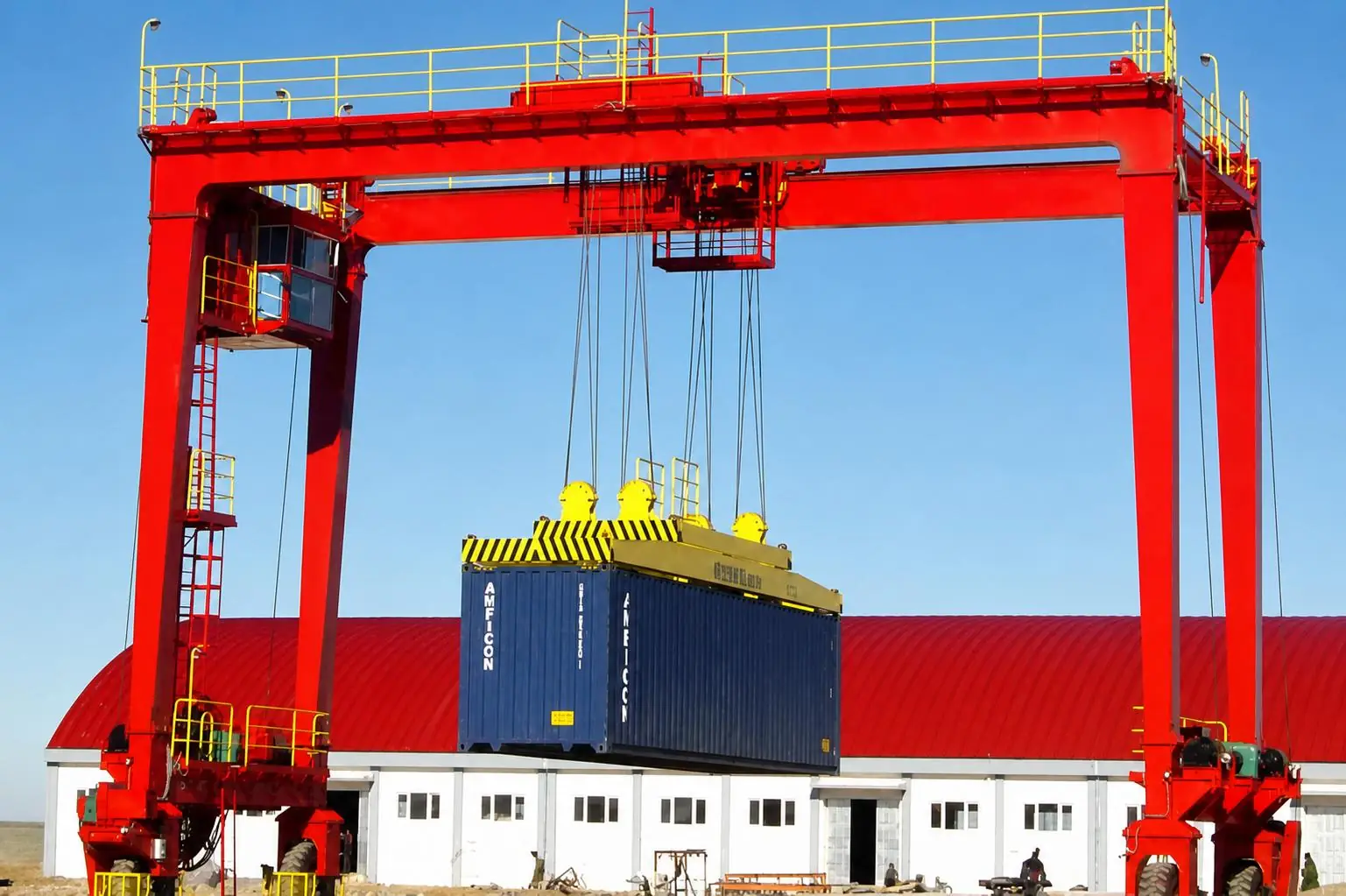
  • Rubber-Tyred Mobile Gantry Cranes: Route and Ground-Support Planning

    Rubber-Tyred Mobile Gantry Cranes: Route and Ground-Support Planning

    Technical guide

    Rubber-Tyred Mobile Gantry Cranes: Route and Ground-Support Planning

    A mobile gantry crane needs a usable transport route as well as lifting coverage. Review load geometry, ground support, turning space and access restrictions before comparing steering and handling arrangements.

    Henan Mine CraneTechnical guide · Updated 2026Crane selection, project scope and operating requirements
    Rubber-Tyred Mobile Gantry Cranes: Route and Ground-Support Planning
    Henan Mine Crane lifting equipment
    Project planning notes

    Key points for this crane project.

    1. What Is a Rubber-Tyred Mobile Gantry Crane?
    2. Key Advantages of Rubber-Tyred Mobile Gantry Cranes
    3. Indoor Applications of Rubber-Tyred Mobile Gantry
    Read the technical guide

    What Is a Rubber-Tyred Mobile Gantry Crane?

    Tire-type mobile gantry crane is a trackless gantry lifting equipment equipped with a rubber tire travel system. It integrates mechanical, hydraulic, electrical and safety protection systems, and can independently complete the whole process of positioning, lifting, translation, transshipment, and unloading of heavy objects. The core features are no need for track, global adaptation, flexible displacement, and free switching of indoor and outdoor working conditions.

    Tire Type RMG vs Rail Type Gantry Crane

    Orbital gantry cranes need to be laid with fixed steel rails and concrete foundations. They have high positioning accuracy and are suitable for fixed-point and high-frequency operations, but the infrastructure cost is high, they cannot be shifted, and the site adaptability is poor.

    Tire-type RMG relies on rubber tires to walk without a fixed track. It can turn at multiple angles and transition across regions. It has stronger mobility and versatility. It is more suitable for changeable working conditions, temporary construction, and dynamic production line scenarios. The ultimate positioning accuracy is slightly lower than that of track models.

    Principle of trackless autonomous walking

    RMG supports straight, diagonal, 90° steering, and in-situ fine-tuning through high-strength load-bearing tires, independent drive motors, and intelligent steering modules. As long as the ground meets the leveling and load-bearing standards, it can move freely in the whole area, completely solving the pain points of traditional gantry crane track constraints and inability to shift flexibly.

    Main Components

    The rmg gantry crane relies on the coordinated operation of multiple systems to achieve stable, safe and efficient heavy-duty operations. The major core components perform their respective functions and are accurately adapted to working conditions. The core structure functions are as follows:

    • Gantry frame: welded and formed with high-strength steel, the overall structure is stable, the deformation resistance is strong, and the weight and heavy-duty pressure of the whole machine can be stably carried. It is the core load-bearing body of the equipment operation.
    • Tire travel system: equipped with wear-resistant and explosion-proof industrial rubber tires and a dedicated drive mechanism, it has strong bearing capacity and stable travel. It can be adapted to a variety of flat ground to achieve flexible movement and free transition in the whole area.
    • Electric hoist/lifting trolley: it can slide horizontally accurately along the beam of the gantry, and it is equipped with professional spreaders to complete the vertical lifting and fine-tuning of heavy objects to ensure the accuracy of hoisting.
    • Lifting mechanism: it is composed of a hoist, a wire rope, and a dual brake assembly. The braking is sensitive and the lifting is stable, which effectively eliminates the risk of falling off the hoisting, and is suitable for all kinds of heavy-duty lifting operations.
    • Intelligent steering system: supports multi-mode steering adjustment, can be adapted to complex operating environments such as narrow spaces and irregular sites, and greatly improves the flexibility of equipment maneuvering.
    • Drive system: it is divided into two drive modes, electric and hydraulic. The electric model is silent and low-consumption, and is suitable for indoor normalization operations; the hydraulic model has plenty of power and strong bearing capacity, and is suitable for outdoor high-intensity and heavy-duty working conditions.
    • Electrical control cabinet: the intelligent control core of the equipment, through frequency conversion and speed regulation technology, the travel, lifting, and steering speed of the equipment are accurately regulated to ensure stable and controllable operation.
    • Wireless remote control system: equipped with a long-distance wireless control device, it is responsive and easy to operate, allowing operators to operate in a safe area, effectively avoiding the risk of close-range hoisting.
    • Safety protection system: integrates multiple safety devices such as overload protection, travel limit, intelligent anti-collision, emergency braking, sound and light alarm, and strengthens the safety line of defense for equipment and personnel operations in all directions.

    Key Advantages of Rubber-Tyred Mobile Gantry Cranes

    Indoor and outdoor dual-scene universal

    The equipment supports indoor and outdoor all-weather cross-border operations, which cannot only meet the needs of precision equipment hoisting and bulk material transfer in workshops and warehouses, but also adapt to complex outdoor working conditions such as construction sites, road and bridge infrastructure, port depots, and prefabricated component factories, and truly realize one-machine multi-scene reuse, with outstanding environmental adaptation capabilities.

    No rail infrastructure required

    The equipment does not need to lay steel rails and special civil foundations, and can be quickly put into use by relying only on flat ground with up-to-standard bearing capacity, eliminating the need for high supporting investments such as traditional track laying, transformation and expansion, and regular maintenance. The overall deployment is convenient, the production speed is fast, the initial infrastructure investment is greatly streamlined, and the project landing cost is effectively controlled.

    Strong heavy-duty capacity

    The whole machine has strong structural rigidity and uniform load distribution. Even if it is under heavy-duty conditions for a long time, it can maintain a stable operating state, with excellent bearing capacity and operating reliability.

    High site utilization rate

    The equipment can flexibly adjust the operation coverage according to the material stacking location and construction layout, eliminate the operation blind spots of fixed equipment, effectively reduce the redundant processes of secondary material handling and back-and-forth transportation, fully activate the available space of the plant and yard, and greatly improve the site utilization rate and overall operation flow efficiency.

    Adapt to dynamic working conditions

    The whole equipment does not need to be disassembled, and can be flexibly and quickly transitioned and shifted with the upgrading and iteration of the production line and the advancement of the construction process, and can be efficiently adapted to dynamic and changeable working conditions such as temporary engineering projects and phased construction. The equipment has wide versatility and high reuse rate, which can effectively reduce the idle loss of equipment and further improve the overall construction and production efficiency.

    Easy to deploy

    The equipment does not require supporting plant runways and permanent track infrastructure, and has strong compatibility with work sites, and can be directly adapted to conventional working conditions such as concrete, asphalt, and compacted hardened ground. With minimalist landing conditions, short equipment deployment cycle and low entry threshold, no large-scale civil construction investment is required, the overall investment is controllable, and the long-term economic benefits are outstanding.

    Indoor Applications of Rubber-Tyred Mobile Gantry Cranes

    RMG gantry cranes are suitable for various indoor industrial refinement and heavy-duty operation scenarios, and can be flexibly scheduled and used for different workshop working conditions. The core indoor applications are classified as follows:

    1. Intelligent manufacturing plant: mainly used for the displacement and disassembly of large-scale production molds, die-casting tooling, motors, transformers and complete sets of production equipment. It can follow the transformation of the production line and the flexible transition of process adjustment, without the need to fix the hoisting point, and adapt to the needs of flexible production.
    2. Mechanical assembly workshop: For the assembly process of large-scale heavy-duty equipment and machine modules, the alignment, lifting, and fine-tuning positioning of heavy-duty parts are accurately completed, so as to effectively improve the assembly accuracy and assembly efficiency, and avoid the problem of manual hoisting and alignment deviation.
    3. Warehousing and logistics center: It specializes in the stacking, loading, unloading, and transshipment of oversized equipment, heavy pallet goods, and industrial raw materials, to solve the pain points that ordinary forklifts cannot carry and the coverage of fixed cranes is limited, and to improve the efficiency of warehousing and circulation.
    4. Shipbuilding and heavy industry manufacturing workshop: suitable for cross-station transfer of large-scale welded components, hull accessories, and heavy steel structure modules, it can flexibly shuttle in the multi-process flow of the workshop to meet the needs of multi-station and multi-process continuous hoisting operations.
    5. Factory operation and maintenance scenarios: provide flexible heavy-duty hoisting support for the replacement, maintenance, and emergency repair of large-scale machinery and equipment, electrical mainframes, and supporting equipment in the workshop, and adapt to irregular and multi-point maintenance operations, greatly reducing the length of equipment downtime.

    Outdoor Applications of RMG Cranes

    RMG gantry crane is equipped with excellent outdoor environment adaptation capabilities, can adapt to open-air, multi-process, dynamic displacement construction scenarios, stable bearing capacity, flexible transition, is the core equipment for outdoor heavy-duty handling, the core outdoor applications are classified as follows:

    1. Construction site of construction projects: it is mainly used for the hoisting and placement of steel structure frames, precast concrete components, large-scale building materials and construction equipment. It can flexibly shift according to the advancement of construction buildings and work surfaces, adapt to the needs of multi-point and multi-regional rotation construction, and effectively improve the efficiency of on-site hoisting.
    2. Road, bridge and railway infrastructure engineering: focus on the lifting and shifting of bridge prefabricated beams, steel structure rods, railway subgrade modules, and large-scale engineering components. In view of the characteristics of the phased construction of road and bridge projects and the continuous advancement of the work area, the equipment can quickly transition to the new work surface and adapt to the dynamic construction rhythm.
    3. Ports and open-air depots: it is suitable for the loading and unloading, stacking and cross-regional transshipment of heavy cargo, bulk cargo, and container components in inland depots and small and medium-sized ports. The equipment has no track restrictions, and the operation movement line can be freely planned, greatly improving the space utilization rate of the yard and the efficiency of cargo turnover.
    4. Prefabricated component factory area: Responsible for the whole process of transportation of concrete prefabricated parts, building materials components, and assembled modules between the pouring area, maintenance area, stacking area, and loading area. It is suitable for high-frequency circulation operations in the factory area, and the handling path can be flexibly adjusted to ensure the continuous and efficient operation of the production line.
    5. Power and energy engineering projects: mainly undertake the hoisting, alignment and installation of heavy equipment such as transformers, generator sets, wind power equipment, and large industrial modules. The equipment has strong environmental adaptability, can operate stably in complex open-air working conditions, and meets the high-precision and high-safety construction requirements of energy engineering.

    How to Select the Right Rubber-Tyred Mobile Gantry Crane

    RMG gantry cranes are customized heavy-duty equipment, and the matching of parameters directly determines the operation safety and cost performance. The selection needs to be combined with the actual working conditions on the site to accurately match in all directions, so as to prevent insufficient parameters from affecting the operation, or excessive parameters from causing waste of resources. The seven core selection points are as follows:

    • Lifting load: accurately calculate the daily routine operating load and the maximum limit load, strictly reserve the safe load margin, while taking into account the load requirements of later production line upgrades and operating conditions expansion, and ensure the long-term adaptation of equipment.
    • Lifting height: Combined with the effective clearance height of the site, the dimensions of heavy-duty materials, and the distribution of obstacles on the site, the effective lifting height of the equipment is accurately determined to avoid problems such as lifting bumps and restricted lifting.
    • Span and operating range: According to the overall width of the on-site operating area and the material transfer radius, match the adapted equipment span to ensure the global coverage of hoisting operations, with no operating blind spots and no travel shortcomings.
    • Ground conditions: Check the flatness, hardening degree and carrying capacity of the operating ground in advance, and adapt the models to different sites such as concrete, asphalt, and compacted earthwork to eliminate safety hazards such as slippage, tilt, and settlement of equipment operations.
    • travel steering mode: Straight travel mode can be selected for regular and open work sites. According to the needs of narrow sites, irregular depots, and multi-directional transitions, priority is given to the multi-directional intelligent steering system to improve operation flexibility.
    • Power supply method: Cable power supply is preferred for indoor fixed and normalized operations, which is energy-saving and stable, and convenient operation and maintenance; for outdoor conditions where there is no fixed power grid and frequent transitions are required, lithium battery, diesel hybrid and other power supply solutions can be selected to adapt to non-grid operation scenarios.
    • Working condition level: Distinguish between the frequency of operations and the intensity of working conditions. Conventional models are used for intermittent and temporary heavy-duty operations. High-frequency, continuous, and high-intensity handling operations need to be equipped with heavy-duty and durable models to meet the needs of long-term stable operation.

    Important Safety Features for Mobile Gantry Cranes

    The RMG gantry crane has strong dynamic operation, flexible working conditions, and higher safety control requirements. The equipment relies on a full set of intelligent safety protection configuration and standardized operation system to ensure the safety of man-machine operations in two dimensions.

    Full set of core security configuration

    The equipment is equipped with multiple intelligent protection devices at the factory, and a full-dimensional passive protection system is built to avoid the hidden dangers of hoisting from the hardware level.:

    • Load protection device: equipped with overload protection and real-time load monitoring system, it can identify dangerous working conditions such as overload and partial load in real time, and automatically limit the lifting action to eliminate the risk of overload hoisting.
    • Travel limit device: integrated dual protection of lifting low limit and travel limit, accurately limit the operating boundary of the equipment, and effectively prevent equipment failures and safety accidents such as rushing to the top, offside, and collision.
    • Emergency braking device: equipped with an emergency stop switch and an emergency braking system of the whole machine, it can instantly cut off the power and lock the operation of the equipment when the working conditions are abnormal, and quickly stop loss and avoid danger.
    • Intelligent early warning and anti-collision device: equipped with intelligent anti-collision sensor module and sound and light alarm device, it can warn surrounding obstacles and personnel in real time throughout the operation, and remind the scene to avoid.
    • Control safety device: equipped with a remote control fault self-locking function, the equipment control system automatically locks and runs when it fails, eliminating safety issues such as misoperation and uncontrolled operation.

    Standardized operating specifications

    Perfect hardware protection needs to be matched with standardized operating procedures, and normalized and standardized operations are the core guarantee of safe operations.:

    • Pre-operation inspection: Before the equipment is turned on, it is necessary to complete all-round inspections of tire status, site flatness, braking system, limit device, control system, etc. to eliminate site hidden dangers and equipment failures.
    • Standardize hoisting operations: operate in strict accordance with the rated load, eliminate illegal operations such as overload, cable-stayed crooked hoisting, and extreme speed start and stop, and smoothly complete the whole process of hoisting, transshipment, and unloading.
    • Normalized safety inspection: monitor the operating status of the equipment in real time during the operation process, find abnormal noises, offsets, alarms and other abnormal conditions, immediately stop for investigation, and prohibit operations with faults.

    How Much Does a Rubber-Tyred Mobile Gantry Crane Cost?

    RMG gantry cranes are non-standard customized heavy-duty equipment. There is no unified fixed quotation, and the total price of the equipment fluctuates according to the customized needs of working conditions. In order to facilitate procurement, accurately control the budget and rationally select the type, the core cost composition factors and professional procurement recommendations are now classified and explained.:

    Core cost components

    The price of equipment is determined by multiple dimensions such as fuselage configuration, function customization, and landing services. The core influencing elements are as follows:

    • Basic parameter configuration: it includes three core parameters: rated lifting capacity, gantry span, and maximum lifting height. The larger the parameter specifications, the higher the material used in the fuselage and the structural process standards, and the basic cost will increase accordingly.
    • travel steering system: it covers multi-mode travel configurations such as industrial explosion-proof tire specifications, straight/diagonal/in-place steering, and intelligent steering modules adapted to complex sites will increase equipment configuration costs accordingly.
    • Power control system: it is divided into different power solutions such as cable power supply, lithium battery power supply, and hybrid power supply. It is equipped with frequency conversion speed control, intelligent control, and remote control systems. The configuration level directly affects the equipment pricing.
    • Safety protection configuration: basic protection, a full set of intelligent protection, explosion-proof and dust-proof customized protection and other different safety configuration packages, the higher the protection level, the higher the equipment safety redundancy and manufacturing cost.
    • Customization of special working conditions: exclusive customization for special operating environments such as high temperature, low temperature, dust, humidity, explosion-proof, etc., as well as personalized transformation of non-standard sizes and special loads, will produce a customized premium.
    • Landing and after-sales supporting: including one-stop services such as equipment transportation, on-site installation, commissioning training, quality assurance services, and spare parts supporting, it is an important part of the overall procurement cost.

    Chemical procurement advice

    Do not single-compare bare metal quotations for procurement and selection. It is necessary to consider the overall cost performance based on the use value of the equipment throughout the life cycle.:

    • Focus on the whole life cycle cost: abandon the misunderstanding of only looking at the initial purchase price, and focus on equipment energy consumption efficiency, failure rate, maintenance cost, parts versatility and service life of the whole machine to reduce long-term operating investment.
    • On-demand customization and rejection of redundancy: combined with the actual working conditions of the site to match the parameters and configuration, there is no need to overly pursue ultra-high-specification configuration, avoid cost waste caused by excess functions, and take into account practicality and economy.
    • Pay attention to after-sales supporting capabilities: give priority to manufacturers with perfect installation training, quality assurance and maintenance, and rapid spare parts supply system to reduce equipment downtime and ensure long-term stable operations.

    RMG Crane Maintenance Checklist

    Daily inspection

    Focusing on daily visual inspection and functional verification, it focuses on checking the tire wear status of the equipment, the sensitivity of the braking system, the integrity of the hook and wire rope, the effectiveness of the limit switch, and the response status of the control system. Comprehensively investigate the appearance of the equipment, damage, abnormal operation and other basic hidden dangers, to ensure the safe operation of the equipment on the same day.

    Regular maintenance

    Carry out periodic in-depth maintenance operations to clean, lubricate, fasten and debug core components such as gearboxes, drive motors, electrical circuits, fuselage welding welds, hydraulic systems, and transmission bearings, and simultaneously verify the operating performance of various safety protection devices to prevent failures caused by component aging and performance attenuation.

    Discuss the crane arrangement for your project.

    A mobile gantry crane needs a usable transport route as well as lifting coverage. Review load geometry, ground support, turning space and access restrictions before comparing steering and handling arrangements. Share the load, available drawings, working cycle and site conditions with Henan Mine Crane so the required configuration and supply boundary can be discussed.

    Related crane configurations

    Rail-Mounted Gantry (RMG)

    View product parameters
    Lifting capacity: 35 t, 40.5 t, 50 tSpan: 18 – 35 mLifting height: 12.3 – 21 m

    Use an RMG for container transfer along a fixed rail layout. Select the lifting arrangement, yard coverage and positioning controls from the container flow and stacking requirements.

    Multi Support Double Girder Underhung Crane

    View product parameters
    Lifting capacity: 3 – 40 tSpan: 10 – 80 mLifting height: 6 – 30 m

    Use a multi-support double-girder underhung arrangement for wide-span working areas and large components. The building supports, lifting coverage and load distribution are designed together.

    Updated 2026 · Henan Mine Crane
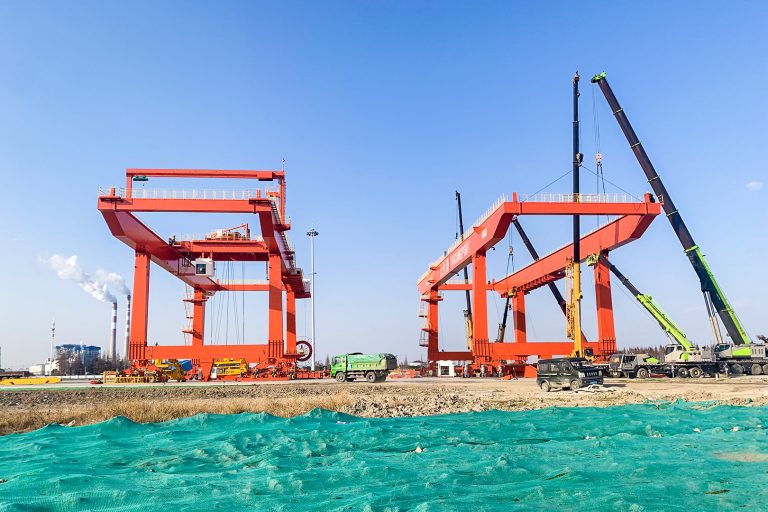
  • RTG Crane Purchase Cost: Yard Configuration, Power and Supply Boundaries

    RTG Crane Purchase Cost: Yard Configuration, Power and Supply Boundaries

    Technical guide

    RTG Crane Purchase Cost: Yard Configuration, Power and Supply Boundaries

    An RTG quotation depends on how the crane will operate within the yard. Define the stacking layout, steering requirements, power concept and infrastructure responsibilities so equipment and project costs can be compared consistently.

    Henan Mine CraneTechnical guide · Updated 2026Crane selection, project scope and operating requirements
    RTG Crane Purchase Cost: Yard Configuration, Power and Supply Boundaries
    Henan Mine Crane lifting equipment
    Project planning notes

    Key points for this crane project.

    1. What Is a Rubber Tyred Gantry (RTG) Crane?
    2. How Much Does an RTG Crane Cost?
    3. Key Factors Affecting Rubber Tyred Gantry Crane
    Read the technical guide

    What Is a Rubber Tyred Gantry (RTG) Crane?

    RTG is a wheeled mobile container gantry crane, mainly engaged in 20/40–foot standard container loading, unloading, stacking and transshipment, relying on rubber tires to walk, can be freely shifted in the hardened yard, and can normally cover 5-8 rows of container + truck passages, suitable for flexible and dynamic logistics operation scenarios.

    Core parameters

    • The whole machine is equipped with 4-8 sets of special rubber tires and a professional steering system, which is stable in travel, flexible in handling, and extremely adaptable to the site.

    Core advantage

    • Low-cost site adaptation: there is no need to lay a fixed track, which greatly reduces the initial infrastructure investment, while supporting the flexible transformation, layout adjustment and phased expansion of the yard to adapt to the dynamic development needs of the logistics hub.
    • High site utilization efficiency: it supports high-rise container stacking operations and has a high stacking density, which can fully tap the potential of the vertical space of the yard and effectively increase the throughput per unit area of the yard.
    • Universal adaptation for multiple scenarios: it can be fully adapted to 20/40-foot standard container loading, unloading, stacking, and transshipment operations, supports customized exclusive accessories, and is compatible with all kinds of heavy-duty non-standard cargo operations, and has strong scene compatibility.
    • Flexible operation ability: relying on the tire-type mobile structure, the operating range is flexible and adjustable, and the operation can be freely shifted according to the distribution of cargo flow, which perfectly matches the diversified and flexible operation model of modern logistics hubs.

    How Much Does an RTG Crane Cost?

    RTG is a highly customized heavy-duty lifting equipment. The pricing of the whole machine is affected by multiple factors such as specifications, power type, automation configuration and brand quality, and the price range of the new machine has a great span. Although the procurement threshold for second-hand refurbished RTG equipment is lower, the failure rate and maintenance costs are higher in the later stage, and the overall cost performance is obviously short.

    • This model has a streamlined configuration and excellent cost performance. It focuses on lightweight container operations, and is perfectly adapted to the low-frequency and small-throughput operation scenarios of small inland logistics depots and small and medium-sized freight depots.
    • As a standard model for logistics hubs and medium-sized ports, the equipment has stable performance and complete functions, which can meet the needs of normalized, medium and high-intensity container turnover operations.
    • The equipment is equipped with a high-end intelligent control system and a heavy-duty configuration, which is suitable for large-scale deep-water terminals and high-throughput specialized logistics hubs, and can realize efficient, automated and high-density container stacking and transshipment operations.
    • Steel, supply chain and environmental protection policies will affect the final quotation in real time, and precise prices need to be customized for inquiry.

    Key Factors Affecting Rubber Tyred Gantry Crane Price

    RTG gantry cranes are customized special equipment, and the price has no fixed standard. They are affected by multiple core variables and the project is greatly differentiated. The following are the core pricing factors sorted from high to low by influence weight, and they are also the key basis for procurement inquiry and price comparison.:

    • Lifting specifications (core decisive factors): The rated lifting weight, operating span, and stacking height directly determine the material specifications of the steel structure of the whole machine, the strength design of the fuselage, and the grade of the core supporting components. It is the core benchmark for the basic cost of RTG. The larger the parameter, the higher the cost of the whole machine.
    • Power system solution: The cost of different power versions is inversely different from the operation and maintenance cost.
    • Intelligent and automated configuration: Basic manual models are the most cost-effective, with intelligent functions such as GPS automatic travel, intelligent sway control, remote control, automatic stacking, and intelligent anti-collision.
    • Personalized customization requirements: For customized retrofits such as coastal anticorrosion, extreme high and low temperature conditions, non–standard operating spans, exclusive operating accessories, and special safety standards, additional costs will be incurred.
    • Operating condition level: FEM A6–A8 high-working-level heavy-duty models suitable for 24-hour high-intensity operations are fully upgraded in terms of structural strength, component wear resistance, and overall machine stability, and the cost is significantly higher than that of conventional light-load operating models.
    • Core accessories and market conditions: the brand selection of core accessories such as engines, electronic control systems, hydraulic components, annual steel raw material price fluctuations, the global supply chain situation and industry environmental protection policies will indirectly affect the RTG terminal price.

    RTG Crane Operating Costs: Beyond the Purchase Price

    The service life of RTG is 15-20 years, and the long-term operating cost is generally higher than the purchase price of the equipment, which is the core consideration in the selection.

    Energy consumption cost

    Energy consumption is the largest variable cost of RTG operations, and the economics of different power models vary significantly.

    The energy-saving advantages of pure electric E-RTG are the most obvious. Electricity prices are stable and non-fluctuating, and they are more suitable for the long-term normalized operation of logistics hubs.

    Maintenance cost

    The power type is the core watershed of RTG maintenance costs. Diesel RTG has a complex structure and many wearing parts. The engine, fuel and hydraulic systems require frequent maintenance and repair, with a high failure rate and high long-term maintenance expenses.

    Fixed consumables and hidden operating costs

    Tire loss is the exclusive high-frequency rigidity cost of RTG.Affected by load, site friction and climate, the entire set of tires needs to be replaced every 2-3 years.

    Core conclusion: Hybrid and pure electric RTG procurement and infrastructure costs are higher, but energy consumption, maintenance, and consumables costs are lower. Under conventional operation scenarios, the equipment premium can be returned to the cost in 3-5 years, and the remaining service cycle can be sustainably reduced.

    How to Choose the Right RTG Crane for a Logistics Hub

    RTG selection needs to be based on the actual working conditions of the site, with the core principles of adapting to operating requirements, optimizing the full cycle cost, and reserving intelligent upgrade space, taking into account the current practicality and future expansion. The specific selection steps are as follows:

    1. Clarify operating conditions and production capacity requirements: combine the annual container throughput of the site, mainstream box specifications, rated stacking height and other core indicators, accurately match the basic lifting parameters of the equipment, and eliminate the problem of excess parameters or insufficient performance.
    2. Match the site environment and infrastructure conditions: according to the load-bearing standards of the site, regional climatic conditions, overall layout planning and long-term expansion requirements, determine the operating span of the equipment, anti-corrosion protection level, tire configuration and travel adaptation plan.
    3. Scientific selection of power system solutions: diesel power is preferred for stations with limited short-term budgets and low operating frequencies; the pursuit of a balance between cost and energy saving is adapted to hybrid models; long-term large-scale, high-frequency operation of logistics hubs, priority is given to the deployment of energy-saving and cost-reducing pure electric E-RTG equipment.
    4. Intelligent configuration is matched on demand: small and medium-sized conventional stations are adapted to semi-automatic control systems to meet the needs of basic operations; large-scale high-throughput hubs can be upgraded with fully automatic operations, remote operation and maintenance, and intelligent control systems to greatly improve operation efficiency and automation level.
    5. Comprehensive evaluation of after-sales system and full-cycle costs: procurement selection abandons simple low-cost thinking, and gives priority to high-quality manufacturers with perfect after-sales system, adequate supply of spare parts, and support for iterative equipment upgrades. Focus on the cost-effective performance of the whole life cycle of the equipment to maximize the return on investment.

    Questions to Ask Before Buying an RTG Crane

    RTG is a high-value customized equipment, and poor procurement information can easily lead to risks such as inconsistent configuration, invisible price increases, after-sales delays, and delivery delays. Before purchasing, it is necessary to verify the manufacturer's plan from the five core dimensions to avoid hidden procurement risks, ensure the cost performance and long-term stability of the equipment, and streamline the inquiry. The main points are as follows:

    1. Adaptation of working conditions and parameter customization: check whether the tonnage, span, stacking height, and working level of the equipment match the working conditions of the station; clarify the non-standard customization plan, construction period and cost, and eliminate inefficient and wasteful low-configuration parameters and high-configuration.
    2. Quotation details and full-cycle TCO: Request itemized landing quotations, clarify all costs such as bare metal, installation, and optional configuration, and eliminate invisible price increases; simultaneously verify long-term operation and maintenance costs such as energy consumption, maintenance, tire replacement, and spare parts, and take the whole life cycle cost as the core basis for procurement.
    3. Power plan and compliance: combine site power supply, operating intensity, and environmental protection policies to match the optimal power model; verify equipment energy consumption, emissions, and noise indicators to ensure full compliance with local compliance standards.
    4. Intelligent configuration and upgrade potential: distinguish between standard configuration of intelligent functions and optional charging standards; confirm the feasibility and cost of equipment automation iteration, TOS system docking, and functional upgrade to ensure the long-term availability of equipment.
    5. Manufacturer qualification and delivery after-sales: verify the manufacturer's similar project cases and industry qualifications; clarify the quality assurance policy, the timeliness of local after-sales response, training services, and spare parts cycle; lock in the production delivery cycle and extension guarantee terms to ensure the smooth commissioning of the project.

    Why Choose an Experienced RTG Crane Manufacturer?

    • Mature technology and working condition adaptation ability: Senior manufacturers have a large number of domestic and foreign project landing experience, and the technical system is mature. They can provide customized adaptation solutions for different site working conditions, climatic environment, and operating intensity, effectively avoiding non-standard site adaptation defects, and the equipment has stronger operating stability.
    • Improve after-sales and reduce downtime losses: it has a standardized and localized after-sales system, adequate spare parts inventory and rapid response service capabilities, and can deal with equipment failures and maintenance issues in a timely manner, minimize equipment downtime and missed work losses, and ensure continuous and efficient operation of the site.
    • Excellent equipment performance and durability: the whole machine has excellent technology, reliable quality of core accessories, better energy consumption control of the equipment, wear resistance and manufacturing resistance, longer service life, and can be adapted to long-term high-intensity normalization operations, greatly reducing iterative replacement costs.
    • Sustainable upgrading and expansion capabilities: the original equipment reserves intelligent and electrified upgrade interfaces, supports later automation transformation, iteration of electronic control systems, and docking of TOS systems, and can continuously optimize equipment performance and extend equipment life cycles following the development of logistics hubs.

    Discuss the crane arrangement for your project.

    An RTG quotation depends on how the crane will operate within the yard. Define the stacking layout, steering requirements, power concept and infrastructure responsibilities so equipment and project costs can be compared consistently. Share the load, available drawings, working cycle and site conditions with Henan Mine Crane so the required configuration and supply boundary can be discussed.

    Related crane configurations

    Rubber Tyred Gantry (RTG)

    View product parameters
    Lifting capacity: 20t – 100tSpan: 5m – 30mLifting height: 6m – 30m

    Use a rubber-tyred gantry for heavy handling where the operating layout requires a mobile tyre-supported arrangement. Define the load, steering modes, route and ground conditions for the project.

    Updated 2026 · Henan Mine Crane
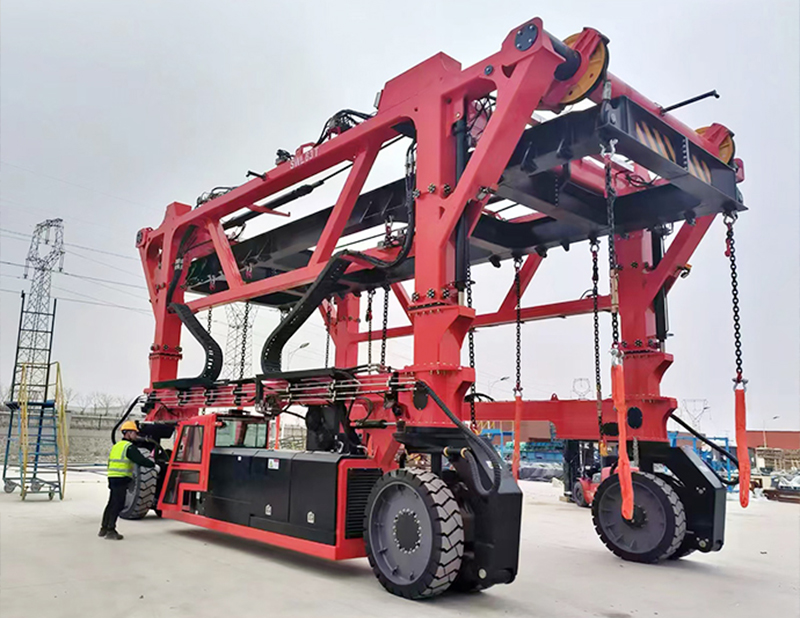
  • RTG vs RMG for New Container Yards: Compare Layout Flexibility

    RTG vs RMG for New Container Yards: Compare Layout Flexibility

    Technical guide

    RTG vs RMG for New Container Yards: Compare Layout Flexibility

    Start with the yard's operating plan and future changes. Compare the implications of fixed rails and tyre-mounted travel for stacking blocks, circulation routes and infrastructure before selecting the handling concept.

    Henan Mine CraneTechnical guide · Updated 2026Crane selection, project scope and operating requirements
    Rail Mounted Container Gantry Cranes (RMG)
    Rail Mounted Container Gantry Cranes (RMG)
    Project planning notes

    Key points for this crane project.

    1. Core Application Scenarios for RTG and RMG
    2. Common Core Requirements for Container Yard Projects
    3. Detailed Comparison of RTG and RMG Models and Their
    Read the technical guide

    Core Application Scenarios for RTG and RMG

    Seaport Container Terminals

    Seaport container terminals, characterized by high operational frequency and orderly container stacking, represent the core application scenario for container yard crane comparison. Terminals require equipment to consistently and reliably perform container stacking, inter-block transfer, and block organization tasks, placing stringent demands on the equipment’s continuous operational capability.

    Large, standardized seaport terminals flexibly combine RTG and RMG equipment based on overall yard planning to meet high-density storage and high-frequency handling demands, ensuring stable terminal throughput.

    Inland Container Yards

    Inland container yards primarily handle container storage, loading/unloading, and inter-zone transfers. Site planning is flexible, without the strict standardized block restrictions found in seaports. In these scenarios, equipment mobility is prioritized, and fixed tracks are not required.

    RTG cranes for container yards, with their outstanding mobility, have become the mainstream choice for inland yards. They can adapt to dynamic adjustments in operational areas and accommodate diverse operational needs.

    Rail-Intermodal Logistics Terminals

    Container transfer operations at rail-intermodal logistics terminals feature fixed routes and well-organized work areas, placing higher demands on equipment stability and positioning accuracy. Equipment must precisely align with fixed loading and unloading points.

    The RMG crane for container terminal, which operates on fixed tracks, perfectly aligns with the standardized operational processes of rail-intermodal terminals, reliably handling container transfers between trains and yards, as well as between yards and trucks.

    Inland Dry Ports and Multimodal Hubs

    Inland dry ports and multimodal hubs feature stable cargo volumes and are typically organized into standardized, uniformly planned zones. They focus on large-scale warehousing and transshipment operations, placing high demands on site utilization and operational stability.

    Most newly constructed smart dry ports prioritize the use of RMG equipment to establish standardized, efficient container storage and transshipment systems based on standardized operating models.

    Large-Scale Industrial Logistics Yards

    Large logistics yards located near ports or industrial zones primarily handle the on-site handling and stacking of foreign trade container cargo. Their operational models are flexible, and site layouts are dynamically adjusted based on cargo volume.

    Such yards are generally reluctant to invest in high-cost fixed infrastructure. RTG equipment, which offers strong adaptability and low retrofitting difficulty, can effectively control costs associated with site modifications and equipment upgrades.

    Common Core Requirements for Container Yard Projects

    High Container Storage Utilization

    Yard land resources are limited. Whether for new projects or retrofitting existing yards, optimal equipment selection is essential to increase container stacking levels and block utilization. Equipment span and stacking height parameters directly determine the yard’s storage capacity and land utilization efficiency.

    Appropriate equipment configurations can maximize container storage capacity within limited space and streamline on-site cargo flow.

    Stable, Routine Operational Performance

    Container yards operate continuously around the clock, with extremely high frequencies of equipment start-up, transfer, and stacking. Equipment failures directly cause container backlogs and logistics bottlenecks, disrupting the overall operational rhythm.

    Purchasers generally prioritize structural durability and component reliability to ensure low-failure, continuous year-round operation at the yard.

    High Compatibility Between Equipment and Yard Layout

    The lane layout, spacing between container blocks, and rail connection points vary from yard to yard, making one-size-fits-all solutions impractical. The equipment’s operating range, span, and travel paths must align with the actual site layout.

    Mismatched parameters can lead to operational blind spots and traffic interference, significantly reducing the yard’s overall operational efficiency.

    Safe and Smooth Container Handling

    Containers are heavy, uniform cargo. Swaying or shifting during lifting can easily cause collisions or deformation, which not only affects positioning accuracy but also poses safety hazards.

    The equipment’s anti-sway capabilities, precise control, and operational cushioning performance are key to ensuring safety and stability throughout the entire process of container lifting, transfer, and stacking.

    Controllable Long-Term Operating Costs

    Most buyers focus solely on the initial purchase price of equipment, overlooking hidden costs such as long-term maintenance, energy consumption, spare part replacements, and infrastructure upkeep. Since yard cranes have a service life of over a decade, long-term operating expenses far exceed the one-time purchase cost.

    Details such as tire wear, track maintenance, and energy consumption differences directly drive the gap in full-cycle operating costs between RTG and RMG.

    Compatibility with Future Automation Upgrades

    Many traditional yards currently rely primarily on manual operation, but long-term plans call for a gradual transition to semi-automated and fully automated modes. When selecting equipment, it is essential to consider scalability to avoid premature obsolescence due to the inability to adapt to intelligent upgrades in the short term.

    Models designed for automation integration can be directly upgraded later, significantly reducing the cost of intelligent upgrades for the yard.

    Detailed Comparison of RTG and RMG Models and Their Suitable Applications

    What Is an RTG (Rubber-Tired Gantry Crane)?

    RTG (Rubber-Tired Gantry Cranes) rely on rubber tires for mobility and do not require fixed tracks, making them the model that stands out for flexibility in the rubber-tired gantry crane vs. rail-mounted gantry crane comparison. The equipment can freely turn and operate across zones on paved surfaces, unrestricted by fixed travel paths.

    RTG require no large-scale civil engineering work, making site modifications straightforward. Operational zones can be adjusted at any time to meet yard requirements, making them well-suited for dynamic operational models.

    What is an RMG (Rail-Mounted Gantry Crane)?

    RMG rail-mounted gantry cranes operate on pre-embedded ground tracks, offering fixed paths, precise positioning, and stable operation. As core equipment for standardized container yards, they feature uniform and consistent operational zones with virtually no tracking deviation issues.

    This equipment requires upfront infrastructure work such as track laying and foundation reinforcement, resulting in higher initial investment. However, it offers standardized and stable operation, making it suitable for large-scale, high-throughput fixed yard projects.

    Project Scenarios Where RTG Is the Preferred Choice

    Yards with undefined layouts or those requiring phased expansion are highly suited for RTG equipment. In later project phases, container zones can be flexibly adjusted and operational areas expanded, leveraging the RTG maneuverability to adapt to dynamic site modifications.

    For older yards or temporary operations where track construction is not feasible, selecting RTG eliminates high infrastructure costs and enables rapid deployment and production.

    Multi-purpose logistics yards with fluctuating operations and frequent adjustments to working areas also commonly choose RTG to ensure operational flexibility.

    Project Scenarios Where RMG Is the Preferred Choice

    For newly constructed, standardized container terminals with comprehensive planning and fixed layouts, RMG equipment is the preferred choice. The fixed rail operation mode eliminates positioning errors and is well-suited for high-density, high-frequency, large-scale stacking operations.

    Rail intermodal hubs and smart yards planned for intelligent upgrades are better suited for RMG models. With fixed equipment trajectories and stable data collection, they facilitate integration with automated control systems to achieve unmanned operation upgrades.

    For large port areas seeking long-term stable operations and low O&M variability, the stability and durability advantages of RMG will continue to stand out over the long term.

    Core Technical Parameters to Verify During Procurement

    Rated Lifting Capacity

    The equipment’s rated tonnage must match the maximum load of standard containers, loaded containers, and over-height containers, accounting for the lifting gear’s own weight and allowing for a sufficient safety margin. For yards with high volumes of loaded container throughput, load capacity standards should be appropriately increased to avoid long-term full-load operation of the equipment.

    Equipment Span

    The equipment span determines the number of container rows covered in a single pass and must align with the dimensions of the yard blocks and the layout of truck lanes. A reasonable span allows for the simultaneous coverage of multiple container rows and access lanes, reducing the number of round trips required.

    Stacking Height

    Stacking height directly affects yard storage density, and storage standards vary significantly across different terminals. The equipment’s lifting height must match the planned number of stacking levels to meet daily stacking and storage requirements.

    Cantilever Length

    Models equipped with a cantilever can cover side truck and rail loading/unloading areas, enabling the transfer of side-loaded containers without moving the main unit. The cantilever length must strictly match the lane width and the scope of transfer operations.

    Gantry Travel Length

    Gantry travel length determines the equipment’s operational coverage area. It must align with the total length of each individual operational zone within the yard to ensure no blind spots and achieve full-coverage stacking and transfer operations.

    Operational Speed

    Lifting, trolley, and gantry travel speeds collectively determine the duration of a single operational cycle. High-throughput terminals may opt for higher speeds, while standard logistics yards should select conventional speeds to balance equipment stability and operational efficiency.

    Power and Drive Systems

    RTG support various power supply modes, including diesel, electric, hybrid, and battery-powered, making them suitable for sites without fixed power sources. RMG typically use slip ring or busbar power supply, offering stable power and lower energy consumption, making them suitable for long-term continuous operation scenarios.

    Actual model selection should be flexibly matched based on site power supply conditions, average daily operating hours, and energy consumption budgets.

    Control and Automation Levels

    Manual, remote, or semi-automatic control modes can be selected based on the project’s current status. For projects with long-term automation plans, interfaces for fully automated systems can be pre-installed to reduce future retrofitting costs.

    Site Environment Adaptability

    Coastal terminals require equipment with protection against wind, salt fog, and dust, while inland yards prioritize high-temperature resistance and protection against sand and dust. The equipment’s environmental protection rating directly determines its long-term service life outdoors.

    Key Differences Between RTG and RMG (Key Considerations for Procurement)

    Yard Layout Flexibility

    RTG have no track restrictions and offer exceptional site flexibility, allowing for free adjustment of operational areas. They are suitable for various projects involving site modifications, block adjustments, and phased expansions.

    RMG have fixed operating paths and a regular layout, making it impossible to arbitrarily adjust operational blocks. They are better suited for standardized yards that are planned in one go and remain unchanged over the long term.

    Infrastructure Requirements

    RTG have minimal site requirements; they can begin operations with only a paved surface, eliminating the need for costly track construction. This results in lower upfront infrastructure investment and faster deployment.

    RMG require precise track laying, foundation reinforcement, and the installation of supporting power facilities. Consequently, upfront infrastructure costs are higher, and the construction cycle is relatively longer.

    Automation Compatibility

    RMG is the preferred model for automated yards. With fixed trajectories, precise positioning, and stable operational data, its control system is easy to integrate, making unmanned conversion less challenging and more likely to succeed.

    RTG automation conversion is more difficult. Because the equipment’s travel paths are not fixed, it requires complex positioning and navigation systems, resulting in higher conversion costs and technical barriers.

    Long-Term Operating Costs

    RTG have relatively high long-term maintenance costs, including ongoing tire wear, steering system maintenance expenses, and consistent energy consumption for diesel and hybrid models, along with numerous minor maintenance tasks.

    While RMG require higher initial infrastructure investment, they have no tire wear in the long term, low track maintenance frequency, and stable energy consumption, offering a cost advantage for large-scale, long-term operations.

    Site Utilization and Block Design

    RMG are suited for highly standardized block planning, enabling neat stacking with controllable spacing, high land utilization, and suitability for high-density container storage operations.

    RTG can adapt to irregular sites and allow for flexible arrangement of operational blocks, but their level of standardization is insufficient, resulting in slightly lower stacking uniformity for high-density storage compared to RMGs.

    Differences in Maintenance Focus

    RTG daily maintenance focuses on mobility-related components such as tires, steering mechanisms, travel drives, and hydraulic systems, involving numerous wear-and-tear parts and high maintenance frequency.

    RMG maintenance centers on track alignment, power supply systems, and fixed travel mechanisms, featuring simple procedures and low frequency, making long-term maintenance more hassle-free.

    Optimal Project Types

    RTG are suitable for flexible container yard projects involving phased development, limited space, temporary operations, and dynamic operational requirements.

    RMG are better suited for high-end container terminals with fixed layouts, high throughput, rail integration, large-scale operations, and a need for automation upgrades.

    How to Select a Reliable RTG/RMG Container Crane Supplier

    Verify Manufacturing Capabilities at the Source

    RTG and RMG are large-scale port machinery with manufacturing precision and safety standards far exceeding those of ordinary industrial cranes. Since distributors cannot guarantee equipment quality or customization, procurement should prioritize original manufacturers with in-house R&D, production, quality inspection, and export delivery capabilities.

    Original manufacturers can precisely tailor equipment to withstand heavy-load, outdoor port environments and harsh operating conditions, ensuring operational stability from the outset.

    Verify Implementation Experience with Similar Yard Projects

    High-quality suppliers must be familiar with the operational logic of seaports, inland ports, and intermodal yards, possess extensive experience with intermodal yard crane solutions, and understand specialized requirements such as port infrastructure, corrosion and wind resistance, and automation integration.

    Sufficient experience with similar projects allows for the early avoidance of common implementation issues such as site compatibility, operational interference, and parameter mismatches.

    Evaluate Professional Engineering Customization Capabilities

    A professional engineering team can accurately determine the appropriate crane model based on yard drawings, block layouts, throughput requirements, and automation plans, and optimize equipment parameters specifically for the application, rather than simply applying generic standard models.

    Verify Complete Set of Technical Documentation

    Reputable export manufacturers can provide a complete set of English technical documentation, including assembly drawings, wheel load data, electrical schematics, parts lists, and factory quality inspection reports, to meet the customs clearance, acceptance, and operation and maintenance registration requirements for overseas projects.

    Verify Core Component Brands and Specifications

    Core components such as motors, gearboxes, brakes, PLC control systems, and container spreaders directly determine equipment stability and service life. When purchasing, clearly specify component brands and protection standards to prevent substandard or downgraded configurations.

    Verify Factory Quality Inspection and Testing Procedures

    Prior to shipment, the equipment must undergo weld inspection, dimensional verification, no-load and full-load testing, and functional commissioning. Complete inspection records must be retained to ensure the equipment can be put into stable operation immediately upon arrival.

    Define the Scope of Installation and Commissioning Services

    The supply model must be confirmed in advance, distinguishing between options such as equipment-only supply, installation guidance, and turnkey commissioning. Port machinery requires high installation precision, and professional technical support can help prevent operational failures later on.

    Confirm Long-Term After-Sales Support and Spare Parts Availability

    Yard equipment operates continuously year-round, requiring manufacturers to provide long-term spare parts supply, software updates, fault diagnosis, and rapid after-sales response to minimize downtime losses at the yard.

    Common Procurement Pitfalls in Container Stacker Crane Selection

    Selecting equipment based solely on low price will significantly increase long-term operational and maintenance costs.

    Blindly following trends or ignoring yard traffic flow and block layout will result in poor equipment compatibility, creating operational blind spots and traffic interference issues, thereby reducing overall operational efficiency.

    Focusing only on current operational needs while ignoring long-term automation plans will render equipment incompatible with future smart upgrades, leading to additional costs for replacement.

    Focusing solely on the initial purchase price while ignoring long-term expenses such as energy consumption, spare parts replacement, and infrastructure maintenance will cause the project’s total lifecycle costs to far exceed the initial budget.

    Failing to verify site infrastructure, power supply, and ground load-bearing capacity in advance can result in equipment being unable to be installed and put into operation upon arrival, necessitating secondary site modifications.

    The incorrect practice of selecting equipment models before planning yard blocks will directly reduce site utilization and cause混乱 in on-site operational workflows.

    Selecting a manufacturer without experience in non-port yard projects may result in equipment that is ill-suited for port heavy-load and harsh outdoor conditions, compromising long-term operational stability.

    Incomplete site, operating condition, and throughput data provided during the quotation process can lead to customized solutions that do not match on-site realities, triggering repeated modifications and project delays.

    Frequently Asked Questions

    What is the core difference between RTG and RMG?

    The core differences lie in operating modes, infrastructure requirements, flexibility, and compatibility with automation. RTGs are tire-mounted, track-free, have lower infrastructure costs, and offer greater flexibility; RMGs are rail-mounted, follow fixed paths, provide precise positioning, and are better suited for automated operations, though they require higher upfront infrastructure investment.

    Which is better for container terminals: RTG or RMG?

    There is no absolute superiority; it depends entirely on project suitability. New, standardized, high-throughput large-scale terminals with automation plans should prioritize RMG; terminals built in phases, with flexible layouts, undergoing retrofits, or with infrastructure constraints are better suited for RTG.

    Does RTG offer greater site flexibility than RMG?

    RTG offers significantly greater flexibility than RMG. Unrestricted by fixed tracks, it allows for free adjustment of operational areas and adapts well to diverse scenarios such as site expansion, block adjustments, and temporary operations.

    Is RMG more suitable for automated yards?

    Yes, RMG is the preferred model for automated container yards. Its fixed travel paths and precise, stable operational data simplify integration with control systems, enabling seamless implementation of semi-automated, fully automated, and unmanned operations.

    Which model has lower long-term operating costs?

    For small-scale, short-term yard projects, RTG offers lower overall costs; for large-scale, long-term operations in standardized high-throughput yards, the RMG offers a more significant advantage in total lifecycle costs due to its low maintenance, low energy consumption, and high stability.

    Which model is suitable for rail-intermodal terminals?

    Rail-intermodal terminals have fixed operating points and orderly traffic flow, making the RMG rail-mounted gantry crane the preferred choice. It can precisely align with rail loading and unloading points, ensuring stable operation and standardized work procedures.

    Before requesting a quote, please prepare complete data including yard layout drawings, block dimensions, lane and rail locations, planned stacking heights, average daily throughput, power supply conditions, and long-term automation plans to ensure the solution is implemented accurately.

    Summary

    Which is better: RTG or RMG? There is no standard answer; both types of equipment have their own suitable scenarios. The core of selection does not lie in the superiority of the equipment, but in aligning with the project’s site conditions, operational model, throughput targets, and long-term plans.

    For yards with flexible payment terms, infrastructure constraints, and dynamic operational models, RTG offer better value for money; for high-end yards that are standardized, large-scale, and pursue automation upgrades and long-term stable operations, RMG provide greater value.

    Professional container terminal yard crane selection requires a comprehensive assessment that combines infrastructure conditions, operational frequency, maintenance budgets, and long-term planning. Relying on the manufacturer’s engineering experience helps avoid selection pitfalls and ensures the long-term stable operation of the equipment.

    Henan Mine Crane (Crane Industrial) has specialized in port yard crane equipment for many years, with extensive experience in implementing projects at domestic and international terminals, dry ports, and intermodal hubs. We can customize dedicated RTG and RMG solutions based on project conditions and provide a full set of English technical documentation along with cross-border after-sales support.

    Unsure whether an RTG or RMG is the right fit? Provide us with your yard drawings, block layout, stacking height requirements, throughput, and automation plans, and our engineering team will precisely match you with the optimal yard crane solution.

    Discuss the crane arrangement for your project.

    Start with the yard's operating plan and future changes. Compare the implications of fixed rails and tyre-mounted travel for stacking blocks, circulation routes and infrastructure before selecting the handling concept. Share the load, available drawings, working cycle and site conditions with Henan Mine Crane so the required configuration and supply boundary can be discussed.

    Related crane configurations

    Container Overhead Crane

    View product parameters
    Lifting capacity: 30-65 tSpan: 18-35 mLifting height: 8 – 20 m

    Transfer containers within a defined overhead runway area using a double-girder bridge and matched spreader. Container size, working clearance and the handling sequence determine the arrangement.

    Container Straddle Carrier

    View product parameters
    Lifting capacity: 30 – 50 tStacking arrangement: 1 over 3 – 1 over 6Working class: A7 – A8

    Move containers between handling positions with a straddle carrier matched to the travel route and stacking layout. Define container load, ground conditions, clearance and the preferred drive system.

    Updated 2026 · Henan Mine Crane
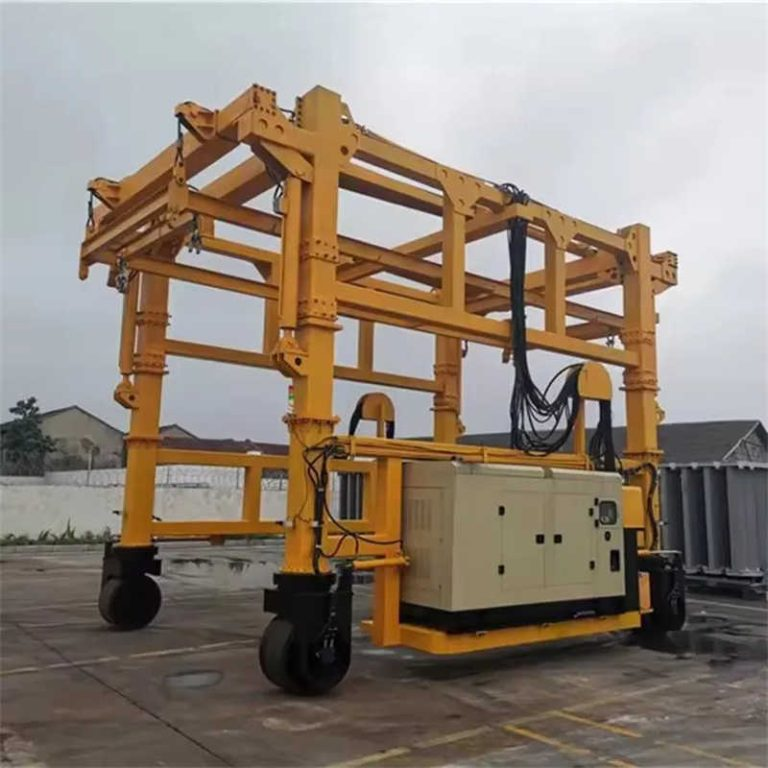
  • RTG Cranes vs Straddle Carriers: Short-Distance Container Transfer

    RTG Cranes vs Straddle Carriers: Short-Distance Container Transfer

    Technical guide

    RTG Cranes vs Straddle Carriers: Short-Distance Container Transfer

    The equipment choice changes how containers move between stacking and handover points. Compare the handling sequence, vehicle interaction and available circulation space for the actual transfer distances.

    Henan Mine CraneTechnical guide · Updated 2026Crane selection, project scope and operating requirements
    Container Straddle Carrier by Henan Mine Crane
    Container Straddle Carrier by Henan Mine Crane
    Project planning notes

    Key points for this crane project.

    1. Overview of Short-Distance Container Handling in
    2. What Is an RTG (Rubber Tyred Gantry) Crane?
    3. What Is a Straddle Carrier?
    Read the technical guide

    Overview of Short-Distance Container Handling in Ports

    Typical Workflow

    In the first step, STS crane unloads the container from the ship, which is the starting point of terminal operation and the key link between ocean transportation and land handling.

    In the second step, the unloaded containers need to be transferred to the designated yard block through short-haul handling equipment, this process is what we call short-haul handling, which is also the core operating scenario of RTG and transporter.

    In the third step, after the containers are transported to the yard, they need to be stacked or repositioned to ensure that the yard space is reasonably utilized, and at the same time to facilitate subsequent extraction.

    In the last step, the containers are picked up from the yard according to the demand and transferred out of the port by truck or railroad, completing the whole short-distance handling closed loop.

    Where RTG and Straddle Carriers Fit

    In the whole short-haul handling process, RTG and straddle carriers are positioned completely differently, and each assumes different core functions.

    The core positioning of RTG cranes is yard stacking equipment, which is mainly responsible for stacking and picking up containers after they are transported to the yard. It is more adept at efficiently completing the multi-layer stacking of containers in a fixed yard block to enhance yard utilization.

    Transporter is a kind of “two-in-one” equipment, both transportation and stacking functions, can independently complete the short-distance transfer, stacking and extraction of containers, without relying on other horizontal transportation equipment.

    Simply put, RTG focuses on “stacking” and transporter focuses on “transportation + stacking”, both of which have different operation logic and different terminal scenarios, which is also a key point to distinguish in container yard equipment selection. This is also a key point of distinction in container yard equipment selection.

    What Is an RTG (Rubber Tyred Gantry) Crane?

    Definition

    RTG crane, full name Rubber Tyred Gantry Crane (Rubber Tyred Gantry Crane), is a kind of gantry crane that relies on tires to support and move, and its core purpose is to stack containers in the yard block.

    Unlike rail-type gantry cranes, it does not have to rely on fixed rails, and can move flexibly within the designated yard area, but the range of movement is mainly limited to the inside of the yard block, and is not suitable for long-distance transshipment across the block.

    Henan Mine Crane's RTG cranes are suitable for different sizes of terminal yards around the world, no matter small and medium-sized inland ports or large coastal ports, they can be customized according to the actual needs of the stacking height and operating range.

    Key Characteristics

    RTG cranes are mainly powered by diesel-electric and hybrid models, and now more and more terminals tend to choose hybrid or pure electric models, which cannot only reduce energy consumption, but also meet the requirements of environmental protection.

    Its moving track is relatively fixed, mainly along the container rows, the operation range is concentrated in the fixed yard blocks, the turning radius is limited, not suitable for frequent adjustment of the operation area.

    Stacking ability is its core advantage, usually can achieve 1-over-5, 1-over-6 stacking height, some large RTG can even reach 1-over-7, can greatly enhance the utilization of yard space.

    Container Straddle Carrier by Henan Mine Crane
    Container Straddle Carrier by Henan Mine Crane

    What Is a Straddle Carrier?

    Definition

    Straddle Carrier is a self-propelled container handling equipment, which, unlike RTG, can independently complete the lifting, transportation and stacking of containers without relying on other auxiliary equipment.

    Its shape is similar to the “door” type, the container can be wrapped in its own frame, through the tires to achieve the full yard movement, not only from the STS crane under the box, but also directly to the designated location of the container stacking, to achieve the “one-stop” short-distance handling.

    Henan Mine Crane also has straddle carriers for global terminals, which can be customized in terms of load capacity and stacking height for different short-distance handling needs, and are suitable for the flexible operation of medium-sized terminals.

    Key Characteristics

    Self-propelled is its core feature. It does not need rails or other traction equipment, and can be moved in any area of the yard, which is extremely flexible and suitable for terminals that need to adjust the operation area frequently.

    Its container lifting method is completed within its own frame, and the lifting height is limited, usually can only realize 1-over-2 or 1-over-3 stacking height, which is far lower than RTG cranes.

    The biggest advantage is the integration of transportation and stacking functions, can be directly from the STS crane under the box, and then transferred to the yard stacking, eliminating the intermediate horizontal transportation links, simplifying the operating process.

    RTG vs Straddle Carrier – Technical Comparison

    Below is a detailed comparison of RTG and straddle carrier from 7 core technical dimensions, combined with the actual operating scenarios, to help you more intuitively determine which equipment is more suitable for your terminal, which is also the core content of RTG vs straddle carrier comparison.

    Mobility and Flexibility

    The difference in mobility and flexibility directly determines the layout of the yard they are suitable for, the specific comparison is as follows:

    FactorRTGStraddle Carrier
    MovementAlong yard rowsFull yard mobility
    Turning radiusLimitedHigh flexibility
    Block layout changesModerateHighly flexible

    The flexibility of straddle carrier is much higher than RTG, it can move freely in the whole yard, with small turning radius, and can even turn around flexibly in the narrow area, which is very suitable for terminals with frequent adjustment of yard layout.

    I have served a medium-sized terminal in Southeast Asia, whose yard needs to be adjusted at any time according to the arrival of ships, and finally chose the straddle carrier because of its high flexibility and its ability to quickly adapt to different operational needs.

    RTG's movement range is mainly limited to fixed yard rows, with a large turning radius, and it takes more time to adjust the operation block, which is more suitable for structured yards with fixed layout and standardized operation flow.

    Stacking Density

    Stacking density directly affects the space utilization rate of the yard, especially in terminals with tight land resources, which is particularly important, the specific comparison is as follows:

    FactorRTGStraddle Carrier
    Typical stacking height1-over-5 / 61-over-2 / 3
    Space utilizationHighModerate
    TEU per hectareHigherLower

    The stacking density of RTG is much higher than that of straddle carriers, which can usually stack 5-6 layers of containers, and some large RTGs can reach 7 layers, and each hectare of yard can accommodate more TEUs, and the land utilization rate is extremely high.

    Many small ports in Europe with tight land resources give priority to RTG cranes because it can maximize the yard capacity in a limited space, without additional land expansion, reducing land costs.

    The stacking height of straddle carriers is low, usually only 2-3 layers can be stacked, the space utilization rate is medium, and the number of TEUs per hectare of yard is much lower than that of RTG, which is more suitable for terminals that have sufficient land resources and do not have high requirements for stacking density.

    Infrastructure Requirements

    The two types of equipment have different infrastructure requirements, which is also a key consideration in terminal planning and directly affects the pre-construction costs.

    RTG cranes require heavy paved yard floor, especially the road surface in the operation area, which needs to be able to withstand the weight of RTG and the impact of the operation, and usually the road thickness needs to reach 15-20 cm.

    At the same time, it is necessary to design dedicated yard lanes to ensure that the RTG can move along fixed rows and avoid conflicts with other equipment. In addition, as RTGs require separate horizontal transportation equipment, they also need to plan reasonable transportation routes to ensure smooth container transfer.

    The infrastructure requirements of trans-loader are more complicated, it needs the whole yard floor to be reinforced and paved, and it cannot be limited to the operation area only, because it can move all over the yard, and any area may become the operation point.

    And it needs wider traffic lanes to avoid collision with other equipment during operation, but it does not need additional horizontal transportation equipment, which can reduce the cost of transportation route planning.

    Special attention needs to be paid to the issue of ground pressure, the ground pressure of the cross-traffic truck is large, if the road pavement is not in place, long-term operation will lead to ground subsidence, damage, and increase the cost of maintenance in the later stage, which is a point that many customers are prone to ignore. Henan Mine Crane will calculate the ground pressure in advance and give the reasonable pavement suggestion when doing the program for customers.

    Capital Expenditure (CAPEX)

    Many customers in the selection, only focus on the price of a single unit of equipment, ignoring the initial investment at the system level, which is a common misunderstanding. RTG and cross-traffic trucks need to be compared from the perspective of the entire system, not the price of a single unit of equipment.

    RTG Cranes vs Straddle Carriers: Short-Distance Container Transfer
    Crane arrangement for technical discussion

    Operational Workflow Comparison

    The operational workflow of the two types of equipment is very different, which directly affects the operation mode and efficiency of the terminal. Below are two types of equipment-based yard operational workflow, which will help you determine the suitability more intuitively.

    RTG-Based Yard Concept

    RTG as the core of the yard operation process, the need for multi-equipment synergy, the specific process is: STS crane unloading containers → terminal tractor will be transferred to the container RTG operation block → RTG will be stacked to the designated location.

    The advantages of this operation mode are obvious, the yard structure is clear, the stacking density is high, can maximize the use of yard space, suitable for high throughput, fixed layout of the terminal.

    Henan Mine Crane serves a large domestic port, which adopts this mode, 10 RTGs with 20 terminal tractors, to realize the efficient operation of the yard, each hectare of the yard can accommodate more TEUs, and the throughput is greatly increased.

    Straddle Carrier-Based Yard Concept

    Straddle Carrier-Based Yard Concept is a relatively simple yard operation process, which does not require the coordination of multiple equipment. The specific process is as follows: STS crane unloads the containers → Straddle Carrier-Based Yard Concept picks up the containers, transfers them to the designated location and completes the stacking.

    The advantages of this mode of operation are fewer operational steps, high flexibility, transporter can independently complete the pick-up, transfer, stacking, without relying on other equipment, which can reduce equipment coordination costs, and at the same time can constitute an effective buffer between the shorebridge and yard operations to enhance the efficiency of shorebridge operations.

    For example, for a medium-sized terminal, 3 sets of straddle carriers can be used to complete the operation with 1 set of shorebridge without additional tractor, which simplifies the operation process and reduces the management cost.

    The disadvantage is that the stacking density is low, the utilization rate of the yard space is not high, and the straddle car is moving all over the yard, which requires good traffic management to avoid collision between the equipment, especially during the peak operation period, which is prone to traffic congestion.

    Lifecycle Cost Analysis

    10-20 Year Cost Perspective

    Selection should not only look at the initial investment, but also pay attention to the full life cycle cost of 10-20 years, which is the key to determine the long-term return on investment. From the perspective of the whole life cycle, the cost differences between the two types of equipment are mainly reflected in the following aspects.

    In terms of initial investment, the RTG system requires the procurement of RTG cranes and horizontal transportation equipment, with a higher initial investment; the straddle carrier system does not require additional horizontal transportation equipment, with a relatively low initial investment, but the price of a single straddle carrier is higher.

    In terms of fuel/energy costs, RTG electrification has lower energy costs and can save a lot of money in long-term operation; cross-traffic trucks are mainly diesel-powered and have higher energy costs, especially in the case of rising fuel prices, the operating costs will increase significantly. Pure electric transporters have low energy costs but high initial investment, which is suitable for terminals with long-term planning.

    In terms of maintenance downtime, RTG's maintenance is relatively simple and the maintenance downtime is shorter, usually 10-15 days per year, while the maintenance complexity of straddle carriers is higher and the maintenance downtime is longer, about 15-20 days per year, which affects the terminal's operational efficiency.

    As for the trend of labor cost, as the labor cost rises year by year, the pressure of labor cost of RTG will be more and more big, while trans-carrier can reduce the number of labor, in the long run, the advantage of labor cost will be more and more obvious.

    Overall, in high density, high throughput terminals, RTGs have lower whole life cycle costs and can realize better long-term return on investment; in medium-sized, low density terminals, straddle carriers have more advantageous whole life cycle costs and can reduce operational complexity and costs.

    Standards and Compliance

    Especially for export projects, it is essential to meet international standards and local port specifications, otherwise acceptance will not be possible and project progress will be jeopardized, RTGs and straddle carriers need to comply with the following standards and requirements.

    Common International Standards

    ISO 4301 is the common international standard for crane classification, of which ISO 4301-5:2025 is specifically for bridge and gantry cranes. RTG cranes need to comply with this standard, which specifies the classification of the equipment, safety requirements and design specifications.

    FEM standard (European Material Handling Federation standard), mainly regulating the structure of cranes and working class classification, RTG and straddle carriers are usually working class A7-A8, this level of equipment, can withstand high-frequency, high-load continuous operation, in line with the terminal's high-intensity operational needs.

    In addition, straddle carriers need to comply with relevant vehicle safety standards to ensure the safety of personnel and equipment during operation.

    Port-Specific Requirements

    In addition to international standards, different ports also have their own specific requirements, mainly focusing on three aspects.

    Henan Mine Crane will optimize the design of the equipment according to the specific specifications of the ports to ensure that the equipment will not damage the road surface during operation and at the same time meet the road surface load-bearing requirements.

    Henan Mine Crane will optimize the design of the equipment according to the specific specifications of the port to ensure that the equipment will not damage the road surface during operation and at the same time meet the requirements of road surface bearing. Thirdly, the safety and protection requirements of the equipment, such as wind-resistant system, anti-collision system, etc., especially in coastal ports, which require the equipment to have a strong wind-resistant capability.

    When to Choose RTG for Short-Distance Handling

    Combined with the practical cases of terminals around the world, in the following cases, RTG cranes are preferred to achieve a higher return on investment and better suit the needs of the terminal.

    If your terminal has high container throughput and needs to handle a large number of containers every day, give priority to RTG, which has high stacking efficiency, can quickly complete the stacking and extraction of containers, together with the horizontal transportation equipment, can support the high throughput of operational needs.

    When land resources are tight and the density of the yard needs to be improved, RTG is preferred; its high stacking height can store more containers on the limited land and reduce the cost of land occupation, which is also the reason why terminals in Europe, Asia and other areas with tight land resources prefer RTG.

    Fixed yard layout with structured block design, RTG is preferred. it has a fixed operating range and can be better adapted to structured yards to improve operating efficiency and reduce equipment adjustment time.

    For terminals with an electrified or hybrid energy strategy, RTGs are preferred, as their proven electrification technology reduces energy costs and meets environmental requirements, making them suitable for terminals that emphasize green operations.

    When to Choose Straddle Carrier

    When to Choose Straddle Carrier is preferred for the following situations, it can simplify the operation process, reduce the management cost, and adapt to the flexible operation requirements of the terminal.

    For medium-sized terminals with medium throughput, straddle carriers are preferred. Its operation process is simple and does not require additional horizontal transportation equipment, which can reduce equipment purchase and management costs, and is suitable for the operation scale of medium-sized terminals.

    If the yard operation needs to be adjusted flexibly, such as changing the operation block frequently, the transporter is preferred. It is highly maneuverable and can move freely throughout the yard, quickly adapting to different operational needs without frequent adjustments to the equipment layout.

    If you do not require high stacking height and do not need to pursue high yard density, you should give priority to transporters. Although its stacking height is low, it can meet the storage needs of medium-sized terminals, and at the same time has higher operational flexibility.

    If you want to simplify the operation mode and reduce the cost of equipment coordination, give preference to straddle carriers. It can pick up, transfer, and stack containers independently without having to coordinate the operating rhythm of RTGs and tractor-trailers, which reduces the difficulty of operation management.

    Common Buyer Mistakes

    Combined with so many years of global terminal consulting experience, I summarize five of the most common mistakes customers make when selecting a model, many terminals have stepped into these pits, and I hope you can avoid them.

    Comparing only unit price instead of system cost

    This is the most common misunderstanding, many customers only look at the price of a single unit of equipment, think RTG single unit is cheap, then prioritize RTG, ignoring the initial investment in the system level.

    RTG needs to be equipped with additional horizontal transportation equipment, the investment of these equipment plus the purchase cost of RTG, the initial investment of the system may be higher than the cross-truck system. The correct approach is to compare the initial investment of the entire system, not the price of individual pieces of equipment.

    Ignoring pavement engineering impact

    Many customers only focus on the equipment itself, ignoring the requirements of the equipment on the yard pavement, resulting in damage to the pavement at a later stage, increasing maintenance costs.

    The ground pressure of cross-truck is large, and the whole yard needs to be reinforced and paved; although RTG only needs to be paved in the operation area, it also needs to reach a certain thickness and load-bearing capacity. Henan Mine Crane will calculate the ground pressure in advance and give reasonable pavement suggestions to avoid problems in the later stage.

    Underestimating tire lifecycle cost

    Tires are the wearing parts of two kinds of equipments, and many customers underestimate the replacement cost of tires, especially for straddle trucks, the tires wear out faster and are replaced more frequently.

    When selecting a model, you need to account for the frequency and cost of tire replacement and incorporate it into the whole life cycle cost analysis.

    Overlooking automation roadmap

    Many customers do not consider the automation upgrading plan of the terminal when selecting the model, and choose the equipment with poor automation adaptability, resulting in the later inability to integrate into the automation system, and need to invest in additional transformation costs.

    If your terminal has a long-term automation plan, give priority to RTG cranes, which have a higher degree of automation maturity, can be better integrated into the automated yard system, to avoid the trouble of later transformation.

    Not calculating land utilization value

    In terminals with tight land resources, many customers do not calculate land utilization value and choose straddle carriers with low stacking density, resulting in the need for additional land expansion and increased land costs.

    RTGs with high stacking density can store more containers on limited land and reduce land occupation costs. In the long run, the value of land utilization is much higher than the price difference of the equipment itself.

    Decision Checklist for Terminal Planners

    In order to facilitate terminal planners to quickly determine which equipment to prioritize, I have compiled a decision checklist, against the check, you can quickly make a choice to avoid selection errors.

    What is the annual TEU throughput target of the terminal? For high throughput, prioritize RTGs, and for medium throughput, consider straddle carriers.

    How many hectares of yard space are available? If land is tight and high density is pursued, RTG is preferred; if there is sufficient land, intermodal trucks can be considered.

    What is the design capacity of the yard surface? Can it meet the ground pressure requirement of trans-shipment vehicles? The road surface cannot be strengthened extensively, give priority to RTG.

    Does the terminal have a clear automation upgrade plan? If there is an automation plan, RTG is preferred; if there is no automation requirement, cross-docking trucks can be considered.

    What is the fuel/energy cost forecast for the next few years? High energy cost, prefer electrified RTG; low energy cost, consider trans-shipment truck.

    What is the labor cost structure of the terminal? For high labor cost, prefer cross-dockers; for low labor cost, consider RTGs.

    Frequently Asked Questions

    Q1: Which is faster for short-distance movement?

    The straddle carrier is faster for short-distance movement.

    However, if it is a high-density yard, the stacking efficiency of RTG is higher, and the overall operational throughput is more advantageous than that of straddle carriers.

    Q2: Which system offers higher stacking density?

    RTG system offers higher stacking density. 1-over-5 or 1-over-6 stacking heights can be achieved, and more TEUs per hectare can be accommodated in the yard, thus the land utilization rate is much higher than that of straddle carriers.

    The stacking height of straddle car is usually only 1-over-2 or 1-over-3, which has medium space utilization rate and is suitable for terminals that do not require high stacking density.

    Q3: Which has lower lifecycle cost?

    It depends on the size of the terminal and the stacking density. For high throughput, high density terminals, RTG has lower lifecycle cost because of its low energy cost and high stacking efficiency, which can dilute the initial investment and operation cost.

    For medium-sized, low-density terminals, the TLC of a straddle carrier is more advantageous because it reduces labor costs and equipment coordination costs, and simplifies operational processes.

    Q4: Can both be electrified?

    Yes, they can. The electrification of RTG cranes is now very mature, and many terminals have opted for pure electric or hybrid RTGs, which can significantly reduce energy costs and meet environmental requirements.

    There are also electric models of straddle carriers, but their popularity is not high at the moment, and they are mainly diesel-powered. The initial investment of electric transporters is higher, but the long-term energy cost is lower, which is suitable for terminals with long-term planning and focus on green operation.

    Q5: Which is better for automation?

    RTG cranes are better for automation. Its automation is more mature, remote operation, semi-automated operation has been very common, and it can be easily connected to the TOS system to realize the whole yard automation operation.

    The automation of straddle carriers is more difficult to realize, and at present it is more semi-automated operation. Full automation technology is still under gradual development, and it is suitable for terminals without clear automation planning.

    Discuss the crane arrangement for your project.

    The equipment choice changes how containers move between stacking and handover points. Compare the handling sequence, vehicle interaction and available circulation space for the actual transfer distances. Share the load, available drawings, working cycle and site conditions with Henan Mine Crane so the required configuration and supply boundary can be discussed.

    Related crane configurations

    Container Straddle Carrier

    View product parameters
    Lifting capacity: 30 – 50 tStacking arrangement: 1 over 3 – 1 over 6Working class: A7 – A8

    Move containers between handling positions with a straddle carrier matched to the travel route and stacking layout. Define container load, ground conditions, clearance and the preferred drive system.

    Rubber Tyred Gantry (RTG)

    View product parameters
    Lifting capacity: 20t – 100tSpan: 5m – 30mLifting height: 6m – 30m

    Use a rubber-tyred gantry for heavy handling where the operating layout requires a mobile tyre-supported arrangement. Define the load, steering modes, route and ground conditions for the project.

    Updated 2026 · Henan Mine Crane
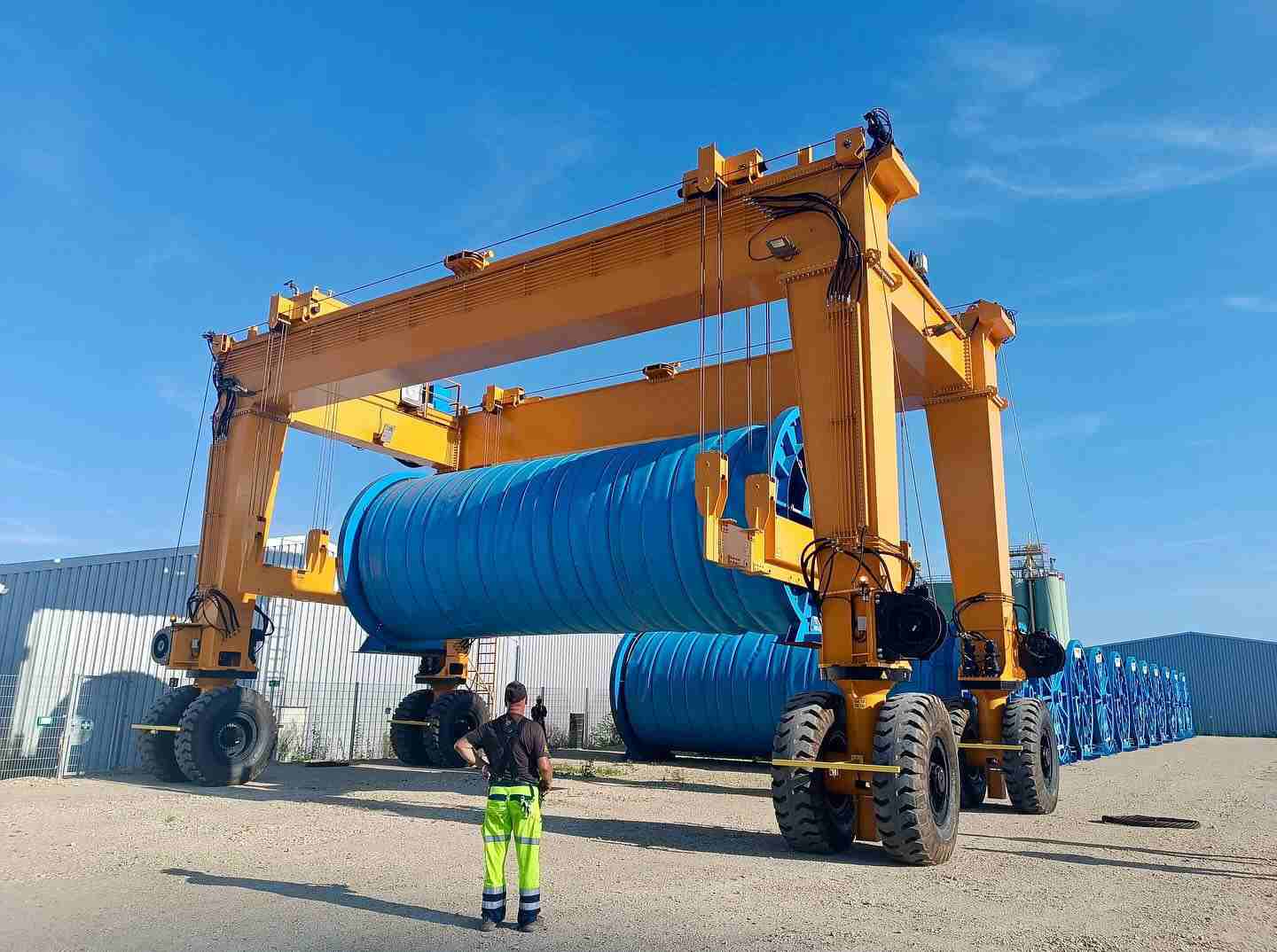
  • RTG or RMG: Match the Crane to an Existing Yard

    RTG or RMG: Match the Crane to an Existing Yard

    Technical guide

    RTG or RMG: Match the Crane to an Existing Yard

    Existing terminals bring fixed lanes, utilities and operating restrictions. Check how each crane concept would fit the current site, including modification work and operational transitions, before comparing equipment specifications.

    Henan Mine CraneTechnical guide · Updated 2026Crane selection, project scope and operating requirements
    Henan Mine Crane overhead crane inside a workshop bay
    Henan Mine Crane overhead crane inside a workshop bay
    Project planning notes

    Key points for this crane project.

    1. What Are RTG and RMG Cranes?
    2. Why This Decision Carries 20-Year Consequences
    3. Structural and Mechanical Differences
    Read the technical guide

    What Are RTG and RMG Cranes?

    Before comparing them, it helps to define each one clearly, since the names get used loosely in procurement conversations.

    RTG Crane Definition

    Henan Mine Crane manufactured RTG crane (Rubber-Tyred Gantry crane) is a container yard crane that travels on rubber tires across a paved surface. It straddles a block of container rows, lifts with a spreader-equipped trolley, and can reposition between blocks without any fixed track. RTGs are typically diesel-electric or fully electric, and they remain the default choice for terminals that need to shift yard layout without major civil rework.

    RMG Crane Definition

    An RMG crane (Rail-Mounted Gantry crane) performs the same lifting and stacking function but runs on steel rails set into a concrete foundation. The fixed path gives it precise, repeatable positioning, which is why RMGs are the standard equipment for automated container yards, rail intermodal terminals, and high-density stacking operations.

    Why This Decision Carries 20-Year Consequences

    Yard cranes aren't a five-year purchase. Civil works, rail foundations, and even paved yard surfaces are built to last two decades or more, and retrofitting a yard from one crane type to the other mid-life is expensive and disruptive.

    That means the RTG vs RMG decision has to account for where the terminal will be in 10–15 years, not just its current throughput. A terminal that buys based purely on today's volume — and ignores its automation roadmap or growth trajectory — often ends up paying twice: once for the wrong equipment, and again for the correction.

    Structural and Mechanical Differences

    The core distinction between these two crane types comes down to one thing: how they travel.

    Travel Mechanism

    An RTG crane rides on multiple rubber tires (commonly 8 or 16, depending on configuration) across a flat, load-rated yard surface. This lets it reposition freely between container blocks with no track constraint. An RMG crane runs on precision steel rails anchored in a concrete subbase, which restricts it to a single lane but delivers a far more stable and repeatable travel path.

    Drive and Power Systems

    RTGs are commonly diesel-electric, though fully electric and hybrid models are increasingly common as terminals work to cut fuel costs and emissions. RMGs are almost always grid-connected, drawing power directly from the terminal's electrical infrastructure rather than an onboard engine.

    Both crane types share comparable lifting mechanisms: a trolley-mounted spreader, variable-frequency drives for smooth acceleration, and anti-sway control systems to reduce container swing during high cycles.

    Span and Stacking Configuration

    Span — the distance between the crane's legs — has to clear the full width of the container block plus the truck lane(s) running beneath it, with safety margin on both sides. Stacking configuration is usually described in industry shorthand like "1-over-5" or "1-over-6," meaning the spreader can pass over five or six tiers of stacked containers to reach the top box. Higher stacking density increases yard capacity per acre, but it also raises the bar for anti-sway performance and structural stability — a factor that affects both RTG and RMG specifications, though RMG's rail-guided stability generally tolerates higher stacks more easily.

    RTG vs RMG Crane: Full Comparison Table

    Decision FactorRTG CraneRMG Crane
    Travel surfaceRubber tires on paved yardSteel rails on concrete foundation
    Yard flexibilityHigh — relocate between blocksFixed — committed to its lane
    Civil infrastructure costLower — no rail foundation neededHigher — rail bed, drainage, subbase required
    Typical travel speedSlower (tire friction limited)Faster (steel-on-rail efficiency)
    Crane moves per hourRoughly 20–28 moves/hrRoughly 28–40+ moves/hr with automation
    Automation ceilingSemi-automated; full auto needs DGPS/laser positioningFull automation is standard and easier to integrate
    Power sourceDiesel-electric, hybrid, or electricGrid-connected electric

    These figures are industry-representative ranges. Actual performance depends on stack density, truck arrival rate, and terminal operating system (TOS) efficiency.

    Cost Comparison: Civil Infrastructure, Capex, and Lifecycle TCO

    Cost is where the RTG vs RMG comparison gets misleading if you only look at the purchase price.

    Upfront Capital Cost

    RMG installations require precision rail-bed construction, which raises both the civil engineering bill and the project timeline before the crane ever arrives on site.

    Operating Cost Over Time

    The picture flips once the cranes are running.

    Most lifecycle cost models show RMG reaching total cost parity with RTG somewhere around 5–6 years of continuous operation — after that point, RMG's lower running costs start outweighing its higher upfront investment. Terminals with throughput below roughly 400,000–500,000 TEU/year rarely reach that crossover fast enough to justify RMG; terminals above 700,000–1,000,000 TEU/year almost always do.

    Key takeaway: RTG wins on day-one capital efficiency. RMG wins on long-run cost per move. The right answer depends on how long the terminal expects to operate at scale.

    Throughput and Automation Capability

    Throughput capacity and automation readiness move together, because automation is what unlocks an RMG's full speed advantage.

    Moves Per Hour

    Henan Mine Crane RTGs typically handle 20–28 moves per hour in manual or semi-automated operation. RMGs, especially in automated configurations, can reach 28–40+ moves per hour, since rail-guided travel removes the positioning uncertainty that slows tire-based systems during high-stack cycles.

    Automation Readiness

    RMG cranes reach full automation more reliably because rail guidance provides absolute position accuracy without relying on GPS or laser-positioning workarounds. This is why virtually every fully automated container terminal in operation today uses RMG as its yard stacking equipment, integrated directly with the terminal operating system (TOS).

    RTG automation is achievable — DGPS and laser positioning systems can bring an RTG close to full automation — but it adds system complexity and cost that often erases the crane's natural cost advantage. For many mid-tier terminals, semi-automated RTG remains a mature, cost-effective middle ground rather than a stepping stone to full automation.

    Safety Systems Behind Automated Operation

    Whichever crane type a terminal automates, the safety layer looks similar: obstacle-detection radar to identify trucks and personnel under the gantry, gantry skew-correction systems that keep both sides of the structure synchronized to prevent rail or surface gouging, and spreader anti-sway control to keep containers steady during high-speed cycles. These systems matter more as automation level increases, since there's no operator in the cab to catch an edge case visually.

    Which Project Type Fits Each Crane?

    This is the question most comparison guides skip, and it's the one that actually determines the right purchase.

    Seaport Hub Terminals (500,000+ TEU/year)

    Large hub ports with high, stable volume and a fixed yard layout are the clearest case for RMG. The combination of high-density stacking, automation compatibility, and lower per-move energy cost compounds in RMG's favor at this scale.

    Mid-Size and Regional Ports

    Terminals in the 100,000–800,000 TEU/year range, particularly those whose yard layout might still change, generally fit RTG better. Lower civil cost and the ability to reposition blocks without rail rework matter more here than the throughput ceiling RMG offers.

    Inland Container Depots and Rail Intermodal Yards

    Inland depots with frequent layout adjustments — and facilities handling irregular volumes — favor RTG for its mobility and lower entry cost. Dedicated rail intermodal yards, on the other hand, often lean toward RMG, since they need to align directly with fixed rail tracks for train-to-truck transfers.

    Terminals Planning Phased Growth

    For terminals expecting to scale from regional to hub status over 5–10 years, the honest answer is often "start with RTG, design for RMG later." That phased approach is detailed in the next section.

    The RTG-to-RMG Conversion Path: A Hybrid Strategy

    One option most comparison articles leave out entirely: terminals don't have to pick one crane type permanently on day one.

    A growing number of mid-tier ports start with RTG cranes and convert specific lanes to RMG once throughput justifies the rail investment. This works when the original RTG lane spacing is specified with future RMG rail gauge in mind — concrete rail foundations can then be added later without relocating existing container blocks.

    1. Deploy at lower upfront cost while volume is still building.
    2. Avoid over-investing in automation infrastructure before it's needed.
    3. Convert individual lanes to RMG incrementally as specific blocks justify the throughput.
    4. Preserve capital for other terminal investments during the growth phase.

    If phased growth is part of the plan, it's worth raising RMG-conversion geometry with your crane supplier before specifying the first RTG units — retrofitting spacing after the fact is far more expensive than designing for it upfront.

    Common Procurement Mistakes to Avoid

    Terminals that get the Henan Mine Crane manufactured RTG vs RMG decision wrong usually make one of these five mistakes:

    1. Underestimating wheel pressure. Miscalculated wheel loads on RMG rail foundations can mean six- and seven-figure civil rework bills after installation.
    2. Skipping future expansion planning. Selecting capacity, stacking height, or duty class for today's volume only, with no margin for 3–5 years of growth.
    3. Underestimating wind load. Coastal terminals especially need storm anchoring, rail clamps, and wind-speed monitoring built into the spec, not added afterward.
    4. Choosing on price alone. Underspecified steel, electrical components, or duty class shows up as frequent breakdowns within 3–5 years — and the resulting downtime costs typically exceed the initial savings.

    Pre-RFQ Decision Checklist

    Before requesting quotes from crane suppliers, confirm you have answers to each of these:

    • Annual TEU throughput, including peak-season demand (not just the yearly average)
    • Yard block configuration: rows, columns, and truck lane width
    • Required stacking height and lifting capacity (including reefer and oversized containers)
    • Current and planned automation level (manual, semi-automated, fully automated)
    • Site soil conditions and civil engineering constraints
    • Required duty classification (ISO 4301 / FEM working level) for 24-hour operation
    • Growth horizon: expected throughput in 5 and 10 years
    • Required certifications: CE Declaration of Conformity, ISO 9001:2015, ISO 4301 duty class documentation, and factory load test certificates

    Bringing this checklist to your first supplier conversation usually shortens the proposal cycle significantly, since it removes the back-and-forth needed to pin down basic specs.

    Frequently Asked Questions

    What is the main difference between an RTG crane and an RMG crane?

    An RTG crane travels on rubber tires across a paved yard, giving it the flexibility to reposition between container blocks. An RMG crane runs on fixed steel rails, giving it higher positioning accuracy, faster cycle speed, and easier automation, at the cost of yard layout flexibility.

    Which is cheaper: RTG or RMG?

    Which one is "cheaper" overall depends on throughput and how long the terminal expects to run at scale.

    What throughput level justifies switching from RTG to RMG?

    Most terminal planners treat 500,000–700,000 TEU/year as the crossover range where RMG's automation and energy savings outweigh its higher civil investment. Below roughly 400,000 TEU/year, RTG flexibility usually delivers the better return.

    Can a terminal start with RTG and convert to RMG later?

    Yes, if planned in advance. When RTG lane spacing is specified to match a future RMG rail gauge, concrete rail foundations can be added later without relocating existing container blocks.

    Which crane type is better for automated container terminals?

    RMG is the standard choice for fully automated terminals because rail guidance delivers absolute position accuracy without relying on GPS or laser-positioning workarounds. RTG can reach high levels of automation too, but it requires additional positioning systems that add cost and complexity.

    How long do RTG and RMG cranes typically last?

    With standard duty-class specification and regular maintenance, both crane types are generally built for a 20–25 year service life. Actual lifespan depends heavily on steel structure design, duty classification, and how consistently preventive maintenance is followed.

    Henan Mine Crane

    There's no single winner in the RTG crane vs RMG crane debate. What you need depends on your throughput requirements, layout, automation plans and future investment strategies. Selecting the right crane for your operation today will can help you meet your performance metrics, lower lifetime costs and scale for future capacity without requiring a costly upgrade.

    Over 20 years in Crane manufacturing experience, Henan Mine Crane offers tailor-made RTG and RMG crane solutions worldwide for all types of ports, rail terminal and container yards. Our experienced engineering team guides you through the complete range of services from project planning, equipment design to manufacturing and technical support.

    Thinking of designing a new container yard or refurbishing your existing facilities? Get in touch with us today for professional advice and a tailored crane package to suit your project.

    Discuss the crane arrangement for your project.

    Existing terminals bring fixed lanes, utilities and operating restrictions. Check how each crane concept would fit the current site, including modification work and operational transitions, before comparing equipment specifications. Share the load, available drawings, working cycle and site conditions with Henan Mine Crane so the required configuration and supply boundary can be discussed.

    Related crane configurations

    Explore crane product families and technical parameters ↗

    Updated 2026 · Henan Mine Crane