RTG vs RMG Equipment Selection: Steering, Rails and Operating Duty
Compare the crane travel system and working cycle alongside stacking capacity. The same container volume can lead to different equipment and infrastructure requirements depending on the layout and operating method.
Key points for this crane project.
- What Is an RTG Crane?
- What Is an RMG Crane?
- RTG Crane vs RMG Crane: Key Differences Comparison
What Is an RTG Crane?
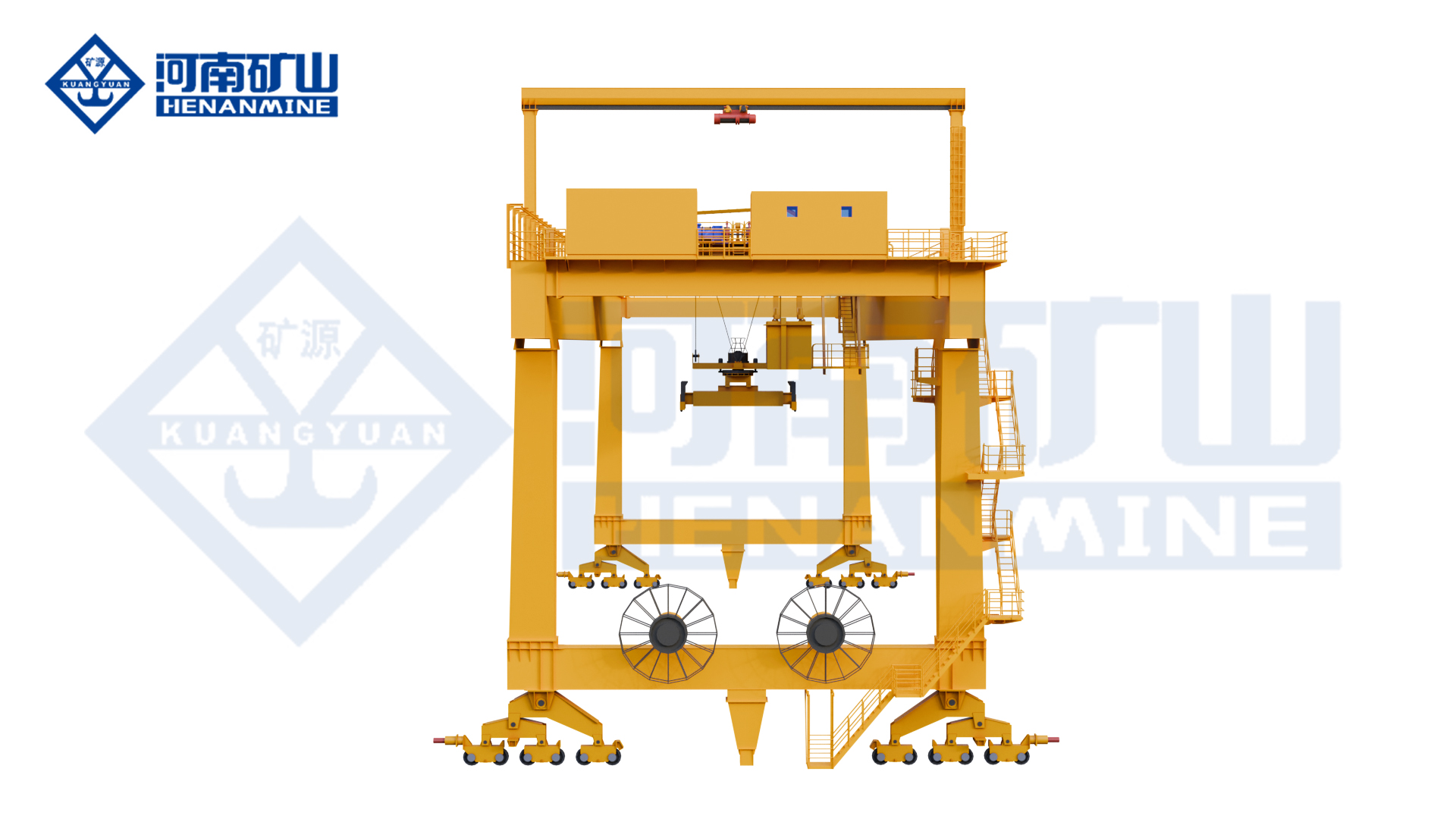
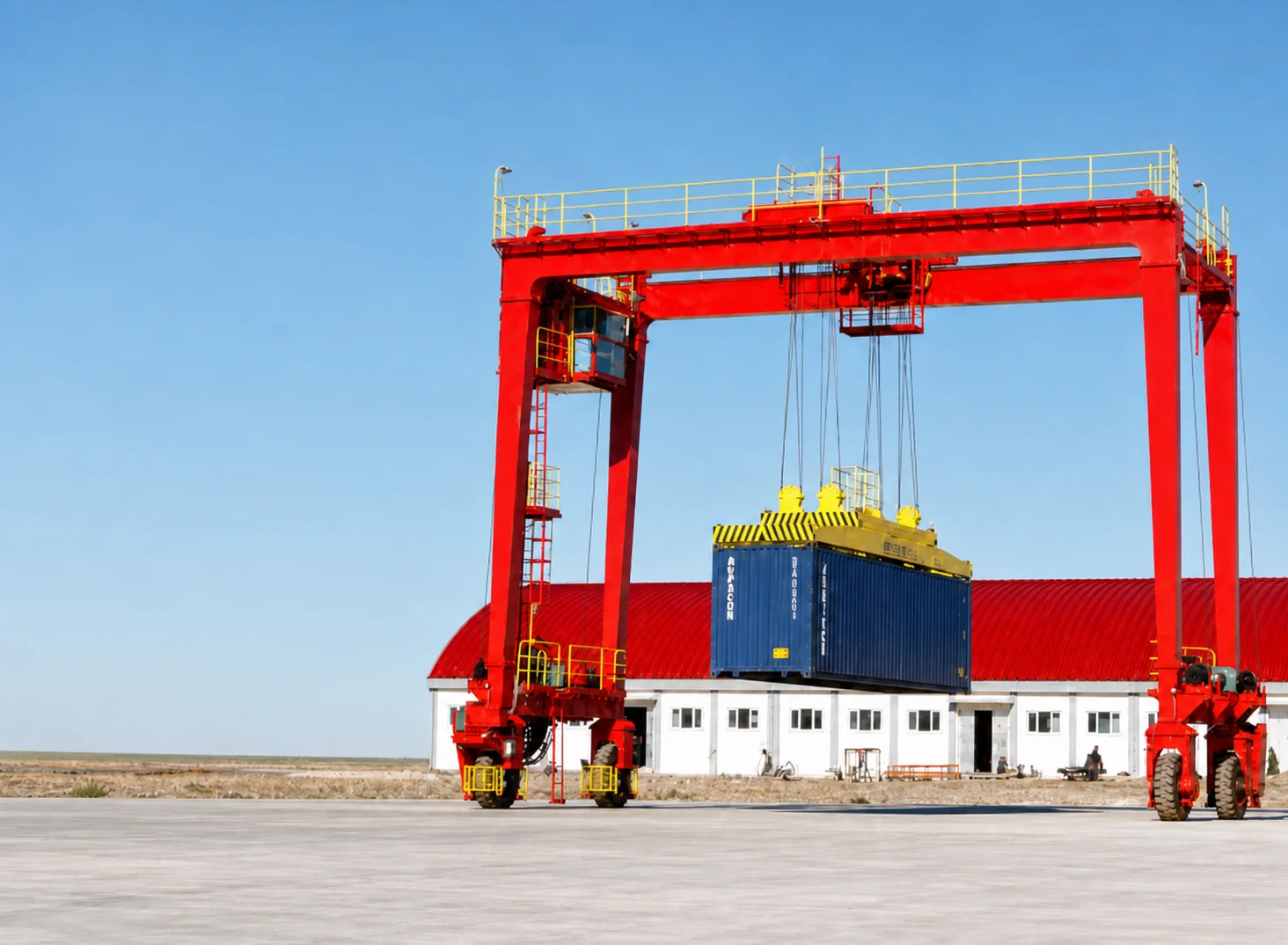
RTG crane, namely rubber tire container gantry crane, is a special mobile lifting equipment suitable for flexible operation in container yard. It relies on rubber tires to realize free travel without tracks, without laying fixed rails, and has strong site adaptability. The equipment adopts stable double-beam portal structure, with diesel generator set as the main power supply mode. The high-end model can be compatible with mains power and lithium battery storage, and can flexibly adapt to various storage conditions with limited power supply conditions and unstable operation sites.
RTG crane can complete standard container stacking, cross-regional transfer, vehicle loading and unloading and short-distance shifting operations, conventional models support 3 to 7 layers of stacking, suitable for full-specification standard containers. Its core advantages are flexibility, efficient transfer, low infrastructure cost and fast installation and production speed, adapting to scattered cargo flow, temporary storage yard and inland small and medium-sized logistics park. The new generation of intelligent models are equipped with semi-automatic control, remote monitoring and anti-collision systems, realizing the upgrading of basic intelligent operations.
What Is an RMG Crane?
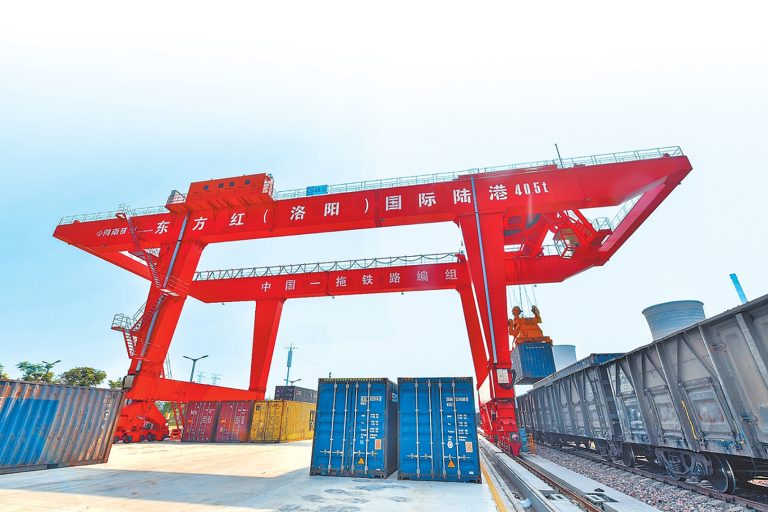
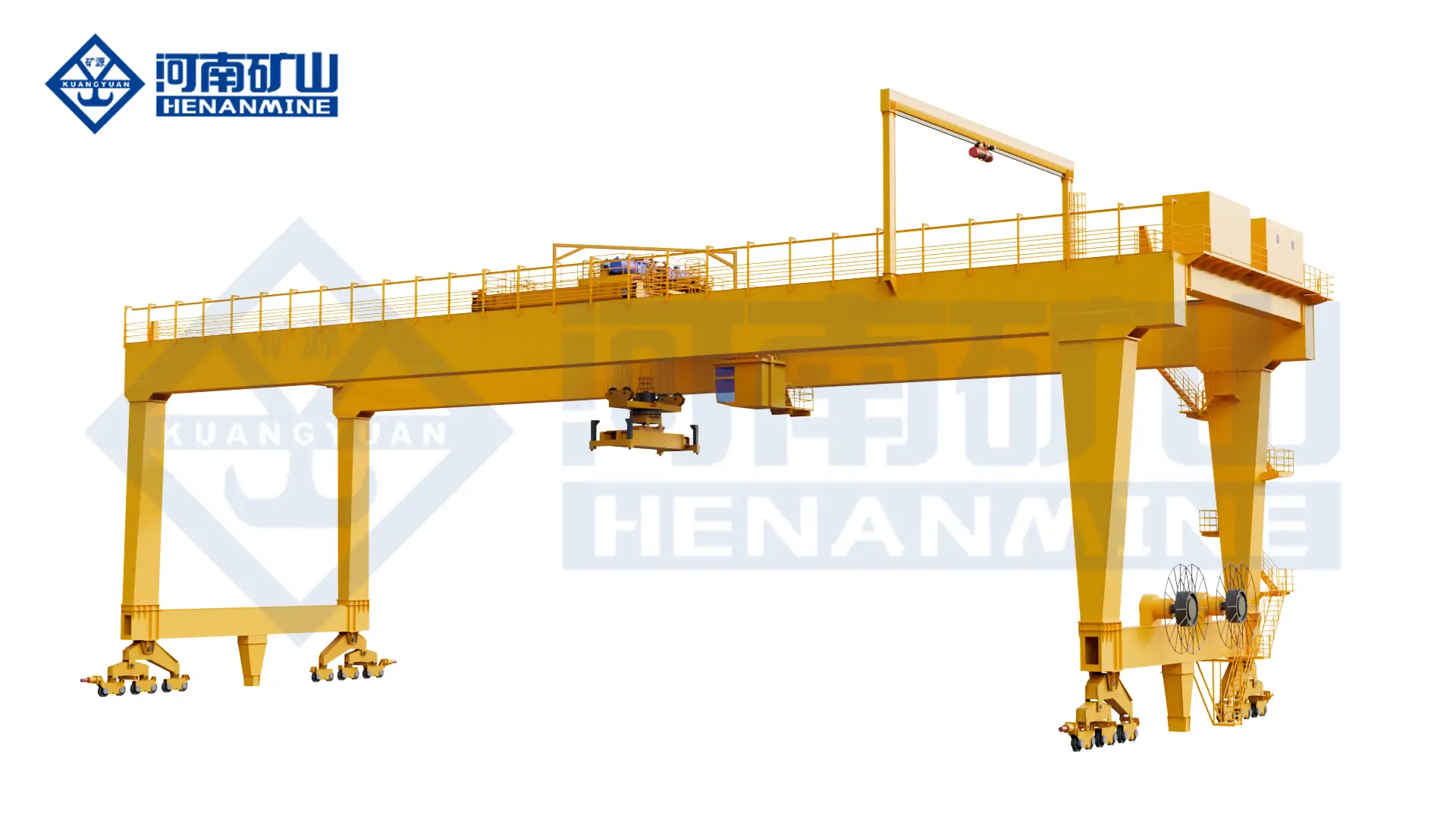
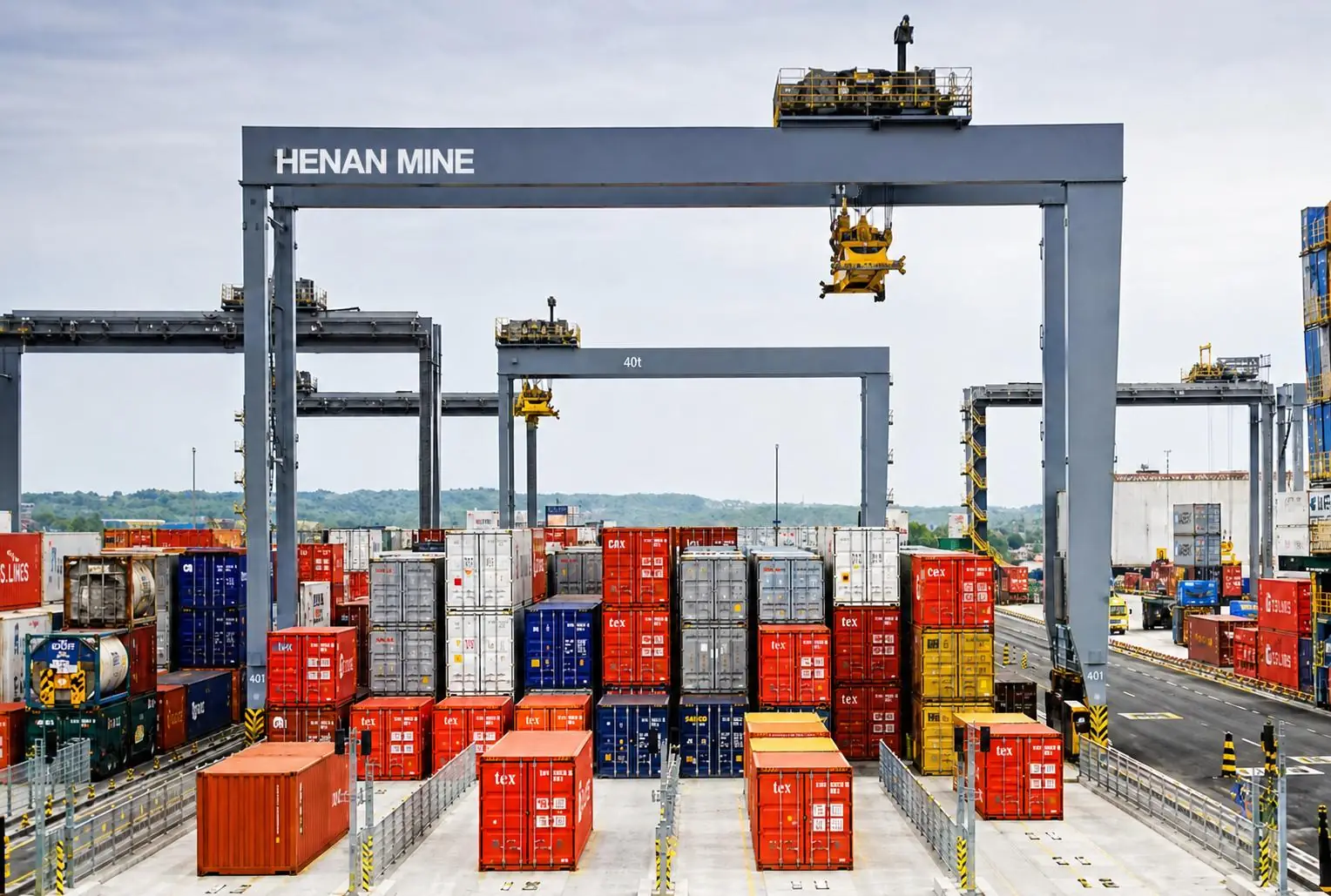
RMG crane, namely rail-mounted container gantry crane, is the core heavy lifting equipment of large automatic port and high density storage yard. The equipment relies on special rails preset in the yard for fixed operation, accurate positioning and stable operation. It adopts high-strength rigid portal steel structure, and the overall load bearing and operation stability far exceed RTG models. The equipment is equipped with mains sliding contact line power supply, stable power, zero fuel pollution, in line with green port construction standards, can achieve high-precision alignment operations.
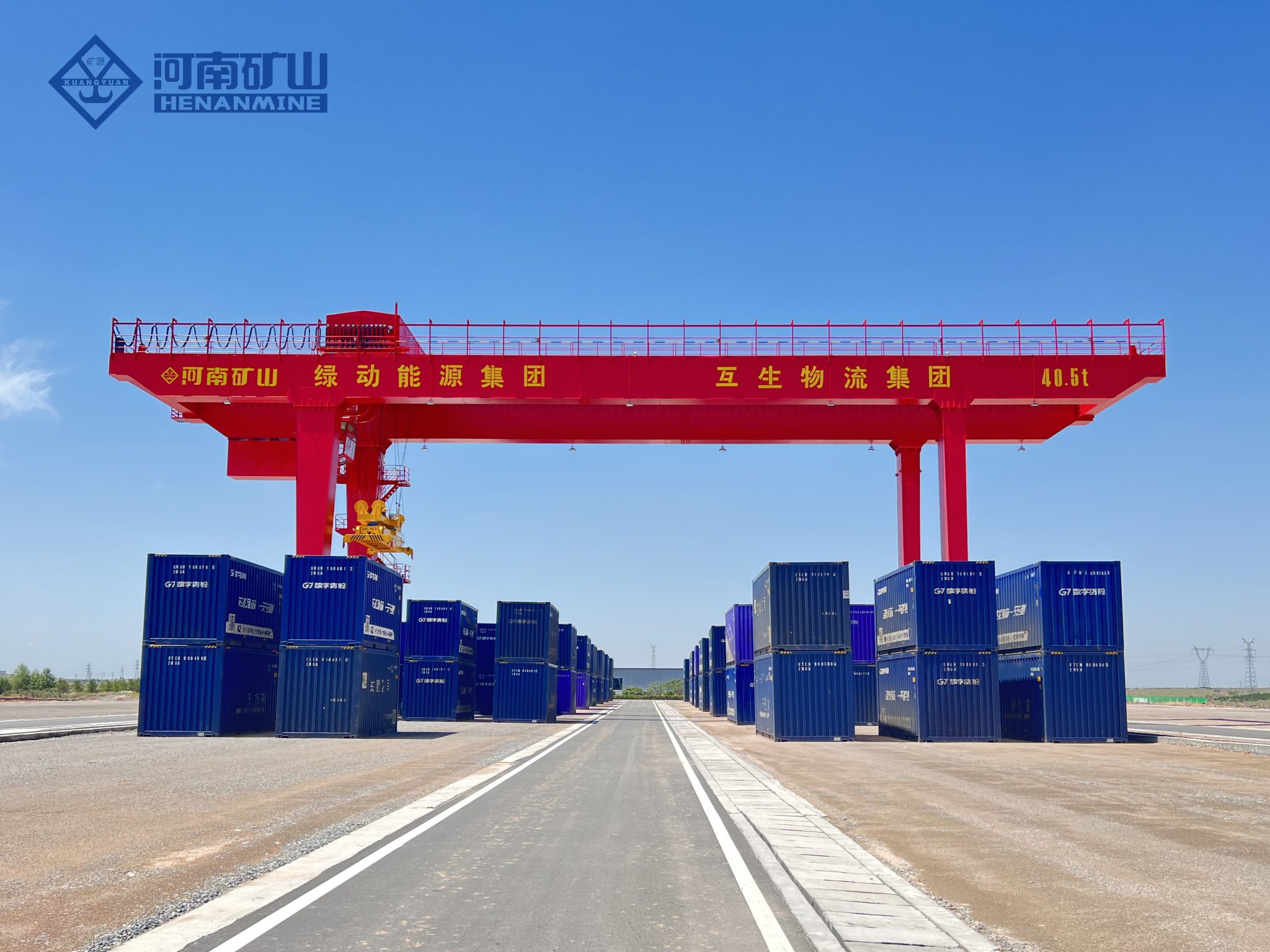
RMG crane supports 6 – 9 layers of high-density container stacking, greatly improves the space utilization rate of the storage yard, is originally adapted to the fully automated operation system, can be connected with intelligent dispatching, unmanned card collection and other systems, and realizes unmanned stacking and transfer in the whole process. The equipment has stable throughput, low long-term operation and maintenance cost, but limited mobility, high investment in track infrastructure in the early stage and long installation cycle. It is mainly suitable for large-scale standardized, high-throughput and long-term fixed operation container hub yard.
RTG Crane vs RMG Crane: Key Differences Comparison
Mobility and operating flexibility
Mobility and operational flexibility are the core differentiation features of RTG and RMG, which directly determine the scene adaptation ability of equipment. Henan Mine Crane manufactured RTG crane relies on rubber tires to travel, without fixed track constraints, can achieve 360° flexible steering, cross-area free transfer, can switch operation areas at any time according to the change of cargo flow in the yard, operation station adjustment, covering any operation point in the whole yard. Even if the yard layout is temporarily adjusted and the operation scope is expanded, RTG cranes can adapt quickly without modifying equipment, and the flexible operation ability is extremely strong, especially suitable for the yard where the cargo flow is scattered, the operation area is not fixed, and the operation point is temporarily increased or decreased.
RMG crane adopts fixed track operation mode, the whole machine can only work back and forth along the preset rail straight line, the operation range is completely fixed, and it is impossible to transfer across tracks and regions, and the mobility is almost zero. If the work area needs to be adjusted, the track must be re-laid, the construction period can be several weeks, and the modification cost is extremely high. However, the operation mode of fixed track makes the operation path of RMG crane regular without deviation, suitable for standardized, flow-oriented and high-frequency sub-container operation in fixed area, eliminating invalid operation shift and more controllable operation order.
Installation requirements and infrastructure cost
In terms of installation conditions and infrastructure costs, the investment difference between the two types of equipment is significant, which directly affects the initial investment budget of the project. RTG crane has very low requirements on the site, only needs flat and hardened ground to complete installation and commissioning, no need to lay special rails, no need to modify the site foundation, and the supporting infrastructure works are extremely small. The equipment installation process is simple and the commissioning cycle is short. Generally, the whole machine can be put into production in 3-7 days, which greatly shortens the project landing cycle.
RMG crane has strict requirements on infrastructure. In the early stage, a series of supporting projects such as site leveling, high-strength foundation pouring, special rail laying, power supply sliding contact line layout, track calibration, etc. need to be completed. The infrastructure engineering quantity is large, the construction period is long, and the overall infrastructure investment in the early stage is high. At the same time, the track needs regular calibration and maintenance to prevent the track deformation from affecting the operation accuracy of the equipment, and there are fixed expenses for long-term infrastructure maintenance. However, standardized track infrastructure can ensure long-term stable operation of equipment, greatly reduce the risk of equipment failure in the later stage, and is suitable for large-scale port projects with long-term planning, one-time investment and long-term benefits.
Lifting capacity and stacking performance
Lifting capacity and stacking performance determine the space utilization rate and heavy load operation capacity of the yard. Under the heavy load and super-high stacking scenario, the RTG crane's operation stability will decrease, and there are certain operation restrictions.
At the same time, the precise positioning characteristics of fixed rails enable RMG cranes to achieve high-density container stacking of up to 9 floors, with smaller stacking spacing and more regular arrangement, greatly improving the vertical space utilization rate of the yard.
Operation efficiency and throughput
Operation efficiency and throughput are the core indicators to measure the operation capacity of the yard, and the efficiency advantages of the two equipment adapt to different operation scales. RTG crane has high flexibility, can quickly respond to scattered orders, temporary loading and unloading tasks, and is convenient for cross-regional scheduling. It is suitable for multi-batch, small-batch and scattered cargo flow operation mode, which can effectively avoid operation congestion and flexibly adapt to peak fluctuations of operation. However, due to the limitation of travel accuracy and running speed, its single operation cycle is longer, the stability of continuous high-frequency operation is general, and the upper limit of daily throughput is lower, which is suitable for normal operation of small and medium-sized yards.
RTG vs RMG Crane: Which One Is Better for Different Applications?
Choosing RTG crane when
Combined with RTG crane's flexibility, low cost and easy deployment core advantages, RTG crane is preferred in the following scenarios to maximize cost performance.
- Small and medium-sized container yard, inland logistics park, railway freight station. In this kind of scenario, the cargo flow is scattered, the operation area is not fixed, and there is no large-scale standardized operation demand. RTG's flexible transfer capability can perfectly adapt to scattered loading and unloading and cross-regional transfer operation without high infrastructure investment.
- Temporary storage yard, short-term project operation scenario. For temporary operation scenarios such as temporary storage of projects, short-term freight transit, seasonal surge of cargo flow, etc., RTG has outstanding advantages of rapid installation, portability and reutilization, avoiding waste of resources caused by fixed infrastructure investment and greatly reducing the cost of temporary equipment of the project.
- New yard with limited budget and fast commissioning. RTG has low investment in the early stage, short commissioning cycle, fast return speed, no complex supporting projects, and can quickly realize the operation of the yard. It is suitable for equipment selection of small and medium-sized logistics enterprises and start-up freight hubs.
- Operation scenarios where site conditions are limited and fixed tracks cannot be laid. Some old storage yards, mountain logistics parks and temporary transit sites do not have track laying conditions. RTG trackless operation mode can perfectly adapt to the short board of the site to ensure the normal operation.
Choosing RMG crane when
Relying on the advantages of high precision, high productivity, high automation and low long-term operation and maintenance cost of Henan Mine Crane manufactured RMG crane, the following scenarios are the core adaptation scenarios of RMG crane.
- Large-scale coastal ports, core container hub terminals. This kind of scenario has huge average daily throughput and intensive operation frequency, which requires extremely high stacking density, operation efficiency, and site utilization. RMG's high stacking layers and high operation efficiency can maximize the value of the site and ensure the stable operation of high-load operations..
- Planning and construction of intelligent unmanned storage yard and automatic wharf projects. RMG is the standard core equipment of automatic storage yard, which can realize full-process unmanned operation, connect various intelligent management systems, greatly reduce manual intervention, improve intelligent and standardized operation level of storage yard, and adapt to long-term intelligent port construction planning.
- Stockyards where land resources are tight and high-density storage is required. The scarcity of land resources in the core port area, RMG's ultra-high stacking capacity and compact arrangement mode can increase container storage capacity in limited sites, solve the pain point of insufficient site space, and improve site utilization rate and storage capacity.
- Long-term stable operation, the pursuit of low long-term operation and maintenance costs of standardized yard. For large-scale storage yards with long-term fixed operation and no site transformation requirements, the advantages of RMG with low failure rate, low energy consumption and low long-term operation and maintenance cost can be fully highlighted, and the long-term return on investment far exceeds RTG cranes.
Factors to Consider Before Purchasing RTG or RMG Crane
Container yard size and layout
Stockyard size and layout are the basic premise of equipment selection. RTG crane is preferred for small, irregular, multi-zone and scattered storage yard, and its flexible transfer ability can be used to adapt to complex site layout without modifying the site. Medium-sized standardized storage yard can be flexibly selected according to cargo flow mode, giving consideration to flexibility and efficiency. For large-scale standardized storage yard and standardized operation area of core port area, RMG crane shall be preferred to realize standardized, high-density and high-efficiency operation relying on fixed track, so as to maximize the value of site space. At the same time, it is necessary to combine the yard span, operation channel width and stacking area planning to match the equipment model corresponding to the span and height, so as to avoid space waste and insufficient equipment adaptation.
Required handling capacity
The average daily and annual container handling capacity directly determines the cost performance of equipment selection. If the daily throughput of the yard is lower than 500 TEUs, the RTG crane can fully meet the operation requirements, with less equipment overcapacity and lower input cost. If the daily throughput exceeds 1000 TEUs and the demand for high-frequency and continuous operations is prominent, the advantages of high efficiency and stability of RMG cranes will be fully reflected, which can avoid operation congestion and order backlog caused by insufficient equipment capacity.
Automation development plan
Long-term intelligent and automatic development planning of enterprises is the core consideration factor. If the yard only needs basic manual auxiliary operations, no automation upgrade requirements, short-term pursuit of low cost, high flexibility, Henan Mine Crane manufactured RTG crane is a cost-effective choice, can meet the basic operations without additional intelligent transformation investment. There is a natural bottleneck in the automation upgrade of RTG, which makes it impossible to realize the unmanned entire process. Later transformation is difficult and costly. However, RMG can seamlessly connect with various intelligent systems and support phased intelligent upgrades, which is in line with the intelligent development trend of the industry.
Budget and total cost of ownership
The selection cannot only look at the unit price of equipment purchase, but the total cost of the whole life cycle needs to be comprehensively calculated. From the short-term investment point of view, Henan Mine Crane manufactured RTG crane procurement cost is low, infrastructure investment is small, production is fast, suitable for short-term budget limited, rapid return of the project, the initial capital pressure is very small. From the perspective of long-term operation, although RMG crane has high initial procurement and infrastructure investment, it has lower energy consumption, low failure rate, low operation and maintenance cost and longer equipment service life. The total cost of 5-8 years life cycle is much lower than RTG.Enterprises need to combine their own investment cycle, short-term lease sites, temporary operations, rapid profit projects select RTG.RMG is selected for projects with long-term self-sustaining site, stable operation for more than ten years, and long-term low consumption and high efficiency.
Local climate and working environment
The climate and environmental conditions of the operation site directly affect the operation stability and service life of the equipment. Under rainy, snowy, windy and coastal high salt fog environment, RMG crane enclosed electrical system, rigid track structure has stronger anti-interference ability, is not easy to be affected by weather, can ensure all-weather stable operation, and equipment anti-corrosion performance is stronger, adapt to harsh coastal conditions. RTG crane rubber tires in rainy and snowy weather easy to slip, wear acceleration, sandstorm weather prone to dust into the hydraulic system, frequent equipment failures, high salt fog environment parts corrosion faster. Inland dry, mild climate, stable weather operating environment, RTG equipment loss is lower, can stably play the advantages of operation, adaptability is stronger.
Henan Mine Crane
RTG crane and RMG crane are the core operation equipment of container yard. There is no absolute advantage or disadvantage between them, only the adaptation scene is significantly different. RTG wins flexibility, low infrastructure cost, fast deployment speed, suitable for inland small and medium-sized storage yards, temporary operation sites and projects with limited budget and no automation requirements. RMG has the characteristics of high operation precision, large stacking density, stable throughput and high intelligence, and is more suitable for large-scale ports, standardized hubs and intelligent unmanned yards.
Do not blindly purchase equipment if you want to accurately select types, reduce costs and increase efficiency and upgrade production capacity. Henan Mine Crane Factory has been developing and manufacturing deep-ploughing cranes for many years. It can customize RTG and RMG crane selection scheme one-to-one according to your yard size, operation throughput, budget and intelligent planning, taking into account short-term production costs and long-term operation and maintenance benefits, helping all kinds of logistics and port enterprises to build efficient, stable and high-return container operation system.
Discuss the crane arrangement for your project.
Compare the crane travel system and working cycle alongside stacking capacity. The same container volume can lead to different equipment and infrastructure requirements depending on the layout and operating method. Share the load, available drawings, working cycle and site conditions with Henan Mine Crane so the required configuration and supply boundary can be discussed.
Related crane configurations
Explore crane product families and technical parameters ↗
Updated 2026 · Henan Mine Crane