Engineering · Manufacturing · Project support
info@hnksglobal.comWhatsApp +86 18836207779 ↗

Blog

  • Port Crane Maintenance Planning: Inspection Areas and Service Access

    Port Crane Maintenance Planning: Inspection Areas and Service Access

    Technical guide

    Port Crane Maintenance Planning: Inspection Areas and Service Access

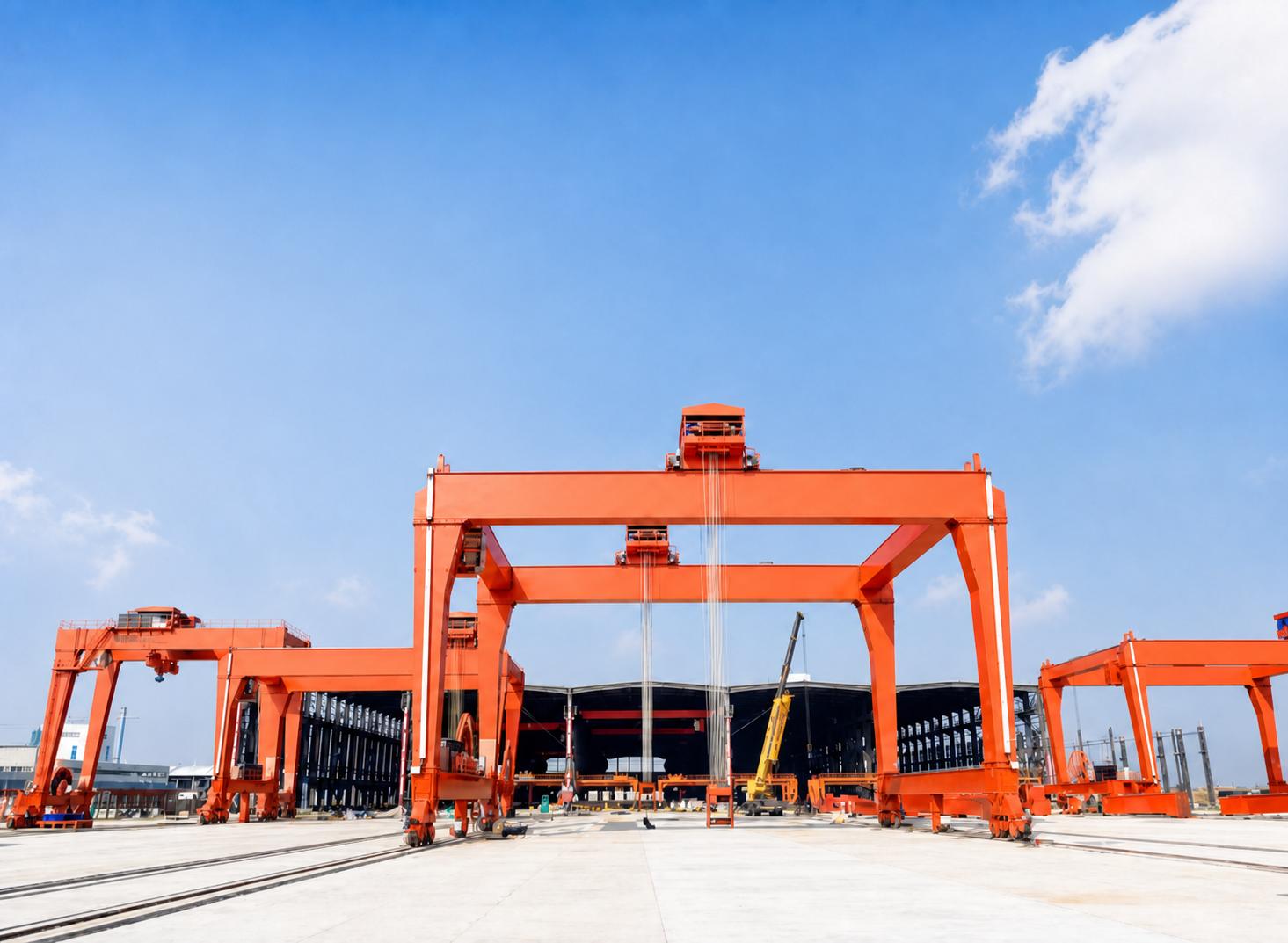
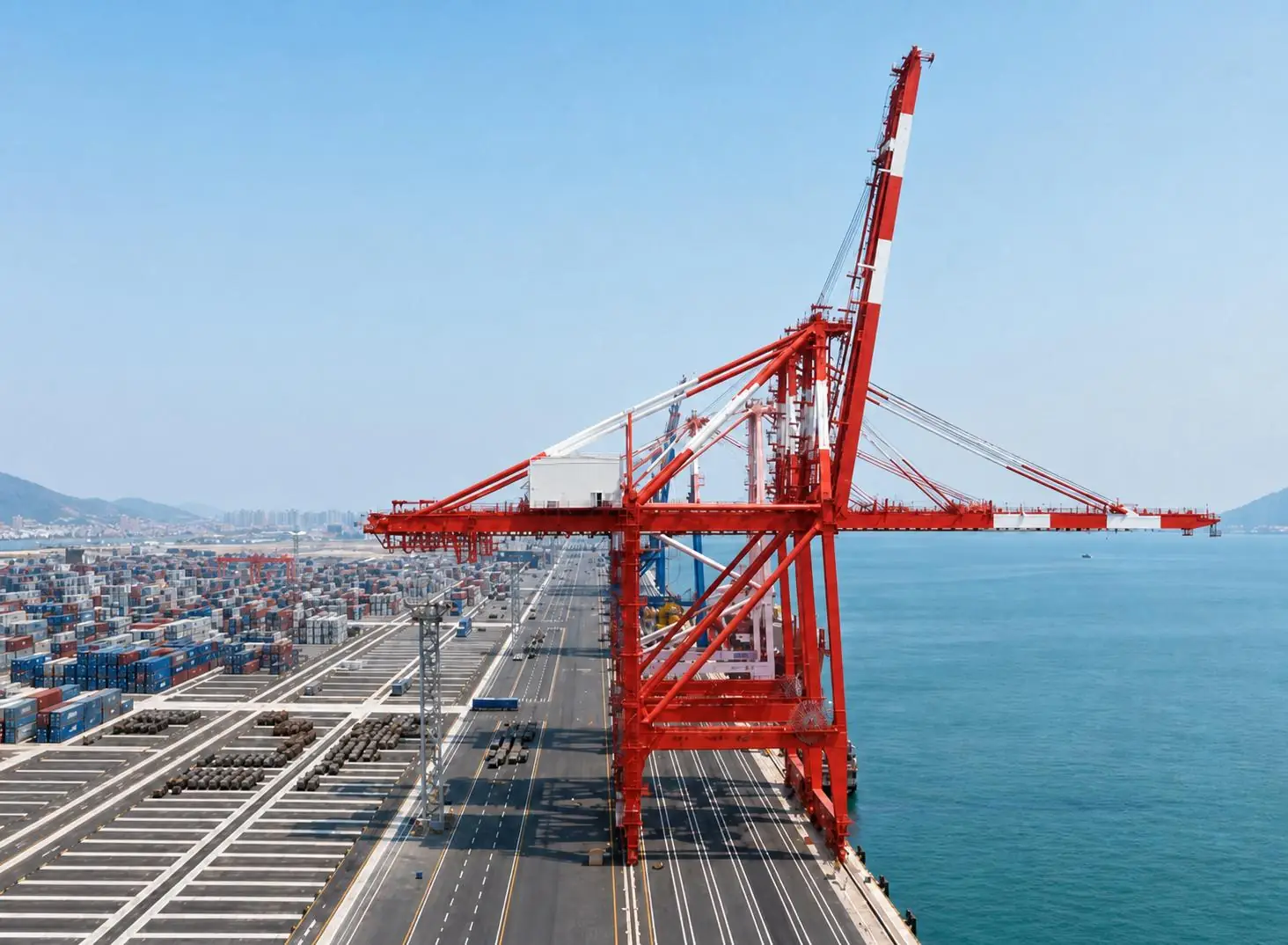
    Maintenance planning should follow the crane configuration and cargo cycle. Identify the components, inspection access, records and work windows needed to organise service without assuming one procedure fits every terminal crane.
    Henan Mine CraneTechnical guide · Updated 2026Crane selection, project scope and operating requirements
    port crane maintenance
    port crane maintenance
    Project planning notes

    Key points for this crane project.

    1. Key Factors Affecting Port Crane Performance
    2. Step-by-Step Port Crane Maintenance Checklist
    3. Critical Components Requiring Special Attention
    Read the technical guide

    Key Factors Affecting Port Crane Performance

    The operation performance and service life of Henan Mine Crane manufactured port cranes are jointly affected by the three core factors of working conditions, environment and load, and are also the core basis for formulating differentiated maintenance schemes. Only by accurately controlling various influencing factors can the maintenance work be accurate and efficient and fit the actual working conditions.

    Heavy load cycles and continuous operating conditions are the core causes of equipment wear. Port container and bulk cargo lifting operation has the characteristics of high intensity, repeatability and uninterrupted. Crane lifting, luffing, slewing and traveling mechanism bear alternating load for a long time. The core components such as gears, bearings, wire ropes and brakes are in fatigue working state continuously. It is easy to cause wear aggravation, precision decline and performance attenuation. Long-term accumulation will cause mechanical failure and reduce equipment operation precision and bearing capacity.

    Seawater corrosion, high humidity and bad weather are the exclusive wear and tear factors of port equipment. Coastal port air is rich in salt, salt mist will be adsorbed on Henan Mine Crane manufactured crane steel structure surface, electrical interface, hydraulic pipe fittings and metal fasteners, causing electrochemical corrosion, resulting in paint peeling, steel structure corrosion, component stagnation, poor circuit contact. Long-term high humidity environment will accelerate the aging of electrical components, insulation performance decline. At the same time, extreme weather such as rainstorm, typhoon, high temperature exposure and low temperature condensation will further aggravate the aging of equipment and induce various faults.

    Load conditions and operating environment directly determine the operating status of equipment. The weight, type and flatness of cargo hoisted at different ports are quite different. Overweight operation, partial load hoisting and irregular load will greatly exceed the rated working condition of equipment, resulting in structural deformation and overload damage of components. Site problems such as terminal track wear, site debris accumulation, limited working space, etc. will also lead to crane operation jam, vibration aggravation, accelerated equipment loss, and affect the overall operation performance.

    Step-by-Step Port Crane Maintenance Checklist

    Standardized and flow-based graded maintenance list is the key to efficient operation and maintenance of landing port cranes. In combination with the frequency of equipment operation and the law of loss, we divide the maintenance work into three modules: daily inspection before shift, regular maintenance on a weekly basis and periodic maintenance of core components, forming a step-by-step maintenance system with full coverage, landing and traceability, and adapting to various port lifting equipment such as portal type, quay crane and yard crane.

    Daily inspection before operation

    Henan Mine Crane manufactured Port crane pre-shift inspection is the first line of defense for operation safety, which needs to be completed by the staff before taking up duty, so as to prevent equipment from working with faults. Before operation, check the steel structure and lifting core parts of the whole machine, check whether the main girder, boom and supporting leg have deformation, crack, paint peeling and other damages, carefully check the hook, anti-drop device, wire rope, drum and other key accessories, check the hidden dangers such as broken wire, rust and excessive wear, so as to ensure that the lifting foundation parts are in good condition and compliance.

    After the structural inspection is completed, it is necessary to focus on detecting the brake and safety protection system, check the brake pad, spring state and brake pad clearance, and ensure that the brake is sensitive without slipping and dragging problems. At the same time, limit switches, buffers and other safety devices shall be tested one by one to ensure accurate action and stable signal. Finally, check abnormal noise, vibration and other abnormalities through no-load operation, check whether the hydraulic lubrication pipeline leaks, clean up track sundries, and comprehensively eliminate hidden dangers of equipment operation.

    Weekly and monthly maintenance tasks

    Weekly and monthly maintenance is the key to fine maintenance of port cranes, mainly to make up for the omission of daily inspection, focusing on the hidden wear of equipment. The operation and maintenance personnel shall clean and lubricate the moving structure and transmission parts of the whole machine regularly, remove salt mist, dust and oil stain, add suitable lubricating grease, avoid dry wear aging of bearings, gears and rotating mechanisms, effectively reduce the vibration and noise of equipment operation, and maintain stable working conditions of mechanical transmission system.

    At the same time, it is necessary to systematically repair the electrical control system and equipment fasteners, clean the dust and salt accumulation of the electrical control cabinet and frequency converter, check the integrity of the lines, cables and sensors, and ensure the sensitivity of operation and control and the stability of signal transmission. Tighten bolts, pin shafts and other connecting parts of the whole machine one by one, check the wear conditions of wearing parts such as bushings, seals and brake gaskets, replace aging failure parts in advance, and eliminate equipment shutdown caused by minor faults from details.

    Periodic maintenance for major components

    Quarterly and annual periodic maintenance of cranes focuses on core large parts and complete machine in-depth maintenance, specifically to solve structural fatigue, salt fog corrosion and performance degradation problems caused by long-term operation. Maintenance focuses include flaw detection of the steel structure of the whole machine, inspection of fine cracks and deformation of the main girder, boom and weld, polishing and derusting of the corroded parts, repairing the damaged protective layer, and greatly improving the durability of the equipment in the marine high corrosion environment.

    In addition, it is necessary to maintain the lifting mechanism, travel system, hydraulic and electrical systems in depth. Regularly detect gearbox oil quality and timely change oil to adjust transmission clearance, check wheel and track conditions, and eliminate rail gnawing and deviation faults. At the same time, the hydraulic system pressure, sealing test, electrical system insulation and protection function verification, all-round guarantee crane core components stable, safe, long-term operation.

    Critical Components Requiring Special Attention

    The operation state of the core key components of the Henan Mine Crane manufactured port crane directly determines the safety and stability of the equipment, and it is also the part with high failure rate and fastest loss. Compared with ordinary parts, wire rope lifting system, electrical control system, brake safety system and anti-corrosion structure need targeted special maintenance, which is the most important part of port crane maintenance, and special maintenance standards must be strictly implemented.

    Wire rope and lifting system maintenance

    Steel wire rope is the core vulnerable part of port crane lifting operation, which directly determines the safety of lifting operation, so it is necessary to implement normal special inspection and maintenance. Daily inspection shall be conducted in combination with visual observation and instrument measurement, focusing on checking the arrangement state of steel wire rope, checking the problems such as distortion, knot and extrusion deformation, measuring the diameter of rope body, checking the fixing condition of end, counting the broken wire, wear and corrosion according to industry standards, and strictly prohibiting the equipment from being put into hoisting operation with defects.

    Operation and maintenance personnel shall clarify the replacement standard of steel wire rope and accurately determine the hidden danger of equipment loss. Once there are problems such as concentrated strand breakage, serious rust and peeling, excessive diameter wear, fatigue and collapse of rope body, etc., it is necessary to stop and replace immediately. To adapt to the special conditions of high salt fog in the port, it is necessary to shorten the detection and replacement cycle appropriately, regularly apply special anti-corrosion grease, reduce mechanical wear and isolate salt fog corrosion, and effectively avoid safety accidents caused by wire rope fracture.

    Electrical system maintenance

    Electrical system is the core control center of port crane, electrical fault concealment is strong, high emergency rate, is the main reason for equipment shutdown, must implement refined special maintenance. Daily maintenance of the control panel and frequency converter, timely clean up the equipment internal salt fog, dust accumulation, keep the internal dry and clean. At the same time, check the operation status of buttons, display screen and indicator lights, monitor the temperature and operation parameters of frequency converter, check the hidden dangers such as unstable speed regulation and overload error, calibrate parameters in time, repair faults, and ensure accurate and stable equipment operation.

    During operation and maintenance, cables, sensors and various electrical protection devices shall be thoroughly inspected. Regularly check the integrity of the outer skin of power cables and control cables, eliminate potential safety hazards such as damage, aging and immersion, and ensure that the wiring is regular. Check the sensitivity and data transmission accuracy of various sensing equipment one by one to ensure timely and accurate signal feedback of equipment. Normalized test of leakage, overload, emergency power failure and other protection functions to ensure rapid response in case of sudden failure, effectively avoid electrical safety accidents, and ensure stable operation of equipment.

    Brake and safety system maintenance

    Braking and safety system is the core safety barrier of Henan Mine Crane manufactured port crane, which can effectively prevent major safety accidents such as hook slip, car slip, overload capsizing, etc. Daily maintenance shall focus on verifying the overall performance of the brake, regularly checking the wear degree of brake pad, spring elasticity and hydraulic brake pressure, accurately adjusting the brake clearance, ensuring the sensitivity and stability of braking through no-load and full-load multi-condition test, and eliminating high-risk hidden dangers such as slipping and brake failure.

    In addition to braking performance testing, the staff should regularly verify the emergency protection and overload protection functions of the equipment. Regularly test the response speed of emergency stop buttons, power-off devices, and limit equipment to ensure rapid shutdown and power outage in case of sudden failures. At the same time, simulate overload, over-amplitude, partial load and other illegal working conditions, verify the triggering accuracy of torque limiter and overload protection device, ensure timely alarm and self-locking shutdown of equipment, and avoid safety accidents caused by illegal operation from the source.

    Advanced Port Crane Maintenance Strategies

    With the intelligent and automatic upgrading of ports, the traditional manual periodic maintenance mode has been unable to meet the high-frequency, efficient and high-precision equipment operation requirements. The introduction of intelligent maintenance technology and optimization of operation and maintenance management system is the core upgrading direction of modern port cranes to reduce cost and increase efficiency, avoid faults and prolong service life, and is also an essential scheme for standardized operation and maintenance of large ports.

    Predictive maintenance with smart monitoring technology

    Intelligent predictive maintenance relies on sensor monitoring and big data technology to change the traditional passive maintenance mode and build a 24-hour global operation monitoring system for port cranes. The core components of the equipment collect operating data in real time, and accurately predict component wear, aging and potential failures through cloud algorithms. Operation and maintenance personnel can complete maintenance and debugging in advance by using operation gaps, effectively avoid sudden failure shutdown, cargo detention and other problems, and greatly improve equipment operation and maintenance accuracy and port operation continuity.

    Maintenance management optimization

    Standardized operation and maintenance management is the key to the long-term and stable operation of port cranes. Enterprises should formulate graded and differentiated maintenance plans in combination with equipment age, operating load and port environment. At the same time, establish a complete operation and maintenance account, record the inspection, maintenance and replacement information in detail, summarize the equipment loss law through data, and optimize the maintenance scheme. With standardized spare parts inventory management, reserve original vulnerable parts, which can effectively improve maintenance efficiency, reduce downtime and reduce overall operation and maintenance costs.

    How to Develop an Effective Port Crane Maintenance Plan

    A set of maintenance scheme suitable for its own port working conditions and scientific landing is the core guarantee for long-term stable operation of equipment. Blind copy of general maintenance standards, easy to appear insufficient maintenance or excessive maintenance problems, combined with the actual situation of equipment customized exclusive maintenance plan, in order to achieve the optimal balance between safety and cost.

    Overall evaluation of actual operating conditions of equipment. Sort out the core data of each crane, such as production life, equipment model, daily operation time, average lifting load, maximum operation load, salt fog concentration in operation environment, site conditions, etc. Distinguish the loss difference between new equipment, old equipment, high-frequency operation equipment and standby equipment, accurately locate the high-frequency fault point and weak link of equipment, and provide data support for customized maintenance plan.

    Scientifically set the frequency of graded inspection and maintenance. Combined with the results of working condition evaluation, the maintenance cycle shall be formulated differently: high-frequency heavy load, old equipment, high salt fog port area, and the daily inspection, weekly monthly maintenance and annual inspection cycle shall be shortened. New equipment, low-frequency operation equipment can be appropriately optimized maintenance frequency. Clarify the maintenance list of daily inspection, weekly key points, monthly deep cultivation and annual full inspection, so as to achieve key maintenance of key parts and standardized maintenance of conventional parts.

    Combine preventive and predictive maintenance models. Abandon single manual maintenance mode, combine traditional regular preventive maintenance with intelligent predictive maintenance depth: based on daily regular maintenance, do a good job of routine maintenance and hidden danger investigation. With intelligent monitoring and prediction as the auxiliary, accurately locate hidden faults and performance degradation problems, form a dual maintenance system of active prevention and accurate prediction, give consideration to the comprehensiveness and accuracy of maintenance, and minimize the probability of failure.

    Henan Mine Crane

    As the core equipment of port logistics transportation, the safe, stable and efficient operation of port crane is the key to safe production, cost reduction and efficiency improvement and core competitiveness enhancement. Normalized, standardized and intelligent active maintenance work is by no means redundant operating costs, but a core investment to avoid safety accidents, reduce downtime losses, extend equipment life and improve equipment return.

    Under the special conditions of high corrosion and high load, the traditional passive repair mode cannot meet the needs of modern port operation. Only by combining preventive routine maintenance, predictive intelligent prediction and corrective rapid repair with scientific operation and maintenance management system, standardized equipment operation habits and professional technical service support can the equipment failure probability be reduced from the root cause and the operation and maintenance cost and downtime loss be reduced.

    In the long run, scientific and perfect port crane maintenance planning can continuously guarantee the optimal operation performance of equipment and greatly extend the service life of equipment. Henan Mine Crane Factory helps port enterprises achieve multiple goals of safe production, efficient operation, cost reduction and efficiency increase, and provides solid equipment guarantee for the stable development of port logistics industry.

    Discuss the crane arrangement for your project.

    Maintenance planning should follow the crane configuration and cargo cycle. Identify the components, inspection access, records and work windows needed to organise service without assuming one procedure fits every terminal crane. Share the load, available drawings, working cycle and site conditions with Henan Mine Crane so the required configuration and supply boundary can be discussed.

    Related crane configurations

    Explore crane product families and technical parameters ↗

    Updated 2026 · Henan Mine Crane

  • Annual Meeting and Crane Development Forum Announced for 13 February 2026

    Annual Meeting and Crane Development Forum Announced for 13 February 2026

    Company & People

    Annual Meeting and Crane Development Forum Announced for 13 February 2026

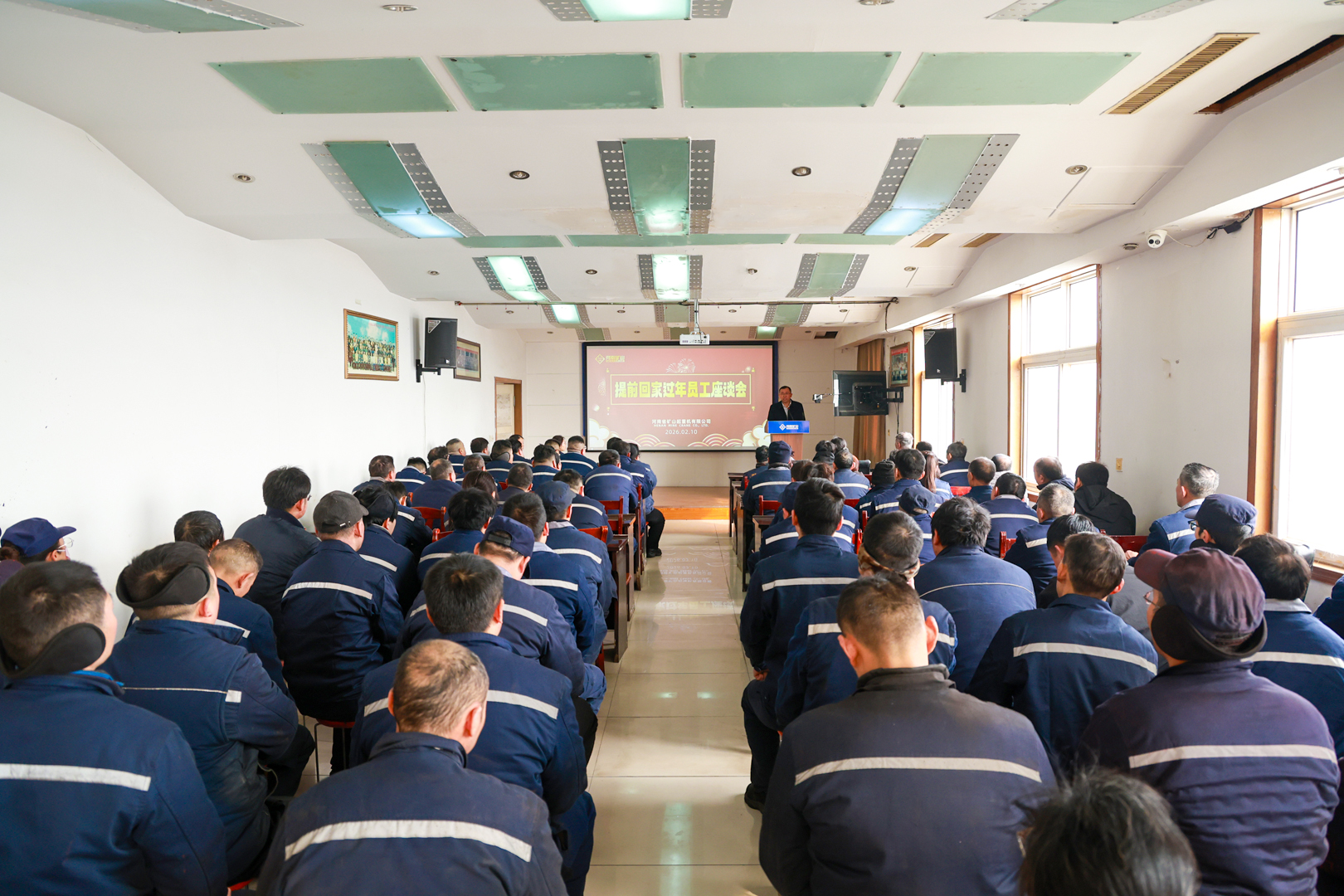
    Henan Mine Crane announced that its annual meeting for the 2025 business year would take place on 13 February 2026 at a manufacturing park in Changyuan.

    Dated annual-meeting announcement poster
    Dated annual-meeting announcement poster.

    A meeting and an industry forum

    The announcement also scheduled the sixth crane development forum for the same period. The forum was intended to bring industry participants together to discuss crane-sector development.

    A pre-event announcement

    Published on 12 February 2026, this notice records the planned event. It does not describe completed proceedings, signed orders or meeting outcomes.

    Contact Henan Mine Crane

    For product information, a manufacturing visit or a company enquiry, send the relevant details to our team.

  • Manufacturing Partners Send Greetings Ahead of Henan Mine Crane’s Annual Meeting

    Manufacturing Partners Send Greetings Ahead of Henan Mine Crane’s Annual Meeting

    Industry & Partnerships

    Manufacturing Partners Send Greetings Ahead of Henan Mine Crane’s Annual Meeting

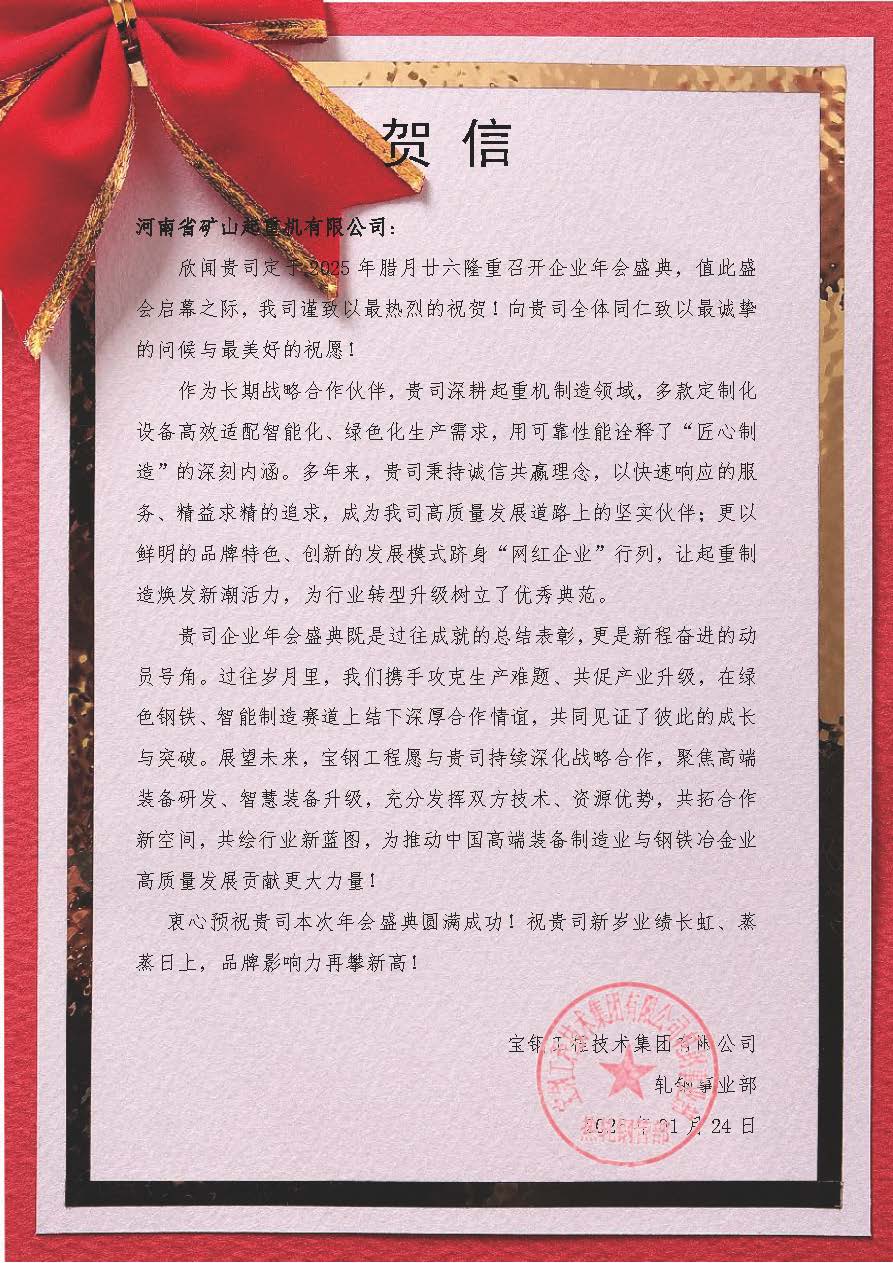
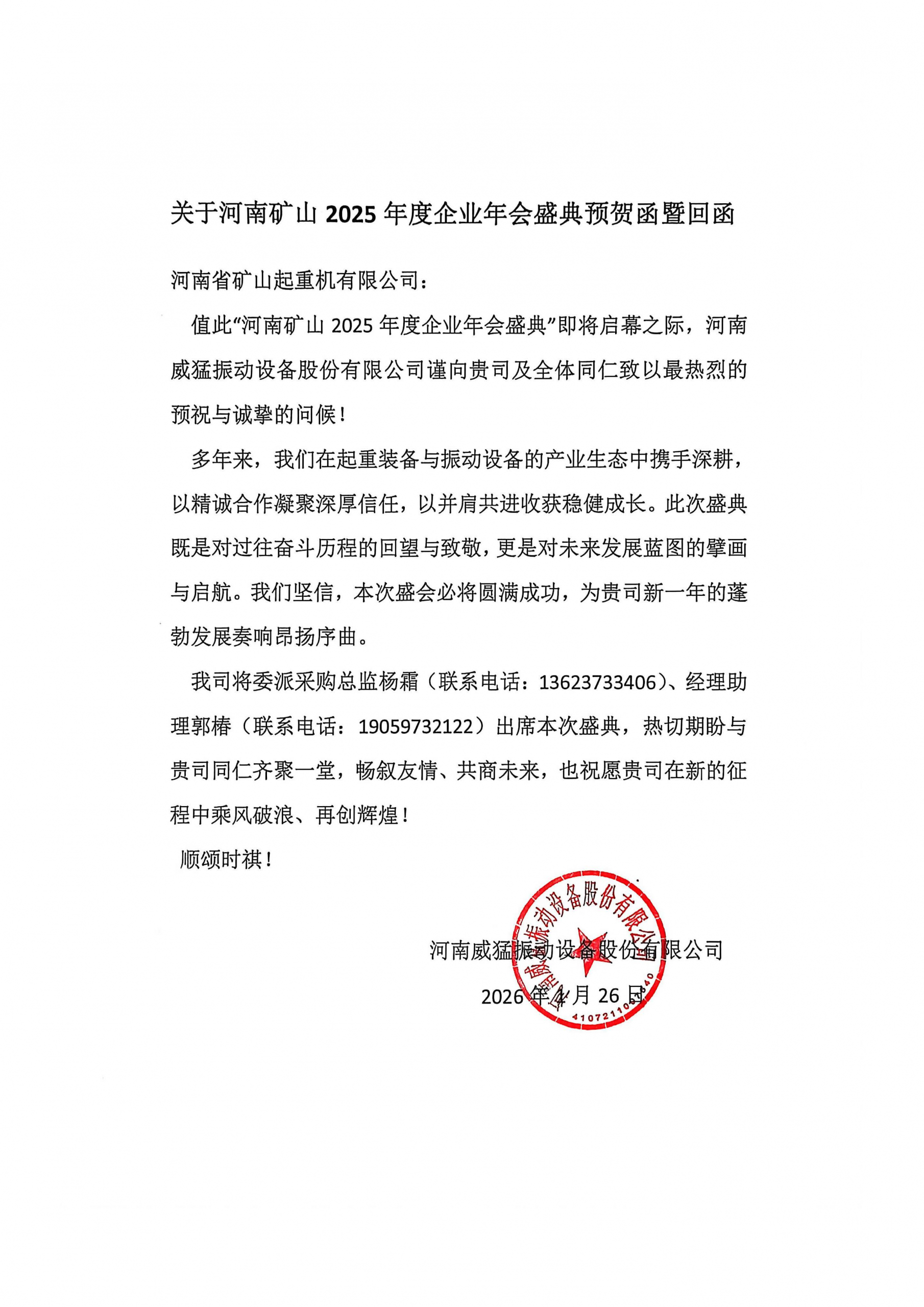
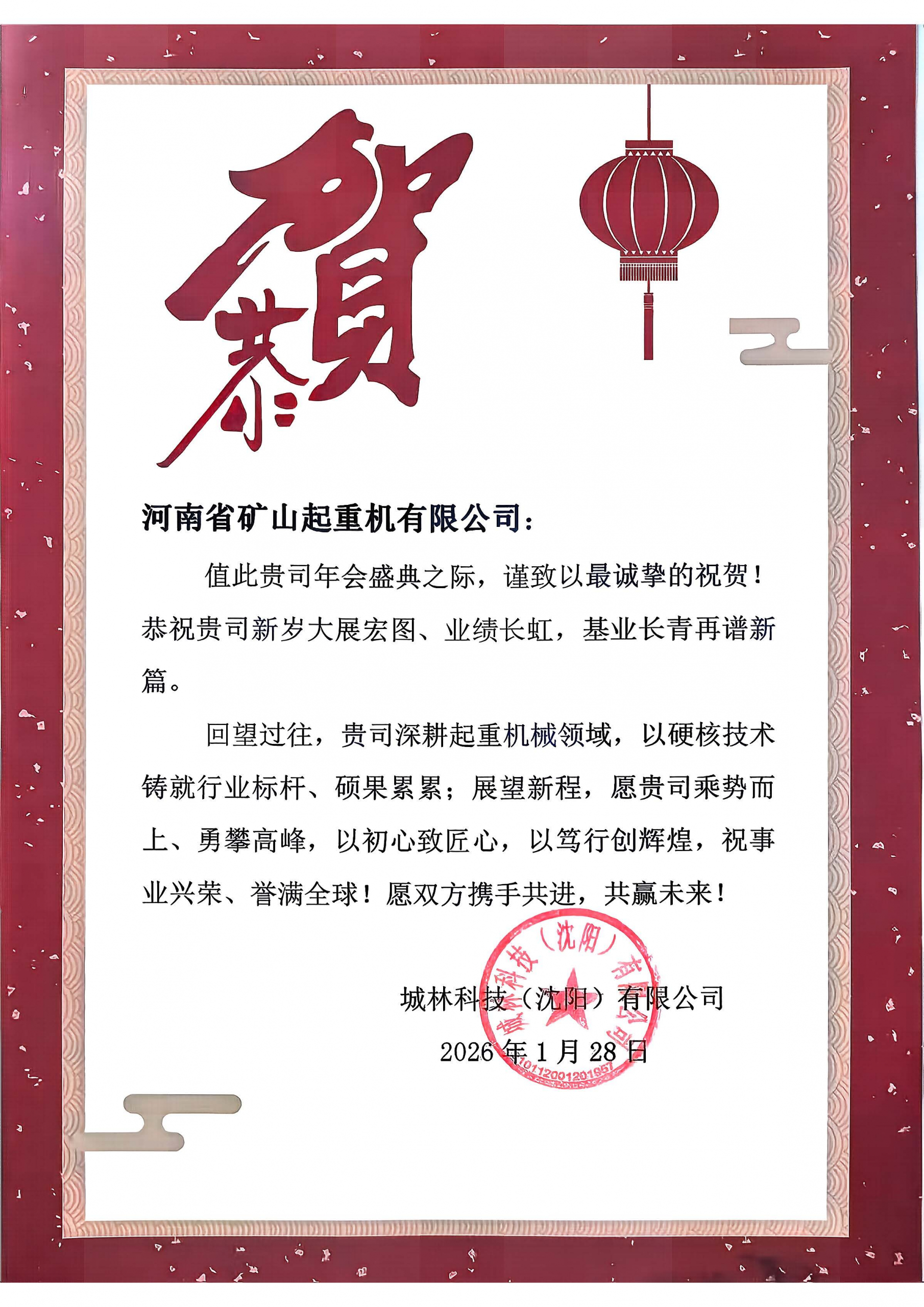
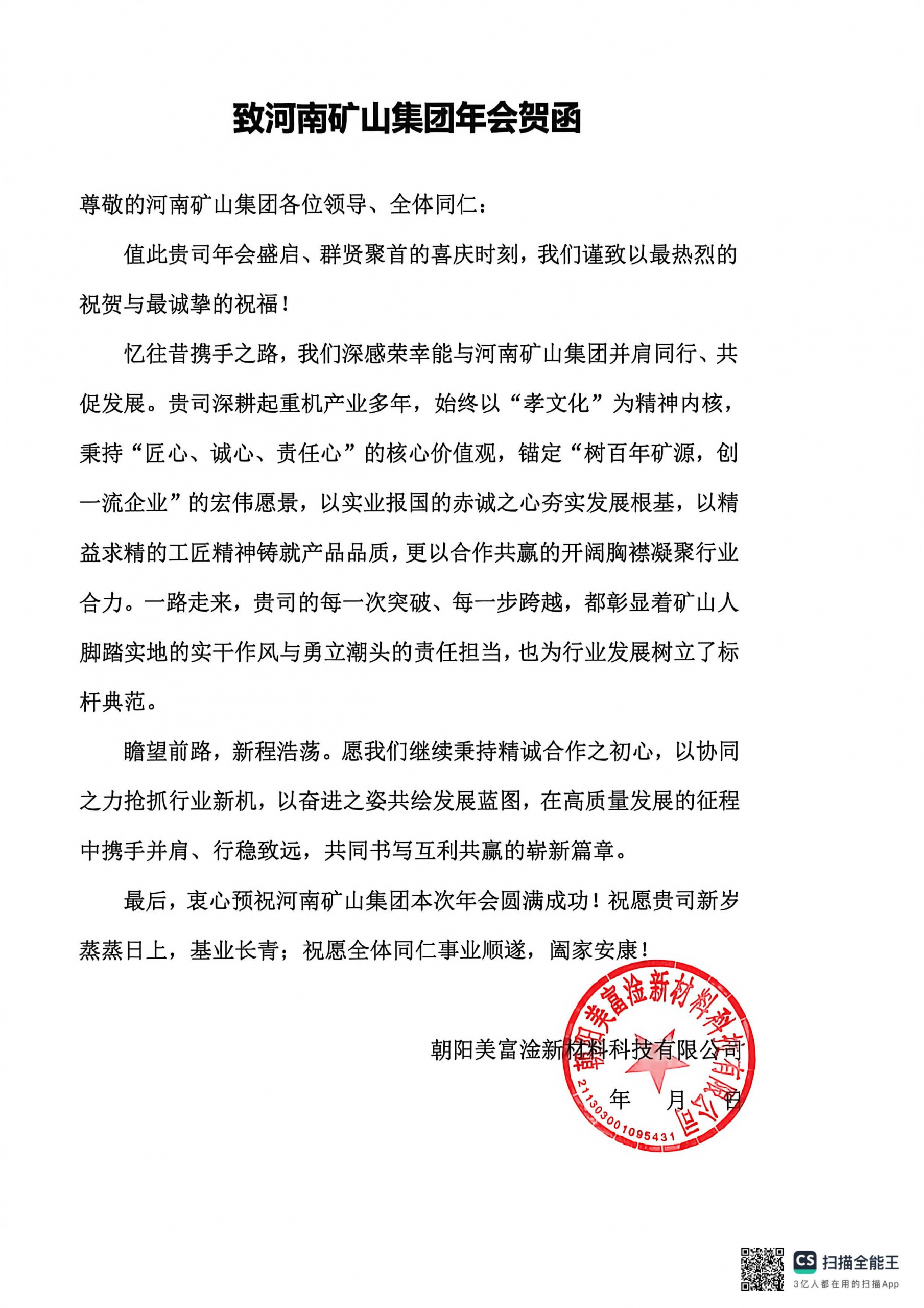
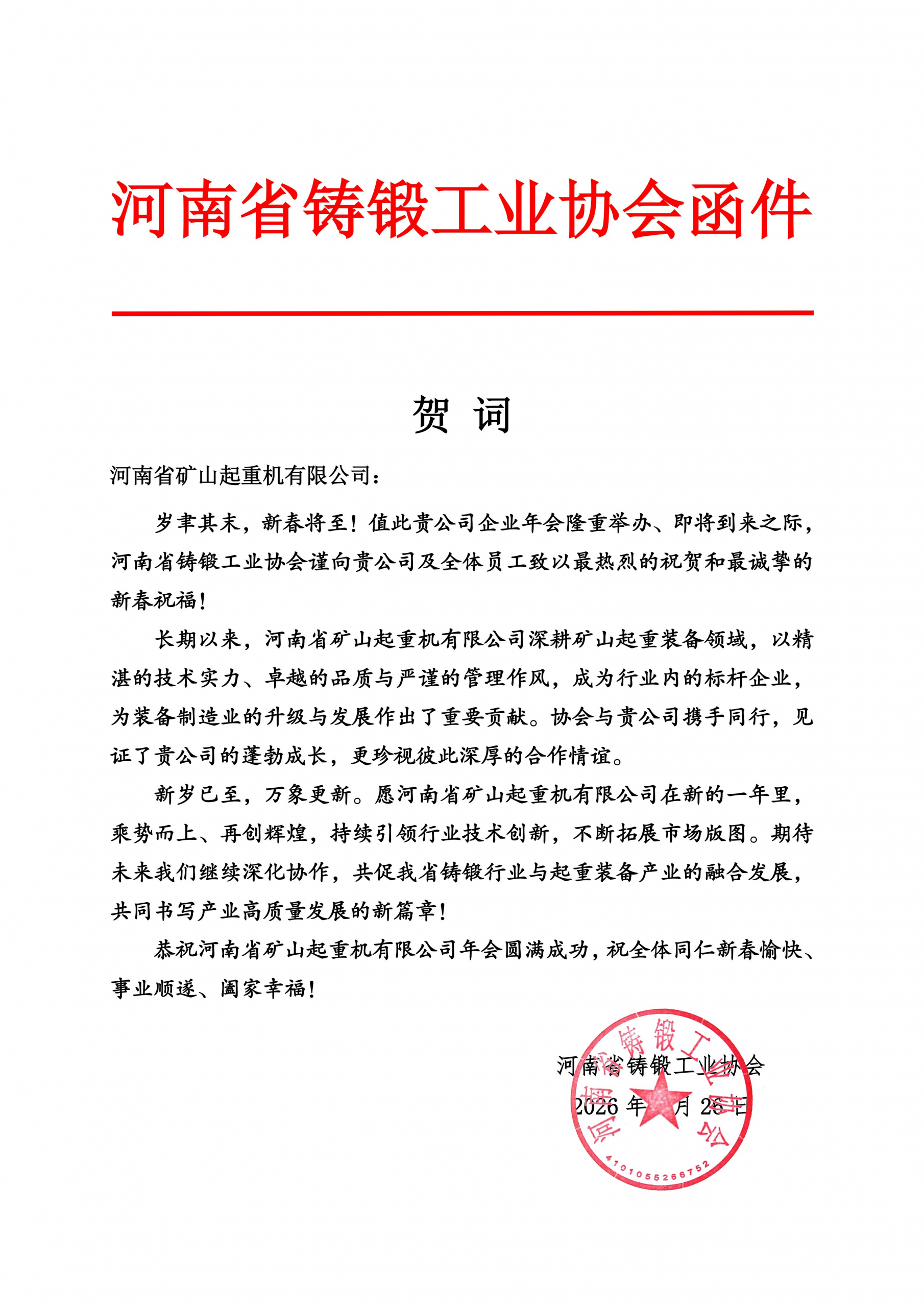
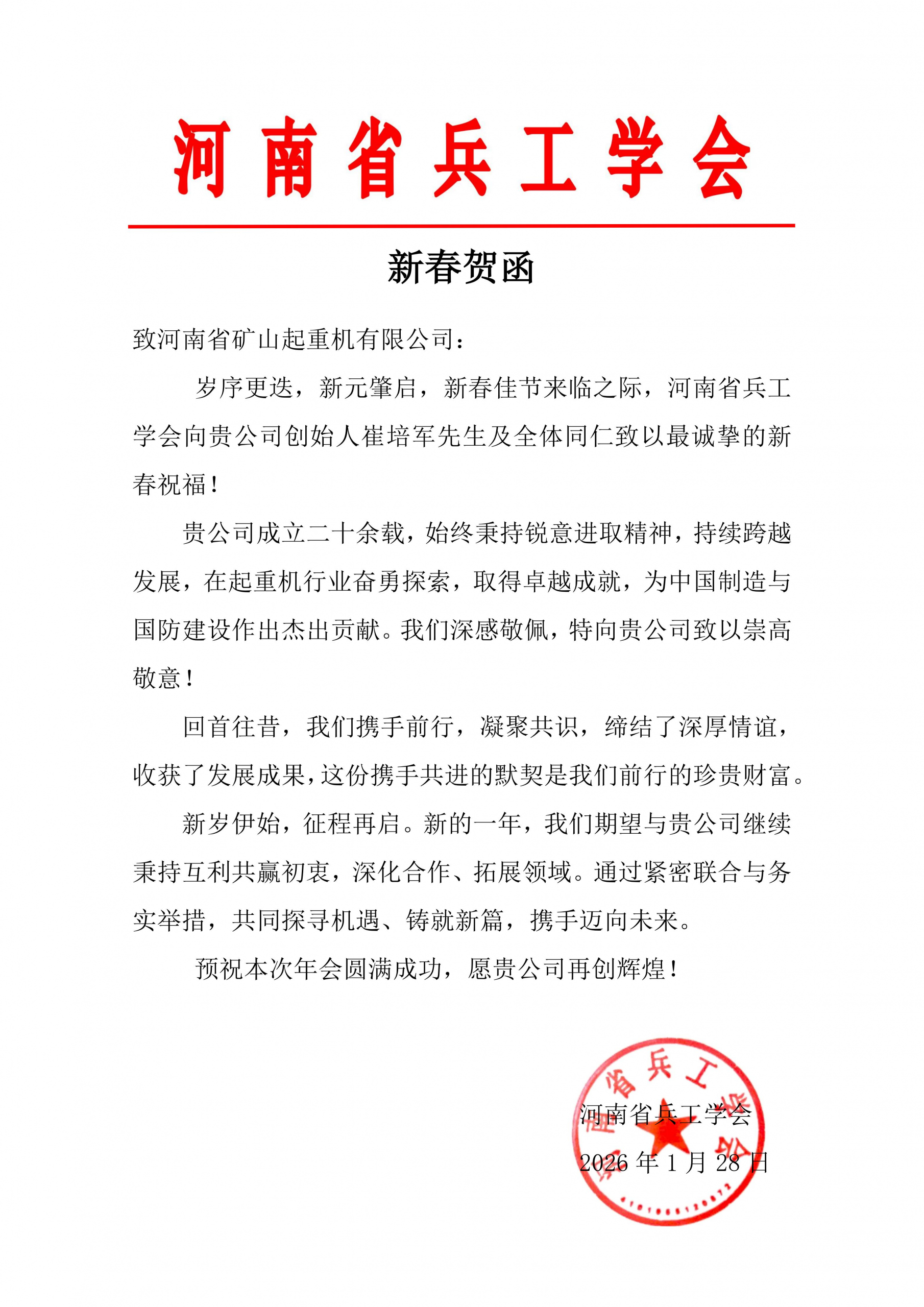
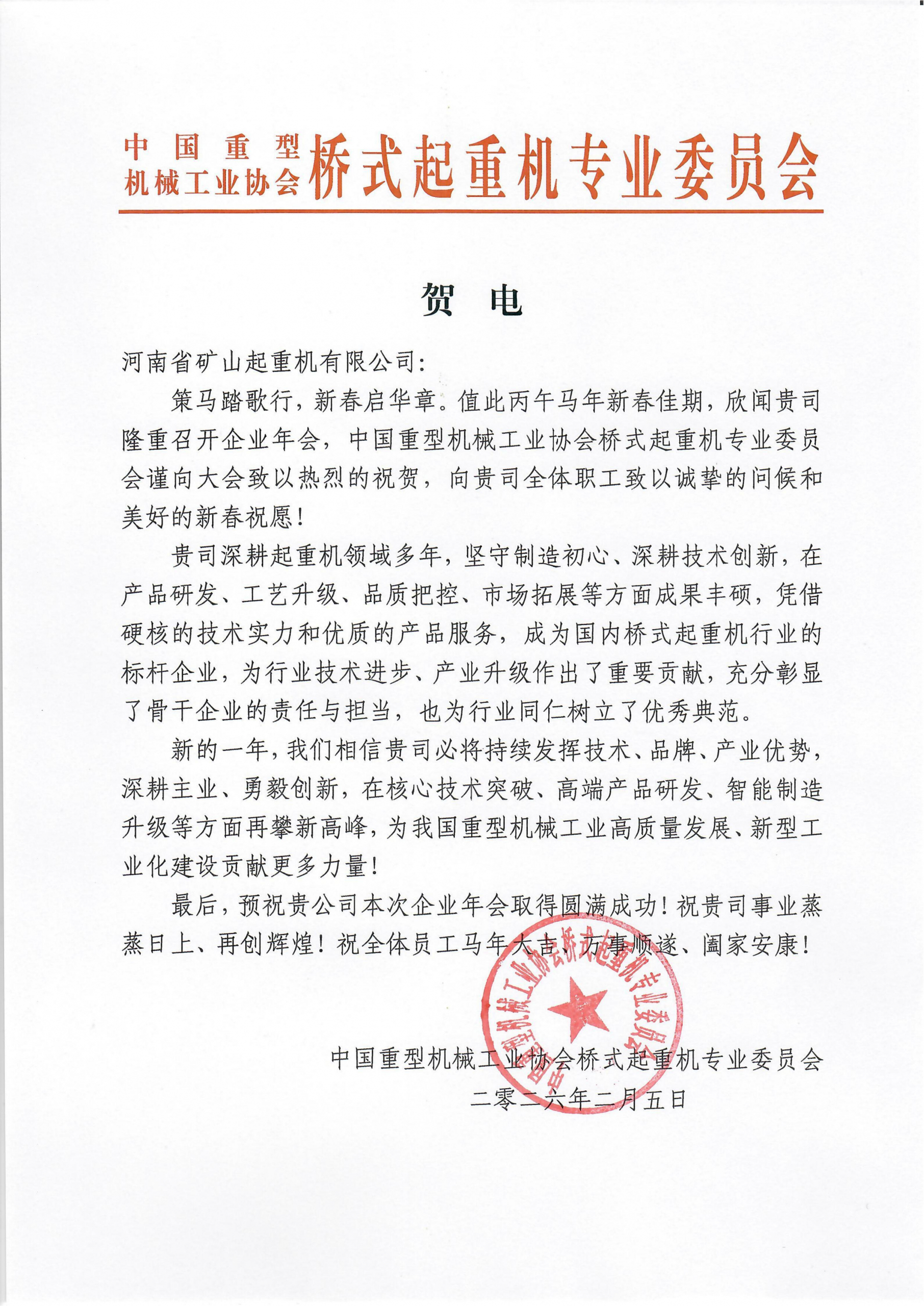
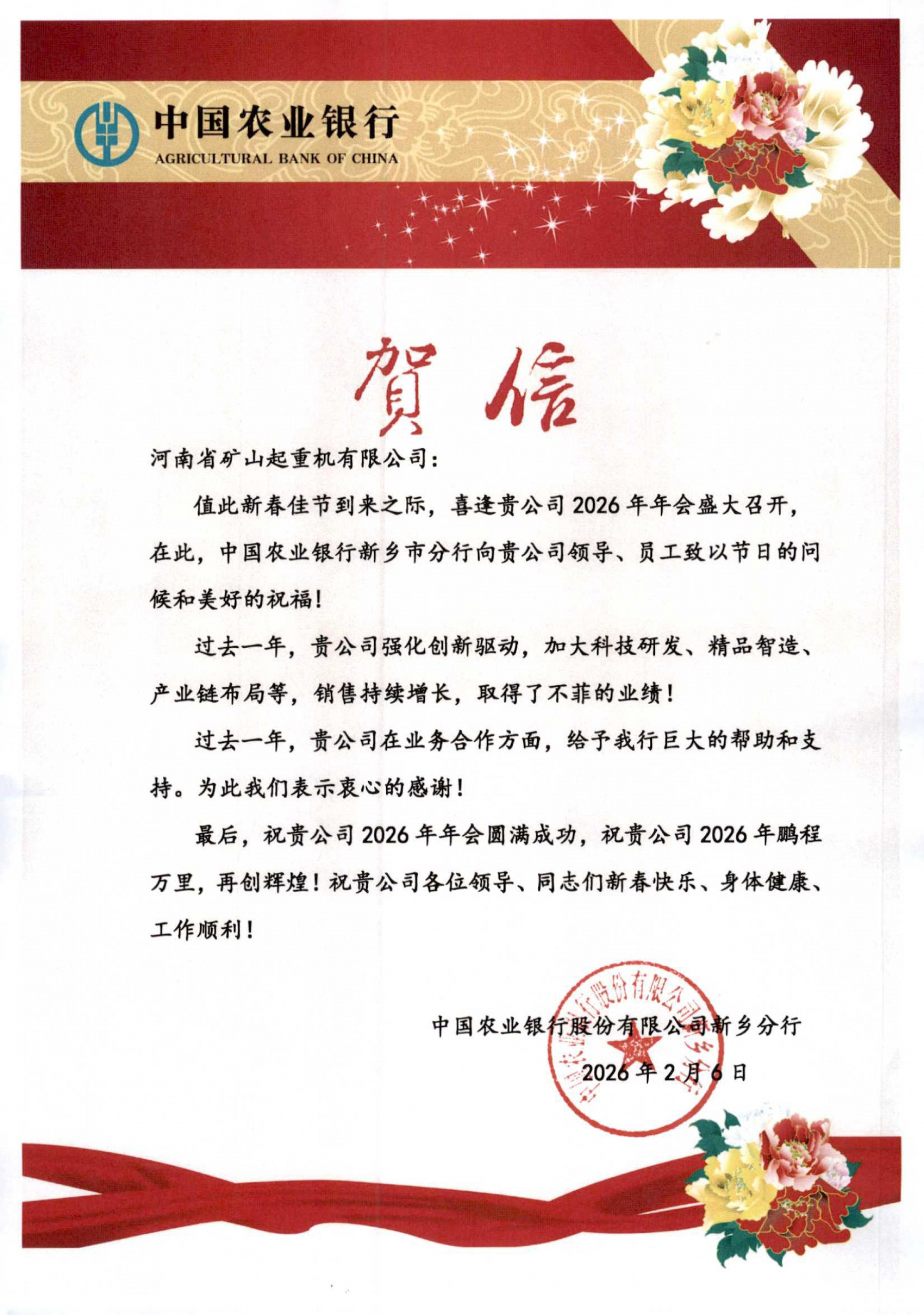
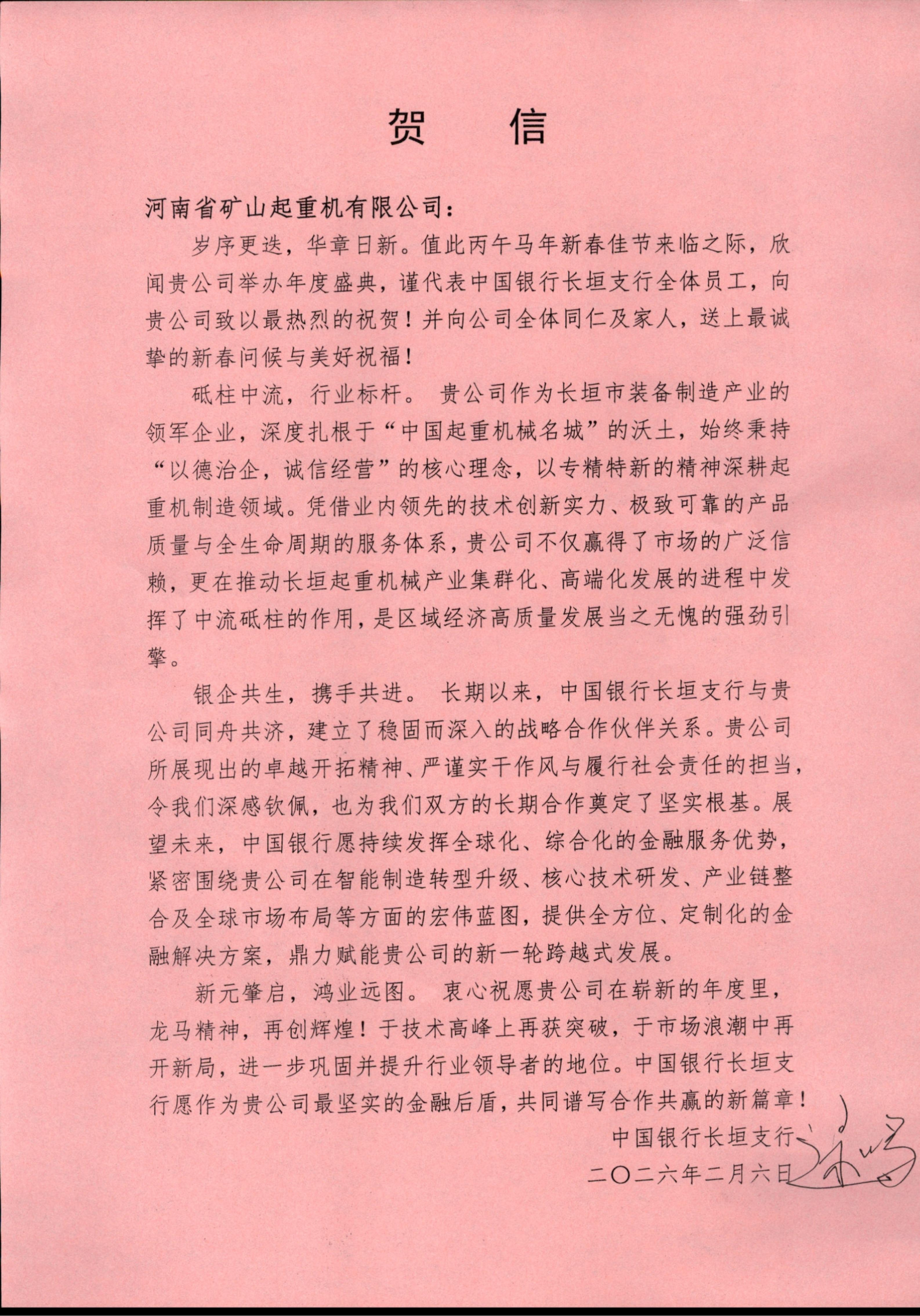
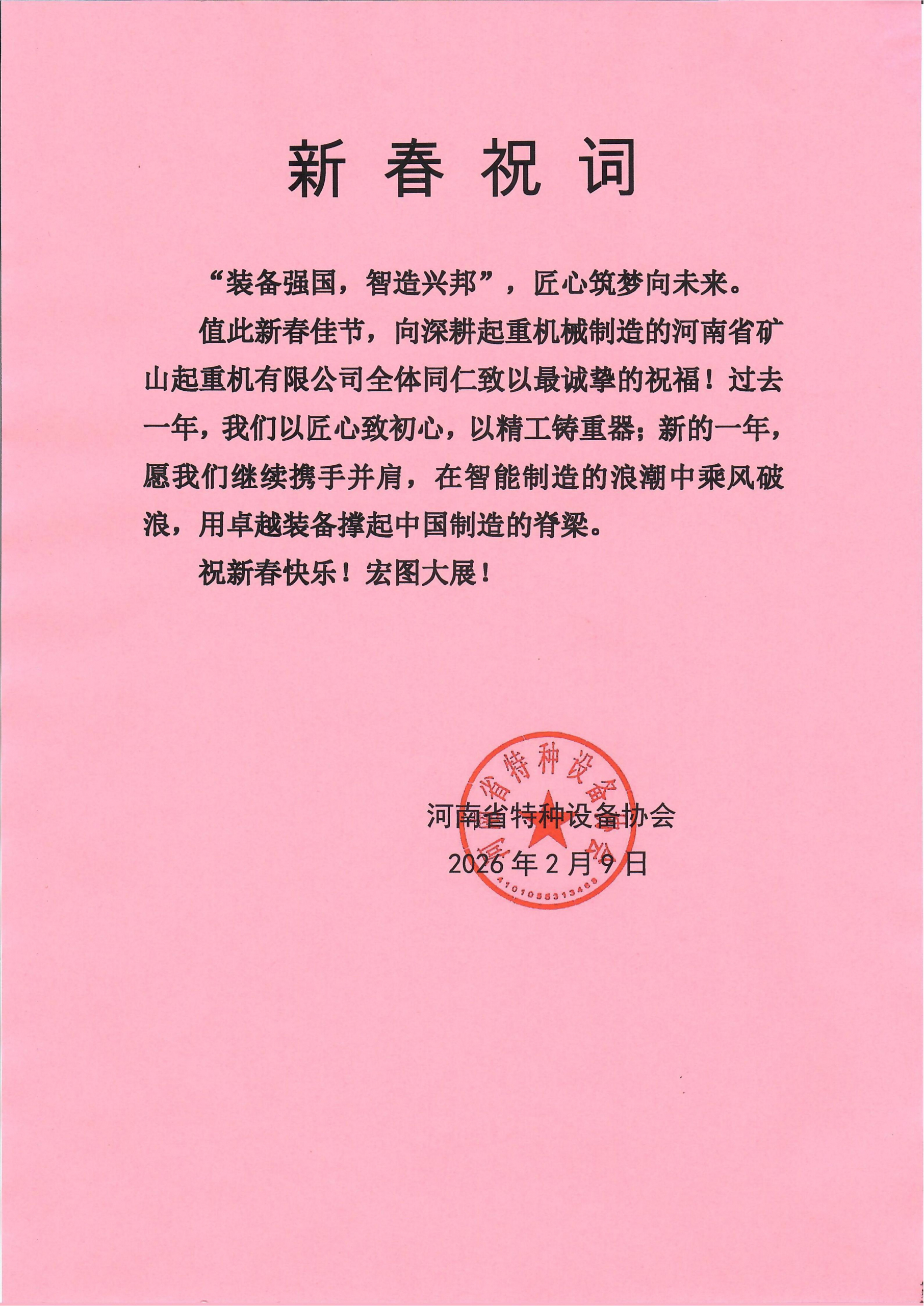
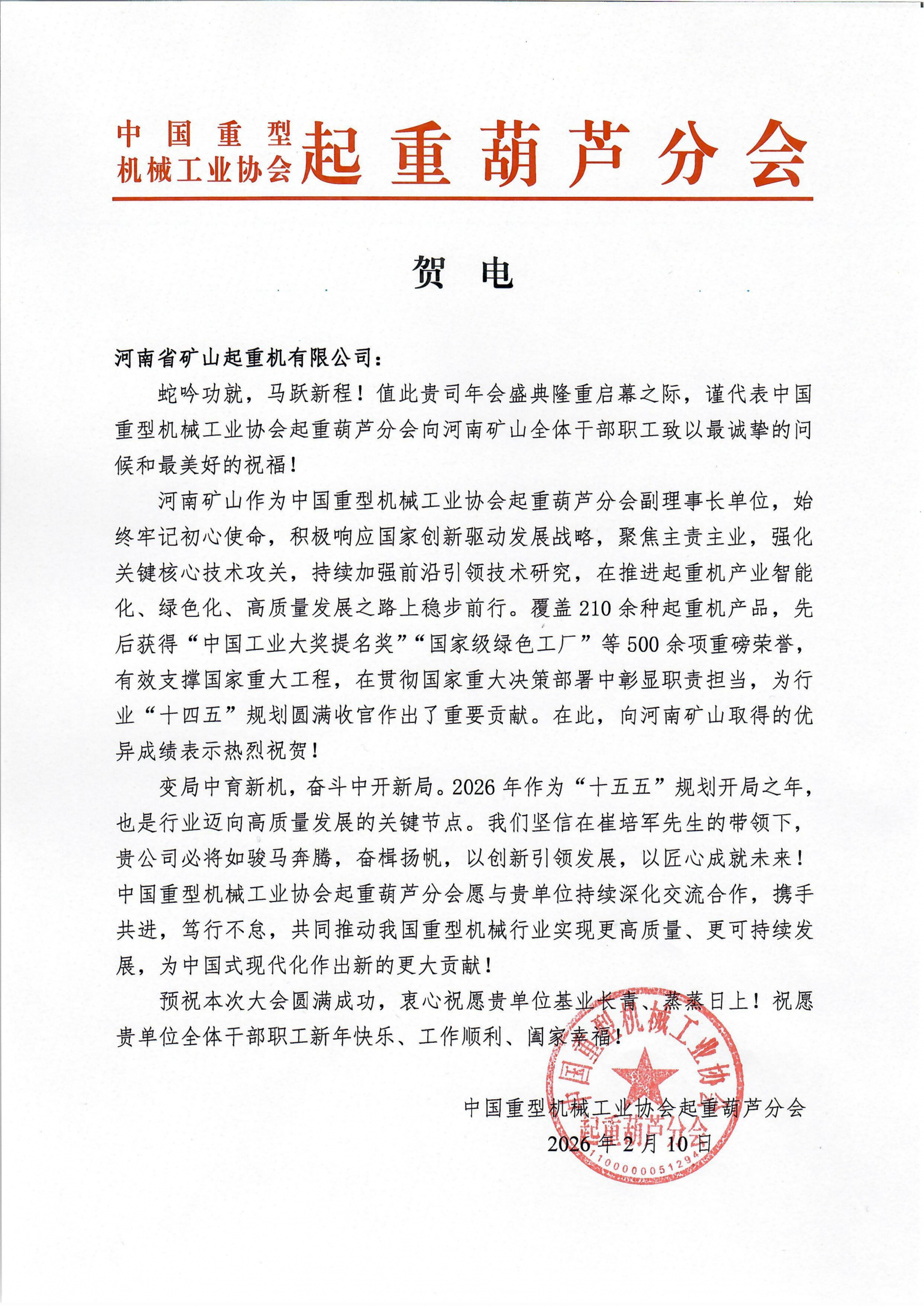
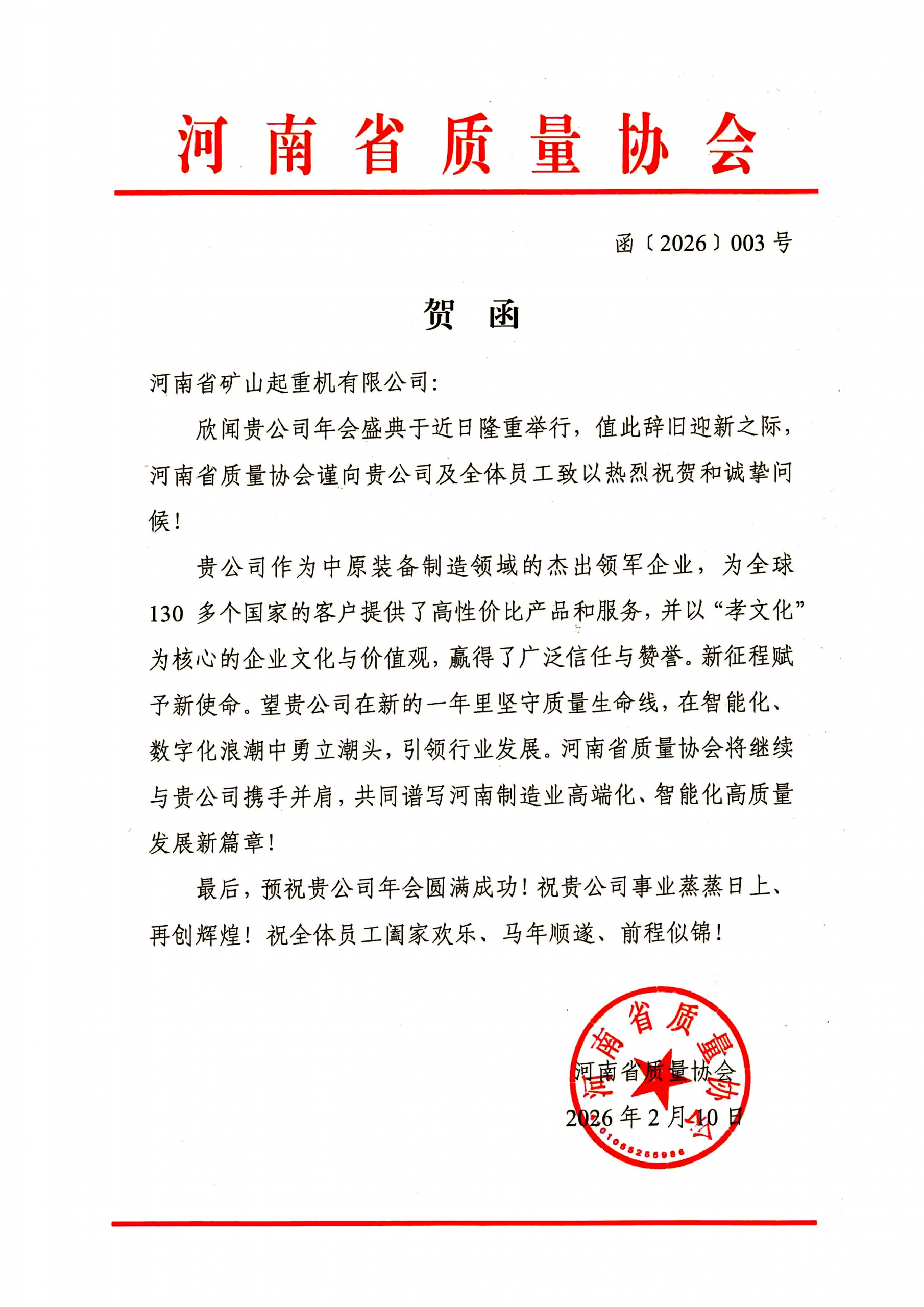
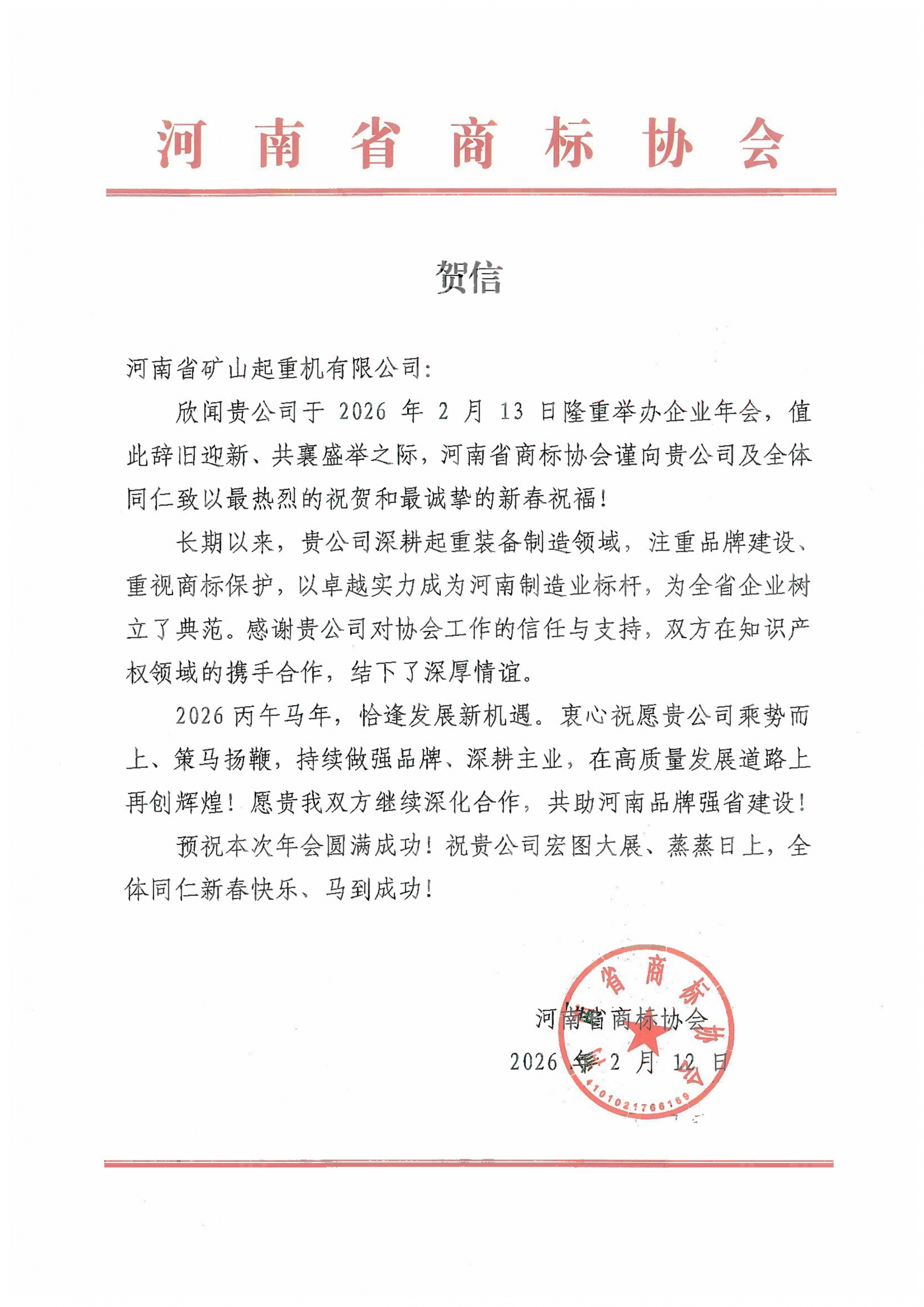
    Manufacturing partners sent greetings ahead of Henan Mine Crane’s annual meeting for the 2025 business year, as preparations continued in February 2026.

    Partner greeting letter with a red decorative border ahead of Henan Mine Crane’s annual meeting
    Partner greeting letter with a red decorative border.

    Messages ahead of the annual gathering

    The published feature brought together partner messages wishing the event success and recognising continuing industrial cooperation. The letters were presented in the order received.

    A record of partner communications

    The accompanying correspondence records the greetings sent for the event.

    View the published greetings

    Contact Henan Mine Crane

    For product information, a manufacturing visit or a company enquiry, send the relevant details to our team.

  • New Year Outreach Visits 40 Households in Seven Nearby Villages

    New Year Outreach Visits 40 Households in Seven Nearby Villages

    Company & People

    New Year Outreach Visits 40 Households in Seven Nearby Villages

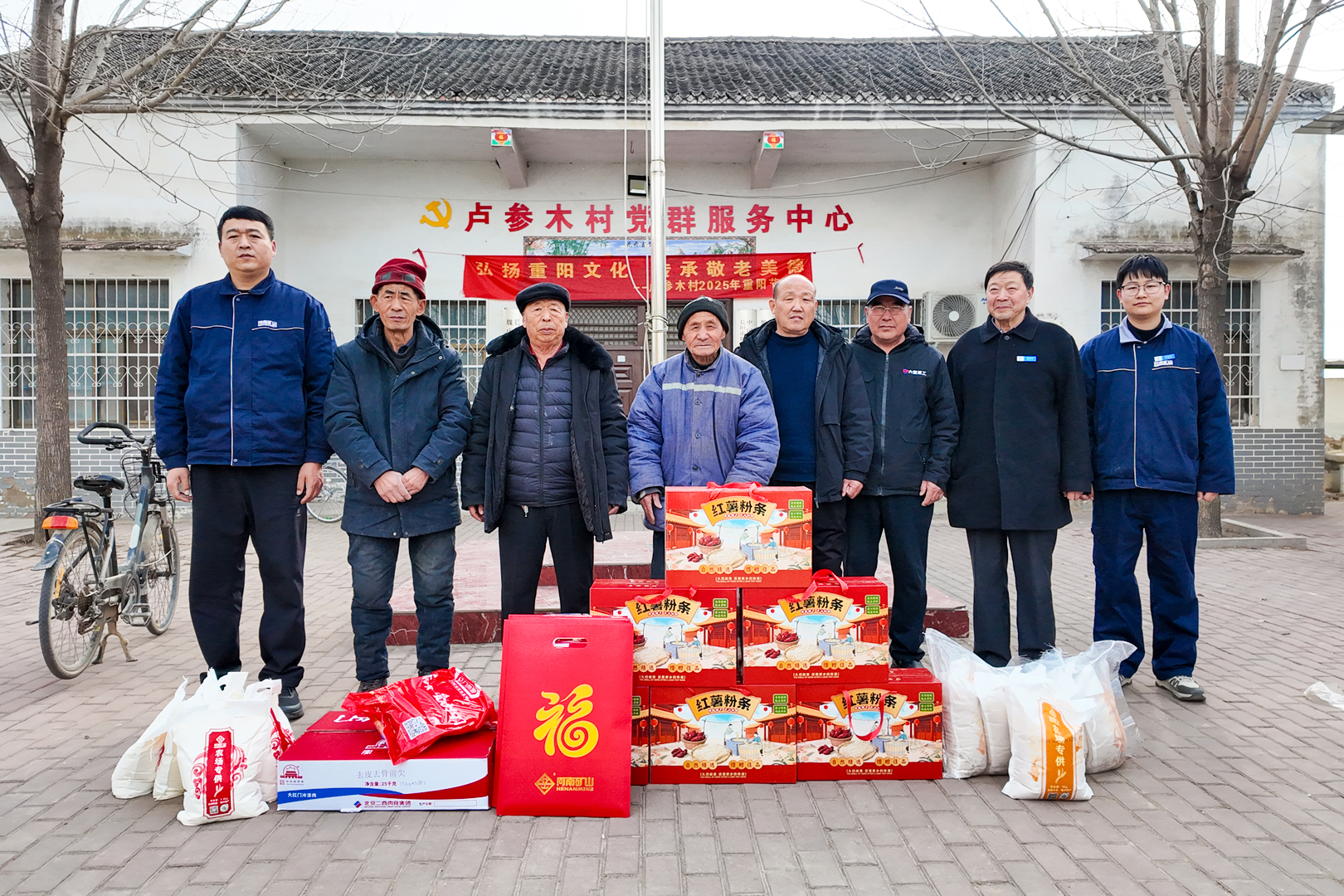
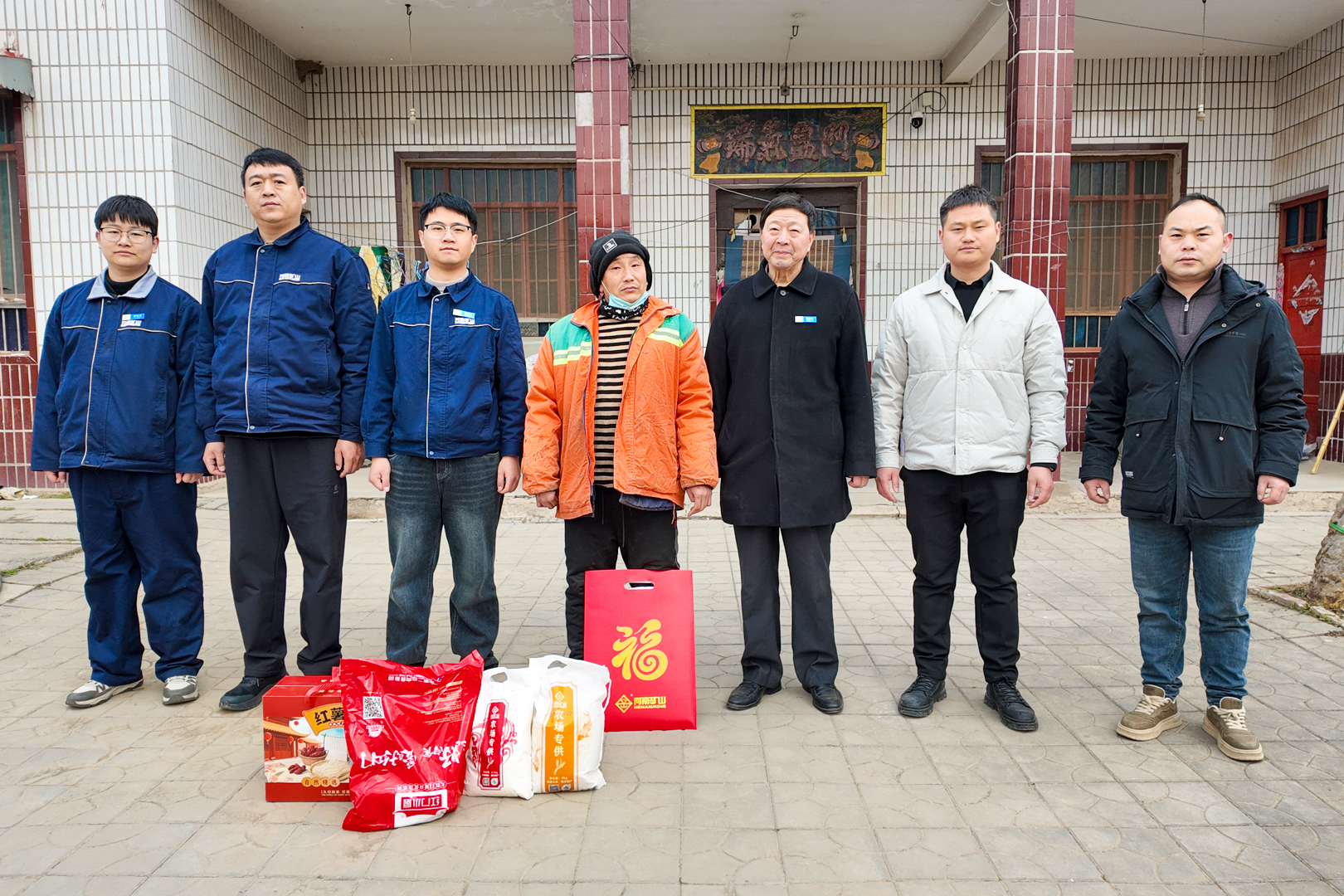
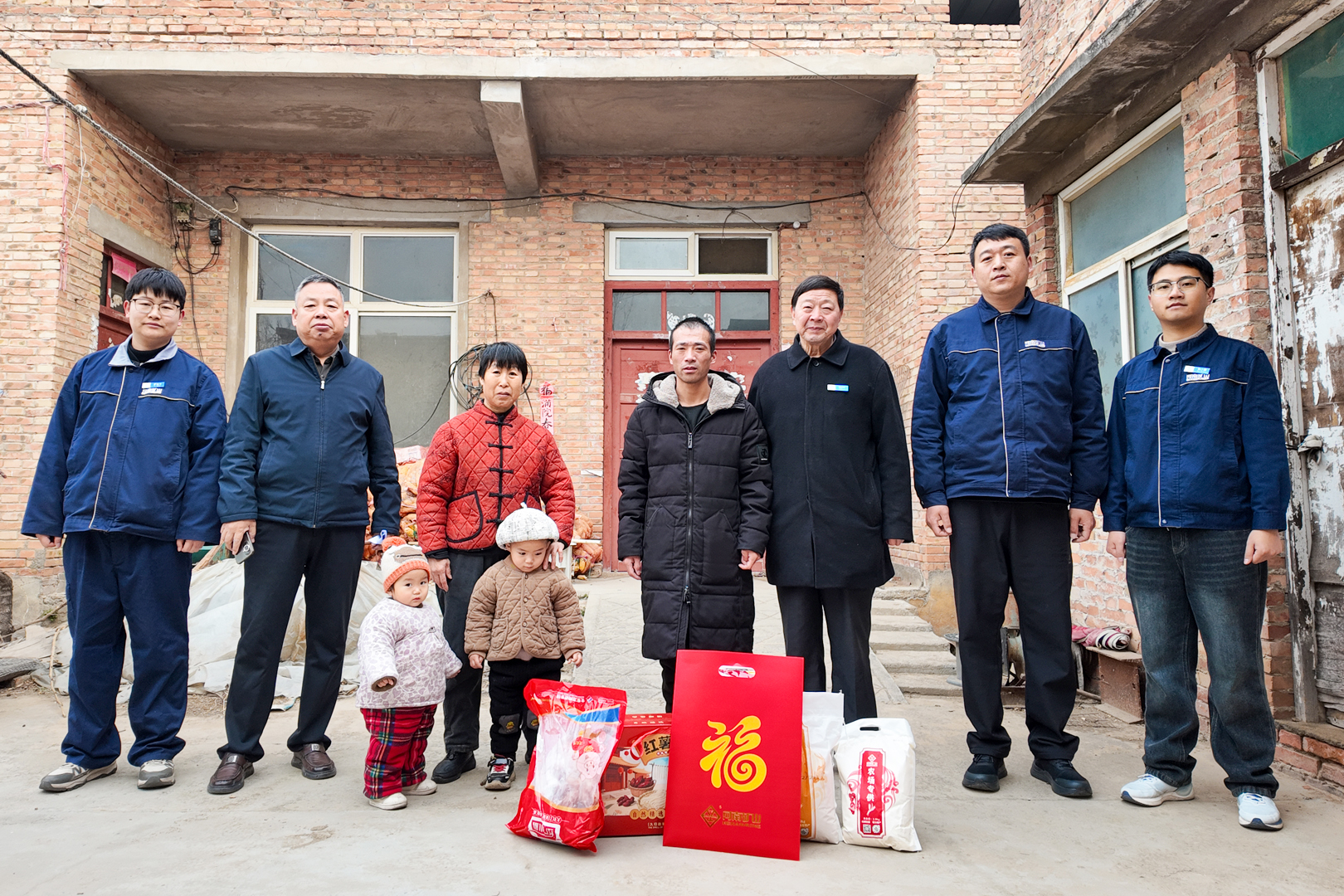
    Henan Mine Crane’s community outreach team visited 40 households in seven nearby villages on 10 February 2026, ahead of the Lunar New Year.

    Company representatives and residents with New Year gifts outside a village service building during Henan Mine Crane’s New Year outreach
    Company representatives and residents with New Year gifts outside a village service building.

    Food and seasonal gifts for local households

    The visiting team delivered pork, millet, flour, vermicelli and New Year prints, together with seasonal greetings. Company representatives organised the visits on behalf of the employees and leadership.

    Recurring community support

    The annual outreach sits alongside the company’s education grants, employment support and other local activities. This report records the 40-household visit, distinct from other New Year programmes.

    View the event photo gallery

    Contact Henan Mine Crane

    For product information, a manufacturing visit or a company enquiry, send the relevant details to our team.

  • Henan Mine Crane Distributes Lunar New Year Benefits to Employees

    Henan Mine Crane Distributes Lunar New Year Benefits to Employees

    Company & People

    Henan Mine Crane Distributes Lunar New Year Benefits to Employees

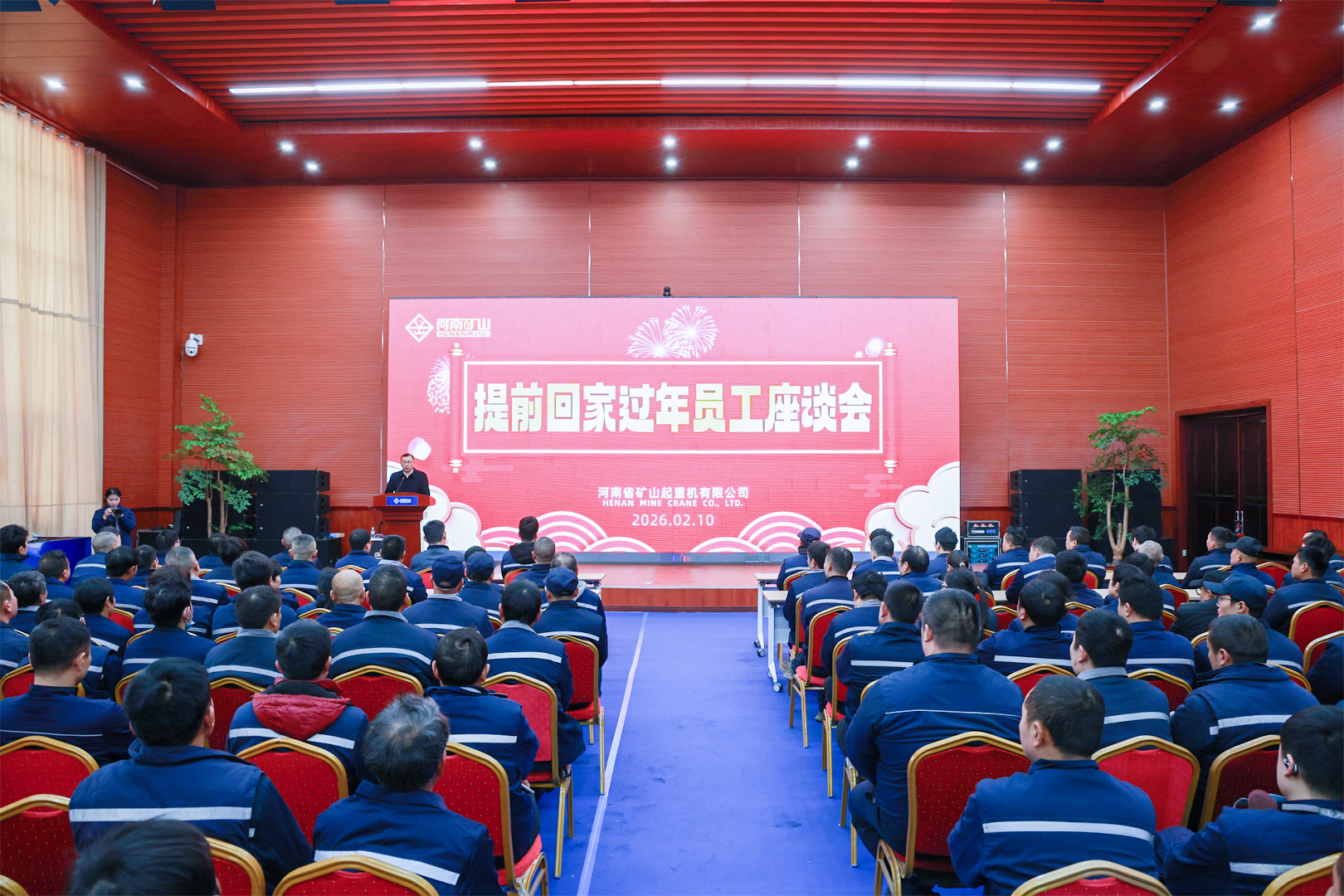
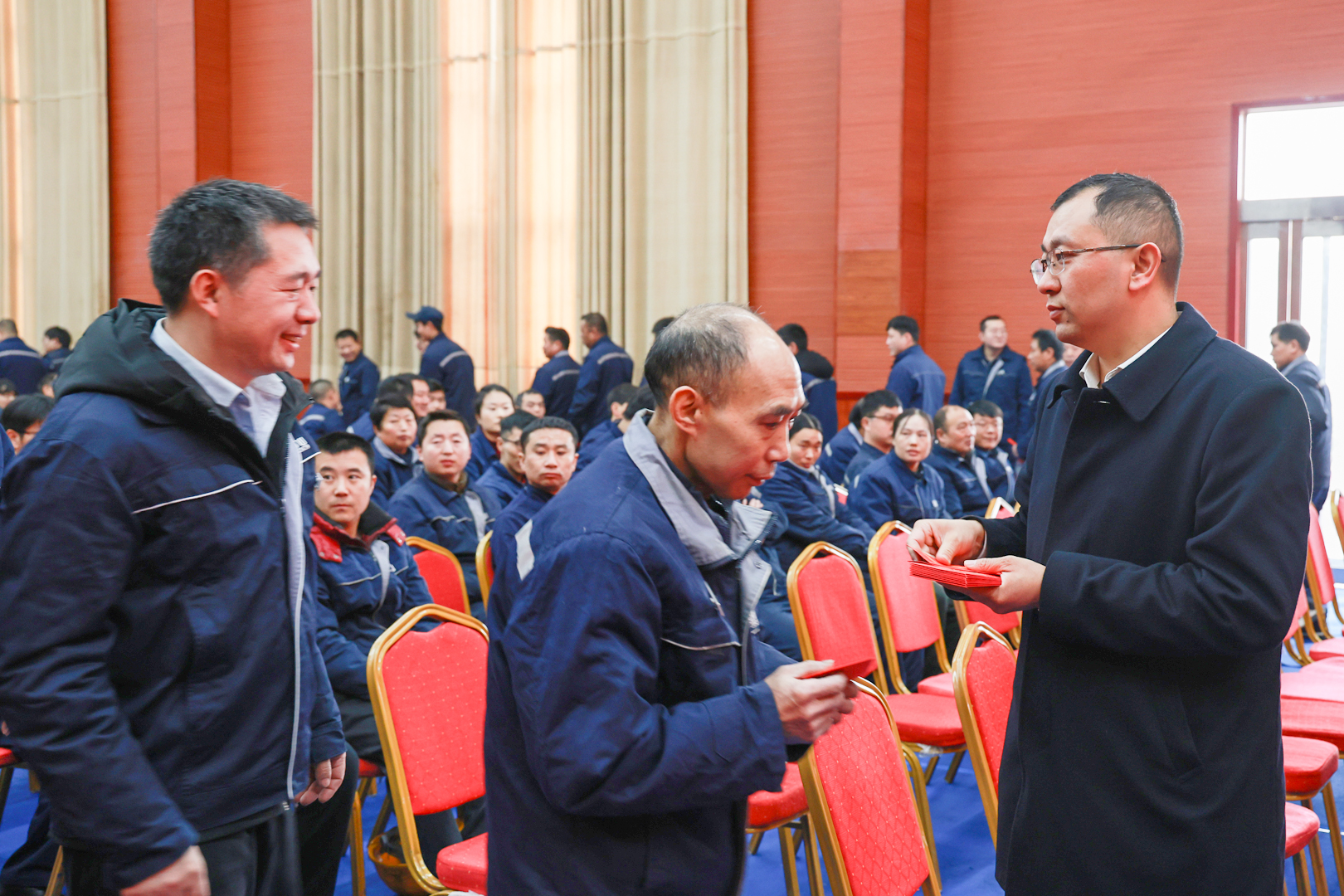
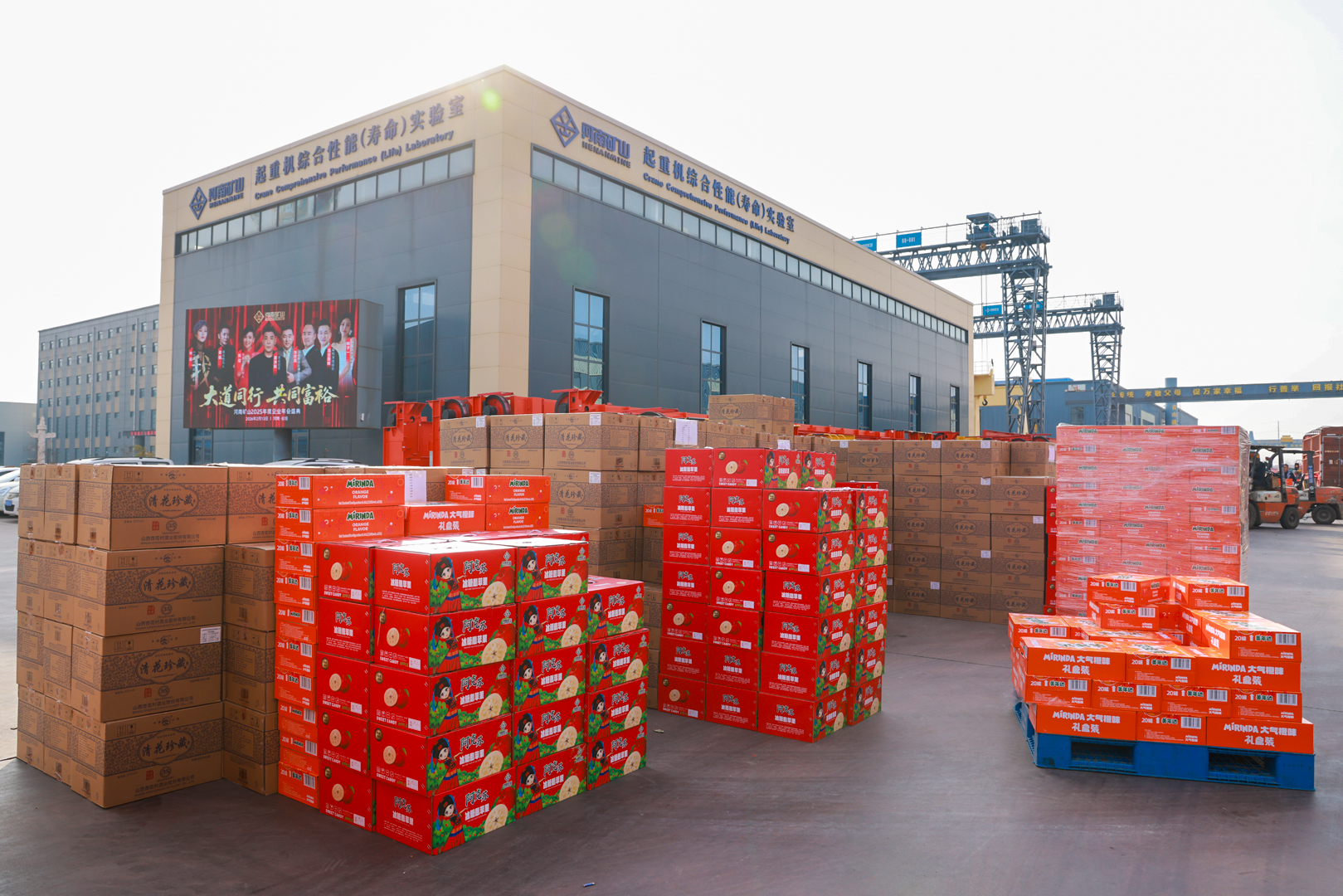
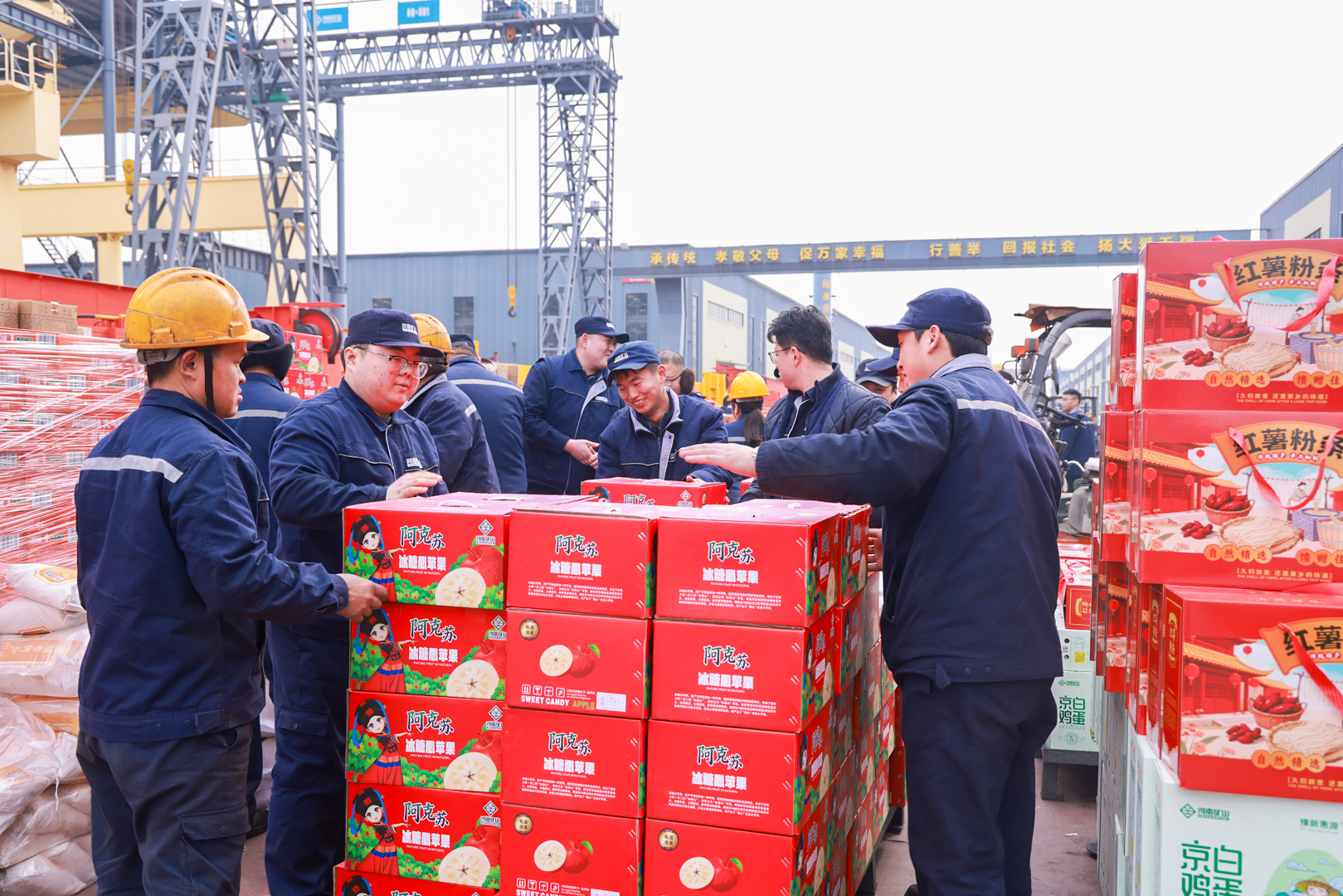
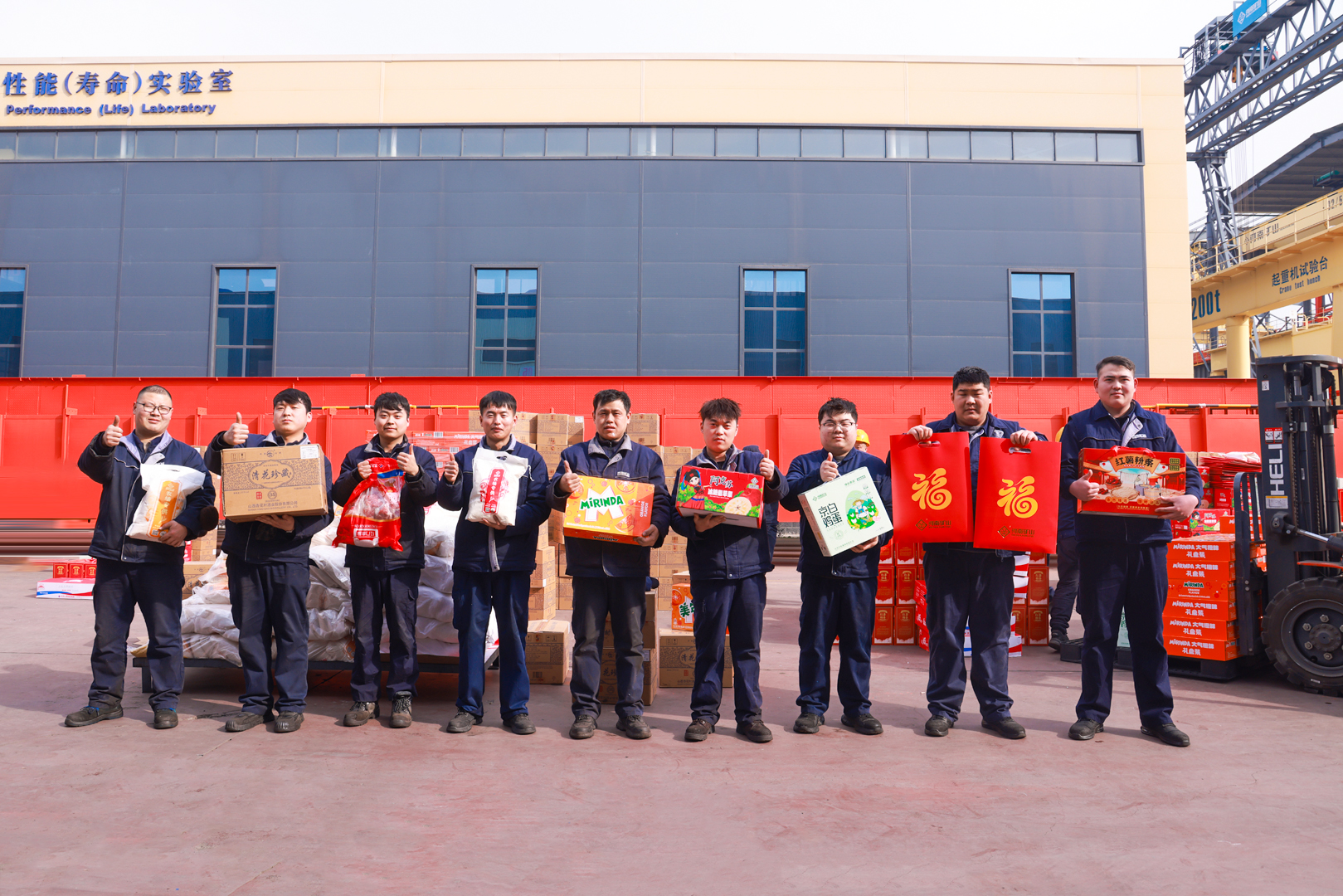
    Henan Mine Crane prepared Lunar New Year benefit packages for employees ahead of the February 2026 holiday and annual meeting.

    Holiday packages arranged beside crane girders outside the factory at Henan Mine Crane before the Lunar New Year
    Holiday packages arranged beside crane girders outside the factory.

    Seasonal benefit packages

    The packages included food, fruit, eggs, drinks and New Year prints. The company’s report describes a package prepared for each employee, with photographs showing the distribution arrangements.

    Holiday arrangements for employees and families

    The programme also recorded gifts for employees leaving early to travel home. These workplace benefits were separate from the company’s delivery programmes for sales families and its outreach to neighbouring villages.

    View the event photo gallery

    Contact Henan Mine Crane

    For product information, a manufacturing visit or a company enquiry, send the relevant details to our team.

  • Industry Associations and Research Partners Send Annual Meeting Greetings

    Industry Associations and Research Partners Send Annual Meeting Greetings

    Industry & Partnerships

    Industry Associations and Research Partners Send Annual Meeting Greetings

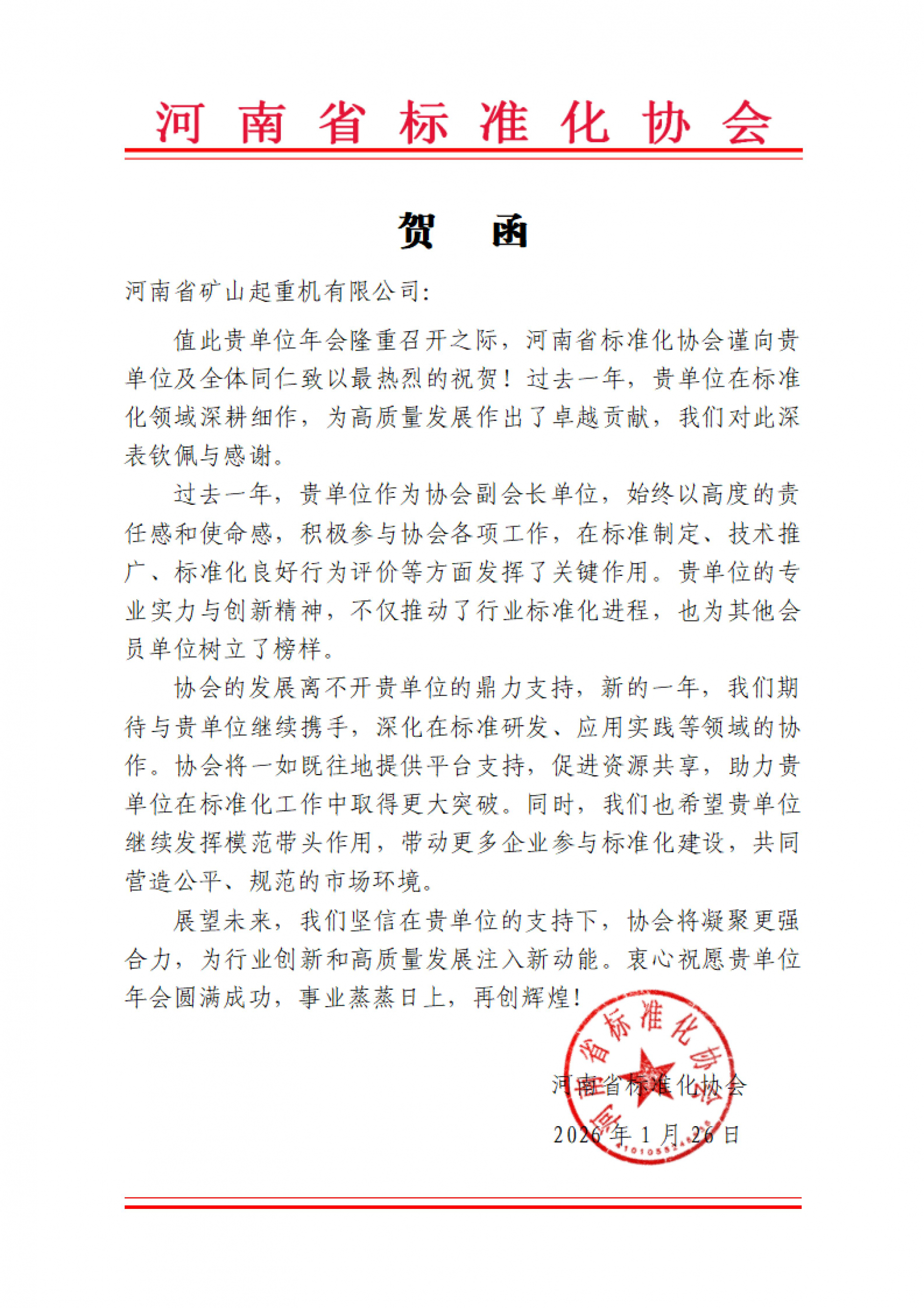
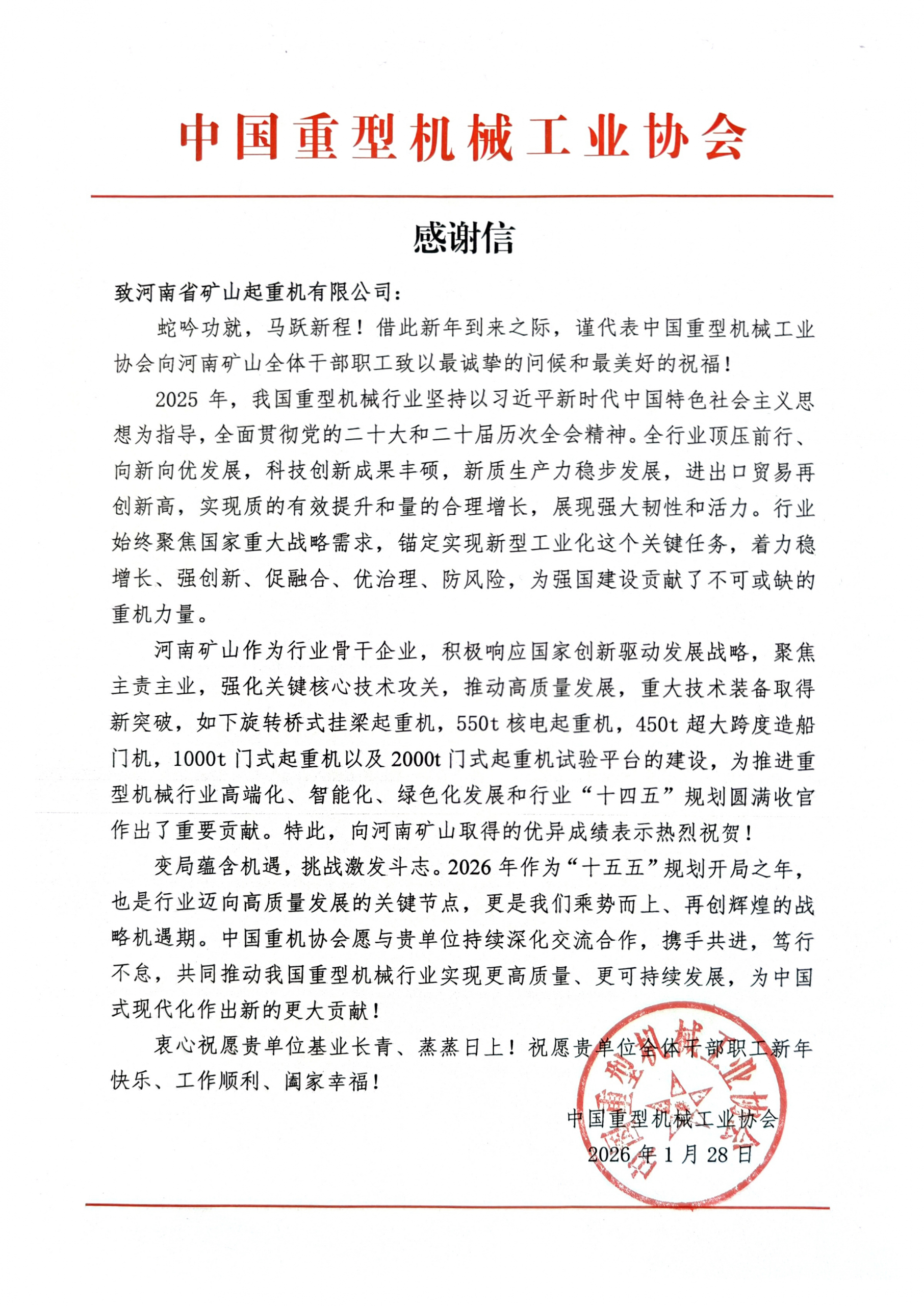
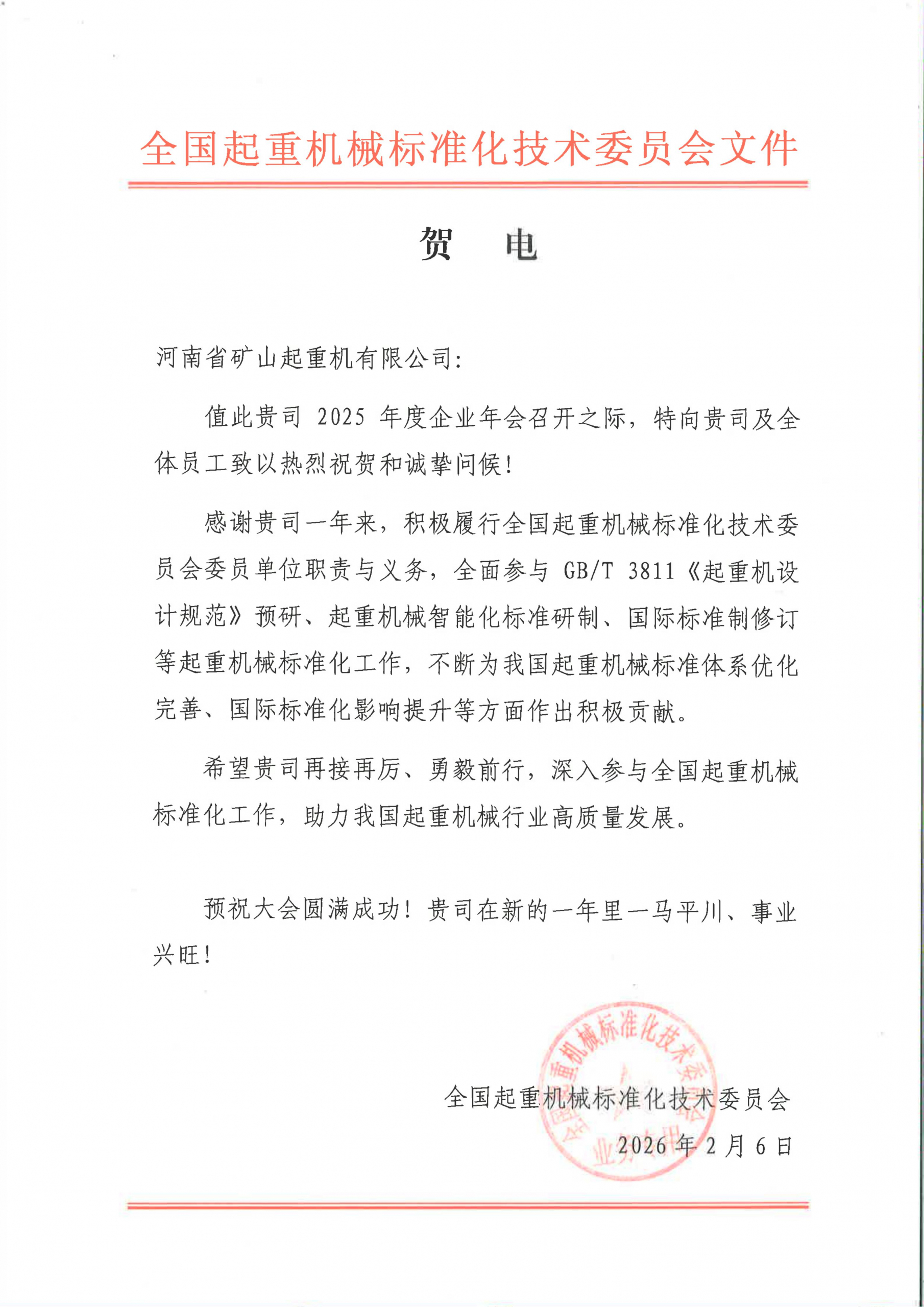
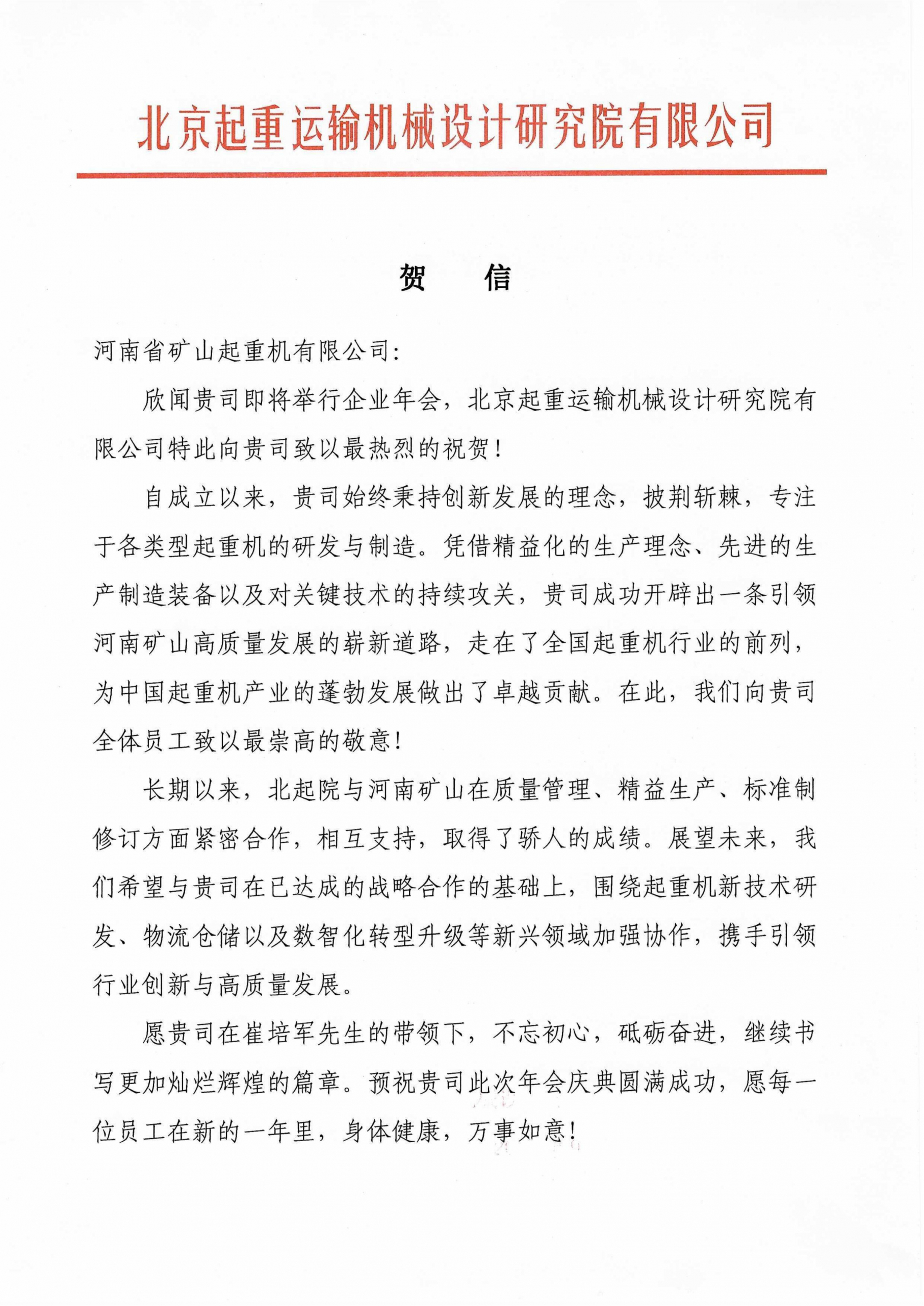
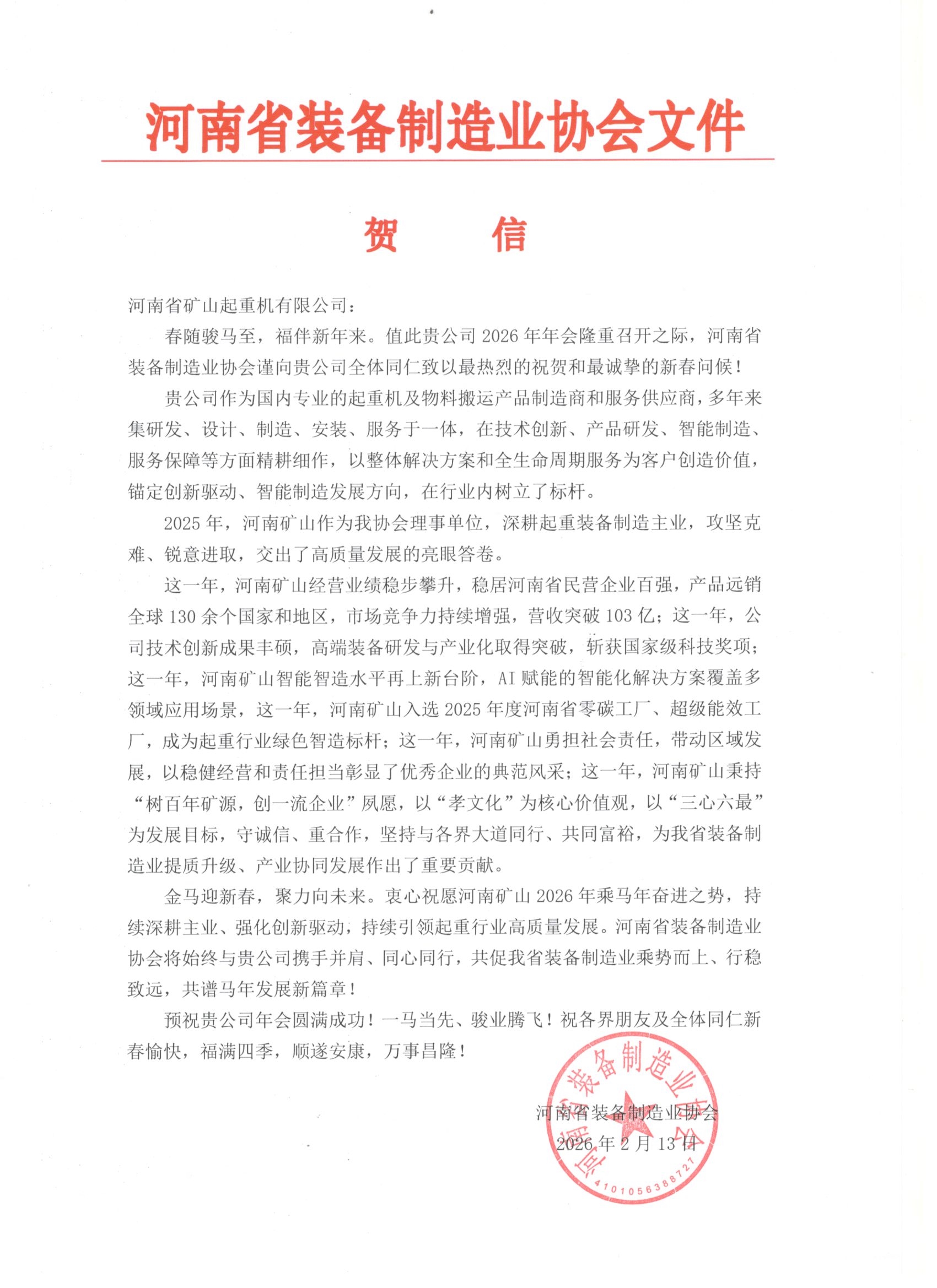
    Industry associations, research organisations and financial partners sent greetings ahead of Henan Mine Crane’s annual meeting for the 2025 business year in February 2026.

    Greeting letter from a provincial standards association ahead of Henan Mine Crane’s annual meeting
    Greeting letter from a provincial standards association.

    Messages from industry and research organisations

    The feature included correspondence from organisations involved in standards, heavy machinery, hoists, manufacturing and quality, as well as a research institute and a financial partner. Letters were presented in the order received.

    Correspondence connected with the annual event

    The messages recognised the company’s development and wished the planned gathering success.

    View the published greetings

    Contact Henan Mine Crane

    For product information, a manufacturing visit or a company enquiry, send the relevant details to our team.

  • Container Handling System Planning: Connect Equipment and Cargo Flow

    Container Handling System Planning: Connect Equipment and Cargo Flow

    Technical guide

    Container Handling System Planning: Connect Equipment and Cargo Flow

    Container costs are influenced by the complete movement between vessel, stack and delivery. Map those interfaces and operating constraints before selecting individual crane features or changes to the terminal handling system.

    Henan Mine CraneTechnical guide · Updated 2026Crane selection, project scope and operating requirements
    Henan Mine Crane Container Overhead Crane
    Henan Mine Crane Container Overhead Crane
    Project planning notes

    Key points for this crane project.

    1. Components of Container Handling Costs
    2. Optimizing Yard Layout
    3. Selecting the Right Equipment Configuration
    Read the technical guide

    Components of Container Handling Costs

    The first category is capital expenditure (CAPEX), which includes ship-to-shore gantry cranes (STS), rubber-tired gantry cranes (RTG), rail-mounted gantry cranes (RMG), container stackers, and terminal tractors, as well as any related infrastructure investments. The second category is operating costs (OPEX). The largest proportion of these costs is energy-related, including diesel, electricity, and charging fees. The next item for consideration is labour costs, including driver and maintenance personnel wages. Finally, there are day-to-day expenses to consider, including maintenance, spare parts and tyre wear costs. For wheeled equipment such as RTGs and container handlers, tyre wear represents a significant fixed cost that cannot be overlooked. The third category consists of hidden costs that are often overlooked, such as demurrage fees for waiting container trucks, penalties for vessel delays, efficiency losses due to equipment idling or yard congestion, and downtime losses caused by unexpected breakdowns.

    Optimizing Yard Layout

    Poor planning of the yard can lead to increased travel distances for equipment, higher fuel consumption and an increase in the number of container transfers, which in turn adds to the workload. When planning container zones, the most effective approach is to divide the area based on container flow. It is recommended that import and export containers be stored separately. Dedicated areas should be designated for refrigerated and hazardous materials containers. Empty containers should be consolidated to minimise long-distance transfers between zones. Ideally, cold-chain container terminals and dangerous goods container yards would clearly demarcate their operational areas. This would reduce the extra travel distance caused by cross-zone transfer operations. It is imperative to minimise container repositioning.

    Selecting the Right Equipment Configuration

    Different handling equipment is suited for distinctly different scenarios. The selection of an inappropriate model has the potential to result in increased long-term operating costs. The selection of appropriate equipment for a container terminal is a key factor in achieving cost savings. Rubber-Tired Gantry (RTG) Cranes are the primary equipment in many yards and offer the greatest potential for cost reduction. Existing diesel-powered equipment can be retrofitted with electric RTGs, or electric RTGs can be purchased. When equipped with hybrid systems, remote control, and automatic positioning capabilities, they can both reduce energy consumption and improve operational efficiency. Rail-mounted gantry cranes (RMGs) are the ideal solution for large, fixed yards. They offer higher stacking density, lower labour requirements, lower electrification operating costs, and significant potential for automation upgrades.

    Common Container Handling Equipment Comparison

    Equipment TypeInitial InvestmentEnergy CostLabor Demand
    Diesel RTGMediumHighMedium
    Electric RTGMedium-highLowMedium
    RMG CraneHighVery lowLow
    Straddle CarrierMediumMediumLow

    Advancing the Transition to Electrification

    Diesel prices are rising, and carbon emissions regulations are becoming more stringent in many regions. Electrification is the most effective way to reduce terminal energy costs. The optimal solution is to retrofit diesel-powered rubber-tired gantry cranes (RTGs) to electric models. Following retrofitting, there is a significant reduction in energy costs per container, and equipment maintenance requirements are reduced accordingly. In situations where a fixed power supply is not available, hybrid port equipment can serve as a temporary solution to gradually reduce fuel consumption. Lithium-ion battery-powered container stackers and terminal tractors are already widely used and are well-suited for short-distance, high-speed transport. When calculating energy-saving benefits, factors such as annual operating hours, fuel consumption, local electricity rates, and battery lifespan must be considered.

    Improving Equipment Utilization

    In the event of equipment being inactive, it is important to note that depreciation and fixed costs will continue to accrue, which will in turn naturally increase the handling cost per container. Maximise your investment in port equipment to streamline operations and avoid the need for costly new purchases. Integrating a container equipment fleet management system for real-time scheduling and dispatch can reduce empty runs and waiting times. Should conditions allow, it is recommended that you consider integrating this system with an AI-based yard scheduling solution. This approach will ensure a balanced workload, preventing any issues arising from overloading or underutilisation. Key performance indicators such as hourly throughput per piece of equipment, equipment availability, empty run rate, energy consumption per container and downtime should be monitored on a daily basis.

    Automation and Intelligent Maintenance

    While the initial investment in automated container terminal solutions is substantial, they offer the potential to enhance operational efficiency over time. The implementation of these systems has been shown to reduce labour requirements and minimise equipment and cargo damage caused by human error. Furthermore, they ensure smoother business operations. It is not necessary to implement all changes simultaneously. Firstly, we recommend upgrading to remote port control and automated stacking. This will allow you to gradually expand your business in order to achieve cost savings through port automation. In terms of maintenance, it is essential to transition from the conventional "repair after failure" approach to a proactive predictive maintenance strategy for port equipment. The incorporation of sensors to monitor motor temperature, vibration, brake status, and hydraulic pressure facilitates the early identification of failure, thereby enabling the scheduling of maintenance as required.

    Common Misconceptions About Cost Reduction

    Many terminals are not yet able to demonstrate a full understanding of how to cut costs effectively. The most common misconception is the focus on lowering purchase prices. Low-cost equipment often consumes more energy, has a shorter service life and is more prone to breakdowns, which can lead to increased costs over time. It is also important to note that some terminals implement automation without first optimising operational workflows. As a result, automation cannot deliver the expected results if underlying process issues remain unresolved. It has been noted that a significant number of projects fail to take long-term electrification plans into consideration, which in turn results in the purchase of diesel-powered equipment. However, due to subsequent changes in emissions regulations, they are obliged to allocate further funds to retrofitting.

    FAQ

    How can ports effectively reduce container handling costs?

    This can be achieved by addressing several areas simultaneously—including yard layout adjustments, equipment electrification, automation upgrades, predictive maintenance, and scheduling improvements. It cannot be achieved by relying on a single measure alone; systematic adjustments must be made based on the terminal’s specific operating conditions.

    While the initial investment is higher, lower labor costs and more stable operational efficiency in the long term mean that the cost advantages over the full lifecycle will gradually become apparent. The specific payback period depends on the terminal’s throughput and labor cost levels.

    Are electric RTGs more cost-effective than diesel RTGs?

    While the purchase price is slightly higher, energy consumption and maintenance costs are lower. For terminals with sufficient operating hours, the price difference is typically recouped within a few years, making them more cost-effective in the long run.

    Discuss the crane arrangement for your project.

    Container costs are influenced by the complete movement between vessel, stack and delivery. Map those interfaces and operating constraints before selecting individual crane features or changes to the terminal handling system. Share the load, available drawings, working cycle and site conditions with Henan Mine Crane so the required configuration and supply boundary can be discussed.

    Related crane configurations

    Container Overhead Crane

    View product parameters
    Lifting capacity: 30-65 tSpan: 18-35 mLifting height: 8 – 20 m

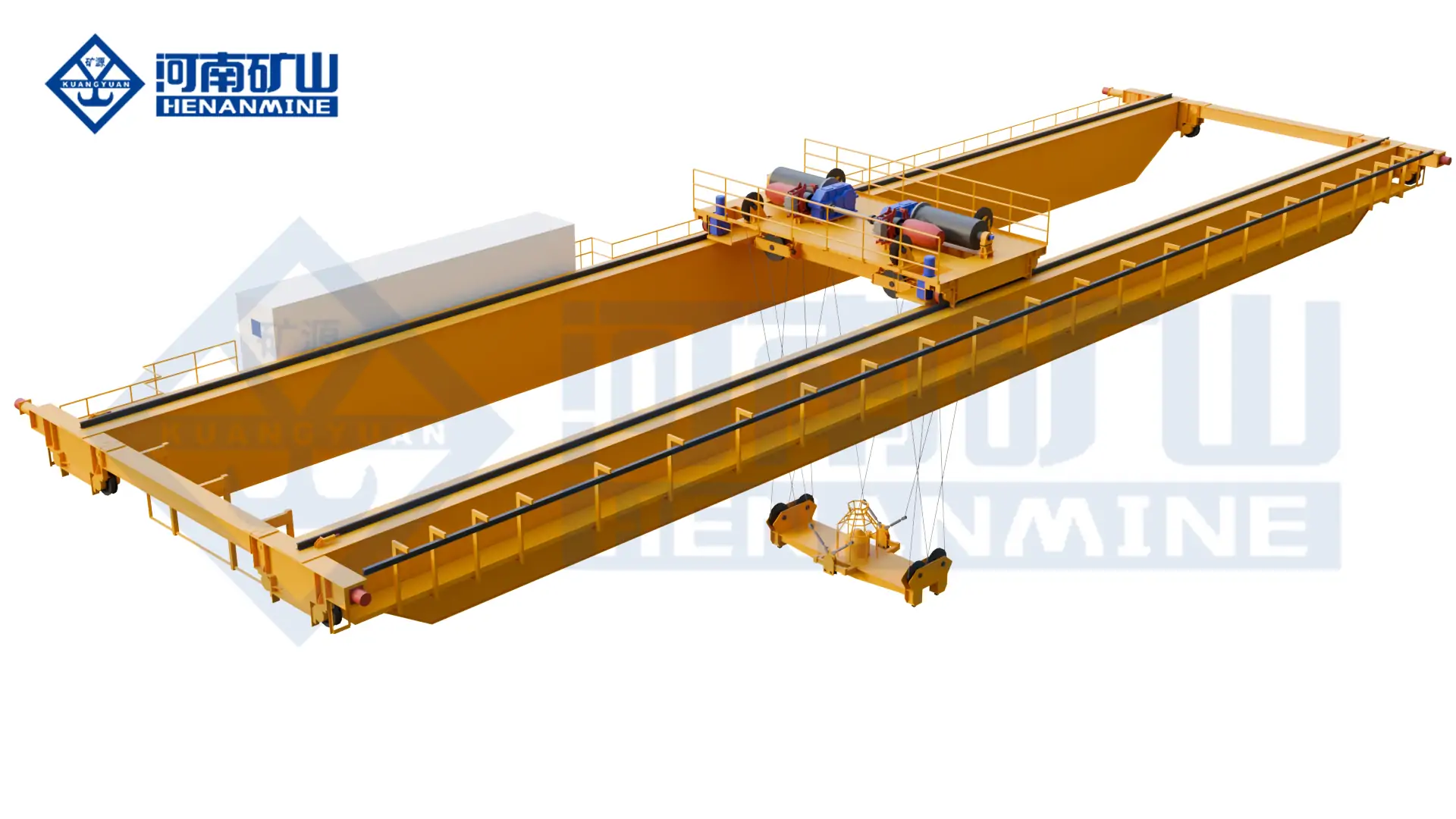
    Transfer containers within a defined overhead runway area using a double-girder bridge and matched spreader. Container size, working clearance and the handling sequence determine the arrangement.

    Container Straddle Carrier

    View product parameters
    Lifting capacity: 30 – 50 tStacking arrangement: 1 over 3 – 1 over 6Working class: A7 – A8

    Move containers between handling positions with a straddle carrier matched to the travel route and stacking layout. Define container load, ground conditions, clearance and the preferred drive system.

    Updated 2026 · Henan Mine Crane
  • Overhead Crane Maintenance: Organise Checks Around the Working Duty

    Overhead Crane Maintenance: Organise Checks Around the Working Duty

    Technical guide

    Overhead Crane Maintenance: Organise Checks Around the Working Duty

    A maintenance plan should reflect how the crane operates and what its documentation requires. Review the lifting and travel systems, access provisions and records so service activities can be planned around the production schedule.

    Henan Mine CraneTechnical guide · Updated 2026Crane selection, project scope and operating requirements
    overhead crane maintenance
    overhead crane maintenance
    Project planning notes

    Key points for this crane project.

    1. Importance of Overhead Crane Maintenance
    2. Main Components Requiring Maintenance
    3. Overhead Crane Maintenance Schedule
    Read the technical guide

    Importance of Overhead Crane Maintenance

    Henan Mine Crane manufactured bridge crane belongs to industrial high-risk special equipment. Standardized maintenance is very important for enterprise safety production, capacity operation and cost control. The core value is mainly reflected in the following three aspects:

    Build a strong line of defense for safety production: crane wire rope breakage, brake failure and other failures are easy to cause heavy accidents such as heavy objects falling, casualties and other major accidents, resulting in property losses and safety supervision penalties. Normalized maintenance can detect hidden dangers in advance, avoid operation risks from the source, and conform to the national safety operation and maintenance specifications for special equipment.

    Improve overall productivity: sudden equipment failure will cause unplanned downtime, not only time-consuming and labor-intensive maintenance, but also disrupt production plans and delay delivery. Regular maintenance can greatly reduce the frequency of equipment failure, shorten the downtime, ensure the continuous and stable operation of lifting operations, and improve the utilization rate of workshop capacity.

    Reduce the overall cost of operation and maintenance: the crane procurement and overhaul costs are high, and the loss of small parts and neglect of maintenance will cause the failure of the whole machine. Fine maintenance can delay equipment aging, prolong equipment service life, reduce replacement, overhaul and shutdown losses, and help enterprises successfully pass annual equipment inspection.

    Main Components Requiring Maintenance

    Bridge crane has complex structure and strong system linkage, and the whole machine depends on multiple core systems to work together. The loss speed, failure risk and maintenance requirements of different components are different. Accurate locking of core maintenance components and targeted maintenance are the key to improve maintenance efficiency and eliminate operation and maintenance blind areas. The core maintenance parts of the whole machine are mainly divided into four systems, and the maintenance priorities and practical operation standards of each system are as follows.

    Hoisting system

    Lifting system is the core operation unit of overhead crane, mainly composed of wire rope, hook, drum, pulley, lifting reducer and lifting motor, directly responsible for lifting heavy objects. The system bears heavy load tension, high frequency friction and alternating stress for a long time, which is the structure with the highest failure rate and the most concentrated safety risk. Parts are prone to wear, aging, deformation and even fracture problems, which are the core and key parts of daily maintenance and regular inspection.

    Hoisting system maintenance shall focus on core parts detection and maintenance, daily check wire rope condition, strictly control wire breakage, wear, kink and other hidden dangers, follow industry safety standards to ensure rope diameter and number of rings up to standard, and regularly add special lubricating grease. Synchronous check hook without crack, deformation and wear problems, excessive parts immediately replaced. In addition, it is necessary to regularly detect the oil quality and oil level of the reducer lubricating oil, motor operating temperature and noise, so as to ensure stable start and stop of the system and accurate operation without abnormality.

    Bridge structure

    Bridge structure is the core of the bridge crane load-bearing support frame, mainly by the main girder, end beam, travel track, wheels, couplings and other components, bear the weight of the whole machine and heavy load pressure. Long-term operation of equipment will continue to be subjected to vibration, impact and alternating loads, easily lead to structural fatigue, parts loose, deformation and corrosion problems. As the basic framework of equipment, once the bridge is damaged, it is easy to cause the risk of rail gnawing, deviation and even equipment overturning. The maintenance difficulty and cost are extremely high, so the normal maintenance work must be implemented.

    The bridge structure maintenance shall be carried out with regular cleaning and comprehensive inspection, dust, oil stain and rust layer on the equipment surface shall be cleaned regularly, and the welding seam of main girder and end beam shall be carefully inspected for completeness and crack, and all kinds of fastening parts shall be free from loosening and falling off. Focus on detecting the wear state of travel wheels and track flatness, clean up track sundries in time, and avoid rail gnawing and derailment faults. At the same time, check the transmission state of the coupling, and make anti-corrosion treatment for the exposed structure. The maintenance frequency shall be increased under wet corrosion conditions.

    Electrical system

    The electrical system is the core control center of the Henan Mine Crane manufactured bridge crane, including cables, sliding contact wires, contactors, frequency converters, operating handles and other key accessories, fully responsible for all operating functions such as equipment start and stop, speed regulation, commutation, limit, etc. Equipment long-term operation in dust accumulation, continuous vibration, temperature fluctuation of industrial environment, easy to appear line aging, insulation damage, poor contact, short-circuit leakage and other faults, directly affect the equipment control accuracy, seriously threaten the overall operation safety of lifting operations.

    Normal cleaning and accurate detection shall be implemented for electrical system maintenance, dust and oil pollution of electrical cabinet, terminal and sliding contact line shall be cleaned every day to ensure smooth heat dissipation of components. Regularly and comprehensively check cable lines, tighten loose wiring in time, replace damaged and aged cables, and eliminate the problem of false connection and leakage. At the same time, detect the operation status of electrical components such as contactor and frequency converter, repair ablation jam fault, calibrate speed regulation parameters, check reinforced grounding device, and additionally provide waterproof and moisture-proof protection under wet conditions to avoid short-circuit burning hidden danger.

    Overhead Crane Maintenance Schedule

    The maintenance of overhead cranes is divided into daily, monthly and annual three-level maintenance cycles according to the equipment operation frequency, operation conditions and component loss rules, forming a standardized and normalized maintenance system to avoid missed inspection, missed maintenance and excessive maintenance, and realizing refined management of equipment operation and maintenance.

    Daily inspection

    Daily inspection is the most basic normalization maintenance work of bridge crane, which is completed by equipment operators before and after shift. The overall operation is simple and highly targeted. The core function of this inspection is to check the obvious potential safety hazards of equipment in real time, avoid the operation risks of the day in advance, effectively eliminate the sudden failure of equipment, and lay a solid foundation for the safe and stable development of daily lifting operations. It is an indispensable key link in the equipment operation and maintenance system.

    Daily inspection requires all-round inspection of equipment status. Before operation, visually inspect the whole bridge for deformation and damage, check whether the wire rope and hook are intact and abnormal, and test the sensitivity and reliability of brake, emergency stop button, limit and alarm device. At the same time, check the normal operation of electrical control parts, check abnormal noise, shaking, deviation, sliding and other faults during no-load trial operation, and timely clean up impurities and oil stains on equipment and tracks. After the operation, power off and clean the equipment, standardize the registration of inspection records, and immediately shut down and report to the authorities if any abnormality is found, so as to prevent the equipment from operating with faults.

    Monthly maintenance

    Monthly maintenance belongs to refined in-depth maintenance work, which shall be implemented by professional operation and maintenance personnel, which is the key link to make up for the shortcomings of daily inspection. Maintenance is mainly aimed at the core parts of cranes that are vulnerable to wear and are prone to hidden faults. Comprehensive cleaning, precision lubrication, bolt tightening, parameter fine-tuning and other operations are carried out to effectively investigate equipment loss hidden dangers that are difficult to find with the naked eye, delay the aging rate of components, and reduce the incidence of equipment failures from the source.

    Monthly maintenance requires comprehensive cleaning of all system components of the equipment, filling special lubricating grease for wire ropes, bearings, wheels and other transmission structures, tightening bolts and terminals of the whole machine. At the same time, fine-tune the brake clearance, replace the slightly worn parts, calibrate the parameters of the limit and overload protection device, check and replace the deteriorated lubricating oil, repair the slight damage of the cable, and perform anti-corrosion treatment on the corroded parts of the equipment. The maintenance data shall be recorded and archived in the whole process.

    Annual inspection

    Annual maintenance requires completion of a number of core operations, nondestructive testing of main beams and end beams, and correction of structural and track deviations. Disassemble and inspect the reducer, motor, brake and other core components, replace aging wear parts and deteriorated lubricating oil. Check the electrical system comprehensively, replace the aging circuit and failed components, calibrate the operating parameters, and verify the accuracy of all safety devices. At the same time, complete the rust removal and corrosion prevention operation of the whole machine, investigate hidden dangers through no-load and load tests, and finally issue a standard annual inspection report for archiving.

    Common Crane Problems and Solutions

    Bridge crane long-term heavy load operation, complex working conditions, easy to appear high-frequency common fault. Most enterprises make inaccurate fault judgment and improper handling methods, resulting in small faults evolving into big problems, increasing operation and maintenance costs and prolonging downtime. For the three major high-frequency faults in the industry, sort out accurate fault causes and standardized solutions, quickly solve equipment problems and restore normal operations.

    Wire rope issues

    The wire rope is the component with the fastest loss and the highest failure frequency of the Henan Mine Crane manufactured overhead crane. The common faults include broken wire and strand, excessive wear, corrosion aging, kink deformation, lubrication failure, rope skipping and groove removal, etc., which are mostly caused by heavy load operation, insufficient lubrication, track deviation, debris friction and long-term fatigue operation. Wire rope failure directly threatens the safety of lifting operation, which is the key type of failure control.

    Solution: Daily found a small amount of broken wire, slight wear, timely clean the wire rope, supplement special lubricating oil, check the drum, pulley stuck problem, adjust the operating parameters, to avoid local concentrated wear. If the single lay length exceeds the standard, the rope diameter exceeds the standard, the strand is broken, serious corrosion occurs, and the permanent kink deformation occurs, the new wire rope must be immediately shut down and replaced. It is strictly prohibited to continue to use after repair. For rope skipping, groove out of the problem, correct drum, pulley coaxial, clean rope groove debris, adjust wire rope tension uniformity. In long-term humid and dusty environment, shorten the inspection and lubrication cycle of steel wire rope, regularly remove rust and corrosion, and prolong service life.

    Brake problems

    Brake system failure is one of the most dangerous equipment failures. Common problems are ineffective braking, failure to brake, slipping of the hook, failure to turn on the brake, abnormal brake noise, overheating of the brake, etc. The main causes are brake shoe lining wear is serious, brake gap is too large, main spring fatigue failure, coil burning, obstruction accumulation, brake wheel wear and deformation.

    Solution: For the problem of brake failure and sliding hook, stop immediately to check the wear of brake lining, replace it in time if the wear exceeds the standard, accurately adjust the brake clearance and brake torque, and replace the fatigue aged main spring. To solve the problem of brake failure and jamming, thoroughly clean up sundries and oil stains of brake mechanism, check mechanical jamming fault, repair or replace faulty coil and brake screw rod. In view of abnormal brake noise and overheating, polish and repair brake wheel wear and burr, adjust brake concentricity, ensure uniform brake fit and avoid local friction overheating. Regularly clean the brake system, fine-tune the brake parameters, and eliminate the recurrence of brake faults.

    Electrical faults

    High-frequency faults of electrical system mainly include equipment failure to start and stop, operation jam, unstable speed regulation, short-circuit trip, leakage, alarm failure, limit failure, etc., which are mostly caused by aging of lines, damage of insulation layer, short circuit of dust accumulation, ablation of electrical elements, poor grounding and parameter deviation. The faults are highly random and have a wide influence range.

    Solution: When the equipment cannot be started or stopped, and the operation fails, priority should be given to checking the power switch, terminal, and operating handle, tightening the loose line, and replacing the fault switch. Unstable speed regulation and vibration of equipment, maintenance of frequency converter and contactor, calibration of frequency conversion parameters, replacement of ablated contact parts. In case of frequent short-circuit tripping and leakage, comprehensively check the damaged parts of cable insulation layer, repair or replace aged cables, clean up dust and oil stains in electrical cabinets, check grounding devices and eliminate potential leakage hazards. When the limit and alarm devices fail, recalibrate the accuracy of the devices, replace the faulty sensors and alarm elements, and put them into use only after the test functions are normal.

    Best Practices for Preventive Maintenance

    Preventive maintenance is the core of long-term stable operation of overhead crane, which is different from maintenance after failure. It is the optimal operation and maintenance mode for enterprises to reduce cost and increase efficiency and ensure safety through maintenance in advance, investigation in advance and rectification in advance. The core landing specifications are as follows.

    • Establish a standardized maintenance system and clarify the division of responsibilities. Formulate daily, monthly and annual maintenance plans suitable for enterprise equipment working conditions, clarify the post responsibilities of operators, maintenance personnel and management personnel, refine maintenance items, frequency, standards and assessment mechanisms, eliminate perfunctory maintenance, missed inspection and delayed maintenance, and realize normalization, standardization and traceability of maintenance work.
    • Strictly standardize equipment operation and eliminate man-made loss. Most of the equipment faults originate from illegal operation. It is strictly prohibited to operate in violation of regulations such as overload operation, inclined suspension, violent start and stop, frequent commutation, etc. Regularly carry out professional training for operators and maintenance personnel, master equipment operation specifications, maintenance points and fault identification methods, and reduce equipment losses and faults caused by artificial operation.
    • Adhere to fine graded maintenance and on-demand maintenance. According to the operation frequency, operation condition and service life of the equipment, the maintenance frequency shall be adjusted differentially, the maintenance cycle of high-frequency and heavy-duty equipment and old equipment shall be shortened appropriately, and the maintenance of core load-bearing and safety components shall be strengthened. Eliminate excessive maintenance, ineffective maintenance, accurate matching equipment loss law.
    • Improve account management and spare parts reserve. Establish complete equipment maintenance account, fault account and overhaul account, record each maintenance, overhaul, fault problem and rectification scheme in detail, predict equipment loss trend through data analysis, and avoid potential faults in advance. Prepare wire rope, brake lining, electrical switch, bearings and other common spare parts to achieve rapid repair of faults and reduce downtime.
    • Strictly control the operating environment and reduce equipment loss. Keep the workshop dry and tidy, and clean up dust, sundries and corrosive media in time. In the open air, wet, acid and alkali conditions, strengthen equipment corrosion, waterproof, dustproof protection, reduce environmental erosion of equipment loss.

    Henan Mine Crane

    The safe, efficient and long-term operation of overhead cranes cannot be separated from standardized, normalized and refined maintenance systems. As the core special equipment of industrial production, its operation and maintenance management is not a simple fault maintenance, but a full-process system engineering covering core component maintenance, graded periodic maintenance, accurate fault disposal, preventive management and control, intelligent operation and maintenance and brand selection.

    Scientific and standardized maintenance system is the core key to safe and stable production, cost reduction and efficiency increase of cranes, which can effectively avoid safety accidents, reduce equipment loss and shutdown loss, and greatly prolong the service life of equipment. As a professional crane manufacturer, Henan Mine Crane Factory not only provides standardized maintenance solutions, full-process operation and maintenance guidance and original spare parts support, but also relies on intelligent operation and maintenance technology to help enterprises build refined management systems, bid farewell to extensive operation and maintenance, and protect long-term and efficient operation of enterprise lifting operations with high-quality equipment and perfect after-sales service.

    Discuss the crane arrangement for your project.

    A maintenance plan should reflect how the crane operates and what its documentation requires. Review the lifting and travel systems, access provisions and records so service activities can be planned around the production schedule. Share the load, available drawings, working cycle and site conditions with Henan Mine Crane so the required configuration and supply boundary can be discussed.

    Related crane configurations

    Single-Girder Bridge Crane

    View product parameters
    Lifting capacity: 1–20 tSpan: 7.5–31.5 mLifting height: 6, 9, 12, 18, 24 or 30 m; capacity-dependent

    Use an LDA single-girder bridge and electric hoist for general workshop material handling. Select the lifting capacity, runway geometry and hoist duty around the building and load.

    LH Electric Hoist Double Girder Crane

    View product parameters
    Lifting capacity: 3, 5, 10, 16, 20 tSpan: 10.5–31.5 mLifting height: 6, 9, 12 or 18 m

    Use an LH double-girder bridge with an electric-hoist trolley for workshop lifting, assembly and maintenance. Match the hoist arrangement to the suspended load, hook travel and available building space.

    Updated 2026 · Henan Mine Crane

  • Power Plant Maintenance Cranes: Component Loads and Outage Access

    Power Plant Maintenance Cranes: Component Loads and Outage Access

    Technical guide

    Power Plant Maintenance Cranes: Component Loads and Outage Access

    Power plant lifting needs to serve identified maintenance tasks and removal routes. Provide component weights, lifting points, working positions and outage constraints so the crane arrangement can be reviewed before the service window.

    Henan Mine CraneTechnical guide · Updated 2026Crane selection, project scope and operating requirements
    overhead crane for power plant maintenance,
    overhead crane for power plant maintenance,
    Project planning notes

    Key points for this crane project.

    1. Step 1 – Mapping the lifting scenarios of power
    2. Step 2 – Define the core technical parameters
    3. Step 3 – Choosing the right type of crane
    Read the technical guide

    Step 1 – Mapping the lifting scenarios of power plant maintenance

    Common lifting tasks in power plants

    The lifting needs of power plants are very clear, all around the installation and maintenance of core equipment to start, there is no extra miscellaneous work. The most common is the generator stator lifting, which is also one of the most demanding tasks for cranes.

    In addition to the stator, turbine rotor handling is also a core task, turbine lifting crane (turbine lifting crane) needs to accurately control the strength and angle, to avoid damage to the rotor's precision structure. In addition, overhead cranes are indispensable for the maintenance and lifting of valves and pumps, as well as for the installation of heavy equipment in new power plants.

    These tasks may seem infrequent, but each time is related to the normal operation of the power plant, no room for error. Especially large generator components, often require extremely high lifting capacity and coordinated lifting capacity, which is the core difference between power plant cranes and ordinary workshop cranes.

    The core characteristics of power plant lifting loads

    Power plant lifting load, and the load of the ordinary industrial scene is completely different, three characteristics are particularly prominent, but also the key basis for selection.

    Second is the high value, whether it is the generator stator, turbine rotor, or other core components, the cost is extremely high, once the lifting process of bumping, damage, maintenance costs are staggering, and may even affect the power supply of the entire power plant.

    Finally, the positioning accuracy requirements are extremely high, especially the stator, rotor installation, the coaxiality, perpendicularity of the deviation requirements of 0.1mm or less, a slight deviation may lead to equipment cannot operate normally, which requires the crane has accurate positioning capabilities.

    Step 2 – Define the core technical parameters

    Lifting capacity (the core of the core)

    Many power plants will choose the main and sub-hook configuration of the crane, the main hook is used to lift heavy parts, such as the stator, rotor; sub-hook is used to lift light parts, such as valves, pumps, so as to meet the needs of different loads, but also to improve operational efficiency.

    There are many scenarios that require synchronized lifting of two machines, for example, when the load exceeds the carrying capacity of a single crane, as in the Jinchang Peak Coal Power Project, with two cranes working together, which requires cranes to have synchronized control to ensure that the two sets of equipment movements are consistent, to avoid tilting of the load.

    Span and Coverage

    Power plant turbine halls are usually very large, the span of the crane must be able to cover the entire turbine hall, to ensure that all maintenance areas can be reached, there is no operational blind spot.

    If the span is small, it will lead to part of the area cannot be lifted, such as the turbine components on both sides, can only be frequently adjusted to the position of the equipment, which is time-consuming and increases the risk of safety; choose a large span, it will increase the manufacturing cost of the equipment, and the stability of the operation will be affected, the need for accurate accounting.

    Lifting height

    The choice of lifting height mainly depends on two aspects: one is the height of the turbine and generator, and the other is the vertical dismantling requirement during operation.

    The core equipment of the power plant is relatively tall, the lifting height of the crane must be sufficient to lift the heavy components vertically, but also reserve enough space for dismantling to avoid collision with the equipment and the roof during lifting.

    Accuracy requirements

    The lifting operation of the power plant requires much higher precision than the common scene. Especially for the installation of generator stator and turbine rotor, the slightest deviation may lead to serious consequences.

    This requires cranes to have high-precision positioning capability, and it is recommended to equip with an anti-sway system. For example, in the case of dual-machine cooperative lifting, the height difference of each lifting point is monitored in real time by a laser range finder, so that the tilt is controlled within the design permissible range (usually no more than 1/1000), and load swaying is avoided.

    For overhead crane for generator maintenance, precise positioning is even more essential to minimize bumps during installation and protect high-value components.

    overhead crane for power plant maintenance,
    overhead crane for power plant maintenance,

    Step 3 – Choosing the right type of crane

    Double girder overhead crane (most recommended)

    In power plant maintenance, double girder overhead crane is the absolute mainstream, and it is also the most often recommended model by Henan Mine Crane. It is indispensable for almost all core lifting tasks in power plants.

    Single girder overhead crane (auxiliary use only)

    Single girder overhead crane can also be seen in power plants, but the use of the scene is very limited, and can only be used for auxiliary maintenance operations.

    Dual/linked lifting system

    When the lifting load exceeds the carrying capacity of a single crane, it is necessary to use the dual-machine linkage lifting system, which is very common in large power plants.

    Step 4 – Working Levels and Usage Modes

    Unique working characteristics of power plant cranes

    The working mode of power plant cranes is very special and completely different from that of ordinary workshop cranes: low frequency of use, but high load intensity, and extremely high reliability requirements.

    From the point of view of working class, power plant cranes usually belong to ISO A3-A5 class, because the frequency of use is not high, unlike workshop cranes that operate continuously every day. However, this does not mean that you can choose low-specification equipment, on the contrary, because of the extreme loads to be subjected to, the specifications and quality of the equipment must be up to standard.

    Many customers will fall into a misunderstanding: “Since it is used less, just choose cheaper and lower specifications.” This idea is very dangerous, power plant lifting operations, a failure may lead to power plant shutdown, the loss is much higher than the difference in the price of the crane.

    For example, Liu Jiaxia Hydropower Plant crane, although the number of annual use is not much, but each time to lift hundreds of tons of heavy components, low-specification equipment simply cannot withstand this load, long-term use is also prone to failure, affecting the normal operation and maintenance of the power plant.

    Frequency of use and model matching

    Although the frequency of use of power plant cranes is low, but there are differences in the frequency of use of different power plants, the selection of models should also be combined with the actual situation.

    For large power plants, the number of units, the number of annual maintenance is relatively high, it is recommended to choose A5 class double girder overhead crane, stability and durability is better, and can adapt to the relatively frequent high-load operations; for small power plants, the number of maintenance is small, you can choose A3-A4 class double girder cranes, which meets the demand, but also can reasonably control the cost.

    Regardless of the frequency of use, the core principle is: do not look at the frequency of use, but only look at the load strength and reliability, would rather have a slightly higher specification, cannot be forced to use low-specification equipment.

    Step 5 – Precision and Control Requirements

    Anti-sway technology

    Anti-sway technology is not optional but mandatory for power plant cranes. Especially when lifting turbine rotors, generator stators and other high-value, high-precision components, once swaying, it may cause damage to the components.

    Henan Mine Crane's power plant cranes are equipped with an anti-swaying system, which can automatically adjust the crane's operating speed and direction through real-time monitoring of the swaying amplitude of the load, so as to control the swaying in the smallest possible range and ensure a smooth lifting process.

    In the case of dual-machine cooperative lifting, the anti-sway technology can also be used with synchronized control to avoid load tilting caused by inconsistent movements of the two cranes, which further improves the safety and precision of lifting.

    Variable frequency speed control (VFD)

    Variable frequency speed control (VFD) is the core technology to realize precise positioning, and is also the recommended configuration for power plant cranes. Ordinary single-speed speed control is not smooth enough for starting and stopping, which easily leads to load shaking and cannot meet the precision requirements of the power plant.

    Variable frequency speed control can realize smooth start and stop, accurately control the crane's lifting and running speeds, and even realize millimeter-level positioning, which is crucial for the installation of generator stators and turbine rotors.

    For example, in the stator installation, the stator needs to be accurately placed into the machine base, and the frequency conversion speed control enables the crane to move slowly and smoothly, avoiding knocking caused by excessive speed and ensuring that the installation accuracy meets the requirements.

    Synchronized control (advanced configuration)

    Synchronization control is mainly used for double machine linkage lifting, which is a necessary configuration for lifting heavy parts in large power plants. Without synchronized control, the movements of the two cranes cannot be consistent, it is easy to load tilt, shaking, and even cause safety accidents.

    Our Henan Mine Crane's synchronization control system adopts the master-slave control mode, setting one crane as the master and the other as the slave, with the slave's rotational speed and torque completely following the master, and at the same time with real-time encoder monitoring to ensure that the two devices are synchronized in their movements.

    In addition, the system also has a torque following function, when one side of the crane encounters increased resistance, it will automatically increase the torque to maintain the same speed, avoiding runout due to uneven loads, and ensuring the balance of the lifting.

    Step 6 – Safety and Reliability Requirements

    Required safety devices

    The safety requirements of power plant cranes are much stricter than those of ordinary industrial cranes. The following safety devices are indispensable and directly related to the safety of operators and equipment.

    Overload protection is the basis to prevent the crane from carrying more than the rated load, to avoid equipment damage and safety accidents; double braking system, can be quickly braked in case of emergencies, to ensure that the load is stable, even if a set of braking system failures, the other set can also work normally.

    Emergency stop button, in any position can quickly stop the equipment, to cope with unexpected situations, such as load shaking, equipment failure; limit switches, including lifting height limit and running stroke limit, can prevent the crane from exceeding the operating range, colliding with the equipment or building.

    Our Henan Mine Crane power plant cranes, all safety devices comply with international standards, and will undergo strict quality testing to ensure that every component works properly for power plant lifting operations.

    The importance of inspection and maintenance

    Power plant cranes are used infrequently, but regular overhaul and maintenance still cannot be ignored. Many failures are caused by long-term non-maintenance, resulting in aging and wear and tear of components.

    Daily inspection should focus on the wire rope, hook, braking system and other core components, to see if there is wear and tear, corrosion; regular maintenance should be carried out in accordance with the standards, such as the Liu Jiaxia Hydropower Plant, will take advantage of the unit overhaul window, the crane for a comprehensive overhaul, and after the completion of the overhaul, but also to carry out the load test, to ensure that the performance of the equipment is up to standard.

    It is important to know that crane failure in maintenance operations means power plant downtime and huge losses. Good preventive maintenance can effectively avoid failures, extend the service life of the equipment, and ensure that the crane can work properly when needed.

    Step 7 – Structural and Installation Considerations

    Integration with turbine hall design

    When building a new power plant, the installation of cranes should be synchronized with the design of the turbine hall, and should not wait until the plant is built before considering the cranes, otherwise it is easy to have adaptation problems.

    Crane track arrangement, support structure, and turbine hall equipment layout, building structure to match, to ensure that the running track of the crane can cover all maintenance areas, while not affecting the normal operation of other equipment.

    We, Henan Mine Crane, will arrange professional engineers to cooperate with the architectural engineers and equipment engineers of the power plant to integrate the design of the crane into the plant design, to avoid the trouble of later modification, optimize the use of space and reduce the installation cost.

    Wheel load and structural load

    The load of the power plant crane is very large, the wheel load and structural load on the plant building is also a great impact, must be verified by professional engineering to ensure that the plant can withstand the crane load.

    Especially large double girder overhead cranes with large wheel loads need to be reinforced on the track beams and columns of the plant building to avoid damage to the building structure at a later stage. If this is ignored, the crane may not be able to operate normally after installation, and may even cause safety accidents.

    When selecting cranes, Henan Mine Crane will first survey the structure of the power plant and calculate the load-bearing capacity, and then design a suitable crane program according to the actual situation to ensure that the wheel load and structural loads meet the load-bearing requirements of the plant.

    Step 8 – Life Cycle Cost Analysis

    Cost Composition (CAPEX + OPEX)

    When many power plants purchase cranes, they only focus on the initial purchase price, which is a big misunderstanding. The total cost of the crane, including the initial investment (CAPEX) and operating costs (OPEX) two parts, need to be comprehensive accounting.

    Initial investment includes the price of the crane equipment itself, transportation costs, installation and commissioning costs, as well as the cost of reinforcement of the plant structure; operating costs include routine maintenance costs, spare parts replacement costs, maintenance costs, energy consumption and so on.

    Henan Mine Crane will list all the costs in detail when giving the quotation to the customer, help the customer to account for the whole life cycle cost, avoid the hidden cost in the later stage, so that the customer is clear about what each sum of money is spent on.

    Core knowledge: reliability is more important than cost

    Power plant downtime costs are extremely high, a unit grounded for a day, the loss may be as high as hundreds of thousands of dollars, or even millions of dollars. The poor quality crane, although the initial price is cheap, but the quality is unreliable, prone to failure, resulting in downtime, this part of the loss is much higher than the difference in the price of the crane.

    Our Henan Mine Crane's power plant cranes, although the initial investment is a little higher than the small manufacturers, but the use of high-quality components, such as high-strength steel, high-quality steel wire ropes, reliable braking system, low maintenance frequency, the spare parts are supplied globally, and can be quickly replaced to reduce downtime.

    Moreover, our equipment consumes less energy and saves a lot of energy costs in the long run. For power plants, choosing a reliable crane may seem to invest a little more upfront, but in the long run, it is more cost-effective to avoid downtime losses.

    Step 9 – Common Misconceptions in Power Plant Crane Selection

    Combined with these years of experience, I summarized a few customers are most likely to step on the pit, we must avoid when selecting the type, you can take a lot less detours.

    The most common is that “low frequency = low specification”, many customers feel that the crane is used less, choose cheap, low specification equipment, the result is that when lifting heavy parts, either cannot carry, or failure, the loss is not worth it.

    Neglecting the need for dual-machine lifting is also a common misconception. Some power plants did not take into account the lifting needs of large stators in the early stage, only the procurement of a single crane, the later need to lift heavy parts, can only temporarily increase the equipment, not only increase the cost, but also affect the maintenance schedule.

    Step 10 – Quick Selection Checklist

    When selecting a model against this list, you can quickly clarify the needs, avoid missing key parameters, save selection time, and ensure that the right equipment is selected:

    ✔ Maximum lifting weight (weight of generator/turbine components with spreader)

    ✔ Span of the turbine hall (to the nearest centimeter)

    ✔ Whether double machine linkage lifting is required

    ✔ Lifting accuracy requirements (e.g. accuracy of stator and rotor installation)

    ✔ Working level (combined with frequency of use and load intensity)

    FAQ

    What type of cranes are typically used in power plants?

    Mostly double girder overhead cranes, which is a standard model for power plant maintenance, with high load capacity and good stability to meet the lifting needs of heavy components, such as Liu Jiaxia Hydroelectric Power Plant and Jinchang Peaking Coal and Power Project, are using double girder overhead cranes.

    Why do power plants use two cranes?

    Mainly for the safe lifting of heavy components such as large generator stators. When the load exceeds the carrying capacity of a single crane, two cranes are required to work together to ensure even load distribution and smooth lifting through a synchronized control system.

    Power plant cranes need high working level?

    “Low frequency” does not mean “low specification”, reliability and load carrying capacity is the core.

    Discuss the crane arrangement for your project.

    Power plant lifting needs to serve identified maintenance tasks and removal routes. Provide component weights, lifting points, working positions and outage constraints so the crane arrangement can be reviewed before the service window. Share the load, available drawings, working cycle and site conditions with Henan Mine Crane so the required configuration and supply boundary can be discussed.

    Related crane configurations

    Single-Girder Bridge Crane

    View product parameters
    Lifting capacity: 1–20 tSpan: 7.5–31.5 mLifting height: 6, 9, 12, 18, 24 or 30 m; capacity-dependent

    Use an LDA single-girder bridge and electric hoist for general workshop material handling. Select the lifting capacity, runway geometry and hoist duty around the building and load.

    LH Electric Hoist Double Girder Crane

    View product parameters
    Lifting capacity: 3, 5, 10, 16, 20 tSpan: 10.5–31.5 mLifting height: 6, 9, 12 or 18 m

    Use an LH double-girder bridge with an electric-hoist trolley for workshop lifting, assembly and maintenance. Match the hoist arrangement to the suspended load, hook travel and available building space.

    Updated 2026 · Henan Mine Crane

  • Draft Overhead and Gantry Crane Standards Discussed at Henan Mine Crane
    Draft Overhead and Gantry Crane Standards Discussed at Henan Mine Crane
    Quality & Manufacturing

    Draft Overhead and Gantry Crane Standards Discussed at Henan Mine Crane
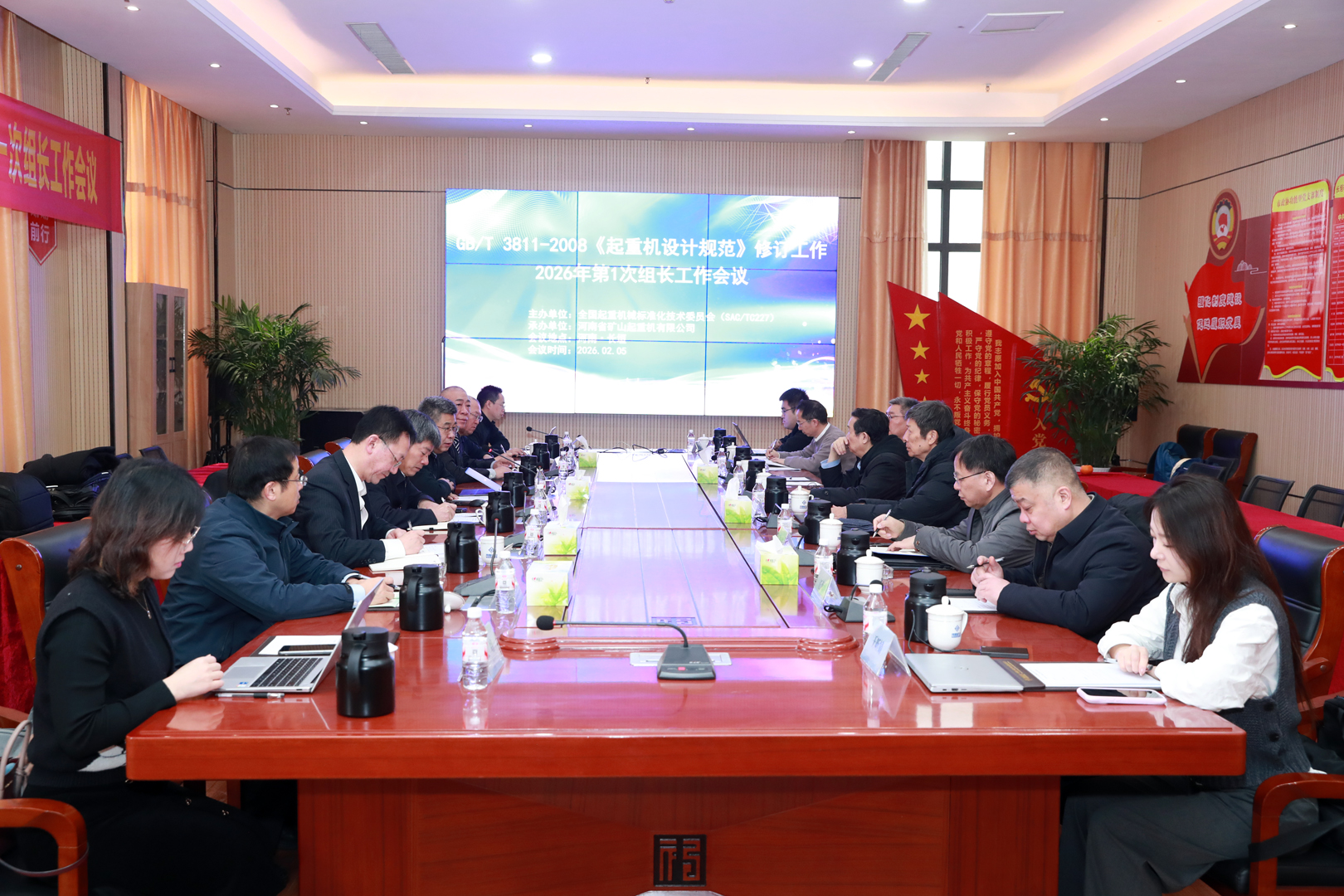
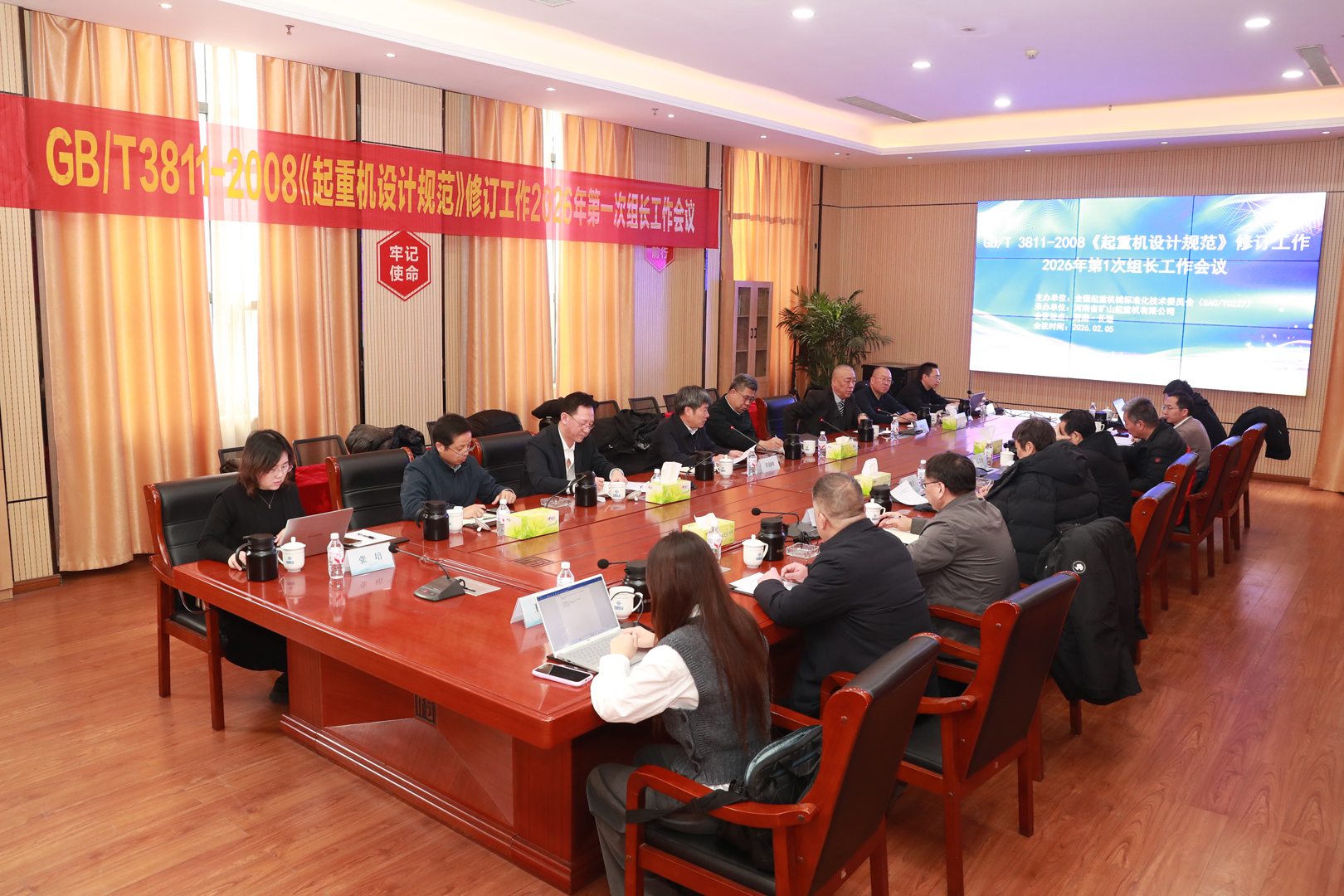
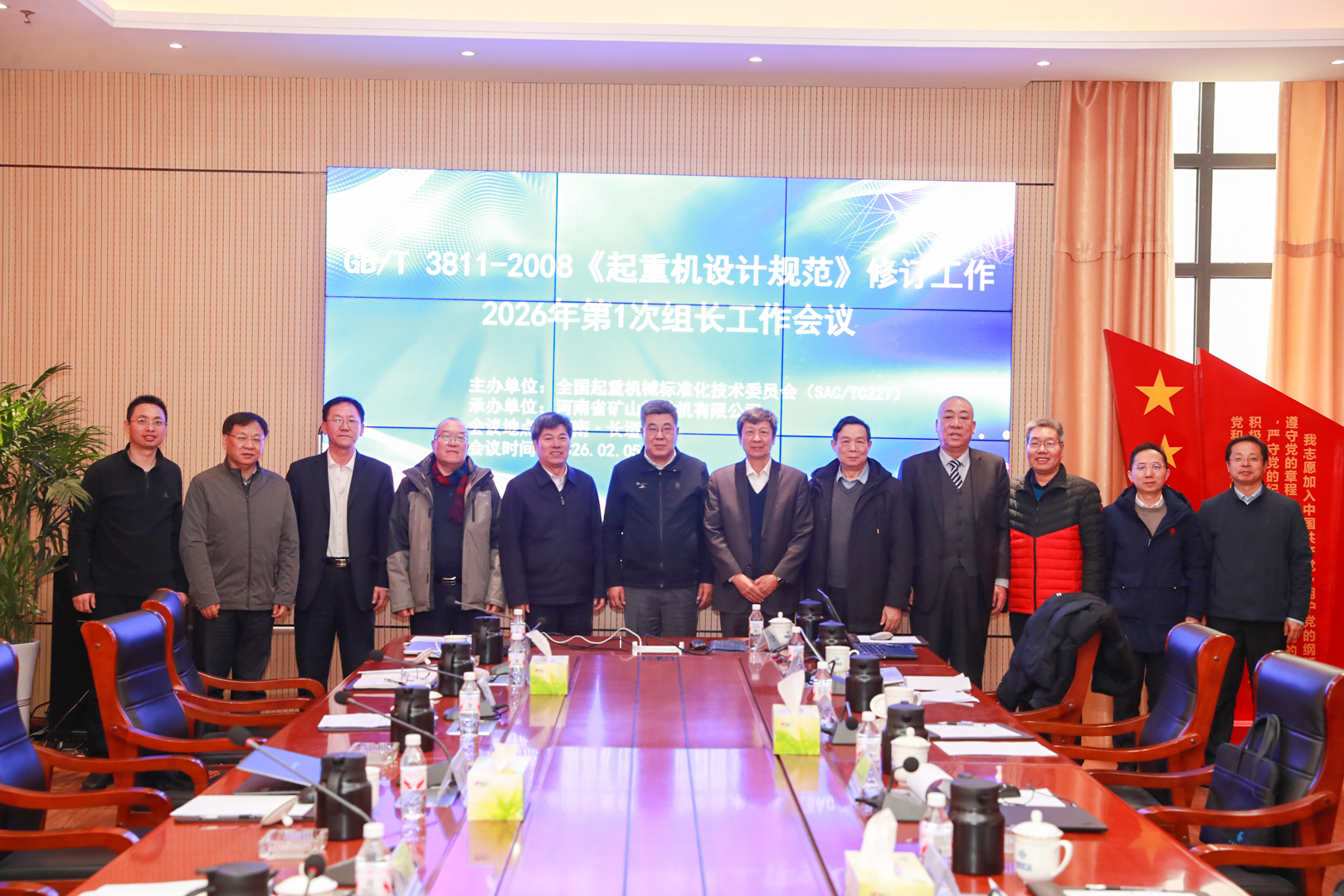
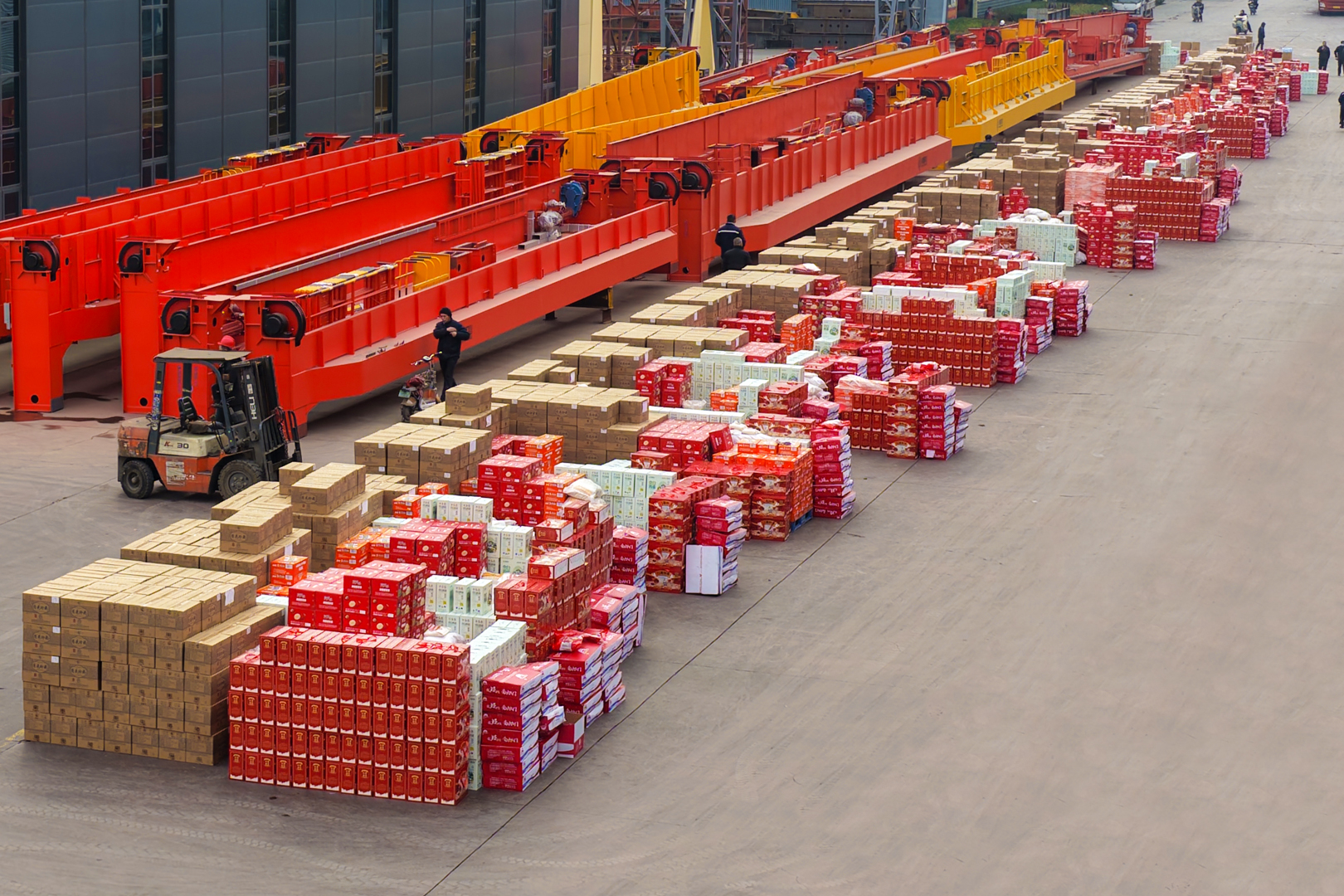
    Henan Mine Crane hosted an industry discussion of draft general overhead-crane and gantry-crane standards at its intelligent industrial park.
    Specialists seated around a conference table for crane standards discussions
    Specialists seated around a conference table for crane standards discussions.
    Technical and safety provisions under review

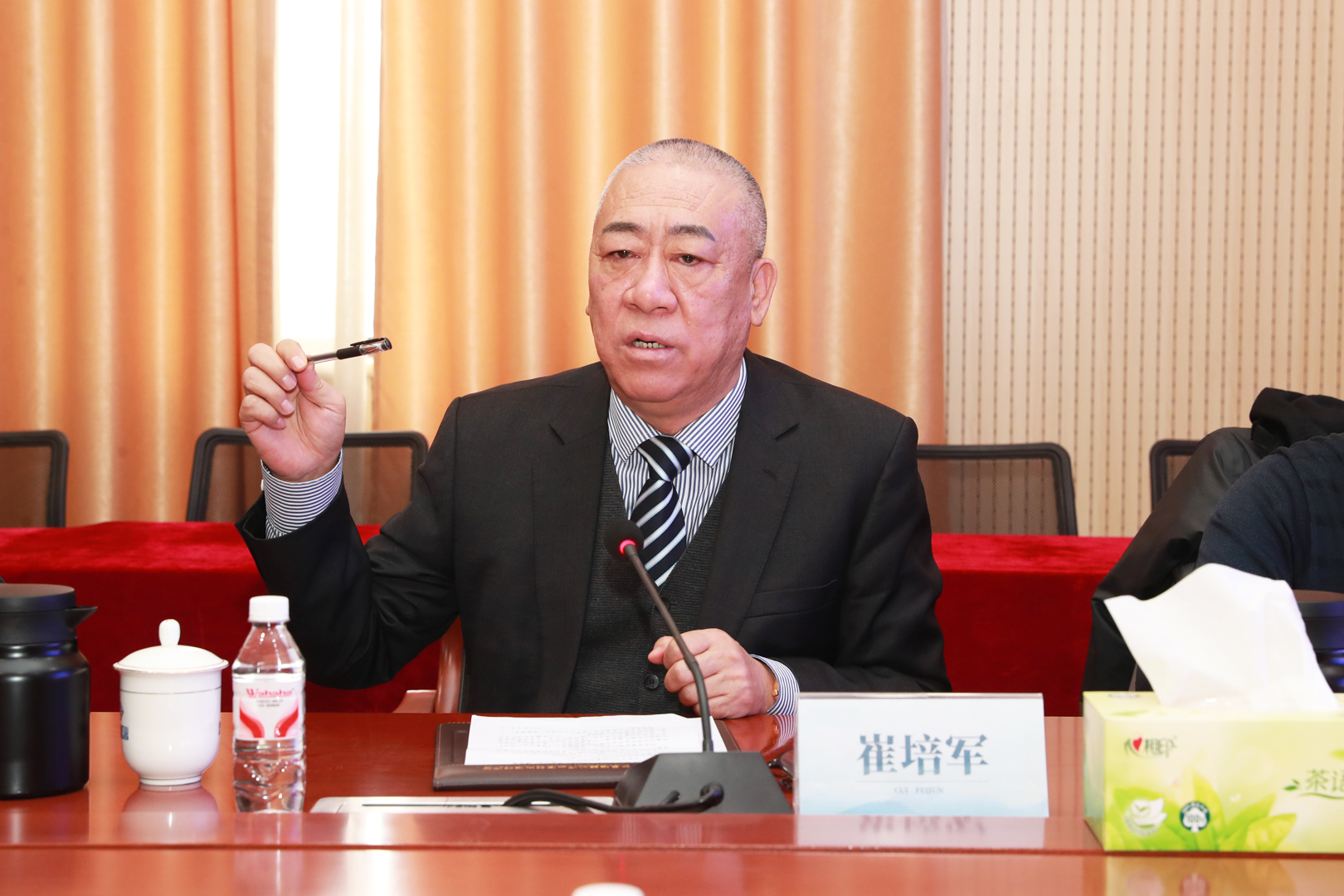
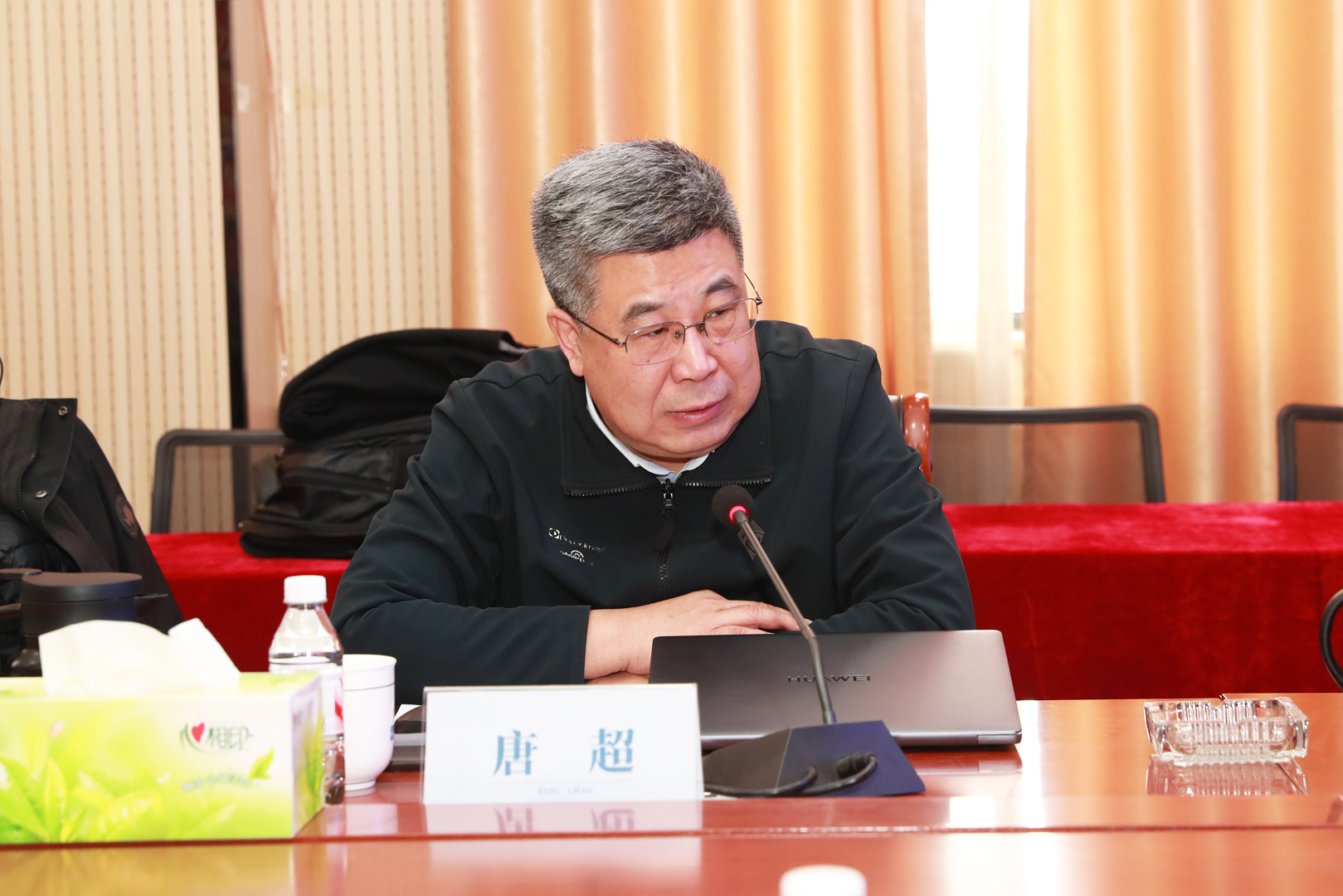
    Standardisation specialists and industry representatives discussed technical indicators, safety requirements and the application of draft clauses to different crane operating conditions. Participants offered revisions during the meeting.

    Check the applicable edition for a project

    The meeting gathered revision proposals for the next stage of standards development. For an equipment purchase, identify the current required standard, local regulations and any project-specific specification before finalising design and inspection documents.

    Discuss your lifting requirement

    Send the site location, crane duty, load, span and applicable standard requirements for a project-specific review.