Engineering · Manufacturing · Project support
info@hnksglobal.comWhatsApp +86 18836207779 ↗

Blog

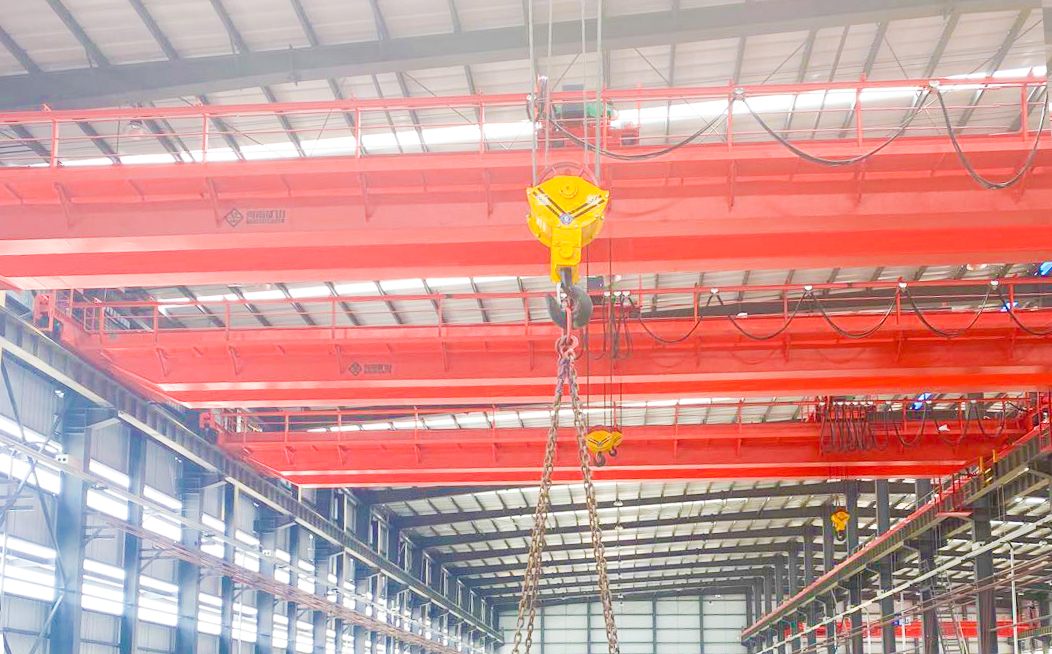
  • Special Crane for Carbon-Based New Materials & Anode Material Production

    Special Crane for Carbon-Based New Materials & Anode Material Production

    Crane application

    Special Crane for Carbon-Based New Materials & Anode Material Production

    Review the crane handling for carbon & anode materials. Review the handling task, load geometry, working duty and equipment interfaces for your application.
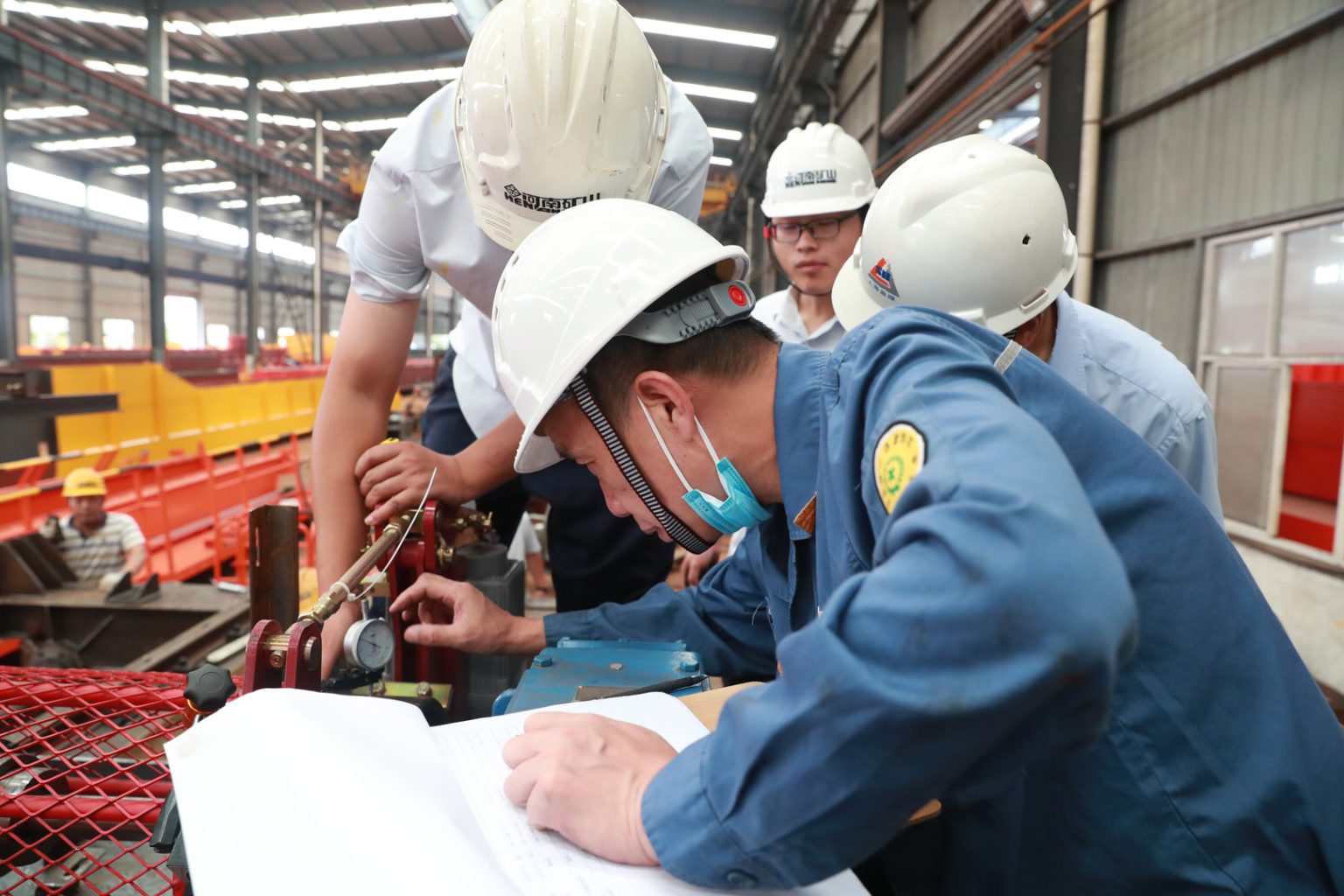
    Special Crane for Carbon-Based New Materials & Anode Material Production — Henan Mine Crane crane application photograph
    Special Crane for Carbon-Based New Materials & Anode Material Production — crane application overview.

    Energy and materials production

    Specify the product or component geometry, process exposure, lifting attachment, handling frequency, working environment and any clean, corrosive or classified-area requirements.

    Crane configuration and interfaces

    Ask for the applicable equipment configuration, area classification where relevant, mechanical and electrical interfaces, inspection access and a site-specific test plan.

    Review the Metallurgical overhead cranes and Energy & new materials cranes before defining the project-specific arrangement.

    Design the lifting process

    Use the project context above as a starting point. The following checks turn a crane application into a technical scope that suppliers can price and demonstrate for your site.

    Process-specific load definition

    Describe whether the crane handles anodes, carbon blocks, bath materials, finished coils or maintenance components. Give the unit size, mass, stacking geometry, handling frequency and lifting attachment. Electrolytic operations may expose equipment to heat, dust and a corrosive atmosphere; these values should come from the plant design. A lifting solution for blocks or containers cannot be selected solely from the main-hook capacity.

    Attachment and control scope

    Specify how each load is gripped or supported and how a safe release is confirmed. Automated stacking requires identified storage positions, obstruction handling, sensor inputs and a recovery method after interruption. Request the approach and clearance drawing, control narrative and electrical interface before accepting a quoted level of automation. Include inspection access and the replacement plan for wear components in the handling attachment.

    Acceptance with representative materials

    Compare offers using the same load cases, cycle distances, duty, building geometry and operating environment. The supplier should identify crane, attachment and plant-interface supply boundaries. A site trial should handle representative units and verify grip confirmation, placement, limits, emergency stop and controlled restart. Ask for documentation of applicable environmental protections and maintenance procedures rather than relying on a general statement about a “special crane”.

    Compare the proposed crane scope

    DecisionInformation to request
    Crane and lifting attachmentRated loads, load cases, hook coverage and the complete suspended-load calculation.
    Site interfacesRunway loads, rail or building drawings, electrical supply and installation responsibilities.
    Controls and protectionOperating sequence, required safety functions and a method for testing each function.
    Commercial scopeEquipment, transport, installation, commissioning, documentation, training and spare parts as separate line items.

    From technical offer to site acceptance

    Technical submittals

    A usable bid should show a general arrangement and a clear list of assumptions, not just a model name and capacity. Request the load schedule used in design, lifting-attachment drawings where applicable, span and hook-approach dimensions, wheel loads, electrical supply, control narrative and maintenance access. Check every drawing against the actual building or yard layout. Identify the standards and local approval requirements for the destination market in the enquiry, then confirm the bidder’s proposed design and documentation scope in writing.

    Installation and tests

    Agree when the runway or civil works will be ready, how crane components can reach the installation position and who provides lifting equipment for erection. Define the factory test, on-site installation inspection and site acceptance as separate milestones. The acceptance procedure should list representative loads, the travel route, protection devices, emergency stop and any automation or attachment functions included in the order. Record who supplies test weights, operators, power and access equipment; otherwise a nominal commissioning price may omit essential site work.

    Commercial comparison

    Ask for the same delivery basis and currency across proposals. Separate the crane, special lifting appliances, rails or conductors, transport, installation support, commissioning, training and initial spare parts. Lead time should identify the starting event, such as approved drawings or an effective contract, and any dependency on site readiness. Compare warranty scope and service response by the written contract terms. If a key input is still unknown, request a priced option or a stated assumption instead of allowing different bidders to silently use different specifications. Keep a written exception register so the engineering team can resolve open dimensions, process interfaces and responsibility boundaries before issuing the purchase order.

    Information to include in the enquiry

    • Load weights, dimensions, centre of gravity and lifting attachments.
    • Span, lifting height, runway or yard drawings, travel coverage and clearances.
    • Operating cycle, working environment, electrical supply and control requirements.
    • Supply boundaries, inspection documents, installation support and acceptance criteria.

    Discuss a comparable lifting task

    Send the handling task and available site drawings. Henan Mine Crane can define a proposed crane arrangement and identify the remaining information needed for a technical and commercial review.
  • Rail-Mounted Container Gantry Cranes

    Rail-Mounted Container Gantry Cranes

    Crane application

    Rail-Mounted Container Gantry Cranes

    Review the rail-mounted container crane applications. Review container loads, rail or yard layout, spreader functions and terminal operating interfaces.

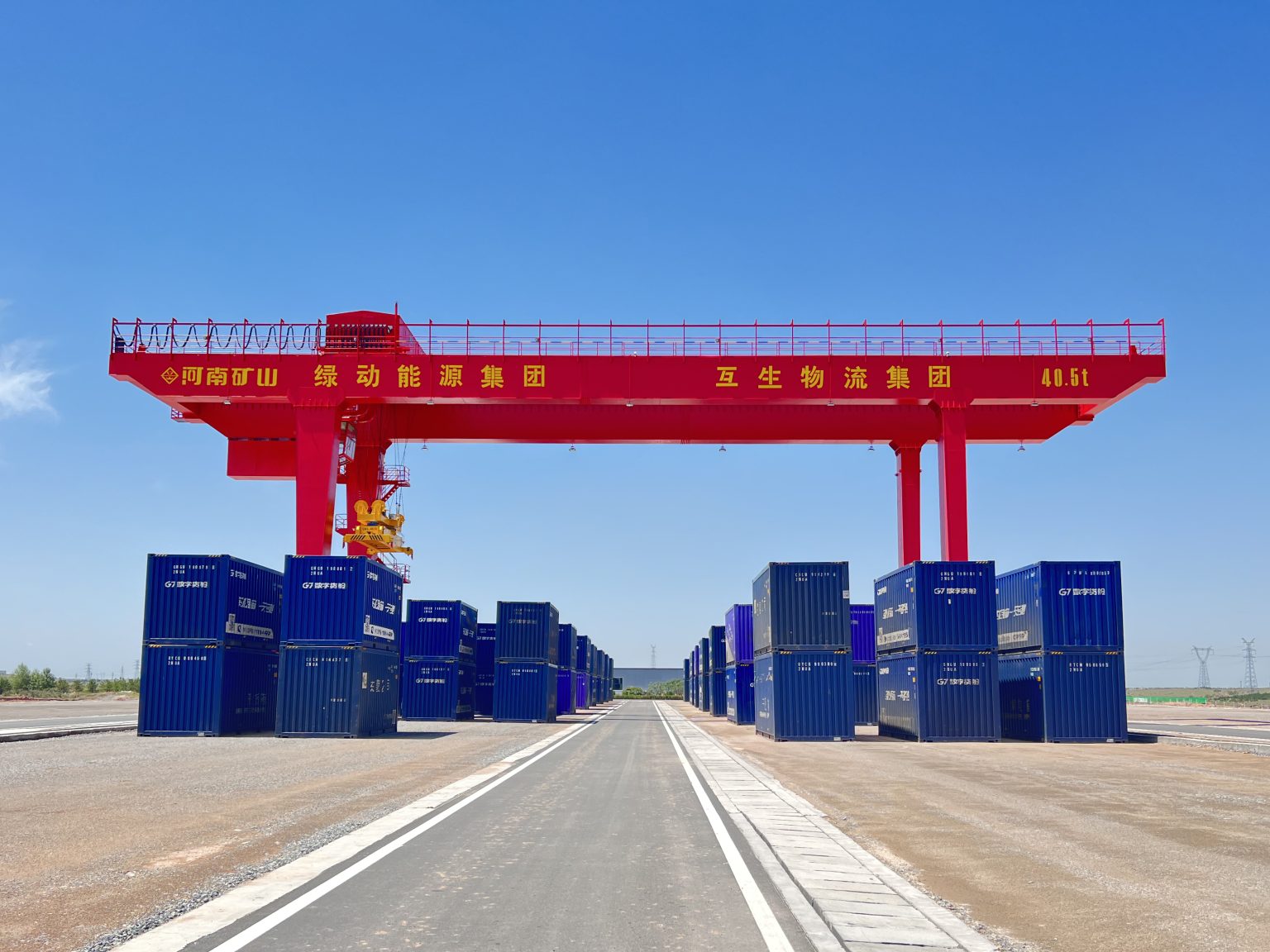
    Rail-Mounted Container Gantry Cranes — Henan Mine Crane crane application photograph
    Rail-Mounted Container Gantry Cranes — crane application overview.

    Container and warehouse handling

    Map the load units, storage or yard lanes, stacking height, travel route, handling cycle, building or rail clearances and vehicle interfaces. Specify the operating wind, power and communication conditions where applicable.

    Crane configuration and interfaces

    Ask for a general arrangement, wheel loads, spreader or lifting attachment scope, travel and positioning controls, protection functions and commissioning tests for the declared handling sequence.

    Review the Rail-mounted container gantry cranes and Warehousing & logistics cranes before defining the project-specific arrangement.

    Design the lifting process

    Use the project context above as a starting point. The following checks turn a crane application into a technical scope that suppliers can price and demonstrate for your site.

    Yard operation and handling cycle

    Start with the container mix: 20-foot, 40-foot, high-cube and any non-standard units. State the maximum gross mass of a container and whether the quoted capacity includes the spreader. Map train, truck and storage lanes separately. A rail-mounted gantry crane that serves a railway track and a storage block may need different outreach, travel length and positioning logic from a crane serving only trucks. The target moves per hour should be stated with the stacking pattern and average travel distance, not as an isolated throughput number.

    Layout and control decisions

    Share a scaled yard plan showing rail gauge, clear span, cantilever outreach, stacking height, truck lanes, rail sidings and the end positions. Specify how operators will work: on board, from a remote console or through an automated terminal system. Anti-sway, container finding and collision protection need an agreed operating scenario and acceptance method. Clarify the spreader type, power supply, cable management, wind conditions, storm anchoring and the required interface to the terminal-management system before prices are compared.

    Acceptance and supply boundary

    Ask each bidder to state rated load at the spreader, duty assumptions, wheel loads, rail tolerances and the civil works excluded from crane supply. Review the scope for rails, power distribution, communications, commissioning, operator training and spare parts. Factory tests can check major drives and controls; site tests must demonstrate the actual lifting sequence, emergency stops, limit devices, travel protection and agreed positioning functions with the yard interfaces available. A planned terminal capacity is not the tested hourly performance of one crane.

    Compare the proposed crane scope

    DecisionInformation to request
    Crane and lifting attachmentRated loads, load cases, hook coverage and the complete suspended-load calculation.
    Site interfacesRunway loads, rail or building drawings, electrical supply and installation responsibilities.
    Controls and protectionOperating sequence, required safety functions and a method for testing each function.
    Commercial scopeEquipment, transport, installation, commissioning, documentation, training and spare parts as separate line items.

    From technical offer to site acceptance

    Technical submittals

    A usable bid should show a general arrangement and a clear list of assumptions, not just a model name and capacity. Request the load schedule used in design, lifting-attachment drawings where applicable, span and hook-approach dimensions, wheel loads, electrical supply, control narrative and maintenance access. Check every drawing against the actual building or yard layout. Identify the standards and local approval requirements for the destination market in the enquiry, then confirm the bidder’s proposed design and documentation scope in writing.

    Installation and tests

    Agree when the runway or civil works will be ready, how crane components can reach the installation position and who provides lifting equipment for erection. Define the factory test, on-site installation inspection and site acceptance as separate milestones. The acceptance procedure should list representative loads, the travel route, protection devices, emergency stop and any automation or attachment functions included in the order. Record who supplies test weights, operators, power and access equipment; otherwise a nominal commissioning price may omit essential site work.

    Commercial comparison

    Ask for the same delivery basis and currency across proposals. Separate the crane, special lifting appliances, rails or conductors, transport, installation support, commissioning, training and initial spare parts. Lead time should identify the starting event, such as approved drawings or an effective contract, and any dependency on site readiness. Compare warranty scope and service response by the written contract terms. If a key input is still unknown, request a priced option or a stated assumption instead of allowing different bidders to silently use different specifications. Keep a written exception register so the engineering team can resolve open dimensions, process interfaces and responsibility boundaries before issuing the purchase order.

    Information to include in the enquiry

    • Load weights, dimensions, centre of gravity and lifting attachments.
    • Span, lifting height, runway or yard drawings, travel coverage and clearances.
    • Operating cycle, working environment, electrical supply and control requirements.
    • Supply boundaries, inspection documents, installation support and acceptance criteria.

    Discuss a comparable lifting task

    Send the handling task and available site drawings. Henan Mine Crane can define a proposed crane arrangement and identify the remaining information needed for a technical and commercial review.
  • Wind Turbine Blade Lifting: Gantry Capacity and Load-Handling Inputs

    Wind Turbine Blade Lifting: Gantry Capacity and Load-Handling Inputs

    Technical guide

    Wind Turbine Blade Lifting: Gantry Capacity and Load-Handling Inputs

    Blade length and handling geometry can matter as much as mass. Provide verified load information, lifting-tool details, required orientation and environmental exposure so the complete lifting arrangement can be reviewed.

    Henan Mine CraneTechnical guide · Updated 2026Crane selection, project scope and operating requirements
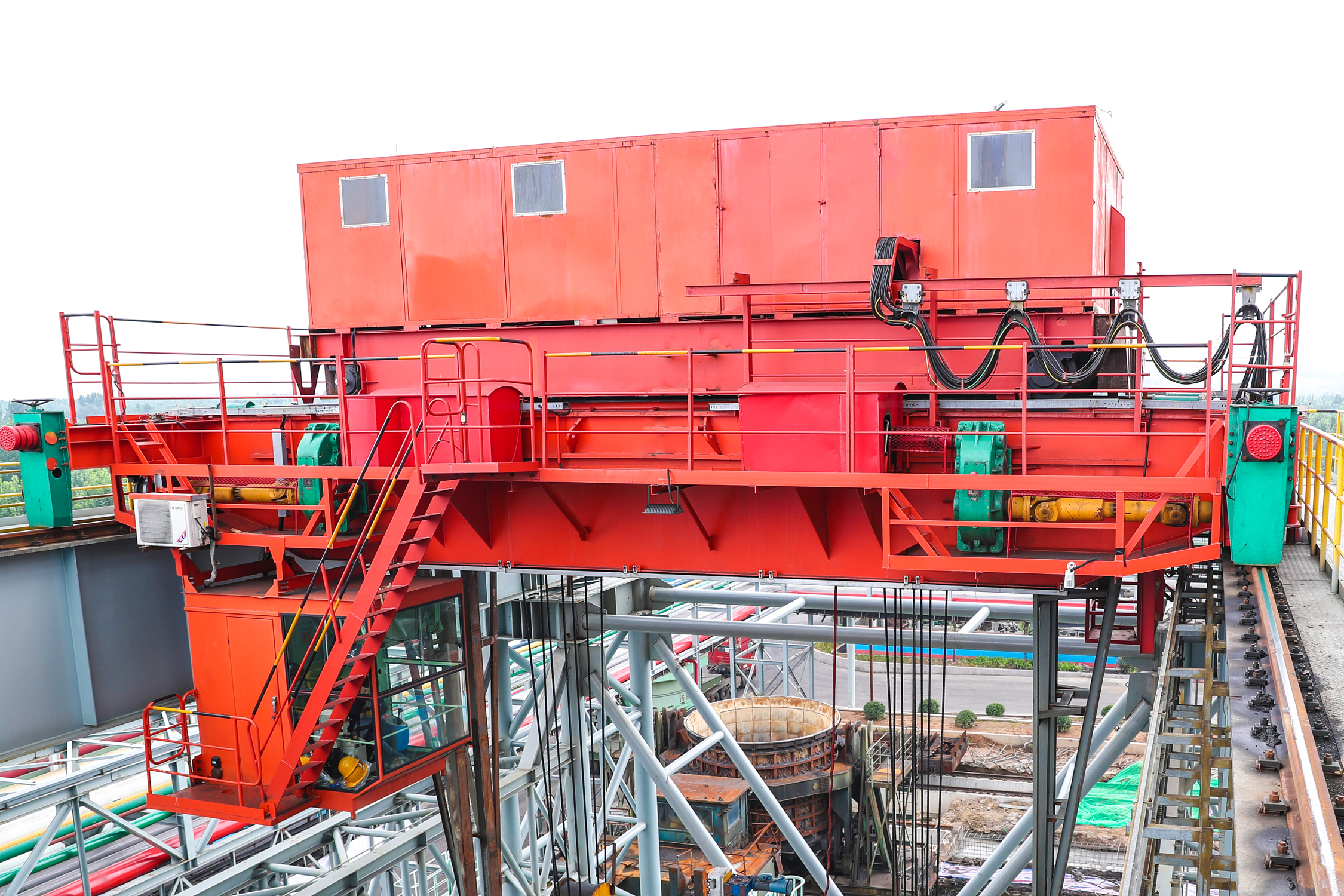
    Henan Mine Crane overhead crane inside a workshop bay
    Henan Mine Crane overhead crane inside a workshop bay
    Project planning notes

    Key points for this crane project.

    1. What Capacity Gantry Crane Is Required for Wind
    2. How to Calculate the Required Gantry Crane Capacity?
    3. Different Types of Gantry Cranes for Wind Turbine
    Read the technical guide

    What Capacity Gantry Crane Is Required for Wind Turbine Blade Installation?

    There is no single universal capacity figure for wind turbine blade installation, because turbine class, blade length, and lifting method all shift the requirement. That said, industry practice groups gantry crane capacity into three broad bands tied to turbine scale. Use these as a starting reference point, not a final spec.

    Typical Gantry Crane Capacity Range for Wind Turbine Projects

    This range typically covers smaller onshore turbines and maintenance-focused operations rather than full new-build installation. Cranes in this band are common at:

    • Small onshore wind farms with lower rated-power turbines
    • Workshop or yard handling of blades before transport

    This is the working range for most mainstream commercial onshore wind farms. Typical applications include:

    Large wind turbines — 150 to 500+ tons

    As turbine size and blade length increase, so does the structural demand on the crane. This band applies to:

    • Large-scale onshore wind energy projects using longer blades
    • Offshore wind turbine construction and port-side staging

    These bands are a useful starting filter, but the number you actually buy against should come from a calculation specific to your blades, your rigging, and your site, not from a generic table. The next section walks through that calculation.

    How to Calculate the Required Gantry Crane Capacity?

    Sizing a crane correctly means working through four linked variables: load weight, blade length, lifting height, and site environment. Skipping any one of these can leave you with a crane that is rated heavy enough on paper but still fails the actual lift.

    Determine the Maximum Blade Weight

    Start with the heaviest single component you will lift, not an average or a nameplate estimate. Crane capacity should be built from:

    • Single blade weight:the actual mass of one rotor blade
    • Complete rotor assembly weight:relevant if blades are lifted as a pre-assembled rotor rather than individually
    • Lifting accessories:slings, spreader beams, shackles, and any lifting yoke add real mass to the hook load
    • Safety margin:a buffer above the calculated load to account for dynamic effects during the lift

    The standard formula used across the industry is straightforward:

    Required Crane Capacity = Maximum Load × Safety Factor

    Selecting a crane rated for exactly the blade's dead weight is not recommended.

    Worked example: Imagine a commercial onshore project using a blade that weighs 22 metric tons.

    Blade mass does not scale in a straight line with length, it scales closer to the cube of blade length, which is why a jump from an 80-meter blade to a 120-meter blade produces a far larger weight increase than the length difference alone would suggest. This is the single biggest reason capacity requirements have grown so sharply as turbines have scaled up.

    Consider Wind Turbine Blade Length and Size

    • Higher lifting heightis needed to clear the hub and tower structure during positioning
    • Greater stabilityis required because a longer blade has a longer lever arm, making it more sensitive to sway and wind loading during the lift
    • Larger working spaceis needed around the crane footprint to maneuver a long, asymmetric load
    • Stronger crane structureis required to resist the bending and torsional forces a long blade transmits back through the rigging

    A crane sized purely on tonnage without accounting for blade length can be structurally rated correctly and still be unsafe or unworkable in practice.

    Evaluate Lifting Height Requirements

    Capacity and reach are only half the equation, height clearance is just as critical. Factors to confirm before specifying a crane include:

    • Tower height, which sets the vertical distance the blade must travel
    • Blade installation position, since blades are typically installed at specific rotational angles relative to the hub
    • Hook height, the crane's own maximum lift height under hook, which must clear the tower plus the blade's geometry with margin to spare

    A high-capacity Henan Mine Crane manufactured crane with insufficient lifting height simply cannot complete the installation safely, the tonnage rating means nothing if the hook can't reach the working point. Height and capacity have to be verified together, not separately.

    Consider Wind Conditions and Site Environment

    Wind turbine installation sites are rarely forgiving environments. Typical conditions include:

    • Strong and gusting wind, which is the single greatest operational hazard for a long, sail-like blade under lift
    • Uneven terrain, especially at ridge-line onshore sites
    • Remote locations with limited access for oversized crane transport
    • Limited construction space around the tower base

    Given these conditions, the crane itself needs specific features beyond raw tonnage:

    • A stable structure that resists tipping and lateral load under wind pressure
    • Precise positioning control for the final blade-to-hub alignment
    • Weather-resistant design suited to prolonged outdoor exposure, and for offshore or coastal sites, corrosion resistance
    • A reliable braking system that holds position safely if wind conditions require pausing a lift mid-operation

    Different Types of Gantry Cranes for Wind Turbine Installation

    Once you know the target capacity, the next decision is crane configuration. Wind projects generally draw from three categories.

    Heavy Duty Gantry Crane

    Heavy duty gantry cranes are the backbone of large-scale blade handling and wind power construction. They are best suited for:

    • Heavy blade lifting on commercial and utility-scale projects
    • Wind power construction projects with sustained, repetitive heavy lifts

    Their defining features are a high rated lifting capacity, strong structural stability under repeated heavy-duty cycles, and a long service life designed for continuous industrial use rather than occasional lifts. In production and staging environments, these are often configured as rail-mounted or rubber-tyred gantry (RTG) systems capable of tonnages that scale from the tens of tons for workshop and staging use up into the thousands of tons for the largest port-side and offshore erection gantries. RTG configurations in particular have become popular at ports and staging yards because they offer mobility across multiple berths and storage zones without the fixed infrastructure a rail system requires, useful for projects moving blades, nacelles, and tower sections through the same yard on different schedules.

    Mobile Gantry Crane

    Mobile Henan Mine Crane manufactured gantry cranes trade some structural capacity for flexibility, and they've become a common choice at sites without fixed runway infrastructure. They are best suited for:

    • Remote wind farms where permanent crane infrastructure isn't practical
    • Maintenance operations that need to relocate between turbines quickly

    The advantages are clear: flexible movement across a site without dismantling the crane, reduced setup time compared to fixed installations, and lower transportation cost since the crane can reposition itself rather than requiring a full disassembly-and-haul cycle between locations. Some mobile gantry designs also incorporate dual load trolleys, which allow direct rotation of a blade within a work area, useful for positioning during manufacturing or pre-installation staging without additional handling equipment.

    Customized Gantry Crane System

    Standard, off-the-shelf configurations don't always fit wind projects, because every project differs in:

    • Installation method (individual blade lift vs. pre-assembled rotor lift)

    Because of this variability, customized solutions are common across the industry, typically including adjustable span to match staging or foundation layouts, special lifting devices engineered for a specific blade root or spreader configuration, automated control systems for repeatable precision, and remote operation capability for improved operator safety during large lifts.

    Key Technical Parameters Besides Crane Capacity

    Tonnage rating gets the most attention, but it is only one of several specifications that determine whether a crane will actually perform the job safely and efficiently.

    Lifting Speed and Control Accuracy

    Blade installation is a precision task, not a bulk-handling one. During the final positioning phase:

    • Small movements matter,the margin for error at the hub connection point is measured in centimeters, not meters
    • Precise positioning is required to align bolt patterns and pitch bearings correctly on the first attempt

    Recommended crane features to support this include a variable frequency drive for fine speed control, smooth acceleration and deceleration to avoid inducing sway in a long blade, and anti-sway control systems that actively dampen pendulum motion during positioning.

    Span and Working Area

    The crane's span and working footprint need to be sized against the physical realities of the site, including the wind turbine foundation size, the blade storage or staging area layout, and the space required for assembly operations around the tower base. A crane with a technically sufficient tonnage rating but an undersized span will still struggle to maneuver a 70-meter-plus blade around a congested foundation area, so span and capacity should be evaluated together rather than treated as separate line items on a spec sheet. On constrained sites, this often pushes the decision toward a mobile or customized gantry over a fixed rail-mounted design, simply because the footprint can be adjusted as staging needs change through the project.

    Duty Classification

    Cranes are rated not just by capacity but by duty class, following classification systems such as FEM classification and ISO duty class standards. A higher duty class is required for:

    • Heavy component handling on a sustained basis
    • Long-term operation across an extended project timeline

    Choosing a crane rated for light-duty, occasional use in a heavy-cycle production or installation environment is a common way projects end up with premature wear or unplanned downtime. It's worth asking a supplier directly which duty class a proposed crane carries and how that class was determined, since a tonnage rating on its own doesn't tell you anything about how the crane will hold up across hundreds of repetitive lifts over a multi-year installation program.

    Safety Features

    Given the weight and geometry involved in blade lifts, safety systems are not optional extras. Essential systems include overload protection, an emergency stop system, limit switches to prevent over-travel, load monitoring to track real-time hook load against rated capacity, and wind speed monitoring to halt lifting operations automatically if conditions exceed safe thresholds.

    Gantry Crane Applications in Wind Energy Industry

    Gantry cranes serve several distinct roles across a wind project's lifecycle, not just the initial blade lift.

    Wind Turbine Blade Installation

    This is the core application: blade lifting from ground or staging position, blade positioning at the hub connection point, and full rotor assembly where blades are joined to the hub before final hoisting.

    Wind Turbine Component Replacement

    Gantry cranes also support ongoing operations after commissioning, including blade replacement following damage or end-of-life retirement, gearbox maintenance on geared turbine models, and generator replacement inside the nacelle.

    Offshore Wind Turbine Construction

    Offshore projects impose additional requirements on top of standard capacity and height specs: corrosion resistance to withstand sustained salt exposure, high reliability given the cost and difficulty of unplanned offshore downtime, and extreme weather adaptability for sites exposed to open-water wind and wave conditions. Because offshore blades routinely fall at the upper end of the weight range, cranes serving these projects — whether at a port staging yard or on an installation vessel — are typically specified at the top of, or above, the 300-ton-plus band, and they're engineered from the outset for continuous outdoor marine exposure rather than adapted afterward from an onshore design.

    Common Mistakes When Selecting a Gantry Crane for Wind Turbine Installation

    Even experienced project teams make avoidable errors when specifying crane capacity. These four show up repeatedly across the industry.

    Mistake 1: Choosing crane capacity only based on blade weight.

    Blade weight is the starting point, not the finish line. You also need to account for lifting accessories, dynamic loads introduced by wind and motion, and an appropriate safety factor. A crane sized to the bare blade weight has effectively no operating margin.

    Turbine sizes keep increasing across the industry, and blade lengths that looked ambitious five years ago are routine today. A crane purchased with additional capacity headroom beyond today's immediate need typically delivers a longer useful service life and better long-term investment value than one sized precisely to current requirements. This matters most for owners and contractors planning to service the same site, or the same class of equipment, over a multi-year or multi-project horizon, a crane that's already maxed out on a current-generation blade will need early replacement the moment the next turbine upgrade arrives.

    Mistake 3: Selecting a standard crane without customization.

    Wind projects frequently require special dimensions to match site layout, special lifting tools engineered for a specific blade or rotor configuration, and customized control systems for repeatable precision. Forcing a generic crane into a non-standard project usually shows up later as workarounds, added rigging, or reduced lifting speed.

    Capacity rating on a spec sheet is only as good as the designer/manufacturer that produced it. Investigate that manufacturer‘s engineering practice, manufacturing location, testing ability and project references on similar wind machines.

    How to Choose a Reliable Gantry Crane Manufacturer for Wind Energy Projects?

    If properly engineered and manufactured, the rated capacities of the crane are just good information. Vet existing suppliers in three fields.

    Check Manufacturing Capability

    Henan Mine Crane Factory has proven heavy steel structure fabrication capability, quality welder performance according to accepted codes, ability to build according to the load on the crane, test equipment on-site for performance before delivery.

    Verify Design and Engineering Support

    Professional Henan Mine Crane Factory would also be happy and willing to give you load calculations suitable for your lift, drawings, not templates, to commission the lift on your site, and continued technical support after delivery.

    Consider After-Sales Service

    Crane ownership continues post delivery. Make sure that the manufacturer has easily available spare parts, remote troubleshooting, maintenance advice, and regular crane inspection services to ensure the crane remains within its rated safe working envelope for its entire anticipated lifespan.

    Gantry Crane Capacity Selection Guide for Different Wind Turbine Sizes

    The table below summarizes recommended starting points by turbine class. Treat these as a planning reference, always confirm with a full load calculation against your specific blade, rigging, and site conditions.

    Wind Turbine TypeBlade Weight
    Small Onshore TurbineLow weight blades
    Medium Wind TurbineMedium blades
    Large Onshore TurbineHeavy blades
    Offshore Wind TurbineExtra-large blades

    Note: Actual capacity depends on project-specific requirements, including rigging weight, safety factor, and site conditions.

    Henan Mine Crane

    Picking the appropriate gantry crane capacity for wind turbine blade installation is not a matter of just selecting a top-heavy lifting capacity, a trustworthy answer involves professional engineering, design, precise computation of load, and implementing QC to assure that each turbine‘s unique wind energy solutions deal with the appropriate wind loads. Whether it is dealing with blades, component lift-off, or ongoing maintenance operations, the crane should be durable, safe, and steady.

    With the deep experience in manufacturing, high-end production facilities and tailor-made solutions for heavy duty lifting work, Henan Mine Crane Factory, the gantry crane manufacturer can certainly help wind energy enterprise to find the best solution to install the wind turbines efficiently. By selecting the most suitable crane partner, project owner and contractors definitely can enhance installation efficiency, minimize the installation operation risk and even exploit a more sound basis for the wind power development.

    Frequently Asked Questions

    Q1: What size crane is needed to install a wind turbine blade?

    It varies by the class of the turbine.

    Q2: How much does a wind turbine blade lifting crane cost?

    Again, this can be a wide variation depending on the capacity, span, duty-classification and standard or custom design of the crane. Custom engineered cranes of higher capacity, for use on offshore projects, are considerably more expensive than a standard yard or maintenance duty crane.

    Q3: Can a gantry crane be used for offshore wind turbine installation?

    But offshore applications impose much more requirements on application features, such as corrosion resistant, high reliability and structural design according to relatively extreme weather and marine conditions.

    Q4: What is the lifting capacity of a wind turbine installation crane?

    Q5: How do I calculate crane capacity for blade installation?

    Begin with the maximum weight of a single blade, include supplementary equipment and increase by a safety factor. Required Crane Capacity = Maximum Load x Safety Factor, then compare to lifting height required and conditions at site.

    Q6: Why choose a customized gantry crane for wind power projects?

    Since turbine model, blade dimensions, installation procedure and site configuration vary from project to project, a custom crane having an adaptable gantry, dedicated lifting apparatus and machinery and a bespoke control system generally provides a more effective and efficient solution than an off-the-shelf design.

    Discuss the crane arrangement for your project.

    Blade length and handling geometry can matter as much as mass. Provide verified load information, lifting-tool details, required orientation and environmental exposure so the complete lifting arrangement can be reviewed. Share the load, available drawings, working cycle and site conditions with Henan Mine Crane so the required configuration and supply boundary can be discussed.

    Related crane configurations

    Explore crane product families and technical parameters ↗

    Updated 2026 · Henan Mine Crane

  • Intelligent Coke Drum Crane | Automated Lifting Solutions for Petrochemical Industry

    Intelligent Coke Drum Crane | Automated Lifting Solutions for Petrochemical Industry

    Crane application

    Intelligent Coke Drum Crane | Automated Lifting Solutions for Petrochemical Industry

    Review the intelligent coke pot crane applications. Review material properties, handling cycles, grab or vessel interfaces and required control functions.

    Intelligent Coke Drum Crane | Automated Lifting Solutions for Petrochemical Industry — Henan Mine Crane crane application photograph
    Intelligent Coke Drum Crane | Automated Lifting Solutions for Petrochemical Industry — crane application overview.

    Steelmaking and metal handling

    Define the complete suspended load, ladle or steel-product geometry, process temperature, crane duty and safe travel path. For molten-metal work, include auxiliary lifting, heat shielding, redundant protections and inspection access in the specification.

    Crane configuration and interfaces

    Ask for the crane arrangement, hook and lifting appliance interfaces, runway loads, control and monitoring functions, inspection access and a test plan matched to the plant process.

    Review the Metallurgical overhead cranes and Steel & metallurgy cranes before defining the project-specific arrangement.

    Design the lifting process

    Use the project context above as a starting point. The following checks turn a crane application into a technical scope that suppliers can price and demonstrate for your site.

    Material flow and duty

    Identify the material handled, bulk density, particle size, moisture, temperature and the location of pickup and discharge points. A grab crane must be evaluated against bucket fill factor, actual lifted mass, cycle time and the position of hoppers or stockpiles. For coke-drum or coke-jar handling, document the vessel or container geometry, connection points and any hot surfaces. State whether the crane operates continuously, in batches or as an emergency backup, since each produces a different duty case.

    Controls and operating environment

    Dust, heat and corrosive vapours affect the selection of enclosures, cables, braking and maintenance access. Specify the exposure at each component rather than using a single plant-wide temperature. For remote or unmanned operation, map the complete sequence: material detection, pickup, travel, discharge, obstruction handling and recovery after an interruption. Camera views, sensors, anti-sway and monitoring should each have an agreed purpose and acceptance test; automation must also permit safe manual intervention.

    Procurement and commissioning

    Request the proposed grab or attachment scope, bucket volume basis, duty assumptions, runway loads and a material flow diagram. Compare cycle-time claims under the same travel distances and material conditions. The acceptance plan should use representative material and include fault recovery, travel and hoist protections, emergency stop, communication loss and maintenance isolation. Clarify who supplies the hopper interface, dust-control equipment, remote console, plant signals and spare wear parts. This makes competing crane quotations comparable.

    Compare the proposed crane scope

    DecisionInformation to request
    Crane and lifting attachmentRated loads, load cases, hook coverage and the complete suspended-load calculation.
    Site interfacesRunway loads, rail or building drawings, electrical supply and installation responsibilities.
    Controls and protectionOperating sequence, required safety functions and a method for testing each function.
    Commercial scopeEquipment, transport, installation, commissioning, documentation, training and spare parts as separate line items.

    From technical offer to site acceptance

    Technical submittals

    A usable bid should show a general arrangement and a clear list of assumptions, not just a model name and capacity. Request the load schedule used in design, lifting-attachment drawings where applicable, span and hook-approach dimensions, wheel loads, electrical supply, control narrative and maintenance access. Check every drawing against the actual building or yard layout. Identify the standards and local approval requirements for the destination market in the enquiry, then confirm the bidder’s proposed design and documentation scope in writing.

    Installation and tests

    Agree when the runway or civil works will be ready, how crane components can reach the installation position and who provides lifting equipment for erection. Define the factory test, on-site installation inspection and site acceptance as separate milestones. The acceptance procedure should list representative loads, the travel route, protection devices, emergency stop and any automation or attachment functions included in the order. Record who supplies test weights, operators, power and access equipment; otherwise a nominal commissioning price may omit essential site work.

    Commercial comparison

    Ask for the same delivery basis and currency across proposals. Separate the crane, special lifting appliances, rails or conductors, transport, installation support, commissioning, training and initial spare parts. Lead time should identify the starting event, such as approved drawings or an effective contract, and any dependency on site readiness. Compare warranty scope and service response by the written contract terms. If a key input is still unknown, request a priced option or a stated assumption instead of allowing different bidders to silently use different specifications. Keep a written exception register so the engineering team can resolve open dimensions, process interfaces and responsibility boundaries before issuing the purchase order.

    Information to include in the enquiry

    • Load weights, dimensions, centre of gravity and lifting attachments.
    • Span, lifting height, runway or yard drawings, travel coverage and clearances.
    • Operating cycle, working environment, electrical supply and control requirements.
    • Supply boundaries, inspection documents, installation support and acceptance criteria.

    Discuss a comparable lifting task

    Send the handling task and available site drawings. Henan Mine Crane can define a proposed crane arrangement and identify the remaining information needed for a technical and commercial review.
  • Specialized Crane Solutions for Large Cruise Ship Final Assembly Construction

    Specialized Crane Solutions for Large Cruise Ship Final Assembly Construction

    Crane application

    Specialized Crane Solutions for Large Cruise Ship Final Assembly Construction

    Review the crane handling for cruise ship assembly. Review the handling task, load geometry, working duty and equipment interfaces for your application.

    Specialized Crane Solutions for Large Cruise Ship Final Assembly Construction — Henan Mine Crane crane application photograph
    Specialized Crane Solutions for Large Cruise Ship Final Assembly Construction — crane application overview.

    Heavy construction lifting

    Confirm the full component weight including rigging, centre of gravity, lifting points, assembly sequence, ground conditions and required travel envelope. Coordinate the crane with the temporary works and construction schedule.

    Crane configuration and interfaces

    Ask for lifting and travel arrangements, support reactions, wind limits, erection and dismantling method, site interfaces and acceptance tests for the proposed construction duty.

    Review the Overhead crane range and Engineering & construction cranes before defining the project-specific arrangement.

    Design the lifting process

    Use the project context above as a starting point. The following checks turn a crane application into a technical scope that suppliers can price and demonstrate for your site.

    Component protection and route

    Provide the largest component envelope, its mass and centre of gravity, certified lifting points and the permitted acceleration or rotation. Trace the travel route from pickup to assembly position, including clearances above tools, fixtures and finished surfaces. A wide component may drive the hook approach and synchronized movement requirements more than its weight. Define any prohibition on uncontrolled sway or contact as a measurable handling requirement.

    Positioning and coordination

    State the required positioning tolerance at the load, the operator sight line and the interaction with adjacent cranes or work platforms. If two hoists carry one assembly, describe how load sharing is measured and what happens if one motion is interrupted. A design may use low-speed drives, cameras, remote control or special lifting beams, but each should be specified against the actual assembly sequence. Document clean or corrosion-control requirements if they apply to the workplace.

    Verification before operation

    Ask for lifting appliance interfaces, general arrangement, structural reactions, control narrative, inspection access and the acceptance plan. Site demonstrations should include the real route and representative component geometry where practical, not only a static rated-load test. Clarify the responsibilities for special spreaders, runway installation, safety zones, commissioning and operator training. Any claimed positioning accuracy needs an agreed test condition and measurement method.

    Compare the proposed crane scope

    DecisionInformation to request
    Crane and lifting attachmentRated loads, load cases, hook coverage and the complete suspended-load calculation.
    Site interfacesRunway loads, rail or building drawings, electrical supply and installation responsibilities.
    Controls and protectionOperating sequence, required safety functions and a method for testing each function.
    Commercial scopeEquipment, transport, installation, commissioning, documentation, training and spare parts as separate line items.

    From technical offer to site acceptance

    Technical submittals

    A usable bid should show a general arrangement and a clear list of assumptions, not just a model name and capacity. Request the load schedule used in design, lifting-attachment drawings where applicable, span and hook-approach dimensions, wheel loads, electrical supply, control narrative and maintenance access. Check every drawing against the actual building or yard layout. Identify the standards and local approval requirements for the destination market in the enquiry, then confirm the bidder’s proposed design and documentation scope in writing.

    Installation and tests

    Agree when the runway or civil works will be ready, how crane components can reach the installation position and who provides lifting equipment for erection. Define the factory test, on-site installation inspection and site acceptance as separate milestones. The acceptance procedure should list representative loads, the travel route, protection devices, emergency stop and any automation or attachment functions included in the order. Record who supplies test weights, operators, power and access equipment; otherwise a nominal commissioning price may omit essential site work.

    Commercial comparison

    Ask for the same delivery basis and currency across proposals. Separate the crane, special lifting appliances, rails or conductors, transport, installation support, commissioning, training and initial spare parts. Lead time should identify the starting event, such as approved drawings or an effective contract, and any dependency on site readiness. Compare warranty scope and service response by the written contract terms. If a key input is still unknown, request a priced option or a stated assumption instead of allowing different bidders to silently use different specifications. Keep a written exception register so the engineering team can resolve open dimensions, process interfaces and responsibility boundaries before issuing the purchase order.

    Information to include in the enquiry

    • Load weights, dimensions, centre of gravity and lifting attachments.
    • Span, lifting height, runway or yard drawings, travel coverage and clearances.
    • Operating cycle, working environment, electrical supply and control requirements.
    • Supply boundaries, inspection documents, installation support and acceptance criteria.

    Discuss a comparable lifting task

    Send the handling task and available site drawings. Henan Mine Crane can define a proposed crane arrangement and identify the remaining information needed for a technical and commercial review.
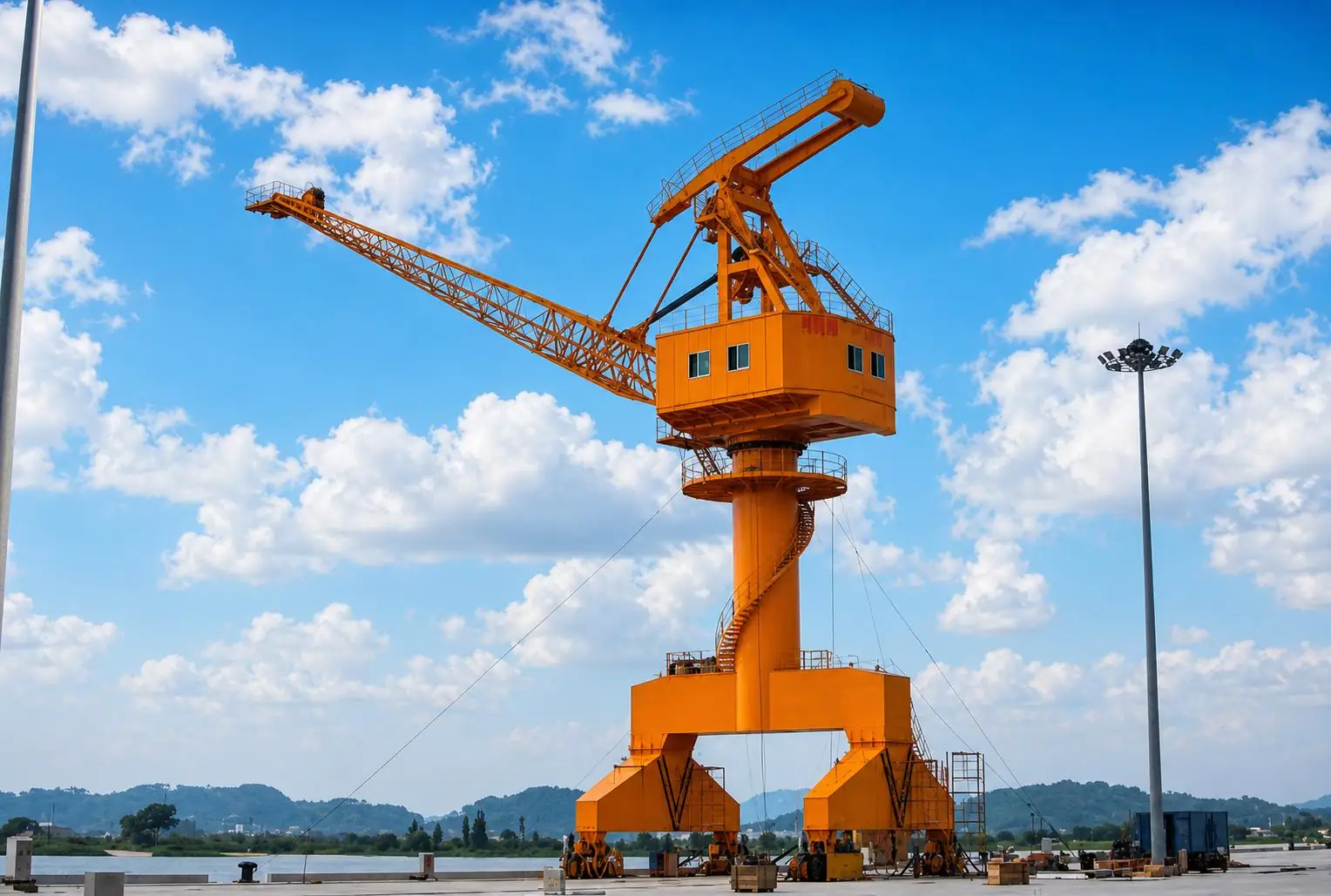
  • Port Crane Purchase Costs Beyond the Equipment Price

    Port Crane Purchase Costs Beyond the Equipment Price

    Technical guide

    Port Crane Purchase Costs Beyond the Equipment Price

    A poorly matched crane can create expenses in civil works, operations and support. Compare the intended cargo cycle and site interfaces with the full supply scope before judging the economic case from the purchase price.

    Henan Mine CraneTechnical guide · Updated 2026Crane selection, project scope and operating requirements
    port crane selection
    port crane selection
    Project planning notes

    Key points for this crane project.

    1. Hidden Costs of Buying the Wrong Port Crane
    2. How the Wrong Port Crane Affects Long-term
    3. How to Choose the Right Port Crane for Your
    Read the technical guide

    Hidden Costs of Buying the Wrong Port Crane

    Once the selection is wrong and the equipment does not match the working conditions of the terminal, all kinds of hidden costs will continue to accumulate, becoming a huge drag on the profitability of the terminal. The following are the five hidden costs that are the most important and easily overlooked when choosing the wrong port crane.

    Lower productivity and longer handling times

    Insufficient equipment adaptability is the most obvious problem of choosing the wrong port crane, which directly leads to a significant decrease in terminal loading and unloading efficiency and a prolonged cargo handling cycle. Many small and medium-sized ports and general-purpose terminals purchase high-capacity heavy-duty cranes to handle ordinary bulk cargo and containers, with slow equipment start-stop response and poor operational flexibility. On the contrary, in heavy-duty and high-frequency operation scenarios, small-tonnage and low-configuration models are selected. The equipment frequently runs at full load, and the single loading and unloading capacity is insufficient, which requires repeated take-off, landing and displacement, which greatly increases the length of invalid operations.

    In the standardized port operation process, the loading and unloading efficiency is directly related to the berth utilization rate and the ship turnover speed. Ship loading and unloading tasks that could be completed in 24 hours require delayed overtime operations, which not only compresses the total daily throughput of the terminal, but also leads to problems such as ship stagnation and queuing for berthing. For foreign trade ports and cross-border logistics terminals, failure to meet the operating timeliness standards will also cause customer complaints and loss of cooperation, which will directly weaken the competitiveness of the terminal market.

    Higher maintenance and spare parts costs

    For port cranes with non-standard adaptation, overloaded working conditions, and unpopular models, the cost of late maintenance and replacement of accessories will far exceed that of standard adaptation equipment, which is the core source of long-term invisible expenditure. Equipment with poor adaptability is overloaded and operated under excessive working conditions for a long time. The wear rate of core components such as steel structures, wire ropes, reducers, and electrical control systems has doubled, and the frequency of failures has been greatly increased. The frequency of daily maintenance and regular maintenance and the consumption of consumables continue to increase.

    More importantly, the versatility of spare parts for niche models, miscellaneous equipment, and non-standard customized cranes is extremely poor. Many core accessories are only supplied by a single manufacturer, and the purchase price of accessories is high and the delivery cycle is long. Regular well-known crane manufacturers can realize the spot supply of commonly used accessories and the continuous guarantee of accessories for more than ten years, while the waiting period for inferior non-standard equipment accessories can reach several weeks, and the premium is serious. Accumulated over the years, the total cost of maintenance far exceeds the difference saved by the initial purchase.

    Excessive energy consumption

    Port cranes are 24-hour high-frequency continuous operation equipment. Energy consumption costs are one of the core expenses of the daily operation of the terminal. Selection errors will cause continuous energy waste. Cranes with redundant tonnage, old models, and backward transmission systems have extremely low energy consumption and utilization rates during no-load and light-load operations, which are ineffective and consume power and cause serious losses. However, low-power models are selected for heavy-duty scenarios, and the equipment needs to be operated at high loads to complete the operation. The motor continues to overload and the energy consumption soars. At the same time, it will accelerate the aging of the equipment.

    For medium-sized and large-scale ports, multiple cranes operate continuously throughout the year, and the accumulated excess energy consumption is a huge expense.

    Downtime and lost revenue

    The failure rate of non-adapted port cranes is high, the stability is poor, and frequent sudden shutdowns and troubleshooting will cause huge downtime losses and loss of revenue. This is also the hidden cost that is most easily ignored by buyers. The port terminal belongs to an assembly-line continuous operation scenario. The shutdown of a single core crane will directly lead to the stagnation of the corresponding berth operation, the accumulation of cargo, the retention of ships, and the paralysis of the entire loading and unloading assembly line.

    How the Wrong Port Crane Affects Long-term Operations

    The harm of choosing the wrong port crane is not a short-term cost loss, but will run through the full service cycle of the equipment for 15-20 years, and will continue to affect the long-term operation planning, safety management, capacity upgrading and expansion of the terminal. In the short term, it seems that it is only low efficiency and high cost. In the long term, it will form operational bottlenecks and restrict the overall development of the port.

    Reduced equipment service life

    The standard design service life of port cranes is generally 15-20 years. However, the crane with the wrong selection is operating under overload, over-working conditions, and mismatched environments for a long time. The fatigue damage of the steel structure, the wear of core components, and the aging rate of the electrical system are greatly accelerated, and the overall aging rate of the equipment is 1.5-2 times that of standard equipment.

    The actual service life of equipment with frequent failures, repeated repairs, and forced modifications will be shortened to 8-10 years, which is much lower than industry standards. The early scrapping of equipment means that enterprises need to invest a large amount of money in advance to replace new machines, and the depreciation cost of equipment has increased significantly. The original long-term fixed asset investment has become a short-term loss expenditure, which seriously disrupts the enterprise's equipment renewal budget and long-term investment planning.

    Safety and compliance risks

    Port lifting machinery is a special equipment, with high-risk operating scenarios and strict supervision. Cranes with insufficient tonnage, substandard performance, and unsuitable working conditions are prone to safety accidents such as load imbalance, structural deformation, brake failure, slip hook, and overturning during operation, which threaten the personal safety of operators and cause major losses such as cargo damage and equipment scrap.

    At the same time, non-standard mismatched models and privately modified equipment cannot meet the port special equipment testing standards, maritime supervision norms and safety production requirements, and the annual inspection pass rate is extremely low. In the event of a safety accident, the company will also have to bear huge compensation and legal responsibilities, which will have an irreversible impact on the company's brand and business qualifications.

    Limited future expansion

    Modern ports are in the pace of continuous upgrading, capacity expansion, and business expansion. Equipment selection needs to take into account current working conditions and future expansion needs. When purchasing, many companies only adapt to the current cargo type, operating tonnage, and berth size, and choose low-profile, fixed-parameter mismatched models. After the terminal is upgraded, the throughput is increased, and the cargo category is expanded, the existing cranes are completely unable to adapt to the new working conditions.

    The old mismatched equipment is not compatible with automation upgrades and intelligent dispatching systems, and cannot be adapted to high-capacity cargo and high-density loading and unloading operations, which directly limits the expansion of terminal production capacity. If you want to upgrade the throughput of the terminal and expand new business, you can only eliminate all the old equipment and re-purchase new machines. This not only wastes the investment in the original equipment, but also increases the time and capital costs of secondary procurement, installation, and commissioning, which seriously restricts the long-term development plan of the port.

    How to Choose the Right Port Crane for Your Application

    To avoid the pitfalls of port crane procurement and reduce the hidden costs of the whole life cycle, the core lies in on-demand selection, adaptation to working conditions, and long-term consideration. According to different terminals, different working conditions, and different operating needs, the four core selection principles are summarized to help enterprises accurately select the right port cranes to achieve cost reduction, efficiency enhancement, and long-term operation.

    Match capacity to cargo requirements

    Tonnage matching is the core basis of Henan Mine Crane port crane selection. Equipment parameters must be determined strictly according to the main cargo type of the terminal, the maximum load of a single piece, the tonnage of conventional operations, and the average daily throughput. The special container terminal needs to match the standard container load and stacking height parameters, the bulk cargo terminal needs to be adapted to the loading and unloading tonnage of ore, coal, grain and other bulk cargo, and the grocery terminal needs to take into account the lifting needs of special-shaped cargo and high-capacity equipment. When selecting models, reject the misunderstandings of small tonnage utilization and high-capacity blindly, accurately calculate the peak operating load and high-frequency operating interval, and reserve a reasonable safety margin, not only to avoid overload loss and insufficient efficiency of small-tonnage equipment, but also to eliminate the waste of no-load energy consumption of high-capacity equipment.

    Choose the right crane type

    The adaptation scenarios of different types of Henan Mine Crane port cranes are very different. The wrong model is selected, and no matter how accurate the parameters are, efficient operation cannot be achieved. Mainstream port cranes include shore bridges, gantry cranes, rail gantry cranes, tire gantry cranes, mobile port cranes and other models, which are adapted to different berths, operating modes and site conditions.

    Shore bridge equipment is preferred for shore container loading and unloading, gantry cranes are suitable for yard stacking operations, and gantry cranes and mobile cranes are suitable for small and medium-sized general-purpose terminals and multi-category cargo operations. Automated intelligent terminals need to be equipped with intelligent electronic control and remote dispatching adaptation models, while traditional artificial terminals can choose high-stability conventional models. Only by accurately matching the model according to the operation scenario can the performance of the equipment be maximized and the efficiency shortcomings and waste of resources be eliminated.

    Consider port environment and conditions

    The port operates near the sea and the river, and the environment is complex and special. Harsh environments such as salt spray corrosion, high humidity, high winds, heavy rains, and alternating high and low temperatures require extremely high anti-corrosion properties, windproof capabilities, waterproof and dustproof grades, and structural strength of cranes. When choosing Henan Mine Crane port cranes, the geographical location, climatic conditions, and operating environment of the port must be fully considered, and the equipment configuration must be selected in a targeted manner.

    In coastal high-salt spray ports, anticorrosive models with hot-dip galvanized, heavy anticorrosive spraying, and stainless steel core accessories need to be selected to avoid equipment corrosion and aging. Windy and high-altitude ports need to strengthen windproof anchoring and anti-overturning structures, and be equipped with intelligent windproof early warning systems. In rainy and humid areas, the waterproof and dustproof level of the electronic control system needs to be upgraded to prevent circuit short circuits and equipment failures. The selection of models that fit the environmental working conditions can greatly reduce the equipment failure rate and extend the service life of the equipment.

    Evaluate manufacturer support and customization

    The hardware parameters of the equipment are only the basis. The manufacturer's technical strength, after-sales guarantee, and customization capabilities directly determine the long-term operating cost and stability of the equipment. A high-quality port crane manufacturer can provide process services such as working condition survey, program customization, equipment production, installation and commissioning, operation and maintenance training, and life-long maintenance.

    When selecting models, priority is given to manufacturers with large-scale port equipment production qualifications, rich terminal supporting cases, and perfect after-sales system, focusing on the manufacturer's parts supply capacity, fault response speed, and equipment customization capabilities. Regular manufacturers can provide more than 10 years of parts guarantee, 24-hour on-site after-sales response, and support the customization of exclusive equipment according to the terminal site, operation requirements, and automation planning, so as to avoid problems such as poor adaptability, difficult maintenance, and difficult upgrades from the source, and significantly reduce the hidden cost of the whole life cycle of the equipment.

    Henan Mine Crane

    When purchasing port cranes, the short-term purchase price has never been the core consideration. The comprehensive cost of the whole life cycle and the long-term operating value are the key to determining the return on investment of equipment. Choosing the wrong port crane seems to save the initial purchase cost, but it will cause a series of hidden costs such as low operating efficiency, excessive energy consumption, surge in maintenance costs, frequent downtime losses, and waste of transformation investment.

    Port crane procurement should not only value low prices and ignore the long-term operating losses caused by equipment adaptability. Port cranes that are accurately adapted to working conditions can effectively avoid all kinds of hidden costs and stabilize terminal operation efficiency and production safety. As a professional port crane manufacturer, Henan Mine Crane Factory is deeply engaged in equipment customization and supporting services. It can customize and adapt equipment according to various port operation scenarios and environmental conditions, and provide perfect after-sales operation and maintenance support to help major terminals reduce operating costs, improve overall operating efficiency, and achieve long-term stable and efficient operation of equipment.

    Discuss the crane arrangement for your project.

    A poorly matched crane can create expenses in civil works, operations and support. Compare the intended cargo cycle and site interfaces with the full supply scope before judging the economic case from the purchase price. Share the load, available drawings, working cycle and site conditions with Henan Mine Crane so the required configuration and supply boundary can be discussed.

    Related crane configurations

    Ship-To-Shore Crane (STS)

    View product parameters
    Lifting capacity: 40-65 80-120 tBoom outreach: 40-72 mWorking class: A8

    Transfer containers between ship and quay with an STS crane selected for the berth and vessel envelope. Define the lifting-appliance arrangement, outreach, rail position and handling cycle.

    Updated 2026 · Henan Mine Crane

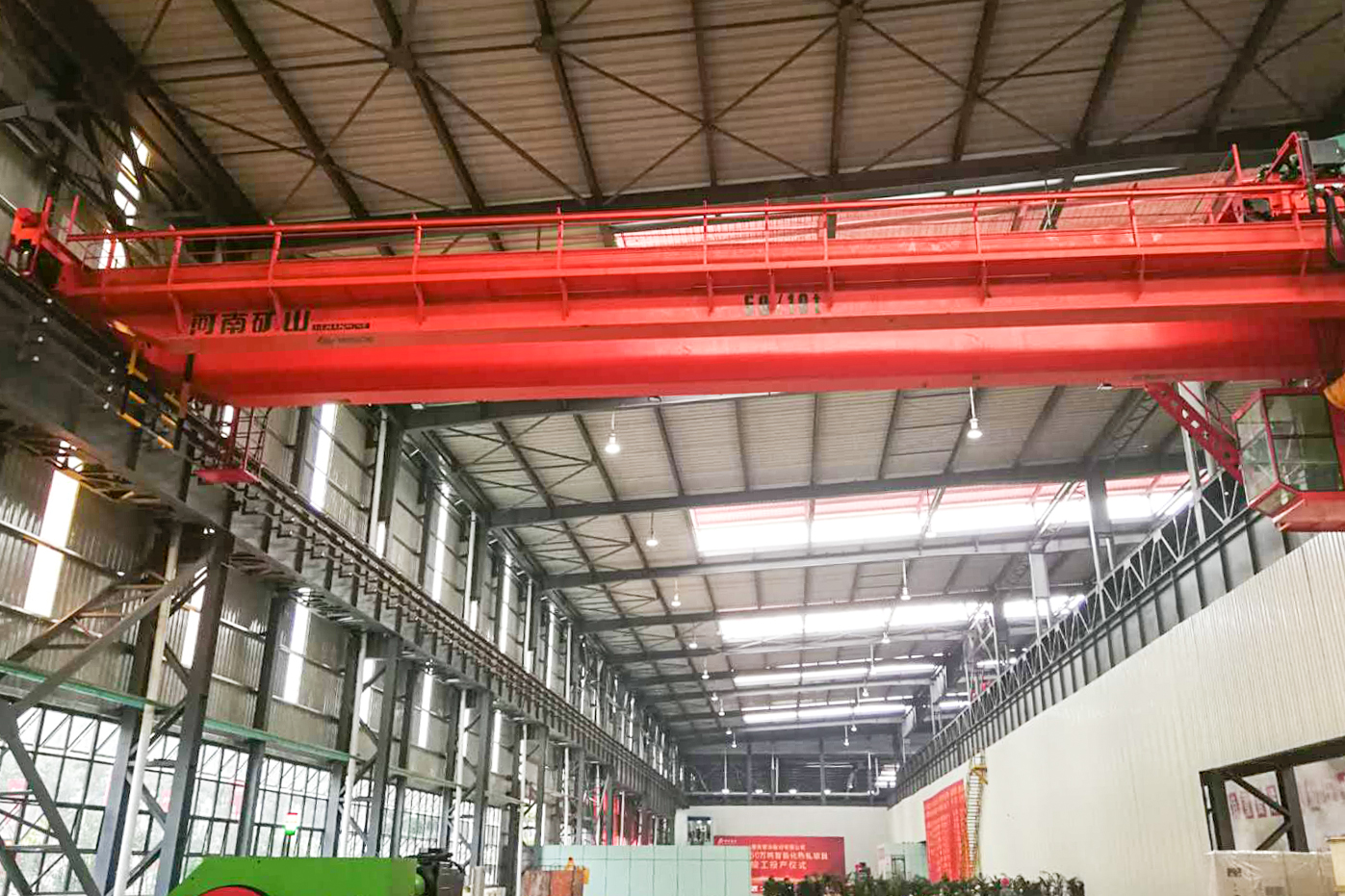
  • Hot-Rolled Steel Plant Specialized Bridge Crane

    Hot-Rolled Steel Plant Specialized Bridge Crane

    Crane application

    Hot-Rolled Steel Plant Specialized Bridge Crane

    Review the hot-rolled steel mill crane applications. Review the handling task, load geometry, working duty and equipment interfaces for your application.

    Hot-Rolled Steel Plant Specialized Bridge Crane — Henan Mine Crane crane application photograph
    Hot-Rolled Steel Plant Specialized Bridge Crane — crane application overview.

    Steelmaking and metal handling

    Define the complete suspended load, ladle or steel-product geometry, process temperature, crane duty and safe travel path. For molten-metal work, include auxiliary lifting, heat shielding, redundant protections and inspection access in the specification.

    Crane configuration and interfaces

    Ask for the crane arrangement, hook and lifting appliance interfaces, runway loads, control and monitoring functions, inspection access and a test plan matched to the plant process.

    Review the Metallurgical overhead cranes and Steel & metallurgy cranes before defining the project-specific arrangement.

    Design the lifting process

    Use the project context above as a starting point. The following checks turn a crane application into a technical scope that suppliers can price and demonstrate for your site.

    Define the lifting task

    Record each load by weight, dimensions, centre of gravity and lifting point, then trace its route through the plant. Distinguish the highest occasional lift from routine handling cycles. Give the span, lift height, hook approach, duty pattern and working environment. These inputs establish what crane arrangement fits the building and process; a headline rated capacity does not show whether the load can be picked up or placed safely.

    Choose interfaces and controls

    Ask for a general arrangement, runway and wheel loads, power supply, control mode, required travel speeds and any lifting attachment. Define what is supplied with the crane and what is supplied by the building or process contractor. If positioning, monitoring or remote operation matters, state the intended sequence and how performance will be measured. Include access for periodic inspection and a safe location for maintenance.

    Compare proposals on the same basis

    Send all bidders the same load schedule and site drawing. Review the structural arrangement, drive and protection functions, installation scope, factory tests, site acceptance, training and spare parts. Confirm the required documents and the boundaries of civil, electrical and commissioning work. This makes a technical comparison meaningful and prevents a low equipment-only price from being mistaken for a complete installed solution.

    Compare the proposed crane scope

    DecisionInformation to request
    Crane and lifting attachmentRated loads, load cases, hook coverage and the complete suspended-load calculation.
    Site interfacesRunway loads, rail or building drawings, electrical supply and installation responsibilities.
    Controls and protectionOperating sequence, required safety functions and a method for testing each function.
    Commercial scopeEquipment, transport, installation, commissioning, documentation, training and spare parts as separate line items.

    From technical offer to site acceptance

    Technical submittals

    A usable bid should show a general arrangement and a clear list of assumptions, not just a model name and capacity. Request the load schedule used in design, lifting-attachment drawings where applicable, span and hook-approach dimensions, wheel loads, electrical supply, control narrative and maintenance access. Check every drawing against the actual building or yard layout. Identify the standards and local approval requirements for the destination market in the enquiry, then confirm the bidder’s proposed design and documentation scope in writing.

    Installation and tests

    Agree when the runway or civil works will be ready, how crane components can reach the installation position and who provides lifting equipment for erection. Define the factory test, on-site installation inspection and site acceptance as separate milestones. The acceptance procedure should list representative loads, the travel route, protection devices, emergency stop and any automation or attachment functions included in the order. Record who supplies test weights, operators, power and access equipment; otherwise a nominal commissioning price may omit essential site work.

    Commercial comparison

    Ask for the same delivery basis and currency across proposals. Separate the crane, special lifting appliances, rails or conductors, transport, installation support, commissioning, training and initial spare parts. Lead time should identify the starting event, such as approved drawings or an effective contract, and any dependency on site readiness. Compare warranty scope and service response by the written contract terms. If a key input is still unknown, request a priced option or a stated assumption instead of allowing different bidders to silently use different specifications. Keep a written exception register so the engineering team can resolve open dimensions, process interfaces and responsibility boundaries before issuing the purchase order.

    Information to include in the enquiry

    • Load weights, dimensions, centre of gravity and lifting attachments.
    • Span, lifting height, runway or yard drawings, travel coverage and clearances.
    • Operating cycle, working environment, electrical supply and control requirements.
    • Supply boundaries, inspection documents, installation support and acceptance criteria.

    Discuss a comparable lifting task

    Send the handling task and available site drawings. Henan Mine Crane can define a proposed crane arrangement and identify the remaining information needed for a technical and commercial review.
  • Crane Hooks and Sling Hooks: Compare Attachment and Load Requirements

    Crane Hooks and Sling Hooks: Compare Attachment and Load Requirements

    Technical guide

    Crane Hooks and Sling Hooks: Compare Attachment and Load Requirements

    Hook selection depends on the approved lifting arrangement, load connection and service conditions. Identify the relevant appliance and sling requirements, and request the component documentation that supports the proposed use.

    Henan Mine CraneTechnical guide · Updated 2026Crane selection, project scope and operating requirements
    Crane Hooks and Sling Hooks: Compare Attachment and Load Requirements
    Henan Mine Crane lifting equipment
    Project planning notes

    Key points for this crane project.

    1. What Are Lifting Hooks?
    2. What Are Sling Hooks?
    3. Key Differences Between Sling Hooks and Lifting
    Read the technical guide

    What Are Lifting Hooks?

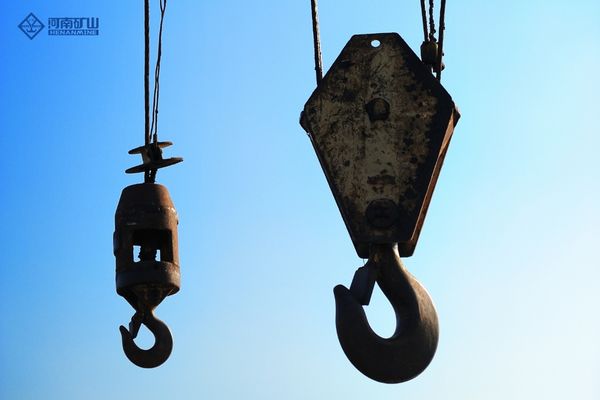
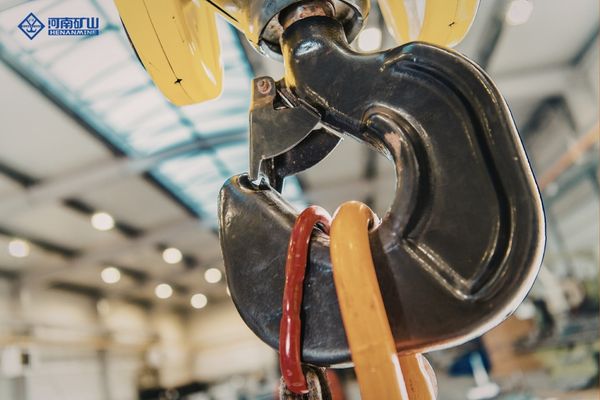
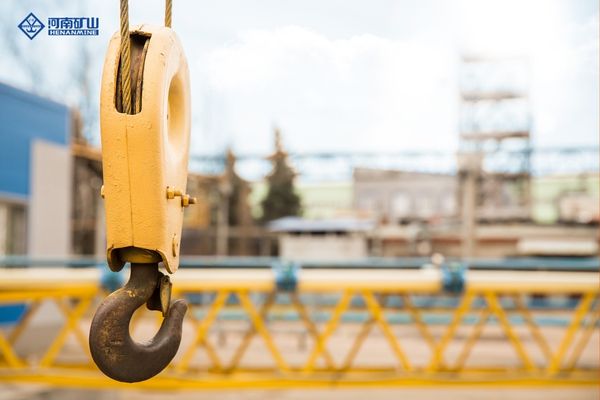
    Lifting hook is a key component of lifting system used to connect heavy loads with lifting equipment, and its core purpose is to securely suspend heavy loads through its own structure, so as to realize the lifting and moving of heavy loads and other operations.

    It is the direct connection carrier between the lifting machine and the heavy load, widely used in all kinds of lifting equipment, such as bridge cranes, tower cranes, electric hoists, etc., is the core foundation to ensure the smooth operation of lifting operations.

    Core Features

    • The design and manufacture of lifting hooks need to meet the two major requirements of high strength and high durability in order to adapt to heavy loads under different working conditions and to ensure the safety and stability of lifting operations.
    • Most of the lifting hooks adopt curved design, which can evenly distribute the load force to avoid local stress concentration, and at the same time, it is easy for operators to quickly complete the hooking and unhooking operations to enhance operational efficiency.
    • Crane hooks are usually made of high-strength alloy steel or high-quality carbon steel, which have excellent load-carrying capacity, abrasion resistance and impact resistance, and can withstand huge static and dynamic loads to meet the needs of the harsh working conditions of industrial lifting.
    • Durability is one of the core features of lifting hooks, through heat treatment, anticorrosion treatment and other processes, the hook can be adapted to the humidity, high temperature, corrosive and other complex industrial environments, effectively extend the service life and reduce the cost of routine maintenance.

    What Are Sling Hooks?

    Sling Hook is a kind of hook component specially used in conjunction with sling, and its core purpose is to firmly connect heavy objects with sling (chain sling, wire rope sling, synthetic fiber sling, etc.) to realize the lifting operation of heavy objects.

    Unlike lifting hooks, sling hooks are not directly connected to the lifting equipment, but are used as a connecting medium between the sling and the heavy load, and are widely used in scenarios requiring flexible lifting and multi-point lifting, such as the lifting of large-sized components and the transfer of irregular heavy loads.

    Crane Hooks and Sling Hooks: Compare Attachment and Load Requirements
    Lifting equipment and application context

    Key Differences Between Sling Hooks and Lifting Hooks

    Connection Object

    Lifting hook: directly connected to the lifting equipment (such as crane hook set), as a lifting machine and heavy loads between the direct connection carrier, without the need to use the sling as an intermediate medium, can be directly realized heavy hanging and lifting.

    Sling Hook: not directly connected to the lifting equipment, specially adapted for use with various types of slings (such as chains, ropes, etc.), as the connection medium between the sling and the heavy load, indirectly realize the lifting and fixing of heavy loads.

    Usage Scenario

    Lifting Hook: The core focus is on “direct loading, fixed lifting”, applicable to simple structure, lifting a single point of conventional lifting operations, without the need for flexible adjustment of the lifting angle or point.

    Sling Hook: focusing on “adapting sling, flexible lifting”, it can adapt to different shapes and weights of heavy loads, especially suitable for multiple lifting points and irregular lifting scenarios, such as lifting of large components and transferring of shaped heavy loads.

    Design Focus

    Lifting Hook: The design focuses on load strength and structural stability to meet the core requirements for direct lifting of heavy loads, without the need for additional adapted sling specifications, and is suitable for all types of direct lifting scenarios.

    Sling Hook: The design focuses more on the compatibility with all kinds of slings, its opening size, connection structure, etc. need to accurately match the specifications of the corresponding slings, so the overall operational flexibility is much better than ordinary lifting hooks.

    Different Types of Lifting Hooks

    Standard Lifting Hooks

    Standard lifting hooks are the most common and widely used type of lifting hooks. They are general-purpose hooks and are suitable for most conventional lifting operations. They are simple in design and structure, usually adopting a one-piece curved structure, without complicated additional devices, and are easy to operate, and can quickly complete the hooking and unhooking operations.

    Standard lifting hooks have a wide range of load capacity, from light loads to medium loads, and are widely used in workshops, warehouses, construction sites and other scenes of conventional lifting operations, such as steel, cement, small equipment lifting.

    Swivel Lifting Hooks

    The core feature of the Swivel Crane Hook is the rotatable center pivot around which the load can be freely rotated to adjust the lifting direction. The advantages of this design are obvious:

    On the one hand, it can flexibly adjust the attitude of the heavy load during the lifting process, avoiding tilting and twisting of the heavy load due to the fixed direction, and reducing the stress impact on the lifting equipment and hook;

    On the other hand, it can effectively eliminate the torsional stress of the sling, prevent the sling from tangling, and extend the service life of the sling and hook.

    Rotary lifting hooks are mainly used in dynamic lifting scenarios, such as irregular heavy lifting, operations that require frequent adjustment of the direction of the load, such as the assembly of large mechanical components, the transfer of shaped components and so on.

    Safety Lifting Hooks

    Safety lifting hooks are a type of hooks designed for high safety scenarios. Their core feature is that they are equipped with safety guards, commonly safety latches, locking pins and so on.

    These safety devices can be automatically locked after the hook is hooked, preventing the heavy load from accidentally slipping off, falling off, and maximizing the protection of operational safety.

    The design of safety lifting hooks focuses on “accident prevention”, and is suitable for lifting operations with extremely high safety requirements, such as heavy equipment lifting, overhead lifting, precision instrument lifting, flammable and explosive materials lifting, etc., which can effectively reduce the probability of safety accidents.

    Clevis Lifting Hooks

    Clevis Lifting Hooks (Clevis Lifting Hooks) have a core structure with a fork base and a pin (fork pin), through which the hooks are connected to lifting equipment, spreaders, etc., which are firmly connected and easy to dismantle.

    Its structural design emphasizes stability and detachability, and it can be adapted to a variety of lifting systems, with a flexible connection method that allows the hook to be quickly replaced or the angle of the connection adjusted according to operational requirements.

    Fork lifting hooks are widely used in heavy lifting operations in the industrial and construction fields, for example, used in conjunction with shackles and rings for the lifting of large steel structures, heavy machinery and equipment, construction materials, and so on.

    Crane Hooks and Sling Hooks: Compare Attachment and Load Requirements
    Crane arrangement for technical discussion

    Different Types of Sling Hooks

    Single and Double Hook Sling Attachments

    Single hook and double hook sling connectors are the most basic classifications of sling hooks, the core difference between the two being the number of hooks and the way they carry the load.

    • Single hook sling connectors have only one hook, simple structure, convenient operation, suitable for simple lifting operations, mainly used for light, medium-sized heavy single-point lifting, such as small goods, parts, small equipment, etc. Double hook sling connectors, on the other hand, have two hooks;
    • Double hook sling connector has two hooks, can realize two-point lifting, the force is more uniform, stronger stability, suitable for large, heavy heavy lifting operations, can effectively disperse the weight of the heavy object, to avoid the single point of excessive force caused by the damage to the hook or tilt of the heavy object, for example, large-scale steel, heavy machinery parts, etc. lifting.

    Grab Hooks

    The core design of Grab Hooks is a specially shaped opening, which is reinforced to securely “grip” the load or sling and prevent it from slipping away. The most important feature is the strong grip and outstanding load carrying capacity, which can be adapted to the needs of heavy load lifting, especially suitable for irregular, easy to slide heavy loads.

    The grappling hook is widely used in heavy industrial lifting operations, such as mines, harbors, steel mills and other scenarios, for lifting steel, ores, large machinery parts and other heavy loads that require additional grip force, which can effectively prevent heavy loads from sliding in the lifting process and ensure operational safety.

    Reeving Sling Hooks

    Reeving Sling Hooks are hooks specially designed for the Reeving Sling System, which can be used with multiple slings to form multiple lifting points to achieve balanced lifting of heavy loads.

    Its structure is designed to meet the needs of wrap-around lifting, and it can flexibly wrap around the slings to form a stable lifting system, which is suitable for the multi-point lifting of large and heavy loads, such as large equipment, bridge components, steel structures in factories, and so on.

    The advantage of the wrap-around sling hook is that it can disperse the load through multiple lifting points, reduce the force on a single hook, improve the stability and safety of lifting, and avoid the damage of heavy objects due to excessive force on a single point.

    Self-locking Sling Hook

    The core feature of self-locking sling hooks is that they are equipped with an automatic locking mechanism. When the hook is hooked to a heavy load, the locking mechanism will automatically close, forming a self-locking mechanism, and the hook can only be unhooked after being manually unlocked.

    This design can minimize the risk of accidental dislodgement of heavy loads, which is extremely safe and especially suitable for sensitive and high-risk lifting scenarios.

    Self-locking sling hooks are widely used in lifting precision instruments, working at height, lifting flammable and explosive materials, lifting personnel (such as rescue at height) and other scenarios, which can provide double safety protection for operators and equipment.

    Factors to Consider When Choosing Lifting and Sling Hooks

    Load Capacity

    Load capacity is the core factor in choosing lifting hooks, it must be ensured that the rated load of the hook is greater than or equal to the actual weight of the loaded object, and overloading is strictly prohibited. Overloading will lead to deformation and breakage of the hook, which in turn will cause serious safety accidents such as falling of heavy objects.

    When selecting the hook, not only the static weight of the load should be taken into consideration, but also the dynamic load (such as the impact force generated during lifting and braking) during the lifting process should be taken into consideration, and a certain safety margin should usually be reserved.

    In addition, the load rating of the hook should be checked regularly to ensure that it is used within its rated range and to avoid potential safety hazards due to a decline in load capacity caused by long-term use.

    Material and Durability

    The material of the hook directly determines its load capacity, durability and applicable environment. Common hook materials include carbon steel, alloy steel, stainless steel, etc. Carbon steel hooks are less costly and more durable than stainless steel hooks.

    1. Carbon steel hooks have lower costs and are suitable for lightweight, conventional lifting operations;
    2. Alloy steel hooks have high strength, good impact and abrasion resistance, and are suitable for heavy and complex lifting operations, and are the most widely used material in the industrial field;
    3. Stainless steel hooks have good corrosion resistance, suitable for wet, corrosive environment (such as chemical, marine, food processing and other fields), can effectively prevent rust and corrosion, prolong service life.

    When choosing the material, it is necessary to combine the humidity, corrosiveness, temperature and other factors of the operating environment to choose the appropriate material to ensure the durability and safety of the hook.

    Safety Features

    Safety features are important considerations in hook selection, especially in high-risk lifting scenarios. Hook safety devices (e.g. safety tabs, locking pins, self-locking mechanisms, etc.) can effectively prevent heavy loads from accidentally slipping off and reduce the probability of safety accidents.

    When selecting hooks, priority should be given to products equipped with perfect safety devices, and the flexibility and reliability of the safety devices should be checked to ensure that they can work properly.

    Type of Rigging System

    The selection of hooks should be adapted to the type of lifting system, especially for sling hooks, and the corresponding hooks should be selected according to the type of sling (chain sling, wire rope sling, synthetic fiber sling, etc.). Different types of slings have different connection methods and sizes, and the corresponding hook openings and connection structures need to be matched, otherwise it will lead to a weak connection and cause safety hazards.

    For example, chain slings need to choose a grappling hook or a special hook that matches the specifications of the chain, while wire rope slings need to choose a hook that prevents the wire rope from slipping off.

    In addition, it is also necessary to choose the corresponding hook type in conjunction with the lifting method of the lifting system (single-point lifting, multi-point lifting, wrap-around lifting, etc.) to ensure the stability and safety of the lifting system.

    Best Practices for Using Lifting and Sling Hooks

    Inspection and Maintenance

    Regular inspection is a prerequisite for safe hook use, and is centered on the timely detection of potential safety hazards. Before each use, the hook should be thoroughly inspected:

    1. carefully inspect the surface of the hook to make sure whether there are various defects such as wear, cracks, deformation, rust and corrosion;
    2. check the flexibility and reliability of the safety devices (e.g. safety tabs, locking pins, etc.) to ensure that they can play their protective role normally;
    3. confirm the connection parts of the hook one by one to ensure that the connection is firm without looseness or hidden danger.

    If any of the above defects is found during inspection, stop using the hook immediately, replace it in time or have it professionally repaired and processed, and strictly prohibit the use of unqualified hooks to carry out hoisting operations, so as to avoid safety risks from the source.

    Check whether the safety devices (e.g. safety latch, locking pin) are flexible and reliable;

    Confirm whether the connecting parts of the hook are firm.

    If any defects are found, stop using the hook immediately, replace or repair it in time, and strictly prohibit the use of substandard hooks.

    Routine maintenance can effectively extend the service life of the hook and reduce the risk of use. Regular maintenance should be carried out on the hook, including cleaning, lubrication and anticorrosion treatment, etc., so as to avoid degradation of the hook’s performance due to corrosion and abrasion; at the same time, inspection and maintenance records should be made, and detailed information on the hook’s usage status should be retained to facilitate subsequent tracing and management.

    Proper Hooking Techniques

    Correct hooking method can effectively avoid problems such as uneven force on the hook and slipping off of heavy loads, thus guaranteeing the safety of lifting operation.

    When hooking, it should be ensured that the hook is firmly connected with the load and the sling, and the stress point of the hook should be located at the center of the hook to avoid partial loading and prevent the hook from deformation and breakage due to uneven stress;

    At the same time, it is necessary to ensure that the center of gravity of the heavy load coincides with the centerline of the hook, to avoid tilting and twisting of the heavy load, and to reduce the stress impact on the hook and lifting equipment. In addition, the hook needs to be checked again after the connection parts, confirm that there is no loosening, slipping off before starting the lifting equipment for lifting operations.

    In the process of lifting, it is necessary to operate smoothly, avoiding sharp starting, stopping and turning to prevent inertial impact and damage to the hook.

    Discuss the crane arrangement for your project.

    Hook selection depends on the approved lifting arrangement, load connection and service conditions. Identify the relevant appliance and sling requirements, and request the component documentation that supports the proposed use. Share the load, available drawings, working cycle and site conditions with Henan Mine Crane so the required configuration and supply boundary can be discussed.

    Related crane configurations

    Explore crane product families and technical parameters ↗

    Updated 2026 · Henan Mine Crane

  • Henan Mine Crane Intelligent Coke Drum Crane

    Henan Mine Crane Intelligent Coke Drum Crane

    Crane application

    Henan Mine Crane Intelligent Coke Drum Crane

    Review the intelligent coke handling crane project. Review material properties, handling cycles, grab or vessel interfaces and required control functions.

    Henan Mine Crane Intelligent Coke Drum Crane — Henan Mine Crane crane application photograph
    Henan Mine Crane Intelligent Coke Drum Crane — crane application overview.

    Steelmaking and metal handling

    Define the complete suspended load, ladle or steel-product geometry, process temperature, crane duty and safe travel path. For molten-metal work, include auxiliary lifting, heat shielding, redundant protections and inspection access in the specification.

    Crane configuration and interfaces

    Ask for the crane arrangement, hook and lifting appliance interfaces, runway loads, control and monitoring functions, inspection access and a test plan matched to the plant process.

    Review the Metallurgical overhead cranes and Steel & metallurgy cranes before defining the project-specific arrangement.

    Design the lifting process

    Use the project context above as a starting point. The following checks turn a crane application into a technical scope that suppliers can price and demonstrate for your site.

    Material flow and duty

    Identify the material handled, bulk density, particle size, moisture, temperature and the location of pickup and discharge points. A grab crane must be evaluated against bucket fill factor, actual lifted mass, cycle time and the position of hoppers or stockpiles. For coke-drum or coke-jar handling, document the vessel or container geometry, connection points and any hot surfaces. State whether the crane operates continuously, in batches or as an emergency backup, since each produces a different duty case.

    Controls and operating environment

    Dust, heat and corrosive vapours affect the selection of enclosures, cables, braking and maintenance access. Specify the exposure at each component rather than using a single plant-wide temperature. For remote or unmanned operation, map the complete sequence: material detection, pickup, travel, discharge, obstruction handling and recovery after an interruption. Camera views, sensors, anti-sway and monitoring should each have an agreed purpose and acceptance test; automation must also permit safe manual intervention.

    Procurement and commissioning

    Request the proposed grab or attachment scope, bucket volume basis, duty assumptions, runway loads and a material flow diagram. Compare cycle-time claims under the same travel distances and material conditions. The acceptance plan should use representative material and include fault recovery, travel and hoist protections, emergency stop, communication loss and maintenance isolation. Clarify who supplies the hopper interface, dust-control equipment, remote console, plant signals and spare wear parts. This makes competing crane quotations comparable.

    Compare the proposed crane scope

    DecisionInformation to request
    Crane and lifting attachmentRated loads, load cases, hook coverage and the complete suspended-load calculation.
    Site interfacesRunway loads, rail or building drawings, electrical supply and installation responsibilities.
    Controls and protectionOperating sequence, required safety functions and a method for testing each function.
    Commercial scopeEquipment, transport, installation, commissioning, documentation, training and spare parts as separate line items.

    From technical offer to site acceptance

    Technical submittals

    A usable bid should show a general arrangement and a clear list of assumptions, not just a model name and capacity. Request the load schedule used in design, lifting-attachment drawings where applicable, span and hook-approach dimensions, wheel loads, electrical supply, control narrative and maintenance access. Check every drawing against the actual building or yard layout. Identify the standards and local approval requirements for the destination market in the enquiry, then confirm the bidder’s proposed design and documentation scope in writing.

    Installation and tests

    Agree when the runway or civil works will be ready, how crane components can reach the installation position and who provides lifting equipment for erection. Define the factory test, on-site installation inspection and site acceptance as separate milestones. The acceptance procedure should list representative loads, the travel route, protection devices, emergency stop and any automation or attachment functions included in the order. Record who supplies test weights, operators, power and access equipment; otherwise a nominal commissioning price may omit essential site work.

    Commercial comparison

    Ask for the same delivery basis and currency across proposals. Separate the crane, special lifting appliances, rails or conductors, transport, installation support, commissioning, training and initial spare parts. Lead time should identify the starting event, such as approved drawings or an effective contract, and any dependency on site readiness. Compare warranty scope and service response by the written contract terms. If a key input is still unknown, request a priced option or a stated assumption instead of allowing different bidders to silently use different specifications. Keep a written exception register so the engineering team can resolve open dimensions, process interfaces and responsibility boundaries before issuing the purchase order.

    Information to include in the enquiry

    • Load weights, dimensions, centre of gravity and lifting attachments.
    • Span, lifting height, runway or yard drawings, travel coverage and clearances.
    • Operating cycle, working environment, electrical supply and control requirements.
    • Supply boundaries, inspection documents, installation support and acceptance criteria.

    Discuss a comparable lifting task

    Send the handling task and available site drawings. Henan Mine Crane can define a proposed crane arrangement and identify the remaining information needed for a technical and commercial review.
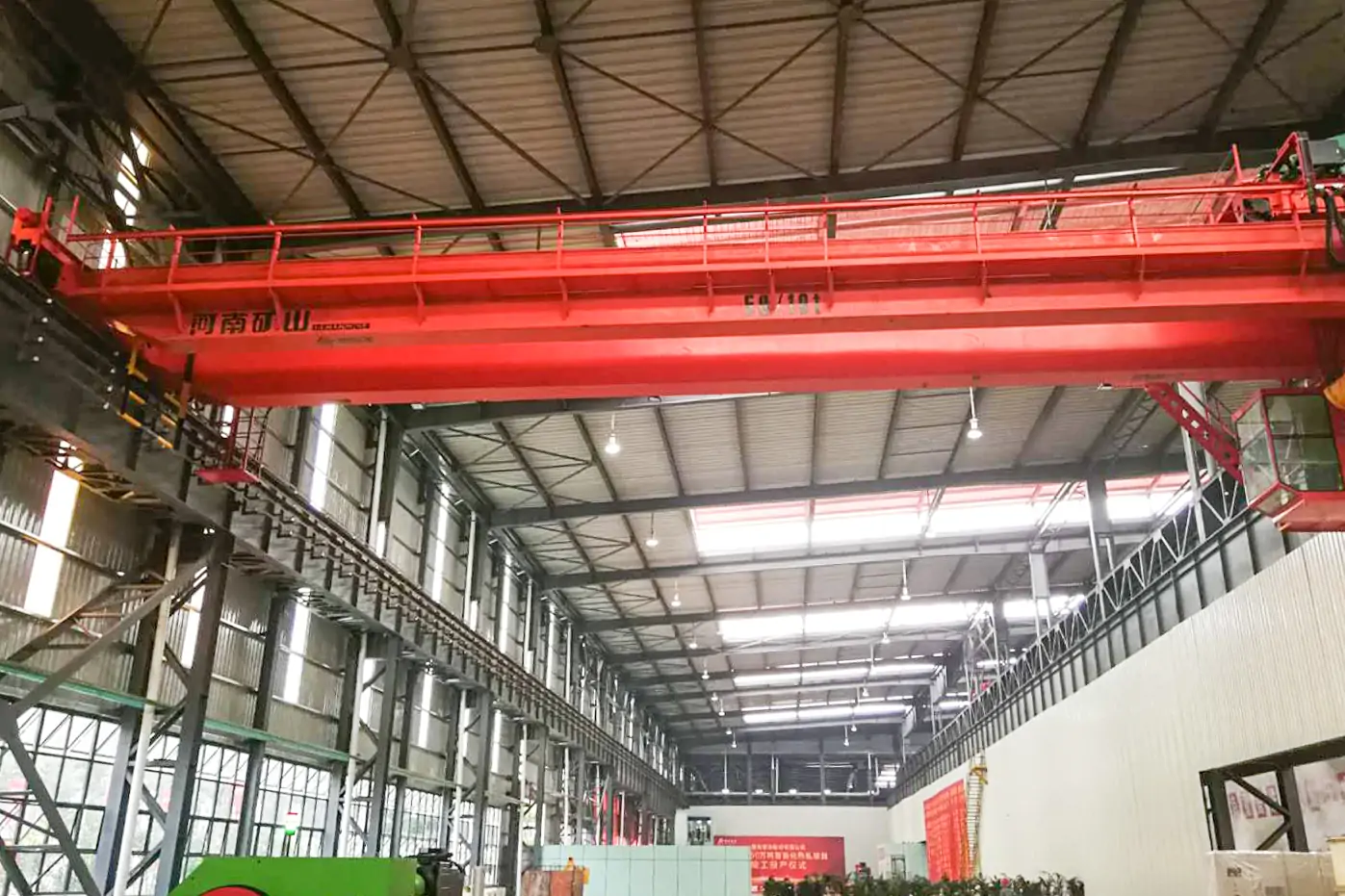
  • Henan Mine Crane manufactured special cranes for smart factories

    Henan Mine Crane manufactured special cranes for smart factories

    Crane application

    Henan Mine Crane manufactured special cranes for smart factories

    Review the crane applications for smart factories. Review storage geometry, material flow, lifting loads and required automation interfaces.

    Henan Mine Crane manufactured special cranes for smart factories — Henan Mine Crane crane application photograph
    Henan Mine Crane manufactured special cranes for smart factories — crane application overview.

    Workshop and manufacturing lifting

    Define the largest and most frequent loads, lifting points, hook coverage, building clearances, operating shifts and concurrent work zones. Include maintenance and production flow in the layout.

    Crane configuration and interfaces

    Ask for a general arrangement, duty selection, runway and power interfaces, control mode, maintenance access and agreed factory and site acceptance scope.

    Review the Overhead crane range and Industrial manufacturing cranes before defining the project-specific arrangement.

    Design the lifting process

    Use the project context above as a starting point. The following checks turn a crane application into a technical scope that suppliers can price and demonstrate for your site.

    Define the lifting task

    Record each load by weight, dimensions, centre of gravity and lifting point, then trace its route through the plant. Distinguish the highest occasional lift from routine handling cycles. Give the span, lift height, hook approach, duty pattern and working environment. These inputs establish what crane arrangement fits the building and process; a headline rated capacity does not show whether the load can be picked up or placed safely.

    Choose interfaces and controls

    Ask for a general arrangement, runway and wheel loads, power supply, control mode, required travel speeds and any lifting attachment. Define what is supplied with the crane and what is supplied by the building or process contractor. If positioning, monitoring or remote operation matters, state the intended sequence and how performance will be measured. Include access for periodic inspection and a safe location for maintenance.

    Compare proposals on the same basis

    Send all bidders the same load schedule and site drawing. Review the structural arrangement, drive and protection functions, installation scope, factory tests, site acceptance, training and spare parts. Confirm the required documents and the boundaries of civil, electrical and commissioning work. This makes a technical comparison meaningful and prevents a low equipment-only price from being mistaken for a complete installed solution.

    Compare the proposed crane scope

    DecisionInformation to request
    Crane and lifting attachmentRated loads, load cases, hook coverage and the complete suspended-load calculation.
    Site interfacesRunway loads, rail or building drawings, electrical supply and installation responsibilities.
    Controls and protectionOperating sequence, required safety functions and a method for testing each function.
    Commercial scopeEquipment, transport, installation, commissioning, documentation, training and spare parts as separate line items.

    From technical offer to site acceptance

    Technical submittals

    A usable bid should show a general arrangement and a clear list of assumptions, not just a model name and capacity. Request the load schedule used in design, lifting-attachment drawings where applicable, span and hook-approach dimensions, wheel loads, electrical supply, control narrative and maintenance access. Check every drawing against the actual building or yard layout. Identify the standards and local approval requirements for the destination market in the enquiry, then confirm the bidder’s proposed design and documentation scope in writing.

    Installation and tests

    Agree when the runway or civil works will be ready, how crane components can reach the installation position and who provides lifting equipment for erection. Define the factory test, on-site installation inspection and site acceptance as separate milestones. The acceptance procedure should list representative loads, the travel route, protection devices, emergency stop and any automation or attachment functions included in the order. Record who supplies test weights, operators, power and access equipment; otherwise a nominal commissioning price may omit essential site work.

    Commercial comparison

    Ask for the same delivery basis and currency across proposals. Separate the crane, special lifting appliances, rails or conductors, transport, installation support, commissioning, training and initial spare parts. Lead time should identify the starting event, such as approved drawings or an effective contract, and any dependency on site readiness. Compare warranty scope and service response by the written contract terms. If a key input is still unknown, request a priced option or a stated assumption instead of allowing different bidders to silently use different specifications. Keep a written exception register so the engineering team can resolve open dimensions, process interfaces and responsibility boundaries before issuing the purchase order.

    Information to include in the enquiry

    • Load weights, dimensions, centre of gravity and lifting attachments.
    • Span, lifting height, runway or yard drawings, travel coverage and clearances.
    • Operating cycle, working environment, electrical supply and control requirements.
    • Supply boundaries, inspection documents, installation support and acceptance criteria.

    Discuss a comparable lifting task

    Send the handling task and available site drawings. Henan Mine Crane can define a proposed crane arrangement and identify the remaining information needed for a technical and commercial review.