Engineering · Manufacturing · Project support
info@hnksglobal.comWhatsApp +86 18836207779 ↗

Blog

  • More Than 150 Cranes Supplied for Industrial Production Lines

    More Than 150 Cranes Supplied for Industrial Production Lines

    Project Deliveries

    More Than 150 Cranes Supplied for Industrial Production Lines

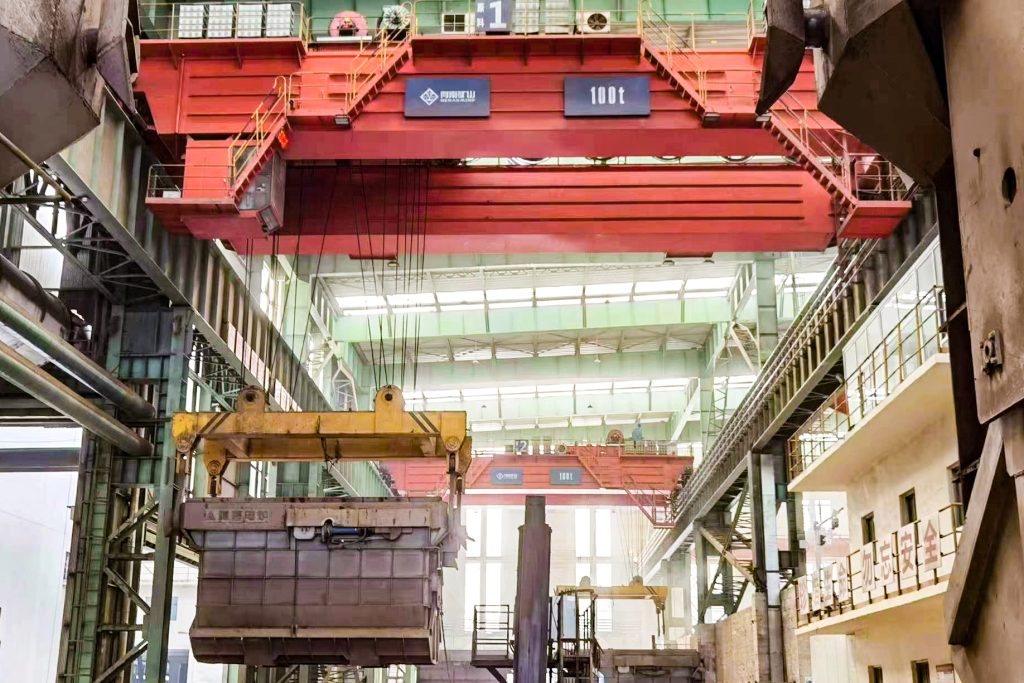
    Henan Mine Crane reported supplying more than 150 crane units or equipment sets across a plant’s production lines, including two 100 t smart cranes. The January 2024 report also said further units for phase two were in production at that time.

    Orange overhead crane above stacked metal products on an industrial production line
    Crane bridge and material handling area in the production facility.

    Multiple crane duties across production lines

    A plant-wide package should not be selected from one headline capacity. The two stated 100 t smart cranes are part of a larger, mixed fleet. The project photos show an orange overhead crane handling industrial material inside a large production hall.

    For each line, list handled materials, complete suspended loads, duty cycles, travel routes, temperature and dust exposure, maintenance lifts and building constraints. Separate process cranes from maintenance and storage handling in the specification.

    Position tracking and automatic operation

    The published smart-crane functions include workstation identification and crane-position tracking. Variable-frequency speed control, fault self-diagnosis, automatic operation, redundancy and monitoring were also described for the project.

    For procurement, define positioning tolerance, operating modes, collision zones, interlocks, data interfaces and manual fallback. Ask for a functional test matrix for the exact functions included in each crane type.

    Compare the full package on a common basis

    Request a line-by-line capacity and duty schedule, general arrangements, controls architecture, inspection plan and staged delivery list. Agree who supplies runway steelwork, power, site installation, commissioning and operator training. For a phased contract, record which units have been delivered, installed, tested and accepted, and what remains open.

    Plan a Production-Line Crane Fleet

    Send the production-line layout, load and duty schedule, environmental conditions and required automation interfaces for a coordinated proposal.

  • 50-Ton Billet Handling Cranes: Tongs, Load Geometry and Working Duty

    50-Ton Billet Handling Cranes: Tongs, Load Geometry and Working Duty

    Technical guide

    50-Ton Billet Handling Cranes: Tongs, Load Geometry and Working Duty

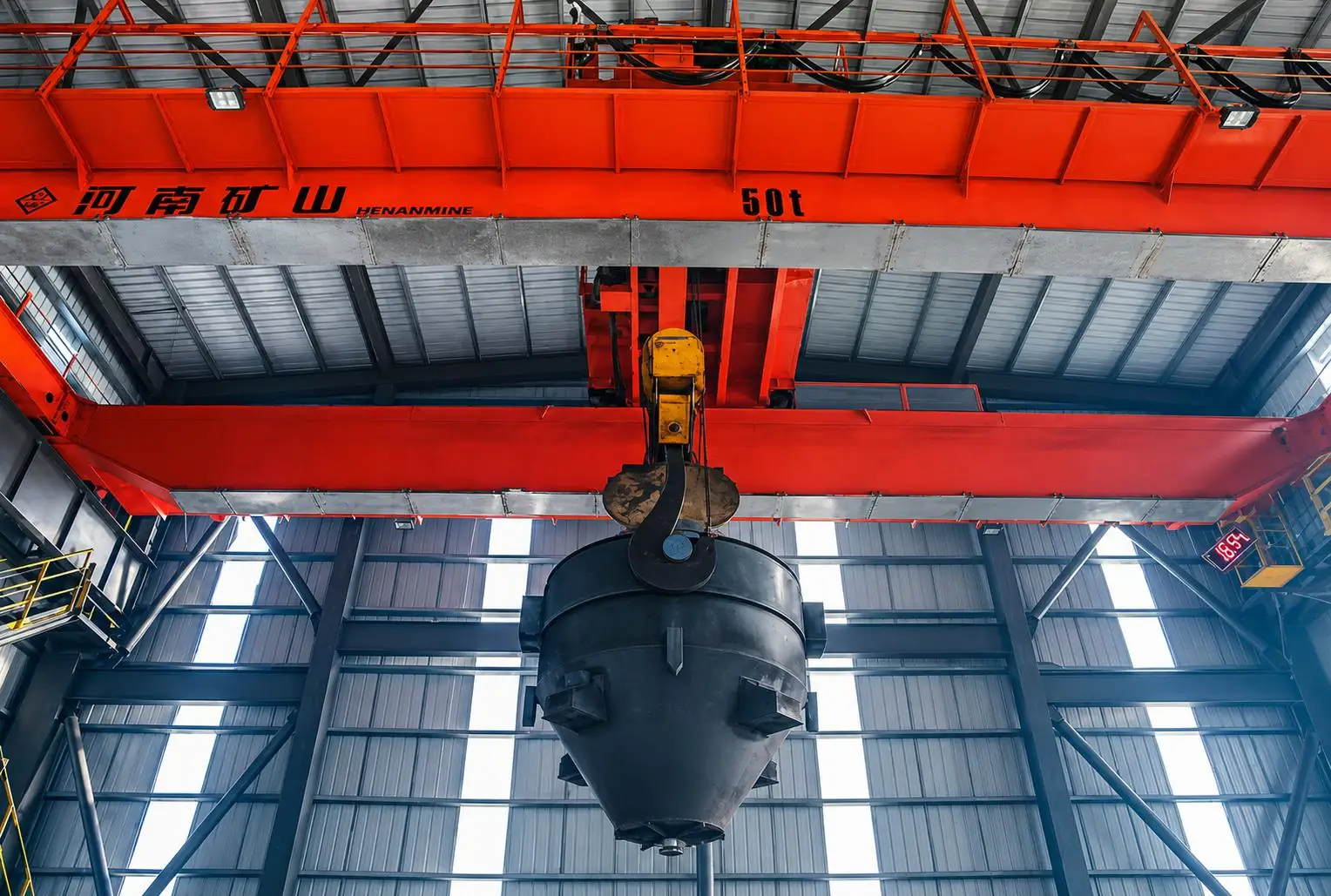
    Billet handling requires the lifting appliance and production cycle to be specified together. Provide the stock geometry, material condition and handling sequence before comparing crane and tong arrangements for the stated load requirement.

    Henan Mine CraneTechnical guide · Updated 2026Crane selection, project scope and operating requirements
    50t billet crane
    50t billet crane
    Project planning notes

    Key points for this crane project.

    1. 50t Steel Mill Billet Crane for Continuous Billet
    2. How the 50t Billet Crane Handles Continuous 24/7
    3. Heavy Motorized Tongs for 50t Billet Handling
    Read the technical guide

    50t Steel Mill Billet Crane for Continuous Billet Handling

    Billet handling in steel mills

    Billet handling in steel mills is the basic core process of steel production, covering the whole process of billet release, displacement, stacking, transfer to the heating furnace, furnace area alignment, and finished billet out of the warehouse after continuous casting. Unlike ordinary material hoisting, the billet has the characteristics of high temperature, high density, large weight, and regular long strip shape, and the frequency of transfer operations is extremely high, and the process connection is zero fault tolerance, which has strict requirements for the crane's clamping stability, alignment accuracy, heavy-duty safety and adaptability to working conditions.

    Traditional general-purpose bridge cranes do not have a special clamping device, and more wire ropes are used for binding and hoisting. Not only is the operation efficiency low and the labor cost high, but there are also safety risks such as billet slipping, offset, and bumping deformation, which cannot match the large-scale, automated, and continuous production rhythm of modern steel mills. The high-performance 50t steel mill billet crane is specially optimized for metallurgical billet transfer conditions. The 50t steel mill billet crane with electric clamps is equipped with professional clamps adapted to the billet form. It is mechanized and automatically clamped and transported throughout the process without manual assistance. It completely solves the pain points of traditional hoisting methods and adapts to the standardized handling of various types of billet and rectangular billet.

    24/7 continuous operation

    The iron and steel metallurgical industry belongs to an uninterrupted and continuous production mode. Once the production line is started, it will operate all year round and day and night. Ordinary civil and general industrial cranes are only suitable for intermittent operations. Long-term high-frequency start-stop and continuous heavy-duty operation will quickly lead to motor overheating, brake failure, structural deformation, and component wear and scrap.

    The 50t steel mill billet crane is designed for heavy-duty working conditions for metallurgy. The structure, power system, braking system, and cooling system of the whole machine are all optimized for long-term uninterrupted operation, avoiding the fatigue loss problem of conventional equipment. The heavy-duty 50t steel mill billet crane can realize uninterrupted start-stop and round-trip transportation day and night. The high-temperature resistant 50t steel mill billet crane does not require frequent downtime to cool down and wait for maintenance. It is perfectly adapted to the three-shift continuous production mode of steel mills, maximizing the production capacity of the production line, and ensuring the seamless connection between the billet transfer process and the smelting and rolling processes.

    50t lifting capacity

    It is accurately adapted to the single/group hoisting needs of billet of mainstream specifications, taking into account the heavy-duty capacity and operational flexibility.

    Compared with 32-ton and 40-ton small-tonnage billet cranes, the 50t lifting capacity can be adapted to large-scale billet handling without the need for batch hoisting, greatly improving the transfer efficiency. Compared with 63-ton and 80-ton high-capacity equipment, the 50t model is more cost-effective, the weight of the equipment is more reasonable, the energy consumption is lower, and the operation and maintenance costs are less. It is perfectly adapted to the dual scenarios of large-scale production of small and medium-sized steel mills and auxiliary transportation of large steel mills. It is currently the most widely used and adaptable heavy-duty 50t steel mill billet crane tonnage specifications in the steel industry. Henan Mine Crane manufactured high-frequency operation 50t steel mill billet crane is perfectly adapted to various steel mill production scenarios.

    How the 50t Billet Crane Handles Continuous 24/7 Operation

    Heavy-duty bridge and trolley

    The core foundation of continuous 24-hour uninterrupted operation is the high-strength structure of the whole machine. The 50t steel mill billet crane adopts a heavy-duty double-beam bridge-type main structure. The main girder, end beam, and trolley frame are all welded and formed with thickened steel plates, and multiple transverse and longitudinal stiffeners are added inside to greatly improve structural rigidity, fatigue resistance, and impact resistance. The whole machine is designed in strict accordance with the standards of metallurgical heavy-duty working conditions, and the deflection under the rated load is controlled within a reasonable range. The industrial-grade 50t steel mill billet crane is not prone to structural deformation and weld cracking during long-term high-frequency heavy-duty operation.

    The lifting trolley adopts an integrated heavy-duty forged frame with compact structure and strong load-bearing capacity. The wheels, axles and bearings are all made of high-strength alloy materials, which are wear-resistant and compression-resistant, and can be adapted to high-frequency round-trip travel operations. Compared with the light structure of ordinary cranes, the heavy-duty bridge and trolley system can withstand long-term continuous start and stop, heavy-duty impact, and high-temperature environmental aging, and the service life of the whole machine is greatly extended, providing a solid structural support for 24/7 uninterrupted operation.

    High-frequency lifting and travel

    The billet transfer in steel mills has the characteristics of high-frequency, short-cycle, and continuous round-trip operations. The number of daily start-stop and round-trip operations can reach hundreds of times, and the operating stability and response speed of the equipment are extremely demanding. The 50t steel mill billet crane is equipped with a frequency conversion speed regulation operation system, which realizes stepless speed regulation for lifting, cart travel, and trolley travel, which can achieve smooth start, uniform speed operation, and precise braking, and eliminate structural loss and billet shaking caused by start-stop impact.

    The equipment is adapted to the high-frequency operation rhythm of steel mills, and can realize continuous hoisting and transportation at short intervals without downtime and buffering, which perfectly matches the production needs of continuous billet output in the continuous casting process and continuous feeding in the rolling process. The frequency conversion speed control system not only improves operating efficiency, but also effectively reduces mechanical wear and electrical shock, allowing the frequency conversion speed control 50t steel mill billet crane to maintain stable working conditions under high-frequency continuous operation, greatly reducing the probability of failure and shutdown of 50t steel mill billet crane.

    Motors and braking systems

    The power and braking system are the core components that ensure 24/7 continuous operation, and they are also the key configuration that distinguishes them from ordinary cranes. The 50t steel mill billet crane is equipped with a special high-temperature-resistant heavy-duty motor for metallurgy. It has the advantages of strong overload capacity, good heat dissipation performance, high temperature resistance and anti-aging. It can continue to operate at full load for a long time without motor overheating, power attenuation, burning and other problems due to continuous operation. It is perfectly adapted to the high-temperature working conditions of steel mills and the needs of uninterrupted operation.

    The braking system adopts dual-circuit hydraulic push rod brakes, equipped with dual braking protection, sufficient braking torque, rapid braking response, and stable locking. The equipment can realize precise braking every time it starts and stops, aligns, and stops, eliminating the risk of slipping hooks and cars. At the same time, the brake components have excellent wear resistance, can be adapted to high-frequency braking operations, long-term continuous operation without brake failure, rapid wear of brake pads and other problems, and cooperate with motor overload protection and power-off braking functions to ensure the safety and stability of metallurgical special 50t steel mill billet crane all-weather operations, allowing heavy-duty operations 50t steel mill billet crane to operate with zero hidden dangers.

    High-temperature operation

    After the billet is baked, the temperature can reach thousands of degrees Celsius. The ambient temperature in the operating area is high and the thermal radiation is strong. The electrical components, wire ropes, and sealing structures of ordinary lifting equipment can easily fail due to high temperature aging and cannot operate stably for a long time.50t steel mill billet crane has made a full range of special optimizations for high-temperature working conditions. The electrical system of the whole machine is equipped with high-temperature protection kits. The cables, contactors, and controllers are all made of metallurgical high-temperature special accessories, which can withstand long-term thermal radiation and high-temperature baking. The key transmission components, bearings, and pulleys of the equipment are all made of high-temperature-resistant lubricating greases to avoid wear and tear caused by lubrication failure in high-temperature environments.

    Heavy Motorized Tongs for 50t Billet Handling

    Adjustable tong opening

    The specifications of the billet produced by the steel mill are not single. There are differences in the width and thickness of the billet in different batches and different production lines. The adaptability of the fixed opening clamp is poor, and it is prone to problems such as poor clamping and inability to adapt to working conditions. The supporting heavy-duty electric clamps support stepless opening adjustment, and the opening and closing amplitude can be accurately adjusted according to the size of billet and rectangular billet of different specifications, and they are suitable for clamping operations of billet of various sizes. The clamp has high adjustment accuracy and stable locking. After adjustment, it can accurately fit the surface of the billet, and there will be no empty clamping, partial clamping, too loose clamping or too tight clamping.

    Stable billet gripping

    The billet has a great weight, the surface is hard and smooth, and the surface is prone to oxidized skin at high temperature. Ordinary clamping devices are prone to slippage, offset, and slip risks, which seriously threaten production safety. The 50t heavy-duty electric clamp adopts a high-strength alloy clamp tooth structure. The jaws are hardened with non-slip, wear-resistant, and high temperature resistance. The bite friction is large, and the billet can be firmly locked to prevent slippage, offset, and shedding during hoisting. At the same time, the clamp adopts a symmetrical force design, and the billet is subjected to uniform force during the clamping process, and there will be no unilateral force offset, deformation and collision of the billet, which cannot only ensure the safety of hoisting, but also protect the quality of the finished billet.

    High-frequency billet handling

    Heavy-duty electric clamps are designed for high-frequency continuous operation. The mechanical structure is compact, the transmission components are wear-resistant and durable, and they can be adapted to hundreds of daily opening and closing, clamping, and unloading cycles without fatigue failure. The hydraulic system of the clamp is equipped with a heat dissipation regulator device, so that long-term high-frequency operation will not have problems such as pressure attenuation, excessive oil temperature, and motion caton, and it will always maintain a stable clamping force and response speed. Compared with traditional hoisting methods, the operation process of electric clamps is simplified, the operation efficiency is greatly improved, and the single billet transfer cycle is significantly shortened, which perfectly matches the high-density and uninterrupted production rhythm of steel mills.

    Key Specifications of a 50t Billet Crane

    1. Optional 10-ton auxiliary hook to meet the needs of light auxiliary hoisting operations. The rated load of the equipment strictly follows the national standard of metallurgical lifting equipment. The performance is stable under heavy-duty conditions, with no hidden dangers of power attenuation and structural overload. It is fully adapted to the working conditions of 50t steel mill billet crane for normal heavy-duty continuous operation in steel mills. The standard load 50t steel mill billet crane has stable performance and no attenuation.
    2. Span and lifting height: The standard span of the equipment covers 10.5m-31.5m, and the mainstream commonly used spans are 24m and 30m, which can be customized and adjusted according to the column spacing and production line layout of the steel mill workshop. The standard lifting height is 6m-24m, and the conventional working conditions are adapted to 10m-16m. The height can be customized according to the furnace mouth height, stacking height, and production line height difference. It can be fully adapted to the layout and operating height requirements of different steel mill workshops, and the customized span of 50t steel mill billet crane is suitable for various plant scenarios.
    3. It can be flexibly adjusted according to the needs of the operation, taking into account the alignment accuracy and transfer efficiency, and adapting to the continuous high-frequency transfer conditions of the 50t steel mill billet crane. The 50t steel mill billet crane with accurate speed regulation takes into account efficiency and accuracy.
    4. Duty class: The working level of the equipment is A7 heavy-duty metallurgical working condition level, which belongs to the special ultra-high-frequency heavy-duty operating level for steel mills. It is designed for 24/7 uninterrupted continuous operation, high-frequency start-stop, high-temperature and heavy-duty harsh working conditions, far exceeding the ordinary A3-A5 general crane working condition level. It can operate at full load for a long time, at high frequencies, and around the clock. It has strong fatigue resistance and loss resistance. It perfectly matches the harsh working conditions of continuous production in the steel industry. The A7-level 50t steel mill billet crane is specially built for high-intensity metallurgical operations.
    5. The clamping opening range can be customized and adjusted according to customer billet specifications, and it is suitable for mainstream 80mm-400mm billet and rectangular billet specifications. The maximum clamping force of the clamp is stable and controllable, and it is suitable for the non-slip clamping needs of high-temperature steel billets, so that the clamp-type 50t steel mill billet crane has a wide adjustable range, high clamping accuracy and strong versatility, and is suitable for the transfer needs of most steel mills.

    Safety and Reliability in 24/7 Steel Mill Operation

    Overload protection

    In order to ensure the safety of continuous operation around the clock, the equipment is equipped with an intelligent overload protection system to dynamically monitor the lifting load in real time. In the event of overload, partial load, sudden heavy load impact, etc., the system will automatically trigger power failure, shutdown, limit protection, and prohibit the equipment from continuing to operate. Prevent structural deformation, billet fall, equipment damage and other safety accidents caused by overload from the root cause. The system is on duty in real time 24 hours a day, with no blind spots and no monitoring delays. It is perfectly adapted to the long-term uninterrupted operation conditions of 50t steel mill billet crane, and intelligent protection of 50t steel mill billet crane.

    Limit and braking systems

    The equipment is equipped with multiple limit protection devices, including lifting height limit, descending limit, cart travel limit, and trolley travel limit, to achieve full-stroke operation limit protection and prevent failures such as rushing to the top, falling hooks, and offside collisions. At the same time, it is equipped with a dual braking system, the working brake is responsible for smooth start, stop and deceleration, the safety brake is responsible for emergency power failure and locking, and the dual brakes are redundant to each other. Even under high-frequency continuous operation and high-temperature aging conditions, precise limits and stable braking can still be maintained, effectively eliminating operational safety hazards, and the 50t steel mill billet crane with dual brake protection guarantees the safe production of steel mills.

    Positioning control

    The complete set of equipment is equipped with a high-precision frequency conversion positioning control system, which can achieve precise alignment at the millimeter level, and is perfectly adapted to the operation needs of furnace mouth feeding, precise stacking of steel billets, and precise docking of processes. The system is responsive and the positioning error is small. There will be no positioning offset or cumulative error in long-term high-frequency reciprocating operation. There is no need for frequent calibration and debugging, which greatly reduces manual intervention and downtime and debugging time, and accurately guarantees the accuracy and stability of 50t steel mill billet crane's 24-hour continuous operation, and high-precision positioning of 50t steel mill billet crane. Zero error in process docking.

    Heat and dust protection

    In view of the harsh environment of high temperature, high dust, and high thermal radiation in steel mills, the equipment has been upgraded with comprehensive protection. The electrical cabinet, motor, and controller of the whole machine are all designed to be sealed, dustproof, and high temperature resistant, with a protection level of IP54, which can effectively block dust accumulation, high temperature baking, and thermal radiation erosion. Key transmission components, bearings, and pulleys are equipped with dust-proof and heat-insulating shields, and are equipped with high-temperature-resistant lubrication and heat dissipation systems to avoid dust caton, high-temperature aging, component failure, etc., greatly reducing the failure rate of Henan Mine Crane manufactured50t steel mill billet crane all-weather operation, effectively extending the service life of the protective 50t steel mill billet crane equipment.

    Henan Mine Crane

    The 50t steel mill billet crane, which is adapted to the harsh, high-temperature, dusty and heavy-duty working conditions of steel mills, relies on mature metallurgical heavy-duty design and stable all-weather operating performance to completely improve the industry shortcomings of traditional hoisting equipment with high failure rate, unstable operation and limited operating efficiency. The overall durability of the billet crane is strong, the degree of automation is high, and the operation and maintenance are convenient, which can stably support the uninterrupted large-scale production of steel mills for a long time. As a professional lifting equipment manufacturer, Henan Mine Crane Factory is deeply engaged in the research and development and manufacturing of metallurgical lifting equipment. It can provide customized billet crane solutions with high adaptability and high reliability.

    Discuss the crane arrangement for your project.

    Billet handling requires the lifting appliance and production cycle to be specified together. Provide the stock geometry, material condition and handling sequence before comparing crane and tong arrangements for the stated load requirement. Share the load, available drawings, working cycle and site conditions with Henan Mine Crane so the required configuration and supply boundary can be discussed.

    Related crane configurations

    Explore crane product families and technical parameters ↗

    Updated 2026 · Henan Mine Crane

  • 50-Ton Double-Girder Cranes: Heavy-Fabrication Duty and Bay Fit

    50-Ton Double-Girder Cranes: Heavy-Fabrication Duty and Bay Fit

    Technical guide

    50-Ton Double-Girder Cranes: Heavy-Fabrication Duty and Bay Fit

    A fifty-ton requirement should be accompanied by the actual lifting cycle and workshop geometry. Compare the proposed trolley, hook positions and runway information so the double-girder arrangement can be assessed for the application.

    Henan Mine CraneTechnical guide · Updated 2026Crane selection, project scope and operating requirements
    50t double girder overhead crane
    50t double girder overhead crane
    Project planning notes

    Key points for this crane project.

    1. Why Heavy Fabrication Shops Need 50t Double Girder
    2. What Makes a 50t Crane Suitable for Severe Duty
    3. Key Design Features of 50t Double Girder Overhead
    Read the technical guide

    Why Heavy Fabrication Shops Need 50t Double Girder Overhead Cranes

    Heavy-duty processing workshops often need to hoist dozens of tons of thick steel plates, steel structure frames and welded assembly parts. The center of gravity of large pieces is unstable, the hoisting is difficult, and the equipment load and stability requirements are strict. Ordinary small and medium-tonnage cranes have insufficient rigidity and low safety redundancy. They are easy to shake and deform when operating at full load, and there are safety risks. The industrial-grade 50t double-girder bridge crane adopts a box-body double-girder structure, with strong carrying capacity, outstanding stability, and sufficient safety margin. This high-frequency 50t double-girder bridge crane can stably undertake all kinds of heavy-duty workpiece hoisting, which is perfectly adapted to the needs of large-load operations in the workshop.

    Heavy-duty processing is a continuous operation of assembly lines. The crane has a high frequency of hoisting and frequent load switching in a single day. Long-term high-frequency start and stop can easily lead to the failure and shutdown of ordinary equipment, affecting production capacity. This 50t double-girder bridge crane is specially designed for high-intensity continuous working conditions and is suitable for two-shift and three-shift uninterrupted production in the workshop. It can efficiently complete high-frequency operations such as raw material transfer, process shift, and finished product loading and unloading. At the same time, the double-girder structure of the 50t double-girder bridge crane for heavy-duty is more rigid than that of the single-girder model, with a wider span and lifting range.

    What Makes a 50t Crane Suitable for Severe Duty Cycles?

    High-frequency lifting requirements

    The core core requirement of cyclic operation under harsh working conditions is high-frequency, uninterrupted, variable-load hoisting. In the production process of heavy-duty processing workshops, cranes need to repeatedly complete lifting, translation, positioning, and unloading actions, with high start-stop frequency, frequent load switching, and no fixed intermittent time, which has strict requirements for the dynamic operating performance of the equipment. The customized 50t double-girder bridge crane manufactured by Henan Mine Crane optimizes the operating logic of the whole machine in a targeted manner. The transmission system, travel system, and lifting system are all adapted to high-frequency start-and-stop conditions, and can withstand long-term and high-frequency cyclic operations. Power attenuation, component caton, positioning offset and other problems will not occur due to frequent start-and-stop.

    Duty classification and operating cycles

    The working level of industrial cranes is the core standard for determining the adaptability of their working conditions, corresponding to different operating cycles and load frequencies. Ordinary workshop cranes are mostly A3-A5 light and intermediate work levels, which are only suitable for intermittent and low-frequency operations. The harsh working conditions of heavy-duty processing workshops require the support of A6-A7 heavy-duty work-level equipment. The 50t double-girder bridge crane comes standard with A6-A7 high-level working standard. The rated number of operating cycles and load continuity rate far exceed ordinary models. It can work stably at full load and high cycle conditions for a long time, allowing hundreds of full-load hoisting cycles per day, and the fatigue life is greatly improved.

    Motor, gearbox and hoist performance

    The performance of the core power and transmission components is the key to the crane's adaptation to harsh cycle conditions. The heavy-duty model of the 50t double-girder bridge crane is equipped with a special heavy-duty frequency conversion motor, which has the characteristics of high starting torque, stable power output, and strong overload resistance. It can withstand the impact load caused by frequent start and stop, and eliminate the problem of insufficient power and motor jitter in high-frequency operations. The supporting high-precision heavy-duty gearboxes are made of alloy materials and precision gear ratios, with high transmission efficiency, low wear rate, excellent fatigue resistance, and long-term continuous transmission without caton or heat failure. The lifting hoist of this 50t double-girder bridge crane for working conditions adopts a high-capacity hoist heavy-duty design.

    Thermal management for continuous operation

    Long-term continuous high-frequency operation will cause the motor, gearbox, and electronic control system to continue to generate heat. Excessive temperature will cause the equipment to slow down, trip and stop, and even burn down the core components. It is the main cause of failure for heavy-duty continuous operation. The upgraded 50t double-girder bridge crane with heat dissipation is equipped with a complete intelligent heat dissipation and temperature control system, and the heavy-duty motor is equipped with a forced air cooling device, which can take away the operating heat in real time. The gearbox adopts a large-capacity lubrication and heat dissipation structure to reduce the friction and heating of high-speed transmission. The electronic control cabinet adopts dust-proof and heat-dissipation design, and is equipped with an intelligent temperature control and monitoring module.

    Key Design Features of 50t Double Girder Overhead Cranes

    High-capacity wire rope hoist

    The 50t double-girder bridge crane equipment comes standard with a high-capacity special wire rope heavy-duty hoist, which is specially customized for 50-ton heavy-duty hoisting conditions, which is different from ordinary light-duty hoists. The hoist adopts a multi-magnification wire rope winding design, with balanced force and strong load-bearing capacity. The wire rope is made of high-strength wear-resistant alloy material, which has high tensile strength, is not easy to break and deform, and has excellent wear resistance and fatigue resistance. The hook adopts an integrated forging and forming process, has ultra-high toughness and strength, and is equipped with an anti-jamming safety device to eliminate the risk of decoupling the hanging object. This Henan Mine Crane manufactured precision positioning 50t double-girder bridge crane hoist has a stable and controllable lifting speed, which can achieve slow lifting and precise positioning of heavy loads.

    Long travel and cross travel systems

    The cart travel and trolley horizontal travel system adopts a heavy-duty frequency conversion drive scheme, and the travel wheels are made of high-strength cast steel, which is wear-resistant and pressure-resistant, and is suitable for long-span and long-distance continuous travel operations. Frequency conversion and speed regulation 50t double-girder bridge crane drive motor is equipped with frequency conversion and speed regulation technology to achieve soft start and soft stop, completely solve the problem of large start-stop impact and load shaking of traditional cranes, and ensure the smooth operation of heavy loads. The travel mechanism is equipped with a precise limit device and a buffer device, which can effectively avoid the risk of collision at the end of the track and over-range operation.

    Robust brakes and safety devices

    The safety system is the core configuration of the heavy-duty crane, and the safe 50t double-girder bridge crane is equipped with a full set of special safety protection devices for heavy-duty. The travel and lifting mechanism is equipped with a dual-circuit electromagnetic braking system, which has a fast braking response speed and sufficient braking force, and can be urgently locked at the moment of power failure, eliminating the risk of heavy-duty slip hooks and slip cars. At the same time, multiple safety configurations such as overload limiter, lifting height limit, travel limit, emergency stop button, buffer, and sway control system are standard, which can monitor the load weight and operating position in real time, and automatically avoid safety hazards such as overload, over-range, and shaking offset.

    How 50t Overhead Cranes Handle Heavy Fabrication Applications

    Steel plate and structural steel handling

    The basic raw materials of heavy-duty processing workshops are thick steel plates, H-shaped steel, I-beams, and large steel profiles. These materials are heavy in weight, wide in area, and easy to load and unload. With the advantages of large load and high stability, the heavy-duty special 50t double-girder bridge crane can easily complete the unloading, yard transfer, and loading operations of various heavy-duty steel vehicles. The 50t double-girder bridge crane equipment runs smoothly, which can effectively avoid shaking and tilting during the hoisting of steel plates and sections, prevent material bumps, deformation and damage, and ensure the integrity of raw materials. At the same time, it is adapted to the high-frequency transfer operations of bulk steel, greatly improving the efficiency of raw material loading and turnover, and providing efficient material support for subsequent cutting, bending, and welding processes.

    Moving welded assemblies and fabricated components

    The large-scale molded components, equipment frames, and steel structure assemblies that have been welded and assembled have large overall weight, precise structure, and easy deformation, and require extremely high hoisting stability and positioning accuracy. Ordinary cranes run with a lot of shaking, which can easily cause cracking of the welds and structural deformation of the components, resulting in the scrap of the workpieces. The sway control 50t double-girder bridge crane has strong rigidity and high operating stability. It is equipped with frequency conversion speed regulation and sway control technology to achieve smooth displacement and cross-station transfer of large-scale welded assemblies and precision-machined components without severe shaking throughout the process, effectively protecting the structural integrity of finished components, avoiding processing losses, and greatly improving the pass rate of finished products.

    Loading and unloading heavy equipment

    The finished heavy equipment and large steel structure components in the workshop need to be loaded and unloaded frequently. This kind of operation belongs to full-load and heavy-duty conditions, and the controllability of hoisting is highly required. The whole process of lifting, running, and landing is stable and controllable, and the transportation vehicles are accurately docked. Without the cooperation of auxiliary equipment, a single person can complete the operation, greatly simplifying the loading and unloading process and improving operational efficiency. At the same time, the 50t double-girder bridge crane has sufficient safety redundancy, which can effectively deal with problems such as center of gravity shift and sudden shaking during loading and unloading, prevent heavy-duty loading and unloading safety accidents, and adapt to the normal outbound operation of batch finished products.

    Positioning loads during fabrication

    During the welding, splicing, and assembly of heavy-duty components, cranes are required to accurately suspend the workpieces, and manually complete the alignment, fine-tuning, and fixing processes, which are long-term hovering and precise positioning operations. Seiko positioning 50t double-girder bridge crane has the performance advantages of low-speed fine-tuning, precise positioning, and stable hovering. It can achieve millimeter-level position fine-tuning, long-term hovering without offset or slippage, and is perfectly adapted to the processing and alignment of heavy workpieces, precise assembly, and welding setting operations. Effectively solve the problems of large positioning deviation, unstable hovering, and difficult fine-tuning of ordinary cranes, greatly improve the machining accuracy and assembly efficiency of components, and ensure product processing quality.

    How to Select a 50t Double Girder Crane for a Fabrication Shop

    Lifting height and span

    The selection of models first needs to accurately match the parameters of the workshop to directly determine the adaptability of the equipment and the coverage of the operation. The span needs to strictly match the size of the column spacing of the plant, and combine the layout of the workshop work area to select the appropriate main girder span to ensure that the 50t double-girder bridge crane operates without dead ends, and fully covers the entire work area of processing, transshipment, and loading and unloading. Accurately matching the lifting height and span can maximize the operating capacity of the equipment and avoid the problems of idle equipment and restricted operations caused by inconsistent dimensions.

    Working class and duty cycle

    The work level and work cycle are the core indicators adapted to the harsh working conditions of heavy-duty workshops, which directly affect the service life and operation stability of equipment. When selecting the type, it is necessary to combine the average daily hoisting frequency of the workshop, the single load rate, and the daily operating time to confirm the parameters of the equipment load continuity rate and the number of operating cycles to ensure that the equipment can be adapted to high-intensity and harsh working conditions for a long time, and avoid frequent failures and sudden life loss in long-term heavy-duty operations of low-configuration models, and ensure the long-term stable operation of the equipment from the root cause.

    Load distribution and workspace layout

    The selection needs to be combined with the load-bearing of the workshop's cattle legs, the ground layout, and the distribution of stations to optimize the equipment configuration. First of all, it is necessary to calculate the carrying capacity of the cow leg column of the plant, match the weight and fulcrum load of the 50t double-girder bridge crane, and ensure that the plant structure can withstand the heavy-duty operating load of the equipment for a long time, and eliminate the hidden dangers of structural safety. Secondly, according to the layout of the workshop processing station, material yard, and loading and unloading area, the track installation method and travel stroke of the 50t double-girder bridge crane are determined to ensure that the equipment can efficiently connect the various processes and reduce the blind spots in the operation.

    Indoor temperature and operating conditions

    There are many harsh working conditions such as high temperature, dust, welding smoke and dust, and high humidity in heavy-duty processing workshops. The environmental parameters need to be adapted in a targeted manner when selecting the type. In view of the high temperature of welding and the continuous high temperature environment of the summer workshop, the cooling system of the 50t double-girder bridge crane and the electronic control dust-proof and heat-insulating configuration need to be strengthened. For dust and humid environments, the protection levels of motors, electronic controls, and brakes need to be upgraded, and enhanced configurations for dust, moisture, and rust prevention are selected. Customized protection plans according to actual working conditions and environment can effectively avoid equipment failures caused by environmental factors and improve equipment environmental adaptability and durability.

    50t Double Girder Overhead Crane: Customization and Long-Term Reliability

    Custom crane dimensions and lifting configurations

    There are differentiated requirements for plant sizes, workpiece specifications, and operating processes in different heavy-duty processing workshops, and it is difficult for standardized equipment to be fully adapted. According to the weight, shape, and hoisting method of the workpiece, the adaptation scheme of single-hook, double-hook, and special-shaped spreaders can be customized. At the same time, the lifting magnification and carrying structure can be optimized to accurately match the hoisting needs of various heavy-duty components, so that the equipment can fully fit the workshop's exclusive operation scenarios, maximizing operation adaptability and production efficiency.

    Variable speed and positioning requirements

    In view of the differentiated needs of different processes of heavy-duty processing, the 50t double-girder bridge crane equipment supports frequency conversion speed regulation and precise positioning customization. According to different operating scenarios such as transshipment, loading and unloading, and processing alignment, multi-stage speed regulation modes can be customized. High-speed operation is used for fast transshipment conditions to improve efficiency, and low-speed fine-tuning is used for precision alignment conditions to ensure accuracy. At the same time, the intelligent customized 50t double-girder bridge crane can be equipped with an intelligent positioning system, an sway control system, and a frequency conversion control system to achieve smooth start and stop of heavy loads, precise positioning, and no shaking operation.

    Maintenance access and component replacement

    The equipment structure design takes into account the needs of heat dissipation, dustproof, and maintenance. It only needs simple lubrication, fastening, and cleaning to maintain efficient operation. The characteristics of low maintenance cost and high maintenance efficiency ensure long-term continuous and stable operation of the production line and reduce equipment downtime and loss.

    Safety, inspection and service support

    Long-term reliability is inseparable from a perfect safety guarantee and after-sales system. Henan Mine Crane manufactured50t double-girder bridge crane is produced in strict accordance with heavy industry safety standards. It has undergone multiple load tests and safety tests at the factory, and its performance indicators are up to standard. At the same time, professional manufacturers can provide full-cycle services such as installation and commissioning, regular maintenance, emergency repair of faults, technical training, and supply of accessories, so as to provide a full range of guarantees for the long-term operation of equipment under harsh working conditions, help enterprises reduce the risk of equipment failure, extend the service life of equipment, and ensure the continuous and efficient output of production lines.

    Henan Mine Crane

    The 50t double-girder bridge crane, which is suitable for high-intensity and harsh working conditions in heavy-duty processing workshops, is perfectly adapted to the transportation and precise positioning of heavy-duty steel and welded components with its stable heavy-duty structure, high-frequency cycle operation capabilities and multiple safety configurations. Henan Mine Crane Factory can customize exclusive equipment according to plant working conditions and production needs. The whole machine is durable, easy to maintain, stable and efficient operation, and effectively helps enterprises reduce costs and improve efficiency. Direct supply from the original factory and full after-sales escort are the best choice for upgrading hoisting equipment for heavy industry production lines.

    Discuss the crane arrangement for your project.

    A fifty-ton requirement should be accompanied by the actual lifting cycle and workshop geometry. Compare the proposed trolley, hook positions and runway information so the double-girder arrangement can be assessed for the application. Share the load, available drawings, working cycle and site conditions with Henan Mine Crane so the required configuration and supply boundary can be discussed.

    Related crane configurations

    LH Electric Hoist Double Girder Crane

    View product parameters
    Lifting capacity: 3, 5, 10, 16, 20 tSpan: 10.5–31.5 mLifting height: 6, 9, 12 or 18 m

    Use an LH double-girder bridge with an electric-hoist trolley for workshop lifting, assembly and maintenance. Match the hoist arrangement to the suspended load, hook travel and available building space.

    Double Girder Casting Crane

    View product parameters
    Lifting capacity: 75/20–200/50 tSpan: 10m – 35mLifting height: 6m – 25m

    Lift and transfer molten-metal ladles with a YZ casting crane configured for the full suspended load and casting process. Review ladle interfaces, thermal exposure and the operating sequence together.

    Updated 2026 · Henan Mine Crane

  • 50-Ton Automated Coil Crane Projects: Attachment and Positioning Inputs

    50-Ton Automated Coil Crane Projects: Attachment and Positioning Inputs

    Technical guide

    50-Ton Automated Coil Crane Projects: Attachment and Positioning Inputs

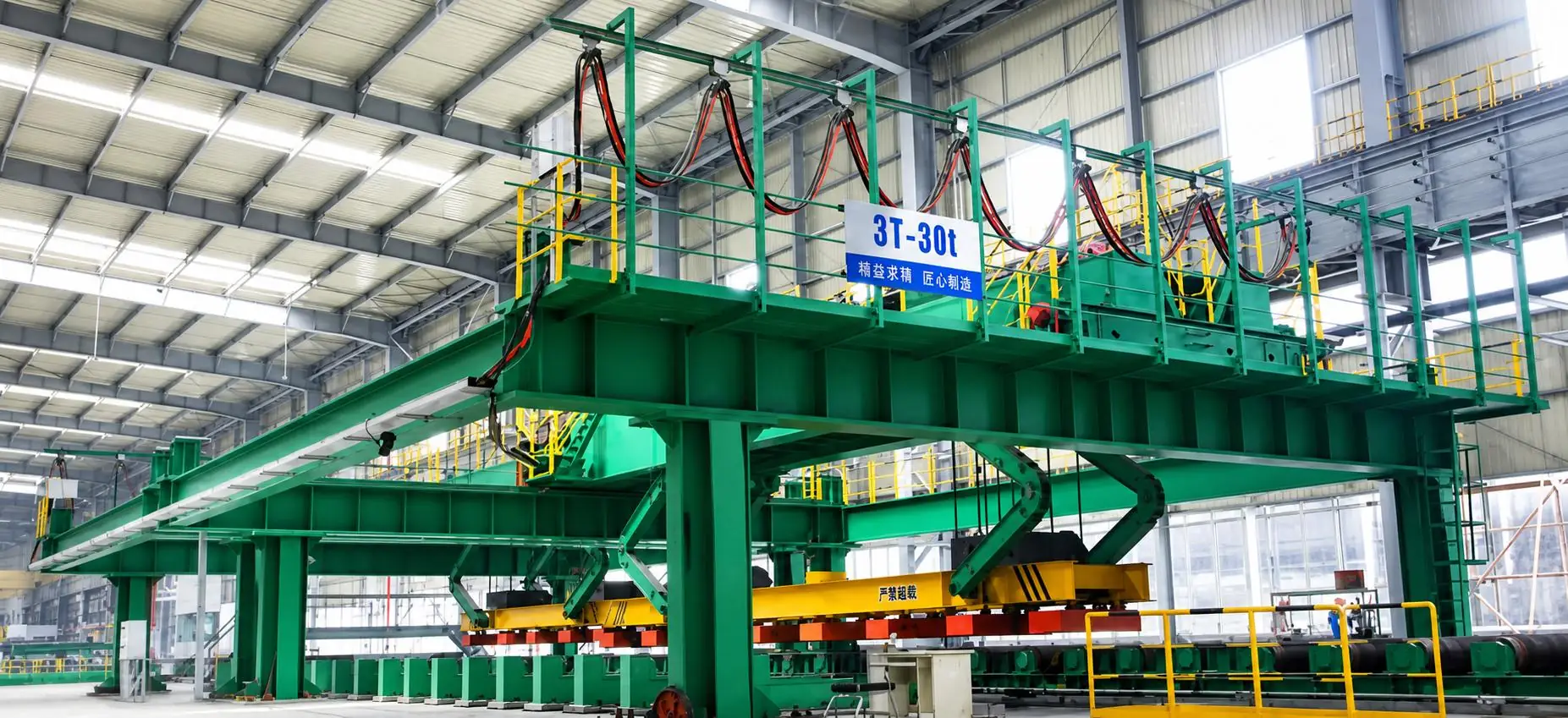
    An automated coil-handling brief needs verified load geometry and defined placement tasks. Describe the coil presentation, storage arrangement and control interfaces so the proposed crane and lifting appliance can be reviewed together.

    Henan Mine CraneTechnical guide · Updated 2026Crane selection, project scope and operating requirements
    50-Ton Automated Coil Crane Projects: Attachment and Positioning Inputs
    Henan Mine Crane lifting equipment
    Project planning notes

    Key points for this crane project.

    1. What Is a 50t Automated Steel Coil Crane?
    2. Why Steel Coil Handling Requires Intelligent
    3. Anti-Collision Radar Technology for Automated Steel
    Read the technical guide

    What Is a 50t Automated Steel Coil Crane?

    The 50-ton automatic steel coil lifting machine is a heavy-duty bridge crane designed for modern steel production and processing scenarios. It can safely and accurately complete large-scale steel coil handling operations with very little manual intervention.

    The equipment integrates high-strength mechanical structure, PLC control system, multi-type sensors, positioning devices, and anti-collision technology.

    This kind of crane is widely used in steel mills, steel coil warehouses, rolling production lines, and slitting workshops. It mainly handles large-scale master coils of automotive steel, galvanized steel, stainless steel, etc. The 50-ton lifting capacity takes into account the needs of heavy-duty operations and the flexibility of on-site operation. It is a very mainstream choice in the intelligent transformation of steel enterprises.

    Core components

    • The whole machine has good rigidity, small deformation in the operation of carts and trolleys, and high stability. After flaw detection and anti-corrosion treatment, it is suitable for high-frequency automated operations in steel mills A6-A8.
    • high-capacity lifting mechanism: equipped with wire rope hoist mechanism, equipped with frequency conversion drive, support stepless speed regulation or two-speed lifting. Precise alignment at low speed, high speed to improve the transfer efficiency, small start-stop impact, with brake protection, smooth completion of the steel coil lifting, reduce the steel coil swing and bump.
    1. C-shaped hook: suitable for horizontal inner hole steel coil hoisting, the structure is simple and durable, the hook body penetrates into the inner hole of the steel coil to support, easy maintenance, and can be used with automatic positioning to achieve automatic winding.
    2. Electromagnetic spreader: quickly absorb and release ferrous metal steel coils, high operating efficiency; it must be equipped with a backup power supply to maintain suction to prevent the steel coils from falling when power is off, and it can be connected to the system to realize automatic suction and discharge.
    3. Hydraulic steel coil clamp: relying on hydraulic drive to open and close, it can clamp steel coils in a variety of poses, and the structure is compact and suitable for small storage locations; built-in pressure monitoring, easy to connect to the automated PLC system.
    • PLC control system: the control core of the crane machine, collects various sensor signals, and performs logical operations to uniformly control the whole process of travel, lifting, spreader action, anti-collision protection, etc., and supports automatic/manual mode switching.
    • Sensor and positioning device: integrated laser ranging, absolute encoder, RFID, anti-collision radar, visual sensing and other equipment, using a multi-sensor fusion scheme to sense the position, steel coil shape and surrounding obstacles to ensure high-precision positioning in harsh environments.
    • Industrial communication network: wireless or optical fiber industrial communication is used, low latency and anti-interference, through the crane PLC and the factory MES and WMS systems, two-way real-time transmission of task instructions, equipment status and inventory data.
    • Optional configuration: sway control control system, weighing module, remote monitoring console, while retaining the local manual operation mode, convenient for emergency use.

    Why 50 tons is the mainstream tonnage choice

    The weight of the master coil of automobile steel, galvanized steel, and stainless steel production lines is generally close to the 50-ton level, and the 50-ton lifting specification can meet the handling needs of such large steel coils. At the same time, the tonnage equipment can also flexibly lift lighter steel coils, and can be used with auxiliary hoists or replaceable spreaders to achieve continuous operation of multi-specification steel coils.

    The 50-ton model finds a balance between structural cost, energy consumption, and operational flexibility. It will neither be unable to meet heavy-duty master coil operations due to insufficient tonnage, nor will it be wasteful due to over-design. It is suitable for most steel mills and steel coil warehouses. Working conditions.

    Why Steel Coil Handling Requires Intelligent Automation

    Among the large steel enterprises pursuing the transformation of smart factories, the traditional manual and semi-manual crane operation modes are prominent, and intelligent automation has become the inevitable direction for the upgrading of steel coil logistics.

    Security risks

    The operator's field of vision is limited, making it difficult to fully observe the status of steel coils, peripheral equipment and on-site personnel. Steel coils are prone to swing during the start and stop of carts and trolleys, and there is a risk of colliding with other cranes, storage shelves, and production equipment, or squeezing on-site personnel.

    Once the hoisting operation is improper, accidents such as steel coil falling and steel coil edge bumping damage will occur, especially in the dusty and high temperature environment of steel mills, which further amplifies the operating risks.

    Low efficiency of traditional operations

    Manual alignment takes a long time, the accuracy of the operation is highly dependent on the driver's experience level, the operation effect of different operators varies greatly, and the stability of the production process is poor. Under long-term shift work, operator fatigue will further reduce operating efficiency, and it is difficult to continuously and stably guarantee production capacity.

    The automation value of smart steel mills

    The automated crane can independently complete the loading and unloading of steel coils and the precise management of warehouse locations, seamlessly connect the manufacturing execution system MES and the warehouse management system WMS, and support uninterrupted operations 24 hours a day. The system can automatically plan the travel path, coordinate multiple cranes to work together, and turn the steel coil warehouse area into an intelligent logistics center with low manual intervention.

    Anti-Collision Radar Technology for Automated Steel Coil Cranes

    In the scenario of multi-crane shared operation span and high-speed automated operation, the anti-collision system is the core configuration to ensure the safe operation of the equipment.

    Working principle of anti-collision radar

    Industrial-grade radar sensors (common in the 24GHz frequency band) continuously scan the surrounding environment, measure the distance of obstacles in real time and identify the target object. The collected data is directly transmitted to the crane PLC control system, and the system responds instantly based on the distance signal. Radar is a non-contact detection, with a long detection distance and can adapt to the harsh working conditions of steel mills.

    Core security features

    • Anti-collision between cranes: radar dynamically monitors the operating spacing of multiple cranes across the same span in real time, and is equipped with electrical interlocking protection logic. Once the spacing is lower than the safe value, it will automatically intervene to effectively avoid multi-vehicle collisions.
    • Limit protection at the end of the track: Set up protective monitoring at both ends of the track of the crane cart to prevent the crane from exceeding the operating boundary of the track and eliminate the risk of collision with the track.
    • Automatic deceleration when approaching obstacles: When the radar detects obstacles such as shelves and equipment in front of it, the control system automatically reduces the operating speed of the crane and reserves a safe braking distance.
    • Emergency shutdown is triggered when the safety threshold is exceeded: When the distance of the equipment from the obstacle reaches the danger threshold, the system immediately issues an emergency stop command to quickly brake the crane to avoid collision accidents.
    • Division of operating areas, restrict cranes from entering hazardous areas and issue early warnings: pre-delineate no-go areas and safe operating areas, trigger sound and light warnings before the cranes enter restricted areas, and restrict equipment from entering hazardous areas at the same time.

    Comparative advantages of anti-collision scheme

    The traditional limit switch only provides protection at a fixed point, and cannot be continuously monitored throughout the process, and the detection range is limited. The impact and vibration caused by high-frequency reciprocating operations in steel mills can easily cause switch wear and stagnation, reduce reliability, and there is a risk of safety protection failure.

    The radar anti-collision system supports continuous dynamic monitoring and is a non-contact detection. It is more stable in the dust and vibration environment of steel mills and does not require frequent calibration. It can be connected to the PLC through relays and Modbus buses, and the integration difficulty is low.

    Smart Automatic Positioning System: Achieving Millimeter-Level Handling Accuracy

    If you want to safely stack steel coils, accurately feed the rolling production line, and at the same time increase the storage density of the warehouse, high-precision positioning technology is essential.

    Positioning technology

    Mainstream technologies include laser positioning and ranging, shaft-end absolute encoder, RFID location tag, indoor GNSS positioning scheme, and multi-sensor fusion technology; some equipment is equipped with lidar and visual recognition to complete the steel coil shape recognition. The positioning accuracy of carts and trolleys can reach ±10mm, and the accuracy of the lifting direction is also excellent, and the positioning ability of the millimeter level can be achieved in some working conditions.

    Automatic walking and lifting control

    The equipment relies on frequency conversion drive + closed-loop feedback to achieve precise horizontal movement of carts and trolleys, and the trolleys automatically travel to the top of the target warehouse; the lifting and descending actions are precise and controllable. The system is equipped with soft start, soft stop algorithms and sway control procedures to suppress the swing of the steel coil to the maximum extent possible, while ensuring the operating speed, to avoid the steel coil collision damage.

    Intelligent warehouse management

    The crane relies on various sensors and the WMS warehouse management system to identify the location of steel coils, collect and synchronize inventory data in real time, and automatically plan the optimal winding and unwinding operation path. The system can dynamically allocate free storage locations, greatly shortening the time-consuming retrieval of steel coils, and effectively improving the space utilization rate of the warehouse area.

    PLC Control System: The Brain Behind Automated Coil Crane Operation

    The programmable logic controller coordinates all the automated actions of the crane and is the core of the entire intelligent lifting system.

    1. Intelligent control architecture based on PLC: various sensors collect position, load, operating speed, obstacles and other status data in real time, PLC centrally processes positioning signals and safety interlock signals, outputs commands to control frequency converters, drives motors and braking mechanisms. The sway control algorithm, path planning, and safety interlock logic are all run in the PLC, and the supporting man-machine interface (HMI) is used for operation and maintenance personnel to check the status.
    2. Docking with the factory automation system: PLC can interface with the MES manufacturing execution system to receive production work orders, connect to the WMS warehouse management system to obtain warehouse location information, and synchronize with the production scheduling system. Realize task issuance and status return, and open up the material flow process of the whole factory.
    3. Remote monitoring and data analysis: The system supports real-time monitoring of equipment operating status, fault alarm diagnosis, predictive maintenance based on operating data, and complete recording of each job data to facilitate traceability and continuous optimization. With SCADA or cloud platform, you can also build a digital twin to achieve remote visual management.

    Key Design Considerations for 50t Automated Steel Coil Cranes

    Equipment design must give priority to ensuring long-term stable and reliable operation under harsh working conditions.

    Load operation reliability

    In the calculation stage of structural strength, the concentrated load and partial load hoisting conditions are fully considered. The whole machine adopts an anti-fatigue design, which can adapt to long-term and high-frequency cyclic hoisting operations. The steel coil spreader has a sturdy structure, equipped with steel coil edge protection and reliable locking mechanism; the electromagnetic crane is equipped with a backup battery, and the clamp is equipped with a mechanical lock to ensure the safety of the spreader.

    Environmental adaptability design

    The working conditions of steel mills are complex, and the equipment is specially designed for harsh environments: high temperature resistant structure (heat insulation protective cover if necessary), dust and metal debris protection, electrical components protection level up to IP55~IP67, strong vibration resistance, support long-term continuous operation. Special coating and sealed electrical structure enhance the durability of the whole machine.

    Security system configuration

    The whole machine is equipped with overload limiter, sway control control system, emergency braking device, lifting and operating limit protection, and radar anti-collision system. Pretend to be a job risk.

    Benefits of Using Automated Steel Coil Cranes in Steel Plants

    The landing of automated steel rolling heavy machinery can bring significant improvements in safety, production capacity, cost, and warehouse management.

    Improve job safety

    Automated operations can minimize the entry of personnel into the hoisting high-risk operation area, reduce the probability of direct contact between personnel and heavy-duty steel coils from the source, and significantly avoid the risk of major safety accidents such as steel coils falling and equipment colliding and injuring people.

    The operation actions of the complete set of lifting equipment are all standardized, and the movement process is highly controllable. With the built-in sway control algorithm, the swing amplitude of the steel coil during the lifting process can be greatly reduced, the possibility of alignment operation errors can be reduced, and a more reliable safety guarantee can be built for the handling of steel coils in the warehouse area.

    Improve production efficiency

    The rhythm of the automated handling cycle is faster, the waiting time for the job is significantly shortened, and the equipment can achieve stable and uninterrupted 24-hour unattended operation with no one or few people on duty, continuously improving the overall material throughput of the warehouse area.

    The system supports the collaborative scheduling of multiple cranes, combined with intelligent path planning algorithms, to automatically avoid obstacles and equipment conflicts, further accelerate the efficiency of steel coil logistics in the factory, and ensure the continuous supply of materials in the production line.

    Reduce operating costs

    The automation system can reduce the dependence on senior crane operators, reduce labor costs, and at the same time reduce equipment bumps and steel coil damage caused by human misoperation, reduce the cost of subsequent maintenance and replacement, and effectively improve the comprehensive utilization rate of cranes.

    The supporting predictive maintenance function can collect equipment operation data in real time, identify aging and potential failures of components in advance, extend the service cycle of components, and reduce production losses caused by sudden downtime.

    Optimize warehouse management

    The system can accurately track the whole process of steel coil information, which can improve the density of warehousing and stacking, optimize the utilization rate of warehouse space, and effectively speed up the delivery speed of orders out of the warehouse.

    Relying on real-time inventory data collected to support production scheduling and planning, it avoids problems such as manual search for steel coils and misplaced warehouse locations, reduces the resulting time loss, and makes warehouse management in the warehouse area more orderly and efficient.

    Discuss the crane arrangement for your project.

    An automated coil-handling brief needs verified load geometry and defined placement tasks. Describe the coil presentation, storage arrangement and control interfaces so the proposed crane and lifting appliance can be reviewed together. Share the load, available drawings, working cycle and site conditions with Henan Mine Crane so the required configuration and supply boundary can be discussed.

    Related crane configurations

    Upper Rotating Magnetic Overhead Crane

    View product parameters
    Lifting capacity: 5+5–25+25 tListed spans: 25–34 mLifting height: 10–16 m for the listed arrangements

    A rotating magnetic beam for positioning long steel products. Magnet arrangement, material temperature and power-loss protection require a matched specification.

    Electromagnetic Overhead Crane

    View product parameters
    Lifting capacity: 5 – 32 tSpan: 10.5 – 31.5 mLifting height: 6 – 30 m

    Lift ferromagnetic steel with a matched electromagnetic lifting arrangement. Product shape, contact area, temperature and handling frequency determine the magnet and crane configuration.

    Updated 2026 · Henan Mine Crane

  • 500 t Twin-Trolley Crane Installed for Offshore Wind Assembly

    500 t Twin-Trolley Crane Installed for Offshore Wind Assembly

    Project Deliveries

    500 t Twin-Trolley Crane Installed for Offshore Wind Assembly

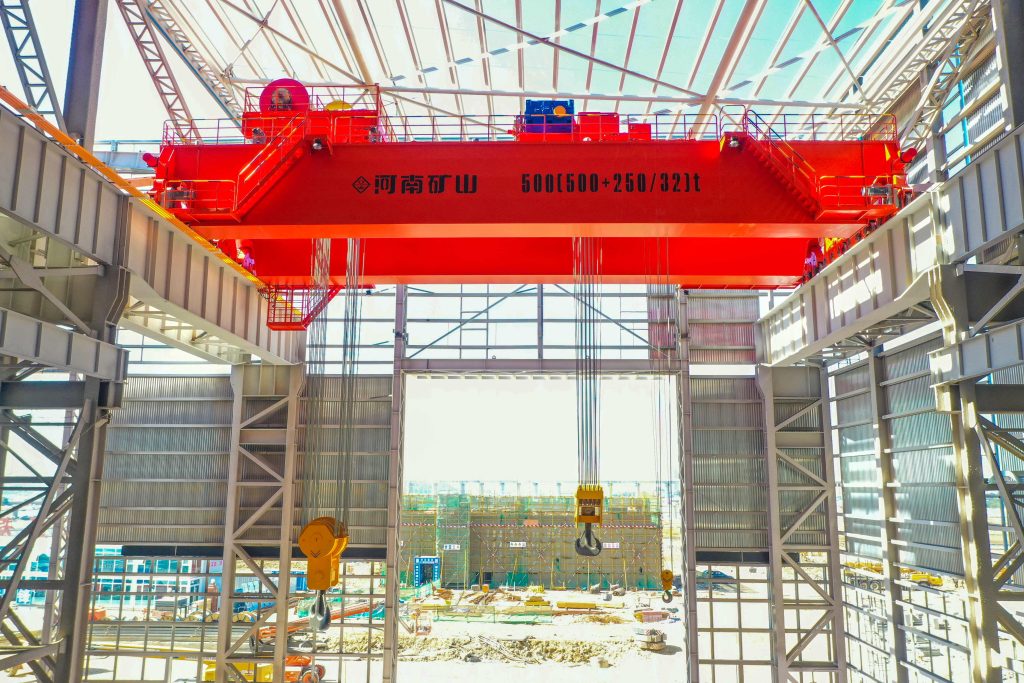
    A Henan Mine Crane 500 t twin-trolley, double-girder overhead crane was installed and put into operation at an offshore wind equipment project. The company reported 43 crane units or equipment sets supplied for the project’s first phase.

    Front view of orange 500 t twin-trolley crane and hooks in the wind equipment hall
    Twin-trolley bridge crane and lifting hooks in the assembly building.

    A heavy-lift crane within a larger package

    The 500 t unit is one heavy-lift crane in a 43-unit first-phase package. The official photos show an orange double-girder crane in a large assembly building. The report does not state that every unit has a 500 t rating.

    For wind components, calculate the full suspended weight including tooling and rigging, centre of gravity and lifting-point separation. Map the assembly sequence, work-bay width, runway geometry, hook height and the routes to storage or dispatch.

    Twin-trolley coordination and control

    The published configuration uses a lightweight hoist arrangement with high lift and automatic fast/slow speed selection. Multiple hooks can be synchronized, with electrical anti-sway and digital/video monitoring. These functions need project-specific settings and acceptance criteria.

    Specify trolley spacing, allowable load share, synchronized modes, anti-sway operating conditions, speed envelopes and monitoring records before comparing quotations. Confirm which functions are included in each crane of the wider package.

    Define the purchase and acceptance scope

    Request a capacity schedule for all cranes, layout drawings, runway and building interface loads, control descriptions, inspection records, factory and on-site tests, and maintenance access. Distinguish crane supply from installation, commissioning and lifting-tool responsibilities.

    Plan a Wind-Equipment Heavy Lift

    Share component weights, lifting points, bay drawings, hook height and coordinated-lift requirements for a crane package proposal.

  • 50-Ton vs 100-Ton Gantry Cranes: Compare the Real Load Requirement

    50-Ton vs 100-Ton Gantry Cranes: Compare the Real Load Requirement

    Technical guide

    50-Ton vs 100-Ton Gantry Cranes: Compare the Real Load Requirement

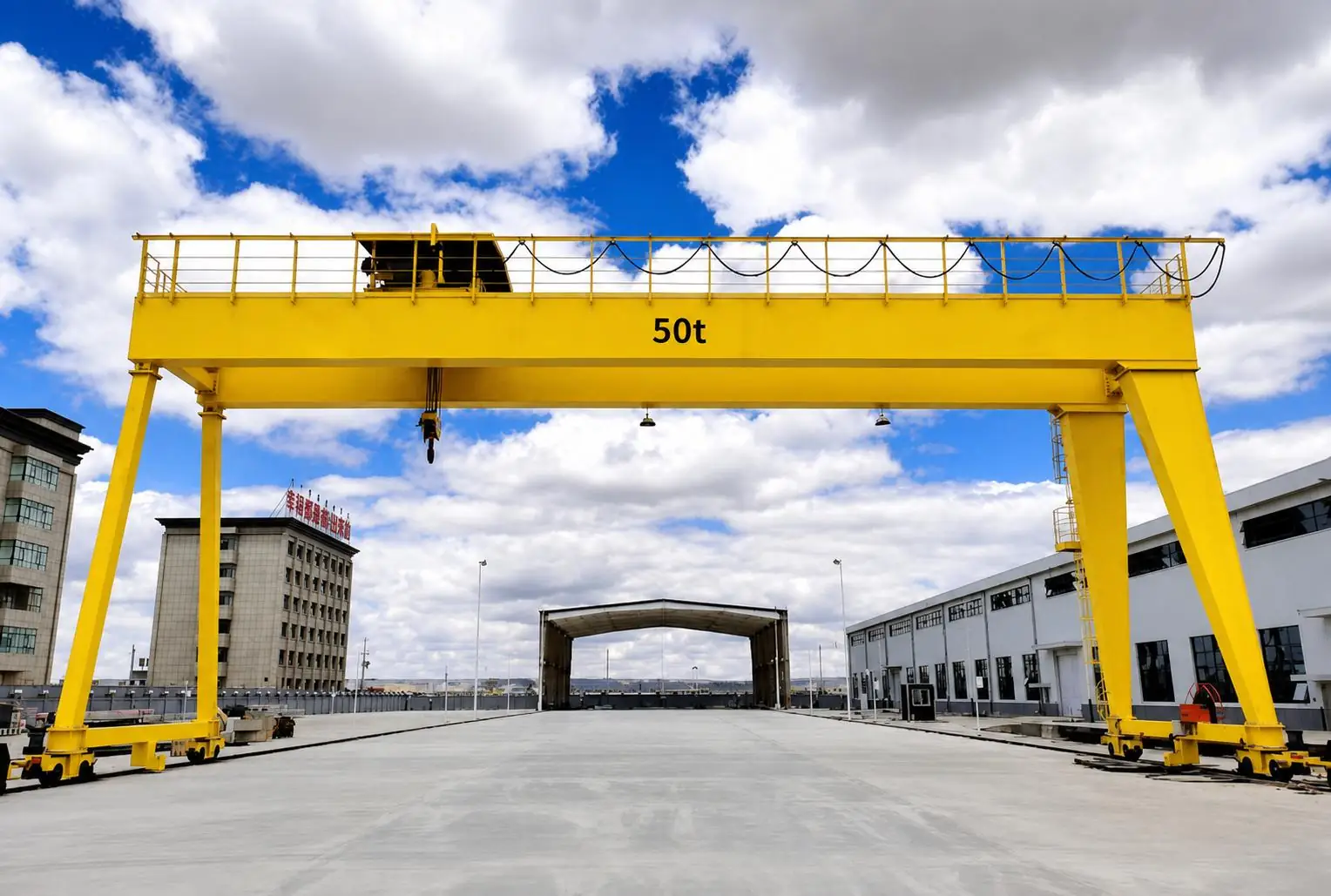
    A higher capacity rating changes the equipment and supporting-site requirements. Establish the complete suspended load and operating duty before comparing fifty-ton and hundred-ton project arrangements on a common scope basis.

    Henan Mine CraneTechnical guide · Updated 2026Crane selection, project scope and operating requirements
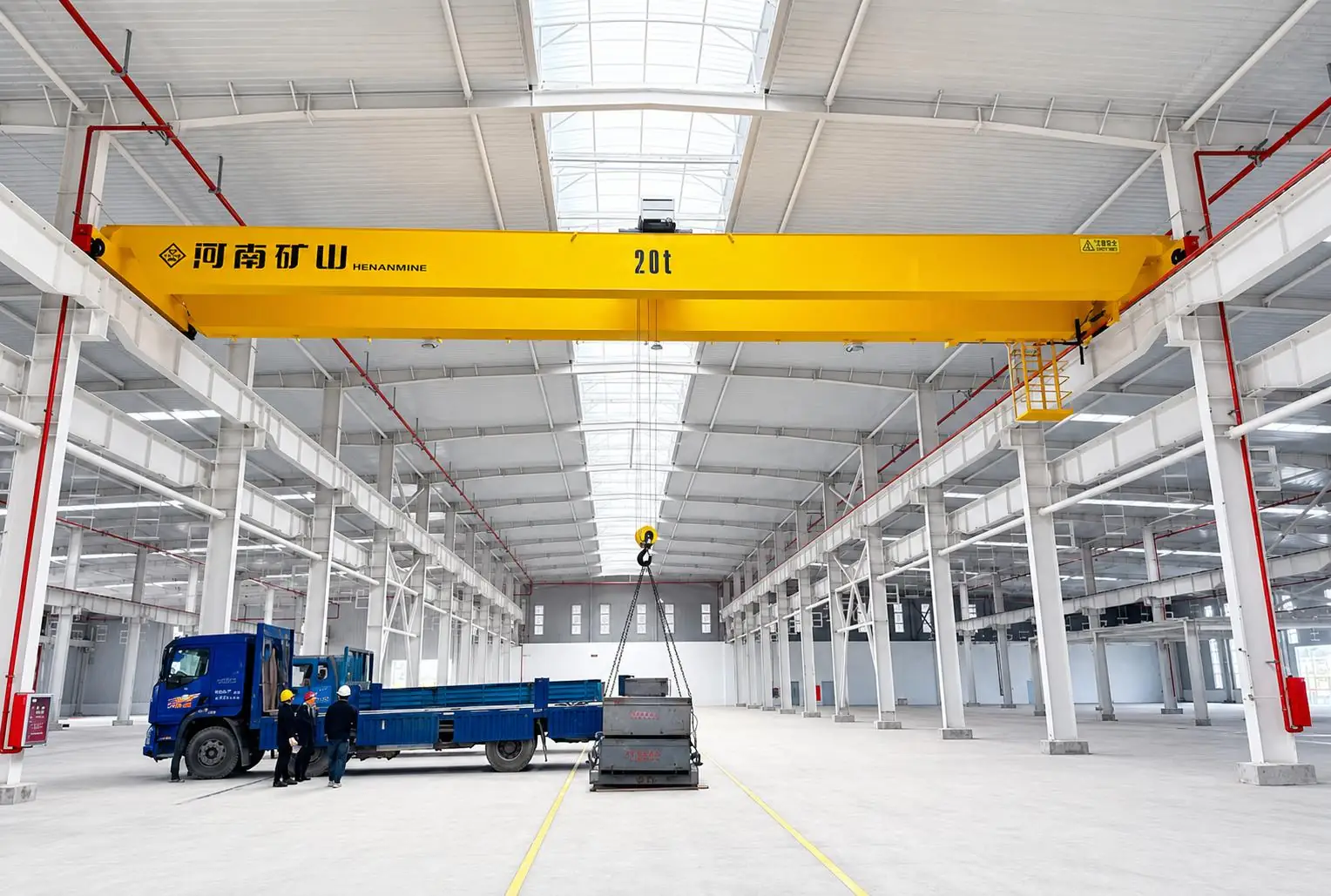
    Henan Mine Crane overhead crane inside a workshop bay
    Henan Mine Crane overhead crane inside a workshop bay
    Project planning notes

    Key points for this crane project.

    1. What Is the Difference Between 50-Ton and 100-Ton
    2. Where Are 50-Ton and 100-Ton Gantry Cranes Used?
    3. How Do 50-Ton and 100-Ton Gantry Cranes Compare?
    Read the technical guide

    What Is the Difference Between 50-Ton and 100-Ton Gantry Cranes?

    The core differences between 50-ton and 100-ton gantry cranes are concentrated in the three dimensions of carrying capacity, structural design, and configuration of core accessories. The two are not a simple doubling of tonnage, but a comprehensive upgrade of overall equipment specifications, load-bearing standards, and operating configurations to adapt to completely different industrial operation intensities and working conditions. Requirements. The following is a detailed breakdown of the differences from the four core dimensions.

    Lifting capacity

    The rated lifting weight is the most important difference between the two gantry cranes, and it is also the basic basis for selection. It is suitable for the lifting and transportation of medium-weight workpieces, equipment, and components. It allows short-term and small overload operations and meets the operating standards of medium-sized lifting equipment. It mainly serves conventional heavy industry production lines. It is a heavy-duty industrial lifting equipment. The carrying limit is directly doubled. It cannot only easily lift heavy-duty components of the 100-ton class, but also adapt to the overall lifting of large-size and large-weight integrated equipment without splitting components. At the same time, the 100-ton gantry crane has greater safety load redundancy, stronger impact resistance and overload resistance, can cope with heavy-duty and irregular heavy-duty material hoisting conditions, and completely avoid the safety risks caused by overload operations.

    Crane structure and dimensions

    The difference in tonnage directly determines the overall structural specifications, material standards and dimensions of the gantry crane, and the structural design of the two equipment is fundamentally different. The 50-ton gantry crane adopts the standard double-beam gantry structure, and the truss structure can be selected for some lightweight working conditions. The overall weight is light, the footprint is small, and the column spacing is flexible. The overall steel thickness of the equipment and the cross-section size of the main girder are moderate, and the height and width of the whole machine are suitable for conventional factories and open-air work sites, and the basic carrying requirements are low.

    In order to meet the heavy-duty load-bearing needs of the 100-ton gantry crane, all heavy-duty thickened double-beam solid structures are used, and the lightweight truss design is eliminated. The steel thickness and cross-sectional area of the main girder, end beam, and column have been greatly increased. The weight of the whole machine is 1.8-2.2 times that of the 50-ton gantry crane. At the same time, the overall dimensions of the equipment are larger, the height of the column, the width of the fuselage, and the specifications of the travel mechanism are fully upgraded, and the structural rigidity, stability, and wind and seismic resistance are stronger. It can adapt to open-air high winds and high-frequency heavy-duty operating environments, but it covers a larger area and requires extremely high operating site space and ground foundation carrying capacity, which requires special infrastructure construction.

    Hoist and trolley configuration

    The lifting hoist and trolley travel system are the core operating components of the gantry crane, and the configuration level of the 50-ton and 100-ton models is significantly different. The 50-ton gantry crane is equipped with a medium-sized industrial electric hoist or a standard lifting trolley. The lifting motor power and travel motor parameters are moderate. It adopts a conventional deceleration and braking system, which starts and stops smoothly, and meets the needs of medium-frequency and medium-load operations. The accessories are versatile and easy to replace.

    Henan Mine Crane 100-ton gantry crane is equipped with a heavy-duty special lifting mechanism and an enhanced travel trolley, equipped with a high-power frequency conversion motor, a heavy-duty reducer, a dual-brake protection system, and an overload limit protection device. Some high-end models are equipped with a synchronous lifting control system. Its trolley wheel track, wheel pressure, and travel track specifications are fully upgraded, which can withstand the huge impact force during heavy-duty movement, and eliminate the problem of slippage, offset, and caton of the trolley. At the same time, the lifting speed and travel speed control accuracy of the 100-ton model are higher, and the heavy-duty alignment accuracy far exceeds that of the 50-ton model, which is suitable for high-precision heavy-duty hoisting operations.

    Where Are 50-Ton and 100-Ton Gantry Cranes Used?

    Based on the differences in carrying capacity, structural performance, and operating accuracy, the industrial application scenarios of 50-ton and 100-ton gantry cranes have clear subdivision boundaries, accurately matching the operating loads and production needs of different industries. The following are the core application areas of the two models.

    Steel and metal processing

    In the steel and metal processing industry, the 50-ton gantry crane is the main equipment of small and medium-sized steel processing plants and profile processing workshops. It is mainly used for the handling, stacking, and hoisting of steel plates, sections, steel pipes, and medium-sized steel components. It is suitable for batch conventional profile processing, semi-finished product transportation, and finished product loading operations. The operation frequency is high, the load is stable, and the cost-effective advantage is outstanding. The 100-ton gantry crane focuses on large-scale steel mills and heavy-duty steel structure processing plants, and is specially used for the hoisting and assembly of heavy-duty steel box girders, large-scale steel structure trusses, thick steel plates, and complete sets of metal heavy-duty components.

    Machinery manufacturing

    In the machinery manufacturing industry, 50-ton gantry cranes are widely used in general machinery, small and medium-sized construction machinery, agricultural machinery and equipment, and mold manufacturing workshops. They are mainly responsible for the hoisting, assembly, and transportation of medium-sized machine tool bodies, complete sets of molds, small and medium-sized equipment assemblies, and component assemblies. They are adapted to the assembly conditions of conventional machinery manufacturing, taking into account efficiency and economy. The 100-ton gantry crane mainly serves heavy machinery, construction machinery, mining machinery, and large generator set manufacturing enterprises. It is a just-needed equipment for heavy machinery manufacturing.

    Construction and heavy equipment handling

    In the field of infrastructure engineering, 50-ton gantry cranes are mostly used for small and medium-sized infrastructure projects, municipal projects, and prefabricated component factories. They mainly lift medium-weight materials such as concrete prefabricated panels, small bridge components, construction auxiliary equipment, template brackets, etc., which are suitable for normal hoisting operations on small and medium-sized construction sites. The equipment is flexible in movement and easy to deploy. The 100-ton gantry crane is the core equipment for hoisting large-scale infrastructure, road and bridge projects, and large-scale equipment. It is widely used in large-scale bridge construction sites, high-speed rail station infrastructure, port depots, and large-scale equipment disassembly and assembly projects. Mainly responsible for the hoisting and shifting of large-scale bridge box girders, heavy-duty infrastructure modules, large-scale construction machinery, and port heavy equipment, which can meet the needs of heavy-duty construction with large loads, large spans, and high precision, and adapt to the high-intensity operating conditions of large-scale key projects.

    How Do 50-Ton and 100-Ton Gantry Cranes Compare?

    In addition to the differences in structure, configuration, and application scenarios, the two gantry cranes have obvious differences in core operating parameters such as operating span, lifting height, working level, and operating performance, which directly determine the operating efficiency, service life, and adaptability of the equipment. The comprehensive performance of the two models can be clearly distinguished by all-round comparison.

    Span and lifting height

    The parameter design is adapted to the space size of conventional industrial plants and small and medium-sized open-air depots, which can meet the span and lifting needs of most medium-sized industrial scenes, and the space adaptability is flexible.

    The larger span and lifting height can cover the large-space operation requirements of large factories, large depots, bridge projects, and port sites, and can complete the hoisting of heavy-duty components with high positions and large spacing, and the operation coverage far exceeds the 50-ton model.

    Working class and operating frequency

    The work level is the core indicator to measure the durability and work intensity of gantry cranes. The conventional working level of the 50-ton gantry crane is A5-A6, which is a medium-sized work system, suitable for medium-frequency and intermittent operation scenarios, and the effective daily operation time is 8-10 hours. It is suitable for factory normalized production and intermittent hoisting operations, and can be stably adapted to the supporting production conditions of the assembly line. The standard working level of the 100-ton gantry crane is A7-A8, which belongs to the heavy-duty working system and is a special level for industrial heavy-duty. It supports high-frequency, all-weather and continuous operation, and can achieve 24-hour uninterrupted rotation operation.

    Operating performance

    In terms of operating performance, the 50-ton gantry crane has a moderate start-stop speed, stable operation and low difficulty in operation. Ordinary licensed operators can skillfully control it, low energy consumption, low noise in daily operations, and lightweight structure. The equipment is more flexible in travel and steering, and it is suitable for refined and normalized medium-sized hoisting operations. However, in heavy-duty, long-span, and windy environments, the stability of the equipment will decrease, and it cannot be adapted to the needs of super-heavy and high-precision hoisting.

    The 100-ton gantry crane is equipped with frequency conversion speed regulation, intelligent limit, cushioning and shock absorption, and dual brake protection system. It has no shaking during heavy-duty operation and extremely high alignment accuracy. It can achieve precise alignment at the millimeter level to meet the needs of precision assembly of heavy equipment. At the same time, the equipment has excellent wind resistance, seismic resistance and overload resistance, stronger adaptability to harsh environments, and overall operating stability, safety and reliability are better than the 50-ton model. The only shortcoming is that the equipment is large, the steering flexibility is slightly weak, and the energy consumption is relatively higher. It is suitable for heavy-duty operations on fixed sites, and it is not suitable for lightweight working conditions with frequent shifts.

    How Does Crane Capacity Affect Project Cost?

    Capacity affects the lifting mechanism, structure, drives and support reactions, but it is only one cost input. Span, lifting height, duty and site scope must be defined at the same time.

    Published equipment budget references, checked in October 2026. These are manufacturer list ranges, not a Henan Mine Crane project quotation. Freight, import charges, runway and civil works, site installation and commissioning must be priced separately.

    MG double-girder gantry referenceSpan / dutyEquipment budget (USD)
    50 t30 m / A6114,000–172,000
    100 t35 m / A7214,000–314,000

    The 100 t reference also has a larger span and higher duty class. This is not a controlled comparison of capacity alone, and the difference must not be presented as the cost of doubling the rating.

    Reference: KSCRANE, “Gantry Crane for Sale,” published 9 October 2025. The listed capacity, span and duty class form part of each price reference; changing them changes the comparison.

    Estimate annual servicing and component replacement from the actual operating cycle and maintenance plan. A fixed annual maintenance price cannot be inferred from lifting capacity alone. For your project, request the same installation, runway, transport, testing and support scope from each supplier.

    How to Choose the Right Gantry Crane Capacity?

    The core principles of gantry crane selection are not over-matched, not under-matched, adapted to working conditions, and taking into account future expansion. Combining the performance, scenario, and cost differences of 50-ton and 100-ton models, from the three dimensions of load requirements, operating environment, and long-term planning, the adapted tonnage can be accurately locked to maximize cost performance.

    Maximum load and lifting frequency

    First, clarify the maximum lifting load of the project and the frequency of daily operations. Avoid the premature aging of equipment, safety hazards and low efficiency caused by overloading of small-tonnage equipment and frequent full-load operation, and ensure the stable development of high-intensity heavy-duty operations.

    Working environment and available space

    The space and environment of the work site are the key constraints for selection. If the space of the factory area and yard is limited, the span and height of the plant are small, the bearing capacity of the ground foundation is general, and the wind speed for open-air operations is small, 50-ton gantry cranes are preferred. The equipment occupies a small area, is flexible in deployment, and is adapted to conventional site conditions. There is no need for large-scale infrastructure transformation. If the work site is open and there is sufficient space, the site can carry heavy infrastructure loads, and there are complex working conditions such as high winds, rain and snow in the open air, which require large-span and high-lifting operations, it is recommended to choose a 100-ton gantry crane.

    Future production requirements

    The selection of models needs to take into account the long-term production planning of the enterprise to avoid the waste of short-term equipment iteration. If the enterprise focuses on the processing of medium-sized workpieces at this stage, there will be no heavy-duty production capacity upgrade, no large-scale component production, and no heavy-duty equipment hoisting requirements in the next 3-5 years. The 50-ton gantry crane is fully adapted to long-term production, and the input cost can be controlled. If an enterprise has plans to expand production capacity, upgrade products, and undertake large-scale engineering orders, it will add 100-ton component production, heavy equipment assembly, and large-scale infrastructure hoisting services in the future. It is recommended to directly select a 100-ton gantry crane.

    Henan Mine Crane

    The 50-ton gantry crane mainly focuses on medium-sized loads, conventional working conditions, high cost performance, and low operation and maintenance costs. It is suitable for small and medium-sized steel structure processing, general machinery manufacturing, and small and medium-sized infrastructure projects. The 100-ton gantry crane mainly focuses on heavy-duty, high-frequency, high-precision, high-stability, and complex working conditions, and serves the fields of heavy-duty manufacturing, large-scale infrastructure, and deep processing of large-scale steel structures.

    Industrial enterprises do not need to blindly pursue high-capacity in the selection of models. They combine their own maximum hoisting load, operating frequency, site conditions and future production capacity planning to accurately match tonnage equipment, which cannot only ensure operation safety and efficiency, but also maximize project cost control, and achieve the optimal balance between equipment value and input cost. If you need customized solutions for gantry cranes with personalized span, lifting height, and intelligent configuration, you can consult Henan Mine Crane Factory at any time for professional one-to-one selection services.

    Discuss the crane arrangement for your project.

    A higher capacity rating changes the equipment and supporting-site requirements. Establish the complete suspended load and operating duty before comparing fifty-ton and hundred-ton project arrangements on a common scope basis. Share the load, available drawings, working cycle and site conditions with Henan Mine Crane so the required configuration and supply boundary can be discussed.

    Related crane configurations

    Explore crane product families and technical parameters ↗

    Updated 2026 · Henan Mine Crane

  • 50-Ton Double-Girder Overhead Crane Parameters: What to Request

    50-Ton Double-Girder Overhead Crane Parameters: What to Request

    Technical guide

    50-Ton Double-Girder Overhead Crane Parameters: What to Request

    A complete technical review needs the specific configuration rather than a generic capacity table. Request the span, hook envelope, duty and runway data for the proposed fifty-ton arrangement and confirm how the load rating is defined.

    Henan Mine CraneTechnical guide · Updated 2026Crane selection, project scope and operating requirements
    Henan Mine Crane LH Electric Hoist Double Girder Crane
    Henan Mine Crane LH Electric Hoist Double Girder Crane
    Project planning notes

    Key points for this crane project.

    1. What Is a 50 Ton Double Girder Overhead Crane?
    2. Span and Lifting Height
    3. Working Duty Classification Explained
    Read the technical guide

    What Is a 50 Ton Double Girder Overhead Crane?

    A double girder overhead crane uses two parallel bridge girders, with the trolley and hoist running on top of (or between) them, rather than the single beam used in lighter-duty cranes.

    The "overhead" part means the crane bridge travels on elevated runway rails mounted to the building's columns or an independent steel structure, moving the full length of the workshop while the trolley moves crosswise along the bridge. This combination gives the crane access to virtually the entire floor area beneath it.

    Span and Lifting Height

    Span isn't a number you pick freely it's dictated by your building's column spacing or the runway structure's design width, measured between the centerlines of the rail at each end of the bridge.

    Lifting height is the vertical travel of the hook from its lowest working position to its highest.

    • Building clearance height below the runway beam: the vertical clearance between the bottom of the crane runway beam and the ground, equipment and other obstacles, which is the core parameter of equipment selection, installation and operation, and can effectively avoid the problem of workspace interference.
    • Height of hook assembly under rated load: the overall vertical height of the hook assembly under the rated load condition of the crane. The larger the tonnage of the equipment, the larger the size of the hook and pulley assembly, the higher the height of the hook assembly, which will take up the effective lifting space and is an important basis for lifting height calculation.
    • Low headroom plant hook across the main girder adaptation requirements: for plant floor height, the top of the headroom is limited scenarios, can be used to hook across the main girder through the structure. Utilizing the gap between the main beams to complete the hook lifting and lowering can reduce the occupation of the upper space and greatly increase the effective lifting height, which is suitable for the operation conditions in the restricted space.

    If your building has limited headroom, ask your supplier specifically about reduced-headroom trolley designs this is a configuration choice, not a fixed limitation of double girder cranes.

    Working Duty Classification Explained

    The working duty class (also called duty cycle or service class) is one of the most misunderstood fields on a crane spec sheet, yet it has a direct impact on component sizing, motor selection, and bearing life.

    • European FEM Classification Standard:According to the spectrum of load conditions and cumulative working hours of the equipment, it is divided into 1Bm ~ 5m working levels, which is suitable for different frequency and load lifting scenarios.
    • Chinese national standard A classification standard: follow the domestic lifting equipment standards, the equipment is divided into A1 ~ A8 eight working levels, complete coverage from light duty light work to heavy duty heavy duty work of the full range of working conditions to meet the needs of use.
    • A5 (medium-heavy level): medium frequency of operation, daily lifting load mixed light and heavy, moderate fluctuations in working conditions, applicable to general mechanical processing, general assembly workshop and other conventional production occasions.
    • A6 (heavy grade): high frequency operation, frequent full-load lifting under normal conditions, stable and high working load, mostly used in steel processing, foundry and other high-intensity work conditions.
    • A7 (extra heavy grade): close to uninterrupted full-load cyclic operation, the equipment continues to run at high loads, harsh working conditions, mainly used in iron and steel mills, bulk metal raw materials transfer and other heavy-duty continuous operation scenarios.

    Choosing too light a duty class for your actual usage shortens component life dramatically; choosing too heavy adds unnecessary cost. This is a parameter worth discussing honestly with your supplier based on actual cycles-per-shift, not aspirational future use.

    Speed Parameters: Lifting, Crane Travel, and Trolley Travel

    Three independent motion speeds define how a double girder crane performs:

    1. Lifting speed: the vertical speed of the hook at rated motor speed.

    Higher speeds increase throughput but also increase dynamic loading on the structure and braking demands another reason speed specifications and structural design need to be reviewed together, not picked independently.

    Wheel Pressure and Structural Loading

    Wheel pressure is the maximum vertical force a single crane wheel transmits to the runway rail. It's calculated from the combined dead weight of the bridge and trolley plus the rated lifting load, taken at the trolley's most unfavorable position generally at the end of its travel, closest to one rail.

    This number matters because it's the figure your structural engineer uses to size:

    Always request the calculated wheel pressure figure from your supplier rather than estimating it yourself; getting this wrong is one of the more common causes of premature runway beam failure.

    Main Components and Mechanisms

    • Bridge (double girder):The two parallel main girders, end-connected to the end carriages, forming the structure the trolley travels on.
    • Trolley and hoist:Carries the lifting mechanism either a wire rope hoist or an open winch/drum system at this capacity and travels along the top of the girders.
    • End carriages:Connect the bridge girders to the wheel assemblies that ride on the runway rails.
    • Crane travel mechanism:Motors, gearboxes, and wheels that move the entire bridge along the runway.
    • Electrical control system:Power supply, control panel, and either cab, pendant, or radio remote control for the operator.

    Main Hook vs. Auxiliary Hook Configurations

    The critical safety rule here: the two hooks are never used to lift two separate loads simultaneously, and when working together to maneuver one piece, the combined load can never exceed the main hook's rated capacity. If your application regularly involves turning or rotating heavy molds, coils, or fabrications, a dual-hook setup is worth specifying upfront rather than retrofitting later.

    How to Choose the Right Spec for Your Application

    • Accurate measurement of the actual span requirements: based on the centerline of the existing columns in the plant or the planned runway structure measured values, strictly prohibited by experience prediction, estimation of dimensions, to ensure that the span of the equipment to adapt to the site installation conditions.
    • Verify the real operation cycle frequency: Combined with the daily lifting operation intensity, work frequency accounting for the real working conditions, accurate matching of equipment working level, A5 to A7 different levels of equipment procurement costs, service life differences are significant, need to adapt to the actual working conditions of the selection of models, to avoid the selection of excess or insufficient.
    • Confirmation of plant headroom constraints: Comprehensive verification of the site vertical headroom dimensions, top space constraints, to determine the need for low headroom trolley, maximize the adaptability of the restricted space operating scenarios, to ensure the effective lifting height.
    • Evaluating whether to equip the auxiliary hook device: according to the operational needs of the lifted workpiece, if the operation requires the rotation, fine-tuning alignment, attitude reorientation and other operations of the heavy object, the auxiliary hook must be set up as a supporting device.
    • Written implementation of wheel pressure calculation parameters: complete the professional accounting of crane wheel pressure and issue written calculation documents, which will be submitted to the structural engineer before the runway structure is finalized and the drawings are finalized, and serve as the core basis for civil and steel structure design.
    • Match the technical parameters of on-site power supply: check the actual power supply infrastructure of the plant to ensure that the electrical parameters such as voltage, frequency, number of phases, etc. of the equipment and the on-site power supply system are fully matched to avoid electrical adaptation problems caused by the equipment.
    • Select the equipment control mode according to the needs: Combining with the operator's field of vision, site operating environment and safety control requirements, reasonably select the cab control, handle suspension control, wireless control, and other controlmodes to meet the needs of the operator.

    Every facility has different lifting requirements, building layouts, and duty cycles. Choosing the right crane configuration requires more than comparing specifications, it requires matching the crane to your actual operating conditions.

    Henan Mine Crane provides customized engineering support, including crane selection, structural design, wheel load calculations, electrical control options, and project consultation. Contact our team to receive a tailored solution and an accurate quotation based on your specific application requirements.

    Installation and Safety Considerations

    • Runway alignment:must be precise; misaligned rails create uneven wheel loading and accelerate wear.
    • Test loading:should be performed and documented before the crane is released for production use, typically at and above rated capacity per applicable standards.
    • Overload protection, limit switches, and emergency stop systems:should be standard, not optional, at this capacity.
    • Periodic inspection schedules:should be established for wire ropes, brakes, and structural welds, given the consequences of failure at heavy loads.

    Discuss the crane arrangement for your project.

    A complete technical review needs the specific configuration rather than a generic capacity table. Request the span, hook envelope, duty and runway data for the proposed fifty-ton arrangement and confirm how the load rating is defined. Share the load, available drawings, working cycle and site conditions with Henan Mine Crane so the required configuration and supply boundary can be discussed.

    Related crane configurations

    LH Electric Hoist Double Girder Crane

    View product parameters
    Lifting capacity: 3, 5, 10, 16, 20 tSpan: 10.5–31.5 mLifting height: 6, 9, 12 or 18 m

    Use an LH double-girder bridge with an electric-hoist trolley for workshop lifting, assembly and maintenance. Match the hoist arrangement to the suspended load, hook travel and available building space.

    Double Girder Casting Crane

    View product parameters
    Lifting capacity: 75/20–200/50 tSpan: 10m – 35mLifting height: 6m – 25m

    Lift and transfer molten-metal ladles with a YZ casting crane configured for the full suspended load and casting process. Review ladle interfaces, thermal exposure and the operating sequence together.

    Updated 2026 · Henan Mine Crane

  • 5-Ton Jib Crane Cost: Compare Reach, Support and Installation

    5-Ton Jib Crane Cost: Compare Reach, Support and Installation

    Technical guide

    5-Ton Jib Crane Cost: Compare Reach, Support and Installation

    A jib crane quotation depends on the required radius and supporting arrangement as well as capacity. Define the working area and site interfaces so wall-supported and pillar-mounted offers can be compared consistently.

    Henan Mine CraneTechnical guide · Updated 2026Crane selection, project scope and operating requirements
    5-Ton Jib Crane Cost: Compare Reach, Support and Installation
    Henan Mine Crane lifting equipment
    Project planning notes

    Key points for this crane project.

    1. What Is a 5-Ton Jib Crane?
    2. 5-Ton Jib Crane Price: What Determines the Cost?
    3. Wall-Mounted 5-Ton Jib Crane: Price Breakdown
    Read the technical guide

    What Is a 5-Ton Jib Crane?

    The whole machine is mainly composed of a cantilever boom, a crane, a rotary transmission mechanism, an electrical control system and a load-bearing support structure.

    The equipment can be flexibly rotated around a fixed support point, covering a fixed radius operating area. Compared with traditional bridge cranes, 5-ton cantilever cranes do not need to lay a complex rail foundation, have short installation cycles, low operating thresholds, and high space utilization. They are the core industrial equipment for realizing stationization, refinement, and high-efficiency material hoisting.

    Core technical parameters

    The carrying performance, operating range and equipment cost of the 5-ton cantilever crane are completely determined by the core technical parameters. The adjustment and upgrade of each parameter will directly change the steel material specifications, structural design standards, manufacturing process difficulty and overall landing cost of the equipment. It is the core basis for the manufacturer's quotation and the adaptation of working conditions. The key parameters are as follows:

    • Cantilever span and operating radius: The length of the cantilever arm directly determines the effective operating coverage of the equipment. The larger the span, the higher the mechanical properties of the steel structure for bending, torsional and compression resistance of the equipment. The thickness of the steel required is increased synchronously with the counterweight of the structure, the processing technology is more stringent, and the overall manufacturing cost has increased significantly.
    • Lifting height: The height can be customized according to the workshop floor height, operation process, and material size. The higher the lifting height, the longer the effective travel of the crane, and the higher the standards for motor power performance, braking system stability, and vertical bearing capacity of steel structures are one of the core parameters that affect equipment pricing.
    • Rotation angle: The mainstream of the industry includes three rotation specifications of 180°, 270°, and 360°, which can be adapted to wall stations, corner stations, and open stations in the center of the workshop. The larger the rotation angle, the smaller the blind spot of the operation, the more complex the structural transmission design, and the higher the equipment manufacturing cost.
    • Hoist type and lifting speed: The core components of lifting are divided into two categories: electric chain hoist and wire rope hoist. The lifting speed, smooth operation, carrying limit, wear-resistant life and adaptability of the two types of hoists are significantly different, and they are the key accessories for dividing the equipment configuration level and price range.
    • Working level and operating frequency: According to the daily operating frequency, it is divided into three working conditions: light load, medium load, and heavy load. High-frequency continuous operation scenarios need to be equipped with high-power and high-configuration motors, wear-resistant transmission components and enhanced braking systems, and the equipment is more durable, but the overall cost is much higher than conventional light-load models.

    Typical application scenarios

    The 5-ton cantilever crane is mainly used for fixed-point, high-frequency, short-distance, and high-precision hoisting operations. It is specially designed for lightweight and heavy-duty working conditions in fixed stations. It is extremely versatile and practical, and is widely used in various industrial scenarios.:

    1. Loading and unloading of raw materials, transfer of heavy workpieces and handling of finished products in machining workshops and precision machine tool stations
    2. Automated and semi-automated production line assembly stations for precise hoisting, alignment calibration and integrated installation of large parts
    3. Designated operating areas in the warehouse area to complete the warehousing and transportation work such as cargo stacking, batch material turnover, and regular warehousing and outbound.
    4. Equipment maintenance station, suitable for disassembly, displacement, overhaul, commissioning and reset fixed operations of large-scale mechanical and electrical equipment in the factory
    5. Exclusive loading and unloading points in the factory area to meet the high-frequency handling needs of small and medium-sized materials such as centralized transportation, loading, unloading and stacking, and fixed-point collection.

    5-Ton Jib Crane Price: What Determines the Cost?

    Most purchasing personnel have cognitive misunderstandings, and the price of cantilever cranes is determined purely by tonnage, ignoring core variables such as structure, parameters, construction, and customization. In fact, the final landing price of a 5-ton cantilever crane is determined by the superposition of multiple factors. From the configuration of the equipment body to the construction of on-site infrastructure, every link will significantly open the quotation gap. The following are the core dimensions that affect pricing:

    Equipment structure configuration

    The structural form is the most important watershed in the price of 5-ton cantilever cranes, and the mainstream market is divided into two categories: wall-mounted and column-mounted. The wall-mounted installation relies on the original building structure of the plant, without the need for independent foundation pouring, and the infrastructure cost is extremely low.;

    The column type is an independent floor-to-ceiling load-bearing structure, which requires a dedicated concrete foundation and anchoring system, and the steel structure and infrastructure cost are higher. At the same time, the standard mass-produced models are more cost-effective, and the customized structural design for special working conditions will greatly increase the overall cost of the equipment.

    Cantilever arm length and working radius

    The length of the cantilever arm and the working radius directly determine the material specifications and mechanical design standards of the steel structure. The longer the span of the boom, the greater the operating torque load of the equipment, the higher the requirements for steel thickness, structural strength, and anti-distortion ability, and the overall weight and material cost are greatly increased.

    At the same time, large-radius operation scenarios need to simultaneously upgrade supporting accessories such as rotary mechanisms and travel trolleys to further increase the overall manufacturing cost of equipment.

    Lifting height and hoist selection

    The higher the lifting height, the longer the effective travel of the crane chain and wire rope, the more stringent the requirements for motor power, braking stability, and lifting stability, and the equipment manufacturing cost will increase accordingly. As the core lifting component of the hoist, the selection difference has the most intuitive impact on the price.:

    The electric chain hoist has a compact structure and outstanding cost performance, and is suitable for conventional hoisting conditions at medium and low frequencies; the wire rope hoist runs more smoothly, has stronger bearing capacity, and has better fatigue resistance. It is suitable for high-frequency continuous heavy-duty operations, and the cost is significantly higher than that of the chain hoist. In addition, customized speed regulation, silent lifting and other functions will also incur additional costs.

    Rotation and rotation system

    The rotation method of the 5-ton cantilever crane is divided into two types: manual rotation and electric rotation. Manual rotation has a simple structure, low cost and low failure rate, and is suitable for low-frequency, light-load, and small-range operation scenarios.;

    The electric rotary is equipped with a special drive motor and transmission system, which saves labor in operation, runs smoothly, and has accurate positioning. It is suitable for high-frequency, large-radius, and heavy-duty continuous operation, and the cost of equipment and electronic control is higher.

    At the same time, the design complexity of the mechanical structure with different rotation angles of 180°, 270°, and 360° has been gradually increased, and the adaptability and equipment cost of the 360° full-rotation model are the highest.

    Installation and supporting infrastructure costs

    Infrastructure and installation are the most easily overlooked invisible costs. The wall-mounted cantilever crane completely relies on the plant wall and steel column for load-bearing. If the bearing capacity of the original building structure is insufficient, structural testing and reinforcement construction will be required, resulting in additional material costs and construction costs.;

    Column-type cantilever cranes are independent equipment. Special load-bearing concrete foundations must be excavated and poured, and they must be fixed with anchor bolts. Foundation pouring, maintenance, and ground leveling processes will all produce high infrastructure costs. This is also the core reason for the high overall landing price of column-type models.

    Control system and optional functions

    The equipment comes standard with wired handle control, which can be upgraded with wireless remote control and frequency conversion speed control system to improve the control experience and operating stability, and correspondingly increase the configuration cost. Safety devices such as stroke limit, overload protection, emergency stop, anti-collision, and intelligent monitoring are standard and just need to be configured.

    Wall-Mounted 5-Ton Jib Crane: Price Breakdown

    The 5-ton wall-mounted cantilever crane adopts an attached installation structure, and the whole machine is directly anchored to the load-bearing wall, concrete column or steel structure column of the workshop through a special fixing bracket. It does not occupy the ground space of the workshop at all, relying on the original building structure to carry the force.

    The cantilever of the equipment can achieve a stable rotation of 180°, and the operating range is concentrated on the wall and the surrounding area of the cylinder. The structure is simple and the installation is fast. It is the preferred lifting equipment for workshops with limited space and fixed stations against the wall.

    Advantage:

    • The wall and steel structure column attached installation structure is adopted, which does not occupy the effective ground working space of the workshop, does not affect the passage of forklifts, equipment placement and personnel flow, and is highly suitable for small and medium-sized production workshops with dense workstations and restricted sites.
    • Relying on the original mature building structure of the plant to complete the fixed installation, the construction process is simple and efficient, the installation cycle is short, the equipment commissioning and commissioning can be completed quickly, and the efficiency of fixed-point hoisting operations in the workshop can be effectively improved.
    • Accurately adapt to the operation scenarios of fixed stations against the wall, perfectly match the refined hoisting needs of production line assembly, machine tool loading and unloading, fixed-point material handling, etc., and the working conditions are extremely adaptable, and the heavy-duty handling problems in fixed areas are solved in a targeted manner.

    Limitations:

    • There are strict structural prerequisites for installation. It is necessary to rely on walls or steel structure columns with standard bearing capacity and torsional resistance. Without qualified load-bearing carriers, they cannot be installed and put into use, and the threshold for site adaptation is high.
    • The equipment generally only supports 180° rotation operations. The coverage of the operation is limited by the building pattern of the plant and the installation location of the wall. It is impossible to achieve 360° global operation without dead ends, and the flexibility and coverage area of the operation are relatively limited.
    • If the bearing capacity and torque resistance of the original building structure of the plant do not meet the operating standards of the equipment, additional special construction such as structural testing and reinforcement will be required, and the hidden incremental costs will be greatly diluted or even completely offset. The price advantage of the equipment itself.

    Column-Mounted 5-Ton Jib Crane: Price Breakdown

    The 5-ton column-type cantilever crane is an independent floor-standing lifting equipment. It consists of an exclusive steel load-bearing column, a reinforced base, and a cantilever boom to form a complete closed-loop force system, which does not depend on the original building structure of the plant. Bearing capacity.

    The equipment can realize all-round rotation without dead ends from 270° to 360°, with wide operating coverage and high layout freedom. It can be flexibly deployed in any open area of the workshop, adapted to independent workstations and open work sites, and can be used stably in indoor and outdoor working conditions.

    Advantage:

    • Adopt a completely independent steel structure load-bearing system, without relying on the original building structure such as the plant wall and steel column, and is not limited by the building's bearing capacity. It is suitable for various complex working conditions such as old factories, simple steel structure workshops, and outdoor sites. Site compatibility is extremely strong.
    • High degree of deployment freedom, the installation site can be flexibly planned according to the transformation of the production line and the optimization of the workshop layout, and can be shifted and reused in the later stage, which is perfectly adapted to the long-term production upgrade needs of enterprises, and the value of equipment reuse is higher.
    • Rich customizable dimensions, can flexibly adjust the cantilever span, lifting height, rotation method and operating level according to actual working conditions, while supporting special customization such as explosion-proof and anti-corrosion, and accurately adapt to various high-frequency heavy-duty and special environmental operating scenarios.

    Limitations:

    • The equipment needs to occupy the ground space of the dedicated workshop, and fixed installation and working areas need to be reserved. There are certain requirements for the space of the site. It is not suitable for workshops with dense workstations and extremely compact space.
    • It comes with independent steel columns and a full set of anchoring infrastructure, with more main materials and consumables, and must be equipped with professional concrete foundation projects. The comprehensive cost of civil construction and equipment is higher, and the initial input cost of the project is significantly higher than that of wall-mounted models.
    • The construction process is cumbersome, covering multiple processes such as site excavation, foundation pouring, maintenance anchoring, equipment hoisting and commissioning. The infrastructure cycle is longer, and the pre-construction and labor costs are relatively higher.

    Wall-Mounted vs. Column-Mounted 5-Ton Jib Crane: Cost Comparison

    In order to help enterprises accurately control their budgets, match working conditions, and avoid additional risks, the following will carry out a refined comparative analysis of the two models from the eight core dimensions of the main structure, infrastructure cost, space occupation, and installation flexibility.

    Main structure differences

    The wall-mounted 5-ton cantilever crane adopts a lightweight bracket + cantilever structure, without the need for independent load-bearing columns, relying on the plant wall and steel column to undertake the load, with less consumables, simple technology, standardized mass production, and lower equipment body cost and higher cost performance.

    The column-type model is an independent steel column + thickened base + cantilever integrated load-bearing structure, which is self-contained and closed-loop by force, and does not need to be attached to the main body of the building. The materials used for its steel structure are solid, the mechanical properties are stronger, and the processing technology is complex. The overall manufacturing cost and equipment unit price are much higher than that of wall-mounted models.

    Basic infrastructure cost

    The wall-mounted cantilever crane does not require concrete foundation construction, and is only anchored to the wall or steel column by brackets and expansion bolts. There is no infrastructure cost, short construction cycle and low landing cost.

    Column-type models must be equipped with a dedicated reinforced concrete foundation, and the equipment is anchored by embedded anchor bolts. Infrastructure processes such as earthmoving excavation, pouring maintenance, and floor restoration are indispensable. Infrastructure cost is an important part of its total cost.

    Building reinforcement cost

    There is a hidden reinforcement cost for wall-mounted cantilever cranes, and the equipment load and torque all act on the walls and steel columns of the plant. If the carrying capacity of the original building is insufficient, it needs to be modified such as steel structure reinforcement and reinforcement by reinforcement. The cost of reinforcement fluctuates greatly, and the cost of transformation under harsh working conditions even far exceeds the price difference of the model.

    The column-type model is an independent load-bearing structure, does not rely on the plant building, and does not require structural testing and reinforcement transformation. The equipment load is borne by the exclusive concrete foundation, there is no hidden transformation cost, and the project budget is more stable and controllable.

    Workshop floor occupation

    The wall-mounted cantilever crane adopts wall-attached installation, which fits the building column and wall layout, hardly occupies the floor space of the workshop, and is very suitable for small factories and compact production line layout.

    The column-type cantilever crane is a floor-to-ceiling independent structure and needs to occupy a fixed ground position. It has good adaptability in an open workshop, but it is not suitable for workshop scenes with compact space and limited site.

    Installation flexibility

    The installation position of the wall-mounted cantilever crane is limited, and it can only be fixed and installed around the standard wall and steel column, and cannot be flexibly shifted. It is difficult to reuse and high migration costs during the transformation and adjustment of the production line, and it is only suitable for fixed station operations.

    The layout of the column-type cantilever crane is flexible and free. It can be deployed in any area of the workshop, adapted to various working conditions, and can be adjusted, shifted and reused with the production line of the workshop to adapt to the modern flexible production layout.

    Rotary operation range

    Conventional wall-mounted 5-ton cantilever crane comes standard with a 180° single-sided rotation mode. The operating range is limited to a fixed area on the outside of the wall. There are obvious blind spots in the operation. It can only cover the single-sided station against the wall, and it cannot realize cross-regional and large-scale material hoisting. It is only suitable for fixed-point hoisting operations in a single direction.

    The column-type 5-ton cantilever crane supports 270° and 360° full-angle rotation, has no blind spots in operation, and has a wide coverage range. It can meet the needs of multi-station and multi-directional hoisting, and effectively improve operating efficiency.

    Which 5-Ton Jib Crane Is More Cost-Effective?

    The selection of cantilever crane cannot simply compare the unit price of the equipment. It needs to be combined with the workshop site conditions, operation frequency, hoisting range, and long-term operation and maintenance costs to make a comprehensive judgment, and match the models on demand to maximize the cost performance of the whole life cycle.

    Give priority to wall-mounted cantilever hanging scenes

    • The original wall and steel column structure of the plant is intact and sturdy, the load-bearing load is up to standard, and the structural stability is strong. There is no need to carry out large-scale steel structure reinforcement, reinforcement reinforcement and other transformation construction, which can directly meet the attachment installation and heavy-duty force requirements of wall-mounted cantilever cranes, without additional investment in structural transformation costs.
    • The overall ground space of the workshop is compact, the work site is limited, the access channels, production equipment, and material stacking are densely laid out, and there is no excess open area reserved for column installation points, which cannot be adapted to the floor-to-ceiling installation conditions of column-type equipment and the advantages of wall-mounted zero-footprint installation.
    • The daily hoisting station is fixed, and the working area is concentrated around the walls and building columns. Only one-sided fixed-point hoisting operations are required. There is no need for large-angle and wide-range rotation coverage. The wall-mounted 180° rotation operation mode can fully meet the production hoisting needs, and the equipment performance is extremely adaptable.
    • The project procurement budget is limited, and the pursuit of cost-effective landing is pursued. It is hoped that high infrastructure costs such as concrete foundation pouring, site construction, and structural transformation will be eliminated, and the initial investment in equipment and projects will be compressed to the maximum extent, and the cost of workshop technical transformation will be reduced.

    Priority is given to the scene of column-type cantilever crane

    • The plant lacks wall and steel column structures with up-to-standard bearing capacity that can be used for attachment and installation. The site does not meet the installation and construction conditions of wall-mounted cantilever cranes, and cannot rely on the original building to build lifting equipment and adapt to independent floor-standing column-type models.
    • The hoisting operation stations are concentrated in areas without wall support such as the middle of the workshop and the open field area. Independent floor-to-ceiling lifting equipment is required to provide stable support, which can be perfectly adapted to the free layout advantages of column-type cantilever cranes.
    • Production operations require all-round non-dead-angle hoisting coverage, avoiding blind spots in single-sided operations, breaking the restrictions of fixed-angle operations, and relying on the 360° full rotation performance of column-type cantilever hoisting, greatly improving the efficiency of multi-directional and multi-station hoisting operations.
    • There are plans for late-stage production line upgrades, layout optimization, and station adjustment in the workshop. The flexible mobility of the equipment is highly required. The column-type cantilever crane can be shifted and re-arranged on demand to meet the needs of flexible production transformation in the workshop.

    How to Get an Accurate Quote for a 5-Ton Jib Crane

    Vague parameter information and unclear demand description are the core reasons for excessive quotation deviation and late price increases. The following information is required for accurate inquiry:

    • Refine the core operating indicators: accurately clarify the key operating condition parameters such as the length of the cantilever arm, the effective operating radius, and the maximum lifting height, and combine the approved parameter standards of the actual operating scenarios on the site to ensure the adaptability of equipment operations.
    • Clear installation working conditions and environment: clearly define the indoor and outdoor installation application scenarios of the equipment, distinguish between conventional working conditions and special operating conditions such as explosion-proof and anti-corrosion, and ensure the environmental adaptability and long-term operating stability of the equipment in all directions.
    • Matching the operating load level: according to the actual operating frequency of light, medium and high frequencies on the site, the equipment adaptation level is accurately approved to match the actual operating load and ensure the equipment
    • Standardize detailed quotation standards: suppliers are required to provide a detailed list of itemized quotations, clearly split all costs such as equipment body, transportation, installation, customization, taxes, etc., clarify the scope of delivery and service boundaries, and eliminate invisible charges and additional additions.

    Discuss the crane arrangement for your project.

    A jib crane quotation depends on the required radius and supporting arrangement as well as capacity. Define the working area and site interfaces so wall-supported and pillar-mounted offers can be compared consistently. Share the load, available drawings, working cycle and site conditions with Henan Mine Crane so the required configuration and supply boundary can be discussed.

    Related crane configurations

    5 Ton Overhead Crane

    View product parameters
    Lifting capacity: 5 tSpan: Project-specificLifting height: Project-specific; confirm the required vertical hook travel and available headroom

    Specify a 5 t overhead crane around the load, building and operating cycle. Compare single-girder, double-girder and underhung arrangements for your workshop.

    Multi Support Double Girder Underhung Crane

    View product parameters
    Lifting capacity: 3 – 40 tSpan: 10 – 80 mLifting height: 6 – 30 m

    Use a multi-support double-girder underhung arrangement for wide-span working areas and large components. The building supports, lifting coverage and load distribution are designed together.

    Updated 2026 · Henan Mine Crane

  • Importing an Industrial Gantry Crane: Project Costs to Clarify Early

    Importing an Industrial Gantry Crane: Project Costs to Clarify Early

    Technical guide

    Importing an Industrial Gantry Crane: Project Costs to Clarify Early

    An equipment quotation may leave several destination costs outside its boundary. Identify transport, supporting works, electrical supply, installation and acceptance responsibilities before setting a budget for an imported gantry crane project.

    Henan Mine CraneTechnical guide · Updated 2026Crane selection, project scope and operating requirements
    Henan Mine Crane Ship-To-Shore Crane (STS)
    Henan Mine Crane Ship-To-Shore Crane (STS)
    Project planning notes

    Key points for this crane project.

    1. Hidden Engineering And Customization Costs
    2. Hidden Shipping And Logistics Expenses
    3. Hidden Installation And Commissioning Costs
    Read the technical guide

    Hidden Engineering And Customization Costs

    The application scenarios of industrial Gantry Crane are very different. Different industries and working conditions have very different requirements for equipment, and there are almost no completely common standardized products. Buyers often need to customize the design of Gantry Crane according to their own core requirements such as lifting weight, span, working environment, and operating frequency, and this process can easily generate additional costs.

    On the one hand, design changes will directly increase costs. Some buyers failed to clarify all the requirements during the initial communication, or adjusted the parameters after the design plan was determined, such as modifying the lifting height, adjusting the spacing of the outriggers, and adding special lifting functions. Suppliers need to re-perform structural calculations, drawing designs, and even replace core components. These additional design fees and material loss fees are often not included in the initial quotation.

    On the other hand, special materials and technical requirements will drive up costs. If the operating environment has problems such as corrosion and high-intensity wear, special configurations such as special steel, anticorrosive coatings, and explosion-proof motors are required. If it needs to be matched with automation control systems, intelligent monitoring equipment, etc., additional technology research and development and integration costs will also be incurred. In addition, some customized requirements require suppliers to coordinate the upstream and downstream supply chains and purchase special parts. This part of the premium will also be passed on to the purchaser, becoming an important part of the hidden cost.

    Hidden Shipping And Logistics Expenses

    Cross-border transportation from China to all parts of the world is a link that cannot be ignored in the procurement of Gantry Crane. Gantry Crane is a large-scale heavy-duty equipment. Its logistics cost is much higher than that of ordinary goods, and there are many hidden costs that can easily be ignored. First of all, surcharges for the transportation of oversized cargo are one of the main expenses. Gantry Crane's main girder, outriggers and other components are large in size and heavy in weight. They are oversized goods. Special transportation vehicles and special containers are required. Some sections of the road also need to apply for over-limit transportation permits. These fees are not included in the initial quotation of the equipment.

    Secondly, the cost of port operations and inland transportation is easily underestimated. After the goods arrive at the port of destination, they need to pay port loading and unloading fees, storage fees, customs declaration fees, etc. If the purchaser's factory area is far from the port, inland transportation also needs to consider factors such as road conditions and transportation timeliness, which will generate additional transportation costs. In addition, professional packaging and logistics planning costs cannot be ignored. In order to avoid bumps and corrosion of equipment during transportation, professional packaging with moisture-proof, shock-proof and anti-corrosion is required, and some precision parts need to be individually protected. At the same time, cross-border logistics involves multiple links such as customs declaration, customs clearance, and insurance.

    Hidden Installation And Commissioning Costs

    The delivery of gantry Crane does not mean the end of the project. Professional installation and commissioning are the key to ensuring the normal operation of the equipment, and the cost of this link is often ignored by the purchaser. First of all, basic preparation costs are the primary expenditure. Henan Mine Crane manufactured Gantry Crane has high requirements for the foundation of the installation site. Foundation pouring and track laying need to be carried out according to equipment parameters, including concrete pouring, steel bar layout, track pressure plate installation, embedded bolt fixing, etc. Some sites also need to be ground leveled and reinforced. This part of the infrastructure cost may be as high as tens of thousands of yuan, or even more than part of the cost of the equipment itself.

    Secondly, the labor and technical costs of installation and commissioning are higher. The installation of Gantry Crane requires a professional technical team to operate, which involves component assembly, electrical circuit connection, equipment commissioning and other links. If the purchaser lacks professional installers, it is necessary to hire a third-party team, which will generate additional labor costs. In addition, after the installation is completed, a comprehensive performance test is required, including lifting test, operation test, safety device test, etc., to ensure that the equipment meets the use standards. At the same time, in order to ensure that operators standardize the use of equipment, suppliers usually provide operation training. If this part of the training cost is not clearly marked in the contract, it will also become a hidden cost.

    Hidden Maintenance And Spare Parts Costs

    The service life of Henan Mine Crane manufactured Gantry Crane is as long as decades, and the cost of maintenance and spare parts in the later stage is an important part of long-term operating expenses, but it is often ignored by buyers in the initial procurement. First, component quality directly affects maintenance costs. If the purchased Gantry Crane core components are of poor quality, they are prone to failure in the later stage and require frequent maintenance, which will not only increase maintenance costs, but also cause equipment downtime and affect production progress. In order to reduce the initial quotation, some suppliers choose low-profile or non-standard parts, which may seem to save costs in the short term, but will significantly increase maintenance expenses in the long run.

    Secondly, the availability and price of spare parts are also key factors. Some customized Gantry Crane spare parts need to be purchased from the original factory in China. Not only is the procurement cycle long, but additional costs such as cross-border transportation fees and customs duties also need to be paid. If the supplier's after-sales system is not perfect and the supply of spare parts is not timely, the equipment may be idle for a long time and cause greater economic losses. In addition, the frequency of maintenance and the cost of professional services cannot be ignored. Gantry Crane needs regular maintenance and overhaul, including lubrication, component inspection, replacement of worn parts, etc. If a professional maintenance team is lacking, a third-party maintenance organization needs to be hired to generate additional service costs.

    Hidden Certification And Compliance Costs

    Gantry Crane purchased from China needs to comply with the relevant regulations of the destination.

    Secondly, the cost of testing and documentation cannot be ignored. In order to obtain relevant certifications, it is necessary to entrust a third-party organization to conduct equipment testing, including safety performance testing, material testing, electrical performance testing, etc.

    How To Calculate The Real Gantry Crane Cost

    To accurately control procurement costs, the core is to introduce the concept of total cost of ownership and get rid of the misunderstanding of focusing only on the initial quotation.

    It is recommended that the purchaser clearly request detailed cost details when communicating with the supplier, and include all possible expenses in the contract to avoid vague terms. At the same time, it can be combined with the service life of the equipment, operating frequency, maintenance costs and other factors to make long-term cost calculations, and compare the total cost of ownership of different suppliers, rather than simply comparing the initial quotation, so as to make a more rational procurement decision.

    How to Avoid Hidden Costs When Buying A Gantry Crane

    The key to avoiding hidden costs lies in choosing a reliable manufacturer and doing a good job of pre-planning and communication. Give priority to manufacturers with many years of Henan Mine Crane manufactured Gantry Crane production experience, a sound quality control system and an after-sales system, avoid choosing unqualified, small-scale suppliers, and reduce risks from the source.

    Secondly, before signing the contract, it is necessary to clarify all requirements and cost details. Communicate in detail the customized parameters, technical requirements, and service scope of the equipment, and require suppliers to provide all-inclusive quotations including equipment procurement, transportation, installation, commissioning, maintenance, spare parts, etc., and clarify the bearers of various costs to avoid disputes in the later stage. At the same time, it is necessary to confirm the supplier's after-sales support policy, including spare parts supply cycle, maintenance service response time, technical training, etc., to ensure that later operations are guaranteed.

    Henan Mine Crane

    Purchasing industrial Gantry Crane from China, the initial quotation is by no means the final cost, and the hidden costs of customization, transportation, installation, etc. can easily drive up the total investment. The simple pursuit of low prices can easily lead to budget overruns, equipment failures and other problems. Buyers need to abandon the misunderstanding of low prices, comprehensively evaluate the total cost of ownership, and establish a value-first procurement concept. Henan Mine Crane Factory has been deeply engaged in the field of Gantry Crane customization for many years, has a perfect quality control and after-sales system, and can provide transparent quotation and full-process service support. We accurately match the needs of various working conditions, escort the whole process from design to operation and maintenance, help you avoid hidden costs, achieve cost-effective procurement, and help enterprises operate efficiently.

    Discuss the crane arrangement for your project.

    An equipment quotation may leave several destination costs outside its boundary. Identify transport, supporting works, electrical supply, installation and acceptance responsibilities before setting a budget for an imported gantry crane project. Share the load, available drawings, working cycle and site conditions with Henan Mine Crane so the required configuration and supply boundary can be discussed.

    Related crane configurations

    Ship-To-Shore Crane (STS)

    View product parameters
    Lifting capacity: 40-65 80-120 tBoom outreach: 40-72 mWorking class: A8

    Transfer containers between ship and quay with an STS crane selected for the berth and vessel envelope. Define the lifting-appliance arrangement, outreach, rail position and handling cycle.

    Updated 2026 · Henan Mine Crane

  • Jib Crane Types: Compare Local Coverage and Supporting Structures

    Jib Crane Types: Compare Local Coverage and Supporting Structures

    Technical guide

    Jib Crane Types: Compare Local Coverage and Supporting Structures

    Jib arrangements differ in how they support the load and cover the work area. Mark the required lifting positions and rotation envelope before comparing column, wall and travelling support concepts.

    Henan Mine CraneTechnical guide · Updated 2026Crane selection, project scope and operating requirements
    Jib Crane Types: Compare Local Coverage and Supporting Structures
    Henan Mine Crane lifting equipment
    Project planning notes

    Key points for this crane project.

    1. What Is a Jib Crane?
    2. Floor Mounted Jib Crane: A Heavy-Duty Industrial
    3. Wall Mounted Jib Crane: Space-Saving Lifting
    Read the technical guide

    What Is a Jib Crane?

    Cantilever crane is a typical overhead lifting equipment. The core structure consists of a vertical support body, a horizontal spiral arm (boom), and an electric hoist/chain hoist travel mechanism. The equipment relies on vertical columns, walls or building structures to be fixed, and the boom can be rotated to complete the lifting, translation, and positioning of goods in a fan-shaped or circular working area. It is the core equipment for accurate lifting of industrial parts.

    Core features

    • Wide operating range: the boom can rotate at multiple angles from 180° to 360°, covering fan-shaped and circular operating areas in all directions, effectively eliminating dead ends in hoisting, and the operation coverage is comprehensive.;
    • Accurate and stable positioning: optimized design for short-range, high-frequency repetitive hoisting scenarios, high alignment accuracy, perfect for precision assembly, equipment calibration and other refined operation needs;
    • Economical and convenient operation and maintenance: the equipment has a streamlined structure and a small footprint. Compared with large-scale lifting equipment, the procurement is more cost-effective, and the installation, commissioning and daily operation and maintenance are easier and more efficient.;

    Floor Mounted Jib Crane: A Heavy-Duty Industrial Lifting Solution

    Floor-standing cantilever cranes, also known as self-supporting and pedestal cantilever cranes, are the most widely used heavy-duty lifting equipment in industry. The equipment is bolted to the reinforced concrete foundation of the workshop, supported by independent vertical columns, without relying on building walls, beams and columns, and can be rotated at a full angle of 360°. It is the preferred equipment for heavy material handling in open workshops.

    Core advantage

    • No dead ends in the whole area: support 360° all-round free rotation, complete coverage of the circular work area, no structural shielding, and comprehensive and balanced work coverage;
    • Strong independence and adaptability: it adopts a self-supporting structure design, without relying on external structures such as plant walls, building beams and columns, and can be flexibly arranged in open workstations, workshop areas and outdoor work sites.;
    • Stable and durable structure: equipped with I-beam or closed track structure, with reinforced base design, it effectively suppresses deformation in heavy-duty operations, has strong bearing capacity and stable operation, and is suitable for high-frequency and continuous heavy-duty operations in factories.

    Main industrial application scenarios

    With the comprehensive advantages of large bearing capacity, 360° global operation, independent and stable, and strong adaptability, floor-standing cantilever cranes are the core equipment for industrial heavy-duty, high-frequency, and fixed-station hoisting. They are widely used in various heavy industrial production and operation and maintenance scenarios. The core subdivided application scenarios are as follows:

    1. Machining and mold workshop: suitable for large-scale machine tools and machining center operations, it can lift and transport heavy workpieces such as molds, castings, and profiles. Stable load-bearing, suitable for high-frequency mass production, instead of manual handling, effectively improve processing efficiency and production capacity.
    2. Heavy machinery and equipment assembly station: suitable for heavy industry, mining, pump and valve equipment assembly production lines, which can smoothly lift and accurately align heavy parts. Solve the problems of large deviations and high risks of heavy-duty assembly, and ensure assembly accuracy and operation safety.
    3. Casting, welding and thermal processing working conditions scenarios: suitable for high temperature, dust, high load and harsh working conditions, it can complete the mold release and transfer of castings, welded parts, and heat-treated workpieces. The equipment is sturdy and resistant to deformation, has strong stability, and is suitable for continuous high-intensity production of thermal processing.
    4. Fixed loading and unloading and material transfer area of the factory area: it is suitable for the yard, loading and unloading platform and cross-area transfer of the factory area. It can efficiently load, unload and transfer heavy equipment, steel coils, thick profiles and other materials. It is suitable for large-volume and high-capacity assembly line operations, which greatly improves the efficiency of material flow.
    5. Large-scale industrial equipment maintenance scenarios: suitable for the maintenance of power plants, production lines and heavy equipment, and can be quickly disassembled and hoisted. Large equipment accessories. Solve the problem of cumbersome and time-consuming maintenance operations, shorten equipment downtime, and reduce operation and maintenance costs.

    Wall Mounted Jib Crane: Space-Saving Lifting Equipment

    Wall-mounted cantilever cranes (wall-mounted cantilever cranes) do not require independent columns, and can be directly fixed on the walls of factories and building columns. The core advantage is that they do not occupy ground space. The equipment is specially customized for workshop conditions with compact sites and intensive ground equipment. It is suitable for lightweight, high-frequency, and short-distance hoisting operations. It is the mainstream and preferred equipment for industrial flexible hoisting.

    Core advantage

    • The ultimate saving of ground space: the whole machine relies on the floating installation of the wall, with zero ground floor area, will not occupy the station passage and production area, does not interfere with the arrangement of workshop equipment and personnel passage, and is highly adapted to the compact workshop layout.;
    • Cost-effective and efficient installation: no need to pour special concrete foundations, only load-bearing testing and anchoring construction of walls and structural columns are required. The construction process is simple and the cycle is short, which greatly reduces civil construction and installation costs.;
    • High vertical space utilization rate: it can be arranged close to the low position of the ceiling, fully excavating the vertical clearance resources of the workshop, effectively freeing up the working space below, and perfectly adapting to the low-rise and space-restricted factories.;
    • Light operation and labor-saving: the equipment has low operating resistance and sensitive control, and is suitable for high-frequency and repetitive short-distance hoisting operations of light workpieces, which significantly reduces the intensity of manual labor and improves the efficiency of station operations.

    Main industrial application scenarios

    Wall-mounted cantilever cranes rely on the advantages of space-saving, lightweight, stable operation, and economical installation. They are highly adapted to the light and high-frequency hoisting conditions of fixed stations along the wall. The core industrial application scenarios are classified as follows:

    1. Assembly line parts assembly operations: adapt to various assembly production lines, carry out fixed-point lifting and shifting of small spare parts and semi-finished workpieces, to meet the high-frequency, repetitive and synchronous assembly rhythm of the assembly line, and effectively improve assembly efficiency and station standardization.
    2. Material transfer at the wall station: For the processing stations and operation platforms arranged against the wall of the workshop, the short-distance transfer and loading and unloading of light raw materials, tooling parts, and small finished products are completed. It does not occupy the ground channel and is suitable for the needs of compact workshop layout operations.
    3. Maintenance and maintenance of small equipment: it is suitable for the disassembly and maintenance and hoisting of small machine tools, auxiliary equipment, and tooling in the workshop. It can accurately assist in the disassembly, replacement and alignment of accessories, reducing the labor intensity and operating risks of light equipment maintenance.
    4. Warehouse wall-mounted loading and unloading operations: adapt to the wall-mounted loading and unloading points in the storage area to complete the stacking, loading, unloading and regular handling of light goods, replace manual handling, and improve the space utilization rate and material flow efficiency of the corner areas of the warehouse.
    5. Repeated hoisting of precision small pieces: designed for lightweight workpieces such as precision hardware, electronic accessories, and small molds, it has stable operation and accurate positioning. It can be adapted to high-frequency and high-precision precision hoisting operations for a long time to eliminate workpiece bumps and alignment deviations.

    Portable Jib Crane: Flexible Lifting for Multiple Work Areas

    The mobile cantilever crane is a portable and flexible lifting equipment, equipped with heavy-duty casters and forklift adapted to the base, without fixed installation or foundation transformation. It supports the convenient passage of a single person or the overall transfer of a forklift, and can flexibly switch operating scenarios across stations and workshops. It is perfectly adapted to dynamic working conditions such as temporary hoisting, mobile operations, and multi-point rotating construction. It has strong applicability and flexible use.

    Core advantage

    • Strong maneuverability and flexibility: the integrated machine structure is used with heavy-duty mobile casters, which supports displacement and instant positioning at any time, and can be quickly adapted to dynamic production conditions such as workshop layout adjustment and multi-station rotation operations.;
    • No infrastructure construction required: no ground punching, no pouring of special foundations, zero plant structure transformation, perfect adaptation to leased factories, temporary production lines, and phased operation scenarios;
    • High comprehensive price ratio: a single equipment can cover the lifting needs of multiple stations, effectively replacing multiple fixed small lifting equipment, greatly reducing equipment procurement and layout costs, and higher equipment utilization rate;
    • Small storage space: the equipment has a compact structure, and when it is idle, it can be directly moved to the corner of the workshop and the spare area for storage and storage. It does not occupy the core operation channel and production space, and the site adaptability is excellent.

    Parameter specifications

    It is widely adapted to all kinds of light, temporary, and multi-point industrial hoisting conditions.

    Main industrial application scenarios

    With the core characteristics of no infrastructure, flexible displacement, and easy deployment, mobile cantilever hoisting is highly adapted to changeable, temporary, and multi-point industrial hoisting conditions without fixed station constraints. It is the preferred equipment for flexible production, operation and maintenance. The core application scenarios are subdivided as follows:

    1. Temporary maintenance and maintenance of equipment: it is suitable for sudden and periodic maintenance operations of various types of equipment in the workshop, and can be quickly shifted to the operating point to complete the disassembly and hoisting of small accessories and tooling equipment, and efficiently solve the temporary maintenance and hoisting needs.
    2. Multi-station scattered hoisting operations: according to the scattered stations and multi-point sporadic moving conditions in the workshop, the working area can be freely switched, and a single equipment covers the lightweight hoisting needs of multiple stations to improve the comprehensive utilization rate of equipment.
    3. Temporary production line material transfer: suitable for material loading and unloading and short-distance transfer of phased temporary production lines and trial production stations, without civil construction transformation, it can be quickly deployed and flexibly evacuated with the adjustment of the production line, and adapted to dynamic production layout.
    4. Warehouse intermittent loading and unloading operations: it is suitable for non-high-frequency, intermittent loading and unloading and cargo stacking operations in the storage area. It can be stored in idle and does not occupy the passage, which is perfectly adapted to the fragmented and irregular hoisting and handling needs of the warehouse.
    5. Handling and shifting of small molds: it can accurately complete the handling, transposition, and loading and unloading of small molds and fixtures, with stable operation and convenient operation, effectively avoiding manual handling deviations and safety risks.
    6. Flexible operation of leased plant: no foundation punching is required, no damage to the structure of the plant, it is fully adapted to the operating specifications of leased plant areas and temporary work sites, and can be disassembled, assembled and migrated at any time to meet the lifting needs of temporary production and phased construction.

    Articulating Jib Crane: Precision Lifting in Restricted Spaces

    Folding arm cantilever crane is a refined lifting equipment designed for complex and restricted working conditions. It breaks through the operating limitations of traditional straight arm cantilever crane and adopts a two-stage articulated folding arm structure that supports multi-angle folding, telescopic and linkage rotation. The equipment can flexibly avoid various obstacles such as workshop columns, machinery and equipment, walls, etc., and go deep into small confined spaces to complete hoisting operations. It perfectly solves the pain points of the industry where conventional lifting equipment cannot get close and there are many dead ends in the operation. It is the core precision hoisting equipment for intensive stations and complex layout workshops.

    Core advantage

    • Multi-scene installation and adaptation: compatible with floor-to-ceiling fixed, wall-anchoring, and top-ceiling installation schemes, it can be flexibly selected according to the layout of workshop equipment and space structure, and is highly adapted to complex and irregular industrial operation scenarios.;
    • Flexible control, labor-saving and efficient: The joint-type bending structure greatly reduces the operating resistance of the equipment, the control is light and smooth, and the long-term repetition of refined alignment operations is not easy to fatigue, effectively improving the efficiency and stability of hoisting operations in small stations.
    • Precise alignment in small spaces: it supports close-range wall-to-wall and column-to-column bonding operations, and can complete fine-tuning and alignment in narrow stations that cannot be reached by conventional equipment. It runs smoothly and without shaking, and is accurately adapted to the needs of high-precision operations such as precision assembly and small-piece fitting and installation.;
    • Flexible installation in multiple scenarios: compatible with the three mainstream installation methods of floor-to-ceiling fixed type, wall-to-wall anchoring type, and top-to-ceiling type, the installation plan can be flexibly customized according to the workshop equipment arrangement, space structure, and work site location, and can be adapted to all kinds of irregular and complex workshop layout.;
    • Flexible control, labor-saving and efficient: The joint linkage structure greatly reduces the operating resistance of the equipment, the control is light and smooth, and the fine-tuning is accurate. It can be adapted to high-frequency, repetitive and refined hoisting operations for a long time, effectively reducing manual operation fatigue and improving the stability of station operations.

    Parameter specifications

    It is specially tailored for light and medium-sized precision hoisting conditions in small and complex spaces.

    Main industrial application scenarios

    With its excellent obstacle avoidance ability, precise alignment performance and multiple installation forms, the folding-arm cantilever crane is specially adapted to special working conditions where obstacles are dense, space is small, and conventional equipment cannot operate. The core industrial application scenarios are subdivided as follows:

    1. Loading and unloading operations of closed equipment: it can go deep into the cavity of the closed equipment and inside the box to complete the loading and unloading, disassembly and transportation of workpieces, solve the problems that traditional equipment cannot get close and materials are difficult to enter and exit, and adapt to the supporting hoisting needs of various closed processing equipment.
    2. Internal maintenance and overhaul of equipment: For the maintenance, disassembly and replacement of internal accessories of large-scale units and complete sets of equipment, it can flexibly shuttle equipment gaps and small spaces, accurately complete the hoisting and shifting of precision accessories, and greatly improve the efficiency of equipment maintenance.
    3. Intensive precision assembly of stations: It is suitable for precision machining workshops with dense equipment arrangement and compact stations. It can complete the alignment assembly of small precision components and non-standard accessories in a small gap to ensure assembly accuracy and operational safety.
    4. Column blocking area operation: Perfectly avoid the blocking and blocking of workshop columns, beams, and large tooling, effectively use the equipment gap space, complete the material transfer and hoisting operations in the blocking area, and activate the idle working space in the workshop.
    5. Non-standard installation in small workshops: it is suitable for small non-standard workshops and narrow independent stations, which can complete the precise positioning and installation of special-shaped workpieces and customized accessories, and is suitable for small-space, high-precision, and non-standardized industrial hoisting scenarios.

    Mast Type Jib Crane: Reliable Solution for Heavy-Duty Applications

    Mast-type cantilever crane is a special industrial lifting equipment that takes into account heavy-duty performance, installation convenience and space adaptability. It adopts a two-way support structure of bottom ground load-bearing + top building structure auxiliary anchoring.

    Compared with the traditional floor-standing cantilever crane, there is no need to dig deep to reinforce the concrete foundation, and the amount of construction projects is greatly reduced. It is the preferred solution for heavy-duty hoisting in workshops with limited foundation conditions and low headroom.

    Core advantage

    • Suitable for low-clearance factories: The whole machine has a compact structure and takes up little vertical space. The top support structure fits the beam and column layout of the factory. There is no need to reserve ultra-high operating floor heights. It is specially suitable for industrial plants with limited floor heights and tight vertical space.;
    • Strong two-way support stability: the fixed structure of the upper and lower double-point positions effectively limits the shaking and deformation of the boom, greatly improves the stability of heavy-duty operations, can be adapted to high-frequency and continuous heavy-duty hoisting conditions, and the equipment has higher durability and safety.;
    • Controllable comprehensive construction costs: no need to dig deep into the foundation in a large area, no need for large-scale plant transformation, short infrastructure construction cycle, low labor and material costs, taking into account the advantages of heavy-duty operation performance and lightweight installation, the cost performance far exceeds that of heavy-duty cantilever cranes of the same level.

    Main industrial application scenarios

    Relying on the unique advantages of low infrastructure, high stability, and heavy-duty global operations, mast-type cantilever cranes are accurately adapted to special industrial scenarios with restricted foundations, low headroom, and heavy-duty operations. The core application scenarios are as follows:

    1. Heavy-duty machining workshop: suitable for all kinds of heavy-duty machining stations, it can stably lift heavy-duty steel components, mechanical parts, and casting workpieces, and is suitable for continuous heavy-duty processing and production to meet the high-frequency operation needs of heavy industry.
    2. Steel structure welding conditions: For the welding and assembly of large steel structures and non-standard heavy industry components, heavy plates and frame structures can be hoisted smoothly to ensure the accuracy of welding alignment and improve the production efficiency of heavy industry welding.
    3. Large-scale equipment overhaul station: it is suitable for the overhaul and maintenance of heavy-duty units and core equipment of the production line in the factory area. It can efficiently disassemble and transport heavy-duty accessories to solve the problems of difficult heavy-duty maintenance and hoisting and long-term equipment downtime.
    4. Infrastructure-restricted plant operations: it is specially adapted to old factories and transformation workshops where the ground cannot be dug deep and large foundations cannot be poured. Heavy-duty hoisting can be achieved by relying on the original building structure, without the need to transform the plant foundation.
    5. Low-rise and high-global heavy-duty stations: suitable for production areas with limited floor heights but requiring 360° non-dead angle heavy-duty operations, taking into account space utilization and heavy-duty operation capabilities, and perfectly balancing plant structure and production needs.

    Comparison of the Five Common Types of Jib Cranes

    Device typeInstallation method
    Floor-standing cantilever craneConcrete foundation fixation
    Wall-mounted cantilever craneWall/structural column fixing
    Mobile cantilever craneMovable base with wheels
    Folding arm cantilever craneFloor/wall/ceiling
    Mast type cantilever craneGround + top double support

    How to Choose the Right Jib Crane for Your Industrial Application

    The load capacity, space adaptability, and operating form of different types of cantilever cranes are significantly different, and blind selection can easily cause idle equipment, insufficient production capacity, or safety hazards. Enterprises need to combine their own hoisting weight, working space, frequency of working conditions, and plant structure to accurately select the four core dimensions. While ensuring operation safety and production efficiency, they can maximize the control of procurement and operation and maintenance costs. The standardized selection guidelines are as follows:

    Confirm hoisting load requirements

    Based on the actual maximum hoisting weight as the core selection basis, 1.5–2 times the safety load factor is superimposed at the same time to avoid the risk of overloading operations.

    Evaluate workshop space

    Accurately match the model according to the workshop floor space, vertical floor height, and building structure conditions: wall-mounted cantilever cranes are selected for compact ground space and dense workstations; mast-type cantilever cranes are preferred if the floor height of the workshop is limited and the ground infrastructure cannot be transformed.;

    There are many obstacles in the workshop, the layout of the stations is complex, and obstacle-bypassing operations are required. It is suitable for folding-arm cantilever cranes; floor-standing heavy-duty cantilever cranes are directly selected for open and dust-free workshops and independent heavy-duty stations.

    Determine job flexibility requirements

    For fixed and normalized production stations, priority is given to floor-standing, wall-mounted, folding-arm, and mast-type fixed cantilever cranes to adapt to long-term stable production needs; for temporary trial production, multi-station rotation, frequent adjustment of production layout, and phased construction conditions, mobile cantilever cranes are preferred, relying on the advantages of flexible displacement and zero infrastructure to adapt to flexible production.

    Working conditions and environment

    For heavy industrial production with high frequency, continuity, and harsh working conditions (dust, humidity, and high temperature), floor-standing and mast-type cantilever cranes with strong structure, strong stability, and deformation resistance are preferred to adapt to the rhythm of high-intensity operations; for intermittent, lightweight, and low-frequency auxiliary hoisting conditions, wall-mounted and mobile economical equipment can be selected to reduce equipment energy consumption and loss.

    Balance budget and long-term operation and maintenance

    Considering the cost of the whole life cycle, wall-mounted and mobile cantilever cranes have low procurement costs, convenient installation, and simple operation and maintenance, which are suitable for lightweight and short-term production needs. The initial investment of floor-standing and mast-type heavy-duty cantilever cranes is relatively high, but the structure is strong, the service life is long, and the adaptability to a wide range of working conditions can meet the long-term large-scale and high-intensity heavy industry production needs of enterprises, and the overall price ratio is higher.

    Discuss the crane arrangement for your project.

    Jib arrangements differ in how they support the load and cover the work area. Mark the required lifting positions and rotation envelope before comparing column, wall and travelling support concepts. Share the load, available drawings, working cycle and site conditions with Henan Mine Crane so the required configuration and supply boundary can be discussed.

    Related crane configurations

    Explore crane product families and technical parameters ↗

    Updated 2026 · Henan Mine Crane