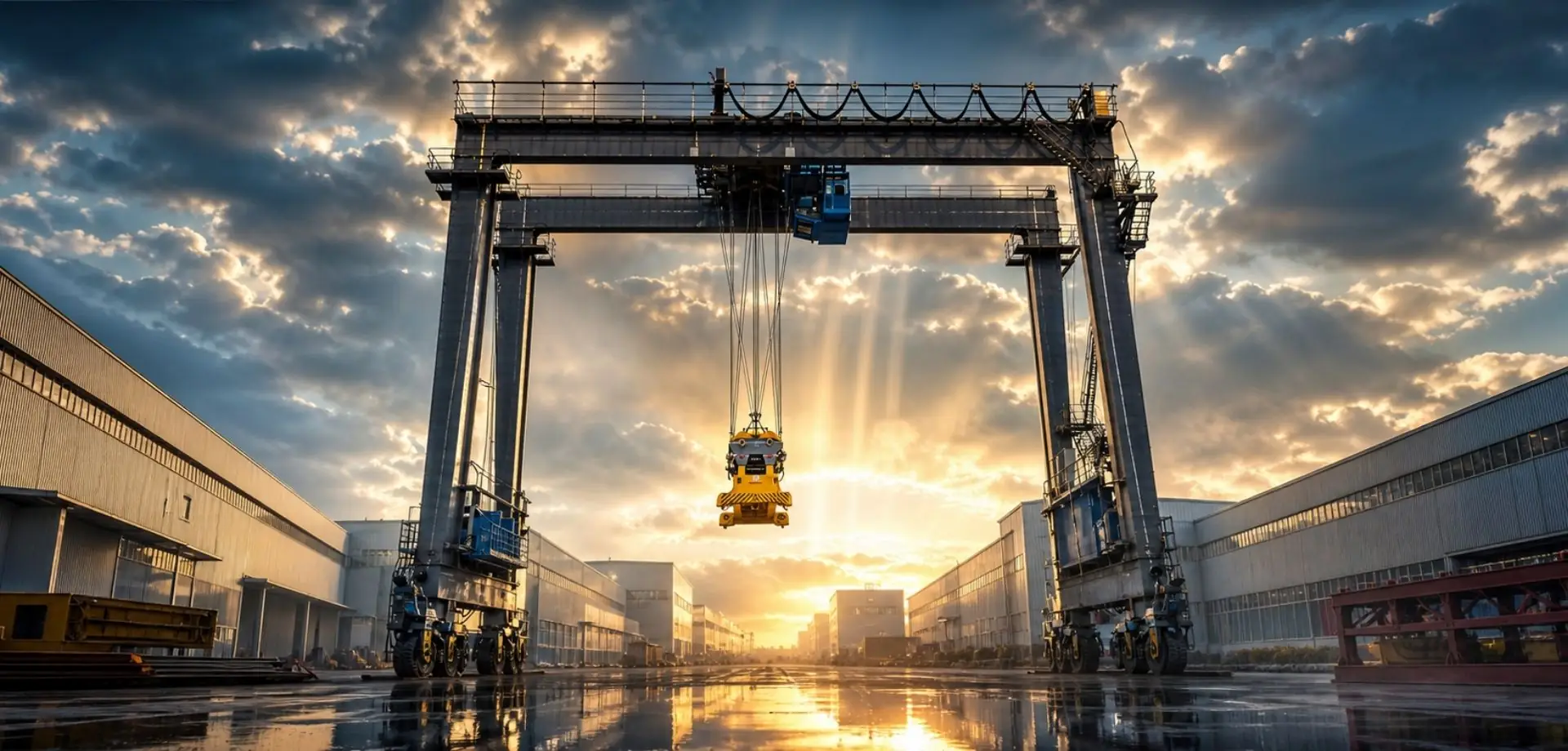
Explosion-Proof Electric Hoists: Site Suitability and Operating Preparation
A protected hoist needs to match the classified area and its intended lifting task. Confirm the site information, equipment documentation and operating responsibilities before reviewing installation, inspection and service requirements.
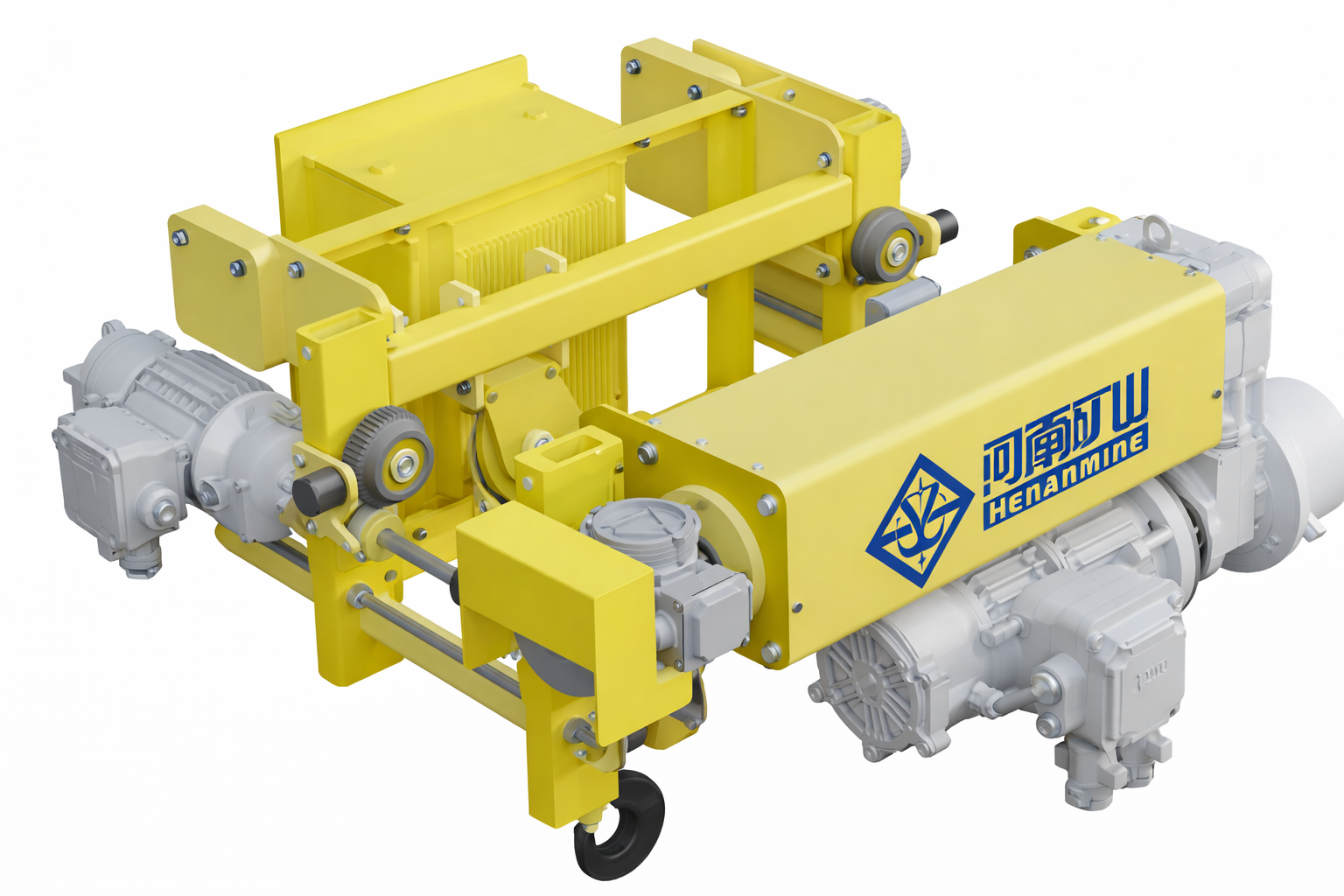
Key points for this crane project.
- What Is an Explosion Proof Electric Hoist?
- The 3 Engineering Principles Behind Explosion
- Hazardous Area Classifications: ATEX, IECEx, NEC/CEC
What Is an Explosion Proof Electric Hoist?
It works by containing, limiting, or isolating any internal spark, arc, or hot surface so it can never reach the surrounding atmosphere. It matters because in a classified hazardous area, an ordinary hoist motor is a legitimate ignition risk, not a theoretical one.
It's worth clearing up a common misconception early: explosion proof does not mean blast resistant. The hoist isn't designed to survive an external explosion. It's designed so that it never causes one.
Standard hoists fail this job in a few predictable ways: brush-type motors generate continuous sparking at the commutator, relay contacts arc every time they open or close, and surface temperatures on a hardworking motor can easily exceed the ignition temperature of common solvents or dusts. None of that matters in an open warehouse. All of it matters the moment flammable vapor or dust is in the air.
- An intrinsically safe or flameproof control box and pendant
- Spark-free hardware on moving parts (wheels, hooks, trolleys)
- Sealed cable entries and rigid conduit with seal fittings
The 3 Engineering Principles Behind Explosion Protection
Understanding them helps you evaluate whether a hoist actually fits your application — not just whether its spec sheet uses the right buzzwords.
| Principle | How It Works | Typical Component |
|---|---|---|
| Confinement | Contains an internal spark or explosion inside a flameproof enclosure so it can't ignite the outside atmosphere | Cast iron or aluminum flameproof motor and control box housings |
| Energy Limitation | Restricts electrical and thermal energy in the circuit below the level needed to ignite the atmosphere | Intrinsically safe circuits and barriers |
| Isolation | Physically prevents hazardous gas or dust from reaching a potential ignition source | Pressurization, purging, encapsulation, or sealed enclosures |
A well-built hoist often layers more than one principle. A flameproof motor (confinement) paired with an intrinsically safe remote control (energy limitation) is a common combination on modern units.
It helps to see how this plays out in practice. A flameproof motor housing is machined with tight, specific clearances along every joint, if gas inside ever ignites, the flame front cools and loses energy passing through that narrow gap, so it never reaches open air. An intrinsically safe pendant, by contrast, doesn't rely on a heavy enclosure at all. The circuit itself is designed so the maximum possible spark energy sits below what's needed to ignite the specified gas group, even under a fault condition like a short circuit. Isolation methods show up less often on hoists themselves but are common on associated control panels, where purging the enclosure with clean air or nitrogen keeps hazardous atmosphere out entirely.
Hazardous Area Classifications: ATEX, IECEx, NEC/CEC and GB3836
Before you can apply any best practice, you need to know which classification system governs your facility. The four systems below cover most of the world, and they don't always speak the same language.
| Standard | Region |
|---|---|
| ATEX (2014/34/EU) | European Union |
| IECEx | International |
| NEC/CEC | United States/Canada |
| GB3836 | China |
A few terms you'll see repeatedly on a hoist nameplate:
- Gas Group (IIA/IIB/IIC):How easily the specific gas ignites. IIC is the most restrictive, covering gases like hydrogen.
- Temperature Class (T1–T6):The maximum surface temperature the equipment is allowed to reach.
- Division:Zones (0/1/2) describe how often a hazardous atmosphere is present; Divisions (1/2) under NEC do the same with slightly different criteria.
Beyond gas group and temperature class, the nameplate also specifies the protection method, the actual engineering technique used to prevent ignition. These appear as a letter code right after "Ex":
| Code | Protection Method | How It Works |
|---|---|---|
| Ex d | Flameproof enclosure | Contains any internal explosion; flame can't escape through enclosure joints |
| Ex e | Increased safety | Extra design margin against overheating and arcing, typically used on terminal boxes |
| Ex i | Intrinsic safety | Limits electrical energy so a spark can never carry enough energy to ignite |
| Ex p | Pressurization | Keeps a protective gas inside the enclosure at higher pressure than the surroundings |
| Ex m | Encapsulation | Embeds electrical parts in a solid compound so gas or dust can't reach them |
| Ex n | Non-sparking | Built so normal operation produces no sparks; used in lower-risk Zone 2 areas |
Most explosion proof hoists combine Ex d on the motor and brake housing with Ex i on the control circuit, confinement for the high-power components, energy limitation for the low-power ones. Knowing this combination helps when you're comparing two hoists with similar nameplate summaries but different underlying engineering.
Explosion Proof vs. Weatherproof vs. Corrosion-Resistant: Don’t Confuse Your Ratings
Procurement teams sometimes treat rugged industrial hoist specs as interchangeable, and that's where mistakes start. These ratings solve completely different problems:
- IP ratings (e.g., IP65, IP66)describe protection against dust and water ingress. A hoist can be IP66-rated and still have zero explosion protection, IP ratings say nothing about ignition prevention.
- Corrosion-resistant coatings or stainless constructionaddress chemical exposure and longevity, not spark or heat containment.
- Ex/ATEX/IECEx/NEC hazardous-location ratingsare the only ones that actually address ignition risk in classified zones.
A hoist can legitimately carry several of these ratings at once, for example, an offshore platform unit might need both an Ex d rating for the hazardous zone and a high IP rating for saltwater spray exposure. The mistake is assuming one substitutes for the other. If a spec sheet emphasizes rugged or weatherproof language without an explicit Ex/ATEX/IECEx marking and certificate number, it almost certainly isn't rated for hazardous-area use.
Industries That Require Explosion Proof Hoists
Combustible dust and flammable gas hazards show up in more industries than most people expect. OSHA's hazard guidance lists agriculture, chemicals, food production, grain handling, pharmaceuticals, metal processing, and fossil fuel power generation among the sectors at risk for dust-related fires and explosions.
In practice, Henan Mine Crane explosion proof hoists are standard equipment in:
- Oil & gas and petrochemical facilities:Refineries, offshore platforms, and tank farms routinely classify entire process areas as Zone 1 or Zone 2 because of volatile hydrocarbon vapors.
- Chemical manufacturing plants:Solvent handling, reactor loading, and drum transfer operations where flammable vapors can accumulate around fixed equipment.
- Mining operations:Underground coal mines carry ongoing methane risk, while both underground and surface operations can see coal dust accumulate in confined areas.
- Grain elevators and food processing:Flour, sugar, and grain dust create some of the most severe deflagration hazards in industry, since fine organic particulates ignite easily once suspended in air.
- Pharmaceutical manufacturing:Flammable solvents used in tablet coating, extraction, and equipment cleaning processes.
- Paint and coating lines:Spray booths can reach the lower explosive limit for airborne VOCs quickly in an enclosed space.
If your facility has a documented hazardous area classification study covering any zone of your plant, that zone needs explosion proof lifting equipment, full stop.
Best Practice 1: Select the Right Hoist for the Zone
Selection mistakes are the root cause of most explosion-protection failures, because everything downstream depends on getting this step right. Use this checklist:
- Match zone, gas group, and temperature class exactly,don't round up or assume a more protected rating automatically covers your application.
- Verify third-party certification documents, not just the marketing claim. The nameplate marking must match the certificate.
- Size for duty cycle, using FEM or CMAA duty classifications, not just maximum load capacity.
- Choose the right control method. A radio remote keeps the operator physically outside the hazardous zone, a pendant control needs to be rated for the same zone as the hoist itself.
- Never upgrade a standard hoistwith aftermarket explosion-proof parts.
New vs. Retrofitted Hoists: What the Standards Actually Allow
Facilities under budget pressure sometimes ask whether an existing standard hoist can be converted for hazardous-area use instead of buying new. The honest answer: rarely, and not the way most people imagine it.
Swapping a standard hoist's motor for a flameproof one doesn't transfer the certificate, because the rest of the assembly, gearbox housing, terminal box, cable entries, was never tested as part of that protection system.
- Buying a factory-built Henan Mine Crane manufacturedexplosion proof hoist from a manufacturer that holds the actual ATEX, IECEx, or NEC certificate for that specific model.
- De-rating an existing hoist's duty cycleto extend service life. This doesn't change its hazard rating, but it's a legitimate way to reduce thermal stress in borderline applications.
Best Practice 2: Install It to the Hazardous Area Drawing
Installation in a classified area isn't a general electrician's job, it requires someone qualified in hazardous location wiring methods.
- Install strictly according to your facility's hazardous area classification drawing, not a generic layout.
- Use rigid conduit with seal fittings at the required distance from the enclosure, per code, to prevent gas or flame propagation through the conduit run.
- Bond and ground every component; static discharge is its own ignition risk independent of the electrical system.
- Confirm ambient temperature and altitude derating,a hoist certified at sea level may need a different rating at higher elevation or temperature.
- Run a full commissioning inspection before energizing the unit for the first time, and document it.
Best Practice 3: Operate Within Strict Limits, Every Time
- Run a pre-use visual and functional check before every shift,limit switches, hook, chain or rope condition, and unusual smells or discoloration.
- This preserves thermal margin in the motor and reduces overheating risk.
- Never bypass, wire around, or disable an overload limiter or limit switch, even temporarily. These devices exist specifically to prevent the shock loads and friction events that can generate sparks.
- If the hoist shows abnormal heat, noise, or smell, stop operation immediately. Do not resume use until a qualified person identifies and corrects the cause.
- Where possible, keep the operator outside the classified zone using a remote control rated for that purpose.
Best Practice 4: Maintain and Inspect on a Documented Schedule
| Frequency | What to Check |
|---|---|
| Daily (pre-shift) | Visual inspection, functional test of brakes and limit switches, listen for abnormal sounds |
| Monthly | Hook and chain/rope wear, brake function, electrical connections, seal integrity |
| Annual (qualified person) | Flameproof joint surfaces, enclosure gaskets and IP ratings, torque specs on enclosure fasteners, full load test |
A few maintenance rules specific to hazardous-area equipment:
- Substitutions,even ones that look identical, can change clearances on flameproof joints by fractions of a millimeter, which is enough to void protection.
- Never repaint, re-machine, or sand a flameproof joint surface without manufacturer guidance.
- Keep written maintenance records. If certification is ever questioned, documentation is your proof of compliance.
Documentation to keep on file for every unit:
| Document | Purpose |
|---|---|
| Original test certificate (ATEX/IECEx/NEC) | Proves the as-built unit meets its claimed rating |
| Installation commissioning report | Confirms correct setup against the hazardous area drawing |
| Inspection log (daily/monthly/annual) | Demonstrates ongoing compliance and catches developing issues early |
| Repair/parts replacement record | Shows which parts were used and confirms they were OEM-certified |
| Operator training records | Confirms personnel were qualified to use the equipment |
In an audit, or after an incident, this paperwork is what separates a defensible safety program from a liability problem.
Operator Training and Certification Requirements
A hoist can be perfectly selected, installed, and maintained, and still cause an incident if the person operating it doesn't understand why hazardous-area rules exist.
- Pre-use inspection procedure and what to do if it fails,specifically, who to notify and how the unit gets tagged out of service.
- Emergency stop procedures and lockout/tagout before any service work, including isolating power at the source rather than relying on the hoist's own controls.
- Why standard repair parts and field modifications are prohibited, framed around the actual mechanism (voided clearances, altered energy limits) rather than just company policy.
- How to recognize signs of atmosphere changes,gas alarms, dust accumulation, unusual odors, relevant to the specific work area.
Many facilities align refresher training with their annual equipment inspection cycle, so operators are re-evaluated on the same schedule the equipment is.
Common Mistakes That Compromise Explosion Protection
These are the failure points that show up again and again in field audits:
- Even a visually identical bolt can have different thread engagement that changes a flameproof joint's tested clearance.
- Damaging flameproof joint surfaces:During cleaning, repainting, or repair.
- Mismatching gas group or temperature class:Using a T3-rated hoist where the area requires T4. This is most common when a hoist is moved from one part of a facility to another without re-checking the local classification.
- Skipping certificate verification at purchase:Trusting a marketing claim instead of the actual test certificate. "Explosion proof" on a product page isn't the same as a certificate number you can verify with the issuing body.
- Letting untrained staff perform field fixes:On hazardous-area equipment.
- Worn seals and degraded gaskets don't announce themselves until they've already compromised protection.
Discuss the crane arrangement for your project.
A protected hoist needs to match the classified area and its intended lifting task. Confirm the site information, equipment documentation and operating responsibilities before reviewing installation, inspection and service requirements. Share the load, available drawings, working cycle and site conditions with Henan Mine Crane so the required configuration and supply boundary can be discussed.
Related crane configurations
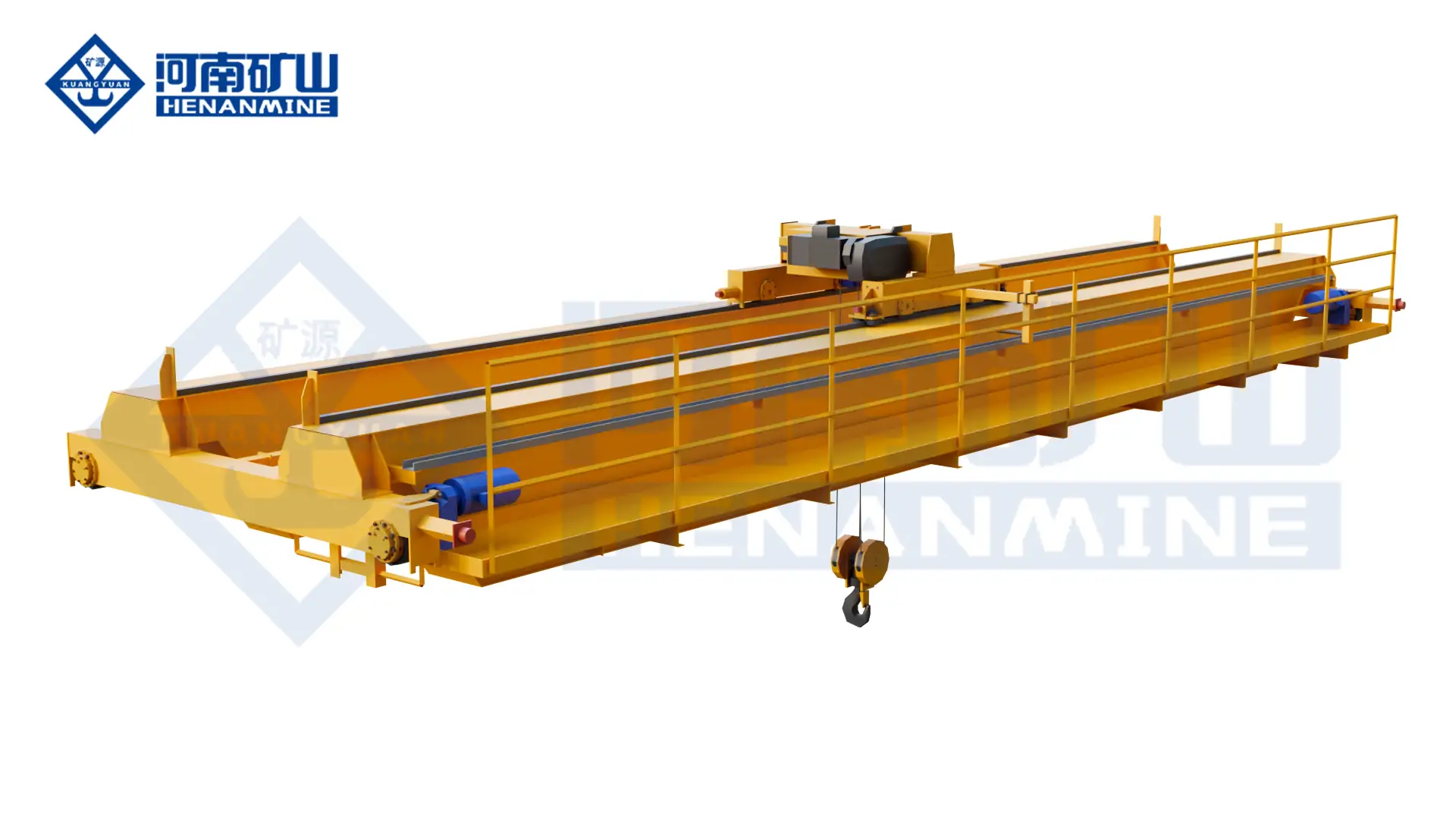
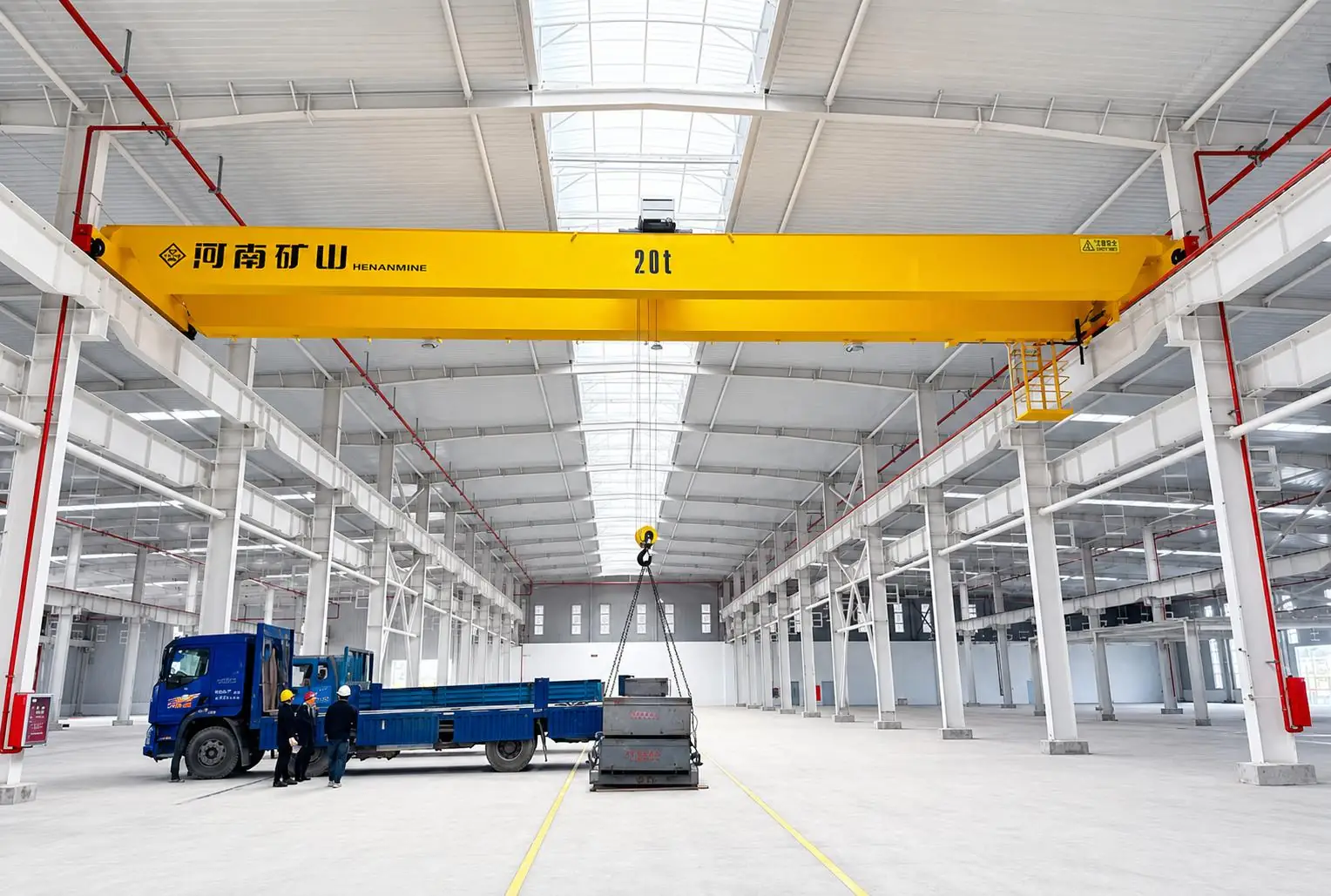
Explosion Proof Electric Hoist Bridge Crane
View product parametersUse an electric-hoist bridge arrangement for a declared hazardous area. The hoist, drives, controls and electrical installation are specified for the area classification and lifting duty.
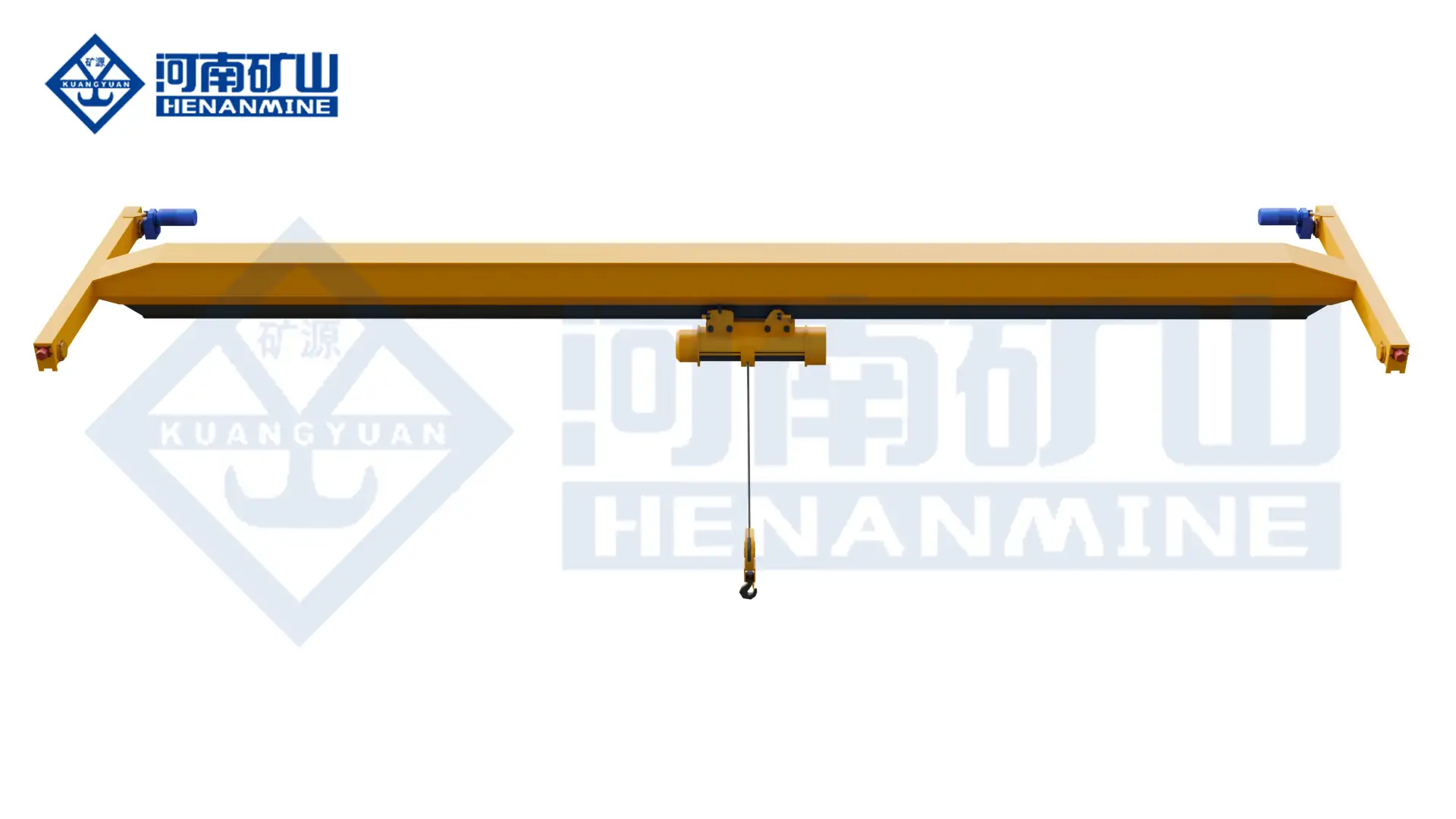
Explosion-Proof Electric Hoist
View product parametersSpecify an explosion-proof electric hoist for the declared load, mounting arrangement and hazardous area. Coordinate the hoisting mechanism, trolley, controls and electrical protection with the installation.
Updated 2026 · Henan Mine Crane