Engineering · Manufacturing · Project support
info@hnksglobal.comWhatsApp +86 18836207779 ↗

Blog

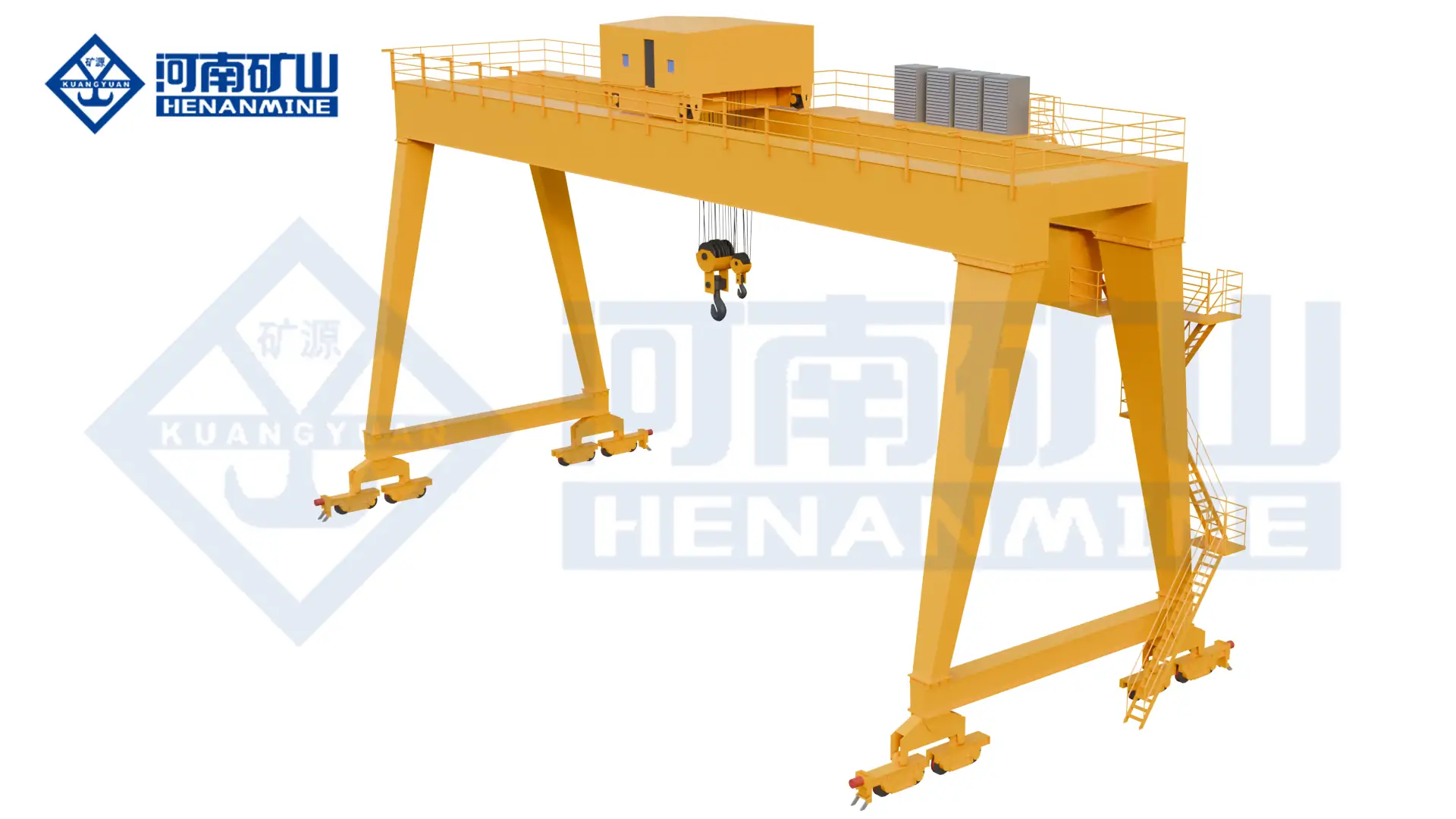
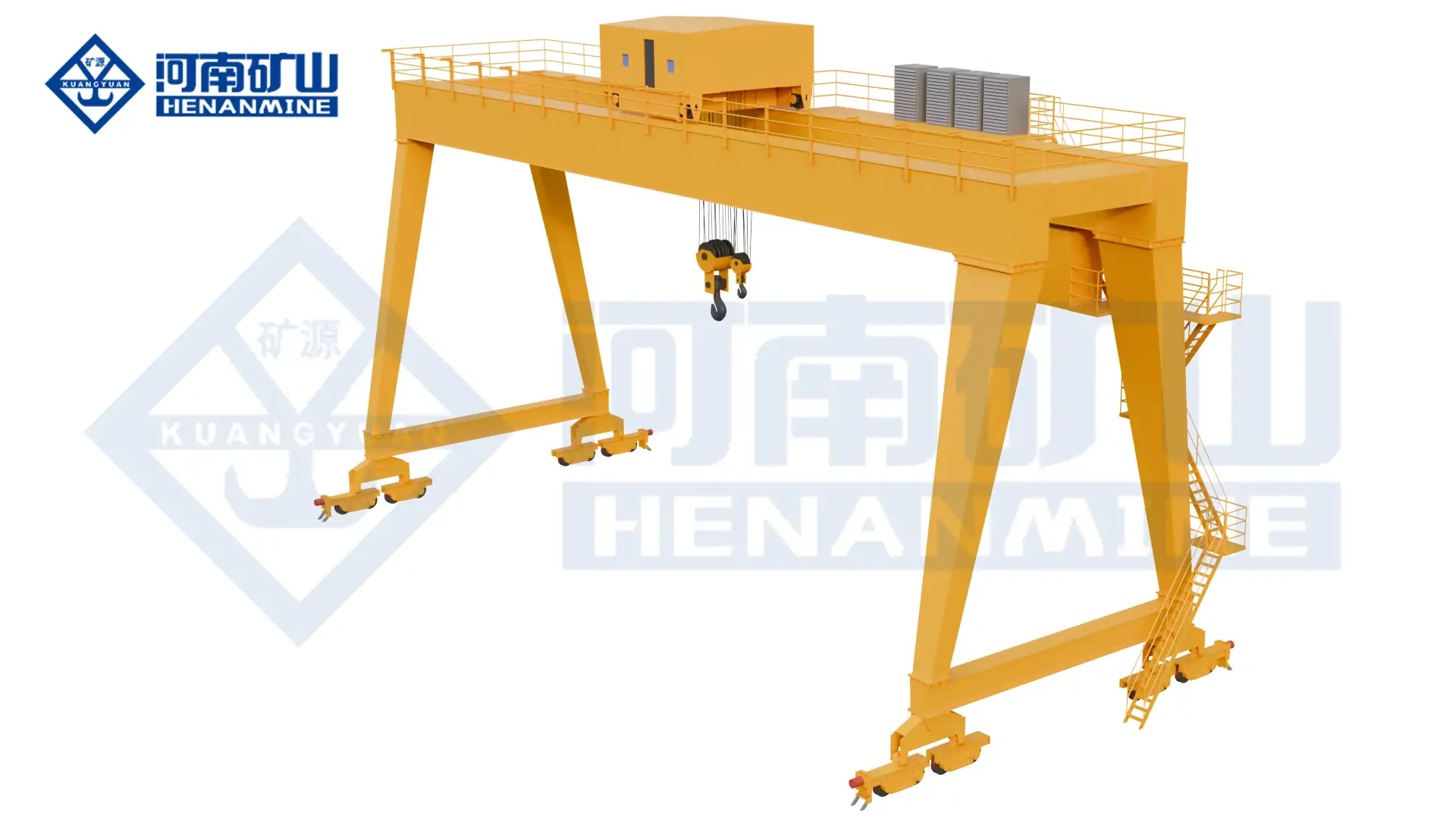
  • Truss Gantry Crane

    Truss Gantry Crane

    Gantry Cranes / Henan Mine Crane

    Truss Gantry Crane

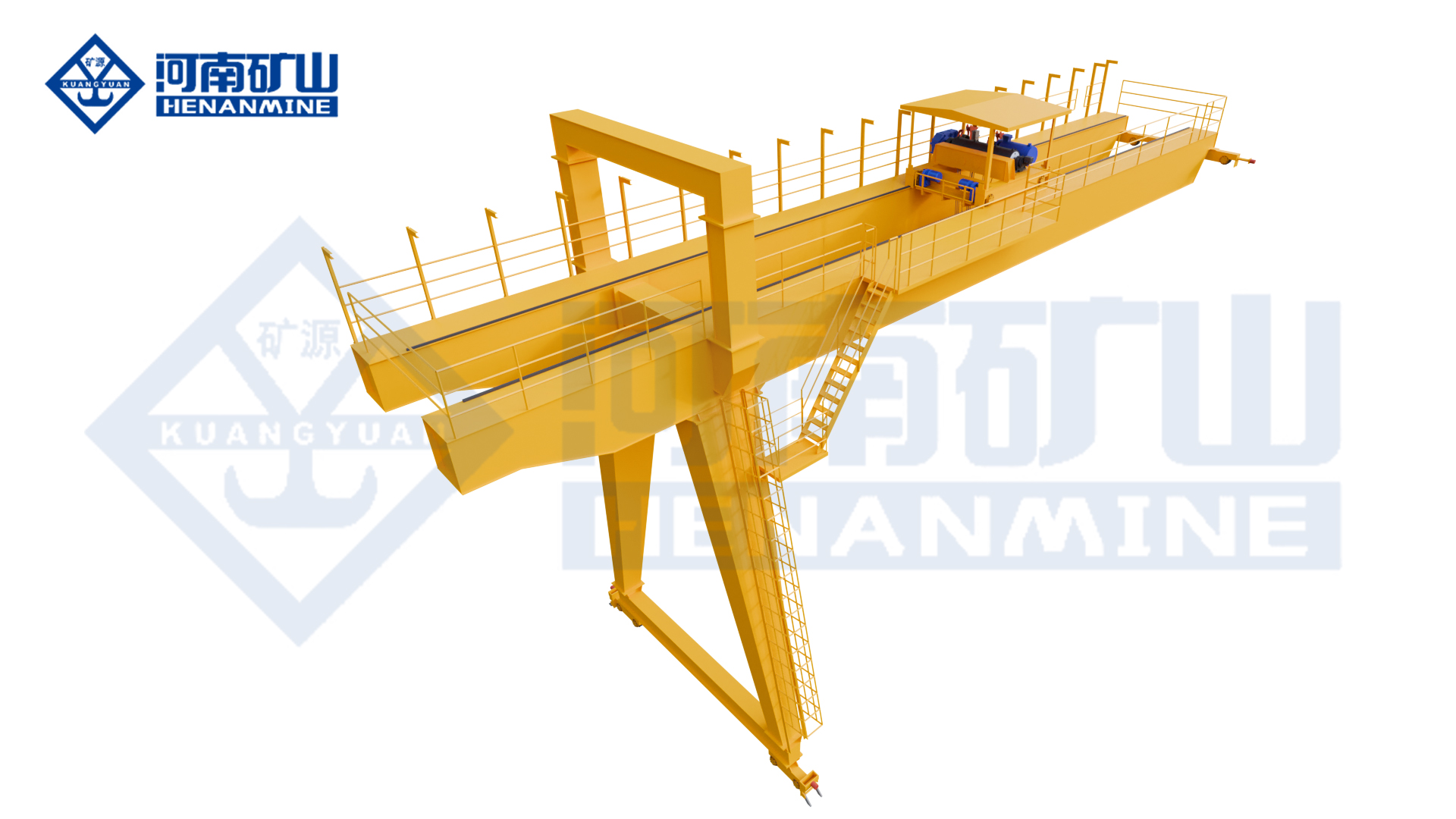
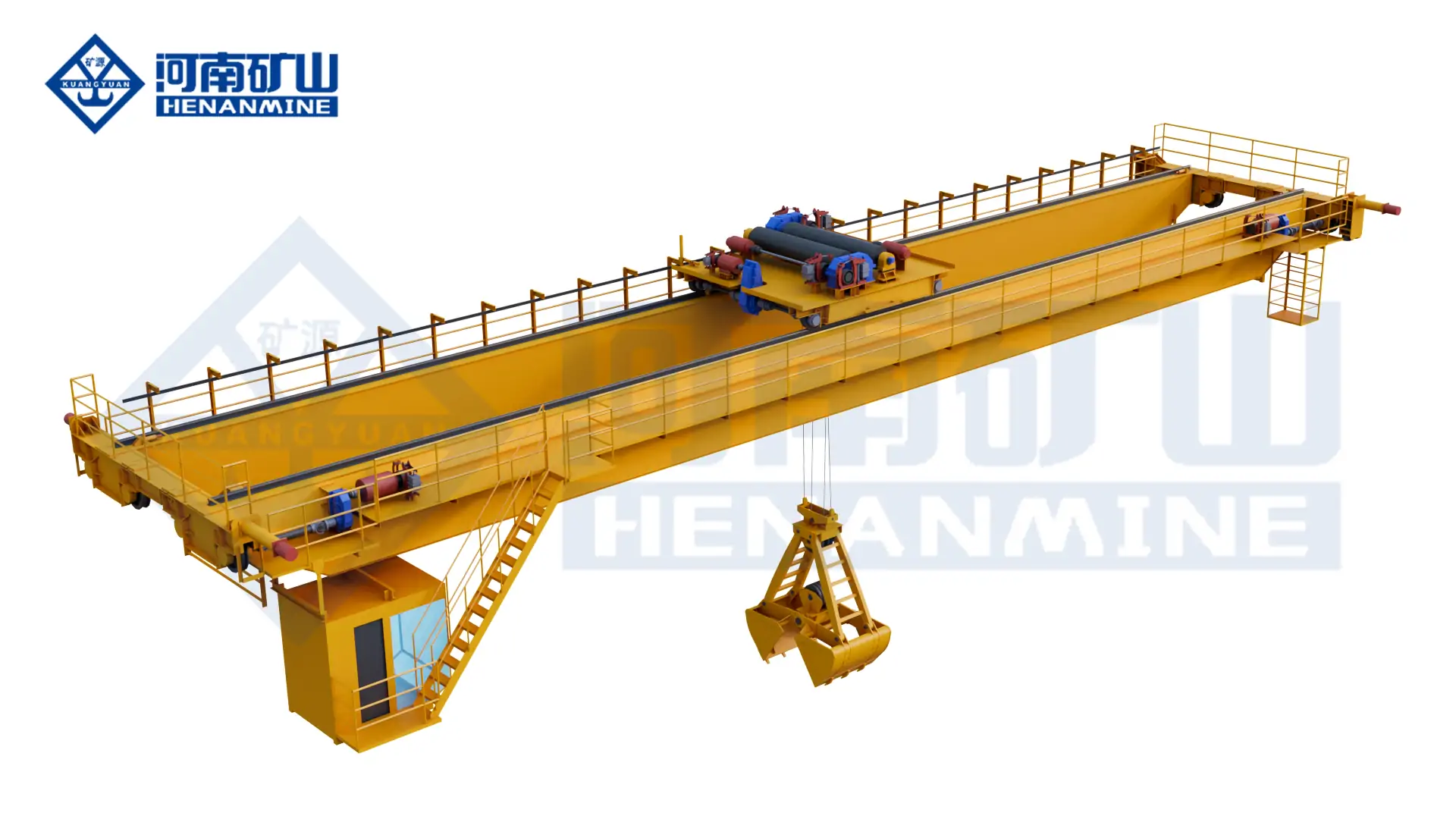
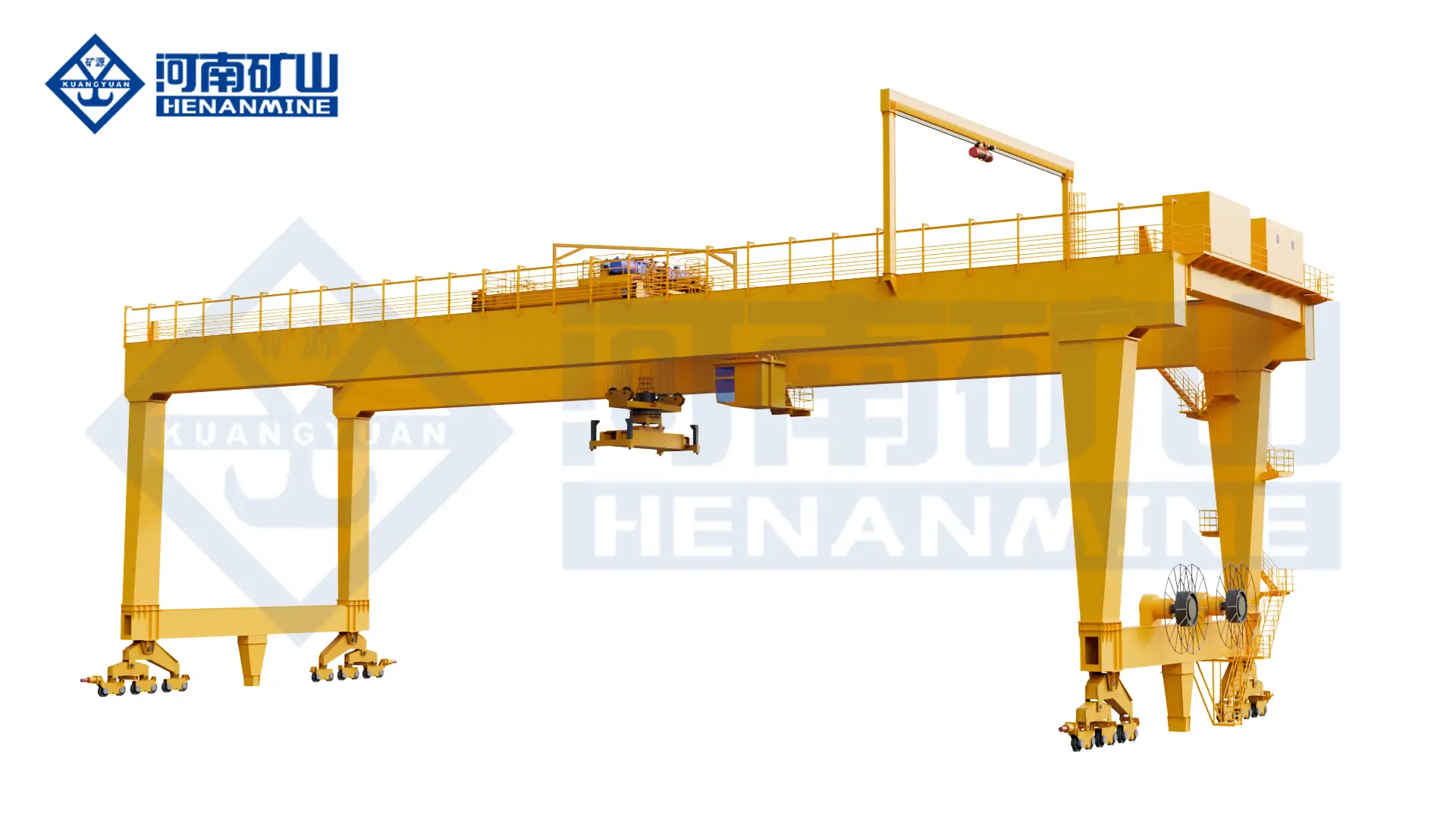
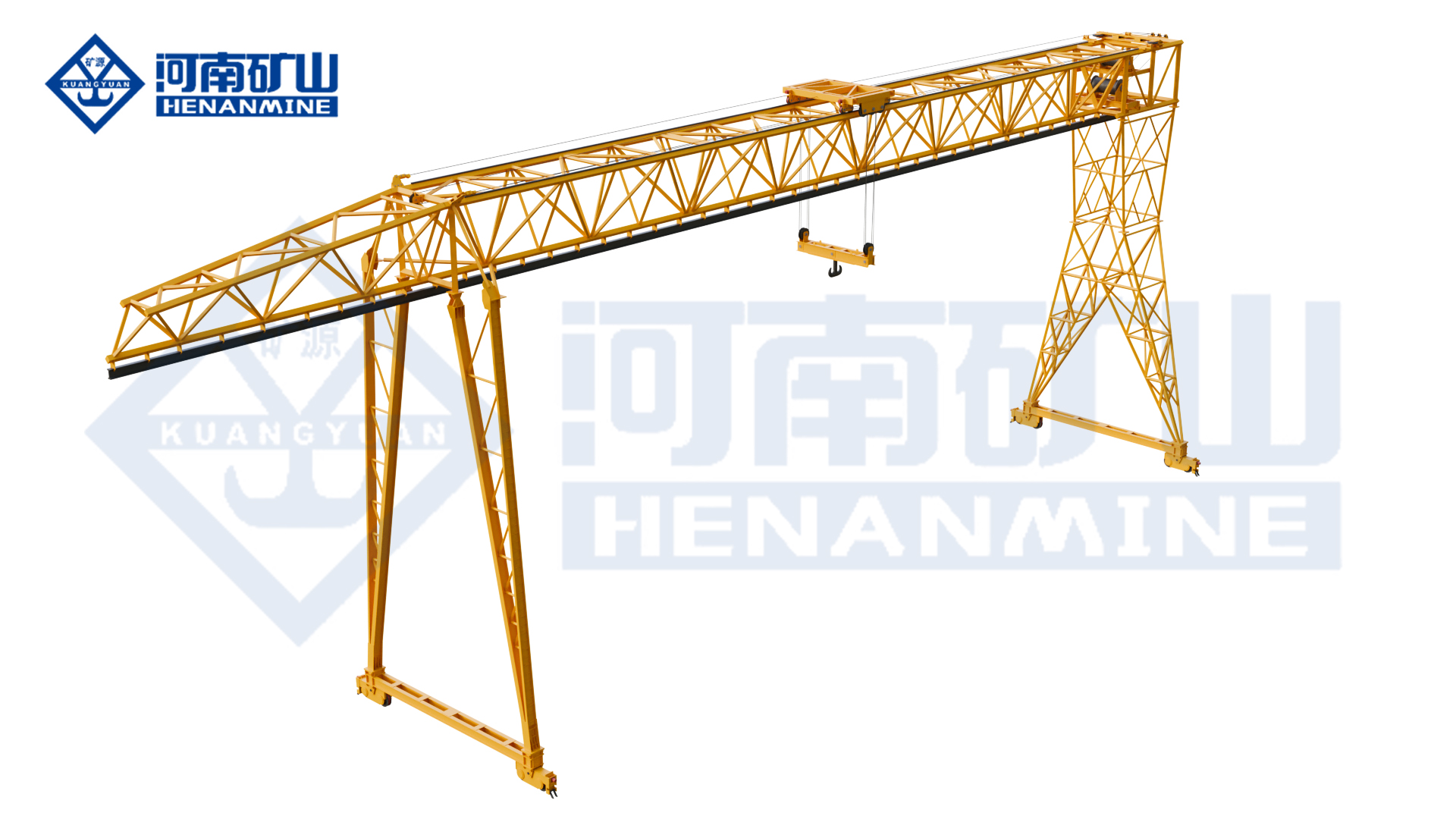
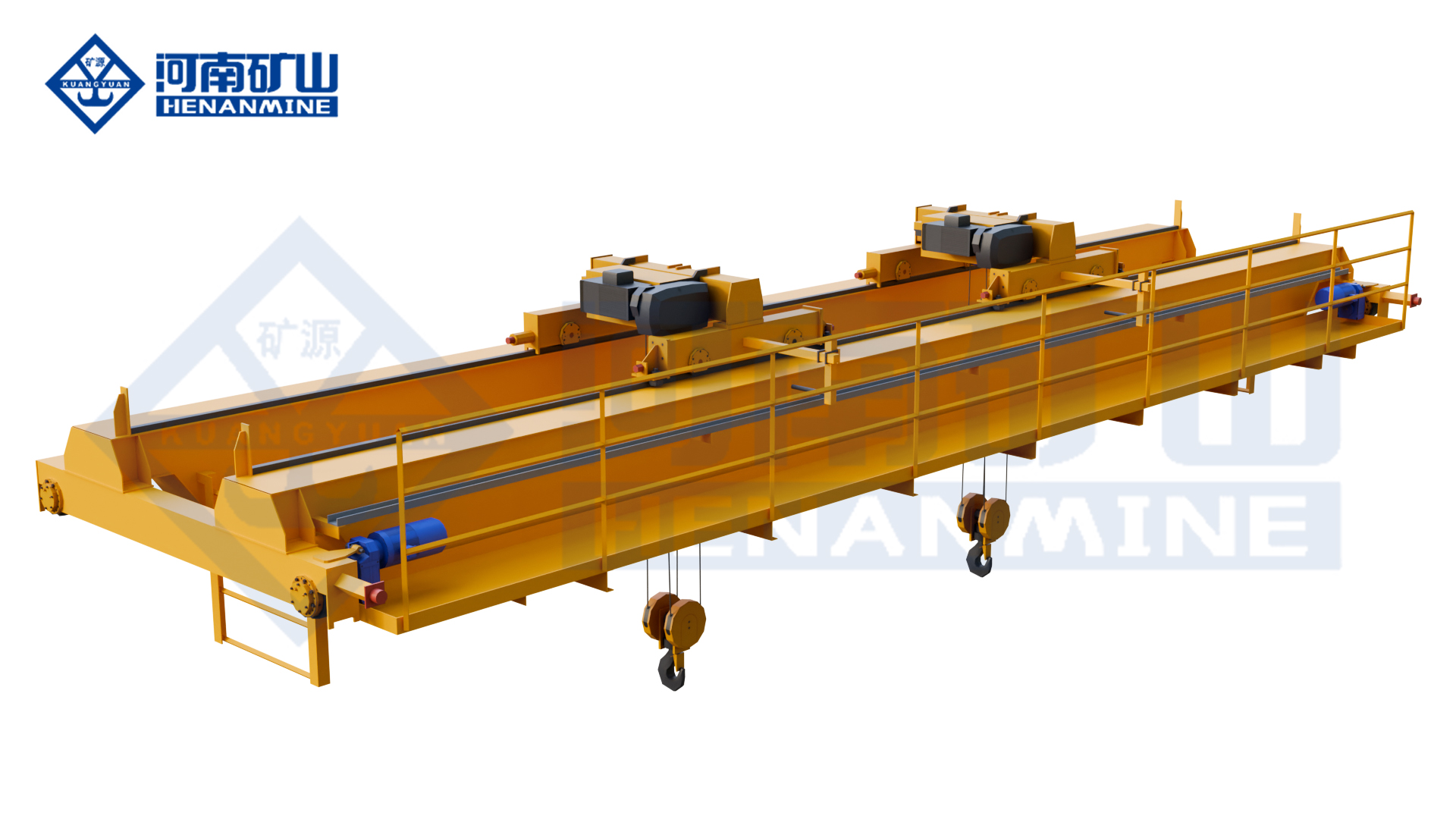
    Handle yard materials with a truss-structure gantry crane matched to the load and working area. Define lifting coverage, leg geometry and the transport or assembly arrangement for the site.

    Lifting capacity5 – 100 t
    Span18 – 35 m
    Working classSpecified for the project
    Technical specifications

    Define the total suspended load, duty and site conditions for your project.

    Technical specifications

    Check the load.
    Plan the configuration.

    Parameters and equipment options are matched to the application and confirmed in the technical proposal.

    Discuss your configuration
    Lifting Capacity5 – 100 t
    Span18 – 35 m
    Lifting Height6 – 30 m
    Working Temperature Range-20℃ ~ 40℃
    Lifting Speed0.1 – 8 m/min
    Traveling Speed5 – 40 m/min (Long Travel); 3 – 20 m/min (Trolley Travel)
    Control ModeCab control, wireless remote control, or both
    Protection ClassIP54(Electrical Components)
    Motor TypeYE4 ultra-high efficiency energy-saving motor

    Final parameters, dimensions, wheel loads and supply scope follow the approved project specification.

    Application & operation

    Matched to the handling task.

    Storage and loading yards

    Move declared loads between pickup, storage and vehicle positions.

    Construction handling

    Coordinate the crane envelope and runway with the site lifting task.

    Selection considerations

    Start with your operating conditions.

    01

    Load & lifting arrangement

    Specify workpiece dimensions, suspended load and lifting points. Include lifting-appliance weight and the required lifting positions.

    02

    Site & available space

    Provide span, leg clearance, runway layout and assembly access. Coordinate the installation interfaces with the available site drawings.

    03

    Duty & control sequence

    Define lifting cycle, outdoor exposure and control method. Identify the required movements and control interfaces in the enquiry.

    Configuration comparison

    Compare related lifting arrangements.

    Crane arrangementHandling configuration
    Truss Gantry CraneHandle yard materials with a truss-structure gantry crane matched to the load and working area. Define lifting coverage, leg geometry and the transport or assembly arrangement for the site.
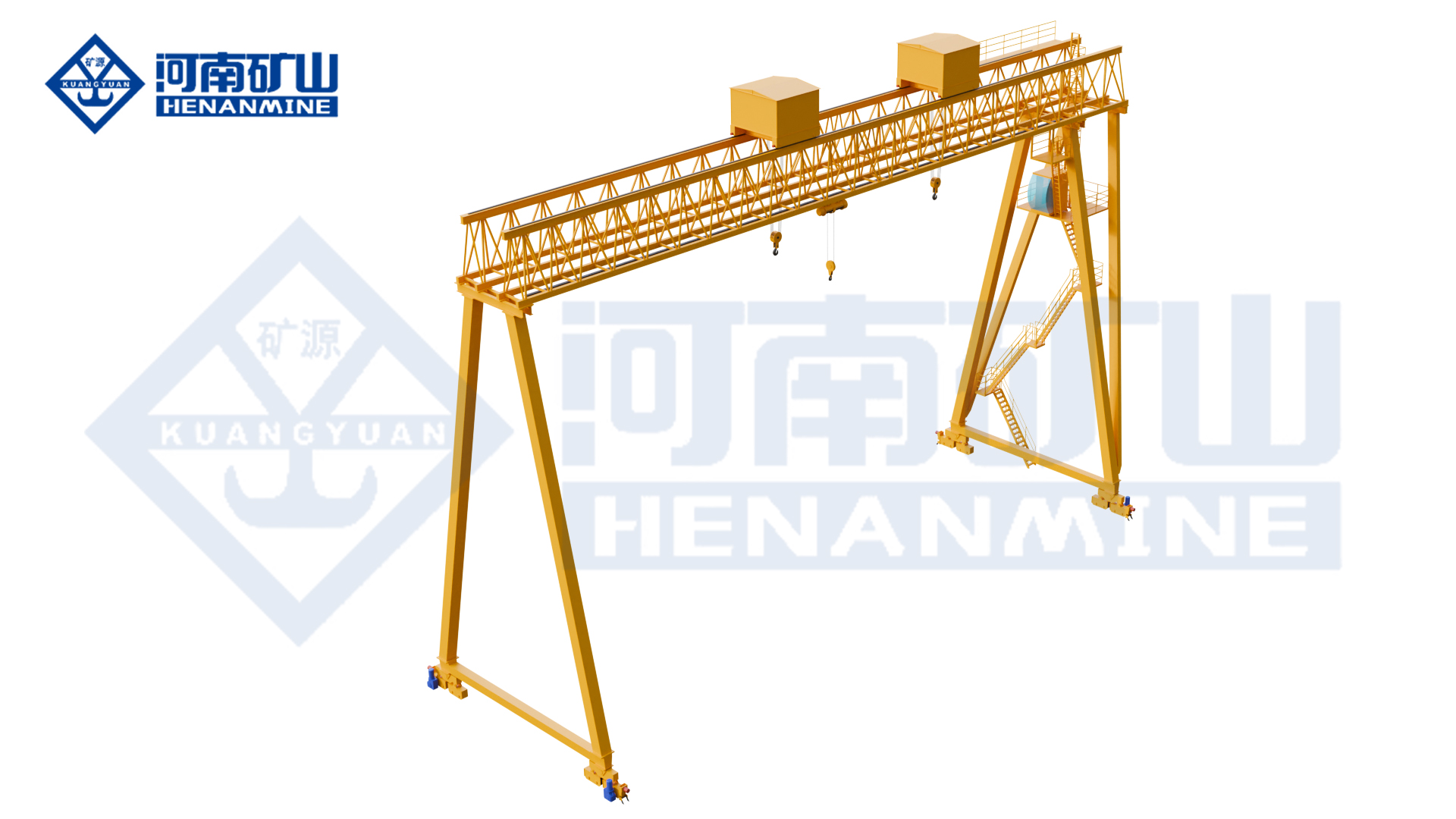
    Double Girder Truss Gantry CraneUse a double-girder truss gantry for yard or construction handling with the lifting points specified for the load. Define trolley quantity, coordinated movements and the transport or assembly constraints.
    Double Girder Gantry CraneHandle machinery, steelwork and other heavy loads with a double-girder gantry crane. The lifting mechanism, runway, legs and any cantilevers are selected for the complete yard operation.
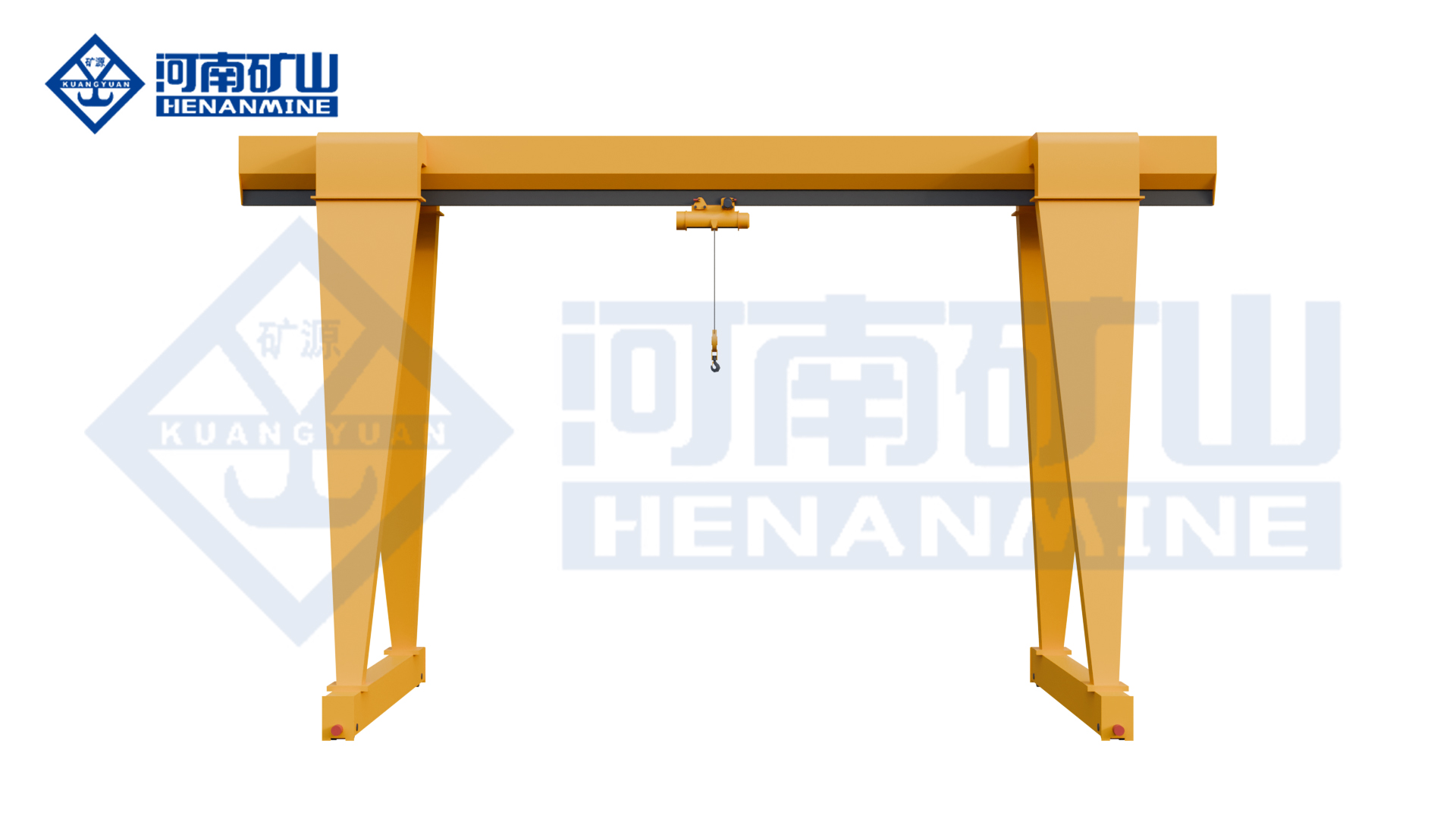
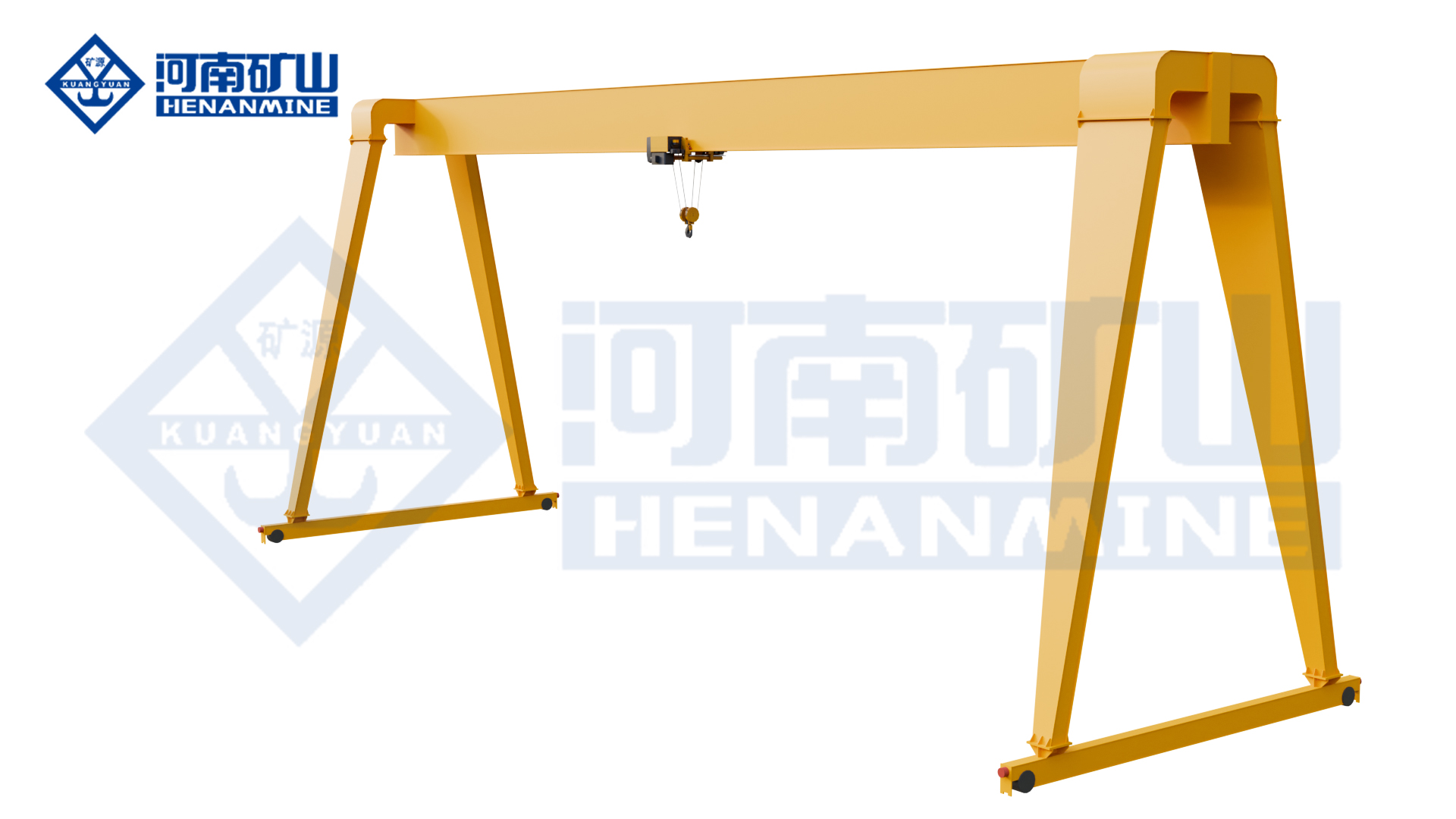
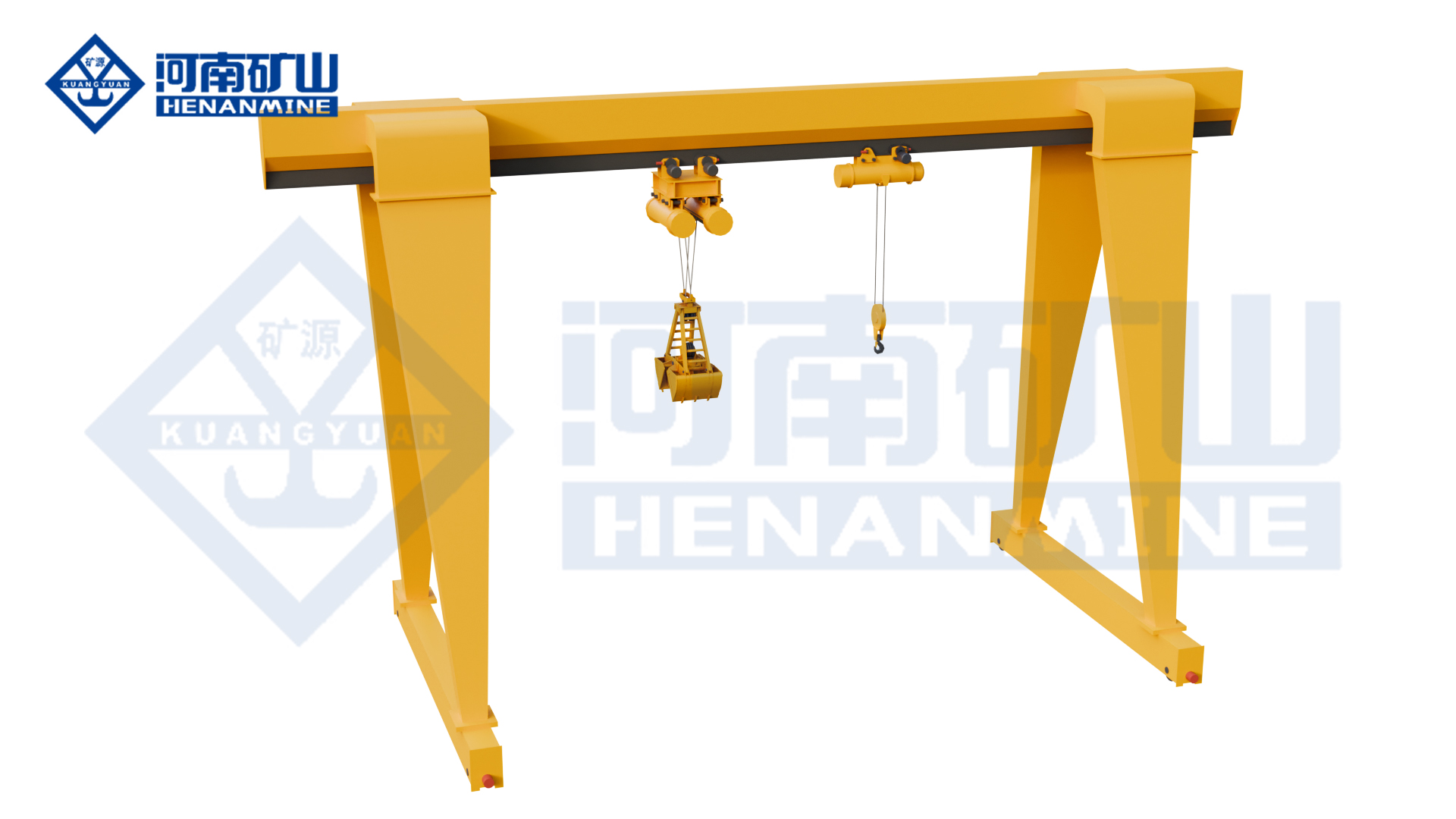
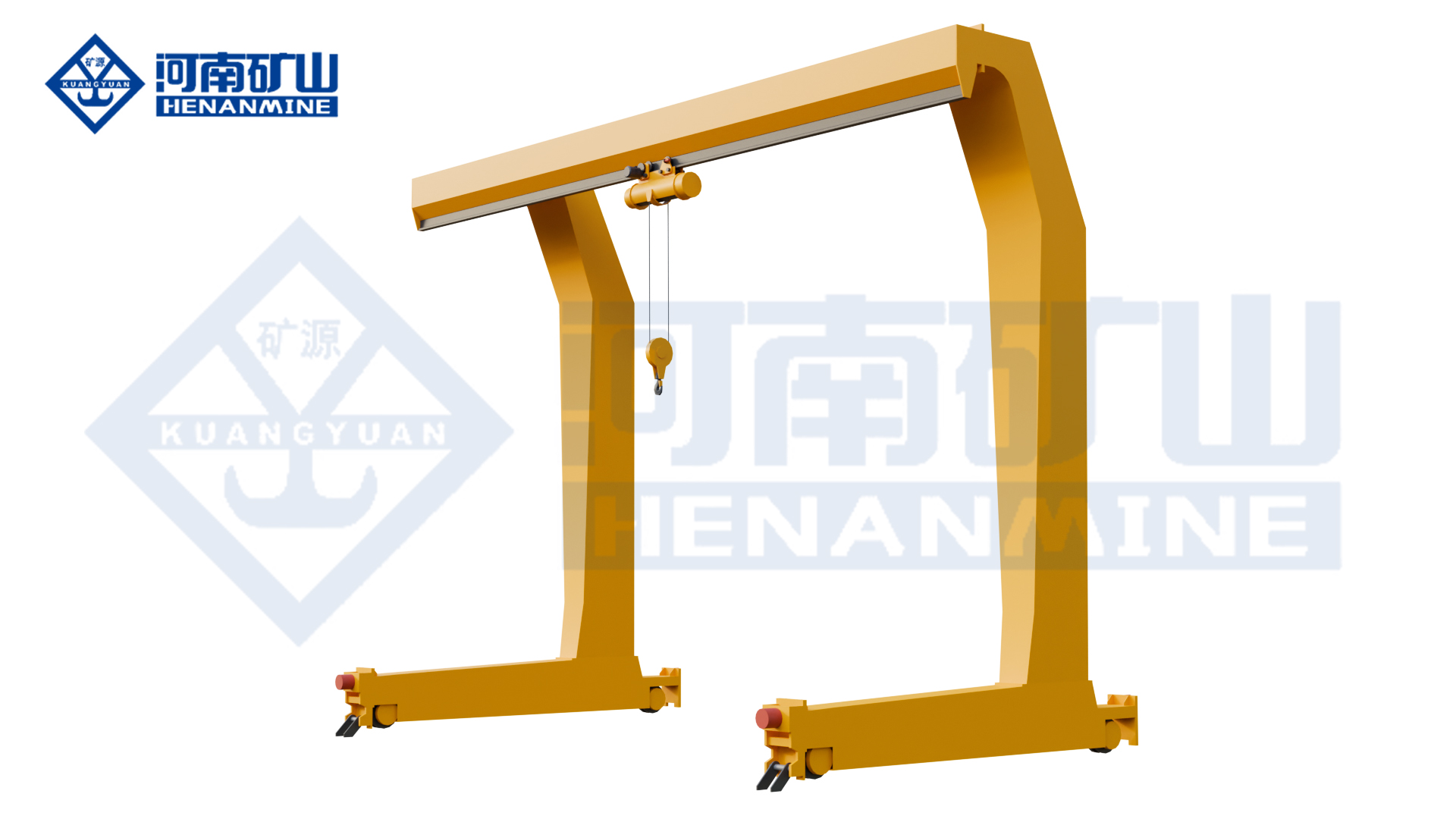
    Single-Girder Gantry CraneCover an outdoor working area with a single-girder electric-hoist gantry crane. Coordinate span, lifting height, leg geometry and any cantilever coverage with the yard and loading route.

    Operating protection & lifecycle support

    Plan beyond the equipment.

    01

    Operating protection

    Define travel limits, overload protection, traffic clearances and the outdoor operating limits for the proposed arrangement.

    02

    Installation & commissioning

    Agree rail foundations, runway alignment, wheel-load interfaces, erection access, electrical connections and commissioning responsibilities.

    03

    Inspection & spares

    Plan inspection and maintenance of truss connections, trolley equipment and gantry travel assemblies. Agree service access, documentation and the required spare-parts scope.

    Questions before the order

    Clarify the details
    that shape the crane.

    What information is needed for a truss gantry crane quotation?+

    Provide workpiece dimensions, suspended load and lifting points; span, leg clearance, runway layout and assembly access; and lifting cycle, outdoor exposure and control method. Include drawings and the project destination when available.

    What installation information is needed for a truss gantry?+

    Provide the runway layout, assembly area, lifting access and site constraints. The proposed structure, connections and erection sequence must be coordinated with those conditions.

    What installation and support scope should be agreed?+

    Agree rail foundations, runway alignment, wheel-load interfaces, erection access, electrical connections and commissioning responsibilities. Specify the documentation, training and spare-parts support needed for the project.

    Related equipment

    Explore the alternatives.
    Let’s discuss your project

    The right crane starts
    with your lifting task.

    Share workpiece dimensions, suspended load and lifting points, together with your site layout and operating cycle.
    info@hnksglobal.com
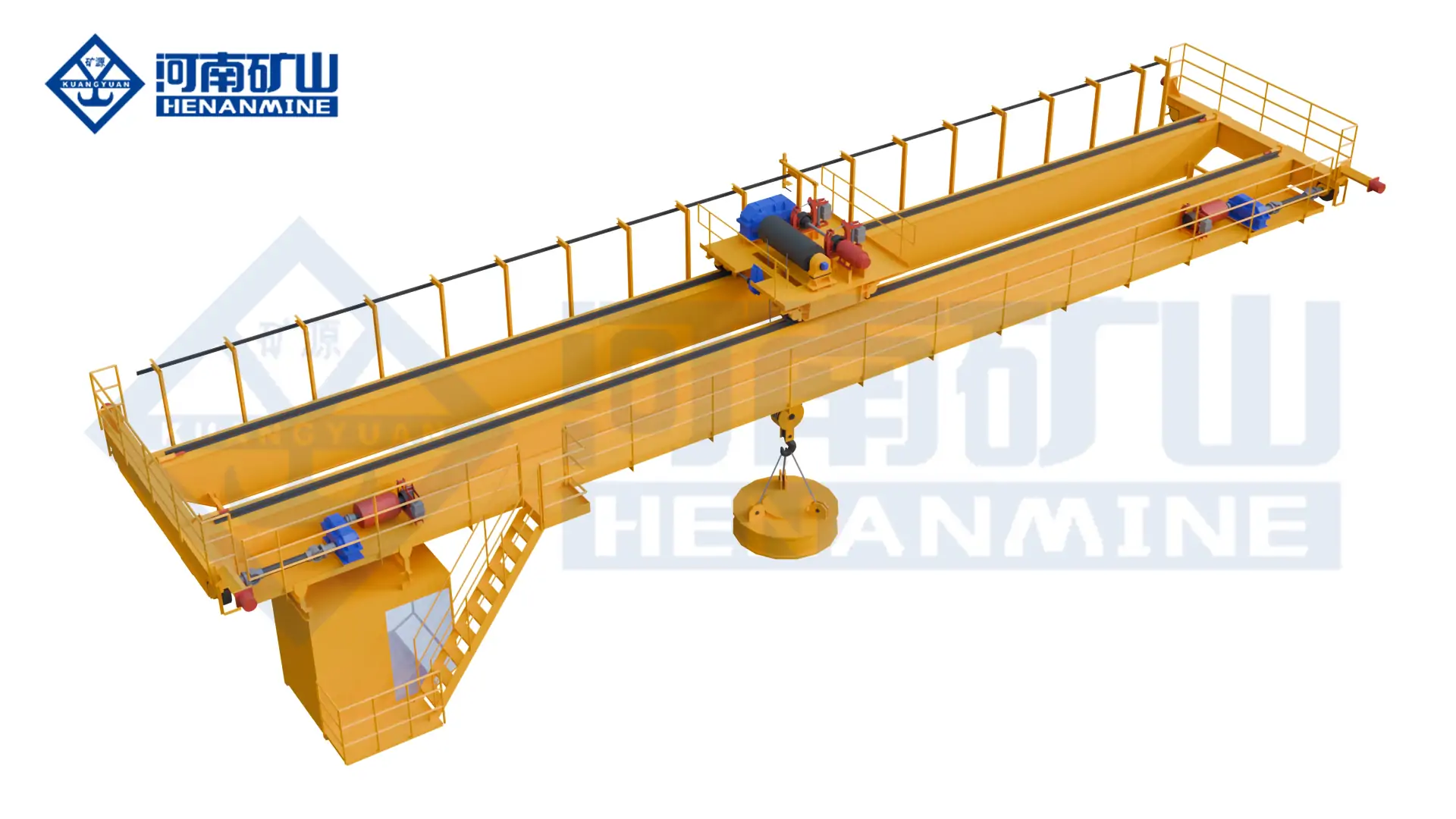
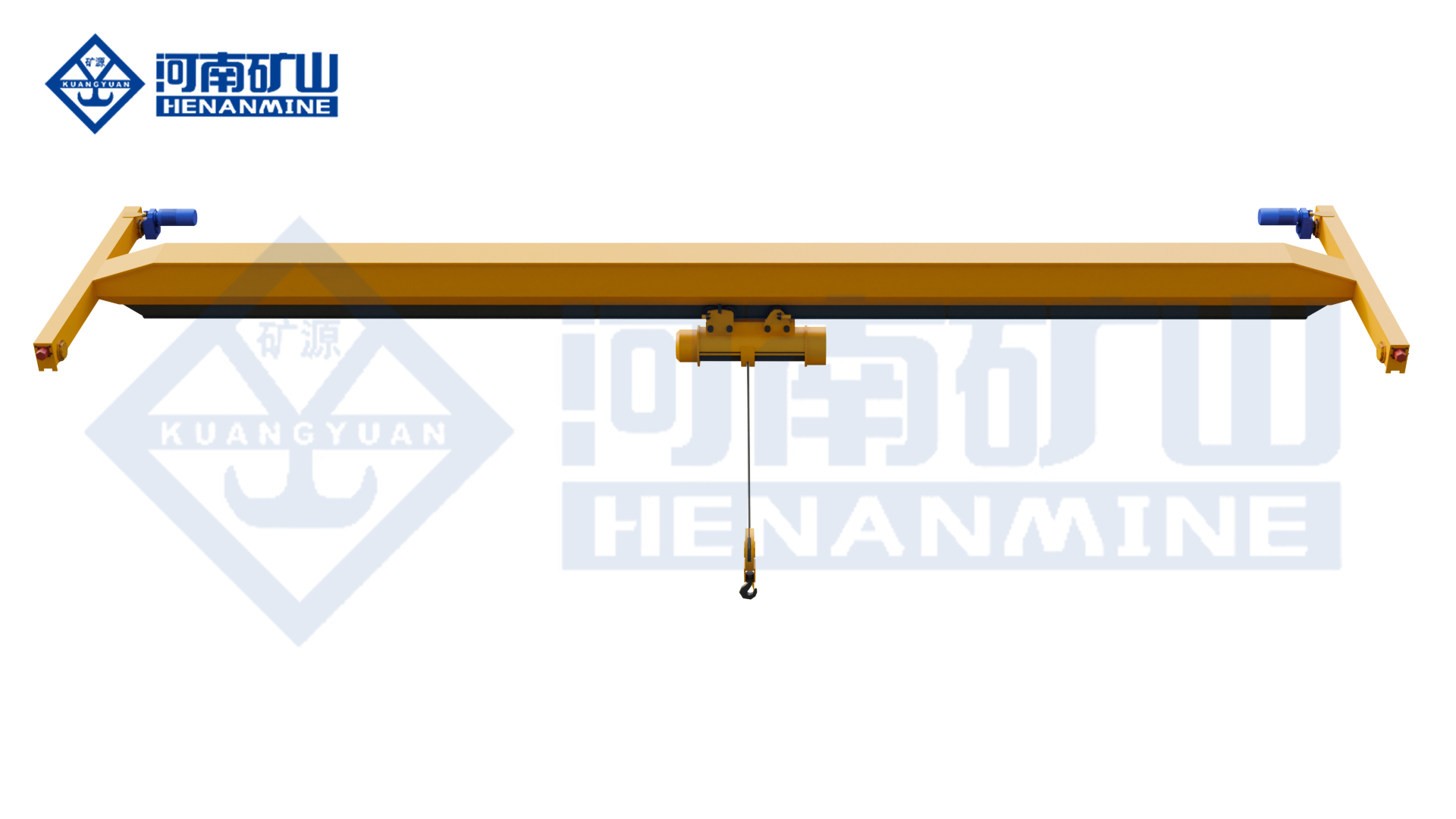
  • Three Trolley Electric Hoist Crane

    Three Trolley Electric Hoist Crane

    Overhead Cranes / Henan Mine Crane

    Three Trolley Electric Hoist Crane

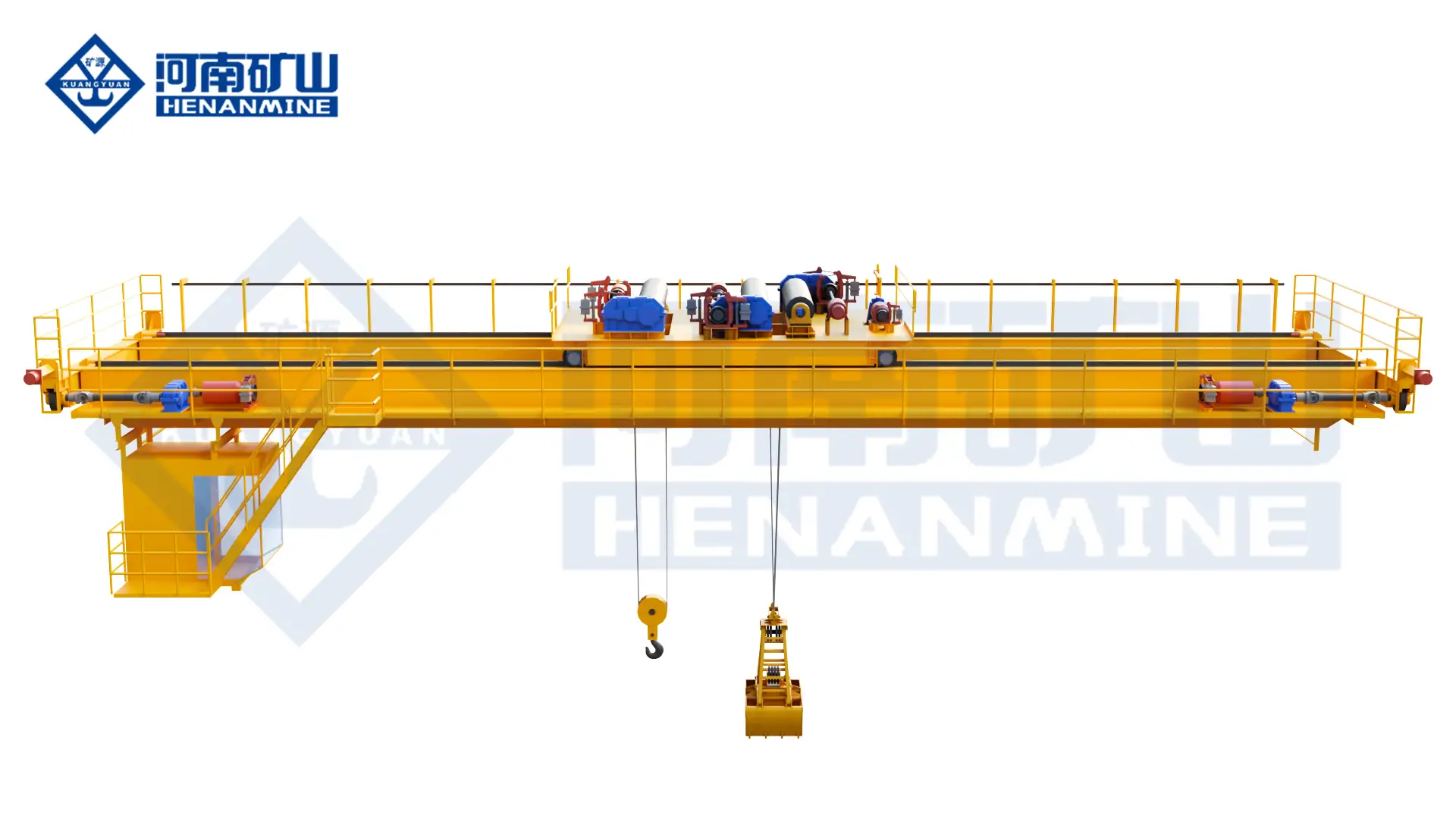
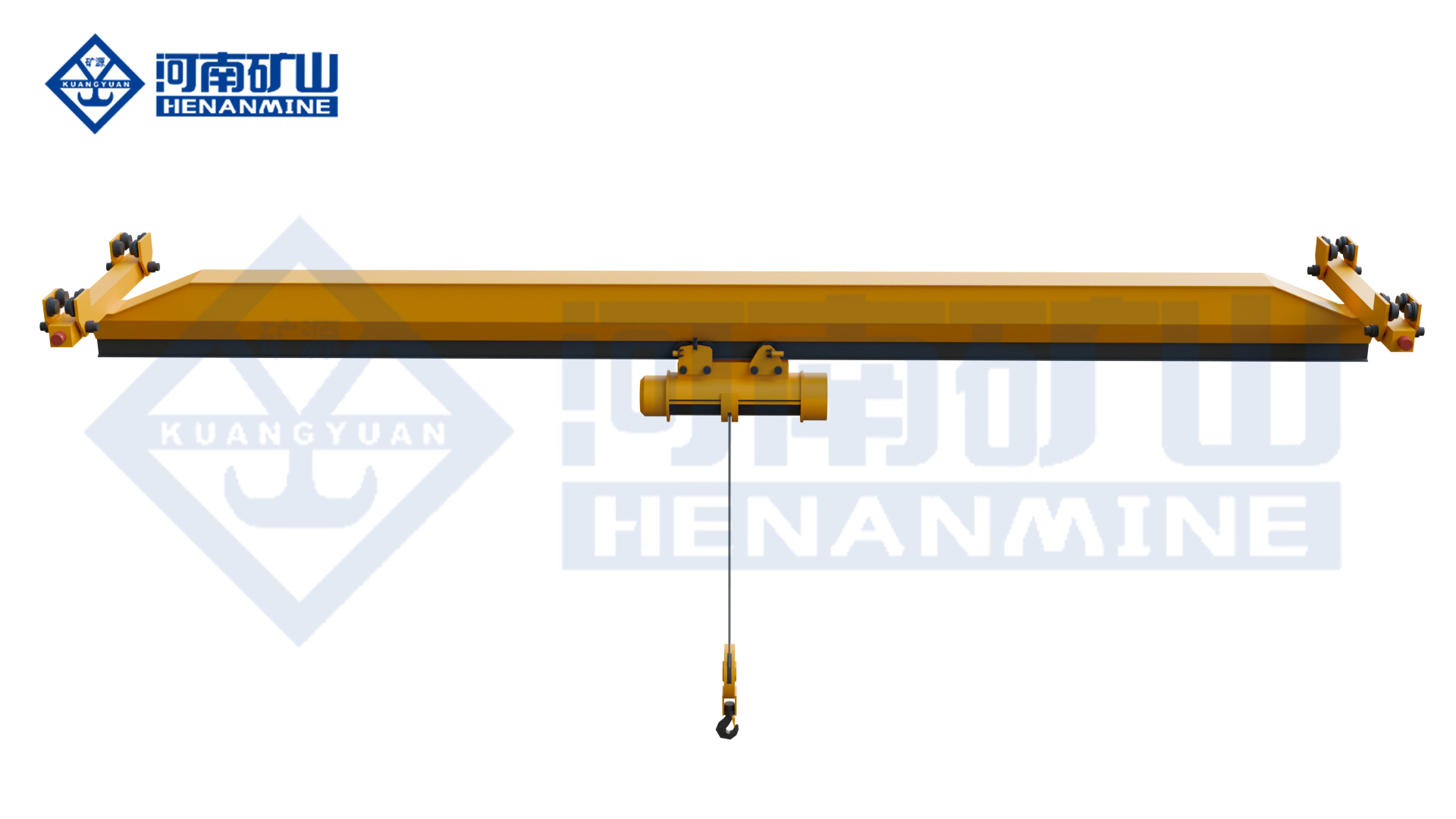
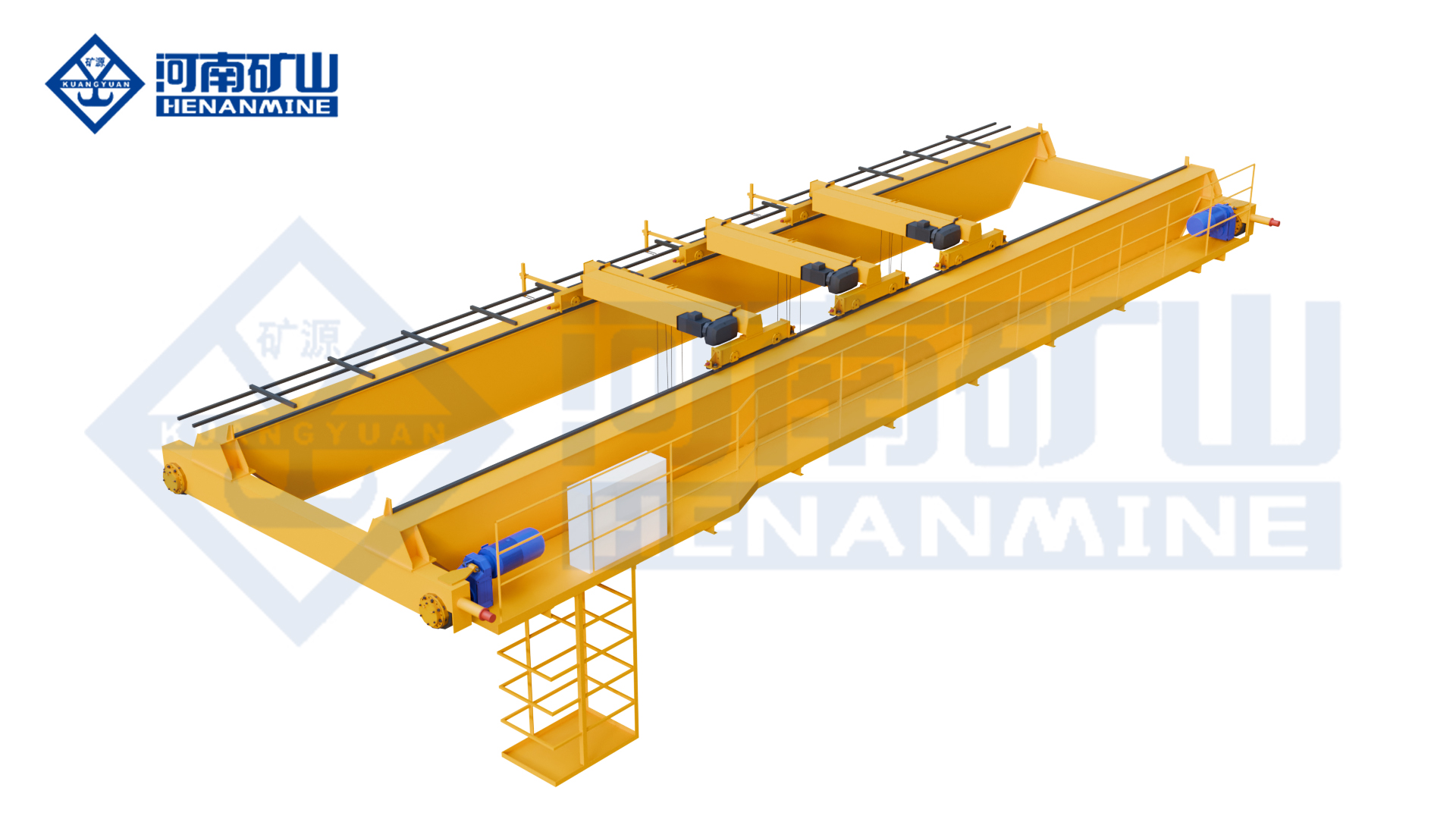
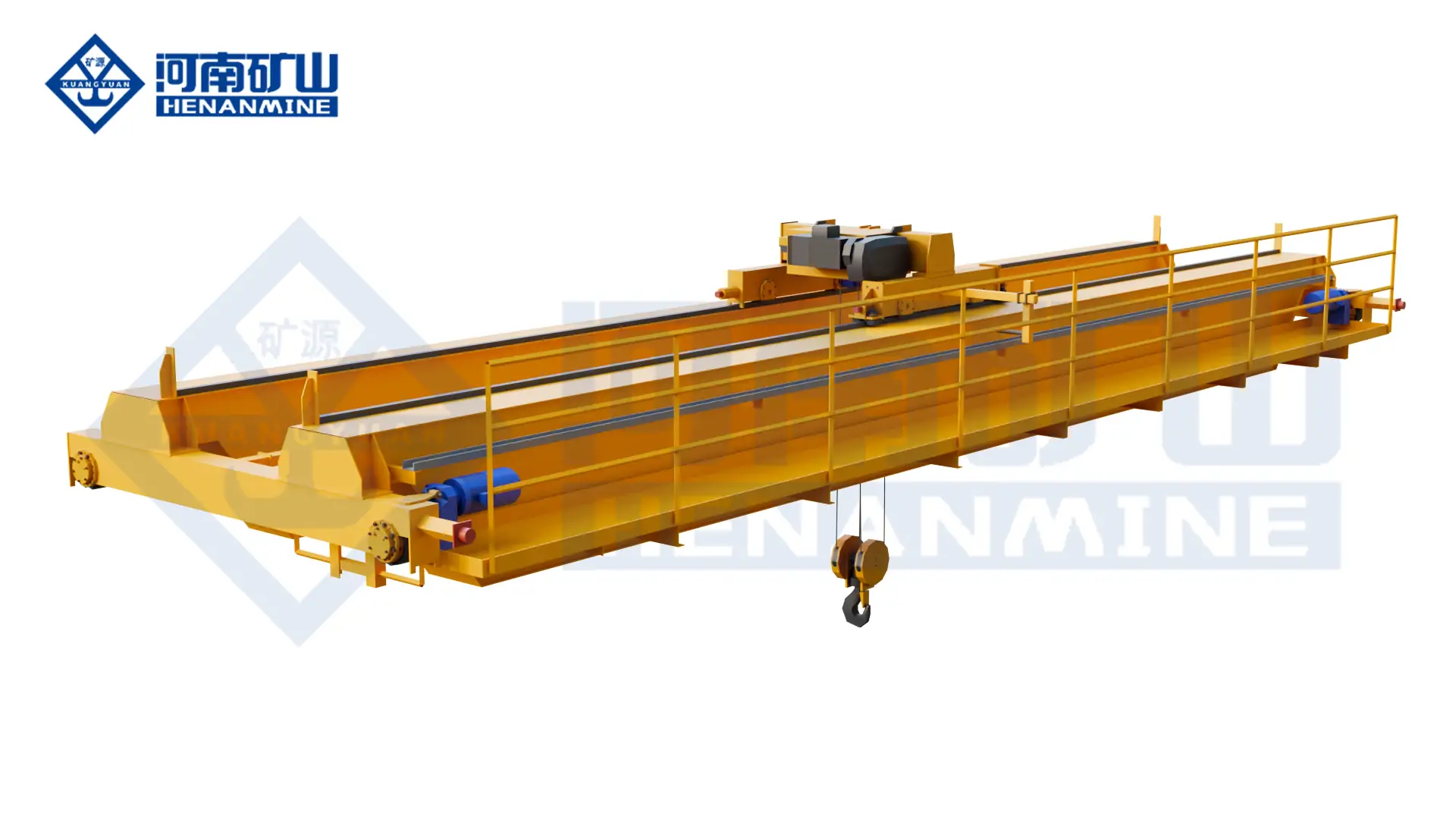
    Coordinate three electric-hoist trolleys for long components or several workshop lifting positions. Define hook loads, trolley spacing and permitted individual or combined movements.

    Lifting capacity1 – 32 t
    Span7.5 – 31.5 m
    Working classA5 – A6
    Technical specifications

    Define the total suspended load, duty and site conditions for your project.

    Technical specifications

    Check the load.
    Plan the configuration.

    Parameters and equipment options are matched to the application and confirmed in the technical proposal.

    Discuss your configuration
    Capacity1 – 32 t
    Span7.5 – 31.5 m
    Lifting height6 – 30 m
    Working classA5 – A6
    Hoisting speed0.8/5 – 8/16 m/min
    Trolley travel5 – 25 m/min
    Crane travel10 – 30 m/min
    Power supply220-690V, 50/60Hz
    ControlsRemote Control + Cabin Control

    Final parameters, dimensions, wheel loads and supply scope follow the approved project specification.

    Application & operation

    Matched to the handling task.

    Long fabricated components

    Coordinate the declared lifting points and workpiece support positions.

    Multiple workstations

    Use the defined trolley functions within the bridge operating area.

    Selection considerations

    Start with your operating conditions.

    01

    Load & lifting arrangement

    Specify load at each hook, lifting points and component centre of gravity. Include lifting-appliance weight and the required lifting positions.

    02

    Site & available space

    Provide trolley spacing, hook coverage and building clearances. Coordinate the installation interfaces with the available site drawings.

    03

    Duty & control sequence

    Define individual or coordinated movements and permissible load combinations. Identify the required movements and control interfaces in the enquiry.

    Configuration comparison

    Compare related lifting arrangements.

    Crane arrangementHandling configuration
    Three Trolley Electric Hoist CraneCoordinate three electric-hoist trolleys for long components or several workshop lifting positions. Define hook loads, trolley spacing and permitted individual or combined movements.
    Double Trolley Electric Hoist CraneLift long components or serve separate working positions with two electric-hoist trolleys on one bridge. Trolley spacing, load sharing and independent or coordinated operation are specified for the task.
    Modular Electric Hoist Overhead CraneUse a modular electric-hoist overhead crane for production, assembly and maintenance lifting. Select the hoist arrangement, hook coverage and movement control for the workshop and operating cycle.
    LH Electric Hoist Double Girder CraneUse an LH double-girder bridge with an electric-hoist trolley for workshop lifting, assembly and maintenance. Match the hoist arrangement to the suspended load, hook travel and available building space.

    Operating protection & lifecycle support

    Plan beyond the equipment.

    01

    Operating protection

    Confirm overload protection, travel limits, brakes, emergency controls and the required process interlocks for the declared lifting task.

    02

    Installation & commissioning

    Agree runway reactions, structural interfaces, electrical connections, assembly, inspection and commissioning responsibilities before delivery.

    03

    Inspection & spares

    Plan inspection and maintenance of hoist ropes, trolley-separation devices and coordinated controls. Agree service access, documentation and the required spare-parts scope.

    Questions before the order

    Clarify the details
    that shape the crane.

    What information is needed for a three trolley electric hoist crane quotation?+

    Provide load at each hook, lifting points and component centre of gravity; trolley spacing, hook coverage and building clearances; and individual or coordinated movements and permissible load combinations. Include drawings and the project destination when available.

    Can all three hoists operate together?+

    State the required operating combinations and load at each hook. The crane structure, controls and lifting plan must define the permissible individual and coordinated operations.

    What installation and support scope should be agreed?+

    Agree runway reactions, structural interfaces, electrical connections, assembly, inspection and commissioning responsibilities before delivery. Specify the documentation, training and spare-parts support needed for the project.

    Related equipment

    Explore the alternatives.

    Let’s discuss your project

    The right crane starts
    with your lifting task.

    Share load at each hook, lifting points and component centre of gravity, together with your site layout and operating cycle.
    info@hnksglobal.com
  • Overhead Bridge Crane Offers: Check the Configuration and Delivery Scope

    Overhead Bridge Crane Offers: Check the Configuration and Delivery Scope

    Selection guide

    Overhead Bridge Crane Offers: Check the Configuration and Delivery Scope

    An offer should identify the arrangement being supplied and the assumptions behind it. Compare the load, span, hook envelope and duty information together with transport, site services and handover requirements.

    Henan Mine CraneSelection guide · Updated 2026Crane selection, project scope and operating requirements
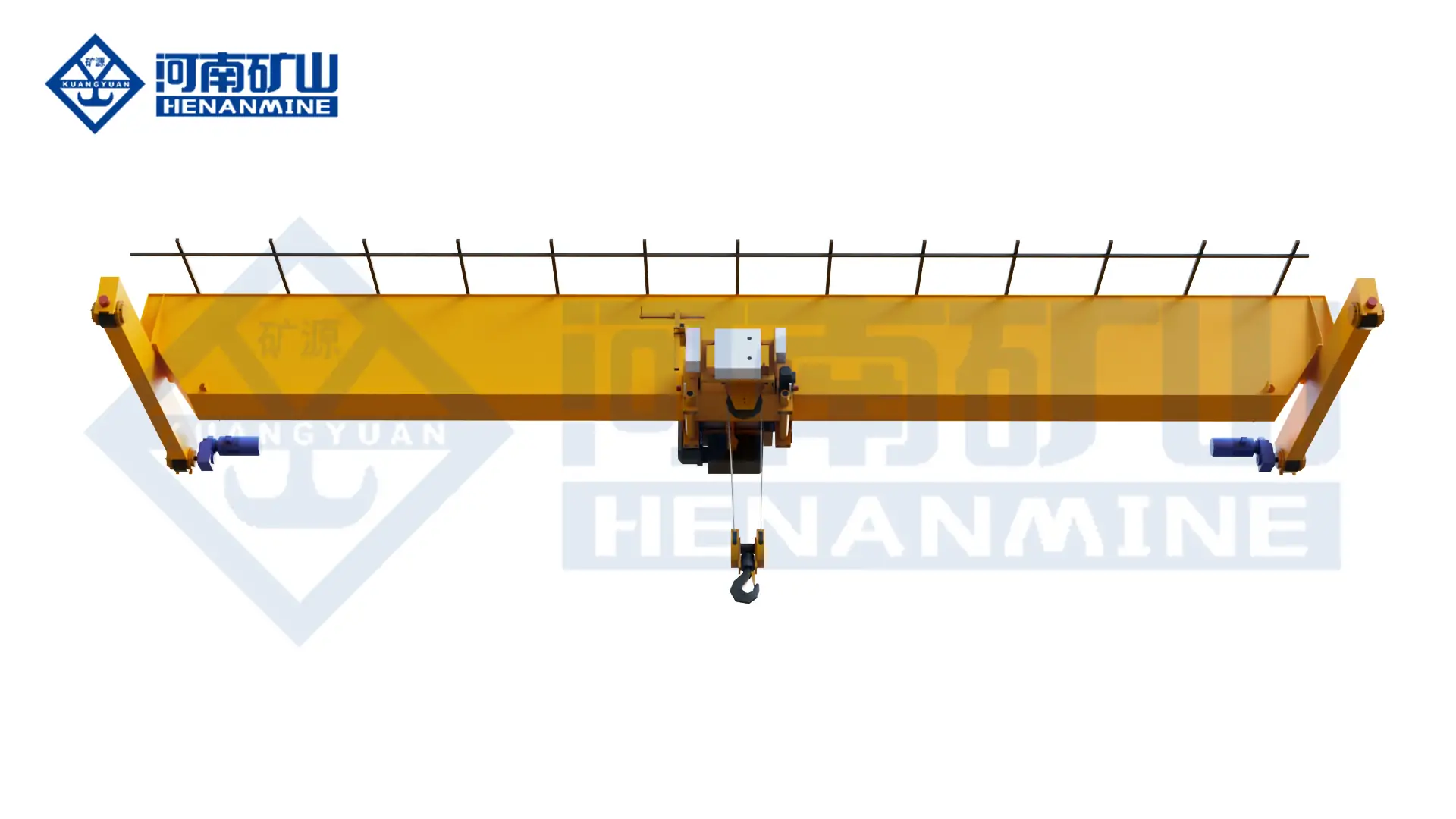
    Henan Mine Crane Single-Girder Bridge Crane
    Henan Mine Crane Single-Girder Bridge Crane
    Project planning notes

    Key points for this crane project.

    1. What Is an Overhead Bridge Crane?
    2. Overhead Bridge Crane Types Available
    3. Selection Considerations
    Read the technical guide

    What Is an Overhead Bridge Crane?

    An overhead bridge crane is a travelling lifting system in which a bridge spans two parallel runways. A hoist or trolley moves across the bridge, while the bridge travels along the building bay. Vertical lifting, trolley cross travel and bridge long travel provide rectangular working coverage without occupying primary production floor space.

    Bridge crane, overhead crane, overhead travelling crane and EOT crane commonly describe the same equipment family. A complete purchasing description also identifies bridge structure, runway arrangement, lifting mechanism, rated capacity, span, lifting height, working class, speed, control method, environment and attachment.

    An overhead bridge crane offered for sale is not a standard commodity identified by tonnage alone. The runway and building also form part of the load path, even when they are excluded from the crane supplier’s commercial scope.

    Henan Mine Crane supplies new equipment configured for the declared application. A technically complete proposal identifies what is included, what remains site responsibility and which information must be approved before manufacturing. This distinction prevents an equipment-only price from being compared with a complete installed system.

    Overhead Bridge Crane Types Available

    01 · Single-Girder Overhead Crane

    One bridge girder supports an electric chain or wire-rope hoist. The structure controls self-weight and equipment cost for general workshop, warehouse, assembly and maintenance handling.

    02 · Double-Girder Overhead Crane

    Two bridge girders support a packaged hoist or top-running trolley. The arrangement suits higher capacities, longer spans, heavier duty, improved hook height and process equipment.

    03 · Underhung Bridge Crane

    End carriages travel beneath suspended runway beams. The configuration preserves floor clearance and can improve end approach where the building is verified for suspended runway reactions.

    04 · Freestanding Bridge Crane System

    Independent columns, runway beams and bracing carry crane loads when the existing building cannot accept them. Foundation and floor interfaces become part of the project.

    05 · Special-Purpose Bridge Crane

    Grab, magnet, clamp, rotating beam, C-hook, ladle beam or another attachment integrates the crane with a specific material-handling process and risk profile.

    06 · Automated Bridge Crane

    Position feedback, PLC control, anti-sway, collision management and plant interfaces support repeatable semi-automatic or unmanned material flow.

    Top-running and underhung identify the bridge-to-runway relationship; single girder and double girder identify the bridge structure. These terms should not be treated as competing descriptions. A crane can be a top-running single-girder system or a top-running double-girder system.

    The correct commercial short list follows the load, usable hook height, building support, production cycle and process consequence rather than a fixed capacity threshold.

    Selection Considerations

    A reliable overhead bridge crane purchase begins with the handling process and facility geometry. The following inputs determine whether the proposed equipment can meet production, structural and acceptance requirements.

    Record maximum and normal payloads, hook block, lifting beam, clamp, magnet, C-hook, slings and every component carried below the hoist.

    State runway rail-center span, bridge travel length, pickup and placement zones, side approach, end approach and any transfer area.

    Define lowest pickup, highest hook elevation, rail level, roof obstruction, load height, rigging depth and required extraction distance.

    Provide lifts per hour, shifts, annual operating hours, travel distance, normal load and frequency of operation near rated capacity.

    Confirm rail profile, runway beams, column spacing, brackets, foundations, allowable reactions and available structural drawings.

    Specify lifting and travel speeds, low-speed range, positioning tolerance, pendant, radio, cabin, variable-frequency drives and automation.

    Identify temperature, dust, humidity, corrosion, hazardous classification, outdoor exposure, hot material and cleanliness requirements.

    Define destination, power supply, governing requirements, documentation language, inspection authority, installation and commissioning boundary.

    Procurement control: capacity, span and lifting height do not define a complete crane. Working class, runway reactions, hoist architecture, environment, documentation and commercial exclusions must be compared at the same time.

    Overhead Bridge Crane Configurations Compared

    ConfigurationBridge and RunwayLifting MechanismTypical Application
    Single-girder top-running craneOne girder above runway railsChain or wire-rope hoistGeneral workshop, assembly, maintenance and warehousing
    Double-girder top-running craneTwo girders above runway railsElectric hoist or open-winch trolleyHeavy loads, long spans, high duty and process handling
    Single-girder underhung craneBridge suspended beneath runway beamsChain or wire-rope hoistCompatible buildings, lighter manufacturing and extended side approach
    Multi-support underhung craneBridge supported by three or more runway linesSingle or double girder with project-specific hoistHangars, wide workshops and long-span assembly facilities
    Freestanding bridge craneIndependent columns and runway structureSingle or double girder bridgeRetrofit facilities without suitable building support
    Process bridge craneSingle, double or multi-girder engineered bridgeOpen winch, multiple hooks or special attachmentSteel, foundry, bulk handling, power and automated production

    Technical Specification Framework

    Product-family ranges support preliminary selection but do not replace project engineering. Final parameters remain subject to load, span, duty, building structure and governing requirements.

    ParameterAvailable DirectionEngineering BasisQuotation Requirement
    Rated capacityGeneral and engineered ranges from light workshop service to major project liftingMaximum payload plus every suspended componentState main, auxiliary and combined capacities separately
    SpanSelected from runway rail centerlines; published families extend from compact bays to multi-support spansBuilding bay, rail geometry and bridge stiffnessSubmit a dimensioned plan rather than building width
    Lifting heightProject-specific vertical travel based on processLowest pickup, highest placement, rigging and attachment depthState usable hook height and pit or floor levels
    Working classA3–A8 across general and process product familiesLoad spectrum, starts, travel, shifts and annual operating hoursCrane and mechanism classifications may differ
    Hoisting mechanismChain hoist, wire-rope hoist or open-winch trolleyCapacity, lift, speed, duty, redundancy and environmentDefine rope reeving, hooks and maintenance access
    Control modePendant, radio remote, cabin or PLC automationVisibility, travel distance, process risk and positioning requirementDefine control authority and fallback mode
    Power supplyConfigured for the project grid within the approved electrical designVoltage, frequency, phase, tolerance and earthingState transformer, cable and isolator scope
    Safety and monitoringLimits, overload protection, emergency stop, buffers, alarms and optional advanced functionsRisk assessment and governing requirementsIdentify standard, optional and site-supplied functions

    ASME B30.2 covers applicable top-running single- or multiple-girder cranes with top-running trolley hoists. Underhung systems, special-purpose cranes and projects in other jurisdictions may require different or additional standards. The governing basis and edition should be stated in the contract.

    Purchase Scope and Quotation Comparison

    The phrase overhead bridge crane for sale can describe a bridge kit, complete crane, crane with runway or fully installed system. Commercial comparison is valid only after the supply boundary has been normalized.

    Crane Equipment

    Bridge girders, end trucks, hoist or trolley, motors, brakes, wheels, hook block, buffers and onboard electrical equipment.

    Runway and Supports

    Rails, runway beams, brackets, columns, bracing, foundations and building reinforcement. Design and supply responsibility should be separated.

    Power and Electrification

    Main isolator, runway conductor, festoon or energy chain, control power, grounding, cable route and plant connection point.

    Controls and Safety

    Pendant, radio, cabin, VFDs, limits, overload protection, warning devices, anti-collision, anti-sway and production interfaces.

    Documentation and Testing

    Drawings, calculations, certificates, manuals, inspection plan, factory testing, site acceptance and load-test records.

    Packing and International Freight

    Export packing, shipping splits, container or break-bulk plan, port charges, insurance, trade term and destination delivery.

    Installation and Commissioning

    Unloading, assembly, erection, alignment, power connection, drive setup, functional checks, proof testing and training.

    New, Used or Modernized Equipment

    New equipment provides an application-specific design basis. Used or modernized cranes require records, structural assessment, component condition review and runway compatibility verification.

    Applications and Working Conditions

    IndustryTypical LoadsCrane DirectionOperating Objective
    Machining and fabricationRaw material, weldments, dies, fixtures and machinesSingle- or double-girder top-running craneFull-bay coverage and controlled equipment placement
    Assembly and manufacturingComponents, tooling, subassemblies and finished equipmentSingle girder, double girder or automated craneRepeatable flow between workstations
    Warehouse and logisticsCoils, long products, pallets, molds and inventoryGeneral or automated bridge craneClear floor space and organized storage access
    Steel mill and foundryLadles, slabs, billets, coils, rolls and scrapHeavy-duty process bridge craneHigh duty, heat protection and specialized attachments
    Power and energyTurbines, generators, transformers and wind-power componentsDouble-girder or double-trolley craneHeavy assembly, maintenance and precision lifting
    Bulk and waste handlingOre, coal, biomass, clinker, waste and slagGrab or automated double-girder craneRepeated stockpile, hopper and process transfer

    Hazardous areas, molten metal, corrosive chemicals, outdoor exposure, high temperature, clean production and seismic conditions require dedicated engineering.

    Project Case: 300 t Double Girder Crane for Major Bridge Construction

    The equipment was configured as project-specific lifting machinery rather than an enlarged general workshop crane.

    The crane used a modular design, hardened-gear transmission, integrated electrical system and full variable-frequency control. Controlled acceleration and low-speed motion supported heavy-component positioning, while modular component selection simplified future maintenance and spare-parts management.

    Reserved interface capacity allowed later functional upgrades without redesigning the complete machine. The project demonstrates the importance of matching structural design, mechanisms, controls, runway reactions, transport splits and site commissioning to one approved operating basis. The same engineering sequence applies to smaller industrial bridge-crane purchases even when capacity and complexity are lower.

    Engineering, Manufacturing and Quality Documentation

    A commercial offer should define how approved operating data becomes a controlled bridge, hoist or trolley, electrical system and acceptance package. Required records should be included in the contract before manufacturing begins.

    Design Package

    General arrangement, hook approaches, wheel loads, runway reactions, working class, electrical demand and control narrative.

    Structural Records

    Material identification, welding procedures, welder qualifications, dimensions and specified nondestructive examination.

    Mechanism Data

    Hoist, drum, rope or chain, hook, motor, gearbox, brake, wheel, bearing and lubrication data matched to service.

    Electrical Documents

    Single-line diagram, schematics, drive parameters, protection settings, conductor details and interface schedule.

    Inspection and Tests

    Inspection plan, witness points, dimensions, brakes, limits, alarms, interlocks and contracted factory or site testing.

    Handover Package

    Final drawings, certificates, test records, manuals, spare-parts list, maintenance schedule and configured settings.

    Delivery, Installation and Commissioning

    Pre-Production Approval

    Freeze layout, parameters, wheel loads, interfaces, power supply, documents, inspection points and commercial boundary before manufacturing release.

    Packing and Shipping Plan

    Coordinate bridge shipping splits, component protection, lifting points, container or break-bulk transport and destination handling.

    Runway Survey

    Verify rail span, elevation, straightness, joints, end stops, conductor route and structural information before crane erection.

    Assembly and Installation

    Plan unloading, assembly area, lifting equipment, work-at-height controls, roof clearance, alignment and production shutdown.

    Electrical Integration

    Install runway power, isolators, grounding, festoons, control stations, sensors and any production-system interfaces.

    Functional Commissioning

    Verify motor direction, drives, brakes, limits, buffers, alarms, emergency functions and control authority without load.

    Load and Acceptance Tests

    Execute the approved proof, rated-load and operating tests with calibrated instruments, assigned witnesses and documented results.

    Training and Lifecycle Support

    Transfer operating limits, inspection points, maintenance schedules, troubleshooting logic, spare parts and emergency procedures.

    Overhead Bridge Crane Price and Total Project Cost

    Overhead bridge crane price changes with girder structure, capacity, span, lift, working class, runway, controls, environment and installation scope. Current North American market examples provide early budget context only and are not fixed Henan Mine Crane prices.

    Budget ExamplePublished Scope PositionMain Cost Drivers
    Runway and support structureRails, runway beams, columns, brackets, bracing and foundationsTravel length, wheel loads, column spacing and building capacity
    International delivery and commissioningPacking, freight, erection, startup, load test and trainingShipping dimensions, destination, site access and test weights

    Commercial normalization: compare bridge equipment, hoist or trolley, runway steel, electrification, controls, documentation, packing, freight, erection, commissioning, load testing, training, spare parts and exclusions line by line.

    Information Required for an Overhead Bridge Crane Quote

    A technically comparable quotation requires load, facility, duty and commercial information together. Dimensioned building plans, runway drawings, load sketches and site photographs should accompany the following data.

    Load Data

    Maximum and normal mass, dimensions, center of gravity, pickup points, rigging, attachment weight and possible future load.

    Crane Geometry

    Runway rail-center span, travel length, rail elevation, required lift, hook approaches, building section and obstructions.

    Duty and Throughput

    Lifts per hour, shifts, annual hours, load spectrum, full-load frequency, travel distance and production consequence.

    Runway and Structure

    Rail profile, runway beams, column spacing, brackets, allowable reactions, foundation information and existing condition.

    Hoist and Motion

    Chain or wire rope, packaged hoist or open winch, main and auxiliary hooks, speeds, low-speed range and positioning need.

    Purchase Scope and Quotation Comparison

    Controls and Safety

    Pendant, radio or cabin operation, VFDs, anti-sway, anti-collision, monitoring, automation and plant interlocks.

    Information Required for an Overhead Bridge Crane Quote

    Environment and Power

    Voltage, frequency, phase, ambient temperature, dust, humidity, corrosion, hazardous classification and indoor or outdoor service.

    Commercial Boundary

    Destination, trade term, runway, installation, inspection, load testing, training, spare parts, documents and required schedule.

    Overhead Bridge Crane for Sale FAQ

    What is included in an overhead bridge crane sale?

    The included scope may range from a bridge kit to a complete installed system. A valid proposal should identify the bridge, hoist or trolley, runway, electrification, controls, documents, freight, installation and testing separately.

    How is single girder selected instead of double girder?

    Single girder normally controls self-weight and cost for moderate load, span and duty. Double girder supports higher capacity, longer span, demanding duty, improved hook height and larger trolley arrangements.

    What is the difference between top-running and underhung cranes?

    A top-running bridge travels above runway rails. An underhung bridge travels below suspended runway beams and can preserve floor clearance, subject to verified roof and runway capacity.

    Can an overhead bridge crane be installed in an existing building?

    Yes, after structural and dimensional verification. The project may require building reinforcement, new runway beams or a freestanding support structure.

    Why do quotations for the same tonnage differ?

    Span, lifting height, working class, hoist architecture, speeds, runway scope, electrical equipment, documentation, freight, installation and testing can differ even when rated capacity is identical.

    Which control method is normally selected?

    Pendant control suits local operation, radio control improves mobility, and a cabin supports long travel or severe environments. Automated systems add positioning, anti-sway and plant interfaces.

    What standards apply to an overhead bridge crane?

    The governing basis depends on destination and crane type. ASME B30.2 applies to defined top-running bridge cranes, while EN, ISO, FEM and national requirements may govern other projects.

    What information produces the fastest accurate quotation?

    Capacity, span, lifting height, duty, load description, runway drawings, control method, power supply, environment, destination and a written scope boundary provide the essential basis.

    Related Overhead Bridge Crane Products

    Compare bridge structures and special-purpose configurations after load, span, lifting height, duty, runway and operating environment have been established.

    Single-Girder Overhead Crane

    Cost-controlled bridge configuration for workshops, warehouses, assembly areas and maintenance bays.

    Double-Girder Overhead Crane

    Two-girder platform for higher capacities, longer spans, heavy duty and process-specific trolley systems.

    European-Style Suspended Crane

    Building-suspended configuration for clear production floors and controlled industrial handling.

    Explosion-Proof Bridge Crane

    Project-specific crane for formally classified gas or dust environments and matched protection requirements.

    Metallurgical Overhead Crane

    Heavy-duty bridge crane for high-temperature steelmaking, material transfer and demanding production service.

    Compact Electric Hoist

    Space-efficient wire-rope hoist for compatible single-girder and selected double-girder applications.

    Submit the load list, capacity, span, lifting height, runway drawings, operating duty, required speeds, control mode, power supply, environment, delivery boundary and destination. Henan Mine Crane will prepare a coordinated technical configuration and commercial quotation.

    Discuss the crane arrangement for your project.

    An offer should identify the arrangement being supplied and the assumptions behind it. Compare the load, span, hook envelope and duty information together with transport, site services and handover requirements. Share the load, available drawings, working cycle and site conditions with Henan Mine Crane so the required configuration and supply boundary can be discussed.

    Related crane configurations

    Single-Girder Bridge Crane

    View product parameters
    Lifting capacity: 1–20 tSpan: 7.5–31.5 mLifting height: 6, 9, 12, 18, 24 or 30 m; capacity-dependent

    Use an LDA single-girder bridge and electric hoist for general workshop material handling. Select the lifting capacity, runway geometry and hoist duty around the building and load.

    LH Electric Hoist Double Girder Crane

    View product parameters
    Lifting capacity: 3, 5, 10, 16, 20 tSpan: 10.5–31.5 mLifting height: 6, 9, 12 or 18 m

    Use an LH double-girder bridge with an electric-hoist trolley for workshop lifting, assembly and maintenance. Match the hoist arrangement to the suspended load, hook travel and available building space.

    Updated 2026 · Henan Mine Crane

  • Slab Handling Crane

    Slab Handling Crane

    Overhead Cranes / Henan Mine Crane

    Slab Handling Crane

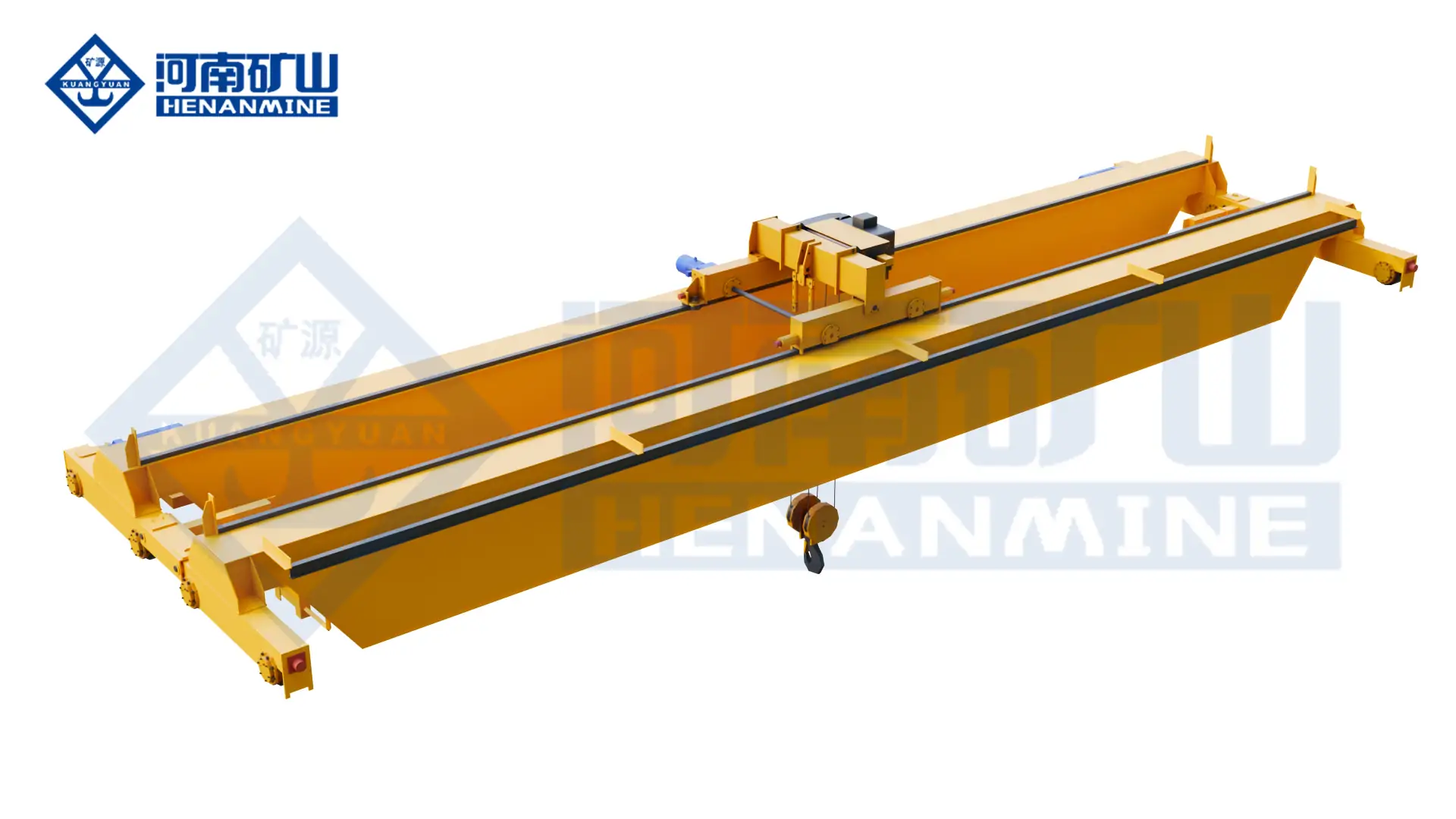
    Transfer and stack steel slabs with a crane matched to slab geometry, temperature and the lifting appliance. Coordinate pickup conditions, stacking orientation and the production cycle.

    Lifting capacity20t – 150t
    Span10m – 39m
    Working classA7 – A8
    Technical specifications

    Define the total suspended load, duty and site conditions for your project.

    Technical specifications

    Check the load.
    Plan the configuration.

    Parameters and equipment options are matched to the application and confirmed in the technical proposal.

    Discuss your configuration
    Capacity20t – 150t (50+50t standard)
    Span10m – 39m
    Lifting height5m – 23m
    Working classA7 – A8
    Hoisting speed1m/min – 8m/min
    Crane travel10m/min – 30m/min
    Power supply380V/50Hz; 220V-660V/60Hz
    ControlsPLC module + HMI touch screen + WLK master controller

    Final parameters, dimensions, wheel loads and supply scope follow the approved project specification.

    Application & operation

    Matched to the handling task.

    Slab storage

    Move and stack slabs within a defined handling bay.

    Steel process transfer

    Coordinate the attachment and travel coverage with the production interfaces.

    Selection considerations

    Start with your operating conditions.

    01

    Load & lifting arrangement

    Specify slab dimensions, temperature, surface condition and gross load. Include lifting-appliance weight and the required lifting positions.

    02

    Site & available space

    Provide stacking layout, pickup conditions and required hook positions. Coordinate the installation interfaces with the available site drawings.

    03

    Duty & control sequence

    Define lifting-appliance type, load cycle and process interlocks. Identify the required movements and control interfaces in the enquiry.

    Configuration comparison

    Compare related lifting arrangements.

    Crane arrangementHandling configuration
    Slab Handling CraneTransfer and stack steel slabs with a crane matched to slab geometry, temperature and the lifting appliance. Coordinate pickup conditions, stacking orientation and the production cycle.
    Electromagnetic Hanging Beam CraneSupport long steel products with an electromagnetic hanging beam. Beam length, magnet spacing and lifting points are configured around product geometry, orientation and stacking requirements.
    Upper Rotating Magnetic Overhead CraneA rotating magnetic beam for positioning long steel products. Magnet arrangement, material temperature and power-loss protection require a matched specification.
    Electromagnetic Overhead CraneLift ferromagnetic steel with a matched electromagnetic lifting arrangement. Product shape, contact area, temperature and handling frequency determine the magnet and crane configuration.

    Operating protection & lifecycle support

    Plan beyond the equipment.

    01

    Operating protection

    Confirm overload protection, travel limits, brakes, emergency controls and the required process interlocks for the declared lifting task.

    02

    Installation & commissioning

    Agree runway reactions, structural interfaces, electrical connections, assembly, inspection and commissioning responsibilities before delivery.

    03

    Inspection & spares

    Plan inspection and maintenance of slab lifting connections, heat-exposed components and trolley mechanisms. Agree service access, documentation and the required spare-parts scope.

    Questions before the order

    Clarify the details
    that shape the crane.

    What information is needed for a slab handling crane quotation?+

    Provide slab dimensions, temperature, surface condition and gross load; stacking layout, pickup conditions and required hook positions; and lifting-appliance type, load cycle and process interlocks. Include drawings and the project destination when available.

    Which slab details affect the lifting appliance?+

    Provide slab dimensions, temperature, contact condition and the expected pickup and stacking positions. The attachment and crane are specified for the complete declared product range.

    What installation and support scope should be agreed?+

    Agree runway reactions, structural interfaces, electrical connections, assembly, inspection and commissioning responsibilities before delivery. Specify the documentation, training and spare-parts support needed for the project.

    Related equipment

    Explore the alternatives.

    Let’s discuss your project

    The right crane starts
    with your lifting task.

    Share slab dimensions, temperature, surface condition and gross load, together with your site layout and operating cycle.
    info@hnksglobal.com
  • Nuclear Power Plant Crane Enquiries: Project Requirements and Documentation

    Nuclear Power Plant Crane Enquiries: Project Requirements and Documentation

    Selection guide

    Nuclear Power Plant Crane Enquiries: Project Requirements and Documentation

    The responsible project team needs to define the lifting duty and applicable equipment requirements. Provide the load, operating role, interfaces and requested design and quality documents before seeking a crane proposal.

    Henan Mine CraneSelection guide · Updated 2026Crane selection, project scope and operating requirements
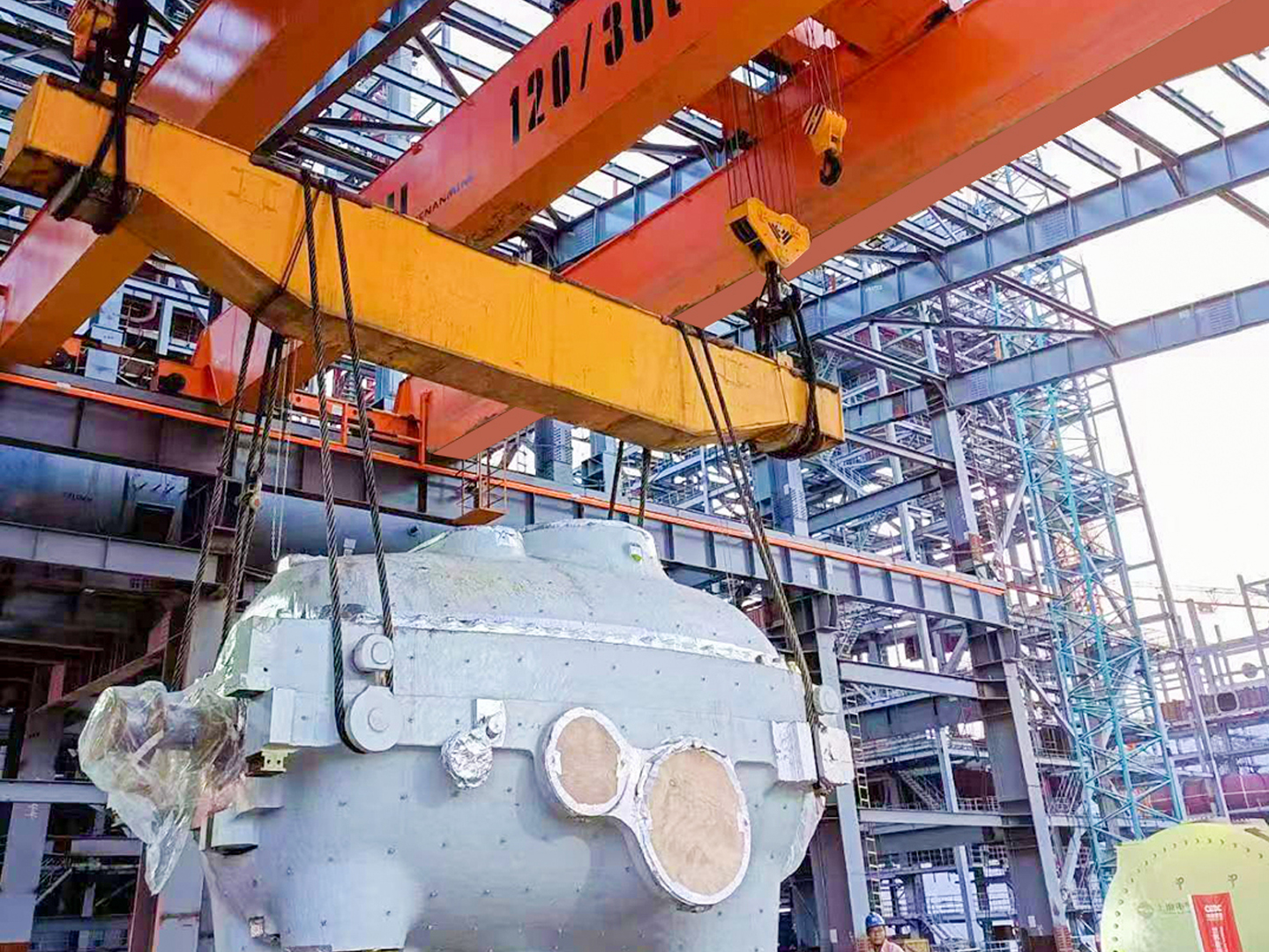
    Overhead crane in a thermal-power equipment handling project
    Overhead crane in a thermal-power equipment handling project
    Project planning notes

    Key points for this crane project.

    1. What Henan Mine Crane Delivers
    2. A Crane Selected for the Actual Lifting Location
    3. Solutions for Plant Equipment Handling
    Read the technical guide

    What Henan Mine Crane Delivers

    Crane engineering and manufacture

    A coordinated structural, mechanical and electrical design for the lifting task. Your offer identifies the crane arrangement, proposed operating parameters, included equipment and interfaces with the plant.

    Controlled heavy-load handling

    Variable-frequency drives, PLC control and anti-sway are available within the engineered package. Precision travel and braking arrangements are selected for the component and handling sequence.

    Support beyond equipment shipment

    Installation guidance, commissioning support, operator training and spare-parts assistance can form part of the supply. The quotation identifies the selected services and site responsibilities.

    Why work with us: our nuclear-sector project record includes both precision gantry handling and a 550t overhead crane. That experience gives your procurement team concrete equipment references to discuss alongside the proposed design.

    A Crane Selected for the Actual Lifting Location

    A nuclear power plant crane handles equipment during plant construction, assembly or maintenance. The term covers several different arrangements: a building-mounted overhead crane, a rail-mounted gantry crane and specialized nuclear handling equipment. Location, load path and safety function determine which arrangement belongs in the project.

    For conventional-island buildings, workshops and construction areas, we develop overhead or gantry equipment around the load and available space. For safety-important duties, our technical review first addresses the plant classification, procurement standards and supplier qualification requirements. The offer states the accepted design scope and supporting documentation.

    Solutions for Plant Equipment Handling

    Lifting taskEquipment we can proposeWhat the design provides
    Turbine and generator maintenanceA double-girder overhead crane with main and auxiliary lifting as appropriate.Coverage from equipment pickup to the agreed laydown positions, with controlled approach near the component.
    Heavy component assemblyAn engineered overhead or gantry crane for the designated assembly area.A lifting arrangement matched to component mass, rigging, lifting points and available clearance.
    Construction and fabrication handlingA rail-mounted double-girder gantry crane.Working coverage across the selected bays, transport interfaces and component staging positions.
    Maintenance workshopsAn overhead crane or electric-hoist arrangement sized for the workshop duty.Useful hook reach, service access and a configuration suited to the load spectrum.
    Existing crane replacementA replacement crane evaluated against the current building or runway.Proposed wheel reactions, approach dimensions and erection interfaces for plant coordination.

    Reactor polar cranes, refuelling equipment and spent-fuel handling belong to specialized procurement scopes. For these enquiries, project qualification and the applicable safety requirements are reviewed before equipment suitability is offered.

    Choose the Overhead or Gantry Configuration

    We start with the movement the crane must complete: where the load is collected, how it travels and where it is placed. The proposal then connects that route with the crane geometry, hoisting system and controls.

    Project conditionOur proposed approachResult for the project
    An indoor bay with building runwaysDouble-girder overhead crane with the required trolley and hook arrangement.Lifting coverage within the building, with wheel loads and clearance data for structural coordination.
    An open yard or a bay without overhead supportsRail-mounted gantry configuration.Component transfer supported from ground-level runways.
    Heavy lifts plus frequent lighter workSeparate main and auxiliary lifting duties where suitable.Each hoisting mechanism is selected for its own load and operating cycle.
    A load with two designated lifting pointsEngineered beam or coordinated lifting arrangement after reviewing load distribution.The technical proposal defines attachment geometry, permitted loading and control functions.
    Restricted installation or maintenance clearanceA layout study covering headroom, hook approach and machinery access.A crane arrangement that can be assembled and serviced within the available space.

    Compare the Main Crane Arrangements

    ArrangementMain advantageTypical selection basis
    Double-girder overhead craneBuilding-wide coverage without gantry legs at floor level.Runway capacity, span, hook approach, lifting height and maintenance space.
    Double-girder gantry craneCoverage where a building runway is unavailable.Rail foundations, yard access, travel route and outdoor conditions.
    Workshop electric-hoist craneA practical arrangement for smaller maintenance loads.Workshop load spectrum and the installed hoist rating.
    Specialized nuclear handling craneEquipment developed for a defined nuclear handling function.Plant safety classification, procurement code, qualification and approved operating basis.

    Crane geometry and nuclear classification are separate decisions. An overhead or gantry crane may require a specialized design when the lifting location or load path makes the duty safety-important.

    Technical Details Included in Your Proposal

    The capacity of a previous project is a reference, not a fixed catalogue range. We prepare a technical schedule for the crane being offered, so your engineering and purchasing teams can compare the same configuration.

    ParameterHow our proposal addresses it
    Rated loadMain and auxiliary ratings derived from the handled component, lifting gear and approved load cases.
    Span and working coverageRail spacing, crane travel, trolley travel and hook approaches shown on the proposed arrangement.
    Lifting heightHook travel linked to pickup, transfer and landing elevations.
    Speeds and positioningHoist and travel speeds, low-speed control and any specified positioning tolerance.
    Duty and service conditionsDesign duty linked to the operating cycle, load spectrum and environment.
    ControlsOperating station, VFD configuration, PLC functions, alarms and contracted monitoring interfaces.
    Plant interfacesWheel reactions, rail geometry, power supply and installation clearances.
    Safety and documentationApplicable classification, accepted procurement requirements, inspection stages and contracted records.

    Henan Mine Crane Nuclear-Sector Projects

    100t Precision Double-Girder Gantry Crane

    Henan Mine Crane manufactured a 100t double-main-girder gantry crane for a China nuclear power project. The manufacturer’s project report records successful factory acceptance, including heavy-load movement and positioning tests.

    Performance for a new crane is defined and tested against its own operating conditions.

    550t Intelligent Double-Girder Overhead Crane

    Henan Mine Crane’s published 550t nuclear-power project combines PLC control, full-crane variable-frequency drives, anti-sway and regenerative energy recovery. The crane was dispatched in April 2025.

    This project demonstrates our heavy-crane manufacturing scope and an integrated motion-control package. Its published record does not identify a plant safety class or establish qualification for a different nuclear lifting duty.

    Controlled Motion for Heavy and High-Value Components

    Smooth approach to the landing position

    Variable-frequency control allows the motion profile to combine transfer speed with controlled low-speed approach. We select speeds and acceleration around the lifting sequence.

    Anti-sway matched to the operating task

    The control package can include anti-sway for bridge and trolley movement. Its acceptance conditions are linked to representative loads, rope lengths and travel profiles.

    Visible operating status

    PLC-based controls can bring mechanism status, limits and alarms together. The included displays, records and plant communication interfaces are identified in the electrical scope.

    Regenerative drives are an option for suitable duties and site power systems. We assess them against the operating cycle; the 550t project includes energy recovery, but no fixed energy-saving percentage is promised for another crane.

    A Defined Basis for Nuclear Project Procurement

    The technical offer identifies the accepted crane duty and the requirements used to develop it.

    Qualification commitments appear in the project offer with the required evidence.

    Inspection and Acceptance Planned with the Equipment

    We manufacture against the approved crane design and agreed inspection plan. Your contracted document schedule makes the handover package visible during procurement, rather than leaving test records and manuals until dispatch.

    StageDeliverables within the agreed scope
    Design coordinationGeneral arrangement, technical schedule, civil interface data and electrical documentation.
    Manufacturing inspectionMaterial and component records, fabrication inspections and specified welding / examination records.
    Factory acceptanceReports for assembly, mechanisms, brakes, limits and contracted control functions; load tests under the approved procedure.
    Site commissioningInstallation and operating checks, agreed functional tests and site acceptance records.
    HandoverOperation and maintenance manuals, parts information, drawings and training records.

    Customer or appointed third-party attendance can be coordinated with the agreed inspection stages. Specialized nuclear quality records and qualification reports are included only where expressly accepted in the supply scope.

    Nuclear Power Plant Crane Price and Quotation Scope

    A nuclear power plant crane is priced for its configuration and procurement scope. Capacity and span affect the equipment cost; classification, qualification, inspection and documentation can materially change the engineering and delivery package.

    Henan Mine Crane provides a project quotation with separately identified equipment, engineering and site services. The delivery term and exclusions make it clear whether an offer covers the crane package, delivery to site or additional installation work.

    Quotation itemWhat the offer identifies
    Mechanical equipmentBridge or gantry, trolley, hoisting machinery, travel drives and service access.
    Electrical and controlsPower distribution, VFDs, PLC, operating stations and selected positioning / monitoring functions.
    Project engineering and qualityAccepted design requirements, document schedule, inspection stages and any contracted qualification work.
    Runway and site interfacesIncluded rails, electrification and installation materials, with civil works distinguished from crane supply.
    Logistics and site servicesPacking, transport, installation guidance or attendance, commissioning and training as selected.
    Lifecycle supportRecommended initial spares, warranty scope and the agreed service arrangements.

    Start with the lifting task and available layout for a preliminary budget discussion. We develop the equipment proposal and identify open items before issuing a firm quotation against the agreed scope.

    Delivery Planned Around Construction or the Outage Window

    We coordinate crane dimensions, shipping sections and assembly access during engineering. For an existing plant, the erection approach is developed alongside runway access, available lifting equipment and the permitted work area.

    The project schedule links drawing approval, manufacture, inspection, shipment and contracted site work. The commercial offer states the delivery basis; a shutdown window or plant-access date is incorporated into the agreed programme rather than assumed from a standard lead time.

    Commissioning support and operator training help the site team move from assembled equipment to the approved handling sequence. Site attendance, local installation work and plant operating authorization are allocated in the project scope.

    Maintenance and Spare-Parts Support

    Henan Mine Crane supports parts identification, maintenance planning and technical troubleshooting. Nameplate details, drawings and component references let us identify the relevant rope, brake, drive or electrical part without treating a replacement as a generic catalogue purchase.

    The equipment design addresses access to inspection and replacement points. Recommended initial spares and planned-service needs can be discussed before delivery, with warranty terms and service arrangements included in the commercial agreement.

    Get an Equipment Proposal from the Information You Have

    A brief lifting description, plant layout or existing crane drawing is enough to begin. Include the project country, approximate maximum load and target delivery date. If a procurement specification or crane classification is available, send it with the enquiry.

    Our response develops the solution: the proposed crane type, main operating parameters, equipment and service scope, and the items to resolve before a firm offer. We help turn preliminary project information into a defined equipment proposal.

    Request a Technical Proposal Contact Henan Mine Crane

    Nuclear Power Plant Crane FAQ

    What can Henan Mine Crane supply for a nuclear power project?

    We offer engineered overhead and gantry crane packages for heavy equipment handling, construction and maintenance. The project offer defines the accepted lifting duty, equipment, engineering, documentation and selected site services.

    What nuclear-sector project experience do you have?

    Our published references include a 100t precision double-girder gantry crane that passed factory acceptance and a 550t double-girder overhead crane dispatched in April 2025. Their configurations are described above.

    Is every crane used at a nuclear power plant a nuclear safety-class crane?

    The plant location, load path and safety function determine the procurement requirements. Conventional handling and safety-important duties can require different design, quality and qualification scopes.

    Can you quote to an ASME NOG-1 specification?

    Send the invoked edition, crane classification and project procurement requirements for technical review. The offer identifies the accepted requirements and evidence scope.

    Can the crane replace equipment on an existing runway?

    We can develop a replacement proposal and provide wheel reactions, approach dimensions and installation interfaces. Reuse of the existing runway follows survey information and verification by the appointed structural designer.

    How much does a nuclear power plant crane cost?

    The price follows the crane geometry, load duty, controls, procurement requirements and service package.

    Do you provide installation, commissioning and training?

    These services can be included in the project offer. The agreed package states whether support is remote guidance or on-site attendance, together with commissioning, training and installation responsibilities.

    Related Equipment and Project References

    Double-Girder Overhead Crane

    Explore electric-hoist configurations for suitable maintenance and workshop duties.

    Double-Trolley Hoist Crane

    Discuss two-position lifting for suitable loads and approved attachment geometry.

    New Electric Hoist

    Review compact hoisting equipment for separately rated maintenance tasks.

    100t Nuclear-Project Gantry

    Read the published precision-control and factory-acceptance project details.

    Power-Generation Equipment Handling

    Explore a separate power-sector example of heavy component lifting.

    Discuss Your Nuclear Power Plant Crane Project

    Work with Henan Mine Crane on the equipment arrangement, handling controls and supply scope for your plant. Send your available drawings or a short project description to begin the technical review.

    Discuss the crane arrangement for your project.

    The responsible project team needs to define the lifting duty and applicable equipment requirements. Provide the load, operating role, interfaces and requested design and quality documents before seeking a crane proposal. Share the load, available drawings, working cycle and site conditions with Henan Mine Crane so the required configuration and supply boundary can be discussed.

    Related crane configurations

    Explore crane product families and technical parameters ↗

    Updated 2026 · Henan Mine Crane

  • Single Girder Semi-Gantry Crane

    Single Girder Semi-Gantry Crane

    Gantry Cranes / Henan Mine Crane

    Single Girder Semi-Gantry Crane

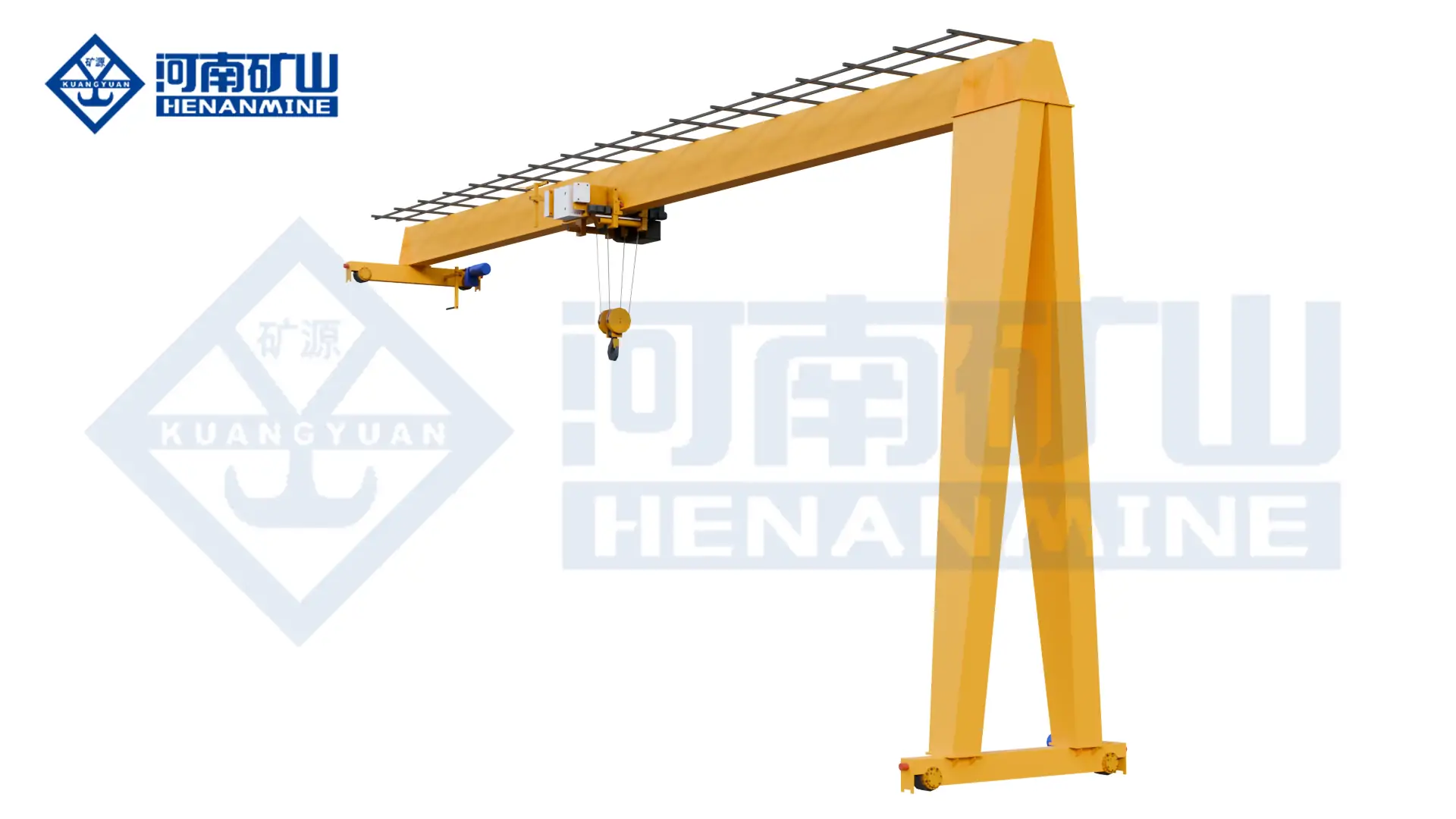
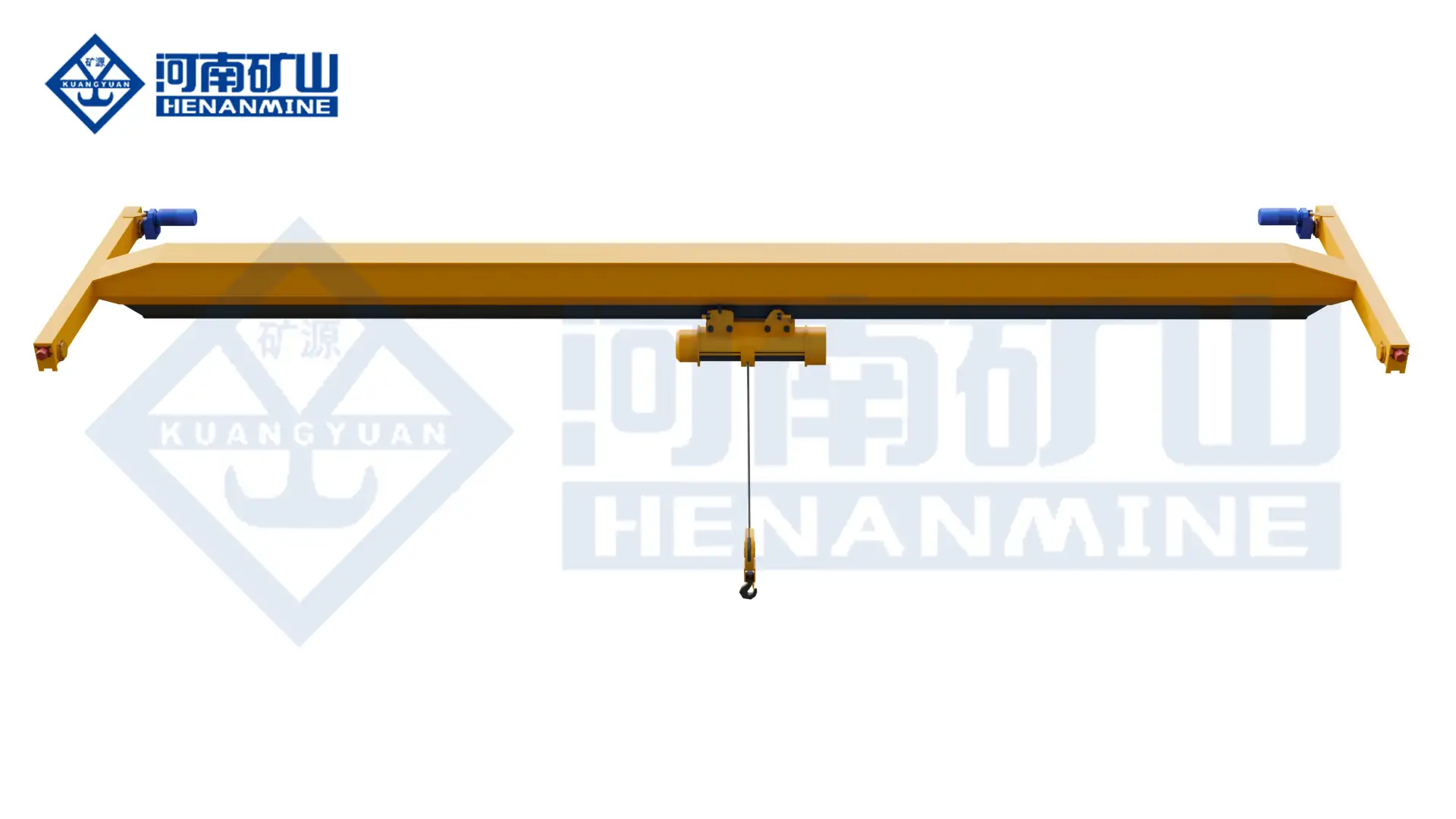
    Extend lifting coverage along a workshop or yard with a single-girder semi-gantry. Coordinate the elevated runway, ground-travelling leg and electric-hoist arrangement with the working area.

    Lifting capacity1t – 32t
    Span6m – 35m
    Working classA3~A5
    Technical specifications

    Define the total suspended load, duty and site conditions for your project.

    Technical specifications

    Check the load.
    Plan the configuration.

    Parameters and equipment options are matched to the application and confirmed in the technical proposal.

    Discuss your configuration
    TypeKSMB
    Product NameElectric Hoist Gantry Crane
    Rated Lifting Capacity1t – 32t
    Span6m – 35m
    Lifting Height4m – 20m
    Working ClassA3~A5
    Structural FormSingle girder semi-gantry
    Lifting MechanismEuropean style special electric hoist
    Speed ControlFrequency conversion, 1:10 speed ratio
    ReducerHard tooth surface (≥60HRC), integrated box
    Travel DriveThree-in-one direct connection drive
    Operation ModeCabin/pendant/remote/PLC linkage
    Lifting AttachmentHook / Grab / Electromagnetic chuck
    Power Supply380V/50Hz; 220-660V/50-60Hz

    Final parameters, dimensions, wheel loads and supply scope follow the approved project specification.

    Application & operation

    Matched to the handling task.

    Workshop-edge lifting

    Provide local coverage alongside a building runway.

    Loading and maintenance

    Coordinate the ground travel route with vehicle access and handling positions.

    Selection considerations

    Start with your operating conditions.

    01

    Load & lifting arrangement

    Specify suspended load, lifting attachment and hook coverage. Include lifting-appliance weight and the required lifting positions.

    02

    Site & available space

    Provide elevated runway, ground rail, leg clearance and building reactions. Coordinate the installation interfaces with the available site drawings.

    03

    Duty & control sequence

    Define lifting duty, route access and control requirements. Identify the required movements and control interfaces in the enquiry.

    Configuration comparison

    Compare related lifting arrangements.

    Crane arrangementHandling configuration
    Single Girder Semi-Gantry CraneExtend lifting coverage along a workshop or yard with a single-girder semi-gantry. Coordinate the elevated runway, ground-travelling leg and electric-hoist arrangement with the working area.
    Double-Girder Semi-Gantry CraneCover a workshop edge or yard with a double-girder semi-gantry arrangement. One side uses an elevated runway while the leg-supported side travels on a ground rail, coordinated with site access.
    Single-Girder Gantry CraneCover an outdoor working area with a single-girder electric-hoist gantry crane. Coordinate span, lifting height, leg geometry and any cantilever coverage with the yard and loading route.
    European Single Girder Gantry CraneCombine a single-girder gantry with a European-style electric hoist for yard handling. Specify the hook coverage, leg arrangement, travel layout and control requirements for the project.

    Operating protection & lifecycle support

    Plan beyond the equipment.

    01

    Operating protection

    Define travel limits, overload protection, traffic clearances and the outdoor operating limits for the proposed arrangement.

    02

    Installation & commissioning

    Agree rail foundations, runway alignment, wheel-load interfaces, erection access, electrical connections and commissioning responsibilities.

    03

    Inspection & spares

    Plan inspection and maintenance of runway interfaces, ground travel equipment and hoist mechanisms. Agree service access, documentation and the required spare-parts scope.

    Questions before the order

    Clarify the details
    that shape the crane.

    What information is needed for a single girder semi-gantry crane quotation?+

    Provide suspended load, lifting attachment and hook coverage; elevated runway, ground rail, leg clearance and building reactions; and lifting duty, route access and control requirements. Include drawings and the project destination when available.

    What differs between semi-gantry and full gantry installation?+

    A semi-gantry combines an elevated runway on one side with a leg-supported ground runway on the other. Both support interfaces, elevations and travel clearances must be checked.

    What installation and support scope should be agreed?+

    Agree rail foundations, runway alignment, wheel-load interfaces, erection access, electrical connections and commissioning responsibilities. Specify the documentation, training and spare-parts support needed for the project.

    Related equipment

    Explore the alternatives.

    Let’s discuss your project

    The right crane starts
    with your lifting task.

    Share suspended load, lifting attachment and hook coverage, together with your site layout and operating cycle.
    info@hnksglobal.com
  • Single Girder Grab Crane

    Single Girder Grab Crane

    Overhead Cranes / Henan Mine Crane

    Single Girder Grab Crane

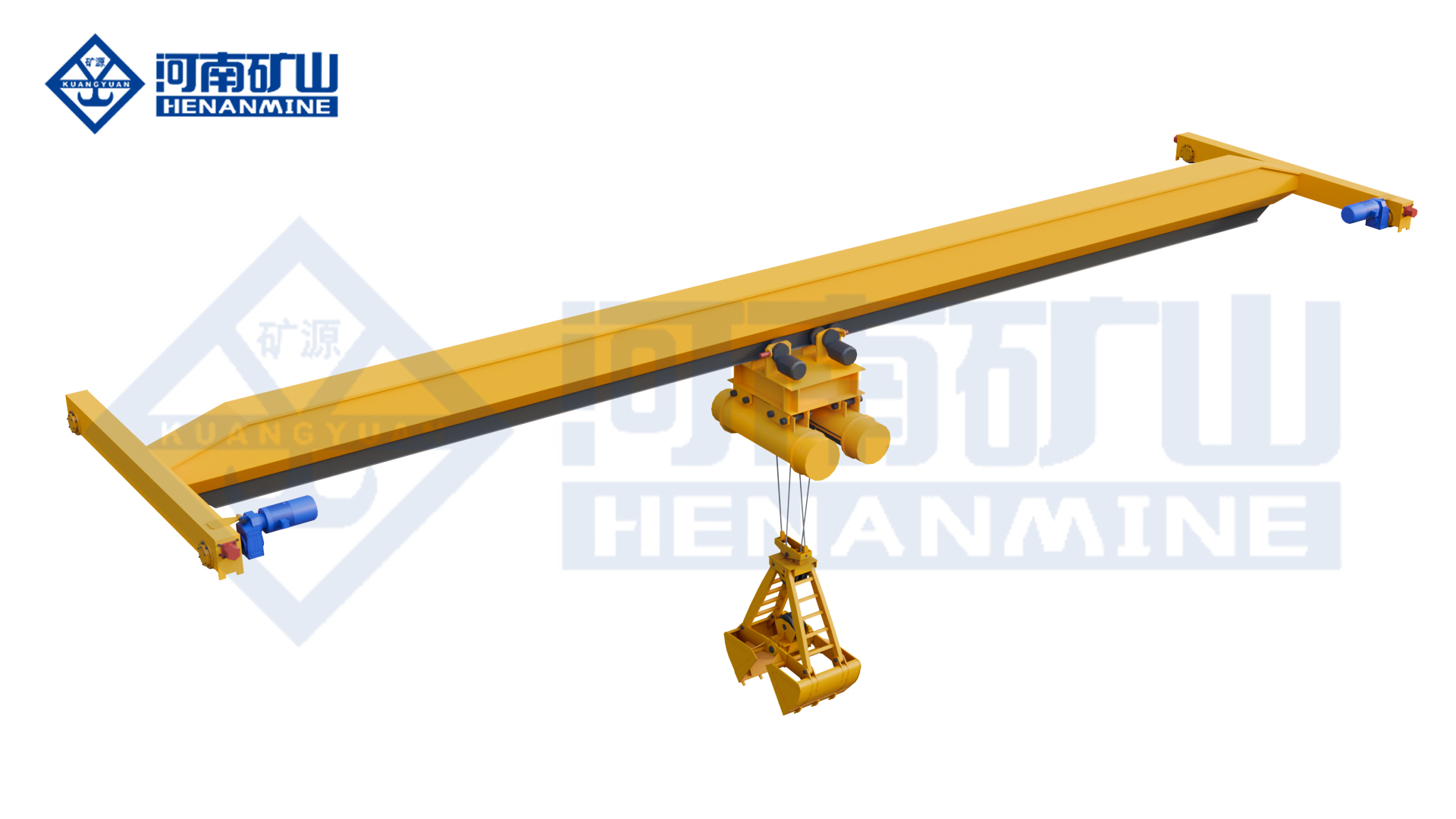
    Lift loose bulk material with an LDZ single-girder grab crane. Select the grab, complete suspended load and pickup or discharge geometry around the material and working cycle.

    Lifting capacity3 or 5 t
    Span7.5–22.5 m
    Working classA3
    Technical specifications

    Define the total suspended load, duty and site conditions for your project.

    Technical specifications

    Check the load.
    Plan the configuration.

    Parameters and equipment options are matched to the application and confirmed in the technical proposal.

    Discuss your configuration
    ModelLDZ
    Lifting capacity3 or 5 t
    Span7.5–22.5 m
    Lifting height18 m
    Working classA3
    Hoisting speed16 m/min
    Crane travel30 m/min ground control; 75 m/min cabin control
    Trolley travel20 or 30 m/min
    Grab volume3 t configuration: 0.75 m³; 5 t configuration: 1.5 m³
    Grab dead weight2.3 t or 3.1 t, according to the listed grab
    Grab and material loadConfirm the complete suspended load and allowable material payload

    Final parameters, dimensions, wheel loads and supply scope follow the approved project specification.

    Application & operation

    Matched to the handling task.

    Bulk-material handling

    Transfer declared loose materials between pickup and discharge positions.

    Workshop material stores

    Coordinate the grab envelope and crane travel with the storage layout.

    Selection considerations

    Start with your operating conditions.

    01

    Load & lifting arrangement

    Specify bulk density, material size and grab dead weight. Include lifting-appliance weight and the required lifting positions.

    02

    Site & available space

    Provide pickup area, discharge height and runway span. Coordinate the installation interfaces with the available site drawings.

    03

    Duty & control sequence

    Define grab opening sequence, lifting cycle and operator control. Identify the required movements and control interfaces in the enquiry.

    Configuration comparison

    Compare related lifting arrangements.

    Crane arrangementHandling configuration
    Single Girder Grab CraneLift loose bulk material with an LDZ single-girder grab crane. Select the grab, complete suspended load and pickup or discharge geometry around the material and working cycle.
    Intelligent Grab Overhead CraneHandle bulk materials with a grab overhead crane configured for the material and working cycle. Select the grab volume, lifting arrangement and operating sequence from pickup and discharge conditions.
    Grab And Hook Dual Purpose CraneSwitch between bulk-material pickup and hook lifting with a grab-and-hook overhead arrangement. Define each load case, the grab type and the changeover procedure for the working area.
    Grab Hook Gantry CraneCombine grab and hook handling on an electric-hoist gantry arrangement. Match the lifting appliance, load cases and changeover method to the outdoor handling layout.

    Operating protection & lifecycle support

    Plan beyond the equipment.

    01

    Operating protection

    Confirm overload protection, travel limits, brakes, emergency controls and the required process interlocks for the declared lifting task.

    02

    Installation & commissioning

    Agree runway reactions, structural interfaces, electrical connections, assembly, inspection and commissioning responsibilities before delivery.

    03

    Inspection & spares

    Plan inspection and maintenance of grab ropes, sheaves and opening or closing mechanisms. Agree service access, documentation and the required spare-parts scope.

    Questions before the order

    Clarify the details
    that shape the crane.

    What information is needed for a single girder grab crane quotation?+

    Provide bulk density, material size and grab dead weight; pickup area, discharge height and runway span; and grab opening sequence, lifting cycle and operator control. Include drawings and the project destination when available.

    Is the grab dead weight included in the lifted load?+

    Provide the grab and material weights separately. The permissible material payload must be checked against the complete suspended-load rating and the selected grab configuration.

    What installation and support scope should be agreed?+

    Agree runway reactions, structural interfaces, electrical connections, assembly, inspection and commissioning responsibilities before delivery. Specify the documentation, training and spare-parts support needed for the project.

    Related equipment

    Explore the alternatives.

    Let’s discuss your project

    The right crane starts
    with your lifting task.

    Share bulk density, material size and grab dead weight, together with your site layout and operating cycle.

    info@hnksglobal.com
  • Intermodal Terminal Cranes: Coordinate Rail, Road and Container Transfers

    Intermodal Terminal Cranes: Coordinate Rail, Road and Container Transfers

    Selection guide

    Intermodal Terminal Cranes: Coordinate Rail, Road and Container Transfers

    Intermodal lifting needs to serve several transport interfaces within one working area. Map rail tracks, vehicle lanes and container positions so crane coverage and operating responsibilities can be assessed together.

    Henan Mine CraneSelection guide · Updated 2026Crane selection, project scope and operating requirements
    Intermodal Terminal Crane Systems
    Intermodal Terminal Crane Systems
    Project planning notes

    Key points for this crane project.

    1. What Is an Intermodal Terminal Crane?
    2. Container Flow from Train to Truck or Yard
    3. Intermodal Terminal Crane Selection Considerations
    Read the technical guide

    What Is an Intermodal Terminal Crane?

    An intermodal terminal crane transfers ISO containers between rail wagons, road vehicles and storage or exchange positions without unpacking the cargo. In a fixed rail transfer zone, the primary lifting machine is often a rail-mounted gantry crane (RMG). A rubber-tyred gantry crane (RTG) serves sites that need flexible block allocation; a straddle carrier can combine short-distance movement with stacking.

    The purchase decision is determined by the complete transfer path: how many working rail tracks and truck lanes must be spanned, where containers are staged, how trains are switched, and how the terminal operating system dispatches each lift. A port-linked rail terminal may add quayside equipment, but a standalone inland rail-to-road facility does not require a ship-to-shore crane.

    Henan Mine Crane supplies rail-mounted gantry cranes, RTG cranes and container straddle carriers for different terminal layouts.

    Container Flow from Train to Truck or Yard

    A rail-to-road move begins with the wagon stopping inside a protected lifting zone. After the lift path and container locks are confirmed, the spreader picks the box from the wagon, transfers it across the rail bundle and places it on a truck chassis or planned stack position. The reverse move loads an outbound train.

    Rail service windows, road-vehicle queues and storage dwell time must be modeled together. A crane sized only for its nominal lift rate can still leave a train waiting when truck exchange positions or yard inventory control become the bottleneck.

    Direct rail-to-truck

    Prioritize wagon reach, safe truck exchange and short container travel.

    Rail-to-stack

    Prioritize stacking height, retrieval logic, rehandles and inventory accuracy.

    Rail-to-rail

    Check whether the same crane span covers both train tracks and required buffer positions.

    Intermodal Terminal Crane Selection Considerations

    Track and lane geometry

    Set rail centers, train envelope, truck lanes, stack rows, maintenance access and future expansion before fixing the crane span.

    Under-spreader duty

    Specify the loaded-container gross mass, spreader and headblock masses, duty cycle, wind case and overload policy separately.

    Peak transfer demand

    Use train schedules, peak lifts per hour, operating hours, dwell and rehandles to size the fleet.

    Ground and rail interface

    Confirm wheel loads, rail/foundation scope, pavement bearing, drainage and utilities with the civil designer.

    Power and controls

    Compare cable-fed electric RMGs with diesel, hybrid or electric RTGs using site power availability and operating profile.

    Operating model

    Set cabin, remote or automated operation and define terminal-control handshakes, recovery and manual override.

    A fixed, high-volume rail bundle generally favors an RMG. A terminal with changing blocks or staged expansion may favor an RTG. The final selection depends on measured site geometry and an agreed operating model.

    Intermodal Terminal Crane Configurations Compared

    ConfigurationBest-fit dutyPrincipal advantageCritical site requirement
    Rail-mounted gantry (RMG)Fixed rail bundle with truck exchange and/or storage lanesWide fixed coverage and grid-electric operationRails, foundations, end clearances and rail-track possession
    Rubber-tyred gantry (RTG)Changing yard blocks, phased development or shared rail/stack dutyCan relocate between operating zonesPavement bearing, turning space, charging or fuel support
    Container straddle carrierShort-haul transfer between rail-side exchange and distributed stacksTransport and stacking in one mobile machineTraffic segregation, vehicle routes and maintenance access
    Container overhead craneCovered or structurally constrained transfer bayFixed-area handling where a runway is availableVerified building structure, clearances and runway loads

    Each configuration needs a project-specific equipment schedule. General-purpose gantry cranes and container cranes should not be treated as interchangeable without a spreader, duty and site-interface review.

    Published Container Crane Ranges for Early Screening

    Henan Mine Crane publishes the following RMG range for its port-crane product family. These are product-family values, not a guaranteed specification for every intermodal terminal.

    ParameterWhat must be fixed in the RFQ
    Rated lifting capacityState whether the rating is under the spreader and include accessory weights.
    SpanSubmit track centers, lanes, stack rows and clearance drawings.
    Lifting heightDefine railcar and truck envelopes plus required stacking height.
    Work classSpecify annual cycles and lift spectrum rather than selecting duty from a label alone.
    Lifting speedRequire loaded and empty motion speeds with acceleration and cycle assumptions.

    Published range: Henan Mine Crane RMG product data. Final parameters are confirmed through the terminal layout, structural calculations and approved drawings.

    Rail Span, Clearance and Throughput Planning

    The rail interface controls much of the crane geometry. Draw the live track envelope, adjacent track clearance, wagon height, truck height, maintenance lane and any overhead electrification or signaling constraints before releasing the general arrangement. The crane must fit the highest credible operating container and the required spreader clearance.

    Fleet sizing should use peak train arrival patterns, permitted working windows, expected container mix, average rehandles and realistic operating availability. Throughput expressed in TEU or tonnes cannot be converted directly into crane moves without the operating assumptions.

    Working rail tracks

    Track count, centers and train length set span and crane travel.

    Truck exchange

    Chassis positions and turn times set lane count and traffic control.

    Storage and peak flow

    Dwell, stack tiers, rehandles and peak lifts set fleet duty and redundancy.

    Rail obstructions

    Electrification and other overhead assets set lifting clearances and isolation procedures.

    RMG vs. RTG for Intermodal Terminals

    Decision factorRMGRTG
    Travel pathFixed rails along a planned transfer corridorTyres allow movement between blocks
    Site investmentRail foundations and power distribution must be designed earlyPavement, traffic lanes and power/fuel infrastructure are critical
    Rail-bundle coverageGood fit for repeated moves over a stable rail layoutUseful where rail-side duty shares a broader flexible yard
    ExpansionRail alignment sets the operating envelopeEquipment can be redeployed if geometry and ground conditions permit
    AutomationFixed geometry can simplify positioning and repeatabilityAutomation requires vehicle guidance, geofencing and route control

    The lowest equipment price does not determine the lower-cost terminal. Rails, foundations, pavement, power, fuel, labor, maintenance, fleet flexibility and construction phasing belong in the same lifecycle comparison.

    Spreaders, Railcar Interface and Load Control

    The spreader and headblock are part of the rated lifting system. Define 20 ft, 40 ft and 45 ft handling, single- or twin-lift duty, twistlock confirmation, skew correction, rotation, anti-sway and safe landing logic. Any non-container cargo requires a separately engineered attachment and operating procedure.

    Rail wagon pickup

    Confirm wagon position, lock release, adjacent-track restrictions and visibility of the pick point.

    Truck landing

    Specify chassis height range, traffic stop positions and anti-collision zones.

    Stack placement

    Set maximum tier, approach path, container recognition and mis-stow prevention.

    Exception handling

    Define response to failed twistlock status, uneven load, lost communication or power interruption.

    Controls should prevent travel or hoist commands that conflict with confirmed spreader and landing states. Acceptance tests should demonstrate these interlocks with representative containers.

    Automation, Remote Operation and Terminal Interfaces

    Remote operation or automation is a system decision. A terminal operating system issues work orders; the equipment control system validates location, route, spreader state and safe zones; the crane reports completion and exceptions. OCR, positioning and anti-sway may be added according to the operating concept.

    The RFQ should specify the interface owner, data fields, latency and fail-safe behavior. Manual recovery, local maintenance mode, remote-station visibility and a clear handover procedure are required when the crane cannot complete a commanded move.

    • Obstacle detection, exclusion zones and emergency-stop integration
    • Cybersecurity, network availability and logged exception recovery

    Power, Civil Works and Lifecycle Cost

    Electric RMG

    Define incoming voltage, cable-reel or conductor system, peak demand, regeneration treatment and emergency power behavior.

    RTG power options

    Compare diesel, hybrid and electric supply against site emissions rules, charging access, operating hours and movement between blocks.

    Civil boundary

    Allocate rail beams, pavement, drainage, power trenches, lighting and communications to named contract packages.

    Service and spares

    Price critical drives, brakes, spreader parts, tyres or wheel assemblies, remote diagnostics and on-site response.

    A like-for-like comparison requires the same capacity, span, stacking height, duty, automation scope, incoterm and acceptance scope. Operating-cost estimates should show electricity or fuel use, maintenance and expected utilization assumptions.

    Outdoor Conditions, Wind and Storm Securing

    Intermodal yards operate through heat, rain, dust and wind. The approved design basis should state local temperature range, wind conditions, seismic requirements where applicable, corrosion exposure and any dust or snow loading. Outdoor electrical protection and maintenance access should match the site environment.

    For rail-mounted equipment, the storm procedure needs a defined wind alarm, operating stop threshold, rail clamps or other restraint, and a secured parking position. For rubber-tyred equipment, the procedure must address parking, brake condition, tie-downs and traffic control. Design wind speeds and restraint loads are project-specific and must be verified in engineering.

    Safety, Standards and Acceptance Testing

    Acceptance should test the full transfer sequence, not only the nominal hoist capacity. The agreed package should cover structural and electrical documentation, spreader compatibility, overload protection, limit devices, emergency stops, anti-collision, braking, wind alarms and rescue access. Applicable local crane, electrical and rail-interface requirements are set in the contract.

    Design review

    General arrangement, load cases, wheel loads, rail/foundation interface and control philosophy.

    Factory acceptance

    Drives, brakes, spreader logic, alarms, simulated faults and documentation.

    Handover

    Training, as-built drawings, manuals, spares and maintenance plan.

    Published 40.5 t RMG Land Port Project

    The published project describes a logistics hub with a target annual throughput of 5 million tonnes. The crane serves container loading and unloading at the land port.

    The published equipment description identifies Schneider Electric variable-frequency drives, Siemens PLC controls, anti-sway functions, remote monitoring and integration with the land port energy-data platform. This is a relevant fixed-rail handling reference for intermodal buyers. The 5-million-tonne figure is the hub target, not an independently verified crane throughput result.

    View the published Wanli Land Port project →

    Intermodal Terminal Crane Price and Project Budget

    Public pricing reviewed in 2026 spans equipment-only guides, individual stock offers and multi-crane rail-yard contracts. These figures have different supply boundaries and should be compared only after the terminal duty and project scope are fixed.

    Public referenceWhat the value coversBudget interpretation
    Virginia Port Authority 2021 authorization: up to three cantilever RMGsUp to three cranes plus related equipment and systems for Central Rail YardA contract ceiling, not a published unit price or current Henan Mine Crane quote

    A project RFQ should separate the crane and spreader, automation and control interfaces, rails or pavement, electrical infrastructure, freight, erection, commissioning, training, spares and warranty. Henan Mine Crane pricing is determined from the approved layout and agreed delivery scope.

    Public references: SLKJ Crane, “Gantry Crane Price Guide 2026”; Nucleon Crane, “41t RTG Crane In Stock” (August 2026); Virginia Port Authority, Resolution 21-15 (2021).

    Engineering and Procurement Deliverables

    • General arrangement with rail, truck, stack and maintenance clearances
    • Capacity, duty-cycle and lift-spectrum calculations; spreader and headblock schedule
    • Wheel loads, rail or pavement design inputs and foundation interface drawings
    • Power demand, cable or charging arrangement, control architecture and network interface list
    • Safety philosophy, FAT/SAT procedures, training and spare-parts proposal
    • Contract scope matrix identifying each civil, electrical, software and installation responsibility

    The equipment, terminal systems and civil packages should share one agreed interface register before manufacturing drawings are approved.

    Intermodal Terminal Crane RFQ Data

    RFQ fieldInformation to provide
    Terminal operationsRail-to-road, rail-to-stack or rail-to-rail flow; operating hours and peak lifts per hour
    Rail geometryTrack count and centers, train length, wagon envelope, electrification and exclusion zones
    Road and yard geometryTruck lanes, chassis heights, storage rows, stack tiers, pavement plan and future phases
    Lifting dutyGross container mass, 20/40/45 ft mix, dangerous-goods policy and attachment requirements
    Site conditionsTemperature, wind, dust, corrosion, seismic criteria and drainage
    Utilities and controlsPower supply, TOS/ECS, OCR, remote-operation scope and network requirements
    Commercial scopeDestination, incoterm, freight, civil works, erection, testing, training, warranty and spares

    A site drawing and representative train and truck operating schedule allow a supplier to develop a configuration that can be priced and accepted against measurable targets.

    Intermodal Terminal Crane FAQ

    Which crane is normally used at a rail intermodal terminal?

    A rail-mounted gantry crane is a common choice where rail tracks and truck or stack positions remain fixed. RTGs can suit terminals that need redeployment between blocks or phased expansion. The choice follows actual geometry and throughput.

    What capacity should an intermodal crane have?

    Capacity is specified under the spreader for the heaviest approved loaded container, with spreader and headblock masses addressed in the hoist and structural design.

    Can one RMG span several rail tracks and a truck lane?

    Yes, if the engineered span and clearances cover the entire rail bundle, truck exchange positions and maintenance access. The track centers and operating envelopes must be provided before the crane geometry is fixed.

    Can an RTG work in a rail terminal?

    An RTG can serve rail-side exchange and storage where pavement bearing, traffic routes, turning space and safe segregation are designed for the machine.

    Can an existing intermodal crane be automated?

    Some cranes can accept positioning, remote-operation or automated functions after a structural, electrical, controls, network and safety assessment. Integration and remaining equipment life determine the practical scope.

    What is included in an intermodal crane price?

    Public numbers may describe a factory machine, a specific stocked unit or a multi-crane contract. A comparable project quote must list the spreader, power system, controls, civil interfaces, transport, erection, testing, training and spares.

    What should be tested before handover?

    The agreed FAT and SAT should cover rated-load operation, railcar and truck transfers, spreader confirmation, safe zones, wind and fault alarms, emergency stops, recovery procedures and terminal-system handshakes.

    Related Intermodal Terminal Crane Products

    RMG Gantry Crane

    Fixed-rail container transfer across rail tracks, truck lanes and storage rows.

    Rubber-Tyred Gantry Crane

    Mobile container handling for phased layouts and shared yard blocks.

    Container Straddle Carrier

    Short-haul transport and stacking between exchange and storage positions.

    Container Overhead Crane

    Fixed-area container handling where a suitable building runway is available.

    Double-Girder Gantry Crane

    Outdoor heavy-cargo lifting for a separate project-cargo area within a multimodal site.

    Ship-to-Shore Crane

    Vessel-interface equipment for port terminals connected to intermodal rail yards.

    Submit the rail-yard layout, track and truck geometry, container mix, peak transfer demand, power data, automation scope, site conditions and delivery boundary for an engineered proposal.

    Discuss the crane arrangement for your project.

    Intermodal lifting needs to serve several transport interfaces within one working area. Map rail tracks, vehicle lanes and container positions so crane coverage and operating responsibilities can be assessed together. Share the load, available drawings, working cycle and site conditions with Henan Mine Crane so the required configuration and supply boundary can be discussed.

    Related crane configurations

    Rail-Mounted Container Gantry Crane

    View product parameters
    Lifting capacity: 35 t, 40.5 t, 50 tSpan: 18 – 35 mLifting height: 12.3 – 21 m

    Handle containers along a fixed yard runway with a rail-mounted container gantry crane. Coordinate the spreader, stacking geometry, rail layout and transfer positions around the terminal operation.

    Container Overhead Crane

    View product parameters
    Lifting capacity: 30-65 tSpan: 18-35 mLifting height: 8 – 20 m

    Transfer containers within a defined overhead runway area using a double-girder bridge and matched spreader. Container size, working clearance and the handling sequence determine the arrangement.

    Updated 2026 · Henan Mine Crane

  • Single-Girder Gantry Crane

    Single-Girder Gantry Crane

    Gantry Cranes / Henan Mine Crane

    Single-Girder Gantry Crane

    Cover an outdoor working area with a single-girder electric-hoist gantry crane. Coordinate span, lifting height, leg geometry and any cantilever coverage with the yard and loading route.

    Lifting capacity1t – 32t
    Span4m – 35 m
    Working classSpecified for the project
    Technical specifications

    Define the total suspended load, duty and site conditions for your project.

    Technical specifications

    Check the load.
    Plan the configuration.

    Parameters and equipment options are matched to the application and confirmed in the technical proposal.

    Discuss your configuration
    Lifting Capacity1t – 32t
    Span4m – 35 m
    Lifting Height4m – 12 m
    Working Temperature Range-20℃ ~ 40℃
    Lifting Speed0.1 – 8 m/min
    Traveling Speed5 – 30 m/min
    Control ModeGround cable control, wireless remote control; Driver’s cab optional
    Protection ClassIP54(Electrical Components)
    Motor TypeYE3 high-efficiency energy-saving motor

    Final parameters, dimensions, wheel loads and supply scope follow the approved project specification.

    Application & operation

    Matched to the handling task.

    Fabrication yards

    Transfer components between fabrication, storage and dispatch positions.

    General outdoor lifting

    Provide crane coverage along a defined ground-rail arrangement.

    Selection considerations

    Start with your operating conditions.

    01

    Load & lifting arrangement

    Specify maximum suspended load, workpiece dimensions and lifting points. Include lifting-appliance weight and the required lifting positions.

    02

    Site & available space

    Provide ground rail span, leg clearance, hook height and cantilever reach. Coordinate the installation interfaces with the available site drawings.

    03

    Duty & control sequence

    Define operating cycle, site power, wind and control requirements. Identify the required movements and control interfaces in the enquiry.

    Configuration comparison

    Compare related lifting arrangements.

    Crane arrangementHandling configuration
    Single-Girder Gantry CraneCover an outdoor working area with a single-girder electric-hoist gantry crane. Coordinate span, lifting height, leg geometry and any cantilever coverage with the yard and loading route.
    European Single Girder Gantry CraneCombine a single-girder gantry with a European-style electric hoist for yard handling. Specify the hook coverage, leg arrangement, travel layout and control requirements for the project.
    Double Girder Electric Hoist Gantry CraneCover an outdoor handling area with a double-girder gantry and electric-hoist trolley. Select the load rating, leg geometry, cantilever arrangement and travel coverage around the yard layout.
    L-Type Offset Gantry CraneUse an L-type single-girder gantry to coordinate side access and lifting coverage in a yard. Define the leg geometry, hook positions and workpiece clearance around the load route.

    Operating protection & lifecycle support

    Plan beyond the equipment.

    01

    Operating protection

    Define travel limits, overload protection, traffic clearances and the outdoor operating limits for the proposed arrangement.

    02

    Installation & commissioning

    Agree rail foundations, runway alignment, wheel-load interfaces, erection access, electrical connections and commissioning responsibilities.

    03

    Inspection & spares

    Plan inspection and maintenance of hoist equipment, leg assemblies and gantry travel drives. Agree service access, documentation and the required spare-parts scope.

    Questions before the order

    Clarify the details
    that shape the crane.

    What information is needed for a single-girder gantry crane quotation?+

    Provide maximum suspended load, workpiece dimensions and lifting points; ground rail span, leg clearance, hook height and cantilever reach; and operating cycle, site power, wind and control requirements. Include drawings and the project destination when available.

    Which yard details are required before quotation?+

    Provide the ground-rail layout, required hook positions, vehicle access and nearby obstructions. Foundation loads, rail alignment and the gantry envelope are confirmed for the proposed crane.

    What installation and support scope should be agreed?+

    Agree rail foundations, runway alignment, wheel-load interfaces, erection access, electrical connections and commissioning responsibilities. Specify the documentation, training and spare-parts support needed for the project.

    Related equipment

    Explore the alternatives.

    Let’s discuss your project

    The right crane starts
    with your lifting task.

    Share maximum suspended load, workpiece dimensions and lifting points, together with your site layout and operating cycle.
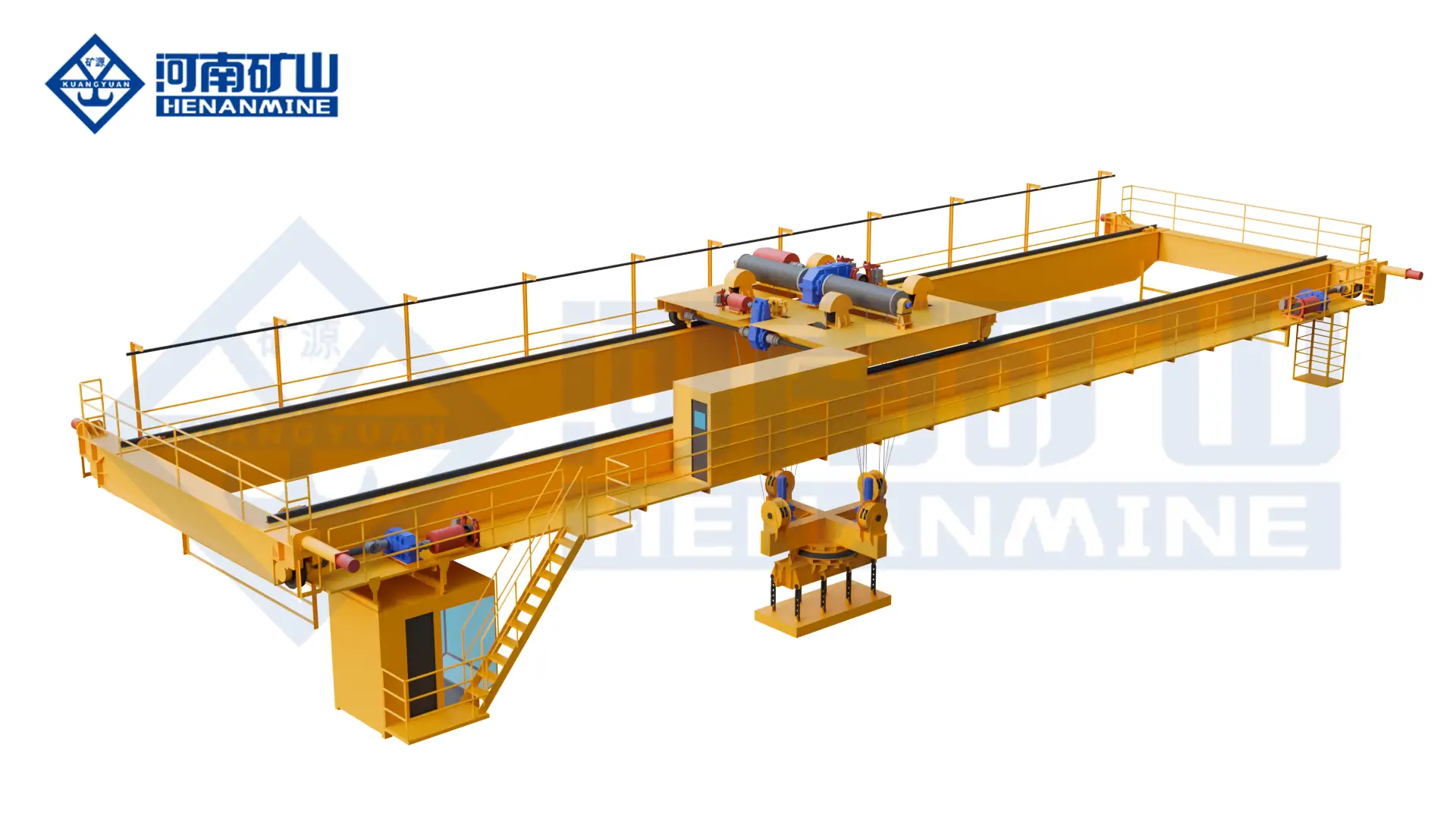
    info@hnksglobal.com
  • Single-Girder Bridge Crane

    Single-Girder Bridge Crane

    Overhead Cranes / Henan Mine Crane

    Single-Girder Bridge Crane

    Use an LDA single-girder bridge and electric hoist for general workshop material handling. Select the lifting capacity, runway geometry and hoist duty around the building and load.

    Lifting capacity1–20 t
    Span7.5–31.5 m
    Working classA3
    Technical specifications

    Define the total suspended load, duty and site conditions for your project.

    Technical specifications

    Check the load.
    Plan the configuration.

    Parameters and equipment options are matched to the application and confirmed in the technical proposal.

    Discuss your configuration
    ModelLDA
    Lifting capacity1–20 t
    Span7.5–31.5 m; according to the selected configuration
    Lifting height6, 9, 12, 18, 24 or 30 m; capacity-dependent
    Working classA3
    Electric hoistCD₁ or MD₁
    Hoisting speed1–5 t: 8 or 8/0.8 m/min; 10 t: 7 or 7/0.7 m/min
    Trolley travel20 m/min
    Crane travel20 or 30 m/min
    Power supply380 V, 50 Hz, three phase
    Wheel diameter270 mm for the listed 1–10 t arrangements
    Track flange width37–70 mm for the listed 1–10 t arrangements

    Final parameters, dimensions, wheel loads and supply scope follow the approved project specification.

    Application & operation

    Matched to the handling task.

    Workshop production

    Move components between manufacturing, storage and loading positions.

    Equipment maintenance

    Provide lifting coverage around fixed machinery and service areas.

    Selection considerations

    Start with your operating conditions.

    01

    Load & lifting arrangement

    Specify complete suspended load, lifting accessory and required hook positions. Include lifting-appliance weight and the required lifting positions.

    02

    Site & available space

    Provide runway centres, rail elevation, roof clearance and hook approach. Coordinate the installation interfaces with the available site drawings.

    03

    Duty & control sequence

    Define daily lifting cycle, motion requirements and site power. Identify the required movements and control interfaces in the enquiry.

    Configuration comparison

    Compare related lifting arrangements.

    Crane arrangementHandling configuration
    Single-Girder Bridge CraneUse an LDA single-girder bridge and electric hoist for general workshop material handling. Select the lifting capacity, runway geometry and hoist duty around the building and load.
    European-Style Electric Single Girder CraneHandle workshop components with a European-style single-girder crane and electric hoist. Match the compact lifting arrangement and movement control to the building and operating cycle.
    Single-Beam Suspension CraneSuspend an LX single-girder crane from an approved overhead runway to cover workshop lifting positions. Building support, runway geometry and available hook height determine the installation.
    LH Electric Hoist Double Girder CraneUse an LH double-girder bridge with an electric-hoist trolley for workshop lifting, assembly and maintenance. Match the hoist arrangement to the suspended load, hook travel and available building space.

    Operating protection & lifecycle support

    Plan beyond the equipment.

    01

    Operating protection

    Confirm overload protection, travel limits, brakes, emergency controls and the required process interlocks for the declared lifting task.

    02

    Installation & commissioning

    Agree runway reactions, structural interfaces, electrical connections, assembly, inspection and commissioning responsibilities before delivery.

    03

    Inspection & spares

    Plan inspection and maintenance of electric-hoist rope, hook assembly and bridge travel drives. Agree service access, documentation and the required spare-parts scope.

    Questions before the order

    Clarify the details
    that shape the crane.

    What information is needed for a single-girder bridge crane quotation?+

    Provide complete suspended load, lifting accessory and required hook positions; runway centres, rail elevation, roof clearance and hook approach; and daily lifting cycle, motion requirements and site power. Include drawings and the project destination when available.

    Which loads belong in the rated-capacity calculation?+

    State the workpiece and all suspended lifting accessories. Select the crane and hoist arrangement for the complete declared lifting task and the required operating cycle.

    What installation and support scope should be agreed?+

    Agree runway reactions, structural interfaces, electrical connections, assembly, inspection and commissioning responsibilities before delivery. Specify the documentation, training and spare-parts support needed for the project.

    Related equipment

    Explore the alternatives.

    Let’s discuss your project

    The right crane starts
    with your lifting task.

    Share complete suspended load, lifting accessory and required hook positions, together with your site layout and operating cycle.
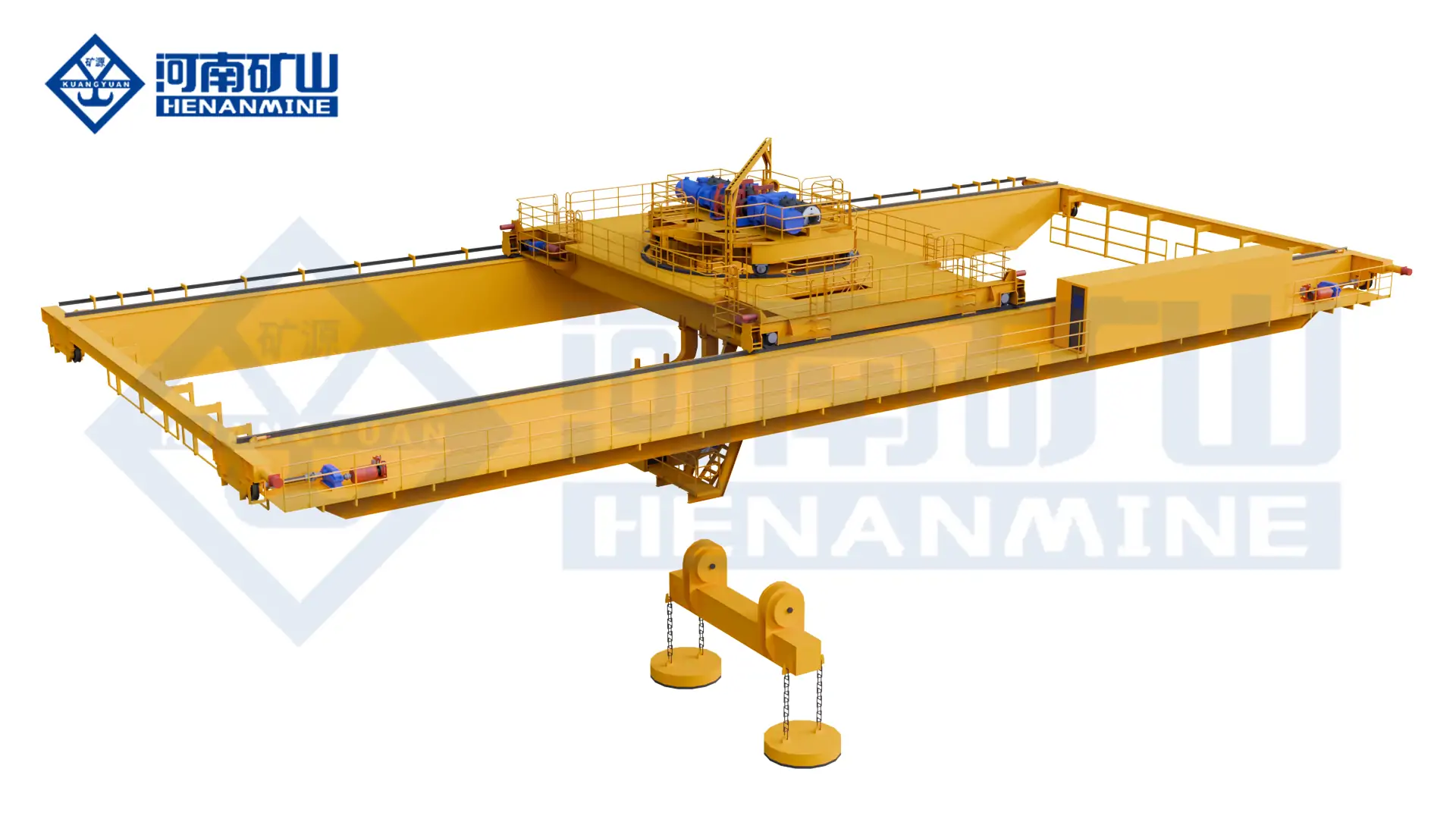
    info@hnksglobal.com