Engineering · Manufacturing · Project support
info@hnksglobal.comWhatsApp +86 18836207779 ↗

Blog

  • Crane Manufacturer Quality Review: What to Request for the Project

    Crane Manufacturer Quality Review: What to Request for the Project

    Technical guide

    Crane Manufacturer Quality Review: What to Request for the Project

    Quality assessment is stronger when it follows the equipment being ordered. Request the relevant technical, manufacturing and acceptance documents, and agree how deviations and handover responsibilities will be managed.
    Henan Mine CraneTechnical guide · Updated 2026Crane selection, project scope and operating requirements
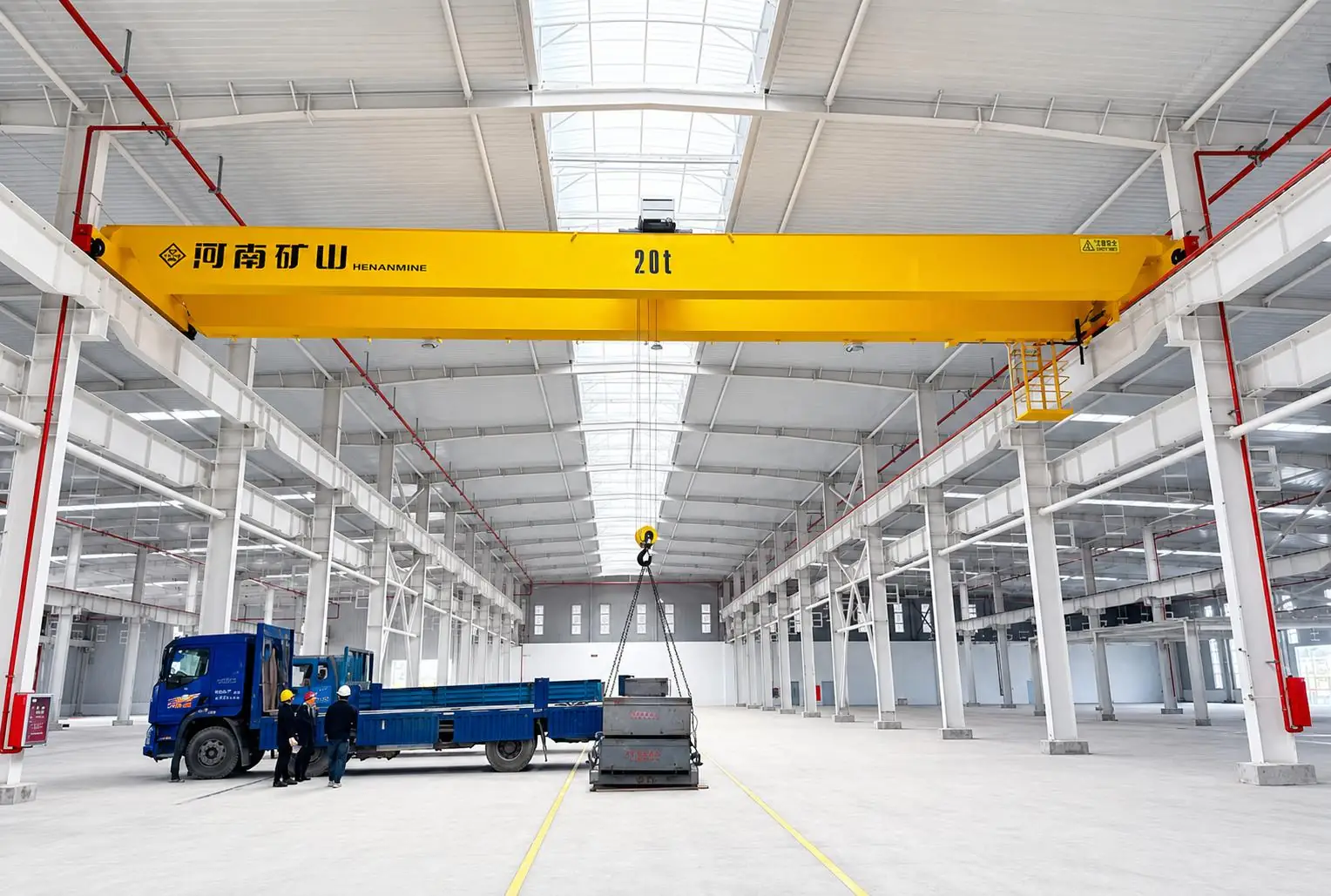
    Henan Mine Crane overhead crane inside a workshop bay
    Henan Mine Crane overhead crane inside a workshop bay
    Project planning notes

    Key points for this crane project.

    1. How to choose a quality crane manufacturer
    2. The supplier background and credibility
    3. Certification and compliance
    Read the technical guide

    How to choose a quality crane manufacturer

    Cranes are industrial core equipment, directly related to operational safety, productivity and long-term operating costs. If you choose the right one, it will save your heart and durability, but if you choose the wrong one, it will be prone to failure, downtime, and possible after-sale disputes.

    The supplier background and credibility

    Judge whether the manufacturer is reliable, the first thing to find out its ‘background’. Background information can intuitively reflect the strength and stability of the enterprise, to avoid co-operation with the purse company or short-term workshop.

    Years of establishment and shareholding structure are the basic thresholds. Long-established enterprises are more experienced, more mature and more risk-resistant. Priority is given to manufacturers with clear shareholdings, no disputes and their own factories, which are better able to control the production process and are more secure than pure traders.

    The size and capacity of the factory directly determines the delivery capacity, and you need to pay attention to the core information such as its floor space and the configuration of the production equipment. Strong manufacturers are usually equipped with advanced production equipment and have sufficient production capacity. It is recommended to verify through on-site inspections and other means to visually understand their production and management level.

    Export experience and international market layout can side by side confirm product quality and compliance. Manufacturers with stable export business usually have products that meet international standards. Verification of export countries, relevant qualifications and successful cases can be more convincing than manufacturers’ boasts.

    Benchmarking projects and customer testimonials are the most direct endorsement of trust. High-quality manufacturers must have industry cases of cooperation with large customers, you can ask them to provide project information, customer feedback, and even take the initiative to contact past customers to verify the operation of the equipment and after-sales service.

    Certification and compliance

    Welding, electrical and safety certifications are directly related to operational safety. High-quality manufacturers usually have welding certificates such as AWS, EN 1090, etc., and electrical components in accordance with IEC standards, as well as equipment safety devices (anti-overloading, anti-collision, etc.) to meet the standards.

    Third party testing (e.g. SGS, BV, TUV) is an important safeguard. Only look at the manufacturer’s self-inspection report is not enough, give priority to accept the third-party testing of manufacturers, the authoritative report can be issued to avoid quality risks to the greatest extent.

    Engineering and technical capabilities

    The core competitiveness of cranes lies in engineering capabilities. The demand for different working conditions vary greatly, standardised products often cannot be adapted, which requires manufacturers to have a strong R & D and customisation capabilities.

    The core competitiveness of cranes is ultimately reflected in the engineering capabilities. Especially in different industries, different working conditions of the demand varies greatly, standardised products often cannot be fully adapted, which requires manufacturers to have a strong technical research and development and customisation capabilities.

    Internal R&D team is the core of technology. High-quality manufacturers have professional R&D teams covering mechanical, electrical, structural and other fields of engineers. The R&D strength can be verified by the team size, experience of core members and patent achievements.

    Customisation capability is the key to dealing with complex working conditions. In the face of scenarios such as low headroom, abnormal span and special lifting goods, manufacturers need to design adapted solutions through professional modelling after on-site research.

    Load calculation and structural analysis determine the safety and durability of the equipment. High-quality manufacturers use finite element analysis and other tools to calibrate the strength and stiffness of core components, such as main beams and end beams, to ensure the safe operation of the equipment.

    Regardless of domestic and international use, the equipment must comply with the corresponding standards (e.g. GB/T 3811, EN 13000, ASME B30), which manufacturers need to strictly comply with in order to guarantee the availability of the equipment.

    Product Configuration and Core Components

    Equipment performance and life, the core depends on the configuration and quality of core components. Some manufacturers cut corners when competing at low prices, which can lead to a spike in the failure rate in the later stage, but increase operating costs.

    Crane performance and service life, the core depends on the product configuration and the quality of core components. Many manufacturers seem to offer a very low price, but cut corners on the core components, the subsequent failure rate of the equipment will rise sharply, the long-term operating costs are higher.

    Steel grade and manufacturing process is the equipment ‘skeleton’. High-quality manufacturers choose Q355B, Q460 and other high-strength steel, welding precision, rust removal and painting processes, directly affecting the corrosion resistance of the equipment and life.

    Motor, reducer, brake, etc. is the equipment ‘heart’. Priority is given to the core components of Siemens, SEW and other well-known brands of manufacturers, although the cost is slightly higher, but the stability is strong, can reduce the failure and maintenance costs, to avoid the hidden dangers of miscellaneous parts.

    The control system needs to be adapted to the operational scenarios, mainly handheld button box, remote control, automation of three ways. High-quality manufacturers can recommend the right type according to the needs of the site to ensure accurate and stable control.

    Safety devices are the last line of defence for operational safety. The equipment should be fully equipped with overload limitation, position limitation, anti-collision and other devices, and be sensitive and reliable. Special working conditions also need to be equipped with additional special protective equipment.

    Quality control and testing

    Quality design and configuration, need strict quality control and testing support. High-quality manufacturers to establish a full-process quality control system, from raw materials to finished products factory, each link has a clear testing standards.

    No matter how good the design and configuration, without strict quality control and testing process, it is impossible to ensure product quality. High-quality manufacturers will establish a full-process quality control system, from raw materials to the finished product factory, each link has strict testing standards.

    Incoming material inspection is the source of quality control. Steel, core components and other incoming, need to check the qualification and performance test, qualified before put into production, from the source to eliminate quality hazards.

    Load and function test is the core performance verification link.

    Factory Acceptance Test (FAT) is the key to buyers’ rights protection. High-quality manufacturers have standardised FAT process, inviting buyers to witness the test, and all data records are filed and signed by both parties before the equipment is shipped.

    Quality traceability records facilitate follow-up maintenance and responsibility definition. Priority is given to manufacturers who can provide full-process traceability records, covering procurement, production, testing and other aspects, to facilitate troubleshooting and responsibility determination.

    Business and contract terms

    Commercial and contract terms are the core of cooperation, clear and reasonable terms can clarify the rights and responsibilities, avoid disputes and ensure the smooth progress of the project.

    In addition to products and technologies, commercial and contract terms are also the core of cooperation. Clear and reasonable terms can clarify the rights and obligations of both parties, avoid subsequent cooperation disputes, and ensure the smooth progress of the project.

    Clarity of quotation is the key to avoid late additions. When checking the quotation, in addition to the total price, you need to clarify the scope of the cost of equipment, installation, training, transport, etc., to confirm that the parameters of the configuration is clear and there are no hidden clauses.

    Delivery time needs to be agreed in conjunction with the project requirements, the contract is clear production, delivery, arrival and commissioning completion time. Require manufacturers to provide progress plans and regular synchronisation, customised equipment need to set aside sufficient production cycle, to avoid rushing to affect the quality.

    FOB, CIF, DDP and other trade terms, responsibilities and costs are divided into different. You can choose according to your own logistics ability: FOB for mature channels, DDP for worry-free needs, and match according to your needs.

    Payment terms are suggested to adopt the mode of ‘prepayment + progress payment + final payment’ to take into account the rights and interests of both parties. Warranty can be agreed, to be paid after the expiry of the warranty period without quality problems, to further avoid the risk of co-operation.

    After-sales service and support

    After-sales service directly affects the long-term operational efficiency of the equipment and maintenance costs, high-quality manufacturers will provide perfect after-sales service and technical support, which should not be ignored when purchasing.

    Many buyers in the procurement, easy to ignore the after-sales service, but in fact, the quality of after-sales service, directly affecting the long-term operational efficiency of the equipment and maintenance costs. High-quality manufacturers will provide perfect after-sales service and technical support.

    Warranty period and scope need to be clear in the contract. Conventional equipment warranty is mostly 12-24 months, the core components can be extended to 24-36 months, while clarifying the free maintenance, door-to-door service and other rights and responsibilities, to exclude man-made and force majeure factors.

    Spare parts supply capacity is related to fault repair efficiency. High-quality manufacturers have spare parts warehouses at home and abroad, commonly used spare parts can be delivered in 24-48 hours, no more than 7-10 days for special spare parts, while the need to confirm the lifelong spare parts supply capacity.

    Installation and commissioning of professional, high-quality manufacturers to provide free on-site guidance and commissioning services, as well as training of operators to ensure the smooth commissioning of equipment.

    Fast technical response can reduce downtime losses. Domestic customers are preferred to choose 24-hour response, 48 hours to the manufacturer, overseas customers are concerned about the 72-hour response capability, while confirming the 24-hour technical advice channels.

    Logistics and export capabilities

    For buyers exporting or purchasing large cranes, logistics and export capabilities are critical, directly affecting whether the equipment can be delivered safely and on time to protect the project progress.

    For buyers with export demand, or procurement of large, super-large crane buyers, logistics and export capability is a dimension that must be focused on. Whether the equipment can be delivered to the site safely and on time directly affects the project progress.

    Export packaging needs to comply with international transport standards. Cranes are large-scale equipment, and high-quality manufacturers use rust-proof, moisture-proof and shock-proof packaging to reinforce large components and avoid deformation and damage during transport.

    Complete documentation and customs clearance support can avoid delays in customs clearance. High-quality manufacturers with rich export experience can assist in the preparation of a full set of customs clearance documents, provide consulting services to ensure smooth customs clearance of equipment.

    Large transport experience is the core guarantee for large equipment delivery. High-quality manufacturers have long-term cooperation with large logistics partners, according to the weight and size of the equipment, the development of land transport, sea transport, port loading and unloading integrated programme.

    Good co-ordination between ports and freight forwarders can improve transport efficiency. High-quality manufacturers dock with ports and freight forwarders in advance to arrange loading and unloading, warehousing and customs clearance processes, so as to avoid equipment stranded in the port.

    Choosing the right manufacturer is choosing the right long-term partner

    Selecting a high-quality crane manufacturer is essentially selecting a long-term partner, which is directly related to equipment safety, productivity and long-term operating costs.

    Conditions allow, it is recommended to visit the manufacturer on the spot, verify the production process and testing procedures, refer to the feedback of past customers, to maximise the risk of avoiding and selecting a reliable partner.

    Discuss the crane arrangement for your project.

    Quality assessment is stronger when it follows the equipment being ordered. Request the relevant technical, manufacturing and acceptance documents, and agree how deviations and handover responsibilities will be managed. Share the load, available drawings, working cycle and site conditions with Henan Mine Crane so the required configuration and supply boundary can be discussed.

    Related crane configurations

    Explore crane product families and technical parameters ↗

    Updated 2026 · Henan Mine Crane
  • QDY Casting Crane Selection: Ladle Handling and Process Requirements

    QDY Casting Crane Selection: Ladle Handling and Process Requirements

    Technical guide

    QDY Casting Crane Selection: Ladle Handling and Process Requirements

    The casting operation needs to be described as a complete lifting task. Provide the ladle and attachment details, required positions, heat exposure and operating sequence before comparing a QDY crane configuration.

    Henan Mine CraneTechnical guide · Updated 2026Crane selection, project scope and operating requirements
    QDY Casting Crane Selection: Ladle Handling and Process Requirements
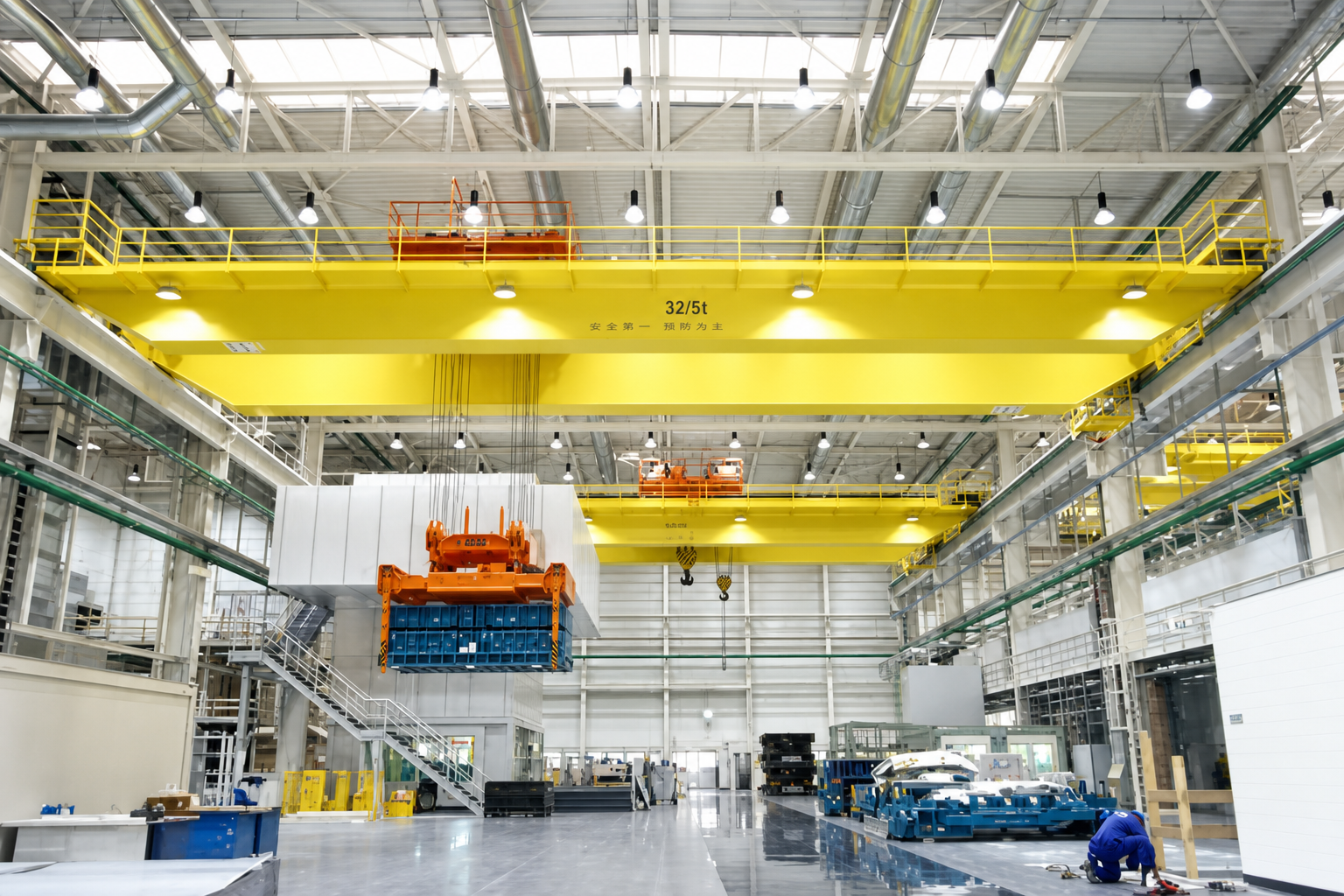
    Henan Mine Crane lifting equipment
    Project planning notes

    Key points for this crane project.

    1. What Is a QDY Casting Crane?
    2. Key Applications in Molten Metal Handling
    3. Core Selection Criteria: Load Capacity and Span
    Read the technical guide

    What Is a QDY Casting Crane?

    A QDY casting crane (also called a ladle crane or casting ladle crane) is a double-girder overhead crane engineered specifically to lift and transport ladles filled with molten iron or steel. Unlike a standard bridge crane, it is built to survive continuous radiant heat, dust, and the catastrophic consequences of a dropped load.

    QDY series ladle cranes transport molten iron ladles to the basic oxygen furnace, or transfer molten steel from the basic oxygen furnace and electric arc furnace to the continuous casting machine, and can also be used for teeming and casting. As with charging cranes, safety and reliability come first because the crane is handling molten steel.

    Design and Standards

    QDY bridge foundry cranes with hooks are used wherever molten metal is lifted, with the complete machine rated to working class A7, and a thermal-protective coating added to the bottom of the main girder. Casting ladle crane design and manufacture conforms to the notification requirements of JB/T7688-1 and JB/T7688, along with the National Quality Supervision Bureau's opinions on metallurgy lifting machinery.

    Key Applications in Molten Metal Handling

    QDY cranes appear at nearly every hot-metal handoff point in a steel plant or foundry:

    • Charging operation: Responsible for the transfer of molten iron after tapping from the blast furnace. The ladle is carried by lifting equipment to smoothly lift and transfer the high-temperature molten iron from the blast furnace discharging station to the designated charging station of the oxygen top-blown converter for subsequent steelmaking. The smelting process provides raw material guarantee and is the core transfer process at the front end of steel smelting.
    • Refinery transfer operation: Throughout the whole process of steelmaking production, it can complete the processes of converter molten iron charging, crude steel lifting and refining, and molten steel transportation to continuous casting turntable, realizing efficient connection between smelting and continuous casting processes and ensuring continuous and stable operation of production lines.
    • Casting and forming operation: It belongs to the core process of metal forming. Through precise operation of lifting equipment, qualified molten metal is poured into ingot mold or continuous casting equipment to complete metal shaping and stably produce finished products such as ingot and billet.
    • Casting workshop pouring station operation: adapt to the high temperature, heavy load and high frequency operation conditions of the casting workshop, mainly complete the cross-station transfer of molten metal in the workshop, fixed-point lifting, and the handling of heavy molds and tooling components, so as to ensure the efficient and continuous development of the casting process.

    Because the crane also has to tip the ladle to pour, most QDY units pair a main hoist with an auxiliary hoist. The main hook works as the primary lifting device for the ladle, while the auxiliary hook works with the main hook to dump the molten iron and perform other subsidiary lifting operations.

    Core Selection Criteria: Load Capacity and Span

    Capacity is the first filter, but it's not just about the ladle's dead weight you need headroom for future production growth.

    QDY cranes in this range typically span 10.5m to 31.5m.

    1. Load value shall be calculated according to ladle dead weight + full load total weight of molten metal. It is strictly prohibited to calculate the weight of molten metal alone, so as to ensure that the rated load of equipment completely covers the actual lifting total load and eliminate potential safety hazards caused by load calculation deviation.
    2. Taking into account future capacity expansion: the initial cost of double-beam cranes is higher, but compared with single-beam models, the bearing capacity is stronger, the stability is better, the life is longer, and it is more suitable for enterprise capacity upgrading. The long-term comprehensive value is higher.

    Span and lifting height must match your bay's rail-to-rail distance and the vertical clearance from furnace floor to runway beam get this wrong and the crane simply won't clear your pouring pits or furnace tops.

    Duty Class and Working Environment

    Duty classification (also called working class or FEM grade) tells you how much continuous stress the crane is engineered to absorb, critical for 24-hour steelmaking operations.

    The working class of the complete QDY machine is FEM 4M.

    Confirm the manufacturer's rated ambient range against your plant's actual worst-case shop-floor temperature, not the average.

    Safety Systems That Matter Most

    Given that a single dropped ladle can be fatal and shut down a plant for weeks, safety hardware is where buyers should spend the most scrutiny not the least.

    Redundant Braking and Lifting

    The main hoisting mechanism uses double motors and double brakes on a single drum, and steel-core wire rope rated for high-temperature environments provides a high safety factor. <cite index="10-1">Double sets of independent crane brakes are used on the lifting mechanism to ensure high safety.

    Overload and Limit Protection

    • Anti-sway and load monitoring. Anti-sway controls reduce lateral movement of the ladle during travel, improving control and reducing spill risk, and integrated load monitoring systems continuously measure the weight of the molten metal, alerting operators to overloads or imbalances.
    • Emergency stop and fault protection. Positive and negative contactors are installed to prevent dangerous conditions in case of a power outage, and emergency stop buttons plus limit switches guard against overload.

    Structural and Material Requirements for High Heat

    An insulating layer is installed at the bottom of the main girders to prevent thermal radiation from molten steel damaging the structure and to extend the girders' service life.

    Other structural specs to verify with any supplier:

    • The main girder adopts 16Mn high-strength steel plate welded box structure, which has high overall rigidity, stable structure and excellent fatigue resistance. It can withstand high-frequency, heavy-duty and reciprocating operations in the foundry industry for a long time, and the structure is not easy to deform.
    • The trolley system is equipped with high temperature resistant special power supply cable, which can adapt to the continuous high temperature radiation environment of the casting workshop. It has the characteristics of high temperature resistance, aging resistance and difficult breakdown, and ensures the safety and stability of the equipment power supply.
    • The cab adopts integral heat insulation and sealing design and is equipped with air conditioning system, which can effectively block external high temperature heat radiation and hot air intrusion, create a constant temperature and comfortable operating environment, reduce high temperature fatigue, and ensure safe operation of operators.
    • The core transmission components such as motors, reducers and bearings adopt fully sealed protection structure, which effectively isolates dust, water vapor and corrosive smoke from foundry workshops, avoids component stagnation, wear and corrosion, and significantly improves equipment durability and operation reliability.

    Control Systems: Cabin, Remote, and PLC Options

    Control method affects both operator safety and cycle efficiency. >Ladle cranes can use advanced speed control methods such as stator voltage regulation or frequency conversion, with PLC control used to display speed, crane work status, and safety faults; remote control is also an option to better reflect the crane's performance.

    • Cab control: The operator works in the insulated air-conditioned cab, the environment is comfortable, the vision is clear, especially suitable for continuous high-frequency casting conditions, accurate visual alignment can be ensured, and the lifting casting accuracy and operation stability can be guaranteed.
    • Wireless/handle remote control: keep operators away from high temperature heat radiation areas, avoid high temperature operation risks from the root, and have higher safety factors. It is the preferred solution for casting enterprises that pay attention to safety production.
    • PLC intelligent automation control: support automatic recording and storage of load data, equipment failure, operation cycle and other operation data, provide data support for production control, and lay an intelligent foundation for subsequent access to the Internet of Things and predictive maintenance of equipment.

    QDY vs. YZ vs. YZS: Which Series Do You Need?

    The takeaway: QDY is the right call for most foundries and mid-sized steel mills. Once ladle weight or throughput pushes past the mid-70-ton range, budget for a YZ or YZS solution instead of over-stretching a QDY crane's design limits.

    Total Cost of Ownership and Maintenance

    The purchase price is only the entry cost. Ladle bridge cranes require higher safety performance than ordinary bridge cranes, which makes them more expensive driven not just by design and motor specification but by operating-system customization and ongoing maintenance, with maintenance being one of the main contributors to overall lifetime cost.

    Before signing a contract, evaluate the supplier on:

    • Accessibility for inspection: choose a crane with easily accessible components for inspection and servicing, clear maintenance manuals and lubrication schedules, and a modular design for quick replacement of worn parts
    • Local parts and service support: availability of local service technicians and spare parts inventory should factor directly into the purchase decision
    • Predictive maintenance readiness:sensors monitoring temperature, vibration, motor current, and lubrication in real time can predict failures before they occur, reducing unplanned downtime
    • Energy efficiency:variable frequency drives regulate motor speed to load requirements, cutting unnecessary power use and extending motor life, while regenerative braking can capture and reuse kinetic energy

    Standards and Certification Checklist

    Don't take a supplier's safety claims on faith verify against recognized standards:

    • Domestic industry standards: strictly follow JB/T7688-1, JB/T7688 series standards, fully meet the design specifications and manufacturing acceptance technical requirements of domestic casting ladle cranes, equipment structure, performance parameters and production processes are in line with industry official standards.
    • European FEM standard: standard EN 14492-2 and other authoritative lifting equipment standards and FEM classification specifications, strictly control the safety performance and operation stability of equipment, can meet the strict use and acceptance standards of overseas high-end projects.

    Ask any shortlisted supplier for certificates, not just brochure claims, and request references from plants running a similar tonnage and pour frequency to yours.

    Discuss the crane arrangement for your project.

    The casting operation needs to be described as a complete lifting task. Provide the ladle and attachment details, required positions, heat exposure and operating sequence before comparing a QDY crane configuration. Share the load, available drawings, working cycle and site conditions with Henan Mine Crane so the required configuration and supply boundary can be discussed.

    Related crane configurations

    Double Girder Casting Crane

    View product parameters
    Lifting capacity: 75/20–200/50 tSpan: 10m – 35mLifting height: 6m – 25m

    Lift and transfer molten-metal ladles with a YZ casting crane configured for the full suspended load and casting process. Review ladle interfaces, thermal exposure and the operating sequence together.

    Four Beam Casting Crane

    View product parameters
    Lifting capacity: 125/32–320/80 tSpan: 10m~40mLifting height: 6m~30m

    Handle molten-metal ladles with a YZS four-beam casting crane. Main and auxiliary trolley functions, thermal exposure and the lifting sequence are selected for the casting process.

    Updated 2026 · Henan Mine Crane

  • Portal Slewing Cranes for Shipyards: Cargo Radius and Working Area

    Portal Slewing Cranes for Shipyards: Cargo Radius and Working Area

    Technical guide

    Portal Slewing Cranes for Shipyards: Cargo Radius and Working Area

    A shipyard portal crane needs to cover defined vessel and assembly positions. Show the load, lifting-tool arrangement and required operating radii so the proposed crane can be assessed within the yard layout.

    Henan Mine CraneTechnical guide · Updated 2026Crane selection, project scope and operating requirements
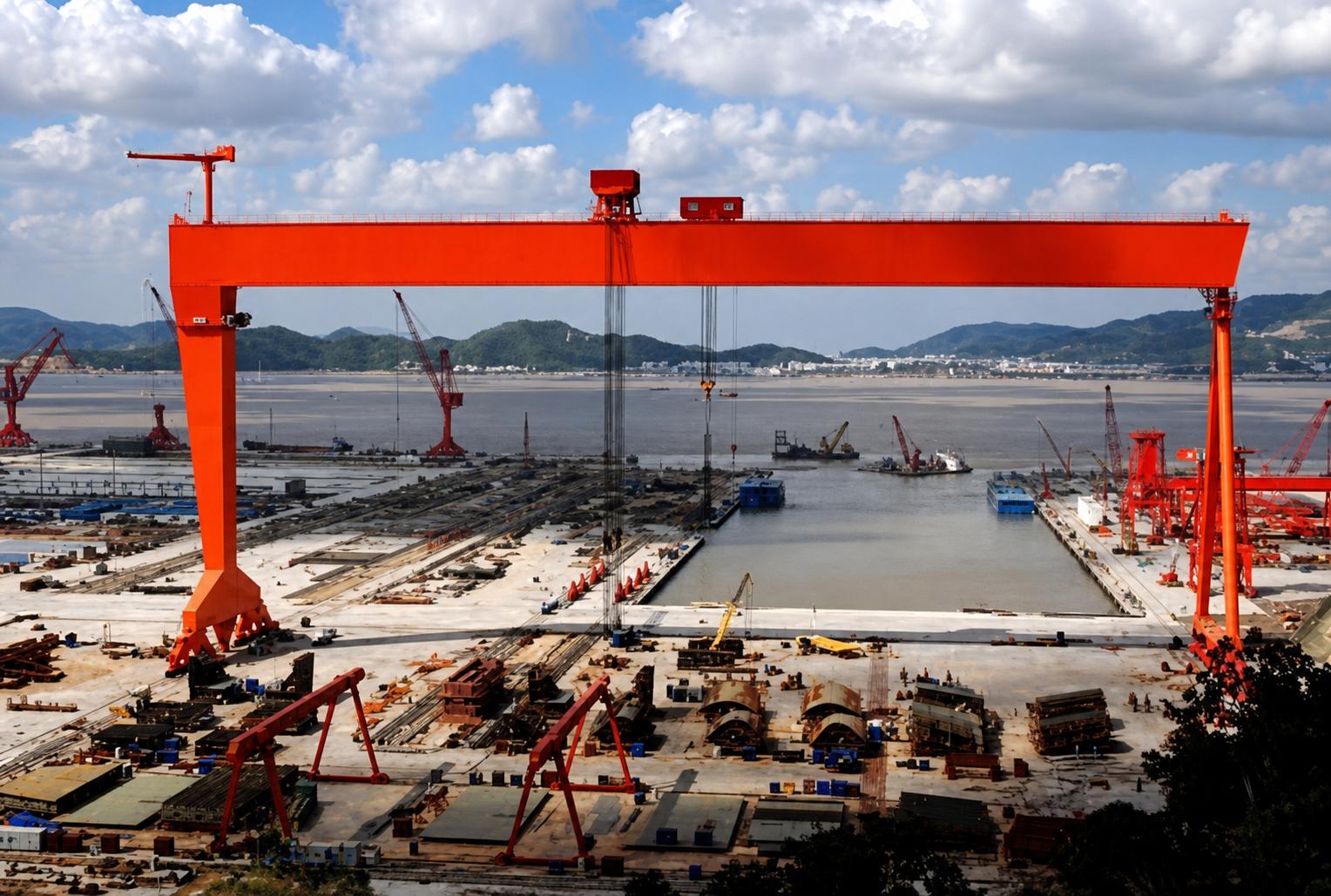
    Shipyard Portal Slewing Crane
    Shipyard Portal Slewing Crane
    Project planning notes

    Key points for this crane project.

    1. What Is a Portal Slewing Crane?
    2. How It Works
    3. Core Benefits
    Read the technical guide

    What Is a Portal Slewing Crane?

    Henan Mine Crane manufactured portal slewing crane is a rail mounted gantry crane with a traveling jib or boom that slews and lifts loads through 360 °. They are used in ship yards, ports and heavy industry yards. This type of crane consists of a portal frame on a pair of parallel rails that carry loads over a work area, usually a dry dock, slipway or fabrication yard, and this frame is fixed to a pair of rails for travel across the work area. A jib is mounted onto the top of the gantry can rotate independently of the travel motions of the gantry itself. This allows the load to be hovered at any point within the working radius of the crane without traveling the whole gantry between pick points.

    How It Works

    1. The portal frame runs along fixed rails through the work bay, powered by electric travel motors (one per leg).
    2. The slewing jib has a turntable bearing on top of the portal which rotates independently of the gantry travel.
    3. The load radius from the pivot is either increased or decreased as the hoist trolley moves on the jib.
    4. The main hoist lifts and lowers large loads. the auxiliary hoist lifts lighter loads more rapidly.
    5. Operator monitoring of travel, slewing and hoisting at the same time from cab or remote pendant for accuracy placement.

    Travel, slew and hoist together form three independent motions, which when combined in different directions allow a single crane to serve the entire dry dock.

    Core Benefits

    • 360° slewing jib: reaches every point around a dry dock from one rail position, cutting crane repositioning time
    • Heavy lift capacity (up to 300+ t): handles complete hull blocks and pre-outfitted sections in a single lift, reducing crane cycles per vessel
    • Dual hoist configuration: separates heavy main lifts from fast auxiliary moves, increasing daily lift throughput
    • Rail-mounted portal frame: distributes load across a wide rail gauge, allowing taller lifts with better stability than mobile cranes
    • Variable-frequency drive control: enables smooth, low-shock load placement critical for precision hull alignment
    • Modular customization:boom length, capacity, and rail gauge configured to existing dry dock dimensions, avoiding costly civil works changes

    Applications and Use Cases

    Portal slewing cranes serve shipyards wherever heavy loads need precise, rotational placement around a fixed work area. Their combination of rail travel and 360° slewing suits tasks that straight-line gantry cranes handle poorly, particularly hull block turning and section transfer near dry docks. Typical shipyard applications include:

    • Hull block lifting and turning during dry dock assembly
    • Engine and generator set installation during outfitting
    • Steel plate and prefabricated panel handling in fabrication bays
    • Ship section transfer between fabrication hall and slipway
    • Rudder, propeller, and shaft installation at the stern
    • Dry dock blocking and keel block positioning support

    How to Choose the Right Portal Slewing Crane — Buying Guide

    Choosing a Henan Mine Crane Supply portal slewing crane involves a multi-step engineering decision process, not a single capacity number. The following considerations are used to determine an appropriate crane for a 20+ year service life.

    1. Capacity and the full load chart, not just headline tonnage Determine match capacity to your biggest planned lift plus a safety margin of 10-15 percent. Make sure to use the rated capacity at the radius of your largest lift.
    2. Span and rail gauge Span must be consistent with width of your dry dock or fabrication bay area. Determine the exact distance between the proposed rail centerlines prior to specifying changing rail foundations after the fact is very costly and will create disturbances to yard operations for weeks.
    3. Working radius/jib length Longer jib will increase working radius, yet decrease working capacity at maximum reach and increase wind loading at upper sections of the structure. Try mapping your dry dock’s pick points over candidate jib lengths before settling on a size excessive jib length merely adds to the structure and investment.
    4. Duty class, and structural design life Need to specify duty class (ISO 4301 or FEM 1001) according to actual working load, not choose by default. A shipyard with several shifts of heavy lifts will choose duty class A6-A7, while a shipyard with light lifting may choose A5, thus saving money. Duty class is a primary factor in size of steel sections, selection of bearings and final fatigue life of the structure.
    5. Site and civil works survey Verify soil bearing capacity, foundation design, and existing rail condition (retrofit) before determine crane weight and wheel load. Ensure foundation design is verified by a structural engineer based on the supplier wheel-load data, as this is one of the most common causes for delay in installation.
    6. Electrical infrastructure Confirm that the site voltage, frequency, and available power capacity are capable of supporting the total installed power of the crane. If power supply is erratic on the site, check with supplier that appropriate mitigating measures are in place to prevent nuisance trips during heavy lifts.
    7. Corrosion protection for maritime conditions Use hot-dip galvanized structural components or clear multi-coat marine grade epoxy/polyurethane paint system for salt-air recommended. It is definite for crane within several hundred meters of open water – under coated systems will require excessive Structural repairs 5–8 years.
    8. Control System and Operator Ergonomics Decide on an operator cab, ground level pendant or radio remote control, as determined by sight lines and size of work area. Larger dry docks tend to need cabs with anti-glare glazing and controls for long radius lifts, whereas the smaller bays are more suited to radio remote control.
    9. Safety and anti-collision systems When more than one crane operates on the same track, normal overload protection must include anti-collision sensors and zone-limiting software. Wind speed recording with automatic alarm or lock-out is necessary for any crane operating over water.
    10. Total cost of ownership in addition to purchase price Lower purchase costs by comparing energy consumption and spares availability with the quotations from the supplier. Selecting a supplier who does not have a regional service team available, may be very costly during its 20 year life span, if down time occurs during a breakdown.

    Safety Systems and Maintenance Considerations

    Henan Mine Crane manufactured portal slewing crane in a shipyard has to be fitted with engineered safety devices and maintained in order to be able to operate at its rated duty class throughout the lifetime of the machine.

    Conventional safety devices consist of overload limit devices which interrupt the hoist movement prior to weights exceeding rated capacity, anti-collision detectors on cranes operating on shared rail tracks, wind speed sensors (anemometers) with automated alarm or travel lock-outs, and the presence of emergency stop controls at the cab, ground level, and remotely on a pendant.

    • Daily visual survey of wire ropes, hooks and brakes prior to working shift
    • Monthly lubrication of the slewing bearing, wheel bogies and hoist gearboxes.
    • Each yearcomprehensive structural examination, load testing, electrical system assessment to be carried out as per ISO 9927 or its equal.
    • Every 5 yearsnon-destructive testing (NDT) of critical welds and the slewing bearing, especially for cranes above duty class A6.

    Shipyards should allocate scheduled down time for these planned breaks rather than being reactive to maintenance unplanned crane down time during a docking schedule is significantly more costly than planned maintenance window.

    Portal Slewing Crane vs. Gantry Crane

    FeaturePortal Slewing CraneStandard Gantry Crane
    Rotation270°–360° slewing jibNone — straight travel only
    Reach patternCircular/radial coverageLinear coverage along rails
    Best forDry dock hull block handling, ship turningStraight-line material transfer, container handling
    Footprint flexibilityHigh — one position covers a wide arcLow — must travel to align with load
    Typical capacity5–300+ t5–500+ t (heavier-duty models common)
    Relative costHigher (slewing mechanism, turntable bearing)Lower for equivalent capacity

    Neither type is universally "better" , gantry cranes suit high-throughput linear transfer, while portal slewing cranes suit shipyards needing radial coverage around a fixed dry dock or assembly bay.

    Compliance and Certifications

    • ISO 4301 / FEM 1001: classifies crane duty/usage group, ensuring structural design matches actual lift cycles.
    • ABS / DNV / LR Classification: required when the crane forms part of a classed shipyard facility or vessel-related lifting operation.
    • ASME B30.2: US standard covering overhead and gantry crane design, inspection, and operating safety.
    • RoHS / REACH: relevant for electrical and control components exported to EU markets.

    Frequently Asked Questions

    Q: How much can a portal slewing crane lift?

    Lifting capacity varies according to duration of jib, radius of slewing and width of rail. Shipyards constructing large ships tend to specify larger capacity cranes to lift entire hull segments in one lift.

    Q:-How a portal slewing crane is different from a tower crane?

    A portal slewing crane rides on rails between two fixed points across the working area; a tower crane is fixed on one foundation point. A portal crane is used in shipyards for long dry-docks, whereas tower cranes are used for vertical construction, but have a limited horizontal axis.

    Q: What duty class should be specified to the shipyard?

    ISO 4301 duty class A6–A7 (check with manufacturer) is often used as appropriate for shipyards frequently lifting heavy weights, being high-duty duty class and a wide load spectrum less so for quartermasts. Lower duty classes should be specified for less frequent light lifting. Duty class influences structure sizes and fatigue life.

    Q: Are the cranes suitable for adaptation to an existing dry dock?

    In general, rail gauge, jib length and lifting height are proven to dimensions of an existing dry dock, site conditions will usually be surveyed by the manufacturers before the final design is completed, thus preventing expensive modification to existing rails or quay structures.

    Q: Is any special foundations needed for the portal slewing crane?

    Rail mounted portal cranes must be provided with reinforced concrete rail foundations sized to carry the wheel loads and travel distance of the crane. Final foundation design depends on the nature of the ground, the entire weight of the crane and the maximum lift load. The requirements must be checked by a structural engineer prior to installation.

    Henan Mine Crane

    Selecting the right portal slewing crane is a long-term investment in safety, productivity, and operational efficiency. The ideal solution depends on your lifting capacity, working radius, rail layout, duty cycle, and the specific requirements of your shipyard or industrial facility. Careful engineering at the planning stage helps reduce downtime, improve lifting accuracy, and lower maintenance costs throughout the crane's service life.

    As an experienced crane manufacturer, Henan Mine Crane Factory provide customized portal slewing crane solutions for shipyards, ports, and heavy-duty industrial applications. Every project is engineered to match your operating conditions, with support covering design, manufacturing, quality inspection, installation guidance, and after-sales service. Whether you need a standard configuration or a fully customized solution, our engineering team is ready to help you find the most efficient and cost-effective crane for your project.

    Discuss the crane arrangement for your project.

    A shipyard portal crane needs to cover defined vessel and assembly positions. Show the load, lifting-tool arrangement and required operating radii so the proposed crane can be assessed within the yard layout. Share the load, available drawings, working cycle and site conditions with Henan Mine Crane so the required configuration and supply boundary can be discussed.

    Related crane configurations

    Portal Harbor Crane

    View product parameters
    Lifting capacity: 5t – 400tWorking range: 10m – 50mLifting height: 8m – 40m

    Handle cargo with a portal harbor crane configured for the working radius and lifting appliance. Define hook or grab operation, quay interfaces, outreach and the operating cycle.

    Shipbuilding Gantry Crane

    View product parameters
    Lifting capacity: 100 t, 200 t, 250 t, 450 tSpan: 40 – 97 mLifting height: 35 – 70 m

    Lift ship blocks and large assemblies with a shipbuilding gantry configured for the dock and production layout. Define lifting points, trolley functions and any block-turning sequence before selection.

    Updated 2026 · Henan Mine Crane

  • Automatic Feeding Crane for Carbon Plants: Integration and Acceptance

    Automatic Feeding Crane for Carbon Plants: Integration and Acceptance

    Products & Technology

    Automatic Feeding Crane for Carbon Plants: Integration and Acceptance

    Henan Mine Crane reported an automatic material feeding and distribution crane for a carbon-industry production line. The published configuration uses variable-frequency motion control, absolute-encoder position feedback, a hydraulically operated discharge gate and an interface with the plant’s existing feeding equipment. A buyer should define the complete handling and discharge cycle before evaluating a similar machine.

    Orange 35 t automatic material feeding crane above a carbon plant receiving area
    Henan Mine Crane automatic feeding and material-distribution crane at a carbon-industry facility; a 35 t marking is visible on the bridge.

    The process task behind the crane

    A carbon production line needs material moved from a filling position to one or more receiving points, then discharged in the required sequence. The crane in the project photograph spans a process bay above a receiving area; a 35 t marking is visible on the bridge. That marking does not define the permissible payload in a new application, the container and material weight, or the required duty. Those values must be checked against the project drawings and rated-load documentation.

    For a new enquiry, describe material type, bulk density, particle size, temperature, moisture, batch mass, discharge opening and the number and spacing of feed points. Include the building section, runway information, travel path and access for cleaning and maintenance. The equipment must fit the process and the facility, rather than being selected from a lifting-capacity label alone.

    Controls, position feedback and the discharge gate

    The source report identifies variable-frequency speed control and absolute encoders for positioning, together with a hydraulic gate for discharge. The crane also exchanges commands with the existing feeding equipment so an automatic loading and distribution sequence can be started through the integrated system. It does not publish a measured accuracy, throughput or availability result that can be applied to another site.

    Define target positions, approach speed, permitted position error, repeatability, gate-open and gate-closed signals, and the conditions under which discharge is allowed. Agree which system owns each command, how the crane receives a station-ready signal, and what happens if communications, position feedback or the gate state becomes uncertain. Require manual recovery and safe maintenance modes in the control narrative.

    The hydraulic arrangement should be specified against material flow and the local environment. Ask for the gate opening, force and cycle requirements, protection for hydraulic components, spill management, cleaning access and a procedure to clear a blocked gate safely.

    High-temperature and dusty-site checks

    The report places the machine in a hot, dusty production environment. Buyers should supply measured ambient and process temperatures, dust characteristics, cleaning methods and the intended operating hours. Electrical enclosures, cable routing, sensors, hydraulic seals, lubrication and maintainability can then be selected for the real exposure.

    If the dust can form a hazardous atmosphere, provide the area classification and applicable local requirements before design. The original story does not identify an explosion-protection rating, so no such rating should be assumed for the pictured crane.

    Acceptance scope for an integrated feeding cycle

    Factory and site tests should cover the agreed machine and process interfaces. Agree the material loading condition, target stations, travel and approach modes, encoder reference procedure, gate interlocks, fault alarms, emergency stop, power-loss recovery and the response to a receiving-line interruption. Where performance targets matter, define the measurement method and acceptable cycle-time, positioning and discharge results in the project contract.

    Ask for general arrangement drawings, electrical and control schematics, interface signal list, inspection plan, operating instructions, spare-parts list and commissioning records. Assign responsibilities for the existing feeding equipment, network, power supply, runway and site access before shipment. This gives the buyer a verifiable acceptance route for the entire feeding process.

    Specify an Automatic Feeding Crane

    Share the material properties, batch mass, receiving points, layout, temperatures, dust classification and existing equipment interface for a project-specific proposal.

  • Port Cranes for Future Expansion: Reserve the Right Site Interfaces

    Port Cranes for Future Expansion: Reserve the Right Site Interfaces

    Technical guide

    Port Cranes for Future Expansion: Reserve the Right Site Interfaces

    Future capacity depends on more than leaving room for another machine. Review vessel or yard growth, travel routes, infrastructure interfaces and control systems before defining the crane requirements for the first project stage.

    Henan Mine CraneTechnical guide · Updated 2026Crane selection, project scope and operating requirements
    port crane expansion
    port crane expansion
    Project planning notes

    Key points for this crane project.

    1. Why Future Expansion Matters When Buying a Port
    2. What Should You Consider Before Buying?
    3. How to Choose a Port Crane for Future Capacity
    Read the technical guide

    Why Future Expansion Matters When Buying a Port Crane

    Growing cargo throughput

    With the recovery of global cross-border trade and the upgrading of the domestic logistics industry chain, the cargo throughput of most coastal and inland ports is on a steady upward trend. Whether it is mainstream freight categories such as containers, bulk groceries, ore, grain, etc., the increase in annual loading and unloading volume year by year will put forward higher requirements for the operating efficiency, single-day processing capacity, and continuous operation capacity of Henan Mine Crane port cranes. If the equipment is purchased only in accordance with the current throughput matching parameters, in just 2-3 years, the crane will be saturated with production capacity and overloaded, which will directly lead to terminal congestion, reduced loading and unloading timeliness, ship stagnation and other problems, seriously affecting the customer cooperation experience and terminal revenue.

    Changing vessel requirements

    The large-scale development of the shipping industry has promoted the continuous upgrading of transportation ships to large-scale and heavy-duty. In the early years, port cranes adapted to small and medium-sized freighters and container ships were no longer able to meet the current loading and unloading needs of ultra-large ships and wide-body ships. The continuous changes in the hull width, draft depth, deck operating range, and cargo stacking height of the ship have put forward new standards for the core parameters of the crane's operating radius, lifting height, and extension distance. The type of ship docking at the terminal will not be fixed for a long time. With the expansion of the business, it is highly likely that the company will undertake larger tonnage and more categories of shipping orders.

    Avoiding early replacement

    Port cranes are heavy-duty industrial equipment. Procurement costs, installation costs, commissioning costs, and operation and maintenance costs are all high, and the equipment relocation, scrap, and replacement cycle is long, and the process is complex. It will also cause the terminal to shut down and stop production, resulting in high indirect losses. Many terminal companies lack expansion thinking due to initial procurement, and the equipment is forced to be eliminated and replaced due to insufficient production capacity, inconsistent parameters, and unsuitable working conditions after 3-5 years of use, resulting in serious waste of funds and idle resources. Purchasing equipment based on future expansion needs can maximize the service life of port lifting, allow cranes to cover multiple stages of terminal development, and completely avoid the pain points of “short-term procurement, rapid elimination, and repeated investment” in the industry.

    What Should You Consider Before Buying?

    Future handling capacity

    The core needs to clarify two core data. One is the growth range of annual cargo throughput and single-day peak loading and unloading volume, and the other is the trend of changes in the weight, category, and stacking form of the main operating cargo. Many traditional procurement plans only match the current peak production capacity, and there is no reserved production capacity margin at all. Once the terminal business expands and orders skyrocket during the peak season, the port lifting will operate at full load, speeding up the wear of parts, increasing the probability of failure, and shortening the service life of equipment.

    Vessel size and reach

    The size of the ship is the core index that determines the selection of port cranes, and directly determines the extension distance, lifting height, and operating coverage of the equipment. In the procurement research stage, it is not only necessary to refer to the current normalized ship specifications, but also to combine port planning, shipping route upgrading, and business development directions to predict the parameters of large-scale ships that will be docked in the future. It is necessary to focus on the maximum width of the ship, the maximum draft depth, the maximum stacking height of the deck cargo, and the operating coverage of the cabin to ensure that the operating extension of the crane can completely cover the whole area of the ship's deck, and the lifting height can meet the high-level loading and unloading of heavy-duty cargo and the operating requirements of changing tide levels.

    Wharf and yard layout

    The size of the terminal berth, the length of the shoreline, the load-bearing of the ground, the range of track laying, as well as the layout of the rear yard, the cargo stacking area, and the planning of the transportation channel directly determine the installation size, operating range, and expansion space of the port crane. Many terminal companies want to expand their capacity and upgrade their equipment in the later stage, but they are limited by the solid site layout, insufficient track spacing, and insufficient ground load-bearing. They cannot be retrofitted and upgraded. They can only re-purchase equipment and retrofit the site, and the cost has increased significantly. In the early stage of procurement, it is necessary to comprehensively survey the existing site parameters of the terminal, and at the same time, combined with the overall expansion plan of the terminal, reserve space for port lifting operation, track extension, and yard expansion.

    Operating conditions

    The operating environment of different ports is very different. Seaside ports face corrosion conditions of high salt spray, strong winds, and high humidity. Inland ports have problems such as large water level gaps, large winds and waves during the flood season, and low temperature and frost in winter. Some terminals also have 24-hour uninterrupted operation, high-frequency start-stop, and heavy-duty continuous operation. Working conditions are required. Operating conditions directly affect the material selection, protection configuration, working level, and wear-resistant and anticorrosive design of the crane. If equipment is only purchased in accordance with conventional standards, in the future, as the operating time increases and the working conditions and environment deteriorate, the equipment will be prone to corrosion, aging, frequent failures, etc., and will not be able to support high-intensity operations after expansion.

    How to Choose a Port Crane for Future Capacity

    Lifting capacity

    Lifting load is the core parameter of Henan Mine Crane port crane, which directly determines the heavy-duty operating capacity of the equipment and the upper limit of future expansion. In the selection process, it is necessary to accurately match the maximum weight of the current cargo, and sufficient load margin must be reserved. With the upgrading of terminal business, heavy-duty operation scenarios such as heavy-duty cargo, large containers, and complete sets of equipment will continue to increase. If the load margin is insufficient, the equipment will not be able to undertake heavy-duty orders, directly limiting business expansion. At the same time, it matches the configuration of high-strength main beams, wear-resistant lifting trolleys, thickened wire ropes, etc. to ensure the stability and safety of heavy-duty operations, so that the equipment can be adapted to the development trend of heavy-duty cargo for a long time.

    Outreach and span

    The outer extension distance determines the operating range of the crane extending to the sea surface, which is the key to adapting to the loading and unloading operations of large ships and wide-body ships. The span determines the coverage of the port's lifting along the dock track, which directly affects the efficiency of loading, unloading and transshipment of goods in the yard. In the future, under the development trend of terminal expansion and large-scale ships, cranes with small outstretched and small spans will inevitably be gradually eliminated by the market. When selecting the type, it is necessary to combine the terminal shoreline planning, the maximum width of mainstream ships, and the coverage area of the yard to choose a port crane that can be adapted to a large span and a large extension distance.

    Lifting height

    The lifting height of port operations is affected by multiple factors such as the draft depth of the ship, changes in tide level, the height of cargo stacking, and the height difference of the dock floor. Many terminal cranes have operational limitations in the late stage. The core reason is that the lifting height is insufficient, the high-altitude position cannot load and unload high-altitude cargo, the large-scale ship stacking cargo cannot be hoisted, and the deep-water berth operation is limited. The selection of expanded equipment needs to comprehensively consider the extreme tide level, the maximum deck height of the ship, and the maximum stacking size of the cargo, and reserve sufficient lifting height margin to ensure that the full range of loading and unloading operations can be completed under various complex water levels and ship working conditions.

    Duty cycle

    The work level is the core index to measure the continuous operation capacity and wear-resistant and consumption-resistant performance of Henan Mine Crane port cranes, which directly determines whether the equipment can be adapted to high-intensity operations after future expansion. After the expansion of the terminal, the most important changes are a significant increase in the frequency of operations, an extension of the length of single-day operations, and a doubling of the number of starts and stops. If the level of port lifting work is low and it is only suitable for intermittent conventional operations, long-term high-intensity operation will quickly cause structural fatigue, aging of parts, frequent failures and other problems. For terminals with expansion needs, priority must be given to port cranes with high working levels and long operating cycles.

    How to Make a Port Crane Ready for Expansion

    Reserve capacity

    The redundant carrying capacity of equipment is the core foundation for low-cost expansion in the future, covering the three core dimensions of structural carrying capacity, power system margin, and electrical system load margin. In the equipment manufacturing stage, by optimizing the main girder structure, thickening key load-bearing components, upgrading the power motor, and reserving the electrical load, the main structure and core system of the equipment have a carrying capacity that exceeds the current demand. Reserve sufficient redundant cranes. In the future, when the terminal capacity is expanded and the operating conditions are upgraded, there is no need to replace the main structure or retrofit the basic power system. Only by fine-tuning the parameters and upgrading auxiliary accessories, the operating capacity can be improved and the new operating requirements can be quickly adapted.

    Plan for automation

    Port intelligence and automation are the inevitable development trends of the industry. Automation systems such as fully automatic loading and unloading, unattended operations, intelligent dispatching, and automatic correction have become the core standard for the expansion and upgrading of modern ports. The old manual cranes not only have low operating efficiency and high labor costs, but they are also unable to adapt to the operating standards of future smart ports, and they can easily be eliminated by the industry. When purchasing new port hoisting, priority needs to be given to port cranes that support automation upgrades, and the equipment reserves intelligent control system interfaces, sensor installation points, and data transmission modules, which are compatible with subsequent intelligent dispatching systems, automatic positioning systems, and remote monitoring systems.

    Upgrade electrical systems

    The electrical system controls all operating processes such as start-stop, speed regulation, braking, and safety protection of port cranes, and is also the key carrier for later equipment expansion and functional upgrading. Ordinary low-distribution electrical systems have limited load and single functions, and cannot support the upgrading of port lifting parameters, automation transformation, and high-frequency and high-intensity operations. In order to meet the future expansion needs, the procurement phase needs to directly upgrade the high-configuration modular electrical system, and choose well-known brand frequency conversion control system, overload protection system, intelligent monitoring system, and anti-collision system. The modular electrical system has strong compatibility and high expandability. In the later stage, various intelligent modules can be quickly installed, control procedures can be upgraded, and operating parameters can be optimized according to the operation needs.

    Allow future modifications

    There is no static demand for terminal operations. In the future, the iteration of cargo categories, the update of ship specifications, the adjustment of terminal layout, and the upgrade of industry policies and standards will all put forward new requirements for cranes. Therefore, the purchased port crane must have a flexible space that can be modified and adjusted to avoid complete curing of equipment parameters and structure. In the equipment design stage, space for structural transformation, accessory installation, and parameter adjustment needs to be reserved to support late-stage extension distance fine-tuning, lifting height optimization, load parameter upgrading, auxiliary operating equipment installation and other transformation operations. At the same time, the equipment adopts modular assembly design, various parts are standardized and generalized, and it is more convenient to replace and upgrade accessories in the later stage.

    How to Control Expansion Costs

    Compare expansion and replacement

    When many companies upgrade their terminal capacity, they will blindly choose to directly replace the lifting of the new port, resulting in a great waste of funds. In fact, for port cranes that reserve expansion space and are in good working conditions, the cost of capacity expansion through local transformation, parameter upgrading, and accessory updates is much lower than the cost of brand-new equipment. In the expansion planning stage, enterprises need to fully account for the comprehensive costs of the two options, including equipment procurement/transformation costs, installation and commissioning costs, downtime losses, operation and maintenance costs, equipment depreciation, etc. Priority is given to the expansion and transformation plan to revitalize existing equipment resources, and only when the equipment structure is aging, there is no room for transformation, and it is seriously behind the industry standard, then consider brand-new replacement to maximize the savings in capital investment and improve the utilization rate of funds.

    Plan infrastructure early

    The expansion and upgrading of port cranes is not only the transformation of the equipment itself, but also the support of the basic supporting facilities of the terminal, including the track foundation, ground load-bearing, power supply system, drainage system, security facilities, etc. If the infrastructure cannot be matched after the equipment upgrade is completed, it will directly cause the expanded equipment to fail to operate normally, and the infrastructure will need to be retrofitted twice, resulting in repeated costs. In the early stage of purchasing equipment and planning expansion plans, it is necessary to complete the infrastructure upgrade planning and transformation simultaneously. According to the parameter standards, operating loads, and operating requirements of future port lifting, strengthen the ground foundation in advance, upgrade power supply lines, optimize track laying, and improve security supporting facilities, so as to realize the simultaneous landing of equipment upgrades and infrastructure upgrades, avoid secondary transformation, effectively control the overall expansion cost, and shorten the project landing cycle.

    Consider modular designs

    Modular design is one of the best solutions for adapting port cranes to long-term expansion and controlling transformation costs. Unlike traditional integral curing equipment, the modular Henan Mine Crane port crane splits the main girder, lifting system, power system, electrical system, and protection system into independent standard modules, which can be flexibly combined, individually upgraded, and quickly replaced according to operating needs. In the future, when the terminal is expanded and upgraded, there is no need to transform the overall structure of the equipment. Only the core components such as the load module, the extension distance module, and the intelligent control module can be upgraded in a targeted manner to quickly improve the port's lifting operation capacity.

    Calculate long-term costs

    The procurement of port cranes cannot only look at the initial purchase price. Low-cost and low-configuration port cranes seem to save the initial cost, but the late failure rate is high, the operation and maintenance cost is high, the service life is short, and the capacity cannot be expanded and upgraded. On the contrary, the long-term comprehensive cost far exceeds that of high-configuration and expanded equipment. A truly cost-effective procurement plan must be based on the whole life cycle cost accounting. Accounting for long-term costs needs to cover equipment procurement costs, installation and commissioning costs, annual operation and maintenance costs, fault maintenance costs, energy consumption costs, depreciation costs, late expansion costs, equipment residual value and other dimensions.

    Henan Mine Crane

    Purchase a port crane, look at the adaptation in the short term, and look at the expansion in the long term. The core of competition in the terminal industry is the competition for equipment efficiency, production capacity reserves, and upgrade flexibility. The port lifting procurement model that simply meets the current operating needs has long been unable to adapt to the rapid development of the port. It will only cause rapid equipment elimination, repeated investment in procurement costs, and the inability to increase terminal production capacity. Many problems seriously restrict the long-term development of the terminal.

    Relying on systematic expansion procurement planning, from early demand research and evaluation, on-site working conditions research, accurate equipment selection, to reserved upgrade margin and strict control of expansion costs, Henan Mine Crane Factory allows port cranes to fully match the full-cycle development rhythm of the terminal, and calmly undertake business iterative needs such as cargo volume growth, large-scale ship operations, and intelligent upgrades. Through scientific and forward-looking procurement, the terminal can effectively reduce the cost of equipment iteration, improve the throughput of operations, expand the scope of business undertaking, and steadily maintain the long-term competitive advantage in the industry.

    Discuss the crane arrangement for your project.

    Future capacity depends on more than leaving room for another machine. Review vessel or yard growth, travel routes, infrastructure interfaces and control systems before defining the crane requirements for the first project stage. Share the load, available drawings, working cycle and site conditions with Henan Mine Crane so the required configuration and supply boundary can be discussed.

    Related crane configurations

    Explore crane product families and technical parameters ↗

    Updated 2026 · Henan Mine Crane
  • Hook Overhead Cranes for Machinery Plants: Assembly and Maintenance Duty

    Hook Overhead Cranes for Machinery Plants: Assembly and Maintenance Duty

    Technical guide

    Hook Overhead Cranes for Machinery Plants: Assembly and Maintenance Duty

    Machinery plants handle loads with different shapes and lifting positions. Define the component geometry, attachment needs and work cycle so a hook-crane arrangement can be checked against production and maintenance tasks.

    Henan Mine CraneTechnical guide · Updated 2026Crane selection, project scope and operating requirements
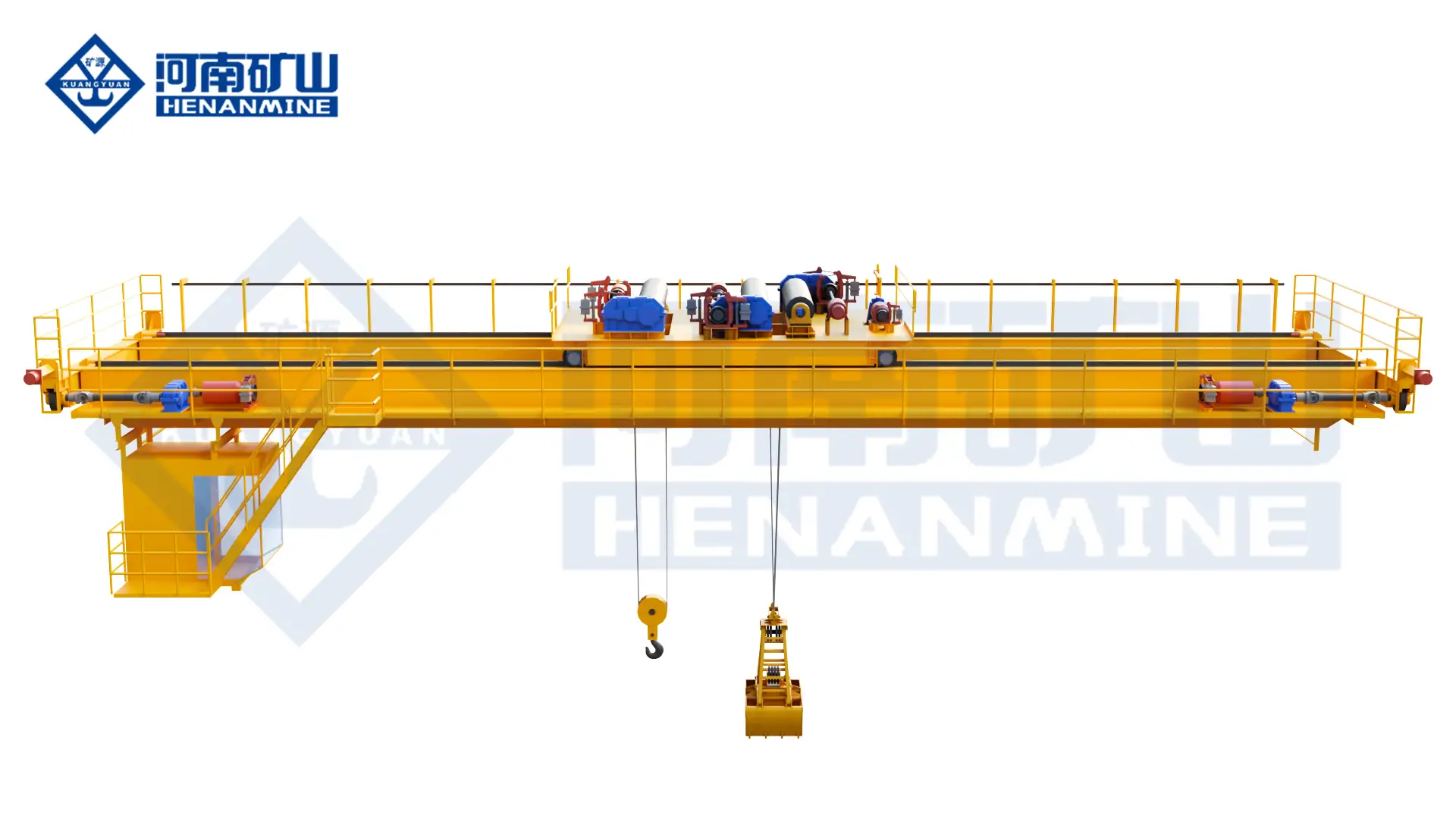
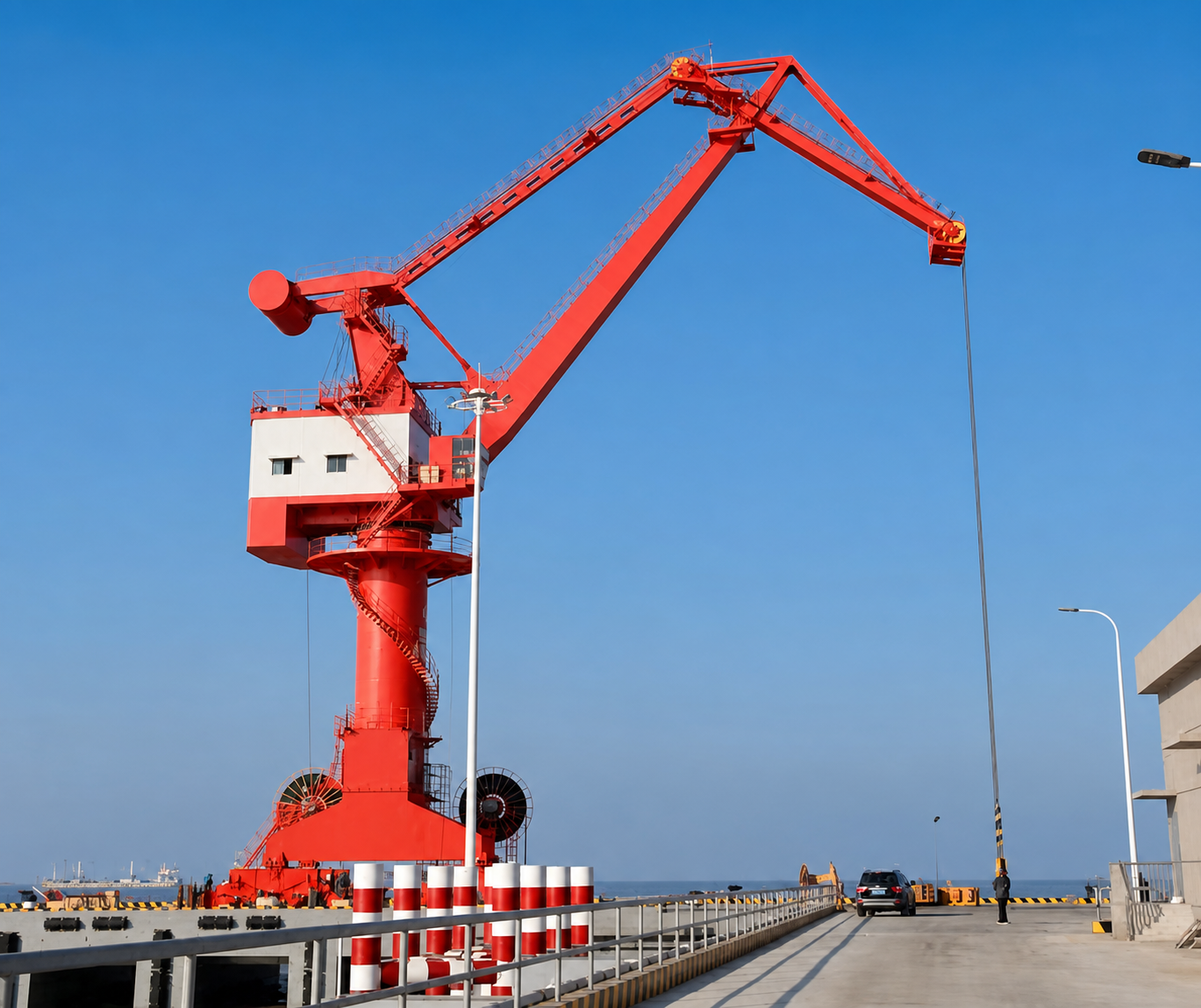
    Henan Mine Crane Grab And Hook Dual Purpose Crane
    Henan Mine Crane Grab And Hook Dual Purpose Crane
    Project planning notes

    Key points for this crane project.

    1. What Is a Hook Overhead Crane?
    2. Step 1: Define Your Load Capacity and Lifting
    3. Step 2: Measure Span, Lift Height, and Building
    Read the technical guide

    What Is a Hook Overhead Crane?

    Henan Mine Crane manufactured hook overhead crane is a bridge-mounted lifting system in which a hoist equipped with a standard lifting hook travels along a trolley, which in turn travels along a bridge girder spanning the width of the workshop. The bridge runs on elevated rails supported by the building's columns or a dedicated runway structure.

    The hook is what distinguishes this crane type from its close relatives. Grab cranes use a clamshell or orange-peel bucket to handle loose bulk materials like coal, scrap, or grain. Magnet cranes use an electromagnetic lifter for ferrous scrap and plate. A hook crane, by contrast, is built for discrete, engineered loads, castings, gearboxes, tooling, structural steel, and finished machinery, making it the standard choice for machinery manufacturing, assembly lines, and maintenance bays.

    Hook overhead cranes come in two structural configurations, single girder and double girder, and are further defined by capacity, span, lift height, and duty class, the five specifications your supplier will ask for on day one.

    Step 1: Define Your Load Capacity and Lifting Attachments

    Capacity planning starts with the heaviest single load the crane will ever lift, not the average load. Underestimating this number is the single most common and most expensive crane-selection mistake.

    1. Identify the heaviest individual component or assembly the crane must lift.
    2. Add the weight of any below-the-hook lifting devices,slings, spreader bars, lifting beams, or custom fixtures, since these count against rated capacity.

    Machinery plants should also account for growth. If a new product line is likely to introduce heavier assemblies within the crane's expected 20-plus year service life, specifying one capacity tier higher now is far cheaper than a structural retrofit later.

    Worked example: Suppose your heaviest assembly is a 4.3-ton gearbox housing. This is exactly the kind of rounding decision that determines whether a crane still fits your operation five years from now, after tooling or fixtures have grown heavier.

    It also helps to document this calculation and share it with every supplier you quote. Manufacturers sometimes quote to the capacity you state without flagging that your margin is thin, an engineer reviewing your worked numbers, rather than a single final figure, is far more likely to catch a fit issue before the crane is built.

    Step 2: Measure Span, Lift Height, and Building Constraints

    Span and lift height are dictated by your building, not your preference, get these measurements before talking to any supplier.

    • Spanis the horizontal distance between the crane's runway rails, typically measured from column centerline to column centerline (or the inside faces of the runway beams, depending on the supplier's convention). Wider spans increase bridge deflection, which reduces effective capacity at a given girder size.
    • Lift heightis the vertical distance the hook must travel, measured from the floor (or pit, if used) to the underside of the runway beam, minus the headroom the hoist itself consumes.
    • Runway clearanceincludes any existing overhead obstructions, ductwork, lighting, sprinkler lines, or mezzanines, that could conflict with the bridge or trolley.

    Bring accurate facility drawings to this step. A crane specified from approximate measurements is one of the most common causes of costly on-site rework during installation.

    Don't stop at the crane's own dimensions, check whether your existing building columns and runway beams can actually carry the loads a new crane will impose. Retrofitting an older machinery plant with a crane heavier than the original structure was designed for often means reinforcing columns, adding bracing, or installing an independent runway support system, and that work can add materially to the total project cost. If your building predates the crane you're planning to install, ask your supplier or a structural engineer to review the existing runway beam capacity before you commit to a specific girder type or capacity, it's far cheaper to learn this during planning than during installation.

    Step 3: Single Girder vs. Double Girder, Which Fits a Machinery Plant?

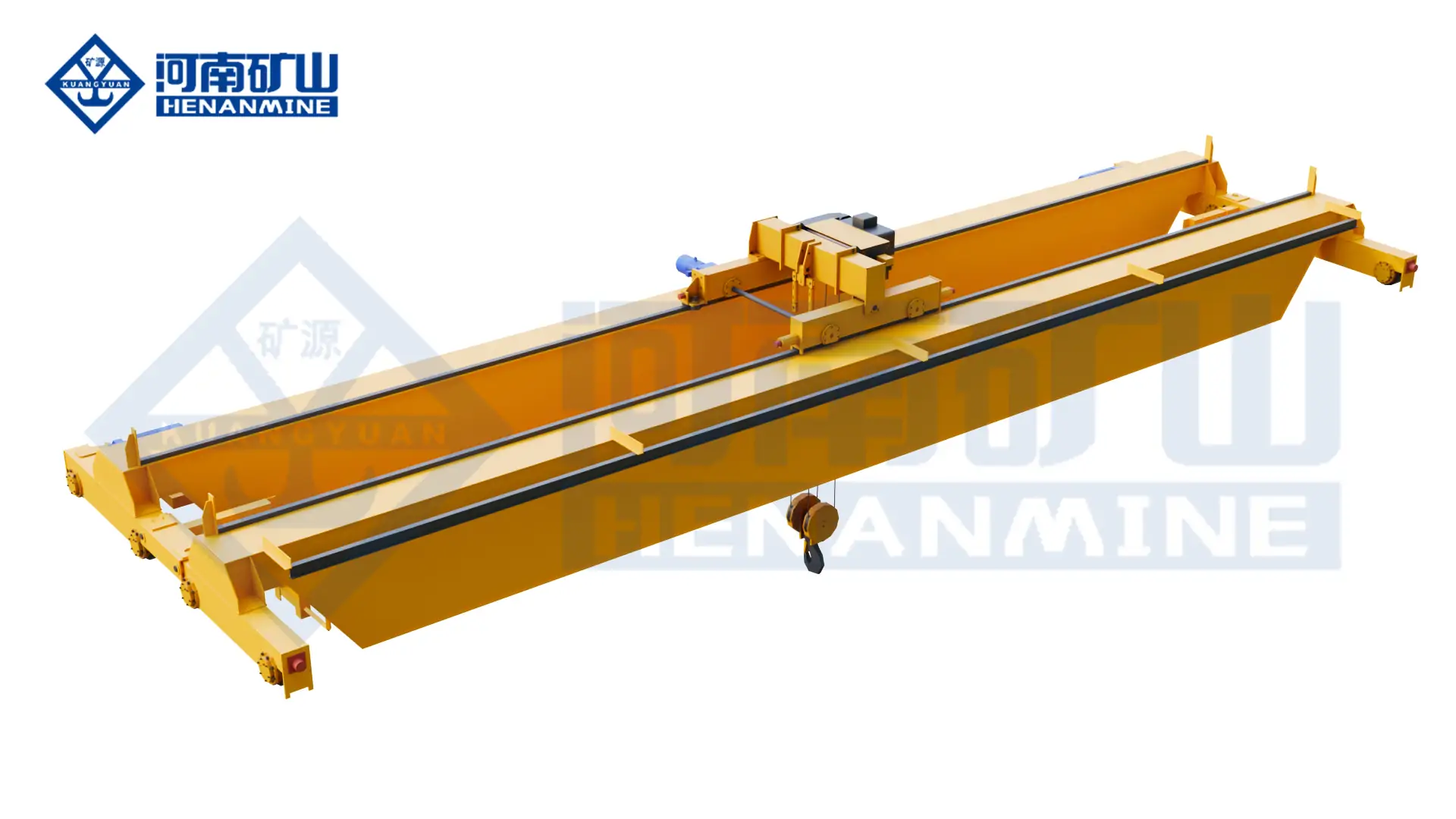
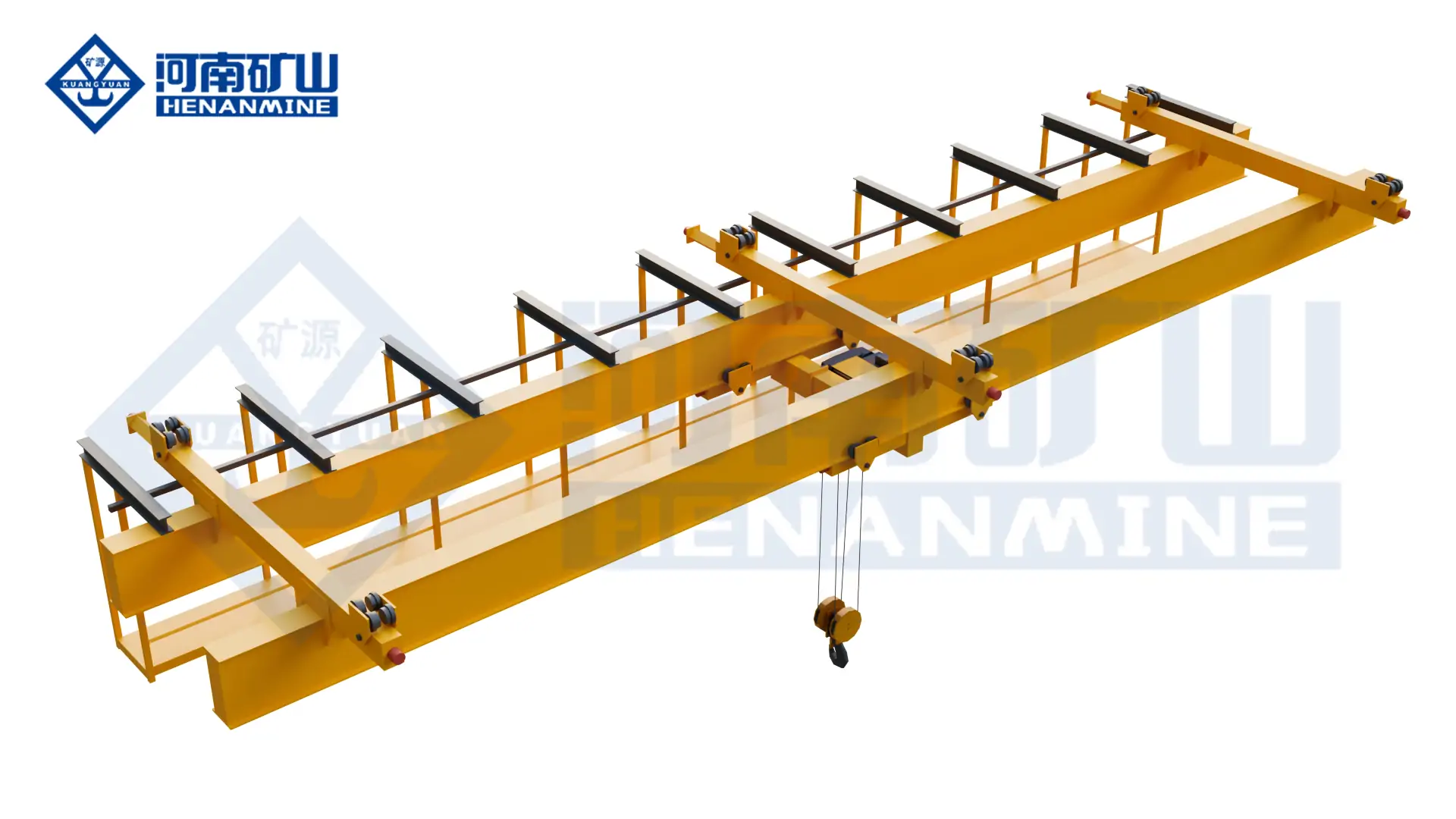
    This is the decision that most affects both upfront cost and long-term capability. Henan Mine Crane manufactured single girder cranes use one bridge beam with the hoist and trolley running along its lower flange. Double girder cranes use two parallel beams with the trolley running on top, giving more hook height, higher capacity, and greater rigidity.

    For most machinery workshops, assembly plants, and maintenance areas, a single girder crane is the practical starting point: it is lighter, cheaper to install, and imposes less structural load on the building. Machinery plants handling oversized assemblies, requiring wider spans, or running continuous multi-shift production are usually better served by a double girder crane, which trades higher upfront cost for greater capacity, hook height, and duty-cycle durability.

    Key takeaway: Don't default to double girder "to be safe." Match the girder type to your actual load, span, and duty cycle,over-specifying inflates both equipment and building costs without adding usable capability.

    Step 4: Match Duty Class to Your Work Cycle

    Duty classification determines how the crane's structure, hoist, and mechanical components are engineered for your actual usage pattern, not just the maximum weight it can lift. Getting this wrong is a quieter but equally costly mistake than misjudging capacity.

    • CMAA (Crane Manufacturers Association of America):Classes A through F, used primarily in the U.S., Canada, and Mexico.
    • FEM/ISO 4301:Classes A1 through A8, used internationally, with A1–A4 considered light duty, A5–A6 medium duty, A7 heavy duty, and A8 severe duty.

    Rule of thumb for machinery plants: Standard machinery assembly and maintenance work generally falls into CMAA Class C or D (FEM A4–A6), moderate, fairly frequent lifting at well below full rated capacity most of the time. Continuous multi-shift operations lifting near full capacity may require Class E or higher.

    Selecting too low a duty class accelerates fatigue and shortens service life; selecting too high inflates cost without operational benefit. If your production volume is expected to grow, choosing one duty class above your current need is a low-cost way to avoid a future upgrade.

    Usage PatternCMAA ClassTypical Machinery-Plant Example
    Infrequent, precise handlingA–BOccasional maintenance or installation lifts
    Moderate, regular liftingCStandard assembly-line material handling
    Frequent, near-capacity liftingDMulti-shift assembly with heavier components
    Continuous, heavy-duty serviceE–FFoundries, heavy fabrication, high-tonnage plants

    Use this table as a starting point, not a final answer, a duty class selected purely from a table without validating your actual lifts-per-hour and average load percentage is still a guess. Ask your crane supplier to walk through your production schedule with you before locking in a class.

    Step 5: Choose the Right Hoist, Wire Rope vs. Chain

    The hoist is the component that actually lifts and lowers the load, and it's typically the first part to reach end of life, so match it carefully to your duty cycle, not just your capacity number.

    They're the right call for heavier, more frequent lifting cycles typical of machinery manufacturing.

    They cost less upfront and are simpler to maintain, but they lift more slowly and have a lower practical capacity ceiling than wire rope systems.

    • Capacity:Confirm the hoist is rated for your calculated load, including attachments.
    • Headroom:Wire rope hoists need more vertical clearance for the drum assembly than chain hoists.
    • Speed:Faster wire rope lifting speeds suit high-cycle production; chain hoists suit precision, lower-speed positioning.
    • Environment:Dusty or contaminated environments can affect chain hoist performance more than sealed wire rope systems.
    • Duty class:The hoist's duty rating must match the crane's overall duty classification, don't pair a light-duty hoist with a heavy-duty bridge.

    Step 6: Controls, Safety, and Compliance

    • Pendant controlsare simple, low-cost, and tethered to the hoist, well suited to fixed-position lifting tasks.
    • Radio remote controlslet the operator move freely around the load, improving sightlines and reducing the risk of being caught between the load and fixed obstructions, increasingly the default for machinery plants with complex floor layouts.
    • Variable frequency drives (VFDs)provide smoother acceleration and deceleration, reducing load sway and mechanical wear compared with single-speed controls.

    Also account for environmental exposure, heat, dust, or outdoor conditions, which affects motor ratings, enclosure types, and maintenance intervals.

    Real-World Sizing Example: A Machinery Assembly Plant

    To see how these seven steps fit together, consider a mid-sized machinery assembly plant that builds industrial pumps and needs to replace an aging jib crane with a full-bay Henan Mine Crane hook overhead crane.

    Span and building fit: The bay is 58 feet wide, measured column centerline to column centerline, with 22 feet of clear lift height available above the assembly floor. Both figures sit comfortably within single girder territory, and the existing columns , originally built for a lighter jib crane , need modest reinforcement to carry the new runway load.

    Because the production schedule calls for two shifts of moderate, non-continuous lifting rather than round-the-clock heavy use, a single girder crane remains the more cost-effective choice , a double girder system would add capacity and hook height the plant doesn't currently need.

    Duty class: Two-shift, moderate-frequency lifting at well under full capacity most of the time maps to CMAA Class C. The plant's engineer opts for Class D anyway, anticipating a planned expansion to heavier pump models within the next five years , a one-class upgrade that adds a modest premium now rather than a full crane replacement later.

    Controls: Given the assembly floor's tight aisles and frequent operator movement around fixtures, the plant selects a radio remote control with a VFD-equipped hoist, trading the lower upfront cost of a pendant control for better sightlines and smoother load handling.

    Result: A single girder, 10-ton, Class D hook overhead crane with a wire rope hoist and radio remote control , a specification built from actual measurements and production data rather than a generic "10-ton crane" quote. This is the level of detail worth bringing to every supplier conversation.

    Common Mistakes That Lead to Over- or Under-Specifying a Crane

    • Sizing to average load instead of peak load. Capacity must cover the heaviest single lift, not the typical one.
    • Ignoring below-the-hook attachment weight. Slings, spreader bars, and fixtures all count against rated capacity.
    • Underestimating duty class for future growth. A crane sized for today's light usage may need premature replacement if production intensifies.
    • Treating quoted price as total cost. Installation, building modification, and long-term parts availability often outweigh the sticker price difference between suppliers.

    Frequently Asked Questions

    Q: What is a hook overhead crane used for?

    A hook overhead crane lifts, moves, and positions finished or fabricated loads , machine tools, molds, engine blocks, steel assemblies , using a standard lifting hook rather than a grab bucket or magnet. It's the standard configuration for machinery manufacturing, maintenance bays, and general workshop lifting.

    Q: How do I calculate the crane capacity I need?

    Round up to the nearest standard capacity your supplier offers rather than down.

    Q: Should a machinery plant choose a single girder or double girder crane?

    Plants handling heavier assemblies, longer spans, or continuous multi-shift lifting typically need a double girder crane for the added capacity, hook height, and duty rating.

    Q: What duty class does a machinery plant need?

    Most machinery manufacturing and assembly operations fall into CMAA Class C or D (FEM/ISO A4–A6), reflecting moderate to fairly frequent lifting at less than full capacity most of the time. Continuous multi-shift heavy lifting may require Class E or higher.

    Q: Wire rope hoist or chain hoist for a machinery plant crane?

    Henan Mine Crane

    Selecting the proper hook overhead crane is not just about getting business done today but laying the foundation for a productive operation for years into the future. Machinery plants must weigh the economic benefits of a more powerful crane against the opportunity cost of efficiency down the road by considering lifting capacity, span, duty classification, type of hoist, safety protocol, and building the shop‘s equipment fleet on a sound plan.

    By being an established professional crane maker and material handling equipment supplier, Henan Mine Crane Factory will provide tailor-made hook overhead crane system to meet your industrial lifting demands, available workshop space and manufactory objectives. We are committed to providing quality, cost effective lifting equipment to increase productivity and benefit customers in long term.

    Discuss the crane arrangement for your project.

    Machinery plants handle loads with different shapes and lifting positions. Define the component geometry, attachment needs and work cycle so a hook-crane arrangement can be checked against production and maintenance tasks. Share the load, available drawings, working cycle and site conditions with Henan Mine Crane so the required configuration and supply boundary can be discussed.

    Related crane configurations

    Grab And Hook Dual Purpose Crane

    View product parameters
    Lifting capacity: 5 – 16 tSpan: 10.5 – 31.5 mLifting height: 6 – 20 m

    Switch between bulk-material pickup and hook lifting with a grab-and-hook overhead arrangement. Define each load case, the grab type and the changeover procedure for the working area.

    Single-Girder Bridge Crane

    View product parameters
    Lifting capacity: 1–20 tSpan: 7.5–31.5 mLifting height: 6, 9, 12, 18, 24 or 30 m; capacity-dependent

    Use an LDA single-girder bridge and electric hoist for general workshop material handling. Select the lifting capacity, runway geometry and hoist duty around the building and load.

    Updated 2026 · Henan Mine Crane

  • Electric-Hoist Overhead Cranes for Warehouses: Coverage and Headroom

    Electric-Hoist Overhead Cranes for Warehouses: Coverage and Headroom

    Technical guide

    Electric-Hoist Overhead Cranes for Warehouses: Coverage and Headroom

    A warehouse hoist crane needs usable hook coverage without disrupting storage or vehicle access. Provide the lifting task, building dimensions and travel route before comparing hoist layouts and equipment parameters.

    Henan Mine CraneTechnical guide · Updated 2026Crane selection, project scope and operating requirements
    Henan Mine Crane LH Electric Hoist Double Girder Crane
    Henan Mine Crane LH Electric Hoist Double Girder Crane
    Project planning notes

    Key points for this crane project.

    1. What Is an Electric Hoist Crane?
    2. Why Choosing the Right Warehouse Crane Matters
    3. Key Factors to Consider When Choosing an Electric
    Read the technical guide

    What Is an Electric Hoist Crane?

    An electric hoist crane is a motorized lifting device that raises, lowers, and often horizontally repositions heavy loads using an electric motor rather than manual effort. At its core, the hoist consists of a motor, a gearbox, a braking system, a load-bearing chain or wire rope, and a control system .

    The hoist itself handles vertical lifting. To move loads horizontally across a warehouse bay, the hoist is mounted on a trolley that travels along a bridge girder, which in turn runs along runway beams fixed to the building structure or support columns. Together, these components let an operator position a load precisely in three dimensions up and down, side to side across the bay, and forward and back along its length.

    Why Choosing the Right Warehouse Crane Matters

    Getting this decision right pays off across the entire life of the equipment:

    1. Improve operation efficiency: accurately match the lifting speed and rated load of on-site handling conditions, solve problems such as insufficient equipment power and operation jam, reduce manual auxiliary intervention, and significantly improve storage turnover efficiency.
    2. Ensure operation safety: scientific matching of equipment load and working conditions, with standardized maintenance, can effectively avoid safety hazards such as heavy load failure and sudden failure, reduce lifting risks from the source, and stabilize the plant safety production system.
    3. Reduce downtime: the equipment working level conforms to the actual operation frequency, greatly reduces the probability of sudden failure and unplanned downtime, and ensures the continuous and stable operation of warehousing and production line handling operations.
    4. Reducemaintenance costs: the whole machine and accessories adapt to the real operation intensity, according to the original design standard normal loss, eliminate the selection mismatch, overload caused by abnormal wear, effectively save the late maintenance and replacement costs of accessories.
    5. Extendthe life of the equipment: according to the actual frequency of accurate selection of equipment operating conditions, to eliminate blind selection of equipment caused by premature aging, so that equipment wear fit the design life, effectively prolong the service cycle of the whole machine.
    6. Adapt to future expansion: Moderately advanced scientific selection can match the subsequent capacity upgrades and business expansion needs of the warehouse, avoid the high investment caused by equipment elimination and complete machine replacement in the short term, and improve the long-term cost performance of equipment.

    Key Factors to Consider When Choosing an Electric Hoist Crane

    Determine the Required Load Capacity

    Lifting height refers to the vertical effective travel of the hook from the lowest position to the highest position. The selection needs to integrate three field conditions: the vertical lifting travel required for goods, the internal clearance height of the plant, and the storage height of the shelf. If you need to access goods to high shelves, sufficient safety margin should be reserved at the highest point of the hook to avoid scratch collision.

    At the same time, pay attention to the clearance height parameter: when the hoist body rises to the top, it will occupy the upper space. For the scenario of limited plant height and compact top clearance, low clearance hoist can be selected to maximize the use of limited floor height and improve the effective lifting stroke.

    Measure Lifting Height

    Crane span selection cannot only be limited to the current width of the operation, but also need to be combined with the long-term development planning of the enterprise. If there are upgrading requirements such as plant expansion, shelf densification, operation roadway widening, storage area expansion, etc. in the later stage, reasonable span allowance shall be reserved in advance in the selection stage.

    Bridge crane span late transformation process cumbersome, high cost, reserve allowance in advance can avoid the late transformation, equipment replacement high expenses, adapt to long-term production needs, improve equipment investment cost performance.

    Evaluate Crane Span

    Service level is the core parameter that is most easily overlooked and most affects the life of the equipment. It is easy to cause equipment fatigue damage in advance or budget waste only by empirical estimation, which must be accurately calculated according to actual operation conditions.

    The equipment working class follows FEM, ISO, ASME/CMAA international standards and measures structural fatigue resistance in terms of the number of life cycle operating cycles rather than single loads. Under the same load, the high-equipped model has stronger structure and technology, and its service life can reach 4 times that of ordinary models.

    Combined with the intensity of storage and mining operations, the industry divides lifting conditions into three standard grades, corresponding to different equipment working levels, and accurately adapts to various operation scenarios:

    • Light load condition (FEM 1Bm / ISO M3): suitable for storage low frequency operation, few lifting times in a single day, loose interval, no continuous operation requirements, meet the foundation sporadic lifting use.
    • Medium load condition (FEM 2m/ ISO M5): adapt to the regular shift operation of logistics storage, the whole operation frequency is stable, and the start and stop frequency is frequent, which is the mainstream adaptation level of standardized storage circulation.
    • Heavy load conditions (FEM 3m+ / ISO M6 and above): suitable for manufacturing workshop and other high-intensity scenarios, support nearly uninterrupted, 24 hours continuous cycle operation, strong fatigue resistance, long-term response to high-frequency heavy load conditions.

    Understand Duty Cycle and Frequency of Use

    • Single-speed mode: simple structure, economical and practical, low operation and maintenance cost, specially designed for low-frequency, conventional material lifting conditions, can efficiently meet the basic lifting operation requirements, suitable for general storage scenarios without precise alignment requirements.
    • Two-speed mode: support fast and slow flexible switching, high-speed gear to achieve rapid material transfer, effectively improve operation efficiency; low-speed gear to ensure accurate alignment of the end, smooth material dropping, considering efficiency and accuracy, adapt to all kinds of fine lifting operations with positioning requirements.
    • Frequency conversion speed regulation (VFD): adopts stepless smooth speed regulation technology, which can greatly reduce the mechanical impact of goods, equipment body and plant structure, eliminate shaking and collision, and is specially adapted to the safe and stable lifting operation of precision parts and high-value materials.

    Working condition selection can be matched with speed control scheme according to needs: high-frequency, high-throughput storage operation, high-speed model is preferred to improve material turnover efficiency; precision assembly, high-level access, fragile high-priced material lifting scene, VFD frequency conversion speed control system is preferred to ensure the accuracy, stability and safety of the operation.

    Choose the Appropriate Hoist Speed

    In addition to vertical lifting speed, the traveling speed of crane track and the transverse speed of trolley girder are the key factors affecting the overall handling efficiency. According to the high-frequency circulation of fixed points in the warehouse, reasonably adapt the high-speed travel configuration, which can continuously improve the shift operation capacity and shorten the material turnover time.

    Select the Right Crane Configuration

    Procurement cost

    Single-girder crane structure is simple, accessories configuration is simple, manufacturing and installation technology is mature, the overall pre-procurement and construction costs are lower, cost-effective, very suitable for enterprises with limited budget and only conventional lightweight lifting operations.

    Double-girder crane adopts double-girder bearing structure, which has higher supporting configuration specifications, more manufacturing consumables, complicated installation and debugging process, and higher initial investment cost. However, its structural strength is high and redundancy is large, which can meet the requirements of heavy load and high frequency industrial lifting operations.

    Bearing and span capacity

    Limited by the single girder structure, the single girder crane has limited bearing capacity, only suitable for light and medium tonnage low load, low frequency operation, mostly used for general warehouse material transfer, light equipment loading and unloading, is a common basic lifting equipment for small and medium-sized enterprises.

    Double-girder crane relies on double main beams to carry load cooperatively, so its structural stability and bearing capacity are greatly improved. It can be competent for high-capacity heavy-load lifting work, and support longer operation span. It can adapt to complex operation scenarios such as large-scale factory buildings, heavy industry production, heavy equipment installation, etc.

    Suitability of building clearance

    Single-girder crane trolley is a bottom-mounted structure, the operating parts occupy a large amount of vertical space, and the requirements for the clearance height of the workshop are relatively high. In the old workshop with insufficient floor height and low warehouse, the adaptability is poor, and the lifting height is easy to be limited.

    Double-girder crane adopts overhead trolley design, which does not occupy the vertical space below the main girder. Under the same lifting height, the required workshop clearance is smaller, which can effectively improve the utilization rate of workshop space and adapt to the operation site with limited floor height.

    Maintaining

    Single-girder crane has simple structure, few parts, few fault points and stable operation. Daily maintenance only needs to check basic components, simple operation, no professional equipment, ordinary operation and maintenance personnel can complete, and the later maintenance cost is low.

    Double-girder crane has complex structure, many linkage accessories, and relatively many wear points during equipment operation. The daily maintenance process is complicated, and many works such as clearance debugging, wear detection, lubrication and fastening need to be completed, which requires higher operation and maintenance professionalism, and the maintenance cost and difficulty are relatively high.

    Comprehensive working condition adaptation principle: most ordinary warehouses, moderate load conventional operation scenarios, single-girder crane are sufficient to meet the needs, is the most cost-effective choice.

    If there is a high-capacity load on site, an extra long working span, or a limited workshop clearance, the comprehensive use value and adaptation advantages of the double-girder crane will be more prominent, and it is a more appropriate selection scheme.

    Evaluate Warehouse Environment

    Indoor vs. Outdoor Operation

    Standard electric hoists are engineered for stable indoor conditions normal temperature, humidity, and dust levels typical of a warehouse floor. If any part of the crane's operation extends outdoors or into an uncontrolled environment, you'll need additional corrosion protection and weather-resistant components rated for direct exposure to moisture.

    Special Environmental Conditions

    Environmental exposure should shape both the hoist's protective rating and, in some cases, the entire equipment category:

    • Dust and humidity environment: high protection electrical enclosure shall be equipped for humid and dusty working conditions.
    • High temperature operation environment: kiln, oven and other high temperature areas of operation, need to configure high temperature resistant parts, and match the appropriate working system, avoid high temperature caused by aging, overload problems, improve equipment heat stability.
    • Low temperature cold storage environment: cold storage and other long-term low temperature conditions, need to select low-temperature special accessories, to ensure that the equipment in the continuous low temperature environment stable start and stop operation, to avoid common parts low temperature embrittlement, performance attenuation caused by failure and safety hazards.
    • Chemical corrosion environment: in the presence of chemical medium corrosion conditions, the equipment needs to adopt appropriate anti-corrosion materials and protective coatings to effectively resist medium corrosion, prevent corrosion damage of components, and ensure long-term safe operation of the equipment.
    • Cost reduction is strictly prohibited in this link, and the safety bottom line shall be adhered to.

    Essential Safety Features

    A warehouse crane should never be specified on lifting performance alone.

    • Overload protection: strictly control the rated lifting capacity, eliminate overload operation, effectively prevent equipment damage due to overload, and avoid safety accidents such as heavy objects falling.
    • Emergency stop button: In case of sudden failure or dangerous working conditions, emergency stop can be pressed to quickly cut off the power of the equipment and avoid sudden safety risks in time.
    • Upper and lower limit switches: accurately limit the lifting limit travel of the hook, prevent the hook from over-travel, impact the equipment structure, and eliminate equipment damage and safety hazards.
    • Anti-collision system: Adapt to multi-crane common rail operation scenario, can sense equipment spacing in real time, effectively avoid collision when multiple cranes are running, and ensure the safety of multi-equipment cooperative operation.
    • Reliable braking system: equipped with automatic braking device, equipment can automatically lock the moment of power failure, prevent heavy objects from slipping and falling, and ensure the stability and safety of the whole operation.
    • Load monitoring function: real-time collection, accurate display of real-time lifting load, convenient for operators to master the operating conditions in real time, standardize the operation, and eliminate illegal overload operation.
    • Remote control function: support remote control, so that the operator away from the suspended operation area, completely avoid the safety hazards of close operation, improve the safety and flexibility of operation.
    • Acousto-optic alarm device: during the operation of the equipment, the acousto-optic early warning prompt shall be started synchronously to remind the surrounding personnel to avoid in time, and the warning is strong, effectively ensuring the safety of the personnel and equipment on site.

    Energy Efficiency and Operating Costs

    The purchase price is only one part of what a crane costs over its working life.

    • High-efficiency motors: which reduce electricity draw during frequent lifting cycles
    • Variable frequency drives:which cut energy waste from abrupt starts and stops while also reducing mechanical wear
    • Reduced power consumption:translating directly into lower utility costs at scale
    • Lower lifecycle costs:from equipment properly matched to duty class, which needs less unplanned maintenance and fewer part replacements
    • Total cost of ownership (TCO):weigh purchase price against expected maintenance, energy use, downtime risk, and service life before comparing quotes on price alone

    Discuss the crane arrangement for your project.

    A warehouse hoist crane needs usable hook coverage without disrupting storage or vehicle access. Provide the lifting task, building dimensions and travel route before comparing hoist layouts and equipment parameters. Share the load, available drawings, working cycle and site conditions with Henan Mine Crane so the required configuration and supply boundary can be discussed.

    Related crane configurations

    LH Electric Hoist Double Girder Crane

    View product parameters
    Lifting capacity: 3, 5, 10, 16, 20 tSpan: 10.5–31.5 mLifting height: 6, 9, 12 or 18 m

    Use an LH double-girder bridge with an electric-hoist trolley for workshop lifting, assembly and maintenance. Match the hoist arrangement to the suspended load, hook travel and available building space.

    Double Trolley Electric Hoist Crane

    View product parameters
    Lifting capacity: 1+1 – 32+32 tSpan: 7.5 – 31.5 mLifting height: 6 – 30 m

    Lift long components or serve separate working positions with two electric-hoist trolleys on one bridge. Trolley spacing, load sharing and independent or coordinated operation are specified for the task.

    Updated 2026 · Henan Mine Crane

  • Aircraft Hangar Crane Selection: Coverage Above the Maintenance Area

    Aircraft Hangar Crane Selection: Coverage Above the Maintenance Area

    Technical guide

    Aircraft Hangar Crane Selection: Coverage Above the Maintenance Area

    Hangar lifting must account for aircraft geometry, service tasks and the building envelope. Map the approved handling positions and obstructions so the crane arrangement can be reviewed around the actual maintenance operation.

    Henan Mine CraneTechnical guide · Updated 2026Crane selection, project scope and operating requirements
    Henan Mine Crane Multi Support Double Girder Underhung Crane
    Henan Mine Crane Multi Support Double Girder Underhung Crane
    Project planning notes

    Key points for this crane project.

    1. Introduction of Hangar Crane
    2. Understand Hangar-Specific Lifting Requirements
    3. Analyze Hangar Structure & Space Constraints
    Read the technical guide

    Introduction of Hangar Crane

    Hangar cranes are different from ordinary workshop overhead cranes in that they need to cope with aviation industry-specific challenges such as high-precision positioning, safe operation in limited space and protection of high-value assets. Most of the lifting loads are delicate and fragile aircraft components. The core of this paper is to help users avoid the pitfalls of downtime, safety hazards and wasted investment, and balance performance, safety and cost.

    Understand Hangar-Specific Lifting Requirements

    What Will You Lift?

    Hangar lifting is mainly categorized into whole-engine related operations and component handling, in addition to the handling of tools and tools. The whole aircraft operation has high requirements on crane span, lifting height and stability; component lifting focuses on engines, landing gears and other loads with concentrated weight and high value, which need to be protected; and tools and tools, though light in weight, also need to be lifted safely.

    Analyze Hangar Structure & Space Constraints

    Building Structure Considerations

    Hangar building structure affects crane selection: steel hangars have strong load-bearing capacity and are suitable for top-running cranes; concrete hangars may need to be reinforced and are more suitable for suspended cranes. Existing runway beams and roof load distribution also need to be considered, if necessary, the installation of independent rail or multi-pivot suspension design.

    Clearance & Obstruction Challenges

    Hangar space restrictions are complex, need to focus on the aircraft tail height restrictions, reserve enough safety margin; at the same time need to avoid lighting, ventilation, hangar doors and other obstacles, cranes and aircraft, their own components and fixed structures need to leave at least 500mm safety clearance, high-precision operations need to be increased appropriately.

    Choose the Right Crane Type for Hangar Applications

    Overhead Bridge Crane

    Overhead Bridge Cranes are the preferred choice for hangars, providing full coverage of the working area without the need for ground level tracks, high flexibility and multiple units can be used in large hangars.

    Single Girder vs Double Girder

    Crane TypeStructural FeaturesApplicable Scenarios
    Single Girder CraneSimple structure, light self-weight, short installation cycleSmall hangars or projects with limited budget
    Operation ModeApplicable ScenariosCore Advantages
    Top Running (Top Operation)Large hangars, high-frequency operation scenariosStable structure, suitable for high-frequency operations; convenient maintenance and easy component replacement
    Under Running/Underslung (Suspended Type)Low headroom hangars, existing hangar renovation projects, environments with high noise requirementsIdeal low headroom solution to maximize operating space; installed under existing structures without additional track beams; little impact on roof structure; low operating noise

    Focus on Precision & Control (Critical for Hangars)

    The precision of control of hangar cranes is directly related to the safety of assets, and poor control may cause huge losses.

    Anti-Sway Technology

    Load swaying is the main risk, hangar cranes need to be equipped with active or passive anti-sway systems, and high precision work is preferred to active anti-sway systems to ensure load stability.

    Variable Frequency Drives (VFD)

    VFD is the standard configuration for hangar cranes, which can realize smooth starting and stopping to avoid load swaying, and at the same time provide fine speed control to ensure positioning accuracy.

    Control Options

    Control Type (Control Method)CostApplicable ScenariosCore Advantages
    Pendant Control (Handheld Button Control)LowestSimple hoisting operations in hangars with low requirementsLow cost, simple operation, easy to get started
    Radio Remote (Wireless Remote Control)MediumMost hangar applications, especially complex hoisting such as engine installationMaximum flexibility, operator can observe from the optimal position; supports multi-person collaboration; with multi-level safety protection
    Cabin ControlHighestRarely used, only for extra-large hangars with long-time continuous operationComfortable operating environment, suitable for long-time operations

    Define Duty Class & Usage Frequency

    Crane duty class determines durability and service life, directly affecting long-term cost and reliability.

    Understanding Duty Class (CMAA A-F)

    Hangar cranes follow the CMAA A-F classification, ranging from very light duty (Class A) to very heavy duty (Class F), and should be selected based on frequency of use and load characteristics.

    Safety & Compliance Standards

    Hangar cranes need to meet strict safety standards to protect personnel and high-value assets.

    International Standards

    OSHA / CMAA (U.S.), ISO / FEM (international), MH / T 3012 (China), EASA (Europe) and other standards should be met, and multinational operations need to prioritize the selection of equipment that meets international standards.

    Essential Safety Features

    Overload protection, limit switches, emergency stops, collision avoidance systems and other safety devices are required. Paint spraying hangars need to be additionally equipped with anti-explosion and anti-static measures.

    Power Supply & Environmental Considerations

    The power supply and environmental conditions of the hangar directly affect the selection and operation of the crane.

    Electrical Requirements

    Voltage compatibility, power requirements, back-up systems and harmonic control need to be considered, and the planning stage needs to be coordinated with the airport electrical team to avoid retrofitting at a later stage.

    Environment

    Selection should be based on environmental conditions such as dust, humidity, temperature, corrosion risk, etc. Coastal airports need to be protected against corrosion and paint hangars need to be explosion-proof.

    Lifecycle Cost vs Initial Price

    Hangar crane procurement needs to focus on the full life cycle cost, rather than just look at the initial price, aviation industry downtime costs are extremely high, reliability is more important than the initial investment.

    What Affects Total Cost

    Total Life Cycle Cost is affected by equipment quality, maintenance frequency, spare parts availability, energy efficiency and other factors.

    Why Cheapest ≠ Best

    Cheapest equipment is prone to failure, resulting in high downtime costs, while high quality cranes have a high initial investment, but can reduce long-term maintenance costs, and need to consider the future scalability of the equipment.

    Quick Selection Checklist

    Use the following checklist to quickly assess requirements:

    ✅ What is your maximum lifting capacity requirement?

    ✅ What is the span and height of the hangar? (to the nearest centimeter)

    ✅ What will you be lifting? (complete machine, engine, landing gear or other components)

    ✅ How often will the crane be used? (hours per day, days per week)

    ✅ Is high precision positioning required? (e.g. engine mounting, fuselage docking)

    ✅ Is it an existing structure or a new hangar? (affects crane type selection)

    ✅ What is the electrical capacity of the hangar? (voltage, power)

    ✅ Are there any special environmental requirements? (e.g. explosion protection, corrosion protection)

    ✅ What is the budget range? (including initial investment and long-term maintenance costs)

    FAQs

    What type of crane is aircraft hangars?

    Overhead cranes are best suited for hangars, from single girder suspended cranes for small hangars to double girder top-running cranes for large commercial maintenance facilities, all with precision controls and anti-sway technology.

    Can existing hangars install cranes?

    Yes, they can, usually in suspended design. Before installation, the roof loading capacity needs to be assessed, and if necessary, reinforced or lightweight cranes should be selected, and multi-pivot suspension can spread the loads.

    Discuss the crane arrangement for your project.

    Hangar lifting must account for aircraft geometry, service tasks and the building envelope. Map the approved handling positions and obstructions so the crane arrangement can be reviewed around the actual maintenance operation. Share the load, available drawings, working cycle and site conditions with Henan Mine Crane so the required configuration and supply boundary can be discussed.

    Related crane configurations

    Multi Support Double Girder Underhung Crane

    View product parameters
    Lifting capacity: 3 – 40 tSpan: 10 – 80 mLifting height: 6 – 30 m

    Use a multi-support double-girder underhung arrangement for wide-span working areas and large components. The building supports, lifting coverage and load distribution are designed together.

    European Style Electric Single Beam Suspended Crane

    View product parameters
    Lifting capacity: 1t – 10tSpan: 7.5m – 28.5mLifting height: 6m – 20m

    Use a European-style electric-hoist suspension crane for overhead handling beneath a supported runway. Coordinate compact lifting geometry, travel control and building clearances with the workshop layout.

    Updated 2026 · Henan Mine Crane

  • Gantry Cranes for Nuclear Projects: Define the Project-Specific Brief

    Gantry Cranes for Nuclear Projects: Define the Project-Specific Brief

    Technical guide

    Gantry Cranes for Nuclear Projects: Define the Project-Specific Brief

    Nuclear-related lifting requirements must be established by the responsible project team. Provide the load, duty, interfaces and required design and quality documentation so the supplier can address the specified equipment scope.

    Henan Mine CraneTechnical guide · Updated 2026Crane selection, project scope and operating requirements
    Henan Mine Crane overhead crane inside a workshop bay
    Henan Mine Crane overhead crane inside a workshop bay
    Project planning notes

    Key points for this crane project.

    1. What Is a Gantry Crane for Nuclear Power Projects?
    2. Why Choosing the Right Gantry Crane Matters
    3. Step 1: Define Your Project Requirements
    Read the technical guide

    What Is a Gantry Crane for Nuclear Power Projects?

    Henan Mine Crane manufactured gantry crane is an overhead lifting structure in which the bridge girder is supported by vertical legs that move on rails, wheels or a fixed track; of a standard overhead crane, the runway beams that carry the girder are not positioned high above the ground. The over-the-ground supported nature of gantry cranes have made them popular in outdoor construction yards, module fabrication and heavy-lift areas.

    A Nuclear Power Gantry is a type of gantry crane designed to the specific requirements of nuclear construction and operation. It is not a ‘beefed up’ industrial crane; it is a purpose built machine, designed, built, tested and documented to nuclear grade procedures.

    What Makes Nuclear Gantry Cranes Different?

    Several characteristics separate a nuclear gantry crane from a standard industrial unit:

    • Heavy lifting:Capacity for lifting heavy loads nuclear fuel and other components including steam generators, reactor modules and containment sections may each weigh hundreds of tons, and every component of the crane‘s construction, hoisting machinery, and the foundation for its rail or track will need to be proportioned to avoid excessive flexing or high stress concentrations.
    • High positioning accuracy:many nuclear lifts require millimeter-level precision to avoid stressing structural connections during module alignment, which usually means fine-speed hoisting, anti-sway control, and sometimes laser or camera-assisted positioning aids.
    • Enhanced safety systems:Redundant braking, overload protection and in some contexts, single-failure-proof design are commonly considered to be standard requirements rather than features to be chosen once the load has been lifted the system cannot be allowed to drop it due to a single mechanical failure.
    • Long service life:Insurance long length of service life is maintained to the same service life, which influences selected materials, corrosion protection and long term spares support.

    Typical Applications

    Henan Mine Crane manufactured gantry cranes support nuclear projects across multiple phases and zones:

    • Reactor building construction building the general building frame by installing the structural steel and other large pieces prior to the building of the containments structure (this stage was commonly combined with the use of mobile crawler cranes in the initial stages of the build).
    • Installment of turbine hall machinery positioning turbines, generators, condensers, etc., often using tandem or multiple-hook lifts to maintain long heavy parts level while setting.
    • Heavy module handling handling individual modules, particularly by lifting prefabricated modules in outdoor module assembly yards (a practice becoming more prevalent in SMR construction which strongly relies on fast repeatable lift cycles to meet project scheduling)
    • Handling shielded casks and fuel storage components facility handling shielded casks; and load controlling gear and secondary braking on fuel storage component and cask handling machinery where available and reliable load control and secondary braking is particularly important due to the nature of the material being handled.
    • Maintenance and overhaul work conducting work to support scheduled outages, upgrade of equipment, and overall long term maintenance of the installation structures many years down the line after the original fleet of cranes has been scaled back or retired.

    Why Choosing the Right Gantry Crane Matters

    Selecting the correct crane isn't just about meeting a lifting capacity number on paper. The decision has downstream effects across the entire project.

    Improve Construction Efficiency

    A crane sized and configured correctly for the site layout reduces rigging complexity, minimizes repositioning, and keeps heavy-lift schedules on track, which matters enormously on multi-year nuclear builds where schedule slippage is costly. Undersized or poorly positioned cranes force crews to break large lifts into smaller, slower moves, adding rigging cycles and crane-hours to already tight construction windows.

    Ensure Safe Heavy Lifting

    Nuclear-grade lifts often involve components that are irreplaceable, safety-related, or hazardous if mishandled. The right crane, with the right safety systems, directly reduces the risk of dropped loads, structural damage, and worker injury. Because replacement lead times for major nuclear components can run into months, a single lifting incident can threaten the project schedule as much as it threatens personnel safety.

    Reduce Downtime and Maintenance Costs

    Cranes built for the actual duty cycle and environmental conditions of the site experience less wear, require fewer unplanned repairs, and stay available when the project needs them most. Over a multi-decade service life, this translates into fewer outage extensions, lower spare-parts spend, and more predictable maintenance budgeting for the plant owner.

    Meet Nuclear Regulatory Requirements

    Nuclear projects are subject to oversight that general industrial facilities are not. A crane that isn't designed, documented, and tested to the applicable codes can hold up licensing, inspection, and commissioning milestones.

    Step 1: Define Your Project Requirements

    Before comparing crane types or vendors, project teams need a clear technical requirements profile.

    Lifting Capacity

    Identify the heaviest single component the crane must lift, plus any multi-hook or tandem-lift scenarios. Build in margin for unexpected heavier loads later in the project. It's worth travel through the full component list with the engineering team rather than relying on a single "biggest lift" figure, since rigging weight, lifting attachments, and unexpected design changes can all push the actual hook load higher than the nominal component weight.

    Span and Lifting Height

    Span (the distance between the crane's legs) must cover the full working area, including staging and storage zones. Lifting height must clear the tallest component plus rigging hardware and safety clearance. Get the site layout finalized, or at least reasonably firm, before locking in span and height, since retrofitting a gantry crane for a wider working area later usually means replacing structural components rather than simply adjusting settings.

    Working Duty Classification

    Determine how frequently and how intensively the crane will operate. A crane used for a handful of heavy lifts during construction has different duty requirements than one that will run daily for decades of plant operation. Duty classification standards (such as those under ISO 4301) translate this usage pattern into a formal design category that directly affects the sizing of structural members, wheels, and mechanical components.

    Indoor or Outdoor Installation

    Henan Mine Crane manufactured outdoor yard cranes need weatherproofing, wind resistance, and corrosion protection that indoor units don't require. This decision also affects control cabin design, electrical enclosure ratings, and how much routine exposure protection maintenance crews will need to plan for over the crane's operating life.

    Frequency of Operation

    Continuous or near-continuous operation calls for more robust mechanical components, cooling systems, and control electronics than intermittent use. If the same crane will transition from an intense construction-phase duty cycle to lighter, occasional operational use afterward, specify it for the heavier of the two demands rather than an average of the two.

    Step 2: Select the Appropriate Gantry Crane Type

    Various gantry crane arrangements are appropriate for different stages and zones of a nuclear project.

    Double Girder Gantry Crane

    Has the greatest capacity and stiffness of all crane types and is therefore the most common heavy lift crane for loads such as reactor modules and steam generators. The twin girder configuration ensures there is a wide working platform as well as a stable traversing path that is suitable for maintenance access and easy to provide for auxiliary hoists (allowing up to 3 hooks or a tandem-lift).

    Semi-Gantry Crane

    Runs a runway on one side and a ground supported leg on the other. Useful where the site layout limits the provision of structural support to one side. The configuration itself can be cheaper than a full gantry in terms of foundation and structural costs, but does need a building or other structure to carry the runwayside load.

    Rail-Mounted Gantry Crane

    Fixed Rail travel, to provide repeatable, precise journeys along the same route for predictable construction sites and permanent installation. Rail-mounted units, because of their fixed travel route are particularly suitable to use in zones which will be used repeatedly during construction and commissioning.

    Rubber-Tired Gantry Crane (Special Applications)

    Offering a mobile solution without the fixed rail structure, the Henan Mine Crane track-mounted boom crane is ideal for use on places where the rail track building isn‘t feasible or not desirable, such as lay-down areas planned to be temporary or phased construction sites where dynamic movement is of higher utility than absolute positioning. The down side is that the lift capacity and positioning accuracy are generally inferior to the same work station on a rail-mounted crane, and the latter generally is used for lighter or less frequent reactor-module lifts.

    FeatureDouble GirderSemi-GantryRail-Mounted
    StructureTwo main girdersOne leg + runwayFixed rail travel
    CapacityHighestMedium–HighHigh
    StabilityExcellentGoodExcellent
    InstallationHigher costModerateHigher cost
    Typical nuclear useReactor/module liftsConstrained sitesLong-term yard cranes

    Step 3: Determine the Required Lifting Capacity

    Capacity planning should go beyond "what's the heaviest thing we lift today."

    • Maximum component weight:base the rated capacity on the single heaviest lift in the project scope, including rigging weight.
    • Safety factor:apply an appropriate design margin above the maximum expected load rather than sizing to the exact figure.
    • Future expansion:if the plant may add units, modules, or equipment later, plan capacity headroom now rather than replacing the crane down the line.
    • Dynamic loading:account for the additional stress created by acceleration, deceleration, and wind during travel, not just the static hanging load.
    • Multi-hook lifting requirements:some heavy or oddly shaped components require synchronized multi-point lifts, which changes both capacity and control system requirements.

    As a general reference point, gantry cranes for heavy nuclear and modular construction applications commonly range from tens of tons for auxiliary handling up to several hundred tons for reactor module and steam generator lifts, the exact figure should always be derived from your specific component list, not a generic industry number.

    Step 4: Evaluate Structural Design Requirements

    The crane's structure must hold up to both operating loads and site-specific environmental forces over decades of service.

    Wind Resistance

    Henan Mine Crane outdoor gantry cranes must be designed for the site's wind loading, including out-of-service storm conditions. This means both the in-service operating wind limit and the maximum survival wind speed need to be specified, along with any tie-down or rail-clamp systems required to keep the crane secure during severe weather when it isn't operating.

    Seismic Design

    Nuclear-grade cranes handling critical loads are often required to remain functional, or at minimum not drop their load, during and after a design-basis seismic event. This typically drives specific requirements for structural bracing, seismic restraints, and drive components, and the seismic qualification basis should be documented and available for regulatory review alongside the crane's general design calculations.

    Corrosion Protection

    Nuclear sites located on the coast or of high humidity have to be specified with improved coatings and corrosion-resistant materials to ensure corrosion protection of the structure for a 50+ year‘s operation. But it is not only the main structure that needs looking at. Be sure not to neglect fasteners, wire rope and electrical enclosures, they often have a shorter corrosion life than the main girders, therefore repeated repairs are assured if they are not specified correctly

    Fatigue Resistance

    Repeated loading over many decades in operation also means constructing for fatigue performance, in addition to maximum load capacity. Connections and welds that are critical to fatigue life need to be specified during the design process so that inspection schedules can be designed around them.

    Structural Stability

    Wheel loads, under pan, wheel and foundation/rail support have to be integrated in the design to avoid tipping or rail walk or an uneven wear. Special consideration should be given to ground conditions and foundation design for nuclear sites where, over a life span of 30+ years, gradual settling or misalignment of the foundation may cause the crane running tolerances to shift outside specification.

    Step 5: Choose Reliable Safety Features

    It is in safety systems that nuclear grade cranes show the most noticeable differences when compared to normal industrial equipment. The most important specifications are:

    • Anti-collision systems: Avoiding the contact with the structure, other cranes or personnel.
    • Overload protection, stopping the lift before the rated capacity is exceeded.
    • Design of emergency stop system, operated from several control points.
    • Wind monitor on outdoor crane, automatically limitation working above a safety level.
    • Anti-sway is used to enhance the load control and position accuracy.
    • Limit switches on hoist, trolley and bridge travel to limit over-travel.
    • Fewer braking systems. Especially critical/Safe for single failures of load handling.
    • Real-time measurement of load weight, position, and system condition for operator awareness and safety management.

    Step 6: Select the Right Drive and Control System

    The control system determines how precisely and reliably the crane can be operated ,a critical factor for nuclear-grade lifts.

    Variable Frequency Drives (VFD)

    Enable smooth acceleration and deceleration, reducing load sway and mechanical stress. Fine-speed control at low frequencies is particularly valuable during the final inches of a critical placement, where an abrupt start or stop could damage sensitive equipment or misalign a module.

    PLC Control Systems

    Provide programmable logic for interlocks, safety sequencing, and automated positioning routines. A well-designed PLC system also makes it easier to log operating data and generate the usage records that nuclear quality assurance programs often require.

    Remote Control

    Allows operators to control lifts from a safe distance — important when working near radiological areas or sensitive equipment. Remote operation also improves sightlines for the operator during large module placements, where a fixed cabin position may not offer a clear view of the load path.

    Cabin Operation

    Still preferred for some heavy or complex lifts where direct operator visibility and feel are advantageous. Many nuclear-grade cranes are specified with both cabin and remote-control capability so operators can choose the mode best suited to a given lift.

    Intelligent Positioning

    Helps achieve the tight tolerances necessary when positioning large modules or components during installation. Intelligent positioning controls are often used in conjunction with laser guidance, camera technology or encoder based feedback systems to provide operators with live confirmation that a load is properly positioned prior to final placement.

    Automatic Load Monitoring

    Heavy loads and distribution are constantly monitored to prealert the cabin crew of irregularities that could result in a safety hazard. This information also benefits data collected post lift:loaded history from the EWL contribute to ongoing fatigue studies for present structures and can even be used to provide extended interval records on how the crane has satisfied its design duty cycle.

    Step 7: Consider Environmental Conditions

    Site conditions influence crane spec and material selection.

    Coastal Nuclear Plants

    Higher corrosion protection will be required for structural steel, electrical enclosures and wire rope systems that are exposed to salt air. Salt air causes corrosion to take place at a much quicker rate than inland sites and coating specification, the frequency of inspection and replacement of wire ropes, will often have to be reduced to shorter periods.

    High Humidity

    Demands sealed electrical components and moisture-resistant coatings to prevent premature degradation. Condensation inside control panels and motor housings is a common failure point in humid climates, so ventilation and enclosure sealing deserve as much attention as the external coating system.

    Extreme Temperatures

    Both very hot and very cold climates affect lubricants, hydraulic systems, and electronic control reliability, components should be rated for the site's actual temperature range. Seasonal temperature swings should also be considered, since a component rated for average conditions may still struggle during occasional extreme highs or lows.

    High Wind Conditions

    Sites with frequent high winds need reinforced structural design and automated wind-speed cutoffs for Henan Mine Crane outdoor gantry cranes. Wind-sensing systems should be tied directly into the control logic so operations pause automatically once conditions exceed the crane's rated operating threshold, rather than relying solely on operator judgment.

    Radiation Considerations (Where Applicable)

    Cranes operating near radiological areas may require specialized materials, shielding considerations, and remote operability to limit personnel exposure. In these zones, remote or automated operation isn't just a convenience feature; it's often the primary method for keeping personnel dose exposure as low as reasonably achievable (ALARA).

    Dust and Corrosion Protection

    Construction-phase dust and debris call for sealed motors, filtered enclosures, and accessible maintenance points. Planning for this early avoids a common problem where a crane specified for clean, indoor operational service struggles during the dustier, more demanding construction phase that precedes it.

    Step 8: Verify Compliance with International Standards

    Depending on the project's location and regulatory framework, relevant standards may include:

    • ISO 4301:classification of cranes by duty and load spectrum.
    • FEM Standards:European federation guidelines for crane design and mechanisms.
    • CMAA:Crane Manufacturers Association of America specifications for overhead and gantry cranes.
    • EN 15011;European standard for the design of bridge and gantry cranes.
    • IEC electrical standards:governing electrical safety and control system design.
    • Nuclear industry specifications:including nuclear-grade design, fabrication, and quality assurance requirements applicable to critical load handling.
    • Project-specific owner requirements:many utilities and EPC contractors layer additional specifications on top of baseline codes.

    Certification against these standards isn't a formality, it's the documentation trail that regulators, owners, and insurers will reference throughout the crane's operating life.

    In practice, most nuclear crane specifications layer a general crane design code (such as CMAA or FEM) together with a project-specific nuclear quality assurance requirement. This means the manufacturer needs design calculations, material certificates, welding records, and inspection reports that can be traced back to the exact crane on site, not generic product literature. Ask suppliers early in the bidding process whether they can produce this documentation package as a standard deliverable, since retrofitting compliance paperwork after fabrication is far more difficult than building it in from the start.

    Step 9: Evaluate Crane Reliability and Lifecycle Cost

    Purchase price is only one line item in a much longer cost equation. Compare vendors on:

    • Maintenance costs:parts, labor, and scheduled service over the crane's operating life.
    • Energy consumption:particularly relevant for cranes in continuous or high-duty-cycle service.
    • Spare parts availability:lead times for critical components can directly affect plant availability.
    • Expected service life:cranes built for decades of nuclear service should be evaluated against that full horizon, not just initial capital cost.
    • Total cost of ownership (TCO):combining all of the above into a single comparison figure across vendor proposals.

    A lower-priced crane that requires frequent servicing or has poor parts availability can easily cost more over a 40-year plant life than a higher-priced, better-engineered alternative.

    Warranty and Service Level Agreements

    Beyond the sticker price, examine what's actually covered once the crane is commissioned. A meaningful warranty should specify coverage duration for structural components versus electrical and mechanical parts separately, since they wear at different rates. Equally important is the service level agreement (SLA): how quickly can the vendor respond to a breakdown, what's the guaranteed lead time on critical spare parts, and is remote diagnostic support available? On a nuclear project, an unplanned crane outage can cascade into schedule delays or, during operations, extend a refueling outage, so response-time commitments should be treated as a core evaluation criterion, not a footnote in the contract.

    Step 10: Assess Manufacturer Experience

    The manufacturer matters as much as the machine. Before awarding a contract, evaluate:

    • Experience with nuclear projects:specifically, not just heavy industrial cranes generally.
    • Engineering capabilities:including in-house structural, seismic, and controls engineering.
    • Factory Acceptance Test (FAT):verifying the crane meets specification before shipment.
    • Global project references:completed nuclear or comparable critical-industry projects.
    • After-sales support:availability of service, spare parts, and technical support over the crane's decades-long service life.

    Questions to Ask Potential Manufacturers

    A short vendor questionnaire can surface gaps before they become contract disputes:

    1. Can you provide references from at least two completed nuclear or comparable critical-load projects?
    2. What quality assurance program governs your design, fabrication, and testing process?
    3. Do you perform Factory Acceptance Testing in-house, and can we witness it?
    4. What is your typical lead time for structural, electrical, and control-system spare parts?
    5. Who provides field service and commissioning support, and is it in-house or subcontracted?
    6. Can you supply full design calculations and material traceability records for regulatory submission?

    Vendors who answer these questions clearly and with documentation tend to be far lower-risk partners than those who respond only with marketing material.

    Discuss the crane arrangement for your project.

    Nuclear-related lifting requirements must be established by the responsible project team. Provide the load, duty, interfaces and required design and quality documentation so the supplier can address the specified equipment scope. Share the load, available drawings, working cycle and site conditions with Henan Mine Crane so the required configuration and supply boundary can be discussed.

    Related crane configurations

    Explore crane product families and technical parameters ↗

    Updated 2026 · Henan Mine Crane
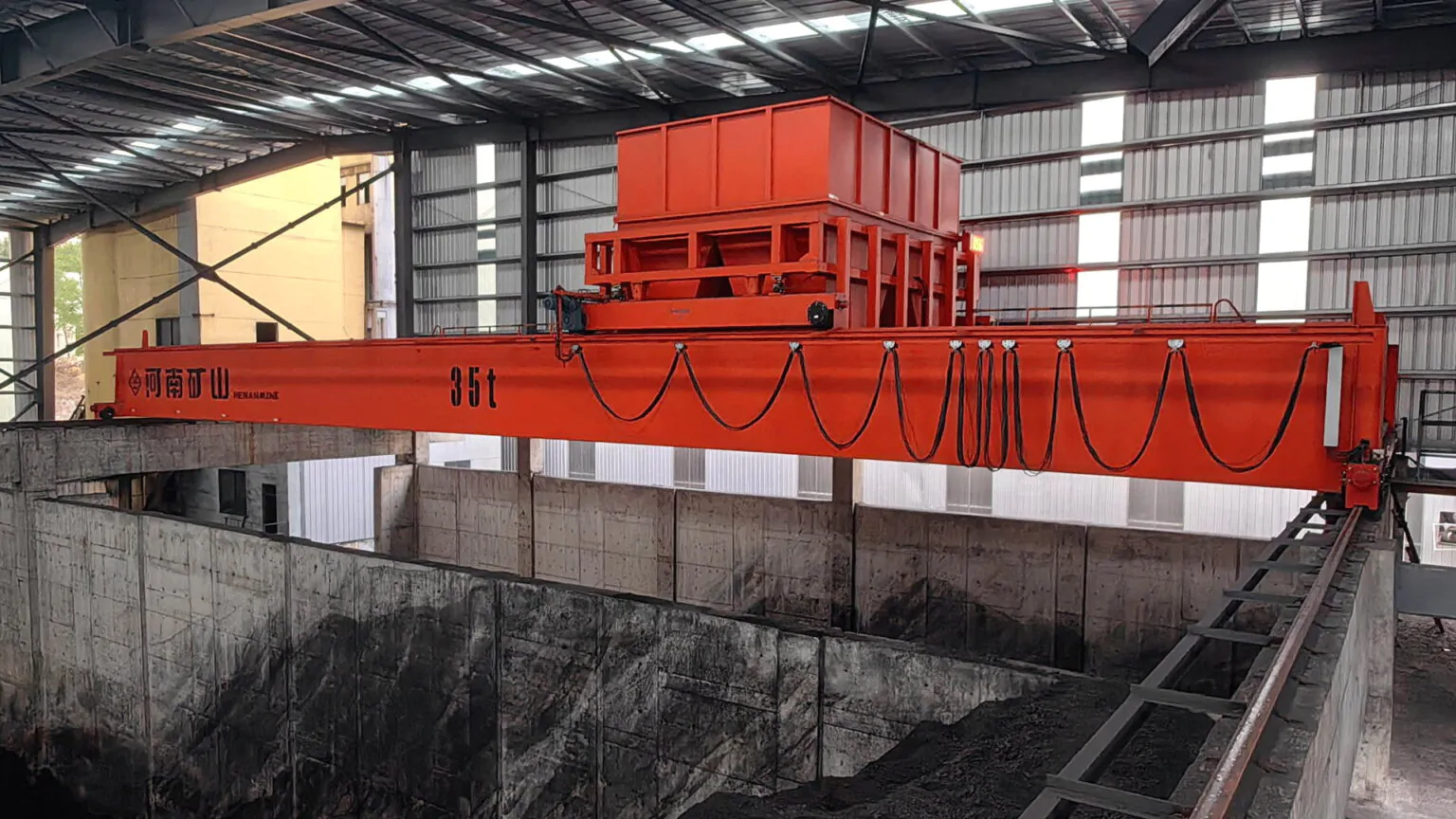
  • Container Stacking Gantry Cranes: Compare the Yard Handling Envelope

    Container Stacking Gantry Cranes: Compare the Yard Handling Envelope

    Technical guide

    Container Stacking Gantry Cranes: Compare the Yard Handling Envelope

    Container stacking requirements need to be coordinated with transfer lanes and operating routes. Define the load basis, stacking pattern and supporting site before comparing suitable gantry crane arrangements.

    Henan Mine CraneTechnical guide · Updated 2026Crane selection, project scope and operating requirements
    Henan Mine Crane Anode Carbon Block Stacking Crane
    Henan Mine Crane Anode Carbon Block Stacking Crane
    Project planning notes

    Key points for this crane project.

    1. Why Choosing the Right Gantry Crane Matters for
    2. Understand Different Types of Gantry Cranes for
    3. Key Factors to Consider When Selecting a Container
    Read the technical guide

    Why Choosing the Right Gantry Crane Matters for Container Stacking

    Storage efficiency

    Yard land resources are the core fixed cost of logistics operation, especially in coastal core ports and suburban logistics parks. The available storage space is very limited. How to improve container storage capacity in fixed space is the core breakthrough point for cost reduction and efficiency improvement. Suitable gantry crane can realize standardized and high-density container stacking operation, completely solve the problems of traditional stacking disorder, low stacking layers and serious space waste.

    Relying on the accurate vertical lifting and regular stacking capacity of gantry cranes, the storage yard can realize multi-layer and dense container arrangement, fully excavate the value of vertical space, and greatly improve the storage density per unit area.

    Handling performance

    The operation speed and stability of container stacking directly determine the overall throughput capacity of the yard. Gantry crane suitable for working conditions, equipped with professional container lifting tools, can quickly complete the whole process of container grabbing, shifting, lifting, stacking and setting, greatly shortening the single operation time. The equipment runs smoothly and accurately, which can effectively avoid the inefficient problems of container alignment deviation and repeated adjustment.

    Stable and efficient lifting operation can greatly improve the daily container handling capacity of the yard, reduce the waiting time of trucks, container ships and railway cars, and optimize the circulation efficiency of the entire logistics transit link. For high-frequency port hubs, high-quality gantry cranes can significantly reduce the congestion rate, improve customer performance efficiency, and create an efficient logistics transit system.

    Operation cost

    Henan Mine Crane manufactured container gantry crane belongs to heavy long-term operation equipment, equipment reliability, maintenance convenience directly affect the whole life cycle operation cost.

    At the same time, scientific selection can perfectly balance the initial investment of equipment and long-term operating benefits.

    Understand Different Types of Gantry Cranes for Container Stacking

    RMG crane

    Henan Mine Crane manufactured rail-mounted container gantry crane (RMG) is the core operation equipment of high-end container yard. It runs on fixed track on the ground, with strong operation stability, high positioning accuracy and stacking capacity far exceeding conventional equipment. This model supports regular stacking of high-rise containers, up to 9 layers of container stacking, stacking regularity, operation safety, space utilization rate ranks among the top in the industry.

    RMG crane can be deeply adapted to automatic and intelligent operation transformation, and can be connected with intelligent storage yard management system to realize unmanned automatic stacking, accurate alignment and intelligent dispatching without manual intervention in the whole process. It has stable operation load, strong continuous operation capability and long service life. It is mainly suitable for large-scale port terminals, large-scale automatic container yards, multimodal transport core hubs and other large-throughput and highly standardized operation scenarios. It is the standard equipment of modern intelligent ports.

    RTG crane

    Tire type container gantry crane (RTG) adopts tire travel structure, without laying fixed track, site adaptability is very strong, flexible movement, can freely adjust the operation area according to the operation requirements of the yard, break through the operation limit of fixed track. Equipment installation and commissioning is convenient, without large-scale transformation site, short production cycle, and can quickly adapt to the operation requirements of temporary storage yard and reconstruction yard.

    At the performance level, RTG cranes give consideration to both operational efficiency and cost performance, meeting the needs of conventional 3 – 7-storey container stacking, and fully adapting to the operating standards of inland logistics parks, small and medium-sized container terminals, railway transit stations, and regional freight yards. Compared with RMG equipment, its initial investment is lower, the site reconstruction cost is almost zero, and the operation and maintenance difficulty is smaller. It is the preferred model for small and medium-sized container stacking scenarios.

    ASC crane

    Automatic stacking crane (ASC) is a high-end intelligent equipment specially developed for intelligent container terminals, integrating a full set of intelligent functions such as automatic positioning, intelligent identification, automatic stacking, fault self-test, intelligent obstacle avoidance, etc. Relying on high-precision sensing systems, visual recognition systems and intelligent control systems, the equipment can independently complete full-process operations such as container classification, grabbing, layered stacking, and inventory statistics.

    ASC crane does not need manual field operation, can achieve 24 hours of uninterrupted stable operation, operation accuracy, operation efficiency, safety factor have reached the top level of the industry, completely solve the manual operation error, low efficiency, safety hazards and other problems. At present, the equipment is mainly used in highly intelligent and unmanned operation scenarios such as large smart ports, fully automatic container bonded yards, high-end intelligent logistics hubs, etc.

    Key Factors to Consider When Selecting a Container Stacking Gantry Crane

    Lifting capacity

    lifting capacity is the core basic parameter of gantry crane selection, which directly determines whether the equipment can meet the needs of various container operations, and is also the key to ensuring operation safety. When selecting, it is necessary to accurately match the container type of daily operation. The weight of 20-foot ordinary container, 40-foot standard container, 45-foot super high container and special heavy load container varies greatly, and the corresponding equipment lifting requirements are completely different. In the industry conventional standard, the standard 40-foot container needs to match the equipment with lifting capacity of 40t and above, including the safety redundancy reserved for the weight of the spreader.

    At the same time, it is necessary to plan the operation mode in advance, and make clear whether it is necessary to lift single box and double box synchronously. For storage yard with high-frequency double-box operation, special gantry crane supporting double spreaders and high-capacity shall be selected to avoid failure of operation due to insufficient equipment tonnage, or equipment failure and potential safety hazard caused by long-term overload operation.

    Stacking height

    Stacking height directly determines the vertical storage capacity of the yard, and the type selection should be determined in combination with the yard height limit, fire protection specifications and operation standards. The stacking requirements of different operation scenarios vary significantly. Small and medium-sized inland yards are usually suitable for 3 – 5 layers of container stacking, medium-sized terminals can achieve 5 – 7 layers of stacking, and large automated port yards can support 7 – 9 layers of high-rise stacking.

    Sufficient safety margin shall be reserved for lifting height of equipment, which shall not only adapt to basic stacking height, but also take into account container height error, spreader operation space and safe buffer distance. Reasonable stacking height configuration can maximize the vertical space of the excavated yard, greatly increase the total storage volume of containers without increasing the site area, ensure the stacking stability, and avoid the risk of toppling and collision of high-rise stacking.

    Working span

    Working span refers to the coverage width of Henan Mine Crane manufactured gantry crane in a single operation, which directly corresponds to the layout planning of container blocks in the yard. It is a key parameter to determine the operation efficiency and space utilization rate of the yard. The type selection shall strictly match the column number of container stacking blocks, channel layout and operation line to ensure that the equipment span can completely cover the target operation area without operation blind area and space waste.

    Common spans of conventional container yards include customized spans of 18m, 22m, 25m, 30m and above, and different spans adapt to different block arrangement modes. Too small a span results in incomplete job coverage, frequent equipment movement, and reduced job efficiency. Too large span will increase equipment weight, energy consumption and procurement costs, resulting in resource redundancy. Accurate matching of working span can realize efficient coverage of fixed operation blocks by single equipment and optimize the overall operation layout of the yard.

    Daily container throughput and operation frequency of storage yard are important basis for equipment selection, which directly determine the working level, configuration standard and quantity ratio of equipment. The daily throughput of small inland storage yard is relatively low, so the standard gantry crane of conventional working level can meet the demand. Medium-sized terminals and logistics parks have large daily turnover, so medium and high frequency working equipment shall be selected.

    If the equipment performance cannot match the operation volume, long-term high-frequency overload operation will accelerate the aging of equipment and frequent failures, resulting in shutdown and congestion of the yard. If the equipment is excessively high, it will cause investment waste. Combined with the daily average operation volume, peak operation demand and the difference in turnover between light and peak seasons, the accurate matching of equipment performance and operation demand can be realized to ensure stable and efficient high-frequency operation.

    RMG vs RTG: Which Gantry Crane Is Better for Container Stacking?

    Performance comparison

    In terms of stacking efficiency and accuracy, RMG positioning error is extremely small, high-level stacking has high regularity, stable operating speed, and high-density stacking has significant advantages. RTG is affected by tire running characteristics, positioning accuracy is slightly lower, stacking layers and regularity are slightly weaker. In terms of investment cost, RTG has lower initial procurement and site reconstruction cost, simple operation and maintenance and low cost. RMG equipment purchase price is higher, and need to invest track laying, foundation reconstruction costs, initial overall investment is higher, but long-term energy consumption and operation and maintenance costs are lower.

    Application differences

    Henan Mine Crane manufactured RMG crane mainly focuses on large-scale, high-density and intelligent operation, and its core is suitable for large coastal ports, fully automatic container hubs and high-throughput fixed storage yards. This kind of scenario has high operation standard, fixed site and large turnover volume, and has strict requirements on stacking density, operation stability and intelligent level. RMG equipment can perfectly match its long-term high-intensity operation requirements and maximize the storage capacity.

    RTG tire gantry crane mainly flexibility, cost performance, versatility, adapt to inland logistics parks, small and medium-sized container terminals, railway freight yards, temporary turnover yards. This kind of scene site is not fixed, the operation scale is moderate, the budget is limited, and there is no need for super high-level automation configuration. RTG equipment can be put into production quickly and flexibly, giving consideration to operation efficiency and cost control, and adapting to the needs of small and medium-sized stacking operations.

    Selection tips

    The selection should be based on the yard size and site conditions: large fixed yard, planned intelligent upgrading, and the pursuit of long-term high productivity scenarios, RMG gantry cranes are preferred. RTG gantry crane is preferred for flexible site, temporary operation, small and medium-sized storage yard and limited budget. Secondly, it is necessary to give consideration to budget and full-cycle cost. RTG is optional for short-term low-cost operation, long-term large-scale and normal operation. RMG has the advantages of low operation and maintenance and high production capacity, which is more cost-effective.

    Automation Features to Consider for Modern Container Stacking

    Anti-sway system

    Anti-sway system is the core safety and efficiency configuration of modern container stacking gantry crane. In the process of container lifting, affected by equipment start-up and stop, wind force and ground vibration, it is easy to swing and deviate between spreader and box, which not only reduces alignment accuracy and prolongs operation time, but also easily causes hidden dangers such as box collision, cargo damage and equipment wear.

    The high-precision sway control system can monitor the lifting state in real time, automatically correct the swing amplitude through intelligent electronic control algorithm, quickly stabilize the box, and greatly improve the stability and positioning accuracy of lifting, shifting and falling. This configuration can effectively reduce container collision loss, reduce operation error rate, especially adapt to high-rise stacking and windy weather operation scenarios, and comprehensively improve the safety and regularity of yard operation.

    Remote control

    Remote control function is the basic configuration of modern gantry crane intelligent upgrade, completely breaking the limitation of traditional cab manual operation. Operators can complete stacking operations through real-time control of equipment through remote terminals, without close contact with heavy operation equipment, avoiding safety risks of aerial operation and heavy lifting from the root.

    The remote control system is convenient to operate and sensitive to response, which can adapt to all-weather operation requirements, greatly reduce manual labor intensity, reduce on-site operation personnel allocation, and save labor costs. At the same time, the system supports multi-person rotation and remote duty, which can ensure 24-hour uninterrupted operation of the yard, effectively improve the overall operation efficiency and meet the needs of efficient operation of modern logistics.

    Smart management

    Intelligent management system is the core configuration of intelligent storage yard, which can realize real-time acquisition, full-process monitoring, intelligent scheduling and integrated management of data statistics of Henan Mine Crane manufactured gantry crane operation. The system can automatically record equipment operation time, operation volume, energy consumption data and fault information, monitor equipment operation status in real time, predict equipment wear and failure hidden dangers in advance, and realize preventive maintenance.

    At the same time, the intelligent management system can be connected with the storage management system of the storage yard, automatically count the stacking position, quantity and status of containers, realize intelligent traceability and accurate scheduling of goods, optimize the operation line of the storage yard and reduce invalid operations. Through digital and intelligent management and control, the extensive mode of traditional manual management will be completely changed, and the overall operation of the yard will be refined, standardized and intelligent.

    Common Mistakes When Choosing a Gantry Crane for Container Stacking

    Future demand

    The core error of most enterprises is to focus only on the current operation demand and ignore the long-term business expansion and industry upgrading trend. Some storage yards currently have small throughput and low stacking demand, so they blindly select simple equipment with low configuration, small span, and low working level, which can meet basic operations in the short term. However, with the expansion of logistics business and the increase in container turnover, equipment performance Will quickly fall behind the job requirements.

    Equipment replacement and transformation not only require high procurement costs, but also cause long-term downtime loss, which seriously affects the operation rhythm of the yard.

    Yard layout

    The mismatch of site layout parameters is a high-frequency type selection error. Many enterprises fail to accurately measure the yard size, channel width, height limit, foundation bearing capacity and track installation conditions before purchasing equipment, resulting in such problems as inconsistent span, limited stack height, blocked traffic and unable foundation bearing capacity after equipment mobilization, which cannot be installed and used normally, requiring secondary site reconstruction or equipment replacement, resulting in great waste of funds and time.

    In the early stage of type selection, it is necessary to comprehensively survey the working conditions of the storage yard, accurately check the core parameters such as site length, width, height limit, foundation strength, operation channel, container block layout, vehicle moving line, etc., ensure that the equipment span, lifting height, travel mode and shape size fully adapt to the site conditions, realize efficient production of equipment upon mobilization, and avoid the problem of mismatch between site and equipment parameters.

    Purchase cost

    Professional container stacking gantry crane selection, the core consideration is the comprehensive value of the whole life cycle, need to take into account equipment quality, stability, energy consumption, maintenance convenience, service life, manufacturer after-sales guarantee. Although the initial investment is slightly higher, it is stable and efficient in the long term, with low failures and low energy consumption. It can continue to reduce costs and increase efficiency for enterprises. The comprehensive cost performance is much higher than the low price and low configuration. equipment.

    Henan Mine Crane

    Every container yard has different requirements for lifting capacity, stacking height, working span, and automation level. A suitable gantry crane solution should be designed according to the actual working conditions instead of using a standard model for every project. Henan Mine Crane Factory provides customized gantry crane solutions for container stacking operations, helping customers select the right equipment configuration for ports, railway terminals, logistics parks, and other applications.

    With years of manufacturing experience and professional engineering support, Henan Mine Crane Factory focuses on producing reliable crane systems with stable performance and long service life. From project design and equipment manufacturing to installation and technical support, the company works closely with customers to deliver practical lifting solutions that improve container handling efficiency, reduce operating costs, and support the long-term development of modern logistics operations.

    Discuss the crane arrangement for your project.

    Container stacking requirements need to be coordinated with transfer lanes and operating routes. Define the load basis, stacking pattern and supporting site before comparing suitable gantry crane arrangements. Share the load, available drawings, working cycle and site conditions with Henan Mine Crane so the required configuration and supply boundary can be discussed.

    Related crane configurations

    Anode Carbon Block Stacking Crane

    View product parameters
    Lifting capacity: 10 – 30 tSpan: 13.5-40 mLifting height: 6 – 20 m

    Handle and stack anode carbon blocks with a crane configured around block geometry, gripping method and storage layout. Define the transfer sequence and automation interfaces before selection.

    Container Overhead Crane

    View product parameters
    Lifting capacity: 30-65 tSpan: 18-35 mLifting height: 8 – 20 m

    Transfer containers within a defined overhead runway area using a double-girder bridge and matched spreader. Container size, working clearance and the handling sequence determine the arrangement.

    Updated 2026 · Henan Mine Crane