Engineering · Manufacturing · Project support
info@hnksglobal.comWhatsApp +86 18836207779 ↗

Blog

  • Explosion-Proof Cranes for Oil and Gas: Site Classification and Duty

    Explosion-Proof Cranes for Oil and Gas: Site Classification and Duty

    Technical guide

    Explosion-Proof Cranes for Oil and Gas: Site Classification and Duty

    The lifting requirement and hazardous-area information must be coordinated early. Describe the handled equipment, local atmosphere and operating conditions so the proposed crane and its protection documentation can be reviewed together.
    Henan Mine CraneTechnical guide · Updated 2026Crane selection, project scope and operating requirements
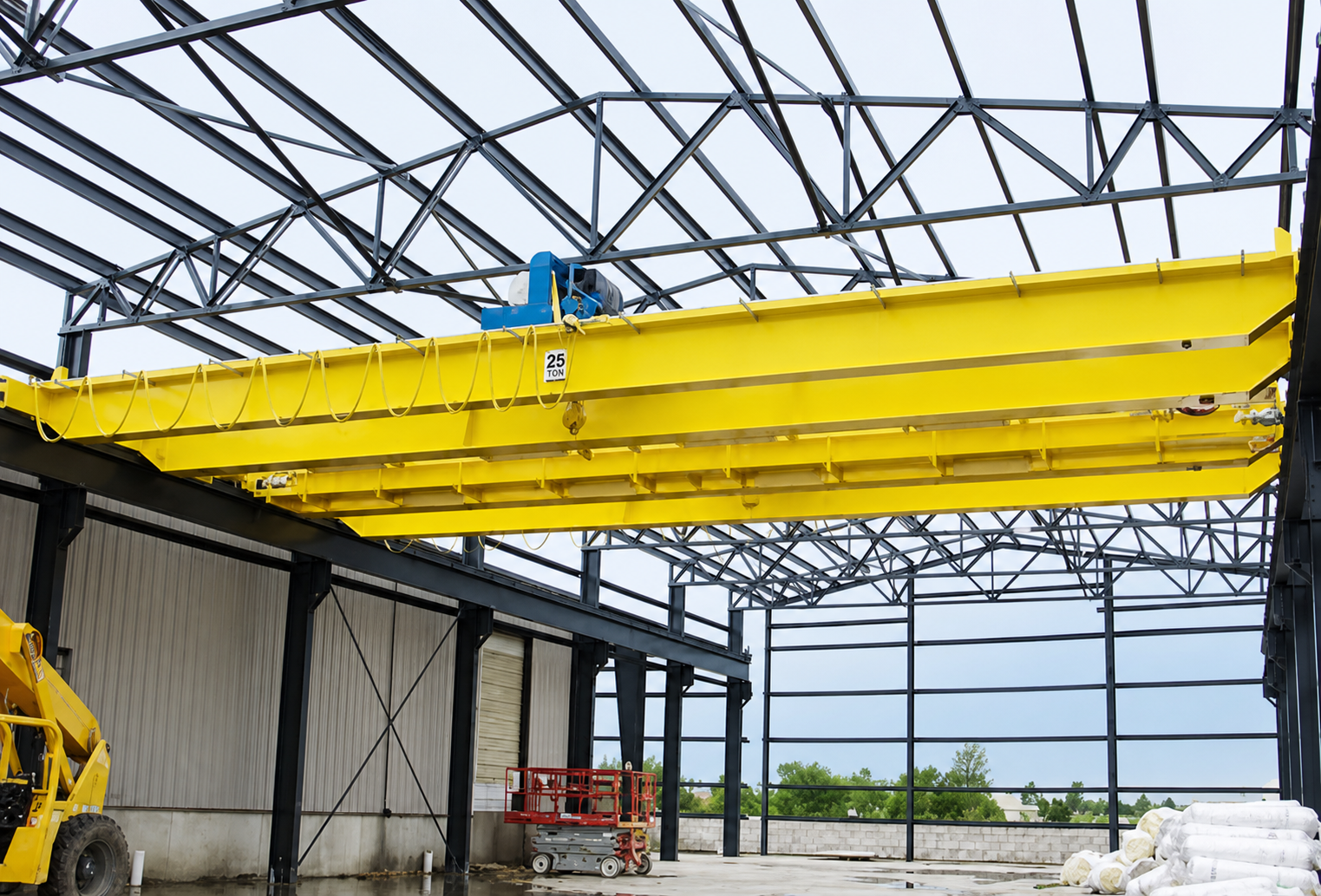
    Henan Mine Crane manufactured explosion-proof crane
    Henan Mine Crane manufactured explosion-proof crane
    Project planning notes

    Key points for this crane project.

    1. What Is an Explosion-Proof Crane?
    2. Key Factors When Choosing Explosion-Proof Crane for
    3. Important Technical Parameters for Explosion-Proof
    Read the technical guide

    What Is an Explosion-Proof Crane?

    An explosion-proof crane is a lifting system engineered so that none of its components, motors, electrical panels, switches, or mechanical parts, can generate a spark, arc, or surface temperature high enough to ignite a surrounding explosive atmosphere. Rather than simply being "strong enough" to survive a blast, an explosion-proof crane is designed to prevent the explosion from ever starting in the first place.

    Difference Between Standard Crane and Explosion-Proof Crane

    The distinction between a standard crane and an explosion-proof crane goes well beyond a warning label. Every major subsystem is redesigned or upgraded to remove potential ignition sources.

    FeatureStandard CraneExplosion-Proof Crane
    Electrical componentsNormal electrical componentsExplosion-proof electrical systems
    Operating environmentGeneral industrial environmentsHazardous locations (Zones/Divisions)
    MotorsStandard motorsExplosion-proof (flameproof) motors
    Control systemsNormal control systemsFlameproof control systems
    MaterialsStandard steel componentsSpark-resistant, anti-static materials
    CertificationNone requiredATEX / IECEx / NEC-certified

    A standard Henan Mine Crane manufactured crane is built to move loads efficiently in a general factory setting. An explosion-proof crane is built around a single governing principle: eliminate every possible ignition source, even under fault conditions such as a short circuit or bearing failure.

    How Does an Explosion-Proof Crane Prevent Explosions?

    Henan Mine Crane manufactured explosion-proof cranes achieve safety through several layers of engineered protection working together. No single feature is enough on its own, it's the combination that makes the system reliable in a hazardous area.

    The motor is typically the highest-risk component on any crane, since it generates heat and, under fault conditions, can spark internally. Explosion-proof motors use flameproof housings that contain any internal spark or flame long enough for it to cool below ignition temperature before it can reach the surrounding atmosphere. These motors are also designed to run at lower surface temperatures and are fitted with thermal protection to prevent overheating.

    Every electrical element on the crane, control panels, switches, sensors, and limit switches, must be rated for the hazardous zone in which it operates. These components are typically housed in sealed, flameproof or increased-safety enclosures that prevent internal sparking from reaching flammable gases or dust outside the enclosure.

    Even non-electrical parts can create ignition risk through mechanical friction or impact. Explosion-proof cranes use copper alloy (non-ferrous) wheels, brass or bronze contact points, and anti-static conductive materials to eliminate the "steel-on-steel" spark risk that exists on standard cranes. Grounding systems continuously dissipate static electricity buildup, which is a particularly serious concern in dry, low-humidity hazardous areas.

    Because auto-ignition of flammable gases can occur simply from a hot surface (with no spark at all), explosion-proof cranes incorporate temperature monitoring and control systems that keep every component below the auto-ignition temperature of the gases present in the facility, a threshold defined by the crane's assigned temperature class (T1–T6).

    Key Factors When Choosing Explosion-Proof Crane for Oil & Gas Industry

    Identify Hazardous Area Classification

    Before evaluating any crane specification, the hazardous area classification of the installation site must be established.

    • Zone 0:A continuous explosive atmosphere is present, or present for long periods.
    • Zone 1:An explosive atmosphere is likely to occur during normal operation.
    • Zone 2:An explosive atmosphere is unlikely during normal operation and, if it occurs, will only exist for a short period.
    • Class I:Areas with flammable gases or vapors.
    • Class III:Areas with ignitable fibers or flyings.
    • Each class is further divided into Division 1(hazard present under normal operating conditions) and Division 2 (hazard present only under abnormal conditions, such as equipment failure).

    The buyer's core concern here is simple but non-negotiable: the crane's explosion-proof rating must match, or exceed, the hazardous area classification of the installation site. Always start the selection process with a site hazardous area classification study, ideally conducted or verified by a qualified safety engineer, before requesting crane quotations.

    Select the Right Explosion-Proof Protection Level

    Reading an Ex Marking Explosion-proof equipment nameplates use a standardized code that looks intimidating at first but is straightforward once decoded. Take the example marking:

    • Db:the protection method (flameproof enclosure, "d", with a design/build sub-designation)
    • IIB:the gas group the equipment is suitable for (IIA, IIB, or IIC, with IIC being the most severe/permissive rating)
    • T4:the temperature class, indicating the maximum surface temperature the equipment can reach
    • Gb:the Equipment Protection Level, indicating the level of protection provided for gas atmospheres

    Determine Crane Type According to Application

    Different areas of an oil and gas facility call for different explosion-proof crane configurations.

    Explosion-Proof Overhead Crane Applications: refineries, processing plants, compressor rooms, indoor maintenance workshops. Advantages: high lifting capacity, stable and precise operation, well suited to indoor hazardous areas where headroom and runway structure already exist.

    Explosion-Proof Gantry Crane Applications: Outdoor oil terminals, storage yards, gas facilities without overhead runway infrastructure. Benefits: no building structure necessary, free grounds convenient to install and relocate and expand with changes to site layout.

    Explosion-Proof Electric Hoist Crane Applications: smaller lifting tasks, spot maintenance areas, confined spaces. Advantages: compact structure that fits tight clearances common on offshore platforms, cost-effective for lower-capacity, lower-frequency lifting needs.

    Important Technical Parameters for Explosion-Proof Crane Selection

    Lifting Capacity

    The lifting capacity must not be determined simply on the basis of the maximum single load applied. A correct calculation would include:

    • Maximum load: The heaviest single object the crane will relatively expect to lift (considering rigging weight)
    • Working load frequency: the tendency of the crane to operate within the maximum working load
    • Safety margin: an added allowance for any extra load exceeding the calculated maximum load to cater for unanticipated loads or error in measurement

    Working Environment Conditions

    The physical operating environment has a direct impact on material selection and enclosure design:

    For offshore oil platforms specifically, the combination of a hazardous atmosphere and a highly corrosive marine environment means the crane must be specified with anti-corrosion coatings, stainless steel components where feasible, and weather-resistant sealing on all electrical enclosures, omitting any one of these can significantly shorten service life.

    It's also worth noting that some corrosion-resistant material choices interact directly with the crane's load rating. Spark-resistant stainless steel load chain or wire rope, for example, generally has lower tensile strength than standard alloy steel, which can require the equipment's rated capacity to be de-rated accordingly. In practice, this often means an Henan Mine Crane offshore-spec explosion-proof crane needs a larger frame or hoist unit than an equivalent onshore model just to deliver the same usable lifting capacity — a detail that's easy to miss when comparing quotations on paper alone.

    Duty Class and Working Frequency

    Crane duty classification indicates how much continuous use a crane is engineered to withstand over its service life. Two common frameworks are used:

    • ISO working class, typically expressed as duty levels A3 through A8

    Heavy-duty, continuous oil and gas operations, particularly in refineries and petrochemical plants running 24/7, generally require higher duty ratings (A6–A8) than a general maintenance workshop would need. Under-specifying duty class is one of the most common and costly selection mistakes, since it directly shortens the crane's operational lifespan under real-world use.

    Control System Selection

    The choice of control method affects both safety and operational efficiency:

    Control TypeKey Characteristics
    Pendant ControlSimple operation, lower upfront cost, operator must remain near the load
    Remote ControlGreater operator distance from hazardous zones, improved line-of-sight flexibility
    Automatic ControlSupports smart factory / Industry 4.0 integration, improves repeatability and efficiency for high-frequency lifting tasks

    For hazardous areas specifically, remote control is increasingly preferred because it allows the operator to work from a safer distance relative to the load and the explosive atmosphere zone boundary.

    Explosion-Proof Crane Applications in Oil & Gas Industry

    Oil Refineries: Henan Mine Crane explosion-proof cranes support routine equipment maintenance, pump replacement, and valve handling, tasks that occur constantly across a refinery's operating life and almost always take place within classified hazardous zones.

    Petrochemical Plants: These facilities rely on explosion-proof lifting equipment for reactor maintenance and general material handling around processing units where flammable chemical vapors are a constant presence.

    Certifications and Standards You Should Check Before Buying

    Before finalizing any purchase, buyers should verify the following documentation directly with the manufacturer, not simply take marketing claims at face value:

    Always request the actual certificate numbers and, where possible, verify them against the issuing body's public database rather than relying solely on a certificate image supplied by the seller.

    Common Mistakes When Buying Explosion-Proof Crane

    In a hazardous area, the cost of an incident, in both human and financial terms, dwarfs any short-term savings from a cheaper crane.

    Selecting a crane rated for the wrong zone or division is one of the most serious and common purchasing errors.

    A crane specified for light, intermittent duty will wear out quickly, or fail outright, if deployed in a continuous, heavy-duty oil and gas operation. Duty class should always be matched to actual operating frequency, not just peak load.

    Before committing to a purchase, verify the manufacturer's factory capability, testing equipment, export experience, and certification documentation. A manufacturer without in-house testing capability or a documented export track record is a significant risk for a safety-critical purchase.

    Explosion-Proof Crane vs Standard Crane: Which One Do You Need?

    FeatureStandard CraneExplosion-Proof Crane
    ApplicationNormal factoriesHazardous areas
    Safety levelBasicHigh
    CertificationGeneralATEX / IECEx
    CostLowerHigher
    Oil & Gas suitabilityNot suitableSuitable

    If your facility contains any classified hazardous zone, even a single room, tank farm, or maintenance bay, a standard crane is not a viable option, regardless of how the rest of the site is classified. The presence of any Zone 0, 1, or 2 (or Class I/II Division 1 or 2) area within the crane's operating range requires the explosion-proof equivalent.

    How to Choose a Reliable Explosion-Proof Crane Manufacturer?

    Selecting the right crane specification is only half the job, selecting the right manufacturer determines whether that specification is actually delivered, tested, and supported over the crane's operating life.

    Manufacturing Capability: Check the manufacturer's production facilities, in-house testing equipment, and the depth of their engineering team. A manufacturer that outsources explosion-proof component assembly with no in-house verification introduces unnecessary quality risk.

    Certification Support: A reliable Henan Mine Crane Factory manufacturer proactively provide explosion-proof certificates, full test reports, and complete quality documentation, not just on request, but as a standard part of the sales process.

    Customization Ability: Oil and gas sites vary enormously in voltage standards, crane capacity requirements, and environmental conditions. Look for manufacturers who can support voltage customization, capacity adjustment, and special environment design (offshore corrosion packages, low-temperature LNG configurations, etc.) rather than offering only fixed catalog models.

    After-Sales Service: Henan Mine Crane Explosion-proof cranes are long-term safety assets. Confirm the manufacturer offers installation guidance, ongoing spare parts supply, and responsive technical support, a crane that can't be serviced or re-certified locally becomes a liability the moment a component fails.

    Henan Mine Crane

    Choosing the right explosion-proof crane for the oil and gas industry is not just a matter of lifting capacity. It‘s about reliability in safety.

    By utilizing advanced manufacturing capabilities, comprehensive quality assurance measures, professional engineering support and tailor-made solutions according to different working conditions, a Henan Mine Crane Factory can help oil and gas firms enhance work safety, minimize maintenance hazards and enable more efficient hoisting performance. Giving preference to the explosion-proof crane supplier now is actually paving the way for a safer and more reliable course.

    Frequently Asked Questions

    Q1: What is an explosion-proof crane used for in the oil and gas industry?

    Explosion-proof cranes are used for lifting and material handling tasks, equipment maintenance, pump and valve replacement, reactor servicing, within classified hazardous zones where flammable gases, vapors, or dust may be present. They eliminate the ignition sources (sparks, overheating, static discharge) that a standard crane could introduce into these environments.

    Q2: What is the difference between ATEX and IECEx explosion-proof cranes?

    Q3: Can explosion-proof cranes be used on offshore oil platforms?

    Yes, in fact, offshore platforms are one of the most demanding applications for explosion-proof cranes, since they combine hazardous area classification requirements with severe corrosion exposure and tight space constraints. Offshore-specific cranes typically add anti-corrosion coatings, stainless steel components, and compact structural designs.

    Q4: How long is the service life of an explosion-proof overhead crane?

    Service life depends heavily on duty class selection, maintenance practices, and environmental conditions, but a properly specified and maintained explosion-proof overhead crane can be expected to operate reliably for well over a decade. Under-specifying duty class or skipping scheduled maintenance are the two most common causes of premature failure.

    Discuss the crane arrangement for your project.

    The lifting requirement and hazardous-area information must be coordinated early. Describe the handled equipment, local atmosphere and operating conditions so the proposed crane and its protection documentation can be reviewed together. Share the load, available drawings, working cycle and site conditions with Henan Mine Crane so the required configuration and supply boundary can be discussed.

    Related crane configurations

    Clean Explosion Proof Bridge Crane

    View product parameters
    Lifting capacity: 1t – 32tSpan: 7.5m – 28.5mLifting height: 6m – 20m

    Combine overhead lifting with the declared cleanliness and hazardous-area requirements. Specify particle-control expectations, process exposure and area classification for the complete lifting system.

    Dual Trolley Explosion Proof Bridge Crane

    View product parameters
    Lifting capacity: 20+20tSpan: 10m – 35mLifting height: 6m – 30m

    Combine two-trolley handling with the declared hazardous-area specification. Coordinate hook loads, lifting sequence, electrical protection and operator controls for the complete installation.

    Updated 2026 · Henan Mine Crane
  • Container Gantry Cranes for Smaller Yards: Layout and Growth Planning

    Container Gantry Cranes for Smaller Yards: Layout and Growth Planning

    Technical guide

    Container Gantry Cranes for Smaller Yards: Layout and Growth Planning

    Limited space and changing volumes make the handling layout a central selection issue. Compare stacking coverage, transfer lanes and infrastructure requirements against the yard's actual operating plan and expansion options.

    Henan Mine CraneTechnical guide · Updated 2026Crane selection, project scope and operating requirements
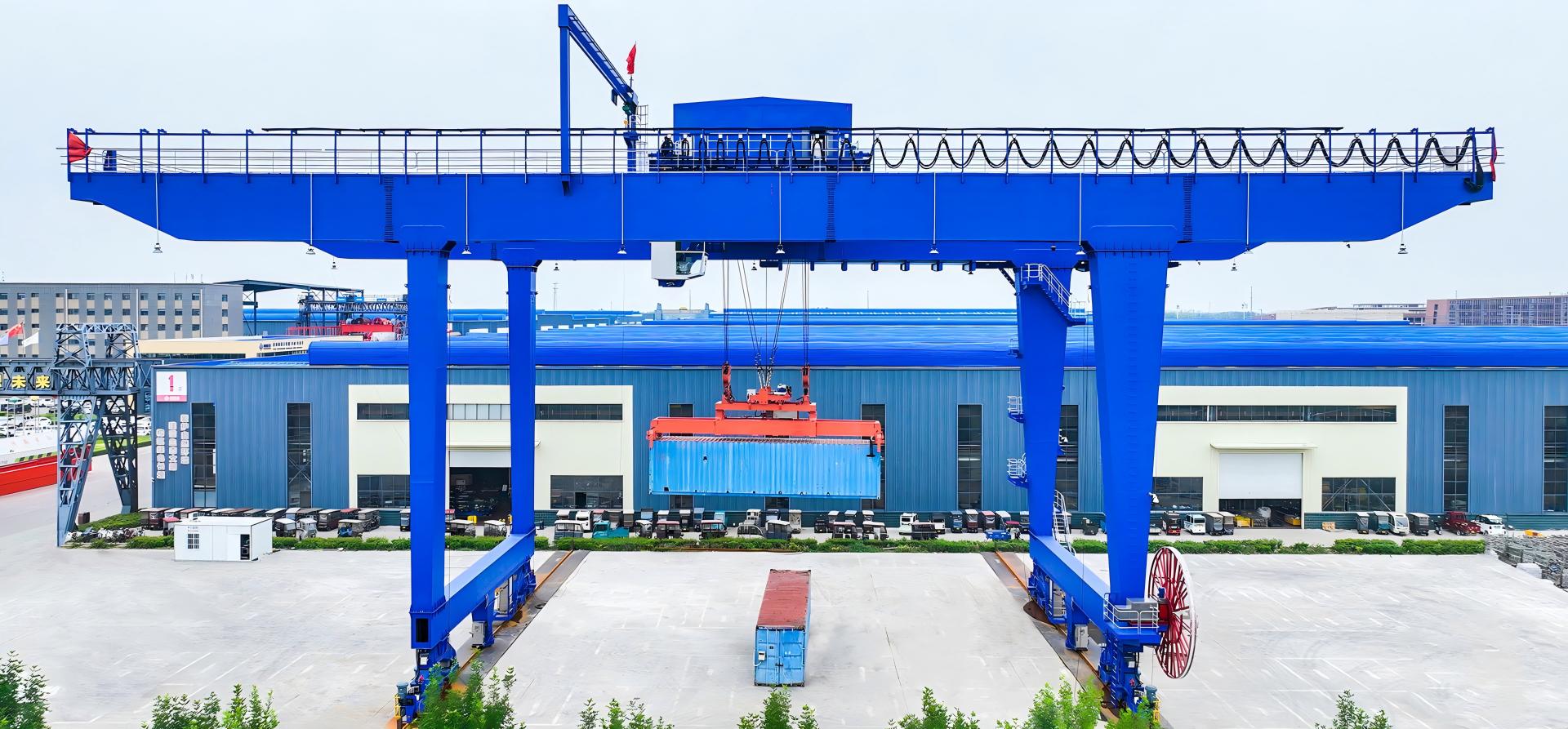
    Henan Mine Crane manufactured Automated Container Gantry Crane
    Henan Mine Crane manufactured Automated Container Gantry Crane
    Project planning notes

    Key points for this crane project.

    1. How to Choose Container Gantry Cranes for Small and
    2. Typical operating characteristics of small and
    3. Selection of the first step: first sort out the real
    Read the technical guide

    How to Choose Container Gantry Cranes for Small and Medium-Sized Container Yards?

    A set of wrongly selected gantry cranes will directly lower the operating rhythm of the entire yard, either the utilisation rate of the heap area does not go up, the site is wasted, or fuel consumption, electricity, maintenance costs remain high for a long period of time, and even more troubling is that the pre-planning is not done, and if you want to change the layout and add stacking space later, you have to spend a lot of money on the reconstruction. This piece of content does not engage in false parameter stacking, only from the real scene of small and medium-sized yards.

    Combined with the yard size, throughput, infrastructure conditions, long-term costs, to help you run through the models, configurations, suppliers, and select the container gantry cranes that are really suitable for their own yard.

    Henan Mine Crane manufactured Automated Container Gantry Crane

    Typical operating characteristics of small and medium-sized yards

    The number of stacking areas is not large, usually only a few groups of stacking spaces, the operation is relatively miscellaneous, imports, exports, empty containers are often mixed together to deal with, there is a peak time for collector trucks to enter and exit, but the overall flow is much lower than that of the large terminals, the number of on-site maintenance team is not large, and the power and infrastructure conditions are relatively ordinary.

    Once the equipment is down, the impact on small terminals is more obvious, because there are not many spare seats to take over.

    Why this positioning is important for selection

    Many small and medium-sized yards to buy a large dock level of high allocation of cranes, the results of most of the functions cannot be used, the money spent in vain, the appropriate degree of automation, a reasonable level of work in order to make the investment payback faster, in short, suitable for their own programmes, more valuable than the parameters of a good-looking programme.

    Henan Mine Crane manufactured Automated Container Gantry Crane
    Henan Mine Crane manufactured Automated Container Gantry Crane

    Selection of the first step: first sort out the real data of the yard

    More critical is the peak hourly volume of moving containers, not the average, small and medium-sized yards of the blockage, often appear in the peak period, but also to clarify the requirements of the turnaround time of the collector trucks, the fluctuation difference between the peak season and the off-season, but also to be written into the demand for cranes is to be matched according to the peak capacity, not according to the usual workload.

    Container type composition

    Daily to 20-foot, 40-foot or 45-foot box is the main, the ratio of heavy and empty containers about how much, there is no reefer operation, how high the proportion, whether it involves special cargo, all of these will affect the spreader and safety configuration.

    Stacking Planning

    In the future, how many rows and layers should be set up, which directly determines the span and lifting height of the crane, the width of the carriageway, the space for the truck to pass under the crane should be reserved, and the flow direction of the crates in and out of the warehouse will also affect the operating efficiency of the crane.

    Operation shifts and intensity

    How many shifts a day, how long to run every day, how big is the difference between the intensity of work in the peak season and off-season, these directly determine the level of work of the crane, choose low, the equipment breaks down quickly; choose high, the cost is not necessary.

    Henan Mine Crane manufactured Automated Container Gantry Crane

    Core choice: tyre-type RTG and rail-type RMG which to choose?

    Tyre-type container gantry crane (RTG)

    It doesn’t need to lay tracks, and can be used as soon as it enters the site. Advantages are obvious: no pre-built track, small investment in civil construction in the early stage, can be moved between different yards, high flexibility, suitable for the yard is still in the development, the layout may be adjusted stage.

    Disadvantages are also very realistic: tyres are wearing parts, need regular maintenance and replacement, traditional diesel models will be higher cost and emissions, positioning accuracy is slightly weaker than the RMG with tracks.

    Henan Mine Crane manufactured Automated Container Gantry Crane

    Rail-mounted container gantry crane (RMG)

    Suitable for yards with fixed location of stacking area and pursuing high-density stacking. Along the fixed track, stability and accuracy are better.

    Advantages: accurate positioning, neat stacking of boxes, high space utilisation, smooth operation, more economical for long-term operation, easier to upgrade if you want to add semi-automatic and automatic functions subsequently.

    Disadvantages: the early stage to lay tracks, do the foundation, civil construction costs are higher, installed, basically cannot change the route, construction and planning cycle is longer.

    Simple judgement principle for small and medium-sized yards

    Yard may be expanded and layout changed in the future → RTG is given priority; the yard area is fixed, and it wants to use the space to the full and pursue stability → RMG is given priority.

    Henan Mine Crane manufactured Automated Container Gantry Crane

    Medium-sized yard RMG case

    Henan Mine Crane manufactured Automated Container Gantry Crane

    Henan Mine Crane manufactured Automated Container Gantry Crane
    Henan Mine Crane manufactured Automated Container Gantry Crane

    Key Technical Parameters

    It mainly depends on the total weight of the spreader and the container, most of the small and medium-sized yards, single box operation is enough.

    Not all yards need double-box spreader, blindly on will cost more.

    Span

    The span should be just enough to cover the stacking position + collector truck lane, don’t blindly increase it for the sake of ‘reservation’, the bigger the span, the heavier and more expensive the equipment is, it must be determined according to the actual width of the stacking area.

    Lifting height

    By how many layers of boxes you plan to pile up to decide, at the same time to leave enough spreader and top safety clearance, many yards and stations want to increase the number of high level, the height of the early stage did not leave enough, can only change the equipment.

    Speed and control

    We are accustomed to look at the maximum speed, but in fact, it is not very meaningful, we should pay more attention to the acceleration and deceleration is smooth, whether it is running smoothly, the action is soft, the box is not easy to shake, it is more practical for the safety and efficiency of the yard.

    Work level

    It must match the real intensity of operation. If the working level is not enough, the equipment will wear out in advance and break down frequently, and if the level is too high, the cost of purchase and self-weight will rise.

    Wheel pressure and track load

    RTG should look at the ground load-bearing, RMG should look at the track foundation, which is the big head of the civil construction cost, must be calculated early, many people only look at the price of the crane, and finally planted in the foundation transformation.

    Yard layout and infrastructure

    For small and medium-sized yards, site conditions are often more than the equipment parameters determine the final cost, collector turning radius is enough, whether the lane will be blocked, how to allocate the heap and the lane, directly affecting the operating efficiency of the crane, the line of motion is unreasonable, and then the good cranes cannot get up fast.

    RTG requirements on the ground

    Ground bearing capacity, flatness, settlement resistance should meet the standard, long-term repeated crushing, poor road surface, maintenance costs will be very high.

    RMG Requirements for track foundation

    The track should be straight, the foundation should be stable, and there should be no uneven settlement, it seems to spend more money in the early stage, but the failure rate will be much lower in the later stage.

    Power supply conditions

    Whether the power grid is stable or not, whether the voltage is enough or not, whether the capacity of transformer should be increased or not, electric equipment relies highly on electricity, if there is no good planning in the early stage, it can’t be used in the later stage.

    Outdoor environment

    Coastal areas have salt spray, inland dust, wind and snow in the north, these are related to the corrosion level, protection level, windproof device configuration.

    How to choose the power system

    Diesel RTG

    Suitable for poor grid conditions, inconvenient wiring stations, no need to invest in power supply transformation in the early stage, into the field can work, long-term calculation, fuel expenditure will be a considerable cost.

    Hybrid RTG

    More fuel-efficient than pure diesel, emission is also better, suitable for medium workload, but also want to control the use of cost of the yard, in the early investment and later expenditure is more balanced.

    Electric RTG / RMG

    Electricity cost is significantly lower, less noise, more cost-effective for long-term use, but only if your yard has a stable and reliable power supply.

    Simple Choice Ideas

    The more frequent the operation and the more convenient the use of electricity, the more suitable for electrification, the average workload and power supply conditions, hybrid or diesel is more realistic.

    Degree of automation

    For most small and medium-sized yards, this is the surest starting point, with low costs, fast driver uptake and simple maintenance.

    Semi-automated features worth adding

    Anti-sway control, assisted positioning, camera monitoring, load monitoring, fault diagnostics, crash protection – not exactly complex, but a significant improvement in safety and peace of mind.

    Future upgradability

    Focus on whether the control system is an open architecture, whether remote monitoring, and whether the software can be upgraded in the future, so as to satisfy the present and then reserve for the future, instead of buying the top of the line in one step.

    Compliance, Reliability

    Overload protection, all kinds of limit switches, emergency stop, collision protection between multiple machines, outdoor equipment must have wind alarm and rail clamping/fixing device, anti-shaking system is not mandatory, but it is very practical for small and medium-sized yards.

    Details affecting reliability

    The brand and quality of motor, drive, brake and electrical components, whether the spreader interface is standard and common, whether the cable routing and protection design is reasonable, whether the anti-corrosion level and protection IP level are in line with the site environment.

    Total Cost of Ownership (TCO)

    The price of the equipment itself, civil infrastructure, power supply modification, transport, lifting, installation, commissioning, training, these add up to the real first investment.

    Annual usage cost (OPEX)

    Fuel or electricity costs, tyre/wheel/track wear and tear, wearing parts, maintenance costs, labour efficiency, downtime losses, downtime affects small and medium-sized yards more fatally than large stations.

    Full Life Cycle Costs

    How long is the warranty, how long is the maintenance cycle, how good are the spare parts, how fast is the supply, can the manufacturer assist remotely and visit quickly.

    Henan Mine Crane 5-year TCO comparison case

    Electric RTG/RMG: Electricity expense is only 1/3 of diesel, saving more in the long run.

    How to choose a supplier

    Technical capability

    Have you ever done any real case of container yard, can you draw and customise the plan according to your site, is the integration of spreader and control system mature.

    Production and quality

    Whether the delivery time is real, whether the quality control process is complete, whether it can support the factory acceptance test FAT, whether the source of key components is traceable.

    Installation and after-sales service

    Will the door debugging, training operators, accessories package proposal is reasonable, promised response time can be honoured, there is no remote service capability.

    Be sure to ask before signing the contract

    How much efficiency can be achieved under our working conditions? Which civil engineering parts are included and which are not? Which parts have the longest delivery time? Which 1-2 years wearing parts are recommended? What is the scope and boundary of warranty?

    When Henan Mine Crane serves small and medium-sized container yards, it will write all these contents into the programme without hiding items or raising prices later.

    From Dongfanghong (Luoyang) International Dry Port to Ordos Wanli Dry Port, we insist on doing the configuration according to the actual demand of the yard without over-design.

    The 8 pits that small and medium-sized yards are most likely to step on

    Only looking at who quotes the lowest price, not looking at the long-term cost.

    Focusing only on the present, not leaving room for future expansion.

    Underestimating the renovation cost of road surface, track and power supply.

    Blindly pursuing high speeds that don’t actually improve production.

    Buying automation that is too complex and no one on site will maintain it.

    Don’t plan electricity in advance, only to realise you can’t use it when the equipment arrives.

    Calculate only according to the average throughput, not enough during peak hours.

    Neglecting after-sales service and spare parts, can’t find someone to fix it when it breaks down.

    Discuss the crane arrangement for your project.

    Limited space and changing volumes make the handling layout a central selection issue. Compare stacking coverage, transfer lanes and infrastructure requirements against the yard's actual operating plan and expansion options. Share the load, available drawings, working cycle and site conditions with Henan Mine Crane so the required configuration and supply boundary can be discussed.

    Related crane configurations

    Container Overhead Crane

    View product parameters
    Lifting capacity: 30-65 tSpan: 18-35 mLifting height: 8 – 20 m

    Transfer containers within a defined overhead runway area using a double-girder bridge and matched spreader. Container size, working clearance and the handling sequence determine the arrangement.

    Container Straddle Carrier

    View product parameters
    Lifting capacity: 30 – 50 tStacking arrangement: 1 over 3 – 1 over 6Working class: A7 – A8

    Move containers between handling positions with a straddle carrier matched to the travel route and stacking layout. Define container load, ground conditions, clearance and the preferred drive system.

    Updated 2026 · Henan Mine Crane

  • RTG Selection for Container Yards: Stacking Geometry and Movement

    RTG Selection for Container Yards: Stacking Geometry and Movement

    Technical guide

    RTG Selection for Container Yards: Stacking Geometry and Movement

    An RTG needs to fit both the stacking block and its travel route. Define the container service, vehicle lanes, turning or relocation requirements and power concept before comparing equipment configurations.

    Henan Mine CraneTechnical guide · Updated 2026Crane selection, project scope and operating requirements
    RTG Selection for Container Yards: Stacking Geometry and Movement
    Henan Mine Crane lifting equipment
    Project planning notes

    Key points for this crane project.

    1. What is RTG Crane?
    2. Key Factors for Choosing RTG Cranes
    3. Evaluation of Manufacturer and Supplier Selection
    Read the technical guide

    What is RTG Crane?

    RTG cranes have the core features of flexible movement and strong adaptability, which can realize 360 ° free movement and trackless transfer between yards, and can be flexibly adapted to different layouts of the yard environment.

    Its core function is to complete the container storage, extraction and field transfer, the key components include lifting trolley, gantry structure, operating mechanism, etc., the operation mode can be selected according to the needs of remote control, cab operation or pendant control (pendant manipulation), adapted to different operational scenarios.

    RTG Cranes and Other Types of Crane Differences

    Compared with the shore bridge (Ship-to-Shore, referred to as STS cranes), RTG cranes do not need to be fixed on the quay shore, with mobility advantages, focusing on container storage operations within the yard, while the shore bridge is mainly used for cargo handling between the ship and the terminal;

    Compared with Rail-Mounted Gantry Cranes (RMG cranes for short), RTG cranes do not need to lay fixed rails, are more flexible, and are more suitable for yards with variable layouts and medium-sized yards, and have lower infrastructure investment, and can be flexibly adjusted to the operating area according to the development of the yard.

    Commonly Used Areas in Container Yards

    RTG cranes in the container yard application scenarios can be divided into two categories of core operational purposes and applicable places, as follows:

    Core operational uses: container stacking (1 over 7 stacking configuration can be achieved, maximizing the revitalization of yard space), transfer between storage blocks, road/railway truck cargo docking and turning operations, comprehensive coverage of the core operational scenarios in the yard;

    Applicable places: widely used in ports, inland yards, logistics parks, is to enhance the efficiency of cargo turnover in all types of places, to ensure smooth operation of the core equipment.

    Key Factors for Choosing RTG Cranes

    Container Loading Capacity

    When selecting the model, it is necessary to reasonably assess the lifting capacity of RTG cranes according to the maximum weight of common containers in the yard (such as 20-foot, 40-foot containers and high containers).

    Stacking Height and Operating Range

    Choosing the right span and stacking height can reduce the secondary handling of containers, maximize the storage density of the yard, and reserve space for future business expansion.

    Tire Configuration

    RTG cranes are mainly available in 4-wheel and 8-wheel (and above) tire configurations, each with its own advantages: the 8-wheel configuration is more stable and suitable for higher stockpile heights and greater load capacity; the 4-wheel configuration is more flexible and suitable for smaller yards with narrower aisles. Henan Mine Crane can provide suitable tire configuration according to the topographic conditions and operational requirements of the yard to ensure stable operation of the equipment under different site conditions.

    Turning Radius and Yard Size

    Yard size, layout complexity (such as narrow passages, multiple storage blocks) and terrain conditions directly determine the mobility needs of RTG cranes. RTG cranes are equipped with 90 ° turning and in-situ slewing functions, without the need to lay a fixed track, flexible adjustment of the operating position, easy to adapt to different layouts of yards, greatly enhancing operational flexibility and reducing the efficiency loss caused by site constraints.

    Automated RTG Cranes (ARTGs)

    Automated RTG cranes (ARTGs) are an industry trend with significant advantages:

    • A single operator can control multiple devices, significantly improving the efficiency of yard operations and reducing labor input;
    • Effectively reduce human error, significantly improve the accuracy of container handling, reduce the risk of cargo damage;
    • Reduce the operator's labor intensity, improve operational safety protection, and further enhance the safety of yard operations;
    • Guarantee the standardization and consistency of the operation process, and minimize the impact of human factors on operational efficiency.

    At the same time, for the existing RTG cranes, it can also be upgraded through the addition of automatic steering and other automation components to improve equipment performance.

    Control System and Software

    Advanced control system is the core guarantee for the efficient and stable operation of RTG cranes, using PLC + distributed bus control technology, real-time monitoring of operating conditions, intelligent anti-shaking, precise positioning and remote control and other full-process functions, all-round support for the efficient operation of the equipment.

    Among them, the intelligent anti-shaking technology and synchronized motion control complement each other, which can effectively improve the container handling accuracy, reduce the risk of cargo damage, further optimize the operational efficiency, and accurately match the demand for refined and efficient operation of the yard.

    Hybrid and Electric RTG Cranes

    With the popularization of the concept of environmental protection and operational cost control needs to improve, electric, hybrid and diesel-electric hybrid RTG cranes are gradually becoming the mainstream choice. Electric models can realize zero exhaust emissions, suitable for areas with high environmental requirements;

    Hybrid and diesel-electric hybrid models can significantly reduce fuel consumption, Henan Mine Crane hybrid + variable speed technology can effectively reduce energy consumption, and its electric hybrid models are equipped with battery charging system, which can realize unlimited range, taking into account environmental protection and operational continuity.

    Fuel Consumption and Maintenance Costs

    Long-term operational efficiency needs to focus on fuel consumption and maintenance costs. The regenerative braking technology of RTG cranes can recover energy during the descent of cargoes, realizing energy recycling;

    The modular component design facilitates late maintenance and reduces the difficulty and time cost of repair; the electric model does not require regular maintenance of the diesel engine, which further reduces maintenance expenditure and makes long-term operation more cost-effective.

    Long-term Durability

    Container yard operating environment is complex, often facing strong winds, salt spray, high load operation and other harsh conditions, so RTG cranes need to have strong durability. The equipment should be made of high-strength steel, anticorrosive materials, and have a sturdy structural design that can withstand the erosion of harsh environments and extend the service life of the equipment. All RTG products of Henan Mine Crane comply with international standards such as FEM and GB to ensure the long-term stable operation of the equipment.

    Evaluation of Manufacturer and Supplier Selection

    Manufacturer Reputation

    When choosing RTG cranes, you need to focus on evaluating the manufacturer's industry experience, past performance, customer feedback and global layout, manufacturers with good reputation can provide more reliable products and services.

    Henan Mine Crane has rich experience in the field of RTG crane customization, focusing on providing customized solutions for global container yards, with reliable product quality and perfect service, won the recognition of global customers.

    After-sales Service and Warranty

    Perfect after-sales service is the key support to ensure the long-term stable operation of RTG cranes, and when selecting the type, you need to focus on the supplier's on-site maintenance response, professional technical support, adequate supply of spare parts and reasonable warranty terms, to avoid all-round risks of equipment operation.

    Henan Mine Crane has always attached importance to after-sales service, providing a full range of technical support and on-site maintenance services, perfect spare parts supply system to ensure that spare parts in place in a timely manner, and reasonable warranty terms for the user to reduce the risk of using the equipment to minimize the loss of downtime.

    Customized Capability

    Different container yards have significant differences in layout planning, operational requirements and spatial conditions, so the manufacturer's customization ability is crucial to the selection decision.

    Henan Mine Crane can provide customized services according to the specific needs of users in terms of carrying capacity, span, stacking height, power system and operation mode, design one-stop solutions to accurately match the operation process and space requirements of the yard, and solve the core pain points of users.

    Cost Consideration

    Initial Procurement Costs and Long-term Operating Costs

    The cost of RTG cranes needs to consider the initial procurement cost and long-term operating costs: the initial procurement cost includes the equipment type, customization costs, transportation costs, etc.; long-term operating costs cover fuel/energy consumption, maintenance and repair costs, labor costs, etc. With high energy efficiency and excellent durability, Henan Mine Crane RTG cranes can significantly reduce long-term operating costs. Although there may be a certain amount of investment in the initial purchase, it is more cost-effective in the long run.

    Financing Methods

    Enterprises can choose to lease or purchase two financing methods according to their own financial situation, both have their own advantages and disadvantages: purchase mode of the initial capital investment is larger, but in the long run, no need to pay rent, you can have the ownership of the equipment; leasing mode of the initial capital pressure is smaller, can be flexibly adjusted to the number of equipment, suitable for short-term operations or cash-strapped enterprises, you need to combine with their own financial situation to make a reasonable choice.

    Cost and Benefit Analysis

    When selecting a model, you need to conduct a comprehensive cost and benefit analysis, weighing the initial procurement costs and long-term benefits. High-quality RTG cranes can bring efficiency, downtime (downtime) reduction, maintenance cost reduction, safety enhancement and other benefits, Henan Mine Crane customized RTG solutions can help users to achieve a balance between short-term investment and long-term benefits, maximizing the benefits of yard operations.

    Case Study

    Large Port Yard

    An ice-free port in the Baltic Sea is an important international trade hub in the region, with a huge throughput and extremely high requirements for operational efficiency and safety.

    The port chose to retrofit the existing RTG cranes with auto-steering technology, upgrading them to automated RTG cranes, realizing a single operator controlling multiple units, and significantly increasing the operational throughput;

    Meanwhile, the fuel-efficient design effectively reduces fuel consumption and operating costs, solves the efficiency and cost pain points under high load operation, and realizes efficient, safe and low-cost operation.

    Small and Medium Container Yard

    An inland medium-sized container yard, subject to space constraints and large fluctuations in cargo throughput, requires flexible and adaptable RTG cranes.

    The yard chose Henan Mine Crane customized RTG cranes, which adopt hybrid power systems and flexible tire configurations to adapt to narrow yard aisles and variable workloads;

    At the same time, through the customization of the span and stacking height, maximizing the use of limited space, without additional investment in infrastructure renovation, to achieve a low-cost, high-efficiency mode of operation, perfectly suited to the operational needs of small and medium-sized yards.

    Henan Mine Crane

    Our one-stop solution is designed to solve the core pain points in yard operation, lack of mobility, high energy cost, low efficiency of manual operation and high maintenance cost, and provide safe, efficient and low-cost cargo handling solutions for container yards of all sizes.

    Discuss the crane arrangement for your project.

    An RTG needs to fit both the stacking block and its travel route. Define the container service, vehicle lanes, turning or relocation requirements and power concept before comparing equipment configurations. Share the load, available drawings, working cycle and site conditions with Henan Mine Crane so the required configuration and supply boundary can be discussed.

    Related crane configurations

    Rubber Tyred Gantry (RTG)

    View product parameters
    Lifting capacity: 20t – 100tSpan: 5m – 30mLifting height: 6m – 30m

    Use a rubber-tyred gantry for heavy handling where the operating layout requires a mobile tyre-supported arrangement. Define the load, steering modes, route and ground conditions for the project.

    Anode Carbon Block Stacking Crane

    View product parameters
    Lifting capacity: 10 – 30 tSpan: 13.5-40 mLifting height: 6 – 20 m

    Handle and stack anode carbon blocks with a crane configured around block geometry, gripping method and storage layout. Define the transfer sequence and automation interfaces before selection.

    Updated 2026 · Henan Mine Crane
  • RMG Selection for Container Terminals: Rails, Loads and Transfer Points

    RMG Selection for Container Terminals: Rails, Loads and Transfer Points

    Technical guide

    RMG Selection for Container Terminals: Rails, Loads and Transfer Points

    The rail layout fixes an important part of an RMG's working envelope. Coordinate stacking positions, transfer interfaces and runway information before reviewing the crane's dimensional and operating proposal.

    Henan Mine CraneTechnical guide · Updated 2026Crane selection, project scope and operating requirements
    RMG Selection for Container Terminals: Rails, Loads and Transfer Points
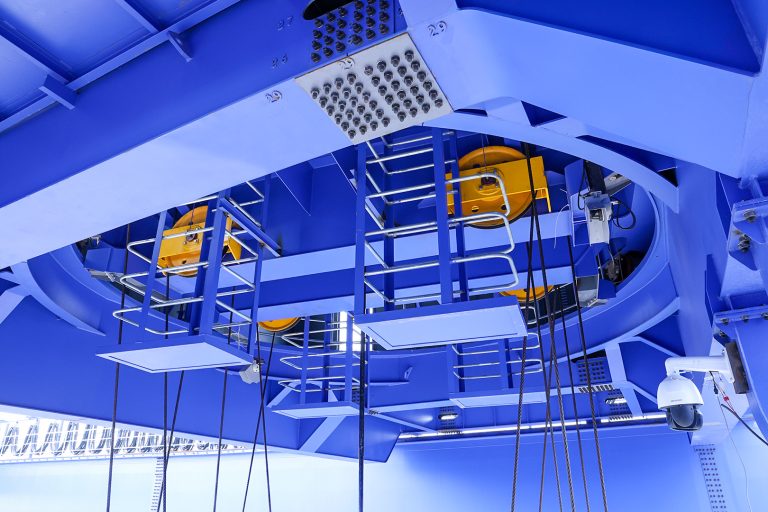
    Henan Mine Crane lifting equipment
    Project planning notes

    Key points for this crane project.

    1. What Is an RMG Crane?
    2. Step 1 – Define Operational Requirements
    3. Step 2 – Key Technical Parameters to Evaluate
    Read the technical guide

    What Is an RMG Crane?

    Definition

    Simply put, a rail-mounted gantry crane (RMG) is a stacking device that runs along a fixed track and is specially designed for container yards. Its gantry structure spans the entire container area, relying on the ground to realize the longitudinal movement of the paved rails, the trolley with the spreader in the main girder transverse movement, to complete the storage, loading and unloading of containers, transshipment operations.

    Different from ordinary gantry cranes, RMG is tailor-made for high-frequency and high-density container operations, and can be adapted to 24-hour continuous operation of the terminal conditions, and is also the core of the main equipment of the automated container terminal.

    Typical Applications

    The core application scenarios of RMG focus on the whole chain of container handling. The most mainstream are container terminals in seaports and river ports, which are responsible for container storage from the front of the terminal to the yard, as well as the loading and unloading of container trucks.

    Railroad intermodal yard is also an important application scenario of RMG, which can cross both railroad lines and container trucks, completing the direct transfer of containers between trains and container trucks without the need for secondary backhauling, and significantly improving the efficiency of intermodal transportation.

    Automated container yards and inland container depots also commonly use RMG equipment. Its fixed track operation mode can realize precise positioning, which is perfectly suited for automated and unmanned operation requirements.

    Step 1 – Define Operational Requirements

    The first step in the selection process is never to look at the parameters of the equipment, but rather to understand the operational requirements of your terminal. The selection of all parameters should be centered on your actual operational scenarios, and there is no point in separating the parameters from the requirements.

    Throughput Requirements

    Calculate the annual TEU handling capacity of the terminal, which is the basis of all the selection. More critical is the peak hour container handling efficiency, such as peak season shipping schedule concentration, peak throughput before and after holidays, cannot be calculated only according to the average annual volume.

    I have seen a lot of terminals, according to the average throughput selected equipment, the peak season will be blocked, container trucks in front of the yard in a row of several kilometers, is because it did not take into account the peak demand. When selecting the model, we should leave enough margin for peak operation, otherwise, the equipment will be running at full capacity for a long time, which will not only fail to improve the efficiency, but also accelerate the wear and tear of the parts.

    Yard Layout and Block Configuration

    To clarify the planning of the yard's box area, how many rows of containers in each box area, the number of columns directly determines the span of the equipment. It is also necessary to plan the location and width of the truck lanes, whether it is a single lane or double lanes, and whether the lanes should cross the tracks or not, all of which will affect the gauge and structural design of the RMG.

    If it is a railroad intermodal terminal, but also consider the demand for railroad line connection, RMG need to cross several railroad lines, train loading and unloading operation range, all of these should be determined before the selection of the type, otherwise the equipment is done only to find that the span is not enough, it cannot be used at all.

    Stacking Height

    Stacking height is the core parameter that determines the utilization rate of the stacking yard, and the industry often uses such expressions as 1-over-4, 1-over-5, 1-over-6. Many people will get confused when they first contact with it. 1-over-4 means that the spreader can cross the 5th layer of containers and grab the 4th layer of boxes, which can actually stack 5 layers.

    The choice of stack height, the core depends on your land costs. The tighter the land, the higher the land price of the port, the more suitable to choose the configuration of the high stacking layer, maximize the use of vertical space, to enhance the capacity of the yard per unit area. However, the higher the stacking level, the higher the requirements for the lifting height, structural stability and anti-shaking performance of the equipment, so you can't blindly pursue a high stacking level.

    RMG Selection for Container Terminals: Rails, Loads and Transfer Points
    Lifting equipment and application context

    Step 2 – Key Technical Parameters to Evaluate

    After figuring out the operational requirements, you can look at the core technical parameters of the equipment. Each parameter should be adapted to your operation scenario, not the bigger the better, not the faster the better, adaptation is the key.

    Span and Rail Gauge

    Span is the total length of both ends of the RMG main girder, which should completely cover the width of your box area, the width of the collector truck lane, and also leave enough safety margin. Rail Gauge is the center distance between two running rails, which directly determines the structural stability of the gantry, the wider the rail gauge, the more stable the operation of the equipment, but also the higher the requirements of civil construction.

    Also focus on accounting for the headroom height and width of the collector truck lane, to ensure that the collector truck can drive smoothly under the gantry, and will not interfere with the legs and beams. Many terminals have stepped on this pit, the width of the lane is left narrow, the trucks can't get in, and they can only re-adjust the layout of the box area, which delays the schedule.

    Lifting Capacity

    If your terminal has the demand of double box spreader, that is to say, two 20-foot containers can be lifted at one time, the lifting capacity has to be doubled directly, and the situation of double box partial load has to be considered, the structural requirements of the trolley and the gantry will be higher. Henan Mine Crane's RMG equipment will customize the lifting mechanism and spreader configuration according to the actual box ratio of the terminal, avoiding the problem of “big horse pulling a small car” or “small horse pulling a big car”.

    Lifting Height

    Lifting height should match the number of stacking layers, in addition to meet the highest stacking layer lifting needs, but also leave enough safety margin. For example, when the spreader rises with the box, it should keep a safe distance from the bottom of the main girder to avoid collision; it should also consider the future expansion of the yard, whether to increase the number of stacked layers or not, and reserve the lifting height in advance, so that you don't have to replace the equipment later.

    Travel Speed & Hoisting Speed

    Traveling speed includes hoisting speed, small car running speed, big car running speed, not the faster the better. If the speed is too fast, the container will shake more seriously, especially in the high stacking operation, the spreader will be more difficult to align, which affects the efficiency; if the speed is too slow, it will not be able to keep up with the loading and unloading rhythm of the terminal.

    Conventional terminal operations, the lifting speed to match the stacking height, the speed of large and small vehicles, to match the length and width of the box area, as well as the peak hour loading and unloading capacity. 24-hour continuous operation of the automated terminal, but also consider the stability of the speed, cannot fluctuate, affecting the life of the equipment.

    Duty Classification

    Duty Classification is the most neglected but critical parameter in RMG selection. Container terminal RMG, basically 24 hours of continuous operation, high-frequency start and stop, forward and reverse, the industry's common FEM standards, generally to choose A7 or A8 duty class.

    If you choose a low level of equipment, even if the lifting capacity and span are enough, within a few years there will be structural fatigue, serious wear and tear of components, and maintenance costs will rise sharply. For export projects, pay attention to local ISO and CMAA standards to ensure that the working class of the equipment meets local regulatory requirements.

    Step 3 – Structural and Civil Considerations

    This is the easiest part of RMG procurement. Many people only focus on the purchase price of the equipment, but ignore the cost of civil construction. If the wheel pressure is calculated incorrectly, the subsequent cost of foundation rectification may be more expensive than the equipment itself.

    Wheel Loads and Rail Design

    Wheel pressure is the maximum pressure of each wheel on the track and foundation when the equipment is running. When calculating the wheel pressure, the full load weight, wind load, dynamic load and partial load should be included, not only the static load.

    The maximum wheel pressure directly determines the selection of rails and the design of rail bearing beams. The larger the wheel pressure is, the higher the requirements for civil construction and the cost of civil construction will be doubled. When Henan Mine Crane designs RMG, it will optimize the structure to reduce the wheel pressure as much as possible under the premise of guaranteeing the strength, helping the terminal to save the civil construction cost.

    Also pay attention to the alignment tolerance of the rail, the straightness of the rail, height difference, gauge deviation, there are strict standards, tolerance exceeding the standard, the equipment operation will be gnawing the rail, the wheel wear too fast, and serious will lead to the deformation of the gantry.

    Foundation Requirements

    The foundation core of RMG is rail bearing beam, and the cross-section and reinforcement of concrete rail bearing beam should be designed according to the maximum wheel pressure and soil bearing capacity. Especially for coastal and inland river soft ground, it is necessary to do foundation reinforcement to control the settlement, otherwise, within a few years, the bearing beam will have uneven settlement, track deflection, and the equipment can't run normally at all.

    Wind Load Design

    Most of the ports are located along the coast and rivers, and the wind load is a key factor to be considered. To separate the accounting of the working state and non-working state of the wind load, the working state to ensure that the equipment in the specified wind speed can operate normally, non-working state to be able to withstand typhoons, strong convective weather.

    The supporting storm anchoring device and hydraulic rail clamp must be matched with the wind load design of the equipment, and in coastal ports where typhoons are common, windproof cable and emergency anchorages should also be installed, so that the equipment can be firmly fixed on the rail in extreme weather to avoid being blown or tipped by the wind.

    RMG Selection for Container Terminals: Rails, Loads and Transfer Points
    Crane arrangement for technical discussion

    Step 4 – Automation and Smart Terminal Integration

    Nowadays, domestic terminals are promoting smart and automation transformation, the automation compatibility of RMG directly determines the future upgrade space of the terminal, and must be considered in advance when selecting the model, and not only look at the immediate needs of manual operation.

    Manual vs Semi-Automated vs Fully Automated RMG

    The choice of the three modes depends on the scale of the terminal, work volume and labor cost. Manual RMG with cab is suitable for small and medium-sized terminals, inland ports with small operation volume, low investment and flexible operation.

    Semi-automated remote operation mode, suitable for medium and large-scale terminals, an operator can control multiple equipments at the same time in the central control room, which significantly reduces the number of operators on site, lowers the labor cost, and also improves the working environment of the operators.

    Fully automated unmanned RMG, suitable for large hub ports and fully automated terminals, can be fully connected to the terminal automation system to realize unmanned stacking, loading and unloading operations, with more stable operating efficiency and 24-hour continuous operation, which is also the development trend of future ports.

    Integration with Terminal Operating System (TOS)

    Whether semi-automated or fully automated, RMG equipment must be able to seamlessly integrate with the terminal's TOS system (Terminal Operating System). When selecting the model, it is necessary to set up a good data interface protocol to ensure that the equipment can realize real-time data interaction, container positioning and tracking, and automatic issuance of operating instructions with the TOS system.

    Many terminals have stepped on this pit, bought equipment only to find that, and they are using the TOS system is not compatible with the later change the interface, change the control system, spent hundreds of thousands of dollars, but also delayed the automation of the transformation of the schedule. Henan Mine Crane's RMG equipment, reserved for the general system interface, can be adapted to the mainstream TOS system on the market, without the need for secondary transformation.

    Anti-Collision and Safety Systems

    The core of automated operation is the safety protection system. The laser positioning system can realize millimeter-level positioning accuracy to ensure that the spreader is accurately aligned with the container; the obstacle detection radar can identify the collector trucks and people under the gantry, and automatically slow down or stop to avoid collision accidents.

    There is also a gantry skew correction system, which can monitor the synchronization of the operation of the large vehicle in real time, avoiding the distortion of the gantry and the gnawing of the rail caused by the unsynchronization of the wheels on both sides; and a spreader anti-shaking system, which can reduce the shaking of the containers, enhance the efficiency of the alignment, and avoid the collision of the containers.

    RMG vs RTG – Which Is Better for Your Terminal?

    Many terminals will be entangled between RMG and RTG (tire-type gantry crane) when selecting the model, in fact, there is no absolute good or bad, only the difference between the adapted scenarios. I use a table to make the core differences clear, you will be able to choose according to their own terminal situation.

    After looking at the differences it is clear that these scenarios are preferred RMG: large hub port with high annual throughput, planning to do automation/semi-automation transformation of terminals, railroad intermodal terminals, high land costs require high-density storage yards. In these scenarios, the long-term operational efficiency and cost advantage of RMG will be much more obvious than RTG.

    Comparison FactorRMG (Rail-Mounted Gantry Crane)RTG (Rubber-Tyred Gantry Crane)
    MobilityRuns along fixed rails with a fixed movement rangeTire-driven, freely movable for cross-block operations
    Automation ReadinessHigh, fixed rails enable precise positioning and are suitable for unmanned operationsModerate, limited tire positioning accuracy and high automation transformation cost
    Infrastructure CostHigher, requiring the pouring of rail-bearing beams and laying of steel railsLower, only needing a flat and hardened site without rails
    Energy PerformanceElectrically driven, low energy consumption and low operating costMostly diesel-driven with high energy consumption; electric drive is also optional but flexibility is limited by cables
    Yard Layout FlexibilityLimited, can only operate along fixed rails, and yard block layout is difficult to adjust after fixationHigh, can adjust operation blocks at any time to adapt to temporary yards and irregular layouts

    Lifecycle Cost Analysis

    When purchasing RMG, you can't just look at the purchase price of the equipment, but also the cost of the whole life cycle. Many terminals choose cheap equipment in order to save hundreds of thousands of dollars at the initial stage, but as a result, the maintenance, energy consumption and labor costs in the later stage are so high that the whole cycle costs more money.

    Initial Capital Investment

    Initial capital investment mainly includes three parts: equipment purchase price, track installation cost, civil engineering cost. rmg initial investment is really higher than rtg, mainly in civil engineering and track, especially in soft ground terminal, foundation reinforcement and track bearing beam cost will account for a small proportion.

    However, it is important to note that the initial investment is one-time, not only focus on this figure, but also with the subsequent operating costs for more than ten years.

    Operating Costs

    Energy consumption is the most important part of operating costs, as RMG is powered by electricity, the cost of electricity is much lower than the cost of diesel fuel for RTG, especially nowadays when the oil price fluctuates a lot, in the long run, the advantage of electricity cost will become more and more obvious.

    As for the maintenance cost, RMG's track type operation, the wear and tear of wheels and parts is much smaller than tire type, the daily maintenance only needs to check the track and lubricate the parts regularly, so the maintenance frequency and cost is much lower than RTG, and the cost of spare parts, RMG's structure is much more stable, the frequency of replacement of wearing parts is low, so it can save a lot of money in the long run.

    Long-Term ROI

    Third, energy consumption and maintenance cost savings, after more than ten years of operation, can save a considerable amount of money.

    For the same scale of yard, the whole life cycle cost of RMG will be lower than that of RTG after 5-6 years of operation, and the longer the operation time, the more obvious the cost advantage.

    Safety Features to Prioritize

    The operation of port terminals is a 24-hour continuous operation, the safety features of RMG are directly related to the safety of personnel, equipment and cargo, these core features should never be omitted when selecting the model.

    Dual braking system is a must, the lifting mechanism and the big car running mechanism, should be equipped with redundant dual braking system, even if one set of braking failure, the other set of timely braking equipment, to avoid slipping hooks, sliding car accidents.

    Anti-shaking control cannot be less, especially high stacking operations, container shaking not only affects the efficiency of the alignment, but also may occur crashing boxes, falling boxes of accidents, a good anti-shaking system that can control the container shaking amplitude in a very small range, to enhance the safety of operations.

    The whole line of emergency stop system, equipment, cab, center control room, gantry ends, trolley ends, should be set up emergency stop button, encountered an emergency situation, can be pressed in any position emergency stop, cut off the power of the equipment.

    Storm protection devices, coastal ports must focus on, in addition to conventional rail clamps, but also equipped with storm anchoring devices, wind speed monitoring system, the wind speed exceeds the safety threshold, can be automatically alarmed, to remind the operator to stop the operation of the equipment will be anchored fixed.

    There is also a real-time monitoring system for the equipment, which can monitor the operating status, structural stress, and wear and tear of the components, so as to detect potential faults in advance, avoid equipment operation with disease, and minimize unexpected downtime.

    Maintenance Strategy for RMG Cranes

    The service life of RMG is not only related to the quality of the equipment itself, but also directly related to the maintenance strategy. A comprehensive maintenance program can extend the service life of the equipment by 3-5 years and significantly reduce the downtime rate.

    Preventive Maintenance Planning

    According to the intensity of the equipment, to develop a preventive maintenance program, not to wait for the equipment broken and then repair. Daily pre-shift inspection, weekly lubrication and maintenance, monthly component inspection, and annual comprehensive flaw detection should be formed into a fixed process, and the responsibility should be assigned to the person.

    Henan Mine Crane customizes a maintenance manual for each RMG project, specifying the maintenance cycle and standards for each component, and also provides regular inspection services to help the terminal nip any hidden faults in the bud.

    Rail Alignment Inspection

    Rail is the foundation of RMG operation. Regular inspection is required to check the straightness, height difference, gauge deviation of the rail, and the tightness of the fixed pressure plate. Especially for the terminals with soft ground, the rail settlement inspection should be done once every half a year, and the uneven settlement should be adjusted and rectified in time to avoid the equipment from chewing the rails and deformation of the gantry.

    Structural Fatigue Monitoring

    RMG is a 24-hour continuous high-frequency operation, the steel structure will be fatigue damage, especially the main beams, legs of the weld position, should be done once a year ultrasonic flaw detection, cracks, defects found, timely repair. For high load equipment in large hub ports, it is recommended to install online structural stress monitoring system to monitor the status of the steel structure in real time.

    Electrical and PLC Diagnostics

    The electrical system and PLC program are the core of RMG automation. It is necessary to regularly check the insulation of the electrical wiring, the tightness of the terminals, and the running status of the PLC program, and back up the program parameters in order to avoid system failures that may lead to equipment downtime.

    Spare Parts Inventory Planning

    According to the wear and tear cycle of the equipment components, we should establish a reasonable spare parts inventory, such as wheels, bearings, wire rope, brakes and other wear parts, we should have a safety stock, to avoid the damage of components, because of the waiting for spare parts to cause equipment downtime for a long period of time, which affects the operation of the terminal.

    Common Procurement Mistakes to Avoid

    The first pit, underestimate the impact of wheel pressure on civil construction. Many people only look at the equipment offer, ignoring the wheel pressure, the result is that the wheel pressure exceeds the standard, doubling the cost of civil construction, and even foundation settlement, equipment cannot run the problem, the final loss is not worth it.

    The second pit, ignoring automation compatibility. Even if you don't do automation now, you have to reserve space for automation upgrades, or else when you want to remodel later, the control system of the equipment, the positioning system is not compatible, and you can only change the equipment, which is a huge loss.

    The third pit, do not consider the future expansion planning. Terminal throughput is a year-on-year growth, when selecting the type, to the next 3-5 years of development to leave enough margin, such as stacking height, lifting capacity, level of work, or with a three or five years, the equipment cannot keep up with the growth of throughput, can only be re-procured.

    The fourth pit, ignoring the wind requirements. Especially coastal ports, typhoons, strong convective weather, wind design is not up to standard, storm protection device configuration is insufficient, extreme weather is easy to equipment dumping, damage to major accidents.

    RMG Crane Selection Checklist (For RFQ Preparation)

    • Rated lifting capacity (including single box, double box demand)
    • Equipment span, gauge, number of stacking layers, lifting height
    • Maximum wheel pressure data, rail specification requirements
    • Operating environment (coastal/inland, wind speed requirements, corrosion protection grade)
    • System interface requirements (TOS system interface protocol)

    Frequently Asked Questions

    How many containers can an RMG stack?

    The mainstream RMG models are routinely configured as 1-over-4 to 1-over-6, i.e. they can stack 5 to 7 layers of containers. In order to improve the utilization rate of the stacking yard, large hub ports will use 1-over-7 or even higher configurations, which can stack 8 layers of containers. The specific number of layers to be stacked should be determined by the cost of land and operational requirements of the terminal.

    What is the difference between RMG and RTG?

    The core difference between RMG and RTG is in the operation mode and adaptable scenarios: RMG runs along the fixed track, high positioning accuracy, adaptable to automation, low energy consumption and maintenance cost, but the initial investment in infrastructure is high, and the flexibility is limited; RTG runs on tires, high flexibility, able to operate across the container area, low initial investment, but high energy consumption and maintenance cost, poor adaptability to automation.

    Are RMG cranes suitable for automated terminals?

    RMG cranes are suitable for automated terminals because of their fixed track operation mode, millimeter-level accurate positioning, and core equipment for automated container terminals. Nowadays, all the mainstream fully automated terminals in the world adopt RMG as their yard stacking equipments, which can perfectly connect with the TOS system and ECS system of the terminal to realize the unmanned operation of the whole process.

    How long does an RMG crane last?

    Under the premise of normal use and standardized maintenance, the service life of RMG can reach 20-25 years. If it is a large hub port with extremely high operational intensity, it can be used for more than 20 years with good preventive maintenance. The service life of the equipment depends on the design of the steel structure, the manufacturing process, and the later maintenance.

    Discuss the crane arrangement for your project.

    The rail layout fixes an important part of an RMG's working envelope. Coordinate stacking positions, transfer interfaces and runway information before reviewing the crane's dimensional and operating proposal. Share the load, available drawings, working cycle and site conditions with Henan Mine Crane so the required configuration and supply boundary can be discussed.

    Related crane configurations

    Rail-Mounted Gantry (RMG)

    View product parameters
    Lifting capacity: 35 t, 40.5 t, 50 tSpan: 18 – 35 mLifting height: 12.3 – 21 m

    Use an RMG for container transfer along a fixed rail layout. Select the lifting arrangement, yard coverage and positioning controls from the container flow and stacking requirements.

    Container Overhead Crane

    View product parameters
    Lifting capacity: 30-65 tSpan: 18-35 mLifting height: 8 – 20 m

    Transfer containers within a defined overhead runway area using a double-girder bridge and matched spreader. Container size, working clearance and the handling sequence determine the arrangement.

    Updated 2026 · Henan Mine Crane
  • Choosing an Overhead Crane Supplier: Clarify Handover and Support

    Choosing an Overhead Crane Supplier: Clarify Handover and Support

    Technical guide

    Choosing an Overhead Crane Supplier: Clarify Handover and Support

    A crane offer should describe how the equipment will be installed, accepted and supported at the site. Compare those responsibilities alongside the technical arrangement to identify gaps before the order is placed.

    Henan Mine CraneTechnical guide · Updated 2026Crane selection, project scope and operating requirements
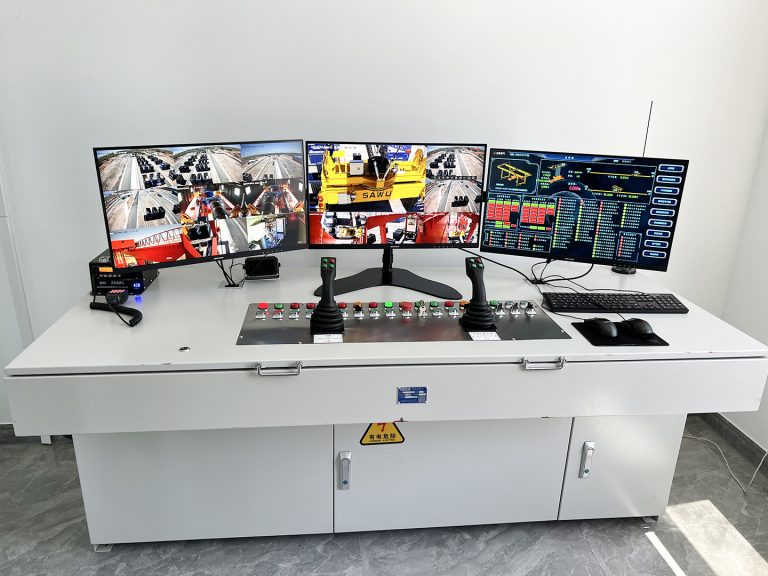
    Henan Mine Crane Multi Support Double Girder Underhung Crane
    Henan Mine Crane Multi Support Double Girder Underhung Crane
    Project planning notes

    Key points for this crane project.

    1. Why Choosing the Right Overhead Crane Supplier
    2. Start by Understanding Your Own Project Requirements
    3. Is the Supplier a Real Manufacturer or Just a
    Read the technical guide

    Why Choosing the Right Overhead Crane Supplier Matters

    Product quality affects safety and service life

    Overhead Crane is the core special equipment used in factories with high frequency, and the overall structural stability and safety redundancy are totally dependent on the supplier's design and manufacturing expertise. Formal production processes strictly control plate selection, welding processes, component assembly accuracy and load testing of the entire machine.

    Manufacturers with loose process control are prone to problems such as deformation of main beams, cracked welds and poor electrical contact. These hidden problems will not be exposed immediately, but will continue to be magnified during long-term heavy-duty operation, which not only shortens the service life of the equipment, but also brings great safety risks on site.

    Engineering capability affects crane suitability

    Ordinary suppliers will only quote directly according to the parameters given by the customer, without considering the problem of on-site working condition suitability. Professional overhead crane manufacturer will combine the plant structure, operating frequency, load type, fine-tune the equipment configuration, to give the most suitable solution for the site.

    Many projects appear “parameters up to standard but the equipment is not good to use” problem, the root cause is the program is not targeted. A good engineering team will not recommend low-priced, low-compatibility models, but rather prioritize equipment adaptability and long-term operational stability.

    Delivery capability affects project progress

    Industrial engineering projects have a fixed schedule nodes, Crane as the core supporting equipment, delivery delays will directly affect the plant equipment into the field, production line commissioning and overall production progress.

    Insufficient production capacity, unstable supply chain suppliers are prone to production delays, delivery delays. In export projects, shipment delays can also lead to additional problems such as changes in shipping schedules, customs clearance and other problems, resulting in unnecessary economic losses.

    Service support affects long-term operation

    Overhead Crane's life cycle is generally more than ten years, the later replacement of parts, troubleshooting, regular maintenance are inseparable from the manufacturer's support. Suppliers that lack a perfect service system basically have no follow-up technical docking after the equipment is delivered.

    Reliable after-sales team can quickly respond to fault consulting, provide parts supply, guide on-site maintenance, minimize equipment downtime, reduce the factory long-term operation and maintenance pressure and maintenance costs.

    Start by Understanding Your Own Project Requirements

    Before connecting with any overhead crane buying guide and supplier, first sorting out your own project requirements is the basis for avoiding selection mistakes and eliminating ineffective price comparison. After the requirements are clear, you can accurately judge whether the supplier's solution is professional and suitable.

    Confirm the crane type

    Different operating scenarios, the Overhead Crane model is completely different, there is no universal universal model.

    Common types include Single Girder Overhead Crane, Double Girder Overhead Crane, Suspension Crane, Overhead Crane, and all kinds of special cranes for special working conditions.

    Single girder models are lightweight and cost-effective, and are more suitable for light loads, low-frequency warehouses and general processing workshops. Double girder models have stronger load carrying capacity and better stability, and are suitable for heavy manufacturing and high-frequency heavy-duty operation. Suspended and top-rail models are mostly used in sites with limited floor heights and special rail installation conditions.

    Confirm the key technical parameters

    The basic technical parameters are the core basis for equipment selection, which need to be accurately determined in combination with daily operation scenarios, and cannot be arbitrarily applied to standard parameters. The core parameters include rated lifting capacity, equipment span, effective lifting height, running length of the trolley, working level, control mode and on-site power supply conditions.

    Among them, the working level is the most easily overlooked key parameter. Production lines with frequent operations must be matched with high working level equipment, otherwise the equipment will be overloaded for a long time, accelerating the aging of components and increasing the failure rate.

    Clarify the application and environment

    The environment in which the equipment is used directly determines the anticorrosion, dustproof, explosion-proof, high temperature resistant and other special configurations. Indoor workshop, open yard, high temperature workshop, dust workshop, corrosive chemical plant area, explosion-proof high-risk areas, corresponding to the equipment design standards are completely different.

    At the same time, it is necessary to clarify the daily lifting frequency and load type, whether it is uniform light load, intermittent heavy load, or continuous heavy duty operation. These working conditions are important references for suppliers to optimize their solutions and adjust their configurations.

    Define service expectations

    The service requirements of cross-border procurement and local procurement are very different. Most of the overseas projects require manufacturers to provide English technical information, remote installation guidance, equipment commissioning, operator training and other ancillary services.

    Defining service expectations in advance can avoid the problems of no one guiding the installation, no debugging, and incomplete information that prevent acceptance after the equipment arrives, and ensure the project to go into production smoothly.

    Is the Supplier a Real Manufacturer or Just a Trading Company?

    When doing overhead crane procurement, distinguishing whether the partner is a source factory or just a trading company is an important step in screening reliable suppliers, and the difference between the two project landing ability is very obvious.

    Why the difference matters

    Entity manufacturers have independent research and development, design, production, quality inspection of the whole process, the structure of the equipment, process standards, quality control has absolute control. When encountering drawing modification, parameter adjustment, non-standard customization needs, the response speed is faster, the program landing more accurate.

    Pure trading companies do not have production authority, all the equipment outsourcing procurement, cannot control the production process and quality standards, the ability to customize the transformation is weak, encountering quality problems are prone to shirking the responsibility of many parties.

    How to verify

    You can take the initiative to ask the supplier for the real factory introduction, workshop production video, processing equipment list and production line information. At the same time, you can verify the enterprise registration information, export customs records over the years, overseas landing project cases, to confirm its real production and export capabilities.

    Formal source manufacturers will take the initiative to show the production strength, support video factory, field inspection, complete and transparent information can be checked.

    When a trading company may still be acceptable

    Not all traders cannot cooperate. Part of the deep-rooted lifting equipment export trading company, has a long-term fixed cooperation with high-quality source factories, project coordination capabilities, documentation, logistics, docking, multi-category supporting procurement services more complete.

    These traders are suitable for standard model procurement projects, but special working conditions, non-standard customized, large-scale heavy-duty projects, still give priority to the source manufacturer.

    Evaluate the Supplier’s Engineering and Technical Strength

    Overhead Cranes are customized equipment, and technical strength is far more important than price. A reliable reliable overhead crane supplier 's core strengths are reflected in its ability to adapt to working conditions and optimize solutions.

    Ability to recommend the right crane solution

    Professional technical team will not directly quote according to customer parameters, will first fully understand the project conditions, plant conditions, operational requirements, and then recommend suitable models and configurations.

    For example, the same 10-ton Crane, low-frequency warehouse operations and 24-hour non-stop production line operations, corresponding to the level of work, electronic control configuration, protection standards are completely different. Accurate program matching can effectively avoid configuration waste or equipment underperformance.

    Ability to review drawings and workshop conditions

    High-quality suppliers will take the initiative to review the drawings of the customer's workshop, checking key data such as the headroom height of the workshop, the loading conditions of the traveling beams, the specifications of the rails, and the spacing between installations.

    Through on-site data checking, problems such as equipment installation interference, wheel pressure mismatch and insufficient lifting height can be avoided in advance, thus eliminating the procurement risk of equipment being unable to be installed or used after arrival.

    Ability to handle customized requirements

    Many industrial projects have special working condition requirements and need non-standard customized transformation. Mature manufacturers can customize special spreader, cab control system, wireless remote control, frequency control, sway control device, explosion-proof structure and high-temperature resistant structure.

    Rich experience in customization can be adapted to the special requirements of various industries such as steel, chemical, prefabricated components, ports, heavy manufacturing, etc. to meet the project standards of different regions.

    Ability to provide complete technical documents

    Export projects and large-scale project acceptance require strict requirements for technical documents. Regular manufacturers can provide complete equipment assembly drawings, wheel pressure parameter tables, electrical schematic diagrams, technical parameter manuals, operation and maintenance manuals and a full set of factory inspection reports.

    Complete and standardized English technical documents are the necessary conditions for equipment customs clearance, site acceptance and annual inspection, as well as the basic guarantee for overseas projects.

    Review Manufacturing Capability and Quality Control

    The final quality of the equipment depends on the manufacturer's production capability and quality control system, which is the core standard for judging the hard power of the bridge crane supplier.

    Steel structure production capability

    Steel structure is the main skeleton of Overhead Crane, which directly determines the stability and service life of the equipment. Professional manufacturers have a full set of production lines for precision cutting, standardized welding, precision machining, overall assembly and automatic painting.

    Each process has strict technical standards to ensure that the core structure such as main girder and end girder have accurate dimensions and stable structure, and the surface anticorrosion coating is even and durable, which is suitable for long-term outdoor and workshop heavy-duty operation.

    Key component sourcing

    Motor, reducer, brake, electrical components, bearings, wheels and other core components determine the operating failure rate and operation and maintenance costs of the equipment. Reliable manufacturers will use the industry mainstream well-known brand parts, stable performance and strong versatility.

    Most of the low-priced solutions will replace the parts with niche brands, which is not a problem in the short term, but prone to frequent failures in the long term, and it is difficult to match the replacement parts in the overseas market, which greatly increases the difficulty of operation and maintenance.

    Quality inspection process

    Regular manufacturers carry out a full process of quality inspection, from the verification of raw materials into the factory, non-destructive testing of welds, dimensional accuracy calibration, to the electrical system testing, no-load test run, full-load load test, layer by layer.

    Each piece of equipment will complete a full set of tests before leaving the factory to ensure that all parameters are up to standard, to prevent unqualified equipment from leaving the factory, to ensure the safety of site operation.

    Quality management system

    Perfect internal QC standard can guarantee the uniform quality of each factory equipment and avoid batch quality deviation.

    Check Experience in Similar Overhead Crane Projects

    The lifting conditions in different industries are very different, and suppliers with experience in similar projects know more about the pain points of the scene and the requirements of adaptation, and can effectively avoid all kinds of hidden dangers on the ground.

    Industry experience matters

    High-quality suppliers will accumulate a wealth of cross-industry project experience, covering steel mills, machine shops, warehouses, prefabricated component yards, paper mills, heavy manufacturing plants and other types of scenes.

    They are familiar with the work intensity, environmental characteristics and equipment requirements of different industries, and can accurately match work levels, protection configurations and functional modules, resulting in a higher degree of program suitability.

    Ask for similar project references

    Before purchasing, you can take the initiative to ask for similar project references in the same tonnage, span, working level and export area. Targeted reference cases are more valuable than general publicity materials.

    Manufacturers with a large number of similar overseas project experience are familiar with the local access standards, acceptance requirements and customs clearance data specifications, which can significantly reduce the risk of project landing.

    Why case studies matter

    Real project cases, on-site scenes and completion videos are the most intuitive proof of a manufacturer's delivery capability. It can visually verify whether the manufacturer has the real design, production, delivery and after-sales capability, and avoid being misled by false propaganda.

    Evaluate Certifications and Compliance Capability

    Company and product certifications

    For different overseas markets, corresponding access certificates need to be matched, including CE, EAC, FEM and other international standard certificates, as well as exclusive local access requirements in some regions.

    All qualification certificates should be real and verifiable, within the validity period, and be able to be used for customs clearance and project acceptance, so as to avoid the use of expired or forged certificates that may lead to project obstruction.

    Export document capability

    A full set of standardized English documents can be perfectly adapted to the requirements of overseas customs clearance and owner's acceptance, avoiding all kinds of problems caused by missing documents and format inconsistency.

    Why this should be checked early

    Many cross-border procurement risks occur at the later stage of the project. If you do not check the qualification and document capability in the early stage, and find out that the information is incomplete and the qualification does not match after the equipment arrives at the port, you will incur high demurrage costs, or even lead to the equipment not being able to be returned for customs clearance, which will result in a huge economic loss.

    Compare Quotations the Right Way

    Comparing prices is a necessary part of procurement, but simply comparing the total price is the most common procurement mistake. The price range, configuration standard and service content of different suppliers vary greatly, and low price does not mean high cost performance.

    Do not compare price alone

    Far below the average price of the industry offer, there are basically configuration shrinkage problems, such as thinning plate thickness, replacement of miscellaneous accessories, simplify the anti-corrosion process, delete the safety configuration.

    This kind of equipment has low short-term procurement cost, but high failure rate, large operation and maintenance cost, more downtime loss, long-term comprehensive cost is much higher than the regular configuration equipment.

    Check what is included

    Carefully check the details of the offer to confirm whether the offer includes the main steel structure, hoist trolley, a full set of electrical systems, conductive systems, rails, installation supplies, spare parts and equipment commissioning services.

    Many low-priced quotes include only the bare equipment, with tracks, electrical fittings and commissioning services at extra cost, resulting in a much higher total price than expected.

    Review component brands carefully

    The brand and model of core components directly determine the stability and service life of the equipment. Be sure to clarify the brands and specific models of motors, gearboxes, brakes, and electrical components in the offer and contract to avoid manufacturers from stealing and replacing low-cost parts when delivering.

    Confirm trade terms

    Confirm trade terms in advance, confirm whether it is EXW, FOB, CIF or DDP delivery mode, clearly delineate the responsible party and cost scope of factory shipment, ocean transportation, customs clearance and door-to-door delivery, and eliminate invisible charges.

    Check Delivery Time and Project Execution Ability

    Production lead time

    Confirm the standard production lead time in advance, and check whether the capacity of the manufacturer can match your project lead time requirements. The production lead time for large-scale heavy-duty and non-standard customized equipments is even longer, so you need to reserve sufficient production time in advance to avoid delays.

    Packaging and shipping experience

    Packaging and shipping of export lifting equipment has strict standards, frame packaging, rust protection, fixed reinforcement have standard requirements. Professional manufacturers are familiar with the packaging standards for full container shipment and bulk shipment, which can avoid the problems of rust, deformation and damage of parts during the shipping process.

    Project coordination ability

    High-quality suppliers will follow up the progress of the project, synchronize the progress of drawing review, production progress, quality control progress and shipment plan in a timely manner. They will take the initiative to communicate and coordinate with each other to ensure that the project progresses steadily without the need for customers to repeatedly follow up and urge them.

    Evaluate Communication and Response Speed

    Cross-border procurement has a long cycle and complicated details, so the communication efficiency and professionalism of suppliers directly affects the whole project's promotion experience and landing effect.

    Fast and professional communication builds confidence

    Reliable partners will respond to inquiries in a timely manner and provide clear answers to technical, qualification, delivery, after-sales and other issues. Timely and efficient communication often represents a mature project management system and a professional service team.

    Ability to answer technical questions clearly

    A professional technical team can clearly explain the logic of work condition adaptation, configuration differences, and the reasons for parameter trade-offs, and will not avoid technical details or answer vaguely. Manufacturers who dare to explain technical details transparently are more likely to guarantee the quality of their equipment and the adaptability of their solutions.

    Ability to revise quotations and drawings efficiently

    Customized projects inevitably involve fine-tuning of parameters, modification of drawings and updating of quotations. High-quality suppliers can quickly complete program adjustments, drawing updates and quotation revisions without delaying the pace of project progress.

    Check After-Sales Service and Spare Parts Support

    Overhead Crane is a long-service industrial equipment, perfect after-sales service and spare parts support is the key to the long-term stable operation of the equipment, which is also the core index for screening quality overhead crane manufacturer.

    Installation support options

    For overseas projects, regular manufacturers can provide full online installation guidance, remote commissioning assistance, and if necessary, can arrange engineers to go to the site to supervise the installation and solve the technical problems of overseas installation.

    Commissioning and training

    After the equipment installation is completed, the manufacturer will guide the completion of no-load and full-load full-function test to ensure that the equipment runs up to standard.

    At the same time, we will provide basic training for on-site operators and maintenance personnel, explaining the operation specifications and daily inspection points.

    Warranty termsClearly define in advance the warranty period, warranty coverage, after-sales response mode and time limit, differentiate the scope of free maintenance and free replacement parts under warranty, as well as the charges for man-made damages and wearing parts, and implement all the terms into the contract. Spare parts supportHigh-quality manufacturers are always stocked with various types of wearing parts, electrical parts, brake parts, which can be quickly shipped across the border to shorten the downtime. Important Questions to Ask an Overhead Crane Supplier Before OrderingWhen docking suppliers, through the following core questions, you can quickly screen out the strength of reliable, suitable for the project partners, to avoid procurement risks. Do you have your own production factory or an export trading company?

    What brands are used for the core parts of the equipment? What are the contents included and not included in this quotation?

    How long is the standard production and delivery cycle? Does it provide installation and commissioning guidance and personnel training services? What is the warranty policy and spare parts supply process?

    Common Mistakes Buyers Make When Choosing an Overhead Crane Supplier

    A lot of procurement risk, are from the early one-sided judgment, avoid these common misunderstandings, can greatly improve the procurement success rate.

    Simply low price as the selection criteria, ignoring the configuration differences and quality control standards. Only look at the paper parameters, do not check the technical details and working conditions adaptability, resulting in equipment cannot match the production requirements after landing.

    Do not check the real capacity and production strength of manufacturers, gullible publicity materials. Neglect the ability of after-sales system, equipment delivery failure no one docking.

    Neglect the manufacturer's export qualification and documentation capabilities, resulting in customs clearance and acceptance of obstruction. Failure to specify the main body of installation and commissioning responsibilities in advance, shifting responsibilities to each other after the emergence of problems.

    Discuss the crane arrangement for your project.

    A crane offer should describe how the equipment will be installed, accepted and supported at the site. Compare those responsibilities alongside the technical arrangement to identify gaps before the order is placed. Share the load, available drawings, working cycle and site conditions with Henan Mine Crane so the required configuration and supply boundary can be discussed.

    Related crane configurations

    Multi Support Double Girder Underhung Crane

    View product parameters
    Lifting capacity: 3 – 40 tSpan: 10 – 80 mLifting height: 6 – 30 m

    Use a multi-support double-girder underhung arrangement for wide-span working areas and large components. The building supports, lifting coverage and load distribution are designed together.

    Single-Girder Bridge Crane

    View product parameters
    Lifting capacity: 1–20 tSpan: 7.5–31.5 mLifting height: 6, 9, 12, 18, 24 or 30 m; capacity-dependent

    Use an LDA single-girder bridge and electric hoist for general workshop material handling. Select the lifting capacity, runway geometry and hoist duty around the building and load.

    Updated 2026 · Henan Mine Crane
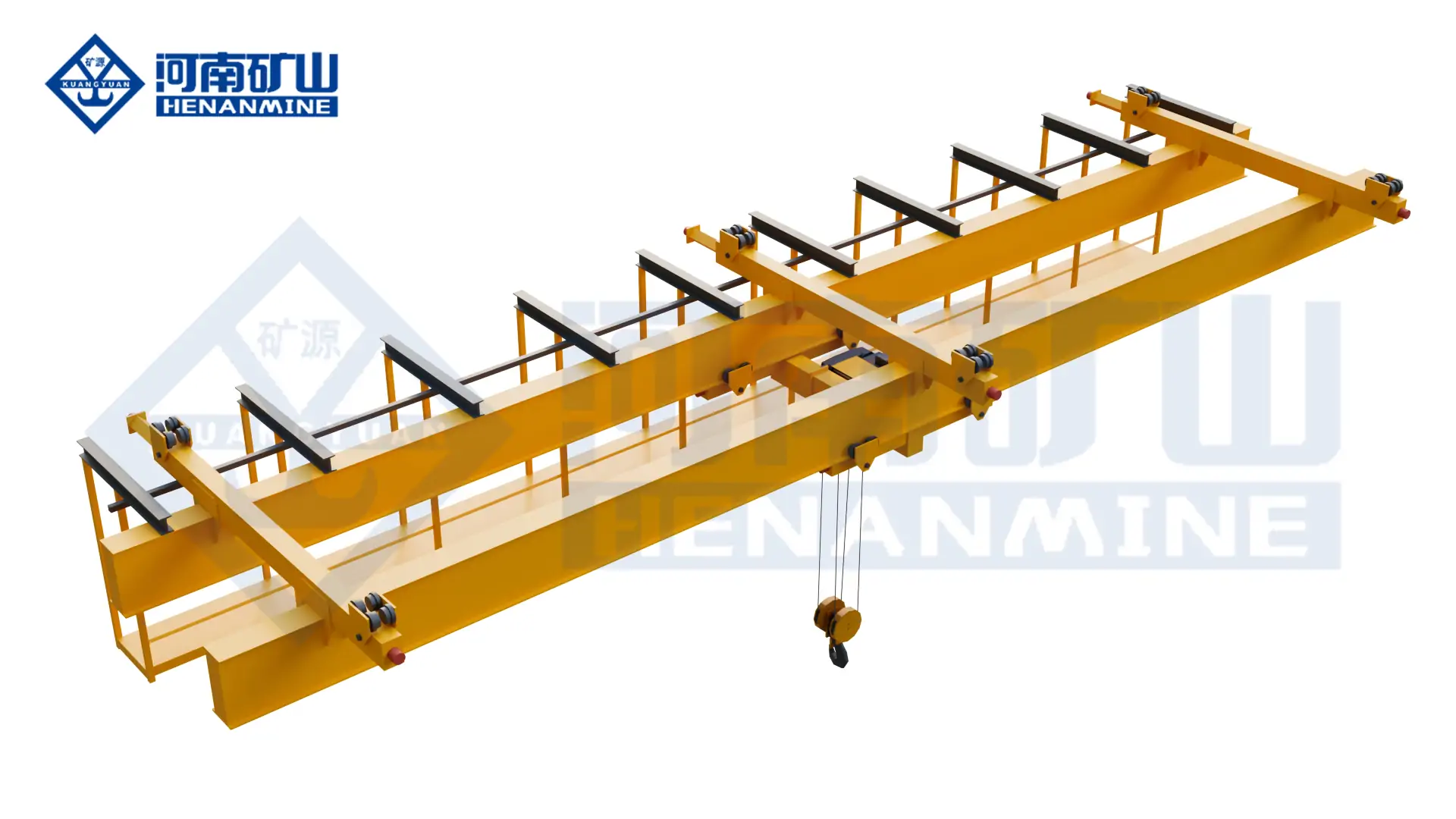
  • Workshop Overhead Cranes: Survey the Bay Before Choosing a Model

    Workshop Overhead Cranes: Survey the Bay Before Choosing a Model

    Technical guide

    Workshop Overhead Cranes: Survey the Bay Before Choosing a Model

    The existing building defines several important selection constraints. Record runway positions, roof clearance, obstructions and handling points so the crane supplier can assess fit before a specific model is fixed.

    Henan Mine CraneTechnical guide · Updated 2026Crane selection, project scope and operating requirements
    Henan Mine Crane Single-Girder Bridge Crane
    Henan Mine Crane Single-Girder Bridge Crane
    Project planning notes

    Key points for this crane project.

    1. Why is it important to choose the right overhead
    2. Start from your workshop conditions
    3. Confirm the key technical parameters before
    Read the technical guide

    Why is it important to choose the right overhead crane?

    Impact on safety and daily operation

    The first thing you need to ensure is safety when choosing the right crane. The lifting operation in the workshop, once the problem is a big deal, light is damage to equipment, heavy is a danger to the safety of personnel.

    A crane that matches the working conditions of the workshop will run smoothly and will not run off, shaking, overloading and other problems. For example, if you choose an ordinary crane for a high-temperature workshop, the electrical components are easy to be baked, which is likely to lead to braking failure, and choose the right high-temperature-resistant overhead crane to avoid this kind of hidden danger.

    On the contrary, the selection of inappropriate, such as heavy load with a light crane, long-term overload operation, wire rope, brake will accelerate the wear and tear, sooner or later to failure, to the daily production of buried safety hazards.

    Impact on production efficiency

    Crane is the core equipment of the workshop material handling, choose the right one can help you save a lot of time, rationalize the production process. For example, the workshop is mainly lifting steel coils, selected with a special spreader crane, than with an ordinary hook lifting, the efficiency can be improved a lot.

    If you choose a small, a crane cannot be much, you have to go back and forth repeatedly; choose a large, slow running equipment, but also occupy space, but slow down the pace of production. The right crane can make the material flow more smoothly, reduce unnecessary handling time, and indirectly improve the overall capacity of the workshop.

    Impact on long-term costs

    Many customers choose cranes, always thinking of “saving money”, either choose the configuration of excess equipment, or choose just enough to meet the current demand, not realizing that these two options, the long-term down will be more money.

    And choose not enough to use, such as late capacity enhancement, the need to lift heavier goods, can only re-procure new equipment, pre-bought cranes have become idle assets, but more losses. Selected right, both to meet current demand, but also adapt to future development, the most cost-effective in the long run.

    Start from your workshop conditions

    Workshop dimensions

    The width, length and height of the workshop directly determine the span, lifting height and running length of the crane, which is the basis for selection, and should not be sloppy at all.

    Workshop width determines the crane span, span is too large or too small, will affect the lifting coverage; length is related to the running length of the crane, to ensure that the crane can cover the entire workshop lifting area.

    Height is even more critical, workshop headroom height is not enough, the crane's lifting height will be limited, the hook cannot lift the designated position, even if the other parameters are right, cannot be used. In addition, it is also necessary to consider the available installation space in the workshop, such as the position of columns and beams, to avoid collision when the crane is running.

    Existing support structure

    Many old workshops or workshops that have been built may have installed runway beams, and then the selection should first confirm the size and load capacity of the runway beams to see if they can be adapted to the crane you want to choose.

    If there is no runway beam, you need to check the building structure of the workshop, such as the load-bearing capacity of the columns, can withstand the crane's dead weight and lifting load. If the load bearing is not enough, you need to reinforce the workshop first, otherwise the crane installation may lead to deformation of the building structure and cause safety accidents.

    Our Henan Mine Crane engineers, door-to-door survey will focus on checking these, to help customers confirm the applicability of the existing structure, to avoid rework later.

    Indoor or special environment

    Different workshop environments, the requirements for cranes are different, cannot be generalized.

    Ordinary indoor workshop, such as machining workshop, assembly workshop, choose the standard overhead crane can be, to meet the basic lifting needs can be.

    Confirm the key technical parameters before selection

    Lifting capacity

    The lifting capacity is the most basic parameter, but not only the current maximum lifting weight. First of all, we need to clarify the maximum weight of materials to be lifted in the workshop, and also consider whether there is a dynamic load or partial load situation.

    For example, when lifting liquid materials, irregular materials, will produce dynamic load, lifting capacity should be appropriate to leave a margin; if there is a bias load, the crane's force will be uneven, but also need to be taken into account in the selection.

    In addition, it is also necessary to consider whether there is the possibility of lifting heavier materials in the future. For example, the workshop plans to expand production capacity, the later may lift heavier equipment, selection can be appropriate to reserve the lifting capacity, to avoid re-procurement later.

    Span

    Span is the distance between the centerlines of two rails, this parameter must be matched with the layout of the workshop. If the span is too big, the structure of the crane will be more complicated and costly; if the span is too small, the lifting coverage is not enough, which will affect the production.

    Previously, a customer, did not measure the distance from the centerline of the track, directly according to the width of the workshop to determine the span, the results of the crane to the scene, cannot be installed, can only be re-customized, and spend a lot of money.

    When selecting the type, we must measure the distance from the centerline of the track, combined with the workshop column spacing, lifting area, to determine the appropriate span. For indoor operation, the crane span is usually 1.5m~2m smaller than the span of the workshop, and it is necessary to reserve space for track installation and safety clearance.

    Lifting height

    Lifting height is the distance that the hook needs to lift, according to the stacking height of the material, the workshop headroom height to determine.

    Also consider the roof clearance and hook proximity distance, to avoid collision with the roof and beams when the hook rises to the highest position, and at the same time to ensure that the hook can be close to the corners of the workshop, without affecting the lifting.

    If the workshop headroom is limited, you need to choose a crane with low building height, or adjust the lifting height parameter to ensure that the equipment can operate normally. The lifting heights of the main and auxiliary hooks can be set independently to meet the vertical operation requirements of different scenarios.

    Running length

    Running length is the running distance of the crane along the workshop track, to ensure that the running length of the crane can cover the entire lifting area, such as from one end of the workshop to the other end, from the material area to the production line, can be reached smoothly.

    If the workshop is very long and the lifting area is scattered, it is necessary to increase the running length appropriately, or consider multiple cranes to work together to avoid lifting blind zones.

    Working level

    Working level is ignored by many customers, but it directly affects the service life and stability of the crane. Working level is divided into light, medium and heavy, mainly based on the frequency of lifting and daily running time to determine.

    For example, only occasionally used to maintain the equipment, less than 1 hour a day running time, choose the light-grade cranes can be; if it is a daily high-frequency lifting, running time of more than 8 hours, you need to choose a heavy-grade cranes, otherwise the equipment will accelerate the wear and tear, and prone to failure.

    According to GB/T3811 standard, the working level is divided into A1~A8 eight levels, metallurgical workshop and other frequent operation scenes usually choose A6~A8 level, warehouse and other intermittent operation scenes choose A1~A4 level. We, Henan Mine Crane, will recommend the appropriate working level according to the customer's working frequency.

    Define the materials you want to lift

    Shape and size of materials

    Different shapes and sizes of materials, crane lifting methods and spreader requirements are not the same, the selection must be considered clearly.

    For example, lifting steel coils (steel coils), you need to use a special steel coil spreader, to avoid slipping steel coils in the lifting process; lifting steel plates (steel plates), you can use electromagnets or lifting tongs; lifting molds (molds), machinery parts (machinery parts), with ordinary hooks can be, but we must take into account the irregularity of the material, to avoid partial load.

    If the size of the material is very large, such as large prefabricated parts, but also consider the crane lifting space, to ensure that the material can smoothly pass through the workshop columns, beams, will not collide.

    Lifting method

    Common lifting methods include hooks, grabs, electromagnets, spreaders, and some special lifting tools, which should be selected according to the material characteristics.

    Hook is the most commonly used, suitable for most materials; grapple is suitable for lifting bulk materials, such as gravel, coal; electromagnet is suitable for lifting magnetic materials such as steel, iron, etc., with high efficiency; and special spreader is suitable for special shaped materials, such as steel coils, pipes.

    We, Henan Mine Crane, can match the suitable lifting tools according to the material characteristics of customers to ensure safe and efficient lifting.

    Material lifting precision

    Different operation scenarios have different requirements for lifting precision. For example, in precision machining workshop, materials need to be accurately lifted to the designated position of the machine tool, which requires a high degree of accuracy, and then we need to choose the crane that can accurately position.

    If only ordinary material transportation, such as from the material area to the production line, do not need too much precision, ordinary cranes can meet the demand.

    Scenarios with high precision requirements, you can choose cranes with frequency conversion speed control function, smoother running, more accurate positioning.

    Single girder or double girder overhead crane?

    When is a single girder overhead crane suitable?

    Its advantages are low investment cost, simple structure, easy installation, low load requirement for workshop, suitable for relatively simple workshop condition scenarios, such as small machinery processing factory, warehouse, assembly workshop.

    When is a double girder overhead crane more suitable?

    Double girder overhead cranes are more suitable for heavy loads, large spans and high-frequency lifting scenarios.

    Double girder cranes have stronger load carrying capacity, more stable structure and higher lifting height, which is suitable for large industrial workshops, such as heavy machinery factories, metallurgical workshops and steel structure workshops.

    The main differences buyers need to understand

    Single girder and double girder cranes, the core difference is mainly in the structure, cost, hook proximity distance, maintenance space and future upgrade flexibility.

    Structurally, single girder cranes have only one main girder, which is simple; double girder cranes have two main girders, which are more complex and have a stronger carrying capacity. Cost, single girder crane than double girder crane is much lower, suitable for customers with limited budget.

    In terms of hook proximity, the hook of single girder crane can be closer to the columns and walls of the workshop, and the lifting coverage is more flexible; the hook proximity of double girder crane is slightly smaller, but the lifting height is higher.

    Maintenance space, double girder cranes have specialized aisles and platforms, maintenance is more convenient; single girder crane maintenance space is relatively small. In terms of future upgrading, double girder cranes have more space for upgrading, such as increasing the lifting capacity and installing auxiliary spreaders at a later stage; single girder cranes have limited space for upgrading.

    Choose up-running or down-running cranes?

    Top running overhead cranes

    The top running overhead crane, the most common type, is suitable for most industrial workshops. It has a large carriage running mechanism above the main girder and runs along a track.

    The advantages of this type of crane are strong load carrying capacity, suitable for heavy load and large span scenarios, stable operation and easy maintenance. Most workshops, such as machining, metallurgy, steel structure workshops, you can't go wrong with the running crane.

    Under running overhead crane

    under running overhead crane (under running overhead crane), the big car running mechanism is under the main girder, running along the track. It has the advantage of being compact and taking up little space, making it suitable for scenarios where workshop headroom is limited.

    Which is more suitable for your workshop

    Choosing up-running or down-running mainly depends on the structural support and headroom conditions of the workshop. If the workshop has enough headroom, enough carrying capacity, and needs heavy loads and large span lifting, choose the up-running crane.

    If the workshop headroom is limited, the lifting load is not large, or the existing structure cannot support the weight of the upper running crane, then choose the lower running crane.

    Our Henan Mine Crane engineers will help you determine which type is more suitable according to the actual situation of your workshop to avoid choosing the wrong one.

    Consider the workshop process, not just the crane itself

    Crane frequency of use

    The frequency of use of the crane directly determines its working level and service life. You have to first think about whether the crane is used once in a while, or whether it is used every day with high frequency.

    If it is only occasionally used to maintain the equipment, such as a few times a month, choose a light-grade crane can be; if it is used every day production, such as running more than 8 hours a day, frequent lifting of materials, you need to choose a heavy-grade crane, otherwise the equipment is easy to wear and tear, affecting the service life.

    For example, in metallurgical workshop, if you need to frequently lift billets and ladles every day, you must choose heavy-grade double girder cranes to meet the needs of long-term high-frequency operation.

    Where is the main lifting area

    To clarify the main lifting area in the workshop, such as material area, production line, assembly area, to determine whether a crane can cover all lifting areas.

    If the workshop is not big, the lifting area is relatively centralized, a crane is enough; if the workshop is very big, the lifting area is scattered, a crane cannot cover, you need to consider multiple cranes to cooperate, or set up a transfer point, to ensure that the material can flow smoothly.

    For example, a large steel structure workshop with multiple processing areas and material areas usually requires 2-3 cranes to work together in order to improve production efficiency.

    Future production changes

    When selecting the type, must consider the future production changes, such as capacity expansion, new equipment, workshop layout adjustment. If you want to expand capacity in the future, lifting heavier materials, selection should be reserved for lifting capacity and span margin.

    If the future layout of the workshop to be adjusted, it is necessary to choose a crane with high flexibility, such as mobile rail cranes, to facilitate the later adjustment of the scope of lifting.

    Check the power supply and control mode

    Available power supply in the workshop

    Crane operation requires a stable power supply, before selecting the workshop to confirm the power supply voltage and frequency, to ensure that the design requirements and crane match.

    Our Henan Mine Crane can be customized according to the customer's power supply needs, different voltage and frequency of the equipment, adapted to different regions of the world workshop. At the same time, you need to confirm whether the power supply capacity to meet the operating requirements of the crane, to avoid unstable voltage.

    Control mode selection

    There are three main crane control methods: pendant control (handle control), wireless remote control (wireless remote control), cabin control (cab control), according to the operational scenarios and needs to choose.

    Handle control is suitable for scenes with low lifting frequency and small operation range, simple operation and low cost; wireless remote control is suitable for scenes with large operation range and operators are not conveniently close to the lifting area, such as high temperature and dusty workshop, flexible operation and high safety.

    Cab control is suitable for heavy-duty, high-frequency lifting, or the lifting of high precision requirements of the scene, the operator in the cab, good vision, more accurate operation. Our Henan Mine Crane can be equipped with wireless remote control + wired handle dual control to enhance operational flexibility.

    Why the control mode is important

    The control mode is directly related to operational safety, operator's field of vision, lifting accuracy and ease of operation. For example, in a hot workshop where the operator cannot get close to the lifting area, wireless remote control can avoid high-temperature injuries and ensure precise operation.

    If the lifting accuracy requirements are high, such as precision processing workshop, cab control is more appropriate, the operator can clearly see the lifting area, accurate control of the hook position, to avoid material damage.

    Choosing the right control method can improve operation safety and efficiency and reduce operation errors. The wireless remote control distance is usually ≥100m, with stable signal and strong anti-interference ability, which is suitable for complex workshop environment.

    Focus on safety and compliance

    Safety devices

    Safety device is the “shield” of the crane, and it is indispensable to confirm that the crane is equipped with a complete safety device when selecting the model.

    Core safety devices include: overload limiter (overload limiter), which can prevent overloading of the crane to avoid equipment damage and safety accidents; limit switches (limit switches), which can limit the lifting height of the hook and the operating range of the crane to prevent collision; emergency stop (emergency stop button), which can immediately cut off the power supply and stop the operation of the equipment in case of emergency; and emergency stop button. Emergency stop (emergency stop button), in case of emergency can immediately cut off the power supply, stop the operation of equipment; buffers (buffers), can reduce the impact of the crane running; warning alarms (warning alarms), when lifting the warning, to remind the surrounding personnel to pay attention to safety.

    Each crane of our Henan Mine Crane is equipped with a full set of safety devices, which are designed in strict accordance with safety standards to ensure the safety of lifting operations. The electrical cabinets usually adopt IP54 protection, which is dust and moisture resistant, and is suitable for the complex environment in the workshop.

    When selecting overhead cranes, common misconceptions to avoid

    Only look at the price to choose equipment

    This is the most common misunderstanding, many customers choose cranes, only to see which low price, choose which one, not realizing that low-priced equipment often cut corners, safety is not guaranteed.

    Previously, a customer, greedy for cheap choice of a low-priced crane, with less than a year, the wire rope broke, almost triggered a safety accident, the cost of late maintenance, replacement parts, more money than the initial savings. Some manufacturers on the market reported prices lower than half of the counterparts, the actual use of thin steel plate, poor quality electrical appliances, and even no formal certificate of conformity, and may be investigated and punished by the Safety Supervision at a later stage.

    Selection of cranes, cannot just look at the price, to consider the quality, safety, maintenance costs, penny for penny, choose reliable equipment, more cost-effective in the long run.

    Incomplete technical information provided

    For example, if you do not provide the workshop height, the crane recommended by the supplier is not enough lifting height, and cannot be used at the site; do not provide the size of the material, the recommended spreader does not match, and cannot lift the material.

    When consulting, be sure to provide complete technical information so that the supplier can help you select the right crane to avoid mistakes.

    Ignore the working level

    The working level directly affects the service life of the crane, many customers ignore this, such as high-frequency lifting but chose a light crane, resulting in frequent equipment failures, the service life is significantly shortened.

    For example, running 8 hours a day, frequent lifting of heavy loads, choose light grade cranes, less than half a year will appear motor damage, brake failure and other problems, the late maintenance costs are very high. The working level reflects the “long-term operating intensity”, even if the rated lifting capacity meets the demand, if the working level is low, frequent high-load operation will lead to structural fatigue, parts wear and tear accelerated.

    Failure to consider future needs

    Only consider the current lifting demand, not consider the future expansion of capacity, resulting in the later need to lift heavier materials, the existing cranes cannot meet, only to re-purchase, a waste of costs.

    Some manufacturers will fool customers to choose high-end parameters, said “the higher the parameters the better”, but the ordinary workshop simply cannot be used, pure waste.

    Ignore the workshop headroom restrictions

    Many customers only look at the lifting height of the crane, but ignored the workshop headroom height, resulting in the crane to the site, the hook cannot rise to the required position, or the crane cannot be installed.

    When installing overhead cranes in old plants, it is more important to focus on checking the headroom and load-bearing capacity of the plant.

    Not confirming track beam conditions

    If the workshop already has track beams, many customers do not confirm the load-bearing capacity and size of the track beams, and then directly select the crane, resulting in mismatch between the crane and the track beams, which cannot be installed, or the track beams are deformed during operation.

    For example, if the load-bearing capacity of the track beam is not enough, after the crane is installed, the track beam will be deformed and broken, which will cause safety accidents. Be sure to confirm the condition of the rail beam before selecting the model to avoid rework at a later stage.

    What information should you provide to the crane supplier?

    Basic technical information

    First of all, you should provide the core technical parameters, including lifting capacity, span, lifting height and running length, which are the basis for selection and are indispensable.

    Also provide workshop power supply information, such as voltage, frequency, to ensure that the crane power supply needs and workshop match. If there are special technical requirements, such as lifting accuracy, running speed, should also be explained.

    For example, the lifting capacity should be clear whether the weight of the spreader is included, the span should provide the distance from the centerline of the track, and the lifting height should be clear about the height that the hook needs to reach.

    Workshop information

    Workshop information is also very important, including architectural drawings of the workshop, site photos, so that the supplier can visualize the size of the workshop, the structure, the position of the columns and so on.

    If the workshop already has track beams, provide detailed dimensions and load-bearing capacity of the track beams; if there are special environmental requirements, such as high temperature, corrosion, explosion-proof, it should also be explained, and the supplier will target selection.

    On-site photos can help suppliers judge workshop conditions more accurately and avoid errors based on drawings alone. It is also a necessary step to commission a professional organization to test the load-bearing performance of plant columns and bull legs.

    Application information

    It is important to tell the supplier what materials you are going to lift, the shape, size and weight of the materials, as well as the lifting method, so that the supplier can recommend the right type of spreader and crane.

    Also state how often the crane will be used, how long it will be in operation each day, and whether there are any special operational requirements, such as precise positioning and continuous lifting, and this information will help the supplier to determine the crane's working level and configuration.

    Case: how to choose the right workshop overhead crane

    We would like to share with you an actual case of Henan Mine Crane to understand the selection process more intuitively.

    The dual control method is suitable for high-frequency and precise lifting, and at the same time protects the safety of operators.

    Customers use, feedback equipment running stable, high efficiency, fully meet the production needs, later expansion of production capacity, there is no need to re-procurement of cranes.

    Discuss the crane arrangement for your project.

    The existing building defines several important selection constraints. Record runway positions, roof clearance, obstructions and handling points so the crane supplier can assess fit before a specific model is fixed. Share the load, available drawings, working cycle and site conditions with Henan Mine Crane so the required configuration and supply boundary can be discussed.

    Related crane configurations

    Single-Girder Bridge Crane

    View product parameters
    Lifting capacity: 1–20 tSpan: 7.5–31.5 mLifting height: 6, 9, 12, 18, 24 or 30 m; capacity-dependent

    Use an LDA single-girder bridge and electric hoist for general workshop material handling. Select the lifting capacity, runway geometry and hoist duty around the building and load.

    LH Electric Hoist Double Girder Crane

    View product parameters
    Lifting capacity: 3, 5, 10, 16, 20 tSpan: 10.5–31.5 mLifting height: 6, 9, 12 or 18 m

    Use an LH double-girder bridge with an electric-hoist trolley for workshop lifting, assembly and maintenance. Match the hoist arrangement to the suspended load, hook travel and available building space.

    Updated 2026 · Henan Mine Crane
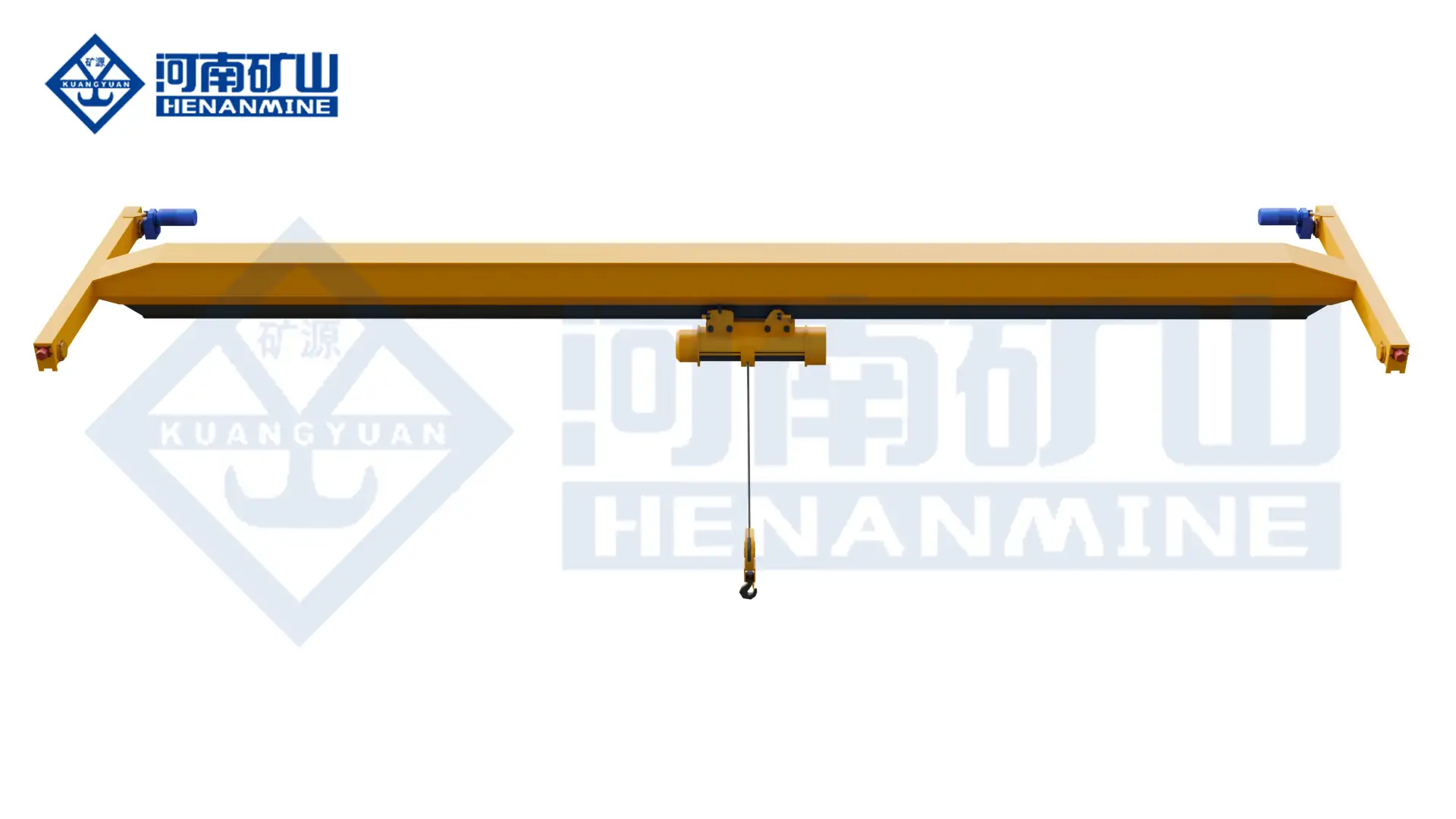
  • Workshop Crane Buying: Turn the Handling Cycle into an Equipment Brief

    Workshop Crane Buying: Turn the Handling Cycle into an Equipment Brief

    Technical guide

    Workshop Crane Buying: Turn the Handling Cycle into an Equipment Brief

    A practical buying brief links the load to its movement through the workshop. Set out daily use, pick-up positions and set-down requirements, then compare arrangements that can serve that cycle within the available building.

    Henan Mine CraneTechnical guide · Updated 2026Crane selection, project scope and operating requirements
    overhead crane for workshop Henan Mine Crane
    overhead crane for workshop Henan Mine Crane
    Project planning notes

    Key points for this crane project.

    1. Define Your Lifting Needs
    2. Evaluate your workshop structure
    3. Choose the right type of crane
    Read the technical guide

    Define Your Lifting Needs

    Load capacity

    When choosing a crane, the first step is to calculate your maximum lifting weight, which is called rated lifting capacity (SWL) in the industry. This step cannot be estimated to come, the difference may be a problem.

    Span and coverage

    Crane span, to put it simply is the width of your workshop, it directly determines the crane can cover the operating area.

    Choose a small span, there will be operational blind spots, such as the workshop on both sides of the material cannot be lifted, only frequent movement of materials, both time-consuming and labor intensive; choose a large span, the cost of equipment will increase, and the stability of the operation will be reduced, but also a waste of space in the workshop.

    Lifting height

    Lifting height is easy to be ignored, but it directly affects whether the operation can be carried out normally. It depends on two factors: the ceiling height of the workshop, and the equipment clearance required for the operation.

    Another point to note, if there are beams and pipes on the ceiling of the workshop, the height of these obstacles should also be deducted to ensure that the crane's hook can be lifted and lowered properly without being interfered with.

    Load Characteristics

    Different workshop lifting loads, shape, weight distribution are different, which will directly affect the configuration of the crane, cannot be generalized.

    Some loads are irregular, such as large castings, shaped parts, the center of gravity is not stable, which requires the crane to have a more accurate positioning ability, but also with a special spreader, to prevent shaking when lifting; some loads are very long, such as steel, pipe, the need for cranes to crane more reasonably designed lifting point, to avoid tilting of the load.

    Evaluate your workshop structure

    Workshop building structure

    The building structure of the workshop directly determines which kind of crane can be installed. At present, the workshop on the market is mainly divided into two kinds of steel structure and concrete structure, and the adaptability of the two varies greatly.

    The roof of a steel structure workshop has a stronger load-bearing capacity, which is suitable for the installation of overhead cranes running on top without additional reinforcement of the roof, and it is easier to install and simple to maintain in the later stage. Most of the new standard workshops, which are of steel structure, have the best suitability.

    Concrete structure workshop roof load-bearing is relatively weak, before installing the crane, you must first account for the load-bearing capacity of the roof to see if it can support the weight of the crane track beam. If the load bearing is not enough, you cannot install the top running crane, you have to choose the self-supporting crane system.

    Self-supporting crane with its own support structure, do not have to rely on the roof of the workshop, directly fixed to the ground, will not damage the original building structure, is the first choice for concrete workshop, old workshop. Our Henan Mine Crane's self-supporting workshop cranes are fully bolted, with a short installation cycle, no welding, and do not affect the normal production of the workshop.

    Space and clearance limitations

    In addition to the building structure, the space and clearance of the workshop is also very important, which directly affects the design and installation of the crane. Many customers just ignore this point, resulting in the crane cannot be used normally after installation.

    First of all, we should consider the ceiling height of the workshop, which directly determines the lifting height of the crane; secondly, the column spacing, the column is too dense will affect the crane's span selection, you need to adjust the track layout to avoid interference with the column; there are also obstacles in the workshop such as pipelines, lighting equipment, ventilation systems and other obstacles, but also to reserve a safe clearance for the operation of the crane.

    Generally speaking, between the crane and the workshop columns, pipes, ceilings, at least 500mm safety gap should be reserved to prevent collision during operation. If the workshop space is relatively small, we can recommend smaller, lightweight cranes to maximize the use of workshop space.

    New Workshop vs Existing Workshop

    New workshop and existing machine shop, the selection of ideas are completely different, this point must be clear.

    The advantage of the new workshop is that it can be planned in advance, we can cooperate with construction engineers, the crane track, support structure into the workshop design, to avoid the trouble of later remodeling. And the new workshop has no existing structural constraints, according to the lifting needs, free to choose the type of crane and configuration, but also optimize the use of space, reduce installation costs.

    The same is not true for the existing machine shop, which needs to be adapted to the existing building structure and cannot damage the original facilities. In this case, the suspended (under running) crane is a good choice, it is installed under the roof, without taking up additional ground space, and the lower requirements for the roof load-bearing, the installation cycle is short, without having to stop work to transform, many of the existing locomotive room upgrades will choose this model.

    Henan Mine Crane has a wealth of experience in the transformation of the existing locomotive room, we will first conduct a comprehensive survey of the workshop structure, and then according to the actual situation, recommend the most appropriate type of crane, to ensure that the installation does not affect the normal production of the workshop.

    Choose the right type of crane

    Single girder overhead crane

    It has simple structure, light weight, low load-bearing requirements on the roof of the workshop, short installation period, usually 3-7 days to install and commissioning is completed, and the maintenance is also convenient, no need to specialize in maintenance personnel.

    Small processing plants, electronic factories, small mechanical workshop, choose single girder overhead crane is enough, both to meet the lifting needs, but also to control costs. Our Henan Mine Crane single girder workshop cranes are made of Q345B high-strength steel, which has a more stable structure, and can be customized according to the size of the workshop in terms of span and lifting height, which is suitable for different scenarios.

    In addition, single girder cranes run with low noise, which will not affect the production environment of the workshop, and is suitable for workshops with noise requirements, such as electronic workshops and precision machining workshops.

    Double Girder Overhead Crane

    Its advantages are higher lifting height, better stability, ability to withstand large load operation for a long time, and higher positioning accuracy, suitable for lifting heavy machine tools, large castings and forgings, heavy semi-finished products and so on. The design of double girder structure can also reserve more working space to avoid interference with workshop equipment.

    Although the initial cost of double girder cranes is higher than that of single girder, the stability and durability of the later stage is more guaranteed for workshops that require long-term continuous operation. For example, in metallurgical workshops, where high-temperature steel needs to be lifted continuously every day, the high-temperature-resistant performance and load-bearing capacity of double girder cranes can effectively minimize failures and reduce downtime costs.

    Top running vs suspended

    Whether it is a single girder or double girder crane, there are two types of operation: top running (top running) and suspended (under running), both of which have different adaptability scenarios, so choose according to need.

    Top running crane is the most common way of operation, the track is installed on the top of the roof of the workshop, higher carrying capacity, stable operation, easy maintenance, and can realize the whole workshop coverage, suitable for new large-scale workshop, heavy-duty scenarios. Most heavy industrial workshops, will choose the top running crane.

    Suspension cranes, rail mounted below the roof of the workshop, also known as underslung cranes, suitable for low headroom workshop, or existing locomotive room remodeling. It does not take up ground space, and the roof load-bearing requirements are lower, the installation is more flexible, without destroying the original structure.

    Determine the working level

    Classification of working level (ISO / FEM / CMAA)

    Many customers choose cranes, only look at the load and span, ignoring the working level, which is one of the easiest potholes to step on. The working level determines the durability and service life of the crane, and if you don't choose the right one, the equipment will be easily damaged in advance.

    Workshop crane working level, mainly follow the ISO, FEM, CMAA three international standards, from light to heavy is divided into different levels. Different standards have different grade correspondences, such as FEM's 1Bm corresponds to CMAA's Class A, FEM's 2m corresponds to CMAA's Class C. Our Henan Mine Crane engineers will help you accurately match to ensure that the equipment meets your frequency of use needs.

    For light load use, such as small workshop, which is used for less than 1 hour per day and lifting materials occasionally, class A3/M3 is enough; for medium frequency use, such as standard manufacturing workshop, which operates for 3-6 hours per day, class A4-A5 is chosen; for heavy workshop with continuous operation, which operates for more than 8 hours per day, you need to choose class A6-A8.

    The working level is mainly determined by the load spectrum and the average daily operating equivalent time, for example, a workshop crane load spectrum for the intermediate level, the average daily operating equivalent time of 1.6 hours, corresponding to the working level of the ISO M5 class, equivalent to the FEM 2m class, we will recommend the appropriate models and configurations based on this data.

    Frequency of use and model recommendation

    Frequency of use directly determines the working level and model selection, do not blindly pursue a high level, nor can you choose too low a level of equipment, otherwise it will affect the service life.

    Occasional use, such as a few times a month, choose a single girder overhead crane, working class A3-A4, low cost, but also to meet the demand; daily use, such as daily production of material transfer, choose a medium working class (A4-A5) single girder or double girder crane, taking into account the cost and durability.

    In this scenario, the stability and durability of the equipment is more important than the cost, which can effectively reduce failures and avoid downtime affecting production.

    Selection of Key Components and Configurations

    Hoist selection

    Hoist is the core component of the crane, equivalent to the “heart” of the crane, which directly affects the stability and safety of lifting, the workshop scene mainly choose two kinds of hoists: wire rope hoists and chain hoists.

    Wire rope hoist is suitable for heavy-duty scenarios, such as lifting heavy machine tools, large parts, strong carrying capacity, high lifting height, and smooth operation, wear-resistant, corrosion-resistant, suitable for long-term use. Our Henan Mine Crane workshop cranes are equipped with high quality wire rope hoists by default, which can be adapted to the working conditions of different workshops.

    Chain hoist is suitable for light load scenarios, such as small workshops, auxiliary lifting, simple structure, easy to operate, and lower cost, and small size, does not take up too much space, suitable for small space workshop.

    In addition, the quality of the hoist is very important, poor quality hoists are prone to broken rope, rope jamming and other faults, there are security risks. Our Henan Mine Crane hoist, after strict quality testing, long service life, and sufficient spare parts, the later replacement is convenient.

    Control system

    Workshop crane control system, there are mainly three kinds, each with adaptable scenes, do not blindly pursue complex, suitable for their own is the best.

    Push-button control (pendant control) is the most basic, low-cost, simple operation, suitable for small workshops, simple lifting operations, such as small hardware factories, usually only lifting small parts and components, with the button control is enough. But its control line length is limited, the operator's moving range is restricted, not suitable for complex lifting scenes.

    Remote control is the recommended choice for workshops, and it is also the most mainstream control method at present. The operator can take the remote control, observe the load and the surrounding environment in the best position, move flexibly, and also support multi-person collaboration, and there are multiple safety protections to avoid misuse.

    Henan Mine Crane's workshop cranes, most of them are equipped with remote control, operating distance is far, signal is stable, and there is an anti-touch design, even if accidentally pressed the wrong button, it will not start the equipment, so the safety is higher.

    Cabin control (cabin control) is seldom used in the workshop scene, only super-large heavy-duty workshops, which require long-term continuous operation, need to be equipped. It has high cost, complicated installation, and limited vision, not as flexible as remote control, generally not recommended for workshop use.

    Speed control system

    The speed control system directly affects the lifting precision, and different workshop scenes have different requirements for speed control.

    Single-speed speed control is low cost, simple operation, suitable for simple lifting operations, such as handling raw materials, finished products, not high precision requirements, single-speed speed control is enough. However, it is not smooth enough to start and stop, easy to cause load shaking, not suitable for lifting fragile, precision parts.

    Variable-frequency speed control (VFD) is the first choice for workshops, especially for scenarios that require lifting precision, such as precision machining workshops and mechanical assembly workshops. It can realize smooth start and stop to avoid load shaking, and it can control the speed finely to realize millimeter-level positioning, which is essential for lifting precision parts, machine tool assembly and other operations.

    Safety and Compliance Standards

    Necessary safety devices

    Workshop operation, safety first. Crane safety devices are indispensable, which are directly related to the safety of operators and equipment, and can also avoid the loss of downtime due to failure.

    Overload protection is necessary to prevent the crane from carrying more than the rated load, to avoid equipment damage and safety accidents; limit switches, including lifting height limit and running stroke limit, can prevent the crane from exceeding the operating range, collision to the workshop equipment or walls.

    Emergency stop button is also very critical, in any position can quickly stop the equipment, to deal with unexpected situations, such as load shaking, equipment failure, can be stopped in a timely manner; Anti-collision system, can detect the distance between the crane or with the obstacles, automatic deceleration or stop, to avoid collision.

    Henan Mine Crane's workshop cranes, all safety devices comply with international standards, and will be regularly tested to ensure the safety of equipment operation. In addition, we will also add additional safety protection devices according to customer needs, such as windproof device, rainproof device, adapted to different workshop environments.

    International Standard Requirements

    Workshop cranes mainly follow the ISO, FEM, CMAA three major international standards, of which ISO is the global standard, FEM is the European standard, CMAA is the U.S. standard.

    Environmental Considerations

    Special Environment Adaptation

    Different workshop environments have different requirements for cranes, especially for special environments, which must be targeted selection, otherwise the equipment will be easily damaged, affecting the service life, but also increase maintenance costs.

    High-temperature environments, such as metallurgical workshop, foundry, high temperature, high loss of crane parts, need to use metallurgical special cranes, equipped with high-temperature resistant parts, good heat insulation to avoid motor, hoist damage due to high temperature.

    Workshops with explosion risk, such as chemical workshop and paint workshop, need to use explosion-proof cranes, the electrical system adopts explosion-proof design to avoid sparks triggering explosions, and all the components should comply with explosion-proof standards to ensure the safety of operation.

    Dusty, high humidity environment, such as mining workshops, workshops in coastal areas, you need to seal the crane motor, electrical cabinet, good dust, moisture, corrosion measures. We Henan Mine Crane will use triple anti-corrosion process, effectively extend the life of the equipment to adapt to the high dust, high humidity environment.

    Environmental impact on cost

    If the environmental factors are ignored and ordinary cranes are chosen, the maintenance frequency of the equipment will be greatly increased in special environments, the service life will be shortened, and the maintenance cost and downtime cost in the later period will be much higher than the initial investment. For example, the workshop in coastal areas, do not do anti-corrosion treatment, the crane may be 3-5 years on the rust and corrosion, and do a good job of anti-corrosion treatment, can be used for more than 10 years.

    Henan Mine Crane will recommend the right model and treatment program according to your workshop environment, and try to control the cost while ensuring the adaptability of the equipment, so that you can get a higher cost-effective.

    Life cycle cost (not just initial price)

    Cost Composition (CAPEX + OPEX)

    Many customers choose cranes and only look at the initial purchase price, which is the most common misconception. The total cost of the crane, including the initial investment (CAPEX) and operating costs (OPEX) two parts, cannot just focus on the initial price, to calculate the long-term account.

    Initial investment includes the price of the equipment itself, transportation costs, installation and commissioning fees, which is the most intuitive part; operating costs including routine maintenance fees, energy consumption, spare parts replacement, labor costs, etc. This part of the cost is easy to be ignored, but in the long run, the proportion is not low.

    Why cheap is not necessarily good

    Workshop downtime costs are very high, especially the production-oriented workshop, a piece of equipment stopped for a day, the loss may be up to tens of thousands of dollars. The poor quality crane, although the initial price is cheap, but the quality is not reliable, easy to frequent failures, resulting in downtime, this part of the loss is much higher than the difference in the price of the crane.

    Our Henan Mine Crane, although the initial investment is a little higher than the small manufacturers, but the quality of the equipment is reliable, the use of high-quality components, low maintenance frequency, spare parts global supply, can be quickly replaced to reduce downtime. And our equipment has lower energy consumption, long-term use, energy costs can also save a lot.

    For example, a mechanical processing customers, before the selection of a cheap single girder crane, annual maintenance fee of more than 20,000, but also frequent downtime; later replaced with our Henan Mine Crane equipment, annual maintenance fee of less than 10,000, and almost no downtime, two years to recover the difference in price.

    Therefore, the selection of cranes, do not just look at the initial price, to comprehensively consider the full life cycle costs, choose cost-effective, reliable quality equipment, is the most cost-effective.

    Common mistakes to avoid when selecting cranes

    Combined with these years of experience, I summarized a few customers are most likely to step on the pit, we must avoid when selecting the type, you can take a lot less detours.

    Only look at the price, ignoring the quality and after-sales. Many customers figure cheap, buy the equipment of small manufacturers, later failure, cannot find after-sales, can only spend their own money to repair, and downtime losses. We Henan Mine Crane has a global after-sales team, no matter which country you are in, we can provide timely maintenance services.

    Neglecting the working level, light-loaded workshop chooses low-level equipment, or heavy-loaded workshop chooses high-level equipment, which will either be damaged in advance or waste the investment. The working level must be selected in combination with the frequency of use, and accurate matching is the best.

    Blind selection without checking the structure of the workshop leads to the crane cannot be installed, or need to dismantle the building, increasing costs. Before installation, you must first survey the workshop structure, check the load bearing, and then select the model.

    Quick Selection Checklist

    Finally, we will organize a simple checklist for you to check against when selecting, so that you can quickly clarify the requirements, avoid missing key parameters and save selection time:

    ✔ What is the maximum lifting load? (including spreader weight)

    ✔ What is the span and lifting height of the workshop? (accurate to centimeters)

    ✔ Is the lifting of raw materials, semi-finished products, or heavy equipment?

    ✔ How long is the crane used per day? (Frequency of use)

    ✔ Do you need high-precision positioning? (e.g. precision parts lifting, machine tool assembly)

    ✔ Is it a new workshop or a remodeling of an existing machine shop?

    ✔ Is there any special environment in the workshop? (high temperature, explosion-proof, dust, high humidity, etc.)

    ✔ What is the budget range? (including initial investment and long-term maintenance costs)

    FAQ

    What is the best crane for a workshop?

    There is no absolute best, only the most suitable. Light load, small workshop, choose single girder overhead crane, cost-effective, easy to operate; heavy load, continuous operation of the workshop, choose double girder overhead crane, good stability, strong carrying capacity; existing locomotive room, low headroom scenario, choose the suspension crane, installation flexibility, without destroying the original structure.

    What is the approximate price of workshop overhead cranes?

    There is no fixed standard for the price, which mainly depends on the load, span, lifting height, configuration and environmental requirements. You can tell us the workshop parameters and requirements, we give you an accurate quotation.

    Can a crane be installed in an existing locomotive workshop?

    Yes, you can. As long as a load-bearing assessment of the workshop structure is done first to confirm that the roof or floor can withstand the load of the crane, it can be installed. Most of the existing locomotive room remodeling, we will recommend suspension cranes or self-supporting cranes, do not have to destroy the original structure, the installation cycle is short, does not affect the normal production of the workshop. We Henan Mine Crane have rich experience in existing locomotive room remodeling, can provide one-stop survey, design, installation services.

    How long can the workshop crane be used?

    Under normal maintenance, single girder cranes can be used for 10-15 years, and double girder cranes can be used for more than 15-20 years. The key is to choose the right type and daily maintenance in place, we Henan Mine Crane will provide regular maintenance guidance, but also provide global spare parts supply to extend the service life of the equipment.

    Henan Mine Crane

    Choosing an overhead crane is not just buying a piece of equipment, but also buying long-term peace of mind, efficiency and safety. It is not simply “the bigger the better” “the cheaper the better”, but to combine your lifting needs, workshop structure, frequency of use and environment, accurate matching.

    Henan Mine Crane has been in the crane field for decades, focusing on the research, development, production and sales of overhead cranes for workshop use.

    Regardless of which country you are in the world, whether it is a new workshop or the renovation of an existing machine shop, whether you need a 1-ton light crane or a 500-ton heavy crane, we can provide free on-site survey, selection consultation, layout design, as well as global installation and commissioning and after-sales guarantee.

    Send your workshop drawings and needs, we will provide you with free technical solutions and quotations within 24 hours, to help you avoid selection mistakes, choose the most suitable workshop overhead crane, help your production work efficiently and safely.

    Discuss the crane arrangement for your project.

    A practical buying brief links the load to its movement through the workshop. Set out daily use, pick-up positions and set-down requirements, then compare arrangements that can serve that cycle within the available building. Share the load, available drawings, working cycle and site conditions with Henan Mine Crane so the required configuration and supply boundary can be discussed.

    Related crane configurations

    Single-Girder Bridge Crane

    View product parameters
    Lifting capacity: 1–20 tSpan: 7.5–31.5 mLifting height: 6, 9, 12, 18, 24 or 30 m; capacity-dependent

    Use an LDA single-girder bridge and electric hoist for general workshop material handling. Select the lifting capacity, runway geometry and hoist duty around the building and load.

    LH Electric Hoist Double Girder Crane

    View product parameters
    Lifting capacity: 3, 5, 10, 16, 20 tSpan: 10.5–31.5 mLifting height: 6, 9, 12 or 18 m

    Use an LH double-girder bridge with an electric-hoist trolley for workshop lifting, assembly and maintenance. Match the hoist arrangement to the suspended load, hook travel and available building space.

    Updated 2026 · Henan Mine Crane
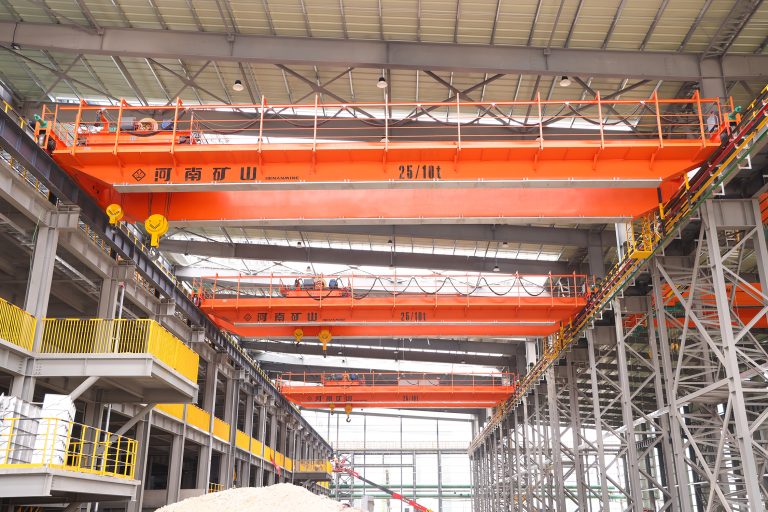
  • Overhead Cranes for Frequent Starts: Duty, Drives and Load Control

    Overhead Cranes for Frequent Starts: Duty, Drives and Load Control

    Technical guide

    Overhead Cranes for Frequent Starts: Duty, Drives and Load Control

    Repeated starts and stops need to be included in the operating brief. Describe the motion sequence, load pattern and positioning task so the proposed drives, brakes and control arrangement can be reviewed for the duty.

    Henan Mine CraneTechnical guide · Updated 2026Crane selection, project scope and operating requirements
    overhead crane for frequent start-stop operations
    overhead crane for frequent start-stop operations
    Project planning notes

    Key points for this crane project.

    1. Key Factors When Choosing a Crane
    2. Crane Components for High-Frequency Operations
    3. Selecting the Right Overhead Crane Configuration
    Read the technical guide

    Key Factors When Choosing a Crane

    The selection of bridge cranes with frequent start-up and stop conditions should not only focus on the rated lifting weight of bridge cranes, but also on the fatigue resistance, dynamic operating stability, and start-stop carrying capacity of the equipment. Conventional cranes focus on static load adaptation, while high-frequency start-stop bridge crane equipment needs to take into account dynamic impact, continuous cycle operation, thermal stability and braking reliability. This is the core selection standard for high-performance bridge cranes. The following four core elements are the core basis for selection, which directly determine the equipment failure rate and service life.

    Duty class and load capacity

    The working level and load capacity are the basic core of the selection of high-frequency start-stop bridge cranes, the key indicators of the adaptation of industrial bridge cranes to working conditions, and the key parameters that are most easily overlooked. According to the national standard GB/T 3811-2008, industrial bridge cranes are divided into eight working levels A1-A8. Different specifications of bridge cranes are adapted to different operating intensities. Different levels correspond to different operating frequencies, load states and fatigue life, and are fully adapted to the needs of different starting and stopping conditions. A1-A3 is a light-level work system, which is suitable for warehouse maintenance and spare hoisting scenarios with low average daily start-stop times and intermittent operations.

    A4-A5 is an intermediate work system, suitable for conventional production in ordinary workshops, with an average of 8 hours of uninterrupted operation per day, which can meet the needs of moderate start and stop. The total number of cycles designed for this type of equipment can reach up to 4 million times, and the structural safety factor and load-bearing fatigue strength are greatly improved, and it can withstand the dynamic impact of long-term repeated start-stop. The selection of load capacity must follow the principle of dynamic adaptation, and cannot only refer to the peak load. In high-frequency operations, the equipment can withstand the impact of variable loads for a long time. It is recommended to reserve 1.2-1.5 times the safe load margin to avoid structural deformation and component aging caused by frequent start and stop at full load.

    Motor performance and braking system

    The motor and brake system are the core power and safety barriers for high-frequency start-stop operations of bridge cranes, as well as the core vulnerable system of bridge cranes under high-frequency operating conditions, and they are also high-failure components. Ordinary fixed-speed motors have a large current shock at the moment of start and stop, and the speed changes violently. Repeated start and stop will quickly cause the coil to heat up, the insulation layer to age, and the motor to burn down. It is completely unable to adapt to high-frequency operating conditions. For cranes that are suitable for frequent start-and-stop, special motors with high frequency resistance, high heat dissipation, and overload resistance must be selected.

    At the same time, the motor needs to be equipped with an independent heat dissipation structure to ensure temperature stability under long-term high-frequency operation and avoid thermal shutdown failures. The braking system is directly related to operation safety and equipment loss. It is strictly forbidden to use ordinary monolithic brakes in high-frequency start-stop conditions. Repeated opening and closing of conventional brakes will quickly cause problems such as brake pad wear, brake lag, and brake failure. Professional high-frequency start-stop cranes are equipped with wear-resistant hydraulic brakes or electromagnetic dual-braking systems as standard. The braking response speed is fast, the fit is stable, and the amount of wear is small. It can achieve accurate slow-stop, eliminate start-stop frustration and load shaking, and avoid structural shocks caused by emergency braking, greatly improving operation safety and component durability.

    Hoisting and traveling speed

    The reasonable matching of the lifting and operating speed of the bridge crane is the key to balancing the production efficiency of high-frequency start-up and stop conditions with the loss of bridge crane equipment. The speed is too fast, the start-stop impact is large, the load swing is serious, and the wear of components is accelerated. If the speed is too slow, it will directly reduce the transfer efficiency of the assembly line and affect the overall production capacity. The lifting speed needs to be adapted according to the attributes of the hoisting material: precision parts, fragile materials, and high-precision assembly scenarios. Priority should be given to the low-speed and smooth lifting mode to avoid material bumps and positioning deviations caused by start-stop shaking.

    Crane Components for High-Frequency Operations

    The standard accessories of ordinary bridge cranes are only suitable for low-frequency intermittent operations, which cannot meet the operating needs of bridge cranes under high-frequency operating conditions, and cannot withstand the continuous impact and heat loss of high-frequency start and stop. To ensure the long-term stable operation of the equipment, it must be equipped with special core accessories for high-frequency working conditions, upgraded from multiple dimensions of transmission, braking, electronic control, and protection, and targeted to solve the pain points of high-frequency operations.

    Variable frequency drive systems

    Under the working conditions of hundreds of start-stop cycles per day, the frequency conversion system of Henan Mine Crane manufactured bridge crane can effectively stabilize the working current of the bridge crane motor, reduce the heat accumulation of the coil, and reduce the fatigue loss of the motor, reducer, main girder, and track. In addition, the high-quality frequency conversion system has overload protection, stall protection, and fault self-test functions, which can monitor the operating status of the equipment in real time, and warn of downtime in time when high-frequency operations are abnormal, so as to avoid major failures caused by the operation of the equipment with diseases, and greatly improve the operating stability and safety of the equipment.

    Hoist gearbox and mechanical brakes

    The hoist reducer and mechanical brake are the core transmission and braking components of the bridge crane, which determine the reliability of the high-frequency operation of the bridge crane. It can withstand alternating loads for a long time under high-frequency start-stop conditions, and has extremely high requirements for material accuracy, wear resistance, and fatigue resistance. Ordinary reducer gear accuracy is low, lubrication stability is poor, and repeated start and stop are prone to gear wear, abnormal noise, caton, transmission failure and other problems. The special hoist reducer for high-frequency working conditions adopts high-strength alloy gears and precision gear grinding technology. It has the characteristics of high wear resistance, impact resistance and low noise. It can withstand the transmission load of continuous and repeated start and stop.

    At the same time, it is equipped with a forced lubrication system to continuously supply oil to cool down during high-frequency operation to avoid excessive oil temperature and lubrication failure caused by high-speed circulating operation. The supporting special mechanical brakes use thickened wear-resistant brake linings and integrated brake structure. Compared with ordinary brakes, the wear-resistant life is increased by 2-3 times, the braking response is more accurate, and the opening and closing are more stable. The dual mechanical braking design can realize redundant protection, and the other group can intervene immediately when a single set of brakes fails, eliminating the safety hazards of sliding hooks and sliding in high-frequency start-stop operations of bridge cranes, and ensuring the safety of bridge crane operations.

    Electrical control and thermal protection

    The most common hidden fault in high-frequency start-stop operations is the overheating of the motor and electronic control system. Long-term heat accumulation will accelerate circuit aging, insulation failure, and component burning, greatly shortening the service life of the equipment. Therefore, a professional electronic control system and a perfect thermal protection mechanism are indispensable configurations for high-frequency bridge cranes to ensure long-term continuous operation of bridge cranes. The high-frequency dedicated electronic control system adopts a modular and integrated design, with a regular circuit layout and strong anti-interference ability. It can be adapted to frequent signal switching of high-frequency start and stop, eliminating signal delay, command confusion, malfunction and other problems.

    At the same time, it is equipped with an intelligent control system, which can accurately regulate the start-stop rhythm and operating speed, adapt to the operating needs of different working conditions, and improve the accuracy of hoisting and positioning. The thermal protection system adopts multiple protection design, and the core components such as motors, frequency converters, and reducers are equipped with temperature sensors, which can monitor the operating temperature in real time. When the temperature of the equipment exceeds the standard during high-frequency operation, the system will automatically trigger load reduction, cooling, early warning and even shutdown protection to avoid high temperature burning of the equipment from the root cause. At the same time, it is equipped with a forced cooling fan and a cooling duct structure to actively accelerate the cooling and ensure the stable operation of the equipment for 24 hours of continuous high-frequency operation.

    Selecting the Right Overhead Crane Configuration

    Depending on the fuselage structure and lifting mechanism configuration of the bridge crane, the high-frequency start and stop conditions of the adapted bridge crane are greatly different. The selection of single and double beam structure, electric hoist and hoist mechanism directly determines the carrying capacity, fatigue resistance, operating efficiency and applicable scenarios of the equipment. Combining workshop working conditions, lifting weight, operating frequency, and span height to select the appropriate configuration, in order to achieve the best price/performance ratio and the longest service life.

    Single girder vs. double girder

    Single-beam bridge cranes are lightweight in structure, lower in cost, and easy to install. They are commonly used models for high-frequency bridge cranes in small and medium-sized working conditions. They are suitable for small and medium-tonnage and medium-frequency start-up and stop-down conditions. The equipment has flexible operation, lower energy consumption, easy maintenance, and outstanding cost-effective advantages.

    The double-girder bridge crane adopts a double-girder load-bearing structure, which has stronger overall rigidity and better fatigue resistance. It is the preferred model for heavy-duty and high-frequency bridge cranes with higher carrying limits. It is the first choice for high-capacity, ultra-high frequency, and continuous operating conditions. Its structure has small deflection, no tremor in operation, can withstand long-term dynamic shocks, and will not cause deformation of the main girder or loosening of the structure due to frequent start and stop. The stability and safety far exceed that of single-beam models.

    Electric hoist vs. open winch

    The electric hoist lifting mechanism has a compact structure, light start and stop, and accurate positioning, which is suitable for small and medium-sized tonnage and refined high-frequency start and stop operations. It is widely used in machining, parts assembly, and light material transfer scenarios. It has the advantages of stable speed regulation, low noise, and simple operation and maintenance. It is suitable for high-frequency start-stop conditions of light and medium-load bridge cranes, and can effectively control the start-stop impact of bridge cranes to ensure the accuracy of precision hoisting operations.

    The open winch has high structural strength, high transmission torque, and strong impact resistance. It is specially designed for heavy-duty, high-strength, and ultra-high-frequency start-and-stop conditions. For high-capacity and continuous cycle start-stop scenarios such as metallurgy, heavy industry, heavy equipment assembly, and bulk material transfer, the hoist lifting mechanism can withstand continuous heavy-duty shocks, and is not prone to slippage, wear, and transmission failure. The stability of continuous operation is stronger, and the safety of heavy-duty start-stop is higher. It is the core configuration of high-frequency bridge crane operations in heavy industry, which greatly improves the operating stability of heavy-duty bridge cranes.

    Customized crane specifications

    Standardized bridge crane parameters are difficult to adapt to all complex high-frequency start-up and shutdown conditions. Henan Mine Crane manufactured customized bridge cranes can be accurately adapted to special production scenarios. Customized parameters are the key to ensure the adaptability of equipment for special workshop environments and special operating needs. Professional manufacturers can customize the core parameters of the equipment in all directions according to the actual working conditions of users to accurately match the needs of high-frequency operations. Customizable content includes exclusive work level upgrade, frequency conversion speed regulation parameter adjustment, start-stop buffer program optimization, precise matching of lifting/operating speed, thermal protection system upgrade, high temperature and dustproof and waterproof configuration, long-span reinforced structure, non-standard lifting height, special track adaptation, etc.

    Maintenance Requirements for Frequent Start-Stop Cranes

    High-frequency start-stop bridge cranes have been in a state of high-load and high-cycle operation for a long time. The loss rate of such industrial bridge cranes is much higher than that of conventional equipment, and the loss rate of components is much higher than that of ordinary cranes. Conventional maintenance standards cannot meet their operating needs. Targeted special maintenance can greatly reduce the probability of failure, delay the aging of components, effectively extend the overall service life of equipment, and reduce enterprise operation and maintenance costs.

    Reducing motor and brake wear

    Motors and brakes are the components with the fastest loss in high-frequency operations, and they are also the core focus of maintenance. In daily operation and maintenance, it is necessary to regularly clean the motor cooling air duct and check the operating status of the cooling fan to avoid dust accumulation and heat accumulation and aging caused by poor heat dissipation. At the same time, the motor insulation resistance and coil temperature are regularly tested, and the circuit aging and virtual connection problems are investigated in time to prevent the instantaneous current impact of start and stop from burning down the motor. The brake system needs to be inspected daily, focusing on the degree of wear of the brake lining, brake clearance, hydraulic system pressure, and electromagnetic coil status.

    Inspection and preventive maintenance

    For high-frequency start-stop cranes, it is necessary to establish a preventive maintenance system, abandon the passive operation and maintenance mode of post-mortem maintenance, and take regular inspections, early investigations, and early maintenance as the core to avoid sudden failures.

    • Daily pre-shift inspection: check the start and stop operation status of the equipment, whether there is abnormal noise and tremor, whether the braking is sensitive, whether the electronic control indicator light is normal, and deal with minor abnormalities in a timely manner.
    • Weekly special inspections: detect the fastening status of the main girder, end beam, and track, investigate the hidden dangers of structural fatigue, check the oil level and oil quality of the reducer lubricating oil, and replace the deteriorated lubricating oil.
    • Monthly in-depth inspection: verify the parameters of the frequency conversion system, the sensitivity of the thermal protection system, the operating current of the motor, and the performance of the braking system, and tighten the wiring and connecting bolts of the whole vehicle.
    • Annual comprehensive flaw detection: non-destructive flaw detection of the main girder, welds, and transmission components to investigate fatigue cracks and structural deformation, and eliminate major safety hazards.

    Extending crane service life

    If you want to maximize the service life of high-frequency start-stop bridge cranes, you need to standardize the operation and maintenance process of bridge cranes, and you need to start with standardized operation, regular maintenance, adaptation of working conditions, and multi-dimensional comprehensive control of parts replacement. First of all, strictly standardize the operation process, eliminate savage start-stop, emergency stop, and overload operation, and reduce unnecessary mechanical shocks and load losses. Secondly, adapt the operating frequency in strict accordance with the operating conditions of the equipment, and do not use the equipment under excessive or overloaded loads.

    At the same time, we insist on regular replacement of the original supporting wearing parts to avoid the problem of insufficient matching and increased loss caused by inferior accessories. Regularly optimize the operating parameters of the equipment, fine-tune the frequency conversion speed regulation and start-stop buffer parameters according to the operating frequency, and adapt to actual working conditions.

    How to Choose a Reliable Overhead Crane Manufacturer

    The precise selection of bridge cranes adapted to the working conditions of Henan Mine Crane manufactured is inseparable from the technical support of professional manufacturers. Bridge cranes with high-frequency working conditions have higher design process requirements. High-frequency start-stop cranes are customized industrial equipment. The manufacturer's design capabilities, production technology, quality inspection standards, and after-sales system directly determine the stability, durability, and use experience of the equipment. Choosing a reliable source manufacturer is the core prerequisite for avoiding selection errors, reducing failure rates, and ensuring long-term stable operations.

    Engineering design and customization

    High-quality crane manufacturers must have professional working condition survey and customized engineering design capabilities, and can issue exclusive selection plans and equipment design drawings one-on-one according to the span of the user's workshop, lifting height, lifting capacity, average daily start-stop frequency, and operating environment. In view of the high-frequency start-and-stop conditions of bridge cranes, the professional design team will upgrade the structural strength of bridge cranes in a targeted manner, optimize the start-and-stop control logic, match the dedicated frequency conversion and heat dissipation system, and avoid various hidden dangers of high-frequency operations from the source of the design.

    At the same time, it has mature non-standard customization capabilities, which can solve the adaptation problems of special working conditions and special sites, refuse to standardize equipment and hard-set complex working conditions, and ensure that each equipment accurately matches the user's high-frequency start-stop operation requirements, so as to achieve efficient, stable and low-loss operation.

    Factory testing and quality assurance

    High-frequency start-stop cranes have extremely high requirements for production technology and quality inspection standards. Ordinary small factories lack special testing processes, and the equipment is prone to high-frequency operation failures after leaving the factory. Reliable source manufacturers have a perfect standardized production system and strict factory inspection process, and have professional load testing, start-stop cycle testing, temperature testing, and braking performance testing equipment.

    All Henan Mine Crane manufactured special cranes for high-frequency working conditions will undergo tens of thousands of simulated start-stop cycle tests, overload tests, and continuous thermal stability tests before leaving the factory, and comprehensively test the tolerance performance of motors, brakes, frequency conversion, and structures to ensure that bridge crane equipment can be adapted to long-term high-frequency start-stop operations, and ensure that the bridge crane's factory quality is up to standard.

    After-sales service and spare parts

    The maintenance frequency of high-frequency start-stop bridge cranes is high, and the replacement of wearing parts is frequent. Perfect service is the guarantee of the long-term operation of bridge cranes, and a perfect after-sales service system is an important guarantee for the long-term stable operation of equipment. High-quality manufacturers have a national after-sales team that responds quickly, and can provide one-stop services for on-site investigation, installation and commissioning, regular maintenance, and emergency repair of faults. For sudden failures in high-frequency operations, they can respond quickly and solve them quickly, minimizing the loss of production.

    At the same time, it has sufficient reserves of original parts, and core parts such as motors, brakes, frequency conversion modules, and reducers can be supplied quickly to avoid long-term downtime caused by out-of-stock parts. In addition, professional manufacturers will provide customers with free operation and maintenance training on working conditions, guide operators to standardize use, daily inspections, and basic maintenance, and help enterprises reduce equipment failure rates, extend equipment service life, and achieve long-term cost reduction and efficiency gains.

    Henan Mine Crane

    The core logic of the selection of bridge cranes with frequent start-up and stop conditions is based on the adaptation of working conditions as the core, focusing on anti-fatigue, stable start-stop, and strong protection, and abandoning the single selection misunderstanding of only looking at tonnage. From the working level, power brake configuration, speed parameters, special accessories, fuselage structure, to late maintenance and manufacturer screening, every link directly affects the safety, efficiency and service life of the equipment.

    The high-frequency special bridge crane adapted to working conditions cannot only perfectly adapt to the continuous start-stop operation requirements of the bridge crane, greatly reduce the failure and shutdown rate and maintenance costs, but also ensure the production efficiency of the workshop for a long time and create sustainable value for the enterprise. If you have crane customization, selection, and transformation needs for high-frequency start-stop conditions, you can consult us at any time. Henan Mine Crane Factory provides one-to-one exclusive working condition solutions.

    Discuss the crane arrangement for your project.

    Repeated starts and stops need to be included in the operating brief. Describe the motion sequence, load pattern and positioning task so the proposed drives, brakes and control arrangement can be reviewed for the duty. Share the load, available drawings, working cycle and site conditions with Henan Mine Crane so the required configuration and supply boundary can be discussed.

    Related crane configurations

    Single-Girder Bridge Crane

    View product parameters
    Lifting capacity: 1–20 tSpan: 7.5–31.5 mLifting height: 6, 9, 12, 18, 24 or 30 m; capacity-dependent

    Use an LDA single-girder bridge and electric hoist for general workshop material handling. Select the lifting capacity, runway geometry and hoist duty around the building and load.

    LH Electric Hoist Double Girder Crane

    View product parameters
    Lifting capacity: 3, 5, 10, 16, 20 tSpan: 10.5–31.5 mLifting height: 6, 9, 12 or 18 m

    Use an LH double-girder bridge with an electric-hoist trolley for workshop lifting, assembly and maintenance. Match the hoist arrangement to the suspended load, hook travel and available building space.

    Updated 2026 · Henan Mine Crane
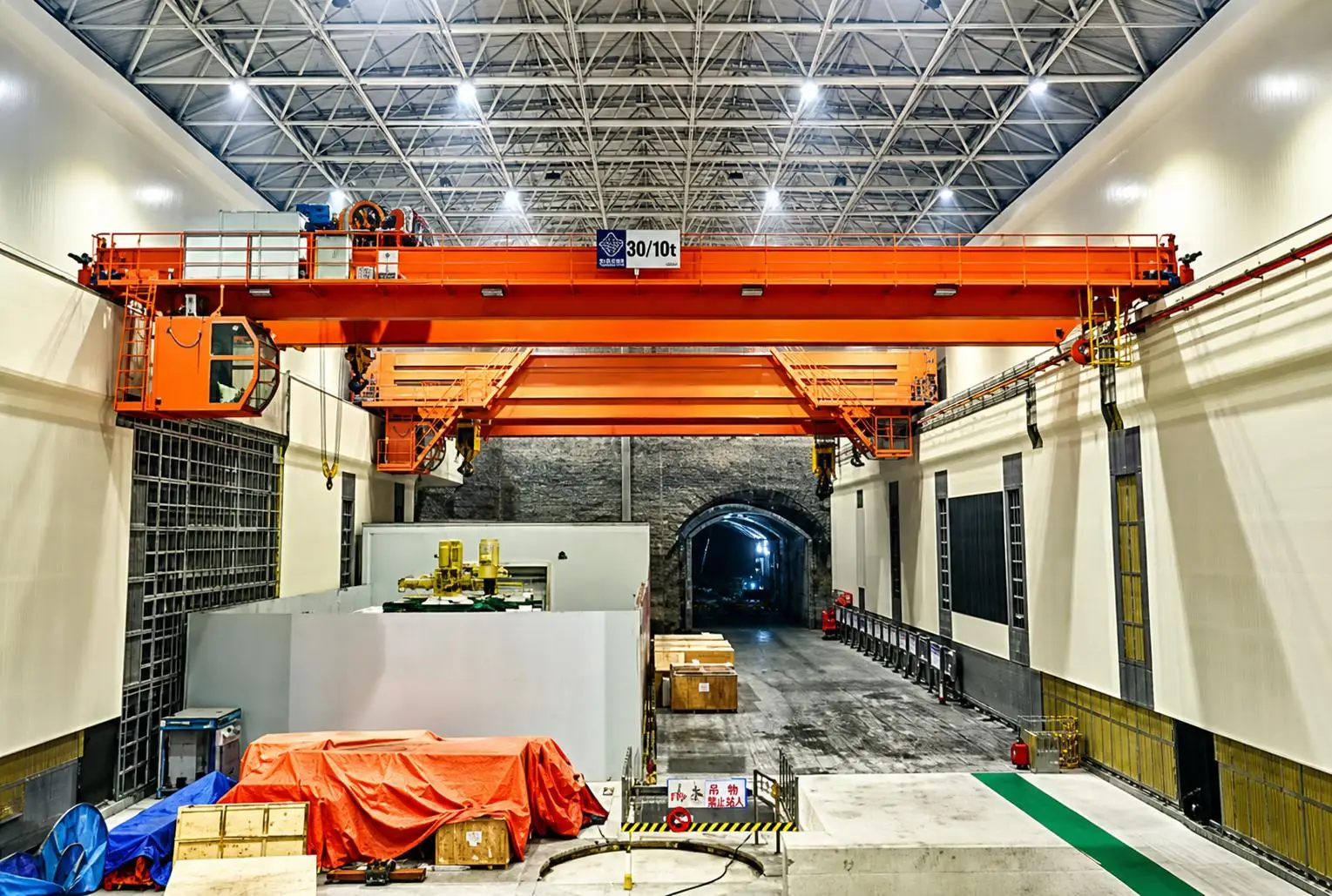
  • Overhead Cranes for Continuous Production: Availability and Service Access

    Overhead Cranes for Continuous Production: Availability and Service Access

    Technical guide

    Overhead Cranes for Continuous Production: Availability and Service Access

    Continuous production makes the working cycle and maintenance arrangements part of equipment selection. Define utilisation, transfer interfaces and acceptable work windows before reviewing the crane's configuration and service provisions.

    Henan Mine CraneTechnical guide · Updated 2026Crane selection, project scope and operating requirements
    Henan Mine Crane Single-Girder Bridge Crane
    Henan Mine Crane Single-Girder Bridge Crane
    Project planning notes

    Key points for this crane project.

    1. What Makes Overhead Cranes Different for Continuous
    2. Key Specifications to Check Before Choosing an
    3. How to Match Crane Duty Class to Production Workload
    Read the technical guide

    What Makes Overhead Cranes Different for Continuous Production Lines

    The core difference between Henan Mine Crane manufactured bridge cranes for continuous production lines and ordinary workshop cranes is that the operating logic is fully adapted to the uninterrupted production mode of the mass production line. Ordinary cranes are mainly intermittent, on-demand start-stop, and low-frequency operations, with high fault tolerance. The continuous production line crane needs to fit the fixed beat of the production line, high-frequency cycle operation, and long-term continuous operation, and the requirements for equipment stability, response speed, wear resistance, and safety redundancy have been greatly improved. The following explains the basis for differentiated selection from the four core dimensions.

    Production demands

    The core production requirements of continuous production lines are standardization, beat-based, and uninterrupted mass production, which requires the crane to be fully adapted to the production rhythm of the production line and cannot become a bottleneck in production capacity. In scenarios such as automobile manufacturing, steel structure processing, warehousing assembly lines, heavy industry mass production, food and chemical automation production lines, material handling, workpiece loading and unloading, and finished product transportation are all deeply bound to the production line. Ordinary cranes can only meet the needs of scattered and temporary handling, with slow start-stop response and poor operating stability, and cannot match the beat of a fixed production line. The bridge crane adapted to the continuous production line can design a fixed operating trajectory and start-stop rhythm according to the production line capacity, so as to achieve accurate synchronization with the assembly line process, and ensure that every material transfer is in line with the production schedule, and there will be no waste of energy consumption by idling equipment, nor will there be problems of material accumulation and process caton.

    Load frequency

    The frequency of load operation is the key indicator to distinguish between ordinary cranes and continuous production line cranes. The average number of daily operations of ordinary workshop cranes is small and the interval is long, and the equipment has sufficient heat dissipation, cushioning, and fatigue recovery time. The cranes of continuous production lines are high-frequency circulating operating equipment, with an average number of lifting, transshipment, and blanking times of hundreds or even thousands of times per day, and they are in a state of repeated start-stop and continuous force for a long time. High-frequency operation will cause continuous fatigue loss to the main girder, travel mechanism, hoist system, motor, brake and other core components of the crane.

    Workflow needs

    The workflow of a continuous production line has the characteristics of closed loop, automation, and coherence. Cranes are an indispensable part of the production line process, not independent operating equipment. Traditional cranes rely on manual control, their operating efficiency varies from person to person, and their operating errors are large, and they cannot be adapted to standardized assembly line processes. The Henan Mine Crane manufactured bridge crane adapted to continuous working conditions can customize the operating logic according to the production line process, support fixed-point start-stop, fixed-point blanking, and fixed-track operation, and can perfectly connect the upper and lower processes. Whether it is the warehousing and transportation of raw materials, the loading and unloading of processed workpieces, the handling of finished products out of the warehouse, or the flow of materials between processes, it can accurately match the assembly line operation process, open up the closed loop of material handling on the production line, and avoid process caton and production delays caused by manual operation errors.

    Key Specifications to Check Before Choosing an Overhead Crane

    The selection of cranes for continuous production lines cannot be judged by experience alone, and must rely on accurate equipment parameters to match working conditions. The core technical parameters directly determine the operating capacity, adaptability, service life and operating stability of the equipment, which is the basis for avoiding selection errors and ensuring the continuous operation of the production line. The following six core parameters are the key indicators that must be checked when selecting a company.

    Load capacity

    The rated load is the basic core parameter of the crane, but it is strictly forbidden to accurately match the maximum material weight for the selection of continuous production lines. Due to continuous operation, there are problems such as material weight fluctuations, instantaneous impact loads, and long-term fatigue loss of equipment. If the rated load is the same as the actual load, the long-term full-load operation of the equipment will accelerate aging and can easily cause safety failures. For continuous mass production conditions, it is recommended to reserve 1.2~1.5 times the load redundancy when selecting the model. At the same time, it should meet the needs of fine-tuning material specifications and temporary heavy-duty operations in the production process.

    Lifting height

    The lifting height determines the vertical space of the crane's operation, which directly affects the flexibility and adaptability of the material transfer of the production line. When selecting the type, you cannot only refer to the headroom height of the workshop. It needs to be calculated comprehensively in combination with the height of the production line equipment, the height of the material stacking, the height of the workpiece processing, and the safe reserved distance.

    Material transfer in continuous production lines is frequent. If the lifting height is insufficient, there will be problems such as material bumping equipment, inability to complete cross-process transfer, and limited working space. If the lifting height is too redundant, it will increase the weight of the equipment and operating energy consumption, and reduce operating efficiency. The precisely matched lifting height can ensure the rapid lifting and smooth transfer of materials, and adapt to the compact and efficient operation rhythm of the assembly line.

    Crane span

    Henan Mine Crane manufactured crane span refers to the distance from the center of the cart track at both ends, which determines the horizontal operation coverage of the equipment and is directly adapted to the overall layout of the production line. Continuous production lines are mostly long strips and large-scale layout, and the selection of span directly affects whether there are no dead ends in the global material handling of the production line. When selecting the type, it must be determined strictly based on the track spacing of the workshop, the area covered by the production line operation, and the maximum horizontal distance of material transfer. If the span is too small, part of the production line area cannot be covered, and secondary transportation is required, interrupting the continuous production cycle.

    Travel speed

    The operating speed includes the travel speed of the cart, the operating speed of the trolley and the lifting speed, which are the core parameters that match the production beat of the production line. Ordinary cranes are slow and non-adjustable, and are only suitable for low-speed and intermittent operations. The continuous production line has extremely high requirements for handling efficiency and beat synchronization. The high-speed adjustable operating speed can be dynamically adjusted according to the production line capacity: the transportation can be accelerated during the peak period of mass production to avoid material accumulation. The precision workpiece processing stage can run smoothly at low speed to prevent material shaking and offset. At the same time, it is equipped with frequency conversion and speed control technology to achieve stable start-stop and stepless speed change, avoid inertial shocks caused by high-speed start-stop, protect equipment and workpieces, and perfectly adapt to the rhythmic operation needs of continuous production lines.

    Duty class

    The working level is the core index of crane selection in continuous production lines, and it is also the most easily overlooked parameter. The working level directly defines the crane's operating frequency, continuous working time, and fatigue tolerance. Ordinary low-level cranes are only suitable for occasional operations and intermittent operation conditions, and cannot be adapted to 24-hour continuous mass production scenarios at all. Continuous production lines must use medium and high-level working-level cranes, which can withstand high-frequency, long-term, and cyclic operations, effectively resist equipment fatigue and loss, and reduce the probability of failure and shutdown. It is the key to ensure the long-term continuous and stable operation of the production line.

    How to Match Crane Duty Class to Production Workload

    The precise matching of crane work level and production load is the core of avoiding equipment overload and aging, frequent failures, downtime and missed work. The working level is not up to standard, even if the basic parameters such as load and span are all matched, the equipment cannot withstand the high-intensity operation of a continuous production line. Below, the load matching method is explained in detail from the four dimensions of working condition classification, operating cycle, working time, and downtime risk.

    Duty classifications

    The working level of domestic bridge cranes is divided into eight levels A1~A8 according to national standards. The higher the level, the stronger the fatigue resistance, high-frequency operation, and continuous operation ability of the equipment. A1-A3 are light-grade working conditions, suitable for scattered workshops, occasional hoisting, and low-frequency operation scenarios, and are not suitable for continuous production lines at all. A4-A5 are intermediate working conditions and are suitable for production lines with conventional mass production and regular daily operations. A6-A8 are heavy-duty and extra-heavy-duty working conditions, and are specially adapted to 24-hour uninterrupted, high-frequency circulation, and heavy-duty continuous production lines.

    Operating cycles

    The number of operation cycles is the core basis for determining the matching of working conditions, and refers to the complete number of lifting-transshipment-blanking-resetting operations of the crane every day and month. The operating cycle of the continuous production line has the characteristics of immobility, high frequency and uninterrupted, and the number of daily cycles far exceeds the operating standards of ordinary workshops. Low-level cranes are designed to withstand low cycle times, and long-term high-frequency cycle operations will quickly cause structural fatigue, wear of accessories, and motor aging. The high-level crane has been strengthened and designed to withstand more than one million stable operating cycles, and can be adapted to the high-frequency cycle conditions of continuous production lines for a long time to ensure the long-term accuracy and stability of the equipment.

    Working hours

    The effective daily working time is an important reference for matching working conditions. Ordinary workshop cranes work for no more than 4 hours a day, and there is a lot of standby and idle time. The continuous production line is divided into long-term operating modes such as 12-hour two-shift reversal and 24-hour three-shift reversal, and the equipment has almost no downtime and rest time. A1-A3 class cranes are only suitable for short-term intermittent operations. A4-A5 is suitable for regular operations of 8-12 hours a day. A6-A8 class cranes are designed for 24-hour uninterrupted continuous operation. The core components are optimized for high temperature resistance, fatigue resistance, and continuous load resistance. They can maintain stable operation for a long time without overheating, caton, failure and shutdown due to long-term work.

    Downtime risks

    The biggest hidden danger caused by the mismatch of working conditions is that high-frequency downtime and failures directly interrupt the continuous production cycle. If the low-level crane is forcibly adapted to high-intensity continuous working conditions, there will be a series of failures such as motor burning, brake failure, deformation of the main girder, wear and fracture of the wire rope, and frequent downtime for maintenance. For continuous production lines, every equipment shutdown will cause the entire production line to shut down, material backlog, order delays, labor and energy consumption waste, and bring huge invisible economic losses. High-level cranes with accurate matching working conditions have extremely low failure rates and long maintenance cycles, which can minimize the risk of downtime and ensure continuous and stable mass production of production lines around the clock.

    Which Overhead Crane Configuration Fits Your Production Line?

    Different production line layout, material specifications, and operation requirements correspond to different crane configuration plans. The differentiated combination of main girder structure, operation mode, hoist configuration, and automation scheme directly determines the operating efficiency, adaptability, and cost performance of the equipment. The following four core configuration options cover the adaptation scenarios of most continuous production lines.

    Single vs. double girder

    Henan Mine Crane manufactured single-girder bridge crane has a lightweight structure, lower cost and lower energy consumption. It is suitable for light-load, medium-load, medium- and small-span continuous production lines. It is commonly used in mass production lines of light industry, electronics, and small parts. The frequency of operation is medium, the load weight is low, and the cost-effective advantage is significant. It can meet the needs of conventional continuous handling, simple operation and maintenance, and low cost. The double-girder bridge crane adopts a reinforced structure with double main beams, which has stronger bearing capacity, higher stability and better fatigue resistance. It is suitable for heavy-duty, long-span, and ultra-high-frequency continuous production lines, such as heavy-duty manufacturing, steel structure processing, large-scale mold mass production, heavy-duty material transfer and other scenarios.

    Top vs. under running

    The up-running crane track is installed on the top of the main girder of the plant. It has strong load-bearing capacity, large working space, and is suitable for large-span and heavy-duty continuous production lines. It has a stable structure and strong impact resistance. It is suitable for large-scale factories and high-load mass production conditions. It is the mainstream configuration of industrial continuous production lines. The track of the down-running crane is suspended under the ceiling of the plant, with a lower overall height and a smaller footprint. It is suitable for continuous production lines with low headroom and light material transfer in the plant, such as precision machining, food and medicine, and light storage assembly lines.

    Single vs. multiple hoists

    The single hoist crane has a simple structure, easy control and low failure rate. It is suitable for continuous production lines with single material and single process transportation. It can meet the needs of conventional one-to-one material handling, low operation and maintenance costs, and stable operation. It is the basic configuration of small and medium-sized continuous production lines. The multi-hoist crane can be equipped with two or more electric hoists, supports two modes of synchronous operation and independent operation, and can simultaneously complete multi-station material transfer, multi-point hoisting of large workpieces, and partitioned handling of light and heavy materials. It is perfectly adapted to multi-process, multi-station, and complex continuous production lines. It can greatly improve the handling efficiency, match the production capacity requirements of high-yield lines, and solve the problems of insufficient efficiency and lagging production capacity of single hoist operations.

    Automated options

    Automated configuration is the core upgrade direction of modern continuous production line cranes, completely getting rid of the limitations of manual control, and realizing unmanned, precise, and beat-based operations. The basic automation configuration is frequency conversion speed regulation + fixed-point start and stop, which can realize standardized operations on fixed trajectories and adapt to conventional assembly line production. The high-end automation configuration includes functions such as PLC intelligent control system, scan code positioning, trajectory memory, automatic correction, remote monitoring, and unattended operation. It can be connected to production line management systems such as MES and ERP, and automatically adjust the work rhythm according to the production plan to realize the automation of the whole process of material transfer.

    Safety and Reliability Requirements for Continuous Crane Operation

    Continuous production line cranes operate at high frequency and for a long time, and the risk of safety hazards and equipment loss is much higher than that of ordinary intermittent operation equipment. A perfect safety system can effectively avoid hoisting accidents, equipment damage, and production line shutdowns. The following six core safety configurations are essential.

    Overload protection

    Overload protection is the core safety protection device, which can monitor the lifting weight of the crane in real time. In the continuous production process, it is inevitable that the material is overweight and the loading error will occur. If there is no protection, the instantaneous overload will directly cause the main girder to deform, the wire rope to break, the motor to burn down, and even cause hoisting accidents. The high-precision overload protection device can provide real-time early warning, automatic power failure, and forced stop of operations to eliminate overload operation, avoid the risk of overload from the source, protect the core structure of the equipment and the safety of production line operations, and adapt to long-term uninterrupted operation scenarios.

    Limit switches

    The travel limit switch includes lifting limit, cart travel limit, and trolley travel limit, which is used to limit the maximum operating range of the crane. In the continuous automated operation mode, the equipment runs in a long-term cycle, which is prone to problems such as over-stroke operations, material collisions, and equipment bumps. The limit switch can automatically stop and reset in reverse when the equipment is running to the safety boundary, so as to prevent out-of-range operations, avoid collision damage to equipment, workpieces, and production line equipment, and ensure that every cycle operation is completed within a safe range to achieve safe and stable operation around the clock.

    Anti-collision systems

    Multiple cranes operating in parallel, intensive workshop equipment, and compact production line layout are common scenarios for continuous production lines, and collisions between cranes and cranes and plant equipment are extremely prone to occur. The collision will not only damage the crane equipment, but also directly disrupt the production cycle and cause the production line to shut down. The anti-collision system uses infrared sensing, laser detection and other technologies to monitor the distance of peripheral equipment in real time, automatically slow down and stop urgently at close range, effectively avoid the risk of collision, adapt to multi-equipment, high-density continuous production conditions, and ensure the stable operation of the equipment cluster.

    Variable frequency drives

    The frequency conversion drive system is the core configuration to ensure the stability of continuous operation. Traditional cranes start and stop stiffly and have a large inertial impact. Long-term operation will exacerbate structural wear and material shaking and offset, affecting production accuracy. Frequency conversion drive can achieve stepless variable speed, soft start, soft stop, smooth start and stop without impact, effectively reduce equipment mechanical fatigue, reduce accessories wear, and extend equipment service life. At the same time, it can accurately match the running beat of the production line, take into account the operating efficiency and operating stability, and adapt to long-term high-frequency continuous operation.

    Maintenance needs

    Low maintenance cost and easy maintenance design are important manifestations of the reliability of cranes in continuous production lines. Continuous production conditions do not allow long-term downtime for maintenance, so when selecting models, priority must be given to equipment with modular structure, universal accessories, and convenient maintenance. High-quality special cranes for continuous production lines, the core components can be disassembled and independently overhauled, the maintenance process is simple, the cycle is long, and the failure rate is low. The production line can be used for short-term material replacement and rest time to complete rapid maintenance without long-term downtime. At the same time, the equipment comes with a fault self-inspection system, which can monitor the operating status in real time, warn of faults in advance, realize preventive maintenance, completely avoid sudden failures and shutdowns, and ensure continuous and efficient production of the production line.

    Henan Mine Crane

    The selection of bridge cranes for continuous production lines should not only focus on basic indicators such as load and span, but also fit the actual working conditions of high frequency, continuous and fixed rhythm of the production line. The stability of the long-term operation of the equipment directly determines whether the production line can produce smoothly and continuously, and it is also related to the overall operating cost. Choose the right adapted model, the material transfer is smoother, the production beat is no longer dragged down by the hoisting link, the order loss caused by sudden downtime is greatly avoided, and the long-term maintenance expenditure is also reduced. Henan Mine Crane Factory is deeply engaged in the field of lifting equipment.

    Discuss the crane arrangement for your project.

    Continuous production makes the working cycle and maintenance arrangements part of equipment selection. Define utilisation, transfer interfaces and acceptable work windows before reviewing the crane's configuration and service provisions. Share the load, available drawings, working cycle and site conditions with Henan Mine Crane so the required configuration and supply boundary can be discussed.

    Related crane configurations

    Single-Girder Bridge Crane

    View product parameters
    Lifting capacity: 1–20 tSpan: 7.5–31.5 mLifting height: 6, 9, 12, 18, 24 or 30 m; capacity-dependent

    Use an LDA single-girder bridge and electric hoist for general workshop material handling. Select the lifting capacity, runway geometry and hoist duty around the building and load.

    LH Electric Hoist Double Girder Crane

    View product parameters
    Lifting capacity: 3, 5, 10, 16, 20 tSpan: 10.5–31.5 mLifting height: 6, 9, 12 or 18 m

    Use an LH double-girder bridge with an electric-hoist trolley for workshop lifting, assembly and maintenance. Match the hoist arrangement to the suspended load, hook travel and available building space.

    Updated 2026 · Henan Mine Crane
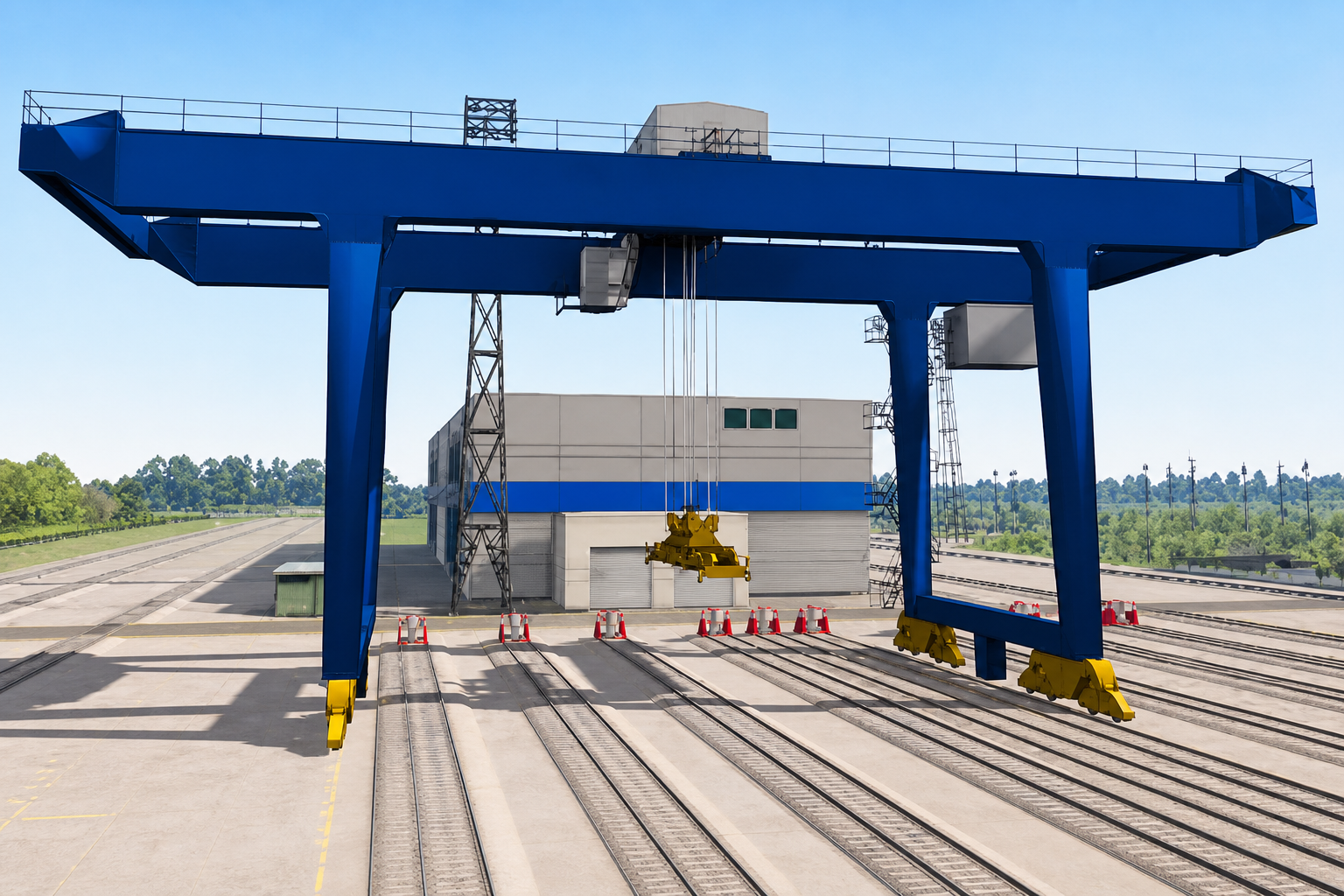
  • MG Double-Girder Cranes for Port Terminals: Load and Runway Requirements

    MG Double-Girder Cranes for Port Terminals: Load and Runway Requirements

    Technical guide

    MG Double-Girder Cranes for Port Terminals: Load and Runway Requirements

    An MG gantry proposal should reflect the cargo and the terminal support conditions. Provide the required load envelope, lifting attachment and travel route so capacity, geometry and runway information can be compared consistently.

    Henan Mine CraneTechnical guide · Updated 2026Crane selection, project scope and operating requirements
    MG Double-Girder Cranes for Port Terminals: Load and Runway Requirements
    Henan Mine Crane lifting equipment
    Project planning notes

    Key points for this crane project.

    1. What Is an MG Double Girder Crane?
    2. MG Crane vs. Other Port Crane Types
    3. Step 1: Define Your Load Profile
    Read the technical guide

    What Is an MG Double Girder Crane?

    An MG double girder crane is a full-gantry crane built with two parallel box-type girder beams spanning between vertical support legs, which travel on ground-level rail tracks. The "MG" designation specifically denotes the double-girder, box-girder-frame gantry configuration, as distinct from single-girder (MH) or semi-gantry designs.

    The double-girder box structure matters because it distributes load across two beams instead of one, which increases stiffness, allows a wider span, and reduces beam deflection under heavy or off-center loads. Main parts of an MG double girder gantry crane include the main girder, support legs, a crane traveling mechanism, and a trolley system.

    While MG double girder gantry cranes are widely used for outdoor cargo handling and heavy lifting, many port terminals also deploy RTG cranes, rail-mounted gantry cranes (RMG), overhead cranes, and electric hoists to meet different material handling requirements across container yards, warehouses, and maintenance facilities.

    MG Crane vs. Other Port Crane Types

    Before locking in an MG gantry crane, confirm it's actually the right category for your terminal. Ports commonly use four crane types, and confusing them leads to over- or under-specification.

    • MG double girder gantry crane:general-purpose, ground-rail-mounted, used for mixed cargo, bulk, break-bulk, and lower-density container yards. Most flexible and typically the most cost-effective for mixed operations.
    • RMG (rail-mounted gantry) crane:a purpose-built variant of the double girder gantry crane, optimized specifically for high-density container stacking in dedicated container terminals, usually with taller legs and automation-ready controls.
    • RTG (rubber-tyred gantry) crane:similar footprint to an MG/RMG crane but mounted on rubber tires instead of rails, trading some stability for mobility across a yard without fixed rail infrastructure.
    • STS (ship-to-shore) crane:a much larger, quay-mounted crane used specifically to load/unload containers directly from vessels; this is a different equipment category entirely and not a substitute for a yard-level MG crane.

    If your terminal handles standardized containers at high density with tight stacking requirements, an RMG variant may outperform a general MG crane. If you need to move equipment around the yard without rail infrastructure, an RTG may fit better. If your operation is mixed cargo bulk, breakbulk, occasional containers a standard MG double girder gantry crane is usually the right and most economical choice.

    Step 1: Define Your Load Profile

    Key questions to answer before you spec capacity:

    1. What is your heaviest single lift? Not the average load, the maximum. Container spreaders, grabs, and hook attachments each add dead weight that eats into usable capacity.
    2. What cargo mix are you handling? Standard ISO containers, bulk commodities via grab, breakbulk via hook, or a mix that requires interchangeable attachments.
    3. What's your growth margin? Specifying exactly to today's heaviest lift leaves no room if cargo mix shifts.

    Rate the crane to your worst-case lift plus margin, not your typical-day average undersizing here is the single most expensive mistake to fix after installation.

    Step 2: Determine Span and Lifting Height

    Span and lifting height are dictated by your yard geometry, not by the crane catalog.

    • Measure yard width:including rail gauge, plus clearance for trucks or vehicles passing beneath the crane legs.
    • Account for stacking height:container yards stacking 3–5 high need more lifting height clearance than single-layer bulk storage.
    • Consider leg configuration:U-type legs create more clearance underneath for large loads and vehicle passage, which matters heavily for container and heavy equipment terminals, while A-type legs are simpler and lower-cost for straightforward yard use.

    Undersizing span forces awkward truck routing around the crane footprint; oversizing span adds unnecessary steel weight, foundation cost, and wind load exposure.

    Step 3: Select the Right Duty/Working Class

    Duty class (also called working class or service class) determines how much wear and stress the crane's mechanisms are engineered to absorb over its design life and it is the single most commonly under-specified factor in port crane procurement.

    Duty class in three systems (FEM / ISO / CMAA):

    IntensityUSA (CMAA)
    Light dutyClass A–B
    Moderate dutyClass C
    Heavy dutyClass D
    Severe/continuous dutyClass E–F

    A1 to A4 are considered light duty, A5 and A6 fall into the medium duty category, A7 is classified as heavy duty, and A8 represents extremely heavy duty under the Chinese classification system commonly used by MG crane manufacturers.

    For port terminals specifically, most operations land in A6 or A7: higher duty classifications are typically applied in harsh environments or where automation and continuous production are prioritized, both of which describe standard port operating conditions. A yard crane used only occasionally for overflow storage might justify A5, but a terminal crane running multiple shifts with frequent lifts should be specified at A6 or above.

    Duty class isn't just a paperwork classification it directly drives maintenance load. A5 cranes might require routine maintenance monthly or quarterly, while A6 cranes need more frequent inspections, often weekly, along with faster wear-out of critical components like wire ropes and brakes. Factor this into staffing and maintenance budgets before you commit to a duty class, not after.

    Step 4: Plan for the Marine Environment

    Port cranes operate in one of the harshest corrosion environments in industrial equipment salt spray, humidity, and temperature swings accelerate steel degradation far faster than an indoor or inland industrial crane experiences.

    Specify these protections up front rather than retrofitting them later:

    • Structural coating system:hot-dip galvanizing or multi-layer epoxy coatings are standard for outdoor port structures; marine-grade high-strength steel with a defined corrosion allowance is preferable for splash-zone exposure.
    • Electrical enclosure rating:offshore and marine equipment typically adopts IP56/IP67 protection grades</cite> for enclosures exposed to spray and washdown; inland equipment can often use a lower rating, but ports generally should not.
    • Cab and control environment:sealed, climate-controlled operator cabs extend both operator comfort and electronics lifespan in humid, salty air.
    • Inspection cadence:corrosion-prone environments need shorter coating inspection intervals than the manufacturer's default schedule; budget for this as an operating cost, not a one-time spec item.

    Skipping marine-grade protection to save on upfront cost is one of the most common false economies in port crane procurement steel replacement and unplanned downtime almost always cost more than the coating premium.

    Step 5: Choose Trolley, Hoist, and Lifting Attachment

    The trolley and hoist configuration determines what the crane can actually pick up, and it should match your cargo mix from Step 1, not be an afterthought.

    • Open winch trolley: an open winch is a common lifting mechanism in double girder gantry cranes, consisting of a winch drum, motor, and gearbox housed in an open frame, which allows easy maintenance and inspection of components. This design suits heavy-duty applications requiring frequent maintenance access.
    • Hoist trolley (crab): a more compact, enclosed alternative better suited to standardized, repetitive lifts with less need for open-frame servicing.
    • Attachment type:hook for general and breakbulk cargo, grab bucket for bulk commodities, container spreader for standardized ISO containers, and electromagnetic lifters for suitable ferrous cargo. Versatility is a key advantage of the MG type crane, as it can be equipped with a variety of lifting devices such as electric hoists, grabs, and disks to meet different operating needs.

    If your terminal genuinely handles mixed cargo types, specify quick-change attachment capability up front retrofitting a single-purpose crane for a second cargo type later is far more expensive than building in flexibility at purchase.

    Step 6: Evaluate Control, Automation, and Safety Systems

    Modern MG port cranes are no longer just structural steel and a motor control and safety systems are now a major differentiator in both productivity and risk management.

    Look for these systems as standard on any port-grade specification:

    • Equipped with variable frequency drive system (VFD), it can realize smooth acceleration and deceleration of equipment, effectively reduce wear and tear of mechanical structure, and greatly improve energy saving efficiency of equipment operation.
    • Equipped with cab local control and remote control dual mode, it can combine the operation vision conditions and site layout, flexibly select the control mode, and adapt to the operation requirements of multiple scenarios.
    • Equipped with anti-collision and sway control intelligent system, effectively avoid the risk of damage caused by cargo collision and shaking, and at the same time relieve the workload of high-frequency repeated operation of operators and improve the stability of operation.
    • Standard overload protection device, lifting height limiter and rail clamp, all-round to meet the terminal open air, windy complex conditions of crane foundation safety operation standards, to build a solid line of operation safety.
    • Equipped with intelligent fault diagnosis and remote monitoring function, it is the mainstream standard configuration of A6/A7 cranes, which can monitor the operation status of equipment in real time, predict maintenance requirements in advance, effectively avoid shutdown problems caused by equipment failure, and ensure operation continuity.

    None of these systems are optional extras for a serious port operation they should be treated as baseline requirements in your procurement specification, not upsell items.

    Cost Factors and Total Cost of Ownership

    Sticker price is a poor way to compare MG crane quotes, because capacity, span, duty class, and attachment type all move price independently and the ongoing maintenance burden of a higher duty class can outweigh the upfront cost difference over the crane's operating life.

    • Main structure cost: The main structure cost of equipment is determined by rated load and span. Increasing the size of the box main girder and increasing the height of the outriggers will increase the amount of steel used and directly increase the overall manufacturing cost of the equipment.
    • High-level operating mode configuration cost: equipment adopts A6/A7 high-level working level supporting parts, including brakes, wire ropes, drive systems and other core accessories. This configuration has a higher initial purchase cost, but is designed for the wear characteristics of port high-frequency and high-intensity operations, and is suitable for port heavy load conditions.
    • Anti-corrosion protection configuration cost: equipment equipped with marine-grade anti-corrosion protection scheme, through high-end marine coating, sealing protection structure, high-quality special steel configuration to strengthen anti-corrosion performance. Although the initial investment is increased, the high steel maintenance and renovation costs in the medium term of equipment use can be effectively avoided.
    • Maintenance inspection costs: high-level cranes need to perform higher-frequency inspection maintenance processes, resulting in continuous manual operation and maintenance costs.
    • Intelligent control and automation configuration cost: inverter drive, remote diagnosis, sway control and other intelligent systems have high investment in the early stage, but they can shorten the operation cycle, reduce downtime, and achieve efficiency and cost reduction throughout the life cycle of the equipment.

    The lowest quote is rarely the lowest total cost once duty class mismatch, corrosion retrofit, or capacity undersizing show up three to five years into operation.

    Common Buyer Mistakes to Avoid

    • The model is selected according to average load instead of maximum operation load, which leads to no safety redundancy and insufficient operation safety under heavy load condition.
    • In order to reduce the initial cost and reduce the working level of equipment, it will accelerate the wear of parts, improve the failure shutdown rate, and significantly increase the full-cycle maintenance cost.
    • Under high salinity and splash corrosion conditions, marine grade corrosion prevention scheme is not configured, which is easy to cause premature corrosion of the structure and cause early maintenance and rectification.
    • The goods category is complicated, but the fixed single accessory is selected, and the adaptability is poor. In the later stage, additional cost shall be invested for transformation and upgrading.
    • The automation and safety system is regarded as optional configuration, which is not included in the basic standard of continuous operation port, and cannot meet the requirements of high-frequency and high-intensity operation.
    • The model category is not confirmed according to the operation scenario, and the high-density container yard is mismatched with the general gantry crane (MG) or the rail-mounted gantry crane (RMG), resulting in insufficient matching degree of equipment working conditions and limited operation efficiency.

    Discuss the crane arrangement for your project.

    An MG gantry proposal should reflect the cargo and the terminal support conditions. Provide the required load envelope, lifting attachment and travel route so capacity, geometry and runway information can be compared consistently. Share the load, available drawings, working cycle and site conditions with Henan Mine Crane so the required configuration and supply boundary can be discussed.

    Related crane configurations

    LH Electric Hoist Double Girder Crane

    View product parameters
    Lifting capacity: 3, 5, 10, 16, 20 tSpan: 10.5–31.5 mLifting height: 6, 9, 12 or 18 m

    Use an LH double-girder bridge with an electric-hoist trolley for workshop lifting, assembly and maintenance. Match the hoist arrangement to the suspended load, hook travel and available building space.

    Double Girder Casting Crane

    View product parameters
    Lifting capacity: 75/20–200/50 tSpan: 10m – 35mLifting height: 6m – 25m

    Lift and transfer molten-metal ladles with a YZ casting crane configured for the full suspended load and casting process. Review ladle interfaces, thermal exposure and the operating sequence together.

    Updated 2026 · Henan Mine Crane