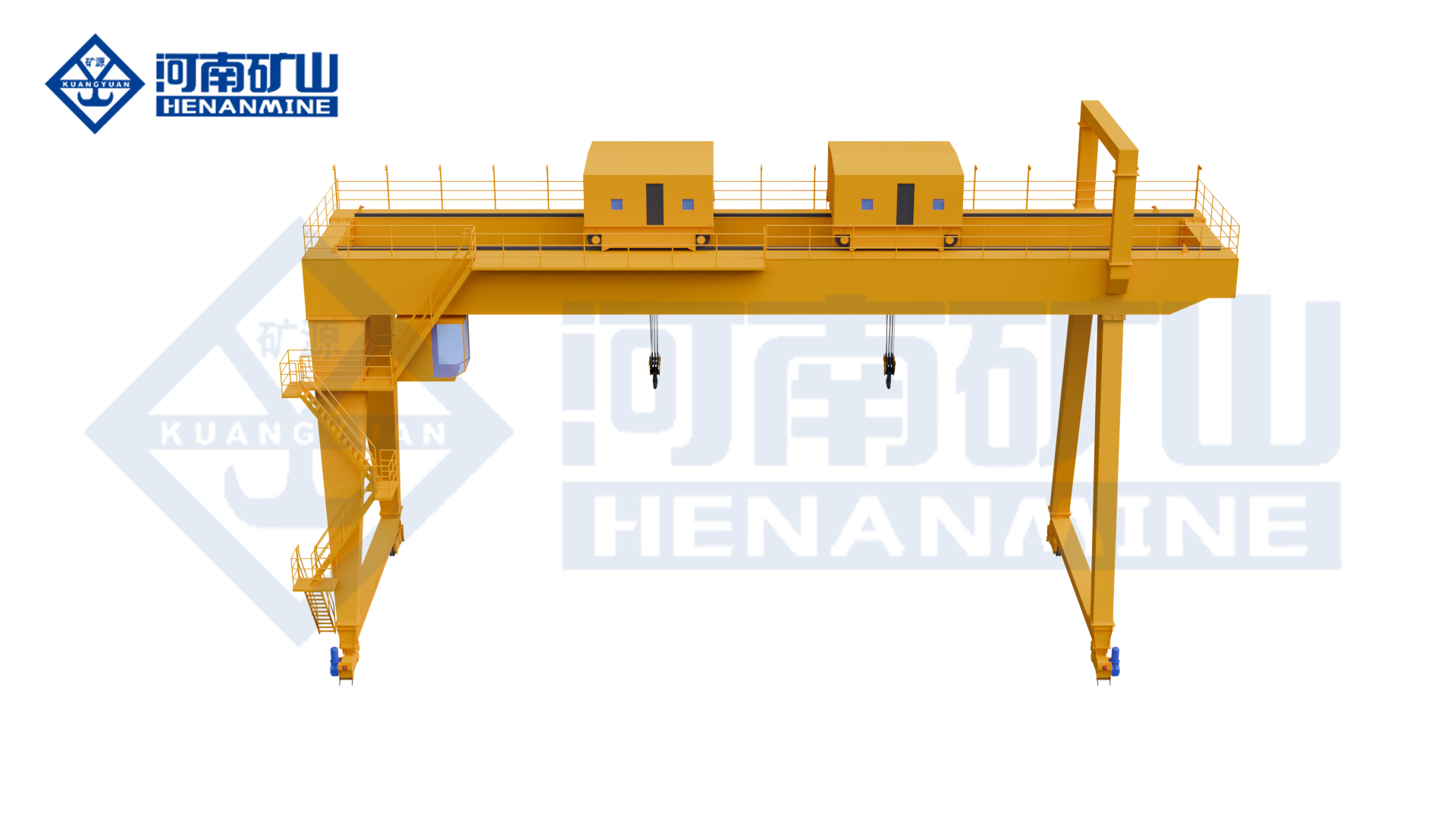
Double-Girder Bridge Cranes for Chemical Plants: Environment and Scope
A chemical plant crane needs the lifting task and local operating conditions defined together. Provide the load, building information and area requirements so the proposed double-girder configuration can be reviewed for the intended service.
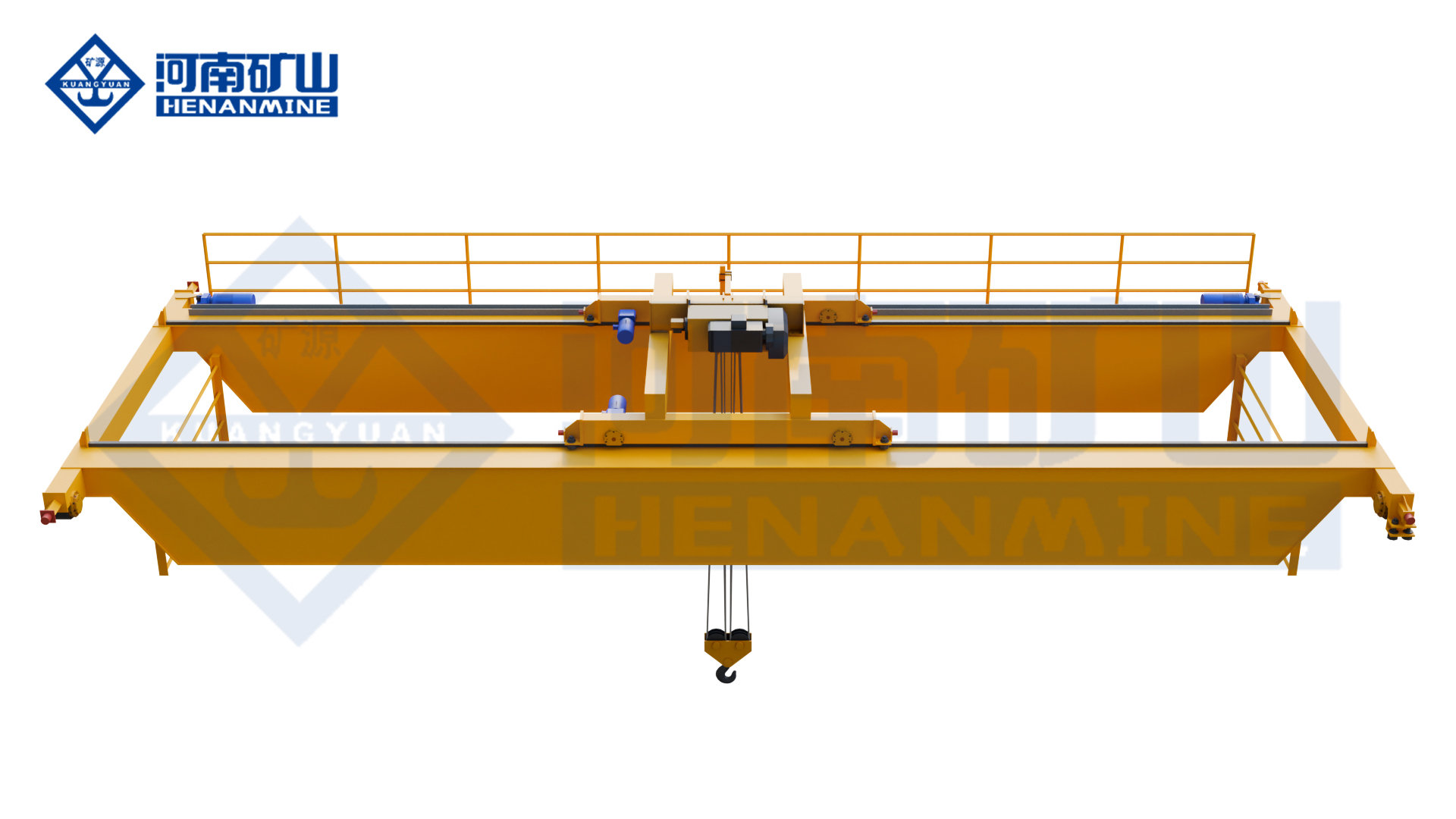
Key points for this crane project.
- Why chemical plants give priority to double girder
- Higher lifting capacity and operational stability
- Larger lifting height
Why chemical plants give priority to double girder overhead travelling crane?
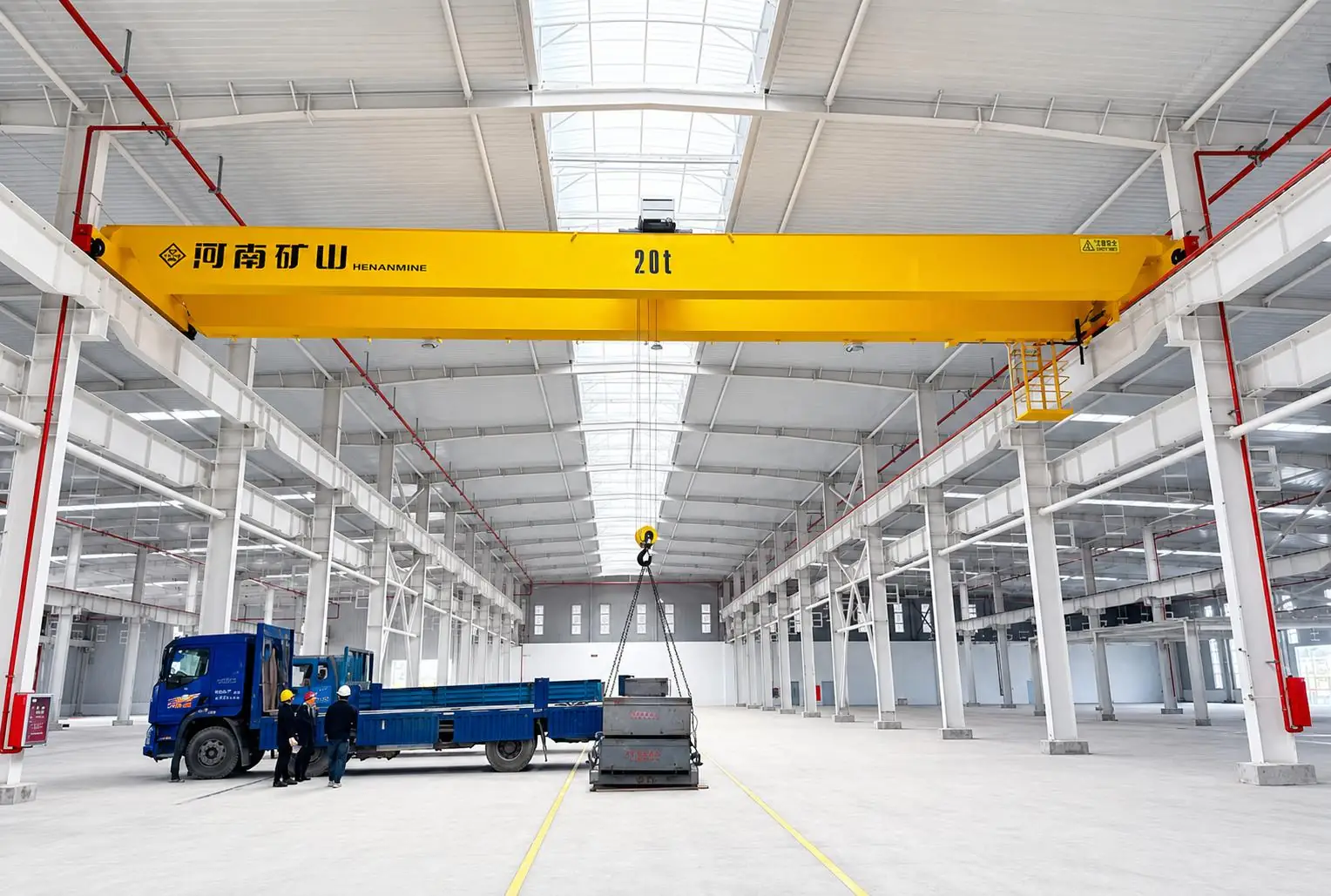
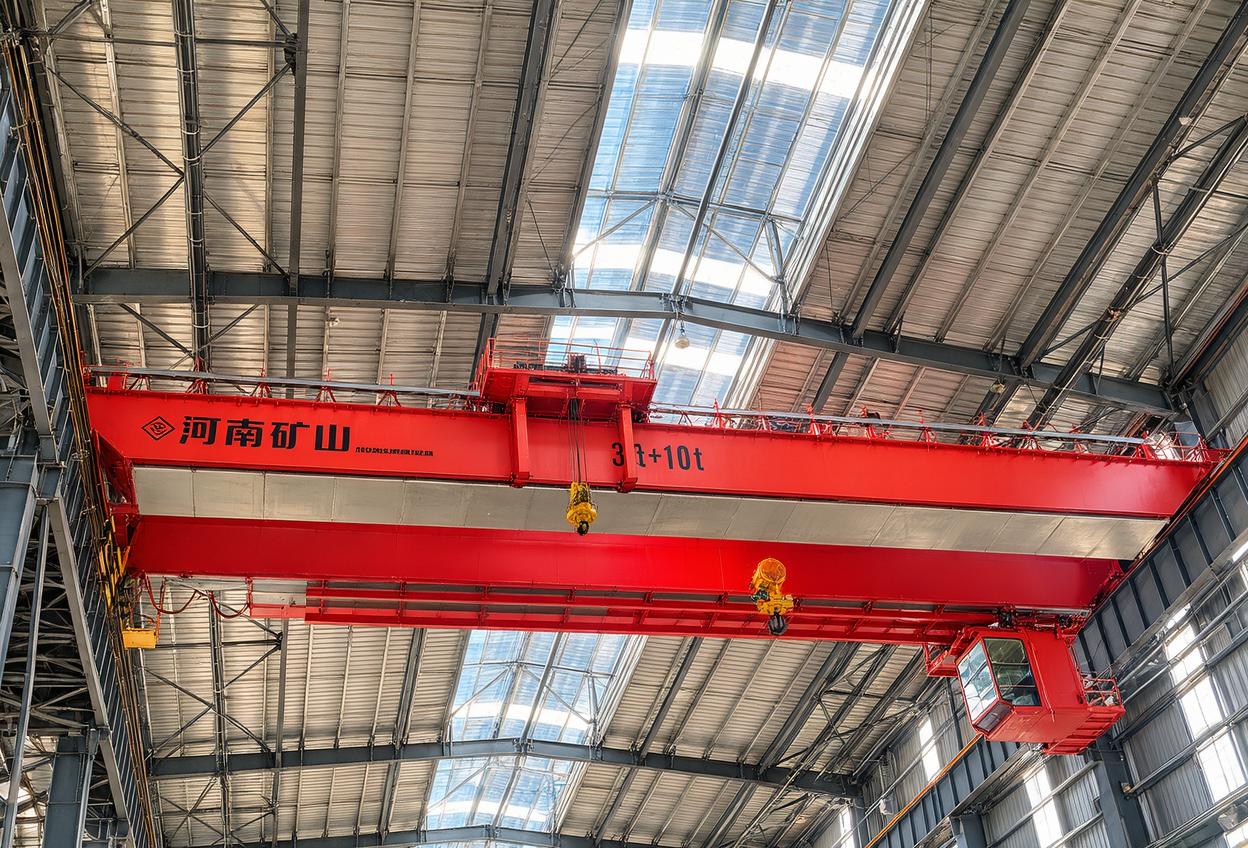
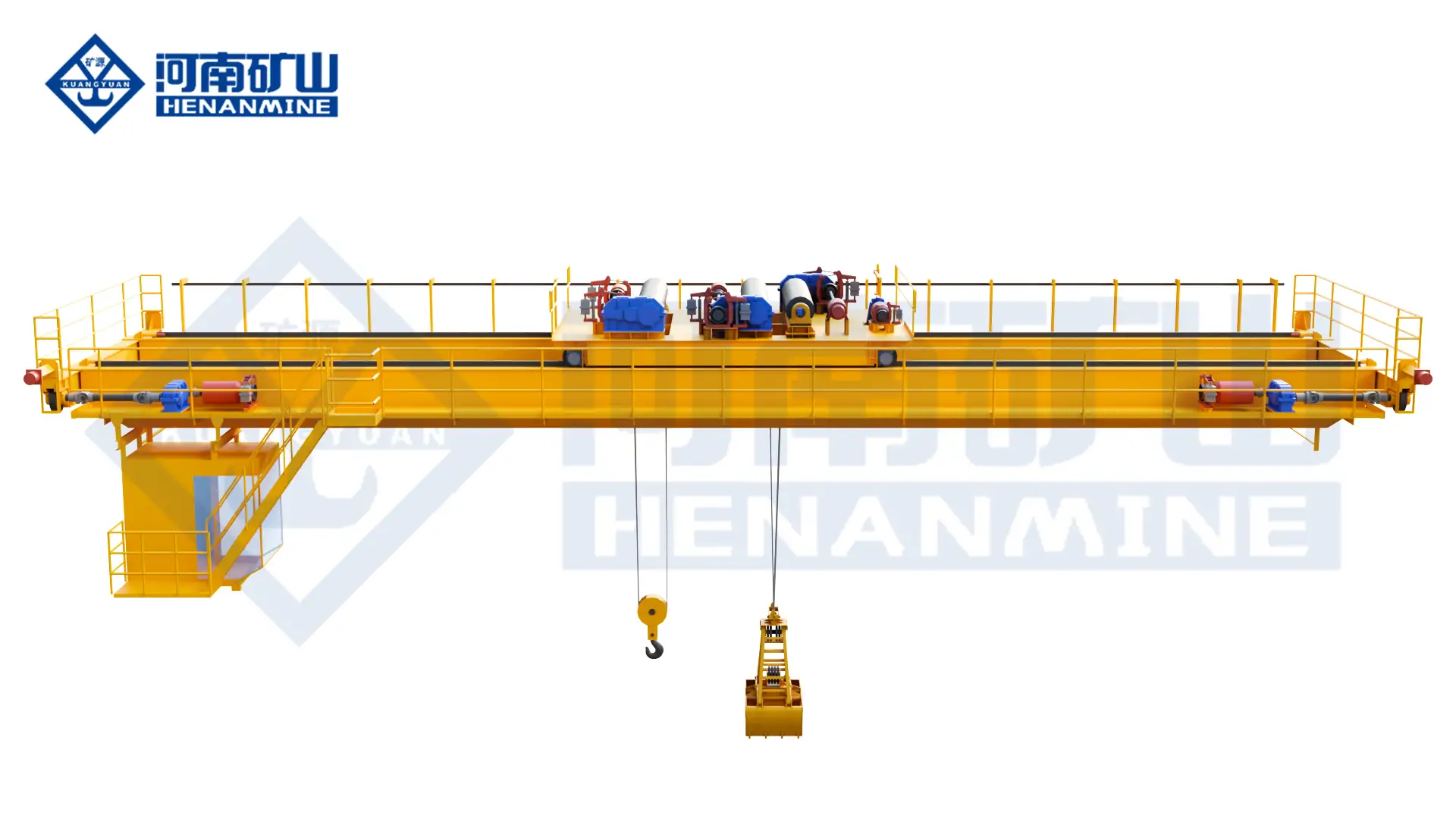
In the chemical industry, double girder overhead travelling crane is always the mainstream choice for equipment lifting and production support operations. This is not a single specification choice, but is determined by the operational needs of chemical plants and the advantages of double girder structure. Compared with single girder cranes, the double girder structure can accurately match the production and overhaul scenarios of chemical plants due to its characteristics of load bearing, height and operational durability.
Higher lifting capacity and operational stability
Chemical plant production is inseparable from all kinds of heavy equipment, from tens of tonnes of reactors, tanks, to large pumps, heat exchangers, the installation, relocation and overhaul of these equipment, the crane needs to have enough lifting capacity. The main girder of double girder overhead travelling crane adopts double track design, which has much higher loading capacity than single girder equipment of the same specification, and can easily cope with the lifting demand of heavy chemical equipment.
At the same time, the double girder structure is more rigid, less deflection during heavy load operation, and no obvious deformation of the main girder will occur. When lifting heavy equipment, the swaying amplitude of the equipment can be effectively controlled, which not only ensures the smoothness of the lifting process, but also avoids the collision of the equipment with the pipelines and frames of the plant, which is especially important for chemical plants with dense pipelines.
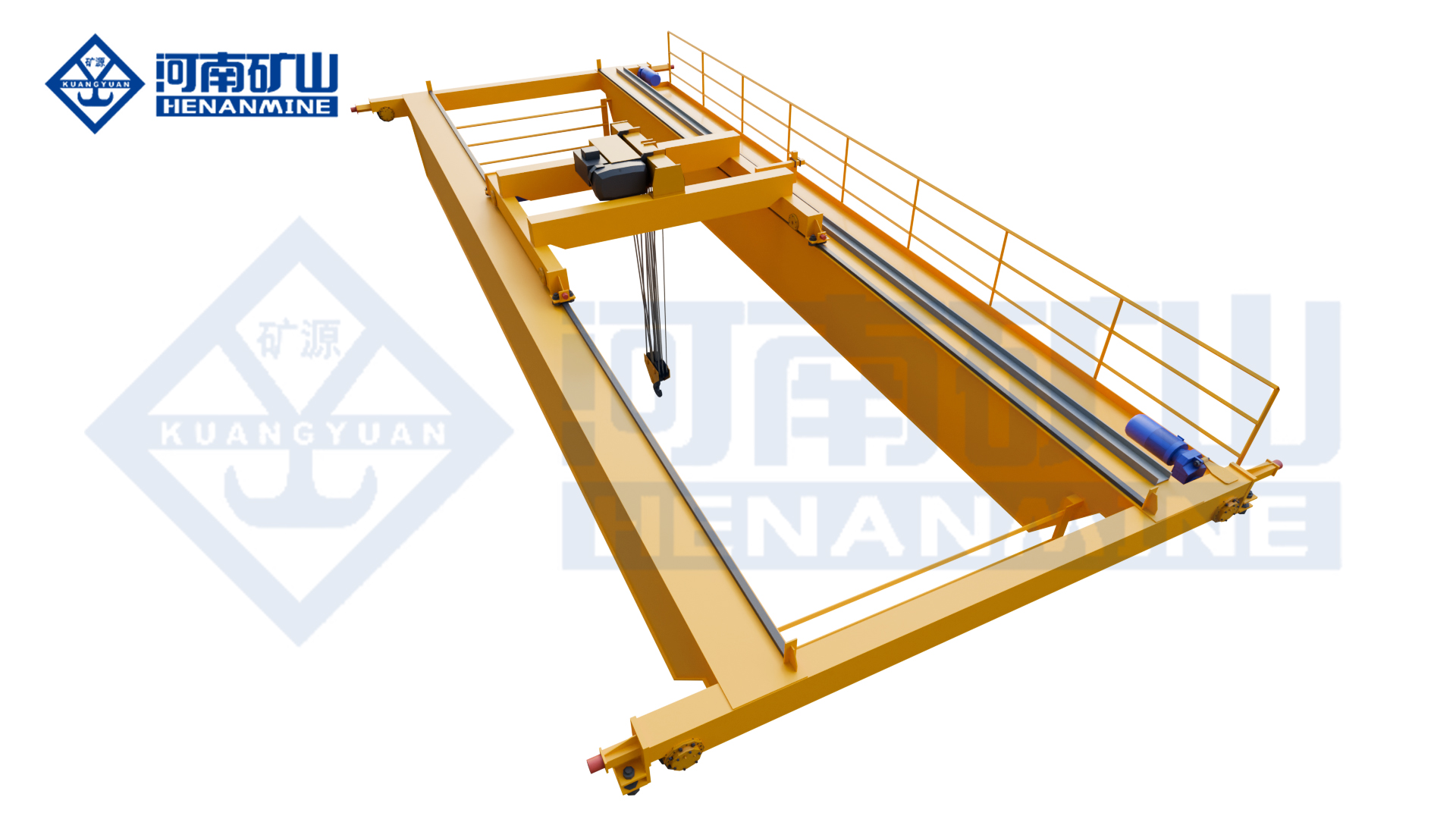
Larger lifting height
The layout of chemical plants is mostly multi-storey structure, the production equipment may be distributed on different floors of the process platform, the equipment in the storage tank area and reaction area is also mostly installed in the vertical position, which has higher requirements on the lifting height of the crane’s hook. The structural design of double girder overhead travelling crane can achieve greater effective lifting height, and the operating range of the hook can cover the lifting points of multi-storey process platforms and high vertical equipment.
Whether it is lifting heavy equipment from the ground to the second-floor process platform or overhauling and hoisting storage tanks at high altitude, the double girder overhead travelling crane’s lifting height meets the demand without the need to build additional lifting brackets, which not only improves the operational efficiency, but also reduces the safety hazards of on-site operation.
Suitable for heavy-duty continuous operation
The production of chemical plants is continuous, and equipment maintenance is mostly planned for short-term operations, which requires cranes to be able to respond to lifting needs at any time, and to withstand frequent start-stop operations. At the same time, part of the chemical production chain of equipment maintenance frequency is high, cranes need to participate in various types of long-term small maintenance lifting, operating load is not low.
The overall structure and core components of the double girder overhead travelling crane are designed according to the heavy duty operation standard, which can adapt to the high frequency of lifting operations in chemical plants, whether it is the production of supporting equipment shifting, or unexpected equipment overhaul, can run stably, and provide reliable lifting support for the continuous production of the plant. Henan Mine Crane’s double girder equipment is equipped with motors and brakes in accordance with heavy-duty operation standards, which can easily cope with the needs of 24-hour continuous operation in chemical plant areas, and has outstanding batch delivery capacity, with an annual production capacity of 500-600 units of various types of overhead travelling cranes.
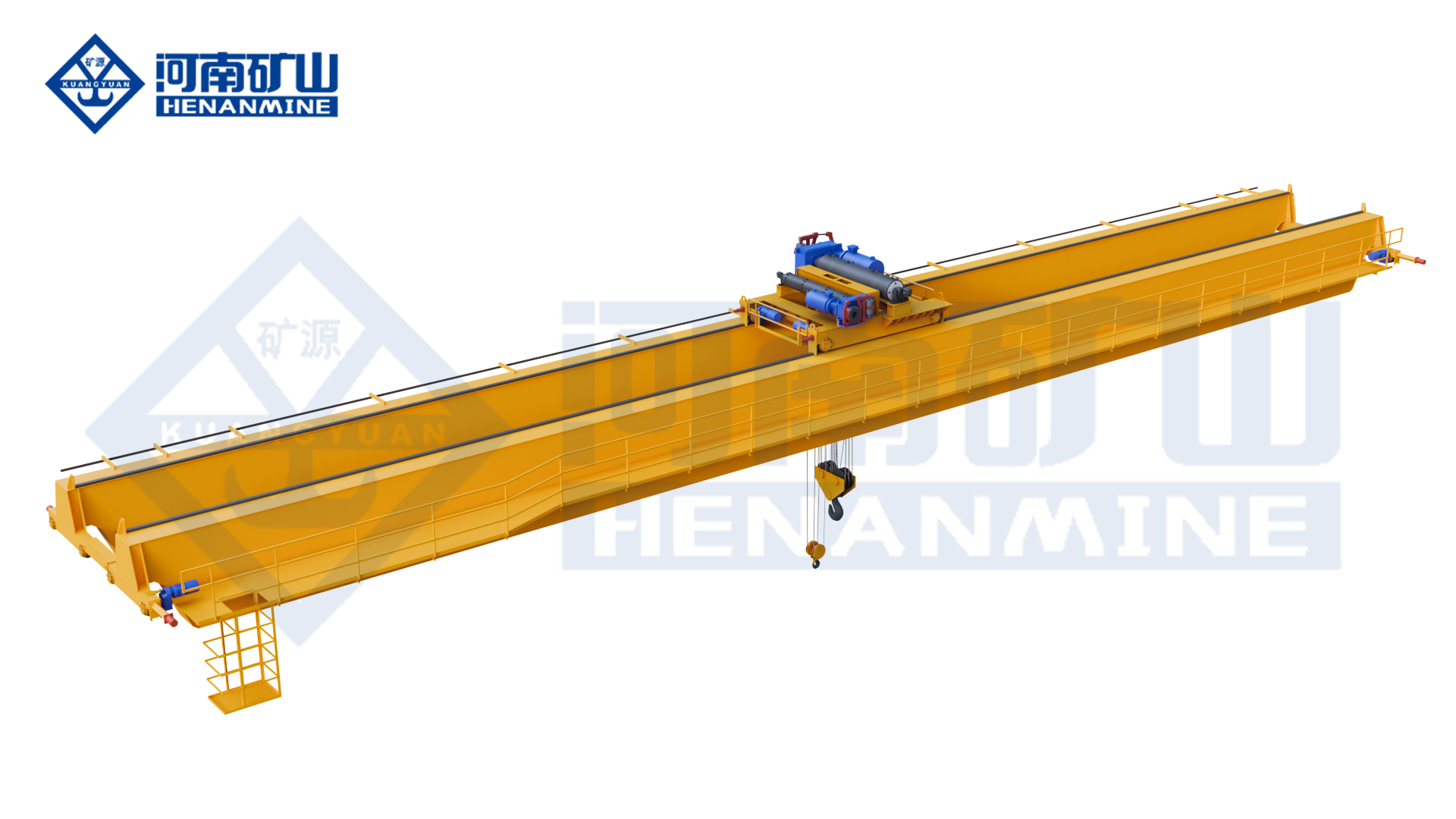
Step 1 – Define the actual working environment of the plant
The first step in the selection process is not to look at the equipment parameters, but to understand the operating environment of the chemical plant. The environment of chemical production varies greatly, with different workshops having different hazard levels, corrosion, temperature and humidity. Only by accurately defining the environmental characteristics can the subsequent selection of equipment be accurately adapted to avoid a ‘one size fits all’ selection error.
Classification of hazardous areas
One of the core risks of chemical plants is flammable and explosive, need to be based on the type of plant media, according to ATEX or local equivalent standards to complete the classification of hazardous areas, mainly divided into Zone 1 and Zone 2, the explosion-proof requirements of the two types of areas have clear differences.
Zone 1 is the area where explosive gas environment occurs continuously or exists for a long time, such as the reaction kettle area of petrochemical plants and the periphery of oil and gas transmission pipelines; Zone 2 is the area where explosive gas environment occurs occasionally, such as the loading and unloading area of the chemical raw material warehouse. In addition to the risk of gas explosion, coal chemical industry, powder chemical industry and other workshops there is also a risk of dust explosion, this type of regional equipment selection also need to take into account the requirements of dust explosion-proof, cannot only be designed according to the gas explosion-proof standards.
Henan Mine Crane cranes in undertaking chemical projects, will first arrange for professional and technical team to visit the survey, to assist customers to complete the classification of hazardous areas, combined with the type of media to formulate targeted explosion-proof programme, to avoid the selection deviation caused by the inability to assess the environment.
Comprehensive assessment of corrosive environment
Corrosive is another major test of the chemical environment on the crane, need to be clear in advance of the plant crane operating area in contact with the type and concentration of the media. Pickling workshop, electroplating workshop will be exposed to high concentrations of acid, alkali media, organic chemical workshop will be exposed to various types of organic solvents, and many chemical workshops will have a continuous chemical vapour, media droplet emissions, which will cause corrosion of the crane’s metal structure and electrical components.
Different corrosive media corresponding to different protection programmes, such as strong acidic environment need to choose acid-resistant corrosion-resistant materials and coatings, organic solvent environment should consider the solvent resistance of the coating, only accurate assessment of the degree of corrosion, in order to avoid subsequent local corrosion of equipment, structural damage problems.
Consideration of temperature and humidity conditions
Chemical plant part of the process area there are high temperature conditions, such as ammonia, steelmaking supporting chemical workshop reaction area, the ambient temperature is much higher than the conventional industrial areas, the crane’s electrical components, lubrication system needs to adapt to the high temperature environment, to avoid aging of components, lubrication failure.
At the same time, but also to distinguish between the crane’s operating area is indoor or outdoor, outdoor tanks, raw material loading and unloading area, will be affected by rain and snow, day and night temperature difference, humidity fluctuations, metal structure is prone to oxidation and corrosion, and indoor workshop humidity is relatively stable, but there may be a media condensation, also need to do a good job of moisture protection.
Step 2 – Determine the explosion-proof design requirements of the equipment
Explosion-proof is one of the core requirements of the chemical plant crane selection, especially in Zone 1, Zone 2 hazardous areas of the crane, explosion-proof design needs to cover all electrical and mechanical components, any one of the details of the negligence, may produce sparks triggered by the explosion, explosion-proof design is the core from the source to eliminate the generation and accumulation of sparks.
The whole process of electrical explosion-proof components configuration
The crane’s electrical system is the main source of sparks, double girder overhead travelling crane used in hazardous areas, all electrical components must be selected explosion-proof models, and explosion-proof level needs to match the regional hazard level. Explosion-proof motor is the core, and it should be of explosion-proof or safety-increasing type to avoid spark leakage when the motor is running; the control cabinet adopts explosion-proof design, and the internal wiring arrangement is standardised to prevent sparks from short-circuit of the wiring.
Limit switches, travel switches and other electrical components that are prone to mechanical friction, you need to use spark-proof models, even lighting, junction boxes and such small parts, cannot miss the explosion-proof design. The explosion-proof grade of all electrical components should be unified, and there should be no ‘high-grade parts with low-grade accessories’ to ensure the overall explosion-proof effect of the electrical system.
corrosion resistant double girder crane for chemical plants
Special design for anti-static and grounding
Static electricity accumulation is a source of sparks easily ignored in the chemical environment, cranes in the operation process, the car body and the track, the friction between the grab and the equipment will generate static electricity, if you can’t conductive removal in time, the static electricity accumulated to a certain extent will produce static sparks, lead to gas or dust.
Therefore, the crane needs to design a perfect anti-static grounding system, set up between the car body and the track special grounding brush, to ensure that the static electricity can be conducted in real time; cable with shielded layer of special cables, cable protection system to do a good job of sealing, to avoid cable breakage caused by the leakage of static electricity. At the same time, the metal structure of the crane to ensure electrical connectivity, to eliminate the dead space of static electricity accumulation.
Match the relevant explosion-proof certification standards
All certifications need to cover the whole equipment of the crane, rather than a single component, to ensure that the explosion-proof design of the equipment meets the standard requirements.
Discuss the crane arrangement for your project.
A chemical plant crane needs the lifting task and local operating conditions defined together. Provide the load, building information and area requirements so the proposed double-girder configuration can be reviewed for the intended service. Share the load, available drawings, working cycle and site conditions with Henan Mine Crane so the required configuration and supply boundary can be discussed.
Related crane configurations
LH Electric Hoist Double Girder Crane
View product parametersUse an LH double-girder bridge with an electric-hoist trolley for workshop lifting, assembly and maintenance. Match the hoist arrangement to the suspended load, hook travel and available building space.
Double Girder Casting Crane
View product parametersLift and transfer molten-metal ladles with a YZ casting crane configured for the full suspended load and casting process. Review ladle interfaces, thermal exposure and the operating sequence together.
Updated 2026 · Henan Mine Crane