Engineering · Manufacturing · Project support
info@hnksglobal.comWhatsApp +86 18836207779 ↗

Blog

  • Gantry Crane Selection: Start with the Site and Required Coverage

    Gantry Crane Selection: Start with the Site and Required Coverage

    Technical guide

    Gantry Crane Selection: Start with the Site and Required Coverage

    The supporting surface and handling route help determine which gantry concept is practical. Define the load, working envelope and travel requirements before developing capacity and configuration details.
    Henan Mine CraneTechnical guide · Updated 2026Crane selection, project scope and operating requirements
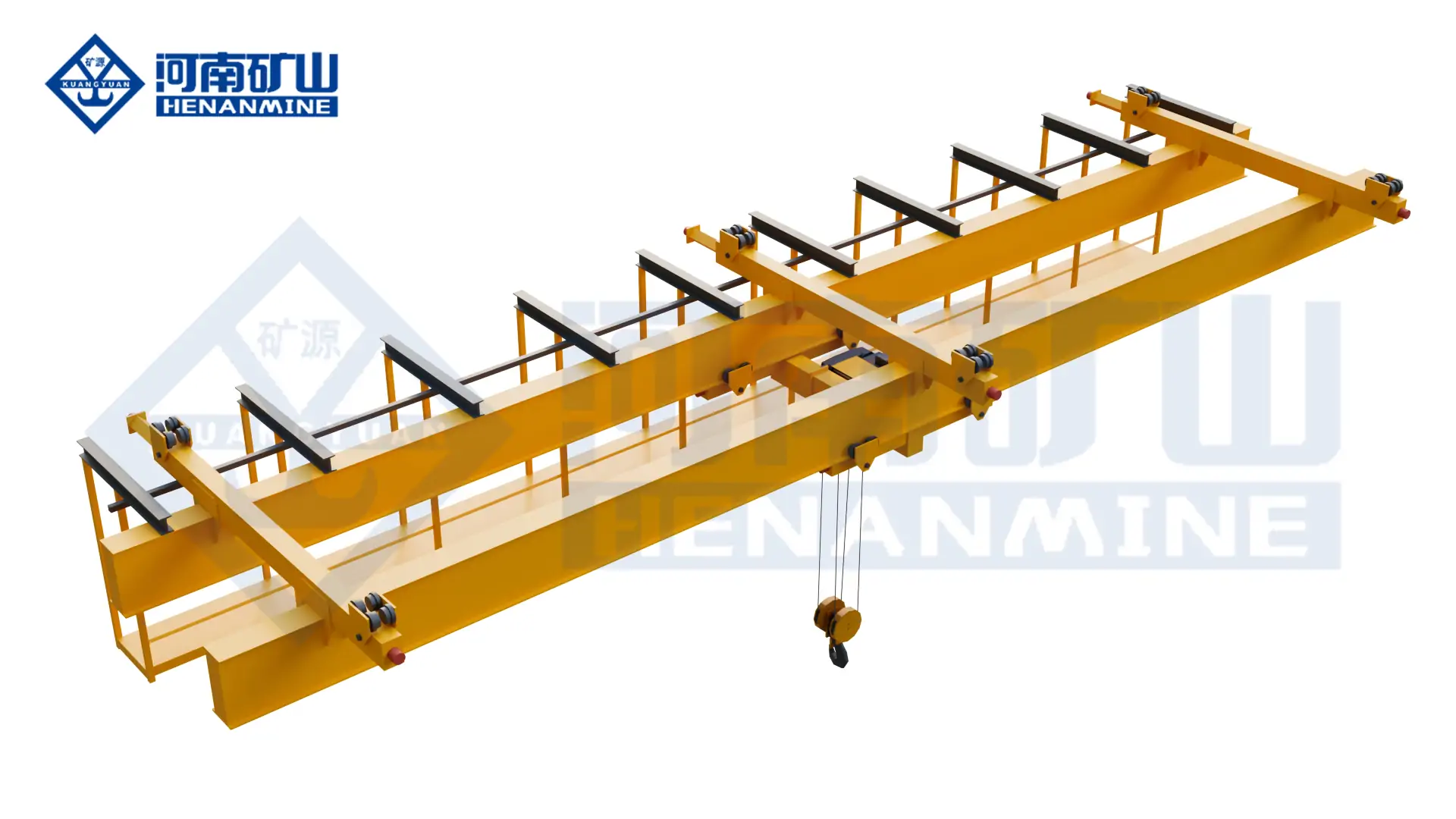
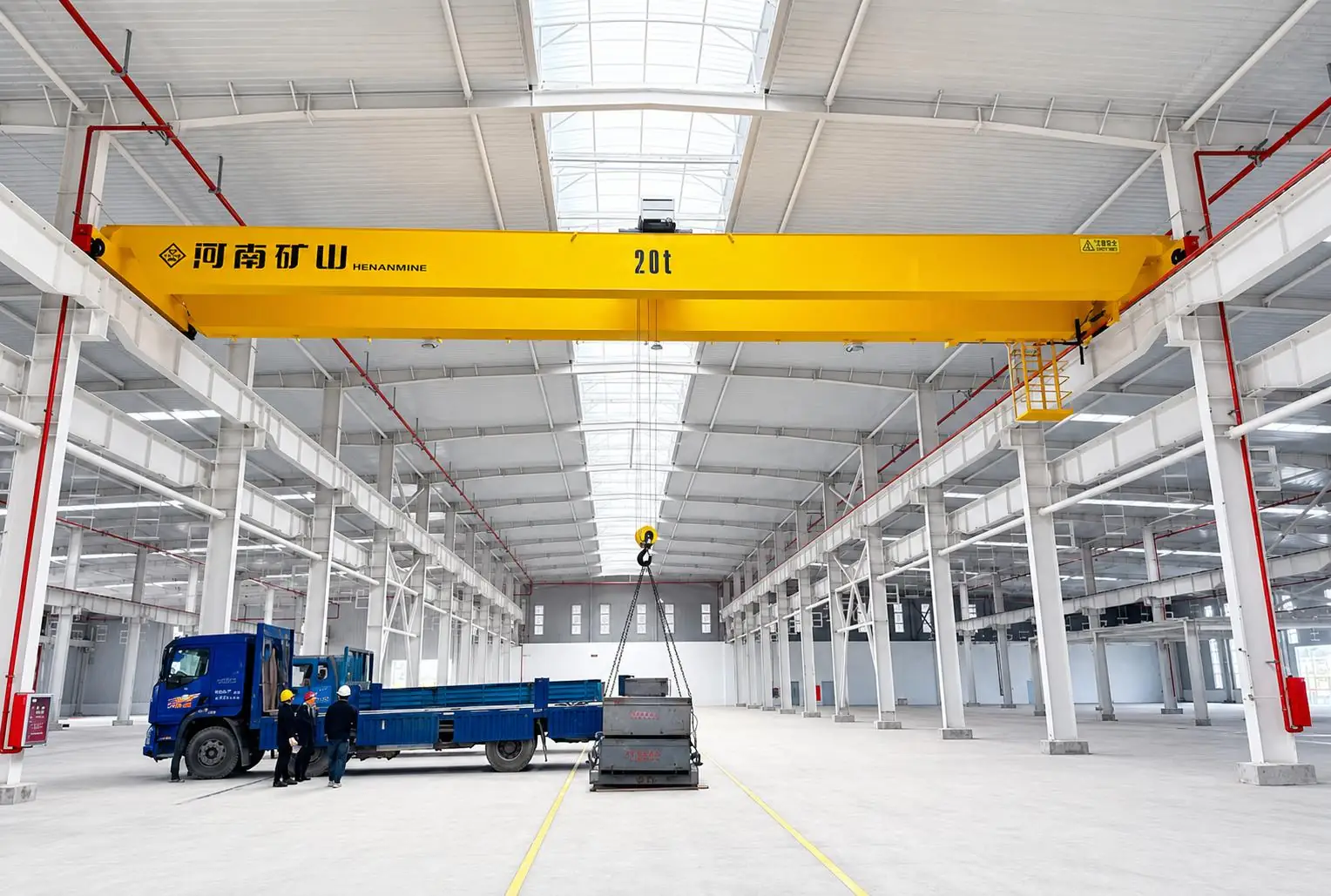
    Henan Mine Crane overhead crane inside a workshop bay
    Henan Mine Crane overhead crane inside a workshop bay
    Project planning notes

    Key points for this crane project.

    1. How to choose the right gantry crane: a complete
    2. Indoor use vs outdoor use
    3. Load characteristics
    Read the technical guide

    How to choose the right gantry crane: a complete guide for industrial buyers

    Gantry cranes are the core material handling equipment in factories, ports and other scenarios, and they are relied upon for the transfer of heavy parts, container stacking and other operations. The right equipment for the right conditions can ensure smooth operations and avoid material backlogs and schedule delays.

    Indoor use vs outdoor use

    The use of the scene is the basis for selection, indoor and outdoor work on the gantry crane requirements are significantly different. Outdoor need to face the wind, rain, extreme temperature and humidity and other natural environmental tests.

    Open area (such as ports, yards) wind load will affect the stability of the equipment, need to strengthen the wind design to prevent swaying and tipping; rain, snow, ultraviolet rays are easy to corrode the structure and electrical components, outdoor equipment protection level needs to be higher.

    Indoor environmental stability, combined with plant height, column spacing and other space constraints to determine the span and lifting height. Electrical protection, indoor can be adjusted according to the standard of dust, humidity, outdoor need to use waterproof, dustproof, low temperature resistant electrical components, to protect the normal operation of bad weather.

    Load characteristics

    Load is the core basis for selection of gantry cranes, and its type, weight and size directly determine the core parameters of the equipment. Conventional handling load weight needs to be based on the actual maximum load, not empirical estimation, which is the key to determine the rated lifting capacity.

    Load size is also critical, such as handling large plates, long steel components, need to match the spreader adaptability and operating radius, to avoid exceeding the effective operating range of the equipment.

    Long, irregular or eccentric loads are prone to center of gravity shift, affecting the stability and force balance of the equipment. If such loads are handled frequently, additional stabilizers and adapted spreaders are required to ensure operational safety.

    Working frequency and working cycle

    The working frequency of the gantry crane directly affects the loss and life of the equipment. Light load conditions, short operating time, low load frequency, the structural strength of the equipment and components of low wear resistance requirements.

    Heavy-duty working conditions, the need for long continuous operation, frequent start and stop, equipment component wear and tear intensity. If you choose light load level equipment, it is prone to premature failure of components and frequent failures.

    Work frequency is also associated with maintenance costs, heavy-duty equipment requires more frequent maintenance, replacement of wear parts. Procurement selection needs to plan ahead for this part of the long-term investment, to avoid only focusing on the initial procurement costs and ignore the subsequent maintenance pressure.

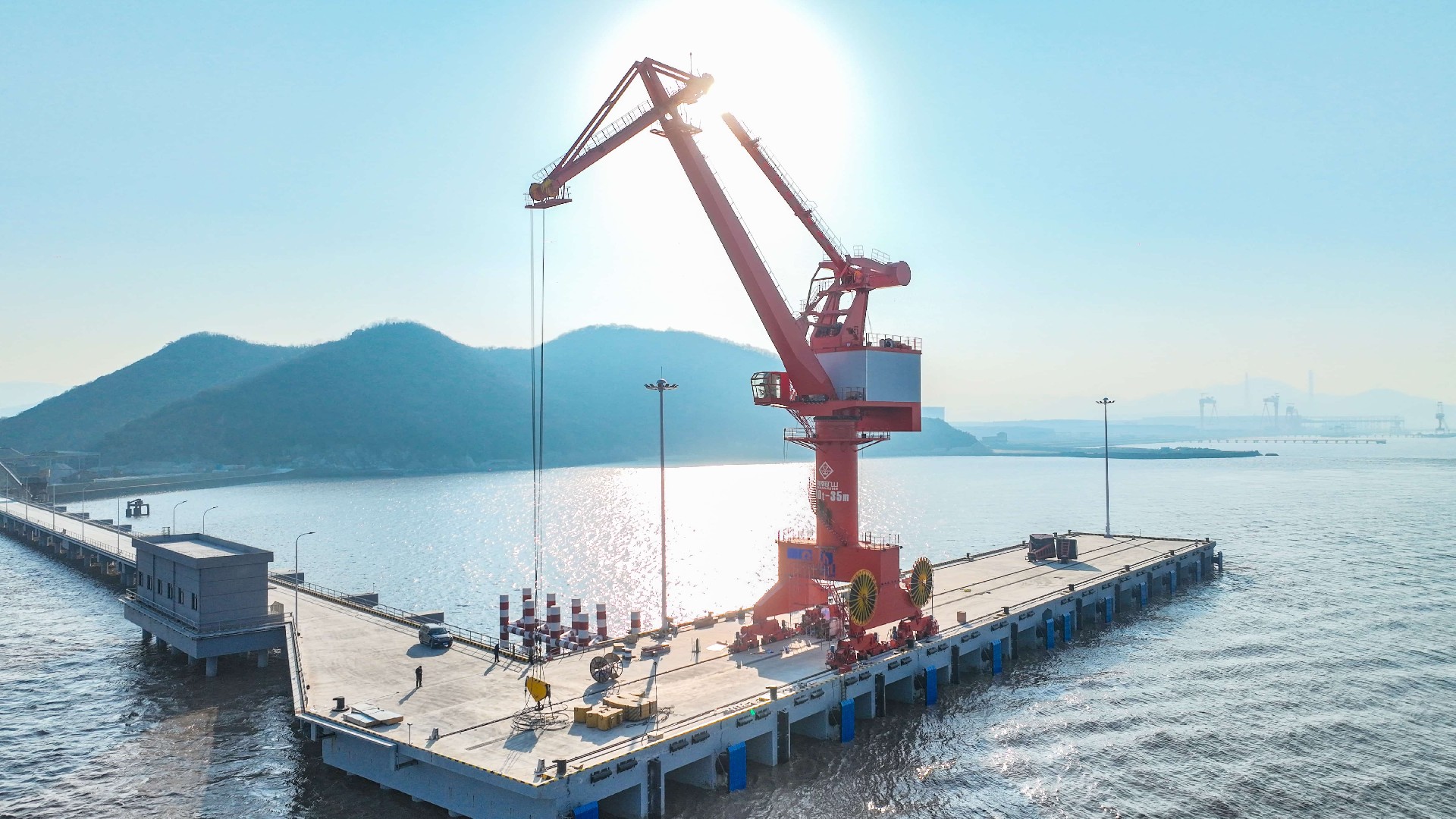
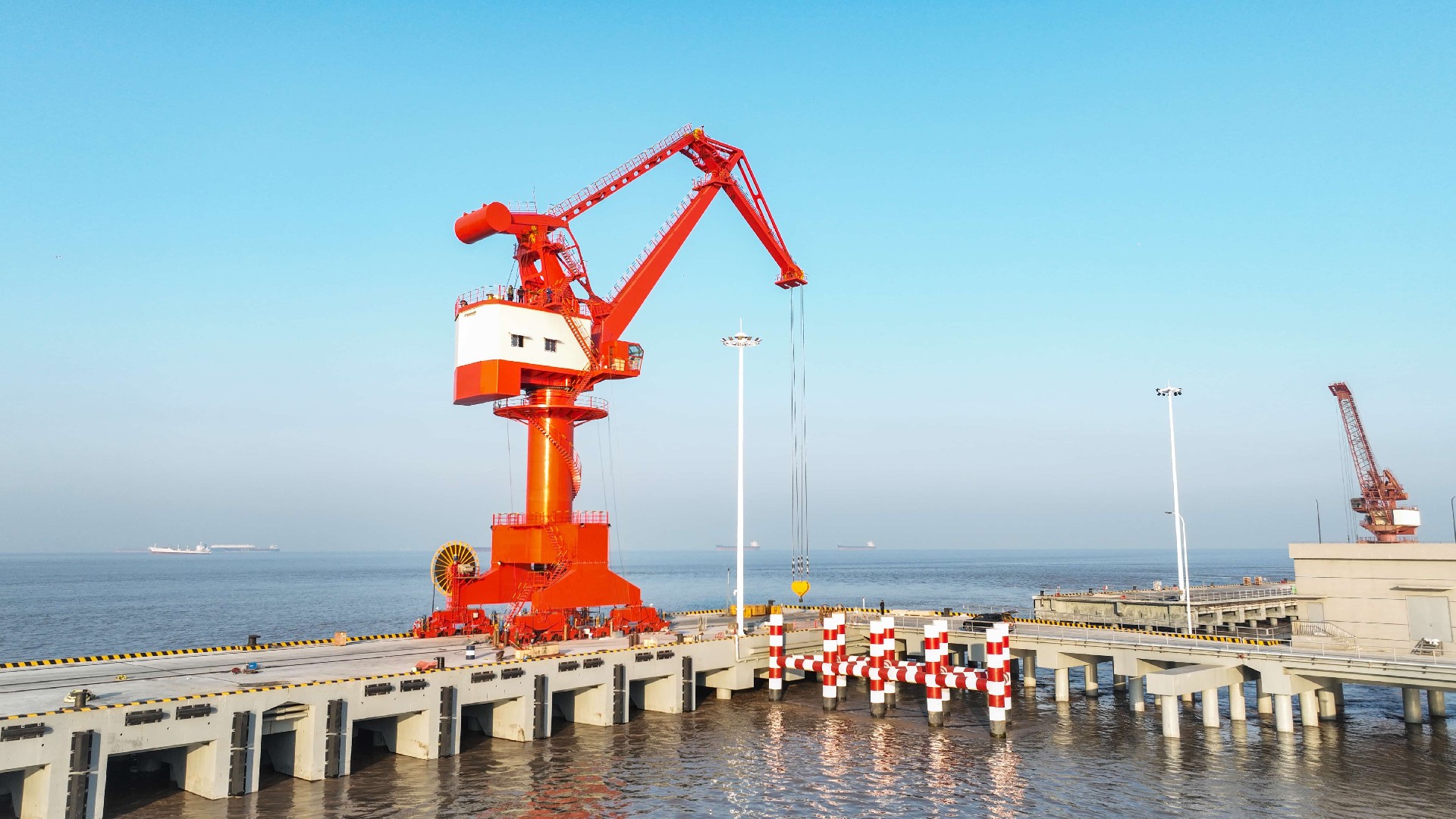
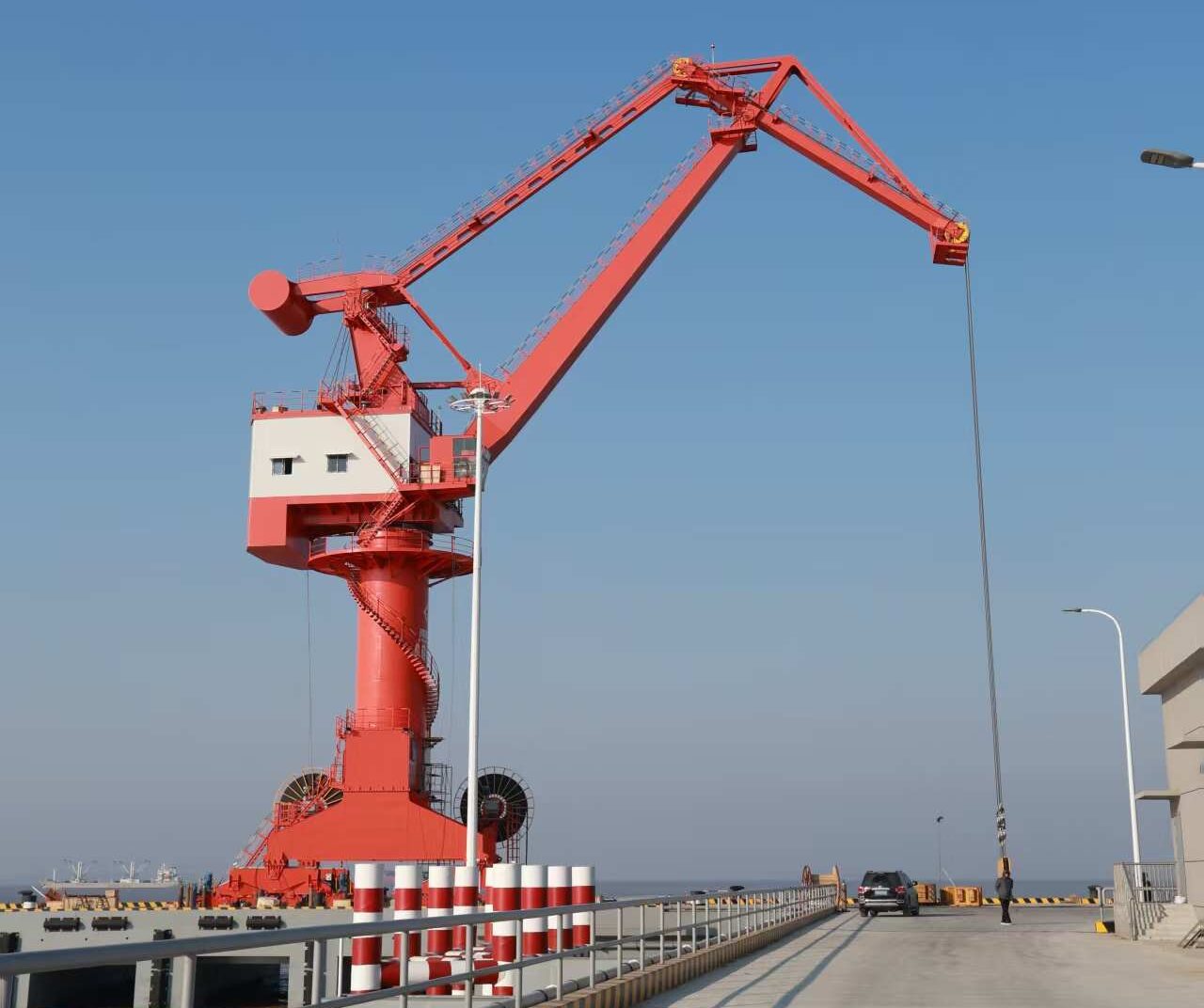
    Henan Mine Crane crane rail-mounted container gantry crane

    Single girder gantry crane vs double girder gantry crane

    The core difference between single girder and double girder gantry cranes is in the structural design, which directly determines its load capacity and applicable scenarios. Single girder main girder is a single steel girder, simple structure, light weight, low cost, suitable for small and medium-sized lifting capacity, low operating frequency scenes, such as small and medium-sized factories, material handling, warehouse loading and unloading.

    The double girder main girder consists of two steel beams, which has a more stable structure and stronger carrying capacity, and is suitable for large lifting capacity and high working level operation, such as harbor and heavy machinery factory heavy load handling. However, it weighs more, occupies more space, and costs more for procurement and subsequent installation and maintenance.

    In terms of maintenance, single girder structure is simple, troubleshooting and parts replacement are convenient, and maintenance cost is low; double girder structure is complex, with many parts, and maintenance of lifting and traveling mechanism requires professional technology, which takes longer time and costs more. Purchasers need to combine their own load demand and budget to weigh the choice.

    Full Gantry Crane vs Semi-Gantry Crane

    Full gantry cranes are equipped with outriggers on both sides, relying on the ground track support, the operating range is not limited by the space on both sides, suitable for open yards, large workshops and other open spaces, the advantage of strong stability, a large operating radius, and all-round handling of materials.

    Semi-portal cranes are equipped with outriggers on one side only, and the other side runs on the track relying on the columns or walls of the plant, which is suitable for the space-restricted scenarios such as obstacles on one side of the workshop and insufficient width of the site, and it can fully utilize the existing site without large-scale reconstruction.

    Selection needs to be combined with the site layout and the scope of operation: the site is open without obvious obstacles, the need for a wide range of operations, choose the full gantry; site restrictions, choose the semi-gantry is more suitable, but also saves site costs.

    The MGB semi-gantry crane manufactured by Henan Mine Crane

    Rail-mounted gantry crane (RMG) vs. tire-mounted gantry crane (RTG)

    The core difference between rail-mounted (RMG) and tire-mounted (RTG) gantry cranes is in the way they travel, which directly determines operational flexibility. The rail type runs along a fixed track with a fixed route, which is suitable for scenes where the operation site is stable and does not require frequent position adjustments, such as fixed yard areas in harbors, and special corridors for production lines in factories.

    Rail type has stable operation, strong load bearing, high precision, controllable energy consumption and maintenance cost, but lack of flexibility, difficult to adjust the operation range after the track is laid, and high cost of subsequent site modification.

    Tire type does not need a fixed track, can be moved freely, high flexibility, suitable for multi-area handling, temporary work site and other scenes. However, its carrying capacity is slightly lower, the stability of operation is greatly affected by the level of the ground, tire wear and tear, maintenance costs are relatively high.

    Lifting capacity

    Lifting capacity is the core technical parameters of the gantry crane, selection needs to be clear about the relationship between the rated lifting capacity and the actual workload, the actual operation cannot be long-term full-load operation, need to reserve a safety margin.

    At the same time, we need to consider the future expansion of production capacity, reserve load capacity in advance to avoid short-term repeated purchases.

    Do not blindly pursue high rated lifting capacity, otherwise it will increase the procurement cost, improve the site infrastructure requirements, resulting in waste of resources. Need to combine the current load and future planning, reasonable determination of lifting capacity parameters.

    Span and lifting height

    The span and lifting height should be determined in conjunction with the site layout and operational requirements. Span is the distance between the legs at both ends of the main girder, which should be adapted to the width of the site, the width of the material stacking and the operating radius.

    Lifting height is the limit distance between the top and bottom of the hook, which needs to consider the height of material stacking, working platform and the structure of the equipment itself.

    Selection requires on-site measurement of the site dimensions, combined with the operational scenarios to accurately determine the parameters. Too big or too small parameters will affect the efficiency.

    Working level (A5-A8)

    Gantry crane working level (A5-A8) is divided according to the working frequency and load duration rate, which directly reflects the operational strength and durability. The higher the level, the stronger the structural strength, wear resistance, etc., suitable for long-time high-intensity operation.

    Grade A5 is suitable for intermittent light to medium operations in small factories; Grade A6-A7 is suitable for continuous operations of medium to high intensity such as harbor loading and unloading and production lines in machinery factories; Grade A8 is suitable for frequent operations of high intensity such as steel ladle transfer in steel mills.

    Hoisting, trolley and large vehicle running speeds

    Lifting, trolley and large vehicle running speed are directly related to operational efficiency and safety.

    Selection should be combined with the load characteristics and operational requirements, balancing speed and safety.

    The MN Multi-Function Gantry Crane manufactured by Henan Mine Crane

    Environment and special working conditions

    Environmental factors have a great impact on the life of the gantry crane and operational safety, and different working conditions need to match the corresponding protective capacity in order to ensure the stable operation of the equipment.

    Outdoor operations need to focus on the wind load, open, high-altitude scenes need to strengthen the wind-resistant design and equipped with windproof devices; extreme temperature environments, the need to use electrical components and oils suitable for high and low temperatures, to prevent component failure.

    Seaside, chemical plants and other corrosive scenes, need to use stainless steel, weathering steel and other corrosion-resistant materials, and anti-corrosion coating on the surface of the equipment to slow down the corrosion of components.

    High dust, high humidity environment need to strengthen the equipment sealing protection, selection of high protection level components and increase the frequency of cleaning and maintenance; flammable and explosive environments need to use explosion-proof equipment, explosion-proof standards to prevent safety accidents.

    Discuss the crane arrangement for your project.

    The supporting surface and handling route help determine which gantry concept is practical. Define the load, working envelope and travel requirements before developing capacity and configuration details. Share the load, available drawings, working cycle and site conditions with Henan Mine Crane so the required configuration and supply boundary can be discussed.

    Related crane configurations

    Explore crane product families and technical parameters ↗

    Updated 2026 · Henan Mine Crane
  • Gantry Cranes for Material Handling: Compare the Complete Work Cycle

    Gantry Cranes for Material Handling: Compare the Complete Work Cycle

    Technical guide

    Gantry Cranes for Material Handling: Compare the Complete Work Cycle

    Different handling tasks can require different movements even at the same nominal load. Map pick-up, travel and set-down operations to compare the proposed crane arrangement with the actual material flow.

    Henan Mine CraneTechnical guide · Updated 2026Crane selection, project scope and operating requirements
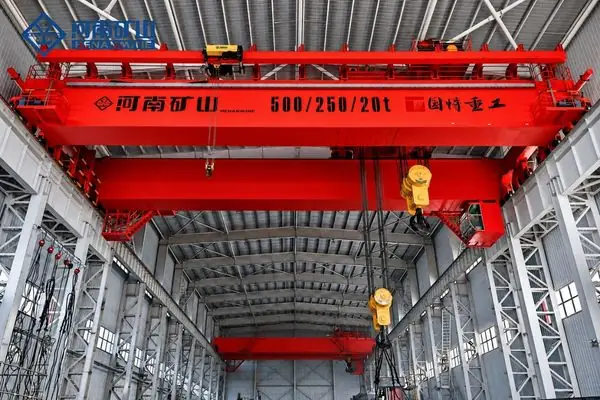
    Henan Mine Crane overhead crane inside a workshop bay
    Henan Mine Crane overhead crane inside a workshop bay
    Project planning notes

    Key points for this crane project.

    1. Define Your Material Handling Requirements
    2. Determine the Required Gantry Crane Capacity and
    3. Choose the Right Gantry Crane Configuration
    Read the technical guide

    Define Your Material Handling Requirements

    The first step in the selection of gantry cranes is not to look at the equipment parameters, but to accurately sort out the requirements of their own handling conditions. All equipment parameters, model configuration, and function customization must revolve around the actual material handling scenario. The vague definition of requirements is the primary cause of selection errors. Only by accurately targeting the core requirements can the problems of poor equipment adaptability and mismatched production capacity be avoided from the root cause.

    Load type and maximum weight

    First of all, it is necessary to clarify the types of materials to be transported daily, including solid finished products, steel profiles, containers, sand and gravel materials, precision equipment, heavy molds, etc. The shape, center of gravity, and hoisting methods of different materials vary greatly, which directly affects the structural design and accessory selection of gantry cranes. For example, precision equipment handling requires a smooth and non-shaking lifting configuration, bulk material handling needs to be equipped with special grapple, suction cups and other auxiliary aids, and heavy steel handling requires higher load-bearing rigidity of the main girder.

    At the same time, the maximum lifting weight must be approved, and a reasonable safety margin must be reserved. Many enterprises only select the type according to the weight of conventional materials, ignoring the occasional heavy-duty material hoisting requirements, which leads to overload operation of the equipment in the later stage, deformation of the main girder, and motor burning, greatly shortening the service life of the equipment.

    Lifting frequency and workflow

    The hoisting frequency directly determines the working level and working condition adaptability of Henan Mine Crane manufactured gantry cranes, which is the core basis for distinguishing light, medium and heavy work equipment. If it is intermittent light-duty handling in the workshop, the number of hoisting times per day is small and the intermittent time is long, you can choose a lightweight conventional model. If it is supporting the factory assembly line, high-frequency turnover in warehousing, continuous loading and unloading at the port, hundreds of hoisting times a day, and continuous operation for a long time, a special model for heavy-duty work must be selected.

    In addition, it is necessary to sort out the complete operating process, clarify the whole process of lifting, translation, landing, and stacking of materials, and determine whether special operating modes such as fixed-point hoisting, reciprocating handling, and cross-regional transportation are required, so as to provide a basis for the subsequent span, travel speed, and control mode selection, so as to ensure that the equipment is perfectly adapted to the rhythm of the production line and improve the overall operating efficiency.

    Material movement requirements

    The material movement requirements of different scenes vary significantly. Some scenes only need to be hoisted vertically, some need to move horizontally, vertically, and horizontally simultaneously, and some scenes need to be accurately aligned and fine-tuned. Positioning. For example, mold installation and equipment maintenance scenarios require high-precision fine-tuning and movement. The storage and stacking scene requires a wide range of covered movement. At the same time, it is necessary to clarify the distance, height, and positioning accuracy requirements of the material movement, whether it needs to move smoothly at a uniform speed, and whether it needs a low-speed fretting function. These requirements directly determine the travel mechanism, speed regulation system, and limit device configuration of Henan Mine Crane manufactured crane to ensure accurate, efficient, and collision-free material handling, and adapt to the needs of refined operations.

    Determine the Required Gantry Crane Capacity and Dimensions

    After clarifying the basic handling requirements, the core parameters of the equipment need to be accurately approved, including core hard indicators such as lifting capacity, span, lifting height, and operating area size. The deviation of the parameters will directly lead to the inability of the equipment to be installed, insufficient operating range, and waste of space. It is the most critical quantitative link in the selection process.

    Lifting capacity

    The lifting capacity of the gantry crane is the rated lifting weight, which is the most core parameter of the equipment. The unit is tons (t), and the common specifications cover the full range of 1t-200t. The core principle of selection is to select the type reasonably according to the actual working conditions, and reserve certain safety surplus parameters in advance, not only to avoid safety accidents caused by overloading of small-tonnage equipment, but also to prevent waste of costs caused by idle high-capacity equipment.

    Light-load intermittent operation scenarios (workshop small-piece handling, equipment maintenance), optional 1t-10t light gantry crane. Medium-load conventional operation scenarios (steel processing, storage and material turnover), suitable for 10t-50t medium-sized gantry cranes. For heavy-duty continuous operation scenarios (heavy-duty manufacturing, port loading and unloading, hoisting of large components), heavy-duty gantry cranes above 50t are required. At the same time, combined with the weight of the material, the weight of the hoisting aids, and the loss of eccentric hoisting, the rated load is comprehensively approved to ensure the safety and redundancy of the operation.

    Span and lifting height

    The span refers to the distance between the centers of the outriggers on both sides of the gantry crane, which determines the horizontal operation coverage of the equipment, and strictly matches the width of the site, the width of the material stacking, and the size of the operation channel. If the span selection is too small, it will lead to incomplete job coverage, and if it is too large, it will increase the weight of the equipment and the procurement cost, and it will also reduce the operating stability of the equipment. Lifting height refers to the vertical distance from the lowest position of the hook to the highest lifting position. When selecting the type, you cannot only refer to the height of the material itself.

    Working area and clearance

    It is necessary to comprehensively survey the on-site operating area, including the available space on the ground, the travel passage of the equipment, the safe distance on both sides, the height of the top clearance, and the size of the track installation area. During the operation of the gantry crane, the outriggers, main beams, and travel mechanisms need to maintain a standard safe net distance from obstacles such as plant columns, walls, equipment, and pipelines to eliminate hidden dangers of operating collisions.

    Choose the Right Gantry Crane Configuration

    Gantry cranes have a variety of structural configurations, and the applicable scenarios, operating flexibility, load-bearing capacity, and cost performance of different configurations vary greatly. Choosing the appropriate structure based on its own working conditions and site conditions can greatly improve the practicality of equipment and reduce operation and maintenance costs. It is the core link of accurate selection.

    Fixed vs. mobile gantry cranes

    Fixed gantry cranes need to be fixed and installed on embedded tracks or concrete foundations. The whole machine has strong stability, high load-bearing upper limit, and high operating accuracy. It is suitable for scenarios where the work area is fixed, there is no need for frequent displacement, and long-term continuous operation, such as fixed production line hoisting, fixed-point stacking of large warehouses, and construction of fixed work areas on construction sites. It is the mainstream choice for industrial heavy-duty scenarios. The mobile gantry crane is equipped with rubber travel wheels, no embedded track is required, and the whole machine can be shifted manually or electrically. It is flexible in deployment, easy to install, and can operate across sites.

    Single-girder vs. double-girder gantry cranes

    Henan Mine Crane manufactured single-girder gantry crane has a simple structure, light weight, low cost, low energy consumption, and convenient operation and maintenance. It is mainly suitable for 1t-32t medium and light load operations, indoor and outdoor scenes with medium operating frequency and simple working conditions, such as small workshops, warehousing, and light material handling. It is extremely cost-effective and is a common choice for small and medium-sized enterprises. The double-beam gantry crane adopts a double-main girder structure, which has stronger rigidity, greater load-bearing capacity, smoother operation, and excellent fatigue resistance. It can be adapted to high-capacity loads above 32t, supports high-frequency, long-term, and high-intensity continuous operation, and has a wider range of lifting heights and spans.

    Full gantry vs. semi-gantry configurations

    The full gantry crane adopts a double-sided symmetrical outrigger structure. The whole machine has balanced force, excellent stability, and comprehensive operation coverage. It is not limited by the side conditions of the site. It can independently complete the material handling of the whole area, and is suitable for all kinds of open outdoor venues, large factories, and operating scenarios without wall support. It has the strongest versatility. The semi-gantry crane is an asymmetric structure with one-sided legs and one-sided support on the wall/column of the plant. The biggest advantage is to save site space and adapt to indoor and outdoor scenes where the site is narrow, there is a building structure on one side, and the passage is limited, such as the workshop side work area and the material stacking area against the wall.

    Consider the Operating Environment and Duty Cycle

    The operating environment and working system are the key hidden factors that affect the service life, operating stability and maintenance costs of gantry cranes. Most enterprise selection only focuses on parameters and structure, ignoring environmental adaptability, which leads to corrosion, aging, and frequent failures of equipment in the short term, greatly shortening the service life. Therefore, it is necessary to customize the adaptation plan in combination with the on-site environment.

    Indoor vs. outdoor applications

    The indoor operating environment is relatively stable, free of wind, rain, sand, exposure, rain and snow erosion. Gantry cranes with conventional anti-corrosion configuration and electronic control by ordinary motors can be selected. They are mainly lightweight, cost-effective, and low-noise operation, and are suitable for workshops, factories, indoor storage and other scenarios. Outdoor operations need to face wind and rain, exposure, rain and snow, and changes in temperature difference between day and night, and special outdoor adaptation treatment must be done. The whole equipment needs to be coated with outdoor anticorrosive coating, and the motors, electronic controls, and electrical accessories need to be specially designed for rain, dust, and sun protection. At the same time, they are equipped with windproof anchoring devices, track stops, and lightning protection devices to prevent equipment sliding in windy weather, electrical short circuits, structural corrosion, etc., and are suitable for outdoor scenes such as construction sites, ports, and open-air yards.

    Lifting frequency and duty requirements

    The working system of lifting equipment (A1-A8 level) corresponds to different lifting frequencies and load continuity rates, which directly determines the durability and service life of the equipment. The A1-A3 light-level work system is suitable for low-frequency, intermittent, and short-term operations, and is suitable for equipment maintenance and scattered hoisting. The A4-A6 intermediate work system is suitable for daily normalization and intermediate frequency continuous operation, and is the mainstream selection for general industrial scenarios. The A7-A8 heavy-duty work system is suitable for ports, heavy-duty assembly lines, and high-frequency continuous operation scenarios at full load. When selecting models, it is strictly forbidden to replace heavy-duty equipment with light-duty equipment. Long-term high-frequency and heavy-duty operation will cause fatigue deformation of the main girder, overheating and burning of the motor, and accelerated wear of the reducer, greatly increasing the probability of failure and operation and maintenance costs.

    Temperature, wind, dust, and corrosive conditions

    Special and harsh working conditions need to be specially customized and adapted. High-temperature motors and electronic controls need to be selected for high-temperature environments, and heat dissipation devices are equipped to avoid high-temperature equipment downtime. The low-temperature and cold environment requires the use of low-temperature antifreeze steel and antifreeze lubricating grease to prevent the structure from cracking and the accessories from getting stuck. In dusty and gravel scenes, the electrical system, travel mechanism, and transmission components need to be fully enclosed and dust-proof to prevent dust from entering the interior of the equipment and causing caton, short circuit, and wear. In chemical industry, coastal salt spray, and humid corrosive environments, heavy anticorrosive spraying, galvanized anti-rust treatment, and corrosion-resistant accessories are selected to enhance the corrosion resistance of the equipment and extend the service life of the equipment.

    Select the Right Hoist and Crane Controls

    The lifting hoist mechanism and control system are the core execution components of Henan Mine Crane manufactured gantry crane, which directly determine the operating accuracy, smooth operation, ease of operation and safety of the equipment. High-quality accessories matching and control solutions can greatly improve operating efficiency, reduce operating difficulty, and reduce safety issues caused by human operation errors.

    Hoist type and lifting speed

    Commonly used hoist mechanisms are divided into two categories: electric hoists and standard hoists. The electric hoist has a compact structure, light weight and energy saving, and stable start and stop. It is suitable for 1t-32t medium and light gantry cranes with moderate lifting speed and is suitable for smooth hoisting of conventional materials. The heavy-duty hoist has strong load-bearing capacity, sufficient power, and good overload resistance. It is suitable for heavy-duty gantry cranes above 50t, which can meet the needs of stable lifting of high-capacity heavy objects and continuous heavy-duty operation. The lifting speed can be customized according to the needs of the operation, and the standard uniform lifting speed is selected for conventional material handling.

    Trolley and crane travel requirements

    It is necessary to combine the translation needs of material handling to determine the speed and accuracy of the trolley travel horizontally and the whole machine travel vertically. Under normal working conditions, fixed-speed travel can be used to meet the needs. For refined operation scenarios such as assembly line matching, precise stacking, and equipment alignment, it is recommended to be equipped with a frequency conversion travel system to achieve smooth start-stop and stepless speed regulation to eliminate material shaking and offset caused by start-stop inertia. At the same time, according to the coverage of the operation, the travel stroke and track length are determined, and the adapted travel wheels, transmission mechanisms, and limit cushioning devices are selected to ensure the smooth operation of the equipment throughout the process, with precise limits and cushioning in place to avoid collision and impact damage to equipment and materials.

    Pendant, remote, or cabin control

    At present, the mainstream control methods of gantry cranes are divided into three types, which are adapted to different operating scenarios. The handheld button box is simple to operate, low cost, and fits close-range conventional operations. It is the basic configuration of small and medium-sized gantry cranes. The wireless remote control control is flexible and the wireless circuit is bound. The operator can stay away from the hazardous area of the operation and observe the hoisting status from multiple angles. The safety is higher, and it is suitable for most indoor and outdoor general scenes. The cab has a wide field of vision and comfortable operation. It is equipped with professional control handles and instruments.

    What to Check Before Ordering a Gantry Crane

    After completing the selection of models, parameters, and configurations, the final verification before ordering is the last level to avoid procurement errors and ensure the adaptation of equipment on the ground. Most companies have problems such as equipment cannot be installed, working conditions are not matched, and there is no after-sales guarantee after purchasing. They all ignore the preliminary verification link. The following six core points must be confirmed one by one.

    Applicable safety standards

    Gantry cranes are special equipment. The production, manufacturing, installation and acceptance must strictly follow national and industry safety standards. Before ordering, it is necessary to confirm that the manufacturer's products comply with the current lifting machinery safety specifications, and are equipped with a full set of safety protection devices such as overload limit, height limit, stroke limit, buffer, windproof device, and emergency brake.

    Site conditions and installation requirements

    Accurately survey the ground bearing capacity, basic construction conditions, track installation conditions, power supply conditions, site clearance size, and surrounding obstacle distribution of the installation site in advance. Confirm in advance whether it is necessary to do concrete foundations, embedded tracks, retrofit power supply lines, and clean up obstacles, and clarify the installation and construction conditions, construction period, and site adaptability. At the same time, confirm the equipment installation process, commissioning standards, and entry conditions with the manufacturer, and prepare the site in advance to avoid problems such as inability to install, rework, and delay production after the equipment arrives, saving time and transformation costs.

    Future material handling needs

    The purchase of gantry cranes cannot only meet the current operating needs. It needs to be combined with the company's capacity expansion, material upgrading, and site expansion planning in the next 1-5 years to reserve equipment upgrade margin. If there are needs for material weight gain, expansion of operation range, increase in hoisting frequency, and new operation scenarios in the future, tonnage, span, and height margins can be appropriately reserved during the selection process to support later functional upgrades and parameter adjustments. Predicting the long-term demand in advance can effectively avoid the problem of insufficient equipment production capacity and secondary procurement and replacement in the short term, significantly reduce the input cost of enterprise equipment, and improve the long-term cost performance of equipment.

    Henan Mine Crane

    The selection of gantry cranes is not a simple parameter matching, but a combined systematic engineering.

    As a professional large-scale crane manufacturer, Henan Mine Crane Factory has a full range of customized gantry crane production capacity, which can provide standardized and customized one-stop material handling solutions for all scenarios such as indoor and outdoor, light and heavy loads, special corrosion, high and low temperature, and high-frequency operations.

    Discuss the crane arrangement for your project.

    Different handling tasks can require different movements even at the same nominal load. Map pick-up, travel and set-down operations to compare the proposed crane arrangement with the actual material flow. Share the load, available drawings, working cycle and site conditions with Henan Mine Crane so the required configuration and supply boundary can be discussed.

    Related crane configurations

    Explore crane product families and technical parameters ↗

    Updated 2026 · Henan Mine Crane
  • Steel Mill Crane Selection by Process: Load, Attachment and Exposure

    Steel Mill Crane Selection by Process: Load, Attachment and Exposure

    Technical guide

    Steel Mill Crane Selection by Process: Load, Attachment and Exposure

    Steelmaking, rolling and maintenance tasks should be specified separately. Identify the handled material and lifting appliance, then describe the operating cycle and environmental exposure for each crane duty.

    Henan Mine CraneTechnical guide · Updated 2026Crane selection, project scope and operating requirements
    Steel Mill Crane Selection by Process: Load, Attachment and Exposure
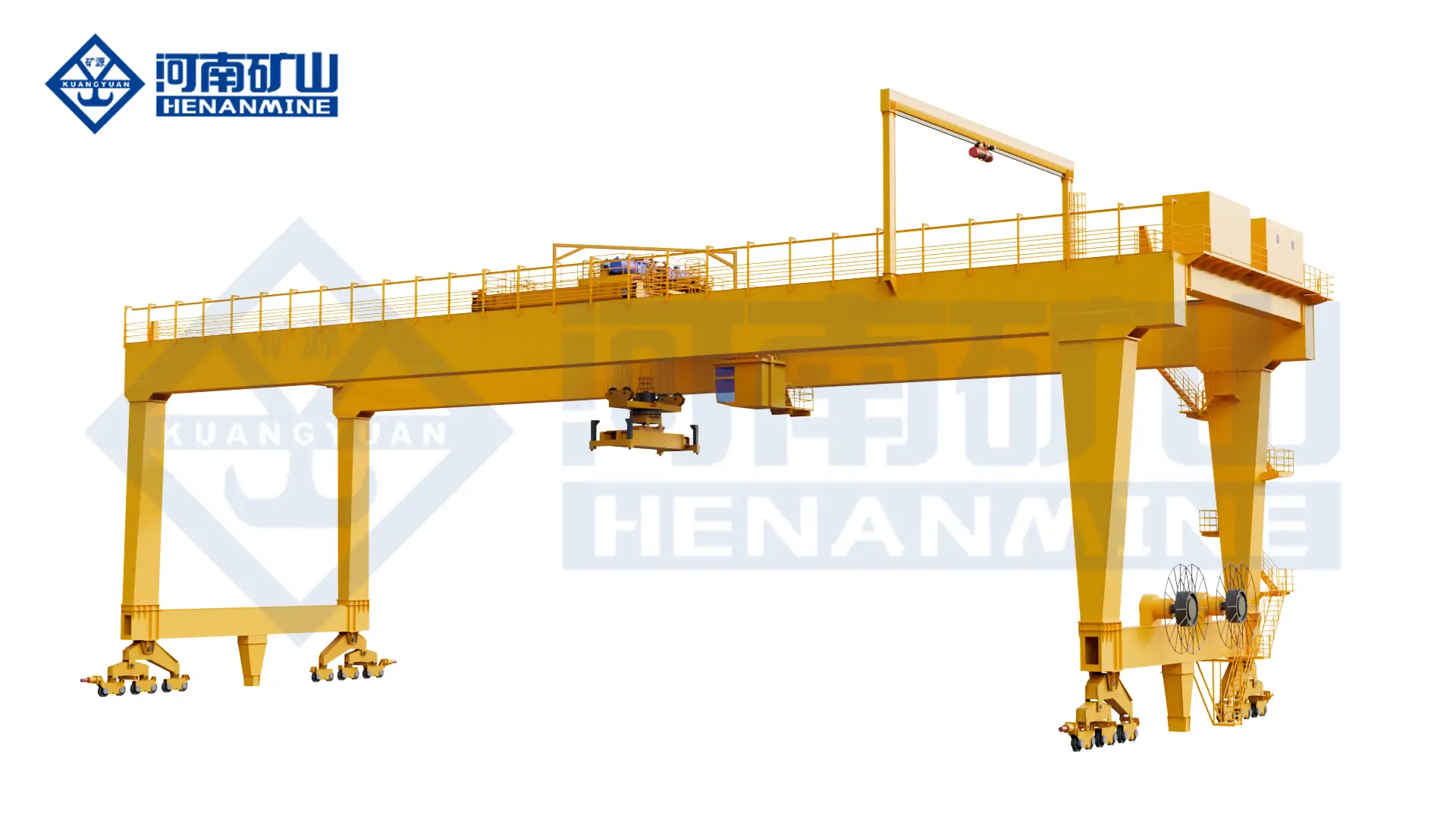
    Henan Mine Crane lifting equipment
    Project planning notes

    Key points for this crane project.

    1. What Makes Steel Mill Cranes Different From Standard
    2. Step 1: Map the Process Before You Pick a Crane
    3. Step 2: Match the Crane Type to the Bay
    Read the technical guide

    What Makes Steel Mill Cranes Different From Standard Industrial Cranes

    A general-purpose overhead crane and a steel mill crane can look similar from the floor, but they're engineered for entirely different operating realities. Steel mills create five conditions that standard cranes simply aren't built to withstand: radiant heat from furnaces and ladles, airborne metallic dust, corrosive atmospheres, continuous multi-shift duty cycles, and the severe safety consequences of a dropped or mishandled load.

    Each of those conditions translates into a concrete design requirement. Radiant heat demands heat-resistant structural steel, insulated control cabinets, and high-temperature wire rope. Dust and corrosion call for sealed enclosures rated to at least IP54. Continuous operation requires a higher duty classification and reinforced gear trains. And anywhere molten metal is involved, redundant braking and load-monitoring systems move from "recommended" to mandatory.

    A standard double-girder crane rated for a warehouse or light fabrication shop will not survive long-term service above a furnace, even if its rated capacity matches the load. The structural fatigue accumulates far faster than the nameplate tonnage suggests.

    Step 1: Map the Process Before You Pick a Crane

    The starting point isn't a crane brochure it's your plant's process flow. For each bay where a crane is needed, you need to define:

    • Which production zone:the crane will serve (steelmaking, casting, rolling, raw materials, finishing)
    • What material is being moved:(molten steel, billets, coils, scrap, bulk raw material)
    • Transfer distance and frequency:how far the load travels and how many lifts occur per shift
    • Ambient conditionsproximity to furnaces, expected temperature at hook height, dust exposure

    This process-first approach matters because steel mills aren't a single operating environment they're several distinct ones stitched together under one roof. A crane correctly specified for the rolling mill would fail catastrophically in the converter bay, and a ladle crane in a maintenance shop would be a wildly expensive overkill.

    Step 2: Match the Crane Type to the Bay

    Steel mills typically need several different crane types working in concert, not one universal model. Here's how they map to plant zones:

    • They require dual independent hoisting mechanisms, redundant brakes on each hoist, and heat shielding across the bridge and trolley.
    • Foundry/casting cranes:work the continuous casting and pouring bays, handling tundish positioning and mold-related tasks. Like ladle cranes, heat resistance drives the design insulated motor windings, heat-tolerant wire rope, and often a secondary auxiliary hook for lighter maintenance lifts.
    • Electromagnetic cranes:use a lifting magnet instead of a hook, making them the right fit for irregularly shaped ferromagnetic loads scrap bundles, billets, plate, and coil. Power-loss protection that maintains magnetic field on backup power is a non-negotiable safety feature for any above-floor application.
    • Grab bucket cranes:handle bulk raw materials iron ore, coke, coal, limestone and slag or dust removal. The grab opens and closes independently of hoist travel, allowing continuous cycling without manual rigging, but the constant impact loading means the structure needs to be rated for that abuse specifically.
    • Double-girder overhead cranes:are the general-purpose workhorses for rolling mills, billet and coil storage, and maintenance bays, where loads are more predictable and temperatures are lower.

    Step 3: Calculate Load Capacity Correctly

    A common and costly mistake is sizing the crane to the product weight alone and forgetting the rigging.

    Get this number wrong in either direction and you've either built in a chronic safety margin problem or paid for capacity you'll never use. The correct practice is to total every component that travels with the load hook, attachment, and product before comparing against a crane's rated capacity.

    Understanding Duty Class Why It’s the Factor Buyers Get Wrong Most Often

    Duty class (also called work grade or service classification) defines how a crane is engineered to handle its expected number of load cycles and average load ratio over its design life. In North America, the Crane Manufacturers Association of America (CMAA) uses a six-tier system from Class A (standby/infrequent) through Class F (continuous, severe duty). In Europe and much of Asia, the FEM 1.001 and ISO 4301 standards use comparable M-class and utilization-class ratings.

    For heavy-duty steel mill applications, CMAA Class D or E cranes or FEM M7–M8 equivalents are typically the baseline, with molten-metal-handling ladle and foundry cranes pushed to the top of that range (often labeled A7–A8 under FEM/GB-T classification systems used by many crane manufacturers).

    Over a full service life, the total cost of an underspecified crane can run 2–3x higher than getting the specification right at purchase.

    The fix is straightforward: give your crane supplier your operating hours per year, average lifts per shift, and average percentage of rated load per lift, and let them calculate the duty class from those inputs rather than guessing at a class name yourself.

    Bay / Process ZoneCrane TypeTypical Duty ClassWhy
    Converter / EAF bayLadle craneCMAA E/F (FEM M7–M8)Continuous high-cycle, near-rated loads
    Continuous castingFoundry craneCMAA E/F (FEM M7–M8)Near-rated loads on every cast
    Scrap yard, high throughputElectromagnetic / grabCMAA D/E40–80 cycles per hour is common
    Raw material yardGrab bucket craneCMAA DIntermittent but heavy bulk cycling
    Rolling millDouble girderCMAA C/DHeavy but more predictable cycles
    Maintenance bayDouble girderCMAA A/BInfrequent lifts, low average load

    Environmental and Safety Requirements

    Above a moderate duty class, a defined set of safety systems stops being optional. For molten-metal-handling cranes specifically:

    • Dual independent hoisting brakes: on every hoist mechanism, so a single brake failure under load doesn't result in a dropped ladle
    • Anti-sway control:using variable-frequency drives across all motion axes for the precision positioning casting operations demand
    • Heat shielding and high-temperature wire rope:rated for sustained exposure near molten metal

    These aren't competitive differentiators between manufacturers they're baseline requirements once you're operating above a certain duty class, and a supplier who treats them as optional upgrades is a warning sign.

    Span, Lift Height, and Building Constraints

    Crane capacity and duty class get most of the attention, but a crane that's structurally perfect and physically unable to fit your building is just as useless. Span needs to cover the full working width of the bay, lift height needs to clear the tallest obstruction in the travel path (including ladles, molds, or stacked coils), and runway support needs to match your building's columns or, where columns don't exist or can't bear the load, a freestanding or gantry-style structure.

    Low-clearance buildings often do better with under-running crane configurations rather than top-running ones, and outdoor or corrosive zones like scrap and raw material yards typically need additional protection on electrical enclosures regardless of duty class.

    Total Cost of Ownership

    The lifecycle of a steel mill crane typically runs 15–20 years, and procurement decisions based purely on sticker price routinely cost more over that span than a correctly specified crane would have. Initial investment covers five major components: the main structural girder, the hoisting/winching system, the electrical control package, dedicated safety guards, and installation/commissioning.

    Customized metallurgical-grade cranes cost more upfront than generic equivalents of the same tonnage, because their structural materials, protective configurations, and safety systems sit a full grade above standard equipment.

    A complete TCO comparison should weigh purchase price against expected maintenance frequency, structural recertification risk, and downtime cost per hour of lost production.

    Working With Manufacturers: What to Provide for an Accurate Quote

    The quality of a crane specification depends heavily on the quality of the information you give your supplier. Before requesting quotes, prepare:

    • Work station and process parameters: Clarify core basic process information such as operation area, material type, material transfer distance, etc., and clarify field operation conditions.
    • Operating condition parameters: sort out key operating cycle data such as annual operating time of equipment, lifting frequency per shift, average load ratio to rated load, etc., and accurately match equipment operating condition grade.
    • Limit load parameters: fully calculate the maximum operating load of equipment, fully include the weight of lifting tools, hook groups, lifting beams, ladles and various supporting tooling accessories, and ensure that the total load calculation is complete without deviation.
    • Plant structural parameters: accurately check the civil structure and installation size parameters such as crane span, effective lifting height, running track support form, plant column spacing, etc. to avoid space adaptation problems.
    • On-site environmental parameters: detect the ambient temperature at the operating height of the hook, comprehensively investigate adverse environmental factors such as dust and medium corrosion on site, and match the equipment protection configuration requirements.

    A competent manufacturer should be able to calculate duty class from your operating profile rather than asking you to name it. If a supplier skips straight to a tonnage-and-price quote without asking about cycle rate or ambient conditions, treat that as a signal to look elsewhere.

    Common Mistakes to Avoid When Selecting a Steel Mill Crane

    • The rated load selection of equipment is calculated only according to the weight of the material, ignoring the weight of the hook group, cross beam, ladle and other supporting structures, and the overall total load is not calculated, which is easy to cause insufficient load margin in the selection, resulting in safety and performance problems such as overload operation and increased loss of equipment.
    • The equipment working condition grade is not accurately calculated according to the actual operation frequency, start-stop frequency, load fluctuation and other cycle data, and is directly defaulted to heavy working condition, resulting in the working condition grade inconsistent with the actual operation requirements on site and unable to match the equipment design standard and service life.
    • Core safety systems such as overload, limit and temperature control are regarded as optional upgrade configurations, which are not listed as basic standard according to the working condition grade specification, which reduces the equipment safety configuration standard, retains potential safety hazards of operation, and cannot meet the requirements of high-load safety production.
    • The supplier price comparison only refers to the purchase price, and the core parameters such as working condition grade, structure material, safety configuration and manufacturing process of the standard equipment are not uniformly matched. The price comparison dimension is single and unfair, and it is easy to select equipment with low price and low quality, substandard parameters and poor adaptability.
    • Underestimating the influence of high temperature radiation and heat load on industrial site, especially for cranes operating close to furnace and casting area, failing to consider the high temperature loss caused by heat source not directly above, resulting in equipment selection and protection configuration unable to adapt to high temperature operation environment.
    • In the early stage of the project, the site constraints such as the civil engineering size and space limit of the plant were not checked, and the site adaptation verification process was omitted, resulting in the mismatch of span and clearance size during equipment installation, resulting in rework rectification, delay in construction period and additional cost loss.

    Discuss the crane arrangement for your project.

    Steelmaking, rolling and maintenance tasks should be specified separately. Identify the handled material and lifting appliance, then describe the operating cycle and environmental exposure for each crane duty. Share the load, available drawings, working cycle and site conditions with Henan Mine Crane so the required configuration and supply boundary can be discussed.

    Related crane configurations

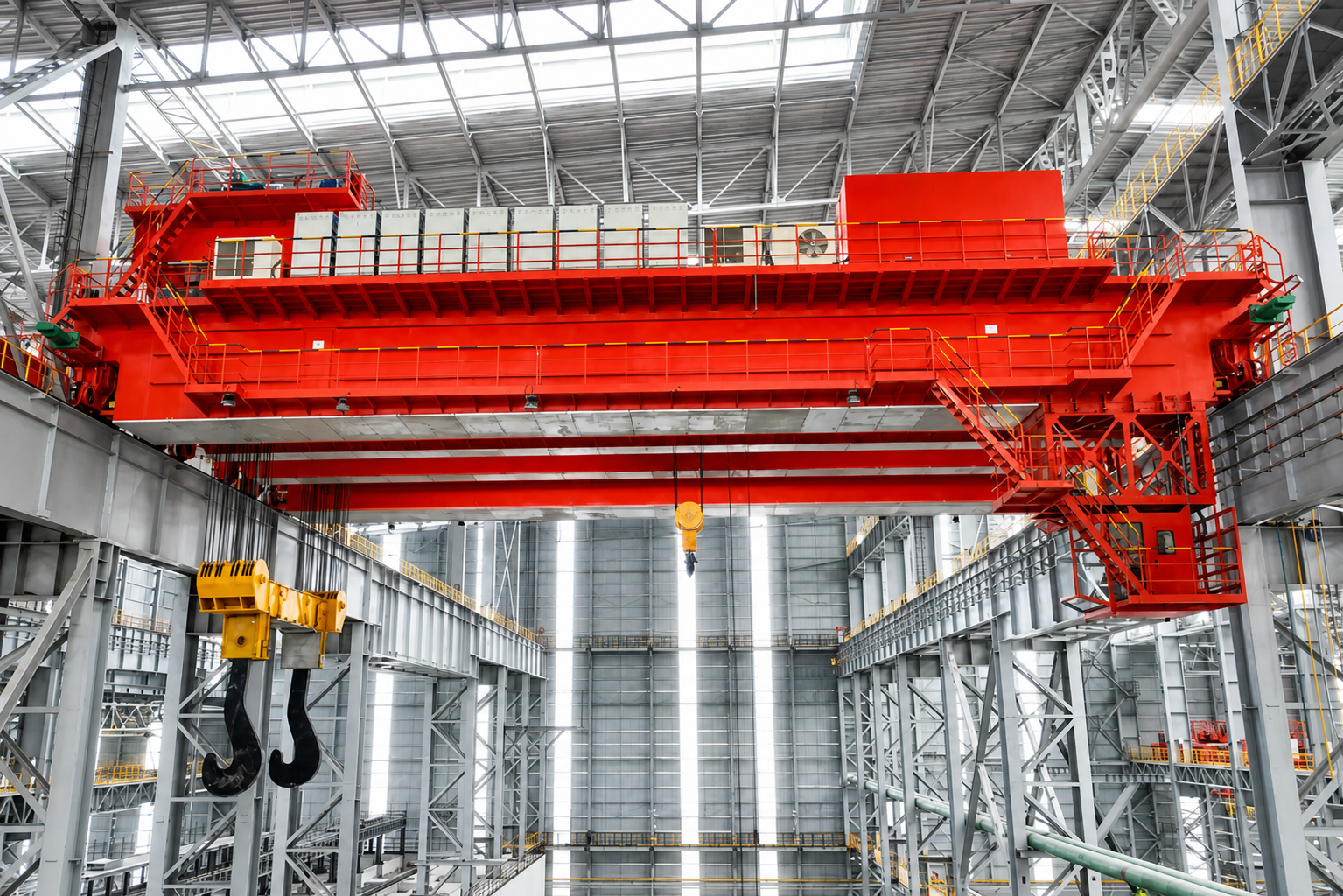
    Galvanizing Process Overhead Crane

    View product parameters
    Lifting capacity: 5 – 32 tSpan: 10.5 – 31.5 mLifting height: 6 – 24 m

    Transfer suspended workpieces through a galvanizing process with a crane matched to the line. Coordinate lifting points, corrosive exposure, tank geometry and the required handling sequence.

    Updated 2026 · Henan Mine Crane
  • Rail-Mounted Gantry Crane Suppliers: Review Yard and Civil Interfaces

    Rail-Mounted Gantry Crane Suppliers: Review Yard and Civil Interfaces

    Technical guide

    Rail-Mounted Gantry Crane Suppliers: Review Yard and Civil Interfaces

    An RMG supplier needs a coordinated yard brief and rail layout. Compare the technical documents and responsibility boundaries for crane supply, runway works, automation interfaces and commissioning before choosing a project partner.

    Henan Mine CraneTechnical guide · Updated 2026Crane selection, project scope and operating requirements
    Henan Mine Crane Rail-Mounted Container Gantry Crane
    Henan Mine Crane Rail-Mounted Container Gantry Crane
    Project planning notes

    Key points for this crane project.

    1. Basic introduction of rail type gantry crane
    2. The core role of the right rail type gantry crane
    3. Define the actual needs of their own projects
    Read the technical guide

    Basic introduction of rail type gantry crane

    Rail type gantry crane rely on the ground to complete the overall travel operation of the fixed track, different from the tire type gantry crane, it is travel on a fixed route, structural stability is stronger, more suitable for large standardized container stacking and centralized cargo scheduling work.

    This kind of equipment application scene is very clear, the mainstream concentrated in the coastal container terminal yard, inland railroad freight hub, large-scale integrated logistics intermodal transportation park, and the gradual popularization of fully automated container warehousing area.

    And ordinary workshop Overhead Crane is different, RMG rail gantry crane belongs to large-scale complete lifting system, the overall structure of the volume is huge, structural design, traveling matching, electronic control linkage, site foundation adaptive have extremely stringent standards. This is why in this kind of large-scale equipment procurement, the supplier's comprehensive strength, will be more important than ordinary lifting equipment procurement.

    The core role of the right rail type gantry crane suppliers

    Equipment stability directly determines the efficiency of yard operations

    Yard daily cargo flow rhythm is compact, once the rail gantry crane failure downtime, will directly cause container accumulation, cargo transit stagnation, significantly reducing the entire yard cargo throughput capacity.

    Solid workmanship, reasonable design of the RMG Crane, the failure rate is lower, can continue to smoothly complete the daily stacking and transshipment work, to maintain the normal rhythm of operation of the yard.

    The level of engineering design affects the long-term use of equipment

    A qualified rail gantry crane needs to accurately do the overall structural stress design, wheel pressure numerical calculation, anti-rocking operation debugging, and at the same time, it also needs to be perfectly matched with the track laid on site.

    Weak design background of the supplier, it is difficult to take into account these details, the equipment is put into use after travel easily, offset, stacking inaccurate and other types of problems, long-term use of the experience is greatly reduced.

    Supplier’s comprehensive strength determines the overall pace of the project

    From the confirmation of construction drawings, machine production and processing, to shipping, on-site installation and docking, machine commissioning, the whole process has many links.

    Insufficient strength of the partner, often lagging behind in the revision of drawings, production scheduling delays, shipment arrangements, such as confusion, directly disrupting the construction of the station and the original schedule for the commissioning of the equipment.

    Supporting service ability to control the full cycle of the use of cost

    Rail gantry crane service life is generally very long, the later parts replacement, troubleshooting, daily maintenance are inseparable from the manufacturer's support.

    Have perfect service system supplier, can quickly respond to all kinds of problems, also can plan in advance the supply channels of common wearing parts, effectively reduce the equipment idle time, control the overall operation and maintenance expenses.

    Define the actual needs of their own projects

    Determine the actual use of equipment

    First divide the main direction of operation of the equipment, whether it is purely for high-level container stacking, or taking into account the railroad car cargo loading and unloading, or to undertake the work of cargo transit between multiple sites.

    At the same time, we also need to determine in advance the planning mode of the field, is the traditional manual operation of the field, or is planning to build semi-automatic, fully automated intelligent operation of the field, the use of different equipment configuration varies greatly.

    Sort out the core technical parameters

    Before procurement, sort out the basic use of data, including equipment rated lifting capacity, the overall span, effective lifting height, the number of container stacking layer, the equipment outreach cantilever length, and the actual travel distance of large and small vehicles and equipment working level.

    In addition, the equipment no-load travel speed, full-load operating speed of such operating parameters, but also with the frequency of daily operations in advance to determine down.

    Finalize the equipment operation mode

    Currently on the market rail gantry crane control mode is clearly divided into on-site manual cab operation, wireless remote control operation, as well as the industry's mainstream semi-automatic operation mode and automatic unmanned operation mode.

    Combined with the field staffing, operation automation planning to select the control mode, to avoid the later configuration of redundant functions resulting in cost waste, or lack of functionality cannot meet the operational requirements.

    Find out the site and environmental conditions

    Outdoor yards are exposed to natural weather all year round, so it is necessary to calculate in advance the maximum annual wind level, the range of temperature difference in four seasons, as well as the degree of humidity and corrosion of the air at the site.

    At the same time to confirm the site track foundation construction standards, local power supply system and power supply conditions, these site conditions, are suppliers to do the program design must be based on reference.

    Distinguish between the supplier is the entity manufacturer or foreign trade intermediary

    Distinguish the practical significance of the two

    Self-produced rail gantry crane manufacturers, the whole process of controlling the design of equipment drawings, steel selection, processing and welding, the whole assembly process, in product quality control, production schedule adjustment, non-standard program modification has the absolute right to take the initiative.

    The simple foreign trade trading company has no independent production workshop, equipment all rely on external factories OEM, it is difficult to adjust the depth of the structure of the equipment and the core configuration, the quality of the problem when the coordination process is more cumbersome.

    Practical verification methods

    Purchasers can take the initiative to ask for real photos of the enterprise factory, video of the production workshop, details of large-scale steel processing equipment, and check the enterprise's formal registration qualifications, export trade records over the years, as well as information on similar overseas landfill projects that have been completed.

    Regular entity manufacturers can cooperate with customers to complete online video factory inspection, or offline field factory inspection.

    Scenarios that trading companies can cooperate with

    If the procurement of standardized configuration, no special customization requirements of the conventional rail gantry crane, part of the long-term fixed cooperation with high-quality factories, project coordination capabilities of mature foreign trade companies, can also be included in the alternative range.

    This kind of business in the document processing, international logistics on the connection of sufficient experience, can simplify the customer's docking process.

    Evaluation of supplier engineering design and customization capabilities

    Fit the layout of the yard to do exclusive program design

    Professional design team, combined with the overall planning of the customer's yard, container placement arrangement, field track laying spacing, daily cargo flow route to optimize the overall design of the equipment.

    Will not directly apply the common drawings for mass production, to maximize the equipment to adapt to the site operation line, to enhance the overall smoothness of operations.

    Support diversified customized configuration adjustment

    According to the actual needs of customers, we can adjust the cantilever structure of the equipment, add the sway control system, precise positioning system, remote equipment status monitoring module, and can also be equipped with energy-saving operation control system.

    For automated field projects, it can also complete the docking design of the supporting linkage system to meet the personalized needs of different fields.

    Provide a complete set of technical information

    Regular manufacturers in the supply stage, can complete the overall arrangement of equipment drawings, site wheel pressure force data, a full set of electrical control schematic diagrams, track foundation construction reference data.

    At the same time comes with a full set of information such as equipment installation and use manuals, whole machine factory test documents, etc., which can fully meet the acceptance of overseas projects, record and later maintenance access to use.

    Examination of manufacturing strength and quality control system

    Large gantry steel processing capacity

    Rail gantry crane overall steel structure volume is large, on the cutting accuracy, welding process, the whole assembly calibration have high requirements.

    Mature manufacturers have perfect processing line, can guarantee the main girder, gantry, end beams and other core components size accuracy, the overall structure is solid and stable.

    Core component selection standard

    Focus on confirming the equipment supporting motor, reducer, braking device, PLC control system, traveling wheels, bearing bearings, container special spreader and other core parts selection standards.

    High-quality parts can reduce the probability of equipment failure from the root, and also facilitate the later global procurement of replacement parts.

    Perfect factory inspection process

    The whole inspection process includes sampling inspection of raw materials, non-destructive testing of welds, overall dimensional review, electrical line energization test, no-load test run of the whole machine, and full-load test of the rated load.

    Strict factory inspection can check the potential problems of the equipment in advance, and ensure that all the equipment sent to overseas project sites meets the standards.

    Outdoor special anti-corrosion and anti-rust treatment

    The vast majority of rail gantry cranes are placed in the open yard use for a long time, the coastal area will face salt spray erosion.

    Reliable manufacturers will use professional surface rust removal process with multi-layer outdoor special anticorrosive coating, enhance the equipment resistance to wind and rain, corrosion resistance, prolong the equipment outdoor service life.

    Verification of similar rail gantry crane landing project experience

    The importance of similar project experience

    Rail gantry crane and ordinary plant Crane application scenarios are completely different, focusing on yard container operation, track matching operation, no relevant project experience manufacturers, it is difficult to control the site of all kinds of practical use of pain points.

    Have enough practical cases of suppliers, familiar with all kinds of yard construction standards and overseas project use habits, can avoid many landing problems in advance.

    Ask for project cases with high matching degree

    Priority should be given to projects with the same tonnage, similar span, the same stacking height parameters and the same operation scenarios as your own projects, and also refer to the completed project cases in the same export region.

    The actual application cases of the same type of scene have a much greater reference value than the general publicity materials.

    Verify the real basis of the project

    You can ask the supplier to provide the project site pictures, equipment operation video, complete project case introduction, there is a need to understand the actual operation of the equipment use feedback, intuitive judgment of the actual use of the equipment effect.

    Evaluation of automation and control system strength

    Nowadays, more and more large overseas container yards are popularizing the automation mode, and the maturity of the control system becomes more and more critical.

    Suppliers need to accurately match the manual, semi-automatic and fully automatic control systems at three different levels according to the customer's site planning, without blindly piling up high-end features or reducing the necessary configuration.

    Such practical functions as automatic precise alignment, intelligent sway control, field management system linkage, remote fault self-test, operation data statistics can be flexibly matched according to the needs.

    The stability of the entire control system directly determines whether the automated field can run smoothly, and is also an important criterion for distinguishing between ordinary suppliers and professional RMG equipment manufacturers.

    Verification of product qualification and export supporting capacity

    Confirm in advance the ability to issue documents, can effectively avoid the equipment to the port, there are obstacles to customs clearance, project approval delays and other issues.

    Reasonable comparison of rail gantry crane procurement offer

    Procurement process cannot only focus on the final total price to do comparison, the low price offer will often delete the core configuration, replacement of low-end parts, omit supporting services, additional expenditure will increase significantly.

    Carefully check all the contents of the offer line by line, confirm whether the offer covers the main steel structure, lifting and operating mechanism, a complete set of electrical systems, special container spreader, rail clamping device, outdoor windproof locking device, emergency anchoring equipment, and basic spare parts.

    At the same time to clarify whether it includes on-site commissioning guidance services, to distinguish clearly between the items included in the offer and additional payment items.

    In addition to the unified verification of the core components in the offer of the brand and specific models, the configuration of different grades, equipment experience and service life gap is very obvious.

    Finally, both sides clearly finalize the terms of EXW, FOB, CIF and other types of foreign trade transactions, and clearly delineate the responsibilities and costs of logistics, customs clearance and transportation.

    Evaluation of delivery capability, project coordination and docking communication efficiency

    Most of the overseas yard projects have a fixed construction and production period, and the equipment production and delivery cycle must strictly match the project progress.

    Stable manufacturers can clearly give the standard production cycle, and complete the production, packing, loading and shipment in strict accordance with the agreed time.

    In the whole project docking, the professional team will take the initiative to synchronize the progress of drawing review, manufacturing nodes, factory testing and shipping plans, and take the initiative to coordinate and solve all kinds of problems in the project docking.

    Efficient and smooth technical communication can quickly answer all kinds of professional problems such as equipment parameters, site adaptation, program modification, etc., reduce docking deviation and make the whole procurement process smoother.

    Evaluation of installation and commissioning and full-cycle after-sales support

    For overseas projects that are far away, the manufacturer can provide online remote installation technical guidance, and for large-scale key projects, professional engineers can be arranged to arrive at the site to do installation supervision.

    After the equipment assembly is completed, complete no-load debugging, grading load test, the whole machine travel alignment calibration and a full set of debugging work, and at the same time for the site operator to explain the basic operation process and daily maintenance of the basic points of the equipment.

    In the cooperation agreement in advance, the length of the machine warranty, warranty coverage, after-sales response time, and the supply channels and supply cycle of commonly used mechanical parts and electrical parts are clearly defined.

    In addition, high-quality suppliers can also provide long-term equipment daily maintenance advice, remote troubleshooting, old equipment function upgrading and transformation and other long-term supporting services.

    Discuss the crane arrangement for your project.

    An RMG supplier needs a coordinated yard brief and rail layout. Compare the technical documents and responsibility boundaries for crane supply, runway works, automation interfaces and commissioning before choosing a project partner. Share the load, available drawings, working cycle and site conditions with Henan Mine Crane so the required configuration and supply boundary can be discussed.

    Related crane configurations

    Rail-Mounted Container Gantry Crane

    View product parameters
    Lifting capacity: 35 t, 40.5 t, 50 tSpan: 18 – 35 mLifting height: 12.3 – 21 m

    Handle containers along a fixed yard runway with a rail-mounted container gantry crane. Coordinate the spreader, stacking geometry, rail layout and transfer positions around the terminal operation.

    Rail-Mounted Gantry (RMG)

    View product parameters
    Lifting capacity: 35 t, 40.5 t, 50 tSpan: 18 – 35 mLifting height: 12.3 – 21 m

    Use an RMG for container transfer along a fixed rail layout. Select the lifting arrangement, yard coverage and positioning controls from the container flow and stacking requirements.

    Updated 2026 · Henan Mine Crane
  • Aircraft Maintenance Workshop Cranes: Lifting Points and Clearances

    Aircraft Maintenance Workshop Cranes: Lifting Points and Clearances

    Technical guide

    Aircraft Maintenance Workshop Cranes: Lifting Points and Clearances

    Aircraft maintenance lifting must work around approved lifting positions and sensitive structures. Provide the task, geometry and required hook envelope so crane coverage and coordination can be reviewed within the workshop.

    Henan Mine CraneTechnical guide · Updated 2026Crane selection, project scope and operating requirements
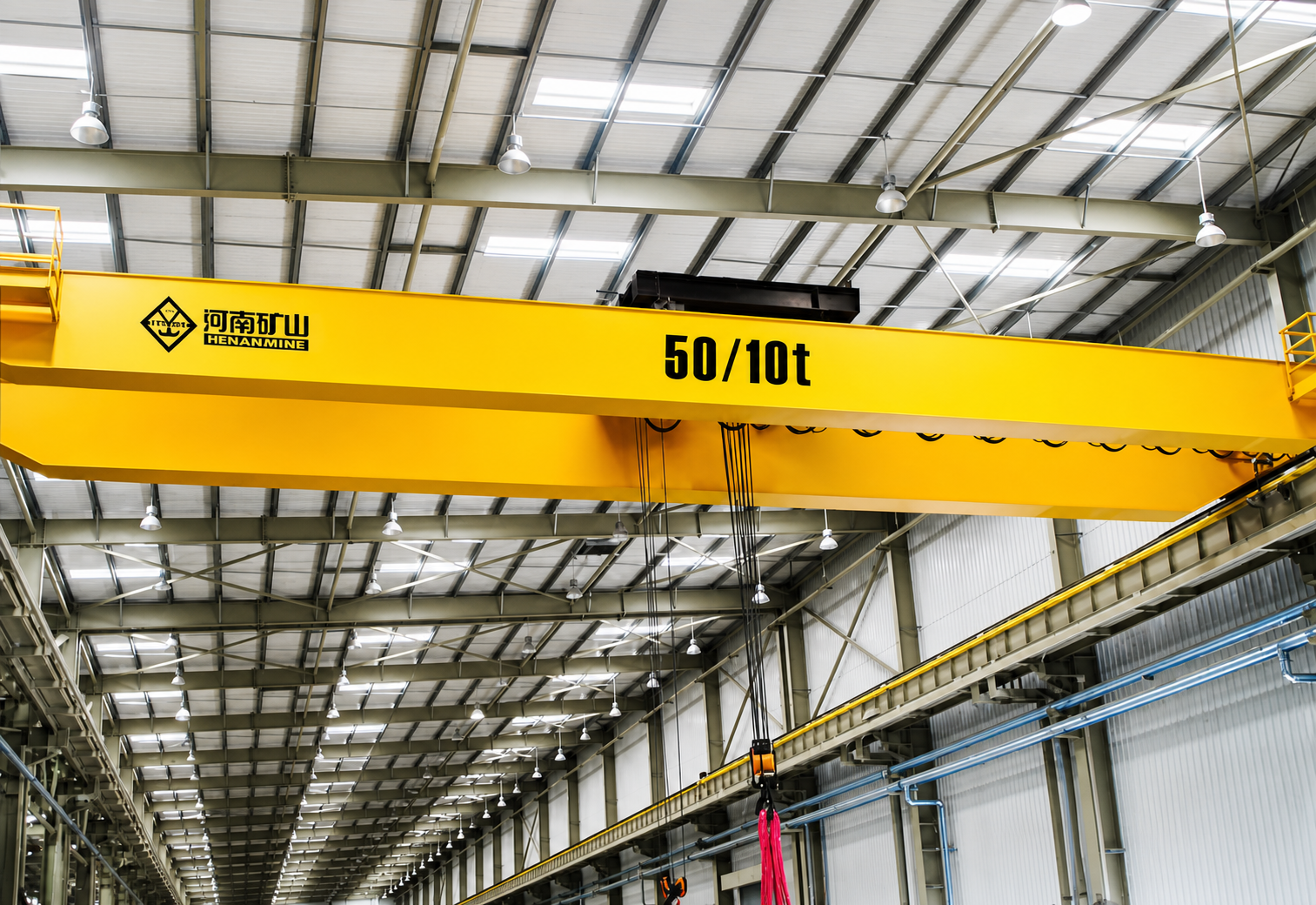
    Henan Mine Crane Multi Support Double Girder Underhung Crane
    Henan Mine Crane Multi Support Double Girder Underhung Crane
    Project planning notes

    Key points for this crane project.

    1. The core application scenarios of specialized cranes
    2. Aircraft maintenance workshop equipment core
    3. Recommended Crane Models for Aircraft Maintenance
    Read the technical guide

    The core application scenarios of specialized cranes for aircraft maintenance

    Aviation maintenance system is divided into a variety of scenarios, different operating areas of the lifting load, operating space, precision requirements vary greatly, the corresponding aviation hangar lifting equipment selection standards are also different.

    The whole hangar daily maintenance operations

    Large civil aviation, navigation aircraft hangar, is the core application of specialized Crane scenes. Daily operation and maintenance, the equipment is mainly used for lifting maintenance equipment, auxiliary operating platforms, rack accessories and various types of hangar supporting maintenance equipment.

    This type of scene is characterized by a wide range of operations, lifting points scattered, the need for cranes to adapt to the layout of the large-span hangar, while ensuring smooth operation, to avoid equipment shaking bumping the aircraft fuselage.

    Aircraft engine disassembly operation area

    Aircraft engine is the core high-value components of the aircraft, disassembly, replacement, overhaul operations on the lifting equipment requires high precision. Aircraft engine maintenance Crane is mainly responsible for the overall lifting of the engine, nacelle accessories, fairing components and special overhaul workpiece shifting operations.

    This scenario eliminates any start-stop impact and load shaking, which requires the equipment to be equipped with exclusive functions such as micro-speed control, smooth braking, anti-sway, etc., to match the precision disassembly and assembly processes.

    Landing gear maintenance workshop

    Aircraft landing gear belongs to heavy airborne components, with large self-weight, replacement, overhaul, commissioning process requires lifting equipment to assist lifting and shifting, alignment and installation.

    In the workshop, there are heavy jacks, maintenance stands, large spare parts and other heavy lifting needs, suitable for medium and heavy, stable aviation lifting equipment.

    Aviation parts repair workshop

    In addition to the maintenance of the whole aircraft, the independent spare parts repair workshop is responsible for the overhaul of APU auxiliary power unit, transmission actuator, control wing surface, and all kinds of precision airborne parts.

    This kind of lifting operation has a small load, but the precision of the parts is extremely high, which requires the equipment to be precise in alignment, operate without jitter, and prevent the damage of the parts caused by the slightest shaking.

    Aviation parts storage and logistics area

    Aviation spare parts, maintenance toolboxes, large packaging accessories, maintenance equipment storage and transportation, lifting equipment is needed to complete the normalized handling, stacking, loading operations.

    This scenario has moderate requirements for accuracy, but has certain requirements for the flexibility of equipment operation and the ability to adapt to the narrow aisle of the warehouse to ensure the efficiency of the warehousing flow.

    Specialized tooling debugging and assembly area

    Aviation maintenance of special fixtures, positioning fixtures, test benches, precision maintenance equipment assembly and debugging, lifting equipment is needed to assist the precise alignment of the installation.

    The core requirements of the operation are low-speed and smooth, accurate point position, able to cooperate with the manual completion of the subtle alignment adjustment, and suitable for high-precision tooling assembly standards.

    Aircraft maintenance workshop equipment core requirements

    The lifting safety standards of aviation MRO scenarios are much higher than those of ordinary industrial scenarios. All equipment design and selection centers around high-value aircraft protection, precision work adaptation, and workshop process adaptation.

    Exclusive safety protection for high-value assets

    Aircraft fuselage, aviation core parts are extremely expensive, the slightest bump, impact, load shaking, will cause expensive maintenance losses and operation and maintenance accidents.

    MRO workshop Crane must have a perfect anti-collision, buffer, anti-sway, overload protection design, minimize the safety risk of equipment operation on the aircraft.

    Smooth operation and high-precision positioning

    There is no rough lifting operation in aviation maintenance. Whether it is engine disassembly, fuselage parts replacement, or workpiece alignment, millimeter-level precision alignment is required.

    The equipment needs to realize smooth start-stop, stepless speed regulation, micro-speed alignment, and no jitter or shaking throughout the whole process to meet the operation standard of precision maintenance.

    Adapt to narrow space and limited floor height

    Most of the mature aviation hangars, old maintenance workshop roof structure, floor height, column layout is fixed, there are all kinds of pipelines, bridges, lighting facilities on the top, reserved lifting equipment operating space is very limited.

    Selection must focus on the consideration of equipment headroom height, structural dimensions, to avoid equipment operation and plant structure, airborne equipment interference.

    Clean and low-noise operation

    Aviation precision maintenance workshop has clear requirements for environmental cleanliness, equipment operation cannot produce oil dripping, dust fall off and other pollution problems.

    At the same time, equipment start and stop, running noise needs to be controllable, smooth braking, will not produce violent rattles and shock vibration, suitable for fine maintenance operation environment.

    Adapt to diversified load lifting needs

    The same aviation maintenance workshop needs to take into account the lifting operations of heavy engines, medium-sized landing gear, lightweight precision parts, and various types of work equipment.

    The equipment needs to be adapted to multi-load working conditions, taking into account the stability of heavy loads and the accuracy of light loads, to meet the diversified operational needs of the workshop.

    Fitting the maintenance process flow

    Lifting equipment is an auxiliary tool for aviation maintenance, which cannot affect the technician's work, airframe overhaul channel and workshop flow process.

    Equipment running track, coverage, control needs to be adapted to the site maintenance line, to improve the overall operational efficiency, rather than causing operational obstacles.

    Recommended Crane Models for Aircraft Maintenance Workshop

    Different aviation maintenance scenarios, load, precision, space conditions are different, suitable for aircraft maintenance crane models differ significantly, according to the need to balance the safety and practicality of selection.

    Single Girder Overhead Crane

    Simple structure, light weight, small space occupation, suitable for small and medium-sized aviation maintenance workshop, spare parts storage area, light assembly area of light and medium load lifting operations.

    With flexible operation and high cost performance, it can meet the basic operation requirements of daily parts transfer, small equipment overhaul, and routine tooling handling, and is a commonly used model in small and medium-sized MRO workshops.

    Double Girder Overhead Crane

    With strong load carrying capacity, high structural stability and wide span adaptability, it is suitable for heavy-duty operation scenarios such as large hangar, heavy engine disassembly and assembly, landing gear overhaul, and large-scale workpiece lifting.

    It can be equipped with frequency control, sway control and precise positioning system, which is suitable for aviation heavy-duty precision lifting needs, and is the main model for large aviation maintenance bases.

    Suspension Crane

    No need to occupy the ground and column space, directly mounted on the top structure of the plant, suitable for the lack of floor height, dense columns, ground space restrictions of the old maintenance workshop.

    Flexible equipment coverage, can be adapted to the operational needs of local precision maintenance areas, does not occupy the body of the maintenance channel, perfectly adapted to the working conditions of the narrow space.

    Workstation Overhead Crane

    Specially designed for fine chemical work, with high positioning accuracy and ultra-smooth operation, it is mainly used for the repair of aviation precision parts, assembly of small components, debugging of precision tooling and other scenarios.

    With strong coverage of single station, it can be targeted to meet the local high-precision lifting needs, avoiding the waste of resources caused by a wide range of equipment operation.

    Monorail Crane System

    With a fixed running track, it is suitable for aircraft engine special transfer, fixed process parts flow, assembly line maintenance operation scenarios.

    With fixed equipment alignment and high precision of repetitive operations, it can form a standardized lifting process, which is suitable for the regular operation of fixed processes of aviation maintenance.

    Customized Aviation Maintenance Crane

    Customized for special hangar layout, ultra-high precision operations, synchronous lifting, ultra-low headroom and other special working conditions.

    It can be equipped with exclusive functions such as soft start and soft stop, intelligent anti-sway, synchronized lifting and lowering, micro-speed precision control, etc., which can be adapted to the needs of all kinds of special aviation maintenance operations and solve the lifting problems of non-standard working conditions.

    Procurement must verify the core technical parameters

    The adaptability of the parameters of the aviation lifting equipment directly determines the operational safety and maintenance accuracy, the procurement stage needs to be checked one by one to avoid the parameters do not match the operation of the hidden danger.

    Rated lifting tonnage

    According to the aircraft engine weight, landing gear assembly weight, large-scale tooling, maintenance platform and spreader total weight accounting, reserve a reasonable load margin.

    Eliminate full-load operation, ensure the stability of heavy-duty lifting, and avoid the long-term extreme load affecting the service life of the equipment and operational safety.

    Equipment Span

    Strictly match the width of the hangar opening, the center distance of the track, the safe operating range of the equipment, and the layout of the whole machine parking and maintenance channel.

    Ensure that the equipment runs without any jamming, and will not interfere with the plant columns, fuselage and maintenance equipment.

    Effective lifting height

    Combined with the height of the aircraft fuselage, the height of the workpiece erection, the roof structure of the plant, the position of the top obstacles authorized.

    It ensures that the accessories and fixtures will not collide with the fuselage and the structure of the plant during the lifting process, and meets the height requirements of all kinds of maintenance lifting.

    Equipment Clearance Height

    This is one of the core parameters of aviation hangar selection. Most hangars are densely populated with pipelines, suspended ceilings and structural beams on the top, and the effective floor height is limited.

    It is necessary to confirm the structural height of the equipment itself and select the appropriate low headroom model to maximize the use of the limited space in the plant.

    Equipment running length

    Determined according to the operational coverage of the maintenance workshop and hangar, to ensure that the equipment can cover all the maintenance stations and meet the demand for multi-point maintenance of the whole machine and the transfer of spare parts throughout the region.

    Positioning accuracy standard

    Focus on checking the smoothness of starting and stopping of the equipment, the precision of traveling alignment, and the ability of load swing control. Precision maintenance scenarios require micro-speed alignment and zero-jitter operation to ensure the accuracy of parts disassembly and assembly and workpiece alignment.

    Equipment control mode

    Handle control, wireless remote control, cab control, electronic precision control and other modes can be selected according to the operation scene.

    Precision lifting is prioritized to use wireless micro-speed remote control, which is convenient for technicians to observe the lifting status from a close distance and fine-tune the alignment in real time.

    Running speed and speed control function

    Aviation lifting equipment needs to have frequency conversion speed control capabilities, regular transit can run at a constant speed, precision alignment can be switched to micro-speed mode.

    Fast and slow speed seamless switching, taking into account the operational efficiency and lifting precision, to adapt to the operational needs of different processes.

    All-round safety configuration

    It must be equipped with a full set of safety configurations such as overload protection, soft start/stop, mechanical anti-collision, travel limit, emergency brake, load anti-sway and so on.

    Multi-protection avoids the risks of lifting overload, alignment shift, equipment collision, etc., and protects the aircraft and operating equipment in all aspects.

    Plant structure adaptability

    Check in advance the load bearing of rail beams, top loading conditions, and column support structure of the plant, and confirm that the equipment installation method and fixing points are fully adapted to the infrastructure conditions of the plant.

    Avoid problems such as insufficient structural stress and operational shaking after equipment installation.

    Reliable aviation Crane supplier screening criteria

    The technical threshold of aviation-specific lifting equipment is much higher than that of ordinary industrial cranes, and the supplier's specialized experience and engineering capabilities are the core guarantee of equipment adaptability.

    Verify the real production and R & D qualifications

    Priority is given to manufacturers with independent R & D, production, processing, testing capabilities of the entity, to eliminate pure trade intermediaries.

    Confirm that the manufacturer has a special technical team of aviation lifting equipment, with non-standard customization, working condition optimization, program design capabilities.

    Verification of aviation MRO similar project cases

    Focus on checking the manufacturer's landing projects in civil aviation hangars, navigation maintenance bases, aviation parts MRO workshop, engine overhaul workshop.

    Rich aviation project experience, on behalf of the manufacturer is familiar with the aviation working conditions of precision, safety, cleanliness and other special requirements.

    Evaluation of professional engineering adaptability

    High-quality suppliers will recommend suitable models and protection programs according to hangar drawings, height restrictions, workstation layout, and maintenance processes.

    Able to proactively avoid the interference between the equipment and the airframe, plant structure, workflow, rather than directly applying the general model.

    Verification of a full set of professional and technical documents

    Regular manufacturers can provide a full set of information such as equipment assembly drawings, headroom size drawings, wheel pressure load data, electrical schematic diagrams, parts lists, operating instructions, test reports, etc., to meet the needs of aviation project acceptance record.

    Confirm the brand and quality of core parts

    Focus on verifying the brand and quality of core accessories such as motors, reducers, brakes, inverter systems, wire ropes, hooks, end beams, and control systems.

    Strict factory inspection and quality control system

    Before the equipment leaves the factory, it needs to complete weld inspection, size verification, no-load test run, full-load test, full functional inspection, safety configuration verification, and keep complete inspection records.

    Guarantee that the precision, stability and safety of each ex-factory aviation specialized Crane are up to standard.

    Define the scope of installation and commissioning services

    Confirm the manufacturer's service mode in advance, including pure supply of equipment, on-site installation guidance, machine commissioning, personnel operation training, completion and acceptance of the service content, to ensure the smooth commissioning of equipment.

    Verification of after-sales and spare parts security capabilities

    Aviation maintenance downtime directly affects the aircraft service scheduling, the loss is great. Manufacturers need to have fast after-sales response, original spare parts, remote troubleshooting, on-site repair capability.

    Comprehensive adaptability is prioritized over purchase price

    Low-priced general-purpose models often lack precision speed control, anti-sway, low headroom adaptation and other aviation-specific configurations, and are prone to insufficient precision, unstable operation, interference with operations and other problems.

    Selection needs to prioritize equipment suitability for working conditions, long-term stability and safety factor, rather than simply lowering the procurement cost.

    Procurement selection of common misconceptions

    Most of the problems in the selection of aviation Crane, are derived from the application of common industrial equipment procurement thinking, ignoring the specificity of aviation scenarios.

    Focus only on the lifting capacity of equipment, ignoring precision, headroom, smoothness and other core aviation needs, equipment cannot be adapted to precision maintenance operations.

    With the selection logic of ordinary factory cranes to adapt to the aviation hangar, ordinary equipment without precision control, anti-sway, low noise and clean design, there are potential safety hazards.

    Ignoring the hangar height and layout restrictions, the size of the selected equipment does not match, resulting in the equipment cannot be installed or running interference.

    Do not pay attention to the smooth operation of the equipment and anti-sway performance, lifting precision parts are prone to shaking and bumping.

    Failure to verify the running track of the equipment in advance, and the operating range of the equipment blocked the access channel of the fuselage, affecting the normal maintenance process.

    Failure to accurately count the actual lifting load and workpiece weight, resulting in the selection of equipment tonnage does not match, unable to meet the operational requirements.

    Choosing a supplier with no experience in aviation MRO projects, the equipment program is copied from common models, not suitable for aviation special working conditions.

    Selection based on price alone, sacrificing equipment precision, safety configuration and structural adaptability, resulting in hidden risks in the later operation and maintenance.

    Frequently Asked Questions

    What is the most suitable crane model for aircraft maintenance workshop?

    There is no uniform fixed model, small and medium-sized parts maintenance, storage areas suitable for single girder cranes and station cranes; large hangars, engine heavy-duty disassembly and assembly suitable for double girder Overhead Crane; height-restricted workshops give priority to the use of suspension cranes; the flow of fixed processes suitable for monorail cranes, according to the needs of the selection of the optimal program.

    Overhead Crane or Monorail Crane for Aircraft Engine Maintenance?

    Large-scale, multi-point, flexible disassembly and assembly work priority for inverter Overhead Crane, high precision, wide coverage, flexibility; fixed trajectory, standardized engine transfer process, monorail cranes are more suitable, fixed alignment, repeatability of the accuracy is higher, according to the mode of operation to choose.

    Is there a general need for low headroom crane design in aviation hangars?

    Most mature hangars and old maintenance workshops have the problem of limited floor height and many obstacles on the top, low headroom design can maximize the use of limited space to avoid problems such as equipment cannot be installed, running interference, etc. It is the mainstream design scheme for aviation scenarios.

    Why does aviation maintenance require high precision in equipment positioning?

    Aircraft engines, fuselage fittings, precision components with extremely small clearance, lifting process of slight shaking, misalignment, impact, will cause wear and tear of the components, structural damage, not only increase the cost of maintenance, but also affect the safety of the aircraft flight, so it must ensure high precision, high smoothness lifting.

    What technical documents do I need to request from the manufacturer before placing an order?

    You can focus on requesting a full set of technical information such as the general drawing of the equipment, drawings of the headroom dimensions, track loading parameters, electrical control schematic diagrams, list of core accessories, equipment operation manuals, factory inspection reports, safety configuration instructions, etc., for the purpose of project design docking and acceptance filing.

    Can the same supplier support the hangar and parts workshop Crane?

    Professional aviation lifting equipment manufacturers can provide one-stop hangar main crane, workstation precision cranes, storage and transfer cranes, monorail systems and other full range of equipment, unified process standards, adaptive system and after-sales service, suitable for all workshop lifting needs.

    In addition to the price of equipment, what else needs to be focused on verification?

    Need to focus on verifying the manufacturer's aviation project experience, equipment precision parameters, headroom fit size, safety protection configuration, core parts quality, factory testing standards, installation and commissioning services and long-term after-sales support, these factors directly determine the effect of equipment landing and long-term stability.

    Summarize

    Selection of cranes for aircraft maintenance workshop is definitely not a simple tonnage matching. The core demand of aviation MRO scenarios is to complete all kinds of high-value aircraft lifting operation and maintenance work under the premise of safety protection, precise operation and space adaptation.

    Procurement selection process, the need to jump out of the ordinary industrial equipment procurement thinking, giving priority to the consideration of the smoothness of the equipment, positioning accuracy, hangar space adaptability, process matching, combined with the actual maintenance conditions to match the model and parameters.

    Henan Mine Crane l specializes in the field of aviation lifting equipment for many years, focusing on the development and production of various types of special cranes suitable for hangars, MRO workshops, aviation parts repair workstations, can be customized for different heights, spans, precision needs, to serve the world's various aviation maintenance infrastructure projects.

    If you need to adapt to the project's exclusive selection program, you can provide the workshop drawings, height limitations, lifting capacity, maintenance type of operation, our professional engineering team will accurately match the optimal Crane program for you.

    Discuss the crane arrangement for your project.

    Aircraft maintenance lifting must work around approved lifting positions and sensitive structures. Provide the task, geometry and required hook envelope so crane coverage and coordination can be reviewed within the workshop. Share the load, available drawings, working cycle and site conditions with Henan Mine Crane so the required configuration and supply boundary can be discussed.

    Related crane configurations

    Multi Support Double Girder Underhung Crane

    View product parameters
    Lifting capacity: 3 – 40 tSpan: 10 – 80 mLifting height: 6 – 30 m

    Use a multi-support double-girder underhung arrangement for wide-span working areas and large components. The building supports, lifting coverage and load distribution are designed together.

    European Style Electric Single Beam Suspended Crane

    View product parameters
    Lifting capacity: 1t – 10tSpan: 7.5m – 28.5mLifting height: 6m – 20m

    Use a European-style electric-hoist suspension crane for overhead handling beneath a supported runway. Coordinate compact lifting geometry, travel control and building clearances with the workshop layout.

    Updated 2026 · Henan Mine Crane

  • Portal Harbor Crane Manufacturer Evaluation: Cargo and Working Radius

    Portal Harbor Crane Manufacturer Evaluation: Cargo and Working Radius

    Technical guide

    Portal Harbor Crane Manufacturer Evaluation: Cargo and Working Radius

    A useful manufacturer comparison starts with the required cargo service. Define the load, operating radii and quay conditions, then assess the proposed crane, documentation and project responsibilities against that common brief.

    Henan Mine CraneTechnical guide · Updated 2026Crane selection, project scope and operating requirements
    portal harbor crane manufacturers
    portal harbor crane manufacturers
    Project planning notes

    Key points for this crane project.

    1. Mainstream application projects of gantry port
    2. Core Procurement Requirements for Gantry Port Crane
    3. Port Crane Models for Various Port Conditions
    Read the technical guide

    Mainstream application projects of gantry port cranes

    Gantry port cranes are extremely versatile, not limited to a single type of cargo operation, can be adapted to different types of port terminals and waterfront projects, and is also the preferred equipment for multi-scenario port operations.

    General cargo port

    Conventional general cargo terminals are mainly used for loading and unloading steel, large machinery, timber, engineering equipment, bagged groceries and other scattered goods, there is no fixed container operation standard, and the cargo types are messy and diverse.

    Gantry port cranes can be equipped with hooks, lifting beams and other equipment, suitable for all kinds of non-standard grocery lifting operations, a wide range of operations to meet the diversified loading and unloading needs of the general cargo terminals, is the main equipment of such terminals.

    Bulk Terminal Yard

    Coal, ore, gravel, grain and other bulk cargo terminals, the continuous operation of equipment and equipment adaptability requirements are high. These terminals are dusty and have intensive operation frequency, which results in faster wear and tear of the equipment.

    Heavy-duty port cranes with grab devices can efficiently complete the loading and unloading of bulk cargoes, clearing and transshipment work, and are suitable for the high-intensity, high-dust, harsh operating conditions of bulk cargo terminals.

    Multi-functional Comprehensive Terminal

    Most of the small and medium-sized ports are in integrated operation mode, simultaneously undertaking general cargo, bulk cargo, small containers, construction equipment and other cargo operations, and the operation scene is frequently switched.

    Gantry Cranes are perfectly suited to the dynamic operational needs of multifunctional terminals with their interchangeable work equipment, flexible slewing, and wide-ranging operation, and can complete the loading and unloading of all types of cargoes without the need to replace multiple sets of equipment.

    Shipyard and Offshore Engineering Plant

    The waterfront operation area of ship repair and offshore engineering bases needs to complete the lifting and maintenance of hull segments, large modules and marine equipment, which requires strict requirements on equipment lifting capacity and operational stability.

    Dedicated dock port cranes can be adapted to the waterfront heavy-duty lifting conditions to meet the needs of ship construction, overhaul, module alignment and other high-precision, high-load operations.

    Specialized harbor cranes for port industry

    Petrochemical, iron and steel, electric power and other heavy industry supporting the exclusive port, mainly loading and unloading heavy industrial equipment, steel raw materials, chemical equipment, power components and other heavy cargo.

    These projects require higher requirements for heavy-duty performance, structural strength, and safety protection standards, and require customized heavy gantry cranes to match industrial production and logistics needs.

    Port Upgrade and Expansion Projects

    Old ports generally have aging equipment, low operating efficiency, insufficient tonnage, corrosion failure and other problems, and cannot adapt to the current cargo flow and ship specifications.

    Most of the port upgrading and berth expansion projects will use new gantry cranes to replace the old equipment, and improve the overall operating capacity of the terminal and the level of navigation.

    Core Procurement Requirements for Gantry Port Crane Projects

    Harbor waterfront operating environment is complex, wind, salt spray, humidity, dust and other factors will affect the operating status of the equipment. Procurement requirements should not only look at the basic lifting function, but also fit the actual working conditions of long-term operation in the harbor.

    High intensity and heavy load stable operation ability

    Most of the port operations implement a shift system, the equipment needs to start and stop continuously for a long time, heavy work, high-frequency cyclic work will continue to consume the performance of the equipment.

    High-quality port gantry cranes need to have solid steel structure strength and stable transmission system, which can adapt to the heavy-duty, high-frequency port operation mode for a long time, and reduce the problem of sudden failure and downtime.

    Flexible adaptability to multiple cargo types

    Many port cargo types are not fixed, requiring equipment to switch lifting mode at any time. Cranes can be equipped with hooks, grabs, electromagnetic suction cups, special spreaders and other work tools to adapt to different cargo operations.

    The adaptability of the equipment and the ease of switching directly determines the flexibility of the terminal's operations and meets the diversified operational needs of integrated ports.

    Outdoor marine environment weather resistance

    The seaside environment of high salt spray, high humidity, strong wind, rain and dust is the biggest source of wear and tear of port equipment. Ordinary industrial Cranes will suffer from paint peeling, steel structure rusting, and moisture damage to electrical parts in a short period of time.

    Specialized port gantry cranes need to be equipped with a full set of marine-grade anticorrosion, dustproof and waterproof design to resist the erosion of harsh outdoor environments and prolong the service life of the equipment on the seashore.

    Reasonable coverage of berth operations

    Different berths have different lengths, ship specifications, and cargo stacking area layouts, which require different operating radii and traveling ranges for Cranes.

    Equipment parameters need to match the overall layout of the berth, to ensure that there is no blind spot, covering all ship loading and unloading and shoreside transfer area, fit the rhythm of the terminal cargo flow.

    Smooth and Safe Maneuvering Performance

    The smoothness of cargo lifting, luffing, slewing and traveling process is directly related to the operation safety and cargo integrity rate. Especially for heavy cargo and precision engineering equipment, the slightest shaking may cause damage to the cargo or operational hazards.

    Mature equipment control system can ensure the smooth connection of each action of the equipment and precise braking, which can effectively improve the safety of port operation.

    Long-term after-sales service and spare parts guarantee

    The loss of cargo and ship delay caused by the downtime of port equipment is extremely high, far exceeding the cost of equipment maintenance. Once the equipment parts are damaged, system failure, manufacturers need to respond quickly to deal with.

    Reliable harbor Crane suppliers need to have a rapid after-sales response, spare parts inventory, remote commissioning and on-site maintenance capabilities.

    portal harbor crane manufacturers
    portal harbor crane manufacturers

    Port Crane Models for Various Port Conditions

    For different types of cargo, operating intensity, berth conditions, the industry has divided a variety of mature gantry port crane models, on-demand selection can be accurately matched to the project requirements, to avoid excess performance or insufficient parameters.

    Single Boom Gantry Harbor Cranes

    This is the most basic and widely used standard model with simple structure, low failure rate and convenient operation and maintenance. It mainly focuses on conventional tonnage lifting, and is suitable for the daily operation of ordinary general cargo and small and medium-sized bulk cargo terminals.

    With high cost performance and short landing cycle, it is the preferred model for small and medium-sized comprehensive ports and inland waterway terminals.

    Four-link Gantry Harbor Crane

    The four-link structure optimizes the luffing operation logic, which makes the operation process smoother and the luffing efficiency higher, and it can be adapted to larger tonnage and higher frequency heavy-duty operation.

    Suitable for large and medium-sized seaports, high throughput terminals, able to cope with long-term stability of high-intensity continuous operation, is the main model of heavy-duty port.

    Grab Gantry Crane

    Specially designed for bulk cargo operation, it is equipped with all kinds of bulk cargo grab devices as standard, which can automatically complete the grappling, lifting and unloading operations of gravel, coal and grain.

    The lifting and luffing speed of the equipment has been specially optimized to meet the operational needs of rapid turnover of bulk cargoes, and is fully adapted to the working conditions of specialized bulk cargo terminals.

    Hook-mounted Gantry Crane

    With hook lifting as the core, it specializes in lifting heavy general cargo, steel components, engineering equipment and large spare parts. With high lifting precision and stable alignment, they are suitable for heavy duty harbor and shipyard maintenance lifting scenarios.

    Customized Gantry Port Cranes

    Customized models for non-standard berths, special environments and exclusive cargo types. Manufacturers can optimize the structure, parameters and configuration of the equipment according to the terminal track layout, wind conditions, power supply conditions, special lifting needs.

    It can solve the special port operation problems that can't be adapted by standardized equipment, and adapt to all kinds of personalized overseas port projects.

    Core technical parameters that must be verified for procurement

    Gantry port cranes are large-scale non-standard heavy-duty equipment, and the matching of parameters directly determines whether the equipment can be put into operation and used normally. Procurement stage needs to check the core parameters one by one, to avoid the problem of landing fit.

    Rated lifting tonnage

    The rated lifting capacity is determined according to the maximum weight of the mainstream cargo and the self-weight of the lifting equipment, and sufficient load capacity should be reserved. Eliminate long-term full-load operation to avoid equipment structure fatigue and accelerated wear and tear of accessories.

    Operation radius

    The operation radius determines the lateral coverage of the equipment, which needs to match the width of the ship and the size of the stacking area on the shore. If the radius is not enough, there will be a blind spot, which can't cover the cargo on the outside of the ship and the far end of the yard area.

    Effective lifting height

    Combined with the ship's full load height, cargo stacking height, and shore operation height, the design ensures that the high level cargo and the cargo inside the ship's cabin can be lifted smoothly without any height limitation.

    Track gauge and laying method

    The track gauge of the equipment must strictly match the preset track spacing of the quay and the civil construction standard. Deviation in track gauge will lead to failure of equipment installation, travel jam, abnormal structural stress, which is the basic core parameter of equipment landing.

    Lifting speed

    It directly affects the efficiency of single cargo lifting cycle, and is matched according to the demand of terminal throughput. Standard speed is chosen for regular terminals, while high-speed models can be chosen for high throughput terminals to balance efficiency and operational stability.

    Luffing speed

    The luffing speed determines the adjustment efficiency of the operation radius, reasonable luffing speed can shorten the operation alignment time, improve the overall loading and unloading rhythm, and at the same time, avoid the speed is too fast resulting in cargo shaking.

    Slewing speed

    The slewing speed of the equipment affects the accuracy of cargo translation and alignment, and the smooth slewing action can effectively avoid the risk of cargo swinging and collision, which is crucial to the safety of dense berth operation.

    Traveling speed of the whole machine

    For the long berth terminal, the equipment needs to walk along the track for a long distance to switch the operation point, reasonable travel speed can improve the overall coverage efficiency of the berth.

    Power supply system parameters

    The voltage, frequency and power supply mode of the equipment need to fully match the local power system of the port, without the need for later circuit modification, which reduces the cost of commissioning and use of the equipment.

    Environmental adaptation and protection standards

    Coastal projects focus on verifying salt spray anti-corrosion grade, wind load resistance standard, and electrical waterproof and dustproof grade. Dusty, rainy, high-temperature and low-temperature areas require corresponding upgraded equipment protection configurations to adapt to local climatic conditions.

    Full set of safety protection system

    Must be equipped with overload protection, emergency braking, traveling collision avoidance, high wind alarm, storm locking, real-time monitoring and other safety devices, to avoid the risks of operating under complex working conditions in the port.

    Portal Harbor Crane
    Portal Harbor Crane

    Screening criteria for professional gantry harbor crane manufacturers

    The global port equipment market manufacturers are mixed, traders and entity manufacturers of equipment quality, engineering capabilities of the gap is huge, screening reliable maritime Crane manufacturers can focus on the following dimensions.

    Verify the entity’s manufacturing qualifications

    Be sure to confirm that the cooperative manufacturers for the independent production of physical factories, with steel welding, machine assembly, machining, electrical commissioning of the full set of production capacity.

    Trade intermediaries have no production and customization capabilities, cannot optimize the equipment according to the port conditions, the later after-sales and quality control is not guaranteed at all.

    Verify the experience of similar port projects

    Large-scale port equipment cannot rely on the production of generic templates, manufacturers must have real terminal, shipyards, port industrial projects on the ground experience.

    Manufacturers familiar with overseas port standards, marine conditions, berth construction requirements, can avoid all kinds of landing adaptation problems in advance, reducing project rework.

    Evaluate the ability of exclusive engineering solutions

    High-quality manufacturers will not directly apply a fixed model offer, but will take the initiative to study the berth drawings, cargo parameters, track layout, environmental conditions. Combined with the actual needs of the project, they will recommend suitable models and parameters, and give exclusive landing program.

    Verification of a full set of formal technical information

    Formal manufacturing companies can provide a full set of information such as equipment assembly drawings, load calculation data, operating radius schematic, electrical schematic, list of accessories, performance test data, etc., to meet the port acceptance, filing, operation and maintenance needs.

    Confirmation of core parts brand and material

    Steel structure material, motor, reducer, brake, bearing, electronic control system, grapple hook mechanism and other core components directly determine the durability of the equipment. When purchasing, it is necessary to clarify the brands, specifications and warranty standards of the parts, and eliminate the replacement of low-match.

    Strict factory quality inspection and testing process

    Before leaving the factory, the equipment must complete a full set of quality inspection processes such as weld flaw detection, structural strength verification, no-load test run, full-load load test, functional debugging, anticorrosion coating test, etc., and keep a complete record of the inspection.

    Clearly define the scope of installation and commissioning and training services

    Confirm in advance the scope of supply, on-site installation guidance, machine commissioning, operator training, completion and acceptance of the service content, to avoid the later service boundary blurring, resulting in additional costs.

    Verification of overseas after-sales service and spare parts guarantee

    Overseas port projects are difficult to respond to after-sales service, manufacturers need to have overseas technical support, fast spare parts delivery, remote commissioning, on-site maintenance capabilities to ensure long-term stable operation of the equipment.

    Comprehensively assess the value of the whole life cycle of the equipment

    Low price quotation is often accompanied by steel structure reduction, miscellaneous accessories, simple anti-corrosion, lack of service and other issues. Procurement needs to be comprehensive equipment quality, service life, operation and maintenance costs, after-sales ability to judge, not limited to the initial purchase price.

    Procurement selection of common misconceptions

    Many port equipment adaptation problems are caused by the negligence of details in the procurement stage, which will bring continuous impact on the long-term operation of the terminal.

    Simply selecting the manufacturer with the lowest price, ignoring the equipment configuration, process standards and after-sales system, will lead to frequent failures and a significant increase in operation and maintenance costs in the later stage.

    Mismatch between the model and the actual type of cargo, grapple machine is used for grocery lifting, ordinary model is used for heavy-duty bulk cargo operation, resulting in low operating efficiency and rapid equipment wear and tear.

    Neglecting the matching degree between operation radius and berth layout, the equipment coverage is insufficient, and there are a lot of blind areas in the terminal.

    Lightweight marine anticorrosion design, the choice of ordinary industrial anticorrosion standards, equipment short-term use of large areas of corrosion, paint peeling.

    Do not verify the manufacturer's port project cases, choose manufacturers without maritime equipment experience, equipment cannot be adapted to the complex conditions of the seaside.

    Quotation content is vague, not clear equipment configuration, accessories range, service content, and later frequent additional charges.

    No clear responsibility for installation, commissioning, training, the equipment cannot be quickly put into operation after entering the site, delaying the progress of port operations.

    Neglecting long-term spare parts supply and after-sales response ability, equipment failure after a long period of downtime, resulting in terminal cargo loss.

    Incomplete data of berths, cargo types and drawings provided in the inquiry stage, deviation of manufacturers' program adaptation, and inability to meet the operational requirements after the equipment is landed.

    Frequently Asked Questions

    What is the core difference between gantry harbor cranes and other harbor cranes?

    Gantry port cranes are suitable for flexible operation of multiple cargo types on the shore, can switch a variety of work equipment, with its own slewing luffing system, wide operational coverage, strong mobility. Compared with fixed shore bridge and rail crane, it is suitable for miscellaneous bulk cargo and multi-category port, with higher cost performance and greater versatility.

    What types of cargoes are suitable for Gantry Harbor Cranes?

    Can be adapted to steel, engineering equipment, timber, bags of general cargo, ore, coal, grain and other bulk and general cargo, replacement of the workpiece can also be adapted to special heavy-duty cargo, covering most of the regular port operations cargo type.

    How to determine the required lifting tonnage and operating radius of the project?

    According to the maximum weight of the terminal cargo, the maximum width of the ship, the shore operation of the stacking distance of the comprehensive accounting, while reserving the working conditions of the margin, to adapt to the future upgrading of the ship and cargo expansion needs.

    In addition to the price of the equipment, what else do I need to focus on in my procurement?

    Manufacturer's port project experience, steel structure technology, marine anti-corrosion grade, core parts quality, parameter suitability, factory testing standards, overseas after-sales response speed and spare parts supply capacity.

    What technical information should be requested from the manufacturer before placing an order?

    A full set of technical data such as equipment assembly drawings, load parameter statements, operating radius diagrams, electrical schematics, core parts list, factory quality inspection reports, operation and maintenance manuals, warranty details and so on.

    How important is the anti-corrosion design of harbor Crane?

    It is the core process standard for seaside equipment. Salt spray corrosion will continue to damage the steel structure and electrical system, low standard anticorrosion equipment 3-5 years will be serious aging, high standard marine anticorrosion can significantly extend the service life of the equipment, reduce operation and maintenance costs.

    Can the same manufacturer provide multiple models customized to fit different cargo types?

    Professional port equipment manufacturers can customize different models according to different cargo types such as general cargo, bulk cargo, heavy equipment, etc., such as grab type, hook type, four-link, single boom, etc., to meet the needs of one-stop full-scene operation.

    Summarize

    Gantry port cranes as the core heavy equipment in port terminals, the core of the selection and manufacturer selection is to adapt to the working conditions, rather than simply competing for quotations. The structural stability of the equipment, marine weather resistance, cargo adaptability, directly determines the operation of the terminal in the next decade or so.

    High-quality port gantry crane manufacturers cannot only provide standardized and customized equipment products, but also relying on a wealth of port project experience, to provide customers with pre-condition assessment, program optimization, technical docking, commissioning, lifelong operation and maintenance of the whole process services.

    For all kinds of new ports and shipyard projects in the world, choosing suppliers with physical production capacity, mature project experience and perfect overseas after-sales system can effectively avoid equipment failures, overspending on operation and maintenance, and insufficient adaptation and other problems.

    Henan Mine Crane manufactured many years of deep port lifting equipment research and development, with a large number of ports at home and abroad landing project experience, can provide a full range of gantry port cranes customized supporting services, suitable for all kinds of coastal, inland waterways, port industrial projects.

    If you are not clear about the model and parameters of the project, you can provide the berth drawings, cargo type, lifting requirements and scope of operation, our port engineering team will provide you with exclusive solutions.

    Discuss the crane arrangement for your project.

    A useful manufacturer comparison starts with the required cargo service. Define the load, operating radii and quay conditions, then assess the proposed crane, documentation and project responsibilities against that common brief. Share the load, available drawings, working cycle and site conditions with Henan Mine Crane so the required configuration and supply boundary can be discussed.

    Related crane configurations

    Portal Harbor Crane

    View product parameters
    Lifting capacity: 5t – 400tWorking range: 10m – 50mLifting height: 8m – 40m

    Handle cargo with a portal harbor crane configured for the working radius and lifting appliance. Define hook or grab operation, quay interfaces, outreach and the operating cycle.

    Updated 2026 · Henan Mine Crane

  • Overhead Crane Supplier Evaluation: Engineering Evidence Before Price

    Overhead Crane Supplier Evaluation: Engineering Evidence Before Price

    Technical guide

    Overhead Crane Supplier Evaluation: Engineering Evidence Before Price

    Supplier selection should be supported by the proposed equipment and its fit with the facility. Review drawings, duty assumptions, installation boundaries and support commitments before comparing the commercial offer.

    Henan Mine CraneTechnical guide · Updated 2026Crane selection, project scope and operating requirements
    Henan Mine Crane Single-Girder Bridge Crane
    Henan Mine Crane Single-Girder Bridge Crane
    Project planning notes

    Key points for this crane project.

    1. Selecting suppliers is more critical than selecting
    2. Priority is given to the industry experience in
    3. Verify core qualifications, focusing on compliance
    Read the technical guide

    Selecting suppliers is more critical than selecting equipment

    Overhead Crane is highly customized, and the design, material and process of the same parameter equipment varies from supplier to supplier, which is not a standardized product.

    Reliable suppliers will combine the working conditions to optimize the program and solve the acceptance problems, while irresponsible suppliers will only quote according to the parameters and shirk the after-sales service, so choosing the right supplier is the key to the success of the project.

    Priority is given to the industry experience in matching working conditions, not the size of the plant

    The core of choosing suppliers is whether they have the project experience matching your working conditions, rather than just looking at the size of the factory.

    Suppliers need to be able to provide the corresponding conditions (such as explosion-proof, heavy-duty, export) of real cases, site photos and project reports, rather than relying on advertising.

    Suppliers with matching experience can avoid the pitfalls of working conditions in advance, while large factories without relevant experience may give solutions that do not fit the actual situation.

    Verify core qualifications, focusing on compliance and special working condition certification

    Special equipment manufacturing license is the basic qualification of the supplier, without this qualification cannot produce qualified Crane, also cannot pass the safety supervision and acceptance.

    Need to verify the authenticity of the qualification, to avoid small factories to forge, the use of expired documents, special working conditions without complying with the certification of the equipment exists a serious safety hazard.

    Evaluation of technical capabilities, focusing on the ability to customize the program

    Reliable suppliers will combine the workshop drawings, track beam condition, headroom height and other actual conditions out of the program, rather than only according to the tonnage, span and other parameters of the offer.

    The ability to optimize the design according to the site constraints (such as track beam load-bearing, workshop obstacles), rather than just selling standard models, is the core of the technical ability.

    The ability to customize and adjust is a key criterion for judging the technical level of suppliers.

    Focus on delivery and installation capabilities to ensure that the project lands on time

    Overhead Crane installation requires professional team debugging calibration, not simple lifting, installation quality directly affects the stability of equipment operation.

    Need to confirm the supplier's delivery capacity, especially for export projects, need to be able to properly handle packaging, customs clearance and other matters, to avoid delays in the schedule.

    Emphasis on after-sales support to ensure long-term stable use

    Cranes require long-term maintenance, the lack of after-sales service will lead to failure cannot be dealt with in a timely manner, delaying production and increasing maintenance costs.

    Perfect after-sales service should include remote troubleshooting, on-site maintenance, common spare parts inventory, regular preventive maintenance and other services.

    Overseas customers need to focus on confirming the supplier's response speed and local service point configuration to ensure timely and efficient after-sales service.

    Account for the whole life cycle cost instead of low price.

    Low-priced suppliers often cut corners by using poor-quality parts and omitting safety devices, which pose potential safety hazards.

    Reasonably priced suppliers use qualified components and have lower equipment failure rates, resulting in lower whole life cycle costs in the long run.

    Focus on communication response speed, to ensure the smooth progress of the project

    The response speed and communication quality of suppliers directly reflect their responsibility, and suppliers who are patient before and timely after sales are more trustworthy.

    Customized projects need to repeatedly check the parameters, smooth communication can reduce the trouble, improve efficiency and avoid delaying the project progress.

    If you have the conditions, be sure to visit the supplier’s factory

    Site visit can visualize the supplier's production equipment, quality inspection process, spare parts inventory, to confirm its real production capacity.

    Some small factories do not have actual production and testing capabilities, only outsourcing equipment, site visits can avoid being misled by false advertising.

    Avoid the common misconceptions in the selection of suppliers

    Selection of suppliers are prone to the following misconceptions, which should be avoided:

    • Only low price is taken, ignoring the qualifications and cases, resulting in unqualified equipment cannot be used;
    • Blindly superstitious big factory, ignoring its slow after-sales response, small factories need to qualification and experience as a prerequisite;
    • Neglect the installation and after-sales service, equipment problems cannot be solved in time;
    • Gullible verbal promises, not after-sales, warranty, delivery time written into the contract, it is difficult to maintain rights later.

    Written in the end: choose the supplier that is to choose a long-term partner!

    Henan Mine Crane Co., Ltd. is a professional manufacturer and service provider of cranes and material handling products, research and development, design, manufacturing, sales, service in one, to provide customers with overall solutions and full life cycle services. The company has been committed to the intelligent, green and high-quality development of the Crane industry, and has obtained more than 700 national patents and provincial scientific and technological achievements.

    Leading or participating in the formulation and revision of more than 100 international, national, industry, local and group standards, providing the most cost-effective products and services for tens of thousands of customers in more than 130 countries around the world. In the realization of the scale of annual output value of more than 10 billion, no loans, no financing, no delinquency.

    At present, the company has achieved remarkable results in more than 50 professional fields such as aerospace, automobile and shipbuilding, petrochemical, railroad and port, iron and steel smelting, machinery manufacturing and waste incineration, etc. In 2025, the company will realize the annual production and sales of all kinds of lifting equipment of more than 143,000 units (sets).

    Won the “China Industry Award Nominee”, “National Quality Benchmark”, “National Green Factory”, "National Excellence Level Intelligent Factory National Quality Benchmark“, ”National Green Factory“, ”National Excellent Intelligent Factory“, ”National Enterprise of Abiding by Contracts and Keeping Credit“, ”National Manufacturing Individual Champion Enterprise“, ”National Civilized Unit" and more than 500 other awards and honors. Civilized Unit" and more than 500 awards. The output and sales volume of products, market share, and level of automation and intelligent equipment have ranked the forefront of the same industry in China for many years.

    Henan Mine Crane is a high-tech enterprise, which has gathered more than 10 famous experts and 200 middle and senior engineers to form a strong technical team, focusing on the innovative design and research and development of products. In order to continue to promote technological innovation, Henan Mine Crane has established a number of high-level R & D platforms, including the national enterprise technology center, provincial industrial design center, energy-saving crane engineering technology research center in Henan Province, as well as the crane key technology cooperation laboratory and the Central Plains Scholars Workstation, these platforms for the enterprise's technological breakthroughs provide a solid support.

    In addition, Henan Mine Crane and a number of well-known universities and research institutions to establish a long-term cooperative relationship, including Beijing Lifting and Transportation Machinery Design and Research Institute Co., Ltd, Henan Provincial Institute of Special Equipment Inspection Technology, Harbin Institute of Technology, Xi'an University of Architecture and Technology, North China University of Water Conservancy and Hydroelectric Power and Taiyuan University of Science and Technology. Through the deep integration of industry, academia and research, Henan Mine Crane continues to promote the innovation and development of crane technology, providing strong support for the progress of the industry.

    “Tree hundred years of mining source, create first-class enterprise” is the company's long-cherished wish. The company's “filial piety culture” as the core values of corporate culture, “three hearts and six most” as the development goal, to win the world in good faith, cooperation with friends from all walks of life, and is committed to leading the high-quality development of the Crane industry.

    If you are screening bridge gantry, harbor crane suppliers, feel free to communicate with us, we will help you clarify your needs and provide reliable programs.

    Discuss the crane arrangement for your project.

    Supplier selection should be supported by the proposed equipment and its fit with the facility. Review drawings, duty assumptions, installation boundaries and support commitments before comparing the commercial offer. Share the load, available drawings, working cycle and site conditions with Henan Mine Crane so the required configuration and supply boundary can be discussed.

    Related crane configurations

    Single-Girder Bridge Crane

    View product parameters
    Lifting capacity: 1–20 tSpan: 7.5–31.5 mLifting height: 6, 9, 12, 18, 24 or 30 m; capacity-dependent

    Use an LDA single-girder bridge and electric hoist for general workshop material handling. Select the lifting capacity, runway geometry and hoist duty around the building and load.

    LH Electric Hoist Double Girder Crane

    View product parameters
    Lifting capacity: 3, 5, 10, 16, 20 tSpan: 10.5–31.5 mLifting height: 6, 9, 12 or 18 m

    Use an LH double-girder bridge with an electric-hoist trolley for workshop lifting, assembly and maintenance. Match the hoist arrangement to the suspended load, hook travel and available building space.

    Updated 2026 · Henan Mine Crane

  • High-Density Warehouse Cranes: Storage Access and Transfer Requirements

    High-Density Warehouse Cranes: Storage Access and Transfer Requirements

    Technical guide

    High-Density Warehouse Cranes: Storage Access and Transfer Requirements

    Storage density is useful only if loads can be transferred and the equipment can be serviced. Define storage positions, handling units and recovery access when comparing automated crane arrangements for a compact warehouse.

    Henan Mine CraneTechnical guide · Updated 2026Crane selection, project scope and operating requirements
    intelligent warehouse crane
    intelligent warehouse crane
    Project planning notes

    Key points for this crane project.

    1. What Is an Intelligent Crane?
    2. Why High-Density Warehouses Need Intelligent Cranes
    3. Types of Intelligent Cranes Used in High-Density
    Read the technical guide

    What Is an Intelligent Crane?

    Definition and Core Functions

    Henan Mine Crane manufactured intelligent crane is a computer-controlled lifting and transport system that combines mechanical crane hardware with sensors, drives, and software to move loads with minimal or no human intervention. Unlike a manually operated bridge crane, an intelligent crane makes its own micro-decisions , where to position the hoist, how fast to travel, and when to slow down for an obstacle , based on continuous data rather than an operator's judgment.

    • Automated lifting and positioning: the crane travels to a programmed X/Y/Z coordinate without operator steering
    • Intelligent motion control: acceleration, deceleration, and anti-sway logic are calculated in real time
    • Real-time monitoring: load weight, position, motor temperature, and cycle status are tracked continuously
    • Data collection and analytics: every movement becomes a data point for throughput analysis and capacity planning
    • Remote operation and diagnostics: technicians can view crane status or intervene from outside the building or off-site

    Key Components

    Beneath the software layer, Henan Mine Crane manufactured intelligent crane still relies on proven mechanical building blocks:

    • Overhead bridge structure or mast: the load-bearing frame that spans the aisle or bay
    • Hoist and trolley (or telescopic fork on stacker cranes): the mechanism that lifts and extends to the load
    • Servo drive systems:precision motors that replace simple on/off contactor control
    • PLC control system: the onboard "brain" executing motion commands and safety logic
    • Sensors and encoders: laser rangefinders, rotary encoders, and proximity sensors that give the system positional awareness
    • Industrial communication network: typically Ethernet/IP or a similar protocol linking the crane to the plant network
    • Human-machine interface (HMI): a touchscreen or dashboard for manual override, diagnostics, and maintenance

    How Intelligent Cranes Differ from Conventional Cranes

    The difference isn't cosmetic , it changes what the equipment can be trusted to do unsupervised:

    • Automated operation: replaces manual joystick or pendant control for routine cycles
    • Higher positioning accuracy: often within a few millimeters, versus operator-dependent placement
    • Reduced manual intervention: one technician can oversee multiple aisles instead of one operator per crane
    • Integration with digital warehouse systems: the crane executes tasks assigned by a WMS or WCS rather than a verbal work order
    • Predictive maintenance capabilities: vibration and temperature trends flag a failing bearing weeks before it fails, instead of after a breakdown halts the aisle

    Why High-Density Warehouses Need Intelligent Cranes

    Maximizing Vertical Storage Space

    Floor space is finite; ceiling height is comparatively cheap to build into. Intelligent cranes , particularly stacker cranes in narrow aisles , routinely enable storage heights that a counterbalance forklift or reach truck simply cannot reach safely, letting operators convert unused overhead air into revenue-generating pallet positions. Facilities that switch from wide-aisle manual racking to narrow-aisle crane-served racking commonly report meaningfully higher pallet density in the same building envelope.

    Improving Material Handling Efficiency

    A well-specified crane executes a consistent, repeatable cycle time regardless of shift, fatigue, or staffing gaps. That consistency compounds: predictable cycle times make it possible to model throughput accurately, schedule inbound and outbound waves with confidence, and eliminate the variability that manual fleets introduce during peak periods.

    Reducing Labor Costs

    Labor is the largest controllable operating cost in most warehouses, and it's also the least predictable , turnover, absenteeism, and seasonal hiring all create risk. An intelligent crane doesn't need a shift schedule. It shifts labor from repetitive lifting tasks toward higher-value supervisory, maintenance, and exception-handling roles, which is especially valuable in tight labor markets where warehouse staff are hard to find and retain.

    Enhancing Workplace Safety

    Manual high-reach operations , forklifts working at height in narrow aisles — are among the riskier tasks in a warehouse. Intelligent cranes remove the operator from the point of lift entirely for automated cycles, and modern safety layers (light curtains, area scanners, interlocked access gates) reduce the chance of a person entering an active aisle undetected.

    Supporting 24/7 Automated Operations

    Cranes don't need breaks, and with proper maintenance scheduling they can run through multiple shifts, including unattended overnight cycles for replenishment or order-picking preparation. That extended operating window effectively adds capacity without adding building square footage.

    Increasing Inventory Accuracy

    Every crane movement is logged against a specific rack location and SKU. Combined with a WMS, this turns the crane into an inventory control tool as much as a material handling one , cycle counts, location audits, and slotting decisions all become more reliable when the system, not a person's memory, is recording every put-away and retrieval.

    Types of Intelligent Cranes Used in High-Density Warehouses

    Intelligent Overhead Bridge Crane

    Henan Mine Crane manufactured bridge crane rides on rails at the top of the building and spans the full width of the structure, lifting and moving loads via a trolley-mounted hoist.

    • Manufacturing warehouses handling large or irregular loads
    • Heavy industrial storage (coils, machinery, structural components)
    • Assembly plants where the crane also feeds production lines, not just racking

    Automated Stacker Crane (AS/RS)

    The workhorse of automated high-bay storage, a stacker crane runs on a fixed rail within a single aisle, lifting a mast-mounted carriage and extending telescopic forks into single-, double-, or multi-deep rack positions. Stacker cranes are typically the default choice when the goal is maximum storage density within a purpose-built or retrofitted high-bay structure.

    Intelligent Gantry Crane

    A gantry crane is essentially a bridge crane supported on floor-mounted legs rather than building rails, which makes it suitable for spaces without the structural steel to support an overhead runway.

    • Large logistics parks with mixed indoor/outdoor storage

    Monorail Intelligent Crane

    A monorail system runs a motorized hoist along a single fixed overhead track, often looping between storage, production, and shipping zones.

    • Compact warehouse layouts where a full bridge crane's footprint isn't justified

    10 Key Factors to Consider When Choosing an Intelligent Crane

    Warehouse Layout and Available Space

    Start with the building itself, not the crane catalog. Building dimensions, clear ceiling height, column spacing, and existing rack arrangement all constrain which crane types are even physically viable. Travel paths also matter: a stacker crane needs a dedicated straight aisle, while a bridge or gantry crane needs clear overhead runway support. Retrofitting an existing building is usually more constrained than designing a greenfield facility around the crane from day one.

    A full layout assessment should also account for floor loading capacity , crane rails and high-bay racking both introduce significant point loads that older slabs weren't necessarily designed to bear. Fire suppression clearances, existing dock positions, and any conveyor hand-off points the crane will interface with should be mapped before specs are finalized. Skipping this step is one of the most common causes of change orders once installation begins, because a design that looks fine on paper often collides with an as-built column, beam, or sprinkler line that wasn't captured in the original drawings.

    Load Capacity Requirements

    Specify both the average load your operation actually handles and the maximum load you need to accommodate, including outliers like oversized pallets or non-standard containers. Build in headroom for future capacity expansion , undersizing a crane to save on upfront cost is one of the most common regret-inducing decisions buyers make, because retrofitting a heavier-duty mast or hoist later is far more disruptive than specifying it up front. Load dimensions (not just weight) also determine mast clearance and fork/spreader design.

    It also helps to separate typical load profiles from the edge cases that show up a handful of times a year , a seasonal SKU, an oversized promotional display, or a returned pallet with irregular wrapping. Vendors will size the crane to the numbers you give them, so if those numbers only reflect the median day, the system may struggle on the busiest one.

    Lifting Height and Span

    Storage rack height, maximum hook height, and bridge span selection all need to be matched precisely to your racking design , not approximated. A crane specified a few meters short of your top rack level is a hard failure, not a minor inconvenience, so this figure should come from a surveyed building drawing, not an estimate.

    Automation Level

    Not every operation needs, or can financially justify, full automation on day one.

    • Fully automatic: no operator involvement for standard cycles
    • AI-assisted operation: dynamic route and task optimization layered on top of automated control
    • Remote-controlled systems: an operator supervises from a fixed station rather than riding the crane

    Many operators phase in automation, starting semi-automatic and upgrading control software as volume and confidence grow.

    Positioning Accuracy

    High-density racking has tighter tolerances than conventional pallet racking, so positioning technology matters more than it might first appear:

    • Encoder systemsfor continuous travel and lift feedback
    • Anti-sway technologyto stabilize suspended loads during acceleration and deceleration
    • Automatic path optimizationto shorten travel distance across combined X/Y/Z movement

    Speed and Throughput

    Evaluate hoisting speed, trolley speed, and bridge (or crane) travel speed together, not in isolation , a fast hoist paired with a slow travel speed still bottlenecks overall cycle time, since the crane's actual cycle time is governed by whichever axis is slowest for a given movement, not by the fastest spec on the sheet. Ask vendors for a cycle time figure based on your actual rack dimensions and load profile, not a generic spec sheet number, and model how that cycle time translates into daily warehouse productivity at your required order volume. It's also worth asking how throughput changes under a mixed workload of simultaneous inbound and outbound tasks, since single-cycle numbers rarely reflect real operating conditions during peak periods.

    Software Integration

    A crane is only as useful as the systems that tell it what to do. Confirm compatibility with:

    • Warehouse Management System (WMS): inventory and location logic
    • Warehouse Control System (WCS): real-time task dispatch to equipment
    • Manufacturing Execution System (MES):for facilities feeding production lines
    • ERP platforms: for order and inventory data at the enterprise level
    • IoT platforms: for condition monitoring and analytics dashboards

    Software integration is consistently one of the more time-consuming parts of a crane project , industry data on automation rollouts points to the WMS-to-equipment handshake as a leading cause of project delays — so ask vendors for reference integrations with your specific WMS/ERP stack before signing. Where possible, request a proof-of-concept or sandbox test of the crane's task-dispatch interface against your actual WMS version, not just a generic API document.

    What a Typical Implementation Timeline Looks Like

    Buyers are frequently surprised by how long a crane project takes from signed quote to full-speed operation. A realistic mid-complexity project generally moves through four phases:

    • Assessment and design (4–8 weeks):facility audit, throughput analysis, and system design, where the vendor's proposed solution gets validated against your actual operation rather than a generic spec sheet
    • Procurement and site prep (8–16 weeks):equipment lead times vary widely, and crane-based AS/RS components typically sit at the longer end of that range, with site prep for rails, power, and racking running in parallel
    • Installation and integration (6–12 weeks): hardware installation is usually the easy part; software integration between the WMS, WCS, and crane controls is where most schedule risk lives
    • Testing and ramp-up (4–8 weeks):expect reduced throughput in the first week, scaling toward full capacity by roughly the fourth week, with staff training running concurrently

    Altogether, a mid-complexity crane project commonly takes five to eleven months from kickoff to full-speed operation, and larger crane-based AS/RS installations can run longer. Building that timeline into your planning, rather than assuming a Henan Mine Crane crane can be ordered and running within a quarter, avoids the operational strain of expecting capacity before it actually exists.

    Intelligent Crane Technologies That Improve Warehouse Performance

    Beyond the base crane hardware, several technology layers separate a merely automated crane from a genuinely intelligent one:

    • AI-based motion optimization: dynamically recalculates travel paths to minimize cycle time across multiple simultaneous task requests
    • Machine vision systems: verify load presence, pallet condition, or barcode/label orientation before a movement executes
    • Digital twin technology: a virtual model of the crane and racking used to simulate layout changes or new SKU profiles before committing physical changes
    • IoT-based equipment monitoring: continuous sensor data streamed to a central dashboard for fleet-wide health tracking
    • RFID and barcode integration: automatic load identification without a manual scan step
    • Automatic load identification: the crane confirms it has picked up the correct item before releasing it from the source location
    • Cloud-based fleet management: centralized oversight when a site runs multiple cranes across several aisles or buildings

    These technologies are increasingly bundled into mid-tier and premium crane packages rather than sold as pure add-ons, so it's worth asking which are standard versus optional in any vendor quote, and which require a separate licensing or subscription fee beyond the initial hardware purchase.

    Intelligent Crane vs Traditional Overhead Crane

    FeatureIntelligent CraneTraditional Crane
    AutomationHighManual
    Positioning AccuracyExcellentOperator dependent
    Labor RequirementLowHigh
    SafetyAdvancedStandard
    ProductivityHighModerate
    Inventory TraceabilityYesLimited
    Remote MonitoringYesNo
    Predictive MaintenanceYesNo

    The pattern here is consistent: traditional cranes win on upfront cost, intelligent cranes win on nearly everything measured over the equipment's operating life. For a warehouse that expects to run at high density and high volume for a decade or more, the higher initial investment is generally the smaller risk of the two options.

    Industry Applications

    Henan Mine Crane intelligent cranes serve a wide range of sectors, each with its own priority factor:

    • E-commerce Fulfillment Centers: prioritize cycle speed and SKU-level accuracy for high order volumes
    • Automotive Manufacturing: need tight integration with production line sequencing
    • Steel Coil Warehouses:require heavy load capacity and specialized coil-handling attachments
    • Paper Roll Storage:need precise, gentle handling to avoid product damage
    • Cold Storage Warehouses:require components rated for sustained sub-zero operation
    • Aerospace Manufacturing:prioritize positioning accuracy and full traceability for regulated components
    • Pharmaceutical Warehouses:require strict lot traceability and validated, auditable movement logs

    Across these sectors, the common thread is that the crane rarely operates in isolation. It's usually one node in a larger material flow that includes conveyors, shuttle cars, AMRs, or production line feeds, which is exactly why the software integration factor above tends to carry more long-term weight in the decision than the mechanical specs alone.

    Common Mistakes When Selecting an Intelligent Crane

    Even experienced operations teams fall into predictable traps:

    • Choosing based only on initial cost:the cheapest quote rarely accounts for integration, training, and long-term maintenance costs, and a lower sticker price often just defers those costs to later in the project rather than eliminating them
    • Ignoring software compatibility:a crane that can't talk cleanly to your WMS/ERP becomes a manual-override system in disguise, requiring staff to babysit tasks the automation was supposed to handle
    • Underestimating future warehouse expansion:sizing the crane for today's volume instead of the next five years leaves no headroom when order volume or SKU count grows faster than planned
    • Selecting insufficient load capacity:trying to save money on a lighter-duty mast or hoist that can't handle real-world load variability, which shows up as unplanned downtime the first time an outlier pallet arrives
    • Failing to evaluate supplier support:a great crane from a vendor with weak regional service coverage is a long-term liability, since a multi-day wait for a technician means a multi-day loss of aisle capacity

    Future Trends in Intelligent Warehouse Cranes

    The category is still evolving quickly, and several trends are worth tracking when planning a crane investment meant to last a decade or more:

    • AI-driven autonomous cranescapable of dynamic task prioritization without operator input
    • 5G-enabled remote operationssupporting lower-latency remote control and monitoring
    • Digital twin-based maintenanceplanning, simulating wear patterns before physical inspection
    • Collaborative human-machine operations, where automated cranes and human staff share the same aisles safely
    • Carbon-efficient lifting systemsdesigned around energy recovery and reduced peak draw
    • Smart energy managementthat shifts non-urgent crane cycles to off-peak electricity periods
    • Fully automated smart warehouseswhere cranes, shuttles, and AMRs operate under a single orchestration layer

    Frequently Asked Questions

    How does an intelligent crane improve warehouse efficiency?

    It delivers consistent, repeatable cycle times regardless of shift or staffing, maximizes vertical storage density, and integrates with the WMS to keep inventory data accurate in real time — all of which reduce bottlenecks compared to manual handling.

    Can intelligent cranes integrate with WMS and ERP systems?

    Most intelligent crane systems are designed to receive task instructions from a WMS or WCS and report status back to ERP and MES platforms, though the depth of integration varies significantly by vendor and should be confirmed before purchase.

    E-commerce fulfillment, automotive manufacturing, steel and paper storage, cold storage, aerospace, electronics, and pharmaceutical warehousing all rely heavily on intelligent cranes, each for slightly different reasons ranging from throughput to traceability.

    Often yes, though retrofits are more constrained by existing building dimensions, column spacing, and floor loading than greenfield builds. A structural and layout assessment should always precede a retrofit crane purchase.

    How much maintenance does an intelligent crane require?

    Intelligent cranes still require scheduled preventive maintenance, lubrication, rail and wheel inspection, cable and encoder checks, on a routine cycle similar to any industrial equipment. What changes is how issues are caught: predictive maintenance features such as vibration monitoring and remote diagnostics typically flag a developing problem, like a bearing running slightly hot, weeks before it would surface through manual inspection alone, which meaningfully reduces unplanned downtime over the equipment's life.

    What safety technologies are standard in intelligent cranes?

    Obstacle detection, anti-collision systems, overload protection, emergency stops, load monitoring, and interlocked access zones are standard baseline features on most modern intelligent crane systems.

    Henan Mine Crane

    The right intelligent crane, has less to do with the lifting capacity, but is more to do with building a solution that fits the specific needs of your layout, flexibility, storage density, automation plan and future business growth. Properly engineered intelligent crane systems increase productivity, reduce safety issues, easily interfaces with a warehouse management platform and sustains performance throughout the service life.

    Being an experienced crane manufacturer, Henan Mine Crane Factory offers customer-specific intelligent lifting solutions for high density warehouses, manufacturing plants, logistics centers and automated storage systems. All solutions are tailored to meet customers’ precise operational requirements, thereby enabling them to increase efficiency and reduce operating costs and forthcoming investment over the long term.

    Discuss the crane arrangement for your project.

    Storage density is useful only if loads can be transferred and the equipment can be serviced. Define storage positions, handling units and recovery access when comparing automated crane arrangements for a compact warehouse. Share the load, available drawings, working cycle and site conditions with Henan Mine Crane so the required configuration and supply boundary can be discussed.

    Related crane configurations

    Modular Electric Hoist Overhead Crane

    View product parameters
    Lifting capacity: 1 – 32 tSpan: 7.5 – 31.5 mLifting height: 6–30 m

    Use a modular electric-hoist overhead crane for production, assembly and maintenance lifting. Select the hoist arrangement, hook coverage and movement control for the workshop and operating cycle.

    Intelligent Grab Overhead Crane

    View product parameters
    Lifting capacity: 5 – 50 tSpan: 10.5 – 31.5 mLifting height: 6 – 30 m

    Handle bulk materials with a grab overhead crane configured for the material and working cycle. Select the grab volume, lifting arrangement and operating sequence from pickup and discharge conditions.

    Updated 2026 · Henan Mine Crane

  • Crane Data Monitoring: Define Measurements and Operational Decisions

    Crane Data Monitoring: Define Measurements and Operational Decisions

    Technical guide

    Crane Data Monitoring: Define Measurements and Operational Decisions

    Monitoring should provide information that supports specific maintenance or operating decisions. Identify the required signals, data access and responsibility for interpreting results before selecting a crane monitoring package.

    Henan Mine CraneTechnical guide · Updated 2026Crane selection, project scope and operating requirements
    Intelligent Crane
    Intelligent Crane
    Project planning notes

    Key points for this crane project.

    1. What Makes a Crane Truly Intelligent for Data
    2. Which Monitoring Functions Really Matter?
    3. How to Choose the Right Data Monitoring System
    Read the technical guide

    What Makes a Crane Truly Intelligent for Data Monitoring?

    From manual inspection to real-time monitoring

    Traditional manual inspection takes daily, weekly and monthly cycles, belonging to intermittent and lagging control, which can only record the current equipment status during inspection, and cannot capture instantaneous abnormalities during equipment operation. Henan Mine Crane manufactured intelligent data monitoring crane is equipped with a full set of industrial-grade sensing equipment to achieve full-time, uninterrupted, and dead-angle-free data collection and status monitoring.

    Whether it is equipment no-load, light load, heavy load operation, or start-stop, amplitude change, travel, braking and other dynamic conditions, the system can collect parameters in real time, upload data synchronously, dynamically update equipment status, completely get rid of the time and space limit of manual inspection, so that the operation status of equipment every second can be traced, monitored and warned.

    Difference between automation and intelligent monitoring

    Many purchases are easy to confuse automated cranes and intelligent monitoring cranes. The core difference between the two is that the equipment operation logic and control capabilities are different. Ordinary automatic cranes can only complete fixed operation actions according to preset procedures, realize labor-saving operation, do not have data acquisition, analysis, prediction and early warning capabilities, cannot perceive the health status of the equipment itself, can only realize equipment operation automation, equipment status control, troubleshooting and operation and maintenance management still rely on manual completion.

    Henan Mine Crane manufactured intelligent crane equipped with data monitoring, the core is data-driven intelligent management and control, not only has the ability to automate operations, but also through mass operation data, independent analysis of equipment health, identification of abnormal conditions, pre-judgment of failure risks, generation of maintenance recommendations, and even linkage equipment to achieve automatic protection, complete the upgrade from "automatic operation" to "intelligent operation and maintenance".

    Core monitoring architecture of an intelligent crane

    Intelligent crane with professional data monitoring capability has a complete three-layer core architecture, which is also the core standard for judging the intelligent level of equipment. The first layer is the sensing layer, which consists of load sensor, temperature sensor, vibration sensor, inclination sensor, wind speed sensor, wire rope detection sensor and other hardware, and is responsible for collecting the original data of equipment operation in all directions.

    The second layer is the transmission and processing layer, which realizes high-speed data transmission through industrial bus, 5G and Internet of Things modules. It is equipped with edge computing module to clean, screen and analyze data in real time, eliminate invalid interference data, quickly identify abnormal signals, and ensure data accuracy and timeliness.

    The third layer is the application layer, which includes local console, cloud background, mobile phone terminal, data report system and early warning alarm system, realizing data visualization display, historical data traceability, trend analysis, remote monitoring, fault alarm and maintenance reminder, and realizing the complete management process of equipment data from acquisition and transmission, intelligent analysis, landing application to continuous optimization.

    Which Monitoring Functions Really Matter?

    This is the core and most concerned sector of enterprise procurement, which directly determines the practicality and cost performance of intelligent cranes. Most users purchase intelligent monitoring cranes, and the core requirement is to clarify what data the equipment can monitor, what problems these data can solve, and whether they are suitable for their own production scenarios.

    Load and overload monitoring

    Load and overload monitoring is the most basic and important monitoring function of crane, which directly prevents and controls major safety accidents such as overturning, rope breaking and structural deformation caused by overload operation. The system collects core parameters such as hook lifting weight, real-time torque and lifting angle in real time through high-precision load sensors, and accurately records the load data of each operation.

    When the lifting weight is close to the rated load, overload trend or sudden overload occurs, the system will immediately trigger sound and light warning, synchronously limit dangerous operation, automatically cut off the operation exceeding the standard, and eliminate overload illegal operation from the source. At the same time, the system will keep all overload records, which is convenient for enterprises to check illegal operation, standardize operation flow, and adapt to the lifting operation requirements of workshops, construction sites, ports and other scenes.

    Motor and gearbox condition monitoring

    Motor and gearbox are the core power components of cranes, and also the core components with the highest failure rate and the highest maintenance cost. The intelligent monitoring system can collect the running temperature, working current, voltage, vibration frequency, start and stop times of the motor in real time, as well as the oil temperature, vibration, abnormal sound and speed deviation of the gearbox.

    Through continuous tracking of data, hidden faults such as overload heating of motor, abnormal circuit, bearing wear, abnormal gear engagement of gearbox, aging of lubricating oil, jamming wear and other hidden faults can be accurately identified, early warning and maintenance can be carried out in advance, major faults such as motor burning, gearbox jamming and power failure can be avoided, and the maintenance and replacement cost of core components can be greatly reduced.

    Brake performance monitoring

    The brake system is the safety line of defense for cranes. Brake failure, brake lag, and excessive brake wear are one of the main causes of sudden safety accidents in lifting operations. Traditional equipment cannot monitor the brake state, can only rely on manual periodic inspection of the degree of wear, hidden danger is great.

    Wire rope health monitoring

    Wire rope belongs to crane high-frequency loss parts, broken wire, wear, corrosion, deformation, fatigue aging are common hidden dangers, manual visual inspection is difficult to find internal broken wire and hidden damage, easy to cause sudden rope accident. Intelligent wire rope health monitoring function, through the special sensor equipment nondestructive detection of wire rope state, accurate acquisition of wire rope wear degree, broken wire quantity, corrosion degree, tensile deformation, fatigue times and other data.

    The system can automatically generate the wire rope loss trend curve, predict the service life, remind the replacement in advance, and avoid extended service. At the same time, the detection data is kept in the whole process without manual disassembly inspection, which not only ensures the detection accuracy, but also saves a lot of manual detection time, and adapts to the lifting operation scenarios with high frequency and high load.

    Crane operating cycle and utilization analysis

    Henan Mine Crane manufactured crane operating cycle and utilization analysis is the core data support for enterprises to optimize production scheduling, activate equipment resources and calculate production costs. The system can automatically count the crane daily, monthly, annual start and stop times, operation time, no-load time, heavy load time, standby time, operation frequency, working load and other full-dimensional data.

    Through data analysis, enterprises can accurately judge whether the equipment utilization rate is up to standard, whether there is equipment idle, whether the operation schedule is unreasonable, whether the operators have illegal standby and other problems, and then optimize production scheduling, rationally allocate equipment resources, improve equipment utilization rate, and provide accurate data basis for capacity optimization, personnel assessment, and equipment procurement planning.

    How to Choose the Right Data Monitoring System

    Henan Mine Crane manufactured intelligent crane data monitoring system on the market is uneven, and problems such as serious functional homogeneity, poor adaptability and false intelligence are common. If you want to select a monitoring system suitable for enterprise working conditions, accurate data, stable and durable, and high cost performance, you must follow the following five core selection standards, accurately match your own needs, and do not step on pits and waste budgets.

    Choose sensors based on working conditions

    Sensor is the core hardware of data monitoring. Data accuracy and equipment stability depend entirely on sensor adaptability. Different operating conditions must match corresponding specifications of sensors. Conventional industrial sensors can be selected for room temperature and dust-free conditions.

    Select real-time alarms instead of simple data recording

    Many low-cost monitoring systems only have simple data recording functions, can only query data afterwards, cannot be real-time warning, lost the core value of intelligent monitoring. High-quality intelligent monitoring system, the core advantage lies in real-time acquisition, real-time analysis, real-time alarm, rather than simple data storage.

    During model selection, it must be confirmed that the system has millisecond data response capability. For all risk points such as overload, high temperature, abnormal braking, wire rope failure, motor failure, etc., local acousto-optic alarm and cloud message push and mobile phone end reminder can be triggered. Meanwhile, automatic locking protection under abnormal working conditions can be supported, so as to realize early warning in advance, in-process protection and tracing afterwards, and truly play the safety prevention and control role of intelligent monitoring.

    Ensure historical data storage and trend analysis

    Simple real-time monitoring is far from enough, with long-term historical data storage and trend analysis capabilities, in order to achieve full life cycle management of equipment. During model selection, it is necessary to confirm that the system supports long-term storage of mass data, and can retain equipment operation, alarm, maintenance and operation data by day, week, month and year, and support retrieval, query and export of reports at any time.

    More importantly, the system needs to have AI trend analysis function, which can automatically generate component loss curve, equipment health change trend and fault high incidence cycle based on long-term historical data, accurately predict future fault risk and maintenance node, so that maintenance plan can be based on evidence, and realize the upgrade from "passive maintenance" to "predictive maintenance".

    Check compatibility with existing factory systems

    In the construction of enterprise digital factory, the compatibility of equipment system is very important. The newly added crane data monitoring system must support seamless connection with the existing MES, ERP, Internet of Things platform, intelligent site system and equipment management system of the factory, be compatible with mainstream communication protocols, and realize data intercommunication, unified control and centralized display.

    If the system compatibility is poor, independent operation, data island, not only cannot be integrated into the enterprise digital system, but also increase the difficulty of equipment management, waste digital transformation costs. When selecting models, it is necessary to verify the openness of system interfaces and protocol compatibility in advance to avoid problems such as failure to connect and secondary transformation in the later stage.

    Consider remote monitoring and mobile access

    Modern equipment management has long been rid of on-site duty mode, remote monitoring, mobile management is the standard capability of intelligent cranes. When selecting models, confirm that the system supports cloud remote monitoring, computer web page terminal, mobile phone APP and multi-access of Mini programs. The management personnel can view the real-time operation status, historical data, alarm records and maintenance information of the equipment at any time without going to the site.

    At the same time, the system needs to support remote parameter debugging, remote fault diagnosis and remote data export, which greatly improves the efficiency of equipment management, especially for enterprises with multiple factories, multiple equipment and remote management, and realizes the control of all lifting equipment by one mobile phone.

    How Data Monitoring Reduces Crane Operating Costs

    The buyer pays the most attention to the return on investment (ROI), and all the functions of the intelligent crane data monitoring system are ultimately based on cost reduction and efficiency.

    Reduce maintenance expenses

    Traditional blind periodic maintenance, there are a lot of invalid maintenance, excessive maintenance, spare parts waste problems. Intelligent data monitoring system relies on real equipment loss data to realize accurate predictive maintenance, on-demand maintenance, on-demand replacement of accessories, and reduce waste such as ineffective disassembly, repeated maintenance, and early replacement of accessories. At the same time, accurately locate fault points, shorten maintenance time, reduce manual maintenance costs, and greatly reduce annual maintenance expenses of equipment.

    Improve equipment lifespan

    Most of the equipment losses are caused by long-term abnormal working conditions, overload operation, hidden faults not repaired in time, and bad operating habits. The data monitoring system can correct illegal operations in real time, avoid abnormal working conditions, repair minor faults in time, avoid small problems accumulating into irreversible equipment damage, effectively slow down the aging speed of equipment, prolong the service life of the crane and core components, maximize the investment value of equipment, and postpone the cost of equipment replacement.

    Increase production efficiency

    Through equipment utilization data analysis, enterprises can optimize job scheduling, standardize operation processes, reduce idle and ineffective equipment operations, and improve the effective operation time of equipment. At the same time, the stability of the equipment is greatly improved, no frequent downtime maintenance is required, and the operation efficiency is significantly improved. The standardized and intelligent management and control mode can also force operators to standardize their operations, further improve the overall production and operation efficiency, and create more production capacity benefits for enterprises.

    Discuss the crane arrangement for your project.

    Monitoring should provide information that supports specific maintenance or operating decisions. Identify the required signals, data access and responsibility for interpreting results before selecting a crane monitoring package. Share the load, available drawings, working cycle and site conditions with Henan Mine Crane so the required configuration and supply boundary can be discussed.

    Related crane configurations

    Modular Electric Hoist Overhead Crane

    View product parameters
    Lifting capacity: 1 – 32 tSpan: 7.5 – 31.5 mLifting height: 6–30 m

    Use a modular electric-hoist overhead crane for production, assembly and maintenance lifting. Select the hoist arrangement, hook coverage and movement control for the workshop and operating cycle.

    Intelligent Grab Overhead Crane

    View product parameters
    Lifting capacity: 5 – 50 tSpan: 10.5 – 31.5 mLifting height: 6 – 30 m

    Handle bulk materials with a grab overhead crane configured for the material and working cycle. Select the grab volume, lifting arrangement and operating sequence from pickup and discharge conditions.

    Updated 2026 · Henan Mine Crane

  • Gantry Crane Supplier Assessment: Structural Data and Site Responsibilities

    Gantry Crane Supplier Assessment: Structural Data and Site Responsibilities

    Technical guide

    Gantry Crane Supplier Assessment: Structural Data and Site Responsibilities

    Compare suppliers using the same load, working envelope and site conditions. Ask for configuration-specific technical information and a written boundary of supply so equipment, installation and support can be assessed consistently.

    Henan Mine CraneTechnical guide · Updated 2026Crane selection, project scope and operating requirements
    Henan Mine Crane overhead crane inside a workshop bay
    Henan Mine Crane overhead crane inside a workshop bay
    Project planning notes

    Key points for this crane project.

    1. Why is it important to choose the right supplier of
    2. Sort out the real needs of your project first
    3. Distinguish whether the supplier is a source factory
    Read the technical guide

    Why is it important to choose the right supplier of gantry Crane?

    Equipment quality determines the long-term operation status

    There is no uniform market standard for the steel welding, plate material and component assembly precision of gantry Crane, which is completely dependent on the production control capability of the manufacturer. Different industrial gantry crane supplier equipment, even if the tonnage, span parameters are the same, the overall quality will be significantly different.

    Craft solid manufacturers, better structural stability of the main girder, long-term outdoor heavy-duty operations are not easy to deformation, the service life of the machine can maintain more than ten years. The weak control of the supplier, prone to weld defects, plate thickness shrinkage, substandard parts and other issues, equipment put into use after frequent failures.

    Deliverability directly affects project progress

    Overseas projects have very high requirements on delivery time and data integrity. Many small suppliers have limited production capacity and are prone to production delays during peak order periods.

    In addition to the production schedule, the packing list, test reports, certificates of origin and other supporting information required for export are also the shortcomings of many ordinary manufacturers. Missing or wrong information will directly lead to overseas customs clearance obstruction, site acceptance delays, resulting in unnecessary schedule loss.

    After-sales support affects long-term operating costs

    Gantry Crane is a long-term high-frequency use of industrial equipment, the latter part of the inevitable replacement of wearing parts, routine commissioning, troubleshooting and other needs. Suppliers who lack a perfect service system are basically unable to provide effective support after equipment delivery.

    A reliable reliable gantry crane supplier can continuously provide spare parts supply, remote technical guidance and on-site commissioning services, which can significantly reduce equipment downtime and long-term operation and maintenance costs.

    Sort out the real needs of your project first

    Before comparing any gantry crane company, first clarify your own project needs, which can avoid being recommended by the supplier arbitrarily high or low equipment, preventing the budget from being wasted or the equipment from being unsuitable.

    Clarify the specific type of gantry crane required

    The gantry crane types suitable for different scenarios vary greatly in use and cost, and need to be accurately selected in conjunction with the operational scenarios. Common types include single girder gantry cranes, double girder gantry cranes, semi-gantry cranes, rail gantry cranes, tire gantry cranes and mobile small gantry cranes.

    Single girder models are more suitable for light load, low-frequency warehouse and small workshop operations; double girder models have a stronger carrying capacity, and are mostly used in heavy industrial yards and prefabricated component factories; tire gantry cranes do not require fixed rails, and are suitable for outdoor projects with flexible changes in the site. Accurately locating the model is the most basic step in gantry crane buying guide.

    Confirm the core technical parameters

    Parameters are not filled in arbitrarily, but need to be adapted to the site working conditions. The core parameters include rated lifting capacity, equipment span, effective lifting height, running length of the vehicle, working level, control mode and site power supply conditions.

    Many buyers tend to ignore the working level and simply focus on the tonnage size. In fact, high-frequency and heavy-duty factory production lines must be matched with high working level models, otherwise the equipment will be overloaded for a long time, accelerating the aging of parts.

    Sort out the site operating environment

    The operating environment directly determines the equipment's anti-corrosion, windproof, dustproof, and high-temperature resistant configuration. Indoor workshop and outdoor yard equipment design standards are completely different.

    Outdoor equipment needs to be well protected against wind, rain and sun; coastal salt spray areas and chemical dust workshops need to be upgraded with heavy anti-corrosion coatings and sealed electrical configurations; high-temperature working conditions need to be equipped with high-temperature-resistant cables and heat-insulating components. Define the environmental conditions in advance, in order to allow suppliers to give targeted programs.

    Confirm the need for installation and commissioning services

    The scope of service varies greatly from supplier to supplier. Some manufacturers only provide bare equipment, does not include installation guidance, commissioning, training and other services.

    Overseas projects are mostly geographic distance, on-site installation is difficult, in advance to confirm whether the need for manufacturers to provide remote guidance, on-site supervision, commissioning services, to avoid the arrival of the equipment cannot be used on the ground.

    Distinguish whether the supplier is a source factory or a trading company

    When doing gantry crane procurement, distinguishing whether the partner is a manufacturer or a pure trading company can avoid the risk of quality and delivery from the source, which is a key detail that is easy to overlook in overseas procurement.

    The core advantage of the source factory

    Real physical manufacturers, with independent workshops, processing equipment and professional technical team, have absolute control over the production process, quality standards, delivery progress.

    When encountering drawing modifications, parameter adjustments, customized transformation needs, the factory can directly dock the technical tribal land, faster response speed. Equipment quality problems, manufacturers can also be directly responsible for rectification, there will be no layers of blame-shifting.

    How to verify the real capacity of the supplier

    You can take the initiative to ask for real workshop photos, production videos, processing equipment list and detailed production process information. At the same time, you can verify the enterprise registration information, export customs records, past overseas project delivery cases, to confirm that it has the real production and export capacity.

    Most of the pure trading companies do not have their own workshop, the equipment is completely outsourced, the quality standard is not uniform, the delivery progress is not controllable, and the ability of customized transformation is also very limited.

    Adaptation Scenarios for Trading Companies

    Not all traders are not optional. Some of the trading companies that are deeply engaged in the export of lifting equipment have long-term fixed cooperation with high-quality factories, with strong project coordination ability, and better services of document delivery, logistics docking, and multi-category supporting procurement, which is suitable for standardized conventional model procurement.

    Evaluate the engineering and technical strength of the supplier

    Gantry Crane belongs to the process of supporting equipment, technical ability is far more important than price. High-quality gantry crane manufacturer will not just rely on low prices to take orders, but with the site conditions to give the appropriate program.

    Accurate selection and matching ability

    Reliable technical team will first understand your operation industry, cargo type, operation frequency, site restrictions, and then recommend suitable models, rather than directly according to the parameters you give quotation.

    For example, prefabricated component factory heavy-duty high-frequency operation, port outdoor windy conditions, warehouse light-duty low-frequency operation, corresponding to the configuration of the model, the level of work, the protection standard is completely different, professional manufacturers will be targeted to optimize the program.

    Ability to check drawings and on-site working conditions

    High-quality suppliers will take the initiative to check the layout of the customer's plant, track foundation parameters, ground bearing conditions, the distribution of obstacles on the site, in advance to avoid equipment installation interference, wheel pressure mismatch, span adaptation deviation and other issues.

    The reason why many low-priced programs fail is that manufacturers only look at the paper parameters, do not do on-site verification of the working conditions, resulting in the arrival of equipment cannot be installed and used.

    Customized transformation capability

    Many overseas projects have special working condition requirements, which require non-standard customization. For example, installing professional spreader, upgrading anti-sway system, modifying cab control, adapting explosion-proof and high-temperature environment, and optimizing the anti-corrosion configuration of the whole machine.

    Manufacturers with strong technical strength can independently complete the drawing design, structural optimization, functional customization to meet the needs of various types of special projects, while small manufacturers can only produce standard models.

    Complete technical data output capacity

    Export projects have stringent requirements for technical documents, suppliers need to provide complete assembly drawings, wheel pressure parameters, electrical schematic diagrams, hydraulic schematic diagrams, operation and maintenance manuals, factory inspection records and other information. Complete information is a necessary condition for equipment customs clearance, acceptance and annual inspection.

    Verification of production strength and quality control system

    The final quality of the equipment depends on the manufacturer's production and processing capabilities and quality control processes, which is the core hard index to determine the strength of the manufacturer.

    Steel structure processing technology

    The main steel structure of the gantry crane is the core of the equipment, cutting accuracy, welding process, assembly calibration, plastic processing, will affect the stability of equipment operation. Professional manufacturers will use precision cutting equipment, standardize the welding process, and do the overall plastic calibration after completion to eliminate deformation of the main girder, size deviation and other issues.

    Core parts supply chain

    The quality of core parts such as motor, reducer, brake, electrical components, wheels, bearings, etc. directly determines the equipment failure rate. Reliable manufacturers will choose the industry mainstream well-known brand parts, stable performance, high versatility, and more convenient for overseas customers to purchase replacement parts in the later stage.

    Most of the low-priced program will replace the niche miscellaneous brand parts, short-term problems cannot be seen, but long-term frequent failures, and spare parts are difficult to match the replacement.

    Full-flow quality inspection process

    The formal production process includes raw material inspection, non-destructive testing of welds, dimensional accuracy checking, anti-corrosion coating testing, empty test run, full load test and other quality control procedures. Each process has corresponding inspection records to ensure that the whole machine meets the standard before leaving the factory.

    View the supplier’s experience in similar projects

    The working conditions of gantry cranes in different industries vary greatly, and suppliers with experience in similar projects know more about the scene pain points and adaptation requirements.

    Industry Scene Adaptation Experience

    Steel mills, prefabricated component factories, port yards, logistics warehouses, machine shops, outdoor yards, the intensity of operation, environmental conditions, equipment needs vary from scene to scene. Manufacturers familiar with the corresponding industry can accurately match the working level, protection configuration and functional modules.

    Verify real reference cases

    Before purchasing, you can take the initiative to ask for project cases with the same tonnage, the same span, the same working conditions and the same export area. Real project photos, completion videos and customer acceptance data are the most intuitive proof of manufacturers' practical experience.

    Focusing on the export of industrial gantry crane supplier, will accumulate a large number of adapt to the standards of various countries, all kinds of working conditions of the project experience, can avoid all kinds of landing risks in advance.

    Verification of qualification and export compliance

    Enterprise and product qualification certification

    Before purchasing, be sure to confirm that the certificates are real, valid, searchable and can be used for customs clearance and acceptance.

    Full set of export documents support

    Overseas shipments require commercial invoices, packing lists, certificates of origin, factory inspection reports, equipment qualification documents and other complete sets of information. Professional export manufacturers have a mature documentation team that can provide the corresponding information as needed to ensure smooth customs clearance.

    The importance of early verification of compliance

    The core reason why many procurement projects get stuck in the acceptance and customs clearance process is that the qualification and documents are not verified in advance.

    Correct comparison of gantry crane quotes

    Most buyers will directly compare the total price when purchasing, and prioritize the low-priced option, which is the easiest purchasing mistake to step on. Different suppliers of the offer contains the scope, configuration standards vary greatly, simply than the total price does not make any sense.

    Clearly the scope of the offer

    Carefully check whether the quotation contains the steel structure of the main body, hoist trolley, a full set of electrical systems, rails, conductive systems, installation supplies, commissioning services and spare parts. Some of the low-priced offer contains only bare machine, the subsequent need to pay extra to add accessories, docking services, the final total cost is higher.

    Check the accessories brand and parameters

    The same function of the accessories, different brands of quality, life, price difference is very large. Be sure to clarify the core accessory brands and model parameters in the offer and contract to avoid manufacturers stealing the configuration when delivering.

    Confirm delivery terms of trade

    Confirm in advance whether the delivery terms are EXW, FOB, CIF or DDP, and make clear the responsible party and cost scope of factory shipment, sea transportation, customs clearance and delivery to avoid additional invisible costs in the future.

    Evaluate supplier communication and response efficiency

    Cross-border procurement cycle is long and the details are complicated, the communication efficiency and professionalism of suppliers directly affect the smoothness of the whole project.

    Professional and timely communication is the basis of cooperation

    If the response is delayed or the answer is irrelevant, the subsequent project docking and after-sales communication will be very difficult.

    Program modification and adjustment capabilities

    Customized Crane project, it is inevitable that drawing modifications, parameter fine-tuning, quotation updates. Dependable team can quickly adjust the landing, timely synchronization of the latest program and information, without delaying the project progress.

    English communication and overseas project experience

    Overseas projects have higher requirements for English materials and English docking ability. Manufacturers with mature export experience can skillfully complete all English drawings, manuals, documents and docking, and accurately understand overseas standards and customer needs to avoid communication deviations.

    Verification of after-sales and spare parts supporting capacity

    Gantry Crane has a long service life of more than ten years, after-sales and spare parts support is the key to long-term stable operation, and is also the core criteria for screening gantry crane suppliers.

    Installation guidance and on-site support

    Regular manufacturers can provide online full installation guidance, remote commissioning, if necessary, can arrange for engineers to go to the site to supervise the installation, machine commissioning, to ensure the smooth commissioning of equipment.

    Commissioning test and personnel training

    After the equipment installation is completed, it is necessary to do no-load, full-load full-function test. The manufacturer will provide operators and maintenance personnel training, explaining the equipment operation specifications, daily inspection points and fault-based troubleshooting methods.

    Clear warranty terms

    Confirm in advance the warranty period, warranty coverage, after-sales response time, clear definition of the warranty for wearing parts, electrical components, steel structure, as well as charges outside the warranty, and all the terms and conditions are implemented in the contract.

    Spare parts supply guarantee

    High-quality manufacturers will always have commonly used wearing parts, electrical parts, motor brake parts in stock, can be quickly shipped across the border to solve the problem of equipment failure and downtime, to minimize downtime.

    Core questions to ask suppliers before placing an order

    Organize the core questions and verify them one by one, which can quickly filter out the suppliers with insufficient strength and avoid the procurement risk.

    Is there a reference case of the same tonnage, the same working conditions, the same export region? Is your company own production factory or export trading company?

    What is the complete scope of this quotation and what configuration requires extra payment? What international certificates and a full set of export acceptance data can be provided?

    What brands of motors, gearboxes, electrics and other core parts are used? How long is the regular delivery cycle?

    Does it provide installation guidance, machine commissioning and personnel training services? What is the specific warranty policy and after-sales response process?

    Common Misconceptions in Procurement of Gantry Cranes

    A lot of procurement risks, are derived from one-sided judgment in the early stage, avoid these misunderstandings, can significantly improve the procurement success rate.

    Only compare the low price, ignoring the configuration differences and quality control standards, it seems to save money, but actually buried long-term failure hidden danger. Do not carefully check the technical details, blindly applying common parameters, resulting in equipment and site conditions do not match.

    Neglect the after-sales supporting capacity, equipment delivery problems after no one docking maintenance. Default all suppliers of accessories quality, process standards are the same, cannot distinguish between good and bad.

    No clear installation, commissioning, acceptance of the responsible body, the two sides blame each other after the emergence of problems.

    Discuss the crane arrangement for your project.

    Compare suppliers using the same load, working envelope and site conditions. Ask for configuration-specific technical information and a written boundary of supply so equipment, installation and support can be assessed consistently. Share the load, available drawings, working cycle and site conditions with Henan Mine Crane so the required configuration and supply boundary can be discussed.

    Related crane configurations

    Explore crane product families and technical parameters ↗

    Updated 2026 · Henan Mine Crane