Engineering · Manufacturing · Project support
info@hnksglobal.comWhatsApp +86 18836207779 ↗

Blog

  • Aircraft Multi-Point Lifting: Geometry, Load Sharing and Coordination

    Aircraft Multi-Point Lifting: Geometry, Load Sharing and Coordination

    Technical guide

    Aircraft Multi-Point Lifting: Geometry, Load Sharing and Coordination

    Multi-point lifting needs the aircraft geometry and approved lifting positions defined from the start. Describe the maintenance or assembly task and required coordination so the complete handling arrangement can be engineered for the application.
    Henan Mine CraneTechnical guide · Updated 2026Crane selection, project scope and operating requirements
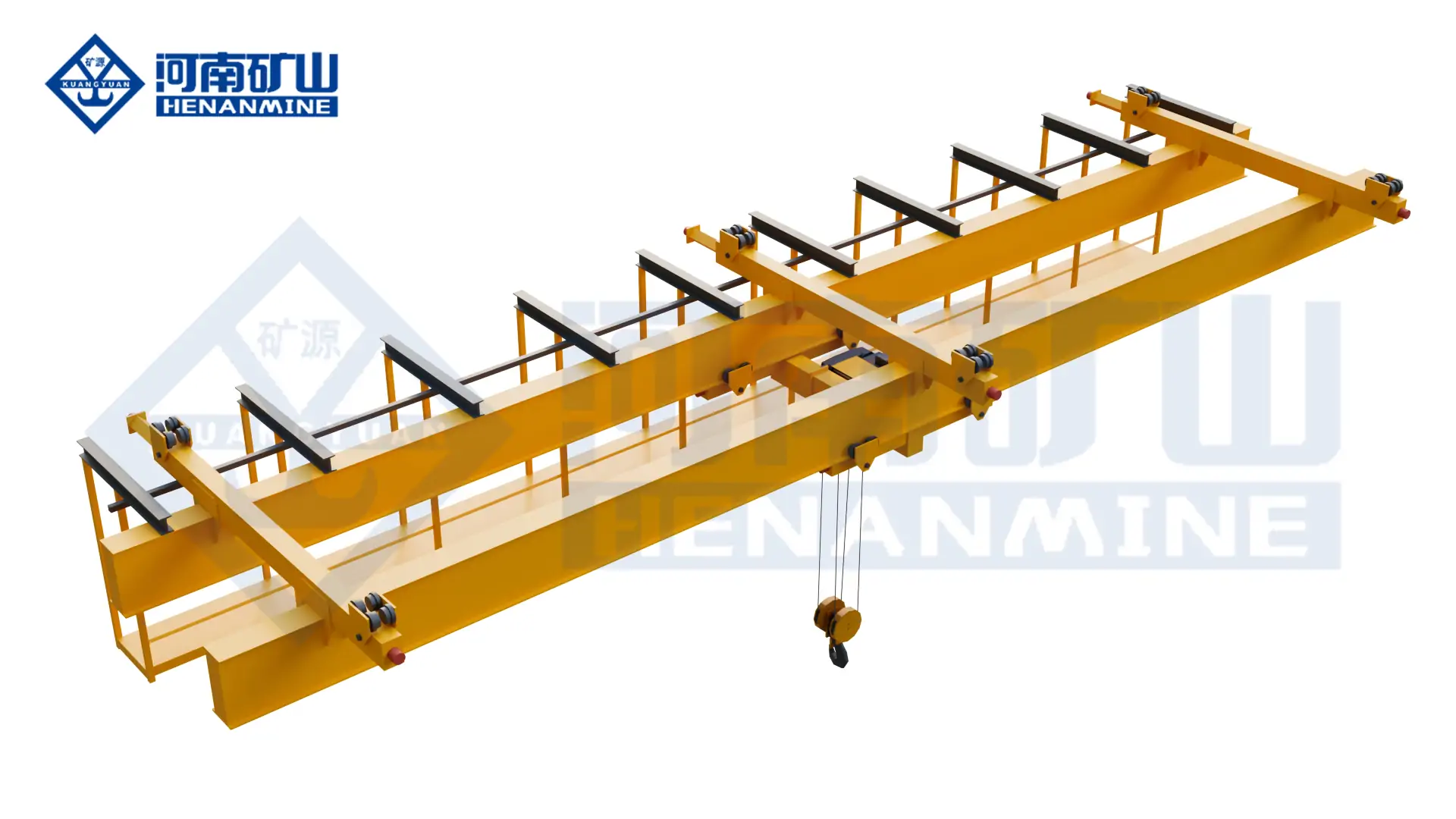
    Henan Mine Crane Multi Support Double Girder Underhung Crane
    Henan Mine Crane Multi Support Double Girder Underhung Crane
    Project planning notes

    Key points for this crane project.

    1. Mainstream application scenarios of aircraft
    2. Core Industry Requirements for Aircraft Lifting
    3. Types of multi-point lifting cranes suitable for
    Read the technical guide

    Mainstream application scenarios of aircraft multi-point suspension cranes

    Aviation multi-point suspension cranes are designed for aircraft precision lifting conditions, covering the aircraft production assembly, daily operation and maintenance, core component maintenance and other full-process scenarios, different scenarios have different lifting focus.

    Aircraft maintenance hangar

    The operation environment of civil aviation and through flight aircraft maintenance hangar is closed and regular, mainly carrying out large fuselage parts replacement, aircraft alignment calibration, large-scale tooling erection, supporting maintenance equipment transfer and other operations.

    This kind of scene does not allow the equipment to run shaking, impact, offset, multi-point suspension system can be balanced through the multi-point force, suitable for the whole aircraft large size, high precision maintenance lifting needs, to avoid local pressure and deformation of the fuselage.

    Aircraft assembly workshop

    Aircraft fuselage segment splicing, wing assembly, tail docking and other assembly processes are the highest precision requirements in aviation production. Single-point lifting cannot fit the long-span and irregular fuselage structure, and docking misalignment is very easy to occur.

    The multi-point lifting equipment for aviation assembly with synchronous control system can realize synchronous lifting and fine-tuning of multiple lifting points to ensure the precise fit of each segmented structure and meet the micron-level assembly standard of aircraft assembly.

    Engine disassembly and assembly operation area

    Aircraft engines, fairings and supporting frames are high-precision core components with concentrated self-weight and precise structure, which cannot be tilted, shaken or bumped during disassembly.

    The multi-point suspension Crane can adjust the lifting point position according to the engine structure layout, disperse the local load, and with the micro-speed control function, it can smoothly complete the engine dismantling, shifting and installation operations.

    Landing gear and heavy parts maintenance area

    Aircraft landing gear and large airborne assembly parts have large self-weight and special structural stress points, so single-point lifting is prone to load offset, resulting in tilting of parts and installation alignment deviation.

    Multi-point support lifting can evenly disperse the pressure of components and keep the assembly in a horizontal state, providing stable operating conditions for landing gear maintenance, replacement and debugging.

    Aerospace Manufacturing Plant

    Aerospace production workshop involves the transportation and assembly of a large number of large thin-walled components, composite fuselage fittings and shaped precision structures. These parts have low hardness and poor toughness, and cannot withstand concentrated pressure and vibration impact.

    The suitable aviation lifting Crane can effectively protect the structural integrity of precision aviation components by dispersing the force at multiple points and weakening the lifting pressure, so that the whole process is smooth and impact-free.

    Specialized Tooling and Equipment Testing Area

    The erection and debugging of aviation maintenance tooling, test rigs and calibration equipment require equipment with synchronized lifting and precise leveling capabilities. Multi-point suspension system can realize multi-point coordinated operation, which is suitable for delicate processes such as tooling alignment, equipment calibration and precision testing.

    Core Industry Requirements for Aircraft Lifting Projects

    The core of aircraft lifting is not “lifting heavy objects”, but “protecting the aviation structure safely, smoothly and accurately”. All equipment design and selection criteria are centered around the protection of precision components.

    Balanced force lifting with multiple lifting points

    There is no independent high-strength single-point stress point for core structures such as airplane fuselage and wings. Conventional single-point lifting equipment can overload the local structure and cause deformation damage.

    Multi-point lifting mode can spread the total load to multiple pre-set points, which is in line with the mechanical design of the aircraft structure and avoids the risk of structural stress damage from the root.

    Smooth operation and precise positioning

    Aviation assembly and maintenance operations eliminate start-stop shocks, load shaking, alignment shifts and other problems. Even millimeter-level displacement deviation may lead to assembly failure and component damage.

    Qualified aircraft maintenance suspension Crane, support for soft start-stop, frequency speed control, anti-sway control, can realize low-speed micro-adjustment position, suitable for all kinds of precision operation scenes.

    Exclusive protection for precise and high-priced structures

    Modern aircraft use a lot of composite materials, thin-walled alloys and other lightweight precision materials, impact resistance, pressure resistance is weak, and the cost of equipment is extremely high.

    Slight vibration, tilting and localized pressure during the lifting process may result in the scrapping of components, which is the core reason why aviation lifting must adopt special multi-point equipment.

    Adaptation to hangar space and architectural constraints

    The floor heights, opening spans, top structures and channel layouts of different hangars vary greatly. Some of the old hangars have the problems of insufficient floor height, dense pipelines on the top and narrow operation space.

    Multi-point suspension Cranes can be customized according to the site building conditions, track layout, suspension height and equipment size, perfectly adapted to the space constraints of various types of hangars, without occupying the ground operating channel.

    Flexible and adjustable lifting configuration

    Different parts of the aircraft have different shapes, centers of gravity, and stress points, so the fixed lifting point mode cannot be adapted to the whole process.

    The multi-point suspension system can flexibly adjust the distance between lifting points and the proportion of force distribution to meet the lifting needs of different components such as fuselage, wing, engine, landing gear, etc., which is more adaptable.

    Highly Stable Synchronized Control System

    The core difficulty of multi-point lifting is the coordinated operation of multiple hoists and lifting points. Unsynchronized lifting and lowering of each point will directly lead to tilting of components and imbalance of force, which will cause safety accidents.

    Professional aviation lifting equipment is equipped with an exclusive synchronization control system, which can realize the precise coordination of multiple lifting points and maintain the horizontal and stable operation of the components throughout the whole process.

    Types of multi-point lifting cranes suitable for aviation scenarios

    Combined with different hangar conditions, lifting loads and operational precision requirements, there are a variety of mature multi-point lifting models in the industry, which can be matched to the corresponding aviation scenarios as needed.

    Multi-point Suspension Crane

    This is the most commonly used core model for aviation maintenance and aircraft assembly. Equipment through the top suspension track with multiple sets of electric hoist, composed of multi-point lifting system, can realize synchronous lifting and panning of multiple lifting points.

    The overall self-weight is light, small space occupation, flexible operation coverage, suitable for indoor closed hangar precision lifting operations, is the mainstream choice of multi-point hangar Crane.

    Synchronized Hoist Suspension Crane

    Designed for old hangars and small maintenance workshops with restricted floor heights, it adopts an under-hanging structure and does not need to occupy the top floor space.

    Equipped with frequency synchronization control system, multiple hoists work together precisely to achieve high-precision multi-point lifting in limited space, which is suitable for small and medium-sized aircraft parts overhaul operations.

    Overhead Crane with Multi-Hoist Configuration

    Suitable for heavy-duty precision lifting in large-size aircraft final assembly plants and large-span hangars. The double girder bridge structure has stronger load bearing capacity and can carry multiple independent hoists, which can be combined in multi-point lifting mode as required.

    With large span and wide coverage, the equipment can meet the overall lifting and alignment assembly requirements of large-size aircraft body segments and oversized wing structures.

    Monorail with multi-point lifting system

    Suitable for repetitive lifting operations in fixed processes, such as standardized disassembling and assembling of aircraft engines, and transferring of components at fixed points.

    The fixed rail ensures accurate alignment, and with the special multi-point spreader, it can form a standardized lifting process and improve the operational efficiency of aviation assembly line maintenance and assembly.

    Aviation Customized Multi-point Lifting Crane

    Customized for special models, shaped components, non-standard hangar conditions. According to the aircraft structure force data, customized exclusive lifting point layout, load distribution scheme and synchronous control logic.

    At the same time, it integrates exclusive functions such as anti-sway, micro-speed fine-tuning, emergency synchronized braking, etc., which is suitable for all kinds of high-end aviation precision lifting non-standard requirements.

    The core reason for prioritizing the use of multi-point suspension cranes for aircraft hoisting

    Compared with the traditional single-point Overhead Crane, multi-point suspension equipment in the aviation scene has irreplaceable advantages, fully adapted to the lifting characteristics of the aircraft structure.

    More reasonable load distribution, avoiding structural damage

    Aircraft do not have high-strength centralized stress points, and single-point lifting will make the local structure bear all the loads, which is very easy to produce deformation.

    Stress concentration, component deformation, paint damage and other problems are eliminated at the source, maximizing the protection of the original value of aviation equipment.

    Lifting stability is greatly improved

    The synchronized and coordinated operation of multiple lifting points can effectively inhibit component tilting, twisting, shaking and other problems. Especially for long-span wings, fuselage segments and other shaped parts, the multi-point support can maintain horizontal stability throughout the whole process.

    Whether it is static hovering alignment, or dynamic panning and transferring, the equipment runs more smoothly, which is suitable for the demand of precision assembly.

    Suitable for long-size and irregular aeronautical components

    Aircraft wings, fuselage, tail and other components are long in size, irregular in shape and have a dispersed center of gravity, making it difficult to accurately control the balance of forces in traditional lifting methods.

    The multi-point suspension system can adjust the position of the lifting point according to the shape of the component to form an all-round support, which is perfectly suitable for the lifting operation of all kinds of large and irregular aviation components.

    Safer and Controllable Operation in Narrow Hangar

    Dense equipment inside the hangar, limited operating space, the traditional Crane running inertia, easy to shake, easy to bump accidents.

    Multi-point suspension Crane running inertia is small, controllable, with anti-collision, soft braking design, in the narrow indoor space operation is safer.

    Meet the needs of high-precision fine-tuning operations

    Aircraft assembly, component replacement, tooling calibration and other processes are not just simple lifting and carrying, but also require millimeter-level positional fine-tuning.

    Multi-point suspension system supports single-point fine-tuning, overall synchronous adjustment, can accurately complete the component alignment, gap calibration and other fine-tuning operations, which is a function that cannot be realized by ordinary industrial Cranes.

    Procurement must verify the core technical parameters

    The precision of the parameters of the aviation multi-point lifting equipment directly determines the operational safety and assembly quality, and the procurement stage needs to be verified accurately one by one to avoid the adaptability problems caused by the inconsistency of the parameters.

    Total lifting tonnage of equipment

    Calculate the total load according to the self-weight of the aircraft components, the weight of the special spreader, the weight of the workpiece accessories, while reserving sufficient safety margin.

    Strictly prohibit extreme load operation to ensure the stability of heavy-duty lifting and to meet the needs of long-term high-frequency aviation operations.

    Single point lifting capacity

    The total tonnage does not mean that the equipment is suitable for aviation working conditions, the load capacity of each suspension point and single hoist must be matched with the actual load distribution scheme.

    According to the structural stress data of the aircraft, the upper limit of the load capacity of each point is individually approved, so as to avoid local structural damage caused by overloading at a single point.

    Number of lifting points

    Determine the number of lifting points according to the size, shape, center of gravity distribution, and structural stress criteria of the lifted components. Small precision components are suitable for 2-4 points of lifting, while large fuselage and wing assemblies need 6 or more points of coordinated lifting.

    Track Span and Layout

    The track span and layout should strictly match the width of hangar, airplane parking position and operation coverage.

    Reasonable track layout can maximize the coverage of the operation area, and at the same time avoid the interfering factors, such as plant columns, top obstacles, and maintenance passages.

    Effective lifting height

    Combined with the hangar height, top structural limitations, aircraft height, maintenance equipment erection height comprehensively approved. It guarantees no collision and no space interference during the lifting and shifting of components.

    Multi-point synchronization accuracy

    This is the core parameter of aviation multi-point lifting equipment. Multi-point lifting deviation needs to be controlled in a very small range to avoid component tilting and force imbalance.

    High-quality aviation equipment can achieve millimeter-level synchronization error, the whole process to ensure that the level of the component is stable, to meet the standards of precision assembly.

    Equipment running length

    Determined according to the total operating length of the workshop and the transfer distance of the components, the equipment can cover all the assembly and maintenance stations to meet the demand for multi-point operation of the whole machine.

    Equipment control mode

    Handle control, wireless remote control, centralized synchronized console, precision electronic control and other modes are available. Precision alignment work gives priority to wireless micro-speed remote control, which is convenient for technicians to fine-tune in real time; centralized console control is used for synchronized work of the whole machine.

    Operation speed and micro-speed control ability

    Aviation lifting does not pursue high-speed operation, but more importantly low-speed stability. The equipment needs to have multi-level frequency conversion speed control function, the regular transit can run at a constant speed, precision alignment can be switched to micro-speed mode, fast and slow switching without impact.

    Full set of safety protection configuration

    It must be equipped with a full set of safety functions such as overload protection, intelligent sway control, soft start and stop, synchronization monitoring, emergency braking, travel limit and so on. Multiple protection mechanisms, all-round avoidance of lifting offset, overload, collision and other types of safety risks.

    Aviation multi-point Crane supplier selection criteria

    Aviation-specific lifting equipment technology threshold is extremely high, ordinary Crane manufacturers lack experience in aviation conditions, cannot meet the demand for precision lifting, selection of suppliers need to focus on verification of the following dimensions.

    Verification of aviation-specific lifting experience

    Priority is given to manufacturers who are deeply engaged in the field of aerospace, familiar with the structural characteristics of aircraft, aviation lifting specifications, precision operating standards. Distinguish from manufacturers who only produce ordinary industrial cranes, able to accurately match the special needs of aviation scenarios.

    Verification of similar aviation project landing cases

    Focus on checking the manufacturer in the aircraft assembly, aviation hangar operation and maintenance, engine lifting, aerospace component processing and other areas of real project cases. The more landed cases, the more the adaptability and stability of the equipment has been verified in real life.

    Evaluation of professional engineering customization capabilities

    High-quality suppliers can independently design exclusive multi-point lifting solutions according to hangar drawings, aircraft models, component stress parameters, and operating procedures, and customize lifting point layouts, synchronized control logic, and equipment parameters, rather than applying common models.

    Verification of a full set of professional and technical documents

    Regular manufacturers can provide a full set of technical documents such as general drawing of the equipment, synchronization control description, load distribution scheme, electrical schematic diagram, list of core accessories, test report, etc., to meet the needs of acceptance, filing and overseas customs clearance of aviation projects.

    Confirm the quality and brand of core parts

    Focus on verifying the brand and qualification of core accessories such as motor, reducer, brake, electric hoist, synchronization control system, traveling end beam and so on.

    Strict factory inspection system

    Before the equipment leaves the factory, it needs to complete no-load test run, full-load load test, multi-point synchronization accuracy test, full-function test, and keep complete testing records to ensure that the accuracy and safety of each piece of equipment meets the standard.

    Clearly define the scope of installation and commissioning services

    Confirm the manufacturer's service mode in advance, including equipment supply, on-site installation guidance, machine commissioning, synchronization accuracy calibration, personnel operation training, etc., to ensure that the equipment can be put into precision operation directly after entering the site.

    Verification of long-term after-sales service and spare parts guarantee

    Aviation project downtime loss is very great, manufacturers need to have a fast after-sales response, original spare parts are always available, remote troubleshooting, regular precision calibration capabilities, to ensure that the equipment long-term stable operation.

    Prioritize adaptability, not just price comparison

    Low-priced general-purpose equipment often lacks precise synchronization, micro-speed adjustment, anti-sway and other aviation-specific features, and cannot meet the demand for precision lifting. Selection needs to prioritize equipment suitability for working conditions, safety stability and control accuracy, taking into account the long-term value of use.

    Procurement and selection of high-frequency misunderstanding

    A lot of aviation lifting equipment adaptation problems, all from the procurement stage of cognitive bias, these misunderstandings will directly affect the operational safety and equipment life.

    Focusing only on the total lifting capacity of the equipment, ignoring the single-point load distribution and synchronization accuracy, resulting in local stress exceeding the standard and deformation of the components.

    The aircraft precision lifting is equivalent to ordinary industrial lifting, direct application of general-purpose Crane equipment, adaptability is seriously inadequate.

    Neglecting the synchronization precision parameters of multiple lifting points, the equipment runs out of synchronization, resulting in component tilting and assembly misalignment.

    Failure to verify the height of the basement, the top obstacles, resulting in insufficient space after the installation of equipment, running interference.

    Failure to specify the form of lifting tooling and lifting point program in advance, the equipment could not match the lifting demand of aircraft components after arrival.

    Choosing suppliers with no experience in aviation projects, the program copied the general design, which does not meet the aviation precision operation standards.

    Selecting a model purely on the basis of price, sacrificing synchronization accuracy, safety configuration and equipment stability, leaving long-term safety hazards.

    Frequently Asked Questions

    What is an aircraft multi-point suspension crane?

    Aircraft multi-point suspension Crane is a special lifting equipment designed for aviation precision lifting, through the multi-group suspension hoist, multi-point synergistic force structure, with the exclusive synchronization control system, to achieve a balanced, smooth, accurate lifting of aircraft components, mainly used for aircraft maintenance, general assembly, core components transfer operations.

    Why must aviation lifting adopt multi-point lifting mode?

    Aircraft fuselage, wings and other components are thin-walled precision structures without high-strength single-point stress points. Single-point lifting is easy to cause stress concentration and structural deformation. Multi-point lifting can disperse the load, balance the force, ensure the integrity of the components, and at the same time improve the stability of lifting to meet the demand for high-precision assembly in aviation.

    How many lifting points are generally required for aircraft lifting?

    There is no fixed standard for the number of lifting points, which is determined by the size, weight, shape and force characteristics of the lifted components. Small parts and engines are commonly used with 2-4 lifting points; large parts, such as large aircraft body segments and wing assemblies, need to be lifted with 6 or more points.

    Which is better for aviation operations, a Suspension Crane or an Overhead Crane?

    Limited floor height, small hangars, precision fine-tuning scenarios, suspension multi-point cranes are more suitable, occupy less space, flexible operation; large span, heavy load, large-scale complete aircraft lifting scenarios, multi-hoist configuration Overhead Crane has a stronger load carrying capacity and wider coverage, and can be selected and matched as needed.

    Besides load capacity, what are the most important equipment parameters?

    Multi-point synchronization accuracy is the core parameter of aerial lifting, which directly determines the force balance and assembly accuracy of components. Next are single-point load carrying capacity, micro-speed control precision and anti-sway performance, which are far more important than mere total tonnage.

    What technical information do I need to request from the manufacturer before placing an order?

    You can ask for a full set of information such as equipment assembly drawings, track layout diagrams, multi-point load distribution scheme, synchronized control instructions, electrical schematic diagrams, list of core accessories, factory inspection reports, safety configuration instructions, etc., for project design docking and acceptance record.

    Can the same supplier provide both Crane and specialized lifting equipment?

    Professional aerial lifting equipment manufacturers can provide one-stop multi-point suspension cranes, customized aerial lifting gear, special lifting tooling, synchronous control system for a complete set of solutions, equipment and tooling adaptability is higher, and the after-sales system is more unified.

    Summarize

    The core value of the aircraft multi-point suspension Crane, not in the greater load capacity, but in the precise synchronization control, balanced force distribution and ultimate operational stability, specially adapted to the aviation precision components of the lifting protection needs.

    Procurement selection, you need to abandon the selection of ordinary industrial cranes thinking, focusing on the lifting point layout, synchronization accuracy, hangar space adaptability and manufacturers of aviation special engineering capabilities, rather than simply focusing on the tonnage of equipment and procurement price.

    Henan Mine Crane is deeply engaged in the field of aviation-specific lifting equipment, with a wealth of experience in aircraft maintenance, assembly projects, and can be customized to various types of multi-point suspension crane systems, to meet the needs of various types of hangars and aviation manufacturing workshops around the world for precision lifting.

    Unsure of the project suitable for multi-point lifting program? Provide the lifting load, lifting point requirements, hangar dimensions and project drawings, and our engineering team will customize the solution for you.

    Discuss the crane arrangement for your project.

    Multi-point lifting needs the aircraft geometry and approved lifting positions defined from the start. Describe the maintenance or assembly task and required coordination so the complete handling arrangement can be engineered for the application. Share the load, available drawings, working cycle and site conditions with Henan Mine Crane so the required configuration and supply boundary can be discussed.

    Related crane configurations

    Multi Support Double Girder Underhung Crane

    View product parameters
    Lifting capacity: 3 – 40 tSpan: 10 – 80 mLifting height: 6 – 30 m

    Use a multi-support double-girder underhung arrangement for wide-span working areas and large components. The building supports, lifting coverage and load distribution are designed together.

    Three Trolley Electric Hoist Crane

    View product parameters
    Lifting capacity: 1 – 32 tSpan: 7.5 – 31.5 mLifting height: 6 – 30 m

    Coordinate three electric-hoist trolleys for long components or several workshop lifting positions. Define hook loads, trolley spacing and permitted individual or combined movements.

    Updated 2026 · Henan Mine Crane
  • Overhead Cranes for Morocco Automotive Plants: Tooling and Bay Requirements

    Overhead Cranes for Morocco Automotive Plants: Tooling and Bay Requirements

    Technical guide

    Overhead Cranes for Morocco Automotive Plants: Tooling and Bay Requirements

    Automotive facilities combine different lifting tasks across production and maintenance areas. Define the tools or components, working positions and building interfaces for the actual plant before requesting an overhead crane proposal.

    Henan Mine CraneTechnical guide · Updated 2026Crane selection, project scope and operating requirements
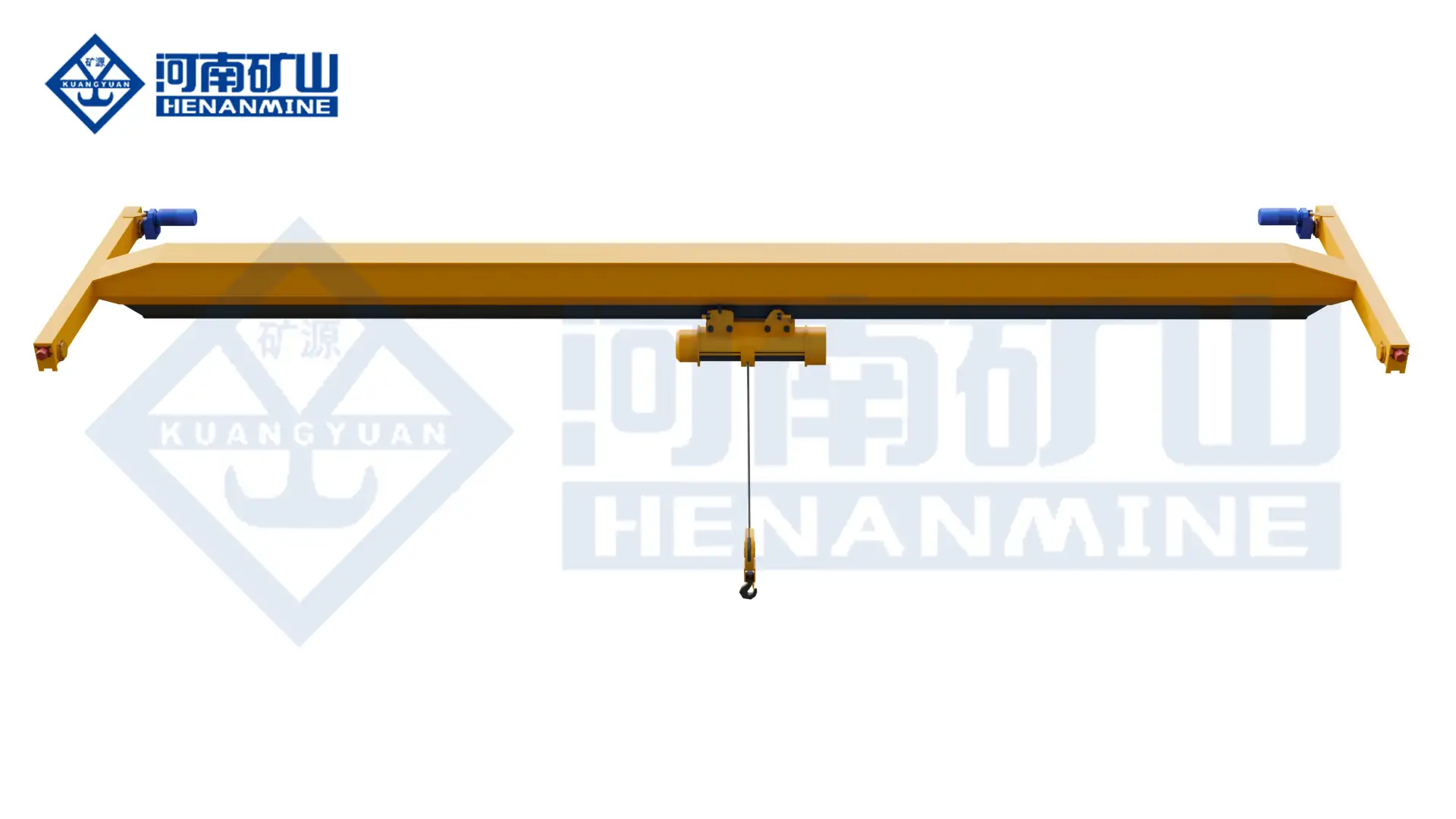
    Henan Mine Crane Single-Girder Bridge Crane
    Henan Mine Crane Single-Girder Bridge Crane
    Project planning notes

    Key points for this crane project.

    1. Which automotive projects in Morocco need plant
    2. Morocco automotive industry Crane core procurement
    3. Mainstream Crane Models Suitable for Morocco
    Read the technical guide

    Which automotive projects in Morocco need plant Overhead Cranes?

    Vehicle assembly plant

    Vehicle assembly workshop is the core application scene of Overhead Crane, through the production line construction, equipment installation and commissioning, daily production materials transfer process. Workshop large-scale production equipment, bodywork accessories, assembly auxiliary equipment handling and positioning, all need to special lifting equipment to complete.

    This kind of scene on the stability of the equipment requires strict requirements, equipment start and stop without frustration, running without shaking, in order to avoid interference with the precision assembly process, to ensure the continuous operation of the entire vehicle production line, but also automotive overhead crane Morocco 's core service scenarios.

    Stamping and mold lifting workshop

    Stamping workshop carries the production of sheet metal parts and structural parts of the whole vehicle, and the workshop is always equipped with various kinds of heavy-duty stamping molds, and mold replacement, overhauling and transferring are daily high-frequency operations. The molds are expensive and require high precision, so the lifting process does not allow bumping, shifting and swaying.

    The die handling crane Morocco, which is suitable for the scene, can realize low-speed and smooth handling, accurate alignment, and meet the demand for safe transfer and replacement of heavy-duty molds, which is an indispensable core auxiliary equipment in the stamping workshop.

    Auto Parts Manufacturing Factory

    Morocco has gathered a large number of body parts, chassis parts, hardware components and other ancillary processing factories, serving the supply chain system of the head OEM. These factories need to lift steel raw materials, semi-finished components, production equipment and finished parts.

    Operation frequency is high, load range is stable, suitable for small and medium-sized Overhead Crane normalized operation, reliable auto parts plant crane supplier will be based on the parts production conditions, matching the appropriate tonnage and working level of the equipment.

    New energy battery and auto parts supply chain factory

    In recent years, Ghanitra and Tangier have continued to land new energy batteries and ancillary projects to help Morocco's new energy automotive industry chain upgrade. These new plants require lifting equipment to complete the production equipment lifting, battery module auxiliary transfer, workshop equipment maintenance and other work.

    New energy workshop working conditions are precise, the smoothness of crane operation, control accuracy, safety protection level requirements are higher, need to customize the appropriate industrial bridge equipment.

    Factory maintenance and supporting work area

    All major automobile factories have exclusive maintenance areas for overhauling production line equipment, replacing faulty parts, and maintaining heavy-duty work equipment. Maintenance work conditions scattered, load span, the need for flexible lifting equipment to adapt to all kinds of heavy parts lifting and handling.

    This type of equipment does not require ultra-high operating frequency, but the generality of the equipment, failure rate, start and stop the flexibility of the higher requirements to ensure that the plant equipment maintenance efficiency, reduce the length of production line downtime.

    Factory storage and internal logistics area

    Automobile factory internal storage area, logistics buffer zone, the need for lifting equipment to complete the construction of shelves, pallets of goods handling, industrial materials stacking, storage of idle equipment and other operations. Overhead Cranes, as the basic logistics equipment in the factory, can effectively improve the utilization rate of storage space in the workshop.

    Factory overhead crane supplier Morocco, adapted to general working conditions, can provide standardized lifting equipment with high adaptability and low operation and maintenance for warehousing and logistics areas.

    Morocco automotive industry Crane core procurement requirements

    Stable constant operation capability

    The automobile production line is in continuous production all year round, and the Crane follows the rhythm of the production line with high-frequency start-stop and cyclic operation. Once the equipment suddenly fails and stops, it will directly lead to production line stagnation, resulting in loss of production capacity.

    When purchasing, local automobile enterprises give preference to models that are suitable for high-frequency cyclic operation, low failure rate and durable structure, and reject ordinary industrial cranes that are only suitable for intermittent operation.

    Smooth and precise lifting and maneuvering performance

    The lifting of molds, precision tooling, and precision parts of the entire vehicle is completely different from ordinary industrial material handling. Equipment running shaking, alignment deviation, very easy to cause mold bumps, parts damage, resulting in high economic losses.

    Cranes for automobiles need to have delicate speed control performance and stable traveling system to achieve low-speed smooth start and stop, accurate alignment, to meet the needs of precision working conditions.

    Suitable for workshop space layout, improve site utilization rate

    Most of the mature automobile factories in Morocco have a fixed plant structure, and the floor height, column spacing, and ground layout have long been finalized, making large-scale transformation impossible. Ordinary Crane structure redundancy, occupies a large space, will compress the production line operating space.

    Purchasers will focus on the headroom height of the equipment, the limit distance of the hook, the size of the whole machine structure, and choose the model that fits the layout of the plant to maximize the use of the effective working space in the workshop.

    Suitable for the needs of OEMs and supporting industry clusters

    Morocco's automobile industry presents cluster development, the head of the vehicle factory working conditions heavy duty, high frequency of operation, small and medium-sized auto parts factories, ancillary processing plant working conditions are relatively lightweight, the demand is more flexible.

    Purchasers prefer customizable and expandable equipment solutions, which cannot only meet the heavy-duty continuous operation of large OEM OEMs, but also adapt to the economic needs of small and medium-sized supporting factories.

    Perfect after-sales and parts supply guarantee

    The automotive industry has a tight production schedule and fixed work schedules, so equipment failures cannot be put on hold for a long period of time. Local industrial parts supply chain resources are limited, and the procurement cycle of niche equipment parts is long.

    Rapid technical docking, troubleshooting and spare parts supply are the core considerations for Moroccan automobile enterprises to select Morocco overhead crane supplier, which directly affects the production stability of the plant.

    Adaptation to the later expansion and upgrade of the plant

    Morocco's automotive industry is still expanding, many factories have planned production line upgrades, new energy capacity expansion, equipment iteration and renewal of the long-term plan.

    High-quality Crane program will reserve space to match the later production line adjustment, upgrading of work equipment, capacity expansion needs, to avoid the waste of short-term equipment elimination, repeated procurement.

    Mainstream Crane Models Suitable for Morocco Automobile Plant

    Single Girder Overhead Cranes

    Single girder Overhead Crane has simple structure, light weight and high cost performance, which is suitable for light and medium load working conditions. Mostly used in small and medium-sized auto parts processing plant, factory storage area, maintenance area of the material and equipment lifting operations.

    With simple operation and maintenance, low energy consumption and wide adaptability, it is the most common model used in small and medium-sized auto parts factories in Morocco, and fully meets the daily demand for normalized light lifting.

    Double Girder Overhead Crane

    Double girder Overhead Crane has stronger loading capacity and higher structural stability, which can be adapted to high-capacity load, large span workshop and high-frequency continuous operation scenarios. It is mainly used in stamping workshop of vehicle factory, heavy duty mold transfer, large production equipment lifting.

    This type of model has high working level, good fatigue resistance, and can withstand heavy load cyclic operation for a long time, it is the core model for large OEM automobile factory, and it is also the main heavy-duty model promoted by bridge crane supplier in Morocco.

    Low Headroom Overhead Crane

    Some old renovated factories and standardized plants in Morocco have limited floor heights, and ordinary Cranes cannot operate normally due to insufficient hook stroke and excessive space occupation on the top.

    Low headroom Overhead Crane optimizes the structural layout of the whole machine, reduces the space occupied on the top, maximizes the release of the effective lifting height of the hook, and is perfectly adapted to the working conditions of automobile workshops with limited floor height and compact space.

    Overhead Crane

    Suspension Cranes do not require column support, and are installed directly on the steel structure of the roof of the plant, without occupying ground space. Suitable for light work, small span workshop, assembly line auxiliary lifting scenes.

    Mostly used in automotive parts finishing workshop, small assembly workstation auxiliary material transfer, flexible installation, strong adaptability, fit the refined production conditions.

    Customized mold lifting Crane

    For the high-frequency transfer needs of heavy-duty precision molds in stamping workshop, customized Overhead Crane can be used with precise speed regulation, sway control and synchronous control system.

    The equipment runs without shaking, with high alignment accuracy, matching the lifting standards of various precision molds, avoiding mold bumping loss, and specially serving the core stamping process of OEMs.

    Procurement must verify the core technical parameters

    Rated lifting capacity

    Tonnage selection should be combined with the self-weight of the mold, the weight of the workpiece, the equipment load, the maximum weight of the material accounting, while reserving sufficient safety margin. Automotive heavy-duty working conditions strictly prohibit equipment full load, overload long-term operation.

    The working conditions of different workshops vary greatly, stamping workshop needs to match the high-capacity model, storage, finishing workshop can choose small and medium tonnage equipment, according to the need for accurate selection.

    Equipment span

    Crane span must strictly match the workshop column spacing, rail installation center distance, fit the existing layout of the plant. Deviation from the span will lead to problems such as failure to install the equipment, running jam, and insufficient operating range.

    Before purchasing, we need to accurately measure the workshop site data to ensure that the span of the equipment is fully compatible with the production area, covering the full range of workstation operation requirements.

    Lifting height

    Lifting height determines the effective working headroom of the equipment, which needs to match the height of mold replacement, equipment installation height, material stacking height and plant height restrictions.

    Adequate lifting height ensures the smooth lifting of heavy workpieces and large equipment into position and avoids spatial interference in the lifting process.

    Running length

    The running length of the truck directly determines the working coverage of the equipment, which needs to be adapted to the total length of the workshop production line, the material transfer line and the distribution of the working stations. Reasonable running length can realize lifting operation without dead angle in the whole workshop.

    Working level

    This is the most central and easily overlooked parameter of automobile plant Crane. Automobile production line daily high-frequency cyclic operation, must choose the middle and high level of heavy-duty work level models.

    Ordinary civilian light-duty level equipment, short-term use of structural fatigue, component wear, brake failure and other problems, completely unable to adapt to the automotive industry continuous production conditions.

    Positioning smoothness and speed regulation performance

    The lifting of molds and precision parts requires high requirements on the start-stop buffer and speed regulation of the equipment. High-quality models can realize stepless speed regulation, smooth starting and stopping without impact, accurate positioning at low speeds and efficient transfer at high speeds.

    This parameter directly determines the lifting safety of precision workpieces, and is the core criterion distinguishing ordinary Cranes from automobile-specific Cranes.

    Maneuvering mode

    Three modes of control can be selected according to the workshop conditions: handle control, wireless remote control and cab control. Wireless remote control is suitable for assembly line auxiliary operation and light material transfer, while cab control is preferred for heavy molds and high-capacity equipment lifting, which is safer.

    Headroom and Hook Limit Distance

    For most of the compact standardized factory buildings in Morocco, the hook limit distance and the headroom parameter of the top of the equipment are especially critical. Reasonable structural design can maximize the release of effective working height within the limited floor height.

    Power supply standard

    The electrical system of the equipment needs to be fully adapted to the local industrial voltage and frequency standards in Morocco, and match the existing power supply system in the plant, so as to avoid the problems caused by voltage inconsistency and parameter mismatch, such as inoperable equipments and circuit failures.

    How to screen reliable Morocco truck crane suppliers

    Verify the independent production capacity of the manufacturer

    Most traders in the market do not have independent production, R & D, quality inspection capabilities, only do equipment resale, cannot control the process standards and working conditions of specialized truck cranes adaptability.

    Procurement needs to prioritize the selection of source entity manufacturers, with a complete steel processing, electrical assembly, machine commissioning, quality inspection of the whole process of factory capacity, Henan Mine Crane (Crane Industrial) has a full range of automotive industrial cranes with independent production capacity, export qualification is complete.

    Verification of similar projects in the automotive industry experience

    Ordinary industrial crane manufacturers are only familiar with general lifting conditions, do not understand the special needs of automotive mold lifting, production line support, workshop operation and maintenance.

    High-quality suppliers have a wealth of North Africa, Morocco, automotive plant landing cases, familiar with local plant standards, production conditions and acceptance requirements, can accurately match the project needs.

    Evaluation of professional engineering customization ability

    Reliable manufacturers can receive customer shop drawings, working conditions parameters, free review of site layout, according to the mold weight, frequency of operation, space constraints, customized to fit the model configuration and structure of the program, rather than applying standardized general equipment.

    Verification of a full set of standardized technical data

    Formal export manufacturers can provide a complete set of English technical data, including equipment assembly drawings, parameter manuals, electrical schematic diagrams, wheel pressure data, list of core components, factory quality inspection report, to meet the Moroccan project customs clearance, acceptance, archiving, operation and maintenance needs.

    Confirm the brand and configuration of core parts

    Core parts such as motor, reducer, brake, electrical control system, wire rope, hook, etc. directly determine the stability and service life of the equipment. It is necessary to verify the brand, protection level and specification parameters of the accessories in advance to prevent under-provisioning and under-provisioning.

    Verify the quality inspection and factory testing process

    Before leaving the factory, the specialized truck cranes must complete the whole process of quality inspection, such as weld flaw detection, dimensional calibration, electrical testing, no-load test run, full load test, overload safety test, etc., and keep a complete record of the test to ensure that the equipment can be stabilized and put into operation on the ground.

    Clearly define the scope of installation and commissioning services

    Confirm the service content in advance, and make clear whether it includes equipment transportation, on-site installation guidance, machine commissioning, start-up acceptance, operator training and other services. Overseas projects require high installation precision, and professional technical support can avoid hidden problems in the later operation of the equipment.

    Confirmation of warranty and spare parts after-sale system

    Focus on verifying the warranty period, warranty coverage, remote technical response time, perishable parts reserve and cross-border replenishment capability. A perfect after-sales system can minimize plant downtime loss.

    Common Procurement Misconceptions of Morocco Automotive Project

    Simply taking the high or low price quotation as the core procurement standard is the most common procurement problem in local automotive plants. Most of the low-priced equipment adopts lightweight structure, low-end parts, simplified electrical configuration, which seems to save costs in the short term, but frequent failures and high operation and maintenance costs in the later stage seriously affect the production progress.

    Frequently Asked Questions

    What is the most suitable type of Overhead Crane for automobile workshop in Morocco?

    Double girder Overhead Cranes are preferred in vehicle stamping workshops and heavy-duty assembly areas; Single girder Overhead Cranes are suitable for auto parts workshops, warehousing and maintenance areas; Low headroom models are preferred in plants with restricted floor heights; and special stabilized cranes can be customized for lifting precision molds.

    Can single girder cranes meet the production needs of auto parts factories?

    Small and medium-sized auto parts processing plants, warehousing and logistics areas, daily maintenance of light and medium load operations, single girder cranes can be adapted to the load, frequency, stability, more cost-effective, enough to meet the needs of normalized production.

    Why does mold lifting require a high degree of smoothness of the equipment?

    Stamping molds are expensive, high precision, slight shaking, bumping will lead to mold precision failure, directly affecting the production quality of vehicle parts, resulting in high economic losses, so the equipment must have a smooth start and stop, accurate alignment performance.

    What kind of core technical information do I need to ask for before placing an order?

    You need to ask for the equipment assembly drawings, detailed technical parameters, electrical schematic diagrams, wheel pressure load data, core parts list, a full set of factory quality inspection reports, English operation and maintenance manuals.

    Can a supplier cover the whole scene of the plant Crane needs?

    Professional scale manufacturers can provide one-stop assembly, stamping, warehousing, maintenance, new energy workshop full range of lifting equipment, unified technical standards, unified after-sales system, reduce customer docking costs.

    Summarize

    Procurement of Morocco automotive plant Overhead Crane, the core is not to get the lowest price, but to find the factory conditions, match the production demand, with the ability to serve the whole process of industrial crane supplier Morocco.

    Morocco's automotive industry, heavy-duty continuous operation, precision mold lifting, compact plant space, the demand for long-term expansion, the crane model selection, technical parameters, process standards, after-sales system have exclusive requirements. Only customized equipment that fits the working conditions of the automotive industry can achieve long-term stable operation.

    High-quality suppliers cannot only provide high-quality lifting equipment, but also relying on professional engineering experience, to provide customers with drawing review, program customization, factory quality inspection, cross-border delivery, installation and commissioning, lifelong maintenance of the whole chain of services, to help companies avoid procurement mistakes, reduce the full life cycle of operating costs.

    If you need customized solutions, you can provide the tonnage, span, lifting height, weight of the mold, workshop drawings and frequency of operation, our engineering team will accurately match the exclusive Crane solutions for you.

    Discuss the crane arrangement for your project.

    Automotive facilities combine different lifting tasks across production and maintenance areas. Define the tools or components, working positions and building interfaces for the actual plant before requesting an overhead crane proposal. Share the load, available drawings, working cycle and site conditions with Henan Mine Crane so the required configuration and supply boundary can be discussed.

    Related crane configurations

    Single-Girder Bridge Crane

    View product parameters
    Lifting capacity: 1–20 tSpan: 7.5–31.5 mLifting height: 6, 9, 12, 18, 24 or 30 m; capacity-dependent

    Use an LDA single-girder bridge and electric hoist for general workshop material handling. Select the lifting capacity, runway geometry and hoist duty around the building and load.

    LH Electric Hoist Double Girder Crane

    View product parameters
    Lifting capacity: 3, 5, 10, 16, 20 tSpan: 10.5–31.5 mLifting height: 6, 9, 12 or 18 m

    Use an LH double-girder bridge with an electric-hoist trolley for workshop lifting, assembly and maintenance. Match the hoist arrangement to the suspended load, hook travel and available building space.

    Updated 2026 · Henan Mine Crane

  • Mexico Automotive Plant Cranes: Stamping, Tooling and Maintenance Scope

    Mexico Automotive Plant Cranes: Stamping, Tooling and Maintenance Scope

    Technical guide

    Mexico Automotive Plant Cranes: Stamping, Tooling and Maintenance Scope

    Stamping and tooling work can require different handling patterns from general maintenance. Provide the component geometry, production route and required positioning so each crane duty can be specified within the plant layout.

    Henan Mine CraneTechnical guide · Updated 2026Crane selection, project scope and operating requirements
    Henan Mine Crane Single-Girder Bridge Crane
    Henan Mine Crane Single-Girder Bridge Crane
    Project planning notes

    Key points for this crane project.

    1. Why the Mexican automotive industry needs reliable
    2. Mainstream Overhead Crane Types in the Mexican
    3. Overhead Crane in the Mexican automobile factory’s
    Read the technical guide

    Why the Mexican automotive industry needs reliable Overhead Crane Suppliers

    Automotive production is highly dependent on smooth material flow

    The automotive manufacturing process is complicated, from large stamping molds, body steel structure parts, to all kinds of assembly parts, production equipment, all need to be frequently transferred across the workstation. Manual handling cannot cope with the lifting demand of heavy workpieces, and it is also difficult to match the production rhythm of the assembly line.

    Overhead Crane adapted to the workshop conditions, can accurately connect the various processes of material transportation, so that the mold replacement, component displacement, equipment into the field and other operations in an orderly manner, to protect the flow of the entire production line efficiency.

    Lifting equipment directly affects the overall capacity of the factory

    Most of the automobile workshop adopts two-shift or three-shift uninterrupted production mode, and the material lifting operation is carried out throughout the day. Stable operation of the automotive plant Overhead Crane, can reduce the process of waiting for the gap, so that the production rhythm to maintain consistency.

    Standardized mechanized lifting can also avoid the workpiece bumping and on-site safety hazards brought about by manual handling, optimize the overall working environment of the workshop, and meet the standardized production management requirements of automobile enterprises.

    Equipment failure can cause high production loss

    The automobile assembly line is highly interlinked, any one part of the stagnation will affect the overall production capacity. If the workshop's main lifting equipment fails suddenly, mold replacement, equipment maintenance, material transfer work will be forced to interrupt.

    Automobile enterprises to purchase more attention to the value of the whole life cycle of the equipment

    Now most of the Mexican vehicle manufacturers and parts factories, procurement logic has been very mature. Low-priced, low-mounted lifting equipment, short-term cost savings, frequent failures in the later stages, lack of spare parts, maintenance problems, will continue to increase the operational burden.

    Mainstream Overhead Crane Types in the Mexican Automotive Industry

    Single girder Overhead Crane has simple structure, light weight and wide adaptability, which is the common model in Mexico's small and medium-sized auto parts workshop and storage area. It is mainly used for light parts transfer, daily maintenance in workshops, small workpiece handling and other medium and light load operations.

    Double Girder Overhead Crane

    With smooth operation and good fatigue resistance, the equipment is able to adapt to the long-term uninterrupted heavy-duty operation rhythm of automobile workshops, and is the standard lifting equipment for high-end automobile manufacturing production lines.

    Part of the old Mexican automobile enterprises plant, remodeling production lines have the problem of limited floor height, the lifting height of ordinary Cranes cannot meet the production requirements. Low headroom Overhead Crane optimizes the trolley structure and lifting layout, and can maximize the use of vertical workspace within the limited floor height.

    Suspension Overhead Crane

    With flexible operation and wide coverage, it is suitable for fine production workshops with intensive work processes and numerous ground equipment.

    For the precise alignment of automotive molds, synchronous lifting of large assemblies, precision equipment into the field and other special scenarios, many head of the Mexican automotive enterprises will use customized Overhead Cranes. It can be equipped with frequency control, precise positioning, synchronized lifting and special spreader.

    Overhead Crane in the Mexican automobile factory’s core application scenarios

    The core operation of the stamping production line is the frequent replacement and maintenance of molds. Large stamping molds with high-capacity and high precision requirements must rely on special Overhead Cranes to complete the lifting, shifting and alignment work.

    Material transfer in assembly workshop

    Stable material supply can effectively connect the assembly processes and ensure the continuous operation of the assembly line.

    In the process of auto parts production, the loading and unloading of large molds, processing equipment, finished heavy-duty parts and the transfer, all need lifting equipment to assist. Whether it is metal blanks into the material, or finished parts out of the warehouse, Crane can simplify the operation process.

    Plant equipment maintenance operations

    Efficient maintenance lifting operation can shorten the production line downtime maintenance time, reduce capacity loss.

    Cranes are needed to complete the stacking and loading and unloading of heavy shelves, bulk materials and large-scale work equipment in the raw material warehouse, finished product stacking area and work equipment storage area of automobile enterprises. Compared with small handling equipment, Overhead Cranes have a wider operating range and stronger carrying capacity.

    The core technical parameters that Mexican automobile enterprises focus on in procurement

    Tonnage selection needs to refer to the maximum lifting load of the workshop, which mainly includes the maximum weight of various types of stamping molds, production equipment, and heavy assembly parts, while reserving sufficient safety margins.

    Equipment span

    Professional manufacturers will customize the span according to the drawings of the factory building of the automobile enterprises, so as to guarantee the full coverage of the equipment.

    Combined with the plant floor height, mold stacking height, equipment installation height and production operation safety headroom comprehensive determination. It needs to meet the height requirements of mold lifting, equipment maintenance and material stacking.

    Working Level

    The working level that matches the working conditions is the basis for the long-term stable operation of the equipment.

    Conventional workshop material transfer, light work, mostly handheld button control, easy to operate. For mold replacement and precision component lifting scenarios, wireless remote control is preferred for flexible operation and higher safety.

    Positioning and speed control

    Effectively avoiding problems such as mold knocking and misalignment of components, adapting to the needs of refined production.

    Enhance the efficiency of mold replacement

    Significantly shorten the downtime of die change, and increase the effective capacity of the stamping line.

    The molds and equipment used in automotive production are heavy and highly precise, which cannot be handled manually, and the stability of simple lifting equipment is insufficient. Specialized Overhead Crane is equipped with multiple safety protection devices, load stability and reliable braking.

    Single Girder vs. Double Girder Cranes for Mexican Automotive Plants

    Single girder Overhead Crane is more suitable for light and medium load, low frequency operation scenarios, mostly used in automotive parts workshop, storage area, auxiliary maintenance workstation. The equipment procurement cost is lower, the self-weight is light, the load-bearing requirements of the plant are not high, and the installation and maintenance are relatively simple.

    Adaptive scenes of double girder Crane

    The structural stability, anti-shaking ability and ultimate load capacity of the equipment are far better than that of single girder model, which can be adapted to the high-intensity operation of the automobile core production line for a long time.

    Selection is not blindly pursuing high or low price, the core combined with the actual load of the workshop, the frequency of daily operations, plant span, lifting height and structural conditions of a comprehensive judgment. Choose single girder for light load routine work, and choose double girder for heavy load high-frequency and precision lifting work, and the optimal program is the one that fits the working condition.

    Strength of independent large-scale production

    Henan Mine Crane (Crane Industrial) has a large-scale intelligent production base, can be independently customized for various types of automotive plants Overhead Crane, export qualifications, equipment adapted to North American industrial production standards.

    Ordinary industrial Crane manufacturers are only adapted to the general workshop conditions, do not understand the high-frequency operation of the automotive production line, precision lifting, mold alignment of the special needs. Professional suppliers are familiar with the rhythm of the automotive assembly line, mold lifting standards and workshop safety standards.

    Strict quality control of the whole process

    Each piece of factory equipment has a complete quality inspection record to ensure that it can be directly adapted to high-frequency mass production operations after landing.

    The loss of downtime of automobile enterprises is extremely high, and the speed of after-sales response directly affects the production capacity of factories. High-quality export suppliers can provide English technical docking, remote installation guidance, equipment debugging, operation training services, and at the same time to ensure a stable supply of commonly used wearing parts to shorten the downtime.

    Common concerns of Mexican automobile enterprises in procurement

    Many low-priced equipments are labeled with standardized parameters, but the working level is on the low side, with insufficient spare capacity of core components, which can only be adapted to occasional overhauling operations. If they are put into high-frequency mass production scenarios in automobile workshops for a long period of time, problems such as aging of components and operation lagging will occur rapidly.

    Whether it can meet the smooth and precise requirements of mold lifting

    The equipment suitable for automobile enterprises must have the ability of smooth speed regulation, anti-shaking and accurate positioning.

    The floor heights, spans, track beam loads and installation spaces of different automobile enterprises' plants are different. General standardized equipment is difficult to fully adapt, and manufacturers need to customize and adjust according to the site data, so as to avoid the equipment cannot be installed after arrival, and cannot run at full capacity.

    The core pain point of overseas projects is difficult to purchase accessories and slow after-sales response. Once the equipment fails, no spare parts and no technical guidance will directly lead to long-term production line downtime. When purchasing, you must confirm the manufacturer's parts supply and cross-border after-sales system.

    Some of the low-priced offers only include the host equipment, excluding tracks, electrical packages, commissioning services, spare parts. Later landing will continuously generate incremental costs, and the overall cost far exceeds the initial offer.

    There are differences in the mold size, lifting method and operational requirements of different car companies. High-quality suppliers can customize special spreader, synchronous lifting, remote control, frequency control and other functions to meet the workshop's individual operational needs.

    Compare the full set of technical configuration details line by line

    Only when the configuration dimensions are unified can a fair comparison be made to avoid being misled by low-priced and low-equipped solutions.

    Be sure to confirm that the equipment is designed for high-frequency and heavy-duty working conditions in automotive workshops, not for general-purpose light-duty working conditions. The mismatch of working levels is the core reason for frequent equipment failures and shortened service life.

    Warranty period, warranty coverage, after-sales response time, cross-border service mode, directly determines the stability of long-term operation of the equipment. A perfect service system has more practical value than a weak price difference.

    Case: Mexico parts plant Crane selection

    A number of local suppliers to participate in the offer, one of the manufacturers offer the lowest price, but the program parameters are vague, not marked clear working level, no variable frequency smooth control configuration, only to provide the basic host, does not include debugging, training and complete technical information, and no similar automotive plant landing cases.

    Common Procurement Misconceptions of Mexican Purchasers

    Neglecting the matching of work level and operation frequency, replacing automobile-specific heavy-duty equipment with light equipment will result in rapid fatigue aging of the equipment and potential safety hazards.

    Neglecting the demand for precision lifting, choosing ordinary non-speed-regulated equipment will easily cause damage to expensive molds and precision components.

    Incomplete project data provided at the quotation stage leads to inconsistency between program design and on-site working conditions, repeated rectification at a later stage, and increased project costs.

    Scale overseas manufacturers rely on mature production supply chain, under the premise of stable quality, have a stable price advantage, cost-effective than the local small workshop products.

    Summary

    Mexico's automotive industry has dense clusters and fast iteration of production lines, which have strict requirements on the stability, accuracy and durability of lifting equipment. Ordinary general-purpose Crane cannot be adapted to high-frequency mass production, precision lifting workshop needs, only targeted customized industrial-grade equipment, in order to match the long-term production rhythm of car companies.

    Henan Mine Crane Industrial (Crane Industrial) has long been deeply engaged in the Mexican automotive industry lifting market, familiar with the North American automotive manufacturing standards and Mexico's local plant conditions, with many types of automotive workshop Overhead Crane landing experience.

    Discuss the crane arrangement for your project.

    Stamping and tooling work can require different handling patterns from general maintenance. Provide the component geometry, production route and required positioning so each crane duty can be specified within the plant layout. Share the load, available drawings, working cycle and site conditions with Henan Mine Crane so the required configuration and supply boundary can be discussed.

    Related crane configurations

    Single-Girder Bridge Crane

    View product parameters
    Lifting capacity: 1–20 tSpan: 7.5–31.5 mLifting height: 6, 9, 12, 18, 24 or 30 m; capacity-dependent

    Use an LDA single-girder bridge and electric hoist for general workshop material handling. Select the lifting capacity, runway geometry and hoist duty around the building and load.

    LH Electric Hoist Double Girder Crane

    View product parameters
    Lifting capacity: 3, 5, 10, 16, 20 tSpan: 10.5–31.5 mLifting height: 6, 9, 12 or 18 m

    Use an LH double-girder bridge with an electric-hoist trolley for workshop lifting, assembly and maintenance. Match the hoist arrangement to the suspended load, hook travel and available building space.

    Updated 2026 · Henan Mine Crane

  • Shipyard Gantry Crane Budgeting: Equipment, Infrastructure and Site Work

    Shipyard Gantry Crane Budgeting: Equipment, Infrastructure and Site Work

    Technical guide

    Shipyard Gantry Crane Budgeting: Equipment, Infrastructure and Site Work

    A shipyard budget should include the full handling arrangement and the work needed to install it. Define the load envelope, runway and support interfaces before comparing equipment, construction, commissioning and support allowances.

    Henan Mine CraneTechnical guide · Updated 2026Crane selection, project scope and operating requirements
    Henan Mine Crane Shipbuilding Gantry Crane
    Henan Mine Crane Shipbuilding Gantry Crane
    Project planning notes

    Key points for this crane project.

    1. What Is a Marine & Shipyard Gantry Crane
    2. Major Factors That Determine Gantry Crane Cost
    3. Marine Environment: Additional Costs You Should
    Read the technical guide

    What Is a Marine & Shipyard Gantry Crane

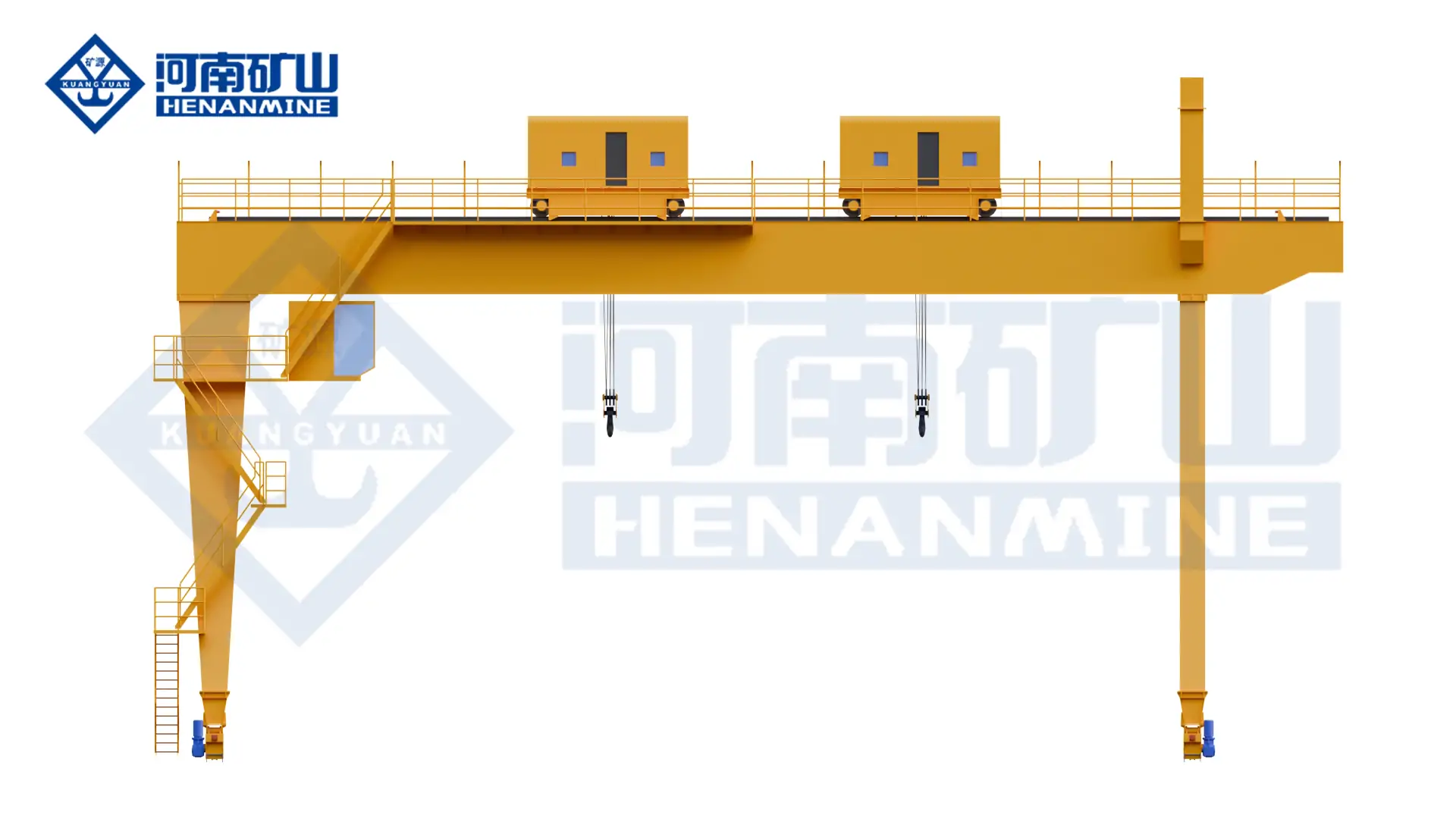
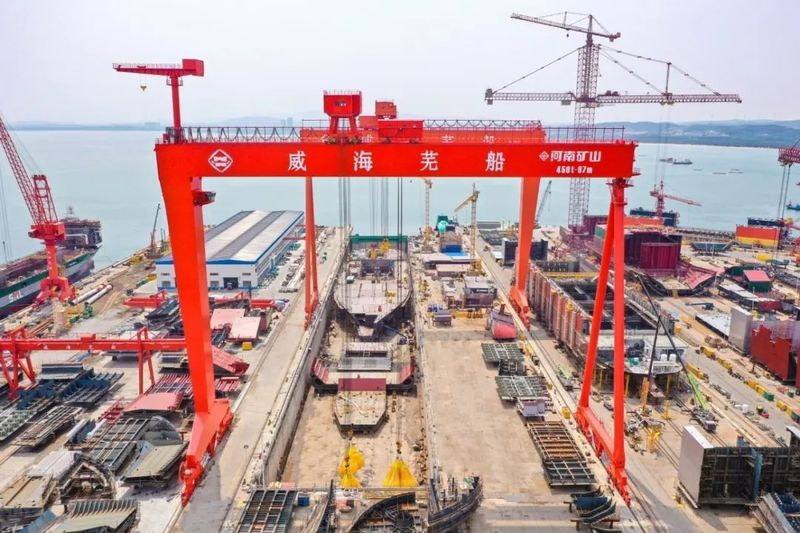
    Marine gantry crane (also known as shipbuilding gantry crane, dock giant gantry crane) is a heavy lifting equipment specially developed for shipbuilding and marine heavy industry scenarios. The core structure of the equipment consists of a horizontal main girder, a double-sided vertical outrigger, a ground track travel mechanism, and a lifting trolley hoist system. The whole walks vertically along the ground track, and the lifting trolley moves laterally along the main girder, with hook lifting operations to achieve three-dimensional full coverage of the operating area, which can accurately complete heavy-duty hoisting operations with large span, large weight and high precision.

    Compared with ordinary industrial cranes, the equipment has stronger structural rigidity, higher load stability, and better environmental adaptability, and can be adapted to high-intensity, high-frequency, and high-load dock continuous operation conditions for a long time.

    Core application scenarios

    Marine gantry cranes are just-needed equipment for the whole process of marine heavy industry operations, covering the whole scene of shipbuilding, ship repair, component processing, and equipment installation.:

    • Ship assembly construction: accurately complete the lifting and alignment calibration of hull segments and prefabricated steel components, standardize and promote various assembly processes, and ensure the efficient and orderly landing of the ship's overall construction operations.
    • Ship repair and maintenance: specializing in the disassembly, displacement and supporting maintenance operations of the ship's main engine, auxiliary equipment and large-scale deck equipment, accurately troubleshooting equipment failures, and meeting the daily maintenance and maintenance needs of the ship in all directions.
    • Transfer of marine components: efficiently complete the cross-station transfer of large ship slabs, steel and various prefabricated components, and open up the whole process link from shipyard processing and transfer to warehousing to ensure the smooth flow of production materials.
    • Power system installation: high-precision construction technology is used to complete the placement and assembly of ship propulsion systems, generator sets and various auxiliary power equipment, strictly control the installation accuracy, and build a solid foundation for the operation quality of the ship's power system.
    • Hull module hoisting: proficient in adapting to large-scale modern shipbuilding technology, accurately complete the hoisting, flipping and precision splicing of large-scale hull segments and overall hull modules to ensure that the hull structure assembly meets the standard requirements.

    Major Factors That Determine Gantry Crane Cost

    Rated lifting weight

    The rated lifting weight is the primary factor that determines the price of Marine gantry cranes. The larger the tonnage, the higher the steel material, structural strength, transmission system and safety redundancy standards, and the cost will rise step by step. Industry data show that for every 100–ton increase in tonnage, the cost of equipment increases by 80-1.2 million US dollars.

    High-frequency and heavy-duty working conditions need to be matched with high-specification tonnage design, which can effectively avoid equipment aging, frequent failures and other problems.

    Span and track length

    The span of the crane is the distance between the centerlines of the tracks on both sides, which directly determines the width of the operation coverage and has a nonlinear impact on the cost. The larger the span, the more materials are used for the main girder and outrigger steel structure, the more complex the structural design, and the higher the equipment cost. At the same time, the construction standards for foundation bearing capacity and rail infrastructure have been greatly increased, further pushing up civil construction costs.

    The total length of the track also affects the overall budget. For every one-meter extension of the track, anchoring, power supply, grounding and ground hardening projects are required.

    Lifting height and work level

    The lifting height needs to be calculated based on the comprehensive calculation of the maximum ship height of the dock, the lifting height of the components, and the safety clearance at the bottom. The height deviation of only a few meters may lead to the redesign of the overall steel structure, resulting in high renovation costs. Accurate matching of lifting height is the core prerequisite for avoiding late rework.

    The working level determines the intensity of crane operations. The ISO/FEM A6–A8 working condition level is used for continuous heavy–duty operations in the dock. High-frequency production scenarios need to upgrade the A7-A8 high-configuration standard, which is more expensive but more durable. Although this low configuration level can reduce the initial investment, it can easily cause frequent equipment failures and shorten the life span, which greatly increases the long-term operation and maintenance costs.

    Body configuration form

    Double-beam models have stronger rigidity, greater lifting height, outstanding impact resistance and partial load resistance, and stable and safe operation.

    The adaptation structure can be selected according to the layout of the shipyard site: the A-shaped outriggers have good stability and are suitable for heavy loads; the U-shaped gantry has sufficient passage space to facilitate the operation of large components; the semi-gantry relies on the building to lay tracks to save space; the giant gantry crane is designed for segmented hoisting of large hulls and is the core main equipment of large shipyards.

    Hoist, trolley and drive system

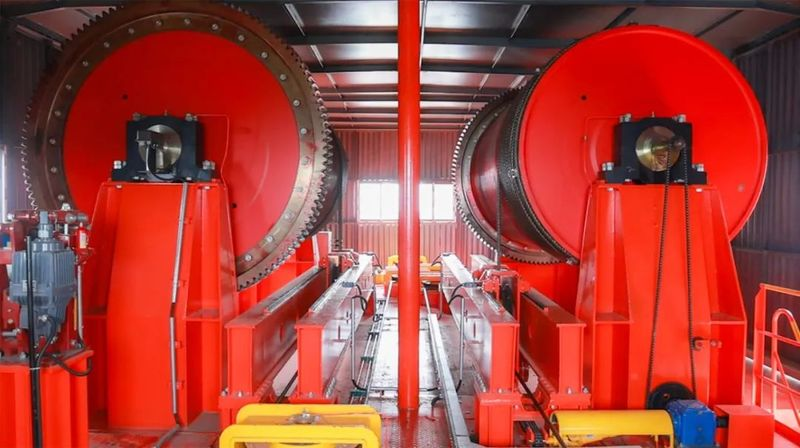
    The hoist system is the core component of the crane. The open hoist system is preferred for heavy-duty dock conditions, with large carrying capacity, easy maintenance, and suitable for heavy-duty and high-frequency operations; electric chain hoists can be used for light-duty and small-tonnage equipment to effectively control costs.

    The quality of core components such as motors, reducers, and brakes determines the life and stability of equipment. The selection of high-quality brand accessories can reduce operation and maintenance costs, and with the VFD frequency conversion system, it can achieve smooth start-stop, precise alignment, consumption reduction and efficiency, and a higher long-term price ratio.

    Marine Environment: Additional Costs You Should Budget For

    The environment of high salt spray, high humidity, strong winds and ultraviolet rays in the dock port is extremely corrosive, which will accelerate the aging and failure of equipment. Ordinary industrial protection cannot be adapted to marine working conditions, and a separate marine-level protection budget needs to be reserved. This is the core difference between the dock crane budget.

    • Salt spray anticorrosive coating: Dock equipment needs to be adapted to C4/C5-M marine anticorrosive standards, using a multi-layer anticorrosive coating system with a dry film thickness of 200-320µm; exposed accessories are rust-proof, and key structures are upgraded with anticorrosive configuration to effectively resist marine corrosion and extend the service life of the equipment.
    • This upgrade needs to be included in the initial budget.
    • It is equipped with wind speed monitoring, windproof clamps, and anchoring locking devices to prevent the equipment from slipping and overturning. It is just a safe configuration.
    • Extreme weather adaptation: For harsh environments such as high temperature and humidity, heavy rain, sand and dust, it is equipped with moisture-proof seals, high and low temperature-resistant accessories and special lubricating materials, and it is equipped with a normalized maintenance budget to ensure the stable operation of the equipment around the clock.

    Core security configuration that affects the budget

    Heavy-duty hoisting operations in the dockyard are extremely risky. The equipment safety system is the core barrier to ensure the safety of personnel, equipment, and hull assets. All safety configurations are just needed and cannot be simplified for compressed budgets. The core security configuration and corresponding budget planning points are as follows:

    • Overload protection system: equipped with high-precision weighing sensor device, real-time dynamic monitoring of operating loads, immediate alarm of overload and self-locking shutdown, completely avoid overload safety hazards.
    • Emergency stop system: The equipment body, operating handle, and wireless remote control are equipped with a multi-point hard-wired emergency stop function, which can instantly cut off the power and quickly respond to sudden operating hazards.
    • Stroke limit protection: Configure the triple limit protection mechanism of lifting, cart, and trolley to strictly control the operating stroke of the equipment to prevent collisions and structural damage caused by over-range operation.
    • Anti-collision system: integrated laser and ultrasonic dual-sensing equipment, adapted to multi-machine collaborative operation scenarios, accurately avoid the risk of equipment and building structure collision, and ensure operation safety.
    • Dual fail-safe braking: dual independent redundant configurations of working braking and emergency braking are adopted, and the load is automatically locked when the power is off or the equipment fails, so as to strictly prevent accidents from falling from high altitude.

    It is the core module with the highest priority in budget planning.

    Safety Features That Affect Crane Budget

    The professional dock crane budget must cover the full cycle cost of initial procurement, installation and commissioning, long-term operation and maintenance, failure and loss. Only accounting for the bare metal price of the equipment will inevitably lead to the budget getting out of control.

    Initial equipment procurement cost

    It includes the core costs of the main body of the steel structure, the lifting hoist system, the electrical control system, the safety protection device, and the basic control system.

    Installation, commissioning and training costs

    The bare metal price of equipment is only part of the project cost.

    Long-term operation and consumables costs

    Under high-frequency operating conditions, the cumulative cost of consumables and energy consumption is extremely high. The consumables loss rate of low-quality equipment is much higher than that of high-end equipment, and the long-term expenditure is higher.

    Maintenance and downtime loss costs

    Premature failures of dock cranes are mostly due to insufficient corrosion protection, poor-quality components, and lack of maintenance, rather than overloaded operations. Problems such as structural defects, short protection boards, and poor versatility of low-cost equipment can lead to frequent failures, downtime and missed work, directly delaying the construction and maintenance of ships, and resulting in economic losses that far exceed the price difference of the equipment. Therefore, budget planning needs to simultaneously reserve funds for normalized maintenance, spare parts reserves, and equipment maintenance to reduce the risk of downtime.

    How to Build a Marine Gantry Crane Budget: Step-by-Step

    Follow a standardized step-by-step process to prepare a budget, which can completely avoid the problems of missing items, mismatches, and overspending, and create a precise and controllable funding plan.:

    1. Clarify the load parameters: combine the dynamic operating conditions of ship construction, calculate the conventional and limit hoisting loads, scientifically set the rated loads of equipment, and reserve sufficient safety redundancy to ensure the safe and controllable hoisting operations.
    2. Survey site parameters: accurately measure the core site data such as operation span and track laying size, combined with the overall planning and layout of the plant, taking into account the current use needs and long-term expansion and upgrading.
    3. Evaluate marine environmental conditions: comprehensively evaluate the site's salt spray corrosion, strong winds, high and low temperatures, extreme weather and other marine working conditions, and customize matching special configurations for anti-corrosion, wind resistance, and electrical protection.
    4. Approved working condition level: Based on the core data such as the average daily operating time of the equipment, the annual operating frequency, and the load rate, it accurately matches the working level of the equipment corresponding to the ISO and FEM standards.
    5. Standardized safety and automation configuration: equipped with a complete set of standardized safety protection devices, with adapted intelligent control and automation systems, to improve operation safety and construction efficiency.
    6. Finalize the equipment configuration: meet the actual hoisting needs of the shipyard, finalize the core hardware combinations such as beam shape, outrigger structure, hoist system, and travel mechanism, and adapt to the special operation scenarios of the ship.
    7. Accounting for infrastructure and installation costs: accurately accounting for the hard costs of basic projects such as foundation treatment, track laying, circuit transformation, equipment transportation, on-site hoisting, commissioning and acceptance.

    Common Budgeting Mistakes in Shipyard Crane Projects

    Most of the budget overruns, equipment failures, and safety hazards of the Marine gantry crane project stem from common planning misunderstandings. The procurement and engineering team needs to focus on avoiding the following common problems:

    • Only low-cost procurement: simply benchmarking the lowest quotation, ignoring the steel material, marine anticorrosive standards and the quality of core accessories, can easily cause frequent equipment failures and delays in construction, which will drive up the overall cost.
    • Insufficient anticorrosive standards: Underestimating the corrosion intensity of coastal salt spray and applying ordinary industrial-grade protection programs will cause equipment to rust, age, and fail in the short term.
    • Low working condition level: In order to save budget and reduce the working level, the equipment cannot be adapted to the high-frequency heavy-duty continuous operation of the dock, and there are problems such as excessive fatigue loss and early scrapping.
    • Ignoring on-site wind load conditions: the wind-resistant configuration is not selected based on the measured wind speed of the site, and the wind-proof anchoring capacity of the equipment is insufficient, leaving major safety risks such as overturning and slippage.
    • Insufficient hoisting height reservation: the calculation of the parameters in the early stage is biased, and the actual hoisting height requirements cannot be met after the equipment is completed, resulting in high on-site renovation costs.
    • Automation over-configuration: blindly install intelligent and automated systems out of the actual operation requirements, and the functions are idle and redundant, resulting in budget waste.
    • Omission of supporting infrastructure costs: The budget only accounts for the bare metal price of the equipment, ignoring the costs of foundation reinforcement, track laying, power matching, installation and commissioning, resulting in a gap in project funds.
    • No long-term expansion plan: the selection is only adapted to the current production capacity, and no space for upgrading tonnage, span, and working conditions is reserved. It cannot be adapted to the future needs of large-scale ship construction, and it faces equipment transformation or re-procurement in the short term.

    Discuss the crane arrangement for your project.

    A shipyard budget should include the full handling arrangement and the work needed to install it. Define the load envelope, runway and support interfaces before comparing equipment, construction, commissioning and support allowances. Share the load, available drawings, working cycle and site conditions with Henan Mine Crane so the required configuration and supply boundary can be discussed.

    Related crane configurations

    Shipbuilding Gantry Crane

    View product parameters
    Lifting capacity: 100 t, 200 t, 250 t, 450 tSpan: 40 – 97 mLifting height: 35 – 70 m

    Lift ship blocks and large assemblies with a shipbuilding gantry configured for the dock and production layout. Define lifting points, trolley functions and any block-turning sequence before selection.

    Updated 2026 · Henan Mine Crane

  • Warm Mother’s Day|Henan Mine Crane employees pen to send love

    Warm Mother’s Day|Henan Mine Crane employees pen to send love

    Warm Mother’s Day|Henan Mine Crane employees pen to send love

    [Corporate Humanitarian Dynamics] On the occasion of Mother’s Day 2018, Henan Mine Crane Company Limited ushered in a warm moment of gratitude.
    Employees in all positions of the company have written confessions and blessings to their mothers, using simple words to convey their deep love for their mothers. This heartfelt thanksgiving activities, vividly demonstrated the Henan Mine Crane temperature, sentiments of corporate culture.
    Henan Mine Crane's Mother's Day Gratitude Campaign Henan Mine Crane's Mother's Day Gratitude Campaign Henan Mine Crane's Mother's Day Gratitude Campaign Henan Mine Crane's Mother's Day Gratitude Campaign Henan Mine Crane's Mother's Day Gratitude Campaign Henan Mine Crane's Mother's Day Gratitude Campaign Henan Mine Crane's Mother's Day Gratitude Campaign Henan Mine Crane's Mother's Day Gratitude Campaign Henan Mine Crane's Mother's Day Gratitude Campaign Henan Mine Crane's Mother's Day Gratitude Campaign Henan Mine Crane's Mother's Day Gratitude Campaign Henan Mine Crane's Mother's Day Gratitude Campaign Henan Mine Crane's Mother's Day Gratitude Campaign Henan Mine Crane's Mother's Day Gratitude Campaign Henan Mine Crane's Mother's Day Gratitude Campaign Henan Mine Crane's Mother's Day Gratitude Campaign
    Employees from the Comprehensive Office, Supply Department, Production Department, Technical Department, Sales Department, After-sales Service Department and other departments participated in the activity. Sincere words such as “Mom, you’ve worked hard”, “Only with mom can we have a home” and “Grow old with you” hide the most simple filial piety and attachment. The short words hit the hearts of the people, filling the whole enterprise with the warm atmosphere of Mother’s Day.
    Henan Mine Crane always adheres to the development concept of people-oriented, and attaches great importance to employees’ emotions and family happiness. While the company is deeply plowing into lifting equipment manufacturing and expanding its global business, it always creates a warm and tolerant team atmosphere with all its heart. This strong humanistic care has also become an important soft power of the enterprise to win the recognition and trust of customers at home and abroad.
    With love, the company will gather strength for development. Henan Mine Crane will continue to adhere to the original humanistic heart, care for every employee, guarding the happiness of their families. In order to provide professional lifting equipment solutions for global customers at the same time, to warm corporate culture to convey the responsibility and temperature of Chinese enterprises.

    Henan Mine CraneDiscuss your requirements ↗
  • Henan Mine Crane Ranked in 2018 Henan Top 100 Private Enterprises

    Henan Mine Crane Ranked in 2018 Henan Top 100 Private Enterprises

    Henan Mine Crane Ranked in 2018 Henan Top 100 Private Enterprises

    September 21, 2018, Henan Province Federation of Industry and Commerce in Zhengzhou officially released 2018 Henan private enterprise 100 series list. Henan Mine Crane Co., Ltd. with strong comprehensive strength, successfully won the 2018 Henan Top 100 Private Enterprises, 2018 Henan Top 100 Private Enterprises in Manufacturing two important honors.
    Henan Mine Crane won the 2018 Henan Top 100 Private Enterprises and Top 100 Manufacturing Industries

    The list is based on the province’s total annual operating income of private enterprises in 2017 as the core basis for sorting and selection, is a very authoritative certification of enterprise strength. The two honors have fully confirmed the leading position of Henan Mine Crane in the field of private economy and equipment manufacturing.

    As a professional lifting equipment manufacturer, Henan Mine Crane has always been deeply committed to product development, quality control and global services. With the stable operation ability and mature manufacturing system, the enterprise has won the double recognition of domestic and overseas market and industry.
    Henan Mine Crane won the 2018 Henan Top 100 Private Enterprises and Top 100 Manufacturing Industries

    In the future, Henan Mine Crane will continue to solidify the manufacturing foundation and enhance the technical strength. With better lifting equipment products, more perfect global service system, to provide reliable industrial lifting solutions for customers around the world.

    Henan Mine CraneDiscuss your requirements ↗
  • Shipbuilding Gantry Crane Height: Check Blocks, Hooks and Clearances

    Shipbuilding Gantry Crane Height: Check Blocks, Hooks and Clearances

    Technical guide

    Shipbuilding Gantry Crane Height: Check Blocks, Hooks and Clearances

    Required crane height follows the assembly sequence and hook positions around the vessel blocks. Show the load geometry, lifting tools and surrounding structures so the complete vertical working envelope can be reviewed.

    Henan Mine CraneTechnical guide · Updated 2026Crane selection, project scope and operating requirements
    shipyard crane
    shipyard crane
    Project planning notes

    Key points for this crane project.

    1. Primary Application Scenarios for Shipyard Gantry
    2. Core Requirements for Lifting Height in Shipbuilding
    3. Standard Lifting Height Ranges for Shipyard Gantry
    Read the technical guide

    Primary Application Scenarios for Shipyard Gantry Cranes

    Lifting height requirements differ significantly across various construction scenarios. Clarifying the operational context is essential for accurately determining the required lifting height of the crane.

    Hull Section Assembly Area

    Modern ships are constructed using a method of prefabricating sections and then assembling them into a whole. Large hull sections are massive in volume and have significant heights. Gantry cranes must lift prefabricated sections smoothly and position them precisely for assembly, which requires the equipment to have sufficient lifting height to avoid obstruction from bottom cradles and foundation fixtures.

    Shipyard Steel Prefabrication Area

    The shipyard’s daily production involves a wide variety of marine steel plates, structural steel, prefabricated modules, and steel support frames, all stacked at varying heights. Routine material handling and component assembly operations place consistent and sustained demands on the Crane’s basic lifting height, ensuring the smooth operation of the production line.

    Dry Dock and Shipyard Berth Operations

    Dry docks and open-air shipyard berths serve as the core areas for the overall assembly, shaping, and maintenance of vessels. Throughout the shipbuilding process, the stacking of multi-layer structures, the installation of high-altitude components, and the handling of heavy-duty components all require Cranes with sufficient lifting height to cover the entire operational range.

    Installation of Heavy Equipment in Engine Rooms

    Core equipment such as main engines, generator sets, and large pumps must be lifted from the ground, hoisted over the ship’s deck, and precisely positioned at installation points within the engine room. These operations impose stringent requirements on effective lifting height; insufficient height directly prevents equipment from being properly positioned, delaying the installation process.

    Ship Repair and Refitting Projects

    Operational scenarios for post-delivery ship inspections, structural modifications, and component replacements are more flexible. Repair work requires adaptation to high-altitude disassembly and assembly across different ship types and locations; Crane lifting height must include ample margin to accommodate variable repair conditions.

    Offshore Engineering Module Prefabrication Sites

    The assembly heights of offshore platforms, jacket structures, and deep-sea engineering modules far exceed those of standard ship components. The heavy-duty shipyard crane used in such offshore projects generally require higher lifting heights to meet the hoisting and assembly demands of large, irregularly shaped modules.

    Core Requirements for Lifting Height in Shipbuilding Projects

    Shipyards’ requirements for crane height go beyond simply meeting the needs of a single lift; they must also accommodate the overall site layout, long-term construction, and future project iterations.

    Adapting to Large Sections and High-Altitude Assembly Operations

    Once large hull sections and high-level steel structures are assembled, the overall height increases significantly. The Crane’s effective lifting height must fully clear the assembled structures to ensure components can be smoothly repositioned, closed, and installed without height interference issues.

    Adapting to Large Open-Air Work Areas

    Shipyard open-air work areas are expansive, requiring the Crane’s lifting height to be coordinated with equipment span, hook travel, and lifting paths. Meeting a single parameter is far from sufficient; only when the entire set of parameters works together rationally can a complete and safe lifting operation space be established.

    Adapting to Different Ship Types and Project Scales

    Small fishing boats, inland waterway vessels, large ocean-going cargo ships, and offshore engineering platforms all require vastly different assembly heights. Maintenance and light construction projects at small shipyards do not require excessive lifting heights, whereas large ocean-going vessel projects demand lifting heights that are significantly higher.

    shipyard crane
    shipyard crane

    Standard Lifting Height Ranges for Shipyard Gantry Crane

    There is no universally accepted standard for lifting heights on the market; all parameters are determined based on specific project conditions. Drawing on a large number of completed projects both domestically and internationally, standard heights can be categorized into three groups to facilitate quick comparison and reference for purchasers.

    Lifting Heights for Standard Projects at Small and Medium-Sized Shipyards

    Small and medium-sized shipyards specializing in small vessel repairs, light steel structure prefabrication, and inland waterway vessel construction have relatively low lifting height requirements. In these scenarios, the lifting height of shipyard crane typically ranges from 8m to 12m.

    This height range is sufficient to meet daily material handling, small section assembly, and routine equipment maintenance operations, catering to the lightweight, high-frequency construction needs of basic shipyards.

    Standard Ship Section Construction Height

    Mainstream medium-sized shipyards primarily focus on the construction of ocean-going ship sections and the assembly of standardized modules, representing the most widely applied operating conditions today. The standard lifting height for such projects generally ranges from 12m to 20m.

    This range covers the vast majority of hull section closing, deck equipment installation, and mid-level steel structure assembly processes, balancing construction efficiency with site adaptability, making it the most versatile height specification.

    Height Requirements for Large Vessels and Offshore Engineering Projects

    Large container ships, bulk carriers, and offshore platform module construction projects involve massive components and extremely high assembly clearances. The corresponding heavy-duty shipbuilding cranes typically have lifting heights of 20m–35m, and even higher specifications can be customized for certain ultra-large drydock projects.

    Extremely high lifting heights allow for complete clearance of obstructions caused by large ship hulls and multi-story offshore structures, meeting the stringent requirements of high-altitude hoisting, integrated module relocation, and the installation of super-heavy equipment.

    Why There Is No Standardized Height

    Crane lifting height is influenced by multiple factors, including ship dimensions, section prefabrication processes, dry dock depth, on-site obstacles, and hoisting paths. Even for cranes of the same tonnage, the selected height parameters will vary significantly depending on the specific layout of the shipyard.

    Selecting a crane based solely on generic parameters can easily lead to mismatches between the equipment, the site, and the construction process. This is the primary reason why professional manufacturers perform one-on-one height calculations based on the drawings.

    The Difference Between Effective Lifting Height and Total Equipment Height

    Many buyers tend to confuse these two key parameters. The effective lifting height of the hook refers to the effective working distance from the ground to the highest point of the hook—it is the actual usable construction height.

    In contrast, the total equipment height is the maximum dimension of the Crane’s entire structure, encompassing the combined height of the main girder, trolley, and electrical equipment; it cannot be directly applied to lifting operations. Relying solely on total equipment height during selection can lead to a severe misjudgment of actual operational capacity.

    Mainstream Crane Models Suitable for Different Height Requirements

    Different models feature distinct structural designs, each suited to specific lifting height ranges and operational scenarios. Selecting the right model based on specific needs maximizes equipment performance.

    Double-girder Shipyard Crane

    The double-girder structure offers high overall rigidity and stable load-bearing performance, supporting high-lift and heavy-load operations.

    Rail-mounted Crane

    The equipment operates along fixed tracks, ensuring structural stability and precise positioning, with height parameters available for standardized customization. It is suitable for standardized shipyards with organized layouts and assembly line operations, perfectly matching the construction needs of fixed assembly areas.

    Semi-gantry Crane

    Supported by a single-sided workshop structure, these Cranes feature a compact design and a small footprint. They are primarily used for medium-to-low-height lifting operations in auxiliary and maintenance areas of shipyards, suitable for conventional lifting heights ranging from 8m to 12m.

    Customized Shipbuilding Gantry Crane

    Non-standard customization is available for special operating conditions such as ultra-high lifting heights, multi-hook synchronized lifting, and special path avoidance. These crane can precisely meet the specific height requirements for the high-level assembly of oversized offshore modules and large vessels, and are suitable for various complex shipyard conditions.

    shipyard crane
    shipyard crane

    Core Technical Parameters to Verify During Procurement

    Lifting height is not a standalone parameter; it must be coordinated with other configurations to ensure the equipment can be put into normal operation.

    Effective Lifting Height

    A core selection parameter, it must be comprehensively calculated based on the highest lifting point on-site, the maximum component height, and the height of obstacles, with sufficient safety margins reserved to prevent operational interference.

    Rated Lifting Capacity

    Selection is based on the maximum dead weight of ship sections, offshore modules, and heavy equipment. As lifting height increases, so do stability requirements for heavy-load operations; tonnage matching must be precise and error-free.

    Equipment Span

    The span must match the dry dock width and assembly area layout. Together with lifting height, it determines the overall working space, ensuring no lifting blind spots across the entire site.

    Hook Travel and Effective Working Range

    The nominal height does not equal the actual usable height. It is necessary to calculate the upper and lower limits of hook travel and the end clearance distance to verify the actual usable height range.

    Overall Operating Length

    This determines the Crane’s site coverage area. Combined with the lifting height, it enables comprehensive, full-height coverage of lifting operations throughout the facility.

    Number of Hooks

    Configurations involving main and auxiliary hooks or multiple hooks alter the method of high-level synchronized lifting, indirectly affecting the utilization of effective height. These must be matched to the specific construction process.

    Equipment Operating Speed

    High-level lifting operations demand greater stability; lifting and travel speeds must be reasonably balanced to ensure both construction safety and operational efficiency.

    Configurations for Outdoor Conditions

    Coastal environments with strong winds, salt fog, and high humidity can affect the stability of equipment during high-altitude operations. Corresponding anti-corrosion, wind-resistant, and electrical protection configurations must be designed in tandem with the Crane’s height and lifting capacity.

    On-site Structural Clearance Requirements

    The heights of existing factory buildings, slipways, ship hulls under construction, and shore facilities must be assessed in advance to ensure no collisions or obstructions occur during high-altitude Crane operations.

    How to Select a Reliable Shipyard Crane Supplier

    Accurate height selection relies on the manufacturer’s professional engineering calculation capabilities and practical project experience.

    Verify Physical Manufacturing Qualifications

    Physical manufacturers can customize non-standard height parameters based on on-site conditions, ensuring structural strength and manufacturing precision. Trading companies can only provide standardized finished products and cannot optimize designs for specific height requirements.

    Verify Experience with Similar Shipyard Projects

    High-quality manufacturers understand the logic behind height selection for different ship types and assembly processes. They are well-versed in the structural reinforcement and stability control requirements for high-altitude lifting, enabling them to avoid compatibility issues across various operating conditions.

    Assess Professional Engineering Calculation Capabilities

    A professional team can accurately calculate the optimal lifting height based on shipyard drawings, lifting paths, and obstacle layouts, while providing reasonable margin recommendations to avoid parameters that are either excessive or insufficient.

    Verify the Complete Set of Technical Drawings and Documentation

    Reputable manufacturers provide a full set of documentation, including height diagrams, assembly drawings, hoisting path analysis diagrams, load parameters, and electrical schematics, ensuring that specifications are transparent, verifiable, and acceptable upon delivery.

    Confirm Core Component Specifications

    High-altitude heavy-load operations place higher demands on the quality of winches, motors, brakes, and wire ropes. Verifying the brands and specifications of core components effectively reduces the likelihood of failures during high-altitude operations.

    Verify the Factory Quality Inspection System

    Before shipment, the equipment must undergo no-load and full-load high-altitude hoisting tests to verify stability at maximum operating heights. Complete inspection records must be retained to ensure the equipment is ready for immediate use upon delivery.

    Clarify the Scope of Installation and Commissioning Services

    The installation of high-altitude gantry crane demands extremely high precision. The manufacturer must provide professional on-site installation, commissioning, and alignment services to ensure that height parameters fully comply with design standards.

    Verify After-Sales Support and Spare Parts Availability

    Maintenance and spare part replacement for high-reach equipment are more challenging. Reliable after-sales support and a well-stocked inventory of spare parts can minimize equipment downtime.

    Common Misconceptions in Equipment Selection

    Many equipment compatibility issues stem from oversights during the selection phase, particularly misjudgments regarding height parameters.

    Focusing solely on lifting capacity while completely ignoring lifting height can result in equipment that meets tonnage requirements but fails to perform critical high-altitude lifting operations.

    Confusing the hook’s effective lifting height with the equipment’s total structural height, resulting in calculation errors, causes the equipment to be incompatible with on-site conditions after installation.

    Selecting equipment based solely on current standard construction heights without considering the highest assembly requirements leads to immediate limitations during high-altitude operations.

    Focusing only on current construction needs without allowing for future ship model upgrades means equipment specifications will fall behind project requirements within just a few years.

    Neglecting hook travel and end clearance results in nominal heights that appear sufficient but severely insufficient usable height in practice.

    Directly applying standard model height parameters without customization or optimization based on shipyard layout and hoisting paths leads to extremely poor adaptability.

    Failure to provide complete site drawings and operational data prevents manufacturers from accurately calculating heights, resulting in poor compatibility between the equipment and the site.

    Frequently Asked Questions

    How can the required lifting height for a project be accurately calculated?

    Calculations should be based on the height of the tallest on-site component, clearance from obstacles, safety margin for lifting operations, and the height of the lifting frame, combined with an analysis of the lifting path. It is recommended to have the manufacturer’s engineering team perform precise calculations using the drawings.

    Are lifting height and total equipment height the same parameter?

    Effective lifting height refers to the vertical distance within which the hook can operate and is a practical parameter; total equipment height refers to the maximum height of the entire machine structure and serves only as a reference for site installation—it cannot be used as a basis for selecting a Crane.

    Do large ship types always require taller Crane?

    Most likely. Large ship sections are taller and have more assembly levels, requiring greater vertical working space; standard heights cannot meet the demands of section joining and equipment installation.

    Can a single gantry crane handle both shipbuilding and ship repair operations?

    As long as the lifting height, span, and tonnage parameters cover both the high-altitude requirements of shipbuilding and the flexible needs of repair work, a single unit can accommodate both scenarios.

    What drawings should be provided during the quotation phase?

    Site layout plans, dry dock dimension drawings, drawings of the largest components, and site obstacle distribution maps are required to enable the manufacturer to accurately calculate the required height, span, and operational range.

    Summary

    There is no uniform standard for the lifting height of shipyard gantry cranes; all selections must align with ship specifications, section dimensions, assembly processes, and site layouts. Simply selecting based on generic parameters can easily lead to operational limitations, equipment idleness, or the need for rework and modifications.

    When selecting and purchasing equipment, one must not focus solely on lifting capacity but must also verify the effective lifting height, hook travel, on-site headroom, and future expansion requirements. Prioritize manufacturers with shipyard project experience who can provide professional engineering calculations and customized solutions.

    A reliable shipyard gantry crane manufacturer does more than just supply standardized equipment; they can customize height, span, and full sets of parameters based on project drawings, while providing comprehensive technical documentation and full-cycle after-sales support.

    Henan Mine Crane specializes in providing lifting equipment for shipyards and offshore engineering projects worldwide. We can precisely calculate the optimal lifting height based on specific project conditions and customize dedicated gantry crane solutions.

    If you are unsure about the appropriate crane height for your project, please provide the required lifting capacity, maximum component dimensions, dry dock layout, and on-site conditions. Our engineering team will then provide you with a precise selection proposal.

    Discuss the crane arrangement for your project.

    Required crane height follows the assembly sequence and hook positions around the vessel blocks. Show the load geometry, lifting tools and surrounding structures so the complete vertical working envelope can be reviewed. Share the load, available drawings, working cycle and site conditions with Henan Mine Crane so the required configuration and supply boundary can be discussed.

    Related crane configurations

    Shipbuilding Gantry Crane

    View product parameters
    Lifting capacity: 100 t, 200 t, 250 t, 450 tSpan: 40 – 97 mLifting height: 35 – 70 m

    Lift ship blocks and large assemblies with a shipbuilding gantry configured for the dock and production layout. Define lifting points, trolley functions and any block-turning sequence before selection.

    Updated 2026 · Henan Mine Crane

  • Henan Mine Crane launches the fifteenth activity of subsidizing poor college students

    Henan Mine Crane launches the fifteenth activity of subsidizing poor college students

    Henan Mine Crane launches the fifteenth activity of subsidizing poor college students

    In July 2018, Henan Mine Crane Co., Ltd. officially launched the fifteenth financial aid activities for poor college students.

    This activity is organized by the founder of the company, party secretary Cui Peijun initiated the financial aid foundation, to help students in difficulty to dream of college.
    Henan Mine Crane Launches the Fifteenth Sponsoring Activities for Poor College Students

    The funding is for the 2018 freshman undergraduate students, covering poor students of Changyuan County origin and local residence.

    Poor children of the company’s registered employees, including current undergraduates and postgraduates, can also participate in the application.

    The registration period of the activity is from August 1 to August 7, 2018, and the students should bring their documents to the designated place as required.

    The company will complete the audit before August 12, and notify the aided students by phone and SMS.

    Henan Mine Crane is deeply engaged in the field of lifting equipment manufacturing, and has long adhered to corporate social responsibility.

    Enterprises in the global customers to provide quality lifting products and services at the same time, continue to participate in public welfare to help students.

    Practical action to help poor students, highlighting the humanistic temperature and social responsibility of China’s smart enterprises.

    In the future, Henan Mine Crane will continue to practice public welfare, and global partners to work together.

    Henan Mine CraneDiscuss your requirements ↗
  • Overhead Crane Service Planning: Keep Maintenance and Operation Connected

    Overhead Crane Service Planning: Keep Maintenance and Operation Connected

    Technical guide

    Overhead Crane Service Planning: Keep Maintenance and Operation Connected

    Reliable service depends on information about the actual working duty and equipment condition. Organise maintenance access, inspection records and work responsibilities so operating teams can report problems and plan interventions clearly.

    Henan Mine CraneTechnical guide · Updated 2026Crane selection, project scope and operating requirements
    overhead crane servicing
    overhead crane servicing
    Project planning notes

    Key points for this crane project.

    1. Why is overhead crane maintenance so important?
    2. What are the consequences of poor crane maintenance
    3. Core components requiring regular maintenance
    Read the technical guide

    Why is overhead crane maintenance so important?

    Enhance operational safety

    Crane ropes, hooks, brakes and other components are subject to long-term loads and friction, and are prone to wear and fatigue. Regular maintenance can detect these hidden dangers in time, avoiding safety accidents caused by component breakage and failure.

    I have seen a case, a workshop crane wire rope broken wire more than the standard is still in use, and finally lifting the process of sudden breakage, resulting in hundreds of thousands of dollars worth of equipment damage, but fortunately no casualties. This kind of accident can be completely avoided by doing a good job of daily inspection.

    Ensure stable operation of equipment

    Cranes that are well-maintained will not have abnormal vibrations and rattles when running, and will be smoother when lifting and traveling. On the contrary, equipment that has not been maintained for a long time may have problems such as swaying hooks, deflection of the big car, and brake failure, which affects lifting precision and efficiency.

    For example, the wear and tear of wheels and rails, which is only a slight rattling at the beginning, will lead to chewing of rails if not dealt with in time, which will not only aggravate the wear and tear, but also affect the stability of the plant structure.

    Reduce long-term operating costs

    Many customers feel that maintenance costs money, so save what you can. But small problems are not dealt with, sooner or later will become a big failure. Replacement of a wire rope as long as a few thousand dollars, if the wire rope breakage led to equipment damage, production stoppage, the loss may be dozens of times the maintenance costs.

    Regular lubrication, tighten the bolts of these simple maintenance work, the cost is very low, but can effectively extend the life of parts, reduce the frequency of overhaul.

    Extend the service life of equipment

    Crane steel structure, motor, reducer and other core components, reasonable maintenance can significantly extend the service life. For example, the gear reducer lubricating oil, on-time replacement can avoid gear wear; steel structure regular inspection, can find cracks in time to prevent structural failure.

    A well-maintained crane, the service life can be more than the lack of maintenance of the equipment 5-10 years, which is a considerable savings for the enterprise.

    What are the consequences of poor crane maintenance

    Increased downtime

    Small faults accumulate into big problems, leading to frequent equipment downtime.

    Once a production line is shut down due to a crane failure, the daily loss can be up to tens of thousands of dollars. I have contacted an automotive parts factory, due to crane brake failure, resulting in production line stopped for 3 days, direct losses of more than a million.

    Decline in lifting precision and efficiency

    Swaying hooks, deflections, and unstable lifting speeds are all common manifestations of poor maintenance. In precision assembly workshops, lack of lifting precision affects product quality; in logistics warehouses, a drop in efficiency leads to order delays.

    Rising maintenance and replacement costs

    Waiting until a component is completely damaged before replacing it not only costs more, but may also require the replacement of associated components. For example, a badly worn wire rope may damage reels and pulleys, resulting in double the cost of repair.

    Safety threat to operators and neighboring people

    Cranes are high-altitude operating equipment, and failure of any component can lead to serious safety accidents.

    Hook breakage, wire rope detachment, loss of control of the large vehicle, once these situations occur, the consequences are unimaginable.

    Possible damage to plant structures and lifting materials

    Abnormal vibration and track gnawing during crane operation can cause damage to the steel structure of the plant and track beams. Failure of components during lifting may also cause materials to fall and damage other equipment and products.

    Core components requiring regular maintenance

    Steel structure The main girder and end girder are the load-bearing skeleton of the crane, and should be inspected regularly for cracks, deformation, and rust. The connecting bolts are easy to loosen, especially under frequent lifting and braking conditions, and the tightness should be checked every time maintenance is carried out. Inspection platforms and walkways are also safety priorities, and damage to railings and treads can bring risks to maintenance personnel. The main girder deflection of single girder cranes and the main girder side bending of double girder cranes are problems that need to be dealt with in time.

    Lifting mechanism

    Wire rope or chain is the core of the hoisting mechanism, focus on checking broken wire, wear, deformation, rust and corrosion. The rope groove wear and cracks of the reel, and the deformation, cracks and wear of the hook should not be neglected.

    The rotation flexibility of the pulley block, the oil level and oil quality of the reducer are also the focus of inspection. Reducer oil leakage will lead to insufficient lubrication and accelerate gear wear, which must be dealt with in time.

    Running mechanism

    The running wheels of large and small vehicles should be checked for rim wear, tread wear and cracks. The parallelism and perpendicularity of the wheels directly affect the smoothness of operation, and any deviation should be adjusted in time.

    Motor, gear box, coupling running status, should also be checked regularly. Temperature and vibration of the motor, abnormal noise and oil leakage of the gear box are all signals of potential failure.

    Braking system

    Hoisting brake, trolley brake, large brake, is the safety of the crane. To check the wear of the brake tile, the surface condition of the brake wheel, the size of the brake clearance.

    Brake failure is one of the most dangerous malfunctions, which may be caused by brake tile wear, spring failure, oil contamination, and so on. Test braking performance with every maintenance to ensure reliable braking.

    Electrical system

    Control cabinets, slide wires, cables, limit switches, contactors, these electrical components are susceptible to environmental influences. Dust and humidity can lead to poor contact and short circuit, affecting the operation of the equipment.

    Limit switches are key to preventing overcoiling and overtravel and must be tested regularly for proper function. Cables are worn and aged and must also be replaced in a timely manner to avoid the risk of leakage.

    Safety devices

    Overload limiter, emergency stop button, buffer, alarm, these safety devices should be ensured to be intact and effective. The overload limiter can prevent the equipment from overloading, and the emergency stop button can quickly stop the machine in case of emergency.

    Types of maintenance for overhead cranes

    Daily Maintenance

    Before each day's operation, the operator should do a routine visual inspection. Mainly look for any abnormalities in the wire rope and hook, whether the brake is sensitive, whether the limit switches are effective, and whether there are any strange noises and vibrations.

    Routine maintenance is simple but critical to detect obvious faults in time and avoid running with faults.

    This link cannot be saved, nor can it be a formality.

    Weekly maintenance

    Do a weekly function check and basic cleaning and lubrication. Clean the dust and oil on the surface of the equipment, check the lubrication of each lubrication point, and replenish the grease.

    Also check the bolt fastening, test the function of the braking system and control system to ensure that all parts of the equipment operate normally.

    Monthly Maintenance

    A more detailed inspection should be done every month, focusing on the wear and tear of vulnerable parts. For example, the number of wire rope breaks, the amount of wear on the hook, and the thickness of the brake tile should all be recorded.

    Electrical system terminals and contactors are also checked, and insulation resistance of motors is tested to ensure electrical safety.

    Quarterly or Semi-Annual Maintenance

    Quarterly or semi-annually, a comprehensive inspection of the steel structure, electrical system, and mechanical system should be done. Check the deformation of the main girder, measure the span and diagonal of the wheels, and adjust the parallelism of the wheels.

    Also check the oil quality of the reducer and replace the lubricant if necessary; check the pressure and leakage of the hydraulic system to ensure that the system is normal.

    Annual maintenance

    Every year, do a thorough inspection, performance evaluation, and overhaul if necessary. Annual maintenance should preferably be carried out by professionals, including non-destructive testing, load testing, and a full inspection of the electrical system.

    It is also important to do an assessment of the overall performance of the equipment and develop a maintenance plan for the next year based on the usage.

    Daily checklist for overhead crane

    Check the condition of hooks and wire ropes

    Check the wire ropes for broken wires, broken strands, abrasion, deformation, rust and corrosion, and whether the rope head is firmly fixed.

    Check the hook for cracks, deformation, wear and tear, whether the rotation is flexible or not, and whether the safety catch is intact or not.

    Check brake response

    Test the braking performance of the hoist, trolley, and big trolley to ensure that the braking is sensitive and reliable. There should be no obvious slipping when braking, and the contact area between the brake wheel and brake tile should be sufficient.

    If there is any delay or slippage in braking, adjust the brake clearance or replace the brake tile in time.

    Check the limit switch

    Test the upper and lower lifting limit positions, and the travel limit positions of the trolley and trolley to ensure proper functioning. Limit switches are the key to preventing over-travel of the equipment, which may lead to collision accidents in case of failure.

    Check abnormal sound or vibration

    Run the equipment, listen to any abnormal noise, feel any obvious vibration. The abnormal sound may come from the gear box, motor, wheels, vibration may be due to the wheels are not parallel, track uneven and other reasons.

    When abnormalities are found, stop the machine for inspection, find out the cause and deal with it.

    Check the control device and emergency stop button

    Test the sensitivity of control handles and buttons to ensure smooth operation. The emergency stop button should be able to quickly cut off all power supplies and stop the equipment immediately.

    Malfunctioning controls can lead to misuse and jeopardize safety and must be in good condition.

    Check the track, wheels and running path

    Check the track for deformation, cracks and looseness, and the track surface for oil and debris. Check the wheels for wear and tear, cracks, and whether there is any gnawing phenomenon when running.

    The running path should be free of obstacles to ensure that the equipment can run safely.

    Check the oil leakage or loose fasteners

    Check whether there is any oil leakage in the reducer and hydraulic system, which will lead to insufficient lubrication and may also pollute the environment. Check the bolts and nuts on each part to make sure they are tight and prevent loose parts.

    Best Practices for Preventive Maintenance

    Lubrication Management

    Use different types of lubricants for different parts, such as special wire rope grease for wire ropes, lithium grease for bearings, and gear oil for gearboxes.

    Lubrication points should be regularly filled with lubricants to avoid over-lubrication and under-lubrication. Over-lubrication will lead to accumulation of oil, adsorption of dust and accelerated wear; under-lubrication will lead to dry friction and damage to components.

    The amount of oil injected into the wheel bearing should be 2/3 of the cavity of the bearing body, too much or too little will affect the life of the bearing. Wire rope should be evenly coated with grease to ensure that each wire can be lubricated.

    Common faults and possible causes

    • Unstable lifting speed: it may be brake wear, motor failure, control problem, or gear wear of reducer, loose coupling.
    • Excessive noise during operation: it may be poor lubrication, worn gears, damaged bearings, loose parts, or uneven track, non-parallel wheels.
    • The wire rope wears out too fast: it may be improper winding, insufficient lubrication, overload lifting, or the rope groove of pulley or reel is worn out.
    • Brake slipping: may be brake tile wear, improper adjustment, oil contamination, may also be spring failure, brake wheel surface damage.
    • Frequent electrical failures: may be loose terminals, aging cables, worn contactors, or a humid, dusty environment.

    How often should overhead cranes be maintained?

    According to the working level

    Light load level (A1-A3) cranes, low frequency of use, the maintenance cycle can be appropriately extended. Medium load class (A4-A5) cranes, the daily use of a longer time, maintenance should be more frequent.

    Heavy-duty class (A6-A8) cranes, such as steel mills, port equipment, 24 hours a day, the maintenance cycle to be the shortest, or even need to check every day, weekly overhaul.

    According to the working environment

    Cranes in dusty, high temperature, humid and corrosive environments have faster wear and aging of parts and shorter maintenance intervals. For example, in the seaside, chemical workshop cranes, electrical components and steel structure is more likely to be damaged, need to strengthen the inspection.

    Outdoor cranes also need to consider windproof, rainproof and frostproof, check the anti-freezing measures of the hydraulic system in winter, and check the heat dissipation of the motor in summer.

    According to the number of running hours

    It is more scientific and reasonable to take the number of running hours as the basis for maintenance.

    The running hours can be recorded by the timer of the equipment to ensure that the maintenance is not missed.

    Developing an effective overhead crane maintenance program

    Establish a maintenance schedule

    Establish a detailed maintenance schedule based on the equipment's operating level, environment, and number of operating hours. Specify the items and times for daily, weekly, monthly, quarterly, and annual maintenance, and assign responsibility to each person.

    The maintenance schedule should be posted next to the equipment for easy viewing by operators and maintenance personnel.

    Assigning Responsible Personnel

    Daily maintenance is the responsibility of operators, weekly and monthly maintenance is the responsibility of workshop maintenance personnel, quarterly and annual maintenance can be entrusted to professional organizations or manufacturers.

    Clearly define the responsibilities of each person to ensure that the maintenance work is managed and done by someone.

    Keep inspection and maintenance records

    Each maintenance should be recorded in detail, including inspection items, problems found, treatment methods, replacement parts, maintenance personnel, maintenance time.

    Maintenance records can help trace the operation of the equipment, analyze the causes of failure, and provide reference for subsequent maintenance.

    Prepare spare parts in advance

    Commonly used spare parts such as wire ropes, hooks, brake tiles, bearings, contactors, etc. should be stocked up in advance to avoid downtime due to lack of parts in case of failure.

    The quality of spare parts should be reliable, and it is best to use original parts to ensure that they match the equipment.

    Train operators to report abnormal conditions in time

    Operators are the first users of the equipment, the easiest to find abnormalities. Operators should be trained to recognize common faults, such as abnormal noise, vibration, brake failure, etc., and to stop and report problems promptly.

    Encourage operators to participate in maintenance to improve their sense of responsibility and maintenance awareness.

    Follow proper operating procedures to reduce unnecessary wear and tear

    Correct operating methods can reduce the wear and tear of the equipment and prolong its service life. For example, when lifting, it should be smooth and avoid impact; when running, it should avoid sharp stops and sharp turns; and it should not be overloaded for lifting.

    Safety precautions during maintenance

    Disconnect and lock

    Before maintenance, the power supply must be cut off and locked and tagged to prevent others from mistakenly operating the power. The key is kept by the maintenance personnel to ensure that there is no electricity during maintenance.

    Protection for working at height

    If you need to work at height during maintenance, fasten your safety belt and use a safety ladder or platform to avoid falling.

    Use of qualified maintenance personnel

    Maintenance personnel must have appropriate qualifications and skills, and be familiar with the structure and performance of the equipment. Unqualified personnel shall not carry out maintenance work.

    Test before putting into use after maintenance

    After the maintenance is completed, carry out no-load test and load test to ensure that the equipment operates normally and is free from faults. Only after the test is qualified can it be delivered for use.

    Maintenance under suspended load is strictly prohibited

    Maintenance must ensure that there is no load on the hook to avoid falling loads and injuries.

    Common Maintenance Mistakes to Avoid

    Focusing only on visible faults

    Many people only notice obvious faults, such as wire rope breakage and hook deformation, but ignore hidden problems, such as oil quality of the reducer, insulation of the motor, and cracks in the steel structure.

    These hidden problems are often the root cause of major failures.

    Ignore the slight abnormal sound or vibration

    Slight abnormal sound and vibration during the operation of the equipment, many people feel that it does not affect the use, so ignore it. In fact, these are wear and tear of parts, loose signals, long-term will lead to serious failures.

    Delayed replacement of worn parts

    Some parts have reached the replacement standard, but because of the temporary use and delayed replacement. For example, the number of broken wire rope exceeds the standard, but still continue to use, eventually leading to breakage accident.

    Using incorrect lubricants or spare parts

    The use of poor quality lubricants or non-original spare parts will accelerate the wear and tear of parts and affect the performance of equipment. For example, using common grease instead of special grease for wire rope will lead to faster wear of wire rope.

    Do not keep maintenance records

    Many companies do not pay attention to maintenance records, resulting in the operation of the equipment cannot be traced, the cause of failure is difficult to analyze. Maintenance records are an important basis for equipment management and must be carefully preserved.

    Waiting for failures to occur before maintenance, rather than preventive maintenance

    Preventive maintenance can effectively avoid failure and reduce costs. Many companies wait until the equipment breaks down before repairing it, which not only has high maintenance costs, but also affects production.

    How proper maintenance improves stable operation

    Better lifting performance

    A well-maintained crane with smooth lifting and precise operation can improve lifting efficiency and quality. Stable lifting performance is especially important in precision manufacturing plants.

    More reliable operation and positioning

    Good wheel parallelism, flat track and sensitive braking make the crane run more reliably and position more accurately. Reduce rework and waste due to inaccurate positioning.

    Reduced downtime

    Regular maintenance can find and deal with problems in time, avoiding downtime caused by sudden failure. Improves equipment utilization and ensures production continuity.

    Lower Total Cost of Ownership

    Maintenance costs are much lower than repair costs and downtime losses.

    Preventive maintenance extends equipment life, reduces the number of major repairs and lowers total cost of ownership.

    Longer service life and safer operation

    Proper maintenance reduces wear and tear on components and extends equipment life. At the same time, timely detection of safety hazards ensures safe operation of the equipment and protects the operator and those in the vicinity.

    What information should be provided to the crane supplier or service team

    Crane model and technical parameters

    Including model, rated lifting capacity, span, lifting height, working level, operating speed, etc. This information can help suppliers understand the basic situation of the equipment.

    Working frequency and working level

    Let the supplier know the intensity of the use of the equipment, in order to develop a suitable maintenance program.

    Operating environment

    Such as dust, high temperature, humidity, corrosion, explosion-proof, etc. This information can help suppliers recommend appropriate maintenance methods and spare parts.

    Current Failure Symptoms

    Detailed description of equipment failure phenomena, such as abnormal noise, vibration, brake failure, running off, etc., to help suppliers quickly locate the problem.

    Maintenance History and Replacement Parts

    Provide the maintenance history and replacement parts of the equipment, so that the supplier can understand the equipment's operating condition and history of failures, and better provide services.

    Discuss the crane arrangement for your project.

    Reliable service depends on information about the actual working duty and equipment condition. Organise maintenance access, inspection records and work responsibilities so operating teams can report problems and plan interventions clearly. Share the load, available drawings, working cycle and site conditions with Henan Mine Crane so the required configuration and supply boundary can be discussed.

    Related crane configurations

    Single-Girder Bridge Crane

    View product parameters
    Lifting capacity: 1–20 tSpan: 7.5–31.5 mLifting height: 6, 9, 12, 18, 24 or 30 m; capacity-dependent

    Use an LDA single-girder bridge and electric hoist for general workshop material handling. Select the lifting capacity, runway geometry and hoist duty around the building and load.

    LH Electric Hoist Double Girder Crane

    View product parameters
    Lifting capacity: 3, 5, 10, 16, 20 tSpan: 10.5–31.5 mLifting height: 6, 9, 12 or 18 m

    Use an LH double-girder bridge with an electric-hoist trolley for workshop lifting, assembly and maintenance. Match the hoist arrangement to the suspended load, hook travel and available building space.

    Updated 2026 · Henan Mine Crane

  • Crane-Girder Welding Robots: What Buyers Should Verify

    Crane-Girder Welding Robots: What Buyers Should Verify

    Quality & Manufacturing

    Crane-Girder Welding Robots: What Buyers Should Verify

    A Henan Mine Crane archive report describes the introduction of more than 100 internal-seam welding robot units in December 2018. The workshop photographs show robot stations working on long steel components. For a crane buyer, the useful question is how repeatable fabrication is checked and documented for the particular machine being ordered.
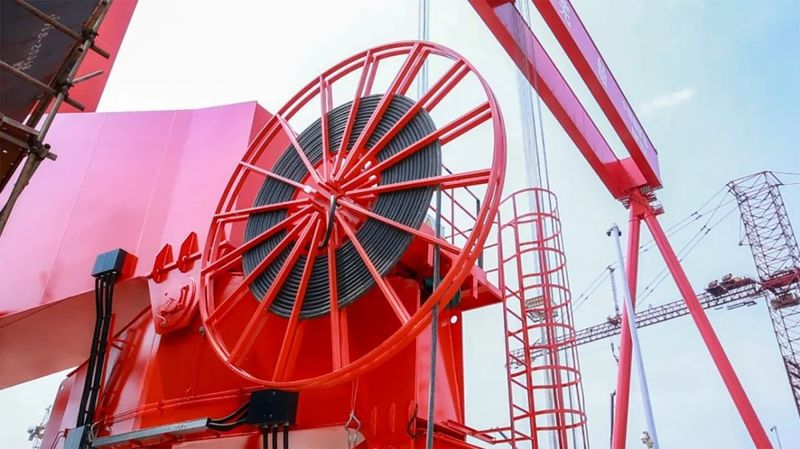
    Robot welding station working on a long steel crane-girder component in the Henan Mine Crane workshop
    A welding robot works along a crane-girder component in the workshop.

    What the factory photographs establish

    The first image shows an active welding station working along a long fabricated steel member. Other images show several stations arranged in a workshop line and packaged robot arms. They document the presence of automated welding equipment at the time of the report. A photograph alone cannot establish a weld acceptance grade, a current robot count or a measured improvement in throughput.

    The original company report dates the addition of more than 100 internal-seam welding robot units to December 2018. That historical count should not be mistaken for the equipment configuration available for every crane order today. The manufacturer’s current equipment pages describe a much broader automated production setup, but the applicable production route and inspection plan still need to be agreed for each project.

    How robotic welding relates to crane procurement

    Overhead- and gantry-crane girders depend on controlled fabrication as well as an appropriate structural design. Automation can repeat a programmed motion, yet it does not replace joint preparation, fit-up, material identification, suitable welding procedures, supervision and inspection. Ask which structural components for your order are welded on a robot line and which are welded or finished manually.

    A useful factory review follows the part from material receipt to cutting, assembly, welding, dimensional check, surface preparation and coating. Request a description of how the manufacturer records material grades and plate thicknesses, manages deformation, and handles repairs. For long girders, ask how camber, straightness, span-related dimensions and connection geometry are checked against the approved drawing.

    The photographed line should be treated as evidence of manufacturing capability, not as a guarantee that a proposed crane meets a particular duty class or service life. Those requirements belong in the specification, drawings, welding and inspection documents, and acceptance tests.

    Documents and tests to request before acceptance

    When comparing bids, specify the applicable design and welding standards for the destination country and project. Request the approved general arrangement, material certificates, welding procedure documents and qualification evidence where required, inspection and test plan, weld inspection records, dimensional inspection results and coating records. The scope of nondestructive examination should be agreed for relevant joints rather than assumed from a marketing photograph.

    At factory acceptance, match the serial-numbered crane and its critical components to the approved drawings and records. Confirm electrical and mechanical functional tests, safety devices, load-test method and witness points in advance. If the buyer needs third-party witnessing or specific export documents, include those in the purchase order before manufacturing starts.

    For installation, clarify the division of responsibility for runway tolerances, site power supply, lifting equipment, commissioning, operator training and final handover. This lets a buyer compare manufacturing and inspection scope between suppliers, instead of comparing only the equipment photographs.

    Information to include in an enquiry

    Tell Henan Mine Crane the load range, span, lifting height, travel distances, operating hours, duty, handling method and installation location. Add temperature, dust, corrosion or hazardous-area requirements where applicable, along with the local power supply and required standards. If production documentation or witnessed inspection is mandatory, state that at the enquiry stage.
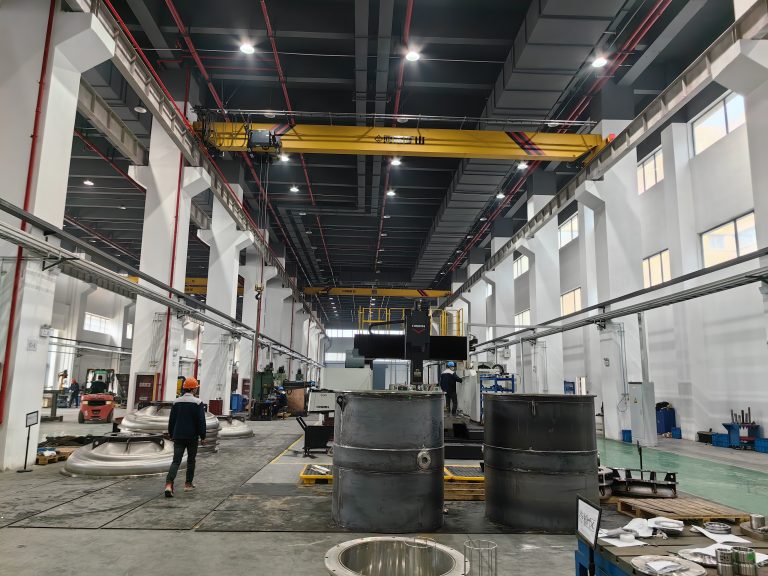
    The factory can then propose the crane arrangement and a manufacturing and acceptance scope for review. Any performance, delivery or inspection commitment should be confirmed in the project quotation and contract documents.

    Request a Crane Manufacturing Proposal

    Share your load, span, working environment, duty and inspection requirements. Ask for a project-specific crane configuration and quality-document scope.