Engineering · Manufacturing · Project support
info@hnksglobal.comWhatsApp +86 18836207779 ↗

Blog

  • Wall-Travelling Cranes Beneath an Overhead System: Coordination Checks

    Wall-Travelling Cranes Beneath an Overhead System: Coordination Checks

    Technical guide

    Wall-Travelling Cranes Beneath an Overhead System: Coordination Checks

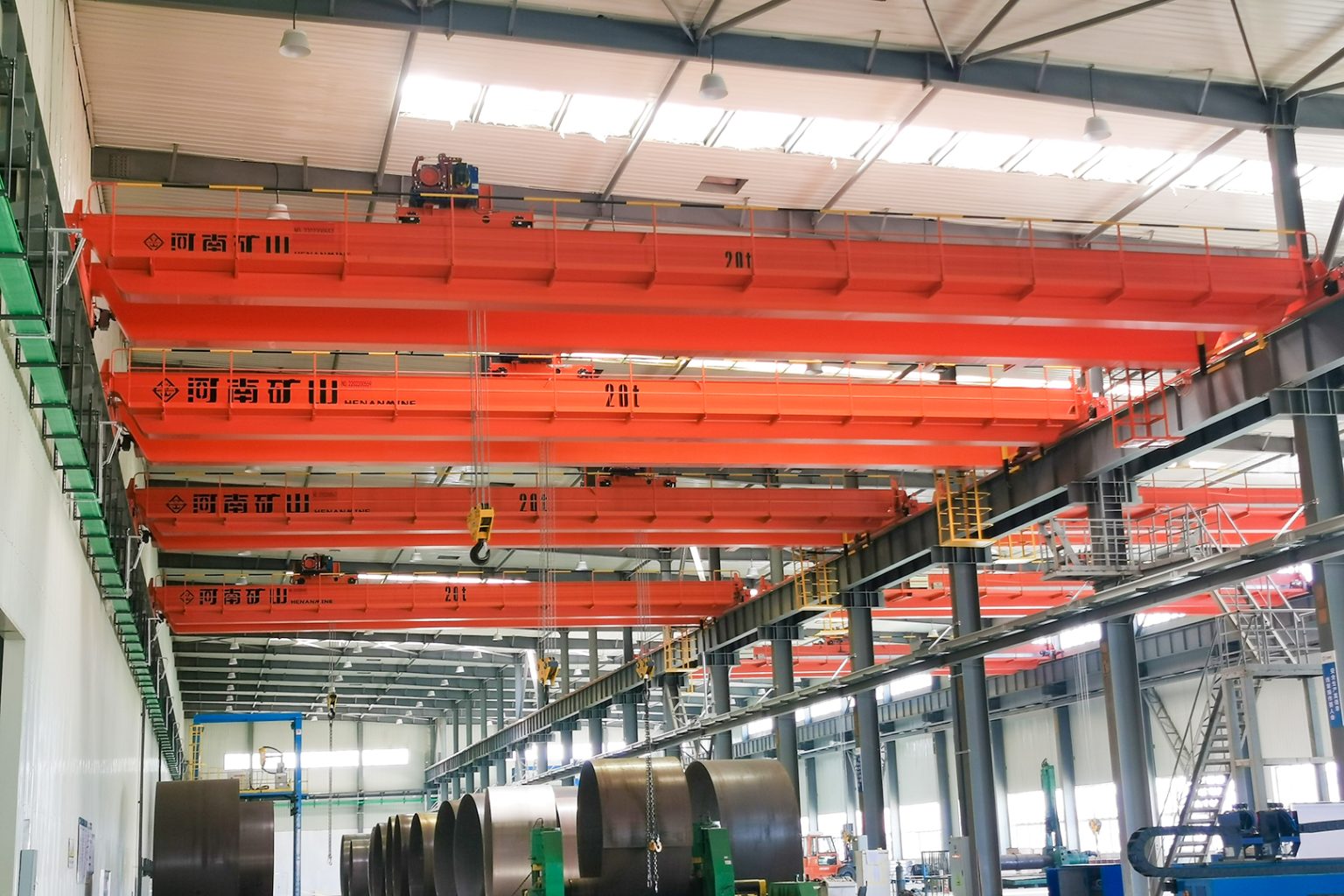
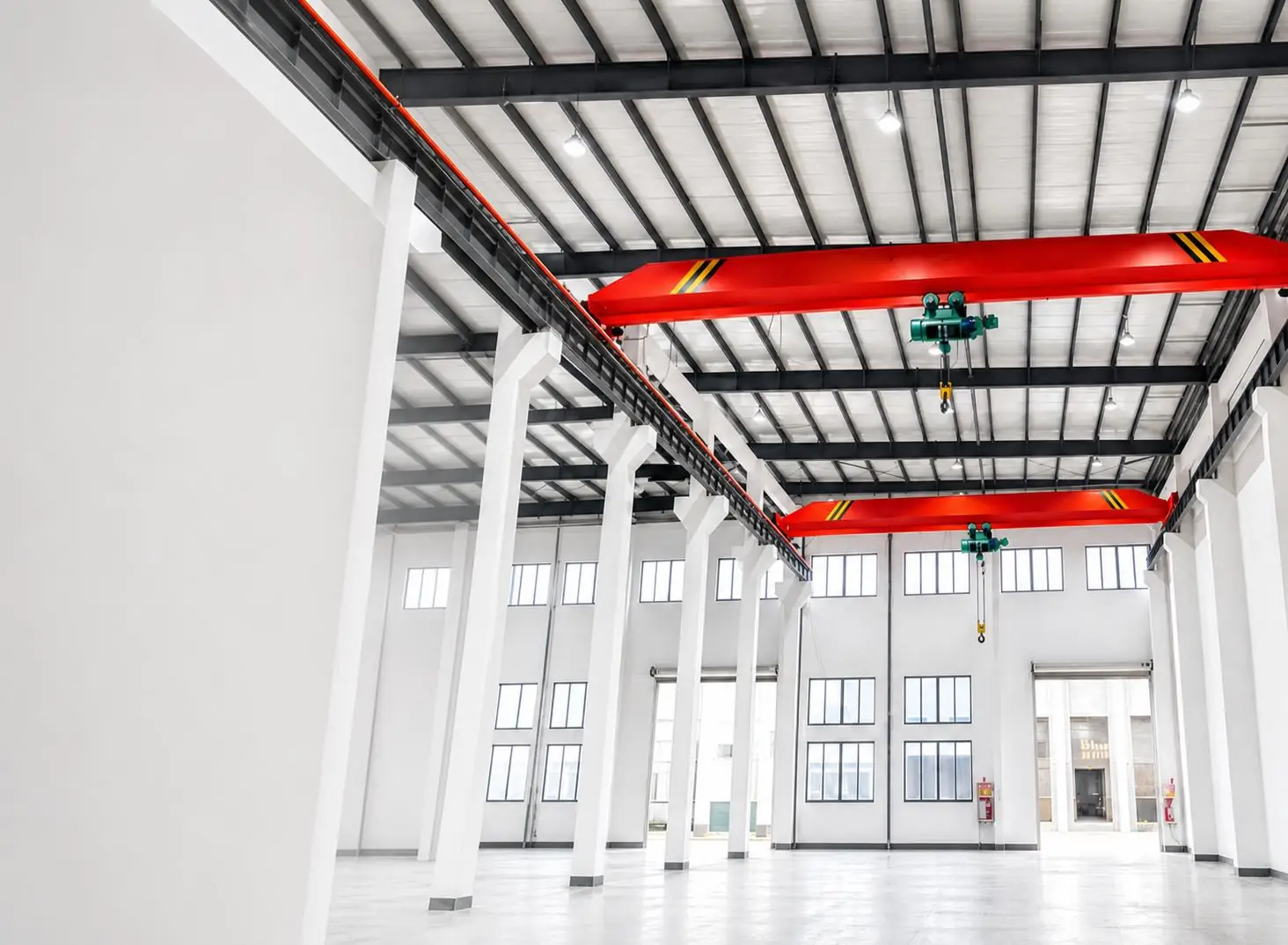
    A secondary crane can serve local handling while the main bridge serves wider movements. Check the overlapping working envelopes, load paths and operating boundaries so both systems can be coordinated within the same workshop.
    Henan Mine CraneTechnical guide · Updated 2026Crane selection, project scope and operating requirements
    Wall-Travelling Cranes Beneath an Overhead System: Coordination Checks
    Henan Mine Crane lifting equipment
    Project planning notes

    Key points for this crane project.

    1. What Is a Wall-Traveling Bridge Crane
    2. How Wall-Traveling Cranes Work Under Main Overhead
    3. Key Efficiency Benefits for Industrial Workstations
    Read the technical guide

    What Is a Wall-Traveling Bridge Crane

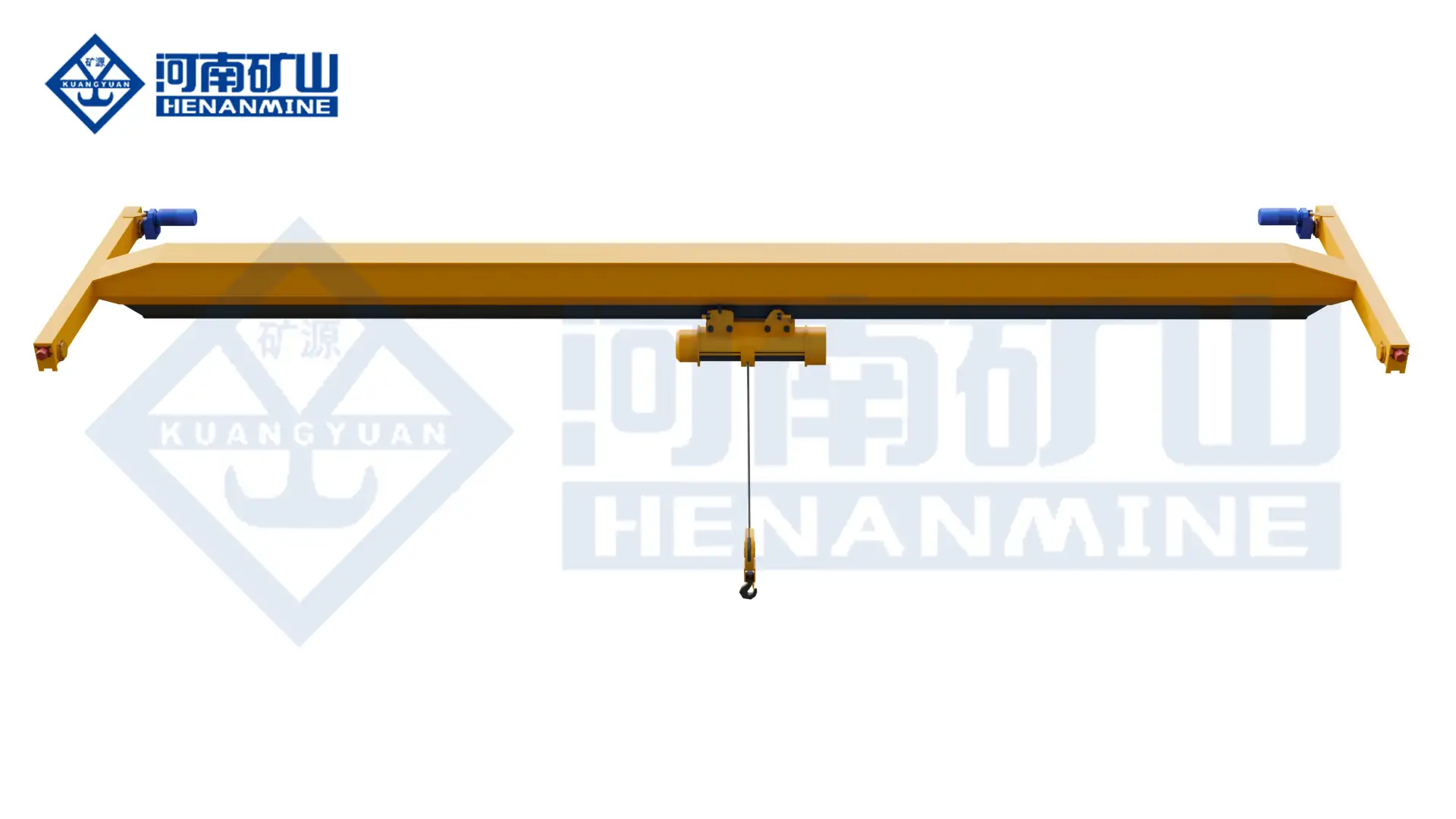
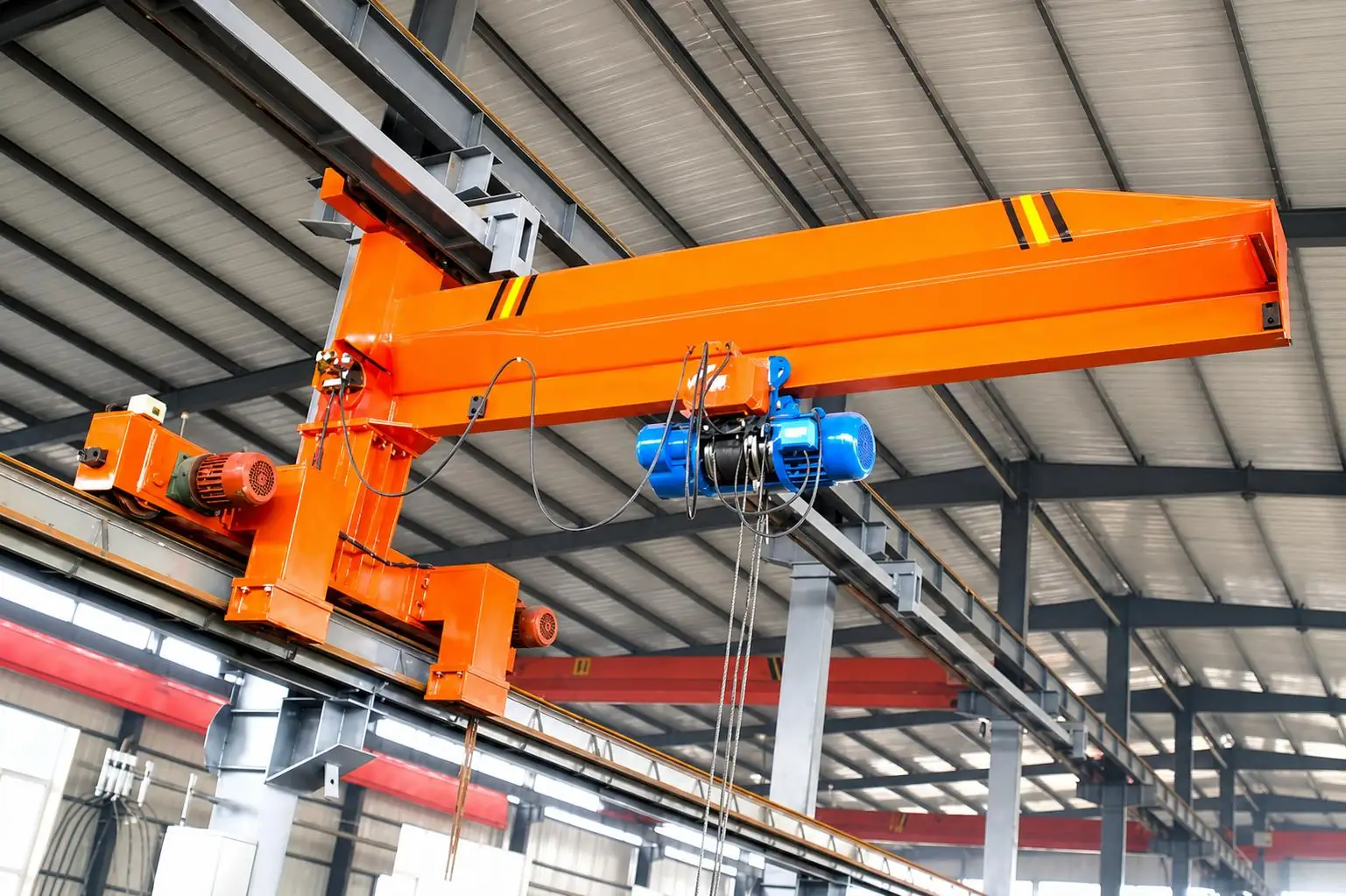
    Wall-mounted bridge crane is a special lifting equipment for lightweight stations installed on the walls and columns of the plant. The track is directly fixed to the building structure without ground support. It belongs to the category of standard bridge lifting equipment and is suitable for refined and miniaturized material handling operations in the workshop.

    The equipment relies on three-axis linkage to achieve full-dimensional hoisting operations: the end beam walks vertically along the wall track, the lifting trolley moves laterally along the main girder, and the crane lifts vertically. The three-axis coordination can fully cover the lifting area of the station, and the operation is flexible and efficient.

    Wall-mounted bridge cranes are composed of seven core components, and each system operates in concert to form a stable and efficient operating system.:

    1. main girder bridge: The core load-bearing beam of the equipment, which spans the track spacing area, can walk vertically along the wall track as a whole, carrying all the loads of lifting trolleys, hoists and hoisting materials, and is the core force structure of the equipment.
    2. Lifting trolley: Equipped with the mobile components of the crane, it can run horizontally and back along the main girder track to achieve precise horizontal positioning of materials and adapt to the multi-point hoisting needs of the station.
    3. Hoisting hoists: The core components of hoisting execution are divided into two types: wire rope type and chain type. They are responsible for the vertical lifting of materials and match different models according to the load tonnage and operation frequency to ensure the stability and efficiency of hoisting.
    4. Track beam: Dedicated fixed operating track, which is different from the roof or floor track of traditional cranes. The wall-mounted crane track is anchored to the wall and column structure of the plant throughout the process, and is arranged in parallel and symmetrically to provide stable support for the equipment to walk vertically.
    5. End beam travel mechanism: it consists of a frame, wheels, bearings, axles and driving devices, which drive the main girder bridge to walk smoothly along the track, and is equipped with cushioning and anti-collision devices, which can effectively reduce the impact loss of the equipment from operation to the end of the stroke.
    6. Control system: It supports two operating modes: hand-held button box and wireless remote control. The operator can accurately control the travel, lifting, and positioning of the equipment, which is convenient to operate and has high positioning accuracy.
    7. Power supply system: supporting conductive rail and conductive shoe components, arranged along the track throughout the process, the equipment can take power sustainably and stably during travel, ensure continuous operation, and avoid power failure and caton affecting the production beat.

    Design points of rated load and span

    There is no general standard for equipment load, span and track stroke, and it needs to be designed according to the bearing capacity of the plant structure, track layout, operating frequency and actual load torque.

    It is forbidden to apply common parameters to equipment selection. All core parameters must be verified by professional structural mechanics and matched according to the working conditions of the plant to ensure stable operation, safety and durability of the equipment, and avoid failures, safety hazards and production downtime caused by inconsistent parameters.

    How Wall-Traveling Cranes Work Under Main Overhead Cranes

    Double-layer material handling operation mode

    Modern industrial workshops generally adopt a double-layer material handling structure of "main bridge crane + wall-mounted bridge crane", which realizes hierarchical operation of high and low positions in the same workshop span, completely solves the problem of chaotic and inefficient operation of a single lifting equipment, and forms a standardized and efficient division of labor system.

    Main bridge crane (high-level core): Focus on high-capacity, long-distance, and cross-regional operations, responsible for the transfer of heavy raw materials in the workshop, the hoisting of large-scale finished products, the overall feeding of the production line, and the transportation of large materials across stations. Core, low-frequency, and high-load work, giving full play to its long-span and high-load core advantages.

    Wall-mounted bridge crane (low-level auxiliary): focus on station localization, high-frequency, lightweight operations, responsible for parts loading and unloading, workpiece positioning, tooling mold hoisting, semi-finished product transfer, equipment maintenance, disassembly and assembly and other short-distance, repetitive hoisting work.

    Dual-device collaborative operation and safety control

    It is necessary to establish a standardized and collaborative control mechanism for the operation of high and low-level dual cranes on the same site to avoid equipment interference, collisions and operation conflicts, and ensure safe and efficient operations. The core control measures are as follows:

    1. Zoning and isolation operations: Combine the layout of the workshop to clarify the vertical and horizontal operating boundaries of the two cranes, divide independent and exclusive operating areas, strictly prohibit cross-zone operation, and completely avoid the risk of equipment interference from the spatial level.
    2. Intelligent limit anti-collision protection: The equipment is equipped with standard travel limit, lifting limit and close-range induction anti-collision system, which can automatically identify the operating boundary, realize deceleration, start-stop protection, and effectively eliminate failures such as over-range operation and equipment collisions.
    3. Standardize the operation and communication mechanism: formulate a dedicated dual-machine operation process, unified communication standards for operators, operation gestures and scheduling specifications, and plan the path in advance for large-scale hoisting operations to prevent blind operations and rush operations.
    4. A full set of safety protection configuration: Both equipment are equipped with overload protection, emergency stop button, sound and light alarm device, buffer and other safety components. The safety equipment function verification must be completed before operation to ensure that risks can be quickly avoided under sudden working conditions.

    Optimize the efficiency of material flow in the station

    Compared with traditional station lifting equipment such as cantilever cranes and monorail cranes, wall-mounted bridge cranes have a longer stroke and a wider coverage range. They can cover multiple sets of continuous stations along the wall track to achieve uninterrupted material flow and adapt to most processing, assembly, and maintenance conditions.

    The equipment is deployed nearby, used and started at any time, without waiting for the main vehicle to cross-zone operation, greatly shortening the hoisting path and turnover time, effectively speeding up the material flow of the station, and ensuring the continuous and efficient operation of the production line.

    Key Efficiency Benefits for Industrial Workstations

    Speed up high-frequency hoisting operations

    The frequency of hoisting operations such as loading and unloading of parts and components, tooling replacement, etc. at the station is high, and the traditional mode needs to wait for the main traffic to be dispatched, which can easily delay production. The wall-mounted bridge crane is the exclusive equipment of the station, which can instantly respond to hoisting needs, eliminate time-consuming waiting, greatly improve the efficiency of high-frequency operation cycles, and stabilize the beat and production capacity of the production line.

    Relieve main traffic congestion

    A large number of lightweight and repetitive small hoisting takes up the main traffic resources, which is the main cause of congestion on the main traffic and delays in core heavy-duty operations. At the same time, it will exacerbate unnecessary losses on the main traffic, shorten the service life of equipment, and increase maintenance costs.

    Wall-mounted cranes undertake light-duty hoisting tasks at all stations, completely release the production capacity of the main vehicle, give priority to high-value heavy-duty and cross-zone transfer operations, optimize the resource allocation of lifting equipment in the workshop, and improve the overall cost performance of the operation.

    Adapt to refined operations

    The equipment adopts wall-embedded installation, which does not occupy the ground space of the workshop, does not affect the passage of forklifts, personnel operations and material stacking, and maximizes the use of the vertical space of the workshop. At the same time, it can accurately cover small working spaces such as machine tool stations, assembly areas, and maintenance consoles, and efficiently complete the precise hoisting and positioning of molds, fixtures, small equipment, parts, and semi-finished products, adapt to the needs of various fine chemical station operations, and greatly improve the convenience of station operations.

    Increase production flexibility

    The wall-mounted bridge crane adopts a modular track and equipment architecture, which is extremely compatible and adjustable. When the production layout of the workshop is optimized, the number of stations is increased or decreased, and the process flow is upgraded, the track layout can be extended and adjusted to meet the new operating requirements without the need for large-scale infrastructure transformation.

    Compared with traditional fixed lifting equipment, its flexible adaptation ability is stronger, and it can be perfectly adapted to the modern production model of multi-variety, small batch, and dynamic process adjustment.

    Wall-Traveling Bridge Crane Applications

    With the advantages of light weight, high precision, high flexibility, space saving, and easy collaboration, wall-mounted bridge cranes are widely adapted to various industrial station refined hoisting scenarios. The core application areas are as follows:

    1. Whole machine manufacturing and assembly workshop: it is adapted to the multi-station collaborative operation of the assembly line, which can efficiently complete the transfer of parts, precise alignment and docking of semi-finished products, effectively improve the assembly accuracy and ensure the efficient and stable production of the assembly line.
    2. Machining workshop: suitable for supporting operations of CNC machine tools and machining centers, stable completion of workpiece loading and unloading, tooling replacement and workpiece transfer, and completely solve the efficiency pain points of high-frequency repeated hoisting of machining stations.
    3. Automobile production workshop: to meet the needs of high-precision hoisting and alignment of auto parts, engine components and fixtures, adapt to the strict assembly standards and production beats of automobile manufacturing, and ensure the accurate landing of the process.
    4. Steel structure processing workshop: it is suitable for short-distance transportation, precise alignment and welding-assisted hoisting of steel plates, profiles, and small steel components, and is perfectly adapted to the lightweight and refined processing conditions of steel structures.
    5. Equipment maintenance workshop: it can efficiently complete the disassembly, hoisting and reset installation of industrial equipment such as motors, water pumps, gearboxes, hydraulic equipment, etc., reduce the intensity of manual operations, improve maintenance efficiency, and save labor costs.
    6. Warehouse and material temporary storage area: suitable for short-distance transfer and stacking of small materials, station consumables and small finished products, to make up for the inefficient handling of large-scale vehicles and small pieces, and to improve the efficiency of warehousing and circulation.

    How to Select a Wall-Traveling Bridge Crane

    Hoisting load parameters

    The primary core of the selection is to clarify the load standard. It is necessary to distinguish between the conventional working load and the limit maximum load. The load calculation must include the weight of the workpiece, the hook, the spreader, the sling, the spreader bar and other ancillary accessories.

    At the same time, the working level of the equipment is determined based on the hoisting frequency of the station and the length of a single load. It is strictly prohibited to select the type only according to the maximum load to avoid redundancy in equipment performance under high-frequency and light-load conditions, or overload loss of equipment under low-frequency and heavy-duty conditions, and ensure that the equipment is adapted to the needs of working conditions.

    Station coverage and working space

    Sort out the material flow path of the station and the distribution of work points in advance, and accurately approve the three core parameters: the total length of the wall track (the longitudinal stroke of the equipment), the span of the main girder (the width of the horizontal coverage), and the effective lifting height (the vertical operating range).

    Combined with the operation area, plan the full coverage of the hook to ensure that the equipment can cover all the lifting points of the station, there are no blind spots in the operation, and at the same time avoid the interference between the equipment and the workshop equipment and structure.

    Carrying capacity of buildings and rail structures

    The operating safety of wall-mounted cranes depends entirely on the wall and column structure of the plant. Before installation, professional structural engineers must complete the building structure inspection, focusing on the inspection of column spacing, wall bearing capacity, installation site structural integrity, foundation stability, track force limit and other indicators. All installation plans must pass mechanical verification, and empirical installation is strictly prohibited to prevent safety hazards such as structural overload, deformation, and collapse.

    Gourd and trolley configuration

    Hoisting hoists are the core operating components of the equipment, and they need to be strictly matched to working conditions: wire rope electric hoists are preferred for medium- and heavy-duty and high-frequency operating scenarios, with strong carrying capacity, good stability and long service life.;

    Chain electric hoists can be used in light-load, medium- and low-frequency operation scenarios, which are cost-effective and compact in structure. At the same time, the lifting speed and trolley travel speed are matched according to production needs, and the frequency conversion drive system is used to achieve smooth start and stop, precise positioning, and prevent material shaking and offset.

    Control method and intelligent configuration

    Wired button box control can be used for conventional station operations, which is stable in operation and low in cost; wireless remote control is preferred for large workpieces, complex stations, and scenes with limited field of vision, which is flexible in operation, wide field of vision, and higher safety.

    The variable frequency drive system (VFD) is the standard and preferred configuration, which can realize smooth acceleration and deceleration of equipment, reduce mechanical wear and material shaking. The high-end intelligent workshop can be connected to the production control system and AGV equipment to realize semi-automatic and automated material hoisting and transportation, and improve the overall level of intelligence.

    Henan Mine Crane can provide corresponding crane configuration and customized solutions according to specific working conditions, control requirements and automation levels to help customers achieve safer and more efficient material handling.

    Safety Considerations When Operating Two Crane Systems

    Standardized installation planning

    Complete a full range of on-site surveys before installation, and accurately detect the status of the plant walls, columns, steel frames, and infrastructure; plan the track installation path in combination with the existing main driving layout, and strictly approve the vertical spacing and horizontal safe distance of high and low equipment to ensure that there are no hidden dangers of interference.;

    Verify the power supply capacity of the workshop to ensure the stability of the power when the two equipment are operating at the same time. After the installation is completed, the whole machine must be debugged and load tested, and it can be put into use after passing the acceptance.

    Normalized preventive maintenance

    Establish a hierarchical maintenance system in accordance with industry standards, and inspect vulnerable components such as hoist chains/wire ropes, brakes, limit switches, travel wheels, and buffers at high frequencies; regularly verify the sensitivity of electrical systems, conductive devices, and control systems; check track flatness, fastener firmness, and structural force status. Through normalized maintenance, the hidden dangers of failures are checked in advance to avoid the operation of the equipment with diseases.

    Minimize production downtime

    Reasonably plan the maintenance time, use the downtime and shift handover periods to carry out inspections and component replacement to avoid occupying production working hours; establish an inventory of spare parts for wearing parts, and keep a standing inventory of high-frequency wear-resistant parts such as brake pads, limiters, travel wheels, and wire ropes. When a failure occurs, it can be quickly replaced to minimize downtime and ensure the continuous operation of the production line.

    FAQ

    Q1: Can the wall-mounted crane be installed under the main bridge crane to work together?

    A: Yes, this is the core application scenario of the device. Through the hierarchical layout of high and low positions, dedicated operation partitions, anti-collision limit protection, and standardized collaborative processes, the safe and efficient simultaneous operation of the two machines can be achieved, which is one of the best solutions to optimize the lifting operation system of the workshop.

    Q2: What is the core difference between wall-mounted cranes and cantilever cranes?

    A: The cantilever crane only covers a single fixed station, and the operating range is limited and cannot walk long distances; the wall-mounted bridge crane can move long distances along the wall track, covering multiple consecutive stations, and the hook has a wider operating range and greater flexibility. It is suitable for continuous operation scenarios of assembly lines.

    Q3: What types of lifting loads are wall-mounted cranes suitable for?

    A: Focus on light and medium-tonnage repetitive hoisting operations, suitable for station parts, tooling molds, small equipment, semi-finished products, steel structure small parts and other loads, not suitable for high-capacity heavy-duty hoisting, mainly refined, high-frequency station operations.

    Q4: Does the wall-mounted crane need a dedicated customized track?

    The equipment must be equipped with exclusive customized track beams, and the track must be customized according to the load of the equipment, travel power, and the force of the building structure. It is strictly prohibited to use a general simple track to ensure the stability and safety of the equipment.

    Q5: How to completely avoid the interference problem of double crane operation?

    A: Avoid risks through four major measures: delineate independent operation zones, install intelligent anti-collision and limit devices, standardize operator communication and operation procedures, implement pre-operation safety verification, and multiple protections to prevent equipment collisions and operation conflicts.

    Q6: Does the equipment support personalized customization of station working conditions?

    Track length, span, lifting height, control mode, and safety configuration can be customized according to workshop layout, load tonnage, operating frequency, and special working conditions (dustproof, anticorrosive, and explosion-proof), and can be adapted to the individual production needs of enterprises in all directions.

    Q7: What are the requirements for the structure of the plant for the installation of equipment?

    A: It is necessary that the walls and structural columns of the plant have sufficient load-bearing capacity to carry the weight of the equipment, dynamic hoisting load and travel torque. Professional structural mechanics testing and verification must be completed before installation, and the engineer must confirm that the standards are up to standard before construction.

    Discuss the crane arrangement for your project.

    A secondary crane can serve local handling while the main bridge serves wider movements. Check the overlapping working envelopes, load paths and operating boundaries so both systems can be coordinated within the same workshop. Share the load, available drawings, working cycle and site conditions with Henan Mine Crane so the required configuration and supply boundary can be discussed.

    Related crane configurations

    Insulated Double Girder Travelling Crane

    View product parameters
    Lifting capacity: 5t – 50t · two trolleysSpan: 7.5m – 31.5mLifting height: 6m – 20m

    Provide insulated double-girder lifting for a defined electrical process. The suspension arrangement, lifting appliance and isolation positions are selected from the load path and site conditions.

    Single-Girder Bridge Crane

    View product parameters
    Lifting capacity: 1–20 tSpan: 7.5–31.5 mLifting height: 6, 9, 12, 18, 24 or 30 m; capacity-dependent

    Use an LDA single-girder bridge and electric hoist for general workshop material handling. Select the lifting capacity, runway geometry and hoist duty around the building and load.

    Updated 2026 · Henan Mine Crane
  • Explosion-Proof Electric Double-Girder Bridge Crane

    Explosion-Proof Electric Double-Girder Bridge Crane

    Crane application

    Explosion-Proof Electric Double-Girder Bridge Crane

    Review the explosion-proof double-girder crane project. Review load, process exposure, area classification and project-specific documentation requirements.

    Explosion-Proof Electric Double-Girder Bridge Crane — Henan Mine Crane crane application photograph
    Explosion-Proof Electric Double-Girder Bridge Crane — crane application overview.

    Precision assembly lifting

    Document component weight, lifting points, clearance envelope, permissible motion, alignment requirements and interaction with adjacent tools or assembly positions.

    Crane configuration and interfaces

    Ask for coordinated control functions, positioning criteria, interlocks, runway reactions, inspection access and acceptance demonstrations under the agreed load cases.

    Review the Explosion-proof overhead cranes and Aerospace cranes before defining the project-specific arrangement.

    Design the lifting process

    Use the project context above as a starting point. The following checks turn a crane application into a technical scope that suppliers can price and demonstrate for your site.

    Classify the actual operating area

    State whether the crane is in a hazardous area, a controlled cleanroom, both, or neither. Provide the area classification, gas or dust group, temperature class, ambient range and cleaning regime from the plant design. A marketing term such as “explosion-proof” is insufficient to select motors, controls, cable entries and protective devices. In clean production, also define allowable materials, lubricants, particle control, equipment cleaning and maintenance access.

    Match protection to every component

    Review the hoist, trolley, bridge drives, brakes, limit switches, control station and power supply against the documented environment. List which parts enter the classified zone and how inspection and repair will be carried out. For remote operation, define interlocks with plant ventilation or process equipment only where the plant design calls for them. Ask the supplier to identify the standards, certification scope and any excluded third-party components in its offer.

    Evidence at handover

    Request component schedules, applicable certificates, installation drawings, inspection records, operating manuals and spare-part identification. Factory acceptance can verify electrical logic and mechanical operation; site acceptance must check the actual installation, earthing, labels, protection devices and the process interface. A cleanroom handling trial should also use the approved cleaning and contamination-control procedure. Confirm the project requirements before treating any advertised configuration as suitable for a specific classified area.

    Compare the proposed crane scope

    DecisionInformation to request
    Crane and lifting attachmentRated loads, load cases, hook coverage and the complete suspended-load calculation.
    Site interfacesRunway loads, rail or building drawings, electrical supply and installation responsibilities.
    Controls and protectionOperating sequence, required safety functions and a method for testing each function.
    Commercial scopeEquipment, transport, installation, commissioning, documentation, training and spare parts as separate line items.

    From technical offer to site acceptance

    Technical submittals

    A usable bid should show a general arrangement and a clear list of assumptions, not just a model name and capacity. Request the load schedule used in design, lifting-attachment drawings where applicable, span and hook-approach dimensions, wheel loads, electrical supply, control narrative and maintenance access. Check every drawing against the actual building or yard layout. Identify the standards and local approval requirements for the destination market in the enquiry, then confirm the bidder’s proposed design and documentation scope in writing.

    Installation and tests

    Agree when the runway or civil works will be ready, how crane components can reach the installation position and who provides lifting equipment for erection. Define the factory test, on-site installation inspection and site acceptance as separate milestones. The acceptance procedure should list representative loads, the travel route, protection devices, emergency stop and any automation or attachment functions included in the order. Record who supplies test weights, operators, power and access equipment; otherwise a nominal commissioning price may omit essential site work.

    Commercial comparison

    Ask for the same delivery basis and currency across proposals. Separate the crane, special lifting appliances, rails or conductors, transport, installation support, commissioning, training and initial spare parts. Lead time should identify the starting event, such as approved drawings or an effective contract, and any dependency on site readiness. Compare warranty scope and service response by the written contract terms. If a key input is still unknown, request a priced option or a stated assumption instead of allowing different bidders to silently use different specifications. Keep a written exception register so the engineering team can resolve open dimensions, process interfaces and responsibility boundaries before issuing the purchase order.

    Information to include in the enquiry

    • Load weights, dimensions, centre of gravity and lifting attachments.
    • Span, lifting height, runway or yard drawings, travel coverage and clearances.
    • Operating cycle, working environment, electrical supply and control requirements.
    • Supply boundaries, inspection documents, installation support and acceptance criteria.

    Discuss a comparable lifting task

    Send the handling task and available site drawings. Henan Mine Crane can define a proposed crane arrangement and identify the remaining information needed for a technical and commercial review.

  • Custom Explosion-Proof Crane for Wind Solar Power Base

    Custom Explosion-Proof Crane for Wind Solar Power Base

    Crane application

    Custom Explosion-Proof Crane for Wind Solar Power Base

    Review the explosion-proof crane for energy projects. Review load, process exposure, area classification and project-specific documentation requirements.

    Custom Explosion-Proof Crane for Wind Solar Power Base — Henan Mine Crane crane application photograph
    Custom Explosion-Proof Crane for Wind Solar Power Base — crane application overview.

    Energy and materials production

    Specify the product or component geometry, process exposure, lifting attachment, handling frequency, working environment and any clean, corrosive or classified-area requirements.

    Crane configuration and interfaces

    Ask for the applicable equipment configuration, area classification where relevant, mechanical and electrical interfaces, inspection access and a site-specific test plan.

    Review the Explosion-proof overhead cranes and Energy & new materials cranes before defining the project-specific arrangement.

    Design the lifting process

    Use the project context above as a starting point. The following checks turn a crane application into a technical scope that suppliers can price and demonstrate for your site.

    Classify the actual operating area

    State whether the crane is in a hazardous area, a controlled cleanroom, both, or neither. Provide the area classification, gas or dust group, temperature class, ambient range and cleaning regime from the plant design. A marketing term such as “explosion-proof” is insufficient to select motors, controls, cable entries and protective devices. In clean production, also define allowable materials, lubricants, particle control, equipment cleaning and maintenance access.

    Match protection to every component

    Review the hoist, trolley, bridge drives, brakes, limit switches, control station and power supply against the documented environment. List which parts enter the classified zone and how inspection and repair will be carried out. For remote operation, define interlocks with plant ventilation or process equipment only where the plant design calls for them. Ask the supplier to identify the standards, certification scope and any excluded third-party components in its offer.

    Evidence at handover

    Request component schedules, applicable certificates, installation drawings, inspection records, operating manuals and spare-part identification. Factory acceptance can verify electrical logic and mechanical operation; site acceptance must check the actual installation, earthing, labels, protection devices and the process interface. A cleanroom handling trial should also use the approved cleaning and contamination-control procedure. Confirm the project requirements before treating any advertised configuration as suitable for a specific classified area.

    Compare the proposed crane scope

    DecisionInformation to request
    Crane and lifting attachmentRated loads, load cases, hook coverage and the complete suspended-load calculation.
    Site interfacesRunway loads, rail or building drawings, electrical supply and installation responsibilities.
    Controls and protectionOperating sequence, required safety functions and a method for testing each function.
    Commercial scopeEquipment, transport, installation, commissioning, documentation, training and spare parts as separate line items.

    From technical offer to site acceptance

    Technical submittals

    A usable bid should show a general arrangement and a clear list of assumptions, not just a model name and capacity. Request the load schedule used in design, lifting-attachment drawings where applicable, span and hook-approach dimensions, wheel loads, electrical supply, control narrative and maintenance access. Check every drawing against the actual building or yard layout. Identify the standards and local approval requirements for the destination market in the enquiry, then confirm the bidder’s proposed design and documentation scope in writing.

    Installation and tests

    Agree when the runway or civil works will be ready, how crane components can reach the installation position and who provides lifting equipment for erection. Define the factory test, on-site installation inspection and site acceptance as separate milestones. The acceptance procedure should list representative loads, the travel route, protection devices, emergency stop and any automation or attachment functions included in the order. Record who supplies test weights, operators, power and access equipment; otherwise a nominal commissioning price may omit essential site work.

    Commercial comparison

    Ask for the same delivery basis and currency across proposals. Separate the crane, special lifting appliances, rails or conductors, transport, installation support, commissioning, training and initial spare parts. Lead time should identify the starting event, such as approved drawings or an effective contract, and any dependency on site readiness. Compare warranty scope and service response by the written contract terms. If a key input is still unknown, request a priced option or a stated assumption instead of allowing different bidders to silently use different specifications. Keep a written exception register so the engineering team can resolve open dimensions, process interfaces and responsibility boundaries before issuing the purchase order.

    Information to include in the enquiry

    • Load weights, dimensions, centre of gravity and lifting attachments.
    • Span, lifting height, runway or yard drawings, travel coverage and clearances.
    • Operating cycle, working environment, electrical supply and control requirements.
    • Supply boundaries, inspection documents, installation support and acceptance criteria.

    Discuss a comparable lifting task

    Send the handling task and available site drawings. Henan Mine Crane can define a proposed crane arrangement and identify the remaining information needed for a technical and commercial review.

  • Overhead Crane Procurement for Vietnam Factories: Supplier and Site Checks

    Overhead Crane Procurement for Vietnam Factories: Supplier and Site Checks

    Technical guide

    Overhead Crane Procurement for Vietnam Factories: Supplier and Site Checks

    An export enquiry needs the factory lifting task and local project interfaces described together. Define the bay, power supply, installation responsibilities and handover requirements before comparing overseas crane suppliers.

    Henan Mine CraneTechnical guide · Updated 2026Crane selection, project scope and operating requirements
    Henan Mine Crane Single-Girder Bridge Crane
    Henan Mine Crane Single-Girder Bridge Crane
    Project planning notes

    Key points for this crane project.

    1. Why Vietnam’s manufacturing industry needs reliable
    2. Types of Overhead Cranes Commonly Used in Vietnam
    3. Manufacturing industries that mainly use Overhead
    Read the technical guide

    Why Vietnam’s manufacturing industry needs reliable suppliers of Overhead Crane

    Manufacturing expansion continues to pull the demand for Crane

    Vietnam relies on the advantages of foreign trade processing, a large number of foreign-funded factories, local manufacturing parks continue to put into production. Steel structure processing plant, machinery manufacturing workshop, automobile parts production line, building materials prefabricated plant, all need stable lifting equipment to support daily mass production operations.

    Ordinary manual handling, small forklift is difficult to meet the large weight, high-frequency lifting needs of the workshop, standardized industrial Overhead Cranes in Vietnam, become the core supporting equipment for new plants before going into production.

    Overhead Crane effectively rationalizes the flow of materials in the workshop.

    Traditional manual handling of heavy workpieces is not only inefficient, but also prone to problems such as workpiece bumping and misplacement, affecting the production rhythm. Overhead Crane has a wide coverage and stable running track, which can fix the fixed point lifting and transportation work in the workshop.

    Continuous and regular material flow can make the production line more smoothly, reduce the waiting time of the work process, which is suitable for the Vietnamese factory's multi-shift continuous production mode.

    Equipment Stability Directly Controls Downtime Losses

    Manufacturing factories have a very coherent assembly line, once the main lifting equipment fails and stops, raw material transfer, workpiece loading and unloading, equipment maintenance will be forced to pause. For Vietnam's foreign trade factories that produce at full capacity all year round, short downtimes can cause considerable loss of production capacity.

    Selection of Overhead Crane suitable for working conditions, stable quality of the workshop is essentially for the production line to build a solid foundation for stable operation.

    Procurement side of the more important long-term use of equipment value

    Early in Vietnam, many small and medium-sized factories purchasing lifting equipment, will prioritize the low budget, choose the low-cost, low-compatibility models. However, after long-term use, frequent maintenance, parts are difficult to find, no one after-sales docking and other issues, will increase the overall operating costs.

    At this stage, Vietnamese manufacturing enterprises have matured in their procurement ideas, and when selecting suppliers of Overhead Cranes in Vietnam, they will comprehensively consider the durability of the equipment, maintenance costs, spare parts supply and localized service capabilities.

    Types of Overhead Cranes Commonly Used in Vietnam Manufacturing Plants

    Single Girder Overhead Crane

    Single Girder Overhead Cranes are the most utilized type in small and medium-sized manufacturing plants in Vietnam, focusing on light to medium loads and regular shop operations. It is suitable for machine assembly, small parts processing, warehouse material stacking, and daily maintenance in the workshop.

    With light weight, easy installation and small space occupation, the equipment is suitable for the structure of most standard factories in Vietnam. Henan Mine Crane single girder cranes exported to Vietnam in many batches, optimized for high temperature and high humidity protection structure, suitable for Vietnam's tropical climate, can be quickly put into mass production after delivery.

    Double Girder Overhead Crane

    Double girder Overhead Cranes in Vietnam are mostly used in large-scale factories with heavy loads, large spans, and high-frequency operations, such as heavy-duty steel processing, large-scale machinery manufacturing, and prefabricated building materials production and other scenarios.

    The double girder structure has stronger overall rigidity and larger load capacity, which can withstand multi-shift continuous operation for a long time, and is not easy to have structural deformation, component fatigue and other problems. Henan Mine Crane supply customized double girder cranes for many large factories in Vietnam's industrial parks are fully adapted to the local heavy-duty production conditions, and the stability of the equipment has been verified for a long time.

    Low headroom Overhead Crane

    In some of the old renovation plants and low-rise industrial parks in Vietnam, the overall floor height is limited, and the lifting height of ordinary Cranes cannot meet the production requirements. Low headroom Overhead Cranes optimize the trolley structure and lifting layout to maximize the use of vertical working space within the limited height of the plant.

    These models are specially adapted to workshops with restricted floor heights, without the need for enterprises to transform the plant infrastructure, which can effectively save the cost of upgrading and transforming the plant.

    Overhead Cranes

    Suspension Crane is installed on the roof of the plant steel beams, without the need to lay the ground track, suitable for lightweight material transfer, small assembly workshop use. The overall layout is lightweight, with no obstruction to the ground workspace, suitable for Vietnam's processing workshops with intensive work processes and compact sites.

    Special Customized Overhead Crane

    For the special operational needs of niche industries, many factories in Vietnam will choose customized lifting equipment. Customized Cranes with electromagnetic suction cups, hydraulic grabs, and special fixtures can be adapted to the lifting of steel raw materials, bulk materials, and shaped workpieces.

    There is no fixed standard for this kind of customized model, which needs to be designed one-to-one by the supplier in combination with on-site working conditions, and it is also the core service advantage of high quality Overhead Crane supplier for Vietnam factories.

    Manufacturing industries that mainly use Overhead Cranes in Vietnam

    Steel structure and metal processing plant

    This is the industry that uses the largest amount of Cranes in Vietnam. The loading, unloading, transferring, and splicing of all kinds of steel components, profiles, and metal sheets need Overhead Cranes to work with them. These scenes are mostly medium and heavy duty high frequency operations, and most of them will use single girder or double girder industrial cranes.

    Machinery Manufacturing Workshop

    General mechanical equipment, hardware accessories, industrial mold production and assembly, cannot be separated from the lifting equipment to assist. Mould lifting, large unit assembly, finished equipment loading, are Overhead Crane conventional operating scenarios, the smoothness of the equipment control requirements are high.

    Electronic and industrial equipment factory

    Most of the factory buildings in the electronics industry are clean workshops, commonly used single girder cranes with light load, low noise and smooth operation. Mainly used for large-scale equipment, production line modification, finished cabinet transfer and other operations, will not affect the clean environment of the workshop.

    Warehousing and logistics center

    Finished product warehouses and raw material yards in large industrial parks are equipped with Overhead Cranes to assist in stacking, loading and unloading of heavy goods. Compared with forklifts, Overhead Cranes have a wider coverage and can complete the regular stacking of large-span and large-weight materials.

    Auto parts production plant

    The transfer of auto parts molds, large stamping parts and vehicle parts requires stable lifting equipment. This kind of factory mostly adopts frequency conversion control Crane, start and stop smoothly, can avoid the precision workpiece bump damage, adapt to the demand of refined production.

    Building materials and prefabricated components plant

    The production and transportation of cement prefabricated parts, steel building materials, and decorative profiles are characterized by large loads and high frequency, which require high structural strength and durability of cranes, and most of them use heavy-duty double girder Overhead Cranes.

    The core technical parameters that the Vietnamese purchaser focuses on

    Rated lifting capacity

    The rated lifting capacity is based on the maximum material to be lifted in the factory, including the weight of the heaviest workpieces, equipment accessories and finished goods, while leaving a reasonable safety margin.

    Equipment span

    The span needs to strictly match the width of the plant opening and the center distance of the rail, which is the core parameter of the Crane adapting to the site. Parameter deviation will lead to equipment cannot be installed or limited operation, professional suppliers will check the plant drawings in advance, accurately customize the span size.

    Lifting height

    Combined with the plant floor height, material stacking height, equipment installation height is determined. Not only to meet the daily production lifting needs, but also to reserve the top safety distance, to avoid collision when the equipment is running. Low plant priority with low headroom exclusive program.

    Running length

    That is, the total laying length of the workshop track, determining the operational coverage of the Crane. Need to match the layout of the production line, raw material stacking area, the location of the finished product loading area, to ensure that the whole process of material transfer can be covered.

    Work level

    Occasional maintenance, low-frequency operation of the workshop, suitable for light and medium work level; multi-shift mass production, high-frequency lifting plant, you must choose medium and heavy work level models. Blindly choosing low-level equipment will quickly lead to problems such as aging parts and frequent failures.

    Maneuvering method

    In Vietnam, ordinary workshops mostly use handheld ground control buttons, which are simple to operate and have a low threshold for getting started. For high-frequency operation and fine lifting scenes, wireless remote control is used; high-capacity heavy-duty equipment is equipped with cab control, which provides a better view and more precise control.

    Power supply conditions

    The electrical system of the equipment needs to be adapted to the local industrial voltage and frequency in Vietnam, and the supplier will adjust the electrical configuration according to the on-site power supply parameters to avoid problems such as equipment failure and component burnout due to voltage inconsistency.

    How to choose the right Overhead Crane for your Vietnam factory?

    Selecting the right bridge crane for the actual lifting conditions

    Many purchasing mistakes are to look only at the price or the tonnage, ignoring the actual operating conditions. Light materials, low-frequency operations do not need to be equipped with heavy-duty models, which will result in cost waste; heavy-duty, high-frequency production scenarios with low equipment, which will lay a hidden safety hazard.

    Combined with their own material type, frequency of operation, lifting mode selection, in order to select the most cost-effective industrial Crane.

    Match the size of the plant and building structure

    In addition to width, height, but also check the plant traveling beam load bearing, rail installation conditions, wall structure. Old plant renovation projects, you need to confirm the load-bearing data in advance to avoid equipment installation beyond the plant load-bearing load.

    Combined with the daily frequency of operation selection

    For low-frequency scenarios with only monthly equipment maintenance, standard light equipment can meet the demand. For all-day multi-shift continuous production, the heavy-duty structure must be upgraded and the core components strengthened to match the high-frequency cyclic operation.

    Reserve space for future capacity upgrades

    Most of the manufacturing enterprises in Vietnam are in the state of continuous production expansion, the selection of the appropriate tonnage, span margins can be reserved.

    Subsequent production line upgrades, material weight increase, no need to replace the entire machine, can continue to be used for a long time, saving the cost of secondary procurement.

    Reasons for the popularity of single girder and double girder cranes in Vietnam’s manufacturing industry

    Advantages of Single Girder Crane Adaptation

    Single Girder Overhead Crane has a lower overall cost, light weight, low load bearing requirements for the plant, and is suitable for most of the standard new plants in Vietnam. Simple installation process, short delivery cycle, convenient daily maintenance, strong generalization of accessories, suitable for small and medium-sized factories to purchase in bulk.

    Advantages of Double Girder Cranes

    The double girder model has a larger load capacity, higher ultimate lifting height, and stronger fatigue resistance of the whole structure. In the face of long-term heavy-duty, high-frequency operations, the stability of the equipment far exceeds that of single-girder models, and is less prone to shaking and deformation problems, which makes it suitable for large-scale heavy manufacturing plants.

    Core judgment logic of model selection

    Single girder Overhead Cranes are preferred for low tonnage, small span and low frequency operation.

    Double girder Overhead Cranes are preferred for high-capacity, large span, multi-shift continuous production, and refined heavy-duty lifting scenarios. Combining the working conditions instead of subjective preference is the most secure procurement method.

    Core attributes of a quality Made-in-Vietnam Overhead Crane Supplier

    In-house manufacturing capabilities

    Reliable manufacturers must have complete steel processing, equipment assembly and machine testing lines, not just a trading middleman. Manufacturers of independent production, in order to control the welding process, component assembly, factory testing and other core links, to ensure the uniform quality of equipment.

    Henan Mine Crane manufactured with a large-scale intelligent manufacturing base, can independently complete the customized production of various tonnage Overhead Crane, many batches of industrial cranes exported to Vietnam, are independently manufactured, the whole process of quality control, to match the standards of overseas projects.

    Familiar with the general working conditions of Vietnamese factories

    Vietnam is a tropical monsoon climate, high temperature, high humidity, rainy, and some coastal plants have salt spray corrosion problems. Ordinary inland adapted models are susceptible to problems such as electrical moisture, corrosion of parts and aging of paint surface in long-term use.

    Deep plowing of the Vietnamese market suppliers, will be targeted to do moisture, corrosion, dust upgrades. Henan Mine Crane exported to Vietnam in bulk, all optimized electrical sealing, steel structure anti-corrosion process, adapted to the local special climate, equipment failure rate is lower.

    Professional engineering customization capability

    Different factories have different production line layouts, operational requirements and plant conditions. High-quality suppliers can optimize equipment parameters, adjust structural configurations and recommend suitable models according to customers' drawings and site conditions, instead of applying uniform templates.

    Perfect quality control system

    Non-destructive testing, size verification, no-load test, full-load load test and electrical system inspection before leaving the factory are indispensable. Strict quality inspection process can check the hidden danger of the equipment in advance, and ensure that the equipment can be stabilized and put into production directly after it arrives at the factory.

    Perfect after-sales and spare parts protection

    The core pain point of overseas projects is lagging after-sales and difficult to purchase accessories. High-quality foreign trade suppliers will provide remote installation guidance, English operation training, regular technical Q&A, and at the same time guarantee the stable supply of common wearing parts to shorten equipment downtime.

    Evaluation method of Vietnam project Crane supplier

    Verification of local cases of similar projects

    Priority reference to suppliers in Vietnam industrial parks, manufacturing plants on the ground cases, real production projects are far more persuasive than publicity rhetoric. Henan Mine Crane has been serving all kinds of manufacturing and heavy industry projects in Vietnam for many years, and many batches of single and double girder cranes and customized industrial cranes have been stably running in Vietnam's major factories, and have mature local project experience.

    Verification of a full set of technical data

    Regular suppliers can provide a complete set of equipment general drawings, technical parameter tables, electrical schematic diagrams, wheel pressure data, parts list and other information. The full set of compliance information is convenient for plant acceptance and documentation, and also provides the basis for later maintenance and parts replacement.

    Confirmation of the brand configuration of core components

    Core components such as motors, reducers, brakes, electrical components, wire ropes, hooks, etc. directly determine the stability of the equipment. When purchasing, you need to clarify the brand and specifications of the components, to avoid the manufacturer's low-component replacement, and to protect the long-term operational quality of the equipment.

    Verify the factory testing process

    Confirm whether the equipment has completed no-load, full-load, overload test, whether there is a complete quality inspection records and factory reports. The complete testing process is the basic guarantee that the equipment is suitable for industrial heavy-duty working conditions.

    Define the scope of delivery and installation services

    Confirm in advance whether the scope of cooperation is purely equipment delivery, or includes installation guidance, commissioning, personnel training. Lack of on-site commissioning guidance in overseas projects may easily lead to problems such as non-standardized installation and inadequate commissioning of equipment, which may affect the progress of commissioning.

    Common concerns of Vietnam factory procurement

    Whether the equipment is suitable for daily mass production conditions

    Many low-priced equipments meet the standard labeling parameters, but the actual structure is thin and light, with insufficient spare parts, which is not suitable for long-term high-frequency mass production work. When purchasing, you need to focus on checking the working level, structural thickness, and configuration of core components, rather than just looking at the tonnage parameters.

    Whether to provide pragmatic adaptation program

    Professional manufacturers will optimize the program with on-site working conditions, targeted solutions to plant height, load bearing, climate corrosion and other issues, rather than just pushing low-priced general-purpose models, to truly meet the customer's production needs.

    Whether the procurement of late accessories is convenient

    Niche customized parts procurement cycle is long and costly. Reliable suppliers will choose a high degree of generality, easy to purchase overseas accessories, while reserving common wearing parts to protect the convenience of maintenance.

    Whether the equipment can be adapted to the structure of the plant

    The track beams, floor heights and installation spaces of different plants vary greatly. Before purchasing, we must check the site data and customize the adapted model, so as to prevent the equipment from being unable to be installed and run at full capacity after arrival.

    Whether the offer contains all the supporting content

    Some of the low-priced offer only includes the host equipment, excluding tracks, accessories, commissioning, warranty services, which will generate a lot of invisible costs later. When purchasing, you need to align the offer list one by one to confirm that there are no missing items.

    Can provide frequency conversion, remote control and other optional features

    Modern factories generally need frequency conversion, wireless remote control, anti-shaking and other functions to improve the convenience and smoothness of operation. High-quality suppliers can flexibly customize all kinds of optional functions to meet the needs of refined production.

    How to horizontally compare the quotations of various suppliers

    Refuse to determine the superiority by the total price alone

    Lower price quotes are likely to have structural reductions, downgraded components, missing safety features and other problems. Short-term procurement costs are reduced, but later frequent failures, downtime losses, and maintenance costs will significantly increase the overall cost.

    Compare the technical configuration list line by line

    Focus on checking the main structure of the Crane, hoisting mechanism, braking system, electrical configuration, handling, safety guards, supporting spreader, spare parts, commissioning services, etc., to ensure that the configuration dimensions of each offer is uniform, to achieve a fair comparison.

    Focus on checking the working level and service life

    The continuous production attributes of the manufacturing plant require high durability of the equipment. Low-matching low-level equipment has a short service life and rapid aging, and medium and high-frequency operation plants must use standard equipment corresponding to the level of work to ensure long-term stable operation.

    Attention to warranty and after-sales terms

    Warranty period, warranty scope, after-sales response time, cross-border service mode, spare parts supply cycle, are the core components of long-term use value. A perfect after-sales system is far more meaningful than a slight price difference in the offer.

    Information to be provided by Vietnam factory docking suppliers

    Basic technical parameters

    Sort out in advance the rated lifting capacity required by the equipment, plant span, effective lifting height, total length of track operation, on-site power supply parameters, equipment operating level, which are the basic basis for program design.

    Detailed working condition information

    Clarify the type of materials to be lifted, the maximum weight of a single piece, the frequency of daily operation, the indoor and outdoor operating environment, the existence of high temperature, dust, corrosion and other special working conditions, so as to facilitate the supplier to do targeted protection and upgrading.

    Plant site information

    Provide architectural drawings of the factory building, parameters of the traveling beam, rail specifications, and actual pictures taken on site to help manufacturers accurately match the equipment size and installation method to avoid installation problems caused by size deviation.

    Personalized customization requirements

    Explain in advance whether you need wireless remote control, frequency control, anti-shaking system, low headroom design, special spreader and other customized features, so that the program and quotation in one step, to avoid late additions and price increases.

    Procurement case: how to choose the right Crane supplier for Vietnam manufacturing plant

    A medium-sized machinery processing plant in Vietnam, mainly producing industrial machinery and equipment and hardware components, need to add a new Overhead Crane for workshop workpiece transfer and equipment maintenance, a number of suppliers to participate in the quotation bidding.

    A local supplier quoted the lowest price, but the technical program is marked vaguely, not clear working level, electrical protection level and anti-corrosion configuration, only provide basic host, does not contain debugging guidance and supporting technical information, and there is no similar mechanical plant landing cases.

    Henan Mine Crane provides a clear and complete program parameters, according to the high temperature and high humidity climate in Vietnam, do the whole machine moisture, corrosion, dust special upgrades, choose to adapt to the multi-shift operation of the medium-heavy duty level configuration, control mode with wireless remote control + ground manipulation of dual-mode, to adapt to the workshop's diverse operational needs.

    The plant finally gave up the low-cost program and chose to cooperate with us. After the equipment is put into production, it runs smoothly, has a low failure rate, is fully adapted to the workshop's normalized mass production operation, has a lower long-term cost, and has a much better overall price/performance ratio than the low-priced models.

    Discuss the crane arrangement for your project.

    An export enquiry needs the factory lifting task and local project interfaces described together. Define the bay, power supply, installation responsibilities and handover requirements before comparing overseas crane suppliers. Share the load, available drawings, working cycle and site conditions with Henan Mine Crane so the required configuration and supply boundary can be discussed.

    Related crane configurations

    Single-Girder Bridge Crane

    View product parameters
    Lifting capacity: 1–20 tSpan: 7.5–31.5 mLifting height: 6, 9, 12, 18, 24 or 30 m; capacity-dependent

    Use an LDA single-girder bridge and electric hoist for general workshop material handling. Select the lifting capacity, runway geometry and hoist duty around the building and load.

    LH Electric Hoist Double Girder Crane

    View product parameters
    Lifting capacity: 3, 5, 10, 16, 20 tSpan: 10.5–31.5 mLifting height: 6, 9, 12 or 18 m

    Use an LH double-girder bridge with an electric-hoist trolley for workshop lifting, assembly and maintenance. Match the hoist arrangement to the suspended load, hook travel and available building space.

    Updated 2026 · Henan Mine Crane

  • Henan Mine Crane Expands Quality and Safety Recognition for Workshop Teams

    Henan Mine Crane Expands Quality and Safety Recognition for Workshop Teams

    Quality & Manufacturing

    Henan Mine Crane Expands Quality and Safety Recognition for Workshop Teams

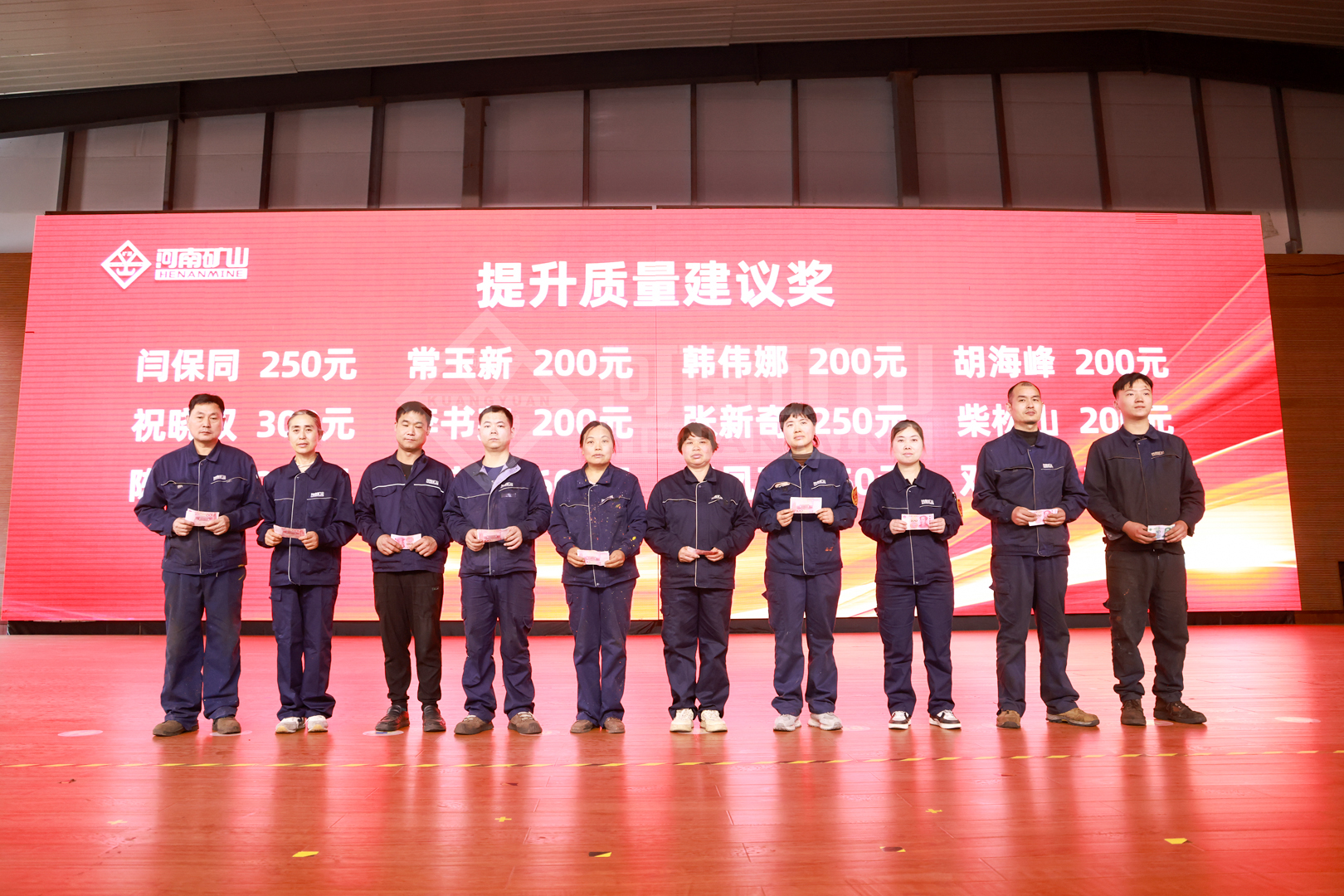
    Henan Mine Crane expanded quality and safety recognition for workshop teams and employees during its June 2026 safety programme.

    Employees recognised for workplace safety contributions
    Employees recognised for workplace safety contributions.

    Team recognition and hazard reporting

    The programme recognised quality work, safety teams and workplace safety representatives. Employees were encouraged to report hazards and put forward practical safety suggestions.

    Connect manufacturing controls with order inspection

    For a procurement review, workshop programmes are best considered alongside equipment-specific inspection records. A purchase specification can identify material traceability, weld inspection, functional checks and the documents required at delivery.

    Define your inspection requirements

    Tell us the applicable project requirements, inspection hold points and documentation expected for your crane order.

  • Double-Hook Overhead Cranes Pass A-Stage Inspection for a Baosteel Project

    Double-Hook Overhead Cranes Pass A-Stage Inspection for a Baosteel Project

    Quality & Manufacturing

    Double-Hook Overhead Cranes Pass A-Stage Inspection for a Baosteel Project

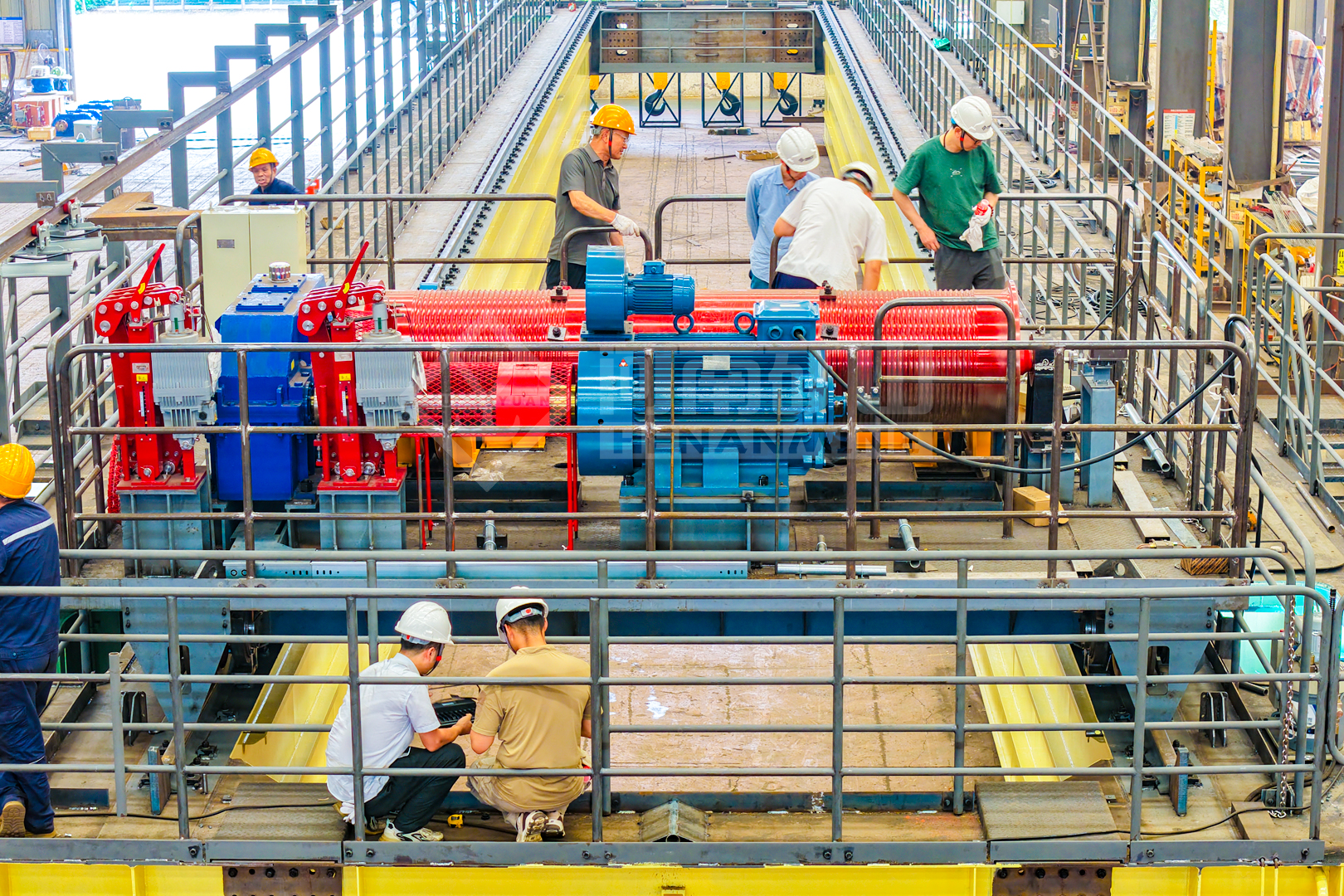
    Henan Mine Crane double-hook overhead cranes completed an A-stage inspection for a Baosteel project in June 2026.

    Crane trolley machinery viewed from the maintenance platform
    Crane trolley machinery viewed from the maintenance platform.

    Records and powered trials

    The inspection team reviewed self-inspection records, material reports and non-destructive testing reports, and witnessed powered equipment trials against the project’s inspection outline.

    Automation features and acceptance scope

    The equipment combines three-dimensional positioning, sway control and intelligent lifting attachments with coordinated operation and digital material tracking. Customers considering similar automation should agree positioning tolerances, handling sequences, safety functions and test methods for their own project rather than adopting a general performance claim.

    Plan a crane inspection and acceptance schedule

    Share your handling sequence, load, required tolerances and inspection points. The technical proposal can then define the equipment and acceptance scope.

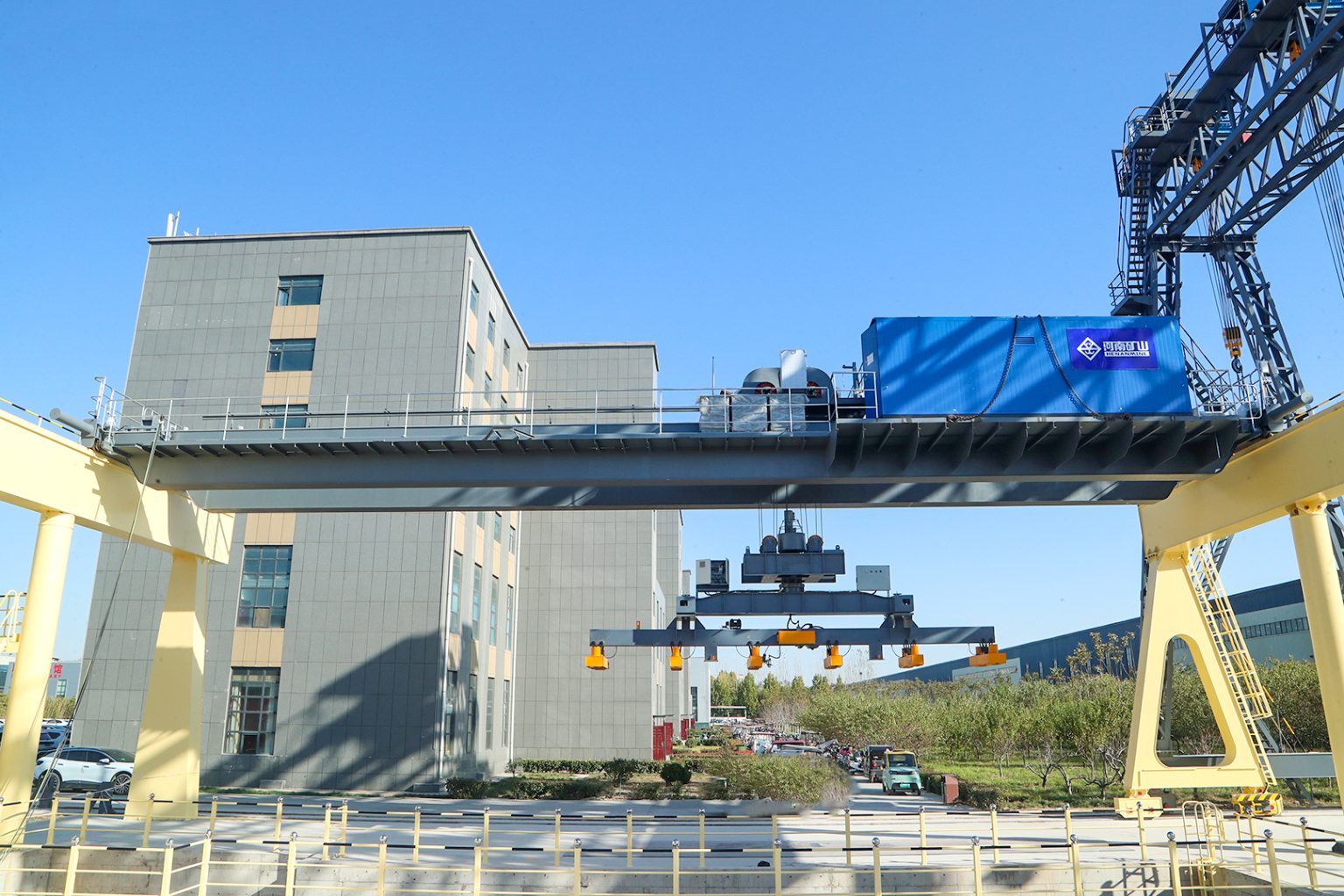
  • Electromagnetic Overhead Cranes With Magnet Beam

    Electromagnetic Overhead Cranes With Magnet Beam

    Crane application

    Electromagnetic Overhead Cranes With Magnet Beam

    Review the magnetic beam crane applications. Review the handling task, load geometry, working duty and equipment interfaces for your application.

    Electromagnetic Overhead Cranes With Magnet Beam — Henan Mine Crane crane application photograph
    Electromagnetic Overhead Cranes With Magnet Beam — crane application overview.

    Steelmaking and metal handling

    Define the complete suspended load, ladle or steel-product geometry, process temperature, crane duty and safe travel path. For molten-metal work, include auxiliary lifting, heat shielding, redundant protections and inspection access in the specification.

    Crane configuration and interfaces

    Ask for the crane arrangement, hook and lifting appliance interfaces, runway loads, control and monitoring functions, inspection access and a test plan matched to the plant process.

    Review the Overhead crane range and Steel & metallurgy cranes before defining the project-specific arrangement.

    Design the lifting process

    Use the project context above as a starting point. The following checks turn a crane application into a technical scope that suppliers can price and demonstrate for your site.

    Load shape and lifting attachment

    A handling line must be sized for the material as well as its nominal weight. Record the longest and shortest piece, thickness, stack condition, temperature, centre of gravity and whether several pieces are lifted at once. For magnet beams, provide the number and spacing of magnets, expected residual magnetism and the power-loss response. For clamps, provide gripping faces, allowable pressure and the secure-release sequence. The attachment and the load both count towards the suspended mass.

    Motion and stacking accuracy

    Show the pickup and deposit points, permitted rotation, vertical clearance, storage rack geometry and the tolerance at which a load may be released. Synchronised lifting, anti-sway and automatic stacking are different control scopes; define which movements actually require them. Ask how the operator confirms a safe grip and how the crane responds to a partial pickup, misalignment or obstruction. Interface signals with a production line or warehouse system should be listed before control architecture is chosen.

    Demonstrating the arrangement

    A technical proposal should include the lifting attachment drawing, crane layout, power backup or retention concept where relevant, exclusion zones, maintenance access and the load cases used for design. Witness a handling trial with representative material, including the heaviest and most awkward pieces and an agreed simulated fault condition. Clarify who supplies the magnet, clamp, control interface, spare attachment parts and operator training. A rated crane capacity does not by itself verify a safe plate, slab or block handling process.

    Compare the proposed crane scope

    DecisionInformation to request
    Crane and lifting attachmentRated loads, load cases, hook coverage and the complete suspended-load calculation.
    Site interfacesRunway loads, rail or building drawings, electrical supply and installation responsibilities.
    Controls and protectionOperating sequence, required safety functions and a method for testing each function.
    Commercial scopeEquipment, transport, installation, commissioning, documentation, training and spare parts as separate line items.

    From technical offer to site acceptance

    Technical submittals

    A usable bid should show a general arrangement and a clear list of assumptions, not just a model name and capacity. Request the load schedule used in design, lifting-attachment drawings where applicable, span and hook-approach dimensions, wheel loads, electrical supply, control narrative and maintenance access. Check every drawing against the actual building or yard layout. Identify the standards and local approval requirements for the destination market in the enquiry, then confirm the bidder’s proposed design and documentation scope in writing.

    Installation and tests

    Agree when the runway or civil works will be ready, how crane components can reach the installation position and who provides lifting equipment for erection. Define the factory test, on-site installation inspection and site acceptance as separate milestones. The acceptance procedure should list representative loads, the travel route, protection devices, emergency stop and any automation or attachment functions included in the order. Record who supplies test weights, operators, power and access equipment; otherwise a nominal commissioning price may omit essential site work.

    Commercial comparison

    Ask for the same delivery basis and currency across proposals. Separate the crane, special lifting appliances, rails or conductors, transport, installation support, commissioning, training and initial spare parts. Lead time should identify the starting event, such as approved drawings or an effective contract, and any dependency on site readiness. Compare warranty scope and service response by the written contract terms. If a key input is still unknown, request a priced option or a stated assumption instead of allowing different bidders to silently use different specifications. Keep a written exception register so the engineering team can resolve open dimensions, process interfaces and responsibility boundaries before issuing the purchase order.

    Information to include in the enquiry

    • Load weights, dimensions, centre of gravity and lifting attachments.
    • Span, lifting height, runway or yard drawings, travel coverage and clearances.
    • Operating cycle, working environment, electrical supply and control requirements.
    • Supply boundaries, inspection documents, installation support and acceptance criteria.

    Discuss a comparable lifting task

    Send the handling task and available site drawings. Henan Mine Crane can define a proposed crane arrangement and identify the remaining information needed for a technical and commercial review.

  • Underhung Bridge Crane Procurement: Support, Headroom and Coverage

    Underhung Bridge Crane Procurement: Support, Headroom and Coverage

    Technical guide

    Underhung Bridge Crane Procurement: Support, Headroom and Coverage

    An underhung arrangement needs careful coordination with its supporting structure. Provide the building drawings, required hook positions and operating duty so suspension details and working coverage can be checked early.

    Henan Mine CraneTechnical guide · Updated 2026Crane selection, project scope and operating requirements
    Underhung Bridge Crane
    Underhung Bridge Crane
    Project planning notes

    Key points for this crane project.

    1. What Is an Underhung Bridge Crane?
    2. Why Choose an Underhung Bridge Crane for Material
    3. Underhung Bridge Crane vs Top Running Overhead
    Read the technical guide

    What Is an Underhung Bridge Crane?

    Henan Mine Crane manufactured underhung bridge crane is also often referred to as underhung bridge crane, underlung bridge crane, is a suspended installation in the workshop roof steel beam, suspended ceiling rail below the light bridge crane equipment, different from the traditional overhead crane, its main girder, travel mechanism, hoist lifting system all suspended in the fixed rail below the operation.

    Its core working principle relies on the roof bearing structure to carry the weight and lifting load of the equipment, drives the main girder to move along the longitudinal track of the plant through the end beam traveling mechanism, and the lifting hoist runs transversely along the main girder. With the lifting mechanism, the vertical lifting and horizontal transfer of materials can be completed. It can realize the all-round material handling operation without dead angle in the workshop. It is a special equipment suitable for lightweight, high-frequency and small-span lifting operations. This equipment does not require ground column support and completely relies on the original steel structure of the building, which greatly revitalizes the available space of the factory building.

    Why Choose an Underhung Bridge Crane for Material Handling?

    Maximize headroom

    The effective lifting height of the factory building is the core of the lifting operation, especially in the low-rise factory building, the workshop with suspended ceiling and the factory with dense lower equipment. The traditional crane will greatly compress the effective lifting space due to the limitation of the fuselage structure and track installation height, resulting in the normal lifting of materials.

    Underhung bridge crane adopts sinking suspension design, track is installed close to the bottom of roof steel beam, no redundant height of top structure is occupied, and vertical clearance height can be released to the maximum extent. At the same time, its compact end structure allows the hook to run close to the wall and the end of the track, greatly reducing the operation blind area.

    Reduce installation costs

    Traditional bridge cranes need customized columns, brackets, special track foundation, civil construction, steel structure transformation engineering quantity is large, installation cycle is long, comprehensive cost is high, old factory buildings may also be unable to install due to structural constraints.

    Henan Mine Crane manufactured underhung bridge crane can be installed directly by relying on the original roof steel structure of the plant without adding new columns and civil foundations, greatly saving the cost of steel structure customization, civil construction and foundation reinforcement. The investment cost of the enterprise is reduced from the aspects of equipment procurement, installation and transformation, and the cost performance advantage is remarkable.

    Improve workflow efficiency

    In industrial production, material transfer efficiency directly determines production line capacity. Underhung bridge crane adopts full-range suspension operation mode, without column obstruction and ground equipment obstruction, which can realize lifting operation without dead angle inside workshop. The equipment moves accurately, starts and stops smoothly, adapts to the high-frequency, short-distance and high-precision material handling requirements, and can perfectly interface with the production line loading and unloading, mold lifting, finished product transfer, equipment maintenance and other processes.

    At the same time, the equipment is flexible to control, supports wired handle and wireless remote control dual-mode operation, fast response speed, high positioning accuracy, effectively reduces material handling waiting time and dislocation adjustment time, assists the workshop to realize assembly line continuous operation, greatly improves the overall material turnover efficiency, and reduces manual handling costs and operation errors. Lightweight operation structure can also reduce equipment start-stop impact, reduce material collision loss, adapt to precision workpiece handling scenarios.

    Underhung Bridge Crane vs Top Running Overhead Crane: How to Choose?

    Structural differences

    The core structural difference between Underhung bridge crane and top running overhead crane is reflected in the support and operation system. Suspended model is upper hanging structure, track fixed under roof steel beam, end beam suspended at the bottom of the track, the whole machine suspended without ground support, lightweight structure, modular, less parts, low failure rate.

    Top running overhead crane is a jacking structure. The track is laid above the column bracket. The main girder is erected on the top of the track. It needs a complete supporting system composed of supporting columns, brackets and reinforced steel structures. The structure is heavy and strong, but the structure is complex, occupying a large space and inconvenient to disassemble. Simply put, the suspended structure is simple and flexible, and the overhead structure is stable and heavy. The structural characteristics of the two directly determine the difference in adaptation conditions.

    Space requirements

    At the spatial adaptation level, Henan Mine Crane manufactured underhung bridge crane focuses on small space, low-rise and pillar-free scenes. The equipment does not need to be installed on the ground, does not block the workshop passage and equipment placement, and has a wide range of floor heights. The minimum can be adapted to 4.5-meter-high workshops, especially for old workshops, compact workshops, and multi-storey workshops.

    Capacity and application

    Load and application scenario are the core basis for selection, and the division of labor between them is clear and does not replace each other. Underhung bridge crane is mainly used for light and medium loads. The working level is mainly A1-A3 light. It is suitable for high-frequency, light load and high-precision handling scenarios. It is widely used in machining, precision manufacturing, electronic workshops, small warehouses, assembly line loading and unloading.

    Enterprises can accurately match models according to their own lifting capacity, operation intensity and workshop space.

    Key Factors to Consider Before Buying an Underhung Bridge Crane

    Lifting capacity

    Lifting weight is the first core parameter of model selection. Overload use is strictly prohibited, and safety redundancy must be reserved. Don't blindly pursue high-capacity and waste budget, and don't select small tonnage equipment to save costs, which will cause equipment overload, shortened service life, safety hazards and other problems.

    Span and runway layout

    Span refers to the distance between the track centers at both ends of the crane, which directly determines the scope of equipment coverage and affects the equipment cost and structural stability. Before purchasing, it is necessary to accurately measure the actual effective operation width of the workshop, determine the equipment span in combination with the production line layout and material transfer area, and avoid the operation blind area caused by insufficient span, or increase the equipment cost and reduce the operation stability due to large span. At the same time, it is necessary to plan the track laying scheme, give priority to relying on the original H-shaped steel and I-steel layout of the plant roof, confirm the bearing parameters, spacing and straightness of steel beams, and customize the suitable suspension brackets and track length.

    Lifting height

    Lifting height refers to the vertical distance from the lowest position to the highest position of the hook, which directly determines the range of lifting of materials. When purchasing, comprehensive accounting shall be carried out in combination with plant floor height, stacking height, equipment height and operation requirements, not only to meet the lifting of conventional materials, but also to reserve redundant height for maintenance and ultra-high material transfer. Low-rise buildings focus on effective clearance height, taking advantage of the height advantage of suspended models to maximize lifting height. High-level warehouse, three-dimensional operation workshop, can be customized to lengthen the lifting wire rope, increase the lifting stroke, adapt to high-level stacking, high-altitude installation requirements. Parameter selection errors will directly lead to equipment cannot meet the production needs, resulting in rework transformation.

    Duty class

    The work level (working condition level) determines the operating intensity, service life and adaptation scenarios of the equipment. It is a key parameter that is easily ignored by the purchaser and directly affects the long-term operating stability of the equipment. Henan Mine Crane manufactured underhung bridge crane in the industry is divided into light A1-A3, medium A4 two-stage working conditions:

    Light A1-A3: suitable for 2-4 hours per day, intermittent operation, low-frequency handling scenarios, such as small warehouses, intermittent equipment maintenance, sporadic material transfer, high cost performance, to meet basic production needs.

    Medium A4: suitable for more than 8 hours a day, continuous high-frequency operations, assembly line supporting handling scenes, such as precision machining production lines, batch production workshops, equipment structure strengthening, wear resistance, long-term high-intensity operation, not easy to damage.

    Working environment

    The workshop operation environment directly determines the material configuration, protection level and customized scheme of the equipment. Different environments need to match the exclusive model to avoid corrosion, aging and frequent failure of the equipment. Normal temperature, dry ordinary workshop, select standard models to meet the needs. In wet and wet workshop, rust-proof and waterproof treatment shall be done for motor, electrical box and metal accessories to improve equipment protection level. Dust, particulate matter more conditions, need to install dust cover, prevent impurities into the transmission structure affect operation. Chemical, corrosive gas environment, anti-corrosion coating, stainless steel accessories, sealed electrical system. Low temperature cold factory, need to choose low temperature resistance motor, antifreeze lubricating oil, prevent equipment start-up failure.

    Types of Underhung Bridge Cranes Available

    Single girder underhung crane

    Henan Mine Crane manufactured single girder underhung bridge crane is the mainstream popular model in the market. It adopts single girder suspension structure, simple structure, light weight, low cost and convenient installation. It is the first choice for light load material handling. It is mainly suitable for low and medium frequency light working conditions such as small and medium-sized machining workshops, electronic manufacturing workshops, small warehouses, equipment maintenance, sporadic material transfer, etc.

    Double girder underhung crane

    The Double girder underhung Bridge crane adopts a double main girder parallel suspension structure. Compared with the single beam model, the structure has stronger bearing capacity, smoother operation, better rigidity, and stronger deformation resistance. This model makes up for the short board of single beam model with large span and easy to shake and deform under large load. It is suitable for medium and heavy load material handling, high precision mold lifting, continuous assembly line heavy load loading and unloading, medium equipment assembly and other working conditions. Although the cost is higher than that of the single-beam model, the stability, durability and operation accuracy are greatly improved, and it is suitable for medium and high intensity industrial production scenarios.

    Manual and electric systems

    According to the driving and control system, underhung Bridge crane is divided into manual and electric types, which can adapt to different operation frequencies and manpower configuration requirements. Electric underhung crane is equipped with electric travel and electric lifting system, one-button control, labor-saving operation, high operation efficiency, accurate positioning, support long-term continuous operation, adapt to industrial normal production scenarios, is the mainstream selection of industrial enterprises at present, can be equipped with wireless remote control, variable frequency speed regulation system, further improve the stability and convenience of operation.

    Essential Safety Features for Underhung Crane Systems

    Overload protection

    Overload is the most important safety hazard of crane operation, which is easy to cause major safety accidents such as girder deformation, wire rope fracture and machine falling. Regular underhung Bridge cranes must be equipped with intelligent overload protection system to accurately monitor lifting loads in real time.

    Emergency stop systems

    Emergency stop system is the core life-saving device under emergency conditions, all suspension cranes must be standard. Independent emergency stop buttons are set on the equipment control handle, remote controller and main girder of the fuselage. In case of emergency such as equipment jamming, material shaking, personnel approaching, sudden failure, etc., press the emergency stop button, the equipment can instantly cut off all power supplies, immediately stop all lifting and translation actions, and prevent the accident from expanding. The system has fast response speed, strong stability, and is not affected by the conventional control system. It is the last line of defense for the safe operation of equipment. All regular manufacturers 'equipment will be standard, and it is also an essential configuration for workshop safety acceptance.

    Anti-collision devices

    In the scene of parallel operation of multiple cranes, dense workshop equipment and compact working space, equipment travel collision is easy to cause damage to the fuselage, material damage and personnel injury. The anti-collision device monitors the distance between equipment and walls, other cranes and workshop equipment in real time through infrared sensing and laser ranging technology. When the equipment runs to a preset safe distance, the system automatically slows down and warns. Forced shutdown when the distance is too close, effectively avoiding collision accidents. At the same time, polyurethane buffers are standard at both ends of the equipment, soft buffer noise reduction and shock absorption, prevent hard contact collision damage, prolong the service life of the equipment, and adapt to intensive workshops and multi-machine parallel operation scenarios.

    Maintenance Tips to Extend Underhung Crane Service Life

    Daily inspections

    Daily inspection is the core basis for timely troubleshooting, avoiding small problems from evolving into major failures and prolonging the service life of equipment. It is recommended that operators complete standardized inspection before starting up every day. Focus on checking whether the wire rope is worn, broken wire, rust, hook deformation, cracking, buckle is sensitive. Check whether the traveling wheels and tracks are stuck, offset and worn. Test whether the emergency stop, limit, and overload protection devices work normally. Check whether the electrical circuit and remote controller are sensitive and reliable. If minor faults, wear and looseness are found during inspection, stop immediately, prohibit equipment from running with faults, avoid fault risk from daily links, and greatly reduce overhaul probability.

    Component lubrication

    The transmission, travel and rotating parts of lifting equipment must be lubricated regularly to reduce metal wear, reduce operating noise and avoid component jamming, which is the key maintenance procedure to extend the service life of the equipment. Core components requiring regular lubrication include traveling wheel bearings, reducers, lifting pulleys, hook bearings, transmission chains, etc. Lubricate once a month in the conventional drying workshop, and lubricate once every half month in the dust and wet workshop. Select special wear-resistant lubricating oil and grease for equipment to eliminate the corrosion and wear of parts caused by inferior oil. Lubricate and clean the dust and oil on the surface of the parts to ensure smooth transmission and effectively reduce equipment running loss.

    Regular maintenance

    In addition to daily inspections, it is necessary to establish a monthly, quarterly and annual three-level regular maintenance system to achieve full-cycle health management of equipment. Monthly maintenance focuses on tightening fixing bolts, checking track flatness, calibrating electrical control system and cleaning dust in electrical box. Quarterly maintenance focuses on detecting the wear degree of wire rope, brake sensitivity, motor operation status, integrity of buffer device, and timely replacement of slightly worn parts. The annual comprehensive maintenance shall be carried out by the professional personnel of the manufacturer to carry out all-round inspection on the main girder structure, load-bearing track, drive system and safety protection system, correct the accuracy of the equipment, replace the aging accessories, do the anti-rust coating of the whole machine, and investigate the potential hidden dangers.

    How to Select a Reliable Underhung Bridge Crane Manufacturer

    Manufacturing capability

    The manufacturer's production strength directly determines equipment quality, process accuracy and delivery capabilities, and is the primary consideration for procurement and selection. High-quality suspension crane manufacturers need to have independent R & D, production, processing, testing full process capacity, with standardized production workshops, professional processing equipment, complete machine testing equipment, can independently complete the main girder bending, welding, grinding, assembly, debugging full process. Avoid small workshops, OEM manufacturers, such manufacturers have no standardized production process, equipment welding rough, poor structural accuracy, bearing standards, frequent failures in the later period. Priority shall be given to the source manufacturers with many years of experience in lifting equipment production, stable production capacity, non-standard customization and rapid delivery, so as to ensure that the equipment technology meets the standards and the quality is stable.

    Certifications and quality control

    Each equipment has undergone load testing, safety testing, precision debugging before leaving the factory, with complete certificates, test reports, and instructions. At the same time, manufacturers need to establish a strict quality control system, from raw material procurement, processing production, factory inspection to control the quality of the whole process, to prevent unqualified products from leaving the factory. When purchasing, the manufacturer's qualification must be verified. Equipment without qualification cannot not only pass the safety supervision acceptance, but also cannot be held accountable after safety accidents occur, resulting in great risks.

    Customization options

    The factory structure, working environment and operation requirements of different enterprises are different, and standardized equipment often cannot be perfectly adapted, so the customization ability of manufacturers is very important. High-quality manufacturers can support non-standard span, special lifting height, anti-corrosion explosion, low temperature adaptation, irregular track layout and other personalized customized services. For special working conditions such as low workshop, special-shaped workshop, corrosive environment, high-precision operation, high-frequency sub-assembly line operation, etc., the equipment structure, configuration and protection scheme can be optimized accordingly, and the appropriate lifting solution can be customized to avoid the problems of poor equipment adaptability, waste of budget and inability to meet production needs.

    After-sales support

    Lifting equipment belongs to long-term use of industrial equipment, perfect after-sales service is the key to ensure long-term stable operation of equipment. High-quality manufacturers need to provide free site survey, program design, on-site installation and commissioning, operator training, life-long technical consultation, regular return visit maintenance, rapid after-sales maintenance and other one-stop services. At the same time, it is necessary to guarantee the local parts warehouse and quick on-site service. After failure, it can respond 24 hours a day and quickly repair the door, so as to avoid long-term downtime of equipment affecting production. Refuse manufacturers without after-sales, after-sales prevarication, and only sell without service, so as to avoid no maintenance after equipment failure and difficult procurement of accessories, resulting in long-term shutdown losses.

    Henan Mine Crane

    As the core equipment of lightweight industrial lifting, its advantages of high space utilization, low installation cost and flexible operation can perfectly meet the material handling needs of most small and medium-sized industrial workshops.

    If you want to choose an underhung Bridge crane that suits the working conditions of the plant and has high cost performance, you don't need to repeatedly step on the pit comparison. One-stop installation and commissioning, after-sales maintenance services, strict control of equipment quality, eliminate hidden charges, help enterprises reduce handling costs, improve production efficiency.

    Discuss the crane arrangement for your project.

    An underhung arrangement needs careful coordination with its supporting structure. Provide the building drawings, required hook positions and operating duty so suspension details and working coverage can be checked early. Share the load, available drawings, working cycle and site conditions with Henan Mine Crane so the required configuration and supply boundary can be discussed.

    Related crane configurations

    Multi Support Double Girder Underhung Crane

    View product parameters
    Lifting capacity: 3 – 40 tSpan: 10 – 80 mLifting height: 6 – 30 m

    Use a multi-support double-girder underhung arrangement for wide-span working areas and large components. The building supports, lifting coverage and load distribution are designed together.

    Single-Girder Bridge Crane

    View product parameters
    Lifting capacity: 1–20 tSpan: 7.5–31.5 mLifting height: 6, 9, 12, 18, 24 or 30 m; capacity-dependent

    Use an LDA single-girder bridge and electric hoist for general workshop material handling. Select the lifting capacity, runway geometry and hoist duty around the building and load.

    Updated 2026 · Henan Mine Crane
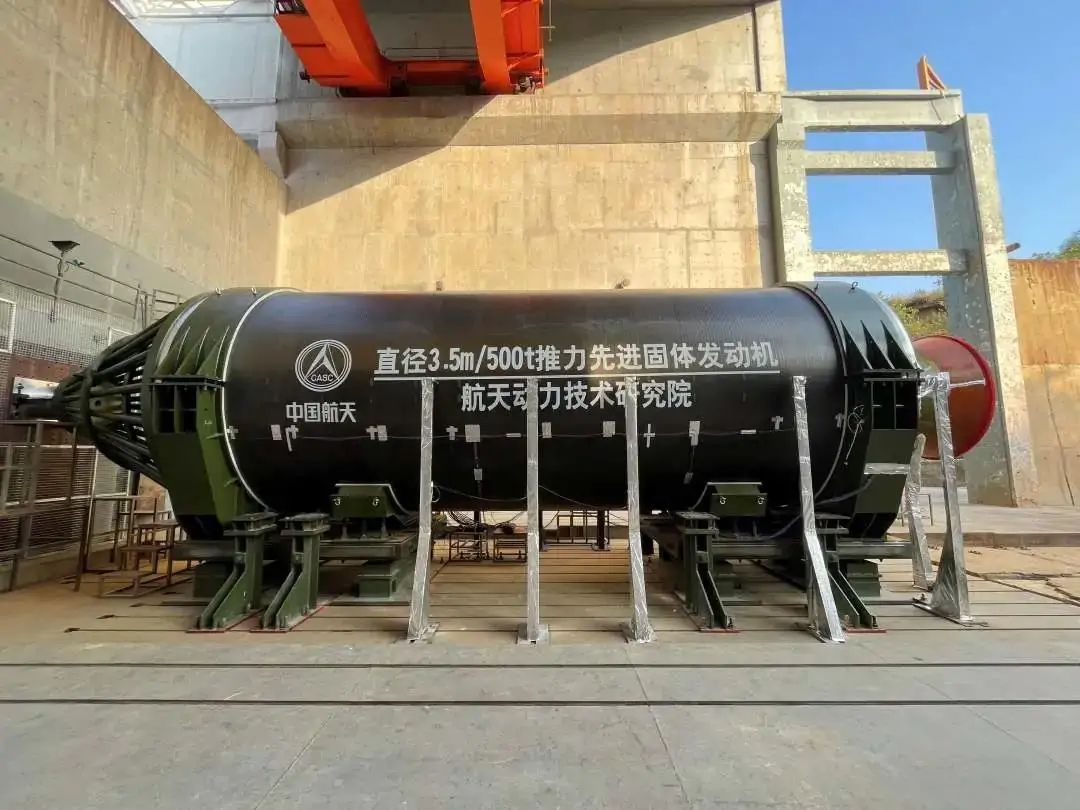
  • Intelligent Warehouse Management Cranes Empowering the Steel Structure Industry’s Transformation

    Intelligent Warehouse Management Cranes Empowering the Steel Structure Industry’s Transformation

    Project review

    Intelligent Warehouse Management Cranes Empowering the Steel Structure Industry’s Transformation

    Explore the steel structure warehouse crane applications. Review storage geometry, material flow, lifting loads and required automation interfaces.

    Intelligent Warehouse Management Cranes Empowering the Steel Structure Industry’s Transformation — Henan Mine Crane crane application photograph
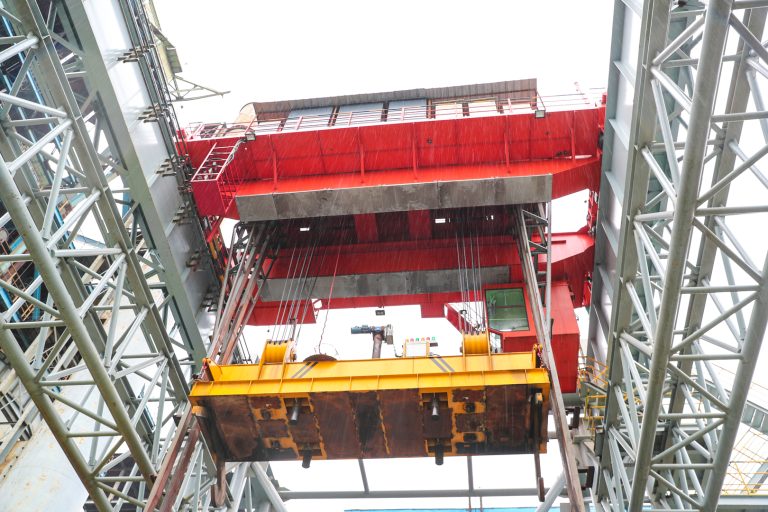
    Intelligent Warehouse Management Cranes Empowering the Steel Structure Industry’s Transformation — crane application overview.

    Container and warehouse handling

    Map the load units, storage or yard lanes, stacking height, travel route, handling cycle, building or rail clearances and vehicle interfaces. Specify the operating wind, power and communication conditions where applicable.

    Crane configuration and interfaces

    Ask for a general arrangement, wheel loads, spreader or lifting attachment scope, travel and positioning controls, protection functions and commissioning tests for the declared handling sequence.

    Review the Overhead crane range and Warehousing & logistics cranes before defining the project-specific arrangement.

    Design the lifting process

    Use the project context above as a starting point. The following checks turn a crane application into a technical scope that suppliers can price and demonstrate for your site.

    Production route and coverage

    Mark the incoming material point, production stations, storage positions and dispatch area on one layout. Record the heaviest regular load, unusual maintenance load, dimensions, lifting points and frequency of each move. A crane sized only for the maximum load can still obstruct the production route if hook approach, building height or column spacing is overlooked. For high-bay storage, identify the rack envelope and the clearance required while a load is suspended.

    Automation and environmental interface

    Define whether positioning is manual, assisted or automatic, and list the signals exchanged with warehouse or production software. Specify what happens when a location is occupied or a load cannot be identified. A cold store adds condensation, temperature transition and access constraints; a clean production area may add particle and material requirements. Describe these conditions explicitly so the electrical package, lubrication, protection and inspection method can be designed for them.

    Offer comparison and handover

    Ask for a general arrangement, hook coverage diagram, runway and wheel-load data, duty selection, control narrative and maintenance access plan. State whether rails, conductors, building reinforcement, controls integration and operator training are included. Site acceptance should repeat representative moves between real stations, check limit protection and demonstrate recovery from an interrupted automated cycle. This is more useful than comparing only rated capacity, span and a headline price.

    Compare the proposed crane scope

    DecisionInformation to request
    Crane and lifting attachmentRated loads, load cases, hook coverage and the complete suspended-load calculation.
    Site interfacesRunway loads, rail or building drawings, electrical supply and installation responsibilities.
    Controls and protectionOperating sequence, required safety functions and a method for testing each function.
    Commercial scopeEquipment, transport, installation, commissioning, documentation, training and spare parts as separate line items.

    From technical offer to site acceptance

    Technical submittals

    A usable bid should show a general arrangement and a clear list of assumptions, not just a model name and capacity. Request the load schedule used in design, lifting-attachment drawings where applicable, span and hook-approach dimensions, wheel loads, electrical supply, control narrative and maintenance access. Check every drawing against the actual building or yard layout. Identify the standards and local approval requirements for the destination market in the enquiry, then confirm the bidder’s proposed design and documentation scope in writing.

    Installation and tests

    Agree when the runway or civil works will be ready, how crane components can reach the installation position and who provides lifting equipment for erection. Define the factory test, on-site installation inspection and site acceptance as separate milestones. The acceptance procedure should list representative loads, the travel route, protection devices, emergency stop and any automation or attachment functions included in the order. Record who supplies test weights, operators, power and access equipment; otherwise a nominal commissioning price may omit essential site work.

    Commercial comparison

    Ask for the same delivery basis and currency across proposals. Separate the crane, special lifting appliances, rails or conductors, transport, installation support, commissioning, training and initial spare parts. Lead time should identify the starting event, such as approved drawings or an effective contract, and any dependency on site readiness. Compare warranty scope and service response by the written contract terms. If a key input is still unknown, request a priced option or a stated assumption instead of allowing different bidders to silently use different specifications. Keep a written exception register so the engineering team can resolve open dimensions, process interfaces and responsibility boundaries before issuing the purchase order.

    Information to include in the enquiry

    • Load weights, dimensions, centre of gravity and lifting attachments.
    • Span, lifting height, runway or yard drawings, travel coverage and clearances.
    • Operating cycle, working environment, electrical supply and control requirements.
    • Supply boundaries, inspection documents, installation support and acceptance criteria.

    Discuss a comparable lifting task

    Send the handling task and available site drawings. Henan Mine Crane can define a proposed crane arrangement and identify the remaining information needed for a technical and commercial review.

  • Henan Mine Crane manufactured for Intelligent Coke Bin Delivery

    Henan Mine Crane manufactured for Intelligent Coke Bin Delivery

    Project review

    Henan Mine Crane manufactured for Intelligent Coke Bin Delivery

    Explore the intelligent coke bin handling crane project. Discuss the load, site layout, operating duty and equipment supply scope.

    Henan Mine Crane manufactured for Intelligent Coke Bin Delivery — Henan Mine Crane crane application photograph
    Henan Mine Crane manufactured for Intelligent Coke Bin Delivery — crane application overview.

    Steelmaking and metal handling

    Define the complete suspended load, ladle or steel-product geometry, process temperature, crane duty and safe travel path. For molten-metal work, include auxiliary lifting, heat shielding, redundant protections and inspection access in the specification.

    Crane configuration and interfaces

    Ask for the crane arrangement, hook and lifting appliance interfaces, runway loads, control and monitoring functions, inspection access and a test plan matched to the plant process.

    Review the Metallurgical overhead cranes and Steel & metallurgy cranes before defining the project-specific arrangement.

    Design the lifting process

    Use the project context above as a starting point. The following checks turn a crane application into a technical scope that suppliers can price and demonstrate for your site.

    Material flow and duty

    Identify the material handled, bulk density, particle size, moisture, temperature and the location of pickup and discharge points. A grab crane must be evaluated against bucket fill factor, actual lifted mass, cycle time and the position of hoppers or stockpiles. For coke-drum or coke-jar handling, document the vessel or container geometry, connection points and any hot surfaces. State whether the crane operates continuously, in batches or as an emergency backup, since each produces a different duty case.

    Controls and operating environment

    Dust, heat and corrosive vapours affect the selection of enclosures, cables, braking and maintenance access. Specify the exposure at each component rather than using a single plant-wide temperature. For remote or unmanned operation, map the complete sequence: material detection, pickup, travel, discharge, obstruction handling and recovery after an interruption. Camera views, sensors, anti-sway and monitoring should each have an agreed purpose and acceptance test; automation must also permit safe manual intervention.

    Procurement and commissioning

    Request the proposed grab or attachment scope, bucket volume basis, duty assumptions, runway loads and a material flow diagram. Compare cycle-time claims under the same travel distances and material conditions. The acceptance plan should use representative material and include fault recovery, travel and hoist protections, emergency stop, communication loss and maintenance isolation. Clarify who supplies the hopper interface, dust-control equipment, remote console, plant signals and spare wear parts. This makes competing crane quotations comparable.

    Compare the proposed crane scope

    DecisionInformation to request
    Crane and lifting attachmentRated loads, load cases, hook coverage and the complete suspended-load calculation.
    Site interfacesRunway loads, rail or building drawings, electrical supply and installation responsibilities.
    Controls and protectionOperating sequence, required safety functions and a method for testing each function.
    Commercial scopeEquipment, transport, installation, commissioning, documentation, training and spare parts as separate line items.

    From technical offer to site acceptance

    Technical submittals

    A usable bid should show a general arrangement and a clear list of assumptions, not just a model name and capacity. Request the load schedule used in design, lifting-attachment drawings where applicable, span and hook-approach dimensions, wheel loads, electrical supply, control narrative and maintenance access. Check every drawing against the actual building or yard layout. Identify the standards and local approval requirements for the destination market in the enquiry, then confirm the bidder’s proposed design and documentation scope in writing.

    Installation and tests

    Agree when the runway or civil works will be ready, how crane components can reach the installation position and who provides lifting equipment for erection. Define the factory test, on-site installation inspection and site acceptance as separate milestones. The acceptance procedure should list representative loads, the travel route, protection devices, emergency stop and any automation or attachment functions included in the order. Record who supplies test weights, operators, power and access equipment; otherwise a nominal commissioning price may omit essential site work.

    Commercial comparison

    Ask for the same delivery basis and currency across proposals. Separate the crane, special lifting appliances, rails or conductors, transport, installation support, commissioning, training and initial spare parts. Lead time should identify the starting event, such as approved drawings or an effective contract, and any dependency on site readiness. Compare warranty scope and service response by the written contract terms. If a key input is still unknown, request a priced option or a stated assumption instead of allowing different bidders to silently use different specifications. Keep a written exception register so the engineering team can resolve open dimensions, process interfaces and responsibility boundaries before issuing the purchase order.

    Information to include in the enquiry

    • Load weights, dimensions, centre of gravity and lifting attachments.
    • Span, lifting height, runway or yard drawings, travel coverage and clearances.
    • Operating cycle, working environment, electrical supply and control requirements.
    • Supply boundaries, inspection documents, installation support and acceptance criteria.

    Discuss a comparable lifting task

    Send the handling task and available site drawings. Henan Mine Crane can define a proposed crane arrangement and identify the remaining information needed for a technical and commercial review.