Engineering · Manufacturing · Project support
info@hnksglobal.comWhatsApp +86 18836207779 ↗

Blog

  • Top-Running vs Underhung Overhead Cranes: Building Interface Comparison

    Top-Running vs Underhung Overhead Cranes: Building Interface Comparison

    Technical guide

    Top-Running vs Underhung Overhead Cranes: Building Interface Comparison

    The choice changes how the crane relates to the supporting structure and available space. Compare runway support, hook positions and maintenance access before judging either arrangement from lifting capacity alone.
    Henan Mine CraneTechnical guide · Updated 2026Crane selection, project scope and operating requirements
    Top-Running vs Underhung Overhead Cranes: Building Interface Comparison
    Henan Mine Crane lifting equipment
    Project planning notes

    Key points for this crane project.

    1. What Is a Top Running Overhead Crane?
    2. What Is an Underhung Overhead Crane?
    3. Top Running vs. Underhung Overhead Cranes: Key
    Read the technical guide

    What Is a Top Running Overhead Crane?

    Top running overhead crane, also known as top-row bridge crane, is a standard equipment for heavy-duty industrial scenes. It is widely used in large and medium-sized manufacturing plants, steel mills, large storage bases and other scenes with high requirements for hoisting capacity and equipment stability.

    Its core structural characteristics are: the crane end beam travel wheel walks on a fixed track on the top surface of the track beam, and the main girder, the running trolley and the crane move vertically along the track as a whole, forming an essential difference from the structure of the bottom suspension travel under the suspension type.

    Core structure and configuration characteristics

    • Track support form: The track is fixed to the top surface of the track beam, and the overall load of the equipment is transmitted to the ground column, independent support structure or wall leg through the track beam. It does not depend on the load-bearing of the roof of the plant, which can effectively reduce the force load of the roof truss.
    • Optional configuration of double main girder: it is divided into two mainstream structures, single beam and double beam. The single-beam model has a simple structure and outstanding cost performance. The hoist is operated on the top, which can maximize the use of the vertical clearance of the plant.
    • Three-dimensional operation: The equipment can realize the three-dimensional linkage of vertical travel of the track, horizontal movement of the trolley, and vertical lifting of the hoist, covering the whole area of the operation interval and meeting the needs of all-round material hoisting.

    Core advantage

    • Sufficient vertical lifting height: the main girder is installed on the top. Under the same floor height conditions of the plant, the effective lifting height is 3-6 feet higher than that of the lower suspension crane, especially suitable for working conditions where the floor height is limited but high-stroke hoisting is required.
    • At the same time, it supports the layout of large-span tracks and is suitable for the global operation of large-area factories.
    • Strong structure, suitable for high-frequency heavy loads: the whole machine has strong rigidity and balanced force, and can be adapted to high-level and high-intensity continuous operation for a long time. It is not easy to deform, has a low failure rate, and has a longer service life of the equipment.
    • Convenient and efficient maintenance and maintenance: core components such as travel wheels, rails, and trolleys are exposed, and can be operated directly through the maintenance platform. Maintenance and replacement can be completed without disassembling the whole machine, greatly reducing long-term operation and maintenance costs.
    • Wide range of structural adaptability: the load is transmitted on the ground, and there is no need to rely on the roof of the plant to withstand the force. The new plant can be flexibly planned and laid out without additional reinforcement of the roof steel structure.

    Limitations

    • High clearance requirements for vertical installation: The top layout of the track will occupy part of the vertical floor height, which is poor for low-rise factories and low-clearance operation scenarios.
    • Limited operation coverage: due to the constraints of the end beam structure, the hoist cannot be operated close to the wall and the end of the track, and the corners of the workshop are easy to form blind spots for hoisting, and the site utilization rate is slightly discounted.
    • The initial input cost is high: the steel structure of the equipment is larger in volume, and it needs to be equipped with an independent ground column support system. The total cost of equipment procurement, steel structure supporting and installation is higher than that of light-duty under-suspension cranes.
    • There are blind spots in the operation coverage: due to the limitations of the end beam structure, the hoist cannot be close to the wall and the end of the track. There are a small number of blind spots for hoisting in the corner area of the workshop, and the site utilization rate is slightly limited.
    • Weak flexibility of multi-machine linkage: the design of the end beam structure is fixed, and the adaptability of multiple cranes to connect in alignment and cross-zone linkage transfer is poor.
    • Poor adaptability of multi-machine linkage: The unique end beam structure is not conducive to the alignment and connection of multiple cranes, and the flexibility of cross-machine material transfer and linkage industry is low.

    What Is an Underhung Overhead Crane?

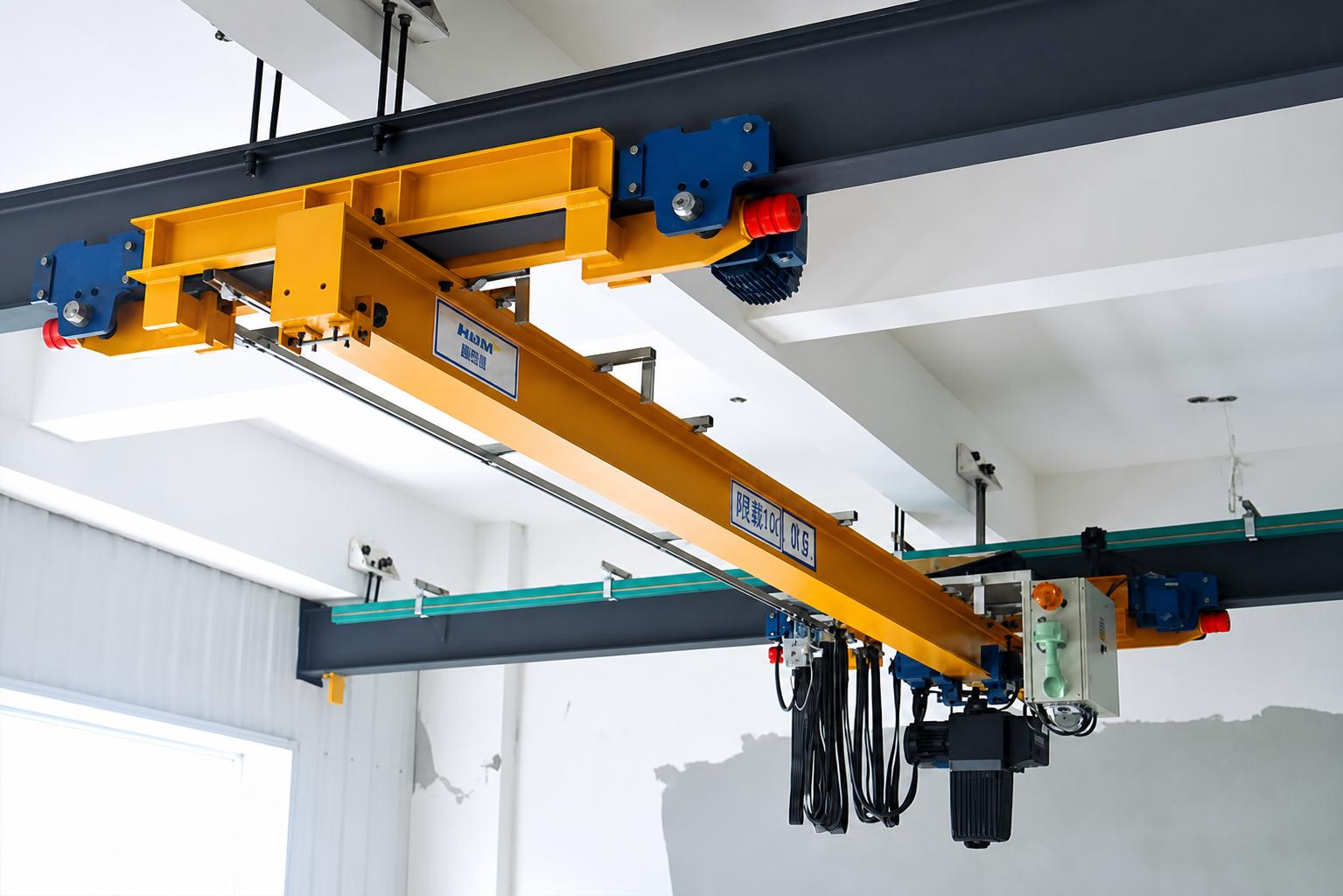
    Underhung overhead cranes, also known as bottom-row suspension cranes, are the mainstream equipment in light-duty industrial scenes. Its core structure is that the end beam travel wheel is suspended and mounted on the lower flange of the track beam, and the entire system of main girder, trolley, and hoist is all suspended and operated under the track; the track beam is directly fixed to the roof structure of the plant without the need for ground column support.

    Core structure and configuration characteristics

    • Roof suspension support: The track beam is fixed to the truss or ceiling structure of the workshop, and all equipment loads are transmitted to the roof, without the need for ground support columns, completely freeing up the workshop ground working space.
    • Adaptation to transformation scenarios: the whole machine is lightweight, runs smoothly and has low noise, and does not need to significantly change the original plant structure. It is the preferred solution for installing lifting equipment in old plants.

    Core advantage

    • Excellent adaptability to plant transformation: relying on the suspension and installation of the original plant roof structure, there is no need to dig the foundation and add load-bearing columns. The construction process is streamlined and the transformation cycle is short. It can be perfectly adapted to all kinds of old factories and stock workshops. Equipment upgrade and transformation projects.
    • Light-duty working conditions are cost-effective: the overall structure is simple and the materials are streamlined.
    • No dead ends in operation coverage: The unique suspension structure design allows the crane to run as close to the wall and the end of the track as possible, greatly reducing the blind area of the operation, and perfectly adapting to special site conditions such as special-shaped workshops and narrow stations.
    • The fuselage is lightweight and the structural load is low: The lightweight design of the whole machine requires lower load-bearing load on the roof of the plant and the main body of the building. It can be adapted to old factories with limited roof load-bearing capacity without significantly strengthening the structure.

    Limitations

    • Limited vertical lifting height: The whole machine is suspended under the track beam. Compared with the upper rail crane with the same conditions, the effective vertical lifting stroke is reduced by 3-6 feet, which cannot meet the needs of ultra-high-stroke hoisting.
    • Highly dependent on the strength of the roof structure: the entire load of the equipment is borne by the roof. The old plant needs to do structural verification and roof reinforcement in advance, and additional investment in transformation is increased.
    • Operation and maintenance are more difficult and risky: the whole machine is suspended in the air, and special climbing equipment is required for the maintenance and replacement of core components. The maintenance operation is cumbersome and the operation safety risk is higher.
    • Weak durability: the lightweight structure design has limited rigidity and cannot be adapted to long-term continuous heavy-duty operations. Under high-frequency operating conditions, equipment loss is faster and service life is shorter.

    Top Running vs. Underhung Overhead Cranes: Key Differences

    In order to help quickly identify the adaptation boundaries of the two models, the following are accurately benchmarked from the core dimensions of structure, carrying performance, space adaptation, cost operation and maintenance, and visually present the differences between the two.:

    Contrast dimensionTop Running Overhead CraneUnderhung Overhead Crane
    Track support structureThe track is topped, the ground column/independent structure is supported, and the load is landedTrack bottom hanging, roof truss support, load upload
    Lifting heightHigher, 3-6 feet more vertical travelLow, limited vertical working space
    Track spanSupport large-span layout, suitable for large-area factoriesOnly suitable for short-span scenes
    Ground space occupiedRequires column support and takes up a small amount of ground spaceNo columns, completely free up ground space
    Installation adaptation scenarioNewly built factories, heavy-duty workshops, and large-span sitesRenovation of old factories, light workshops, compact sites
    Initial costHigh, large investment in equipment and supporting structureLow cost, extremely cost-effective in light-duty working conditions
    Operation and maintenance difficultyLow, easy maintenance and easy maintenance of partsHigh, the floating structure requires special equipment for operation and maintenance

    How to Choose Between Top Running and Underhung Cranes?

    There are no absolute advantages and disadvantages between the upper rail type and the lower suspension type crane, only the working conditions are adapted differently. Combined with the plant structure, hoisting load, operating headroom, budget and expansion requirements, the optimal model can be accurately matched. The specific selection criteria are as follows:

    Hoisting load and operating span

    Load and span are the core basis for selection. Its structure has strong rigidity, sufficient bearing capacity, fatigue resistance, and can be stably adapted to long-term high-intensity heavy-duty operations.

    The model has a streamlined structure and low input cost, which can meet the needs of light handling and effectively control the input and idle costs of equipment.

    Consider Your Lifting Requirements

    Combining the selection of plant floor height and process lifting requirements, the headroom for vertical operations can be efficiently utilized. If the floor height of the plant is sufficient and the production requires high-stroke and high-drop hoisting, the upper rail crane is preferred. This model has a larger effective hook distance and can be fully adapted to large-stroke vertical hoisting operations.

    If the floor height of the plant is limited, the vertical clearance is limited, and there is no requirement for ultra-high and ultra-stroke hoisting technology, only the conventional height material hoisting and handling operations need to be completed, and the lower suspension crane can fully cover the operation requirements, adapt to the space constraints of the low-rise plant, and do not waste site space resources.

    Evaluate Your Facility Structure

    Combined with the selection of the bearing capacity of the plant structure, the cost of transformation can be reduced and safety can be guaranteed. For factories with weak roof load-bearing but ground columns can be installed, upper rail cranes are preferred. The load is transmitted to the ground and the safety is high. There is no need to strengthen the roof.

    When the old factory building cannot be installed with uprights, but the bearing capacity of the roof is up to standard, the lower suspension crane is preferred. The suspension installation relies on the original roof, without the need for new civil engineering transformation, and the construction volume is small and the landing is fast.

    Analyze Available Space

    Combined with the site layout and traffic demand selection, it is adapted to the production line of the workshop. When the workshop space is small, the traffic is frequent, and the high site utilization rate is pursued, the lower suspension crane is preferred. It has no column blocking and no blind spots for operation, which can ensure smooth passage and maximize the use of site space.

    If the plant site is open and the ground space is sufficient, the core requirements are the heavy-duty stability of the equipment and the safety of operation, and the upper rail crane with column support is preferred. The column support structure greatly improves the overall stability of the equipment, has stronger anti-shaking and anti-overturning capabilities, and can be adapted to high-precision and high-load hoisting operation scenarios.

    Budget and long-term operation and maintenance

    Combine budget and long-term capacity planning and selection. Short-term light-load operations, strict control of procurement costs, priority is given to the selection of under-suspension cranes, low investment and high cost performance, which can meet the needs of basic operations.

    Long-term high-frequency operation, the pursuit of low operation and maintenance costs and equipment stability, the upper rail crane is preferred. Its structure is durable, has a low failure rate, has a longer life span, and supports load and capacity expansion, and is suitable for long-term production upgrades.

    Top Running vs. Underhung Overhead Crane: Application Comparison

    The hoisting load, operating frequency, and site conditions of different industries vary significantly. The adaptation of the model directly determines the production efficiency and operating safety. The preferred solutions for each industry are as follows:

    • The bearing capacity, structural stability and fatigue resistance of the equipment are extremely demanding, and they are uniformly adapted to top running overhead crane The upper limit of the load-bearing capacity of the lower suspension model cannot meet the needs of such extreme heavy-duty working conditions.
    • Automobile and aviation manufacturing: The zoning adaptation scheme is adopted, and the heavy-duty assembly stations of the main production line are selected, and the double-beam upper rail cranes with strong rigidity and high stability are selected to ensure high-precision heavy-duty hoisting operations; auxiliary areas such as light parts assembly and equipment maintenance can be used with lower suspension cranes, taking into account flexibility and economy.
    • Large-scale warehousing and logistics centers: for large-span sites and heavy-duty cargo storage scenarios, upper rail cranes are preferred, which are suitable for large-span and heavy-duty normalized transshipment; small zoned warehousing and old-fashioned transformation warehouse areas, subject to site and structure restrictions, lower suspension cranes are preferred to make efficient use of limited site space.
    • Machining and maintenance workshops: The workshop focuses on sporadic and intermittent light-duty material hoisting and equipment disassembly and assembly operations. There is no heavy-duty and high-frequency demand. Priority is given to lower-suspension cranes, which can effectively save ground space, high operational flexibility, and adapt to the pace of lightweight operations in the workshop.
    • Food and pharmaceutical clean workshops: clean production scenarios have strict requirements for site cleanliness, and lower suspension cranes are preferred. The equipment is not obscured by ground columns, and there are no clean dead ends in the workshop. It can realize global killing operations and is perfectly adapted to the production specifications and hygiene standards of the clean workshop.
    • Renovation projects of old factories: old factories that are restricted by the original building structure and cannot add ground columns are adapted to the lower suspension suspension installation plan; factories that can be retrofitted with additional columns and have long-term capacity expansion plans are recommended to use upper rail cranes to take into account stability and late upgrade space.

    Common Mistakes When Selecting an Overhead Crane

    Most of the problems of crane selection failure and transformation cost are due to the neglect of site parameters, working condition adaptation and structural verification in the early stage. The following nine high-frequency selection misunderstandings and streamlined avoidance schemes can help enterprises accurately avoid pits and ensure the safe and stable landing of equipment.

    Myth 1: Judging the load-bearing capacity of the plant based on experience, lack of professional structural verification: Some projects only estimate the load-bearing capacity of the plant and roof based on experience, and directly purchase and install without carrying out professional load verification. Problems such as insufficient roof bearing capacity and unbalanced column force not only leave behind structural safety hazards, but also additional late reinforcement costs.

    Avoidance plan: In the early stage of equipment selection, it is necessary to complete the site survey and structural verification, clarify the load transmission path of the equipment, strictly match the actual load-bearing conditions of the plant, and avoid the risk of structural adaptation from the source.

    Misunderstanding 2: The model is mismatched with the actual working conditions: the selection is out of the on-site working conditions, and the heavy-duty upper-rail model is blindly selected for light-duty hoisting scenarios, resulting in redundant equipment performance and waste of funds; heavy-duty and high-frequency operation scenarios misuse the lower-suspension light-duty equipment, which can easily lead to equipment overload operation, frequent failures, and significant reduction in service life.

    Avoidance plan: Based on the actual lifting weight, track span, operating frequency and intensity of working conditions on the site as the core basis, accurately match and adapt the model to eliminate the problem of misalignment in the selection.

    Myth 3: The selection of equipment parameters is unreasonable: only the maximum lifting weight of a single time is used as the selection standard, ignoring the daily continuous load, operating frequency and industry service level requirements, it is prone to premature failure of equipment due to insufficient parameters, or excessive parameters cause waste of resources and low cost performance.

    Circumvention plan: Carry out load analysis based on the real working conditions of the workshop, synthesize a number of core parameters, and match the corresponding equipment specifications and industry service levels.

    Myth 4: Ignoring the effective lifting safety margin: Only refer to the theoretical lifting parameters of the equipment, and the vertical space occupied by the fuselage, spreader and materials is not accounted for, resulting in insufficient actual effective lifting height after the installation of the equipment, which cannot meet the requirements of the production hoisting process.

    Avoidance plan: Accurately measure the headroom height of the plant on the spot, accurately calculate the effective lifting range of the equipment, and reserve sufficient safety margin to ensure the normal development of actual hoisting operations.

    Avoidance plan: Comprehensively calculate the cost of the whole life cycle of the equipment, and give priority to high-adaptable models with stable operation, low failure rate, and convenient maintenance, taking into account the initial investment and long-term use benefits.

    Myth 6: The margin for capacity expansion is not reserved: The equipment selection is only adapted to the current production conditions, and the requirements for later capacity upgrades, lifting load increases, and operating range expansion are not considered. The equipment can only be replaced as a whole when the working conditions are updated in the later stage, and the cost of transformation is extremely high.

    Myth 7: Ignoring operation and maintenance conditions and safety specifications: The selection plan does not plan a standardized maintenance space and supporting safety protection devices. The late maintenance operation of the equipment is difficult and the safety risk is high, and it does not meet the industry's safety operation standards.

    Circumvention plan: Strictly follow industry safety regulations, reserve standardized maintenance channels and protective devices during the design phase of the plan, taking into account the safety of equipment operation and the convenience of later operation and maintenance.

    Myth 8: The support system scheme is customized at will: The support scheme is not customized in accordance with the actual situation of the plant structure, and the column support or roof suspension form is blindly selected. It is easy to have problems that the equipment does not match the building structure and cannot be installed and put into operation normally.

    Discuss the crane arrangement for your project.

    The choice changes how the crane relates to the supporting structure and available space. Compare runway support, hook positions and maintenance access before judging either arrangement from lifting capacity alone. Share the load, available drawings, working cycle and site conditions with Henan Mine Crane so the required configuration and supply boundary can be discussed.

    Related crane configurations

    Multi Support Double Girder Underhung Crane

    View product parameters
    Lifting capacity: 3 – 40 tSpan: 10 – 80 mLifting height: 6 – 30 m

    Use a multi-support double-girder underhung arrangement for wide-span working areas and large components. The building supports, lifting coverage and load distribution are designed together.

    Single-Girder Bridge Crane

    View product parameters
    Lifting capacity: 1–20 tSpan: 7.5–31.5 mLifting height: 6, 9, 12, 18, 24 or 30 m; capacity-dependent

    Use an LDA single-girder bridge and electric hoist for general workshop material handling. Select the lifting capacity, runway geometry and hoist duty around the building and load.

    Updated 2026 · Henan Mine Crane
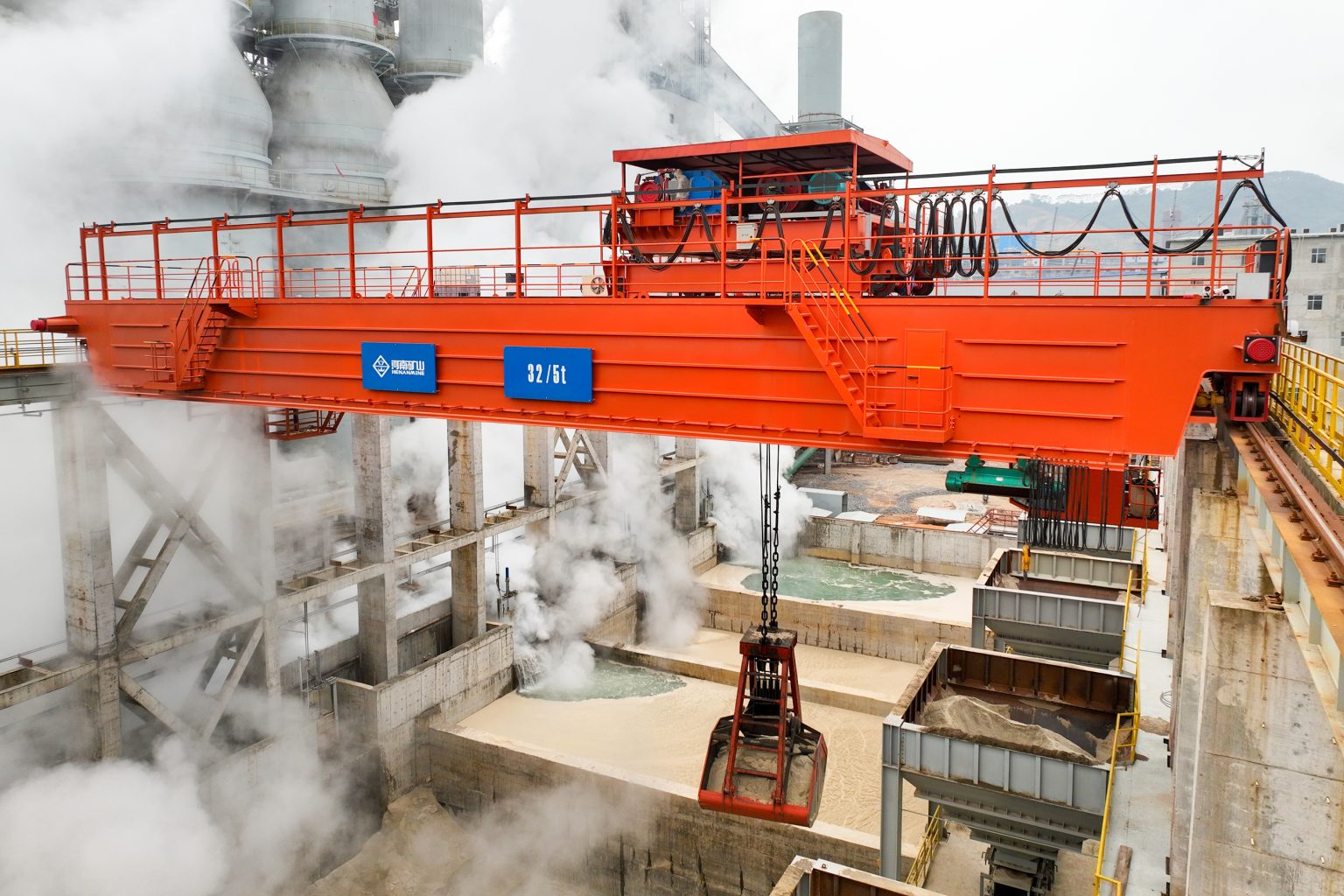
  • Fully Automated Coke Handling Crane

    Fully Automated Coke Handling Crane

    Project review

    Fully Automated Coke Handling Crane

    Explore the automatic coke handling crane applications. Review material properties, handling cycles, grab or vessel interfaces and required control functions.

    Fully Automated Coke Handling Crane — Henan Mine Crane crane application photograph
    Fully Automated Coke Handling Crane — crane application overview.

    Steelmaking and metal handling

    Define the complete suspended load, ladle or steel-product geometry, process temperature, crane duty and safe travel path. For molten-metal work, include auxiliary lifting, heat shielding, redundant protections and inspection access in the specification.

    Crane configuration and interfaces

    Ask for the crane arrangement, hook and lifting appliance interfaces, runway loads, control and monitoring functions, inspection access and a test plan matched to the plant process.

    Review the Metallurgical overhead cranes and Steel & metallurgy cranes before defining the project-specific arrangement.

    Design the lifting process

    Use the project context above as a starting point. The following checks turn a crane application into a technical scope that suppliers can price and demonstrate for your site.

    Material flow and duty

    Identify the material handled, bulk density, particle size, moisture, temperature and the location of pickup and discharge points. A grab crane must be evaluated against bucket fill factor, actual lifted mass, cycle time and the position of hoppers or stockpiles. For coke-drum or coke-jar handling, document the vessel or container geometry, connection points and any hot surfaces. State whether the crane operates continuously, in batches or as an emergency backup, since each produces a different duty case.

    Controls and operating environment

    Dust, heat and corrosive vapours affect the selection of enclosures, cables, braking and maintenance access. Specify the exposure at each component rather than using a single plant-wide temperature. For remote or unmanned operation, map the complete sequence: material detection, pickup, travel, discharge, obstruction handling and recovery after an interruption. Camera views, sensors, anti-sway and monitoring should each have an agreed purpose and acceptance test; automation must also permit safe manual intervention.

    Procurement and commissioning

    Request the proposed grab or attachment scope, bucket volume basis, duty assumptions, runway loads and a material flow diagram. Compare cycle-time claims under the same travel distances and material conditions. The acceptance plan should use representative material and include fault recovery, travel and hoist protections, emergency stop, communication loss and maintenance isolation. Clarify who supplies the hopper interface, dust-control equipment, remote console, plant signals and spare wear parts. This makes competing crane quotations comparable.

    Compare the proposed crane scope

    DecisionInformation to request
    Crane and lifting attachmentRated loads, load cases, hook coverage and the complete suspended-load calculation.
    Site interfacesRunway loads, rail or building drawings, electrical supply and installation responsibilities.
    Controls and protectionOperating sequence, required safety functions and a method for testing each function.
    Commercial scopeEquipment, transport, installation, commissioning, documentation, training and spare parts as separate line items.

    From technical offer to site acceptance

    Technical submittals

    A usable bid should show a general arrangement and a clear list of assumptions, not just a model name and capacity. Request the load schedule used in design, lifting-attachment drawings where applicable, span and hook-approach dimensions, wheel loads, electrical supply, control narrative and maintenance access. Check every drawing against the actual building or yard layout. Identify the standards and local approval requirements for the destination market in the enquiry, then confirm the bidder’s proposed design and documentation scope in writing.

    Installation and tests

    Agree when the runway or civil works will be ready, how crane components can reach the installation position and who provides lifting equipment for erection. Define the factory test, on-site installation inspection and site acceptance as separate milestones. The acceptance procedure should list representative loads, the travel route, protection devices, emergency stop and any automation or attachment functions included in the order. Record who supplies test weights, operators, power and access equipment; otherwise a nominal commissioning price may omit essential site work.

    Commercial comparison

    Ask for the same delivery basis and currency across proposals. Separate the crane, special lifting appliances, rails or conductors, transport, installation support, commissioning, training and initial spare parts. Lead time should identify the starting event, such as approved drawings or an effective contract, and any dependency on site readiness. Compare warranty scope and service response by the written contract terms. If a key input is still unknown, request a priced option or a stated assumption instead of allowing different bidders to silently use different specifications. Keep a written exception register so the engineering team can resolve open dimensions, process interfaces and responsibility boundaries before issuing the purchase order.

    Information to include in the enquiry

    • Load weights, dimensions, centre of gravity and lifting attachments.
    • Span, lifting height, runway or yard drawings, travel coverage and clearances.
    • Operating cycle, working environment, electrical supply and control requirements.
    • Supply boundaries, inspection documents, installation support and acceptance criteria.

    Discuss a comparable lifting task

    Send the handling task and available site drawings. Henan Mine Crane can define a proposed crane arrangement and identify the remaining information needed for a technical and commercial review.

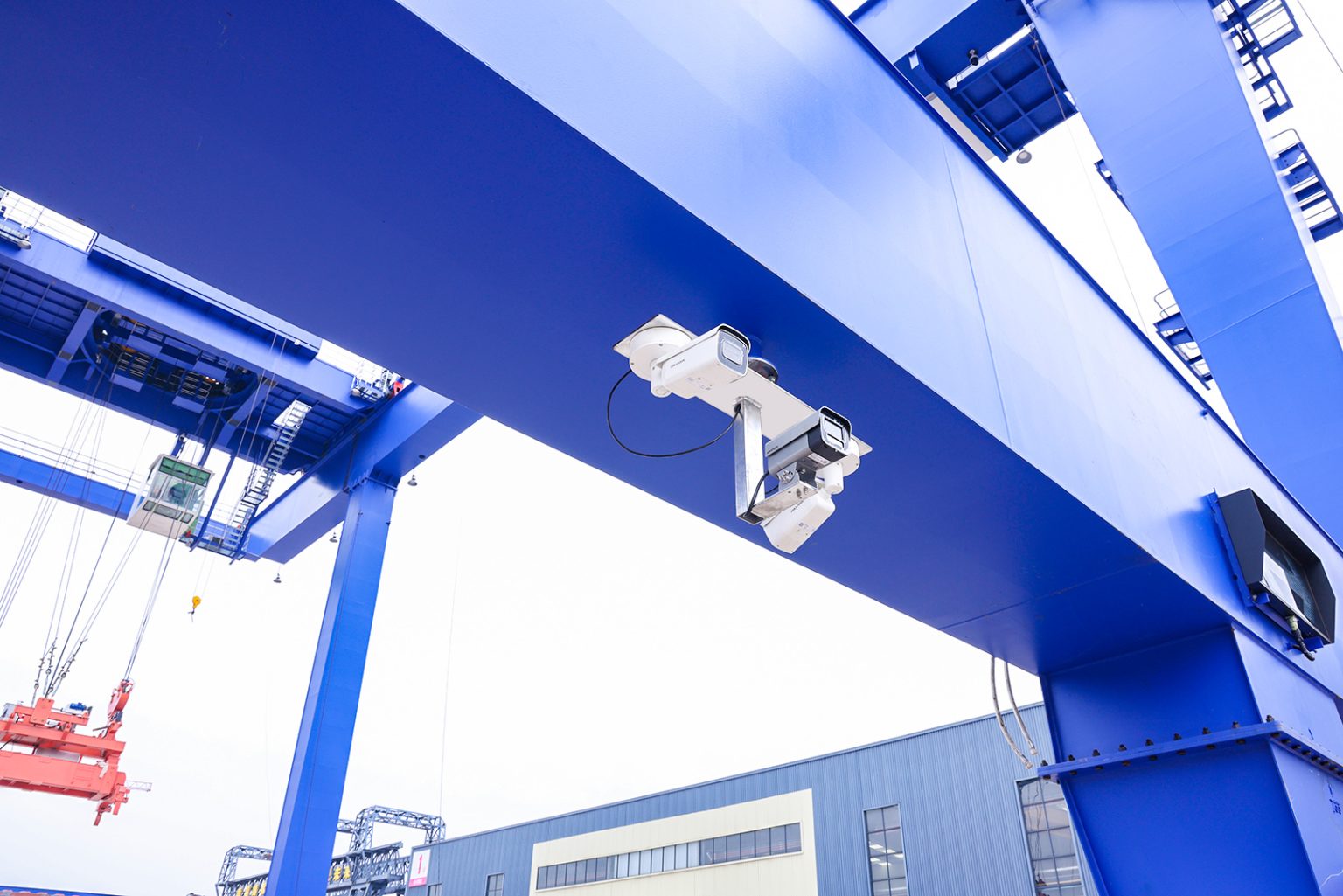
  • Container Gantry Cranes Boost Railway Logistics Upgrades

    Container Gantry Cranes Boost Railway Logistics Upgrades

    Project review

    Container Gantry Cranes Boost Railway Logistics Upgrades

    Explore the container gantry cranes for railway logistics. Review container loads, rail or yard layout, spreader functions and terminal operating interfaces.

    Container Gantry Cranes Boost Railway Logistics Upgrades — Henan Mine Crane crane application photograph
    Container Gantry Cranes Boost Railway Logistics Upgrades — crane application overview.

    Container and warehouse handling

    Map the load units, storage or yard lanes, stacking height, travel route, handling cycle, building or rail clearances and vehicle interfaces. Specify the operating wind, power and communication conditions where applicable.

    Crane configuration and interfaces

    Ask for a general arrangement, wheel loads, spreader or lifting attachment scope, travel and positioning controls, protection functions and commissioning tests for the declared handling sequence.

    Review the Rail-mounted container gantry cranes and Warehousing & logistics cranes before defining the project-specific arrangement.

    Design the lifting process

    Use the project context above as a starting point. The following checks turn a crane application into a technical scope that suppliers can price and demonstrate for your site.

    Yard operation and handling cycle

    Start with the container mix: 20-foot, 40-foot, high-cube and any non-standard units. State the maximum gross mass of a container and whether the quoted capacity includes the spreader. Map train, truck and storage lanes separately. A rail-mounted gantry crane that serves a railway track and a storage block may need different outreach, travel length and positioning logic from a crane serving only trucks. The target moves per hour should be stated with the stacking pattern and average travel distance, not as an isolated throughput number.

    Layout and control decisions

    Share a scaled yard plan showing rail gauge, clear span, cantilever outreach, stacking height, truck lanes, rail sidings and the end positions. Specify how operators will work: on board, from a remote console or through an automated terminal system. Anti-sway, container finding and collision protection need an agreed operating scenario and acceptance method. Clarify the spreader type, power supply, cable management, wind conditions, storm anchoring and the required interface to the terminal-management system before prices are compared.

    Acceptance and supply boundary

    Ask each bidder to state rated load at the spreader, duty assumptions, wheel loads, rail tolerances and the civil works excluded from crane supply. Review the scope for rails, power distribution, communications, commissioning, operator training and spare parts. Factory tests can check major drives and controls; site tests must demonstrate the actual lifting sequence, emergency stops, limit devices, travel protection and agreed positioning functions with the yard interfaces available. A planned terminal capacity is not the tested hourly performance of one crane.

    Compare the proposed crane scope

    DecisionInformation to request
    Crane and lifting attachmentRated loads, load cases, hook coverage and the complete suspended-load calculation.
    Site interfacesRunway loads, rail or building drawings, electrical supply and installation responsibilities.
    Controls and protectionOperating sequence, required safety functions and a method for testing each function.
    Commercial scopeEquipment, transport, installation, commissioning, documentation, training and spare parts as separate line items.

    From technical offer to site acceptance

    Technical submittals

    A usable bid should show a general arrangement and a clear list of assumptions, not just a model name and capacity. Request the load schedule used in design, lifting-attachment drawings where applicable, span and hook-approach dimensions, wheel loads, electrical supply, control narrative and maintenance access. Check every drawing against the actual building or yard layout. Identify the standards and local approval requirements for the destination market in the enquiry, then confirm the bidder’s proposed design and documentation scope in writing.

    Installation and tests

    Agree when the runway or civil works will be ready, how crane components can reach the installation position and who provides lifting equipment for erection. Define the factory test, on-site installation inspection and site acceptance as separate milestones. The acceptance procedure should list representative loads, the travel route, protection devices, emergency stop and any automation or attachment functions included in the order. Record who supplies test weights, operators, power and access equipment; otherwise a nominal commissioning price may omit essential site work.

    Commercial comparison

    Ask for the same delivery basis and currency across proposals. Separate the crane, special lifting appliances, rails or conductors, transport, installation support, commissioning, training and initial spare parts. Lead time should identify the starting event, such as approved drawings or an effective contract, and any dependency on site readiness. Compare warranty scope and service response by the written contract terms. If a key input is still unknown, request a priced option or a stated assumption instead of allowing different bidders to silently use different specifications. Keep a written exception register so the engineering team can resolve open dimensions, process interfaces and responsibility boundaries before issuing the purchase order.

    Information to include in the enquiry

    • Load weights, dimensions, centre of gravity and lifting attachments.
    • Span, lifting height, runway or yard drawings, travel coverage and clearances.
    • Operating cycle, working environment, electrical supply and control requirements.
    • Supply boundaries, inspection documents, installation support and acceptance criteria.

    Discuss a comparable lifting task

    Send the handling task and available site drawings. Henan Mine Crane can define a proposed crane arrangement and identify the remaining information needed for a technical and commercial review.

  • Industrial Crane Purchasing: Ten Decisions to Settle Before Ordering

    Industrial Crane Purchasing: Ten Decisions to Settle Before Ordering

    Technical guide

    Industrial Crane Purchasing: Ten Decisions to Settle Before Ordering

    An order needs more definition than a preferred crane type. Resolve the lifting task, geometry, operating duty, supply scope and acceptance responsibilities so the agreed equipment can be assessed against the project.

    Henan Mine CraneTechnical guide · Updated 2026Crane selection, project scope and operating requirements
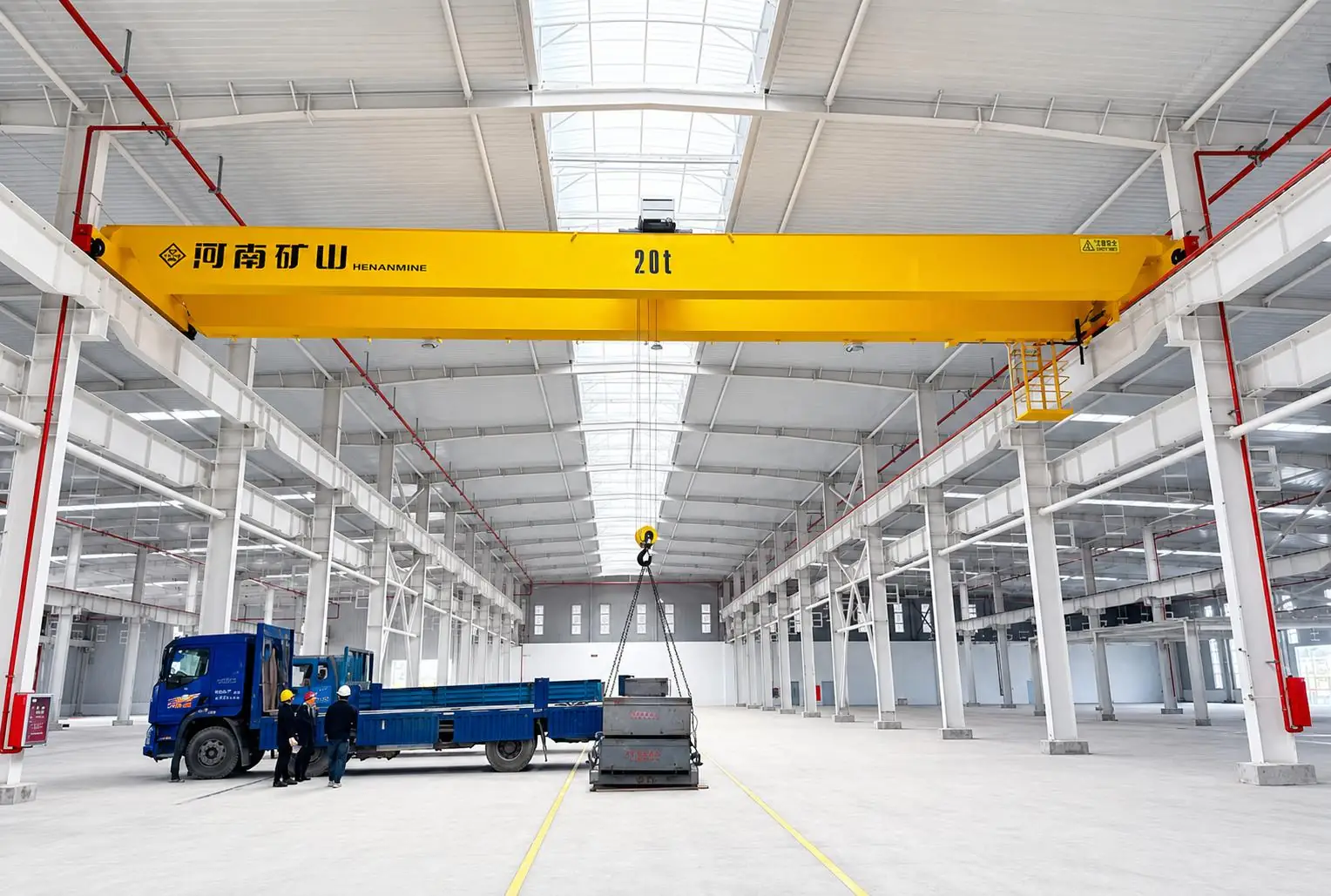
    Henan Mine Crane overhead crane inside a workshop bay
    Henan Mine Crane overhead crane inside a workshop bay
    Project planning notes

    Key points for this crane project.

    1. Define Your Lifting Requirements
    2. Match Crane Type to Your Application
    3. New vs. Used: Which Fits Your Budget and Risk
    Read the technical guide

    Define Your Lifting Requirements

    Selection should start with lifting load requirements, rather than focusing on crane models first. Before comparing various types of equipment, make clear the actual lifting weight, operation frequency and site working conditions.

    Safe working load (SWL) is the safe maximum lifting weight of the crane. SWL selection must meet the maximum load on site and cannot only adapt to conventional conditions.

    Two other key parameters directly determine the actual operating capability of the equipment:

    • Span: that is, the distance between the two support points of the crane, determines the lateral operation coverage and operation radius of the equipment, and is the core parameter of matching the operation space of the site.
    • Work level: Used to define the working load and frequency of use of the crane. Light duty system is suitable for occasional and low-frequency lifting operation; heavy duty system can meet daily continuous and high-intensity high-frequency operation conditions.

    If the selected specifications are lower than the actual working conditions, the overall production efficiency can only be slowed down through multiple lifting operations; if the selected specifications are far beyond the requirements, unnecessary procurement costs and later operating expenses will be increased.

    Match Crane Type to Your Application

    Crane models are not universal, each configuration is designed for specific mobile needs, operating terrain and lifting conditions, and adapts to the exclusive operation scenario:

    • Bridge crane: Bridge crane fixed indoor lifting equipment, stable structure, accurate operation, no mobile function. Suitable for factory buildings, warehouses and other fixed sites, mainly high-frequency, standardized, repetitive material lifting and equipment installation, is the main equipment for indoor normal heavy duty operations.
    • Mobile crane: based on automobile chassis, with driving ability, fast transition, excellent mobility. Suitable for outdoor temporary construction, equipment repair, short-distance lifting and transportation, flexible switching of operation sites, strong adaptability to multiple working conditions, high versatility.
    • Crawler crane: crawler travel structure, good grounding, ground adaptability, high stability in soft, uneven complex site operations. It is mostly used for heavy projects such as bridges, foundations, large components, etc. The disadvantages are slow travel, long distance transition requires special transport vehicles, and the transfer cost is high.
    • All-terrain crane: both highway high-speed transition and field off-road operation capacity, site adaptability is very strong. It can give consideration to urban engineering and field complex infrastructure construction, with wide scene coverage and outstanding comprehensive performance. It is a high-end lifting equipment with strong versatility.
    • Off-road crane: pure off-road operation model, no road driving qualification. Light body, small turning radius, flexible control, compared with all-ground crane more suitable for narrow construction sites, rugged mountains and other limited field complex conditions, special off-road operation ability outstanding.
    • Gantry Crane: fixed high-altitude lifting equipment, lifting height, wide coverage, mainly used for high-rise buildings, large-scale venue construction of high-altitude material transfer. Equipment installation and disassembly process is complicated, and there are strict standards for infrastructure construction, installation technology and safety specifications.

    Crane selection cannot only refer to rated tonnage, but also match the operation conditions and movement requirements of the construction site. A single model cannot adapt to all construction scenarios. Cranes that adapt to certain types of working conditions may have poor adaptability or even unsuitable structure in other scenarios.

    New vs. Used: Which Fits Your Budget and Risk Tolerance

    The European and American overseas engineering market has mature lifting equipment regulations, access standards and second-hand circulation system. Equipment procurement is divided into two modes: brand-new and second-hand. It is the key basis for bidding, cost and safety management of overseas projects.

    Second-hand cranes are cost-effective and fast to deliver, suitable for small and medium-sized projects with short construction periods and limited budgets overseas.

    New cranes

    The brand-new crane is the mainstream selection for overseas large-scale infrastructure, long-term construction, government public construction projects and high-end industrial plant hoisting.

    The new machine is suitable for long-term, high-frequency and heavy-duty working conditions, stable operation, low failure rate, supporting original maintenance, accessories and technical support, which can ensure stable construction period. The short board is high procurement cost, long delivery cycle of customized models, and high investment pressure in the early stage.

    Used cranes

    Overseas second-hand cranes have mature circulation channels. With the characteristics of low cost, instant production and strong flexibility, they are widely favored by overseas small projects, short-term projects and leasing enterprises, which can effectively reduce the investment in equipment in the early stage of the project.

    A lot of equipment long-term overseas extreme cold, salt fog, high temperature and other harsh environments, or long-term withstand heavy impact lifting, steel structure and core components aging loss serious.

    Total Cost of Ownership, Not Just Sticker Price

    Equipment purchase price is only the smallest part of the crane life cycle cost, and the following hidden costs should be comprehensively calculated when selecting and purchasing:

    • Equipment installation and site foundation modification expenses: covering installation expenses such as equipment mobilization assembly, commissioning and calibration, and modification expenses such as site hardening, embedded parts, tracks and safety facilities. Different models have different requirements for site foundation and installation space, which belong to necessary early investment.
    • Daily maintenance costs and replacement costs of vulnerable parts: cranes need regular maintenance, resulting in labor and consumables costs. Steel wire rope, brake pads and other wearing parts will continue to wear out, need to be replaced regularly, is the fixed cost of long-term operation of equipment.
    • Cost of operator training and qualification annual examination: lifting operation is a high-risk special operation, and personnel must have certificates to work.
    • Equipment insurance cost: In order to avoid construction risks such as equipment damage, casualties and third-party property losses, special equipment insurance shall be purchased. Annual insurance renewal is the basic guarantee cost for normal operation of equipment.
    • Parts procurement and downtime risk cost: niche, old models are prone to parts out of stock, slow supply, after-sales response lag and other problems. Equipment failure cannot be repaired in time will cause downtime, resulting in high indirect losses, long-term cost gap is significant.

    Low-cost cranes often have problems such as shortage of accessories and inefficient after-sales, and the comprehensive cost of 5 10 years is higher than that of high-priced and after-sales models. Before purchasing, it is necessary to verify the supply cycle and after-sales response speed of accessories in advance, so as to avoid the later operation risks from the source.

    Site, Space & Installation Constraints

    The functions of the two are completely different from the applicable rules.

    The core functions of the two institutions are distinguished as follows:

    • ASM: Formulates voluntary design and engineering standards for the industry, among which the B30 series of standards specifically specifies the design and manufacturing requirements for cranes, masts, winches, hooks and slings, which is the industry reference standard for equipment production.
    • OSHA: Responsible for enforcing construction site safety regulations governing crane operation, inspection, and maintenance.29 CFR 1926.1427 is applicable to the construction field, and 29 CFR 1910.179 is applicable to general industrial bridge and portal cranes.
    • CSA Standard: Applicable to lifting equipment sold and put into use in Canada, and applicable in parallel with American Standard.

    When purchasing equipment, do not believe in the propaganda of merchants. You must actively verify the following official documents as the core basis for equipment compliance:

    1. Rated load test certificate, confirming that the equipment has passed the standard full load bearing capacity verification, lifting performance standards;

    Safety Standards and Certifications

    The crane with excellent performance has no practical value if it does not match the site conditions of the factory. The following field surveys must be completed prior to procurement:

    1. Measure the length and width space of the installation area of the whole machine on the spot, accurately calculate the top clearance allowance, and verify the bearing load of the beam column and foundation of the plant at the same time, so as to ensure that the building structure can stably bear the operating load of the crane for a long time and avoid the hidden danger of insufficient structural pressure in the later stage;
    2. Define the equipment operation scene in advance, distinguish between ordinary indoor normal temperature environment, outdoor wind and rain environment, or high-risk explosion-proof area with flammable and explosive medium, and directly determine the protection level and component configuration scheme of the whole machine corresponding to the exclusive motor, electric control and shell protection accessories under different working conditions;
    3. Collect the real building size such as beam column spacing and limit height of the workshop, check them item by item against the rated span and clear height of lifting limit position of the crane, reserve safe operation margin, and prevent the collision and interference between lifting tools and heavy objects and walls and components during operation;
    4. If mobile lifting equipment such as truck crane and crawler crane is selected, it is necessary to test the ground hardness and soil bearing capacity on the spot, calculate the occupied area after the outriggers are fully deployed, and simultaneously investigate the access routes such as the factory gate, passage turning and ramp, so as to ensure the smooth passage of equipment and stable pad operation.

    Omitting site survey before purchasing is a common and costly error in selection. If the space, load bearing and passage are not matched after the equipment arrives, it will cause high cost of plant reconstruction and delay.

    Operator Training, Staffing & Licensing

    Before purchasing cranes, enterprises need to confirm in advance that existing operators meet three compliance conditions:

    • Special certificate of model: the qualification of operator shall be accurately matched with the purchased crane model. The qualification is not common. It is strictly prohibited to operate with certificates across models.

    Maintenance, Parts Availability & Service Support

    All cranes require regular maintenance during their full life cycle, and there will inevitably be component wear and replacement requirements. Before purchasing equipment, it is necessary to comprehensively evaluate the equipment maintenance difficulty, spare parts supply ability, equipment reliability and after-sales service level. The core evaluation dimensions are as follows:

    • Evaluate the practical operation difficulty of daily maintenance of the team, covering basic maintenance work such as oil change, lubrication and routine inspection, adapt to the technical ability and operation conditions of its own operation and maintenance team, and avoid excessive maintenance difficulty and sharp increase of operation and maintenance cost in the later period.
    • Verify the supply timeliness of core accessories of manufacturers or dealers, focus on confirming the supply speed of accessories required for large-scale maintenance and fault repair, and avoid long-term downtime of equipment due to shortage of accessories, which will affect the construction progress.
    • Investigate the market reputation and operation reliability of equipment brands and models, sort out common failure points and failure rate data of equipment, give priority to mature models with stable working conditions, few common faults and strong durability, and reduce the frequency of later failure maintenance.
    • Check the seller's after-sales service response capabilities. Crane belongs to long-term fixed assets, efficient and timely after-sales maintenance service is the key to ensure equipment start-up rate and reduce shutdown loss, which directly affects project construction efficiency and comprehensive operation and maintenance cost.

    When purchasing and verifying, it is necessary to inquire about the average supply cycle of accessories, the waiting time of technicians for scheduled maintenance and on-site maintenance. If the seller gives a vague and general answer, the high probability represents that its after-sales system is imperfect and its service response ability is insufficient, which is an important risk signal for procurement.

    Financing, ROI & Tax Incentives

    Most enterprises will not choose the full purchase of cranes, equipment financing mode choice, the impact on the actual cost of equipment is equivalent to the purchase price of equipment, is the core consideration of procurement decision-making factors.

    Loan, finance lease and hire purchase are the main financing methods for crane procurement. The cost allocation cycle, capital risk and repayment rules of the three are different. Enterprises shall combine the cash flow of the project, compare the interest rate, down payment and repayment period, select the appropriate financing scheme, and control the capital risk.

    Before formulating the budget, enterprises should consult tax personnel to confirm the latest policies and declare qualifications, and fully enjoy tax preferences.

    The return on investment in equipment should be calculated on the basis of the total cost of financing rather than simply by reference to the selling price of the equipment. Combined with the benefits of equipment saving labor, improving lifting efficiency, shortening construction period, etc., the payback period is accurately measured to ensure that procurement is economical and feasible.

    2026 Market Conditions: Lead Times, Tariffs & Procurement Timing

    Most procurement guidelines ignore core procurement variables for 2026: delivery strains and policy fluctuations. Driven by infrastructure, new energy, industrial return and data center construction, the crane market demand is soaring; the overall delivery cycle of new machines is greatly prolonged due to the shortage of special steel, hydraulic pressure, electronic control accessories and skilled workers.

    Superimposed by the influence of the current tariff policy, the original backlog of orders further appeared problems such as cost increase and fluctuation of delivery date. This also completely changed the crane procurement logic: equipment procurement is no longer a simple material procurement work, but a core progress variable that directly determines the success or failure of the project duration.

    For the special market environment in 2026, procurement needs to follow the following core strategies:

    1. Discard past experience and verify the current true lead time directly with the manufacturer or dealer. Do not plan projects with the old lead time before 2024.
    2. Before determining the commencement date of the project, priority shall be given to locking the crane delivery time, and the equipment arrival node shall be included in the overall construction period planning, so as to avoid equipment supply interruption and construction period stagnation after commencement.
    3. If the new equipment delivery date cannot match the project schedule, give priority to the used equipment market. The current supply of second-hand cranes is abundant and faster, which is the best alternative for short-term emergency projects.
    4. Actively verify the tariff impact of target models with suppliers, clarify the latest quotation differences caused by tariff fluctuations, and avoid the risk of hidden price increases.

    Under the complicated market and policy environment in 2026, only by incorporating the equipment procurement rhythm into the early strategic planning, rather than remedial afterwards, can the project be effectively guaranteed to land on schedule and avoid the risk of delay and cost overrun.

    Discuss the crane arrangement for your project.

    An order needs more definition than a preferred crane type. Resolve the lifting task, geometry, operating duty, supply scope and acceptance responsibilities so the agreed equipment can be assessed against the project. Share the load, available drawings, working cycle and site conditions with Henan Mine Crane so the required configuration and supply boundary can be discussed.

    Related crane configurations

    Explore crane product families and technical parameters ↗

    Updated 2026 · Henan Mine Crane

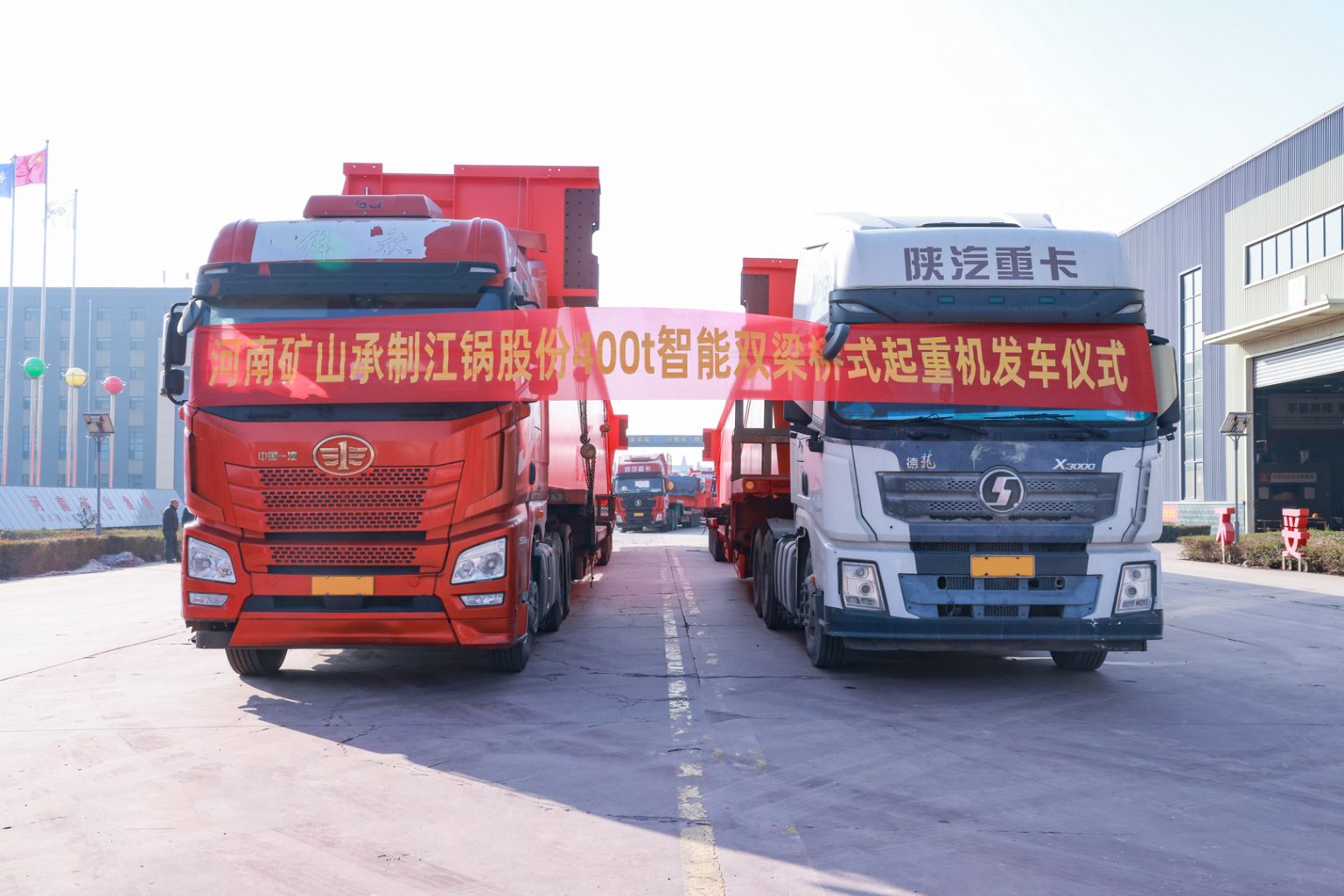
  • 400t double-girder bridge crane manufactured by Henan Mine Crane

    400t double-girder bridge crane manufactured by Henan Mine Crane

    Project review

    400t double-girder bridge crane manufactured by Henan Mine Crane

    Explore the 400t overhead crane manufacturing project. Review the handling task, load geometry, working duty and equipment interfaces for your application.

    400t double-girder bridge crane manufactured by Henan Mine Crane — Henan Mine Crane crane application photograph
    400t double-girder bridge crane manufactured by Henan Mine Crane — crane application overview.

    Workshop and manufacturing lifting

    Define the largest and most frequent loads, lifting points, hook coverage, building clearances, operating shifts and concurrent work zones. Include maintenance and production flow in the layout.

    Crane configuration and interfaces

    Ask for a general arrangement, duty selection, runway and power interfaces, control mode, maintenance access and agreed factory and site acceptance scope.

    Review the Double-girder overhead cranes and Industrial manufacturing cranes before defining the project-specific arrangement.

    Design the lifting process

    Use the project context above as a starting point. The following checks turn a crane application into a technical scope that suppliers can price and demonstrate for your site.

    Define the lifting task

    Record each load by weight, dimensions, centre of gravity and lifting point, then trace its route through the plant. Distinguish the highest occasional lift from routine handling cycles. Give the span, lift height, hook approach, duty pattern and working environment. These inputs establish what crane arrangement fits the building and process; a headline rated capacity does not show whether the load can be picked up or placed safely.

    Choose interfaces and controls

    Ask for a general arrangement, runway and wheel loads, power supply, control mode, required travel speeds and any lifting attachment. Define what is supplied with the crane and what is supplied by the building or process contractor. If positioning, monitoring or remote operation matters, state the intended sequence and how performance will be measured. Include access for periodic inspection and a safe location for maintenance.

    Compare proposals on the same basis

    Send all bidders the same load schedule and site drawing. Review the structural arrangement, drive and protection functions, installation scope, factory tests, site acceptance, training and spare parts. Confirm the required documents and the boundaries of civil, electrical and commissioning work. This makes a technical comparison meaningful and prevents a low equipment-only price from being mistaken for a complete installed solution.

    Compare the proposed crane scope

    DecisionInformation to request
    Crane and lifting attachmentRated loads, load cases, hook coverage and the complete suspended-load calculation.
    Site interfacesRunway loads, rail or building drawings, electrical supply and installation responsibilities.
    Controls and protectionOperating sequence, required safety functions and a method for testing each function.
    Commercial scopeEquipment, transport, installation, commissioning, documentation, training and spare parts as separate line items.

    From technical offer to site acceptance

    Technical submittals

    A usable bid should show a general arrangement and a clear list of assumptions, not just a model name and capacity. Request the load schedule used in design, lifting-attachment drawings where applicable, span and hook-approach dimensions, wheel loads, electrical supply, control narrative and maintenance access. Check every drawing against the actual building or yard layout. Identify the standards and local approval requirements for the destination market in the enquiry, then confirm the bidder’s proposed design and documentation scope in writing.

    Installation and tests

    Agree when the runway or civil works will be ready, how crane components can reach the installation position and who provides lifting equipment for erection. Define the factory test, on-site installation inspection and site acceptance as separate milestones. The acceptance procedure should list representative loads, the travel route, protection devices, emergency stop and any automation or attachment functions included in the order. Record who supplies test weights, operators, power and access equipment; otherwise a nominal commissioning price may omit essential site work.

    Commercial comparison

    Ask for the same delivery basis and currency across proposals. Separate the crane, special lifting appliances, rails or conductors, transport, installation support, commissioning, training and initial spare parts. Lead time should identify the starting event, such as approved drawings or an effective contract, and any dependency on site readiness. Compare warranty scope and service response by the written contract terms. If a key input is still unknown, request a priced option or a stated assumption instead of allowing different bidders to silently use different specifications. Keep a written exception register so the engineering team can resolve open dimensions, process interfaces and responsibility boundaries before issuing the purchase order.

    Information to include in the enquiry

    • Load weights, dimensions, centre of gravity and lifting attachments.
    • Span, lifting height, runway or yard drawings, travel coverage and clearances.
    • Operating cycle, working environment, electrical supply and control requirements.
    • Supply boundaries, inspection documents, installation support and acceptance criteria.

    Discuss a comparable lifting task

    Send the handling task and available site drawings. Henan Mine Crane can define a proposed crane arrangement and identify the remaining information needed for a technical and commercial review.

  • Overhead Crane Suppliers in the USA: Specification and Service Questions

    Overhead Crane Suppliers in the USA: Specification and Service Questions

    Technical guide

    Overhead Crane Suppliers in the USA: Specification and Service Questions

    Supplier evaluation should cover the specific crane and the support needed at the destination site. Compare engineering documents, installation arrangements and service responsibilities without treating a general manufacturer ranking as a technical assessment.

    Henan Mine CraneTechnical guide · Updated 2026Crane selection, project scope and operating requirements
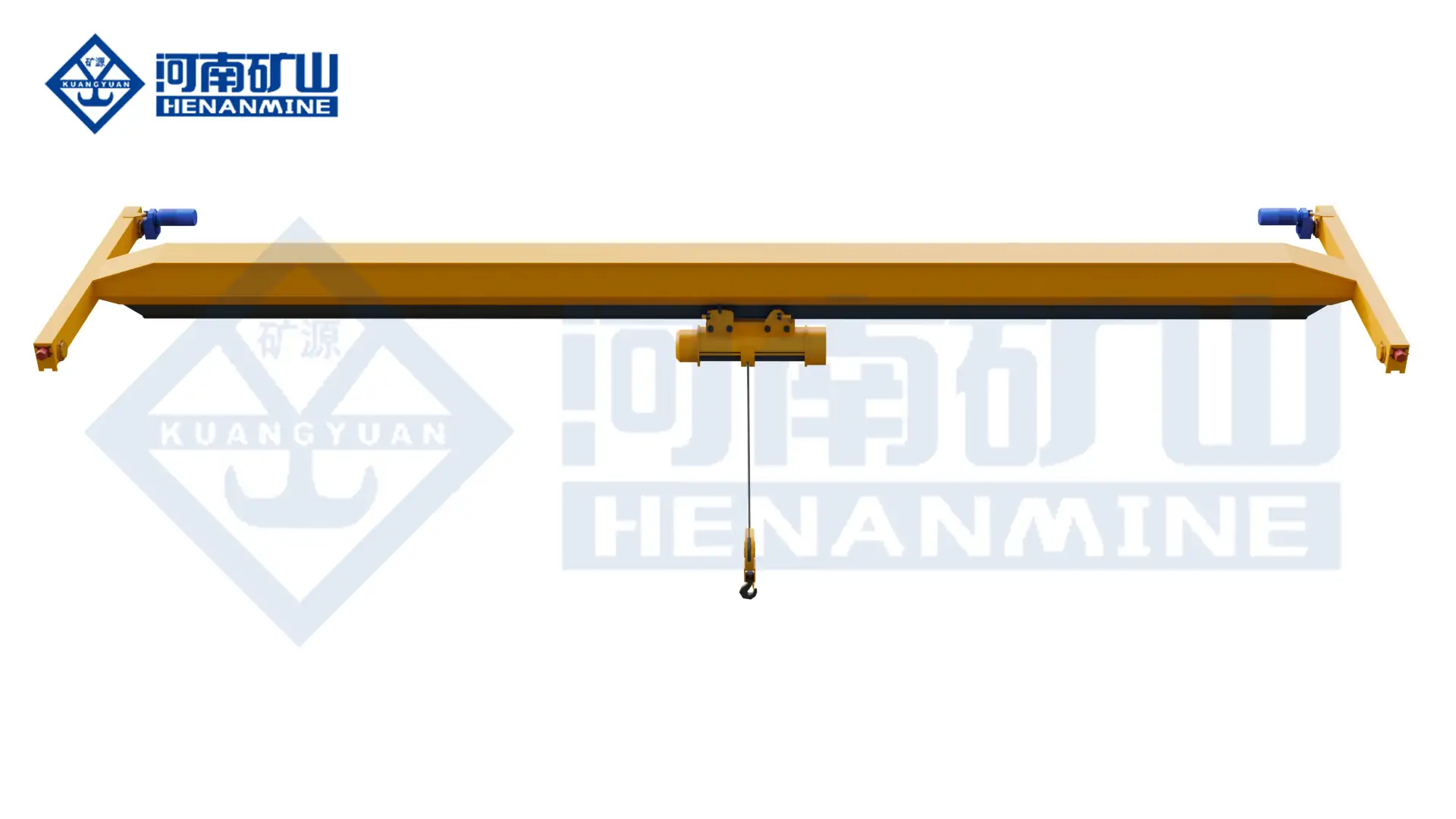
    Henan Mine Crane Single-Girder Bridge Crane
    Henan Mine Crane Single-Girder Bridge Crane
    Project planning notes

    Key points for this crane project.

    1. Separate equipment supply from work at the US site
    2. Describe the facility instead of assuming a standard
    3. Establish the required project documents
    Read the technical guide

    Separate equipment supply from work at the US site

    Start by identifying the parties involved in the project: equipment manufacturer, building or runway contractor, installer and ongoing service provider. A single company may coordinate several roles, but the quotation should still identify the responsibility for each one.

    Record the destination work that is expected with the crane purchase. Access equipment, assembly resources, electrical connection and commissioning attendance can fall under different contracts and should be reviewed before offers are compared.

    Describe the facility instead of assuming a standard package

    Provide the actual supply voltage, frequency and phase information for the site. Share available building drawings, runway positions and required hook coverage, and identify any dimensions that still require a survey.

    Include the normal load pattern, number of working shifts and the required lifting attachment. This allows the proposed crane arrangement to be compared with the operating task, rather than with a general description of a domestic or imported product.

    Establish the required project documents

    Have the responsible project team define the design, installation and acceptance requirements applicable to the equipment and location. Ask the supplier to state what documents it will provide and which project inputs it requires.

    Check that the equipment description, dimensional drawing and support information refer to the same configuration. List open technical questions and obtain resolved answers before the manufacture and site-work boundaries are fixed.

    Review support in practical operating terms

    Ask how the proposed service arrangement will identify replacement parts, access technical information and coordinate work at the destination. Confirm the maintenance documents and parts references included with the equipment.

    Compare support commitments using the quoted resources and contractual scope. The presence of a familiar brand name or a general statement about nationwide service does not describe the particular service boundary for the project.

    Build the comparison around written offers

    Use the same facility brief and responsibility list when requesting offers from US-based or overseas suppliers. Compare the equipment, installation and handover scope before judging price differences.

    Retain the agreed configuration, resolved questions and acceptance responsibilities as the purchasing record. This gives the operating and service teams a clearer starting point than a manufacturer list that does not address the supplied crane.

    Discuss the crane arrangement for your project.

    Supplier evaluation should cover the specific crane and the support needed at the destination site. Compare engineering documents, installation arrangements and service responsibilities without treating a general manufacturer ranking as a technical assessment. Share the load, available drawings, working cycle and site conditions with Henan Mine Crane so the required configuration and supply boundary can be discussed.

    Related crane configurations

    Single-Girder Bridge Crane

    View product parameters
    Lifting capacity: 1–20 tSpan: 7.5–31.5 mLifting height: 6, 9, 12, 18, 24 or 30 m; capacity-dependent

    Use an LDA single-girder bridge and electric hoist for general workshop material handling. Select the lifting capacity, runway geometry and hoist duty around the building and load.

    LH Electric Hoist Double Girder Crane

    View product parameters
    Lifting capacity: 3, 5, 10, 16, 20 tSpan: 10.5–31.5 mLifting height: 6, 9, 12 or 18 m

    Use an LH double-girder bridge with an electric-hoist trolley for workshop lifting, assembly and maintenance. Match the hoist arrangement to the suspended load, hook travel and available building space.

    Updated 2026 · Henan Mine Crane

  • Dragon Boat Festival Activities Recognise Henan Mine Crane Employees

    Dragon Boat Festival Activities Recognise Henan Mine Crane Employees

    Company & People

    Dragon Boat Festival Activities Recognise Henan Mine Crane Employees

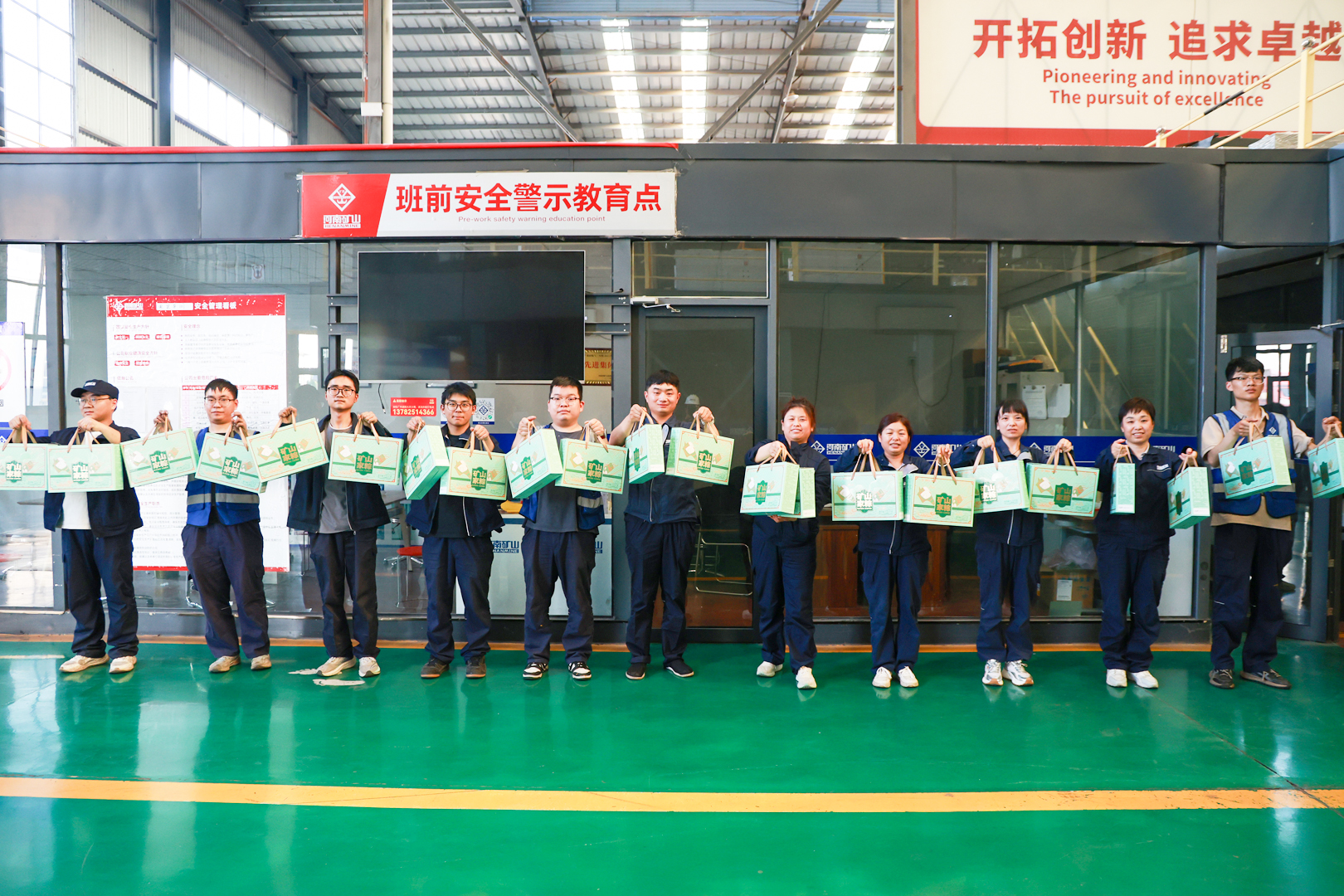
    Henan Mine Crane organised gift distributions and employee activities ahead of the 2026 Dragon Boat Festival.

    Employees collecting festival gift packages
    Employees collecting festival gift packages.

    Festival packages and employee activities

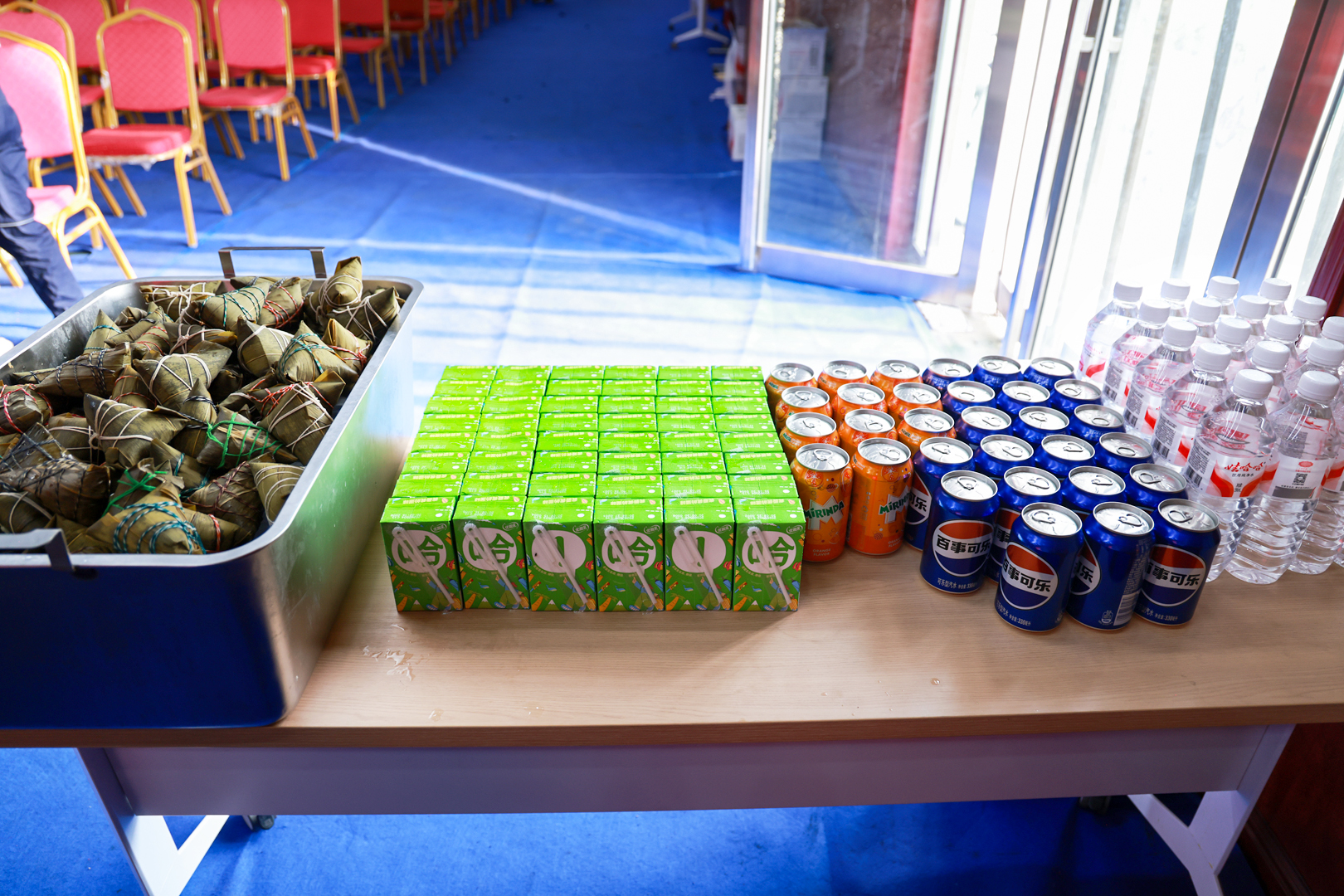
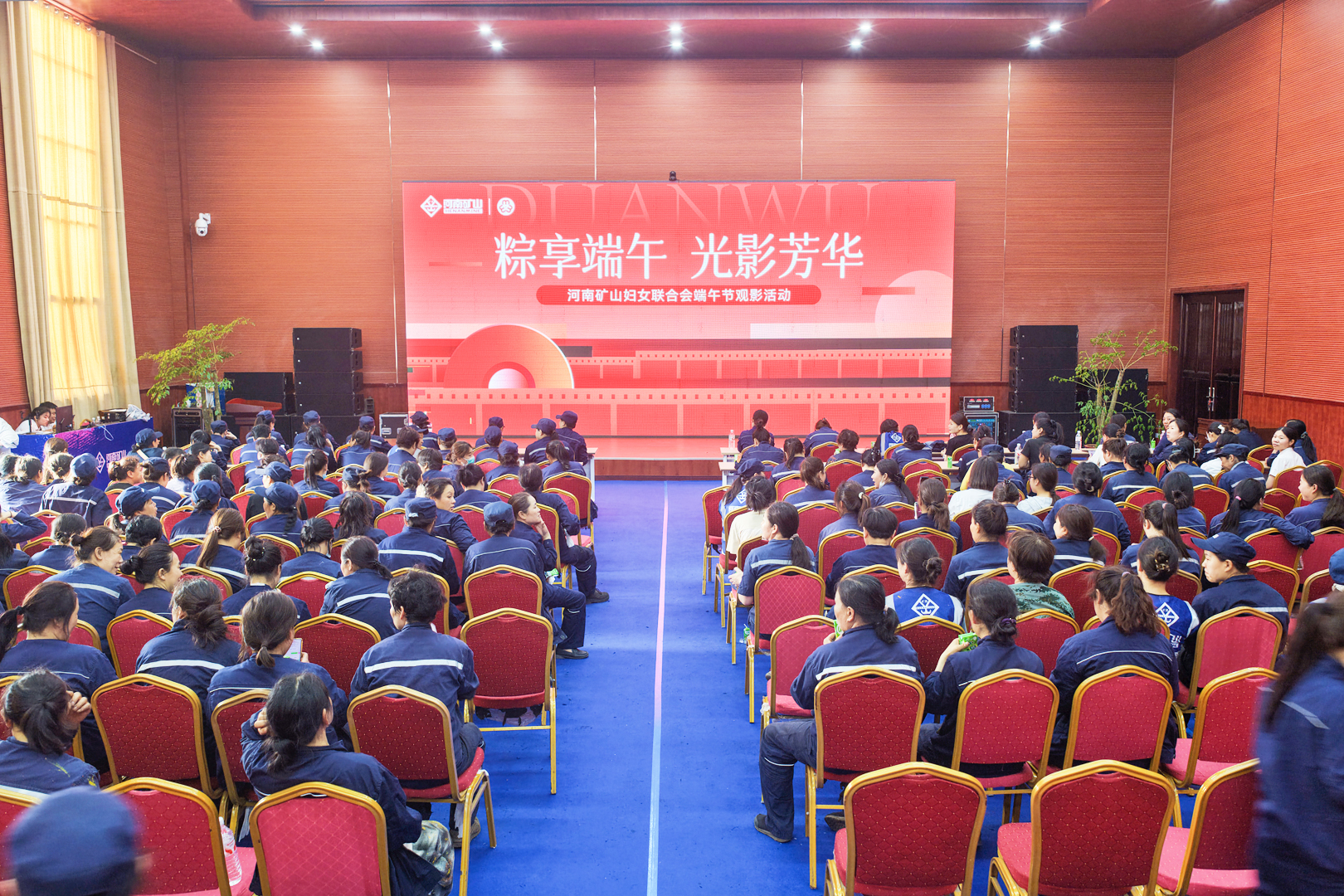
    Gift distribution began on 16 June, with festival packages delivered to employees in batches. The company’s women’s committee also arranged a film activity for female employees.

    Recurring employee-care programmes

    The activities continued the company’s programmes around traditional festivals, alongside Mid-Autumn and Lunar New Year events. Gift distributions and shared activities recognise the contribution of employees and their families.

    View photographs from the employee activities

    Discuss an equipment enquiry

    Send the crane type, load and site requirements to the equipment team for a project discussion.

  • 360t Casting Cranes Empower Efficient Production in the Steel Industry

    360t Casting Cranes Empower Efficient Production in the Steel Industry

    Project review

    360t Casting Cranes Empower Efficient Production in the Steel Industry

    Explore the 360 t casting-crane application at Luzhou Xinyang Steel. Discuss ladle handling, process exposure, crane controls and the required project scope.

    360t Casting Cranes Empower Efficient Production in the Steel Industry — Henan Mine Crane crane application photograph
    360t Casting Cranes Empower Efficient Production in the Steel Industry — crane application overview.

    Project evidence

    • A 360 t casting crane was used at Luzhou Xinyang Vanadium and Titanium Steel.

    Steelmaking and metal handling

    Define the complete suspended load, ladle or steel-product geometry, process temperature, crane duty and safe travel path. For molten-metal work, include auxiliary lifting, heat shielding, redundant protections and inspection access in the specification.

    Crane configuration and interfaces

    Ask for the crane arrangement, hook and lifting appliance interfaces, runway loads, control and monitoring functions, inspection access and a test plan matched to the plant process.

    Review the Metallurgical overhead cranes and Steel & metallurgy cranes before defining the project-specific arrangement.

    Design the lifting process

    Use the project context above as a starting point. The following checks turn a crane application into a technical scope that suppliers can price and demonstrate for your site.

    Molten-metal lifting sequence

    Describe where a ladle is picked up, where it travels, how it is poured and how it is returned. Provide the mass of the ladle, lining, molten metal, lifting beam and rigging as separate inputs. The main-hook capacity alone does not define the crane: auxiliary-hook duty, hook spacing, approach, travel speed, plant clearances and the number of lifts per shift matter. If the process includes charging, tundish transfer or maintenance lifts, separate those cycles rather than assuming one arrangement can serve them all.

    Protection and maintainability

    For a hot shop, specify ambient and radiant temperatures at the bridge, trolley, electrical cabinets and operator position. Discuss heat shielding, cable routing, braking and overspeed protection, redundant functions where applicable, access for inspection and a safe maintenance position. These features need a project-specific risk assessment and applicable design standard; a catalogue label such as “metallurgical” does not establish suitability for molten-metal duty. Provide runway condition and building clearances so that protective equipment can be installed and serviced.

    What to compare at technical review

    Request general arrangement drawings, the mass calculation for the suspended load, main and auxiliary hook duties, duty classification, wheel loads, electrical interfaces and a list of protective functions. Compare each offer against the same process sequence and site drawings. Define factory and site acceptance tests for rated load, interlocks, brakes, limit switches and operational travel. Agree how production will be isolated during installation and how spare components will be supported. Published case tonnages describe those installations only; a new crane must be sized to its own process.

    Compare the proposed crane scope

    DecisionInformation to request
    Crane and lifting attachmentRated loads, load cases, hook coverage and the complete suspended-load calculation.
    Site interfacesRunway loads, rail or building drawings, electrical supply and installation responsibilities.
    Controls and protectionOperating sequence, required safety functions and a method for testing each function.
    Commercial scopeEquipment, transport, installation, commissioning, documentation, training and spare parts as separate line items.

    From technical offer to site acceptance

    Technical submittals

    A usable bid should show a general arrangement and a clear list of assumptions, not just a model name and capacity. Request the load schedule used in design, lifting-attachment drawings where applicable, span and hook-approach dimensions, wheel loads, electrical supply, control narrative and maintenance access. Check every drawing against the actual building or yard layout. Identify the standards and local approval requirements for the destination market in the enquiry, then confirm the bidder’s proposed design and documentation scope in writing.

    Installation and tests

    Agree when the runway or civil works will be ready, how crane components can reach the installation position and who provides lifting equipment for erection. Define the factory test, on-site installation inspection and site acceptance as separate milestones. The acceptance procedure should list representative loads, the travel route, protection devices, emergency stop and any automation or attachment functions included in the order. Record who supplies test weights, operators, power and access equipment; otherwise a nominal commissioning price may omit essential site work.

    Commercial comparison

    Ask for the same delivery basis and currency across proposals. Separate the crane, special lifting appliances, rails or conductors, transport, installation support, commissioning, training and initial spare parts. Lead time should identify the starting event, such as approved drawings or an effective contract, and any dependency on site readiness. Compare warranty scope and service response by the written contract terms. If a key input is still unknown, request a priced option or a stated assumption instead of allowing different bidders to silently use different specifications. Keep a written exception register so the engineering team can resolve open dimensions, process interfaces and responsibility boundaries before issuing the purchase order.

    Information to include in the enquiry

    • Load weights, dimensions, centre of gravity and lifting attachments.
    • Span, lifting height, runway or yard drawings, travel coverage and clearances.
    • Operating cycle, working environment, electrical supply and control requirements.
    • Supply boundaries, inspection documents, installation support and acceptance criteria.

    Discuss a comparable lifting task

    Send the handling task and available site drawings. Henan Mine Crane can define a proposed crane arrangement and identify the remaining information needed for a technical and commercial review.

  • 32-Ton Intelligent Grab Crane Drives Steel Industry Upgrades

    32-Ton Intelligent Grab Crane Drives Steel Industry Upgrades

    Project review

    32-Ton Intelligent Grab Crane Drives Steel Industry Upgrades

    Explore the Guangxi Chiji Steel application involving four 32 t intelligent grab cranes. Discuss bulk-material handling, control interfaces and working duty.

    32-Ton Intelligent Grab Crane Drives Steel Industry Upgrades — Henan Mine Crane crane application photograph
    32-Ton Intelligent Grab Crane Drives Steel Industry Upgrades — crane application overview.

    Project evidence

    • 59 crane units were supplied to Guangxi Chiji Steel, including four 32 t intelligent grab cranes for a 2060 m³ blast-furnace project.

    Steelmaking and metal handling

    Define the complete suspended load, ladle or steel-product geometry, process temperature, crane duty and safe travel path. For molten-metal work, include auxiliary lifting, heat shielding, redundant protections and inspection access in the specification.

    Crane configuration and interfaces

    Ask for the crane arrangement, hook and lifting appliance interfaces, runway loads, control and monitoring functions, inspection access and a test plan matched to the plant process.

    Review the Metallurgical overhead cranes and Steel & metallurgy cranes before defining the project-specific arrangement.

    Design the lifting process

    Use the project context above as a starting point. The following checks turn a crane application into a technical scope that suppliers can price and demonstrate for your site.

    Define the lifting task

    Record each load by weight, dimensions, centre of gravity and lifting point, then trace its route through the plant. Distinguish the highest occasional lift from routine handling cycles. Give the span, lift height, hook approach, duty pattern and working environment. These inputs establish what crane arrangement fits the building and process; a headline rated capacity does not show whether the load can be picked up or placed safely.

    Choose interfaces and controls

    Ask for a general arrangement, runway and wheel loads, power supply, control mode, required travel speeds and any lifting attachment. Define what is supplied with the crane and what is supplied by the building or process contractor. If positioning, monitoring or remote operation matters, state the intended sequence and how performance will be measured. Include access for periodic inspection and a safe location for maintenance.

    Compare proposals on the same basis

    Send all bidders the same load schedule and site drawing. Review the structural arrangement, drive and protection functions, installation scope, factory tests, site acceptance, training and spare parts. Confirm the required documents and the boundaries of civil, electrical and commissioning work. This makes a technical comparison meaningful and prevents a low equipment-only price from being mistaken for a complete installed solution.

    Compare the proposed crane scope

    DecisionInformation to request
    Crane and lifting attachmentRated loads, load cases, hook coverage and the complete suspended-load calculation.
    Site interfacesRunway loads, rail or building drawings, electrical supply and installation responsibilities.
    Controls and protectionOperating sequence, required safety functions and a method for testing each function.
    Commercial scopeEquipment, transport, installation, commissioning, documentation, training and spare parts as separate line items.

    From technical offer to site acceptance

    Technical submittals

    A usable bid should show a general arrangement and a clear list of assumptions, not just a model name and capacity. Request the load schedule used in design, lifting-attachment drawings where applicable, span and hook-approach dimensions, wheel loads, electrical supply, control narrative and maintenance access. Check every drawing against the actual building or yard layout. Identify the standards and local approval requirements for the destination market in the enquiry, then confirm the bidder’s proposed design and documentation scope in writing.

    Installation and tests

    Agree when the runway or civil works will be ready, how crane components can reach the installation position and who provides lifting equipment for erection. Define the factory test, on-site installation inspection and site acceptance as separate milestones. The acceptance procedure should list representative loads, the travel route, protection devices, emergency stop and any automation or attachment functions included in the order. Record who supplies test weights, operators, power and access equipment; otherwise a nominal commissioning price may omit essential site work.

    Commercial comparison

    Ask for the same delivery basis and currency across proposals. Separate the crane, special lifting appliances, rails or conductors, transport, installation support, commissioning, training and initial spare parts. Lead time should identify the starting event, such as approved drawings or an effective contract, and any dependency on site readiness. Compare warranty scope and service response by the written contract terms. If a key input is still unknown, request a priced option or a stated assumption instead of allowing different bidders to silently use different specifications. Keep a written exception register so the engineering team can resolve open dimensions, process interfaces and responsibility boundaries before issuing the purchase order.

    Information to include in the enquiry

    • Load weights, dimensions, centre of gravity and lifting attachments.
    • Span, lifting height, runway or yard drawings, travel coverage and clearances.
    • Operating cycle, working environment, electrical supply and control requirements.
    • Supply boundaries, inspection documents, installation support and acceptance criteria.

    Discuss a comparable lifting task

    Send the handling task and available site drawings. Henan Mine Crane can define a proposed crane arrangement and identify the remaining information needed for a technical and commercial review.

  • Overhead Crane Suppliers in Germany: Compare Engineering and Project Scope

    Overhead Crane Suppliers in Germany: Compare Engineering and Project Scope

    Technical guide

    Overhead Crane Suppliers in Germany: Compare Engineering and Project Scope

    A manufacturer shortlist becomes useful when suppliers answer the same project brief. Compare the proposed arrangement, documentation and site responsibilities, then verify the service and commercial commitments relevant to the project.

    Henan Mine CraneTechnical guide · Updated 2026Crane selection, project scope and operating requirements
    Henan Mine Crane Single-Girder Bridge Crane
    Henan Mine Crane Single-Girder Bridge Crane
    Project planning notes

    Key points for this crane project.

    1. Set the equipment requirements for the German
    2. Follow the configuration through the technical
    3. Identify document and language responsibilities
    Read the technical guide

    Set the equipment requirements for the German project

    Define the load, lifting appliance and required working area before preparing a manufacturer shortlist. Include the workshop geometry and working cycle, with a clear distinction between confirmed site information and preliminary assumptions.

    The project team should also establish the documents and acceptance responsibilities required at the destination. Suppliers can then explain how their proposed equipment and scope address those particular requirements.

    Follow the configuration through the technical documents

    Compare the proposed crane envelope with the required hook positions and maintenance access. Review the lifting mechanism, motion arrangement and support reactions with the teams responsible for the building or runway.

    Check consistency between the offer, dimensional drawing and equipment data. A change to the hoist, attachment or operating duty can affect more than one document, so configuration changes should be traceable through the approval process.

    Identify document and language responsibilities

    Agree which operating, maintenance and handover documents are included and in which language the destination team needs them. Confirm the responsibility for any project-specific document review or translation.

    Where conformity or other formal documents form part of the order, identify the required scope, issuing party and equipment configuration to which they relate. Verify the project’s requirements with the responsible specialists instead of relying on a general certification label.

    Coordinate factory review and site acceptance

    Separate the checks performed before dispatch from those that depend on the installed runway, site supply and connected equipment. Define the inspection records and functional demonstrations required at each stage.

    Record who attends, who provides site resources and how findings are closed. A clear acceptance plan helps the purchaser compare manufacturer and installer responsibilities without confusing factory completion with readiness for operation at the destination.

    Compare the complete supply arrangement

    Review transport, installation support, spare-parts identification and the maintenance information supplied after handover. Make optional services and excluded work visible alongside the crane equipment.

    Use these agreed deliverables to compare manufacturers. The practical selection is between documented solutions for the actual facility, supported by clear engineering and service responsibilities.

    Discuss the crane arrangement for your project.

    A manufacturer shortlist becomes useful when suppliers answer the same project brief. Compare the proposed arrangement, documentation and site responsibilities, then verify the service and commercial commitments relevant to the project. Share the load, available drawings, working cycle and site conditions with Henan Mine Crane so the required configuration and supply boundary can be discussed.

    Related crane configurations

    Single-Girder Bridge Crane

    View product parameters
    Lifting capacity: 1–20 tSpan: 7.5–31.5 mLifting height: 6, 9, 12, 18, 24 or 30 m; capacity-dependent

    Use an LDA single-girder bridge and electric hoist for general workshop material handling. Select the lifting capacity, runway geometry and hoist duty around the building and load.

    LH Electric Hoist Double Girder Crane

    View product parameters
    Lifting capacity: 3, 5, 10, 16, 20 tSpan: 10.5–31.5 mLifting height: 6, 9, 12 or 18 m

    Use an LH double-girder bridge with an electric-hoist trolley for workshop lifting, assembly and maintenance. Match the hoist arrangement to the suspended load, hook travel and available building space.

    Updated 2026 · Henan Mine Crane