Engineering · Manufacturing · Project support
info@hnksglobal.comWhatsApp +86 18836207779 ↗

分类: Technical Resources

Crane selection, technology, operation and purchasing knowledge.

  • How to Choose Overhead Crane Suppliers

    How to Choose Overhead Crane Suppliers

    How to Choose Overhead Crane Suppliers

    Choosing the wrong Overhead Crane supplier can lead to many problems, such as mismatch between the equipment and the site, delayed acceptance due to lack of certification, failure without after-sales service leading to downtime, etc. Choosing the wrong supplier is not just about the price quote.

    Selection of suppliers is not just about the price, the design, production, installation and maintenance of Crane all rely on the ability of the supplier, choose the wrong supplier will lead to double the cost of the later.

    The following combination of practical experience, sorting out the core criteria for selecting suppliers, to avoid common misunderstandings.

    Selecting suppliers is more critical than selecting equipment

    Overhead Crane is highly customized, and the design, material and process of the same parameter equipment varies from supplier to supplier, which is not a standardized product.

    Reliable suppliers will combine the working conditions to optimize the program and solve the acceptance problems, while irresponsible suppliers will only quote according to the parameters and shirk the after-sales service, so choosing the right supplier is the key to the success of the project.

    Priority is given to the industry experience in matching working conditions, not the size of the plant

    The core of choosing suppliers is whether they have the project experience matching your working conditions, rather than just looking at the size of the factory.

    Suppliers need to be able to provide the corresponding conditions (such as explosion-proof, heavy-duty, export) of real cases, site photos and project reports, rather than relying on advertising.

    Suppliers with matching experience can avoid the pitfalls of working conditions in advance, while large factories without relevant experience may give solutions that do not fit the actual situation.

    Verify core qualifications, focusing on compliance and special working condition certification

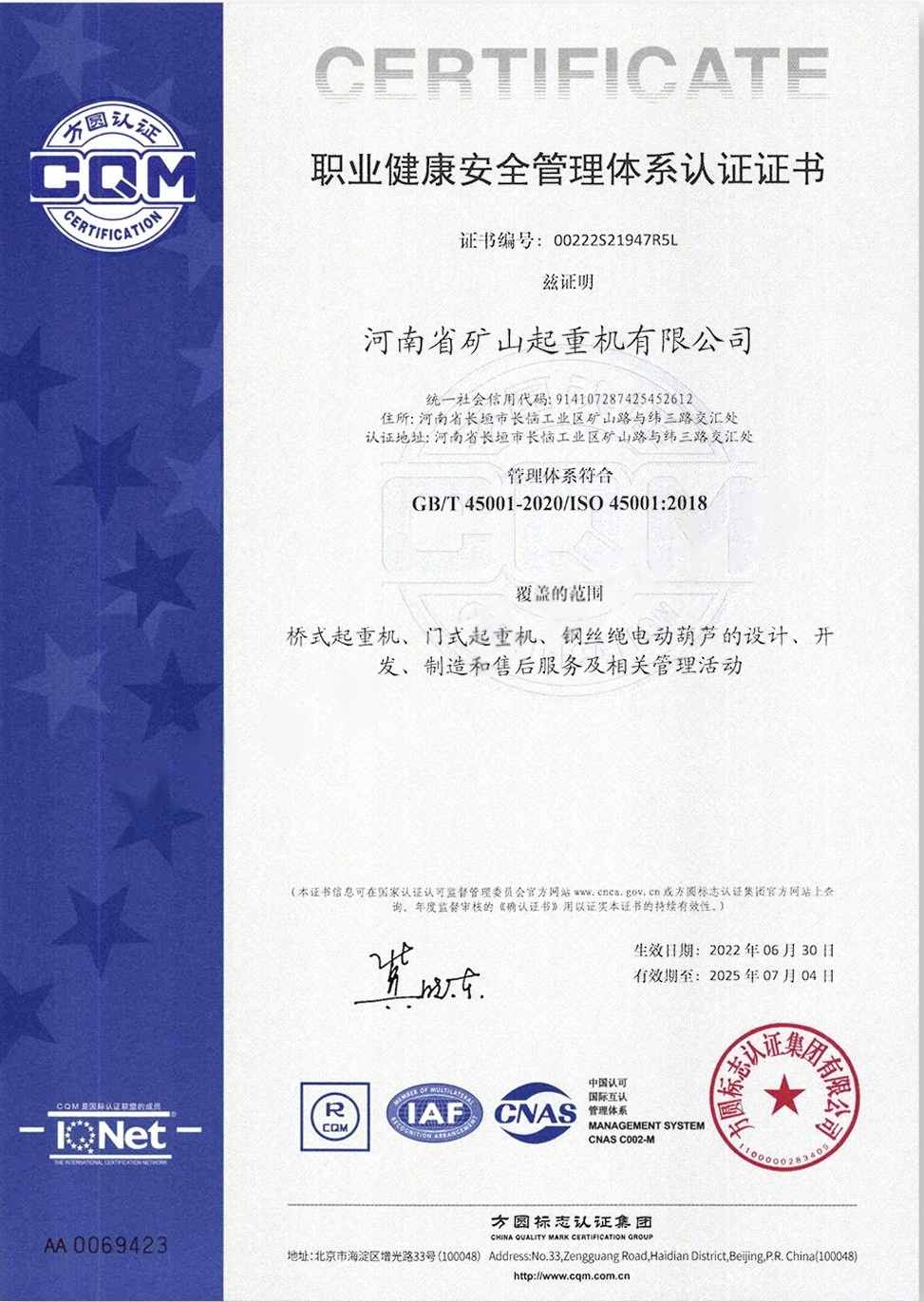
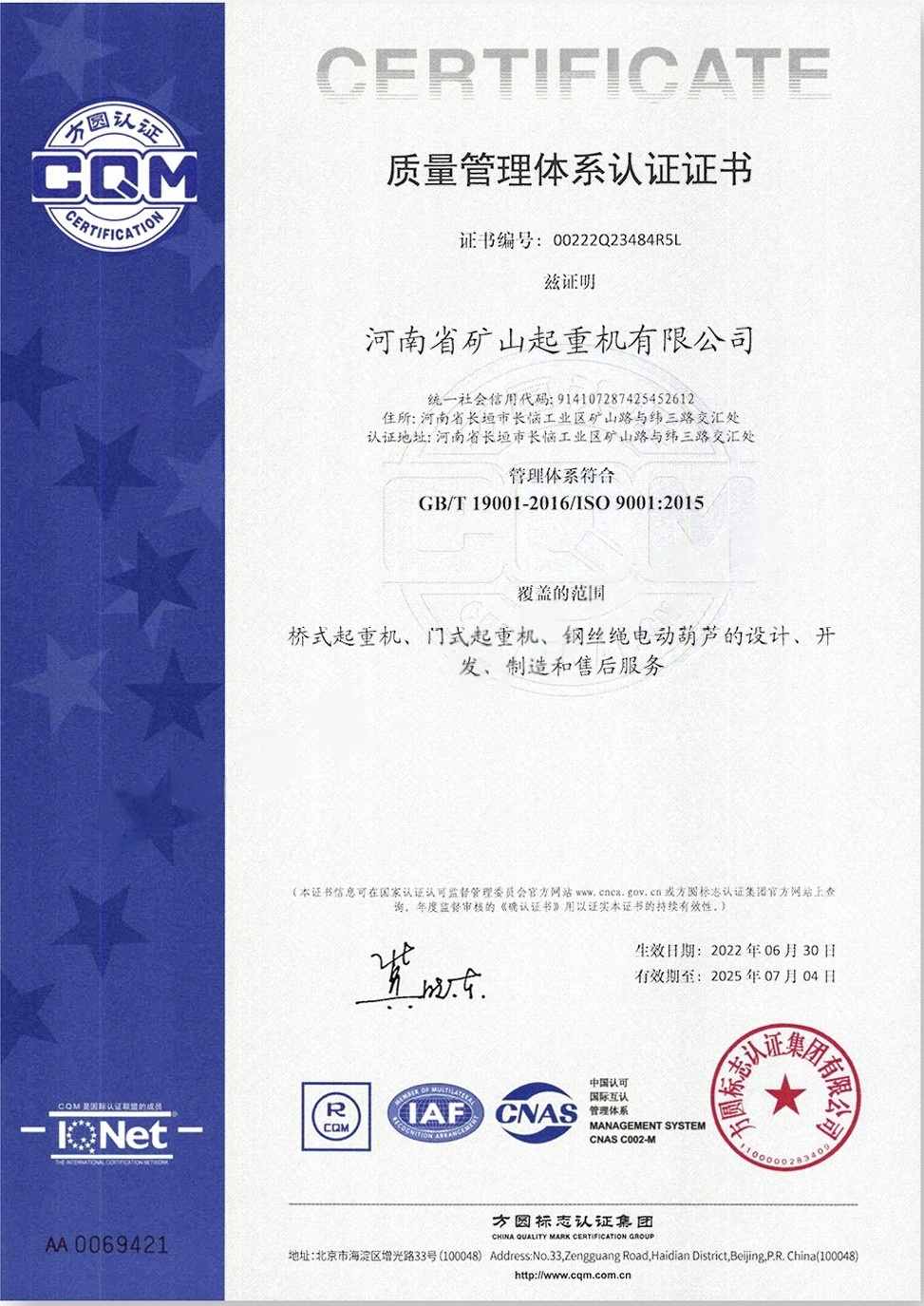
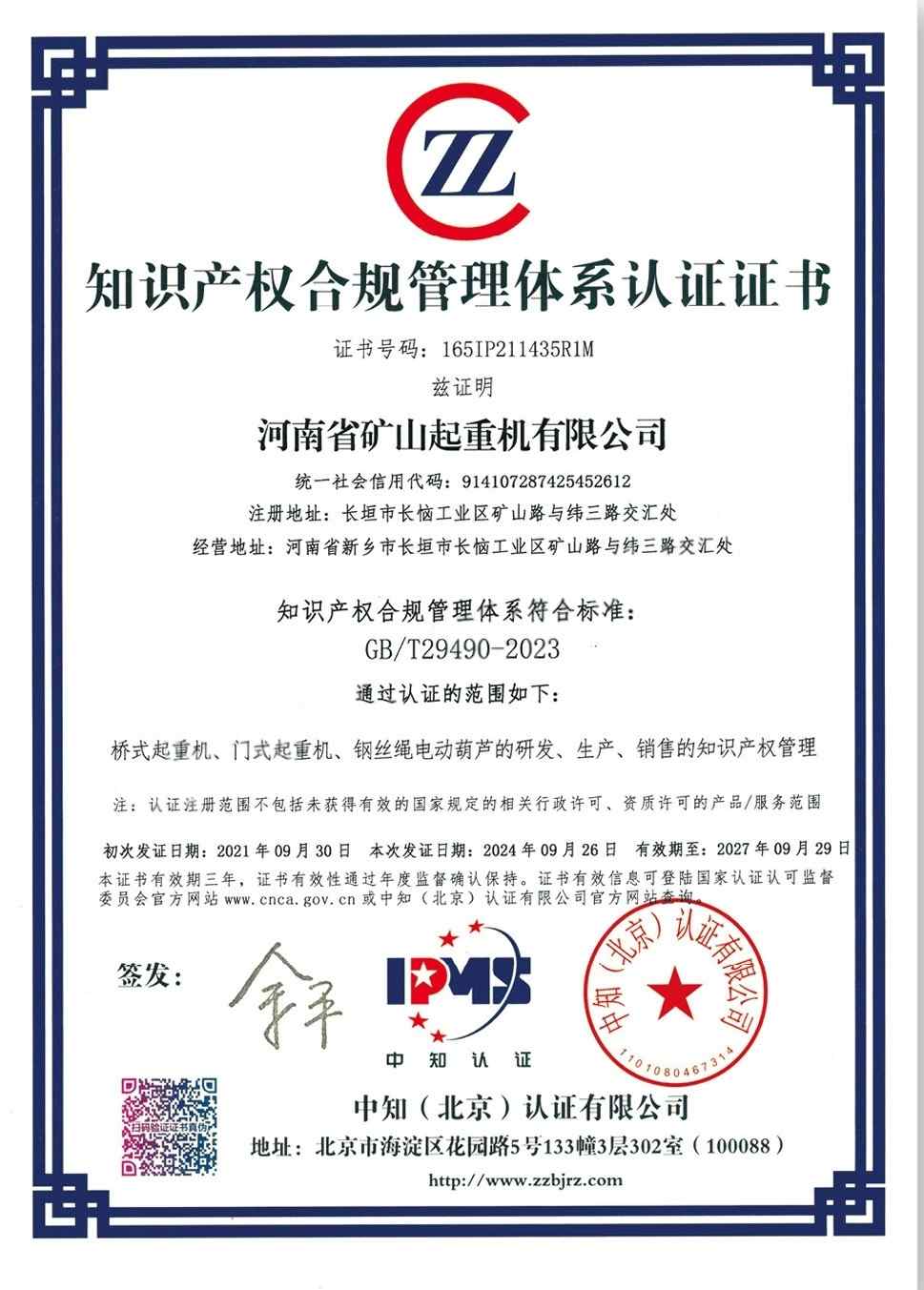
    Special equipment manufacturing license is the basic qualification of the supplier, without this qualification can not produce qualified Crane, also can not pass the safety supervision and acceptance.

    Export or special working conditions need to correspond to the certification (European CE, North American ASME, explosion-proof ATEX / IECEx), such certification requires the factory to have the corresponding production and testing capabilities.

    Need to verify the authenticity of the qualification, to avoid small factories to forge, the use of expired documents, special working conditions without complying with the certification of the equipment exists a serious safety hazard.

    Evaluation of technical capabilities, focusing on the ability to customize the program

    Reliable suppliers will combine the workshop drawings, track beam condition, headroom height and other actual conditions out of the program, rather than only according to the tonnage, span and other parameters of the offer.

    The ability to optimize the design according to the site constraints (such as track beam load-bearing, workshop obstacles), rather than just selling standard models, is the core of the technical ability.

    The ability to customize and adjust is a key criterion for judging the technical level of suppliers.

    Focus on delivery and installation capabilities to ensure that the project lands on time

    Overhead Crane installation requires professional team debugging calibration, not simple lifting, installation quality directly affects the stability of equipment operation.

    Reliable suppliers have their own or certified installation team, which can provide commissioning, safety supervision and acceptance docking services to avoid outsourcing quality loss of control and responsibility shifting.

    Need to confirm the supplier’s delivery capacity, especially for export projects, need to be able to properly handle packaging, customs clearance and other matters, to avoid delays in the schedule.

    Emphasis on after-sales support to ensure long-term stable use

    Cranes require long-term maintenance, the lack of after-sales service will lead to failure can not be dealt with in a timely manner, delaying production and increasing maintenance costs.

    Perfect after-sales service should include remote troubleshooting, on-site maintenance, common spare parts inventory, regular preventive maintenance and other services.

    Overseas customers need to focus on confirming the supplier’s response speed and local service point configuration to ensure timely and efficient after-sales service.

    Account for the whole life cycle cost instead of low price.

    Low-priced suppliers often cut corners by using poor-quality parts and omitting safety devices, which pose potential safety hazards.

    Reasonably priced suppliers use qualified components and have lower equipment failure rates, resulting in lower whole life cycle costs in the long run.

    When purchasing, it is necessary to clarify the scope of the offer and account for the cost of installation, certification, spare parts and other full process before making a decision.

    Focus on communication response speed, to ensure the smooth progress of the project

    The response speed and communication quality of suppliers directly reflect their responsibility, and suppliers who are patient before and timely after sales are more trustworthy.

    Customized projects need to repeatedly check the parameters, smooth communication can reduce the trouble, improve efficiency and avoid delaying the project progress.

    If you have the conditions, be sure to visit the supplier’s factory

    Site visit can visualize the supplier’s production equipment, quality inspection process, spare parts inventory, to confirm its real production capacity.

    Some small factories do not have actual production and testing capabilities, only outsourcing equipment, site visits can avoid being misled by false advertising.

    Avoid the common misconceptions in the selection of suppliers

    Selection of suppliers are prone to the following misconceptions, which should be avoided:

    • Only low price is taken, ignoring the qualifications and cases, resulting in unqualified equipment can not be used;
    • Blindly superstitious big factory, ignoring its slow after-sales response, small factories need to qualification and experience as a prerequisite;
    • Neglect the installation and after-sales service, equipment problems can not be solved in time;
    • Gullible verbal promises, not after-sales, warranty, delivery time written into the contract, it is difficult to maintain rights later.

    Written in the end: choose the supplier that is to choose a long-term partner!

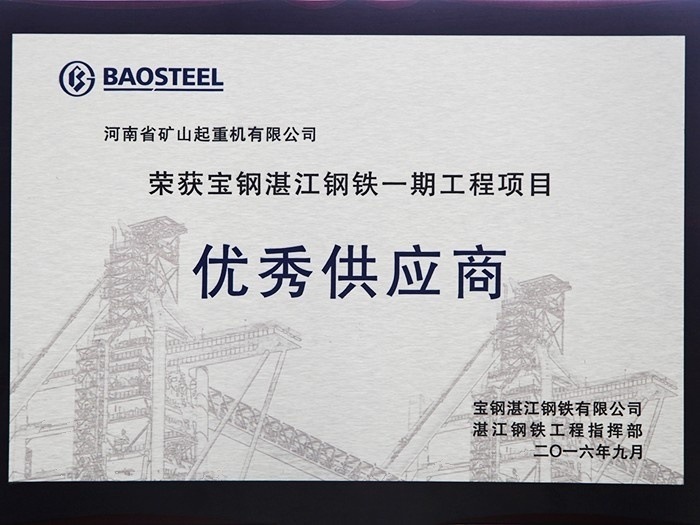
    Henan Mine Crane Co., Ltd. is a professional manufacturer and service provider of cranes and material handling products, research and development, design, manufacturing, sales, service in one, to provide customers with overall solutions and full life cycle services. The company has been committed to the intelligent, green and high-quality development of the Crane industry, and has obtained more than 700 national patents and provincial scientific and technological achievements.

    Leading or participating in the formulation and revision of more than 100 international, national, industry, local and group standards, providing the most cost-effective products and services for tens of thousands of customers in more than 130 countries around the world. In the realization of the scale of annual output value of more than 10 billion, no loans, no financing, no delinquency.

    At present, the company has achieved remarkable results in more than 50 professional fields such as aerospace, automobile and shipbuilding, petrochemical, railroad and port, iron and steel smelting, machinery manufacturing and waste incineration, etc. In 2025, the company will realize the annual production and sales of all kinds of lifting equipment of more than 143,000 units (sets).

    Won the “China Industry Award Nominee”, “National Quality Benchmark”, “National Green Factory”, “National Excellence Level Intelligent Factory National Quality Benchmark“, ”National Green Factory“, ”National Excellent Intelligent Factory“, ”National Enterprise of Abiding by Contracts and Keeping Credit“, ”National Manufacturing Individual Champion Enterprise“, ”National Civilized Unit” and more than 500 other awards and honors. Civilized Unit” and more than 500 awards. The output and sales volume of products, market share, and level of automation and intelligent equipment have ranked the forefront of the same industry in China for many years.

    Henan Mine Crane is a high-tech enterprise, which has gathered more than 10 famous experts and 200 middle and senior engineers to form a strong technical team, focusing on the innovative design and research and development of products. In order to continue to promote technological innovation, Henan Mine Crane has established a number of high-level R & D platforms, including the national enterprise technology center, provincial industrial design center, energy-saving crane engineering technology research center in Henan Province, as well as the crane key technology cooperation laboratory and the Central Plains Scholars Workstation, these platforms for the enterprise’s technological breakthroughs provide a solid support.

    In addition, Henan Mine Crane and a number of well-known universities and research institutions to establish a long-term cooperative relationship, including Beijing Lifting and Transportation Machinery Design and Research Institute Co., Ltd, Henan Provincial Institute of Special Equipment Inspection Technology, Harbin Institute of Technology, Xi’an University of Architecture and Technology, North China University of Water Conservancy and Hydroelectric Power and Taiyuan University of Science and Technology. Through the deep integration of industry, academia and research, Henan Mine Crane continues to promote the innovation and development of crane technology, providing strong support for the progress of the industry.

    “Tree hundred years of mining source, create first-class enterprise” is the company’s long-cherished wish. The company’s “filial piety culture” as the core values of corporate culture, “three hearts and six most” as the development goal, to win the world in good faith, cooperation with friends from all walks of life, and is committed to leading the high-quality development of the Crane industry.

    If you are screening bridge gantry, harbor crane suppliers, feel free to communicate with us, we will help you clarify your needs and provide reliable programs.

    Henan Mine CraneDiscuss your requirements ↗
  • How to Choose Intelligent Crane for High-Density Warehouse?

    How to Choose Intelligent Crane for High-Density Warehouse?

    How to Choose Intelligent Crane for High-Density Warehouse?

    High-density warehouses are reshaping modern logistics, manufacturing, and distribution. As land and labor costs climb, operators are turning storage upward instead of outward, packing more inventory into the same footprint while demanding faster throughput and tighter inventory accuracy. An intelligent crane sits at the center of that shift , the single piece of equipment that can reach 30-plus meters into a rack structure, place a pallet within millimeters of its target, and report its own health back to a control room in real time.

    But intelligent crane is not one product. It’s a category that spans overhead bridge cranes, automated stacker cranes, gantry cranes, and monorail systems , each suited to different building shapes, load types, and automation goals. Choosing the wrong one is an expensive mistake: crane systems run into six and seven figures, and a poor fit shows up for a decade in wasted cycle time, bottlenecked throughput, or a system that can’t scale with the business.

    This guide breaks down what an intelligent crane actually is, why high-density warehouses need one, the main crane types currently on the market, and the ten factors that should drive your final decision , so you can walk into a vendor conversation asking the right questions instead of simply receiving a sales pitch.

    What Is an Intelligent Crane?

    Definition and Core Functions

    Henan Mine Crane manufactured intelligent crane is a computer-controlled lifting and transport system that combines mechanical crane hardware with sensors, drives, and software to move loads with minimal or no human intervention. Unlike a manually operated bridge crane, an intelligent crane makes its own micro-decisions , where to position the hoist, how fast to travel, and when to slow down for an obstacle , based on continuous data rather than an operator’s judgment.

    Core functions typically include:

    • Automated lifting and positioning: the crane travels to a programmed X/Y/Z coordinate without operator steering
    • Intelligent motion control: acceleration, deceleration, and anti-sway logic are calculated in real time
    • Real-time monitoring: load weight, position, motor temperature, and cycle status are tracked continuously
    • Data collection and analytics: every movement becomes a data point for throughput analysis and capacity planning
    • Remote operation and diagnostics: technicians can view crane status or intervene from outside the building or off-site

    Key Components

    Beneath the software layer, Henan Mine Crane manufactured intelligent crane still relies on proven mechanical building blocks:

    • Overhead bridge structure or mast: the load-bearing frame that spans the aisle or bay
    • Hoist and trolley (or telescopic fork on stacker cranes): the mechanism that lifts and extends to the load
    • Servo drive systems:precision motors that replace simple on/off contactor control
    • PLC control system: the onboard “brain” executing motion commands and safety logic
    • Sensors and encoders: laser rangefinders, rotary encoders, and proximity sensors that give the system positional awareness
    • Industrial communication network: typically Ethernet/IP or a similar protocol linking the crane to the plant network
    • Human-machine interface (HMI): a touchscreen or dashboard for manual override, diagnostics, and maintenance

    How Intelligent Cranes Differ from Conventional Cranes

    The difference isn’t cosmetic , it changes what the equipment can be trusted to do unsupervised:

    • Automated operation: replaces manual joystick or pendant control for routine cycles
    • Higher positioning accuracy: often within a few millimeters, versus operator-dependent placement
    • Reduced manual intervention: one technician can oversee multiple aisles instead of one operator per crane
    • Integration with digital warehouse systems: the crane executes tasks assigned by a WMS or WCS rather than a verbal work order
    • Predictive maintenance capabilities: vibration and temperature trends flag a failing bearing weeks before it fails, instead of after a breakdown halts the aisle

    Why High-Density Warehouses Need Intelligent Cranes

    Maximizing Vertical Storage Space

    Floor space is finite; ceiling height is comparatively cheap to build into. Intelligent cranes , particularly stacker cranes in narrow aisles , routinely enable storage heights that a counterbalance forklift or reach truck simply cannot reach safely, letting operators convert unused overhead air into revenue-generating pallet positions. Facilities that switch from wide-aisle manual racking to narrow-aisle crane-served racking commonly report meaningfully higher pallet density in the same building envelope.

    Improving Material Handling Efficiency

    A well-specified crane executes a consistent, repeatable cycle time regardless of shift, fatigue, or staffing gaps. That consistency compounds: predictable cycle times make it possible to model throughput accurately, schedule inbound and outbound waves with confidence, and eliminate the variability that manual fleets introduce during peak periods.

    Reducing Labor Costs

    Labor is the largest controllable operating cost in most warehouses, and it’s also the least predictable , turnover, absenteeism, and seasonal hiring all create risk. An intelligent crane doesn’t need a shift schedule. It shifts labor from repetitive lifting tasks toward higher-value supervisory, maintenance, and exception-handling roles, which is especially valuable in tight labor markets where warehouse staff are hard to find and retain.

    Enhancing Workplace Safety

    Manual high-reach operations , forklifts working at height in narrow aisles — are among the riskier tasks in a warehouse. Intelligent cranes remove the operator from the point of lift entirely for automated cycles, and modern safety layers (light curtains, area scanners, interlocked access gates) reduce the chance of a person entering an active aisle undetected.

    Supporting 24/7 Automated Operations

    Cranes don’t need breaks, and with proper maintenance scheduling they can run through multiple shifts, including unattended overnight cycles for replenishment or order-picking preparation. That extended operating window effectively adds capacity without adding building square footage.

    Increasing Inventory Accuracy

    Every crane movement is logged against a specific rack location and SKU. Combined with a WMS, this turns the crane into an inventory control tool as much as a material handling one , cycle counts, location audits, and slotting decisions all become more reliable when the system, not a person’s memory, is recording every put-away and retrieval.

    Types of Intelligent Cranes Used in High-Density Warehouses

    Intelligent Overhead Bridge Crane

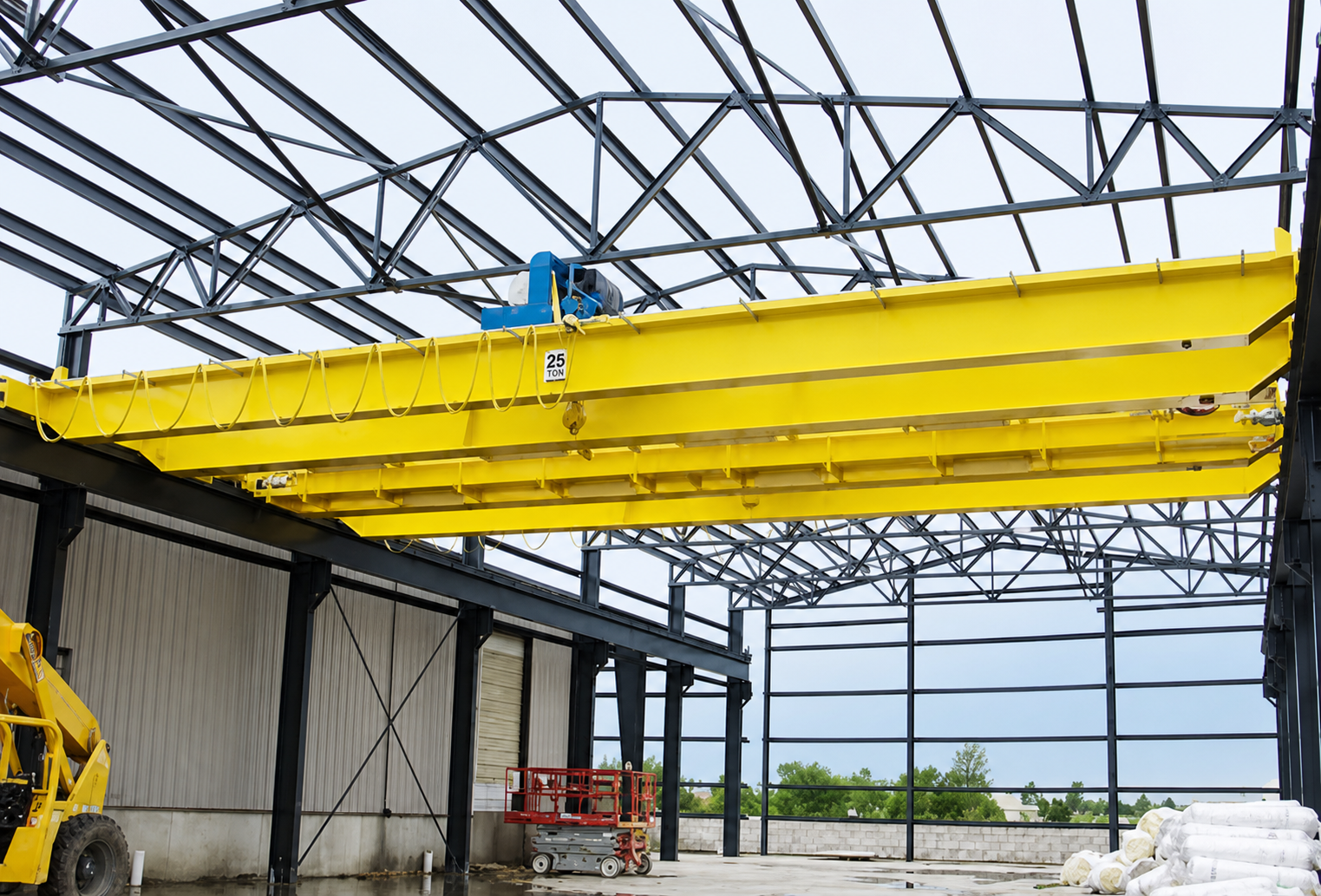
    Henan Mine Crane manufactured bridge crane rides on rails at the top of the building and spans the full width of the structure, lifting and moving loads via a trolley-mounted hoist.

    Best for:

    • Manufacturing warehouses handling large or irregular loads
    • Heavy industrial storage (coils, machinery, structural components)
    • Assembly plants where the crane also feeds production lines, not just racking

    Automated Stacker Crane (AS/RS)

    The workhorse of automated high-bay storage, a stacker crane runs on a fixed rail within a single aisle, lifting a mast-mounted carriage and extending telescopic forks into single-, double-, or multi-deep rack positions. Stacker cranes are typically the default choice when the goal is maximum storage density within a purpose-built or retrofitted high-bay structure.

    Applications:

    • Automated warehouses with high SKU counts
    • High-bay storage exceeding 12–15 meters
    • Distribution centers running continuous inbound/outbound cycles

    Intelligent Gantry Crane

    A gantry crane is essentially a bridge crane supported on floor-mounted legs rather than building rails, which makes it suitable for spaces without the structural steel to support an overhead runway.

    Suitable for:

    • Outdoor storage yards
    • Large logistics parks with mixed indoor/outdoor storage
    • Heavy equipment or oversized-load storage

    Monorail Intelligent Crane

    A monorail system runs a motorized hoist along a single fixed overhead track, often looping between storage, production, and shipping zones.

    Ideal for:

    • Production lines requiring point-to-point transfer
    • Component transfer between fixed stations
    • Compact warehouse layouts where a full bridge crane’s footprint isn’t justified

    10 Key Factors to Consider When Choosing an Intelligent Crane

    1. Warehouse Layout and Available Space

    Start with the building itself, not the crane catalog. Building dimensions, clear ceiling height, column spacing, and existing rack arrangement all constrain which crane types are even physically viable. Travel paths also matter: a stacker crane needs a dedicated straight aisle, while a bridge or gantry crane needs clear overhead runway support. Retrofitting an existing building is usually more constrained than designing a greenfield facility around the crane from day one.

    A full layout assessment should also account for floor loading capacity , crane rails and high-bay racking both introduce significant point loads that older slabs weren’t necessarily designed to bear. Fire suppression clearances, existing dock positions, and any conveyor hand-off points the crane will interface with should be mapped before specs are finalized. Skipping this step is one of the most common causes of change orders once installation begins, because a design that looks fine on paper often collides with an as-built column, beam, or sprinkler line that wasn’t captured in the original drawings.

    2. Load Capacity Requirements

    Specify both the average load your operation actually handles and the maximum load you need to accommodate, including outliers like oversized pallets or non-standard containers. Build in headroom for future capacity expansion , undersizing a crane to save on upfront cost is one of the most common regret-inducing decisions buyers make, because retrofitting a heavier-duty mast or hoist later is far more disruptive than specifying it up front. Load dimensions (not just weight) also determine mast clearance and fork/spreader design.

    It also helps to separate typical load profiles from the edge cases that show up a handful of times a year , a seasonal SKU, an oversized promotional display, or a returned pallet with irregular wrapping. Vendors will size the crane to the numbers you give them, so if those numbers only reflect the median day, the system may struggle on the busiest one.

    3. Lifting Height and Span

    Storage rack height, maximum hook height, and bridge span selection all need to be matched precisely to your racking design , not approximated. A crane specified a few meters short of your top rack level is a hard failure, not a minor inconvenience, so this figure should come from a surveyed building drawing, not an estimate.

    4. Automation Level

    Not every operation needs, or can financially justify, full automation on day one. Compare:

    • Semi-automatic: operator-assisted with automated positioning aids
    • Fully automatic: no operator involvement for standard cycles
    • AI-assisted operation: dynamic route and task optimization layered on top of automated control
    • Remote-controlled systems: an operator supervises from a fixed station rather than riding the crane

    Many operators phase in automation, starting semi-automatic and upgrading control software as volume and confidence grow.

    5. Positioning Accuracy

    High-density racking has tighter tolerances than conventional pallet racking, so positioning technology matters more than it might first appear:

    • Laser positioningfor absolute location reference
    • Encoder systemsfor continuous travel and lift feedback
    • Anti-sway technologyto stabilize suspended loads during acceleration and deceleration
    • Automatic path optimizationto shorten travel distance across combined X/Y/Z movement

    intelligent warehouse crane

    6. Speed and Throughput

    Evaluate hoisting speed, trolley speed, and bridge (or crane) travel speed together, not in isolation , a fast hoist paired with a slow travel speed still bottlenecks overall cycle time, since the crane’s actual cycle time is governed by whichever axis is slowest for a given movement, not by the fastest spec on the sheet. Ask vendors for a cycle time figure based on your actual rack dimensions and load profile, not a generic spec sheet number, and model how that cycle time translates into daily warehouse productivity at your required order volume. It’s also worth asking how throughput changes under a mixed workload of simultaneous inbound and outbound tasks, since single-cycle numbers rarely reflect real operating conditions during peak periods.

    7. Software Integration

    A crane is only as useful as the systems that tell it what to do. Confirm compatibility with:

    • Warehouse Management System (WMS): inventory and location logic
    • Warehouse Control System (WCS): real-time task dispatch to equipment
    • Manufacturing Execution System (MES):for facilities feeding production lines
    • ERP platforms: for order and inventory data at the enterprise level
    • IoT platforms: for condition monitoring and analytics dashboards

    Software integration is consistently one of the more time-consuming parts of a crane project , industry data on automation rollouts points to the WMS-to-equipment handshake as a leading cause of project delays — so ask vendors for reference integrations with your specific WMS/ERP stack before signing. Where possible, request a proof-of-concept or sandbox test of the crane’s task-dispatch interface against your actual WMS version, not just a generic API document. Budgeting a contingency of 15–20% of total project cost for integration work, on top of the hardware quote, is a realistic planning assumption rather than a worst-case one.

    8. Safety Features

    At minimum, expect:

    • Obstacle detection
    • Anti-collision systems (crane-to-crane and crane-to-structure)
    • Overload protection
    • Emergency stop functionality accessible from multiple points
    • Load monitoring
    • Access control at aisle entry points
    • Defined safety zones with interlocked gates or light curtains

    These aren’t optional extras, they’re what makes unattended, high-speed automated operation defensible from a liability and insurance standpoint.

    9. Energy Efficiency

    Cranes run long hours in high-density facilities, so efficiency compounds over the equipment’s life , a marginal difference in per-cycle power draw becomes a meaningful number once multiplied across tens of thousands of annual cycles. Look for:

    • Variable frequency drives (VFDs)for smoother, lower-draw acceleration
    • Regenerative brakingthat feeds energy back into the system during descent
    • Intelligent power managementthat reduces draw during idle periods
    • Energy consumption monitoringto track and benchmark usage over time, and to flag drive or motor wear before it shows up as a full failure

    10. Maintenance and Serviceability

    A crane that can’t be serviced quickly becomes a single point of failure for an entire aisle. Evaluate:

    • Predictive maintenancecapability, not just scheduled maintenance
    • Remote diagnosticsso issues can often be triaged before a technician is dispatched
    • Spare parts availability,ask about lead times for critical components, not just a general parts list
    • Cloud monitoringfor fleet-wide visibility across multiple cranes or sites
    • Service response timecommitments in the vendor’s service-level agreement

    What a Typical Implementation Timeline Looks Like

    Buyers are frequently surprised by how long a crane project takes from signed quote to full-speed operation. A realistic mid-complexity project generally moves through four phases:

    • Assessment and design (4–8 weeks):facility audit, throughput analysis, and system design, where the vendor’s proposed solution gets validated against your actual operation rather than a generic spec sheet
    • Procurement and site prep (8–16 weeks):equipment lead times vary widely, and crane-based AS/RS components typically sit at the longer end of that range, with site prep for rails, power, and racking running in parallel
    • Installation and integration (6–12 weeks): hardware installation is usually the easy part; software integration between the WMS, WCS, and crane controls is where most schedule risk lives
    • Testing and ramp-up (4–8 weeks):expect reduced throughput in the first week, scaling toward full capacity by roughly the fourth week, with staff training running concurrently

    Altogether, a mid-complexity crane project commonly takes five to eleven months from kickoff to full-speed operation, and larger crane-based AS/RS installations can run longer. Building that timeline into your planning, rather than assuming a Henan Mine Crane Factory supply crane can be ordered and running within a quarter, avoids the operational strain of expecting capacity before it actually exists.

    Intelligent Crane Technologies That Improve Warehouse Performance

    Beyond the base crane hardware, several technology layers separate a merely automated crane from a genuinely intelligent one:

    • AI-based motion optimization: dynamically recalculates travel paths to minimize cycle time across multiple simultaneous task requests
    • Machine vision systems: verify load presence, pallet condition, or barcode/label orientation before a movement executes
    • Digital twin technology: a virtual model of the crane and racking used to simulate layout changes or new SKU profiles before committing physical changes
    • IoT-based equipment monitoring: continuous sensor data streamed to a central dashboard for fleet-wide health tracking
    • RFID and barcode integration: automatic load identification without a manual scan step
    • Automatic load identification: the crane confirms it has picked up the correct item before releasing it from the source location
    • Cloud-based fleet management: centralized oversight when a site runs multiple cranes across several aisles or buildings

    These technologies are increasingly bundled into mid-tier and premium crane packages rather than sold as pure add-ons, so it’s worth asking which are standard versus optional in any vendor quote, and which require a separate licensing or subscription fee beyond the initial hardware purchase.

    Intelligent Crane vs Traditional Overhead Crane

    Feature Intelligent Crane Traditional Crane
    Automation High Manual
    Positioning Accuracy Excellent Operator dependent
    Labor Requirement Low High
    Safety Advanced Standard
    Productivity High Moderate
    Inventory Traceability Yes Limited
    Remote Monitoring Yes No
    Predictive Maintenance Yes No
    Initial Investment Higher Lower
    Long-Term ROI Higher Moderate

    The pattern here is consistent: traditional cranes win on upfront cost, intelligent cranes win on nearly everything measured over the equipment’s operating life. For a warehouse that expects to run at high density and high volume for a decade or more, the higher initial investment is generally the smaller risk of the two options.

    Industry Applications

    Henan Mine Crane Factory supply intelligent cranes serve a wide range of sectors, each with its own priority factor:

    • E-commerce Fulfillment Centers: prioritize cycle speed and SKU-level accuracy for high order volumes
    • Automotive Manufacturing: need tight integration with production line sequencing
    • Steel Coil Warehouses:require heavy load capacity and specialized coil-handling attachments
    • Paper Roll Storage:need precise, gentle handling to avoid product damage
    • Cold Storage Warehouses:require components rated for sustained sub-zero operation
    • Aerospace Manufacturing:prioritize positioning accuracy and full traceability for regulated components
    • Electronics Production:often need cleanroom-compatible crane designs
    • Pharmaceutical Warehouses:require strict lot traceability and validated, auditable movement logs

    Across these sectors, the common thread is that the crane rarely operates in isolation. It’s usually one node in a larger material flow that includes conveyors, shuttle cars, AMRs, or production line feeds, which is exactly why the software integration factor above tends to carry more long-term weight in the decision than the mechanical specs alone.

    Common Mistakes When Selecting an Intelligent Crane

    Even experienced operations teams fall into predictable traps:

    • Choosing based only on initial cost:the cheapest quote rarely accounts for integration, training, and long-term maintenance costs, and a lower sticker price often just defers those costs to later in the project rather than eliminating them
    • Ignoring software compatibility:a crane that can’t talk cleanly to your WMS/ERP becomes a manual-override system in disguise, requiring staff to babysit tasks the automation was supposed to handle
    • Underestimating future warehouse expansion:sizing the crane for today’s volume instead of the next five years leaves no headroom when order volume or SKU count grows faster than planned
    • Selecting insufficient load capacity:trying to save money on a lighter-duty mast or hoist that can’t handle real-world load variability, which shows up as unplanned downtime the first time an outlier pallet arrives
    • Ignoring safety compliance:treating safety systems as add-ons rather than baseline requirements, which creates liability exposure and can delay commissioning if inspectors flag gaps
    • Failing to evaluate supplier support:a great crane from a vendor with weak regional service coverage is a long-term liability, since a multi-day wait for a technician means a multi-day loss of aisle capacity

    Future Trends in Intelligent Warehouse Cranes

    The category is still evolving quickly, and several trends are worth tracking when planning a crane investment meant to last a decade or more:

    • AI-driven autonomous cranescapable of dynamic task prioritization without operator input
    • 5G-enabled remote operationssupporting lower-latency remote control and monitoring
    • Digital twin-based maintenanceplanning, simulating wear patterns before physical inspection
    • Collaborative human-machine operations, where automated cranes and human staff share the same aisles safely
    • Carbon-efficient lifting systemsdesigned around energy recovery and reduced peak draw
    • Smart energy managementthat shifts non-urgent crane cycles to off-peak electricity periods
    • Fully automated smart warehouseswhere cranes, shuttles, and AMRs operate under a single orchestration layer

    Frequently Asked Questions

    How does an intelligent crane improve warehouse efficiency?

    It delivers consistent, repeatable cycle times regardless of shift or staffing, maximizes vertical storage density, and integrates with the WMS to keep inventory data accurate in real time — all of which reduce bottlenecks compared to manual handling.

    Can intelligent cranes integrate with WMS and ERP systems?

    Yes. Most intelligent crane systems are designed to receive task instructions from a WMS or WCS and report status back to ERP and MES platforms, though the depth of integration varies significantly by vendor and should be confirmed before purchase.

    What industries benefit most from intelligent cranes?

    E-commerce fulfillment, automotive manufacturing, steel and paper storage, cold storage, aerospace, electronics, and pharmaceutical warehousing all rely heavily on intelligent cranes, each for slightly different reasons ranging from throughput to traceability.

    Are intelligent cranes suitable for retrofit projects?

    Often yes, though retrofits are more constrained by existing building dimensions, column spacing, and floor loading than greenfield builds. A structural and layout assessment should always precede a retrofit crane purchase.

    How much maintenance does an intelligent crane require?

    Intelligent cranes still require scheduled preventive maintenance, lubrication, rail and wheel inspection, cable and encoder checks, on a routine cycle similar to any industrial equipment. What changes is how issues are caught: predictive maintenance features such as vibration monitoring and remote diagnostics typically flag a developing problem, like a bearing running slightly hot, weeks before it would surface through manual inspection alone, which meaningfully reduces unplanned downtime over the equipment’s life.

    What safety technologies are standard in intelligent cranes?

    Obstacle detection, anti-collision systems, overload protection, emergency stops, load monitoring, and interlocked access zones are standard baseline features on most modern intelligent crane systems.

    Henan Mine Crane Factory Custom

    The right intelligent crane, has less to do with the lifting capacity, but is more to do with building a solution that fits the specific needs of your layout, flexibility, storage density, automation plan and future business growth. Properly engineered intelligent crane systems increase productivity, reduce safety issues, easily interfaces with a warehouse management platform and sustains performance throughout the service life.

    Being an experienced crane manufacturer, Henan Mine Crane Factory offers customer-specific intelligent lifting solutions for high density warehouses, manufacturing plants, logistics centers and automated storage systems. All solutions are tailored to meet customers’ precise operational requirements, thereby enabling them to increase efficiency and reduce operating costs and forthcoming investment over the long term.

    Henan Mine CraneDiscuss your requirements ↗
  • How to Choose Intelligent Crane for Data Monitoring?

    How to Choose Intelligent Crane for Data Monitoring?

    How to Choose Intelligent Crane for Data Monitoring?

    With the intelligent manufacturing of factories and the normalization of intelligent construction sites, the safe, stable and low-cost operation and maintenance of high-risk and heavy-duty equipment such as cranes have become the focus of enterprise production management. Traditional cranes rely on manual inspection, regular maintenance and fault repair, passive mode, hidden danger investigation is not timely, has not kept up with the high-intensity, all-weather modern operation requirements.

    Intelligent crane equipped with data monitoring, relying on sensor acquisition, AI analysis and remote warning technology, realizes full-cycle digital management of equipment, which is also the mainstream choice for current equipment upgrading. In view of the monitoring data, selection methods, pit avoidance techniques and cost reduction schemes that everyone cares about, this article focuses on the theme of How to Choose Intelligent Crane for Data Monitoring and shares practical selection dry goods.

    What Makes a Crane Truly Intelligent for Data Monitoring?

    From manual inspection to real-time monitoring

    Traditional manual inspection takes daily, weekly and monthly cycles, belonging to intermittent and lagging control, which can only record the current equipment status during inspection, and cannot capture instantaneous abnormalities during equipment operation. Henan Mine Crane manufactured intelligent data monitoring crane is equipped with a full set of industrial-grade sensing equipment to achieve full-time, uninterrupted, and dead-angle-free data collection and status monitoring.

    Whether it is equipment no-load, light load, heavy load operation, or start-stop, amplitude change, walking, braking and other dynamic conditions, the system can collect parameters in real time, upload data synchronously, dynamically update equipment status, completely get rid of the time and space limit of manual inspection, so that the operation status of equipment every second can be traced, monitored and warned.

    Difference between automation and intelligent monitoring

    Many purchases are easy to confuse automated cranes and intelligent monitoring cranes. The core difference between the two is that the equipment operation logic and control capabilities are different. Ordinary automatic cranes can only complete fixed operation actions according to preset procedures, realize labor-saving operation, do not have data acquisition, analysis, prediction and early warning capabilities, cannot perceive the health status of the equipment itself, can only realize equipment operation automation, equipment status control, troubleshooting and operation and maintenance management still rely on manual completion.

    Henan Mine Crane manufactured intelligent crane equipped with data monitoring, the core is data-driven intelligent management and control, not only has the ability to automate operations, but also through mass operation data, independent analysis of equipment health, identification of abnormal conditions, pre-judgment of failure risks, generation of maintenance recommendations, and even linkage equipment to achieve automatic protection, complete the upgrade from “automatic operation” to “intelligent operation and maintenance”.

    Core monitoring architecture of an intelligent crane

    Intelligent crane with professional data monitoring capability has a complete three-layer core architecture, which is also the core standard for judging the intelligent level of equipment. The first layer is the sensing layer, which consists of load sensor, temperature sensor, vibration sensor, inclination sensor, wind speed sensor, wire rope detection sensor and other hardware, and is responsible for collecting the original data of equipment operation in all directions.

    The second layer is the transmission and processing layer, which realizes high-speed data transmission through industrial bus, 5G and Internet of Things modules. It is equipped with edge computing module to clean, screen and analyze data in real time, eliminate invalid interference data, quickly identify abnormal signals, and ensure data accuracy and timeliness.

    The third layer is the application layer, which includes local console, cloud background, mobile phone terminal, data report system and early warning alarm system, realizing data visualization display, historical data traceability, trend analysis, remote monitoring, fault alarm and maintenance reminder, and realizing the complete management process of equipment data from acquisition and transmission, intelligent analysis, landing application to continuous optimization.

    Which Monitoring Functions Really Matter?

    This is the core and most concerned sector of enterprise procurement, which directly determines the practicality and cost performance of intelligent cranes. Most users purchase intelligent monitoring cranes, and the core requirement is to clarify what data the equipment can monitor, what problems these data can solve, and whether they are suitable for their own production scenarios. The following five core monitoring functions cover 99% of industrial lifting operation scenarios, which are essential core functions for selection and core guarantee for equipment safety and operation and maintenance.

    Load and overload monitoring

    Load and overload monitoring is the most basic and important monitoring function of crane, which directly prevents and controls major safety accidents such as overturning, rope breaking and structural deformation caused by overload operation. The system collects core parameters such as hook lifting weight, real-time torque and lifting angle in real time through high-precision load sensors, and accurately records the load data of each operation.

    When the lifting weight is close to the rated load, overload trend or sudden overload occurs, the system will immediately trigger sound and light warning, synchronously limit dangerous operation, automatically cut off the operation exceeding the standard, and eliminate overload illegal operation from the source. At the same time, the system will keep all overload records, which is convenient for enterprises to check illegal operation, standardize operation flow, and adapt to the lifting operation requirements of workshops, construction sites, ports and other scenes.

    Motor and gearbox condition monitoring

    Motor and gearbox are the core power components of cranes, and also the core components with the highest failure rate and the highest maintenance cost. The intelligent monitoring system can collect the running temperature, working current, voltage, vibration frequency, start and stop times of the motor in real time, as well as the oil temperature, vibration, abnormal sound and speed deviation of the gearbox.

    Through continuous tracking of data, hidden faults such as overload heating of motor, abnormal circuit, bearing wear, abnormal gear engagement of gearbox, aging of lubricating oil, jamming wear and other hidden faults can be accurately identified, early warning and maintenance can be carried out in advance, major faults such as motor burning, gearbox jamming and power failure can be avoided, and the maintenance and replacement cost of core components can be greatly reduced.

    Brake performance monitoring

    The brake system is the safety line of defense for cranes. Brake failure, brake lag, and excessive brake wear are one of the main causes of sudden safety accidents in lifting operations. Traditional equipment can not monitor the brake state, can only rely on manual periodic inspection of the degree of wear, hidden danger is great.

    Intelligent Crane

    Wire rope health monitoring

    Wire rope belongs to crane high-frequency loss parts, broken wire, wear, corrosion, deformation, fatigue aging are common hidden dangers, manual visual inspection is difficult to find internal broken wire and hidden damage, easy to cause sudden rope accident. Intelligent wire rope health monitoring function, through the special sensor equipment nondestructive detection of wire rope state, accurate acquisition of wire rope wear degree, broken wire quantity, corrosion degree, tensile deformation, fatigue times and other data.

    The system can automatically generate the wire rope loss trend curve, predict the service life, remind the replacement in advance, and avoid extended service. At the same time, the detection data is kept in the whole process without manual disassembly inspection, which not only ensures the detection accuracy, but also saves a lot of manual detection time, and adapts to the lifting operation scenarios with high frequency and high load.

    Crane operating cycle and utilization analysis

    Henan Mine Crane manufactured crane operating cycle and utilization analysis is the core data support for enterprises to optimize production scheduling, activate equipment resources and calculate production costs. The system can automatically count the crane daily, monthly, annual start and stop times, operation time, no-load time, heavy load time, standby time, operation frequency, working load and other full-dimensional data.

    Through data analysis, enterprises can accurately judge whether the equipment utilization rate is up to standard, whether there is equipment idle, whether the operation schedule is unreasonable, whether the operators have illegal standby and other problems, and then optimize production scheduling, rationally allocate equipment resources, improve equipment utilization rate, and provide accurate data basis for capacity optimization, personnel assessment, and equipment procurement planning.

    How to Choose the Right Data Monitoring System

    Henan Mine Crane manufactured intelligent crane data monitoring system on the market is uneven, and problems such as serious functional homogeneity, poor adaptability and false intelligence are common. If you want to select a monitoring system suitable for enterprise working conditions, accurate data, stable and durable, and high cost performance, you must follow the following five core selection standards, accurately match your own needs, and do not step on pits and waste budgets.

    Choose sensors based on working conditions

    Sensor is the core hardware of data monitoring. Data accuracy and equipment stability depend entirely on sensor adaptability. Different operating conditions must match corresponding specifications of sensors. Conventional industrial sensors can be selected for room temperature and dust-free conditions. In harsh scenarios such as construction sites, ports, metallurgy, mines, etc., there are problems such as high temperature, high humidity, dust, strong vibration, strong electromagnetic interference, wind and rain erosion, etc., special sensors with high protection level, anti-interference and high temperature resistance must be selected, and equipment with IP65 and above protection level and ISO industry standards shall be preferred.

    At the same time, it is necessary to match the sensor range according to the crane tonnage, operating range and lifting height, reserve about 10% of the range margin, avoid the problems of monitoring failure caused by insufficient range and insufficient accuracy caused by excessive range, and ensure the stability and accuracy of monitoring data from the hardware source.

    Select real-time alarms instead of simple data recording

    Many low-cost monitoring systems only have simple data recording functions, can only query data afterwards, can not be real-time warning, lost the core value of intelligent monitoring. High-quality intelligent monitoring system, the core advantage lies in real-time acquisition, real-time analysis, real-time alarm, rather than simple data storage.

    During model selection, it must be confirmed that the system has millisecond data response capability. For all risk points such as overload, high temperature, abnormal braking, wire rope failure, motor failure, etc., local acousto-optic alarm and cloud message push and mobile phone end reminder can be triggered. Meanwhile, automatic locking protection under abnormal working conditions can be supported, so as to realize early warning in advance, in-process protection and tracing afterwards, and truly play the safety prevention and control role of intelligent monitoring.

    Ensure historical data storage and trend analysis

    Simple real-time monitoring is far from enough, with long-term historical data storage and trend analysis capabilities, in order to achieve full life cycle management of equipment. During model selection, it is necessary to confirm that the system supports long-term storage of mass data, and can retain equipment operation, alarm, maintenance and operation data by day, week, month and year, and support retrieval, query and export of reports at any time.

    More importantly, the system needs to have AI trend analysis function, which can automatically generate component loss curve, equipment health change trend and fault high incidence cycle based on long-term historical data, accurately predict future fault risk and maintenance node, so that maintenance plan can be based on evidence, and realize the upgrade from “passive maintenance” to “predictive maintenance”.

    Check compatibility with existing factory systems

    In the construction of enterprise digital factory, the compatibility of equipment system is very important. The newly added crane data monitoring system must support seamless connection with the existing MES, ERP, Internet of Things platform, intelligent site system and equipment management system of the factory, be compatible with mainstream communication protocols, and realize data intercommunication, unified control and centralized display.

    If the system compatibility is poor, independent operation, data island, not only can not be integrated into the enterprise digital system, but also increase the difficulty of equipment management, waste digital transformation costs. When selecting models, it is necessary to verify the openness of system interfaces and protocol compatibility in advance to avoid problems such as failure to connect and secondary transformation in the later stage.

    Consider remote monitoring and mobile access

    Modern equipment management has long been rid of on-site duty mode, remote monitoring, mobile management is the standard capability of intelligent cranes. When selecting models, confirm that the system supports cloud remote monitoring, computer web page terminal, mobile phone APP and multi-access of Mini programs. The management personnel can view the real-time operation status, historical data, alarm records and maintenance information of the equipment at any time without going to the site.

    At the same time, the system needs to support remote parameter debugging, remote fault diagnosis and remote data export, which greatly improves the efficiency of equipment management, especially for enterprises with multiple factories, multiple equipment and remote management, and realizes the control of all lifting equipment by one mobile phone.

    How Data Monitoring Reduces Crane Operating Costs

    The buyer pays the most attention to the return on investment (ROI), and all the functions of the intelligent crane data monitoring system are ultimately based on cost reduction and efficiency. Long-term data statistics show that intelligent cranes equipped with professional data monitoring systems can help enterprises reduce equipment operation and maintenance costs by 20%-40%, greatly improve productivity gains, and the core cost reduction and efficiency enhancement logic is reflected in four dimensions.

    Prevent unexpected downtime

    Reduce maintenance expenses

    Traditional blind periodic maintenance, there are a lot of invalid maintenance, excessive maintenance, spare parts waste problems. Intelligent data monitoring system relies on real equipment loss data to realize accurate predictive maintenance, on-demand maintenance, on-demand replacement of accessories, and reduce waste such as ineffective disassembly, repeated maintenance, and early replacement of accessories. At the same time, accurately locate fault points, shorten maintenance time, reduce manual maintenance costs, and greatly reduce annual maintenance expenses of equipment.

    Improve equipment lifespan

    Most of the equipment losses are caused by long-term abnormal working conditions, overload operation, hidden faults not repaired in time, and bad operating habits. The data monitoring system can correct illegal operations in real time, avoid abnormal working conditions, repair minor faults in time, avoid small problems accumulating into irreversible equipment damage, effectively slow down the aging speed of equipment, prolong the service life of the crane and core components, maximize the investment value of equipment, and postpone the cost of equipment replacement.

    Increase production efficiency

    Through equipment utilization data analysis, enterprises can optimize job scheduling, standardize operation processes, reduce idle and ineffective equipment operations, and improve the effective operation time of equipment. At the same time, the stability of the equipment is greatly improved, no frequent downtime maintenance is required, and the operation efficiency is significantly improved. The standardized and intelligent management and control mode can also force operators to standardize their operations, further improve the overall production and operation efficiency, and create more production capacity benefits for enterprises.

    Conclusion

    The traditional manual inspection and passive maintenance mode can no longer meet the safety standards and production efficiency requirements of modern industry. Intelligent crane with professional data monitoring capability can realize full life cycle digital management of equipment condition monitoring, fault warning, predictive maintenance and efficiency optimization.

    Enterprises who want to improve equipment safety, equipment turn-on rate and return on investment should choose Henan Mine Crane Factory, which can provide customized monitoring solutions, reliable sensor integration, scalable software platform and long-term technical support. It can effectively reduce the operation cost of crane in the whole life cycle, improve the overall operation efficiency, and provide stable digital support for enterprise intelligent manufacturing upgrade.

    Henan Mine CraneDiscuss your requirements ↗
  • How to Choose Gantry Crane Suppliers?

    How to Choose Gantry Crane Suppliers?

    How to Choose Gantry Crane Suppliers?

    Many overseas engineering contractors, factory procurement in the purchase of gantry cranes, most of the energy will be focused on the parameters of the equipment and price comparisons, but ignored the supplier’s own strength screening. Gantry Crane belongs to large customized industrial equipment, not standardized general goods.

    Your final choice of gantry crane supplier directly determines the equipment production process, operational stability, delivery cycle, as well as the subsequent years of operation and maintenance experience. A reliable gantry Crane manufacturer can help the project to avoid most of the installation faults, acceptance problems and downtime hazards.

    If the supplier is not strong enough, even if the parameters on paper meet the standard, there may be structural deformation, mismatched parts, delivery delays, incomplete information can not be cleared, and other types of problems. This article combines years of hands-on experience in serving global industrial projects to share a set of practical gantry crane manufacturer selection ideas to help overseas buyers accurately screen reliable partners.

    Why is it important to choose the right supplier of gantry Crane?

    Equipment quality determines the long-term operation status

    There is no uniform market standard for the steel welding, plate material and component assembly precision of gantry Crane, which is completely dependent on the production control capability of the manufacturer. Different industrial gantry crane supplier equipment, even if the tonnage, span parameters are the same, the overall quality will be significantly different.

    Craft solid manufacturers, better structural stability of the main beam, long-term outdoor heavy-duty operations are not easy to deformation, the service life of the machine can maintain more than ten years. The weak control of the supplier, prone to weld defects, plate thickness shrinkage, substandard parts and other issues, equipment put into use after frequent failures.

    Deliverability directly affects project progress

    Overseas projects have very high requirements on delivery time and data integrity. Many small suppliers have limited production capacity and are prone to production delays during peak order periods.

    In addition to the production schedule, the packing list, test reports, certificates of origin and other supporting information required for export are also the shortcomings of many ordinary manufacturers. Missing or wrong information will directly lead to overseas customs clearance obstruction, site acceptance delays, resulting in unnecessary schedule loss.

    After-sales support affects long-term operating costs

    Gantry Crane is a long-term high-frequency use of industrial equipment, the latter part of the inevitable replacement of wearing parts, routine commissioning, troubleshooting and other needs. Suppliers who lack a perfect service system are basically unable to provide effective support after equipment delivery.

    A reliable reliable gantry crane supplier can continuously provide spare parts supply, remote technical guidance and on-site commissioning services, which can significantly reduce equipment downtime and long-term operation and maintenance costs.

    Compliance qualification is related to project acceptance and import/export

    Different countries and regions have clear certification requirements for imported lifting equipment, the European Union market needs CE certification, the Russian-speaking countries need EAC certification, and some regions require compliance with FEM industry standards.

    The compliance ability of the supplier is the basic guarantee for the export project. Without corresponding qualifications and a full set of compliance documents, even if the equipment arrives smoothly, it will not be able to pass the acceptance of local safety supervision and cannot be put into normal use.

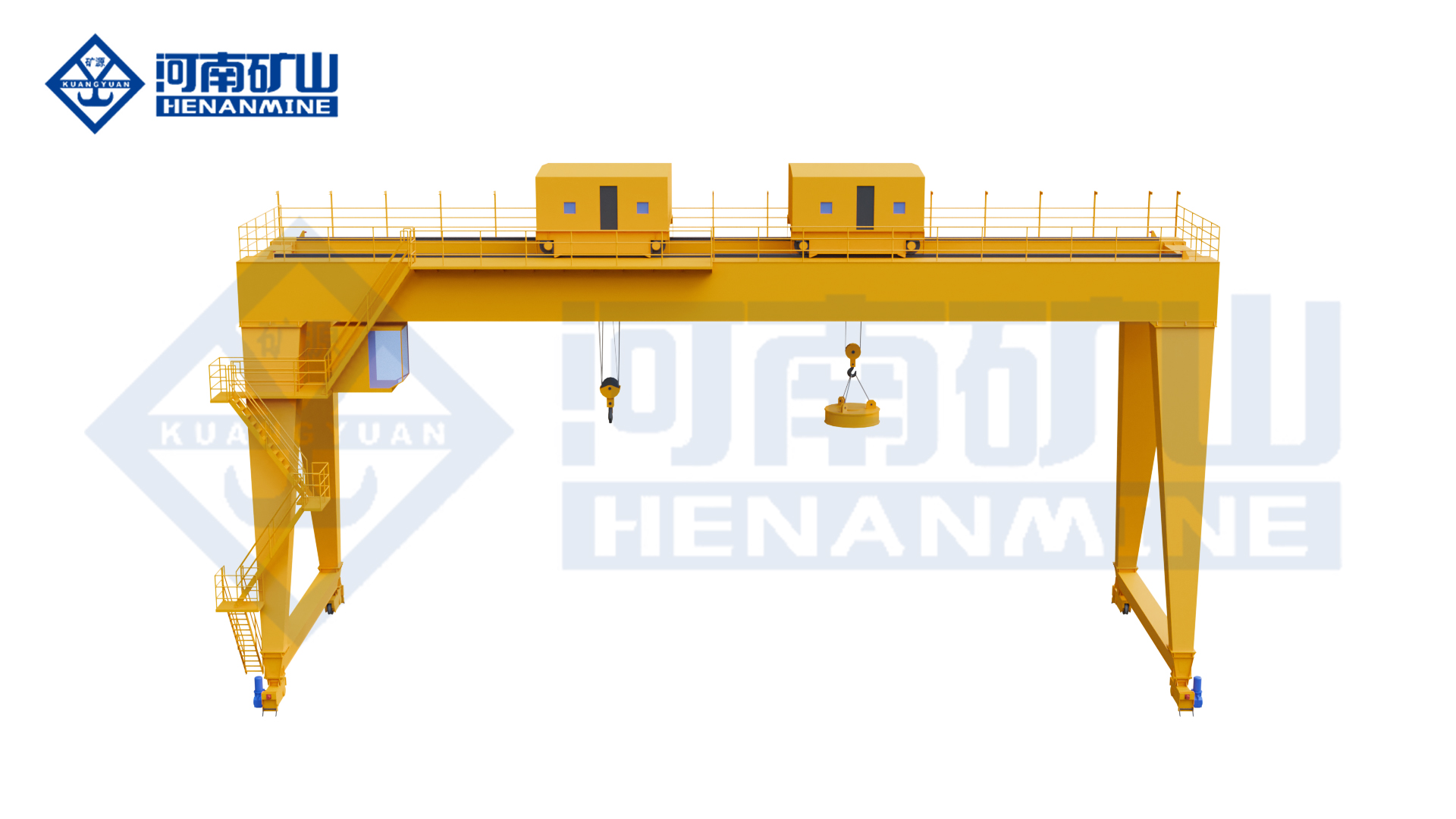
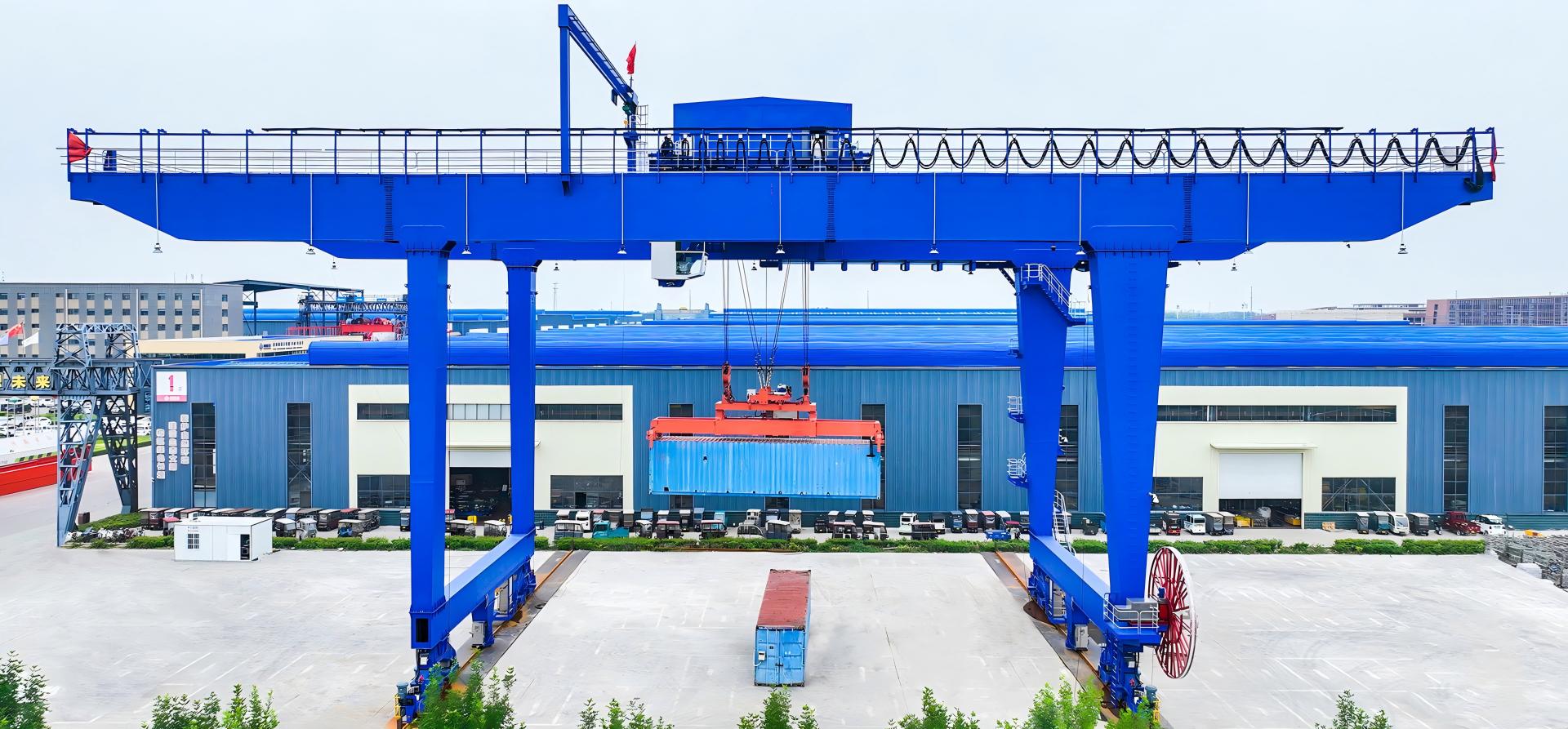
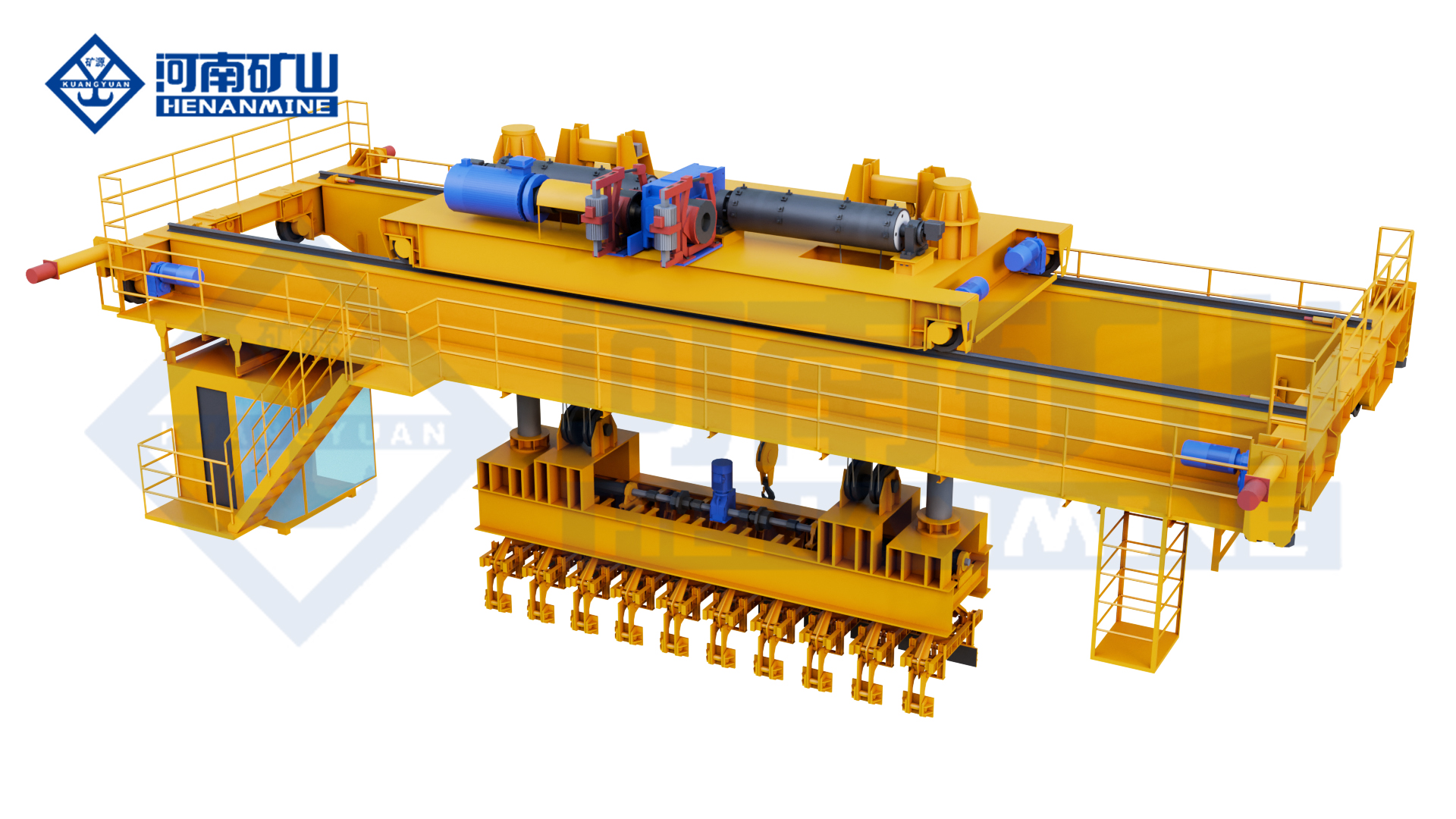
    Double Trolley Electromagnetic Hook Dual Purpose Gantry Crane

    Sort out the real needs of your project first

    Before comparing any gantry crane company, first clarify your own project needs, which can avoid being recommended by the supplier arbitrarily high or low equipment, preventing the budget from being wasted or the equipment from being unsuitable.

    Clarify the specific type of gantry crane required

    The gantry crane types suitable for different scenarios vary greatly in use and cost, and need to be accurately selected in conjunction with the operational scenarios. Common types include single girder gantry cranes, double girder gantry cranes, semi-gantry cranes, rail gantry cranes, tire gantry cranes and mobile small gantry cranes.

    Single girder models are more suitable for light load, low-frequency warehouse and small workshop operations; double girder models have a stronger carrying capacity, and are mostly used in heavy industrial yards and prefabricated component factories; tire gantry cranes do not require fixed rails, and are suitable for outdoor projects with flexible changes in the site. Accurately locating the model is the most basic step in gantry crane buying guide.

    Confirm the core technical parameters

    Parameters are not filled in arbitrarily, but need to be adapted to the site working conditions. The core parameters include rated lifting capacity, equipment span, effective lifting height, running length of the vehicle, working level, control mode and site power supply conditions.

    Many buyers tend to ignore the working level and simply focus on the tonnage size. In fact, high-frequency and heavy-duty factory production lines must be matched with high working level models, otherwise the equipment will be overloaded for a long time, accelerating the aging of parts.

    Sort out the site operating environment

    The operating environment directly determines the equipment’s anti-corrosion, windproof, dustproof, and high-temperature resistant configuration. Indoor workshop and outdoor yard equipment design standards are completely different.

    Outdoor equipment needs to be well protected against wind, rain and sun; coastal salt spray areas and chemical dust workshops need to be upgraded with heavy anti-corrosion coatings and sealed electrical configurations; high-temperature working conditions need to be equipped with high-temperature-resistant cables and heat-insulating components. Define the environmental conditions in advance, in order to allow suppliers to give targeted programs.

    Confirm the need for installation and commissioning services

    The scope of service varies greatly from supplier to supplier. Some manufacturers only provide bare equipment, does not include installation guidance, commissioning, training and other services.

    Overseas projects are mostly geographic distance, on-site installation is difficult, in advance to confirm whether the need for manufacturers to provide remote guidance, on-site supervision, commissioning services, to avoid the arrival of the equipment can not be used on the ground.

    Crane Suppliers|Henan Mine Crane

    China Crane Museum

    Distinguish whether the supplier is a source factory or a trading company

    When doing gantry crane procurement, distinguishing whether the partner is a manufacturer or a pure trading company can avoid the risk of quality and delivery from the source, which is a key detail that is easy to overlook in overseas procurement.

    The core advantage of the source factory

    Real physical manufacturers, with independent workshops, processing equipment and professional technical team, have absolute control over the production process, quality standards, delivery progress.

    When encountering drawing modifications, parameter adjustments, customized transformation needs, the factory can directly dock the technical tribal land, faster response speed. Equipment quality problems, manufacturers can also be directly responsible for rectification, there will be no layers of blame-shifting.

    How to verify the real capacity of the supplier

    You can take the initiative to ask for real workshop photos, production videos, processing equipment list and detailed production process information. At the same time, you can verify the enterprise registration information, export customs records, past overseas project delivery cases, to confirm that it has the real production and export capacity.

    Most of the pure trading companies do not have their own workshop, the equipment is completely outsourced, the quality standard is not uniform, the delivery progress is not controllable, and the ability of customized transformation is also very limited.

    Adaptation Scenarios for Trading Companies

    Not all traders are not optional. Some of the trading companies that are deeply engaged in the export of lifting equipment have long-term fixed cooperation with high-quality factories, with strong project coordination ability, and better services of document delivery, logistics docking, and multi-category supporting procurement, which is suitable for standardized conventional model procurement.

    Evaluate the engineering and technical strength of the supplier

    Gantry Crane belongs to the process of supporting equipment, technical ability is far more important than price. High-quality gantry crane manufacturer will not just rely on low prices to take orders, but with the site conditions to give the appropriate program.

    Accurate selection and matching ability

    Reliable technical team will first understand your operation industry, cargo type, operation frequency, site restrictions, and then recommend suitable models, rather than directly according to the parameters you give quotation.

    For example, prefabricated component factory heavy-duty high-frequency operation, port outdoor windy conditions, warehouse light-duty low-frequency operation, corresponding to the configuration of the model, the level of work, the protection standard is completely different, professional manufacturers will be targeted to optimize the program.

    Ability to check drawings and on-site working conditions

    High-quality suppliers will take the initiative to check the layout of the customer’s plant, track foundation parameters, ground bearing conditions, the distribution of obstacles on the site, in advance to avoid equipment installation interference, wheel pressure mismatch, span adaptation deviation and other issues.

    The reason why many low-priced programs fail is that manufacturers only look at the paper parameters, do not do on-site verification of the working conditions, resulting in the arrival of equipment can not be installed and used.

    Customized transformation capability

    Many overseas projects have special working condition requirements, which require non-standard customization. For example, installing professional spreader, upgrading anti-sway system, modifying cab control, adapting explosion-proof and high-temperature environment, and optimizing the anti-corrosion configuration of the whole machine.

    Manufacturers with strong technical strength can independently complete the drawing design, structural optimization, functional customization to meet the needs of various types of special projects, while small manufacturers can only produce standard models.

    Complete technical data output capacity

    Export projects have stringent requirements for technical documents, suppliers need to provide complete assembly drawings, wheel pressure parameters, electrical schematic diagrams, hydraulic schematic diagrams, operation and maintenance manuals, factory inspection records and other information. Complete information is a necessary condition for equipment customs clearance, acceptance and annual inspection.

    Verification of production strength and quality control system

    The final quality of the equipment depends on the manufacturer’s production and processing capabilities and quality control processes, which is the core hard index to determine the strength of the manufacturer.

    Steel structure processing technology

    The main steel structure of the gantry crane is the core of the equipment, cutting accuracy, welding process, assembly calibration, plastic processing, will affect the stability of equipment operation. Professional manufacturers will use precision cutting equipment, standardize the welding process, and do the overall plastic calibration after completion to eliminate deformation of the main beam, size deviation and other issues.

    Core parts supply chain

    The quality of core parts such as motor, reducer, brake, electrical components, wheels, bearings, etc. directly determines the equipment failure rate. Reliable manufacturers will choose the industry mainstream well-known brand parts, stable performance, high versatility, and more convenient for overseas customers to purchase replacement parts in the later stage.

    Most of the low-priced program will replace the niche miscellaneous brand parts, short-term problems can not be seen, but long-term frequent failures, and spare parts are difficult to match the replacement.

    Full-flow quality inspection process

    The formal production process includes raw material inspection, non-destructive testing of welds, dimensional accuracy checking, anti-corrosion coating testing, empty test run, full load test and other quality control procedures. Each process has corresponding inspection records to ensure that the whole machine meets the standard before leaving the factory.

    Standardized Quality System

    Manufacturers with ISO quality system certification have standardized processes for production, quality inspection and material management, and materials and accessories can be traced back to ensure that the quality of each piece of equipment is uniform to the greatest extent possible, avoiding batch quality deviation.

    Crane Suppliers|Henan Mine Crane

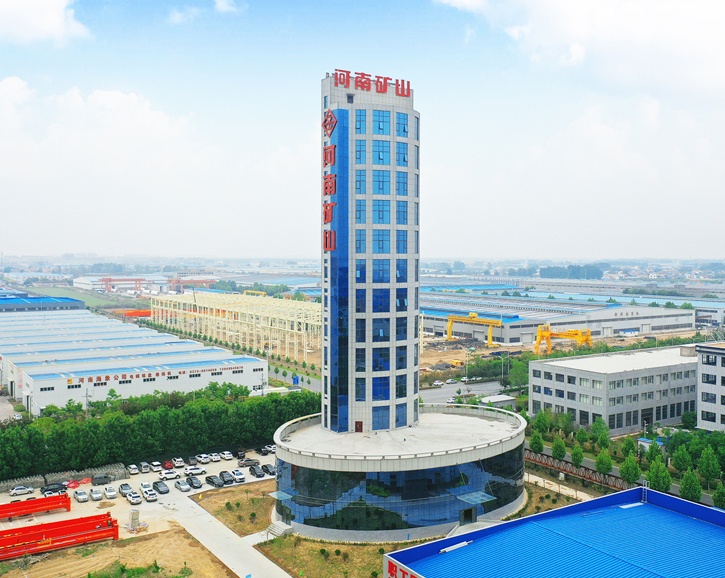
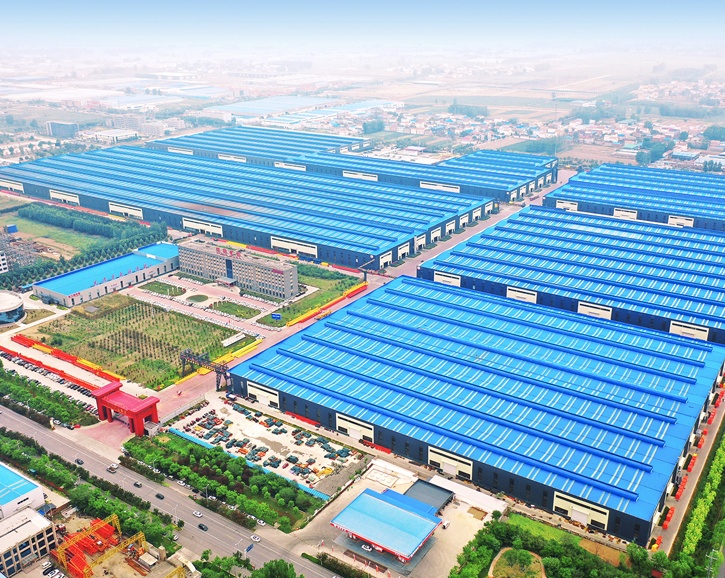
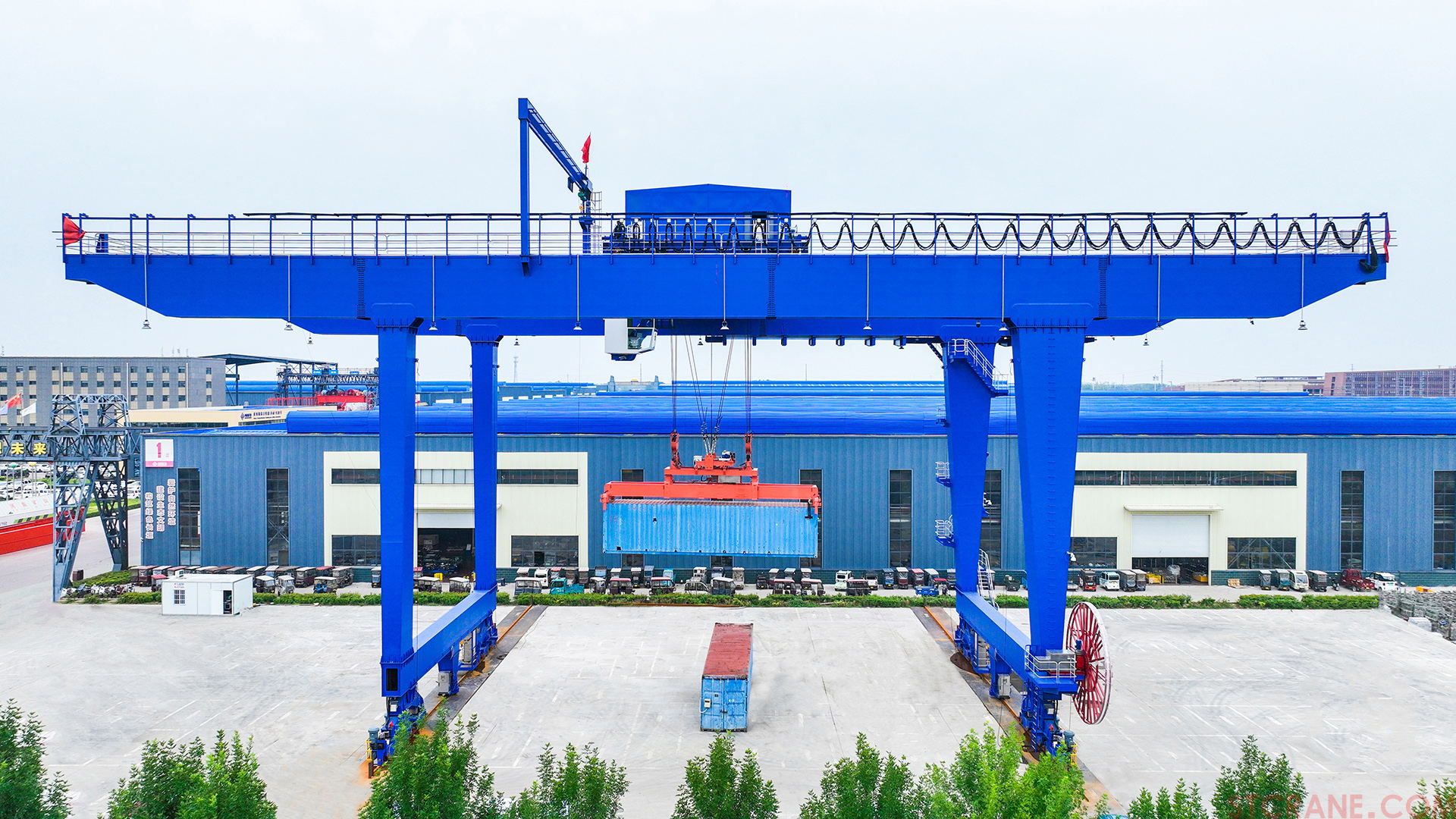
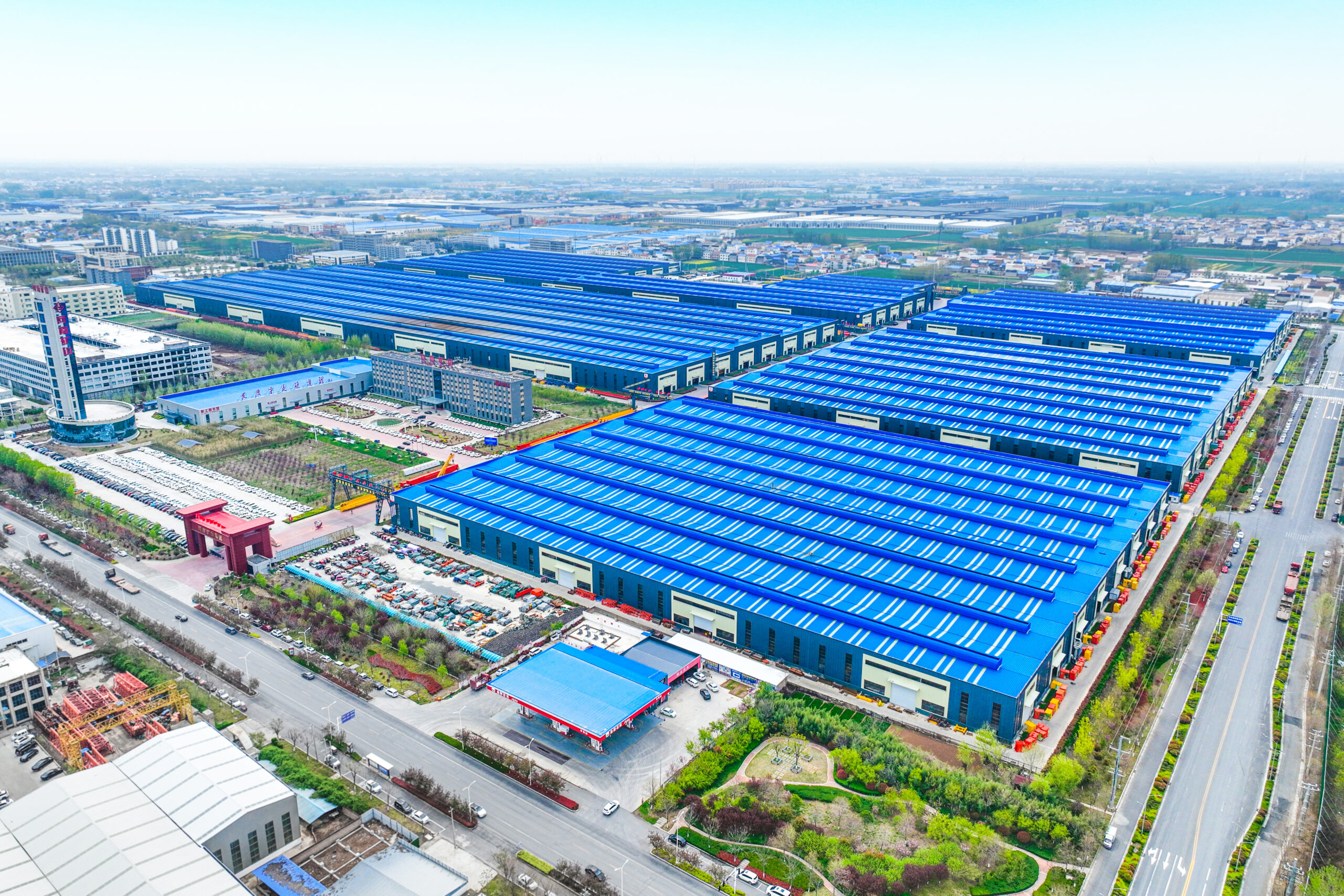
    Aerial view of Intelligent Industrial Park

    View the supplier’s experience in similar projects

    The working conditions of gantry cranes in different industries vary greatly, and suppliers with experience in similar projects know more about the scene pain points and adaptation requirements.

    Industry Scene Adaptation Experience

    Steel mills, prefabricated component factories, port yards, logistics warehouses, machine shops, outdoor yards, the intensity of operation, environmental conditions, equipment needs vary from scene to scene. Manufacturers familiar with the corresponding industry can accurately match the working level, protection configuration and functional modules.

    Verify real reference cases

    Before purchasing, you can take the initiative to ask for project cases with the same tonnage, the same span, the same working conditions and the same export area. Real project photos, completion videos and customer acceptance data are the most intuitive proof of manufacturers’ practical experience.

    Focusing on the export of industrial gantry crane supplier, will accumulate a large number of adapt to the standards of various countries, all kinds of working conditions of the project experience, can avoid all kinds of landing risks in advance.

    Verification of qualification and export compliance

    Enterprise and product qualification certification

    The basic ISO system certification is the foundation of the manufacturer’s strength, for export projects, CE, EAC, FEM and other international certifications are indispensable, and some countries have exclusive local access standards. Before purchasing, be sure to confirm that the certificates are real, valid, searchable and can be used for customs clearance and acceptance.

    Full set of export documents support

    Overseas shipments require commercial invoices, packing lists, certificates of origin, factory inspection reports, equipment qualification documents and other complete sets of information. Professional export manufacturers have a mature documentation team that can provide the corresponding information as needed to ensure smooth customs clearance.

    The importance of early verification of compliance

    The core reason why many procurement projects get stuck in the acceptance and customs clearance process is that the qualification and documents are not verified in advance. Once the information is missing or non-compliant, it will not only incur stranded costs, but also may lead to the equipment can not be put into use, resulting in huge losses.

    Correct comparison of gantry crane quotes

    Most buyers will directly compare the total price when purchasing, and prioritize the low-priced option, which is the easiest purchasing mistake to step on. Different suppliers of the offer contains the scope, configuration standards vary greatly, simply than the total price does not make any sense.

    Eliminate the only low price theory

    Clearly the scope of the offer

    Carefully check whether the quotation contains the steel structure of the main body, hoist trolley, a full set of electrical systems, rails, conductive systems, installation supplies, commissioning services and spare parts. Some of the low-priced offer contains only bare machine, the subsequent need to pay extra to add accessories, docking services, the final total cost is higher.

    Check the accessories brand and parameters

    The same function of the accessories, different brands of quality, life, price difference is very large. Be sure to clarify the core accessory brands and model parameters in the offer and contract to avoid manufacturers stealing the configuration when delivering.

    Confirm delivery terms of trade

    Confirm in advance whether the delivery terms are EXW, FOB, CIF or DDP, and make clear the responsible party and cost scope of factory shipment, sea transportation, customs clearance and delivery to avoid additional invisible costs in the future.

    Evaluate supplier communication and response efficiency

    Cross-border procurement cycle is long and the details are complicated, the communication efficiency and professionalism of suppliers directly affect the smoothness of the whole project.

    Professional and timely communication is the basis of cooperation

    High-quality suppliers will quickly and clearly answer all kinds of questions about technical parameters, program suitability, qualification compliance, delivery cycle, etc., with clear communication logic and high degree of professionalism. If the response is delayed or the answer is irrelevant, the subsequent project docking and after-sales communication will be very difficult.

    Program modification and adjustment capabilities

    Customized Crane project, it is inevitable that drawing modifications, parameter fine-tuning, quotation updates. Dependable team can quickly adjust the landing, timely synchronization of the latest program and information, without delaying the project progress.

    English communication and overseas project experience

    Overseas projects have higher requirements for English materials and English docking ability. Manufacturers with mature export experience can skillfully complete all English drawings, manuals, documents and docking, and accurately understand overseas standards and customer needs to avoid communication deviations.

    Verification of after-sales and spare parts supporting capacity

    Gantry Crane has a long service life of more than ten years, after-sales and spare parts support is the key to long-term stable operation, and is also the core criteria for screening gantry crane suppliers.

    Installation guidance and on-site support

    Regular manufacturers can provide online full installation guidance, remote commissioning, if necessary, can arrange for engineers to go to the site to supervise the installation, machine commissioning, to ensure the smooth commissioning of equipment.

    Commissioning test and personnel training

    After the equipment installation is completed, it is necessary to do no-load, full-load full-function test. The manufacturer will provide operators and maintenance personnel training, explaining the equipment operation specifications, daily inspection points and fault-based troubleshooting methods.

    Clear warranty terms

    Confirm in advance the warranty period, warranty coverage, after-sales response time, clear definition of the warranty for wearing parts, electrical components, steel structure, as well as charges outside the warranty, and all the terms and conditions are implemented in the contract.

    Spare parts supply guarantee

    High-quality manufacturers will always have commonly used wearing parts, electrical parts, motor brake parts in stock, can be quickly shipped across the border to solve the problem of equipment failure and downtime, to minimize downtime.

    Core questions to ask suppliers before placing an order

    Organize the core questions and verify them one by one, which can quickly filter out the suppliers with insufficient strength and avoid the procurement risk.

    Is there a reference case of the same tonnage, the same working conditions, the same export region? Is your company own production factory or export trading company?

    What is the complete scope of this quotation and what configuration requires extra payment? What international certificates and a full set of export acceptance data can be provided?

    What brands of motors, gearboxes, electrics and other core parts are used? How long is the regular delivery cycle?

    Does it provide installation guidance, machine commissioning and personnel training services? What is the specific warranty policy and after-sales response process?

    Common Misconceptions in Procurement of Gantry Cranes

    A lot of procurement risks, are derived from one-sided judgment in the early stage, avoid these misunderstandings, can significantly improve the procurement success rate.

    Only compare the low price, ignoring the configuration differences and quality control standards, it seems to save money, but actually buried long-term failure hidden danger. Do not carefully check the technical details, blindly applying common parameters, resulting in equipment and site conditions do not match.

    Neglect the after-sales supporting capacity, equipment delivery problems after no one docking maintenance. Default all suppliers of accessories quality, process standards are the same, can not distinguish between good and bad.

    Not verifying the export documents and compliance experience of the manufacturer, and later customs clearance and acceptance are hindered. No clear installation, commissioning, acceptance of the responsible body, the two sides blame each other after the emergence of problems.

    Henan Mine Cranes Crane Factory

    Henan Mine Cranes Crane Factory Images

    High-quality gantry crane supplier screening process

    First, sort out the project technical parameters, working conditions, service requirements, and lock clear procurement criteria. Screening 3-5 qualified suppliers with compliance qualification and export experience, and collecting solutions and quotations in a unified manner.

    Prioritize the comparison of technical solutions, configuration standards, service system, not a single competition price. Verify manufacturers’ actual production capacity, production process and similar landing cases to confirm the real strength.

    Comprehensive assessment of after-sales response capability, document delivery capacity and project cooperation, and ultimately choose the most cost-effective partner, rather than simply low-priced suppliers.

    Procurement Example: Overseas Industrial Buyers Selection Reference

    Here we share a typical overseas procurement case to facilitate your intuitive understanding of the selection logic. An overseas factory needs to purchase an outdoor double girder gantry crane for long-term lifting of heavy materials in the factory, and initiates a request for quotation for several suppliers.

    The first supplier quoted the lowest price, but the scope of the offer only includes bare equipment, excluding corrosion upgrade, windproof configuration, commissioning services, core accessories for niche brands, and can not provide complete English acceptance data.

    The second supplier offer moderate, complete configuration, using the industry’s mainstream brand accessories, including outdoor wind, heavy corrosion upgrade configuration, can provide a full set of English technical documents and export documents, with a number of overseas landing cases with the same conditions, while supporting the full installation guidance and warranty services.

    After comprehensive comparison, the buyer finally chose the second supplier. Although the initial investment is slightly higher, the equipment is suitable for on-site working conditions, stable operation and perfect after-sales service, which completely avoids the risks of later rectification, failure and shutdown, and acceptance obstruction, and the long-term comprehensive value is higher.

    Frequently Asked Questions

    Is it better to purchase gantry cranes from factories or trading companies?

    Non-standard customization, special working conditions, large tonnage projects, priority to choose the source of production factories, technical customization and quality control capabilities are stronger. Conventional standard model procurement, you can choose a trading company with strength and stable factory cooperation, project docking and logistics services are more convenient.

    How to determine whether the supplier of gantry cranes is reliable?

    You can quickly judge from four points: there are real landed cases of similar overseas projects, complete qualification documents and certificates can be exported in a compliant manner, the configuration is transparent and does not cut corners, the communication is professional and the after-sales system is perfect.

    The lowest price gantry crane offer must have risk?

    The probability of hidden dangers. The cost of lifting equipment and materials, processes, accessories, services directly linked to the offer far below the average price of the industry, will inevitably be through the reduction of the configuration, reduce process standards to compress the cost, the long-term use of the risk is extremely high.

    Gantry Crane suppliers need to have what core certification?

    The basis of the need for ISO quality system certification, export projects must be CE, EAC and other corresponding international access certification, and at the same time need to have special equipment production qualifications to ensure that the equipment is compliant with the acceptance.

    How important is after-sales service to the use of gantry cranes?

    Gantry Crane belongs to the industrial core equipment, once the failure will directly lead to the workshop, yard stoppage. Perfect after-sales support can quickly troubleshooting, replacement of spare parts, minimize the loss of downtime, is the core of long-term stable operation of the guarantee.

    What documents do I need to request from the supplier before placing an order?

    The core contains the general drawing of the equipment, electrical and hydraulic drawings, technical parameter tables, factory test reports, qualification and certification documents, operation and maintenance manuals, while confirming the export documents, warranty agreements and service lists in advance.

    Premium Supplier for Bao SteelNatioal Green Manufacturer

    Summarize

    Selection of suppliers of gantry cranes is never a simple price comparison procurement, but a comprehensive quality, technology, delivery, service, all-round cooperation screening.

    The most cost-effective choice is not the supplier with the lowest quotation, but the partner who can provide customized solutions to suit the working conditions, stable and reliable equipment quality, on-time delivery schedule and perfect overseas after-sales support.

    As a professional manufacturer and exporter of gantry cranes, Henan Mine Crane has been deeply engaged in the global industrial lifting equipment market for many years, and has complete production qualifications, international certifications, customized technical capabilities and overseas project service experience. We can provide one-to-one adaptive solutions for the project needs in different countries and under different working conditions, and ensure that the equipment is landed in compliance and operates stably throughout the whole process.

    If you are screening gantry crane suppliers and are not clear about the adaptability of the program and the strength of the manufacturer, you can provide the project parameters at any time, and we will provide you with a professional selection program and transparent offer.

    Henan Mine CraneDiscuss your requirements ↗
  • How to Choose Explosion-proof Crane for Oil and Gas Industry

    How to Choose Explosion-proof Crane for Oil and Gas Industry

    How to Choose Explosion-proof Crane for Oil and Gas Industry

    Oil and gas facilities operate in some of the most hazardous industrial environments on earth. Refineries, petrochemical plants, LNG terminals, and offshore platforms routinely handle flammable gases, explosive vapors, and combustible dust, often at high temperatures and under continuous heavy-duty lifting demands. A single ignition source in the wrong place, at the wrong moment, can trigger a catastrophic event.

    Standard industrial cranes were never designed for these conditions. Ordinary electrical components, motors, and control systems can generate the very ignition sources that hazardous area regulations exist to eliminate, electrical sparks, motor overheating, mechanical friction, and static electricity discharge. Any one of these can ignite an explosive atmosphere in seconds.

    This is where an Henan Mine Crane manufactured explosion-proof crane becomes essential. Purpose-built for hazardous area lifting equipment applications, these cranes are engineered from the ground up to eliminate ignition risk while still delivering the lifting capacity, precision, and durability that oil and gas industry crane operations demand. Choosing the right one, however, is far more complex than picking a lifting capacity off a spec sheet. It requires understanding hazardous area classifications, explosion-proof certifications, crane types, and the technical parameters that determine whether a crane will perform safely for decades, or become a liability on day one.

    This guide walks through everything a procurement engineer, safety manager, or plant operator needs to know before purchasing an explosion-proof crane for oil and gas applications.

    Key Takeaways

    • The crane’s explosion-proof rating must match the site’s hazardous area classification (Zone 0/1/2 or Class I/II Division 1/2),this is the starting point for every other decision.
    • ATEX and IECEx certifications are built on shared IEC 60079 standards but differ in geographic scope and legal status; many facilities require both.
    • Crane type (overhead, gantry, or electric hoist) should follow the physical layout and workflow of the area, not just the hazard rating.
    • Duty class, working environment (especially offshore corrosion exposure), and control system all affect long-term reliability as much as certification does.
    • Manufacturer vetting,testing capability, certification documentation, and after-sales support, is as important as the technical specification itself.

    What Is an Explosion-Proof Crane?

    An explosion-proof crane is a lifting system engineered so that none of its components, motors, electrical panels, switches, or mechanical parts, can generate a spark, arc, or surface temperature high enough to ignite a surrounding explosive atmosphere. Rather than simply being “strong enough” to survive a blast, an explosion-proof crane is designed to prevent the explosion from ever starting in the first place.

    Difference Between Standard Crane and Explosion-Proof Crane

    The distinction between a standard crane and an explosion-proof crane goes well beyond a warning label. Every major subsystem is redesigned or upgraded to remove potential ignition sources.

    Feature Standard Crane Explosion-Proof Crane
    Electrical components Normal electrical components Explosion-proof electrical systems
    Operating environment General industrial environments Hazardous locations (Zones/Divisions)
    Motors Standard motors Explosion-proof (flameproof) motors
    Control systems Normal control systems Flameproof control systems
    Materials Standard steel components Spark-resistant, anti-static materials
    Certification None required ATEX / IECEx / NEC-certified

    A standard Henan Mine Crane manufactured crane is built to move loads efficiently in a general factory setting. An explosion-proof crane is built around a single governing principle: eliminate every possible ignition source, even under fault conditions such as a short circuit or bearing failure.

    How Does an Explosion-Proof Crane Prevent Explosions?

    Henan Mine Crane manufactured explosion-proof cranes achieve safety through several layers of engineered protection working together. No single feature is enough on its own, it’s the combination that makes the system reliable in a hazardous area.

    1. Explosion-Proof Motors

    The motor is typically the highest-risk component on any crane, since it generates heat and, under fault conditions, can spark internally. Explosion-proof motors use flameproof housings that contain any internal spark or flame long enough for it to cool below ignition temperature before it can reach the surrounding atmosphere. These motors are also designed to run at lower surface temperatures and are fitted with thermal protection to prevent overheating.

    1. Explosion-Proof Electrical Components

    Every electrical element on the crane, control panels, switches, sensors, and limit switches, must be rated for the hazardous zone in which it operates. These components are typically housed in sealed, flameproof or increased-safety enclosures that prevent internal sparking from reaching flammable gases or dust outside the enclosure.

    1. Anti-Spark Mechanical Components

    Even non-electrical parts can create ignition risk through mechanical friction or impact. Explosion-proof cranes use copper alloy (non-ferrous) wheels, brass or bronze contact points, and anti-static conductive materials to eliminate the “steel-on-steel” spark risk that exists on standard cranes. Grounding systems continuously dissipate static electricity buildup, which is a particularly serious concern in dry, low-humidity hazardous areas.

    1. Temperature Control Systems

    Because auto-ignition of flammable gases can occur simply from a hot surface (with no spark at all), explosion-proof cranes incorporate temperature monitoring and control systems that keep every component below the auto-ignition temperature of the gases present in the facility, a threshold defined by the crane’s assigned temperature class (T1–T6).

    Key Factors When Choosing Explosion-Proof Crane for Oil & Gas Industry

    1. Identify Hazardous Area Classification

    Before evaluating any crane specification, the hazardous area classification of the installation site must be established. This single step determines almost every other decision in the buying process, get it wrong, and no amount of certification paperwork will make the crane safe to use.

    Two major classification systems are used globally:

    ATEX Zones (Europe) / IECEx Zones (International)

    • Zone 0:A continuous explosive atmosphere is present, or present for long periods.
    • Zone 1:An explosive atmosphere is likely to occur during normal operation.
    • Zone 2:An explosive atmosphere is unlikely during normal operation and, if it occurs, will only exist for a short period.

    NEC Class/Division System (North America)

    • Class I:Areas with flammable gases or vapors.
    • Class II:Areas with combustible dust.
    • Class III:Areas with ignitable fibers or flyings.
    • Each class is further divided into Division 1(hazard present under normal operating conditions) and Division 2 (hazard present only under abnormal conditions, such as equipment failure).

    The buyer’s core concern here is simple but non-negotiable: the crane’s explosion-proof rating must match, or exceed, the hazardous area classification of the installation site. A crane certified for Zone 2 cannot be safely installed in a Zone 1 or Zone 0 area, and mixing zone-based and class/division-based equipment without proper cross-certification is not permitted. Always start the selection process with a site hazardous area classification study, ideally conducted or verified by a qualified safety engineer, before requesting crane quotations.

    2. Select the Right Explosion-Proof Protection Level

    Once the hazardous area classification is known, the next step is matching it to the correct explosion-proof protection level and certification.

    ATEX Certification ATEX certification (mandatory for equipment sold in the European Economic Area) defines the equipment category, the gas or dust group it’s suitable for, and its maximum surface temperature class. Certified equipment carries the ATEX marking along with these parameters printed on the nameplate.

    IECEx Certification IECEx is the internationally recognized certification scheme, built on the same underlying IEC 60079 standards as ATEX. It’s widely accepted outside the EU and is often the preferred certification for oil and gas industry crane purchases intended for multi-country deployment, since it reduces the need for separate re-certification in each market.

    Reading an Ex Marking Explosion-proof equipment nameplates use a standardized code that looks intimidating at first but is straightforward once decoded. Take the example marking:

    Ex db IIB T4 Gb

    • Ex:indicates the equipment is certified for explosive atmospheres
    • Db:the protection method (flameproof enclosure, “d”, with a design/build sub-designation)
    • IIB:the gas group the equipment is suitable for (IIA, IIB, or IIC, with IIC being the most severe/permissive rating)
    • T4:the temperature class, indicating the maximum surface temperature the equipment can reach
    • Gb:the Equipment Protection Level, indicating the level of protection provided for gas atmospheres

    Buyers should never accept a crane quotation without a full, legible Ex marking and the underlying test certificate, a vague claim of “explosion-proof” on a datasheet, with no zone, gas group, or temperature class specified, is a red flag that the equipment may not actually be certified for the intended application.

    3. Determine Crane Type According to Application

    Different areas of an oil and gas facility call for different explosion-proof crane configurations. Matching the crane type to the physical layout and workflow of the site is just as important as matching the certification to the hazard zone.

    Explosion-Proof Overhead Crane Applications: refineries, processing plants, compressor rooms, indoor maintenance workshops. Advantages: high lifting capacity, stable and precise operation, well suited to indoor hazardous areas where headroom and runway structure already exist.

    Explosion-Proof Gantry Crane Applications: Outdoor oil terminals, storage yards, gas facilities without overhead runway infrastructure. Benefits: no building structure necessary, free grounds convenient to install and relocate and expand with changes to site layout.

    Explosion-Proof Electric Hoist Crane Applications: smaller lifting tasks, spot maintenance areas, confined spaces. Advantages: compact structure that fits tight clearances common on offshore platforms, cost-effective for lower-capacity, lower-frequency lifting needs.

    Henan Mine Crane manufactured explosion-proof crane

    Important Technical Parameters for Explosion-Proof Crane Selection

    Lifting Capacity

    The lifting capacity must not be determined simply on the basis of the maximum single load applied. A correct calculation would include:

    • Maximum load: The heaviest single object the crane will relatively expect to lift (considering rigging weight)
    • Working load frequency: the tendency of the crane to operate within the maximum working load
    • Safety margin: an added allowance for any extra load exceeding the calculated maximum load to cater for unanticipated loads or error in measurement

    Typical capacities found in Oil and Gas productions are from 1–10 ton (mainly for maintenance equipment, valve, pump and small equipment handling) and 10– 100+ton (heavy industrial lifting, reactor vessels, compressor units, structural pieces).

    Working Environment Conditions

    The physical operating environment has a direct impact on material selection and enclosure design:

    • Indoor vs. outdoor installation
    • Ambient temperature range at the site
    • Humidity levels
    • Presence of corrosive gases
    • Salt spray exposure on offshore installations

    For offshore oil platforms specifically, the combination of a hazardous atmosphere and a highly corrosive marine environment means the crane must be specified with anti-corrosion coatings, stainless steel components where feasible, and weather-resistant sealing on all electrical enclosures, omitting any one of these can significantly shorten service life.

    It’s also worth noting that some corrosion-resistant material choices interact directly with the crane’s load rating. Spark-resistant stainless steel load chain or wire rope, for example, generally has lower tensile strength than standard alloy steel, which can require the equipment’s rated capacity to be de-rated accordingly. In practice, this often means an Henan Mine Crane Factory supply offshore-spec explosion-proof crane needs a larger frame or hoist unit than an equivalent onshore model just to deliver the same usable lifting capacity — a detail that’s easy to miss when comparing quotations on paper alone.

    Duty Class and Working Frequency

    Crane duty classification indicates how much continuous use a crane is engineered to withstand over its service life. Two common frameworks are used:

    • FEM classification(European standard)
    • ISO working class, typically expressed as duty levels A3 through A8

    Heavy-duty, continuous oil and gas operations, particularly in refineries and petrochemical plants running 24/7, generally require higher duty ratings (A6–A8) than a general maintenance workshop would need. Under-specifying duty class is one of the most common and costly selection mistakes, since it directly shortens the crane’s operational lifespan under real-world use.

    Control System Selection

    The choice of control method affects both safety and operational efficiency:

    Control Type Key Characteristics
    Pendant Control Simple operation, lower upfront cost, operator must remain near the load
    Remote Control Greater operator distance from hazardous zones, improved line-of-sight flexibility
    Automatic Control Supports smart factory / Industry 4.0 integration, improves repeatability and efficiency for high-frequency lifting tasks

    For hazardous areas specifically, remote control is increasingly preferred because it allows the operator to work from a safer distance relative to the load and the explosive atmosphere zone boundary.

    Explosion-Proof Crane Applications in Oil & Gas Industry

    Oil Refineries: Henan Mine Crane Factory supply explosion-proof cranes support routine equipment maintenance, pump replacement, and valve handling, tasks that occur constantly across a refinery’s operating life and almost always take place within classified hazardous zones.

    Petrochemical Plants: These facilities rely on explosion-proof lifting equipment for reactor maintenance and general material handling around processing units where flammable chemical vapors are a constant presence.

    LNG Terminals: LNG facilities add a second layer of difficulty: not only must the crane meet high safety certification requirements, it must also perform reliably in low-temperature environments associated with liquefied natural gas handling.

    Offshore Oil Platforms: Offshore installations demand explosion protection, corrosion resistance, and a compact structural footprint simultaneously, space is at a premium on a platform, and every component must justify its footprint while still meeting full hazardous area compliance.

    Certifications and Standards You Should Check Before Buying

    Before finalizing any purchase, buyers should verify the following documentation directly with the manufacturer, not simply take marketing claims at face value:

    ATEX Certification: Required for equipment sold into or used within European markets; confirms conformity assessment by an EU Notified Body.

    IECEx Certification: The internationally recognized explosion-proof certification, useful for facilities operating across multiple countries or seeking a globally portable compliance record.

    CE Certification: A wider compliance sign, is necessary for equipment marketed throughout the European market and includes standards for accidents and other operational dangers apart from explosion protection.

    ISO Quality Management: The manufacturer should be ISO9001 quality management certified. This is evidence that the manufacturer has documented manufacturing quality control procedures in place (good build quality will be consistent for production runs, not just one-off certified prototype).

    Always request the actual certificate numbers and, where possible, verify them against the issuing body’s public database rather than relying solely on a certificate image supplied by the seller.

    It’s also worth confirming which specific components the certification actually covers. Some suppliers certify only the hoist unit while leaving the crane’s control panel, limit switches, or auxiliary sensors uncertified, a gap that can invalidate compliance for the system as a whole even though the headline product carries a valid ATEX or IECEx mark. A complete explosion-proof crane package should have every electrical component in the hazardous zone covered by matching certification, not just the primary motor or hoist.

    Common Mistakes When Buying Explosion-Proof Crane

    Mistake 1: Choosing Based Only on Price

    The lowest quoted price often reflects missing certification, lower-grade safety components, or reduced long-term reliability. In a hazardous area, the cost of an incident, in both human and financial terms, dwarfs any short-term savings from a cheaper crane.

    Mistake 2: Ignoring Hazardous Area Classification

    Selecting a crane rated for the wrong zone or division is one of the most serious and common purchasing errors. A crane that looks identical to the correct model on paper may be certified for a lower hazard level than the installation actually requires.

    Mistake 3: Selecting Incorrect Duty Rating

    A crane specified for light, intermittent duty will wear out quickly, or fail outright, if deployed in a continuous, heavy-duty oil and gas operation. Duty class should always be matched to actual operating frequency, not just peak load.

    Mistake 4: Buying From Unqualified Manufacturers

    Before committing to a purchase, verify the manufacturer’s factory capability, testing equipment, export experience, and certification documentation. A manufacturer without in-house testing capability or a documented export track record is a significant risk for a safety-critical purchase.

    Explosion-Proof Crane vs Standard Crane: Which One Do You Need?

    Feature Standard Crane Explosion-Proof Crane
    Application Normal factories Hazardous areas
    Safety level Basic High
    Certification General ATEX / IECEx
    Cost Lower Higher
    Oil & Gas suitability Not suitable Suitable

    If your facility contains any classified hazardous zone, even a single room, tank farm, or maintenance bay, a standard crane is not a viable option, regardless of how the rest of the site is classified. The presence of any Zone 0, 1, or 2 (or Class I/II Division 1 or 2) area within the crane’s operating range requires the explosion-proof equivalent.

    How to Choose a Reliable Explosion-Proof Crane Manufacturer?

    Selecting the right crane specification is only half the job, selecting the right manufacturer determines whether that specification is actually delivered, tested, and supported over the crane’s operating life.

    Manufacturing Capability: Check the manufacturer’s production facilities, in-house testing equipment, and the depth of their engineering team. A manufacturer that outsources explosion-proof component assembly with no in-house verification introduces unnecessary quality risk.

    Certification Support: A reliable Henan Mine Crane Factory manufacturer proactively provide explosion-proof certificates, full test reports, and complete quality documentation, not just on request, but as a standard part of the sales process.

    Customization Ability: Oil and gas sites vary enormously in voltage standards, crane capacity requirements, and environmental conditions. Look for manufacturers who can support voltage customization, capacity adjustment, and special environment design (offshore corrosion packages, low-temperature LNG configurations, etc.) rather than offering only fixed catalog models.

    After-Sales Service: Henan Mine Crane Factory supply Explosion-proof cranes are long-term safety assets. Confirm the manufacturer offers installation guidance, ongoing spare parts supply, and responsive technical support, a crane that can’t be serviced or re-certified locally becomes a liability the moment a component fails.

    Henan Mine Crane Factory Custom

    Choosing the right explosion-proof crane for the oil and gas industry is not just a matter of lifting capacity. It‘s about reliability in safety. With dangerous area classifications, explosion proof certification, crane design, manufacturing and aftersales service, these factors influence the long-term enduring reliability of the crane.

    By utilizing advanced manufacturing capabilities, comprehensive quality assurance measures, professional engineering support and tailor-made solutions according to different working conditions, a Henan Mine Crane Factory can help oil and gas firms enhance work safety, minimize maintenance hazards and enable more efficient hoisting performance. Giving preference to the explosion-proof crane supplier now is actually paving the way for a safer and more reliable course.

    Frequently Asked Questions

    Q1: What is an explosion-proof crane used for in the oil and gas industry?

    Explosion-proof cranes are used for lifting and material handling tasks, equipment maintenance, pump and valve replacement, reactor servicing, within classified hazardous zones where flammable gases, vapors, or dust may be present. They eliminate the ignition sources (sparks, overheating, static discharge) that a standard crane could introduce into these environments.

    Q2: What is the difference between ATEX and IECEx explosion-proof cranes?

    ATEX is a mandatory legal directive governing equipment sold within the European Economic Area, while IECEx is a voluntary international certification scheme recognized across many countries worldwide. Both are built on the same underlying IEC 60079 technical standards, and many manufacturers pursue dual certification using a shared test report.

    Q3: Can explosion-proof cranes be used on offshore oil platforms?

    Yes, in fact, offshore platforms are one of the most demanding applications for explosion-proof cranes, since they combine hazardous area classification requirements with severe corrosion exposure and tight space constraints. Offshore-specific cranes typically add anti-corrosion coatings, stainless steel components, and compact structural designs.

    Q4: How long is the service life of an explosion-proof overhead crane?

    Service life depends heavily on duty class selection, maintenance practices, and environmental conditions, but a properly specified and maintained explosion-proof overhead crane can be expected to operate reliably for well over a decade. Under-specifying duty class or skipping scheduled maintenance are the two most common causes of premature failure.

    Henan Mine CraneDiscuss your requirements ↗
  • how to choose container gantry cranes for small and medium-sized container yards

    how to choose container gantry cranes for small and medium-sized container yards

    how to choose container gantry cranes for small and medium-sized container yards

    How to Choose Container Gantry Cranes for Small and Medium-Sized Container Yards?

    A set of wrongly selected gantry cranes will directly lower the operating rhythm of the entire yard, either the utilisation rate of the heap area does not go up, the site is wasted, or fuel consumption, electricity, maintenance costs remain high for a long period of time, and even more troubling is that the pre-planning is not done, and if you want to change the layout and add stacking space later, you have to spend a lot of money on the reconstruction. This piece of content does not engage in false parameter stacking, only from the real scene of small and medium-sized yards.

    Combined with the yard size, throughput, infrastructure conditions, long-term costs, to help you run through the models, configurations, suppliers, and select the container gantry cranes that are really suitable for their own yard.

    Henan Mine Crane manufactured Automated Container Gantry Crane

    Henan Mine Crane manufactured Automated Container Gantry Crane

    Typical operating characteristics of small and medium-sized yards

    The number of stacking areas is not large, usually only a few groups of stacking spaces, the operation is relatively miscellaneous, imports, exports, empty containers are often mixed together to deal with, there is a peak time for collector trucks to enter and exit, but the overall flow is much lower than that of the large terminals, the number of on-site maintenance team is not large, and the power and infrastructure conditions are relatively ordinary.

    Once the equipment is down, the impact on small terminals is more obvious, because there are not many spare seats to take over.

    Why this positioning is important for selection

    Many small and medium-sized yards to buy a large dock level of high allocation of cranes, the results of most of the functions can not be used, the money spent in vain, the appropriate degree of automation, a reasonable level of work in order to make the investment payback faster, in short, suitable for their own programmes, more valuable than the parameters of a good-looking programme.

    Selection of the first step: first sort out the real data of the yard

    Firstly, calculate the annual throughput in TEU.

    More critical is the peak hourly volume of moving containers, not the average, small and medium-sized yards of the blockage, often appear in the peak period, but also to clarify the requirements of the turnaround time of the collector trucks, the fluctuation difference between the peak season and the off-season, but also to be written into the demand for cranes is to be matched according to the peak capacity, not according to the usual workload.

    Container type composition

    Daily to 20-foot, 40-foot or 45-foot box is the main, the ratio of heavy and empty containers about how much, there is no reefer operation, how high the proportion, whether it involves special cargo, all of these will affect the spreader and safety configuration.

    Stacking Planning

    In the future, how many rows and layers should be set up, which directly determines the span and lifting height of the crane, the width of the carriageway, the space for the truck to pass under the crane should be reserved, and the flow direction of the crates in and out of the warehouse will also affect the operating efficiency of the crane.

    Operation shifts and intensity

    How many shifts a day, how long to run every day, how big is the difference between the intensity of work in the peak season and off-season, these directly determine the level of work of the crane, choose low, the equipment breaks down quickly; choose high, the cost is not necessary.

    Henan Mine Crane manufactured Automated Container Gantry Crane

    Henan Mine Crane manufactured Automated Container Gantry Crane

    Core choice: tyre-type RTG and rail-type RMG which to choose?

    Tyre-type container gantry crane (RTG)

    It doesn’t need to lay tracks, and can be used as soon as it enters the site. Advantages are obvious: no pre-built track, small investment in civil construction in the early stage, can be moved between different yards, high flexibility, suitable for the yard is still in the development, the layout may be adjusted stage.

    Disadvantages are also very realistic: tyres are wearing parts, need regular maintenance and replacement, traditional diesel models will be higher cost and emissions, positioning accuracy is slightly weaker than the RMG with tracks.

    Henan Mine Crane manufactured Automated Container Gantry Crane

    Henan Mine Crane manufactured Automated Container Gantry Crane

    Rail-mounted container gantry crane (RMG)

    Suitable for yards with fixed location of stacking area and pursuing high-density stacking. Along the fixed track, stability and accuracy are better.

    Advantages: accurate positioning, neat stacking of boxes, high space utilisation, smooth operation, more economical for long-term operation, easier to upgrade if you want to add semi-automatic and automatic functions subsequently.

    Disadvantages: the early stage to lay tracks, do the foundation, civil construction costs are higher, installed, basically can not change the route, construction and planning cycle is longer.

    Simple judgement principle for small and medium-sized yards

    Yard may be expanded and layout changed in the future → RTG is given priority; the yard area is fixed, and it wants to use the space to the full and pursue stability → RMG is given priority.

    Henan Mine Crane manufactured Automated Container Gantry Crane

    Henan Mine Crane manufactured Automated Container Gantry Crane

    Henan Mine Crane Small Yard RTG Cases

    East China, a small container yard with an annual throughput of about 80,000 TEU, initially entangled with the track and tyre programme, the yard has only three stacking spaces, the next two years plans to add new stacking areas, and the site of the general conditions of the civil engineering, we configure 40.5 tons of diesel RTG, eliminating the need for track construction, the equipment can be flexibly transferred in the existing stacking area and the future expansion of the area, the commissioning of the yard after the civil engineering costs reduced by about 30%, the overall duration of 25 days earlier than the peak period of every hour, and the construction cost is reduced by about 30%. After commissioning, the station civil construction cost is reduced by about 30%, the overall construction period is advanced by 25 days, and 18-22 moves can be stably completed per hour during peak period to meet the daily turnover.

    Medium-sized yard RMG case

    Ordos Wanli New Energy Intelligent Dry Port is a typical medium-sized yard, with fixed yard planning and the pursuit of high-density, Henan Mine Crane customised the rail-mounted container gantry crane RMG, which adopts frequency conversion control and PLC system, supports remote monitoring and accurate positioning, and after the equipment is put into use, it helps the yard’s annual throughput to increase to 5 million tons, and the utilisation rate of the stacking space is increased by more than 15% compared with the traditional solution.

    Henan Mine Crane manufactured Automated Container Gantry Crane

    Henan Mine Crane manufactured Automated Container Gantry Crane

    Key Technical Parameters

    Rated lifting capacity

    It mainly depends on the total weight of the spreader and the container, most of the small and medium-sized yards, single box operation is enough.

    Not all yards need double-box spreader, blindly on will cost more.

    Span

    The span should be just enough to cover the stacking position + collector truck lane, don’t blindly increase it for the sake of ‘reservation’, the bigger the span, the heavier and more expensive the equipment is, it must be determined according to the actual width of the stacking area.

    Lifting height

    By how many layers of boxes you plan to pile up to decide, at the same time to leave enough spreader and top safety clearance, many yards and stations want to increase the number of high level, the height of the early stage did not leave enough, can only change the equipment.

    Speed and control

    We are accustomed to look at the maximum speed, but in fact, it is not very meaningful, we should pay more attention to the acceleration and deceleration is smooth, whether it is running smoothly, the action is soft, the box is not easy to shake, it is more practical for the safety and efficiency of the yard.

    Work level

    It must match the real intensity of operation. If the working level is not enough, the equipment will wear out in advance and break down frequently, and if the level is too high, the cost of purchase and self-weight will rise.

    Wheel pressure and track load

    RTG should look at the ground load-bearing, RMG should look at the track foundation, which is the big head of the civil construction cost, must be calculated early, many people only look at the price of the crane, and finally planted in the foundation transformation.

    Henan Mine Crane Rail-mounted Container Gantry Crane

    Yard layout and infrastructure

    For small and medium-sized yards, site conditions are often more than the equipment parameters determine the final cost, collector turning radius is enough, whether the lane will be blocked, how to allocate the heap and the lane, directly affecting the operating efficiency of the crane, the line of motion is unreasonable, and then the good cranes can not get up fast.

    RTG requirements on the ground

    Ground bearing capacity, flatness, settlement resistance should meet the standard, long-term repeated crushing, poor road surface, maintenance costs will be very high.

    RMG Requirements for track foundation

    The track should be straight, the foundation should be stable, and there should be no uneven settlement, it seems to spend more money in the early stage, but the failure rate will be much lower in the later stage.

    Power supply conditions

    Whether the power grid is stable or not, whether the voltage is enough or not, whether the capacity of transformer should be increased or not, electric equipment relies highly on electricity, if there is no good planning in the early stage, it can’t be used in the later stage.

    Outdoor environment

    Coastal areas have salt spray, inland dust, wind and snow in the north, these are related to the corrosion level, protection level, windproof device configuration.

    How to choose the power system

    Diesel RTG

    Suitable for poor grid conditions, inconvenient wiring stations, no need to invest in power supply transformation in the early stage, into the field can work, long-term calculation, fuel expenditure will be a considerable cost.

    Hybrid RTG

    More fuel-efficient than pure diesel, emission is also better, suitable for medium workload, but also want to control the use of cost of the yard, in the early investment and later expenditure is more balanced.

    Electric RTG / RMG

    Electricity cost is significantly lower, less noise, more cost-effective for long-term use, but only if your yard has a stable and reliable power supply.

    Simple Choice Ideas

    The more frequent the operation and the more convenient the use of electricity, the more suitable for electrification, the average workload and power supply conditions, hybrid or diesel is more realistic.

    Degree of automation

    For most small and medium-sized yards, this is the surest starting point, with low costs, fast driver uptake and simple maintenance.

    Semi-automated features worth adding

    Anti-sway control, assisted positioning, camera monitoring, load monitoring, fault diagnostics, crash protection – not exactly complex, but a significant improvement in safety and peace of mind.

    Henan Mine Crane Practical Configuration Experience

    When we make solutions for small and medium-sized yards, we give priority to the standard anti-shaking system, so that the driver doesn’t have to correct the spreader repeatedly, and the time for moving a single box is reduced by 8%-12%, while reducing the risk of box collision and cargo, and less maintenance in the later stage.

    Future upgradability

    Focus on whether the control system is an open architecture, whether remote monitoring, and whether the software can be upgraded in the future, so as to satisfy the present and then reserve for the future, instead of buying the top of the line in one step.

    Henan Mine Crane Rail-mounted Container Gantry Crane

    Compliance, Reliability

    Overload protection, all kinds of limit switches, emergency stop, collision protection between multiple machines, outdoor equipment must have wind alarm and rail clamping/fixing device, anti-shaking system is not mandatory, but it is very practical for small and medium-sized yards.

    Details affecting reliability

    The brand and quality of motor, drive, brake and electrical components, whether the spreader interface is standard and common, whether the cable routing and protection design is reasonable, whether the anti-corrosion level and protection IP level are in line with the site environment.

    Certification and Compliance

    Comply with local special equipment requirements, provide complete factory, inspection and commissioning information, which are not only for compliance, but also the basis for subsequent maintenance.

    Total Cost of Ownership (TCO)

    The price of the equipment itself, civil infrastructure, power supply modification, transport, lifting, installation, commissioning, training, these add up to the real first investment.

    Annual usage cost (OPEX)

    Fuel or electricity costs, tyre/wheel/track wear and tear, wearing parts, maintenance costs, labour efficiency, downtime losses, downtime affects small and medium-sized yards more fatally than large stations.

    Full Life Cycle Costs

    How long is the warranty, how long is the maintenance cycle, how good are the spare parts, how fast is the supply, can the manufacturer assist remotely and visit quickly.

    Henan Mine Crane 5-year TCO comparison case

    Diesel RTG: 5 years fuel cost + tyre + maintenance, about 45% higher than equipment purchase cost.

    Electric RTG/RMG: Electricity expense is only 1/3 of diesel, saving more in the long run.

    A medium-sized yard in South China that we serve changed 2 sets of diesel RTGs to electric RTGs, and the 5-year comprehensive cost of use dropped by about 28%, and the yard’s payback cycle was shortened by 1.5 years.

    How to choose a supplier

    Technical capability

    Have you ever done any real case of container yard, can you draw and customise the plan according to your site, is the integration of spreader and control system mature.

    Production and quality

    Whether the delivery time is real, whether the quality control process is complete, whether it can support the factory acceptance test FAT, whether the source of key components is traceable.

    Installation and after-sales service

    Will the door debugging, training operators, accessories package proposal is reasonable, promised response time can be honoured, there is no remote service capability.

    Be sure to ask before signing the contract

    How much efficiency can be achieved under our working conditions? Which civil engineering parts are included and which are not? Which parts have the longest delivery time? Which 1-2 years wearing parts are recommended? What is the scope and boundary of warranty?

    When Henan Mine Crane serves small and medium-sized container yards, it will write all these contents into the programme without hiding items or raising prices later.

    From Dongfanghong (Luoyang) International Dry Port to Ordos Wanli Dry Port, we insist on doing the configuration according to the actual demand of the yard without over-design.

    Henan Mine Crane Rail-mounted Container Gantry Crane

    The 8 pits that small and medium-sized yards are most likely to step on

    Only looking at who quotes the lowest price, not looking at the long-term cost.

    Focusing only on the present, not leaving room for future expansion.

    Underestimating the renovation cost of road surface, track and power supply.

    Blindly pursuing high speeds that don’t actually improve production.

    Buying automation that is too complex and no one on site will maintain it.

    Don’t plan electricity in advance, only to realise you can’t use it when the equipment arrives.

    Calculate only according to the average throughput, not enough during peak hours.

    Neglecting after-sales service and spare parts, can’t find someone to fix it when it breaks down.

    Simple and practical seven-step selection method

    Define the size of the yard and the peak throughput.

    Determine the layout of the yard and the direction of traffic flow.

    Select RTG or RMG.Determine the lifting capacity, span, lifting height and working level.

    Compare the power scheme and full cycle cost.

    Examine manufacturer’s technology, case studies, and after-sales capability.

    Confirm scope, acceptance, installation and commissioning process.

    Conclusion

    For small and medium-sized container yards, the most suitable container gantry crane is never the one with the strongest parameters and the most functions.

    It must be the programme that fits your site layout, throughput, infrastructure conditions and future planning.

    Henan Mine Crane has been deeply engaged in container yard equipment for many years, and is good at making pragmatic, landable and low-cost customised solutions for small and medium-sized yards.

    If you have yard size, throughput, site conditions, we can directly give the appropriate model and budget reference.

    Henan Mine CraneDiscuss your requirements ↗
  • How to Choose an RTG Crane for Container Yard?

    How to Choose an RTG Crane for Container Yard?

    How to Choose an RTG Crane for Container Yard?

    Tire gantry cranes (RTG cranes for short) are special mobile lifting equipment for container yards, the core is used to optimize the container storage and transfer, and improve operational efficiency; selecting the right RTG crane is crucial to the operational efficiency, cost control and safety of the yard.

    This article provides RTG crane selection guide for container yard operators, logistics managers and procurement personnel, combined with practical experience and technical points, focusing on Henan Mine Crane customized solutions to help practitioners scientific selection.

    What is RTG Crane?

    RTG cranes have the core features of flexible movement and strong adaptability, which can realize 360 ° free movement and trackless transfer between yards, and can be flexibly adapted to different layouts of the yard environment.

    Its core function is to complete the container storage, extraction and field transfer, the key components include lifting trolley, gantry structure, operating mechanism, etc., the operation mode can be selected according to the needs of remote control, cab operation or pendant control (pendant manipulation), adapted to different operational scenarios.

    RTG Cranes and Other Types of Crane Differences

    Compared with the shore bridge (Ship-to-Shore, referred to as STS cranes), RTG cranes do not need to be fixed on the quay shore, with mobility advantages, focusing on container storage operations within the yard, while the shore bridge is mainly used for cargo handling between the ship and the terminal;

    Compared with Rail-Mounted Gantry Cranes (RMG cranes for short), RTG cranes do not need to lay fixed rails, are more flexible, and are more suitable for yards with variable layouts and medium-sized yards, and have lower infrastructure investment, and can be flexibly adjusted to the operating area according to the development of the yard.

    Commonly Used Areas in Container Yards

    RTG cranes in the container yard application scenarios can be divided into two categories of core operational purposes and applicable places, as follows:

    Core operational uses: container stacking (1 over 7 stacking configuration can be achieved, maximizing the revitalization of yard space), transfer between storage blocks, road/railway truck cargo docking and turning operations, comprehensive coverage of the core operational scenarios in the yard;

    Applicable places: widely used in ports, inland yards, logistics parks, is to enhance the efficiency of cargo turnover in all types of places, to ensure smooth operation of the core equipment.

    Key Factors for Choosing RTG Cranes

    Carrying Capacity and Operating Range

    Container Loading Capacity

    When selecting the model, it is necessary to reasonably assess the lifting capacity of RTG cranes according to the maximum weight of common containers in the yard (such as 20-foot, 40-foot containers and high containers).

    Different models of RTG cranes have a lifting capacity of 10-800 tons, and Henan Mine Crane can customize the appropriate lifting specifications according to the actual operational needs of users to ensure that the equipment can stably cope with the daily and peak operational loads.

    Stacking Height and Operating Range

    Stacking height and operating range need to be combined with the layout of the yard, space constraints and future expansion planning to determine the comprehensive RTG crane span range is usually 18-35 meters, stacking height of 6-18 meters, and all support customized adjustment. Choosing the right span and stacking height can reduce the secondary handling of containers, maximize the storage density of the yard, and reserve space for future business expansion.

    Mobility and Maneuverability

    Tire Configuration

    RTG cranes are mainly available in 4-wheel and 8-wheel (and above) tire configurations, each with its own advantages: the 8-wheel configuration is more stable and suitable for higher stockpile heights and greater load capacity; the 4-wheel configuration is more flexible and suitable for smaller yards with narrower aisles. Henan Mine Crane can provide suitable tire configuration according to the topographic conditions and operational requirements of the yard to ensure stable operation of the equipment under different site conditions.

    Turning Radius and Yard Size

    Yard size, layout complexity (such as narrow passages, multiple storage blocks) and terrain conditions directly determine the mobility needs of RTG cranes. RTG cranes are equipped with 90 ° turning and in-situ slewing functions, without the need to lay a fixed track, flexible adjustment of the operating position, easy to adapt to different layouts of yards, greatly enhancing operational flexibility and reducing the efficiency loss caused by site constraints.

    Automation and Technology Integration

    Automated RTG Cranes (ARTGs)

    Automated RTG cranes (ARTGs) are an industry trend with significant advantages:

    • A single operator can control multiple devices, significantly improving the efficiency of yard operations and reducing labor input;
    • Effectively reduce human error, significantly improve the accuracy of container handling, reduce the risk of cargo damage;
    • Reduce the operator’s labor intensity, improve operational safety protection, and further enhance the safety of yard operations;
    • Guarantee the standardization and consistency of the operation process, and minimize the impact of human factors on operational efficiency.

    At the same time, for the existing RTG cranes, it can also be upgraded through the addition of automatic steering and other automation components to improve equipment performance.

    Control System and Software

    Advanced control system is the core guarantee for the efficient and stable operation of RTG cranes, using PLC + distributed bus control technology, real-time monitoring of operating conditions, intelligent anti-shaking, precise positioning and remote control and other full-process functions, all-round support for the efficient operation of the equipment.

    Among them, the intelligent anti-shaking technology and synchronized motion control complement each other, which can effectively improve the container handling accuracy, reduce the risk of cargo damage, further optimize the operational efficiency, and accurately match the demand for refined and efficient operation of the yard.

    Fuel Efficiency and Environmental Considerations

    Hybrid and Electric RTG Cranes

    With the popularization of the concept of environmental protection and operational cost control needs to improve, electric, hybrid and diesel-electric hybrid RTG cranes are gradually becoming the mainstream choice. Electric models can realize zero exhaust emissions, suitable for areas with high environmental requirements;

    Hybrid and diesel-electric hybrid models can significantly reduce fuel consumption, Henan Mine Crane hybrid + variable speed technology can effectively reduce energy consumption, and its electric hybrid models are equipped with battery charging system, which can realize unlimited range, taking into account environmental protection and operational continuity.

    Fuel Consumption and Maintenance Costs

    Long-term operational efficiency needs to focus on fuel consumption and maintenance costs. The regenerative braking technology of RTG cranes can recover energy during the descent of cargoes, realizing energy recycling;

    The modular component design facilitates late maintenance and reduces the difficulty and time cost of repair; the electric model does not require regular maintenance of the diesel engine, which further reduces maintenance expenditure and makes long-term operation more cost-effective.

    Durability and Maintenance Requirements

    Long-term Durability

    Container yard operating environment is complex, often facing strong winds, salt spray, high load operation and other harsh conditions, so RTG cranes need to have strong durability. The equipment should be made of high-strength steel, anticorrosive materials, and have a sturdy structural design that can withstand the erosion of harsh environments and extend the service life of the equipment. All RTG products of Henan Mine Crane comply with international standards such as FEM and GB to ensure the long-term stable operation of the equipment.

    Maintenance Costs

    Maintenance costs are directly related to the long-term operating budget of the container yard, and when selecting the model, you need to pay attention to the maintenance cycle of the equipment, component accessibility, spare parts supply capacity and remote monitoring functions, in order to lay the foundation for the long-term stable operation of the equipment.

    Henan Mine Crane adopts modular component design, equipped with convenient maintenance panels for quick maintenance; at the same time, it provides a perfect spare parts supply system and CMS status monitoring system, which can monitor the real-time operating status of the equipment, warn of failures in advance, reduce downtime, and lower long-term maintenance costs.

    Safety Performance

    Operator Safety

    RTG cranes need to be equipped with perfect safety protection devices to protect the operator’s personal safety, mainly including anti-collision system, stability control, overload detection, zero-speed hovering, ergonomic cab and emergency stop button. Among them, the automatic steering function can reduce the operator’s repetitive operation, alleviate fatigue, further enhance operational safety, and avoid safety accidents caused by human errors.

    Safety Standard Compliance

    When selecting the model, you need to ensure that the equipment meets the requirements of international and local safety regulations to avoid facing penalties due to compliance issues, and at the same time to protect the safety of operators and equipment. All RTG products of Henan Mine Crane are designed and manufactured in strict compliance with global safety standards, fully meeting all kinds of safety compliance requirements, providing reliable safety for yard operations.

    Evaluation of Manufacturer and Supplier Selection

    Manufacturer Reputation

    When choosing RTG cranes, you need to focus on evaluating the manufacturer’s industry experience, past performance, customer feedback and global layout, manufacturers with good reputation can provide more reliable products and services.

    Henan Mine Crane has rich experience in the field of RTG crane customization, focusing on providing customized solutions for global container yards, with reliable product quality and perfect service, won the recognition of global customers.

    After-sales Service and Warranty

    Perfect after-sales service is the key support to ensure the long-term stable operation of RTG cranes, and when selecting the type, you need to focus on the supplier’s on-site maintenance response, professional technical support, adequate supply of spare parts and reasonable warranty terms, to avoid all-round risks of equipment operation.

    Henan Mine Crane has always attached importance to after-sales service, providing a full range of technical support and on-site maintenance services, perfect spare parts supply system to ensure that spare parts in place in a timely manner, and reasonable warranty terms for the user to reduce the risk of using the equipment to minimize the loss of downtime.

    Customized Capability

    Different container yards have significant differences in layout planning, operational requirements and spatial conditions, so the manufacturer’s customization ability is crucial to the selection decision.

    Henan Mine Crane can provide customized services according to the specific needs of users in terms of carrying capacity, span, stacking height, power system and operation mode, design one-stop solutions to accurately match the operation process and space requirements of the yard, and solve the core pain points of users.

    Cost Consideration

    Initial Procurement Costs and Long-term Operating Costs

    The cost of RTG cranes needs to consider the initial procurement cost and long-term operating costs: the initial procurement cost includes the equipment type, customization costs, transportation costs, etc.; long-term operating costs cover fuel/energy consumption, maintenance and repair costs, labor costs, etc. With high energy efficiency and excellent durability, Henan Mine Crane RTG cranes can significantly reduce long-term operating costs. Although there may be a certain amount of investment in the initial purchase, it is more cost-effective in the long run.

    Financing Methods

    Enterprises can choose to lease or purchase two financing methods according to their own financial situation, both have their own advantages and disadvantages: purchase mode of the initial capital investment is larger, but in the long run, no need to pay rent, you can have the ownership of the equipment; leasing mode of the initial capital pressure is smaller, can be flexibly adjusted to the number of equipment, suitable for short-term operations or cash-strapped enterprises, you need to combine with their own financial situation to make a reasonable choice.

    Cost and Benefit Analysis

    When selecting a model, you need to conduct a comprehensive cost and benefit analysis, weighing the initial procurement costs and long-term benefits. High-quality RTG cranes can bring efficiency, downtime (downtime) reduction, maintenance cost reduction, safety enhancement and other benefits, Henan Mine Crane customized RTG solutions can help users to achieve a balance between short-term investment and long-term benefits, maximizing the benefits of yard operations.

    Case Study

    Large Port Yard

    An ice-free port in the Baltic Sea is an important international trade hub in the region, with a huge throughput and extremely high requirements for operational efficiency and safety.

    The port chose to retrofit the existing RTG cranes with auto-steering technology, upgrading them to automated RTG cranes, realizing a single operator controlling multiple units, and significantly increasing the operational throughput;

    Meanwhile, the fuel-efficient design effectively reduces fuel consumption and operating costs, solves the efficiency and cost pain points under high load operation, and realizes efficient, safe and low-cost operation.

    Small and Medium Container Yard

    An inland medium-sized container yard, subject to space constraints and large fluctuations in cargo throughput, requires flexible and adaptable RTG cranes.

    The yard chose Henan Mine Crane customized RTG cranes, which adopt hybrid power systems and flexible tire configurations to adapt to narrow yard aisles and variable workloads;

    At the same time, through the customization of the span and stacking height, maximizing the use of limited space, without additional investment in infrastructure renovation, to achieve a low-cost, high-efficiency mode of operation, perfectly suited to the operational needs of small and medium-sized yards.

    Henan Mine Crane Factory Custom

    Henan Mine Crane Factory provides a full range of customized RTG cranes, covering a carrying capacity of 10-800 tons, span of 18-35 meters, stacking height of 6-18 meters, according to the user’s needs to choose a variety of power systems such as diesel, electric, hybrid and other power systems, as well as a variety of operating modes such as remote, cab, pendant and so on.

    Our one-stop solution is designed to solve the core pain points in yard operation, lack of mobility, high energy cost, low efficiency of manual operation and high maintenance cost, and provide safe, efficient and low-cost cargo handling solutions for container yards of all sizes.

    Henan Mine CraneDiscuss your requirements ↗
  • How to Choose an RMG Crane for Container Terminal?

    How to Choose an RMG Crane for Container Terminal?

    How to Choose an RMG Crane for Container Terminal?

    Anyone who operates a container terminal knows very well that the loading and unloading efficiency of the yard directly determines the throughput and profitability of the entire terminal. The rail-mounted gantry crane (RMG), is the core of the container yard, especially high-density storage, automated operations of the terminal, RMG selection of the right, directly affect the subsequent years or even more than ten years of operation.

    When purchasing RMG, many terminals focus on the lifting capacity and price as the surface parameters, and have stepped on a lot of big pits. Some have miscalculated the wheel pressure, and spent millions of dollars on reworking the civil engineering foundation.

    Some did not consider the automation compatibility, later want to do smart terminal, equipment to be replaced; there are also underestimated the intensity of the operation, selected a low working level of equipment, used three to five years on the frequent breakdowns, delaying the ship schedule.

    These problems, in essence, is the selection of the time, did not start from the actual operational needs of the terminal, only look at the paper parameters.

    Today I will combine Henan Mine Crane in the harbor lifting field more than twenty years of experience, the RMG selection of the whole process, the key points, to avoid the pit skills, with the first-line practical perspective to make it clear, to help you choose the real fit for their own terminal equipment.

    What Is an RMG Crane?

    Definition

    Simply put, a rail-mounted gantry crane (RMG) is a stacking device that runs along a fixed track and is specially designed for container yards. Its gantry structure spans the entire container area, relying on the ground to realize the longitudinal movement of the paved rails, the trolley with the spreader in the main beam transverse movement, to complete the storage, loading and unloading of containers, transshipment operations.

    Different from ordinary gantry cranes, RMG is tailor-made for high-frequency and high-density container operations, and can be adapted to 24-hour continuous operation of the terminal conditions, and is also the core of the main equipment of the automated container terminal.

    Typical Applications

    The core application scenarios of RMG focus on the whole chain of container handling. The most mainstream are container terminals in seaports and river ports, which are responsible for container storage from the front of the terminal to the yard, as well as the loading and unloading of container trucks.

    Railroad intermodal yard is also an important application scenario of RMG, which can cross both railroad lines and container trucks, completing the direct transfer of containers between trains and container trucks without the need for secondary backhauling, and significantly improving the efficiency of intermodal transportation.

    Automated container yards and inland container depots also commonly use RMG equipment. Its fixed track operation mode can realize precise positioning, which is perfectly suited for automated and unmanned operation requirements.

    Step 1 – Define Operational Requirements

    The first step in the selection process is never to look at the parameters of the equipment, but rather to understand the operational requirements of your terminal. The selection of all parameters should be centered on your actual operational scenarios, and there is no point in separating the parameters from the requirements.

    Throughput Requirements

    Calculate the annual TEU handling capacity of the terminal, which is the basis of all the selection. More critical is the peak hour container handling efficiency, such as peak season shipping schedule concentration, peak throughput before and after holidays, can not be calculated only according to the average annual volume.

    I have seen a lot of terminals, according to the average throughput selected equipment, the peak season will be blocked, container trucks in front of the yard in a row of several kilometers, is because it did not take into account the peak demand. When selecting the model, we should leave enough margin for peak operation, otherwise, the equipment will be running at full capacity for a long time, which will not only fail to improve the efficiency, but also accelerate the wear and tear of the parts.

    Yard Layout and Block Configuration

    To clarify the planning of the yard’s box area, how many rows of containers in each box area, the number of columns directly determines the span of the equipment. It is also necessary to plan the location and width of the truck lanes, whether it is a single lane or double lanes, and whether the lanes should cross the tracks or not, all of which will affect the gauge and structural design of the RMG.

    If it is a railroad intermodal terminal, but also consider the demand for railroad line connection, RMG need to cross several railroad lines, train loading and unloading operation range, all of these should be determined before the selection of the type, otherwise the equipment is done only to find that the span is not enough, it can not be used at all.

    Stacking Height

    Stacking height is the core parameter that determines the utilization rate of the stacking yard, and the industry often uses such expressions as 1-over-4, 1-over-5, 1-over-6. Many people will get confused when they first contact with it. 1-over-4 means that the spreader can cross the 5th layer of containers and grab the 4th layer of boxes, which can actually stack 5 layers.

    The choice of stack height, the core depends on your land costs. The tighter the land, the higher the land price of the port, the more suitable to choose the configuration of the high stacking layer, maximize the use of vertical space, to enhance the capacity of the yard per unit area. However, the higher the stacking level, the higher the requirements for the lifting height, structural stability and anti-shaking performance of the equipment, so you can’t blindly pursue a high stacking level.

    Step 2 – Key Technical Parameters to Evaluate

    After figuring out the operational requirements, you can look at the core technical parameters of the equipment. Each parameter should be adapted to your operation scenario, not the bigger the better, not the faster the better, adaptation is the key.

    Span and Rail Gauge

    Span is the total length of both ends of the RMG main girder, which should completely cover the width of your box area, the width of the collector truck lane, and also leave enough safety margin. Rail Gauge is the center distance between two running rails, which directly determines the structural stability of the gantry, the wider the rail gauge, the more stable the operation of the equipment, but also the higher the requirements of civil construction.

    Also focus on accounting for the headroom height and width of the collector truck lane, to ensure that the collector truck can drive smoothly under the gantry, and will not interfere with the legs and beams. Many terminals have stepped on this pit, the width of the lane is left narrow, the trucks can’t get in, and they can only re-adjust the layout of the box area, which delays the schedule.

    Lifting Capacity

    If your terminal has the demand of double box spreader, that is to say, two 20-foot containers can be lifted at one time, the lifting capacity has to be doubled directly, and the situation of double box partial load has to be considered, the structural requirements of the trolley and the gantry will be higher. Henan Mine Crane’s RMG equipment will customize the lifting mechanism and spreader configuration according to the actual box ratio of the terminal, avoiding the problem of “big horse pulling a small car” or “small horse pulling a big car”.

    Lifting Height

    Lifting height should match the number of stacking layers, in addition to meet the highest stacking layer lifting needs, but also leave enough safety margin. For example, when the spreader rises with the box, it should keep a safe distance from the bottom of the main beam to avoid collision; it should also consider the future expansion of the yard, whether to increase the number of stacked layers or not, and reserve the lifting height in advance, so that you don’t have to replace the equipment later.

    Travel Speed & Hoisting Speed

    Traveling speed includes hoisting speed, small car running speed, big car running speed, not the faster the better. If the speed is too fast, the container will shake more seriously, especially in the high stacking operation, the spreader will be more difficult to align, which affects the efficiency; if the speed is too slow, it will not be able to keep up with the loading and unloading rhythm of the terminal.

    Conventional terminal operations, the lifting speed to match the stacking height, the speed of large and small vehicles, to match the length and width of the box area, as well as the peak hour loading and unloading capacity. 24-hour continuous operation of the automated terminal, but also consider the stability of the speed, can not fluctuate, affecting the life of the equipment.

    Duty Classification

    Duty Classification is the most neglected but critical parameter in RMG selection. Container terminal RMG, basically 24 hours of continuous operation, high-frequency start and stop, forward and reverse, the industry’s common FEM standards, generally to choose A7 or A8 duty class.

    If you choose a low level of equipment, even if the lifting capacity and span are enough, within a few years there will be structural fatigue, serious wear and tear of components, and maintenance costs will rise sharply. For export projects, pay attention to local ISO and CMAA standards to ensure that the working class of the equipment meets local regulatory requirements.

    Henan Mine Crane Rail-mounted Container Gantry Crane

    Step 3 – Structural and Civil Considerations

    This is the easiest part of RMG procurement. Many people only focus on the purchase price of the equipment, but ignore the cost of civil construction. If the wheel pressure is calculated incorrectly, the subsequent cost of foundation rectification may be more expensive than the equipment itself.

    Wheel Loads and Rail Design

    Wheel pressure is the maximum pressure of each wheel on the track and foundation when the equipment is running. When calculating the wheel pressure, the full load weight, wind load, dynamic load and partial load should be included, not only the static load.

    The maximum wheel pressure directly determines the selection of rails and the design of rail bearing beams. The larger the wheel pressure is, the higher the requirements for civil construction and the cost of civil construction will be doubled. When Henan Mine Crane designs RMG, it will optimize the structure to reduce the wheel pressure as much as possible under the premise of guaranteeing the strength, helping the terminal to save the civil construction cost.

    Also pay attention to the alignment tolerance of the rail, the straightness of the rail, height difference, gauge deviation, there are strict standards, tolerance exceeding the standard, the equipment operation will be gnawing the rail, the wheel wear too fast, and serious will lead to the deformation of the gantry.

    Foundation Requirements

    The foundation core of RMG is rail bearing beam, and the cross-section and reinforcement of concrete rail bearing beam should be designed according to the maximum wheel pressure and soil bearing capacity. Especially for coastal and inland river soft ground, it is necessary to do foundation reinforcement to control the settlement, otherwise, within a few years, the bearing beam will have uneven settlement, track deflection, and the equipment can’t run normally at all.

    I have contacted a southern inland waterway terminal, the procurement only look at the equipment offer, selected the wheel pressure exceeds the standard 30% of the equipment, the results of the site can not withstand the soft ground foundation, with less than a year, the bearing beams on the settlement, track deflection, equipment to chew the rails seriously, and finally just the basis of the rectification spent nearly two million, more than the initial savings of the money of the equipment a number of times.

    Wind Load Design

    Most of the ports are located along the coast and rivers, and the wind load is a key factor to be considered. To separate the accounting of the working state and non-working state of the wind load, the working state to ensure that the equipment in the specified wind speed can operate normally, non-working state to be able to withstand typhoons, strong convective weather.

    The supporting storm anchoring device and hydraulic rail clamp must be matched with the wind load design of the equipment, and in coastal ports where typhoons are common, windproof cable and emergency anchorages should also be installed, so that the equipment can be firmly fixed on the rail in extreme weather to avoid being blown or tipped by the wind.

    Step 4 – Automation and Smart Terminal Integration

    Nowadays, domestic terminals are promoting smart and automation transformation, the automation compatibility of RMG directly determines the future upgrade space of the terminal, and must be considered in advance when selecting the model, and not only look at the immediate needs of manual operation.

    Manual vs Semi-Automated vs Fully Automated RMG

    The choice of the three modes depends on the scale of the terminal, work volume and labor cost. Manual RMG with cab is suitable for small and medium-sized terminals, inland ports with small operation volume, low investment and flexible operation.

    Semi-automated remote operation mode, suitable for medium and large-scale terminals, an operator can control multiple equipments at the same time in the central control room, which significantly reduces the number of operators on site, lowers the labor cost, and also improves the working environment of the operators.

    Fully automated unmanned RMG, suitable for large hub ports and fully automated terminals, can be fully connected to the terminal automation system to realize unmanned stacking, loading and unloading operations, with more stable operating efficiency and 24-hour continuous operation, which is also the development trend of future ports.

    Integration with Terminal Operating System (TOS)

    Whether semi-automated or fully automated, RMG equipment must be able to seamlessly integrate with the terminal’s TOS system (Terminal Operating System). When selecting the model, it is necessary to set up a good data interface protocol to ensure that the equipment can realize real-time data interaction, container positioning and tracking, and automatic issuance of operating instructions with the TOS system.

    Many terminals have stepped on this pit, bought equipment only to find that, and they are using the TOS system is not compatible with the later change the interface, change the control system, spent hundreds of thousands of dollars, but also delayed the automation of the transformation of the schedule. Henan Mine Crane’s RMG equipment, reserved for the general system interface, can be adapted to the mainstream TOS system on the market, without the need for secondary transformation.

    Anti-Collision and Safety Systems

    The core of automated operation is the safety protection system. The laser positioning system can realize millimeter-level positioning accuracy to ensure that the spreader is accurately aligned with the container; the obstacle detection radar can identify the collector trucks and people under the gantry, and automatically slow down or stop to avoid collision accidents.

    There is also a gantry skew correction system, which can monitor the synchronization of the operation of the large vehicle in real time, avoiding the distortion of the gantry and the gnawing of the rail caused by the unsynchronization of the wheels on both sides; and a spreader anti-shaking system, which can reduce the shaking of the containers, enhance the efficiency of the alignment, and avoid the collision of the containers.

    Henan Mine Crane Rail-mounted Container Gantry Crane

    RMG vs RTG – Which Is Better for Your Terminal?

    Many terminals will be entangled between RMG and RTG (tire-type gantry crane) when selecting the model, in fact, there is no absolute good or bad, only the difference between the adapted scenarios. I use a table to make the core differences clear, you will be able to choose according to their own terminal situation.

    After looking at the differences it is clear that these scenarios are preferred RMG: large hub port with high annual throughput, planning to do automation/semi-automation transformation of terminals, railroad intermodal terminals, high land costs require high-density storage yards. In these scenarios, the long-term operational efficiency and cost advantage of RMG will be much more obvious than RTG.

    Comparison Factor RMG (Rail-Mounted Gantry Crane) RTG (Rubber-Tyred Gantry Crane)
    Mobility Runs along fixed rails with a fixed movement range Tire-driven, freely movable for cross-block operations
    Automation Readiness High, fixed rails enable precise positioning and are suitable for unmanned operations Moderate, limited tire positioning accuracy and high automation transformation cost
    Infrastructure Cost Higher, requiring the pouring of rail-bearing beams and laying of steel rails Lower, only needing a flat and hardened site without rails
    Energy Performance Electrically driven, low energy consumption and low operating cost Mostly diesel-driven with high energy consumption; electric drive is also optional but flexibility is limited by cables
    Yard Layout Flexibility Limited, can only operate along fixed rails, and yard block layout is difficult to adjust after fixation High, can adjust operation blocks at any time to adapt to temporary yards and irregular layouts

    Lifecycle Cost Analysis

    When purchasing RMG, you can’t just look at the purchase price of the equipment, but also the cost of the whole life cycle. Many terminals choose cheap equipment in order to save hundreds of thousands of dollars at the initial stage, but as a result, the maintenance, energy consumption and labor costs in the later stage are so high that the whole cycle costs more money.

    Initial Capital Investment

    Initial capital investment mainly includes three parts: equipment purchase price, track installation cost, civil engineering cost. rmg initial investment is really higher than rtg, mainly in civil engineering and track, especially in soft ground terminal, foundation reinforcement and track bearing beam cost will account for a small proportion.

    However, it is important to note that the initial investment is one-time, not only focus on this figure, but also with the subsequent operating costs for more than ten years.

    Operating Costs

    Energy consumption is the most important part of operating costs, as RMG is powered by electricity, the cost of electricity is much lower than the cost of diesel fuel for RTG, especially nowadays when the oil price fluctuates a lot, in the long run, the advantage of electricity cost will become more and more obvious.

    As for the maintenance cost, RMG’s track type operation, the wear and tear of wheels and parts is much smaller than tire type, the daily maintenance only needs to check the track and lubricate the parts regularly, so the maintenance frequency and cost is much lower than RTG, and the cost of spare parts, RMG’s structure is much more stable, the frequency of replacement of wearing parts is low, so it can save a lot of money in the long run.

    Long-Term ROI

    The long-term return on investment of RMG mainly comes from three aspects: firstly, the improvement of throughput, the positioning of RMG is more accurate, the operation efficiency is more stable, especially the automation operation, which can greatly improve the handling capacity of the yard; secondly, the reduction of labor cost, remote operation, unmanned operation, which can reduce more than 80% of the on-site operators; thirdly, the saving of energy consumption and maintenance cost, more than ten years of operation, can save a small amount of money. Third, energy consumption and maintenance cost savings, after more than ten years of operation, can save a considerable amount of money.

    We have made calculations for many terminals in China. For the same scale of yard, the whole life cycle cost of RMG will be lower than that of RTG after 5-6 years of operation, and the longer the operation time, the more obvious the cost advantage.

    Safety Features to Prioritize

    The operation of port terminals is a 24-hour continuous operation, the safety features of RMG are directly related to the safety of personnel, equipment and cargo, these core features should never be omitted when selecting the model.

    Dual braking system is a must, the lifting mechanism and the big car running mechanism, should be equipped with redundant dual braking system, even if one set of braking failure, the other set of timely braking equipment, to avoid slipping hooks, sliding car accidents.

    Anti-shaking control can not be less, especially high stacking operations, container shaking not only affects the efficiency of the alignment, but also may occur crashing boxes, falling boxes of accidents, a good anti-shaking system that can control the container shaking amplitude in a very small range, to enhance the safety of operations.

    The whole line of emergency stop system, equipment, cab, center control room, gantry ends, trolley ends, should be set up emergency stop button, encountered an emergency situation, can be pressed in any position emergency stop, cut off the power of the equipment.

    Storm protection devices, coastal ports must focus on, in addition to conventional rail clamps, but also equipped with storm anchoring devices, wind speed monitoring system, the wind speed exceeds the safety threshold, can be automatically alarmed, to remind the operator to stop the operation of the equipment will be anchored fixed.

    There is also a real-time monitoring system for the equipment, which can monitor the operating status, structural stress, and wear and tear of the components, so as to detect potential faults in advance, avoid equipment operation with disease, and minimize unexpected downtime.

    Maintenance Strategy for RMG Cranes

    The service life of RMG is not only related to the quality of the equipment itself, but also directly related to the maintenance strategy. A comprehensive maintenance program can extend the service life of the equipment by 3-5 years and significantly reduce the downtime rate.

    Preventive Maintenance Planning

    According to the intensity of the equipment, to develop a preventive maintenance program, not to wait for the equipment broken and then repair. Daily pre-shift inspection, weekly lubrication and maintenance, monthly component inspection, and annual comprehensive flaw detection should be formed into a fixed process, and the responsibility should be assigned to the person.

    Henan Mine Crane customizes a maintenance manual for each RMG project, specifying the maintenance cycle and standards for each component, and also provides regular inspection services to help the terminal nip any hidden faults in the bud.

    Rail Alignment Inspection

    Rail is the foundation of RMG operation. Regular inspection is required to check the straightness, height difference, gauge deviation of the rail, and the tightness of the fixed pressure plate. Especially for the terminals with soft ground, the rail settlement inspection should be done once every half a year, and the uneven settlement should be adjusted and rectified in time to avoid the equipment from chewing the rails and deformation of the gantry.

    Structural Fatigue Monitoring

    RMG is a 24-hour continuous high-frequency operation, the steel structure will be fatigue damage, especially the main beams, legs of the weld position, should be done once a year ultrasonic flaw detection, cracks, defects found, timely repair. For high load equipment in large hub ports, it is recommended to install online structural stress monitoring system to monitor the status of the steel structure in real time.

    Electrical and PLC Diagnostics

    The electrical system and PLC program are the core of RMG automation. It is necessary to regularly check the insulation of the electrical wiring, the tightness of the terminals, and the running status of the PLC program, and back up the program parameters in order to avoid system failures that may lead to equipment downtime.

    Spare Parts Inventory Planning

    According to the wear and tear cycle of the equipment components, we should establish a reasonable spare parts inventory, such as wheels, bearings, wire rope, brakes and other wear parts, we should have a safety stock, to avoid the damage of components, because of the waiting for spare parts to cause equipment downtime for a long period of time, which affects the operation of the terminal.

    Henan Mine Crane Rail-mounted Container Gantry Crane

    Common Procurement Mistakes to Avoid

    Combined with so many years of project experience, I have summarized the 5 most common misconceptions in RMG procurement, as long as you avoid these, you can avoid 90% of the detours.

    The first pit, underestimate the impact of wheel pressure on civil construction. Many people only look at the equipment offer, ignoring the wheel pressure, the result is that the wheel pressure exceeds the standard, doubling the cost of civil construction, and even foundation settlement, equipment can not run the problem, the final loss is not worth it.

    The second pit, ignoring automation compatibility. Even if you don’t do automation now, you have to reserve space for automation upgrades, or else when you want to remodel later, the control system of the equipment, the positioning system is not compatible, and you can only change the equipment, which is a huge loss.

    The third pit, do not consider the future expansion planning. Terminal throughput is a year-on-year growth, when selecting the type, to the next 3-5 years of development to leave enough margin, such as stacking height, lifting capacity, level of work, or with a three or five years, the equipment can not keep up with the growth of throughput, can only be re-procured.

    The fourth pit, ignoring the wind requirements. Especially coastal ports, typhoons, strong convective weather, wind design is not up to standard, storm protection device configuration is insufficient, extreme weather is easy to equipment dumping, damage to major accidents.

    RMG Crane Selection Checklist (For RFQ Preparation)

    We have compiled a RMG Selection Checklist for you, when you do RFQ procurement inquiry, you can fill in against it, so that you can make the demand clear and avoid the inconsistency of supplier’s quotation, and also avoid the deviation of demand in the later stage.

    • Rated lifting capacity (including single box, double box demand)
    • Equipment span, gauge, number of stacking layers, lifting height
    • FEM/ISO/CMAA working level requirements
    • Maximum wheel pressure data, rail specification requirements
    • Automation level (manual/remote/full automation)
    • Operating environment (coastal/inland, wind speed requirements, corrosion protection grade)
    • Power supply mode and requirements
    • System interface requirements (TOS system interface protocol)
    • Required industry certifications, export certifications

    Frequently Asked Questions

    What is the typical lifting capacity of an RMG crane?

    The rated lifting capacity of a RMG crane for a conventional container terminal is generally between 40.5 and 61 tons, which covers the lifting requirements of a single 40-foot heavy lift container as well as a double 20-foot container. If there is a need for special heavy containers, the lifting capacity can be customized to over 80 tons.

    How many containers can an RMG stack?

    The mainstream RMG models are routinely configured as 1-over-4 to 1-over-6, i.e. they can stack 5 to 7 layers of containers. In order to improve the utilization rate of the stacking yard, large hub ports will use 1-over-7 or even higher configurations, which can stack 8 layers of containers. The specific number of layers to be stacked should be determined by the cost of land and operational requirements of the terminal.

    What is the difference between RMG and RTG?

    The core difference between RMG and RTG is in the operation mode and adaptable scenarios: RMG runs along the fixed track, high positioning accuracy, adaptable to automation, low energy consumption and maintenance cost, but the initial investment in infrastructure is high, and the flexibility is limited; RTG runs on tires, high flexibility, able to operate across the container area, low initial investment, but high energy consumption and maintenance cost, poor adaptability to automation.

    Are RMG cranes suitable for automated terminals?

    RMG cranes are suitable for automated terminals because of their fixed track operation mode, millimeter-level accurate positioning, and core equipment for automated container terminals. Nowadays, all the mainstream fully automated terminals in the world adopt RMG as their yard stacking equipments, which can perfectly connect with the TOS system and ECS system of the terminal to realize the unmanned operation of the whole process.

    How long does an RMG crane last?

    Under the premise of normal use and standardized maintenance, the service life of RMG can reach 20-25 years. If it is a large hub port with extremely high operational intensity, it can be used for more than 20 years with good preventive maintenance. The service life of the equipment depends on the design of the steel structure, the manufacturing process, and the later maintenance.

    Conclusion

    For container terminals, RMG is never a simple lifting equipment, but a core asset that determines the yard’s operational efficiency, throughput and profitability.

    The correct selection of RMG is never to pile up high parameters and compare with low price, but to start from the actual operational needs of the terminal, taking throughput, yard layout, automation planning, civil engineering conditions, and full-cycle cost into account, and selecting the equipment that is truly suitable for your terminal.

    A reasonably configured and high quality RMG can ensure the stable operation of the terminal for more than ten years or even twenty years, improve the operational efficiency of the yard, reduce the long-term operating costs, and ultimately enhance the competitiveness of the terminal in the market.

    Henan Mine Crane Factory Custom

    If you are preparing for the procurement of RMG equipment for your terminal and are not sure about the layout of the yard and how to set the parameters, you may send us your yard layout and annual throughput demand, and Henan Mine Crane’s engineering team will give you a free technical evaluation to help you avoid the pit of selecting the right type.

    You can also contact us directly to apply for a customized RMG crane solution, we will combine with your terminal operating scenarios, from structural design, automation configuration to civil optimization, to give the whole process solution.

    Henan Mine CraneDiscuss your requirements ↗
  • How to Choose an Overhead Crane Supplier

    How to Choose an Overhead Crane Supplier

    How to Choose an Overhead Crane Supplier

    Many industrial project managers in the procurement of Overhead Crane, will focus on equipment parameters and unit price comparison, it is easy to ignore the comprehensive strength of the supplier itself. In fact, the selection of overhead crane supplier, and select the right Crane model is as critical, directly affecting the project landing effect.

    Overhead Crane on the market seems to be similar parameters, different manufacturers deliver the finished product quality, adaptability, stability gap is very large. The supplier’s design level, production standards, delivery capacity and after-sales system will directly determine the operational safety of the equipment, service life, installation quality and long-term operation and maintenance costs.For overseas factory expansion, new plant, production line upgrading projects, a reliable industrial crane supplier can not only provide compliant and usable equipment, but also avoid customs clearance delays, acceptance failures, frequent equipment downtime and other hidden risks. This article shares a complete set of supplier evaluation methods from the perspective of engineering practice and foreign trade procurement, to help you accurately screen the quality partners for your projects.

    Anode Carbon Block Stacking Crane

    Why Choosing the Right Overhead Crane Supplier Matters

    Product quality affects safety and service life

    Overhead Crane is the core special equipment used in factories with high frequency, and the overall structural stability and safety redundancy are totally dependent on the supplier’s design and manufacturing expertise. Formal production processes strictly control plate selection, welding processes, component assembly accuracy and load testing of the entire machine.

    Manufacturers with loose process control are prone to problems such as deformation of main beams, cracked welds and poor electrical contact. These hidden problems will not be exposed immediately, but will continue to be magnified during long-term heavy-duty operation, which not only shortens the service life of the equipment, but also brings great safety risks on site.

    Engineering capability affects crane suitability

    Ordinary suppliers will only quote directly according to the parameters given by the customer, without considering the problem of on-site working condition suitability. Professional overhead crane manufacturer will combine the plant structure, operating frequency, load type, fine-tune the equipment configuration, to give the most suitable solution for the site.

    Many projects appear “parameters up to standard but the equipment is not good to use” problem, the root cause is the program is not targeted. A good engineering team will not recommend low-priced, low-compatibility models, but rather prioritize equipment adaptability and long-term operational stability.

    Delivery capability affects project progress

    Industrial engineering projects have a fixed schedule nodes, Crane as the core supporting equipment, delivery delays will directly affect the plant equipment into the field, production line commissioning and overall production progress.

    Insufficient production capacity, unstable supply chain suppliers are prone to production delays, delivery delays. In export projects, shipment delays can also lead to additional problems such as changes in shipping schedules, customs clearance and other problems, resulting in unnecessary economic losses.

    Service support affects long-term operation

    Overhead Crane’s life cycle is generally more than ten years, the later replacement of parts, troubleshooting, regular maintenance are inseparable from the manufacturer’s support. Suppliers that lack a perfect service system basically have no follow-up technical docking after the equipment is delivered.

    Reliable after-sales team can quickly respond to fault consulting, provide parts supply, guide on-site maintenance, minimize equipment downtime, reduce the factory long-term operation and maintenance pressure and maintenance costs.

    Start by Understanding Your Own Project Requirements

    Before connecting with any overhead crane buying guide and supplier, first sorting out your own project requirements is the basis for avoiding selection mistakes and eliminating ineffective price comparison. After the requirements are clear, you can accurately judge whether the supplier’s solution is professional and suitable.

    Confirm the crane type

    Different operating scenarios, the Overhead Crane model is completely different, there is no universal universal model.

    Common types include Single Girder Overhead Crane, Double Girder Overhead Crane, Suspension Crane, Overhead Crane, and all kinds of special cranes for special working conditions.

    Single girder models are lightweight and cost-effective, and are more suitable for light loads, low-frequency warehouses and general processing workshops. Double girder models have stronger load carrying capacity and better stability, and are suitable for heavy manufacturing and high-frequency heavy-duty operation. Suspended and top-rail models are mostly used in sites with limited floor heights and special rail installation conditions.

    Confirm the key technical parameters

    The basic technical parameters are the core basis for equipment selection, which need to be accurately determined in combination with daily operation scenarios, and cannot be arbitrarily applied to standard parameters. The core parameters include rated lifting capacity, equipment span, effective lifting height, running length of the trolley, working level, control mode and on-site power supply conditions.

    Among them, the working level is the most easily overlooked key parameter. Production lines with frequent operations must be matched with high working level equipment, otherwise the equipment will be overloaded for a long time, accelerating the aging of components and increasing the failure rate.

    Clarify the application and environment

    The environment in which the equipment is used directly determines the anticorrosion, dustproof, explosion-proof, high temperature resistant and other special configurations. Indoor workshop, open yard, high temperature workshop, dust workshop, corrosive chemical plant area, explosion-proof high-risk areas, corresponding to the equipment design standards are completely different.

    At the same time, it is necessary to clarify the daily lifting frequency and load type, whether it is uniform light load, intermittent heavy load, or continuous heavy duty operation. These working conditions are important references for suppliers to optimize their solutions and adjust their configurations.

    Define service expectations

    The service requirements of cross-border procurement and local procurement are very different. Most of the overseas projects require manufacturers to provide English technical information, remote installation guidance, equipment commissioning, operator training and other ancillary services.

    Defining service expectations in advance can avoid the problems of no one guiding the installation, no debugging, and incomplete information that prevent acceptance after the equipment arrives, and ensure the project to go into production smoothly.

    Is the Supplier a Real Manufacturer or Just a Trading Company?

    When doing overhead crane procurement, distinguishing whether the partner is a source factory or just a trading company is an important step in screening reliable suppliers, and the difference between the two project landing ability is very obvious.

    Why the difference matters

    Entity manufacturers have independent research and development, design, production, quality inspection of the whole process, the structure of the equipment, process standards, quality control has absolute control. When encountering drawing modification, parameter adjustment, non-standard customization needs, the response speed is faster, the program landing more accurate.

    Pure trading companies do not have production authority, all the equipment outsourcing procurement, can not control the production process and quality standards, the ability to customize the transformation is weak, encountering quality problems are prone to shirking the responsibility of many parties.

    How to verify

    You can take the initiative to ask the supplier for the real factory introduction, workshop production video, processing equipment list and production line information. At the same time, you can verify the enterprise registration information, export customs records over the years, overseas landing project cases, to confirm its real production and export capabilities.

    Formal source manufacturers will take the initiative to show the production strength, support video factory, field inspection, complete and transparent information can be checked.

    When a trading company may still be acceptable

    Not all traders can not cooperate. Part of the deep-rooted lifting equipment export trading company, has a long-term fixed cooperation with high-quality source factories, project coordination capabilities, documentation, logistics, docking, multi-category supporting procurement services more complete.

    These traders are suitable for standard model procurement projects, but special working conditions, non-standard customized, large-scale heavy-duty projects, still give priority to the source manufacturer.

    Anode Carbon Block Stacking Crane

    Evaluate the Supplier’s Engineering and Technical Strength

    Overhead Cranes are customized equipment, and technical strength is far more important than price. A reliable reliable overhead crane supplier ‘s core strengths are reflected in its ability to adapt to working conditions and optimize solutions.

    Ability to recommend the right crane solution

    Professional technical team will not directly quote according to customer parameters, will first fully understand the project conditions, plant conditions, operational requirements, and then recommend suitable models and configurations.

    For example, the same 10-ton Crane, low-frequency warehouse operations and 24-hour non-stop production line operations, corresponding to the level of work, electronic control configuration, protection standards are completely different. Accurate program matching can effectively avoid configuration waste or equipment underperformance.

    Ability to review drawings and workshop conditions

    High-quality suppliers will take the initiative to review the drawings of the customer’s workshop, checking key data such as the headroom height of the workshop, the loading conditions of the traveling beams, the specifications of the rails, and the spacing between installations.

    Through on-site data checking, problems such as equipment installation interference, wheel pressure mismatch and insufficient lifting height can be avoided in advance, thus eliminating the procurement risk of equipment being unable to be installed or used after arrival.

    Ability to handle customized requirements

    Many industrial projects have special working condition requirements and need non-standard customized transformation. Mature manufacturers can customize special spreader, cab control system, wireless remote control, frequency control, anti-swing device, explosion-proof structure and high-temperature resistant structure.

    Rich experience in customization can be adapted to the special requirements of various industries such as steel, chemical, prefabricated components, ports, heavy manufacturing, etc. to meet the project standards of different regions.

    Ability to provide complete technical documents

    Export projects and large-scale project acceptance require strict requirements for technical documents. Regular manufacturers can provide complete equipment assembly drawings, wheel pressure parameter tables, electrical schematic diagrams, technical parameter manuals, operation and maintenance manuals and a full set of factory inspection reports.

    Complete and standardized English technical documents are the necessary conditions for equipment customs clearance, site acceptance and annual inspection, as well as the basic guarantee for overseas projects.

    Multifunctional Unit for Aluminum Electrolysis

    Review Manufacturing Capability and Quality Control

    The final quality of the equipment depends on the manufacturer’s production capability and quality control system, which is the core standard for judging the hard power of the bridge crane supplier.

    Steel structure production capability

    Steel structure is the main skeleton of Overhead Crane, which directly determines the stability and service life of the equipment. Professional manufacturers have a full set of production lines for precision cutting, standardized welding, precision machining, overall assembly and automatic painting.

    Each process has strict technical standards to ensure that the core structure such as main girder and end girder have accurate dimensions and stable structure, and the surface anticorrosion coating is even and durable, which is suitable for long-term outdoor and workshop heavy-duty operation.

    Key component sourcing

    Motor, reducer, brake, electrical components, bearings, wheels and other core components determine the operating failure rate and operation and maintenance costs of the equipment. Reliable manufacturers will use the industry mainstream well-known brand parts, stable performance and strong versatility.

    Most of the low-priced solutions will replace the parts with niche brands, which is not a problem in the short term, but prone to frequent failures in the long term, and it is difficult to match the replacement parts in the overseas market, which greatly increases the difficulty of operation and maintenance.

    Quality inspection process

    Regular manufacturers carry out a full process of quality inspection, from the verification of raw materials into the factory, non-destructive testing of welds, dimensional accuracy calibration, to the electrical system testing, no-load test run, full-load load test, layer by layer.

    Each piece of equipment will complete a full set of tests before leaving the factory to ensure that all parameters are up to standard, to prevent unqualified equipment from leaving the factory, to ensure the safety of site operation.

    Quality management system

    Manufacturers with ISO quality management system certification, production, quality inspection, material management are all standardized, all raw materials and accessories are traceable. Perfect internal QC standard can guarantee the uniform quality of each factory equipment and avoid batch quality deviation.

    Check Experience in Similar Overhead Crane Projects

    The lifting conditions in different industries are very different, and suppliers with experience in similar projects know more about the pain points of the scene and the requirements of adaptation, and can effectively avoid all kinds of hidden dangers on the ground.

    Industry experience matters

    High-quality suppliers will accumulate a wealth of cross-industry project experience, covering steel mills, machine shops, warehouses, prefabricated component yards, paper mills, heavy manufacturing plants and other types of scenes.

    They are familiar with the work intensity, environmental characteristics and equipment requirements of different industries, and can accurately match work levels, protection configurations and functional modules, resulting in a higher degree of program suitability.

    Ask for similar project references

    Before purchasing, you can take the initiative to ask for similar project references in the same tonnage, span, working level and export area. Targeted reference cases are more valuable than general publicity materials.

    Manufacturers with a large number of similar overseas project experience are familiar with the local access standards, acceptance requirements and customs clearance data specifications, which can significantly reduce the risk of project landing.

    Why case studies matter

    Real project cases, on-site scenes and completion videos are the most intuitive proof of a manufacturer’s delivery capability. It can visually verify whether the manufacturer has the real design, production, delivery and after-sales capability, and avoid being misled by false propaganda.

    Evaluate Certifications and Compliance Capability

    Compliance with qualifications is a mandatory threshold for export projects and large-scale projects. Incomplete qualifications and non-compliant information will directly lead to equipment not being able to clear customs and projects not being able to be accepted.

    Company and product certifications

    The basic ISO quality system certification is the foundation of the manufacturer’s strength. For different overseas markets, corresponding access certificates need to be matched, including CE, EAC, FEM and other international standard certificates, as well as exclusive local access requirements in some regions.

    All qualification certificates should be real and verifiable, within the validity period, and be able to be used for customs clearance and project acceptance, so as to avoid the use of expired or forged certificates that may lead to project obstruction.

    Export document capability

    Professional export manufacturers can provide a full set of compliance documents, including packing list, commercial invoice, certificate of origin, factory inspection report, equipment compliance certificate and other complete set of customs clearance and acceptance information.

    A full set of standardized English documents can be perfectly adapted to the requirements of overseas customs clearance and owner’s acceptance, avoiding all kinds of problems caused by missing documents and format inconsistency.

    Why this should be checked early

    Many cross-border procurement risks occur at the later stage of the project. If you do not check the qualification and document capability in the early stage, and find out that the information is incomplete and the qualification does not match after the equipment arrives at the port, you will incur high demurrage costs, or even lead to the equipment not being able to be returned for customs clearance, which will result in a huge economic loss.

    Compare Quotations the Right Way

    Comparing prices is a necessary part of procurement, but simply comparing the total price is the most common procurement mistake. The price range, configuration standard and service content of different suppliers vary greatly, and low price does not mean high cost performance.

    Do not compare price alone

    Far below the average price of the industry offer, there are basically configuration shrinkage problems, such as thinning plate thickness, replacement of miscellaneous accessories, simplify the anti-corrosion process, delete the safety configuration.

    This kind of equipment has low short-term procurement cost, but high failure rate, large operation and maintenance cost, more downtime loss, long-term comprehensive cost is much higher than the regular configuration equipment.

    Check what is included

    Carefully check the details of the offer to confirm whether the offer includes the main steel structure, hoist trolley, a full set of electrical systems, conductive systems, rails, installation supplies, spare parts and equipment commissioning services.

    Many low-priced quotes include only the bare equipment, with tracks, electrical fittings and commissioning services at extra cost, resulting in a much higher total price than expected.

    Review component brands carefully

    The brand and model of core components directly determine the stability and service life of the equipment. Be sure to clarify the brands and specific models of motors, gearboxes, brakes, and electrical components in the offer and contract to avoid manufacturers from stealing and replacing low-cost parts when delivering.

    Confirm trade terms

    Confirm trade terms in advance, confirm whether it is EXW, FOB, CIF or DDP delivery mode, clearly delineate the responsible party and cost scope of factory shipment, ocean transportation, customs clearance and door-to-door delivery, and eliminate invisible charges.

    Electromagnetic overhead crane Henan Mine Crane Factory supply

    Check Delivery Time and Project Execution Ability

    Production lead time

    Confirm the standard production lead time in advance, and check whether the capacity of the manufacturer can match your project lead time requirements. The production lead time for large-scale heavy-duty and non-standard customized equipments is even longer, so you need to reserve sufficient production time in advance to avoid delays.

    Packaging and shipping experience

    Packaging and shipping of export lifting equipment has strict standards, frame packaging, rust protection, fixed reinforcement have standard requirements. Professional manufacturers are familiar with the packaging standards for full container shipment and bulk shipment, which can avoid the problems of rust, deformation and damage of parts during the shipping process.

    Project coordination ability

    High-quality suppliers will follow up the progress of the project, synchronize the progress of drawing review, production progress, quality control progress and shipment plan in a timely manner. They will take the initiative to communicate and coordinate with each other to ensure that the project progresses steadily without the need for customers to repeatedly follow up and urge them.

    Evaluate Communication and Response Speed

    Cross-border procurement has a long cycle and complicated details, so the communication efficiency and professionalism of suppliers directly affects the whole project’s promotion experience and landing effect.

    Fast and professional communication builds confidence

    Reliable partners will respond to inquiries in a timely manner and provide clear answers to technical, qualification, delivery, after-sales and other issues. Timely and efficient communication often represents a mature project management system and a professional service team.

    Ability to answer technical questions clearly

    A professional technical team can clearly explain the logic of work condition adaptation, configuration differences, and the reasons for parameter trade-offs, and will not avoid technical details or answer vaguely. Manufacturers who dare to explain technical details transparently are more likely to guarantee the quality of their equipment and the adaptability of their solutions.

    Ability to revise quotations and drawings efficiently

    Customized projects inevitably involve fine-tuning of parameters, modification of drawings and updating of quotations. High-quality suppliers can quickly complete program adjustments, drawing updates and quotation revisions without delaying the pace of project progress.

    Check After-Sales Service and Spare Parts Support

    Overhead Crane is a long-service industrial equipment, perfect after-sales service and spare parts support is the key to the long-term stable operation of the equipment, which is also the core index for screening quality overhead crane manufacturer.

    Installation support options

    For overseas projects, regular manufacturers can provide full online installation guidance, remote commissioning assistance, and if necessary, can arrange engineers to go to the site to supervise the installation and solve the technical problems of overseas installation.

    Commissioning and training

    After the equipment installation is completed, the manufacturer will guide the completion of no-load and full-load full-function test to ensure that the equipment runs up to standard.

    At the same time, we will provide basic training for on-site operators and maintenance personnel, explaining the operation specifications and daily inspection points.

    Warranty termsClearly define in advance the warranty period, warranty coverage, after-sales response mode and time limit, differentiate the scope of free maintenance and free replacement parts under warranty, as well as the charges for man-made damages and wearing parts, and implement all the terms into the contract.Spare parts supportHigh-quality manufacturers are always stocked with various types of wearing parts, electrical parts, brake parts, which can be quickly shipped across the border to shorten the downtime. Meanwhile, we provide long-term technical maintenance support to solve the problems of equipment operation and maintenance.Important Questions to Ask an Overhead Crane Supplier Before OrderingWhen docking suppliers, through the following core questions, you can quickly screen out the strength of reliable, suitable for the project partners, to avoid procurement risks.Do you have your own production factory or an export trading company? Can you provide real project cases with the same tonnage, the same working condition and the same export area?

    What brands are used for the core parts of the equipment? What are the contents included and not included in this quotation? What kind of technical documents and compliance certificates can be provided?

    How long is the standard production and delivery cycle? Does it provide installation and commissioning guidance and personnel training services? What is the warranty policy and spare parts supply process?

    Common Mistakes Buyers Make When Choosing an Overhead Crane Supplier

    A lot of procurement risk, are from the early one-sided judgment, avoid these common misunderstandings, can greatly improve the procurement success rate.

    Simply low price as the selection criteria, ignoring the configuration differences and quality control standards. Only look at the paper parameters, do not check the technical details and working conditions adaptability, resulting in equipment can not match the production requirements after landing.

    Do not check the real capacity and production strength of manufacturers, gullible publicity materials. Neglect the ability of after-sales system, equipment delivery failure no one docking.

    Neglect the manufacturer’s export qualification and documentation capabilities, resulting in customs clearance and acceptance of obstruction. Failure to specify the main body of installation and commissioning responsibilities in advance, shifting responsibilities to each other after the emergence of problems.

    How to Shortlist the Best Overhead Crane Supplier

    First, sort out the project technical parameters, working conditions, service requirements, and lock a clear procurement standard. Select 3 to 5 qualified suppliers with complete qualifications and experience in similar projects.

    Prioritize the comparison of technical solutions, configuration standards, service system, not a single price competition. Verify manufacturers’ actual production capacity, quality control process and landing cases to confirm the real strength.

    Comprehensively evaluate the delivery ability, after-sales response speed and document compliance ability, and ultimately choose the supplier with the highest overall value, rather than simply low-priced partners.

    Example: How a Buyer Can Evaluate Overhead Crane Suppliers

    Let’s take a real-life procurement case to facilitate your intuitive understanding of the screening logic. An overseas machine shop needs to purchase a double girder Overhead Crane for regular lifting of heavy workpieces in the workshop, and initiates a request for quotation (RFQ) from a number of suppliers.

    The first supplier offers the lowest price, but the offer range is vague, no clear brand of accessories, can not provide complete English technical data and export documents, and there is no case of the same type of heavy workshop landing, after-sales docking process is not clear.

    The second supplier offers moderate price, all configurations and brands of accessories are transparent and available, and the solutions provided are fully adapted to the working conditions of the workshop, with a large number of overseas project cases of the same tonnage and working conditions, and can provide a full set of compliant export information and full after-sales support.

    After comprehensive comparison, the buyer finally chose the second supplier. Although the initial investment is a little higher, the equipment is highly adaptable, stable and worry-free, completely avoiding the risk of later rectification, downtime, acceptance failure, and more cost-effective in the long term.

    Premium Supplier for Bao SteelNatioal Green Manufacturer

    ISO45000 Certificate ISO19000 Certificate IP Managment System Certificate

    Frequently Asked Questions About Choosing an Overhead Crane Supplier

    Should I choose a manufacturer or a trading company?

    Large tonnage, non-standard customization, special working conditions, high requirements for export projects, the priority to choose the source manufacturer, technology, quality control, customization ability is more secure. For regular standard model procurement, you can choose a trading company with strong strength and fixed factory cooperation, which is more efficient for project docking.

    How do I know if an overhead crane supplier is reliable?

    It can be quickly determined by four points: a real and verifiable factory capacity, a wealth of similar landed project cases, complete and compliant qualification documents, professional and transparent communication and perfect after-sales system.

    Is the lowest price always risky?

    The cost of lifting equipment and materials, technology, accessories, services are directly linked. Far below the industry’s normal range of prices, there are basically configuration shrinkage, process simplification, service deletion of the problem, the long-term use of risk is very high.

    What certifications should an overhead crane supplier have?

    What certifications should an overhead crane supplier have? ISO quality management system certification is essential for the foundation, export projects need to match the CE, EAC, FEM and other corresponding international access certifications, special working conditions equipment also need to be matched with explosion-proof, anti-corrosion and other special qualifications.

    How important is after-sales service?

    Overhead Crane is the core lifting equipment of the factory, once the failure will directly lead to workshop stoppage. Perfect after-sales service and spare parts support is the key to ensure the stable operation of the production line, which can quickly deal with the failure and reduce the loss of downtime.

    What documents should I ask for before placing an order?

    The core documents include equipment assembly drawings, electrical and hydraulic schematic diagrams, technical parameter tables, factory quality inspection reports, qualification certificates, operation and maintenance manuals, as well as a full set of export clearance documents and warranty agreements.

    Henan Mine Cranes Crane Factory

    Business License

    Conclusion

    Selecting a qualified overhead crane supplier is not a simple price comparison work, but a comprehensive evaluation of technology, quality, delivery and service. The best supplier is never the cheapest supplier.

    The best supplier is never the cheapest one, but the one that can provide targeted solutions, stable product quality, on-time delivery and long-term technical support. technical support.

    As a professional overhead crane manufacturer with rich global project experience, Henan Mine Crane provides standardized and customized bridge crane solutions for various industrial scenarios. As a professional overhead crane manufacturer with rich global project experience, Henan Mine Crane provides standardized and customized bridge crane solutions for various industrial scenarios. We support full set of international certification documents, overseas installation guidance and long- term spare parts supply.

    If you are evaluating overhead crane suppliers or need professional solution confirmation, you can send your project parameters, and we will provide clear technical proposals and transparent quotations.

    Henan Mine CraneDiscuss your requirements ↗
  • How to choose an overhead crane for your workshop

    How to choose an overhead crane for your workshop

    How to choose an overhead crane for your workshop

    Henan Mine Crane sales and technical support for so many years, I found that many customers choose overhead crane (overhead crane), the first reaction is to look at the lifting capacity – “I want to lift 5 tons of goods, choose 5 tons of crane! “.

    In fact, this is only half right. Selecting the right overhead crane is never as simple as just looking at the tonnage. A suitable crane, you have to match your workshop structure, production process, lifting frequency, and even the future use of demand.

    Today I’ll use layman’s words, talk to you slowly, choose the workshop overhead crane, in the end to consider what points, from the workshop conditions to technical parameters, from the material characteristics to compliance requirements, step by step to help you clear, to avoid stepping on the pit.
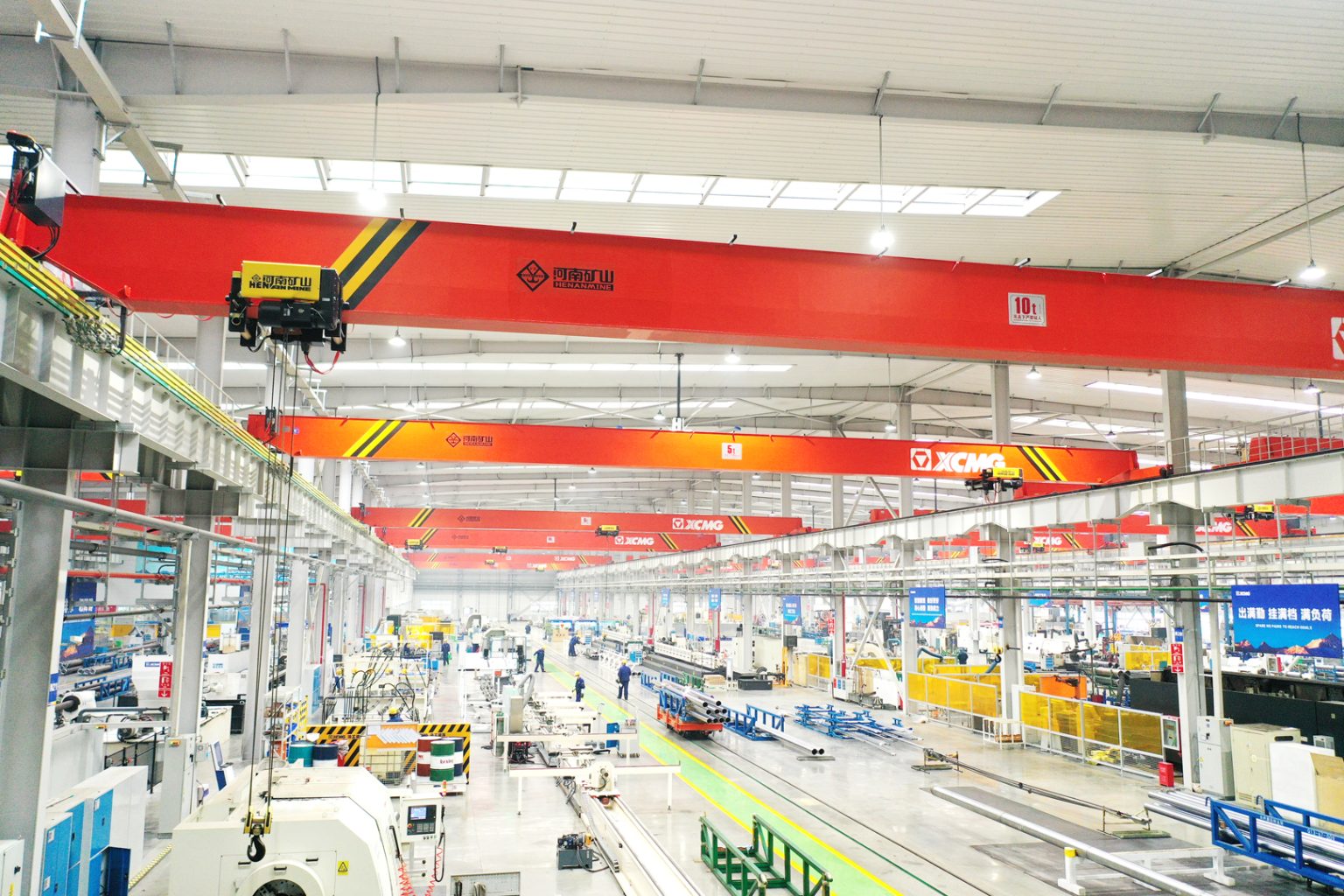
    Why is it important to choose the right overhead crane?

    Impact on safety and daily operation

    The first thing you need to ensure is safety when choosing the right crane. The lifting operation in the workshop, once the problem is a big deal, light is damage to equipment, heavy is a danger to the safety of personnel.

    A crane that matches the working conditions of the workshop will run smoothly and will not run off, shaking, overloading and other problems. For example, if you choose an ordinary crane for a high-temperature workshop, the electrical components are easy to be baked, which is likely to lead to braking failure, and choose the right high-temperature-resistant overhead crane to avoid this kind of hidden danger.

    On the contrary, the selection of inappropriate, such as heavy load with a light crane, long-term overload operation, wire rope, brake will accelerate the wear and tear, sooner or later to failure, to the daily production of buried safety hazards.

    Impact on production efficiency

    Crane is the core equipment of the workshop material handling, choose the right one can help you save a lot of time, rationalize the production process. For example, the workshop is mainly lifting steel coils, selected with a special spreader crane, than with an ordinary hook lifting, the efficiency can be improved a lot.

    If you choose a small, a crane can not be much, you have to go back and forth repeatedly; choose a large, slow running equipment, but also occupy space, but slow down the pace of production. The right crane can make the material flow more smoothly, reduce unnecessary handling time, and indirectly improve the overall capacity of the workshop.

    Impact on long-term costs

    Many customers choose cranes, always thinking of “saving money”, either choose the configuration of excess equipment, or choose just enough to meet the current demand, not realizing that these two options, the long-term down will be more money.

    Configuration of excess cranes, such as obviously only hanging 5 tons of goods, but chose a 10-ton, high pre-purchase costs, late maintenance, energy costs are higher than ordinary cranes, pure waste.

    And choose not enough to use, such as late capacity enhancement, the need to lift heavier goods, can only re-procure new equipment, pre-bought cranes have become idle assets, but more losses. Selected right, both to meet current demand, but also adapt to future development, the most cost-effective in the long run.

    Start from your workshop conditions

    Workshop dimensions

    The width, length and height of the workshop directly determine the span, lifting height and running length of the crane, which is the basis for selection, and should not be sloppy at all.

    Workshop width determines the crane span, span is too large or too small, will affect the lifting coverage; length is related to the running length of the crane, to ensure that the crane can cover the entire workshop lifting area.

    Height is even more critical, workshop headroom height is not enough, the crane’s lifting height will be limited, the hook can not lift the designated position, even if the other parameters are right, can not be used. In addition, it is also necessary to consider the available installation space in the workshop, such as the position of columns and beams, to avoid collision when the crane is running.

    Existing support structure

    Many old workshops or workshops that have been built may have installed runway beams, and then the selection should first confirm the size and load capacity of the runway beams to see if they can be adapted to the crane you want to choose.

    If there is no runway beam, you need to check the building structure of the workshop, such as the load-bearing capacity of the columns, can withstand the crane’s dead weight and lifting load. If the load bearing is not enough, you need to reinforce the workshop first, otherwise the crane installation may lead to deformation of the building structure and cause safety accidents.

    Our Henan Mine Crane engineers, door-to-door survey will focus on checking these, to help customers confirm the applicability of the existing structure, to avoid rework later.

    Indoor or special environment

    Different workshop environments, the requirements for cranes are different, can not be generalized.

    Ordinary indoor workshop, such as machining workshop, assembly workshop, choose the standard overhead crane can be, to meet the basic lifting needs can be. But if it is a special environment, we have to target selection.

    Dusty workshop, such as building materials workshop, the crane’s electrical system to do dust treatment, to avoid dust into the damaged components; high temperature workshop, such as metallurgical workshop, need to choose high temperature resistant cranes, equipped with high temperature resistant cables and cooling devices; corrosive or humid environments, such as chemical industry workshop, to choose anticorrosive, moisture-proof cranes, to prevent the equipment from rusting and damaging; there is a risk of explosion in the region, such as flammable and explosive goods In areas with explosion risks, such as flammable and explosive goods warehouses, explosion-proof overhead cranes should be selected to meet the explosion-proof standards.
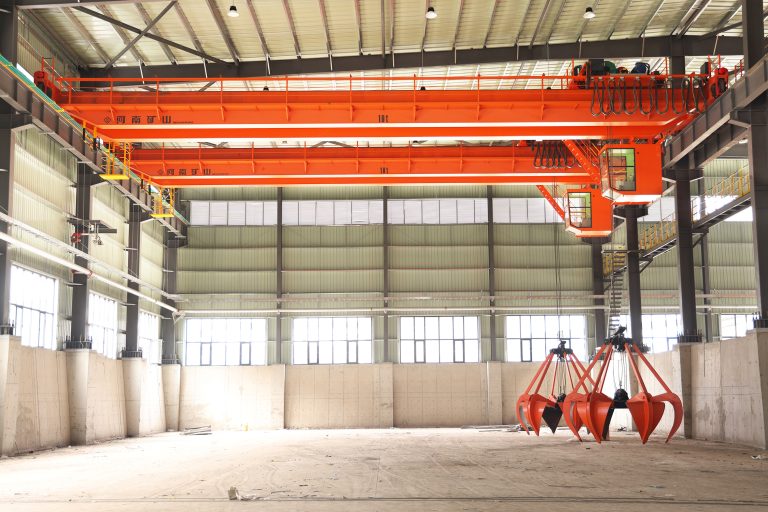
    overhead crane for workshop Henan Mine Crane Factory supply

    Confirm the key technical parameters before selection

    Lifting capacity

    The lifting capacity is the most basic parameter, but not only the current maximum lifting weight. First of all, we need to clarify the maximum weight of materials to be lifted in the workshop, and also consider whether there is a dynamic load or partial load situation.

    For example, when lifting liquid materials, irregular materials, will produce dynamic load, lifting capacity should be appropriate to leave a margin; if there is a bias load, the crane’s force will be uneven, but also need to be taken into account in the selection.

    In addition, it is also necessary to consider whether there is the possibility of lifting heavier materials in the future. For example, the workshop plans to expand production capacity, the later may lift heavier equipment, selection can be appropriate to reserve the lifting capacity, to avoid re-procurement later. According to the industry standard, when lifting bulk materials, usually reserve 10%~15% overload space, and when lifting hazardous materials, additional consideration should be given to the dynamic load factor.

    Span

    Span is the distance between the centerlines of two rails, this parameter must be matched with the layout of the workshop. If the span is too big, the structure of the crane will be more complicated and costly; if the span is too small, the lifting coverage is not enough, which will affect the production.

    Previously, a customer, did not measure the distance from the centerline of the track, directly according to the width of the workshop to determine the span, the results of the crane to the scene, can not be installed, can only be re-customized, and spend a lot of money.

    When selecting the type, we must measure the distance from the centerline of the track, combined with the workshop column spacing, lifting area, to determine the appropriate span. For indoor operation, the crane span is usually 1.5m~2m smaller than the span of the workshop, and it is necessary to reserve space for track installation and safety clearance.

    Lifting height

    Lifting height is the distance that the hook needs to lift, according to the stacking height of the material, the workshop headroom height to determine. For example, if the materials need to be stacked on a 6-meter-high shelf, the lifting height of the hook should be at least 7 meters, and a safety clearance should be reserved.

    Also consider the roof clearance and hook proximity distance, to avoid collision with the roof and beams when the hook rises to the highest position, and at the same time to ensure that the hook can be close to the corners of the workshop, without affecting the lifting.

    If the workshop headroom is limited, you need to choose a crane with low building height, or adjust the lifting height parameter to ensure that the equipment can operate normally. The lifting heights of the main and auxiliary hooks can be set independently to meet the vertical operation requirements of different scenarios.

    Running length

    Running length is the running distance of the crane along the workshop track, to ensure that the running length of the crane can cover the entire lifting area, such as from one end of the workshop to the other end, from the material area to the production line, can be reached smoothly.

    If the workshop is very long and the lifting area is scattered, it is necessary to increase the running length appropriately, or consider multiple cranes to work together to avoid lifting blind zones.

    Working level

    Working level is ignored by many customers, but it directly affects the service life and stability of the crane. Working level is divided into light, medium and heavy, mainly based on the frequency of lifting and daily running time to determine.

    For example, only occasionally used to maintain the equipment, less than 1 hour a day running time, choose the light-grade cranes can be; if it is a daily high-frequency lifting, running time of more than 8 hours, you need to choose a heavy-grade cranes, otherwise the equipment will accelerate the wear and tear, and prone to failure.

    According to GB/T3811 standard, the working level is divided into A1~A8 eight levels, metallurgical workshop and other frequent operation scenes usually choose A6~A8 level, warehouse and other intermittent operation scenes choose A1~A4 level. We, Henan Mine Crane, will recommend the appropriate working level according to the customer’s working frequency.

    Lifting speed and running speed

    Speed is not the faster the better, according to the material characteristics and operational needs to determine. For example, when lifting precision parts and fragile materials, the speed should be slow to avoid material shaking and damage; when lifting large quantities of ordinary materials, the speed can be faster to improve efficiency.

    Lifting speed and running speed should be matched, for example, the lifting speed is fast, the running speed should also be adjusted appropriately to ensure that the lifting process is smooth. 5 tons of electric hoist below the normal speed is usually 8m/min, 10 tons and above is reduced to 7m/min or even lower; large car running speed is generally 20~30m/min.

    If the workshop production rhythm is fast, you can choose a slightly faster crane; if the lifting precision requirements are high, the speed should not be too fast.

    Define the materials you want to lift

    Shape and size of materials

    Different shapes and sizes of materials, crane lifting methods and spreader requirements are not the same, the selection must be considered clearly.

    For example, lifting steel coils (steel coils), you need to use a special steel coil spreader, to avoid slipping steel coils in the lifting process; lifting steel plates (steel plates), you can use electromagnets or lifting tongs; lifting molds (molds), machinery parts (machinery parts), with ordinary hooks can be, but we must take into account the irregularity of the material, to avoid partial load.

    If the size of the material is very large, such as large prefabricated parts, but also consider the crane lifting space, to ensure that the material can smoothly pass through the workshop columns, beams, will not collide.

    Lifting method

    Common lifting methods include hooks, grabs, electromagnets, spreaders, and some special lifting tools, which should be selected according to the material characteristics.

    Hook is the most commonly used, suitable for most materials; grapple is suitable for lifting bulk materials, such as gravel, coal; electromagnet is suitable for lifting magnetic materials such as steel, iron, etc., with high efficiency; and special spreader is suitable for special shaped materials, such as steel coils, pipes.

    We, Henan Mine Crane, can match the suitable lifting tools according to the material characteristics of customers to ensure safe and efficient lifting. When equipped with electromagnetic suction cups, it is necessary to add 10%~15% of the lifting capacity as the weight of the spreader.

    Material lifting precision

    Different operation scenarios have different requirements for lifting precision. For example, in precision machining workshop, materials need to be accurately lifted to the designated position of the machine tool, which requires a high degree of accuracy, and then we need to choose the crane that can accurately position.

    If only ordinary material transportation, such as from the material area to the production line, do not need too much precision, ordinary cranes can meet the demand.

    Scenarios with high precision requirements, you can choose cranes with frequency conversion speed control function, smoother running, more accurate positioning.

    Single girder or double girder overhead crane?

    When is a single girder overhead crane suitable?

    Single girder overhead crane is suitable for light to medium load scenarios, such as workshops with lifting capacity between 0.5-20 tons and span between 3-20 meters.

    Its advantages are low investment cost, simple structure, easy installation, low load requirement for workshop, suitable for relatively simple workshop condition scenarios, such as small machinery processing factory, warehouse, assembly workshop.

    If your workshop lifting frequency is not high, the weight of materials is not large, and the budget is limited, the choice of single girder crane is very suitable. Single girder cranes are compact, light weight, and can work flexibly in low plants, and maintenance is relatively easy.
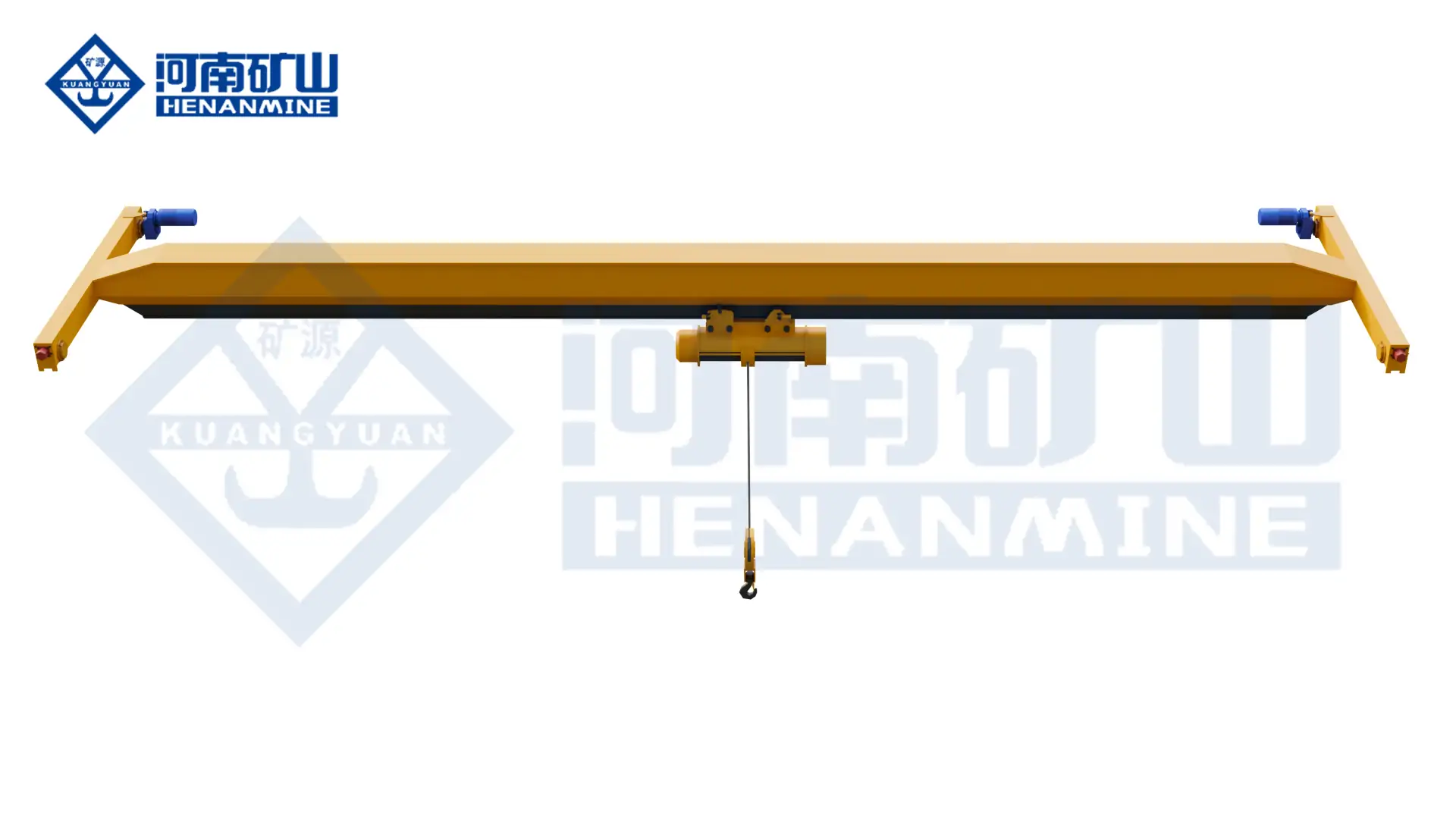
    Electric-Single-Girder-Crane

    When is a double girder overhead crane more suitable?

    Double girder overhead cranes are more suitable for heavy loads, large spans and high-frequency lifting scenarios. For example, if the lifting capacity is more than 20 tons, the span is 10-35 meters or even larger, and the lifting frequency is high every day, you need to choose double girder overhead crane.

    Double girder cranes have stronger load carrying capacity, more stable structure and higher lifting height, which is suitable for large industrial workshops, such as heavy machinery factories, metallurgical workshops and steel structure workshops.

    In addition, if the workshop needs to lift large equipment, or requires high lifting precision, double girder cranes are also more advantageous. The force distribution of double girder structure is more uniform, the deformation is small when bearing large loads, and the working efficiency is higher.
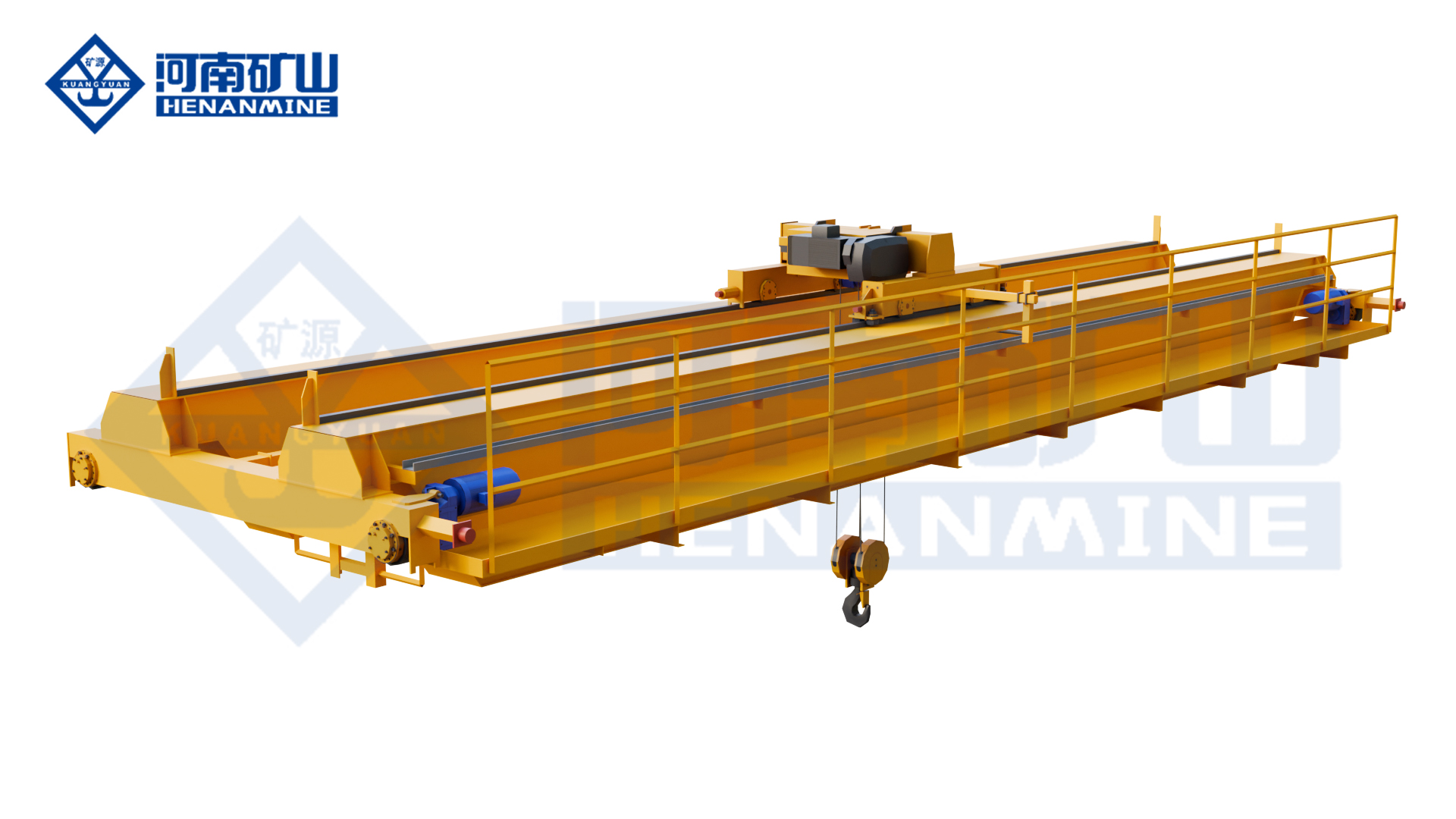
    New Electric Hoist Bridge Crane

    The main differences buyers need to understand

    Single girder and double girder cranes, the core difference is mainly in the structure, cost, hook proximity distance, maintenance space and future upgrade flexibility.

    Structurally, single girder cranes have only one main girder, which is simple; double girder cranes have two main girders, which are more complex and have a stronger carrying capacity. Cost, single girder crane than double girder crane is much lower, suitable for customers with limited budget.

    In terms of hook proximity, the hook of single girder crane can be closer to the columns and walls of the workshop, and the lifting coverage is more flexible; the hook proximity of double girder crane is slightly smaller, but the lifting height is higher.

    Maintenance space, double girder cranes have specialized aisles and platforms, maintenance is more convenient; single girder crane maintenance space is relatively small. In terms of future upgrading, double girder cranes have more space for upgrading, such as increasing the lifting capacity and installing auxiliary spreaders at a later stage; single girder cranes have limited space for upgrading.

    Choose up-running or down-running cranes?

    Top running overhead cranes

    The top running overhead crane, the most common type, is suitable for most industrial workshops. It has a large carriage running mechanism above the main girder and runs along a track.

    The advantages of this type of crane are strong load carrying capacity, suitable for heavy load and large span scenarios, stable operation and easy maintenance. Most workshops, such as machining, metallurgy, steel structure workshops, you can’t go wrong with the running crane.

    It has a wide range of applications, whether it is a new workshop or an old workshop remodeling, can be adapted, but also one of our Henan Mine Crane highest sales type.
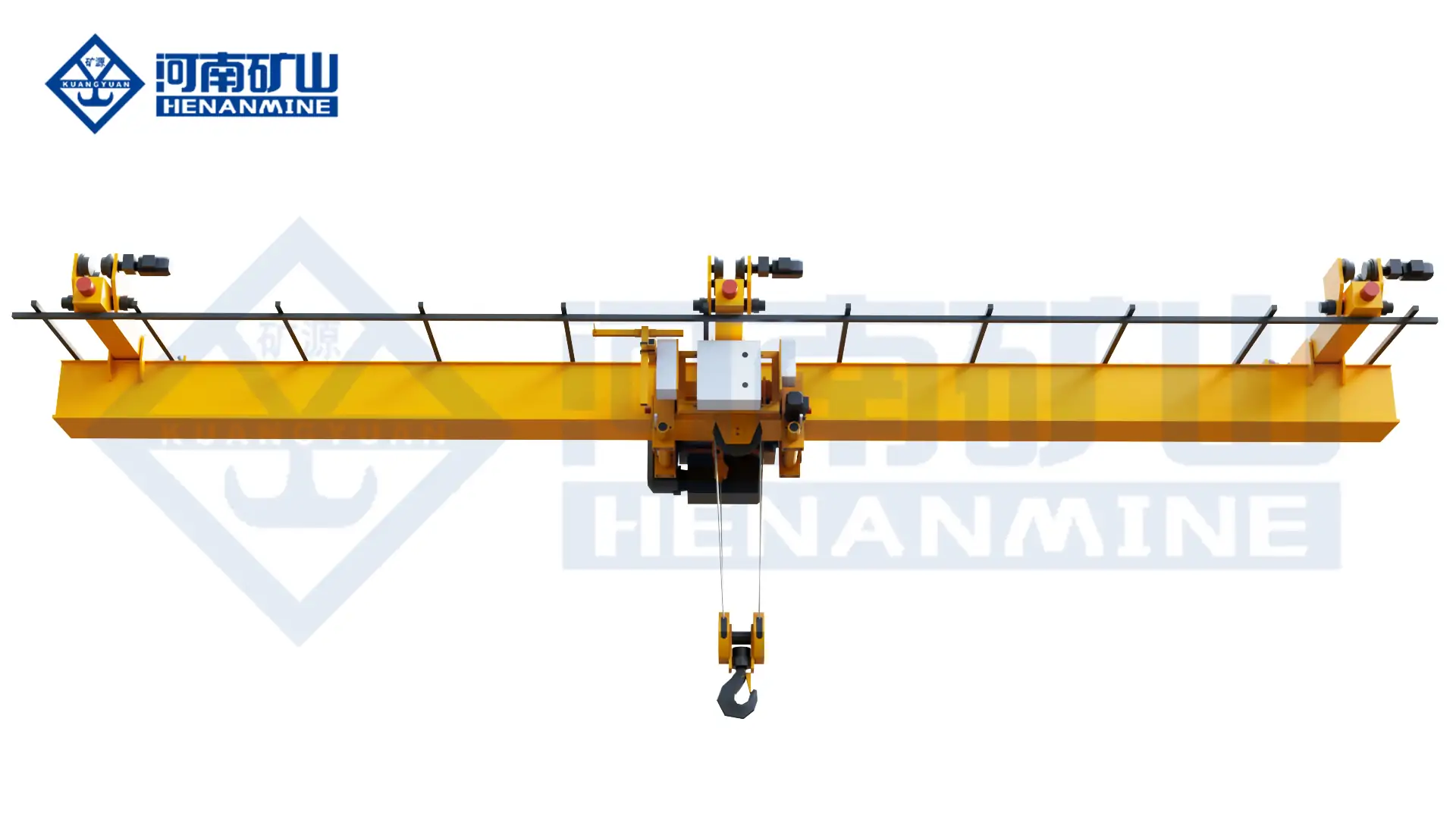
    Multi-point-electric-single-beam-suspended-crane

    Under running overhead crane

    under running overhead crane (under running overhead crane), the big car running mechanism is under the main beam, running along the track. It has the advantage of being compact and taking up little space, making it suitable for scenarios where workshop headroom is limited.

    This type of crane is usually suitable for light load operations, such as lifting capacity below 5 tons, lifting frequency is not high workshop, such as small warehouses, small assembly workshops.

    If your workshop height is not high enough to install an up-running crane, or the lifting load is not large, a down-running crane is a good choice.
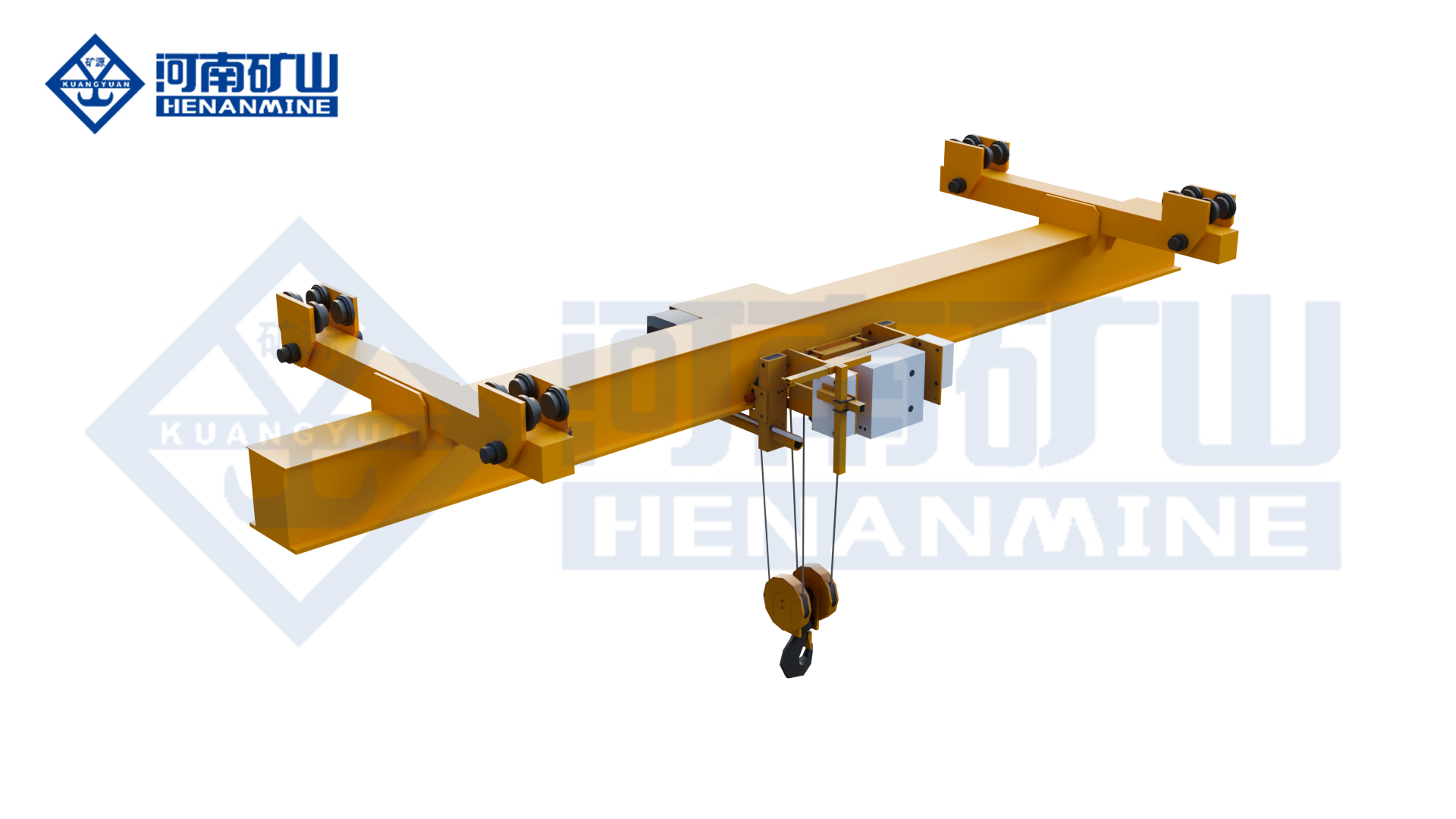
    Which is more suitable for your workshop

    Choosing up-running or down-running mainly depends on the structural support and headroom conditions of the workshop. If the workshop has enough headroom, enough carrying capacity, and needs heavy loads and large span lifting, choose the up-running crane.

    If the workshop headroom is limited, the lifting load is not large, or the existing structure can not support the weight of the upper running crane, then choose the lower running crane.

    Our Henan Mine Crane engineers will help you determine which type is more suitable according to the actual situation of your workshop to avoid choosing the wrong one.

    Consider the workshop process, not just the crane itself

    Crane frequency of use

    The frequency of use of the crane directly determines its working level and service life. You have to first think about whether the crane is used once in a while, or whether it is used every day with high frequency.

    If it is only occasionally used to maintain the equipment, such as a few times a month, choose a light-grade crane can be; if it is used every day production, such as running more than 8 hours a day, frequent lifting of materials, you need to choose a heavy-grade crane, otherwise the equipment is easy to wear and tear, affecting the service life.

    For example, in metallurgical workshop, if you need to frequently lift billets and ladles every day, you must choose heavy-grade double girder cranes to meet the needs of long-term high-frequency operation.

    Where is the main lifting area

    To clarify the main lifting area in the workshop, such as material area, production line, assembly area, to determine whether a crane can cover all lifting areas.

    If the workshop is not big, the lifting area is relatively centralized, a crane is enough; if the workshop is very big, the lifting area is scattered, a crane can not cover, you need to consider multiple cranes to cooperate, or set up a transfer point, to ensure that the material can flow smoothly.

    For example, a large steel structure workshop with multiple processing areas and material areas usually requires 2-3 cranes to work together in order to improve production efficiency.

    Future production changes

    When selecting the type, must consider the future production changes, such as capacity expansion, new equipment, workshop layout adjustment. If you want to expand capacity in the future, lifting heavier materials, selection should be reserved for lifting capacity and span margin.

    For example, now lifting 5 tons of materials, plans to expand production capacity in two years, lifting 10 tons of materials, you can directly choose 10 tons of cranes, to avoid re-procurement later.

    If the future layout of the workshop to be adjusted, it is necessary to choose a crane with high flexibility, such as mobile rail cranes, to facilitate the later adjustment of the scope of lifting.

    Check the power supply and control mode

    Available power supply in the workshop

    Crane operation requires a stable power supply, before selecting the workshop to confirm the power supply voltage and frequency, to ensure that the design requirements and crane match.

    For example, the power supply of most industrial workshops around the world is 380V, 50Hz, but some countries and regions are 415V, 60Hz, which needs to be confirmed in advance to avoid the crane being unable to supply power normally after it is transported to the site.

    Our Henan Mine Crane can be customized according to the customer’s power supply needs, different voltage and frequency of the equipment, adapted to different regions of the world workshop. At the same time, you need to confirm whether the power supply capacity to meet the operating requirements of the crane, to avoid unstable voltage.

    Control mode selection

    There are three main crane control methods: pendant control (handle control), wireless remote control (wireless remote control), cabin control (cab control), according to the operational scenarios and needs to choose.

    Handle control is suitable for scenes with low lifting frequency and small operation range, simple operation and low cost; wireless remote control is suitable for scenes with large operation range and operators are not conveniently close to the lifting area, such as high temperature and dusty workshop, flexible operation and high safety.

    Cab control is suitable for heavy-duty, high-frequency lifting, or the lifting of high precision requirements of the scene, the operator in the cab, good vision, more accurate operation. Our Henan Mine Crane can be equipped with wireless remote control + wired handle dual control to enhance operational flexibility.

    Why the control mode is important

    The control mode is directly related to operational safety, operator’s field of vision, lifting accuracy and ease of operation. For example, in a hot workshop where the operator cannot get close to the lifting area, wireless remote control can avoid high-temperature injuries and ensure precise operation.

    If the lifting accuracy requirements are high, such as precision processing workshop, cab control is more appropriate, the operator can clearly see the lifting area, accurate control of the hook position, to avoid material damage.

    Choosing the right control method can improve operation safety and efficiency and reduce operation errors. The wireless remote control distance is usually ≥100m, with stable signal and strong anti-interference ability, which is suitable for complex workshop environment.

    Focus on safety and compliance

    Safety devices

    Safety device is the “shield” of the crane, and it is indispensable to confirm that the crane is equipped with a complete safety device when selecting the model.

    Core safety devices include: overload limiter (overload limiter), which can prevent overloading of the crane to avoid equipment damage and safety accidents; limit switches (limit switches), which can limit the lifting height of the hook and the operating range of the crane to prevent collision; emergency stop (emergency stop button), which can immediately cut off the power supply and stop the operation of the equipment in case of emergency; and emergency stop button. Emergency stop (emergency stop button), in case of emergency can immediately cut off the power supply, stop the operation of equipment; buffers (buffers), can reduce the impact of the crane running; warning alarms (warning alarms), when lifting the warning, to remind the surrounding personnel to pay attention to safety.

    Each crane of our Henan Mine Crane is equipped with a full set of safety devices, which are designed in strict accordance with safety standards to ensure the safety of lifting operations. The electrical cabinets usually adopt IP54 protection, which is dust and moisture resistant, and is suitable for the complex environment in the workshop.

    Local standards and certifications

    If your workshop is overseas or your products need to be exported, make sure that the crane meets local standards and certifications, otherwise it will not be able to pass the local compliance scrutiny or be put into use.

    Common global standards and certifications include ISO (international standard), FEM (European standard), CE (European Union certification), EAC (Eurasian Economic Union certification), and different countries and regions have different requirements.

    Our Henan Mine Crane, designed, produced and tested in strict accordance with these international standards, each piece of equipment has a complete certificate of compliance, whether it is exported to Europe, the Americas, or other regions, can successfully pass the local certification. It also complies with GB/T 3811-2008 “Crane Design Code”, GB/T 14405-2011 “General Overhead Cranes” and other domestic standards.

    Why discuss compliance as early as possible

    Compliance issues, if considered at a later stage, are likely to result in cranes needing to be redesigned, remodeled, or even unable to be exported, delaying the schedule and increasing costs.

    For example, cranes exported to Europe must comply with CE certification, if not considered in the early stages, the production is completed and found to be non-compliant with the standard, it will need to be remodeled, not only to increase costs, but also delays in shipment (shipment) time.

    Therefore, the initial stage of selection and supplier communication compliance requirements, to ensure that the crane meets local standards, to avoid problems later.

    When selecting overhead cranes, common misconceptions to avoid

    Only look at the price to choose equipment

    This is the most common misunderstanding, many customers choose cranes, only to see which low price, choose which one, not realizing that low-priced equipment often cut corners, safety is not guaranteed.

    Previously, a customer, greedy for cheap choice of a low-priced crane, with less than a year, the wire rope broke, almost triggered a safety accident, the cost of late maintenance, replacement parts, more money than the initial savings. Some manufacturers on the market reported prices lower than half of the counterparts, the actual use of thin steel plate, poor quality electrical appliances, and even no formal certificate of conformity, and may be investigated and punished by the Safety Supervision at a later stage.

    Selection of cranes, can not just look at the price, to consider the quality, safety, maintenance costs, penny for penny, choose reliable equipment, more cost-effective in the long run.

    Incomplete technical information provided

    Many customers consult, only say “I want to lift 5 tons of goods”, but do not provide workshop size, lifting materials, operating frequency and other information, resulting in the supplier can not give accurate selection recommendations.

    For example, if you do not provide the workshop height, the crane recommended by the supplier is not enough lifting height, and can not be used at the site; do not provide the size of the material, the recommended spreader does not match, and can not lift the material.

    When consulting, be sure to provide complete technical information so that the supplier can help you select the right crane to avoid mistakes.

    Ignore the working level

    The working level directly affects the service life of the crane, many customers ignore this, such as high-frequency lifting but chose a light crane, resulting in frequent equipment failures, the service life is significantly shortened.

    For example, running 8 hours a day, frequent lifting of heavy loads, choose light grade cranes, less than half a year will appear motor damage, brake failure and other problems, the late maintenance costs are very high. The working level reflects the “long-term operating intensity”, even if the rated lifting capacity meets the demand, if the working level is low, frequent high-load operation will lead to structural fatigue, parts wear and tear accelerated.

    Failure to consider future needs

    Only consider the current lifting demand, not consider the future expansion of capacity, resulting in the later need to lift heavier materials, the existing cranes can not meet, only to re-purchase, a waste of costs.

    For example, now lifting 5 tons of material, plans to expand production capacity in two years, lifting 10 tons of material, but chose a 5-ton crane, and later can only re-buy, the previous equipment has become an idle asset. Some manufacturers will fool customers to choose high-end parameters, said “the higher the parameters the better”, but the ordinary workshop simply can not be used, pure waste.

    Ignore the workshop headroom restrictions

    Many customers only look at the lifting height of the crane, but ignored the workshop headroom height, resulting in the crane to the site, the hook can not rise to the required position, or the crane can not be installed.

    For example, the workshop headroom height is only 8 meters, but selected the crane with a lifting height of 8 meters, deducting the height of the crane itself, the actual lifting height of the hook is only 6 meters, which can not meet the lifting requirements. When installing overhead cranes in old plants, it is more important to focus on checking the headroom and load-bearing capacity of the plant.

    Not confirming track beam conditions

    If the workshop already has track beams, many customers do not confirm the load-bearing capacity and size of the track beams, and then directly select the crane, resulting in mismatch between the crane and the track beams, which can not be installed, or the track beams are deformed during operation.

    For example, if the load-bearing capacity of the track beam is not enough, after the crane is installed, the track beam will be deformed and broken, which will cause safety accidents. Be sure to confirm the condition of the rail beam before selecting the model to avoid rework at a later stage.

    What information should you provide to the crane supplier?

    Basic technical information

    First of all, you should provide the core technical parameters, including lifting capacity, span, lifting height and running length, which are the basis for selection and are indispensable.

    Also provide workshop power supply information, such as voltage, frequency, to ensure that the crane power supply needs and workshop match. If there are special technical requirements, such as lifting accuracy, running speed, should also be explained.

    For example, the lifting capacity should be clear whether the weight of the spreader is included, the span should provide the distance from the centerline of the track, and the lifting height should be clear about the height that the hook needs to reach.

    Workshop information

    Workshop information is also very important, including architectural drawings of the workshop, site photos, so that the supplier can visualize the size of the workshop, the structure, the position of the columns and so on.

    If the workshop already has track beams, provide detailed dimensions and load-bearing capacity of the track beams; if there are special environmental requirements, such as high temperature, corrosion, explosion-proof, it should also be explained, and the supplier will target selection.

    On-site photos can help suppliers judge workshop conditions more accurately and avoid errors based on drawings alone. It is also a necessary step to commission a professional organization to test the load-bearing performance of plant columns and bull legs.

    Application information

    It is important to tell the supplier what materials you are going to lift, the shape, size and weight of the materials, as well as the lifting method, so that the supplier can recommend the right type of spreader and crane.

    Also state how often the crane will be used, how long it will be in operation each day, and whether there are any special operational requirements, such as precise positioning and continuous lifting, and this information will help the supplier to determine the crane’s working level and configuration.

    For example, lifting flammable and explosive materials, to explain the characteristics of the material, the supplier will recommend explosion-proof cranes; high-frequency lifting, will recommend heavy-grade cranes.
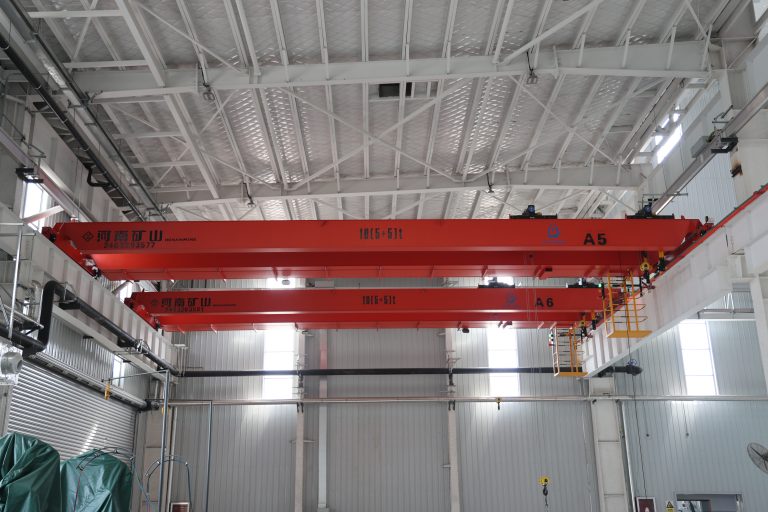
    Intelligent Electric Hoist Bridge Crane Henan Mine Crane Factory supply

    Case: how to choose the right workshop overhead crane

    We would like to share with you an actual case of Henan Mine Crane to understand the selection process more intuitively.

    The customer is a steel fabrication workshop (steel fabrication workshop), mainly lifting structural steel parts, the maximum material weight of 15 tons, there is a dynamic load, the future may expand capacity, lifting 20 tons of material.

    Workshop dimensions: width 24 meters, length 60 meters, headroom 10 meters, there is a rail beam, rail centerline distance 22.5 meters, power supply 380V, 50Hz, high frequency of lifting every day, running time more than 8 hours, lifting area covers the whole workshop.

    According to the customer’s demand, we recommend 20 tons double girder upper running overhead crane, equipped with wireless remote control + cab dual control, retrofitted with a full set of safety devices such as overload limiter, limit switch, etc., in line with ISO and CE certification.

    Recommended reasons: 15 tons of maximum material weight, plus dynamic load, choose 20 tons of crane, reserved for future expansion of the margin; workshop span 22.5 meters, double girder cranes are more suitable for the carrying capacity and stability; high-frequency lifting, choose the heavy-duty class of work level, to meet the needs of long-term operation; double girder running on the crane, a wide range of coverage to meet the needs of the entire workshop lifting; double control mode, suitable for high-frequency and precise lifting, while ensuring that the operation of the crane is safe. The dual control method is suitable for high-frequency and precise lifting, and at the same time protects the safety of operators.

    Customers use, feedback equipment running stable, high efficiency, fully meet the production needs, later expansion of production capacity, there is no need to re-procurement of cranes.

    Frequently asked questions about the selection of overhead crane

    How to determine whether I need a single girder or double girder crane?

    Look at the lifting capacity, span and lifting frequency. Lifting capacity ≤ 20 tons, span ≤ 20 meters, lifting frequency is not high, choose single girder cranes; lifting capacity > 20 tons, span > 20 meters, high frequency lifting, choose double girder cranes. If the lifting height, lifting precision requirements are high, also prioritize the double girder crane. Single girder cranes are suitable for small and medium tonnage, low-frequency operations, double girder cranes are suitable for large tonnage, high frequency, large span operations.

    Can one overhead crane cover the whole workshop?

    It depends on the size of the workshop and the lifting area. If the workshop is not big, the length and width are moderate, and the lifting area is centralized, one crane can cover it; if the workshop is big, the lifting area is scattered, and one crane can’t cover it, so you need more than one crane to cooperate with it or set up transfer points. According to the length of the workshop and the distribution of the lifting area, the running length of the crane can be determined to ensure that all operating areas are covered.

    What about the limited height of the workshop?

    Priority is given to down-running overhead cranes, which have a compact structure, occupy little space and are suitable for workshops with limited headroom; single girder cranes with low building heights can also be selected, and the lifting height parameter can be adjusted to ensure that the hook can reach the required position. At the same time, the spreader design can be optimized to reduce the height occupied by the spreader and enhance the actual lifting space.

    The bigger the crane, the higher the cost performance?

    No. The cost-effectiveness of the crane depends on whether it matches your workshop conditions and needs. Too large a crane, procurement costs, maintenance costs, energy consumption are very high, and slow running speed, but not cost-effective; too small a crane, can not meet the lifting needs, the later need to re-procurement, but also a waste of cost. Suitable is the most cost-effective, fit their own lifting needs, is the most cost-effective choice.

    Workshop is not fully built, can I choose the crane?

    Yes, you can. As long as the workshop design drawings, clear workshop dimensions, load-bearing structure, track beam location and other information, we can help you according to the drawings, accurate selection, in advance to determine the parameters and configuration of the crane. So that after the workshop is built, the crane can be installed and put into use in a timely manner, without delaying the schedule. However, it is necessary to confirm the layout of track beams, headroom height and other key parameters in the design drawings of the workshop to avoid dimensional deviations in the later stage.

    Conclusion

    The core of choosing workshop overhead cranes is not to choose the “biggest” or ‘cheapest’, but the “best match”. You must start from your own workshop conditions, lifting needs, production process, step by step to confirm the key parameters, to avoid common misconceptions, in order to choose the right equipment.

    Henan Mine Crane has been in the overhead crane field for decades, focusing on the research and development, production and sales of workshop overhead crane. We have a team of professional engineers, who can provide you with free on-site surveys, selection consulting, and help you accurately match the configuration of the crane to ensure that it meets the local compliance standards.

    No matter which country you are in, whether it is a new workshop or old workshop remodeling, as long as you provide workshop information and lifting needs, we can help you choose the right crane, so that you take the wrong way, do not spend money.

    Henan Mine CraneDiscuss your requirements ↗