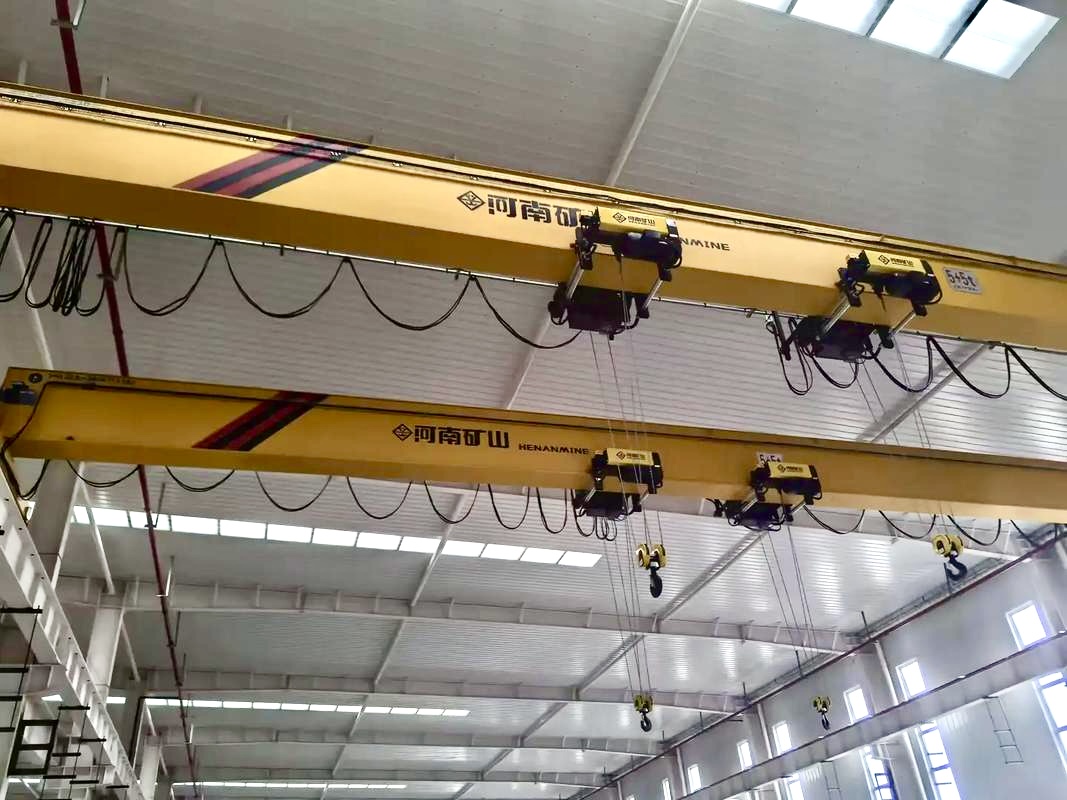
Gantry cranes should be seen in the heavy duty work site, it is not like bridge cranes need to rely on the plant columns, by independent portal frame and movable legs, can be in the outdoor, open space flexible operation.
Because of the advantages of this independent structure, it is almost indispensable in the heavy industry, no matter it is a large span of cargo handling, or high load lifting operations, can be easily competent. Today, we will break with you, gantry cranes are most commonly used in 10 industrial scenarios, to see what role it plays in different industries.
These scenes cover the port, shipbuilding, construction, mining and other areas, each scene on the gantry crane model, configuration requirements are not the same, to understand these, but also to help you follow the selection of less detour.
| Industry | Core Application | Suitable Gantry Crane Type | Key Requirements |
| Container Ports and Intermodal Terminals | Container stacking, loading and unloading, connecting port and land transportation | RMG (Rail-Mounted Gantry Crane), RTG (Rubber Tyred Gantry Crane), large-tonnage double girder gantry crane | High positioning accuracy, stable efficiency, suitable for heavy-duty scenarios, capable of handling overweight containers |
| Shipbuilding and Marine Engineering | Hoisting of hull blocks and deck modules, handling and installation of offshore platform modules | Goliath cranes, heavy-duty gantry cranes | High load capacity, large span, high precision, stable operation, suitable for outdoor coastal environments |
| Precast Concrete Production Yards | Handling, stacking and loading of precast concrete components (bridge girders, precast slabs, etc.) | Rubber Tyred Gantry Crane, single girder gantry crane | Flexible mobility, suitable for irregular outdoor yards, capable of handling light to medium loads |
| Steel Fabrication and Structural Workshops | Handling of steel raw materials, assembly and loading of steel structure components | Double-hoist gantry crane, single/double girder gantry crane | Stable operation, suitable for long steel materials, capable of connecting indoor and outdoor operations |
| Construction and Infrastructure Projects | Bridge beam hoisting, tunnel segment handling, transportation of large equipment and materials | Temporary gantry crane, tire-mounted/double girder gantry crane | Quick installation and disassembly, reusable, suitable for temporary outdoor construction sites |
| Power Plants and Energy Sector | Installation and maintenance of turbines/generators, coal yard material handling | Grab gantry crane, heavy-duty gantry crane, light gantry crane | Stable hoisting, high precision, suitable for continuous operation and outdoor environments |
| Mining and Bulk Material Handling | Loading, unloading and transportation of ore, coal, aggregates and other bulk materials | Grab-type gantry crane, heavy-duty gantry crane | High durability, dust-proof, suitable for harsh outdoor environments and continuous heavy-duty operation |
| Warehousing and Logistics Centers | Handling and stacking of large equipment and oversized goods, connecting trucks and warehouses | Tire-mounted gantry crane, custom-span gantry crane | Flexible mobility, custom-span, stable efficiency, suitable for outdoor storage yards |
| Waste Treatment and Recycling Facilities | Garbage handling, recycling of scrap metal and plastic, waste classification and crushing | Grab gantry crane, electromagnetic gantry crane | Corrosion-proof, dust-proof, easy maintenance, suitable for complex operating environments |
| Aerospace and Heavy Equipment Manufacturing | Handling and assembly of large aerospace components, heavy equipment parts | Double girder gantry crane, custom gantry crane | High precision, high synchronization, custom-designed, suitable for high-precision assembly operations |
1. Container Ports and Intermodal Terminals
Container Ports and Intermodal Terminals is the most core application scenario of gantry cranes, there is no one. Whether it is an ocean freighter unloading containers, or storage and transfer in the yard, are inseparable from its figure.
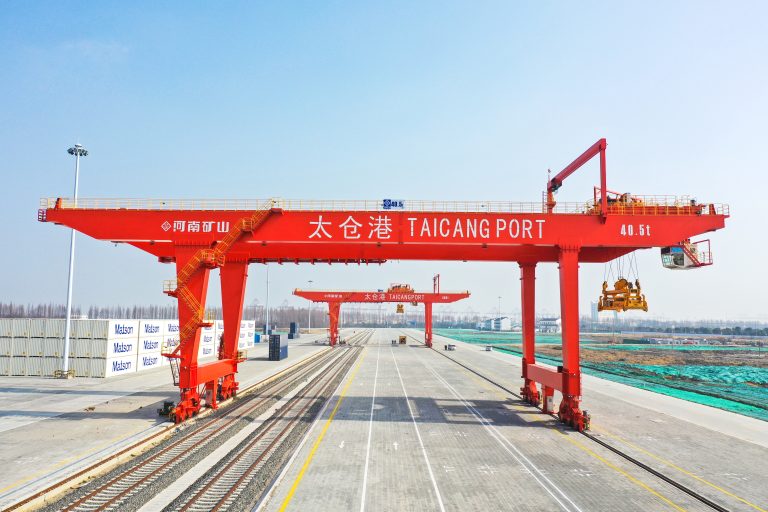
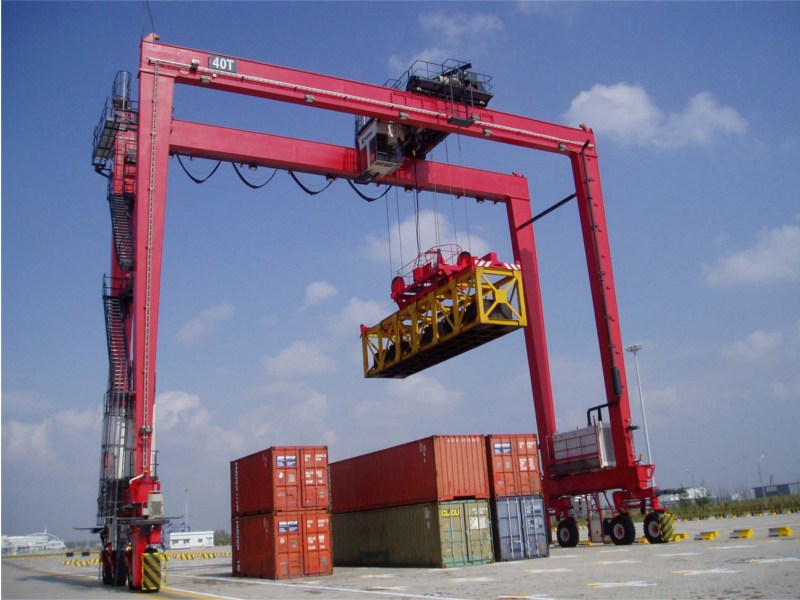
The two most commonly used models here are rail-mounted gantry cranes (RMG) and tire-mounted gantry cranes (RTG), both of which have a clear division of labor to meet the needs of different yards.RMG operates along a fixed track, with high positioning accuracy, and is suitable for high-density stacking and storage operations at large container terminals, accurately stacking containers to a designated location, with very stable efficiency.
RTG, on the other hand, is a tire-type design, does not need to lay a fixed track, can move freely in the yard, more flexible, suitable for small and medium-sized ports, temporary yards, or need to work across the box area of the scene.
In addition to stockpiling, gantry cranes are also responsible for container loading and unloading operations, quickly transferring containers in the yard to freight trucks and trains, connecting ports and land transportation, and ensuring the smoothness of the entire logistics chain. For heavy duty scenarios, large tonnage double girder gantry cranes are also configured to cope with the handling of overweight containers.
Henan Mine Crane manufactured rail-mounted container gantry crane
2. Shipbuilding and Marine Engineering
Shipbuilding industry operations, the gantry crane requirements are extremely high – not only to carry capacity, but also a large span and high precision, after all, the hull segments, large-scale module lifting, can not tolerate the slightest deviation.
The most common in shipyards is the giant gantry cranes (Goliath cranes), this heavy gantry crane span can reach dozens of meters, lifting capacity of up to several hundred tons, specially designed for lifting hull segments, deck modules and large equipment.
In the ship assembly process, gantry cranes need to dozens of tons or even hundreds of tons of hull segments, accurately lifted to the ship platform, and other segments aligned, welded, which requires the crane’s positioning accuracy is sufficiently high, and the operation is smooth enough.
In addition to hull assembly, offshore platform module lifting in the field of marine engineering, will also use heavy gantry cranes, in the open field of the seaside, it is not subject to the building restrictions, to complete the handling and installation of oversized, super-heavy modules.
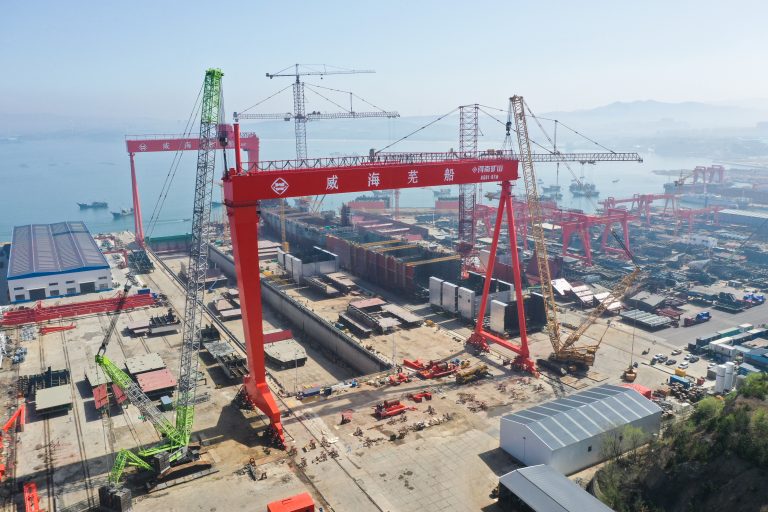
Henan Mine Crane manufactured Shipbuilding Gantry Crane
3. Precast Concrete Production Yards
Precast concrete production yards, mostly open-air layout, no fixed plant structure, the advantages of gantry cranes are fully embodied here – no need to attach any building, as long as the site is leveled, it can be quickly deployed.
The gantry cranes here are mainly responsible for handling prefabricated concrete components, such as bridge girders, prefabricated panels, prefabricated columns, etc. These components have high weight and long dimensions, and ordinary lifting equipment is simply incapable of handling them.
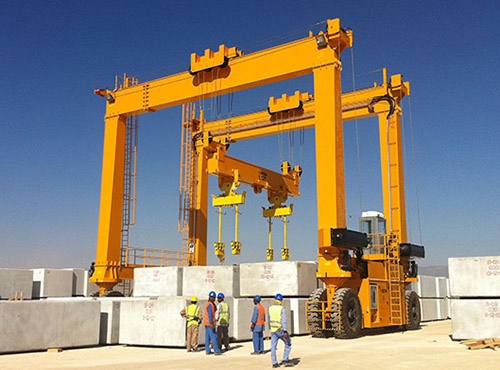
Tire gantry crane is the first choice here, the flexible mobility can be adapted to the irregular layout of the yard, can be freely transferred between different production areas, the precast components from the production line lifted to the yard stockpile, or directly loaded onto trucks for transportation.
Sometimes single girder gantry cranes are also used, for light and medium-sized prefabricated components, it is cheaper and easier to maintain, and can fully meet the operational requirements.
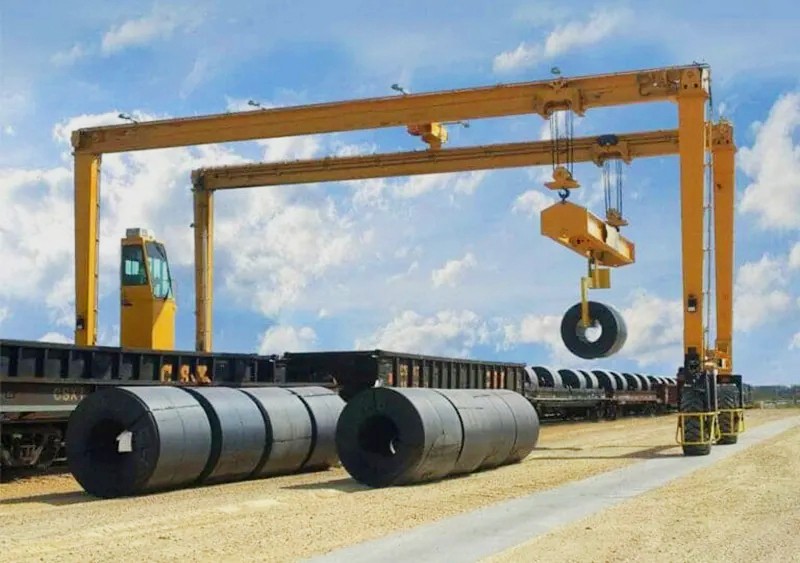
4. Steel Fabrication and Structural Workshops
In steel fabrication and structural workshops, gantry cranes are indispensable auxiliary equipments, which are indispensable in every aspect from raw material transportation to component assembly.
Raw materials such as steel plates, profiles and tubes in the workshop are heavy and long, and need to be lifted by gantry cranes to the cutting and welding stations; completed steel structure components, such as plant frames and bridge components, also need to be lifted by cranes to the finished product yards or loaded onto trucks directly.
Many workshops will be equipped with double hoist gantry cranes, this double winch configuration, suitable for handling long steel, can maintain the level of the components, to avoid tilting, collision during transportation, to protect the components from damage.
Although there are overhead cranes in the workshop, the gantry cranes can be extended to the yard outside the workshop, connecting indoor and outdoor operations without additional lifting equipment, which is very practical.
5. Construction and Infrastructure Projects
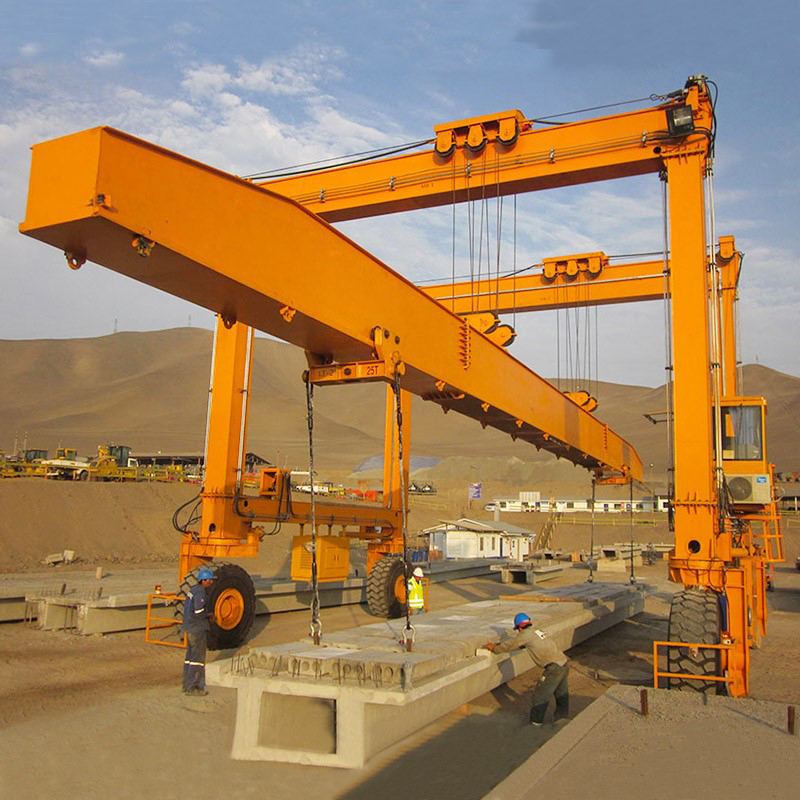
Construction and infrastructure projects, such as bridge construction, highway and railroad projects, tunneling projects, gantry cranes can be seen everywhere, especially for large-scale outdoor operations, its flexibility and load-bearing capacity, more advantageous than other lifting equipment.
Bridge construction, gantry cranes are responsible for lifting bridge girders, whether prefabricated girders or cast-in-place girders, can be accurately lifted to the abutment to complete the installation; highway and railroad projects, the handling of large-scale equipment, the transfer of roadbed materials, but also inseparable from the gantry cranes.
Tunneling project, the handling of tunnel tubes is a big problem, gantry cranes can be in the open field at the tunnel entrance, lifting the tubes to the designated location in the tunnel, to adapt to the tunnel construction of special scenarios.
Moreover, as most of the project sites are temporary sites, gantry cranes can be quickly installed, dismantled and transferred to other sites for re-use after the project is over without wasting equipment costs, which is very suitable for lifting needs of temporary projects.
6. Power Plants and Energy Sector
Power Plants and Energy Sector, gantry cranes are mainly used for equipment installation and daily maintenance, whether it is thermal power generation, hydropower, or new energy projects, you can see its application.
In thermal power plants, gantry cranes are responsible for handling turbines, generators, boilers and other large-scale equipment, which are heavy and highly accurate, and require cranes to lift smoothly to avoid damage to the equipment; during routine maintenance, cranes are also required to lift and unload equipment parts to facilitate overhaul.
Coal yard material handling, will also use gantry cranes, with grab device, can quickly grab coal, transfer to the boiler feeder, to achieve continuous operation, to protect the efficiency of power generation.
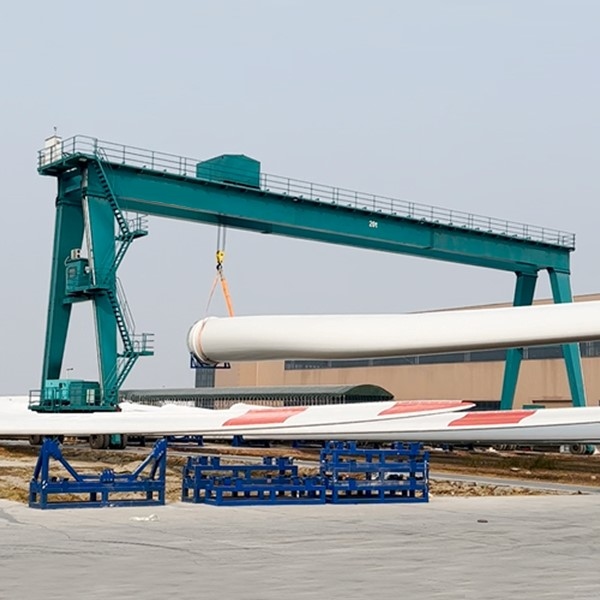
In the new energy field, such as wind power projects, some sites will use gantry cranes to handle wind power equipment components; large-scale stents and components of photovoltaic power plants can also be used to handle lightweight gantry cranes, which are suitable for outdoor work scenes.
7. Mining and Bulk Material Handling
In the field of mining and bulk material handling, gantry cranes are mainly responsible for loading, unloading and transferring bulk materials such as ore, coal, sand and gravel, etc. The operating environment here is harsh, with a lot of dust and load, which makes the durability of cranes very demanding.
Grab gantry crane is the main model here, through the grab quickly grab bulk cargo, transfer to trucks, trains or silos, high operational efficiency, can adapt to the mine’s continuous operational needs.
Most of the operating sites in mines are open air, there is no fixed building, the independent structure of the gantry crane is just right for this kind of scene, and the heavy-duty gantry crane has a strong load-bearing capacity, which can cope with the handling of large tonnage of bulk cargo and reduce the number of operations.
Some mines will also be equipped with wear-resistant, dust-proof gantry cranes to reduce the wear and tear of dust on the equipment components, extend the service life of the equipment and reduce maintenance costs.
8. Warehousing and Logistics Centers
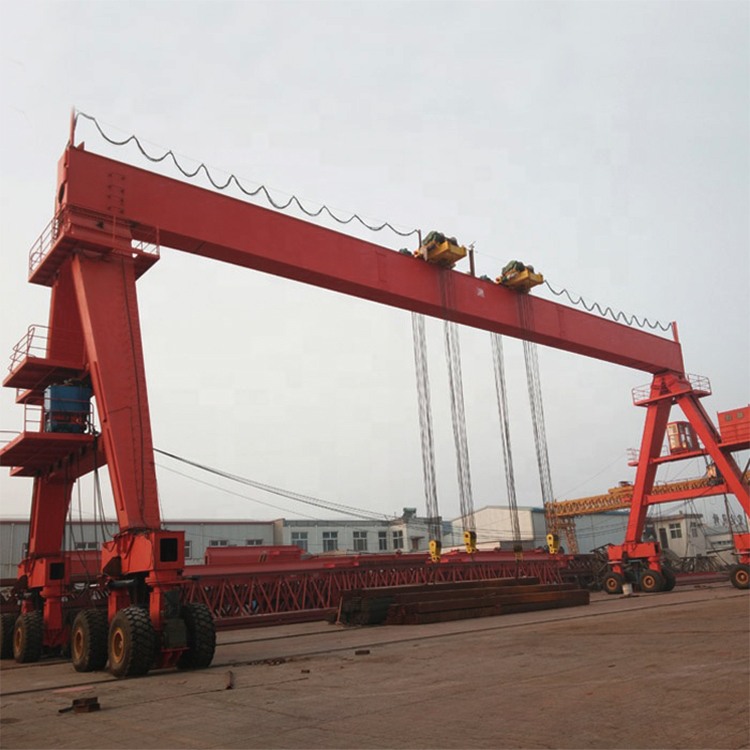
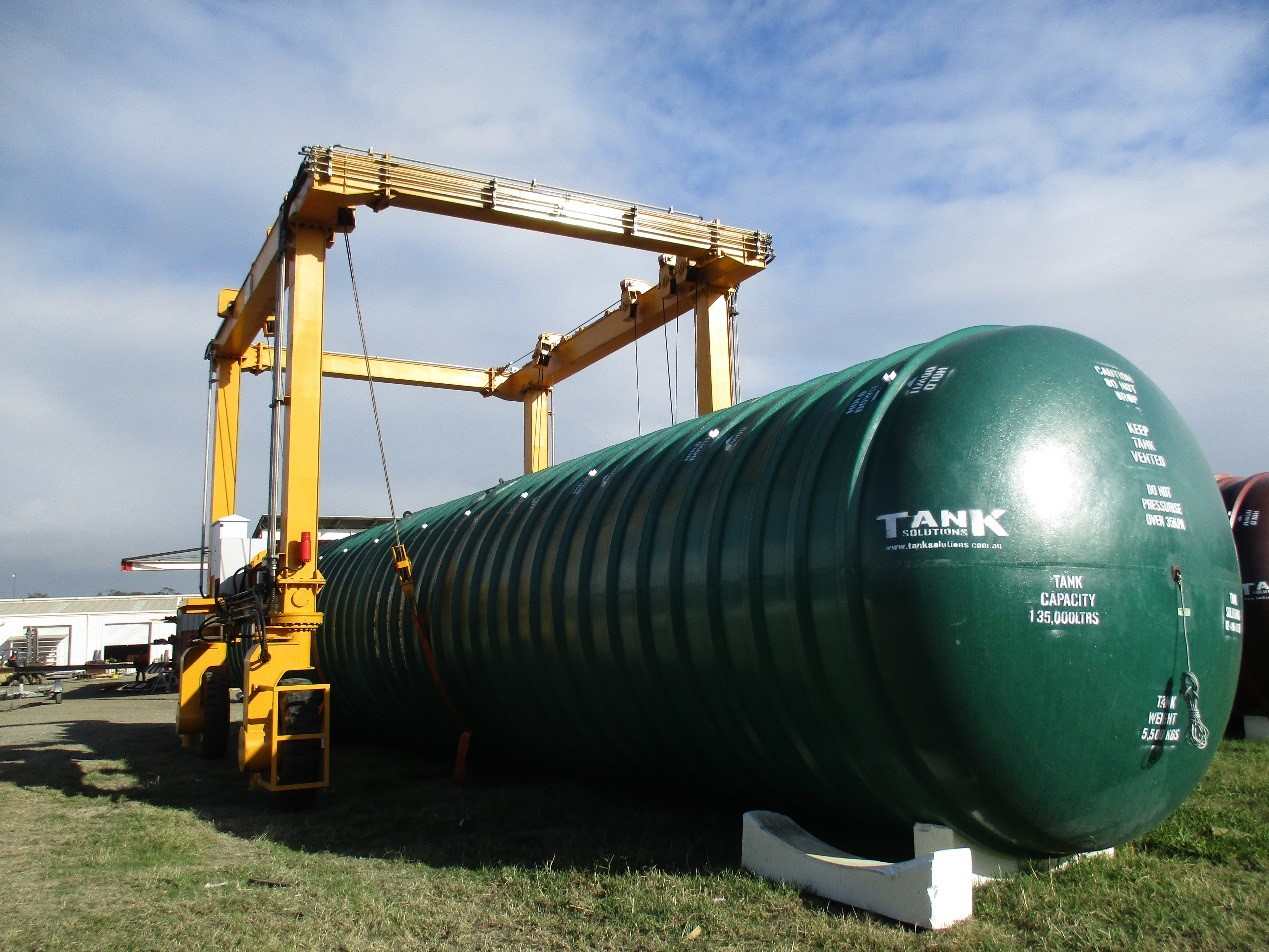
Large warehousing and logistics centers, especially outdoor yards, gantry cranes are the core equipment for outdoor material handling, mainly responsible for large equipment, oversized cargo handling and storage.
Many logistics centers will store large machinery and equipment, heavy parts, these goods are heavy, large size, ordinary forklifts can not be handled, can only rely on gantry cranes lifting, transfer.
The span of the gantry crane can be flexibly customized to cover the entire outdoor yard, whether it is the centralized stacking of small goods, or the separate storage of oversized goods, can be adapted. Moreover, the tire gantry cranes are flexible and can move freely in the yard, adapting to the operational needs of different locations.
For logistics centers that require frequent loading and unloading, gantry cranes have a stable operating efficiency and can connect trucks and warehouses to ensure the rapid flow of materials.
9. Waste Treatment and Recycling Facilities
Waste treatment and recycling facilities is also one of the important application scenarios for gantry cranes, where the operating environment is complex, requiring cranes to have corrosion resistance, dustproof and pollution prevention characteristics.
In garbage treatment plants, gantry cranes are equipped with grapples, responsible for grabbing garbage and transferring it to the treatment facilities to realize the classification, crushing and treatment of garbage; in recycling yards, the handling of waste metals, waste plastics and other recycling materials is also inseparable from gantry cranes.
For waste metal recycling, electromagnetic suction cup gantry cranes can also be configured to adsorb the waste metal through electromagnetic force for quick grabbing and transferring, which is more efficient and convenient than grabs.
The operating intensity of this type of scene is not particularly high, but the protection requirements of the equipment is high, the structure of the gantry crane is simple, easy to maintain, can adapt to the harsh operating environment, reduce equipment failure.
10. Aerospace and Heavy Equipment Manufacturing
Aerospace and heavy equipment manufacturing industry, the most demanding requirements for gantry cranes – not only to carry capacity, but also have a very high positioning accuracy and synchronization, after all, the assembly of large parts, the difference is not.
Aerospace field, gantry cranes are responsible for handling aircraft fuselage, wings, engines and other large components, in the assembly process, the need for multiple cranes synchronized operation, accurate positioning, to ensure that the interface between the components without error.
Heavy equipment manufacturing, such as large machine tools, construction machinery, generator sets, the handling and assembly of large components, also need the cooperation of gantry cranes. Double main girder gantry cranes with strong stability and high positioning accuracy can meet the needs of such high-precision operations.
Most of the gantry cranes in this industry are customized to fit specific component sizes and operating scenarios to ensure operational safety and precision.
Why Gantry Cranes Are Preferred in These Industries
After talking about so many application scenarios, you should be able to see that the core of why gantry cranes are preferred in so many heavy industries is that it has several advantages that just fit the needs of these industries.
The most crucial point is that it does not have to rely on permanent structures. Whether it is a port, construction site, mine, these scenes without plant, or there is a plant but need to be extended to the outdoor operation of the workshop, gantry cranes can be deployed independently, without the need to remodel the site, laying complex tracks, saving a lot of trouble.
Secondly, it is suitable for outdoor environment. Most of the heavy industry operations are outdoors, wind and sun, dusty, gantry cranes are structurally designed to adapt to these harsh environments, with high levels of protection, durability and no need for frequent maintenance.
Large span and high load capacity are also its core advantages. Many industries need to handle oversized and overweight goods, such as shipbuilding hull segments and bridge girders, and gantry cranes can be flexibly customized in terms of span and lifting capacity, which can easily cope with these needs.
There are also flexible mobile options, rail type, tire type, portable, different ways of moving to adapt to different scenarios, rail type is suitable for stationary work, tire type is suitable for flexible movement, portable is suitable for temporary work, a variety of choices.
Choosing the Right Gantry Crane for Your Industry
The operational needs of different industries are not the same, choose the right gantry crane can not be blind, must be combined with their own working conditions, or choose the right model, but also do not work well, but also a waste of costs.
First of all, to clarify the carrying capacity requirements, you have to count the weight of the goods themselves, plus the weight of the spreader, such as grabs, electromagnetic suction cups, to avoid inadequate selection, resulting in failure to operate properly. For example, mining, shipbuilding these heavy scenes, we must choose heavy duty gantry crane, carrying capacity is strong enough.
Span and lifting height is also very critical, the span to match the width of the operating site, to ensure that the entire operating area can be covered; lifting height to meet the demand for storage of goods, lifting, but also to leave a certain safety gap to avoid collision.
Work level can not be ignored, high operating frequency, long duration of the scene, such as ports, mines, to choose a high working level of cranes, to avoid premature wear and tear of the equipment, frequent failures; low frequency of the scene, such as small workshop maintenance, choose the ordinary work level is enough.
Environmental conditions must also be considered, outdoor windy scenes, such as ports, to choose with windproof device; dusty, corrosive scenes, such as mines, waste treatment plants, to choose high protection level, corrosion-resistant equipment.
Mobile demand is also important, fixed site operations choose rail-mounted gantry cranes (RMG), flexible mobile operations choose tire-mounted gantry cranes (RTG); temporary operations choose portable gantry cranes to save costs.
Finally, we should also consider the budget and long-term ROI, not only the initial purchase price, but also maintenance costs, energy costs, downtime losses, such as electric gantry cranes, the initial investment is slightly higher, but long-term energy consumption is low, suitable for long-term stable operation.
Frequently Asked Questions
After talking about the application and selection, and then answer a few frequently asked questions, are usually the most customers consult, to help you quickly clear up the doubts.
What industries use gantry cranes the most?
The most used is definitely container ports and intermodal terminals, almost every port yard is inseparable from the gantry cranes; followed by shipbuilding, construction, mining industry, these industries have more heavy-duty operations, the demand for gantry cranes is also large. In addition, steel processing, prefabricated concrete, garbage disposal and other industries, will also use a large number of gantry cranes.
What is the difference between RMG and RTG applications?
The core difference between RMG and RTG applications is the mobile mode and application scenarios. RMG is rail-type, running along a fixed track, with high positioning accuracy, suitable for large container terminals, fixed yards, focusing on high-density stockpiling and high-efficiency operations; RTG is a tire-type, without rail, high flexibility, suitable for small and medium-sized ports, temporary yards, or need to cross-regional operation scenarios. Simply put, choose RMG for fixed site and RTG for flexible operation.
Are gantry cranes suitable for indoor use?
Yes, but more often for outdoor use. If the indoor site is large enough, such as large steel structure workshop, heavy equipment manufacturing plant, you can also use gantry cranes, especially single girder gantry cranes, compact structure, can be adapted to indoor space. However, for indoor work, bridge cranes are often more suitable, and the advantage of gantry cranes is still in outdoor scenes without fixed buildings.
What is the maximum capacity of a gantry crane?
There is no fixed upper limit, mainly depends on the customization needs. Conventional gantry cranes, lifting capacity of 5-100 tons, suitable for most industrial scenarios; heavy-duty gantry cranes, such as shipbuilding, mining, lifting capacity can reach more than 500 tons; currently on the market for large-tonnage gantry cranes, lifting capacity can even reach more than 1,000 tons, dedicated to large-scale offshore engineering, heavy equipment manufacturing.
Can gantry cranes be customized for specific industries?
Of course you can, and customization is a major advantage of gantry cranes. Regardless of the industry, can be customized according to specific working conditions, such as span, lifting height, load carrying capacity, mobile mode, and spreader, guards and so on. For example, if aerospace needs high precision, it is customized for high positioning accuracy; if mining needs corrosion resistance, it is customized for wear and dust resistance; if ports need high-density stockpiling, it is customized for double cantilever RMG.
Conclusion
Gantry cranes are very versatile and play a key role in many areas of heavy industry, from container handling in ports, to hull lifting in shipbuilding, from bridge construction in buildings, to bulk transfer in mines, it is everywhere.
In fact, the core of the selection of gantry cranes is to look at the application scenarios – the operational needs of different industries, environmental conditions are not the same, the suitable models and configurations are not the same. No need to blindly pursue large tonnage, high configuration, fit their own working conditions, in order to both ensure operational safety, but also cost savings.
The correct choice of gantry cranes can not only improve operational efficiency, but also reduce downtime losses and extend the service life of the equipment, which is a very cost-effective investment for the long-term operation of the enterprise.
Call to Action
If you are choosing a gantry crane for your industry, and you don’t know which model and parameters are the most suitable, you may want to submit your project details, such as the operating industry, load requirements, site conditions, we will provide you with customized gantry crane solutions.
Henan Mine Crane Factory supply, as a professional crane manufacturer, integrates R&D, design, manufacturing, sales and service to provide customers Please feel free to contact us, we will provide you with free design drawings, and field survey!