Engineering · Manufacturing · Project support
info@hnksglobal.comWhatsApp +86 18836207779 ↗

分类: Technical Resources

Crane selection, technology, operation and purchasing knowledge.

  • How to Coordinate Multiple Overhead Cranes in One Workshop

    How to Coordinate Multiple Overhead Cranes in One Workshop

    How to Coordinate Multiple Overhead Cranes in One Workshop

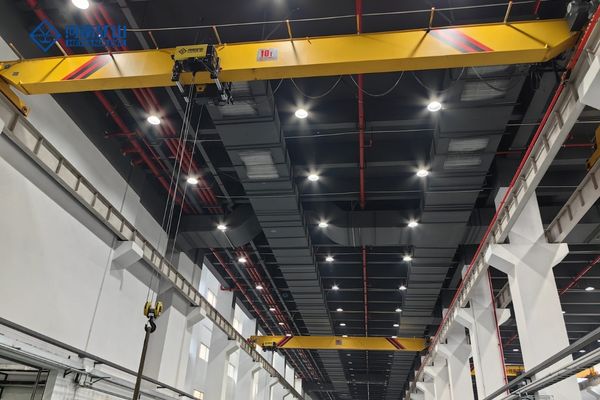
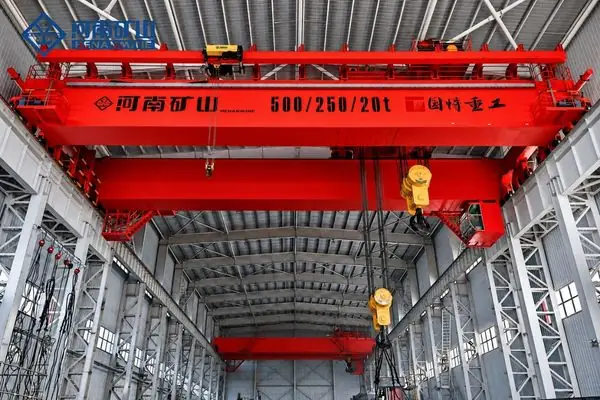
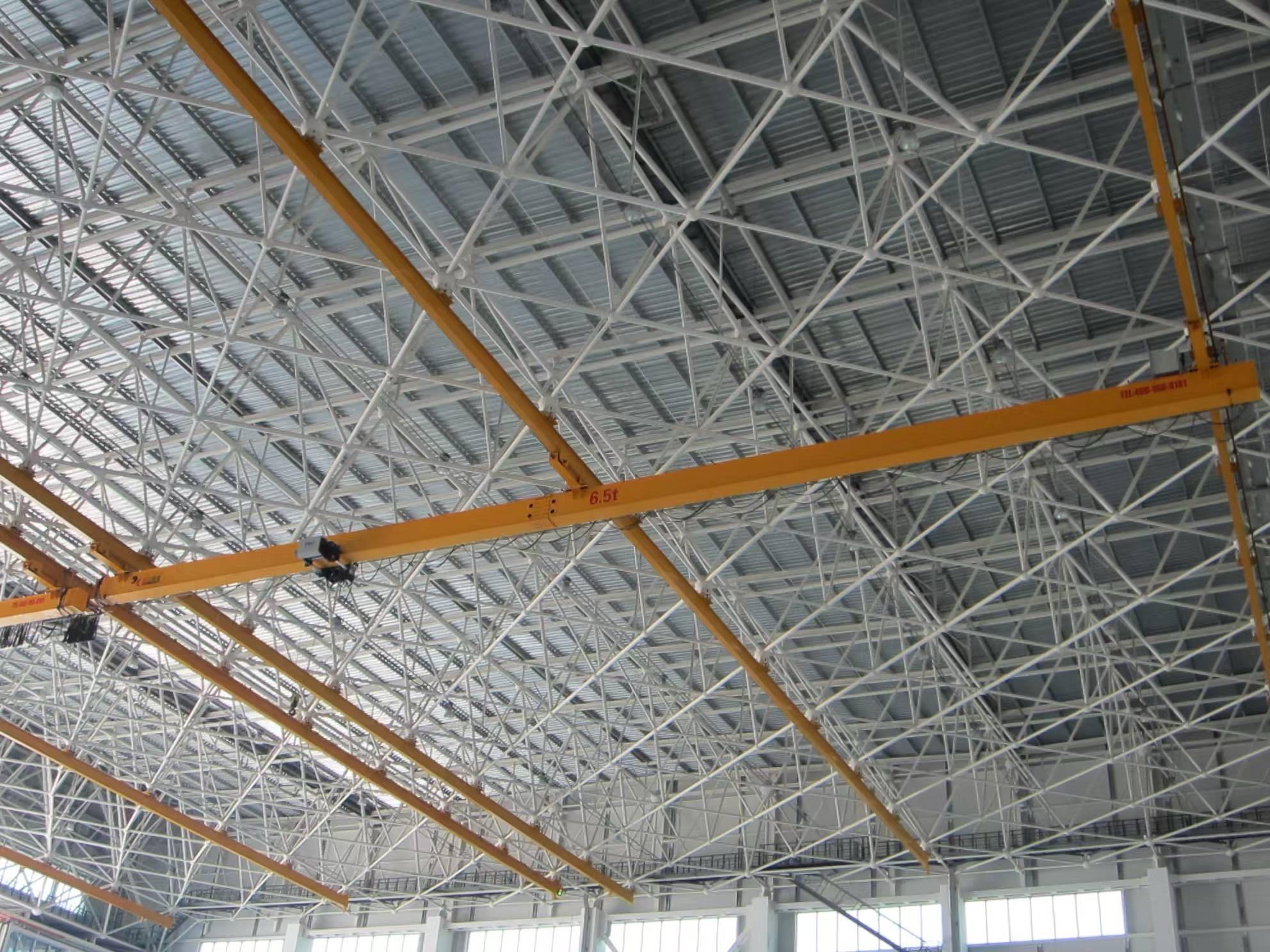
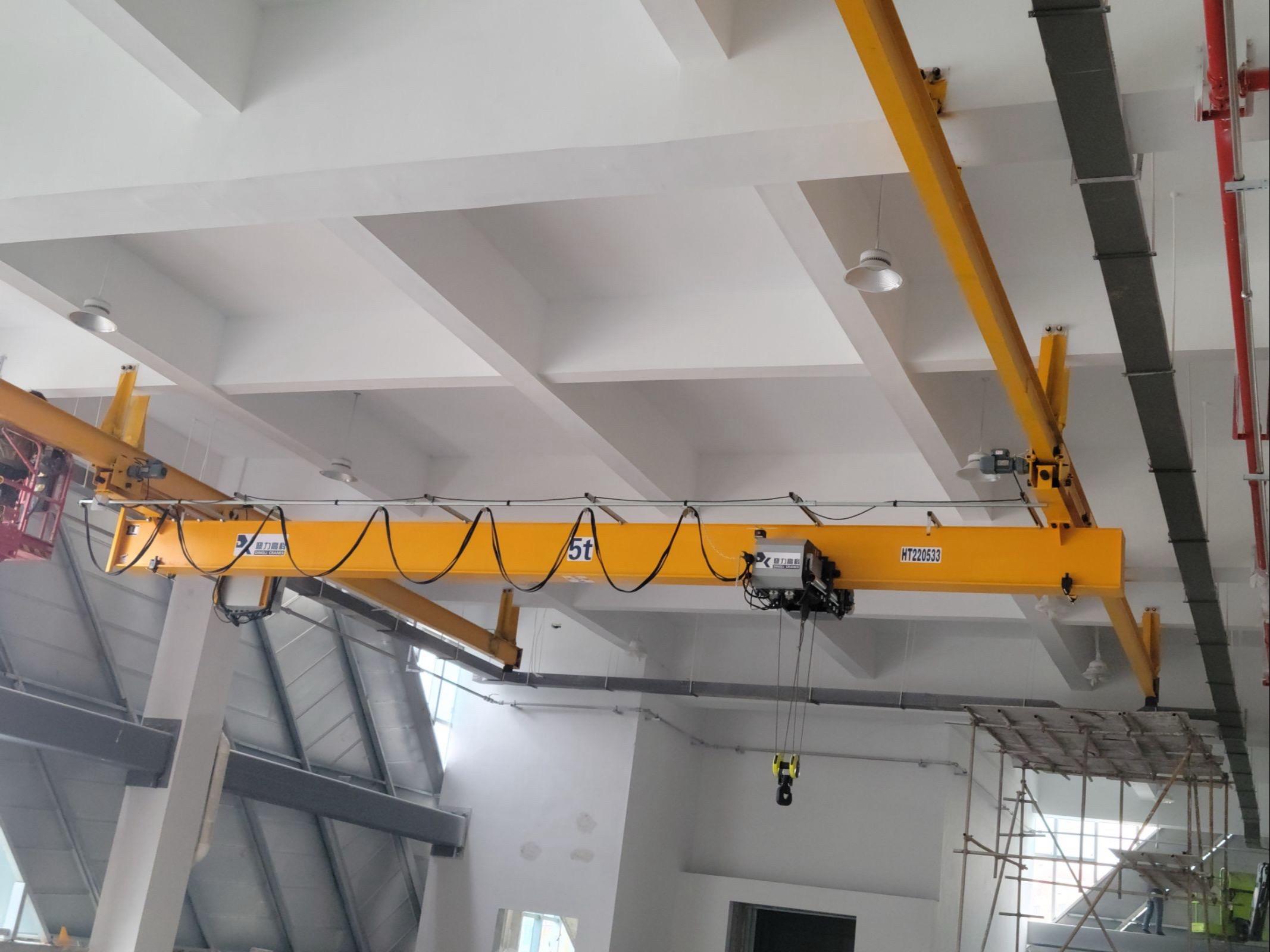
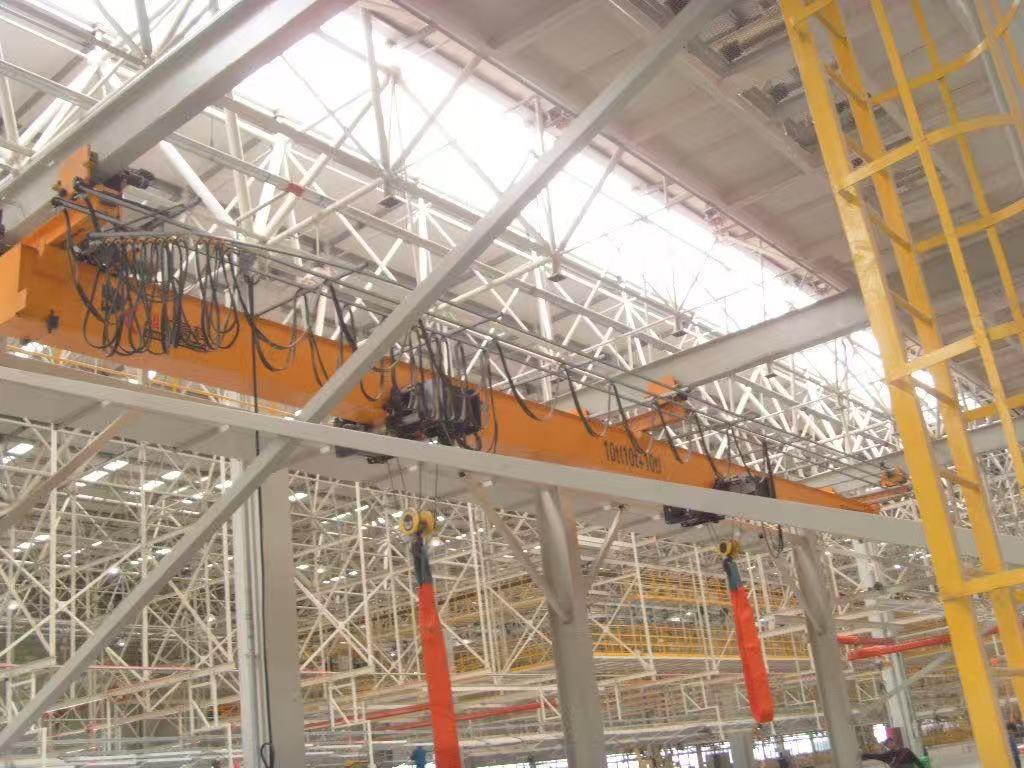
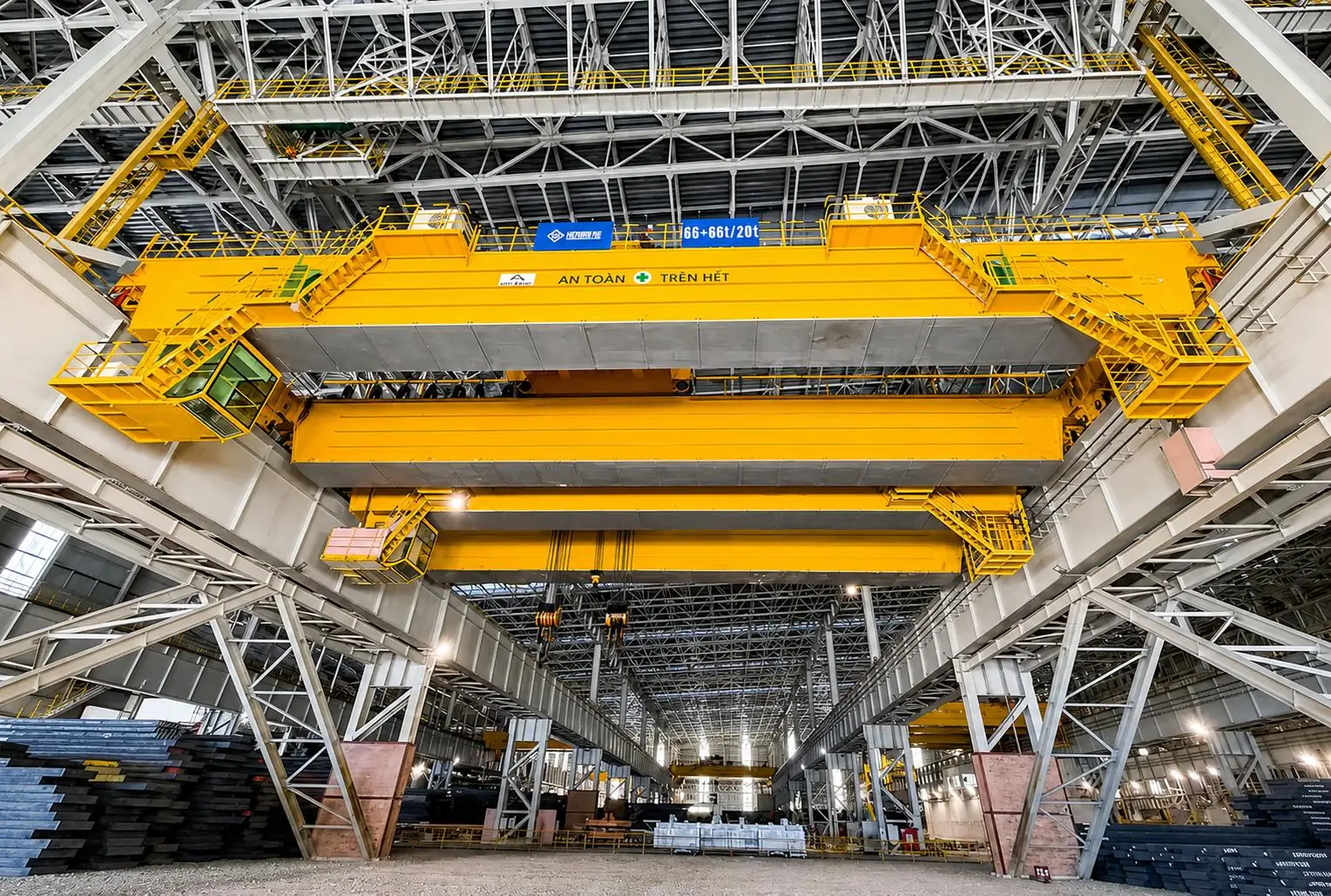
    Large-scale manufacturing workshops use multiple bridge cranes to share a single-span track, which can meet the material transfer needs of different processes such as heavy-duty assembly, steel structure processing, and mold handling, and improve equipment utilization and production convergence efficiency.However, as the number of cranes increases, problems such as intersecting operating routes, mutual interference of hoisting objects, and improper cooperation between multiple machines will also arise, affecting the safety of on-site operations and the rhythm of production.A reasonable collaborative plan must not only consider the layout and working area of the crane, but also combine the control system, safety protection, operation process and equipment parameters for overall planning to ensure the orderly operation of multiple equipment in the same workshop.

    Why Multiple Overhead Cranes Need Coordination

    Crane interference risks

    The most prominent hidden danger of Henan Mine Crane manufactured multiple bridge cranes on the same track or in overlapping operating areas is equipment interference.When the trajectories of crane carts and trolleys intersect, the fuselage, spreader, and wire rope are prone to scratches and collisions. Once the collision occurs, it will cause major accidents such as deformation of the main beam, damage to the trolley mechanism, and falling objects.In addition to interference between the main body of the bridge crane, the swing of the crane will also collide with peripheral equipment, columns, and tooling.Many factories only install simple buffers and lack dynamic distance monitoring. When the operator’s line of sight is blocked and fatigue operation occurs, the risk of interference will rise sharply.Establish a collaborative management mechanism in advance, which can dynamically restrict the crane from entering the conflict area and reduce the probability of equipment interference from the source.

    Safety and productivity

    Many workshops blindly increase the number of cranes, but on the contrary, they cause congestion in operations, frequent safety accidents, and decreased production beats.In the absence of collaborative rules, multiple cranes rush to operate, operators frequently avoid, hoisting waiting time is prolonged, and the efficiency of material flow is greatly reduced.After standardizing collaborative management, the operation of bridge cranes is partitioned and the movements are orderly, which can not only avoid safety accidents such as collisions, falling objects, and injuries to personnel, but also reduce equipment downtime and maintenance time.A stable and controllable hoisting process allows the workpiece transfer and assembly processes to be connected more smoothly. Under the premise of ensuring the safety of personnel and equipment, the overall production capacity of the workshop is released, and safety control and production capacity goals are balanced.

    When coordination is needed

    As long as there are two or more bridge cranes in the workshop and there is overlap in the operating area, collaborative operating rules must be formulated.Typical scenarios include the parallel transfer of workpieces by multiple cranes on the same track, the lifting of workpieces across regions, the transfer of materials between two bridge cranes, and multi-station synchronous hoisting operations.Even if the daily division of labor of each crane is independent, when the lifting route is temporarily adjusted during the peak period of the order, there will be intersections in the work area.In addition, temporary working conditions such as plant renovation, entry of large-scale equipment, and equipment overhaul and hoisting also need to enable collaborative control.Enterprises cannot only attach importance to collaboration in lifting operations, and normalized operations must also be included in the collaborative management system.

    How to Plan Crane Layout and Working Zones

    Define travel paths

    In the pre-planning stage of the workshop, it is necessary to delineate a dedicated cart and trolley operating path for each bridge crane, and determine the direction of material entry and exit and the starting and ending points of workpiece hoisting in combination with the process flow.The main traffic route minimizes crossovers, priority is given to planning independent long-distance passages for large-scale hoisting, and secondary paths are used for short-distance small-scale transshipment.When planning the path, the maximum shape and size of the workpiece should be considered, and the swing space of the crane should be reserved, and the size of the crane body should not only be referred to.After the drawing is completed, combine the simulation operations of the location of the on-site columns, pipelines, and equipment to mark the prohibited areas, form a written path specification, and deliver it to the operator for execution to reduce the uncertainty caused by the temporary diversion of the site.

    Identify shared work zones

    Shared work areas are the core difficulty of multi-machine collaborative control. Most of these areas are workpiece transfer areas, large assembly stations, and raw material loading and unloading points.It is necessary to clearly mark the boundaries of the shared area on the drawings and clarify the entry rules. In principle, only one bridge crane is allowed to operate in the shared area at the same time.For the lifting conditions where two cranes must enter at the same time, a special operation plan is formulated separately to limit the length of operation and the upper limit of load.In daily production, the electronic control system can be used as an electronic fence for the area, and the Henan Mine Crane manufactured bridge crane will automatically trigger an early warning when it enters the shared area, restricting other cranes from entering, and avoiding chaos caused by the simultaneous influx of multiple machines into the shared area.

    Match lifting capacity and hook positions

    The configuration of multiple cranes in the workshop cannot be simple and unified specifications. The rated lifting weight needs to be matched according to the load requirements of each station. Heavy-duty stations are equipped with large-tonnage cranes, and small-tonnage models are selected for lightweight transshipment.The installation height and horizontal stroke of the hooks should be matched with each other to prevent the high and low hooks from interfering with each other.In the workpiece lifting scene, the position of the hooks of each bridge crane should ensure that the load is evenly distributed to avoid overload of a single bridge crane.The limit position of the hook is checked synchronously during the design phase. When multiple cranes approach, sufficient clearance is reserved between the hook and the wire rope to prevent the spreader from winding and scratching, and to take into account the needs of different hoisting processes.

    Maintain safe clearances

    The safety gap is the basic design index to prevent crane collisions, which is divided into the spacing between the bridge crane body, the spacing between the crane and the fixed building, and the gap between the crane.The conventional static safety distance should be combined with the operating speed of the bridge crane to reserve a margin. The faster the speed, the greater the required safety distance.In addition to static reserved clearance, it is necessary to consider the braking and sliding distance of the cart and the swing amplitude of the hanging object, and cannot only rely on the protection of the structural buffer block.In the layout stage, the safety clearance parameters are written into the design specifications, and the limit devices are set at both ends of the track and at the boundary of the area.When equipment is retrofitted and tooling is added in the later stage, the safety gap must be reviewed to prevent new objects on the site from compressing the working space.

    How to Coordinate Multiple Overhead Cranes

    Set operating priorities

    Establish a clear priority system for crane operations to reduce multi-machine conflicts.Priorities can be divided according to the type of operation, with the highest priority for large-scale lifting and emergency equipment repair and hoisting.The transportation of finished products and the storage of raw materials have the second highest priority.Ordinary tooling has the lowest mobile priority.Priority rules should be written in writing, and operators and ground commanders should learn uniformly.When the operating routes of the two bridge cranes conflict, the low-priority cranes slow down in advance to avoid, and the operations are suspended to wait for the high-priority tasks to be completed.At the same time, an exception approval process is set up, and the priority can be temporarily adjusted under special working conditions, and all priority changes are recorded to avoid communication errors caused by verbal command.

    Coordinate load transfers

    The transfer of workpieces between two bridge cranes is a high-risk collaborative operation and requires standardized operating procedures.Before the operation, the two operators and the ground commander jointly confirm the location of the lifting point, the center of gravity of the workpiece, and the status of the spreader, and plan the transfer path.During the transfer process, keep the workpiece stable, control the lifting and operating speed, and strictly prohibit rapid movement from causing the load to shake.During the handover of the workpieces, one bridge crane slowly carries the load, and the other gradually unloads the force. The force changes of the wire rope are observed throughout the process, and the load is confirmed to be smoothly transitioned before the decoupling is completed.The command password is unified throughout the process, and multiple people are prohibited from issuing operation instructions at the same time. After each step of the action is confirmed to be correct, the next step can be continued.

    Manage simultaneous lifts

    Multi-machine synchronous lifting of large workpieces, load distribution and motion synchronization are the key points of control.Carry out technical exchanges before the operation, calculate the assigned load of each bridge crane, and the carrying capacity of a single crane cannot exceed the safety limit of the rated load, and formulate a test crane plan.During the test hoisting, the workpiece is lifted slightly, the spreader is fixed and the load balance is checked, and after confirming that there is no tilt or slippage problem, it is officially hoisted.The movements of the lifting, cart, and trolley are kept in sync, the speed is uniformly controlled, the attitude of the workpiece is observed in real time, and the work is stopped immediately if the force is abnormal.Synchronous hoisting operations require on-site supervision by a full-time commander-in-chief, and re-record after the operation is completed to optimize the subsequent hoisting operation plan.

    Establish operator communication

    A stable and reliable communication mechanism is the basic guarantee for multiple cranes to work together.The workshop gives priority to the use of standardized gestures and wireless intercom systems, and establishes a fixed command password system to avoid ambiguity in spoken language.Before the operation, the operator and the ground commander confirm the status of the equipment, the operation route and the risk points with each other.During the operation, continuous communication is maintained, and any operator who finds an abnormality can issue a stop command at any time.When the intercom signal is poor and the workshop noise is high, sound and light signals are used to assist communication.Organize communication drills regularly, unify signal standards, prevent misoperation due to signal understanding deviations, and improve the team’s collaborative response ability.

    multiple overhead cranes

    Which Control Systems Help Coordinate Cranes?

    Individual vs. group controls

    Stand-alone control and cluster collaborative control are suitable for different workshop working conditions.The independent control of the stand-alone machine has high flexibility, which is suitable for scenarios where each bridge crane operation is independent of each other and there is very little cross-operation. The operator controls the operation of the machine separately.However, when multiple machines frequently cross-operate, they only rely on stand-alone control and rely entirely on manual judgment, which is high risk.The cluster group control system can centrally monitor the location and operating status of all bridge cranes, and uniformly issue regional authority and action restriction instructions.When selecting projects, a hybrid scheme can be adopted, and the stand-alone mode can be used daily. When entering a shared area and lifting operations, it can be switched to a cluster collaborative mode, taking into account operational flexibility and overall operational safety control.

    Anti-collision systems

    The anti-collision system is an essential hardware for Henan Mine Crane manufactured multiple bridge cranes to work together. The mainstream solution uses laser, UWB, and radar sensors to collect the distance between the cranes and the obstacles in real time.The system sets up a two-level protection mechanism, a first-level early warning, and a sound and light alarm when the bridge crane is close to a safe distance to remind the operator to slow down.The second cascade of lock protection automatically restricts the cart and trolley from continuing to move in the direction of conflict when the dangerous distance is reached, and only reverse avoidance is allowed.The anti-collision system can be connected to PLC and linked with the regional electronic fence, not just a simple limit, to achieve dynamic distance protection.In harsh workshop environments such as dust and high temperature, industrial-grade sensing equipment should be selected to ensure long-term stable operation.

    Remote control and visibility

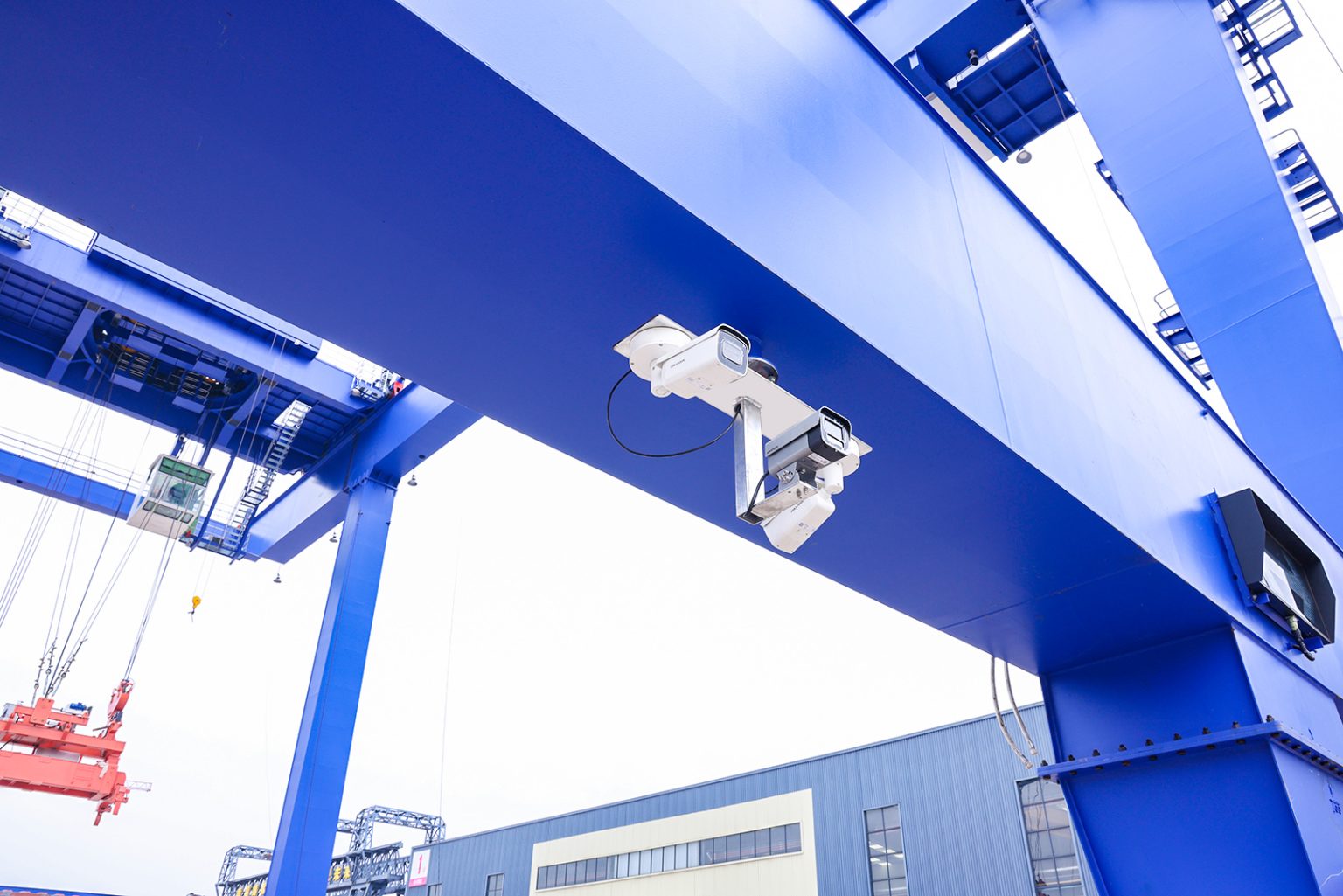
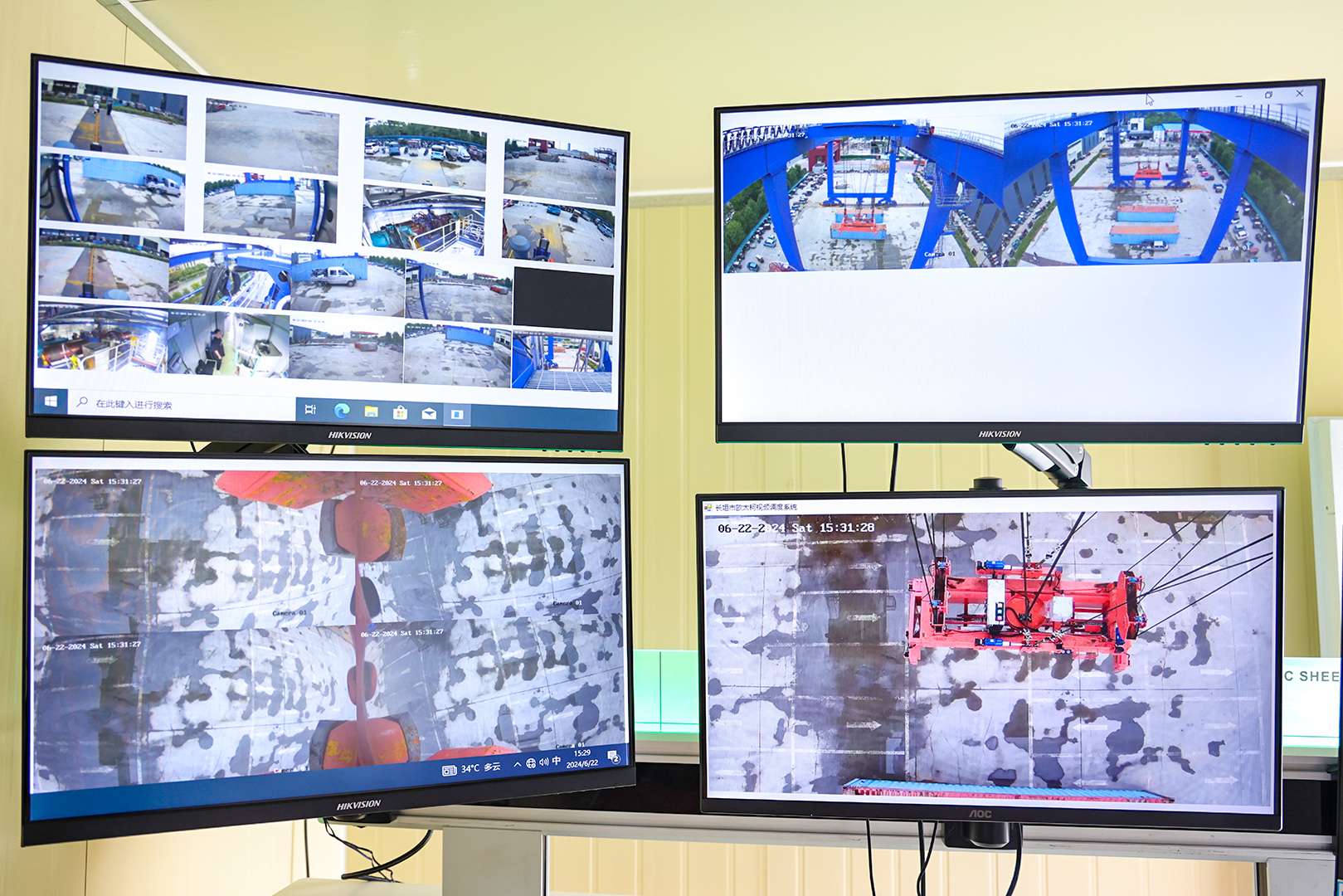
    The remote control is equipped with visual monitoring to effectively solve the problem of blocking the field of view of the workshop.Traditional cab operation is easily obscured by workpieces and columns, and the wireless remote control allows the operator to stand on the ground with a good field of view.At the same time, the bridge crane can be equipped with a high-definition camera, and the central control large-screen can return the hook and crane pictures in real time, and remotely view the location of multiple cranes.When multiple machines work together to lift and transfer workpieces, the command personnel use the video screen to grasp the overall working conditions.The selection of remote control equipment needs to ensure the anti-interference ability of communication, set the automatic shutdown function for signal loss, avoid signal interruption and cause out-of-control, and improve the visibility of operation under complex working conditions.

    PLC-based coordination

    The PLC-based collaborative control system is the core of realizing the intelligent linkage of multiple cranes.The PLC collects the position, speed, load, and limit signals of each crane in real time, and has built-in collaborative logic to determine whether there is a trajectory conflict between each equipment.When the bridge crane enters the preset shared area, the PLC automatically performs the speed limit and interlock shutdown logic, and records all operation logs to facilitate post-mortem traceability.The system can be integrated with anti-collision, remote monitoring, and upper computer management platform, and supports custom job partitions and priority rules.Compared with simple hardware limits, the PLC collaborative scheme is more adaptable, and the logic can be adjusted according to the workshop process, which is suitable for multi-bridge crane cluster projects in large factories.

    How to Ensure Safe Crane Operation

    Prevent crane collisions

    Preventing bridge crane collisions requires a combination of hardware and software, and operator experience cannot be relied on alone.The hardware level is equipped with anti-collision sensors, buffers, and track limits, and the software level relies on PLC to set regional interlocks to restrict multiple machines from entering dangerous areas at the same time.In daily management, regularly check the sensitivity of anti-collision equipment, clean up the dust on the surface of the sensor, and prevent detection failure caused by occlusion.Formulate an inspection list and confirm that the anti-collision system is enabled before each operation.At the same time, the operation process is optimized to reduce unnecessary multi-machine cross-operation, and the operator develops the habit of predicting in advance, decelerating and avoiding as soon as the early warning signal is received, and multi-layer protection reduces the probability of collision accidents.

    Control load swing

    The swing of the crane is a common safety hazard in multi-machine collaborative operation. Excessive swing can easily hit surrounding objects, and it will also change the force of the wire rope, causing unstable load.In operation, low-speed start and slow braking are used to avoid emergency start and stop, and reduce the inertial swing of the hanging object.The high-end bridge crane is equipped with frequency conversion anti-swing control, which suppresses the shaking of the crane through algorithms, greatly reducing the difficulty of operator operation.When lifting multiple machines, the lifting and operating speed are controlled synchronously to maintain the level of the workpiece and prevent the force on one side from causing a large swing.The operator has to wait for the crane to stabilize before continuing to move. It is forbidden to quickly transfer the workpiece with a pendulum to reduce the risk of secondary life.

    Manage emergency stops

    The emergency stop system is the last safety line of defense. In the collaborative scenario of multiple cranes, it is necessary to distinguish between stand-alone emergency stop and global emergency stop.Each bridge crane is equipped with an independent emergency stop button locally, which can be triggered by the remote control and the cab, which is used to stop the machine in an emergency.At the same time, a global emergency stop is set at the key points of the central control room and the operation site. When there is a major danger such as multi-machine interference and the crane is out of control, multiple bridge cranes are triggered to brake with one key.The system design should ensure that the emergency stop loop is independent, does not depend on the communication network, and is still effective in the fault state.Regular emergency stop drills are carried out to test the braking response effect, so that operators can be familiar with the emergency stop trigger conditions in different scenarios.

    Inspect and train operators

    No matter how perfect the equipment system is, it is inseparable from standardized personnel management.Establish a hierarchical inspection system, check the brakes, spreaders, and anti-collision sensors before the shift every day, check the electronic control system every week, and do regular non-destructive testing of the whole machine to record the health status of the equipment.Operators must complete special training, including multi-machine coordination rules, anti-collision system operation, lifting operation procedures, and emergency response methods, and pass the assessment and take the job with a certificate.Regularly organize retraining and on-site simulation exercises, and update accident case studies.At the same time, clarify job responsibilities, operators have the right to refuse risky operations, and build a solid safety bottom line from the personnel management level.

    How to Specify Multiple Overhead Cranes

    Assess loads and workflow

    The first step in the selection of multiple bridge cranes is to comprehensively evaluate the workshop load and production process.Count the average daily lifting load and maximum workpiece weight, analyze the workpiece transfer path and station distribution, and identify high-frequency cross-operation points and lifting operation frequencies.Sort out the fluctuations in the production capacity of the workshop in the morning and evening shifts, evaluate the lifting needs during peak periods, and judge the number and layout plan of Henan Mine Crane manufactured bridge cranes.It is also necessary to consider the expansion plan for the next 3 to 5 years and reserve space for equipment expansion.Based on a complete working condition assessment, divide the stations responsible for each crane, determine the shared working area, avoid excess equipment configuration or insufficient hoisting capacity, and lay the foundation for a complete set of solutions.

    Select capacity, span, and duty class

    Based on the load evaluation results, the rated lifting weight, track span, and working level of each bridge crane are determined.The lifting weight reserves a safety margin, which cannot just match the weight of the workpiece.The span is determined according to the measured size of the track beam of the plant, taking into account the effective coverage of the hook.The working level refers to the GB/T3811 standard, and the A1 to A8 levels are selected according to the daily operating time, lifting frequency, and load fluctuations.The high-frequency heavy-duty assembly workshop adopts the A6 and A7 levels, and the ordinary machining workshop adopts the A5 level.Long-term heavy-duty operation of low-work-level equipment will accelerate the fatigue of metal structures and age in advance. The selection stage cannot simply reduce the work level to compress costs.

    Specify rails and power supply

    The track and power supply system are the basis for the stable operation of Henan Mine Crane manufactured multiple bridge cranes, and the working conditions of multiple machines on the same track require higher track strength and installation accuracy.The selection of the track should account for the wheel pressure, match the carrying capacity of the track beam, strictly control the straightness and level of the track, and reduce the operation of the cart. Caton and wear.The power supply scheme can choose sliding contact line or cable power supply. The sliding contact line is suitable for long-track and multi-crane continuous operation scenarios. Do a good job of insulation protection to avoid short circuits caused by dust.The total electrical load is calculated during the design to ensure the stability of the power supply when multiple bridge cranes are operating at the same time, overload and leakage protection are set up, and track settlement and power supply line aging are regularly detected.

    Define control and safety features

    Clarify a complete set of control and safety configuration lists in the equipment technical agreement.The basic safety configuration includes overload limiter, height limit, stroke limit, and brake.Collaborative related configurations include anti-collision sensing, PLC cluster linkage, electronic area fence, wireless remote control and visual monitoring.At the same time, load monitoring and operation data recording systems are configured, and job data is saved for fault traceability.According to the needs of working conditions, anti-swing and emergency stop interlocking devices are selected.All safety components are selected from industrial reliable brands, and the factory test items of the equipment are clarified to ensure that all single-machine functions and multi-machine collaborative linkage functions have passed the factory inspection and meet on-site safety specifications.

    Check manufacturer integration capabilities

    The multi-bridge crane project is not just a simple equipment procurement, but also a core test of the manufacturer’s system integration capabilities.The procurement phase focuses on whether the manufacturer has experience in multi-machine collaborative program design, PLC cluster program development, and on-site debugging, and whether it can complete the joint adjustment of anti-collision, monitoring, track, and power supply systems.Confirm that the manufacturer can provide one-stop services for site survey, layout planning, installation guidance, personnel training, and after-sales maintenance.Give priority to manufacturers with landing cases of the same type of multi-machine collaborative workshop, to avoid equipment from different suppliers, system incompatible, linkage logic cannot be opened, resulting in collaborative functions cannot be implemented.

    Henan Mine Crane Factory Custom

    Configuring multiple bridge cranes in the same workshop requires comprehensive consideration of lifting weight, track conditions, overlap of operating areas, load distribution, and cooperation between control systems.Henan Mine Crane Factory can provide customized bridge crane solutions according to plant layout, material handling needs and actual working conditions, and configure single-beam or double-beam bridge cranes, wireless remote control and corresponding control systems in combination with different application scenarios to help enterprises rationally plan hoisting equipment and improve the efficiency of material flow in the workshop.

    From pre-project design, crane manufacturing to installation guidance, on-site commissioning and operation training, perfect project support helps to reduce the risk of interference in multi-machine collaborative operation and ensure the long-term stable operation of equipment.Whether it is a new plant or an upgrade of an existing hoisting system, a more suitable equipment configuration can be determined based on the actual lifting weight, span, lifting height, working level and on-site operating conditions, so that the crane system can better adapt to the production process and future development needs.
    Henan Mine CraneDiscuss your requirements ↗
  • How to Connect Overhead Cranes with Automated Production Lines

    How to Connect Overhead Cranes with Automated Production Lines

    How to Connect Overhead Cranes with Automated Production Lines

    The position of manual bridge cranes in most production lines is a bit awkward.The operator occupies the post, and the hoisting action of the bridge crane is limited by the reaction speed of the person, the beat is unstable, and the waiting time for loading and unloading is long. It will also cause a backlog of WIP due to the irregular lifting trajectory of the bridge crane.These seemingly daily small problems, once the beat of the production line accelerates, will become bottlenecks.The purpose of connecting the bridge crane to the automated production line is not to replace a more expensive equipment, but to let the bridge crane and the entire line run at the beat.An automated hoisting line with stable operation can usually compress the single cycle time by 20% to 40%, and reduce the labor consumption of loading and unloading to close to zero.

    How Do Overhead Cranes Work in Automated Production Lines?

    Crane automation Basics

    The automation of Henan Mine Crane Factory supply bridge cranes is not just to replace operators with robots, but to upgrade the three sets of mechanisms of carts, trolleys and hoisting, so that the operation of each mechanism can be executed in accordance with preset procedures, combined with the positioning and dispatching system, to realize the automatic operation and collaborative operation of bridge cranes, and gradually transform manual operation into system control.The degree of automation is usually divided into three levels.The first level is remote control. The operator uses a handle or tablet to control in a safe area to reduce personnel risks without changing the operating mode.The second level is the execution of the scheduled procedure. The bridge crane automatically completes the handling according to the set path and action, and the person is only responsible for triggering it.The third level is fully automatic scheduling linked to the beat of the production line. The bridge crane receives tasks directly from the system and completes the whole process of picking, transporting and discharging independently.Which level of production line to choose depends on the status of existing equipment and acceptable transformation investment, not on the old and new equipment.The old bridge crane can also enter the second or even third level through electrical and control upgrades.

    System integration

    Integration means turning the bridge crane into part of the production line, not just a usable hoisting tool.The typical practice is to let the upper system uniformly issue tasks, and the bridge crane only performs three actions: picking, transporting, and releasing.After the task instruction arrives, the system plans the path, and the bridge crane reclaims the material, transports it in place, and returns without load to form a complete closed loop.The actual benefit of integration is the synchronization of material flow and information flow.In the past, when the materials were in place depended on manual scheduling, but now they are uniformly arranged by the system. The backlog of WIP has been significantly reduced, and the waiting time at the bottleneck station has been compressed.This part of the benefit is not achieved by speeding up the speed of the bridge crane, but by eliminating the scheduling wait.This is also the most real source of value for automation transformation.

    Automation technology

    Supporting the landing of automation are several key technologies.The frequency converter of the bridge crane is combined with a closed-loop encoder to make the three-axis movement speed controllable and the position repeatable.Laser ranging or QR code positioning provides the absolute position reference of the bridge crane.The anti-swing algorithm suppresses the swing of the bridge crane crane in operation and ensures the accuracy of placement.Safety laser scanners and gratings delineate the work area and isolate personnel from the danger zone.Each technology solves a specific problem.When selecting the type, first look at the requirements of the production line for positioning accuracy and beat. The higher the accuracy requirements, the higher the sensor level, and the cost and implementation difficulty will increase accordingly.However, one thing cannot be saved. Anti-swing and safety protection devices are required, not optional, in any bridge crane automation solution.

    How to Integrate an Overhead Crane into an Existing Production Line

    Workflow evaluation

    Do a beat analysis before the transformation of the bridge crane, and this step determines the direction of the transformation plan of the bridge crane.Count the loading and unloading time, waiting time, and invalid walking distance of each lifting of the bridge crane, find the bottleneck station, and then see where automation can save time.Without this foundation, no matter how beautifully the plan is made, it is empty.Transformation goals must be quantified.Clarify the target cycle time, target throughput, and target manpower savings, and write the plan as the basis for acceptance, otherwise it is impossible to judge whether the project meets the standards after completion.At the same time, check the existing interface of the production line, the in-place signal of the conveyor line, the alignment point of the station, and the physical state of the bridge crane track, which determine the workload and cost range of the transformation.

    Crane selection

    The selection of bridge cranes revolves around a set of core parameters, such as rated lifting weight, span, lifting height, operating speed, working level and expected frequency of use.Each item directly affects the boundary of the production capacity of the bridge crane after the transformation. It cannot be allocated only according to the current minimum demand, and there must be room for climbing.Three things are reserved for the automation of bridge cranes, sufficient walking and lifting speed margin, communicable frequency conversion and PLC interface, and the hardware foundation for positioning and anti-swing functions.Many projects wanted to upgrade in the later stage, but found that the bridge crane did not reserve the interface at the beginning, and was forced to replace the whole machine, doubling the cost.Taking these points into account when selecting the model can save a large amount of subsequent renovation costs.

    PLC and control integration

    The controller of the bridge crane must be docked with the production line PLC, and the communication method of the bridge crane control system must be determined first.The common Profinet, ETHERNET/IP, and Profibus fieldbuses have their own applicable scenarios. The selection depends on the existing PLC brand and network architecture of the production line. It is best to be consistent with the production line and reduce the protocol conversion link.The interaction logic of bridge cranes should be clearly defined.The PLC of the production line sends signals for placement, pick-and-place, and release, and the bridge crane is executed in the order of the signals. The two ends are interlocked and mutually recognized, and neither end is ready to operate.Redundancy design must also be done in the control, master-slave communication, manual and automatic switching, and fault downgrading.When automation fails, the operator can switch back to manual takeover at any time without interrupting production.

    Conveyor coordination

    The cooperation between the bridge crane and the conveyor line depends on the alignment logic.The three elements of in-place detection, load identification, and release confirmation form an interlocking. The bridge crane will only release the material if it confirms that the station is ready, and the conveyor line will only continue to feed if it confirms that the spreader has left. There will be no empty runs on both sides, and there will be no crashes.In multi-station scenarios, the scheduling priority must also be defined.The bridge crane can only serve one station at a time. The system should prioritize the urgency of the task and the status of the station to avoid path conflicts when multiple tasks are concurrent.This step is done carefully, so that the collaborative efficiency of the bridge crane and the conveyor line can be guaranteed.

    Sensor integration

    Automation relies on sensors much more than manual operation.The load of the bridge crane is weighed to determine whether it is overloaded and correctly grasped. The position detection covers the dual axles of walking and lifting, anti-collision ranging to avoid collisions, and alignment confirmation to ensure the discharge accuracy of the bridge crane. , Safety protection keeps people away from the work area.These types of sensors form a complete perception layer.Key signals must be redundant and self-checked.The important sensor adopts a dual-channel design, coupled with a fault self-test, to ensure that a single sensor can trigger a safe shutdown when it fails, rather than malfunction.The sensor calibration and calibration of bridge cranes also directly affect the positioning accuracy and cycle time, and should be included in the daily maintenance plan.

    What Challenges Affect Crane Automation Projects?

    Building and runway restrictions

    Plant conditions are often the biggest variable in bridge crane automation projects.The headroom height determines the lifting and spreader transformation space, the straightness and wear of the track directly affect the positioning accuracy of the bridge crane, and the foundation bearing and column spacing constrain the span and load.Do a check of the status quo of the bridge crane plant before the transformation, which can avoid rework where the equipment is in place and the track is found to be unqualified.The difference in construction investment between the new factory building and the renovation of the old factory building is obvious.We can take into account the track accuracy and automation interface at the design stage.For the old plant, it is necessary to evaluate whether the existing structure can carry the accuracy requirements of automated operation, and this part of the investment must be included in the total budget in advance.

    System compatibility

    Compatibility with old equipment is the most common obstacle to the transformation of bridge cranes.The electrical system of the bridge crane that left the factory in the early years was aging, incompatible with the new bus and the upper system, and direct docking often failed.At this time, it is necessary to judge which way to go, the whole machine control cabinet is transformed, or the whole machine is replaced.The judgment is based on the remaining equipment life, mechanical status and control upgrade space of the bridge crane.The mechanical condition is good, but the electrical aging is only good, and the transformation of the control cabinet is cost-effective.The equipment itself has reached the end of its life, but the transformation is not cost-effective, and the whole machine should be replaced.Do a communication protocol and I/O point check before the transformation, and use a written interface list to lock the compatibility range to avoid wrangling in the middle of the project.

    Production downtime

    The risk of shutdown is one of the most worried issues for the owners of bridge crane renovation projects.The commissioning, trial operation and acceptance of bridge cranes during the transformation period all require a shutdown window, which directly conflicts with the tasks in production.If it is not handled well, a transformation may interrupt several weeks of continuous production.The countermeasure is to be implemented in stages.First debug the stand-alone machine and adjust the movement of the bridge crane itself.You are welcome to join us.The final cut is fully automatic to verify the beat and stability.Every step is completed in the window to minimize the impact of the shutdown.Continuous production lines can also use night or weekend windows, or arrange the transition of alternate work plans.

    Safe and reliable

    The automation system of Henan Mine Crane Factory supply bridge cranes must meet safety standards and risk assessment requirements.There is no shortage of safety devices such as limit, anti-collision, emergency stop, and area protection, and the requirements for bridge crane automation scenarios are more stringent.The system has no human adaptability, and safety redundancy directly determines the risk level of the bridge crane.The reliability requirements are also higher than manual operation.During automated operation, a fault location error may cause the entire line to shut down.Therefore, fault diagnosis, redundancy design and maintainability must be considered in advance.The operating rate is the real result of the automated transformation of bridge cranes, not just the ability to run automatically.

    Overhead Crane Automation

    How to Plan Crane Automation Costs and Implementation

    Project cost factors

    The cost of bridge crane automation transformation is not a fixed number, it depends on the scope of bridge crane transformation, the status of equipment and the complexity of the production line.The cost structure usually includes hardware (frequency converter, sensor, control cabinet), software (scheduling logic and upper system), engineering design, on-site commissioning, and personnel training.The cost level is most affected by two factors, one is the scope of transformation, whether it is the transformation of the whole machine or the addition of automation modules.The second is the electrical condition of the existing bridge crane.When estimating, it is recommended to quote separately according to the four pieces of hardware, engineering, commissioning, and training, and then superimpose the emergency budget.The ROI should be calculated in the general ledger, adding up the three items of labor savings, production capacity improvement, and waste loss reduction, and generally seeing a return of one to three years, depending on the production line utilization rate of the bridge crane.

    Installation and commissioning

    The implementation cycle of the bridge crane is divided into five stages, including plan design, factory commissioning, on-site installation, online trial operation, and formal acceptance.Each stage must have a clear acceptance node for bridge cranes, rather than waiting for all of them to be completed before seeing the results.Factory debugging is easy to be underestimated, but the value is very high.Simulate the on-site working conditions of the bridge crane in the factory, and adjust the action, positioning accuracy, and safety interlocking of the bridge crane itself in place, which can greatly compress the on-site commissioning time and shutdown window.After the site is connected, it will be accepted one by one according to the positioning accuracy, cycle time, and safety interlock function, and all of them will be put into operation only if they meet the standards. Do not run with illness.

    Long-term maintenance

    The maintenance of automation equipment is different from that of traditional bridge cranes.The sensors and encoders of bridge cranes need to be calibrated regularly, the control cabinet should pay attention to heat dissipation, and the communication stability should be inspected.These tasks may seem trivial, but they are essential for the long-term stable operation of bridge cranes.Predictive maintenance is the direction.Monitor temperature, vibration, motor current and other parameters through operating data, give early warning before a failure occurs, and turn unplanned downtime into planned maintenance.The supply of spare parts and service response of bridge cranes should also be discussed clearly when purchasing.The long-term cost of ownership should be included in the total cost, rather than just staring at the purchase price.

    How to Choose an Overhead Crane Manufacturer for Automation Projects

    Engineering ability

    When choosing a bridge crane manufacturer, it depends not only on the product model of the bridge crane, but on the program ability.Almost all bridge crane automation projects have customized requirements. Whether non-standard design and feasibility simulation can be done for specific working conditions is more important than whether there are ready-made products.The method of investigation is to see if the other party has an engineering design team that integrates mechanical, electrical, and software, rather than just doing mechanical matching.Verify the opponent’s level with specific working conditions.Throw out a scene of a large-span, heavy-duty or high-speed bridge crane, and see the depth of the plan given by the other party, whether it applies the standard plan, or is really designed around your production line, you can judge in a few words.

    Control system integration

    The control ability is the core of the bridge crane automation project, and it is also where the supplier gap is opened.Investigate whether the other party has independently mastered the PLC and drive programming of the bridge crane, rather than just purchasing a third-party control box to install it.Autonomous control means that subsequent changes to procedures, functions, and troubleshooting are all in your own hands, and you are not subject to others.Openness is also critical.For bridge crane control to be able to interface with MES and third-party PLCs in the production line, suppliers should keep the agreement open, rather than binding their own private agreements.The risk of binding the agreement is that any changes in the later stage must pass through the supplier, and the cost and time are uncontrollable.You can ask the other party to provide automation integration cases of bridge cranes in the same industry to verify their true integration capabilities.

    Testing and technical support

    Factory test data is hard evidence to judge the strength of suppliers.The full-load, full-speed, and precisely positioned bridge crane test report can visually reflect the true performance of bridge crane equipment, rather than relying only on the promotional parameters on the product information.Suppliers are required to provide complete test records as the basis for acceptance.After-sales service is the basis for long-term cooperation.The response speed of on-site commissioning, the ability of remote support, the degree of localization of spare parts, and the terms of the maintenance agreement determine the level of guarantee after the bridge crane equipment is put into operation.Once the bridge crane is shut down, it affects the entire production line. After-sales responsiveness is more important than the purchase price. Be sure to write the service level clearly in the contract.

    Henan Mine Crane Factory Custom

    Henan Mining Factory provides customized bridge cranes, gantry cranes and material handling solutions for demanding industrial applications. From upgrading capabilities and span to working conditions, operating mechanisms and automation requirements, each project can be customized according to specific production needs. With integrated R&D, engineering design, manufacturing and service capabilities, we help customers choose lifting equipment that is suitable for their facility layout, material handling work flow and long-term operational goals.

    Whether you are upgrading an existing workshop, expanding a production line, or planning a new industrial facility, our team can work with you to define the correct crane configuration for your project. Share your required lifting capacity, span, lifting height, working environment and operating requirements, discuss customized solutions with Henan Mining Cranes, and plan your project from planning to implementation

    Henan Mine CraneDiscuss your requirements ↗
  • How to Choose the Right Lifting Capacity for a Bridge Crane?

    How to Choose the Right Lifting Capacity for a Bridge Crane?

    How to Choose the Right Lifting Capacity for a Bridge Crane?

    Selection of overhead cranes is not simply a matter of matching the maximum weight of the load, but a systematic process that combines load parameters, frequency of operation, plant conditions, safety regulations and long-term capacity planning. Accurate selection is the key to ensuring safe lifting operations, improving productivity, complying with annual inspections, and reducing equipment life cycle costs.

    Based on OSHA, ASME, CMAA and other international lifting standards, this article explains the definition of bridge crane tonnage, selection points, safety margins, calculation methods and industry adaptation programs, to help enterprise personnel choose the right equipment for the site conditions.

    What Is Bridge Crane Lifting Capacity?

    Overhead crane capacity, also often called rated lifting capacity, safe working load (SWL), refers to the crane in the standard normal operating conditions, the maximum safe lifting weight through the engineering design and qualification certification, is the most core performance parameters of the crane.

    This parameter is marked on the equipment nameplate and technical information, commonly used units for metric tons, short tons, etc.; its value is determined by the main girder, hoisting system and other core structural design, strict compliance with OSHA, ASME industry standards.

    The rated lifting capacity is the hard upper limit for safe operation of the equipment, and overloading is strictly prohibited. Overloading is easy to cause deformation of the main beam, structural damage, heavy falling and other major safety accidents, regular bridge cranes are equipped with overload protection devices, from the hardware to prevent the risk of overloading.

    Key Factors to Consider When Choosing Bridge Crane Capacity

    Want to accurately select the crane tonnage, can not only refer to the weight of the goods lifted at a single time, you need to integrate the plant conditions, operational needs, long-term development of more than ten core factors, matching the full range of equipment parameters, taking into account the safety, practicality and economy.

    Maximum Load Weight

    The basis for selection is to account for the total lifting weight, not just the weight of the material. The total load needs to include the weight of the goods, spreaders, slings, beams, clamps, suction cups and all other work equipment under the hook. At the same time, industry standards require that a 10%-25% safety margin be set aside to offset the dynamic impacts generated by lifting starts and stops, load shaking, and off-load lifting, and to avoid the risk of sudden load fluctuations.

    Service Classification

    The frequency of crane use and the intensity of operation directly determine the effective load carrying capacity. The Crane Manufacturers Association of America (CMAA) divides the equipment operation level into six grades from A to F. The A grade is for standby intermittent operation, and the A grade is for standby intermittent operation:

    Class A is a standby intermittent operation, Class F is a continuous heavy-duty high-intensity operation. Long-term high-frequency, full-load operation conditions, must be matched with higher specifications of the equipment design, even if the maximum weight of the goods is fixed, but also need to raise the rated tonnage, to protect the service life of the equipment and operational stability.

    Track Span

    Span refers to the center distance between the two sides of the running track, which is the key index affecting the force of the main beam. Under the same tonnage, the larger the span, the higher the bending stress and deformation load of the main beam, and the effective bearing performance of the equipment will be reduced. Large-span workshops usually need to use double girder overhead travelling crane or directly lift the rated tonnage of the equipment in order to meet the requirements of safe operation.

    Lifting Height and Plant Headroom

    The effective lifting height of the workshop and the top headroom size directly constrain the hoist selection and the whole machine structure program. Low plants need to match the low headroom with a special hoist, if the site headroom is not enough, the payload performance of conventional lifting equipment will be greatly limited, need to adapt to adjust the tonnage and structure of the equipment to meet the site installation and operational requirements.

    Operation Speed and Positioning Accuracy

    For the need for rapid lifting, accurate alignment of the production line conditions, the crane lifting, trolley, trolley running faster, the dynamic inertia is greater, the machine structural strength and load performance requirements are higher. High-speed, high-precision operation scenarios, the need to match a higher margin of the tonnage configuration, to avoid fatigue damage caused by long-term dynamic load equipment.

    On-site Operating Environment

    Indoor and outdoor work, high and low temperature extreme environment, humidity, corrosion, dust, explosion-proof factory and other working conditions, will affect the crane material performance and load stability. Outdoor equipment to withstand wind loads, corrosive environment will accelerate the aging of components, this type of scenario equipment need to do anticorrosion, explosion-proof transformation, some working conditions also need to be appropriate downward adjustment of the rated load utilization, selection of models need to reserve sufficient tonnage margin.

    Load Characteristics and Lifting Methods

    In the face of eccentric lifting, center of gravity shift, load shaking, fragile, high temperature and other special working conditions, lifting operations will produce additional torque and dynamic stress, significantly increasing the operational risk. At the same time, all kinds of special spreaders and tools will take up the rated load, further reducing the effective lifting capacity. Therefore, special load scenarios must be appropriate to increase the tonnage reserve to ensure operational safety and equipment stability.

    Future Expansion and Growth

    Equipment selection needs to be pre-judged in advance of the next 3-5 years of production capacity upgrades, goods weight increase, production line iteration and other development needs, reasonable reserve tonnage margin. Moderately enlarging the bearing reserve can effectively avoid the equipment overload and machine elimination and replacement problems caused by the later capacity enhancement, and significantly save the comprehensive costs brought by the secondary procurement, equipment transformation and production downtime, and realize the long-term equipment adaptation.

    Building Structure and Runway Support

    The total superimposed load of the crane’s self-weight and rated operating load must be strictly controlled within the load-bearing limits of the plant columns, roof beams and rail support structure. If the bearing capacity of the civil structure of the plant does not meet the standard, even if the choice of large-tonnage cranes can not be put into operation, so the tonnage selection must be accurately matched with the site of the civil bearing conditions, collaborative calibration.

    Safety, Standards, and Compliance

    All overhead cranes must strictly follow OSHA, ASME, CMAA and domestic industry standards, and be equipped with core safety devices such as overload protection, travel limit and load detection. During the selection process, a margin for compliance testing should be reserved to ensure that the equipment successfully passes factory acceptance and annual inspection, and meets the requirements of normalized compliance operation.

    Budget and Life Cycle Costs

    Although large-tonnage cranes have higher upfront procurement investment, they have high structural strength, wear-resistant and fatigue-resistant, fewer failures under high-frequency and heavy-duty working conditions, lower operation and maintenance costs, and longer equipment life. Selection should not only focus on the initial cost, the need for comprehensive consideration of energy consumption, maintenance, downtime losses and other life cycle costs, comprehensive cost-effective.

    Understanding Capacity Safety Margins

    Many users tend to confuse the two core concepts: design safety factor and operational safety margin, which is one of the main reasons for tonnage selection errors.

    • Design safety factor: the structural safety margin preset for the equipment factory, is a hard design guarantee. The safety coefficient of the whole machine is 3:1, the core components are 2:1-3:1, and the perishable parts such as wire ropes and spreaders are 4:1-5:1, which is used to offset the aging, impact and fluctuation of the working conditions of the equipment, and overloading is strictly prohibited.
    • Distinction between test load and rated load: newly installed, remodeled or overhauled cranes are required to carry out 100%-125% rated load static load test, which is only used for acceptance verification of the structural strength and overall stability of the equipment, and the test load is not allowed to be used as the daily operating load.
    • Practical safety margin specification: daily selection and operation, the industry’s general safety guidelines: 10%-25% load margin reserved for routine conditions; high-frequency heavy-duty conditions, daily operating load does not exceed 75%-90% of the rated tonnage of the equipment, to maximize the avoidance of equipment fatigue damage and safety Risks.

    How to Calculate the Required Bridge Crane Capacity

    Professional tonnage calculations do not require complex formulas and follow standardized steps to accurately calculate the appropriate tonnage for most industrial plant conditions.

    Identify the Maximum Load Weight
    Accurately calculate the maximum net weight of the material to be lifted in a single operation in the workshop, and then fully add up the weight of all accessories such as spreaders, work tools, ropes, clamps, etc. under the hook, and then integrate them to arrive at the total basic load. Practical example: 8 tons of net material weight + 1 ton of complete set of spreader accessories, the final total base load is 9 tons.

    Account for Load Characteristics
    Comprehensively investigate the lifting conditions at the site, focusing on checking whether there are special operating scenarios such as center of gravity shift, eccentric lifting, load swaying, high temperature, fragile, etc. For non-routine loading conditions, additional safety margins are required to effectively offset the safety hazards caused by eccentric torque and dynamic impact loads, so as to build up a solid operational safety bottom line.

    Operational Margin

    On top of the calculated total base load, the industry standard safety margin of 10%-25% is superimposed. Taking 9-ton base load as an example, the calculated safe load range is 9.9-11.25 tons, and the actual selection needs to avoid the risk of critical load operation, give priority to 12-ton and above equipment, and adapt the industry’s mainstream 10-ton and 15-ton standardized models to ensure sufficient operational redundancy.

    Incorporate Duty Cycle

    Combining the average daily lifting frequency, single operation duration, load utilization rate and other core indicators, the corresponding CMAA operation level is accurately determined. For the severe working conditions of high-frequency heavy load and continuous uninterrupted operation, even if the peak load value of the equipment is on the low side, it is still necessary to upgrade the equipment configuration and strengthen the structural strength and anti-fatigue performance of the whole machine, so as to ensure the long-term stability and low-fault operation of the equipment.

    Evaluate Structural and Operational Factors

    Comprehensive verification of the site track span, effective lifting height, equipment running speed, operating environment, plant load bearing and other key parameters, to comprehensively verify the suitability of the equipment. For large span, low headroom and heavy load conditions, the model can be flexibly optimized, such as replacing single girder models with double girder models and moderately increasing the rated tonnage, which can effectively make up for the performance degradation brought about by the limitation of working conditions.

    Reserve Capacity for the Future

    Combined with the enterprise’s future capacity upgrading, goods weight increase, production line expansion, process iteration and other long-term development planning, scientific reserve tonnage margin. By reserving equipment redundancy in advance, you can effectively avoid the problems of insufficient equipment carrying capacity, elimination and replacement of the whole machine triggered by the later increase of production capacity, and significantly reduce the comprehensive cost of the second procurement of equipment and the downtime of the transformation.

    Professional Calibration and Compliance Certification

    Organize and summarize a full set of field conditions parameters, and submit them to professional crane manufacturers for special calibration. Manufacturer engineers through finite element mechanical analysis, load curve simulation, structural strength verification and other professional means to accurately match the optimal model and rated tonnage, and complete the standard load test and compliance qualification, to ensure that the equipment is fully adapted to the site conditions, in line with industry norms, and to achieve safe and compliant commissioning and operation.

    Common Bridge Crane Capacity Ratings

    Industry crane tonnage for the standardized gradient design, while the single girder, double girder models adaptable tonnage and the scene of significant differences, selection can be directly referred to the following common standards.

    Conventional Tonnage Gradient

    Overhead travelling crane has a standardized tonnage gradient, which routinely covers mainstream specifications such as 1 ton, 2 ton, 3 ton, 5 ton, 10 ton, 15 ton, 20 ton, 25 ton, 30 ton, 50 ton, 75 ton, etc. For oversized and heavy-duty working conditions, we can also provide 100-ton customized models, which are comprehensively adapted to all kinds of industrial scenarios.

    Single Girder Overhead Cranes (Light to Medium Duty)

    The applicable tonnage covers 1-20 tons, of which 1-15 tons is the most commonly used specification. With light structure, convenient installation and outstanding cost performance, this model is suitable for small-span workshops, light load and low-frequency operation scenarios, and is widely used in light factories, maintenance workshops and regular light manufacturing conditions, and is the preferred equipment for light and medium-sized lifting scenarios.

    Double Girder Overhead Crane (Medium and Heavy Duty)

    Suitable tonnage covers 5-500 tons and large customized tonnage. Double girder overhead travelling crane has high structural strength, wide range of spans, greater effective lifting height and excellent fatigue resistance for heavy loads. It is designed for high-frequency operation, large spans, high loads and heavy-duty lifting in demanding industrial scenarios.

    Adaptation by load intensity

    • Light duty (0.5-5 tons): Suitable for small processing plants, warehouses, equipment maintenance, small pieces of assembly line lifting, and other light load, low-frequency operation scenes;
    • Medium working condition (5-20 tons): suitable for machining, general manufacturing, automobile assembly and other conventional industrial scenarios to meet the needs of daily normalized lifting operations;
    • Heavy-duty working conditions (20-50 tons): suitable for heavy-duty and high-intensity heavy-duty operation scenes such as steel structure production, foundry, coil processing, and so on;
    • Extra heavy-duty working condition (over 50 tons): suitable for shipbuilding, iron and steel mills, power plants, large forging workshops and other heavy engineering work scenes with large tonnage and high load.

    Industry-Specific Capacity Recommendations

    The load characteristics, operation frequency and working conditions of different industries are very different, corresponding to the mature standardized selection scheme, which can be directly adapted to the industry’s general production needs.

    • Light Manufacturing: 1-10 tons; suitable for CMAA B/C class working conditions. Priority is given to single girder overhead travelling crane, which is cost-effective, easy to operate and maintain, and fully adapted to the normalized light-load lifting and loading of small parts, jigs and fixtures, and finished products.
    • Medium-sized manufacturing: 5-20 tons; suitable for CMAA C/D level working conditions. Single or double girder overhead travelling crane can be selected according to the workshop span and operation frequency, suitable for high-frequency lifting and loading of medium-sized materials such as mechanical parts, steel plates, body components, etc., taking into account the operational efficiency and operational stability.
    • Heavy duty casting: 10-50 tons and above; suitable for CMAA Class D working conditions. It is equipped with high-strength double girder overhead travelling crane as standard, with strong load bearing capacity and excellent fatigue resistance, which can be stably adapted to heavy load and high frequency lifting and loading scenarios such as castings, steel structures and heavy machinery and equipment.
    • Steel mills: 20-300 tons customized model; suitable for CMAA E/F class high strength working conditions. Adoption of high-temperature-resistant, heavy-duty customized double girder cranes can be effectively adapted to the high temperature, dusty, continuous full-load operation of steel mills in harsh working conditions, equipment durability and safety is stronger.
    • Large-span heavy-duty assembly: customized specifications from 50 tons to hundreds of tons; adapted to CMAA D-F class working conditions. Customized large-span heavy-duty double girder overhead travelling crane with strong structural rigidity and large lifting span is specially adapted to the lifting and assembling of oversized components such as ship hull modules, large power generating sets and heavy-duty complete sets of equipment.
    • Public Works: 5-50 tons; suitable for CMAA A/B class operation. The equipment is mainly used for standby and overhaul work, with low daily utilization rate, but with strict requirements on stability and reliability, specially adapted to the overhaul and hoisting work of the core equipment of the plant such as steam turbine and transformer.
    • Aerospace: 5-25 tons; focusing on high safety redundancy and high precision control design. It can be equipped with explosion-proof, clean and precise positioning control system, which is perfectly suited for aerospace and other precision manufacturing, high-risk and clean special operating environments, taking into account the accuracy and safety of operations.

    Signs Your Current Bridge Crane Capacity Is Inadequate

    Rated lifting capacity is the core parameter, but relying on the tonnage alone can not guarantee the adaptability of the equipment, you need to synchronize the verification of the following supporting parameters, to avoid the equipment can not be used normally after arrival.

    • Structural and dimensional parameters: covering the rail span, effective lifting height, plant top clearance, total rail length, roof beam load-bearing limits and other core data, all dimensions and load-bearing parameters need to be verified on-site to ensure that the site conditions are accurately matched.
    • Operational performance parameters: including hoist configuration type, hoisting and trolley speed, frequency control mode, precise positioning accuracy and other core indicators, which need to be accurately matched with the production line’s operational rhythm and efficiency requirements to meet the needs of normalized production.
    • Environment and installation parameters: Combined with indoor and outdoor operating scenes, temperature and humidity conditions, corrosion and dust, explosion-proof anti-static and other special needs, the approved equipment protection level, anti-corrosion standards, explosion-proof configurations, fully adapted to the complex field operating environment.
    • Safety Compliance Parameters: The equipment should be equipped with a full set of safety devices such as overload protection, up and down travel limit, emergency braking, anti-collision, frequency buffer, etc., which are strictly in line with the national standards and international industry norms of OSHA, ASME, and CMAA, and complete test reports and compliance certification information can be provided.
    • Long-term use of parameters: comprehensive consideration of the ease of maintenance of the equipment, universal adaptability of accessories, the performance of the whole machine energy consumption and the expansion of space for later upgrades, from the source to control the whole life cycle of the equipment operation and maintenance costs, to enhance the long-term use of cost-effective.

    How a Crane Manufacturer Can Help Determine the Right Capacity

    The core value of the regular crane manufacturers, not only the production and sale of equipment, but also to provide a full set of selection solutions to adapt to the working conditions, from the source to avoid selection errors.

    On-site Survey and Condition Diagnosis

    Professional manufacturers will arrange senior technical engineers to visit the field survey, accurate measurement of the plant track span, effective headroom, track specifications, roof beams and columns load-bearing, site power conditions and other core data.

    All-round investigation of plant structure, installation space, site environment and other hidden constraints, accurate mapping of all kinds of selection of hidden dangers, from the source to eliminate parameter matching inconsistency, equipment can not be installed, production restrictions and other issues, to provide accurate selection of real and reliable on-site data support.

    Accurate Load Accounting

    Combined with the actual lifting scene on site, engineers accurately account for the maximum net weight of materials, the total weight of spreaders, slings, clamps, jigs, suction cups and other accessories one by one, so as to accurately calculate the total basic load.

    At the same time, the engineers also assess the distribution of the center of gravity of the load, the existence of eccentric lifting, load shaking, dynamic impact and other characteristics, combined with the differentiated lifting methods, scientifically calculate the appropriate safety load and the standard safety margin, to completely avoid the problems of small tonnage and insufficient safety redundancy caused by selecting the model based on the weight of the material alone.

    Precise Matching of Operating Levels

    Relying on the core working condition data such as average daily lifting frequency, single operation duration, annual operation load, and normal load utilization rate, the corresponding CMAA A-F operation level is accurately determined.

    For different operating intensities such as intermittent standby, regular light load, high-frequency heavy load, continuous full load, etc., matching the corresponding structural strength, wear-resistant and anti-fatigue grade of the equipment fuselage and core parts, eliminating the problems of premature structural decay and frequent failures caused by the high-intensity operation of low-specification equipment, and guaranteeing that the equipment is suitable for the long-term operating intensities.

    Structural Mechanics Simulation Analysis

    Relying on the professional finite element mechanical analysis system, the manufacturer simulates the stress state of the main beam, end beams and lifting mechanism under different track spans, rated loads, start-stop impacts, off-load shaking and other complex working conditions, and accurately calculates the core data of the structural deformation, stress peaks, fatigue loss, and so on.

    Through data simulation, we optimize the tonnage and model configuration of the equipment, and strengthen the weak structure, so as to ensure the overall structural safety and stable operation of the equipment at the design level, and to adapt to all kinds of harsh working conditions.

    Safety Margin and Long-term Planning

    The selection process not only matches the current production conditions, but also combines with the enterprise’s 3-5 years of production capacity upgrading, goods weight increase, production line expansion, process iteration and other long-term development plans, to scientifically reserve a reasonable safety margin and equipment expansion space.

    Not only to avoid the safety hazards caused by the current tonnage shortage, but also to eliminate the waste of premature equipment elimination and replacement, balancing the safety of the current operation and long-term use of the economy, to achieve the equipment once selected, long-term fit.

    Customized Configuration and Parts Selection

    We provide a full range of customized configuration services for different working conditions on site, matching different types of hoists such as ordinary, low headroom and variable frequency hoists, and adapting control modes such as variable frequency speed control, precise positioning and wireless remote control.

    At the same time, according to the dust, moisture, corrosion, explosion-proof and other special environments, supporting the exclusive safety protection devices, anti-corrosion coatings, explosion-proof electrical accessories, a full range of optimization of the overall performance of the equipment, suitable for all kinds of special, complex operating scenarios.

    Compliance Testing and Certification

    After the equipment production is completed, we strictly follow the domestic national standards and OSHA, ASME, CMAA international industry standards to carry out a full set of load testing and performance verification such as static load, dynamic load, overload protection, limit protection, etc., to complete the factory acceptance of standardized equipment.

    Simultaneously provide a full set of compliance documents such as equipment qualification certificates, inspection reports, qualification certificates, etc., to help enterprises successfully pass the annual inspection of special equipment, and to ensure that the equipment is legally compliant for normalized commissioning and operation.

    Life Cycle Cost Optimization

    The manufacturer combines the parameters of equipment of different tonnages and models, and compares the initial procurement cost, daily energy consumption and loss, regular maintenance cost, parts replacement cost, downtime loss and other full-cycle costs.

    Combined with the user’s operating conditions and use of demand, to avoid the “small tonnage overload easy to wear and tear, large tonnage, high energy consumption waste” problem, accurate screening of high security, low operation and maintenance costs, long-term cost-effective optimal selection of the program, for enterprises to save long-term production investment.

    Conclusion

    Overhead crane tonnage selection can not be based on the rated tonnage alone, but should be combined with the actual load, safety margin, working level, operating conditions and site conditions to determine the comprehensive. Selection of small size is easy to cause safety hazards, accelerate the loss of equipment, affecting production; selection of large size will result in investment, energy waste, and enhance the supporting costs of plant structure.

    Equipment selection should balance safety, efficiency and cost, taking into account the current lifting demand, frequency of operation, site conditions, industry standards and future expansion needs. Through professional load calculation and working condition assessment, we can realize the accurate matching of equipment and operation scene and long-term production demand.

    Henan Mine Crane focuses on bridge crane customization services, which can be adapted to machinery, steel, warehousing and logistics, heavy industry and other industry scenarios, to provide working condition assessment, tonnage accounting, equipment customization, installation of supporting the whole process of services, matching the optimal solution for the customer to ensure the safe, efficient and long-term operation of the equipment.

    Henan Mine CraneDiscuss your requirements ↗
  • How to Choose the Right Jib Crane

    How to Choose the Right Jib Crane

    How to Choose the Right Jib Crane

    In industrial material handling, jib crane has become a commonly used industrial lifting equipment in workshops, warehouses and production lines by virtue of its flexibility, high efficiency and high cost performance. Compared with traditional large cranes, industrial jib cranes have simple structure and convenient operation, and are specially adapted to fine lifting operations of small range and high frequency. Enterprises choose the right model to adapt to the working conditions, which can not only optimize the handling process, improve the efficiency of operation, but also effectively avoid equipment failure and reduce the cost of later operation and maintenance.

    The key to the safety of lifting operation lies in the precise selection. Most of the failures and hidden dangers of jib cranes are due to the unreasonable selection in the early stage. Tonnage does not match, the operation radius does not match, the installation method does not adapt, will cause equipment loosening, overload damage and even safety accidents. As a professional jib crane manufacturer, we are well aware of the importance of fitting the selection of working conditions and master the skills of how to choose a jib crane, which can help enterprises stabilize the operation of equipment, prolong the service life of equipment and build a solid bottom line of production safety.

    Understand Different Types of Jib Cranes

    Henan Mine Crane manufactured jib crane can be divided into four core types according to the installation mode, structure form and usage scene. the space conditions, operation requirements and usage frequency of different models of jib crane are significantly different. Accurately distinguishing the characteristics of various types of equipment is the first step in scientific selection, and it is also the key to avoid selection errors and improve equipment utilization.

    Floor mounted jib crane

    floor type jib crane is the most widely used type of industrial jib crane in industrial scenes. it adopts the fixed installation of ground column, does not need to rely on auxiliary structures such as walls and roofs, and has strong independent load-bearing and stability. The overall structure of the equipment is solid, strong carrying capacity, excellent anti-overturning performance, the working radius can be customized according to the needs, suitable for large tonnage, high frequency, high-intensity lifting operations. The floor-mounted jib crane is not limited by the wall structure and can be deployed in the open area of the workshop, the open-air operation area of the factory, the assembly station of large equipment and other scenes. Its core advantage is stable operation, wide adaptability, convenient maintenance, the disadvantage is that it needs to occupy a certain amount of ground space, more suitable for open space, fixed station long-term operation of the enterprise, is the preferred equipment for heavy-duty fine lifting scene.

    Wall mounted jib crane

    The wall-mounted jib crane relies on the load-bearing wall of the factory building and the steel structure column to complete the fixed installation without occupying the ground space, and is perfectly suitable for the operation scene of narrow workshop site, dense ground equipment and no redundant installation area. Henan Mine Crane manufactured wall mounted jib crane has compact structure, light weight and convenient installation. the boom can fit the wall surface and rotate. the operation scope is concentrated in the front area of the wall. it is mainly suitable for lifting operations of medium and small tonnage and fixed narrow and long working stations, such as material supply at the side of the production line, wall surface equipment maintenance, narrow area parts transfer, etc. The equipment has high cost performance, low installation and operation costs, and does not affect the traffic and equipment placement of vehicles in the workshop. It is the core supporting lifting equipment for compact workshops and assembly line operations. It should be noted that the bearing capacity of the wall should be confirmed before selection to avoid potential safety hazards caused by insufficient bearing capacity of the installation base.

    Portable jib crane

    Portable jib crane is the most flexible light lifting equipment, the bottom is equipped with mobile rollers, no fixed installation, according to the needs of the operation of the free transfer station, switching work area. portable jib crane has an overall lightweight design, simple operation and convenient handling. it can be used on the ground without professional installation and construction. it is mainly suitable for temporary lifting scenes with small tonnage, low frequency and multi-station switching, such as temporary equipment maintenance in workshops, temporary transfer of small materials, temporary lifting operations on construction sites, handling of scattered goods in warehouses, etc. Compared with the fixed jib crane, the mobile model adaptation scene is more flexible, can be multi-regional reuse, greatly reduce the cost of enterprise equipment procurement, suitable for small and medium-sized enterprises with non-fixed working conditions, scattered operating points, temporary lifting demand.

    Articulating jib crane

    Articulating jib crane is also called crank jib crane. It adopts double-section foldable boom design, which breaks through the operation limitation of traditional single-arm jib crane. It can bypass obstacles such as equipment, walls and workpieces and complete fine lifting in dead angle area. This type of jib crane has flexible rotation, adjustable angle and precise operation, and can adapt to complex working conditions, dense obstacles and working areas that ordinary cranes cannot cover, such as dense equipment workshops, narrow assembly spaces, mold maintenance stations and other scenes. Its core advantages are no dead angle, accurate positioning and adaptation to complex working conditions. It is mostly used for fine operations such as high-precision assembly, precision equipment maintenance and complex space material handling. It is a special lifting equipment for high-end manufacturing and precision processing industries.

    Key Factors to Consider When Choosing a Jib Crane

    After understanding the classification of jib cranes, if you want to accurately select the equipment suitable for your own working conditions, you need to consider comprehensively the core factors such as your own operation requirements, site conditions, and use intensity. The following 5 major core selection elements, covering key dimensions such as equipment performance, adaptation scenarios, service life, and operational safety, are the core basis of how to choose a jib crane.

    Lifting capacity

    Rated lifting weight is the primary core parameter of Henan Mine Crane Factory supply jib crane selection, which directly determines whether the equipment can meet the operation requirements, and is also the key to prevent overload safety accidents. When selecting an enterprise, it is necessary to accurately count the maximum load weight of daily operations and the tonnage of conventional hoisting materials. It is strictly prohibited to select according to conventional loads. A safety margin of 20%-30% should be reserved to avoid problems such as structural deformation of equipment, wire rope wear and motor damage caused by long-term full load and overload operation.

    For example, the daily maximum lifting weight is 1 ton, and it is recommended to select an industrial jib crane of 1.2-1.5 tons, which can not only adapt to routine operations, but also cope with temporary overweight lifting requirements. At the same time, it is necessary to distinguish the rated load and the limit load, strictly follow the equipment marking parameters, prevent overload operation, and ensure the safety of operation and the service life of the equipment from the equipment performance level.

    Working radius and coverage area

    The working radius and coverage determine the effective working area of the jib crane, and the core is determined by the length and rotation angle of the boom. Before selection, it is necessary to accurately measure the horizontal distance and vertical coverage of the operation area, and define the distance between the farthest hoisting point and the installation base point, so as to determine the customized length of the boom. At the same time, it is necessary to confirm the rotation range of the equipment. The conventional jib crane can realize 180, 270 and 360 rotation, the floor type supports 360 full-angle rotation, and the wall-mounted type supports 180/270 rotation.

    If the boom is too short to cover the entire operating area, it will result in limited operations and low equipment utilization. The boom is too long will cause waste of resources, while reducing the lifting stability. Accurate matching of the working radius can maximize the performance of the equipment, achieve full coverage, no dead angle operation, and improve the overall hoisting efficiency.

    Installation environment

    The spatial layout, installation conditions and environmental conditions of the installation site directly determine the installation type and material configuration of the jib crane. The first is the space conditions, the site is open, no wall support, give priority to the floor type jib crane. The ground is narrow, the wall bearing standard, suitable for wall-mounted jib crane. Station is not fixed, need to move frequently, choose mobile jib crane.

    Followed by environmental conditions, indoor conventional dry environment, the use of standard material equipment can be. Outdoor open air, damp, dust, corrosion, high temperature and other special environment, need to customize anti-corrosion, dustproof, waterproof, high temperature resistant special model, to avoid environmental erosion caused by equipment corrosion, circuit failure, structural damage. At the same time, it is necessary to confirm the load-bearing strength of the installation floor and wall to ensure the firm installation and stable operation of the equipment.

    jib crane manufacturer

    Operation frequency

    Operation frequency determines the operation mode selection of the equipment, which is divided into manual operation and electric operation. The manual jib crane has simple structure, low cost and convenient maintenance. It is suitable for low-frequency, intermittent and light lifting operations, such as daily scattered maintenance and occasional material transfer. It is simple to operate without professional training and has extremely low operation and maintenance costs.

    Henan Mine Crane Factory supply electric jib crane is equipped with electric rotating and electric lifting systems, with labor-saving operation, efficient operation and stable start and stop. It is suitable for high-frequency, continuous, high-intensity assembly line operations, batch material transfer, heavy equipment assembly and other scenes. Enterprises need to match the corresponding operation mode according to their daily average operation time, lifting times and operation continuity, taking into account the operation efficiency and cost budget.

    Duty cycle and durability

    The working level and equipment durability determine the service life and long-term operation stability of the jib crane, and the core adapts to the working load of different strength. industrial jib crane is divided into three working levels: light, medium and heavy. light equipment is suitable for low-frequency and short-term and long-term operations to meet the conventional scattered hoisting needs of small and medium-sized enterprises. Medium-sized equipment is suitable for daily continuous operation and medium-load assembly line working conditions. The heavy equipment adopts thick steel, strengthened transmission structure and high-quality core accessories, which are suitable for high-strength working conditions of 24-hour intermittent continuous operation and large tonnage high-frequency lifting.

    If light equipment is selected for high-intensity conditions, it will lead to rapid aging of equipment, frequent failures, and soaring maintenance costs. Low load conditions using heavy equipment, it will cause a waste of investment. As a professional jib crane manufacturer, Henan Mine Crane Factory can accurately match the working level of the equipment according to the actual working intensity of the enterprise to ensure the durability and cost performance of the equipment.

    How to Select the Right Jib Crane Design

    After clarifying the core selection parameters, it is necessary to complete the customized design and selection of equipment in combination with the working conditions, and optimize the scheme from the three dimensions of installation mode, rotation mode and supporting equipment, so that the jib crane can be fully adapted to the enterprise’s exclusive operation scenario to achieve efficient, safe and low-cost operation.

    Determine mounting method

    The installation method is the basis of equipment design and is directly adapted to site conditions and operational requirements. Floor type installation independent load-bearing, strong stability, suitable for open field and large tonnage operation. Wall-mounted installation covers zero area and is suitable for narrow workshops and side operations of assembly lines. Mobile installation is flexible and portable, suitable for multi-station temporary operation. Enterprises need to combine the workshop layout, available space, fixed operating points, to determine the optimal installation method, without blindly pursuing high-end models, the design of the adaptation site is the optimal solution.

    Choose manual or electric Rotation

    The rotation mode directly affects the operation efficiency and labor cost. Manual rotation relies on manpower to push the boom to rotate, no power consumption, low failure rate, low cost, suitable for light, low frequency, small range of operations. The electric rotation is driven by a motor, with stable rotation, accurate positioning, labor saving and high efficiency, and can be adapted to high-frequency, large-scale and high-precision hoisting operations. Electric rotation is preferred for mass production and long-term continuous operation of assembly line. Manual rotation can be selected for temporary maintenance and scattered light operation to accurately match the operation efficiency requirements.

    Consider hoist compatibility

    As the core lifting equipment of jib crane, the adaptability of hoist directly determines the stability and safety of hoisting. When selecting the type, it is necessary to match the corresponding electric hoist, manual hoist, explosion-proof hoist and other supporting equipment according to the equipment tonnage, operation height and operation mode. Conventional indoor working conditions can be matched with standard electric hoist. Wet, dusty, flammable and explosive special working conditions, need to match the explosion-proof, anti-corrosion special hoist. Small tonnage light duty operation can be matched with manual hoist. At the same time, it is necessary to ensure that the hoist stroke, lifting speed, load-bearing parameters are perfectly matched with the Henan Mine Crane Factory supply jib crane body to avoid failures and potential safety hazards caused by incompatible supporting equipment.

    Safety Considerations for Jib Crane Selection

    Safety is the core criterion for the selection and use of jib cranes. In addition to adapting to working conditions, it is also necessary to focus on the safety of equipment structure, protection configuration, and later operation and maintenance conditions to avoid all risks of lifting operations.

    Load stability and structural strength

    The structural strength and load stability of the equipment are the basis for safe operation. When selecting the type, priority should be given to industrial jib crane with thickened national standard steel and integrated welding process to ensure that the structure of the core load-bearing parts such as boom, column and base is stable and free from hidden dangers of deformation and cracking. At the same time, the maximum lifting weight and working radius shall be combined to confirm the overturning resistance and deformation resistance of the equipment, eliminate the thin-walled inferior steel equipment, avoid structural instability and lifting deviation during heavy-duty operation, and ensure the stability and safety of the whole operation.

    Safety features and protection systems

    A high-quality jib crane must be equipped with a complete safety protection system, the core of which includes overload protection, limit protection, emergency stop device, buffer device, anti-decoupling device, etc. Overload protection can automatically identify the overload state, timely power shutdown, to eliminate the risk of overload operation. The upper and lower limit device can avoid over-travel operation of the hoist and collision damage of the equipment. The emergency stop device can stop quickly in case of sudden failure to avoid safety accidents. Special conditions can also be customized explosion-proof, dustproof, early warning alarm and other exclusive protection functions, all-round protection of the safe operation of the equipment.

    Regular inspection and maintenance requirements

    When selecting the type, the convenience of later operation and maintenance of the equipment should be taken into account, and the jib crane model with simple structure, universal accessories and simple maintenance should be preferred. At the same time, it is necessary to clarify the requirements for daily inspection and regular maintenance of the equipment, and check whether the wire rope, hook, limiting device, motor and transmission structure are normal. Regularly add lubricating oil to the lubrication parts, tighten the connecting bolts, detect the circuit system, and check the hidden dangers of the structure. Standardized operation and maintenance can effectively extend the service life of equipment, reduce the probability of failure, and ensure long-term safe and stable operation.

    Henan Mine Crane Factory Custom

    The selection of jib cranes suitable for working conditions is not simply concerned with tonnage and price, but a comprehensive selection process combining operation requirements, site conditions, frequency of use and safety standards. Enterprises need to first clarify their own lifting weight, working radius, installation environment and working intensity, and then accurately match the floor-mounted, wall-mounted, mobile and folding 4 categories of jib crane. At the same time, they need to optimize the equipment design scheme and complete the safety protection system, taking into account the working efficiency, operation safety and long-term operation and maintenance costs.

    As a professional jib crane manufacturer, Henan Mine Crane Factory has a mature research and development, production, customization, installation and operation system, which can provide exclusive industrial jib crane customization scheme for different industries and different working conditions to accurately solve various material handling problems. We can rely on professional selection experience, avoid the misunderstanding of selection, and select the lifting equipment with the highest cost performance and the strongest adaptability, so as to protect the safe production and efficient operation of enterprises.

    Henan Mine CraneDiscuss your requirements ↗
  • How to choose the right gantry crane

    How to choose the right gantry crane

    How to choose the right gantry crane

    How to choose the right gantry crane: a complete guide for industrial buyers

    Gantry cranes are the core material handling equipment in factories, ports and other scenarios, and they are relied upon for the transfer of heavy parts, container stacking and other operations. The right equipment for the right conditions can ensure smooth operations and avoid material backlogs and schedule delays.

    This guide is not an obscure technical manual, but a practical reference that combines years of industry experience. The purpose is to help buyers clarify the selection of ideas, avoid common misconceptions, according to their actual needs to make informed decisions, selected to meet the current operational needs, but also adapt to the future development of the gantry crane.

     clear your application needs

     Indoor use vs outdoor use

    The use of the scene is the basis for selection, indoor and outdoor work on the gantry crane requirements are significantly different. Outdoor need to face the wind, rain, extreme temperature and humidity and other natural environmental tests.

    Open area (such as ports, yards) wind load will affect the stability of the equipment, need to strengthen the wind design to prevent swaying and tipping; rain, snow, ultraviolet rays are easy to corrode the structure and electrical components, outdoor equipment protection level needs to be higher.

    Indoor environmental stability, combined with plant height, column spacing and other space constraints to determine the span and lifting height. Electrical protection, indoor can be adjusted according to the standard of dust, humidity, outdoor need to use waterproof, dustproof, low temperature resistant electrical components, to protect the normal operation of bad weather.

    Load characteristics

    Load is the core basis for selection of gantry cranes, and its type, weight and size directly determine the core parameters of the equipment. Conventional handling load weight needs to be based on the actual maximum load, not empirical estimation, which is the key to determine the rated lifting capacity.

    Load size is also critical, such as handling large plates, long steel components, need to match the spreader adaptability and operating radius, to avoid exceeding the effective operating range of the equipment.

    Long, irregular or eccentric loads are prone to center of gravity shift, affecting the stability and force balance of the equipment. If such loads are handled frequently, additional stabilizers and adapted spreaders are required to ensure operational safety.

    Working frequency and working cycle

    The working frequency of the gantry crane directly affects the loss and life of the equipment. Light load conditions, short operating time, low load frequency, the structural strength of the equipment and components of low wear resistance requirements.

    Heavy-duty working conditions, the need for long continuous operation, frequent start and stop, equipment component wear and tear intensity. If you choose light load level equipment, it is prone to premature failure of components and frequent failures.

    Work frequency is also associated with maintenance costs, heavy-duty equipment requires more frequent maintenance, replacement of wear parts. Procurement selection needs to plan ahead for this part of the long-term investment, to avoid only focusing on the initial procurement costs and ignore the subsequent maintenance pressure.

    Henan Mine crane rail-mounted container gantry crane

    choose the right type of gantry crane

    Single girder gantry crane vs double girder gantry crane

    The core difference between single girder and double girder gantry cranes is in the structural design, which directly determines its load capacity and applicable scenarios. Single girder main girder is a single steel girder, simple structure, light weight, low cost, suitable for small and medium-sized lifting capacity, low operating frequency scenes, such as small and medium-sized factories, material handling, warehouse loading and unloading.

    The double girder main beam consists of two steel beams, which has a more stable structure and stronger carrying capacity, and is suitable for large lifting capacity and high working level operation, such as harbor and heavy machinery factory heavy load handling. However, it weighs more, occupies more space, and costs more for procurement and subsequent installation and maintenance.

    In terms of maintenance, single girder structure is simple, troubleshooting and parts replacement are convenient, and maintenance cost is low; double girder structure is complex, with many parts, and maintenance of lifting and traveling mechanism requires professional technology, which takes longer time and costs more. Purchasers need to combine their own load demand and budget to weigh the choice.

     Full Gantry Crane vs Semi-Gantry Crane

    Full gantry cranes are equipped with outriggers on both sides, relying on the ground track support, the operating range is not limited by the space on both sides, suitable for open yards, large workshops and other open spaces, the advantage of strong stability, a large operating radius, and all-round handling of materials.

    Semi-portal cranes are equipped with outriggers on one side only, and the other side runs on the track relying on the columns or walls of the plant, which is suitable for the space-restricted scenarios such as obstacles on one side of the workshop and insufficient width of the site, and it can fully utilize the existing site without large-scale reconstruction.

    Selection needs to be combined with the site layout and the scope of operation: the site is open without obvious obstacles, the need for a wide range of operations, choose the full gantry; site restrictions, choose the semi-gantry is more suitable, but also saves site costs.

    MGB semi-gantry crane for sale

    The MGB semi-gantry crane manufactured by Henan Mine Crane

    Rail-mounted gantry crane (RMG) vs. tire-mounted gantry crane (RTG)

    The core difference between rail-mounted (RMG) and tire-mounted (RTG) gantry cranes is in the way they travel, which directly determines operational flexibility. The rail type runs along a fixed track with a fixed route, which is suitable for scenes where the operation site is stable and does not require frequent position adjustments, such as fixed yard areas in harbors, and special corridors for production lines in factories.

    Rail type has stable operation, strong load bearing, high precision, controllable energy consumption and maintenance cost, but lack of flexibility, difficult to adjust the operation range after the track is laid, and high cost of subsequent site modification.

    Tire type does not need a fixed track, can be moved freely, high flexibility, suitable for multi-area handling, temporary work site and other scenes. However, its carrying capacity is slightly lower, the stability of operation is greatly affected by the level of the ground, tire wear and tear, maintenance costs are relatively high.

    Mg Double Girder Gantry Crane with 50/10 Ton

    Henan Mine Crane’s  double girder gantry crane

    Define the key technical parameters

     Lifting capacity

    Lifting capacity is the core technical parameters of the gantry crane, selection needs to be clear about the relationship between the rated lifting capacity and the actual workload, the actual operation can not be long-term full-load operation, need to reserve a safety margin.

    For example, if you often move 8 tons of load, it is recommended that you choose 10 tons and above to reduce loss and improve safety. At the same time, we need to consider the future expansion of production capacity, reserve load capacity in advance to avoid short-term repeated purchases.

    Do not blindly pursue high rated lifting capacity, otherwise it will increase the procurement cost, improve the site infrastructure requirements, resulting in waste of resources. Need to combine the current load and future planning, reasonable determination of lifting capacity parameters.

     Span and lifting height

    The span and lifting height should be determined in conjunction with the site layout and operational requirements. Span is the distance between the legs at both ends of the main beam, which should be adapted to the width of the site, the width of the material stacking and the operating radius.

    Lifting height is the limit distance between the top and bottom of the hook, which needs to consider the height of material stacking, working platform and the structure of the equipment itself.

    Selection requires on-site measurement of the site dimensions, combined with the operational scenarios to accurately determine the parameters. Too big or too small parameters will affect the efficiency.

    Working level (A5-A8)

    Gantry crane working level (A5-A8) is divided according to the working frequency and load duration rate, which directly reflects the operational strength and durability. The higher the level, the stronger the structural strength, wear resistance, etc., suitable for long-time high-intensity operation.

    Grade A5 is suitable for intermittent light to medium operations in small factories; Grade A6-A7 is suitable for continuous operations of medium to high intensity such as harbor loading and unloading and production lines in machinery factories; Grade A8 is suitable for frequent operations of high intensity such as steel ladle transfer in steel mills.

     Hoisting, trolley and large vehicle running speeds

    Lifting, trolley and large vehicle running speed are directly related to operational efficiency and safety.

    Selection should be combined with the load characteristics and operational requirements, balancing speed and safety.

    MN Multi-Function Gantry Crane custom

    The MN Multi-Function Gantry Crane manufactured by Henan Mine Crane

    Environment and special working conditions

    Environmental factors have a great impact on the life of the gantry crane and operational safety, and different working conditions need to match the corresponding protective capacity in order to ensure the stable operation of the equipment.

    Outdoor operations need to focus on the wind load, open, high-altitude scenes need to strengthen the wind-resistant design and equipped with windproof devices; extreme temperature environments, the need to use electrical components and oils suitable for high and low temperatures, to prevent component failure.

    Seaside, chemical plants and other corrosive scenes, need to use stainless steel, weathering steel and other corrosion-resistant materials, and anti-corrosion coating on the surface of the equipment to slow down the corrosion of components.

    High dust, high humidity environment need to strengthen the equipment sealing protection, selection of high protection level components and increase the frequency of cleaning and maintenance; flammable and explosive environments need to use explosion-proof equipment, explosion-proof standards to prevent safety accidents.

     standards, certification and compliance

    Production and use of gantry cranes need to comply with international and industry standards, with certification qualifications, which is a prerequisite for quality and safety, buyers must pay attention to.

    Common international standards such as CE, ISO, FEM, etc., the domestic follow the GB standard, are on the structure of the equipment, load, safety and other key aspects of the clear requirements, to meet the standards in order to ensure quality and safety.

    Export equipment needs to be adapted to the target market access requirements, such as exports to Russia and the CIS need EAC certification, exports to North America need to comply with ANSI standards, buyers need to confirm in advance to avoid delivery risks.

    Design drawings, inspection reports, certificates of compliance, operation and maintenance manuals and other complete technical documents, is the key basis for acceptance and subsequent maintenance and repair, the buyer needs to require the manufacturer to provide complete.

    MC Electromagnetic Gantry Crane for sale

    MC Electromagnetic Gantry Crane

    Evaluation of gantry crane manufacturers

    Manufacturing capacity

    Manufacturer’s manufacturing capacity directly determines the quality of equipment and delivery cycle, buyers need to focus on assessing its factory size, production capacity and production equipment.

    Factory size and production capacity directly reflects the supply capacity, large customized cranes need to have sufficient space and capacity to ensure that the manufacturer on time delivery.

    At the same time need to pay attention to the manufacturer’s quality control system, such as whether the ISO9001 certification, whether the production process of raw materials, semi-finished products, finished products, such as the whole process of inspection, perfect quality control system is the equipment to meet the standards and design requirements of the guarantee.

     Engineering design and customization ability

    Most industrial scenarios have special needs, and standard models are difficult to fully adapt, which requires manufacturers to provide personalized solutions in combination with project requirements.

    To assess the customization ability, the core of the engineering team strength.

    At the same time, we need to refer to the manufacturer’s past customization cases, focusing on whether there are successful projects in similar industries and working conditions.

     Industry and project experience

    The manufacturer’s industry experience and project cases directly reflect its technical strength and service level. Purchasers should give priority to manufacturers with extensive experience in their own industry, such as port operations to choose manufacturers with experience in port cranes

    When evaluating project experience, in addition to the type of customer, project size, but also need to pay attention to the geographical coverage, especially to confirm the manufacturer in high temperature, high corrosion and other special scenarios of successful cases.

     installation, logistics and after-sales service support

    Gantry crane procurement is not only the choice of equipment, but also need to take into account the subsequent logistics, installation and commissioning and long-term after-sales service.

    Logistics, crane beams, outriggers, etc. are oversized pieces of transportation, requiring professional vehicles and programs.

    Installation and commissioning is the key to the normal operation of the equipment, the need for professional teams, specialized equipment and meet safety standards.

    After-sales service is related to the long-term stable operation of the equipment, buyers need to understand the manufacturer’s service system, including local service outlets, spare parts warehouse, 24-hour emergency repair and spare parts supply cycle.

    MG double girder gantry crane supply

    Henan Mine Crane’s MG double girder gantry crane

     cost considerations and full life cycle value

    Procurement of gantry cranes, cost is an important consideration, but also need to comprehensively assess the full life cycle value, taking into account the initial investment, operation and maintenance costs and equipment life.

    Initial investment includes procurement, transportation, installation and commissioning costs, which is the most concerned part of the purchaser.

    Long-term operating costs including energy consumption, labor, etc., different types of cranes vary greatly. Such as rail gantry cranes with low energy consumption, tire gantry cranes with high tire wear costs; high working level equipment, although the purchase price is high, but the operational efficiency is high!

    Selection needs to be integrated into the initial investment and long-term costs, not blindly chasing low prices, and prioritize the selection of cost-effective, high life-cycle value of the equipment.

    gantry crane selection of common misunderstandings and avoidance methods

    Purchasers who do not know enough about the technical parameters of the gantry crane and the demand for working conditions are prone to fall into the selection of misunderstandings, resulting in poor equipment suitability and even lead to safety risks.

    Common misconceptions are excessive lifting capacity or insufficient designation, to avoid the need to accurately account for the actual load, combined with the future planning of a reasonable set of parameters, reserved safety margins do not blindly chasing high loads.

    Neglect of environmental conditions is also a common problem, buyers only focus on the load and efficiency, easy due to lack of adaptability of the equipment, resulting in rapid aging and frequent failures.

    Underestimation of after-sales support needs can easily lead to equipment delivery, installation and commissioning lag, fault maintenance is not timely, affecting production. Avoid the need to pay attention to the manufacturer’s after-sales capabilities in the selection, to confirm that it can provide perfect installation, commissioning, maintenance and spare parts supply services.

    MG double girder gantry crane solution

    Henan Mine crane MG double girder gantry crane

    Conclusion: Selection of gantry cranes to support long-term development

    Gantry crane selection is a systematic project, need to take into account the application requirements, equipment types, technical parameters and other aspects, not a single decision.

    Henan Mine Crane Factory supply is a professional manufacturer and service provider of cranes and material handling products, integrating research and development, design, manufacturing, sales and service, providing customers with total solutions and full life cycle services. If you need to contact us at any time

    Email: info@hnksglobal.com

    WhatsApp: 8618836207779

    Henan Mine CraneDiscuss your requirements ↗
  • How to Choose the Right Gantry Crane for Your Material Handling Needs

    How to Choose the Right Gantry Crane for Your Material Handling Needs

    How to Choose the Right Gantry Crane for Your Material Handling Needs

    Gantry cranes are the core material handling equipment for factory production, warehousing and logistics, port construction sites and other scenarios. The selection of advantages and disadvantages is directly related to production efficiency, operation safety, equipment life and production costs.Many companies only choose models based on experience when purchasing, which is prone to problems such as poor equipment adaptability, frequent failures, and wasted costs.Relying on professional lifting and lifting manufacturing experience, this article systematically disassembles the core logic of gantry crane selection, covering all working conditions and scenarios, and helps enterprises accurately select models, avoid misunderstandings, reduce costs and increase efficiency.

    Define Your Material Handling Requirements

    The first step in the selection of gantry cranes is not to look at the equipment parameters, but to accurately sort out the requirements of their own handling conditions.All equipment parameters, model configuration, and function customization must revolve around the actual material handling scenario.The vague definition of requirements is the primary cause of selection errors. Only by accurately targeting the core requirements can the problems of poor equipment adaptability and mismatched production capacity be avoided from the root cause.

    Load type and maximum weight

    First of all, it is necessary to clarify the types of materials to be transported daily, including solid finished products, steel profiles, containers, sand and gravel materials, precision equipment, heavy molds, etc.The shape, center of gravity, and hoisting methods of different materials vary greatly, which directly affects the structural design and accessory selection of gantry cranes.For example, precision equipment handling requires a smooth and non-shaking lifting configuration, bulk material handling needs to be equipped with special grapple, suction cups and other auxiliary aids, and heavy steel handling requires higher load-bearing rigidity of the main beam.

    At the same time, the maximum lifting weight must be approved, and a reasonable safety margin must be reserved.The general selection standard in the industry is that the rated load of the equipment must be greater than 1.25 times the maximum daily hoisting weight, and long-term full load and overload operation is strictly prohibited.Many enterprises only select the type according to the weight of conventional materials, ignoring the occasional heavy-duty material hoisting requirements, which leads to overload operation of the equipment in the later stage, deformation of the main beam, and motor burning, greatly shortening the service life of the equipment.

    Lifting frequency and workflow

    The hoisting frequency directly determines the working level and working condition adaptability of Henan Mine Crane manufactured gantry cranes, which is the core basis for distinguishing light, medium and heavy work equipment.If it is intermittent light-duty handling in the workshop, the number of hoisting times per day is small and the intermittent time is long, you can choose a lightweight conventional model.If it is supporting the factory assembly line, high-frequency turnover in warehousing, continuous loading and unloading at the port, hundreds of hoisting times a day, and continuous operation for a long time, a special model for heavy-duty work must be selected.

    In addition, it is necessary to sort out the complete operating process, clarify the whole process of lifting, translation, landing, and stacking of materials, and determine whether special operating modes such as fixed-point hoisting, reciprocating handling, and cross-regional transportation are required, so as to provide a basis for the subsequent span, walking speed, and control mode selection, so as to ensure that the equipment is perfectly adapted to the rhythm of the production line and improve the overall operating efficiency.

    Material movement requirements

    The material movement requirements of different scenes vary significantly. Some scenes only need to be hoisted vertically, some need to move horizontally, vertically, and horizontally simultaneously, and some scenes need to be accurately aligned and fine-tuned. Positioning.For example, mold installation and equipment maintenance scenarios require high-precision fine-tuning and movement.The storage and stacking scene requires a wide range of covered movement.At the same time, it is necessary to clarify the distance, height, and positioning accuracy requirements of the material movement, whether it needs to move smoothly at a uniform speed, and whether it needs a low-speed fretting function. These requirements directly determine the walking mechanism, speed regulation system, and limit device configuration of Henan Mine Crane manufactured crane to ensure accurate, efficient, and collision-free material handling, and adapt to the needs of refined operations.

    Determine the Required Gantry Crane Capacity and Dimensions

    After clarifying the basic handling requirements, the core parameters of the equipment need to be accurately approved, including core hard indicators such as lifting tonnage, span, lifting height, and operating area size.The deviation of the parameters will directly lead to the inability of the equipment to be installed, insufficient operating range, and waste of space. It is the most critical quantitative link in the selection process.

    Lifting capacity

    The lifting capacity of the gantry crane is the rated lifting weight, which is the most core parameter of the equipment. The unit is tons (t), and the common specifications cover the full range of 1t-200t.The core principle of selection is to select the type reasonably according to the actual working conditions, and reserve certain safety surplus parameters in advance, not only to avoid safety accidents caused by overloading of small-tonnage equipment, but also to prevent waste of costs caused by idle large-tonnage equipment.

    Light-load intermittent operation scenarios (workshop small-piece handling, equipment maintenance), optional 1t-10t light gantry crane.Medium-load conventional operation scenarios (steel processing, storage and material turnover), suitable for 10t-50t medium-sized gantry cranes.For heavy-duty continuous operation scenarios (heavy-duty manufacturing, port loading and unloading, hoisting of large components), heavy-duty gantry cranes above 50t are required.At the same time, combined with the weight of the material, the weight of the hoisting aids, and the loss of eccentric hoisting, the rated load is comprehensively approved to ensure the safety and redundancy of the operation.

    Span and lifting height

    The span refers to the distance between the centers of the outriggers on both sides of the gantry crane, which determines the horizontal operation coverage of the equipment, and strictly matches the width of the site, the width of the material stacking, and the size of the operation channel.If the span selection is too small, it will lead to incomplete job coverage, and if it is too large, it will increase the weight of the equipment and the procurement cost, and it will also reduce the operating stability of the equipment.Lifting height refers to the vertical distance from the lowest position of the hook to the highest lifting position. When selecting the type, you cannot only refer to the height of the material itself. It is necessary to comprehensively consider the height of the material stacking, the height of the working platform, the length of the lifting aids, and the height of the obstacles at the top of the site. At the same time, reserve a safe buffer distance to avoid problems such as material collision with the top structure and the failure of the limiting device during the lifting process, so as to ensure sufficient vertical working space.

    Working area and clearance

    It is necessary to comprehensively survey the on-site operating area, including the available space on the ground, the walking passage of the equipment, the safe distance on both sides, the height of the top clearance, and the size of the track installation area.During the operation of the gantry crane, the outriggers, main beams, and walking mechanisms need to maintain a standard safe net distance from obstacles such as plant columns, walls, equipment, and pipelines to eliminate hidden dangers of operating collisions.At the same time, it is necessary to plan the walking range of the equipment, the material stacking operation area, and the personnel operation buffer area to ensure that the operation area is reasonably laid out, which not only meets the full range of material handling needs, but also complies with safety production specifications, and reserves sufficient space for equipment installation, commissioning, and later operation and maintenance.

    Choose the Right Gantry Crane Configuration

    Gantry cranes have a variety of structural configurations, and the applicable scenarios, operating flexibility, load-bearing capacity, and cost performance of different configurations vary greatly.Choosing the appropriate structure based on its own working conditions and site conditions can greatly improve the practicality of equipment and reduce operation and maintenance costs. It is the core link of accurate selection.

    Fixed vs. mobile gantry cranes

    Fixed gantry cranes need to be fixed and installed on embedded tracks or concrete foundations. The whole machine has strong stability, high load-bearing upper limit, and high operating accuracy. It is suitable for scenarios where the work area is fixed, there is no need for frequent displacement, and long-term continuous operation, such as fixed production line hoisting, fixed-point stacking of large warehouses, and construction of fixed work areas on construction sites. It is the mainstream choice for industrial heavy-duty scenarios.The mobile gantry crane is equipped with rubber walking wheels, no embedded track is required, and the whole machine can be shifted manually or electrically. It is flexible in deployment, easy to install, and can operate across sites. It is suitable for light loads, multi-area scattered operations, temporary construction, and flexible handling scenarios in workshops.The disadvantage is that the heavy-duty stability is slightly lower, which is not suitable for high-frequency and large-tonnage continuous operation, focusing on lightweight and flexible operation requirements.

    Single-girder vs. double-girder gantry cranes

    Henan Mine Crane manufactured single-girder gantry crane has a simple structure, light weight, low cost, low energy consumption, and convenient operation and maintenance. It is mainly suitable for 1t-32t medium and light load operations, indoor and outdoor scenes with medium operating frequency and simple working conditions, such as small workshops, warehousing, and light material handling. It is extremely cost-effective and is a common choice for small and medium-sized enterprises.The double-beam gantry crane adopts a double-main beam structure, which has stronger rigidity, greater load-bearing capacity, smoother operation, and excellent fatigue resistance. It can be adapted to large tonnage loads above 32t, supports high-frequency, long-term, and high-intensity continuous operation, and has a wider range of lifting heights and spans. It can be used with various complex lifting aids, suitable for heavy-duty manufacturing, large-scale steel structure processing, ports and docks, large-scale infrastructure and other heavy-duty conditions.

    Full gantry vs. semi-gantry configurations

    The full gantry crane adopts a double-sided symmetrical outrigger structure. The whole machine has balanced force, excellent stability, and comprehensive operation coverage. It is not limited by the side conditions of the site. It can independently complete the material handling of the whole area, and is suitable for all kinds of open outdoor venues, large factories, and operating scenarios without wall support. It has the strongest versatility.The semi-gantry crane is an asymmetric structure with one-sided legs and one-sided support on the wall/column of the plant. The biggest advantage is to save site space and adapt to indoor and outdoor scenes where the site is narrow, there is a building structure on one side, and the passage is limited, such as the workshop side work area and the material stacking area against the wall.It is extremely targeted and can effectively solve the problem of equipment installation in small sites, but it is not suitable for unsupported and wide-open operation scenarios.

    Consider the Operating Environment and Duty Cycle

    The operating environment and working system are the key hidden factors that affect the service life, operating stability and maintenance costs of gantry cranes.Most enterprise selection only focuses on parameters and structure, ignoring environmental adaptability, which leads to corrosion, aging, and frequent failures of equipment in the short term, greatly shortening the service life. Therefore, it is necessary to customize the adaptation plan in combination with the on-site environment.

    Indoor vs. outdoor applications

    The indoor operating environment is relatively stable, free of wind, rain, sand, exposure, rain and snow erosion. Gantry cranes with conventional anti-corrosion configuration and electronic control by ordinary motors can be selected. They are mainly lightweight, cost-effective, and low-noise operation, and are suitable for workshops, factories, indoor storage and other scenarios.Outdoor operations need to face wind and rain, exposure, rain and snow, and changes in temperature difference between day and night, and special outdoor adaptation treatment must be done.The whole equipment needs to be coated with outdoor anticorrosive coating, and the motors, electronic controls, and electrical accessories need to be specially designed for rain, dust, and sun protection. At the same time, they are equipped with windproof anchoring devices, track stops, and lightning protection devices to prevent equipment sliding in windy weather, electrical short circuits, structural corrosion, etc., and are suitable for outdoor scenes such as construction sites, ports, and open-air yards.

    gantry crane selection

    Lifting frequency and duty requirements

    The working system of lifting equipment (A1-A8 level) corresponds to different lifting frequencies and load continuity rates, which directly determines the durability and service life of the equipment.The A1-A3 light-level work system is suitable for low-frequency, intermittent, and short-term operations, and is suitable for equipment maintenance and scattered hoisting.The A4-A6 intermediate work system is suitable for daily normalization and intermediate frequency continuous operation, and is the mainstream selection for general industrial scenarios.The A7-A8 heavy-duty work system is suitable for ports, heavy-duty assembly lines, and high-frequency continuous operation scenarios at full load.When selecting models, it is strictly forbidden to replace heavy-duty equipment with light-duty equipment. Long-term high-frequency and heavy-duty operation will cause fatigue deformation of the main beam, overheating and burning of the motor, and accelerated wear of the reducer, greatly increasing the probability of failure and operation and maintenance costs. The corresponding work level must be matched in strict accordance with the operation frequency.

    Temperature, wind, dust, and corrosive conditions

    Special and harsh working conditions need to be specially customized and adapted. High-temperature motors and electronic controls need to be selected for high-temperature environments, and heat dissipation devices are equipped to avoid high-temperature equipment downtime.The low-temperature and cold environment requires the use of low-temperature antifreeze steel and antifreeze lubricating grease to prevent the structure from cracking and the accessories from getting stuck.In dusty and gravel scenes, the electrical system, walking mechanism, and transmission components need to be fully enclosed and dust-proof to prevent dust from entering the interior of the equipment and causing caton, short circuit, and wear.In chemical industry, coastal salt spray, and humid corrosive environments, heavy anticorrosive spraying, galvanized anti-rust treatment, and corrosion-resistant accessories are selected to enhance the corrosion resistance of the equipment and extend the service life of the equipment.At the same time, outdoor windy scenes need to strictly match the corresponding windproof level, and be equipped with professional windproof devices to ensure the safety of extreme weather operations.

    Select the Right Hoist and Crane Controls

    The lifting hoist mechanism and control system are the core execution components of Henan Mine Crane manufactured gantry crane, which directly determine the operating accuracy, smooth operation, ease of operation and safety of the equipment.High-quality accessories matching and control solutions can greatly improve operating efficiency, reduce operating difficulty, and reduce safety issues caused by human operation errors.

    Hoist type and lifting speed

    Commonly used hoist mechanisms are divided into two categories: electric hoists and standard hoists.The electric hoist has a compact structure, light weight and energy saving, and stable start and stop. It is suitable for 1t-32t medium and light gantry cranes with moderate lifting speed and is suitable for smooth hoisting of conventional materials.The heavy-duty hoist has strong load-bearing capacity, sufficient power, and good overload resistance. It is suitable for heavy-duty gantry cranes above 50t, which can meet the needs of stable lifting of large-tonnage heavy objects and continuous heavy-duty operation.The lifting speed can be customized according to the needs of the operation, and the standard uniform lifting speed is selected for conventional material handling.For precision equipment, fragile materials, and high-precision alignment operations, two-speed speed regulation and frequency conversion speed regulation configurations can be selected to achieve rapid lifting and low-speed fretting, taking into account operating efficiency and hoisting accuracy, and preventing material shaking and bumping damage.

    Trolley and crane travel requirements

    It is necessary to combine the translation needs of material handling to determine the speed and accuracy of the trolley walking horizontally and the whole machine walking vertically.Under normal working conditions, fixed-speed walking can be used to meet the needs.For refined operation scenarios such as assembly line matching, precise stacking, and equipment alignment, it is recommended to be equipped with a frequency conversion walking system to achieve smooth start-stop and stepless speed regulation to eliminate material shaking and offset caused by start-stop inertia.At the same time, according to the coverage of the operation, the walking stroke and track length are determined, and the adapted walking wheels, transmission mechanisms, and limit cushioning devices are selected to ensure the smooth operation of the equipment throughout the process, with precise limits and cushioning in place to avoid collision and impact damage to equipment and materials.

    Pendant, remote, or cabin control

    At present, the mainstream control methods of gantry cranes are divided into three types, which are adapted to different operating scenarios. The handheld button box is simple to operate, low cost, and fits close-range conventional operations. It is the basic configuration of small and medium-sized gantry cranes.The wireless remote control control is flexible and the wireless circuit is bound. The operator can stay away from the hazardous area of the operation and observe the hoisting status from multiple angles. The safety is higher, and it is suitable for most indoor and outdoor general scenes.The cab has a wide field of vision and comfortable operation. It is equipped with professional control handles and instruments. It is suitable for heavy gantry cranes with large tonnage, large range and long-term continuous operation. It can effectively reduce operator fatigue and adapt to high-intensity operation scenarios such as ports, large construction sites, and heavy industry factories.Enterprises can flexibly match control methods according to operating distance, complexity of working conditions, and safety requirements. Some scenarios can support dual control switching to improve equipment practicality.

    What to Check Before Ordering a Gantry Crane

    After completing the selection of models, parameters, and configurations, the final verification before ordering is the last level to avoid procurement errors and ensure the adaptation of equipment on the ground.Most companies have problems such as equipment cannot be installed, working conditions are not matched, and there is no after-sales guarantee after purchasing. They all ignore the preliminary verification link. The following six core points must be confirmed one by one.

    Applicable safety standards

    Gantry cranes are special equipment. The production, manufacturing, installation and acceptance must strictly follow national and industry safety standards. The equipment must have complete production qualifications, test reports, certificates of conformity, and special equipment certification certificates.Before ordering, it is necessary to confirm that the manufacturer’s products comply with the current lifting machinery safety specifications, and are equipped with a full set of safety protection devices such as overload limit, height limit, stroke limit, buffer, windproof device, and emergency brake.Resolutely eliminate non-standard three-no equipment, avoid problems such as equipment acceptance failure, failure to file for the record, and penalties for operating violations, and ensure equipment compliance and operation safety from the source.

    Site conditions and installation requirements

    Accurately survey the ground bearing capacity, basic construction conditions, track installation conditions, power supply conditions, site clearance size, and surrounding obstacle distribution of the installation site in advance.Confirm in advance whether it is necessary to do concrete foundations, embedded tracks, retrofit power supply lines, and clean up obstacles, and clarify the installation and construction conditions, construction period, and site adaptability.At the same time, confirm the equipment installation process, commissioning standards, and entry conditions with the manufacturer, and prepare the site in advance to avoid problems such as inability to install, rework, and delay production after the equipment arrives, saving time and transformation costs.

    Future material handling needs

    The purchase of gantry cranes cannot only meet the current operating needs. It needs to be combined with the company’s capacity expansion, material upgrading, and site expansion planning in the next 1-5 years to reserve equipment upgrade margin.If there are needs for material weight gain, expansion of operation range, increase in hoisting frequency, and new operation scenarios in the future, tonnage, span, and height margins can be appropriately reserved during the selection process to support later functional upgrades and parameter adjustments.Predicting the long-term demand in advance can effectively avoid the problem of insufficient equipment production capacity and secondary procurement and replacement in the short term, significantly reduce the input cost of enterprise equipment, and improve the long-term cost performance of equipment.

    Henan Mine Crane Factory Custom Custom

    The selection of gantry cranes is not a simple parameter matching, but a combined systematic engineering.From clarifying basic material handling requirements, to approving precise equipment parameters, to matching and adapting models, adapting to working conditions and environments, optimizing control accessories, and finally completing pre-order compliance and site verification, the six steps are progressive layer by layer, which can completely avoid selection misunderstandings.

    As a professional large-scale crane manufacturer, Henan Mine Crane Factory has a full range of customized gantry crane production capacity, which can provide standardized and customized one-stop material handling solutions for all scenarios such as indoor and outdoor, light and heavy loads, special corrosion, high and low temperature, and high-frequency operations. Equipment compliance, stable performance, and perfect after-sales service help enterprises reduce costs and increase efficiency and produce safely.

    Henan Mine CraneDiscuss your requirements ↗
  • How to Choose the Right Crane for Your Steel Mill?

    How to Choose the Right Crane for Your Steel Mill?

    How to Choose the Right Crane for Your Steel Mill?

    Picking the wrong crane for a steel mill rarely shows up as a single dramatic failure. It shows up as a structural recertification bill three years earlier than expected, a converter bay crane that can’t keep pace with tap times, or a magnet crane in the scrap yard that burns through brake linings every quarter. Choosing the right crane for your steel mill is an engineering decision, not a catalog purchase and the variables that matter are rarely the ones buyers default to first.

    This guide walks through a practical, bay-by-bay framework for selecting the correct crane type, capacity, and duty classification, plus the safety standards and cost factors that separate a crane that lasts 20 years from one that needs replacing in five.

    What Makes Steel Mill Cranes Different From Standard Industrial Cranes

    A general-purpose overhead crane and a steel mill crane can look similar from the floor, but they’re engineered for entirely different operating realities. Steel mills create five conditions that standard cranes simply aren’t built to withstand: radiant heat from furnaces and ladles, airborne metallic dust, corrosive atmospheres, continuous multi-shift duty cycles, and the severe safety consequences of a dropped or mishandled load.

    Each of those conditions translates into a concrete design requirement. Radiant heat demands heat-resistant structural steel, insulated control cabinets, and high-temperature wire rope. Dust and corrosion call for sealed enclosures rated to at least IP54. Continuous operation requires a higher duty classification and reinforced gear trains. And anywhere molten metal is involved, redundant braking and load-monitoring systems move from “recommended” to mandatory.

    A standard double-girder crane rated for a warehouse or light fabrication shop will not survive long-term service above a furnace, even if its rated capacity matches the load. The structural fatigue accumulates far faster than the nameplate tonnage suggests.

    Step 1: Map the Process Before You Pick a Crane

    The starting point isn’t a crane brochure it’s your plant’s process flow. For each bay where a crane is needed, you need to define:

    • Which production zone:the crane will serve (steelmaking, casting, rolling, raw materials, finishing)
    • What material is being moved:(molten steel, billets, coils, scrap, bulk raw material)
    • Transfer distance and frequency:how far the load travels and how many lifts occur per shift
    • Ambient conditionsproximity to furnaces, expected temperature at hook height, dust exposure

    This process-first approach matters because steel mills aren’t a single operating environment they’re several distinct ones stitched together under one roof. A crane correctly specified for the rolling mill would fail catastrophically in the converter bay, and a ladle crane in a maintenance shop would be a wildly expensive overkill.

    Step 2: Match the Crane Type to the Bay

    Steel mills typically need several different crane types working in concert, not one universal model. Here’s how they map to plant zones:

    • Ladle cranes:are the highest-risk, highest-spec equipment in the plant, purpose-built to move ladles holding 150–300+ tonnes of molten steel at temperatures above 1,500°C between furnaces, refining stations, and casters. They require dual independent hoisting mechanisms, redundant brakes on each hoist, and heat shielding across the bridge and trolley.
    • Foundry/casting cranes:work the continuous casting and pouring bays, handling tundish positioning and mold-related tasks. Like ladle cranes, heat resistance drives the design insulated motor windings, heat-tolerant wire rope, and often a secondary auxiliary hook for lighter maintenance lifts.
    • Electromagnetic cranes:use a lifting magnet instead of a hook, making them the right fit for irregularly shaped ferromagnetic loads scrap bundles, billets, plate, and coil. Power-loss protection that maintains magnetic field on backup power is a non-negotiable safety feature for any above-floor application.
    • Grab bucket cranes:handle bulk raw materials iron ore, coke, coal, limestone and slag or dust removal. The grab opens and closes independently of hoist travel, allowing continuous cycling without manual rigging, but the constant impact loading means the structure needs to be rated for that abuse specifically.
    • Double-girder overhead cranes:are the general-purpose workhorses for rolling mills, billet and coil storage, and maintenance bays, where loads are more predictable and temperatures are lower. This is the one crane type where a lighter single-girder configuration is occasionally appropriate, typically in maintenance areas with loads under 20 tons.

    Step 3: Calculate Load Capacity Correctly

    A common and costly mistake is sizing the crane to the product weight alone and forgetting the rigging. The actual load a hoist must lift includes the hook block, lifting beam, electromagnet, spreader, or ladle itself and that “dead weight” can represent 30–50% of the total load on the hoist. A 100-ton ladle might require a crane rated well above 100 tons once the ladle’s own mass is accounted for.

    Get this number wrong in either direction and you’ve either built in a chronic safety margin problem or paid for capacity you’ll never use. The correct practice is to total every component that travels with the load hook, attachment, and product before comparing against a crane’s rated capacity.

    Understanding Duty Class Why It’s the Factor Buyers Get Wrong Most Often

    Duty class (also called work grade or service classification) defines how a crane is engineered to handle its expected number of load cycles and average load ratio over its design life. In North America, the Crane Manufacturers Association of America (CMAA) uses a six-tier system from Class A (standby/infrequent) through Class F (continuous, severe duty). In Europe and much of Asia, the FEM 1.001 and ISO 4301 standards use comparable M-class and utilization-class ratings.

    For heavy-duty steel mill applications, CMAA Class D or E cranes or FEM M7–M8 equivalents are typically the baseline, with molten-metal-handling ladle and foundry cranes pushed to the top of that range (often labeled A7–A8 under FEM/GB-T classification systems used by many crane manufacturers).

    The error pattern that drives unplanned costs: a buyer correctly sizes a crane’s tonnage but defaults to a mid-tier duty class because it “sounds heavy duty enough.” In a converter bay running continuous multi-shift operation, fatigue-life calculations show that an underspecified structural class can reach its design cycle limit in as little as 4–6 years instead of an expected 15–20, triggering a structural recertification typically 15–25% of the crane’s original cost just to keep operating it. Over a full service life, the total cost of an underspecified crane can run 2–3x higher than getting the specification right at purchase.

    The fix is straightforward: give your crane supplier your operating hours per year, average lifts per shift, and average percentage of rated load per lift, and let them calculate the duty class from those inputs rather than guessing at a class name yourself.

    Bay / Process Zone Crane Type Typical Duty Class Why
    Converter / EAF bay Ladle crane CMAA E/F (FEM M7–M8) Continuous high-cycle, near-rated loads
    Continuous casting Foundry crane CMAA E/F (FEM M7–M8) Near-rated loads on every cast
    Scrap yard, high throughput Electromagnetic / grab CMAA D/E 40–80 cycles per hour is common
    Raw material yard Grab bucket crane CMAA D Intermittent but heavy bulk cycling
    Rolling mill Double girder CMAA C/D Heavy but more predictable cycles
    Maintenance bay Double girder CMAA A/B Infrequent lifts, low average load

    Environmental and Safety Requirements

    Above a moderate duty class, a defined set of safety systems stops being optional. For molten-metal-handling cranes specifically:

    • Dual independent hoisting brakes: on every hoist mechanism, so a single brake failure under load doesn’t result in a dropped ladle
    • Overload protection:with automatic cutout, typically set at 100–110% of rated capacity
    • Anti-sway control:using variable-frequency drives across all motion axes for the precision positioning casting operations demand
    • Heat shielding and high-temperature wire rope:rated for sustained exposure near molten metal
    • Electrical enclosures rated IP54 or higher:with motor windings carrying F-class insulation (155°C) to withstand the heavy industrial electromagnetic and thermal environment found in steel mills

    These aren’t competitive differentiators between manufacturers they’re baseline requirements once you’re operating above a certain duty class, and a supplier who treats them as optional upgrades is a warning sign.

    Span, Lift Height, and Building Constraints

    Crane capacity and duty class get most of the attention, but a crane that’s structurally perfect and physically unable to fit your building is just as useless. Span needs to cover the full working width of the bay, lift height needs to clear the tallest obstruction in the travel path (including ladles, molds, or stacked coils), and runway support needs to match your building’s columns or, where columns don’t exist or can’t bear the load, a freestanding or gantry-style structure.

    Low-clearance buildings often do better with under-running crane configurations rather than top-running ones, and outdoor or corrosive zones like scrap and raw material yards typically need additional protection on electrical enclosures regardless of duty class.

    Total Cost of Ownership

    The lifecycle of a steel mill crane typically runs 15–20 years, and procurement decisions based purely on sticker price routinely cost more over that span than a correctly specified crane would have. Initial investment covers five major components: the main structural girder, the hoisting/winching system, the electrical control package, dedicated safety guards, and installation/commissioning.

    Customized metallurgical-grade cranes cost more upfront than generic equivalents of the same tonnage, because their structural materials, protective configurations, and safety systems sit a full grade above standard equipment.

    Buyers who opt for cheaper generic cranes to save on initial investment frequently end up paying more over time, in the form of more frequent failures, unplanned downtime, and earlier replacement the same dynamic that drives the 2–3x lifecycle cost gap discussed above with duty class. A complete TCO comparison should weigh purchase price against expected maintenance frequency, structural recertification risk, and downtime cost per hour of lost production.

    Working With Manufacturers: What to Provide for an Accurate Quote

    The quality of a crane specification depends heavily on the quality of the information you give your supplier. Before requesting quotes, prepare:

    • Work station and process parameters: Clarify core basic process information such as operation area, material type, material transfer distance, etc., and clarify field operation conditions.
    • Operating condition parameters: sort out key operating cycle data such as annual operating time of equipment, lifting frequency per shift, average load ratio to rated load, etc., and accurately match equipment operating condition grade.
    • Limit load parameters: fully calculate the maximum operating load of equipment, fully include the weight of lifting tools, hook groups, lifting beams, ladles and various supporting tooling accessories, and ensure that the total load calculation is complete without deviation.
    • Plant structural parameters: accurately check the civil structure and installation size parameters such as crane span, effective lifting height, running track support form, plant column spacing, etc. to avoid space adaptation problems.
    • On-site environmental parameters: detect the ambient temperature at the operating height of the hook, comprehensively investigate adverse environmental factors such as dust and medium corrosion on site, and match the equipment protection configuration requirements.
    • Qualification and compliance requirements: The equipment in the EU region shall meet the requirements of CE certification and EN 13001 standard, and the equipment in other regions shall strictly comply with the current specifications and standards of the corresponding countries and industries.

    A competent manufacturer should be able to calculate duty class from your operating profile rather than asking you to name it. If a supplier skips straight to a tonnage-and-price quote without asking about cycle rate or ambient conditions, treat that as a signal to look elsewhere.

    Common Mistakes to Avoid When Selecting a Steel Mill Crane

    • The rated load selection of equipment is calculated only according to the weight of the material, ignoring the weight of the hook group, cross beam, ladle and other supporting structures, and the overall total load is not calculated, which is easy to cause insufficient load margin in the selection, resulting in safety and performance problems such as overload operation and increased loss of equipment.
    • The equipment working condition grade is not accurately calculated according to the actual operation frequency, start-stop frequency, load fluctuation and other cycle data, and is directly defaulted to heavy working condition, resulting in the working condition grade inconsistent with the actual operation requirements on site and unable to match the equipment design standard and service life.
    • Core safety systems such as overload, limit and temperature control are regarded as optional upgrade configurations, which are not listed as basic standard according to the working condition grade specification, which reduces the equipment safety configuration standard, retains potential safety hazards of operation, and cannot meet the requirements of high-load safety production.
    • The supplier price comparison only refers to the purchase price, and the core parameters such as working condition grade, structure material, safety configuration and manufacturing process of the standard equipment are not uniformly matched. The price comparison dimension is single and unfair, and it is easy to select equipment with low price and low quality, substandard parameters and poor adaptability.
    • Underestimating the influence of high temperature radiation and heat load on industrial site, especially for cranes operating close to furnace and casting area, failing to consider the high temperature loss caused by heat source not directly above, resulting in equipment selection and protection configuration unable to adapt to high temperature operation environment.
    • In the early stage of the project, the site constraints such as the civil engineering size and space limit of the plant were not checked, and the site adaptation verification process was omitted, resulting in the mismatch of span and clearance size during equipment installation, resulting in rework rectification, delay in construction period and additional cost loss.

    Conclusion

    Choosing the right crane for your steel mill comes down to matching crane type, capacity, and duty class to the specific demands of each bay not picking a generically “heavy-duty” unit and hoping it holds up. Molten metal bays need the highest duty classes paired with redundant braking and heat-resistant construction; bulk material handling needs cranes built for continuous-impact cycling; and rolling mill or maintenance areas can usually run on standard equipment at a lower duty class and lower cost.

    Before requesting quotes, define your operating profile in concrete numbers tons per lift, lifts per shift, ambient temperature, and building dimensions and hand that data to your supplier rather than naming a duty class yourself. The manufacturers worth working with will calculate it for you and explain why.

    Henan Mine CraneDiscuss your requirements ↗
  • How to choose suppliers of rail mounted gantry crane

    How to choose suppliers of rail mounted gantry crane

    How to choose suppliers of rail mounted gantry crane

    Rail mounted gantry cranes, also known as RMG cranes in the industry, are large-scale lifting equipment with high utilization rate in container yards, railroad freight stations and multimodal logistics parks. This type of equipment is fixed for a long time in the rail operation, bear the container stacking, field transfer, cargo grouping and other core operational tasks.Many station builders and logistics project managers in the procurement stage, will only focus on the basic parameters of the equipment, easy to ignore the overall strength of the supplier.

    Selection of reliable rail gantry crane supplier, not only to protect the quality of the equipment itself, but also directly affect the project construction progress, on-site operational safety, as well as equipment put into use after more than ten years of routine maintenance expenses.

    Combined with years of docking overseas yards, inland railroad hub project hands-on experience, we from the technical level and business level, organized a complete supplier screening ideas, to facilitate the various types of overseas procurement customers to quickly make a suitable choice of cooperation.

    Basic introduction of rail type gantry crane

    Rail type gantry crane rely on the ground to complete the overall walking operation of the fixed track, different from the tire type gantry crane, it is walking on a fixed route, structural stability is stronger, more suitable for large standardized container stacking and centralized cargo scheduling work.

    This kind of equipment application scene is very clear, the mainstream concentrated in the coastal container terminal yard, inland railroad freight hub, large-scale integrated logistics intermodal transportation park, and the gradual popularization of fully automated container warehousing area.

    And ordinary workshop Overhead Crane is different, RMG rail gantry crane belongs to large-scale complete lifting system, the overall structure of the volume is huge, structural design, traveling matching, electronic control linkage, site foundation adaptive have extremely stringent standards. This is why in this kind of large-scale equipment procurement, the supplier’s comprehensive strength, will be more important than ordinary lifting equipment procurement.

    The core role of the right rail type gantry crane suppliers

    Equipment stability directly determines the efficiency of yard operations

    Yard daily cargo flow rhythm is compact, once the rail gantry crane failure downtime, will directly cause container accumulation, cargo transit stagnation, significantly reducing the entire yard cargo throughput capacity.

    Solid workmanship, reasonable design of the RMG Crane, the failure rate is lower, can continue to smoothly complete the daily stacking and transshipment work, to maintain the normal rhythm of operation of the yard.

    The level of engineering design affects the long-term use of equipment

    A qualified rail gantry crane needs to accurately do the overall structural stress design, wheel pressure numerical calculation, anti-rocking operation debugging, and at the same time, it also needs to be perfectly matched with the track laid on site.

    Weak design background of the supplier, it is difficult to take into account these details, the equipment is put into use after walking easily, offset, stacking inaccurate and other types of problems, long-term use of the experience is greatly reduced.

    Supplier’s comprehensive strength determines the overall pace of the project

    From the confirmation of construction drawings, machine production and processing, to shipping, on-site installation and docking, machine commissioning, the whole process has many links.

    Insufficient strength of the partner, often lagging behind in the revision of drawings, production scheduling delays, shipment arrangements, such as confusion, directly disrupting the construction of the station and the original schedule for the commissioning of the equipment.

    Supporting service ability to control the full cycle of the use of cost

    Rail gantry crane service life is generally very long, the later parts replacement, troubleshooting, daily maintenance are inseparable from the manufacturer’s support.

    Have perfect service system supplier, can quickly respond to all kinds of problems, also can plan in advance the supply channels of common wearing parts, effectively reduce the equipment idle time, control the overall operation and maintenance expenses.

    Define the actual needs of their own projects

    Determine the actual use of equipment

    First divide the main direction of operation of the equipment, whether it is purely for high-level container stacking, or taking into account the railroad car cargo loading and unloading, or to undertake the work of cargo transit between multiple sites.

    At the same time, we also need to determine in advance the planning mode of the field, is the traditional manual operation of the field, or is planning to build semi-automatic, fully automated intelligent operation of the field, the use of different equipment configuration varies greatly.

    Sort out the core technical parameters

    Before procurement, sort out the basic use of data, including equipment rated lifting capacity, the overall span, effective lifting height, the number of container stacking layer, the equipment outreach cantilever length, and the actual walking distance of large and small vehicles and equipment working level.

    In addition, the equipment no-load walking speed, full-load operating speed of such operating parameters, but also with the frequency of daily operations in advance to determine down.

    Finalize the equipment operation mode

    Currently on the market rail gantry crane control mode is clearly divided into on-site manual cab operation, wireless remote control operation, as well as the industry’s mainstream semi-automatic operation mode and automatic unmanned operation mode.

    Combined with the field staffing, operation automation planning to select the control mode, to avoid the later configuration of redundant functions resulting in cost waste, or lack of functionality can not meet the operational requirements.

    Find out the site and environmental conditions

    Outdoor yards are exposed to natural weather all year round, so it is necessary to calculate in advance the maximum annual wind level, the range of temperature difference in four seasons, as well as the degree of humidity and corrosion of the air at the site.

    At the same time to confirm the site track foundation construction standards, local power supply system and power supply conditions, these site conditions, are suppliers to do the program design must be based on reference.

    Distinguish between the supplier is the entity manufacturer or foreign trade intermediary

    Distinguish the practical significance of the two

    Self-produced rail gantry crane manufacturers, the whole process of controlling the design of equipment drawings, steel selection, processing and welding, the whole assembly process, in product quality control, production schedule adjustment, non-standard program modification has the absolute right to take the initiative.

    The simple foreign trade trading company has no independent production workshop, equipment all rely on external factories OEM, it is difficult to adjust the depth of the structure of the equipment and the core configuration, the quality of the problem when the coordination process is more cumbersome.

    Practical verification methods

    Purchasers can take the initiative to ask for real photos of the enterprise factory, video of the production workshop, details of large-scale steel processing equipment, and check the enterprise’s formal registration qualifications, export trade records over the years, as well as information on similar overseas landfill projects that have been completed.

    Regular entity manufacturers can cooperate with customers to complete online video factory inspection, or offline field factory inspection.

    Scenarios that trading companies can cooperate with

    If the procurement of standardized configuration, no special customization requirements of the conventional rail gantry crane, part of the long-term fixed cooperation with high-quality factories, project coordination capabilities of mature foreign trade companies, can also be included in the alternative range.

    This kind of business in the document processing, international logistics on the connection of sufficient experience, can simplify the customer’s docking process.

    Evaluation of supplier engineering design and customization capabilities

    Fit the layout of the yard to do exclusive program design

    Professional design team, combined with the overall planning of the customer’s yard, container placement arrangement, field track laying spacing, daily cargo flow route to optimize the overall design of the equipment.

    Will not directly apply the common drawings for mass production, to maximize the equipment to adapt to the site operation line, to enhance the overall smoothness of operations.

    Support diversified customized configuration adjustment

    According to the actual needs of customers, we can adjust the cantilever structure of the equipment, add the anti-swing system, precise positioning system, remote equipment status monitoring module, and can also be equipped with energy-saving operation control system.

    For automated field projects, it can also complete the docking design of the supporting linkage system to meet the personalized needs of different fields.

    Provide a complete set of technical information

    Regular manufacturers in the supply stage, can complete the overall arrangement of equipment drawings, site wheel pressure force data, a full set of electrical control schematic diagrams, track foundation construction reference data.

    At the same time comes with a full set of information such as equipment installation and use manuals, whole machine factory test documents, etc., which can fully meet the acceptance of overseas projects, record and later maintenance access to use.

    Examination of manufacturing strength and quality control system

    Large gantry steel processing capacity

    Rail gantry crane overall steel structure volume is large, on the cutting accuracy, welding process, the whole assembly calibration have high requirements.

    Mature manufacturers have perfect processing line, can guarantee the main beam, gantry, end beams and other core components size accuracy, the overall structure is solid and stable.

    Core component selection standard

    Focus on confirming the equipment supporting motor, reducer, braking device, PLC control system, traveling wheels, bearing bearings, container special spreader and other core parts selection standards.

    High-quality parts can reduce the probability of equipment failure from the root, and also facilitate the later global procurement of replacement parts.

    Perfect factory inspection process

    The whole inspection process includes sampling inspection of raw materials, non-destructive testing of welds, overall dimensional review, electrical line energization test, no-load test run of the whole machine, and full-load test of the rated load.

    Strict factory inspection can check the potential problems of the equipment in advance, and ensure that all the equipment sent to overseas project sites meets the standards.

    Outdoor special anti-corrosion and anti-rust treatment

    The vast majority of rail gantry cranes are placed in the open yard use for a long time, the coastal area will face salt spray erosion.

    Reliable manufacturers will use professional surface rust removal process with multi-layer outdoor special anticorrosive coating, enhance the equipment resistance to wind and rain, corrosion resistance, prolong the equipment outdoor service life.

    Verification of similar rail gantry crane landing project experience

    The importance of similar project experience

    Rail gantry crane and ordinary plant Crane application scenarios are completely different, focusing on yard container operation, track matching operation, no relevant project experience manufacturers, it is difficult to control the site of all kinds of practical use of pain points.

    Have enough practical cases of suppliers, familiar with all kinds of yard construction standards and overseas project use habits, can avoid many landing problems in advance.

    Ask for project cases with high matching degree

    Priority should be given to projects with the same tonnage, similar span, the same stacking height parameters and the same operation scenarios as your own projects, and also refer to the completed project cases in the same export region.

    The actual application cases of the same type of scene have a much greater reference value than the general publicity materials.

    Verify the real basis of the project

    You can ask the supplier to provide the project site pictures, equipment operation video, complete project case introduction, there is a need to understand the actual operation of the equipment use feedback, intuitive judgment of the actual use of the equipment effect.

    Evaluation of automation and control system strength

    Nowadays, more and more large overseas container yards are popularizing the automation mode, and the maturity of the control system becomes more and more critical.

    Suppliers need to accurately match the manual, semi-automatic and fully automatic control systems at three different levels according to the customer’s site planning, without blindly piling up high-end features or reducing the necessary configuration.

    Such practical functions as automatic precise alignment, intelligent anti-swing, field management system linkage, remote fault self-test, operation data statistics can be flexibly matched according to the needs.

    The stability of the entire control system directly determines whether the automated field can run smoothly, and is also an important criterion for distinguishing between ordinary suppliers and professional RMG equipment manufacturers.

    Verification of product qualification and export supporting capacity

    Enterprise base ISO quality management system certification is the basis for cooperation, for global exports of rail gantry crane, must also have CE, FEM, EAC and other international general lifting equipment certification qualifications.

    For some countries and regions, also need to match the local exclusive industry access standards, to ensure that the equipment successfully complete the local project acceptance.

    In the export business level, professional manufacturers can provide one-stop packing list, commercial invoice, certificate of origin, factory quality inspection report, compliance certification documents and other complete set of foreign trade documents.

    Confirm in advance the ability to issue documents, can effectively avoid the equipment to the port, there are obstacles to customs clearance, project approval delays and other issues.

    Reasonable comparison of rail gantry crane procurement offer

    Procurement process can not only focus on the final total price to do comparison, the low price offer will often delete the core configuration, replacement of low-end parts, omit supporting services, additional expenditure will increase significantly.

    Carefully check all the contents of the offer line by line, confirm whether the offer covers the main steel structure, lifting and operating mechanism, a complete set of electrical systems, special container spreader, rail clamping device, outdoor windproof locking device, emergency anchoring equipment, and basic spare parts.

    At the same time to clarify whether it includes on-site commissioning guidance services, to distinguish clearly between the items included in the offer and additional payment items.

    In addition to the unified verification of the core components in the offer of the brand and specific models, the configuration of different grades, equipment experience and service life gap is very obvious.

    Finally, both sides clearly finalize the terms of EXW, FOB, CIF and other types of foreign trade transactions, and clearly delineate the responsibilities and costs of logistics, customs clearance and transportation.

    Evaluation of delivery capability, project coordination and docking communication efficiency

    Most of the overseas yard projects have a fixed construction and production period, and the equipment production and delivery cycle must strictly match the project progress.

    Stable manufacturers can clearly give the standard production cycle, and complete the production, packing, loading and shipment in strict accordance with the agreed time.

    In the whole project docking, the professional team will take the initiative to synchronize the progress of drawing review, manufacturing nodes, factory testing and shipping plans, and take the initiative to coordinate and solve all kinds of problems in the project docking.

    Efficient and smooth technical communication can quickly answer all kinds of professional problems such as equipment parameters, site adaptation, program modification, etc., reduce docking deviation and make the whole procurement process smoother.

    Evaluation of installation and commissioning and full-cycle after-sales support

    For overseas projects that are far away, the manufacturer can provide online remote installation technical guidance, and for large-scale key projects, professional engineers can be arranged to arrive at the site to do installation supervision.

    After the equipment assembly is completed, complete no-load debugging, grading load test, the whole machine walking alignment calibration and a full set of debugging work, and at the same time for the site operator to explain the basic operation process and daily maintenance of the basic points of the equipment.

    In the cooperation agreement in advance, the length of the machine warranty, warranty coverage, after-sales response time, and the supply channels and supply cycle of commonly used mechanical parts and electrical parts are clearly defined.

    In addition, high-quality suppliers can also provide long-term equipment daily maintenance advice, remote troubleshooting, old equipment function upgrading and transformation and other long-term supporting services.

    Procurement of rail gantry cranes must be confirmed with the supplier before the question

    1. Is your company own entity production factory, or simply foreign trade export enterprises? Can you provide the same type of rail gantry crane mature landing project cases?
    2. Equipment can provide what international industry certification, can meet our project local acceptance standards?
    3. What equipment configuration and supporting services are included in this offer, which items need to pay extra?
    4. What brands are used in the core components of the equipment, such as motor, electronic control, traveling mechanism, etc.?
    5. How long is the overall production and delivery cycle from order confirmation to shipment?
    6. Can you provide on-site installation guidance, machine commissioning and personnel operation training services?
    7. How to formulate the equipment warranty policy, overseas parts delivery process and after-sales problem handling is how?

    Purchasing rail gantry crane easy to appear common misunderstanding

    Only rely on the price to select the cooperation supplier, ignoring the equipment materials, technology and core configuration gap;

    Blind pursuit of full automation configuration, detached from the actual operational needs of their own field, resulting in cost waste;

    Only look at the parameters of the equipment, ignoring whether the supplier has any experience in the project of RMG equipment for the yard;

    Neglecting the site track foundation adaptation, outdoor wind anti-corrosion such site adaptation details;

    Not checking the quotation list item by item, and a large number of invisible incremental costs appear later;

    In advance did not finalize the after-sales and accessories supply program, equipment problems later no one docking.

    Fast screening quality track gantry crane supplier method

    The first complete arrangement of the field operation requirements, equipment technical parameters, site environmental conditions and supporting service requirements, organized into a clear list of procurement needs.
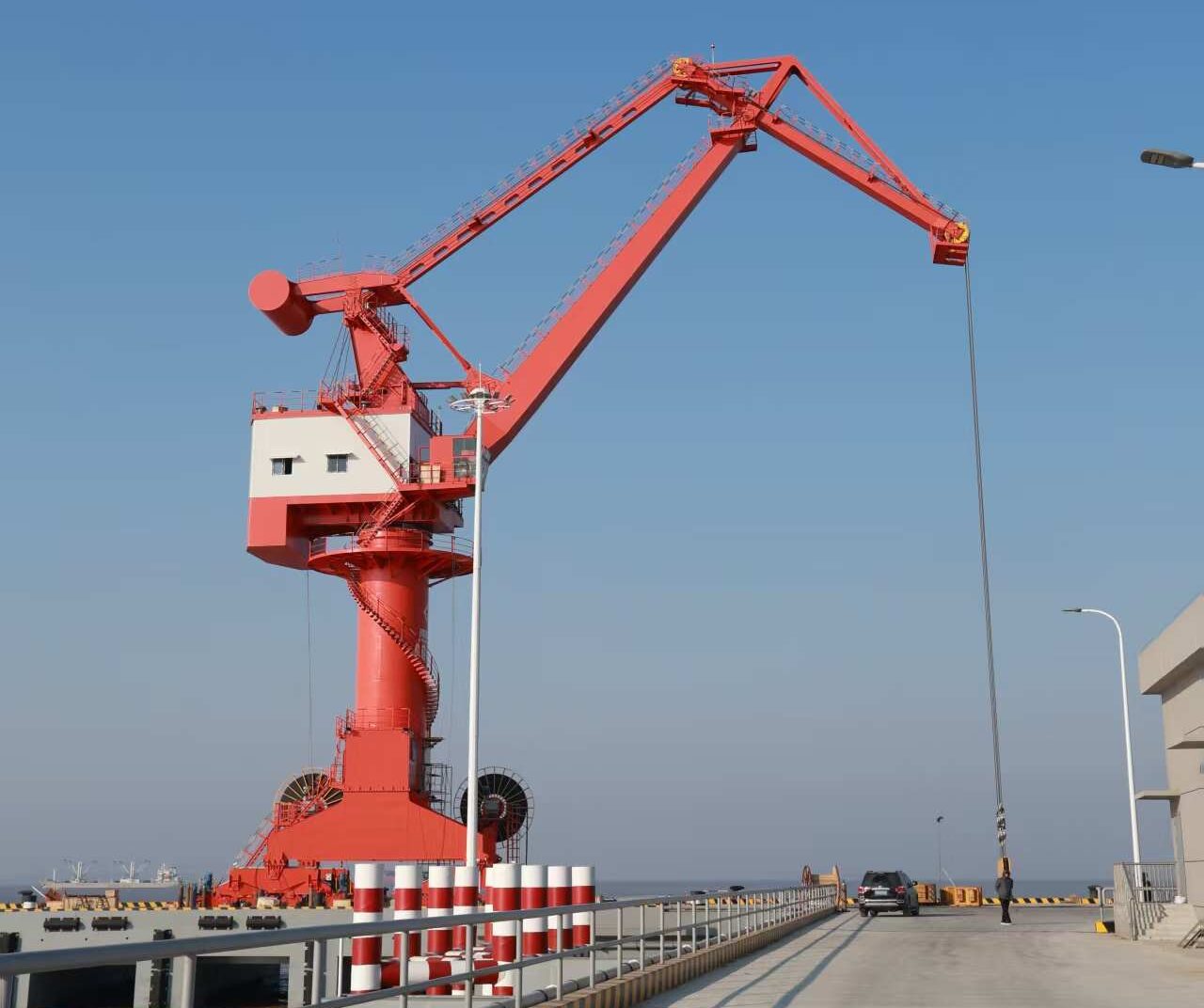
    Screening out 3 to 5 fully qualified, with sufficient experience in similar projects of the regular suppliers, unified distribution of the list of requirements to collect proposals and quotations.

    Priority is given to comparing the professional technical solutions and site adaptation ideas provided by each supplier, rather than simply comparing the price.

    On-site or online verification of the manufacturer’s production scale, processing strength and past real projects.

    Ultimately, combined with the production and delivery speed, export documentation capabilities, full-cycle after-sales service system comprehensive judgment, choose the most cost-effective partner.

    Actual Purchasing Reference Cases

    A large overseas logistics intermodal yard, plans to purchase rail gantry cranes for daily container stacking and transfer work, for a number of suppliers to solicit procurement proposals and quotations.

    One of the suppliers offer low, but the equipment automation configuration ambiguous, can not provide the same size yard landing cases, supporting technical information is not perfect, the later service content is not clearly stated.

    Another regular manufacturer, the offer is in the industry’s reasonable range, the equipment design program fully adapted to the track layout and operational rhythm of the yard, outdoor corrosion, windproof configuration is complete, with a large number of similar projects in the same area of hands-on experience, while clearly set out the full range of supply and long-term after-sales protection program.

    Comprehensive long-term use of cost and stability of the project landing point of view, the yard finally chose the latter cooperation, stable operation after the commissioning of the equipment, fully meet the daily demand for high-intensity operations.

    Orbital gantry crane procurement FAQ

    What is the difference between a rail gantry crane supplier and an ordinary lifting equipment manufacturer?

    Ordinary lifting equipment manufacturers focus on the production of indoor plant lifting equipment, lack of open-air operation of the yard, container specialized equipment design and landing experience. And professional RMG equipment suppliers are deeply engaged in port, logistics yard field, familiar with the harsh outdoor working conditions, rail operation standards and container operation exclusive requirements, program adaptability is stronger.

    Procurement of rail gantry crane choose factory or foreign trade company is more appropriate?

    Large-scale fully automated rail gantry crane, there are special custom transformation needs of the project, the priority choice of entity manufacturers, customization capabilities and quality control is more guaranteed; conventional standardized model procurement, choose stable resources, mature services, foreign trade companies can simplify the docking process.

    How important is the automation function for rail gantry crane?

    Traditional manned small and medium-sized yards, the basic operating configuration can meet the use; large-scale intelligent logistics parks, large-scale container hubs, automated control, remote monitoring and other functions can significantly reduce labor costs, improve the overall operating efficiency, belongs to the necessary configuration.

    What core information should be requested before placing an order?

    The overall design drawings of the equipment, the basic data of the wheel pressure, electrical schematic diagrams, the entire technical parameters of the machine, factory quality inspection reports, product qualification certificates, operation and maintenance manuals and a full set of documents required for export customs clearance.

    After-sales supporting services for the rail gantry crane use a big impact?

    Rail gantry crane belongs to the core of the yard main equipment, once the downtime will directly affect the overall flow of goods. Perfect after-sales response mechanism and stable parts supply channels, is the key to protect the long-term smooth operation of the yard.

    In addition to the procurement price, what other key inspection direction?

    Focus on the site to adapt to the design capacity, outdoor anti-corrosion and windproof technology, similar projects landing reputation, delivery schedule control capacity, export documents for the efficiency and long-term maintenance service system.

    Summarize

    Selection of suitable rail gantry crane suppliers, is never a simple price comparison transaction, but on the manufacturers of engineering design strength, large-scale equipment manufacturing expertise, overseas project experience, quality control standards and long-term service capabilities of the comprehensive consideration.The most cost-effective partner is never the one with the lowest price, but the one that can combine the actual site conditions and operational needs of the project to give the most suitable complete set of solutions, and at the same time, guarantee the on-time delivery of the equipment, stable quality, and worry-free after-sales service of the high-quality manufacturers.Overseas procurement customers in the finalization of cooperation, be sure to equipment configuration standards, acceptance specifications, service rights and responsibilities are clearly confirmed, to avoid all kinds of procurement risks.

    Henan Mine Crane as a professional rail gantry crane manufacturer, perennial deep-rooted global port yard, inland railroad logistics park projects, can be customized for different tonnages, different spans, manual / semi-automatic / fully automatic full range of RMG rail gantry crane equipment, with a full set of international export certificates, can provide overseas installation guidance, debugging and training, and long-term supply of spare parts services.

    If you have rail gantry crane procurement planning, you can directly provide equipment tonnage, span, stack height data, yard layout drawings and operating mode requirements, we quickly customize for you to fit the site use of professional equipment solutions and transparent offer.

    Henan Mine CraneDiscuss your requirements ↗
  • How to Choose Special Cranes for Aircraft Maintenance Workshops

    How to Choose Special Cranes for Aircraft Maintenance Workshops

    How to Choose Special Cranes for Aircraft Maintenance Workshops

    Selecting the right crane for aircraft maintenance workshop requires comprehensive consideration of the hangar height, indoor limited space, lifting accuracy, fuselage protection standards, maintenance process adaptability and other dimensions.

    This paper combines the global aviation maintenance bases, civil aviation hangars, aviation parts repair workshop landing experience, dismantling the application of special cranes, industry needs, suitable models, core parameters, supplier screening points and procurement of common problems.

    The core application scenarios of specialized cranes for aircraft maintenance

    Aviation maintenance system is divided into a variety of scenarios, different operating areas of the lifting load, operating space, precision requirements vary greatly, the corresponding aviation hangar lifting equipment selection standards are also different.

    The whole hangar daily maintenance operations

    Large civil aviation, navigation aircraft hangar, is the core application of specialized Crane scenes. Daily operation and maintenance, the equipment is mainly used for lifting maintenance equipment, auxiliary operating platforms, rack accessories and various types of hangar supporting maintenance equipment.

    This type of scene is characterized by a wide range of operations, lifting points scattered, the need for cranes to adapt to the layout of the large-span hangar, while ensuring smooth operation, to avoid equipment shaking bumping the aircraft fuselage.

    Aircraft engine disassembly operation area

    Aircraft engine is the core high-value components of the aircraft, disassembly, replacement, overhaul operations on the lifting equipment requires high precision. Aircraft engine maintenance Crane is mainly responsible for the overall lifting of the engine, nacelle accessories, fairing components and special overhaul workpiece shifting operations.

    This scenario eliminates any start-stop impact and load shaking, which requires the equipment to be equipped with exclusive functions such as micro-speed control, smooth braking, anti-sway, etc., to match the precision disassembly and assembly processes.

    Landing gear maintenance workshop

    Aircraft landing gear belongs to heavy airborne components, with large self-weight, replacement, overhaul, commissioning process requires lifting equipment to assist lifting and shifting, alignment and installation.

    In the workshop, there are heavy jacks, maintenance stands, large spare parts and other heavy lifting needs, suitable for medium and heavy, stable aviation lifting equipment.

    Aviation parts repair workshop

    In addition to the maintenance of the whole aircraft, the independent spare parts repair workshop is responsible for the overhaul of APU auxiliary power unit, transmission actuator, control wing surface, and all kinds of precision airborne parts.

    This kind of lifting operation has a small load, but the precision of the parts is extremely high, which requires the equipment to be precise in alignment, operate without jitter, and prevent the damage of the parts caused by the slightest shaking.

    Aviation parts storage and logistics area

    Aviation spare parts, maintenance toolboxes, large packaging accessories, maintenance equipment storage and transportation, lifting equipment is needed to complete the normalized handling, stacking, loading operations.

    This scenario has moderate requirements for accuracy, but has certain requirements for the flexibility of equipment operation and the ability to adapt to the narrow aisle of the warehouse to ensure the efficiency of the warehousing flow.

    Specialized tooling debugging and assembly area

    Aviation maintenance of special fixtures, positioning fixtures, test benches, precision maintenance equipment assembly and debugging, lifting equipment is needed to assist the precise alignment of the installation.

    The core requirements of the operation are low-speed and smooth, accurate point position, able to cooperate with the manual completion of the subtle alignment adjustment, and suitable for high-precision tooling assembly standards.

    special crane for aircraft maintenance

    Aircraft maintenance workshop equipment core requirements

    The lifting safety standards of aviation MRO scenarios are much higher than those of ordinary industrial scenarios. All equipment design and selection centers around high-value aircraft protection, precision work adaptation, and workshop process adaptation.

    Exclusive safety protection for high-value assets

    Aircraft fuselage, aviation core parts are extremely expensive, the slightest bump, impact, load shaking, will cause expensive maintenance losses and operation and maintenance accidents.

    MRO workshop Crane must have a perfect anti-collision, buffer, anti-sway, overload protection design, minimize the safety risk of equipment operation on the aircraft.

    Smooth operation and high-precision positioning

    There is no rough lifting operation in aviation maintenance. Whether it is engine disassembly, fuselage parts replacement, or workpiece alignment, millimeter-level precision alignment is required.

    The equipment needs to realize smooth start-stop, stepless speed regulation, micro-speed alignment, and no jitter or shaking throughout the whole process to meet the operation standard of precision maintenance.

    Adapt to narrow space and limited floor height

    Most of the mature aviation hangars, old maintenance workshop roof structure, floor height, column layout is fixed, there are all kinds of pipelines, bridges, lighting facilities on the top, reserved lifting equipment operating space is very limited.

    Selection must focus on the consideration of equipment headroom height, structural dimensions, to avoid equipment operation and plant structure, airborne equipment interference.

    Clean and low-noise operation

    Aviation precision maintenance workshop has clear requirements for environmental cleanliness, equipment operation can not produce oil dripping, dust fall off and other pollution problems.

    At the same time, equipment start and stop, running noise needs to be controllable, smooth braking, will not produce violent rattles and shock vibration, suitable for fine maintenance operation environment.

    Adapt to diversified load lifting needs

    The same aviation maintenance workshop needs to take into account the lifting operations of heavy engines, medium-sized landing gear, lightweight precision parts, and various types of work equipment.

    The equipment needs to be adapted to multi-load working conditions, taking into account the stability of heavy loads and the accuracy of light loads, to meet the diversified operational needs of the workshop.

    Fitting the maintenance process flow

    Lifting equipment is an auxiliary tool for aviation maintenance, which can not affect the technician’s work, airframe overhaul channel and workshop flow process.

    Equipment running track, coverage, control needs to be adapted to the site maintenance line, to improve the overall operational efficiency, rather than causing operational obstacles.

    special crane for aircraft maintenance

    Recommended Crane Models for Aircraft Maintenance Workshop

    Different aviation maintenance scenarios, load, precision, space conditions are different, suitable for aircraft maintenance crane models differ significantly, according to the need to balance the safety and practicality of selection.

    Single Girder Overhead Crane

    Simple structure, light weight, small space occupation, suitable for small and medium-sized aviation maintenance workshop, spare parts storage area, light assembly area of light and medium load lifting operations.

    With flexible operation and high cost performance, it can meet the basic operation requirements of daily parts transfer, small equipment overhaul, and routine tooling handling, and is a commonly used model in small and medium-sized MRO workshops.

    Double Girder Overhead Crane

    With strong load carrying capacity, high structural stability and wide span adaptability, it is suitable for heavy-duty operation scenarios such as large hangar, heavy engine disassembly and assembly, landing gear overhaul, and large-scale workpiece lifting.

    It can be equipped with frequency control, anti-swing and precise positioning system, which is suitable for aviation heavy-duty precision lifting needs, and is the main model for large aviation maintenance bases.

    Suspension Crane

    No need to occupy the ground and column space, directly mounted on the top structure of the plant, suitable for the lack of floor height, dense columns, ground space restrictions of the old maintenance workshop.

    Flexible equipment coverage, can be adapted to the operational needs of local precision maintenance areas, does not occupy the body of the maintenance channel, perfectly adapted to the working conditions of the narrow space.

    Workstation Overhead Crane

    Specially designed for fine chemical work, with high positioning accuracy and ultra-smooth operation, it is mainly used for the repair of aviation precision parts, assembly of small components, debugging of precision tooling and other scenarios.

    With strong coverage of single station, it can be targeted to meet the local high-precision lifting needs, avoiding the waste of resources caused by a wide range of equipment operation.

    Monorail Crane System

    With a fixed running track, it is suitable for aircraft engine special transfer, fixed process parts flow, assembly line maintenance operation scenarios.

    With fixed equipment alignment and high precision of repetitive operations, it can form a standardized lifting process, which is suitable for the regular operation of fixed processes of aviation maintenance.

    Customized Aviation Maintenance Crane

    Customized for special hangar layout, ultra-high precision operations, synchronous lifting, ultra-low headroom and other special working conditions.

    It can be equipped with exclusive functions such as soft start and soft stop, intelligent anti-sway, synchronized lifting and lowering, micro-speed precision control, etc., which can be adapted to the needs of all kinds of special aviation maintenance operations and solve the lifting problems of non-standard working conditions.

    special crane for aircraft maintenance

    Procurement must verify the core technical parameters

    The adaptability of the parameters of the aviation lifting equipment directly determines the operational safety and maintenance accuracy, the procurement stage needs to be checked one by one to avoid the parameters do not match the operation of the hidden danger.

    Rated lifting tonnage

    According to the aircraft engine weight, landing gear assembly weight, large-scale tooling, maintenance platform and spreader total weight accounting, reserve a reasonable load margin.

    Eliminate full-load operation, ensure the stability of heavy-duty lifting, and avoid the long-term extreme load affecting the service life of the equipment and operational safety.

    Equipment Span

    Strictly match the width of the hangar opening, the center distance of the track, the safe operating range of the equipment, and the layout of the whole machine parking and maintenance channel.

    Ensure that the equipment runs without any jamming, and will not interfere with the plant columns, fuselage and maintenance equipment.

    Effective lifting height

    Combined with the height of the aircraft fuselage, the height of the workpiece erection, the roof structure of the plant, the position of the top obstacles authorized.

    It ensures that the accessories and fixtures will not collide with the fuselage and the structure of the plant during the lifting process, and meets the height requirements of all kinds of maintenance lifting.

    Equipment Clearance Height

    This is one of the core parameters of aviation hangar selection. Most hangars are densely populated with pipelines, suspended ceilings and structural beams on the top, and the effective floor height is limited.

    It is necessary to confirm the structural height of the equipment itself and select the appropriate low headroom model to maximize the use of the limited space in the plant.

    Equipment running length

    Determined according to the operational coverage of the maintenance workshop and hangar, to ensure that the equipment can cover all the maintenance stations and meet the demand for multi-point maintenance of the whole machine and the transfer of spare parts throughout the region.

    Positioning accuracy standard

    Focus on checking the smoothness of starting and stopping of the equipment, the precision of traveling alignment, and the ability of load swing control. Precision maintenance scenarios require micro-speed alignment and zero-jitter operation to ensure the accuracy of parts disassembly and assembly and workpiece alignment.

    Equipment control mode

    Handle control, wireless remote control, cab control, electronic precision control and other modes can be selected according to the operation scene.

    Precision lifting is prioritized to use wireless micro-speed remote control, which is convenient for technicians to observe the lifting status from a close distance and fine-tune the alignment in real time.

    Running speed and speed control function

    Aviation lifting equipment needs to have frequency conversion speed control capabilities, regular transit can run at a constant speed, precision alignment can be switched to micro-speed mode.

    Fast and slow speed seamless switching, taking into account the operational efficiency and lifting precision, to adapt to the operational needs of different processes.

    All-round safety configuration

    It must be equipped with a full set of safety configurations such as overload protection, soft start/stop, mechanical anti-collision, travel limit, emergency brake, load anti-sway and so on.

    Multi-protection avoids the risks of lifting overload, alignment shift, equipment collision, etc., and protects the aircraft and operating equipment in all aspects.

    Plant structure adaptability

    Check in advance the load bearing of rail beams, top loading conditions, and column support structure of the plant, and confirm that the equipment installation method and fixing points are fully adapted to the infrastructure conditions of the plant.

    Avoid problems such as insufficient structural stress and operational shaking after equipment installation.

    special crane for aircraft maintenance

    Reliable aviation Crane supplier screening criteria

    The technical threshold of aviation-specific lifting equipment is much higher than that of ordinary industrial cranes, and the supplier’s specialized experience and engineering capabilities are the core guarantee of equipment adaptability.

    Verify the real production and R & D qualifications

    Priority is given to manufacturers with independent R & D, production, processing, testing capabilities of the entity, to eliminate pure trade intermediaries.

    Confirm that the manufacturer has a special technical team of aviation lifting equipment, with non-standard customization, working condition optimization, program design capabilities.

    Verification of aviation MRO similar project cases

    Focus on checking the manufacturer’s landing projects in civil aviation hangars, navigation maintenance bases, aviation parts MRO workshop, engine overhaul workshop.

    Rich aviation project experience, on behalf of the manufacturer is familiar with the aviation working conditions of precision, safety, cleanliness and other special requirements.

    Evaluation of professional engineering adaptability

    High-quality suppliers will recommend suitable models and protection programs according to hangar drawings, height restrictions, workstation layout, and maintenance processes.

    Able to proactively avoid the interference between the equipment and the airframe, plant structure, workflow, rather than directly applying the general model.

    Verification of a full set of professional and technical documents

    Regular manufacturers can provide a full set of information such as equipment assembly drawings, headroom size drawings, wheel pressure load data, electrical schematic diagrams, parts lists, operating instructions, test reports, etc., to meet the needs of aviation project acceptance record.

    Confirm the brand and quality of core parts

    Focus on verifying the brand and quality of core accessories such as motors, reducers, brakes, inverter systems, wire ropes, hooks, end beams, and control systems.

    High-end compliant parts are the basis for smooth operation, precise positioning and long-lasting durability of the equipment, and are suitable for aviation high-frequency precision work.

    Strict factory inspection and quality control system

    Before the equipment leaves the factory, it needs to complete weld inspection, size verification, no-load test run, full-load test, full functional inspection, safety configuration verification, and keep complete inspection records.

    Guarantee that the precision, stability and safety of each ex-factory aviation specialized Crane are up to standard.

    Define the scope of installation and commissioning services

    Confirm the manufacturer’s service mode in advance, including pure supply of equipment, on-site installation guidance, machine commissioning, personnel operation training, completion and acceptance of the service content, to ensure the smooth commissioning of equipment.

    Verification of after-sales and spare parts security capabilities

    Aviation maintenance downtime directly affects the aircraft service scheduling, the loss is great. Manufacturers need to have fast after-sales response, original spare parts, remote troubleshooting, on-site repair capability.

    Comprehensive adaptability is prioritized over purchase price

    Low-priced general-purpose models often lack precision speed control, anti-sway, low headroom adaptation and other aviation-specific configurations, and are prone to insufficient precision, unstable operation, interference with operations and other problems.

    Selection needs to prioritize equipment suitability for working conditions, long-term stability and safety factor, rather than simply lowering the procurement cost.

    special crane for aircraft maintenance

    Procurement selection of common misconceptions

    Most of the problems in the selection of aviation Crane, are derived from the application of common industrial equipment procurement thinking, ignoring the specificity of aviation scenarios.

    Focus only on the lifting tonnage of equipment, ignoring precision, headroom, smoothness and other core aviation needs, equipment can not be adapted to precision maintenance operations.

    With the selection logic of ordinary factory cranes to adapt to the aviation hangar, ordinary equipment without precision control, anti-sway, low noise and clean design, there are potential safety hazards.

    Ignoring the hangar height and layout restrictions, the size of the selected equipment does not match, resulting in the equipment can not be installed or running interference.

    Do not pay attention to the smooth operation of the equipment and anti-sway performance, lifting precision parts are prone to shaking and bumping.

    Failure to verify the running track of the equipment in advance, and the operating range of the equipment blocked the access channel of the fuselage, affecting the normal maintenance process.

    Failure to accurately count the actual lifting load and workpiece weight, resulting in the selection of equipment tonnage does not match, unable to meet the operational requirements.

    Choosing a supplier with no experience in aviation MRO projects, the equipment program is copied from common models, not suitable for aviation special working conditions.

    Selection based on price alone, sacrificing equipment precision, safety configuration and structural adaptability, resulting in hidden risks in the later operation and maintenance.

    special crane for aircraft maintenance

    Frequently Asked Questions

    What is the most suitable crane model for aircraft maintenance workshop?

    There is no uniform fixed model, small and medium-sized parts maintenance, storage areas suitable for single girder cranes and station cranes; large hangars, engine heavy-duty disassembly and assembly suitable for double girder Overhead Crane; height-restricted workshops give priority to the use of suspension cranes; the flow of fixed processes suitable for monorail cranes, according to the needs of the selection of the optimal program.

    Overhead Crane or Monorail Crane for Aircraft Engine Maintenance?

    Large-scale, multi-point, flexible disassembly and assembly work priority for inverter Overhead Crane, high precision, wide coverage, flexibility; fixed trajectory, standardized engine transfer process, monorail cranes are more suitable, fixed alignment, repeatability of the accuracy is higher, according to the mode of operation to choose.

    Is there a general need for low headroom crane design in aviation hangars?

    Most mature hangars and old maintenance workshops have the problem of limited floor height and many obstacles on the top, low headroom design can maximize the use of limited space to avoid problems such as equipment can not be installed, running interference, etc. It is the mainstream design scheme for aviation scenarios.

    Why does aviation maintenance require high precision in equipment positioning?

    Aircraft engines, fuselage fittings, precision components with extremely small clearance, lifting process of slight shaking, misalignment, impact, will cause wear and tear of the components, structural damage, not only increase the cost of maintenance, but also affect the safety of the aircraft flight, so it must ensure high precision, high smoothness lifting.

    What technical documents do I need to request from the manufacturer before placing an order?

    You can focus on requesting a full set of technical information such as the general drawing of the equipment, drawings of the headroom dimensions, track loading parameters, electrical control schematic diagrams, list of core accessories, equipment operation manuals, factory inspection reports, safety configuration instructions, etc., for the purpose of project design docking and acceptance filing.

    Can the same supplier support the hangar and parts workshop Crane?

    Professional aviation lifting equipment manufacturers can provide one-stop hangar main crane, workstation precision cranes, storage and transfer cranes, monorail systems and other full range of equipment, unified process standards, adaptive system and after-sales service, suitable for all workshop lifting needs.

    In addition to the price of equipment, what else needs to be focused on verification?

    Need to focus on verifying the manufacturer’s aviation project experience, equipment precision parameters, headroom fit size, safety protection configuration, core parts quality, factory testing standards, installation and commissioning services and long-term after-sales support, these factors directly determine the effect of equipment landing and long-term stability.

    special crane for aircraft maintenance

    Summarize

    Selection of cranes for aircraft maintenance workshop is definitely not a simple tonnage matching. The core demand of aviation MRO scenarios is to complete all kinds of high-value aircraft lifting operation and maintenance work under the premise of safety protection, precise operation and space adaptation.

    Procurement selection process, the need to jump out of the ordinary industrial equipment procurement thinking, giving priority to the consideration of the smoothness of the equipment, positioning accuracy, hangar space adaptability, process matching, combined with the actual maintenance conditions to match the model and parameters.

    Reliable aviation lifting equipment suppliers, not only to provide compliant hardware equipment, but also relying on a wealth of aviation project experience, to provide condition surveys, program customization, technical docking, installation and commissioning, long-term operation and maintenance of the whole process of service, to avoid all kinds of selection and landing pitfalls.

    Henan Mine Crane l specializes in the field of aviation lifting equipment for many years, focusing on the development and production of various types of special cranes suitable for hangars, MRO workshops, aviation parts repair workstations, can be customized for different heights, spans, precision needs, to serve the world’s various aviation maintenance infrastructure projects.

    If you need to adapt to the project’s exclusive selection program, you can provide the workshop drawings, height limitations, lifting tonnage, maintenance type of operation, our professional engineering team will accurately match the optimal Crane program for you.

    Henan Mine CraneDiscuss your requirements ↗
  • How to Choose Portal Harbor Crane Manufacturers: A Practical Guide

    How to Choose Portal Harbor Crane Manufacturers: A Practical Guide

    How to Choose Portal Harbor Crane Manufacturers: A Practical Guide

    Gantry Port Cranes are the core loading and unloading equipment for coastal terminals, river ports, shipyards and waterfront industrial projects. This type of equipment is adapted to the complex operating environment of the shore, can be flexible to complete the lifting, transfer, stacking of various types of goods, is the main equipment in the port cargo operations with a high utilization rate.

    Selection of high-quality gantry port crane manufacturers, need to take into account the structural stability of the equipment, adaptability to the marine environment, cargo adaptability, engineering landing level and long-term after-sales support.

    Combined with many years of global port equipment supporting experience, we combined with real port conditions, dismantle the applicable projects of gantry cranes, procurement needs, model categorization, core parameters, manufacturers screening criteria and procurement to avoid the pit points, to provide practical reference for the procurement of overseas port projects.

    Mainstream application projects of gantry port cranes

    Gantry port cranes are extremely versatile, not limited to a single type of cargo operation, can be adapted to different types of port terminals and waterfront projects, and is also the preferred equipment for multi-scenario port operations.

    General cargo port

    Conventional general cargo terminals are mainly used for loading and unloading steel, large machinery, timber, engineering equipment, bagged groceries and other scattered goods, there is no fixed container operation standard, and the cargo types are messy and diverse.

    Gantry port cranes can be equipped with hooks, lifting beams and other equipment, suitable for all kinds of non-standard grocery lifting operations, a wide range of operations to meet the diversified loading and unloading needs of the general cargo terminals, is the main equipment of such terminals.

    Bulk Terminal Yard

    Coal, ore, gravel, grain and other bulk cargo terminals, the continuous operation of equipment and equipment adaptability requirements are high. These terminals are dusty and have intensive operation frequency, which results in faster wear and tear of the equipment.

    Heavy-duty port cranes with grab devices can efficiently complete the loading and unloading of bulk cargoes, clearing and transshipment work, and are suitable for the high-intensity, high-dust, harsh operating conditions of bulk cargo terminals.

    Multi-functional Comprehensive Terminal

    Most of the small and medium-sized ports are in integrated operation mode, simultaneously undertaking general cargo, bulk cargo, small containers, construction equipment and other cargo operations, and the operation scene is frequently switched.

    Gantry Cranes are perfectly suited to the dynamic operational needs of multifunctional terminals with their interchangeable work equipment, flexible slewing, and wide-ranging operation, and can complete the loading and unloading of all types of cargoes without the need to replace multiple sets of equipment.

    Shipyard and Offshore Engineering Plant

    The waterfront operation area of ship repair and offshore engineering bases needs to complete the lifting and maintenance of hull segments, large modules and marine equipment, which requires strict requirements on equipment lifting tonnage and operational stability.

    Dedicated dock port cranes can be adapted to the waterfront heavy-duty lifting conditions to meet the needs of ship construction, overhaul, module alignment and other high-precision, high-load operations.

    Specialized harbor cranes for port industry

    Petrochemical, iron and steel, electric power and other heavy industry supporting the exclusive port, mainly loading and unloading heavy industrial equipment, steel raw materials, chemical equipment, power components and other heavy cargo.

    These projects require higher requirements for heavy-duty performance, structural strength, and safety protection standards, and require customized heavy gantry cranes to match industrial production and logistics needs.

    Port Upgrade and Expansion Projects

    Old ports generally have aging equipment, low operating efficiency, insufficient tonnage, corrosion failure and other problems, and cannot adapt to the current cargo flow and ship specifications.

    Most of the port upgrading and berth expansion projects will use new gantry cranes to replace the old equipment, and improve the overall operating capacity of the terminal and the level of navigation.

    portal harbor crane manufacturers

    Core Procurement Requirements for Gantry Port Crane Projects

    Harbor waterfront operating environment is complex, wind, salt spray, humidity, dust and other factors will affect the operating status of the equipment. Procurement requirements should not only look at the basic lifting function, but also fit the actual working conditions of long-term operation in the harbor.

    High intensity and heavy load stable operation ability

    Most of the port operations implement a shift system, the equipment needs to start and stop continuously for a long time, heavy work, high-frequency cyclic work will continue to consume the performance of the equipment.

    High-quality port gantry cranes need to have solid steel structure strength and stable transmission system, which can adapt to the heavy-duty, high-frequency port operation mode for a long time, and reduce the problem of sudden failure and downtime.

    Flexible adaptability to multiple cargo types

    Many port cargo types are not fixed, requiring equipment to switch lifting mode at any time. Cranes can be equipped with hooks, grabs, electromagnetic suction cups, special spreaders and other work tools to adapt to different cargo operations.

    The adaptability of the equipment and the ease of switching directly determines the flexibility of the terminal’s operations and meets the diversified operational needs of integrated ports.

    Outdoor marine environment weather resistance

    The seaside environment of high salt spray, high humidity, strong wind, rain and dust is the biggest source of wear and tear of port equipment. Ordinary industrial Cranes will suffer from paint peeling, steel structure rusting, and moisture damage to electrical parts in a short period of time.

    Specialized port gantry cranes need to be equipped with a full set of marine-grade anticorrosion, dustproof and waterproof design to resist the erosion of harsh outdoor environments and prolong the service life of the equipment on the seashore.

    Reasonable coverage of berth operations

    Different berths have different lengths, ship specifications, and cargo stacking area layouts, which require different operating radii and traveling ranges for Cranes.

    Equipment parameters need to match the overall layout of the berth, to ensure that there is no blind spot, covering all ship loading and unloading and shoreside transfer area, fit the rhythm of the terminal cargo flow.

    Smooth and Safe Maneuvering Performance

    The smoothness of cargo lifting, luffing, slewing and traveling process is directly related to the operation safety and cargo integrity rate. Especially for heavy cargo and precision engineering equipment, the slightest shaking may cause damage to the cargo or operational hazards.

    Mature equipment control system can ensure the smooth connection of each action of the equipment and precise braking, which can effectively improve the safety of port operation.

    Long-term after-sales service and spare parts guarantee

    The loss of cargo and ship delay caused by the downtime of port equipment is extremely high, far exceeding the cost of equipment maintenance. Once the equipment parts are damaged, system failure, manufacturers need to respond quickly to deal with.

    Reliable harbor Crane suppliers need to have a rapid after-sales response, spare parts inventory, remote commissioning and on-site maintenance capabilities.

    Port Crane Models for Various Port Conditions

    For different types of cargo, operating intensity, berth conditions, the industry has divided a variety of mature gantry port crane models, on-demand selection can be accurately matched to the project requirements, to avoid excess performance or insufficient parameters.

    Single Boom Gantry Harbor Cranes

    This is the most basic and widely used standard model with simple structure, low failure rate and convenient operation and maintenance. It mainly focuses on conventional tonnage lifting, and is suitable for the daily operation of ordinary general cargo and small and medium-sized bulk cargo terminals.

    With high cost performance and short landing cycle, it is the preferred model for small and medium-sized comprehensive ports and inland waterway terminals.

    Four-link Gantry Harbor Crane

    The four-link structure optimizes the luffing operation logic, which makes the operation process smoother and the luffing efficiency higher, and it can be adapted to larger tonnage and higher frequency heavy-duty operation.

    Suitable for large and medium-sized seaports, high throughput terminals, able to cope with long-term stability of high-intensity continuous operation, is the main model of heavy-duty port.

    Grab Gantry Crane

    Specially designed for bulk cargo operation, it is equipped with all kinds of bulk cargo grab devices as standard, which can automatically complete the grappling, lifting and unloading operations of gravel, coal and grain.

    The lifting and luffing speed of the equipment has been specially optimized to meet the operational needs of rapid turnover of bulk cargoes, and is fully adapted to the working conditions of specialized bulk cargo terminals.

    Hook-mounted Gantry Crane

    With hook lifting as the core, it specializes in lifting heavy general cargo, steel components, engineering equipment and large spare parts. With high lifting precision and stable alignment, they are suitable for heavy duty harbor and shipyard maintenance lifting scenarios.

    Customized Gantry Port Cranes

    Customized models for non-standard berths, special environments and exclusive cargo types. Manufacturers can optimize the structure, parameters and configuration of the equipment according to the terminal track layout, wind conditions, power supply conditions, special lifting needs.

    It can solve the special port operation problems that can’t be adapted by standardized equipment, and adapt to all kinds of personalized overseas port projects.

    portal harbor crane manufacturers

    Core technical parameters that must be verified for procurement

    Gantry port cranes are large-scale non-standard heavy-duty equipment, and the matching of parameters directly determines whether the equipment can be put into operation and used normally. Procurement stage needs to check the core parameters one by one, to avoid the problem of landing fit.

    Rated lifting tonnage

    The rated lifting tonnage is determined according to the maximum weight of the mainstream cargo and the self-weight of the lifting equipment, and sufficient load capacity should be reserved. Eliminate long-term full-load operation to avoid equipment structure fatigue and accelerated wear and tear of accessories.

    Operation radius

    The operation radius determines the lateral coverage of the equipment, which needs to match the width of the ship and the size of the stacking area on the shore. If the radius is not enough, there will be a blind spot, which can’t cover the cargo on the outside of the ship and the far end of the yard area.

    Effective lifting height

    Combined with the ship’s full load height, cargo stacking height, and shore operation height, the design ensures that the high level cargo and the cargo inside the ship’s cabin can be lifted smoothly without any height limitation.

    Track gauge and laying method

    The track gauge of the equipment must strictly match the preset track spacing of the quay and the civil construction standard. Deviation in track gauge will lead to failure of equipment installation, travel jam, abnormal structural stress, which is the basic core parameter of equipment landing.

    Lifting speed

    It directly affects the efficiency of single cargo lifting cycle, and is matched according to the demand of terminal throughput. Standard speed is chosen for regular terminals, while high-speed models can be chosen for high throughput terminals to balance efficiency and operational stability.

    Luffing speed

    The luffing speed determines the adjustment efficiency of the operation radius, reasonable luffing speed can shorten the operation alignment time, improve the overall loading and unloading rhythm, and at the same time, avoid the speed is too fast resulting in cargo shaking.

    Slewing speed

    The slewing speed of the equipment affects the accuracy of cargo translation and alignment, and the smooth slewing action can effectively avoid the risk of cargo swinging and collision, which is crucial to the safety of dense berth operation.

    Traveling speed of the whole machine

    For the long berth terminal, the equipment needs to walk along the track for a long distance to switch the operation point, reasonable walking speed can improve the overall coverage efficiency of the berth.

    Power supply system parameters

    The voltage, frequency and power supply mode of the equipment need to fully match the local power system of the port, without the need for later circuit modification, which reduces the cost of commissioning and use of the equipment.

    Environmental adaptation and protection standards

    Coastal projects focus on verifying salt spray anti-corrosion grade, wind load resistance standard, and electrical waterproof and dustproof grade. Dusty, rainy, high-temperature and low-temperature areas require corresponding upgraded equipment protection configurations to adapt to local climatic conditions.

    Full set of safety protection system

    Must be equipped with overload protection, emergency braking, traveling collision avoidance, high wind alarm, storm locking, real-time monitoring and other safety devices, to avoid the risks of operating under complex working conditions in the port.

    Screening criteria for professional gantry harbor crane manufacturers

    The global port equipment market manufacturers are mixed, traders and entity manufacturers of equipment quality, engineering capabilities of the gap is huge, screening reliable maritime Crane manufacturers can focus on the following dimensions.

    Verify the entity’s manufacturing qualifications

    Be sure to confirm that the cooperative manufacturers for the independent production of physical factories, with steel welding, machine assembly, machining, electrical commissioning of the full set of production capacity.

    Trade intermediaries have no production and customization capabilities, can not optimize the equipment according to the port conditions, the later after-sales and quality control is not guaranteed at all.

    Verify the experience of similar port projects

    Large-scale port equipment can not rely on the production of generic templates, manufacturers must have real terminal, shipyards, port industrial projects on the ground experience.

    Manufacturers familiar with overseas port standards, marine conditions, berth construction requirements, can avoid all kinds of landing adaptation problems in advance, reducing project rework.

    Evaluate the ability of exclusive engineering solutions

    High-quality manufacturers will not directly apply a fixed model offer, but will take the initiative to study the berth drawings, cargo parameters, track layout, environmental conditions. Combined with the actual needs of the project, they will recommend suitable models and parameters, and give exclusive landing program.

    Verification of a full set of formal technical information

    Formal manufacturing companies can provide a full set of information such as equipment assembly drawings, load calculation data, operating radius schematic, electrical schematic, list of accessories, performance test data, etc., to meet the port acceptance, filing, operation and maintenance needs.

    Confirmation of core parts brand and material

    Steel structure material, motor, reducer, brake, bearing, electronic control system, grapple hook mechanism and other core components directly determine the durability of the equipment. When purchasing, it is necessary to clarify the brands, specifications and warranty standards of the parts, and eliminate the replacement of low-match.

    Strict factory quality inspection and testing process

    Before leaving the factory, the equipment must complete a full set of quality inspection processes such as weld flaw detection, structural strength verification, no-load test run, full-load load test, functional debugging, anticorrosion coating test, etc., and keep a complete record of the inspection.

    Clearly define the scope of installation and commissioning and training services

    Confirm in advance the scope of supply, on-site installation guidance, machine commissioning, operator training, completion and acceptance of the service content, to avoid the later service boundary blurring, resulting in additional costs.

    Verification of overseas after-sales service and spare parts guarantee

    Overseas port projects are difficult to respond to after-sales service, manufacturers need to have overseas technical support, fast spare parts delivery, remote commissioning, on-site maintenance capabilities to ensure long-term stable operation of the equipment.

    Comprehensively assess the value of the whole life cycle of the equipment

    Low price quotation is often accompanied by steel structure reduction, miscellaneous accessories, simple anti-corrosion, lack of service and other issues. Procurement needs to be comprehensive equipment quality, service life, operation and maintenance costs, after-sales ability to judge, not limited to the initial purchase price.

    Portal Harbor Crane

    Procurement selection of common misconceptions

    Many port equipment adaptation problems are caused by the negligence of details in the procurement stage, which will bring continuous impact on the long-term operation of the terminal.

    Simply selecting the manufacturer with the lowest price, ignoring the equipment configuration, process standards and after-sales system, will lead to frequent failures and a significant increase in operation and maintenance costs in the later stage.

    Mismatch between the model and the actual type of cargo, grapple machine is used for grocery lifting, ordinary model is used for heavy-duty bulk cargo operation, resulting in low operating efficiency and rapid equipment wear and tear.

    Neglecting the matching degree between operation radius and berth layout, the equipment coverage is insufficient, and there are a lot of blind areas in the terminal.

    Lightweight marine anticorrosion design, the choice of ordinary industrial anticorrosion standards, equipment short-term use of large areas of corrosion, paint peeling.

    Do not verify the manufacturer’s port project cases, choose manufacturers without maritime equipment experience, equipment can not be adapted to the complex conditions of the seaside.

    Quotation content is vague, not clear equipment configuration, accessories range, service content, and later frequent additional charges.

    No clear responsibility for installation, commissioning, training, the equipment can not be quickly put into operation after entering the site, delaying the progress of port operations.

    Neglecting long-term spare parts supply and after-sales response ability, equipment failure after a long period of downtime, resulting in terminal cargo loss.

    Incomplete data of berths, cargo types and drawings provided in the inquiry stage, deviation of manufacturers’ program adaptation, and inability to meet the operational requirements after the equipment is landed.

    Frequently Asked Questions

    What is the core difference between gantry harbor cranes and other harbor cranes?

    Gantry port cranes are suitable for flexible operation of multiple cargo types on the shore, can switch a variety of work equipment, with its own slewing luffing system, wide operational coverage, strong mobility. Compared with fixed shore bridge and rail crane, it is suitable for miscellaneous bulk cargo and multi-category port, with higher cost performance and greater versatility.

    What types of cargoes are suitable for Gantry Harbor Cranes?

    Can be adapted to steel, engineering equipment, timber, bags of general cargo, ore, coal, grain and other bulk and general cargo, replacement of the workpiece can also be adapted to special heavy-duty cargo, covering most of the regular port operations cargo type.

    How to determine the required lifting tonnage and operating radius of the project?

    According to the maximum weight of the terminal cargo, the maximum width of the ship, the shore operation of the stacking distance of the comprehensive accounting, while reserving the working conditions of the margin, to adapt to the future upgrading of the ship and cargo expansion needs.

    In addition to the price of the equipment, what else do I need to focus on in my procurement?

    Manufacturer’s port project experience, steel structure technology, marine anti-corrosion grade, core parts quality, parameter suitability, factory testing standards, overseas after-sales response speed and spare parts supply capacity.

    What technical information should be requested from the manufacturer before placing an order?

    A full set of technical data such as equipment assembly drawings, load parameter statements, operating radius diagrams, electrical schematics, core parts list, factory quality inspection reports, operation and maintenance manuals, warranty details and so on.

    How important is the anti-corrosion design of harbor Crane?

    It is the core process standard for seaside equipment. Salt spray corrosion will continue to damage the steel structure and electrical system, low standard anticorrosion equipment 3-5 years will be serious aging, high standard marine anticorrosion can significantly extend the service life of the equipment, reduce operation and maintenance costs.

    Can the same manufacturer provide multiple models customized to fit different cargo types?

    Professional port equipment manufacturers can customize different models according to different cargo types such as general cargo, bulk cargo, heavy equipment, etc., such as grab type, hook type, four-link, single boom, etc., to meet the needs of one-stop full-scene operation.

    Portal Harbor Crane

    Summarize

    Gantry port cranes as the core heavy equipment in port terminals, the core of the selection and manufacturer selection is to adapt to the working conditions, rather than simply competing for quotations. The structural stability of the equipment, marine weather resistance, cargo adaptability, directly determines the operation of the terminal in the next decade or so.

    High-quality port gantry crane manufacturers can not only provide standardized and customized equipment products, but also relying on a wealth of port project experience, to provide customers with pre-condition assessment, program optimization, technical docking, commissioning, lifelong operation and maintenance of the whole process services.

    For all kinds of new ports and shipyard projects in the world, choosing suppliers with physical production capacity, mature project experience and perfect overseas after-sales system can effectively avoid equipment failures, overspending on operation and maintenance, and insufficient adaptation and other problems.

    Henan Mine Crane manufactured many years of deep port lifting equipment research and development, with a large number of ports at home and abroad landing project experience, can provide a full range of gantry port cranes customized supporting services, suitable for all kinds of coastal, inland waterways, port industrial projects.

    If you are not clear about the model and parameters of the project, you can provide the berth drawings, cargo type, lifting requirements and scope of operation, our port engineering team will provide you with exclusive solutions.

    Henan Mine CraneDiscuss your requirements ↗