Engineering · Manufacturing · Project support
info@hnksglobal.comWhatsApp +86 18836207779 ↗

分类: Single-girder bridge crane

  • Single Girder Grab Crane

    Single Girder Grab Crane

    Overhead Cranes / Henan Mine Crane

    Single Girder Grab Crane

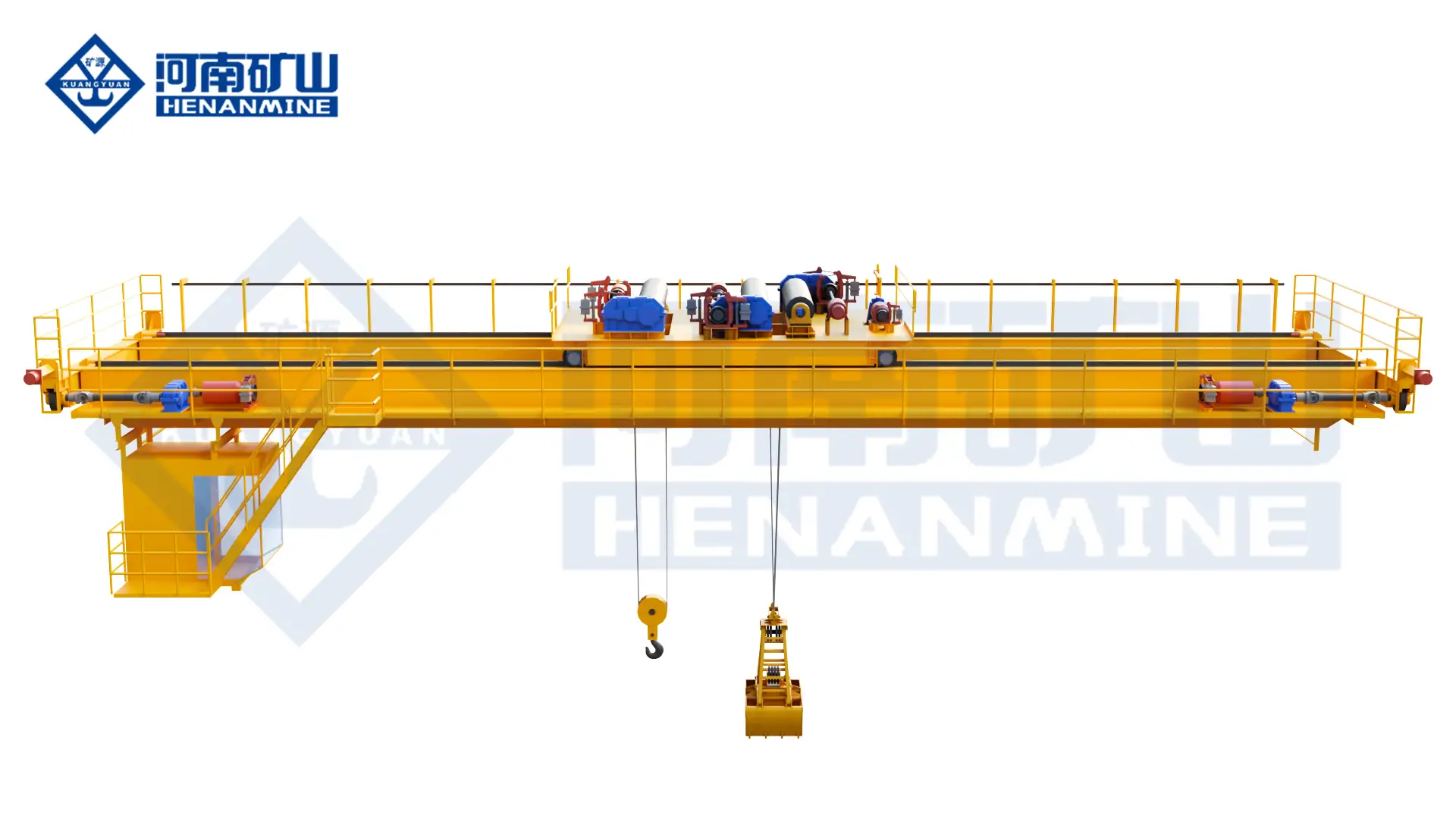
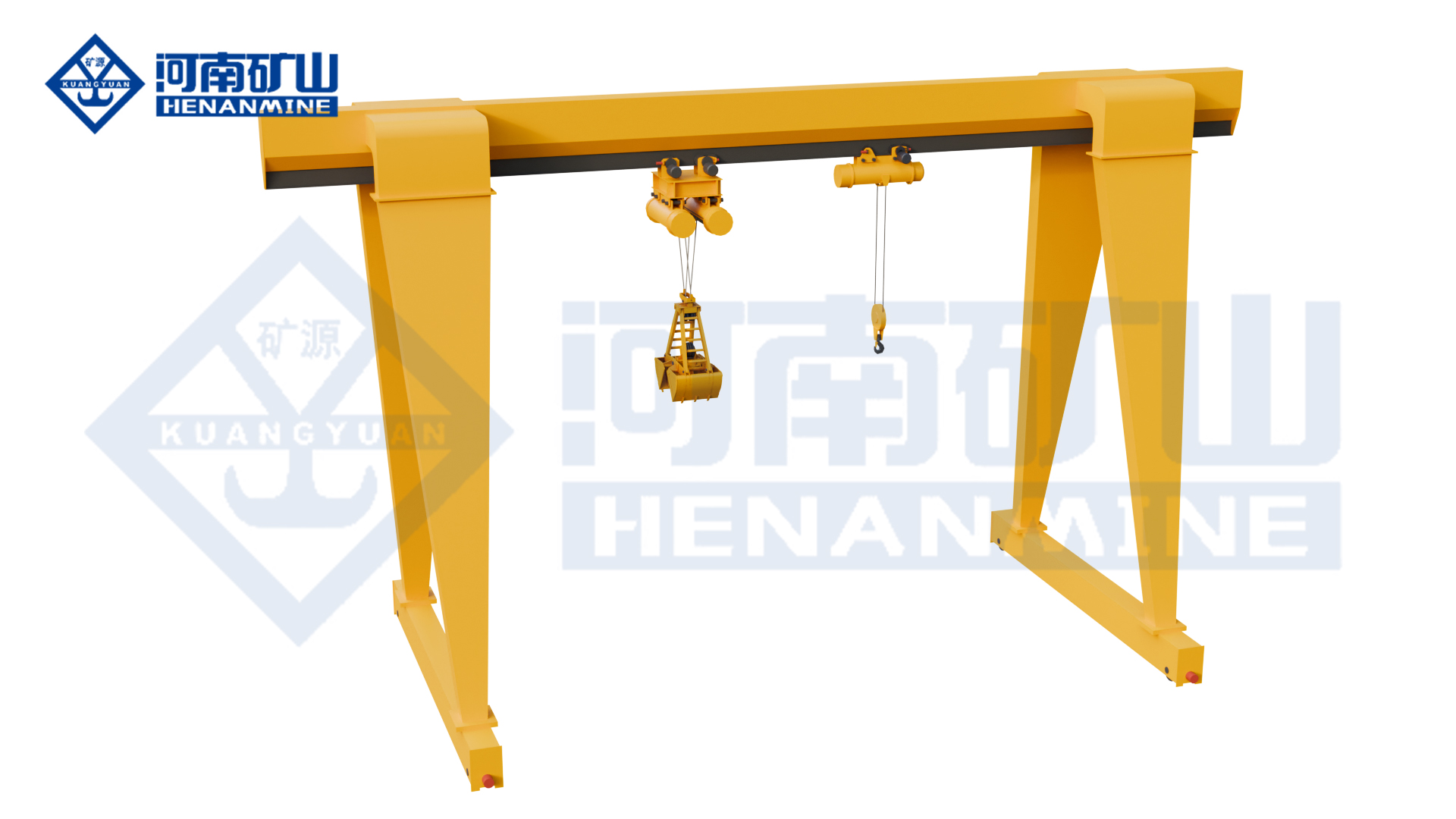
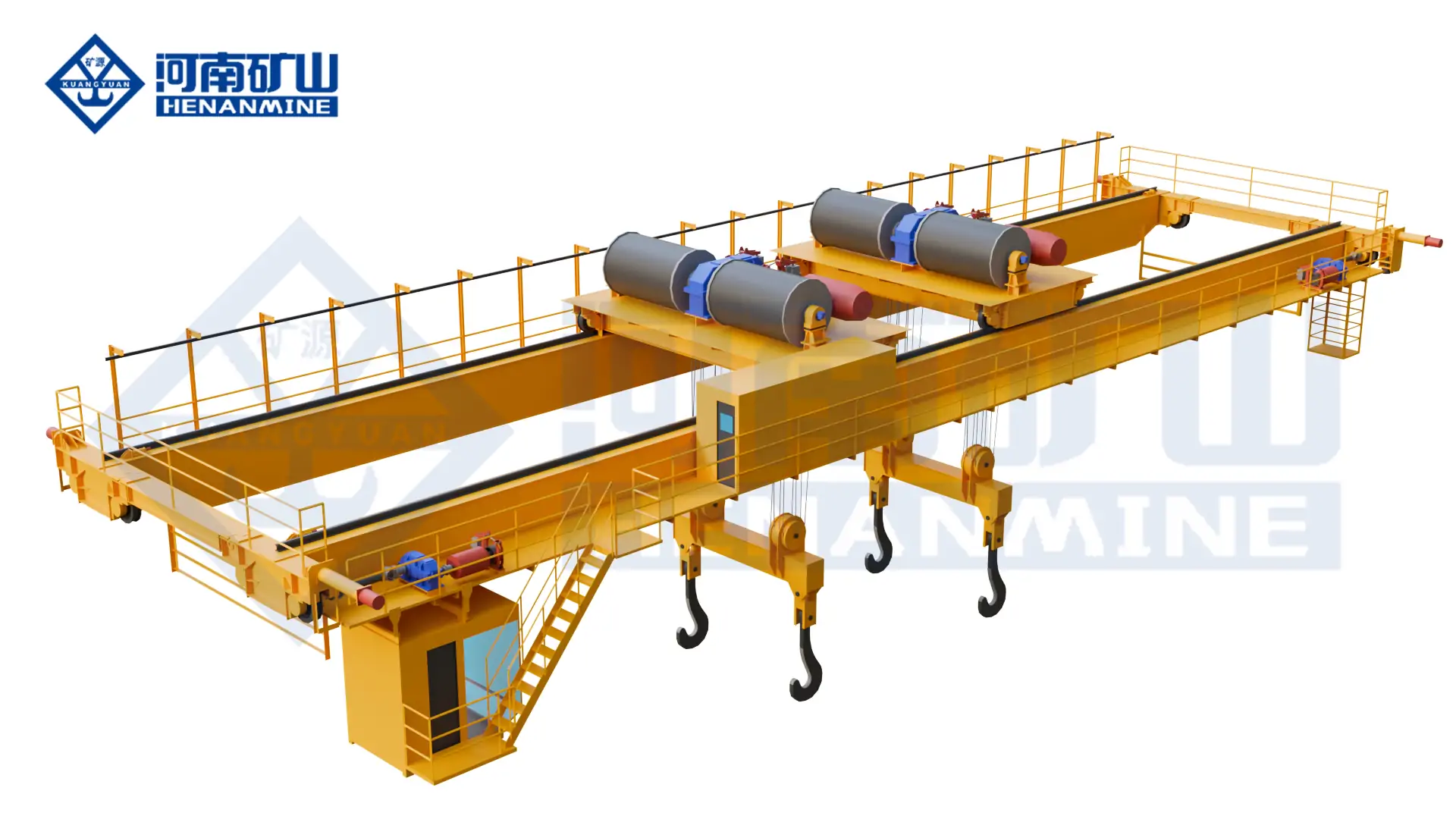
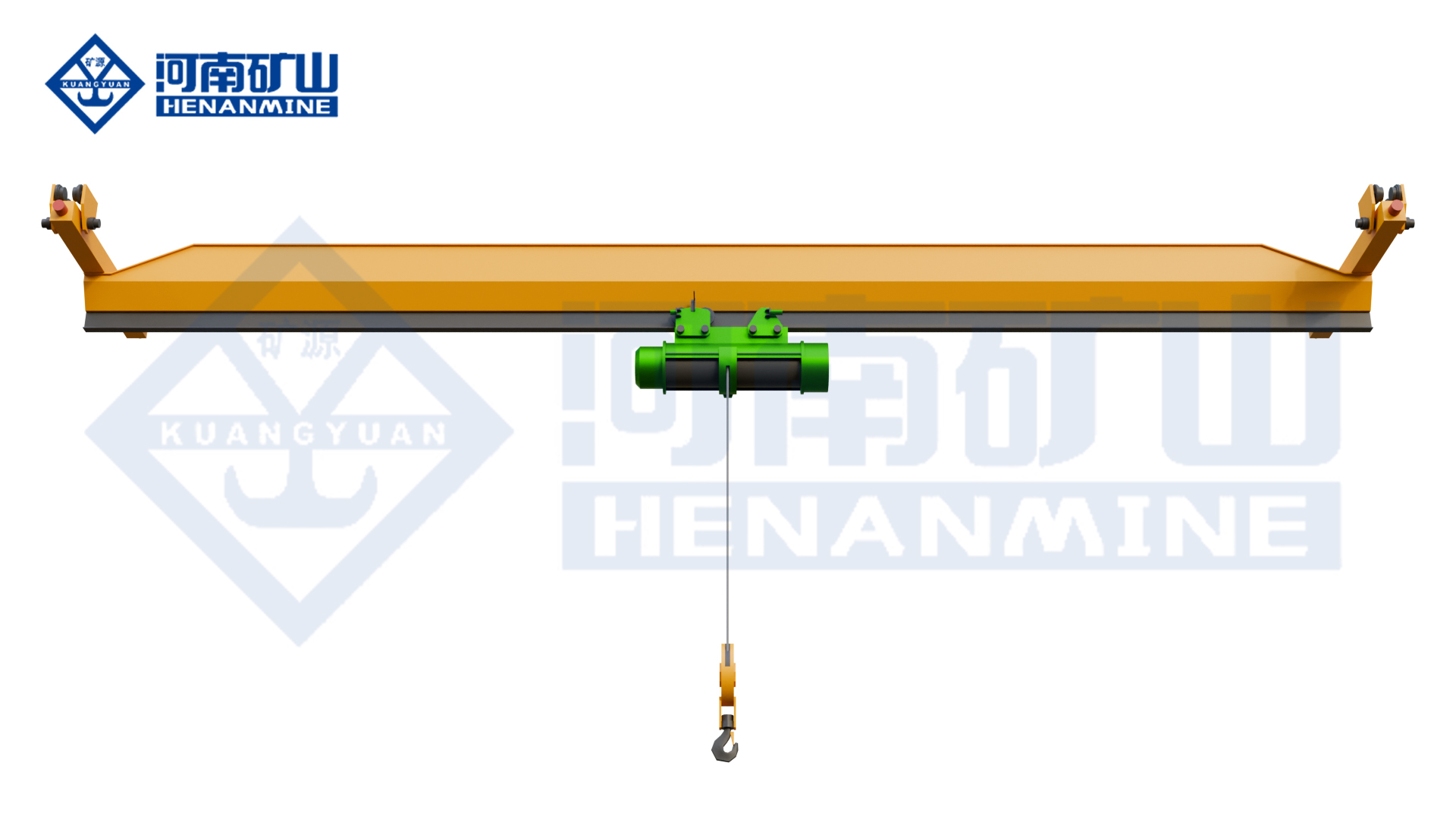
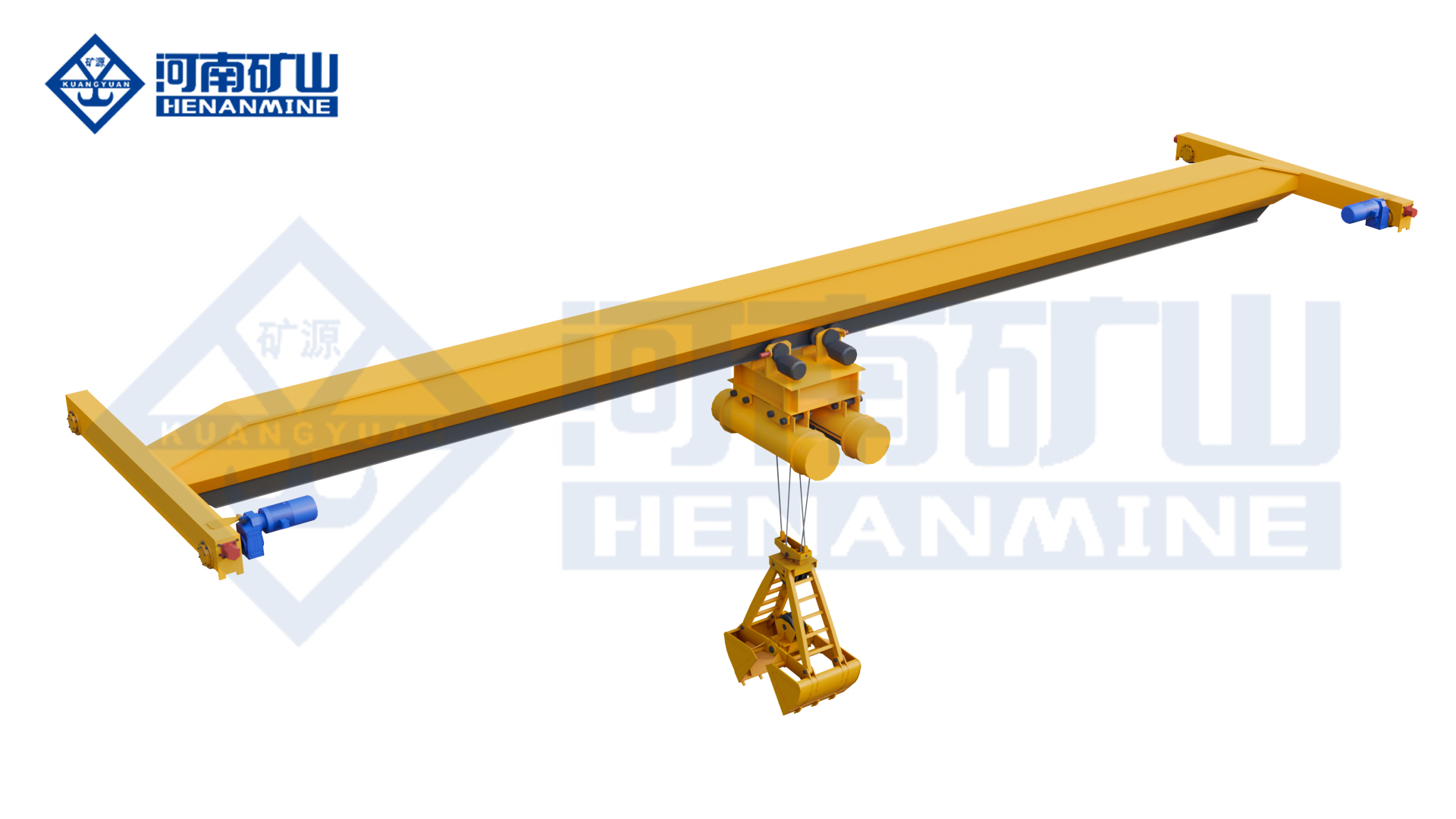
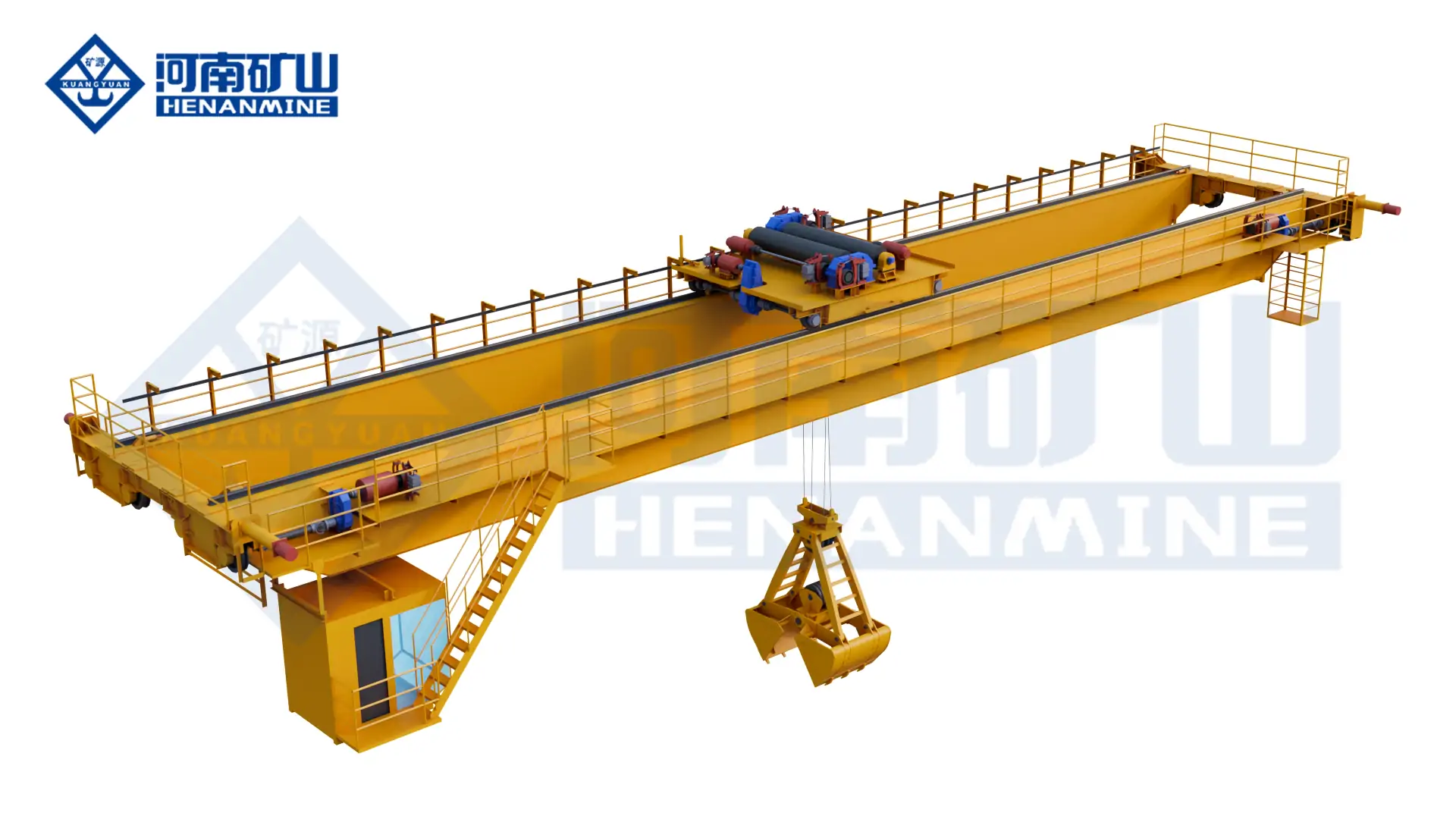
    Lift loose bulk material with an LDZ single-girder grab crane. Select the grab, complete suspended load and pickup or discharge geometry around the material and working cycle.

    Lifting capacity3 or 5 t
    Span7.5–22.5 m
    Working classA3
    Technical specifications

    Define the total suspended load, duty and site conditions for your project.

    Technical specifications

    Check the load.
    Plan the configuration.

    Parameters and equipment options are matched to the application and confirmed in the technical proposal.

    Discuss your configuration
    ModelLDZ
    Lifting capacity3 or 5 t
    Span7.5–22.5 m
    Lifting height18 m
    Working classA3
    Hoisting speed16 m/min
    Crane travel30 m/min ground control; 75 m/min cabin control
    Trolley travel20 or 30 m/min
    Grab volume3 t configuration: 0.75 m³; 5 t configuration: 1.5 m³
    Grab dead weight2.3 t or 3.1 t, according to the listed grab
    Grab and material loadConfirm the complete suspended load and allowable material payload

    Final parameters, dimensions, wheel loads and supply scope follow the approved project specification.

    Application & operation

    Matched to the handling task.

    Bulk-material handling

    Transfer declared loose materials between pickup and discharge positions.

    Workshop material stores

    Coordinate the grab envelope and crane travel with the storage layout.

    Selection considerations

    Start with your operating conditions.

    01

    Load & lifting arrangement

    Specify bulk density, material size and grab dead weight. Include lifting-appliance weight and the required lifting positions.

    02

    Site & available space

    Provide pickup area, discharge height and runway span. Coordinate the installation interfaces with the available site drawings.

    03

    Duty & control sequence

    Define grab opening sequence, lifting cycle and operator control. Identify the required movements and control interfaces in the enquiry.

    Configuration comparison

    Compare related lifting arrangements.

    Crane arrangementHandling configuration
    Single Girder Grab CraneLift loose bulk material with an LDZ single-girder grab crane. Select the grab, complete suspended load and pickup or discharge geometry around the material and working cycle.
    Intelligent Grab Overhead CraneHandle bulk materials with a grab overhead crane configured for the material and working cycle. Select the grab volume, lifting arrangement and operating sequence from pickup and discharge conditions.
    Grab And Hook Dual Purpose CraneSwitch between bulk-material pickup and hook lifting with a grab-and-hook overhead arrangement. Define each load case, the grab type and the changeover procedure for the working area.
    Grab Hook Gantry CraneCombine grab and hook handling on an electric-hoist gantry arrangement. Match the lifting appliance, load cases and changeover method to the outdoor handling layout.

    Operating protection & lifecycle support

    Plan beyond the equipment.

    01

    Operating protection

    Confirm overload protection, travel limits, brakes, emergency controls and the required process interlocks for the declared lifting task.

    02

    Installation & commissioning

    Agree runway reactions, structural interfaces, electrical connections, assembly, inspection and commissioning responsibilities before delivery.

    03

    Inspection & spares

    Plan inspection and maintenance of grab ropes, sheaves and opening or closing mechanisms. Agree service access, documentation and the required spare-parts scope.

    Questions before the order

    Clarify the details
    that shape the crane.

    What information is needed for a single girder grab crane quotation?+

    Provide bulk density, material size and grab dead weight; pickup area, discharge height and runway span; and grab opening sequence, lifting cycle and operator control. Include drawings and the project destination when available.

    Is the grab dead weight included in the lifted load?+

    Provide the grab and material weights separately. The permissible material payload must be checked against the complete suspended-load rating and the selected grab configuration.

    What installation and support scope should be agreed?+

    Agree runway reactions, structural interfaces, electrical connections, assembly, inspection and commissioning responsibilities before delivery. Specify the documentation, training and spare-parts support needed for the project.

    Related equipment

    Explore the alternatives.
    Let’s discuss your project

    The right crane starts
    with your lifting task.

    Share bulk density, material size and grab dead weight, together with your site layout and operating cycle.
    info@hnksglobal.com
  • Single-Girder Bridge Crane

    Single-Girder Bridge Crane

    Overhead Cranes / Henan Mine Crane

    Single-Girder Bridge Crane

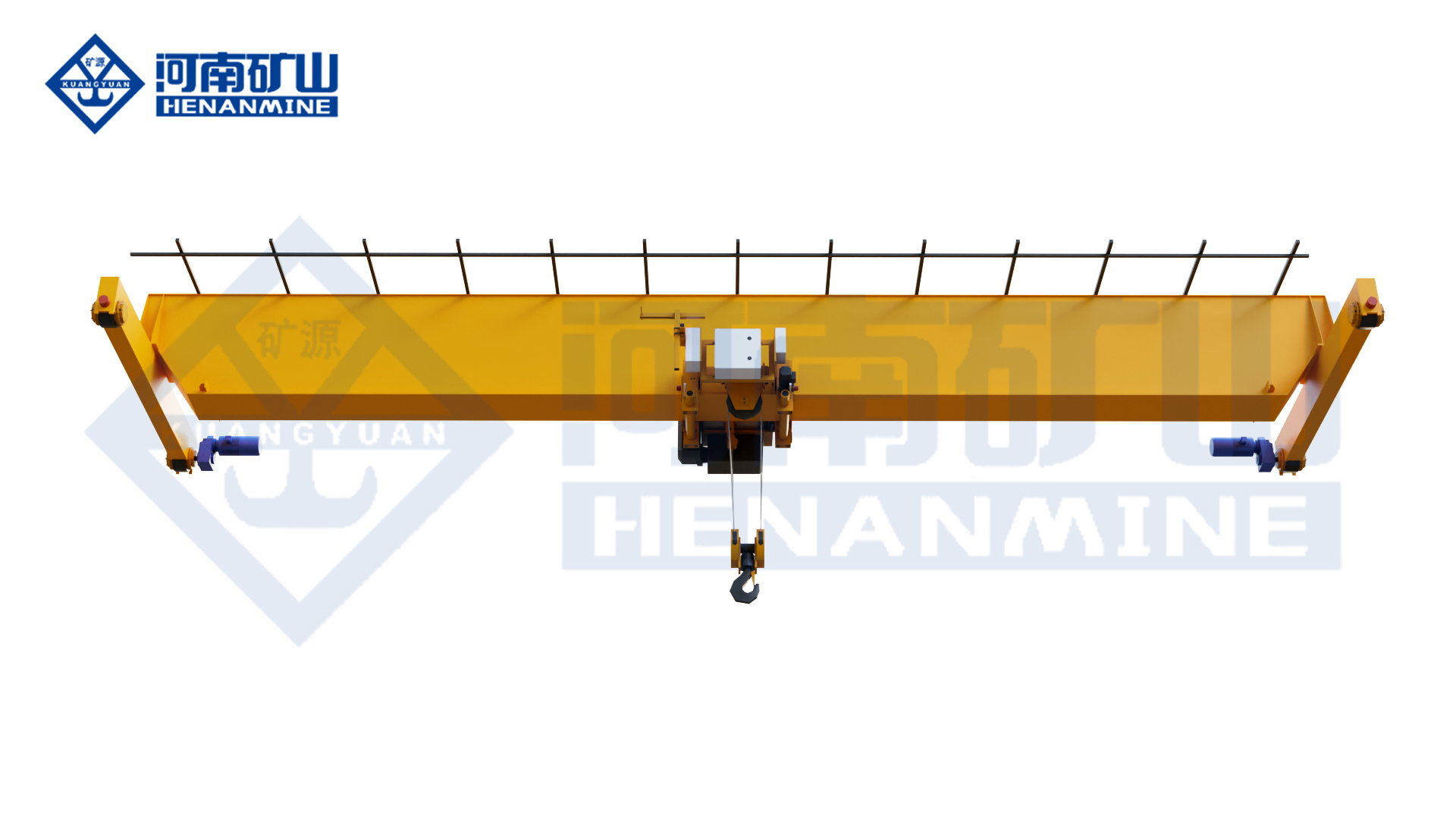
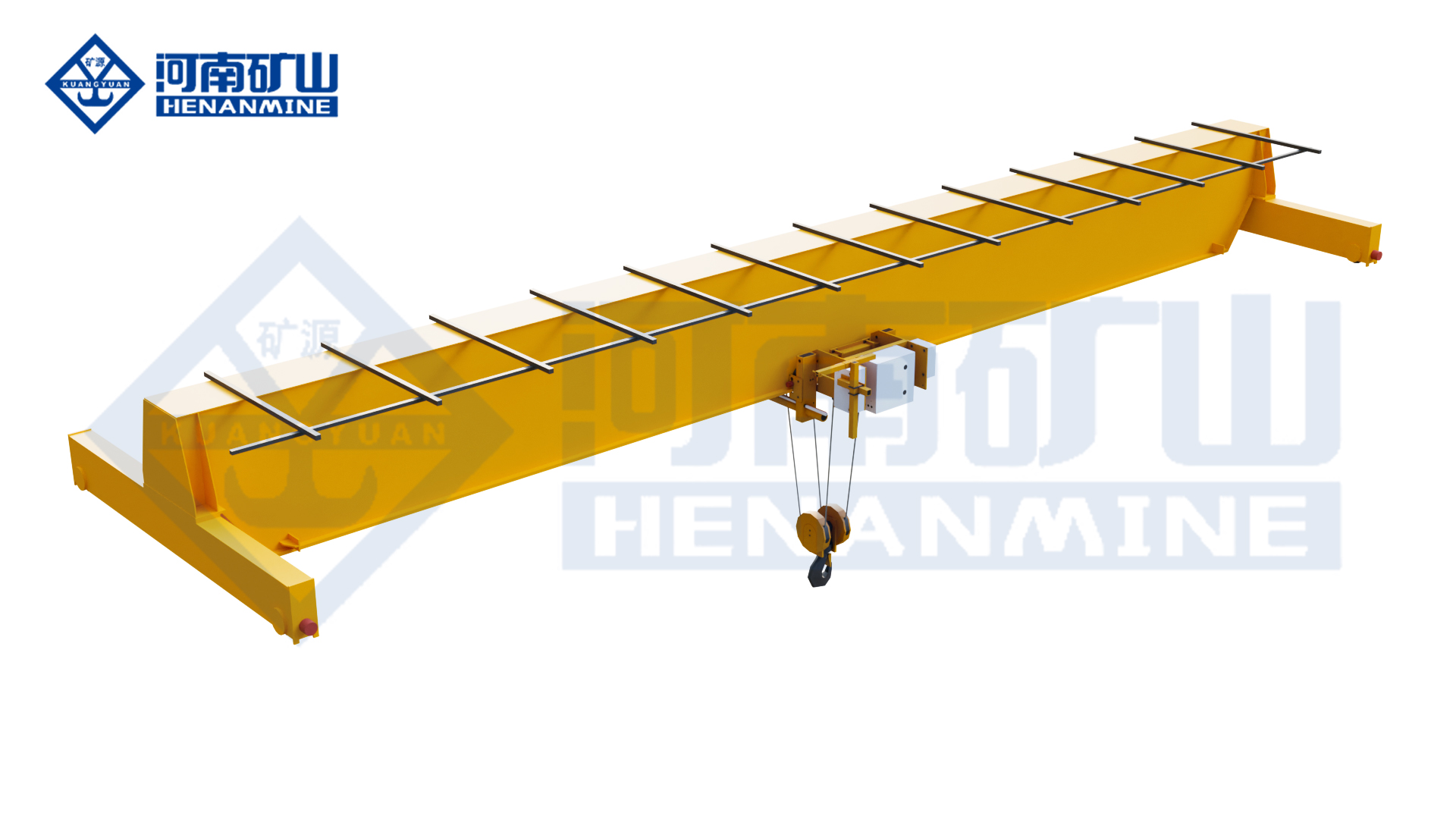
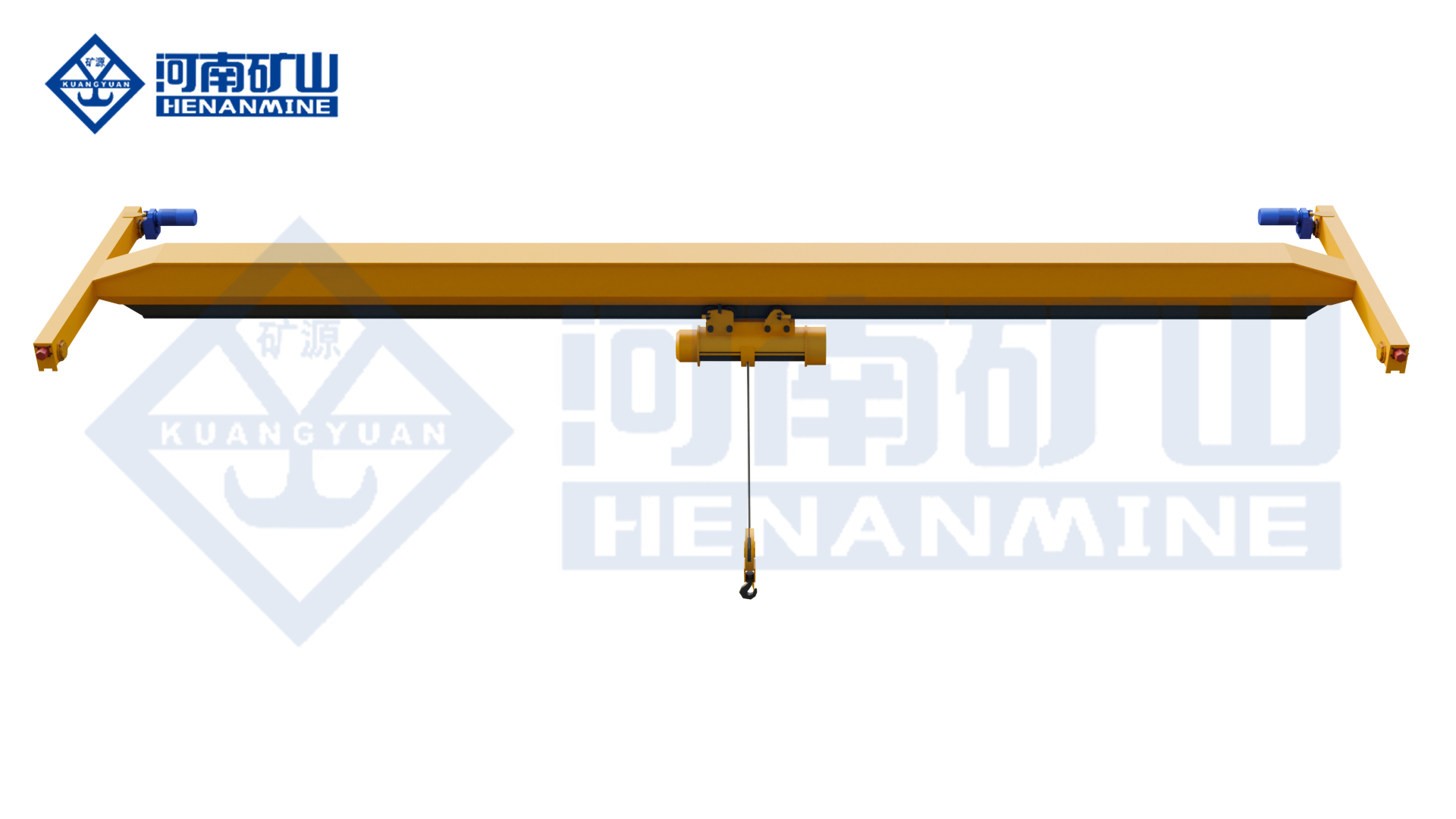
    Use an LDA single-girder bridge and electric hoist for general workshop material handling. Select the lifting capacity, runway geometry and hoist duty around the building and load.

    Lifting capacity1–20 t
    Span7.5–31.5 m
    Working classA3
    Technical specifications

    Define the total suspended load, duty and site conditions for your project.

    Technical specifications

    Check the load.
    Plan the configuration.

    Parameters and equipment options are matched to the application and confirmed in the technical proposal.

    Discuss your configuration
    ModelLDA
    Lifting capacity1–20 t
    Span7.5–31.5 m; according to the selected configuration
    Lifting height6, 9, 12, 18, 24 or 30 m; capacity-dependent
    Working classA3
    Electric hoistCD₁ or MD₁
    Hoisting speed1–5 t: 8 or 8/0.8 m/min; 10 t: 7 or 7/0.7 m/min
    Trolley travel20 m/min
    Crane travel20 or 30 m/min
    Power supply380 V, 50 Hz, three phase
    Wheel diameter270 mm for the listed 1–10 t arrangements
    Track flange width37–70 mm for the listed 1–10 t arrangements

    Final parameters, dimensions, wheel loads and supply scope follow the approved project specification.

    Application & operation

    Matched to the handling task.

    Workshop production

    Move components between manufacturing, storage and loading positions.

    Equipment maintenance

    Provide lifting coverage around fixed machinery and service areas.

    Selection considerations

    Start with your operating conditions.

    01

    Load & lifting arrangement

    Specify complete suspended load, lifting accessory and required hook positions. Include lifting-appliance weight and the required lifting positions.

    02

    Site & available space

    Provide runway centres, rail elevation, roof clearance and hook approach. Coordinate the installation interfaces with the available site drawings.

    03

    Duty & control sequence

    Define daily lifting cycle, motion requirements and site power. Identify the required movements and control interfaces in the enquiry.

    Configuration comparison

    Compare related lifting arrangements.

    Crane arrangementHandling configuration
    Single-Girder Bridge CraneUse an LDA single-girder bridge and electric hoist for general workshop material handling. Select the lifting capacity, runway geometry and hoist duty around the building and load.
    European-Style Electric Single Girder CraneHandle workshop components with a European-style single-girder crane and electric hoist. Match the compact lifting arrangement and movement control to the building and operating cycle.
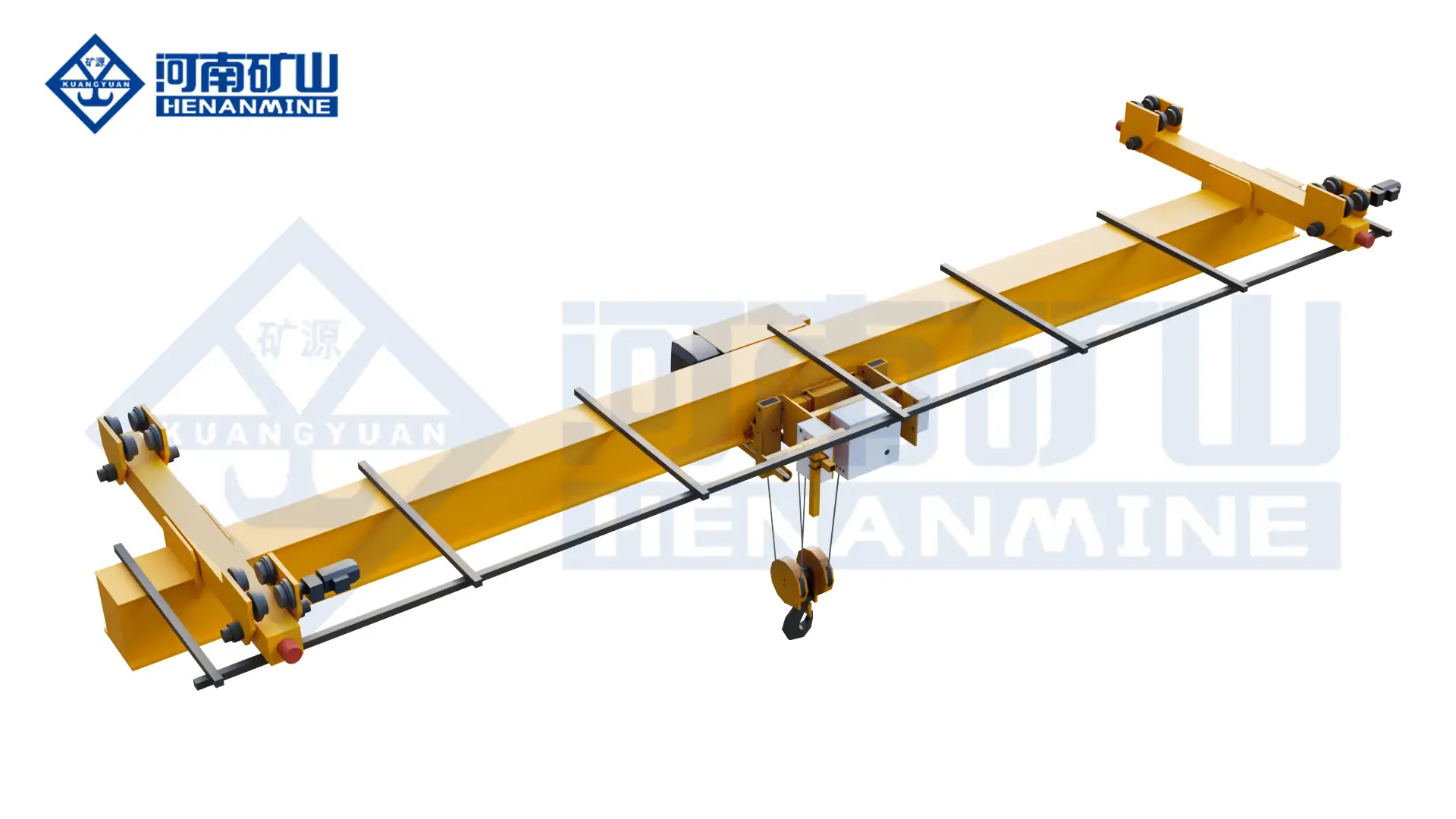
    Single-Beam Suspension CraneSuspend an LX single-girder crane from an approved overhead runway to cover workshop lifting positions. Building support, runway geometry and available hook height determine the installation.
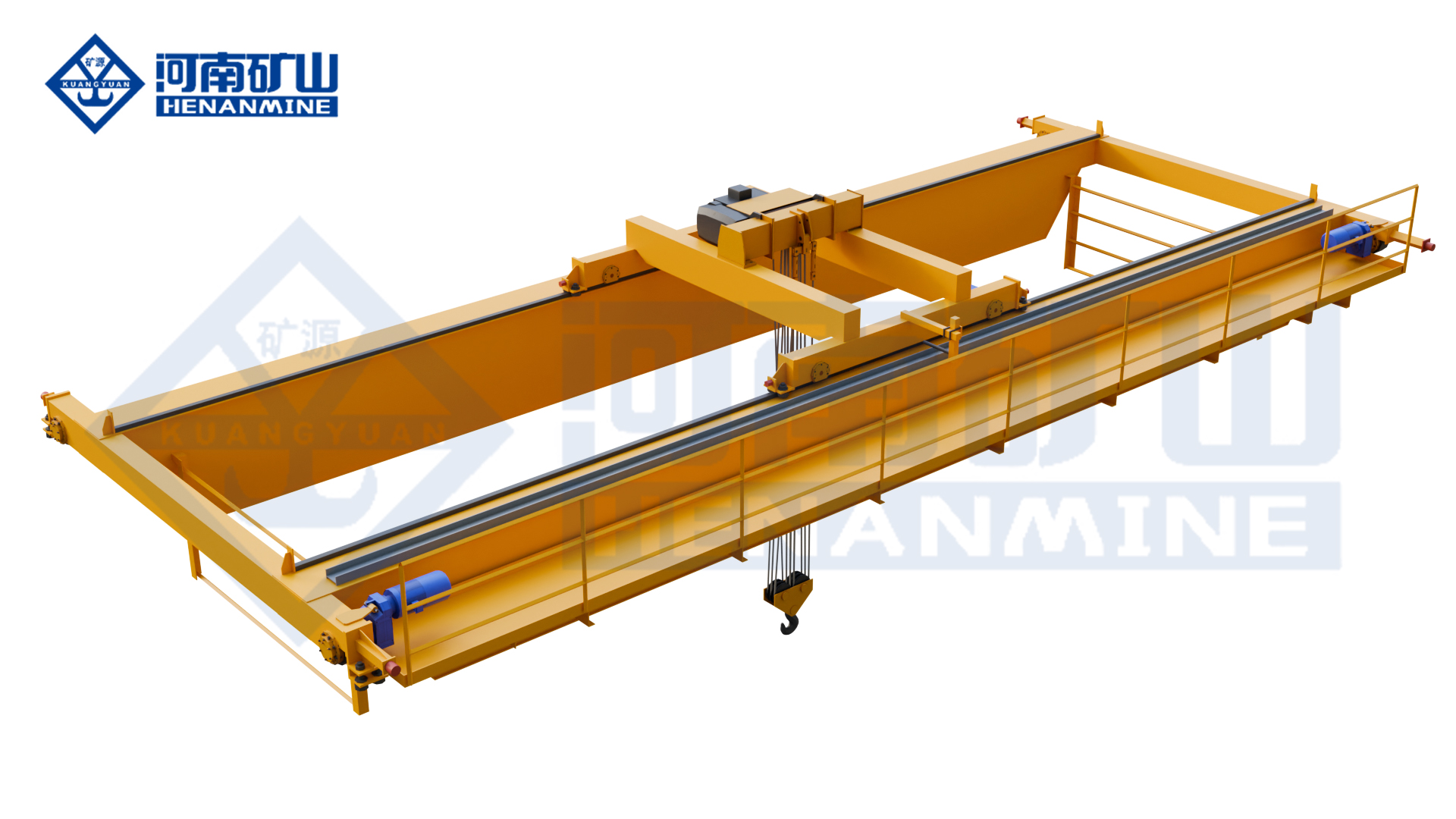
    LH Electric Hoist Double Girder CraneUse an LH double-girder bridge with an electric-hoist trolley for workshop lifting, assembly and maintenance. Match the hoist arrangement to the suspended load, hook travel and available building space.

    Operating protection & lifecycle support

    Plan beyond the equipment.

    01

    Operating protection

    Confirm overload protection, travel limits, brakes, emergency controls and the required process interlocks for the declared lifting task.

    02

    Installation & commissioning

    Agree runway reactions, structural interfaces, electrical connections, assembly, inspection and commissioning responsibilities before delivery.

    03

    Inspection & spares

    Plan inspection and maintenance of electric-hoist rope, hook assembly and bridge travel drives. Agree service access, documentation and the required spare-parts scope.

    Questions before the order

    Clarify the details
    that shape the crane.

    What information is needed for a single-girder bridge crane quotation?+

    Provide complete suspended load, lifting accessory and required hook positions; runway centres, rail elevation, roof clearance and hook approach; and daily lifting cycle, motion requirements and site power. Include drawings and the project destination when available.

    Which loads belong in the rated-capacity calculation?+

    State the workpiece and all suspended lifting accessories. Select the crane and hoist arrangement for the complete declared lifting task and the required operating cycle.

    What installation and support scope should be agreed?+

    Agree runway reactions, structural interfaces, electrical connections, assembly, inspection and commissioning responsibilities before delivery. Specify the documentation, training and spare-parts support needed for the project.

    Related equipment

    Explore the alternatives.

    Let’s discuss your project

    The right crane starts
    with your lifting task.

    Share complete suspended load, lifting accessory and required hook positions, together with your site layout and operating cycle.
    info@hnksglobal.com
  • Side-Mounted Single-Girder Crane

    Side-Mounted Single-Girder Crane

    Overhead Cranes / Henan Mine Crane

    Side-Mounted Single-Girder Crane

    Position the electric hoist beside the single-girder bridge with an LDP side-mounted arrangement. Coordinate hook approach, available headroom and the work area around the building structure.

    Lifting capacity1t – 10t
    Span7.5m – 28.5m
    Working classA3 – A5
    Technical specifications

    Define the total suspended load, duty and site conditions for your project.

    Technical specifications

    Check the load.
    Plan the configuration.

    Parameters and equipment options are matched to the application and confirmed in the technical proposal.

    Discuss your configuration
    Rated Lifting Capacity1t – 10t
    Span7.5m – 28.5m
    Lifting Height6m – 20m
    Working ClassA3 – A5
    Lifting Speed3.2m/min – 16m/min
    Crane Travel Speed20m/min – 30m/min
    Hoist TypeFixed Electric Hoist
    Control ModeGround handle / Wireless remote control
    Power Supply380V/50Hz; 220V-660V/60Hz
    Protection LevelIP54
    Working Temperature-20℃ ~ 40℃

    Final parameters, dimensions, wheel loads and supply scope follow the approved project specification.

    Application & operation

    Matched to the handling task.

    Restricted workshop envelopes

    Review side-mounted hoist geometry against the available building clearances.

    Local equipment handling

    Reach declared hook positions around machinery and assembly fixtures.

    Selection considerations

    Start with your operating conditions.

    01

    Load & lifting arrangement

    Specify suspended load, required hook positions and lifting accessories. Include lifting-appliance weight and the required lifting positions.

    02

    Site & available space

    Provide runway elevation, side clearances and roof structure. Coordinate the installation interfaces with the available site drawings.

    03

    Duty & control sequence

    Define hoisting duty, positioning requirements and maintenance access. Identify the required movements and control interfaces in the enquiry.

    Configuration comparison

    Compare related lifting arrangements.

    Crane arrangementHandling configuration
    Side-Mounted Single-Girder CranePosition the electric hoist beside the single-girder bridge with an LDP side-mounted arrangement. Coordinate hook approach, available headroom and the work area around the building structure.
    Electric Single Beam Crane For Low ClearanceIncrease usable hook height in a restricted workshop envelope with a low-clearance single-girder arrangement. Match the hoist position, hook approach and structural clearances to the building.
    European-Style Electric Single Girder CraneHandle workshop components with a European-style single-girder crane and electric hoist. Match the compact lifting arrangement and movement control to the building and operating cycle.
    Single-Girder Bridge CraneUse an LDA single-girder bridge and electric hoist for general workshop material handling. Select the lifting capacity, runway geometry and hoist duty around the building and load.

    Operating protection & lifecycle support

    Plan beyond the equipment.

    01

    Operating protection

    Confirm overload protection, travel limits, brakes, emergency controls and the required process interlocks for the declared lifting task.

    02

    Installation & commissioning

    Agree runway reactions, structural interfaces, electrical connections, assembly, inspection and commissioning responsibilities before delivery.

    03

    Inspection & spares

    Plan inspection and maintenance of side-mounted trolley guidance, hoist equipment and end carriages. Agree service access, documentation and the required spare-parts scope.

    Questions before the order

    Clarify the details
    that shape the crane.

    What information is needed for a side-mounted single-girder crane quotation?+

    Provide suspended load, required hook positions and lifting accessories; runway elevation, side clearances and roof structure; and hoisting duty, positioning requirements and maintenance access. Include drawings and the project destination when available.

    How is the side-mounted hoist clearance checked?+

    Supply a workshop cross-section and the required hook positions. The hoist, girder, runway and roof clearances must be checked as one arrangement.

    What installation and support scope should be agreed?+

    Agree runway reactions, structural interfaces, electrical connections, assembly, inspection and commissioning responsibilities before delivery. Specify the documentation, training and spare-parts support needed for the project.

    Related equipment

    Explore the alternatives.

    Let’s discuss your project

    The right crane starts
    with your lifting task.

    Share suspended load, required hook positions and lifting accessories, together with your site layout and operating cycle.
    info@hnksglobal.com
  • Multi-Point Suspension Crane

    Multi-Point Suspension Crane

    Overhead Cranes / Henan Mine Crane

    Multi-Point Suspension Crane

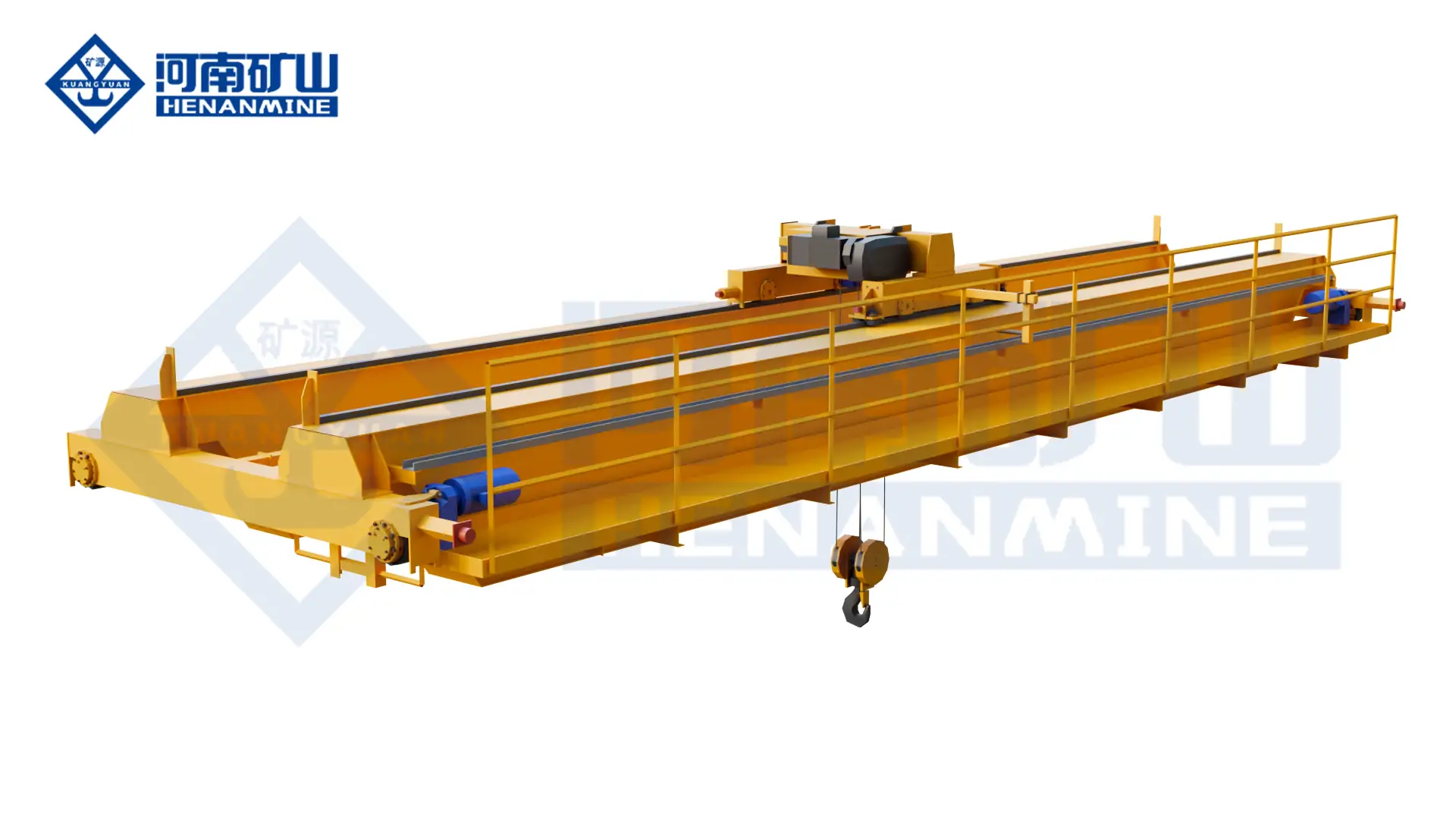
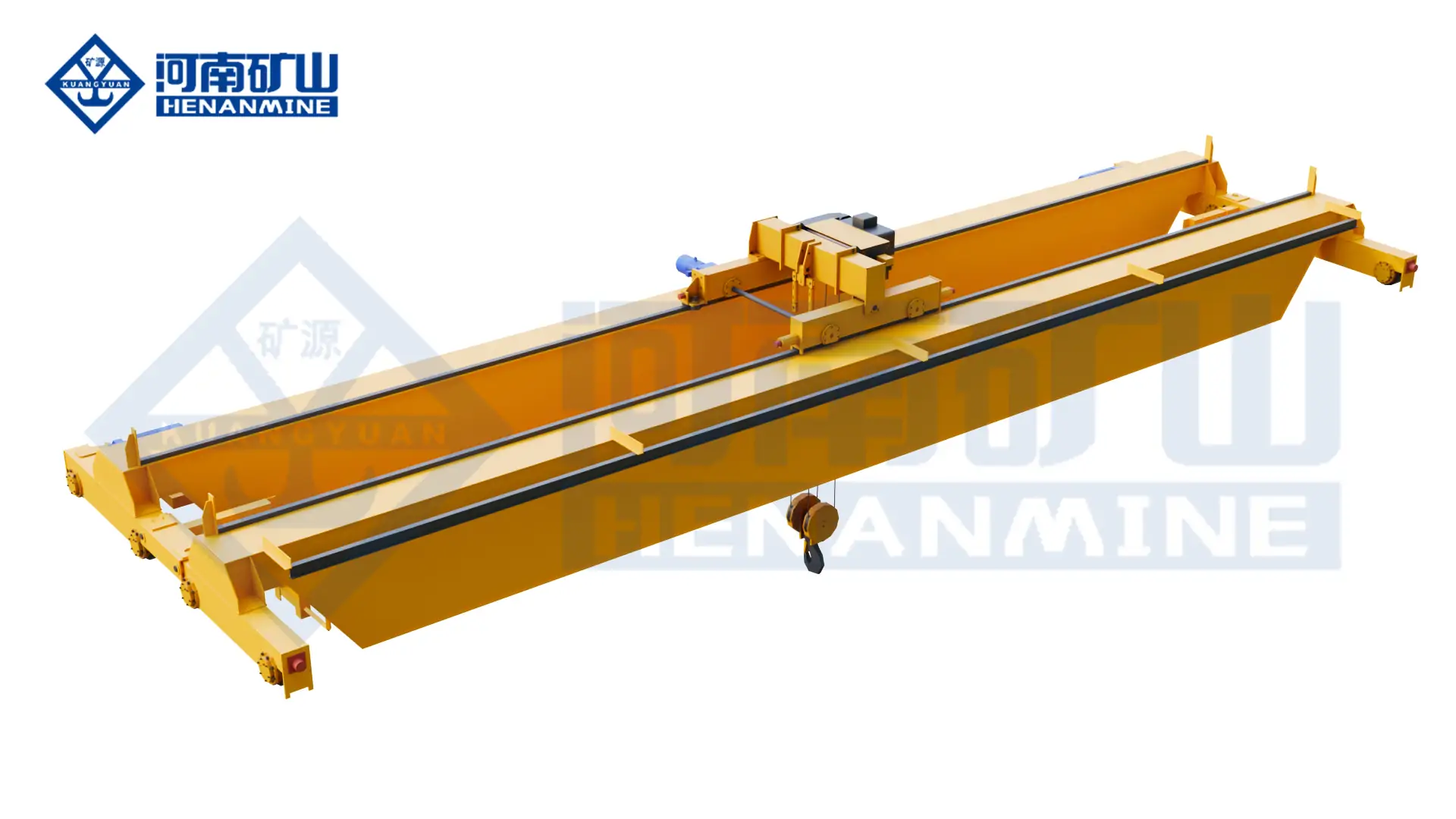
    Cover a wide working area with a multi-point suspended crane arrangement. Coordinate runway support positions, load distribution and travel geometry with the building structure.

    Lifting capacity1t – 20t
    Span10m – 60m
    Working classA3 – A6
    Technical specifications

    Define the total suspended load, duty and site conditions for your project.

    Technical specifications

    Check the load.
    Plan the configuration.

    Parameters and equipment options are matched to the application and confirmed in the technical proposal.

    Discuss your configuration
    Rated Lifting Capacity1t – 20t
    Applicable Span10m – 60m
    Number of Suspension Supports3+ sets
    Drive SystemThree-in-one drive system
    Working ClassA3 – A6
    Lifting Speed2m/min – 12m/min
    Crane Travel Speed15m/min – 30m/min
    Hoist TypeCustom electric hoist
    Control ModeGround handle / Wireless remote control / Cabin control
    Power Supply380V/50Hz; 220V-660V/60Hz
    Protection LevelIP54 (IP65 optional)
    Working Temperature-25℃ ~ 50℃
    Structural FeatureModular assembly

    Final parameters, dimensions, wheel loads and supply scope follow the approved project specification.

    Application & operation

    Matched to the handling task.

    Wide workshop coverage

    Arrange suspension points around available structural support lines.

    Large components

    Coordinate lifting coverage with assembly positions and equipment clearances.

    Selection considerations

    Start with your operating conditions.

    01

    Load & lifting arrangement

    Specify load geometry, lifting attachment and hook coverage. Include lifting-appliance weight and the required lifting positions.

    02

    Site & available space

    Provide support positions, runway sections and building reactions. Coordinate the installation interfaces with the available site drawings.

    03

    Duty & control sequence

    Define load distribution, travel alignment and operating cycle. Identify the required movements and control interfaces in the enquiry.

    Configuration comparison

    Compare related lifting arrangements.

    Crane arrangementHandling configuration
    Multi-Point Suspension CraneCover a wide working area with a multi-point suspended crane arrangement. Coordinate runway support positions, load distribution and travel geometry with the building structure.
    Multi Support Double Girder Underhung CraneUse a multi-support double-girder underhung arrangement for wide-span working areas and large components. The building supports, lifting coverage and load distribution are designed together.
    Single-Beam Suspension CraneSuspend an LX single-girder crane from an approved overhead runway to cover workshop lifting positions. Building support, runway geometry and available hook height determine the installation.
    European Style Electric Single Beam Suspended CraneUse a European-style electric-hoist suspension crane for overhead handling beneath a supported runway. Coordinate compact lifting geometry, travel control and building clearances with the workshop layout.

    Operating protection & lifecycle support

    Plan beyond the equipment.

    01

    Operating protection

    Confirm overload protection, travel limits, brakes, emergency controls and the required process interlocks for the declared lifting task.

    02

    Installation & commissioning

    Agree runway reactions, structural interfaces, electrical connections, assembly, inspection and commissioning responsibilities before delivery.

    03

    Inspection & spares

    Plan inspection and maintenance of suspension joints, runway contact surfaces and travel alignment. Agree service access, documentation and the required spare-parts scope.

    Questions before the order

    Clarify the details
    that shape the crane.

    What information is needed for a multi-point suspension crane quotation?+

    Provide load geometry, lifting attachment and hook coverage; support positions, runway sections and building reactions; and load distribution, travel alignment and operating cycle. Include drawings and the project destination when available.

    Why are all suspension positions needed before quotation?+

    Each support position affects the crane geometry and reactions. Provide the structural grid and runway drawings so load distribution, travel alignment and clearances can be coordinated.

    What installation and support scope should be agreed?+

    Agree runway reactions, structural interfaces, electrical connections, assembly, inspection and commissioning responsibilities before delivery. Specify the documentation, training and spare-parts support needed for the project.

    Related equipment

    Explore the alternatives.

    Let’s discuss your project

    The right crane starts
    with your lifting task.

    Share load geometry, lifting attachment and hook coverage, together with your site layout and operating cycle.
    info@hnksglobal.com
  • Metallurgical Electric Single Girder Crane

    Metallurgical Electric Single Girder Crane

    Overhead Cranes / Henan Mine Crane

    Metallurgical Electric Single Girder Crane

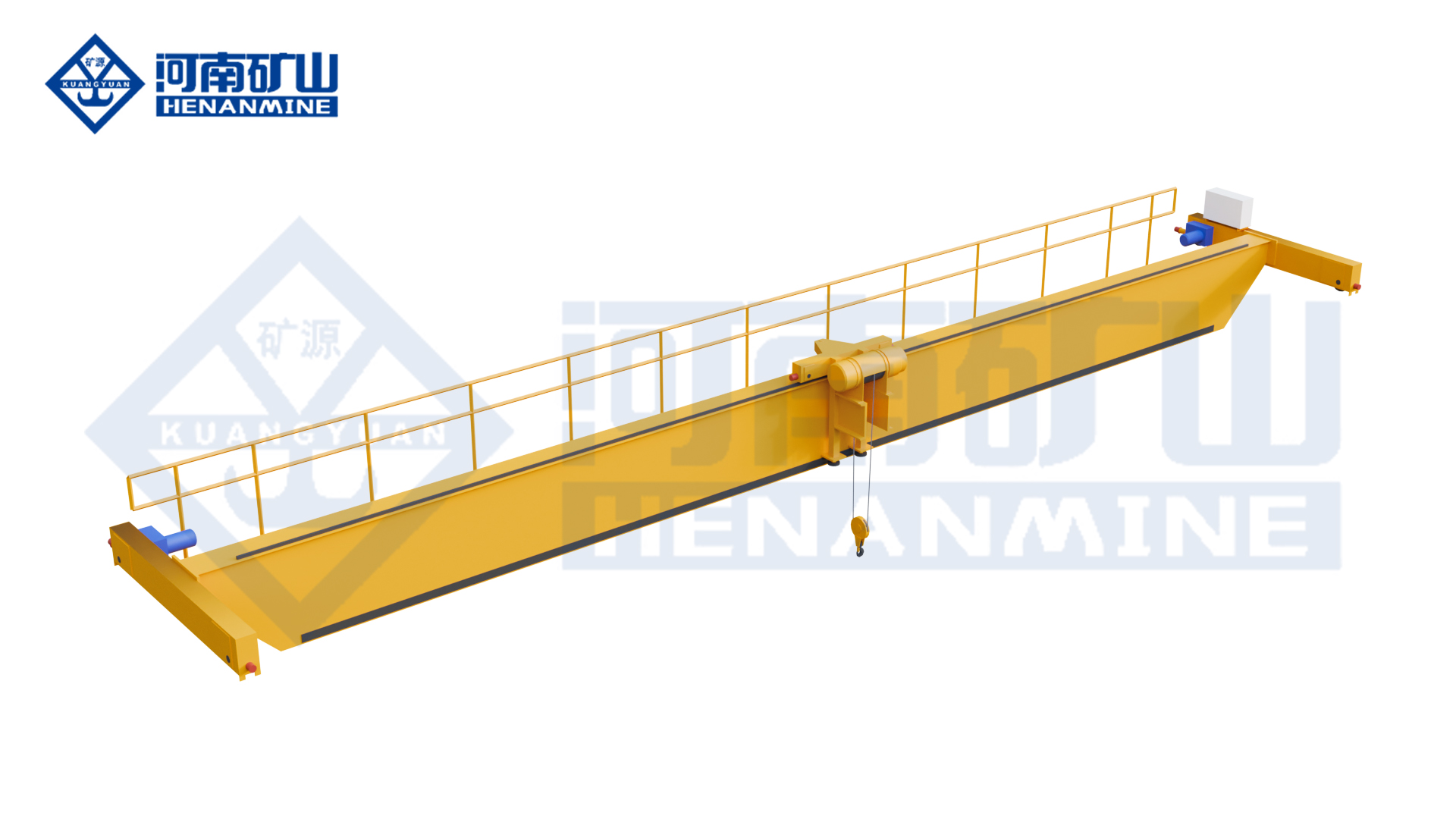
    Provide metallurgical lifting with an LDY single-girder crane and a matched metallurgical electric hoist. Define the hot-load duty, lifting appliance and thermal exposure for the complete arrangement.

    Lifting capacity1t – 10t
    Span7.5m – 28.5m
    Working classA6 – A7
    Technical specifications

    Define the total suspended load, duty and site conditions for your project.

    Technical specifications

    Check the load.
    Plan the configuration.

    Parameters and equipment options are matched to the application and confirmed in the technical proposal.

    Discuss your configuration
    Rated Lifting Capacity1t – 10t
    Span7.5m – 28.5m
    Lifting Height6m – 30m
    Working ClassA6 – A7
    Lifting Speed3.2 – 16m/min
    Travel Speed20 – 30m/min
    Hoist ModelYHⅡ Type Metallurgical Electric Hoist
    Protection LevelIP55 (IP67 optional)
    Thermal exposureDeclare ambient temperature, radiant heat and the lifting-task exposure
    Hazardous-area configurationMatched to the declared area classification, material group and temperature requirements

    Final parameters, dimensions, wheel loads and supply scope follow the approved project specification.

    Application & operation

    Matched to the handling task.

    Foundry workstations

    Coordinate lifting coverage around hot-material handling positions.

    Process maintenance

    Match the lifting appliance, operating access and local thermal conditions.

    Selection considerations

    Start with your operating conditions.

    01

    Load & lifting arrangement

    Specify hot load, lifting-appliance weight and material temperature. Include lifting-appliance weight and the required lifting positions.

    02

    Site & available space

    Provide runway span, hook positions and heat-source clearances. Coordinate the installation interfaces with the available site drawings.

    03

    Duty & control sequence

    Define metallurgical duty, hoist requirements and protective functions. Identify the required movements and control interfaces in the enquiry.

    Configuration comparison

    Compare related lifting arrangements.

    Crane arrangementHandling configuration
    Metallurgical Electric Single Girder CraneProvide metallurgical lifting with an LDY single-girder crane and a matched metallurgical electric hoist. Define the hot-load duty, lifting appliance and thermal exposure for the complete arrangement.
    Metallurgical Bridge CraneLift hot process loads with a YZD metallurgical bridge arrangement selected for the complete load and thermal conditions. Specify the lifting appliance, duty cycle and operating-protection requirements.
    Double Girder Casting CraneLift and transfer molten-metal ladles with a YZ casting crane configured for the full suspended load and casting process. Review ladle interfaces, thermal exposure and the operating sequence together.
    YX Metallurgical Bridge CraneLift and turn material boxes with a YX metallurgical crane arrangement. The box interface, centre of gravity, turnover sequence and thermal conditions determine the lifting system.

    Operating protection & lifecycle support

    Plan beyond the equipment.

    01

    Operating protection

    Confirm overload protection, travel limits, brakes, emergency controls and the required process interlocks for the declared lifting task.

    02

    Installation & commissioning

    Agree runway reactions, structural interfaces, electrical connections, assembly, inspection and commissioning responsibilities before delivery.

    03

    Inspection & spares

    Plan inspection and maintenance of metallurgical hoist components, brakes and thermal protection. Agree service access, documentation and the required spare-parts scope.

    Questions before the order

    Clarify the details
    that shape the crane.

    What information is needed for a metallurgical electric single girder crane quotation?+

    Provide hot load, lifting-appliance weight and material temperature; runway span, hook positions and heat-source clearances; and metallurgical duty, hoist requirements and protective functions. Include drawings and the project destination when available.

    Why must the lifting task be declared as metallurgical duty?+

    Thermal exposure, load type and the handling sequence affect the hoist, brakes and protective provisions. Specify the complete process rather than only a nominal lifting capacity.

    What installation and support scope should be agreed?+

    Agree runway reactions, structural interfaces, electrical connections, assembly, inspection and commissioning responsibilities before delivery. Specify the documentation, training and spare-parts support needed for the project.

    Related equipment

    Explore the alternatives.

    Let’s discuss your project

    The right crane starts
    with your lifting task.

    Share hot load, lifting-appliance weight and material temperature, together with your site layout and operating cycle.
    info@hnksglobal.com
  • Explosion-Proof Suspended Overhead Crane

    Explosion-Proof Suspended Overhead Crane

    Overhead Cranes / Henan Mine Crane

    Explosion-Proof Suspended Overhead Crane

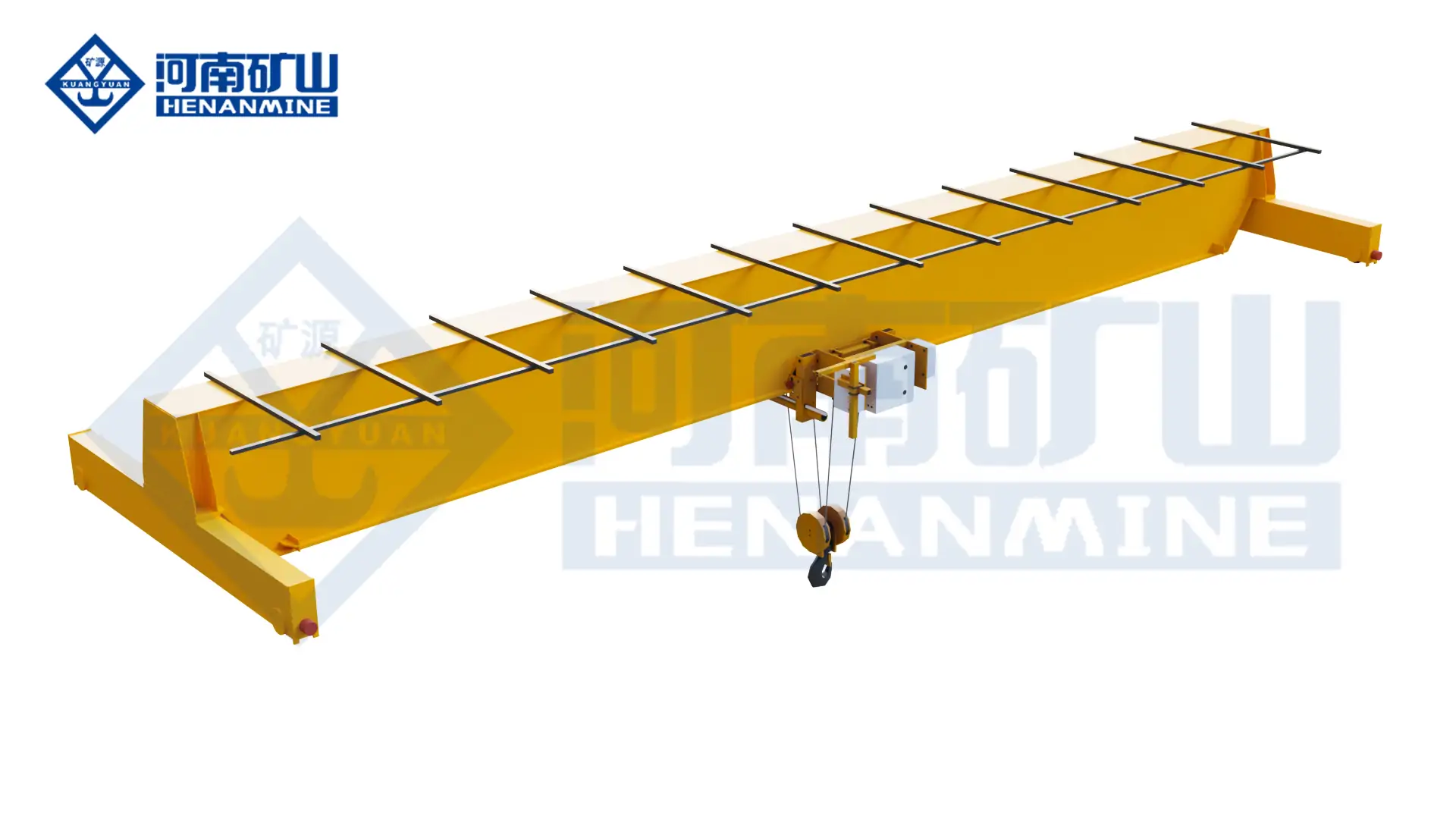
    Provide suspended electric-hoist lifting within a declared hazardous area. Review the overhead support, lifting duty and protection of the hoist, travel drives and controls as one system.

    Lifting capacity1t – 10t
    Span7.5m – 28.5m
    Working classA3 – A5
    Technical specifications

    Define the total suspended load, duty and site conditions for your project.

    Technical specifications

    Check the load.
    Plan the configuration.

    Parameters and equipment options are matched to the application and confirmed in the technical proposal.

    Discuss your configuration
    Rated Lifting Capacity1t – 10t
    Basic Span7.5m – 28.5m
    Lifting Height6m – 20m
    Hazardous-area configurationMatched to the declared area classification, material group and temperature requirements
    Hoist TypeSpecial explosion-proof electric hoist
    Drive MotorExplosion-proof type motor
    Working ClassA3 – A5
    Lifting Speed2m/min – 10m/min
    Crane Travel Speed15m/min – 25m/min
    Control ModeExplosion-proof ground handle / wireless remote
    Power Supply380V/50Hz; 220V-660V/60Hz
    Protection LevelIP55 (IP65 optional)
    Working Temperature-20℃ ~ 45℃
    Structural FeatureModular assembly

    Final parameters, dimensions, wheel loads and supply scope follow the approved project specification.

    Application & operation

    Matched to the handling task.

    Classified workshops

    Provide overhead lifting coverage beneath a suspended runway.

    Process access

    Coordinate the hook positions with maintenance and production equipment.

    Selection considerations

    Start with your operating conditions.

    01

    Load & lifting arrangement

    Specify suspended load, lifting height and lifting attachment. Include lifting-appliance weight and the required lifting positions.

    02

    Site & available space

    Provide runway supports, building reactions and available clearances. Coordinate the installation interfaces with the available site drawings.

    03

    Duty & control sequence

    Define gas or dust classification, temperature limits and operating duty. Identify the required movements and control interfaces in the enquiry.

    Configuration comparison

    Compare related lifting arrangements.

    Crane arrangementHandling configuration
    Explosion-Proof Suspended Overhead CraneProvide suspended electric-hoist lifting within a declared hazardous area. Review the overhead support, lifting duty and protection of the hoist, travel drives and controls as one system.
    Explosion Proof Electric Hoist Bridge CraneUse an electric-hoist bridge arrangement for a declared hazardous area. The hoist, drives, controls and electrical installation are specified for the area classification and lifting duty.
    Explosion-Proof Bridge CraneUse a QB bridge crane for lifting in a declared explosive-gas environment. Select the load rating, main and auxiliary arrangement, electrical protection and control mode for the project.
    Dust-Proof Explosion-Proof Overhead CraneConfigure suspended lifting for a declared combustible-dust environment. Dust classification, surface-temperature limits and enclosure requirements form part of the crane and hoist specification.

    Operating protection & lifecycle support

    Plan beyond the equipment.

    01

    Operating protection

    Confirm overload protection, travel limits, brakes, emergency controls and the required process interlocks for the declared lifting task.

    02

    Installation & commissioning

    Agree runway reactions, structural interfaces, electrical connections, assembly, inspection and commissioning responsibilities before delivery.

    03

    Inspection & spares

    Plan inspection and maintenance of suspension hardware, protected drives and cable systems. Agree service access, documentation and the required spare-parts scope.

    Questions before the order

    Clarify the details
    that shape the crane.

    What information is needed for a explosion-proof suspended overhead crane quotation?+

    Provide suspended load, lifting height and lifting attachment; runway supports, building reactions and available clearances; and gas or dust classification, temperature limits and operating duty. Include drawings and the project destination when available.

    What is required from the building designer?+

    Provide runway and supporting-structure information for review against the proposed crane reactions and clearances. The support arrangement and hazardous-area installation must be coordinated.

    What installation and support scope should be agreed?+

    Agree runway reactions, structural interfaces, electrical connections, assembly, inspection and commissioning responsibilities before delivery. Specify the documentation, training and spare-parts support needed for the project.

    Related equipment

    Explore the alternatives.

    Let’s discuss your project

    The right crane starts
    with your lifting task.

    Share suspended load, lifting height and lifting attachment, together with your site layout and operating cycle.
    info@hnksglobal.com
  • European-Style Electric Single Girder Crane

    European-Style Electric Single Girder Crane

    Overhead Cranes / Henan Mine Crane

    European-Style Electric Single Girder Crane

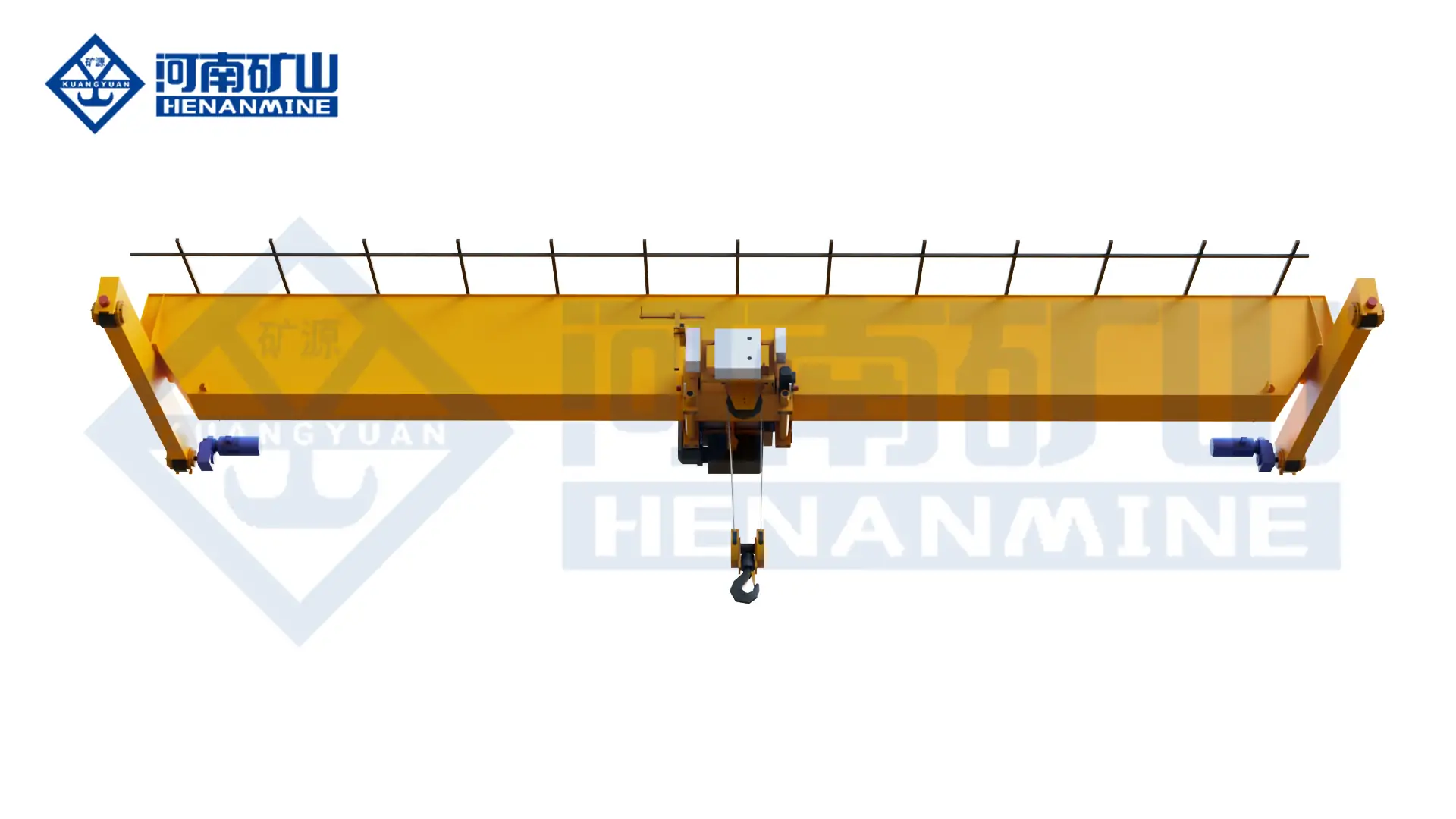
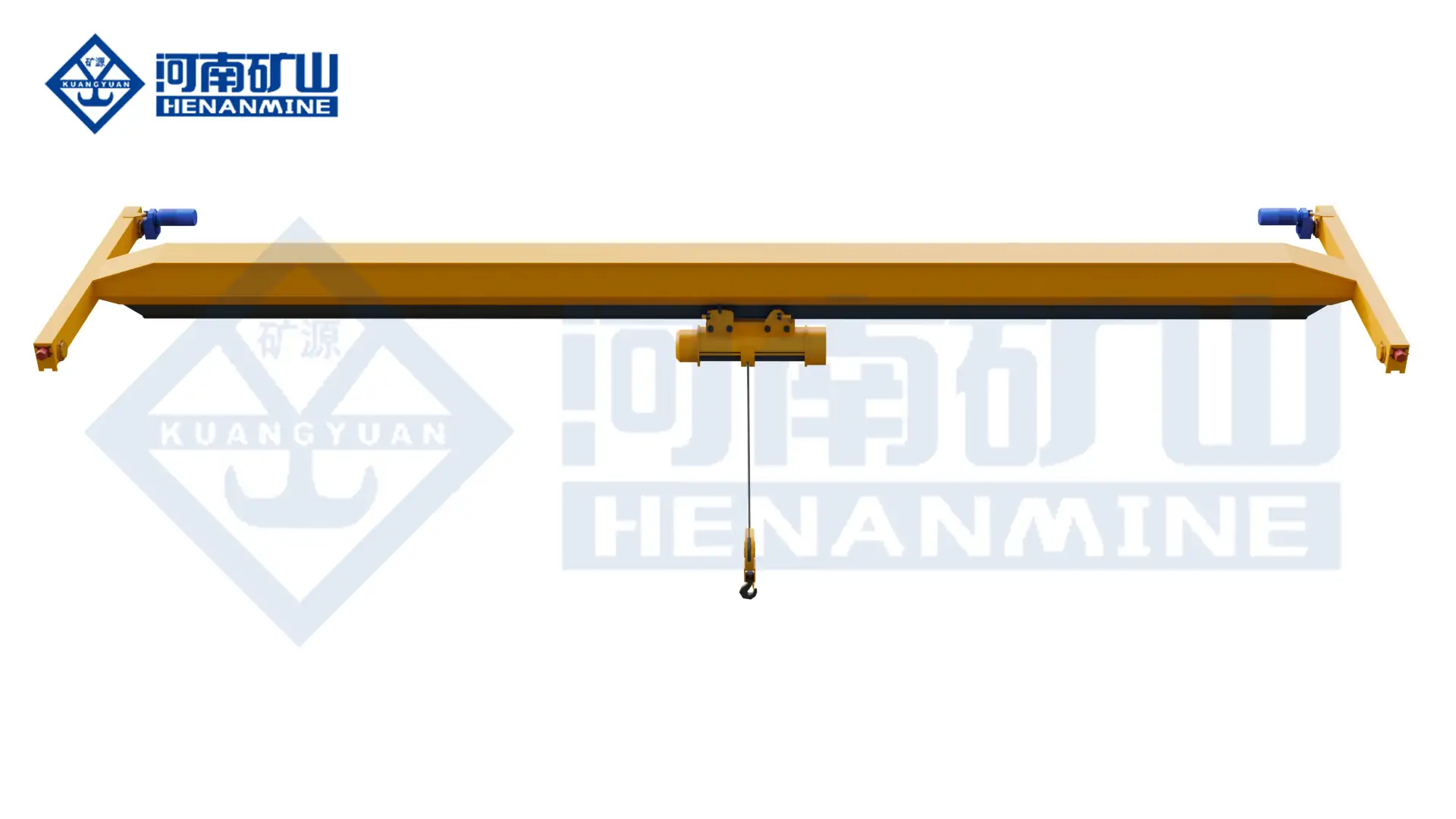
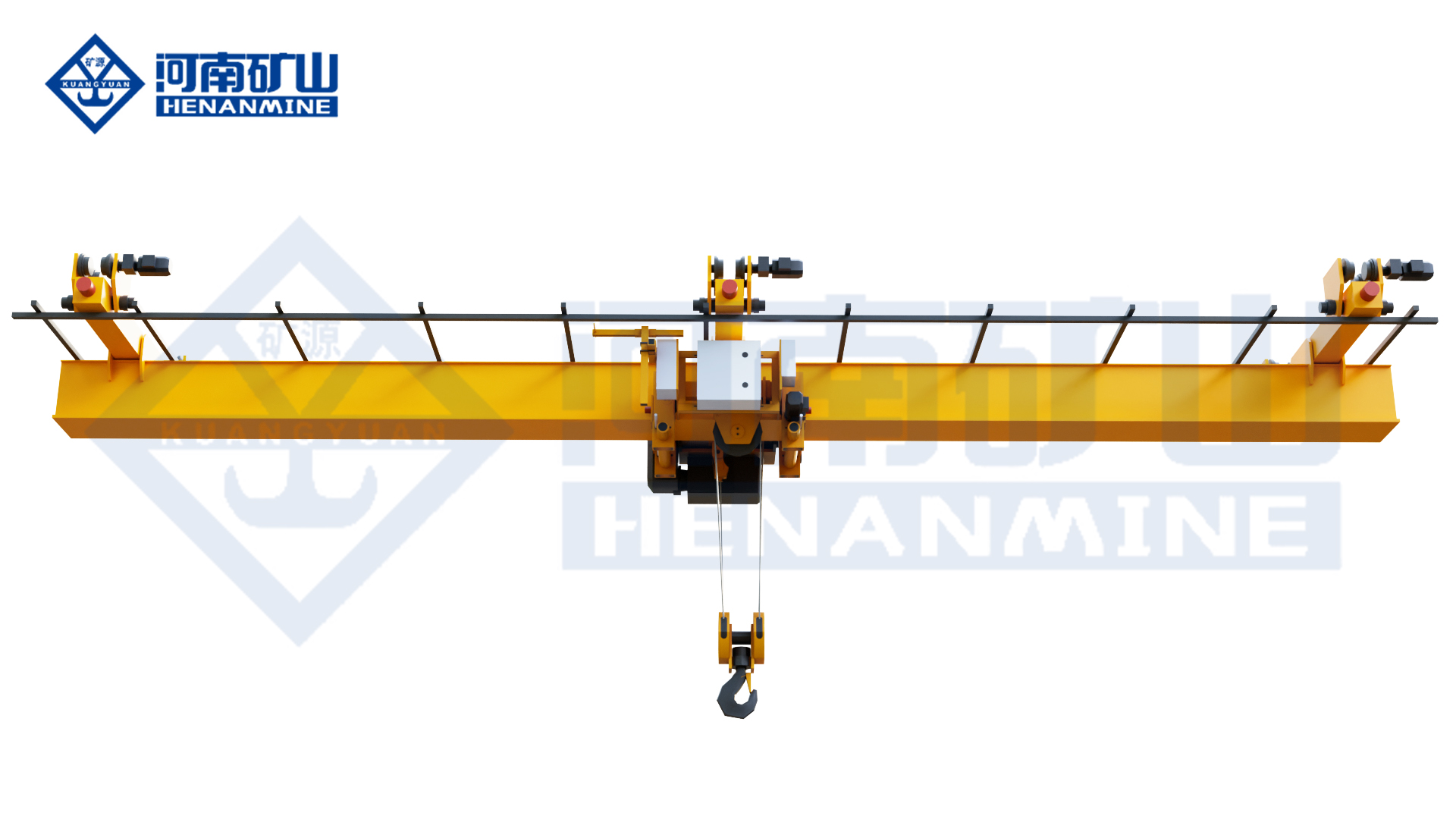
    Handle workshop components with a European-style single-girder crane and electric hoist. Match the compact lifting arrangement and movement control to the building and operating cycle.

    Lifting capacity1t – 10t
    Span7.5m – 28.5m
    Working classA3 – A5
    Technical specifications

    Define the total suspended load, duty and site conditions for your project.

    Technical specifications

    Check the load.
    Plan the configuration.

    Parameters and equipment options are matched to the application and confirmed in the technical proposal.

    Discuss your configuration
    Rated Lifting Capacity1t – 10t
    Span7.5m – 28.5m
    Lifting Height6m – 20m
    Working ClassA3 – A5
    Lifting Speed0.5-16m/min
    Crane Travel Speed5-30m/min
    Hoist TypeNew type electric hoist
    Control ModeGround handle / Wireless remote control
    Power Supply380V/50Hz; 220V-660V/60Hz
    Protection LevelIP55
    Working Temperature-20℃ ~ 45℃
    Design StandardEuropean FEM standard + China national standard

    Final parameters, dimensions, wheel loads and supply scope follow the approved project specification.

    Application & operation

    Matched to the handling task.

    Machinery production

    Coordinate hook coverage and placement around manufacturing equipment.

    Assembly and maintenance

    Select the required lifting height, approach distances and control method.

    Selection considerations

    Start with your operating conditions.

    01

    Load & lifting arrangement

    Specify maximum suspended load and placement requirements. Include lifting-appliance weight and the required lifting positions.

    02

    Site & available space

    Provide runway centres, rail elevation, headroom and hook approach. Coordinate the installation interfaces with the available site drawings.

    03

    Duty & control sequence

    Define lifting frequency, operating shifts and motion-control needs. Identify the required movements and control interfaces in the enquiry.

    Configuration comparison

    Compare related lifting arrangements.

    Crane arrangementHandling configuration
    European-Style Electric Single Girder CraneHandle workshop components with a European-style single-girder crane and electric hoist. Match the compact lifting arrangement and movement control to the building and operating cycle.
    Single-Girder Bridge CraneUse an LDA single-girder bridge and electric hoist for general workshop material handling. Select the lifting capacity, runway geometry and hoist duty around the building and load.
    Electric Single Beam Crane For Low ClearanceIncrease usable hook height in a restricted workshop envelope with a low-clearance single-girder arrangement. Match the hoist position, hook approach and structural clearances to the building.
    Modular Electric Hoist Overhead CraneUse a modular electric-hoist overhead crane for production, assembly and maintenance lifting. Select the hoist arrangement, hook coverage and movement control for the workshop and operating cycle.

    Operating protection & lifecycle support

    Plan beyond the equipment.

    01

    Operating protection

    Confirm overload protection, travel limits, brakes, emergency controls and the required process interlocks for the declared lifting task.

    02

    Installation & commissioning

    Agree runway reactions, structural interfaces, electrical connections, assembly, inspection and commissioning responsibilities before delivery.

    03

    Inspection & spares

    Plan inspection and maintenance of hoist rope, trolley guidance and bridge travel drives. Agree service access, documentation and the required spare-parts scope.

    Questions before the order

    Clarify the details
    that shape the crane.

    What information is needed for a european-style electric single girder crane quotation?+

    Provide maximum suspended load and placement requirements; runway centres, rail elevation, headroom and hook approach; and lifting frequency, operating shifts and motion-control needs. Include drawings and the project destination when available.

    How does the building affect the proposed arrangement?+

    Runway elevation, roof clearance and required hook positions determine the available crane envelope. Supply a workshop cross-section and plan so those dimensions can be checked.

    What installation and support scope should be agreed?+

    Agree runway reactions, structural interfaces, electrical connections, assembly, inspection and commissioning responsibilities before delivery. Specify the documentation, training and spare-parts support needed for the project.

    Related equipment

    Explore the alternatives.

    Let’s discuss your project

    The right crane starts
    with your lifting task.

    Share maximum suspended load and placement requirements, together with your site layout and operating cycle.
    info@hnksglobal.com
  • European Style Electric Single Beam Suspended Crane

    European Style Electric Single Beam Suspended Crane

    Overhead Cranes / Henan Mine Crane

    European Style Electric Single Beam Suspended Crane

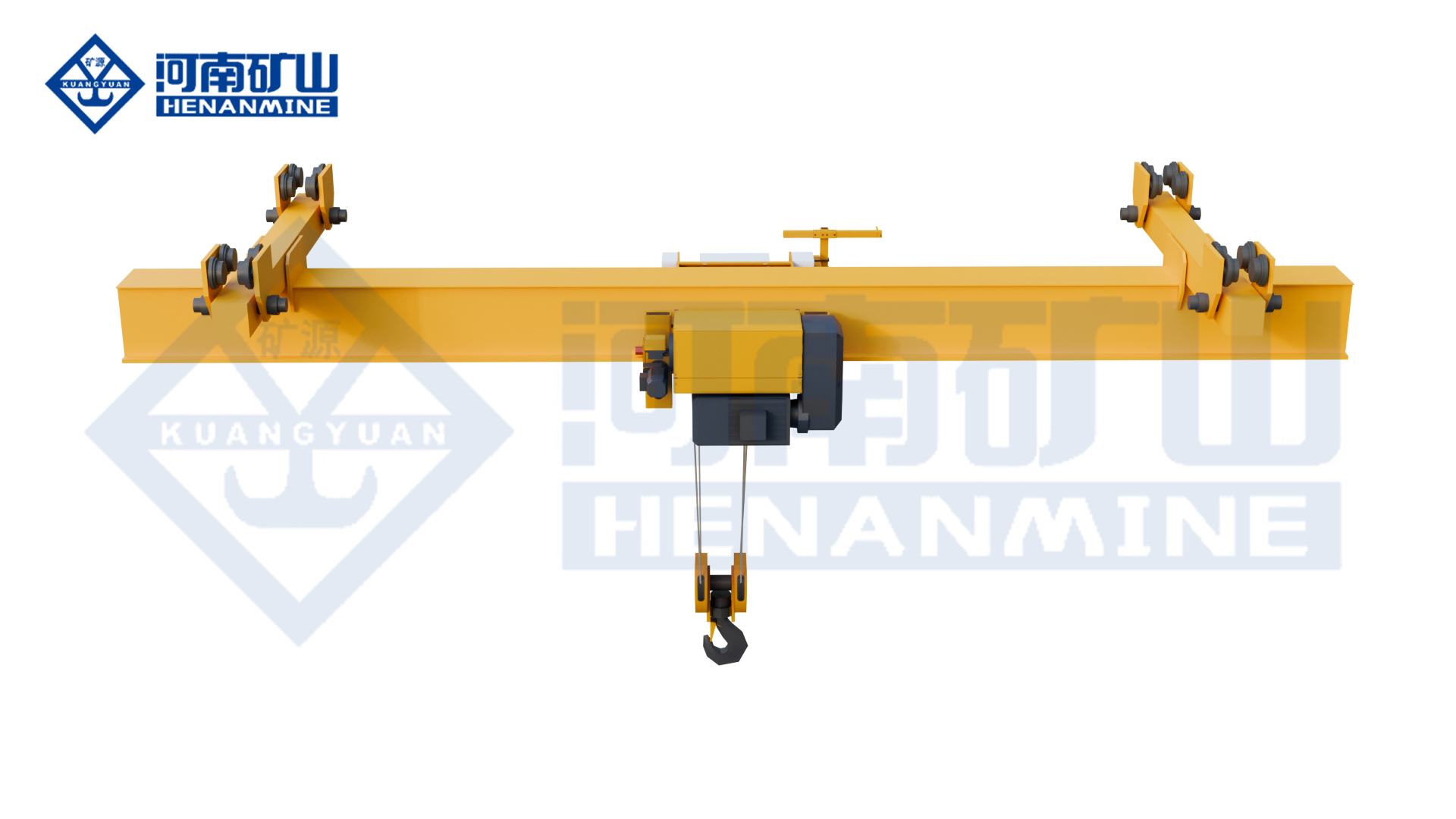
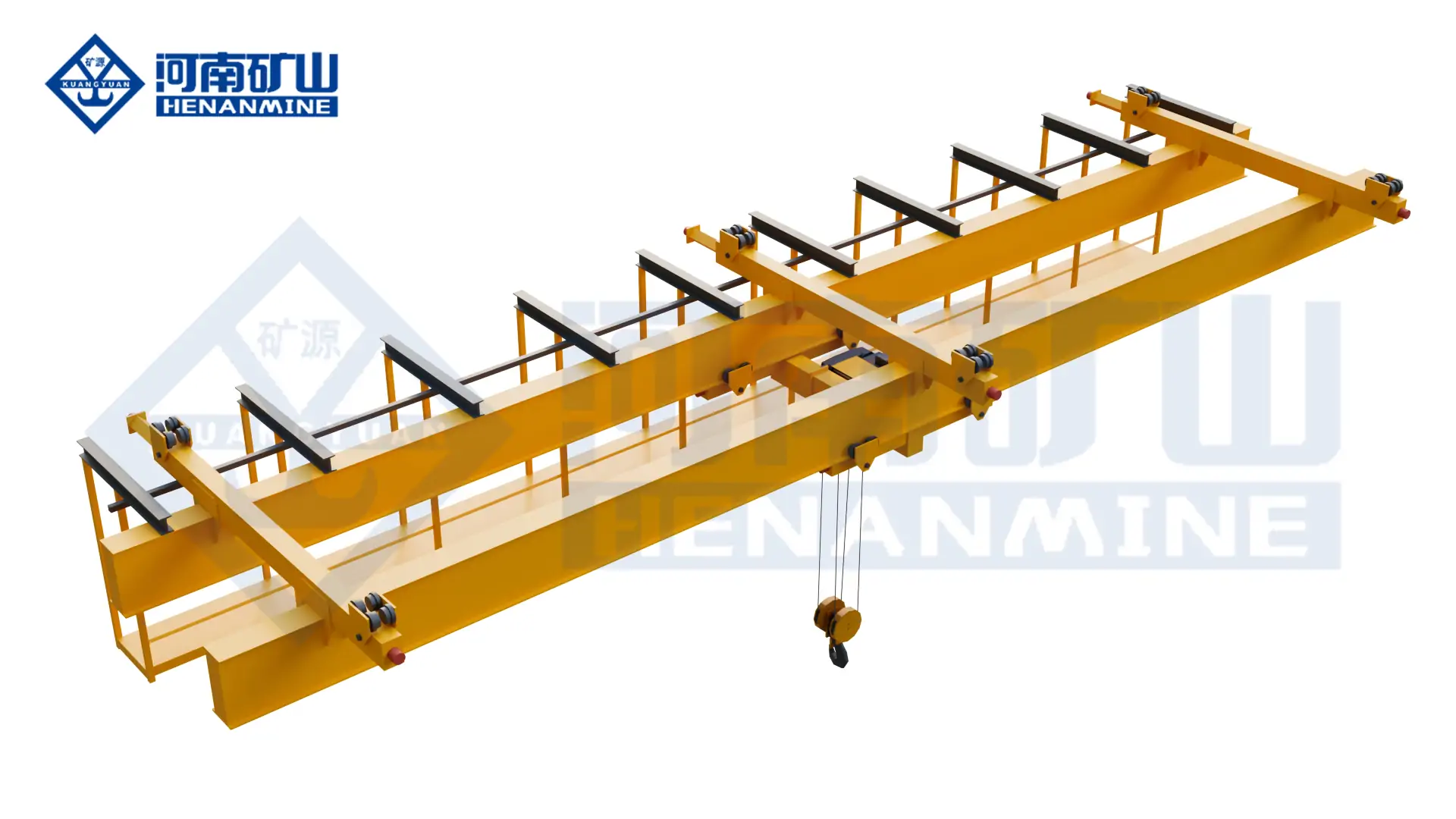
    Use a European-style electric-hoist suspension crane for overhead handling beneath a supported runway. Coordinate compact lifting geometry, travel control and building clearances with the workshop layout.

    Lifting capacity1t – 10t
    Span7.5m – 28.5m
    Working classA3 – A5
    Technical specifications

    Define the total suspended load, duty and site conditions for your project.

    Technical specifications

    Check the load.
    Plan the configuration.

    Parameters and equipment options are matched to the application and confirmed in the technical proposal.

    Discuss your configuration
    Rated Lifting Capacity1t – 10t
    Basic Span7.5m – 28.5m
    Lifting Height6m – 20m
    Lifting Speed5m/min (normal); 0.83m/min (micro)
    Travel Speed0-30m/min
    Hoist TypeCustom high-efficiency electric hoist
    Drive SystemVariable frequency speed regulation system
    Control ModeWireless remote (handheld/joystick); ground operation
    Working ClassA3 – A5
    Power Supply380V/50Hz; 220V-660V/60Hz
    Protection LevelIP55
    Working Temperature-20℃ ~ 45℃
    Structural FeatureEuropean lightweight + modular design

    Final parameters, dimensions, wheel loads and supply scope follow the approved project specification.

    Application & operation

    Matched to the handling task.

    Production workshops

    Transfer components between defined assembly and handling stations.

    Overhead coverage

    Coordinate suspended travel paths with production equipment and access routes.

    Selection considerations

    Start with your operating conditions.

    01

    Load & lifting arrangement

    Specify load, lifting accessories and required placement positions. Include lifting-appliance weight and the required lifting positions.

    02

    Site & available space

    Provide supporting runway, roof clearances and hook approach. Coordinate the installation interfaces with the available site drawings.

    03

    Duty & control sequence

    Define lifting frequency, motion control and maintenance access. Identify the required movements and control interfaces in the enquiry.

    Configuration comparison

    Compare related lifting arrangements.

    Crane arrangementHandling configuration
    European Style Electric Single Beam Suspended CraneUse a European-style electric-hoist suspension crane for overhead handling beneath a supported runway. Coordinate compact lifting geometry, travel control and building clearances with the workshop layout.
    Single-Beam Suspension CraneSuspend an LX single-girder crane from an approved overhead runway to cover workshop lifting positions. Building support, runway geometry and available hook height determine the installation.
    Multi-Point Suspension CraneCover a wide working area with a multi-point suspended crane arrangement. Coordinate runway support positions, load distribution and travel geometry with the building structure.
    European-Style Electric Single Girder CraneHandle workshop components with a European-style single-girder crane and electric hoist. Match the compact lifting arrangement and movement control to the building and operating cycle.

    Operating protection & lifecycle support

    Plan beyond the equipment.

    01

    Operating protection

    Confirm overload protection, travel limits, brakes, emergency controls and the required process interlocks for the declared lifting task.

    02

    Installation & commissioning

    Agree runway reactions, structural interfaces, electrical connections, assembly, inspection and commissioning responsibilities before delivery.

    03

    Inspection & spares

    Plan inspection and maintenance of suspension connections, hoist components and travel drives. Agree service access, documentation and the required spare-parts scope.

    Questions before the order

    Clarify the details
    that shape the crane.

    What information is needed for a european style electric single beam suspended crane quotation?+

    Provide load, lifting accessories and required placement positions; supporting runway, roof clearances and hook approach; and lifting frequency, motion control and maintenance access. Include drawings and the project destination when available.

    What should be checked before selecting a suspended layout?+

    The support positions, crane reactions, runway dimensions and building clearances must be reviewed together. Provide the building drawings and the required hook coverage.

    What installation and support scope should be agreed?+

    Agree runway reactions, structural interfaces, electrical connections, assembly, inspection and commissioning responsibilities before delivery. Specify the documentation, training and spare-parts support needed for the project.

    Related equipment

    Explore the alternatives.

    Let’s discuss your project

    The right crane starts
    with your lifting task.

    Share load, lifting accessories and required placement positions, together with your site layout and operating cycle.
    info@hnksglobal.com
  • Electric Single Beam Crane For Low Clearance

    Electric Single Beam Crane For Low Clearance

    Overhead Cranes / Henan Mine Crane

    Electric Single Beam Crane For Low Clearance

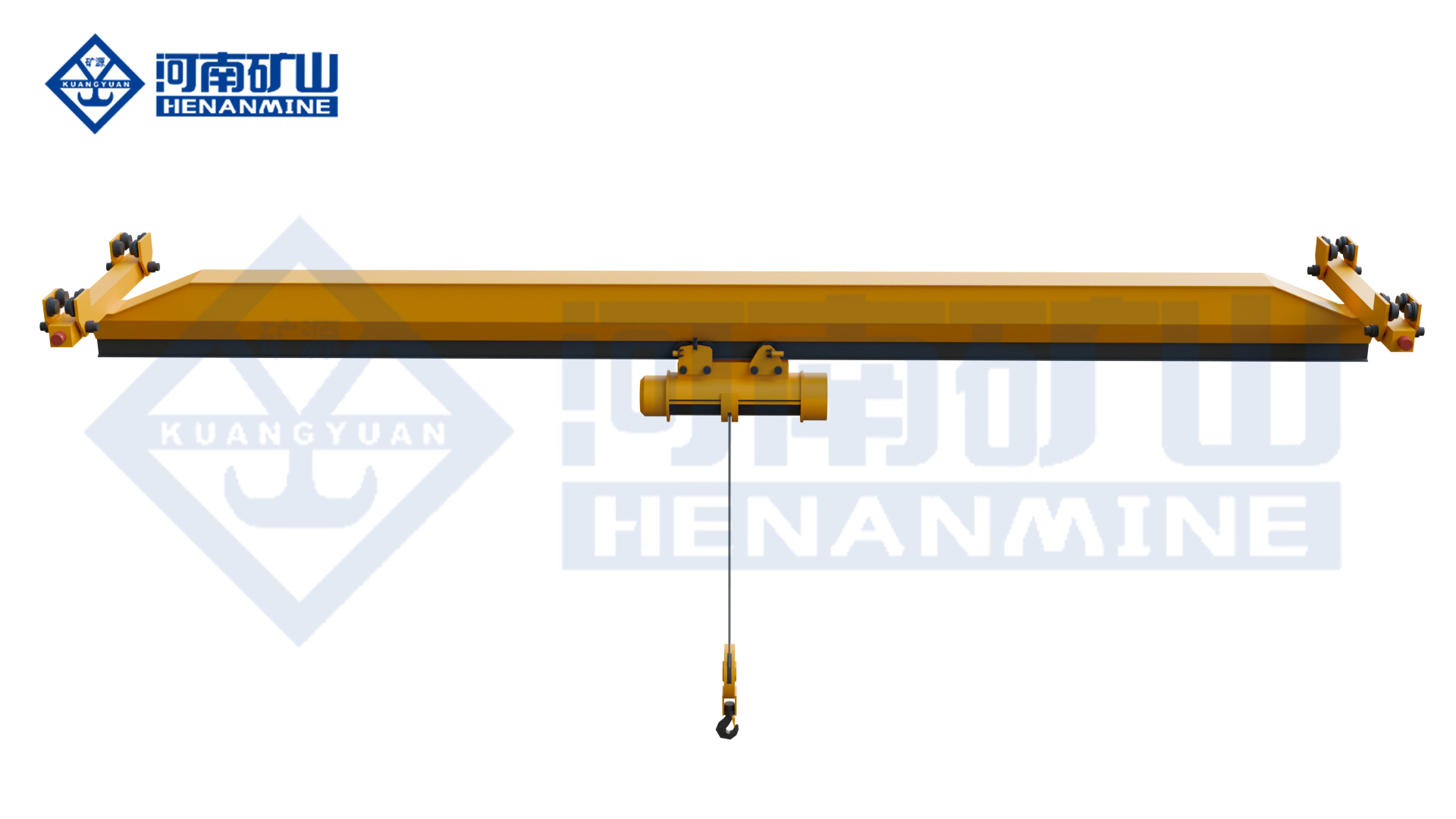
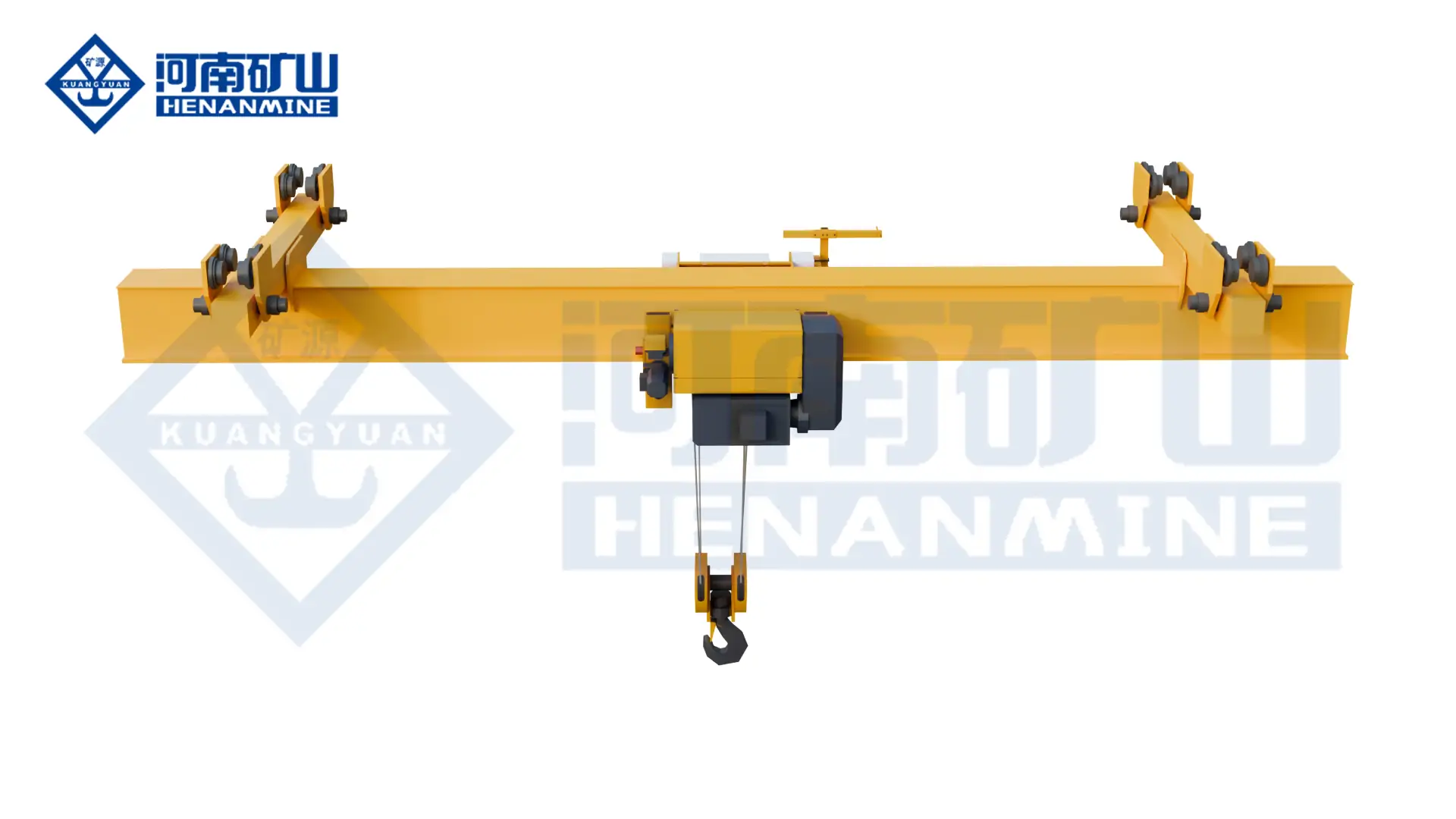
    Increase usable hook height in a restricted workshop envelope with a low-clearance single-girder arrangement. Match the hoist position, hook approach and structural clearances to the building.

    Lifting capacity1t – 10t
    Span7.5m – 28.5m
    Working classA3 – A5
    Technical specifications

    Define the total suspended load, duty and site conditions for your project.

    Technical specifications

    Check the load.
    Plan the configuration.

    Parameters and equipment options are matched to the application and confirmed in the technical proposal.

    Discuss your configuration
    Rated Lifting Capacity1t – 10t
    Span7.5m – 28.5m
    Effective Lifting Height3m – 18m
    Hoist TypeLow headroom electric hoist
    Drive DeviceNanjing special conical rotor motor / Three-in-one drive
    Working ClassA3 – A5
    Lifting Speed3.2m/min – 16m/min
    Crane Travel Speed20m/min – 30m/min
    Control ModeGround handle / Wireless remote control
    Power Supply380V/50Hz; 220V-660V/60Hz
    Protection LevelIP54
    Working Temperature-20℃ ~ 45℃

    Final parameters, dimensions, wheel loads and supply scope follow the approved project specification.

    Application & operation

    Matched to the handling task.

    Low-roof workshops

    Coordinate the lifting arrangement with the available height above the runway.

    Equipment access

    Reach required hook positions around machinery and fixed obstructions.

    Selection considerations

    Start with your operating conditions.

    01

    Load & lifting arrangement

    Specify suspended load and highest or lowest required hook position. Include lifting-appliance weight and the required lifting positions.

    02

    Site & available space

    Provide rail elevation, roof structure, clearances and hook approach. Coordinate the installation interfaces with the available site drawings.

    03

    Duty & control sequence

    Define hoisting duty, positioning speed and access for maintenance. Identify the required movements and control interfaces in the enquiry.

    Configuration comparison

    Compare related lifting arrangements.

    Crane arrangementHandling configuration
    Electric Single Beam Crane For Low ClearanceIncrease usable hook height in a restricted workshop envelope with a low-clearance single-girder arrangement. Match the hoist position, hook approach and structural clearances to the building.
    Side-Mounted Single-Girder CranePosition the electric hoist beside the single-girder bridge with an LDP side-mounted arrangement. Coordinate hook approach, available headroom and the work area around the building structure.
    European-Style Electric Single Girder CraneHandle workshop components with a European-style single-girder crane and electric hoist. Match the compact lifting arrangement and movement control to the building and operating cycle.
    Single-Girder Bridge CraneUse an LDA single-girder bridge and electric hoist for general workshop material handling. Select the lifting capacity, runway geometry and hoist duty around the building and load.

    Operating protection & lifecycle support

    Plan beyond the equipment.

    01

    Operating protection

    Confirm overload protection, travel limits, brakes, emergency controls and the required process interlocks for the declared lifting task.

    02

    Installation & commissioning

    Agree runway reactions, structural interfaces, electrical connections, assembly, inspection and commissioning responsibilities before delivery.

    03

    Inspection & spares

    Plan inspection and maintenance of hoist reeving, trolley clearances and end-carriage components. Agree service access, documentation and the required spare-parts scope.

    Questions before the order

    Clarify the details
    that shape the crane.

    What information is needed for a electric single beam crane for low clearance quotation?+

    Provide suspended load and highest or lowest required hook position; rail elevation, roof structure, clearances and hook approach; and hoisting duty, positioning speed and access for maintenance. Include drawings and the project destination when available.

    Which drawing is most useful for a low-clearance proposal?+

    Provide a cross-section showing the runway, roof structure, obstructions and required hook positions. The crane envelope and available lifting height are checked together.

    What installation and support scope should be agreed?+

    Agree runway reactions, structural interfaces, electrical connections, assembly, inspection and commissioning responsibilities before delivery. Specify the documentation, training and spare-parts support needed for the project.

    Related equipment

    Explore the alternatives.

    Let’s discuss your project

    The right crane starts
    with your lifting task.

    Share suspended load and highest or lowest required hook position, together with your site layout and operating cycle.
    info@hnksglobal.com
  • Dust-Proof Explosion-Proof Overhead Crane

    Dust-Proof Explosion-Proof Overhead Crane

    Overhead Cranes / Henan Mine Crane

    Dust-Proof Explosion-Proof Overhead Crane

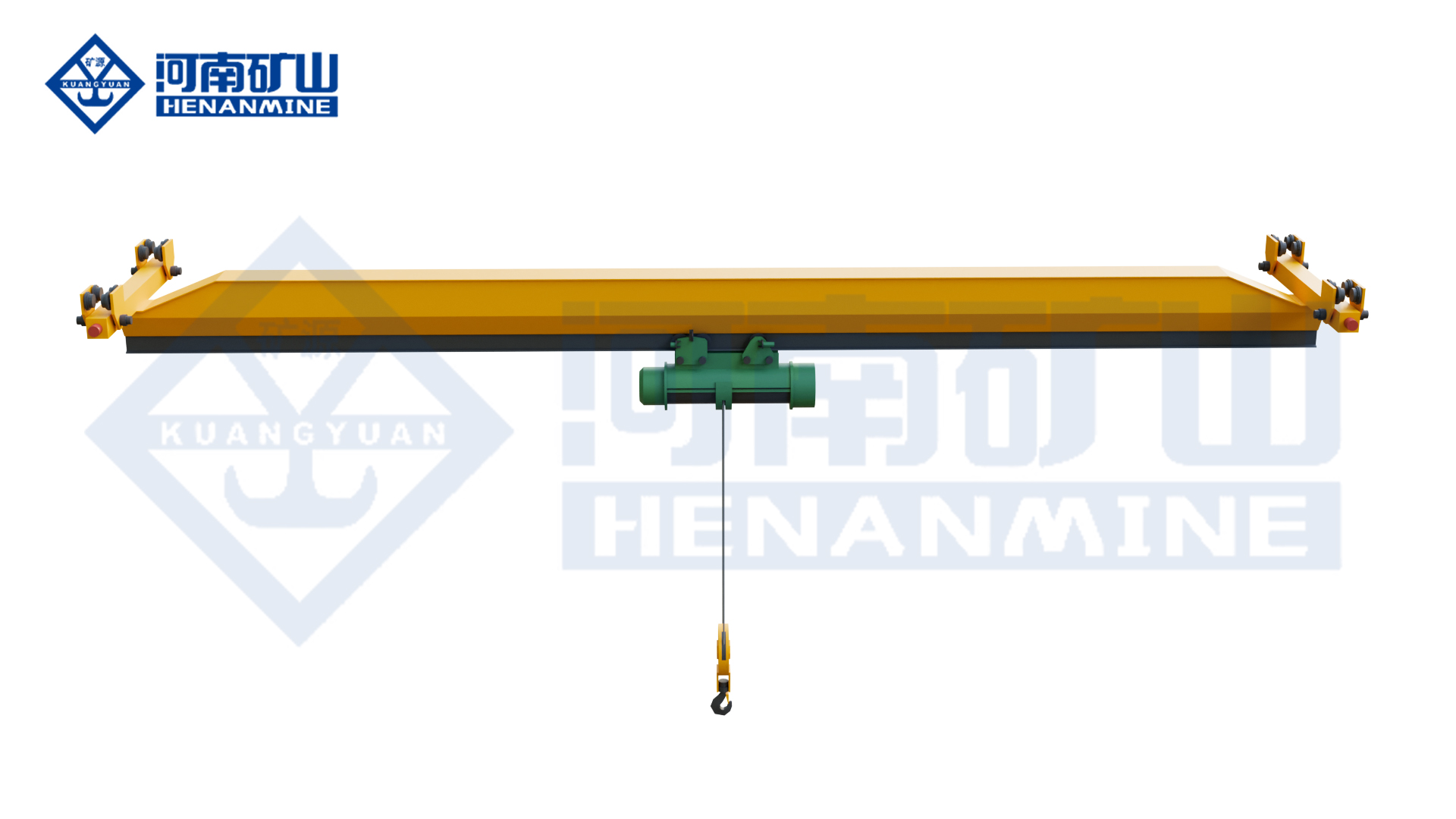
    Configure suspended lifting for a declared combustible-dust environment. Dust classification, surface-temperature limits and enclosure requirements form part of the crane and hoist specification.

    Lifting capacity1t – 10t
    Span7.5m – 28.5m
    Working classA3 – A5
    Technical specifications

    Define the total suspended load, duty and site conditions for your project.

    Technical specifications

    Check the load.
    Plan the configuration.

    Parameters and equipment options are matched to the application and confirmed in the technical proposal.

    Discuss your configuration
    Rated Lifting Capacity1t – 10t
    Basic Span7.5m – 28.5m
    Lifting Height6m – 20m
    Hazardous-area configurationMatched to the declared area classification, material group and temperature requirements
    Hoist TypeSpecial dust explosion-proof electric hoist
    Drive MotorDust explosion-proof type motor
    Working ClassA3 – A5
    Lifting Speed2m/min – 10m/min
    Crane Travel Speed15m/min – 25m/min
    Control ModeDust explosion-proof ground handle / wireless remote
    Power Supply380V/50Hz; 220V-660V/60Hz
    Protection LevelIP65
    Working Temperature-20℃ ~ 45℃
    Structural FeatureLightweight + modular assembly

    Final parameters, dimensions, wheel loads and supply scope follow the approved project specification.

    Application & operation

    Matched to the handling task.

    Dust-producing processes

    Provide lifting coverage around material transfer or process equipment.

    Classified production bays

    Coordinate the hoist, drives and operator controls with the declared dust environment.

    Selection considerations

    Start with your operating conditions.

    01

    Load & lifting arrangement

    Specify load, lifting accessory and dust characteristics. Include lifting-appliance weight and the required lifting positions.

    02

    Site & available space

    Provide suspended runway layout, clearances and cleaning access. Coordinate the installation interfaces with the available site drawings.

    03

    Duty & control sequence

    Define dust area classification, temperature requirements and operating cycle. Identify the required movements and control interfaces in the enquiry.

    Configuration comparison

    Compare related lifting arrangements.

    Crane arrangementHandling configuration
    Dust-Proof Explosion-Proof Overhead CraneConfigure suspended lifting for a declared combustible-dust environment. Dust classification, surface-temperature limits and enclosure requirements form part of the crane and hoist specification.
    Explosion-Proof Suspended Overhead CraneProvide suspended electric-hoist lifting within a declared hazardous area. Review the overhead support, lifting duty and protection of the hoist, travel drives and controls as one system.
    Explosion Proof Electric Hoist Bridge CraneUse an electric-hoist bridge arrangement for a declared hazardous area. The hoist, drives, controls and electrical installation are specified for the area classification and lifting duty.
    Clean Explosion Proof Bridge CraneCombine overhead lifting with the declared cleanliness and hazardous-area requirements. Specify particle-control expectations, process exposure and area classification for the complete lifting system.

    Operating protection & lifecycle support

    Plan beyond the equipment.

    01

    Operating protection

    Confirm overload protection, travel limits, brakes, emergency controls and the required process interlocks for the declared lifting task.

    02

    Installation & commissioning

    Agree runway reactions, structural interfaces, electrical connections, assembly, inspection and commissioning responsibilities before delivery.

    03

    Inspection & spares

    Plan inspection and maintenance of dust-exposed enclosures, sealing components and protected controls. Agree service access, documentation and the required spare-parts scope.

    Questions before the order

    Clarify the details
    that shape the crane.

    What information is needed for a dust-proof explosion-proof overhead crane quotation?+

    Provide load, lifting accessory and dust characteristics; suspended runway layout, clearances and cleaning access; and dust area classification, temperature requirements and operating cycle. Include drawings and the project destination when available.

    Is dust enclosure protection sufficient by itself?+

    Provide the combustible-dust classification and temperature requirements as well as ingress-protection needs. The complete equipment configuration must be reviewed against the declared application.

    What installation and support scope should be agreed?+

    Agree runway reactions, structural interfaces, electrical connections, assembly, inspection and commissioning responsibilities before delivery. Specify the documentation, training and spare-parts support needed for the project.

    Related equipment

    Explore the alternatives.

    Let’s discuss your project

    The right crane starts
    with your lifting task.

    Share load, lifting accessory and dust characteristics, together with your site layout and operating cycle.
    info@hnksglobal.com