Engineering · Manufacturing · Project support
info@hnksglobal.comWhatsApp +86 18836207779 ↗

作者: YUWEI, YUWEI

  • Steel Warehouse Crane Systems

    Steel Warehouse Crane Systems

    Steel Warehouse Crane Systems

    Henan Mine Crane · Steel Storage and Distribution Systems

    Steel Warehouse Crane Systems

    Overhead, gantry, magnetic, rotating-beam and automated crane systems for receiving, storing, locating, retrieving and dispatching steel plate, profiles, bars, pipe, coils, billets and finished products.

    Henan Mine Crane configures each steel warehouse crane from the complete material master, gross suspended load, storage geometry, throughput, lifting attachment, building or stockyard interface, control level, safety strategy and required data exchange.

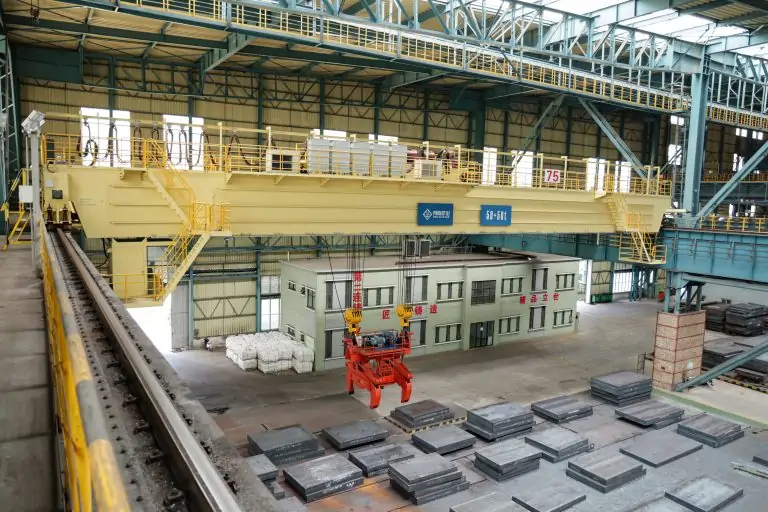
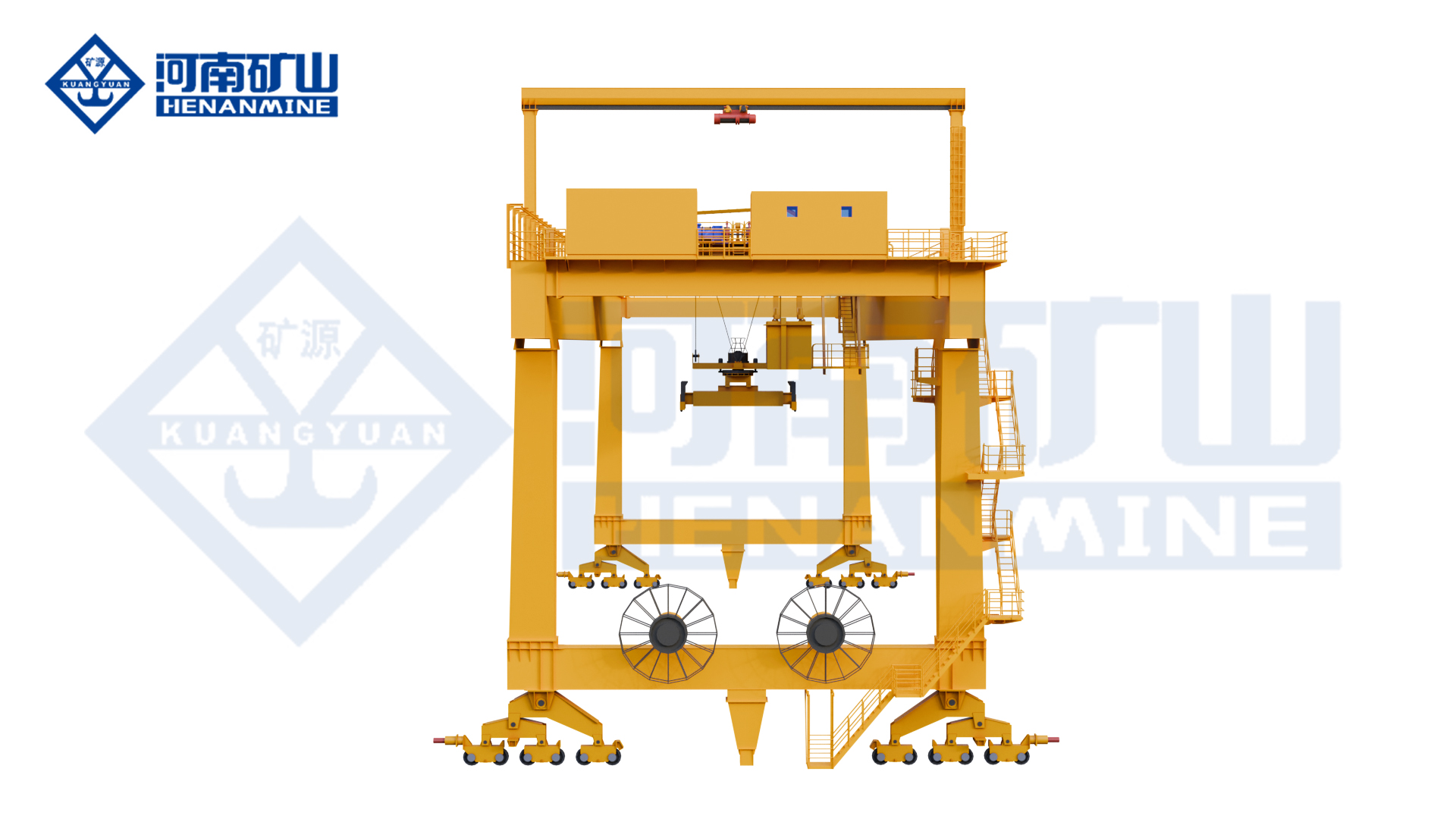
    automated steel warehouse crane above organized steel plate storage positions
    A steel warehouse crane is engineered around the complete storage and dispatch process, including load identification, stack allocation, controlled placement and inventory traceability.

    MATERIALS

    Plate, Profiles, Bars, Pipe & Coils

    CRANE TYPES

    Bridge, Magnetic, Rotating & Gantry

    CONTROL LEVELS

    Manual, Assisted & Automatic

    PROJECT BASIS

    Load, Flow, Layout, Duty & Data

    What Is a Steel Warehouse Crane?

    A steel warehouse crane is an application-specific material-handling system that transfers steel between receiving, inspection, storage, production supply, order picking and dispatch. Unlike a general workshop crane selected mainly by capacity and span, a warehouse system must also control long-load orientation, stack access, material identity, storage location, retrieval sequence and the interface with trucks, rail wagons, conveyors or processing lines.

    The term does not describe one fixed machine. A light indoor warehouse may use a compact single-girder overhead crane. Intensive plate storage may use a double-girder electromagnetic crane with a rotating beam. Long nonmagnetic or coated products may require two hooks, two trolleys or a purpose-designed spreader. Outdoor stockyards commonly use a gantry crane with wind protection and ground-supported rails.

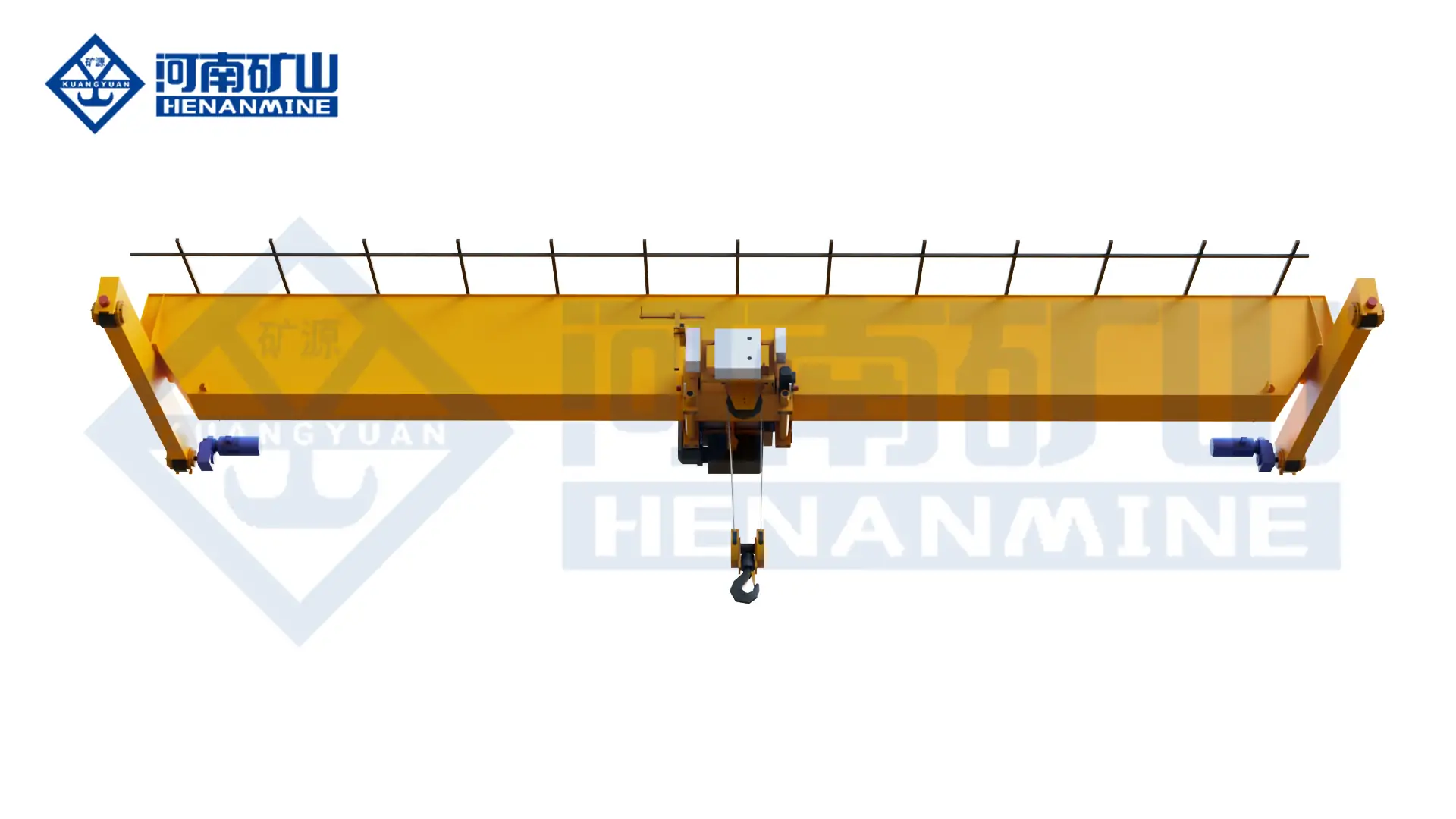
    Henan Mine Crane combines its single-girder bridge crane, double-girder bridge crane, magnetic lifting, double-trolley and gantry crane platforms with warehouse positioning, sensing and data functions selected for the declared process.

    Steel Warehouse Material Flow

    Crane coverage and storage logic should follow the complete route of every approved material family. Omitting an interface normally creates extra floor handling, unidentified stock or an unsafe manual recovery step.

    1. Receiving and Unloading

    Unload trucks or rail wagons within the permitted vehicle envelope, verify gross load and product identity, and place incoming steel in inspection or assigned buffer positions.

    2. Identification and Inspection

    Confirm material ID, heat number, grade, dimensions, weight, surface condition and release status before the storage location is recorded.

    3. Storage Allocation

    Assign a stack, cassette, rack or floor cell from product dimensions, grade, turnover, dunnage, stack-height limits and retrieval priority.

    4. Controlled Placement

    Position the load without striking adjacent stacks, racks, columns, vehicles or people, while maintaining required orientation and layer separation.

    5. Retrieval and Production Supply

    Retrieve the specified item or bundle, manage reshuffling where required and deliver it to cutting, fabrication or order-staging positions.

    6. Dispatch and Reconciliation

    Stage and load the shipping order, confirm the final vehicle handoff and update inventory only after the physical movement is completed and verified.
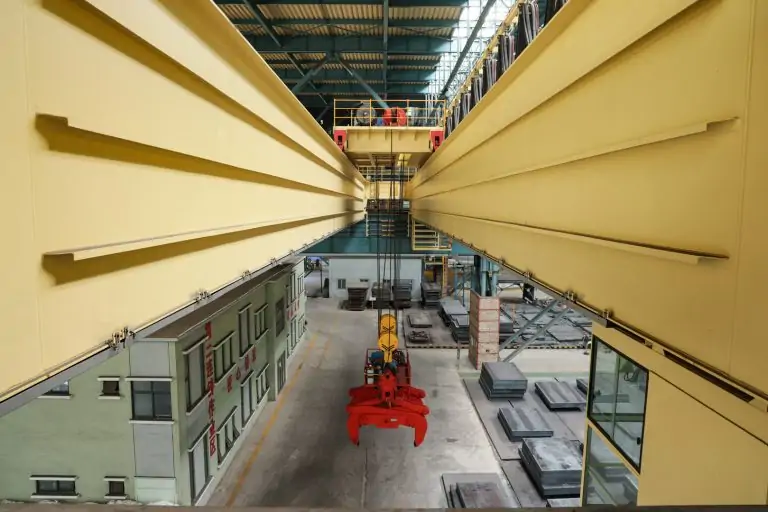
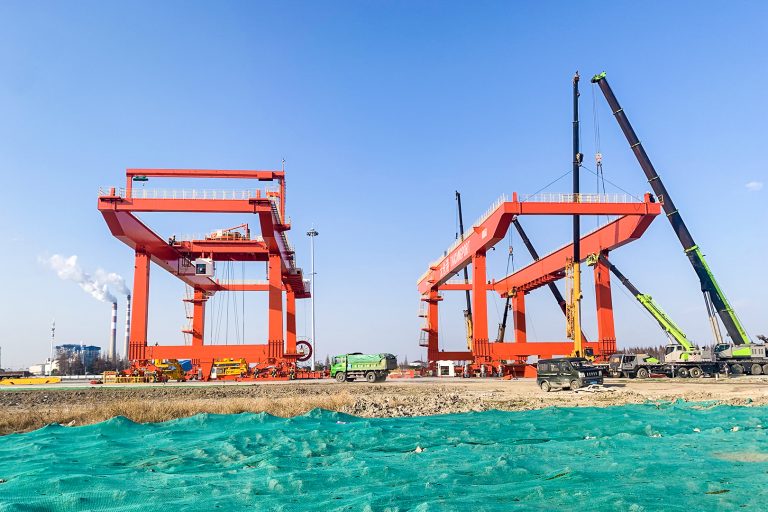
    steel plate storage warehouse served by an overhead handling system
    Warehouse design coordinates crane travel, storage cells, inbound and outbound bays, process interfaces and inventory records.

    Steel Warehouse Crane System Architecture

    1. Crane structure and runway: transfer vertical, longitudinal, transverse and dynamic reactions to the building or foundations while providing full required coverage.
    2. Hoist, trolley and travel drives: provide the declared capacity, lift, speed range, positioning control, braking and duty classification.
    3. Load attachment: connects to plate, profiles, pipe, coils or bundles through a magnet, rotating magnetic beam, hook, spreader, clamp, tong, C-hook or custom device.
    4. Sensing and protection: may include load, position, height-profile, skew, anti-collision, obstacle, access-gate, vehicle-presence and restricted-zone functions.
    5. Control system: coordinates pendant, radio, cabin, assisted or automatic operation, including mode selection, safe stopping and manual recovery.
    6. Warehouse data interface: exchanges material identity, location, movement order, completion status, alarms and reconciliation records with WMS, MES or ERP systems.
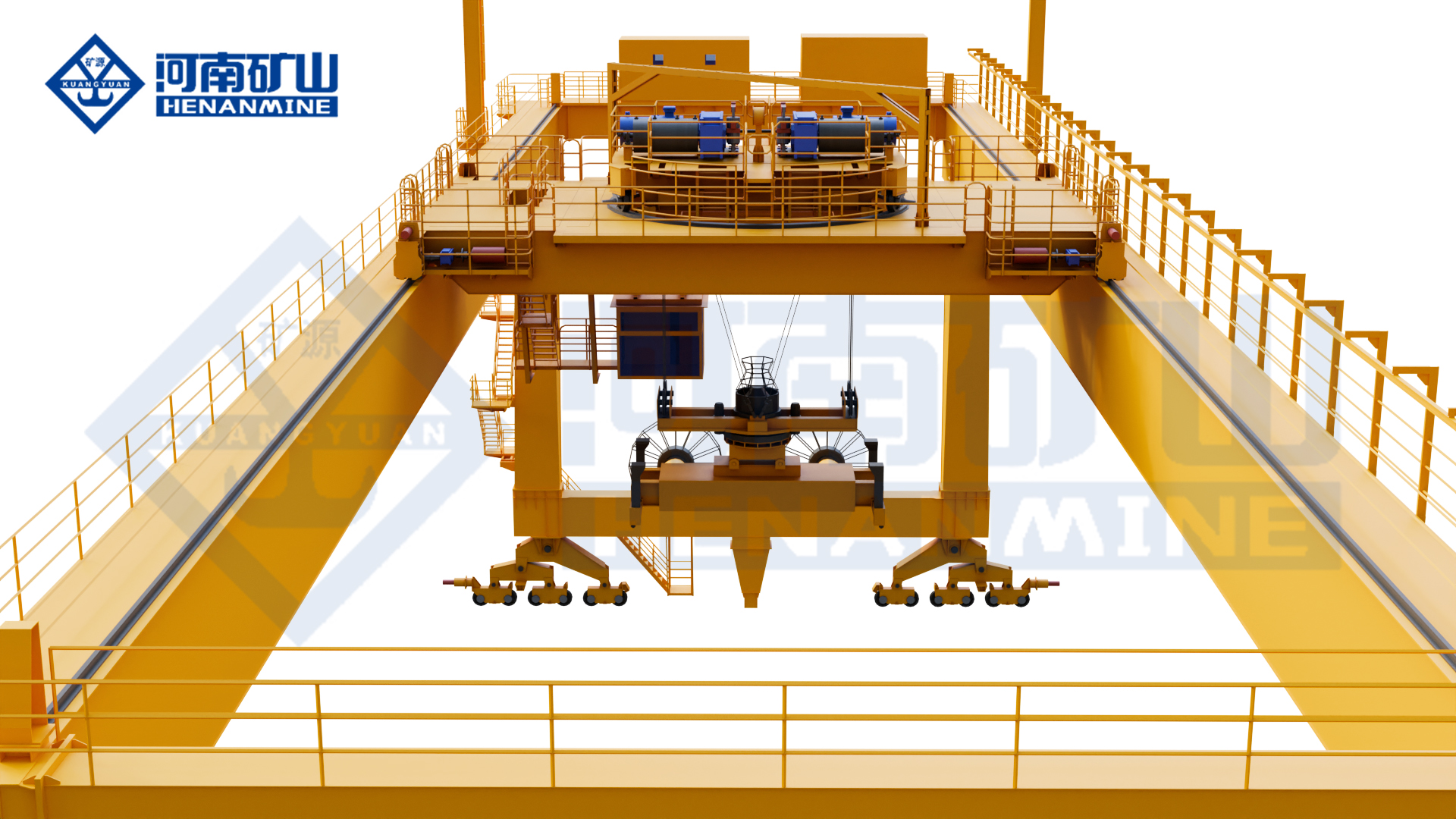
    warehouse crane machinery and controls above steel storage stacks
    The mechanical crane, lifting attachment, sensing, controls, warehouse data and civil interfaces must be specified as one operating system.

    Rated-load basis: the maximum gross suspended load includes the steel product, lifting magnet, magnetic or mechanical beam, clamps, slings, shackles, C-hook, hook block and every suspended accessory. Eccentric loading, unequal pickup, retained moisture, stacked layers and any permitted rotation or load-turning case also require evaluation.

    Steel Warehouse Crane Selection Considerations

    Selection starts with the full material and movement database. Capacity alone cannot establish attachment suitability, long-load stability, storage density, cycle performance or structural reactions.

    Material Master

    Mass, length, width, thickness, diameter, section, center of gravity, ferromagnetic response, surface, coating, temperature, stiffness, nesting and permitted pickup points.

    Throughput and Duty

    Inbound and outbound tonnes, moves per hour, starts, average and peak travel, shifts, annual hours, load spectrum, reshuffle ratio, availability target and maintenance window.

    Storage Geometry

    Stack, rack or cassette dimensions; stack height; dunnage; aisle; approach clearance; floor loading; reserved zones; vehicle bays and future expansion.

    Attachment and Orientation

    Magnetic eligibility, single- or multi-layer lift, required rotation, hook spacing, clamp locations, coil axis, pipe support, allowable deflection and changeover method.

    Building or Stockyard

    Span, runway length and elevation, lift, headroom, end and side approaches, rail and beam data, wheel-load limits, foundations, wind, drainage and installation access.

    Control and Acceptance

    Manual, assisted or automatic mode; warehouse interface; positioning and cycle criteria; exception recovery; safety functions; standards; inspection route and measurable handover tests.

    Steel Warehouse Crane Configurations Compared

    Crane configuration follows the material family, operating intensity, orientation requirement, building interface and attachment. Automation is a control and data layer that can be applied to several structural configurations; it is not a substitute for correct mechanical selection.

    Configuration Typical Application Principal Advantages Points Requiring Definition
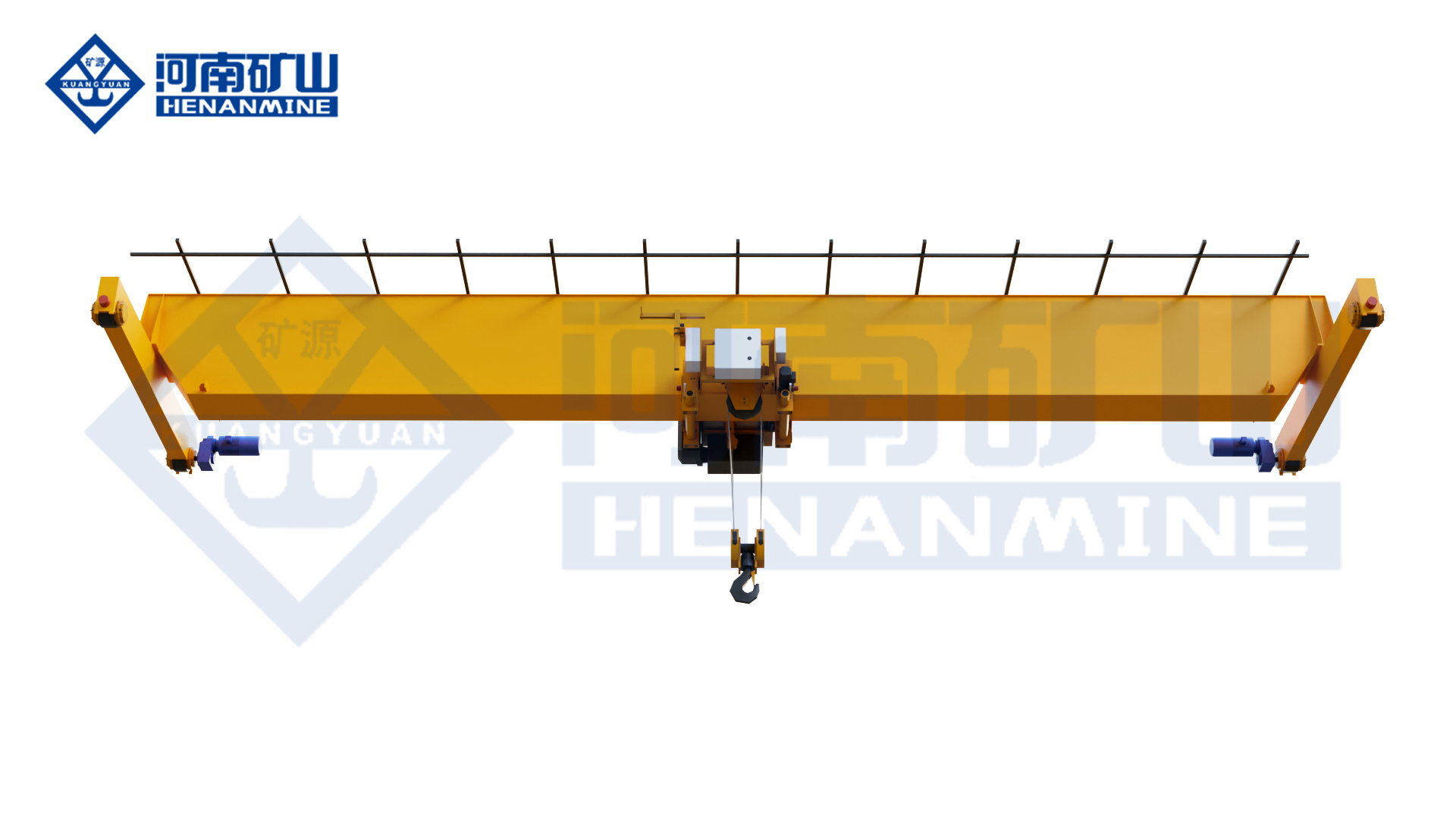
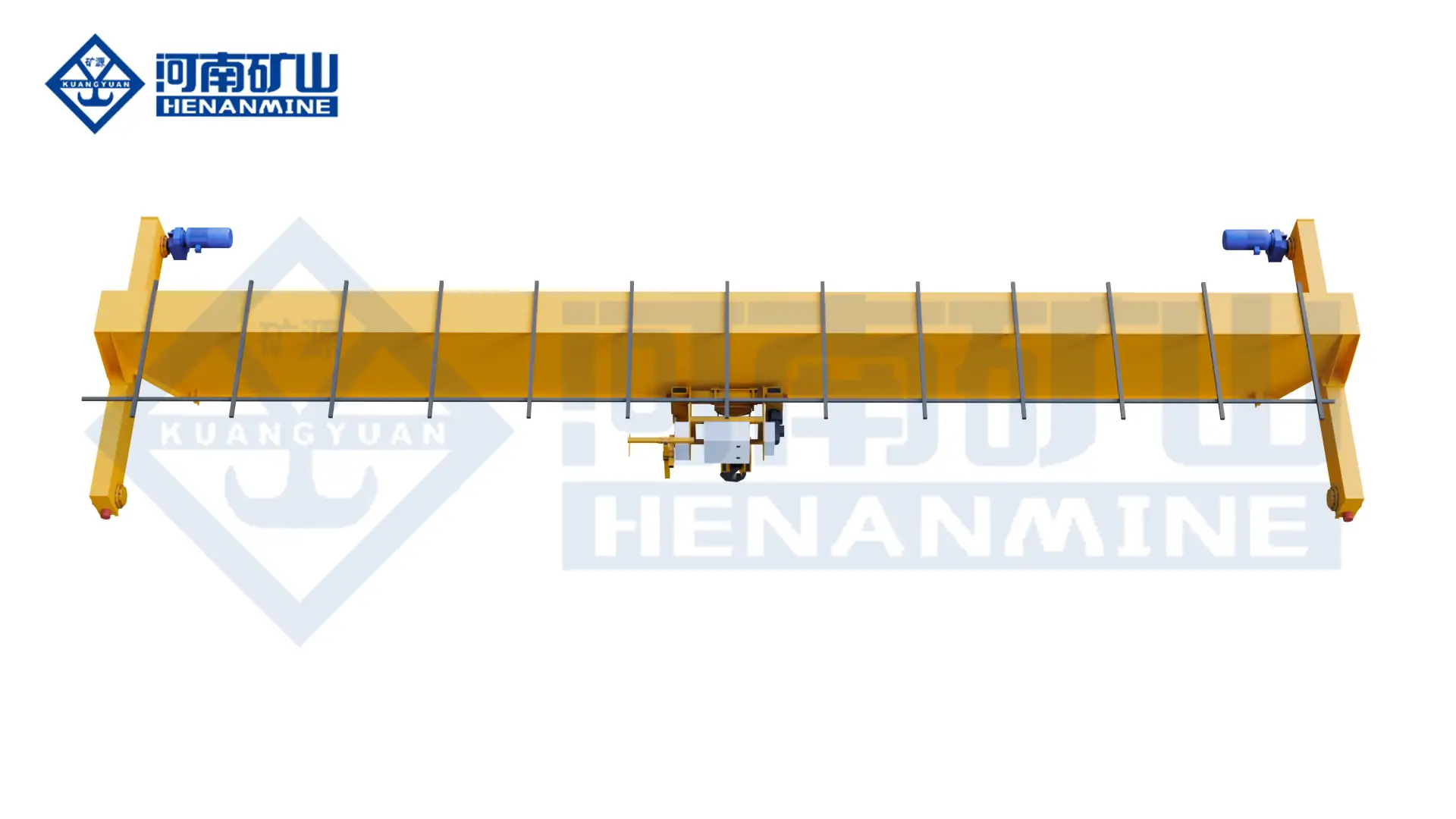
    Single-Girder Overhead Crane General indoor hook handling at lighter capacity and moderate duty. Compact structure, lower self-weight and efficient use of workshop space. Headroom, hook approach, hoist duty, long-load control and building reactions.
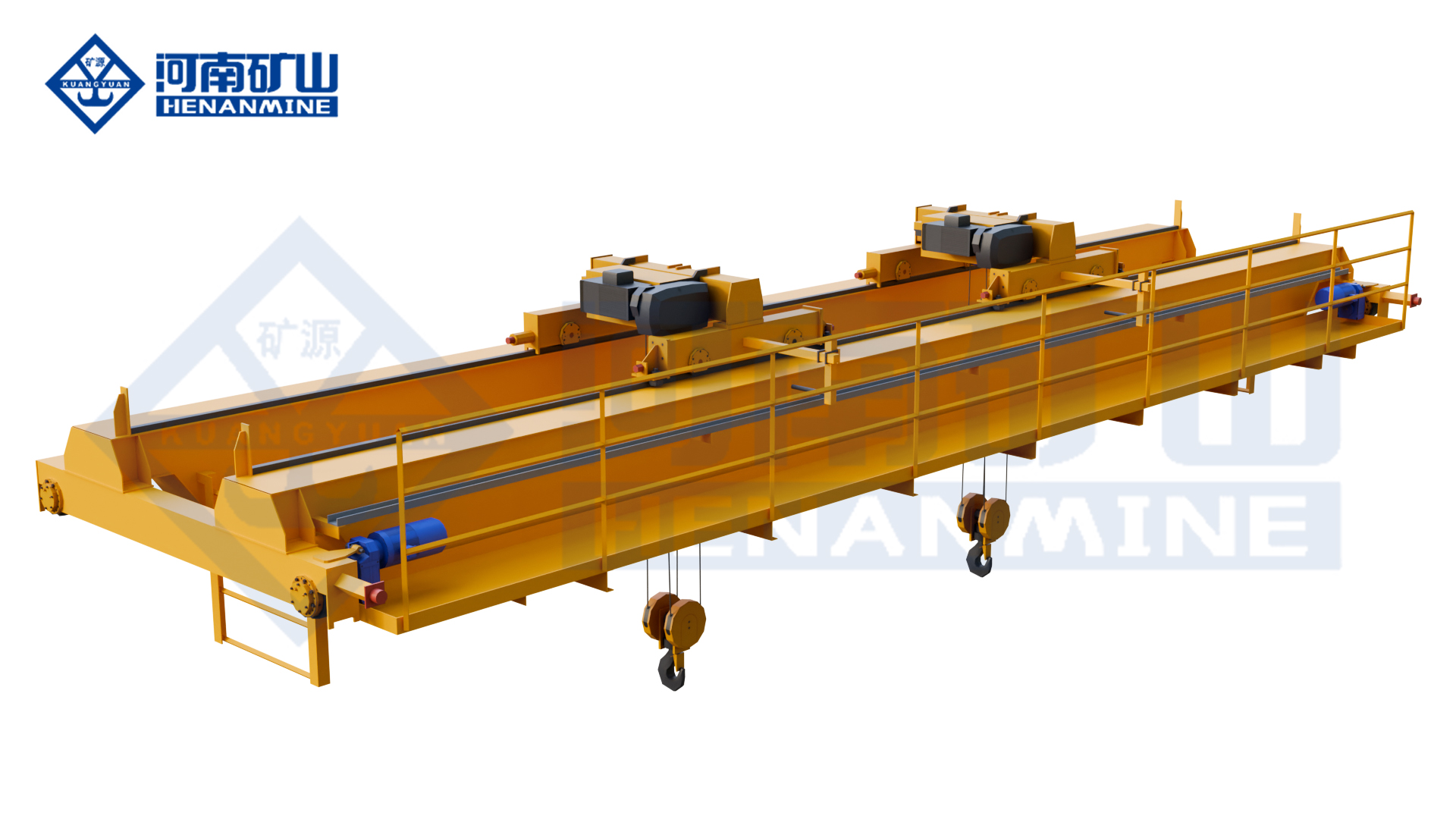
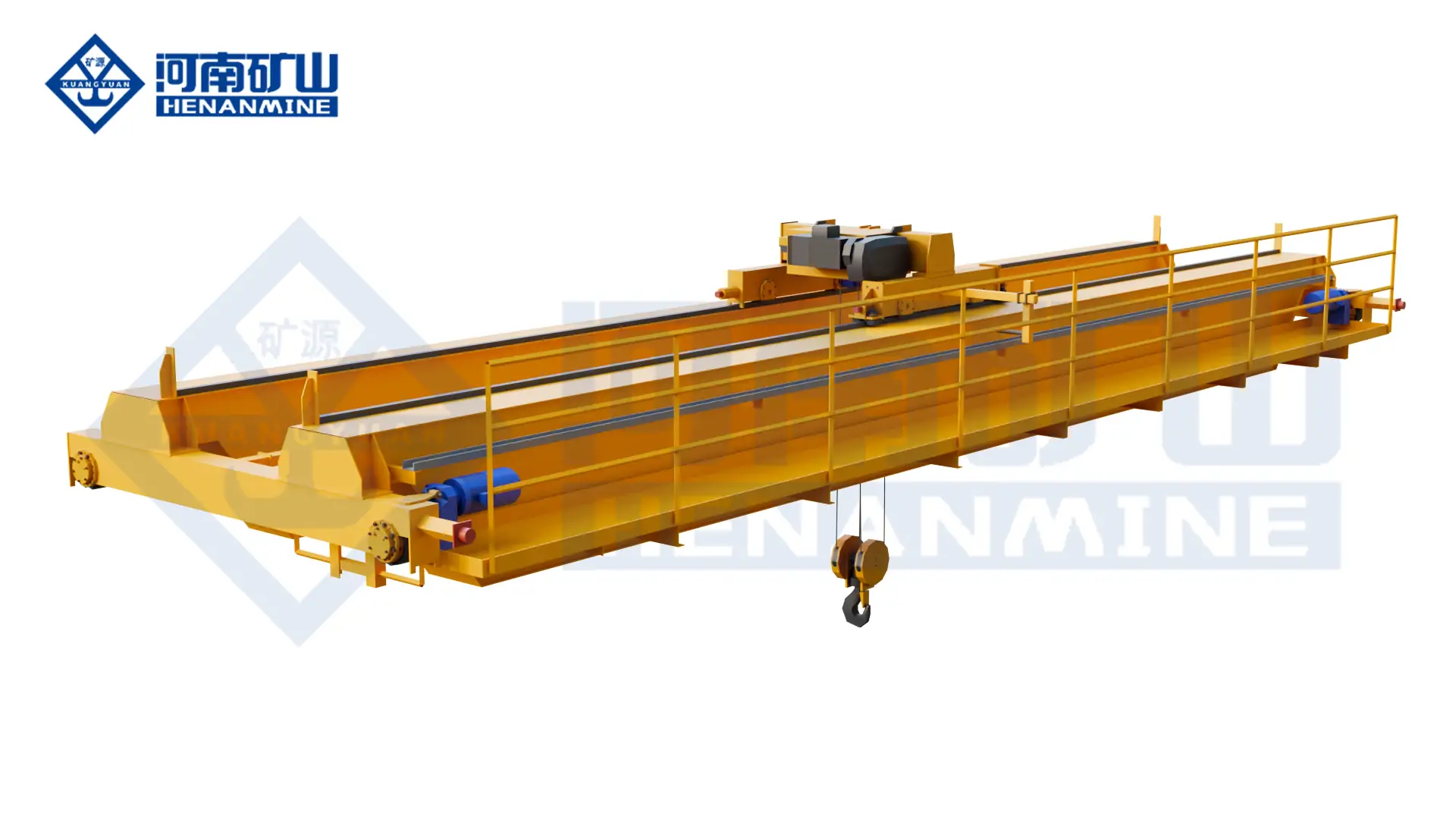
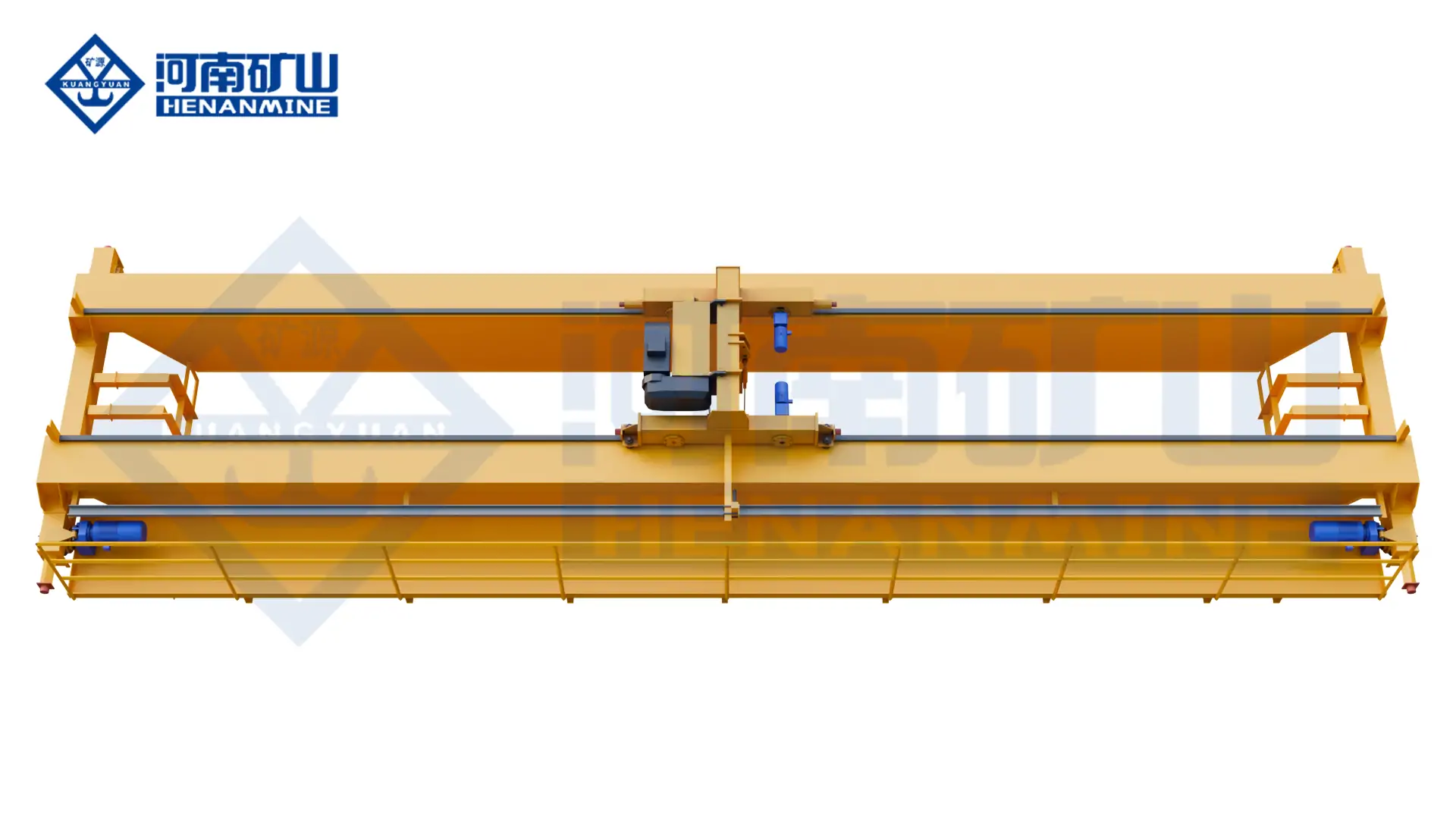
    Double-Girder Overhead Crane Heavier loads, intensive service, longer spans or process attachments. Higher structural capability and greater flexibility for trolleys, platforms and controls. Wheel loads, access, maintenance clearances, attachment mass and required duty class.
    Electromagnetic Bridge Crane Repetitive handling of validated ferromagnetic plate, profiles or billets without load rotation. Fast pickup without manual sling placement and efficient handling of approved product families. Magnetic test basis, air gap, layer control, backup power, retained-load response and exclusion zone.
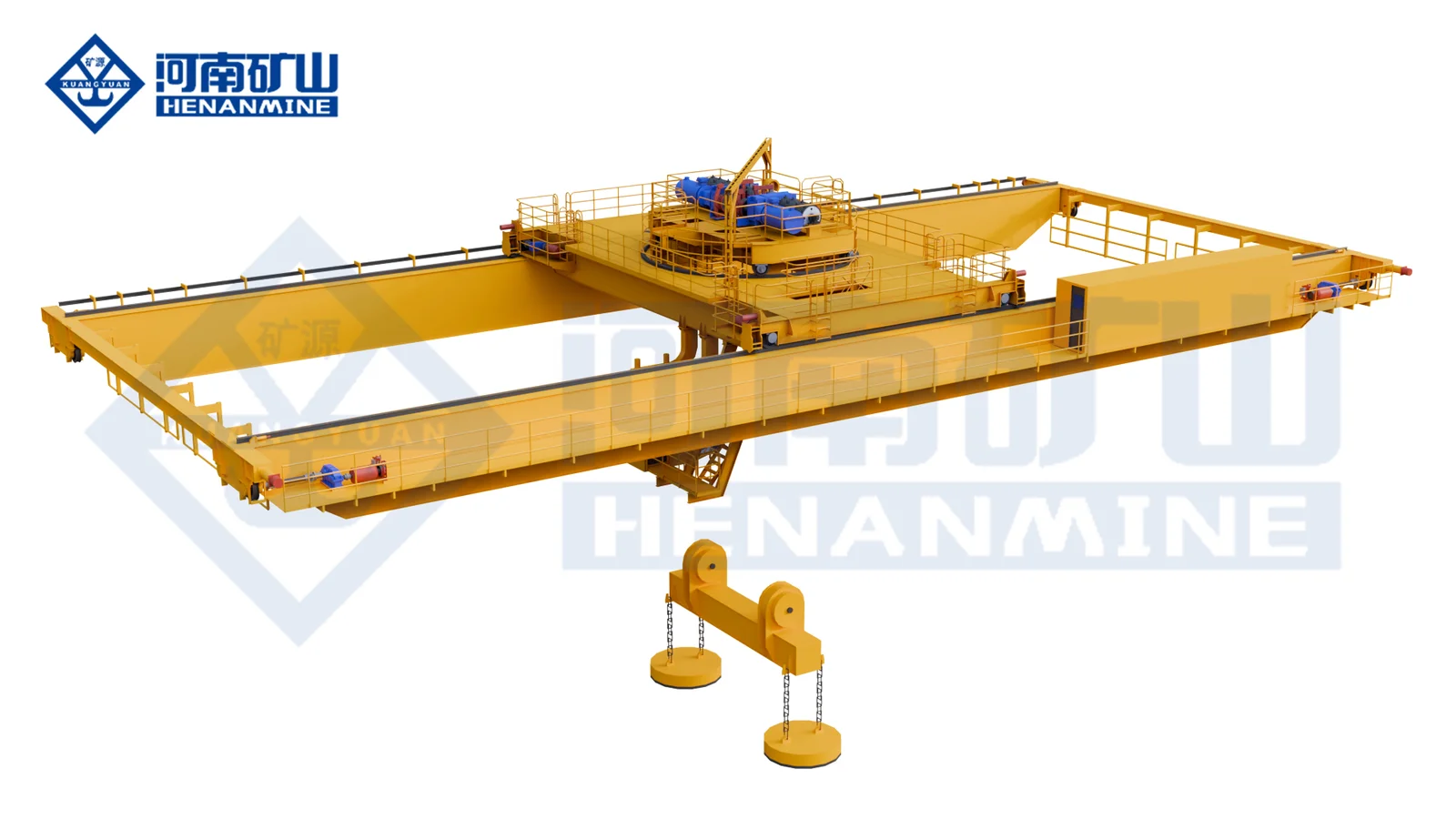
    Rotating Magnetic-Beam Crane Plate or long steel that must rotate between vehicle, storage and process orientations. Combines magnetic pickup with controlled orientation and dense storage access. Rotation envelope, load overhang, cable management, stack clearance and collision zoning.
    Double-Trolley or Two-Hook Crane Long, flexible, nonmagnetic, coated or mixed steel products requiring two support points. Variable support spacing and mechanical handling across diverse load families. Capacity split, load sharing, synchronization, skew, permitted independent motion and lift plan.
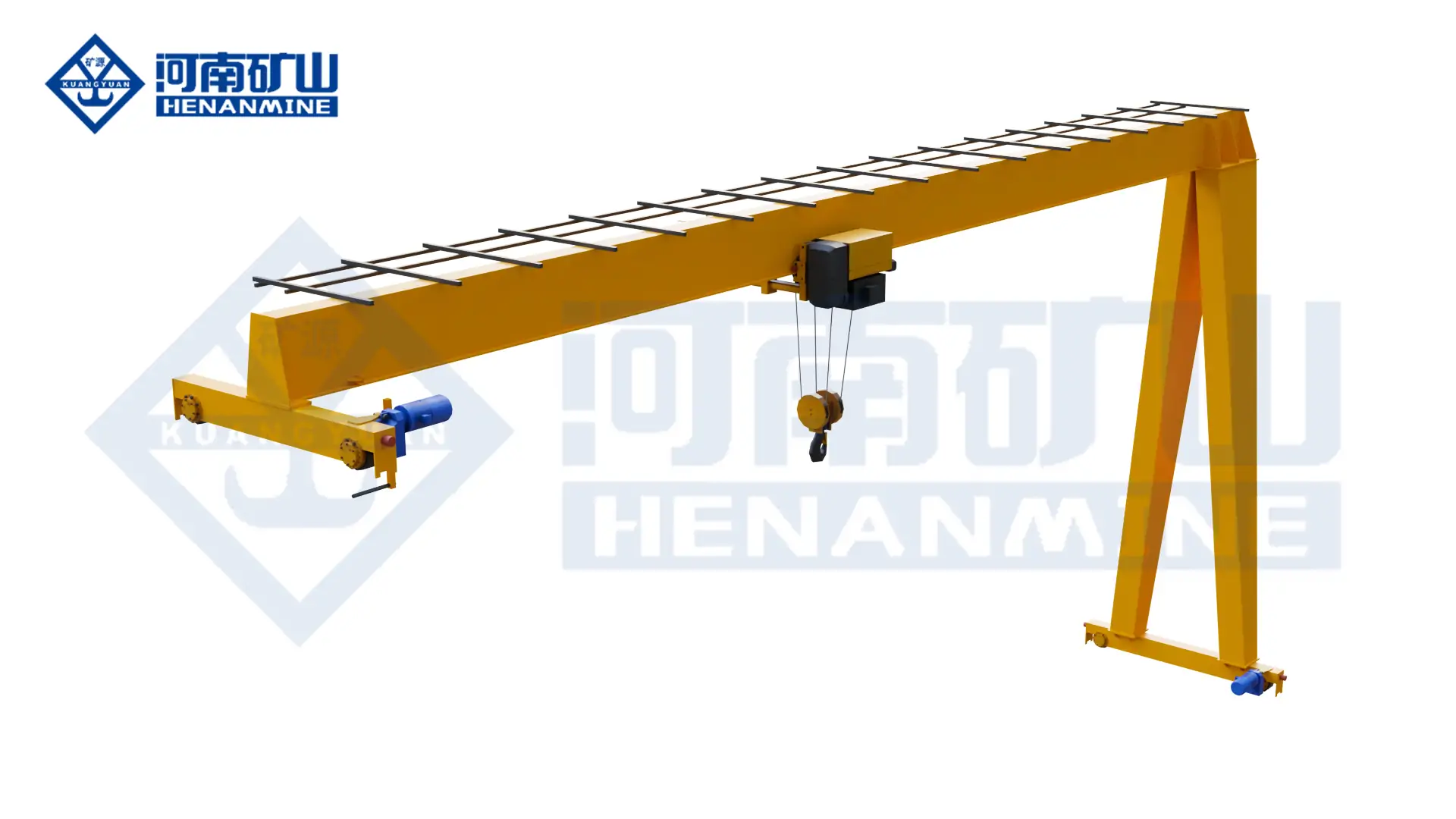
    Gantry Crane Outdoor steel stockyards, loading areas or buildings without a suitable runway structure. Ground-supported coverage with optional cantilevers for vehicle lanes. Wind actions, storm anchoring, rail and foundation design, drainage, travel path and outdoor protection.

    Mixed inventory: warehouses storing plate, profiles, coils and finished fabrications may require more than one attachment or more than one crane. Changeover time, attachment storage, interlocks and rated-load changes must be included in the operating concept.

    Published Crane Platform Ranges

    The following Henan Mine Crane product-page ranges provide an initial platform reference. They are not a universal warehouse specification. Final capacity, span, lift, duty, speeds and attachment are selected from the actual load case and operating cycle.

    Published Platform Published Capacity Published Span Published Lift Published Class
    European-Style Electric Single-Girder Crane 1–10 t 7.5–28.5 m 6–30 m A3–A5
    Intelligent Electric Hoist Overhead Crane 1–32 t 7.5–31.5 m 6–30 m A5–A6
    Electromagnetic Bridge Crane 5–32 t, including magnet weight 10.5–31.5 m 6–30 m A1–A8 published range; duty selected by project
    Upper Rotating Magnetic Overhead Crane 5+5 to 25+25 t 10.5–31.5 m 6–20 m A6–A7
    Electromagnetic Hanging Crane 5–50 t 10.5–31.5 m 6–20 m A6–A7
    Double-Trolley Electric Hoist Overhead Crane 1+1 to 32+32 t 7.5–31.5 m 6–30 m A5–A6
    Single-Girder Gantry Crane 1–32 t 6–35 m 4–20 m A3–A5

    Lifting Attachments for Warehouse Steel

    No single attachment safely handles every steel product. The approved attachment schedule should identify each load family, pickup method, rated capacity, inspection requirement, prohibited condition and storage position.

    Attachment Common Warehouse Loads Engineering Checks
    Hooks, Slings and Spreader Beam Mixed products, bundles, fabricated steel and approved lifting points. Sling angle, edge protection, balance, support spacing, bend radius and manual access.
    Plate Clamps Single plate within the clamp’s approved thickness, hardness, orientation and surface range. Clamp model, minimum load, jaw condition, plate edge, number of clamps and permitted lifting direction.
    Magnet or Magnetic Beam Validated ferromagnetic plate, billet, profiles and selected bundles. Material response, thickness, flatness, air gap, coating, scale, temperature, layer control and retained-load plan.
    Rotating Magnetic Beam Long plate and profiles requiring controlled horizontal orientation. Overhang, rotation radius, cable routing, adjacent stacks, skew and travel interlocks.
    C-Hook or Coil Tong Eye-horizontal or eye-vertical coils within the specified ID, OD and width range. Coil orientation, telescoping risk, counterweight, protection pads, clearance and attachment self-weight.
    Pipe Beam, Cradle or Tongs Pipe, tube and round stock in approved single pieces or bundles. Rolling restraint, bundle integrity, support distance, coating protection and end clearance.
    upper rotating magnetic overhead crane for long steel storage
    A rotating magnetic system is considered when load orientation changes between incoming transport, storage lanes and downstream equipment.
    double trolley overhead crane for long steel warehouse loads
    Two lifting points can support long products when magnetic handling is unsuitable or when adjustable hook spacing is required.

    Magnetic Load Integrity and Power-Loss Planning

    Electromagnetic handling is suitable only after the actual load range is validated. Magnetic grade, plate thickness, contact area, flatness, rust, mill scale, paint, protective film, oil, temperature and gaps between stacked products can all change holding force. A successful pickup of one plate does not validate another thickness, surface or multi-layer condition.

    • Define every approved material and surface condition, including minimum thickness and maximum air gap.
    • State whether single-sheet selection, multiple-sheet lifting or bundle lifting is permitted.
    • Include magnet, beam and cable-reel mass in crane capacity and structural reactions.
    • Specify power-loss behavior, retained-load indication, backup-energy duration and the emergency landing process.
    • Segregate suspended-load routes from people and control access to loading, storage and recovery zones.
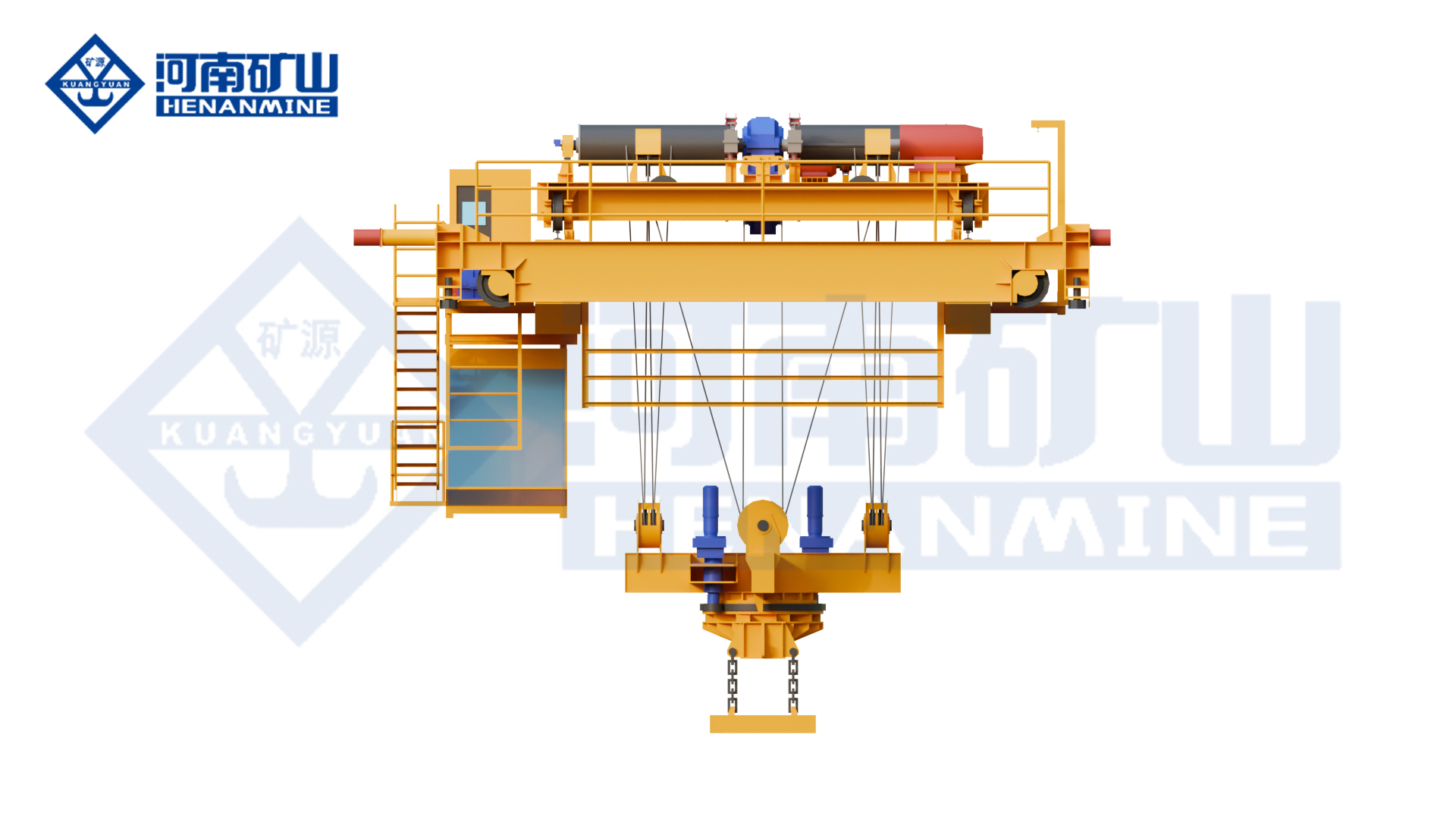
    electromagnetic hanging beam crane handling long steel material
    Magnet selection and emergency response are based on tested load families, not nominal steel weight alone.

    Manual, Assisted and Automated Warehouse Operation

    Operating Level Movement Control Inventory Control Application Conditions
    Manual Operator controls all crane motions by pendant, radio or cabin. Location updates are manual or scanner-assisted. Variable work, lower movement volume and clear visibility with disciplined procedures.
    Assisted Operator initiates the move; positioning, anti-sway or protected approach functions assist execution. Movement orders and confirmations exchange with warehouse software. Repeatable lanes with exceptions that still require frequent operator judgment.
    Automatic PLC or supervisory control executes validated routes, pickup, transfer and placement sequences. WMS, MES or ERP issues tasks and receives location, completion and exception records. Defined inventory, controlled geometry, measurable interfaces and formal exception recovery.

    Automation Data and Acceptance Criteria

    A warehouse movement record normally carries material ID, heat number, grade, dimensions, weight, storage cell, stack layer, status, order number and time stamps. The functional design also defines duplicate IDs, missing labels, mismatched weight, occupied positions, blocked routes, sensor failure, communication loss and manual recovery.

    Contract acceptance should use measurable criteria such as representative-load cycle time, positioning tolerance, correct item and location confirmation, interface response, alarm handling, safe-state behavior, recovery time and sustained trial performance. Values are established for the specific layout and process rather than assumed from a generic crane.
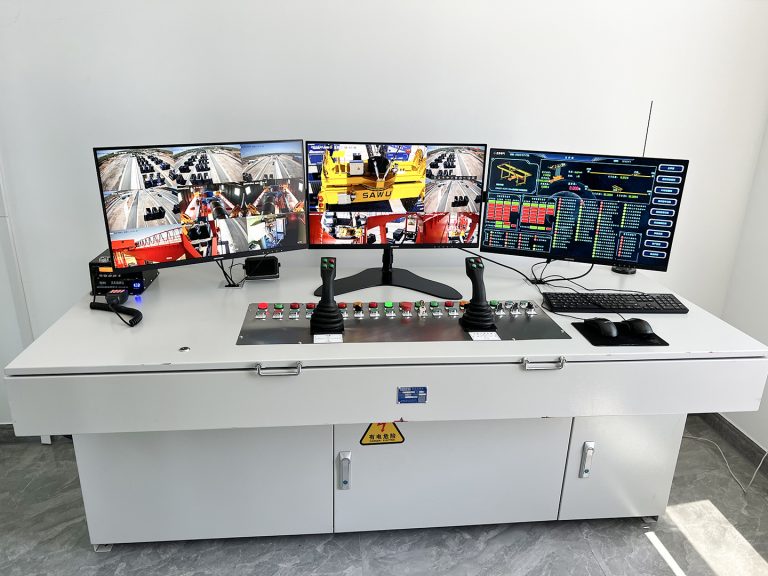
    automated crane monitoring and steel warehouse control interface
    Automation scope includes data quality, task execution, safety states, exception handling and controlled manual recovery.

    Warehouse Layout, Runway and Civil Interfaces

    Coverage and Approaches

    Confirm rail-center span, runway length, hook and attachment approaches, loading-bay reach, cantilever coverage and positions inaccessible to the selected attachment.

    Vertical Envelope

    Coordinate rail elevation, crane depth, upper clearance, hook lift, beam or magnet depth, product height, stack height, vehicle height and maintenance access.

    Structural Reactions

    Provide maximum and minimum wheel loads, lateral and longitudinal forces, buffer loads, fatigue basis and rail tolerances for building, runway or foundation verification.

    Vehicle and People Separation

    Define loading zones, pedestrian routes, gates, barriers, warning devices, travel interlocks and the process for driver positioning during crane operation.

    Stack and Floor Design

    Confirm floor bearing, rack or dunnage capacity, stack stability, load distribution, drainage and the consequences of placing products in an incorrect cell.

    Outdoor Conditions

    For stockyards, specify operating and parked wind, storm anchoring, lightning, precipitation, corrosion, temperature, rail drainage and travel-path maintenance.
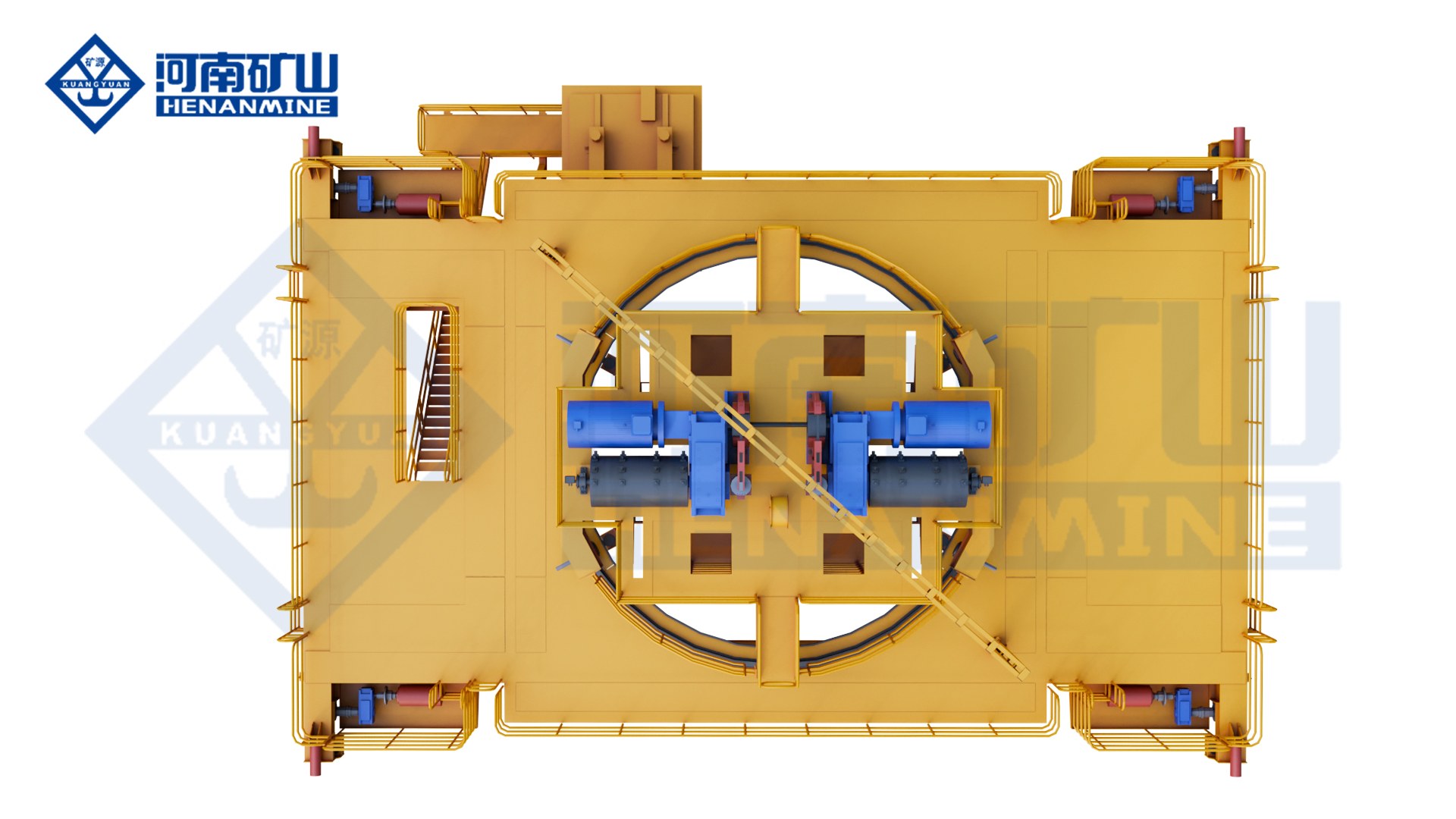
    long-span warehouse overhead crane with rotating magnetic lifting beam
    Attachment size, rotation envelope and stack layout often govern warehouse clearances more strongly than the hook block alone.

    Safety, Standards and Acceptance

    The project specification should state the governing jurisdiction, standards and editions. A common basis may include ISO 4301 for classification; EN 13001 and EN 15011 for crane design; EN 13155 for non-fixed load lifting attachments; or CMAA 70 with the applicable ASME B30.2, ASME B30.20 and ASME BTH-1 requirements. Electrical equipment may reference IEC 60204-32. Safety-related control design for automated functions may use ISO 13849-1 or IEC 62061 where applicable. Local statutory requirements and the signed contract remain controlling.

    Design Review

    Approve load cases, classification, structural and mechanism calculations, wheel loads, attachment logic, electrical architecture, safety functions and interface responsibility.

    Factory Verification

    Verify manufacturing records, material traceability, weld and nondestructive inspection scope, mechanism operation, control logic, alarms and documentation before shipment.

    Site Acceptance

    Check runway geometry, motions, brakes, limits, overload protection, collision functions, attachment performance, representative loads, proof load and agreed cycle scenarios.

    Operational Readiness

    Complete training, inspections, rescue and recovery procedures, attachment registers, preventive maintenance, critical spares, backup and restore, and change-control records.

    Operational boundary: no person should stand or pass under a suspended steel load. Automated operation requires controlled access, defined safe states and a documented method for removing or landing a retained load after a fault.

    Published Steel Plate Warehouse Automation Reference

    Henan Mine Crane has published a specialized crane reference for a steel plate storage facility serving steel-structure, bridge and high-rise fabrication. The official project account states that full-function verification was performed on a 1,200 t crane test platform before delivery to a major steel-structure company.

    Published project data identifies a 5–50 t structural range with span and lift customized to the warehouse. The delivered system reportedly managed more than 200 plate specifications. After more than one year of operation, the official reference reports a 65% increase in inbound and outbound efficiency, inventory error below 0.1% and annual labor savings exceeding RMB 1.2 million.

    The application links physical plate movements with storage-location and production-order data, illustrating the value of designing the crane, attachment, control logic and warehouse software interface as one project.
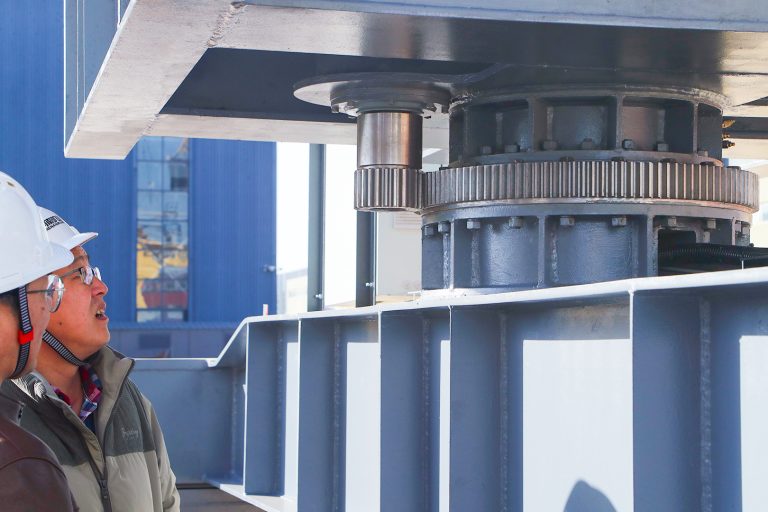
    published automated steel plate warehouse crane installation
    Published reference: specialized steel plate storage crane and warehouse automation project.

    Evidence boundary: these figures are attributed to one official published project reference. They demonstrate a delivered application but do not define the performance, savings or acceptance criteria of another warehouse. Project outcomes depend on material mix, baseline process, layout, operating discipline, interfaces and contracted scope.

    Steel Warehouse Crane Price and Budget Scope

    A steel warehouse crane price cannot be established from capacity alone. Public equipment listings are useful only as broad market references because complete projects may also require a lifting beam or magnet, backup power, runway, electrification, controls, WMS interface, freight, installation, testing, training and civil work.

    The public market review below was completed on 20 September 2026. Prices may change. Marketplace technical fields can be incomplete or internally inconsistent, so every capacity, span, attachment and supply boundary requires confirmation in a signed proposal.

    Public Reference Displayed Price Displayed Scope Commercial Boundary
    Henan Mine Crane supplier marketplace listing: 8 t workshop/warehouse bridge crane US$4,000 per piece; MOQ 1 Configurable equipment listing Qingdao is the displayed port; freight, destination scope and inconsistent listing fields require written confirmation.
    Henan Mine Crane supplier marketplace listing: 20 t electromagnetic overhead crane US$3,099–18,888 per set; MOQ 1 Configurable electromagnetic crane listing Final magnet, beam, backup energy, capacity, span, duty and project inclusions are not established by the displayed range.
    Bohl Crane public listing: Yale 10 t top-running single-girder crane kit US$28,500 Crane kit with hoist Published exclusions include bridge beams, runway rails, runway conductor bar, fabrication and installation.
    Complete automated steel plate warehouse crane project Project-specific quotation Crane, attachment, sensing, controls, data interface and site scope Requires load database, throughput model, layout, runway data, interface specification, acceptance plan and delivery destination.

    Reference sources: public Henan Mine Crane supplier listings on Made-in-China and the Bohl Crane online store. These third-party prices are market observations, not quotations or offers from this page.

    Main Cost Drivers

    Crane Mechanics
    Capacity, span, lift, duty, speed, reeving, trolley arrangement and access.
    Load Attachment
    Magnet, rotating beam, clamps, C-hook, spreader, cable reel and backup energy.
    Controls and Data
    Variable-frequency drives, sensing, anti-sway, positioning, PLC, HMI and WMS integration.
    Runway and Site
    Rails, beams, columns, foundations, electrification, access, erection and load testing.
    Compliance
    Design code, documentation, inspection, certification, special environment and local requirements.
    Delivery Scope
    Incoterm, freight, duties, installation, commissioning, training, spares and warranty support.

    Engineering and Procurement Deliverables

    A comparable procurement package separates technical performance from commercial scope. The following deliverables should be identified in the enquiry and proposal.

    Design Basis

    Load matrix, duty calculation, process description, governing standards, environment, reliability basis, safety functions and exclusions.

    Interface Drawings

    General arrangement, wheel loads, clearances, runway and rail data, power points, communication interface, foundation actions and installation access.

    Attachment Schedule

    Approved products, ratings, pickup conditions, prohibited conditions, changeover, inspection, power-loss response and attachment parking.

    Control Description

    Operating modes, sequences, interlocks, alarms, safe states, warehouse handshake, access control, event history and fault recovery.

    Inspection and Test Plan

    Hold points, material and weld records, factory tests, site tests, proof load, representative-load scenarios, interface tests and acceptance criteria.

    Lifecycle Package

    Manuals, drawings, parts list, certificates, training, preventive maintenance, critical spares, diagnostic access, backup files and support responsibility.

    Information Required for a Steel Warehouse Crane Quote

    Complete enquiry data allows mechanical, structural, attachment, control and commercial scope to be evaluated on one defined basis.

    Material and Load File

    Product family, material grade, minimum and maximum mass, dimensions, center of gravity, surface, temperature, bundle condition, attachment and gross suspended load.

    Movement and Throughput

    Inbound, storage, reshuffle, retrieval and outbound routes; moves per hour; tonnes per shift; load spectrum; peak schedule; availability and maintenance window.

    Warehouse Layout

    Plan, cross-section, span, runway length and elevation, storage cells, stacks, racks, aisles, vehicle bays, process interfaces, clearances and expansion zones.

    Existing Structure or Foundations

    Rail section, beams, brackets, columns, foundations, wheel-load limits, condition assessment, geometry survey, power supply and erection access.

    Controls and Warehouse Interface

    Operating modes, required speed and positioning, sensors, anti-collision, WMS or ERP protocol, material fields, cybersecurity responsibility, exceptions and recovery.

    Commercial and Compliance Scope

    Destination, standards, Incoterm, freight, runway, installation, commissioning, inspection, load test, training, spares, documentation, warranty and target schedule.

    Fastest route to a comparable proposal: submit a warehouse plan and cross-section, load spreadsheet, process-flow arrows, attachment preference, throughput target, runway data and required supply boundary. Open points can then be recorded explicitly instead of being hidden inside an assumed price.

    Frequently Asked Questions

    Which crane type is suitable for a steel warehouse?

    Single-girder cranes serve lighter general handling. Double-girder cranes suit heavier or intensive duty. Magnetic cranes support validated ferromagnetic loads, rotating systems control orientation, double-trolley cranes support long loads and gantry cranes serve outdoor stockyards.

    How is steel warehouse crane capacity calculated?

    Capacity starts with the maximum gross suspended load: steel product plus magnet, beam, clamps, slings, C-hook, shackles, hook block and every accessory. Eccentric load, unequal pickup and dynamic cases are then evaluated.

    Can one magnet lift every steel plate?

    No. Magnetic grade, thickness, flatness, coating, rust, scale, temperature, air gap and number of layers affect holding force. Each approved plate family and pickup condition requires validation.

    When is a rotating magnetic beam required?

    Rotation is considered when long steel arrives in one orientation but must be stored, processed or loaded in another. The design must include the complete rotation envelope and adjacent-stack clearance.

    Can an existing warehouse runway be reused?

    Only after rails, beams, brackets, columns, connections and foundations are checked for condition, geometry, fatigue and the proposed vertical, lateral, longitudinal and dynamic reactions.

    Does warehouse automation require a new ERP?

    Not necessarily. The required material fields, task handshake, ownership of location data, error codes, recovery process and communication protocol determine whether an existing WMS, MES or ERP can interface with the crane control system.

    How much does a steel warehouse crane cost?

    Public references reviewed in September 2026 ranged from US$4,000 for one configurable 8 t equipment listing to US$28,500 for a 10 t crane kit, while a complete automated warehouse remains quotation-based. These scopes are not directly comparable.

    What should be tested before handover?

    Testing should cover motions, brakes, limits, overload protection, attachment performance, power-loss response, representative products, protected zones, inventory transactions, alarms, manual recovery, proof load and contracted cycle scenarios.

    Request a Steel Warehouse Crane Quote

    Submit the material list, maximum gross suspended load, warehouse layout, span, lift, movement frequency, attachment preference, control level, destination and required delivery scope. Henan Mine Crane will prepare a configuration and commercial proposal against the declared operating basis.
    Henan Mine CraneDiscuss your requirements ↗
  • Steel Mill and Foundry Cranes

    Steel Mill and Foundry Cranes

    Steel Mill and Foundry Cranes

    Henan Mine Crane · Steel Production Lifting Systems

    Steel Mill and Foundry Cranes

    Henan Mine Crane engineers steel mill and foundry cranes for raw-material handling, furnace charging, molten-metal transfer, continuous casting, hot rolling, slab and billet movement, coil and plate storage, scrap handling and plant maintenance. Each crane is matched to its process load, attachment, heat exposure, production cycle, runway and required safe-failure response.

    A complete steelworks normally requires several crane types rather than one universal design. Ladle cranes prioritize molten-metal safety; magnetic and clamp cranes protect finished material; grab cranes handle bulk feed and slag; maintenance cranes provide controlled access to production equipment. The plant crane schedule must therefore be developed bay by bay and duty by duty.

    Henan Mine Crane metallurgical overhead crane operating in a steel mill
    Metallurgical overhead crane configured for high-duty material transfer and integration with steel-production operations.

    PROCESS COVERAGE

    Melt Shop to Finished Stock

    CRANE FAMILIES

    Hook, Ladle, Magnet, Grab and Clamp

    LISTED CAPACITY COVERAGE

    5–500 t, Model-Dependent

    WORKING CLASS

    A6–A8, Model-Dependent

    Steel Mill and Foundry Crane Systems by Process Area

    Steel mill cranes are process-specific overhead lifting systems used throughout ironmaking, steelmaking, casting, rolling, storage and maintenance. Foundry cranes form the high-risk molten-metal segment of this larger equipment family. The selected structure, hoisting mechanism, attachment, control method and protection package must correspond to the exact material and production step.

    Direct ladle handling cannot be specified in the same manner as billet storage or general maintenance. Likewise, a magnetic crane intended for flat plate requires different pickup geometry and loss-of-power protection from a grab crane moving slag or scrap. A dependable procurement package separates each duty before equipment selection begins.

    Raw Materials and Scrap

    Grab, magnet and dual-purpose cranes move scrap, ore, coke, flux, slag and other bulk or ferrous material.

    Melting and Pouring

    Charging, ladle and casting cranes support furnace feed, molten-metal transfer, treatment and controlled pouring.

    Casting and Rolling

    Slab, billet, bloom, coil and plate cranes transfer hot and finished material between process and storage zones.

    Maintenance and Assembly

    Heavy-duty hook cranes provide planned access to furnaces, rolls, motors, gearboxes, ladle cars and production equipment.

    Selection Considerations

    01 / MATERIAL

    Load Form and Temperature

    Identify molten metal, scrap, bulk feed, slag, slab, billet, coil, plate, mould or machinery; record normal and maximum temperature at pickup and travel.

    02 / LOAD

    Complete Suspended Mass

    Include payload, ladle or container, refractory lining, magnet, grab, clamp, lifting beam, rigging and all allowances required by the governing design basis.

    03 / PROCESS

    Production Route and Cycle

    Define pickup and set-down stations, travel distances, lifts per hour, near-capacity lifts, shift pattern, production interlocks and required cycle time.

    04 / ATTACHMENT

    Pickup and Release Method

    Confirm trunnion, hook, magnet, clamp, tong, C-hook, grab or beam interface, including rotation, opening, closing, power and safe-release requirements.

    05 / ENVIRONMENT

    Heat, Dust, Fumes and Splash

    Record ambient and radiant heat, conductive dust, scale, moisture, corrosive fumes, molten splash, outdoor exposure and enclosure requirements.

    06 / SAFETY

    Credible Failure Response

    Establish the required response to power loss, brake fault, drive failure, overspeed, overload, attachment power loss, upper-limit activation and control interruption.

    07 / RUNWAY

    Building and Rail Interface

    Verify span, lift, approaches, wheel loads, horizontal reactions, rail section, alignment, support capacity, thermal effects and erection access.

    08 / PROJECT SCOPE

    Controls, Standards and Supply Boundary

    Define cabin, radio or automation, power supply, plant communication, governing standard, inspection plan, documentation, freight and installation responsibilities.

    The crane name is not a complete specification. A magnetic plate crane, a ladle crane and a maintenance bridge crane can share the same rated capacity while requiring different duty classifications, attachments, brakes, controls, wheel loads and acceptance tests.

    Compare Steel Mill and Foundry Crane Types

    The preferred crane follows the production duty and handled material. This comparison provides an initial route from plant process to product family; final selection requires the complete operating and site data.

    Crane Type Handled Material Listed Product Range Critical Selection Point
    Double-Girder Foundry Crane Molten iron or steel ladles 50–150 t; 10–35 m span; A7–A8 Complete ladle mass, trunnion interface, heat exposure and molten-metal safety basis
    Four-Girder Casting Crane Ultra-heavy ladles and foundry loads 200/50–500/200 t; 10–40 m span; A7–A8 Main and auxiliary trolley functions, torsional load cases and runway reactions
    Metallurgical Bin Crane Charge boxes and furnace feed 5–50 t; 7.5–35 m span; A6–A7 Box geometry, opening and tipping method, furnace clearance and dust protection
    Rotating Magnetic Overhead Crane Billets, plates, bars and long steel 5+5–25+25 t; 10.5–31.5 m span; A6–A7 Material magnetic properties, beam geometry, rotation, power-loss holding and stacking orientation
    Slab Handling Crane Hot or ambient slabs and billets 20–150 t; 10–39 m span; A7–A8 Material temperature, pickup face, clamp or magnet response and storage geometry
    Grab Overhead Crane Ore, coke, flux, slag and selected scrap Project-configured Bulk density, lump size, abrasiveness, grab volume, fill factor and discharge control
    Quenching Crane Hot components for heat treatment Project-configured high-duty system Immersion timing, lifting speed, emergency recovery and bath geometry
    Double-Girder Maintenance Crane Rolls, motors, gearboxes and plant equipment Project-configured Heaviest maintenance lift, access path, headroom, precision and planned usage

    The ranges above identify separate Henan Mine Crane product families and do not represent every possible capacity–span combination. Final values follow structural calculation, mechanism selection, runway limits and the approved technical specification.

    Crane Coverage Across the Steel Production Process

    specialized overhead crane serving a hot rolled steel plant
    High-duty bridge crane developed around hot-rolling loads, radiant heat, cycle frequency and production-line clearances.

    Stockyard and Scrap Bay

    Grab and magnetic cranes unload, sort, blend and feed scrap or bulk material. Crane capacity must include the attachment, and throughput calculations must use the actual grab fill factor or magnet pickup condition.

    Melt Shop and Foundry

    Bin cranes charge furnaces, while foundry and casting cranes lift ladles, transfer liquid metal and support pouring. Molten-metal duty requires a defined safety architecture and thermal protection rather than a general-purpose crane specification.

    Continuous Casting and Rolling

    Slab and billet cranes move material between casting machines, cooling areas, reheating furnaces, rolling lines and intermediate storage. Pickup geometry, material temperature and cycle time determine the attachment and control system.

    Finishing and Dispatch

    Magnetic beams, clamps, tongs and C-hooks handle plate, long steel and coils. Finished-material protection, rotation, stack height, warehouse management interfaces and safe holding during power loss become primary design inputs.

    Load Attachments for Steel Mill and Foundry Cranes

    The attachment is part of the lifting system, not an accessory selected after the crane. Its mass, geometry, power source, control logic and failure response affect crane capacity, headroom, stability and acceptance testing.

    Ladle Beam or Gantry Hook

    Engages ladle trunnions for molten-metal lifting. Trunnion diameter, centres, ladle envelope, seating and inspection access require confirmation.

    Electromagnetic Beam

    Lifts ferrous plate, billet, bar or scrap. Material grade, thickness, temperature, air gaps and safe holding after power loss govern selection.

    Grab Bucket

    Handles ore, coke, flux, slag and bulk scrap. Density, lump size, abrasiveness, moisture and target throughput define grab type and volume.

    Clamp, Tong or C-Hook

    Supports slab, billet, plate and coil handling. Contact pressure, surface protection, centre of gravity and loss-of-power behavior must be defined.

    slab handling crane for steel mill material transfer
    Slab handling crane configured around material temperature, slab dimensions, storage pattern and the selected magnetic or mechanical attachment.

    Engineering Requirements for Metallurgical Duty

    Structural Load Cases

    Girders, trolley frames, end carriages, wheels and runway interfaces are assessed for lifted load, attachment, dynamic effects, off-centre positions, skew forces and applicable thermal conditions.

    Mechanism Duty

    Motors, gearboxes, brakes, drums, ropes, sheaves, bearings and wheels are selected from starts, operating time, load spectrum, travel distances and production criticality.

    Thermal and Environmental Protection

    Heat shields, protected cables, metallurgical-duty motors, ventilated cabinets, insulated cabins, dust-resistant enclosures and temperature monitoring are applied where the measured exposure requires them.

    Safe-Failure Architecture

    Multiple brakes, redundant drives, drum brakes, backup power, magnet holding, limits, overload protection and emergency placement can be specified when required by risk and governing rules.

    Motion and Positioning

    Variable-frequency control, creep speed, anti-sway, encoders, coordinated drives and automatic positioning support stable ladle movement and repeatable material stacking.

    Plant Integration

    PLC and HMI systems can exchange task, position, load, alarm and status data with plant controls, warehouse systems or manufacturing execution systems under an agreed interface specification.

    Safety functions must be specified by function, independence, setpoint, alarm, stop category, recovery method and verification test. A component name alone does not establish suitability for molten metal or continuous steel-production duty.

    Steel Mill Crane Specification Schedule

    A plant-wide inquiry should include a separate duty sheet for every crane. The schedule below identifies the minimum technical information required to compare proposals on the same basis.

    Specification Group Required Information Procurement Effect
    Load and Attachment Maximum and normal payload, temperature, dimensions, centre of gravity, attachment type and attachment mass Determines capacity, reeving, trolley, headroom and pickup system
    Geometry Runway span and length, rail elevation, lift, hook approaches, bay section, obstructions and service access Defines crane envelope, girder depth, trolley arrangement and usable coverage
    Duty and Performance Hours, cycles, starts, load spectrum, production rate, travel distances, speeds, positioning and design life Controls working class, motor duty, brake duty, wheel life and lifecycle cost
    Environment and Safety Heat, dust, fumes, moisture, splash, hazardous zones, required redundancy and emergency operating philosophy Defines protection, enclosure, cooling, braking, monitoring and test scope
    Runway and Power Rail section, structural capacity, allowable reactions, power supply, earthing, feeder location and conductor scope Prevents late building reinforcement and electrical interface changes
    Commercial Boundary Standards, inspection, documentation, spares, delivery term, unloading, erection, commissioning, testing and training Creates comparable offers and exposes excluded project costs

    Representative Steel Mill and Foundry Crane Projects

    Comparable project evidence should match the process duty, handled material, capacity, attachment, environment and control philosophy. The following Henan Mine Crane projects represent three distinct steel-production requirements.

    360 ton four girder foundry crane project
    360 t four-girder, four-rail, dual-trolley crane for molten metal and heavy foundry loads.

    PROJECT 01 · HEAVY FOUNDRY

    360 t Foundry Crane

    The project uses a four-girder, four-rail, dual-trolley arrangement for a heavy casting workshop. The engineering scope addresses ultra-heavy ladle loads, thermal exposure, redundant hoisting functions and plant runway reactions.

    Review the 360 t Foundry Crane Project

    four girder casting crane for continuous steelmaking operations
    Four-girder casting crane developed for ladle transfer, pouring and heavy metallurgical service.

    PROJECT 02 · CASTING SHOP

    Four-Girder Casting Crane

    Independent main and auxiliary trolley functions support heavy molten-metal transfer and process assistance. Structural stiffness, load distribution, high-temperature protection and maintainable mechanism access form the core design requirements.

    Review the Four-Girder Casting Crane Project

    rotating electromagnetic beam crane for steel products
    Rotating electromagnetic beam crane for lifting, orienting and stacking long ferrous material.

    PROJECT 03 · FINISHED STEEL HANDLING

    Rotating Electromagnetic Beam Crane

    The rotating beam arrangement handles plate, billets, bars and other long ferrous loads without manual slinging. Magnet layout, rotation envelope, stacking orientation, anti-sway and power-loss holding are coordinated as one system.

    Review the Electromagnetic Crane Project

    Engineering, Manufacturing and Project Documentation

    A reliable steel mill crane purchase establishes the design criteria, inspection points, functional tests and handover records before manufacture. Henan Mine Crane aligns the technical document schedule with the selected product, destination requirements and contracted supply scope.

    Engineering Package

    • Design criteria and duty classification basis
    • General arrangement and hook-coverage drawings
    • Wheel loads and runway reaction schedule
    • Attachment, safety-function and control narratives

    Manufacturing Controls

    • Material identification and certificate review
    • Welding, dimensional and structural inspection
    • Mechanism, wheel, rope, brake and attachment checks
    • Heat shielding, cabin and electrical enclosure inspection

    Testing and Handover

    • Factory mechanism, brake, limit and interlock tests
    • Inspection records and component certificates
    • Site commissioning and specified load testing
    • Operation, maintenance and spare-parts documents

    Governing standards, destination regulations, third-party inspection, witness points, certificate formats, document language and acceptance responsibilities should be named in the inquiry. Compliance is confirmed for each selected crane and contracted scope.

    Delivery, Installation, Commissioning and Maintenance

    Shipment and Site Readiness

    Transport segmentation, packing, unloading route, erection equipment, runway completion, power availability, production shutdowns and work permits are coordinated before dispatch.

    Erection and Alignment

    Installation covers bridge and trolley assembly, rail and wheel interface checks, attachment installation, cabin systems, electrification and verification of process clearances.

    Commissioning and Acceptance

    Commissioning verifies motions, brakes, limits, overload functions, emergency responses, attachment controls, alarms, plant interlocks and specified no-load and load tests.

    Lifecycle Maintenance

    Maintenance plans address ropes, drums, sheaves, hooks, attachments, brakes, wheels, rails, heat shields, cabins, magnets, grabs, electrical systems and safety functions based on duty and condition.

    Steel Mill and Foundry Crane Price

    Public international equipment listings indicate approximately US$8,000–US$50,000+ for basic steel-mill double-girder, hook, grab or magnetic overhead crane configurations. Market guidance for more specialized electromagnetic process cranes commonly reaches approximately US$25,000–US$95,000+.

    New ladle and heavy foundry crane listings span approximately US$60,000 to more than US$2,000,000 per set. These figures are market-screening references, not fixed Henan Mine Crane prices. High-capacity four-girder, automated, slab, coil and complete installed systems require an engineered commercial proposal.

    Cost Package Typical Inclusions Principal Cost Drivers
    Crane Equipment Bridge, trolley, hoisting and travel mechanisms, cabin or controls, electrification and specified safety functions Capacity, span, lift, duty, speeds, redundancy, heat exposure and automation
    Attachment Package Ladle beam, gantry hook, magnet beam, grab, clamp, tong, C-hook, rotation and attachment controls Material geometry, temperature, pickup force, rotation, holding and failure response
    Runway, Building and Power Rails, runway beams, columns or reinforcement, conductor system, isolators, feeder and plant interfaces when included Runway length, reactions, existing structure, foundations, power supply and local construction rates
    Delivery and Site Services Packing, freight, unloading, erection supervision or installation, commissioning, load testing, training and inspection support Destination, shipment size, access, shutdown schedule, labor, test loads and regulatory process

    Commercial comparisons must use the same load, attachment, span, lift, duty, safety architecture, heat protection, automation, runway boundary, documentation, delivery term and site-service scope. Equipment-only listings are not directly comparable with complete installed-system quotations.

    Steel Mill and Foundry Crane FAQ

    What cranes are used in a steel mill?

    Common types include scrap and bulk-material grab cranes, charging cranes, ladle and casting cranes, slab and billet cranes, magnetic plate and bar cranes, coil-handling cranes, quenching cranes and general maintenance bridge cranes.

    What is the difference between a steel mill crane and a foundry crane?

    Steel mill crane is a broad term covering cranes throughout the production facility. A foundry crane is a specialized member of this family designed for molten-metal ladles, pouring and related high-temperature casting operations.

    Can one crane handle scrap, ladles and finished steel?

    A single crane should not be assumed suitable for all three duties. The attachments, load paths, working classes, heat exposure and required failure responses differ. Multi-purpose service requires explicit engineering and approval for every load case.

    How is foundry crane capacity calculated?

    Rated load includes molten metal, ladle shell and refractory lining, ladle beam or gantry hook, rigging and required design allowances. Liquid-metal mass by itself is not the complete suspended load.

    Which working class is required?

    Henan Mine Crane metallurgical product families are listed from A6 to A8. The final classification follows operating time, starts, load spectrum, cycle rate, process risk and the selected classification standard; rated capacity alone does not determine duty.

    How are steel mill cranes protected from heat and dust?

    Protection can include heat shields, heat-resistant cables and motors, ventilated or cooled cabinets, insulated cabins, protected brakes, dust-resistant enclosures and temperature monitoring. The package follows the measured ambient and radiant exposure.

    What happens if power is lost during magnetic lifting?

    The required response is established from the load and risk assessment. A magnetic system can include stored-energy holding, alarm, monitored power condition and a defined safe-placement procedure. Holding duration and test method must be specified.

    Can steel mill cranes operate automatically?

    Automatic task dispatch, positioning, anti-sway, collision avoidance, load tracking, inventory interfaces and remote monitoring can be integrated where the process layout, exclusion zones, communications and safety concept support automation.

    How much do steel mill and foundry cranes cost?

    Basic steel-mill crane listings commonly begin around US$8,000–US$50,000+, specialized magnetic systems can reach approximately US$25,000–US$95,000+, and listed heavy ladle and foundry equipment spans roughly US$60,000 to more than US$2,000,000 per set. Final cost requires a project specification.

    What information is required for a quotation?

    The RFQ should include process area, handled material, temperature, maximum and normal load, attachment, span, lift, runway length, operating cycle, required speeds, environment, control method, power supply, standards, inspection and delivery and installation scope.

    Request a Steel Mill and Foundry Crane Quote

    Henan Mine Crane prepares a bay-by-bay crane configuration, attachment schedule, safety scope and commercial boundary from the production and site data. The RFQ should include:

    • Process area and handled material for each crane, including temperature, dimensions and maximum and normal mass.
    • Required ladle beam, gantry hook, magnet, grab, clamp, tong, C-hook or other below-hook attachment.
    • Runway span and length, lifting height, rail elevation, building section, obstructions and allowable reactions.
    • Operating hours, cycles, load spectrum, production rate, required speeds, positioning and process interlocks.
    • Ambient and radiant heat, dust, fumes, splash exposure, indoor or outdoor service and operator-control method.
    • Power supply, project country, governing standards, inspection plan, delivery term and installation boundary.
    Henan Mine CraneDiscuss your requirements ↗
  • Steel Fabrication Crane Systems

    Steel Fabrication Crane Systems

    Steel Fabrication Crane Systems

    Henan Mine Crane · Material-Flow Systems for Steel Fabrication

    Steel Fabrication Crane Systems

    Overhead, gantry, semi-gantry and magnetic crane systems engineered for plate, beam, section, pipe, frame and welded-assembly handling from receiving through cutting, fit-up, welding, finishing and dispatch.

    Henan Mine Crane configures each steel fabrication crane from the complete load matrix, longest component, lifting attachment, required coverage, handling frequency, workstation sequence, building capacity, positioning performance, environment and applicable project standards.

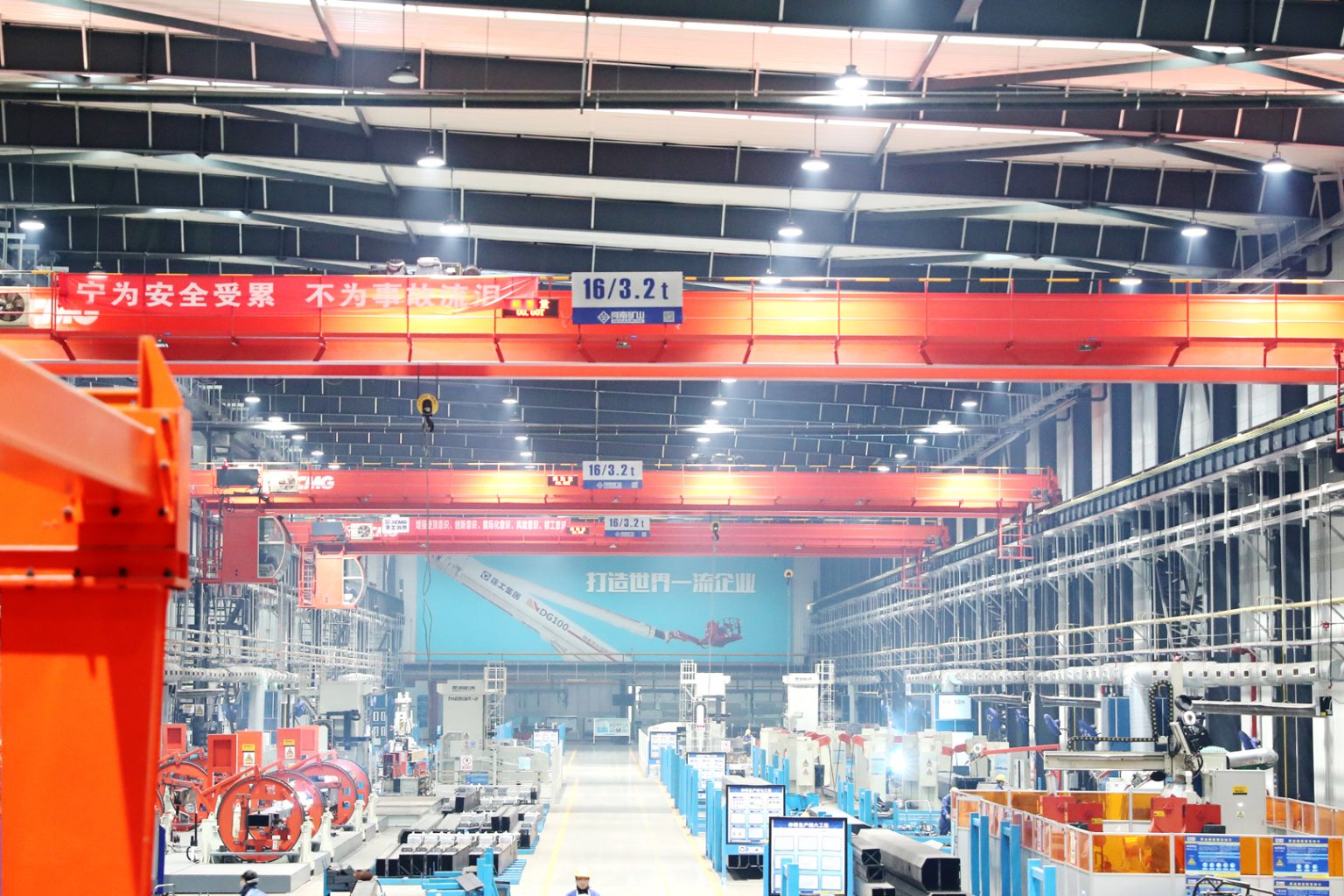
    steel fabrication crane operating in an industrial production workshop
    A steel fabrication crane system is planned around the complete material route—not only the heaviest lift—from raw stock receiving to finished-assembly dispatch.

    PRIMARY LOADS

    Plate, Beam, Pipe & Frames

    CRANE OPTIONS

    Bridge, Gantry & Semi-Gantry

    LOAD-HANDLING OPTIONS

    Hooks, Beams, Clamps & Magnets

    CONTROL OPTIONS

    Pendant, Radio, Cabin & PLC

    What Is a Steel Fabrication Crane?

    A steel fabrication crane is a material-handling system configured for structural steel, platework, tanks, machinery frames, bridge components, pressure equipment, pipe assemblies and other fabricated metal products. It moves raw steel and work-in-process between stock, cutting, drilling, fit-up, welding, turning, inspection, surface treatment and shipping areas.

    The term describes an application rather than one fixed crane design. A small fabrication bay may use a single-girder overhead crane with radio control. Long welded assemblies may require two hoists or a double-trolley bridge. Raw plate handling may justify a magnetic beam. An outdoor stockyard may need a gantry crane, while a side bay or machine station may be served by a semi-gantry crane.

    Steel fabrication is also different from primary steelmaking. Most fabrication shops handle solid material at ambient temperature, while foundry and metallurgical cranes address molten metal, extreme heat and a different safety architecture. Henan Mine Crane selects the system from the actual fabrication process using its single-girder bridge crane, double-girder bridge crane, semi-gantry crane and gantry crane platforms.

    Steel Fabrication Applications by Process Area

    Receiving and Raw Stock

    Unload and store plate, H-beams, I-sections, angles, pipes and bars with hooks, approved clamps, spreader beams or magnetic systems matched to the material.

    Cutting and Preparation

    Feed plasma, laser, oxy-fuel, saw, drill and edge-preparation stations while controlling plate orientation, table approach and clearance above machinery.

    Fit-Up and Welding

    Position beams, shells, stiffeners, frames and subassemblies at jigs, rotators and welding stations using creep speed and clear operator sight lines.

    Turning and Repositioning

    Rotate or tail long fabrications only through a documented lifting method using two hooks, two cranes, a turning beam or purpose-designed fixtures.

    Blasting, Painting and Finishing

    Transfer finished steel through cleaning, coating, curing and inspection zones with environmental protection selected for dust, moisture, paint and solvent conditions.

    Assembly and Dispatch

    Support trial assembly, dimensional inspection, weighing, staging and truck loading for structural frames, vessels, modules and completed equipment.

    overhead crane supporting steel fabrication workshop material flow
    Crane coverage should follow the production route and eliminate repeated floor handling between stock, fabrication, inspection and dispatch positions.

    System Components and Operating Principle

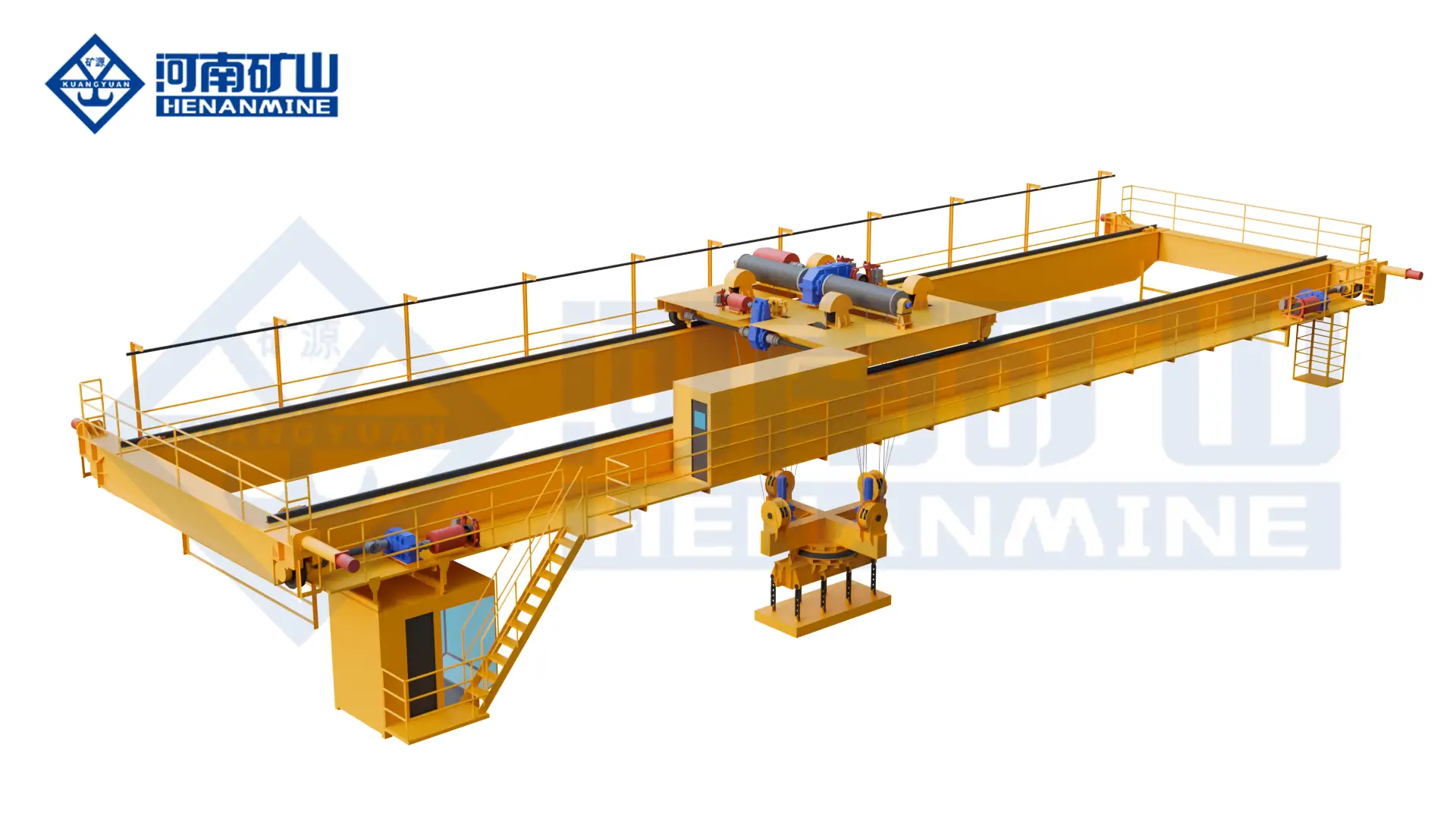
    1. Bridge, gantry or semi-gantry structure: provides the required work area while transferring vertical, transverse, longitudinal and dynamic loads to the building or ground-supported runway.
    2. Hoist or process trolley: supplies the capacity, lift, speed, reeving, brakes and duty required for the declared fabrication cycle.
    3. End carriages and drives: move the crane along the runway with speed control, alignment, braking and wheel loads matched to the structure.
    4. Below-hook equipment: connects hooks to plate, sections, pipe or assemblies through approved slings, beams, clamps, magnets or custom fixtures.
    5. Power and controls: coordinate lifting and travel through pendant, radio, cabin or PLC-assisted operation, including limits, overload monitoring and optional anti-sway.
    6. Runway and electrification: include rails, beams, columns or brackets, conductor system, isolators, access and maintenance provisions where specified.
    electric hoist bridge crane machinery for steel fabrication handling
    Bridge structure, mechanisms, attachment, runway, controls and installation interfaces form one material-handling system.

    Rated-load basis: capacity starts with the maximum gross suspended load. Include the steel component, spreader beam, lifting magnet, clamps, slings, shackles, hook block and every suspended accessory. Also define eccentric loads, multiple pickup points, retained blasting media or liquid and approved turning cases.

    Steel Fabrication Crane Selection Considerations

    Selection begins with the complete material-flow map. The heaviest load establishes only part of the requirement; long-load stability, workstation access, cycle frequency and the building interface frequently determine the final configuration.

    Load Matrix

    Raw plate and sections, work-in-process and finished assemblies; minimum, normal and maximum mass; dimensions; center of gravity; stiffness; pickup points and attachment mass.

    Material Route

    Receiving, stock, cutting, drilling, fit-up, welding, inspection, blasting, coating and dispatch locations; required transfers, crossings, buffers and future expansion.

    Duty and Cycle

    Lifts per hour, starts, travel distance, shifts, annual hours, load spectrum, simultaneous motions, peak production, maintenance window and consequence of downtime.

    Long-Load Control

    Maximum component length, permissible deflection, hook spacing, two-hoist or two-crane operation, synchronization, load sharing, permitted rotation and tag-line method.

    Building and Runway

    Rail-center span, runway length and elevation, headroom, hook approaches, column spacing, wheel-load limits, clearances, foundations and installation access.

    Attachment and Surface

    Hook, slings, beam, clamp, magnet or vacuum device; material grade, surface condition, temperature, edge geometry, coating and acceptable contact marks.

    Environment

    Indoor or outdoor use, ambient range, welding fume, grinding dust, blasting media, humidity, paint or solvent area, wind, corrosion and wash-down requirements.

    Control and Acceptance

    Pendant, radio, cabin or automation; creep speed; anti-sway; restricted zones; collision avoidance; proof load; representative-load trial and documentation.

    Steel Fabrication Crane Configurations Compared

    The comparison separates crane structures and handling functions that can serve the same plant but are not interchangeable.

    Configuration Typical Fabrication Duty Main Advantage Primary Limitation Selection Trigger
    Single-Girder Overhead Crane General stock, parts and assembly handling Lower self-weight and compact system Capacity, span, headroom and service intensity must remain within the selected platform Light-to-medium loads with one principal pickup point
    Double-Girder Overhead Crane Heavy frames, machinery structures and intensive production Higher capacity and flexible trolley arrangements Greater self-weight and runway reaction Heavy loads, wide span, high duty or demanding approaches
    Double-Trolley Overhead Crane Long beams, vessels, frames and controlled turning Two lifting points can operate independently or in an approved synchronized mode Load sharing and synchronization require defined controls and procedures Long, flexible or offset assemblies need two-point support
    Electromagnetic Crane Ferromagnetic plate, sections, billets and steel offcuts Fast pickup without manual sling placement Material, surface, thickness, air gaps and power-loss retention must be validated Repetitive handling of compatible magnetic material
    Semi-Gantry Crane Side bay, machine line or local production area One elevated rail and one floor rail reduce the need for a full runway on both sides Floor rail affects aisle planning and guarding Only one suitable building runway side is available
    Gantry Crane Outdoor steel stock, large fabrications and loading area Ground-supported coverage independent of the workshop roof Ground rails, foundations, weather, wind and vehicle crossings require coordination Outdoor or open-yard material flow
    double-girder crane selected for heavy steel fabrication work
    The lowest-cost crane structure is not always the lowest-cost production solution. Coverage, duty, attachment, runway and cycle time must be compared on one operating basis.
    Published Configuration Reference Ranges

    The ranges below summarize published Henan Mine Crane product platforms that can be configured for steel fabrication. They are preliminary selection references rather than one universal steel fabrication crane model.

    Product Platform Published Capacity Published Span Published Lift Published Class Typical Fabrication Role
    European-Style Single Girder 1–10 t 7.5–28.5 m 6–30 m A3–A5 General workshop handling
    Electric-Hoist Double Girder 3–32 t Up to 31.5 m in the published base range Project-specific A3–A6 Heavier or more intensive production
    Double-Trolley Electric Hoist Crane 1+1 to 32+32 t 7.5–31.5 m 6–30 m A5–A6 Long loads and two-point lifting
    Electromagnetic Bridge Crane 5–32 t including magnet weight 10.5–31.5 m 6–30 m A1–A8 published; select by duty Plate and ferromagnetic stock transfer
    Single-Girder Semi-Gantry 1–32 t 6–35 m 4–20 m A3–A5 Local side bay or machine line
    European Single-Girder Gantry 1–32 t 6–35 m 4–20 m A3–A5 Outdoor stock and dispatch yard
    Specification control: final capacity, span, lift, speed, classification, wheel loads, attachment and environmental protection are confirmed from the approved duty. The signed technical agreement and general arrangement govern the supplied system.

    Long Loads, Two-Point Lifting and Turning

    Long beams, trusses, shells, pipes and welded frames may be lighter than the crane capacity but still govern the design. The lift plan must control bending, torsion, pickup spacing, local contact stress, center-of-gravity uncertainty and the effect of unequal hoist motion.

    • One hoist with spreader: suitable when the beam or fixture distributes the load and the center of gravity remains within the approved range.
    • Two hoists on one crane: supports adjustable hook spacing and controlled load sharing for long components.
    • Two independent trolleys: offers broader spacing and separate operation, with synchronization only when engineered and permitted.
    • Two-crane tandem lift: requires defined command control, compatible speeds, capacity allocation, communication and a site lifting plan.
    • Turning operation: requires a documented sequence, approved attachments, controlled load path and adequate clear space; it is not created by capacity alone.
    double-trolley overhead crane for long steel fabrication assemblies
    Two lifting points can improve support for long assemblies, but the quotation must define hook spacing, capacity split, synchronization and permitted operating modes.

    Tandem-load data: provide the heaviest and longest component drawings, lifting-point coordinates, center-of-gravity tolerance, permissible deflection, required rotation, minimum and maximum hook spacing and the allowable difference between lifting points.

    Lifting Attachments for Plate, Sections and Assemblies

    Attachment Suitable Load Data Required Critical Limitation
    Hook with Slings General frames, machinery and approved lifting points Sling angle, edge protection, headroom, pickup points and load balance Manual rigging time and safe access
    Spreader or Lifting Beam Long beams, pipes, trusses and flexible assemblies Pickup spacing, adjustment range, load cases, beam mass and storage Attachment mass consumes crane capacity and headroom
    Plate or Beam Clamp Compatible plate edges, flanges and profiles Thickness, hardness, surface, orientation, jaw range and approved use Wrong geometry or side loading can invalidate the clamp rating
    Electromagnet or Magnetic Beam Ferromagnetic plate, sections and offcuts Material, thickness, flatness, temperature, surface, air gap, load layers and retained-load strategy Not every steel grade, shape or surface condition is suitable
    Vacuum Lifter Compatible smooth plate where surface contact is acceptable Surface porosity, condition, temperature, plate size and backup provisions Scale, rust, holes or rough surfaces can prevent reliable sealing
    Custom Fixture or Turner Repeated product families and controlled rotation All product variants, engagement, fail-safe behavior, changeover and test method Requires product-specific design and acceptance
    electromagnetic bridge crane for handling steel plate and sections
    Magnetic handling can reduce manual rigging, but load compatibility and the safe response to power loss must be verified for every approved material family.

    Attachment Capacity Is Part of Crane Capacity

    A 10 t workpiece with a 2 t beam and rigging requires more than a 10 t crane. The same principle applies to magnets: the published crane rating may include the magnet mass, so usable material capacity must be confirmed explicitly.

    Attachment storage, changeover, electrical connections, identification, inspection status and the prevention of wrong-device selection should be included in the operating concept.

    Workshop Layout, Runway and Production Coverage

    A fabrication-crane quotation should show the useful hook envelope, not only the nominal span. Columns, end approaches, trolley approach, hook block size, roof bracing, lighting, extraction ducts, machines and maintenance platforms can create blind areas.

    New Workshop

    Coordinate crane wheel loads, rail elevation, column grid, roof clearance, maintenance access and electrification before structural steelwork is released for fabrication.

    Existing Runway

    Survey rails, beams, brackets, columns, connections and foundations for geometry, wear, corrosion, fatigue and the reactions from the proposed crane and duty.

    Outdoor Yard

    Define foundations, rail drainage, vehicle crossings, stormwater, wind operating limits, storm securing, corrosion category, temperature and safe parking position.

    gantry crane for outdoor structural steel fabrication stockyard
    A gantry crane can connect outdoor stock and dispatch areas without loading the workshop roof, provided foundations, rails, weather and traffic interfaces are included.

    Controls, Positioning and Workshop Environment

    Control Strategy

    Radio control commonly supports mobile fabrication teams and a direct view of the load. Pendant control can suit local, lower-speed work. A cabin may be justified for heavy, repetitive or long-travel service. PLC-assisted functions can add stored positions, restricted zones, anti-sway, collision avoidance, diagnostics and production-system interfaces.

    Required positioning should be stated as a measurable tolerance at a defined load, speed and location. Creep speed, brake response, load swing and operator visibility are often more important at a welding jig than maximum travel speed.

    Environmental Review

    Welding fumes, conductive grinding dust, blasting media, humidity and outdoor corrosion influence motor, brake, cable, bearing, enclosure, coating and maintenance decisions. A paint or solvent area requires a documented hazardous-area review before electrical equipment is selected.

    An explosion-protected crane is not selected solely because painting occurs somewhere in the plant. The owner’s area-classification documents, substance data, ventilation and local rules establish whether special electrical protection is required.

    custom double-girder overhead crane for heavy fabrication and assembly
    Heavy-load capability, precise low-speed control and production availability are selected together from the declared fabrication duty.

    Design Basis, Inspection and Acceptance

    The contract identifies the destination, governing crane classification, structural and mechanism rules, electrical requirements, below-hook device standard, local inspection and registration route. Depending on the project, the design basis may reference ISO 4301 classification; EN 13001, EN 15011 and EN 13155; or CMAA 70 with applicable ASME B30.2, B30.20 and BTH-1 provisions. Local law and the signed specification govern final compliance.

    Design Review

    Load and duty matrix, classification, fatigue basis, deflection criteria, wheel loads, attachment, control philosophy, environmental data, access and interface schedule.

    Factory Inspection

    Material traceability, welding and NDT records as specified, dimensions, mechanism tests, panels, software, limits, alarms, coating and document review.

    Site Acceptance

    Runway and alignment checks, functional and load tests, attachment trial, long-load sequence, controls, safety functions, training, spares and final documentation.

    Representative-load test: where practical, acceptance should include the longest or most difficult approved fabrication, the intended attachment, actual pickup points, normal operators and the required workstation approach—not only a compact test weight.

    Published Industrial Manufacturing References

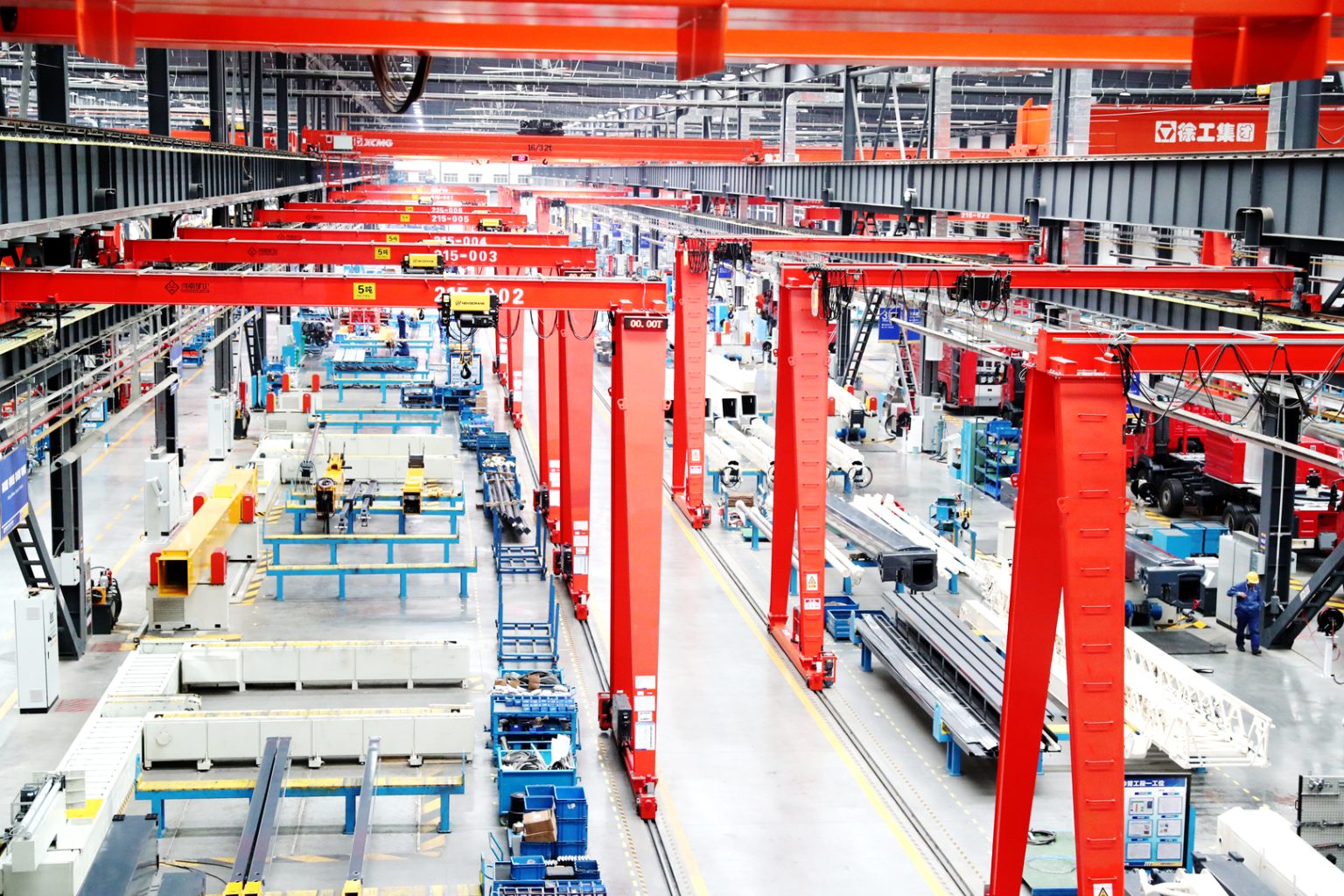
    intelligent crane supplied for heavy equipment structural production

    XCMG Manufacturing Program

    A published Henan Mine Crane industrial-manufacturing reference states that more than 300 intelligent cranes of multiple types were contracted for XCMG Group and used across construction-machinery assembly and structural production processes.

    View the Published Industrial Manufacturing Reference →

    double-girder crane serving a tall heavy fabrication workshop

    Tangxing Heavy Equipment Plant

    A separate published reference reports more than 100 cranes for a trenchless-equipment industrial park, configured for a 25 m-high heavy steel plant and production supporting an annual output of 500 pipe-jacking machines.

    View the Published Smart Factory Reference →

    Evidence boundary: these references demonstrate batch crane supply for structural production, assembly and heavy equipment manufacturing. They do not establish one standard steel fabrication crane specification; every new system is configured from its own loads, layout, duty and acceptance criteria.

    Steel Fabrication Crane Price and Budget Scope

    Steel fabrication crane prices vary materially because public listings may describe only a basic crane package or kit, while an operational project can also require bridge girders, runways, electrification, attachments, freight, erection, commissioning and local inspection.

    A public market review completed on 20 September 2026 found an ordinary 1–10 t single-girder overhead crane listing at US$2,600–5,500 per set. A separate United States listing showed US$28,500 for a 10 t top-running single-girder crane kit, explicitly excluding bridge beams, runway rails, runway conductor bar, fabrication and installation. These figures are scope examples, not Henan Mine Crane quotations and not complete installed steel-fabrication systems.

    Public Reference Published Price Scope Interpretation Budget Use
    Ordinary 1–10 t Single-Girder Listing US$2,600–5,500 per set Marketplace FOB reference with limited project boundary Indicative equipment listing only
    10 t Top-Running Single-Girder Crane Kit US$28,500 Kit only; bridge beams, runways, runway electrification, fabrication and installation excluded Useful example of component-scope pricing
    Complete Steel Fabrication Crane Project Project quotation Crane, runway, attachment, interfaces, logistics and site services as specified Required for a comparable procurement budget

    Main Cost Drivers

    Crane Structure
    Capacity, span, lift, single or double girder, one or two trolleys and working classification.
    Runway and Building
    Rails, beams, columns, foundations, wheel loads, access platforms and structural modification.
    Attachment
    Spreader, clamps, magnets, custom fixtures, electrical supply, storage and proof testing.
    Controls
    VFD motion, radio, cabin, synchronization, anti-sway, collision avoidance and automation.
    Environment
    Dust protection, hazardous-area equipment, corrosion system, outdoor wind and temperature.
    Project Scope
    Freight, duties, erection, electrification, commissioning, testing, training, spares and documentation.

    Comparable quotation rule: issue the same load matrix, material-flow plan, duty, building data, attachment requirement, standards and supply boundary to every supplier. Require a priced list of inclusions, exclusions, provisional items, utilities, site services and acceptance tests.

    Information Required for a Steel Fabrication Crane Quote

    A complete enquiry allows the crane, runway, attachment, controls and site services to be selected and priced on one defined basis.

    Load and Attachment Data

    Maximum gross load, normal load distribution, dimensions, center of gravity, material and surface, pickup points, lifting beam, clamps, magnets, slings and finished-product drawings.

    Production Duty

    Process map, lifts and starts per hour, shifts, annual hours, load spectrum, travel distance, simultaneous motion, cycle target, availability and future capacity plan.

    Workshop and Runway

    Rail-center span, runway length and elevation, lift, headroom, approaches, column spacing, rail and beam details, existing wheel-load limits, foundations and installation access.

    Long-Load Operations

    Maximum length, stiffness, hook spacing, two-point load sharing, synchronization tolerance, turning sequence, tandem operation and clearance envelope.

    Controls and Environment

    Pendant, radio, cabin or automatic mode; speed and positioning; anti-sway; collision zones; power supply; dust, fumes, paint area, humidity, corrosion, temperature and outdoor wind.

    Commercial and Compliance Scope

    Destination, standards, inspection route, Incoterm, freight, runway, installation, electrification, commissioning, load test, operator training, spares, documentation and warranty.

    Fastest route to a comparable proposal: provide a workshop cross-section, equipment layout, material-flow arrows, load and attachment matrix, longest-product drawing and required supply boundary. Unknown items can be identified as open points instead of being hidden in a lump-sum price.

    Frequently Asked Questions

    Which crane is suitable for a steel fabrication shop?

    Single-girder cranes commonly serve light-to-medium general handling. Double-girder cranes suit heavier or more intensive duty. Long loads may require two hoists or trolleys, while outdoor stock normally favors a gantry crane.

    How is crane capacity calculated?

    Add the heaviest workpiece, beam, magnet, clamps, slings, shackles, hook block and every suspended component. Then evaluate eccentric loading, multiple pickup points, load sharing, dynamics and approved turning cases.

    When are two hoists or two trolleys required?

    They are considered when a long or flexible assembly needs two support points, when hook spacing must change, or when an approved turning sequence requires separate control. Capacity split and synchronization must be specified.

    Can an electromagnetic crane lift every steel plate?

    No. Magnetic properties, thickness, flatness, temperature, coating, rust, scale, air gaps and stacked layers affect holding performance. The magnet and power-loss strategy must be validated against each approved load family.

    How much does a steel fabrication crane cost?

    Public equipment references reviewed in September 2026 ranged from US$2,600–5,500 for one ordinary 1–10 t single-girder listing to US$28,500 for a 10 t crane kit. Neither represents a complete installed project; final price depends on the full technical and commercial scope.

    Can an existing runway be reused?

    Only after rails, beams, brackets, columns, connections and foundations are checked for condition, geometry, fatigue and the proposed vertical, horizontal and dynamic crane reactions.

    Is radio control suitable for fabrication?

    Radio control can provide a direct view of the load and mobility between workstations. The risk assessment must still define operator position, emergency stop coverage, travel warnings, restricted zones and control of multiple cranes.

    What should be tested before handover?

    Testing covers motions, brakes, limits, overload protection, controls, attachments, positioning, collision functions, representative long loads, tandem modes, proof load and the agreed emergency response.

    Request a Steel Fabrication Crane Quote

    Submit the load and attachment matrix, longest-product drawing, production flow, lifts per hour, span, lift, runway and building data, control requirements, environment, destination and supply boundary. Henan Mine Crane will prepare a configuration-based technical and commercial proposal.

    Henan Mine CraneDiscuss your requirements ↗
  • Slab Handling Crane for Steel Mill Storage and Transfer

    Slab Handling Crane for Steel Mill Storage and Transfer

    Slab Handling Crane for Steel Mill Storage and Transfer

    Henan Mine Crane · Steel Mill Process Cranes

    Slab Handling Crane for Steel Mill Storage and Transfer

    A heavy-duty overhead crane engineered for lifting, transporting, turning, stacking and dispatching hot or ambient steel slabs across continuous-casting, cooling, conditioning, warehouse and rolling-mill interfaces.

    Henan Mine Crane configures YB slab handling cranes with clamps, magnetic beams, synchronized lifting, slewing systems, PLC control and optional automation. Final design follows slab geometry, gross suspended mass, temperature exposure, handling route, duty and plant interfaces.

    Henan Mine Crane slab handling crane for steel mill transfer and stacking
    Crane structure, lifting attachment, thermal protection and control logic are engineered as one process-handling system.

    HANDLED MATERIAL

    Hot & Ambient Steel Slabs

    ATTACHMENT OPTIONS

    Clamp, Magnet or Beam

    SERVICE PROFILE

    A7–A8 Published Range

    CONTROL OPTIONS

    Cabin, PLC & Automation

    What Is a Slab Handling Crane?

    A slab handling crane is a purpose-engineered metallurgical overhead crane that moves semi-finished steel slabs between production and storage stages. Typical duties include receiving slabs from a continuous caster, clearing a cooling bed, transferring material to inspection or scarfing stations, organizing stockyard stacks, feeding a reheating furnace and loading railcars, trucks or internal transfer equipment.

    The equipment differs from a general hook crane because the slab itself defines the lifting system. Length, width, thickness, surface temperature, camber, scale condition, stack spacing and permitted contact zones determine whether a mechanical clamp, electromagnetic beam, hook beam or another approved attachment can establish secure load control. High cycle frequency and precise placement may also require synchronized lifting, anti-sway, low-speed positioning, coordinate control and production-system communication.

    Rated capacity cannot be selected from slab net weight alone. The engineering basis must identify whether the contractual capacity represents slab payload or gross suspended load. A complete gross-load calculation includes the maximum slab or slab group, clamp or magnet beam, rotating structure, hook blocks, equalizing equipment and every component suspended below the trolley. Dynamic factors and the governing design basis are then applied.

    Henan Mine Crane configures YB slab cranes for hot and ambient handling. Final project drawings define attachment geometry, control logic, safety functions and inspection requirements.

    Slab Handling Crane Configurations

    01 · Mechanical Slab Clamp Crane

    Side-gripping mechanical or powered tongs engage approved slab faces. The arrangement avoids dependence on magnetic holding power and suits defined thickness and width ranges. Jaw geometry, closing force, locking status, surface scale and anti-release protection require project approval.

    02 · Electromagnetic Slab Crane

    A suspended magnet beam lifts magnetically responsive slabs without side access. Fast pickup and release support high-throughput yards, but magnetic duty, slab temperature, air gaps, power continuity, residual magnetism and emergency retention strategy govern suitability.

    03 · Fixed-Orientation Transfer Crane

    A non-slewing lifting system transfers slabs along a consistent storage or production axis. Reduced rotating mass and simpler control can support dependable repetitive handling when pickup and placement orientations remain aligned.

    04 · Rotating Slab Handling Crane

    A slewing trolley or rotating beam changes slab orientation between process bays, stacks, inspection lines and dispatch lanes. Rotation envelope, cable management, load inertia, collision zones and positioning accuracy form part of the crane design.

    05 · Automated Slab Warehouse Crane

    PLC control, encoders, ranging devices, anti-sway, stack coordinates and plant communication support unmanned or supervised automatic cycles. Manual recovery, safe-zone logic, inventory reconciliation and degraded-mode operation remain essential.

    06 · Synchronized Dual-Lift System

    Two lifting points or a 50+50 t arrangement distribute load along long slabs and specialized clamps. Load sharing, hoist synchronization, skew monitoring, rope reeving and independent protective functions limit twist and unequal loading.

    Compare Slab Lifting and Motion Configurations

    Configuration Load Interface Principal Advantage Engineering Constraint Typical Application
    Mechanical slab clamp Side faces or defined gripping zones No magnetic holding dependency; positive mechanical interface Requires approved thickness, width, edge condition and jaw access; contact marks may require review Hot or ambient slabs with stable geometry and controlled stack gaps
    Electromagnetic beam Upper slab surface through magnetic attraction Fast pickup; no side access; adaptable magnet grouping Ferromagnetic material only; air gap, temperature, scale, power loss and residual magnetism affect performance Ambient or temperature-approved slabs in repetitive storage and dispatch
    Hook or lifting beam Engineered lifting points, chains or approved rigging Flexible for unusual pieces and maintenance loads Slower cycle; manual rigging exposure; lifting points and sling angles require control Low-frequency handling or slabs with dedicated lifting interfaces
    Non-slewing trolley Clamp, magnet or beam kept on fixed axis Simpler operating path and lower rotating complexity Cannot correct orientation without another handling stage Straight transfer between aligned production and storage points
    Slewing trolley or beam Attachment rotates around a controlled vertical axis Places slabs across different bay and stack orientations Higher dead load, headroom demand, inertia and collision-control complexity Warehouses, conditioning lines and multi-direction dispatch layouts
    Automatic coordinate handling Attachment combined with sensors and stored positions Repeatable stacking, traceable moves and reduced cycle variation Requires reliable slab identity, clear zones, recovery logic and maintained calibration High-throughput finished-slab warehouses and integrated production systems

    Attachment selection rule: slab temperature, magnetic properties, dimensional range, surface condition, stack access and failure consequence must be established before crane capacity, trolley layout and control functions are frozen.

    Slab Handling Applications Across the Steel Process

    Process Area Material Condition Primary Handling Demand Configuration Direction Data Required for Engineering
    Continuous-casting discharge Newly cast hot slabs leaving the caster or transfer table High radiant heat, production continuity and controlled pickup Heat-shielded clamp crane with precise low-speed approach Slab temperature, caster rhythm, transfer path and standby strategy
    Cooling bed and slab yard Hot slabs during staged cooling and buffer storage Changing temperature, stack sequence and large coverage area Clamp or approved magnetic system with coordinated yard travel Cooling layout, dwell time, stack geometry and exclusion zones
    Inspection and conditioning Slabs routed to grinding, scarfing, marking or flaw detection Accurate presentation and possible orientation change Rotating clamp, magnet beam or engineered lifting beam Required angle, placement tolerance and process-station interface
    Finished-slab warehouse Ambient slabs stored by grade, heat, order or destination Inventory accuracy, dense stacking and repetitive cycles Automated or semi-automated crane with coordinate control Warehouse map, stack rules, identification method and throughput
    Reheating-furnace feed Selected slabs transferred from storage to rolling preparation Production sequencing and furnace charging interface High-duty crane with controlled placement and plant interlocks Furnace schedule, buffer capacity, transfer equipment and cycle time
    Rail, truck or internal dispatch Slabs loaded to transport equipment or transfer cars Vehicle position variation and personnel separation Clamp, magnet or lifting beam with zone monitoring Deck geometry, securing plan, loading sequence and access controls

    A hot-slab transfer crane may prioritize thermal protection, heavy duty and availability; an ambient warehouse crane may prioritize inventory control, positioning and dense storage. Materially different process conditions can require separate operating modes or separate cranes.

    Slab Handling Crane Technical Selection Framework

    The following range reflects the published Henan Mine Crane YB product envelope and a practical quotation framework. It is not a universal rating for every slab, building or destination. Final values appear on the approved project data sheet and general arrangement.

    Selection Item Preliminary Engineering Envelope Project Data Required Procurement Control
    Rated lifting capacity 20–150 t published configurable range; 50+50 t documented project arrangement Maximum slab mass, number of slabs, attachment mass and contractual capacity definition Confirm net payload versus gross suspended load before mechanism sizing
    Span 10–39 m published configurable range Runway rail-center distance, working coverage, end approaches and building reactions Building clear width is not substituted for crane span
    Lifting height 5–23 m published configurable range Lowest pickup, highest stack, attachment depth, rail elevation and service clearance Available hook or clamp elevation is checked on a vertical section
    Slab geometry Project-specific; published clamp information identifies slabs from 150 mm thickness Minimum and maximum length, width, thickness, camber, edge profile and weight distribution Every attachment operating envelope is approved in writing
    Temperature exposure Published product information identifies operation around slabs up to 650°C Slab surface temperature, ambient air, radiant exposure, distance, dwell time and heat cycles Temperature terms are separated; a slab rating is not treated as ambient-air temperature
    Duty classification A7–A8 published range, subject to governing project classification Lifts per hour, load spectrum, shifts, annual hours, travel distance and service-life target Capacity and fatigue duty are evaluated independently
    Motion performance Hoist 1–8 m/min and crane travel 10–30 m/min published ranges; other values engineered Cycle target, safe high-speed route, low-speed placement, rotation and positioning tolerance Speed follows process flow, load stability and stopping distance
    Control and power PLC/HMI options; configurable voltage and frequency; cabin, supervised or automatic operation Plant power, communication protocol, operating station, backup mode and cybersecurity boundary I/O, interlocks, data ownership and recovery sequence are documented
    Environment and protection Metallurgical heat, dust and scale; IP55 listed as a published option Temperature zones, dust, fumes, humidity, corrosion, vibration and maintenance access Enclosures, cooling, cables, lubrication and materials match the actual zone
    Runway and acceptance Project-specific wheel loads, horizontal forces, rail and test requirements Runway drawings, rail condition, destination rules, inspection authority and load-test plan Crane, building and statutory responsibilities are contractually assigned

    Safety and Control Architecture for Slab Handling

    The safety concept covers secure pickup, hoisting, travel, rotation, placement and release under the governing design basis and plant risk assessment.

    Clamp Status and Release Interlocks

    Open, closed and locked states are monitored where applicable. Hoisting permission, load presence and release conditions are interlocked so that a clamp cannot be opened during an unsafe suspended state.

    Magnet Power-Loss Strategy

    Magnetic systems require a documented response to supply interruption. Battery or alternate power, holding-time monitoring, alarms, controlled lowering and restricted personnel zones are selected from the load risk.

    Hoist and Load Protection

    Overload limitation, dual-point synchronization, upper and lower limits, brake monitoring, rope guidance and low-speed positioning protect the lifting path and prevent unequal loading.

    Anti-Sway and Position Control

    Mechanical reeving, VFD motion profiles, encoder feedback and optional electronic anti-sway reduce pendulation. Position tolerance is specified at the attachment and verified through commissioning.

    Travel, Rotation and Collision Zones

    End limits, buffers, anti-collision, slewing limits, clearance monitoring and protected storage coordinates prevent contact with structures, equipment, adjacent cranes and slab stacks.

    High-Temperature Protection

    Heat shields, protected electrical cabinets, temperature-rated cables, appropriate lubrication and component placement reduce radiant exposure. Inspection intervals reflect scale, heat and thermal cycling.

    Automated-Mode Safeguards

    Access control, zone scanning, permissive logic, fault diagnosis, safe stop, controlled restart and manual recovery govern unmanned or supervised cycles.

    Operator and Maintenance Safety

    High-visibility cabin design, cameras, warning devices, isolation points, platforms, access routes and component-removal space support controlled operation and maintainability.

    Crane Structure, Headroom and Operating Logic

    Heavy slab service commonly uses a top-running double-girder bridge with an engineered winch trolley. The arrangement provides structural stiffness, mechanism access and space for synchronized hoists, a rotating platform or a suspended clamp beam. Long slabs may require two lifting points so that load sharing and slab deflection remain controlled throughout acceleration, travel and placement.

    Headroom is governed by more than hook height. Rail elevation, bridge depth, trolley structure, rope geometry, clamp opening height, slab thickness, required clearance above stacks and maintenance-removal paths must be shown on one dimensioned vertical section. A rotating attachment also requires a verified plan-view envelope at every operating elevation.

    An automatic cycle normally includes destination validation, approach at controlled speed, attachment alignment, secure pickup confirmation, vertical clearance, bridge and trolley travel, optional rotation, stack-position verification, controlled lowering and release confirmation. Fault recovery must define retained load condition, safe manual access and the route back to a known coordinate.

    Stack height, cooling separation, grade segregation, retrieval sequence and buffer locations determine travel distance and cycle time. Motion values should follow the process model rather than maximum speed alone.

    high temperature slab stacking crane with engineered lifting attachment
    Double-girder structure, attachment geometry, heat exposure and stack clearance are coordinated in the project layout.

    Project Case: 50+50 t Slab Clamping Crane

    50 plus 50 tonne slab clamping crane manufactured by Henan Mine Crane
    Documented steel-mill project combining dual lifting capacity, electric clamp adjustment, high-temperature adaptation and intelligent monitoring.

    Henan Mine Crane manufactured a 50+50 t slab clamping crane for the Rizhao high-quality products base of Shanshan Iron & Steel. The project applies an electrically adjustable slab clamp with positioning control to large-tonnage steel-mill material handling.

    The documented configuration addresses high-temperature radiation stated above 650°C through heat-resistant structural and protective measures. Digital speed control and a guiding arrangement support stable heavy-load motion and accurate placement. PLC control, weighing, fault alarms and operating-data functions provide a foundation for monitored production and later automation integration.

    The case demonstrates that dual-point load control, clamp adjustment, thermal protection, positioning, monitoring and maintenance access must operate as one system. Temperature and performance values remain project-specific.

    View Project Case →

    Engineering, Manufacturing and Quality Documentation

    A slab handling crane should be released through an agreed document and inspection plan. Records connect the approved load case and control philosophy to the fabricated structure, assembled mechanisms and commissioned attachment.

    automated crane girder welding workstation at Henan Mine Crane
    Controlled drawings, qualified welding, dimensional inspection and functional testing support traceable project delivery.

    Approved Design Package

    General arrangement, wheel loads, attachment drawing, lifting-point geometry, mechanism data, electrical demand and control narrative.

    Structural Quality

    Material identification, approved welding procedures, welder qualification, dimensional checks and specified non-destructive examination.

    Mechanism Verification

    Hoist synchronization, brakes, drums, ropes, wheels, reducers, lubrication, rotation drives and maintenance-access checks.

    Attachment Inspection

    Clamp opening range, jaw contact, pins, locks, sensors, magnet circuits, beam geometry and safe-release interlocks.

    Functional Testing

    Motion tests, limits, alarms, overload functions, position feedback, automated sequences and contracted witness points.

    Final Handover

    Final drawings, manuals, configured parameters, inspection records, spare-parts schedule and commissioning documentation.

    Installation, Commissioning and Lifecycle Planning

    Site and Runway Verification

    Confirm rail centers, elevation, alignment, supporting structure, maximum wheel loads, horizontal forces, conductor location, erection access and available assembly space before shipment.

    Shipping and Erection Plan

    Define transport divisions, lifting points, temporary supports, girder assembly, trolley placement, attachment installation, high-temperature protection and site responsibility matrix.

    Cold Commissioning

    Verify travel alignment, brakes, limits, encoders, clamp or magnet functions, rotation, alarms, interlocks, communication and manual recovery without a process load.

    Load and Process Acceptance

    Conduct contracted static, dynamic and functional tests, then validate pickup, transfer, positioning and release using approved trial slabs and controlled operating zones.

    Attachment Maintenance

    Inspect clamp jaws, pins, bushes, locks, guides and sensors; check magnet insulation, cables, power backup and beam condition. Wear limits and replacement criteria belong in the manual.

    Thermal and Electrical Inspection

    Monitor heat shields, cable protection, cabinet cooling, seals, lubrication condition, brakes, ropes and temperature-affected components at intervals derived from actual exposure.

    Automation Support

    Maintain coordinate calibration, sensor health, network interfaces, backups, fault logs and recovery procedures. Software changes require controlled authorization and documented validation.

    Critical Spare Parts

    Plan brakes, encoders, sensors, contactors, VFD-related components, limits, seals, clamp wear parts, cable assemblies and selected magnet-power components around production consequence.

    Slab Handling Crane Price and Project Cost

    Custom slab cranes require project quotation because capacity, attachment, temperature, duty and automation change the system materially. General bridge-crane figures provide only a lower-level market benchmark; they do not represent a fixed Henan Mine Crane slab-crane price.

    Budget Level Indicative Market Position Typical Scope Main Cost Drivers Commercial Control
    General 5 t double-girder bridge benchmark Around US$60,000 in a current North American installed example Conventional bridge, trolley or hoist and installation under stated conditions Span, lift, duty, runway, regional labor and controls Not a slab-crane quotation; used only as a general-market floor comparison
    General 10 t double-girder bridge benchmark Around US$100,000 in a current North American installed example Conventional double-girder system under stated conditions Capacity, span, headroom, runway, installation and testing Not comparable with 20–150 t metallurgical process equipment
    Manual slab clamp process crane Project quotation Double-girder crane, open-winch trolley, engineered clamp and metallurgical protection Gross load, slab range, clamp adjustment, heat, duty, span and documentation Price schedule separates crane, attachment, electrification, freight and site services
    50+50 t or synchronized dual-lift crane Project quotation Dual lifting points, load sharing, high-capacity attachment and advanced monitoring Synchronization, rope system, structure, brakes, clamp, thermal protection and testing Approved load cases and supply boundary precede commercial comparison
    Automated slab warehouse crane Project quotation Crane, attachment, sensors, anti-sway, positioning, PLC and plant interface Coordinate accuracy, throughput, redundancy, system integration and recovery mode Automation hardware, software, commissioning and production trials are itemized
    Turnkey slab-handling installation Project quotation Equipment plus selected runway, delivery, erection, commissioning, load testing and training Destination, civil and runway work, access, local labor, permits and shutdown plan Equipment-only and installed-project totals remain clearly separated

    Price comparison basis: normalize capacity definition, attachment, duty, temperature protection, rotation, automation, runway, electrification, packing, freight, erection, commissioning, load testing, training and spare parts. A low equipment figure can exclude the highest-risk project interfaces.

    Information Required for a Slab Handling Crane Quote

    A complete request establishes attachment geometry, crane duty and project boundary. Slab schedules, building drawings and process-flow diagrams should accompany the following data.

    Slab Size and Mass Range

    Minimum and maximum length, width, thickness, unit mass, number lifted per cycle, camber, edge condition and center-of-gravity variation.

    Temperature and Surface Condition

    Maximum slab surface temperature, ambient temperature, radiant exposure, scale, moisture, contact restrictions and cooling pattern.

    Handling Route and Stack Plan

    Pickup and placement coordinates, transfer distance, stack orientation, maximum stack height, gaps, retrieval logic and vehicle interfaces.

    Capacity and Attachment

    Required payload, proposed clamp or magnet, attachment mass, opening range, rotation requirement, auxiliary hook and special handling modes.

    Duty and Throughput

    Moves per hour, load spectrum, shifts, annual hours, target cycle time, production criticality and standby or redundancy requirements.

    Building and Runway

    Rail centers, bridge travel, rail elevation, runway beam and rail data, column spacing, roof obstructions, wheel-load limits and maintenance access.

    Control and Automation

    Cabin or supervised control, automatic operating zones, positioning accuracy, anti-sway, cameras, plant PLC/MES interface and recovery philosophy.

    Power, Destination and Scope

    Voltage, frequency, destination country, governing requirements, delivery term, runway scope, installation, testing, training and required schedule.

    Slab Handling Crane FAQ

    How is slab crane capacity calculated?

    Capacity begins with the maximum slab or slab group and the complete lifting attachment. The contract must state whether rated capacity means net slab payload or gross suspended load. Dynamic and design factors are then applied under the governing engineering basis.
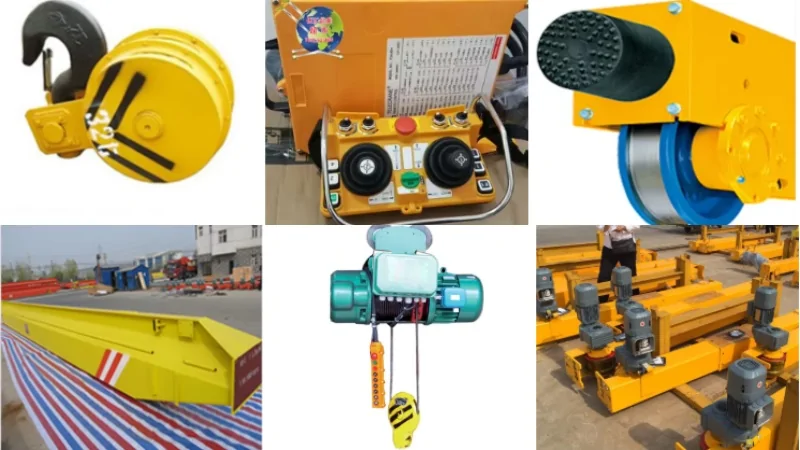
    Which attachment is suitable for hot slabs?

    A temperature-rated mechanical clamp is a common direction where side access and slab geometry permit positive gripping. A magnetic system requires confirmed temperature capability, air-gap conditions and power-loss controls. Final attachment selection follows a documented risk and geometry review.

    Can one clamp handle different slab widths and thicknesses?

    An electrically or hydraulically adjustable clamp can cover an approved operating range. Minimum and maximum dimensions, jaw contact zones, opening clearance, clamping force and locking indication must be defined for every permitted slab family.

    Can a slab handling crane rotate the load?

    Yes. A slewing trolley or rotating lifting beam can change slab orientation. Rotation angle, envelope, inertia, cable routing, stopping accuracy and collision protection are incorporated into the crane and building layout.

    Can the crane operate near 650°C slabs?

    Henan Mine Crane publishes configurations for high-temperature slab exposure up to the stated product limit and documents a 50+50 t case for severe radiant heat. Final approval distinguishes slab surface temperature, ambient air, distance, exposure time and thermal cycling.

    Is an electromagnetic system safe during a power failure?

    Safety depends on the engineered retention and recovery concept. Backup power, monitored holding time, alarms, restricted access and controlled lowering may be required. A generic magnet without a documented power-loss strategy is not an acceptable basis.
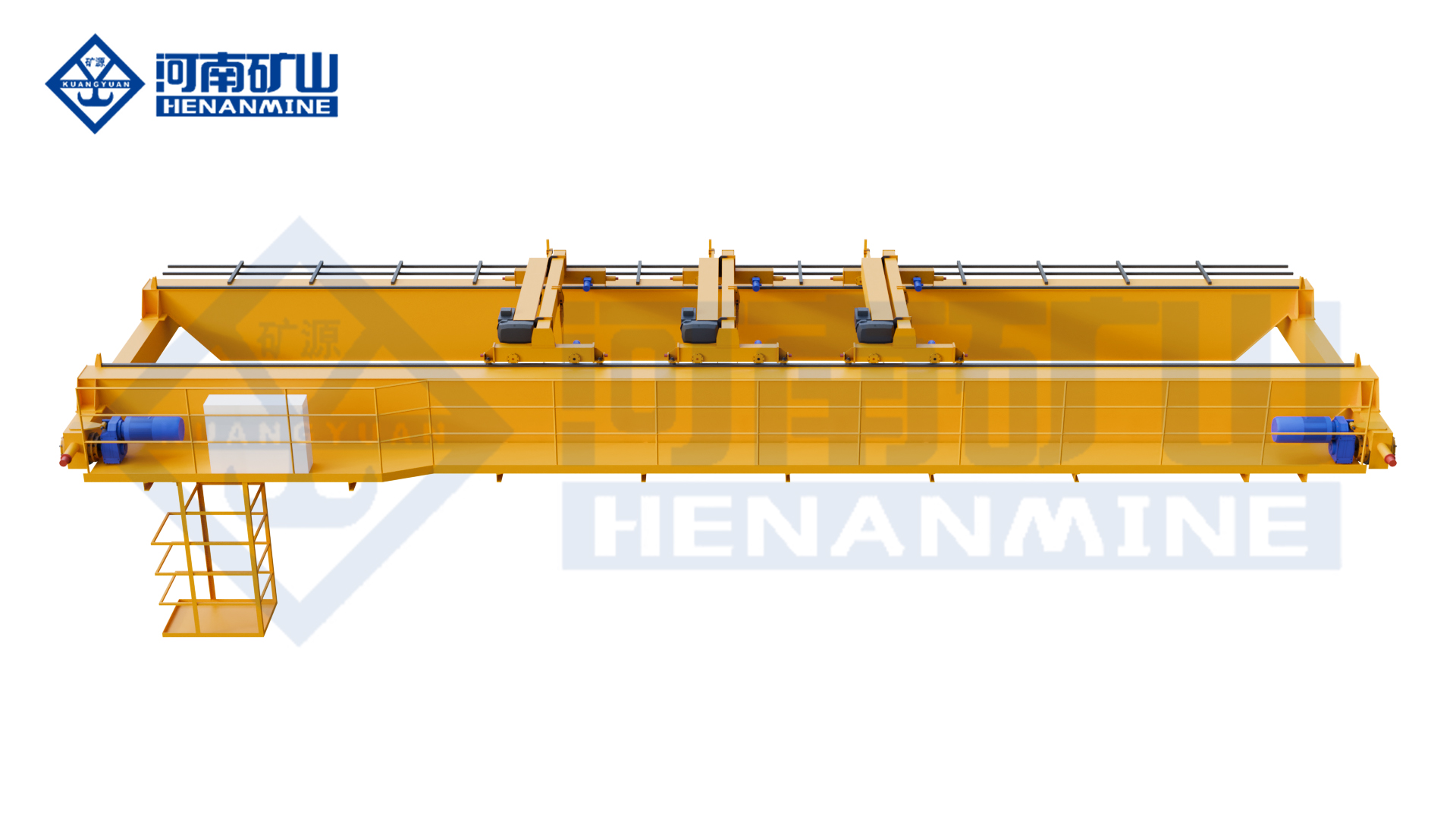
    Can the same crane handle billets?

    Possible suitability depends on billet geometry, bundle condition, attachment contact and operating route. A slab clamp is not automatically suitable for billets. The complete billet range and proposed attachment require separate engineering approval.

    What information determines crane duty?

    Load spectrum, moves per hour, travel distance, full-load frequency, operating shifts, annual hours, motion speeds and production consequence determine structural and mechanism duty. Rated tonnage alone is insufficient.

    Can slab warehouses be automated?

    Yes. Automated handling can combine encoders, ranging devices, anti-sway, coordinate storage, slab identification and plant communication. Safe zones, manual recovery, calibration, inventory reconciliation and fault handling form part of the system.

    What should a quotation include?

    A complete quotation identifies capacity basis, attachment, span, lift, duty, speeds, controls, temperature design, safety functions, wheel loads, documentation, testing, delivery boundary, installation responsibility, schedule and exclusions.

    Configure a Slab Handling Crane for the Steel Process

    Submit the slab dimensions and mass range, temperature, attachment preference, handling route, stack plan, throughput, span, lifting height, duty, runway information, power supply, automation scope, destination and delivery boundary. Henan Mine Crane will prepare a project-specific technical configuration and commercial quotation.

    Henan Mine CraneDiscuss your requirements ↗
  • Single Girder Crane

    Single Girder Crane

    Single Girder Crane

    Henan Mine Crane · Engineered Single-Beam Lifting Systems

    Single Girder Crane

    Single-girder overhead, underhung and gantry crane configurations engineered around rated load, span, lifting height, duty, headroom, runway structure and production cycle.

    Henan Mine Crane supplies electric single-girder crane systems for workshops, warehouses, assembly areas, maintenance bays, fabrication plants and material yards. Each proposal defines the bridge, hoist, end carriages, controls, safety functions, runway interface, electrical boundary, delivery documentation and requested site services.

    electric single girder crane operating in an industrial workshop
    A top-running single-girder bridge with an electric hoist provides three-axis load movement across a defined production bay.

    PRIMARY CONFIGURATION

    Top-Running Overhead Crane

    ALTERNATIVE SUPPORT

    Underhung or Gantry

    HOIST OPTIONS

    Wire Rope, Chain & Low Headroom

    CONTROL OPTIONS

    Pendant, Radio, Cabin & PLC

    What Is a Single Girder Crane?

    A single girder crane uses one primary bridge girder to carry the hoisting unit across the working area. In the most common overhead arrangement, an electric wire-rope or chain hoist travels beneath the girder, while powered end carriages move the complete bridge along parallel runway rails. Hoist lifting, cross travel and bridge travel provide vertical, lateral and longitudinal load movement.

    The search term covers more than one support arrangement. A top-running single-girder overhead crane travels on rails installed above runway beams. An underhung single-girder crane travels beneath compatible runway beams. A single-girder gantry crane places the bridge on travelling legs and ground rails. These systems can use similar electric hoists, but their structural interfaces, wheel loads, clearances and site work are different.

    Single-girder construction is commonly selected for general industrial handling where capacity, span, duty and hook-height requirements remain within an efficient electric-hoist design. One girder normally reduces bridge deadweight, wheel reactions, fabrication, freight and erection scope compared with a comparable double-girder bridge. The resulting cost advantage depends on the complete system rather than the girder count alone.

    A single girder is not automatically a light-duty or low-capacity crane. Henan Mine Crane publishes broad product-family ranges, including engineered top-running models extending to high capacities and spans. Practical selection still follows structural calculation, hoist capability, fatigue duty, hook coverage, maintenance access and destination requirements. Where a process trolley, very high duty, greater hook height, walkway access or special attachment cannot be integrated efficiently, a double-girder design may provide the stronger lifecycle solution.

    Components and Operating Principle

    The crane structure, hoist, end carriages, power distribution and controls form one coordinated load-handling system. The main girder transfers the suspended load and bridge self-weight into the end carriages. Wheels transfer vertical and horizontal reactions through the rails into the runway or gantry legs. The selected hoist controls lifting performance and much of the hook approach.

    A purchase specification should identify every interface. Bridge steel and lifting machinery do not automatically include runway beams, rails, support columns, foundations, incoming plant power, installation, test weights or local statutory inspection. Defining these boundaries before quotation prevents equipment-only prices from being compared with complete installed systems.

    detailed components of an electric single girder crane
    Bridge girder, hoist, end carriages, travel drives, electrification and controls operate as one engineered system.

    01 · Main Girder

    A rolled section, composite beam or welded box girder carries the moving hoist and transfers load into the end carriages. Span, capacity, deflection, fatigue and hoist-wheel loading establish the design.

    02 · Electric Hoist

    The lifting unit includes motor, brake, gearbox, drum or load chain, rope or chain guide, hook block and limits. Capacity, lift, reeving, speed and duty must match the handling cycle.

    03 · End Carriages

    Wheel assemblies support the bridge and provide longitudinal travel. Wheel diameter, spacing, rail profile, drives and guide arrangement are coordinated with runway geometry and reactions.

    04 · Electrification

    Conductor bars or festoon systems supply the bridge, while a festoon, cable track or energy chain supplies the moving hoist. Voltage, travel length and environment determine the arrangement.

    05 · Controls and Protection

    Pendant, radio, cabin or PLC controls operate the motions with emergency stop, brakes, upper and lower limits, overload protection and project-specific alarms or interlocks.

    06 · Runway Interface

    Rails, beams, brackets, columns and foundations receive crane forces. New and existing structures require approved wheel loads, side thrust, alignment tolerance and end-stop design.

    Single Girder Crane Configurations

    Top-Running Single-Girder Overhead Crane

    Bridge wheels travel on rails above the runway beams, while the electric hoist normally runs beneath the girder. This is the principal configuration for production workshops, warehouses, fabrication bays and maintenance facilities.

    Underhung Single-Girder Crane

    Bridge end carriages travel on the lower flanges of suspended runway beams. The arrangement can improve floor utilization and end approach, but roof beams, hangers, connections and runway flanges must be verified for crane reactions.

    Low-Headroom Electric-Hoist Crane

    A compact or offset hoist arrangement reduces the vertical distance between runway level and upper hook position. It is developed for low roofs or existing buildings where usable hook height has direct production value.

    Single-Girder Gantry Crane

    Travelling legs support the bridge on ground rails. This configuration serves yards, workshops without elevated runway steel and production zones where building loads should remain independent.

    Intelligent Single-Girder Crane

    Variable-frequency drives, load monitoring, anti-sway, positioning, diagnostic functions and PLC communication can be integrated where motion quality, process repeatability or production data are required.

    Special-Environment Single-Girder Crane

    Explosion-proof, cleanroom, insulated, corrosion-resistant or metallurgical electric-hoist variants require environment-specific equipment, materials, enclosures and protective logic defined by the operating hazard.

    The support arrangement is selected before the final hoist and bridge dimensions are released. Top-running and underhung systems are not interchangeable without structural review. A gantry crane is also a separate project type because leg geometry, ground rails, wind actions, travel lanes and foundations become part of the load path.

    Selection Considerations

    A commercially complete single-girder crane specification begins with the load and operating cycle, then coordinates the lifting mechanism with building geometry and project scope. Capacity alone cannot establish girder size, hoist duty, wheel loads, motor ratings or price.

    01 · Gross Suspended Load

    Include payload, lifting beam, slings, clamps, magnets, grabs and every below-hook component. State maximum, normal and future loads rather than nominal product weight alone.

    02 · Span and Travel Length

    Span is normally the runway rail centreline distance. Runway length determines longitudinal coverage, electrification length and installation quantities.

    03 · Lift and Headroom

    Provide lowest pickup, highest placement, rail elevation, roof clearance, load height and rigging depth. Required hook height must be checked on a dimensioned arrangement.

    04 · Working Duty

    Define lifts per hour, full-load frequency, load spectrum, travel distance, shifts and annual operating hours. These data determine structural and mechanism service requirements.

    05 · Hook Coverage

    End approach, side approach, obstructions and safe operating zones determine whether the hook can reach every required pickup and placement point.

    06 · Building and Runway

    Existing or new runway beams require rail data, support spacing, wheel-load checks, alignment tolerances and an assigned structural approval responsibility.

    07 · Motion Control

    Specify lifting and travel speeds, low-speed range, acceleration, radio or pendant operation, anti-sway, positioning accuracy and any coordinated motion.

    08 · Environment and Compliance

    Temperature, dust, humidity, corrosion, washdown, hazardous-area classification, destination rules and inspection authority influence component and documentation selection.

    Single Girder Crane Compared with Other Configurations

    The most economical structure is the one that meets the complete operating requirement without transferring excessive cost into the runway, building, maintenance plan or production risk. The following comparison separates common arrangements by load path and application.

    Configuration Structural Arrangement Typical Application Commercial Advantage Selection Limit
    Top-running single girder One bridge girder on rails above runway beams; hoist below girder General manufacturing, assembly, warehousing and maintenance Low bridge deadweight, economical structure and broad electric-hoist selection Hook height, duty, span and special accessories must remain practical
    Underhung single girder One bridge girder suspended below compatible runway beams Lighter production bays, extensions and buildings designed for suspended runways Clear floor area and potentially improved end approach Roof reactions, hangers, lower flanges and connections govern feasibility
    Double-girder overhead crane Two bridge girders carrying a hoist trolley or process trolley Higher capacity, longer span, demanding duty and specialized lifting Improved hook height, stiffness, access and process-equipment integration Higher self-weight, wheel loads, fabrication and installation scope
    Single-girder gantry crane One bridge girder supported by travelling legs on ground rails Outdoor yards or facilities without suitable elevated runway support Independent support and optional cantilever coverage Ground rails, foundations, travel lanes, wind and leg clearances are required
    Workstation bridge crane Light enclosed track with floor or ceiling support Ergonomic handling and localized repetitive work Low rolling resistance and precise manual or powered movement Lower capacity and span range; not a substitute for an industrial bridge crane

    A double-girder crane is not automatically superior, and a single-girder crane is not automatically limited to occasional service. The final decision follows calculated bridge behavior, selected hoist duty, usable hook envelope, required access and total installed cost.

    Technical Specification Framework

    Henan Mine Crane maintains several single-girder product families. Published ranges describe available engineering platforms rather than guaranteed combinations. Final capacity, span, lifting height, speeds, working class and wheel loads are confirmed on the approved general arrangement and technical schedule.

    Product Family Capacity Position Span Position Lifting Height Working Class / Control Electrical Position
    Top-running single-girder bridge family Published table: 3.2–80 t 4–31.5 m Lifting height configured for the site A5 published base; project duty confirmed 220–690 V, 3-phase, 50–60 Hz
    Intelligent electric-hoist overhead family 1–32 t 7.5–31.5 m 6–30 m A5–A6 Configured for destination grid
    Underhung single-girder family 0.5–20 t 3–16 m 6 m, 9 m, 30 m or customized A3–A5 Configured for destination grid
    European single-girder gantry family 1–32 t or customized 6–35 m 4–20 m A3–A5 220–660 V, 50–60 Hz available
    Control and protection options Matched to rated load Matched to bridge geometry Upper and lower limits coordinated with lift Pendant, radio, cabin or PLC IP54/IP55 options within published overhead family

    A capacity shown within a family range does not confirm suitability at every span or duty. Long spans, high capacities, severe load spectra and demanding hook-height requirements require a project-specific bridge and hoist check. The single-girder bridge crane product data supports preliminary selection; the contract specification and approved drawings control the delivered equipment.

    Hoist Selection, Headroom and Hook Coverage

    The hoist is the principal operating mechanism on a single-girder crane. Its body position, trolley wheelbase, drum or chain arrangement, hook block and reeving determine lifting speed, upper hook position, side approach and maintenance envelope. A low acquisition price has limited value when the hook cannot reach the required machine, rack or assembly position.

    Electric Wire-Rope Hoist

    Common industrial selection for broader capacities, lifting heights and speed options. Drum capacity, rope reeving, fleet angle, brake, gearbox and trolley duty are matched to the operating cycle.

    Electric Chain Hoist

    Compact solution for lighter loads and localized handling. Chain container, reeving, duty, lifting speed and upper-limit arrangement must fit the available vertical envelope.

    Low-Headroom Hoist

    Offset geometry positions the hoist body around the girder to improve the highest hook elevation. The complete dimensional drawing must also preserve inspection and removal access.

    Variable-Frequency Motion

    VFD control supports smooth acceleration, controlled low speed and reduced load swing. Required minimum speed and positioning performance should be stated numerically.

    Two-Hoist Handling

    Two lifting units can support long loads where permitted by the bridge design. Individual capacities, combined loading, hook spacing and allowed control modes must be defined.

    Below-Hook Attachment

    Lifting beams, C-hooks, clamps, magnets and grabs add suspended weight and change load geometry. Attachment mass is included in crane capacity and headroom calculations.

    Approval drawings should state span, rail elevation, crane top clearance, highest and lowest hook positions, left and right hook approaches, end approaches, bridge depth and maintenance clearances. These dimensions establish usable coverage more accurately than capacity and lifting height alone.

    Runway, Building and Electrical Interface

    A bridge crane and its runway form one structural system. The crane supplier provides crane weight, maximum wheel loads, wheel spacing, horizontal forces and relevant operating data. The responsible structural party verifies runway beams, brackets, columns, connections, foundations and building stability. Existing runway reuse requires condition, geometry and capacity checks before manufacturing dimensions are frozen.

    Rail and Alignment

    Rail section, gauge, straightness, elevation, joint condition and end stops influence wheel contact, skewing and travel quality. Crane runway tolerances are normally tighter than general building-steel tolerances.

    Wheel Loads and Reactions

    Maximum and minimum wheel loads, impact, side thrust and braking forces are assessed with the crane in governing hook positions. A replacement crane can impose different reactions at the same rated capacity.

    Clearance and Access

    Roof bracing, ducts, lights, sprinklers, cable trays and adjacent equipment require clearance throughout bridge travel. Safe access is required for hoist, drives, panels and wearing parts.

    Incoming Power

    Voltage, frequency, phase, isolation point, grounding and available fault level are confirmed before electrical design. Runway conductor scope and the interface to plant power are assigned in the offer.

    Freestanding Runway

    Independent columns can avoid loading an existing building. Column spacing, floor use, foundations, aisle traffic and future expansion become project design inputs.

    Underhung Support

    Suspended systems require beam-flange, hanger, connection and roof-reaction checks. The ability to hang a static load from a roof does not by itself establish crane runway suitability.

    Industrial Applications

    Machining and Fabrication

    Moves plate, profiles, fixtures, machine parts and welded assemblies between cutting, machining, welding, inspection and dispatch stations.

    Assembly and Production

    Supports component positioning, subassembly transfer and line-side material supply where smooth low speed and accurate hook approach improve process control.

    Warehouse and Logistics

    Handles machinery, tools, dies, steel products and unit loads across storage bays without consuming the permanent floor lanes required by mobile lifting equipment.

    Maintenance Facilities

    Provides coverage for motors, pumps, gearboxes, vehicle components and production machinery during removal, inspection and reinstallation.

    Precast and Building Materials

    Transfers molds, reinforcement assemblies and finished components when load weight, lifting points, span and operating environment suit an electric-hoist bridge or gantry system.

    Controlled or Hazardous Areas

    Cleanroom, explosion-proof, corrosion-resistant or insulated variants are configured only after the required cleanliness, zone, gas or dust group, temperature class and material restrictions are declared.

    Standard single-girder cranes are intended for defined general-service conditions. Molten metal, suspended permanent magnets, high-temperature loads, explosive atmospheres, corrosive exposure and unattended automation require dedicated product selection and risk controls rather than additions to a conventional specification.

    Project Experience: 300+ Intelligent Cranes for XCMG Manufacturing

    single girder crane installed for intelligent industrial manufacturing
    Single-girder bridge systems can be integrated with controlled motion and production-line requirements for industrial manufacturing.

    Henan Mine Crane reports the successive supply of more than 300 intelligent cranes of various types for XCMG manufacturing operations. The equipment supports assembly and structural-component movement across engineering-machinery production processes, with project configurations covering bridge, gantry and specialized crane forms.

    The program emphasizes high-precision positioning, digital controls, remote monitoring, fault warning and production-system integration. Reported project capacities extend from 5 t to 1,000 t across the complete mixed fleet. This range confirms that one factory program can require several crane architectures rather than one repeated model.

    For a single-girder package within a comparable manufacturing environment, the transferable engineering priorities are load-path definition, repeatable low-speed motion, verified hook coverage, appropriate working duty, maintainable electrification and consistent control logic. The final design remains specific to each bay, capacity and production task.

    View Project Experience →

    Engineering, Manufacturing, Delivery and Acceptance

    automated crane girder welding workstation at Henan Mine Crane
    Controlled welding, dimensional inspection and documented testing support bridge geometry and configuration integrity.

    A reliable single-girder crane project connects approved operating data to structural design, mechanism selection, fabrication, inspection, packing, erection and handover. General arrangement drawings and interface loads are approved before bridge dimensions or runway connections are released.

    Manufacturing control can include material identification, welding procedures, dimensional inspection, mechanism records, electrical diagrams, coating checks and factory functional tests. Site control can include rail survey, bridge assembly, electrical verification, protective-device settings, no-load checks, rated-load testing and commissioning records.

    Supply Package Typical Content Technical Control Commercial Boundary
    Crane bridge package Main girder, end carriages, wheels, drives, buffers, connections and specified access items Capacity, span, duty, deflection basis and wheel reactions approved Assembly hardware and shipping splits listed
    Hoist and lifting equipment Hoist, trolley, rope or chain, hook block, brakes, limits and overload protection Lift, headroom, speeds, reeving and service duty confirmed Below-hook attachment and rigging boundary stated
    Electrical and controls Panels, pendant or radio, VFDs, crane wiring, alarms and moving electrification Voltage, frequency, control philosophy and enclosure rating confirmed Incoming supply and runway feed responsibility assigned
    Runway and supports Rails, clips, beams, brackets, columns, stops and foundations where contracted Travel length, rail section, support spacing and structural reactions approved Building and civil work explicitly included or excluded
    Documents and inspection Drawings, manuals, certificates, electrical diagrams, inspection records and packing documents Language, approval stages and witness points agreed Factory and site acceptance criteria identified
    Logistics and site services Export packing, freight, unloading, erection, alignment, wiring, testing and training as contracted Incoterm, access, lifting equipment, labor and test weights assigned Taxes, permits and local inspection responsibility stated

    Single Girder Crane Price and Total Project Cost

    Public international pricing shows why a single figure cannot represent every single-girder crane. A component kit, complete bridge package and installed system contain different scope. Capacity, span, lift, duty, hoist, controls, runway, freight and site access materially change the project value.

    Budget Position Indicative Public Market Position Typical Included Basis Common Exclusions or Variables
    5 ton underhung crane kit with hoist Approximately US$25,000 Commercial component-kit position with hoist Bridge beam, runway, support structure, freight, installation and testing require confirmation
    5 ton top-running crane kit with hoist Approximately US$27,700 Commercial top-running component-kit position Girder steel, runway, electrification, freight, erection and local electrical work may be separate
    5 ton base single-girder bridge crane Approximately US$40,000 Published North American benchmark for a base bridge, trolley or hoist package at 40 ft span or less Installation is excluded in the stated benchmark; runway and building work depend on site
    5 ton packaged single-girder crane with hoist Approximately US$47,600–52,300 Current public retail positions for specified packaged bridge-crane configurations Span, runway, support steel, shipping, installation, electrical feed and acceptance vary
    10 ton installed single-girder bridge crane Approximately US$65,000 Representative North American installed position Actual span, runway condition, access, permits, local labor and load test affect final cost
    Custom high-duty or special-environment crane Project quotation Engineered bridge, hoist, controls and protection for the declared process Runway, automation, certification, freight, site work and local inspection must be defined

    Commercial comparison: capacity, span, lifting height, working class, speeds, hoist model, controls, bridge steel, runway scope, electrification, documentation, freight, installation and testing should be normalized before quotations are compared. A low kit price is not equivalent to a commissioned crane system.

    Indicative positions were checked against public market information in September 2026 and are intended for preliminary capital planning. They are not fixed Henan Mine Crane quotations. Currency, destination, steel cost, specification and site conditions can change contract value.

    Quote Information and Frequently Asked Questions

    A complete request for quotation should provide maximum gross suspended load, normal load spectrum, load dimensions, lifting attachment, span, runway length, lifting height, rail elevation, headroom, operating cycle, required speeds, control method, environment, power supply, building or runway information, destination, delivery term and required installation boundary.

    Load and Process Data

    Maximum and routine loads, attachment mass, dimensions, center of gravity, lifting points, cycles per hour, travel route and production consequence.

    Building and Coverage Data

    Span, runway length, rail elevation, highest hook position, roof obstacles, column spacing, hook approaches and existing runway details.

    Operating and Control Data

    Working shifts, load spectrum, lifting and travel speeds, low-speed positioning, pendant, radio, cabin, PLC and anti-sway requirements.

    Commercial and Site Data

    Destination, voltage, Incoterm, governing requirements, inspection authority, installation resources, test weights and commissioning scope.

    What is the difference between a single girder crane and a single girder overhead crane?

    Single girder crane is the broader term. A single-girder overhead crane travels on elevated runway beams, while a single-girder gantry crane is supported by legs travelling on ground rails.

    How much does a single girder crane cost?

    Current public positions range from approximately US$25,000–27,700 for selected 5 t component kits with hoists to approximately US$40,000 for a base 5 t bridge crane and US$47,600–52,300 for listed packaged configurations. Installed and engineered project values depend on scope.

    When should a double-girder crane be selected?

    Double girders are considered when capacity, span, duty, hook height, stiffness, trolley arrangement, service access or process equipment cannot be integrated efficiently into a single-girder system.

    Can a single-girder crane use an existing runway?

    Reuse is possible after structural capacity, rail section, gauge, alignment, end stops, clearances and proposed wheel loads are verified. Matching rated capacity alone does not confirm compatibility.

    Which hoist is suitable for a single-girder crane?

    Wire-rope hoists cover a broad range of industrial capacities, lifts and speeds. Chain hoists serve lighter compact handling. Low-headroom hoists improve upper hook elevation where building height is restricted.

    Can a single-girder crane be supplied with radio remote control?

    Pendant and radio control are common options. Cabin, PLC, variable-frequency motion, anti-sway, load monitoring and positioning functions are configured when justified by the process.

    Does the crane quotation include runway and installation?

    Runway steel, rails, columns, foundations, freight, erection, electrical feed, test weights and local inspection are included only when expressly listed. Every offer should contain a scope and exclusion schedule.

    What documents support acceptance?

    The handover package can include approved drawings, wheel-load data, electrical diagrams, manuals, component records, inspection results, factory test documents, commissioning settings and site load-test records.

    Request a Single Girder Crane Quote

    Submit the maximum gross load, span, lifting height, runway length, duty cycle, hook coverage, building information, power supply, control requirements, operating environment, destination and required supply boundary. Henan Mine Crane will prepare a configuration-based technical and commercial proposal.

    Henan Mine CraneDiscuss your requirements ↗
  • Shipyard Gantry Cranes

    Shipyard Gantry Cranes

    Shipyard Gantry Cranes

    Henan Mine Crane · Engineered Shipbuilding Lifting Systems

    Shipyard Gantry Cranes

    Henan Mine Crane engineers rail-mounted shipyard gantry cranes for hull-block assembly, section turning, dock erection, marine equipment installation, ship repair and offshore module handling. Each crane is configured around the heaviest lifting case, block geometry, required turning sequence, dock span, runway loads, coastal environment and project acceptance requirements.

    The current product family includes 100 t, 200 t, 250 t and 450 t configurations, with larger combined-lifting arrangements available for major shipbuilding programs. Dual-trolley, upper-and-lower-trolley and multi-hook systems can be developed for controlled section lifting and turning.

    Henan Mine Crane shipyard gantry crane for hull block assembly
    Rail-mounted shipbuilding gantry crane configured for large hull-section lifting and assembly. Final capacity, span, lifting height and trolley arrangement are established by the approved project design.

    LISTED CAPACITY FAMILY

    100–450 t or Custom

    TYPICAL SPAN FAMILY

    40–97 m or Custom

    TYPICAL LIFTING HEIGHT

    35–70 m or Custom

    LISTED DUTY DATA

    Project-Specific A5 or A7–A8

    What Is a Shipyard Gantry Crane?

    A shipyard gantry crane, also called a shipbuilding gantry crane or shipyard Goliath crane, is a large rail-mounted crane that spans a fabrication area, slipway or dry dock. Unlike a general yard crane, it is engineered to lift long and flexible hull blocks, coordinate several lifting points, turn sections in the air when required, and place modules at controlled assembly positions.

    The crane structure commonly combines a double-girder bridge with one rigid leg and one flexible leg. This arrangement accommodates large spans while controlling structural restraint. The lifting system may use upper and lower trolleys, two coordinated trolleys or several hooks, depending on the block-turning method and required lifting capacity.

    Hull Block Assembly

    Lift decks, bulkheads, side shells and preassembled hull sections between fabrication, alignment and welding positions.

    Dry Dock Erection

    Position bow, stern, engine-room and superstructure modules during final hull erection and pre-launch construction.

    Ship Repair and Conversion

    Remove or install propulsion equipment, rudders, propellers, deck machinery and conversion modules during major dock work.

    Offshore Module Handling

    Handle selected vessel, platform, FPSO and offshore wind modules within a defined fabrication and assembly corridor.

    Selection Considerations

    01 / LOAD CASE

    Block Mass and Load Distribution

    Define maximum and typical block mass, dimensions, centre of gravity, lifting lugs, rigging mass and allowable local loads. Individual hook, trolley, combined and turning capacities must remain distinct.

    02 / TURNING PLAN

    Section Rotation Method

    Establish pickup points, hook spacing, required rotation angle, load transfer between hooks, control sequence and permitted forces at every stage of the turn.

    03 / GEOMETRY

    Span, Lift and Hook Coverage

    Map rail centres, dry-dock width, highest module, lowest hook position, side approaches, cantilever needs and all interference zones.

    04 / DUTY

    Operating Cycle and Design Life

    State lifts and turns per shift, load spectrum, travel distances, operating hours, planned vessel program and future block-size changes.

    05 / CIVIL WORK

    Runways and Foundations

    Coordinate wheel loads, wheel spacing, horizontal forces, storm anchoring, rail tolerances, drainage and geotechnical information with the civil design.

    06 / COASTAL SITE

    Wind and Corrosion Basis

    Provide site wind data, storm procedures, temperature, salt exposure, humidity, rainfall and coating-life requirements.

    07 / CONTROL

    Power and Operating Philosophy

    Define site supply, cable route, control stations, variable-speed motions, synchronized lifting, communications and data interfaces.

    08 / DELIVERY

    Transport and Erection Strategy

    Confirm shipment segmentation, route limits, unloading method, erection cranes, temporary works, assembly space and site test responsibilities.

    The lifting-capacity schedule must identify the permissible load for every operating case. The arithmetic sum of several hook or trolley ratings does not automatically establish the crane’s combined lifting or section-turning capacity.

    Shipyard Gantry Cranes Compared with Other Gantry and Port Cranes

    Crane type should follow the handled object and operating process. A shipyard Goliath crane is selected for large hull blocks and dock assembly; container and harbor cranes use different handling systems, motion requirements and acceptance criteria.

    Crane Configuration Primary Load Operating Area Principal Selection Difference
    Shipyard Gantry Crane Hull blocks, superstructures and large marine modules Shipyard fabrication area, slipway or dry dock Very large span, coordinated hooks and engineered section-turning cases
    Double-Girder Gantry Crane Machinery, steel structures and general heavy cargo Industrial yard or assembly bay General hook handling without the complete ship-block turning system
    Rail-Mounted Container Gantry Crane ISO containers under a dedicated spreader Container terminal or intermodal yard Container stacking geometry, anti-sway and terminal operating cycle
    Rubber-Tyred Gantry Crane Containers or defined industrial loads Paved yard with block-to-block mobility Tyre travel and steering replace fixed shipyard rails
    Container Straddle Carrier Individual containers or compatible unit loads Terminal transfer route Mobile pickup and transport rather than full dock-span coverage
    Portal Harbor Crane Ship cargo, grabs, hooks or project cargo Quay or terminal apron Slewing and luffing cargo transfer instead of hull-block assembly

    Hull Block Lifting, Turning and Positioning

    Shipyard Goliath crane with coordinated trolley arrangement for hull section handling
    Coordinated trolley and hook arrangements can support hull-section lifting, load transfer and controlled turning when each operating stage is included in the approved lift plan.

    1. Establish Every Load Case

    Engineering starts with the block in its fabrication position and follows it through pickup, initial suspension, rotation, load transfer, final orientation and landing. Hook forces can change substantially as the centre of gravity moves relative to the lifting points.

    2. Select the Trolley and Hook Arrangement

    Upper-and-lower trolleys can pass or work at different elevations. Two trolleys can distribute a long block across separated lifting points. Multi-hook systems require defined individual capacities, combined capacity, hook spacing and permitted simultaneous movements.

    3. Control Motion and Synchronization

    PLC supervision and variable-frequency drives can coordinate selected motions, limit speed during critical stages and monitor deviations. The allowable synchronization tolerance and response to a sensor, drive or communication fault must be stated in the technical agreement.

    4. Verify the Lifting Attachment

    Spreader beams, equalizing devices, slings, shackles and block lifting lugs form part of the load path. Their masses reduce available payload, and their geometry affects headroom, hook approach and section stability.

    Shipyard Gantry Crane Specifications

    The current Henan Mine Crane product data identifies the following available ranges. These values describe configurable equipment, not one automatic model combination. Final dimensions, speeds, duty, wind criteria, power supply, wheel loads and acceptance tolerances are established in the approved project documents.

    Parameter Available Product Data Project Definition
    Lifting capacity 100 t, 200 t, 250 t, 450 t or custom Individual hook, trolley, combined-lifting and turning ratings
    Span 40–97 m in the principal family; separate listed configurations extend to 185 m Rail centre distance, leg clearances, cantilevers and structural restraint
    Lifting height 35–70 m in the principal family; larger listed configurations use project-specific upper and lower hook travel Highest and lowest hook positions including rigging and load depth
    Working class A7–A8 in the principal family; separate listed large configurations identify A5 Selected from load spectrum, cycles, travel and required design basis
    Hoisting speed Main hoist 0.5–10 m/min; auxiliary hoist 1–20 m/min in the principal data Full-load, no-load, positioning and turning-stage speeds
    Travel speed Trolley 5–30 m/min; crane long travel 10–40 m/min in the principal data Loaded and unloaded speeds, acceleration, skew control and stopping distance
    Operating temperature −20°C to +40°C in the principal product data Site minimum, maximum, humidity, salt exposure and solar heating
    Power supply 3-phase 380 V, 50 Hz; 400 V or 415 V available; listed very large configurations use 10 kV, 50 Hz Site voltage, fault level, feeder, cable reel or conductor interface
    Control modes Cab, remote console and wireless remote operation Permitted operating stations, authority transfer, emergency control and communications

    Separate listed configurations include two-trolley combined lifting capacities from 150 t to 1,000 t and section-turning capacities from 100 t to 800 t. These are independent engineered configurations and must not be treated as additions to the principal 100–450 t family.

    Representative Shipyard and Shipbuilding Crane Projects

    Shipbuilding lifting projects range from one very large dock-spanning Goliath crane to coordinated crane packages serving fabrication and final-assembly workstations. The following project cases demonstrate both requirements. Client identities remain confidential where project disclosure is restricted.

    450 ton large-span shipbuilding gantry crane project by Henan Mine Crane
    Large-span shipbuilding gantry crane engineered for heavy hull-section handling across a dedicated shipyard assembly area.

    PROJECT CASE 01 · HEAVY HULL-BLOCK HANDLING

    450 t Large-Span Shipbuilding Gantry Crane

    CAPACITY

    450 t

    SPAN

    97 m

    LIFTING HEIGHT

    70 m

    Henan Mine Crane developed this configuration for a large shipbuilding application requiring heavy hull sections to be lifted and positioned across a wide assembly footprint. The 97 m span and 70 m lifting height place structural stiffness, wheel-load distribution, skew control, wind restraint and erection planning at the centre of the design process.

    The completed configuration demonstrates why rated capacity cannot be evaluated independently. Hook arrangement, combined lifting cases, block geometry, runway tolerances, coastal protection, maintenance access and storm parking provisions must be developed as one operating system.

    custom crane package for large cruise ship final assembly
    Multi-crane lifting package supporting component movement and controlled assembly across large cruise ship production workstations.

    PROJECT CASE 02 · SHIPBUILDING PRODUCTION PACKAGE

    12-Crane Package for Large Cruise Ship Final Assembly

    PACKAGE

    12 Cranes

    LISTED CAPACITIES

    5 t and 10 t

    APPLICATION

    Final Assembly

    The equipment package supports staged handling of steel structures, subassemblies, machinery and outfitting materials within a large cruise ship final-assembly operation. Multiple crane specifications were assigned to separate production zones so that load capacity, hook approach, positioning speed and workstation layout could match each task.

    This case concerns a coordinated shipbuilding crane package rather than one 450 t Goliath crane. It demonstrates the wider plant-planning requirement: heavy dock assembly and lighter component workstations often require different crane types under one material-flow strategy.

    Review the Cruise Ship Assembly Project

    Comparable Project Scope for RFQ Review

    A technically comparable project case should identify the handled load, individual and combined capacities, span, lifting height, trolley and hook arrangement, working class, wind basis, control philosophy, runway interface and delivery scope. A similar capacity alone does not establish comparable engineering complexity.

    Structure, Runways and Coastal-Site Design

    Rigid and Flexible Leg Arrangement

    A rigid leg transmits longitudinal and transverse forces while the flexible leg accommodates the deformation behavior of a very wide bridge. Girder geometry, leg stiffness, wheel groups and connections are evaluated as one structural system.

    Runway and Foundation Interface

    The crane proposal must provide wheel loads, wheel spacing, longitudinal and transverse actions, rail requirements and anchoring loads. Civil design must address soil conditions, differential settlement, rail alignment, drainage and access for inspection.

    Wind Protection and Storm Parking

    Anemometers, alarms, service brakes, rail clamps, storm anchors and tie-down provisions are selected around the governing wind basis. Current product data identifies 20 m/s operating and 55 m/s non-operating values for a specified configuration; contractual thresholds require confirmation against site wind data and the applicable design standard.
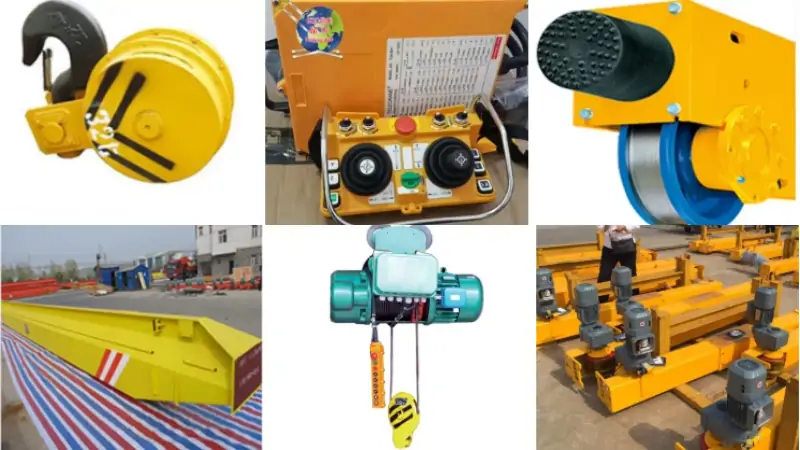
    Marine Corrosion Protection

    Surface preparation, coating system, dry-film thickness, edge treatment, enclosed-space protection, fastener materials and electrical enclosures must match the coastal exposure category and required coating life. Inspection access and touch-up procedures form part of lifecycle planning.

    Henan Mine Crane rail-mounted shipbuilding gantry crane at a coastal facility
    Large-span shipyard crane structure operating on dedicated ground-level rails. Wind, corrosion, drainage, rail geometry and storm anchoring are project-level design inputs.

    Control, Monitoring and Safety Functions

    Coordinated Motion Control

    PLC and variable-frequency control can coordinate selected hooks, trolleys and long-travel drives. The control narrative should define permissible simultaneous motions, speed limits and recovery from a failed device.

    Load and Position Monitoring

    Load values, hook positions, trolley positions, crane travel, wind speed and selected drive conditions can be displayed and recorded. Alarm and shutdown limits require defined acceptance tests.

    Hoisting and Travel Protection

    Overload protection, hoisting limits, travel limits, brakes, buffers, emergency stops, anti-collision and overspeed protection are specified for the selected mechanisms and applicable requirements.

    Skew Control and Rail Protection

    Long-span crane travel requires coordinated drives, rail-position monitoring where specified, wheel-flange protection and clear maintenance criteria for alignment and skew trends.

    Current product data lists synchronization accuracy up to ≤3 mm for a specified coordinated-lifting configuration. The final tolerance, measuring method, load condition, permitted duration and response to deviation must be defined contractually before this value becomes an acceptance requirement.

    Engineering, Manufacturing and Documentation

    A shipbuilding crane purchase requires an agreed design basis and inspection plan before fabrication. Henan Mine Crane can establish the equipment scope around the shipyard layout, lift cases, local regulations and required project documents.

    Design Deliverables

    • Design criteria and load-case schedule
    • General arrangement and hook-coverage drawings
    • Wheel loads and civil-interface data
    • Electrical architecture and control narrative

    Manufacturing Controls

    • Material identification and traceability scope
    • Approved welding and inspection plan
    • Dimensional control and trial-assembly checks
    • Surface preparation and coating inspection

    Testing and Handover

    • Factory functional and control tests
    • Site commissioning and applicable load tests
    • Operating and maintenance manuals
    • Inspection records and spare-parts schedule

    Manufacturing capability and production facilities are presented in the Henan Mine Crane Factory Scene Display. The contract should identify which inspections are witnessed, which records are supplied and which criteria govern acceptance.

    Delivery, Installation and Commissioning

    Segmented Delivery Planning

    Girder and leg segmentation must match road, port, vessel and site lifting limits. Packing, lifting points, temporary supports and storage conditions are agreed before dispatch.

    Erection and Rail Verification

    Site work includes rail survey, temporary stability, structural assembly, drive alignment, electrical installation and storm-restraint commissioning under the approved erection method.

    Functional and Load Testing

    Commissioning verifies individual mechanisms, coordinated movements, limits, brakes, alarms, emergency functions and applicable load cases. A section-turning demonstration requires an agreed test method.

    Lifecycle Access and Spares

    Platforms, access routes, isolation points and component-removal paths should be reviewed during design. Initial spares and long-term critical spares follow the operating and maintenance strategy.

    Shipyard Gantry Crane Price and Project Cost

    An early equipment budget of approximately US$200,000–US$1,000,000+ may be used for initial screening of new heavy shipbuilding gantry cranes. This range is not a fixed Henan Mine Crane selling price and does not represent an installed 450–1,000 t long-span Goliath system.

    Large shipyard cranes are individually engineered. Very high capacity, dual-trolley lifting, section-turning systems, long spans, high lifting heights, high-voltage power and extensive coastal protection can move the project into a multi-million-dollar budget before foundations, rails, international transport, erection and commissioning are complete.

    Cost Package Typical Inclusions Principal Cost Drivers
    Crane Equipment Bridge, legs, wheel groups, trolleys, hoists, controls and specified safety functions Capacity, span, height, duty, trolley layout, wind and corrosion requirements
    Lifting and Turning System Multiple hooks, spreader beams, equalizing equipment, sensors and coordinated controls Block geometry, hook spacing, turning load cases and acceptance tolerance
    Civil and Electrical Interfaces Foundations, rails, storm anchors, drainage, substation, feeder and power distribution Soil, wheel loads, runway length, voltage and site construction conditions
    Delivery and Site Work Packing, inland transport, ocean freight, unloading, erection, tests, training and handover Shipment size, route, installation cranes, labor, schedule and test scope

    A valid quotation comparison uses the same capacity definitions, lift cases, span, height, working class, wind basis, coating system, control scope, power interface, documentation, delivery term and site-service boundary. Equipment-only pricing is not directly comparable with a complete installed-system proposal.

    Shipyard Gantry Crane FAQ

    What is the difference between a shipyard gantry crane and a general gantry crane?

    A shipyard crane is designed around hull blocks, very large spans, coordinated lifting points and possible section turning. A general gantry crane normally performs single-hook or main-and-auxiliary-hook handling without the complete shipbuilding process package.

    How much does a shipyard gantry crane cost?

    An initial new-equipment screening range is approximately US$200,000–US$1,000,000+. Large 450–1,000 t long-span cranes with coordinated lifting and complete site works require individual engineering and can become multi-million-dollar projects.

    Can one crane lift and turn a complete hull block?

    Yes, where the crane, trolley arrangement, hooks, lifting attachments and control system are engineered for every stage of the turning operation. The turning capacity can be lower than the combined straight-lifting capacity.

    Why are rigid and flexible legs used?

    The rigid leg provides lateral restraint, while the flexible leg accommodates the deformation behavior of a very long bridge and reduces unwanted restraint. Final geometry follows the structural analysis and site layout.

    What information is required for hull-block turning design?

    Required data includes block mass, dimensions, centre of gravity, lifting-lug positions, allowable forces, rigging arrangement, initial and final orientations, turning sequence, landing supports and environmental limits.

    Can the crane operate in coastal wind and salt spray?

    It can be configured for the specified coastal environment. The design must state operating and storm wind criteria, parking procedure, clamps and anchors, coating system, enclosure ratings, materials and inspection intervals.

    Are rails and foundations included in the crane price?

    Only when expressly stated. The commercial schedule should separate crane equipment, rails, civil works, storm anchors, electrical infrastructure, transport, erection, commissioning and tests.

    What power supply is required?

    Power depends on crane size and site infrastructure. Current product data includes low-voltage three-phase supplies for selected models and 10 kV, 50 Hz for very large listed configurations. The final electrical design must match the destination grid and operating demand.

    How is synchronized lifting accepted?

    The technical agreement should state the measured variable, tolerance, load condition, travel distance, sampling method, alarm threshold and shutdown response. Factory and site tests then verify the agreed control performance.

    What information is required for a formal quotation?

    Provide maximum and typical loads, turning cases, block drawings, span, lifting height, runway length, dock cross-section, duty, wind and corrosion data, power supply, project location, required standards, inspection plan and delivery and installation scope.

    Request A Shipyard Gantry Crane Quote

    A project-specific proposal is prepared from the ship block data, dock layout, operating cases and required commercial boundary. The RFQ should include:

    • Maximum and typical block loads, dimensions, centres of gravity and lifting points.
    • Straight-lifting, combined-lifting and section-turning cases.
    • Span, lifting height, runway length, dock cross-section and required hook coverage.
    • Operating cycle, wind data, coastal exposure and site power supply.
    • Project location, governing standards, inspections, delivery terms and installation scope.
    Henan Mine CraneDiscuss your requirements ↗
  • Scrap Handling Crane

    Scrap Handling Crane

    Scrap Handling Crane

    Henan Mine Crane · Scrap Yard and Recycling Lifting Systems

    Scrap Handling Crane

    Custom overhead and gantry crane systems with lifting magnets, orange-peel grabs, hooks or dual-purpose attachments for steel mills, recycling yards, foundries, ports and waste-processing facilities.

    Henan Mine Crane engineers the crane, attachment, power and control system around the actual scrap composition, bulk density, maximum piece size, temperature, required throughput, operating cycle, yard layout and destination requirements.

    Henan Mine Crane electromagnetic overhead crane for scrap metal handling
    A scrap handling crane is specified as a complete system. Crane duty, attachment tare, material behavior and the pickup-to-discharge cycle are evaluated together.

    Applications
    Scrap yards, steel mills, foundries, ports and recycling plants

    Attachment options
    Magnet, orange-peel grab, hook or dual-purpose system

    Critical scrap data
    Composition, density, piece size, temperature and throughput

    Commercial basis
    Defined technical scope and project quotation

    Crane Systems for Scrap Metal Handling

    A scrap handling crane transfers loose, bundled or irregular metal between stockpiles, railcars, trucks, shredders, shears, charging boxes, sorting stations, furnaces and outbound loading areas. The system may use an overhead bridge crane inside a building or a gantry crane for an outdoor yard. The correct arrangement depends on the operating envelope, required coverage, material stream and facility structure.

    The lifting device is selected before the final crane capacity is approved. A lifting magnet is generally suitable for verified ferromagnetic scrap with predictable magnetic response. An orange-peel grab is generally suitable for mixed, irregular, contaminated or non-ferrous material that cannot be lifted reliably by magnetism. Hook service remains useful for maintenance, containers, bundles and approved rigging tasks.

    Scrap service can combine high cycle rates, impact, dust, sharp edges, heat and highly variable loads. The design therefore addresses the complete load spectrum, attachment self-weight, shock and extraction forces, visibility, exclusion zones, power-loss behavior, wear protection and planned maintenance. A general-purpose crane should not be converted to scrap duty solely by adding a magnet or grab without structural, mechanical, electrical and operational verification.

    Scrap Handling Crane Configurations

    01 · Electromagnetic Overhead Crane

    A circular or purpose-arranged magnet lifts ferrous scrap without manual slinging. Magnet geometry, duty cycle, magnetic test results, rectifier, cable management, current monitoring, heat dissipation and power-loss holding strategy are matched to the scrap stream. This system is not suitable for aluminum, copper or other non-ferrous material.

    02 · Orange-Peel Grab Overhead Crane

    A multi-tine orange-peel grab penetrates and closes around loose, irregular or mixed scrap. Tine count and profile, open diameter, volume, closing force, grab tare, wear plate, rotator and rope, hydraulic or electro-hydraulic drive are selected from the material and cycle. Dynamic pull-out loads require specific verification.

    03 · Magnet and Hook Dual-Purpose Crane

    A magnet handles ferrous scrap while a hook supports approved maintenance, rigging or unit-load work. The magnet, lifting beam and hook have separate operating rules and rated-load conditions. Changeover, attachment recognition, control permissives and stored attachment locations are defined in the operating concept.

    04 · Grab and Hook Dual-Purpose Crane

    A detachable grab expands a crane from bulk handling to conventional hook service. The arrangement is appropriate where scrap transfer is important but not the only process. Hook capacity, grab capacity, reeving, hydraulic or electrical connection, attachment parking and changeover risk are specified separately.

    05 · Automated Scrap Handling Crane

    Laser scanning or machine vision, absolute position feedback, pile mapping, anti-sway, path planning, hopper interlocks and collision avoidance can support semi-automatic or unmanned transfer. Automation is based on a defined material envelope, controlled work zones and documented recovery modes.

    06 · Outdoor Scrap Gantry Crane

    A rail-mounted gantry crane covers outdoor stockpiles, loading lanes or port yards without relying on a complete building runway. Wind operating limits, storm anchoring, lightning protection, corrosion class, drainage, rail foundations and vehicle segregation become part of the project scope.

    Compare Magnet, Orange-Peel Grab and Dual-Purpose Systems

    Attachment selection is governed by scrap behavior and the required operation, not by crane tonnage alone. Representative material samples and the full handling route should be reviewed before the crane and attachment are approved.

    Lifting system Best-matched scrap Primary advantage Critical engineering issue Commercial fit
    Electromagnet Predominantly ferromagnetic, loose steel scrap with verified pickup behavior Fast pickup and release without mechanical tine penetration Air gaps, material temperature, power failure, residual magnetism and dropped-load zone Dedicated high-cycle ferrous scrap flow
    Orange-peel grab Mixed, irregular, non-ferrous, contaminated or weakly magnetic scrap Mechanical capture across a wider material range Penetration, closing force, fill factor, tine wear and dynamic extraction load Mixed recycling feed and irregular scrap piles
    Hook with approved rigging Bundles, bins, charging boxes, maintenance items and defined lifting points Flexible for unit loads and maintenance work Manual rigging exposure, sling protection and slower cycle Low-frequency or secondary operations
    Magnet and hook Ferrous scrap plus planned unit-load or maintenance service Two defined operating modes on one crane Attachment changeover and separate capacity/control states Yards requiring operational flexibility
    Grab and hook Bulk scrap plus bins, bundles or maintenance lifts Mechanical handling of mixed material with hook capability Grab parking, connection, reeving and mode interlocks Multi-purpose industrial facilities

    Selection rule: choose a magnet only when the scrap is sufficiently ferromagnetic and representative pickup tests confirm the required holding performance. Choose an orange-peel grab when the material is mixed, irregular, non-ferrous or mechanically interlocked. Where the material stream changes frequently, a dual-purpose or quick-change concept can be evaluated with separate ratings, controls and safe attachment storage.

    Calculate Capacity, Grab Volume and Required Throughput

    The crane rating covers the total suspended load. For magnetic service, this includes the maximum permitted scrap payload, magnet, lifting beam, cable and all suspended interfaces. For grab service, it includes the actual scrap payload, complete grab tare, rotator or power unit and rigging.

    Magnet crane capacity ≥ maximum scrap payload + magnet/beam/cable tare + suspended interfaces
    Grab crane capacity ≥ maximum scrap payload + complete grab/rotator/power-unit tare + suspended interfaces

    Preliminary orange-peel grab volume is derived from the required payload divided by loose bulk density and the achievable fill factor. The result is then checked against tine penetration, open diameter, pile geometry, maximum piece size and discharge opening. A large nominal volume does not guarantee a larger useful payload if the material bridges or the tines cannot close effectively.

    Interlocked scrap can resist the grab as it is extracted from the pile. Pull-out force can exceed the static grab-plus-payload weight, so hoist, rope, drum, structure, brakes and control logic are checked for the defined extraction and snatch condition. The operator or automatic sequence should prevent dragging and uncontrolled side pull.

    Required throughput is evaluated from average useful payload per cycle and the complete cycle time: approach, lower, penetrate or magnetize, close or pick, hoist, travel, position, discharge, return and delays. A realistic calculation includes pile changes, partial grabs, vehicle access, hopper availability and operator or automation performance.

    Scrap Material and Application Matrix

    Scrap or process Preferred starting point Data requiring confirmation Design implication
    Heavy melting steel and plate offcuts Magnet after pickup testing; orange-peel grab for irregular interlocked piles Piece size, thickness, air gaps, pile interlocking and maximum single-piece mass Magnet geometry or reinforced penetrating tines and extraction-load allowance
    Shredded steel and turnings Magnet for verified clean ferrous feed; grab for mixed or contaminated feed Bulk density, moisture, oil, fines, tramp material and magnetic response Magnet cooling and release behavior or semi-closed tine profile
    Automotive bodies and demolition scrap Orange-peel grab, with magnet evaluated only for a verified segregated stream Long projections, enclosed fluids, non-metallic content and unstable centers of gravity Large open span, secure closure, controlled acceleration and generous clearance envelope
    Stainless, aluminum, copper and mixed non-ferrous scrap Orange-peel grab or other mechanical attachment Alloy mix, piece form, value segregation and contamination limits Mechanical capture; do not base the lifting plan on magnetic attraction
    Bundles, bins and charging boxes Hook, beam or approved container attachment Rated lifting points, dimensions, center of gravity and rigging access Defined below-the-hook device and positive load engagement
    Hot slag or high-temperature metallic residue Dedicated temperature-rated system after process risk assessment Maximum material and radiant temperature, flame, dust and emergency conditions Heat shielding, protected electrics, suitable rope and lubrication, remote operation and special inspection

    Technical Specification Framework

    Scrap crane specifications are finalized from the material study, process layout and duty calculation. A complete technical schedule should define the crane, attachment and facility interfaces rather than listing only rated capacity, span and lifting height.

    Henan Mine Crane uses the confirmed design basis to prepare the general arrangement, load and speed schedule, wheel reactions, attachment data, control philosophy, electrical single-line information, safety functions, inspection plan and commercial boundary.

    Henan Mine Crane heavy-duty grab overhead crane structure
    A heavy-duty grab crane platform can be configured for the required attachment, duty, control mode and material-handling cycle.
    Specification item Required project input Engineering output
    Rated capacity Maximum useful scrap payload and complete attachment tare Total suspended rating and separate capacity for each operating mode
    Span and travel Building or yard layout, rail centers, approaches and obstacles Crane geometry, end approaches, hook or attachment coverage and rail reactions
    Lifting height and headroom Pile height, vehicle or hopper elevation, attachment depth and roof level Required hook path, rope travel, upper clearance and maintenance access
    Working duty Lifts per hour, shifts, operating days, load spectrum and design life Crane and mechanism classifications based on the actual duty calculation
    Magnet system Scrap test data, temperature, duty cycle and loss-of-power risk assessment Magnet arrangement, rectifier, cable reel, current monitoring, backup and release logic
    Orange-peel grab Density, fill factor, piece size, pile geometry and desired payload Volume, tine profile, open span, closing force, wear package and drive system
    Motion speeds Required tonnes per hour, travel distances and positioning tolerance Hoist, trolley and bridge speeds with VFD acceleration and micro-speed where required
    Control mode Visibility, operator location, automation level and process interfaces Cabin, radio remote, control room, semi-automatic or automatic operation
    Environment Temperature, dust, fumes, corrosion, rainfall, wind and hazardous-area classification Enclosures, cooling or heating, coating, sealing, wind protection and component selection
    Codes and acceptance Destination regulations, purchaser specification and inspection requirements Agreed crane, electrical and below-the-hook-device code matrix and test plan

    Published Henan Mine Crane reference families include electromagnetic overhead cranes rated 5–32 t including the magnet, with 10.5–31.5 m spans, 6–30 m lifting heights and project-selected duty; intelligent four-rope grab cranes rated 5–50 t with A6–A8 duty; and electromagnetic-hook gantry cranes rated 10–50 t with 18–35 m spans. These are product-family reference ranges, not a substitute for scrap-specific capacity, attachment and duty verification.

    Controls, Safety and Environmental Protection

    Crane Motion Protection

    Overload protection, upper and lower hoist limits, travel limits, service and emergency brakes, buffers, anti-derailment measures, controlled acceleration and defined emergency-stop functions protect the lifting and travel system.

    Magnet Load-Retention Strategy

    Current and voltage monitoring, temperature supervision, backup energy or electro-permanent technology, alarm logic and controlled emergency placement are selected from the risk assessment. Personnel and vehicles remain outside the potential drop zone.

    Grab and Rotator Protection

    Closing pressure or rope force, tine position, hydraulic pressure, hose routing, rotator condition and attachment state can be monitored. Control logic limits side pulling, dragging, incomplete closure and unsafe travel near obstacles.

    Operator Visibility and Segregation

    Cabin position, camera coverage, radio remote control, warning devices, barriers, vehicle routes and access interlocks are coordinated with the pile, loading lanes and discharge points to maintain a controlled operating zone.

    Automation and Recovery

    Pile scanning, position encoders, anti-sway, obstacle detection, collision avoidance, hopper or furnace interlocks and attachment-state permissives support automatic work. Manual fallback and controlled recovery are included in the functional design.

    Dust, Heat and Outdoor Exposure

    Protected enclosures, filtered or conditioned cabins, heat shielding, high-temperature cabling, corrosion-resistant coating, sealed components, wind alarms, storm anchoring and lightning protection are selected for the site environment.

    Henan Mine Crane unmanned grab bucket overhead crane project
    Unmanned grab crane technology combines pile scanning, position feedback, automatic path control and controlled fallback operation.

    Verified Project Case

    Unmanned Grab Crane for Steel-Plant Material Handling

    Henan Mine Crane developed unmanned grab crane systems for metallurgical bulk-material applications, including the 250,000-ton rotary kiln project at Baowu Group’s Shaoguan Steel Plant and the No. 2 blast-furnace renovation at Ningbo Steel. The platform integrates three-dimensional pile scanning, absolute position feedback, automatic positioning, obstacle avoidance and remote, cabin and wireless control modes.

    The control architecture creates a material-pile model and coordinates pickup, travel and discharge positions with the production process. Multiple operating modes provide a defined recovery path when automatic operation is interrupted or site intervention is required.

    This published case demonstrates automation capability for complex metallurgical material piles. A scrap-yard version requires separate validation of the orange-peel grab geometry, scrap density, maximum piece size, dynamic extraction forces, wear package, throughput and controlled drop zones.

    View Case Details →

    Engineering Deliverables and Quality Records

    A procurement-ready proposal defines the complete scrap handling system and its interfaces. Henan Mine Crane can prepare project-specific engineering and manufacturing records for technical approval, installation and acceptance.

    Design basis

    Approved scrap schedule, bulk-density range, throughput, load spectrum, duty calculation, layout, wheel reactions, clearances and code matrix.

    Attachment engineering

    Magnetic test basis or grab volume and tine design, total tare, load path, controls, interlocks, power-loss state, wear parts and rated-load marking.

    Manufacturing records

    Material traceability, welding procedures, welder qualifications, dimensional inspection, NDT reports and component certificates as contractually required.

    Factory acceptance

    Functional checks, brake and limit tests, control simulation, attachment cycles, magnet or grab verification and witnessed testing when included in the contract.

    Review Henan Mine Crane manufacturing equipment and quality capabilities →

    Installation, Commissioning and Maintenance Planning

    Before Manufacture

    Confirm runway or foundation geometry, supporting-structure capacity, clearances, pile and discharge coordinates, vehicle routes, power supply, process interfaces, access for attachment maintenance and site responsibilities.

    Erection and Commissioning

    Coordinate unloading, erection method, rail survey, mechanical and electrical installation, no-load testing, proof load, attachment functions, representative scrap trials, process interlocks and operator training.

    Planned Maintenance

    Maintain brakes, ropes, drums, wheels, rails, reducers, fasteners and electrics together with magnet cables and backup power or grab tines, pins, bushings, ropes, rotator, hoses, cylinders and wear plates.

    Commissioning should include representative low-density and high-density scrap, difficult pile conditions, maximum operating reach, magnet power-loss or grab-recovery behavior, control-mode transfer, emergency functions and acceptance criteria agreed before shipment.

    Scrap Handling Crane Price and Supply Scope

    Scrap handling crane price cannot be established from crane tonnage alone. Span, lifting height, working duty, magnet or grab type, total attachment tare, throughput, control mode, environmental protection, runway scope, destination and installation responsibility all affect the commercial result.

    The following September 2026 observations are preliminary market budget bands in US dollars. They are not a Henan Mine Crane quotation and are not directly comparable without matching design code, duty, material test basis, attachment scope, delivery term, condition and included services.

    Budget item Indicative market range Commercial interpretation
    Conventional 10–20 t double-girder base crane Approximately US$12,000–US$60,000 across observed factory guides Base equipment only; scrap attachment, heavy-duty design, special controls and site scope are additional
    Electromagnetic overhead crane equipment listings Approximately US$3,000–US$95,000 across selected online offers The unusually wide range reflects incomplete scopes, capacities and listing quality; it is not a reliable turnkey scrap-yard budget
    Individual industrial scrap lifting magnet Common selected listing level approximately US$1,000–US$6,000 per unit Does not include beam, rectifier, cable reel, backup energy, controls, material testing or crane integration
    Orange-peel grab Approximately US$3,000–US$80,000+ from light rope-operated units to large heavy-duty hydraulic systems Volume, tare, drive, tine material, rotator, hydraulic package, inspection and certification cause major price differences
    Complete heavy-duty or automated scrap handling crane Project quotation Requires confirmed material data, process layout, throughput, duty, safety concept, interface matrix and delivery boundary

    Define the Quotation Boundary

    Crane equipment Bridge or gantry structure, trolley, hoist, drives, electrics, controls, access and crane safety devices
    Scrap attachment Magnet, beam, rectifier, backup power and cable system or orange-peel grab, rotator and power package
    Automation package Pile scanning, positioning, anti-sway, cameras, PLC, network, MES/WMS/DCS interfaces and functional testing
    Runway and civil works Rails, supporting steel, columns, foundations, conductor system, drainage, platforms and building checks
    Delivery and installation Packing, inland transport, ocean freight, insurance, unloading, erection, supervision and site lifting equipment
    Testing and support Proof load, representative scrap trials, third-party inspection, commissioning, training, spares and warranty boundary

    A valid bid comparison uses the same scrap schedule, useful payload, total suspended capacity, span, height, working duty, attachment and safety scope, automation functions, applicable code, Incoterm, currency, quotation validity and site responsibilities.

    Scrap Handling Crane RFQ Information

    Submit scrap categories and proportions; loose bulk density; typical and maximum piece size and individual mass; ferrous content; temperature, moisture, oil and contamination; representative photos or samples; required tonnes per hour; pickup and discharge layout; span, travel length, lifting height and approaches; operating hours and load spectrum; runway or foundation data; power supply; preferred magnet, grab or dual-purpose arrangement; control and automation interfaces; destination and applicable code; and required freight, installation, testing, training and spare-parts scope.

    Send Scrap Handling Requirements
    A defined crane, attachment, interface schedule and itemized commercial scope can then be prepared.

    Frequently Asked Questions

    Which is better for scrap handling: a magnet or an orange-peel grab?

    A magnet is generally preferable for verified ferromagnetic scrap with predictable pickup behavior. An orange-peel grab is generally preferable for mixed, irregular, contaminated, non-ferrous or weakly magnetic material. Representative scrap testing should confirm the selection.

    Can one scrap crane use both a magnet and a grab?

    Yes, if the trolley, reeving, power supply, cable management, controls and attachment parking are designed for both. Each attachment has a separate tare, rated payload, operating mode and inspection requirement.

    How is scrap handling crane capacity calculated?

    Capacity includes the maximum useful scrap payload plus the complete magnet, beam, grab, rotator, power unit and suspended interface tare. Dynamic extraction, impact, eccentricity, wheel loads and runway or foundation capacity are also checked.

    How is orange-peel grab volume selected?

    Preliminary volume follows target payload, loose bulk density and expected fill factor. Tine penetration, open span, maximum piece size, pile geometry, closing force, discharge opening and complete grab tare then determine the final design.

    What happens if power fails while a scrap magnet is lifting?

    The project risk assessment defines backup energy, alarm and current monitoring, emergency placement, controlled exclusion zones and the required load-retention strategy. Electro-permanent technology may also be evaluated for suitable material and process conditions.

    Can a scrap handling crane be automated?

    Yes. Pile scanning, position feedback, path planning, anti-sway, attachment-state monitoring, obstacle detection, hopper or furnace interlocks and MES, WMS or DCS communication can be integrated within a defined functional specification.

    What working duty is required for a scrap crane?

    Continuous scrap service often requires a heavy-duty A6–A8 solution, but the final crane and mechanism classifications are calculated from operating hours, lifts per hour, load spectrum, travel distances, attachment actions and design life.

    Can a scrap crane operate outdoors?

    Yes. An outdoor bridge or gantry crane can be configured with suitable corrosion protection, enclosure ratings, wind alarms, operating limits, storm anchoring, lightning protection, drainage and temperature controls for the destination.

    How much does a scrap handling crane cost?

    Observed factory guides place conventional 10–20 t double-girder base cranes at approximately US$12,000–US$60,000 before the scrap attachment and special controls. Large grabs, magnet systems, heavy-duty design, automation, runway, freight and installation require an itemized project quotation.

    What information is needed for a scrap crane quotation?

    Provide material categories, density, piece size, ferrous content, temperature, photos, throughput, operating cycle, pile and discharge layout, span, height, duty, power supply, control requirements, destination, applicable code and the required delivery and installation boundary.

    Technical content record

    Prepared by Henan Mine Crane Technical Sales · Technically reviewed by Crane Engineering · Last reviewed September 2026

    Related Scrap Handling Crane Products

    Henan Mine Crane electromagnetic bridge crane for ferrous scrap handling

    Electromagnetic Bridge Crane

    Magnetic overhead crane platform for approved ferrous scrap, billets, plate, pipe and other magnetically responsive loads.

    View Details →

    Henan Mine Crane intelligent grab double girder overhead crane

    Intelligent Grab Overhead Crane

    Heavy-duty four-rope grab crane family with PLC control and optional production-system integration for bulk handling.

    View Details →

    Henan Mine Crane grab and hook dual purpose overhead crane

    Grab and Hook Dual-Purpose Crane

    Flexible overhead crane for bulk material handling and approved hook lifting within separately defined operating modes.

    View Details →

    Henan Mine Crane electromagnetic hook double girder gantry crane

    Electromagnetic Hook Gantry Crane

    Outdoor double-girder gantry crane with magnetic and hook handling modes for steel yards, ports and recycling facilities.

    View Details →

    Henan Mine Crane double girder bridge crane for custom scrap attachment

    Double-Girder Bridge Crane

    Customizable overhead crane platform for hook, magnet, grab, beam or other engineered below-the-hook equipment.

    View Details →

    Henan Mine Crane double girder gantry crane for outdoor scrap yard

    Double-Girder Gantry Crane

    Outdoor gantry platform for stockyard coverage where a complete building runway is unavailable or impractical.

    View Details →

    Engineered Scrap Handling Proposal

    Request a Scrap Handling Crane Quote

    Provide the scrap schedule, material samples or photos, bulk density, piece-size range, required throughput, pickup and discharge layout, operating cycle, facility dimensions, duty, controls, destination and delivery boundary. Henan Mine Crane will develop the crane and attachment as one defined handling system.

    Henan Mine CraneDiscuss your requirements ↗
  • Scrap Handling Crane

    Scrap Handling Crane

    Scrap Handling Crane

    Henan Mine Crane · Scrap Yard and Recycling Lifting Systems

    Scrap Handling Crane

    Custom overhead and gantry crane systems with lifting magnets, orange-peel grabs, hooks or dual-purpose attachments for steel mills, recycling yards, foundries, ports and waste-processing facilities.

    Henan Mine Crane engineers the crane, attachment, power and control system around the actual scrap composition, bulk density, maximum piece size, temperature, required throughput, operating cycle, yard layout and destination requirements.

    Henan Mine Crane electromagnetic overhead crane for scrap metal handling
    A scrap handling crane is specified as a complete system. Crane duty, attachment tare, material behavior and the pickup-to-discharge cycle are evaluated together.

    APPLICATIONS

    Steel Mills, Scrap Yards, Recycling Plants & Foundries

    LIFTING SYSTEMS

    Magnet, Orange-Peel Grab, Hook or Dual Purpose

    DESIGN BASIS

    Material, Throughput, Duty, Layout & Environment

    PRICE BASIS

    Engineered Project Quotation

    What Is a Scrap Handling Crane?

    A scrap handling crane, also specified as a scrap yard crane or scrap crane, transfers loose, bundled or irregular metal between stockpiles, railcars, trucks, shredders, shears, charging boxes, sorting stations, furnaces and outbound loading areas. The system may use an overhead bridge crane inside a building or a gantry crane for an outdoor yard. The correct arrangement depends on the operating envelope, required coverage, material stream and facility structure.

    The lifting device is selected before the final crane capacity is approved. A lifting magnet is generally suitable for verified ferromagnetic scrap with predictable magnetic response. An orange-peel grab is generally suitable for mixed, irregular, contaminated or non-ferrous material that cannot be lifted reliably by magnetism. Hook service remains useful for maintenance, containers, bundles and approved rigging tasks.

    Scrap service can combine high cycle rates, impact, dust, sharp edges, heat and highly variable loads. The design therefore addresses the complete load spectrum, attachment self-weight, shock and extraction forces, visibility, exclusion zones, power-loss behavior, wear protection and planned maintenance. A general-purpose crane should not be converted to scrap duty solely by adding a magnet or grab without structural, mechanical, electrical and operational verification.

    Scrap Handling Crane Configurations

    01 · Electromagnetic Overhead Crane

    A circular or purpose-arranged magnet lifts ferrous scrap without manual slinging. Magnet geometry, duty cycle, magnetic test results, rectifier, cable management, current monitoring, heat dissipation and power-loss holding strategy are matched to the scrap stream. This system is not suitable for aluminum, copper or other non-ferrous material.

    02 · Orange-Peel Grab Overhead Crane

    A multi-tine orange-peel grab penetrates and closes around loose, irregular or mixed scrap. Tine count and profile, open diameter, volume, closing force, grab tare, wear plate, rotator and rope, hydraulic or electro-hydraulic drive are selected from the material and cycle. Dynamic pull-out loads require specific verification.

    03 · Magnet and Hook Dual-Purpose Crane

    A magnet handles ferrous scrap while a hook supports approved maintenance, rigging or unit-load work. The magnet, lifting beam and hook have separate operating rules and rated-load conditions. Changeover, attachment recognition, control permissives and stored attachment locations are defined in the operating concept.

    04 · Grab and Hook Dual-Purpose Crane

    A detachable grab expands a crane from bulk handling to conventional hook service. The arrangement is appropriate where scrap transfer is important but not the only process. Hook capacity, grab capacity, reeving, hydraulic or electrical connection, attachment parking and changeover risk are specified separately.

    05 · Automated Scrap Handling Crane

    Laser scanning or machine vision, absolute position feedback, pile mapping, anti-sway, path planning, hopper interlocks and collision avoidance can support semi-automatic or unmanned transfer. Automation is based on a defined material envelope, controlled work zones and documented recovery modes.

    06 · Outdoor Scrap Gantry Crane

    A rail-mounted gantry crane covers outdoor stockpiles, loading lanes or port yards without relying on a complete building runway. Wind operating limits, storm anchoring, lightning protection, corrosion class, drainage, rail foundations and vehicle segregation become part of the project scope.

    Compare Magnet, Orange-Peel Grab and Dual-Purpose Systems

    Attachment selection is governed by scrap behavior and the required operation, not by crane tonnage alone. Representative material samples and the full handling route should be reviewed before the crane and attachment are approved.

    Lifting system Best-matched scrap Primary advantage Critical engineering issue Commercial fit
    Electromagnet Predominantly ferromagnetic, loose steel scrap with verified pickup behavior Fast pickup and release without mechanical tine penetration Air gaps, material temperature, power failure, residual magnetism and dropped-load zone Dedicated high-cycle ferrous scrap flow
    Orange-peel grab Mixed, irregular, non-ferrous, contaminated or weakly magnetic scrap Mechanical capture across a wider material range Penetration, closing force, fill factor, tine wear and dynamic extraction load Mixed recycling feed and irregular scrap piles
    Hook with approved rigging Bundles, bins, charging boxes, maintenance items and defined lifting points Flexible for unit loads and maintenance work Manual rigging exposure, sling protection and slower cycle Low-frequency or secondary operations
    Magnet and hook Ferrous scrap plus planned unit-load or maintenance service Two defined operating modes on one crane Attachment changeover and separate capacity/control states Yards requiring operational flexibility
    Grab and hook Bulk scrap plus bins, bundles or maintenance lifts Mechanical handling of mixed material with hook capability Grab parking, connection, reeving and mode interlocks Multi-purpose industrial facilities

    Selection rule: choose a magnet only when the scrap is sufficiently ferromagnetic and representative pickup tests confirm the required holding performance. Choose an orange-peel grab when the material is mixed, irregular, non-ferrous or mechanically interlocked. Where the material stream changes frequently, a dual-purpose or quick-change concept can be evaluated with separate ratings, controls and safe attachment storage.

    Match the Scrap Handling Crane to the Process Area

    A scrap handling crane should be selected from the complete material route: receiving, unloading, sorting, stockpiling, processing, furnace charging and outbound transfer. The crane layout must cover every pickup and discharge coordinate without dragging the attachment, side pulling the load or carrying scrap above occupied traffic lanes.

    The rated capacity includes the useful scrap payload and the complete magnet, beam, cable, grab, rotator, power unit, hook block and suspended interface tare. For grab service, interlocked scrap can generate extraction forces above the static grab-plus-payload mass. Hoist, rope, drum, brakes, trolley and bridge structure are therefore checked against the defined operating condition.

    Throughput is established from average useful payload per cycle, realistic pickup efficiency, travel distance, hoisting height, discharge time, attachment action and expected delay. Nominal crane speed alone does not establish tonnes per hour.

    automated grab overhead crane operating above an industrial material yard
    The crane envelope, attachment and control mode are coordinated with stockpiles, loading lanes, hoppers, processing equipment and safe set-down positions.
    Process Area Typical Material Recommended Starting Point Critical Interfaces Design Emphasis
    Truck or railcar receiving Loose ferrous, demolition or mixed scrap Magnet for verified ferrous feed; orange-peel grab for mixed feed Vehicle profile, side clearance, unloading sequence and traffic exclusion Fast unloading, visibility, controlled drop and safe vehicle separation
    Sorting and stockpile bays Segregated grades, plate offcuts, turnings or non-ferrous scrap Magnet, grab or dual-purpose system by material schedule Pile height, bay walls, contamination control and grade separation Coverage, repeatable placement, pile stability and attachment wear
    Shredder or shear feed Irregular, interlocked and variable-size scrap Heavy-duty orange-peel grab with suitable tine profile Hopper opening, feed permissive, machine state and extraction loads Penetration, closure, anti-snag logic and cycle consistency
    Charging-box or furnace supply Prepared ferrous scrap, bundles or charging containers Magnet, hook attachment or project-specific charging device Charge recipe, box geometry, furnace zone, heat and process interlocks Batch accuracy, safe route, availability and controlled release
    Baling and dispatch Bales, bundles, bins and prepared unit loads Hook, beam, magnet or positive-engagement attachment Lifting points, center of gravity, truck deck and stacking plan Load security, placement accuracy and damage prevention
    Outdoor scrap yard Inbound stock, processing feed and outbound scrap Rail-mounted double-girder gantry crane with magnet or grab Rail foundation, wind, drainage, corrosion, lightning and storm parking Full yard coverage, weather protection and secure out-of-service condition

    Technical Selection and Specification Framework

    A procurement specification should define the material schedule, operating cycle and acceptance criteria before a price is requested. Values published for a standard crane family are only a starting point; the useful payload, complete attachment tare, dynamic forces and facility interfaces establish the project configuration.

    Specification Item Information to Provide Engineering Decision Why It Changes the System
    Scrap composition Ferrous percentage, alloy mix, contamination, moisture, oil and representative photos or samples Magnet, grab, hook or dual-purpose concept Determines whether magnetic pickup is reliable or mechanical capture is required
    Density and piece envelope Loose bulk density, typical/maximum piece size, maximum single-piece mass and pile interlocking Magnet geometry or grab volume, tine profile, open span and closing force Controls useful payload, fill factor, penetration and extraction load
    Rated capacity Maximum useful payload plus complete attachment and suspended-interface tare Total suspended rating and separate rating for every operating mode Controls the hoist, trolley, bridge, wheels, rail and supporting structure
    Throughput and cycle Required tonnes per hour, pickup efficiency, route length, lift, discharge and delays Payload per cycle, motion speeds, acceleration, drive rating and crane quantity Prevents a nominal-capacity crane from becoming the process bottleneck
    Span, lift and coverage Rail centers, travel length, pickup/discharge elevations, approaches and obstacles Bridge or gantry geometry, headroom, rope travel and maintenance access Determines steel weight, end approaches, wheel loads and usable yard coverage
    Duty and design life Lifts per hour, shifts, annual hours, load spectrum, starts and attachment actions Crane/mechanism classifications, fatigue basis, motor and brake thermal rating Scrap service is selected by repeated cyclic demand, not tonnage alone
    Material temperature Maximum scrap temperature, radiant heat, exposure duration, flame and slag risk Magnet/grab temperature rating, shielding, cable, lubrication and enclosure selection Heat changes magnetic performance, insulation life and component reliability
    Control mode Visibility, operator location, staffing, accuracy, process signals and automation objective Cabin, radio remote, central control, assisted or unmanned operation Changes sensing, communications, zoning, recovery and acceptance testing
    Site environment Dust, fumes, corrosion, indoor/outdoor service, wind, rain, temperature and altitude Enclosures, cooling, filtration, coating, wind devices, anchoring and lightning protection Determines component protection and out-of-service requirements
    Codes and acceptance Destination regulations, purchaser standards, inspection authority and witness points Compliance matrix, design records, FAT, proof load and process trials Defines the verification boundary required before commercial operation

    Published product-family range: Henan Mine Crane electromagnetic bridge cranes are available in 5–32 t configurations including the magnet, with project-customized spans, lifts, duty and controls. Intelligent grab crane and outdoor gantry configurations are engineered separately for the specified material and cycle.

    Controls, Safety and Environmental Protection

    Crane Motion Protection

    Overload protection, upper and lower hoist limits, travel limits, service and emergency brakes, buffers, anti-derailment measures, controlled acceleration and defined emergency-stop functions protect the lifting and travel system.

    Magnet Load-Retention Strategy

    Current and voltage monitoring, temperature supervision, backup energy or electro-permanent technology, alarm logic and controlled emergency placement are selected from the risk assessment. Personnel and vehicles remain outside the potential drop zone.

    Grab and Rotator Protection

    Closing pressure or rope force, tine position, hydraulic pressure, hose routing, rotator condition and attachment state can be monitored. Control logic limits side pulling, dragging, incomplete closure and unsafe travel near obstacles.

    Operator Visibility and Segregation

    Cabin position, camera coverage, radio remote control, warning devices, barriers, vehicle routes and access interlocks are coordinated with the pile, loading lanes and discharge points to maintain a controlled operating zone.

    Automation and Recovery

    Pile scanning, position encoders, anti-sway, obstacle detection, collision avoidance, hopper or furnace interlocks and attachment-state permissives support automatic work. Manual fallback and controlled recovery are included in the functional design.

    Dust, Heat and Outdoor Exposure

    Protected enclosures, filtered or conditioned cabins, heat shielding, high-temperature cabling, corrosion-resistant coating, sealed components, wind alarms, storm anchoring and lightning protection are selected for the site environment.

    Scrap Handling Cycle, Throughput and Automation

    A productive scrap crane repeats a controlled sequence: identify a permitted pickup zone, position the attachment, acquire a stable load, confirm attachment state, lift clear of the pile, travel through an approved route, verify the discharge equipment is ready, release the load and return without conflict.

    Automatic or assisted operation can add three-dimensional pile scanning, absolute position feedback, anti-sway control, path planning, obstacle detection, restricted zones, hopper or furnace handshakes, weight data and MES, WMS or DCS communication. The functional specification also defines ownership of every signal and the safe response to incomplete, contradictory or lost data.

    Required average useful payload per cycle = target throughput ÷ achievable cycles per hour
    Henan Mine Crane unmanned grab crane control and material handling operation
    Automated operation requires controlled work zones, reliable position feedback, validated process handshakes and a documented manual recovery mode.

    Pickup Model

    Material map, pile boundary, prohibited zones, magnet pickup or grab closure, attachment-state confirmation and incomplete-pick recovery.

    Travel Control

    Absolute position, anti-sway, acceleration limits, collision prevention, route zoning and height permissions for vehicles, walls and process equipment.

    Discharge Handshake

    Ready/permit signals, receiving-capacity check, target confirmation, controlled release, completion feedback and fault response for hoppers or charging systems.

    Fallback and Recovery

    Safe stop, retained-load response, manual takeover, camera coverage, local isolation, attachment parking, alarm history and controlled return to automatic service.

    Henan Mine Crane unmanned grab bucket overhead crane project
    Unmanned grab crane technology combines pile scanning, position feedback, automatic path control and controlled fallback operation.

    Project Application

    Unmanned Grab Crane for Steel-Plant Material Handling

    Henan Mine Crane developed unmanned grab crane systems for metallurgical bulk-material applications, including the 250,000-ton rotary kiln project at Baowu Group’s Shaoguan Steel Plant and the No. 2 blast-furnace renovation at Ningbo Steel. The platform integrates three-dimensional pile scanning, absolute position feedback, automatic positioning, obstacle avoidance and remote, cabin and wireless control modes.

    The control architecture creates a material-pile model and coordinates pickup, travel and discharge positions with the production process. Multiple operating modes provide a defined recovery path when automatic operation is interrupted or site intervention is required.

    This project application demonstrates automation capability for complex metallurgical material piles. A scrap-yard version requires separate validation of the orange-peel grab geometry, scrap density, maximum piece size, dynamic extraction forces, wear package, throughput and controlled drop zones.

    View Case Details →

    Engineering Deliverables and Quality Records

    A procurement-ready proposal defines the complete scrap handling system and its interfaces. Henan Mine Crane can prepare project-specific engineering and manufacturing records for technical approval, installation and acceptance.

    Design basis

    Approved scrap schedule, bulk-density range, throughput, load spectrum, duty calculation, layout, wheel reactions, clearances and code matrix.

    Attachment engineering

    Magnetic test basis or grab volume and tine design, total tare, load path, controls, interlocks, power-loss state, wear parts and rated-load marking.

    Manufacturing records

    Material traceability, welding procedures, welder qualifications, dimensional inspection, NDT reports and component certificates as contractually required.

    Factory acceptance

    Functional checks, brake and limit tests, control simulation, attachment cycles, magnet or grab verification and witnessed testing when included in the contract.

    Review Henan Mine Crane manufacturing equipment and quality capabilities →

    Installation, Commissioning and Maintenance Planning

    Before Manufacture

    Confirm runway or foundation geometry, supporting-structure capacity, clearances, pile and discharge coordinates, vehicle routes, power supply, process interfaces, access for attachment maintenance and site responsibilities.

    Erection and Commissioning

    Coordinate unloading, erection method, rail survey, mechanical and electrical installation, no-load testing, proof load, attachment functions, representative scrap trials, process interlocks and operator training.

    Planned Maintenance

    Maintain brakes, ropes, drums, wheels, rails, reducers, fasteners and electrics together with magnet cables and backup power or grab tines, pins, bushings, ropes, rotator, hoses, cylinders and wear plates.

    Commissioning should include representative low-density and high-density scrap, difficult pile conditions, maximum operating reach, magnet power-loss or grab-recovery behavior, control-mode transfer, emergency functions and acceptance criteria agreed before shipment.

    Scrap Handling Crane Price and Supply Scope

    Scrap handling crane price is project-specific. Capacity, span, lift, working duty, attachment tare, material temperature, throughput, automation, outdoor protection, runway or rail scope, destination and site services all change the commercial result.

    Some public online offers reviewed in September 2026 advertise basic electromagnetic overhead crane equipment at approximately US$5,000–20,000. These advertisements are market-screening figures, not a turnkey scrap-yard budget. They frequently omit the verified scrap attachment, lifting beam, rectifier, backup energy, cable system, heavy-duty classification, runway, freight, installation, commissioning and statutory acceptance.

    Quotation Level Typical Included Scope Principal Cost Drivers
    Electromagnetic Scrap Crane Bridge or gantry, trolley, magnet/beam, rectifier, cable management, controls and defined backup-power strategy Scrap pickup test, magnet duty, temperature, capacity, span, cycle rate and load-retention requirements
    Orange-Peel Grab Crane Heavy-duty crane, rope or hydraulic grab, rotator where required, power package, controls and wear parts Grab volume/tare, tine design, closing force, extraction load, duty, throughput and abrasion
    Dual-Purpose or Outdoor Gantry System Multiple attachments or operating modes, attachment parking, gantry structure, rail equipment and weather protection Changeover method, separate ratings, yard width, wind, foundations, corrosion class and storm anchoring
    Automated Scrap-Yard System Crane and attachment plus scanning, positioning, anti-sway, cameras, zoning, process handshakes and system integration Work-zone count, accuracy, throughput, software boundary, redundancy, recovery modes and site trials

    A valid bid comparison uses the same scrap schedule, useful payload, complete suspended rating, duty, attachment, safety functions, automation scope, compliance basis, trade term and site responsibility matrix.

    Crane Equipment

    Bridge or gantry, trolley, hoist, drives, electrics, controls, access and crane safety devices.

    Scrap Attachment

    Magnet, beam, rectifier and cable system or grab, rotator, hydraulic unit and wear package.

    Facility Interface

    Runway, rails, columns, foundations, electrification, drainage, process signals and access boundaries.

    Project Services

    Engineering, FAT, packing, freight, installation, commissioning, proof testing, trials and training.

    Information Required for a Scrap Handling Crane Quote

    A complete inquiry allows the crane, attachment, controls, facility interfaces and commercial boundary to be evaluated as one handling system. Preliminary information can be used for concept selection when assumptions are clearly identified.

    01 · Scrap schedule

    Material categories and proportions, ferrous content, contamination, moisture, oil and representative photographs or samples.

    02 · Density and piece size

    Loose bulk-density range, typical and maximum dimensions, maximum single-piece mass, bundles and pile interlocking.

    03 · Temperature and environment

    Scrap and ambient temperature, radiant heat, dust, fumes, corrosion, rainfall, wind, altitude and hazardous zones.

    04 · Throughput and operating cycle

    Required tonnes per hour, shifts, annual hours, lifts per hour, load spectrum, travel distances and availability target.

    05 · Layout and coverage

    Plan and sections, rail span, runway or gantry travel, pile and discharge coordinates, heights, approaches and obstacles.

    06 · Preferred attachment

    Magnet, orange-peel grab, hook or dual-purpose requirement; existing attachment data and required changeover method.

    07 · Runway or foundation

    Rail section, elevation, alignment, allowable wheel loads, building reserve, foundation data and civil-work boundary.

    08 · Controls and interfaces

    Cabin, radio or central control; manual or automatic mode; cameras, weighing, PLC, MES/WMS/DCS and process handshakes.

    09 · Compliance and acceptance

    Destination, governing standards, inspection authority, document language, witness points, proof load and material trials.

    10 · Commercial boundary

    Delivery location and trade term, packing, freight, installation, local labor, commissioning, training, spares and schedule.

    Frequently Asked Questions

    Which is better for scrap handling: a magnet or an orange-peel grab?

    A magnet is generally preferable for verified ferromagnetic scrap with predictable pickup behavior. An orange-peel grab is generally preferable for mixed, irregular, contaminated, non-ferrous or weakly magnetic material. Representative scrap testing should confirm the selection.

    Can one scrap crane use both a magnet and a grab?

    Yes, if the trolley, reeving, power supply, cable management, controls and attachment parking are designed for both. Each attachment has a separate tare, rated payload, operating mode and inspection requirement.

    How is scrap handling crane capacity calculated?

    Capacity includes the maximum useful scrap payload plus the complete magnet, beam, grab, rotator, power unit and suspended interface tare. Dynamic extraction, impact, eccentricity, wheel loads and runway or foundation capacity are also checked.

    How is orange-peel grab volume selected?

    Preliminary volume follows target payload, loose bulk density and expected fill factor. Tine penetration, open span, maximum piece size, pile geometry, closing force, discharge opening and complete grab tare then determine the final design.

    What happens if power fails while a scrap magnet is lifting?

    The project risk assessment defines backup energy, alarm and current monitoring, emergency placement, controlled exclusion zones and the required load-retention strategy. Electro-permanent technology may also be evaluated for suitable material and process conditions.

    Can a scrap handling crane be automated?

    Yes. Pile scanning, position feedback, path planning, anti-sway, attachment-state monitoring, obstacle detection, hopper or furnace interlocks and MES, WMS or DCS communication can be integrated within a defined functional specification.

    What working duty is required for a scrap crane?

    Continuous scrap service often requires a heavy-duty A6–A8 solution, but the final crane and mechanism classifications are calculated from operating hours, lifts per hour, load spectrum, travel distances, attachment actions and design life.

    Can a scrap crane operate outdoors?

    Yes. An outdoor bridge or gantry crane can be configured with suitable corrosion protection, enclosure ratings, wind alarms, operating limits, storm anchoring, lightning protection, drainage and temperature controls for the destination.

    How much does a scrap handling crane cost?

    Some online equipment offers show low entry prices, but they frequently exclude the verified magnet or grab system, heavy-duty design, runway, freight, installation and commissioning. A procurement-grade price requires an itemized quotation based on the material, throughput, duty, layout and delivery boundary.

    What information is needed for a scrap crane quotation?

    Provide material categories, density, piece size, ferrous content, temperature, photos, throughput, operating cycle, pile and discharge layout, span, height, duty, power supply, control requirements, destination, applicable code and the required delivery and installation boundary.

    Technical content record

    Prepared by Henan Mine Crane Technical Sales · Technically reviewed by Crane Engineering · Last technically reviewed September 2026

    Related Scrap Handling Crane Products

    Henan Mine Crane electromagnetic bridge crane for ferrous scrap handling

    Electromagnetic Bridge Crane

    Magnetic overhead crane platform for approved ferrous scrap, billets, plate, pipe and other magnetically responsive loads.

    View Product →

    Henan Mine Crane intelligent grab double girder overhead crane

    Intelligent Grab Overhead Crane

    Heavy-duty four-rope grab crane family with PLC control and optional production-system integration for bulk handling.

    View Product →

    Henan Mine Crane grab and hook dual purpose overhead crane

    Grab and Hook Dual-Purpose Crane

    Flexible overhead crane for bulk material handling and approved hook lifting within separately defined operating modes.

    View Product →

    Henan Mine Crane electromagnetic hook double girder gantry crane

    Electromagnetic Hook Gantry Crane

    Outdoor double-girder gantry crane with magnetic and hook handling modes for steel yards, ports and recycling facilities.

    View Product →

    Henan Mine Crane double girder bridge crane for custom scrap attachment

    Double-Girder Bridge Crane

    Customizable overhead crane platform for hook, magnet, grab, beam or other engineered below-the-hook equipment.

    View Product →

    Henan Mine Crane double girder gantry crane for outdoor scrap yard

    Double-Girder Gantry Crane

    Outdoor gantry platform for stockyard coverage where a complete building runway is unavailable or impractical.

    View Product →

    Engineered Scrap Handling Proposal

    Request a Scrap Handling Crane Quote

    Provide the scrap schedule, material samples or photos, bulk density, piece-size range, required throughput, pickup and discharge layout, operating cycle, facility dimensions, duty, controls, destination and delivery boundary. Henan Mine Crane will develop the crane and attachment as one defined handling system.

    Henan Mine CraneDiscuss your requirements ↗
  • RTG Crane for Container Yard Operations

    RTG Crane for Container Yard Operations

    RTG Crane for Container Yard Operations

    Henan Mine Crane · Container Terminal and Inland Yard Systems

    RTG Crane for Container Yard Operations

    Rubber-tyred gantry cranes for high-density ISO container stacking, truck exchange and flexible block-to-block deployment.

    Henan Mine Crane configures each RTG around container mass, 5+1 to 7+1 block geometry, stacking height, peak moves, pavement capacity, wind exposure, power infrastructure, automation interfaces and contracted acceptance targets.

    RTG crane for high-density container yard stacking
    RTG performance is established by the complete block geometry, truck interface, fleet plan, power system and terminal operating method.

    PUBLISHED CAPACITY

    35 t, 40.5 t, 50 t or Custom

    COMMON LAYOUTS

    5+1, 6+1 and 7+1

    POWER OPTIONS

    Diesel, Hybrid and Electric

    WORK CLASS

    A6–A8

    What Is an RTG Crane for a Container Yard?

    An RTG crane, or rubber-tyred gantry crane, is a mobile container-stacking crane carried by multi-wheel rubber-tyred bogies. It straddles several container rows and a truck or terminal-tractor lane, lifts containers with a telescopic spreader and travels along the storage block without fixed runway rails.

    A typical container-yard starting point is 40.5 t under spreader, five to seven container rows plus one vehicle lane, and one-over-four to one-over-six stacking. Final capacity, span, lift height, speed, power source and fleet quantity follow the approved yard plan and operating model.

    RTGs are used in marine terminals, inland container depots, rail-intermodal facilities and logistics hubs where storage density and block mobility are both required. The absence of travel rails supports phased expansion and equipment relocation between compatible blocks.

    rubber-tyred gantry crane handling ISO containers in a yard block
    Hoisting, trolley travel and rubber-tyred gantry travel combine within one container-yard handling cycle.

    RTG Crane Selection Considerations

    Container and Lift Profile

    ISO size mix, maximum gross mass, high-cube share, reefer volume, out-of-gauge handling and single- or twin-lift operation establish capacity and spreader scope.

    Yard Block Geometry

    Row count, truck lane, stack height, row pitch, block length, transfer positions and block-end turning area define the crane envelope.

    Throughput and Duty

    Annual TEU, peak moves, rehandle ratio, operating shifts, productive hours, transfer-vehicle demand and availability target control mechanism duty and fleet size.

    Power and Emissions

    Grid capacity, fuel and electricity costs, block-change frequency, cable routes, charging strategy and local emissions targets affect power architecture.

    Pavement and Environment

    Allowable wheel load, pavement settlement, gradient, drainage, wind, temperature, salt fog, rainfall, dust and seismic criteria require coordinated civil and crane design.

    Control and TOS Integration

    Cab, remote or automated operation; positioning; OCR; anti-sway; communications; diagnostics; TOS/ECS interfaces and recovery modes require defined ownership.

    RTG Crane Configurations Compared

    Configuration Operating Strength Project Check Typical Yard Pattern
    Diesel-Electric RTG Independent power and frequent block changes Fuel use, engine service, noise and local emissions Developing yards or blocks without reliable grid access
    Hybrid RTG Mobile operation with energy recovery and reduced engine loading Battery lifecycle, thermal management and control complexity High-utilization blocks requiring mobility and fuel reduction
    Cable-Reel Electric RTG Low local emissions, low noise and reduced engine maintenance Substation, cable route, changeover and block-transfer method Stable long blocks with limited cross-block movement
    Busbar Electric RTG Continuous grid power along permanent blocks Conductor infrastructure, transfer interface and isolation safety Permanent high-throughput container blocks
    Battery-Electric or Automated RTG Zero local tailpipe emissions and automation-ready control Charging cycle, battery sizing, controlled traffic and system integration Electrified terminals with mature TOS and safety zoning

    Compare diesel and electric RTG lifecycle factors →

    Published RTG Crane Specifications

    The following values are the published Henan Mine Crane RTG product-family range. Contract values remain drawing-specific because span, lift height, speed and power depend on the approved yard geometry and duty cycle.

    Parameter Published Range Project Definition
    Lifting Capacity 35 t, 40.5 t, 50 t or customized State under-spreader or hook basis
    Span 8–35 m or customized Rows, truck lane and clearances
    Lifting Height 6–21 m or customized Stack height and service clearance
    Work Class A6–A8 Load spectrum, cycles and design life
    Published Temperature −25°C to +40°C Site extremes and component package
    double-girder RTG crane structure for container yard duty
    Double-girder RTG arrangement with trolley, telescopic spreader and rubber-tyred travel system.

    Planning Speed Range

    The Henan Mine Crane RTG specification guide lists typical planning ranges of 12–25 m/min for loaded hoisting, 30–60 m/min for trolley travel and 45–90 m/min for gantry travel. Final values follow drive sizing, stability, anti-sway performance and terminal traffic analysis.

    View the Henan Mine Crane RTG product family →

    5+1, 6+1 and 7+1 RTG Yard Layouts

    RTG layout shorthand states the number of container rows plus the vehicle lane under the gantry. A 6+1 RTG spans six storage rows and one truck or terminal-tractor lane. Wider spans increase block coverage but also affect trolley travel, structural mass, wheel loads, drive power and wind response.

    Layout Yard Effect Engineering Focus Typical Application
    5 Rows + 1 Lane Narrower block and shorter trolley path Brownfield geometry and moderate density Inland depot or constrained terminal
    6 Rows + 1 Lane Balanced density and truck interface Cycle time, lane clearance and wheel load General marine or intermodal yard
    7 Rows + 1 Lane Higher storage density per block Longer span, trolley travel and pavement demand High-volume terminal with planned blocks

    Stacking Height

    “One over five” means five stored containers with clearance to carry one container above the stack. High-cube containers, pavement tolerances, tyre deflection, spreader depth, twistlock engagement, structural deflection and operating clearance all enter the vertical envelope.

    One-over-four reduces structural height and wheel load. One-over-five commonly balances density and access. One-over-six increases storage density but also raises wind exposure, lift height and rehandle sensitivity.

    RTG crane operating above container rows and a truck lane
    Row count, vehicle-lane clearance and block-end transfer space are approved as one operating geometry.

    RTG, RMG and Straddle Carrier Compared

    System Mobility Storage Model Infrastructure Strongest Fit
    RTG Crane Moves between compatible blocks Dense multi-row blocks Wheel paths and optional electrical works Flexible allocation and phased growth
    RMG Crane Fixed to a rail runway Wide, repeatable blocks Rails, foundations and power distribution Permanent high-throughput layouts and automation
    Straddle Carrier Free-routing carrier Transport and stacking by one machine Traffic lanes and maintenance facilities Fast point-to-point movement and flexible routing

    Compare RTG and straddle carrier operations →   Compare RTG and RMG project cost →

    Spreader, Anti-Sway, Automation and Yard Infrastructure

    Container Interface

    A telescopic spreader normally covers 20 ft and 40 ft ISO containers; 45 ft handling, twin lift or special interfaces are specified separately. The rated-load definition must state whether capacity is measured below the spreader and whether spreader self-weight is excluded.

    Motion Control

    Rope geometry, drive control and active anti-sway reduce residual motion. The performance specification should define allowable sway, positioning tolerance, twistlock confirmation, landing logic and operating behavior under wind.

    Automation Scope

    Remote or automated RTG operation requires controlled traffic, reliable container identity, communications, safety zoning and exception handling. TOS job data, positioning, cameras, OCR, collision control, recovery modes and acceptance scenarios form one integrated scope.

    RTG crane spreader and anti-sway control during container handling
    Spreader control, anti-sway and target positioning directly affect cycle repeatability.

    Pavement and Wheel Loads

    Maximum and minimum wheel loads, tyre pressure, dynamic factors, settlement limits, braking cases and storm parking loads are issued for civil coordination.

    Steering and Block Change

    Straight, cross, pivot or coordinated steering affects turning radius, block-end width, alignment control and the approved transfer route.

    Wind and Marine Protection

    Operating wind, out-of-service wind, storm travel, anchoring, coating system, enclosure protection and salt-fog exposure require site-specific definition.

    Public Fleet Reference

    55 Hybrid RTGs for Savannah Ocean Terminal

    RTG crane fleet manufacturing and container terminal project planning
    Representative RTG project image; the Savannah data is drawn from the public port-authority announcement.

    Published Project Scope

    Georgia Ports Authority announced a US$170 million purchase of 55 hybrid RTGs for the Port of Savannah Ocean Terminal in 2023. The published operating geometry was six containers high and seven containers wide.

    The authority reported a 47% fuel-consumption reduction compared with an all-diesel crane, estimated annual savings of 8,800 gallons of fuel per crane and an annual emissions reduction of 127 tons per crane.

    This public industry reference is not presented as a Henan Mine Crane delivery. It shows how fleet procurement combines equipment, hybrid power, terminal requirements, delivery program and lifecycle emissions objectives.

    RTG Crane Price for Container Yard Projects

    Public listings support preliminary budgeting but do not represent a delivered Henan Mine Crane quotation. Capacity, span, stacking height, power system, automation, spreader scope, marine protection, destination, civil and electrical works, commissioning and acceptance testing change the final contract value.

    Public Reference Configuration or Scope Published Figure Budget Meaning
    Manufacturer guide, June 2026 40.5 t conventional diesel, manual US$165,000–205,000 Crane-level market guide
    Manufacturer guide, June 2026 40.5 t grid-powered, semi-automatic US$195,000–235,000 Site electrical works require separate scope
    Manufacturer guide, June 2026 40.5 t diesel-lithium hybrid, semi-automatic US$225,000–265,000 Crane-level market guide
    Manufacturer guide, June 2026 40.5 t full-electric, automated US$265,000–305,000 Automation and interface boundary require confirmation
    Southeast Asia guide, 2025 40 t 6-wide diesel to 45 t 6-wide full-electric US$280,000–550,000 Regional guide across multiple configurations
    Georgia Ports Authority, 2022 US$30.25 million for 12 RTGs and other handling equipment US$2.52 million order-total equivalent per RTG Fleet-order context, not a crane-only unit price
    Georgia Ports Authority, 2023 US$170 million for 55 hybrid RTGs US$3.09 million project-total equivalent per RTG Major fleet program, not a hardware-only unit price

    Public reference record: WEIHUA RTG Crane Price Guide, 2 June 2026; Dongqi Crane Southeast Asia RTG guide, 2025; Georgia Ports Authority announcements, 2022 and 2023. Calculated equivalents equal the announced project total divided by the announced crane count and do not establish a standalone equipment price.

    Engineering and Procurement Deliverables

    Design Package

    General arrangement, wheel loads, swept path, mechanism calculations, electrical single-line diagram, interface schedule and coating specification.

    Manufacturing Quality

    Inspection and test plan, material traceability, welding records, NDT reports, electrical checks and factory functional testing.

    Site Acceptance

    Erection supervision, no-load and rated-load tests, safety tests, interface trials, training, spare parts and handover records.

    Review RTG manufacturer qualification criteria →

    Technical Enquiry

    RTG Crane RFQ Checklist

    The following information allows structure, mechanisms, power, fleet quantity and commercial scope to be priced on a consistent basis.
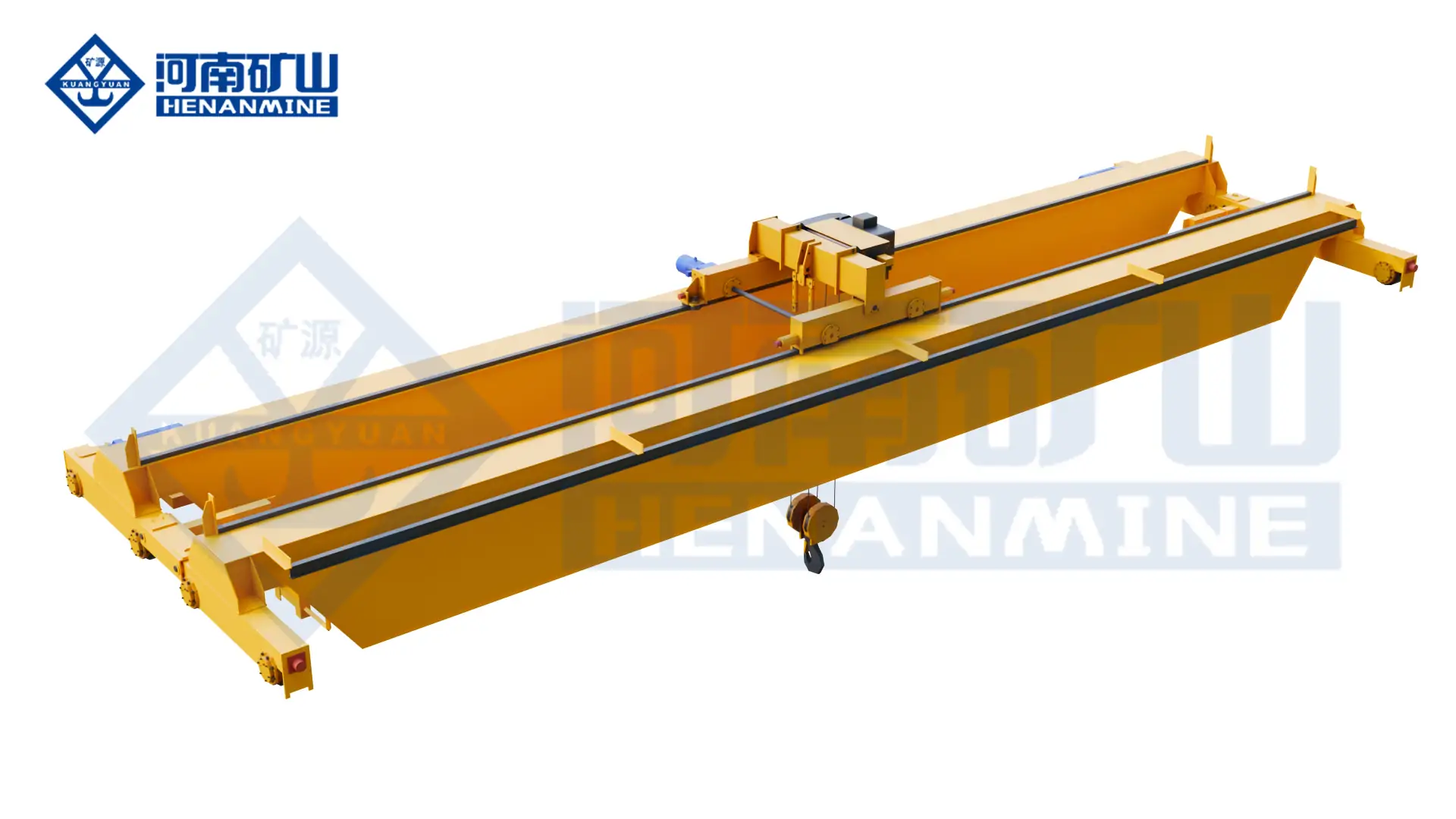
    1. Terminal type, location and applicable standards
    2. Yard drawing with block length, rows, lane width and turning area
    3. Container sizes, maximum gross mass and high-cube percentage
    4. Required 5+1, 6+1, 7+1 or custom geometry
    5. Stacking height and clearance above the top tier
    6. Single-lift, twin-lift, reefer and out-of-gauge requirements
    1. Annual TEU, peak hourly moves and operating shifts
    2. Diesel, hybrid, grid-electric or battery preference
    3. Available voltage, frequency and grid capacity
    4. Cab, remote or automated control and TOS interface
    5. Temperature, wind, corrosion, seismic and rainfall data
    6. Destination, Incoterm, erection and acceptance scope

    Frequently Asked Questions

    What capacity is normally selected for an RTG container crane?

    40.5 t under spreader is a common baseline for loaded ISO containers. Henan Mine Crane publishes 35 t, 40.5 t and 50 t ratings, with project-specific customization.

    What does a 6+1 RTG crane mean?

    It means the crane spans six container rows plus one truck or terminal-tractor lane. Clearances and row pitch establish the final span.

    How high can an RTG crane stack containers?

    RTGs are commonly configured from one-over-three to one-over-six. Henan Mine Crane publishes a 6–21 m lifting-height range, subject to the approved stack and clearance envelope.

    How much does an RTG crane cost?

    Public 2025–2026 manufacturer guides reviewed for this page range from US$165,000 to US$550,000 across diesel, hybrid, electric and automated configurations. Delivered fleet programs can be substantially higher when infrastructure, integration and service are included.

    Can an RTG crane move between yard blocks?

    Yes. Rubber tyres and steering modes permit block changes when the route, turning area, pavement, clearances and power-disconnection method are designed for the movement.

    Can an RTG crane be automated?

    Yes. Assisted, remote and automated operation can be configured with positioning, anti-sway, cameras, safety zones, communications and TOS integration.

    Written by: Henan Mine Crane Technical Sales Team
    Technically reviewed by: Henan Mine Crane Port Crane Engineering Team
    Last reviewed: 2026

    Request an RTG Crane for Container Yard Quote

    Submit the yard plan, container mix, stacking height, throughput duty, power preference, control level and delivery destination for a project-specific RTG configuration and commercial scope.

    Henan Mine CraneDiscuss your requirements ↗
  • RMG Crane for Container Yard Operations

    RMG Crane for Container Yard Operations

    RMG Crane for Container Yard Operations

    Henan Mine Crane · Rail-Mounted Container Handling

    RMG Crane for Container Yard Operations

    Rail-mounted gantry cranes for high-density container stacking, truck and rail exchange, repeatable travel paths and automation-ready terminal operation.

    Henan Mine Crane configures each RMG around container mass, rail gauge, stacking envelope, cantilever reach, peak moves, wheel loads, wind exposure, power supply, control level and terminal-system interfaces.

    rail-mounted gantry crane serving a container yard
    RMG performance is established by the complete rail block, stacking geometry, transfer lanes, operating duty and control architecture.

    PUBLISHED CAPACITY

    35 t, 40.5 t, 50 t or Custom

    PUBLISHED SPAN

    18–35 m or Custom

    PUBLISHED LIFT

    12.3–21 m or Custom

    WORK CLASS

    A6–A8

    What Is an RMG Crane for a Container Yard?

    An RMG crane, or rail-mounted gantry crane, travels on fixed runway rails and handles ISO containers with a telescopic spreader. The structure can span container rows, truck lanes, railway tracks or combinations of these operating zones.

    Fixed rails provide a repeatable travel path for precise positioning, grid-electric operation and progressive automation. RMG systems are therefore suited to permanent high-throughput blocks, intermodal rail terminals, inland container depots and marine-terminal transfer areas.

    The crane is only one part of the operating system. Rail alignment, foundations, power distribution, container transfer positions, safety zoning, terminal data and recovery procedures must be engineered as one coordinated project.

    RMG cranes operating over fixed container yard blocks
    Fixed travel rails support wide spans, electric power, consistent positioning and structured container-yard traffic.

    RMG Crane Selection Considerations

    Container and Lift Profile

    Container sizes, maximum gross mass, high-cube share, reefer volume, out-of-gauge handling and single- or twin-lift duty establish rated load and spreader functions.

    Rail Gauge and Coverage

    Row pitch, rail tracks, truck lanes, service roads, safety clearances and cantilever transfer points define span, outreach and total crane width.

    Stacking and Throughput

    Stack tiers, clearance above the top container, annual TEU, peak moves, rehandle ratio, shifts and availability target control lift, speed and mechanism duty.

    Rails and Foundations

    Rail size, alignment tolerance, wheel loads, settlement limits, drainage, end stops and storm restraints require coordinated crane and civil calculations.

    Power and Environment

    Voltage, frequency, cable route, grid capacity, wind, temperature, salt fog, rainfall, dust and seismic inputs determine electrical and protective design.

    Control and Data Interfaces

    Cab, remote or automated operation; anti-sway; positioning; OCR; truck guidance; diagnostics; ECS and TOS interfaces need defined performance and ownership boundaries.

    RMG Crane Configurations Compared

    Configuration Operating Strength Primary Project Check Typical Application
    Single-Cantilever RMG One external transfer zone with a compact opposite side Truck or rail interface position and maintenance access Space-limited depot or rail-transfer block
    Double-Cantilever RMG Transfer lanes or tracks on both sides of the rail gauge Outreach, wheel loads, traffic separation and wind area High-throughput container yard or intermodal terminal
    Cab or Remote-Control RMG Direct operator control with optional centralized workstations Visibility, camera coverage, communications and recovery access New or upgraded yards with staged digitalization
    Automated RMG Repeatable unmanned cycles and coordinated block operation TOS/ECS integration, safety zoning, exception handling and data quality Permanent high-density blocks with controlled traffic

    Compare RMG and RTG container-yard systems →

    Published RMG Crane Specifications

    The following values are the published Henan Mine Crane RMG product-family range. Contract values remain project-specific and are confirmed in the approved technical specification and general arrangement drawing.

    Parameter Published Value RFQ Definition
    Lifting Capacity 35 t, 40.5 t, 50 t or customized State load under spreader and any hook or special-lift duty
    Span 18–35 m or customized Confirm rail-center gauge, rows, tracks and clearances
    Lifting Height 12.3–21 m or customized Confirm stack tiers, high-cube containers and top clearance
    Work Class A6–A8 Select from load spectrum, cycles, shifts and design life
    Published Temperature −25°C to +40°C State project minimum, maximum, humidity and solar exposure
    Published Hoisting Speed 0–20 m/min Confirm loaded and empty-spreader performance targets
    Spreader 20 ft / 40 ft / 45 ft telescopic Define single, twin, reefer and out-of-gauge functions
    Power Supply AC 380 V, 50 Hz, three-phase or local standard Confirm voltage, frequency, short-circuit level and cable route

    A published product example lists trolley travel up to 30 m/min and gantry travel up to 40 m/min. Final speeds require cycle analysis, structural checks and agreement on positioning accuracy.

    RMG Yard Layout and Stacking Geometry

    Rail gauge is measured between the crane rail centerlines, not by container-row count alone. The span must include row pitch, railway tracks or truck lanes inside the legs, clearance to fixed equipment and the permitted sway envelope.

    Cantilevers place transfer positions outside the runway. Outreach is set from the rail centerline to the spreader centerline at the exchange point, with structural clearance for trucks, wagons, terminal tractors and maintenance routes.

    Lifting height includes the highest planned container tier, the selected top clearance, spreader depth and operating tolerance. Block length, crane quantity and passing strategy must also be resolved before rail and power design is frozen.

    RMG crane spanning container stacks and transfer positions
    Rail gauge, cantilever reach, stacking height and transfer-lane position are fixed from the approved terminal layout.

    RMG vs. RTG for Container Yard Planning

    RMG and RTG cranes can handle the same ISO container flow, but they organize a terminal differently. The selection affects land use, civil works, power distribution, traffic control, fleet flexibility and the route to automation.

    Decision Factor RMG Crane RTG Crane Planning Effect
    Travel System Fixed rails and repeatable runway Rubber tyres and block-change capability RMG favors permanent blocks; RTG favors operating flexibility
    Civil Scope Rails, beams or foundations, end stops and settlement control Heavy-duty pavement, wheel paths and turning areas Whole-site civil cost must be compared, not crane price alone
    Power Normally grid electric along a fixed block Diesel-electric, hybrid, battery or grid-electric Substation capacity and cable routing belong in the layout study
    Automation Fixed travel path supports repeatable positioning Automation must also manage steering and block movement RMG is often selected for controlled automated blocks

    A lifecycle comparison should include equipment quantity, land capacity, rail or pavement works, energy, labor, maintenance, rehandles, expansion strategy and the financial effect of downtime.

    RMG Cycle Time, Fleet Size and Availability

    Rated speeds do not equal productive moves per hour. A realistic operating model separates mechanical motion from container identification, twistlock confirmation, final alignment, truck or wagon arrival, terminal-data handshakes and exception recovery.

    Demand Profile

    Annual TEU is converted into peak-hour lifts by import dwell, train windows, vessel exchange peaks, gate appointments and the share of loaded and empty containers.

    Cycle Components

    Hoist, trolley and gantry travel can overlap within safe limits. Spreader landing, twistlock checks, target confirmation and transfer-vehicle positioning remain separate cycle inputs.

    Operational Losses

    Rehandles, traffic conflicts, weather restrictions, shift changes, inspections, data exceptions and maintenance reduce net productive availability below theoretical output.

    Fleet Resilience

    Crane quantity must allow planned service, fault recovery and peak demand without isolating critical rail or truck exchange positions.

    A procurement specification should state the reference move, starting and ending coordinates, container mass, permissible simultaneous motions, transfer-vehicle assumptions and measured acceptance method. This turns a general moves-per-hour target into a testable performance requirement.

    Rails, Foundations and Power Infrastructure

    Rail and Alignment

    Rail section, fastening, gauge, straightness, level, joint detail and electrical grounding form part of the crane–civil interface schedule.

    Wheel Loads and Settlement

    Maximum, minimum, operating and storm wheel loads are issued for foundation design; differential settlement limits protect wheel sharing and skew control.

    End Stops and Storm Safety

    Buffers, end stops, rail clamps, storm pins or tie-downs are selected from travel speed, site wind and the terminal storm-securement plan.

    Electric Power

    Cable reel, cable trench, conductor system or project-specific supply is coordinated with substations, isolation, emergency power and maintenance access.

    Spreader, Anti-Sway and RMG Automation

    Container Interface

    A telescopic spreader handles 20 ft, 40 ft and 45 ft containers. Twistlock status, flipper control, skew correction, container detection and overload protection are specified around the container mix and operating method.

    Motion Control

    Variable-frequency drives, anti-sway, anti-skew, travel synchronization and target positioning shorten the final approach while protecting containers, trucks, wagons and adjacent stacks.

    Automation Scope

    Remote or automated RMG operation can combine cameras, laser or satellite positioning, OCR, truck guidance, safety scanners, equipment control and terminal operating system interfaces. Manual recovery and exception handling remain part of the acceptance plan.

    anti-sway rail-mounted container gantry crane system
    Anti-sway and positioning functions are selected with the required cycle time, transfer accuracy and automation level.

    RMG Crane Price for Container Yard Projects

    Public online references reviewed in 2026 place rail-mounted container gantry cranes across a wide range because capacity, span, lift, cantilevers, duty, automation and delivery scope vary substantially.

    Public Reference Configuration Published Price Comparison Note
    DGCRANE public configuration 40.5 t, 32 m span, 12 m lift, A6, remote control, full VFD, 7.5 m effective cantilever each side US$294,300 Equipment configuration reference; delivered scope requires confirmation
    DGCRANE public configuration 40.5 t, 32 m span, 12 m lift, A6, remote control, non-VFD, 7.5 m effective cantilever each side US$284,400 Illustrates how drive scope changes the listed equipment value
    DGCRANE public configuration 40.5 t, 40 m span, 15.8 m lift, A7, remote control, 12.5 m effective cantilever each side US$1,015,600 Wider, taller and heavier-duty configuration
    2026 public market guide RMG, 40–100 t capacity and 30–50 m span US$200,000–2,000,000+ Broad equipment-market range rather than a project quotation

    These public figures are market references, not Henan Mine Crane quotations. A comparable commercial offer must state crane quantity, spreader, rails and electrification boundary, automation, civil interfaces, freight, erection, commissioning, testing, training, spare parts, taxes, Incoterm and warranty.

    RMG Maintenance, Spares and Lifecycle Cost

    Capital price is only one part of RMG ownership. Planned access, component standardization, diagnostic data, local service capability and critical-spares strategy affect availability throughout the crane’s working life.

    Maintenance Access

    Platforms, walkways, lighting, lifting points, trolley access, electrical-room clearance and safe isolation provisions should be reviewed on the general arrangement.

    Critical Spare Parts

    Commissioning spares, operating spares and long-lead strategic spares are separated by failure consequence, installed fleet size and local procurement time.

    Condition and Diagnostics

    Fault history, motor and drive status, brake monitoring, operating hours, overload records and alarm trends support planned intervention and faster recovery.

    Structural Protection

    Coating system, drainage, enclosure protection, corrosion allowance and inspection access are matched to marine salt, humidity, rainfall, dust and temperature exposure.

    A complete offer can schedule preventive-maintenance tasks, recommended tools, consumables, spare-parts quantities, training modules, warranty response and technical-document language. These items make competing quotations easier to evaluate on equivalent service scope.

    Project Case

    40.5 t RMG Cranes for Taicang Port

    Henan Mine Crane supplied 40.5 t rail-mounted container gantry cranes for the Taicang Port International Hub upgrade. The project combined heavy container duty with remote operation and equipment-status visualization.

    The RMG system was integrated with the port’s intelligent logistics platform, allowing crane information to support coordinated yard operation. The case demonstrates the importance of defining both lifting equipment and digital interfaces in the project scope.

    View the Taicang Port RMG project →

    40.5 tonne RMG cranes supplied for Taicang Port
    Taicang Port RMG project with remote operation, status visualization and intelligent logistics integration.

    Engineering and Procurement Deliverables

    Design Package

    General arrangement, design basis, wheel loads, rail reactions, power data, interface drawings, equipment list and control architecture.

    Manufacturing Quality

    Inspection and test plan, material traceability, welding records, NDT reports, electrical checks and factory functional testing.

    Site Acceptance

    Erection supervision, no-load and rated-load tests, safety checks, interface trials, performance testing, training, spares and handover records.

    Technical Enquiry

    RMG Crane RFQ Checklist

    The following project data allows structure, mechanisms, civil interfaces, controls and commercial scope to be priced on a consistent basis.
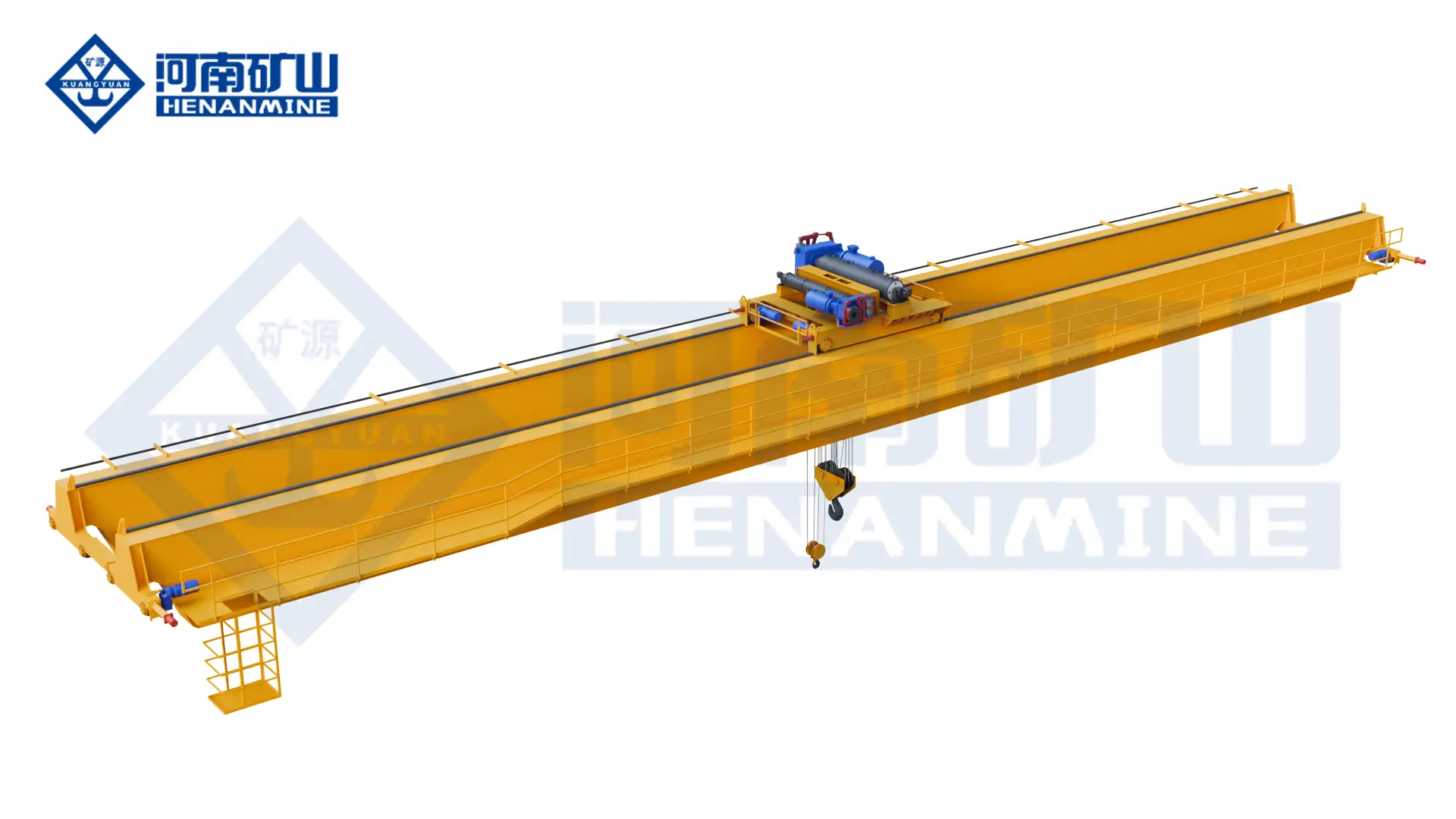
    1. Terminal type, location and applicable design standard
    2. Yard drawing with rail gauge, block length and transfer positions
    3. Container sizes, maximum gross mass and high-cube percentage
    4. Required stack tiers and clearance above the top container
    5. Cantilever reach on each side and obstacles below
    6. Single-lift, twin-lift, reefer and out-of-gauge requirements
    1. Annual TEU, peak hourly moves, operating shifts and design life
    2. Cab, remote or automated control and TOS/ECS interfaces
    3. Available voltage, frequency, grid capacity and cable route
    4. Rail data, foundation status and settlement criteria
    5. Temperature, wind, corrosion, seismic and rainfall data
    6. Destination, Incoterm, erection, testing and acceptance scope

    Frequently Asked Questions

    What is an RMG crane used for?

    An RMG crane stacks and transfers containers in fixed rail-mounted blocks at marine terminals, inland depots and intermodal rail facilities.
    What capacity is common for a container-yard RMG?

    40.5 t under spreader is a common project baseline. Henan Mine Crane publishes 35 t, 40.5 t and 50 t ratings, with customized capacity available.
    How much does an RMG crane cost?

    Public references reviewed in 2026 range from about US$200,000 to more than US$2,000,000. Span, lift, cantilevers, work class, automation and delivered project scope determine the final quotation.

    What is the difference between an RMG and an RTG?

    An RMG travels on fixed rails and is suited to permanent, high-density, electric or automated blocks. An RTG travels on rubber tyres and offers greater flexibility between compatible yard blocks.

    Can an RMG serve railway wagons and truck lanes?

    Yes. Rail tracks, truck lanes or both can be arranged inside the span or below cantilevers when gauge, outreach, clearances and traffic controls are engineered accordingly.

    Can an RMG crane be fully automated?

    Yes. Automated RMG operation can include positioning, anti-sway, OCR, safety scanners, truck guidance, remote exception handling and TOS/ECS integration.

    What civil information is required before ordering an RMG?

    Required inputs include the runway plan, rail gauge, rail and fastening details, foundation capacity, settlement limits, drainage, end-stop arrangement and site survey data.

    How many RMG cranes are required for a container yard?

    Fleet quantity follows peak moves, productive cycle time, rehandles, block length, operating hours, planned maintenance and the required reserve margin.

    Request an RMG Crane for Container Yard Quote

    Submit the yard plan, rail gauge, container mix, stacking height, cantilever reach, peak moves, power data, control level and destination for a project-specific RMG configuration and commercial scope.

    Henan Mine CraneDiscuss your requirements ↗