
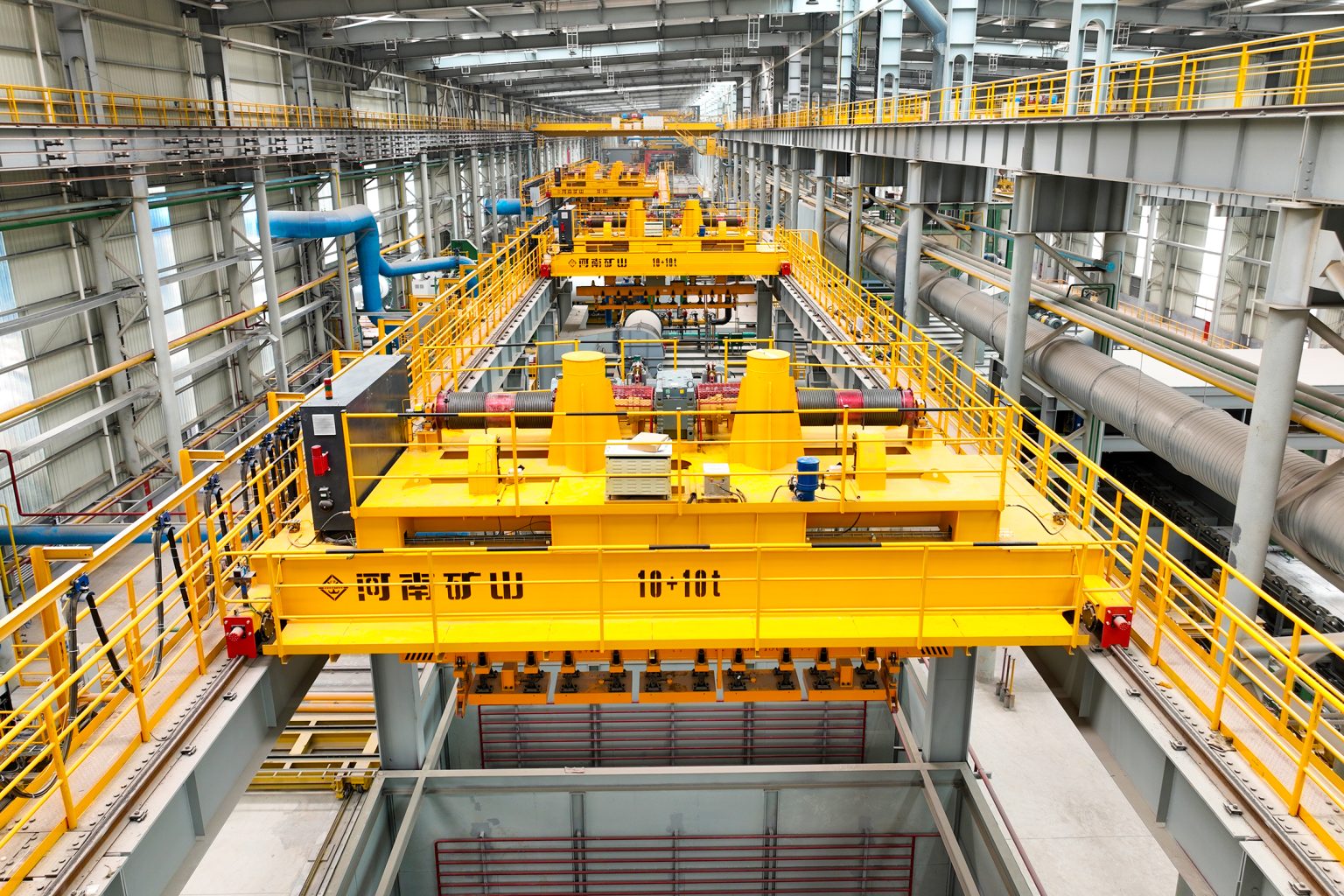
Henan Mine Crane · Scrap Yard and Recycling Lifting Systems
Scrap Handling Crane
Custom overhead and gantry crane systems with lifting magnets, orange-peel grabs, hooks or dual-purpose attachments for steel mills, recycling yards, foundries, ports and waste-processing facilities.
Henan Mine Crane engineers the crane, attachment, power and control system around the actual scrap composition, bulk density, maximum piece size, temperature, required throughput, operating cycle, yard layout and destination requirements.
APPLICATIONS
Steel Mills, Scrap Yards, Recycling Plants & Foundries
LIFTING SYSTEMS
Magnet, Orange-Peel Grab, Hook or Dual Purpose
DESIGN BASIS
Material, Throughput, Duty, Layout & Environment
PRICE BASIS
Engineered Project Quotation
What Is a Scrap Handling Crane?
A scrap handling crane, also specified as a scrap yard crane or scrap crane, transfers loose, bundled or irregular metal between stockpiles, railcars, trucks, shredders, shears, charging boxes, sorting stations, furnaces and outbound loading areas. The system may use an overhead bridge crane inside a building or a gantry crane for an outdoor yard. The correct arrangement depends on the operating envelope, required coverage, material stream and facility structure.
The lifting device is selected before the final crane capacity is approved. A lifting magnet is generally suitable for verified ferromagnetic scrap with predictable magnetic response. An orange-peel grab is generally suitable for mixed, irregular, contaminated or non-ferrous material that cannot be lifted reliably by magnetism. Hook service remains useful for maintenance, containers, bundles and approved rigging tasks.
Scrap service can combine high cycle rates, impact, dust, sharp edges, heat and highly variable loads. The design therefore addresses the complete load spectrum, attachment self-weight, shock and extraction forces, visibility, exclusion zones, power-loss behavior, wear protection and planned maintenance. A general-purpose crane should not be converted to scrap duty solely by adding a magnet or grab without structural, mechanical, electrical and operational verification.
Scrap Handling Crane Configurations
01 · Electromagnetic Overhead Crane
A circular or purpose-arranged magnet lifts ferrous scrap without manual slinging. Magnet geometry, duty cycle, magnetic test results, rectifier, cable management, current monitoring, heat dissipation and power-loss holding strategy are matched to the scrap stream. This system is not suitable for aluminum, copper or other non-ferrous material.
02 · Orange-Peel Grab Overhead Crane
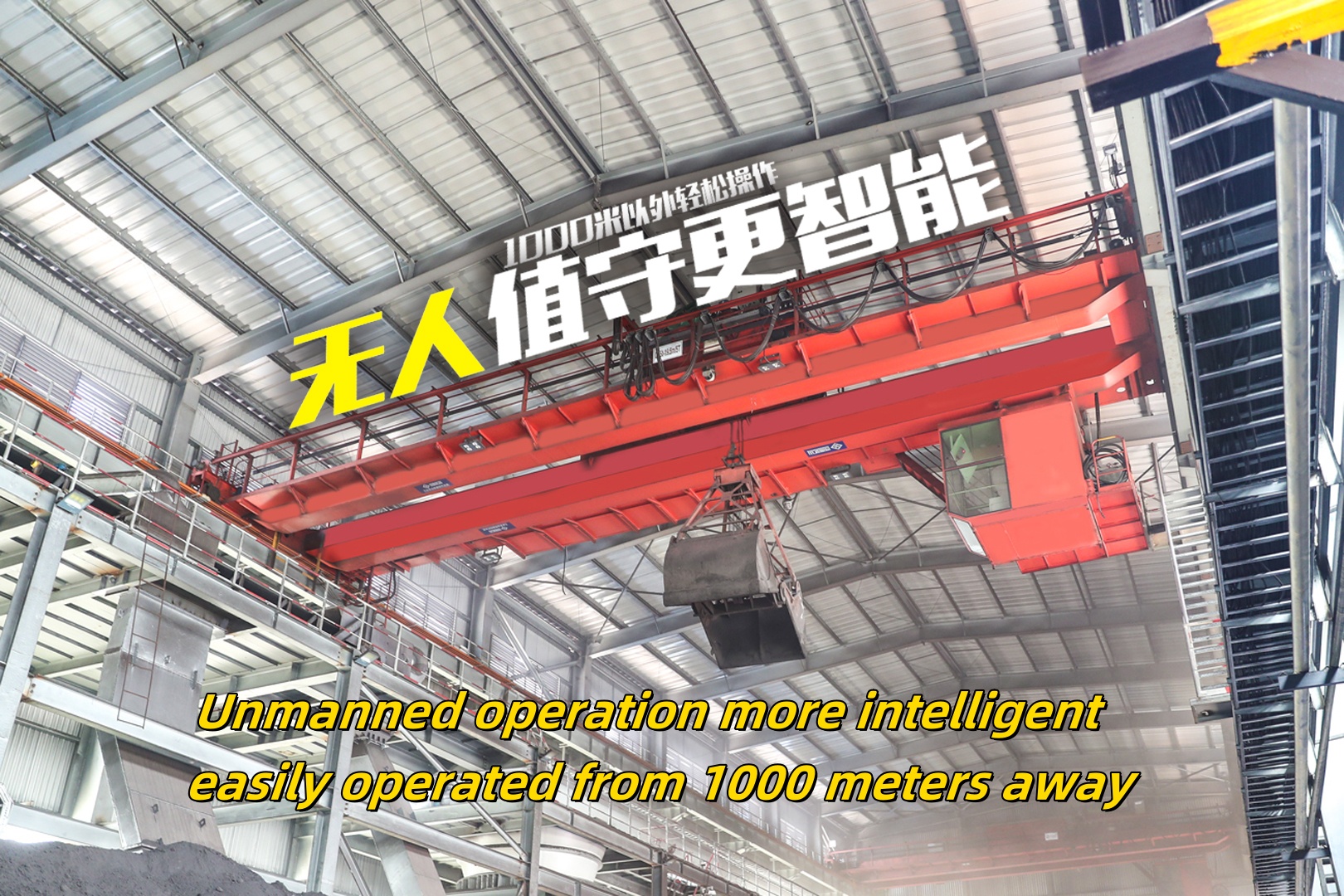
A multi-tine orange-peel grab penetrates and closes around loose, irregular or mixed scrap. Tine count and profile, open diameter, volume, closing force, grab tare, wear plate, rotator and rope, hydraulic or electro-hydraulic drive are selected from the material and cycle. Dynamic pull-out loads require specific verification.
03 · Magnet and Hook Dual-Purpose Crane
A magnet handles ferrous scrap while a hook supports approved maintenance, rigging or unit-load work. The magnet, lifting beam and hook have separate operating rules and rated-load conditions. Changeover, attachment recognition, control permissives and stored attachment locations are defined in the operating concept.
04 · Grab and Hook Dual-Purpose Crane
A detachable grab expands a crane from bulk handling to conventional hook service. The arrangement is appropriate where scrap transfer is important but not the only process. Hook capacity, grab capacity, reeving, hydraulic or electrical connection, attachment parking and changeover risk are specified separately.
05 · Automated Scrap Handling Crane
Laser scanning or machine vision, absolute position feedback, pile mapping, anti-sway, path planning, hopper interlocks and collision avoidance can support semi-automatic or unmanned transfer. Automation is based on a defined material envelope, controlled work zones and documented recovery modes.
06 · Outdoor Scrap Gantry Crane
A rail-mounted gantry crane covers outdoor stockpiles, loading lanes or port yards without relying on a complete building runway. Wind operating limits, storm anchoring, lightning protection, corrosion class, drainage, rail foundations and vehicle segregation become part of the project scope.
Compare Magnet, Orange-Peel Grab and Dual-Purpose Systems
Attachment selection is governed by scrap behavior and the required operation, not by crane tonnage alone. Representative material samples and the full handling route should be reviewed before the crane and attachment are approved.
| Lifting system | Best-matched scrap | Primary advantage | Critical engineering issue | Commercial fit |
|---|---|---|---|---|
| Electromagnet | Predominantly ferromagnetic, loose steel scrap with verified pickup behavior | Fast pickup and release without mechanical tine penetration | Air gaps, material temperature, power failure, residual magnetism and dropped-load zone | Dedicated high-cycle ferrous scrap flow |
| Orange-peel grab | Mixed, irregular, non-ferrous, contaminated or weakly magnetic scrap | Mechanical capture across a wider material range | Penetration, closing force, fill factor, tine wear and dynamic extraction load | Mixed recycling feed and irregular scrap piles |
| Hook with approved rigging | Bundles, bins, charging boxes, maintenance items and defined lifting points | Flexible for unit loads and maintenance work | Manual rigging exposure, sling protection and slower cycle | Low-frequency or secondary operations |
| Magnet and hook | Ferrous scrap plus planned unit-load or maintenance service | Two defined operating modes on one crane | Attachment changeover and separate capacity/control states | Yards requiring operational flexibility |
| Grab and hook | Bulk scrap plus bins, bundles or maintenance lifts | Mechanical handling of mixed material with hook capability | Grab parking, connection, reeving and mode interlocks | Multi-purpose industrial facilities |
Selection rule: choose a magnet only when the scrap is sufficiently ferromagnetic and representative pickup tests confirm the required holding performance. Choose an orange-peel grab when the material is mixed, irregular, non-ferrous or mechanically interlocked. Where the material stream changes frequently, a dual-purpose or quick-change concept can be evaluated with separate ratings, controls and safe attachment storage.
Match the Scrap Handling Crane to the Process Area
A scrap handling crane should be selected from the complete material route: receiving, unloading, sorting, stockpiling, processing, furnace charging and outbound transfer. The crane layout must cover every pickup and discharge coordinate without dragging the attachment, side pulling the load or carrying scrap above occupied traffic lanes.
The rated capacity includes the useful scrap payload and the complete magnet, beam, cable, grab, rotator, power unit, hook block and suspended interface tare. For grab service, interlocked scrap can generate extraction forces above the static grab-plus-payload mass. Hoist, rope, drum, brakes, trolley and bridge structure are therefore checked against the defined operating condition.
Throughput is established from average useful payload per cycle, realistic pickup efficiency, travel distance, hoisting height, discharge time, attachment action and expected delay. Nominal crane speed alone does not establish tonnes per hour.
| Process Area | Typical Material | Recommended Starting Point | Critical Interfaces | Design Emphasis |
|---|---|---|---|---|
| Truck or railcar receiving | Loose ferrous, demolition or mixed scrap | Magnet for verified ferrous feed; orange-peel grab for mixed feed | Vehicle profile, side clearance, unloading sequence and traffic exclusion | Fast unloading, visibility, controlled drop and safe vehicle separation |
| Sorting and stockpile bays | Segregated grades, plate offcuts, turnings or non-ferrous scrap | Magnet, grab or dual-purpose system by material schedule | Pile height, bay walls, contamination control and grade separation | Coverage, repeatable placement, pile stability and attachment wear |
| Shredder or shear feed | Irregular, interlocked and variable-size scrap | Heavy-duty orange-peel grab with suitable tine profile | Hopper opening, feed permissive, machine state and extraction loads | Penetration, closure, anti-snag logic and cycle consistency |
| Charging-box or furnace supply | Prepared ferrous scrap, bundles or charging containers | Magnet, hook attachment or project-specific charging device | Charge recipe, box geometry, furnace zone, heat and process interlocks | Batch accuracy, safe route, availability and controlled release |
| Baling and dispatch | Bales, bundles, bins and prepared unit loads | Hook, beam, magnet or positive-engagement attachment | Lifting points, center of gravity, truck deck and stacking plan | Load security, placement accuracy and damage prevention |
| Outdoor scrap yard | Inbound stock, processing feed and outbound scrap | Rail-mounted double-girder gantry crane with magnet or grab | Rail foundation, wind, drainage, corrosion, lightning and storm parking | Full yard coverage, weather protection and secure out-of-service condition |
Technical Selection and Specification Framework
A procurement specification should define the material schedule, operating cycle and acceptance criteria before a price is requested. Values published for a standard crane family are only a starting point; the useful payload, complete attachment tare, dynamic forces and facility interfaces establish the project configuration.
| Specification Item | Information to Provide | Engineering Decision | Why It Changes the System |
|---|---|---|---|
| Scrap composition | Ferrous percentage, alloy mix, contamination, moisture, oil and representative photos or samples | Magnet, grab, hook or dual-purpose concept | Determines whether magnetic pickup is reliable or mechanical capture is required |
| Density and piece envelope | Loose bulk density, typical/maximum piece size, maximum single-piece mass and pile interlocking | Magnet geometry or grab volume, tine profile, open span and closing force | Controls useful payload, fill factor, penetration and extraction load |
| Rated capacity | Maximum useful payload plus complete attachment and suspended-interface tare | Total suspended rating and separate rating for every operating mode | Controls the hoist, trolley, bridge, wheels, rail and supporting structure |
| Throughput and cycle | Required tonnes per hour, pickup efficiency, route length, lift, discharge and delays | Payload per cycle, motion speeds, acceleration, drive rating and crane quantity | Prevents a nominal-capacity crane from becoming the process bottleneck |
| Span, lift and coverage | Rail centers, travel length, pickup/discharge elevations, approaches and obstacles | Bridge or gantry geometry, headroom, rope travel and maintenance access | Determines steel weight, end approaches, wheel loads and usable yard coverage |
| Duty and design life | Lifts per hour, shifts, annual hours, load spectrum, starts and attachment actions | Crane/mechanism classifications, fatigue basis, motor and brake thermal rating | Scrap service is selected by repeated cyclic demand, not tonnage alone |
| Material temperature | Maximum scrap temperature, radiant heat, exposure duration, flame and slag risk | Magnet/grab temperature rating, shielding, cable, lubrication and enclosure selection | Heat changes magnetic performance, insulation life and component reliability |
| Control mode | Visibility, operator location, staffing, accuracy, process signals and automation objective | Cabin, radio remote, central control, assisted or unmanned operation | Changes sensing, communications, zoning, recovery and acceptance testing |
| Site environment | Dust, fumes, corrosion, indoor/outdoor service, wind, rain, temperature and altitude | Enclosures, cooling, filtration, coating, wind devices, anchoring and lightning protection | Determines component protection and out-of-service requirements |
| Codes and acceptance | Destination regulations, purchaser standards, inspection authority and witness points | Compliance matrix, design records, FAT, proof load and process trials | Defines the verification boundary required before commercial operation |
Published product-family range: Henan Mine Crane electromagnetic bridge cranes are available in 5–32 t configurations including the magnet, with project-customized spans, lifts, duty and controls. Intelligent grab crane and outdoor gantry configurations are engineered separately for the specified material and cycle.
Controls, Safety and Environmental Protection
Crane Motion Protection
Overload protection, upper and lower hoist limits, travel limits, service and emergency brakes, buffers, anti-derailment measures, controlled acceleration and defined emergency-stop functions protect the lifting and travel system.
Magnet Load-Retention Strategy
Current and voltage monitoring, temperature supervision, backup energy or electro-permanent technology, alarm logic and controlled emergency placement are selected from the risk assessment. Personnel and vehicles remain outside the potential drop zone.
Grab and Rotator Protection
Closing pressure or rope force, tine position, hydraulic pressure, hose routing, rotator condition and attachment state can be monitored. Control logic limits side pulling, dragging, incomplete closure and unsafe travel near obstacles.
Operator Visibility and Segregation
Cabin position, camera coverage, radio remote control, warning devices, barriers, vehicle routes and access interlocks are coordinated with the pile, loading lanes and discharge points to maintain a controlled operating zone.
Automation and Recovery
Pile scanning, position encoders, anti-sway, obstacle detection, collision avoidance, hopper or furnace interlocks and attachment-state permissives support automatic work. Manual fallback and controlled recovery are included in the functional design.
Dust, Heat and Outdoor Exposure
Protected enclosures, filtered or conditioned cabins, heat shielding, high-temperature cabling, corrosion-resistant coating, sealed components, wind alarms, storm anchoring and lightning protection are selected for the site environment.
Scrap Handling Cycle, Throughput and Automation
A productive scrap crane repeats a controlled sequence: identify a permitted pickup zone, position the attachment, acquire a stable load, confirm attachment state, lift clear of the pile, travel through an approved route, verify the discharge equipment is ready, release the load and return without conflict.
Automatic or assisted operation can add three-dimensional pile scanning, absolute position feedback, anti-sway control, path planning, obstacle detection, restricted zones, hopper or furnace handshakes, weight data and MES, WMS or DCS communication. The functional specification also defines ownership of every signal and the safe response to incomplete, contradictory or lost data.
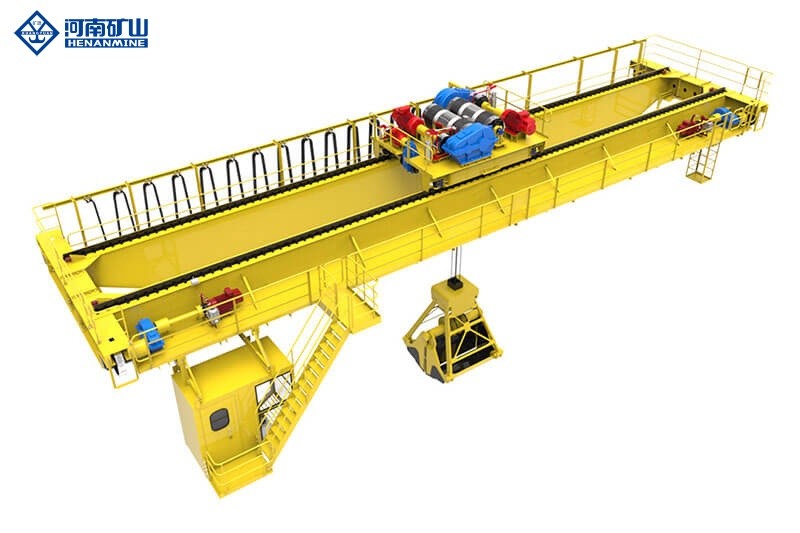
Pickup Model
Material map, pile boundary, prohibited zones, magnet pickup or grab closure, attachment-state confirmation and incomplete-pick recovery.
Travel Control
Absolute position, anti-sway, acceleration limits, collision prevention, route zoning and height permissions for vehicles, walls and process equipment.
Discharge Handshake
Ready/permit signals, receiving-capacity check, target confirmation, controlled release, completion feedback and fault response for hoppers or charging systems.
Fallback and Recovery
Safe stop, retained-load response, manual takeover, camera coverage, local isolation, attachment parking, alarm history and controlled return to automatic service.
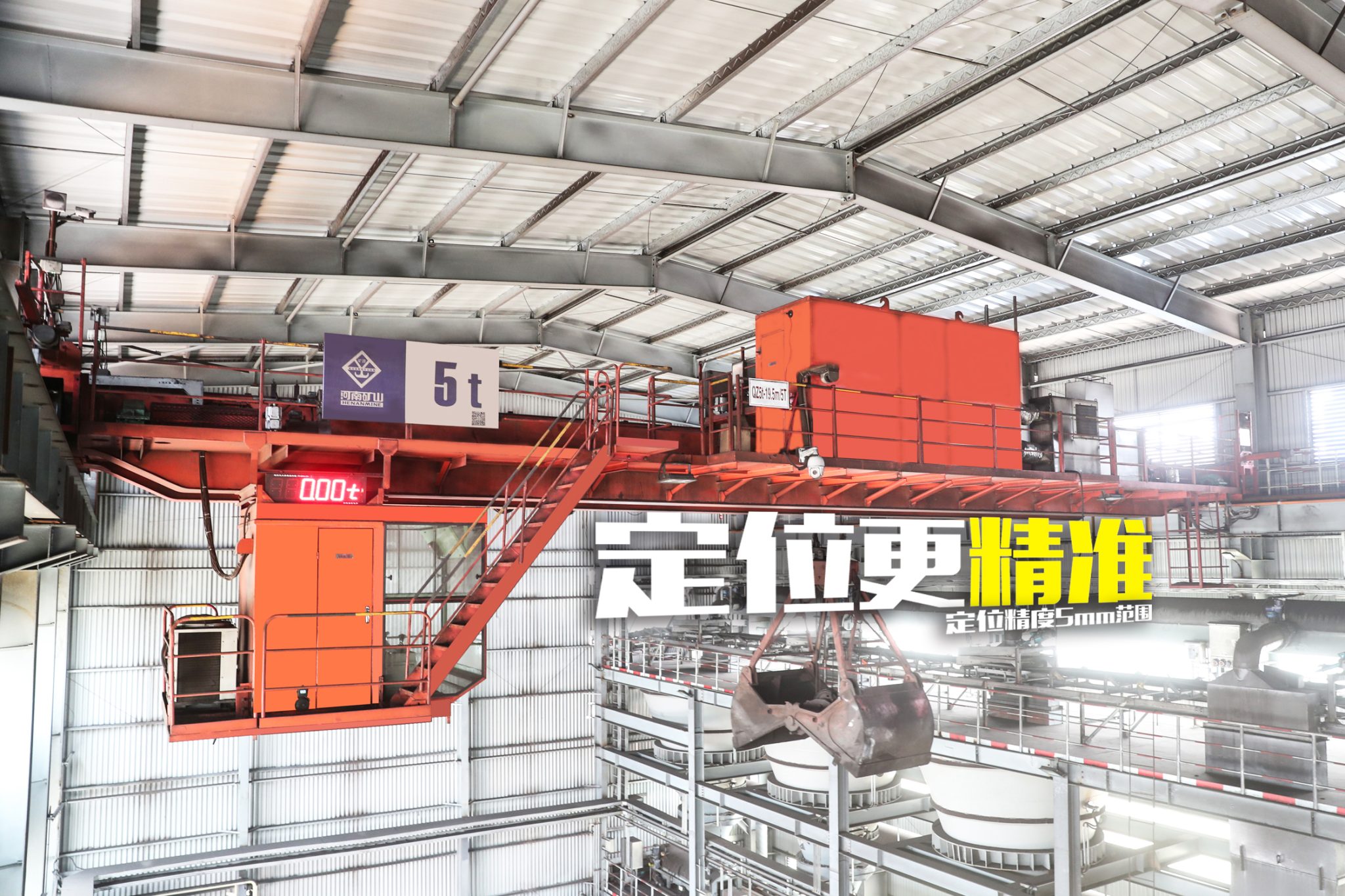
Project Application
Unmanned Grab Crane for Steel-Plant Material Handling
Henan Mine Crane developed unmanned grab crane systems for metallurgical bulk-material applications, including the 250,000-ton rotary kiln project at Baowu Group’s Shaoguan Steel Plant and the No. 2 blast-furnace renovation at Ningbo Steel. The platform integrates three-dimensional pile scanning, absolute position feedback, automatic positioning, obstacle avoidance and remote, cabin and wireless control modes.
The control architecture creates a material-pile model and coordinates pickup, travel and discharge positions with the production process. Multiple operating modes provide a defined recovery path when automatic operation is interrupted or site intervention is required.
This project application demonstrates automation capability for complex metallurgical material piles. A scrap-yard version requires separate validation of the orange-peel grab geometry, scrap density, maximum piece size, dynamic extraction forces, wear package, throughput and controlled drop zones.
Engineering Deliverables and Quality Records
A procurement-ready proposal defines the complete scrap handling system and its interfaces. Henan Mine Crane can prepare project-specific engineering and manufacturing records for technical approval, installation and acceptance.
Design basis
Approved scrap schedule, bulk-density range, throughput, load spectrum, duty calculation, layout, wheel reactions, clearances and code matrix.
Attachment engineering
Magnetic test basis or grab volume and tine design, total tare, load path, controls, interlocks, power-loss state, wear parts and rated-load marking.
Manufacturing records
Material traceability, welding procedures, welder qualifications, dimensional inspection, NDT reports and component certificates as contractually required.
Factory acceptance
Functional checks, brake and limit tests, control simulation, attachment cycles, magnet or grab verification and witnessed testing when included in the contract.
Review Henan Mine Crane manufacturing equipment and quality capabilities →
Installation, Commissioning and Maintenance Planning
Before Manufacture
Confirm runway or foundation geometry, supporting-structure capacity, clearances, pile and discharge coordinates, vehicle routes, power supply, process interfaces, access for attachment maintenance and site responsibilities.
Erection and Commissioning
Coordinate unloading, erection method, rail survey, mechanical and electrical installation, no-load testing, proof load, attachment functions, representative scrap trials, process interlocks and operator training.
Planned Maintenance
Maintain brakes, ropes, drums, wheels, rails, reducers, fasteners and electrics together with magnet cables and backup power or grab tines, pins, bushings, ropes, rotator, hoses, cylinders and wear plates.
Commissioning should include representative low-density and high-density scrap, difficult pile conditions, maximum operating reach, magnet power-loss or grab-recovery behavior, control-mode transfer, emergency functions and acceptance criteria agreed before shipment.
Scrap Handling Crane Price and Supply Scope
Scrap handling crane price is project-specific. Capacity, span, lift, working duty, attachment tare, material temperature, throughput, automation, outdoor protection, runway or rail scope, destination and site services all change the commercial result.
Some public online offers reviewed in September 2026 advertise basic electromagnetic overhead crane equipment at approximately US$5,000–20,000. These advertisements are market-screening figures, not a turnkey scrap-yard budget. They frequently omit the verified scrap attachment, lifting beam, rectifier, backup energy, cable system, heavy-duty classification, runway, freight, installation, commissioning and statutory acceptance.
| Quotation Level | Typical Included Scope | Principal Cost Drivers |
|---|---|---|
| Electromagnetic Scrap Crane | Bridge or gantry, trolley, magnet/beam, rectifier, cable management, controls and defined backup-power strategy | Scrap pickup test, magnet duty, temperature, capacity, span, cycle rate and load-retention requirements |
| Orange-Peel Grab Crane | Heavy-duty crane, rope or hydraulic grab, rotator where required, power package, controls and wear parts | Grab volume/tare, tine design, closing force, extraction load, duty, throughput and abrasion |
| Dual-Purpose or Outdoor Gantry System | Multiple attachments or operating modes, attachment parking, gantry structure, rail equipment and weather protection | Changeover method, separate ratings, yard width, wind, foundations, corrosion class and storm anchoring |
| Automated Scrap-Yard System | Crane and attachment plus scanning, positioning, anti-sway, cameras, zoning, process handshakes and system integration | Work-zone count, accuracy, throughput, software boundary, redundancy, recovery modes and site trials |
A valid bid comparison uses the same scrap schedule, useful payload, complete suspended rating, duty, attachment, safety functions, automation scope, compliance basis, trade term and site responsibility matrix.
Crane Equipment
Bridge or gantry, trolley, hoist, drives, electrics, controls, access and crane safety devices.
Scrap Attachment
Magnet, beam, rectifier and cable system or grab, rotator, hydraulic unit and wear package.
Facility Interface
Runway, rails, columns, foundations, electrification, drainage, process signals and access boundaries.
Project Services
Engineering, FAT, packing, freight, installation, commissioning, proof testing, trials and training.
Information Required for a Scrap Handling Crane Quote
A complete inquiry allows the crane, attachment, controls, facility interfaces and commercial boundary to be evaluated as one handling system. Preliminary information can be used for concept selection when assumptions are clearly identified.
01 · Scrap schedule
Material categories and proportions, ferrous content, contamination, moisture, oil and representative photographs or samples.
02 · Density and piece size
Loose bulk-density range, typical and maximum dimensions, maximum single-piece mass, bundles and pile interlocking.
03 · Temperature and environment
Scrap and ambient temperature, radiant heat, dust, fumes, corrosion, rainfall, wind, altitude and hazardous zones.
04 · Throughput and operating cycle
Required tonnes per hour, shifts, annual hours, lifts per hour, load spectrum, travel distances and availability target.
05 · Layout and coverage
Plan and sections, rail span, runway or gantry travel, pile and discharge coordinates, heights, approaches and obstacles.
06 · Preferred attachment
Magnet, orange-peel grab, hook or dual-purpose requirement; existing attachment data and required changeover method.
07 · Runway or foundation
Rail section, elevation, alignment, allowable wheel loads, building reserve, foundation data and civil-work boundary.
08 · Controls and interfaces
Cabin, radio or central control; manual or automatic mode; cameras, weighing, PLC, MES/WMS/DCS and process handshakes.
09 · Compliance and acceptance
Destination, governing standards, inspection authority, document language, witness points, proof load and material trials.
10 · Commercial boundary
Delivery location and trade term, packing, freight, installation, local labor, commissioning, training, spares and schedule.
Frequently Asked Questions
Which is better for scrap handling: a magnet or an orange-peel grab?
A magnet is generally preferable for verified ferromagnetic scrap with predictable pickup behavior. An orange-peel grab is generally preferable for mixed, irregular, contaminated, non-ferrous or weakly magnetic material. Representative scrap testing should confirm the selection.
Can one scrap crane use both a magnet and a grab?
Yes, if the trolley, reeving, power supply, cable management, controls and attachment parking are designed for both. Each attachment has a separate tare, rated payload, operating mode and inspection requirement.
How is scrap handling crane capacity calculated?
Capacity includes the maximum useful scrap payload plus the complete magnet, beam, grab, rotator, power unit and suspended interface tare. Dynamic extraction, impact, eccentricity, wheel loads and runway or foundation capacity are also checked.
How is orange-peel grab volume selected?
Preliminary volume follows target payload, loose bulk density and expected fill factor. Tine penetration, open span, maximum piece size, pile geometry, closing force, discharge opening and complete grab tare then determine the final design.
What happens if power fails while a scrap magnet is lifting?
The project risk assessment defines backup energy, alarm and current monitoring, emergency placement, controlled exclusion zones and the required load-retention strategy. Electro-permanent technology may also be evaluated for suitable material and process conditions.
Can a scrap handling crane be automated?
Yes. Pile scanning, position feedback, path planning, anti-sway, attachment-state monitoring, obstacle detection, hopper or furnace interlocks and MES, WMS or DCS communication can be integrated within a defined functional specification.
What working duty is required for a scrap crane?
Continuous scrap service often requires a heavy-duty A6–A8 solution, but the final crane and mechanism classifications are calculated from operating hours, lifts per hour, load spectrum, travel distances, attachment actions and design life.
Can a scrap crane operate outdoors?
Yes. An outdoor bridge or gantry crane can be configured with suitable corrosion protection, enclosure ratings, wind alarms, operating limits, storm anchoring, lightning protection, drainage and temperature controls for the destination.
How much does a scrap handling crane cost?
Some online equipment offers show low entry prices, but they frequently exclude the verified magnet or grab system, heavy-duty design, runway, freight, installation and commissioning. A procurement-grade price requires an itemized quotation based on the material, throughput, duty, layout and delivery boundary.
What information is needed for a scrap crane quotation?
Provide material categories, density, piece size, ferrous content, temperature, photos, throughput, operating cycle, pile and discharge layout, span, height, duty, power supply, control requirements, destination, applicable code and the required delivery and installation boundary.
Technical content record
Prepared by Henan Mine Crane Technical Sales · Technically reviewed by Crane Engineering · Last technically reviewed September 2026
Related Scrap Handling Crane Products
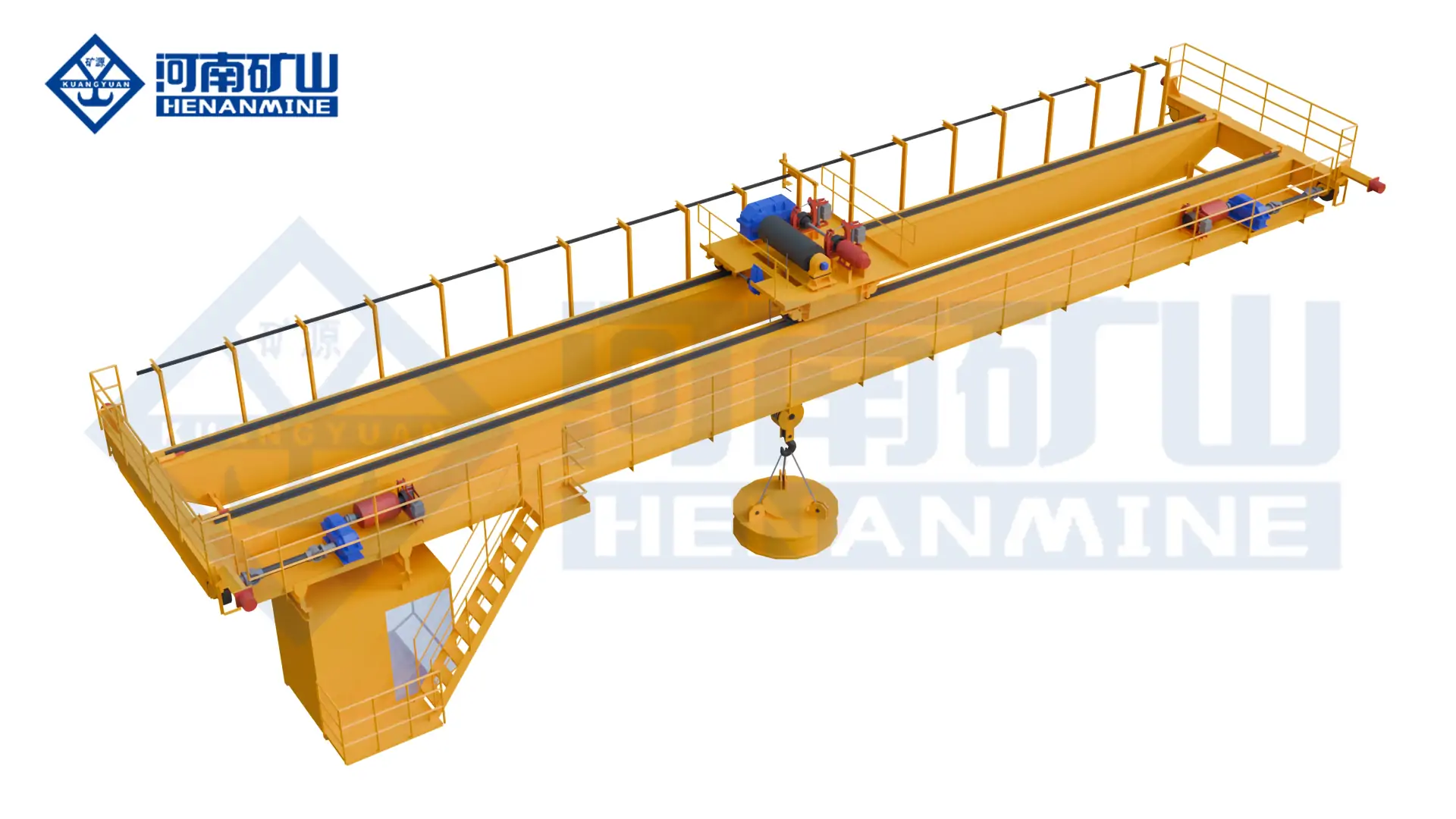
Electromagnetic Bridge Crane
Magnetic overhead crane platform for approved ferrous scrap, billets, plate, pipe and other magnetically responsive loads.
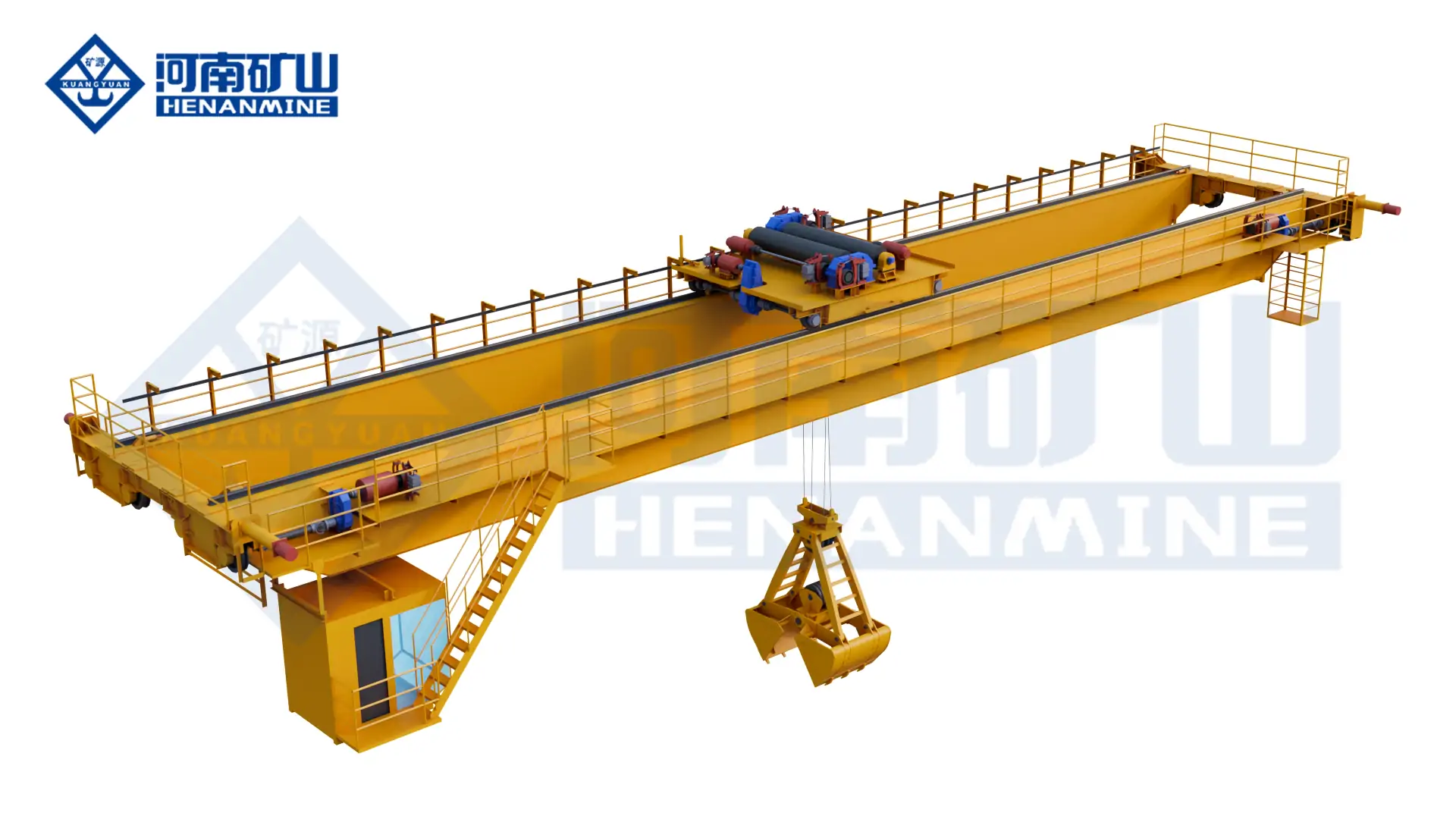
Intelligent Grab Overhead Crane
Heavy-duty four-rope grab crane family with PLC control and optional production-system integration for bulk handling.
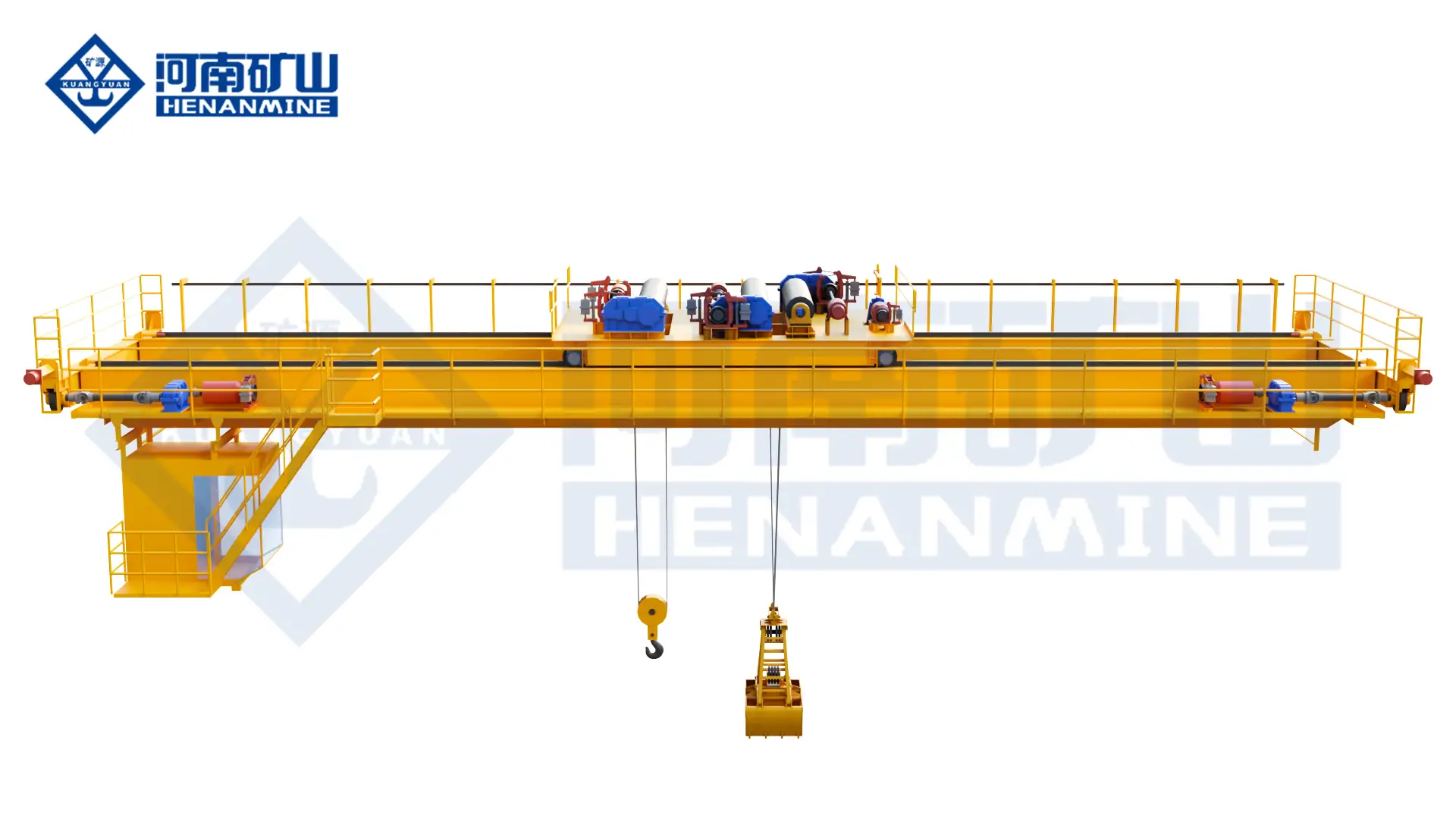
Grab and Hook Dual-Purpose Crane
Flexible overhead crane for bulk material handling and approved hook lifting within separately defined operating modes.
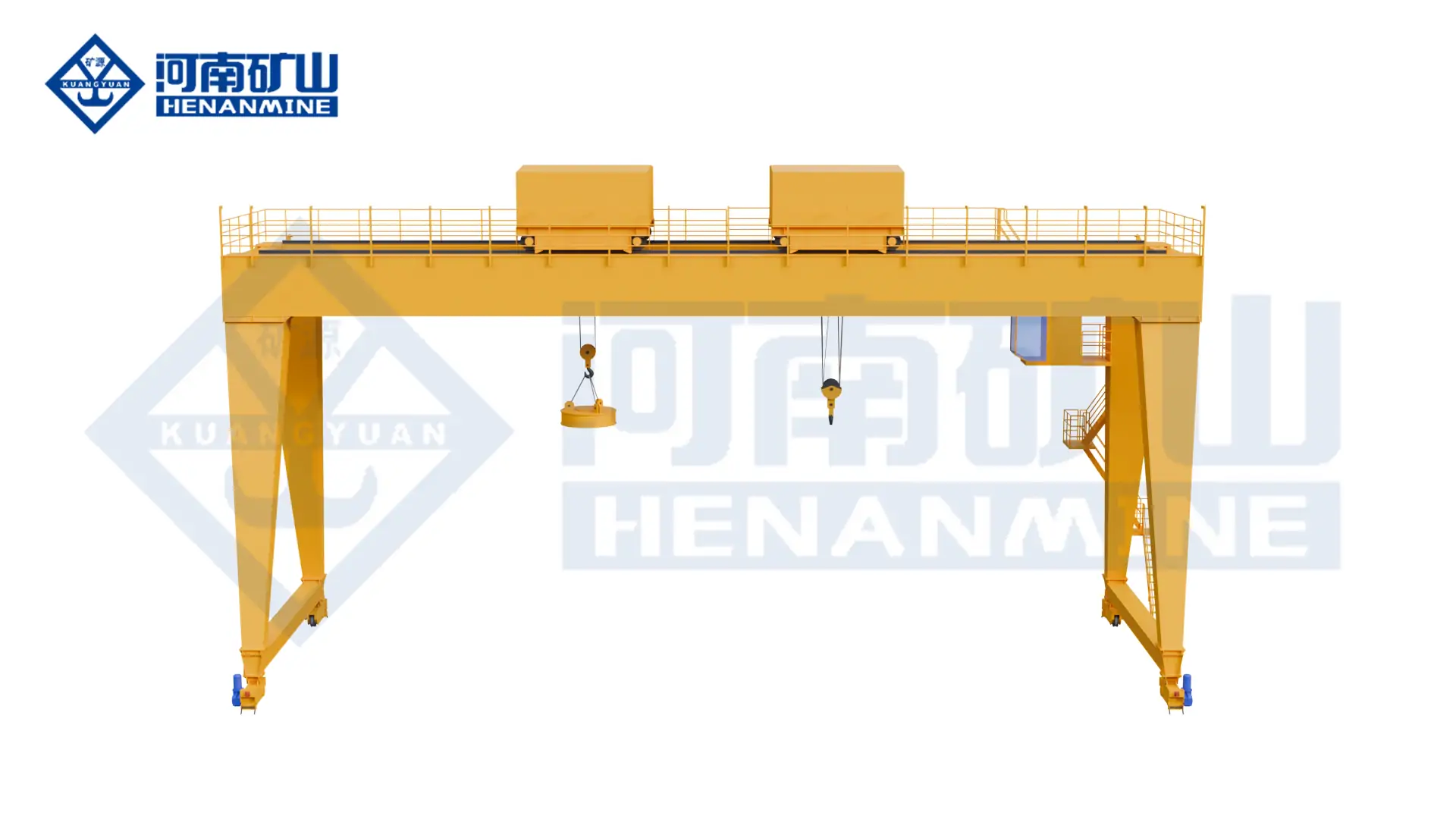
Electromagnetic Hook Gantry Crane
Outdoor double-girder gantry crane with magnetic and hook handling modes for steel yards, ports and recycling facilities.
Double-Girder Bridge Crane
Customizable overhead crane platform for hook, magnet, grab, beam or other engineered below-the-hook equipment.
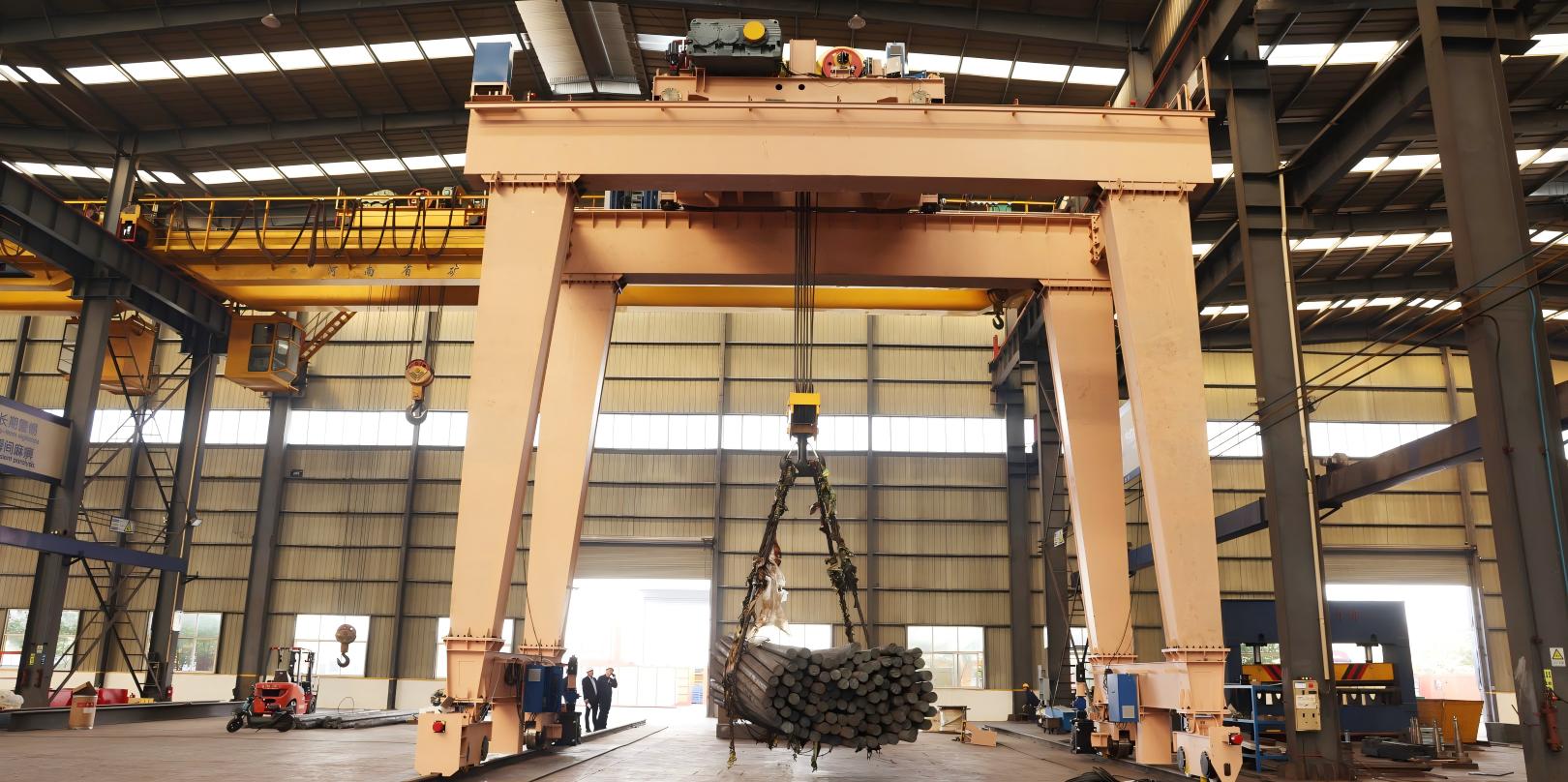
Double-Girder Gantry Crane
Outdoor gantry platform for stockyard coverage where a complete building runway is unavailable or impractical.
Engineered Scrap Handling Proposal
Request a Scrap Handling Crane Quote
Provide the scrap schedule, material samples or photos, bulk density, piece-size range, required throughput, pickup and discharge layout, operating cycle, facility dimensions, duty, controls, destination and delivery boundary. Henan Mine Crane will develop the crane and attachment as one defined handling system.